INTERVIEW: Sarah Gerard, author of Binary Star

Sarah Gerard’s new novel Binary Star is an intense story about a young astronomy student struggling with anorexia and her relationship with a long-distance, alcoholic boyfriend. Together, the destructive couple takes a road trip around the United States and experiments with veganarchism. As she starves and purges, he consumes. The prose reflects the characters’ behavior. Sparse and lean, Gerard’s writing hurtles forward with a momentum that seems bent on burning up, much like the stars her protagonist studies. It’s a novel that takes risks, both in style and subject matter. Women are told that writing about eating disorders is cliché, or that if they write about their bodies or their own narcissism they won’t be taken seriously. Sarah Gerard refuses to let those experiences be devalued and instead puts them at the center of a serious literary work.

Gerard previously published a chapbook, Things I Told My Mother, as well as numerous essays and short stories, but Binary Star is her first novel. I spoke with her at Housing Works Bookstore Café.

Kristen Felicetti: Binary Star started as a memoir, and then you decided to make it a novel. Why a novel?

Sarah Gerard: If I had written it as a memoir, I would have had to be very careful. Because both of the characters are very sick people, I would have had to be very careful about how I treated them and who might feel exposed by this story. I didn’t want to have to worry about that. I wanted instead to put the story entirely inside the protagonist’s point of view and allow her to say whatever she wanted about the things she was struggling with. In that regard, it’s completely fictional, because everything is being filtered through the very skewed point of view of this protagonist. And it’s clear that sometimes the way she perceives things is not totally factual, or is not objectively accurate.

I think people have done really creative things with memoir — Lidia Yuknavitch is a very poetic memoirist, Maggie Nelson has done a lot with the essay form and memoir, and of course, Kate Zambreno. But I am a fiction writer and I wanted to give myself complete liberty.

KF: In Things I Told My Mother, you said that your best writing begins from a place that frightens you. I think that’s probably a pretty common place for many writers and artists. From the start, what frightened you about writing Binary Star?

SG: There have been lots of books about women with eating disorders and I wanted to challenge myself to write about it in a new way. I wanted it to not just be a sappy story about a girl who thinks she’s ugly, because it’s so much more than that. I kind of wanted to explode that form and speak to my own history with this, and give myself credit for having suffered in a way that is genuine and vital. I also wanted to remove blame from the victim — that being the protagonist, or being myself — and sort of exteriorize it and look at what might have contributed to the sickness in the first place, what sort of cultural triggers there might have been, and to see how those play out in her immediate surroundings.

KF: The style of the book is really distinctive and different from the style of your other writing. Was it immediately a conscious choice to write it that way or was that just how the story demanded to be written?

SG: I just kept hearing the opening lines repeating in my head, and they had a certain velocity that I thought was really exciting and attractive. I’m not even sure what it means to be traditional anymore, because everybody writes in their own voice and in a style that is appropriate for that piece of writing. This was the character’s voice and I wanted to give her a voice that was her own. I think I was sort of tired of trying to write in a way that would be widely acceptable. Like ‘this is how you’re supposed to write’. And ‘where would you shelve this in a bookstore?’ — that was not even a concern I wanted to acknowledge. I knew that the feeling when I began to write Binary Star was one that could carry me through an entire book. That’s what mattered to me.

KF: Did you think about the voice a lot? Did you read aloud to yourself? Did you move around while you wrote it?

SG: I always read aloud to myself, especially when I’m editing. When I was writing the book, I found myself physically exhausted by the end of day. It’s a physically tense book; I would find that my body was actually tense while I was writing. I didn’t get up and move around very much, but I think you can feel it. I think you can feel the urge to move when you’re reading it. That’s what I wanted: the feeling of pacing.

KF: There’s an ambiguity about who is saying what in the book. But did you have, with each line, an idea of who is speaking or who is being addressed?

SG: Sometimes, but sometimes not. In the prologue, there’s one point where he or she says, “You don’t even know me.” And the very next line is, “You don’t even know me.” It sounds like an argument, but I’m not really sure who says it first. And it doesn’t really matter. I think in a lot of ways they’re the same person, but they’re also opposites of each other. They could also both be her — the protagonist.

KF: You had a successful Kickstarter campaign to support your book tour. It’s nice how the tour will echo the book itself. Part of Binary Star involves a couple driving around the country, and your tour will be you and your husband traveling around the country. Is there something about traveling/moving that inspires you or intrigues you? Is there something that interests you about making similar movements as your book?

SG: I’ve done this drive before. Maybe not exactly, like I haven’t stopped in each of the places we’re stopping; for example, I’ve never been to Missoula, Montana before. The road trip in the book is roughly one that I took with a boyfriend in college, so I’ve been to a lot of these places and I’m pretty excited to see them again. It’s been many years since I was in Portland and I really love Portland. I haven’t driven down the California coast in a long time, so I’m excited to do that. I’d like to stop in Big Sur. I haven’t been to Ojai since I was 15. In that way, it’s pretty exciting to see how places have changed, or how my memory serves me, because memory is so imperfect.

But of course travel is really important to all writers. It’s pretty boring just to stay in New York all the time. I was actually telling my father today that I’m excited not to see concrete everywhere I look anymore. After awhile New York looks the same, everywhere you go looks the same, and that’s not very inspiring. I’ll also be journaling and blogging the whole time. My husband’s a filmmaker, so he’ll be shooting video. Gathering a lot of raw material is pretty important, even if we’re not sure what we’ll do with it yet. We’ll do something. We always do.

KF: You’ve been conducting on-camera interviews with people who have struggled with food and will be doing more interviews around the country when you tour. Can you talk more about this project? What is the goal of these interviews?

SG: I’m writing an essay about the process of conducting the interviews and about the interviews, themselves. I’m also doing a lot of research about eating disorders in the animal kingdom and trying to find the similarities. Again, to remove individual blame from people struggling with eating disorders. There’s a lot of ridicule in our culture of people with eating disorders. Not just eating disorders, but mental health in general, I think, is probably the last frontier of empathy in our culture. I’m not a journalist, I’m not a scientist, and I’m not a health care worker, but I am somebody who has been through this before and I’m also a writer. I think with that I can probably do something useful.

I think it will be impossible to do the interviews in every city, but I would like to talk to at least a few people while we’re traveling.

KF: In the acknowledgements, your book ends with the note, “And to all who have struggled and continue to struggle with food: keep fighting. There is a world for you.” And in your Kickstarter video, you talk about wanting to help others who’ve struggled with anorexia. Binary Star is a novel with literary ambitions, but I feel that’s not the only goal. It seems you also want to connect to other people who’ve had the same struggles, or show them that that experience is not one to be devalued. Do you feel that artists have any kind of social responsibility? Is that something that’s important to you? Or do you consciously try to address that in your work?

SG: I think people always expect artists to have a larger understanding of the issues they write about. People have looked to writers and artists forever and asked them to be cultural commentators or political commentators, which can be very scary because I can only speak to my own perspective, and I’m figuring this out along with everybody else. I’m not even sure I’m the best person to talk about it, whatever it is, but I’m someone who can and does. I think if nothing else, being outspoken about something like eating disorders can be significant all by itself. I don’t have a solution necessarily, but I do think that having a conversation about it is probably the first step. Sharing an experience is probably the first step. And I like to think I’ve learned something since I began to recover from my anorexia about what it takes to be healthy again.

My eating disorder is no longer the most important thing in my life. I’ve come to a place where I care about being alive for at least one more day and also being a positive force in the world. An eating disorder, or any kind of addiction, is an incredibly selfish disease and one that affects a whole community of people. It’s never something that someone suffers with alone. My addiction affected my parents. It cost them thousands and thousands of dollars to put me through rehab and to fly to Buffalo to save me after I injured myself horribly jumping from a moving freight train. It affected my boyfriend at the time, who was struggling with his own addiction. It hurt all of the friends I alienated. The people I knew in rehab and the people I knew afterward, it affected them, too. Countless, countless people. The students who were in my class when I was student teaching, who I’m sure knew that I was going through something awful. My mentor at the high school where I was teaching, who found me in the supply closet crying into a tissue, who had invested so many hours in my training and was relying on me daily. I then had to abandon my post to go recover in a different state. I dropped out of school. I was just not responsible for anyone or anything. I realize that now. Not that I regret anything, because I’ve learned so much from that experience, but I sincerely wish I hadn’t hurt so many people with my disease. I think only in that way is it an individual responsibility. It’s not my fault that I was anorexic, but it was my responsibility to do something about it.

KF: Along those lines, in another interview you talked about how you want this tour to partially be a conversation about problems in our culture. What are some subjects you hope to talk about when you meet with readers? I know it’s a vast topic, but what are some of the ideas you’ve been forming about how we talk about women’s bodies, about food, about Americans’ values, and Americans’ approach to food?

SG: I think the way that we talk about food is pretty unhealthy. I don’t even know where to begin. Just walk around a grocery store and see how things are marketed. Start there. We have all kinds of hidden ingredients in our food. Things that are addictive and that these companies know full well are poisonous. Companies just lie and lie about what they’re selling to people and what it should mean to them emotionally, and how it should be integrated into our lives. I can’t believe that Lunchables even exist, with the way that they’re designed, down to their ingredients and the shapes of the meat slices, and the arrangement of the different elements. They’re marketed to families, particularly low-income families, and made of complete crap — white flour, salt and sugar, that’s it. And they’re marketed to people who systemically don’t have the time or money to make healthier choices for their children, and who, in that way, are fully taken advantage of. This is how processed food perpetuates socioeconomic and racial inequality in our country. And that’s just the beginning, because as children grow up, they learn to associate these foods with happy memories — in the lunchroom with their friends, for example — on top of which, these foods are designed to produce chemically pleasurable feelings, when there is really nothing nutritious about them. In fact, they’re terribly unhealthy, and have been linked to rising rates of cancer, diabetes, heart disease, and obesity.

KF: What about women’s bodies? Women, or maybe just everyone, are affected by certain things, like dieting or image, and sometimes that’s a conflict, especially if you perceive yourself as a smart woman or a feminist. Have you struggled with that thought process?

SG: Like, “How should I look today?” What do you mean?

KF: Like: I don’t like that this kind of stuff even concerns me, or that I spend time thinking about it. I want to be an artist. I want to be an intellectual.

SG: No, I hate it, I hate it. I don’t think about that stuff very much anymore, on purpose.

KF: Of course. Or even if it’s not about you, for somebody else, to make it more removed.

SG: I find that the way I look at other women is sometimes insidiously judgmental, but I think I’ve practiced excommunicating those ideas. Because what is beauty, anyway? I’ve decided not to treat myself that way. To speak for myself, I don’t have a mirror in my house. I don’t have a scale in my house. I don’t shave my legs very often. I don’t shave my armpits, it’s been years since I’ve shaved my armpits. I don’t wear make-up. I know that’s a pretty privileged position, because I’m white and petite, and have some degree of what could be considered attractiveness, so I can get away with that and not think of it very much. But I consider it, in my own life, considering my own history, a rather rebellious lifestyle. This is not to say that women who choose to shave their armpits, or who care about fashion — I actually think fashion is very interesting — or who enjoy wearing makeup shouldn’t do that. It has everything to do with what makes women feel confident as individuals, but by their own personal standards. That is, without male intervention. With that said, I do think we need to totally revolutionize the way we talk about women’s bodies. There are certain magazines that I propose we boycott for exactly that reason and plenty of T.V. shows that I wish weren’t on the air because they really do violence. We can do violence with our ideas, and with our words, and with our images, and we do, every day. I would like to encourage women everywhere to shut their eyes to those things and think about what they would like to do with their lives. And what kind of force they’d like to be in the world. Because we have the power to do that, if we can focus our thinking, collectively.

KF: You seem like a pretty well-read person from other interviews, and you used to be a bookseller at McNally Jackson. What books were an inspirational point for Binary Star?

SG: Well, the epigraph to Binary Star is Raoul Vaneigem’s The Revolution of Everyday Life. I think when people think of the Situationists, they always go to Guy Debord, but they should really be going to Raoul Vaneigem, because his work is a call to action, and especially a call to art making, and included in that is love making. I prefer him. I think a lot of his ideas found their way into Binary Star, intentionally or not.

I brought Wim Wenders’s book Once along with me, but there’s another book of photographs by Tarkovsky, called Instant Light, that I came across around the same time as Once. Those were pretty inspirational, too. I like to think of the road trip in Binary Star in a sort of photographic way, like snapshots that they took on the road. Tarkovsky’s Polaroids are very intimate, some are intimate portraits of his family. There’s a sort of blurriness and a dual tonality, of greens and purples.

Clarice Lispector is always an inspiration to me. I was reading The Hour of the Star when I wrote Binary Star, but actually my favorite book of hers is The Passion According to G.H. That has been much more influential to my writing than The Hour of the Star.

KF: Do you have set reading habits? Or a way that you approach reading? And a second part to the question — what are you reading now and what do you plan to bring on tour?

SG: Oh! I haven’t decided what I’m bringing on tour yet. I just finished Luke B. Goebel’s book Fourteen Stories, None Of Them Are Yours. And just now, I picked up a copy of Ethan Frome that I found sitting on the table. I included it on a list of my ten favorite novels under 150 pages recently, but it’s been a few years since I’ve read it. So I’m reading it again. Next, it’s Men Explain Things to Me. I’m making it a point to read essay collections by women this year.

My reading habits are pretty rigid. I read for about an hour and a half in the morning, or maybe two hours, before I go to work. I get up around 7 and then I read. Of course I read every time I’m on the train, or waiting somewhere. I don’t have a very long commute anymore, but I used to read for an hour on the train when I was going to work at McNally Jackson.

The things I’m reading usually depend on what I’m studying at the time, for whatever thing it is that I’m writing. So I read a lot of books about animals this past year. Before I leave for the tour, I’d like to give myself a little more freedom to read literary fiction, because I was reading non-fiction for a long time and I need to just relax. I always have a stack of things to get around to: A Girl is a Half-Formed Thing is next in my stack. I just bought Danielle Dutton’s novel S P R A W L. I encouraged my dad to buy Nell Zink’s novel The Wallcreeper earlier today. I reviewed it for the LA Review of Books along with Elisabeth Sheffield’s book Helen Keller Really Lived, because they’re very similar in the way that they talk about women’s bodies and motherhood narratives and marriage. They’re both pretty radical novels. I read a lot of women writers, not intentionally, but it’s a point of pride, I think. I’ll read four women in a row, and then realize that I’ve read four in a row, and think, Gosh, should I read a man next? And, Nah, it’s okay.

Roald Dahl’s Moving Pro-Vaccination Appeal

Roald Dahl is one of the world’s most celebrated children’s book writers and the author of such books as Charlie and the Chocolate Factory, The BFG, Matilda, and James and the Giant Peach. In 1962, he tragically lost his oldest daughter, Olivia, to the measles. The measles vaccine came out a year later in 1963. Measles and vaccinations are back in the news now that a new outbreak, originating in Disneyland, has started and the unscientific anti-vaxxer movement has grown. In 1988, Dahl wrote a moving letter about losing his daughter and the need for vaccinations.


Measles: A Dangerous Illness

Olivia, my eldest daughter, caught measles when she was seven years old. As the illness took its usual course I can remember reading to her often in bed and not feeling particularly alarmed about it. Then one morning, when she was well on the road to recovery, I was sitting on her bed showing her how to fashion little animals out of coloured pipe-cleaners, and when it came to her turn to make one herself, I noticed that her fingers and her mind were not working together and she couldn’t do anything.

“Are you feeling all right?” I asked her.

“I feel all sleepy,” she said.

In an hour, she was unconscious. In twelve hours she was dead.

The measles had turned into a terrible thing called measles encephalitis and there was nothing the doctors could do to save her. That was twenty-four years ago in 1962, but even now, if a child with measles happens to develop the same deadly reaction from measles as Olivia did, there would still be nothing the doctors could do to help her.

On the other hand, there is today something that parents can do to make sure that this sort of tragedy does not happen to a child of theirs. They can insist that their child is immunised against measles. I was unable to do that for Olivia in 1962 because in those days a reliable measles vaccine had not been discovered. Today a good and safe vaccine is available to every family and all you have to do is to ask your doctor to administer it.

It is not yet generally accepted that measles can be a dangerous illness. Believe me, it is. In my opinion parents who now refuse to have their children immunised are putting the lives of those children at risk. In America, where measles immunisation is compulsory, measles like smallpox, has been virtually wiped out.

Here in Britain, because so many parents refuse, either out of obstinacy or ignorance or fear, to allow their children to be immunised, we still have a hundred thousand cases of measles every year. Out of those, more than 10,000 will suffer side effects of one kind or another. At least 10,000 will develop ear or chest infections. About 20 will die.

LET THAT SINK IN.

Every year around 20 children will die in Britain from measles.

So what about the risks that your children will run from being immunised?

They are almost non-existent. Listen to this. In a district of around 300,000 people, there will be only one child every 250 years who will develop serious side effects from measles immunisation! That is about a million to one chance. I should think there would be more chance of your child choking to death on a chocolate bar than of becoming seriously ill from a measles immunisation.

So what on earth are you worrying about? It really is almost a crime to allow your child to go unimmunised.

The ideal time to have it done is at 13 months, but it is never too late. All school-children who have not yet had a measles immunisation should beg their parents to arrange for them to have one as soon as possible.

Incidentally, I dedicated two of my books to Olivia, the first was ‘James and the Giant Peach’. That was when she was still alive. The second was ‘The BFG’, dedicated to her memory after she had died from measles. You will see her name at the beginning of each of these books. And I know how happy she would be if only she could know that her death had helped to save a good deal of illness and death among other children.

The 2015 Folio Prize Shortlist

In December we reported on the 80-book Folio Prize longlist, and today they have announced the eight-book shortlist:

10:04 by Ben Lerner (Granta)
All My Puny Sorrows by Miriam Toews (Faber)
Dept. of Speculation by Jenny Offill (Granta)
Dust by Yvonne Adhiambo Owuor (Granta)
Family Life by Akhil Sharma (Faber)
How to Be Both by Ali Smith (Hamish Hamilton)
Nora Webster by Colm Tóibín (Viking)
Outline by Rachel Cusk (Faber)

Only books published in the UK are eligible for the award, but the nominated authors come from around the world. The winner will be announced in March.

The Chair of Judges William Fiennes released this statement with the shortlist:

This shortlist is the result of months of reading and hours of passionate conversation. The eight books we’ve chosen explore vast themes — time, loss, belonging, war, solitude, marriage and family, the making and the mystery of art — with amazing vitality and grace.

They manage to be both epic and intimate — in fact, they show those dimensions to be two sides of the same coin. They’ve surprised, moved, challenged and enchanted us. They’ve made us laugh. They’ve grown and deepened when we read them again.

But it’s not just the richness and fire of the individual books. We’re excited by the range of ideas, voices and approaches represented here, and by the way our shortlist shows the novel refreshing itself, reaching out for new shapes and strategies, still discovering what it might be, what it might do.

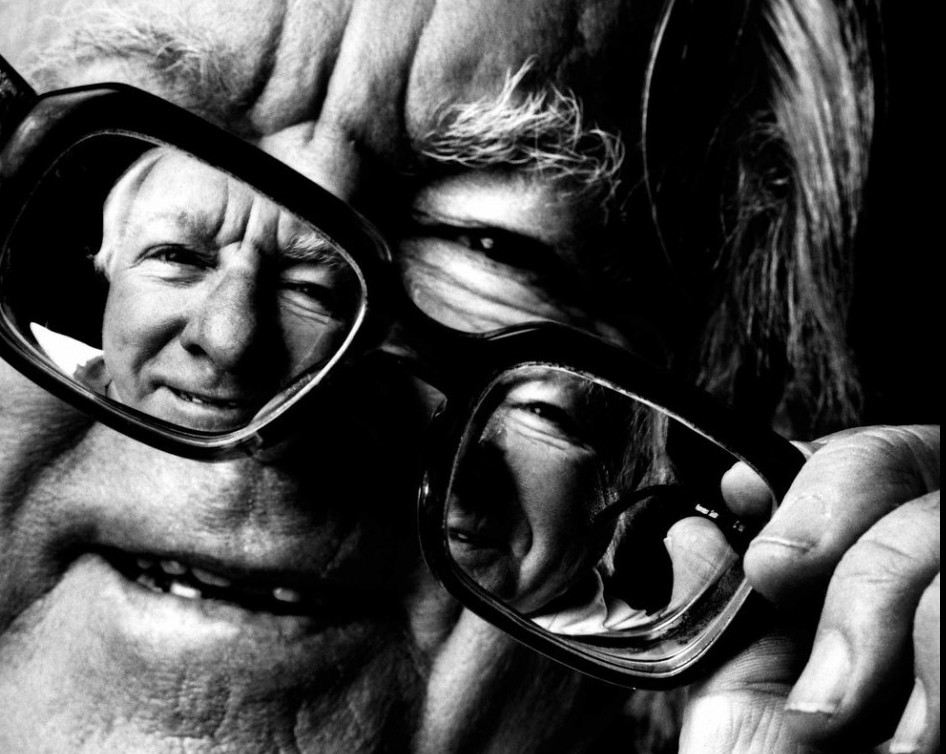
Childhood’s End: Death and Growing Up in the Books of Ray Bradbury

Ray Bradbury wicked

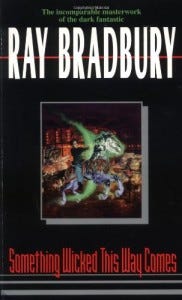
Jim Nightshade is a boy’s boy. You can practically feel the grit that dirties his tennis shoes, kicked up from crawling under, climbing over, and squeezing through every inch of his small town — from poking his toe into its every corner, private and public, from never passing up a proposed adventure. You’d think he sleeps with toads in the creekbeds, but in fact he has a safe room in a nice house, next-door to his foil, his best friend, his partner-in-crime, Will Halloway. It’s here abed that the 13-year-old discusses the philosophy of procreation with his single-mom in Ray Bradbury’s 1963 horror-fantasy, Something Wicked This Way Comes.

“Why, Jim, your hands are ice. You shouldn’t have the window so high. Mind your health.”

“Sure.”

“Don’t say ‘sure’ that way. You don’t know until you’ve had three children and lost all but one.”

“Never going to have any,” said Jim.

“You just say that.”

“I know it. I know everything.”

She waited a moment. “What do you know?”

“No use making more people. People die.” […]

“Promise me, Jim. Wherever you go and come back, brings lots of kids. Let them run wild. Let me spoil them, some day.”

“I’m never going to own anything can hurt me.”

“You going to collect rocks, Jim? No, some day, you’ve got to be hurt.”

“No, I don’t.”

He looked at her. Her face had been hit a long time ago. The bruises had never gone from around her eyes.

“You’ll live and get hurt,” she said, in the dark.

Bradbury writes as movingly and evocatively about boyhood as any other American writer (well, early 20th-century, white, middle-class, Midwestern, suburban boyhood, anyhow) — he’s up there with Mark Twain, with James Agee. And not just the joy of youth, but also the pain its very existence threatens to impart. The flip side of his bated-breath cusp of adolescence is its destruction, which shows up throughout so many of Bradbury’s novels and stories, as much as or more than whatever else we usually associate with his work: the futuristic, the technological, the speculative, the interplanetary, the bibliophilic.

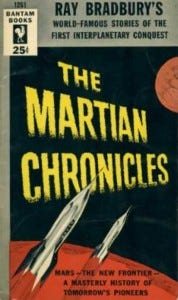
The Martian Chronicles, his 1950 breakthrough collection of loosely related tales about the Fourth Planet set in the near future, is thick with such sorrow.” ost of the stitched-together story collection’s poignancy arises from the native Martian population’s using its powers of telekinesis on the colonizing Earthlings, as when the former make the latter think in “The Third Expedition” that each has been reunited with a lost family member: the aliens make the Red Planet appear to its visitors as Small Town, USA, populated by dead-and-buried loved ones, from long-lost brothers to long-dead grandparents. It’s a heaven-on-Mars that soon becomes a hell, as the once-mourned revenants, Martians in disguise, bear knives that they soon use.

Martian Chronicles

In “The Long Years,” a man lives in happy seclusion with his wife and two children — or, rather, unaging androids, built after the originals perished decades before. But the book’s creepiest bereavement story is “The Martian,” in which an alien with no identity but the one projected onto him by passersby attaches itself to an elderly couple, who long ago lost their son, and becomes their Tom. He begs them not to take him to town, but mother insists, and there he’s rapidly shape-shifted into another lost child, and grabbed by another grieving family — the Spaudlings, the pseudonym Bradbury usually uses for his own. When the father recaptures the creature, they run for the couple’s boat, anchored at the canal, and each person the Martian passes in town starts to chase it, thinking they’d caught a glimpse of the object of their always-present grief: a lost child or ex-sweetheart or deceased spouse. “All along the way, the same thing, men here, women there,” Bradbury writes. “The swift figure meaning everything to them, all identities, all persons, all names.”

All down the way the pursued and the pursuing, the dream and the dreamers, the quarry and the hounds. All down the way the sudden revealment, the flash of familiar eyes, the cry of an old, old name, the remembrances of other times, the crowd multiplying. Everyone leaping forward as, like an image reflected from ten thousand mirrors, ten thousand eyes, the running dream came and went, a different face to those ahead, those behind, those yet to be met, those unseen.

It’s like if you could coax the truth from ten thousand people on the street about whether they’re privately mourning a loss, you’d get ten thousand affirmative responses from ten thousand pained people. Like Jim’s mother, they lived and got hurt.

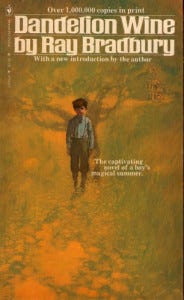
The source of this kind of heartache seems twofold, both allegorical and biographical. Bradbury was born in 1920, and raised mostly — discounting a few excursions to the American Southwest — in Waukegan, Illinois, then a city of fewer than 20,000 people on Lake Michigan, 40 miles north of Chicago; when he was 13, his family moved to Los Angeles, where he lived until his death 78 years later. Waukegan, now with more than 80,000 residents and struggling with postindustrial depression, features prominently in Bradbury’s work as the setting, under the fictional name “Green Town,” of Something Wicked, Dandelion Wine (1957) and its long-delayed sequel Farewell, Summer (2006), as well as the subsequent story collection Summer Morning, Summer Night (2007). (I’d also argue 1972’s The Halloween Tree is set here, before it ventures out across time and space, though the locale isn’t specified. The phony small town in “The Third Expedition” also seems modeled on Waukegan. Various stories are also set there, like The October Country’s “The Man Upstairs.” And so on.)

His descriptions of the area tend toward the idyllic. “I left at just the right moment,” he once told a documentary producer, “so that nostalgia set in almost immediately.” Halloween Tree, his short Samhain history for young readers, is clumsily conceived and confusingly plotted, but its opening chapters, describing a group of boys’ descending onto a modest Midwestern community on All Hallows’ Eve, are masterpieces of sensory evocation.

There wasn’t so much wilderness around you couldn’t see the town. But on the other hand there wasn’t so much town you couldn’t see and feel and touch and smell the wilderness. The town was full of trees. And dry grass and dead flowers now that autumn was here. And full of fences to walk on and sidewalks to skate on and a large ravine to tumble in and yell across. And the town was full of…

Boys.

Dandelion Wine

This same flair — for the unknown worth diving into, which provides for necessary exploration and discovery, knowledge gained through direct contact with the physical world — enhances the constant running through small-town streets that the best friends do in Something Wicked, and the children’s playing across lawns during Dandelion Wine’s small-town summer of 1928. But menace always lurks not far from the surface of his deceptively sentimental telling. Readers who remember the semiautobiographical Dandelion Wine as a those-were-the-days coming-of-age novel forget its chapter with the serial killer who targets young women and his latest victim, discovered at the ravine, who “lay as if she had floated there, her face moonlit, her eyes wide and like flint, her tongue sticking from her mouth.”

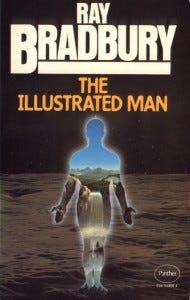
The book is Bradbury’s masterpiece, his fullest, most deeply felt and lyrical expression, touching on his usual themes of youth, old age and small-town life but stripped of their usual layer of sci-fi remove. It begins with a 12-year-old boy, Douglas (Ray’s middle name), becoming aware of his being alive, discovering the joy in the realization; the Winesburg-esque tales that follow, a portrait of a town in bite-size pieces, teach him the correlating truth: “I’d have to die someday,” as he explains it to his little brother late in the book. “I never thought of that, really. And all of a sudden it was like knowing the Y.M.C.A. was going to be shut up forever…and all the peach trees outside town shriveling up and the ravine being filled in and no place to play ever again and me sick in bed for as long as I could think and everything dark, and I got scared.” (This might seem morbid, but it’s honest. As the father in “The Veldt,” in 1951’s The Illustrated Man, worries about his 10-year-old children: “They were awfully young…for death thoughts. Or, no, you were never too young, really.”)

It’s easy to see where this realization of death came from for Bradbury — not from adulthood, as all four of his daughters outlived him, and he and his wife were married 55 years, but from childhood. He’d lost a grandfather when he was five. When he devotes several of the final pages of Fahrenheit 451 to a newly introduced character’s reminiscences of his grandfather, it’s easy to read it as a little inserted autobiography, the writer writing what he knows. “When he died, I suddenly realized I wasn’t crying for him at all, but for the things he did. I cried because he would never do them again…He was part of us and when he died, all the actions stopped dead and there was no one to do them just the way he did. He was individual. He was an important man. I’ve never gotten over his death.”

A grandfather wasn’t Bradbury’s only childhood loss. Bradbury’s older brother Sam (a family name), twin to Leonard Jr. (another family name), died two years before Ray was born, during the incomprehensibly deadly 1918 Spanish flu epidemic estimated to have killed three to five percent of the world’s population. “Bradbury sensed an unspoken, and perhaps unconscious, desire within the family that he would grow to stand in for his brother’s lost twin,” Jonathan R. Eller writes in the biography Becoming Ray Bradbury.

Bradbury’s baby sister also died, from pneumonia in 1927, which he surely describes in Dandelion Wine when he writes, from the point-of-view of the hero’s ten-year-old brother:

Death was his little sister one morning when he awoke at the age of seven, looked into her crib, and saw her staring up at him with a blind, blue, fixed and frozen stare until the men came with a small wicker basket to take her away. Death was when he stood by her high chair four weeks later and suddenly realized she’d never be in it again, laughing and crying and making him jealous of her because she was born. That was death.

“The deaths of these siblings most assuredly contributed to Bradbury’s fascination with death,” Steven L. Aggelis writes in his introduction to the collection Conversations with Ray Bradbury. (It only takes Fahrenheit 451 three scenes, fewer than 15 pages, until a character tries to kill herself.) There was also the curious incident from his youth in which he spent a day playing with a girl on the edge of a lake; then she went swimming and drowned. This formed the basis of his first major story, “The Lake” (1942), republished in his first story collection, Dark Carnival. As a result of the writing, he “was able, at least partially, to purge from his system a demon that had long haunted him, the memory of her death,” Aggelis writes. If that’s true, he had quite a few such demons to purge, which must be why you see such loss show up again and again in his books! One of his most death-obsessed stories, “Next in Line,” opens with the funeral procession of a tiny coffin in a small Mexican town.

Bradbury’s work often oscillates between young death and old. In October Country’s “Jack-in-the-Box,” an isolated child, poorly educated in seclusion by his nutty mother, doesn’t know what death is, and he mistakes it for life after he finally sees the outside world, which he was always told would kill him. To the bemusement of a beat cop, the boy runs wild down the streets, tears streaming, shouting, “I’m dead, I’m dead, I’m glad I’m dead, I’m dead, I’m dead, I’m glad I’m dead, I’m dead, I’m dead, it’s good to be dead!” The collection’s next story, “The Scythe,” opens with a down-on-their-luck family discovering the lonely corpse of an old man in a remote farmhouse. The patriarch picks up the deceased’s wheat-culling gig with the title’s tool, only to figure out he’s become Death, and part of his responsibility is to chop down the stalks that represent his children’s lives.

At the same time, I don’t think we should take Bradbury too literally: what also animates his oeuvre is the melancholy of age, the realization of inevitable, inexorable death. The death of old men is straightforward, the lurking fear of all aging humans. But its warped reflection, the death of children, seems to exist in Bradbury’s subconscious as a metaphorical motif, an expression of mourning for a man’s lost childhood, for his alienation from its starry-eyed innocence, killed off by the ever-lurking menace, whether it’s in Midwestern Green Town or on Mars. It’s not the children dying but childhood itself — the metamorphosis of a man that haunts his aged self, reminding him of his impending cessation.

Often the most moving and melancholy passages in his books concern older men ruing their age. In Dandelion Wine, we see it again and again: the elderly shoe-store proprietor transported emotionally back in time by a pair of sneakers, the colonel on his death bed listening over long-distance to the sounds of people just living their lives in Mexico City, or the 95-year-old spinster who meets her ideal mate six decades too late. In Something Wicked This Way Comes, Will’s father throughout longs wistfully for his youth, especially in Chapter Three, the book’s most poignant, which begins:

Watching the boys vanish away, Charles Halloway suppressed a sudden urge to run with them, make the pack. He knew what the wind was doing to them, where it was taking them, to all the secret places that were never so secret again in life. Somewhere in him, a shadow turned mournfully over. You had to run with a night like this, so the sadness could not hurt.

Older people in Bradbury’s books are always sad about being older, even the occasional woman that Bradbury hasn’t confined to proudly suffered motherhood. In Dandelion Wine, the widow Mrs. Bentley loses an argument with a few local children about whether she were ever a little girl, ever pretty, ever really called “Helen,” points she tries to prove by showing them trinkets and a photograph, all of which they accuse her of stealing from some little girl. “I don’t mind being old — not really,” she later confesses to her teacup — “but I do resent having my childhood taken away from me.”

illustrated

In contrast, Miss Foley, the boys’ former teacher in Something Wicked, comes to resent having been given it back. Miss Foley fears mirrors — those ultimate indicators of age, reflecting senescence right back in our faces — and it’s not only the magical mirrors at the carnival that almost get her, those funhouse captors, but also the ordinary variety in her home, which both in Bradbury’s prose threaten “drowning.” And it’s this fear of old-age that tempts her to ride the book’s age-­changing carousel, leaving her a helpless child, weeping in the rain under “a vast oak tree” in a particularly chilling scene. (The devastating honesty of mirrors also turns up in “The Dwarf,” in which the title character spends every night posing before an elongating fun-house reflector, until the carny pulls a mean-spirited prank — replacing it with a diminishing one — sending the man into a murderous rage.)

The commonality between Bradbury’s junior and elder deaths is that both prove we can’t count on ourselves or other people, because other people and ourselves are prone to an inescapable change whose endpoint is death. It’s all part of the same problem: the ephemerality of all existence. As the uber-skeptical hero of Illustrated Man’s “No Particular Night or Morning” puts it: “My wife died. You see, nothing stays where you put it — you can’t trust material things.” Or as Dandelion’s Douglas puts it, summing up the book to that point:

YOU CAN’T DEPEND ON PEOPLE BECAUSE…

…they go away.

…strangers die.

…people you know fairly well die.

…friends die.

…people murder other people, like in books.

…your own folks can die.

He’s too terrified to write down the obvious final item on that list: that he, too, can die — or, you might say, grow up, because in Bradbury it’s the same thing, just different points on the continuum.

FICTION: Crazy by Stephen Dixon

I have a dream. In it I’m pushing my wife in a wheelchair on a narrow street in New York. Chinatown, during the lunch hour. Four- to five- story buildings, lots of small restaurants, sidewalks very crowded and people walking fast. “Excuse me, excuse me,” I say to people in front of us. “Better watch out. I don’t want to run in to you.” I’ve no idea where I’m going. I’m just pushing. My wife sits silently, looking straight ahead.

Then the scene changes to a street on the East Side of New York. In the 40s; near the East River. Not a street but an avenue: First or Second or Third. The sidewalks are wide and again very crowded. Lunch hour. People walking very fast. Despite the tall office buildings on both sides of the avenue, plenty of sun. “We’re in the Gravlax District,” I say to my wife. “Can you hear me above all this noise? The Gravlax District. I only used to come here to go to a steakhouse or an art movie theater.” I stop pushing and look around. “So many people,” I say, with my back to her. “We never get crowded streets like this where we live. Nor the car traffic. It’s exciting, don’t you think?” When I turn back to her, she and the chair are gone. I took my hands off the chair’s handles, something I almost never do when I’m outside with her and we’re moving, or even when we’ve stopped but people are moving around us. Where could she have gone to? She wouldn’t have just left without saying something to me. She must have been in a hurry, probably to pee. And stood up, told me where she was going and what for — most likely to a restaurant to use its restroom — but I didn’t hear her because of the street noise, and then pushed the wheelchair there, or else wheeled the chair there while she sat in it.

I’m on a corner and see a restaurant a few doors down the sidestreet. I run to it and say to a man behind the lunch counter, “Did a woman in a wheelchair come in here in the last minute or so?”

“In a wheelchair?” he says. “Couldn’t have. We’ve three steps leading up to our door.”

I run farther down the street to a park at the end of it. Jacob Riis Park? Does it come this far downtown? Anyway, a park that borders the river. Maybe she thought there’d be a public restroom here, and I look around. No Abby. She’d be easy to see, too, because she’d be in the wheelchair or pushing it. She can’t walk on her own. No public building anywhere around, either. Just a playground, surrounded by grass and trees.

I run up the same sidestreet on the other side of the block. I look through the vestibule doors of all the brownstones on that side of the street, just as I did on the other side of the street when I ran down it to the park. In one dingy hallway I see at the end of it what looks like a wheelchair turned over. Oh my God; is it on top of her? I ring all the tenants’ bells, am buzzed in. I run down the long hallway. It’s a baby carriage turned over, nobody under it.

I run to the avenue where I last saw her, cup my hands over my mouth and shout “Abby, it’s Phil; come back to the spot, Abby, it’s Phil; come back to the spot.” People stare at me as if I’m crazy. “I’m looking for my wife,” I say. “She was here, in a wheelchair; now she’s not.” I shout again “Abby, it’s Phil; come back to the spot.” I keep shouting that while also looking in every direction for her. It’s better to wait for her here than run around looking for her. If she comes to this spot and I’m not here, she might not know what to do to find me. I don’t see her or anyone in a wheelchair. The street’s still very noisy and crowded. And now I hear music, symphonic, coming from someplace, and which is so loud I won’t be able to shout above it.

I wake up. The music’s from the radio on my night table. I was listening in the dark to the classical music station, when I fell asleep. I think about the dream. We were in Chinatown first and then on the East Side in the 40s. I have to go there. I have to find her. This is crazy, I know.

I drive to the train station, park the car in its underground garage and buy a roundtrip ticket to New York. When I arrive, I go straight to Chinatown. I don’t quite know how to get there, though. It’s been five years since I’ve been in New York, my home city and also Abby’s. The borough narrows at the southern end close to where Chinatown is, so just take any subway train south and get off at Worth Street or Canal Street or Chambers, whichever comes first. I get on the subway and get off at Houston Street — I forgot Houston — and think I’m near Chinatown, but it turns out to be a long walk. I’m hungry — I rushed out of the house so fast, I didn’t have anything to eat and the train didn’t have a food car. I should stop in one of the small restaurants here and sit at the counter and have a bowl of soup and plate of noodles, but I don’t want to lose any time in looking for her.

I walk all around Chinatown. I think I cover every single block. This is crazy, I know, but I thought I could find her down here, or at least there was a chance. I don’t want her to be lost. She’ll get sad, frightened; maybe even terrified. She’s become that vulnerable. She used to like going alone to places — even faraway countries — she’s never been to before or hasn’t been to in a while. But not since she got so sick. She needs me. She once said I keep her alive. Not said it to me but wrote it four or five years ago in one of the notebooks I found of hers. “Phil keeps me alive. What to do?” and she dated it: October 6th; I forget the exact year. I give up looking for her in Chinatown. Only other place to go is the east 40s. Maybe I’ll find her there. Since it was the last place I saw her, I should have gone there first.

I take the subway to Times Square, then the one-stop train shuttle there to Lexington Avenue and 42nd Street. I go upstairs and walk on 42nd Street to First Avenue. I walk down First Avenue to 34th Street, then walk up Second Avenue to 42nd Street, then walk down third Avenue to 34th Street. Then I walk along all the sidestreets between First and Third Avenues from 34th to 50th Streets. I look in stores. I look in most of the brownstones I pass and also the lobbies of the tall apartment and office buildings and even in a few movie theaters. This is crazy, I know, but for some reason I begin to think I’ll find her, that it’s more than a slight chance. But no Abby or wheelchair anyplace. And no wheelchairs in the ground-floor hallways of any of the brownstones, though plenty of baby carriages, none turned over.

I have to go to the bathroom. I go into a coffee shop, order a coffee at the lunch counter and go to the men’s room. I drink the coffee, have a buttered English muffin with it and ask the server behind the counter if she’s seen a woman in a wheelchair here today, and I describe Abby and the chair and its tote bag hanging on the back. “I was pushing her in the chair, got distracted for a few seconds and let go of it, which I almost never do, and she was either wheeled away by someone or wandered off by herself.”

“If she was in here I would’ve seen her,” the woman says. “I’ve been on duty all day, never a work break. The door to this place is hard to open from the outside by someone in a wheelchair, so I always have to come out from behind the counter to help.”

I pay and leave. I go to the corner of 40th Street and First Avenue, which is where she disappeared, and look around some more for her and then cup my hands around my mouth and shout “Abby, it’s Phil; come back to the spot. Abby, it’s Phil; come back to the spot.”

Lots of people look at me. One man stops and says “Anything wrong, Chief?”

“Yes,” I say, “I’ve lost my wife. She was in a wheelchair.”

“If she got separated from you in a wheelchair and was able to move it by herself, she’ll come back.”

“That’s why I’m shouting for her,” I say. “The streets are crowded and she’s sitting so low in the chair that she won’t be able to see me from it. But she’ll hear me and come back to the spot I lost her at.” I cup my hands around my mouth again and shout “Abby. Abby, it’s Phil. Come back to the spot.”

A policeman comes over and says to me “You can’t be shouting out like that, sir. Is it something I can help you out with?”

“My wife, in a wheelchair, was here with me and then vanished.”

“I can take down a description of your wife and have a patrol car look for her.”

“No,” I say, “it won’t help. This is crazy, I know, to do what I’m doing, but I had to see it through. Thank you. I’ll go home now. I’ll just have to believe she’ll be okay.”

I hail a cab, take it to Penn Station, and get the next train back to my city. I better watch out, I tell myself. I could get arrested. Put away. And that’s not something I need.

REVIEW: The Infernal by Mark Doten

1.

“It’s a war book,” I might have told the gentleman. “Kind of. But not really. It’s also about Jack Nicholson and Condoleeza Rice. Mark Zuckerberg appears, too.”

I’d just finished reading the galley for Mark Doten’s debut novel The Infernal on a flight from Seattle. The 737 descended toward O’Hare airport as I closed the book and rested it face down on my leg. I peered out the window to get a look at the Chicago skyline like a fortress guarding Lake Michigan. The plane banked left, the book slipped, and the older gentleman next to me stopped it from sliding past his feet. He bent and handed it to me. “Thanks, I said.” He nodded, but his eyes lingered on the cover for a bit, the design like black ink or a virus seeping into swamp water.

I did not want to have a conversation, especially with someone I would be sitting next to for several more minutes of taxiing and deplaning. I made a show of adjusting my headphones and selecting new music. Really, I was thinking of how I would respond if the gentleman asked me what the book was about. I’d noticed he had been reading Hector Tobar’s Deep Down Dark, a book I’m still curious about.

Talking to a stranger, when I’m not ready for it, is a kind of chaos. It’s not that I didn’t think I could have a good conversation with the gentleman. It’s that when chaos like this beckons, I instinctively seek to maintain control and order. (NOTE: This is a metaphor for what’s to come in this review).

“It’s a novel of, like, ‘war on terror’ stories,” I decided I would say. But only if I had to, if the plane subtly crashed and the gentleman and I were lying on the tarmac, pinned next to each other by a piece of wing. “There’s a chapter that might very well be the best post-war/PTSD short story I’ve ever read,” I would say, and then tell him about the veteran with the blown-off leg, the one who tries to make wedding anniversary reservations but can’t because his mouth keeps filling with maggots.

We got off the plane. I wrote advertising things for a couple days. Then I flew home to New York.

Now I’m writing this.

2.

The notes I made in the margins of The Infernal have to do mostly with voices. Osama Bin Laden’s searching, imploring voice emerges from a cave of experiments being conducted on “the Jew Boy.” A dialectically confused pair of voices comes from friends Rashid and Hakim in the aftermath of a drone strike. The vice-trinity of the War on Terror — Condoleeza Rice, Dick Cheney, and L. Paul Bremer — all appear, in ways unexpected and sometimes hilarious. Facebook’s Mark Zuckerberg is in the book, as is Wikipedia’s Jimmy Wales, and Jack Nicholson circa Chinatown. And of course there’s the “author” Mark Doten himself, whom in The Infernal (and outside it) is an editor at a New York City publishing house.

I page through the marked-up galley from the airplane. What is happening? I scribbled early on. Then, largely, How is this going to work? Toward the end, after many other questions, underlines, and arrows, WHY THE HELL DID THAT WORK???

So, a bit of plot overview. Because The Infernal resists obvious plot — and indeed the novel is in many ways about how life resists clear order and story — answering these What? How? Why? questions in a review needs at least some kind of easy-to-follow-ness.

The Infernal begins with a cast of characters — those listed above are just a smattering of the many who appear and return in the “Omnosyne extractions” that make up the bulk of the novel. What is the Omnosyne? It’s a “mahogany box stuffed with Clockwork Threads; a helmet on a swiveling copper arm; a modified Jensen dental gag…” The important thing to know about The Omnosyne is that it is used for intense interrogation purposes.

“The Akkad Boy” is the subject of said interrogation, and his forced tongue is the source of the cast of voices. The novel continues from the list of characters with a “Memex report” (the Memex being, essentially, a governmental internet). The report details the discovery of “The Akkad Boy” at a location called “al-madkhanah (The Chimney).” According to the report, the boy was found naked and in convulsions, having burned alive or still burning alive, somehow not dead and not dying. The first scout who attempts to help the boy dies shortly after coming in contact him. Something is terribly wrong — “Something was happening,” the report reads — but no one knows exactly what or how or why. These are soldiers taking orders, and no one understands. How could the boy possibly be alive given the terror the Scout reported from The Chimney? But despite all the boy’s “scorched hair and flesh” and the surrounding “carrion birds” ready to “fill their stomachs with the flesh of the boy,” The Akkad Boy has “a perfect pink tongue” that he refuses to use. He refuses to explain himself, and that is unacceptable.

The forces in charge — “The Commission” — determine the Omnosyne is the only way to make The Akkad Boy talk. Their response reads: “He is part of what is happening and we need — now, today — the information that is inside him.” It’s been fifty years since the Omnosyne was used, when Jimmy Wales used it to sabotage the Memex, and the Memex “began to burn up from within, to lose connections, to make new ones arbitrarily, cancerously.” So, despite the threat Wales poses to the laws and order the Memex provides the world, he’s released from prison, and he begins to operate the Omnosyne on the Akkad Boy.

Then the “perfect pink tongue” begins to speak. For nearly four hundred pages, we receive extraction after extraction (monologues or chapters, really) each one interrupted by glitches of code-gibberish like:

“T B Z0#0V092QS0KCG6 P-LYMRZ

5NCYL0TBETWL BPKLG#XO0 01 0CMK10LX3Y=.V”

The code reminds us of the Omnosyne and source of these texts. We hear from Zuckerberg and Paul Bremer, in first person chapters, but never forget, because of the code, that these are recordings, documents, extracted via a radical interrogation technique.

That’s an accurate quote, by the way, of the code.

3.

Here’s the truth, and perhaps the only thing I understand for sure about The Infernal: it is a success, and an utter delight, and these qualities come from my not being able to understand it entirely. It’s a book of yearning and want, an adventure through war and chaos that, in the end, tells me it’s okay if I don’t understand, because nobody really understands anything about war.

I’ve read so many beautiful books. Some are escapism, easy to suture into and disappear, with structures and plots that are easy to understand and let play with my emotions. Others are complex, language-driven, and plot-less. The latter I read sentence-by-sentence, noticing gerunds and verb choice and meter moreso than character development or story. The former I just read, hope to weep.

I could give examples of either, but then so could any of you.

The Infernal is both and neither. The characters have recognizable names, but they aren’t completely recognizable themselves. Condoleeza Rice shoots still photography of Jack Nicholson on the set of Chinatown, and somehow Doten makes this make sense as metaphor (or at least I think he does). Osama Bin Laden whispers instructions to his students while birds caw and caw in cages dangling from cave ceilings (what the metaphors are for this, I’m not completely sure). The veteran with the blown-off leg I already mention struggles to make a dinner reservation over the phone because his mouth keeps filling up with maggots (the maggots might very well not be metaphors. I hope they aren’t. I like them just being maggots).

Like I would have said to the older gentleman on the plane — The Infernal is not exactly a war book. Not entirely. It’s not an easy book to describe, either (clearly). But what I know for sure about the War on Terror, is that we all want to understand it. Because in the chaos of terror, understanding (maybe) brings peace. And what I understand about The Infernal is that the more I read it, the more I couldn’t stop reading. And the more I read, the more I felt like I did.

Which gave me a new kind of peace.

The Infernal

by Mark Doten

Powells.com

Sunday Sundries: Literary Links from Around the Web (Feb. 8th)

Looking for some Sunday reading? Here are some literary links from around the web that you might have missed:

Who doesn’t love little free libraries? The law, apparently

A look at Ian Ballantine, the man who made paperbacks popular

George R. R. Martin’s original plans for the ASOIAF/Game of Thrones series included a bizarre love triangle

An interview with Margaret Atwood on hope, science, and writing about the future

Oyster Review tells you everything you need to know about every Philip Roth novel

At The Millions, Steve Himmer has a moving essay on writing (and here’s our recent interview with Himmer)

Why don’t Americans read more foreign fiction?

To Shill a Mockingbird: my take on the new controversy around the new Harper Lee novel

Can a novel’s complexity be reduced to a few data points? The Paris Review takes a look at some new story research

George R. R. Martin Originally Planned a Love Triangle Between Arya, Jon, and Tyrion

Every writer knows that novels have a way of turning into something you didn’t expect. That’s part of the joy of writing. But it is always interesting to see how an author’s original idea for a work changed, especially if the work is as massively popular as George R. R. Martin’s A Song of Ice and Fire (and it’s HBO adaption Game of Thrones). Fans of the show and book now can get a peek at Martin’s original plans after the Waterstones bookstore Twitter leaked it online. (It was removed, but fan site Winter Is Coming grabbed it.)

The original plan, submitted by Martin to his publisher over 20 years ago, included the broad outlines of the story that we know: “the enmity between the great houses of Lannister and Stark” with a background of “plot, counterplot, ambition, murder, and revenge, with the iron throne of the Seven Kingdoms as the ultimate prize.” Meanwhile, “the Dothraki horselords mass their barbarian hordes for a great invasion of the Seven Kingdoms, led by the fierce and beautiful Daenerys Stormborn” and way up north “half-forgotten demons out of legend, the inhuman others, raise cold legions of the undead and the neverborn.”

Martin’s letter is for “the first volume in what I see as an epic trilogy with the overall title, A Song of Ice and Fire.” Of course, every fan knows the plan for a trilogy quickly expanded and the book series is now planned for 7.

But so far, so familiar.

There are some key differences in Martin’s original plan though:

* Jaime Lannister was going to murder his family and become king: “Jaime Lannister will follow Joffrey on the throne of the Seven Kingdoms by the simple expedient of killing everyone ahead of him in the line of succession.”

* Sansa was going to side with Joffrey over her family: “Sansa Stark, wed to Joffrey Baratheon, will bear him a son, the heir to the throne, and when the crunch comes she will choose her husband and child over her parents and siblings, a choice she will later bitterly rue.”

* Arya, Jon Snow, and Tyrion were going to have an bitter series-long love traingle: Arya “realises, with terror, that she has fallen in love with Jon, who is not only her half-brother but a man of the Night’s Watch, sworn to celibacy. Their passion will continue to torment Jon and Arya throughout the trilogy.” Meanwhile, Tyrion falls “helplessly in love with Arya Stark while he’s at it. His passion is, alas, unreciprocated, but no less intense for that, and it will lead to a deadly rivalry between Tyrion and Jon Snow.”

* As Winter is Coming notes, the number of players in the game of thrones is much simpler with basically the Lannisters, the Starks and Dany as the only major players. No mention of the Boltons, Freys, Baratheons beyond Joffrey, or most of the other houses who’ve had a major impact.

***** POSSIBLE SPOILERS*****

There are also some possible spoilers in the letter.

* Martin said the story would center around five characters who would be there in every book: Tyrion, Daenerys, Arya, Jon, and Bran. This isn’t much of a spoiler, since most fans would expect all five of those to make it to the last book. Still, it seems extremely unlikely that any of those five will die in The Winds of Winter. (On the other hand, as the books went along it seems Sansa has overtaken Arya as the most prominent Stark sister.)

* Originally, Daenerys finds dragon eggs and regains a Dothraki horde to invade Westeros with. The end of book 5 implies part of this will happen, so again not a major spoiler for anyone who has read all five books.

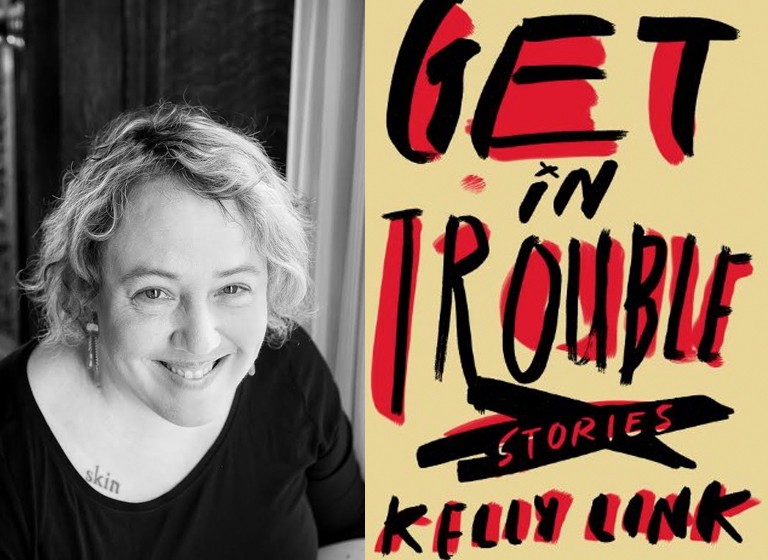
INTERVIEW: Kelly Link, author of Get in Trouble

I don’t usually admit this kind of thing when it comes to other writers, but I’m a huge Kelly Link fan — like in a very nerdy way. If I had the power to write fiction like one contemporary writer, I think I’d probably say Link. She has this uncanny ability to stretch a short story way past the boundaries of both length and possibility without ever crossing the line into fantasy. And no, I don’t mean that in a phantasmagoric, Borgesian kind of way (although you can also see his influence from time to time when reading Link); rather, Link’s work feels fully realized, emerging from her brain as truly and impossibly colored. She’s the sort of writer always able to surprise me, even though I’ve finished all of her other books, even her latest collection, Get In Trouble. Link’s writing has been compared to everything and everybody, from H.P. Lovecraft, to Buffy the Vampire Slayer and hardboiled noir writers, but stands out in its originality and idiosyncratic loveliness. Like her prose, Link is one of the easiest writers to get obsessed with, but also nearly impossible to explain.

Jason Diamond: This is the one long one, I swear: Probably one of my favorite lines I’ve read in a long time is in “I Can See Right Through You”: “Florida is just California on a Troma budget.” I liked it because not only does it sum up Florida in maybe the most perfect way I can imagine, but it gives me a chance to ask you about Florida. I was thinking about how a number of my favorite current fiction writers (Karen Russell, Sarah Gerard, Laura van den Berg, a few more) either grew up or spent a lot of time in Florida, and when I mentioned this on Twitter, people named a handful of other writers including you since you were born in Miami. My question is: what kind of influence do you think particular places have had on you as a writer? Do you think originally coming from somewhere as strange as Florida has influenced your work more than the east coast, or does it not factor in?

Kelly Link: Let me hedge, for just a second, and say that that line is from the point of view of an actor who lives in L.A. Not mine! I love Florida in all of its weird, overgrown, lizardy splendor, even if the physical me wilts once the temperature and humidity get over a certain point. Say, 89 degrees. I grew up in North Carolina, and Tennessee, and Florida — I hadn’t really done much with those places as settings until the stories in this book. Maybe I needed a certain amount of distance and time before I could think about those places as a writer. I certainly grew up loving the mystery novels set in Florida (John D. MacDonald, Carl Hiaasen, and so on) and so maybe I thought of Florida as more of a landscape for mysteries than a landscape for the fantastic. The development where we lived was mostly wilderness, outside of a few blocks, and it was used more than once as a dumping ground for murder victims. Anyway: hard for me to say what kind of influence place has had. I expect it’s had one, but it’s easier for me, instead, to see the influence of books and writers.

JD: What about teaching? How does teaching help you as a writer?

KL: I love teaching because I love the work of the workshop. I went through an MFA program at the University of North Carolina at Greensboro, and straight out of that I went to the Clarion Workshop in Michigan. Clarion is a six-week workshop in which you have six different instructors, all with very different points of view, and ideally produce six stories. I’ve taught at Clarion quite a lot. I’m asked, on occasion, to teach for a semester at different programs. I don’t know, precisely, how it helps me as a writer. Certainly I don’t get as much writing done while I’m teaching. But it’s a point of access for me into workshops where writers with, one always hopes, different perspectives on how stories work will sit around for a couple of hours talking about how they read, and what they notice, and what threw them for a loop — and I crave that. If I could design my own workshop, I’d get a poet and a fiction writer to teach together. And bring in a bunch of visual artists — (And yeah, I know Lynda Barry teaches a pretty spectacular workshop!) — just to expand the scope of the discussion about what narrative is able to do and how.

JD: Probably my favorite novel from last year was Helen Oyeyemi’s Boy, Snow, Bird. I love the way she takes stories that are familiar to us (in the case of the latest book, in case you didn’t read it, Snow White) and reshapes it into something that’s her own. I think part of the reason I love your stories so much is because I feel like you tend to do something similar, where you play with certain genres that I love, but you make them totally your own. Do you ever find yourself working on a story and thinking, “This is moving too far in a certain direction, I need to clamp down and try something else”? Because whenever I read one of your stories, I think I know which direction you’re heading in, but I’m always happy to find I was wrong.

KL: I love Helen Oyeyemi’s work so much! I heard her read at the Brookline Booksmith last year: something that had been a life goal. I’ve said this before, but why not say it again: the fantastic is a flexible metaphor. With a fairy tale or a story about an impossible thing, you’ve introduced an element that readers will try to assign a meaning to. (Actually, we do this with the mimetic bits as well, but with vampires or ghosts, the reader is on slightly shakier ground, and therefore you can make them work a bit harder to find their footing while still entertaining them.)

I think that we want to be led slightly astray when we’re being told a story. Just a little wrong footed.

Sometimes I think of narrative progression less as plot and more as a series of turns or reversals. You begin to suggest the direction that a character or story may be taking, and let the reader begin to supply the rest of the story or set of possible actions, or general emotional state. If you do what the reader expects, the story slows down. And if you do something that feels false to the reader, the story breaks. So there’s a lot of fine-tuning involved. I think that we want to be led slightly astray when we’re being told a story. Just a little wrong footed. Even if it’s only by the way that the sentences have been put together.

JD: How long, generally, do you work on a story?

KL: Depends on the story. “The New Boyfriend” and “The Summer People” both took about a week to write. “I Can See Right Through You” took over a year. I used to think that the stories I loved best were the fast ones to write, because I didn’t have time to let the approach get stale. But in fact, I love “I Can See Right Through You” — maybe because once I figured out how to make it really work, it only took a week to do that work.

JD: Do you have a daily writing routine?

KL: I don’t write on a daily basis. I don’t have enough stick-to-it-iveness. But I am often hanging out, on a daily basis, with people who manage to get a great deal of writing done day in and day out. I spend a lot of time loathing the sentences that I put down on the page. Once I’m past that phase, it doesn’t really matter what the routine is (coffee shop, someone else’s house, my dining room table), I’m pretty fast. I go back to the start of whatever I’m working on, every half hour or so, and revise my way back to where I left off. I have my headphones on, I’m checking email, I look at Twitter and Tumblr, and drink a lot of coffee. I need a lot of distraction to work.

JD: Whenever I interview a writer with a short story collection, I always mention this quote I read by Isaac Bashevis Singer. I don’t recall the exact phrase, but it’s basically short stories are more difficult than novels because you have such a limited amount of time to write everything. Why do you think you’re drawn to writing them?

KL: I have no idea! I loved reading anthologies and collections as a kid. I wrote a short story for a workshop at Columbia, taught by Raymond Kennedy, and liked both the workshop and the feeling of having done something that wasn’t terrible. After I got out of college, I eventually applied to a workshop because I thought it would be awesome to spend more time writing short stories and hanging out with other people who wrote them. I’ve spent more than half of my life, at this point, thinking about short stories. But not so much time thinking about why short stories. Actually, what I’ve been thinking about recently is paragraphs. And I’ve been told that thinking about paragraphs is something that you do when you’re moving more into novel space.

[Editor’s note: read Kelly Link’s story “Stone Animals” at Electric Literature’s Recommended Reading]

Announcing Literary Hub from Grove Atlantic and Electric Literature

Electric Literature and Grove Atlantic are excited to announce Literary Hub, “a new home for book lovers” (Wall Street Journal). Literary Hub will launch on April 8, 2015, which also happens to be the first day of the AWP Conference.

The site was conceived by Morgan Entrekin, president and publisher of Grove Atlantic, and Terry McDonell, the former editor of Sports Illustrated and Esquire, as a daily destination for readers, from self-described book-lovers to casual readers.

Electric Literature came on board to develop and design the site, and help craft the editorial and outreach strategies. “When Grove came to us with the idea, we were attracted to its optimism. Lit Hub supports the whole ecosystem that literature needs to thrive, from the writers, to the publishers, to the bookstores, to the readers,” said Andy Hunter, co-founder of Electric Literature. “Our cultural conversation happens online now, and literary culture needs to play an important part. That’s Electric Literature’s mission, and Lit Hub fits.”

Jonny Diamond, former editor of Brooklyn Magazine and The L Magazine, is Literary Hub’s Editor-In-Chief. He’s joined by Executive Editor John Freeman, and Contributing Editors Roxane Gay, Adam Fitzgerald, Rebecca Wolff, and Alexander Chee. The team also includes Managing Editor Emily Firetog and Assistant Editor Ben Philippe (who both used to read EL’s slush pile!).

Literary Hub has over 65 committed partners (see a full list below) and will feature a mix of content contributed by partners and original material, including author interviews, features, excerpts, and essays.

CONFIRMED PARTNERS:

Grove Atlantic · Electric Literature · City Lights · Knopf/Vintage · Book People · Publishing Genius · PANK · Argos Books · A Public Space · Little, Brown · BookCourt · FSG · Slice Magazine · Story Magazine · Parnassus Books · BOMB · Ecco · O/R Books · Post Road · Algonquin · Scribner · Tattered Cover · Norton · Politics and Prose · New Directions · Housing Works · Penguin Press · Brazos Books · Conjunctions · Malvern Books · Fence · AGNI · Bloomsbury · Green Apple · Ugly Duckling · Harvard · Penguin Books · Skylight · Square Books · PEN · Riverhead · Newtonville Books · The Paris Review · The Strand · Akashic · Melville House · Archipelago · Book Passage · n+1 · Soho Press · McSweeney’s · Powell’s · House of Anansi · Unnamed Press · Zyzzyva · Last Bookstore · Graywolf · Books Inc · Tin House · Seven Stories · Community Bookstore · Poetry Magazine · Catapult