REVIEW: The Infernal by Mark Doten

1.

“It’s a war book,” I might have told the gentleman. “Kind of. But not really. It’s also about Jack Nicholson and Condoleeza Rice. Mark Zuckerberg appears, too.”

I’d just finished reading the galley for Mark Doten’s debut novel The Infernal on a flight from Seattle. The 737 descended toward O’Hare airport as I closed the book and rested it face down on my leg. I peered out the window to get a look at the Chicago skyline like a fortress guarding Lake Michigan. The plane banked left, the book slipped, and the older gentleman next to me stopped it from sliding past his feet. He bent and handed it to me. “Thanks, I said.” He nodded, but his eyes lingered on the cover for a bit, the design like black ink or a virus seeping into swamp water.

I did not want to have a conversation, especially with someone I would be sitting next to for several more minutes of taxiing and deplaning. I made a show of adjusting my headphones and selecting new music. Really, I was thinking of how I would respond if the gentleman asked me what the book was about. I’d noticed he had been reading Hector Tobar’s Deep Down Dark, a book I’m still curious about.

Talking to a stranger, when I’m not ready for it, is a kind of chaos. It’s not that I didn’t think I could have a good conversation with the gentleman. It’s that when chaos like this beckons, I instinctively seek to maintain control and order. (NOTE: This is a metaphor for what’s to come in this review).

“It’s a novel of, like, ‘war on terror’ stories,” I decided I would say. But only if I had to, if the plane subtly crashed and the gentleman and I were lying on the tarmac, pinned next to each other by a piece of wing. “There’s a chapter that might very well be the best post-war/PTSD short story I’ve ever read,” I would say, and then tell him about the veteran with the blown-off leg, the one who tries to make wedding anniversary reservations but can’t because his mouth keeps filling with maggots.

We got off the plane. I wrote advertising things for a couple days. Then I flew home to New York.

Now I’m writing this.

2.

The notes I made in the margins of The Infernal have to do mostly with voices. Osama Bin Laden’s searching, imploring voice emerges from a cave of experiments being conducted on “the Jew Boy.” A dialectically confused pair of voices comes from friends Rashid and Hakim in the aftermath of a drone strike. The vice-trinity of the War on Terror — Condoleeza Rice, Dick Cheney, and L. Paul Bremer — all appear, in ways unexpected and sometimes hilarious. Facebook’s Mark Zuckerberg is in the book, as is Wikipedia’s Jimmy Wales, and Jack Nicholson circa Chinatown. And of course there’s the “author” Mark Doten himself, whom in The Infernal (and outside it) is an editor at a New York City publishing house.

I page through the marked-up galley from the airplane. What is happening? I scribbled early on. Then, largely, How is this going to work? Toward the end, after many other questions, underlines, and arrows, WHY THE HELL DID THAT WORK???

So, a bit of plot overview. Because The Infernal resists obvious plot — and indeed the novel is in many ways about how life resists clear order and story — answering these What? How? Why? questions in a review needs at least some kind of easy-to-follow-ness.

The Infernal begins with a cast of characters — those listed above are just a smattering of the many who appear and return in the “Omnosyne extractions” that make up the bulk of the novel. What is the Omnosyne? It’s a “mahogany box stuffed with Clockwork Threads; a helmet on a swiveling copper arm; a modified Jensen dental gag…” The important thing to know about The Omnosyne is that it is used for intense interrogation purposes.

“The Akkad Boy” is the subject of said interrogation, and his forced tongue is the source of the cast of voices. The novel continues from the list of characters with a “Memex report” (the Memex being, essentially, a governmental internet). The report details the discovery of “The Akkad Boy” at a location called “al-madkhanah (The Chimney).” According to the report, the boy was found naked and in convulsions, having burned alive or still burning alive, somehow not dead and not dying. The first scout who attempts to help the boy dies shortly after coming in contact him. Something is terribly wrong — “Something was happening,” the report reads — but no one knows exactly what or how or why. These are soldiers taking orders, and no one understands. How could the boy possibly be alive given the terror the Scout reported from The Chimney? But despite all the boy’s “scorched hair and flesh” and the surrounding “carrion birds” ready to “fill their stomachs with the flesh of the boy,” The Akkad Boy has “a perfect pink tongue” that he refuses to use. He refuses to explain himself, and that is unacceptable.

The forces in charge — “The Commission” — determine the Omnosyne is the only way to make The Akkad Boy talk. Their response reads: “He is part of what is happening and we need — now, today — the information that is inside him.” It’s been fifty years since the Omnosyne was used, when Jimmy Wales used it to sabotage the Memex, and the Memex “began to burn up from within, to lose connections, to make new ones arbitrarily, cancerously.” So, despite the threat Wales poses to the laws and order the Memex provides the world, he’s released from prison, and he begins to operate the Omnosyne on the Akkad Boy.

Then the “perfect pink tongue” begins to speak. For nearly four hundred pages, we receive extraction after extraction (monologues or chapters, really) each one interrupted by glitches of code-gibberish like:

“T B Z0#0V092QS0KCG6 P-LYMRZ

5NCYL0TBETWL BPKLG#XO0 01 0CMK10LX3Y=.V”

The code reminds us of the Omnosyne and source of these texts. We hear from Zuckerberg and Paul Bremer, in first person chapters, but never forget, because of the code, that these are recordings, documents, extracted via a radical interrogation technique.

That’s an accurate quote, by the way, of the code.

3.

Here’s the truth, and perhaps the only thing I understand for sure about The Infernal: it is a success, and an utter delight, and these qualities come from my not being able to understand it entirely. It’s a book of yearning and want, an adventure through war and chaos that, in the end, tells me it’s okay if I don’t understand, because nobody really understands anything about war.

I’ve read so many beautiful books. Some are escapism, easy to suture into and disappear, with structures and plots that are easy to understand and let play with my emotions. Others are complex, language-driven, and plot-less. The latter I read sentence-by-sentence, noticing gerunds and verb choice and meter moreso than character development or story. The former I just read, hope to weep.

I could give examples of either, but then so could any of you.

The Infernal is both and neither. The characters have recognizable names, but they aren’t completely recognizable themselves. Condoleeza Rice shoots still photography of Jack Nicholson on the set of Chinatown, and somehow Doten makes this make sense as metaphor (or at least I think he does). Osama Bin Laden whispers instructions to his students while birds caw and caw in cages dangling from cave ceilings (what the metaphors are for this, I’m not completely sure). The veteran with the blown-off leg I already mention struggles to make a dinner reservation over the phone because his mouth keeps filling up with maggots (the maggots might very well not be metaphors. I hope they aren’t. I like them just being maggots).

Like I would have said to the older gentleman on the plane — The Infernal is not exactly a war book. Not entirely. It’s not an easy book to describe, either (clearly). But what I know for sure about the War on Terror, is that we all want to understand it. Because in the chaos of terror, understanding (maybe) brings peace. And what I understand about The Infernal is that the more I read it, the more I couldn’t stop reading. And the more I read, the more I felt like I did.

Which gave me a new kind of peace.

The Infernal

by Mark Doten

Powells.com

Sunday Sundries: Literary Links from Around the Web (Feb. 8th)

Looking for some Sunday reading? Here are some literary links from around the web that you might have missed:

Who doesn’t love little free libraries? The law, apparently

A look at Ian Ballantine, the man who made paperbacks popular

George R. R. Martin’s original plans for the ASOIAF/Game of Thrones series included a bizarre love triangle

An interview with Margaret Atwood on hope, science, and writing about the future

Oyster Review tells you everything you need to know about every Philip Roth novel

At The Millions, Steve Himmer has a moving essay on writing (and here’s our recent interview with Himmer)

Why don’t Americans read more foreign fiction?

To Shill a Mockingbird: my take on the new controversy around the new Harper Lee novel

Can a novel’s complexity be reduced to a few data points? The Paris Review takes a look at some new story research

George R. R. Martin Originally Planned a Love Triangle Between Arya, Jon, and Tyrion

Every writer knows that novels have a way of turning into something you didn’t expect. That’s part of the joy of writing. But it is always interesting to see how an author’s original idea for a work changed, especially if the work is as massively popular as George R. R. Martin’s A Song of Ice and Fire (and it’s HBO adaption Game of Thrones). Fans of the show and book now can get a peek at Martin’s original plans after the Waterstones bookstore Twitter leaked it online. (It was removed, but fan site Winter Is Coming grabbed it.)

The original plan, submitted by Martin to his publisher over 20 years ago, included the broad outlines of the story that we know: “the enmity between the great houses of Lannister and Stark” with a background of “plot, counterplot, ambition, murder, and revenge, with the iron throne of the Seven Kingdoms as the ultimate prize.” Meanwhile, “the Dothraki horselords mass their barbarian hordes for a great invasion of the Seven Kingdoms, led by the fierce and beautiful Daenerys Stormborn” and way up north “half-forgotten demons out of legend, the inhuman others, raise cold legions of the undead and the neverborn.”

Martin’s letter is for “the first volume in what I see as an epic trilogy with the overall title, A Song of Ice and Fire.” Of course, every fan knows the plan for a trilogy quickly expanded and the book series is now planned for 7.

But so far, so familiar.

There are some key differences in Martin’s original plan though:

* Jaime Lannister was going to murder his family and become king: “Jaime Lannister will follow Joffrey on the throne of the Seven Kingdoms by the simple expedient of killing everyone ahead of him in the line of succession.”

* Sansa was going to side with Joffrey over her family: “Sansa Stark, wed to Joffrey Baratheon, will bear him a son, the heir to the throne, and when the crunch comes she will choose her husband and child over her parents and siblings, a choice she will later bitterly rue.”

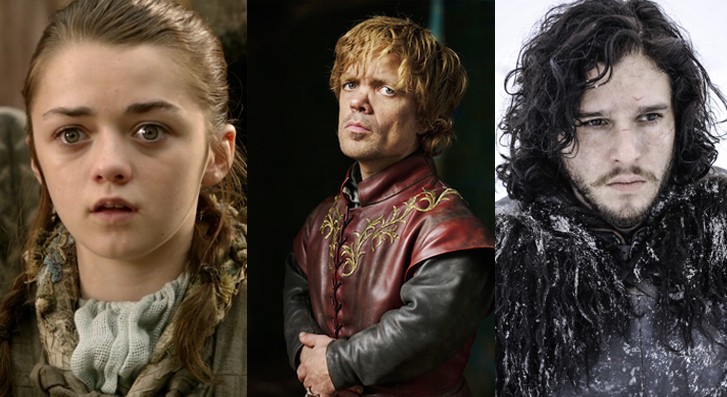
* Arya, Jon Snow, and Tyrion were going to have an bitter series-long love traingle: Arya “realises, with terror, that she has fallen in love with Jon, who is not only her half-brother but a man of the Night’s Watch, sworn to celibacy. Their passion will continue to torment Jon and Arya throughout the trilogy.” Meanwhile, Tyrion falls “helplessly in love with Arya Stark while he’s at it. His passion is, alas, unreciprocated, but no less intense for that, and it will lead to a deadly rivalry between Tyrion and Jon Snow.”

* As Winter is Coming notes, the number of players in the game of thrones is much simpler with basically the Lannisters, the Starks and Dany as the only major players. No mention of the Boltons, Freys, Baratheons beyond Joffrey, or most of the other houses who’ve had a major impact.

***** POSSIBLE SPOILERS*****

There are also some possible spoilers in the letter.

* Martin said the story would center around five characters who would be there in every book: Tyrion, Daenerys, Arya, Jon, and Bran. This isn’t much of a spoiler, since most fans would expect all five of those to make it to the last book. Still, it seems extremely unlikely that any of those five will die in The Winds of Winter. (On the other hand, as the books went along it seems Sansa has overtaken Arya as the most prominent Stark sister.)

* Originally, Daenerys finds dragon eggs and regains a Dothraki horde to invade Westeros with. The end of book 5 implies part of this will happen, so again not a major spoiler for anyone who has read all five books.

INTERVIEW: Kelly Link, author of Get in Trouble

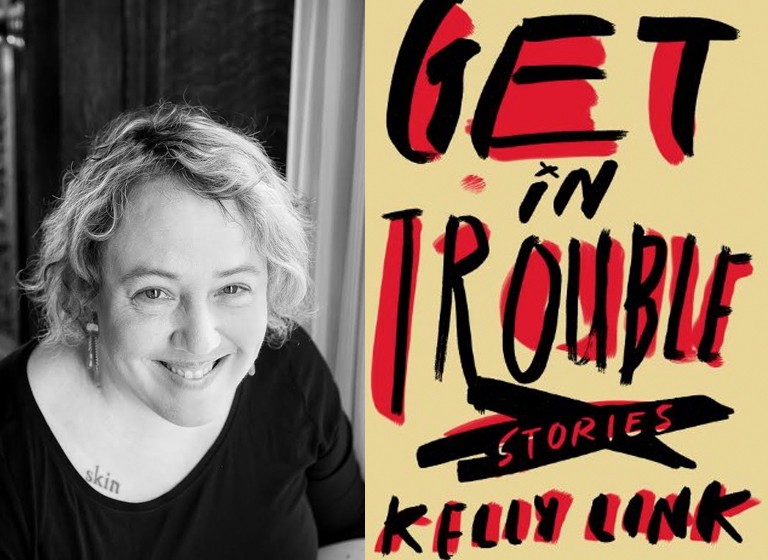
I don’t usually admit this kind of thing when it comes to other writers, but I’m a huge Kelly Link fan — like in a very nerdy way. If I had the power to write fiction like one contemporary writer, I think I’d probably say Link. She has this uncanny ability to stretch a short story way past the boundaries of both length and possibility without ever crossing the line into fantasy. And no, I don’t mean that in a phantasmagoric, Borgesian kind of way (although you can also see his influence from time to time when reading Link); rather, Link’s work feels fully realized, emerging from her brain as truly and impossibly colored. She’s the sort of writer always able to surprise me, even though I’ve finished all of her other books, even her latest collection, Get In Trouble. Link’s writing has been compared to everything and everybody, from H.P. Lovecraft, to Buffy the Vampire Slayer and hardboiled noir writers, but stands out in its originality and idiosyncratic loveliness. Like her prose, Link is one of the easiest writers to get obsessed with, but also nearly impossible to explain.

Jason Diamond: This is the one long one, I swear: Probably one of my favorite lines I’ve read in a long time is in “I Can See Right Through You”: “Florida is just California on a Troma budget.” I liked it because not only does it sum up Florida in maybe the most perfect way I can imagine, but it gives me a chance to ask you about Florida. I was thinking about how a number of my favorite current fiction writers (Karen Russell, Sarah Gerard, Laura van den Berg, a few more) either grew up or spent a lot of time in Florida, and when I mentioned this on Twitter, people named a handful of other writers including you since you were born in Miami. My question is: what kind of influence do you think particular places have had on you as a writer? Do you think originally coming from somewhere as strange as Florida has influenced your work more than the east coast, or does it not factor in?

Kelly Link: Let me hedge, for just a second, and say that that line is from the point of view of an actor who lives in L.A. Not mine! I love Florida in all of its weird, overgrown, lizardy splendor, even if the physical me wilts once the temperature and humidity get over a certain point. Say, 89 degrees. I grew up in North Carolina, and Tennessee, and Florida — I hadn’t really done much with those places as settings until the stories in this book. Maybe I needed a certain amount of distance and time before I could think about those places as a writer. I certainly grew up loving the mystery novels set in Florida (John D. MacDonald, Carl Hiaasen, and so on) and so maybe I thought of Florida as more of a landscape for mysteries than a landscape for the fantastic. The development where we lived was mostly wilderness, outside of a few blocks, and it was used more than once as a dumping ground for murder victims. Anyway: hard for me to say what kind of influence place has had. I expect it’s had one, but it’s easier for me, instead, to see the influence of books and writers.

JD: What about teaching? How does teaching help you as a writer?

KL: I love teaching because I love the work of the workshop. I went through an MFA program at the University of North Carolina at Greensboro, and straight out of that I went to the Clarion Workshop in Michigan. Clarion is a six-week workshop in which you have six different instructors, all with very different points of view, and ideally produce six stories. I’ve taught at Clarion quite a lot. I’m asked, on occasion, to teach for a semester at different programs. I don’t know, precisely, how it helps me as a writer. Certainly I don’t get as much writing done while I’m teaching. But it’s a point of access for me into workshops where writers with, one always hopes, different perspectives on how stories work will sit around for a couple of hours talking about how they read, and what they notice, and what threw them for a loop — and I crave that. If I could design my own workshop, I’d get a poet and a fiction writer to teach together. And bring in a bunch of visual artists — (And yeah, I know Lynda Barry teaches a pretty spectacular workshop!) — just to expand the scope of the discussion about what narrative is able to do and how.

JD: Probably my favorite novel from last year was Helen Oyeyemi’s Boy, Snow, Bird. I love the way she takes stories that are familiar to us (in the case of the latest book, in case you didn’t read it, Snow White) and reshapes it into something that’s her own. I think part of the reason I love your stories so much is because I feel like you tend to do something similar, where you play with certain genres that I love, but you make them totally your own. Do you ever find yourself working on a story and thinking, “This is moving too far in a certain direction, I need to clamp down and try something else”? Because whenever I read one of your stories, I think I know which direction you’re heading in, but I’m always happy to find I was wrong.

KL: I love Helen Oyeyemi’s work so much! I heard her read at the Brookline Booksmith last year: something that had been a life goal. I’ve said this before, but why not say it again: the fantastic is a flexible metaphor. With a fairy tale or a story about an impossible thing, you’ve introduced an element that readers will try to assign a meaning to. (Actually, we do this with the mimetic bits as well, but with vampires or ghosts, the reader is on slightly shakier ground, and therefore you can make them work a bit harder to find their footing while still entertaining them.)

I think that we want to be led slightly astray when we’re being told a story. Just a little wrong footed.

Sometimes I think of narrative progression less as plot and more as a series of turns or reversals. You begin to suggest the direction that a character or story may be taking, and let the reader begin to supply the rest of the story or set of possible actions, or general emotional state. If you do what the reader expects, the story slows down. And if you do something that feels false to the reader, the story breaks. So there’s a lot of fine-tuning involved. I think that we want to be led slightly astray when we’re being told a story. Just a little wrong footed. Even if it’s only by the way that the sentences have been put together.

JD: How long, generally, do you work on a story?

KL: Depends on the story. “The New Boyfriend” and “The Summer People” both took about a week to write. “I Can See Right Through You” took over a year. I used to think that the stories I loved best were the fast ones to write, because I didn’t have time to let the approach get stale. But in fact, I love “I Can See Right Through You” — maybe because once I figured out how to make it really work, it only took a week to do that work.

JD: Do you have a daily writing routine?

KL: I don’t write on a daily basis. I don’t have enough stick-to-it-iveness. But I am often hanging out, on a daily basis, with people who manage to get a great deal of writing done day in and day out. I spend a lot of time loathing the sentences that I put down on the page. Once I’m past that phase, it doesn’t really matter what the routine is (coffee shop, someone else’s house, my dining room table), I’m pretty fast. I go back to the start of whatever I’m working on, every half hour or so, and revise my way back to where I left off. I have my headphones on, I’m checking email, I look at Twitter and Tumblr, and drink a lot of coffee. I need a lot of distraction to work.

JD: Whenever I interview a writer with a short story collection, I always mention this quote I read by Isaac Bashevis Singer. I don’t recall the exact phrase, but it’s basically short stories are more difficult than novels because you have such a limited amount of time to write everything. Why do you think you’re drawn to writing them?

KL: I have no idea! I loved reading anthologies and collections as a kid. I wrote a short story for a workshop at Columbia, taught by Raymond Kennedy, and liked both the workshop and the feeling of having done something that wasn’t terrible. After I got out of college, I eventually applied to a workshop because I thought it would be awesome to spend more time writing short stories and hanging out with other people who wrote them. I’ve spent more than half of my life, at this point, thinking about short stories. But not so much time thinking about why short stories. Actually, what I’ve been thinking about recently is paragraphs. And I’ve been told that thinking about paragraphs is something that you do when you’re moving more into novel space.

[Editor’s note: read Kelly Link’s story “Stone Animals” at Electric Literature’s Recommended Reading]

Announcing Literary Hub from Grove Atlantic and Electric Literature

Electric Literature and Grove Atlantic are excited to announce Literary Hub, “a new home for book lovers” (Wall Street Journal). Literary Hub will launch on April 8, 2015, which also happens to be the first day of the AWP Conference.

The site was conceived by Morgan Entrekin, president and publisher of Grove Atlantic, and Terry McDonell, the former editor of Sports Illustrated and Esquire, as a daily destination for readers, from self-described book-lovers to casual readers.

Electric Literature came on board to develop and design the site, and help craft the editorial and outreach strategies. “When Grove came to us with the idea, we were attracted to its optimism. Lit Hub supports the whole ecosystem that literature needs to thrive, from the writers, to the publishers, to the bookstores, to the readers,” said Andy Hunter, co-founder of Electric Literature. “Our cultural conversation happens online now, and literary culture needs to play an important part. That’s Electric Literature’s mission, and Lit Hub fits.”

Jonny Diamond, former editor of Brooklyn Magazine and The L Magazine, is Literary Hub’s Editor-In-Chief. He’s joined by Executive Editor John Freeman, and Contributing Editors Roxane Gay, Adam Fitzgerald, Rebecca Wolff, and Alexander Chee. The team also includes Managing Editor Emily Firetog and Assistant Editor Ben Philippe (who both used to read EL’s slush pile!).

Literary Hub has over 65 committed partners (see a full list below) and will feature a mix of content contributed by partners and original material, including author interviews, features, excerpts, and essays.

CONFIRMED PARTNERS:

Grove Atlantic · Electric Literature · City Lights · Knopf/Vintage · Book People · Publishing Genius · PANK · Argos Books · A Public Space · Little, Brown · BookCourt · FSG · Slice Magazine · Story Magazine · Parnassus Books · BOMB · Ecco · O/R Books · Post Road · Algonquin · Scribner · Tattered Cover · Norton · Politics and Prose · New Directions · Housing Works · Penguin Press · Brazos Books · Conjunctions · Malvern Books · Fence · AGNI · Bloomsbury · Green Apple · Ugly Duckling · Harvard · Penguin Books · Skylight · Square Books · PEN · Riverhead · Newtonville Books · The Paris Review · The Strand · Akashic · Melville House · Archipelago · Book Passage · n+1 · Soho Press · McSweeney’s · Powell’s · House of Anansi · Unnamed Press · Zyzzyva · Last Bookstore · Graywolf · Books Inc · Tin House · Seven Stories · Community Bookstore · Poetry Magazine · Catapult

INTERVIEW: Donald Hall, author of Essays After Eighty

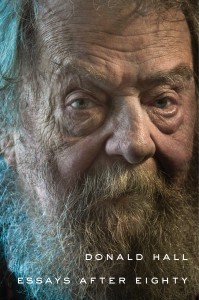
Donald Hall has been at the forefront of American poetry for more than half a century. He has produced countless books of poetry since the publication of his first in 1952, as well as numerous books of essays, fiction, drama, and memoir. He has lived through a career in academia followed by a life of freelance writing while living at the New Hampshire farm that has been in his family for generations. He was the first poetry editor of The Paris Review in 1953 and was the Poet Laureate in 2006. Cancer afflicted him but he survived, though shortly after, his wife, the poet Jane Kenyon, died after being diagnosed with leukemia.

I came to the poetry of Donald Hall with The Painted Bed, a quietly unrelenting account of his life after Kenyon’s death. I then worked my way back through his decades of work with the collection White Apples and The Taste Of Stone. At the age of 86, Hall no longer writes poetry, but continues to write essays. His newest collection, Essays After Eighty, takes the different motifs of his life in work, love, and grief and uses them as landmarks to draw a coherent line through his vast swath of time. Hall’s voice is lucid and knowing, though never condescending, and always imbued with characteristic wit and candor.

Aaron Calvin: In your essay “Out The Window,” you describe old age as “alien, and old people are a separate form of life” and as being “permanently other.” Do you think it’s possible to communicate through the veil of this otherness to someone on the far side of it, someone in their twenties?

Donald Hall: When I wrote “Out the Window” I was trying to communicate to younger folks. When I was younger, I’m sure I regarded the very elderly as “permanently other,” so maybe there’s no hope. I tried to overcome it by prose, style, and by wit.

AC: Essays After Eighty does seem to read almost like a map through a life in literature and poetry. If there’s one thing you wish someone had told you as a young poet, what would it be?

DH: I think that my essay is mildly instructive, defining what “a nice old gentleman” is.

AC: You talk about a specific incident in the essay that garnered a lot of attention when it was first published, when a security guard at a museum treated you very condescendingly. Do you find the disconnect you feel between your own cognizant mind and your physical limitations frustrates you in other ways? Are you able to take that and do something constructive with it?

DH: Of course the museum guard was an idiot. I was grateful to him for giving me a counter motion in that essay. If it had been all “out the window” and landscape and weather and birds, it would have been flat. I’ve seen a tendency in some other people to suspect dementia. I have a younger girlfriend with whom I have flown everywhere. Sometimes she and I have approached a counter in an airport, her pushing me in a wheelchair, and I have approached the clerk behind the counter and she has ignored me and talked to my lady, who’s almost thirty years younger. I put up with it.

AC: In “Three Beards” you address the relationships that have shaped your life directly, but they often appear in other essays throughout the collection. After all you’ve been through, what do you think has been important for a successful relationship in your life?

DH: I think in the book that one “relationship” stands out in particular. It certainly does in my life! I keep returning to it in the essays. I had a first wife who was a good human being, and others that have been quite wonderful, in sex or in kindness or both, and Linda is my dear if irregular (two nights a week?) companion now. She was the one in the airports. We would not do 24/7, but we love each other and she’s a great help to me.

AC: Do you find that it’s been important in your life to consistently have a companion, to have that kind of relationship in your life?

DH: I was lucky. Most marriages are no good. It happened that I had a superb one. Of course competition was in the air around us, but we had the brains to admit it, to avoid controversy. When we began and Jane had not published much, we were subject to English Professor idiots who told Jane that it was cute that she also wrote poetry. When her best stuff began to be known, the same idiot Professors or interviewers let us know how funny it was that the younger was actually better than the elder. We did not let it bother us. Earlier, I was an only child, and liked solitude. In Jane’s absence, I have largely had solitude. I do have a sweetheart, but I’m not sure that she leads me to more work. Of course she’s helpful reading over my stuff.

AC: You’re around the age Robert Frost was the last time you saw him and you talk about his concern for his image, despite his age. Did that incident influence your somewhat relaxed view of your legacy?

DH: I knew him (beginning when I was sixteen) and saw him from time to time. I certainly admired him. The last time I saw him he was in the last year of his life, approximately my age, and he did something I can’t do. As I drove away from his cottage, I looked up to see him trotting after me!

AC: Despite your inability to continue to write poetry, do you still consider it the main concern of your literary life?

DH: Poetry is the first thing for me. But without it, I am extremely happy writing my prose. No line breaks — but still sentence structure and word choice et cetera. Next year I will publish The Selected Poems of Donald Hall. I love poetry, but for the first time since 1940 the practice of poetry is a bit distant.

AC: You mentioned to me that you feel that the last time you collected your poetry — in White Apples and the Taste of Stone — it was much too long and that a future collection would be much shorter. Do you feel now that a poetry collection has more value the more selective it is?

Every good poet in the world has written only a few terrific poems.

DH: Yes, the more selective a collection is, the more valuable it is. Too many recent collecteds go six hundred to nine hundred pages. They are too heavy to hold. Every good poet in the world has written only a few terrific poems. I used to think Thomas Hardy was magnificent because there were twenty good ones. By now I think there are fifty. But the collected poems from Oxford take three volumes. That’s okay. If you love somebody’s work you are fascinated to read the inferior things.

AC: You talk about your leaving teaching to return to your family’s farm in New Hampshire as a formative experience in your life. Did you find the world of the university not conducive to the poetry you wanted to write?

DH: I loved teaching and didn’t find it hurtful to my work. Reading poetry aloud to students, I learned how to read aloud. Still, these days, I hear from old students, or they write something down — as in the Letters to the most recent Poets & Writers. I loved lecturing, but after a lecture I went home and got to work. Work was a sacred word, and always apply to writing. Teaching was sort of a hobby that paid my living. Although I loved teaching, I always wished I could write all the time. Then I was able to! So was Jane. You must know her poems.

AC: I am familiar with Jane’s, particularly the poems collected in Otherwise. I also found your work with The Painted Bed, a collection of poems about mourning her. Do you feel as though grief transformed your poetry?

DH: Jane’s death gave me a perennial subject. For five years I wrote about nothing but Jane, except for a few of the flings that I undertook because of her death. I don’t think that Jane’s life and death had anything to do with the forms and shapes of my late work — except that the better she got, the more I tried not to sound like her. I didn’t worry about that any more.

AC: You talk briefly in the book about Jane’s legacy and your own. Do you feel like you have some responsibility to her poetry and estate, or do you leave that to the publishers and biographers?

DH: I plug Jane as much as I can. For years, I began all readings with her poems. Otherwise, anthologists and writers are tending to her on their own. I think they will continue without my help.

AC: The way you discuss time in the book seems to negate the popular notion that things are steadily getting worse in the world. Has your conception of progress changed as you’ve aged?

DH: I am a great reader and proclaimer about politics. Of course things are getting worse every day! Almost every one of us knows the same thing. Maybe we are wrong.

AC: Who are the poets that have really stuck with you over the years and who are some that you may have grown out of or may have aged poorly?

DH: I think that Hart Crane was very important up to twenty or so, then Yeats for many years, then Thomas Hardy — Walt Whitman and, more lately, Emily Dickinson.I’ve always loved Marvell — and the 17th century in general. Maybe I’m saying “everything?”

AC: You talk about feeling like an ineffective poet laureate. Did the job just not suit you?

DH: When I was appointed Poet Laureate, I had all sorts of plans. At the beginning, I was certainly interviewed and provided a million moments of poetry on television, on radio, and in print. When I went to Washington first, I thought I had discovered a weekly radio appearance — but it didn’t work out. Then my strength began to ebb. I think I had a reaction to a medicine that should not have been prescribed. I felt awful. I could not write anything and I could not do anything. I did what the Library needed, for a minimum, but never did anything truly useful or energetic. (Many poet laureates have done virtually nothing. A few have done a lot.) I didn’t do a second year, as they wanted, because I had been so wretched the first time. It was a disappointment. It was an honor of course, and lots of attention — but my performance was a disappointment. By this point, I feel much more energetic though infinitely older and life is better.

AC: You’ve spoken before about the constant editing and revising of your poetry and how you tinker with poems long after their initial publication. Has revision continued for you or has that stopped with the poetry as well?

DH: Essays After Eighty came out in December 2014. In December 2015, I will publish The Selected Poems of Donald Hall. It’s a short selection, which is what I wanted, and my main concern has been the choice of what I hope is the best. But I have also made some small changes. There is one poem which I almost cut in half and touched up. There is another where I was able to reverse the order. There are several others where I changed a word or two. I remember adding a word. I remember cutting a word. I remember changing a word for mere accuracy — nothing that anybody would notice, even if they already knew the poem. I had been reading aloud so many times, especially in 2009, and it seemed to be that I saw mistaken things in poems that I read over and over again. I could revise them, without thinking that I was writing new poems — which I could no longer do.

REVIEW: Find Me by Laura van den Berg

Joy Jones makes lists. Lists of rules, of patients, of facts about Kansas. She is a woman who sometimes has trouble navigating the minefields of her own past, and yet, she is our guide through a cataclysmic “epidemic of forgetting.” In Laura van den Berg’s gorgeously contemplative debut novel, Find Me, America is in the thick of a near-apocalypse brought about by widespread memory loss and eventual death. “To be looked for is to matter,” Joy tells us. Her list-making forges pathways through the prose like a trail of breadcrumbs, a preparation or a warning, as though someday soon, we all may need to double back and find ourselves.

Joy is immune to the disease and is shipped off to a hospital in Kansas with her kindred would-be survivors. They submit to tests and exams in the hopes of finding a cure. They check the website WeAreSorryForYourLoss.com, scanning the names of the dead for loved ones that may have survived. The hospital is a change from Joy’s job in Somerville at the Stop & Shop, where she numbs herself with cough syrup and hides away from the world in a basement apartment, the first of many subterranean images in a book populated by basements, homemade tunnels, and deep-sea diving.

This is a disease that encourages digging, and Joy is digging for her own origin story, sifting through memories of group homes and foster families, carefully tiptoeing around traumatic gaps in her personal history. There is an entire year of her life blocked from view, a miniature epidemic of forgetting. When life at the hospital breaks down, Joy escapes on a quest to the Florida Keys, searching for the mother who abandoned her at birth. The second half of the novel unfolds on her path through the American South, a literal memory lane.

Joy’s journey from Kansas to Florida is not unlike Dorothy’s adventure to Oz, her internal mazes often projected onto a surreal, unfriendly, and dangerous landscape. But in van den Berg’s universe, no one is in Kansas anymore, so to speak. In this and other ways, Find Me is a distinctly American book, spotted with pilgrims and protesters dressed in black, concerned with questions of national identity. The plague is confined within the states, and Joy’s journey has glimmers of a cautionary travelogue. When her bus passes through Centralia, a condemned mining town, the landscape is as frightening as any post-apocalyptic vision, toxic and ruined. “This is not damage done by the sickness,” van den Berg writes. “This we did all on our own.” It’s impossible to read this book and not consider other epidemics of forgetting, the kind that happen every day. A sort of institutionalized memory loss, or a convenient omission. Joy wonders, “does anyone care about history anymore?” But the shadow of her question is, did we ever?

The survivors in this book are historians by default, but Find Me asks how we can all be better historians for each other, caretakers of each others’ stories.

Van den Berg’s prose is honest and searching, an inquisitive tonic for a destroyed world. Questions plant themselves between paragraphs, unanswered, and curiosity steams through her book like a freight train of hope. Self-discovery has seldom felt like such an optimistic and essential pursuit as it does in the hands of Joy, for hers is washed in a painful desire to connect. “Is there any greater mystery than the separateness of each person?” van den Berg writes. In Find Me, to be looked for is to matter, but to be seen is to exist. Her story sticks somewhere inside, impossible to forget.

Find Me

by Laura Van Den Berg

Powells.com

Is Every Unhappy Friendship Unhappy in Its Own Way?

Adults are expected to grow out of the phrase “best friends forever.” Whenever I hear it, I’m brought back to the night Hurricane Irene struck Brooklyn — back to the empty streets, rocking traffic lights, and rain that hit me from all sides as I headed to my best friend Vanessa’s house to confront her. Things had gone missing from my family’s home: a bottle of wine, a handle of rum, two of my grandmother’s rings, and it had already been a long year of making excuses for her. That was the moment I grew out of “best friends forever.”

Lindsay Hunter

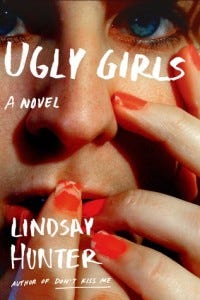
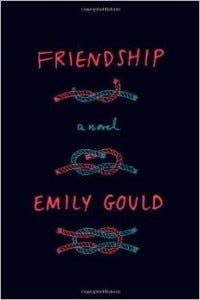
Of the many stunning debut novels from last year, few plumbed platonic relationships like Emily Gould’s Friendship and Lindsay Hunter’s Ugly Girls. Their two worlds couldn’t be less alike — Ugly Girls’ is a rural wasteland of trailer parks while Friendship is a New York of quarter-life crisis — yet despite their differences, both books focus on girls and women who depend on each other. They share secrets, insecurities and even the silent envy of things they admire in each other. But at the center of this tenderness and dysfunction is something real and frightening: the prospect that even “forever” relationships can come to an end.

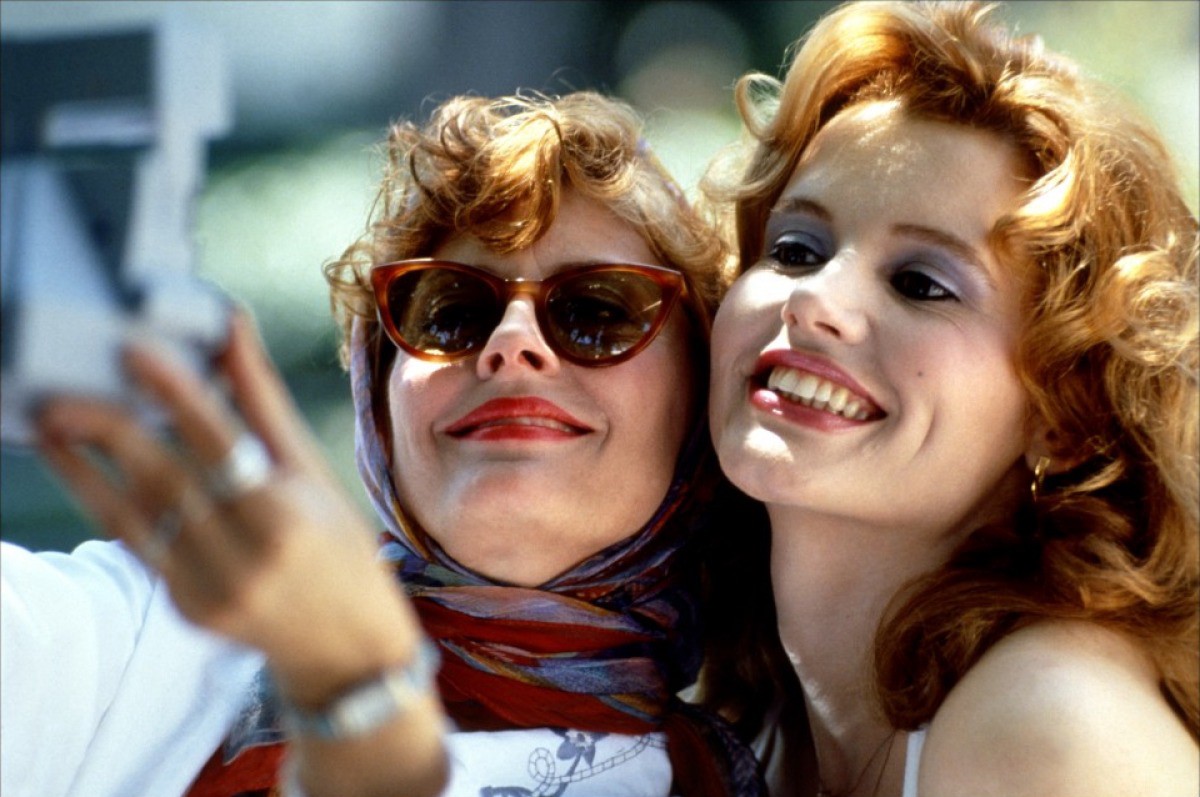
While reading these two novels, it’s hard not to think of big screen classics like Butch Cassidy and the Sundance Kid or Thelma and Louise. I think of Vanessa’s favorite movie, The Deer Hunter, about childhood friends who go in different directions in life after being prisoners of war in Vietnam. I think of Robert De Niro’s character, Mike, pleading, “Come on, Nicky. Come home. Just come home. Home.” I’ve watched that famous scene — the one which ends with Nicky (Christopher Walken) shooting himself — over and over again. I’ve wondered if there was any way Mike could fix it, if he could ever get Nicky to put down the gun.

Emily Gould

Friendship, like so many of its predecessors, reads a like platonic love story. Readers are taken from the moment Bev and Amy meet to the moment they split apart in flashes between the past and the present. At one point Bev even asks Amy, “Do you have to say something, confirming you’re best friends?” It’s laughably close to the romantic relationship talk that so many dread, but it’s coming from two 20-somethings who have no one else; Amy has burned everyone at her previous job, from celebrities to peers, while Bev is lost in an aimless search for temp work, still trying to find her place in New York. Both desperately need someone to rely on.

Although men do occasionally enter the picture, Bev and Amy always find love, fulfillment and support in one another. The two even observe the couples around them and come to the conclusion: “All these people are obviously going to break up once their sexual chemistry peters out. But we’ll be together forever.” The sentiment is identical to so many late night conversations I had with my best friend Vanessa after things with my first serious boyfriend fell apart — that regardless of all the things that may come and go, we would always be able to rely on each other. Just like Bev and Amy, and so many other best friends, we relied on each other as “allies in a world full of idiots and enemies.”

In Ugly Girls, the forces fighting against Baby Girl and Perry are clear: suburban poverty, Internet stalkers, broken families. At home, Perry’s mother struggles with alcoholism, while Baby Girl is constantly confronted by the accident that left her older brother and idol, Charles, brain damaged. Being best friends is hardly a saving grace either: The two girls have grown apart but keep drifting back together. They’re like Bev and Amy in that way, relying on each other’s company out of habit, as a reliable escape.

“Restless” is a word that comes to mind while reading Ugly Girls. Baby Girl and Perry spend their days ditching school and their nights hot-wiring cars to joyride to Walmart. It’s nothing that Vanessa and I would have pulled in Brooklyn, but it brings me back to getting a homeless guy to buy us pineapple rum in high school and to all of our aimless walks that somehow always ended at the Promenade, where we would admire the Manhattan skyline, while keeping our eyes peeled for cute boys and spitting gum at the cars speeding below on the Brooklyn-Queens Expressway. In Ugly Girls, Baby Girl and Perry spend this lost time dreaming of a future when things won’t be so aimless. In Baby Girl’s mind:

One day she wouldn’t live with Charles no more, she wouldn’t be friends with Perry, she’d be someone else with hair and a job and a memory of the days she sat in the parking lot of school with an unloaded gun.

For Baby Girl, who does everything she can to be “hard” (her real name is Danya), even growing up is just an opportunity to become someone else, a process that requires ditching her best friend to leave behind her adolescence.

I never saw growing up that way. A year before Hurricane Irene, Vanessa and I both got summer jobs bartending together. Our boss would drive us to bars around the city to get a sense of how other places ran their business. Speeding over the BQE, we sat in the backseat of his convertible with the entire city beside us. This is what adulthood would be like: possibilities, freedom, us together.

When friends cease being friends, the obvious question is: What happened? The question can most easily — if not accurately — be answered by a single event: In Ugly Girls, Baby Girl and Perry push things too far when they assault someone; in Friendship, Bev decides to take on a huge life responsibility and Amy shies away. Both moments ring out like the gunshot at the end of The Deer Hunter; they are the tragic bows that tie up the narrative, the tourniquets that stanch the bleeding. But it’s never quite that simple. Each time I try to think of a way to convince Nicky to put down the gun, I get to the same place: His mind’s already made up. You can make him remember, but you can’t bring him back.

After Hurricane Irene, when acquaintances asked why I stopped talking to Vanessa, I told them that she blew our trust by stealing family heirlooms. It was easier to say than explaining the million little ways she had become selfish, negative, difficult to be around, that I had become tired of meeting at the same bars to do the same things. After our summer bartending together, she started making scenes when she got too drunk, started getting kicked out of places. She would tell lies that were too big in an affected Brooklyn accent she hadn’t grown up with. It was as if the real her had been replaced bit-by-bit. In Ugly Girls, Lindsay Hunter describes this dissonance perfectly as Baby Girl drives Perry to meet an Internet admirer:

Perry had the feeling that she’d never met [Baby Girl] before, this bald person she was letting drive her somewhere, she looked familiar but Perry had no idea who she was. She was in the car with a stranger.

Perry tries to convince Baby Girl to turn the car around. She threatens to jump from it, but after Baby Girl begs, Perry stays. There are only so many ways to try to convince someone to come home.

Friendship, unlike Ugly Girls, ends with — SPOILER ALERT — reconciliation. Amy apologizes to Bev for everything in a lengthy email, confessing, “I worry that even if you can forgive me for abandoning you when you most needed a best friend, I won’t be able to fit into your new life.” Readers aren’t privy to what happens when the two meet each other again, but Bev does forgive Amy. Ugly Girls doesn’t tie the bow so neatly. In all the chaos, it’s unclear whether anyone is forgiven.

Next to Bev’s forgiveness, my years-long silence towards Vanessa seems ugly, cowardly, stubborn. I roll with the excuse that she’s a different person now, that we might as well be strangers. In ways we are: I used see doppelgangers of her around the neighborhood or on the train and wonder if she had changed beyond recognition. Other times, I’d see it really was Vanessa and swiftly look away.

The truth in Ugly Girls and Friendship is that sometimes friends grow into people who are incompatible. Nobody is at fault. Fiction can only teach us so many ways to forgive: to be civil, to show concern, to mourn, to remember better times. The most recent time I saw Vanessa on the street, she averted her eyes and hid her face away in a cloud of mentholated smoke. I looked at her the entire time, thinking of Amy and Bev, Perry and Danya, those fictions that reflected some version of our friendship back at me. In our decision to stay silent, all I could think was: we aren’t really strangers, are we?

Should We Hold the Horses on the Harper Lee Celebration?

Yesterday, the news broke that Harper Lee is publishing a sequel to her iconic To Kill a Mockingbird. The news was met with joyous reaction around the web, as well as the usual Twitter snark. But it didn’t take long for some questions to arise. The story of Harper Lee, an author who never attempted to publish a second novel, suddenly having a lost manuscript — that had never been talked about before — found in publishable form seems… a little sketchy. As Jezebel noted:

Harper Lee’s sister Alice Lee, who ferociously protected Harper Lee’s estate (and person) from unwanted outside attention as a lawyer and advocate for decades, passed away late last year, leaving the intensely private author (who herself is reportedly in ill health) vulnerable to people who may not have her best interests at heart.

Tonja Carter, Harper Lee’s attorney since Alice Lee retired at the age of 100, acknowledges that the author — who was left forgetful and nearly blind and deaf after a stroke in 2007 — often doesn’t understand the contracts that she signs.

Lee is apparently not fully capable of making these decisions. Jezebel quotes a great piece by Michelle Dean on the legal and ethical issues around Harper Lee and her lawyer Tonja Carter: “Lee has a history of signing whatever’s put in front of her, apparently sometimes with Carter’s advice.”

An interview with Harper Lee’s editor did little to quash the debate, as the editor, Hugh Van Dusen, plead ignorance to most questions. He even admitted to not even talking to Lee about the book:

Has there been any direct contact about the book between Harper and HarperCollins? Or is it all down through intermediaries?
Are you asking if we’ve been in touch with her directly?

Specifically about the release of this book, yes.
I don’t know, but I don’t think so, only because she’s very deaf and going blind. So it’s difficult to give her a phone call, you know? I think we do all our dealing through her lawyer, Tonja. It’s easier for the lawyer to go see her in the nursing home and say HarperCollins would like to do this and do that and get her permission. That’s the only reason nobody’s in touch with her. I’m told it’s very difficult to talk to her.

Mallory Ortberg dissected the interview at The Toast:

“Nobody’s told me.” “My understanding is.” You guys should have a meeting about this, probably! I don’t know, MAYBE it’s not the case that a bunch of publishers eager to capitalize on a hugely profitable name are taking advantage of a very elderly woman who lives in a nursing home and has diminished capacity. I hope that this is not the case! But if you are going to release another book of hers, maybe make sure that you are going through all of the appropriate steps!

As of now, it’s hard to understand what actually happened. Since the book was never really mentioned before, and since Harper Lee famously shied away from interviews, we have no public record of Lee’s feelings on the book’s possible publication. Is she being exploited? Or is the story of miraculous discovery true? Hopefully we’ll find out more information soon.

UPDATES (2/5):

The controversy has only grown in the last 24 hours. Many articles have come out questioning the publication, some even questioning if it constitutes “elder abuse.”

Despite the HarperCollins editor saying he hadn’t been in contact with Lee, publisher Jonathan Burman claims he has and that she was very excited about the book:

“She’s very much engaged in the process,” Burnham said. He hasn’t personally spoken to her, but he said her agent spent two days with her in January and reported back that she was “feisty,” “full of good spirits,” and reading voraciously.

For what it’s worth, Harper Lee — in a prepared statement — responded to all this controversy by saying, “I’m alive and kicking and happy as hell with the reactions to Watchman.”

I took a much longer look at the controversy here.

Update (2/7)

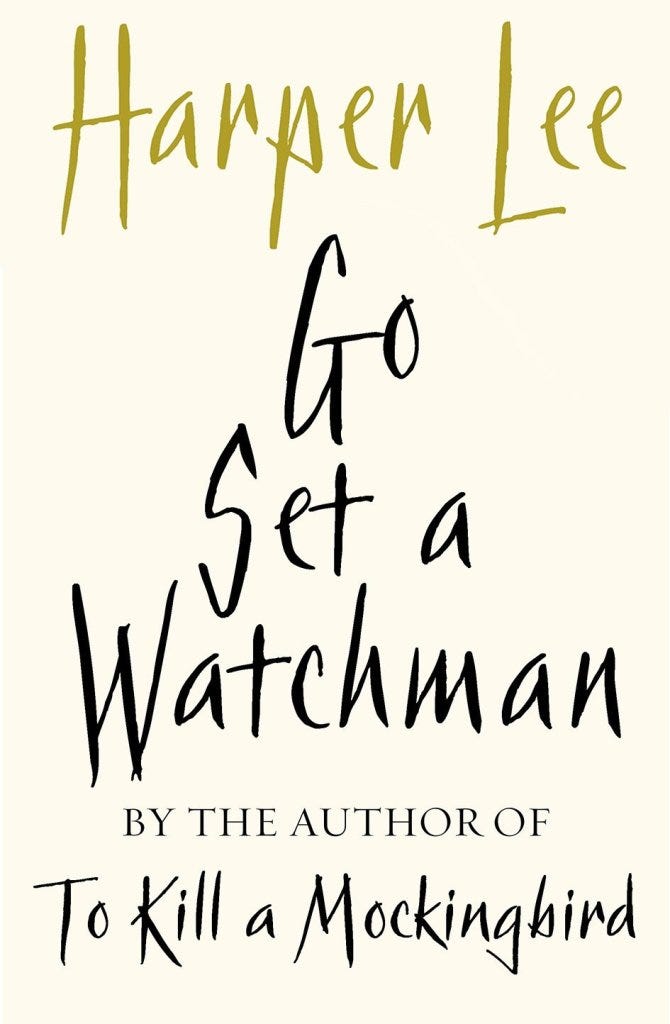
Here’s the cover to the novel:

go-set-a-watchman-670x1024

Update 2/09:

Salon tackles the question of elder abuse in the case of Harper Lee by talking to Robert Blancato, National Coordinator of the Elder Justice Coalition:

The part about this case that seems sort of odd at this point is that there has been apparently no direct communication from her. Everything seems to be going through the publisher or through the lawyer. They’re putting words that are attributed to her over something that’s very important, obviously, to her from an intellectual property perspective, which strikes people as a little odd, especially having come out of nowhere after so many years and coming after the person who had been her primary advisor passed on.

However, other statements make it seem more likely that Harper Lee does indeed want this published and that, rather than being elder abuse, it may be agism making people think Lee can’t possible know what she is doing. Harper Lee’s lawyer, Tonja Carter, who succeeded her sister Alice Lee in the law firm, talked to the NY Times and maintained that she stumbled upon the lost manuscript while going through Lee’s papers and said Lee is “extremely hurt and humiliated” by claims she’s being tricked into publishing:

“She is a very strong, independent and wise woman who should be enjoying the discovery of her long lost novel,” Ms. Carter said. “Instead, she is having to defend her own credibility and decision making.”

The Times also mentioned that two friends said they visited Lee in person and “attest to her excitement over the release of the novel.”

Midweek Links: Literary Links from Around the Web (February 4th)

Looking for some interesting reading to get you through hump day? Here are some literary links from around the web to check out:

Roxane Gay reviews the new Joyce Carol Oates and gives a lesson on how to write difference

The Guardian has an awesome infographic on the bleakness of Thomas Hardy novels

Reading David Foster Wallace for the colors

Harper Lee is publishing a sequel to To Kill a Mockingbird (and we round up the best Twitter jokes about it)

Sofia Samatar on weird fiction and the interstitial

Jonathan Sturgeon warns about the second coming of the textbook wars

Is it dangerous to have your significant other read your writing?

Boing Boing wants to put the guilt back in guilty pleasures

Laura Bogart continues the conversation about writing and money in Dame Magazine

Lastly, if you are a writer consider submitting to the Selected Shorts contest and win $1,000 and publication on Electric Literature