In the above video from Louisiana Channel, the short-short story master Lydia Davis is asked about her advice to young writers. Her main bit of wisdom? “Do what you want to do, and don’t worry if it’s a little odd or doesn’t fit the market.”



In the above video from Louisiana Channel, the short-short story master Lydia Davis is asked about her advice to young writers. Her main bit of wisdom? “Do what you want to do, and don’t worry if it’s a little odd or doesn’t fit the market.”
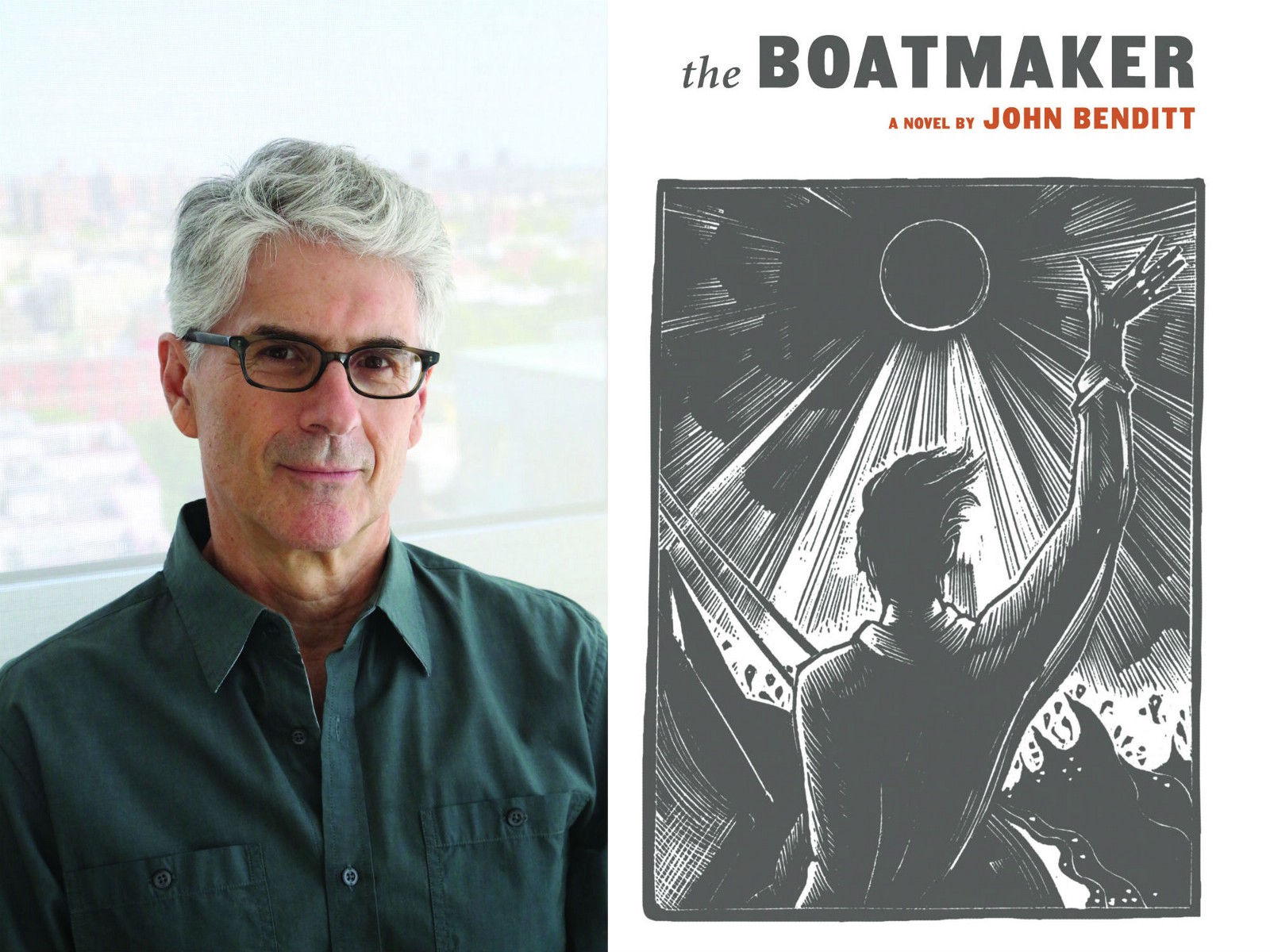
That a book whose central character spends much of his time crafting things should serve as a case study in deliberate pacing should come as no surprise. John Benditt’s novel The Boatmaker takes its time reaching its destination, but the effect is a deeply rewarding one. As the novel opens, the title character lives in relative isolation on a small island (known as Small Island)–though whether that life will last much longer is left somewhat in doubt. Consumed by a fever, he’s overtaken by visions; when he awakes, he feels compelled to assemble a boat and embark on a journey.
Out of those two impulses–the mystical and the physical–emerge many of the scenes that follow. The boatmaker’s craft leads him certain places; his own impulses towards violence and self-destruction lead him elsewhere. And he’s far from the only character for whom visions and a sense of something beyond this world compel to action: sometimes benevolently, and sometimes horrifically. Occasionally, the novel slips outside of the title character’s head, showing how he’s seen by others: a source of, at various points, mystery, fear, and admiration. It’s a long journey, but a rewarding one.
Over the course of several weeks, Benditt and I conducted this interview via email, touching on subjects as varied as geography, narrative specificity, and cults, fictional and otherwise.
Tobias Carroll: The way you tell The Boatmaker moves from the very stark and general to the specific, from the locations to the names of characters. How did you first arrive on this approach as the right way to tell this particular story?
John Benditt: Well, first of all, I should probably say that The Boatmaker really wasn’t the result of a lot of conscious planning. In fact, I didn’t even know that I was writing a novel. I thought I was writing a collection of short stories. Then I wrote one about a man who builds a boat and sails away from the little island where he was born. I thought I was done with him — or he was done with me. But apparently not. A second story appeared, about what happened to the same man once he reached Big Island. After that I thought I was surely done with him. But he wasn’t done with me. More bits and pieces kept coming in. I wrote them down. When I read them over, I realized we were talking about a novel here. I suppose I’m a slow learner. Once I’d gotten the message, I sat down to write a first draft.
All that said by way of preamble, I’m not sure I agree completely that the story moves from the stark and general to the specific. Small Island is a specific place. People there have names. The town has a name. And even at the very end, when he’s in the biggest city in the land, many things and people are identified mostly by their titles or descriptions rather than their names. But I do think that there is an evolution in the book, and perhaps that’s what’s coming through. I think the evolution is in the protagonist. He comes from a pretty brutal place, a very small place, and he winds up in the most cosmopolitan place in his country and he definitely changes along the way, as the result of his experiences and the new environments he encounters. And the tone of the book probably reflects that to some extent.
TC: In terms of the specificity and generality, I thought about it more in terms of how the characters are referred to; the main character has a name, but the reader doesn’t learn it until very late in the book. But there are also things that run throughout, like the fact that Europe isn’t really mentioned on the islands, but is often referred to when the book moves to the city. Was that more a result of the cosmopolitan experience you described?
JB: Yes. It’s a result of the difference between the world of Small Island and the world of the Mainland. Small Island is a tiny, remote community. For the people who live there, Big Island is pretty far away; only the “sophisticated” people on the island have been even that far. We don’t know of anybody who’s actually been to the Mainland, let alone the capital. Europe might as well be on the moon. In the capital city, of course, things are quite different. The Mainland is still a fairly insular, backward country, a fact that the king is highly cognizant of and is committed to changing. But there are plenty of people in the capital who know about Europe, who have traveled and even lived there. So I think the difference you mention is a difference between two worlds of experience.
TC: When, in your mind, did the the protagonist go from “the man” to “the boatmaker”?
JB: As I said, the genesis of The Boatmaker was in two short stories that I thought I was writing as part of a collection of short stories. I think it was in the second story, after he’s arrived on Big Island, that he was first referred to as the boatmaker. That makes a certain amount of sense, because the section set on Small Island is mostly about his aspiration to build the boat and sail away from where he was born. I think it’s only after he’s done that and actually reached his initial destination, the one he has in mind when he wakes from the dream, that he becomes the boatmaker. Of course, one could think of other points of transition, other ways in which he might become the boatmaker in a deeper sense. Even at the end of the book, there seems to be some ambiguity around this status. I should also point out that even after he begins to be called the boatmaker, he never ceases to be the man of Small Island.
TC: When the boatmaker first sets out on his journey, his image of a domestic life involves being drunk and abusive–just less so than he’d been before. For all that he becomes involved in larger events, how did you balance that with the fact that he had behavior of his own that needed changing?
JB: I think we should be careful not to impose our own conceptions of appropriate behavior onto the boatmaker, who after all lives in a very different time and place from our own. In the world the boatmaker comes from, on Small Island, drunkenness and violence aren’t anything special. Almost every man drinks and fights with other men. And most of them also hit their wives from time to time. This isn’t considered to be “abuse,” in the way we would think of it from our perspective. It’s just part of marriage. And, for that matter, violence in marriage isn’t limited to men. We find out that the boatmaker’s mother, in her rages, is quite capable of badly beating her husband. All that is part of where the boatmaker comes from. When the boatmaker gets to the capital, he begins to see that there are other ways to live — ways he hadn’t even imagined before. And it turns out that he is capable of changing. I think the balance you refer to came pretty naturally, because he changes in response to the dramatic larger events that he gets caught up in and manages to live through.
TC: A number of times, the book shifts from the boatmaker’s perspective to that of someone watching him, usually one of the women he encounters. Where did that particular aspect of the structure come from?
JB: I think that evolved from the boatmaker’s history. Or perhaps I should say his “pre-history,” — that is, the things that happened to him before the book opens. It seems pretty clear that the person who is largest in his feelings, explicit or not, and the person he wants most to connect to, is his mother. She matters much more than his father does, emotionally. As a result, it’s easier for women to “see” the boatmaker than it is for men. He’s pretty opaque to men, and he has difficulty making friends. So the women see him, at his best and at his worst. I think that’s where this aspect of the story comes from. It’s only as the boatmaker moves out into the wider world that he begins to make friends with men. And, as usual when you’re new at something, your initial choices aren’t necessarily the best.
TC: The fanatics that the boatmaker encounters have some fairly unorthodox ideas about the notion of the messiah. Was their behavior based on any historical cults that you’ve encountered?
JB: Not really. They are more like an extrapolation from things I’ve noticed about cults. There’s an interesting obsession with purity and purification, which generally seems to involve both a curious relationship to the body and also a goodly amount of blood flowing. I also notice that the people who are the leaders don’t usually seem to be the ones whose blood is flowing. It’s generally the followers. But Father Robert and his followers aren’t really based on any historical examples. I probably should add that I have a certain admiration for Father Robert. Obviously, I don’t agree with all of his views. But I do admire people who take big, abstract questions, which most of us just ignore or tolerate, very seriously. I admire the fact that for Father Robert, the question of Christ’s message, his incarnation, is a pressing question — right here and now — rather than a tame piece of history that’s encrusted in centuries of rules. For him, it’s a living issue. And there aren’t any rules to help him figure that urgency out. He has to make his own decisions. I admire that. But I might draw a different conclusion from that urgency.
TC: More generally: were there any geographical or political inspirations for some of the locations and situations that the boatmaker encounters?
JB: Well, I grew up in the Pacific Northwest, which is a place of green islands floating on a cold northern sea, and I’m sure that some of that has seeped into The Boatmaker, the way things seep into your dreams without your ever really knowing that they’re there until much later.
TC: Since finishing The Boatmaker, have you returned to the group of short stories from which the novel emerged?
JB: Actually, after I started writing The Boatmaker I never went back to that group of stories. But I’ve been working on new, post-Boatmaker stories. And I have an idea for another novel. But that will probably take time to assemble itself out of bits and pieces on scraps of paper, just the way The Boatmaker did.
Author photograph courtesy of Whitney Lawson
John Gardner: “The difference is that my 707 will fly and his is too encrusted with gold to get off the ground.”
William H. Gass: “There is always that danger. But what I really want is to have it sit there solid as a rock and have everybody think it is flying.”
– 1978 debate on the nature of fiction
Richard Linklater
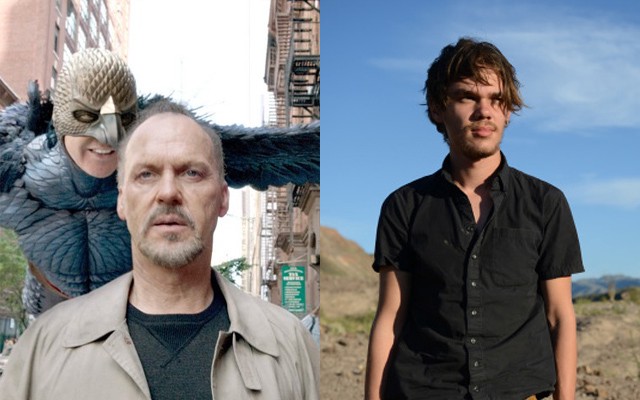
In the lead up to last night’s Oscars, critics have been waging a fierce debate about whether Alejandro González Iñárritu’s Birdman or Richard Linklater’s Boyhood — the presumed front-runners — deserved the Best Picture award. Ultimately, Birdman walked away with the trophy, inspiring some bitter “hot takes.” At Slate, Dan Kois even called it an “epochal travesty” and the Academy’s “worst mistake in 20 years.”
I’m skeptical that Boyhood will be remembered — as Kois suggests — as an epochal masterpiece on par with Casablanca, Citizen Kane, or Pulp Fiction. Think-piece hyperbole aside, critics are divided and my twitter stream has been filled with critics and writers calling one film or the other overrated garbage. Most either loved Boyhood and thought Birdman was “pretentious,” “self-indulgent,” and “showy,” or else loved Birdman and thought Boyhood was “boring,” and “pointless.” Here’re some examples:
Where's Kanye when you need him? #Oscars2015
Part of why Boyhood should have won is that the people who love it, love it much, much more than the people who love Birdman.
Boyhood was film history, yes. But Birdman was the movie I'd rather take to a desert island and watch on repeat. #Oscar2015
Sorry, "Boyhood" was a great concept, but a mediocre film. "Birdman," a masterpiece. http://www.slate.com/blogs/browbeat/2015/02/23/oscars_best_picture_winner_birdman_boyhood_snub_is_the_academy_s_worst_mistake.html .... #Oscar2015
diff between boyhood and birdman: both formally adventurous+ groundbreaking. boyhood's form indivisible from its story; birdmans showoffy
and my own snark:
I think Birdman and Boyhood were equally good / flawed, but Birdman made me want to go make art. Boyhood made me want to go nap.
Indeed, these two films might be quintessential representations of a classic debate: should art be dazzling and inventive or should it be stripped-down, simple, and honest? Should the artist be in-your-face with her talent, or should she recede into the background of the work? Should she be a magician or a workman?
Of course, this binary is reductive and plenty of artists move between modes or else try to be a workman and a magician, both dazzling and straight-forward. However, the two schools have their own champions and long histories. In fiction you can trace the debate from William Faulkner and Ernest Heminway (Faulker: “He has never been known to use a word that might send a reader to the dictionary.” Hemingway: “Poor Faulkner. Does he really think big emotions come from big words?”) through John Gardner and William H. Gass in the 70s, to the Jonathan Franzen / Ben Marcus feud in the early aughts. Frequently in fiction the disagreement is framed as the “realists” vs. some rival school (“surrealism” “experimentalists,” “postmodernists” etc.) The “magician” school changes in part because that school’s credo is “make it new”; the aim is to push boundaries and flex one’s artistic muscles with ambitious conceits and ferocious style. For the realist school, the ethos is staying “true to life,” and the goal is to move the reader with honesty and truth. Flashy voice, style, or structure merely “gets in the way” of the “simple, honest story.”
This, I think, is the root of the apparently bitter divide over two good-but-not-great feature films. Birdman and Boyhood actually have very similar strengths and weaknesses. Both were technically interesting: Birdman was filmed to look like one long tracking shot, and Boyhood was filmed over 12 years; and both had strong performances: Keaton, Norton, and Stone in Birdman, Arquette and Hawke in Boyhood. On the other hand, both were overly relient on their conceit — or, if you wish, gimmick — and tended towards lazy writing and hokey dialogue. (The two films also depict the life of a white, American male with artistic leanings in a year when no actors of color were nominated, and men were overwhelmingly nominated over women in the categories in which both were eligible, but that’s a topic for another essay.)
However, both films’ failures are particular to their respective school. The “magician” school of writing risks pointlessness, while the risk of the “workman” school of writing risks being boring. Plenty of “magician” writers do come up with technical conceits that seem to serve no purpose. Cool, your chapters expand in length according to the Fibonacci sequence and your characters each embody a different animal from the Zodiac… but why? On the other hand, plenty of “workman” realists present the reader with nothing other than the banalities of daily life, fiction as diary entry.
I’ve always appreciated that the magician school is open about the fact that they are creating fiction. As The New Republic’s Tom Carson put it, “If the ‘just life’ school of moviemaking — which has its equivalents in literature and theater, needless to say, though not ballet or opera — has a built-in vanity, it’s the belief that its devices aren’t just aesthetically but morally superior, and indeed aren’t devices at all. That usually makes me snort…” Carson’s attitude is reflected in the Gardner and Gass quotes above. Gardner likes to pretend that his fiction can soar like a plane, but Gass is open about the fact that his plane isn’t a plane… it is only designed, through words on the page, to look like one. One could argue that the pretense that the artifice of simple realism isn’t really artifice often leads the “workman” camp to fall head over heals for work that is as gimmicky as anything the magician camp conjures. Certainly Boyhood’s power rests largely on the trick of being filmed over 12 years.
Personally, I always come down on the side of the magicians. My favorite writers are the Italo Calvinos, Kobo Abes, Ursula K. Le Guins, and Vladimir Nabokovs; writers who will try something new each time and risk ridiculousness in the pursuit of staying alive and interesting. Even when these artists fail, they tend to fail in at least extraordinary, even inspiring ways. Donald Barthelme is one the most inspiring writers for me, yet I frequently find his stories fail, for me at least. But even when they fail, he’s attempting, at every sentence, to do something interesting and there are always some aspects of each piece that will send me to my writing desk. Even in failure, he gives me ideas.
However, I can recognize that as my own aesthetic biases. Other writers I know and admire will find nothing but showy nonsense in magician failures, yet find moments of beauty and emotional truth in even the most boring work of, say, Raymond Carver. And really, as an artist, that’s what matters: finding the art that makes you want to make more art.
Late last week, the internet was set abuzz with news that a new original short story featuring Sherlock Holmes and Dr. John Watson had been discovered in an attic in Scotland. More exciting than finding short stories in an attic was the fact that its discoverer (Walter Elliot) and the press at large (everyone) reported this was an original written by Sir Arthur Conan Doyle. Even yours truly retweeted the news exuberantly and also without actually reading the “new” story itself. However, the next day when I did read it, I felt something was off. Turns out, Neil Gaiman doesn’t think it was authored by Sir Arthur Conan Doyle and neither nor does MattriasBoström of the Baker Street Irregulars. Here’s what you need to know about the Sherlock Holmes and the Case of the Excited Internet.
The title of the short story alone is pretty unlikely to anyone familiar with Sir Arthur Conan Doyle’s Holmes canon. The mouthful of “Sherlock Holmes: DISCOVERING THE BORDER BURGHS, and, BY DEDUCTION, the BRIG BAZAAR,” has more of a supercalifragilisticexpialidocious-ring to it than say, real Sherlock Holmes stories like “The Adventure of the Devil’s Foot.” True, there is a real story Holmes called “The Adventure of the Cardboard Box,” (oh yes, you can have and adventure with a cardboard box) and another story called “The Adventure of The Engineer’s Thumb,” but there’s still something suspicious in the mundane specificity of “Border Burghs/Brig Bazaar.”
Ah ha! But the press (and Walter Elliot) had an explanation for this. The story seemed to have been written for charity, specifically as part of a booklet called The Book O’ The Brig, published in 1903 as a fundraising tool, specifically to help get a bridge rebuilt in the Scottish town of Sellkirk. This booklet was full of a bunch of other short stories and certainly was a decent and honest venture, specifically if the sales of it did help with the rebuilding of a much-needed bridge. Today, finding anything Sherlock Holmes-related from antiquity is fascinating and downright cool, but a cursory examination seems to reveal this story was nothing more than a pastiche of the Holmes character, concocted a lark for this booklet.
Here’s the evidence against this little ditty having been written by Sir Arthur Conan Doyle himself. For one thing — as pointed out by Mattrias Boström on his blog I Hear of Sherlock Everywhere — nowhere does the text actually list Conan Doyle as its author. Second, the contents of the Book O’ The Brig do not list Conan Doyle as contributing author. True (asBoström notes) he is listed on a page featuring guest speakers. However,Boström chalks this up to the fact that Conan Doyle was actually hanging around this part of Scotland specifically because he was running for a political office, and the proximity of his name to the Holmes pastiche here is just that: proximity. The Telegraph characterizes that Sir Arthur Conan Doyle wrote this story about a “his favorite bridge” to save it, but fromBoström’s account, there’s nothing in the Book O’ The Brig to indicate this at all. (We have no idea if Conan Doyle had a favorite bridge!) But really, if Conan Doyle did write this story, why is he not given direct credit? These guys were trying to sell some booklets, remember?
Plus, is it just doesn’t seem like this is legit based on what any fan knows of these stories. For one thing, only three stories in the SACD Holmes canon are narrated by someone other than the first-person accounts of Dr. Watson; “The Adventure of the Blanched Solider,” “The Adventure of the Lion’s Mane,” and “The Adventure of the Marazin Stone.” The first two are told in first-person by Holmes himself, and the latter in the third-person. The only other Holmes-related Doyle-penned thing in the third person is the short-short called “How Watson Learned the Trick.”
But this “new” story begins 100% in the 1st person from the perspective of an unnamed writer who clearly isn’t Dr. Watson. This guy is being assigned a writing job by an editor. The editor asks the writer if they can get something from Sherlock Holmes. The writer says he’ll have to go to London for that. The Editor character tells the writer to make up an interview with Sherlock Holmes. From the story: “…some [people] have been “interviewed” without either knowledge or consent. See that you have a topical article ready for the press for Saturday. Good day’.’…”
Then, we get the “writer” of this story saying this: “I was dismissed and had to find copy by hook or by crook. Well, the Faculty of Imagination might be worth a trial.” Next, this character describes going to a room and thinking about writing a story about Sherlock Holmes and Watson sitting around talking. Get it? This story outright acknowledges that it’s a pastiche right there on the page. Not only is there a lack evidence that Sir Arthur Conan Doyle did write the thing, there’s positive evidence inside the story that he didn’t.
Mattrias Boström says this is obviously a pastiche and “not a particularly good one.” This is not say that it isn’t a legitimate antique booklet with the name Sherlock Holmes in it; it’s just that it was an early example of how much people loved the character, rather than a lost manuscript from Conan Doyle himself. Still, it’s not that big of a tragedy. All that happened is a kind of dull, old-school Sherlock Holmes pastiche emerged and fooled people into thinking it was really written by Sir Arthur Conan Doyle for a hot second. It could have been worse. What if the story had been good? Imagine our disappointment then!
We all tweet things out all the time and major news organizations can report things as facts, and it may make a piece of fan fiction into the real thing, at least for a time. But, even when we apply a loose Sherlokian investigation, the assertion that this story is a lost Conan Doyle original, doesn’t hold up. Because when we eliminate the impossible, whatever remains — however totally obvious — must be the truth.
by Kurt Baumeister

Name your topic, spin the wheel, and the Internet spits back its wicked mix of information and innuendo, wisdom and witlessness. From Kim’s ass to Kanye’s ego, there’s no shortage of expertise in the online world. Literary criticism is no exception. Whether we’re talking about the meat-and-potatoes book review, the ten thousand word think-piece on Proust’s Peruvian gargoyle fetish, or something in between, there are plenty of would-be tastemakers anxious to be heard.
Browse Goodreads or Amazon some time — go on, I dare you — and you’ll find every subspecies of reviewer from the fresh MFA to the self-taught literary gunslinger, from the five-star friend fluffer to the less-than-zero literary lunatic. You’ll find people who don’t even bother to review the book under discussion, proffering instead a link to their own two hundred thousand word, unedited opus. Then, of course, you may also find that most essential and least populous subspecies, the professional literary critic. Somebody, let’s say, like John Domini.
Domini’s latest, The Sea-God’s Herb, represents an attempt at the career-spanning retrospective, a task that seems thrilling and deeply satisfying, but also daunting in its way. The potential pitfalls are obvious. If, on one hand, the critic claims too much ground he may become scattershot or even grandiose in his attempt to tie the whole of literature up in a neat little package. One example, titanic a figure as Harold Bloom, there’s still no getting around the fact that his ego gets the better of him from book to book. But, then, he is Harold Bloom, so we go along with the hubris in order to partake of the genius.
Conversely, there’s the mistake of not trying to do enough with a collection of criticism, of being satisfied with little more than a one-way ticket to reprint city. This seems to me a far greater flaw than bravado or hubris. What do we look for from the critic, especially when considering a career-spanning collection of criticism? We want the goods — erudition and insight, style and grace. We expect to see the critic’s literary vision on the page, and for the critic to examine it with us, for him to provide scope as to what he’s spent several decades doing. This is precisely what we get with The Sea-God’s Herb.
Sea-God is a collection of forty pieces drawn from sources such as New York Times Book Review, The New Republic, Boston Globe, Ploughshares, American Book Review, Harvard Review, and Bookforum. Aside from the odd topical lark (the Sopranos, Che Guevara, and the 1995 Italian Metamorphosis Exhibit at The Guggenheim come to mind), the focus is primarily on postmodernism (and a fair amount of metafiction), which makes sense given that Domini studied in the Writing Seminars at Johns Hopkins (one of the academic homes of American literary experimentalism). Morrison and Calvino, Delillo and Pynchon, Barth, Coover, and Gass all get their space here, the whole organized around a seemingly unlikely source, Dante Alighieri’s Divine Comedy. As Domini puts it himself:
“Transformation would be another word for it, a word that gives me my title. The source is Dante, the first Canto of Paradiso, which begins a lot like Coover on Beckett. It begins in doubt, as the Poet frets that he can never get across the wonders he’s seen. He must trasumanar, ‘transhumanize,’ in the Divine Comedy’s distinguishing neologism. Yet his guide Beatrice helps him achieve this altered state with a single long look:
Gazing at her, I felt myself becoming
what Glaucus had become tasting the herb
that made him like the other sea-gods there.
The translation is Mark Musa’s, but the myth referred to remains the same in any idiom. A fisherman notices that a certain shore grass revives his dead catch and so he tries the stuff himself; he becomes a god. What’s more, Glaucus stays that way. He gets no comeuppance, making miracles and collecting lovers. Ovid, Dante’s source, no doubt took pleasure in how the story upset expectation.”
Domini is talking about himself here, explaining the impetus for the collection and more still for the decades he’s spent framing reviews and cobbling criticism while his own creative work (three novels, two books of short stories, and a poetry collection) beckoned. He finds himself mesmerized by the power of storytelling, so much that it animates his thoughts (and writing) even when the topic is the architecture of metafiction or the translation of 14th century Italian epic poetry.
And this is the ironic trick Domini gives us, the way he manages to keep to a middle path between excessive pride and lack of ambition: he sets the focus squarely on himself, his own work and tastes, copping to the idiosyncrasy of any career retrospective, any literary criticism for that matter. Much as someone like the eminent Harold Bloom may want to give us The Western Canon, he’s really only giving us one version, his own.
The strengths of this collection are its playful prose, intellectual depth, and the breadth of texts it covers, the fact that it finds space not only for Dante and postmodern giants like Calvino, but younger writers, the “Coming Tide” as the Sea-God motif labels them, people like Matt Bell and Blake Butler. In this, Domini pays tribute to his real aim, the reason he’s spent so much time on criticism, a desire not for self-aggrandizement but at advocacy for what he loves.
As for the individual pieces here, the strongest for me are his multiple (justified) defenses of John Barth, his amusing takedown of Pynchon’s Vineland, and his fine, very recent piece on Calvino, Chessboard & Cornucopia: 40 Years of Invisible Cities. Then, of course, there are the two essays that provide the collection’s thematic spine — Tower, Tree, Candle: Dante’s Divine Comedy & the Triumph of the Fragility and Against “the Impossible to Explain:” The Postmodern Novel and Society. All things considered, Sea-God is a treat for the literary geek in each of us (or, at least, those of us who have an inner literary geek), an ambitious grad lit seminar crammed into a single book, one only John Domini could teach.
The Sea-God’s Herb: Reviews and Essays

by John Domini




Looking for some Sunday reading? Here are some literary links from around the web that you might have missed:
After Amy Tan: an Asian American literature round table
Writing is everyone’s dream job… but is it actually a horror movie?
Carmen Maria Machado on Kelly Link and the differences between the genre world and literary world
Speaking of genre world, the Nebula nominees were announced
And Kazuo Ishiguro’s new novel is wandering into Fantasy territory
22 books that women think men need to read
Ben Lerner says, “I’m not interested in novels that make you forget that they’re novels”
The Millions on Elena Ferrante
*shudders* 50 Shades of Gandalf the Grey
Lastly, the last gift that Roberto Bolano gave his readers

The nominees for Science Fiction’s prestigious Nebula awards were announced today. The awards, which are given out by the Science Fiction and Fantasy Writers of America (SFWA) are, along with the Hugos, the premiere awards for science fiction. Nominees this year include Jeff VanderMeer, Ken Liu, and Carmen Maria Machado.
Unlike mainstream literary awards such as the Pulitzer and National Book Award, the Nebulas include short stories and films. In the latter category, Birdman, Captain America: The Winter Soldier, Interstellar, Edge of Tomorrow, Guardians of the Galaxy, and The Lego Movie were nominated. The nominees will be voted on by SFWA members in March and the winners will be announced in June.
Novel
The Goblin Emperor, Katherine Addison (Tor)
Trial by Fire, Charles E. Gannon (Baen)
Ancillary Sword, Ann Leckie (Orbit US; Orbit UK)
The Three-Body Problem, Cixin Liu, translated by Ken Liu (Tor)
Coming Home, Jack McDevitt (Ace)
Annihilation, Jeff VanderMeer (FSG Originals; Fourth Estate; HarperCollins Canada)
Novella
We Are All Completely Fine, Daryl Gregory (Tachyon)
Yesterday’s Kin, Nancy Kress (Tachyon)
“The Regular,” Ken Liu (Upgraded)
“The Mothers of Voorhisville,” Mary Rickert (Tor.com 4/30/14)
Calendrical Regression, Lawrence Schoen (NobleFusion)
“Grand Jeté (The Great Leap),” Rachel Swirsky (Subterranean Summer ’14)
Novelette
“Sleep Walking Now and Then,” Richard Bowes (Tor.com 7/9/14)
“The Magician and Laplace’s Demon,” Tom Crosshill (Clarkesworld 12/14)
“A Guide to the Fruits of Hawai’i,” Alaya Dawn Johnson (F&SF 7–8/14)
“The Husband Stitch,” Carmen Maria Machado (Granta #129)
“We Are the Cloud,” Sam J. Miller (Lightspeed 9/14)
“The Devil in America,” Kai Ashante Wilson (Tor.com 4/2/14)
Short Story
“The Breath of War,” Aliette de Bodard (Beneath Ceaseless Skies 3/6/14)
“When It Ends, He Catches Her,” Eugie Foster (Daily Science Fiction 9/26/14)
“The Meeker and the All-Seeing Eye,” Matthew Kressel (Clarkesworld 5/14)
“The Vaporization Enthalpy of a Peculiar Pakistani Family,” Usman T. Malik (Qualia Nous)
“A Stretch of Highway Two Lanes Wide,” Sarah Pinsker (F&SF 3–4/14)
“Jackalope Wives,” Ursula Vernon (Apex 1/7/14)
“The Fisher Queen,” Alyssa Wong (F&SF 5/14)
Ray Bradbury Award for Outstanding Dramatic Presentation
Birdman or (The Unexpected Virtue of Ignorance), Written by Alejandro G. Iñárritu, Nicolás Giacobone, Alexander Dinelaris, Jr. & Armando Bo (Fox Searchlight Pictures)
Captain America: The Winter Soldier, Screenplay by Christopher Markus & Stephen McFeely (Walt Disney Studios Motion Pictures)
Edge of Tomorrow, Screenplay by Christopher McQuarrie and Jez Butterworth and John-Henry Butterworth (Warner Bros. Pictures)
Guardians of the Galaxy, Written by James Gunn and Nicole Perlman (Walt Disney Studios Motion Pictures)
Interstellar, Written by Jonathan Nolan and Christopher Nolan (Paramount Pictures)
The Lego Movie, Screenplay by Phil Lord & Christopher Miller (Warner Bros. Pictures)
Andre Norton Award for Young Adult Science Fiction and Fantasy
Unmade, Sarah Rees Brennan (Random House)
Salvage, Alexandra Duncan (Greenwillow)
Love Is the Drug, Alaya Dawn Johnson (Levine)
Glory O’Brien’s History of the Future, A.S. King (Little, Brown)
Dirty Wings, Sarah McCarry (St. Martin’s Griffin)
Greenglass House, Kate Milford (Clarion)
The Strange and Beautiful Sorrows of Ava Lavender, Leslye Walton (Candlewick)
Recently, a Wall Street Journal article titled “Slipstream Fiction Goes Mainstream” trumpeted, once again, the triumph of genre-bending writing’s apparent coup at overthrowing the supposed realism gods of the literary mainstream. The proof seems to be Kelly Link’s (excellent!) new collection of stories Get in Trouble getting a higher print run than her old books. Certainly, hurrah for Kelly Link — who is one of the best and most inventive writers in any genre — and definitely, hurrah for her writing reaching more people! But is “slipstream” really the newest way that genre-ish lit is breaking boundaries? Or, perhaps more urgently, why is the traditional media always firmly planted at the beginning of the genre conversation?
While the WSJ article certainly reads as a positive reportage of what is presented to be a developing literary phenomenon, there’s still the sense that the article itself is preceding from a pessimistic or at least partially biased lens. The authors of the WSJ piece define “slipstream” fiction as being “the new weird” because it “borrows” from science fiction, fantasy or horror, to “surprise” readers who aren’t expecting such things in their allegedly normal fiction. The way this piece makes it sound is that “slipstream fiction” is like reading a kitchen-sink drama only to have robots, ghosts, or fairies bust down the door screaming “nobody expected us to come into this story!” like the Spanish Inquisition in that old Monty Python sketch.
I find this to be a tiny bit reductive and disingenuous for a few reasons. For one, the “definition” of slipstream seems to have been almost arbitrarily assigned sans its original context. Innocently or not, this term originates with author Bruce Sterling, who, writing in SF Eye #5 in 1989 wondered about a word which might define a genre (or “category”) that wasn’t quite for hardcore SF readers, but might be too odd for mainstream readers, too. Context of this essay is relevant, because Sterling arrived at his defining of “slipstream” out of what seemed to be his personal frustration with the SF establishment. From the essay in which “slipstream” was coined:
“Science Fiction — much like that other former Vanguard of Progressive Mankind, the Communist Party — has lost touch with its cultural reasons for being. Instead, SF has become a self-perpetuating commercial power-structure, which happens to be in possession of a traditional national territory: a portion of bookstore rackspace.”
Sterling went on to say that writers from the mainstream (in and around 1989) were doing SF better than SF. Generally, his argument seems to go something like this: Toni Morrison’s Beloved was a better ghost book than any other ghost book in 1987, but wasn’t nominated for genre awards and it should have been. Or, Kurt Vonnegut’s Galapagos had just as interesting far-future Earth in 1985 than say, William Gibson’s Neuromancer, though SF readers didn’t pay much attention to Vonnegut at that time. Now, whether you agree with this line of reasoning in 1989 or 2015 isn’t my point here (really), my point here is that Sterling was seemingly mad at the SF establishment and really excited about “mainstream” lit that was doing cool SF-esque things. All of this is super-interesting to keep in mind when you think about where the word “slipstream” supposedly originates. Sterling seems to suggest that he thinks a “genre” has power, while a “category” is simply a marketing term. Notably, in 1989, Sterling believed the “mainstream” would never refer to itself as mainstream. So, he coined “slipstream,” — a sort of in-between kind of fiction — which Sterling says was represented by a bunch of specific authors of which he provides a list. Ironically or not, a lot of them (like Kurt Vonnegut) are authors that people like me continue to wonder about in almost exactly the same way Sterling did back in 1989. Is Kurt Vonnegut sci-fi or not? The debate is endless and I could have it with you right now and we’d end up in a slumber party that lasted for about six months. So, various writers and critics (myself very guilty) seem to continuously have this sort of genre discussion about all sorts of writers from Karen Russell to Etgar Keret and where the supposed genre membranes do or do not exist. But the conversation is complex and ongoing. My feeling about it lately is that it all seems like a game of impossible ratios. Hmmm, let’s see, if a story has two parts monster but one part “regularness” then it’s probably “slipstream.” But if that ratio favors more “regularness” and the monster just waves in the background (and/or is maybe not “real”) then it’s just normal plain old literature.
But let’s get “real.” If Orbit Books or Del Rey published a novel featuring NO science fiction of fantasy elements, the readers might be confused, but there probably wouldn’t be many think pieces claiming “domestic realism is the hot new SF trend!” in conventional media outlets. However, the reverse is always true: when a mainstream publisher “slums it” with some fantasy elements, it’s made to seem like we’re experiencing a “trend.”
In reality, all of this simply connected to the reputation of a publisher/magazine has and not the quality of the fiction itself. We expect Orbit to publish science fiction and fantasy, because they are a science fiction and fantasy publisher. But if there’s a monster or ghost in a book put out by Knopf, suddenly it’s an eyebrow raising event. Don’t these expectations seem a little silly? This doesn’t happen in television, really, at all. Sci-fi TV shows aren’t limited to existing on the SyFy Channel. There aren’t movie theatres that only show science fiction and others that only show “regular” movies. But publishing is different. A wonderful author named Paul Park has been publishing fiction which could be defined as “slipstream” for decades and is certainly in the same meta-fictional literary neighborhood as Borgess (notably last year’s All Those Vanished Engines), but because his publisher has primarily been Tor Books (full disclosure I kinda worked there) he’s thought of as a “science fiction writer.”
The WSJ piece outright acknowledges this publishing reality in its quoting of FSG editor Sean Macdonald in which he admits to intentionally not marketing Jeff VanderMeer’s Southern Reach trilogy as “science fiction,” in an attempt to reach a larger audience. This to me, makes sense in terms of making smart publishing decisions. We all have to eat, and in order to sell more books, you might not want the baggage of being called a “science fiction writer.” I get it. In fact I’m for that kind of marketing. But is coming up with a newish media label (“slipstream”) that much better for the health of books and reading in general? I’m not blaming FSG or Bruce Sterling or the WSJ. I’m blaming everyone who has a bias about science fiction and fantasy, positive or negative, which is, actually, everyone. Myself included. Because the paradigm of how we think about this stuff needs to change too, not just the labels.
About a decade after Bruce Sterling’s “slipstream” essay, in 1998, Jonathan Lethem wrote an essay called “The Squandered Promise of Science Fiction.” In it, he asserted that in 1973 had Thomas Pynchon’s Gravity’s Rainbow beat Arthur C. Clarke’s Rendezvous with Rama for the Nebula Award, that science fiction and the mainstream would have more or less coalesced, at least in the critical sense. From Lethem’s piece:
“Pynchon’s nomination now stands as a hidden tombstone marking the death of the hope that science fiction was about to merge with the mainstream.”
I know Lethem has said a lot of different things since then (and I’m sure I’ll say different things about genre many times before the end of this calendar year) but it’s still an interesting sign-post, if not tombstone. The SF community (as represented by the Hugo Awards and the Nebula Awards) both has and hasn’t acknowledged the mainstream since that point. In 2001, Michael Chabon’s The Amazing Adventures of Kavalier and Clay won both the Pulitzer Prize AND The Hugo Award for best novel. Michael Chabon also won a Nebula in 2007 for his alternate universe novel The Yiddish Policeman’s Union. In the present decade however, the Hugos and Nebulas ignored Gary Shteyngart’s Super Sad True Love Story, Karen Russell’s Swamplandia!, Alean Graedon’s The Word Exchange, Karen Thompson Walker’s The Age of Miracles, and Victor LaValle’s Big Machine. (The the latter was The LA Times’s “Best Science Fiction Novel” of 2009.)
What about “the mainstream?” Have The National Book Awards or The Pulitzer Prize nominated any works of science fiction or fantasy? If we use the “slipstream” definition, then the answer is yes. Because George Saunders has been nominated for the National Book Award and so has Tea Obreht. But if we use the more conventional definitions of SF (as defined by publishing borders) then we discover that though the NBA awarded Ursula K. Le Guin with a lifetime achievement award last year, it’s not like the National Book Award has this giant track record in recognizing SF writers. Yes, LeGuin won a NBA in 1973 (for Young People’s Literature) but that’s not exactly the same. So, in terms of an open-mined view of literature as a whole — despite some omissions — the SF community seems a little less snobby than the lit community.
Still, you could interpret all of my brief awards analysis in the positive: things are changing. And maybe in these big generalizations, I’m paradoxically splitting hairs. Because anecdotally I’ve found everyone is more open-minded than all that. Personally, over the past six years or so, I’ve had a lot of discussions with all sorts of folks on this subject and the overall feeling seems to be that the “mainstream” is open to genre conventions and the “genre” gate keepers have always liked literary voice-driven stuff. Case in point: Jo Walton’s 2011 novel Among Others is a quasi-memoir/quasi-science fiction/fantasy novel published by an SF publisher (Tor.) Lit snobs who love “voice” and “beautiful sentences” can dig it and SF fans who love big ideas and talking about SF can (and do) love it, too. Meaning, what the WSJ article gets wrong about all this is oddly also what it gets right. The focus and search for new labels actually proves how meaningless they’re becoming. We live in a world where Kareem Abdul Jabbar is writing a book about Sherlock Holmes’s brother and we all hardly bat an eye. If you’ve written a bestselling YA novel that doesn’t take place in a futuristic dystopia, people are surprised. With the exception of Titanic, the top 20 highest grossing films OF ALL TIME are science fiction or fantasy to some degree. Surely, in this day and age, the mainstream press can come up with a slightly less gee-wiz affect when writing about writing that is supposedly “weird.” Is it all that “weird” to write about supernatural occurrences? I hear that the first super-popular book in the western world features dudes who can turn into burning bushes. Historically, “weirdness” has always been hip.
Obviously, terms like science fiction and slipstream are helpful short hands for discussing tastes and differences and so forth. Ditching one term for the other one is a smart commercial move and probably one I’d make, too. (Sorry sci-fi!) I’m not claiming slipstream doesn’t exist or the genre of science fiction is a mass hallucination perpetrated by the Hugo judging committee. But, I am saying, that it might be fun to imagine those two hyperboles as a progressive thought experiment for clearing or realigning some of your biases. Imagine there’s no genres; I wonder if you can?
Because the flipside of some of these labels is they seem born about of a desire to be disassociated with a sense of “otherness.” Oh, I don’t write fantasy, I write “slipstream.” In making the newer term hip the old term becomes dirty. This happened in 1951 with “science fiction,” too when Robert Heinlein suggested that he was more interested in writing “speculative fiction.” Samuel R. Delany responded to this in an essay called “Quarks” in 1969 in which he said:
“Speculative fiction? It is one of the numerous terms that numerous critics for numerous reasons have decided is inadequate for the numerous things that fall under it.”
My take away from this is that the “speculative fiction” label didn’t change anybody’s biases. Which is what I mean about the mainstream media being at the beginning of the conversation. Talking about slipstream is a good step to bringing out biases shared by readers and critics on all sides, but just slapping a label on something doesn’t actually confront those biases effectively. The only way to really combat those biases is to change reading expectations all together. Of course Kelly Link and Jeff VanderMeer can appeal to “the mainstream.” Being surprised is silly. But we also shouldn’t be surprised if someone who mostly reads Star Trek novels also digs The Corrections. Science fiction and fantasy readers aren’t “weirdoes” and literary readers don’t become “weird” by reading fiction with supposed weirdness. We know young adult novels are also read by old adults, so why is there an insistence or at least an implication that science fiction books are written and read by space aliens?(Or even if they were, what’s wrong with being a space alien?) I’m friends with folks who have written Star Trek novels and episodes of the various TV shows. They like the Beatles. They know a lot of Richard Brautigan. I might be having a totally unfair reaction to the word “weird,” but it seems pejorative. Is Weird Al “weird?” You get it.
Three years ago, I wrote about a novelist friend of mine asking me “Why does it matter? Why can’t science fiction and fantasy writers just do their thing and shut up about genre definitions? ” The answer to her question is: we (the SF community) really should shut up and just read outside of our genre more. Just because Jonathan Lethem “left” SF doesn’t mean SF readers who loved Gun With Occasional Music should stop reading his other books. Meanwhile we (the literary mainstream) should stop pretending like Lethem’s first novel was Motherless Brooklyn, and by extension, should also stop pretending like stuff that’s not that weird, is weird. To me, the discussion about why readers are or are not willing to accept “realism” versus “non-realism” has almost nothing to do with labels (genres, marketing terms, categories, whatever) but instead is about the actually newer trend of reader sharing; the idea that there don’t have to be niche reading demographics if the people putting out the books decide not to think of books in those terms. “These books” (whatever they are) can be for “everyone.” Which I think is what is great about what MacDonald at FSG did with The Southern Reach Trilogy.
I’m in the SF community (I write about science fiction all the damn time), but I’m also in the mainstream literary community.(The parties are good and I live in New York City.) And from where I sit, the right reason to support “slipstream” isn’t because the geeks or winning or anything like that or because sci-fi is now a dirty, dirty thing. But instead, because writing in general is gradually becoming less cliquish in all camps. Which is why the existence of the WSJ slipstream article is, in a sense, great.
The future of reading sharing is one I believe where genre labels and buzzwords exert less influence. Instead, this future can and should be lousy with something everyone involved definitely possesses: enthusiasm for books they love.
I’m Very Into You is the collected email correspondence between novelist Kathy Acker and cultural critic McKenzie Wark. The emails, written in 1995 over the course of seventeen days, followed a brief affair between the two while Acker was on tour in Wark’s native Australia. Authors Jeff Jackson and Cari Luna conducted an email conversation about the collection, which is coming out this Spring from Semiotext(e).
From: Cari Luna
To: Jeff Jackson
Date: Wed, Jan 28, 2015 at 1:24 PM
Subject: I’m Very Into You
Hey Jeff,
Kathy Acker…such weight in that name. With any artist who dies young, you have to wonder what they — or rather, our ideas of them — would have become had they lived. Acker died in 1997, at age 50. The public version of Kathy Acker was a polarizing figure, and a larger — and yet more simplified? — character than an actual person could comfortably inhabit. And so we come to these emails — a private correspondence, one that was never meant to be made public. (In fact, editor Matias Viegener acknowledges Acker would not have wanted them published.) In these emails we find a complex, human-sized Acker. One fairly far removed from the writer I encountered in 1991 as a freshman at Bard College, where I sat in the first row of a reading she gave for Bradford Morrow’s fiction class and was, frankly, terrified of her.
The Acker of these emails is funny and fiercely smart, as we would expect, but also shows a very human insecurity and a deep need to be loved and understood; to be recognized as the human behind “Kathy Acker.” For me, this was one of the most rewarding aspects of I’m Very Into You. It’s not that Acker was rendered more likeable — because fuck likeability — but that the reader is privileged with a view to the real person behind the work.
This correspondence between Acker and Wark takes place in the seventeen days following their meeting/sexual encounter in Sydney. I think they were together in Sydney for all of three days? So, what strikes me right off the bat — in Wark’s second email, coming close on the heels of their having just had what we can presume in the days before email would have been a fleeting and finite affair — in just his second email Wark quotes a passage from one of her own books to her. It’s a highly sexual passage, and comes with the understanding that Acker filtered much of her life through her texts. So then Wark is coming to this exchange already with an idea of who she is based on her work. If Acker wishes to be seen as more/other/apart from the persona of Kathy Acker, she is already struggling against it here.
The reader, of course, comes to this book with the same larger-than-life Acker shadow. Much of my experience of reading it boiled down to, “Damn. I would have liked to have had coffee with her,” along with a slight guilt at reading emails that hadn’t been meant for my eyes. (And that guilt grew as the emails progressed and Acker became increasingly more open and vulnerable.)
I’m eager for your thoughts.
yours,
Cari
From: Jeff Jackson
To: Cari Luna
Date: Mon, Feb 2, 2015 at 3:54 PM
Subject: re: I’m Very Into You
Hey Cari,
First of all, I’m jealous you got to see Kathy Acker read. A friend of mine saw her read around the same time and talked about her imposing presence. She casts a larger-than-life shadow, for sure.
In fact, I can’t think of another modern writer who worked to create such a vivid persona for themselves. Acker included self-portraits on the covers of her Grove Press paperbacks and presented novels with titles like Kathy Goes to Haiti and My Mother: A Demonology. Her narrators sometimes share her name and she plays with conventions of autobiography. Even when she’s reacting to famous texts like Great Expectations or inhabiting historical figures like Passolini, I can feel her presence reworking these material to her own ends.
But for all that, Acker wasn’t interested in undigested self-exposure and her self-portraits are the opposite of the “selfie” impulse. Her persona in her novels (and public readings, maybe) isn’t real or authentic — it’s a mask. For me, there’s something extremely theatrical about her prose; it feels like she’s performing on the page. That’s one of the things I love about her work. Throughout her fiction, identity is never stable and neither is style. She successfully employs so many different moods, tones, textures, and points-of-view partly because the larger-than-life Acker persona provides an anchor to orient the reader. Those self-portraits on the books aren’t vanity, they’re a strategy.
In the emails with Wark, I didn’t see her struggling against the persona in her novels so much as making a very clear distinction between her work and her life. Of course, her novels actively invite this confusion. And it’s a testament to the power of her work that even Wark — who comes across as extremely savvy throughout their exchanges — is tempted to confuse the two.
It’s interesting just how hard Acker works to define herself as a person apart from her fictions. It’s similar to how she tells Wark that she enjoys games and role-playing in the bedroom, but she can’t stand them outside that context. Where her work is complex and slippery, I was struck by how plainspoken she was about her needs and expectations in this blossoming relationship.
Like you said, in addition to being smart and funny, she’s also starkly vulnerable. Her personal voice is so electric throughout these emails (Wark’s voice jumps out as well) that her intimacy in their exchanges is sometimes close to heartbreaking: her asking for blowjob tips, confessing her awkwardness, the “solitude and mess” of her life.
One of the things that hit me hardest about I’m Very Into You was how thoroughly it punctures the literary persona Kathy Acker spent decades creating. I’m struggling with how I feel about that. Is it destroying something Acker cultivated? Or is it useful to have this more fully rounded portrait of her as a person? I wonder if these were published letters instead of emails if it would still feel as much like eavesdropping?
Look forward to hearing more of your reactions,
Jeff
From: Cari Luna
To: Jeff Jackson
Date: Thu, Feb 5, 2015 at 11:20 PM
Subject: re: I’m Very Into You
Ah, but it wasn’t until five days into their 17-day conversation that she was frank about her needs and expectations!
It was fascinating to watch their relationship unfold as it did, in an obsessive flurry of communication. In the opening emails, both Acker and Wark are more guarded and perhaps more flattering to each other. There’s a courtship dance to it. It feels intimate to the reader, because we’re aware that we’re reading the correspondence between two people who had recently become lovers, but there’s also an element of performance. Their friendship is new, and each wants to be seen as their best, most clever self. How universal and human, this desire to be seen and loved, but holding our best bits forward to the light first.
There is the intensity of the early emails, as they try to understand what kind of relationship they’re building, what each wants from the other. There’s an excitement passing between them, an overwhelming desire for frequent contact, the euphoria and neediness of the beginning of romantic correspondence. And then five days and many emails in, they’ve broken through that early stage — or rather, Acker smashes right through it in such an honest and wonderfully vulnerable manner. Wark’s initial response seems distanced and unsatisfying, and it’s only in a subsequent email that I feel he adequately addresses her concerns and gives her the emotional connection she was asking for.
It was interesting, too, to see that it wasn’t until after Acker made that first honest challenge that they began to directly address their time together in Sydney, what had happened and what it meant to each of them. In fact, it isn’t until page 112 that the reader gets a specific, detailed sense of what actually passed between them, what Acker and Wark both knew and referred to indirectly, but which the reader is kept in the dark about. And not kept in the dark as a literary device, but kept in the dark because the two people who were the only intended readers of these emails already knew!
And here, again, the voyeurism. Why am I being permitted to cheer on Acker’s vulnerability and boo Wark for appearing to be withholding? Why am I irritated to not have access to every last detail of their time together in Sydney, and then, on page 112, gratified to know how it was between them?
But the decision to publish this collection was made by the executor of Acker’s estate, someone who cared for her deeply. And Acker is long past caring, and Wark has given the project his blessing. So what then? Do I just give myself permission to sink in and devour the emails as if I had hacked into her computer or stolen her phone? Slipped a stack of letters out of a shoebox she kept under her bed? Reading something that I felt I shouldn’t have been privy to proved an unexpected pleasure of this book.
You and I are coming at Kathy Acker from very different positions, which I think for the purposes of our conversation is rather useful. For the most part, I appreciate her work much more than I actually enjoy it. And I have to admit that I found her literary persona to be, at times, off-putting. What I’m Very Into You has done for me is to tear down that oversized KATHY ACKER and give me instead this real, accessible person. She’s smart and she’s funny and generous and flawed. It’s made me more willing to engage with her work. So for this reader, I’d call it useful.
I don’t know that I would approach letters differently than emails as a reader, but I think the fact that this was an email correspondence absolutely affected the way Acker and Wark interacted. Letters between San Francisco and Sydney would have taken ages — weeks, maybe? (Who even remembers anymore the speed of airmail. Remember that super-thin blue airmail paper? The blue sheets that would fold over themselves and become their own envelope?) With email — and I think it’s important to recognize that email was new at the time, and so not a transparent, automatic experience for either of them — they were able to communicate almost instantaneously, several times a day. I expect that physical letters would have been more carefully constructed, revealing less. And without the immediacy of email, who knows if the correspondence would have amounted to much of anything at all.
How has I’m Very Into You affected you as a fan of Acker, though? Are you sorry you read it? You ask if it destroys her carefully cultivated persona. Did it do that for you?
From: Jeff Jackson
To: Cari Luna
Date: Tue, Feb 10, 2015 at 7:53 AM
Subject: re: I’m Very Into You
I’m not sorry I read I’m Very Into You, but I am conflicted. I certainly understand why people thought this correspondence should be published. I agree there’s a compelling dramatic arc to the way the conversation unfolds, withholds, and delivers information about Acker and Wark’s evolving relationship. I enjoyed their observations about pop culture, literature, theory, and their professional lives. It was fascinating to get Acker’s take on Maurice Blanchot and professional wrestling, and find out she was a fan of Elfriede Jelinek’s fiction. And it was sobering to read about her trouble getting steady teaching gigs. It’s amazing how many great writers struggled to pay the bills.
You’re right that it’s key this happened in the early days of email. There was some bleed-over from the practice of letter writing and these emails are probably more expansive and expressive than they’d be nowadays when the shorthand of texting has infected our communications. I thought the email format was a captivating read for the first two-thirds of the book, but as Acker and Wark started to carry on several conversations simultaneously it got a bit confusing. I had to keep flipping ahead and flipping back to follow the various threads. That was the one part of the book that felt like it could’ve used some editorial intervention.
This is one of the first books of email correspondence, but I bet we’re going to see many more in the coming decades. There’s a long tradition of publishing people’s letters that adds a patina of respectability to the enterprise — rightly or wrongly. Maybe it’s a technological bias, but it feels more illicit to read somebody’s private emails than their letters. Right now, the issues around email and privacy are particularly fraught and politicized. Probably I’m extra sensitive about this having just watched CITIZENFOUR, that documentary about Edward Snowden which makes plain how governments and corporations want us to embrace the idea that privacy for individuals has vanished and normalize the fact our emails are routinely intercepted. That was lurking somewhere in the background of my reading.
No doubt Acker’s executor thought publishing these emails was ultimately in her best interest and apparently Wark agreed to participate as a gesture of radical transparency. But it’s hard to get beyond the admission that Acker herself never would’ve allowed this to be published. You said she’s long past caring, but I think an author’s intentions about how they want their work presented should be respected after they’re gone. Especially given how carefully she cultivated her persona. She wanted readers to have to deal with the oversized Kathy Acker and not the vulnerable person. Why not respect her wishes? If this were a lost novel or something she’d sent to her archive, that might be different. But private emails that she probably never imagined would be kept?
I appreciated how Acker’s executor was upfront in his preface that a novelist had declined to write an introduction because reading these emails “felt too much like rooting around in someone’s underwear drawer.” That was close to my reaction at points. Overall this didn’t alter my feelings for Acker’s work. I’ve read enough of her books that I doubt it will tarnish her persona on the page for me, but I do worry newcomers may be more interested in these personal details than her novels.
Then again, I’m Very Into You has made you more willing and excited to engage with Acker’s work. And that’s great. Maybe that’s the crux — whether these emails send people back to the work. It’s clear reading their messages that one of the strongest bonds that united Acker and Wark was a dedication to their work, the sense that his critical writings and her novels were themselves the main event.
From: Cari Luna
To: Jeff Jackson
Date: Tue, Feb 10, 2015 at 2:18 PM
Subject: re: I’m Very Into You
We certainly don’t approach email anymore with the sense that it’s truly private, do we? When I first started emailing — hell, up until very recently, I would say — I didn’t feel it to be a permanent thing. It seemed so much more ephemeral than a written letter. Now? I’m aware of everything I put in writing. I feel constantly observed. That can’t be a good thing.
I, too, found the multiple concurrent email threads between Acker and Wark to be confusing. The realities of digital communication didn’t mesh very well with the form of a collected work, particularly toward the end, but that didn’t pose a major problem for me. It’s a fascinating book, one I’m glad to have read, though I still harbor some discomfort with the questions of Acker’s wishes. But I’m uncomfortable with most (all?) posthumous publication, and I acknowledge I’m in the minority on that. In general, I would rather have access to less work from an author and be certain that what I do have access to was published with their consent. I was just talking to Lincoln Michel about this the other day (on the public record! On Twitter!) with regard to the question of consent around the new Harper Lee novel, and Lincoln rightly pointed out that this is bound to get trickier in the coming decades, thanks to the Cloud.
Idea for a horror film: NOTHING IS EVER DELETED.
The pleasure in the epistolary form is the pleasure of gossip. I’m Very Into You is no different in that regard. But as you said, it has sent me back to Acker’s work, and added to my understanding of and appreciation for her work. And had she not died at the beginning of the email age, before social media, maybe she would have had a different position on the publication of the emails. Imagine if Kathy Acker had had a Twitter account.
From: Jeff Jackson
To: Cari Luna
Date: Thu, Feb 12, 2015 at 9:12 AM
Subject: re: I’m Very Into You
Wow, I’m trying to wrap my mind around what Kathy Acker’s Twitter account might’ve looked like. A shame we’ll never find out. McKenzie Wark is active on Twitter, though given his focus on media that seems like a more natural fit.
Consent for posthumous publication is tricky and you’re right that it’s only going to get trickier as technology keeps changing the way we share and store information. NOTHING IS EVER DELETED is a truly horrifying thought — but for me it’s oddly coupled with the dread that NOTHING IS EVER READ. That there are so many interesting books, movies, and performances which tumble into the void without finding an audience. Which makes me wonder how many people today still read Kathy Acker?
I was just flipping through Grove Press’s Essential Acker compilation, thinking about the proper way to navigate all these issues of publication and privacy and love, when I stumbled on this fragment from her novel Don Quixote. Thought maybe it was only right that we give her the last word:
“It’s not necessary to write or be right ’cause writing or being right’s making more illusion: it’s necessary to destroy and be wrong.”
***

Jeff Jackson is the author of the novel Mira Corpora, a finalist for the Los Angeles Times Book Prize. Five of his plays have been produced by the Obie-Award winning Collapsable Giraffe theater company in New York City, including Witch Mountain/Black Tarantula, partly inspired by the work of Kathy Acker.

Cari Luna is the author of the novel The Revolution of Every Day, which is currently a finalist for the Oregon Book Award. Her writing has appeared in Salon, Jacobin, The Rumpus, PANK, Avery Anthology, failbetter, Novembre Magazine, and elsewhere. She lives in Portland, Oregon.
 Thank You!