Florida is one the most diverse and fastest growing states in the United States. It is also, tragically, the epicenter of book banning in America. Thousands of books have been banned from public schools and libraries in an attempt to silence dissenting voices that explore the experiences of diverse, marginalized, and underrepresented communities. To be clear, these are not fringe, controversial titles—we’re talking about Harry Potter and the Sorcerers’ Stone; four of Nobel Laureate Toni Morrison’s books (Beloved, Song of Solomon, The Bluest Eye, and Sula); Slam!, Monster, and other classic young adult novels by Walter Dean Myers; and, depressingly, books about book banning, like Ray Bradbury’s Fahrenheit 451.
Banned Books USA stepped into the breach and worked to counteract the pernicious effects of censorship for the past year. Conceived and supported by Paul English and Joyce Linehan, in partnership with Bookshop.org and Electric Literature, Banned Books USA gave Florida residents free access to over 900 censored books. Any state resident could order a banned book for the cost of shipping via the Banned Books USA website. As a result, nearly 1000 books were mailed to individuals from Pensacola to Key West.
This map represents a fraction of Banned Books USA’s donations across Florida.
In order to foster community strength and have the broadest impact possible, Banned Books USA also made targeted donations to sixteen Florida organizations—providing Gainesville’s Pride Community Center of North Central Florida with 100 banned books for their LGBTQ+ community library and Read Aloud Florida with books to giveaway at their children’s storytelling series, among so many other vital groups. Altogether, Banned Books USA donated 2362 books, sponsored 14 events, and impacted the lives of thousands of vulnerable Florida residents.
In 2024, Banned Books USA donated to:
SEE Alliance (Sarasota)
Unitarian Universalist Congregation of Venice (Venice)
Broward County Democratic Socialists of America (Fort Lauderdale)
GLSEN Collier (Naples)
Zebra Youth (Orlando)
Out Arts & Culture (Gulfport)
Pridelines (Miami)
Read Aloud Florida (Sarasota)
Orlando Youth Alliance (Orlando)
Osceola Youth Alliance (Kissimmee)
Naples Pride (Naples)
STAMPED Film Festival (Pensacola)
Pride Community Center of North Central Florida (Gainesville)
451 Avengers (Riviera Beach)
Free to be Florida (St. John’s County)
Leer para Crecer (Santa Rosa Beach)
Banned Books USA sponsored events made an effort to reach Florida teens and young adults who are unable to access stories that reflect their experiences. One of over fifty high school students who attended GLSEN Collier County’s Night of the Noise prom went home with Alice Oseman’s graphic novel Heartstopper and told organizer Amy that “It was the first book that made me feel seen.”
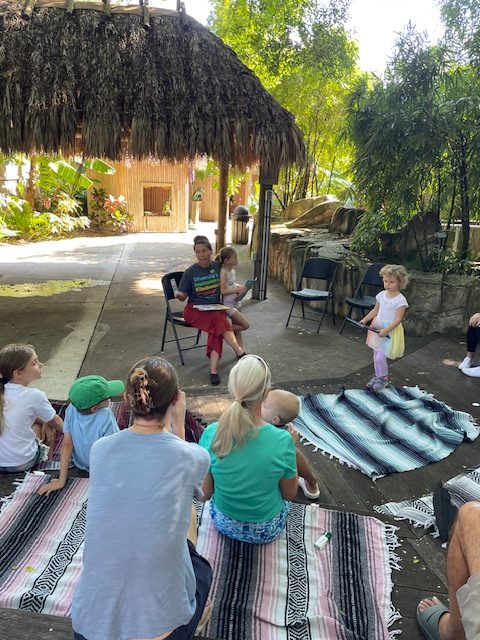
At a Read Aloud Florida event, an African American community leader and guest reader was struck so deeply by Lupita Nyong’o’s Sulwe that he fell silent and began sharing the personal story of his granddaughters growing up with the gathered crowd.
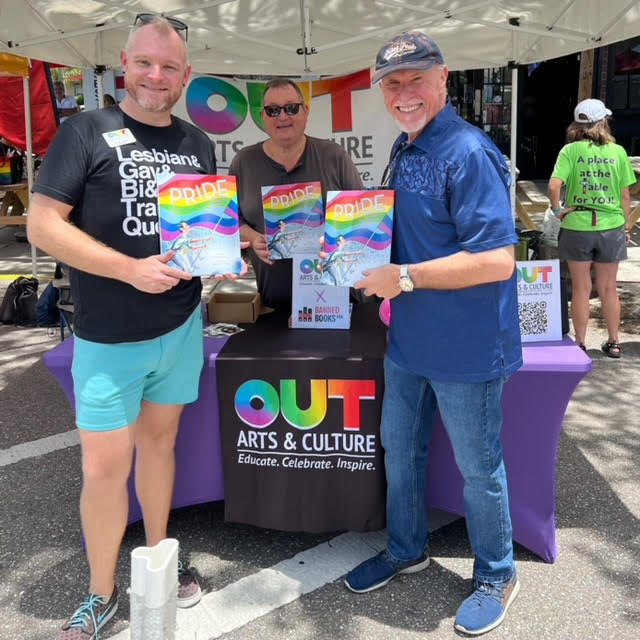
While giving away Pride: The Story of Harvey Milk and the Rainbow Flagat the St Petersburg Pride festival, OUT Arts & Culture board president, Paul Raker, was surprised to have the book’s author, Rob Sanders, serendipitously appear and sign every single copy they gave away!
The books that Banned Books USA donated became beacons of light and helped create space for community engagement. Across age, identity, class, and cultural background, people need to see themselves represented to feel seen, have their personhood recognized and, in turn, recognize the personhood of others. Literature is the oldest, and maybe the best, way people have of telling their stories. The leader of Orlando Youth Alliance, Michael Slaymaker, put it best in his thank you note to Banned Books USA: “You made the difference in a child’s life today.” As of October 31st, Banned Books USA has spent down the book funds that were the result of a one-time donation from Paul English and additional community support, but the fight against censorship and book banning is far from over. In the coming years, it will take a diverse coalition to insist on the right to read widely, dangerously, and freely.
Have you ever read a story about women that was so horrible and so fantastic it made you cringe? Did you cringe because the story depicted a latent female horror, something that could emerge from the seams of our present moment, yet is packaged as fabrication?
You may have been reading a work of speculative feminism. This genre captures feminist truths in the guise of alternate worlds, magical settings, and fantastical plots. Margaret Atwood claimed the speculative genre should explore a future that is possible from our present reality, something that could happen, but which has not yet occurred. Since the time of The Handmaid’s Tale, the definition of the genre has evolved into a super category to define anything that departs from an imitation of reality.
My novel The Flat Woman moves between the magical and the mundane in a world on the brink of ecological devastation. In a world very much like our own, the natural world of The Flat Woman is just starting to deal with the effects of climate change. Instead of taking responsibility, the government has held women exclusively responsible. When a young woman begins a relationship with an environmental activist, she begins to question her detachment from the issues that matter.
When combined with feminism, these stories can amplify concerns about women’s rights. The presence of the unusual—whether that be magic, another world, or elements of fantasy— can turn our understanding of feminism on its head. Here are 7 trail-blazing books of feminist fantasy:
Published in 1993, this novel takes place in California in 2024 against the backdrop of environmental failure. Sound familiar? The story centers around an eighteen-year-old named Lauren Olamina who suffers from a syndrome called hyper empathy, meaning she can feel the physical pain of others. Unfortunately, she lives in a world where people are constantly hurting.
Written in epistolary form, the story documents Lauren’s journey from California to Oregon as she forms her own religion, Earthseed, among a community of the displaced. Known as the mother of Afrofuturism, Octavia Butler wrote this story from the point of view of a young Black woman at a time when very few women of color were represented in science fiction.
A Pulitzer Prize finalist, this book of short stories is delightfully strange. According to Kelly Link, this collection was named after the characters who populate its pages: possessing poor impulse control, these characters all have the tendency to get into trouble. But these stories are not solely surprising on the grounds of their behavior. These nine stories frequently blur genre boundaries, subverting the reader’s expectations.
In “Two Houses,” six astronauts tell each other ghost stories. In “The New Boyfriend,” a high school girl falls in love with a friend’s birthday present: a ghost boyfriend. In “Light,” a woman’s husband leaves her for a pocket universe. These stories channel the dreamy, romance of late adolescence. They remind the reader that the interior lives of teenage girls are just as an important source of high literature as stories about middle-aged men.
Set in the undetermined future, in The Left Hand of Darkness, a human envoy named Genly ventures to a different planet whose inhabitants are biologically androgynous for most of the year. At the core of the story is Genly’s relationship with Estraven, a diplomat who tries to help Genly gain acceptance in this foreign land.
The novel is structured as a series of documents penned by Genly and Estraven as well as myths and legends of the imagined world. Some of the narrative friction comes from the sharp juxtapositions of the styles of the different documents, which demonstrates how digressions are an effective narrative engine. Some of Le Guin’s best writing describes the scenery of this distant planet, especially in the second half of the book where the story of Genly and Estraven reaches its full pitch.
What if you were born with a black hole floating above your head? What if you worked at a soul-crushing tech job that barely pays you enough to make rent? Meet Cassie, the protagonist of Ripe. As Cassie navigates a life in San Francisco, Sarah Rose Etter shows us a world that is both hyper real and endlessly strange. The story explores the intersection of the marvelous and the mundane in vivid imagery. Despite the oddness of the magic, the depiction of a lonely woman’s slow burn-out in a soulless city is extremely relatable. This is a story driven less by plot than by ideas—one woman’s slow suffocation under the burden of late-stage capitalism is a searing indictment of America’s toxic work culture.
Sultana’s Dream contains two works of short fiction published in 1905 by Royeka Hossain, a self-educated Bengali writer and a pioneer of science fiction. The standout piece from this collection is the titular short story, a work of feminist utopia which describes a world where men are confined to the domestic sphere and women, literally, run the world. Formed as a philosophical dialogue between two characters, the story is structured in a Socratic seminar style. The fourteen-page story shows us what the world is by showing us what the world could be. On the way, Hossain implements a unique visual language, which memorializes the world through its unique technology, such as flying cars and solar-powered kitchens.
“Padmarag,” the other text in the collection, depicts a feminist utopia like Sultana’s Dream, though it stays within the confines of literary realism. The novella illustrates the world of an Indian women-run school and welfare center. The setting for this novella is no surprise considering the author’s real-life passion for educating women, illustrated in the school for girls Hossain founded in Kolkata.
House of the Spirits is a feminist, socialist work of magical realism. Modeled after Gabriel Garcia Marquez’s One Hundred Years of Solitude, Isabel Allende’s novel follows four generations of the Trueba family in post-colonial Chile. Some of the book’s characters are thought to be based on real-life figures, such as Salvador Allende, a prominent Chilean socialist, and former president, as well as Pablo Neruda, poet and senator of the Chilean communist party.
This book blends a story of a country’s history with the story of a family, focusing on the magical and the fantastic like One Hundred Years of Solitude. But, unlike its predecessor, House of the Spirits focuses on the relationships between women: mother and daughter, sisters-in-law, and grandmother and granddaughter. Using a roving, omniscient point-of-review, the book highlights the impact of toxic masculinity on the women of the Trueba family.
This book of short stories retells the fairy tales you remember from your childhood, but not as you remember them. Unlike the sanitized Disney adaptations, the ten stories in this collection are laced with violence, gore, and sex. The standout story from the collection is the novella titled “The Bloody Chamber,” a retelling of Bluebeard that revises the story to be spooky, atmospheric, and surreal. A truly important feminist revision, this book intentionally reframes the original fairy tales to emphasize the horror and misogyny latent in 17th through the 19th century storytelling.
“Tang-Kue-Tê / Winter Melon Tea” by Yáng Shuāng-zǐ, translated by Lin King
“Lí-ya!”
A slur for Islanders, used by Mainlanders.
Half a year into my time on the Island, Chi-chan and I found ourselves trailing behind F-sensei, a woman teacher and dormitory supervisor at the Tainan County First High School for Girls, who was giving us a tour of the campus founded in the sixth year of Taishō. [1]
The school gates opened to a passage lined with flower patches on both sides. The first row of buildings along the path were administrative offices, followed by a row of educational facilities— including a newly completed building equipped with an art classroom and an exhibition space for scientific specimens. The remaining three rows were student quarters. There were two dormitories and a third building that held the bathhouse, cafeteria, kitchens, and other communal spaces. The area was bookended by a swimming pool to the east and four tennis courts to the west.
According to F-sensei, those who seek to provide an education for the modern woman must nurture students into well-mannered, well-informed, multitalented persons of excellence first and foremost, and only women of excellence second—
“Furthermore,” she concluded in a voice that rang with authority, “any one of our students or faculty members can say with their heads held high: our school’s hopes for our students are thoroughly reflected in our architecture.”
Hm. The “First” Girls’ School certainly lived up to its name.
I said, “Seeing as there is a First Girls’ School, there must also be a second?”
“Indeed. The Second High School for Girls is but two streets away.”
“I see. And how are the two different?”
“The Second Girls’ School mostly takes Islander students, and the campus is roughly half the size of ours. Indeed, some local residents have objected to this division, but you see, all of Tainan’s female students who excel in their studies name our school as their top choice. There is no Islander student who does not take pride in herself for testing into our school—and that, in the end, is the proof of our excellence!”
Excellence, excellence, excellence.
I glanced at Chi-chan, who stood next to me wearing a smile as immaculate as white jade.
“F-sensei,” I said, “would you say that even within this community of all-around excellence, there are still Mainlander students who would call Islanders ‘lí-ya’? I only learned about the word very recently, you see.”
F-sensei stopped walking. She turned to first look at me, and then at Chi-chan.
“I would very much like to say that such ill-mannered words are not uttered within our school, but—Aoyama-sensei, if you intend to write on this subject, please do make it clear that the school dealt with the matter fairly!”
“I have no intention of targeting the school. It was just something I happened to hear about on my travels.”
“Hm. What a coincidence.” F-sensei evidently found my explanation unconvincing. Nevertheless, she took it upon herself to elaborate. “Recently, an incident took place between two fourth-year students in the same class, Ōzawa Reiko of Mainland citizenship and Tân Tshiok-bi of Island citizenship. Both are very popular students who, over time, unwittingly attracted something like two opposing camps among their classmates. That said, the two used to be very close friends! I suppose a bit of friction is inevitable when young women are at the peak of adolescence. They have since reconciled, however.”
“Really? The opposing camps disbanded so easily?”
“Well, dividing into cliques is common for students their age, no? Some Islander students protested that Ōzawa-san had addressed Tân-san as lí-ya. The school took the complaint very seriously and was able to resolve the conflict very quickly. In fact, it is only because the school has no tolerance for such poor behavior that this small affair was ever regarded as an ‘incident’ at all. I only say this because, after the uproar died down, some of the students came to us privately to say that it had all been something of an inside joke.”
Inside joke.
A Noh mask took extraordinary skill to maintain. I couldn’t emulate Chi-chan, and instead stared directly into F-sensei’s eyes.
F-sensei gave a small chuckle.
“Of course, whether or not it was in jest, the school addressed the issue with an appropriate response. In fact, we hoped to reconcile the two students through a suitable educational approach, and therefore arranged for them to share the responsibility of receiving Aoyama-sensei on your visit. Ah, there they are.”
She gestured toward the path between the classrooms and the dormitories. At the dormitory doors, a bougainvillea tree teemed with plum-red and violet-purple flowers.
Two students stood shoulder to shoulder under the tree, both gazing up at the resplendent bloom.
A slow breeze rose, brushing some of the blossoms off their branches.s
One of the girls, who had the build of a star athlete, raised a hand to brush the fallen petals off the shoulder of the shorter, slighter girl.
I could not wrap my head around it: one of these two shōjo novel characters had called the other a lí-ya.
Allow me to start again, this time from the beginning.
I first heard someone use the term lí-ya the day we arrived in Tainan.
While the Taihoku Railway Hotel was the premier Western-style hotel on the Island, I was much more interested in the newer Tainan Railway Hotel in the south. In the former, the attractions are pretty much limited to: one, good Western food, and two, guest elevators that save you the effort of stairs. Although its Tainan counterpart was also Western, fully equipped with a restaurant, bar, entertainment center, and telephone room, it boasted an additional distinction of being located within the train station itself. The hotel had just nine guest rooms total, and its lobby was right past the ticket gate on the second floor of the station. I looked forward to what I thought would be a delightful experience of drinking my fill, falling into a boozy sleep, then waking up to the noise of an engine and wheels hurtling across the tracks as the first train pulled into the sunlit station.
With this in mind, I’d asked Chi-chan to arrange a trip to Tainan. Our itinerary would be much like the one in Takao: arrive on day one, give a lecture on day two, return to Taichū on day three.
Despite its being October, there wasn’t one trace of autumnal cool in Tainan’s air. By the time we got past the ticket gate, I was much more invested in getting my hands on an ice-cold soda than in seeing the hotel.
“But Aoyama-san, you can get a soda anywhere—would you not be interested in Tainan’s winter melon tea instead?”
“Oh! What’s that?”
“There are a few traditional Islander beverages for combating the heat: tshenn-tsháu-à tea, plum tea, lotus tea, and tang-kue-tê—winter melon tea. This is made by stewing winter melon with sugar until it boils down to concentrated blocks, which are then dissolved in cold water. For those of us living in the tropics, winter melon not only cools us down but also replenishes our energy. Mainlanders have a hard time getting used to tshenn-tsháu-à tea, but they tend to be very fond of the sweet winter melon tea.”
“By winter melon, you mean the green gourds with the white spots? You make that into sweet tea?”
“Precisely. You should definitely have a taste.”
“But of course!”
I was ready to head straight out of the station in search of this wonderful drink, luggage and all. But Chi-chan touched my arm and began steering me toward the staircase that led to the hotel’s check-in.
Alas.
I suppose I should give an accurate account of the hotel. In keeping with its low room count, Tainan Railway Hotel had but a petite staircase. Only the lofty arched window that flooded everything with sunlight possessed the grandeur of a high-end hotel. Heading up the stairs, one is faced directly with the front desk. To the right is a long hallway, whose main source of light is a row of smaller arched windows along the western wall rather than the glass chandeliers overhead.
I walked over to the main window and looked down at the train terminal. Countless heads crisscrossed below: panama hats, floppy straw hats, fedoras, as well as baseball caps, military caps, and student caps. There were women with intricate updos and boys with clean-shaven, monk-like skulls. I could not tear my eyes away, thinking that this was perhaps the most entrancing view of Tainan Station one could find.
It happened then.
“Lí-ya!” A deep, gruff voice.
I turned and saw Chi-chan standing not far from the reception desk. Her profile was backlit and therefore obscured from me. Her silhouette was stiff and straight-backed—her shoulders rose and fell ever so slightly with each breath.
She walked toward the desk.
I hurried after her in time to see the receptionist’s disgruntled face.
“We’re full. Now get out of here.”
It was impossible to believe that such spiteful words could come from the staff of a luxury hotel. Chi-chan, however, was calm.
“Would you kindly confirm the reservation for Aoyama Chizuko-sensei under the Nisshinkai Organization?” She presented her business card to the glowering man. “I am her Islander interpreter. Aoyama-sensei is a writer visiting from the Mainland at the invitation of the Taiwanese Government-General itself. If you have any questions, you may direct them to Mr. Mishima Aizō at Taichū City Hall.”
I did not possess her patience. “Enough! There’s no reason why we should take this boorish treatment. So this is the best that the Tainan Railway Hotel has to offer!”
I began pulling Chi-chan away, but the receptionist darted out from behind the desk and gave a deep bow.
“Please accept my deepest apologies. It is my fault entirely. We have heard from City Hall earlier—you may access your rooms immediately if you wish.” When he raised his face again, it had transformed from the scowl of a Niō warrior to the jolly grin of Ebisu.
The sudden transformation stunned me into silence. Was this part of some avant-garde play?
While I had my guard down, several of Ebisu’s servant boys materialized to take our luggage away. The goddess Benzaiten— who, until moments ago, had simply been a woman attendant blatantly ignoring our presence—greeted us with a broad smile, as though we were honored patrons who had just donated a large fortune to her temple. [3]
“Did Aoyama-sensei arrive on the last train? The journey must have been exhausting in this heat! Ah, here is Aoyama-sensei’s suite, and Interpreter-san’s room is just across the hall—very convenient. We will arrange for you to dine at the railway restaurant tonight. Dinner is at six, but please just say the word if you would like to have it earlier or later. We will bring you cold beverages in a moment—would you prefer fresh juice, soda, or milk? Shall we bring the beverages to your rooms separately?”
Her enthusiasm was so over the top that it was almost comedic.
“Dinner at six is fine. And please bring two glasses of juice to my room.”
The chilled drinks soon appeared on an ornate tray.
Inside the suite was a Western mattress with springs, curtains with elaborately woven patterns, and chairs with curved armrests. Chi-chan and I sat at opposite ends of the room and finished our juices in silence. The farce and chaos that had pummeled us since we set foot in the hotel only now began to recede.
A leftover ice cube gave a small crackle from the bottom of a glass.
Chi-chan sighed quietly. “I am so sorry to have caused Aoyama-san alarm.”
“It wasn’t your fault at all.”
“But it was. Wearing a chōsan was negligent on my part.”
It was then that Chi-chan explained it to me.
Lí-ya!
The word meant “You there!” in Taiwanese. While at first it was simply a crude way of addressing Islanders—implying that they could be ordered around at will—somewhere along the way it had become a derogatory slur in itself.
Chi-chan and I had checked out of Tainan Railroad Hotel before traveling to the campus. At my request, Chi-chan had made prior arrangements with the school for us to spend the night in their dormitories following my lecture, hence F-sensei assigning students to serve as our hosts. Under the bougainvillea tree, F-sensei transferred us into the care of Ōzawa Reiko and Tân Tshiok-bi, two young women who lived up to their respective names. Ōzawa, like the kanji characters for “vast waters” and “beauty” in her name, was broad-shouldered and full-bosomed, with a comely face and a grounded carriage. Tân Tshiok-bi, like her kanji characters for “sparrow” and “slight,” was as delicate and spindly as a prepubescent boy.
“Does Aoyama-sensei stay in dormitories when lecturing at other schools as well?” Ōzawa asked.
“To be honest, yours is the first school where I’m staying overnight.”
“Oh! But that must mean Aoyama-sensei is interested in our dormitories specifically. Why is that, may I ask? Are our housing facilities particularly well known?”
I grinned. “Well, before I came to the Island, I read a book written in the Taishō era by an English traveler who visited a girls’ school in Tainan—which I think must be this one—and noted that the dormitories housed three students per room. Why an odd number? Generally speaking, even numbers are much easier to manage from an administrative standpoint. You see, mine is the type of idle mind that fixates on such trivial details, so I wanted to witness the mystery for myself.”
You see, mine is the type of idle mind that fixates on such trivial details, so I wanted to witness the mystery for myself.
“I see! Did they have three people to a room during Taishō? But the dormitories we use now were only completed recently, and there are eight people to a room—an even number! Has Aoyama-sensei heard of the Second Girls’ School? Their housing is also eight to a room, and seeing as we are both prefecture-run schools, it makes more sense for us to share the same system, I think. Oh, but that means Aoyama-sensei’s mystery will remain unsolved. What a shame!”
Ōzawa had a manner of speaking that radiated openness and candor. Sparrow, next to her, nodded and smiled, affirming everything that came out of Ōzawa’s mouth. It was impossible to detect any sign of friction between the two.
No, that wasn’t all. Let me put it this way: as we made our way across campus and the South Country sun climbed higher overhead, I saw Ōzawa reposition herself multiple times in order to shade Sparrow from the harsh sunlight with her own body.
Could this same Ōzawa Reiko really have called this Tân Tshiok-bi a lí-ya?
The two of them gave Chi-chan and me a thorough tour of the living quarters. Ōzawa explained, “The boarders have free time after dinner, then study hall from eight to ten. Lights out is at ten, after which there is no talking allowed until six in the morning. Oh, but since Aoyama-sensei and Ō-san are not familiar with the buildings, please feel free to come to me if you have any concerns after lights out. My room is directly next to yours.”
It was Chi-chan who responded first to this curious afterthought. “Ōzawa-san, are there any specific concerns that we should be aware of?”
A tactful yet incisive question. Chi-chan never disappointed.
Sparrow chuckled before Ōzawa could reply. “We would advise against going to the lavatory outside Building One after curfew, if possible.”
“Oh? And why is that?”
“No real reason,” Ōzawa cut in, but I gestured for Sparrow to continue.
An intriguing smile danced on Sparrow’s lips. “There are tales about a mythical dimension in that lavatory.”
“Mythical dimension? Do you mean to say that a student was spirited away or something like that?”
“Yes, something like that. At least that is the rumor among the boarders. After curfew, an unknowable space opens up there, and people disappear into—”
“Tân-san,” Ōzawa said firmly.
Sparrow shrugged, her expression as cheery as ever. Huh. Huh!
A shōjo romance? Or a supernatural thriller?
My lecture concluded at the end of second period, but the students did not have lunch until after third period, so Chi-chan and I politely declined the administrators’ invitation to a luncheon and hailed a taxi to the famous West Market.
Lóo-bah over glutinous rice, ricefield eel and vermicelli noodles thickened with corn starch, soup with hand-molded fishcakes and oysters—we filled our stomachs with an exquisite feast. Dessert was fresh fruit: plates and plates of sliced watermelon, mango, tomato, papaya. Standing by a vendor’s cart on a street corner, we downed winter melon tea and star fruit juice from coffee cups—sweet, unrivaled nectar. Ah, the flavors of the South!
Seeing as we were in Tainan, Taiwan’s historic capital and cultural center, there was a sense of obligation to visit some famous tourist attraction like Senkan Tower, but this felt too much like being told what to do. [4] Instead, we ambled over to the nearby bustling neighborhood known as the Ginza of Tainan, which included both the Tainan Shrine and the Tainan Confucius Temple. We concluded our stroll at a department store, where I bought a new fountain pen and some pencils while Chi-chan picked out two novels.s
On our way back to the First Girls’ School, I sneaked glances at Chi-chan’s profile. The Noh mask seemed to have relaxed a little after she’d found the books that she wanted. I instantly felt more relaxed as well.
“I didn’t expect to find such different ways of eating braised pork over rice between Tainan and Taichū! We’ve had lóo-bah with hōrai short-grained and zairai long-grained rice before, but the sticky rice!”
“Aoyama-san seems to have enjoyed all three.”
“Because all three were delicious! If I had to be critical, I’d say that long-grained rice is rather too dry and loose for this dish. Most of the broth ends up pooling at the bottom of the bowl, so you’d have to add more rice to soak it all up—but once you add more rice, you’d have to add more lóo-bah, too. In which case, don’t you fall into an endless spiral of pork and rice and pork and rice?”
Chi-chan chuckled. “I’ve heard of a local dish called bah-kué, where they grind the rice down to a pulp and steam it into a palm-sized savory cake, which is then fried and drizzled with lóo-bah. I’d hoped that we would come across it today, but no such luck.”
“My goodness, Chi-chan, where on earth do you get all this information? I’ve never found such detailed accounts of the Island in any newspaper or magazine!”
“An interpreter never reveals her secrets.”
“Ah! I do beg your pardon,” I said, laughing.
Chi-chan, too, laughed—the kind of laughter that made her shed her Noh mask altogether. “Aoyama-san.” “Yes, miss?”
“I’ve heard people say that Mainlanders think lóo-bah has a displeasing stench. I have also been warned that Mainlanders only eat sashimi. But Aoyama-san seems to regard lóo-bah and sashimi with equal esteem.”
“Bah! Anyone who can discriminate against lóo-bah must be completely incapable of appreciating good food.”
“The demarcation between the Islanders’ lóo-bah and the Mainlanders’ sashimi is the distinction between the dirty and the pure,” Chi-chan said, her voice low. “The same applies to the Islanders’ chōsan and the Mainlanders’ kimono.”
“I . . . have never felt that way.”
“That is because Aoyama-san is a good person.”
“No—I don’t know why or what or how. This is much too difficult for a simpleton like me.” The train of thought twisted into my mind knots that took a few more silent steps to straighten out. “Perhaps I should put it this way, Chi-chan: lóo-bah and sashimi are both delicious, chōsan and kimono are both beautiful. To me, the essence of a thing is by far the most important. I’m sure there are plenty of people who choose not to understand the beauty of lóo-bah and chōsan, but there are also plenty of people who do.”
Without replying, Chi-chan raised her purse to cover her own face.
“Why are you doing that?” I asked.
“Because it isn’t fair—how Aoyama-san always manages to say the exact thing that people want to hear . . .”
“Is it what you want to hear, Chi-chan?”
She said nothing. I took the purse from her hands. Behind it, Chi-chan’s dimpled cheeks had a subtle flush. I saw neither the sweet yet impenetrable Noh mask nor the coy grin she sometimes wore when she was chastising me. It was, instead, the expression she once bared to me in the kitchen at the Yana River cottage: a softening as gradual as the thawing of frost in early spring. It was also the smile that she once gave me when our train crossed the Katansui River Bridge—with true warmth shining out from the depths of her eyes.
I laughed and laughed, hooking my arm around hers.
“What a tease you are!” she cried, nudging me with her shoulder. I dug my elbow into her side, still laughing with a bounteous mirth that seemed to overflow from the core of my chest. Ha! Ha! Ha!
As we walked arm in arm in this merry mood, wind brushed against our cheeks—a wind strong enough to lift bougainvillea blossoms off their branches. Did that mean we, too, were characters in a shōjo romance?
If we’d been standing under that same tree, I, too, would have brushed the vivid petals off of Chi-chan’s shoulders.
No—that wasn’t all. Let me put it this way: had arrows showered down on us instead of flowers, I would have shielded Chi-chan’s body with my own.
We had dinner that night at the dormitory cafeteria along with the faculty and students. We also washed ourselves in the dormitory bathhouse, soaking in the same public tub as the young girls. Ōzawa and Sparrow stayed by our side for most of these evening activities, all the way until the nighttime roll call at lights out.
Chi-chan and I slept in the same room on traditional futon bedspreads laid out on the tatami floor. Lying there in silence, I suddenly thought of the “myth” Sparrow had mentioned. I said, in a small voice, “Chi-chan.”
She laughed. “Can it be that you need to visit the lavatory?”
“Hahaha.”
“And, specifically, the one outside Building One?”
“Do you plan on stopping me?”
“There’s no need to stop you from doing something that isn’t dangerous.”
“Can it be that you actually want to go with me?”
She said nothing. But when I climbed out from under my blanket, she did too.
Moonlight permeated the room, lighting up her grin.
Ha.
The dormitories were two-story buildings; we were staying on the first floor of Building Two. The lavatories were housed in two freestanding structures to the northwest of Buildings One and Two.
The dormitories were silent. I lowered my voice. “Isn’t the northwest the direction of the so-called demon gate?”
“Is Aoyama-san a believer in fēngshǔi?”
“No, but the students must know about this, too.” “Sometimes it’s hard to tell whether you’re a novelist or a scientist.”
“I am Sherlock Holmes, the great detective.”
“Does that make me Doctor Watson?”
We were fast approaching the Building One lavatory.
The lavatories were the only sources of light in the dark mass of the dormitory buildings. Their solitary brightness on the pitch-black campus gave them an otherworldly air. The buildings were all made of wood, and the floor beneath us creaked softly with every step. Everything about the place screamed It’s scary in there! I was surprised that there was only one supernatural rumor rather than a whole host. Chi-chan, however, seemed completely unaffected.
We went around the staircase and stepped onto the path to the lavatories.
Lí-ya. A small yet bright voice coming from inside.
“Lí-ya, why didn’t you come sooner?”
Chi-chan and I stopped in our tracks and exchanged a quick look. “Who’s in there?” I asked at the top of my voice.
Silence.
I began to walk farther toward the lavatory, but Chi-chan held on to my arm. “I can’t let you go where there’s danger.”
“Aren’t you curious?”
She nodded, then walked in before me.
I hurried after her. Inside, there were multiple stalls, and all of the doors stood open. Spotless sinks stood to the other side of the stalls. There was no door on the opposite wall—the one through which we’d come was the only means of entrance and egress. Yet the room was empty.
The only thing that stood out from the ordinary was a piece of paper on the floor under the sink counter. I picked it up and immediately felt from the texture that it was a photograph. The image had been taken indoors, against a backdrop of a tea table with a vase of blooming lilies. A young woman stood in the photograph’s center, as lean as a young boy. She looked masculine and strapping in a double-breasted suit jacket, riding pants, and long boots as well as a beret angled to cover one of her eyebrows, which together with her crooked grin made her look rather mischievous.
It was Sparrow—Tân Tshiok-bi.
Neither shōjo nor horror, but a mystery.
“What are your thoughts now, Holmes-san?”
As always, Chi-chan’s mind was on the same page as mine.
I put on an aristocratic voice. “Jolly good question, Watson.” I had no clue. Where would a detective start investigating? The answer came to me immediately: examine every inch of the lavatory.
Unfortunately, that was when F-sensei, who was on her rounds as the dormitory supervisor, appeared. She was instantly suspicious. “Aoyama-sensei, Ō-san, why are you here? The Building Two lavatory is much closer to your room . . .” But then she seemed to cotton on. “Ah, there must have been a line! You see, there is a strange rumor about this lavatory, so many of the students now opt to line up at at the one near Building One . . . it’s been quite the headache.”
Chi-chan and I both kept quiet about the “mystery” we’d just witnessed. Chi-chan, her eyes wide and brimming with innocence and concern, asked, “Sensei, what do you mean by ‘strange rumor’? Is it something frightening?”
“No, nothing frightening. Please do not worry.”
“I see . . . but I suppose it’s human weakness that makes us more afraid of the unknown than of the things we know for certain. The students probably misinterpret the facts all the more because they have few facts to go on.” Chi-chan then added in an appeasing voice, “Oh, but I apologize. We would not wish to hold up F-sensei’s rounds. We will return to our room and ask Ōzawa-san about the tale tomorrow.”
F-sensei sighed. “It really isn’t anything horrific at all. To tell you the truth, it’s something of a heartwarming story.” She seemed to let down whatever guard she had up and grew more talkative. “There were once two students who each told their respective roommates that they were going to the lavatory at lights out, but neither returned for a long time. Their roommates each felt uneasy and went searching for them separately, which led them to run into each other at the bottom of the stairs. That was when one of the two missing students came out of the lavatory. The roommates asked her if she’d seen the other missing student, and she said no. They all went inside to search, but there was nobody there. In fact, there was no need for them to search—the two so-called missing students did not get along, and would no doubt have argued had they been in the same place.”
I couldn’t help but interrupt. “What can possibly be heartwarming about this?”
F-sensei smiled ever so slightly. “The rumor that spread among the students was that the second missing student had been hidden by the gods. As in, the gods hid the two students from each other in order to foster peace and harmony in the dormitories.”
“That would be quite an outrageous thing for the gods to do just for maintaining peace in the dormitories.”
That would be quite an outrageous thing for the gods to do just for maintaining peace in the dormitories.
“Yes . . . well, that is the gist of the story. Do you remember the way back to your room?”
I’d already scanned the whole lavatory as we were speaking, and since F-sensei now looked ready to usher us all the way back to our rooms, we had no choice but to follow her.
But what had happened in there? In the bedroom, Chi-chan and I sat cross-legged facing each other. A moonbeam struck the photograph that lay on the floor between us.
“It couldn’t have been supernatural.”
“Does Aoyama-san have any theories?”
“It was Ōzawa Reiko who spoke.”
“Oh? And what is the reasoning behind that answer?”
“When we got near the lavatory, the person inside said ‘lí-ya,’ correct? ‘Lí-ya, why didn’t you come sooner?’ They were waiting for somebody. But when they heard that it was us, they rushed out of the bathroom and dropped the photograph. As for the other party involved in this lí-ya incident—that would be Tân Tshiok-bi, the subject of the photograph.”
“Hm—indeed, out of the hundreds of students here, Ōzawa-san might not be the only one who would refer to an Islander student by that word, but it seems too great a coincidence that the photograph is of Tân-san.”
“Yes, and it seems to be quite a personal photograph. So, the photograph somehow came to be in Ōzawa’s possession, and she made a secret arrangement to meet with Tân-san in the lavatory tonight. As an upperclassman who is familiar with campus legends, she cleverly used everybody’s fear of the ‘mythical dimension’ to give them privacy. But how did Ōzawa exit the lavatory?”
“To leave that aside for a moment. If Aoyama-san is correct and the person inside was Ōzawa-san, then what was her intention in asking Tân-san to meet her tonight? Was it blackmail?”
“Hm—”
Our gazes met, and we fell silent at the same time. I couldn’t get the earlier image out of my head: the falling bougainvillea blossoms, and Ōzawa gently brushing the petals off of Sparrow’s shoulder.
Plum-red and violet-purple petals swirled in the wind. Slowly, slowly, they drifted to the earth . . .
“Aoyama-san.”
At Chi-chan’s voice, I woke from the reverie.
When had I drifted off? I sat up and rubbed my eyes at the gentle light in the room. What time was it?
“Aoyama-san, let’s go to the lavatory again.”
I couldn’t help but laugh. But Chi-chan tapped my shoulder playfully and said, “I’m not asking because I’m scared to go alone.”
“All right, all right.”
We retraced the now familiar path. Once we got there, Chi-chan placed the photograph on top of the sink counter and pulled me toward the stairs. She sat down at the staircase’s landing.
“Chi-chan?”
“Shh . . . Aoyama-san, I believe that she will come back for the photograph.”
“Huh?”
Her whisper was so low that I had to lean my ear toward her lips. She said, “The wake-up time in the dormitory is six o’clock. Since there was a nighttime roll call, there must also be a morning roll call. The student in charge of taking roll would rise before six. It is now 5:30 a.m., and recently sunrise has been around 5:50 a.m. Whoever she is, she would definitely come retrieve the photograph before it gets bright outside.”
I looked at her and saw that she was watching me with serene eyes. There was no trace of sleepiness in her face, though the skin under her eyes was darker than usual; she must have spent the whole night dwelling on the mystery while I slept.
Who said that she was Watson?
Birds were beginning to trill and chirp. The gray sky grew whiter by the minute. Chi-chan’s dark-circled eyes were brighter than both the birdcall and the sunrise.
It happened then.
Creak, creak. Steps on the wooden floor in the midst of birdsong. Creak, creak. Nearer and nearer to the staircase. Creak, creak. Past the staircase. Creak, creak.
Chi-chan and I stood up at the same time and peeked through the gap between the staircase and the building. A young woman was walking into the lavatory.
“But that’s—”
I almost cried out with shock, but Chi-chan looked unfazed— as though she’d predicted everything. She counted from one to five under her breath, then strode purposefully down the stairs, her footsteps loud against the wood. I hurried to keep up with Holmes-san.
We entered the lavatory just as we did earlier in the night. The lights were still on, the stall doors ajar, the sinks spotless, the opposite doorless.
It was empty.
And yet, and yet, the photograph on top of the sink counter had disappeared. Chi-chan put a finger to her lips, took my hand, and slipped back out of the door.
We returned to our room. No long after, the six o’clock bell rang. The whole dormitory sprang to life, drowning us in the buzz and hum of chatter and movement. The din blended together with the calls of the birds. After listening for a moment, Chi-chan smiled at me. “You can speak now.”
“It was Tân Tshiok-bi! How could it have been Tân Tshiok-bi?”
Per our itinerary, we left on the 11:40 a.m. train back to Taichū. On our way, we bought two bags of black water caltrops from a street vendor. After the train departed from Tainan Station, we unfolded the newspapers that contained our water chestnuts and spread them on our knees.
The water caltrops looked like bats with their sharp, pointed ends—and seemed entirely impenetrable to me. Thankfully, Chi-chan came to the rescue with her ever-nimble fingers.
Nimble fingers, nimble mind.
How could it have been Tân Tshiok-bi?
Back in the bedroom, Chi-chan had grinned. “I guessed it. An incredibly lucky guess, don’t you think?”
Naturally, I wasn’t about to let her off with such a cursory explanation. When I pressed, she asked, “When we first met Tân-san and Ōzawa-san, did you notice how Ōzawa-san used her own arm to protect Tân-san from the falling bougainvillea flowers?”
“Yes, of course.”
“The two of them were walking in front of us as our guides. Once, when turning a corner, I noticed a magenta blossom adorning Ōzawa-san’s hair, just behind her ear. That same flower was originally tucked inside Tân-san’s uniform collar, where it had been barely visible. But I am roughly the same height as Tân-san and saw the flower early on. From what I saw, I believe that between the two of them, Ōzawa-san is the protector, and that Tân-san as the protectee sometimes commits small acts of rebellion.”
“Huh . . . rebelling against her defender, eh?”
“Indeed. Therefore, the slur of lí-ya has also been reversed between them, becoming an endearment that Tân-san uses on Ōzawa-san. In this sense, ‘the lí-ya incident’ between them may have been a total misunderstanding.”
“That Tân? Calling that Ōzawa lí-ya?”
“I cannot guess at what passed between them, but Tân-san asking Ōzawa-san to meet her in the ‘mythical dimension’ on a night that outsiders like us are staying on campus was likely also a form of mischief. But I don’t believe that it was blackmail. Both of them will be graduating this coming spring, and it’s common for students to exchange personal photographs in girls’ schools. For those two particular students to exchange photographs, however . . . well, let’s just say that the minds of young women are the most unsolvable mysteries in the world.”
“But that’s hardly enough information to deduce that it was Tân!”
“You’re right. The first clue was that Ōzawa-san lives in the room next to ours. She was responsible for the nighttime roll call, which meant that she returned to her room late, and perhaps did not have time to step out again before we left for the lavatory. She would have heard us leaving, and would have waited to avoid running into us. With eight roommates to one room, there are bound to be one or two people visiting the lavatory at night. If it had been Ōzawa in the lavatory on our first visit, she would have returned to the bedroom after us. But I listened for movements next door the whole night, and there was always the sound of someone leaving before the sound of someone returning. Which meant that my hypothesis was right: Ōzawa must have been in her room at the time of the first incident.”
“But isn’t there also the possibility that Ōzawa—after vanishing from the lavatory through unknown means—managed to return to her room before we got back to ours?”
“It would be extremely difficult not to make any detectable noises in a silent dormitory, and even more so for someone of Ōzawa-san’s stature. We would have definitely heard her steps on that wooden floor had she been rushing back to the room.”
“That’s true—she’s got quite the athlete’s build! Then why was there nobody inside the lavatory?”
“Well, this is another clue. None of the stall doors were closed, which made it look like they were empty. But this was a blind spot. I agree with Aoyama-san that there is no mythical dimension, which makes the answer simple: the person did not vanish; she was simply hiding in the stalls. Back in public school, some of the bolder students used to hide right behind the lavatory stall doors during hide-and-seek. Ōzawa-san couldn’t have, not with her stature—but Tân-san, who is as petite as a child . . . I made a lucky guess.”
“Chi-chan, Chi-chan, Chi-chan—”
“Yes?”
“You are neither Watson nor Holmes.” I announced in my most serious voice: “You are Chi-chan, the Great Detective!”
The room was flooded with golden sunlight. Chi-chan sat cross-legged on top of her futon; her face was radiant—even more so than usual. I felt dizzy.
“Aoyama-san,” came her voice. “Please have some.”
I snapped out of my daze, my mind returning to the first-class car of the northbound express train. Chi-chan had, I saw, stacked a small pile of cream-white water caltrops—freshly extracted from their sharp-ended black shells—into my palm.
When had this happened?
“You struggle with peeling these kinds of things, do you not?” she explained cheerfully. “Water caltrops have to be cracked between the teeth, and extracting the flesh also takes some skill. It’s no easy task for a novice.”
“Huh. I feel that we’ve had this conversation before.”
“Ah, indeed. When we first met. It was kue-tsí that time.” “Ah, kue-tsí! I still struggle with those.”
“And that is why Aoyama-san needs me.”
Her smile reached her eyes.
I pinched a water caltrop between my fingers and offered it to her. She put it in her mouth, still smiling.
I could not say why, but in that moment I thought of the emptied glasses in my suite at Tainan Railway Hotel. The leftover ice cubes. Their gentle crackle.
The drinks they brought us had been winter melon tea, but its sweetness seemed to have eluded me until that train ride.
King: Shōjo, translating roughly to “young woman,” is a literary genre popularized in Japan beginning with the Meiji era in the early 1900s. The novels were serialized in magazines that targeted an adolescent fe- male readership. ↩︎
Yáng: The Niō warriors, Ebisu, and Benzaiten are all folk deities in Japan. The Niō warriors are guardians of Buddhist temples, who are often represented with menacing expressions. Ebisu and Benzaiten are two of Japan’s Shichifukujin (Seven Gods of Fortune), who are known for their smiling expressions. ↩︎
King: Senkan Tower (Mandarin: Chìhkǎn Tower) is also known in Dutch as Providentia. The structure was originally built in 1653 during Dutch colonization of Taiwan (1624–1662, 1664–1668). ↩︎
About the Translator: Lin King’s writing and translations have appeared in Boston Review, Joyland, Asymptote, and Columbia Journal. She is the translator of the Taiwanese historical graphic novel series The Boy from Clearwater by Yu Pei-Yun and Zhou Jian-Xin.
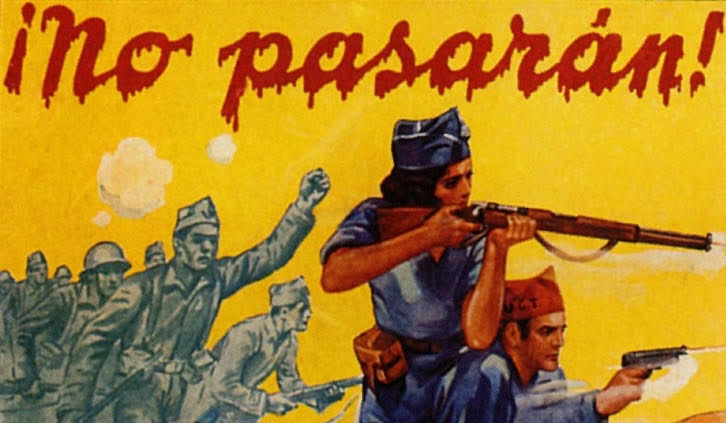
If you’ve read only one book about the Spanish Civil War, chances are it’s either Ernest Hemingway’s novel For Whom the Bell Tolls or George Orwell’s memoir Homage to Catalonia. And if you’ve read only two, as to what they might be, I’d confidently push all my chips into the center of the table.
Many outside the Spanish-speaking world can be forgiven for assuming little else has been written about Spain’s bloody civil war, which lasted from 1936-1939—not one but two of the 20th century’s greatest writers penned works about it that rank among their finest. What else, then, could possibly be said concerning these three years in which Spain tore itself apart?
Plenty, of course.
Like a Paris café in the 1920’s, the Spanish Civil War drew many of the world’s premier and budding writers, poets, and artists to it, either as a correspondent or a volunteer. And, as can be imagined, they had many thoughts about what they saw and experienced from their respective positions on the Spanish map, which was oftentimes little bigger than a postage stamp. While some of these evocations of the war may seem definitive, none were comprehensive.
Those armed with the quill were attempting to wake a sleeping world to the threat fascism posed to the precarious peace many still enjoyed. Few felt burdened by any pretense for objectivity. What they knew in their bones, along with the thousands of International Brigadiers who would sacrifice their one glimpse at life to fight in a country not their own, is that only by stopping fascism in Spain could another world war be averted. It did not take long for history and tragedy to confirm this belief.
Two weeks before General Francisco Franco declared victory on April 1, 1939, Hitler invaded the Sudetenland. Five months later, he would order his troops into Poland and the world’s deadliest conflict would officially commence.
By then, many of the first memoirs from the Spanish Civil War were already on the shelves. The novelists weren’t lagging too far behind.
As such, my novel What We Tried to Bury Grows Here is entering a very crowded field. The novel follows a young soldier, Isidro, who leaves his home in the Basque Country to defend Spain’s democracy against the fascist-backed military coup attempt. His journey across northern Spain brings him into contact with a diverse chorus of voices. Isidro’s story soon becomes theirs, and theirs his. Despite the Spanish Republic being abandoned by the world’s democracies and despite their side losing one battle after the next, Isidro and the others continue to resist. It is this quixotic spirit of defiance and persistence embodied by those who fought on the side of the Spanish Republic we could use a good dose of today. Be it the perception of having lost or even within the conditions of losing, change remains a possibility.
As for the free world in the 1930s, the mass mobilization against fascism occurred too late, but it did occur, and they were shown the way by such dreamers like Isidro and others in the Spanish Civil War.
When I look at the Spanish Civil War, this is what shifts to the forefront. What follows are a list of books— not written by Hemingway or Orwell—that focus on other aspects of Spain’s bloody war that, tragically, served as a dress rehearsal for World War II. I limited myself to memoirs and novels that can be found in English.
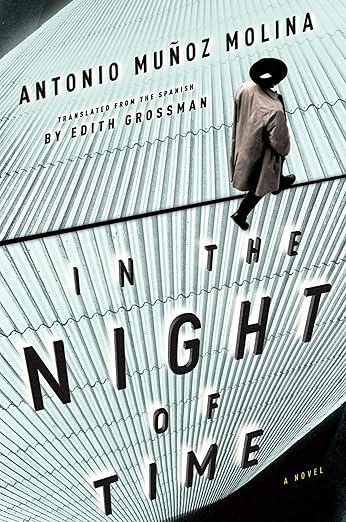
In the Night of Time by Antonio Muñoz Molina, translated by Edith Grossman
Each year, Antonio Muñoz Molina’s name inches further up the list of possible laureates who might walk across the stage in Sweden. And for good reason. Rare does a year pass not graced with the presence of another new and profound book by Muñoz Molina. Most are novels and long-form essays, many defy easy categorization, like the 2014 Like a Fading Shadow, which somehow marries recollections of his early writing career with the months that Martin Luther King’s killer spent on the run – the paper-thin connective tissue is that both occurred in Lisbon. More bizarre than the conceit is that the book actually works. As impressive as his oeuvre is, it’s his 2009 novel In the Night of Time that I most consistently press into people’s hands. The novel follows Ignacio Abel, a renowned architect overseeing the construction of University City, a new neighborhood for Madrid, just as the competing and metastasizing political ideologies begin tearing Spain asunder. Politics don’t much concern Ignacio, nor does the war. He is far more interested in his architectural project, in creating and building while the world around him destroys itself. Soon enough, he gets in on the act, destroying his marriage and family life by falling hopelessly in love with a young American who is in Madrid at that time. He wants both his work and his affair to continue, but his country is at war, and try as he might, he is not allowed to live outside of his times.
During the last jerky breaths of the Second Spanish Republic, Mercè Rodoreda was forced into exile, not because she had been engaged in politics but because she wrote in Catalan, which would be viewed by the new regime as a political act deserving of punishment. After two decades in exile, she wrote The Time of Doves, which remains not only Rodoreda’s most read novel but also one of the Catalan language’s. It is a hallucinatory novel – Teresa lives her life at a sort of remove – that reads at a breakneck pace. Months pass by in a clause, and if there is another novel that begins more sentences with the word “And,” I’ve not read it. No bullets fly across the page. Instead, the war arrives by heresy, by what is told to our narrator or overheard, by the garrote tightening around her life and those of her children. It’s been fifteen years since I last sat down with the novel, but what I recall are the quiet moments of a life which become increasingly impoverished by violence and the wills of men.
In Rodoreda’s novel, the Spanish Civil War creeps toward the page. That is not the case in the poet Muriel Rukeyser’s novel Savage Coast. It manifests as an explosion in time that does not literally derail the train that Helen, the novel’s protagonist, is on but stalls it on its tracks. Helen is traveling to Barcelona to cover as a reporter what would have been the People’s Olympiad, an alternative to the 1936 Summer Olympics that was to take place in Nazi Germany the following month. Those countries and athletes boycotting the Nazis were to participate in the People’s Olympiad in Barcelona. German exiles were among those who set to compete in the games, and at the start of the novel Helen has just had sex with one of them, Hans, who will soon join the International Brigades, as so many of the athletes would, to fight against the fascist-backed coup attempt. Helen is witness to the first days of the war, from the perspective of revolutionary Barcelona, the epicenter of Catalonia, a distinct area of Spain that would be unmatched in its concentration of revolutionary zealots. The novel, which plays with genres and was unpublished during Rukeyser’s lifetime, is one of awakenings – sexual, political – to a greater sense of a woman’s personhood in a teetering world desperate for change.
Laurie Lee was another young person waking to the world around him and determined to do his part. In his memoir, Lee tells the story of leaving England and making the staggeringly perilous journey across the Pyrenees in winter to put himself on the front lines of another country’s war. Of those international volunteers like him, he writes “…we shared something else, unique to us at that time – the chance to make one grand, uncomplicated gesture of personal sacrifice and faith which might never occur again. Certainly, it was the last time this century that a generation had such an opportunity before the fog of nationalism and mass-slaughter closed in.” There is a scene early in the novel that will stay with me always. Having survived the crossing, Lee is immediately arrested by those loyal to the Republic, to be executed or given a rifle depending upon how his credentials bear out. “The Republic was in peril, and one took no risk with its enemies.” He shares his cell with another prisoner who, as the cruel poetry of fate would have it, is a Spanish male of military age who was attempting to flee what would essentially be military conscription by escaping over the Pyrenees, making Lee’s trip but in reverse. Because of this perceived disloyalty and cowardice, he will be shot. For a single night the two men share a cell, one who looked at the world around him and thought, I’ve got to get the hell out of here while another saw the same picture and started packing his bags.
Lee’s time in prison was brief. Not the case for Arthur Koeslter, the author of Darkness at Noon, a novel the world would have been denied had the Spanish Nationalists been just a bit hastier. Koestler was in Malaga as a correspondent at the time of its fall to the Nationalists. Despite the hairiness of the situation, Koestler chose not to flee with the masses. This decision very nearly cost him his life. Arrested by the Nationalists, he would spend the next three months in prison, never certain if or when he’d be dragged from his cell like so many others and pushed against the wall. “Long before I got to know Spain,” he tells his reader, “I used to think of Death as a Spaniard. As one of those noble Señors painted by Velasquez, with black silk knee-breeches, Spanish ruff, and a cool, courteously indifferent gaze.” That indifferent gaze is on him throughout his imprisonment (an international pressure campaign ultimately led to his freedom), but he never cracks under it. Instead, he manages to maintain a humorous perspective on his absurd predicament and the captors and captives he bonds with. “I believe the only consolation you could give to a condemned man on his way to the electric chair would be to tell him that a comet was on the way which would destroy the world the next day.” Fascism might be a nightmare let loose upon the land, but the terrifying thing about the men under its sway, like Koestler’s captors, is just how banal and familiar they are.
Lydie Salvayre was born and raised in France, the child of Spanish exiles from the war. In her novel Cry, Mother Spain, she is at once reviving her mother’s story of her youth, “rescuing it from the oblivion to which it has been consigned,” while also reflecting upon her reading of George Bernanos’ memoir The Great Cemeteries Under the Moon, all while caring for her elderly mother and considering the book she is writing. Bernanos was a French citizen, a veteran of WWI, and a writer greatly concerned with the spiritual decline of his times. After the failed coup in Spain and the outbreak of war, Bernanos supports the fascist Falangist party, which is backed by the Catholic Church. However, after witnessing Falangists commit atrocity atop atrocity, he “could no longer ignore what his Catholic pride was refusing to concede. It was now as clear as day: in remote hamlets and villages, men were being rounded up every night as they came home from the fields.” Their crime is to be in Spain in 1936, a time when “what was hugely important, desperately and intensely so, in fact, was to classify people as good or bad, according to their political labels.” This is the Spain that Salvayre’s mother finds herself in at the age of 15. Her older brother – Salvayre’s uncle – has just returned to their village from Lérida, where his head was filled with new revolutionary ideas. In the village, a village “where all lives are pre-determined,” he is “a dark angel fallen from the sky,” while he insists to his fellow villagers that they “can live differently. It is possible.” Salvayre’s mother is convinced. She was born to become the humble maid of a wealthier family were it not, she tells her daughter, for her “sheer good fortune…War broke out the next day and I never went to work as a maid for the Burgos family, or anyone else for that matter. The war, ma chérie, came in the nick of time.”
In Lord of All the Dead, Javier Cercas returns to the subject of Spanish Civil War. In his surprising break-out novel Soldiers of Salamis, Cercas documents his attempt (or the attempt of a character with the name Javier Cercas) to tell the story of a Falangist soldier who narrowly escapes being executed by firing squad at the end of the Spanish Civil War, while searching for the Republican soldier who allowed this escape. The exhumation of the past hums along, stalls, hits a wall, then receives help from none other than Roberto Bolaño. In Lord of All the Dead, Javier Cercas (or, again, a character with the name Javier Cercas) tries once more exhuming the story of a soldier from the Spanish Civil War. This time it is the story of Manuel Mena, the great-uncle to both Javier Cercases, who falls under the sway of fascist ideas and enlists at the age of 17. He will die two years later during the Battle of the Ebro. Cercas knows little else of this man whose absence created a lacuna in the family. With Lord of All the Dead, he repeatedly tries and fails to fill it in and to understand why his great-uncle was willing to die fighting for an unjust cause, “for interests that weren’t even his.” Cercas receives assistance from the filmmaker David Trueba, who adapted Soldiers of Salamis for the screen and directed the film and who has also recently lost his wife to a very handsome and very famous actor (the identity is revealed late in the novel). As with Bolaño in Soldiers of Salamis, Trueba prods Cercas along. “We don’t judge Achilles by the justice or injustice of the cause he died for,” Trueba tells Cercas, “but for the nobility of his actions, by the decency and bravery and generosity with which he behaved. Should we not do the same with Manuel Mena?…Look, Manuel Mena was politically mistaken, there’s no doubt about that; but morally…would you dare to say you’re better than him? I wouldn’t.”
The Tree of Gernika: A Field Study of Modern War by G.L. Steer
Had he lived long enough to write more books, perhaps G.L. Steer would need no introduction. Born in South Africa, he was a fearless British war correspondent who loathed the world’s bullies and who also happened to be one of the finer crafters of sentences of his time. I leaned so much of my weight on The Tree of Gernika during the writing of two chapters in my novel that he deserves a co-writing credit for them. Looking at The Tree of Gernika now, I’m surprised I ever had the moxie to venture into territory already treaded by Steer. There is no way to improve upon the descriptions found in here of those months of war in the Basque Country. It is astounding all that Steer witnessed and participated in and survived. Then, while the war still raged elsewhere in Spain and international public opinion could still be swayed and galvanized, he sat at his desk and wrote not in rushed wire-like dispatches but instead took the time to shape sentences dizzy with the sort of poetry of a Melville or Fitzgerald. Ironical and stiff-upper-lipped, his prose could be beautiful in the horror that it described, like when an “air-maddened” mob attacked a prison in “the diseased, yellow light of the rationed electricity of Bilbao,” or when a “fearful explosion” produces over the ridge “a heavy cloud of Scotch mist.” Watching bodies pulled out of the wreckage of a destroyed building he notes how “a whole family of the past and future [were] wiped out by one bomb. Their hair lay wet and straggly over their bruised faces, hung in damp black slabs of gauntness as they were carried away.” And, of war in general: “Every war can be described as a series of colossal idiocies culminating in defeat.” Though a work of war correspondence, Steer is present on nearly every page. He was in the Basque Country from the beginning to the bitter end, shot at repeatedly, sought cover in craters, and nearly bombed out of creation a few times. He was the first to report on the destruction of Gernika, a report that Picasso would soon read translated into French and which would inspire his greatest work of art. Before European fascists had fully concentrated their homicidal attention on the Basque province of Bizkaia, Steer left Spain briefly, crossing the border into Biarrtiz, France, where his pregnant wife had fallen ill. By the time he arrived, she was dead, as was their unborn son. He returned to the war stripped of any concern for his own life. With the bombs falling around him, twenty thousand a day toward the end, Steer bore witness to the full immensity of this “very human tragedy [of] the destruction of man by a system, of spirit by routine.”
Spain: A Journal of Two Voyages Before and During the Spanish Civil War by Nikos Kazantzakis, translated by Amy Mims
Nikos Kazantzakis is well known for novels Zorba the Greekand The Last Temptation of Christ, but he produced a staggering body of work, practically all of which was translated into English but is now out of print. Among these works are novels, verse (his opus is a sequel to The Odyssey), memoirs, plays, spiritual exercises, and travel books, one of these being Spain, which saw him journeying into Spain as a reporter just as civil war broke out. Unlike so many other intellectuals, Kazantzakis happened to be behind Nationalist lines most of the time he was in the country. He lived his life with an almost anachronistic spiritual passion and possessed tireless curiosity and the sort of deep compassion for all creation that could fracture most hearts. When you open a book by Kazantzakis, the world burns with such traits. With few exceptions, the Spain that Kazantzakis entered in 1936 outmatched his roaring fervor. When he crosses paths with a man dragging a dog yelping in pain, he stops the man to ask about the dog. The man laughs and shows him his work. “When I bent down what did I see? A cross branded there with a burning iron…The fanatic peasant had forced even his dog to turn martyr for the Catholic religion.” Kazantzakis reports on the Siege of the Alcazar and walks among its smoldering ruins. He is witness, as well, to the Nationalists’ multiple attempts on Madrid, never turning away from the nightmare before him. “In spite of longing to get away, I forced myself to stay there: to watch; not to lose a single drop of the horror. A stretcher arrived. The soldiers bent over and handful by handful scooped the human pulp onto the stretcher.” These “horrifying spasms of torture” that Kazantzakis bears witness to has him observe that “we have entered on an historical era of the insanity of the human race. As happens at critical moments in the evolution of plants and animals, the same insanity is observed throughout the species: anarchy, anxiety, illnesses, short-lived monsters, strange types, until, after much agonized exploring, a new, more perfect species is established; and so life progresses.” One must do much more than hope.
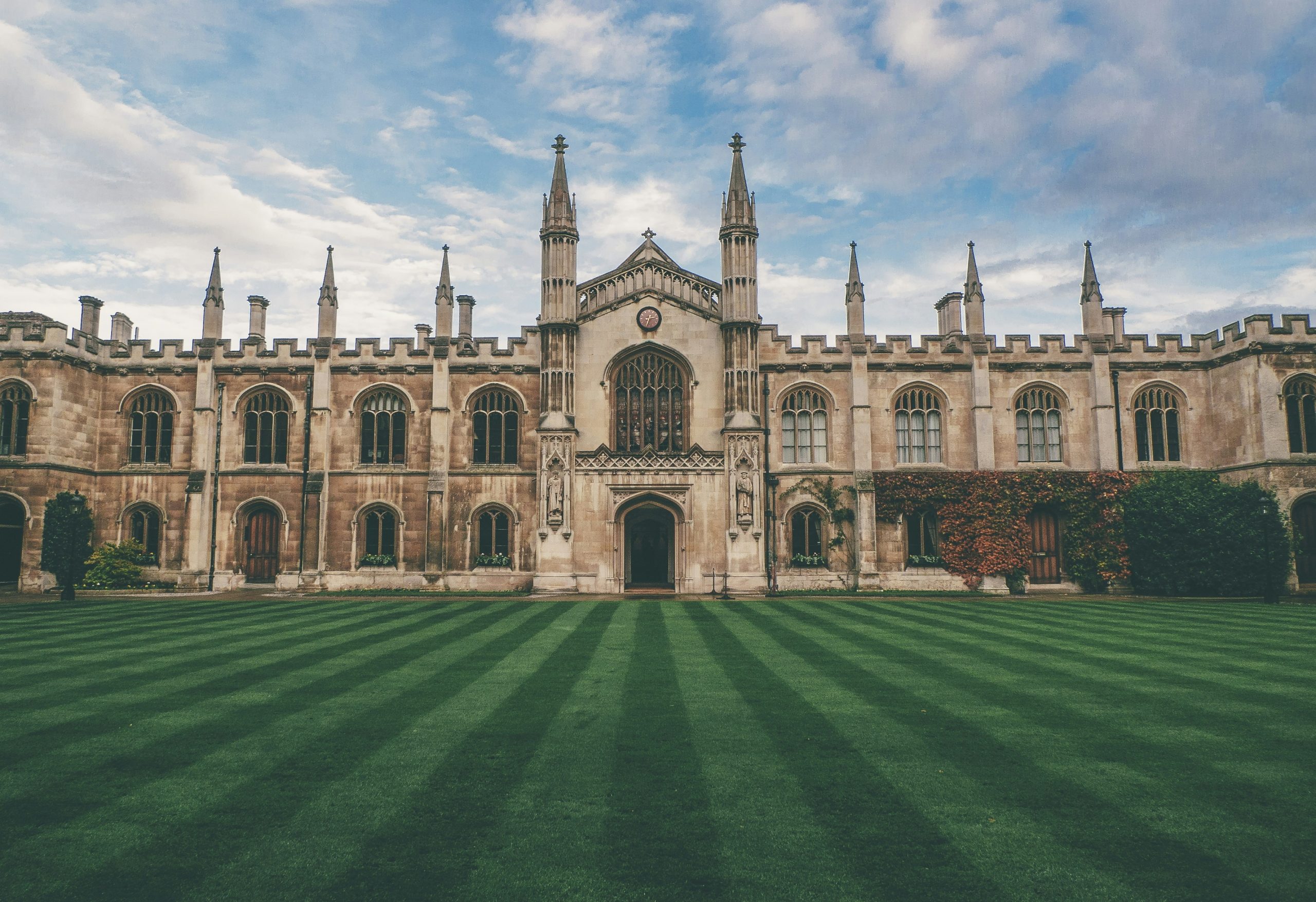
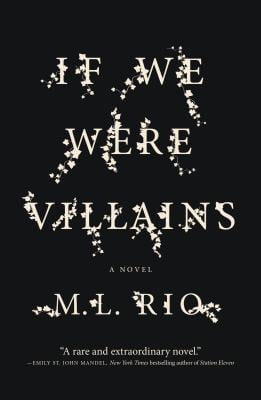
“All academia is dark academia.” I said it without thinking, a knee-jerk reaction to a literary label that had been assigned to me but always felt ill-fitting. Until that moment—discussing my first novel, If We Were Villains,with the Folger Shakespeare Library book club—I hadn’t really understood why. It was the “dark” modifier I disliked. Not because what I’d written wasn’t dark, but because darkness is so intrinsic to academic life that it struck me as unforgivably redundant.
I hadn’t meant it as a joke, but the then-director of the library laughed, and so did everyone else. I’ve since repeated this line in a variety of settings, and it gets a big laugh every time. I’ve been listening to people laugh at it long enough that I can’t help wondering—what exactly is so funny?
When I was writing Villains in 2014, “dark academia” did not exist. Books have been written about university life as long as we’ve had universities, but until recently we just called them “campus novels.” The first one I read was John Knowles’s A Separate Peace, assigned in my sixth-grade English class. It disturbed and upset me, consumed me like an addiction, and after reading it half a dozen times, I went looking for a fix from other authors. Between then and the writing of Villains a decade later, I devoured every campus novel I could get my hands on. Unsurprising, in retrospect. Obvious, even—the way that word “dark” feels too obvious, like we’re all saying the quiet part out loud. I was a weird, friendless kid whose only natural aptitude in life was language. Words worked in my brain in a way nothing else did; the only place I didn’t feel out of my element was between the pages of a book or in an English class. A book that held classrooms between its pages offered the best of both worlds. Everywhere else I was walking on glass.
My early education was steeped in dogma and damnation. At my Catholic school, the line between moral and general instruction was thin; any minor misbehavior could be twisted into a violation of some commandment or sacrament. Coming to school with my shirt untucked was just one of a million ways I discovered to “dishonor my mother and father,” for instance. Such infractions were dutifully tallied and punished. Public humiliation was a popular option; when you’re twelve years old and simply existing is humiliation enough, having your sins itemized and excoriated by an authority figure before God and all your classmates is an exquisite form of torture.
Oblivious then to all the ways I really am “wrong” by Catholic standards (a queer woman with no interest in being a wife, mother, or nun), I hadn’t learned to wear my wrongness well. I only learned that God hated me and I was going to hell because I couldn’t keep my shirt tucked in or get my homework done. This pervasive culture of shaming followed me home and kept me up all night, crying and praying and begging Someone Upstairs to tell me why I just couldn’t be good. No matter how hard I tried not to do anything wrong, wrongness oozed out of my pores. By the time I learned that there’s a word for this manifestation of OCD—scrupulosity—I was four years deep in a doctoral degree and my crippling fear of not being good had lost its religion and transformed into a crippling fear of not being good enough.
Academia and Catholicism look a lot alike if you squint.
Even in a secular institution, academia and Catholicism look a lot alike if you squint. My early indoctrination and difficult exodus from that religious community created a natural pipeline to the academy. I traded one higher power for another that seemed a little more friendly to the “wrong” kind of person I was but operated in much the same way.
Catholicism runs on self-sacrifice. It demands you punish yourself in an extravagant, Christlike style. Suffering is good. Deprivation is godly. Pain is the way to salvation. Academia, especially after undergrad, follows the same schematic. The fetishistic self-flagellation of Catholicism sounds a lot like the virtue-signaling characteristic of campus communities: end-game capitalism has equated our worth with our willingness to destroy ourselves for productivity, and in higher education this compulsion takes on the distinctly religious bent of self-righteous self-destruction for the cause. The demonstration of scholastic rigor has become so rigorous indeed that we expect graduate students to write 400-page monographs that make novel interventions in their field at the same time that they’re teaching undergraduates and supporting the research of more senior scholars, usually while working other jobs to supplement their stipend, with no guarantee that anyone outside their committee will even read their work when it’s complete and even longer odds that there will be a job for them when they graduate.
Academia demands—and rewards—uncompromising devotion and unquestioning acceptance.
Only the fervor of a true believer will sustain you through five to seven years of that. Like the church, academia demands—and rewards—uncompromising devotion and unquestioning acceptance. In church and on campus, you don’t contest your higher power. God brooks no challenges to his wisdom, and academic administrations project the same infallibility, even when their practices are both illogical and morally bankrupt. At the university where I completed my PhD, eight of the ten highest earners were athletic coaches, each making more than 40 graduate students combined. When I was the president of the Graduate English Organization, it was my responsibility to represent student concerns to the administration during the worst year of COVID-19. Coaches who weren’t even coaching would continue earning $800,000 annually, but whether we would get to keep our health insurance during a global health crisis if we weren’t teaching in person was up for debate. My duty to my peers put me in the impossible position of having to make myself a nuisance to the superiors who held my professional future in their hands. More than once I was shouted down in departmental meetings by a male faculty member who was not only ostensibly in charge of student welfare but my direct supervisor in one of the assistantships I took on to make ends meet. Later, another faculty member acknowledged that his behavior was wildly inappropriate, but it was easier to wait for his term to expire than to take any disciplinary action. I was, after all, just a graduate student, but I felt more like a Catholic school student still: publicly humiliated and threatened with excommunication for my failure to toe the line. There is no inheritance for the meek in academia. The people at the bottom have no leverage by design, because if they did, they’d flip the tables over in no time.
So why does anybody submit to this dehumanization here in the 21st century? Like the long, twisted history of Catholicism, it’s a tragic sort of love story.
While the academy undoubtedly fosters competition and tends to attract “high achievers,” scholastic achievement is never achievement for its own sake. Nobody pursues a terminal degree without a passionate love of their subject. I was no exception; my first encounter with Shakespeare in elementary school had an epiphanic quality. He spoke to me the way I imagined God speaking to my more worthy classmates. There was something in the words themselves—what I would later recognize as a cultural and linguistic kinship with the King James Bible which had been the cornerstone of my theological education—intoxicating as a drug. By the time I was 22 and writing Villains,I knew a career as an actor was not in the cards for me, so I sold my soul to the academy because it was the only other way I knew to do what I loved for the rest of my life. But the cruelest truth of the academy is how hard it is to keep loving something which is slowly killing you. Sometimes literally.
In the last six months before my dissertation defense, my normal scholastic obsessions metastasized into something black and monstrous that devoured every waking moment and still was not satisfied. I went days without sleep, sometimes a week or longer. Sleep debt became sleep deprivation psychosis. I spent the winter of 2023 sliding in and out of a dissociative state where I ceased to exist as a person and became a purely intellectual process, inseparable from the document itself. I turned off the clock on my computer so I couldn’t see how time was passing, couldn’t feel the minutes slipping through my fingers. This trick was devastatingly effective; time moves differently at night, when there are no external indicators that the world is turning. My tunnel vision grew so intense that I might sit hunched over my desk for ten or twelve hours straight, and only realize how long I’d been there when the sun came up again. Without this time warp I never would have finished my dissertation by deadline, but it was a diabolical bargain.
The cruelest truth of the academy is how hard it is to keep loving something which is slowly killing you.
Sleep deprivation, like public shaming, has been used as a form of torture across time and cultures; without rest our bodies and our brains break down in tandem. We lose our grip on what’s real, including the consequences. When my defense was in sight, nothing else mattered. I endured or ignored the nerve damage, the vomiting fits, the headaches and the heart palpitations, the frequent fainting spells, all the while telling myself that once it was over, then I would be well. Instead, I made myself so sick that my heart stopped and I was dead on the table one week before my defense.
My case is an extreme one, to be sure, and I’m as much to blame as anyone for getting myself in so deep. But the aftershocks will live with me a long time; they live in my blood and my heart and my bones—anemia, dysautonomia, osteopenia, CPTSD. The dark side of academia is dark indeed.
Maybe this is partly why the term “dark academia” doesn’t sit well with me. I envy the writers and readers who can still romanticize academia, darkness and all. I cannot read these novels anymore, still in recovery from my torturous affair with the academy. When my own readers ask me about my scholastic background, I warn them as best I can that graduate school doesn’t look anything like what they see in these books, even mine—penned when I was 22 and full of the same innocent intensity. I tell them instead it will eat them alive and spit out the bones and pick its teeth and lick its lips and reach for the next fresh batch of applications with a delicate belch. Nine times out of ten I can tell they don’t believe me, aren’t really listening, don’t want to hear that their lofty ideals are just that and have no purchase in the real world. The false promise of a life of the mind is as seductive now as it was to Marlowe’s Doctor Faustus, who sold his soul to the devil for knowledge.
But the darkest part of academia is that none of this will change. There will always be another willing sacrifice. For a few years now I’ve lived with guilt like I’ve always done, worried now by how many readers might be getting the wrong idea about academia, pursuing graduate degrees for the wrong reasons. Even in my youthful first novel, I tried to take a critical view of the academy; I didn’t set out to glamorize the vicious competition or the chronic overwork or the rampant substance abuse embraced as a collective coping mechanism. The whole “moral” of the story, if there is one, is that this permissive disregard for human welfare is exactly what’s unforgivable in the academy, what ruins lives and drives its initiates to distraction. Perhaps I was too subtle; many readers—especially the ones who are youngest, who don’t yet have the critical reading skills to read between the lines because they haven’t yet done their time in higher education—miss the point completely. They’re swept up in the “aesthetic,” the “vibes,” the flatlays and outfits-of-the-day, the fantasy of belonging to an exclusive society of the intellectually anointed.
I wish more of these novels took a hard look at themselves, took a more critical view of the lifestyle they describe, presented a more realistic reflection of academic life which includes not only precocious undergraduates but the people who grade their papers and cook their meals and clean their dorms; which not only rhapsodizes about lifelong love affairs with literature but condemns the institutional practices that make that kind of work completely unsustainable. Where are the campus novels about students saddled with so much debt they’ll never climb out of it? Where are the campus novels about the alarming rates of depressive disorders and suicidal ideation among graduate students? Where are the campus novels about nineteen-year-olds dying in reckless hazing rituals? “Dark academia” isn’t just a fiction: it’s a fantasy, and a dangerous one.
How, then, to mitigate the damage? There is an opportunity here to use the popularity of these books to encourage thoughtful conversation and critique about the dark parts of higher ed which aren’t so sexy, aren’t so tempting, don’t look so good on Instagram. It puts authors in a tough spot: to keep selling books, we have to embrace the trend, and if we resist, our publishers will do it on our behalf. Publishing, like academia, broadcasts its love of arts and letters, but still answers to the higher power of the bottom line. Over the last few years, that ever-present guilt in me has grown in tandem with the popularity of this shelfmarker. Whenever I have the chance to speak directly to readers, I warn them away from making the same mistakes I did, the same mistakes the characters in my books do. I wrote my short story “Weekend at Bertie’s” and my first novella, Graveyard Shift, against the grain of the genre: the characters are suffering, struggling casualties of what we might call the academic-industrial complex; the darkness is ugly and unglamorous; the critiques of the academy and the genre itself are much more overt. It wasn’t until halfway through the writing of Graveyard Shift that I realized it should be shelved as horror. A fitting generic shift: for the last four years I, like Victor Frankenstein, have fought a losing battle against my own monstrous creation.
When I talk to readers now, I sound like a well-meaning DARE officer warning them away from drugs. It’s not like you see in the movies, kids. It won’t make you cool, make you happy, make you friends, but it might just make your life a living hell: take it from me, I speak from experience. Will this move the needle, solve the problem? No; so long as we let them, people will continue to swallow “dark academia” hook, line, and sinker. But we have a responsibility to do more than wring our hands and collect the royalties. Even writers of fiction must be truthtellers sometimes.
I’ll go first: I’m sorry for my part, however unwitting, in perpetuating the romantic misconceptions of academic life. For my penance I’ll spend the rest of my writing life trying to set the record straight, pushing my readers to embrace the real intellectual work of the academy, which is to read closely and critically, with a healthy separation of fact and fiction, romance and reality. I should have done it more, and done it sooner. Shame on me.
Chill Subs is a lot of things: an intriguing name, a hip alternative to Submittable, and, most of all, a long-awaited disruptor in the literary publishing space. In the guise of a common-sense submission tool for the literary writer (overworked, aspiring, successful, confused, you name it, everyone’s welcome!) the company is quietly upending the way writers find a home for their writing. The core website is a searchable database of everything from indie presses accepting manuscripts to the “wtf even is it” lit mag that you might spend hours googling to find. A vibe filter lets you decide whether you’re searching for the Paris Reviews of the world, the “very fancy very impressive very not fast” response times, or the single-volunteer-living-in-a-friend’s-rental-car magazines, the “we’re just chilling here” publications. In itself, this tool makes choosing the right outlet for your work easy and intuitive, but the Chill Subs innovation is to go a step further and turn the anxiety of trying to get published into a fun, social experience. Suddenly, it seems like submitting can be something to chat about, build a community around, and enjoy.
Since its early days, that is, a two-and-a-half years ago when cofounders Karina Kupp and Benjamin Davis began collaborating from different sides of the planet (Kupp was living in Poland and Davis in South Korea), their creation has mushroomed out in a head spinning number of directions. They have a Substack-built online writing academy, The Forever Workshop, a unique, micro-publishing magazine that lives on Threads called THREAD; there’s a partnership with Write or Die magazine, an automatic submission formatter, and even a service that will decide where and how to submit your stories for you, the Submitter’s Club. The truth is, Chill Subs has too much going on for it to be summed up, much less catalogued, in a few neat paragraphs. What I can say concisely is that, at its heart, the project has a sense of fun, an eagerness to innovate, and a decidedly fed-up attitude toward the old ways of doing things in publishing. The doomed feeling that submitting makes no sense? That it’s too hard to break into the literary scene? Too isolating? Chill Subs is a salve for all that.
Over a long, digressive Zoom call, I had the pleasure of talking with Karina and Ben about Chill Subs past, its future, and how their disruptive ideas were born (hint, they got sick of thousand-item spreadsheets, SEO’d articles, and mucking around in the publishing trenches by themselves).
Willem Marx: For the uninitiated, can you tell me what Chill Subs is?
Karina Kupp: It’s a lot of things. At its core, Chill Subs is a searchable database of submission opportunities. We have over 3000 magazines, we have contests, we have indie presses, and we have a bunch of tools for writers to help with the submission process. That said, we’re also a community—people can come host their work and, in the future, connect with other writers on the platform.
Benjamin Davis: We’re trying to build a home for writers on the internet. A lot of writers have been relegated to dark corners of Twitter or Instagram where it’s hard to find each other. Literary platforms have been built to serve journalists and content-style writers. We want to be a place for the creative writer, a home where they can find places to publish, find each other, get discovered, and present their work in a meaningful way. We started out thinking about submissions and as we’ve grown—we have about 36,000 writers now—we’ve become much more focused on being a community that helps writers, that helps with problems in the industry, that helps editors connect with writers and vice versa. We’re about to release “profiles,” which is a huge part of what we’re eventually going to build. This can be a tough question to answer because there’s what Chill Subs is now, and then there’s what we’re building. We’re not anywhere near done. It’ll probably be another six months before Chill Subs starts to resemble its final form. That’s when we plan to bring in the connective tissue of the submission manager.
WM:It already feels like a home for writers. Honestly, it reminds me of a social media, one that’s welcoming and targeted at a specific group. Writers, writing in general.
At its core, Chill Subs is a searchable database of submission opportunities. That said, we’re also a community.
Karina Kupp
KK: We were just talking about that…we created our own social media a while ago. It was when Elon bought Twitter and people were bombarding us with tweets like, “Please create another place for us to go.” We were really opposed to that because we didn’t want to create another place for people to scream at each other. But they wore us down eventually, I coded something in a week, and we created this social media called [ugh], because that was how we felt. It was basically a joke, but people were using it so much. There were so many posts every day. People were actually communicating. That’s when we realized that there is a need for something like this. We’ve seen so many websites with a social element that feels so dead—it’s just one post by one user over and over again. [ugh] was really alive. We had to take it down because of some technical issues, but we’re planning to rework it for sometime next year.
BD: It was just the two of us then and Karina built [ugh] in a week. She built it in a week! So, it was also about learning why not everybody builds a social media. We have no investors. We use no advertising. We just try to be funded by our community members—we want to create a space that doesn’t fall victim to the same issues of other social medias. Because of that, we can’t launch something and then hire a bunch of people to do crowd control and make sure it doesn’t get out of hand. We’re trying to really think through how to have a positive impact. One way we’re going to do that is by developing a badges system where you can award journals badges that come with a positive connotation: you had a friendly editor. Eventually, we want to build a feed that will connect everyone. It will be chronological, only filled with the people that you follow. There won’t be algorithms or anything like that, which is a little bit of our philosophy because we’ve seen what happens in writing rooms where it’s like, “You follow me!” “I follow you!” “You share this!” “I share that!” We really want it to be constructive. Because of that, we’re thinking of it as a feed rather than a social media.
KK: Do you remember when you went on Twitter and your feed just ended? It said, “You’re done for the day. That’s it.” I miss that feeling so much. Since we already have a lot of info, events, our submission tracker, profiles where people add their publications, it would be so easy to have this feed that says, “Hey, your friend was published here, go check it out.” Or, “They were reject, go cry with them.” It could be this social experience.
WM: Even without the feed, there’s something interactive about Chill Subs. I think it’s the way your personalities are integrated into the site. In everything that’s written, in the interface, the aesthetic, you’re both front and center—it’s like you’re already posting.
KK: Our designer, Nikita Klimov, is actually working on a whole “character” thing for us, so we are going to be even more present. The whole team will be across the site sharing notes and advice.
BD: Karina and I tend to be a little crasser than the rest, sometimes we find our “fucks” erased. We’ll give Nikita copy for a design and, suspiciously, the sentence that had “fuck” in it will disappear. Which is to say, we’ve had to find a good balance. In the beginning we could be a lot rougher and snarkier. Now that there’re a lot more people on the website, we’ve had e-mails about it.
KK: My favorite was, “Buttholes? Seriously?”
BD: I had a newsletter, called “14 Top-Tier Magazines That Want To Watch You Crawl Out of a Rhino’s Butthole.”It was about that Jim Carrey movie, when he climbs out of the rhino’s butthole. Whenever I think emergingwriter, I think of that scene. It’s a funny reference point in my head. Of course, lots of people liked it, but then you get those emails where it’s like “you’re immature.”
KK: Ben and I are really protective about that voice—so many people joined because the landing page says: “Making your writing life not so freaking exhausting,” and “Get published without losing your shit.” If that’s part of what attracted people, we’re not going to change it.
WM: From the outside, Chill Subs seems to grow very organically. It just keeps expanding. Does that reflect an overall plan? Or is it a natural outcome of how you work?
BD: We are learning to be a little more planned because things grew very weirdly. For the first nine or ten months, it was just Karina and I emailing, getting on calls, and having random ideas we thought were funny. Rejection Bingo was one. Basically, we were like two children with too big of an audience and too much Google. To save time building a blog, we launched a startup diary and brought in Write or Die Magazine. To utilize our data and gain a membership, because building things on the website takes too long, we made a Substack. And we had no money, right? Karina and I had no jobs. This month last year, that was the first month we were able to pay our core team $500. So that was a year-and-a-half of us living somewhere in Eastern Europe in one-bedroom apartments and working. It’s like we’ve been in a dark room and have run into absolutely every fragile fucking object we could find. Now, we are getting better at moving in a good way. Now, we have a plan. But we have grown…organically is such a nice way to put it.
KK: Two months before we were able to pay ourselves salaries, we went on a company retreat. We’d just earned a little bit of money for the first time, and we decided to spend it all on a week together in an old house on a Turkish island.
We want to build things within the bounds of our ethical framework. Because the internet is so gross.
Benjamin Davis
BD: It was made of cardboard and it was right next to a mosque. The call to prayer was like someone standing inside your room screaming at you every fucking day. And Karina brought her cat. The cat couldn’t go outside, there was no air conditioning, and the windows didn’t have screens, so we had all the shutters down all the time because of the cat. It’s August in Istanbul. You can’t open the windows, we’re having a prayer shouted at us five times a day, and that was the first time we all met.
KK: We launched our premium membership during that retreat. In the midst of that madness, we sat in the living room and had a three-day long planning session about how to generate salaries in three months. And we actually did it. It was all worth it.
BD: And the cat survived.
KK: Yep.
WM: At that point it was, do anything. If you have the idea, it happens. Turkish retreat, premium memberships, salaries…
KK: No filter.
BD: I think we’re very idealistic and fair-minded people. We want to make money but at the same time, we’ve always had an endless scholarship for anybody who can’t afford our Substack newsletter or our website. We hate hardcore SEO dump content. We hate hard paywalls. Any tricky stuff like that. We have an audience, but we want to build things within the bounds of our ethical framework. Because the internet is so gross. Everywhere you go there are ads inside banner ads.
KK: It could have been so easy—we have over 300,000 monthly views of the website now. Just slap some Google AdWords on that and sit and enjoy it. But it would be so ugly.
BD: That’s important for everyone on our core team. The basic information that a writer needs to get involved in the community—it’s just there. We had all these frustrations coming into Chill Subs, and we want to make sure that no one else comes into the industry and feels the way we did. Lost and confused and intimidated.
WM: What were you doing before Chill Subs? Submitting, banging your head against that wall?
KK: We had very interesting corporate lives. I was a fulltime software engineer from 2018 to 2021. Then I quit my job, went freelance for about half a year, and moved from Belarus to Poland. An old client found me and I worked for him for six more months which was already during Chill Subs. By May 2022, I thought, “this is something really special, I don’t want to waste time freelancing,” so I quit again. I had enough saving for almost a year in Eastern Europe. Then in late April 2023, we ran out of money, and I took freelance clients for six months until we could pay.
I only became curious about submitting at the end of 2021. I’d been writing, but I never submitted. Then, in the fall of 2021, I was researching the whole thing, what are the magazines? How does being published work? I found all the SEO articles, “The Top Ten Magazines!” They copy pasted everything. I found Duotrope and bought a subscription for a month. Wasn’t impressed. In the end, I made my own giant spreadsheet where I collected magazines that I liked, but it was still confusing. I have all of this info, but how do I figure out where to submit? In what order? Which magazines do I like? Which magazines do I fit? Spreadsheets feel clinical. I wanted to browse the magazines and get a feel for each one. What are they like? That’s why one of the first filters was a vibe filter, so you can filter by “very impressive, very not fast,” “send us your fucking worst,” “just chilling here,” and so on. I wanted to have something that wasn’t just data, there had to be feels as well. Ben, talk about your whole Korean situation.
We want to make sure that no one else comes into the industry and feels the way we did: lost and confused and intimidated.
Benjamin Davis
BD: I’ll keep it to the basics. I’ve been submitting on and off for probably fifteen years. After college, I left the States and have been moving for the past thirteen years. I did a stint of three years in Russia—that’s where I started working for a lot of tech startups and got into PR and marketing. That’s how I entered the online space professionally, which is a soul sucking field. Right before the pandemic, I took a job teaching literature and writing textbooks for this international school in Korea. So, I spent a few years there too. I actually got stuck there during the pandemic and got back into my creative writing. I had been writing on Medium a lot, I wrote essays, did freelance writing, and I had moved away from fiction and poetry. With the combination of the pandemic and having a relaxed job, I was writing again and saving money. I had my own spreadsheet too. Then I discovered Chill Subs, there was an interview with Karina in Becky Tuch’s newsletter. Again, I was alone in Korea with my books and my stories. A lot of fucking time on my hands and a lot of experience doing online content. So I go, “Hey, here’s a 3500-word email of all of the reasons I think what you’re doing is awesome and here are all these ideas I have.” We went back and forth like that and when my contract was up in July, I decided to launch into it.
You want to talk about cobbled together? Our designer, Nikita, is one of my best friends from my days in Russia. Shelby Stretton, who’s my partner, quit her career of seven years and learned social media marketing from square one. They are co-owners now. Those early days were really, really messy.
WM: One of your recent newsletters jumped out at me. You were asking people to resubscribe because you had announced that one arm of Chill Subs was becoming free, and it was misinterpreted as “everything is free.” Humor aside, I was struck by the fact that you are actively taking down paywalls when it seems like everyone else is doing the opposite.
BD: A lot of those decisions are based on feels. Originally, we had the Startup Diary paywall as a means of funding everything else, but once we didn’t need that anymore, it wasn’t worth it…
KK: We’re too much like people people, and not like business people. We just want to make friends and have fun and be able to buy chicken. We also don’t want to be business people. We want to focus on our creative lives. Our ideal situation is to get Chill Subs to the final form, get assistants, offload the horrible workloads, and focus on the creativity. People start companies wanting to be in the business—we don’t want to be in the business.
BD: Gosh, I never want to do business again. You should see us trying to speak with lawyers and accountants. Watch the faces of our accountants. Like, “What the fuck are these people talking about?” You can tell when they get us on a call and they ask, “So what’s this over here?” “Oh, that’s the education arm. The Forever Workshop.” “Oh, that’s when we tried to sell merch for two months and it totally shit the bed…”
KK: “And this is Karina, she’s from Belarus but she’ll go to prison if she goes back, so she’s in Georgia, and she needs her documents. So please, set up a form for her.” They’re just like, “please, make it nice.”
WM: There’s the chaos of creating the company, but you’re also deeply involved in the submission process. You talk with magazines, publishers, editors. You’re there. Is running Chill Subs the perfect job for a writer?
BD: Working for Chill Subs over these years, I feel less like a writer and more like the member of a community. I’ve realized that so much of the problem has been barriers that separate people. I’ve been amazed meeting editors from big magazines and seeing that they’re just nice, cool people who’re trying to create something great.
So, the focus became all the ways we can open up the literary world. Not, “this benefits me as a writer” but, this is a whole community of people where there is no good communication method. As a writer, that’s the biggest value I’ve taken from all of this. The importance of editors and also the miscommunication with editors. Somebody needs to get everyone in a room together and just say, “Hey, we’re all people here trying to create something and each of us have a part.” I think of editors and writers as siblings. We fight but we’re siblings—we’re together forever and we need each other.
WM: Almost three years in, are you able to step back, look at everything you’ve made, and relax?
KK: This year has been simultaneously less stressful and more stressful. We have money so we’re able to relax a little bit and not work 15-hour days and worry about rent. But then at the same time, with the size of the company, we have to go through new levels of quests. When it was just Ben, we had random ideas and put them out in a week. Now, with the whole team and the whole audience watching we want to do things right. So, we’ve been working on two massive releases almost this entire year. This very different style of work has been interesting, but we can’t wait to and go back to the fun, small updates.
BD: Now, we know it’s going somewhere. For the first two years it was still—this could all explode and we will have done everything for nothing. We would have just spent two years of our lives on a nice little memory. Now it’s on its way somewhere.
KK: It’s stressful, but calmer stressful. We know it’s going to be all right.
I put my body into the sea in Lebanon only once. Its warm, salty water extended a liquid embrace, beckoning me like a lover I could never have. From the shore came my aunt’s laughter, rolling in at odd intervals on the back of the wind. I turned toward the horizon, away from my family, away from solid ground. I faced nothingness. A huge blue expanse stretched before me. The sea was so salty, so buoyant, that I didn’t need to swim. I could release all physical effort and let it carry me. I did, for a time, though I wasn’t brave. I stayed within earshot, going just beyond the point where my toes could touch.
What word could I give to what I felt then other than love? The sea took my body and threatened to never give it back. Or maybe it was the other way around: A part of me broke off there, in the Mediterranean. All I could do was leave it behind and swim to shore.
I was twelve years old, and it was my first time in Lebanon. We visited Raouché, Gemmayzeh, Achrafieh, Souk El Gharb. The land curved around the sea off the coast of Beirut and then soared up to the mountain villages before finally reaching the ancient cedars—the same old growth forests that had been there since the time of the Phoenicians, who used the cedar wood to build ships and conquer the Mediterranean.
As we went from place to place, my father acted as a sort of missionary, unveiling the beauty of his country to the uninitiated—his two kids—one day, one landmark, one beach visit at a time. This was a family vacation, but underneath it all was another plan: to make his half-Arab children Lebanese. To make us fall in love with the place he had left behind two decades before.
There were dozens of family members in Lebanon who I had never met: aunts, uncles, cousins, my maternal grandmother. There was also the grandfather who I hadn’t seen since I was a baby, whose scent I vaguely remembered as a mixture of cigarette smoke and old wool. I didn’t speak Arabic or French. I could not converse with any of them. The most I could do was occupy the same physical space as these familial strangers, break bread, and smile.
My father always longed for his home country, and, wanting his love, I longed for it, too. It was not hard to love the Lebanon that lived inside of our rented apartment in New York throughout the 1980s: the sound of an oud, for instance, my father with his handsome friends gathered around it, laughing and pouring araq. Or the table that overflowed with mezze—soujouk, labneh, olives, whole sprigs of mint, spinach pies with sumac, oozing persimmons balancing on ice, cut from their undersides and spilling open like stars. The music of Fairuz reverberated against our walls, singing the nation’s mythology.
But there was another Lebanon, too. It came to us through the nightly news in the form of assassination attempts, kidnappings, bombings, refugee camps, evacuation alerts, and airplane hijackings. My father would sit there, glued to the screen, waiting for newscasters to utter the name of his town or an adjacent one. He would jump to his sandaled feet, shouting “Souk El Gharb!” “B’Mekene!”
My mother, sister, and I competed with the war for my father’s attention.
My mother, sister, and I competed with the war for my father’s attention. He was mentally there. We were physically here. He sent back money to his parents and siblings—the money for the house my parents would have bought in the U.S. had it not been for the war.
I learned as an adult that my parents had originally thought they would raise us in Lebanon, for at least a part of our childhoods. They would enroll my sister and I at the French school in Beirut, and we would become trilingual, citizens of the world.
When my father came to America in 1971, in pursuit of a “better life,” he left behind his mother and father, his brothers and sisters, many cousins, and countless childhood friends. No one there wanted him to leave. The plan was always that one day he would return.
Less than two months after I was born, the 1982 Lebanon War began with the Israeli incursion into Lebanon. For the sake of “peace,” Israeli Defense Forces (IDF) planned to secure a 25-mile buffer zone from their border into Lebanon. Instead, they bombed 50 miles north into Beirut, laying siege to the city and killing thousands of civilians. They weren’t the only aggressor. Lebanese Phalangists (Christian militiamen) were instrumental in aiding the IDF in the massacre of 3,500 Palestinians and Lebanese Shia Muslims at the Sabra and Shatila refugee camps.
Lebanon was a hard place to love.
On the day that I graduated from college, my father took a taxi straight from the graduation ceremony to the airport and boarded a flight to the Gulf. He moved to Dubai where, for the first time in his life, he was able to advance in his career. He told me once that in Dubai, his accent was an asset, not a liability. He wanted to be closer to his parents, whose health had begun to decline. Eventually, he moved back to the village where he was born, overlooking Beirut and the Mediterranean Sea. By that point, he had been away from Lebanon for over thirty years.
For the past ten months, I have begged my father to leave while he still can.
It is August 7, 2024, and for the past ten months, I have begged my father to leave while he still can. The U.S. State Department sends him daily alerts, because he is registered as an American citizen at the U.S. Embassy in Beirut. After October 7, those messages escalated in intensity. He sent me a few, like breadcrumbs:
The State Department warns all American citizens living in Lebanon to evacuate while commercial flights are still available.
The State Department is urging all American citizens living in Lebanon to leave immediately.
The State Department would like to inform American citizens living in Lebanon that they will not be evacuated in the case of a wider regional war.
Yesterday, Israeli war planes broke the sound barrier over Beirut three times. My father writes that 100,000 people have fled Beirut to his village of Souk El Gharb thinking that they will be safer there when war eventually comes. The Beirut–Rafic Hariri International Airport—the only operational airport in the country—is engulfed in chaos as thousands of people try to flee. All major European and American airlines have suspended their flights in and out of the country. The last Arab airlines with scheduled flights out of Lebanon will depart today.
War will come and Lebanon, a failed nation that has been in a perpetual state of collapse for as long as anyone can remember, will sink further into the abyss.
Still, my father refuses to leave.
Perhaps we spend our entire lives trying to reclaim the pieces of ourselves that we lost by loving something that could never love us back
I have puzzled for many months over why this might be the case. I still don’t have a good answer. There are logistical and familial concerns, of course, but I think the real reason has more to do with the messy and impossible human heart.
How many times can a person leave behind what they love before they begin to feel that they, too, are being left behind with it? Perhaps we spend our entire lives trying to reclaim the pieces of ourselves that we lost by loving something that could never love us back—that hurt us with every gesture of love that we gave.
I think my father stays in order to know that he exists.
A few days later, I receive a text message from a friend:
“I was wondering if your dad is still in Libano? I read in the news that the streets in Beirut are empty. Nobody is going out.”
I wait a few moments before responding, “He is there. He is not leaving.” I add a heartbreak emoji, for her sake. I am past heartbreak. I feel nothing.
It is now November 2024, and the war we’ve been waiting for has come. On September 17, Israel exploded pagers in the hands of Hezbollah fighters, blinding and maiming thousands, and killing 42 people, two of whom were children. Five days later, Israeli air strikes killed over 500 people in Lebanon, making it the deadliest day on record since the civil war. On October 1, Israel invaded Lebanon by land, in the first ground invasion since 2006, the fifth since the creation of Israel.
The U.S. embassy continues to issue alerts to its citizens, urging them to take any remaining commercial flights out of the country that they can, but those flights are scarce, if they exist at all. To date, only one American aircraft has been sent to evacuate U.S. citizens. My father was not on that flight.
Looking at a picture of Raouché, I stare at the Pigeon Rocks, into them, past them, and try to memorize their shape. In between these two massive rock formations that reach from the sea to the sky, there is a narrow passage. Just beyond that, the larger rock has a tunnel at its base. It is shaped like an eye with its gaze cast upon the sea. I look there, through the tunnel, and into the blue of the water, indistinguishable from the color of the sky. I see this portal and imagine a great escape across those waters, perhaps to Cyprus.
“Baba, you are Phoenician,” I want to whisper to him, “remember? Knock down a cedar, go to the sea, and sail!”
I don’t say any of this out loud. Instead, I try to gloss over the present and look toward the future, to a time when we will be able to travel there again. When flights to Beirut have resumed and the streets of the city teem with life. When it will have persisted and, in the sheer fact of that, managed to exist. Maybe we will sit at the cafe cloaked in glass that overlooks Raouché and share a nargile. Maybe I will bring my son to those shores and we will put our bodies into the sea and together feel its warmth. Maybe I will be brave enough to swim away from the shore.
Heather McCalden’s genre-defying fragmentary memoir, The Observable Universe, begins with “this book is an album of grief. Every fragment is like a track on a record, a picture in a yearbook; they build on top of one another until, at the end, they form an experience.” And what an experience it is.
When McCalden was a child, she lost both of her parents to the AIDS virus, her father when she was seven and her mother when she was ten. Years later, after becoming a writer and an artist, she noticed that “the internet was doing some really particular things and virality was being discussed constantly.” This led her down a rabbit hole that became The Observable Universe. In her book, McCalden employs a mix of poetic and plain prose to weave together her personal narrative with science and technology to examine our interconnectedness; how “our evolution has thus been driven in part by negotiating with viruses,” both biological and virtual, and how these viruses live in us and change us, as we change them. And yet for McCalden there is one virus that has often kept her separate from the rest of the world: her grief.
As someone who also lost their parents at a young age and has written a book about it and just completed a second memoir, written in fragments, I felt compelled to reach out to McCalden to see if she was interested in talking to a fellow orphan and writer about her experience of writing her book. We spoke on Zoom about writing the self, fragmentary writing, what it’s like to be orphaned at a young age, and how it impacts a life and the creation of art and literature.
Erin Vincent: I must start off by asking, was it weird to be working on a book about viruses—the virus that killed your parents, the concept of “going viral” online, the internet and how we connect—at a time when a massive virus hit the world and forced us into our homes and communicating online?
Heather McCalden: Oh, yeah, it was a giant headfuck. I’d spent these years researching and writing about viruses and HIV and then life literally came to a standstill because of a virus. So, that felt like… What’s going on here? Is life imitating art? The genesis of the book was completed before Covid but then, all of a sudden, I was existing in this alternative reality.
EV: At one point in The Observable Universe you write, “I felt like a ghost and quite often when I entered a room I felt people pull away from me as if suddenly encountering a cold front.” Did your parents dying when you were a child often make you feel like an outsider?
HM: 100%. When you’re a child reality hasn’t solidified around you so your baseline for what normal is, well, you’re in the process of creating it. So in a sense what happened wasn’t, at the time, crazy disruptive, it was more surreal than anything else. I mean, what it did over time was hardwire into me that everything you love will die. However, that is true of life but, you know, it’s a truth of life that you shouldn’t have to absorb when you’re seven. I now have a really low capacity for things that are frivolous or bullshit, or things that are not transparent because I feel this constant urgency that life can just go out like a candle at any time for any of us, and when you have that knowledge at such a young age you can’t just fit into anywhere. I remember, in middle school my grandmother used to drive to my school so I could have lunch with her, so I wouldn’t have lunch by myself. There’s a section in my book called Culture = Life Content where I try to explain the sense of being an outsider. You know, there’s parental loss but there’s also this loss of being able to look out into the world and say, “Oh, I fit into this groove or this track.” Because I don’t. I don’t have the same amount of skin as other people, I guess. When you don’t know how the world works yet and then something happens, you just get wired differently.
EV: This leads me to something I’ve been thinking about a lot these past few years. After my first book was published, my writing faltered. I tried for years to write another book but everything felt dead on the page. Then I started reading a lot of books written in fragments and decided to try it for myself. Suddenly, everything clicked and I finally was able to write my second book. And now I wonder… does fragmentary writing suit me because I was fragmented in some way when my parents died? Does any of that resonate with you?
HM: Yes. People think I made this purposeful aesthetic choice, but I can’t write any other way. I think that prevented me from exploring writing sooner in my life than I did, because I just could never find the story with a beginning, middle, and an end structure, but I could do all the components of writing, I just couldn’t do that one aspect. I got really frustrated and then I had to make a life decision; I can be angry and frustrated that my mind doesn’t work in a certain way or I can choose to see how my mind works, and maybe make something with what is available to me. I just gave myself permission to do that… It’s in therapeutic literature; we know that trauma alters your memory, it alters how you’re able to access memory, it alters how you’re able to communicate, if you’re able to communicate. So, there is something about fragmenting narrative that I think is very truthful to that experience. What I think is also very interesting, though, which I discovered through the writing of this book, is that culture is now in the same position because culture is entirely fragmented and we absorb culture through the Internet or through apps. So, you’re not in linear time, you’re not receiving information in a logical fashion. People are sort of operating in this fragmented headspace which basically mirrors a trauma headspace. I mean, at this point I think we are kind of traumatized just because world events have gotten so bad. There’s a parallel there. I thought it was important to acknowledge that.
EV: You write about halfway in the book that initially you thought you were writing a book about viruses, but then you write, “When I lifted my head from the page, I saw something else – My book is about grief.” When did this occur to you and how did that feel?
HM: Late in the process. Originally, I wanted to do an art installation about going viral and virality. So I just started researching that stuff but no visual imagery was occurring. I thought, how am I going to create art from this if I’m not getting any visual inspiration. I thought, the more information I have, the better chance that a creative spark will ignite. I was like, okay, viruses, biological viruses. But then I started to ask, maybe the bigger question is, what is metaphor? I went down the rabbit hole of just interrogating every thought. And then I had 300 fragments, pages of notes, and it was very clear it was never going to be an art installation and at the same time a very small part of my brain said you’re interested in going viral because your parents died of a virus… maybe that’s actually what you should be talking about.
EV: On The Writer’s Bone podcast with Daniel Ford you said, “I’m always trying to create… something of beauty, something of harmony… I can’t flirt with darkness, I’m not interested in it. I’m not going to mine my trauma for anyone.” You say that your goal is to try turn the things that have happen to you into art. I feel the same, but less artfully I call it my attempt to turn shit into gold.
Over time [it] was hardwire into me that everything you love will die. That is true of life, but it’s a truth that you shouldn’t have to absorb when you’re seven.
HM: Yes. It’s a process of transmutation. It’s the only way that I’ve found that is kind of like healing. I’m a pretty kinetic person, I don’t like to feel stuck, either physically or in my emotions or in my thought pattern. So, if there’s something that isn’t working, or that I feel is hurting me, the only way forward is to flip it or transmute it. Basically, it’s sort of the occult practice of alchemy… take a substance, and through ritual, distill it to the most harmonious version of itself. And these darker feelings, well… Without darkness you can’t define happiness, right?
EV: Yes! So, was this your first time writing about your parents and your grief? Was it more difficult than you anticipated? This question particularly struck me when I read the section in your book titled Five Images of My Parents Dying of AIDS. I became quite sick when I wrote Grief Girl as I’d lied to myself about the impact my parents’ deaths had had on my life. I used to say, “So my parents died, what’s the big deal?” When I was in my twenties and thirties I would even say to my husband, “Isn’t it amazing I came away unscathed.” Was writing this book the first time you deeply examined your grief? If so, what effect did it have on you? Did your reaction surprise you?
HM: Well, I knew that I wasn’t dealt a great hand of cards. It always felt like I was peering over a cliff’s edge, into the darkness of a ravine, but there was no place in my life where I could explore that, so I put it off limits. I don’t know how useful it is to fully delve. When I was writing the book I realized, oh actually, I can’t fully delve, and the book explains that. That’s why the book shifts to these very like clinical passages. By sleight of hand, I’m showing you that I can’t go there; arrows point to what cannot be said.
EV: What has the response been? Are you finding that people want more orphan angst or some such thing?
HM: I think some people want more trauma mining and they’re confused as to why the book doesn’t “come together” at the end.
EV: Ha! The way life does!
HM: Yeah, that’s my response. Like have you existed in life? When has anything fully resolved? I just have to respect that readers that have had certain types of experiences will automatically understand what I’m doing and why the book is the way it is, and people who don’t get that will either still appreciate some aspects of it, or they’ll just think it’s garbage. You know, it is what it is. I mean… how can you describe the unspeakable if you can’t speak it?
EV: In the book you call your parents David and Vivian, not mom and dad. Was this a way to have some distance or did you always call them by the first names?
HM: It just felt weird to keep saying “my mother” or “my father.” I think that can become maybe too generic for a reader or it’s an opportunity for a reader to put in their idea of what a mother is or what a father is. It wasn’t consciously literary or consciously emotional either. It’s what naturally happened.
EV: Do you think you’re done with writing about your parents. I thought I was done but then I found I needed to look at it again from a different angle in a different form.
HM: It’s hard to say because writing about them is really writing about absence, So it’s likely I’ll write about absence in some form or another, forever. I’m sure you know that what is really difficult about parental loss is that each year of your life it becomes clearer and clearer the extent of what you lost, and not just in terms of those relationships, but in terms of a support system, in terms of just learning how to be a person at certain ages. So, unfortunately, it’s the gift that keeps on giving. People think someone dies, and you are kind of fucked up for like two or three years, but that’s really not what it is. You’re just different, like you die with them. And then each year of your life you change and your relationship to that changes, so I can see myself writing more into this. It brings to mind when Lou Reed passed away and they found an unopened tape of music that he mailed to himself when he was young. No one had ever heard it, these songs that he made as a young man. There’s a version of “Heroin” on it, him singing it as a folk song, kind of in the style of Bob Dylan. So, this is a piece that was composed, let’s say, at like age 18. And he sang that song with different artists over a career of 60 years. That’s remarkable, what started as something that you sang in your bedroom becomes a highly influential piece of music. That story is just wild to me. I’m here for that, or whatever that could be in my future.
EV: There’s part of me that thinks, oh no, am I going to keep writing about my parents, and loss and grief and death forever?! And then there is a part of me that thinks how interesting it would be if someone did that. If they kept writing about the same thing in a different way, so every time was a different experiment.
HM: I’m only going to read something if I think it’s going to change how I view myself, the environment, reality, or geopolitical circumstances. And I just think that many novels are about women that hate their lives, and that’s not exciting to me or beneficial to anyone really. Except, you know, I am aware that most people aren’t reading to fill gaps in themselves. And I think, because we’re orphans it’s very natural that the art you consume is sort of like plugging these heart holes or you learn very quickly to divine knowledge from books or movies, to replace knowledge that you don’t get around a dinner table.
EV: Is there anything you hope readers will get from the book?
Without darkness you can’t define happiness, right?
HM: Someone said to me, “Oh, I really liked your book because it made me feel less alone.” That was wonderful. I thought… my work is done, I can retire now. (laughs) And then… it’s so hard to explain this, but I guess I would just hope that someone would pick up my book and feel a spark in terms of… I don’t know. I just feel like so many people are having such a hard time right now, because they feel like their life is a mess, and the truth is, it’s not a mess, life is messy and there’s value in that and if you can figure out what about it is exciting or curious or beautiful, there is value, and you can make something happen from that. There’s a lot of social conditioning that says if you don’t come from a conventional household, and you don’t think conventionally, there isn’t a place for you, and I just wanted to show through my writing that yeah, I was fucking depressed for a really long time and I didn’t know how to communicate that to anyone, and the only thing I knew was that art would always be there for me in some shape or form. My goal in the writing was to show that even if you have horrible or weird circumstances, you can do something with that, you can take the mundane and make it remarkable, and then you can sleep at night and have nice dreams.
EV: That really resonates with me. We’re not these destroyed people. We can create something beautiful. I’ve sometimes asked myself, is what happened to me a blessing or a curse? It’s neither, it’s both, it’s so many things. I don’t think I’d change anything. It’s made me who I am; made me the creative person that I am. Would I have this way of seeing the world without it?
HM: I feel the same way. I think I get a lot more out of the day than most people. That wouldn’t be the case if my life had turned out differently. I wouldn’t be at all like this. It’s an interesting game to play… blessing or curse. Yes, it’s both, it’s neither. I did think the other day, I was in London on the underground, and I was thinking all the stories are about orphans anyway. It’s never a kid from a happy household, it’s always the kid running away from something that is unsafe or total annihilation. I think that’s cool, it’s interesting that that exists in literature to kind of show us that it’s the outsider or the person that’s gone through something kind of heinous that is the hero. I’m definitely not saying I’m a hero by any means!
We will live, one day,
in a place with hinged doors.
The chairs will not whine
and the art will not be greeting
cards. Our basil will all be alive.

On cold days, because we will still
have cold days, we will gather
three dogs around the fire and keep
any sleep we find. One day,

we will not keep the rice cooker
on the floor. Our bedroom
will be its own room

with the right feng shui:
a flat ceiling, a full wall,

no doors at our feet.
August Peaches
We must eat the peaches today
for they are about to burst.

We left them like still
art until they softened
our longing
and stored each sunset.
But now, it is late
summer and no one
else is coming to visit.

In our palms, they crump
into twice-sliced
stars, pressed in
on the edges, sluicing
blushed juice. One brush
with water might bruise
its furred flesh,
we might dive
to kiss the counter, lick
the lines on our fingers,
and suck and suck
every ounce oozed
out. The first bite
will set off
its nectared geyser—
bright and quick,
tartsweet meteor,
chasing the inch
of our chins
our tongues cannot reach.
DON’T MISS OUT
Sign up for our newsletter to get submission announcements and stay on top of our best work.
YOUR INBOX IS LIT
Enjoy strange, diverting work from The Commuter on Mondays, absorbing fiction from Recommended Reading on Wednesdays, and a roundup of our best work of the week on Fridays. Personalize your subscription preferences here.