On William T. Vollmann: An Indulgence

[B]lessed is he who is not offended but believes that this occurred, is not offended because it does not now occur but believes that it occurred.

– Kierkegaard, Training in Christianity

I want to send history to the bright fires.

–William T. Vollmann, You Bright and Risen Angels

Historicism

I don’t know who brought the books into the house — a filthy three-bedroom in Gainesville, Florida that when she first laid eyes on it made my mother cry — but I remember the books themselves. There were several, all paperback, all beat up and well-thumbed: 13 Stories and 13 Epitaphs, Whores for Gloria, maybe The Atlas and definitely The Rainbow Stories, which is what I ended up starting with, probably because I liked the cover, or the thickness of it, or it had been recommended by someone in the know, quite possibly the person who had brought the books over in the first place, though the more I think about it the more inclined I find myself to believe that the books were in the house when we moved into it in the late summer of 2001, so that in terms of our tenure there — Kevin’s, Steve’s, mine, and, variously, Brandon’s, Rick’s, Bill’s, Melinda’s, Dave’s, Kyle and Anna’s, because we had front and back yards convenient for parking a van or pitching a tent, plus of course the living room couches — Vollmann was not brought in but rather was left behind.

(All the names above, for better or worse, have been changed, on the logic that people deserve to be protected, however flimsily, from their own pasts. Other names below have not been changed. It will probably be obvious which are which, but it hardly matters in an case.)

We got the place through Brandon, who ran a group called Student Peace Action even though he wasn’t a student. He was good friends with the previous occupants, a jam band, even though he was technically a punk, though there wasn’t much to his being a punk either since he mostly wore a blue mechanic’s jumpsuit and only really liked listening to heavy metal and old bluegrass. He was an ex-Communist, ex-Confederate Apologist, hardcore alcoholic and true-believing anarchist; Floridian by way of North Carolina; a wonderful impossible creature and one of the better guitarists I have ever known.

This Is Not an Epitaph

Brandon lives in Minnesota now, and though we’ve fallen out of touch I’ve been told through our mutual friends that he is a bike mechanic, has a few bands going, is doing basically okay. I think we’re Facebook friends.

(An Aside

For more about this house and my experience of it, the piqued reader is directed to my novel, The Gospel of Anarchy, which depicts that time and place to the best of my ability and the near-exhaustion of my interest, albeit in a form closer to phantasmagoria than bildungsroman. As William Vollmann has it in his note at the end of The Rainbow Stories: “In my scholarly edition of the Bible are footnotes explaining the Divine in terms of the merely meteorological. But it would seem no less admirable to explain the meteorological in terms of the Divine.” My novel was written in this spirit, though by the time I wrote it I had forgotten this line of Vollmann’s (he had been ejected from my personal canon in 2005, after I froze to death in the middle of an endless Russian passage of Europe Central) and so I never thought to include it as an epigraph. I might have saved myself — and my critics — many headaches had I only recalled it while reviewing page-proofs in 2010.)

The Rainbow Stories

I read The Rainbow Stories and I loved them. Loved their style: the short sections of prose each with its own title, and not infrequently too its own epigraph; the determined but reserved foregrounding of the author as witness and speaking voice and participant; the willingness to risk over-determination and earnestness, as evidenced by the provokingly ham-handed “color scheme” structure of the book (itself inspired by a line of that great ham Edgar Allan Poe’s), the sometimes stultifying repetition of motifs and images. I loved the pure sprawling flab of the collection, of the individual stories, paragraphs and sentences loping blackly across page after page.

The Rainbow Stories (Continued) And Some of What I Learned From Them

I read The Rainbow Stories quickly and I loved it, even the parts of it that I didn’t like very much (such as “The Yellow Sugar” and significant stretches of “The Blue Yonder” and certain parts of “Violet Hair” which, despite Vollmann’s having included a glossary of Heideggarian terminology, remained largely beyond my comprehension) and after I finished it I decided that I would write a book like his, and then I read a lot more of his books — You Bright and Risen Angels, The Ice-Shirt, Fathers & Crows, and The Atlas — over the next few months. At some point I read The Rainbow Stories again. After that the pace slowed, though I eventually got around to 13 Stories and Butterfly Stories and Whores for Gloria and The Rifles, which, if memory serves, was the first of his books that I started but didn’t finish.

Vollmann not only expanded my horizon of what literature was or could be, but he showed me a new way that I myself could write it. A literature that was radically inclusive but also unapologetically intellectual (the unparsable Heidegger, after all, was pressed into the service of a love story); that one need not accept the division of literature into binary categories like “realist/nonrealist” or “traditional/experimental” or even “fiction/nonfiction”; that literature is not a two-party system in which you must make the least bad choice. (In 2000, eighteen years old, I voted for Nader.) Vollmann was not squeamish about dereliction, or about anything, really, and his unassailable calm was itself a kind of revelation. Though I should say nearly unassailable for in “Ladies and Red Lights” it is written: “As for the other pimp, he cocked his finger. When the policewoman patted him down, he spread his arms, like a stylish bird wondering whether or not to fly. — ‘I got kids, too,’he said. — That was too much for me. When he said that, I hated him.”
Vollmann showed me that I could write about the gritty and the dirty and the weird and the awful but also about the regular, the everyday: the world I saw in front of me, and whatever I was willing to seek out. (“The White Knights”, still my favorite Rainbowstory, appears to be straight reportage, and concludes with the S.F. Skinz gang reacting — poorly — to a draft of the piece he’s written about them.)

Of course Vollmann did not invent or discover these concerns; neither were his methods of addressing them wholly original or unique. He was only the first writer to bring these issues to my attention in a way that resonated and seemed to be irresistible; ergo, he invented them for me.

Historicism (Continued)

I had tried — was at that time still trying — to learn a lot of these same lessons from the Beats, but Vollmann — another San Franciscan, for whatever that’s worth to you — became my teacher in a way that Kerouac et al. didn’t, couldn’t. It might even be true that I had picked up Vollmann myself, unencouraged, for no better reason than that a jacket blurb compared him to Burroughs at a time when I was still trying to force myself to be a Burroughs guy. But it also might have been Bill, another homeless alcoholic who lived with us sometimes — he slept on the couch but he pissed himself at night, so we kicked him out, but if we didn’t lock all the doors and windows he’d sneak back in after we went to sleep. He was a kind and intelligent and gentle man, an ex-Mormon with long tangled leonine hair and beard and the sweetest pale eyes, usually wearing a too-small tee shirt and flip-flops and a pair of men’s bathing trunks (easier to hand-wash after he pissed himself); he’d go to the grocery store about 11 AM and steal a case of beer and spend the rest of the day drinking it while reading Kierkegaard; I remember him imploring me to tackle Either/Or, and how I never did, though years later when I was writing my Gospel I became obsessed with Fear and Trembling and Training In Christianity, and thought of Bill often, and he is represented in the novel by the novel’s own treatment of Kierkegaard as its Holy Spirit, so to speak. And so it might have been Bill who championed Vollmann, though again it might have been Rick, who loved freight trains.

It might be that Vollmann showed me what the Beats couldn’t because the life I was living then looked more like Vollmann’s than like Kerouac’s et al. (The previous sentence is an extraordinary overstatement, and indulges a relativism that verges on the outright disingenuous, but there is a kernel of emotional truth there, and in any case I’ve happily impeached myself, so I beg you allow me this indulgence and let us move on.) Like Vollmann, I stood on the fringes of a lot of things. I glimpsed strange sad and profound lives and worlds. I spent time with people whose choices I could neither fathom nor endorse, but by and large held my tongue or else encouraged them, and broke bread and raised glasses with them and they were my friends. I got talked into doing things I shouldn’t or wouldn’t have done and saw things I couldn’t have ever otherwise seen. On the strength of loving The Rainbow Stories I wrote a bad college book that was naive and callow and wanted to be about Everything Important In The World, etc.; a book I was probably bound to write with or without Vollmann, but because I wrote it with him (in his spirit, practically in his name) I cannot think of it simply as my bad college book but must consider it with particular reference to him. The form the book took was a novel about four short-story writers who were all friends (and they were based, pace Vollmann, on my friends, though my friends were mostly poets, and also I didn’t understand then that not everyone to whom Vollmann was friendly was actually his friend). The fictional fiction-writers’fictions were also included, so within the frame of the novel was an entire collection of short stories in a variety of styles, for Vollmann had showed me that sprawl itself was form and he gifted me with the fact of his own audacity at having written the books he had, the wild size and scope and number of them, and so I was diligent and wild and ate handfuls of ephedrine capsules (which in that innocent era were still legal, you bought them at the gas station) and banged away at my computer keyboard (thinking no doubt of the narrator of You Bright And Risen Angels who hides beneath his desk at work to use the computer to write at night after the bosses go home, though I myself was sitting drunk and alert in my own bedroom, and owned my computer, and had no boss) and produced this stillborn book which, to my credit, I knew almost immediately for what it was and so the only two people who ever saw it were my independent study advisor (who I doubt got halfway through it, though she gallantly awarded me three course credits for the exertion) and my friend Friedel (who I’m sure read with bottomless sympathy and reported back kind words that I’ve long since forgotten or blocked) and I never tried to write another novel like William Vollmann again, though I did imitate his voice once for an essay I wrote for the literary magazine Rain Taxi, which is the same trick I’m pulling here — obviously — which is perhaps my way of admitting that all attempts to historicize my interest and affection notwithstanding, the man can still get deep under my skin.

Two Bits of Trivia in Partial Illustration of the Previous Point

My public email address, to this day, is a phrase drawn from a line in You Bright and Risen Angels: “I want to send history to the bright fires”, though of course this is a question of convenience as much as anything else. Also, there is a character in my novel named Parker — a revered but absent figure, who some of the other characters come to worship as an anarchist messiah — named not, as some have guessed, for the protagonist of Flannery O’Connor’s “Parker’s Back” (sublime and pitiless masterpiece though it is) but rather for the failed revolutionary in You Bright And Risen Angels, who is turned into a terrorist by traumatic experiences at summer camp, and dies when his heart is eaten by a giant bug.

(Another Aside

You might say that, for me, Vollmann played a role in my reading and writing life not unlike the roles that Thomas Pynchon and/or David Foster Wallace seem to have played for so many of my elders and peers. But I have never been able to care much for either of those men and their bodies of work — I must be missing a chromosome, and as a result surely suffer from an undiagnosed literary-affective disorder — and so have had to make due as best I could. I think I came out all right, over all, though it must be admitted that “WTV” does not roll off the tongue quite the same way that “DFW” does, to say nothing of the tight grace of “Pynchon”, so close acoustically to “Dylan,” and so often inflected in just the same reverential way.)

Some Literary Criticism

Where does Vollmann stand in my estimation now? That’s hard to say. As mentioned above, I basically quit after Europe Central. I think it’s swell that he writes about social justice issues, has apparently fashioned himself a latter-day Steinbeck or whatever. I like his Harper’s pieces but I can’t imagine buying one of his new books, or re-reading one of the old ones, however much I may have loved it the first time around, and you can hear the Vollmann-voice-imitation draining out of my prose as I pull myself out of my reverie. It sounds, rightly or wrongly, like listening to myself get old.

Other Things I’ve Been in Love With

I was a Lish-school devotee for a few years there; went through a whole Dickens thing. Don DeLillo, Cormac McCarthy, Jane Austen, Richard Brautigan, Marilynne Robinson, Harold Bloom. Kierkegaard, as I mentioned, and G.K. Chesterton, if you can believe it. Right now it’s the Romantic poets. I read with obsession and promiscuity: full of love and prone to fits.

But yesterday I went to the library at the Pratt Institute, where I teach, with a mind to go back to square one with William Vollmann. I set out, in short, to do the thing I described as “unimaginable” a paragraph above.

Market Forces

The house I live in now (an apartment in Brooklyn, NY) doesn’t have a single book of Vollmann’s in it so I meant to check out The Rainbow Stories and spend some time with it and then write this piece. Unfortunately, the Pratt library’s copy is MISSING and has been for some time. But luckily for me — if you can call it luck, and I suppose I will — the convergent realities of the housing and academic job markets in New York City necessitate my teaching as an adjunct at three different universities simultaneously, and since on this particular day of the week I had to go straight from my literature seminar at Pratt to my fiction workshop at N.Y.U., I was able to visit the Bobst library on West 4th street and they had a copy of The Rainbow Stories, which I checked out. Owing to relatively low demand for this title and my status as “faculty”, it was determined that I could borrow the book for five months.

A new paperback copy of The Rainbow Stories retails for $22.

Some Reunions

This morning I sat at my kitchen table and read the “Preface” and the first two stories (including “The White Knights”) and the “Note on the Truth of the Tales” at the very back, where I found the sentences about divine meteorology quoted above. Then most of my afternoon was taken up by a reunion with a friend from childhood. David and I have known each other since elementary school, were inseparable throughout high school, years when he had an old red SUV and I, like Vollmann, was unlicensed, a shotgun seat fixture (though Vollmann, for his part, is wall-eyed, nearly blind, whereas yours truly was merely indolent). These were the years we revered Hunter S. Thompson, and also when my Burroughs thing got going. David loved Thompson and Bukowski but didn’t have the stomach for Naked Lunch or The Soft Machine: all those murdered boys with their spurting cocks and the sentences hacked to ribbons; Fuck this bro, he said, and put the book down and picked up his bass guitar. Maybe if I had known how to play bass guitar or drive a car I wouldn’t have tried so hard to make Burroughs work for me. Anyway, David has become a professional photographer and I needed a new author photo and he was in town for our friends Ari and Alex’s wedding (high school sweethearts, though they went to the other high school) so he came over and we climbed out my window onto the roof of the laundromat I live above and for an hour and a half he took pictures of me wearing various dress shirts and at one point he looked up from his tripod and said, “Man it’s weird when you’ve known someone a long time but you only see them like once a year or less and you see how their face has changed,” and I wanted to know what he meant by this exactly, since he had by this time been staring at my face for forty-five minutes and would continue to stare at it for as long again while he took probably two hundred photographs (glasses on, glasses off; right profile, left profile; in front of the bricks, in front of the tree) but he declined to elaborate on his comment other than to say, “I didn’t mean just you, it’s like that with everybody.” When we finished we walked down the street to a new restaurant he’d heard about from his little brother Danny (who lives on an island off the southern coast of Japan, but keeps up with the New York restaurant scene, somehow) but the place wasn’t open yet so we went and got ramen instead.

And all this made me think about Vollmann too, not just because of the photographer, Ken, who appears at the end of “The White Knights”, but because Vollmann himself has one of the great weird author photos that I know of: the early one (in fact it may be archival, i.e. a picture of himself as an adolescent, not “current” even when he was using it, but who knows?) where he’s sitting on the floor in front of a brown couch looking right at the camera through coke-bottle-lensed grandma glasses (the kind that are tre chic now among the hipster set, or were three years ago, but this picture was taken in ’70- or ’80-something) and his head’s cocked to the side and you can see some acne on his cheeks and he’s got what looks like a home-made haircut and is frowning and holding a pistol up to his right temple, wearing a collared beige shirt. I have never forgotten that photograph since the first time I saw it. I did not want a photograph anything like it.

(What I wanted was something either like the one of Jonathan Franzen where he’s holding the tripod and has binoculars around his neck on the jacket of Farther Away, or else that one of Denis Johnson where he’s grinning widely, maybe laughing, and you look at it and simply cannot believe that this is the guy responsible for the hard miracle that is Jesus’ Son. But my publisher didn’t want a photograph like the Franzen one, and I didn’t think I could pull off the Johnson one, and so we climbed out on the roof.)

After David left I read “Red Hands” and most of “Ladies and Red Lights” (with its Thomas Hobbes epigraph and expense-account footnotes) — then my girlfriend got home and because she had worked late I stopped what I was doing to cook her dinner, or, really, to warm up leftovers of the dinner she had made for me two nights before — but in any case I did it, while she flipped through a magazine and took off her shoes.

Something Occurs to Me

Later that night as we were settling into bed I realized that I had read over 100 pages of The Rainbow Stories in two days. Hardly the breakneck pace I’d kept in college, when I probably could have (or would have, or did) read all 543 pages in roughly the same span, but I had a lot more free time on my hands in those days, and the ephedrine capsules besides. My point is that 100 pages of Vollmann — of anything — in two days felt like a real achievement: mine, but also his.

Reading Like A Writer

I read differently now than I did when I was eighteen, nineteen. For one thing, I think I can say without unbecoming pride or ostentation that I am sufficiently established in my own career — as both a writer and a teacher of writing — that I no longer read published books with a superlative interest in figuring out how they got that way. (Though occasionally one cannot help but find oneself nonplussed.) I am still as likely as anyone (more likely than some) to be surprised, influenced, inspired, affected, changed by the books I read, but at this point I feel that my strongest influence is my own body of work: I begin a line of inquiry in one story or book and search for a way to extend or complicate it in the next, or, having written a story or book preoccupied with certain subjects, I vow not to let the next story or book become an exercise in repetition, however dear those subjects may still be to me. (But it must be said, again by way of self-impeachment, that these lines I write avowing a diminished susceptibility to influence are largely a paraphrase of remarks made by Jonathan Franzen in the essay collection whose jacket photograph I so admired.) Also, I’m older, and have a diminished susceptibility to revelation in general. More’s the pity, perhaps; but then again.

Some Reunions (Continued)

All of this is a prelude to discussing the one thing that truly did — does — surprise me about my reunion with The Rainbow Stories, and that thing is Vollmann’s extraordinary, indeed exquisite, sense of control. What I as a young enthusiast took for pell-mell freedom and chaos is in fact the result of careful orchestration and staging, within individual stories and in terms of the collection as a whole. This doesn’t mean the work is without its excesses — or that it doesn’t, at times, scan to me as self-indulgent, repetitive, inscrutable, etc. — but if you had asked me, before I revisited this book, why I no longer read Vollmann, I would have phrased my answer in terms of losing my tolerance for a certain kind of sloppiness; but now, having had my reunion, I must say that my complaints about Vollmann are not to be phrased in terms of his qualities as a writer but rather in terms of my taste as a reader. As chroniclers of the damned and damaged world go, I unreservedly prefer the Denis Johnson of not only Jesus’ Son but Fiskadoro and Resuscitation of a Hanged Man and all the poems and Soul of a Whore. The Dennis Cooper of Try and Guide. DeLillo’s Mao II and The Names and Point Omega and James Baldwin’s The Fire Next Time and Going To Meet the Man and Joshua Cohen’s Witz and A Heaven of Others and most of Mary Gaitskill and Tao Lin and Barry Hannah and about half of Amy Hempel and all of David Gates and Donald Antrim and Virginia Woolf in The Waves and To The Lighthouse and (a bit grudgingly) Mrs Dalloway, and all the names I mentioned earlier, and other names you can probably infer based on these names, plus a few you wouldn’t ever guess, which is okay too, to have some secrets. It may be that William Vollmann is one of mine.

Sunday Sundries: Literary Links from Around the Web (Nov. 2nd)

Looking for some Sunday reading? Here are some literary links from around the web that you might have missed:

“God save us from novelists who want to create role models:” Time Out interviews Eimear McBride

Deadspin wonders if F. Scott Fitzgerald was one of the greatest football innovators

Famous authors like Zadie Smith and Ian McEwan are auctioning character names for charity

A video of George R. R. Martin explaining his dragons, fantasy, and the maps of Westeros

The Telegraph celebrates Dylan Thomas, “a poet who risked everything for his art”

The Paris Review on YA: “the binary between children’s and adult fiction is a false one, based on a limited conception of the self”

William Gibson says the future will view us “as a joke”

The New Yorker on inventing climate change literature

If you are in NYC, get ready for the Moby-Dick Marathon in two weeks

Jeff VanderMeer talks weird fiction in The Atlantic (read our recent interview with VanderMeer here)

Weird Fiction Review pivots off VanderMeer and lists great weirdo writers from France and Belgium

Bill Cotter on famous authors who hated writing

Claire Armitstead on why Nabokov’s Humbert Humbert is the most seductive villain in literature

What Birdman Starring Michael Keaton Says about Short Story Writing

Raymond Carver, what we talk about when we talk about love

The new film, Birdman, directed by Alejandro González Iñárritu, centers around a theater adaptation of Raymond Carver’s “What We Talk About When We Talk About Love.” Michael Keaton’s character, Riggan Thomson, writes, stars in, and directs the play. The movies have seen their share of short story adaptations (including several of Carver’s, from nine of his stories in Robert Altman’s Short Cuts to “Why Don’t You Dance?” as Everything Must Go starring Will Ferrell), but these tight, knowing globes often become both bloated and oversimplified when stretched to feature-length. Alice Munro’s “Hateship, Friendship, Courtship, Loveship” had to drop the Friendship and Courtship to fit on the silver screen. The short story thrillingly convinces readers they’re in for extreme disappointment before veering into happily every-after, and in so doing, allows both the good (achieved) and bad (narrowly avoided) outcomes to co-exist as alternate realities. The film, on the other hand, is a sweet and enjoyable story of an unlikely romance, with an unsettling emphasis on the virtues of vacuuming.
So why then, does Birdman yoke itself to Carver? Mike Shiner, a balls-out stage actor played by Edward Norton, asks his director the same thing. In response, Riggan produces from his wallet a folded cocktail napkin, with a note from the gin-soaked man himself: “Thanks for an honest performance — Ray Carver.” It’s a tidy origin story — this was the moment when Riggan knew he wanted to be an actor — but Mike scoffs. “It’s on a cocktail napkin,” he says. “He was drunk.” Well, if words Ray Carver wrote while drunk intrinsically had less value, we might as well throw out his entire collected works. But still, Mike is on to something, and his question, “Why Carver?” remains.
My theory is that Riggan chose a Carver story for his play for the same reason Iñárritu chose a Carver story for his movie. Carver’s work is literary — prestigious enough to impress — but still working class. He’s the contemporary short-story writer who’s okay for men to like, even though his themes are, at times, not all that different from Alice Munro (of whom, I have heard at least one man say, “writes too much about women”). If you knew neither story, could you guess which title — “Hateship, Friendship, Courtship, Loveship” or “What We Talk About When We Talk About Love” — was written by a nice Canadian lady and which was written blue-collar manly man?

I can’t speak to the quality of “What We Talk About…” the play; we are only shown snippets, though I suspect it too is bloated (there are dancing reindeer). But I can speak to the quality of the screenwriting (by Iñárritu, with two others), which is excellent. A single camera, giving the illusion of one long shot, follows the characters through backstage corridors, staying close to their bodies and even occupying their lines of sight. The last line in “What We Talk About…” is as close as Birdman’s camera, physically, if not emotionally, near: “I could hear my heart beating. I could hear everyone’s heart. I could hear the human noise we sat there making, not of us moving, not even then the room went dark.”

As in Carver’s stories, the dialogue is crisp and the characters are efficiently complex. But what most impressed me was the way the story moved through its own narrative, stealthily yet unexpectedly, like the camera through a narrow space. Carefully chosen excursions onto rooftops of the Majestic and into the streets of Times Square give relief from tight spaces, in the same way Carver uses anecdotes of car accidents and ex-husbands to relieve a claustrophobic conversation had around a kitchen table.

Birdman is about a short story adapted for theater, but it’s also a movie that could be adapted into a short story. Many issues that short story writers struggle with regularly are deftly handled here. Take this POV problem, for example: Riggan is haunted by his Birdman alter-ego, a macho, gravelly voice that tells him what to do. Some of Birdman’s powers — flight, telekinesis — may or may not have stayed with Riggan post-shoot. Which raises the question, in a close-third story, how does one indicate to the reader a character’s delusion when he is not capable of indicating it himself? (Birdman’s answer: use a taxi-driver.) Other, more basic craft questions are also addressed: How does one deliver backstory in an organic way? How can one write three-dimensional, secondary characters without allowing them to dominate a story? (I can’t help but mention that, also like many short stories, the last couple of “lines” in Birdman become sentimental and should be cut.)

That Birdman has answers to all these questions indicates to me that it’s of a piece with short fiction that’s currently popular: blurring genre (I’m looking at you, George Saunders), fantasy delivered in service of character (of which Karen Russell is queen), and blending of the real and unreal. That last one is particularly on trend — how many novels and stories have you read lately in which the fiction borrows overtly from the author’s life? Perhaps the main character even shares a name with the author. (Ben Lerner’s wonderful novels Leaving the Atocha Station and 10:04 come first to mind.) In Birdman, Riggan Thomson shares a similar story to Michael Keaton’s: they are both former stars of multi-million dollar superhero franchises, who turned down a late sequel. There hasn’t been a term coined for this cross-referencing between fact and fiction yet, but it’s the postmodernism of the internet age. It’s hyper-realism, fictionalized. We might call it hyper-fiction.

In Birdman, the vilified theater critic for the Times calls it “the unexpected virtue of ignorance,” giving the film its clunky alternate title. She’s referring to moments on stage that would be pretend but aren’t: real sex, real blood. It’s Borges’ life-size map (Ed Norton reads Labyrinth in a tanning bed, by the way, so the allusion is there); it’s life influencing art and art influencing life interchangeably.

Standing Inside the Revision, Afraid

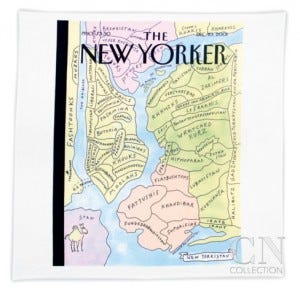
Lethem Wall of the Sky

The familiar is reassuring. I can be reasonably sure that when I wake up in the morning, the space in which I wake will be the same as the one I fell asleep in; that coffee will still be something I grind and add to boiling water, and that cars will still drive down my street at most hours of the day. Change one of those–coffee’s now a paste added to ice; the primary form of transportation in New York is sledding–and the break that would occur is the stuff from which compelling fiction can arise. Not just a change in history (world or personal), but a change in the underlying rules of the world. Explorations of that have ranged from the speculative to the metaphysical, but underneath nearly all of them is a core of fear.

Jonathan Lethem’s short story collection The Wall of the Sky, the Wall of the Eye contains one of the most unnerving pieces of fiction I’ve ever encountered. It’s called “Five Fucks,” and it’s a kind of chamber piece, focusing on a man and a woman whose (sexual) collisions cause the world to be rewritten entirely, again and again — the shape of that reality becoming simpler and simpler. What begins as a realistically-rendered version of New York City transforms, over the course of the story, into a line-drawing simple cartoon landscape. There’s a third character here, too, a second man who yearns, unrequited, for the woman. Thankfully, Lethem doesn’t necessarily subscribe to romantic comedy clichés–he’s not there to be her eventual salvation; instead, he, too, is a sad presence, lurking on the fringes of the narrative, sympathetic but caught in the orbit of a disastrous bond. In whatever permutation, from the realistic to the Gothic, these characters collide; each time, the world as it’s been established is upended.

It’s a hell of a metaphor. It’s also something that, in the way that Lethem has written it, summons up a whole lot of dread. In a 2000 interview, Lethem commented that the story was, for him, an attempt to “write the ultimate, you know, ‘getting laid destroys the world’ story. Just to get it out of my system, and sort of examine the material.” Years ago, there was talk of director Michael Almereyda adapting it for film under the title Tonight at Noon, with a cast that included Chiwetel Ejiofar, Lauren Ambrose, Ethan Hawke, and Rutger Hauer. That any information about the film’s fate seems to have vanished from existence seems like a strange parallel to the story’s constant overwriting of reality.

“Looking for anybody, anywhere at all.” It sits there on the page, alone in its paragraph, a condensed howl.

If you’re a certain kind of reader, there’s something terrifying about novels and stories in which the world itself seems to be (or is) nonexistent. The apex, for me, of this style would probably be David Markson’s Wittgenstein’s Mistress, whose protagonist wanders an emptied-out Earth, looking back on her life and interacting with the abandoned spaces around her. It’s a surreal landscape, not a literally apocalyptic one, but its emphasis on emptiness leads to plenty of disquiet. One passage about seeking personages fictional, historical, and contemporary ends with the sentence “Looking for anybody, anywhere at all.” It sits there on the page, alone in its paragraph, a condensed howl.

David Markson, Mistress

Markson’s novel defies reason: its setup isn’t one that holds up to any logical explanation; instead, like Samuel Beckett’s The Unnameable, it’s a distillation of loneliness, and the sense of being surrounded by absence. Alternately, it’s the sense that everything familiar has slowly changed: that sense that anything that could be relied upon is now on the verge of collapse. The shifting, looping city in Samuel R. Delany’s Dhalgren at times reads like a physical manifestation of this, as do the altered (and constantly fluctuating) landscapes of Lethem’s Amnesia Moon and Nick Harkaway’s The Gone-Away World. All three novels also ask questions about identity, and they mirror that in the sometimes-bizarre goings-on outside of the bodies of the characters. In other instances, the use of a constantly fluctuating landscape can be politically charged: consider the use of disorientation as aesthetic device in works like Ann Quin’s Tripticks and Deborah Levy’s Swallowing Geography. Here, the settings themselves become unnerving, and the reader is left with far less to grasp onto.

Astro City cover

Those same questions and anxieties can also creep into much more overtly pulpy forms. If you’ve read superhero comic books for long enough, you’ve probably encountered a storyline in which history is changed, and some hero (or heroes) must travel through time to bring continuity back to what it was before (or alter it further). One of the stories in the Kurt Busiek-written comic Astro City is a riff on this concept. The man at its center, it transpires, was married to someone whose erasure from history was a side effect of the rewriting of history. And rather than treat this as a trope of the genre, Busiek emphasizes the emotional side of it, and gets at something that feels very true: this kind of erasure would, in fact, be a nightmarish situation for those enveloped in it.

Grant Morrison’s run on the DC Comics character Animal Man ended with the title character meeting up with the person responsible for a series of horrific events that had befallen his family: namely, a Scottish writer named Grant Morrison. Their dialogue was alternately terrifying and wryly funny, but it’s also a nerve-wracking encounter between creation and creator. Think also of Chuck Jones’s cartoon “Duck Amuck,” and of Stephen King’s short story “Umney’s Last Case,” in which a fictional detective watches as his world is slowly dismantled by the author who created him.

These shifts in the world, and in the way characters react to them, tap into some of our deepest anxieties: that our bodies will betray us, that the relationships we take for granted may be abruptly sundered, that the places we know and care about will change beyond any point of recognition. Writers who blend this with a heady dose of the surreal can create works that disorient even as their more chilling effects burrow deep within the mind, joining with primal concerns there.

31 Fairly Obscure Literary Monsters

Halloween used to belong to the monsters. Tracing a perfect near-continuum from the Frankenstein’s Monsters and Gill-Men that papered many a boyhood bedroom to the disturbed teenager’s diet of Lovecraftian doom and the unlaid English major’s repository of Victorian dreadfuls, the creatures of the night once held a monopoly on populist hair-raising. But in the hallowed eves of today, you’re more likely to see the harbingers of nostalgia — the likes of Urkel, Carmen Sandiego and drag Monica Lewinsky — than the emissaries of the undead, the restless hunger for immortality, lycanthropy, and Modern Prometheum seemingly slaked by Sexy Corn, rock star wish-fulfillment and an endless contest to achieve the slyest wordplay couple costumes (last year’s winner: Baroque-en Record and Edwardian Scissorhands) or tastelessly topical shock valets (I don’t mean you Binders-Full-Of-Women, I mean you, Zombie JonBenet Ramsey). When did the stop-motion lizard people of the late-night circuit, the high gothic of Mary Shelly and Siouxsie Sioux, become passé and what is to be done when Bela Lugosi is forced to take a backseat to SpongeBob and Shrek? And who will haunt the suburban thoroughfares and laborsome loft parties when we are gone? For those of us that borrowed our friends’ cars to see the midnight showing of The Hunger and maintained a preference for muppets over CGI, monsters weren’t a fad, but a lifestyle. Assigned Ayn Rand and A Separate Peace, we snuck away to read Anne Rice, I Am Legend,and Poppy Z. Brite. Once the moon was full enough to cover every one of us; adolescent America was one big Midnight Society gathered around the campfire and we all had hooks for hands.

Fortunately, literature — even as compared to movies and bartender tattoos — isn’t just full of monsters, literature is monsters. Admittedly, the most memorable killers have come in human(ish) form, from Blaise Cendrars’ Rippers-eque Moravagine to sign-of-the-time slashers like Patrick Bateman and Hannibal Lector. But that’s not to say that books aren’t rich with waking nightmares, undigested psychological ectoplasms and tentacles in general. The following list aims to undo the long influence of irony with its evil twin and opposite number: deliberate obscurity and humorless elitism. All vampires, Gorgons, flesh-eating cadavers, Kaiju and denizens of the Monstrous Manual have been scrupulously excised. This, if you dare, are the well-nigh forgotten monsters of classic literature, because the idle past is always preferable to the overfamiliar present, and true monsters are not just the embodiment of period anxieties, but the horrific realization of the future. For that is where you and I are going to spend the rest of our lives.

The Sandman

The Sandman From “The Sandman” by E.T.A. Hoffmann (1816)

It would be remiss not to begin with the monster that gave Freud his principle instance of “the uncanny.” Hoffmann’s traumatized hero begins by recalling the legend of the Sandman, who steals the eyeballs of children as they wake in fright and goes on to see the Sandman everywhere; in his own memories of his father’s unsavory friend Copellius, a “borometer-seller” named Coppola and lurking somewhere behind his own eyes. Grand Guignol subplots proliferate (including the love of a clockwork woman), but in the end Hoffmann dares us to look inward, to the origin of our desires where dreams mingle with half-recalled memories and where there is no guarantee that such clarity won’t mean madness and suicide. Such is the price for seeing too much.

Gil Man

Gil-Martin From The Private Memoirs and Confessions of a Justified Sinner by James Hogg (1824)

A distinctly Red State boogieman despite being the creation of a Scotsman, Gil-Martin is the otherworldy and inseparable companion — something of a homicidally misanthropic Socrates — of the religious zealot Wringhim. Gil-Martin assures his friend that there can be no sin when one is chosen by God and much of Wringham’s confession is given over to Gil-Martin’s sophistry: “What is the life of a man more than the life of a lamb, or any guilty animal? (…) Can there be any doubt that it is the duty of one consecrated God, to cut off such a mildew?” Convinced that he murders in God’s name, Wringhim terrorizes his would-be congregation only to slip deeper into Gil-Martin’s power. Unlike most monsters, more likely to eat your heart than discuss the correct interpretation of scripture, Gil-Martin is an intelligent fiend and one of the most convincing depictions of pure evil in all literature. Toward the end of the novel, the Wringhim’s charismatic councilor is accused of being the devil — but the canny reader will recognize Rousseau, whose approach Hogg loosely parodies.

Poe_the_man_of_the_crowd_clarke

The Man of the Crowd From “The Man of the Crowd” by Edgar Allan Poe (1840)

If you live in a metropolitan area, you’ve probably caught yourself occasionally thinking of people less as individuals with distinct selves than as the tendrils of the vast and unfathomable crowd. But what if this were literally true? What if some of the people you pass on your commute had no existence separate from their abeyance to the city’s inscrutable rhythm? So it is with the ragged and weirdly featureless old man that our narrator follows through the city, a criminal without a crime, a living blank of a human being onto which the crowd seems to project its random desires on a loop. Far scarier than Poe’s usual neurasthenic murderers, “The Man of the Crowd” is also one of the strangest things he ever wrote (including his many comedies and “The Philosophy of Furniture”). Like the Man of the Crowd himself, the story is an enigmatic dead level unaccentuated by any plot or obvious intent.

Beatrice Rappaccini

Beatrice Rappaccini “Rappaccini’s Daughter” by Nathaniel Hawthorne (1844)

What is it about Beatrices? The latest in a long line of awestruck young men falling into a personal hell for the sake of a Beatrice, our hero is distracted from his studies by his view of the lustrous garden of mad botanist Giacomo Rappacini, who has raised his daughter to tend his poisonous buds and assorted ivies (note the lingering sense of Italians as exotic evildoers). Technically more proficient than a lot of the stories on this list, it’s still a challenge to not make “Rappaccini’s Daughter,” sound insipid; suffice to say, Beatrice builds up a resistance but, in the bargain, becomes pure poisonous love whose kiss is death. Disaster ensues. If there’s one thing that’s more amazing about Hawthorne’s story than that it out-Poes Poe, is more of a page-turner than Henry James’ more ambient “Turn of the Screw” or that his gift for description is seemingly without limit, it’s how much Beatrice, swathed in the metaphor of thorny roses and so on, seems to anticipate the invention of the rock ballad.

Uncle Silas

Silas Ruthyn From Uncle Silas by J. Sheridan Le Fanu (1864)

A dead-on Victorian novel with all the trimmings, Uncle Silas is effectively a re-do of Charlotte Bronte’s painfully anticlimactic Villette, featuring the titular cadaverous, opium-addicted, possibly-vampiric Third Uncle, who torments an ingénue before trying to marry her off to his idiot son (like Leatherface, but with a claw hammer instead of a chainsaw). One of the great villains of the era of triple-decker novels, Uncle Silas also gave the Peter O’Toole the most scenery-eating role of his career, in the BBC movie adaptation Dark Angel.

Lokis

Lokis From “Lokis” by Proser Mérimée (1869)

Although Proser Mérimée is best known as the author of Carmen, if “Lokis” is any indication, his heart was really in tales of rapey Lithuanian Were-bears. Clawing his way out of the birth canal, Michel tries to repress his beasty nature. But the pressure of marriage proves too much, despite his efforts to keep it together, “Lokis” breaks out and his honeymoon turns into a bloodbath, after which he disappears into the forest to eat salmon, shit, trundle, hibernate and break into horseless carriages for the rest of his days.

The Horla

The Horla From “The Horla” by Guy de Maupassant (1887)

The most frightening monster is that which is indistinguishable from madness. In this, the greatest of Maupassant’s many ghost stories, a pampered bourgeois becomes possessed by a parasitic consciousness that, among other trespasses, leads him to abuse his servants and burn down his house. A parable for class privilege and the self-destructive violence of the late Nineteenth Century’s landed gentry? Sure, but the suffering of our narrator and his struggle to find where he ends and the Horla (a sort of mental Mr. Hyde) makes “The Horla” the pinnacle of psychological horror and the appeal of bodily-displaced “mind vampires” has never really faded, from Freddy Kruegar and Killer BOB to the atemporal Horologists of David Mitchell’s recent The Bone Clocks.

Ayesha

Ayesha From She and Ayesha and others by H. Rider Haggard (1887)

One of the best-selling novels in history, She is pure colonial fantasy in which a pair of gentleman adventurers discover a primitive civilization presided over by She-Who-Must-Be-Obeyed, an immortal queen of a pre-Egyptian kingdom consecrated by fire and hands down my favorite mummy. Even if everything that surrounds SWMBO (or “Ayesha,” to the re-incarnated lovers she lures to her den) reads as faintly dumb or familiar by modern standards, Ayesha is an amazing character and, unlike most female monsters of the period, is depicted as formidable, self-possessed and eloquent even if desire does proves to be her undoing…at least until the sequels, which kept coming and inspired an entire genre of ‘lost city’ novels, Tolkien’s elf-queen Galadriel and a Hammer Horror film starring Ursula Andress.

The Damned Thing

The Damned Thing From “The Damned Thing” by Ambrose Bierce (1893)

Ur-American horror writer Ambrose Bierce is back in public consciousness thanks to True Detective — but if you found the actual Carcosa less frightening than your anticipations, you’re in luck. The Damned Thing is not a redneck child murderer, demon from hell or, despite the claw marks left on its victims, a mountain lion. It’s just some kind of thing. According to Bierce it’s a color we can’t see inhabiting an imperceptible air-inside-the-air. The point is, whatever it is, it hates us and it is everywhere all at once. Of course this Thing is only the granddaddy of all Things, from Lovecraft’s indescribable Things (which, nonetheless, he never tired of describing) to John Carpenter’s Thing, which not a dog in the same sense that The Damned Thing is not a mountain lion. As monsters go, Things have one big advantage over the human race: we can only describe what they aren’t. In other words, you won’t know it when you don’t see it.

The Great God Pan

The Great God Pan From “The Great God Pan” by Arthur Machen (1894)

Welsh freakazoid Arthur Machen’s grotesque novella about pagan orgies and brain surgery was just part of the prevailing fashion for Goat Gods — which were as ubiquitous in fin-de-siècle as zombies today — but he almost definitely invented the concept of tripping your balls off. Beginning with a scientist who wants to open the human mind to better understanding through creative lobotomy, he inadvertently opens the doors to Pan the pleasure god. What follows is an engagingly anarchic narrative (I use the term loosely) of rape, suicide and shape shifting women. Machen was a devoted occultist and late convert to Celtic Christianity and the tension between antiquity and modernity, what can be known and what lives just beyond comprehension, is present in all of his fiction; but not even his fae “White People” can equal Pan for sheer goat-fucking insanity.

morlocks

Morlocks From The Time Machine by H.G. Wells (1895)

Whereas most science-fiction stumbles by leaping ten or twenty years into post-apocalypse, the more optimistic Wells’ sets his after-scape in the 8,028th, just to be safe. Because, who’s to say that the inheritors of the planet won’t be subterranean albino ape-men? The Morlocks are not just literature’s premier subway-dwelling mutants, they remain its most malevolent, an evolutionary step backwards toiling in the pure night of a post-electric world, emerging from their tunnels to feast on the flesh of the Eloi (basically Californians to the Morlocks’ New York).

Country Diary : Polecat (Mustela putorius) recently killed by car

Sredni Vashtar From “Sredni Vashtar” by Saki (c. 1901–1911)

A blood-drinking polecat worshipped by a psychotic ten-year old boy. Devourer of cousins. Anyone looking for a pet name?

Count Magnus

Count Magnus From “Count Magnus” by M.R. James (1904)

In M.R. James’ genre-establishing weird tale, a travel writer in darkest Sweden fails to appreciate a series of painting depicting the Count Magnus de la Gardie and ventures into the Count’s mausoleum only to encounter…something (the journal breaks off and we go back to the frame story). As ghost stories go, this may not sound too scary, but just imagine if the last piece of art you failed to fully appreciate decided to kill you.

Alraune

Alraune From Alraune by Hanns Heinz Ewers (1911)

Next time you need to name check a novel about a prostitute impregnated with the sperm of a hanged man by a mad geneticist so that she gives birth to a vengeful nymphomaniac written by a homosexual Nazi, you’ll be glad we had this chat. There’s not a lot more to say, except this once-wildly popular answer to Frankenstein (of which it is kind of a misogynist reworking) is, I’m afraid, partly responsible for the Species movies. The more things change…

Thak

Thak, the Man-Ape From “Rogues in the House” by Robert E. Howard (1934)

Simian overlords and deadly orangutans are certainly not underrepresented in fiction, but if you’re talking about giant things beating the shit out of each other, you’re talking about Conan the Barbarian. In the unusual and early installment of the Cimmerion’s adventures, Howard mimics the style John Webster in a convoluted story with an excellent end-boss: the usurper Thak, an intelligent ape who has replaced a powerful clergyman and plots to rule the surrounding cities as a theocrat. Do I have to say more? It’s fucking Thak! All hail Thak!

war-with-the-newts

The Newts From War with the Newts by Karel Čapek (1936)

Karl Čapek’s unbelievably perceptive political fantasy War with the Newts centers around the titular Sumatran newt-people. Discovered just beyond the reefs of the known world, humanity quickly outsources its labor to the aquatic Newts. Only when mankind has become completely dependent on the new, hydroengineering-based economy do the Newts begin demanding a bigger cut of the coastline, by which time even the most highly-developed nations are in no position to refuse. Despite the title, the war isn’t a war so much as a massacre, as frogman proves himself by far the more adaptable species. Čapek’s targets are complex: nationalism, racism and, above all, capital — but the Newts are more than the means to a sociological end, as they evolve from gentle pearl-divers to an indignant proletarian class and finally take their place as the new master race.

It!

It From “It!” by Theodore Sturgeon (1940)

Sturgeon is probably most famous for developing the useful Sturgeon’s Law — that is, “Ninety percent of [science fiction] is crud, but then, ninety percent of everything is crud.” — and the nameless swamp monster of “It!” is the embodiment of this philosophy; a creature of pure waste, sentient fungus and accumulated detritus that lumbers through the countryside contemplating Its own oppressive consciousness even as it absorbs more fungus, moss and rot into its membrane. Like the very best monsters (including Its direct descendants Man-Thing and Swamp-Thing), It exists in a state of in-between-ness, occupying the void between living and unloving, natural and unnatural.

Cassavius

Cassavius From Malpertius by Jean Ray (1943)

In this Belgian gothic-surrealist novel…sorry, I’ll start again; Cassavius is the ultimate realization of Belgian oddball Jean Ray’s twin interests in Cocteau-like fantasy and sublime strangeness reminiscent of Bruno Schultz or Paul Valéry. A well-traveled collector and warlock (Orson Welles in the otherwise memorable film version), Cassavius builds a sprawling mansion to house his collection, which happens to consist of figures from myth trapped in flesh and forced to roam the grounds reliving their Hellenic salad days. This is as good a place as any to mention that when I was 8, my best friend Robert Harris locked me in the garage until his mom came home. Actually, I am still there.

Tash

Tash From The Horse and His Boy and The Last Battle by C.S. Lewis (1954 and 1956)

We all know that heavy-handed theologian worked Jesus into his Chronicles of Narnia as the lion Aslan, but did you remember that Narnia has its very own anti-Christ? That would be Tash the giant vulture-skulled Demiurge. Originally, presented as a cultural, rather than religious deity — that is, a swear word more than an actual being — Tash turns out to be totally real in the more-grisly-than-you-remember Last Battle. Tash is the false God made real, the monster we make when when we serve our own interest in Heaven’s name. Or maybe Lewis is just a pedantic patriarchal family-values allegorist (see the more-stupid-than-you-remember Screwtape Letters).

The Howling Man

The Howling Man From “The Howling Man” by Charles Beaumont (1959)

Although the Twilight Zone adaptation of the ridiculously prolific Beaumont’s short story will have you believe that the man locked up in the dungeon Benedictine castle and guarded by an order of monks is the Devil, he isn’t. He’s the 20th century and when a boarder, tormented by screams in the night, sets him free, he unleashes 100 years of genocide, iniquity and nuclear war. Anastasia screamed in vain.

The Plants

The Plants From The Genocides by Thomas M. Disch (1965)

The premier work of science hick-tion takes us out of the futuristic cities of most space opera and into the hinterlands, where spherical aliens have seeded giant deadly trees throughout planet, overwhelming the natural flora, blocking the sky, oozing sap, and replacing the welkin with a toxic atmosphere. More menacing than a Triffid, less fun than an Ent, this evil crop turns out to be an elegant metaphor for the climate’s indifference to man. Disch’s tiny band of backwater types enact their petty jealousies and give way to infighting, but not before taking a sylvan journey into the heart of the Other, to the place where all roots entwine. The Plants are the monstrous monoculture at the center of the world, who are still not altogether of it.

Behemoth

Behemoth From The Master and Margarita by Mikhail Bulgakov (1967)

How does Behemoth manage to stick out in a kaleidoscopic Soviet masterpiece whose other characters include Pontius Pilate, assorted succubae, a demonic assassin and Satan himself? It might be because he is a demonic seven-foot cat that walks upright, plays chess, knocks back vodka with the devil and makes wisecracks that are either untranslatable or just proof that cat humor is wasted on me. Other than being a talking feline, the louche Behemoth wouldn’t be out of place in most grad programs: he is sarcastic, well-read (to the point that he’s even read manuscripts that were burned by their authors) and indebted to powerful and evil forces. There may be more sinister cats in fiction, but as Satan’s minion — or, rather, mascot — Behemoth combines the amorality of house pets with the blithe condescension of somebody who wants you to know he knows somebody very famous. Also, his name means hippopotamus in Russian, which is a pretty good name for a cat.

Death Dwarf

Knife-Wielding Death Dwarf From Daphne Du Maurier’s “Don’t Look Now” (1971)

Daphne Du Maurier’s fascinating horror story “Don’t Look Now” (the inspiration behind my favorite film of the same name) may be the only work of fiction entirely based on the dangers of misinterpreting metaphor. While a killer roams Venice, a vacationing couple mourning for their deceased daughter fall under the sway of a pair of identical twins and become fixated on a strange figure in a red raincoat — just like little Christine used to wear. But it isn’t their little girl, it is a terrifying dwarf with a razor; the premonitions we’ve been following were only premonitions of an absurd and meaningless death.

Cupboard Man

The Cupboard Man From “Conversation With A Cupboard Man” by Ian McEwan (1972)

Nothing to see here, just a masturbating homunculus who lives inside a cupboard.

He’s in yours right now.

The Manitou

Misquamacus The Manitou by Graham Masterton (1975)

Graham Masterton, the author of over two-dozen sex instruction booklets, has produced a baffling series of books probably aimed at making us forget the movie made out of his first, The Manitou. Misquamacus is an Indian spirit (more properly, a Manitou, a monster so Canadian-sounding, they named a Province after it) that takes possession of a fetus so as to exact vengeance on the white man; so far, so good but the problem is that Misquamacus doesn’t wait to grow up, but just goes for it after charging out of his mother-host’s uterus. A truly malevolent fetus, his rampage doesn’t get much farther than the nursery but deserves massive points for effort.

Freddy (actually that

Freddy From Freddy’s Book by John Gardner (1980)

Freddy is the secret progeny of a University professor who keeps his enormous, ogre-like son secured in the attic, where, hidden from sight and denied any human contact, he wiles away his hours of captivity writing a book about Vikings. Freddy is, in other words, the writer we’d all like to be.

Larry the Lizard

Larry the Lizard From Mrs. Caliban by Rachel Ingalis (1982)

Mrs. Caliban is a quiet, pensive domestic drama reminiscent of Evan S. Connell’s Mrs. Bridge or Chopin’s The Awakening with the distinction of featuring a giant lizard-person. Larry, having escaped from an experiment, falls in love with bottled-up housewife Mrs. Caliban and reawakens the passion that has been all that snuffed out by a loveless marriage and the loss of her son. Mrs. Caliban’s lizard may not seem very threatening as monsters go — indeed, he seems an affable gentlecreature and alert lover — but Ingalis’ tone is less magical than it is wistful; Larry may be a figment of Mrs. Caliban’s loneliness and repressed desire, which establishes Ingalis’ short novel as a deeply feminist text and Larry as belonging to the same class of inner-beasts-made-manifest as Lon Chaney’s Wolfman.

Mr. Hood

Mr. Hood From The Thief of Always by Clive Barker (1992)

Clive Barker is known for his vaguely kinky horror and fantasy novels, but The Thief of Always is a surprisingly durable fable about a jaded young boy with the adorably Dickensian name of Harvey Swick who is invited to the Holiday House — where every morning is Christmas and every night is Halloween — at the invitation of the mysterious Mr. Hood. His every childish whim attended to, Harvey is loath to return home; but when he does, he finds that years have passed, his parents have all but given up looking for him and Mr. Hood is the house itself, draining the years from the children he lures inside his doors.

Thieving Bears (Actually Thundercats)

The Thieving Bears of Thieving Bear Planet From “Thieving Bear Planet” by R.A. Lafferty (1992)

Actually, they’re more like large flying squirrels, but made mostly of fluff “with not much body inside it,” the better to hide the things they steal. The only known inhabitants of an otherwise worthless and uninteresting planet, the only given scientific reason for the bears’ existence is that “anomalies are necessary.” But woe to the spaceman who touches down even briefly on Thieving Bear Planet, for he will find himself denuded not only of all his Pepsin capsules and comic books, but — such is the cleverness of Ursus furtificus — he will soon lose even his knowledge of the cosmos beyond and, eventually, his ghost.

potato

Mr. Potato Head From “Subsoil” by Nicholson Baker (1994)

Leave to a first-class observer of radical normality like Nicholson Baker to finally tap into the uncannyness of stem tubers. An agricultural historian Nyle T. Milner stays the night in a mysterious house well-stocked with vintage boargames, where he dares to play with an “original” Mr. Potato Head made from an actual potato (was this a thing?). The description of the potato’s vengeance is impossible not to quote: “A sprout grew smoothly into his right knee, seeking his synovial fluid. Several more penetrated his elbows. These hurt quite a lot, though not nearly as much as the one that found its way into his urethra. One wan ganglion discovered his ear canal, and another a tear duct, and Nyle began to hear only the dim, low pulsation of plant hormones and potato ideology.” In the night, the potato takes its vengeance, unfurling its roots to take possession of its victim and . Beware the potato, my friends, for the next fruit of the earth dug up for a child’s amusement may be your skull.

Kafka

Kafka’s Father From Letter to His Father by Franz Kafka (First, Last and Always)

Franz Kafka’s Letter to His Father is the greatest work of introspection ever written and one of the holy grails of modernism, in which Franz attempts to explain to his father why he fears him so and begs for his judgment. We can never read enough this most naked of confessions in which Kafka transforms his father into a monster more encompassing than anything in Lovecraft’s loopiest penny dreadfuls, a spiraling and encyclopedic fusion of the Old Testament God and deeply-buried childhood submission, more haunting than any ghost and more homoerotic than anything of Anne Rice’s vampires (understandably, the letter was never delivered). In his genius-level capacity for obsessive suffering, Kafka got it right: Dad is the ultimate monster.

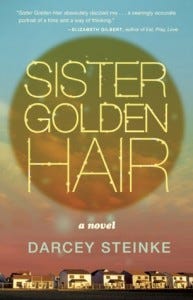
“The Morning After the Sixties” — an Interview with Darcey Steinke, Author of Sister Golden Hair

There is a passage in Lawrence Wechsler’s book on contemporary perception artist Robert Irwin which reads: “Throughout the late fifties, Irwin continued to survey the progress of other artists, groping for a way of seeing his own work more clearly. Slowly his emphasis shifted; whereas previously he had phrased the challenge in terms of gesture’s seeming authenticity or the painting’s compositional consistency, now he began to think more in terms of the canvas’s physical presence.” I was reminded of this quote as I interviewed novelists, essayist, and text-based artist, Darcey Steinke about her new novel Sister Golden Hair, out from Tin House this month. Steinke is a writer whose work has always been deeply engaged with perception — the perception of religion, the body, and the text as a kind of spiritual reservoir which must capture that sense of authenticity through struggles with form.

In her new novel, set in the 1970’s in a decade of “devolution,” where one could count “ten Nixon signs on the highway as they passed,” Steinke’s work branches out and begins to deal with the physical presence of a decade and those crises which defined it. Here is a conversation we had one morning over coffee — Darcey in her house in Brooklyn and I trying to catch the internet’s passing flame from my kitchen table in the Catskills.

Part I: The 1970’s, Feminism, and the Crisis of Self-fulfillment

DeWitt: As I was reading Sister Golden Hair I was thinking a lot about the role of time period and place in the novel. I think having been a kid that grew up in the 80’s, I’ve always really romanticized people that lived through the 70’s and came of age during that time. My own parents didn’t necessarily have a strong relationship with the 70’s as a time period, despite having lived through them. So, I have this kind of cultish fascination with narratives of that time. I was looking back on that famous Didion essay “The Morning After the Sixties” from The White Album and there was a line in there that reminded me of your novel where she said, “We were all very personal then. Sometimes relentlessly so. And at one point we either act or do not act. Most of us are still. I supposed I’m talking about just that. The ambiguity of belonging to a generation distrustful of political highs. The historical irrelevancy of growing up convinced that the heart of darkness lay not in some era of social organization but in a man’s own blood.” That made me think a lot about your novel, this description of it on the back says, “It’s all about awaiting new sexual mores, and muddled social customs and confused spirituality.” But more than that it specifically reminded of the father character in your novel and how he becomes a cipher for this change that’s somehow happened between the 60s and the 70’s. And I didn’t know if you could talk about what that “morning after the 60’s” was for you and what made you write about this time period?

Steinke: I’ve always wanted to write about the 70’s because — I mean there’s some good stuff about the 70’s. The Ice Storm would be a great example of a book that’s similar to my feeling of the 70’s. There are also a lot of things culturally about the 70’s that are ridiculed. It’s all about That Seventies Show and smiley faces and tube tops. And I always feel like when you get that, it’s usually because there’s been a lot of pain.

DeWitt: Fascinating.

I always feel like if there’s a lot of romanticizing of a time period it’s because there’s been a fair amount of pain and confusion about a time period.

Steinke: I always feel like if there’s a lot of romanticizing of a time period it’s because there’s been a fair amount of pain and confusion about a time period. And so rather than think about its bleakness, it becomes, “It was GREAT. We all wore love beads. We wore bellbottoms. There was a lot of pot around.” But in my experience I didn’t really know the difference until I’d lived through many different time periods. You know what I mean? Because I do think that the period of time that you come of age in, you’re always accessed in that time period. And I also think you’re often obsessed — I think you’re right, that there can be a nostalgia for earlier periods that came before you — but I think you’re obsessed with the people that you came of age around. You always have a kind of love hate relationship with them. You’re fascinated with them but you always think, “How could they have been better? What is it about them that made them who they are?” I mean, for me I’ve thought so much about — especially some of these women that I tried to write about in my new book and the challenges they had and the struggles of where they were in history and feminism.

DeWitt: Yes. That was something I thought a lot about in relationship to the mother character who was really interesting to me. And so I was going through literature prepping for this interview I was looking at a lot of the Didion essays that I’d always crawled over that were supposedly nonfiction about that time. And there’s that essay in there too about the Women’s Movement where she says, “In 1972, in a ‘special issue’ on women, Time was still musing genially that the movement might well succeed in bringing about ‘fewer diapers and more Dante.’” And she talks about this idea that the new feminism was about some “yearning for fulfillment” or “self-expression” in that way. There is that line where Didion says, “The have-nots, it turned out, aspired mainly to having.” And that reminded me a lot of the mother character that you build across your novel in terms of her obsession with the wealthy families like the Rockefellers and what they’re doing. I was curious about how you built your ideas of what was going on with feminism at that time. Is that something you witnessed and then built in?

Steinke: Yes, definitely. You know when you’re ten years old — which I guess I was. My time period doesn’t exactly fit, I guess it’s a few years off — but I mostly experienced feminism at first in the house. In my house with seeing my mother react to both actual feminists — like seeing feminists protest on TV and seeing my mother and what she felt about it and thinking, “Where do I fit in that. Do I agree with her? Do I not?” And then also having her feel she was trained to be one thing, one kind of woman, one kind of mother, but that the culture all of a sudden seemed to want someone who worked, someone who had gone to college. And my father really did, I think, play into this too. Especially when women could work, then the house could be different. Could be a different place financially. More wealthy. And my father was definitely the type of person that was interested in that. My father was the type of person who wanted self-development for himself as well and so the idea of my mother working, I think he liked that idea a lot. And I think he raised it to her a lot. And it was really very hard for her because she had grown up being trained — and maybe more so than other people too — being trained to think, “You’re going to work in the home. The home is a beautiful place.” I often think of how much my mother has gone through when I think of Brooklyn. You know, how important food is now. To make yourself a cozy home. All these things I think kind of blew apart in the 70’s. Nobody cared anymore. It didn’t matter if your food was just microwaved. It didn’t matter if you had a cozy home. It was as all about, “How can I fulfill myself to be outside the home.” And that was painful for my mother. Of course the mother in my novel isn’t exactly like my mother, but some of that energy I definitely tried to sort of put into that. I think people can be disappointed in relationships. And there’s love disappointment. And there’s confusion in relationships. But time is like the third parent. Right? When you’re messed up by time itself, that’s kind of epic to me. That’s tragic in a way that’s — even as a little girl, I remember experiencing that. Feeling my mother’s sadness — you know, she was sad anyway probably — but my friends’ mothers too. A lot of sadness among my friends’ mothers, among that generation, that the rug had really been pulled out from under them and there wasn’t really much they could do about it. They could try at thirty-five or forty to go back to school and get careers but really there was going to be this lack in a way. There was no way to really control it. And that to me seemed pretty tough. It was hard to feel like there was something that was done to them by history that couldn’t be made right. I also think that the depth of the frustration and the isolation and the real scariness of it — I tried to put that in the book to. I mean, you know, the sixties ideas that families started to break up. The idea of personal development, how you, yourself, your own life was going to develop, your own desires — a father’s or a mother’s separate from the family — became a focus culturally. Not so much the family unit anymore. When families started to break up because of that, as I said, these women, they hadn’t been college educated. I think of them like proto feminists. They hadn’t been educated to work outside. To take care of their families. And there was some serious financial desperation going on. Sometimes I think more than the culture’s really willing to admit.

DeWitt: Yes. I think so too.

Steinke: I mean there were some families — not just women — really left in the lurch. Seriously. And I feel like I haven’t really seen that written about. As far as the thing I saw then. And I had great — I really came to admire these women who had nothing and whose families had broken up who were supposed to work. And to have kids. You know, there was no real childcare. And to see them get their nursing degrees or try to put it back together was kind of the first thing I ever saw of women taking responsibility for their lives. And you could say it’s not like a woman getting a PhD or becoming president but to me at seven, eight, nine, ten, I could really feel that there was a force — that something cool was happening. It was the first time I really saw, “We can. It’s possible to put this back together.” And that was hard because I saw my mother do it — but my mother’s case was much more fraught. She also went back to college. Which is probably the thing that I’m most proud of her for. I think she got her degree when she was forty-three. It was fraught, but she did it too. And I think that that thing is something that hasn’t really been — you know, culturally I feel like we haven’t really celebrated that. We haven’t both admitted how desperate it was and even just the reality of there being no child support and just the reality of having to start to have this home, to be responsible financially for yourself. It was scary. And to see these women put it back together was so moving to me. So that’s something I really wanted to write about in the book. I hadn’t really ever seen that part of the 70’s written about and I wanted to write about some characters, some female characters, that were both confused and disoriented by that time period and those social changes but also those characters that could make some slow steps toward putting it back together.

I wanted to write about some characters, some female characters, that were both confused and disoriented by that time period and those social changes but also those characters that could make some slow steps toward putting it back together.

DeWitt: Yes. That’s what strikes me as making the female characters in your novel so much more dimensional than other books written about that time period. I actually just read Rick Moody’s The Ice Storm. I’ve always really loved Ang Lee’s cinematic take on the book. And it’s really fascinating to hear you talk about this because I was coming of age in the next generation. I was an 80’s kid. I’ve just finished working on a draft of a novel set in the early 90’s about a mom who I think came from that next generation, the generation that abutted the mother in Sister Golden Hair, that came after it. So for me, it was that my mom did go back to get her graduate degree when I was quite young. We were living in rural place and it wasn’t necessarily like the women there were working. But she was smart and had all these aspirations so she went back when my sister must have been two or three or so, and my mom got her MBA and taught while she was doing it. And that was something that was really important to her. But it ended up being this really tragic story where she went and did that and she stated working when I guess we must have been seven and four. And she’s someone of whom I always jokingly say, “She should have run a corporation. Or she could have run for President.” I mean she’s sometimes, in this kind of masochistic way, very organization focused. And she ended up not being able to.

Steinke: My mom was totally like that. She would come and visit you and she would end up reorganizing your kitchen even though you lived in a rental and you were only going to be there a month. I know exactly what you mean. You can see it. It’s energy that should have been put out.

DeWitt: Right. It’s that entrepreneurial spirit that should have gone somewhere. But it ended up being this sad story because she ended up not working until later in her life, not until around fifty, when we were out of the house and she had a career renaissance. But, back then, after she got her MBA, she tried to put us in childcare. We hated it. And I think she had a lot of guilt and anxiety about having done that. And so she gave it up. And I think that was wrapped up in her ideas of whether she had wanted to have children in the first place. There was still that lingering 50’s pressure of needing to be a mother. Despite the fact that I think if she had been born one generation later, she probably would have put that off a lot longer. She still talks about the way college was thought of back then. That idea of, “You’re going to college to meet a man. That’s why you were going.” And, having gone to an all women’s college that didn’t go co-ed until later, my mom hadn’t done that. And so I think her feeling was, “Ok, I’m already late in the ballgame.” And then I think about what my mother must think about me. I mean I’m thirty-three and unmarried and childless. Those kind of cultural norms have really changed. I think that’s’ what really distinguished your book. I was excited to see a female author deal with women in that time period in a way that really differed from say the Moody book. I mean I love his characters too. They’re portrayed as these almost kind of flat screens that the rest of the world can project stuff on to. And with Moody, it’s all about what the men in the novel had wanted in life and where they’d fallen short of their own images of their masculinity. Their social and intellectual and romantic failures. The things they didn’t accrue. And the idea of female sexuality in that book is always troubling. The girl is going to go into the basement with a Nixon mask on and rub up against this guy and something bad is going to happen. She’s always the kind of instigator. But the mother in that book is really passive in the sense that she goes to the pastor and she has this moment with him but then there’s that key change party and she is horrified by the whole thing and she ends up sleeping with the neighbor just because she realizes her own husband is having an affair. And in a way she is kind of raped culturally by this whole thing. And so it was really exciting to see your character in that she has this similar emotional make-up to the Moody character but her reaction to her circumstance and the time period, and her understanding of what that cultural crisis was, comes from such a different view point.

Steinke: Yes. I think that’s right. I think that’s right.

DeWitt: That was really incredible. For me to see it. It was the first time I’ve seen it in a character in fiction and I was thinking it would be so great to see it on the screen at some point.

“Oh well, the 70’s is already over. We’ve had all these 70’s movies and TV shows.” But you realize that no period is ever really over because they all affect the things that come next.

Steinke: I know! Wouldn’t it! Keep your fingers crossed on that! You know it’s interesting when you go through time — which I’m sure you can relate to since you’re writing something about the 90’s — you realize, you think, “Oh well, the 70’s is already over. We’ve had all these 70’s movies and TV shows.” But you realize that no period is ever really over because they all affect the things that come next. Even this new movement, with new feminism on the campus and Emma carrying her mattress.

DeWitt: Right! I’ve been following that.

Steinke: You realize, “That puts my own life into great relief. Why, when that professor did that thing to me, why didn’t I say anything?” My daughter’s eighteen and I feel like I have to meet her on the subway just because — the neighborhood’s not totally unsafe — but I feel like after midnight, she needs it. And I think, “Why do I have to do that?” This has really made me think. Before, I thought, “Well, this is just how the world is. “ But now I think, “Why? No! Why is the world like that?” That’s wrong. Let’s do something about that. So, I’ve been excited because that’s a way I couldn’t have thought myself. I mean I’ve walked, for five years I’ve walked her home from the subway. And it was kind of a dead place in me. You know I’m not happy about it but it’s made me … it’s been exciting for me to follow things like the campus news. Especially because I saw a collective carry the mattress. Which was really moving and exciting for me. But it’s re-enlivened things for me about my own life and my own past. And that’s what I think going back to a different time period is like. For me, with the 70’s. Of course, I couldn’t have written that book in the ‘80’s or the ‘90’s. We needed right now. The cultural moment right now in order for me to look back at some of these women with sympathy but also with a certain amount of political … I mean, a sense of, “This is what was and let’s look at it honestly.” So it was exciting for me to be able to go back — not that the novel is non-fiction, because it’s not — but to sort of deal with all these characters that I knew at the time and I felt like I understood their passion and their challenges. And to look at them through now. Which is what a historical novel always is, right? It’s never really about 1800 or about 1950 or about 1670. It’s really about the person now looking back. I mean good ones, not romances with different kinds of teapots and different kind of furniture — but the good ones — that’s what they really are. They’re from now looking back.

Part 2: On a Period of “Devolution:” Grandness, An Unconstant God, And Inventing Faith

DeWitt: One aspect I really enjoyed of the book was the feeling that the characters had absorbed the conflict. The conflicts of the time had become personal conflicts for them. It’s wasn’t about creating this patina of — this was the music that was playing at the time, or this was what was on the radio — although there’s some of that too which is really well done. There’s a quote in here that I wanted to ask you about where you say of the dad, “I think his grand plan was also failing. He’d given up church stuff. The prayers. The creeds. The vows which he had told me were a waste of time. We were, he had told me with great enthusiasm, in a period of devolution. Unlearning what we knew.” I thought that was really just so brilliant and typified just what you were talking about in terms of a character that had somehow absorbed all of the larger cultural conflicts that America was going through at the time. And I was wondering if you could talk about that phrase “a period of devolution” and what that means.

Steinke: The way I saw the book, especially as I worked on it more, was that they were leaving the sort of more rigid idea of church which has to do with specific prayers and creeds and then they’re thrown out into the secular world where they have to find grace themselves. So they have to figure it out. Especially Jesse. But the father too. His struggle in some ways — even though it’s not the biggest one in the book — is there too. He got thrown out of the church and he needs to figure out — does he need a system of thought like religion? Or is he able to find grace in normal things? And I actually think that that’s the position that almost everyone’s in now. I mean the world itself. We’ve moved from a lot of certainties, a lot of religious certainties, into a place where maybe people are seekers and they’re interested in a lot of different religions. I mean there are a lot of people of course that actually are religious — they have one faith and still go — but even those people, I would really wonder if they have the same kind of faith as people did one hundred years ago. You know what I mean?

DeWitt: Right. Yes.

Steinke: There’s more room for making it up yourself. Trying to figure out your own personal faith and also what you believe. And I think devolution has a lot to do with that because you have to kind of explode what you think about God. It’s that’s whole idea of absence. Knowing God. Knowing God through darkness because you can’t know him until you devolve all the preordained ideas of religion, preordained ideas of what it is to be feminine, what a family is, ALL of these things. Until you sort of try and give yourself a little room within those things, it’s really hard to be truly alive.

DeWitt: Right.

Steinke: You’re more a concept to yourself than you are an actually truly messy, vibrant being.

DeWitt: I think we’re in that moment now of that crisis of needing a system of thought. You know on the one hand I see religion as being this huge issue that’s related not just to politics but things like violence and war. You can look at the crisis in the Middle East as being one that’s about energy and power and oil — and in a lot of ways I think it is — but in other ways I think we’re at this really interesting moment where faith is at a turning point. Even though I wasn’t someone who grew up particularly religious I feel like I’ve seen religion and its place in life, its sphere in occupying the home, change. I mean my mom grew up Russian Orthodox. Her grandfather was a priest in the church. She went to all of her religious ceremonies in Russian. And that was a big part of life. So in one generation it’s gone from her great grandfather was a priest in Russia to her grandfather was priest in Pennsylvania to her mother ran the Russian Star and my mom being really involved in that, to me. I have no religious affiliation whatsoever. I mean I was brought up that at Easter we went to the Congregational Church because it was the closest one. Our priest Tim Handley was having an affair with the usher. And in that way religion meant nothing to me. It didn’t have anything to do with where I’d come from.

For a long time religion built up this idea of grandness. And now I don’t think that’s working anymore.

Steinke: For a long time religion built up this idea of grandness. And now I don’t think that’s working anymore. I think the idea of grandness and, “I’m God. You’re down here.” It’s just not … I mean religion has to be — not even really religion, because that’s kind of debasing it — but the idea of God. I mean, it’s kind of true, about the idea of God, you have to invent it yourself. I mean, I actually think the idea that God is dead is one of the greatest ideas we’ve ever had because you don’t want to have a god who is constant. You want to have a God who makes some sense within the context of your life. So you have to create that god yourself. And that has to do with devolution. It’s not unlike the class I taught at Columbia, “Wetland, Drylands,” on lyricism. It’s very similar. I’m teaching this other class there now called “Among the Believers,” but as I teach it I think, “This is the same class.”

DeWitt: [Laughs.]

Steinke: All my ideas have to do with suspicion of form. How does the soul fit in the body? How do we fit the idea of living tissue, or life, into something that has form, whether it’s writing or a religious idea? And I always come up in the same place. Curious. Both wanting to explode forms, like I said. But also curious of understanding that for me the best place is to have some forms to think about and then have some resistance, but not complete. I think that’s the idea of a seeker. That’s a form we know about. Whether it’s theology. Or even if it’s science. But then you keep yourself a little bit back from it — you’re not a complete true believer — because you let there be some room in there for what things actually mean and how you feel. And even the Clarice Lispector book I’m teaching is the same idea which is that idea of the form breaking down and then where does the self, the soul, the consciousness, exist within it?

I see it in the next generation of kids too that I see in a college classroom where I feel like, “We need a system of thought” — not religious thought, but maybe something closer to kind of a communal morality.

DeWitt: I feel that crisis personally. And I feel like I see it. And I see it in the next generation of kids too that I see in a college classroom where I feel like, “We need a system of thought” — not religious thought, but maybe something closer to kind of a communal morality. And then I think, well what other system of thought are we attaching ourselves to? Does it have something to do with all this talk about the internet and social media and the way people organize images of themselves? Or does it have something to with the sense that I keep reading in all those kind of trite articles about, “Nobody’s getting married anymore. People can’t commit to things”? And it reminds me of one good class I took undergrad at Brown which was about that Christopher Lash book that came out in the 90’s, The Culture of Narcissism. Which was such a conservative book. But I always love reading it because he talks about all these crises which you write about in your novel. He says the 70’s was awful because everyone just went off and tried to better themselves through some sense of fake spirituality that then ended up eroding things like commitment. And then we see all these contemporary articles coming out saying, “Millennials are never going to get married. And they’re never going to have a kid and buy a house.” And I feel like saying, “Well, there’s a lot of financial reasons for that too. The world looks different now. This generation is also saddled with trillions of dollars of student debt. How can you start thinking about the future if you can’t get out from under your past?” Which makes me think about that idea devolution and where it’s ended up today. Is it in this conservative erosion of commitment that Lash predicts? Or, is there something new that we can commit ourselves to. And I think in some ways it makes me think about things like the Occupy Wall street movement and people’s critique of that being that there was no centralized system of thought.

Steinke: So do you think that Occupy Wall Street movement was lacking a faith base? I’ve often thought that. I mean I would never want to push religion off on anybody. But, you know, the Civil Rights movement had a pretty strong Christian base. I sometimes think that for things to keep going and have meaning, they have to have a multi-religious faith base. That’s something I think about a lot. I’ve been very interested in Occupy, but I’ve also been a little bit confused by its ultimate meaning in a way. Maybe it’s because I’m older, and it’s not familiar to me in a way. Because it doesn’t actually have a faith base. It doesn’t seem to have a faith base, anyway.

DeWitt: Hmm. I hadn’t thought of that. Or, the critique has been that it doesn’t have that phrase you used, a core “system of beliefs” behind it. We’re so afraid to outline those things because it seems like doctrine but then at the same time, without some doctrine, it’s hard to create a nexus of energy around which people can organize.

Part 3: Beyond Place and Setting: Motif As Character

DeWitt: Beyond the sense of the time period, which we just talked about, there’s also a really amazing sense of place in your new novel. I’m teaching the opening of it next week for a class on “Beyond Place and Setting: Motif As Character” and there’s something about place, not just this time period, but this actual physical place that feels so omnipresent but not oppressive in the book. Which I thought was really well done. There’s this passage on page sixteen where you say:

In the evening the rain cleared and we drove over to Bent Tree, passing Long John Silvers, Hardy’s, and a 24 hour do-it-yourself car wash. There was a drive in movie theatre playing a film called Dallas Girls and a string of brick ranch houses with Christmas lights up around the porches and a sign by the road that read massage. After a while, the strip malls got further apart, interspersed with black glass, professional buildings and churches on both sides of the highway. Just before we turned off there was a brick church with white columns, a steeple and a sign which read, “Sin knocks a hole in your bucket of joy.” The parking lot was empty and glittering under the overhead light. Off the highway, I counted thirteen Nixon for president signs stuck in front yards. My father hated Nixon but I felt sorry for the president because he always looked so dazed and miserable. Warm air came through the window. Damp and tinged with the sense food and grape juice.

So, there’s a real sense in your novel not only of the time period but of this kind of physical place. The architecture of the place. It made me think of that book that you taught in class, Seeing Is Forgetting the Things One Sees by Lawrence Wechsler, and all of those perception artists and the idea that the actual architecture of the physical space changes the way people think. And it seems like these people in your novel are of the first generation — or one of the first generations — of pre-suburban dwellers. This complex that they live in is all about being in the car and feeling the wind come through and the early reliance on things like cheap oil and people being about to live in these kind of isolated — that weren’t rural communities — but were isolated communities about which someone like Jane Jacobs would say, “It isn’t a city. It doesn’t have a public street where people can all congregate together. Instead there’s all these separate private spaces which creates all of these weird conflicts. And all these kind of closed doors where you can’t go to a park and invite someone in the park to come have dinner at your house — because that’s a private space. Whereas, if you met them on the subway, you might then go have a coffee in a coffee shop and that wouldn’t be that strange.” And I wondered about the physical sense of place and how you considered it. The actual architecture of building this place and how you went about that.

Steinke: Of course the novel’s set in Bent Tree, which is this duplex complex. And I did live in a place like that sort of for a few years when I was young and I’ve been fascinated with them. And too when I was in high school, it wasn’t that unusual that when families broke up one of the parents would move to a place like that. And the places seemed sad in a way but also kind of fascinating.

DeWitt: Yeah. Kind of sexy in a way too.

Steinke: Yes. Kind of like fermenting people. Where they were trying to figure it out. It wasn’t like the people were sitting back. It wasn’t boring like a lot of the other places were. It had a lot of darkness that sort of exited me too. And I always was really fascinated by the fact too that all of the houses were the same but that different people lived in them. Like beehives. Kind of like the beehive idea. My fascination almost always was architectural. Almost an art-like fascination with the idea these same places. And also when I lived there myself, it always fascinated me the idea of, “Here I am in my bedroom. But I’m not in my bedroom. I would be in my friends’ houses and there it would be their bedroom or their parents’ bedroom. And there was something about the overlapping lives that seemed very liminal to me. Almost like the idea of time — I mean you’re taught, “OK you wake up at nine. You have lunch at twelve.” But this structure of living seemed more true to the way time actually worked. There were layers, you know what I mean? You could imagine, “Oh she’s in that room. My friend is in that room. And my friend’s teenage brother is in that room doing the things he does, thinking the thoughts he does. And I’m over here in my room.” And it seemed like there was a stacking of reality which you could almost experience in real time in a weird way. And that really fascinated me. I mean I was little. But almost in an artistic way. That fascination and thinking about it that way was, I think, one of my first experiences in abstract art.

I always was really fascinated by the fact too that all of the houses were the same but that different people lived in them. Like beehives.

DeWitt: Which makes sense because it is the house. It’s that first structure that you know.

Steinke: I mean it was just this crappy duplex complex, but for me there was something deeply fascinating about that. Deeply deeply fascinating. As both an intersection with time itself. And in terms of narrative organization. All these ideas. It started to spur some of these ideas in me. And then it was interesting to construct the 70’s because I was so interested in — the objects, the songs, the way things looked, the oddness of the time. And I was very careful about it. I looked at a lot of pictures. I read books. I went to places. I went back to my home town, of course, to look at things. And I was very interested, as you said, in trying to not just write about the 70’s as a time but to try and link it to the story, to the characters, to the struggles of the characters. I mean all novels are making up a place, whether they act like they’re contemporary or not. But to brick by brick construct this past time. That really fascinated me. Almost again in an arty way. Not just in a “I’m writing in time period details.” It really wasn’t like that. It was about trying to make this space in which the action I was interested in having could happen. Everything’s connected. I don’t know how else to say it. If the Fred Flintstone glasses hadn’t been on the table, your mother wouldn’t have said that to your father.

DeWitt: That resonates so much with me. The house in the novel I’ve been working on is called The Bottomfeeder because the mother is really unhappy there. But I’ve had that very similar experience as a child. For me, it was split-level house. You can’t just say that’s a metaphor. It’s a physical space. To live in a split-level. It was lopsided. One side of the house was three stories. The people lived here. And the middle part of the house — which was the shared part of the house — was only on one side. Whereas on the other side, in the three levels, there was this lower level where the older generation would stay when they visited. In the “flood zone” area. And you can’t say that doesn’t have some defining principle.

Steinke: The basements in those places were so weird.

DeWitt: They’re so weird.

Steinke: The basement is a separate level of the house and it would be decorated more like Elvis’s jungle room.

DeWitt: Right!

Steinke: They were the unconscious of the house. If me and my girlfriends ever found porn or The Happy Hooker it was always in that space. If cruel things were done to you, it seemed like they were done to you in that space.

DeWitt: IN that space! I relate to the idea of going through research too because I think I made the mistake the first time around of thinking — well, the Moody book does that really well. Of just saying outright, “This was before cellphones. The was before beepers.” And he kind of just lists all these things in a way that feels almost like a plastic shield that comes down really forcibly in the beginning. And I think that works really well for that book but I think it really differs from yours in that in yours its more about creating a relationship to characters’ crisis and these things that surround them which feels more meaningful. I ordered all these back issues of Time on eBay. Because the book takes place in the early 90’s. And the mom in the book is really obsessed with the news and wanted to be a newscaster. And when the Gulf War came out it was the first war on television. And I was thinking, “Well, yes. You need to go back and order all these back issues of magazines and see what they had to say about it.” Because my memory of it is one thing. But I grew up in this place where my parents didn’t really watch TV. So I felt like I grew up in kind of a cultural void. So it’s been really fascinating for me to go back — other than watching shows like 3–2–1 Contact or Doctor Who or all these kind of nerdy intellectual shows, I never really knew what was going on with culture. I keep having these moments of, “Oh! That was the song that all the kids were singing from the radio.” I’m almost reclaiming a narrative that I didn’t really have.

Steinke: But you did. You just weren’t conscious of it. You were being affected by it but it wasn’t a thing that was completely conscious. Also, when I was trying to write my novel I was really interested in what the ideas were at the time. And how to figure that out. Of course there were these shifting ideas of women. Part of the ways I did that was I was reading books written between ’72 and ’76. I was reading a lot of the bestsellers. And of course books like Looking for Mr. Goodbar. Books I’d been frightened of and only read a little bit of. Like The Happy Hooker. And also books like Jonathan Livingston’s The Seagull. In the same way that culturally there was a lot of songs about speedy girls — which I think now that feminism back then was making people think, “Oooh, what is a girl? What is a woman?” There was a lot of books like Sybil. There were a lot of books about women having twenty-five personalities. And there’s a lot, a lot, about women being out of control and dangerous.

Part 4: On Female Sexuality and “The Throbbing Amazingness of a Full Round Human Female Body.”

DeWitt: That was the next thing I wanted to talk to you about. I’m glad you brought it up.

Steinke: I wasn’t necessarily aware of that at six or seven or eight or nine or ten, in a way that was conscious. But I was definitely really aware of the fact of the idea of the scary woman. You know, like Carrie. That woman’s desires weren’t going to derail them but they were going to lead to mass murder. And it was fascinating for me to see that even in the bestsellers of that decade that panic and that fear were being manifest. And that was something that was really helpful to me in thinking about the characters and their actions and their desires on a daily basis.

DeWitt: Yes. I love that about Jesse. I mean she’s so good and clean and pure in some ways and yet it’s not just about a coming of age story where she’s at this provocative moment. The passage I was thinking of specifically is this part about becoming a woman, “It didn’t seem fair that I had to change shape. I wish somebody would have asked me and I might have said yes but I would have liked a choice.” And also the great scene of her watching the neighbor outside where she says, “After a while, I just couldn’t stand watching her. I pulled on my bathing suit, grabbed up a towel from the bathroom and left the duplex for the blinding outdoor light. The only sunglasses were a pink pair I had from when I was little but I figured they were better than nothing. As I stood at the foot of her lounger, I saw how pale my skin was in comparison to hers.” And there’s this incredible description of this woman’s body essentially and the erotics of it. This girl’s fascination with watching that body. Not necessarily on a sexual level — although sort of — but also …

Steinke: I would say on a human sensual level. The throbbing amazingness of a full round human female body. That’s something I really identify with. Before I was interested in boys, I was so interested in women. Female bodies just fascinated me. I can remember so many scenes actually which I wrote but I couldn’t put in the book of being in the pool and the sixteen year old girl’s bathing suit falls and you’re basically rocked beyond your wildest dreams. And it’s not really sexual, which is so weird. It doesn’t make you want to have sex or even touch the person. But just the thing that you are going to become that is so scary, mysterious, amazing. Just the power of that. And that’s something I haven’t seen written about that much either, frankly. I mean there’s a lot about girl crushing. And friendship. And there’s something about women that actually do end up being lesbian. And it doesn’t even really matter if you’re lesbian or not at that point because it just this idea of the human body that you’re going to transform into. It’s just such a powerful thing. I wanted to get at that.

I can remember so many scenes actually which I wrote but I couldn’t put in the book of being in the pool and the sixteen year old girl’s bathing suit falls and you’re basically rocked beyond your wildest dreams. And it’s not really sexual, which is so weird.

Part 5: Wetlands verses Drylands and “Coming Up Through The Water”

DeWitt: I’ve read all your books, so it’s interesting to see how sexuality has changed from Suicide Blonde up until now. One of the last things I wanted to ask you was, I was thinking about this novel in relationship to the wetlands drylands class that you taught. And I was thinking that Milk feels very wetlands to me. It’s this very Duras-ish, prismatic kind of novella. It’s very impressionistic and temporal. It almost has a kind of overt religious feeling. Whereas, to me this book felt more like dryland in the sense that you had taken a lot of those similar ideas but brought them up to a kind of conscious level and wanted to deal with them in that way. Whether it was religion or the time period, or sexuality. And I wondered stylistically from a writing, craft based perspective, was that something you were aware of? It reminded me a bit more of your memoir, Easter Everywhere, in that way. And I didn’t know if that shift related in some way to memory and memory becoming more crystalized with age and so you were moving up onto dry land? Or if it had something to with intellectualization of that and wanting to deal with it on a different level?

Steinke: I definitely think the book you write before has a lot to do with the next book. So, coming out of writing the memoir, I got excited about the idea of — not just writing non-fiction — but the idea of the episodic. I learned something about the episodic way things worked through writing my memoir. I was much more interested in as a novelist with image, feeling, tone, setting something up and seeing what happens. But I think in some ways writing my memoir got me interested in a way in story. And I hadn’t really been interested in it before. And so when I came to write this book I was interested in trying to move some of the ideas through the story. Which, at my late age, seems a little bit embarrassing.

DeWitt: [Laughing.] That’s so funny to hear you say that. You look like you’re twenty-two.

People worry about, “Is the novel going to continue?” But I think one of the best ways we have to communicate deep human things is through story.

Steinke: People worry about, “Is the novel going to continue?” But I think one of the best ways we have to communicate deep human things is through story. I also really love biographies. That, in a way, is the thing we have to give each other. The stories of our lives. And maybe being honest about the stories of our lives. Not that I’m not into lyricism and image, because I’m still love that and I’m still really drawn to those moments in texts where the welt of life comes up and the characters can feel it. But I also think the idea of the life — just the life — the character and their actions and the tedious meaning that that has is more real to me now than it used to be. It’s kind of that whole thing of trying to feel that other people are real. Which I think is so hard. You think you think other people are real but it’s really a lifetime process about being able to say, “This person beside me is a living person with desires. I can’t judge them and can’t know how they feel all the time.”

Phonetic Masterpieces of Absurdity

by Shelly Oria, recommended by FSG Originals

Sometimes after the men leave, Nadine’s body tells her to wait awhile for the water. Make that bath count more. She lies still, and her skin feels too tight on her bones, like someone gave her the wrong size. With a finger that smells of them, she looks for sharpness where she knows she will find it: elbows, knees, shoulder blades. The edges of her bones comfort her, but it’s a feeling that passes quickly, and soon there is need for more, for proof. So Nadine gently touches her cheek with her knuckles; her knuckles are her secret weapon. She thinks: These knuckles could make a peach bleed.
She should probably charge more by now, but she can never figure out what to say, or how to say it.

The men smell of baby carrots, because their five-year-old son mistakes baby carrots for candy, and of sweat, because they are always nervous when they see her, even if they’ve been coming for years. Or they smell of ice cream, because last night their wife tried to revive the marriage with some innovative foreplay, and have Viagra breath, because they stopped trusting their body long before it failed them. It doesn’t matter.

Thursdays are the busiest. She never understood why. On Wednesdays, her BlackBerry keeps buzzing with men’s anticipation until she feels like there are bees inside her ears. So on Wednesdays, saying no is important. I miss you, too, Baby; really wish I could. Every man is Baby, no exception; that she learned early on. Even the sophisticated ones appreciate the gesture: the implicit warmth, the promise of anonymity. But she does know their names, of course, sometimes even their last name, and on a few occasions the name of a wife, a mother, a sister they haven’t spoken to in six years. It pains them, that the sister won’t return their calls. They ask, Why won’t she fucking let it go already? Nadine doesn’t want to look for answers. If they insist on talking, she touches their hair, lets her eyes scroll up and down their torso; she waits for their body to remember what it wants. Really, she waits for the chatter to stop, but the trick is still giving it the space it needs. Once, when it was absolutely necessary, she made tea.

Generally speaking, she remembers more than she should: the bump on the back of their neck, the sweat behind their ear right before they come, the scar on the toe of their left foot and the story behind it. There is always a story behind it. They tell the stories and then retell them. Because, well: if she doesn’t truly exist, surely she doesn’t remember; they desperately need to believe that she isn’t real. But then there are times when she can see sadness in their eyebrows, in their lower back, and suddenly they want her to remember. Temporarily, they acknowledge her presence in the world. It’s funny, but you are the most stable thing in my life, you know? In these moments, she has learned, a nod goes a long way.

The woman, the photographer, Mia, has been dominating her thoughts. Now Nadine even dreams of her. Last night, Mia was elected World President.

Nadine wants to know things like what’s Mia’s favorite fruit, what she looks like when she cries. Mia. She rolls Mia’s name on her tongue until she sounds like a cat. Mia wants to know her, too: the first thing she said was I’d like to get to know you, if you’d let me. But Mia wants to know her the way a painter wants to know her canvas. Besides, there is always a lens between them.

Mia reached her through a friend of a friend of a friend, someone Nadine hadn’t talked to in years. On the phone, Mia sounded aggressive, and Nadine wanted to say, Sorry, I don’t think I’m interested. But for a few minutes she chewed the words like she chews her gum before falling asleep, unable to spit. Finally she said, Okay. She said it softly, and Mia didn’t hear her, so she had to repeat. Okay. Nadine assumed they would meet at some bar or café. I work on the Lower East Side, she told Mia, plenty of places to choose from. But Mia said it would be helpful, for the project, if she could see Nadine’s apartment. She may have used the words natural environment. As in: seeing you in your natural environment.

Nadine cleaned her natural environment even though it was already clean. She bought a new plant for the spot between the TV and the sofa that always looked naked. She made cupcakes, but also got cheese and wine, because she wasn’t sure what the occasion called for. And all the while she was asking herself why she cared so much. People never want to come all the way up to Washington Heights, and there weren’t many people in her life these days anyway, so maybe that’s all it was, she wasn’t used to hosting. But then, in the shower, where her thoughts are always honest, a different answer came: it was the word the photographer kept using. Interview. As in “Last week, Madonna sat down with us for an interview… ” or “In a recent interview, the secretary of state expressed her concern… ”

I’m conducting interviews with a few women — pretty long, thorough interviews, the photographer said in an accent Nadine couldn’t quite place, the words going fast and their ends hard, and then, you know, hopefully I’ll find the best fit for the project, and hopefully she’ll want to go ahead and work together… She laughed what must have been a nervous laugh, but it didn’t sound nervous, and Nadine would later learn that nothing Mia did appeared nervous. If the photographer chose her, Nadine would be photographed and then, if all goes well (Nadine wasn’t quite sure what that meant), the photographs would be on display at some gallery for the world to see. In the shower, Nadine imagined an old Jewish couple, a young babysitter, a professor at Columbia; they were all at the gallery, looking at Nadine’s body in the pictures, and even though Nadine had never met them, they now possessed an intimate knowledge of her, because that’s what photographs do, isn’t it? Reveal.

A photograph: Nadine is standing in her small kitchen, waiting for the water to boil. There’s a yellow and tired quality to the room. Her back to the camera, Nadine is looking to the side, the left half of her face visible. She is about to make tea for herself and for Mia: green ceramic cups to Nadine’s right, empty and waiting. There is nothing suggestive in the picture, nothing that tells the viewer how Nadine earns a living. What you can see is something like disappointment, and this you can see in Nadine’s posture and, if you look closely, in her facial expression. Nadine is disappointed because Mia already has her camera out. All that clicking. How can you talk to someone who just click-clicks all the time? How can you get to know someone who reaches for the camera every time she feels something? You cannot. There is a brief moment in which this understanding sinks in, and the camera captures it.

Sometimes Mia forgets to ask permission. She moves things in Nadine’s apartment to better situate herself — the couch, the seashell sculpture, even the TV. Nadine tenses when Mia touches the sculpture — it was made especially for her, years ago, by a man who could make anything with his hands, a man she hoped to marry — but when Mia lifts the TV with ease, Nadine feels light. She smiles, but another thing Mia sometimes forgets is to smile back. This happens when she is deep in thought. Then she catches herself. The knowledge that she was rude always passes through her like a wave, sudden and tall. By now, Nadine knows to wait for it: something like sadness in Mia’s eyes, and then her spine curves, which looks a bit like she is shaking something off. Then the laughter, quick. Then, sometimes: What can I say, I’m Israeli, aggressive by nature. The only other Israeli Nadine knows is a client, a man who sells rugs on Long Island for a living. He is gentle and weak and likes to be pinched hard.

When Mia pushes the limits, Would you be comfortable taking some of your clothes off, she looks at Nadine with soft eyes that say I will look at you all the way to yes.

Maybe next time, Nadine says, because she doesn’t want the eyes to stop.
One thing she wishes she could explain to Mia: she doesn’t mind the moans. Or more honestly, though this embarrasses her: the moans are her favorite part. When seeing a client for the first time, that is what she’s curious about, and she waits for that one moment, when the animal in him speaks to her. When the moment comes, she listens carefully — through the sound, through the exhale of it. There is information there, knowledge, for her to collect. She does. Later, when she uses this knowledge, the men moan more deeply, openly, air coming out through their throats, their teeth, their pores. This reveals more information, and so on, and so on.

She has something like a playlist in her brain; double-click on a man’s photo and you can hear the sound he makes. How can she explain — to Mia, to anyone — that she understands these moans better than she understands words?

When people speak, they say things like: It is what it is, and I believe her, but I also don’t believe her. Ridiculous, absurd things. But with sound you get something that language can’t hide. With sound, you get the feeling underneath the words.
Feeling, for Nadine, is the place you go to when nothing makes sense. For example: a night spent on a beach, a man with salt in his hair and hands of magic, a man she loved. She said This is the end, right? And he said Not even the beginning, Deenie. As it turned out, they were both right.

All of Mia’s questions are the same question. Something something sex worker something something choice something. Nadine always pauses before she answers. It appears as if she is thinking hard, she knows that. But the pause is the time when she says with no sound, Ask me something real. Every time, she waits for Mia to hear. When Mia doesn’t, Nadine answers.

Would you mind repeating that, Mia asks sometimes; I’d like to record you.
A recording:

No, it’s not that I don’t like the question, it’s just… easy to be seduced by the idea of “what if.” You know? So I try not to do that.

Pause.

Sure I think about it, yes. I’d have made a good social worker if I stayed in school, I think. I’d have helped people. I mean, as I’ve said before, I think I am helping people. But maybe I’d have helped more that way, and maybe I’d have enjoyed that job more. And I wouldn’t feel… I’d be more proud. Of what I do. And I’d have more friends, probably. I had some good friends in social-work school. But when I dropped out and started… working more, we just lost touch.

When Mia is recording, when the camera is away, she is listening. Nadine wants to talk minutes and hours, talk until there’s no way for Mia to leave, talk until the buses have stopped running. One thing she hates about New York — the buses never stop running.
A moment: Mia and Nadine are eating, sitting on the floor. (Can we take a break? Nadine asked. I’m hungry.

Of course, of course, Mia said, but kept shooting.)
Nadine is thinking maybe she should leave the furniture in the other room like that for a while, maybe she should eat all her meals on the floor from now on. Something about it feels like a fresh start. She wants Mia to say nice things about the quiche she made, and when Mia doesn’t, Nadine asks, and the sound of her own voice is soft, too soft. How’s the quiche? Good, Mia says without looking up. Then she nods a few times. What did she expect Mia to say? This quiche has changed my life? And if she said that — if she looked right at Nadine for once and said, Is it possible for a quiche to change someone’s life? Because I think this is the best thing I’ve ever put in my mouth and nothing will be the same after this moment — what would Nadine do?

How old were you when you moved here, Nadine asks, but she forgets the question mark. She sounds like she’s demanding something of Mia, and, expectedly, Mia asks back, Why? No reason, Nadine says, just curious, and Mia says, Let’s talk later?

Later, while Mia is going over her shots from the day, or that’s what it looks like she’s doing, she suddenly says, I was nineteen, and Nadine doesn’t ask, because she knows what question Mia is answering, but still Mia says — somewhat impatiently, too — When I moved here. You asked me earlier. Nadine nods, tries to think quickly what to ask next. You left school over there to come here? she asks. If she allows even a moment of silence, Mia will announce Back to work, in that voice that’s just an octave too low, the voice of relief.

No, Mia says, I left the army to come here, or really came here because I left the army; I needed to get away. Nadine doesn’t understand, and she instinctively tries to hide it. She’s a pro, there’s a thing that she does with her eyebrows — it’s not a nod, which would feel like a lie, and yet it’s always enough, with the men, to make them believe that she got it, that no explanation is needed. Mia stares at Nadine’s eyebrows.

That’s what kids over there do after high school, she says, become soldiers. Nadine feels heat in her face, she knows she is blushing, although she never blushes, hasn’t blushed probably since fourth grade, but she is blushing now because Mia knew that she didn’t understand, knew that an explanation was needed. And inside her embarrassment she senses a kind of thrill, a thrill she never expected, the thrill of being caught in a lie. There’s a brief pause; what words can follow the word “soldiers”?

So all the kids are recruited, Nadine says finally, girls, too? And Mia nods, says, Yup, keeps nodding. After a few seconds she adds, Women do two years, men three. Oh, Nadine says again. She wants to ask Mia what it means that she “left” the army — how can you leave if you’re recruited, did she escape? But she knows she can’t ask that, and yet she can’t think of anything else to ask, although this silence has an edge to it, the recognition in both of them that this conversation is about to end before it really started.

I need to reload the film, Mia says. Would you mind making some tea?
Nadine wants to find the joke.

The first line is: A prostitute and a photographer walk into a bar. The punch line is: Tea. She doesn’t have the rest yet, but still she laughs every time. For a few seconds she can think, What is this thing, it’s absurd, it’s funny. And it is, just then, for a short while. It is funny, and she feels relief in her muscles. She can move her neck without feeling the stiffness.

This happens only once and happens quickly: Nadine gives Mia a massage. Mia is stiff after a long day’s work — Nadine recognizes the stretching of the neck sideways, a thumb searching for pressure points. What comes over Nadine? She doesn’t ask anything. She crosses the room, stands over Mia, who’s sitting on a chair, says Let me help. Does she wait a beat, give Mia a chance to object? Not really. There’s something in Nadine’s fingers that can heal, and when Mia realizes that, feels that, everything may change. So Nadine reaches for her. Mia’s skin is soft, and she smells a bit like detergent, not what Nadine expected, but Nadine can’t focus on that now, only on the knotted bones. She goes deep, could go deeper if Mia let her, but Mia doesn’t relax into her touch, not completely. Mia is quiet. Nadine wants her to moan, is sure she would if she let herself, and she wants to say something, Don’t hold it all in. But she doesn’t. This is borrowed time, she knows, and anything could make it end faster; better not to take risks. Then, for a brief moment: Mia lets go. Her muscles soften in Nadine’s hands, and this sensation makes it hard to remain steady, but she does. She uses her knuckles, rows into Mia, and Mia makes a small sound then, a sigh so low anyone else would have missed it, but Nadine doesn’t, and into this sigh Mia says, You’re good. Does Nadine imagine these words? No, Mia says them, and right after she says them she realizes what she said, her muscles realize what she said. How long does the whole thing last? No more than four or five minutes, probably. Mia gently moves forward, stretches, says Thank you, that was so helpful. Nadine stands there, her hands holding air, looking at Mia’s back.

Everything/nothing happens once again, she is maybe losing her mind probably losing her mind has probably already lost her mind. Otherwise what is this. Maybe it’s simple a feeling is all maybe just a bit different because it’s a woman maybe a different part in her body flutters maybe the beat of the fluttering is different but is that all that is not all. Everything/nothing is how she thinks of it she has no words not even sound. Everything is right there in your hands but it’s like water so nothing is there in your hands in moments it’s gone and you say was it here? It was here it wasn’t here it was here. One moment here it is I am not making it up not imagining and the next moment is upside down all upside down your hands are empty and you think stop stop stop. But the feelings are so strong so fast so quick they do what they want like: lightning thunder thunder lightning lightning lightning.

She practices, out loud, before Mia’s next visit.

So — how did you get out of the army… ?

Do you ever think about living in Israel again?

You know, I’ve been thinking. Maybe if I could ask you some things, if we talked not just about me, this whole thing would feel less strange, more… balanced.

I think it might be good for the project.

So… have you ever been with a woman?

Or, um, even just attracted to a woman?

Do you think it’s possible to be gay for just one person? Or for just a few?

Because, you know, usually I’m not attracted to women, but sometimes I am.

I’m just not attracted to that many people at all, I guess.

So when I am… it’s kind of powerful sometimes.
I think I might be in love with you.
I’ll be gone for a bit, Mia says. I’m going to Israel to shoot. Nadine doesn’t say anything, doesn’t move. This trip was scheduled months ago, Mia says, it’s for another show I’m working on.

Something in Nadine’s body is twitching — it is gentle like a heartbeat and she doesn’t wish to make it stop, only to locate it, only to touch it. She touches the wrist of her right arm, then the left, then her neck in the place where you feel the swallow. She knows this must look strange to Mia, it is strange, but the thing keeps hopping around in her body, or else she has no idea what’s happening. There is a clear sensation, everywhere and nowhere.
You feeling okay? Mia asks. Nadine nods, stops searching though the heartbeat doesn’t stop. Mia is looking for her eyes but Nadine keeps looking away. You know, Mia says, I wanted to thank you. Nadine looks right at her now but keeps her face frozen. This project, the other project, it’s about soldiers in Israel, and I’ve been working on it a long time. It’s been dragging. She pauses now, smiles a smile Nadine has seen before but not often. She is so beautiful. Nadine feels the urge to look away but she knows she can’t, not again, not right now. She doesn’t smile back, and she can see Mia’s confusion clearly, what to do with this new Nadine, where has the eager pleaser gone. But she goes on. Our talk the other day helped me, Mia says. It reminded me why I started this project to begin with — the other project, I mean. You don’t have to keep saying “the other project,” Nadine says. Mia ignores her. It’s so normal in Israel, Mia says, the idea of the military, of everyone being part of that military, a country of soldiers. Eighteen-year-old kids getting M16s, being trained, and no one sees how fucked up it is. It’s, like, “What choice do we have,” “we’re surrounded by enemies,” all that stuff. And for years I’ve been wanting to shout: But can you still see? Necessary or not, can you look at it? Because, well, this is all very personal to me. I’m named after a war, did you know that? My name is the initials, in Hebrew, of the Yom Kippur War. My mother was pregnant with me when my father died, so she named me after the war that took him away. Mia pauses now, looks down. But then… I’m not even sure when, but at some point I stopped seeing it, she says. I mean, I grew up there. It’s all so… familiar. The past few years I’d go and shoot and talk to these soldiers, these kids, and I’d leave every time thinking, What did I want to show again? It was like I forgot. But you — you reminded me. I think it was how shocked you seemed at the idea of mandatory service, Mia says, or maybe it was just talking about it; I don’t often talk about it. So thank you, Mia says, for reminding me that when people hear about it for the first time, they’re disturbed. It’s like I have my eyes back on now.

You’re welcome, Nadine says.

How strange, to hear Mia speak so many words.

It takes some distance from Mia, hours and days spent without her, for Nadine to hear more fully what was said. She’s on the A train home late at night, alone in a fast-moving car, when she understands. Mia was thanking her for her ignorance.

It’s not easy, trying to get rid of a thought like that, and when Nadine tries, the opposite happens, a cramp in her stomach and a new thought, a worse thought, a word: disturbed. That’s what she is to Mia, isn’t it? She’s the soldiers, the thing you see every day but don’t see, the thing you pretend is normal even though it’s sick. The disturbance.

At the end of their last session, Nadine is sitting on her bed, knees to her chest, closing her eyes so as not to hear the clicking. She makes her fingertips remember touching Mia — the back of her neck, her shoulders — while she makes the rest of her imagine how tomorrow will feel.

Nadine’s closed eyes accelerate the clicking; Mia is seeing, it seems, something she has never seen before. And she must be touched, because she is doing what she does when she’s touched — she clicks.

Mia leaves that day like she’s going out for milk. See you later, she says.
Mia’s words on her voice mail months later are garbled. Nadine hears June 5th, hears 6 p.m., hears really, really hope you can make it. Listening to Mia’s voice again, Nadine feels like she’s looking at an old photograph of herself in which she’s wearing clothes she never owned and someone else’s face.

At the gallery, after hours on a Wednesday, Nadine is standing erect looking at herself, and herself is looking right back at her from the wall. The opening was wonderful, I was sad you couldn’t make it, Mia says. And then: Everyone wanted to meet you.

She looks at Mia straight in the eyes then, and there is a feeling deep inside her, the pull of a magnet toward metal. It is hard — physically hard — but she resists the pull. She sees Mia’s need to reach for the camera, to click the moment away.

So… on to the next project? Nadine asks. Not really, Mia says, shakes her head lightly. And then: I’m kind of exhausted. Mia seems to be saying something, and this is the kind of moment that used to get Nadine’s heart beating faster with potential. If only she asked the right thing the right way, if only she managed to open the moment, reveal what’s inside. Well, you’ve been working hard, Nadine says. Mia nods but looks down, says nothing at first, then: I’m never exhausted from hard work. She’s definitely trying to say something. A small voice inside Nadine is whispering, See? It’s always been here, but Nadine tries hard not to listen.

Have you read the reviews? Mia asks. Nadine doesn’t know anything about any reviews. No, she says. Don’t, Mia says, and chuckles, those critics did not go easy on me. Okay then, Nadine says, I won’t. Oh, I’m joking, Mia says, of course you can read them. Nadine resists the urge to take Mia’s hand as she says, These are beautiful, Mia, they’re all beautiful. She feels a bit strange saying this, she doesn’t mean to suggest she herself is beautiful, of course, but Mia is nodding now, closes her eyes, says, I’m very happy to hear you say that. There’s a moment of silence before Mia says, The critics are right, though, that’s the worst part; I’m always reaching for something and not quite getting there. What is Nadine supposed to say to that? Look at you, she wants to say. Dare to look at you, and maybe you’ll get there. But she says nothing.

Outside the gallery they hug, and a car screeches and comes to a full stop for no apparent reason. For a moment they both look at the driver, then Nadine looks at Mia and shrugs, and the car is back on its way. They hug again, because it is easier than saying goodbye, and at the end of that hug Mia grabs Nadine’s shoulders, looks straight into her eyes, says, Thank you. Nadine shakes her head and looks down.

Then there is nothing to do but for Mia to take her hands off Nadine’s shoulders, and when she does there is a sensation between them, a balloon letting go of the air inside it. Nadine wants to stand there with that feeling a bit, but she knows that if she does the next thing that happens will be restlessness, Mia’s restlessness. And she knows this: she needs to leave before the restlessness comes, or restlessness will be the last thing they ever share. Goodbye, then, Nadine says, and Mia says, Bye, and her eyes seem to tear up a bit, but Nadine isn’t sure, it might be from the wind. And on that thought Nadine turns around and walks away, hoping that Mia is standing there looking at her. If she is, she is no doubt noticing the composition — the widening of the street toward the end of the block, the sprawling streetlights and brown skies, Nadine’s back getting smaller — and she is squinting and gently biting her lip, regretting that she doesn’t have her camera.

Searching for the Headless Horseman

Every culture has its monsters: the Slavs have the witch Baba Yaga who flies around forests with a pestle in hand, Amazonian tribes say sea creatures with supernatural powers swim in the river, and the Jews of Prague have the golem, a monster made out of clay and brought to life in the late-16th century to help protect them from anti-Semitic attacks. Of course, people move, cultures expand to different cities, countries, and continents, and the myths twist and grow. The monsters take on characteristics of their new homeland and eventually you go from the golem to Frankenstein’s monster.

In America, our most famous monsters tend to be more recent Hollywood creations who wield instruments of destruction, like Jason with his machete or Leatherface with his chainsaw. There are local myths and legends of Jersey Devils, the Mothman of Point Pleasant, and various UFOs, haunted houses, and regional spirits that go bump in the night, but American evil tends toward psychopathy tinged with otherworldly powers (think Freddy Krueger, a child molester serial killer who is killed but continues to murder through dreams).

Washington Irving, under the pseudonym Geoffrey Crayon, gave America one of its earliest monsters in his 1820 short story “The Legend of Sleepy Hollow.” Although the Headless Horseman doesn’t show up until the very end, he has nonetheless become a part of our culture. Children know about the Horseman chasing Ichabod Crane on horseback, and the story has been used through the years, most recently in the Fox TV drama, Sleepy Hollow. When you take a ride up to the quaint village of Sleep Hollow in Westchester County — a short trip from New York City — the locals have no problem celebrating their tie to Irving’s famous story. Yet the Horseman, maybe not too surprisingly, is not American in either his own background or the story itself.

The Headless Horseman may have become one of America’s oldest ghosts, but his story was born in Europe and variations of him have long existed in Irish and German folklore. Even in Irving’s story, he is a Hessian soldier whose head is taken clean off during the Revolutionary War, leaving him to rides around at night in search of it. We’ve taken a monster that is foreign in all regards and we’ve kept telling his story for over 200 years.

I took my trip up to Sleepy Hollow on a Sunday morning. Early enough to beat the traffic, I made it there in a shorter amount of time than Google Maps had predicted it would take. I beat the crowds that flock to the area throughout most of October to take the Sleepy Hollow Cemetery tours, or to see the Great Jack O’Lantern Blaze. It could be said that no city in America does Halloween quite like Sleepy Hollow. It’s a place that doesn’t necessarily look like it depends on the Season of the Witch tourist dollars, but it embraces the tag as a famously haunted city nonetheless.

To prepare for my trek, I read Irving’s famous story, collected along with some of his most famous works in a new Penguin Classics edition with a foreword by Irving expert Elizabeth L. Bradley, who supplies some interesting insight into Irving’s infamous villain. Bradley points out that the Horseman “has a touch of kitsch,” which is something that we’ve maybe lost in our contemporary obsession with blood and gore. I was pretty familiar with the story after reading it in high school English, as well as watching not just the 1949 Disney cartoon version narrated by Bing Crosby (my own introduction to the story, by way of a VHS tape rented for me when I was 4-years-old), and a YouTube version of the 1980 made-for-television version starring Jeff Goldblum as Ichabod and football star Dick Butkus as Brahm Bones, but also the episode of Are You Afraid of the Dark? based off the story, the 1999 Tim Burton version with Christopher Walken as the Horseman, and by playing a villager with no lines in my high school’s stage adaptation. I don’t consider myself an expert, but I’ve seen my share of Headless Horsemen.

What I realized as I made my way through the Old Dutch Cemetery, looking at the 18th century tombstones the Horseman was said to tie his horse to at night, was how much the story has evolved over time. There’s hardly any of the kitsch factor Bradley alluded to (far more noticeable in the now-rare Disney cartoon) in the snobby and elitist schoolmaster Ichabod Crane’s reaction to New York bumpkins. They were simple people who could really care less about education, and just wanted to go about their lives in peace. Crane, meanwhile, is fixated on the daughter of a wealthy farmer, which leads to his eventual undoing — whether by malice or exile. Gossip or not, Irving tells us that, “an old farmer, who had been down to New York on a visit several years after,” came back and told everybody that he’d seen the teacher alive and in the flesh. Of course, Irving points out in the last paragraph that, “The old country wives, however, who are the best judges of these matters, maintain to this day, that Ichabod was spirited away by supernatural means.”

There’s a bridge in Sleepy Hollow that’s supposed to be the one Ichabod believed he needed to cross to get away from the horseman, only to find that his hunter can actually get over it after all. The village installed one over a creek that, while not the original, makes it easy to put oneself in the character’s riding boots even today. It’s walking over that bridge where you can not only contemplate Ichabod’s fate, but also wonder if “The Legend of Sleepy Hollow” is a story about a German ghost and one particularly famous victim, or if it’s simply a tale of a of brainless jerk playing a prank on the smartypants from Connecticut. Ichabod’s body is never found, and the only other person who actually saw the ghost of the soldier, Brahm Bones, also happens to be chasing after the hand of the same girl as Crane. As he’s making his horse gallop faster through the graveyard, Ichabod Crane is trying to get away from a haunting — either of the ghost or his own inadequacy.

Irving’s vagueness is exactly what makes “The Legend of Sleepy Hollow” endure. Irving was smart enough to leave what exactly happened to Ichabod that fateful night unclear, and that is the opposite of contemporary horror, which is so fixated on seeing the deed and its bloody aftermath. With the Headless Horseman, we’re not entirely sure what happened, let alone if there ever was a haunting in the first place. Maybe he was just a lone rider mistaken for a phantom in the dark; but in Irving’s story — one of America’s truly great stories, passed on through time — he’s whatever we want him to be.