Cozy fantasy is a fairly new term, and its definition is still being hammered out by the reading public. In my opinion, we should embrace the subjectivity of the term. “Cozy” is about how a book makes you feel. Since we all have different perspectives and life experiences, we may feel different things in response to the same book. I personally think that a cozy fantasy ought to be warm and comforting, but can still grapple with heavy themes.
I wrote my debut novel, The Teller of Small Fortunes, during perhaps the most difficult year of my life. We were all shut away in our homes and apartments, isolating ourselves against seemingly endless waves of COVID, when my family received the news that my father’s late-stage cancer had returned.
The doctors didn’t want to give an estimate, but when pressed, told us that they thought it unlikely that he’d survive another three months. What do you do in the face of news like that? What can you do?
Well, I quit my job, and began spending a great deal of time in the hospital. I found myself in ER waiting rooms, at his ICU bedside, waiting in the lobby for my mother to swap places with me. During all of this waiting, I turned to books for comfort, as I always have–but with everything around me feeling dark and turbulent, all I wanted was an escape. It was then that I discovered the nascent category of ‘cozy fantasy’–books with low stakes, warm vibes, and a great deal of heart.
I read all the books like these that I could find, and when I ran out, it occurred to me that I might try to write my own. And so I did, and I wrote a main character of the sort I’d always wanted to see more of: an immigrant who looks like me, and who has to grapple with the sense of not-belonging that is so familiar to those of the diaspora. The Teller of Small Fortunes is the story of a fortune-teller on the run from her destiny who gets roped into a mercenary’s search for his lost daughter, and must decide whether to risk everything to help him. It’s also a story about found family, baking, and a slightly magical cat.
My father has since defied his prognosis and is now in stable remission, and COVID no longer looms quite as large over our everyday lives. It feels like the worst of both storms has passed. But even without the need for escapism, I still turn to cozy fantasy as a source of joy. I’ve been thrilled to see cozy fantasy blossom and become more diverse as more and more readers discover it.
I hope that these books bring some much-needed magic and joy to you when you need it most, as they did for me.
The Very Secret Society of Irregular Witches is arguably one of the canonical works of the modern cozy fantasy genre. Featuring magic and witches aplenty—including plucky heroine Mika Moon, who posts witchy videos on social media because surely nobody would think she’s actually a witch—The Very Secret Society is a warm, delightful novel about finding a family in unexpected places.
You see, in Mika’s Britain, witches meet rarely and only in secret (hence the title). The strict rules are ostensibly for their protection; if too many witches gather in one place, their accumulated magic risks exposing them all. But then Mika gets a message begging her to come to Nowhere House to teach three young witches how to control magic. It breaks all the rules, but she finds herself growing far too close to the inhabitants of the House, and must decide whether the danger is worth finally having somewhere to belong. A funny, delightful, and deeply kind book that’s impossible to read without smiling.
The first of Vo’s Singing Hills novellas, The Empress of Salt and Fortunes is a lyrical and atmospheric story-within-a-story. Chih is a cleric-historian traveling the land (along with their colorful bird companion) to collect stories for their sect. In their journey, they encounter an elderly woman named Rabbit, the last living servant of the previous Empress. Piece by piece, Rabbit tells Chih the story of the Empress and her exile, eventually revealing her own role in the Empress’ life. A subtle, moving novella that feels like being wrapped gently in a dream.
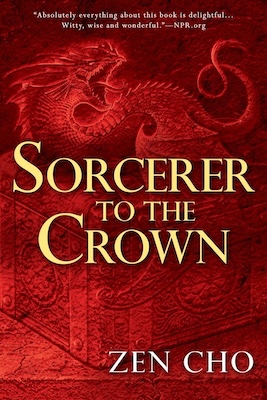
Sorcerer to the Crown by Zen Cho
Sorcerer to the Crown was published in 2015, well before the term “cozy fantasy” came into vogue, but offers a witty, lighthearted tone and plenty of fairy magic in a Regency England that suggests a cozy analogue to Jonathan Strange & Mr. Norrell. In telling the story of a former-slave-turned-Sorcerer-Royal and his mixed-race magical mentee, the book handles serious topics aplenty–institutional racism, sexism, and the looming threat of war among them–but does so with deft charm and humor.
The Nameless Restaurant is a companion novella to Tao Wong’s LitRPG urban fantasy Hidden Wishesseries, but can be read as a standalone. It’s about a hole-in-the-wall restaurant in Toronto that’s magically hidden, featuring a reclusive chef and his patrons–some of whom are ordinary people, and others of which are heroes and powerful beings taking a break from their adventures to have a damn good meal. The novella lingers lovingly over details of the cooking process, featuring many luscious Malaysian dishes–if readers aren’t hungry before they start reading it, they certainly will be by the end. Light on plot, heavy on ambience and flavor.
This lovely little novel was a Japanese bestseller before being translated for English publication, and I fully understand why. The book follows a handful of modern-day protagonists whose lives intersect in more than one unexpected way. As each encounters a magical, pop-up coffee shop in the alleys of Kyoto run by talking cats who are more than they seem, they also find the wisdom and guidance they need to set their lives back on course. Dipping one paw out of fantasy and solidly into the realm of magical realism, The Full Moon Coffee Shop is a series of interconnected vignettes full of kindness, empathy, astrology–and, naturally, cats.
This novel follows Penny, a new employee at a department store that sells only one thing: dreams. People find their way to this store while asleep, in search of whichever dream they need most at that particular time, but have no memory of their visit once they wake. Lee’s worldbuilding is at once whimsical and full of thoughtful details, ranging from the method of payment for dreams (one half of the emotions elicited) to the roving talking cats that offer rented pajamas to nude dreamers. But the true heart of this book lies in the kindness with which Penny and her fellow dreamsellers treat their customers. From their well-stocked shelves come dream reunions with loved ones long gone, traumatic memories relived so that the dreamer can overcome them, creative inspiration for struggling artists–even an aging dog’s simple dream of its family returning home to play fetch. Through the eyes of the Dallergut employees, we come to think of dreams not as accidents of neurochemistry, but as works of art designed to heal and comfort.
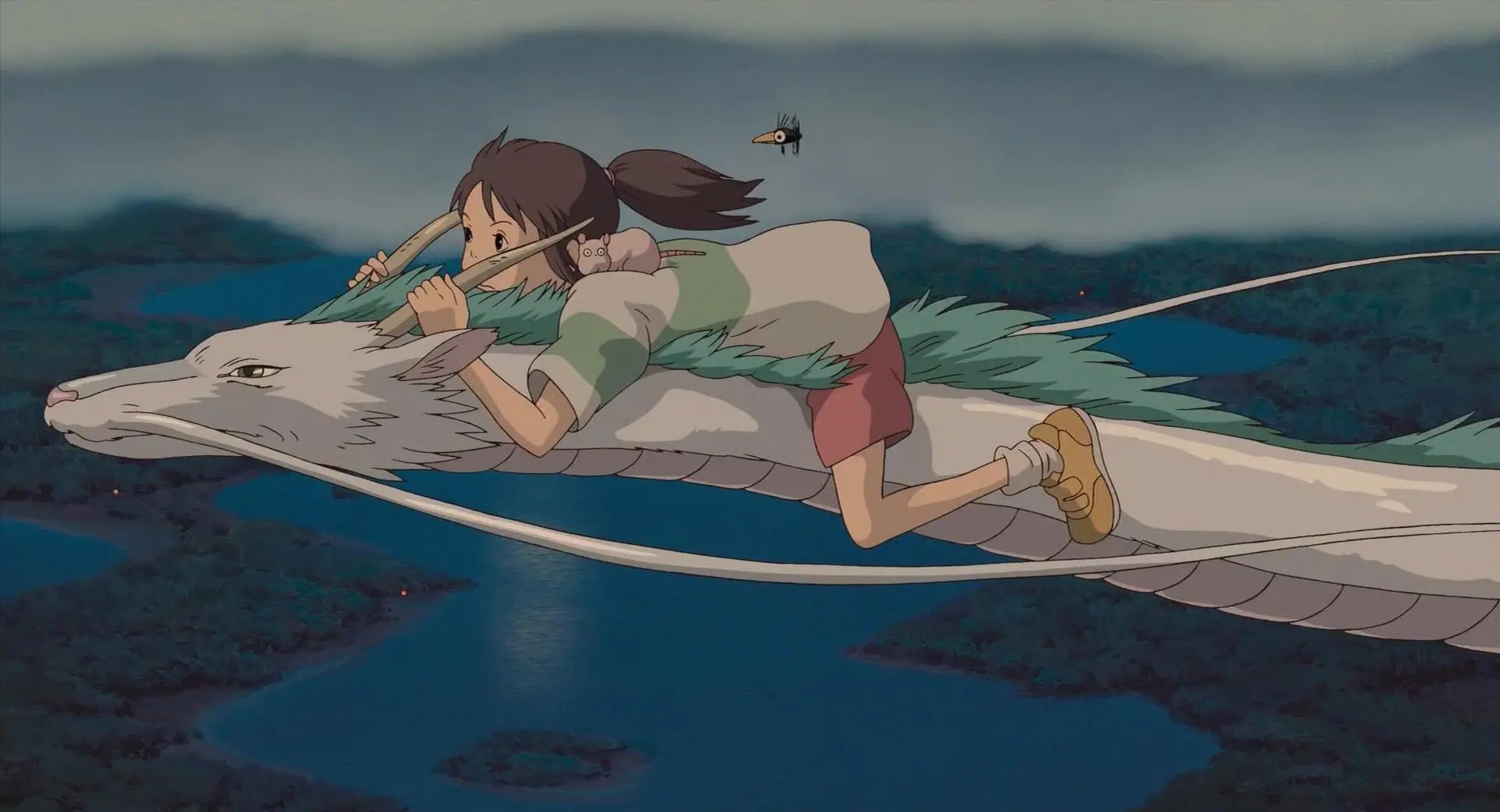
The Rainfall Market is a novel-in-translation about a mystical market that appears only during the rainy season, its entrance hidden in an abandoned house, where humans can trade their misfortunes for happiness. Kim Serin is a young, impoverished girl with plenty of misfortune to barter, and she enters the market determined to buy herself a new life–but in sampling the lives on offer, finds that perfect happiness is more elusive than it seems. The Spirited Away vibes are strong in this one, as are the vibrant personalities of the market’s resident Dokkaebi (spirits/goblins) and the magically size-changing cat companion. A gentle, affirming story about finding happiness in those who love you.
For Puerto Rican protest poets, one of the most important ways to appreciate and show love for Puerto Rico has been to write poems that underscore pride in their Puerto Rican cultural identity and heritage and denounce Puerto Rico’s status as a U.S. colony. As they explore Puerto Rican empowerment and expose how Puerto Rico has suffered multiple crises because of its relationship with the U.S., Puerto Rican poets utilize protest poetry as a means of resistance. By building on an agency of language, poetic forms, Puerto Rican history, Puerto Rican protest poets reconfigure the Puerto Rico-U.S. relationship on their own terms. For them, “poetry,” as Lucille Clifton wrote, “is a matter of life, not just a matter of language.”
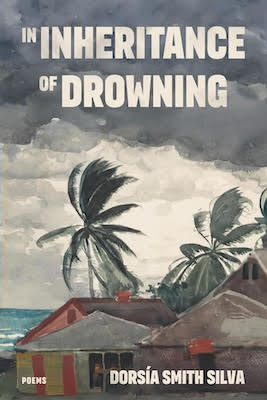
In my poetry debut collection, In Inheritance of Drowning, I described how I witnessed Puerto Rico’s colonial status during the aftermath of Hurricane María in 2017. Puerto Rico had the longest blackout in U.S. history—326 days, and many Puerto Ricans had a lengthy wait to receive basic supplies of water and food. These political poems are a part of a much larger conversation that the collection layers, especially as the poems call for a social transformation. I see my position as a writer of protest poetry to also testify to how Puerto Rico has been thrust into economic and linguistic precarity because of oppressive U.S. laws. Thus, I wrote what was political, personal, and absolutely necessary—a position that more and more protest poets likely find themselves in when there are so many communities being marginalized.
Positing my work into the characteristics of protest poetry meant that my poems were more than just words on a page. They were challenges to frameworks that stifled social justice. And they were doing the work of being advocates of the Spanish language and confronting the assumptions that accessible literature means English only. The poetry collections mentioned here are doing important work. Embodying rich and vivid language, these books offer nuanced representations that readers will relate to, especially during this time where poets are urgently demanding change.
Roque Raquel Salas Rivera has several poetry collections that feature a fearless writer. In this sixth collection, Salas Rivera not only calls for an independent Puerto Rico that is away from being under the thumb of the United States, but also a Puerto Rico that marvels in its freedom. This is a Puerto Rico that “won’t be sorry” without the United States, as the poet ironically asks, “won’t you get restless / with all that freedom?” I found myself full of delight with the imagery and line breaks: “we are braver than stalking anguish; / we are more beautiful than universal monarchies.” The candor and lyrical dexterity also made me read with rapt attention. By the end of the book, I was eager for more of these remarkable poems that address the complicated colonial history of Puerto Rico. The collection is available for readers in English and Spanish versions—both of which were written by Salas Rivera.
Urayóan Noel is a poet that has approached the tense and unbalanced United States-Puerto Rico relationship throughout his poetry collections. This seventh collection is a beautiful gem, especially as it showcases how poetics and politics go hand-in-hand. When he insists upon poems that bob between Spanish and English, Noel powerfully pushes back against the colonizer’s language and sovereignty and weak “attempts” to “help” Puerto Ricans after Hurricane María: “Throw stuff at the empire’s walls and see what sticks / Se acabaron los memes de conquista, / or tear down the walls you were standing on? The politics reveal the linguistic imaginary as a part of the Puerto Rican intersectional identity and landscape. Here, as Noel reveals, Puerto Ricans are free to use Spanish and English as they please. It is an accessible and intimate experience that readers will turn to time and time again.
Ana Portnoy Brimmer’s memorable debut, To Love an Island, left me with impressive sensory moments. This is the kind of collection that lingers in the mind, and makes you wonder why you had not read it sooner. As it showcases the power of Puerto Rican resistance after Puerto Rico endured Hurricane María and a series of earthquakes, the collection points the finger at the U.S. for crushing Puerto Rico with imperialist debt and capitalism and refusing to provide economic assistance: “Cancel the debt, that’s not our debt, won’t pay the debt, illegal debt, /colonial debt, fuck the debt, no longer afraid of your threat—prophet. / Won’t cancel the debt, this is your debt, no receipts, pay the debt, this legal / debt, forever mine debtors, forever your debt, fear my threat—profit.” Portnoy Brimmer also captivatingly centers a decolonial future—one where Puerto Rico is still vulnerable, but free from the United States and overcomes historical trauma and grief: “Puerto Rico is ours, even if it trembles again and collapses on us entirely.”
Adjacent Islands by Nicole Cecilia Delgado; Translated by Urayoán Noel
The adjacent islands of Puerto Rico, Mona and Vieques, are the focus in Nicole Cecilia Delgado’s third collection. Just like the merging of islands, the collection merges Delgado’s two previously published collections to extend this unforgettable poetic travelogue. The poems are splendid in their descriptions of nature, water, and animals against a backdrop of the painful history of U.S. militarism which has affected Puerto Rico: “Pineapples and papayas grow / To all your fences we say No / U.S. Navy’s got to go” and “No Trespassing. Authorized personnel only. Danger. Explosives.” As she poignantly recounts the U.S. military’s harmful occupation on these islands, Delgado courageously wrestles with Mona and Vieques reclaiming their natural beauty away from colonization. There is a strength and beauty in these poems that I feel privileged to have accessed.
Excelsior: New and Collected Poems by Bonafide Rojas
This twenty-year stunning collection by Bonafide Rojas is brimming with invention, honesty, and daring inspection. Excelsior: New and Collected Poems shines in its narratives and bridges between Puerto Ricans and other BIPOC communities. In “One Man’s Fight for Love,” “the cancer babies of Vieques” are sick and dying because of the U.S.’s military bombing, and their suffering is linked to the Black and Brown males that have died from police brutality: “the last breath of Trayvon, Floyd & Anthony Baez.” Rojas builds upon this tension to ultimately say what we have known all along: “Poetry is revolutionary / just like love.” The love here is Puerto Rican pride, which moves across Puerto Rico to New York and beyond, and circles again.
Deuda Natalby Mara Pastor; Translated by María José Giménez and Anna Rosenwong
Winning the Ambroggio Prize of the Academy of American Poets, Deuda Natal by Mara Pastor, hypnotizes readers with each poem. This is a collection that not only elegantly mirrors how Puerto Rico has suffered disaster and environmental capitalism, but also compassionately recognizes everyday Puerto Rican life: “the man that sells crabs” and “a beach where the sun goes down.” The resistance voice heats up in poems like “After the storm” and “Domestic Tourism” that contain insight to Puerto Rico’s economic exploitation by the United States. By opening readers to this world, I found the collection to be the perfect match between politics and language with deft skill and precision.
Dimitri Reyes maneuvers Puerto Rican resistance in their daily lives, historical acts, and language in his profound debut Papi Pichón. The palpable poems shape Puerto Ricans and their participation in the 1974 Puerto Rican riots in Newark, and NJ and the circumstances of Hurricane María. What I was enthusiastically drawn to was the essential core of Papi Pichón–the reclamation of what it means to be Puerto Rican, including the traditional guayabera shirt in “Papi Pichón Shops for Guayaberas in a Department Store.” Here, Reyes tangibly transforms the speaker to Puerto Rico: “How I wish clothing rack guayaberas / would turn any Suncup into a piña colada, / shake my Tropicana carton into a mojito.” The poems made a lasting impression, especially as they gracefully propel readers to affirm Puerto Rican culture and identity.
“In 1950, American jet fighters struck the towns of Jayuya / and Utuado. It was one of two occasions in which the U.S. / bombed its own citizens,” Vincent Toro writes in “On Bombing” from his second collection Tertulia. He deliberately strikes a fine balance between history and protest to give readers keen insight about the fraught relationship between Puerto Rico and the U.S.: “Some Puerto Ricans had made it / clear that they were not thrilled about being occupied by / organizing a rebellion to expel the invaders.” The collection sings and pulses, so that readers are left with a fluidity guiding them through the pages. Along the way, the “Areyto” poems link to the Taíno Indians of Puerto Rico as powerful moments where Puerto Ricans can remember their past as a way to go forward; “Pa’lante!”
Fang Si Chi’s First Love Paradise is a seminal novel that helped kick off the #MeToo movement in Taiwan and has sold millions of copies worldwide. But only two months after the novel’s publication, the author Li Yi-Han passed away due to suicide. Shortly after, her suspected abuser was also acquitted of charges. Despite the novel’s critical acclaim and huge commercial success, this did not protect Yi-Han from harassment, nor bring accountability towards her abuser.
That same environment which enables abusers and isolates victims serves as the backdrop for Fang Si Chi’s First Love Paradise. Thirteen-year old Fang Si-Chi grows up in a privileged environment, where she and her best friend are gifted students and voracious readers of classics. When a neighbor in their apartment complex offers to tutor the two girls for free, he sexually assaults and grooms the young Si-Chi, whose only option is to convince herself that the hell she suddenly finds herself in is in fact her “first love paradise.” By examining how Si-Chi’s community repeatedly fails her, the novel sheds light into the systems of harm that allow groomers and perpetrators of domestic violence to act without consequence.
I spoke to Jenna Tang about Taiwan’s reputation as a progressive country, the significance of bringing this novel to an English-speaking audience for the first time, her translation choices, and how we choose who gets to interpret which stories.
Hairol Ma: What drew you to this book?
Jenna Tang: I returned to this quote constantly during my translation process: “Every single thing in this world belonged to a hometown that Si-Chi would never know again.” There is a quietness in the author’s language and a sense of place she built about Taiwan that brought me closer to myself while I was translating this novel, especially to a part of me that I thought had been lost forever. Taiwan as a “home” has done more harm to me than care. While I translated the book, I constantly thought about what “homecoming” would mean to me if I were to give this book a voice in English.
HM: Your sentiment about Taiwan doing more harm than care as “home” is certainly echoed in this book. Tell me about how Taiwan reacted when this book was published. Years later, what has been this book’s impact in Taiwan?
Nobody is perfect, so how is it possible for anyone to become a ‘perfect survivor’?
JT: It’s all extremely ironic. Taiwanese media are notorious for their unethical behavior and lack of sensitivity. Back then, many reporters were trying to uncover the author’s personal life to judge how “autobiographical” this novel was—which completely defeats the point of reading fiction. Why do writers have to explain or justify how much of themselves is placed in their stories for audiences who interrogate them in such brutal ways?
From 2017 to 2024, a lot has happened and changed in Taiwan, and what’s even more ironic is that Taiwanese society started touting Fang Si-Chi during 2023’s wave of #MeToo across multiple industries. Of course I trust that there are readers who do cherish and care about this book, but at the same time, I wonder if some people brought out this book to show that now they “care” about the topics the author had raised so many years ago.
HM: Lin Yi-Han tragically passed away only two months after this book was published, and this is the first time this is being brought to an English audience. What has translating this book meant to you personally?
JT: It has been a long journey bringing this book to English readers. Translating Lin Yi-Han’s language comes from my desire for Mandarin readers to focus more on the literary merits of this book instead of what the local media wanted us to see. Another part of it comes from my wish to emotionally reconnect myself with childhood friends who have disappeared a long time ago. This book has been by my side in very meaningful ways since I first moved to the U.S. It gave me just the right amount of courage and rage to move forward. By bringing Fang Si-Chi into English, I hope with my love for languages, the novel and the author will be able to claim their space in this world.
HM: Are there any easter eggs that we can watch out for in this translation?
JT: Of course. Here are a few considerations I made:
I have intentionally steered away from the standard Mandarin pinyin systems (Wade-Giles or Hanyu) for characters’ names. Instead, I’ve focused on how the names are physically pronounced. I tried to mimic the sounds as much as possible, so it’s hard for English-speakers to pronounce the names in ways that might sound too different from the original.
I specifically distinguished “Yi-Wei” and “Iwen. Both of their first Mandarin characters could both be spelled as “Yi”—but Yi-Wei is a perpetrator of domestic and sexual violence, while Iwen, his wife, is someone who is full of care and love—I put “I” for her, which can still sound like “Yi”, hoping to give more of her back to herself.
For Teacher Lee, I spelled it specifically as “Lee” and not “Li” (you may notice I spelled the poet’s name as Li Bai)if ever there’s a word that starts with “r” right after “Lee”, then “leer” will appear all over the story, showing how rampant his harm is hidden in this “paradise” that he created.
In Mandarin, 樂園 can be interpreted as “amusement park” or “wonderland”, although it all depends on the context. Since the chapter names are connected to Milton’s Paradise Lost, the word “Paradise” brings out that sense of irony—how do we define paradise, physically and emotionally?
HM: The multi-dimensional interpretations of paradise and innocence are constantly interrogated throughout this novel. We watch as Si-Chi is repeatedly failed by the women close to her, even as she reaches out for help. “Innocence” is a virtue defined by men and perpetrated by women — the acquittal of both Harvey Weinstein and Johnny Depp, the vitriol directed at Amber Heard only a couple years ago comes to mind. What are your thoughts on how women in particular demand the “perfect survivor” and how do you see this perpetuated in both Taiwan and the West?
Why can’t non-native English speakers translate into English? What about the knowledge a translator could have between these cultures?
JT: Survivors are imposed with particular labels and images: they must be givensympathy and they need a certain type of help. These beliefs come from a place of assumptions, rather than actually providing the understanding and support that’s truly needed. “Innocence” becomes an irrevocable state of being, something that can be broken, and if it’s damaged, it has been ruined, and there’s no way back. Nobody is perfect, so how is it possible for anyone to become a “perfect survivor”?
HM: In this regard, literature and storytelling is uniquely equipped to not have to demand credibility. What sort of legacy and connection do you hope readers will form with this book?
JT: The world we live in is full of stereotypes, stigmatization, and all kinds of societal expectations. Sometimes we don’t even realize when we’re being influenced by these acts of gaslighting and blame. Fang Si Chi is an act of protest against this: the structure, the convoluted consciousness, voices, and emotional landscape breaks the world we are familiar with and builds a new world of its own. I see this novel as an attempt to accompany survivors—to show that we are never alone.
HM: You’re heavily involved in the BIPOC translating community, and committed to reversing the monopoly that white men have had on translating sinophone literature. What is the relationship between literature and activism to you?
JT: I was born and raised in Taiwan. I love languages, and translation plays an extremely important role for me as an individual. Literature and language builds me, and builds where I come from. In America, I came to learn how underrepresented Taiwanese literature is in the English-speaking world. Through language, we can do so much beyond the act of writing or translation. Taiwanese literature—like literature from every culture—deserves attention and respect, and such dynamics come from establishing inclusive communities instead of toxic competition and racial hierarchy.
In Taiwan, white-worshipping culture runs rampant: on a day-to-day basis, you can see restaurant owners making exceptions for white or international customers while locals have to wait in a long line; you can see in Taipei Main Station that folks guide European tourists around when they’re lost and ignore migrant workers who seek help. Growing up in Taiwan, I was told and am told to this day that Taiwan is a physically “safe” place, and that people are kind—but is that true, when kindness is afforded primarily to whiteness, and those with proximity to it?
Another bigger question concerning the treatment of translators: Why can’t non-native English speakers translate into English? What about the knowledge a translator could have between these cultures and their understanding of linguistic influence between different languages? Why do we have to put our heads down and always let others “correct” or “guide” us, as if they were our savior? Why are we still working to define what being “native speaker” means if we are to move out of literary colonialism? Why can’t people be more conscious about it, and what kind of changes can I bring as a translator?
HM: Can you elaborate on that concept of literary colonialism and how that lens impacted your translation process?
JT: Cultures outside of the European or North American sphere oftentimes are otherized or foreignized. There is this big question of “Who gets to translate what?” and the question of what counts as cultural appropriation. By monopolizing or demanding that literature from different cultures should be interpreted or translated or told in a certain “standard” way that fits better to the European or North American convention or understanding, other traditions remain on the margins, their cultures exploited and colonized.
There are many institutions in Taiwan that set up a protocol that if one identifies as a “non-native” English speaker, they won’t be able to officially take part in translation projects into English, especially for books. Many hire white expats as their “consultants” and think by doing so will ensure nothing goes wrong. But what about Taiwanese, or other non-English-native speakers who are proficient in English? Why are non-native English speakers paid less in educational settings? These things happen not only in Taiwan, but across Asia and beyond—similar things happened in South Korea, Japan, Thailand, and more. Ultimately, choosing to translate a book is not just about cultural enthusiasm—it’s about how much we care about the authors and the books, and how we connect ourselves with them. I want to believe that people who care about Taiwanese literature goes beyond race—but it’s hard to think about it when some encounters and situations proved otherwise, and the fact that introducing Taiwanese literature tends to be monopolized by certain institutions that feed into certain toxic cycles.
On the other hand, in America, I often heard people from the literary landscape express: “I’m confused by the structure.” “This doesn’t make sense to me.” when it comes to specific dynamics that are closely tied to my culture, or cultures from other parts of the world. There’s always a need to “explain” or “clarify.”
I was asked often in my MFA program questions like, “Could you tell us more about how Taiwanese do A and B?” Initially, it sounds like some genuine curiosity, but time and time again, I get tired of explaining where I come from, or “how we do things in Taiwan.” My work, as well as other Taiwanese authors’ works are not part of some imagined zoo (and I don’t like zoos)—we don’t need labels, explanations, or certain restrictions to show people who we are. Just read the story, read the work, and be open to differences.
When I worked on this project, there were many times I was told to explain the concept of cram school, or was asked inappropriate questions about whether “teacher-student love” might be something specific to Taiwan. Hearing the latter gave me a feeling that Taiwanese culture, in some ways, is looked down upon. The subtext behind this question always felt like the suggestion that perhaps sexual grooming was normalized in Taiwan.
I’ve also felt the pressure of Taiwanese #MeToo has to be, in some ways, “big enough” to matter. I had to do so much for a less represented country to really matter in the international literary world.
Pauvla Agrippa had died that afternoon at three; now she lay with quiet hands crossed a little below her fine breast with its transparent skin showing the veins as filmy as old lace, purple veins that were now only a system of charts indicating the pathways where her life once flowed.
Her small features were angular with that repose which she had often desired. She had not wanted to live, because she did not mind death. There were no candles about her where she lay, nor any flowers. She had said quite logically to her sisters: “Are there any candles and flowers at a birth?” They saw the point, but regretted the philosophy, for buying flowers would have connected them with Pauvla Agrippa, in this, her new adventure.
Pauvla Agrippa’s hair lay against her cheeks like pats of plaited butter; the long golden ends tucked in and wound about her head and curved behind her neck. Pauvla Agrippa had once been complimented on her fine black eyes and this yellow hair of hers, and she had smiled and been quite pleased, but had drawn attention to the fact that she had also another quite remarkable set of differences—her small thin arms with their tiny hands and her rather long narrow feet.
She said that she was built to remain standing; now she could rest.
Her sister, Tasha, had been going about all day, praying to different objects in search of one that would give her comfort, though she was not so much grieved as she might have been, because Pauvla Agrippa had been so curious about all this.
True, Agrippa’s husband seemed lost, and wandered about like a restless dog, trying to find a spot that would give him relief as he smoked.
One of Pauvla’s brothers was playing on the floor with Pauvla’s baby. This baby was small and fat and full of curves. His arms curved above his head, and his legs curved downward, including his picture book and rattle in their oval. He shouted from time to time at his uncle, biting the buttons on his uncle’s jacket. This baby and this boy had one thing in common—a deep curiosity—a sense that somewhere that curiosity would be satisfied. They had all accomplished something. Pauvla Agrippa and her husband and her sister and the boy and Pauvla’s baby, but still there was incompleteness about everything.
Nothing was ever done; there wasn’t such a thing as rest, that was certain, for the sister still felt that her prayers were not definite, the husband knew he would smoke again after lunch, the boy knew he was only beginning something, as the baby also felt it, and Pauvla Agrippa herself, the seemingly most complete, had yet to be buried. Her body was confronted with the eternal necessity of change.
It was all very sad and puzzling, and rather nice too. After all, atoms were the only things that had imperishable existence, and therefore were the omnipotent quality and quantity—God should be recognized as something that was everywhere in millions, irrevocable and ineradicable— one single great thing has always been the prey of the million little things. The beasts of the jungle are laid low by the insects. Yes, she agreed that everything was multiple that counted. Pauvla was multiple now, and some day they would be also. This was the reason that she wandered from room to room touching things, vases, candlesticks, tumblers, knives, forks, the holy pictures and statues and praying to each of them, praying for a great thing, to many presences.
A neighbor from across the way came to see them while Pauvla’s brother was still playing with the baby. This man was a farmer, once upon a time, and liked to remember it, as city-bred men in the country like to remember New York and its sophistication.
He spent his summers, however, in the little fishing village where the sisters, Pauvla and Tasha, had come to know him. He always spoke of “going toward the sea.” He said that there was something more than wild about the ocean; it struck him as being a little unnatural, too.
He came in now grumbling and wiping his face with a coarse red handkerchief, remarking on the “catch” and upon the sorrow of the house of Agrippa, all in the one breath.
“There’s a touch of damp in the air,” he said, sniffing, his nose held back so that his small eyes gleamed directly behind it. “The fish have been bad catching and no-man’s-mare is going up the headlands, her tail stretched straight out.”
Today she felt inconvenienced because she could not understand her own feelings—once or twice she had looked upon the corpse with resentment because it had done something to Pauvla.
Tasha came forward with cakes and tea and paused, praying over them also, still looking for comfort. She was a small woman, with a round, wrinkled forehead and the dark eyes of her sister; today she felt inconvenienced because she could not understand her own feelings—once or twice she had looked upon the corpse with resentment because it had done something to Pauvla; however, she was glad to see the old man, and she prayed to him silently also, to see if it would help. Just what she prayed for she could not tell; the words she used were simple: “What is it, what is it?” over and over with her own childhood prayers to end with.
She had a great deal of the quietness of this village about her, the quietness that is in the roaring of the sea and the wind, and when she sighed it was like the sound made of great waters running back to sea between the narrow sides of little stones.
It was here that she, as well as her brothers and sisters, had been born. They fished in the fishing season and sold to the market at one-eighth of the market price, but when the markets went so low that selling would put the profits down for months, they turned the nets over and sent the fish back to sea.
Today Tasha was dressed in her ball-gown; she had been anticipating a local gathering that evening and then Pauvla Agrippa got her heart attack and died. This dress was low about the shoulders, with flounces of taffeta, and the sea-beaten face of Tasha rose out of its stiff elegance like a rock from heavy moss. Now that she had brought the cakes and tea, she sat listening to this neighbor as he spoke French to her younger brother.
When they spoke in this strange language, she was always surprised to note that their voices became unfamiliar to her—she could not have told which was which, or if they were themselves at all. Closing her eyes, she tried to see if this would make any difference, and it didn’t. Then she slowly raised her small plump hands and pressed them to her ears—this was better, because now she could not tell that it was French that they were speaking, it was sound only and might have been anything, and again she sighed, and was glad that they were less strange to her; she could not bear this strangeness today, and wished they would stop speaking in a foreign tongue.
“What are you saying?” she inquired, taking the teacup in one hand, keeping the other over her ear.
“Talking about the horse,” he said, and went on.
Again, Tasha became thoughtful. This horse that they were speaking about had been on the sands, it seemed to her, for as long as she could remember. It was a wild thing belonging to nobody. Sometimes in a coming storm, she had seen it standing with its head out toward the waters, its mane flying in the light air, and its thin sides fluttering with the beating of its heart.
It was old now, with sunken flanks and knuckled legs; it no longer stood straight—and the hair about its nose had begun to turn gray. It never interfered with the beach activities, and on the other hand it never permitted itself to be touched. Early in her memory of this animal, Tasha had tried to stroke it, but it had started, arched its neck and backed away from her with hurried jumping steps. Many of the ignorant fisherfolk had called it the sea horse and also “no-man’s-mare.” They began to fear it, and several of them thought it a bad omen.
Tasha knew better—sometimes it would be down upon the pebbly part of the shore, its head laid flat as though it were dead, but no one could approach within fifty feet without its instantly leaping up and standing with its neck thrust forward and its brown eyes watching from beneath the coarse lashes.
In the beginning people had tried to catch it and make it of use. Gradually everyone in the village had made the attempt; not one of them had ever succeeded.
The large black nostrils were always wet, and they shook as though some one was blowing through them— great nostrils like black flowers.
This mare was old now and did not get up so often when approached. Tasha had been as near to it as ten paces, and Pauvla Agrippa had once approached so near that she could see that its eyes were failing, that a thin mist lay over its right eyeball, so that it seemed to be flirting with her, and this made her sad and she hurried away, and she thought, “The horse had its own defense; when it dies it will be so horrifying perhaps that not one of us will approach it.” Though many had squabbled about which of them should have its long, beautiful tail.
Pauvla Agrippa’s husband had finished his cigar and came in now, bending his head to get through the low casement. He spoke to the neighbor a few moments and then sat down beside his sister-in-law.
He began to tell her that something would have to be done with Pauvla and added that they would have to manage to get her over to the undertaker’s at the end of the headland, but that they had no means of conveyance. Tasha thought of this horse because she had been thinking about it before he interrupted and she spoke of it timidly, but it was only an excuse to say something.
“You can’t catch it,” he said, shaking his head.
Here the neighbor broke in: “It’s easy enough to catch it; this last week three children have stroked it—it’s pretty low, I guess; but I doubt if it would be able to walk that far.”
He looked over the rim of the teacup to see how this remark would be taken—he felt excited all of a sudden at the thought that something was going to be attempted that had not been attempted in many years, and a feeling of misfortune took hold of him that he had certainly not felt at Pauvla Agrippa’s death. Everything about the place, and his life that had seemed to him quite normal and natural, now seemed strange.
The disrupting of one idea—that the horse could not be caught—put him into a mood that made all other accustomed things alien.
The disrupting of one idea—that the horse could not be caught—put him into a mood that made all other accustomed things alien.
However, after this it seemed quite natural that they should make the effort and Tasha went into the room where Pauvla Agrippa lay.
The boy had fallen asleep in the corner and Pauvla’s baby was crawling over him, making for Pauvla, cooing softly and saying “mamma” with difficulty, because the little under lip kept reaching to the upper lip to prevent the saliva from interrupting the call.
Tasha put her foot in the baby’s way and stood looking down at Pauvla Agrippa, where her small hands lay beneath her fine breast with its purple veins, and now Tasha did not feel quite the same resentment that she had felt earlier. It is true this body had done something irrevocable to Pauvla Agrippa, but she also realized that she, Tasha, must now do something to this body; it was the same with everything, nothing was left as it was, something was always altering something else. Perhaps it was an unrecognized law.
Pauvla Agrippa’s husband had gone out to see what could be done with the mare, and now the neighbor came in, saying that it would not come in over the sand, but that he—the husband—thought that it would walk toward the headland, as it was wont.
“If you could only carry her out to it,” he said.
Tasha called in two of her brothers and woke up the one on the floor. “Everything will be arranged for her comfort,” she said, “when we get her up there.” They lifted Pauvla Agrippa up and her baby began to laugh, asking to be lifted up also, and holding its little hands high that it might be lifted, but no one was paying any attention to him, because now they were moving his mother.
Pauvla Agrippa looked fine as they carried her, only her small hands parted and deserted the cleft where they had lain, dropping down upon the shoulders of her brothers. Several children stood hand in hand watching, and one or two villagers appeared who had heard from the neighbors what was going on.
The mare had been induced to stand and someone had slipped a halter over its neck for the first time in many years; there was a frightened look in the one eye and the film that covered the other seemed to darken, but it made no objection when they raised Pauvla Agrippa and placed her on its back, tying her on with a fish net.
Then someone laughed, and the neighbor slapped his leg saying, “Look what the old horse has come to—caught and burdened at last.” And he watched the mare with small cruel eyes.
Pauvla Agrippa’s husband took the strap of the halter and began plodding through the sand, the two boys on either side of the horse holding to all that was left of Pauvla Agrippa. Tasha came behind, her hands folded, praying now to this horse, still trying to find peace, but she noticed with a little apprehension that the horse’s flanks had begun to quiver, and that this quiver was extending to its ribs and from its ribs to its forelegs.
Then she saw it turn a little, lifting its head. She called out to Pauvla Agrippa’s husband who, startled with the movement and the cry, dropped the rope.
The mare had turned toward the sea; for an instant it stood there, quivering, a great thin bony thing with crooked legs; its blind eyes half covered with the black coarse lashes. Pauvla Agrippa with her head thrown a bit back rested easily, it seemed, the plaits of her yellow hair lying about her neck, but away from her face, because she was not supported quite right; still she looked like some strange new sea animal beneath the net that held her from falling.
Then without warning, no-man’s-mare jumped forward and plunged neck-deep into the water.
A great wave came up, covered it, receded, and it could be seen swimming, its head out of the water, while Pauvla Agrippa’s loosened yellow hair floated behind. No one moved. Another wave rose high, descended, and again the horse was seen swimming with head up, and this time Pauvla’s Agrippa’s hands were parted and lay along the water as though she were swimming.
The most superstitious among them began crossing themselves, and one woman dropped on her knees, rocking from side to side; and still no one moved.
And this time the wave rose, broke and passed on, leaving the surface smooth.
That night Tasha picked up Pauvla Agrippa’s sleepy boy and standing in the doorway prayed to the sea, and this time she found comfort.
It’s no coincidence that there are horses on the walls of caves in Lascaux, atop St. Mark’s in Venice, under the derriere of Marcus Aurelius in Rome, and alongside the Terracotta Army in China. Since they were first domesticated more than three thousand years ago, horses have been our transport, farming equipment, war machines, source of meat and milk, and a fine reason to bet your paycheck. While in reality they are partially-colorblind herbivores with fragile digestive systems and anxiety disorders, horses, nevertheless, have come to symbolize freedom, speed, courage, and beauty.
The pony’s contribution to history, on the other hand, is sorely overlooked. A subset of horses measuring 58 inches or less, ponies are mostly famous for biting children and/or launching them into the dust. There isn’t a single epic poem that honors a pony! Shakespeare natters on about trading kingdoms for horses, but there’s nary a pony mentioned in any of his plays. We honor explorer Ernest Shackleton, but not the pony he ate to survive.
My new book, Pony Confidential, aims to right this literary wrong. The first ever novel for adults narrated by a pony (not kidding), it’s a retelling of The Odyssey (also not kidding) starring an old pony who is searching for the one little girl he really loved, twenty-five years after he last saw her so he can tell her off for having got rid of him. (Ponies, you realize, are sold and sold and sold when we outgrow them.) Grumpy, opinionated, and bent on revenge, this self-described “furry fury” discovers that Penny, his long-lost owner, is now an adult accused of a murder he knows she didn’t commit. Though he’s arthritic and lacks opposable thumbs, he sets out to save her. Yes, it’s meant to make you laugh out loud, but there are also serious undertones about how we treat animals and each other.
Since I can’t give you a list of pony books for adults, here is instead a list of horse books for adults. These books have stuck with me over the years because of standout moments that conjure images so clear in my mind that I feel they happened to me. For each of these wonderful stories I’ve noted what that seared-into-the brain detail is. And to my own hero I can only say, “Sorry, Pony, to once again laud famous horses—maybe one day you will be just one of a long list of ‘Pony Books for Adults.’”
Though now we think of Black Beauty as a children’s book, it was written in 1877 for adults. Author Anna Sewell was horrified by the treatment of horses (the main mode of transportation in her era), and her novel—told in the first person from a horse’s point of view– was an attempt to make people recognize that the animals they were beating, working to death, and starving had feelings. Black Beauty was so successful that it led to the creation of animal protection organizations and laws against animal cruelty in many countries. Of course, what makes its potentially cloying anthropomorphism effective is that it’s a well-told tale. Beauty is born to a kind master in the countryside where he has all the things horses need to thrive, but through the vagaries of fate endures a series of deeply unfortunate events. The searing detail for me is the death of a main animal character, an event which broke my heart as a child but also inspired a very funny spoiler alert line delivered by a goat in Pony Confidential. Beauty’s kindness despite his pain, fear and powerlessness still resonate today and have kept it the urtext for horse girls.
This series of essays by a prizewinning New York Times journalist interrogates why we (and she) are so obsessed with horses. She examines our culture’s love of equines from every angle, including her own upbringing in New York City and how riding was an escape from trauma, but also an invitation to a rarified world that as an outsider she couldn’t quite gain entry to. The searing detail here is a moment during a competition when her horse falls and rolls over her—I can see the scene in slow motion horror as if I were ringside. Maslin Nir uses her journalistic eye for detail to explore far flung corners of the horse world and in doing so reveals surprising things about power, privilege and passion.
In Deep by Maxine Kumin
Pulitzer Prize winner Maxine Kumin was the U.S. Poet Laureate in the early 1980s, and these essays are a gorgeously written, lyric chronicle of her life on a New Hampshire farm raising kids and horses as she writes and teaches. Kumin is deeply in love with the landscape and all the creatures in it, but also honest about the challenges of country living—black flies, squatter raccoons, unruly young horses, and jicama that doesn’t grow where it’s supposed to. The killer detail for me is picturing her spreading the pages of the New York Times Book Review to mulch zucchini and tomato seedlings in her garden. Take that, Gray Lady! I blame Kumin’s seductively beautiful prose for the moneypit ranchette I now own.
This 2022 novel by the brilliant Australian-born journalist-turned-novelist Geraldine Brooks is a triple narrative of an enslaved young man working as a jockey in the antebellum South and Lexington, the horse he forms a relationship with; a 1950s art dealer interested in a painting of that horse; and a 21st century researcher at the Smithsonian who crosses paths with both the horse’s skeleton and an art historian researching the painting. Brooks masterfully weaves the stories to create tension and suspense. The memorable moment for me is the jockey’s flight from danger through a warzone on Lexington’s back –I was on the edge of my seat for every hoofbeat. Based on the real Lexington, Horse is a nod to the many African-Americans whose foundational contributions to the sport of horse racing in this country are only now being acknowledged and celebrated after centuries of erasure.
Jane Smiley is one of those rare writers who can make you laugh out loud on one page and weep on the next. A sprawling novel set in the world of Thoroughbred racing and told from many different points of view, including a Jack Russell terrier named Eileen and several racehorses, Horse Heaven chronicles lives that are familiar but utterly poignant—down on their luck gamblers, too-tall jockeys, insatiable rich people, all desperate for a win. My favorite character is Justa Bob, a downwardly mobile Thoroughbred who passes from owner to owner without losing his optimism (a certain pony would have bitten all of the humans who let Bob down). Smiley’s prose is eagle-eyed but also laced with kindness, making Horse Heaven a world that keeps pulling you back in even as it breaks your heart.
One of our best horse historians, Elizabeth Letts here tells the heartwarming true story of Snowman, a skeletal nag rescued from a slaughter truck in Pennsylvania by Harry de Leyer, a recent immigrant from Holland and WWII survivor struggling to support his growing family in his not-so-welcoming new country. The bag of bones turns out to be a phenomenal natural jumper who blossoms into a champion and holds the de Leyer family together through difficult times. The searing moment here is when Harry is delayed by a snowstorm and a flat tire and misses the auction, arriving in time to see a white nose sticking out of the slats of a truck headed to the slaughterhouse. I’m not crying, you are.
This is the kind of adventure story that nails you to the couch until you have read to the last page. To say that this is a memoir of Lara Prior-Palmer’s victory in the world’s most grueling horse race is like saying H is For Hawk is about a bird. Prior-Palmer is nineteen, unmoored, and not an especially experienced rider when she decides to enter the Mongol Derby, a 600-mile chase through one of the most remote areas of the world. The ten days she spends trying (and often failing) to stay atop a revolving set of untrained mounts is not a pretty travelogue about the beautiful steppe and the picturesque nomadic inhabitants, but instead an existential descent into what it means to be a young woman in the world. Killer moments abound, but Prior-Palmer’s intense rivalry with the other leading woman in the race, a hyper-competitive American rider named Devan, make me laugh—and cringe– to this day.
Horses have always been humans’ unacknowledged therapists—it was Winston Churchill who said that the outside of a horse is good for the inside of a man. We’re back in Mongolia with this memoir of a father’s attempt to communicate with his profoundly autistic son Rowan through horses. Isaacson and his wife are living in Texas and at the end of their rope when he decides (yes, marital tension ensues) to take Rowan to shamans in remote Mongolia to see if they can break his son free of the barriers to communication that he sees as imprisoning Rowan and destroying the family’s lives. What follows is both a wild adventure saga, a heartwarming love story, and a fascinating exploration of the fuzzy boundary of faith and science. This book inspired Penny’s relationship with her daughter in Pony Confidential. The moment when Isaacson is thousands of miles from home, sitting in a tepee with drumming reindeer-herding people and their chanting shaman, desperately hoping they can help his son, is definitely hot-grill searing.
Fall is the biggest season for literature, the most anticipated titles are released in September and awards season commences in November. To sort through this glorious deluge, we asked our trusted friends with the most impeccable literary taste for their recommendations for the buzziest new books, the ones they’re most excited for and can’t stop talking about. Here are what indie booksellers across America are reading this autumn:
Titles below link directly to the bookstore (when available), while book covers are Bookshop.org affiliate links. If you are a bookseller and would like to participate in this feature, send us an email at books@electricliterature.com.
“In Lesser Ruins, a retired/fired community college professor, grieving the recent death of his wife to dementia, is obsessively writing a book-length essay on Montaigne, though the only progress he’s made thus far are the thousands of titles he’s brainstormed. His son Marcel calls incessantly on his hated smartphone, rambling endlessly about electronic dance music of which the narrator has no interest. Lesser Ruins is a wickedly funny novel of obsession, Montaigne, coffee, art, smartphones, and EDM. One of my favorite books of 2024!”—Caitlin L. Baker, Island Books in Mercer Island, Washington
“My Lesbian Novel is a momentous achievement from the iconic poet, novelist, essayist, visual artist, and innovator Renee Gladman. Here is the conceit: a fictionalized Renee Gladman is interviewed by an unnamed interviewer as to the process of writing her first lesbian novel, and swatches of the novel itself are spliced into the interview text. Gladman achieves more in 150 pages on both a formal and an emotional level than other writers strive to achieve in works 3-4 times the length. She is one of the most exciting contemporary writers working today, one who defies boundaries of genre and form to create works that are truly singular, endlessly thought provoking, and that push literature as a whole into the future.
The book feels epic despite its slim size, and what is distinctly marvelous and monumental and exceptional about it is that it is equally successful as a metatext and formally inventive work as it is as a swoon-worthy, stomach butterflies producing work of romance fiction. Readers will be enraptured by the charms of both the fictionalized Renee and her fictional protagonist in the novel within a novel, June. A must read for any who have ever wondered if fiction and prose as a whole are still constantly evolving.”—Meghana Kandlur, Open Books Logan Square in Chicago, Illinois
“Five people smoking cigarettes in the graveyard of an abandoned church—insomnia and aimlessness the only things they share in common—discover a freshly dug grave, thrusting them into a night-long investigation that’ll unearth disturbing secrets and personal revelations. With an engaging mystery and an instantly memorable cast of characters, set in a streetlight-drenched world both creepy and creepily familiar, it only took one page to lock me in for the next 24 hours. A perfect Spooky Season read, and one I look forward to revisiting. (Also: be sure to check out the recommended playlist in the back!)”—Nik Long, P&T Knitwear in New York
“The Breakfast Club meets The Last of Us meets, yes, Scooby Doo in this quiet, uncanny Gothic. Our tale begins with five acquaintances from different walks of life, bonded only by their chronic insomnia and pervasive loneliness, discovering an empty grave one sleepless night. Then come the rats. The ensuing unraveling of both a sinister conspiracy and our heroes’ collective sanity unfolds hour by hour, from midnight to 10a.m., as they piece together the awful truth about their mundane university town. M.L. Rio creates atmosphere like few can, attending to each grim detail with the macabre glee of someone who loves horror. And let me just say: as a woman who spent many restless nights wandering the cemetery outside my dormitory, I felt deeply connected to this work.”—Charlie Monroe, Flyleaf Books in Chapel Hill, North Carolina
“Hedva, inspired by Sad Girl Theory, writes on the topic of Sick Woman Theory, integrating analysis of class, race, physical ability, and sexuality in places where Sad Girl Theory only touched on binary gender. Hedva utilizes their own experiences as a disabled and mentally ill person, while supplying critical analysis from anti-imperialist, anti racist, and disability justice activists and authors. The book, which has frightened many of my colleagues with its alarming title places ableism at the forefront as it argues for a revolution, and one that can take place by means of radical care. Positioning doom as liberatory and capitalism as unliveable, this book is a necessary addition to the disability justice movement and to your to read list!”—Ellie Younger, Unabridged Bookstore in Chicago, Illinois
“In 2017, Jesse Ball wrote an op-ed in the Los Angeles Times proposing that every citizen should serve short, random sentences in our country’s maximum-security prisons once every decade. Not only might this insure better conditions for people within the carceral system, but we who serve as a jury of our peers ‘would now know to what [we] were condemning those [we] condemned.’ The Repeat Room is a similar thought exercise, one that is well worth the paces it puts readers through.
The room in question allows jurors—one per case, selected through an opaque and demanding process—to inhabit the consciousness of the defendant whose fate they will determine. We follow Ball’s everyman protagonist, Abel, through the selection process; we follow a record of the defendant’s life, one marked by enormous psychological abuse and taboo intimacy. We are asked, in the ways Ball has become known by, to consider that we know far less about what it means to judge or love another than we care to admit. Consider this a summons.”—Joe Demes, P&T Knitwear in New York
“To call this an essential text when explaining and educating people on the present Palestine conflict would be an understatement. Isabella Hammad’s impeccably done Recognizing the Stranger takes the issue head-on but in a much more nuanced, possibly more effective way than most.
The book’s first half is Hammad’s commencement speech at Columbia a week before the October 7th attacks, with the last 20 pages being an afterword titled “On Gaza.” Hammad’s crisp, concise, and accessible writing better explains this war’s direct actions and consequences. I will be thinking about specifically this afterword and Hammad’s voice for many years. No fluff, no filler, just pure compassion, care, and a voice to champion.”—Grace Sullivan, Fountain Bookstore in Richmond, Virginia
“Fans of Philip Pullman’s His Dark Materials, of R.F. Kuang’s Babel, of N.K. Jemisin’s Broken Earth trilogy, won’t want to miss this one. I’ve been waiting for a new Jedediah Berry book since The Manual of Detection 10 years ago, and The Naming Song did not disappoint. It’s hard to describe a book that is about the power of words, the weight of naming things, and the significance of storytelling, without wildly overthinking every word. Set in a future dystopian world where society is rebuilding itself, one Named object at a time, after the Great Silence, this novel follows an unnamed Courier, who travels the country in a train delivering new words as they are conjured up. The Courier slowly discovers the truth behind the stories she’s been told about her own past, as well as the ways that words—and memory—can be wielded to the advantage of the few people in power at the expense of the many. Every time I had to put it down, I couldn’t wait to get back in. And, as the parent of a toddler who is just learning to match words to the people, things, and events around her, The Naming Song gave me a unique appreciation of the importance of being able to describe the world, not just experience it.”—Emily Giglierano, The Astoria Bookshop in Queens, New York
“Deja Brew is a delightful mashup of small town Stars Hollow vibes and Halloweentown spookiness. Celestine Martin invites readers in to a fun-filled magical story featuring our heroine, Sirena Caraway. She makes a wish for a second chance, and wakes up reliving the entire month of October. This is the book to cozy up with this fall.”—Tara Leimkuehler, Parnassus Books in Nashville, Tennessee
“Bog Wife is a book that will make you feel unstuck in time. Deeply atmospheric, each Haddesley sibling is so set in their own world view that this book had me questioning what was real at each POV change. This is what all Appalachian folk horror wishes it was.”—Katherine Nazzaro, Porter Square Books, Boston Massachusetts
“TheForbidden Book is the perfect follow up to the masterpiece that was When the Angels Left the Old Country. When Sorel escapes from her home right before her wedding she quickly finds herself enveloped in a mystery. Steeped in Jewish folklore and magic, I could not put this book down. The characters are all amazing—Sorel is brash in the best way, and I love them, and the ending had the perfect pay off.”—Katherine Nazzaro, Porter Square Books in Boston, Massachusetts Edition
“The grumpy god of graphic novels has fully moved into the prose realm (by his own admission)—and this first in a proposed series of five novels spanning the 20th century is a far more digestible read than his literary debut Jerusalem. But have no fear: it’s still as language-drunk and story-crazy as anything he’s ever done. It is the story, on its face, of a young man in post-Blitz London doing odd jobs for a bookseller only to come across a book that shouldn’t exist, a book straight out of fiction. This leads him into a wondrous and polyphonic adventure that brings us to another London, the Fire to our London’s Smoke—and truly unbelievable things ensue. Maximalism is *in* again, folks: strap in and have yourself a blast.”—Drew Broussard, Rough Draft Bar & Books in Kingston, New York
“Looking for a holiday romance that sparkles with charm and fun? Make the Season Bright by Ashley Herring Blake brings the magic of the season alive with a delightful queer romance filled with fake dating twists. It’s the perfect festive read, combining heartfelt moments and irresistible chemistry to warm up any winter day. “—Leah Koch, The Ripped Bodice in Los Angeles, California
“The Sequel packs a double punch, as a twisty, addictive thriller and an astute (not to mention witty) satire of the publishing world. With its smooth prose and a captivating antiheroine, you’ll be furiously turning the pages to find out what’s going to happen.” “—Joelle Herr, The Bookshop in Nashville, Tennessee
“A summer camp slasher monster finds herself in a slump and killing cranky campers no longer brings her joy. When a mysterious tentacled man threatens her hunting territory, Darla Drake, the Duchess of Death, must shake herself out of her ennui… except Jarko Murkvale is very attractive. A comedic horror romp that pokes fun at the slasher genre while still delivering bone-chilling visuals and excellent story-telling. Enemies to lovers has never been this much fun!”—Nikolas Leasure, The Book Loft in Columbus, Ohio
“A funhouse mirror version of the colonial adventure story, Comrade Papa pokes, prods, & mocks a whole suite of ideologies & assumptions. Gauz has an exuberant, nimble style & an off-center imagination that will keep readers on their toes.”—Josh Cook, Porter Square Books in Cambridge, Massachusetts
“The Women’s Hotel has an unexpected commonality with Seinfield, which is about “nothing,” but actually is a canny and compulsively entertaining examination of the quirks, misunderstanding, stratagems, assumptions, social connections, and cultural pulse of friends bound by time and circumstance in a very specific part of New York.
The Women’s Hotel is about a slowly fading New York specialty hotel for women, mostly young or youngish overseen by Mrs. Mossler, a vaguely kind but absent-minded manager who is happy to delegate most of her responsibilities to even kinder (to the extent of being a pushover), Katherine, whose reflexive generosity covers an uncertain sense of self and a burned bridges family scrapbook. Lavery shows an unflagging interest in the smallest details of the lives of its residents, who run the gamut from leftist activists to wannabe socialites to models, stock room workers, bartenders, shop girls, journalists, typists and office staff; they are all just scraping by. The residents are hunting for husbands, for independence, for friendship, for freedom, for an end to capitalism, for a celebration of it, for sobriety, and they are uniformly fascinating. This is due in no small part from the narrative tangents Lavery employs detailing bad bosses and worse mothers, the social repressions of gay culture in the 1960s, the small to medium shady practices some working and out of work women use to supplement their incomes, and especially, the often hilarious, often poignant interactions of borders with very different agendas. Lavery lavishes a good part of this slim book in setting the scene, which can be off-putting initially, but his observations are droll and acute, so the slower pace pays off. There is not much of a plot, other than the repercussions and rebellion against the new cost saving policy of eliminating free breakfast. But Lavery is able to string a wealth of character exploration, historical positioning and social commentary on this premise, it is well worth a visit.”—Toni Streckert, Mystery To Me Books in Madison, Wisconsin
“War chronicles the discussions and decisions that have marked not only the last four years of American politics, but of a world on edge. Drawn from dozens of in-person interviews, it is a brilliant first draft of how we have arrived at our current moment.”—Charlie Carlisle, The King’s English in Salt Lake City, Utah
Clean by Alia Trabucco Zerán, translated by Sophie Hughes
“Clean unfolds as housemaid Estela sits alone in a room, telling her story to an unknown audience from behind a glass wall. She has been working for the Jensen family for seven years—since just days before the birth of their daughter, who is now dead. What follows is an incisive and visceral exploration of class, resistance, power, and violence as Estela recounts the events that have led her to this moment. Utterly unpredictable and haunting.”—Madeline Mooney, The Bookshop in Nashville, Tennessee
“Merowdis goes out in the woods with her dogs and her pig, Apple—and comes back forever changed. This beautiful illustrated short story by the author of Jonathan Strange & Mr. Norrell is a meditation on nature, magic, and the strange liminal spaces of childhood. It’s a perfect book to read as the seasons change, and would make a gorgeous holiday gift. Recommended for fans of Over the Garden Wall, The Boy, the Mole, the Fox and the Horse, and anyone who just can’t get enough of Clarke’s ethereal writing.”—Anna Newman, The King’s English in Salt Lake City, Utah
“Cole is a giant of the paranormal romance world and I am so excited her classic Immortals After Dark series is getting republished. If you were just thinking to yourself, I really need a twenty book long series of interconnected standalone romances filled to the brim with spice and monster politics, then look no further. Once I started I absolutely could not stop with this series. Perfect for fall!” Katie Garaby—Parnassus Books in Nashville, Tennessee
“If Chizmar’s brand of horror was walking down the sidewalk towards me, I would cross the street at a dead sprint. This man’s work gives me nightmares, and having grown up on King an Koontz, that’s no easy feat. Memorials is a masterpiece in epistolary fiction, and I was white-knuckling it through the entire thing. Read with the lights on. At noon. And prepare to be terrified.”—Jen Fryar, Porter Square Books in Boston, Massachusetts
“Memorials is an Appalachian Folk novel that has elements of horror and is full of small town creepy vibes. It follows three friends who explore road side memorials for a research project. Billy’s parents met their end in a car wreck, so in honor of them, he chooses roadside memorials as his subject to study what they mean for people and the environment. The elements of grief make the book open to a wider audience than only horror fans.”—Matthew Aragon, West Side Books in Denver, Colorado
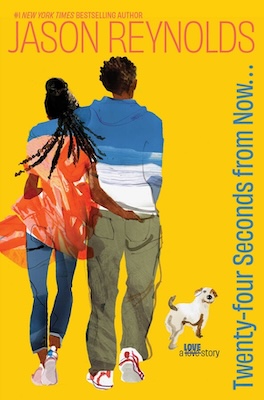
Twenty-four Seconds from Now… by Jason Reynolds
“Neon and Aria are relationship goals and if every young person could have a first time like these two they would be so so lucky. In the spirit of Judy Blume’s Forever, 24 Seconds From Now follows two young people in the seconds, minutes, days, weeks and months before they make the decision to have sex. A funny, loving, wonderful book that takes great care with its leads. I want so many people to read this book.”—Katie Garaby, Parnassus Books in Nashville, Tennessee
“For She is Wrath is a Pakistani romantic YA fantasy that reimagines The Count of Monti Cristo. The selling point for me is that it is a revenge story where Dania seeks retribution against those who have betrayed her… including the boy she used to love. Expect strong feminine power, a high-stakes adventure, and a gasp-inducing end.”—Kaliisha Cole, Porter Square Books in Boston, Massachusetts
“Like an oratorio, Every Valley brings multiple layers into harmony. It’s a collective biography, chronicling the lives of various powerful and obscure figures, from composer George Frideric Handel to West African prince Ayuba Diallo; a panoramic history of the violence and upheaval that shaped 18th-century Europe; and a triumph of artistic analysis, shedding radiant new light on old music. At once contemplative and dramatic, King’s take on Messiah will inspire wonder in even the most skeptical reader.”—Amy Woolsey, Bards Alley in Vienna, Virginia
Canoes by Maylis de Kerangal, translated by Jessica Moore
“Translated from the French, these stories explore identity and the human voice—and none of them fail to mention canoes, no matter how minimally. De Kerangal’s writing is beautiful, refreshing, and often thought-provoking. Keep an eye out for this one if you’re a fan of literary fiction!”—Camille Thornton, The Bookshop in Nashville, Tennessee
“Pony Confidential galloped straight into my heart from page one. This cozy mystery is narrated by a ornery pony trying to clear the name of his beloved former owner Penny. It features rats, cats, birds and dogs aiding our hero in his redemptive quest and—oh, did I mention—this is based on The Odyssey? Easter eggs galore for the clever classicist. If you enjoyed playing spot-the-character in Demon Copperhead, just wait until you meet Circe the goat. Perfect for lovers of Remarkably Bright Creatures and Lessons in Chemistry.”—Maggie Robe, Flyleaf Books in Chapel Hill, North Carolina
“This book came to me the week Hurricane Helene devastated Western North Carolina and my heart. While witnessing the earth’s rage and strength of mutual aid in real time, reading of nature’s interdependence was my buoy among flooding of rivers, loss, and grief. In these times of greed-driven, scarcity-fueled climate change, this writing is a balm. In sweet and inviting prose, Robin Wall Kimmerer gifts us yet another powerful lesson from our ecosystem teachers. For emergent strategists, those weary of late-stage capitalism, and all earthlings who read.”—R.C. Coleman, Flyleaf Books in Chapel Hill, North Carolina
“Robin Wall Kimmerer once again reminds us that we still have much to learn from the natural world. She asks us readers to prioritize quality and community over quantity and individualism, for this is how we will grow and survive. The Serviceberry is beautifully written and full of wisdom, you won’t want to miss it!”—Ashley Kilcullen, The Bookshop in Nashville, Tennessee
Private Rites by Julia Armfield
“Julia Armfield has created a hypnotic story that submerges you into a dystopia world that feels all too possible. But the book isn’t about the climate apocalypse that’s slowly eroding away at human life, and is rather about grief and estrangement and what it means to be a grown child. To say too much about Private Rites is to give it away, but it has the kind of atmospheric, haunting look at family life as Hereditary.”—Katherine Nazzaro, Porter Square Books in Boston, Massachusetts
“A suspenseful family drama, a speculative King Lear retelling, and an absorbing work of climate fiction all in one. Estranged sisters Iris, Irene, and Agnes are left in the harsh wake of their supremely wealthy father’s death in a world nearly swallowed by constant rainfall. The three now must cope with his haunting cruelty, his substantial inheritance, their broken bonds to each other, and of course, each of their less-than-ideal life situations. In other words, it’s like if King Lear had queer daughters, all at different stages in their lives when things spin wildly and unforgivingly out of control. The intertwining perspectives create such an empathetic and intimate portrait of how these sisters work (and don’t work) together. Every time I put it down I was itching to get back into their minds to figure out their next move. It feels like I could fall through Armfield’s words like a sheet of glass, as if I’m applying enough pressure just by reading them.Private Rites shatters in front of you—it’s sensitive, messy, and explosive. The reading experience aches, hypnotizes, and stings a little bit—savor every sentence.”—Emma Holland, Flyleaf Books in Chapel Hill, North Carolina
“In Armfield’s second novel, we find ourselves in a reimagined King Lear in a speculative future with a climate crisis in full swing. Armfield’s prose is striking, her novel deeply haunted by family and rain. Her trio of sisters is both exasperating and captivating, the sinking city of the book is an eventuality that feels so near to hand; a combination that kept me reading compulsively. Lovers of Our Wives Under the Sea will not be disappointed. I, for one, could read Armfield writing about soggy queers forever.”—Meaghan O’Brien, Brookline Booksmith in Brookline, Massachusetts
“Rivers Solomon turns the haunted-house story on its head, unearthing the dark legacies of segregation and racism in the suburban American South. Unbridled, raw, and daring, Model Home is the story of secret histories uncovered, and of a queer family battling for their right to live, grieve, and heal amid the terrors of contemporary American life.”—Isis Asare, Sistah Scifi in Oakland, California and Seattle, Washington
Rutherford B. Hayes is one of those presidents that can be hard to identify. Sure, most people know the name and perhaps know he falls somewhere on that foggy list between the more well-known Abraham Lincoln and Teddy Roosevelt. Yet the election of Hayes marked a pivotal moment in the history of voting. Hayes was elected in 1876, and in order to secure southern votes, he promised to end Reconstruction. Hayes made good on this promise after taking office and all across the south, the nightmare of Jim Crow descended. Thousands of freed slaves who had just received the right to vote lost it due to the machinations of Jim Crow. It would take decades for African Americans to fully receive the franchise again.
When studying the history of voting, we see that even seemingly forgotten elections have a tremendous impact on the country. One election in 1876 meant decades of suffering for a large swath of people. The importance of voting history lies in the lessons that it teaches us; we see over and over how the path of history is dictated by the outcome of elections.
We do not need to journey far into our past to witness this significance. For decades, conservatives preached a pro-life doctrine and vowed to reverse the Roe v. Wade decision. For decades, that desire appeared to be unattainable and many felt Roe v. Wade had become written in stone. The election of 2016 exposed that belief as a fallacy. Roe v. Wade is no more.
My own exploration of voting history began in 2012. That year, the landmark Supreme Court case Shelby County v. Holder removed preclearance from the Voting Rights Act. The Voting Rights Act had done away with Jim Crow processes to deny African Americans and other minorities the vote in southern states. It made illegal the discriminatory practices of poll taxes and literacy tests. The Voting Rights Act required southern states to receive approval from the federal government, preclearance, to make any changes to their voting regulations. By removing preclearance, southern states could act on their own. Almost all of the southern states previously covered, including my state of North Carolina, began to change their voting laws to specifically target minority communities, making it more difficult to vote.
I wondered why, suddenly, North Carolina sought such aggressive, and in the minds of many, unnecessary reforms. The result of trying to answer that question is the book Drawing the Vote. I did years of research to write Drawing the Vote and discovered a multitude of valuable resources. As one of the most critical elections in decades quickly approaches, here is a list of books that cover various significant aspects of the history of voting in the United States.
We will begin with a comprehensive examination of voting. This book touches on all of the major eras of voting, the seismic transformations in voting, the laws passed to expand voting, and the struggle for so many groups to gain access to voting. The book is like a survey course of American voting history.
Women’s suffragists have existed in America almost as long as the country itself. The Seneca Falls Convention of 1848 was the beginning of a concerted, focused women’s suffrage movement. The Myth of Seneca Falls deftly covers women’s voting at this time, the different factions that came together in Seneca Falls, and the aftermath of the convention. Why did it still take another 70 years for women to gain the right to vote? This book explains why in gripping detail.
Fannie Lou Hamer is often overlooked or given cursory attention when the history of voting is discussed. That is a travesty. One of the true giants of the fight for voter registration during the Civil Rights era, Hamer’s life story is full of tragedy and triumph. What this book makes clear, though, is that her spirit and her willingness to stand for voting rights never wavered. She lost her job, was arrested, beaten—all because she just wanted to register to vote. She created a movement and ultimately gave a memorable speech at the 1964 Democratic National Convention. “If I fall, I’ll fall five feet four inches forward in the fight for freedom. I’m not backing off.”
The Reconstruction era witnessed radical changes in America and its Constitution. Within a five year period, from 1865 to 1870, three amendments to the Constitution were ratified. The 13th Amendment ended slavery. The 14th Amendment solidified equal protection of the law for all citizens. Lastly, the 15th Amendment prohibited voting discrimination based on “race, color, or previous condition of servitude.” These three amendments opened up life for a large swath of Americans and gave millions of people who previously could not vote, the franchise. This book expertly tells the intricate story, full of deals and counter deals, of how this all came about.
Want to understand why some of our founding fathers preferred the Electoral College? This is your primary source. Hamilton wrote: “A small number of persons, selected by their fellow-citizens from the general mass, will be most likely to possess the information and discernment requisite to such complicated investigations.” Hamilton posits that knowledgeable and judicious men are needed from each state to select the president and only a few in number were qualified. While Hamilton argues the democratic principles of this proposal, one has to question some of the motives.
March by John Lewis, Andrew Aydin, and Nate Powell
This graphic novel series shows the courage of an American hero. At times reading this book you will be angry. At other times you will be moved to tears. During the dark days of the Civil Rights movement, Lewis fought for voting rights for African Americans. To call attention to how people of color were not allowed to register to vote, Lewis helped organize the March on Selma. He was instrumental in the passage of the Voting Rights Act of 1965. The journey of John Lewis is one of uncommon determination.
Too often the history of women’s suffrage in the United State is a history of white women’s suffrage. The great historian Martha Jones rectifies this injustice in Vanguard. African American women not only had to overcome sexism, they also dealt bravely with racism, often relying on only themselves to claw for their rights. This is an important and much-needed work that greatly expands our understanding of American history. Jones is a skilled and moving writer.
Mosab Abu Toha’s second poetry collection, Forest of Noise, is a heart-wrenching account of life in Gaza, under the tightening grip of the Israeli Occupation. Abu Toha morphs his stories in verse, into a range of forms. Some written as letters from Gaza, detailing the minutiae of everyday life under siege, “Children feel petrified at night… Grandfather has not left his room for seventeen days.” Some are instructions on what to do during an Israeli airstrike, “get a child’s kindergarten backpack and stuff/tiny toys and whatever amount of money there is…/and some soil from/the balcony flowerpot…” In others, Abu Toha pulls his reader closer in his grief and loss as he speaks of dreams he has for his homeland, dreams of his grandfather, his younger brother buried at sixteen, at the cemetery now “razed by Israeli bulldozers and tanks.”
Mosab Abu Toha is a Palestinian poet, scholar, and founder of the Edward Said Library, Gaza’s first English-language library, now decimated by Israeli attacks. His debut book of poetry, Things You May Find Hidden in My Ear won the 2022 Palestine Book Award and an American Book Award.
A few weeks ago, at Busboys and Poets in DC, I had the privilege of listening to Mosab Abu Toha read from his new poetry collection for the first time. The room turned still with the anguish he poured out, but particularly haunting were the stories he shared, the ones that didn’t make it into the collection because they are of his loved ones, his students, who died only a week or month before. It was a reminder that Palestine continues to be obliterated, that Palestinians continue to need us to amplify their voices.
Before you read the following conversation—on the confluence of identity and land, memory as inheritance, and America’s complicity in the ongoing Palestinian genocide—I want to leave you with Mosab’s words from the event, “Gaza is an open air prison—[it] is a mild statement. It is not a prison. I wish it was a prison. Who bombs a prison? Who starves the people inside the prison?”
Bareerah Ghani: I want to begin with the opening where you equate Gaza’s land and people to yourself. You say, “Every house is my heart…every hole in the earth is my wound.” Can you share your thoughts on the confluence of identity and land—to what extent are they inextricable?
Mosab Abu Toha: I, as an individual, could be anyone who has been killed, has been wounded. I’m a father. I could be in the place of parents who lost their children and their whole family. I could be the father who was killed with his own children, his parents and his extended family. I could be any one of these people. For us Palestinians, we love our land, our trees, everything around us. We have been in Gaza all our lives because of the Occupation. We are besieged by Israel not only from the land, but also from the sky, where the only kind of airplanes are the F16s and the drones bombing us from time to time. We are besieged from the sea—no one in Gaza can sail as far as 7 nautical miles, because there are Israeli gunboats and warships. So the land of Gaza is everything that I have. The trees in Gaza are the only trees I know. The holes in the ground are my wounds, because when the land is wounded, I am wounded. As a person who has known this land, this earth, this soil all my life, everything around me affects me. It harms me. Anyone who is harmed, whether it be a dog, a cat, a tree, a house, a wall, a plastic bag, it hurts me because this is the only thing that I have known in Gaza.
BG: In “Obit”, you mention you’ve left behind your shadow, and that it’s awaiting your return—“My shadow that no one’s attending to, bleeding black blood through its memory now, and forever.” I thought it was powerful, this insinuation that people of Gaza, no matter where they are, how distant, will continue to inhabit the land. I am wondering if you can talk about that poem, what you were trying to capture there?
MAT: I wrote this poem three years ago when I traveled to the United States for the second time. The first time I traveled, my wife and kids were with me, but the second time, I came by myself to finish my MFA Program at Syracuse University. So everything that I loved, cared about, that I can’t live without, was in Gaza away from me. And this shadow was the part of me that remained. My memories, my students, my family. Everything that couldn’t escape, that remained in Gaza, where I belonged and where I still belong, even though now I’m in the States, thousands of miles away.
I lost thirty members of my extended family in one airstrike… This shadow, which is the part of me that remained in Gaza, has bled seas of black blood.
Now, a year after the beginning of the genocide, this shadow has been terribly harmed by the Israeli bombardment from the sky, the Israeli land invasion, the shelling from the sea, the bullets from snipers, and from the armed quadcopters. I personally lost thirty members of my extended family in one airstrike in October last year, and I lost 3 first cousins, two of them with their husbands and children. Their whole families were killed. And I lost my last grandfather to illness because there was no medicine, no ambulances, no health care system for the past year. This shadow, which is the part of me that remained in Gaza, is still bleeding. It has never stopped bleeding, but in the past year alone, it has bled seas of black blood.
BG: I’m really sorry about your family.
MAT: The problem is not only with the Occupation, it lies with the governments. And the criminals supporting this Occupation. It’s terrible when I see that my country has been ravaged and destroyed by the Occupation, but it hurts more when I see people justifying whatever Israel has been doing, not in the past year, but for the past seven decades. And not only are they justifying, they are doing everything in their power to make sure that Israel continues to kill, to take more land. I keep saying this—it’s really evil of the governments of the world, especially of the United States, to keep saying that Israel has the right to defend itself, and to keep sending more and more weapons that kill children. And I’d like to emphasize that this is not a war on people in Gaza. It’s a war on families. They are not killing individuals. They are not killing, you know, a paramedic or a journalist. No, they are killing the journalist, his wife and his kids. They are killing the doctor, his wife and kids, and sometimes his grandparents, his parents, his cousins and siblings, who live in the same house. So when we hear the spokesperson of the White House, the President of the United States or the Vice President, being concerned, saying that we’re telling our Israeli partners to decrease civilian casualties, they don’t do anything practical to make sure that this loss does not continue. Instead, they make sure that Israel defends itself. And what does it mean, defend themselves? Kill more and more people in Gaza and the West Bank.
50% of the people in Gaza are under 18 and half of the other half are women. So about 70% of Gazans are noncombatants. And the remainder are people like me, teachers, nurses, drivers, people who don’t have anything to do with whatever happened on October 7, but they have been dispossessed, and are suffering because of Israel’s siege and its Occupation, because of Israel’s depriving us of having a normal life. And this is not last year, this has been going on for decades.
BG: In mainstream media, the Palestinian narrative has been framed as a conflict when really, it’s an ethnic cleansing, and America is particularly complicit in this erasure of your people. How do you battle this duality of, at once, finding refuge in a country but also being displaced because of it?
The poem, for me, functioned as a report. But it’s not about numbers, or the name of the place or the name of the person killed. It’s about what it means to lose someone.
MAT: I came to the States, not as a refugee, but to work at Syracuse University. I think it’s very important to speak truth to power, face to face. It’s true that I am in a country that is fueling the genocide, but this country is not 100% with the genocide. There’s been a lot of solidarity from the American people. We have a lot of students taking to the street, protesting the genocide happening in Gaza. We have a lot of people rooting for the Palestinians to get their freedom. It’s not about the ceasefire. It’s about the rights of the Palestinians to live in their own country, to have their own rights. That’s why I’m in the States. This is an opportunity for me to be here, to meet with as many people as possible, to travel to as many cities as possible, meet with the public, with my readers, especially now, as my second poetry collection is coming out.
BG: In this new collection, I couldn’t help but notice several poems are written in the form of letters as though the sender is wishing to preserve these everyday moments. And in many other places you emphasize the value of photos, especially of grandparents. What are your thoughts on memory serving as inheritance, as a source of preservation?
MAT: I haven’t seen my grandfather, Hasan. He passed away even before my father got married. The photo I had of him and the stories I heard about him—from my father, my aunts, and sometimes from people that I ran into—were the only things that I could inherit from him. I couldn’t inherit, let’s say, his jacket, his walking cane, or his passports, or his family’s photo album. These were all that kept me close to him.
So there are the memories that you hear about other people, in this case, my grandfather, and also my grandmother—I only remember seeing my grandmother once. She passed away in 2000, when I was about 8 years old. But there is also a memory that I could’ve had with my grandparents if they were still alive, and if we could be in Yaffa where they used to live before the Catastrophe of 1948. There are memories I could have made if Gaza hadn’t been under occupation and under siege for decades, memories I could have made with my wife and kids traveling, and to see our families in the West bank, or in Jordan, or with other people visiting us from outside. But it’s very difficult to leave Gaza, to go to the West Bank, to Yaffa and other occupied Palestinian cities, even for a visit. I tried multiple times to go to Jerusalem for a few hours to attend my visa interview and the Israelis denied me permission to appear at the American embassy. They are not only preventing us from returning to cities where our grandparents were expelled from, but are also preventing us from visiting an Embassy for a few hours. There are memories I could have made if these circumstances did not exist, and continue to exist in Gaza.
The memories that I did have—as a child, memories of my parents, my children—I wrote about them in this book. Preserving these memories is important because if the stories I know, if the things I had with me did not make it out with me, and if I did not share them with other people, like you and others who have never been to Gaza, it would seem like it never happened. If we did not know about what happened to the Jewish people at the hands of the Nazis, if there were no pictures, no videos, of course no one would believe that it happened. But because it’s documented and taught at schools here in the States, people will know, and they will sympathize, etc. But you know, what’s happening to the Palestinians is not something in the past. It’s happening live. It’s not memories we are narrating. Oh, you know, last year I lost thirty members of my extended family. I’m not telling you this a few years after it happened. I’m telling you the same day—I posted about it. And I posted pictures of some of my family members. I do this every day. Every one of us has been doing this every day. So it’s not something that the world is learning about, a few years later. We have been documenting this for a year and the world is reluctant to even call it by its name—a genocide.
BG: Absolutely. It’s horrifying. I can’t imagine what it’s like for you and other Palestinians who have family there, who live there, who have lost so many people. For those of us witnessing this genocide, we want to know what we can do. What would you say to people like me and others who are allies, who want to help. What can we do?
It’s terrible seeing my country being destroyed by the Occupation, but it hurts more when I see people justifying whatever Israel has been doing, not in the past year, but for the past seven decades.
MAT: Listen and learn from the people who are surviving. Don’t fall into the propaganda that’s been out for decades about what’s happening in Gaza. Learn about the people who did not make it, from the people who did make it. Never stop talking about Palestine, about what’s happening now, but also the reason why we are suffering, being massacred, for decades. The reason why all this happened.
BG: Thank you for sharing this. You’ve been really active on social media. You post daily about the situation in Palestine. How do you feel about social media, and its ability to reveal the truth about what’s happening to Palestinians?
MAT: Since the beginning of October 7, Israel has blocked the entry of food and medicine. And when they let a few trucks in, and people try to get to these trucks, they kill them. Israel has been controlling the number of food trucks, the amount of fuel entering into Gaza, but also the presence of international journalists and doctors. They have cut electricity, water, they have even cut the Internet connection. People are struggling to connect to the Internet through the use of some E-sim cards. So when people do connect to social media, they are trying to do what war journalists would be doing.
While I was in Gaza. I was a father, a son, a neighbor, a poet, and also, a reporter. I was posting pictures, translating some breaking news. I was doing the work of so many people, because if I was not doing it, no one would. And there are so many people who are doing this on social media which shows that we have so many stories to tell. And if we don’t share with the outside world, it’s lost. That’s why, we’re seeing a lot of Instagram journalists, photographers and video journalists. Many are normal people. Maybe they were farmers, people who were just taking pictures of the sunset, or a few children playing on the beach. They became journalists covering the war and running after each airstrike. And this tells anyone that there is no international coverage of the war in Gaza. That’s why people in Gaza are doing it. And then, the number of the journalists, whether they are video journalists or photojournalists or reporters, tells you the magnitude of the destruction that’s taking place in Gaza.
BG: Absolutely. As I understand, in your new poetry collection, there are some poems that you wrote while you were in Gaza, living through the current genocide. I’m curious about your relationship with writing and language, particularly English, which, if I am correct, is your second language?
MAT: It’s a foreign language. It’s not even a second language because in Gaza I never used it. I just use it to write, to communicate, but I’ve never used it even as a second language with people who are visiting, I’ve never used it outside of my room when I was in Gaza.
BG: And yet it is the language you write in. You tell these stories that are very integral for other people to hear.
MAT: Yeah, I think the poem was the best tool for me to share my experiences and also my feelings as I lived and survived the first two months of the genocide. Half of the poems in this collection were written during that time. Why, the poem? Because it preserves the experience and the feelings that come with it. Because you can write a poem and post it, and people will see it and feel it. I was posting many of these poems online because I couldn’t wait until it’s published in a poetry magazine, or the New Yorker. These poems cannot wait, just as people who get injured or burned because of airstrikes cannot wait until the border opens for them to travel and get treatment, so doctors do what they can using the scarce equipment they have.
As a poet, I write and, in a few minutes, I post the poem, and it goes out into the world, and people read it and feel it. The poem, for me, functioned as a report. But it’s not about numbers, or the name of the place or the name of the person killed. It’s about what it means to lose someone.
BG: Is there a particular reason why you write in English and not in Arabic?
My hope is to live in a country which is Palestine, where there is no occupation, no siege, where we can travel whenever we want, wherever we want.
MAT: Well, the people who are responsible for this ongoing genocide are in the West, not in the Arab world. Why would I write in Arabic and tell people how I feel? If I write in Arabic, to whom am I writing? Am I writing to my father and brother and my neighbor? They know. They have more terrible stories than me. When I’m writing in English, it’s not a choice of language. It’s a choice of audiences.
I write in both languages, by the way. But I don’t sit here and say, Okay, I’m going to write in English and English has certain constraints that are not found in Arabic. English is a language of communication, and poetry is a way of communicating. The people responsible for this genocide, be it in America or in Europe, speak English and they need to hear the stories in English, not in Arabic.
BG: In several of your poems you talk about survivors’ guilt and this idea that Palestinians who are surviving, must tell their stories. But in the undercurrent of that telling, there’s this necessity to prove that your life is valuable because Palestinians have been dehumanized so much by the West. How do you grapple with those things and the weight of it?
MAT: When I write poetry, I’m not trying to humanize Palestinians. I’m an artist. This is how I perceive things. I see details. When I write about the people I love, or the people I see and care about, my students, my neighbors, my house, the garden in our house, the sunset, the clouds, the birds, I don’t see the frame of the picture. I see the picture itself. I’m not trying to humanize Palestinians, so that people in the outside world would say, Oh, you know these people are really kind, oh they deserve to be alive. No, this is another function of the poem. I, as an artist, care about the details of everyone’s life. Not because I’m Palestinian, and I want to humanize my people. But this is the way life is. When there is an airstrike, I don’t see the victim. I don’t see the baby who was beheaded by the Israel airstrike.
I see the pacifier, I see the cot, I see the blanket. It’s visible there as much as the baby is visible. These details indicate that there used to be a life before death happened. I see the full picture. I don’t only see what happened after the airstrike. I also see what was happening before that, which is equally important.
BG: That’s powerful. I would like to ask—what is your hope for Gaza, for life beyond today?
MAT: Gaza is part of Palestine. So when I hope something for Gaza, I hope something for Palestine. My hope is to live in a country which is Palestine, where there is no occupation, no siege, where we have our own airport and can travel whenever we want, wherever we want. Where we can welcome anyone who wants to visit us, because in the past at least 17 years, no one has been able to visit Gaza unless they have an Israeli permit which is given mostly to journalists or human rights organizations.
This is in one of my poems—I want to see Gaza from the sky, from an airplane window, the way I see cities in the States or in Europe. When the airplane lands, I want to see what the streets look like from afar. I want to see Gaza from the sea, to see the water, and also the buildings and the refugee camp. I want to see all that from afar. I mean, these are just simple, simple dreams.
Everything I know about the dead I learned from Beetlejuice.
I didn’t see Beetlejuice in theaters when it was released in 1988, but it became a favorite a few years later when I rented it for sleepovers and watched it on cable tv. Back then I drank Vernor’s Ginger Ale in the basement of our 1912 East Coast colonial, watching the movie on a boxy tv with bunny ear antennas. It was an age when I lived perpetually in a world of my own imagination. It was before the frequency of the grown-up world came in clearly, when there was still interference, the soft hum of other stations buzzing along beside me.
As a kid, the movie’s world—one in which the characters were both the living and the dead—seemed more accurate than a world that only contained the living. In the first few years of my life, I lost my aunt, my grandmother, and my grandfather. It seemed to me that the death of a close relative was an annual event, and each fall when the wind picked up, I wondered who would be next.
The first was my aunt. She lived only a few blocks away and died of cancer when I was three. Then my grandmother—heartbroken by the loss of her oldest daughter, died of a different cancer. Then my father’s father passed a year after that. I don’t remember any of these relatives very well, I only remember what everyone else said about them. Other people’s memories put my aunt in the garden, on our brick patio, in the kitchen cooking for a party, on the Queen Elizabeth II floating across the Atlantic. My father’s father was out on the golf course in the summer, in the Elk’s Lodge with an Old Fashioned in the winter. My grandmother, in a floral housecoat, was sitting in her antique wingback chair poring over her newspaper. For me, this is where they are forever.
It would never have occurred to me that years later my son might have his own hauntings.
It would never have occurred to me that years later my son might have his own hauntings. But just before he turned three, his father died by suicide. I worried he would feel all those things I felt when I was little: talking to the dead alone in my bedroom, trying to imagine what it would be like if they were still here, worried who else I might lose in the coming years.
As a preschooler my son regularly asked me if his dad could see him or hear him. He wanted to know where he was. He asked these questions in the car on the way home, at night before he fell asleep. He asked them repeatedly for years, because his mind and memory were only just growing into a general comprehension of our existence. I read him books about grief and loss. They were so hard to get through. He didn’t like hearing about death any more than I liked reading about it. Or maybe he was feeding off my own body, seized with emotion, as I read “he’s never coming back” my son’s hands would reach out and close the book or try to push it to the floor. As a kid, I’d wanted the grownups around me to talk about the losses, but when I had to comfort my own son, facing the heartache head on, being strong and sensitive for him, the task was incredibly hard.
I knew from experience what not to do when my son lost his father. And yet, I struggled. It is easier to pretend nothing bad happened. It is easier to shield them from heartache and difficult conversations. I had to pay attention to who my kid is and how he takes it all in. I had to adjust to his personality, which was different than my personality. I had to grieve and show him it was okay to be so sad, and then show him we didn’t need to be that way all the time.
I spent a lot of my early years wishing the dead back to life. They were always on my mind, always the center of some story being told around the dinner table. The collective family grief was palpable. In Beetlejuice, there are rules for getting used to the afterlife: The Handbook for the Recently Deceased. This is what I wanted too, a guide to make sense of the losses in my life, a way to navigate a world where the recently deceased still felt so close by, staring at me from picture frames on the stairway every morning, floating over the table as my parents talked at dinner. When my son lost his father, I knew that to get us through it, I had to revisit everything I’d internalized as a kid about grief and death. I looked again toward those early experiences in my family, and of course, to the rules I learned from Beetlejuice.
Rule No. 1. Ghosts inhabit the places they were.
In Beetlejuice, Alec Baldwin’s Adam Maitland and Geena Davis’s Barbara Maitland die early in the movie and quickly discover they cannot leave their idyllic Connecticut country house. Or more precisely, they might be eaten by giant monstrous sandworms in an alternate universe if they try to leave. Watching Adam and Barbara survive the vicious sandworms by making it safely into their house, safe from the vicious sandworms, made me worry a little less about the close friends and relatives my family had lost. Instead of buried in the graveyard, I preferred to imagine they were also in the attic tidying up like the Maitlands.
Though not formally espoused by the characters, the movie made it clear to me that ghosts were often trapped where they had lived. This rule felt true, reinforced by the countless hours of Unsolved Mysteries I watched as a kid where there were stories about a little boy who haunted the hallway where he played marbles, a high schooler who couldn’t leave the football field, a solider on a hill in a blue uniform with bullet holes and a baton. Like the ghosts in those tales, The Maitlands stay in their home, stuck in the attic once the rest of their house is inhabited by its new, living tenants, the Deetz family.
Twenty years after the movie came out, I was forced again to think about where the dead might spend their days when I finally got out on the path where my son’s father died. Simon ended it all on a beautiful Oak Tree that had one giant branch extending out over a creek. Initially, I hesitated to go there—the park, the path, the tree. Even more, I was hesitant to take our young son. Although I had no plans to tell him “This is the place,” I mostly worried he would just sense something is off. But some friends who live right next to that park insisted. When I was there, I looked for all the cues of my ghost and didn’t feel him at all. Instead, I feel him everywhere else.
Rule No. 2. The living won’t usually see the dead.
Barbara reads the second rule from The Handbook for the Recently Deceased just before Lydia Deetz, the iconic goth girl played by a young Winona Ryder, notices them up in the attic window. The Handbook explains: The living tend to ignore the strange and unusual. But it doesn’t mean they can’t sense the unnatural. When Lydia sees them and says, “I myself am strange and unusual,” she is all of us ghost-carrying girls at fifteen.
It happens again and again—people do see the strange and unusual. Simon’s Aunt Joanie worked second shift at the Dollar Store and spent Sundays delivering breakfast to her elderly parents. She didn’t seem one for fantasies, but she told us that she saw a feather floating over the pew at the start of Simon’s funeral service, the one held in his rural hometown on the Ohio River. She said it was a sign. Everyone stood around nodding next to the large flower displays and the black box holding his ashes. I nodded too—to be polite. Was Simon really dropping feathers to say hi? Was Simon actually the feather? What I really wanted to know, in the years after Simon died, was how he was so many places at once. I felt him all over the city we lived in. But it didn’t happen right away. It took months for him to materialize in some form or another, to start to feel close. In the first few weeks after he passed, I couldn’t find him at all. It was terrifying, because I have never needed to find someone, to hear a voice, as much as I did in the hours and days after I knew I could never find him again.
Rule No. 3. The living may try to erase the dead.
When Lydia’s stepmother, Delia Deetz, played in a wonderfully extravagant way by Cathrine O’Hara, begins renovations on the house with her sidekick Otho, Barbara and Adam can do nothing but watch helplessly. It’s their worst nightmare (after their own deaths of course): this new family tearing apart everything they created. The living erasing the dead.
For Lydia, moving to a shiny-white-New-England-model-home-covered-bridge-church-bell-town was already an erasure of its own. In the movie her mother is mysteriously absent, but Lydia is dressed in all black with veil—the death is implied. In Beetlejuice, The Musical, Lydia says as much: that she wants to go back to their old home where all of their stuff is and where everything reminds her of her dead mother. For a generation of girls growing up in the 90s, the ones who felt any kind of chronic loneliness and loss, those of us identifying as the continuously bereaved, she was the quintessence of the lost girl. She wore her grief. She took pictures of ghosts. Her stepmother Delia makes fun of her behind her back, and proceeds without caution, dismissing her easily. Her father tries to ignore it, tries to cheer her up.
Tim Burton got this part right: grief, especially in children, is most often ignored. Dead family members get packed up and put away, and children are left feeling they can’t get close to them if they need to. This was often how I felt when I was young. In my family, it wasn’t so much that the dead were off limits as a topic, but that no one would have thought to discuss them with me, a child who probably didn’t remember them very well. It was much easier to imagine I wasn’t bothered by their absence.
This thought was echoed by well-meaning people when my son lost his father: He won’t remember him, they said,as if it was a blessing. But everything I’ve learned in the years since my son’s father died tells me that my son does have memories of his father: those early, intuitive, somatic memories. At age one, you might remember something for a few hours or a few weeks. At two, you might remember something for a few years, before your mind places them in a file that can no longer be recalled because you are building so many new files it can’t yet keep track. But those memories are still there. Just as we hold traumatic experiences in our body, we also hold emotions and memories. The prevailing wisdom until very recently was that those little kids would not grieve even their closest relatives if they didn’t remember them. But it isn’t necessarily true.
It was during the montage of home destruction, as our antagonists, Lydia’s step-mother and her friend Otho, ransack the house, that I began a lifelong desire to hang on to every little thing. I took pictures at every family event so I would be able to remember everything and everyone forever. I didn’t want to let go, and still don’t. I prefer the haunting to their absence, and my home is filled with the small things my aunt, and grandparents, and Simon have left behind—pictures, vases, books, report cards from the 1940s, newspaper clippings. Their small glass candy dishes are now full of my son’s Legos. It is cluttered, and I have a very nice therapist who helps me understand why I can’t part with these things without great distress.
What I should have learned is that interior design is not an exorcism.
The losses made me cling to whatever I could hang onto. Tangible items. I didn’t want my son to have all those hangups. The message I swallowed whole when I first watched that montage was that if you try to dispel someone too quickly, they will haunt you more than if you left their things just as they remembered. But what I should have learned is that interior design is not an exorcism. You can take everything out, every little piece that belonged to the dead, their flower-patterned wallpaper, and their stained oak bureau and the country kitchen, and move in your fire-engine-red bar and your stone slab table and your monsters—imagined or the kind made of clay— and even then, you will still find the dead there. Perhaps looking and longing for everything you took away.
What I clung to were the items, when what I should have seen at the end, what I was always trying to show my son, was the way they never leave you.
Rule No. 4. The dead often leave you a map.
I don’t want to make it sound clear, or formal. The map might be helter skelter. It might be burned on the edges or contain symbols you have never seen.
Barbara and Adam built a model of their little town. It lived in the attic. A large wooden board sitting on two-sawhorses with the red covered bridge where they died and the house they love, painted white like a church, surrounded by small rolling hills made of tiny patches of Astroturf. They even added electricity so they could watch the tiny lights burn in the windows for eternity, or for however long they haunt their house. The town model is where Betelgeuse first appears after the Maitland’s summon him. Yes, the movie title is Beetlejuice, because it sounded cool and was easier to say—but his calling card, and the flashing neon sign in the graveyard, show he is named for the supergiant star in the Orion constellation associated with Osiris, the Egyptian God of the Underworld. The Maitlands don’t know that once they summon him, there’s no going back. Betelgeuse is shown banging around in the cemetery, spitting and reeling and humping, promising to scare the Deetz family out of their house. He is chaotic, perverted, hard to contain, and motivated by a wide variety of his own needs, including an improved eternal existence. He reminds me of some of the guys I used to date, and I wonder if I haven’t always been attracted to someone a little desperate to escape their circumstances. Or at least I can relate to it.
This map is their slice of the universe distilled down for Barbara and Adam to tend and admire. After Simon died, I made a map of the neighborhood he lived in, with all the places he loved. Each spot chosen based on his affinity and proximity to the place, or the place’s impression on him. The map looks like him, a decade of him, the decade he lived in the city. On my map, there are tall cottonwoods from the Ohio River where he grew up, there is a tiny replica of the Ideal Diner where we would eat breakfast hungover from late nights in small dive bars. There is a poorly drawn pool table with an eight-ball sitting in front of a corner pocket, a scene we replicated night after night over cheap pitchers of PBR with the older-times from the neighborhood who also didn’t have a reason to be home late on a Monday night. In the center of the map, I have drawn the entirety of Loring Park— the gardens, the pond, the bridge, the fountain and playground, the cathedral in the distance—and when I look at my little map, I can see him pushing our son on the swing sets.
The empty streets of my map are white. There are no buses, no exhaust, no cars, no people. I wonder if I should draw them in. If there should be more dirt, and curbsides, and littered plastic bottles. I wonder if there should be stop lights and crosswalks and coffee shops. I wonder if I can make the grass grow, or the cattails sway along the edge of the pond. I wonder if his Village Video, a place that closed years ago, could come back to life on the page before me. There is the eerie feeling holding this map that I could walk in this world on the page and disappear, and that he might be there—or here—then or now.
Over the years, I’ve found I am most interested in the maps left behind that send someone out searching to find the parts of the dead they didn’t know about. More like treasure maps. In my grandparent’s things, I found so many letters between them and their children. Biographies written by my great-aunt that explain how a marriage wasn’t perfect, or a career as pristine as it looked. I was often most surprised by candid letters that perhaps weren’t meant to be saved—ones where grandma admits she doesn’t like someone’s fiancé. But these things tell stories. I have a floral-patterned tea set from my Aunt Mary that she brought to my mother years ago, and when I look at it, I see her picking it out in an antique shop in Scotland, and I can smell the cigarette smoke from the shopkeeper and hear the taxis in the street behind her.
From Simon, there is so little. He was a minimalist at heart, who also struggled with alcoholism and stable housing. But I have his work jacket which he wore at the shop and his glasses and the portable thermometer he kept in his pocket. I have the spice jars he gave me—all the glasses lined up but empty, waiting to be filled again. There are things we do not part with, little things we keep just for ourselves, or so someone can discover us when we’re gone, placing pins on a map, each of us a cartographer for our dead.
Rule No. 5. In case of emergency, draw a door and knock three times.
When Barbara and Adam realize they can’t easily scare the Deetz family away—and keep their house all to themselves—they follow the book’s instructions for an emergency, then wait with the millions of other lost souls looking for answers. In Tim Burton’s beloved movie world, the afterlife appears to be a bureaucratic nightmare. Or perhaps this is just a larger commentary on the human condition—we sit around and wait for answers that never come. And maybe a comment on the seemingly endless mundane tasks we must do when someone we love passes away. Have you ever tried to transfer a car title? File a probate? Figure out a cemetery plot? Perhaps Tim Burton was nodding to the grief-filled days that often seem to be spent standing in lines.
When Simon died, I knew on a practical level that the emergency had ended. His last weeks had been chaotic, and I felt that there should have been some peace now that he was gone. But a panic was still surrounding me. I missed him so much and feared the empty spaces he left as a father. I realized that sometimes you miss your dead so much it feels like an emergency. You draw a door and knock three times looking for them—pulling their face from your memory when you long for them. Asking for help when you need it most. And sometimes they find you, and you spend the whole day wondering why they showed up, what it was they wanted you to know.
I have looked for my dead in the living over and over, and probably always will.
I know I told you the first rule is that ghosts inhabit the place they lived, but I’m not so sure it’s true anymore. After Simon died, I really started to think the dead can haunt their living anywhere. Maybe I was just drawing doors and knocking whenever I felt that tug of loneliness, whenever the emergency of his absence would creep in. Once, I swore I saw Simon leaning up against the blonde bricks of a building in Austin, Texas. I was only there for one day, just passing through. But there he was in the afternoon sun, head down, chin buried in his chest, feet crossed. I don’t know if he was ever actually in Austin, Texas, but my memory of him there that day, the ghost of him, or a man who looked like him, is one I recall regularly. I have followed other men around corners, and I have stared too long across the bar. I have seen men with knuckles like his, forearms like his, a twinkle in their eyes just like his. I have been absolutely sure I heard his voice down a hallway. I have looked for my dead in the living over and over, and probably always will.
Rule No. 6. It is not uncommon to think, I don’t know how I will get through this life without you.
When Lydia thinks she has lost Barbara and Adam to the underworld, she plans to jump from the same bridge they accidentally drove off.
When you tell your dead that you wish you could go with them—to the attic, to the other side— they will tell you “no.”
No, no, no.
This is where I felt the closest to Lydia. She is already grieving—she can’t stand to lose the Maitlands too. I can’t stand for her to lose them either.
Barbara and Adam promise they won’t leave her and beg her to stay alive. This is what I wanted too, for my dead to promise to haunt my house forever. To always feel them near. In the years after Simon’s death, there were moments that I wanted the closeness I had right after he was gone. As wildly painful as that period was, it felt like he consumed the air around me, every conversation, each night in my dreams. Ten years after his death, he feels further away. I miss that closeness sometimes.
Because getting through this life without him felt awful at first. It made me feel like a kid again. There is something about the alienation of youth. The work we do to ourselves, dressed in all black—black hair, dark eyeliner, boots in the summer, lips pursed. Maybe it was just that I grew up in the 90s, but I really got it when Lydia famously announces: “My life is one big dark room.” At one point in the movie Barbara says to Lydia, “You look like a normal little girl to me.” This moment kills me every time. Barbara sees past Lydia’s grief, her performance, her othering veil and sadness and isolation and says: you are not a bother, you don’t complain too much, your sadness cannot scare me away. I don’t know exactly when that alienation ends, but for me, it was when I found people who could really see me—and my hauntings. Often it was new friends, sometimes other lost souls that made me feel dreamy and excited about life, or in love with myself again, or for the first time. Or when the possibilities of something like love came close to me, the possibility of a companion who wanted to be by my side.
This is how I used to feel when I got a pool ball in the pocket: anything is possible. This is how I felt when Simon was standing next to me smiling with the pool que in his hand: less alone.
Rule No. 7. A séance is for the living.
In Beetlejuice, after the Handbook falls into the hands of Delia’s sidekick, Otho, he uses it to host a séance. His plan is to produce the dead for the living, or more precisely to a group of people at dinner party they wanted to make a business deal with, something like “Come see our real haunted house!” But what Otho doesn’t know is that his séance summons death for the dead. The ceremony starts to turn the Maitlands into corpses who will decompose rapidly, then crumble and disappear. To save them, Lydia summons Betelgeuse and asks for his help in exchange for her hand in marriage. In a rather action-packed sequence where death and a fate worse than death—being married to Betelgeuse—are all on the line for everyone in the room, the Maitlands survive and save Lydia. For me, Lydia is the ultimate antihero for grieving children everywhere, the ignored and easily dismissed, the troubled, the “they will outgrow it” kids. Her resilience and willingness to risk it all so that she can keep Barbara and Adam with her is the embodiment of the grieving mind’s desire to keep their dead close.
Sometimes a séance is how you commune with the dead, and sometimes it is how you remake them. I learned this early, sitting around the dining room table, when the grown-ups told stories about my aunt or my Grandpa after they died. We’ve all done it, after the funeral, when we are finally back together for the holidays. The memories live in these incantations, and their alterations, and their repetitions. It is in those moments you might hear a song you had forgotten the words to, see the lights flicker, see everything new and alive and otherworldly. Other times, these are the dinners where you begin to crumble—the loss finally settling in.
After Simon’s funeral, it felt like the stories told about him are of twenty different men. He was bold and shy, loud and quiet—quick with a story, sullen at times. Maybe we are all much more complicated than I care to admit. I heard stories he’d never told me. This is the séance, the making and remaking by people who knew him in different ways, at different ages, in different worlds. This is the raising of the dead in the church basement, at the Am-Vets Hall, in grandma’s backyard, buns placed on Styrofoam plates on the faux-wood folding table, while a chorus of voices bring the dead back to the room.
Eventually, I learn a séance can happen anywhere. You can conjure people in all sorts of places. When I step on the streets Simon walked a thousand times, I feel like his footprints are visible on the sidewalk, like I’m walking in his steps. I inhabit his swagger. My tennis shoes weaving a little, just like his black boots. I smell his lit cigarette ahead of me. I hear his voice on 15th street. I see him paused waiting under the streetlight, a little lit up from the 19 Bar, a little giddy from winning at pool, his Carharts pony-colored, the same as his hair.
Rule No. 8. There isn’t a guide for any of this.
In one of the final scenes, Lydia’s father Charles is sitting in his office reading. He announces in bewilderment, as he turns the book upside-down: “This thing reads like stereo instructions.” Most people assume he is still reading The Handbook for the Living and the Dead, but this is a new book— The Living and the Dead: Harmonious Lifestyles and Peaceful Coexistence. Unlike The Handbook, it isn’t a guide to the afterlife, it’s a guide to finding a way to make peace with your ghosts, and to living while holding onto the dead. It’s a task that can feel confusing and difficult to navigate, but the ending of Beetlejuice shows it can be done: the Maitlands and the Deetzes all live together. The home has Adam’s old office furniture next to Delia’s post-modern sculptures and new wave couches. Peaceful coexistence. The living and the dead.
Stereo instructions sometimes feel like the only way to describe it. At first you can’t find the volume and it is much too loud. The display blinks angrily at you, until you have pushed enough buttons to finally get the radio going. You can never tell the input from the output. The interference comes at the worst moments—in the middle of a meeting, when you are trying to get the kids out the door to school—piercing, often in the form of memories you weren’t prepared to revisit, your past, your ghosts. The way Simon looked the last time I saw him is occasionally projected onto the wall in front of me—while toddler shoes fill my hands and small feet are waiting to be squished into them.
Tim Burton’s vision is simple: the veil is thin. The two worlds are really one, though your transportation between them is limited. But the ending to the movie is one that embraces the challenge of navigating the here and the after. Perhaps in a small way, the film’s ending was the first time I really believed there was something better down the road from the grief I felt so intensely. I used to wonder, was the end of Beetlejuice tied up too neatly? Was the hole in Lydia’s heart so easily filled? But then I remember it’s a movie, and I cling to that happy ending now and then and forever.
What I know: sometimes the world of the living looks like the world of the dead and reads like stereo instructions. Sometimes the hands on the cuckoo clock fly around and around and you could be exactly where you want to be, with all your living and all your dead surrounding you, watching the springs throw the black bird out wildly, making the bulbs burst into beautiful flowers. Sometimes you don’t feel lonely, and the music rises, and when you dance, you float, and you shake and shake and shake.
We hear an old song—the soundtrack to a first kiss, a piece from a funeral—and the past is suddenly alive again, as vivid as a spectre at the foot of our bed. It’s not surprising that we describe melodies as haunting. This is the magic of music.
In my novel And He Shall Appear, I wanted to explore this haunting quality of music, its unbreakable connection to memory. As a young man struggling to settle into student life at Cambridge, my narrator is delighted to fall in with Bryn Cavendish: starry college socialite and amateur magician. But their friendship falls apart when he begins to fear that Bryn’s charms are literally supernatural. Music is the narrator’s key to an enchanting, esoteric Cambridge world. But, years after graduation, it also ties him to his past and the friend who dominated it. A friend who may still have a score to settle, despite the fact that he is long dead.
This spooky season, explore novels in which music is used to communicate indescribable emotions and inexplicable experiences.
In this ‘memoir’, a man recalls an unsettling friendship from his youth. And, from the first page, you know the story won’t be straightforward. Its narrator, Art Barbara, bears a striking resemblance to the author Paul Tremblay himself, not least in their shared love of punk band Hüsker Dü. And the friend Art has written about—a woman named Mercy—has made notes in the margins of this memoir, contesting Art’s view of what happened all those years ago. At the heart of the work is a question: in this toxic friendship, was Mercy an emotional vampire? Or something worse?
This is a story about yearning for lost youth and all the potential that came with it. And, by filling it with Art’s favourite bands—Talking Heads, Ramones, Dead Kennedys, Patti Smith—Tremblay manages to underscore all the fear and dread with an exquisitely painful nostalgia. Eerie, funny, and ultimately extremely moving, this for me is Tremblay at his best.
The first part of this novella is told by Charles ‘Tommy’ Tester, a street musician navigating the poverty and prejudice of a jazz age (and occult-tinged) Harlem. After a horrifying incident of police brutality, Tommy throws in his lot with Robert Sudyam: a wealthy white man who has asked Tommy to perform at a party, and who appears to be dabbling in cosmic magic. The second part of the story is told by Detective Malone who, suspicious of Sudyam’s activities, chases him down—and, in doing so, discovers that Tommy Tester has become Black Tom, a frightening figure who now wields monstrous power.
The story is a re-imagining of The Horror at Red Hook: one of H P Lovecraft’s best-known works, and one that sadly showcases his racism and xenophobia. Victor LaValle dedicates the story to Lovecraft ‘with all my conflicted feelings’, masterfully reworking original elements in a way that asks us to wonder what is more monstrous – the dark magic beyond our world or the senseless hatred of those upon it?
World War One is underway, and wounded nurse Laura Iven is at home recuperating when she receives word that her brother Freddie has died in combat. However, eerie signs and rumors suggest that he may have been lost to something altogether stranger—and Laura must return to the front line to discover the truth. Flashback to the previous year, and Freddie is trying to escape the battlefield alongside an enemy soldier. Both men are about to discover that the soldiers’ whispers about a mysterious hotel and its fiddle-playing proprietor are more than just superstitious stories.
Alternating between the two apocalyptic timelines, punctuated with quotes from the Book of Revelation, this is an interesting take on the old Devil-as-fiddler folktale. Against the hellscape of Passchendaele, painstakingly depicted, the trope is particularly poignant—unsurprisingly, the fiddler requires something of each soldier he helps, something to help him make his music. And what else can the devil do but fiddle when humanity has made its own hell?
As the son of celebrated musicians, Sandor Esterhazy is expected to enter Hungary’s Academy of Music and become a concert pianist like his father. The problem is, he has neither the inclination nor the talent. Terrified of disappointing his parents, Sandor calls on the devil for help, whose horrifying solution is to present Sandor with someone to take his place at the piano—someone who can’t possibly be human.
This reworking of the Faustian myth asks what it is that makes us who we are (Our dreams? Our ability to make art?) while exploring how we can gain humanity—or lose it altogether. Balancing chills with mystery and romance, Velentza manages to make us feel something for both main characters. For Sandor, pressured into living a life other people want him to live. And for his poor replacement, who loves and appreciates music more than his human counterparts ever could.
Deacon James is a troubled man. Daily, he navigates the prejudice of the Deep South in the 1940s. And now, a strange and unsettling song circles in his head. When he plays his saxophone, Deacon not only mesmerises his audience – he seems to call up strange and terrifying beings from other worlds. And when he meets a runaway girl who seems to share a similar power, their music becomes impossible to ignore.
It might seem weird to include this on the list, given the parallels with The Ballad of Black Tom. But, while both address the racism within Lovecraft’s work, the experience of reading these novellas couldn’t be more different. Khaw’s prose is known for being extremely ornate, packed with metaphor and linguistic flourishes. And this is interesting when applied to music, particularly the blues: “the music of the ache and the grind.” In the ordinary world, women “gossip in rich contraltos” while “the train shudders on, singing a hymn of disrepair”—so, imagine how baroque things get when the cosmic horror arrives. It might be too rich for some, but Khaw has earned an army of fans with their particular brand of dark poetry.
Oscar is a bright young man living in Cambridge and working in a care home. He lives a very different life to the students around him—that is, until he falls in love with Iris Bellwether and is drawn into a social circle governed by her eccentric and musical brother Eden. Inspired by the writings of an obscure German composer, organ scholar Eden asserts that his music can heal ailments as serious as broken bones—even cancer—which his sister believes is a worrying delusion. But what if Eden is right?
Like other campus novels, such as The Secret History, this is a tale of an outsider drawn into a secretive, intellectual circle with disastrous consequences. Its strength is how it explores our need for that treacherous thing, hope—and, perhaps, our desire to trust people like Eden, whose particular class carries powerful and potentially dangerous authority.
In this, the first ever estate-approved follow-up, we revisit Shirley Jackson’s iconic Hill House. (Difficult, then, to imagine this was anything other than the world’s most intimidating book to write.)
Struggling playwright Holly Sherwin is looking for a hideaway where she can develop her new work when she happens upon a crumbling mansion on the edge of town. She’s accompanied by her team: lead actress Amanda, sound engineer Stevie, and Holly’s girlfriend Nisa, who is composing and performing music for the play.
As in the original, there’s an emphasis on dark psychology—on paranoia and distrust, feelings of loneliness. For Holly, this manifests as jealousy of Nisa, whose beautiful voice and songs might well overshadow the play itself. Exploring ideas of creativity, adaptation, influence and ownership, the story invites us to wonder who exactly owns the art we produce and the tales we tell.
DON’T MISS OUT
Sign up for our newsletter to get submission announcements and stay on top of our best work.
YOUR INBOX IS LIT
Enjoy strange, diverting work from The Commuter on Mondays, absorbing fiction from Recommended Reading on Wednesdays, and a roundup of our best work of the week on Fridays. Personalize your subscription preferences here.