I see humiliation as a key component of the writing life. Substitute humiliation for sentimentality in these passages and they remain true. In his essay “Writing Off the Subject” poet Richard Hugo quotes fiction writer Bill Kittredge as saying “if you are not risking sentimentality, you are not close to your inner self.” In “E Unibus Pluram: Television and U.S. Fiction,” David Foster Wallace says that the next generation of literary rebels might “risk accusations of sentimentality, melodrama.” In my fake writing and my real writing, if I don’t risk humiliation, I’m not risking enough. And I don’t mean humiliation via unkindness to self via oversharing, but the trying and failing sort. I even hope I publish something I will later regret. In fact, it’s highly likely that I already have.
Hubert Vigilla
Every month in Crown Heights, I host what I like to call the “least cool reading series in New York.” My co-host plays “Bieber or Believer,” reading lyrics either sung by Bieber or about Jesus for prizes like books he has found on the street or shirts he used to wear. I bake cookies and wear costumes — vintage gowns or party dresses made of tulle. Our focus is on emerging writers, whatever “emerging” means (anywhere from no pubs to one book?), as perhaps we are emerging our entire lives. Our readers are in large part still developing their voices, still wondering whether they can call themselves writers, aren’t sure whether they’ll stick with it or why. My co-host and I consider ourselves emerging writers too. We are not preaching from a throne — we are standing on fake green grass covering the floor of the window display in a vintage clothing store. I nod to the courage it takes to share their unfinished work by sharing my most unfinished work.
Perhaps if we hadn’t relaunched during the week of Valentine’s, I wouldn’t have reached for my very *first* journal, a hardcover with a Matisse goldfish bowl on the cover. Perhaps I wouldn’t have read an entry “Is it or is it not?” on the topic of lurve, sweet lurve, or told everyone how on the night before Valentine’s Day in eighth grade, I broke into my boyfriend’s locker and wrote “I love you” in red electrical type, but the next morning I ran to school, broke in again and tore it out.
Sharing my middle and high school “poetry” at the series has become a tradition of sorts. I always try to make it through without laughing, but I never do. Like most of my “poems,” this one is untitled.
“What tender lips And beauteous face Sparkling eyes Full of grace
But for me they are no more Cut and dry (?) We’ve shut the door
Hold me says body Kiss me says touch Tell me says hearing That you miss me so much.”
Sometimes I wish the audience could see my typography:
“WELL, I DON’T DO DRUGS. Dang. That’s right. So how about this: it’s over! What? Did I stutter?”
A reader once commended me on my bravery. “I don’t even share my poetry from three years ago,” he said into the microphone. Now I try to make it clear that this is not literature. I call it humiliation as comedy.
But in the here and now, in the world of my reading series on the Wednesday nights when I stand too close or too far away from the microphone because I have no fucking idea what I’m doing, I delight in sharing these words from a former self, a self that never ever thought she would reach an audience of twentysomethings in Brooklyn. I also hate myself, muttering “I can’t believe I’m sober,” before I read what 14-year-old me had to say about heartache, back when everything meant so much, when there was no perspective because there was no horizon. I liken my pre-performance self-hatred to seppuku — Japanese ritual suicide — when Samurai would stab themselves in the stomach to avoid falling into enemy hands. And if that is true, if I can exaggerate and appropriate to offer some semblance of just how uncomfortable the entire operation is, if I can admit that I don’t do this “lightly,” but that I’m “feeling the fear and doing it anyway,” if I can prop myself up on aphorisms and platitudes, I can escape the ego chasing me down the block, the voice threatening to throw my laptop out the window or hold a match to my manuscript. Because as much as everything matters, it also can’t matter that much. I want to live where irony meets kindness, where daring meets bullshit, where everything that failed meets the hope that something might not. I hope my readers do too.
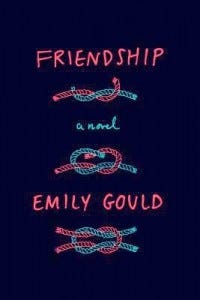
Emily Gould is the author of the essay collection And the Heart Says Whatever (Free Press, 2010) and the founder, with Ruth Curry, of the subscription based online bookstore Emily Books. Her debut novel Friendship (FSG, July 1) examines the relationship between longtime friends Amy and Bev, both thirty and trying to establish adult lives for themselves in New York City.
MD: Amy and Bev struggle in the novel with “making it” in New York, both emotionally and financially. How do these struggles define their relationship, and this novel?
EG: My book is about work and relationships because that’s the reality of my life. I’ve had a lot of shitty temp jobs.
The stark realism of shitty temp jobs is something I feel pretty confident about having captured in <em>Friendship</em>.
I also think money is a really good lens for getting right to the heart of someone’s personality, and the characters’ evolving relationships to money are really important to the structure of the book. For example, Amy starts out with a relationship to money where no amount of it would have ever been enough. She wants and needs an infinite amount of money because she’s capable of squandering anything that she’s given, whether that’s money, or opportunities, or someone’s trust or friendship. She’s just a sinkhole for other people’s money, trust, and goodwill. But it’s never enough. Nothing can ever fill her up.
Amy starts to change a little bit by the end of the book, but she didn’t quite change quickly enough. At one point in the book she assumes that if she just waits, adulthood will come for her, like a bus. But of course it’s not something that happens to you. It’s a series of decisions that you make, incremental, tiny, boring decisions that you make in your life day after day after day. That’s how you become an adult. It sounds awesome, right? But the reward is obviously that you get to have true freedom. But it is boring. You have to put your nose up against your worst qualities and stare deeply into them. It’s a lot like writing in that way.
MD: “Into the Woods” talks about the work of being a writer and your own financial situation after your first book sold. Why was this important for you to write about?
EG: A few years ago, I wrote on my blog that the advice “do what you love and the money will follow” is so idiotic. Sometimes it’s more interesting and better for you as a human being to do what you hate, or at least something that you aren’t totally crazy about. I became a better writer by working, and by having stuff required of me that’s not in my comfort zone — my comfort zone obviously being alone in my room with a computer. It has enabled me to write about aspects of life that would have been hard for me to just imagine.
The finances are important, too. If you want to spend enough time living in your brain and writing, actually doing the work of being a writer, it’s impossible to have any kind of high-paying fulltime job. I’m not counting teaching. Teaching is a hard, draining, low-paying job. The idea that that you will teach and still have enough of you left to also write books, and have a decent middle class lifestyle — this is becoming not sustainable for a lot of people.
I’m not trying to discourage anyone from writing. But what I am trying to discourage people from doing is Being A Writer, capital B, capital A, capital W, and just thinking that that’s going to be it. Working and then writing and then working and then writing is going to be what I do for the rest of my life, and I know that now. I don’t think I was stupid to not know that before. I think I was a little blinkered. If you want to be a self-supporting adult and also be a writer, you’re going to have to think hard about what your five-year plan is, and what your ten-year plan is. The reality is that sometimes you’re not going to be a writer. You’re going to be the sales director for a startup that makes magazine apps, which is what I’m doing right now.
MD: You also have a third job, running Emily Books. Why did you start the bookstore?
EG: My goal for the past few years has been to interpret this kind of shaky time in publishing where a lot of things are changing rapidly as an opportunity for positive change and innovation. A lot of publishing executives who have been in this business for 30 years really wish that we could build a time machine. That would be the innovation that they would be most interested in seeing — a time machine that took us back to the late 90s, or maybe earlier.
Publishing houses should be marshaling all of their resources to figure out ways to harness the startup energy that’s in NYC right now and use it on behalf of publishing.
There are really smart people who are working on the problem of how to get words in front of the people who want to read those words, but none of them are working at major publishing houses. That’s not as it should be.
This is part of the reason why we wanted to experiment with a different distribution model. I don’t think the subscription model is the one answer, but it’s something cool to experiment with. Not everyone has access to what we take for granted in New York, which are these amazing independent bookstores. I can go into either McNally Jackson or into Word in Brooklyn or Jersey City and there will be someone there who I know, and have had a relationship with for years and years, who can tell me exactly what I should be reading next. Emily Books subscribers in America don’t really live in big coastal cities, and I think they are attracted to subscribing because they have someone say every month, “This is the book you should be reading now.” That’s really valuable, and it’s kind of a luxury. It’s not something you can really get from an algorithm. There needs to be digital alternatives to hand selling, not to supplant hand selling, but to give people who don’t live in a community with an independent bookstore access to it.
MD: What’s on the horizon for Emily Books?
EG: Now that we’re almost in our third year we’re moving away from just being a book club and bookstore with a subscription model that sometimes inadvertently publishes books because it republishes books that have fallen out of print, toward eventually publishing original books. That will happen conservatively within the next two years. We’re taking the initial steps right now that will make it possible for us to not only edit and publish and distribute and market original titles, but also to sell and distribute print editions of every book that we sell, which is a huge financial undertaking. We’re just at the beginning of understanding how massive that will actually be.
Ruth and I would like for Emily Books to eventually be at least one of our full time jobs. It seems like a very lofty goal from where I’m sitting right now, but I think that we can do it. It does seem like a tilting at windmills things. In the past I had the thought that I would be a yoga teacher as my day job, and use my yoga teaching money to support my writing. This isn’t as stupid, but it’s still, “Oh I will use my money from independently publishing feminist books to support my writing.” I don’t know. We’ll see how that goes. We do have a built-in audience because we have a subscriber base, so it won’t be as hard as starting from scratch, so that’s good.
MD: Thus far, Emily Books sells only e-books. Your books are different from other e-books though because they don’t include Digital Rights Management. Why don’t you use DRM on your books?
EG:
I think DRM is a tool that Amazon uses to control the literary marketplace, and I don’t agree with the idea that piracy is even a real problem.
I think it’s a straw man. We’re aware of the extreme rarity of our DRM-free e-books actually being pirated.
Piracy has been trumped up to distract people from the real issue, which is all the ways that e-books are treated as not real books, or treated differently as other books. At Emily Books, we encourage people to share our books with their friends. We only allow a certain number of downloads, but if you want to share your e-book with a friend the way that you would obviously easily share a print book with a friend, there’s nothing wrong with that. People should feel free to do that. You shouldn’t be licensing a copy of a digital file when you buy a book. You should be buying a book. It should be yours. You should be able to own that book and do whatever you do with an ordinary book. The only reason that it’s not is that the marketplace has evolved in a strange, artificially curtailed way because of Amazon’s total dominance of the e-book market.
MD: Given your strong support of independent publishing, and your feelings about DRM, were you conflicted about publishing your novel with FSG, a large publishing house that requires DRM on all its e-books?
EG: A little bit. I did think about that. But I think that, for the moment at least, a publisher like FSG still brings a lot of advantages. I felt that my book would be published better: better cover, better distribution, better review coverage, better placement at stores, and on Amazon. They have a better relationship with Amazon than something like Melville House or Two Dollar Radio does. And I want people to read my book. I want people to buy it.
One of the reasons I initially shied away from making Emily Books into a publisher rather than a bookstore is because I realized I couldn’t offer a writer the stuff that I would want from a publisher. And it wouldn’t be fair to publish books until I knew that I could provide those things. That’s one of the reasons why our progress has been so slow. There are a lot of publishers that have the first and most important piece of being a publisher, which is that they have great taste and the books that they publish are quite good. But without all of that other infrastructure stuff, it’s not ideal for writers Being published but just barely, or being published badly — it’s not bad for your career, but it’s not what best for your career. At least as things stand right now. My ambition is to become a great independent publisher. There certainly are great independent publishers.
We’ve seen huge successes from places like Graywolf Press and Coffee House Press over the years, but you have to really work at the more unglamorous parts of being a publisher, which are marketing and sales and distribution. Those things are just as important as editorial.
Yikes. I can’t believe I’m saying that. But from my perspective as an author, I think that’s true. From my perspective as a publisher, I’m thinking, “Oh my god, no. What could be more important than editorial?” But you know, whether you are being published by a small or big press, basing your decision on the editor who’s acquiring your book or whether you think that your book is going to be acquired by someone who really gets you and gets the book — that should be secondary to every other concern that you have about how your book will be published. Because editors leave. Everyone leaves. Publishing houses are very fungible environments, especially right now.
While Shane Jones doesn’t name the settings featured in his novels, when I read his work, I picture upstate New York, not far from Albany, where he’s always lived.
It’s a landscape of subtle, resigned beauty, marked by ancient mountains and forests that — in those rare moments when the clouds lift — glimmer in the gilded, northern light.
The area also tends to be economically depressed, dotted with towns whose main streets seem to have been forgotten in the rise of “the city” (aka New York City) that, with a few exceptions, dominates the political, financial, and social culture of the state. The characters in Jones’s stories do not suffer the hardscrabble existence of the frontier, but — like the villagers in Light Boxes, Jones’s first novel, who go to war against the evil month of February — possess a desperation characteristic of those fighting for survival, or at least meaning, which gives them an aura of sadness and heroism that Jones perfectly captures.
Which is not to say that Light Boxes and Daniel Fights a Hurricane (Jones’s second novel) have much in common beyond this sense of geography and heroism. Light Boxes is a shorter, “easier” read, a modern fable in which there’s little doubt who represents light and who represents evil; a book that, despite its sinister moments — the way February, embodied as a man or evil god, kidnaps or murders the town’s children — has a playful or almost child-like quality largely absent from Daniel. Despite possessing Jones’s trademark whimsy (notably in the form of “banana bombs” and “cookie pockets”), Daniel is more complicated and challenging to digest; with a narration that alternates between three perspectives and with dense prose, it’s morally ambiguous, befitting its description of the possible descent of its main character into madness (represented by the hurricane).
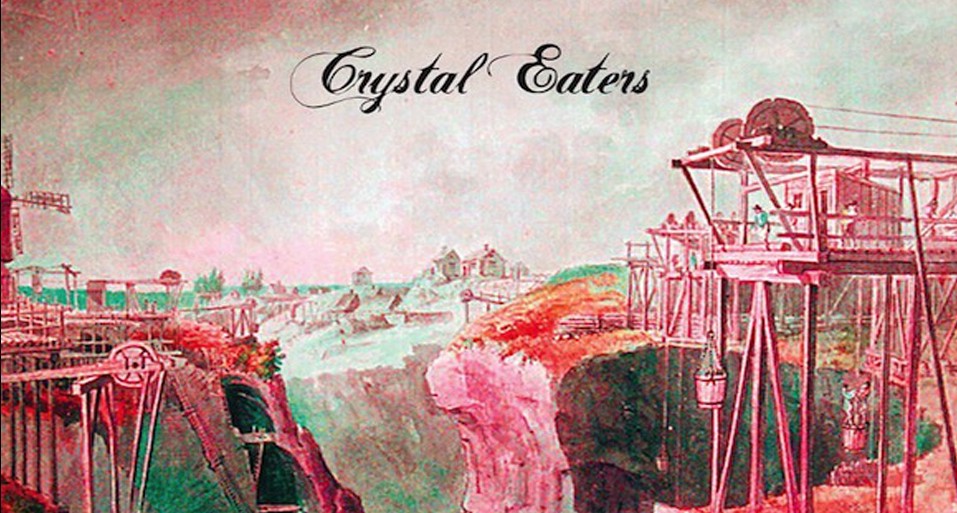
Crystal Eaters, Jones’s third, and latest, novel, combines the Manichean appeal of Light Boxes with the psychological insight of Daniel while introducing new themes — both playful and sinister — that showcase his increasing breadth as a writer. The book focuses on a family — a mother, a father, a son, and a daughter — that in some ways could be considered “typical” of many living in upstate New York, scraping by in a town with just two employers: a mining company that produces crystals (in Jones’s world, a natural resource, similar to oil or natural gas) and a jail that houses inmates, most of whom are from the city.
The city is not exactly the enemy here — it ultimately pays for the crystal it needs to fuel its rampant growth — yet by engaging it,
the townspeople have been forced into a Faustian bargain that doesn’t leave much room for long-term hope.
Mostly the city possesses an aloof disregard for the town and the traditions it threatens to swallow; like a monstrous amoeba, its new buildings can be seen erupting just over the edge of the horizon, oozing closer in the span of days or sometimes even hours, while its politicians appear to console the villagers with more empty promises. Here, Jones mostly uses the city for comic relief, effectively mocking its arrogance as he describes what it will bring to the village, specifically “modern living with god, carpeted cubicles, televisions, dishwashers, tooth x-rays, nuggets, yoga…cat-shaped headphones,” and so on.
More serious are the crystals, which come in many colors and serve different functions. They are not only a natural resource, but also an integral part of everyone’s body, so that newborns are understood to have a “crystal count” of 100, which gradually — or, in the case of accidents, abruptly — “goes to zero,” or a state of death. Any living thing, no matter how small, has a count; a dog has a count of 40, an ant 3, a flower 1, and the city is “infinite” while a village is “always falling”; the chapters in the book, appropriately enough, go backwards, as do the pages. A low crystal count can have dire consequences. When we meet the mother of the book, we learn that she’s dying from a terminal illness, and her count is already in the single digits. But without ever succumbing to the cheap sentimentality that so often plagues similar story lines,
Jones manages to capture the mother’s decline in ways that feel heartbreaking but original.
Death is a driving theme of the book, with the crystals ultimately representing that which we so often take for granted, namely the passage of time; in Crystal Eaters, Jones basically invents a language of death, which is no small feat.
Of the two children in the family, the son, now an adult, has landed in prison after forming a gang that experimented with “black crystal,” a very rare type that, when eaten, will induce hallucinations and, according to rumors, may increase a person’s count. In a series of flashbacks, Jones offers insight into what led the boy into such troubled waters, as he struggled to define himself against his overbearing mother and emotionally distant father; again, if the story feels somewhat hackneyed, the language Jones uses to describe it is so original that you can’t help but look at the situation with new eyes. Finally, there’s an adolescent daughter, a typically idealistic and, for this reason, probably the most loveable of the cast, who wants to help her dying mother by giving her some of this fabled black crystal. She’s the one who softens the father and makes him sympathetic when, at other moments — such as when he’s beating his son with a belt — he verges on the monstrous.
What’s important here is that all of the characters have flaws and strengths that make us want to know more about them
; we want to know where they’ve been and where they’re going, which despite the experimental trappings of Jones’ surreal prose is very conventional (and satisfying) storytelling.
It helps that Jones, in Crystal Eaters, returns to a more straightforward (third-person) narrative, alternating between plots involving the mother’s sickness, the father and daughter’s attempts to care for her, and the son’s time in jail (there are also some gang members who want to engineer a “reverse jail break” with the hope of rescuing him). Like Jones’s previous novels, his new work combines the hyper-surreal and hyper-realistic in scenes that perfectly integrate his lyrical but never-pretentious prose. Describing the death of a woman in a traffic accident, he writes, “The villagers stood around slack-jawed and terrified (that’s going to happen to me one day) and watched her expel colors.” Or the son’s memory of killing a bird as a child:
“He found a bird with a broken wing. He stepped on the broken wing with one foot, and stepped on the good wing with his other foot. He moved his toes away from the bird’s body until a bone cracked. … The bird exhaled her final crystal in a circle of knotted smoke.”
What’s new for Jones in Crystal Eaters is his very serious examination of acts of love and cruelty (both often incomprehensible) that seem to mark our lives, particularly where families are concerned (and especially when someone is dying). It’s a book about real people, in other words, and while anyone who’s enjoyed the whimsical or demented beauty of Jones’s previous work will find much to appreciate here, Crystal Eaters resonates with a kind of psychological truth that results in a very harrowing story. It’s his most “adult” book and, for that reason, his most heartbreaking.
Brazil say they play the beautiful game, and Lispector certainly writes gorgeous sentences. The Hour of the Star is a great short novel to introduce you to the marvel of Lispector.
Chile have been one of the most exciting and passionate teams this World Cup. Bolaño may be the obvious pick, but few authors from any country write with as much excitement and passion.
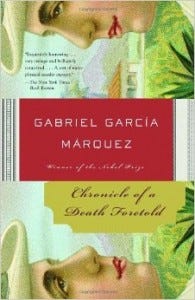
Colombia has looked great this World Cup, but historically they have never made far in the tournament. This is only the second time they’ve reached the round of 16, and they’ve never gone further. Will that change this time? Not if my pick, an underrated short novel by the late greatMárquez, is an omen.
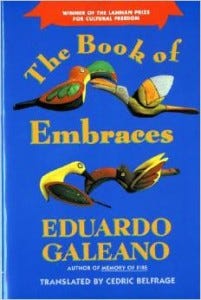
Galeano’s books tend to be unclassifiable mixes of literature, poetry, history, and memory. However, his prose is always fierce and the Uruguay team could use some of that after their most famous player slash vampire was suspended for literally biting an opponent (for the third time!).
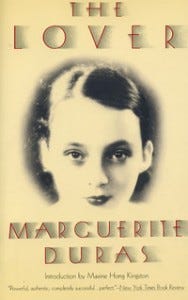
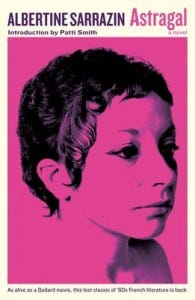
This French team has a lot of talent to choose from, and French literature has a gigantic arsenal of amazing writers. Duras may not be as famous as Proust or Flaubert, but she is well worth your time.
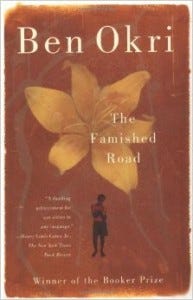
It is something of a surprise that Nigeria made it out of group, and Ben Okri, one of the world’s great magical realists, will definitely surprise you in this Man Booker Prize winning novel.
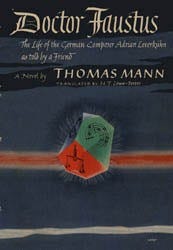
Germany’s team is so stocked with talented it seems they made a pact with the devil. So here’s Thomas Mann’s take on the infamous story of Faust and his deal with the devil.
Greek literature stretches back to the dawn of Western civilization, but this Greek team is thinking about the future after advancing out of group. So here’s a recent novel published in English just this year.
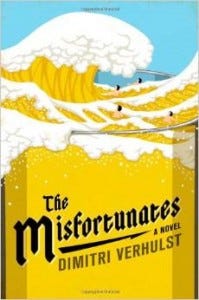
While the Red Devils certainly aren’t misfortunate with their exciting young team, The Misforunates is a great recent novel from Belgium that was made into a movie in 2009.
Since I arrived in Montréal, I’ve been doing research for a novel called Yet Wilderness Grew in My Heart, a book set in 1757 during the French and Indian War. In a nutshell, it explores the panoply of cultures that clashed and combined in northeastern North America, giving birth to the bustling, cosmopolitan region we take for granted today. After months of work, I’ve found the picture to be even more complex than I suspected, involving dozens of native peoples, English, French, and Dutch colonists, as well as a flood of enslaved Africans and indentured servants from Scotland, Ireland, and Germany. Of all these groups, however, it’s been especially thought-provoking to study the Mohawk people, the eastern member of the Iroquois Confederacy, an alliance of six indigenous nations that originated in New York’s Mohawk Valley, the corridor where I-90 runs now.
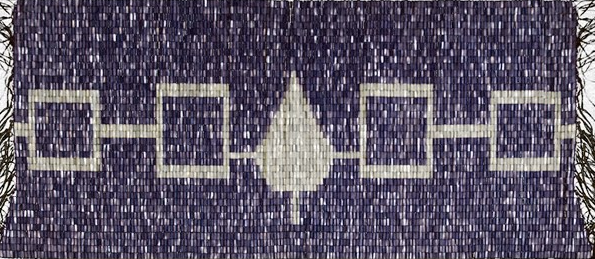
To learn more about the Mohawks, I take a bus across the Saint Lawrence River every Tuesday to visit the reservation of Kahnawà:ke, a community of 8,000 Mohawks located across the water from Montréal. Composed of two-lane roads lined by modest houses and stores, Kahnawà:ke appears like most small towns until you notice that the stop signs feature the Mohawk word for stop: “testan.” After another moment of looking, you’ll notice many houses and cars fly a distinct purple flag. Featuring a white pine tree flanked by two rectangles to either side, this is the flag of the Iroquois Confederacy, which still unites the modern communities of the Iroquois, found predominantly in New York, Québec, and Ontario.
Near the town center of Kahnawà:ke, you’ll find one of the epicenters of traditional Mo-hawk culture: Kanien’kehá:ka Onkwawén:na Raotitióhkwa Language and Cultural Center. This is where I spend my day, researching in the library and asking the patient staff countless questions. When I first arrived here, I was craving nuts-and-bolts information about Mohawks during the colonial era to make my novel more concrete and historically accurate. I wanted to know: What did they eat? Wear? What did their houses look like? And though I’ve learned a good deal about these things, something else became clear as well: the misalignment between native history and the depiction of native history by contemporary media.
The “Hiawatha Belt” of wampum is the inspiration for the Iroquois Confederacy flag.
During the flood of Westerns that typified the early and mid 20th century, native people almost always played the villains — bloodthirsty barbarians who terrorized innocent white settlers. It’s a relief that this stereotype has fallen by the wayside in recent decades; however, that doesn’t mean natives are always rendered with the complexity they deserve. Many films and novels continue to paint historical natives as noble savages, simplistic people who were doomed to extinction by “progress”: the advanced technologies and societies brought by Euro-American colonists. Essentially, natives are misrepresented as childlike innocents, and it’s due to this “purity” that they are victimized by the complicated and corrupt world of modern “civilization,” a world beyond their understanding.
This romantic but extremely patronizing view was popularized by James Fenimore Cooper in the 19th century with his Leatherstocking novels (the most famous being The Last of the Mohicans). Yet nearly two centuries later, contemporary films espouse the same gauzy mix of idealization and condescension, notable examples being Dances with Wolves and Disney’s recent relaunch of The Lone Ranger (a complicated mess of a movie you can read more about here and here). In the form of what anthropologist Renato Rosaldo calls “imperialist nostalgia,” these films elegize traditional native societies as the relics of humanity’s quaint and primitive past, rather than treating native societies as the true equal of European ones.
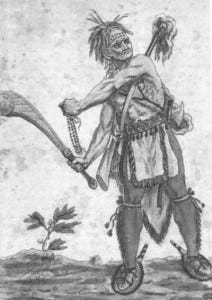
The history of the Mohawks and their allies in the Iroquois Confederacy runs completely counter to this harmful depiction. Rather than being guileless primitives, the Mohawks proved to be very shrewd at negotiating the political order created by European imperialism. Trapped be-tween French Canada and the American colonies, the Mohawks found themselves in a dire situation in the 1600s. However, their highly developed government and its strategic approach to diplomacy allowed them to turn this position to their advantage. As tensions between French and English colonists grew, the Mohawks played these rival empires against one another, savvily creating the political agency they needed to protect their people.
18th Century Illustration of an Iroquois Warrior
Everyone knew that whatever empire the Iroquois Confederacy allied with would certainly win if war broke out between France and England in North America. Since the Mohawks held a strong voice in the council procedures of the Confederacy government, this meant that both France and England were continuously courting their favor. However, rather than accepting offers of alliance out of hand, the Mohawks used their position to negotiate. When sending diplomats to the French, they subtly (and sometimes blatantly) insinuated they might ally with Eng-land if treated poorly. When sending diplomats to the English, they suggested the opposite. In the end, the Confederacy would decide to remain neutral in 1701 at a meeting called the “Great Peace of Montréal.” This decision actually resulted in preferential treatment from both empires in the form of trade relationships, as well as promises not to interfere with Confederacy business. It was an insightful foreign policy strategy that kept the Mohawks and their allies in a place of power for over a century after their first contact with Europeans in the early 1600’s. It was only the outbreak of the French and Indian War in 1753 that finally upset the balance they engineered.
This is just one of many stories that gives the lie to current day fictionalizations that depict natives as Edenic people suddenly pushed to extinction by the arrival of European civilizations outside their comprehension. Native people had a sophisticated web of cultures and governments before Europeans arrived. And after Europeans arrived, they were highly capable of adapting to the circumstances brought by each new century. To leave these things out of our film and fiction only creates plots where native people are denied narrative agency. Despite the many hardships inflicted on them, indigenous nations were never simply victims.
From the privileged standpoint of a white American, it’s not my place to speak for native people like the Mohawks. But I do hope new representations of the past both by natives and non-natives will allow us to revaluate our shared history, replacing two-dimensional characters with ones that are at once more accurate, more interesting, and more complex. As all writers know, it’s never too late to reinvent our stories.
I’ve written before on some of the ways that interactive fiction, or choicefic, creates new possibilities for literary fiction. I touched on how the medium once dominated by the Choose Your Own Adventure children’s adventure series can be extended to serious writing — to explore themes of free will, to create intricate tapestries of plot lines, and to revolutionize character development.
For authors of choicefic, keeping track of the branching paths of a narrative can quickly become overwhelming. There are several software options to make the process more manageable, though most require varying degrees of coding skill. Inklewriter is among the most user-friendly and requires no coding at all. It’s also free and entirely web-based.
Most of these software packages, including Inklewriter, allow authors to go beyond the branching path structure that exists in book-form choicefic. They do this by using conditional logic.
Conditional logic makes it possible for a reader’s choice to have different results depending on the reader’s previous choices. When the protagonist asks her friend for help burying a body in the desert, the friend’s response could depend on whether the protagonist had been similarly helpful earlier in the tale. More subtle variations are possible too: perhaps the friend will help in either case but show her resentment with a few harsh words in one version.
But conditional logic also allows for the available options to vary depending on previous choices. For example, if the reader has the protagonist pick up a gun at one point in the narrative, he could have the option of using it later. Inklewriter provides an example of its conditional logic features with an interactive retelling of a Sherlock Holmes story.
Conditional logic can use counters to keep track of how many times the reader has chosen a particular type of option. Options can then be made available dependent upon these counts. For example, certain options could be designated (unbeknownst to the reader) as “aggressive.” At certain points in the story, the reader may be presented with more aggressive (perhaps violent) options if she had chosen a certain number of aggressive options previously. This could have interesting implications for character development; though some writers will chafe at the implicit quantification of character traits that is so familiar to RPG gamers.
Interactive fiction straddles two worlds–gaming and literature–and the use of conditional logic brings it closer to the former. But used artfully, it could become a powerful tool for authors of literary fiction.
Let’s coin a phrase: let’s name a certain kind of fiction that creeps and crawls and sometimes does backflips among its respected realistic brethren. Let’s call it domestic fabulism. Just the phrase is new, mind you (and it is; I Googled it); the genre itself has been in use for years.
But what is it? William H. Gass (not a fabulist but certainly an alchemist) claims,
“Readers begin by wanting to be anywhere but here, anywhere but Kansas,”
but in domestic fiction we find ourselves back in the noplacelikehome — and yet. It’s Kansas with a difference.
To explain further requires some exploration of the terms. Fabulism, often interchangeable with magical realism, I’d suggest incorporates fantastical elements within a realistic setting — distinguishing it from fantasy, in which an entirely created world (with constructed rules and systems) is born. These fantastical elements are often cribbed from myth, fairy tale or folk tale. Strange things happen and characters react by shrugging: animals talk, people fly, the dead get up and walk around. Time operates sideways, nature behaves mysteriously;
fabulism feels like the kind of dream in which you look down and realize reality has forgotten its pants.
And because of these things, fabulism tends toward the exotic, the historical, the once-upon-a-time, the far-flung. Saramago and Rushdie create worlds where the unthinkable has happened; Dinesen reports back from centuries and countries ago, from castles, counts and courtiers; Angela Carter gives us new-old fairy tales from long ago.
But domestic fabulism takes the elements of fabulism — the animals that talk, the weather that wills itself into being, the people who can fly — and pulls them in tight, bringing them home. Domestic fabulism uses elements like a magnifying glass, or rather, a funhouse mirror. It simultaneously distorts and reveals the true nature of the home, the family, the place of belonging or, in many cases, not belonging at all.
The definition of domestic fiction is interesting, is slippery: Google it and you get results like “women’s fiction,” or “sentimental fiction.’” One must accept, of course, that women are traditionally linked with hearth and home — if absent, that absence is also notable. However, these fictions are, like any insightful writing that involves family, usually anything but sentimental. A.M. Homes’ May We Be Forgiven, Paula Bomer’s Baby, or Yates’ Revolutionary Road all come to mind, not to mention most anything Jonathan Franzen — who I’m guessing would chafe at being called a sentimentalist — has written.
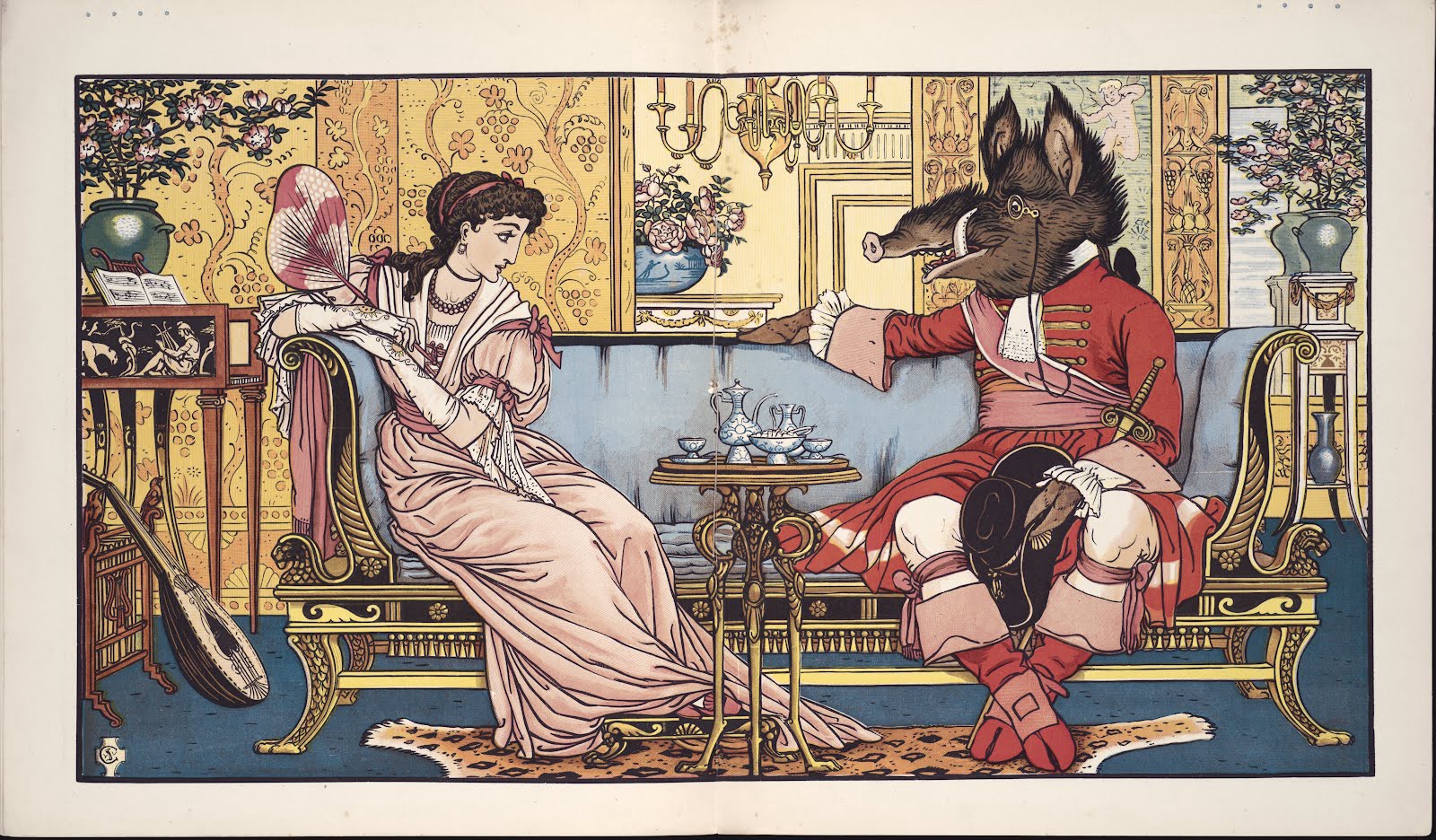
by Edmund Dulac
But of course the “sentimental” label springs from the source: the home. Because the home, that square roof and smoking chimney the hero returns to, is women’s to keep: the home is where the mother, sister, daughter, wife waits patiently in traditional literature. Women many hundreds of years ago told stories to each other: instruction, warning, entertainment — and mostly male scholars listened in, took those stories, transformed them — and created fairy tales. But of course the domestic is not some special place or province of the woman, not anymore, and certainly not in my definition. In Roald Dahl’s books, for example, while the stories are often about family, the children are the focus of the transformation, the domestic magic — in ways that often have nothing at all to do with mothers or sisters or wives, present or absent.
In short, I think of the domestic more as fiction about the family and the home, and how it shapes or transforms us.
This is not a new concept — it started with folk tales and later fairy tales themselves. And indeed, from the start, domestic fabulism vs. what I’ll call adventure fabulism were separated. Folk tales gave birth to domestic fabulism — they’re about the married couple, the peasants, the simple farmer. They often do not end happily, since they echo and foreshadow real life, and real life was nasty and brutish for medieval women and their families. Fairy tales, the precursor to adventure fabulism, were literary, were written, were about travel and kings and princesses and evil fairies, about far off lands, battles and trials and nearly always (but not guaranteed until Disney) contained a happy ending. Of these two, domestic fabulism is by far the more grim. Adventure fabulism may be deadly serious in subject matter, but it’s still escapist by way of abandoning the familiar landscape. In Oz, Dorothy may encounter doubles of her farmhand friends, but she doesn’t face the feelings she has, or doesn’t, for the rundown Kansas farmhouse and the dreary tornado-torn earth. She may learn valuable lessons, but from magicians! From witches! From lions and tin men and flying monkeys and the magic of Cinemascope!
There is horror and wonder, but it’s once upon a time — it’s not lurking on our doorstep. We can shut it out.
Domestic fabulism, on the other hand, is immersion, an exploration of self and situation — of the dread that lives and lurks at home, where we cannot escape it. It creates a double existence, an anxiety that ends, if it does, in a sort of forced catharsis — we must confront the thing that lives in our house, in our marriage, in our family, in our town — the succubus that sits on our throats when we dream. Domestic fabulism, it seems to me, is also on the rise. And that makes sense — that in an age beyond the age of exploration, in an age where the exotic has become the familiar — we might once again look to the fabulous in the small minutiae of our daily home lives. We live in an age of dread and anxiety — harm can come to us at any moment; we live in absolute awareness, where domestic stakes are higher than they’ve ever been. It’s a perfect time to turn ourselves inside out by turning the world around us outside in. As Jack Zipes says: “the very act of reading a fairy tale is an uncanny experience in that it separates the reader from the restrictions of reality from the onset and makes the repressed unfamiliar familiar once again.”
But how does domestic fabulism operate? How does it create this tension, this deeper exploration of the places and people we are from? Kate Bernheimer refers to something that Dryden called “the fairy way.” She adopts this phrase for her use and looks at it something like this:
“The fairy way is a non-representational way; it is a short cut between experience and knowledge.”
(Bernheimer makes the distinction between the fabulist and the fairy tale, and of course I agree, but I use her useful writing here on fairy tales since I think the fairy way is largely the fabulist way, or at least a stream running into the same river.) “In his books about the art form of fairy tales,” she continues, “my aesthetic and ethical guru Max Luthi extolls the virtues of fairy tales through the techniques by which a dynamic universe is constellated to such a heightened degree that all things inside of the story exist on a plane so grammatically balanced — so symmetrical, so mirror-like to itself — that its contents are sublimated into a vapor of bliss. From this sort of story no reader can escape unchanged back into the world outside of the story, which to the story — and thus to the reader — does not really exist. “
In other words, these stories leave us on the other side of the looking glass — only, in domestic fabulism, Alice never leaves that interior room, the mirror image of her own small universe. And neither do we — trapped, claustrophobic, we must live shoulder to shoulder with the uncanny. Kelly Link’s “Stone Animals” is a brilliant example of this sometimes miraculous, sometimes terrifying mirror world, as is Bruno Schultz’s The Street of Crocodiles. Blake Butler, in There is No Year, devotes an entire book to the idea of the uncanny copy family. And Kafka’s The Metamorphosis might be the most nightmarish example of all, with a narrator trapped in his home, reduced to beetle form and forced to relate to his family as an estranged, alienated stranger. Aliens among us, indeed.
Many domestic fabulists focus on the ironies and horrors of modern domestic life, conveyed flatly through the use of almost deadpan magic or bent reality — think Joy Williams’ “Congress,” where a lamp with deer feet takes on the job of closest kin, or Helen Oyeyemi’s Mr. Fox, where female characters spring off the page and, alarmingly, charmingly, into the middle of a marriage. Matt Bell’s Cataclysm Baby reflects the anxieties of modern childrearing through a series of moving stories about otherworldly children and parents. And George Saunders, who seems the king of domestic dystopic fabulism, gives us “Sea Oak,” which uses a rotting re-animated corpse to viscerally illustrate the sad breakdown of the American blue-collar home. Furthermore,
Can Xue seems to me in some ways one of the purest inheritors of the Bruno Schultz/Kafka surreal strain, where the uncanny vibrates like a plucked violin string with every story told, every relationship examined, every cat and married couple and home swimming in fantastic uncertainty.
Sometimes Kansas is just that — a city or a town, beyond the scope of just one family. Some domestic fabulists, like Louise Erdrich, Gabriel Garcia Marquez, Mo Yan, or Isabel Allende, hold the mirror up better when it’s large enough to reflect back a village. Sometimes the soul of a family is in the soil they stand upon.
Sometimes the domestic crosses rivers and continents with the diaspora, bringing home and family to new lands, redefining the terms. Some of the best new writers are working that angle, bending the immigrant family story through a fabulist lens, like Salvador Plascencia, Porochista Khakpour, and Junot Diaz. Even Karen Russell is writing the domestic fabulist immigrant story in her tale “Vampires in the Lemon Grove,” which despite its wild trappings is a story about a longing for family and for a real home.
And perhaps one of the most interesting things happening in domestic fiction is the subversion of that term “women’s fiction,” of that original domestic space. Joyelle McSweeney writes phantom babies and revolution babies and salamander babies, subverting expectations of motherhood. Aimee Bender takes that traditional women’s space, the kitchen, and endows it with power and danger, gives her book a narrator who tastes emotion in food. Molly Gaudry, in We Take Me Apart, plays with fairy tale tropes and stands them on their heads. Kate Bernheimer, the maven of the contemporary fairy tale, reexamines the role of women and their happy-ever-after expectations in her trilogy about the sisters Gold. Sarah Rose Etter’s twisted, surreal tales drop koalas from the sky like storms, but not for the sake of just weirding us out. Like all of these tales, they seek to tell us something about family — in Etter’s case, it’s often about daughters and fathers, flipping the filial sense and yet making it filigree beautiful.
More and more young authors seem to be using fabulism freely in their domestic fiction, probably in part due to the growing distaste for genre snobby and the blurring of firm genre lines.
Perhaps it also reflects the unease of our own unsolid times, surrounded as we are with unwelcome reminders of what we were and will someday be — like in one of Calvino’s Eusapia, where the city of the dead so exactly imitates the city of the living that the residents can no longer tell who is living, and who is dead.
Indeed, there’s no place like home, but these domestic fabulisms help us mirror home so carefully we’re sure to see and shudder at the slowly spreading cracks.
***
Where to Start: There are way too many books and stories to list here in full — including many of the examples I’ve given here — but these are a good starting point to get the flavor of the genre in its purest form.
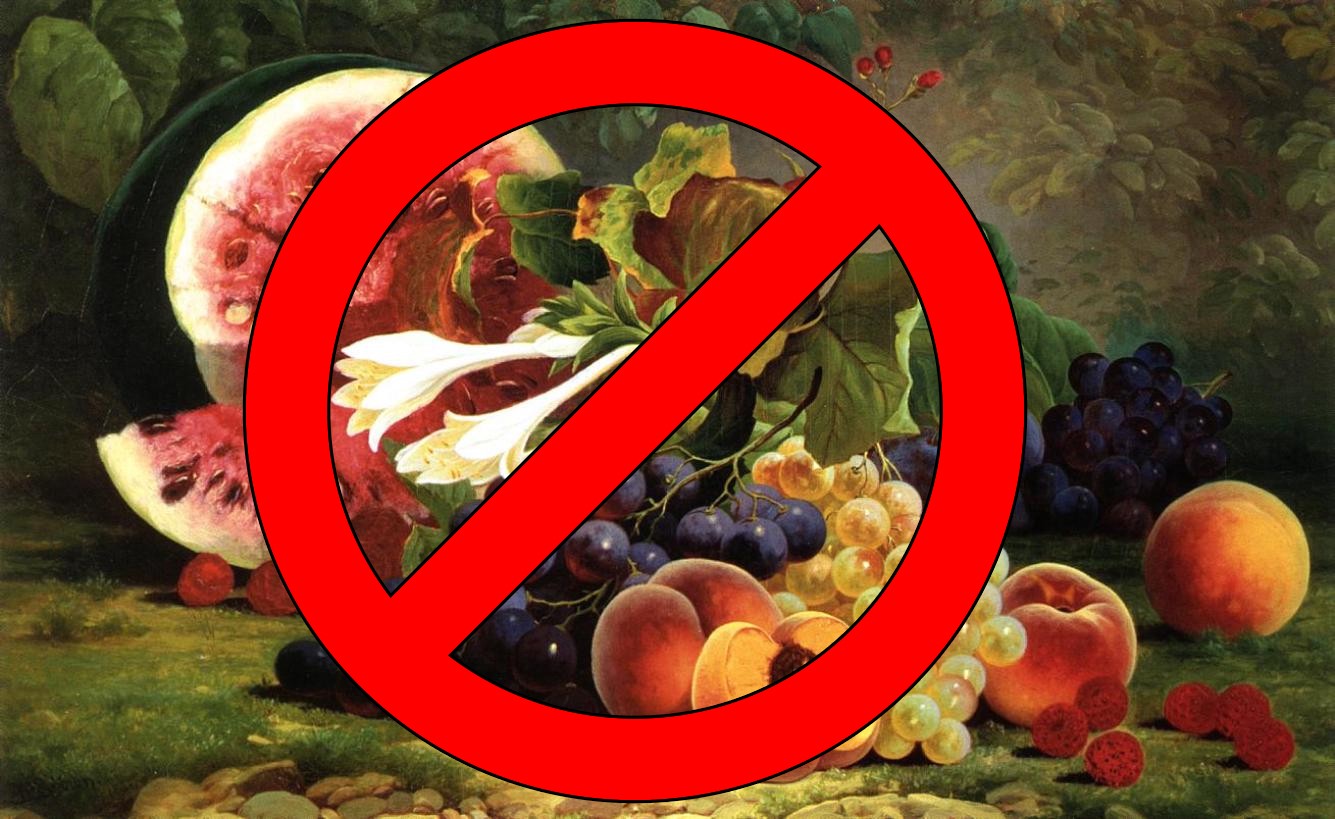
Where would poetry be without fruit? It would be, like Paradise, lost, but poetry has done fruit no favors in reverse. It’s summertime and I for one would like to eat a berry or a stone fruit without unwittingly referencing some mid-century verse*. The below fruits, alas, are all off the table:
*A disturbing number of these fruit poems appear in the A. Poulin, Jr. Contemporary American Poetry anthology, and as you can see, white male poets are the worst offenders.
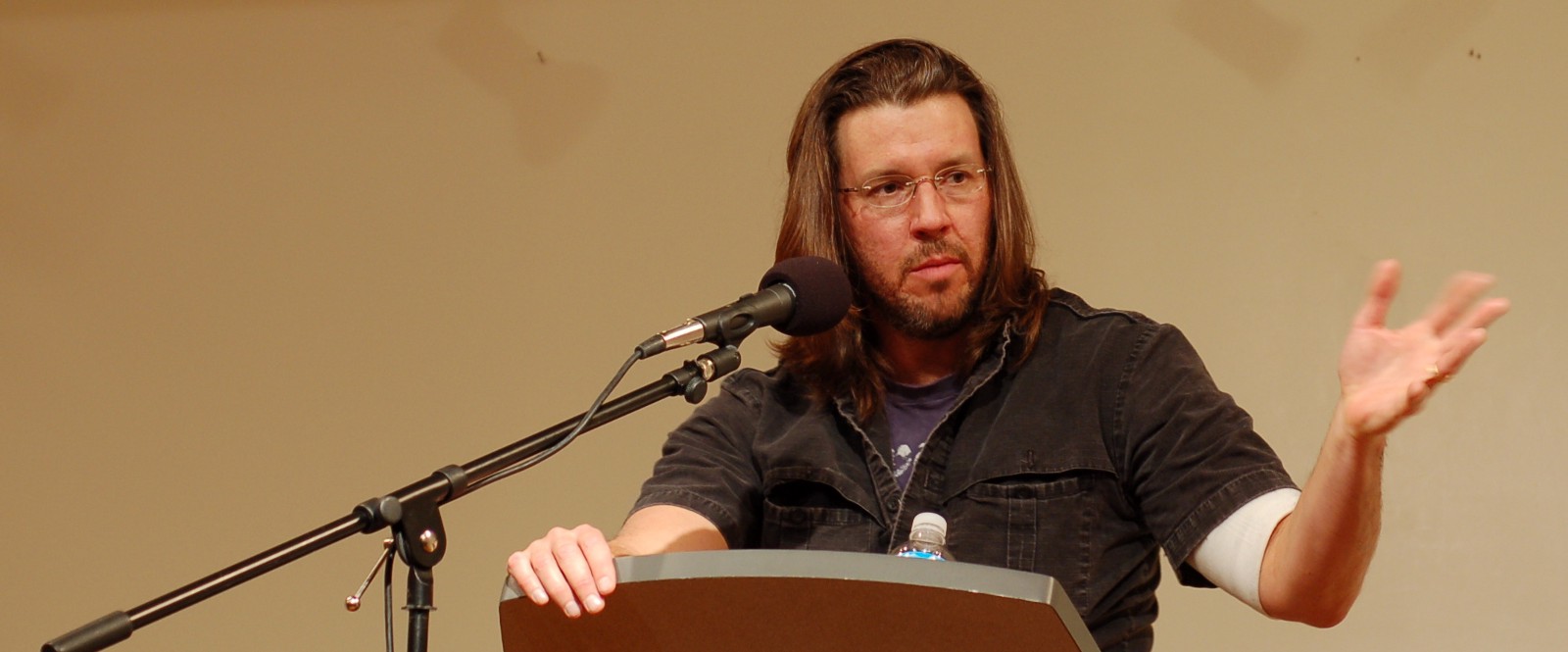
Kunal Jasty and Max Larkin at Radio Open Source have uncovered an old David Foster Wallace interview from 1996, the year Infinite Jest came out and before he was the literary star he’d become. The interview was conducted by Chris Lydon for WBUR in Boston. He discusses why his generation feels lost, his hopes for his career, and his feelings of loneliness: “I think somehow the culture has taught us or we’ve allowed the culture to teach us that the point of living is to get as much as you can and experience as much pleasure as you can, and that the implicit promise is that will make you happy. I know that’s almost offensively simplistic, but the effects of it aren’t simplistic at all.”
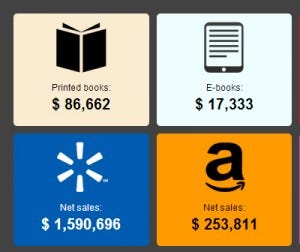
Ever wondered how much money is spent on books in America every minute? Or how much more is spent on print books than ebooks every second?
If so, check out this real-time infographic that tracks the sale of books, ebooks, guns, donuts, and a lot more. Apparently over eighty-six thousand dollars are spent on printed books every three minutes (graph to the left), more than five times as much as is spent on ebooks. See the entire graphic here.
DON’T MISS OUT
Sign up for our newsletter to get submission announcements and stay on top of our best work.
YOUR INBOX IS LIT
Enjoy strange, diverting work from The Commuter on Mondays, absorbing fiction from Recommended Reading on Wednesdays, and a roundup of our best work of the week on Fridays. Personalize your subscription preferences here.