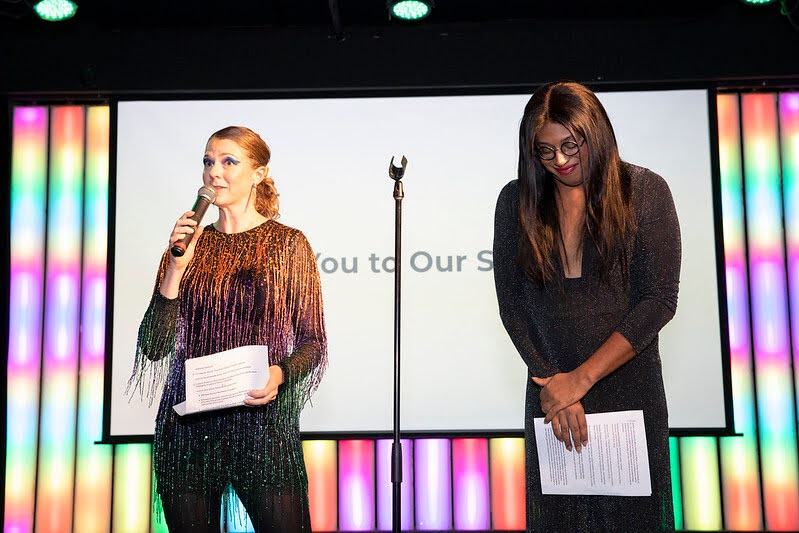
The first thing Jenny Tinghui Zhang and I bonded over when we met at the Sewanee Writers’ Conference, aside from both being writers, was that we were both devoted Lorde fans. Every time I meet someone who enjoys her music, it’s almost guaranteed that we immediately have a great friendship. A couple hours later, Zhang and I sang karaoke to one of Lorde’s biggest hits before the rest of the conference’s attendees. A couple months after that, I drove over 400 miles to see the pop star in concert—the same show Jenny attended too. Leading up to and following the show, we both couldn’t help ourselves; so many conversations, theorizing who Lorde was behind the music, what she spent her days doing when she wasn’t on stage, and why she made this or that artistic decision. Sometimes, we’d dare to say that we knew the answers. That we knew Lorde.
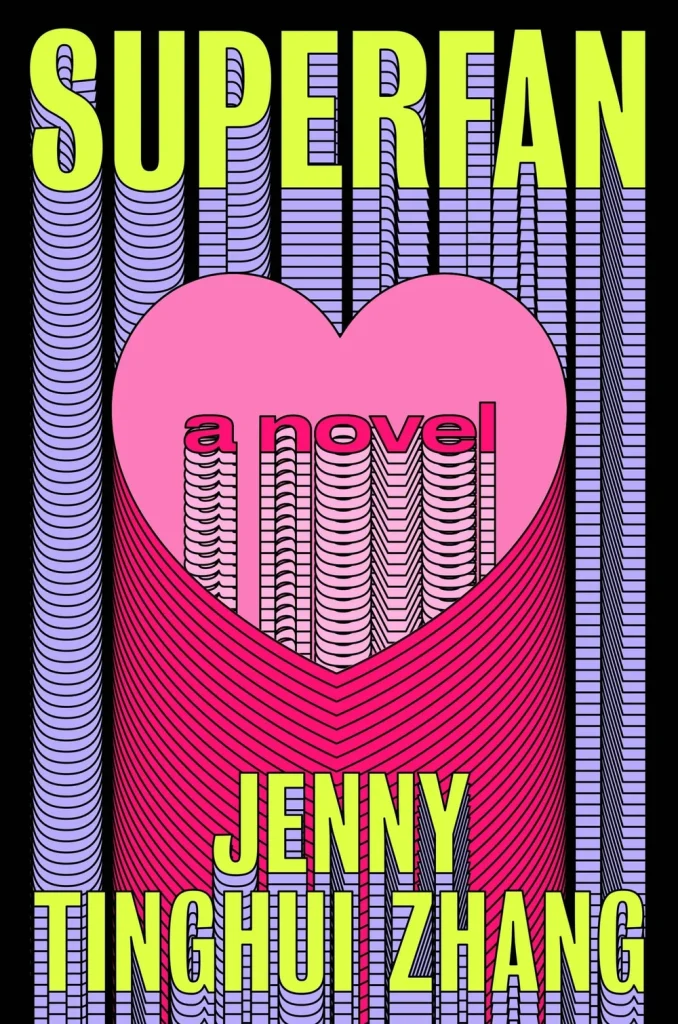
Jenny Tinghui Zhang’s electrifying sophomore novel, Superfan, asks stans and fans alike to stop and question these impulses. Following college student Minnie, we see her go from listless and lonely to passionate and obsessive once she discovers the American-born, K-pop-trained boy band HOURglass. Every dance move on stage, every lyric in their songs, even intimate livestreams from their hotel—it all feels like they were tailor-made just for her. Is she wrong for believing in their closeness?
Uniquely empathetic for both the fan and the artist, Superfan critiques fandom culture and parasocial relationships during a time when intimacy is manufactured for economic gain. Zhang and I discuss fandom culture’s shift from shame to pride, ownership and authenticity in fan-artist relationships, and Heated Rivalry as proof of our human need for connection.
Jalen Giovanni Jones: It’s so exciting to see Superfan out in the world, especially after the success of your debut. What has the publishing process been like the second time around?
Jenny Tinghui Zhang: When my first book was coming out I didn’t know anything. You’re just happy to be there, getting your book published. I’ve gone through the publication process before, and now that it’s happening again it’s almost like I know too much. I feel more vulnerable as a result. Debuts are inherently exciting, but for follow-ups you’re asking, “Will this measure up? How does this reflect upon me as a writer in my career?”
Now you have the critics, the reviewers, and your publisher, whereas with the first book, most of the time you’re kind of just writing for your own happiness. You’re barely thinking about audience, or the market. I think you just know too much after the first book, and sometimes knowing too much is a bad thing for art.
JGJ:I found that the relationship between the audience and the artist is actually a big part of Superfan. Did having a more formal, defined audience following Four Treasures of the Sky change your process when approaching your second novel?
JTZ: Weirdly with both of my books, audience was one of the last things that I thought about. A lot of the time I am thinking of a hypothetical one person that I would like to be writing to, and whom I would like to be read by. But I don’t approach the writing of the novel like there is this one specific target, in terms of readership. It sounds very narcissistic to say this, but I always feel I am my audience, first and foremost. I think: Is it interesting to me? Is it something that I would want to read? Because if it’s not, then what’s the point in me pursuing it?
Sometimes knowing too much is a bad thing for art.
JGJ:What immediately made Superfan stand out to me was its use of a dual perspective narration, between Minnie’s point of view and that of HOURglass member Eason. What made you realize that that dual perspective was necessary for this story?
JTZ: With Four Treasures, it’s very much a strictly first person novel. With [Superfan], I wanted to challenge myself to do things that were outside of my comfort zone, and writing in the third person was just that. Following two narrators and seeing if I could develop those characters the same way that I would develop just one character was also another way to challenge myself.
I initially thought we could just follow the fan. But as I was writing into Minnie’s story, I just found it so interesting, how so much of being a fan is kind of assuming someone’s life, making up stories about that artist and [the] motivations behind their actions. Because I wanted to play with the inaccuracies of that, I brought in Eason. Having both perspectives was a way to showcase just how wrong, or maybe sometimes right, someone could be when they’re making all these assumptions about someone else that they don’t really know. Superfan is really interested in unpacking what it means to be your authentic self, and asking how much of that authentic self you owe to an audience.
JGJ:Often in popular discourse, fans are treated as this invasive mob, but Superfan very much humanizes Minnie and fans in general. The book shows that Minnie has a reason for acting in her fanatical ways. She’s gone through her own pain, and HOURglass does a lot of good for her.
JTZ: I’m so glad you said that. A lot of how we talk about fan girls today is with a patronizing tone. “Oh, they’re crazy,” and that’s the end of their story. But having been in many fandoms in my life, I’ve seen that there’s also a lot of community to be found in those spaces. And there’s a reason why superfans are drawn to things to the extent with which they are. I wanted to show empathy for that.
JGJ:When it comes to the fan-artist relationship, at what point would you say the fan might be crossing the line?
Many fans feel like they have ownership over this person that they’re a fan of.
JTZ: Usually we as a society cross that line when there’s an aspect of ownership to the fan-artist relationship. Many fans feel like they have ownership over this person that they’re a fan ofand believe they get a say in the choices that this person is making, get to rebuke or celebrate the person that their celebrity is dating, etc. There’s this increasing feeling of ownership, almost like “I’m your fan, and you owe me certain things.” Where we start to cross the line is when that belief system takes over, where you’re no longer seeing the humanity in that artist, are no longer treating them as a human who can make their own decisions and who exists outside of this persona, but instead only seeing them as the object of your fandom and of your ownership.
JGJ:You paint this relationship between artist and fan as a two way street. Most thinking and writing around these types of parasocial relationships show that relationship as one directional. This novel shows that the artist, too, can feel partial to the relationship. Eason is deeply attached to his fans.
JTZ: That’s exactly what I was trying to get at. This is becoming more of a thing in Western music marketing and promotion, and it is for sure a strategy in the K-pop industry—there’s encouragement for K-pop idols to cultivate very close and personal-seeming relationships with their fans. In the book, this is shown through Eason’s live streaming. Live streaming is huge in K-pop. Fans hit the notification that they’re live, and they’re instantly taken to the idol, so close to the camera, and they’re bare faced and without makeup. They’re in a hotel room after a concert. They’re dressed in normal people clothes, just talking to their cameras. It really feels like you’re on FaceTime with your BFF or boyfriend. I’m trying to point out that there is kind of a benefit to establishing this kind of relationship with your fans as well. The companies stand to benefit from it too, because they want for people to buy the albums, buy the merchandise, and establishing this very intimate relationship is one of the ways to guarantee that. But we should also be talking about how celebrities benefit from this relationship as well.
JGJ:I want to question that a bit more. Eason’s live streaming, for example, is an attempt to get closer to his fans—can that come from an authentic place, or is that always a way to make more money? Is it always capitalizing off of that perceived intimacy, or can the artist genuinely want to just hang out and have such intimate moments?
JTZ: I think it could be both. In our world, someone like Lorde or even Taylor Swift, they do love their fans, and they give a lot to their fans. But if we’re talking about the industry, all of these big record companies also know that there is money to be mined from that relationship. That’s always going to loom over.
JGJ:You mentioned that American music is starting to take from K-pop industry practices, and that is the formula that HOURglass follows in the novel. We’re really seeing that now, especially with examples like KATSEYE, who just performed at the Grammys. Why do you think this mix of Western and Eastern popular culture is becoming so prominent today?
JTZ: I would like to believe that the powers that be are seeing a diverse mix of members with diverse backgrounds as what is most interesting and appealing to the audiences that exist today. But in band-making shows, producers and executives discuss the marketability of each person. Part of me wants to believe that the industry is realizing it doesn’t have to be just one type of person that can be a star. At the same time, part of me is skeptical. Is it coming from an authentic place, or is it just that there’s more money to be made by appealing to more groups of people?
In general, my suspicion is around the industry at large that pulls the strings, and that’s reflected in the book. Most artists just want to showcase their talent, their art, to perform, and to connect with the fans. But there’s always this larger schema at play, that maybe they aren’t always in control of.
We’re just inquisitive creatures who want to connect, to know more. We’re like puppies out here.
JGJ:The internet definitely has a strong presence in Superfan, especially through the blog post sections that we’re given throughout. How has the internet changed the way fandom culture operates, compared to how it did in a pre-internet age?
JTZ: Growing up, I was part of many, many fandoms. In middle school I was really into Lord of the Rings. But there weren’t a lot of spaces online for me to vent out my obsession. There was no way for me to be a fan more than simply loving it and writing in my journal about it. Fast forward to when Lost was on air and became super popular, I remember how that was the first time there was a whole community on LiveJournal dedicated to a fandom. Every week, people would discuss the episodes, post their theories, and talk amongst themselves. Today, fan spaces are everywhere—whether it’s on Reddit, Twitter, or wherever, it’s just easier than ever to be a fan. The internet has made it easier to connect with everyone, but also it’s made it easier to kind of create your own little silos and havens in community. Before, it was almost an embarrassing thing to be a huge fan of something. When I was growing up, there was some shame attached to it, and you weren’t out there constantly advertising you were part of a fandom. Now, people are so happy and eager to express their fandom, and to partake in fanning. That shift has been really interesting to witness.
In writing this book, I was thinking about how disingenuous it would be to not include the voice of the internet. I wanted to give a voice to the way that people speak in fandom spaces online. You could call those posts another “voice” or perspective in the novel, in addition to Minnie and Eason. I wanted to give this sense that there is a larger collective, a larger community. We never really know who is behind those posts, or if those are all posts from various people. We are just hearing from a mysterious collective that kind of has a presence over the events of the novel.
JGJ:How do we mediate our relationships with our favorite celebrities, pop stars, artists and the like, and make sure they don’t get out of control like they might in Superfan?
JTZ: Have you seen Heated Rivalry?
JGJ:I haven’t watched it, but I’ve heard and read a lot about it.
JTZ: Like with HOURglass, the actors of that show had a meteoric rise to fame overnight. Their teams are doing so well with pumping out content and making sure they’re going to all the fashion shows, doing all these interviews, there’s always more and more content. That seems to happen for any celebrity that’s hot off the presses. We all just want to know more about them. I actually don’t know what the answer is in terms of mediating our relationships, because I feel like everything right now is geared towards making sure that we have a kind of parasocial relationship with the things that are out there.
Whenever I finish something I have to go on Google and search for the entire cast. I have to know about their lives. I have to see what other projects they’ve been in, or are going to be in. There is this drive to know more. That inquisitiveness and curiosity slowly morphs into a feeling of intimacy that morphs into a deeper parasocial relationship, which can then be taken to the extreme. Ultimately, what it all is is our human need for connection. We’re just inquisitive creatures who want to connect, to know more. We’re like puppies out here.
I am writing to share the news that after 16 years at Electric Literature, 14 as the editor of Recommended Reading, and 10 as Executive Director (EL’s first), I will be stepping down in June.
It’s difficult to leave an organization that I love, but the decision was easier knowing that I’m leaving Electric Lit in capable hands. Editor-in-Chief Denne Michele Norris will assume the reconfigured role of Executive Director and Publisher, Wynter K. Miller will become Director of Operations and Fiction Editor, and Katie Henken Robinson will be Deputy Editor. I am proud of what we have accomplished together so far, and I have full faith in their ability to take Electric Lit to the next level.
Electric Literature’s mission is one I care about deeply. There were times I thought I’d be happy to lead the organization indefinitely—but I find myself ready for a new chapter, both personally and for EL. In addition to publishing my debut novel and writing my next book, I plan to pursue teaching and editing. I will remain close with Electric Lit, and be open to new opportunities.
During my tenure, in close collaboration with the board and many talented staff and writers, I established Electric Lit as a nonprofit, earned the support of the New York State Council on the Arts and the National Endowment for the Arts, created EL’s membership program, won the Whiting Literary Magazine Prize, grew the annual budget from $0 to $500,000, and transformed the staff from a pair of volunteers to a paid staff of ten, with three full-time positions.
I co-founded EL’s weekly fiction magazine, Recommended Reading, and helped start The Commuter, EL’s home for flash, poetry, and graphic narrative. As editor of Recommended Reading, I have overseen 717 issues, over 100 of which I personally edited and wrote introductions for. Electric Literature’s website, electricliterature.com, grew from a literary blog with 225,000 annual visitors to the culture’s preeminent literary website, reaching over 5 million readers. Electric Literature has launched the careers of countless writers, and helped to sustain many more. We have connected readers with life-changing literature, and carefully read tens of thousands of submissions. Work published in EL has been repeatedly recognized by Best American Short Stories, Poetry, and Essays, the O. Henry and Pushcart Prizes, and other anthologies and awards.
Over the years Electric Lit’s work has been more than my vocation; it has formed an essential part of my identity, and I will forever cherish and rely on the lessons I learned in this role. Even as EL has professionalized and become more financially secure, we have made sure to preserve the vital independent spirit we started with. There is no other publication like Electric Literature, and its value in the literary landscape cannot be overstated.
The team will be preparing over the next four months to make this transition as seamless as possible. It’s a big change, but I believe that for thoughtful, creative, and analytical people, the change you choose is almost always for the better. Please consider supporting our work at this watershed moment, either by making a donation or becoming a member.
I am tremendously grateful for your time, attention, and encouragement. Thank you all for this once-in-a-lifetime opportunity.
I am the sort of writer who will put a tree in any piece of writing to improve it. But I am also the sort of writer who ignores houseplants. This contradiction in interests twisted upon itself some years ago when I moved to Panama newly married, following a spouse who worked as a tropical tree scientist. At some point during that first year, my writing projects fell apart. I was unemployed save for bit jobs here and there. In May, I decided, despite everything I knew about myself, to set up a small tropical garden in front of my house, my own plot of curated paradise, full of butterfly-attracting flower bushes, vines and ferns that tumbled in interesting patterns over the lips of their pots, succulents, orchids, club mosses whose leaves shone the oily blue of peacocks, beans, squashes, tomatoes, peppers, and a moringa tree to remind me of home.
We can laugh at my hubris now because I am no longer as sad as I was back then, and sadness is the only condition under which I would resort to gardening. Plants are just not compelling enough. They do not cry out for attention. They do not scratch behind their ears or fold their wings into pleats. They could have been painted onto the walls for all that I cared about them.
In Panama, we lived in a row house on Cerro Ancon, a nature reserve on a hill formerly quarried by the American military to build the Panama Canal, now used as a recreational and biocultural landmark by Panamanians and tourists alike. When I looked out the windows facing east, it was to a view of trees that mounded up the hill up to the summit, from which the flag of Panama fluttered, around which vultures spiraled, over which clouds would gather to rain down. Our west-facing windows were a wall of variegated greens, dense rainforest that made mockery of any sense of categorization—vines and trees and epiphytes and lianas that grew tangled upon and through each other’s limbs and leaves.
There was some landscaping around our house. A shallow trench separated our driveway from our neighbors on the left, and in front we shared a small rectangular plot with our neighbor on the right. All told, this might have been seven square meters of earth hemmed in by concrete, prefilled with plants that looked like swords, plants that looked like bleeding hearts, a short, palm-like tree that my spouse told me was a cycad, a birds-of-paradise hedgerow, and some grass no one had planted, all left to tend to themselves when we moved in.
All this was green enough to suit my passive interests. Not so, my spouse. In January of our first year living together, he stuck toothpicks into a couple of avocado seeds left over from lunch. He intended to germinate them in cups of water on the windowsill. When the seeds split down the middle and put out tap roots and their first pairs of leaves, I condemned the entire project. We intended to leave Panama within a year, I said. Trees lived for decades—we were being irresponsible.
They’re beautiful, he said to me. They might bear fruit. What’s wrong with watching them grow?
They’re sessile organisms, I said. They’re boring. I refused to look after them. This is, in fact, a subclause of our marriage contract, that I would have nothing to do with the tending of plants. I did not participate in the avocados’ transfer into pots, or their move downstairs to catch sun by the front door. I was too busy. I had a novel to write. I told myself that for a few months.
May, and the rain season pulled us under its blankets overnight, as if to make a clean break with summer. Though Panama lies eight degrees north of the Equator, its borrowing of Southern Hemisphere terminology reflects reality—December through April is summer, the dry season, a hot and gusty time for picnics on the beach and lolling about parks in flip flops. Winter is rainfall, cloud cover, wet sneakers, and the smeary softness of mold upon every surface.
There is neither glamor nor financial sense in choosing a profession in the arts.
Initially, I marveled at the sheer weight and clamor of the daily downpours, a superabundance of water unlike anything I had grown up with. I had always wanted to live somewhere that felt so alive, so richly biodiverse. I should have been so thrilled. So grateful.
But the lulls between storms began to haunt me. There was no wind, it seemed. From every window we could see myriad leaf forms from undergrowth into the treetops, from simple lobes to compound clusters, skinny blades to elephant-eared flags, all rain-fed and turgid, and still. Not a breeze to riffle the leaves, not even a whisper to flick a drop of moisture off a leaf tip. Humidity in a rainforest can seem so thick as to be solid, gluing everything in its place. It felt absurd, watching a vine dangling off a branch thirty meters from the ground, free to sway but unable to turn for lack of wind. Between the rains, the forest held its breath, heavy in the throat.
And I, too, was suspended. There is neither glamor nor financial sense in choosing a profession in the arts. You do it because you cannot imagine doing anything else, and in between those sporadic bouts of validation that come from having some ditty published here and there, the work is lonely. I would sit with my internal editor for hours on end, and we went back and forth on the quality of this sentence versus the next, the inadequacies of my daily fruit and fluid consumption, and the worth of my life in general. It was in self-loathing that I woke up in the mornings, with which I sat down to write or argue with myself, with which I chose what to wear and where to go. It was in aimlessness that I cut into a tomato for lunch one day, only to find the flesh around its seeds glowing green.
My mother has been a gardener for as long as I can remember. This is no easy feat, for we lived in Dubai when I was young, where temperatures hit the mid-forties Celsius each summer, and the earth is sand, unable to hold moisture and nutrients. But my mother is a force of nature. Once, she hitched a leg over the bedroom window of our first apartment and disappeared onto a narrow concrete awning over the street below. I was perhaps four years old, and desperately wanted to follow her. I thought I might never see her again, as children sometimes do. She reappeared, as mothers generally do, clutching three small, ripe tomatoes from the plant she had grown from seed in a little pot outside. I do not know how often she had gone out to water it, only that she returned that day, like magic, bearing fruit.
In Dubai, we lived in a series of apartments that my mother filled with a growing collection of house plants. She dusted their leaves, probed the soil around their stems for moisture and airiness, pruned them, and even spoke to them. By the time my parents could afford a house with a garden, my mother had honed the skills she had developed on house plants into a vision of orderly abundance. She selected outdoor plants for their heat tolerance—palms and bougainvillea, succulent ground cover, citrus trees, rosemary, aloe, and a curry tree grown from a sapling procured in India. Among these hardier plants she cultivated fruits and vegetables like eggplants, figs, okra, pomegranates, and tomatoes, taking care to plant the tenderest of these during what passed for winter in Dubai, and watering them judiciously to cope with the heat.
There are photos of our garden taken over ten years that illustrate the fervor of my mother’s caregiving—what started as a sand plot dotted with bare-boned shrubs and spindly trees turned into an oasis, a profusion of color and productivity, dappled shade over the footpaths and veranda, the little lawn meticulously picked clear of leaf litter, every plant trembling with flowers, fruit, and seed pods, a-burr with insects and birds who sought, like us, the solace and sustenance of vegetation.
Perhaps I was reminded of my mother when I cut into the tomato that became the first of my Panama gardening projects. Green is the color of sunlight spit out by cellular machinery that has no use for it. It means that microscopic biochemical processes are converting water and carbon dioxide into sugars. It means cell division, height and girth and inflorescence. More than anything, the vivid green of those tomato seeds signified something I had forgotten. That even if I felt stuck, so much else in this world was yearning for a chance to live that I might as well pay attention, to pass the time.
After the tomatoes came squashes. Chilies, then beans. Onions and garlic I pilfered from groceries. An assortment of seeds from the spice cabinet and some handfuls of lentils from the larder. Not all these germinations were successful, and eventually I began to buy herbs and vegetables from plant nurseries and supermarkets to supplement my efforts. A cluster of cheap pots. Sacks of forest soil. And then, ornamental plants, for the jazziness of their leaves or the promise of their flowers. A silver lace fern, perennial peanut with merry yellow button-blooms, a feathery club moss with leaves that shone blue when the sun caught them. When my in-laws came to visit, they mistook my sudden interest in plants for something sustainable and gifted us three varieties of lantana and a weeping firecracker plant to attract hummingbirds and butterflies to their traffic-light blossoms.
A certain madness can seize a person driven by desperation. I did not know why I was doing it at the time but something had short-circuited inside me and I now lived for these plants. Consider the squashes, for example, all writhing stems and saucer-sized leaves, with flowers bright and floppy as summer skirts. The whip-thin tendrils they put out from each growth node were touch-sensitive and would catch and curl upon anything. I would come out to water the pots and note how they winched themselves into corkscrews around bamboo stakes, a rope trellis, twigs of neighboring shrubs, even each other. By the next morning, their spiral grips would have tightened into green fists, pulling the plant further up and out of its root bed, a creature heaving itself out of the mud to seize the landscape around it.
For every failed starter pot, the squashes put out new growth, and that verve began to replace my emptiness. No, I was not talking to my plants, but I did anthropomorphize them. That is to say, I projected upon them my sense of self. I had become a sessile organism since moving to Panama. I was an uprooted transplant, far from family, disconnected by time and distance from my closest friends. I missed my friends so much that I had resolved not to make any more for fear of the wrenching separation that I knew would come when my spouse and I eventually moved countries again.
So much else in this world was yearning for a chance to live that I might as well pay attention, to pass the time.
The great myth of my generation is that technology connects us even though we no longer stay in our hometowns, because we must seek an education and a living, and the specifics of what we wanted were never guaranteed in the places we were born or raised. But I have yet to have a satisfying cup of tea with a friend over Skype. I have yet to know, let alone alleviate, in the long time between text messages, the ache of a friend’s spiraling dissatisfaction with her life, because I was not there to read her body language. I have yet to write an email to my mother that feels like it does when we speak in person, in a crude alloy of our mixed languages—English and Tamil, inflected with Hindi, punctuated with an emotional register beyond the scope of an emoji panel.
There are people I have not spoken with or written to in years because every time I try to do so online, I am overwhelmed. In a meeting face-to-face we would fill up the time with things of no consequence—the pettiness of a neighbor, the food strikes our cats were on, the snazziness of a new pair of shoes. But what takes precedence now is the desire to say, I miss you, without collapsing into heartbreak. Because there is nothing mundane left to fill the space between us. Instead, we are all just throbbing bundles of nerves who may just be doing alright, but are so often not, and where are the words to explain that state of being without devolving into the most vulnerable versions of ourselves, pixelated and jittery, our voices shot through with static. Where is the nuance in that?
One day, I came out to my squash pot to find the leaves on some of the vines wilted and yellow. I did not think much of it at the time—lack of nutrients, perhaps, or localized shock to one of the stems. But the next day, the yellow leaves were shriveling, and the day after that, they had turned brown. My squashes were dying from their extremities inward and I could not figure out what was causing it. I did some Googling. It might have been stem-boring beetle grubs. It could have been a fungal pathogen. There are kinds of sap-sucking bugs that can inject viruses into plants the same way mosquitoes do, had I considered that?
It became a moot point to try and figure out what was happening to my squashes because a couple of weeks later, they had been weed-whacked out of existence: a miscommunication from our landlord to the handyman who subcontracted the guy with the gas-powered whacker to trim the hedgerow in the front of the house. He had not considered that I had wanted my vines to wander aimlessly, that I had wanted to follow after them.
I did not weep, though I did mourn. But the thing is, I also felt a strange relief. I had never wanted to look after plants in the first place and it had taken me a long time to admit to myself that I was doing so only because I was depressed. I was attempting to keep something under control, and now I could be released from that illusion. I watched the nubbins of my squash stems desiccate and noted what grew up in their stead. I wasn’t expecting much, but the pots went wild, now that I wasn’t supervising them.
The biggest problem I see with maintaining a garden in the tropics—even a few humble plant pots outside the front door—is that it is only through force that one might maintain a boundary between the natural world and the built one. So long as there is sun enough, and rain enough, and life, everywhere ecstatic moving life tucking tendrils and dropping seed-laden droppings into fresh soil, gnawing through roots and cutting windows into leaves and turning corpses into nurseries and nurseries into graveyards, it is entirely possible for a fountain of squash vines to be replaced by a den of ferns blown in by spores. My tomatoes became entangled with a legume I didn’t recognize, its seed dormant in soil I had failed to weed. My orchids died and mosses grew in their stead. My club moss died and grasses colonized its pot.
I ceded command to natural forces. What would come would come, I thought. Within a year of my experiment in tropical gardening, almost nothing remained of what I had planted, and yet every pot overflowed with something that had come from elsewhere. How fabulous, I thought, this displacement. I do not have to tend to either myself or the plants around me, they shall just do what they will and I shall live, vicariously, through their efforts.
I am not sure which came first—sadness or the inability to write. My spouse’s job was renewed, and it became apparent we would live here indefinitely. So, a couple of years after moving to Panama, I adopted two kittens from my neighbors because I felt tired of living as if ready to blow away. I needed to commit to something alive that I would promise to take with me no matter where I went next. My spouse had legs and a passport, a sense of agency. But there, I thought to myself, following my kittens, those are my helpless little roots to tend. When they were old enough, I put harnesses and bright blue leashes on my cats and took them outside on walks. A single cat does not walk very far, and two cats will never walk in the same direction together, so I never left the perimeter of the row house on these excursions, and that suited me just fine. The cats took turns to press through the hedgerow of birds-of-paradise to nibble on unmown grasses. I stood between them, tugged gently on this leash or that to make sure they were always in my line of sight, never able to pounce on wildlife.
My plant pots thrived. My internal editor said I was growing and worshipping weeds but I preferred to call them volunteers because they had chosen these pots, these little neglects I left lying around my house. I took up plant identification, a feebler attempt at control that involved minimal effort, and a lot of reverse-image searching on Google. It was in Panama that I finally learned that globally, most house plants are tropical species, chosen because they would never drop their leaves in controlled indoor climates, even if outside it was blizzarding, or outside, it had not rained for eleven months. Half my mother’s house plants, and nearly half the food plants we ate, could trace their roots to Central or South America. Meanwhile, nearly half the ornamental outdoor plants I had grown and killed through negligence in Panama came from elsewhere in the tropics—Asian or African species chosen for aesthetics or, ironically, ease of growth.
The great myth of my generation is that technology connects us even though we no longer stay in our hometowns.
What does it mean to love plants—gardening, greenery, farming, parks, nature hikes, bouquets, pickling, tabletop hydroponics—when so much of what we do with plants is a pastiche of wild and untended nature? Everywhere I have lived, I’ve been surrounded by disturbance, amalgamations of the natural world in the form of planted, cultivated abundance. All plants are adapted for certain parts of the world—the particular challenges of their climate, the naturally occurring pests and pathogens in their ecosystems. Now, released from these origins, plants show up everywhere simply because someone loves them enough to let them be, regardless of whether they fit. In Dubai, a miniature fig tree at the dentist’s front desk, leaves glossy and ending in drip tips to let rain roll off as quickly as possible, so the plant could breathe—it will never rain in this office, but the fig’s leaves waterfall off the plant in emulation of a downpour. In Mumbai, tomatoes in everything—when my family once tried to cut back on how much we used to cook with, we fell into a funk, so deeply unheartened were we by food that did not run red and sour across our tongues. When I lived in the United States, Kentucky bluegrass painted across lawns in Michigan, Florida, Iowa, peppered with dandelions—one was a weed and the other a status symbol, and neither were eradicable now that they had put down their roots so extensively, now that their seeds were always in the wind.
And when I moved to Panama City—mangoes everywhere. I am not much of a fruit eater by nature but in Panama I wrote execrable poetry about what it meant to eat fresh mangoes so far from home. I picked them off street trees when they were still immature, green and tart as limes, with a resinous undertone that reminded me of pickles and also of the lengths that plants will go to, just to protect their tenderest parts from herbivory. Green mangoes fight your tongue—bitter, acidic, astringent sap that says, We are not for you.
Too bad, I thought, chewing them, You have become me now.
I didn’t belong here, this much I knew. The first inhabitants of this place we call Panama had other names for this region, other ideas of borders. Their descendants include the Naso, Emberá, Wounaan, Guna, Ngäbe, Buglé, and Bribri people. Spaniards claimed their lands. English pirates and Scottish mercenaries. The land became part of Colombia, before Americans helped it secede, only to then bisect the country to control the Canal, an artery of seafaring commerce. Panamanians today include descendants of Afro-Caribbeans who built the Canal and Chinese immigrants who built the railroad that flanked it.
I lived in a house that had been built, at first, as an American army barracks in the Canal Zone—its very rentability a function of that history, for how else does a newly married foreign couple find a home so centrally located in the city, where Panamanians commute two hours each way to work? Socioeconomics determined my ease of travel, my ability to choose a profession that paid sporadically, if at all. To watch, to wonder, to write, to edit, these were unearned privileges I squandered if I did not acknowledge their artifice. This is a painful realization to come to if you grow up loving words and how they sound off the page in your head. Was it any wonder, then, that I found it hard to write?
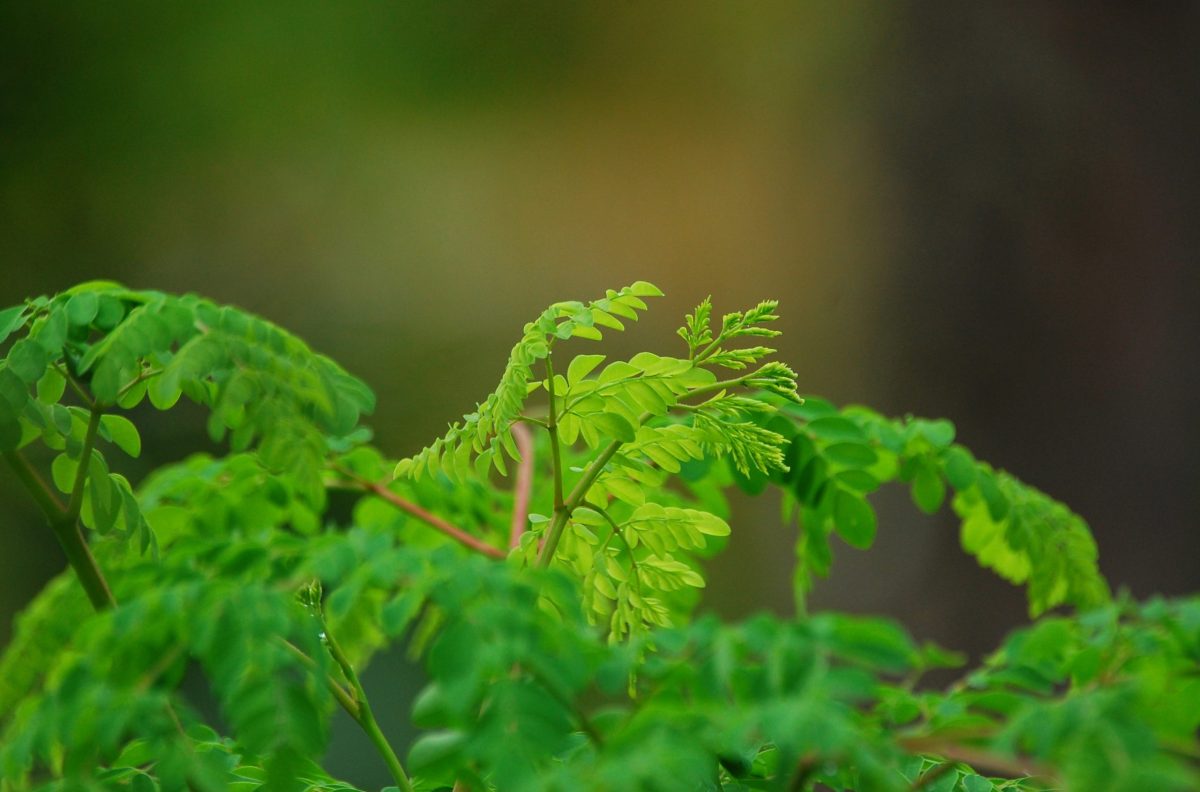
My only real success in tropical gardening was a moringa sapling my spouse brought home some time in our fourth year of living together, because I had told him so often that this was the source of my favorite food in the world. It was a tender thing, no more than a few delicate compound leaves on the end of a green stem. It could grow into a tree if I’d just let it. If I’d transplant it out of its pot. It could produce drumsticks—long, green, three-sided pods I could stew in tamarind broth, eat over rice, take me back home. I watched it grow in its pot with increasing fascination. Where all my other plants had failed, this one held on.
I am not sure which came first—sadness or the inability to write.
As with every other plant I had invested in, I began to project upon this spindly thing my entire identity. Moringa oleifera was a tree native to India, just like I was. Like me, it was unfussy about its living circumstances. Like me, it didn’t take itself too seriously, putting out copious branches from a slender, not-entirely upright stem. Unlike me, it grew tall—in fact, moringa trees grown for harvest are typically pruned short to reach their fruit. Like me, moringas were soft-wooded, easy to chop down. Like me, they would re-root wherever their broken stems touched ground.
It is unwise to plant non-native plants in a nature reserve, but when my moringa risked toppling over its pot, I gave in, found a shovel, forded my shapeless hedge of birds-of-paradise, and started to dig. The ground here was clay-rich and gummy, studded with rocks. Not a place for orchard trees, but the moringa, once planted in earth, flourished like no other plant I’d ever grown in a pot. Within a year its trunk was wide enough that my hands could not encircle it. It was a shaggy champion—unruly branches sprouting this way and that, reaching higher than the first-floor kitchen. It produced white flowers in little sprays. One year, at long last, it produced fruit. I picked them green. I made vatthalkozhumbu with them. I photo-documented the entire cooking process, astonished that such a thing could occur in a kitchen so far from Chennai, where this recipe was honed and taught to my grandmother, who could never have conceived of how far she would pass it on.
And yet I felt wracked with guilt whenever I looked at my moringa, ebullient in front of the house. I knew enough biology to understand that moringa possessed traits that lent themselves to weediness. It thrived despite nutrient-poor soils or low water availability. If its seed pods dried and snapped open, they could scatter oil-rich seeds to flutter, float, and root who knew where else. It regenerated from cuttings effortlessly.
When a large branch broke off our moringa in a rain storm, my spouse and I heaved it into the carport because I feared we would lose control of it if it resprouted. We took turns to saw the branch into armlength logs. The tree’s bark was thin-skinned and green underneath—meaning it could photosynthesize even without leaves. The logs sat in our carport, turgid as green beans. They put out shoot after desperate shoot from their sawn-off ends, from the nodes where we had snapped off their smaller branches. They tapped every inner reserve the tree had packed them with to give themselves another chance at life. We let the logs desiccate all the way through. It took months before they were truly dead.
Halfway up Cerro Ancon, this verdant forest island in the middle of Panama City, is an open, rocky cliff face. Not much can grow on bare rock exposed to sunlight, where the rain washes straight down. For the first years of my life in Panama, I took this to be just another feature of the landscape, no matter its discordance with the surrounding rainforest. It was only later that I realized that this was a scar—no, a gouging disfiguration—left over from American quarrying activities in the 1900s. Panamanians protested fervently to reclaim the Canal Zone from Americans. Memorial plaques on the summit of Cerro Ancon commemorate their fight for independence. Above my moringa, on the hill crest, the Panamanian flag waved. Below my moringa, I walked my cats on leashes because they were invasive species, and I would not have them killing native lizards or birds. And I was an Indian writer living in Panama off my Dutch spouse’s American income, stockpiling disenchantment with stories on my laptop that felt like lies. Was I not, as well, just a fucking weed?
I gave birth to a child, and a month later we moved from our home of five years to one further up the hill because its walls were built of brick, which the termites could not reclaim. In my final act of gardening, I chopped down the moringa tree to a stump, and dug up the root ball for good measure. My spouse borrowed a pick-up truck and we moved every gnarly root and hacked-down limb to the carport of our new house, to watch over them while they dried out. We froze some leaves for soup. We ate the last of the moringa pods.
At nine months, our child learned to walk, and we took her down the road to show her the old house. Our friends had moved in—Panamanian sisters with proper green thumbs. They had plant pots everywhere, growing herbs, flowering bushes, shrubs that produced fruits. Their cat and dog wandered among the pots and the birds-of-paradise hedge.
We had done a good job too, though. The moringa had not grown back. This is all I really wanted for myself, as well. To flourish for a while before I died. To nourish someone. To leave no greater trace.
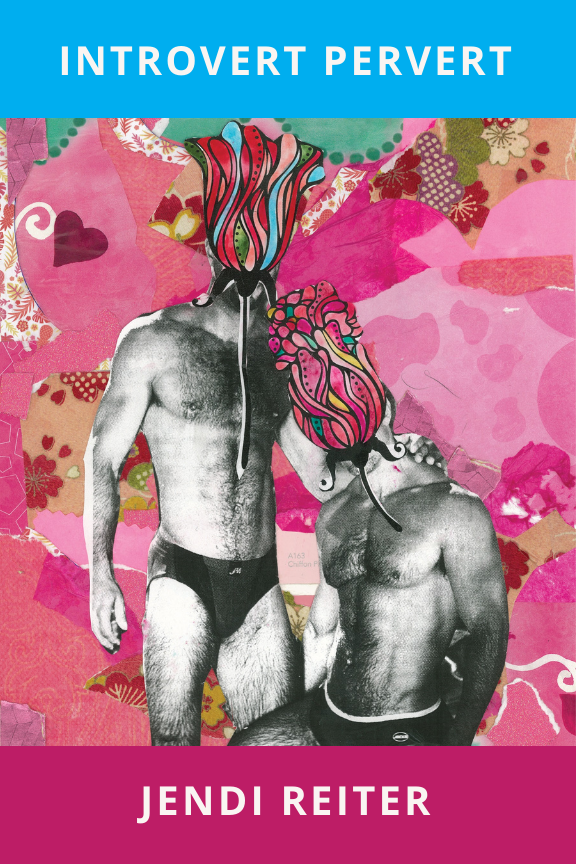
Electric Literature is pleased to reveal the cover ofIntrovert Pervertby Jendi Reiter, which will be published March 10, 2026 by Word Works Books. You can pre-order your copyhere!
As witty as it is honest, as dark as it is blindingly bright, Jendi Reiter’s poetry collection Introvert Pervert weaves pop culture, personal experience, and lightning intellect to explore our American trauma, our “reptilian sludge,” and our absolute and complete need for love—and to love.
Here is the cover, designed by Susan Pearce with art by Jendi Reiter:
Jendi Reiter: When planning this collage, I was envisioning an image that would combine flamboyance and concealment. Sources that inspired me include Nick Cave’s “Soundsuits” sculptures and the queer collage anthology Cock, Paper, Scissors. My collages often juxtapose homoerotic magazine photos with “wholesome” and “feminine” scrapbooking materials as a way of integrating my past girlhood with my present as a trans man—both rebelling against good-girl repression, and reclaiming those colors and textures that have always given me sensory joy regardless of gender assignment.
Susan Pearce: Working with this bold image, I felt the lettering should be supportive but not overwhelming. I chose the magenta color to anchor the image at the bottom. Matching the color in the headdresses, I chose cyan to pull the eye upward towards the title.
Sometimes when I lie down, I feel sad and lonely. I think how my momma must have hollered when they were beating her with the pinta broom. I can’t use pinta broom no more. I stop sweep my yard. When I go feed the chickens wallowing in their own mess out there, I can’t look at them. There was a time when chickens were my passion. I groomed them and took them to compete in fairs all over this country. That was before things started going downhill around here. It’s January and things are still going downhill.
It started last month when the men arrived in the evening. I was standing on the veranda, playing the game I’ve been at since I was small, willing the sun not to go down. If the sun goes down, it means tomorrow is here and tomorrow means more work. When you live in the country, all you do is work. Even chickens are a kind of work. The men were doing their work riding in on donkeys to tell me my momma dead. They drove me to the next village over, and sure enough she dead out like they said, but I could only tell it was her from the collared shirt, soaked red in places. She didn’t have a face left. All our old women wear collared shirts tucked into oversized skirts, but I used to make her pin a kerchief to her blouse, just like the girls in primary do. We had to take those kinds of precautions with her. That’s how I was able to say to the men what they wanted to hear, so they could get her off their hands, you know?
That’s from the beating, the man carrying a bag of groceries said. His wife was going to make pumpkin curry and roti with tea for dinner. It was a popular dish in our village. He showed me the brooms they’d used. They asked if I wanted to take she home and I thought about how much work it would be to heist her and walk for both myself and her in that heat. I couldn’t wait to crawl underneath the mosquito netting and catch a five. We were already in the season for mosquito netting. Half of the night already gone.
I took her back for Dadi’s sake and mumbled an apology to the strangers. Many of them, excepting the mothers and babies, had come outside and made a big fuss over me. I hadn’t made it into town to get a haircut yet. I could tell my long hair disturbed them. Plus, I had feathers sticking out of everywhere. They wondered if I was an accomplice, but my English put them at ease. Cut-up English means advancement. The truth was I’d gotten no further in school than any of them. I shook my head like I’d seen Dadi do whenever his shirt wasn’t ironed properly or his rice was cooked too hard. The man with the groceries called for his wife to bring me a glass of lime water for my troubles. She emerged from a house that looked like mine. I could see how my momma got confused. His wife was too pretty to live in the country.
I asked Dadi if he wanted me to run out to buy oil. Everywhere was closed but the family of one of my school friends owned a shop. I could knock at any hour and he would give me what I want. He slept in the back of the shop because of thief-man. The smell will wake the whole village, Dadi said. He didn’t want people to know it finally happen. He wanted them to know on their own time. He was the kind of man to see things through, in his own way. He didn’t want to leave her on the veranda overnight because of the strays, and nowadays you have to watch out for people.
But no one was going to miss her. That’s why I think the two of us made such a show of things. Dadi dug and I lifted the sack and tossed it in and we sat right there, in our backyard by the rotting dungs tree, looking into the abyss that the body had fallen into, a body now indiscernible in the darkness. He cried and I cried, and then we cried more. Starting was hard, but once we started, it was easy to keep going, too easy, and we had to keep looking sideways at each other to make sure the other wasn’t taking it too far, hadn’t toppled over into despair. For good measure I threw in my watch. Dadi gave me that watch when I started primary school. My wrists were too small, so he bore extra holes in the band with his pocketknife and while he was cutting he said, Whatever they teach you, don’t take on, because taking on is how people trip out. My momma didn’t always stay so. She take on and then she was only good for cooking doubles and selling them by the roadside, but then she couldn’t do that either and Dadi said one day she was going to walk into the wrong village and they was going to—my wrist felt naked and strange. I had to keep touching my hand to make sure it was still mine, keep looking sideways to make sure Dadi was still there.
As the saying goes, the opposite of love isn’t hate—it’s indifference. And it’s not uncommon to sometimes hate the ones we love the most.
One of the hallmarks of a good thriller is when the reader is made to doubt a character’s true intentions. Is he really a devoted friend? Or does he have an ulterior motive? Does she really care about her and have her best interests at heart, or is she manipulating her to get what she really wants?
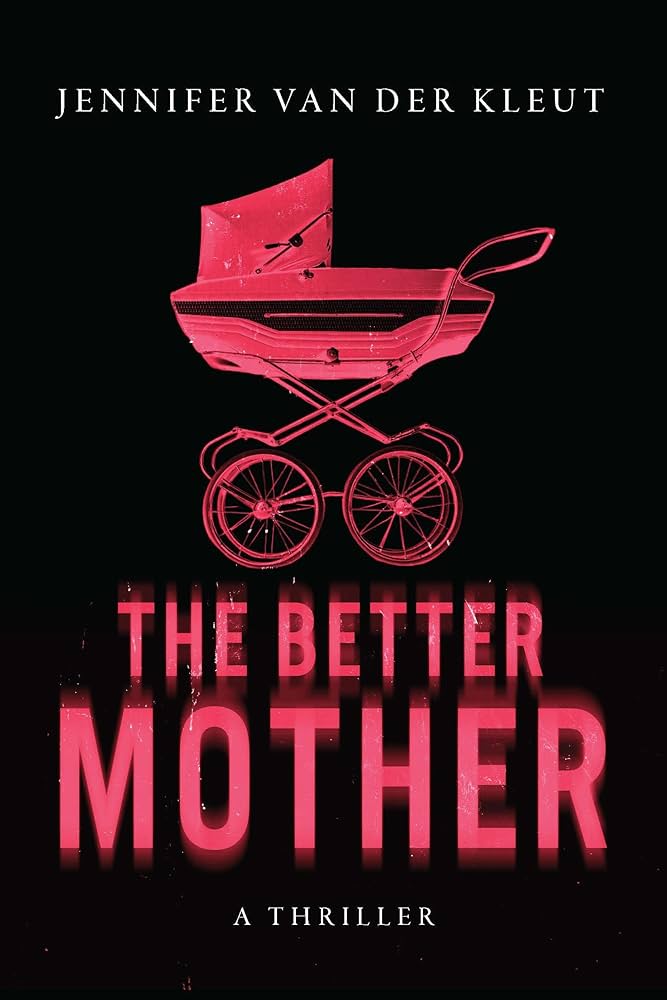
In my debut thriller novel, The Better Mother, Savannah discovers she’s pregnant after a short and casual fling with the handsome Max, whom she met at a bar. But several weeks later, when she gets back in touch to tell him, she learns he has reunited with his ex, the rich and beautiful Madison. Though it would be perfectly normal for Madison to be upset and jealous that another woman is having her partner’s baby, Madison says she understands—they were broken up at the time, after all—and that she just wants to help support the two as they form a friendly co-parenting relationship. But is Madison really just trying to get close to Savannah and her baby so she can pull off her own sinister plan?
In these eight thriller novels, friendships are questioned and pushed to their limits. Even if you’ve been friends for decades, can you ever really know someone’s true intentions? At the end of the day, aren’t we all just looking out for number one—ourselves?
Anna grew up without ever having a real friend after a tragic incident in her childhood left her scarred emotionally and at odds with her parents. So when she finally spreads her wings and heads to art school in New York City, it’s no wonder she falls for the first girl that shows her any attention—the mysterious and alluring Willow. It’s obvious Willow is favored as the program’s darling, the one who will undoubtedly succeed in her artist career. Her talent, and her beauty, earn her attention everywhere she goes. The two girls form a tight-knit, codependent best friendship, but Willow can be selfish, manipulative, and cruel. When Anna decides that Willow needs to be reminded why she should cherish their friendship instead of take it for granted, things get deadly—and it all goes down in Manhattan on the pivotal date of September 11th, 2001. This read is dark and unputdownable, with a reveal at the end you’ll never see coming.
Once a prominent chef, Lee now finds herself living on the streets after the Covid pandemic shut down her successful restaurant. Each night, she parks her car in a wealthy, oceanfront neighborhood and sleeps clutching her belongings, with all the doors locked. One morning, she witnesses the beautiful and privileged Hazel trying to drown herself in the ocean and saves her. At first, Hazel is furious that Lee foiled her suicide attempt, but soon, the two become fast friends. Lee depends on Hazel for companionship and the basic human comforts she can’t afford that Hazel takes for granted. For Hazel, Lee becomes a true friend she confides a secret to—her husband is abusive. She envies Lee’s freedom. It’s not long before Lee sees Hazel as the cash cow that can help her get back on her feet, and Hazel sees her new friend as her ticket to freedom. What happens when Hazel decides to put Lee’s life on the line to get what she wants, and Lee goes along with it for a promised payday?
Successful TV news journalist Anna Andrews fought hard to get where she is. From a modest upbringing, Anna was mostly raised by her mother, the neighborhood maid, when her abusive father checked out. Anna was shy and awkward as a teen until the most popular girl at school, Rachel Hopkins, adopted her into her twisted little friend circle. Anna was captivated by her confidence, allure, and expensive clothes. In the present, things start to unravel when a dead body is found in the woods of her small hometown and Anna is sent to cover the story. But the body turns out to be Rachel’s—and the killer may be targeting all members of that former high school friend circle, one by one. Could Anna be one of the next victims? Or is she the killer? Or is the killer her ex-husband, whom Rachel introduced her to all those years ago? In this book, all characters are suspects, and all narrators are unreliable.
Alix Summer is the creator of a popular podcast that highlights powerful women, but after many episodes, she feels the show has run its course. She is desperately trying to think of the topic for her next show when she meets Josie at a pub. They’re both celebrating their 45th birthday, and it turns out they were even born in the same hospital, making them “birthday twins.” Josie suggests an intriguing idea for Alix’s next podcast—her. She’s had a difficult life, but claims she’s on the precipice of reinvention and invites Alix to chronicle the journey. Josie becomes obsessed with Alix’s seemingly perfect life. Though Alix is wary, she can’t help but think the frightening story Josie weaves will make for excellent podcast material. But as Alix digs deeper into Josie’s past, she starts to question the truth of everything Josie has told her and begins to suspect that Josie targeted her out of jealousy. How far will Josie go to reinvent herself and make Alix, the object of her obsession, her best friend?
New motherhood, and all the insecurities that come with it, can make for gripping thriller fodder. In this novel, Daphne and Laurel—two mothers who meet by chance at a parenting class and both have daughters named Chloe—seem fated to become best friends and support each other through the emotional minefield that is postpartum life. But their friendship soon moves into dysfunctional territory. Laurel starts dressing like Daphne, telling others Daphne’s stories as if they’re her own. Meanwhile, Daphne starts to think that masquerading as Laurel could be her answer to escaping her husband, whom she is afraid thinks she’s an unfit mother and might try to take her daughter away. Posing as Laurel, Daphne takes a job in an eerie, atmospheric mansion archiving materials for an aging author—and she starts to learn that nothing is as it seems.
Kristen has been helping her best friend Emily keep the secret of what happened on their backpacking trip in Cambodia years ago buried deep, just like the body of the male traveler Emily killed. She said it was in self-defense after he attacked her when they were alone, and Kristen believed her and helped her hide the evidence. But years later, they’re on another backpacking trip in Chile when it’s Kristen who kills a male backpacker, also claiming self-defense. Emily pays her back by helping her cover it up. Now, each friend has dirt on the other, and they are bound to each other by these secrets, begging the eerie question—when is “best friends forever” a deadly concept?
Lucy was trying to escape an abusive partner when she fled the city for a small cabin in Woodstock, New York. Having been isolated for so long, she is thrilled when neighbors John and Vera take a liking to her, and the three become instant best friends. She soon discovers this is because John and Vera have been shunned by the neighborhood thanks to accusations against John. The couple finally confesses that they want to fake John’s death and leave to start over fresh with clean reputations (and, as an added bonus, the value of John’s original artwork will soar). Afraid she is losing the only friends she can really count on, Lucy reluctantly agrees to help them fake John’s death—but things go horribly awry when John ends up dead for real. Who is manipulating whom?
This book tells the ultimate tale of two “frenemies.” White author June Heyward has always been jealous of Asian author Athena Liu. They have both published books, but June’s sales barely stay above water, while Athena’s soar to amazing heights. Is it because Athena is a marginalized writer of color, as June suspects? Though they’ve never been close, they’ve known each other since they were in the same writing program back at school and catch up every once in a while. When Athena dies in a tragic accident right after showing June her latest manuscript, which no one else has yet seen, June realizes this could be her chance to pass it off as her own. Before long, she is the next big thing in the publishing world, all thanks to the fruits of her theft. But what happens when some people start to suspect the truth? And could Athena’s ghost really be haunting her from the afterworld, having seen what she did?
I first read Jenny Offil’s Dept. of Speculation when it was published in 2014. Reading it again after the birth of my first child, nearly a decade later, I was newly struck by her concept of the art monster: “My plan was to never get married. I was going to be an art monster instead. Women almost never become art monsters because art monsters only concern themselves with art, never mundane things. Nabokov didn’t even fold his umbrella. Véra licked his stamps for him.”
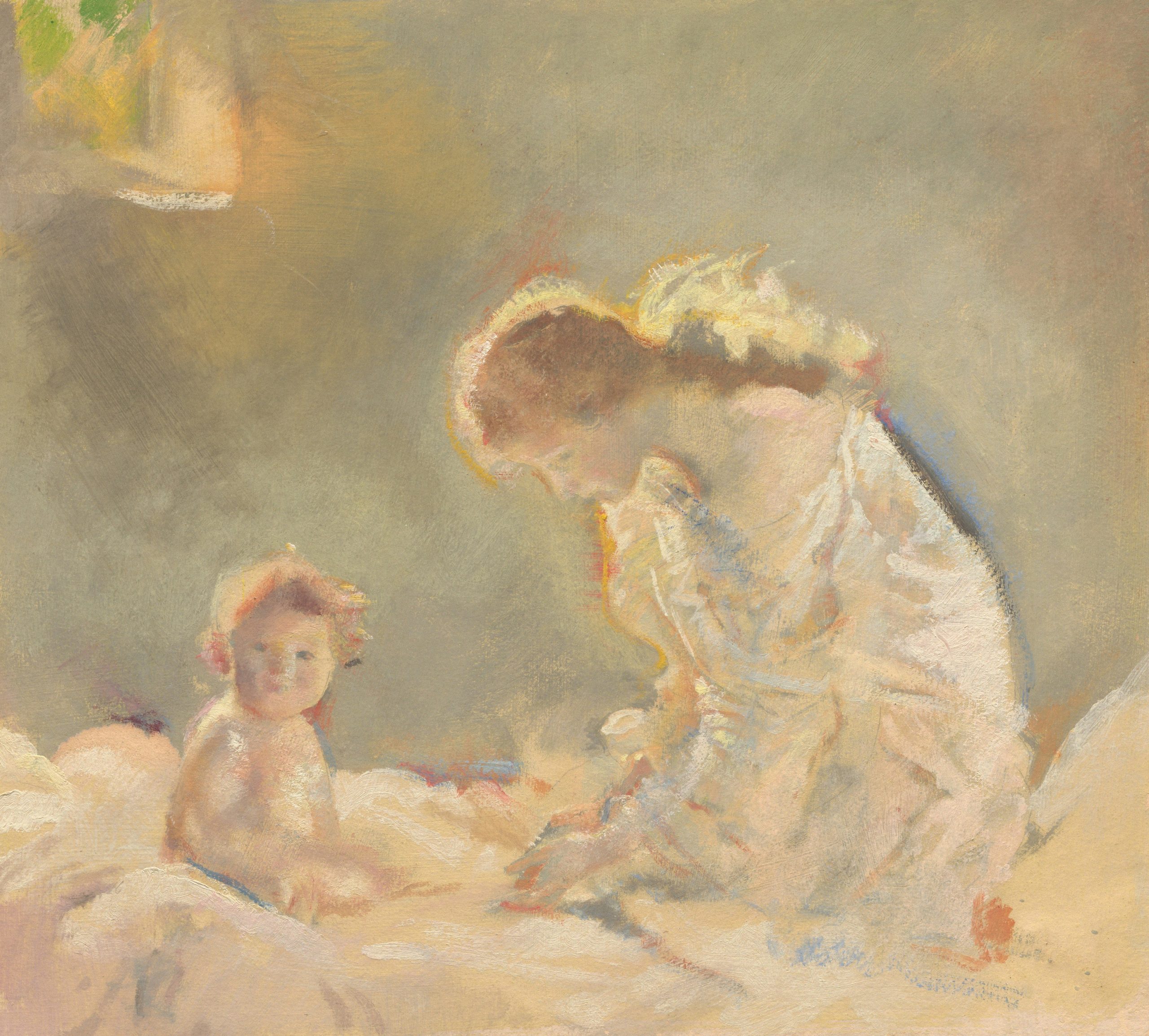
Offil’s protagonist goes on to become not only a wife but a mother. But her concept of the art monster provoked questions, inside the novel and out, of what is required to dedicate oneself to art. Parenthood, especially the role of the mother and/or primary caretaker, has long been popularly understood as antithetical to art-making. English art critic Cyril Connolly’s damning quote, “There is no more somber enemy of good art than the pram in the hall,” has held sway over the minds and career prospects of artist-parents for nearly 100 years (though of course the attitude he was describing was centuries old). Moms are boring, the culture seems to agree, mothering is a niche subject, and anyway, aren’t you too busy raising kids to make art?
What, I wondered, did all this portend for me, as an artist-now-mother? I say “wondered,” but I’m understating it by a mile. I became obsessed with how caring for a baby was changing my entire sense of self, while trying to figure out how to reshape my arts practice (which had previously involved performing live onstage 25 weekends a year) into this new role and schedule.
Happily, I am far from the only person asking these questions, as is made clear by a recent shower of books exploring the tensions, possibilities, and challenges of the dual roles of the artist/mother. Ranging widely across genres (memoirs, novels, personal essays, landscape surveys, and biographies), the works below re-examine and resist conventional motherhood narratives, while never shying away from complexity and difficulty.
In this slim, powerfully argued book, British art critic Hettie Judah makes a well-researched case that barriers to participation for artist-parents are systemic, not personal. Focusing on visual arts, Judah analyzes the challenges artist mothers face, from career-limiting assumptions to a lack of childcare provisions at residencies and exhibition openings that conflict with bedtime. She shares interventions and provocations, such as Berlin’s gallerie asterisk* which allows any artist who gives birth or cares for children to apply for an exhibition (even retroactively) to fill in the blank space on their resume. Judah is adamant and convincing that the current state of affairs is a dual injury: to artist mothers who need to be able to participate in the art world, and to an art world that, by excluding them, is inherently lacking and incomplete.
In this essay collection, award-winning poet Camille T. Dungy is refreshingly direct in confronting the economic realities of parenthood, particularly as a non-tenured professor whose work requires travel multiple times a month. As she flies back and forth across the country with her baby daughter, Dungy offers a nuanced exploration of the ways their Blackness is perceived. In her essay “Inherent Risk, or What I know about investment,” Dungy uses collage-like juxtaposition to contrast her personal dilemmas, trade-offs, and choices, with historical inserts about property and land-use in the Bay Area (her home at the time of writing), creating a complex look at concepts of value and worth. While the book is suffused with love for her daughter, Dungy is clear-eyed about the impossibility of “having it all” as a mother and author, at least under current societal conditions, writing, “I can count seven women writers who told me that having a family cost them at least one book because of the ways they had to reorganize their lives to accommodate having children.”
This lyric essay, composed in fragments and elegantly translated from Spanish by Christina MacSweeney, follows the author from pregnancy through early motherhood in Mexico City. Interrupted by literal earthquakes and the profound disruption of becoming a parent, Barrera attempts to write her contracted book but instead writes this one, a book that travels through her experiences and reflections of the stages of pregnancy, her own relationship with her painter mother, cultural stigma around breastfeeding in public, other artists’ perspective on motherhood, and the unfolding wonder and exhaustion of her new baby. Overhearing a man at a bookstore wondering why motherhood has become a popular topic in literature, she asserts “there will be more of us. Many more. In my opinion, there will never be enough of us.”
Like Barrera, Leslie Jamison’s memoir is composed of fragments (“splinters of prose”). While her separation, divorce, and subsequent romantic encounters are major storylines, for me this book was most magnetic in the many sections offering an under-the-microscope look at the kaleidoscopic swirl of emotions generated by caring for a baby while attempting to continue your art practice. She writes, she teaches, she goes on book tour, she wonders at her baby and despairs at how her focus has been shattered. A professor, Jamison describes a photo of a party she held at her house for her students, with her eleven-month-old baby in a bouncer, “and I do look like both a mother and a teacher. But I never felt doubled. I felt more like half a mother and half a teacher, constantly reaching for each identity as if it were a dangling toy—mother, teacher, mother, teacher—until the elastic tether of the other self snapped me away again.”
Playwright and poet Sarah Ruhl didn’t have time to write this book, as the title, introduction, and every essay makes clear. These micro-essays are sometimes as short as one paragraph, often barely two pages. (The shortest: “#60. Is there an objective standard of taste? No.”) Even in the author’s introduction to the book, interruptions from her children catch her mid-sentence, perfectly setting the reader up for the brief snatches of thought and theory that follow.
“In any case, please forgive the shortness of these essays; do imagine the silences that came between—the bodily fluids, the tears, the various shades of—
In the middle of that sentence my son came in and sat at my elbow and said tenderly, ‘Mom, can I poop here?’”
The short form may be the native genre of writing for parents of young children, and Ruhl’s book surprises and delights with its brief but keenly observed insights into everything from aspects of playwriting to heart-twisting conversations with her young children.
“I have been called monstrous. In my own mythology, I am like Medusa, Lady Blood, La Llorona [but]…What is monstrous is behind the mirror, the people holding it up, the mirror itself tainted with blood and violence.” In these brief, impressionistic essays, poet Leslie Contreras Schwartz explores intricacies and overlaps between motherhood, abusive relationships, friendship, becoming a writer, intergenerational trauma, medicalized racism, and post-partum depression. While unflinching in her presentation of personal and institutional violence, this book offers far more than a story of survival. It’s an assertion of narrative control: In keeping an awareness of her own past while raising her children, Contreras Schwartz argues that to tell a story is to inscribe the future: “Though my mind wants to shift between stories that exist in me, they are stories that I can’t let be passed on.”
Kate Briggs’s novel, The Long Form, opens with Helen, a translator, navigating the “co-project” of caring for her baby. With its patient attention to the minutiae of playmats, of watching a baby’s eyes open and close as they drift off, Briggs’ prose reproduces for the reader the way the gravitational pull of caring for a new baby bends time into new shapes. Helen is a translator, and, as she tends to her infant, turns words over and over and inside out. The outside world intrudes into Helen’s intimate, domestic setting when a copy of Henry Fielding’s The History of Tom Jones arrives. As Helen shifts her attention between the baby and the novel—which itself begins with a baby’s arrival—Briggs uses this juxtaposition to explore how the “long form” of literature and the specific novel Tom Jones illuminate the inherently experimental nature of forming a relationship (or executing a “co-project”) with a brand-new human.
Julie Phillips takes a biographic approach to exploring the tensions and possibilities that present themselves to the artist-mother, while interweaving her active thinking and theory-making. With a focus on now-cannonical British and North American visual artists and writers from the 20th century such as Alice Neel, Doris Lessing, and Audre Lorde, Phillips probes their lives and work to examine how they carved a way to make their art despite (often formidable) social and cultural obstacles. But this is no look-at-how-good-we-have-it-by-comparison argument; this is a smart and ambitious book, looking at structures and psychologies that are very much alive today. Phillips never underestimates the challenge and complexity of what she dubs “the Mind-Baby Problem,” offering in the acknowledgements that “I think everyone who tries to shift the motherhood discussion discovers how much that thing weighs and ends up moving it about two inches.” In its keen attention to how motherhood shaped these artists’ work and vice versa, I think this book moved it at least three.
While Catherine Ricketts’s book also structures itself around profiles of artist-parents, she interweaves memoir of her own experience of adjusting to motherhood. Though Ricketts discusses established writers and artists such Joan Didion, Toni Morrison, Madeleine L’Engle, and Ruth Asawa, I was particularly compelled by her interviews with mid-career living artists, many of whom have received acclaim, but none of whom are at the retrospective-at-the-MoMA stage. In conversation with Lauren Gloans, half of the folk music duo Loland Hum, Ricketts learns how, after the birth of their baby, the couple re-envisioned their approach to performance to de-emphasize their exhausting touring schedule. In these and other interviews, Ricketts is able to highlight the real and highly varied approaches that contemporary, working artists are applying in order to engage in both childcare and art-making. But this book doesn’t offer any easy answers. “First off,” artist LaToya Hobbs advises her, “don’t try to model your practice around what you see other people doing. Be OK with your journey, and give yourself time and grace.”
Clocking in at over 280 alphabetically organized pages, this wide-ranging, international, and wonderfully intersectional book takes an encyclopedic approach to cataloguing work and thought around artist motherhood via black-and-white print entries as well as gorgeous, full-color spreads. With entries ranging from “decolonizing the womb” to “drag mothering values,” and from “shit mom” to “trad wife,” Mothering Myths contains essays, excerpts and quotations from contributors including Alexis Pauline Gumbs, Angela Davis, Camille Henrot, bell hooks, Silvia Federici, Maggie Nelson, Linda Nochlin, Sheila Heti, Taka Taka, and many, many, many others. This is not a book to sit down and read cover-to-cover, but to dip into during moments of curiosity, despair, and delight. Is this the be-all, end-all of art mom books? I asked myself, before realizing, No, even better—it’s launching an amazing new chapter.
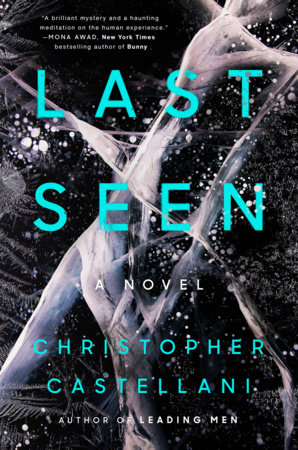
For decades, in a series of unsettling cases that have fascinated people around the country for their eerie similarities, young men who fit a certain “all-American” profile have been found dead in frozen bodies of water. White, college-aged, traditionally attractive, and presumably cishet, they tend to be good at school and sports and are often last seen out drinking before their disappearances. Their physical resemblance to one another is also uncanny. “We could have been cousins, if not brothers,” says Caleb Aldrich, one of four such boys who form a chorus of beyond-the-grave narrators in Christopher Castellani’s latest novel Last Seen, which draws its inspiration from these real-life cases.
Other details that the real cases have in common—a smiley face graffito is usually painted nearby, the guys are discovered with their arms crossed over their chests, as if hugging themselves warm—led two retired detectives to posit the “Smiley Face Theory,” that a shadowy network of serial killers is targeting young men of this description nationwide. Castellani finds this theory, which has been widely debunked, decidedly unconvincing, but remains intrigued by the question of what, if anything, connects all these deaths.
In Last Seen, he investigates by plunging us deep into the consciousnesses of Caleb, Leo, Steven, and Matthew, four young men who are able to talk to each other, and others like them, in death. They hunt for patterns, posture, tell self-serving stories to one another and themselves, and look for evidence that they are being adequately mourned by the single loved one each can still see. They struggle to work out what, if anything, their brief lives meant. Time in the book moves as it does in Castellani’s imagined afterlife: meaningful memories are captured in bright bursts of lucid narrative, mixed with murky, half-remembered fragments; past, present, and future are all constantly colliding. What emerges is a detailed topography of the boys’ obsessions, a result of the pressures to perform certain kinds of masculinity colliding with their even deeper desires to love and be loved.
Castellani and I met over Zoom to discuss the dangers of patriarchy and love, the allure of age gap relationships like the ones lost to his generation of gay men as a result of the AIDS crisis, and our fundamental unknowability to our beloveds and ourselves. Electric Lit readers in the Providence and Boston areas are invited to join us as we continue the conversation in person at An Unlikely Story on Friday, February 20, 2026.
Preety Sidhu: In some ways, this book is a big tonal shift from your previous novel Leading Men, yet about half of that book takes place fifty years after the protagonist’s death as a friend honors his memory. Last Seen is also about four young men, watching from beyond the grave to see how their loved ones do and do not mourn them. Can you speak to your career-spanning interest in love that, specifically, transcends death? Why is it important how the people we love most remember us after we’re gone?
Christopher Castellani: I’ve always been drawn to retrospective narration because it allows a character to assess the whole breadth of their life. Looking back adds weight to the story. In some ways that’s good, and it can be overwhelming to the writer to have to deal with an entire life. To me, that’s what makes it most interesting, for people to evaluate what their lives meant to them and to the people who love them and who they love and who they hurt and who they want to do right by. It has always felt more compelling, narratively, than the decisions we make in the moment, where the reader doesn’t know what the aftershocks are.
Doing it from beyond the grave gives it even more weight, because all your choices are now over. In this book, they do try to make choices after death. They have some degree of power, but that is fairly limited and ineffectual. You don’t know how long your life is going to be, so you don’t know what you’re going to leave to people in terms of their feelings and the unfinished business that you had.
PS: These guys are obsessing over whether the actions of the people they love most are sufficiently distraught. The actions of the living, the way their lives have been changed by the dead or by the sudden deaths—why the fascination with that particular measure of a life?
CC: It’s about who’s telling the story. Who knows these people best? Do the guys know themselves best? Or do the people they consider their most beloved, or the most intense relationship that they had? The answer is neither. Nobody knows themselves and nobody knows each other, and nobody is reliable in what they say about themselves or each other. The answer to how do you define or know a person is: you can’t.
I kept feeling these guys were lying to me as they were telling me their stories, and lying to themselves. The people they left behind construct them into something they wanted or needed them to be. The boys, now that they’re gone, have no way to counter that. That has always been my obsession: how we construct ourselves, how others construct us, and how both are incomplete.
PS: The power of love is tethering people to each other across death, and even that’s not enough.
That has always been my obsession: how we construct ourselves, how others construct us, and how both are incomplete.
CC: Exactly, and love obscures things. Love transforms things and creates things that aren’t even there. That’s both a cynical and a romantic view. Both sides in this book, the living and the dead, are guilty of doing both. I chose one person that the dead could look in on and interact with—with whom they had the most intense love relationship—because love both blurs and shapes the way that we see each other, and our relationships. We see it through that particular lens.
While I don’t have some grand theory about it, I—maybe childishly or romantically—believe that love is the thing that breaks through whatever dividing line there is between this life and the next. I have a line about how the dead are busy, the dead are doing their thing and not really thinking about us. But there are times when we feel deeply connected, or our love for someone that we miss is so powerful that it has the effect of summoning them. I wanted to dramatize that. I’m almost embarrassed to say that because it is so borderline cheesy, but I do on some level believe that.
PS: You open the book with an epigraph from Anne Carson about the dead walking behind us, which ends with: “they are victims of love, many of them.” What does the phrase “victims of love” mean to you, and how were you thinking about it as you wrote Last Seen?
CC: That poem completely unlocked this book. It wasn’t that I wrote the book, then went searching for an epigraph. It was with me from the beginning. I love Anne Carson, she’s a genius.
I was exploring how deeply feeling people—when one of those emotions is love—can’t help but be victimized. It is more powerful than almost any other force. You can’t help but be under its thumb, serving love more than love is serving you. That’s what I was getting at with all the characters, in various ways. They’re still under love’s thumb, even in the afterlife. They’re never free, even after they’re gone. That’s how powerful love is for these four guys.
PS: How did you first encounter the unsolved deaths this novel is based on?
CC: There was a case in Boston in 2017 of a young man named Michael Kelleher. He was missing for weeks, then ultimately found. I was drawn to the mystery of this disappearance. In one of the comments, somebody said, “this seems like a Smiley Face thing.” I was like, “what’s that?” I went down the rabbit hole.
It’s completely absurd to think that over the past thirty years there’s been this network of people preying on these guys. I’m more interested in why we think that these guys are somehow endangered. What about our psyche, particularly the American psyche, gets more excited that it’s these types of guys who are being preyed upon or vulnerable? Obviously, we think about this type of person, in our American mindset, as leaders of America. Golden boys. The future. There’s something particularly upsetting or fascinating to people, and also probably thrilling in a schadenfreude way, to seeing these strong, healthy, attractive men being taken down.
PS: What’s your “theory” on how they are connected as victims?
CC: In that very way of being the “golden boy”: that identity, that pressure, that set of expectations to be a certain way. They do have a kinship with each other—young, ostensibly straight American men. Patriarchy has a lot of terms they may or may not have signed up for, but are born into. Most of them, not to generalize, perpetuate them, and fall easily into that role without questioning it. But I wanted to give these guys the dignity of an inner life, to treat them as three-dimensional people. Especially now, we have put all these guys into a box: this is who and what they are. I wanted to explore what made them and connected them psychically. That’s why I have them able to communicate only with each other in this afterlife. Not because they’re all victims of the Smiley Face Killer, but because they’re all victims, in some way, of patriarchy. And of love.
PS: The real serial killers.
CC: Right, the real killers are patriarchy and love! Spoiler alert.
PS: Each of the dead young men can look in on the person they love most who’s still alive. In all four cases, the relationships are intergenerational. What drew you to writing about age gap relationships?
CC: I did not set out to write about age gap relationships. It weirdly just happened, it was subconscious. I did want to write about different types of love, both romantic and family relationships. I realized halfway through writing that all these relationships did have that commonality. The book doesn’t have some grand theory about age gaps in general. It’s only interested in each particular relationship.
Throughout history, there have been famous age gap relationships between men. When I was growing up, that was completely cut off.
The one between James and Caleb—a young gay man who is attracted almost exclusively to older men—is a dynamic that comes up a lot in the gay male community. It’s interesting in the age of social media and hookup apps, because when I was growing up I never remotely thought of a person older than 25 as an option. Not because of attraction, but because they were usually dying or dead or diseased. That was the mentality, that anyone over a certain age was a victim of AIDS, or potentially that. Throughout history, there have been famous age gap relationships between men, both mentor and romantic relationships. When I was growing up, that was completely cut off. Now we’re seeing so many of these relationships, that are interesting for what attracts both sides. Other than the basic sexual chemistry, what do they get from each other? What do they need from each other? That was the thing I was exploring with James and Caleb, through the lens of Derrick, who is a survivor of that AIDS era.
I also wanted to show the connection between these young men disappearing and the young men who were disappearing all through the AIDS crisis. I wanted to draw some link between those two kinds of disappearances of young, usually attractive, often-but-of-course-not-always white, men. These are who became the face of the AIDS epidemic: young, pretty, white men. Not that they were remotely the only people affected.
PS: Matthew is obsessed with his college girlfriend Tessa—some might even say stalking her—but the person is able to see after death is his mother. What did you want to explore in the contrast between this obsessive love for a partner and the more enduring bond between mother and son?
CC: The relationship between mothers and sons has been my most consistent writing obsession. He’s half Italian, I’m full Italian. I was thinking of the really strong relationships between mothers and sons in Italian families. This mother is not Italian, but she’s in this Italian world of deeply passionate love among family members.
She’s relatively cold, she’s almost like a “stage mother.” There’s the trope of mothers that have this kind of romance with their sons, like the “hockey mom,” the “soccer mom,” the “swim mom.” They’re with their son almost like their partner. There’s this pride and a weird almost sexual vibe that I’ve always found interesting. I wanted to explore that. She’s never had a love relationship with her own husband. Her most “romantic” relationship, in a way, is with her son, which is why the enduring image she wants to have of him is with his head held high and his fists raised—the strong, all-American scholar-athlete, the perfect son. That myth-making between mother and son is what I was interested in, from her side.
From him, it’s recognition. He’s always wanted her to be a more nurturing mother, not putting him on a pedestal. To see him as more flawed, human, vulnerable. By dying, he’s achieved that, and wants to know that she sees him. He’s so upset when she walks by his picture and doesn’t notice him anymore. Because he also has this stalker, “extra” tendency, he almost wants his mom to stalk him. That’s the way he understands love, that kind of obsessiveness. Because she doesn’t have that for him, he keeps trying to “win” her, even from the afterlife.
PS: For Caleb and Steven, the people they love most, James and Monica, are older and married. What were you hoping to explore with these two affairs?
CC: I think of James and Caleb as a legitimate love affair. James is trapped in his bisexual identity, not able to have that fully recognized and integrated into his life. I wanted to explore that trap, closeted life. It’s narratively interesting to have a character who is leading a secret life—the stories he tells himself to justify his behavior. Using love as a pretext for dishonest, bad behavior. He’s cruising, he’s lying to his wife, but with Caleb he’s in love.
What is love if not seeing the messiness?
With Monica and Steven, from her side, I think of her as a trifler, a destructive force who doesn’t understand the extent of her own power and privilege. She procures him, basically prostitutes him for herself. While she had tender and certainly sexual feelings for him, I do not think of that as a love relationship.
He does love her, and sees her as a more wounded person than she sees herself. He wanted to be Arthur [her husband], because as a young, white American man, he felt like he should take over the world and saw Arthur as someone who had. He felt he should be in that position. All that was entangled in that obsession.
PS: How much is it about love enabling bad behavior versus expressions of love being impeded by unfair societal restrictions?
CC: I wonder whether the excuse for bad behavior is intrinsic to the love itself, part of the thrill. You can’t discount the thrill that James, Caleb, Steven, Monica, and to some extent Matthew feel. The charge, the illicitness that goes into these relationships is what makes them so exciting. Like a lot of people in the queer community say, once we get too mainstream, it’s not fun to be gay anymore. You almost need the constraints, the negative societal forces, to convince yourself and each other that you really do love each other, because you’re working against all those forces.
I don’t think that makes it any less legitimate. It’s just part of the unique “love package” every relationship has. Some relationships don’t have that, but they’re all legitimate relationships in terms of the emotion and passion.
They have different calibrations of things like, “how much of this is transactional?” and “obsession?” and “egocentric?” and “fulfilling a need from childhood trauma?” That is wrapped up in all of the relationships. No relationship is free of those. We all have things that draw us to each other in love, that could be considered negative or not healthy. All successful relationships have these dynamics that might be technically considered unhealthy but work for that relationship. We’re all victims of love in a relationship that is sustained and passionate.
PS: In describing his affair with James, Caleb says, “Seeing is a weird word to describe what we were doing, but it was also the perfect word.” Obviously, “seeing” is important in Last Seen. The sections have headings like “Crime Seen,” “First Seen,” “Last Seen,” and “Love Seen.” Why is “seeing” such an important theme?
CC: Seeing goes through every single relationship. What is love if not seeing the messiness? You see them in all their messiness and they see you in all your messiness, and you still stick with each other. That’s not a groundbreaking way to think about love, but to me it’s the most true.
It also means a recognition: even if I see all your messiness, there’s other messiness I will never see. You have your own life and parts of your life I don’t see, and I accept that too. Everything you’ve seen, you accept, but you also accept there’s a lot you won’t see. That’s part of the love.
The night before we met with Babette, Sarah and I had almost canceled the interview due to stress. At the time, our daughter, Sophie, was just three months old and refused to take the bottle. Sarah had had no trouble breastfeeding her, but Sophie rebuffed the synthetic nipples, despite the many sizes and flows we’d ordered. Our night nurse had been no help, and Babette sensed our distress. When we told her about the cause, she responded, very plainly, that it was a phase that would soon pass; she asked us if she could give it a try (she was older than every other nanny we’d interviewed and seemed wise for it). Sarah handed Sophie over to Babette, and she cradled Sophie in her lap. She dragged the bottle’s nipple across Sophie’s lip and lifted it away, almost teasingly. After about thirty seconds Sophie latched. Sarah and I sat in the chairs opposite our baby in disbelief. Babette left and we offered her the job the next day.
It took Babette time to get used to the sprawl of our Tribeca loft. I’d also been surprised by the space when I moved in (Sarah owned it). The high ceilings, the industrial-grade kitchen, and the twice-a-week cleaner. Sarah was adopted—one of six siblings—and her family money was old, from cardboard manufacturing. She’d been the only child to be involved with the business, pioneering a sustainability packaging program and founding the family’s philanthropic organization, where I worked as communications director. I’d never dated someone so wealthy before, and I often resented how unconcerned she was with the finances. I’d grown up solidly middle class in Baltimore—my dad waited tables at a high-end steak house, and my mom worked as a public school administrator. Even then, I’d been considered wealthy by some.
There came a point in my relationship with Sarah when I had to accept that I too was rich. After all, the money might become mine at some point, albeit partially. I’d felt like a fraud proposing to her, and then signing the prenup. The pageantry of my kneeling before her family’s standing. Accepting that this rarefied life was mine, and that, really, I didn’t have to work for anyone else ever again, was unsettling at first. I felt an acute guilt bearing my mom’s passive-aggressive comments. And oddly, this was the moment when Moses, Sarah’s gray tabby cat (to whom I was deeply allergic yet had built a painstaking immunity over the course of a year) attacked my feet. Whenever I left the bathroom after a shower, he’d hiss and pounce on my bare toes. As if he’d sniffed out an old fear of mine. As a kid, I’d had dreams about small creatures—opossums, squirrels, and beavers—assailing my toes. I was convinced Moses had penetrated my psychology, pegged me as an intruder. This was a lifestyle he too enjoyed, and he was protecting it. He ate from an automatic feeder that was double the price of my espresso machine.
When Moses took immediately to Babette, it felt like a betrayal in both directions. Since I’m also employed by Sarah’s family, Babette and I shared a strange kind of kinship. Both on the payroll. Both enjoyed benefits. Both had to be wary of occasional reprimand. Babette also had a cousin in Baltimore, so she knew where I was from. And she’d been surprised that I knew anything about where she was from—Guyana—and that I loved West Indian food. It wasn’t long before she insisted on teaching me how to make roti. Sometimes she stayed late and we cooked together. Roti had become a staple of our kitchen and Sophie’s favorite food.
The best part of my day was Sophie running to the door when I came home from work. “Daddyyyyyyyyyyyyy,” she said, clobbering my knees. Babette had put Sophie’s golden hair up in two violet butterfly clips. She looked older.
Babette came over with a small snack bowl in hand; she’d been slow to rise from the couch. She wore an Atlantic City T-shirt. “This girl is getting so smart, I tell you.”
As I hoisted Sophie up, she promptly squeezed my nose.
“How was your day, Jordan?” Babette asked.
Jordan isn’t my name. I stood bouncing Sophie for a moment and looked at Babette, waiting for her to realize. I thought maybe even Sophie would. “Good,” I said. “I was eager to get home to this little stinker.”
The moment to correct her about my name quickly passed.
“You need a ride tonight?” Babette asked.
On Tuesday nights, I played in a pickup basketball game with friends at a high school in Sunnyside, Queens, where I used to live. She lived close to the neighborhood.
A moment later, the front door opened. Sarah came in from work. She moved cautiously, and I wondered if this was because we’d just found out she was pregnant again. (We hadn’t told anyone.)
“Mommmmmy.” Sophie shimmied down and ran to the door.
“Hi, Sarah,” Babette said, yawning.
“Hello, everyone,” Sarah said. She slipped off her shoes and took Sophie into her arms. She leaned over, and I kissed her cheek, tasting the sweat from her Orangetheory class.
I watched Babette again to see if she might realize, having now said Sarah’s name, that she’d mistaken mine. But she walked into the living room to pick up stray toys from the floor. She tossed Sophie’s alligator into the large patterned basket in a tall arc.
“Maybe you should let me in your basketball game,” she said to me.
Her own laughter had a way of crowding out mine, especially in response to her own jokes. It was a laughter that seemed too harsh for her. I remembered basketball practices when I’d have to switch to guard taller players in the post, hearing them yell to the gym, I’ve got a mouse in the house.
“My mom used to come and watch me play,” I said. “I could use a fan in the stands.”
I went to the bedroom to grab my gym bag. Before we left the apartment, Babette reached down to line Sarah’s shoes up with the rest of her heels by the door. Moses walked over and brushed his body against Babette’s arm as she did.
In her car, an air freshener dangled from the rearview next to some Diwali beads.
“How’s the family?” I asked.
Babette bumped the steering wheel with the butt of her hand. “My granddaughter got another ticket. And she didn’t show up to the hearing last time. Now I have to take her in. A pain, I tell you.”
She had two teenage granddaughters, one about to graduate high school.
“Girls are sweet when they’re young,” she continued. “Then they grow up and you wish you had boys. But then you remember that boys become men and you’re glad again that you had girls.” She laughed to herself. She wore her glasses when she drove and sat up close to the wheel.
“You never wanted a son?” I asked.
“My daughter was plenty for me.” She smiled to herself. “I know Sarah is pregnant.”
I turned and eyed her. “How?”
“A mother just knows,” she said. “You want a boy? Momma’s gonna need an heir.” She cackled.
We crossed the Fifty-Ninth Street Bridge, which was lovely in the evening, offering a dusk-gilded view of the city. As we got deeper into the backstreets of Queens, a calm came over me, the residential blocks reminding me of neighborhoods in Baltimore—Pigtown and Butchers Hill—the Formstone fronts and the large swaths of sky rising above the roofs. It was like being dropped off for practice again.
Babette sighed before speaking. “My husband had his hours cut at work. I’m so grateful I have you all. He is too. I don’t think I tell you enough.”
Her husband worked as a janitor at a yeshiva in Queens. Babette had said that the Jews paid him well.
“I’m so sorry, Babette,” I said. “I remember how hard it was on my mom when my dad had his hours cut when I was in high school. Will your husband look for another job? Or part-time work?”
“He’s hoping it’s just temporary, a few weeks. But he’s definitely open to other things.”
I told her I would ask around in the meantime. Before I got out of the car, she patted me twice on the forearm. “Good luck on the court!”
Later in the week, we assembled Sophie’s dinner as a family. Sophie sat on the lip of the counter, schooching her butt on the marble.
“Iwanroti,” she said.
“We can’t eat roti every day, sweetie,” Sarah said.
“Why?” Sophie frowned.
“Because we need variety in our diets.” Sarah chopped broccoli florets with a large knife. Her blond hair draped her face just below her chin. She looked beautiful, if a little severe, after a long day. “It’s more of a snack, not real food.”
“It’s real food, sweetie.” I pinched Sophie’s knee. I could feel Sarah’s blue eyes resting on me. “It’s just the more you eat something, the more likely it is that you’ll turn into it!” I pinched harder, and she leaned over giggling.
As Sophie sat with her dinner, Sarah and I drank Malbec on the couch, her glass filled with a demure new pregnancy splash. Before long, Sophie grew restless again. We told her to sit in her tiny chair until she was done, which she rarely did, even with Cocomelon on the TV. Instead, she spread out on the couch behind the table. With her butt angled high in the air, she planted her cheek on the cushion and watched.
“It’s almost bath time, stinky butt,” I said.
When she didn’t respond I crept over to her and stared at eye level. “What are you doing lying down like this?”
“Resting my ear,” she said. “Like Babette.”
Sarah set her glass down; we stared at each other for a moment.
“What, honey?” Sarah asked.
I tilted my head at her. “What do you mean?”
“Resting my ear like Babette does,” she repeated. After a minute, she grew bored by our questions and flipped over onto her back. I nuzzled my head into her stomach, and she laughed uncontrollably. We continued playing as Sarah cleared Sophie’s plate and went to start the bath.
When Sophie was down for bed, Sarah and I spoke quietly in the kitchen.
“What do you think Sophie meant earlier?” Sarah asked.
I lacked a sound explanation. But then I remembered. “Babette called me Jordan the other day.”
She looked confused. “What do you mean?”
“Like it was my name. I thought she was making a basketball joke since it was Tuesday, but I think she just forgot.”
“Stockton I can see, but Jordan, babe?” She grinned. “Did you say something?”
I shook my head. Moses sat upright in the corner and stared, which he did constantly, to unnerving effect. “I waited too long and then it felt awkward.”
“And how does it feel now?”
Sarah was quick, and her playful rebukes always made me laugh. She poured me more wine.
“I bet it was the name of the guy she used to work for,” I said. “She’s old. She’s bound to slip up.”
“Resting her ear,” Sarah spoke to herself. “It must be something Babette said. Bizarre.”
At work several days later, I received a video clip from Sarah out of the blue. I assumed, at first, that it was her trying to be sexy in the way she’d started lately; a brief striptease or view of her bare thighs below the table. Her confidence was intoxicating. These clips had a way of landing at the most inopportune times of the day, which only added to their power. But this one wasn’t sexual. Only when I started playing it did I see Moses in the frame. His triad nose darted at the camera, and I realized it was the view from his feeder. It had a camera and came with an app, too, but we’d never reviewed any footage or cued up the live feed; I’d forgotten about the capability. Then I saw Babette and Sophie in the background. Babette was seated on the couch, and Sophie was on the floor playing with her stuffed alligator. The view was partially grainy, and it glitched every few seconds. I felt like a depraved voyeur as I watched, yet I couldn’t stop. Gradually, Babette began to lean. She caught herself once and sat upright before slouching over again. My heart sank to watch Sophie on the floor, playing alone. Soon enough, behind her, Babette was completely horizontal. I rewound and watched it again. I realized then that the clip’s sound was off, but I couldn’t bear to add any more information to what I saw. Sophie dropped her alligator and rose from the floor. When she leaned over the couch, Babette startled and sat up. They appeared to talk for a minute, and then Babette hugged Sophie. And then it was done.
I felt like a depraved voyeur as I watched, yet I couldn’t stop.
That night, Sarah and I divided the evening routine. I read Sophie her favorite book about a penguin’s first day of school, imagining what it would be like once Sophie started preschool next year, when Babette would have to watch two kids.
When I came out, Sarah nodded at me, holding up a bottle of white. Her face shone with snail mucin.
I nodded, and she came over to join me on the couch. “I’m shocked,” she said.
“I can tell.”
“You’re not?”
“I am.”
“Well your energy is off,” she said.
“It’s just that . . . I felt uncomfortable watching the video.”
“No shit—We agree on that.”
I pressed my lips against the glass. “Isn’t it illegal to spy on someone?”
“Please. We’re all spied on, all the time. It’s practically nationally sanctioned,” she said. “You do understand what it is you saw? Sophie was playing alone while Babette was passed out beside her.”
“I know.”
“I thought you’d be a tad more worried by it. There’s no way we’re continuing to pay someone who literally sleeps on the job. How’s she going to watch two?”
“It’s dangerous to extrapolate,” I said. I thought about Babette’s husband looking for work. “Maybe this only happened a few times.” I worried this was tacit encouragement for further espionage.
“Once is enough.” Sarah sat back. “Once is unacceptable.”
Moses leapt onto the couch and curled up in her lap.
“We can’t be rash.” I bounced my foot. “Babette is a huge part of Sophie’s life—our life.”
“She’s an employee, babe. We pay her to do a job, an extremely important one at that. It’s clear that Sophie has seen her do this before, enough to repeat Babette’s excuse.”
Sarah brought her fingers to her lips. I rubbed her shoulder, feeling more of my own tension. “I know, it’s not right. But just think for a second—they’re safe inside the apartment. The place is still babyproofed.”
Sarah shrugged out from under my hand; Moses seemed to balk too. “What if Sophie was choking? I can’t believe I’m having to convince you.”
“Imagine it was an afternoon when Sophie was with your mom, and she happened to nod off briefly on the couch? Babette woke right up when Sophie came over.”
“My mom’s not a narcoleptic.”
“Babette is family,” I said.
Sarah looked surprised. “I know this sounds cold, but let’s be honest: the whole nanny as part of the family thing is the bullshit we tell ourselves to feel better. Sophie is family. We should’ve known this with Babette’s age.”
Sarah had picked up enough speed to bypass my hesitation.
“So, what do you think we should do?” I asked. “We can’t just cut her loose. That’s ruthless.”
“Why do you keep thinking of this from her perspective?”
“I’m thinking about this from Sophie’s perspective. It’s a lot to ask of her to get used to another nanny.”
“You need to consider us—which will be the four of us soon. We’re your family.”
After lunch the next day, I sat in a meeting that ran for over two hours, glad to focus on something that wasn’t Babette’s narcolepsy. But when I returned to my office, I found another email from Sarah. No subject line. I opened it and saw two clips, both of which were dated earlier in the day. Too big to text, it read above the first. Volume up, below the second. I felt trapped by Sarah’s insistence.
I’d have better luck asking the cat for more money.
The first clip opened with Babette, again, stretched out on the couch. My stomach tightened and I closed the clip. The other clip showed Babette and Grace, a nanny in our building who watched a boy Sophie’s age. They had playdates frequently. The four of them sat in the living room; I turned up the volume. Sophie was singing “Following the Leader,” ignoring Mikey, the little boy. When this stopped, they played with magnet tiles on the floor, and I could hear the stray clacking plastic. Then I heard the adult voices. Grace was younger than Babette, strident as she spoke. You need to ask them for a raise, she said. These people are rich, it’s nothing to them. Don’t let them take advantage of you. Grace went on to tell Babette how she had demanded more money at her last year-end review. She told Babette that, honestly, she needed to talk to me. Babette’s laughter was startling. Please, she said. You know that man is scared for his life in here. He’s a punk. I’d have better luck asking the cat for more money.
I tensed. My legs locked up. I looked over my shoulder like I was the one being watched. I played the clip once more to hear her self-satisfied laughter, to see her frail old body jiggle. Then I slammed the laptop shut.
When I got home that night, Moses’s feeder had been moved to the other side of the room, positioned with a clearer view of the couch.
“Hey, Jordan,” Babette said.
I dropped my bag to the floor; I mustered a hey.
Sarah glared at me before she spoke. “Did you just call him Jordan, Babette?”
Babette turned back and forth between us, as if she thought we were playing a joke on her. Sophie colored furiously at the table as the three of us stood in silence. Then Babette’s face opened up; she palmed her mouth and her eyes dilated. “I’m so sorry.”
I feigned a smile without speaking, then nodded.
“Gosh—I’m embarrassed.”
“What you guys talkinabout?” Sophie perked up. This was something she’d started asking lately, whenever adults spoke in nontoddler-inflected voices.
Sarah stroked Sophie’s hair and said it was nothing. Moses’s head reared up from the couch.
Babette came over to me. “Jordan was my old boss. I worked for them for so many years.”
Then she reached out for a hug, her body soft against mine.
“I hope you’re not offended. I must be getting old!”
Sarah leaned her head, pretending to doze off behind her.
“It happens,” I said.
After Babette packed up to leave, I walked her to the door. She spoke before I could. “Did you hear back?”
I was confused. “About what?”
“The job for my husband?”
I couldn’t believe her gall. “I’ve only started asking about it. I need more time.”
“I really appreciate what you’re doing for us, so thank you.”
“Listen,” I started. “Sarah and I are hoping to talk to you on Friday. Just for a few minutes after work?”
“Of course,” she said. Her face stiffened for a moment as she pulled out her glasses from her bag. “I’m really sorry I called you Jordan,” she said. I could see under the light that her lenses were slicked with grime.
The next evening, Sarah skipped Sophie’s bath and got her down early. I waited for her in the living room with a glass of seltzer, avoiding alcohol’s dulling effect. Sarah poured herself a sip of the Orvieto we’d brought back from Umbria the previous summer.
“You still in a mood?” she asked.
“Just thinking about Babette.”
“I feel like maybe I was a little rash before,” she said. “I was getting sentimental thinking about how sweet she was with Sophie as a newborn. The way she was with her bottle. We were lucky to find her when we did.”
I was surprised by her soft turn. “I know,” I said. “But I was thinking about what you said about the family before.”
“Oh?” Moses sat still beside her feet. “So you think she’s got to go?”
I stopped short of an about-face. “The prospect of hiring someone new is daunting. I’ve been torn,” I said. “But clearly now Babette’s naps are a pattern.”
“I knew the nannies talked behind our backs, but that clip was excessive.”
I nodded in agreement. “And look,” I said, pointing to a small stain on the carpet. “Babette used to clean stuff like this. She’s letting a lot slip.”
Sarah pursed her lips at me. “My mom offered to help us out if we needed it. She thinks we should let her go too.”
Tired of water, I got up to pour myself wine. “So, how do we do this? We’re supposed to tell Babette we’ve been surveilling her?”
“In the state of New York, it’s entirely legal to have a camera installed on your property for protection.”
I pictured Sarah, hunched over her laptop, devouring the stipulations of law.
“Sophie brought it to our attention, anyway,” she said. “We don’t have a nanny cam, technically. We’ve never monitored Babette before. It’s only by chance that we found this out.”
“I suppose we’re simply confirming something that Sophie told us,” I said. The wine caused a band of heat to form in the middle of my face. “I already told Babette we needed to speak to her on Friday.”
Sarah set her glass down and inched closer to me. “Wow, babe,” she said. Her energy shifted suddenly. She looked at her phone and clicked something closed before tossing it onto the couch. Then she shooed Moses away with her foot.
She mounted me. I stared at her mouth. She kissed me hard and bit my lip. Gripping my throat, she rose over me. We had fucked in the living room after finding out she was pregnant again, which before then we hadn’t done in months. As she started sucking my neck, I noticed the glossy white cat feeder in the corner of the room, with its tiny light on.
When Friday arrived, I felt nervous. I’d never fired anyone; we had scripted talking points.
Sophie buried her face in her alligator stuffie in the living room. “My love, what are you doing?” I asked her.
“She’s been silly all day, this one. I tell you.” Babette wore her burgundy Juicy hoodie with rhinestones, the one her husband had gotten her last Christmas. She sat in the chair beside me.
Sarah hovered in the kitchen, making herself tea.
“So, what did you guys get up to today?” she asked. She eyed me as she dipped her tea bag.
“Aw, we had a lot of fun, huh, Soph?” Babette pitched her head as she spoke. “We drew. We played restaurant. We went to the playground with Grace and Mikey.”
Sarah sat in one of the chairs facing us.
“Sophie climbed the big ladder all by herself. Even Mikey’s still too scared!” Babette chuckled.
Sophie looked up. “He’s scared.” She bared her tiny teeth at me.
“Thanks for making some time to talk with us,” I said. “Firstly, we want to thank you for how wonderful you’ve been with Sophie. I don’t think we tell you that enough. From the first time we met you, you never stopped teaching us how to be parents.”
Sarah widened her eyes at me. Babette mumbled some appreciation; her hands lay cupped in her lap.
“And we know just how exhausting the work can be,” Sarah interjected.
I stared back at her. “We’ve been thinking a lot about Sophie and how the next few years will play out, preparing to start pre-school, deciding what her schedule will be like.”
Babette nodded along.
“A lot is changing,” I said. “And we feel like we too need to make a change.”
I could only look at Babette for another second. Instead, I focused on a new, small stain on the Moroccan rug. A dry discoloration camouflaged by the spiral pattern near her feet.
“What you guys talkinabout?” Sophie had clued in to the room’s changing tenor. Her face was blank, innocent.
Sarah got up and grabbed Sophie to sit on her lap.
“Our childcare needs have evolved, Babette,” I continued. “And we’re really sorry, but we’re going to have to let you go.”
She looked down, hanging her head. Then she looked over at Sophie. “What?” she said finally. “I’m shocked. I didn’t think it was this—I thought I was getting a raise!”
“We’re giving you a month’s severance, and we’ll write a good review for you on the Tribeca Nannies site. You’ll find another family to work with,” I assured her.
“It’s not even been three years.” Babette’s eyes filled with tears. “You said how much finding someone for the long term was important to you all when I first interviewed. Someone to grow with Sophie. I was so sure I would be with you all for ten years at least. I love Sophie so much. I can’t bear to think about leaving her.”
Babette looked for Sophie again, but she was resting against Sarah’s shoulder. Sarah kissed the top of Sophie’s head.
“I know this is hard,” I said. “It’s been such a tough decision for us too.”
“Tell me—why are you firing me? What have I done? I’ve only ever been good to you.”
Babette’s voice grew loud. Moses darted across the carpet, startling me.
“Sophie needs more active engagement, someone who’s able to scrabble around on the floor with her.”
“But you knew that wasn’t me when you hired me. And I do play with her, entertain her, all the time. I never mislead you.”
I lowered my voice a bit. “Sophie said you were sleeping during the day.”
“What?” Babette looked indignant. “I only ever rest my head when she naps. I never sleep!” She paused momentarily and raised her fist to her mouth. “I thought you were decent people. But I’m a fool.”
I stood up and glanced at the cat feeder. Moses feasted from it now. “Babette, you don’t even clean anymore,” I said. “We come home to dirty dishes.”
“Now you’re really lying,” Babette yelled.
“Look.” I pointed at the stains on the rug. “Why are there stains?” I was angry now. “That’s unacceptable.”
Sophie started to cry, sniffling. She covered her face. Sarah rose and took Sophie down the hall to her room.
“This isn’t you,” Babette said quietly. “She’s putting you up to it.”
“It is me, Babette,” I said. “I’m firing you.”
She started to weep. I sat with her for a minute as she gathered herself, then led her to the door. Her sobs echoed in the empty hall as I shut the door behind her.
On Monday morning, when I left the bathroom after showering, Moses loped down the hallway and clawed my toes. I splayed myself against the wall, failing to deter him by flicking water from my feet. I ran away and finally closed him off from my room to get dressed for work.
“Are you starting to feel relieved?” Sarah asked when I came into the kitchen. “I’m proud when I think about how you handled it. We did the right thing, babe.” She pinched some sea salt onto my overnight oats and fed me the first bite. “I’ve already found a woman I love,” she said. “Early education degree. Young. Vibrant. Well slept.”
Sarah’s mom was heading into town soon to help for a bit. I wished my mom could do the same, and I realized then that Babette would never drive me to basketball again. In truth, I was wary of another nanny—the way a new person in the house inevitably reveals and refracts new aspects of yourself.
“She’s coming on Wednesday to meet us,” Sarah said. She came close to me. “Today’s going to be a good day,” she said. “I can feel it.”
After a strategy meeting later that day, I returned to my office to find an email from Sarah. The subject line: XoX. I turned away from the screen, incredulous. The sole relief of the last days was not having to confront another one of these videos; it was gratuitous at this point. I almost didn’t open it. But when I looked again, I saw that the clip was dark—nighttime—and the view of our living room was dim. After I pressed play, it took a minute to distinguish the large form on the couch as two people. I watched the bright points of my eyes peering back at me. Sarah and I were having sex.
I got up to close my office door. When I came back to resume the clip, Sarah moved slowly on top of me as I reached into her hair. My face flushed before my computer screen to witness it; I’d never seen myself in this way, in the motion of fucking. The clip was just over twelve minutes. I scrolled ahead, impatient, our positions staggering and changing. Toward the end, Sarah had come to sit behind me. She held a hand roughly over my mouth as she reached around. My lips now were dry while I watched her stroking me, watched her muffling my moans as she finished me off. The clip stopped abruptly. I sat back in my chair and stared at the final frame. I remembered this moment, just before I’d gone to the kitchen to get a towel. Right before I’d crouched down on my bare knees and tried to scrub clean the stain I’d left on the rug.
Time is such a slippery thing! How do we count it? By books read, conversations had, people loved, or lost? As we approach the Lunar New Year, I am struck by the many ways different cultures mark the passage of time. For my Korean family, the Lunar New Year held the anticipation and gifts of Christmas, the feasting of Thanksgiving, and was always accompanied by storytelling for the beginning of a new animal year.
In writing my debut poetry collection Brine Orchid, I kept thinking about how the stories we tell each other, and ourselves, shape our experiences of the world around us, and even our own identities. In my poems, myths intertwined with family legends, immigration records echoed Bible stories, and fairytales from both Asian and North American experience tangled into a way of understanding my own multicultural identity. One of my favorite stories was of the Great Race and the Chinese Zodiac—I loved the idea that we each have an animal counterpart whose action parallel our own character and destiny. The myth of the Great Race is one way of keeping time: Since the Han dynasty, months and years were split into 12-part cycles with accompanying animals, stories, lucky numbers, favored flowers, and more. According to legend, the Jade Emperor called the animals to a race that included crossing a vast river, and the animals were given their place in the zodiac based on the order they completed the race—an unexpected sequence impacted by their dispositions, choices, strengths, and methods for crossing the river. Many were intertwined with one another—the snake wrapped around the horse to be carried to the finish line, the rat rode on the kind oxen’s back across the river, the goat, monkey, and rooster worked together to cross the water on a raft—and some believe we carry these relationships with us into our own lives.
As the Year of the Snake wanes and the Year of the Horse waxes, celebrate this Lunar New Year by connecting with a new book of poetry, perhaps based on your or a loved one’s zodiac animal. What qualities, energies, and luck do we hope for, look toward, and carry with us into the future? Which animal are you, and how might its strengths and weaknesses map onto the music of poetry? Find out!
As the famed winner of the Chinese Zodiac Race, the Rat—and the people born in its years—are believed to overcome all odds to achieve their goals. Like this zodiac sign, Let the Moon Wobble breaks rules of form, denies borders, enjambs lines, and overcomes distances with creativity, resourcefulness, and wit. When faced with impossible or uncomfortable questions, the poet says, “I lie / like I always do.” The ungovernable beauty of this collection is messy, wild, joyful, grieving, and triumphant.
Known for persistence verging on stubbornness, reliability, industriousness, and unpretentious practicality, people born in the Year of the Ox are believed to be both gentle and capable. Embodying this zodiac, I Always Carry My Bones is diligent in its many “carryings”—of heritage, body, archive, evidence, anger, and hope. There is a determination throughout the collection to honor culture and survival. “You are not alone” the poems repeat, both fiercely and kindly. “Your migration: / to protect our story; an evolution to that which they cannot devour.” With an oxen’s profound strength, this collection perseveres, illuminates, and persists.
The zodiac Tiger sign is not only an emblem of strength, courage, work ethic, and luck—it is also known to exorcize evil. Best Barbarian rages, sings, and writhes against the violences of racism and colonialism with the Tiger’s ferocity, power, and leadership. “How else shall I carry the abyss /Between us other than as fire” these poems demand. With an anger at injustice that roars and a terrifying beauty, Best Barbarian and the Tiger both shine brightly in the darkest places.
Witty, sensitive, ingenious, and adaptive, people born in the Year of the Rabbit balance sincerity and anxiety with genuineness. Maybe the Body, too, is rich with the urgency and stress that come from earnestly loving others and knowing they can be lost. Rabbits are considered marked by longevity and prosperousness, but books like this ask—is it luck, or is it actually skill and vigilance that create our fortune? Only a poetry collection as clever as this one, deftly turning over and over many different kinds of love, can match a sign that is, at once, gentle, and elegant and shrewd and warning: “When I feed the animals / the rabbit stands up /so straight she falls over. / This is the part I want / you to know. We are / that kind of animal.”
Inventive, playful, and richly mythological, Leaving Biddle City embraces the Dragon zodiac’s paradoxes. With one foot in Michigan and the other in the Philippines, these poems manage to be both confident and tentative as they navigate multicultural identity: “I forget sometimes that we are ancient and holy.” Circling and repeating language and form, the dragon coils on itself, questioning reason, memory, and the impossibility of identity and new beginnings. Goal-oriented and romantic, people born in the Year of the Dragon are the rarest zodiac sign, and it is fitting to match the sign with the keenest sense of self and identity with a book that is “[a]lways moving. Always starting over.”
If you were born in the Year of the Snake, you might have the serpent’s sensitivity, wisdom, passion, and suspicious nature. In the zodiac myth, the snake springs ahead of the horse in the race, defying expected order through cleverness and surprise. Self-Mythology is a miracle, both sensitive and sensual, whether depicting medical trauma, a family origin story, or an intimate encounter, these poems do so with delicate lyric and restless form. From abecedarian to erasure to ghazal, the poems are intimate, beautiful, and hungry. As Keramati writes: “Oh, there is more of me on / the inside. Oh, it is eating me alive.”
People born in the Year of the Horse are known for their confidence, initiative, and enthusiasm that can rush into impatience. Only a poetry collection like The Sky Was Once a Dark Blanket can reach the horses’ exuberant momentum and boundless energy. With sharp humor, solemn remembrance, vivid imagery, and shining ethnomusicology, these poems illuminate: “How do I start a story I never lived? / I think I remember stories because they are violent. / Or because there is music.” These poems write and rewrite, trace and retrace our world with dancing light and vivid music.
With insight, care, ingenuity, and love, this poetry collection does what people born in the Year of the Goat do so well with their creativity, compassion, artistic spirit, and desire for everyone to get along. The Lengest Neoi recognizes obstacles to harmony and the pains of racism, disconnection, and diaspora, while drawing us closer together. This is a book that navigates the granular details that make us up—tattoos, teeth, hair, names—with creative form, high emotional intelligence, and deep compassion. These poems invite us into the intimacies of navigating multicultural experience, whether puzzling through migrations in a crossword puzzle poem or turning over and over the translations of a name. People from this year might not feel lucky, but they make others lucky by proximity, and Choi’s book does this too, with capaciousness and generosity.
In my opinion, people born in the Year of the Monkey need to be celebrated more, and so does Museum of Small Bones. With clever eyes, excellent memories, and dexterous strategy, people born in this year catch things no one else does, and this poetry collection rewards careful reading. Alight with transparent objects—glass marbles, glimmering goldfish, unwinding silk—these poems are more than they seem, gleaming with mystery, beauty, sensitivity, and a curiosity and intelligence characteristic of the zodiac’s Monkey. Nonaka’s keen eye traces the relationships between objects and people, managing to sensitively navigate nuances in both Japanese and American culture. “I dreamed of a power // to make small, imperceptible things / perceptible,” the poet explains. You will be rewarded for looking more than once!
If you were born in the Year of the Rooster, you might be the one to call out things for what they are. This is exactly what Consider the Rooster does so remarkably—with wonder, surprise, intensity, condemnation, and heart. This is among the largest poetry books on my shelf! Its poems shift and shimmer in fragmented forms across pages, at once loud, funny, dark, and dazzlingly queer. This book wields poetry to sound the alarms on injustice, celebrate the more-than-human world, and shine light into liminal spaces. As Bendorf puts it in his coy, courageous way: “I offer you my bright dumb / hopes for democracy. May your vote always / be counted.”
Folks born in the Year of the Dog are devoted, straightforward, and full of passion—and so is murmurations. Like a full-chested song, this debut poetry collection shimmers with exuberance, tinged with the worshipful quality of a hymn. As an addict himself, the poet imagines a world in which Amy Winehouse had recovered her addiction and survived, weaving fragments from her stepwork journal with energetic lyric poems on faith, loss, and hope: “how do i make room / for all this grief? . . . or is it grief / that needs to / make room for me?” Perhaps the most notable of the Dog’s characteristics is loyalty, and these poems pledge loyalty to living, to sobriety, to an undying love for Amy Winehouse, with an energy and lyricism that is unforgettable.
Sincere, community-oriented, and determined, Portrait of the Artist as a Brown Man celebrates Mexican American experience, sings with surrealism, and refuses to rush at anyone’s pace but its own. The zodiac Boar is an emblem of wealth, honesty, and practicality. Just as Diaz’s collection reflects the poet’s own principles and identity through image and grounded poetic forms, Boars are down-to-earth, diligent, substantial, and trustworthy omens of good fortune. This book of odes “abandons the hierarchies” of language, culture, and even animal races.
DON’T MISS OUT
Sign up for our newsletter to get submission announcements and stay on top of our best work.
YOUR INBOX IS LIT
Enjoy strange, diverting work from The Commuter on Mondays, absorbing fiction from Recommended Reading on Wednesdays, and a roundup of our best work of the week on Fridays. Personalize your subscription preferences here.