La Moretta

When we came back, the people were gone.

Gone?

Well, they were watching from the windows.

I could see their faces. And an old lady was praying in the road.

And then what happened?

I got out of the car.

And then?

I don’t remember.

Let’s go back to the beginning.

Again?

Yes.

Where’s the beginning?

Start with the dog.

The dog was a black and white thing, patchy and shaggy as though stitched together from pelts of smaller animals. Bill had been certain it was menacing them, stalking toward Lyla with its head down and its weird, pale eyes fixed on her, and when it came close, he jabbed with his boot and caught it on the haunch, sending it skittering sideways. Once out of range, it hesitated for a moment — tail tucked, milky gaze moving mutinously between Bill’s feet and the pavement — before it turned and trotted away across the square, disappearing down an alley.

“I hope that made you feel big,” said Lyla.

“I was protecting you,” Bill said. “He was getting ready to attack.”

“What a hero,” she said. “He was only looking for food. He came close because I held out my hand. And then you kicked him. You kicked a hungry dog.”

“A feral dog. He could have given you rabies.”

Lyla took a floppy Romanian cigarette from her purse and lit it, squinting. She had announced she would quit smoking after they got back, after she took her RN exam, and she seemed to be trying to cram a lifetime’s worth of cigarettes into these weeks of connubial bliss. “You’re the one who wanted an adventure,” she said.

Since the beginning of their honeymoon, whenever something went wrong she had been eager to remind him. Is this enough of an adventure for you? Aren’t adventures fun? But here they were, in Bucharest, sitting on the edge of a fountain and looking at an elegant, dormered building that could have been in Paris except for the soldiers standing guard in ill-fitting green uniforms. Even the flag flying from the mansard roof looked almost French, except for its yellow middle and its coat of arms with wheat and a red star and an oil drill. They would reach Paris eventually, near the end of the trip, but the thought of the time and travel separating them from the city of lights exhausted Bill. In the near distance, an enormous cement slab apartment block was going up, nursed by three wobbly cranes.

It was July 1974. They had graduated from Boston University, gotten married, and departed directly for Europe. For Christmas, Lyla’s parents had given them a thousand dollars to be spent on a honeymoon, sowing the seeds for months of argument. Bill wanted an adventure, but Lyla, who had already had too many adventures, wanted to relax. She wanted sun and wine. They should spend the whole time in Italy, she said.

“But where’s the thrill?” Bill had asked.

“We could take a side trip,” Lyla said, “and drive over the Alps into Switzerland. That’s exciting.”

“So you’ve already done it,” he accused her, and, reluctantly, she admitted she had. When she was sixteen, she and some friends had driven from Paris to Genoa and taken a ferry to Tangiers.

“Was Froggy there?” he demanded.

“Guillaume was the one with the car.”

Tell me about Guillaume.

He was some French kid. She gave it up to him.

You resented that he took her virginity.

I don’t think that’s so unreasonable.

You resented her for not being a virgin.

No. If I did, it was only a little.

There were others besides Guillaume.

Yes.

Were you a virgin before Lyla?

No.

Don’t lie.

If you already know the answers, then why all the questions?

If I already know the answers, then why lie?

Lyla’s father was an Army colonel, recently and bitterly retired, and she had grown up all over the world. Bill was from Worcester. He had been outside the country only twice: once as a teenager to visit his uncle in Toronto and once when he was seven, right after his father left, when his mother had taken him to Bermuda. Of Bermuda, he remembered cars on the wrong side of the road, pink buildings, and his mother losing her temper when he ordered shrimp cocktail and then refused to eat it.

As a compromise, Bill and Lyla spent the first week of their honeymoon in Venice, and then they had rented a car, a stubby white Simca, and driven into Yugoslavia, all the way down to Dubrovnik and back up to Sarajevo and over to Belgrade and into Romania. After Romania, they would carry on to Hungary and Czechoslovakia, skirt East Germany, pass through Munich to France and Switzerland, and fly home from Italy, their marriage tempered by almost two months of very thrifty travel. Driving in Europe made Bill nervous, but even though Lyla was always mentioning that she wouldn’t mind taking a turn, he insisted she be the passenger and enjoy the view. She rode curled into a ball, thin arms folded across her chest and bare feet on the dashboard, her toes leaving little smudges on the windshield and her dress falling back to expose a curve of haunch. From time to time he reached over and sent an investigative finger under the elastic of her underwear, seeking the familiar sticky mysteries, puzzling over his legal possession of them.

The week in Venice seemed to revive Lyla, making her cheerful at dinner and more playful in bed than since before their engagement. She had also admired Dubrovnik with its blue harbor and red-roofed Old Town, but Bill had not cared for the city. The blank stone faces of the medieval walls and the hulking forts with their suspicious-seeming slit windows gave him the creeps.

Why else didn’t you like Dubrovnik?

I didn’t like the food.

Why else?

We had a fight.

About what?

Nothing. It was silly. I’d had too much to drink.

The truth has already been recorded.

All right, I was upset.

About what?

Her past.

You hounded her. You wouldn’t let her sleep.

I guess that’s true.

How did she respond?

She said she was different now, that there was no point in bringing all that up. But eventually she told me everything. I think she wanted to — she didn’t seem too bothered. I already knew some of it, the stuff that wasn’t too seedy. But the rest was worse than I thought. Drugs and men, stupid risks. She had run wild. I wasn’t sure whether to believe her.

How did you respond?

I told her she didn’t seem fresh to me anymore. I told her she seemed used up.

Then what?

She laughed. She said if she was used up it was because of me.

Then what?

In the morning, we tried to be sweet with each other again.

Then what?

East of Belgrade, the Simca’s ignition locked up, and the only solution was for a blacksmith to cut through the steering column with a hacksaw so Bill could hotwire the car every time he needed to start the engine. At the Romanian border, a long line of cars waiting behind them, a guard inspected their passports and then stood and watched, puzzled, fiddling with his rifle, while Bill smiled out the window and tried to look casual as he reached under the steering wheel and twisted two wires together to spark the starter. Lyla had taken a grim satisfaction from his sweaty anxiety.

Bill liked Bucharest less than Dubrovnik. He had been curious about the city since high school, when Nixon visited. On TV he’d seen rows of soldiers in white gloves, crowds lining a grand boulevard, a triumphal arch, Nixon standing in his limo and waving with both arms while Ceaușescu, weak-chinned and beaming, patted him on the back. But the people seemed dour and grudging. Few spoke English. He did not like the roving dogs, nor the food that was mostly ground beef and cabbage, nor the dark, fusty beer, nor the looks of the Stalinist apartments that were sprouting up everywhere. Density in general unnerved him, which was why he had spent only one semester in a dorm at BU before moving to a boarding house in Brookline, where he had met Lyla. She lived in the room directly above his and kept a nursing student’s odd hours, and he had gotten to know her first from the French jazz that seeped through his ceiling and her footsteps in the dark hours of the morning. She asked him up for coffee, a thick, Turkish variety, and he had become intoxicated by the story of her upbringing — the years in Berlin and Bangkok and Paris — and by the exotic trinkets that decorated her room and the rich bitterness of the coffee. He was not surprised at her interest, her first invitation — he was good looking, and girls had invited him for coffee before — but he was surprised when she asked him to stay and took him to bed. Something about him had seemed to disappoint the other girls, snuffing out their flirtatious lights and making them twitchy and distracted, but Lyla’s sharp attention never faltered. She pressed him for details about Worcester: the heavy snows, the thuggish Howard family that had shared a clapboard duplex with Bill and his mother, his brick high school, his failure to make the hockey team. She had a stern, dark, compact beauty that was undiminished by the old peacock-blue robe she favored when at home, the silk tattered under the arms to a loose mesh of threads. She smoked brown cigarettes with gold tips. She drank wine with lunch, but he never saw her drunk.

You fell in love with her.

I thought I did.

What do you mean?

It was all poses, and I fell in love with the poses.

She tricked you?

More like I caught her when she was in the middle of shedding a skin.

Let’s get back to the dog.

What about it?

What happened after you kicked it?

Lyla stood and walked quickly away, taking short, angry drags on her cigarette. Bill could see the soldiers watching her, studying the twitch of her ass under her paisley shirtdress. She was wearing red Dr. Scholl’s sandals, and the clipclop of the wooden heels startled some pigeons into flight. Bare toes in a foreign city seemed decadent to Bill, even dangerous, but she had brushed off his concern, remarking that his hiking boots must be sweltering. She disappeared down the alley where the dog had gone, and he went after her, ignoring the soldiers’ smirks. The alley was narrow and sooty and turned several corners before spitting him out onto the edge of a traffic roundabout. Lyla was standing nearby, watching the cars and buses.

“I don’t see him,” she said.

“Don’t worry about him,” Bill said. “Street dogs are wily. Anyway, there’s no shortage.” He pointed to a grass medallion at the center of the roundabout where one dog was humping another and a third lay sleeping on its side. He took Lyla’s hand. “Why do you love me?” he asked. It was a game they had.

“Because you’re kind to animals.” She fell silent, gazing through the traffic at the island of dogs. In his boots, his ankles prickled with heat. He squeezed her hand, prompting, and she said, “Why do you love me?”

“Because you are always alert to danger. Why do you love me?”

“Because you’re fearless. Why do you love me?”

She turned to face him. The end of the game was signaled by telling a truth. “Because you agree that we should leave here and go out into the country tomorrow,” she said.

They left in the morning, Bill driving and Lyla with the map open across her lap. There wasn’t much traffic, and they passed quickly out of the city and into a countryside of startling colors: electric green pastures, crimson poppies, yellow houses with blue roofs, rust-red lakes thatched with reflected reeds. By noon, they were in the Carpathian foothills, where fir trees and stands of birch edged the fields, and villages were smaller and farther apart. They stopped in one and found gas for the Simca and stuffed peppers for lunch, and then they drove on, up the steepening slopes, occasionally passing gray factories with sinister black smokestacks and spindly water towers, the land inside their barbed-wire boundaries littered with rubble and corrugated pipes.

In Venice, Lyla had bought two carnival masks, one for each of them. The masks were made of thin, flexible leather, smooth on the outside and rough against the face. Bill’s was white with a high forehead, two eyeholes, and a long, tapering beak, like that of a hornbill. It was called medico della peste, Lyla told him: the plague doctor. Lyla’s mask was a simple black oval with round eyes, a straight nose, and no mouth. Moretta, she said the shopkeeper had called it, meaning dark. It was a ladies’ mask, worn on convent visits. Bill’s mask had two green ribbons to tie around the back of the head, but Lyla’s had, on its underside, a black button. The button was held in the wearer’s teeth, necessitating silence.

The Simca passed through a short, unlit tunnel. Lyla crumpled the map against the windshield, turned around in her seat, and, after some rummaging, came up with the plague doctor mask. She tied the ribbons behind her head.

“What are you doing?”

She swung her long white beak toward him. “Don’t you like it?”

He looked at the familiar brown irises staring out of the two lifeless eyeholes. “It gives me the heebie jeebies,” he said.

“What will the Romanians make of it?” The leather snout turned her voice hollow. “Can you imagine some shepherd seeing us go whizzing by, a bird-monster riding shotgun?”

“You should take it off,” Bill said. “We don’t want to call attention to ourselves.”

“Are you afraid? Is it the communists or the vampires?”

“This is basically a police state,” he said, “even if Ceaușescu’s supposed to be friendly. We shouldn’t take unnecessary chances.”

“We’re not spies. They let us over the border even though we looked like Simca thieves. We’re not going to get hauled off to the gulag because I’m wearing a mask. Don’t be so timid.”

“I’m not timid.”

The mask blinked at him defiantly. Then she turned to look out the window and bumped her beak on the glass. Bill snorted. Her mouth, just visible under the mask’s bottom edge, turned up. He put one hand on her knee. “Why do you love me?” he asked.

“I love your devil-may-care attitude. Why do you love me?”

“I love you because you know how to blend in. Why do you love me?”

The beak swung around. The eyes blinked. “I love you because you’re nothing like my father.”

“And I love you because you’re going to take off that mask.”

“No,” she said.

She wouldn’t take it off?

No.

Why?

I don’t know. I guess she wanted to push my buttons.

Your buttons?

Listen, I already knew the marriage was a mistake.

When did you know?

Before we got married.

When?

Lyla’s father, Colonel McHenry, had retired in a scandal around the time Lyla entered college and retreated to a house on an island in Maine that he bought cheap off his younger brother. Lyla’s mother spent the winter and most of the spring and fall in Florida, where her sisters lived. “Gordon thinks winterizing a house means buying mittens,” she told Bill. “He thinks a bath is sponging off once a week from a pot on the stove. He thinks fun is being blasted to bits by Nor’easters. He thinks companionship is rabbits.”

The rabbits lived in a row of hutches on the leeward side of the house and ate pellets and grasses and made more rabbits until the day came for each to have its neck snapped over a wooden dowel by the Colonel. Bill, on his first visit to the house, had mistaken the creatures for pets until the Colonel corrected him with stern impatience, saying, “I respect these animals, but I have no affection for them. They are a practical measure.”

That visit took place the summer after junior year. Bill had met Lyla’s mother once before, on a spring break trip to Florida, but never the Colonel. In Rockland, before they caught the car ferry, an old man ran a stop sign and hit the side of Bill’s already beat-up Ford, crumpling Lyla’s door so it would not open, and when they finally arrived at the house, she had to crawl over the shift and follow Bill out his side while the Colonel watched. With his beard and curly hair, the Colonel looked more like a lobsterman than an officer, but he had the upright posture and shrewd eyes of someone who considered himself an authority. He shook Bill’s hand without interest, barely looking at him, and Bill understood that already he had been found wanting.

Over cocktails and dinner on the ramshackle deck, the Colonel said little, and afterwards he stayed inside to listen to a discussion of the Watergate hearings on the radio while Bill and Lyla and Lyla’s mother went for a walk. For most of that first night, Bill lay awake, alone on a mattress in a loft over the kitchen, his fingers worrying one of the rabbit blankets that seemed to be everywhere, the leavings of the Colonel’s winter dinners, and thinking that the Colonel had no right to disapprove of him. After all, it was the Colonel who had allowed Lyla to acquire the pet monkey in Bangkok that would eventually bite her and give her a mysterious fever; the Colonel had looked the other way while she and her Paris friends debauched themselves; it was on the Colonel’s watch that Lyla had been defiled by Guillaume.

Lyla had been cagey about the reasons for her father’s early retirement, so Bill had gone to the library and scrolled through miles of microfilm. The Colonel was known to be fearless but also eccentric and unforgiving. In France, Korea, and Vietnam, he had earned a Distinguished Service Cross, five Silver Stars and six Purple Hearts. He had installed a brothel on his base near Nha Trang, claiming he was curbing the spread of VD. He allowed his soldiers to give the black power fist instead of saluting. There were rumors he had personally executed a grunt for raping a young girl but the investigation went nowhere. Then, in a kamikaze act of defiance, he had gone on CBS and criticized an operation overseen by a superior officer in which the official body count of Viet Cong approached 2,000 but only 142 weapons had been captured. If not for his exceptional record, he would have been court martialed.

When the Colonel clanked a coffee pot onto the stove shortly after dawn, Bill awoke with a sense of having been wronged. “Good morning,” he said coldly, looking down at the top of the Colonel’s head.

“Morning,” the Colonel replied, not looking up. “How would you like a swim?”

The house was chilly, and Bill was warm under the fur blanket, but he said, “Sounds great.”

They walked down to the dock, bringing a thermos of coffee and two more rabbit blankets. A thick fog lay over the water, which looked black and oily and unfriendly. “We’ll swim to the buoy,” the Colonel said, stripping off his sweatshirt and walking out on the dock, throwing his arms forward and back to stretch his shoulders. The muscles on his back flattened and bunched.

“What buoy?” Bill called.

“Just keep up.”

The water was colder than Bill had anticipated, frigid enough to make his chest constrict, not so different from the pond water he had fallen into once when the ice broke during a hockey game. He swam a panicky crawl, trying to avoid putting his face in. The Colonel vanished into the mist, and when Bill paused to get his bearings, he discovered the dock, too, had disappeared. He listened for the Colonel’s splashes, but the fog and water played tricks. Following his best guess, he struck off again, trying not to think about the darkness under him, thinking instead about the Colonel.

You thought he’d set you up.

I thought he was making a point.

He baited you into humiliating yourself.

Some kind of macho thing like that.

When he next paused, Bill heard the Colonel calling, but he didn’t respond. He listened and then swam on until his legs became too cold to keep up a strong kick, and his feet started drifting downward, tugged toward the bottom. He cried out, but his voice was barely a croak. He tried again. “Colonel! Colonel McHenry!” No answer. Bill kept jerking his feet up, away from the darkness. He wondered how far he had swum, if he had managed to go past the buoy or if he was still stupidly close to the dock. He thought about the man the Colonel had executed and about the long winters alone on the island, all that time to brood, to weave new, tangled notions of justice. Perhaps the Colonel had brought him out here to fake an accident, to keep him from Lyla.

Then came the Colonel’s voice, and Bill answered, and the Colonel stroked out of the fog. “Keep your panties on,” he said. “You’re fine. Just float on your back.” He grabbed Bill under the armpits and began propelling them backwards. In a minute, a red buoy loomed out of the gray. “Let’s take a break,” the Colonel said, “Grab on.” Bill clutched at a steel cleat. His feet, drifting forward with the current, touched the cold, slimy chain that held the buoy to its cement anchor down below, and he recoiled, bumping his knee on a sharp metal edge. He wondered if he was bleeding, if there were sharks. The Colonel, holding onto a cleat of his own and studying him with dispassion, said, “Have you been watching the hearings?”

“I’ve b-been reading the n-newspaper,” Bill said, teeth chattering, incredulous that the Colonel wanted to talk politics, “Lyla and I read that stuff all year, t-together. It was one of our h-habits.”

“But you haven’t been watching on TV.”

“Not much.”

“For God’s sake, why not? “

“We’ve been … b-busy.” Bill did not want to say the scandal terrified him: the naked pettiness, the accelerating doubts, the way the system seemed to be rocking on its foundation. He had been so pleased to vote for Nixon’s reelection — the first time he’d been old enough to vote for a president.

“That’s the one thing I wish I had up here: a TV. Just for now. I’d like to see their faces.” The Colonel leaned his head back, dipping his hair. Beads of saltwater crept through his beard. “It’s interesting,” he said to the fog, “how you can tell yourself all kinds of horseshit and believe it.”

“Denial,” Bill said, trying to be agreeable.

“Not that telling the truth is always an unmitigated good.”

“L-like when you went on the news.”

The Colonel regarded him without expression. “Lyla told you.”

“I looked it up.”

“Since you went to all that trouble, I’ll tell you I thought I was being courageous, but now I suspect I needed a means of escape.” He seemed to mull his own words over for a minute, then, perhaps distracted by the uneven whistling of Bill’s breath through his teeth, said, “You should have told me you weren’t a strong swimmer.”

“I can s-swim. This water is too cold.”

“The water’s over fifty. You should have half an hour no problem. It’s fear that’s getting you.” He dangled casually from the buoy as though enjoying a soak in a hot tub. “Lyla is very difficult,” he said.

“I don’t think so.”

“She’s still a child.”

“I d-disagree.”

“I can’t stand to watch you shiver anymore. Roll over and I’ll drag you in.”

That was the day Butterfield told the Senate committee about the tape recorders. Bill, whose chill took hours to dissipate, was sitting under two rabbit blankets and drinking a cup of tea beside the radio when the fateful question was asked and answered. Mr. Butterfield, are you aware of the installation of any listening devices in the Oval Office of the President? I was aware of listening devices, yes, sir. The Colonel had slammed a hand down on the kitchen table and roared with laughter. “He bugged himself! He’s cut off all retreat! He’s finished!”

That night Bill and Lyla played the game for the first time, although Bill didn’t mean it to be a game. They were walking along a rutted road with a flashlight while the Colonel stayed by the radio and Lyla’s mother carried the remains of their lobster dinner down to the shore for the tide to take.

“Why do you love me?” Bill asked.

“Because you’re such a good swimmer,” Lyla said. “Why do you love me?”

“I’m serious.”

“I’m serious, too. Why do you love me?”

Bill took a deep breath and looked up at the stars. He had never seen such bright stars, sinking specks of light marking the depths overhead. “Because you make me feel like I’m part of a larger world,” he told her. “But, really, why do you love me?”

She laughed. “Because you don’t secretly tape our conversations. Why do you love me?”

“I already told you. Why won’t you be serious?”

“Tell me another reason.”

“Lyla.”

“I’m only playing. Just one more.”

“All right.” Bill thought for a minute. Then he said, “I love you because you are almost as useful as a dead rabbit.”

“And I love you because you ate lobster shit.”

“What lobster shit?”

“The green stuff.”

“You aren’t supposed to eat that?”

“Some people spread it on toast.”

“Now your dad thinks I’m an even bigger imbecile.”

“He probably thinks you just have a taste for it.”

“Did Guillaume swim to the buoy?”

“Guillaume never came here. Of course.” She was striding more quickly, and Bill hurried to keep up. “Once he and Dad raced up a volcano in Sardinia.”

“Who won?”

“I’m not sure they ever told me.” The flashlight veered over the knotty trunks of windblown pines. “You know what I’ve always thought is weird about Nixon?”

“Nixon?”

“How happy he can look, even with that face. When people are applauding, he’s positively radiant. He’s a sunflower.”

He tugged on her hand to stop her and took the flashlight and turned it off. The sky became even deeper. “Lyla, why do you love me really?”

She was a patch of darkness, faintly contoured. “I love you because you make the world seem smaller,” she said.

That’s when you knew?

Well, that’s when we got engaged.

Lyla refused to take off the mask, and for two hours she and Bill did not speak. Bill gripped the wheel and concentrated on the road, trying to ignore the long-nosed white shape in the corner of his vision. By mid-afternoon the road had deteriorated, often shrinking to one narrow lane, and a half dozen times Bill came around a hairpin turn and was confronted by a rattletrap truck or startled carthorse and had to reverse back down the bend while the Romanian driver followed, gaping at Lyla. Potholes were a constant threat, and in places there was no pavement but only dusty, rocky gray clay. Rounding yet another corner, they saw a stone castle atop a jagged ridgeline, the sharp peaks of its red tile roof rising above the trees.

“I believe the Count is expecting us,” Lyla said.

Bill ignored her. Lyla reached up and untied the mask’s ribbon, and her face, freed from its pale shell, was stern and well-formed as always but also somehow novel, unexpected as a pearl exposed by a shucking knife. The sight of her was such a relief that optimism crept through him. “There’s my girl,” he said. She was beautiful, after all, and he had loved her. He did love her. Maybe he just had cold feet. There was no reason you couldn’t have cold feet even after marrying.

They had come to several junctions during the time when they weren’t speaking, and Lyla had said “Right” or “Left,” and he had followed without question. But now, as the castle disappeared behind them, Bill realized he had no idea where they were. The plan had been to drive through Brasov and then find a village in which to spend the night, but they had never come to Brasov, at least not as far as Bill knew. “So,” he said, reaching over to twine his fingers in her hair, “where are we?”

Lyla shrugged. “I don’t know.”

“What do you mean? You’re the one with the map.”

She shrugged again, pulling her head away from his touch. “I thought we would have an adventure.”

“Lyla, are you saying you got us lost on purpose? Tell me you’re not saying that.”

“It’s not such a big deal, Bill. We haven’t been swallowed by a black hole. We’re still on this earth. We’re not in a hurry. There are roads that will take us from here to anywhere. We’ll just find a village and spend the night, and then we’ll ask which way to Hungary, and then we’ll ask which way to Budapest, and so on.”

“What village? We haven’t seen one in an hour. We’re on the edge of a cliff.”

“We won’t be forever. Just keep driving.”

He stopped in the middle of the road.

“What are you doing?”

“I’m not driving until you look at that map and figure out where we are.”

“We are precisely two miles from East Nowhere, Transylvania. Happy? Now drive!”

“Lyla, I am telling you to look at that map.”

Lyla stared at him. Without breaking eye contact, she balled up the map and opened her door.

“Don’t do it,” he warned. “I’m telling you right now, you’ll be sorry.” But she got out of the car, walked to the rocky edge of the road, looked down at the narrow river far below, and chucked the map out into space. “You irresponsible bitch!” he shouted, wrenching open his door. “You stupid little girl!” He rushed at her, crossing the road in a few long strides, and she tensed and twisted away, dropping to a crouch and shielding her face with her hands.

She was afraid of you.

Only in that moment. Not in general.

You accused her of being insensitive to danger, and yet she thought you might push her over the cliff.

She was just reacting on instinct.

You hated her.

No. I was angry with her. I wanted her to be safe. I wanted us to be safe.

Then what?

We got back in the car.

As Lyla had predicted, the road soon became less precipitous, and within an hour they came to a village in a high valley. Bill, dismayed and relieved to see all the little peaked roofs, did not apologize, and Lyla said nothing. They drove slowly down a muddy lane lined with small houses, mostly wood or plastered brick, braking for the geese and children and dogs who wandered out to stare at them. They saw no evidence of an inn, and the people standing in doorways or driving sheep or shaggy water buffalo along the verge did not seem welcoming. The people looked so much like something out of the Brothers Grimm that Bill wanted to laugh: the men in belted tunics, the women in headscarves and dresses with aprons. Both sexes wore leather boots or else wooly wraps around their shins, tied in place with leather thongs. An old woman, all in black, peered out her front door and scowled. On the outskirts, past a wooden church with a steeple pointed like a witch’s hat, they came to a large house, separated from the road by a long dirt track and surrounded by fields. “Stop,” Lyla said. Clutching her phrase book, she got out of the car and went jogging up the track and disappeared over a rise. Bill waited. A hay wagon passed, so tall and piled so high that when it was gone, wisps of hay dangled from the branches of a tree that overhung the road. When Lyla returned, she was flushed.

“We’ll stay here,” she told him. “It looks like some big old house that’s been collectivized. I talked to the guy who seems to be in charge, and we figured out a price. It’s cheap.”

“Did you see the room?”

“I’m sure it’s fine.”

“Did they seem friendly?”

“Who?”

“The people in the house!”

“Well, they didn’t seem like murderers or vampires, and that’s good enough for me.”

Bill steered up the track. An old man in a sheepskin jacket and straw hat was waiting. Beckoning for them to follow in the car, he tramped ahead, around the house and down another track to a small outbuilding — a former barn, it looked like — with a crumbling tile roof and two sets of Dutch doors. They parked and got out, and the old man, muttering, opened one of the doors and ushered them in. A faint stable smell persisted, but the room was empty except for a lumpy mattress on the floor, a low table with an unlit lantern on it, and a tusked, grimacing boar’s head mounted on the opposite wall. Light came through the thick glass of a single high window, revealing a delicate tangle of cobwebs in the boar’s open mouth. Still muttering, the old man took a green bottle and a small loaf of bread from the wooly interior of his jacket and set them on the table with a little bow. Then, like some ludicrous bellhop, he took Bill and Lyla back outside and gestured across a hayfield at a distant outhouse.

When he was gone, they sat on the mattress and gazed up at the boar. Its eyes were tiny and scratched, and its bristly hair, full of dust, stood up at odd angles as though caught in a breeze. The skin on its furrowed snout had begun to peel away.

“What is the point of this room?” Bill said. “Why doesn’t someone live in here?”

“Maybe they died,” Lyla said. “Maybe it’s haunted. Maybe it’s a sex room.”

“I’m taking a walk,” Bill said.

Lyla shrugged. “So long.”

He set out across the hayfield. On its far side, men were mowing with scythes. They swung the curved blades into the tall grass, and fat green swathes toppled over. Women followed behind with rakes, spreading the hay out to dry in the sun. Bill and Lyla had passed hundreds of haystacks on the drive, cylindrical at the base and pointed at the top with a pole sticking out the apex, and Bill thought they looked like primitive huts, their doors always turned secretively to the horizon. He paused to watch, soothed by the swish of cutting and the hum of the evening insects. The man nearest to him was young, around his age. His baggy trousers and boots were the same as the others’, but instead of a tunic he wore a blue soccer jersey. Bill wondered if the man was married, and, as he wondered, the other noticed him and returned his stare. Bill didn’t know if he should wave or speak or walk away, but finally the young man frowned and upended his scythe. Pulling a stone from a water-filled holster at his waist, he shook the drops off and began striking the stone against the blade, clanking and scraping. Bill walked on, through more fields, until he came to a long, narrow pond, green with algae and stuck through with stumps. By then it was dusk, and before he made it back to the barn, the sky had bruised to purple-black. In the gloom, he hooked a foot in an animal’s unseen tunnel and fell to his knees, his hands stung by the prickly aftermath of the reaping.

Lyla had lit the lantern. She was sitting on the mattress with the green bottle. He sat down beside her and took a swig. It was a sweet, strong wine, almost like a cordial. “Did you think I was going to push you off that cliff today?”

“I think I did.”

He passed back the bottle. “I would never do that.”

“The perfect crime,” she said. “No witnesses. You could make up some story about me deciding to frolic on the edge of the road — everyone would believe you. Crazy Lyla makes her last bad decision.”

“Why do you love me?” he asked, knowing what the answer would be.

“I don’t think I do,” she said. “I wanted to. I thought a nice American boy would be good for me.” She took a drink. “Why do you love me?”

“I don’t. I did — at first — but I don’t anymore. I haven’t for a while.” As he walked, he had thought about that question, playing a solitaire version of their game, but he had not anticipated the relief that poured through him like an elixir. The unexpected truth came to him that everything would be all right. They had no children, no assets. They could simply part ways like duelers taking an infinite number of paces.

Just like that.

We agreed we would finish out the honeymoon, enjoy the time together, and then we’d go home and get divorced.

And neither of you was offended not to be loved.

I don’t think so. It made things so much easier.

You hated her.

I didn’t.

You wished she didn’t exist.

I just had everything wrong.

What did you have wrong?

I was trying to catch up with her past, but I couldn’t even run in the right direction.

Then what happened?

You know what happened.

Tell me.

I went out to take a piss.

He went into the hayfield and the chilly, sweetsmelling air and stood and peed where he was. The stars, as on the night he proposed to Lyla in Maine, were shockingly numerous. The Milky Way cut through the sky at an angle, and he realized that he had always foolishly assumed he was traveling upright through space, as though the galaxy were a wheel and he the axis around which it revolved. But his body was not plumb to the universe; there was no up or down. He might be dangling head first over the sky or rocketing through it sideways — there was no difference. Shaking off the last drops, he felt full of the grandeur of the cosmos, and his penis, as though answering or mocking him, began to stiffen. Some similar spirit must have moved Lyla, because when he went back inside he found her lying naked in the lantern light, her face obscured by the somber black oval of the moretta. The plague doctor mask was beside her on the bed, its white nose curving up, and she picked it up and held it out to him.

Her eyes were steady as he tied on the mask. Looking at her face, he saw a concentric system of nested rings: the pale border of skin between the dark of her hair and the dark of the mask, then the black eyeholes encircling narrow rings of glossy white around narrower bands of brown around inky, expanding pupils. Her nipples, too, were circles within circles, and he wanted to bite them but his long white beak bumped her if he came too close. His eyeholes narrowed his field of vision, reducing her to an oblong picture, something seen through a periscope: the translucent, looming shape of his beak, her immobile, forbidding face, the enticing soft body. The leather caught his eyelashes, dragging on his lids when he blinked. His hands crept into the picture, squeezing her arms and pinching her nipples. If he hurt her, she didn’t let on. He thought about the button between her teeth and wondered if she would be able to hang onto it while she came. Perhaps she would bite it off. Her hand approached, caressed his crooked proboscis, and he was surprised not to feel her touch, as though his nerves might have spread through the leather like mold. Her pubic triangle of coarse black hair spoiled all the circles, but he wanted to look at it and pushed her legs apart, maneuvering his head between them like a camera. When his beak bumped against her, finding a vague cleft, some soft resistance, he realized again that he had been expecting to feel with it, even to smell with it. This charade of anonymity was what she had wanted, he decided, possibly from the moment she bought the masks, and only now that they had deconsecrated their relationship could he give her what she wanted. For once he was confident he was cutting a path untraveled by others.

She did not bite off the button, but her eyes rolled back, giving the moretta a blind, white stare. The plague doctor had slipped down, and Bill’s orgasm was half-suffocated in the snout, half-blinded by the displaced eyeholes, which revealed only her breasts, bordered in black. They lay on their backs under the musty blankets, already full of nostalgia for each other. “Why is it called the plague doctor?” Bill wondered, going a little cross-eyed as he looked at his beak.

“I asked the shopkeeper,” Lyla said, “and it’s something about what the doctors used to wear when they went around to see people with the plague. They’d stuff the nose with spices and dried fruit to purify the air. Of course they were just spreading the plague around. The guy tried to sell me the whole costume. There’s a top hat and a long cloak, and a heavy stick to fight off the infected when they mob you in the street. That’s what he called them: infetti.”

“Morbid.”

“Macabre,” she said sleepily, rolling onto her side and facing away from him.

Bill inhaled deeply, trying to conjure the scent of spices but smelling nothing at all, not even the hide. He untied the mask and set it carefully on the floor. On the opposite wall, the half-light flattered the boar’s peeling snout and cast a sheen on its dusty, rumpled bristles. Its tusks gleamed; its eyes caught the movements of the flame, creating the illusion that it too was a mask. Bill waited until Lyla’s breathing had settled and snuffed the lantern.

In the morning, they were sweet again. Lyla found the old man and got him to point her down the road in the general direction of Hungary, which turned out to be back the way they had come. Finally Bill felt the way he had hoped he would on his honeymoon, giddy and horny, racing toward a bright future as he accelerated down the road between the village houses, the Simca squeaking on its chassis as it popped over ruts and holes. But then a boy ran into the road, and Bill hit him. The boy rolled up the hood, striking the windshield hard enough to crack it. “Watch out!” Lyla screamed after Bill had already stopped and the boy had rolled back down the hood and fallen off its end.

He lay in the road on his side, his mouth working slowly, a rivulet of blood dribbling from his nose. He looked about ten. People began to creep out from their doors, tentatively, silently, like deer coming into a clearing, but then a woman in a kerchief burst wailing from a house and billowed across its garden, struggling with the gate latch before she freed herself and could run to fall on the boy, clutching him.

Lyla knelt beside her and tried to get her to release the child. “I’m a nurse,” she said. “You have to leave him be. You might hurt him. Don’t shake him. He might have a neck injury. Just leave him!”

The woman’s cries had broken the spell, and now other people gathered closely around, staring down at the boy, shouting and moaning, shaking their fists, menacing Bill, crowding close and buzzing their language into his face.

Go on.

I’d rather not.

Go on.

Lyla found her phrase book, and managed to get them to calm down. Eventually we figured out that the nearest ambulance was in the next village, twenty miles away. There was a doctor too. A man said he would go with me, to show the way. Lyla said she would stay and try to help the boy.

Then what?

Twenty miles took an eternity. The roads were winding and poorly maintained; at one point the car was engulfed by a huge herd of sheep, all marked with slashes of red paint on their backs, and Bill had to sit and wait, inching forward, thinking about the suffering boy and fretting about Lyla, until an ambling shepherd in a nubbly gray fez came and cleared an alley through the wooly, bleating bodies with his crook, walking ahead of the Simca’s bumper like an escort at the head of a motorcade. The villager who had come along was silent. Except when he pointed the way, he kept his hands folded in his lap, the thick, scarred fingers interlaced. In the other village, they found the ambulance — they had to wake up the driver, who was drunk — and they fetched the doctor and started back.

We were gone for almost two hours.

And when you returned?

We came into the village, and the people were gone.

Gone?

They were watching from the windows. An old lady was praying in the road.

And then what happened?

I got out of the car.

And then?

I saw.

What did you see?

The boy was dead. He was still in the road, covered with a black cloth. The shape of his small body showed through the cloth but was indistinct, like something pulled from an imperfect mold. An old woman knelt beside him, all in black, clutching a rosary and talking to the sky. Bill looked for Lyla but did not see her; he thought she must be in one of the houses, helping to comfort the boy’s mother. The ambulance pulled up behind the Simca and stopped, and the doctor got out with his bag and, wiping his brow, went to the boy’s body. He lifted up the black cloth to look underneath and blew a breath out through his lips, making a put-put-put sound like a faulty engine.

There were faces in the windows of the houses. Bill wanted Lyla to run out from wherever she was so they could jump in the car and race away. He walked down the road looking for her, too nervous to call out, giving the doctor and the shrouded boy and the praying woman a wide berth. The praying woman’s eyes flicked down from the sky, passing over him. He turned, following her gaze, and there in the deep shade in a narrow space between two houses he could see something on the ground, some heap of something. He glanced around, aware of being watched, and then approached the opening, feeling as though he were being led into a trap or a prank. He stepped inside, the splintery wooden walls brushing his shoulders. The thing was on its stomach, facedown in clammy gray mud scored with cloven sheep tracks. He could see it was wearing Lyla’s clothes, but he thought it must be the dead boy, somehow moved or multiplied. The passage was too cramped for him to roll it all the way over, so he tugged at its shoulder, dimly absorbing the long hair matted with blood, pulling the face out of the mud. Lyla’s lips were bloody and torn; her front teeth were broken; her eyes were tiny slits in fat, purple pouches, bulging domes like the eyes of a chameleon. He released her, and she fell heavily into the mud. Dizzy, bumping against the walls, he fled back out into the air. Pale circles watched him from the windows of some houses. Other windows were blank with lace curtains. The woman in black was still praying.

The scene tilted on its axis. The houses and the faces and the stretch of rutted road and the newly mown fields humming with insects all swung up, away from Bill. The village was coming in line with the Milky Way, and the galaxy, spinning like a circular saw, would slice him in half. The ground fell out from under his feet. The day accelerated around him, the sun falling toward the horizon. He was somewhere infinitely spacious and still tight as a straightjacket. He drifted down into the darkening sky, pulling himself along the links of a cold and slimy chain, down to where the oysters grew.

And then what happened?

There’s nothing else.

The truth.

I wasn’t there anymore. I was here.

Where’s here?

You know better than I do.

I only know what you know.

Then that’s the end of it.

Let’s go back to the beginning.

Where’s the beginning?

The shrimp cocktail.

The shrimp cocktail?

In Bermuda. With your mother.

That’s not the beginning.

The dog.

Not the dog.

The Simca.

No.

The rabbits.

No.

The buoy.

Stop it.

Guillaume.

Who are you?

Here. Bite on this button.

About the Author

Maggie Shipstead is a graduate of the Iowa Writers’ Workshop and a former Wallace Stegner fellow at Stanford. Seating Arrangements, her first novel, won the Dylan Thomas Prize and the L.A. Times Book Prize for First Fiction. Her short fiction has appeared in many publications including Tin House, VQR, American Short Fiction, and The Best American Short Stories. Her second novel, Astonish Me, comes out in April.

You can read her story, “Angel Lust,” here in Recommended Reading.

About the Guest Editor

Chang-rae Lee is the author of Native Speaker, winner of the Hemingway Foundation/PEN/Hemingway Award for first fiction, A Gesture Life, Aloft, and The Surrendered, winner of the Dayton Peace Prize and a finalist for the Pulitzer Prize. Selected by The New Yorker as one of the “20 Writers for the 21st Century,” Lee is professor in the Lewis Center for the Arts at Princeton University and a Shinhan Distinguished Visiting Professor at Yonsei University. His new novel, On Such a Full Sea, is available now.
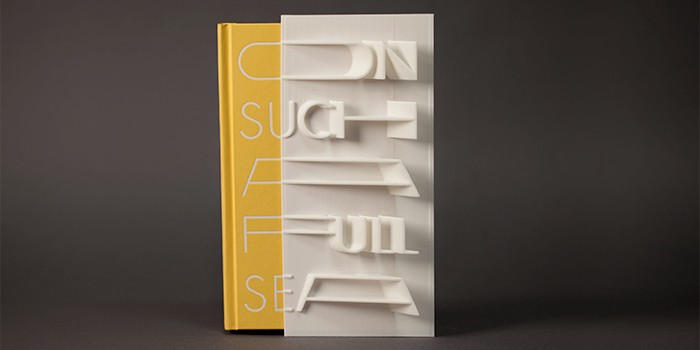
Chang-rae Lee’s 3-D Printed Slipcover

Acclaimed author and this week’s guest editor of Electric Literature’s Recommended Reading, Chang-rae Lee’s new novel, On Such a Full Sea, just came out. To celebrate, Riverhead Books, Lee’s publishers, went to MakerBot to create a limited edition run of the book featuring a 3D-printed slipcover.

Here’s how and why it happened:

<iframe width=”560" height=”315" src=”http://www.youtube.com/embed/vfr2ARWWKHs" frameborder=”0" allowfullscreen></iframe>

You can order a limited edition copy of On Such a Full Sea here.

And don’t miss Chang-rae Lee’s introduction to “La Moretta” by Maggie Shipstead in the latest Recommended Reading.

And for more rare books with interesting covers go here.

Don DeLillo’s Secret 7th Novel

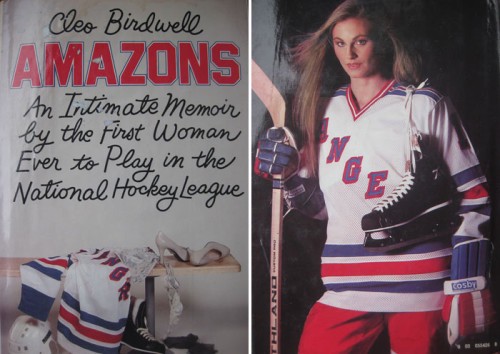
Over at The Weeklings, Victoria Patterson, author of The Peerless Four, revives a novel that Don DeLillo wanted to kill. During an interview, Patterson remarked on the absence of athletic female protagonists in “so-called classic sports novels by men.” She was quickly directed to Amazons: An Intimate Memoir by the First Woman Ever to Play in the National Hockey League by Cleo Birdwell, a pseudonym of Don DeLillo.

Amazons was Delillo’s seventh novel, and it sold better than his previous books and doubled his income, all before he earned his reputation as one of America’s greatest writers.

Whether from embarrassment, personal reasons, a game he’s playing with his readers, or other reasons I can’t fathom, Delillo doesn’t want his name attached to the book and has never officially acknowledged writing it. He asked Viking to expunge the book from White Noise’s bibliography and won’t grant permission for the novel’s reprinting.

Head over to The Weeklings to read plenty of phallic quotes and see some of the bawdy covers for this “penis-sex-sports-obsessed memoir.”

JANUARY MIX by Jeff Jackson

How to Conjure an Endless Night

The new year has started, bitter winter winds have descended with a vengeance, and the daylight evaporates before the workday is through. It’s time to embrace the long nights ahead of us and find ways to navigate a landscape of unbroken darkness. The narrator of my novel Mira Corpora struggles to do just this — with mixed results. Sometimes I think our problem is that we fight too hard against the shadows. We need to summon a darkness of our own making. So we can dream its dreams. Luxuriate in its rhythms. Here’s a mix to help you conjure an endless night.

1. Blind Willie Johnson, “Dark was the Night, Cold was the Ground”

To start, the best invocations are the simplest. This wordless and bereft blues from Blind Willie Johnson is just humming and slide guitar — but it remains as potent today as when it was recorded almost a century ago.

2. Dr. John, “I Walk on Gilded Splinters” (Song wasn’t on Spotify so listen to the YouTube instead)

Once you get the feeling, you need to add more juice. When Dr. John recorded his great Gris Gris album, he was accused of playing hoodoo shuck-and-jive for the tourists. Purists were offended “Gilded Splinters” featured ceremonial chants and funk grooves. The Good Doctor proclaimed himself a big zombie, filled his brain with poison, and channeled visions of dead enemies. He understood you can be both show biz and voodoo, faking it so real you’re beyond fake.

3. Brian Eno, “In Dark Trees”

This brief instrumental has always been a favorite. There’s a sense of entering a trance and starting out on a journey, maybe threading your way through the mysterious forest of the title, your feet slowly starting to lift off the ground.

4. Family Fodder, “The Big Dig”

Things grow stranger. Yes, this is a reggae version of Erik Satie’s classical piano composition “Gnossienne no. 1.” This track is more than a novelty, it’s a beautiful piece of music that’s also profoundly disorienting.

5. Public Image Ltd., “Careering”

The loping bass of “Careering” propels you onward, whether you want to continue or not. This unholy combination of punk and dub sounds like a dispatch from a remote shadowland. “There must be meanings beyond the moanings,” John Lydon sings. You’ll have to find out.

6. Big Youth, “Screaming Target”

The moaning turns to screams. Big Youth hasn’t slept in days and watches Clint Eastwood in Dirty Harry on repeat until the line between film and reality grows porous. It’s paranoid and unhinged, but also kind of sweet. One of the temptations of how to spend the night.

7. Screwed Up Click, “Red, Part Two”

Your mind can play tricks on you in the dark. Voices stretch like taffy, echoing and repeating. It’s hard to tell who’s saying what and whether that’s your own voice deep in the mix. Eventually this feeling can seem addictive. You hope it’ll never stop.

8. Miles Davis, “Rated X”
Then there’s times when the horror comes. Miles Davis swaps out his trumpet for a distorted organ to create a relentless and shuddering soundtrack to… what? There’s menace and sleaze in here somewhere, but you’re too afraid to look closer.

9. Nico, “We’ve Got the Gold”

A voice wafts out of the dissonant murk. “We’ve got the gold,” Nico sings. “We do not seem too old.” A nice thought, but not the way her stern accent intones it. Is this a consolation or a curse?

MIRA CORPORA by Jeff Jackson

10. Nearly God, “Poems”

The night can also offer seductions. There’s tenderness here, the promise of something transcendent and gorgeous and maybe a bit perverse. The performances of Tricky, Martina Topley-Bird, and Terry Hall from The Specials are saturated with yearning for what’s never delivered, but it’s more than enough.

11. Little Willie John, “Need Your Love So Bad”

In the absence of light there’s also the promise of love, whatever kind you need. Little Willie John packs so much ache and longing into these two minutes that it may take a few listens to realize you’re being serenaded by a ghost.

12. Burial, “Night Bus”
The sound of something that’s been utterly hollowed out. In the daylight, it disappears altogether. But in the night, it still emits a faint and precious shimmer.

13. Broadcast, “Distant Call”
“Don’t let the shadows fall,” Trish Keenan sings. But she knows it’s far too late for that and her song is little more than a distant call. This is a lullaby whose tune is in danger of becoming lost during its transmission.

14. Cat Power, “Colors and the Kids”

Sometimes even the music leaves you. “It’s boring me to death,” Cat Power sings in the middle of her Moon Pix album. What she’s left with is a few chords she keeps banging on the piano in the hopes something might happen. She’s stubborn, she doesn’t try to make the song interesting, and eventually she starts to levitate herself.

15. Geechie Wiley, “Last Kind Word Blues”

Only a few recordings exist of Geechie Wiley, one of the greatest and strangest blues singers. She was almost swallowed by history, but her voice can still cut across the years. She’s comfortable facing down the last kind words she might ever hear. Consider her your guide through the void.

16. Sonny Sharrock, “Blind Willie”

Sonny Sharrock transforms his guitar into spools of liquid noise. It’s his tribute to Blind Willie Johnson’s wordless blues. The only possible ending is a circle back to the beginning.

* * *

— Jeff Jackson is the author of the novel MIRA CORPORA, recently published by Two Dollar Radio. You can find him at www.deathofliterature.com

The Art of Crowdfunding: Self-Publishing in the Information Age

by Ben Apatoff

Sometimes those of us who remember pre-internet mankind are dazed by the impact the social media era has had on the publishing world, flooding the already ultra-competitive business more options than ever before and leveling the playing field by making publishing ventures more accessible. It’s easier to publish but therefore harder to stand out, and authors are now graced with a slew of options for their work. With self-publishing companies like Kickstarter, Inkshares, Vook, Authorhouse and Amazon’s Kindle Direct Publishing all reshaping the landscape, publishing may be as daunting and as enticing as it’s ever been.

Launched in 2009 by a team of three designers, Kickstarter has quickly become a significant force in the arts world, funding endeavors as diverse as theatre, publishing, dance and video games, although it’s primarily utilized by musicians and filmmakers. Rather than have funders invest in their project of interest, Kickstarter allows funders to “back” a project with a pledged donation that will only be fulfilled if the project reaches its fundraising goal (with a 5% fundraising fee) by its deadline. Since its inception, Kickstarter’s web site claims to have funded over 60,000 creative projects with pledges from more than five million donors.

“Kickstarter’s a place where people come together to make new things — like books, movies, restaurants, board games, and innovative technology,” says Maris Kreizman, Kickstarter’s publishing specialist. “Our mission is to help people bring creative projects to life. Kickstarter is a global community of millions of people from nearly every country on the planet who are shaping the world into what we want it to be rather than accepting it for what it is, and who are looking to be inspired by the most imaginative, colorful, and innovative ideas.

Kickstarter’s recent successes include Linda Liukas children’s book Hello Ruby, which set its fundraising goal at $10,000, and ended up raising more than $380,000 from more than 9,000 people, and Michael Malice’s Dear Reader: The Unauthorized Autobiography of Kim Jong Il, which earned the author a spot on IC-SPAN2's Book TV. Kreizman notes that both authors, in addition to joining Kickstarter, worked hard to market and publicize their works.

“There are so many positives to self-publishing, but most successful self-published authors know that you can’t do it alone,” adds Kreizman. “Find a great copy editor, or at the very least, ask a few trusted friends to read and look for typos. Hire a jacket designer if your Photoshop skills aren’t quite at professional level. Also, make sure you (or someone who will help you) can target a specific audience, and aim your promotions at that particular group.”

Over all, Kreizman believes it is more viable to self-publish a book now than it was 20 years ago, noting, “The digital space has opened up lots of new doors for writers who want to publish books and stories and shorter form content online. There are also a number of great services available for writers who want to produce physical copies of their work. And yes, I should mention that, as more and more writers find success in the self-publish space, the easier it will be for others to do the same…For a writer with a truly entrepreneurial frame of mind, self-publishing can be incredibly empowering. The writer-as-publisher gets more artistic control and a better percentage of royalties, and she has no barriers of entry. That said, writers who self-publish should understand that publishing a book requires an incredible amount of work. After you’ve slaved away to actually write the thing, then the real work begins.”

At Inkshares, a recently-launched publishing house, authors don’t self-publish but pull readers in through crowdfunding. A children’s book called The Cat’s Pajamas by Big Fish author Daniel Wallace, released in November, was the company’s first crowdfunding success. And perhaps most notably, Inkshares distinguishes itself by taking an especially involved role in the publishing process.

Marketing Manager Angela Melamud describes Inkshares as a “crowdfundedpublisher”, and notes, “Unlike other crowdfunding platforms, Inkshares doesn’t just help you raise funds to produce your book, we also assist authors in the role of a traditional publisher, bringing decades of experience from places like FSG, Picador, Houghton Mifflin and more. We work with authors to design their books, we collaborate on marketing strategies and we work with our distributor Ingram to ensure that their books get into bookstores and, more importantly, into readers’ hands.”

Melamud is quick to note the perks of crowdfunding, stating “With crowdfunding, writers are able to rely on their readers to have their books published, rather than appealing to the sensibilities of book publishers. Beyond that, traditional publishing is a gamble where publishers hope that books will sell. With the Inkshares model, the demand has already been proven — we’ve got the backers to prove it.” She also notes that Inkshares offers a bigger cut to its authors (50% royalties, 70% for eBooks) than traditional print publishers (typically around 15%).

But despite its advantages, Melamud warns that potential authors should not view crowdfunding as an easy way out. “The authors we’ve had the privilege to work with are dedicated and excited about their projects, and are incredibly involved in not only the editorial process but also the design, production and marketing of their book,” says Melamud. “Crowdfunding offers authors the opportunity to be more involved in the life of their book, and it’s one that they should take.”

Melamud continues, “Even the best writers need editorial guidance, marketing support, production know-how, and distribution knowledge. And because self-publishing is so easy, everyone is doing it. Serious authors find themselves spending their own money on promotion to distinguish their book from the others that are out there.”

The rise of crowdfunding and self-publishing may not guarantee wider audiences or even make life easier for most writers, but it’s hard to not get excited about wider options for authors and new forces in the art-making process. By breaking through the publishing barriers, Kickstarter, Inkshares and their ilk are reinventing the production world, something for any serious reader to reckon with.

Flower Box

Flower Box

by AJ Aronstein, recommended by Electric Literature

My block got quieter as the days grew longer and hotter. I stayed inside to avoid the sun. Curtains of humidity wrapped around the trees, muting and morphing the street noise. Filling my ears with wet-cotton summer air. In the early afternoons, thunder rumbled north and west, the dead sounds held close to the earth, bouncing off the Capitol Building and the marble monuments downtown. I felt tight and on the verge of something. As if huddled on some high plain, surrounded by the sound of distantly beating drums, telling myself, “Well, this is it.”

I lived alone on the corner of Seventh and Maryland in Northeast DC. On the north end of the block there was an enormous Victorian house with a wide porch bordered by white latticework. The house had been under renovation, but the owner must have given up when the real estate market collapsed. From my front window, I counted forty people living in it, or at least moving in and out of it. In the breezy afternoons at the beginning of the summer, they all spilled into the vacant lot next door to shoot dice. But toward June, the heat kept mostly everyone inside. The block was almost entirely dead during the day, and nothing happened for a while. Heat became its own event.

The hot weather made me anxious, and severe anxiety made me black out. It’s why I wasn’t working that summer. It’s what I was trying to deal with. About a week after graduation, I was walking down East Capitol with Laura, holding her hand. I had a headache, but didn’t say anything — I didn’t want to seem like I wasn’t enjoying myself.

Then I was on the concrete, staring up at a tuft of cloud over the Capitol.

Blacking out, on its own, didn’t hurt. Waking up, though. That was the worst. I’d open my eyes and find myself on the carpeted floor of the Red Line train, squinting commuters standing over me with these stupid looks of consternation and fascination. Blinking at me in a little circle of faces.

At home, Laura would drag me onto the couch. She wasn’t strong enough to lift me up the stairs into bed. She’d find me on the bathroom floor with my hand reaching out, as if I’d tried to grab something on the way down. She’d find me stretched out across the coffee table, legs splayed, a broken mug on the floor.

I had other problems, too, and as the months stretched and the variously prescribed solutions didn’t work, they also got worse. Laura left DC after a bad fight. She came back for her stuff at some point.

My medical leave ballooned into an extended absence. A few weeks after I stopped getting emails from the office, things got really bad in the neighborhood. A high school student was killed on his way home from the Community Center on G Street. Two classmates wrenched him off his bike, held him to the ground, and beat him to death with some planks. Police found the planks in a dumpster on Twelfth, sticky with drying blood.

I watched footage of the attack on YouTube in the dark: a cell phone video of skinny arms lifting the wood and bringing it down on what looked like a pile of clothing. You could hear the sound of the wood thumping bone. Over and over again. A tinny voice shouted zoom in, zoom in on the motherfucker. I watched it ten or twelve times one night, I couldn’t stop, eating Wheat Thins in my underwear with a bag of frozen peas in my lap. I had a horrible headache and the video seemed to dull the pain, or at least distract me from it.

Later, I lay awake with the windows open and the fan running on high, thinking about Laura — about the feeling of not having her body next to mine — and watched as passing cop cars threw weird colors and shadows on my ceiling. A loose bearing in the fan made a grinding noise. I wondered if maybe it would fall off the ceiling and kill me in my sleep. But it seemed too complicated to fix.

Enough time passed that eventually I stopped noticing it.

In July, after a couple of home invasions, the police set up checkpoints in the neighborhood and made pedestrians show identification to get into certain areas. You could only move around Trinidad and Capitol Hill North if you were going to church or lived within the ten square blocks marked off by police tape.

I didn’t mind. I was staying inside anyway. I blacked out walking through the living room. I got a Twitter account and used it once: Keeping inside today #inside #DC. I decided to bide my time until things improved. Till then, I would monitor my own progress. Watch out for myself. I stopped taking any of the pills. I ignored phone calls from friends long enough that they started to dissipate, but I tracked their summers on Facebook. I got e-vites to going-away parties (the exodus before the election already underway) and pool parties on rooftops. I got one invitation to an August birthday party at Laura’s friend Angie’s apartment, even though it had been awhile since I’d heard from her. I wrote the time and date on a pink post-it note. It seemed far enough in the future to be unthreatening.

Two times I woke up on the kitchen floor, bathed in the soft electric glow of the refrigerator light, sweating coldly. Eventually the Facebook messages stopped coming.

I didn’t charge my cell phone. The battery died and I put the phone in the freezer, standing for thirty seconds in the cloud of vapor that spilled out.

Still, I was thinking about starting a lot of things. I read the first twenty pages of about ten different novels, some of which Laura had forgotten when she left. I sat shirtless in the living room with a box fan blowing across my chest. I read the news, keeping one tab in my browser open to the crime blotter, and another to Laura’s Facebook profile. I looked at pictures of her from a year ago, from two years ago. And then I looked at pictures from before we met, trying to find some evidence of the inevitability of our eventual intersection. Could you track this kind of gravitational pull? I waited for updates. I started emails that I never finished. I left the address fields blank. Emails about the crime and the heat. Emails about the headaches. I spilled the contents of my closet onto the floor and separated clothes into piles of things that I wanted and things that I didn’t want. I searched my clothes for remnants of Laura’s smell, strands of her hair, some physical index of her. I took the first steps toward reorganizing my kitchen, taking plates and bowls out of my cupboards and leaving them on the counter. I couldn’t find any of her tea glasses, her cookie plates. She had left her steak knives but took the baroque silverware that I had fought with her about when she got her stuff.

I didn’t leave the house for about a month. I ordered groceries online once a week, locked the door, and hid upstairs in my room when the deliveryman was scheduled to come. I left a post-it note on the door: Please leave groceries here, DL.

Laura always loved to walk around supermarkets and pick out cereal and jars of tomatoes. She enjoyed the smell of the produce and the sound of the plastic bags when you snapped them open. I preferred checking boxes on the screen. I preferred selecting my delivery time in advance, craving this extra level of mediation. I selected bananas and frozen hamburgers. I paid with a credit card attached to my parents’ account.

One Friday in late July, while retrieving my groceries from the porch, I noticed the flower box in front of my house. It had been there all along, of course. A small patch of dirt. Every house has one in certain neighborhoods in DC. The city used to fill them with fresh topsoil every spring. I don’t know if they still bothered filling them in wealthier areas, but on my block at least, the flower boxes had turned into dusty pits of garbage and weeds. I put down the groceries and walked toward the curb. The screen door slammed behind me. Looking down the block, I saw the yellow grocery van, but couldn’t hear it. The block was silent. Everyone was inside, hiding from the midday sun. I leaned against the ginkgo tree in the center of the flower box, trying to find some relief in the shade.

I looked down. Garbage poked from under the knotted weeds, which in turn wrapped around the tree. I kicked around at the garbage and then knelt down. I started tugging at some of the dried grasses. They came up easily and loosened the dusty soil, but I couldn’t get at their roots, which snapped off when I tugged. I started brushing away the dirt and piling up some of the loose trash. I got on my hands and dug around some more, pulling up more weeds and throwing garbage off to the side. I scratched at the earth faster, carving up little channels. The weeds went deeper than I had thought, and I kept digging and digging in one spot, determined to get to the base of the roots. I wrapped four or five strands around my fist and tugged at them. The root finally came out of the ground, and it had a spongy white thickness to it, like something you’d expect to find at the seashore. I dug my fingers into the soil and found that the earth just a few inches below the surface was cool and damp. When I looked up I noticed that a few of the guys at the end of the block had been watching me from the porch of the Victorian house. They looked at me with their arms crossed across bare chests, their white t-shirts rapped around their necks. I waved, without thinking. Dirt covered my forearms and I wondered what I looked like to them.

I dumped the trash and the weeds and went into the darkened apartment to put away the groceries. When I opened the freezer, I saw my phone sitting in there. It seemed like a frozen relic — something placed there by someone else specifically for me. I took it out and found my charger and plugged it back in. After a few seconds of holding it in my hand, the phone beeped and a battery indicator started blinking. I drank water from the tap and thought about Laura and then took a cold shower and stared in the mirror and lay in bed naked, feeling the breeze from the ceiling fan wash over my body. The smell of old soil hung in my nostrils and after working in the sun and the shower, my room seemed almost cold and I felt no pain.

The next day, I woke up as the sun started to spill in my bay window. I lay in bed staring at the fan for a long time, making plans for the flower box. Lists of things that I needed to buy: soil, new gloves, books on gardening. I thought of designs for a brick border. Around ten, I put on the same pair of shorts I’d worn the previous day. I went out behind the house and picked out a rusty hoe in the small pile of aging gardening tools left back there by the landlord. I went to the front and sliced deeper into the ground. I dug up rocks, a Ziploc bag, a few small lengths of knotted twine. I dug up shards of glass from old beer bottles and scraps of yellowed Post articles. I dug up a torn condom wrapper, an empty pack of Newport Lights and a metallic joint that looked in some way automotive. Though the box was only ten feet by three feet, it kept yielding artifacts. I felt like an urban archeologist. An archivist. And yet at the same time it felt like I was erasing evidence from a crime scene. Clearing the way. Making the ground bend to the prospect of new possibilities.

In the afternoon, I showered again and put on a t-shirt and jeans. I looked down at my phone, which was now fully charged. I turned it on and found that in five weeks I’d only received three voicemails. Two were from my mother, whose voice was so distant and small I deleted both messages without listening to them, out of fear that they would destroy my positive mood. The third message was from Angie, just a few days before. She was checking in, worried that no one had heard from me, and wanted to remind me about her party. I looked around my room for the pink post-it note with the details on it. The party was that night.

The thought of going all the way out to Northern Virginia — when I hadn’t left the block in months — brought on a kind of low-grade anxiety. I hadn’t seen Angie in close to a year. But maybe Angie would have heard from her. And the flower box was happening now, I was gardening, something functioning people did, and I wanted to tell someone about it.

Even in a limited amount of clothing, I started to sweat almost immediately. The jeans felt like wet wool on my legs and the t-shirt clung. When I looked in the mirror I realized I had gotten some color. My forearms were browning after only two days of work, and my skinny biceps looked a bit red. I stared at myself in the mirror for a minute, not breaking eye contact, and watched my face for signs of wounds, breakages, gulfs. I looked for gaping pores, acid spilling out, some sign of interior rot that had accumulated in the weeks of isolation. Nothing immediately evident. I stared. Everything seemed normal. I had a small headache, but nothing out of the ordinary. I pulled the post-it note off the wall and walked out the door.

I took the bus to MacPherson Square and then the Orange Line Metro all the way out to Ballston. I don’t think I made eye contact with anyone and tapped my foot on the train. The rhythm helped. I bought a bottle of sauvignon blanc at a Whole Foods and walked out of the store as quickly as I possibly could, and found Angie’s place off Wilson Boulevard.

It was still very early, so I went into a restaurant on the corner and sat down at the bar and ordered a Coke. It made me feel good to think about myself, and how well my new project was going. How it helped to be focused. How I didn’t lose track of myself at all during the last two days, and thought of Laura only in productive ways. This sense of progress ballooned into a more general, amorphously positive sensation. The headaches had been excruciating at times in the past few weeks, but the pain wasn’t making me any more anxious, and I thought how that was a good thing. How I hadn’t lapsed in almost four days. Hadn’t found myself sprawled out on the bathroom floor with the lights off or in the kitchen staring into the oven. I could remember most things clearly and sharply, even despite the heat.

It was so good to feel healthy and productive that I ordered a glass of bourbon on ice. I couldn’t remember the last time that I’d had anything alcoholic to drink. I took it down pretty quick, and ordered another. I started thinking about the last time I saw Laura — with Angie.

That was a tough day.

A very tough day.

I put my head on the bar, suddenly overcome by a headache.

“Do you want anything else sir?” said the bartender. I picked up my head.

“Just a check.”

“You’ve been nursing that for a long time.”

I didn’t say anything, but noticed my hand shook a little when I leaned back and swallowed the rest of the drink.

Angie’s apartment was in a tall sleek building with a doorman, marble floors, and leather couches in the lobby. I had to sign a guest book at the front desk. The air-conditioning made it like the inside of my refrigerator, but I noticed I was still sweating through my t-shirt. The headache had been pushed to the back of my attention, separated from conscious thought, although still present in a different form. A soggy feeling took its place above my left eye. I went up in the elevator and knocked on Angie’s door, but no one answered. I heard party noises, so I just pushed my way inside and found everyone sitting in a circle around the coffee table in the living room.

I seemed very late.

“That’s disgusting,” someone was saying, and the whole room exploded into laughter.

People looked up and I waved and held up the bottle of wine. Angie came over to greet me.

“Oh my God, David?”

She had been smiling as she walked toward me. But then she took a step back and looked at my face. She reached out and grabbed my right forearm. She turned it, the pale side up.

“Jesus, are you okay?” she asked. “You’re all cut up.”

I looked at my forearm and realized that there were deep bright red lines across it. They looked new, tightly packed together about midway between my elbow and wrist, but the bourbon rounded off any concern that I might have had. I shrugged. “Gardening,” I said to Angie, wiping sweat from my forehead. “I got you this wine.”

“Okay,” she said. “Did you stop somewhere else?”

I couldn’t interpret her expression.

“Yes,” I said.

Angie didn’t say anything, so I said: “Who are your friends?”

“David, are you sure you’re okay? Do you want a paper towel or something to clean those?”

“It’s fine, Angie,” I said. “It’s totally one hundred thousand percent awesome and fine.” I licked my finger and rubbed it over the red lines.

“See?”

I walked in front of her into the living room. A few heads turned to look up at me. Someone coughed.

“Everyone, this is David,” Angie said.

“We know,” said someone.

There was guacamole and chips. There was high-quality sound coming from an iPod dock that sat on the kitchen bar. Someone leaned toward the table to grab a few chips and spilled a little of his drink on the carpeting.

“Where you coming from?” someone asked.

“Capitol Hill,” I said.

There were silent nods.

“Over in Northeast.”

Freezing cold. I crossed my arms. “It’s great,” I said. “Up-and-coming.”

Two girls made room for me on one of the couches and I sat down between them. I looked around the room. Sitting did something to me. Things started to feel a little fuzzy around the edges and there was suddenly pain in my arm, which was surprising and made me feel anxious. I also realized I was not just tipsy or mellowed by the bourbon, but actually drunk.

“David can you have wine?” Angie asked. I think I knew what she was implying.

“I’ll have some water,” I said. I heard her walk toward the kitchen. The effort to talk to these people was already exhausting me. My throat burned.

“Do you have to show ID to get home? I hear they set up some kind of police checkpoints,” someone said.

People laughed around the room. I’d just arrived and was being attacked and had no time to think of what I wanted to say. And there was now the confusing issue of these cuts to contend with, and the fact that I couldn’t be absolutely sure how I’d gotten them, and the realization that I’d been drinking and shouldn’t have been.

I leaned forward and scooped one of the chips into the guacamole. But the chip broke in half. I reached in the bowl and tried to dig it out, but I felt clumsy and sweaty and my fingers proved to be more than a little unsteady. I ended up shoving half of my index finger into the guacamole. When I extracted it, the finger was covered in bits of neon-green avocado and some red onion.

“The checkpoints are gone,” I lied. No napkins. “And they were mostly north of me.”

“Oh that’s good. It sounds like a total warzone down there.”

Things came back into sharp focus, and I noticed that the guy talking to me had a relentlessly bright smile. He looked familiar.

“It’s not,” I said.

“How do you get home at night?” said the smile. He was wearing a plaid shirt that fit tightly around his biceps. He was not sweating. “Do you take cabs?”

I licked my finger some more and wiped some sweat from my forehead.

“No,” I said. “There’s a bus.”

“Oh that’s convenient.”

“Yeah.” I said.

“A bus is great.”

Someone stood up and changed the music. I stared at the smile. Big horse-teeth. Very bright. I couldn’t make out what he was trying to say to me, and I couldn’t decide how I knew him. I was getting worried. The worry wrapped itself around me and I felt more eyes looking at me from around the table. The headache started to bang through again. This is why I stayed at home, I remembered. This was a feeling that I remembered having very often in the presence of others.

“David is taking some time off of work,” I heard Angie say.

She sounded far off, like she was making excuses for me, and handed me a glass.

I took a long sip of the freezing cold water. I leaned back into the couch and looked across at the smile, which was useful because it gave me something to hold onto — some way of staying in the present moment.

“I’m fixing up a flower box, too,” I said. “One of those old flower boxes. In front of my house.”

People nodded in a way that suggested something other than agreement.

Then the conversation moved away from me. It bounced around. They were talking about their exercise plans. How to avoid the heat but still get a workout. Gym memberships at Washington Sports Club. The advantages of running indoors. People with their air conditioning and their gym memberships and their marble lobbies and their guest books. Laura used to say that these high-rise apartments gave her a dark feeling, and that she felt bad for Angie and other people who lived in them. And she was right, I thought. If they just thought for one second about a different kind of living that was more urban and plugged into the fabric of a neighborhood. If they just for one second thought about how this city works, and what it meant to be really alone in it. To lose everything you thought was important; to feel as though your grip on the world was loosening. As though the white spongy roots connecting you to the earth are always fraying. And to be surrounded by kids who beat the life out of each other with planks — people murdered as a matter of ordinary life.

Or to lock yourself up for weeks and wonder if anyone would find you if you blacked out and hit your temple just right on the way down. How do we get to such desperate places? How can we possibly hope to recover if no one ever hears us? If we can’t figure out what to say?

“What the fuck is wrong with the bus?” I said.

“Excuse me?”

He wasn’t getting it. He wasn’t getting the implications of what he was saying.

“I said, what the fuck is wrong with riding the bus?” Rounding the words. Hearing myself make my voice into a threat.

I felt the couch cushions move as people shifted in their seats away from me.

“Dude. He didn’t say anything was wrong with the bus,” said someone else.

I was still staring at the smile.

“Calm down, David,” said Angie.

“No, it’s okay,” said the smile.

“Sounds like you think there may be something demeaning about riding the bus,” I said. “Or that there’s something wrong with living somewhere other than a hermetic, sealed-off, glassed-in shithole.”

I was trying hard to hold on. I could feel it coming.

“Yeah, I knew this was going to happen,” the smile responded. “I knew you’d fucking weird out on us the second you walked in the door.”

“Peter, hang on,” Angie said.

It seemed that the music had stopped.

“We know,” he said. “We all know why Laura left town. What you did to her. And I have a big problem with you sitting there. After you drove her out with your bullshit.”

“Not true,” I heard myself say, my head beginning to really get up and pound itself.

“That she left just to get the fuck away from the nightmare you made.”

“Not true.”

“The black eye. The blackouts.” He emphasized the word. Squeezed it through his mouth at me.

“It was an accident. I have a condition,” I said. “It’s hard to explain.”

“So you hit her?”

There was something inescapably hypnotic about watching that mouth. It was fifty degrees in the apartment and I was still sweating, locked in his teeth. I was watching him chew words at me. Was in his mouth and he was tearing into me. He was ripping me apart in front of all these strangers.

“He’s drunk,” Angie said.

“Who cares?” Peter said, not moving from my eye as I felt a drifting calm.

“We’re all drunk.”

I don’t remember the cab home. I came to with the driver shouting at me. I threw a 20-dollar bill at him and fiddled with my keys in the dark. The humidity hadn’t relented and the night hugged me close. I was thankful to be back in the heat.

“Give me my money, bitch,” someone shouted from the end of the block. A group had gathered in front of the house. Fifty years ago, vines probably covered its trellises, climbed the porch and wrapped around it. And there were tulips in the flower boxes. And the street was quiet and the weather pleasant.

“Shut up!” I heard myself yelling northward. “Just shut up. Shut the fuck up.”

I stared into the dark for a second and the shouting stopped. There were crickets in the air already. The summer getting older, stretching out toward the long autumn and the fluish winter.

My key fit in the door and I unlocked the bolt and pushed into the still air of the entranceway, sweat spilling down my back. I walked upstairs and collapsed into bed on my stomach.

The ceiling fan made its rhythmic grinding noises.

I fell asleep.

It took a week of short mornings to turn over enough soil. Garbage finally stopped coming out of the box. It was getting toward the end of August and too hot for violence even. The checkpoints were taken down. I stopped wondering about the cuts on my arm, but I put the steak knives in the freezer just in case.

The progress still felt like something. The project was taking on a more expansive role. If I fixed up one flower box, I could do more. I felt invested in the process of making the neighborhood better. I worked in the mornings and thought about plans to redo all of the flower boxes on my block. Even the one in front of the Victorian. I searched the internet for advice about late-season plantings. I researched different watering methods and read gardening blog reviews of gloves and trowels.

I sent Laura an email about my grand plans to make the block greener. I was self-deprecating, funny even, I thought.

I told her that I was thinking about calling the office. Maybe starting with a new therapist. Trying to get on track. That things were getting better. That I would love to hear her voice.

She didn’t respond, and work stopped for a while. I lay around the house a lot. Checked Facebook. Moved plates from one part of the counter to another. Sorted and resorted clothing into new and different piles. The house became a site of reorganizations and manipulations again.

Finally, the last Saturday in August, I walked down to the hardware store on Pennsylvania Avenue. I went through the aisles with a small basket. I wanted a trowel to detail the edges, and needed some fertilizer to put down before I picked out flowers.

I found two different varieties of fertilizer and considered both of them, cradling the basket on my left wrist. A woman wearing a red vest that said Buy Frager’s! Buy Local! in white lettering asked if I needed any help.

“No thank you,” I said.

“Are you sure?” she asked.

I turned to look at her. “Sorry?” Sweaty in the cold store. The smell of fertilizer in my nostrils.

“You’ve been standing here for a half hour, sir.”

“I’m fine, thank you,” I said. “Just something I’m dealing with.” Uncertain if I was being totally honest about that.

The woman looked at me for a second more, and then walked away. I put down the basket and rubbed my wrist, which had a deep red imprint of the basket’s handle on it. I thought for a second and picked up one of the fertilizer bags, then walked slowly down the aisle trying to make my face blank.

When I got home, I sat down at my computer and saw that I had an email from Laura. It had a lot of exclamation points in it.

A lot of stuff about how fantastic it is that you’re working on something for yourself!!! and that I am so thrilled you’re building something to change the neighborhood!!!

She couldn’t wait to see pictures.

She was doing very well.

We should talk sometime.

Best of luck!!!

I walked down Seventh Street to Eastern Market later that afternoon. I bought mums: orange and deep red. Autumnal colors. They looked tough — like they could withstand the remaining sun and the heat, and whatever other kinds of violence the neighborhood might wreak on them.

I got the flowers into the ground and poured the small bag of fertilizer on top of them. The brown mixture was several shades darker than the dry dust that I’d been removing. It looked healthy, almost alive. I held my hands on the soil, as if trying to feel a pulse. My fingers dug into the darkening earth. I felt the roots spreading out. The impact of the color in the flower box was jarring. I ran inside and filled a jug of water and got a can of Natural Bohemian from the fridge.

I poured the water on the flowers and then sat back on the stoop with the beer, unable to stop myself from thinking about her.

Laura’s family owned a cabin in Colorado that we went to together one summer. We were going through a rough patch. I’d been “resistant” (her word) to “exploring new treatment options” (her phrase).

We drove a rental car into the small town of Salida to get groceries at the supermarket. We bought ground turkey, avocados, heirloom tomatoes and hamburger buns. We bought an enormous chocolate cake. Laura suggested coffee, eggs, and bacon for breakfast, and I thought it would be nice to get some tulips to put in a vase.

When we got to checkout, we argued about who would pay.

“It’s your family’s cabin,” I said, raising my voice. “Let me do it. I’m a guest.”

Laura cleared her throat.

“Okay, you don’t have to get crazy about it.”

“Whatever,” I said. The cashier didn’t say anything. He was looking at the floor.

I took out my debit card and swiped it. We pushed the shopping cart to the car, and unpacked the groceries into the trunk, dropping them with small thuds.

As we drove back to the cabin, Laura took my right hand from the steering wheel and squeezed it. My skin was already getting chapped in the dry air. We didn’t say anything. I watched the road. There was the sound of cars passing in the opposite direction.

Laura turned over the hand and kissed my palm.

That night, sitting outside in rocking chairs after dinner, we watched the silent flashes of lightning out to the east. I could hear Laura whispering counted seconds before the sound of the thunder reached the house. Warm yellow light emanated from the one lamp inside, and cast shadows in front of us.

“You okay?” Laura asked.

“I’m just tired,” I said, watching the distant storm.

We listened to the breeze crackling through the aspens below the cabin.

She put her hand on my back. “I’m here, you know.”

“I know,” I said. But even to me, my voice sounded like it had come from far away, some distant place up on the plateau.

I stood up and looked at the flowers in the ground and finished the beer.

And it was still pretty goddamn hot, so what the hell, I thought. Have another. At this point, there was no hope that the weather would break before Thanksgiving. Mosquitoes everywhere. I noticed patches of loose soil, put down the can of beer, and knelt down to tighten the earth around the flowers. I stood up and looked at them from above. I felt the blood moving through my head. Droplets of water gathered on the petals. Dark clouds had already begun to congeal and the breeze had cooled. The leaves jittered back and forth. The maples and ginkgoes leaning into the street. A woman down the block screamed, I’m serious. Quit it.

I stepped back onto the sidewalk. I held my hands at my side, waiting. But this was it. I could feel things hanging between happening and not happening. Maybe they always were.

How to Collect Books Without Breaking the Bank

Editor’s note: this article was sponsored by AbeBooks.com.

Abe Logo

Not that there’s anything wrong with you just the way you are, but there are plenty of resolutions you could make for 2014. You could write more, you could drink less, you could even drink less while writing. And if you’re the type that likes to kill two birds with one stone, this guide to affordable book collecting can help you read more and be more responsible with your spending.

1. Why should you collect books?

Many are apprehensive for what the rise of eBooks means for the future of print. Fortunately, modern print books are experiencing a renaissance, focusing innovative design and craftsmanship; classic print books will continue to exist as cherished artifacts from earlier times. Beyond industry trends and historical relevance, print books are also markers of our own lives, showing us what we’ve read (and hauled from one apartment to the next) over the years. Plus, a collection is also an investment — you might not have the Bay Psalm Book on your hands, but that Harry Potter box set might one day fetch a nice price. Plus, what else are you going to put on your bookshelf?

2. Which books should you collect?

Think about the books you love.

Find a small focus, like your favorite children’s books, hardcovers from a beloved novelist, a compendium of a genre or movement (k-mart realism, for instance) or a series from a small press you admire. Choosing a specific theme will help you know what to look for and help you spend your money wisely.

3. What makes a book special?

Beyond personal value, some books can have qualities that make them especially distinct and worthy of your collection. Signed copies are an obvious start — and more reason to go to readings. First or rare editions and limited print runs are also something to look out for, as are interesting inscriptions or marginalia from the author.

4. Where can you buy the books?

If you’re looking for contemporary books, head to your local indie bookseller. Bookfairs are an excellent resource — and a great way to spend an afternoon — because they feature some incredible editions and knowledgeable collectors, but many of the books may be out of your price range. If you don’t mind sifting through junk, dropping by flea markets and estate sales can be an opportunity discover a diamond in the rough. And, if you have something specific in mind, you can always find a good deal on the internet.

4. How can you tell if it’s in good condition?

If you’re looking at a book in-person, the quality should be readily apparent. Does it have a dust jacket? Are the corners dented or is the spine cracked? Are there stains or dog-eared pages? Any sort of damage will decrease the value of the book, but that could work to your frugal needs.

If you’re ok with imperfections, finding a book with a few flaws can help bring it into your price range.

You can also order facsimile dust jackets online.

Booksellers have their own lexicon though, and this glossary can help you speak their language.

5. How do you know if the price is right?

Do your research, and see if your copy is priced in the range of other copies (don’t forget to take condition into account). Most importantly, consider your budget and whether it’s worth your investment.

6. How do you take care your books?

When you’re not reading your new acquisitions, you need to preserve them. The first thing is to get a good bookshelf — stacking your books on the floor like a bohemian just won’t do. A bookshelf with a glass door provides added protection from dust, but an Ikea bookshelf should suffice. Place your bookshelf in a cool and not-too-dry area, and keep your books out of direct sunlight. For particularly special books you may want some additional protection. The video below shows you how to make a mylar cover for your book dust jacket:

For more tips, resources, and a vast collection of collectible books, visit AbeBooks.com.

We Were Down

Schlitzy’s Haus is not big on lighting. The food comes smothered in shadows. The walls are covered in shingles and the shingles are covered in dirt. I stop in on my drive home because I don’t want to see Brenda yet. I’m not even going to call her. It is Wednesday. She’ll be watching her hospital program on the television. That is my justification. She doesn’t need me when she is with the doctors. She eats food out of cartons close to the screen and gives the medical staff advice on their relationships. They listen to her in ways that I can’t.

Unlike my wife, I am at the far end of a long beerhall table, sitting with a frosted mug and a stack of surveys from my place of work; covert questionnaires I distributed to my colleagues without any permission from my superiors. It is an extremely important project that has nothing to do with my job as an illustrator of furniture assembly manuals. As it turns out, using company stationary and forging other authenticating details in order to extract personal information from coworkers is frowned upon. But I still think it was worth it. What I was after was a scientific method to confirm a grave suspicion that has been haunting me. What is my suspicion? There is no pretty way to put this: We are all very sick. And I don’t mean sick like the man leaning over there against the video poker machine who looks like he had too many shots of Jaegermeister, except that I also mean that man. He no doubt drank himself to ruin because of the dreadful weight of the disease that is inside all of us.

Let me explain. The truth of it came to me a few nights ago, as I struggled to fall asleep, and my consciousness lingered in a halfway house of anxiety that bridges my waking and sleeping worlds. I was on my back, in bed, controlling my breathing, looking up above me. The ceiling fan was spinning. I was trying to empty my mind, trying not to think about taxes, and hair loss, and the peeling paint on the exterior of our house, trying to slip away into a restful nothingness. It was there in the less explored regions of my mind that I found something. I found the dinosaurs. This is what they told me: It started like this for us too. We were down. Nobody noticed because it was gradual. It snuck in like fog. We were moody and sluggish and complacent and we were too busy eating things to take notice.

I rolled over to get my wife’s opinion on the matter. I said, “Brenda, is it me or is every single person we know depressed?” She let out a dramatic sigh and very slowly closed the gigantic children’s novel she had been reading. She kissed me on the forehead like she was putting a stamp on a letter, and said, “You are,” and then as she turned off her light, and shifted onto her side, facing away from me, she said, “I’m not.”

Of course she was wrong. One of the symptoms of the illness is a limited ability to recognize a widespread downgrade in our collective well-being. It is a combination of viral apathy and the fact that relative to everybody else we don’t necessarily feel depressed, because we don’t appear any worse off than all the other secretly dispirited people who we see on our way to work or in line at the supermarket. But she didn’t know this. She also didn’t know that I planned on researching the disease fully, and planned on using my place of work as a testing ground.

Which is why, two days later, I am sitting here at Schlitzy’s contemplating ordering another beer or five before I get on to the business of alerting the world to the pending epidemic, and to tell my wife that my employment status is in an obscure state.

I don’t know if I mentioned how much I love Schlitzy’s. It is so lovingly dark and quiet. I feel safe here. Like some bad weather is passing over outside, and maybe if I sit here long enough, and wait it out, maybe the weather will pass and when I walk out our species will no longer be on the brink of something terminable. Even if that isn’t true the beer is delicious, nobody talks to me, and I can smell animal knuckles melting into sauerkraut. All positives.

To my left, a couple of seats over, a lengthy woman is sitting down on the other side of the table. Her clothes are black. I am going to say she is French. Since I highly doubt we will ever talk, no one can disprove this. A youngish woman, but her hair is silver. She is so sophisticated it has gone grey early. It’s her exquisite blood lines, evident in the way she carries herself, the way she must smell, like tea and fresh linens. She is perfectly cultivated. Cheekbones so exemplary they could win a blue ribbon at a state fair, were there fairs for that sort of thing.

To shield the fact that I am observing her, I have begun reading a pamphlet the HR department gave me this afternoon at my exit interview. It is for a phone therapy service which is partially subsidized by my health insurance while I am on temporary leave. On the cover, under the word (that isn’t really a word) “TheraRestore” is a photo of a woman smiling, talking into a phone like the phone is a little baby she wants to kiss and tickle. She is pretty, with dynamic eyelashes, and her red mouth is so close to the phone it looks like she is going to smudge the receiver with lipstick. The brochure makes being crazy and talking to somebody about being crazy look sexy. I imagine having a conversation with a real teletherapist. Not the woman in the photo. I know better than to believe in her. But a pool of part-time mothers, working in cubicles just like my cubicle at work, but in India, breastfeeding their children or doing their nails while looking through gossip magazines.

I glance over at the French woman and she glances at me and I realize I am reading a brochure for crazy people, and even though I think we are all mentally ill, I don’t want her to think that I think I am mentally ill, at least in a way that perusing the services of TheraRestore might imply, so I put down the brochure and quickly grab one of the surveys I have from work.

To the question, Why are you so sad?, Todd Langley, an associate in Quantity Assurance, responded:

I am very happy. Who wouldn’t be happy with my life, my hot wife, my car, my gun, my church, and my fast pitch softball team? I am very happy.

I am trying to remember who Todd is. There are those people you don’t work with but you work near. I never remember these people’s names. I think Todd is the big one that scares me. The one with the tight fitting polo shirts I once stood behind in the employee cafeteria who served himself an obscene amount of tater tots and then ladled thousand island dressing over them.

I look over at the woman again. Let’s pretend her name is Monique. That will make talking about her easier. Monique is writing notes in a notebook. She has blemish-free hands that are holding a platinum pen. Is it platinum? I don’t know. It looks expensive and it is definitely metallic. I look away, because if not careful I could stare at her hands indefinitely. They are works of art. So, I look at my beer. I take a big sip. It’s possible that I am a nervous drinker. I feel extra thirsty at the moment.

The waiter who is also the bartender has just brought Monique a club soda: clear liquid, ice, bubbles, wedge of lime. I get his attention and order the combination sausage platter. I can’t tell for sure if Monique is watching me order because I am trying not to let her know that I am watching her, but it feels like she might be looking this way.

I grab another survey. This one is from my wife Brenda of all people. I was careless and left a blank survey out on the kitchen table last night. I was up late, after she had gone to bed, staring at the questions, wondering if there was a way to revise the survey and make it more probing. She found it this morning, and already being suspicious, she filled it out and left it for me. Probably her way of warning me.

This is Brenda’s survey:

Name: Brenda Champs

Are you single?

Not yet.

Are you having an affair?

Not yet.

Are you who you want to be?

Last I checked.

Would you prefer to be someone else?

I am good at being me. You know that.

Are you similar to the you you thought you would become when as a child you imagined your future self?

I hoped I might have a house with a swimming pool and a pink Cadillac. I didn’t realize my breasts would have a weight to them. I didn’t think they would hurt my back. I was a child. I imagined child stuff. This is a dumb question.

Why are you so sad?

Did I say I was sad? I don’t think that I did.

What does it feel like to get out of bed in the morning?

Like popping a joint back into place.

Do you realize you have on average another 11,000 to 18,250 mornings of looking in the mirror and wondering if people will find you attractive?

I look great. You know I look great. Stop staring in the mirror and do some pushups.

Do you think people will remember you after you die?

They better.

For how long after you die?

I don’t know. How would I know?

Do you believe in God?

Kind of. Not really. Sort of.

Do you believe in life after death?

I don’t like to think about that.

Do you believe in life after God?

I still believe in God, more or less. Is that what you are getting at? What is this about? This is stupid.

When was the last time you felt happy?

When I balanced our check book.

Was it a true pure happy or a relative happy?

It was a you are wasting my fucking time with this survey kind of happy.

Is today worse than yesterday?

All days are the same.

If you were a day of the week would you be Monday or Wednesday?

Both.

Are you for the chemical elimination of all things painful?

Look, I took those ones to quit smoking. And I took those others for my ankle injury, and I keep around the extras for the occasional hell-born menstrual cramp. And those others I don’t take but keep around in case I need to relax. Like after I see you are spending your time writing insane mental health surveys, which winds me up, so then I want to take a pill to wind down. I don’t think there is anything wrong with that.

Do you think we need more sports?

Raymond, what is this all about? Did you write up this fake questionnaire because you thought I didn’t hear your paranoid nonsense the other night? Memo: The world is still spinning. Everybody is fine. People are a little unhappy sometimes. You’ll be fine.

Love,

Brenda

P.S. Don’t take this to work. I don’t want to have to support you when you get fired.

Obviously she was wrong. Is she happy? I would say she is not in touch with her unhappiness. Or maybe she possesses a gene that helps her resist the decline. She is of a blurred Eastern European background. There is probably a village somewhere over there where the women all behave like her. They all whistle the same tune while the men and animals fall over dead.

The waiter has brought me my sausages. I hold the fork and knife and look at the waiting meat and hesitate. It’s a rich moment. I like to mentally picture the deluge of meaty juice that pours out onto the mashed potatoes and sauerkraut, before I proceed with actually cutting into the sausage and watch what I just imagined happen.

“I don’t think they’re making a fortune off of the sausage,” the steel-haired Monique says to me. I am at a loss. The main appeal of Schlitzy’s is that interaction is never a probability. It is a temple for people like myself, who don’t want to talk, who want to eat and drink and maybe sit under one of the few lights to read a book, or in my case surveys, without any risk of conversation.

“You probably like that,” she says, undeterred by my silence.

I look past her. A woman in one of the red booths near the unplugged jukebox is checking herself in her compact. She is wearing a hat with a fake blue flower on it. The hat has fallen out of a different era. So has the woman. She is checking herself like she is preparing for company, but every time I come here she is in that booth and there is never any company.

I look back at Monique. She is smiling. She is patient. It wears down my resolve. I realize that I am dying to talk to her. I don’t want her to realize this.

I finally answer, “The sausage or that they aren’t making a fortune on it?”

“Both.”

She is right. I love the sausage. That’s probably obvious by now. I actually like the idea of all the parts I would have no business with in any other context — ears, lips, noses, something called recovered meat, all ground and seasoned with god knows what, encased in something else I don’t want to know about, and then boiled in beer. Some people smoke cigarettes, looking death in the face, sucking in tar and hundreds of toxic chemical reactions, killing themselves on their terms. I eat sausage.

And she is right about the other part too, I like that Schlitzy’s is only scraping by. It is selfish, but true. I like that there is dust on the tables. I like that when I have to get up to piss out my two beers I won’t have to acknowledge another patron. There is never a risk of small talk, and I like that. Everybody at Schlitzy’s already knows they are miserable. It is how I imagine heaven. We’ll have something to eat and something to read and nobody will bother us. And the beer will come in big glasses.

What has me confused and feeling a little vulnerable is that I was so transparent to this woman. I don’t know if I like that she is in my head. I should almost warn her: My head is working on some pretty big projects at the moment. And then also, she is trespassing. But she is attractive. If she were the man with the whiskers like corn silk who droops and drools near the front of the restaurant, I’d have given her an evil eye for speaking to me. But he can’t move this far. He also probably doesn’t have the lingual coordination, nor the teeth, to make intelligible sounds. And he isn’t pretty. Nor is he French, either in real life or in my imagination. So in her special case, I allow the talk.

I say, “I suppose it does suit my purposes that Schlitzy’s isn’t exactly packing them in.”

She says, “You want them to subsist,” but she says it at the very same time that I say, “I want them to subsist.” It is like an echo if an echo could bounce back in elegant clothing.

She is smiling at me as if the coincidence is a good thing. I am smiling at her like it is freaking me out a little.

A man at the bar is slowly crushing soggy coasters as he stares into space. There is no music in the restaurant, only the occasional sound of the bartender clinking glasses.

Monique moves over two seats so that she is directly across from me. “My name is Glenda Fellowes-Allbrecht,” she says. It’s not the name I was hoping for, but it fits her once I get over the loss of Monique.

“I find you interesting,” she says. I notice she has a long, almost extra-terrestrial neck. It could turn corners all on its own.

I say, “None of us are interesting.”

She says, “You are to me.”

I say, “Interesting has been washed out of us.”

I don’t know if she gets what I am saying, but she seems tickled by it, and while her delight perhaps borders slightly on the patronizing, it is nice to have somebody take an interest. It’s a lot to carry around this insight into our collective peril all on my own. It gets heavy.

“I wonder if I can borrow you,” she says as she puts her hands together in a kind of prayer. The gesture looks natural on her, as if she prays every time she asks somebody for something. It isn’t as bad as it sounds because her hands are so refined.

“I wonder if I can be borrowed.” I take a bite of the potatoes. They have soaked up the liquid fat. They are delicious. I can feel my arteries wriggle.

She is eating a salad.

I look at it and say, “I didn’t know they had salads here.”

“I brought my own.” She shows me the plastic tub she brought it in.

She says, “I’m a conceptual artist.”

“I’m unemployed.”

“I’m sorry.”

“I’m not. It’s a leave of absence. But I don’t think they want me back.” Talking is nice. She seems interested. I have no idea why she is listening. I don’t know if it is for the right reasons, but it is still nice. “I don’t think I want me back either.”

“If you are unemployed why do you have all this work with you?” She is looking at the stack of surveys.

“It’s a project.”

“What kind of project?”

I decide to tell her. She seems like she can handle it.

“I believe we are all being sucked into a barely detectable cavity. A very slippery sort of crater. And once we realize we are down there, it will be too late.”

“Can’t we climb out?”

“Our hands and feet don’t have that kind of traction, and our hearts and minds will be too sad to believe in hopeful things, like getting out.”

“We’ll be like one of those gangly millipedes who find themselves drowning in a toilet bowl?” she says.

“Except less panicky. If the millipede can be lethargic and defeated, then yes.” I clarify her analogy as if I am only mildly impressed, but in truth I love what she has said. With an analogy like that I can feel her burrowing into my heart. I don’t know if the burrowing is like a kitten cuddling up to its mother or if it is like a chigger depositing its larvae beneath the skin of my ankles, but it feels like it could stick. Like most things the feeling confuses me. I want to walk away. I also want to elope, forgetting for the moment that I am already married. I want to propose a suicide pact. We will make love in a station wagon, parked in a garage with the engine running, and let the deathly exhaust slowly wash away all of the suffering; leave it for the living to contend with.

“So what do these,” she is looking at the surveys, “have to do with the toilet bowl?”

“Field data.”

“Can I take a look?”

“Only if you are willing to fill one out.”

I give her a survey and then leave her to it while I go take a piss.

Above the urinal someone has drawn a smiling cock and balls with legs walking over nippled mountains. Closer to the top of the urinal there is a sticker that says, “Sex-Moms For Hire — 567–878–9878.” I take out a pen and write next to it: “Feeling like all paths lead down? Report your sorrow while you are still aware that you care.” And then I put my e-mail address next to it.

On the way back to Ms. Fellowes-Allbrecht, I order a beer for myself and a Manhattan for her. The bartender slides the drinks across to me without talking.

Glenda is still working on the survey. She looks serious about the enterprise. I sip on my beer and watch her think it through. Her brow contracts into a series of ripples and her nostrils flare every time she begins to answer a new question. A strand of silvery hair keeps falling down into her eyes and she leads it back behind her ear, and then a little later it falls again and then she corrects it all over again, but never looking up from the questions. I like that she is taking my survey so seriously.

She looks up and smiles and slides the survey across the table. “Go ahead. You can read it in front of me,” she says.

Name: Glenda Fellowes-Allbrecht

Are you single?

We are all single.

Are you having an affair?

We are all having an affair.

Are you who you want to be?

I am whoever I want to be whenever I want to be.

Would you prefer to be someone else?

When I do I will be.

Are you similar to the you you thought you would become when as a child you imagined your future self?

I never felt like a child. Even when it was ponies instead of horses.

Why are you so sad?

Because sad is beautiful.

When was the last time you felt happy?

I feel happy right now.

Was it a true pure happy or a relative happy?

It was temporal. It had to do with an idea. Finding a subject for my project. You. You will be perfect for my conceptual art piece. I came in here because I knew I would find somebody. I wanted that disconsolate posture in your face and shoulders as soon as I spotted it. It couldn’t be the woman in the corner who is waiting for somebody who died forty years ago, and it couldn’t be that man at the bar who is drinking because he is trying not to gamble, and it couldn’t be that bartender, because part of his sad appearance is intentionally ironic. You are the one.

I look up at her for a moment. She smiles at me and bites into a radish. I am gulping.

Is today worse than yesterday?

There is no difference. But tomorrow should be pretty good, because you are going to help me with my project.

I look up again. Another smile. I get scared and look back down at the survey.

If you were a day of the week would you be Monday or Wednesday?

I would be October.

What does it feel like to get out of bed in the morning?

It feels like a different category of dream. One where balance becomes a little more important and smells are much stronger.

Do you realize you have on average another 11,000 to 18,250 mornings of looking in the mirror and wonder if people will find you attractive?

That’s only if you count forward. But for what it is worth, I think you find me attractive, and I don’t mind that you do. I am flattered even. You have a funny bald spot on the back of your head and I think it evokes a certain amount of innocence, which I think is attractive, as well as perfect for my project.

I reach the back of my head to feel the spot, but then realize what I am doing, and that she will realize which question I am reading, which even though we both know I am reading it, I do not want to acknowledge it, because there is the mention of me finding her attractive, which is true, and I don’t know how, or am not yet ready to acknowledge it. I am scared, and excited. My pulse accelerates. I sip more beer.

Do you think people will remember you after you die?

I think I’ll die after people remember me.

For how long after you die?

[ 1/(year of death — year of birth) ] x [(number of friends + press clippings + photos + (size of grave stone x popularity of cemeteries) + honorary bench at non-profit theater )/national attention span] .

Do you believe in God?

I think God is a placeholder for the anxiety created by unsatisfying answers to unanswerable questions.

Now I really am feeling something. What an answer. I don’t know if I love her, but I know I love her answers. I look up to see if she is as beautiful as her answers and she is no longer sitting there. I feel panic. A dryness in my throat. Loss. A separation. A desperate willingness to believe in ghosts, if that is what she was, and the possibility of building a future around a ghost. I have lost my appetite. I test this by cutting a piece of sausage and putting it in my mouth. I press down on it slowly with my teeth, so that every bit of juice has a moment on my tongue. I taste nothing. Finally, I turn around and spot her with her purse on the bar talking to the bartender. She sees me looking at her and gives a small reassuring wave. She is as beautiful as her answers.

Are you for the chemical elimination of all things painful?

I like the way martinis are shaped.

Do you think we need more sports?

No, but I do like the outfits.

Do you hear voices?

I think you have a very nice voice. My project will entail you reading with that voice. We will perform our piece in a shopping mall. I want to dress you in an orange jumpsuit and chain your hands together behind your back. A woman (me) dressed as a low-ranking military lackey will hold a megaphone up to your mouth and you will be forced to read letters from children to Santa Claus through the megaphone. There is a small chance we could get arrested.

Have you ever fallen in love?

I keep love along my side, instead of falling into it.

Now, what do you say about participating in my art project, especially since you are unemployed?

I look up and she is back at her seat across from me.

“I paid the bill for us. Would you like to walk me to my car?”

I nod. I can’t speak. I put all of the surveys in the folder and follow her out of the restaurant. There is a fluid confidence in her stride. The shining hoops that are hanging from her ears are swaying in front of me, and something in me is swaying too.

Under the towering security lights of the parking lot I ask her how she can afford to be a conceptual artist.

“My daddy is rich,” she says. “I also apply for grants.” She goes on to confess that her father started the Anxiety Channel, which for the unfamiliar is a lucrative 24 hour cable network that only broadcasts info-specials on fires, disease, and insect invasions. Apparently it appeals to all advertisers.

“People are vulnerable when they are afraid,” she says. “They will buy anything, especially insurance and knife sets.”

I find this appalling.

She hands me her card and says, “Will you meet me at the Merchant’s Gate Commercial Center tomorrow morning at 9:30 a.m.?” She says it while leaning against her vintage automobile.

“Can I pass out my surveys at the mall?”

She looks troubled. Torn. She is calculating something in her head.

She says, “Would you like to kiss me?”

I say, “That is not fair.”

She pulls on my pockets, forcing me to lean into her. I am close enough to smell that she has never sweat. Never in all of her life.

I let her let me kiss her.

It is a spangled microscopic world. Entire villages are dancing and roasting pigs on spits. Families gather around old clanky pianos and sing songs that bring tears to the elders. All the children playing games in all the streets are scoring goals in a flickering continuum of identical moments. Galaxies gladly collide. There are no tongues. Just four shy curious lips. It lasts about four seconds.

She says, “I hope I will see you tomorrow,” and gets in her car. It rained while we were inside Schlitzy’s. The wet pavement gives her tires a swishing sound as she drives off.

I am alone. There are puddles. The parking lot is populated with a scattering of empty cars. I contemplate going to the mall with Ms. Fellowes-Allbrecht tomorrow. I will lie to Brenda. Pretend to go to work. Pack up my most important things in case I don’t want to ever return home, and I will go to the mall, and we will kiss, and that will give me the strength to go on figuring out why we are all dying inside. I want this to be true, I tell myself this is what will happen, but I know it won’t.

This is how I answered my own survey:

Why are you so sad?

Because there is a swell of pain inside me and it is beginning to compromise the structural integrity of my emotional skeleton. Because hope feels like something that was discontinued due to safety concerns. Because I can’t make love to the billboards but am compelled to try anyway. Because when I wake up I resent that I have to go on living. Because when I try to tell people how I feel they say, “That reminds me of a very funny television commercial I just saw.” Because everything I touch — the ottoman, the remote, the shoes, the coffee table, the collectible flatware, the cups, the books, the friendships, the interior of my car, the clothing, the records, my wife, the CDs and the crappy plastic cases they come in, the old letters from friends I met at summer camp thirty years ago, the pocket knife that belonged to my grandfather, the flowers I cut and put in water, the finger paintings the slow kid that lives next door gave to me, the house plants, the sunsets, the secrets I am afraid to share, the angry letters to my congressperson, the children I will never have, my marriage, my job, everything and every other thing — fades or crumbles into broken parts that I can never reassemble.

Behind the wheel, driving my car, I roll out of the parking lot, moving slower than most joggers. A voice inside of me says this: Einstein’s theory of relativity dictates that measuring all the smiles and frowns in a falling elevator will not reveal the speed of the fall. I fight the voice, and for half a moment I think, Maybe I can go to the mall with Glenda and warn the shoppers through the megaphone. But I know that all the shoppers and all their hot wives will put on headphones and listen to their own music to protect themselves from the ricochet of meaning. They will look at us like we are Hare Krishnas. Not asking “What is that important message they speak?” but “Why is there bird shit on their foreheads?”

A homeless man leans against a heap of discarded items near the exit of the parking lot that feeds the expressway. He reminds me of a history professor I had in high school, but dipped in sewage. He is holding a sign that says: “Too Many Wars. No House. Honest Sandwich Wanted.” I open the window as little as possible, push out a dollar, and drive home to my wife.

About the Author

Jason Porter has been an English teacher, customer support representative, landlord, traveling musician, and the overnight editor for Yahoo! News and The New York Times. Currently, he writes fiction. His first novel, Why Are You So Sad?, is being published by Plume in late January.

“We Were Down” © Copyright 2013 Jason Porter. All rights reserved by the author.