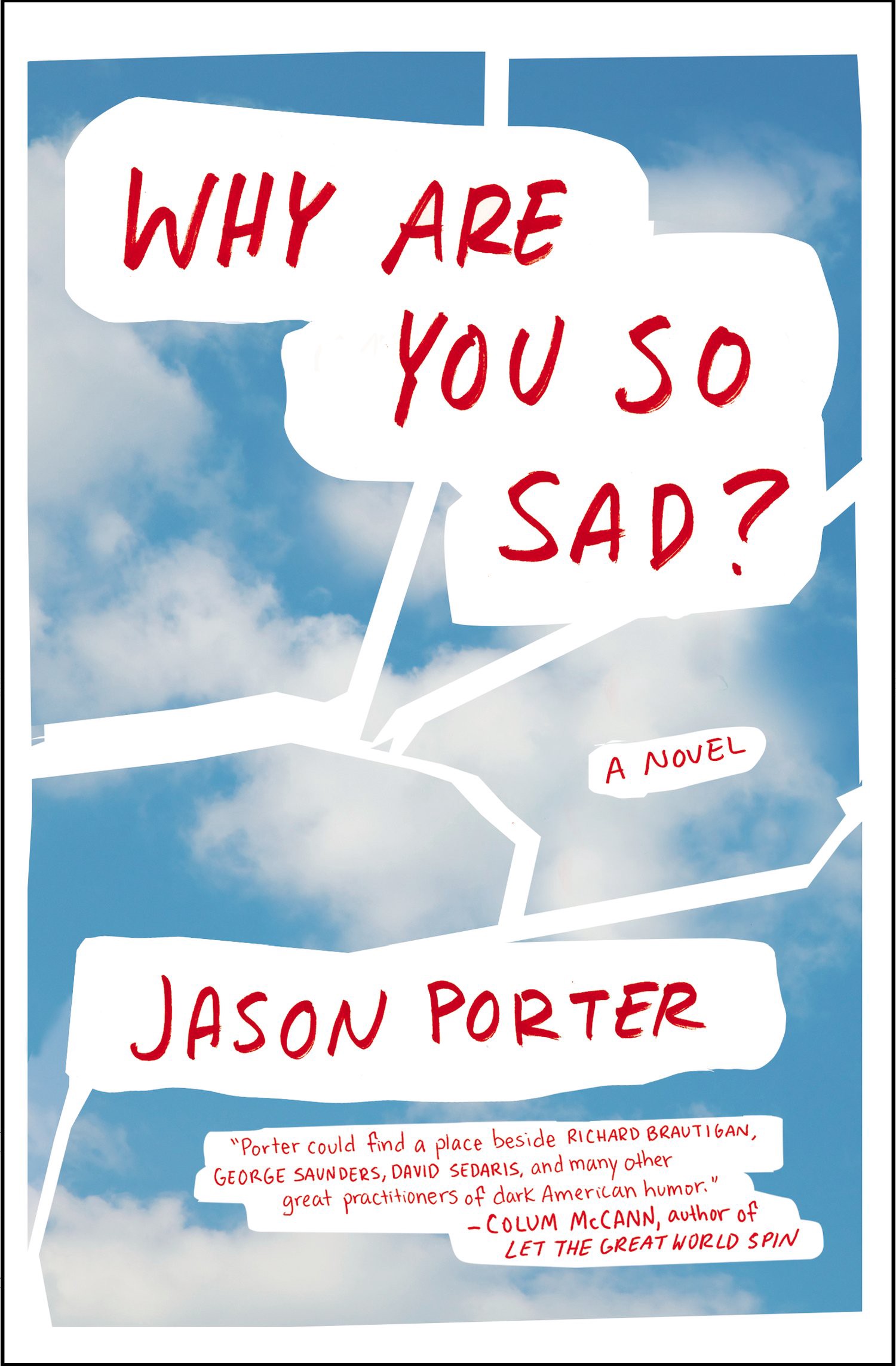
What We Learned About Your Sadness

by Jason Porter

Dear contestants and the interested observers,

This is what we were thinking. We had a short story about sadness — one I wrote, called “We Were Down.” A darkly humorous story, painful and nervous too, but hopefully funny enough to cut through its own misery. In addition it was the holidays. For many, a deeply emotional time that often falls short, because of the expectations, and the terrible music, and the movies we know are stupid, but which nevertheless drone on in cloying notes of joy and togetherness. Which are fine things, should you be lucky enough to have them, but take on a sting if you don’t. From the story we stripped its central structural conceit, an absurd survey on sadness, and used it with a minimum of context for the purposes of a whimsical holiday contest. Bring us your foul Christmas circumstances and we will decorate the most miserable of your lot with therapy and gin.

At the time it seemed funny, in a darkly comic sort of way. It all calls to mind an epigraph I’d hoped to add to my novel from a song by the Bee Gees called “I Started A Joke,” though I didn’t hear back from the estate of Robin Gibb in time to include it. It’s one of many brilliant songs from earlier in their career where they were superbly melancholic without ever ceding their natural gift for melody. The song begins, “I started a joke, which started the whole world crying.” Which is, to some degree, what we have done here.

The punch line to this joke was a flooded inbox, with answers ranging in tone from petty to tragic, thus forcing me, the judge, on a blinding journey through a spreadsheet filled with life’s varied disappointments. A majority of the contestants appeared to be incredibly alone, except in the sense that they were part of a tightly packed crowd, all common inhabitants of the same broad category of grim experience. What makes people so sad? In our survey results the big winners were poverty, physical misfortune, death, loss, unrequited love, sexual abuse, chemical addiction, and a history of upsets so consistent the only logical outlook is hopelessness. I wish this list were due to a writerly gift for exaggeration. It isn’t.

If I can pivot to a more positive trajectory, there were also many entries that were not without hope and bravery. People want to believe in God. People still hold out for love. People are rightfully suspicious of the idea of more sports. And people really want to vent a little, or often much more than a little. Some even admitted as much, saying they weren’t in it for the prizes. Their answers were passionate, angry, rough, and of course very sad. But even more they were raw and unfiltered. A quirky and self-parodying questionnaire filled with leading questions, somehow became a truth serum, a confessional made of ones and zeros. On our end, it was an unanticipated deluge of human experience. A humbling downpour. A wealth of forlorn perspective.

Given that the survey itself was never intended as a scientific tool, any extrapolating is speculative. Still, it’s clear people, or these several hundred people, were keen to talk. Or to write. Personally (and I realize nobody really asked), I have found both talking and writing to be invaluable in my sad and inconsequential battle against depression. I wasn’t conscious of it at the time, but mining only a fraction of the amount of pain of our average contestant, I wrote an odd little novel, thrusting all of my anxieties on some poor guy I decided to call Ray, the author of this very same survey. Things didn’t necessarily go well for him and I almost retired from writing just about every day I sat down to write it. But eventually I pulled this thing out of me, and I felt slightly improved. And I do believe that I understand my feelings a little better. Maybe only four percent better, but better. Did I in the end feel heard? Not really. But it did help to talk.

Happy new year.

– Jason Porter

Editor’s Note: The prize for the saddest entry has been awarded. The following are, with the winner’s permission, excerpts from her survey.

Are you single?
Yes, technically. I’m involved with a very tall man who prefers that we both date other people, but he also tells me I’m funny and kisses my neck sometimes.

Are you having an affair?
I recently met a man on Craigslist for anonymous sex. I didn’t tell the very tall man with whom I’m involved, but this is technically allowed in the terms of our relationship, which I guess isn’t really a relationship at all.

Are you similar to the you you thought you would become when as a child you imagined your future self?
Yes and no. No, of course. But also I think I knew from a very young age that I had this strange sort of sadness about me and if you had told me as a child that I would live alone with my cat through grad school and spend my nights counting the veins in my wrists then I think that would have made sense to me.

Why are you so sad?
Sad is maybe not the right word. This is maybe not the right survey for me. A better survey for me might be: Why are you so dull and gray and lifeless? Why do you spend so much time sitting still? Why do you sit alone on the bus and pretend not to see the people you know who are sitting a few seats ahead? Why do you wrap a scarf so tightly around your neck at the bus stop? Why are you always alone at coffee shops on Friday nights? Why were you crying in the library last week? Why are you applying for food stamps? Why haven’t you paid your grad school fees yet? Why do you spend so much time examining the peeling bits of skin around your fingernails? Why did you wait two weeks to tell anyone that you had two broken ribs? Why didn’t you call anyone to help when you locked yourself out of your apartment? (Why didn’t you make a spare key?) Why doesn’t your mother talk to you anymore? Why did you get rid of all the chairs in your apartment? Why haven’t you taken out the trash? Why do you fall asleep on the floor? Why do you rock back and forth in public sometimes, looking pale? Why do you always seem to be catching your breath? Why did you pretend not to recognize your therapist when you saw him ordering a roast beef sandwich downtown? Why haven’t you talked to him since? Why haven’t you eaten anything today? Why aren’t you eating?

What does it feel like to get out of bed in the morning?
Waking up is like lifting a great weight off my chest — often literally, because my cat weighs eighteen pounds and likes to sleep on top of me with his nose tucked under my chin. He’s patient while he waits for me to get up, and he follows me to the bathroom and waits at my ankles for me to be done, and then he follows me to the kitchen and licks my toes while I get his breakfast. And then I usually crawl back under the covers, and sometimes he joins me after he eats, and we stay curled up like that — girl and cat, both with no reason to get out of bed — for as long as we can, sometimes for hours, sometimes for days. The mattress was cheap and used and I spend enough time on it that it has formed a valley in its very center, an imprint of my body that now I roll right back into every night, every afternoon.

When was the last time you felt happy?
Like I don’t care for “sad” (see above), I also don’t care for “happy” as it’s opposite. Perhaps the better question is: When was the last time you felt anything at all? In which case the answer would be that I felt anger just a few days ago, annoyance earlier today, resentment last week. I think I felt something like genuine sadness last time the very tall man told me he hooked up with someone else, but really, feeling sharp hurt felt almost good, almost like something real. And maybe I felt almost happy when he told me that it was meaningless, that he regretted it, that maybe he and I should go eat some tacos. He bought tacos for us and we ate them in a little booth with a disco ball hanging above it and we shared a drink. I caught him looking at me while I was laughing at something. He hugged me after, in the rain, and we looked at each other for a long time.

Was it a true pure happy or a relative happy?
I couldn’t think of an example of pure happiness if I tried. What’s happiness? Eating tacos under florescent light with someone who helped you break through your own bedroom window when you locked yourself out? Hugging someone who knows how to squeeze just enough not to hurt your broken ribs?

Is today worse than yesterday?
Christmas. My family doesn’t really celebrate Christmas but we try to act like we do, which is worse than just admitting that none of us care and all of us staying home alone. Last night we all ate lunch meat and meatballs from Ikea for dinner. My grandparents gave me cat food for Christmas. My brother left without saying goodbye to anyone and I realized later that we hadn’t spoken one word to each other all night. This morning I woke up nauseous and bent over the toilet. The meatballs. Both of these days have been better than last Friday, when I had an anxiety attack on the bus home and sat on the sidewalk for a long time, realizing how very few people I really have to call in these little dark moments. And I walked home in the dark, scarf wrapped around my mouth like a bandage, and I took enough benzodiazepines to rock myself slowly to sleep on the kitchen floor, my cat pawing at my face like he was concerned.

Have you ever fallen in love?
I thought so. And then I thought about it for awhile, reconsidering. Now I don’t think about it at all, really. This question took me aback. Love? People think about love?

National Book Critics Circle Finalists Include Hilton Als, Donna Tartt, and Sheri Fink

by Katie Sharrow-Reabe

This past Monday, the National Book Critics Circle announced the finalists for the 2013 Awards season. The NBCC awards are celebrated every March and are the only national literary awards chosen by critics themselves.

The NBCC awards ceremony will be held on March 13 at the New School in New York City and will be free and open to the public. Tickets to the after-party can be acquired for $75.

In 1975, NBCC then-President Ivan Sandrof described the group’s objective as “to improve and maintain the standards of literary criticism in an era of diminishing and deteriorating values.” The program’s mission has since been revised to be much less critical but no less ambitious: To honor outstanding writing and foster a national conversation about reading, criticism and literature.

This year, the NBCC has awarded literary critic Katherine A. Powers the Nona Balakian Citation for Excellence in Reviewing. Powers penned “A Reading Life,” a column in The Boston Globe and the recently published Suitable Accommodations: An Autobiographical Story of Family Life: The Letters of J.F. Powers, 1942–1963.

Writer and professor Rolando Hinojosa-Smith, known for his 15-volume Klail City Death Trip Series, will receive the Ivan Sandrof Lifetime Achievement Award.

Fiction writer Anthony Marra will receive the inaugural John Leonard Award for his debut novel, A Constellation of Vital Phenomena.

And the finalists for the 2013 NBCC awards are…

CRITICISM

  • Hilton Als, White Girls (McSweeney’s)
  • Mary Beard, Confronting The Classics: Traditions, Adventures and Innovations (Liveright)
  • Jonathan Franzen, The Kraus Project: Essays by Karl Kraus, translated and annotated by Jonathan Franzen with Paul Reiter and Daniel Kehlmann (Farrar, Straus & Giroux)
  • Janet Malcolm, Forty-One False Starts: Essays on Artists and Writers (Farrar, Straus & Giroux)
  • Franco Moretti, Distant Reading (Verso)

FICTION

  • Chimamanda Ngozi Adichie, Americanah (Knopf)
  • Alice McDermott, Someone (Farrar, Straus & Giroux)
  • Javier Marias, The Infatuations (Knopf)
  • Ruth Ozeki, A Tale for the Time Being (Viking)
  • Donna Tartt, The Goldfinch (Little, Brown)

NONFICTION

  • Kevin Cullen and Shelley Murphy, Whitey Bulger: America’s Most Wanted Gangster and The Manhunt That Brought Him To Justice (Norton)
  • Sheri Fink, Five Days at Memorial: Life and Death in A Storm-Ravaged Hospital (Crown)
  • David Finkel, Thank You For Your Service (Sarah Crichton Books/Farrar, Straus & Giroux)
  • George Packer, The Unwinding: An Inner History of The New America (Farrar, Straus & Giroux)
  • Lawrence Wright, Going Clear: Scientology, Hollywood and The Prison of Belief (Knopf)

POETRY

  • Frank Bidart, Metaphysical Dog (Farrar, Straus & Giroux)
  • Lucie Brock-Broido, Stay, Illusion (Knopf)
  • Denise Duhamel, Blowout (University of Pittsburgh Press)
  • Bob Hicok, Elegy Owed (Copper Canyon)
  • Carmen Gimenez Smith, Milk and Filth (University of Arizona Press)

AUTOBIOGRAPHY

  • Sonali Deraniyagala, Wave (Knopf)
  • Aleksandar Hemon, The Book of My Lives (Farrar, Straus & Giroux)
  • Rebecca Solnit, The Faraway Nearby (Viking)
  • Jesmyn Ward, Men We Reaped (Bloomsbury)
  • Amy Wilentz, Farewell, Fred Voodoo: A Letter From Haiti (Simon & Schuster)

BIOGRAPHY

  • Scott Anderson, Lawrence in Arabia: War, Deceit, Imperial Folly and The Making of The Modern Middle East (Doubleday)
  • Leo Damrosch, Jonathan Swift: His Life and His World (Yale University Press)
  • John Eliot Gardiner, Bach: Music in The Castle of Heaven (Knopf)
  • Linda Leavell, Holding On Upside Down: The Life and Work of Marianne Moore (Farrar, Straus & Giroux)
  • Mark Thompson, Birth Certificate: The Story of Danilo Kis (Cornell University Press)

The Book of Miracles

Long before the polar vortex froze the news cycle and radioactive squids started wrapping their tentacles around the Twittersphere, people have been obsessed with the depictions of the apocalypse. Now Taschen has reproduced The Book of Miracles, a rare 16th-century illuminated manuscript that depicts beautiful visions of the end of the world.

“The subject of natural disasters and their causes, a major theme of the manuscript, is just as pertinent today, in our age of climate catastrophe, as it was in mid-16th century Germany, even if our understanding is different,” Waterman, a German Renaissance art historian at Princeton, tells Co.Design.

Read more about the history of the book and see some of the incredible illustrations at Fast Company.

In the District, Into the Bargain

Here’s a bit for you. It’s an impressive one too. My bet is you are going to be really refreshingly impressed with it, or by it, which I have to tell you is what I myself was when the woman involved in the event disclosed her heart to me. First, as to setting — temporal, spatial, all that. So, fine, so the thing starts maybe all of an hour ago just a block from where I am sitting right this minute typing this up for you to read it and get out of it the same kick I did. She types too — the woman. She is always typing, is my understanding — or was, back when I used to see her somewhat, let us just fancy, social-wise. As a matter of fact, when I said to her, “What’s up? I mean what are you doing here in this neighborhood? Do you have a pass, were you issued a pass, a license maybe, any kind of a permit you can show me authorizing you to come up here into this restricted district of mine?” she laughed. I think she thought I was trying to be funny. Let me tell you something — that’s the one thing I never try to be — namely, funny. No, no, I was just doing what I could to maybe get away with having to snoggle for the usual sort of talk, lay on her a smart-aleck greeting of a sort, which apposition I only went to the bother of just now constructing so I could say sort and sorts, repeating and repeating stuff to stuff the insidious silence with insidious sound, however otiose or bootless or inutile dexterity appears (to be?) on the surface. You get what I’m getting at? — the stressing of the effect of there being something sly down beneath down under things as regards below the surface, see? But which surface, eh wot? Or, anyway, surface of exactly what, eh wot? (You see? Can’t help myself. It’s like this thing I’ve got which is like an irresistibly compulsive thing.) Oh, boy, I am all of a sudden so tired. I, Gordon, son of Reggie, am all of a sudden so suddenly utterly all in, just fucking pooped. Like, you know, like weary, wearied, ausgespielt if you’re German, right? Nap. But, hey, before I fall and hit my head, I’m just going to go ahead and take myself a little teensy tiny nap, fair enough? Be back in a shake, I promise.

Mmm, nice. Told you I’d be right back. So there. Good as my word. Plus, feeling ten thousand percent. Nothing like sleep, let me tell you. Anyway, as I was going to say to you, small talk, the ceremonial, it gets me jumpy and tongue-tied, see? — especially when there’s the blam of a city smashing the nuclei of your cochlea from all four sides of your brain. Or, okay, six. I mean, the street. Knocking yourself out to make a show of confecting coherent conversation on the street, okay? This was the street. Or, fine, on the street. Or in it — since as for on, we were, the scene was taking place, the one consisting in this woman and I — on the sidewalk. But I may have already said so, mayn’t I have? Anyway, I was aiming for home from marketing and here she was, the woman I am telling you about, making her way along the sidewalk, coming right dead-on at me, a woman I, Gordon, had not, I swear to you, laid eyes on in a shockingly long time. Some beauty too. A real knockout. But in her years, of course, not in the slightest other than I. That’s right — we’re old. Okay, so this woman laughs a little and she says to me, “I was at the school — went by for a used-book sale at the school.” “Really?” I say. “At the school, you say? Buy anything?” I say. “Oh, just these,” she says, spreading open the dainty shopping bag she’s hauling with her and giving me a peek inside. There’s two books in there. I finger them around, trying to get it to look as if I’m earnestly interested in getting a look, and see, yeah, yeah, just crap, more crap, writing, writing, etc. and so on. “Sophie, this is crap,” I says to her, and she says, abashed is the word, or embarrassed, “I know, I know.” So I says to her, “Sophie, will you please explain yourself? I am waiting to hear you make a forceful enough attempt to explain yourself,” which, you know, gets another laugh out of her, but she touches my arm, the way you do, and I do ditto to hers, and this part of it is really honestly terrific for me because, don’t make me have to say it to you again, this person is, old as she is, a really terrifically classy-type of a looker. “And you?” she says, “because I never see you on the street anymore — oh, but probably it’s me — always hatching up dreams at home by reason of beating my keyboard to death.”

“Um, not me,” I say. “Quit it all just after the wife died. It’s not for me anymore, all of that maddening shit, verbs and nouns and worse. What I do,” I says to her, “is I keep myself frantically busy fussing with the place.”

“Is that so?” the woman, tired and tiresomely, says.

“Seems to be,” I say, and can see this powwow half a lick from a ghastly stall, and, thus, high time for everybody’s sake to make all speed for a semi-graceful goodbye and let us please get going on our separate ways.

I touch her arm.

It’s nice. Like sleep.

“Got to giddyap,” I say. “Projects.”

“Oh?” she says. “Like what?” she says.

Well, you can see how it is — one, I don’t want to be outdone, take off with the question, with her question, still in charge of the verbal situation which had been developing on the street just more or less just moments ago, which would be, if I did it, did yield, did give way, did fail to return reply, it would be like my giving this person the, you know, the victory, you might not inappropriately say, yes — and, two — two, I all of a sudden figure there’s maybe more to be said for touching hastening on the way in the offing for me here, so sexily, you might say, I says to the woman, “Ah, you know, just puttering around with my place, keeping things up to grade — or is it code? — doing what I can so the wife does not have to rest in everlasting shame.”

“Barbara?” the woman says.

“That’s right,” I say. “Good of you to remember the name. And Howard?” hoping and praying it’s me who’s this time remembering right (unless it’s aright), that it’s not John or something, Alphonse or Gray. “Pretty tough still, is it, or are you actually getting yourself settled in with all of the adjustments and all?”

“Yes, Howard,” she says, and looks off up into the wild blue yonder and, still gazing away, says to me, “Projects you said? Such as what?” she says to me, saying to me, after her saying just that little bit to me, not one other word, not nought, by Christ — until I, Gordon, am standing there with her on the sidewalk with her all talked-out, not having shown this person up, I should certainly say, not having exhibited to this person just what fucking grief is all about, which is when the woman gives me a look and says to me, touching my arm again into the bargain, “Oh, Gordon, you are such a tease,” and keeps touching my arm, keeps her hand in noticeably secure touch with my arm, in the manner of somebody determined to hold a person stationed right there where the two of them, persons the pair of them, are — as in don’t leave, don’t leave, and, sighing, saying to me, she says to me, “I know, I know — it’s exactly the same with me.” And here it happens, I can tell it, I can tell it, this woman is going to come at me with a comeback, goddamnit — I took too stuporously long trying to think up some sort of a reportable project — the mattress, the bedskirt, the phone in the kitchen sticky with its locale in the vicinity of lots of lonely frying.

But it’s crazy how I remember it.

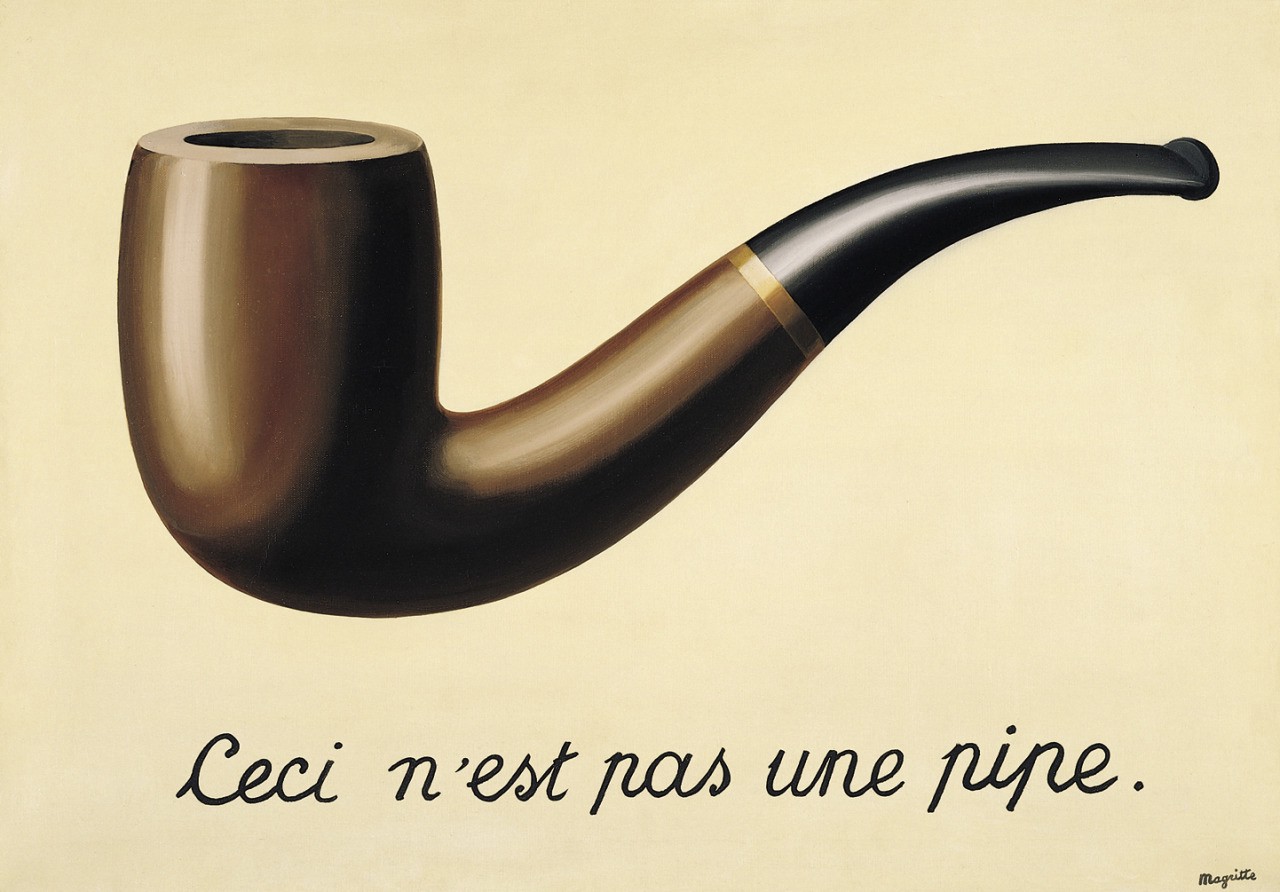
His pipe. The man’s pipe. Her husband’s pipe, which I, Gordon, first apprehends as a pipe, as just a fucking pipe, as just the prop like a man named Howard, isn’t it, type of chap for him to sport, a pipe, hah!

“Oh,” she murmurs to me getting herself right in close to my face, “but isn’t one forever thinking of it — Howard’s favorite pipe?”

Me, I told her about some stuff I couldn’t seem to shut up about — the mattress, the bedskirt, the kitchen telephone. “Oh,” she says, “isn’t it what always so heartbreakingly happens when you don’t buy bedding at a department store where if you don’t, then you don’t have any, not the least, latitude as to any recourse of return, or last resort to it, or for credit? Gordon,” the woman says to me, admonishing me, and not at all soothingly, “don’t tell me Barbara never advised you to keep yourself well out of the reach of the specialty shops!”

I think I said, “Latitude?”

I think I may have said, “Latitude?”

You can lose the thread, you know.

You can lose it even if it’s your own textile you’re weaving.

Jesus, I am so goddamn tired again. Oh, man, am I … beat! Do you ever get to feel like this? You know what I mean? But maybe you don’t. Maybe you’re different from me. But maybe you’re not like her, either. I mean, I’m thinking a pipe pipe — like a briar pipe, right? But you know what in just mere minutes from then I’m willing to grant? And, hey, listen, I’m prepared to insist it’s a sign of growth in me, isn’t it? — this recent willingness I just mentioned to you where I’m willing to grant somebody a little something by way of exoneration — as in maybe a little benefit of the doubt.

“Sophie,” I says to her, tap-tapping the handier of her elbows with my two happy fingers working in synchrony. Still, doing this pretty consolingly, you do, I trust, understand — tap, tap, tap, gently, gently. I says to her, “Sophie, do you actually mean for me to interpret your meaning as meaning like a pipe in the basement or something — not something like a Meerschaum, right? But, you know, instead — instead an overhead pipe, industrial and all that?”

“Well,” she says (Sophie says to me, Gordon, you do continue to see), “dear Howard, dearest Howard, he had, I have to tell you, the man had picked out a big green heating pipe he felt very protective about.”

Or of, I, for the record, corrected — but, uncharacteristically, keeping my annoyance to myself.

Fuck it. You probably know how it goes from here — her getting me, with a touch and a half, to go with her over to her place to see it down there in her building’s basement — some superintendent’s gardener’s glossy high-class green. Then I, of course, got her to come hurry right over with me to my place and, you guessed it, showed her, I showed her, absolutely — well, yes — every dazzling detail.

Which is to say the sole project left to me.

Oh hell, the one, to be fair, left to the legion of both of us, I suppose it’s, inescapably, only virtuous for me to allow.

About the Author

Gordon Lish, born in 1934 in Hewlett, New York, is the author of numerous works of fiction, which together with his activities as a teacher and editor have placed him at the forefront of the American literary scene. Fiction editor at Esquire magazine from 1969 to 1976, in 1977 he became an editor at Alfred A. Knopf, a division of Random House, where he worked until 1995. Among the writers he is credited with championing are Harold Brodkey, Raymond Carver, Don DeLillo, Barry Hannah, Jack Gilbert, Amy Hempel, Jason Schwartz, Noy Holland, Sam Lipsyte, Anne Carson, Ben Marcus, Gary Lutz, Cynthia Ozick, Christine Schutt, Dawn Raffel, and Will Eno. From 1987 to 1995, Lish was the publisher and editor of The Quarterly, a literary journal that showcased the work of contemporary writers. He is the recipient of a Guggenheim Fellowship (1984), and in the same year won the O. Henry Award for his story “For Jeromé — with Love and Kisses,” a parody of J. D. Salinger’s story “For Esmé — with Love and Squalor.” Among his seven novels are Dear Mr. Capote (1983) and Peru (1986). He lives in New York City.

About the Guest Editor

OR Books is a publisher dedicated to “progressive change in politics, culture, and the way we do business.” Founded in 2009 by publishing veterans John Oakes and Colin Robinson, the company’s focus is on selling direct to consumers via the web. All books are published as both print and ebooks. Among its authors are Julian Assange, Eileen Myles, Yoko Ono, Douglas Rushkoff, Jason Schwartz and, of course, Gordon Lish.

“In the District, Into the Bargain” is excerpted from Goings: In Thirteen Sittings and is reprinted by permission of the publisher. Copyright © 2013 Gordon Lish

The Best Bad Book Reviews of the Year

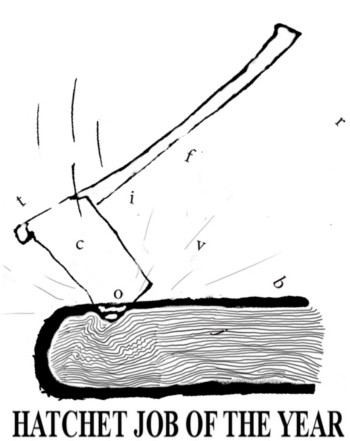
The Omnivore has announced the shortlist for The Hatchet Job of the Year, a distinction thrust upon “the writer of the angriest, funniest, most trenchant book review of the past twelve months.”

The shortlisted reviewers are:

Craig Brown on Distant Intimacy: A Friendship in the Age of the Internet by Frederic Raphael and Joseph Epstein, The Mail on Sunday
Rachel Cooke on Strictly Ann: The Autobiography by Ann Widdecombe, The Observer
Lucy Ellmann on Worst. Person. Ever. by Douglas Coupland, The Guardian
A A Gill on Autobiography by Morrissey, The Sunday Times
Peter Kemp on The Goldfinch by Donna Tartt, The Sunday Times
Frederic Raphael on A Delicate Truth by John le Carré, The TLS
David Sexton on The Luminaries by Eleanor Catton, London Evening Standard
Hedley Twidle on The Last Train to Zona Verde by Paul Theroux, New Statesman

For more “best of” book reviewing, don’t miss Brian Hurley’s Critical Hit Awards column.

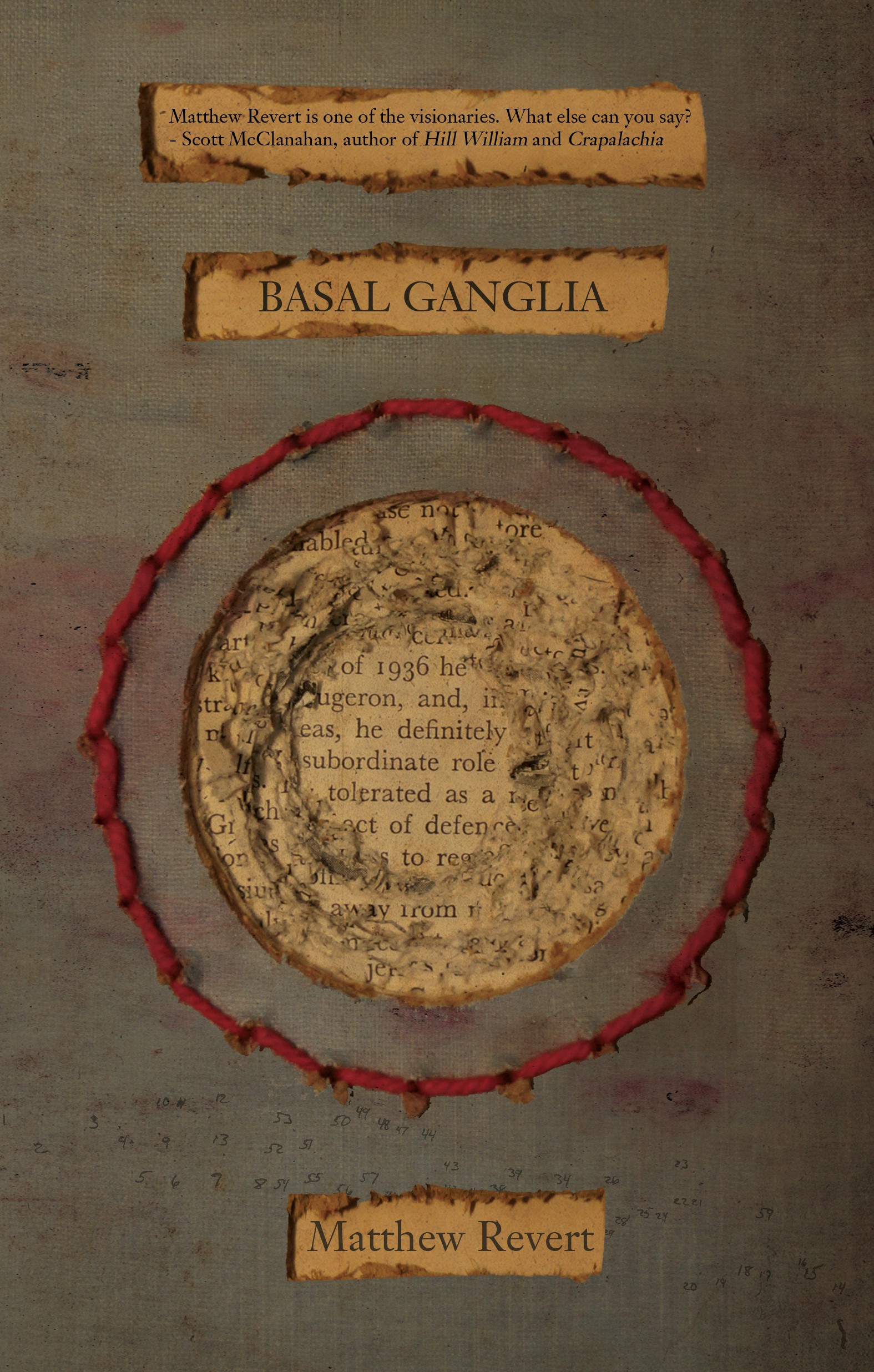
REVIEW: Basal Ganglia by Matthew Revert

The partitions of the brain, and the demarcations that separate the boundaries of influence, can often appear as arbitrary as phrenology due to the interconnectedness of the brain’s neutral functions. Much in the same way,

within Matthew Revert’s <em>Basal Ganglia</em>, we discover that love lacks true description and our attempts at charting its topography are nebulously linked in countless directions

. This is a book that can be read in multiple ways — allegory, parable, or confession being just a few.

As Iain M. Banks once wrote: “Memories are interpretations, not truths,” remembrance itself is suspect as we navigate the ill-fated love of Basal Ganglia’s main characters, Rollo and Ingrid. Rollo, whose name is inspired by the founder of the first Viking principality, stakes out a claim inside a pillow fortress of cerebral bulwarks, even though he’s the lost memory of his own name. He wanders the maze Rollo and Ingrid constructed, an Eden titled by brain functions such as the Occipital Lobes and Medulla Shaft. Like Adam, he is lonely. Unfortunately for him, his Eve is a strange one. “Unlike Rollo, Ingrid remembers her name. Although unvoiced, its memory survives in writing… The death of memory within Rollo calls toward what little memory Ingrid still has, wishing to consume her morsels of identity, rendering both he and she empty.” Their relationship has suffered the alkaline of familiarity. They are slaves to routine; Rollo stuffs pillows daily and Ingrid writes unsent letters to Rollo. The dissonance of their experience, rooted in their inability to communicate, intimates at the chasm that separates them from each other,

Revert blurs the lines between emotion and biochemistry, linguistics and desire, to weave a diction unnervingly arcane and empathetic.

“She wants to explore every possible sequence of words. She wants to know how words relate to one another. If words exist in conflict, she wants to observe the conflict. Most of Ingrid’s words, in one way or another, find their way toward Rollo… She seeks honesty with her words and often feels guilt at the contempt they reveal.” In their bastion, a rot has poisoned their connection. By severing themselves from the external world, they’ve both escaped definition and been defined by the thing they sought to flee.

“This was more than a structure that Rollo sought refuge in. This was a manifestation of all Rollo was. He had erected his own heart and invited her inside.” Only, his ‘heart’ provides little solace for Ingrid, a Xanadu of Solitude without any superpowers or long-lost extraterrestrial Fathers inside. Instead, she finds herself isolated and unable to express her alienation. They both know something is wrong and are suffering from something akin to a Parkinson’s of love, feeling the hunger, unable to act on it. Their emotional pallidums release too many inhibitory signals. “Unless they are eating or sleeping, Rollo and Ingrid never occupy the same place. The fort has dictated the two should exist in separation, as though unified presence will invite discord… Both share the same birthday. Neither remembers when that is.”

The pacing throughout is chaotically methodic and frenetically contemplative. In terms of action, most of it is internal, a stream of thoughts as convoluted and intricate as any married/warring couple.

Revert builds mini-fortresses of personality within both Rollo and Ingrid as they rail against each other, frayed and wrought by insecurities.

Ingrid drowns herself in a fascination with “concentric circles” which leads her to explore the possibility of surgically fixing their decrepit bond. She decides to have a baby, stitched together from “material of the highest quality… used in the fort’s construction and maintenance.” She tells Rollo she “will knit them into a baby. Our baby,” and she names him, “A red circle within a red circle within a red circle.” This is not just the meeting of sperm and ovule, but a metaphysical epiphany. She wants to give the baby a “name that fights verbalization, but a name that encapsulates everything a name seeks.”

Unfortunately, a circle is as far as you can get from a bridge, and both find themselves on orbits that never quite meet until a catastrophic collision sunders their realities. Ingrid’s maternal fears cause her to hide the child from Rollo lest he hurt him, while Rollo in turns acts with maniacal abandon in his desire to see the baby. They’re consumed by a murderous zeal, a “detuned instrument Ingrid does not want to hear.” Love demands nothing less than total sacrifice, a decimation of the self, a destruction of everything one holds dear. “Rollo is prepared to undo his life’s work if it means finding something which represents unity between he and Ingrid. He will, if the situation requires it, tear away every blanket, stripping the fort bare of its illusion, exposing whatever resides at its core.”

The core of the brain is arguably the basal ganglia. But what is the basal ganglia of love?

Is love, in fact, a neurological disorder paralyzing motion? Matthew Revert’s Basal Ganglia shares many of the themes of another classic, Edward Albee’s Who’s Afraid of Virginia Woolf? Both are about domestic illusions, stitched babies, and the symptomatically terrible acts committed in the name of love. Both cry for impossible redemption. They are fascinating treatises and expressions of an inquiry that has escaped explication for as long as people have chased one another in an attempt at “home-making.” Revert’s unique narrative projects the nuclei of brain cells onto the canvas of an ontological parturition. We’d like to think we’re watching a pregnancy gone awry until we realize our own basal ganglias are tingling and our bellies are swelling.

It’s then we realize that Revert has built a fortress around us and we are all lost within the circles and circles and circles of his making.

Basal Ganglia

by Matthew Revert

Powells.com

Gordon Lish “Bot” Takes His Red Pen To Twitter

by Katie Sharrow-Reabe

Gordon Lish will now critique your morning musings, commuter complaints and feigned attempts at appearing to know it all. At least, an algorithm-driven facsimile of the famed editor and author will. The Gordon Lish twitterbot challenges you to write a single sentence that would knock his socks off.

Twitter has the illusion of ephemerality, and for many, its sole purpose is for sharing intimacies off the cuff. But the truth is that every sentence, however banal, is captured forever next to your personal avatar. And worst of all, Twitter gives you a slight 140 characters to express yourself. So perhaps you ought to put a little more craftsmanship into your next tweet. OR Books thinks so and plays up Lish’s reputation to push your tweets into new territory.

A criticism offered by @Gordonlishbot

“We hope that unleashing the Gordonlishbot on Twitter will help do for social networking what Mr. Lish did for an entire generation of writers and thinkers: shock them into paying attention to the smallest, most basic components of their craft at all times,” says Justin Humphries of OR Books, the publisher behind the bot. Lish believes that you should start your writing with an attack sentence, which provokes and propels a story forward. The intention is not to stop there but to follow with even more provoking sentences. Sounds easy enough. Give it your best shot: Tweet your sentence and include the hashtag #attacksentence.

Coincidentally, OR Books is publishing a collection of Lish’s stories, Goings, available next month. The collection is Lish’s first completely original work in 16 years.

Even more so, Electric Lit’s own Recommended Reading is publishing a story written by Lish (the real man, not the bot) tomorrow. If you haven’t already downloaded the app, find it here.

The Outlet Featured on PolicyMic’s 10 Lit Blogs for 20-Somethings

We were honored to be featured on PolicyMic’s listing of “the best — funniest, crassest, headiest, least boring, most addictive — literary blogs for 20-something readers and writers.”

The Outlet is described as a “Publisher’s Weekly for the Bushwick set.” Which is probably a compliment, unless they’re using double-Brooklyn irony.

The list includes many other (9, to be exact) lit blogs that we’re proud to appear alongside, including The Paris Review Daily, Guernica, and Hazlitt. See the rest here.

This Bookcase Could Save Your Life

After the shootings in Sandy Hook, a former police officer in Melbourne wanted a way to make classrooms safer, reports The Age. “While the US gun lobby called for teachers to be armed, [Craig Harwood] thought about how to protect people from gunmen in the terrifying wait for police to arrive.” His solution: a moveable, anti-ballistic bookcase that can be used as a bulletproof barricade during emergencies.

The promotional video below shows how the dFence bookshelf works, and you can read more about how and why Harwood created the product here.

Via the Bookshelf blog