Submission Period for the PEN Literary Awards ends December 16th

by Katie Sharrow-Reabe

Maggie Nelson, Paul Harding, Anne Carson, Roberto Bolaño–all writers who have won PEN Literary Awards. Now is the time to join the ranks of these illustrious storytellers. PEN is currently accepting submissions from all writers for the 2014 PEN Literary Awards. But hurry! The deadline is December 16th. PEN awards over $150,000 in awards for debut novels and works of fiction, poetry, translation, biography, essays, children’s books, and science and sports writing.

In Defense of “Bad” Sex Writing

by Katie Sharrow-Reabe

Manil Suri won this year’s Bad Sex Award for his novel The City of Devi. The offending scene takes the reader away from the actual sex and sends them on an intergalactic sojourn that’s more quantum physics than physical:

“Surely supernovas explode that instant, somewhere, in some galaxy. The hut vanishes, and with it the sea and the sands — only Karun’s body, locked with mine, remains. We streak like superheroes past suns and solar systems, we dive through shoals of quarks and atomic nuclei. In celebration of our breakthrough fourth star, statisticians the world over rejoice.”

Granted, this passage is unusually imaginative, but in Suri’s defense, the characters involved are a physicist and his wife–a fact ignored by other outlets covering this story. Furthermore, I would argue, aren’t such metaphors a more accurate portrayal of the mind-bending qualities of good sex? It seems to me that the editors behind the award have a specific idea of what good sex writing looks like. If it doesn’t look like a space odyssey, what does it look like?

The Literary Review established the award 11 years ago to expose how sex was needlessly tossed into fiction for commercial appeal despite its often unflattering presence. Each year, The Literary Review receives some flak, and this year, one of the judges, senior editor Jonathan Beckman, defended the prize.

In his essay, Beckman explains that the award is meant to encourage better sex writing, not to censor or scold writers for a lack of good taste. The problem, as he sees it, arises when authors panic and derail under the pressure of having to write an effective sex scene. The worst offenders, Beckman explains, are merely too coy to be more explicit, filling their pages with overblown metaphors or else attempting to escape corporeality and extend into the supernatural–as is the case in Suri’s prize-winning scene.

Beckman doesn’t give any examples of what he considers to be good sex writing. But I can only surmise that it would be literal and with little embellishment, which sounds vanilla compared to these fantastical scenes. Steve Almond, who has made a career out of writing smut (his word), says in his essay “Hard Up for a Hard-on” that writing about sex doesn’t have to be sexy. “Real sex is compelling to read about because the participants are so utterly vulnerable,” he says. I agree. Readers expect their characters to have real sex, not emotionally void, first-this-then-that sex. Sometimes real sex is magical and otherworldly. Sometimes it does feels like a trek through a cryptic, dark forest. Sex scenes give writers an opening to dive into the psyche of their characters, so why mock them for having some fun with it?

How Taking Kids Out Of The Classroom Makes Them Smarter

Earlier this year book nerds the world over were positively smug with news that confirmed literature is actually, scientifically, empirically good for you. And now, according to a report at Fast Company, it seems art also has the power to make you a better person, too.

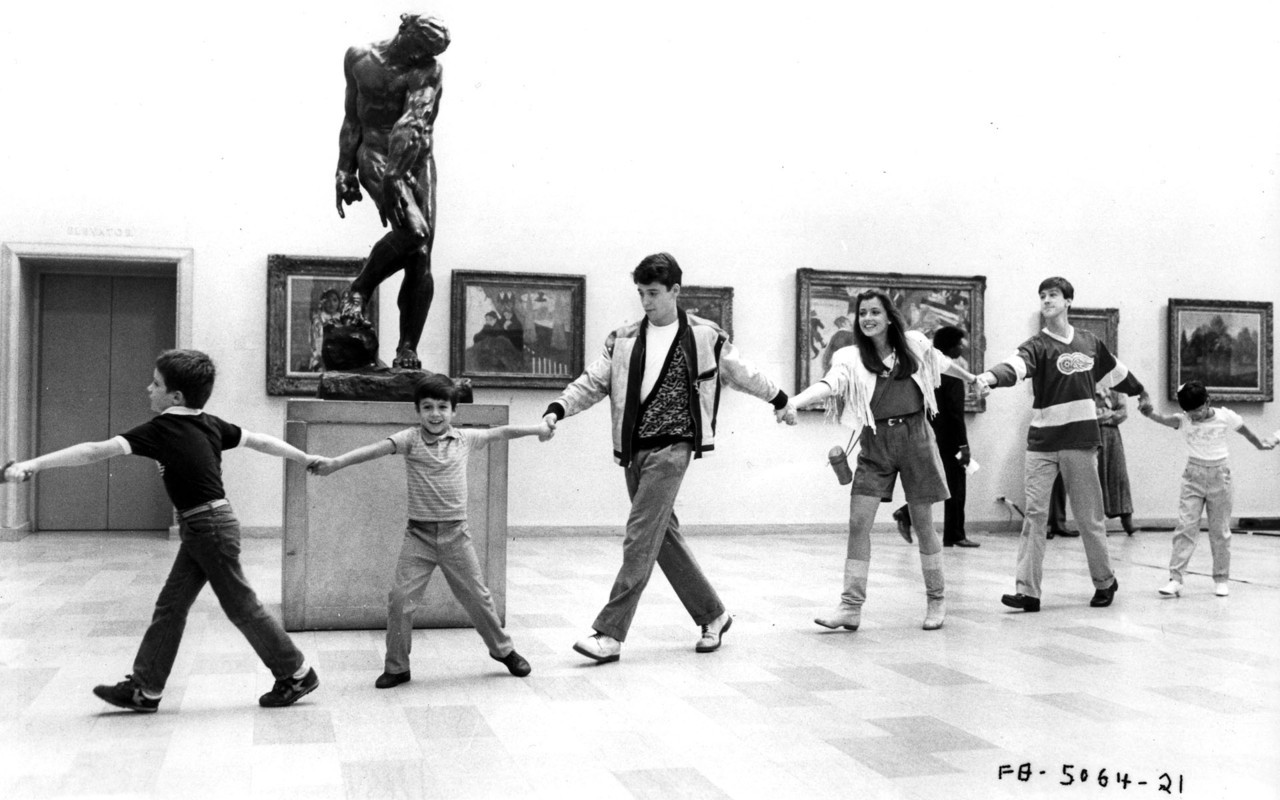
11,000 students were given a free tour of a new art museum. But it wasn’t your standard field trip, where some authority figure talks about art history and while students stare at their shoe laces. “The tours were student-directed, which means curators did not lecture. Instead, they gave students minimal information about each painting and spent the majority of the time facilitating discussion.”

Nearly a month later, students were asked to complete a survey that tested the students about the paintings they saw, their ability to empathize with the subjects, and also write an essay about a new painting that hadn’t seen. The results, when compared to a control group who hadn’t been to the museum, proved that in-person engagement increased a students understanding of art in both an academic and emotional way.

“It’s the difference between watching a televangelist and going to church. It’s why museums and churches invest in architecture. The act of going gets people into a mindset to receive the experience.”

If that’s the case, it may be just another reason why bookstores and libraries are so important to communities.

And while literature and art museums may not make students any better at math, it turns out they’re happier that way.

Read the article here.

REVIEW: Nothing by Anne Marie Wirth Cauchon

by Benjamin Rybeck

tumblr_ma6vlwCuYP1rsnh6wo2_1280

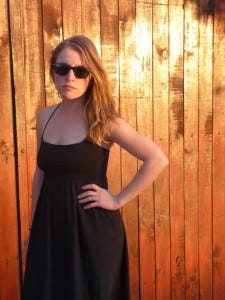
Look at the title of this book: Nothing. Look at the photo of Nothing’s young author, Anne Marie Wirth Cauchon, clad in a black dress, eyes hidden behind sunglasses, hand on her hip — read this book, she seems to be saying, or, you know, like, whatever. Check out the first sentence: “Freak.” Read the first page, with its chain-smoking heroine, Ruth, heading to a party and feeling blasé about it. Oh, and see that Lou Reed reference?

This book is probably a lot cooler than you.

Published by Two Dollar Radio, Nothing is Cauchon’s first novel, and she hurries to define it as nihilistic-hipster-chic — but there’s something a tad retro about the novel’s too-cool-for-school attitude, like a movie adaptation of Daria as directed by Gregg Araki. Cauchon introduces Ruth — our narrator — and her best friend Bridget as disaffected twentysomethings drifting from party to party. Ruth is unemployed and almost broke, but her crisis is way more existential than that. Bridget seems to be the only element of Ruth’s life that gives it any meaning. So, if Bridget one day ditched Ruth for some new friends, would Ruth cease to exist?

The novel’s other narrator, James, hops trains to Missoula to learn about his dead father. Wandering mountain paths and engaging with the local homeless population, James is just as paranoid as Ruth, believing that everyone is lying to him and trying to steal his stuff. When he and Ruth meet, they feed off each other’s worst tendencies, and the energy almost makes each page glow.

Nothing takes place in Missoula (Cauchon received her MFA from the University of Montana), where nearby wildfires fill the sky with smoke and — as the novel’s jacket copy reads — “everybody’s got a gun.”

Though this novel starts as Bret Easton Ellis, it ends as Nick Cave — thunderous, apocalyptic.

The move into the grand and mythic separates Nothing from the usual stuff concerning the bored and the pretty.

Nothing, however, can feel a little cold. While I don’t need every novel to be a group hug, Cauchon sometimes uses this coldness as an excuse to wallow in familiar ennui. She presents the overstimulation of parties effectively, though somewhat predictably, with broken syntax and stream-of-consciousness. Frankly, I find it more effective when Cauchon employs matter-of-fact surreal language to describe the setting and Ruth’s perception thereof: “Everywhere was lips.” Man, I really do love that sentence.

Eventually something is revealed about Bridget and James. An astute reader will see it coming, and some will criticize this, I’m sure. But I’ll defend it. While the twist is predictable, what isn’t predictable is how Ruth handles it: She’s uninterested in the real drama happening around her, caring only about her own delusions. She cares only about herself.

Ruth’s narcissism is the focus of this novel, and Cauchon uses a splash of melodrama to bring it out.

“Underneath there was something else happening,” James frets at one point, “something that wasn’t happening at all.” Cauchon nails this ambiguous dread, never trying to name it, just letting it boil under the surface until it explodes.

The novel creeps into violence, and Cauchon’s paranoid prose — which always suggests something horrible is about to happen — makes Nothing compelling, even when it delves into familiar subject matter. Toward the end, Ruth is in a stolen car, running from her broken life: “Someone is watching us, I was thinking. Someone planned it like this.” It’s a moment that evokes God, but God is long gone from the world of Nothing. Nobody’s watching, and there’s no plan: Ruth, Bridget, and James have lost or forgotten all the things that could’ve saved them — or maybe they never knew those things in the first place.

Nothing

by Anne Marie Wirth Cauchon

Powells.com

These Jane Austen Tattoos Are Perfect for Every Sensibility

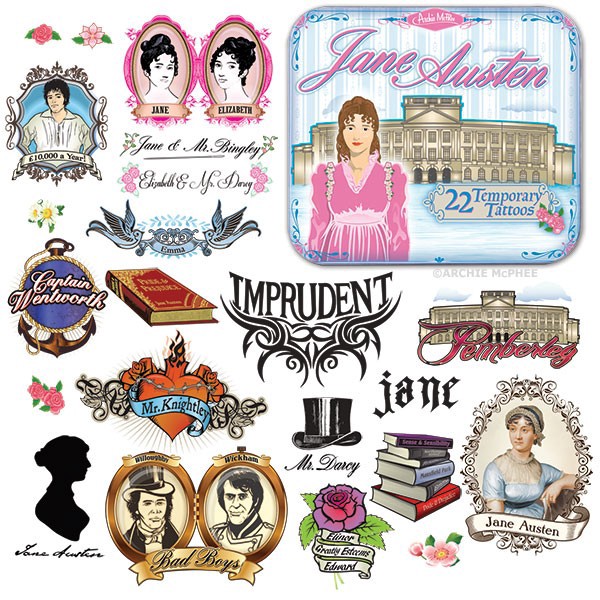
It is a truth universally acknowledged that a book lover in possession of $7 must buy these Jane Austen tattoos.

If you’re not the type to get your favorite book permanently inked onto your flesh (like these folks), then you’ll love these Jane Austen temporary tattoos. The set features 22 tasteful tats, including a silhouette of Austen herself, a dashing portrait of Mr. Darcy, and even a “imprudent” lower back tattoo.

Get them here.

(ht Largehearted Boy)

His Life Was Saved by Rock and Roll

When Jeff Jackson and I met at an artist’s colony this past summer, we bonded over our mutual obsessions with cults, captivity narratives, and rock and roll. One of Jeff’s characters is enslaved in his new book, Mira Corpora, while Unreformed, my teenage boot camp captivity narrative, explores my stint at an evangelical Christian reform school. Later we were thrilled to discover that in 2008 we attended the same Vic Chesnutt show.

Initially Jeff was shy about sharing Mira Corpora’s galley, but once I convinced him to share, I tore through it in less than twenty-four hours. I was ensnared by its strange beauty, entranced by a world in which feral children roam through abandoned theme parks haunted by gibbons, where teenage oracles reign over a dead village, where punk rockers stalk a mysterious rock star. Don DeLillo found “its manic pacing and summoning of certain cultural emblems” mesmerizing, as did I. Recently, Jeff and I discussed Mira Corpora online.

The author’s note claims “this novel is based on the journals I kept growing up.” You’ve created a distinctive voice for your narrator. Did it really emerge from actual journals? How reliable is this narrator?

The narrator’s voice definitely started with re-reading these real childhood journals that I’d been carrying around forever. They were full of memories, gossip, odd daydreams, local myths. Enough time had passed that I realized there was material I could mine from them. The voice that came out was different from anything I’d previously written and the journals were the springboard.

In terms of the narrator’s reliability, he’s trying his best to accurately relay his impressions but there are gaps in his memories and some encounters create severe confusion. I wanted to honor his confusion and represent it as honestly as possible. The narrator’s sometimes unsure how to read and feel about certain situations, and the reader should be as well. As a result, the story is pitched between various recognizable emotional states, styles, and even genres. There’s a tangible reality in the novel, but there’s also a little bit of dream logic at play.

Your narrator, Jeff, is dying from gangrene poisoning when he is befriended by a wealthy European socialite, Gert-Jan, who after nursing him to health feeds him drugs and enslaves him. At one point he uses Jeff as a party prop. The whole section reminded me of a conversation we had about cults and how their leaders prey on the weak. Did your interest in cults and behavior control help you create Gert-Jan?

I’ve always found cults fascinating and tend to see them as a more concentrated form of society.

To me, they’re a sort of microcosm for understanding some of the sickness, pathology, and the control that can play out unnoticed in more subtle ways in our everyday lives. And in the case of a few communes, they also represent possible paths for a better society.

I’m not sure my understanding of cults had too much to do with the character of Gert-Jan though. He’s more of a lone wolf and not someone who’s trying to form a group around his personality. He’s focused on exploiting one individual at a time. My understanding of his psychology was based partly on various con artists and sociopaths I’ve run across. These people are more common than we want to believe!

When Jeff was Gert-Jan’s captive, he replicated trauma, experienced dissociative states, had suicidal ideations, and later felt pangs of regret for betraying his captor. It felt authentic. How were you able to immerse yourself so deeply into this mindset?

Mainly, it was where the story needed to go. I drew on myself and people I knew — plus my imagination. That said, I’ve found personal experience isn’t a shortcut to making something come alive on the page. It’s hard to animate these sorts of experiences with words and I experimented a lot to find the right combinations of tone and point of view.

The biggest challenge was making sure readers didn’t get desensitized.

We read about unthinkable tragedies every day and it’s an instinctive reaction to shut them out.

I tried to include shifts in perspective, odd moments of beauty and tenderness, and unexpected realizations that hopefully keep you engaged. I also tried to allow readers the space to have their own reactions and hopefully empathize.

I really didn’t want this section to read like victim literature. Richard Wright says he knew he failed when his novel Uncle Tom’s Children made readers cry — because it gave them a catharsis that was too easy and ultimately trivialized the issues he was addressing. Genuine empathy needs to be active, something you have to work to achieve — as a human being and a reader.

Many of Mira Corpora’s characters exemplify man at his most feral: abusive mothers, drunken would-be saviors, half-mad heroes, policemen blinded to those who need the most help. And much of the novel is set within landscapes corroded with rot and decay. Does this reflect your view of modern society?

Certainly civility seems to be breaking down to an alarming degree and our technological advances are aimed more at 140 characters than addressing our crumbling infrastructure. But Mira Corpora hopefully exists — at least partly — outside of the moment of “right now.”

One reason for the feral behavior is that I was trying to get past the social niceties and dig beneath the skin of the story. I wanted to evoke something rawer that represented the essence of the characters and their situations. As for all the rot and decay, I have to confess that some industrial wastelands with their rusting bridges and half-cobbled streets strike me as gorgeous. Partly, I set scenes in these landscapes because of their sheer beauty.

The novel is set in a time before cell phones and internet, a time of cassette tapes, walkmans, and phone booths. Why did you choose to set this novel then?

I didn’t want Mira Corpora to be set in a specific year. There’s a dreaminess to the tone that I hope extends to the time period. I also think the fastest way to date something can be to include a lot of technology and pop culture references. That stuff changes at lightning speed these days. Plus there were plot practicalities: My narrator couldn’t afford a cell phone and wouldn’t have many people to call anyway. As for cassette tapes, they’re great totemic objects. Creating a personalized mix tape and decorating it for the recipient can often feel like a private ritual. Cassettes also have a grubby physicality that seemed more appropriate than vinyl, CDs, and certainly MP3s. It’s interesting to see how they’re making a comeback in indie circles.

You’ve had five plays produced in New York City. Have your experiences as a playwright helped you develop character?

It’s strange to say, but my playwriting experience has taught me almost nothing about character! My plays exist somewhere between traditional theater and performance art. It’s taught me a lot about thinking visually, collaging different tones, layering story elements, and creating situations where performers can thrive. But I’m not often delving deeply into character or psychology.

Character was much more important for Mira Corpora. I needed to know the character’s motives and psychology at every step, even when they weren’t sure themselves. These things aren’t always on the surface, but I tried to embed them into the text.

As a rock and roll chick, I was especially attracted to Lena with her “ratty locks (that) almost seem like an apology for her delicate and classically beautiful features.” She seems to know everyone and is fearless about reaching out to others for help, which clues you into her privileged background. These suspicions are confirmed when we learn her “squat” is actually an apartment she inherited from “some relative or another.” How did your life in the punk scene help you create these characters?

If you’ve spent any time around any punk scene, there’s almost always a few people who are slumming. They come from serious money but feel it’s more “authentic” to act like they’re poor. Pulp’s song “Common People” does a great job of dissecting this cultural phenomenon.

Lena is one of these people, but hopefully that’s not her defining characteristic. She’s also very kind and passionate about music. She romanticizes the narrator’s poverty in a way that’s a bit naïve and condescending, but she’s also young and still figuring things out. She’s mixed up like the rest of us and the narrator really likes her despite her put-ons. He’s got too many worries to indulge in the luxury of worrying about so-called authenticity, anyhow.

Jeff joins Lena’s search for Kin Mersey, the mysterious singer who dropped off the radar after releasing an unforgettable album with “tales of drunken fathers too scared to commit suicide, mute twins in white dresses spilling their parents’ ashes over a frothing ocean, dead girlfriends reincarnated as black swans, or blue orchids, or flaming pianos.” Did you have any real-life inspiration for Kin Mersey?

I drew on a bunch of different people for Kin’s character and then heavily embellished with my imagination. One of the inspirations was Jeff Mangum. His music has this tremendous emotional power. I was also fascinated by the extreme fan reactions after he disbanded Neutral Milk Hotel. For a while, there were websites and message boards with wild rumors about why he quit and what he was doing. I remember one thread proposing fans build him a treehouse city where he could work on new material in private. Almost all these sites have vanished now, but their obsession was really touching. In some ways, I was inspired by people’s intense attachment to Jeff Mangum’s music as much as the music itself. I should probably emphasize here that I don’t know Jeff at all, though I’m glad to see him out there making music again. Some people have told me they find the ending of Kin Mersey’s section to be incredibly negative, but I think there are a couple of different ways to interpret that situation. Kin’s solution to his problems is very different from any of his real-life inspirations.

You begin your first chapter with a quote from The Mekons. Later, when Jeff makes a break from a bad circumstance, he only carries a few belongings, including “my cassettes of favorite songs taped off the radio.” Music propels the narrative throughout. Why is music important to Jeff? What implications does this have on the book as a whole?

Music is a life raft for the narrator — same as it was for me growing up — and keeps him afloat during grim times.

Songs seem like they hold secret messages just for him. Discovering Kin Mersey’s music offers dizzying glimmers of a better world and new possibilities.

I really wanted Mira Corpora as a whole to have the power of a great rock song. Something with a visceral kick you can feel in your body, strong emotions that are swaddled in distortion, and that rushes past a little faster than you can keep up. I love music that overwhelms and slightly confuses me on first listen, leaving me to dust myself off and figure out exactly what I just heard. I love music that’s immersive. The best way to understand it is to hit repeat.

Why Do 62% of Young People Prefer to Read in Print?

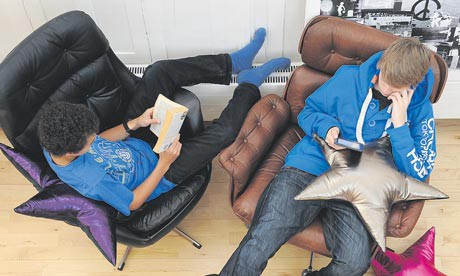
The Guardian reports that 62% of 16–24 year-olds prefer printed books over eBooks. It’s surprising news, of course, because millennials and digital natives are purportedly so attached to their devices that they’re practically living online. Maybe printed books are a welcome escape from screens. Or maybe, as The Guardian suggests, the upfront cost of buying an eReader is too expensive (although most eReaders have free app counterparts for the iOS and Android devices those kids likely already own) or printed books can be shared with friends (although Kindle allows customers to borrow books). But what do kids know anyway?

Debating the advantages of either format is, by now, tiresome. Books should simply be available to readers in whatever format they prefer. And, in any case, the most exciting revelation of this survey? Kids are reading.

Read the article here.

(photograph by Jill Mead)

It Doesn’t Have to Be a Big Deal

The pot grower was broke. I paid for everything. We went to a restaurant that served only the kind of food you’d eat when you had the munchies — hamburgers wrapped in mango, zucchini pop tarts. It was hard to date a grower without money. Something had happened to his crop, something dumb. It had to do with his ex-girlfriend, an older woman who threw eggs at his car while we were eating in the munchie restaurant. When we came out, the car said “Faggot” in ChapStick and he was like, “I’m surprised she would write that. She has so many gay friends.”

The car also said “Douche bag.”

I had never really dated anyone. Sometimes I wondered if a pot grower was the place to start. A lot of his sentences began, “When I had money,” and ended with guitars I’d never heard of. We drove back to his grow house with egg dripping off the side of the car, then fucked in an Aeron chair he’d bought when he had money.

Afterwards he disappeared behind a duct-taped curtain to tend the plants that would make new guitars possible. I walked around his block, which looked like suburbia as imagined by stoners who had dropped out of college. It was. They had. The college was in the center of town and the dropouts thrived around it, growing richer than if they had finished. My dropout had become an exception to this rule. The growers grew vegetables, too — rhubarb, kale. I looked for the ex-girlfriend’s house. She could be anywhere, seething with misplaced homophobia, cradling intact eggs.

The whole town smelled like pot. Why was he broke? There was weed in his freezer. There was weed in ceramic frogs on his desk. When I tried to smoke a bowl with even a tiny bit of ash in it, he would refill the bowl immediately.

“I want you to smoke fresh,” he said.

He propped up my neck with pillows when my neck hurt. He propped up my crotch with pillows to enter me at pillow-propped angles. He seemed neither faggot nor douche bag, but more like a man with a lot of pillows.

The ChapStick wouldn’t come off the windshield. The grower scrubbed and scrubbed. We were taking a road trip to a naked hot spring, but he kept pulling over at gas stations and using the squeegee on “Faggot.” I blamed his Catholicism, the pope, his parents. Hippies always had parents.

“It’s off, for Christ’s sake,” I said. I hoped Christ would help. “How much is the gas?”

I wasn’t from California, so a lot of this was new to me, the pot culture, the nudity without shame. I liked being stoned and naked with this man, but being sober and clothed was more challenging. We had met the previous summer, felt each other up during a sing-along, and decided through emoticon-heavy negotiations that I would fly across the country so we could spend a week together. I sent pictures of myself in a bikini, chaste for our era, but I had a thing about keeping my actual boobs a surprise. He sent pictures of himself playing mandolin in a new band, chubbier than I remembered, his hair in pigtail buns then braids, hair I willed myself to overlook in order to like him.

“It doesn’t have to be a big deal,” was my mantra, or what my friends gave me as a mantra, or what the culture gave us as a mantra, the culture of managing your mantras.

“You can just have fun.”

“It can just be for fun.”

“It will be really fun.”

Was it fun? I learned a lot about his recent struggles as a bluegrass musician. I learned that the bluegrass community was not as big as it was years ago, when that movie with the bluegrass soundtrack came out.

“It was pretty influential,” he said. “Now everything is computers.”

Former bandmates had turned to electronica, left the area, died.

“After Dano had the accident, Rob sold all his instruments and headed to Hawaii,” he said, reviving a conversation we’d already had several times back at his house. I thought of it as the “I’m mad at Dano for dying and breaking up the band but I can’t admit it so I’ll resent Rob instead” loop. I guess he thought we’d try the conversation in the car. I still had no idea how to respond, except to say it was a shame to lose someone so young. Then he said his new band had stronger musicians and put on their CD. The new band sounded just like the old band. All bluegrass sounded the same to me.

“None of us knew if the band would stay together, but for Rob to just go…” The grower looked at the road, baked out of his mind, trying to understand.

I could have probed the Dano anger, but I didn’t want to talk about Dano. For one thing, he had probably also been driving stoned. For another, I had enough of my own grief. I couldn’t make room for a twenty-four-year-old grower who had bashed his van into a traffic median. Dano had played “Sweet Child of Mine” at the sing-along. He had been cheating on his girlfriend, who was now his widow. Rob had gone to sleep early the night we all sang together, resting up before his big betrayal.

“What about Dave Tofu?” I said. “He still making music?”

“Tofu’s new stuff is crap. He’s so full of himself,” he said. “I’m not really friends with those guys who stuck around.”

“At least you have a fun job,” I said. “I just tutor dyslexic teens for standardized tests.”

“The way my business is, it’s not going to last,” he said, changing lanes. “We’re in a sweet spot right now with the medical permits.”

He said cigarette companies were already buying up the land we were speeding past for the day pot became legal. “To put the little guy out of business,” he said. “I guess I’m the little guy.”

He was a big guy, with a vengeful ex-girlfriend, in a hundred-fifty-dollars debt to me. The hot springs would cost twenty-five each for day use. But we had to do things. Otherwise, it wasn’t an experience. It was just sitting in his house.

“I understand why Gretchen’s mad,” he said, eyeing a vague smear on the windshield. “She’s not a bad person. She could be really sweet.”

“I haven’t had a chance to see that side of her,” I said. I hadn’t really dated anyone, but I had also not really dated everyone. Without a Gretchen of my own, I began to tell him about the other men. I made them seem like SAT words — this one had been impetuous, that one reclusive. My hope was to stir the pot grower to greater vocab scores.

“What a fool,” he offered. “That guy sounds like a jerk.”

“I don’t know why I’m telling you about him. He was nothing. He’s engaged.”

We pulled into a wooded lot and parked next a bulletin board that said, “We are a Clothing Optional Resort.” The springs steamed behind wet steps. Kiosk notices alerted us to internecine management conflicts, meditation workshops, the healing power of lithium. Women walked by with breasts that left you feeling conflicted. Testicles dangled. I had never even been to a hot spring with bathing suits. The grower went to the bathroom while I purchased day passes with my SAT earnings.

“It’s explained in the springs guidebook, but these are holy waters,” said the guy at the front desk. He had a half shaved head and a t-shirt that said, “Question Male Privilege.” He handed me a guidebook thick as a course packet. “So we prefer you not speak, eat, or engage in sexual congress. No passion in the pools. Please relay these guidelines to your friend.”

We undressed in the locker room. A man rocked a woman gently in the water. A sign reminded us to be silent at all times. Sexual activity was not permitted, but the attempts to hide it were worse.

The grower and I began communicating in hot springs sign language.

Over there. I’m going over there.

Okay. I’m staying here.

His hair was longer wet.

You look like Jesus, I signed, pointing to his hair and making the sign of the cross.

He got it, smiled, gave me a wet hug. This was what it was for, dating. Wet hugs. Jesus jokes. I needed this. I would get high and have this.

Smoke? I mimed. I lit an imaginary bubbler.

A woman put her finger to her lips, though we were not talking. Maybe the Original Mantra was “Shush.” I judged her breasts as revenge, but they weren’t bad by naked hot spring standards. In the southern part of the state, bodies were tanned and injected to perfection, but here in the north, where we bathed, bodies relaxed and gave into an idea of perfect acceptance. Signs advertised workshops to reclaim powers long forgotten. People banged drums in the parking lot, unlocked childhood trauma in sacral tissue, painted their penises with raspberries.

I checked out his penis — not hard. This was also what dating was for, to see the penis at rest. It rested out of politeness to the naked strangers, so as not to disturb their patented water massage techniques, or maybe it rested out of guilt. I didn’t understand the mechanism of control behind the penis, though I respected it. I didn’t understand the mechanism of control behind Catholicism either, or behind any of the Eastern religions mentioned in the hot springs course packet the guy had given us at the front desk.

We climbed out of a hot pool and into a cold one. We slid back into a hotter one. We lay on our backs on benches in a sauna and avoided looking at other couples’ genitals. I waved to him to follow me down a path of trees I couldn’t identify.

We found a clearing in the woods, known in our guidebook as the Garden of Peace. He produced a bubbler from its velveteen satchel. We smoked under a Navajo quote, “Thoughts are like arrows: once released, they strike their mark.”

“More like Garden of Cultural Appropriation,” I said. This was one of the phrases you got to keep if you had not dropped out of college. I wasn’t sure who was the mark for this thought — him or the springs.

“Cultural appropriation,” he said. He tasted it on his tongue, added it to his worldview. We were sitting on a rock naked. I felt like a tutor with a promising student at the beginning of time.

“A lot of those Native quotes are made up,” he said.

“Everything’s made up,” I said.

He edged closer to me on the rock. This was my favorite kind of sex, sex based on being impressed. We kissed like we’d been kissing for days, like it was important, like something bad would happen if we stopped.

I couldn’t believe money was our problem. Under it was another problem. I was high and lip-locked. Our lips locked out our problems. He lifted a condom out of the velveteen satchel. I checked the label to see if it was flavored. He’d bought a variety pack by accident and some of the condoms smelled like strawberries. Even high, I refused to accept a flavor in my vagina. A condom should be condom-flavored, not try to appropriate fruit. Things should be what they were. But what were they?

“It’s coconut.”

“That’s not okay.”

He looked for another one, then dumped out the whole satchel. Soon we were surrounded by condoms, the ones that stimulated, the ones that delayed stimulation. One, suspiciously, promised “a swirl.”

“I’ll just blow you,” I said.

I fell back on the blowjob when flummoxed. The guys I hadn’t really dated hadn’t really minded, but this guy, this grower, he wanted to connect. He wanted eye contact, he wanted smiles.

“This is nice,” I kept saying.

Like a hooker, eye contact and handholding had become a bigger deal to me than sex itself. Except I wasn’t paid to not have feelings. I had broken my own spirit for free.

“Look at me,” he said, while I was sucking him. Had Gretchen maintained eye contact throughout? Were two and half years of fellatio eye contact the reason he had left her in charge of his crop at a crucial moment during the weed harvest while he went on tour in central Oregon with his bluegrass duo?

I looked at him. But there was someone coming up behind him. The guy from the front desk ducked under a dream catcher and grabbed my grower’s shoulder. I pulled my mouth off the grower’s penis like I had tasted something lychee-flavored. I couldn’t stop being naked, so I laid one arm across my breasts and fanned my other hand over my crotch.

“The guidelines were clearly stated at the front desk,” he said. “I’m sorry, man, but you and your lady are going to have to leave the Garden of Peace.”

“We’re very sorry,” I said. “Would you mind if we still used the tubs?”

I made eye contact with the guy from the front desk. Suddenly I was good at eye contact. Something was bubbling up in me, my upbringing. We had paid for day use. I had never been kicked out of anything. The guy from the front desk had only the authority of being the lone clothed person here.

After Adam and Eve were kicked out of the garden, could they still use the tubs? Biblical scholars were divided.

“We’ll be good,” I said, trying to stick out my tits while keeping them covered.

“I can’t know that,” said God. He had seen a lot of tits.

“We paid for day use, sir,” I said. “I paid.”

I was trying a new Biblical approach — Eve with earning power, Eve without shame. Now Adam (formerly Jesus) stood, newly flaccid, walked away from the rock, and began flipping over Tibetan prayer flags on a string at the edge of the garden. He was either too stoned to be embarrassed, or was so embarrassed that he was pretending to be too stoned to talk.

“Alright, I have to get back to the front desk.” He ran his fingers through the side of his head that still had hair. “The tubs are open for another half hour, so please be mindful of the other bathers.”

God left us in the Garden of Cultural Appropriation.

“We get to stay!” I said. “In general!”

“I’m going to pay you back,” said the grower. He was putting the pipe away. He was gathering Trojans.

I waved my hand as though money was no object. I wanted to stay in general.

“As soon as Rob gets back from Hawaii,” he said. “I’ll be able to get it to you then.”

“What does this have to do with Rob?”

“He owes me three thousand dollars,” he said.

“Maybe when Rob gets back, he can tell us whether tropical-fruit-flavored condoms are big in Hawaii.”

The grower muttered something about the variety pack being on sale.

Now I had a new equation in my head, the amount owed me as a percentage of what Rob owed. It could be an SAT question. The thought stayed in my head as we dipped back into a pool with wrinkle-tanned old people in excellent health. Be us, their bodies seemed to say. Our penises only work intermittently, but our hearts are full.

My tits were going to fall. My eggs would dry up, or run out. I didn’t know what really happened to eggs. I wondered if Gretchen had run out. I wondered if Gretchen had had an abortion, and as soon as I wondered, I knew that she’d had an abortion. That’s what couples went through together in order to hate each other later for the right reasons. That’s why he didn’t know about the plain condoms. They were a secret for people who used birth control consistently.

The floor between the tubs was slimy wet under bare feet. We still had three days left together after we left the hot spring. I thought of asking him to drive me straight to the airport. I’d leave enough money to get him home and ship the clothes I’d left at his house. The airport was four hours away, and changing my plane ticket would be another fee. But going back to his town had costs, too — dinner, gas, condoms, lube. Maybe we’d get egged again.

How much did a ukulele cost? I wanted to be someone’s girlfriend, not their creditor. What would Jesus do? Would Jesus lend a friend three thousand dollars? Of course he would. Would Jesus’s girlfriend ask for two hundred dollars back? This wasn’t my culture.

He wrapped his leg around mine underwater, opened his mouth to speak illegally.

“Just be a little patient with me,” he said.

That wasn’t my culture, either. I could try to cultivate patience, lean against his chest in a tub of hot volcano water, silently workshop my anger, learn more about Rob’s craftsmanship. Or I could go. I couldn’t decide which would be a bigger deal.

About the Author

Rebecca Schiff’s work has appeared in or is forthcoming from Connu, Fence, Guernica, n+1, and in the anthology Lost and Found: Stories from New York. She is completing a collection of short stories, tentatively titled Rate Your Life. She lives in Brooklyn.

“It Doesn’t Have to Be a Big Deal” © Copyright 2013 Rebecca Schiff. All rights reserved by the author.

Is Being Bad at Math Something to Be Happy About?

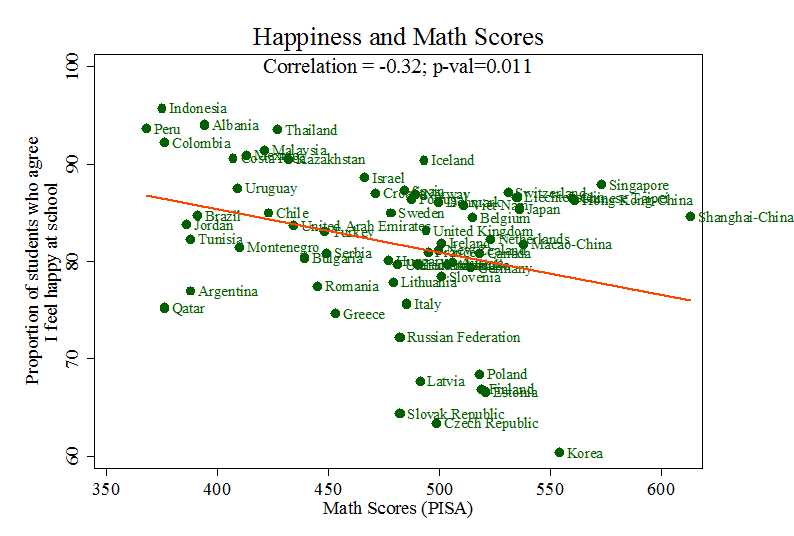
Creative types have a tendency to proudly admit their utter lack of math skills. For instance, when calculating the tip at brunch, I’ve often heard myself happily asking someone to check my numbers because simple arithmetic is befuddling for a writer like me! While finding delight in incompetence is a special brand of idiocy, there’s some data at The Atlantic that suggests being bad at math may actually mean you’re a happier person.

One interesting nugget in international student test scores released today by OECD is that the countries with the smartest students also reported the unhappiest kids. Korea, for example, boasts the best math scores in the world, but also has the least-happy students. Indonesia’s kids report being the world’s happiest students, but they produce the world’s second-lowest math scores.

Of course there’s the whole correlation vs. causation thing to consider…

Also, defining the “smartest” kids by their math scores is a little disheartening. But while I’d love to see how the figures stack-up regarding how creative aptitude influences happiness rates, I’ll let someone else do the math.

Read the article here.

Literary Artifacts: Why Children’s Books Matter

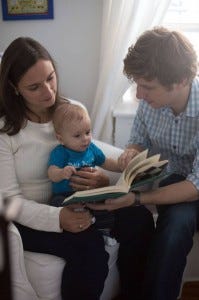
Five months before my son Joshua was born, I began reading to him at bedtime; it was my first real job as a father. All the baby books said that he’d already developed tiny ears and reading aloud to him might be good for his development. So each night I’d press a cheek against my wife Leah’s stomach, hoping the vibrations of my voice would (maybe) carry as I read him The Wind in the Willows.

I liked imagining that Joshua was following along with the story, even though I knew he couldn’t yet understand a word of Kenneth Grahame’s 1908 classic. What surprised me was how often I struggled to understand it myself. It didn’t seem at all like a book meant for children. Sure there were adorable anthropomorphic woodland creatures, but there were also words like “bijou”, “telegraphic”, “phosphorescence”, and “raiments.” I couldn’t quite see a modern child enjoying chapter nine’s long digression about the pleasures of the “wayfaring life,” though I certainly did. Chapter seven, entitled “The Piper at the Gates of Dawn” contains passages so perplexing, poetic, and psychedelic that I wasn’t at all shocked to learn it made a huge impression on young Syd Barrett and Roger Waters, who later named the first Pink Floyd album after it. Night after night I jumped into bed anxious to read a little more of the book. Most of the time I forgot I was supposed to be reading to Josh.

Truth be told, I was enjoying the adventures of Rat and Mole and Mr. Toad much more than the adult novels I was reading during the daytime.

LKJLegacy2013-007

After Josh was born, we moved on to Peter Pan, which is delightfully dark and death-obsessed, with complex psychological concerns. Peter cannot form lasting memories because then he might learn from them, and thus, like the rest of us, grow-up. At several points he forgets he has killed someone. He can neither return Wendy’s pre-teen affections nor understand Tiger Lily’s advances after he saves her from drowning. “There is something she wants to be to me, but she says it is not my mother,” he complains to Wendy. Like Peter, younger readers wouldn’t get this; it’s clearly a joke meant just for the adults. Similarly, their little hearts don’t break like mine did when, at the end of the book, Wendy asks Peter about Tinker Bell — the fairy who drank Captain Hook’s poison to save the hero’s life. Peter shrugs. “Who is Tinker Bell?” he asks.

Reading these books each night I cannot get over how grown-up they feel. Sometimes the only thing that seems childish about them is that they trust their readers to play along. No one cries “postmodernism!” as they abruptly change tenses or directly address the reader. Of course these books predate postmodernism, and even modernism, by multiple decades. They are not interested in founding movements, only entertaining and surprising their young but discerning audience. W.W. Norton has done oversized Critical Editions of both these books, and also of Lewis Carroll’s classics Alice in Wonderland and Through the Looking Glass. Each is rife with as many footnotes, appendices, and interpretations as a copy of Ulysses, and the playful weirdness of these books makes me wonder if a young James Joyce didn’t grow up reading them. In fact, in one such note, literary critic Robert Polhemus argues exactly this. “From out of the rabbit-hole and looking-glass world come not only such major figures as Joyce, Waugh, Nabokov, Beckett, and Borges but also much of the character and mood of twentieth-century humor and life.” Additionally, novelists as diverse as Gabriel Garcia Marquez, Ben Okri, and Haruki Murakami have cited Alice as a major influence on their work.

In another essay, Polhemus explains why returning to children’s literature can be so inspiring to adult readers and writers:

“The way to go forward in looking-glass land is to go backward — back to origins, first principles, early years, early pleasures, and premoral states — in order to see with fresh clarity what, through habit and social repression, we have come to accept as absolutely the truth and to find in a place of make-believe that make-believe is the essence of our fate and being. […] The intention that comes through in Through the Looking Glass is, in effect, the meaning of mankind’s comic capacity, and it is this: I will play with and make ridiculous, fear, loneliness, smallness, ignorance, authority, chaos, nihilism, and death; I will transform, for a time, woe to joy.”

Perhaps this is what I am suddenly so nostalgic for, each night. I can still remember when books stopped doing what Polhemus is describing.

Right around middle school, the fun books suddenly disappeared. Dreary realism replaced fantasy.

Read Hatchet. Read Shiloh. Read Sounder. Read The House of Dies Drear. Read about kids in the Great Depression, whose dogs always die. Read about the gruesome fact of slavery. Read about Anne Frank in the attic. Today, class, we’ll be reading a graphic novel! …it’s called Maus. No wonder I kept my nose buried deep in Dragonlance novels and The Collected Calvin & Hobbes.

Eventually I accepted that the mark of serious, grown-up books was joy turning into woe. Merry old Gatsby is really a huge fraud who bites it in a swimming pool and no one cares but his neighbor. The end. Jake Barnes is living it up in Paris with Brett Ashley, but he got injured in the war and they can’t have sex, so… the end. The older I got the more books seemed to skip the joy part altogether — they just went from woe to more woe. The Joads are starving in the Great Depression so they head West but find that everyone else is starving too and then somebody dies in the back of a truck… the end. Frank and April Wheeler are hopeful suburbanites who dream of moving to Paris but then she gets pregnant and dies trying to give herself an abortion. The end!

Of course I’m overstating the case. There is plenty of joy and beauty in these tragic stories. And it is good that we teach our children hard truths about death, poverty, slavery, religious intolerance, and genocide. Someday I hope my son will read every one of these books; I just hope he has something that can bend woe back to joy again afterwards.

Recently at an event sponsored by Pen Parentis, an organization supporting writers with new children, a discussion arose about whether the books we read to our kids have any influence on our own writing. Do they make us think harder about what we’re trying to say, or what we’re putting out into the world? The other writers and I hemmed and hawed about how, as fiction writers, we don’t have any direct thesis or message — but deep down

I knew that re-reading Winnie the Pooh each night was making me think a lot about what I wanted to write and what I was trying to say.

A.A. Milne’s little books do not contain any blunt moral instruction, but there are plenty of lessons to be learned in the Hundred Acre Wood: the importance of friendship, the dangers of xenophobia, that even Very Small Animals can be brave on Blustery Days, and to not eat so much that you get stuck in a burrow. The other animals all look up to the wise Owl, though he misspells his own name, WOL. Reading this little irony, I look forward to the day my son can get the joke — but there is more to it than just a laugh. Later, Milne remarks on why Owl is so admired, “You can’t help respecting anybody who can spell TUESDAY, even if he doesn’t spell it right; but spelling isn’t everything. There are days when spelling Tuesday simply doesn’t count.”

There are days when spelling Tuesday simply doesn’t count. That’s what I really can’t wait for my son to understand. It’s something I find myself saying to myself almost every day now.

That’s woe transformed to joy, right there.

2013-11-13 11.09.40

Right now my joy comes mainly in watching Josh try to eat the pages of these books. But sometimes when we read his Cozy Classic Moby Dick (featuring delightful fabric-rendered characters) he will reach out and grab the bottom corner of the page and flip it over to get to the next picture. Is it my imagination or is he a little awed when he looks down at felt Captain Ahab? According to a recent piece by Julie Bosman in The New York Times, lots of parents like us are buying these “BabyLit” books to read to their kids, with cartoon Jane Eyres and Jean Valjeans on every page. I like to think that someday when he reads the real novels they’ll feel just a little more familiar to him — a little cozier.

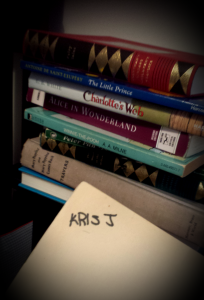
In the meantime we’re taking our old children’s books out of storage, and I have so much to look forward to again on my reading list. We’re coming up on Leah’s old copy of Charlotte’s Web and my Phantom Tollbooth, with “KRIS J” written in permanent marker on the inside cover.

After storytime each night, as Josh’s eyes begin drooping, we rock him out in the hallway by our own bookshelves, the darkest spot in the apartment besides the bathroom. When he won’t sleep, Leah holds him up so he can reach the spines and pat them. “This is a cloth-bound book,” she says, “and this is a paperback, and here’s a hardcover…”

And someday they will all be his.