In Kay Chronister’s Novel, a Father Is Sacrificed for a Bog Wife Who Never Arrives

For generations, in forms both practical and supernatural, the Haddesley family’s existence has been inseparable from the cranberry bog. Family lore has long led to a belief that their stewardship –– and their sacrifice of their patriarch to the bog –– yields a bog-wife who then marries and bears children for the patriarchal successor. 
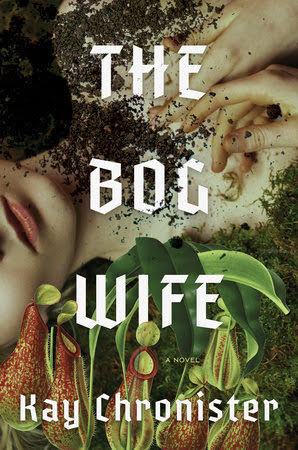
However, at the start of Kay Chronister’s The Bog Wife, the titular character fails to materialize after the reining Haddesley father is sacrificed, leaving the five remaining Haddesley siblings to navigate life without the rituals that have sustained them for all of history. As the reality of their lives begins to bend away from the stories they have long held as fact, the siblings must make decisions about their relationships to one another, the land, and the truth of their family history. 

The author of Thin Places and Desert Creatures, Chronister brings a deeply Gothic sensibility to her latest novel. Riveting, deeply eerie, and lushly atmospheric all at once, Chronister’s novel offers a spellbinding rumination on a variety of tangled ecosystems. Through deeply considered characters, a nuanced, specific portrayal of the bog, and supernatural elements that reveal our deepest human impulses, Chronister invites readers to contemplate the ways in which the systems and histories we are part of can both hold us and be deeply harmful, all at once. 

I had the opportunity to speak with Chronister over Zoom about succession, environmental stewardship, the harms created by patriarchal systems, and the way stories can be used to obfuscate difficult truths.


Jacqueline Alnes: I had a dream (nightmare?) about a bog when I was in the middle of this novel, which seems like a testament to how much this particular environment seeped into my consciousness. It made me think about how much you probably were immersed in this landscape while writing. What drew you to bogs?

Kay Chronister: When I started writing The Bog Wife, I was still living in Arizona, which is about the least boggy landscape you could exist in. I knew I wanted to write an American Gothic novel and I felt like I wanted it to be really grounded in a sense of place, as well as ecology and culture. I was thinking about a few different kinds of wetland environments and I ended up getting really interested in bogs because they tend to be less hospitable to life than other wetlands and they have some unusual ecological features that ended up working well on a symbolic level for me. 

I didn’t actually get out to see the kind of bog I was writing about until several months into the novel. I’m very glad I went. Being able to smell it and touch it and experience it and be there was really useful. I was deeply absorbed in bogs and bog facts for a long time.

JA: What’s the wildest fact you came across?

Bogs are different than other ecosystems in that they have this rhythm in this process of succession, which seems to work best when they are almost benignly neglected.

KC: The thing that surprised me most to learn about bogs is that most ecologists consider them to be intrinsically transitional ecosystems. Usually, a place is not a bog forever. When I started the novel, I thought this was going to be a book about climate change, in some sense, or ecological decay, and I kept being resisted in writing that plot by the facts of bog ecology. When I realized it was a transitional landscape—change is what it does—that really altered the trajectory of the book. They are really resilient, because they are supposed to change and evolve.

JA: In the book, the bog feels difficult to pin down. It felt peaceful and violent all at once, like it could preserve a body, which seems like a kind of embalming, but has elements of potential harm inherent as well. I felt like I could never really get grounded in the bog because it felt so alive and still at the same time, if that makes sense.

KC: I was struck by that when I visited a couple different peat bogs—both of them struck me that way. From the surface, if you don’t understand what you’re looking at, it doesn’t look like much is going on. So much of their activity and what they are doing is invisible, under the surface. Understanding what you’re looking at requires context or experiential touching and feeling, which is discouraged because that kind of interaction harms the bogs.

JA: Which aligns so well with how the Haddesley family views “their” bog. They believe they have this claim over it, which opens this thread of humans believing they have power over land or are “stewards of the land.” In the case of the Haddesley’s, it becomes interesting to wonder whether they are protecting the bog from invasive species or are they themselves an invasive species. 

KC: I really wrestled with the question of whether bogs need stewards, need human interaction generally, as well as in the particular case of this family who really aren’t doing a great job of stewardship. In some cases, they do. In Cranberry Glades, West Virginia, they’re doing a lot to keep invasive species out of the area to avoid them outcompeting the native plants. Bogs are different than other ecosystems in that they have this rhythm to them in this process of succession, which seems to work best when they are almost benignly neglected. That might be true for a lot of ecosystems, that benign neglect would be the ideal situation for them. What’s difficult is that as human beings we have to use land for things like agriculture and to live on, so then the question becomes if benign neglect isn’t on the table, then what is the best we can do? When our obligations to ourselves as humans and society come into conflict with what would be best for an ecosystem, what do we prioritize? 

JA: I can’t not bring up the Bog Wife. For generations, this family has believed that a woman would come out of the bog for the eldest son to take as his wife. I love the way you describe the Bog Wife in the novel as being of the earth, even smelling of the earth. What did you think about while writing this character, especially since she is of this other powerful character in the book, the bog itself?

KC: The mythology of the bog wife began with other stories about nonhuman women who marry into human families, like selkies. There is Welsh folklore of a woman made out of flowers who is brought to life. Thinking about those stories, what I find fun is that there is a certain amount of ambiguity as to how human this woman appears and how human she really is, and how much the husband in question is willfully deluding himself about having some kind of quasi-human marriage partner. I went back and forth about how much to physically describe the bog wife and how much to describe the logistics of this dirt and plant woman who had raised five children and lived in a house and seemed to exist like a human for a while. I ultimately decided, which is pretty habitual for me, that I don’t care very much about the logistics. I wanted her to be in a state of flux. She is more human for a period of time and then less.

JA: Part of her character is interesting because it seems like she has some kind of pervasive sadness that interrupts her life. I started thinking about that and ecological grief and the parallels between how much she wants to be there and how much the bog really wants anyone around. This relationship between place, this specific ecological feature, and other humans is so complicated. 

KC: One of the areas I really wanted to leave a certain amount of ambiguity was whether she ever enjoyed or embraced or felt comfortable in her role as mother and wife. We don’t get very much access to her perspective and her children experience her in such different ways that you’re left unsure about what exactly is wrong with her during that period of sadness and to what extent there was any amount of love or happiness there. Thinking about her in the context of selkie stories and other non-human wives, I think they are often symbolic representations of women who are oppressed and who don’t have very much of a voice. They are often fitted into this role of wife and mother without being consulted or having a lot of agency. In a certain sense, that is what you think might be going on with her, but there is also a sense in which she is made out of dirt and plants and she wants to return to dirt and plants. 

JA: Speaking of having little choice, I’m thinking about the Haddesley children, who have not grown up venturing beyond the property line. Wenna, the sister who does, is almost thought of as two Wennas after she returns -– the Wenna out there and the Wenna within. The way the Haddesley siblings are isolated means they cannot access medicine, traditional schooling, people outside their family, histories outside their own, etc. What did you learn from writing about this particular kind of isolation, especially in regard to place? 

KC: When I started the novel, I was thinking a lot about how I wanted to represent the family’s isolation. I knew in some sense it was going to be deeply harmful to them, for the obvious reasons you mention, but I didn’t want it to be a totally bleak picture either. I wanted them to feel, whether it’s true or not, that there is something unique and enjoyable and comfortable and safe about the fact that they have grown up in this tiny family culture, isolated from everyone else. Holding those two things together from the perspective of the siblings, it was interesting to play with that and think about the things they’re missing that they don’t even know they are missing and the things they think they have gained, that from an outsider’s perspective you might think are not so great.

Selkies and other non-human wives are often fitted into this role of wife and mother without being consulted or having a lot of agency.

I read a lot about fundamentalist families and families involved in fringe religious movements who live in isolation and it was really useful in thinking about how complex that experience can be and that retrospectively, for children who grow up and leave, there is this comfort in family culture that is really hard for an outsider to understand. 

JA: I love that you make it clear how difficult leaving can be, whether it’s a codependent relationship, a place, isolation, a past self you’re trying to leave behind. I thought you captured so well how humans want to find light in things, even when there is so much dark in a situation. 

KC: The core of this book, for me, was exploring a family system that is deeply dysfunctional and deeply unhealthy in some ways, but also has its own equilibrium or momentum. I’m interested in the ways that family systems work together and, within that, how much people can slowly accommodate without realizing what they are accommodating. When you are writing about a family with history and heritage and legacy on their shoulders, you can see this slow, gradual slide, not just over a lifetime, but over generations, of people accepting something as normal that, from the outside, we cannot fathom thinking about as normal.

JA: Succession comes up several times throughout the novel. There is a belief in lineage. At a certain point, I don’t know if it’s knowledge, age, or the events at the beginning of the book, but something breaks and so the characters are forced to question whether or not they want to perpetuate the cycle that’s been happening for years. Is that something to take pride in or is it not? 

KC: The characters in the novel find not having a template terrifying, even if the template is deeply uncomfortable for them. They would rather have a template than have to create something new.

JA: I was thinking about that while reading the rituals. On some level, the rituals feel supernatural (you know, is a woman really going to emerge from the bog?) but on another, they feel deeply human. We all have those rituals that we try to cling to in an attempt to prove to ourselves that we are normal and our families are okay. 

KC: The bog, for the family, functions almost as this feedback system. More broadly, supernatural elements in the book serve as externalization of the family’s drama. The bog itself is an externalization of the family, or they experience it that way. The supernatural elements, for me, are an amplifier. They make it feel bigger and more heightened but really, the story is about these human elements and how each of the siblings is experiencing their family changing.

JA: Thinking about the way the Haddesley children were taught the history of themselves, I won’t spoil any plot points, but their isolation means that the family narrative impressed upon them is difficult to wriggle free from, even after their patriarch dies. It made me think about how stories can be a cushion from the hard truths we don’t really want to know about ourselves or our lineage or our parents’ pasts. What did you think about story while crafting this one?

Rituals are a way of imposing a narrative on a transition or a change or on something that threatens to be chaotic on its own.

KC: I studied British history and I was thinking about these narratives that people use to manage their sense of themselves or their families, or even their countries, and the extent to which these narratives are not really at all about what happened, but about meeting emotional needs. So often, that’s how memory works. We take experience and we create narratives from it. That is amplified for this family because their experience of the world is so tightly controlled by narrative. Even the interactions of these siblings with the bog are always preemptively framed by these narratives they have been told all of their lives, so they almost don’t get to have individual, first-person experience of it. It’s already been filtered. Rituals are like that. Rituals are a way of imposing a narrative on a transition or a change or on something that threatens to be chaotic on its own. Thinking about how important narrative is in this family, it was fun to build in lots of different ways that these narratives are introduced into their lives—there are the oil paintings, the memoirs, the rituals, the verbal stories. It was very important to me that we eventually get not just a debunking of an old narrative, but that we have access to new narratives at the end. It’s hard for us to experience things without some form of narratives, I think.

JA: We have to talk about the patriarchal structure of this family, right? 

KC: Those extremely patriarchal, extremely gendered family structures played into the way I organize the family in this novel. I was thinking about royal succession and this family viewing themselves as kind of a royal family. To them, the word “patriarch” has no negative connotation, right? It’s simply a role that the oldest son takes on, it’s not objectionable. What made it more complicated for me, as I was building this family system where there seems to be a patriarch and he seems to have absolute control and the sole right to carry on the line, is that he is in a very vulnerable position, given the way this family cycle works. Eventually, he will be sacrificed for the good of the family. He is also the only one who has to enter an uncomfortable and unwelcome intimacy with the land. There are certain trade-offs to this family. 

I thought a lot about royal succession and kingship, too. I was finishing a dissertation about British history while I started this novel and one of the things I was reading quite a lot of was 17th and 18th century press about the Kings. There is so much almost tabloid attention given to their bodies and their reproductive systems—and for Queens, too, of course—and whether or not they are going to be able to produce an heir. It’s an extremely intrusive, public claim on their bodies that exists in this weird, uncomfortable combination with the fact that they have an immense amount of power over other people. 

JA: It’s an immense amount of pressure. As an outsider, it’s sad to witness the ways in which that power can stifle someone’s life who otherwise might be a fully self-aware person who might be able to be more than they could in this role. 

KC: It’s probably trite at this point to say that the patriarchy hurts men too, but that’s very much a part of the drama of this family and the tragedy of the family in this novel. As much as being a patriarch is as much an artificial role you’re forced to take as being a wife or being a sister and not being allowed to take on any power.

JA: After spending so much time in this geography, in this place, with these characters, what will stay with you?

KC: Normally when I write something, I don’t feel very attached to the characters or the world. I feel ready to move on once I’m done. What surprised me about this book is how much I felt attached to the characters and how much I loved living in this weird, insular world with them. As we’ve been discussing, in a lot of ways, their family is wildly dysfunctional, but there is this strange, enticing coziness to their life that I almost was enticed by while I was writing it. It was hard to pull myself out of at the end.

JA: Maybe that’s why I’m dreaming about it. 

I Am an Eight-Year-Old Orpheus

An excerpt from The Mortal and Immortal Life of the Girl From Milan by Domenico Starnone

Between the ages of eight and nine, I set out to find the pit of the dead. At school, in Italian class, I had recently learned about the legend of Orpheus and how he travelled to the underworld to bring back his girlfriend, Eurydice, who, unhappily, had wound up there after getting bitten by a snake. My plan was to do the same for a girl who was not my girlfriend but who might be if I managed to lead her back above ground from below, charming cockroaches, skunks, mice, and shrews along the way. The trick was to never turn around to look at her, which was harder for me than for Orpheus, with whom I believed I had a fair amount in common. I, too, was a poet, but in secret; I composed deeply tragic poems if I didn’t catch sight of the girl at least once a day, which was rare because she lived across the street from me in a brand new, sky-blue building.

It all started one Sunday in March. The windows of our fourth-floor apartment looked out onto the girl’s large third-floor balcony and its stone parapet. I was an unhappy child by nature, the girl was the opposite. The sun never shone in our house, it always seemed to shine at the girl’s. Her balcony was filled with colorful flowers, my windowsill was bare, at the very most a grey rag hung from a metal wire after my grandmother used it to mop the floor. That Sunday I started to notice the balcony, the flowers, and the happiness of the girl, who had pitch black hair like Lilyth, the Indian wife of Tex Willer, a cowboy comic that my uncle and I both liked to read.

It looked like she was pretending to be a wind-up ballerina, hopping here and there with her arms above her head and every so often doing a pirouette. From inside came her mother’s voice, now and then calling out genteel reminders, like, be careful, don’t get sweaty, or, I don’t know, easy does it with the pirouettes or you’ll bump into the glass door and get hurt. The girl always replied delicately, don’t worry, mammina, I’m being careful. Mother and daughter spoke to each other like people in books or on the radio, making me yearn less for the words themselves, which I’ve since forgotten, but for their enchanting sound, which was so different from anything I had heard at home, where we only spoke dialect.

I spent entire mornings at the window, dying to cast off my actual self, transform into a handsome, clean, new person, capable of uttering sweet poetic words straight out of my primer, settle on her balcony, within those sounds and colors, and live forever by her side, asking her every so often and very politely: may I please touch your braids?

At one point, however, she noticed me, and I stepped back in embarrassment. I don’t think she liked that. She stopped dancing, stared directly at my window, and started dancing even more energetically. And because I carefully remained out of sight, she decided to do something that took my breath away. With not a little effort, she climbed onto the stone parapet, stood up, and started dancing like a ballerina up and down the narrow ledge.

How beautiful her little body was against the sunlit windows, her arms above her head, twirling boldly, so exposed to death. I stepped forward so that she could see me, ready to throw myself into the abyss with her if she were to fall.


Seeing how one year before, Mr. Benagosti, my elementary school teacher, had told my mother that I was destined for great things, it seemed that finding the entrance to the pit of the dead, raising its lid, and descending into its depths would be an easy enough task to accomplish. Much of the information I had gathered about the dangerous fosse came from my maternal grandmother, who knew a lot about the hereafter thanks to friends, acquaintances, and relatives who had recently been killed by bombs or in battles either on sea or land—or from frequent conversations with her husband, whose life had been cut short two years after they were married.

What I liked about my grandmother was that I never felt shy around her, mainly because she loved me more than her own children—my mother and uncle—but also because she held no authority within our home. We treated her like a dumb servant, whose only task was to obey our orders and work. As a result, I’d ask her endless questions about whatever subject crossed my mind. I must’ve been very persistent because sometimes she called me petrusinognemenèst, meaning that I was like parsley in soup, chopped parsley, the dark green kind, like the flies that flew around the steamy kitchen in the summer, their wings sometimes growing heavy with moisture, making them fall into the soup pot. Go away, she’d say, what do you want from me? Buzz off, shoo, shoo, shoo. She’d try and brush me off, but then she’d laugh, and I’d start to laugh, too, and occasionally I’d even tickle her so hard she’d say, stop, stop, you’re going to make me wet my pants, scoot, go away. But of course, I never did. I was practically mute back then, always on my own, somber, both at home and school. I only opened up to her, and she was as mute with others as I was. She kept her words deep inside, using them only with me, if at all.

She first started telling me the story about the pit of the dead the year before, around Christmas. I was feeling sad and had asked her: how does a person die? While swiftly plucking a recently slaughtered chicken with a look of revulsion on her face, she answered me absent-mindedly: you lie down on the ground and stop breathing forever. Forever? I asked. Forever, she replied. But then she got worried—maybe because she saw me lie down on the freezing cold floor, and while it might not have killed me, it could’ve easily led to catarrhal bronchitis—and she called me over—vienaccàbelloranònna—to where she was standing with the dead chicken half-submerged in boiling water. What’s the matter? What’s going on? Who hurt you? No one. So why do you want to die? I told her I didn’t want to die, I just wanted to spend a little time dead and then get back up. She explained that you can’t be dead just for a little, unless you’re Jesus, who came back to life after three days. The best thing I could do, she suggested, would be to stay alive forever, and not get distracted and end up dead by mistake. Then, to get across just how awful it was down there, she started to tell me about the pit of the dead.

The entrance, she began, has a cover. This cover—I can still remember each and every word she said—is made of marble and has a lock, a chain, and a bolt, because if people don’t close it like they’re supposed to, all the skeletons down there that still have a little flesh on them will try to sneak out, together with the rats that scurry in and out of those dirty yellow sheets they wrap around people when they die. Once you raise the cover, you have to pull it shut behind you right away, then go down some steps, but they don’t lead to a hallway or sitting room with lots of furniture or some ballroom with crystal chandeliers and gents and ladies and damsels, no, but into a stormy cloud of dirt with thunderbolts and lightning and rain that comes down in buckets and stinks like rotting flesh, and a wind—what a wind, Mimí!—that’s so strong it grinds down mountains and fills the air with powdery dust, yellow like tuff. In addition to the moaning wind and the thunder from the endless storms, she went on to say, there’s the constant sound of hammering and chiseling from all the dead people in their tattered shrouds, all men, watched over by boy-angels and girl-angels with red eyes and purple robes, long hair fluttering in the wind, and wings like this chicken, but black like a crow’s, either pulled in tight behind them or spread out wide, depending on what they have to do. The dead men toil at crushing enormous blocks of hard marble and granite into pebbles, boulders that extend all the way out to sea, where huge waves of mud crash over them, spraying rotten foam, just like when you squeeze a rotten orange and worms come out. Ahmaronnamía, so many dead men. And dead women, too, and always in distress. Because everything around them quakes and trembles in that terrible wind—the mountains, the sky with its dirt clouds and the foul sewage-water that rains down sideways across the stormy sea—there’s always something cracking open in the distance, sometimes the whole landscape splits apart, and the clouds come crashing down like tidal waves. And when that happens, the dead women, all wrapped up tight in their shrouds, have to run over there and sew it back up either with needles and thread, or with relatively modern looking sewing machines, patching up the mountains and sky and sea with strips of suede, while the angels, their eyes growing even redder with rage, scream at them: what are you doing? What the hell are you thinking? You idiots, you whores, get back to work, just do your work.

My mind reeled at her stories of those constantly whipping winds and earthquakes and tidal waves, and I listened with my mouth open wide. Later, though, I realized that her story contained quite a few contradictions. My grandmother’s accounts didn’t exactly shine with precision, and I always had to tighten them up a bit. She had left school in second grade, I was already in third and, therefore, I was clearly smarter. When I forced her to go back and clarify a few things, sometimes all she gave me was half a sentence, other times she told me longer and more detailed stories. Then I’d reconfigure all the details inside my head, welding one to the other with my imagination.

People who work, Mimí, are never bad—she taught me—it’s the people who don’t work, who get fat off the labors of others who are pieces of shit, and there are so many of them out there!

Even so, I was still full of doubts. Where was this marble cover? Was it in the courtyard of our building or beyond the main entrance, and if so, was it to the left, or right? You had to lift it up—fine, I got that—and go down a bunch of stairs, and then surprise, surprise, you walked into a wide-open space with clouds, rain, wind, thunder, and flashes of lightning, but was there electricity down there? A light switch? And if you needed something, who could you ask? When I pestered my grandmother for details, it was as though she’d forgotten what she’d already told me, and I had to remind her of everything. Once, when filling in the gaps, she went into great detail about the black-feathered angels, who, according to her, were mobsters and spent all their time flapping around in the dust, insulting the hard-working men and women who were busy hammering and sewing. People who work, Mimí, are never bad—she taught me—it’s the people who don’t work, who get fat off the labors of others who are pieces of shit, and there are so many of them out there! People who think they come straight from Abraham’s nuts, who just want to boss people around: do this, do that, do it now. Her husband, my grandfather—who died when he was twenty-two (he was two years younger than she was) and consequently had remained that age forever, making me the only kid in the world to have a twenty-year old grandfather with a heavy black moustache and pitch black hair—never just hung around on scaffolding for fun, never stood there without actually building things. Her husband had learned how to be a fravecatóre at the tender age of eight and went on to become an excellent mason. Then, one afternoon, he fell off a tall building and not because he didn’t know what he was doing but because he was exhausted, because those bums had made him work too hard. He shattered every single bone in his body, including his handsome face, which resembled my own, and blood had come gushing out of his nose and mouth. On a separate occasion, she told me that he also used to tickle her, and he did it up until the day he died, when he went off to toil forever in the hereafter, leaving her all alone on this side, without a penny, with a two-year-old little girl and a baby on the way, destined to become a person who’d never know a moment of peace. But get over here, you scazzamaurié, come over here to your nonna, who loves you so.

She often called me that: scazzamauriéll. I was her naughty but charming devil, a pain in the ass and scallywag, who chased away the nightmares and dark thoughts that overshadowed her worst days. Scazzamaurielli, she said, lived among the dead, in that huge pit; they spent their time running around, jumping off boulders, screaming and laughing and beating each other up. Small but strong, they picked up marble shards and sharp splinters of granite and placed them in big baskets. Then, after choosing the flattest and sharpest ones, they touched them with their thick fingers to make them fiery hot and threw them like darts at the men-ghosts and girl-ghosts that rose up from the cadavers, emanating smoke, their cruel feelings not quite ready to turn entirely to ash. Sometimes—she said quietly one day when she was particularly melancholy—the scazzamurielli made themselves wafer thin and squeezed past the marble cover and out of the pit, and traveled all around Naples, sneaking into the houses of the living. They chased away the crueler ghosts that lived there and brought about general good cheer. They even managed to drive off the phantasms that haunted my grandmother most, the horrifying and disrespectful ones who didn’t care how weary she was, or how she’d spent her whole life sewing thousands of suede gloves for ladies, or how she now had to slave away for her daughter, son-in-law, and grandchildren, when the only person she was ever truly willing to wait on hand and foot was me.


To be honest, I would’ve preferred being a poet-enchanter that could extract girlfriends from the underworld than an elfin nightmare-slayer. But at that point in time, it didn’t really matter. The little ballerina who danced dangerously on the parapet didn’t fall and break every bone in her body, the way my grandfather had, but hopped back down onto the balcony and ran inside, causing my heart not to jump into my throat but to land on my sleeve.

All the same, I started to worry about her. Although she hadn’t fallen then, I was scared that one day she would, and consequently I didn’t have much time to get to know her. So, I waited until she reappeared on the balcony and, when she did, I raised my hand in a wave, but a feeble one, so I wouldn’t feel ashamed if she didn’t wave back.

Which, in fact, she did not, not then and not ever, either because it was objectively hard to see my gesture or because she didn’t want to give me the pleasure. Consequently, I decided to spy on the front door of her building. I hoped she’d come out alone so that I could become friends with her and talk about stuff in proper Italian, and then say: you know that if you fall, you’ll die? That’s how my grandfather died. It felt important to let her know that so she would have all the necessary elements to decide if she wanted to continue to expose herself to the danger or not.

For days on end, I dedicated all my free time after school and before starting my homework—time that I usually spent playing in the street, getting into fights with kids who were rowdier than me, and undertaking all sorts of dangerous challenges like doing flips over iron bars—to that goal. But she never came out, not on her own or with her parents. Clearly her life followed a different schedule, or else I was just unlucky.

But I didn’t give up. I was extremely restless at that age, my head was filled with words and fantasies, all of which concerned the girl. There was no coherence to them—coherence doesn’t belong to the world of children, it’s an illness we contract later on, growing up. I remember wanting several things all at once. I wanted, purely by chance, to find myself standing in front of their apartment door. I would ring the bell and say to her father or mother—preferably her mother, as fathers scared me then and still do— in the language of the books that I was reading thanks to Mr. Benagosti, who lent them to me: Signora, your beloved and beautiful daughter dances so exquisitely on the parapet that I can’t sleep; I am deeply concerned that she will fall to the sidewalk below, that blood will come gushing from her mouth and nose, just as it did to my grandfather, the mason. But, at the same time, I also wanted to stand at my window and wait for the girl to come back and play on her balcony so that I could show her that I wasn’t afraid of risking my life either, that I could wriggle out the bathroom window, creep along the wall, and climb back in through the kitchen window, without ever looking down. I had done it twice already—it actually wasn’t that hard because the two windows were connected by a narrow sill—and with a nod from her I’d happily do it a third time. If I ever did manage to talk to her, I would also tell her—because one word always leads to another—that I was in love with her beautiful soul, that my love was eternal, and that, if she really wanted to dance on the ledge and risk falling to her death, she could count on me to bring her back from the underworld, that I wouldn’t stupidly turn around and look at her. Spying on her, dying in some bold act for her, or rescuing her from deep underground weren’t conflicting thoughts but separate moments in a single event where, one way or another, I always came out looking good.

Spying on her, dying in some bold act for her, or rescuing her from deep underground weren’t conflicting thoughts but separate moments in a single event where, one way or another, I always came out looking good.

In the meantime, not only was I unsuccessful in making contact with her, but a long rainy spell prevented me from even watching her play on her balcony. Instead, I devoted all my energy, between one rain shower and the next, to searching for the entrance to the underworld so I wouldn’t be caught unprepared in case tragedy struck. Actually, as soon as my grandmother told me about it, I started my search but without wasting too much time on it. Because of Mr. Benagosti’s books, the comics my mother bought me, and the movies I saw at Cinema Stadio, I had been so busy acting out countless roles—cowboy, orphan, deck hand, shipwreck survivor, game hunter, explorer, knight errant, Hector, Ulysses, and the entire tribune of the plebes, to name just a few—that looking for the entrance to the land of the dead had become secondary. But with the girl’s intrusion into my life of adventure, I redoubled my efforts and got lucky.

One afternoon when I wasn’t allowed to go far from home because of the rain—mo chiuvéva, mo schiuvéva, mo schizziàva soltanto my grandmother crabbily said—and only down to the puddle-filled courtyard with Lello, my friend who lived in Staircase B, I discovered, just beyond the patch of grass where the palm tree stood, a rectangular slab of stone longer than I was tall, complete with a heavy chain that glistened in the rain. I froze when I saw it and not just from the cold and damp but out of fear.

“What’s the matter?” my friend asked in alarm. I liked Lello because when there were no other kids around, he spoke in an Italian that sounded a little bit like the books I read.

“Quiet!”

“Why?”

“The dead will hear you.”

“What dead?”

“All of them.”

“Cut it out . . . ”

“No, really. They’re down there. If we can unlock the chain and lift up the rock, all the ghosts will come out.”

“I don’t believe you.”

“Touch the chain, see what happens.”

“Nothing’s going to happen.”

“Touch it.”

Lello walked over to it while I kept my distance. He knelt down and in the very moment that he cautiously touched the chain, a blindingly bright bolt of lightning exploded in the sky, followed by heavy thunder. I fled, with Lello right behind me, ashen with fear.

“See?” I said out of breath.

“Yeah.”

“Would you go down there with me?”

“No.”

“What kind of friend are you?”

“There’s a chain.”

“We can break the chain.”

“You can’t break chains.”

“You’re just chicken. If you don’t want to, I’ll ask friend of mine. She’s not afraid of anything.”

And then something utterly mind-boggling happened.

“You mean the girl from Milan?” Lello asked with a wicked smile.

That’s when I found out that the girl of my dreams had a nickname, and that I wasn’t the only one who had noticed her. But there was more. Apparently, it was a well-known fact that when it was sunny, I either stood at my window ogling her or loitered outside the front door to her building. Admit it!

I retreated into my usual silence, but not before saying vafanculostrunznunmeromperpcàzz, the magic formula I used when no one understood just how special I was and what great things I’d go on to accomplish one day.

Decolonize Your Bookshelf With These Buzzy New Books by Native American Writers

Indigenous Peoples’ Day is an opportunity to recognize the diversity and contributions of Native Americans throughout U.S. history, an alternative to the overly simplistic and mythologized narrative of Columbus Day. This year in particular, indigenous authors have published eclectic, riveting new literary works. From witty romantic comedies to gory thrillers to ultramodern poetry collections, the Native voices of today present an electrifying vision of literature’s future.

The Mighty Red by Louise Erdrich

At long last, a new book by this powerhouse of Native American literature has arrived. After a three-year hiatus, Erdrich’s new novel ruminates on climate change, human legacy, economic inequality, and the tragedies of ordinary life. The story’s centerpiece is a hasty and presumably doomed wedding between free-spirited ex-goth-girl Kismet and jittery football hero Gary, and a vibrant cast of characters orbits the pair. Erdrich’s words glistens as she traces the couple’s fate, weaving a balanced tapestry of levity, tragedy, and humor.

The Sky Was Once a Dark Blanket by Kinsale Drake

This shimmering debut poetry collection, selected by Jacqueline Allen Trimble for the National Poetry Series, encompasses what it means to be young, queer, and Native American in today’s world. Drake’s writing is vibrant and hyper-present, infused with the terroir of the Southwest. The collection’s lens of concern ranges from Internet culture to climate change’s effects to popular music. Kinsale Drake’s urgent, precise, and fierce poetic voice marks her as an author to watch.

The Indian Card: Who Gets to Be Native in America by Carrie Lowry Schuettpelz

The United States government’s displacement of Native Americans has separated them not only from their land but from their own identities. Forcible relocation, with census-taking by colonizers, made it more difficult for Native Americans to trace their ancestry. In the present day, each tribe grapples with this violent legacy differently when defining eligibility for tribal enrollment. Some calculate blood quantum, others trace genealogy trees, and still others determine their own methods. in this groundbreaking blend of memoir and reportage. In this groundbreaking blend of memoir and reportage, Carrie Lowry Schuettpelz examines the cultural, sociological, and historical factors that can impact self-identification as Native in this groundbreaking blend of memoir and reportage.

The Truth According to Ember by Danica Nava

The first Native American romantic comedy to be published by a major traditional publisher, The Truth According to Ember will hopefully inspire more representation in genre fiction. In this witty, drama-filled debut, Ember embellishes a few details on her resume—including her race, which she marks as Caucasian—and finds herself in a high-stakes corporate world. She’s immediately drawn to IT guy Danuwoa, the only other Native American in the office, and despite the strict HR department, they can’t help but fall for each other. As Ember’s white lies spiral out of control, this hilarious romp becomes more and more memorable.

Fire Exit by Morgan Talty

The debut novel from acclaimed author of Night of the Living Rez asks hard-hitting questions about family ties, indigenous identity, and mental illness. Narrator Charles grew up on Maine’s Penobscot Reservation, but controversial blood quantum rules force him to leave after the sudden death of a family member. For decades, he watches from across the river as his daughter grows up unaware of his existence. One day, his daughter’s disappearance prompts Charles to reconsider the way he has handled this secret and others throughout his life. Poignant, arresting, and deeply human, this novel will stay with you long after you’ve turned the final page.

The Paranormal Ranger: A Navajo Investigator’s Search for the Unexplained by Stanley Milford, Jr.

A book about cryptids for the skeptic-minded, The Paranormal Ranger draws on Stanley Milford’s years of experience as a Navajo ranger investigating mysterious happenings like skinwalker sightings and unidentified flying objects. Milford’s unique perspective as a law enforcement officer allows him to approach each scenario with logical reasoning while being open-minded to folkloric events. Along the way, he tells unforgettable stories and presents new evidence for the possible existence of supernatural forces.

Indian Burial Ground by Nick Medina

Nick Medina blends coming-of-age drama and supernatural horror in his thrilling second novel. He showcases his range through two perspectives: in the present day, Noemi just wants to move off the reservation until her boyfriend’s suspicious death upends everything she thought she knew. Meanwhile, a generation earlier, her Uncle Louie grapples with his mother’s disappearance and other unexplainable phenomena. Louie’s return to the reservation sets off a chain of events that bring the pair closer to a mysterious folkloric evil. Medina’s atmospheric writing and impeccable pacing will leave your hair standing on end long after turning the final page.

Anishinaabe Songs for a New Millennium by Marcie R. Rendon

In her first full-length poetry collection, novelist and performer Marcie R. Rendon calls upon her White Earth Anishinaabe ancestors and composes poem-songs that resonate across past, present, and future. Rendon’s poems reflect upon the challenges that her reservation has faced and how these challenges will be projected forward onto future generations. Her poems also celebrate the blessings of nature and dedicate attention to the resplendent details of every day. With vivid sensory detail and rhythmic lyricism, Rendon faithfully depicts the concerns of today’s and tomorrow’s indigenous poets.

I Was a Teenage Slasher by Stephen Graham Jones

This unique twist on the horror-slasher genre takes the form of a confessional “memoir” written by main character Tolly Driver and addressed to his crush. Tolly, a teenage boy from West Texas, attends a house party that turns humiliating, sparking within him an all-consuming desire for revenge. The ‘80’s high school setting provides the perfect taste of nostalgia, and Stephen Graham Jones’s bloody, atmospheric writing supplies hair-raising suspense.

Perennial Ceremony: Lessons and Gifts from a Dakota Garden by Teresa Peterson

Teresa Peterson offers an intimate guide to honoring Mother Earth throughout all four seasons in this expansive hybrid collection of prose and poetry. In tender, deliberate prose, Peterson shares her experience of blending her Christian faith with her Dakota background. Her stories, recipes, and advice provide inspiration for gardeners, cooks, writers, and anyone seeking a closer connection to nature.

Wandering Stars by Tommy Orange

Tommy Orange needs no introduction. In this follow-up to his acclaimed first novel There There, Orange shepherds the reader across timelines, generations, and perspectives, armed with his signature narrative voice. He offers a clear-eyed, unsparing perspective on the legacy of American violence against Indigenous communities; hence, the novel becomes an incisive critique in addition to a sprawling epic. Some beloved characters from There There return, but Wandering Stars explores new plot avenues, making it accessible to a first-time Tommy Orange reader, too.

Exposure by Ramona Emerson

In this highly anticipated follow-up to Shutter, detective Rita Todacheene returns to face her most dangerous case yet. The thriller alternates between Rita’s perspective as she grapples with a newly discovered ability to see the ghosts of murder victims and the perspective of the serial killer she is tracking down. Tightly paced, with evocative description and a strong sense of voice, this is a novel you won’t be able to put down until the final word.

By the Fire We Carry: The Generations-Long Fight for Justice on Native Land by Rebecca Nagle

In the 90s, attorneys for a Muscogee citizen appealed his death-row sentence on the basis that Oklahoma had no jurisdiction over a crime committed on “Indian country.” That murder case ended up in the Supreme Court where the decision could mean millions of acres of land would be returned to the Muscogee, Choctaw, Chickasaw, Seminole and Cherokee nations. In the lead-up to the 2020 ruling, Rebecca Nagle, a member of the Cherokee nation, turned to the past—carefully researching the forced displacement and loss of tribal lands in Oklahoma—to understand the legal battle that would have profound implication for the future of Native American sovereignty.

The Forgetters: Stories by Greg Sarris

Inspired by Southern Pomo and Coast Miwok creation stories, Greg Sarris’s collection plays with time and mythology. In the book, two crow sisters sit on the Sonoma Mountain and recount stories: stories of shapeshifters playing tricks, of Mexican farmworkers working the land, of love gone cold. The Forgetters is a 21st-century fable about the importance of remembering and honoring our history.

The Bone Picker: Native Stories, Alternate Histories by Devon A. Mihesuah

In this terrifying short story collection, monsters and deities from Choctaw folktales come alive, skulking in the shadows, waiting in the dark for their next prey. In one story, a professor, pretending to be Native to obtain tenure, discovers that his lie has horrifying consequences. In another, a farmer is a shapeshifting owl, disguised with ill intentions. In the scariest story, three children in the woods unwittingly stumble upon the bone-picker, a supernatural creature who feeds off rotting flesh with their long claws. Not for the faint-hearted, this is a book that will stay with you long after the final pages.

mother by m.s. RedCherries

m.s. RedCherries was adopted out of the Northern Cheyenne Nation and raised by non-Native parents and their debut uses poetry as a vessel to complicate questions of identity, race, and belonging. A poignant collection that isn’t afraid to shatter poetic conventions to create a new kind of storytelling.

Whiskey Tender by Deborah Jackson Taffa

Deborah Jackson Taffa was born in the California Yuma reservation and raised on and off in New Mexico’s Navajo Nation. Her grandparents were educated in government-backed boarding schools that systematically stripped Indigenous children of their culture and identity, while her parents believed that to secure their future, they had to sacrifice their land and their traditions. Her memoir Whiskey Tender expertly blends archival texts with family history into a searing meditation on the fallacy of the American dream and the cost of assimilation.

15 Small Press Books You Should Be Reading This Fall

I’ve been reading from outside of Phoenix, where there have been over 120 days of 100 degree temperatures as summer comes to a close.  With Hurricane Helene devastating the Southeast and war spreading in the Middle East, the uncertainty about our collective futures—whether it is from climate change, the loss of loved ones, or displacement from our homes and homelands—is so present in the fifteen books on this list. Yet, there is also joy: beautiful meals, familial and romantic love, the power of finding one’s voice. Small presses expand the bounds of literature to create a diverse and more inclusive landscape that reminds us that even when it feels like things are falling apart, there is always room for hope.

Deep Vellum Press: The Potato Eaters by Farhad Pirbal, translated from the Kurdish by Alana Marie Levinson-Labrosse and Jiyar Homer

In this edition of collected stories from iconic Kurdish poet Farhad Pirbal—with a notable introduction from Porochista Khakpour—displacement and loss are central themes. A soldier who has misplaced his leg is confounded in his search for it by both the military’s bureaucracy and its disregard for human life; a young Kurdish man travels by train through Denmark to meet a woman from a personals ad, only to discover the very same woman was his older seatmate on the journey; in the title story, a famine-stricken town survives on potatoes alone, and when a wayward son returns home with riches of gold, he is treated as a stranger and with disdain, as no one can eat gold and the town has long abandoned currency in favor of trading in potato products. Pirbal’s stories speak with heartbreaking pain of having no recognizable home, his words offer a brutally necessary look into the consequences of war on the everyday lives of innocent people.  

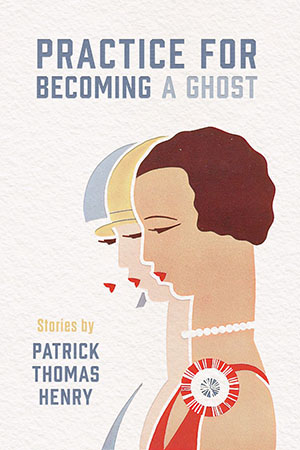
Susquehanna University Press: Practice for Becoming a Ghost by Patrick Thomas Henry 

A third-grade teacher confiscates strangely prescient paper fortune-tellers from her students, while also consulting a psychic as she tries to reconcile the loss of her college boyfriend; a father watches helplessly as his daughters row off in a doomed boat to join their dead mother; and staff writers at a soon-to-be shuttered online publication transform into the birds detailed on the one of the site’s clickiest lists. Against a backdrop of lost love, the supernatural, and the seduction of the afterlife, Henry braids the triple strands of hope, hurt, and the things we just can not quite explain into sixteen fabulist stories. A commentary on both the emotional emptiness of modern life and the richness of inner emotional lives, Practice for Becoming a Ghost contemplates what we are doing in this life—and what might be waiting beyond.

Dzanc Books: Before the Mango Ripens by Afabwaje Kurian 

Jummai and Zanya are young Nigerians living in the small town of Rabata. It is 1970, and a decade earlier Nigeria gained independence from Britain, but the country is reeling from a three-year civil war—and Rabata is still run by missionaries. Jummai works in the home of a missionary couple, but dreams of opening a small café; Zanya is employed by the church as a translator and foreman, but hopes to become a pastor. As the nation increasingly rejects colonialist powers, tension builds between residents of Rabata and the missionaries. Both Jummai and Zanya harbor personal secrets, but as they guard their own stories, the pasts and hypocrisies of the missionaries begin to surface. Before the Mango Ripens is a novel that questions power structures and belonging. 

Santa Fe Writers Project: Us, After by Rachel Zimmerman 

On the surface, Rachel Zimmerman and her husband Seth are  a quintessential Cambridge power couple. She, a respected journalist. He, a robotics professor at MIT. Between them, two thriving daughters. When a Massachusetts state trooper appeared at Zimmerman’s door to report Seth had been found dead after jumping off a nearby bridge, she knew her life will always be cleaved into the before and after. As suggested in the title, this memoir concerns the “after,” and how Zimmerman comes to understand her husband’s mental illness and subsequent suicide. Zimmerman interviews experts, taps the sources she cultivated as a health reporter, and even meets a man who jumped from the same bridge and survived, all while fiercely protecting her daughters from the turmoil the family has been plunged into. Us, After is powerful in Zimmerman’s search for answers, and profound in her acceptance that some things are unknowable.

University of Nevada Press: My Chicano Heart: New and Collected Stories of Love and Other Transgressions by Daniel Olivas

A man shaves his mustache in hopes that he will not be recognizable as the bad husband in his wife’s newest novel (it doesn’t work); Pilar goes on a journey through New Mexico after her lover dies; Nacho’s heart is in a literal box kept by his wife and he can’t convince her to give it back; a Catholic priest has impregnated a nun and believes God will forgive no matter what they decide; and La Diabla cruises Stanford parties hoping to get laid (it works). In these short stories, Olivas shows his range as a writer, and touches on icons from Frieda Kahlo to Joni Mitchell. At the center of this collection is the “love” from the title: love of indigenous culture, of the Chicano diaspora, of food and sex, of California, of blood family and chosen. Even the most serious stories are infused with joy. 

Madrona Books: Delinquents and Other Escape Attempts by Nick Rees Gardner

A young writer is caught in the snare of opiates even after his friend overdoses; an ostentatious  cowboy catches the eye of a woman whose boyfriend is struggling to stay sober; a man with a drinking problem works at a wine bar putting any attempt at sobriety—and his relationship—at risk. In the linked stories of Delinquents, the residents of Westinghouse, Ohio have two kinds of fate determined by their choice to get out, or stay.  While Gardner’s characters experience the allures of getting high and forgetting the day-to-day for a few hours at the expense of  the more devastating effects of active addiction, every story is ringed with the resonance of staying or going. Gardner writes with an empathy that elevates his characters above their insular town, their grievances, and their struggles with substances. Delinquents marks the arrival of a new talent. 

Flexible Press: Without You Here by Jody Hobbs Hesler 

27-year-old Noreen is a young, married mother who is now the same age as her beloved namesake aunt when the aunt committed suicide. Noreen was just a child of eight in 1980 when her aunt Noni died. 19 years later, on the cusp of the millennium, while caring for a daughter and managing a controlling husband, Noreen finds her thoughts returning to Noni. She was too young to understand how her aunt was spiraling out of control, but she understands now: Noreen sometimes feels her own grip on reality loosening—even as her husband’s grip tightens. As Noreen seeks to honor the memory of her aunt, she discovers she has more agency than she ever imagined possible. Written with deep empathy, Without You Here is a novel of matriarchs, family trauma, and the stigma of mental illness.

University of Nebraska Press: All Daughters Are Awesome Everywhere: Stories by DeMisty D. Bellinger

A connection made after a near miss between a car driver and a bicyclist catapults a violinist into an affair; and a woman makes a choice about hair that might just change her entire identity. In these stories, Bellinger explores female friendships, acquaintances that turn to sexual partners, the complicated dynamics of marriage and family, and the ways that we sometimes fail people we care about. These  characters are just getting through the day, and for some others, they’re figuring out a critical next step.This is an intimate collection that illuminates how the mundane moments of life can become more significant than we realize, and sometimes even catastrophic. Compelling and relatable. 

Forest Avenue Press: Trust Me by Scott Nadelson

Lewis is a Gen X father who has custody on the weekends but remains close with his daughter Skye. He’s moved nearly an hour away from Salem, Oregon to a wooded enclave with no cell service. Set the year Skye turns thirteen, the two are both fumbling their way through emotional and physical changes. They hunt for mushrooms, explore the river, and watch a lunar eclipse as they lay in the middle of the driveway. Told in alternating perspectives, Trust Me highlights the contrast between generations and the ways that bonds are forged despite those differences. Tender and emotionally honest.

Tin House: Misinterpretation by Ledia Xhoga

The unnamed protagonist in Misinterpretation is an immigrant, an interpreter, and a translator who is struggling with her identity as an Albanian living in New York City. She feels a strong connection with Alfred, a therapy translation client who survived torture in the Kosovar war in the late 1980s, and her work with him begins to go outside of the boundaries established by the translation agency. While her husband  knows her history and understands how important her work is, his patience is also running thin as clients appear at their apartment door. He wants separation from her work in a way she cannot fathom. As they try to understand how, and if, their marriage will survive, she also must decide what she will—and will not—give up. Both powerful and nuanced. 

Running Wild Press: All Her Loved Ones, Encoded by Michael Keefe

Just over 30 years into a climate-changed future, the California coast needs a seawall to hold back rising tides, and the residents rely on the desalination plant for fresh water. Kiana works at the plant, and it’s a good job, but her husband Javier is dying. They’ve already lost their daughter to a viral infection that is ravaging children, but they can still interact with her via her digital avatar. In this world, human consciousness can be uploaded virtually. . As Javier gets sicker, Kiana is desperate to upload his consciousness too, so they can exist as at least a digital family. But to do so, she has to face an increasingly restrictive government that has made it illegal for regular people to access the necessary hardware and connectivity. Against a backdrop of androids, authoritarians, and a serial killer on the loose, Keefe offers a riveting story that both nods to the past and centers humanity in an uncertain future. A stunning book about love and grief. 

Red Hen Press: Blood on the Brain by Esinam Bediako

Akosua is a graduate student torn between two men: her ex-boyfriend, a medical student, and a coworker in the student housing office. The first is her recent ex-boyfriend, a medical student; the other is her coworker in the student housing office.Akosua is floundering at university, and when she falls in the shower and hits her head, the tenuous grip she has on her life unravels. Blood on the Brain perfectly  encapsulates the pressure-cooker environment of elite colleges and the turmoil of life in your twenties. The stakes are high for Akosua and she has too much to lose. 

Transit Books: Speak / Stop by Noémi Lefebvre translated from the French by Sophie Lewis 

Speak / Stop is comprised of two eponymous sections. In “Speak,” made up entirely of a collective dialogue, voices are in a back and forth conversation that returns to the same refrain: “Who reads Marx, except for the Marxists,”—or Proust, Rousseau, Deleuze, Foucault, Flaubert. For as much as “Speak” suggests a circular insularity, “Stop” is an expansive critical essay of “Speak.” Lefebvre discusses what “Speak” is not: it is not a novel, a poem, a film, nor radio play. In the dissection of her own work, she shows her range as a feminist thinker. What is striking about Speak / Stop is for all its inherent intellectualism, the text avoids being overwrought. It is thoughtful and even at times playful and wholly unique. 

Kernpunkt Press: Screaming at the Window by RJ Dent

In the late 1800s, Blanche Monnier, daughter of a French aristocrat and an academic, was imprisoned in her family home, locked in a room on an upper floor and constantly monitored. Her rich family rationed her food and kept her in social isolation until 1901, when an anonymous source alerted authorities to Blanche’s 25 year confinement. In Screaming at the Window, RJ Dent recounts this true story, exploring the lengths some families will go to in order to keep their social standing: Blanche’s affront to her family was falling in love with an older man of a different economic class. While this story was covered heavily in the French press at the time, Dent brings a contemporary perspective to readers of English—and in telling her story, Dent surfaces Monnier’s agency.

Hub City Press: Come By Here by Neesha Powell-Ingabire

In this memoir-in-essays, journalist Powell-Ingabire reflects on what it means to be from Georgia’s Geechee Coast, and in particular Brunswick, a town made infamous after the brutal murder of Ahmaud Arbery. Balancing both careful research and her own personal experiences, Powell writes about returning home after moving away (first Seattle, then Atlanta) and she explores how this region has been shaped indelibly by systematic racism and by organized and cultural resistance. Powell-Ingabire also examines her relationship to her family: her protective grandmother, her hard-edged mother, her siblings, and the mental health struggles in the family that no one has the language to discuss. Thoughtful and compelling.

10 Vampire Books to Sink Your Teeth Into

Stories of immortal bloodsuckers spanned centuries, continents, and cultures long before Bram Stoker published Dracula in 1897. And while Stoker’s gothic horror novel wasn’t the first to feature vampires, it’s arguably the most famous vampire literary work and defined the modern vampire’s abilities and weaknesses (hopefully you’re stocked up on garlic). 

More than 100 years later, vampires remain one of the most popular monsters in fiction. And it’s no wonder why these undead have endured. 

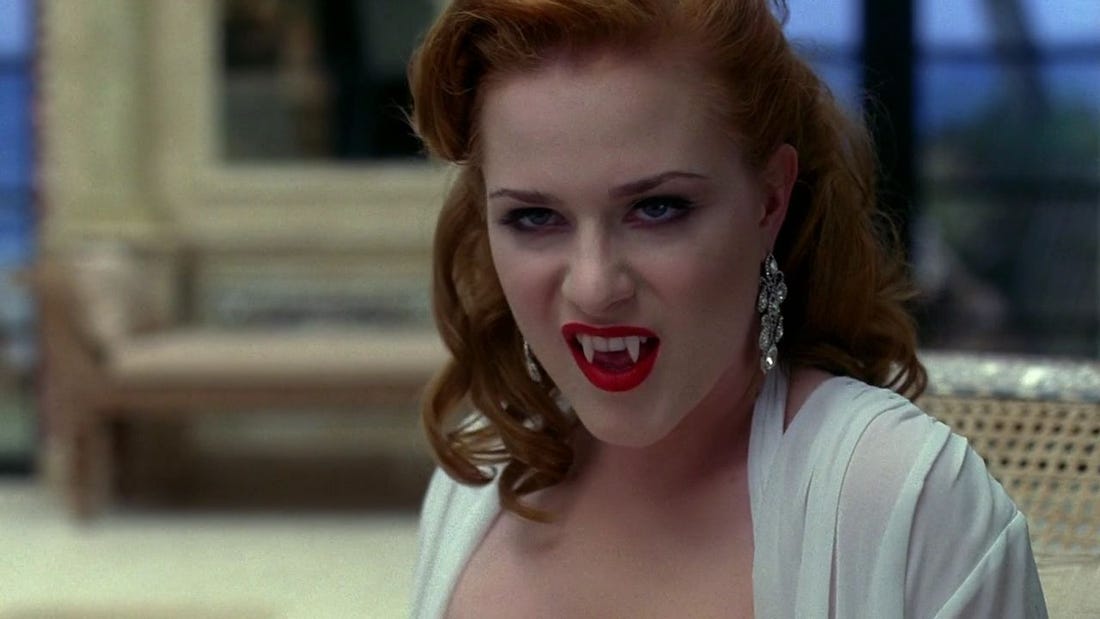
Vampires, in many iterations, are unnaturally beautiful apex predators, silently stalking their victims in the dark like a sleek jungle cat before going for the jugular. They are something that was once human but that’s now without humanity, living on the fringes of society and consumed by hunger, feeding like parasites while grappling with their morality with every sip of blood. (Some, like the Cullen family in Stephenie Meyers’ Twilight franchise, choose to exclusively feed on animal blood, while others, such as Lestat in Anne Rice’s Interview with the Vampire, embrace their bloodthirsty instincts). 

And, perhaps most enticing of all, vampires have found a way to defeat the one truth we all face: that we must die. But that immortality is also inherently tragic. As the stories below show, conquering death and living forever isn’t always pleasant.

Here are some of the best contemporary and genre-spanning vampire books that explore these ideas.

Thirst by Marina Yuszczuk, Translated by Heather Cleary

A persecuted vampire flees Europe for Argentina, where she watches Buenos Aires grow out of mud and plague while feeding on its residents. Hundreds of years after the vampire’s arrival, a woman comes into possession of a key to a crypt, and their two paths collide. 

This sexy and sorrowful novel is Argentinian writer Marina Yuszczuk’s first work to be published in the U.S. And while it has lots of horror that vampire fans will eat up, Thirst is ultimately about grief—grief for loved ones lost, grief for life not going as planned, and grief for your own sense of self. It’s gloomy, yet captivating and short enough that you can devour it in a day.

Nestlings by Nat Cassidy 

Ana and Reid think their year of bad luck has finally reached its end after they win an apartment in the historic Deptford building in New York City. But once they move in with their infant daughter, Ana can’t shake the feeling that something is terribly wrong with the property. Especially once she finds strange bite marks on her baby.

Commonly described as a Rosemary’s Baby and Salem’s Lot mash-up, Nestlings will worm its way under your skin. You might just find yourself looking through your windows at night to make sure that something isn’t looking back in.

The Madness by Dawn Kurtagich

When Dr. Mina Murray gets a pleading email from her estranged childhood best friend, Lucy, she leaves her London psychiatric practice and rushes home to Wales. What she finds shocks her: Lucy is weak, anemic, experiencing memory loss, and covered in a strange rash—symptoms that are eerily similar to those of Mina’s current patient back in the city. As Mina begins investigating what connects the two women, she discovers a conspiracy even more sinister than anticipated. 

Inspired by Dracula and intertwined with Welsh folklore, The Madness is the first adult novel from YA author Dawn Kurtagich.

So Thirsty by Rachel Harrison

A birthday celebration goes very, very wrong after a night out ends with besties Sloane and Naomi as two newly-turned vampires. As the women begin their new and eternal life, they must navigate not only their burgeoning thirst, but their friendship, future, and what it means to live. 

So Thirsty follows in the footsteps of Rachel Harrison’s other horror tales as a fast-paced, fun, and feminist read. 

Fang Fiction by Kate Stayman-London

Tess’ favorite book series is Blood Feud, a romantasy with vamps that are as gorgeous as they are deadly. And while Tess is well-versed in the conspiracy that Blood Feud is actually real, nothing prepares her for when one of the bloodsuckers shows up asking for her help. She soon finds herself braving an isle of vampires—and her own past trauma—in this sophomore work by the bestselling author of One to Watch.

Vampires of El Norte by Isabel Cañas 

Nena and Néstor were inseparable as children … until one night when Nena is attacked by an enigmatic beast. Thinking his friend dead, Néstor flees, unable to face a new world without her. When events of the Mexican-American War call him home nine years later, he learns Nena survived the attack … and that the Anglos aren’t the only thing for the people of El Norte to fear. 

Like Isabel Cañas’ first novel The Hacienda, Vampires of El Norte is a deeply romantic and deeply spooky historical gothic tale.  

Woman, Eating by Claire Kohda

As a half-vampire, Lydia has been able to sate her hunger with pigs blood for her entire life. But she craves more: pizza and sausages and stir fry and other meals … maybe, even, other sources of blood. 

After she moves to London to pursue an internship at an art gallery, pig’s blood is much more difficult to come by—and there are a lot more humans in close quarters. Now, Lydia has never been more tempted as she wrestles with her identity and her humanity.

The Southern Book Club’s Guide to Slaying Vampires by Grady Hendrix

Patricia is a bored Southern housewife whose only escape from domestic life is her true crime book club, where she and a group of other well-to-do ladies meet to chat about all things Charles Manson and Ted Bundy. But when a handsome young man moves in down the road and Black children from a neighboring town go missing, Patrica wonders if something murderous (and, perhaps, vampiric) is lurking too close to home in this novel that explores gender norms and white privilege.

My Soul To Keep by Tananarive Due

Jessica’s life is right on track. She has a job as an investigative journalist, a daughter she loves, a dream book deal, and the “Mr. Perfect” husband, David. Despite appearances, things aren’t so picture-perfect under the surface. Her husband has a bloody, centuries-old secret that threatens everything Jessica holds close.

We Love the Nightlife by Rachel Koller

When disco-loving Amber meets centuries-old vampire Nicola at a nightclub in 1979, they form an instant connection. Nicola gives Amber immortality, and the two pledge to spend eternity living a glamorous, nightlife-centric lifestyle. 

Despite the promises, things don’t go as planned. Amber wants out of their friendship—but leaving Nicola isn’t so simple.

Luis Jaramillo on Fictional Witches and Real Ones

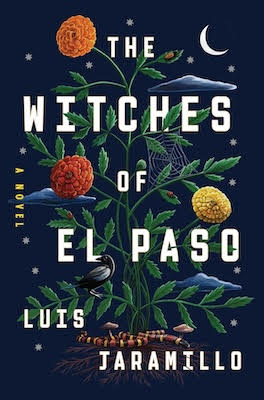
Luis Jaramillo’s novel The Witches of El Paso is rich, captivating, propulsive. Jaramillo has created a complex world that asks the reader from the very beginning to open their eyes to magic, to greater possibilities in our lives. Through two alternating timelines, Jaramillo introduces us to present-day Marta, an overworked attorney and mother who has been recently tasked with taking care of her great-aunt Nena in present-day El Paso. When Nena burns a mysterious hole in her kitchen, Marta wonders if it’s finally time to put Nena in a home for the elderly. No, Nena insists. She will never be put in a home again. What is Nena talking about, Marta wonders? It is only through Nena’s storyline, beginning in 1943 El Paso, Texas and traversing borders of time and space to colonial Mexico in 1792, that we learn of Nena’s magical, witchy youth, as well as the people she has left behind. 

Jaramillo deftly alternates between present-day Marta and past-Nena, weaving a tantalizing story about the permeability of borders—both physical and otherworldly—as well as the force of family, love, land, legacy, and home. 

I corresponded with Jaramillo over the course of a few days about what called him to write about witches, El Paso, family, and the presence of magic-making in our world. 


Crystal Hana Kim: In The Witches of El Paso, Marta and Nena are given the powers of La Vista, which could be described as visions or simply, magic. These women, similarly, could be described in many terms—bruja, curandera, mystic, clarividente, guide—but you chose ‘witch.’ How did this title come to you?  

Luis Jaramillo: “Witch” is a word that provokes a response. When I told people I was writing about witches, I heard many variations on the question, “And these witches aren’t in Salem?” Throughout the novel, characters insist that they are not witches. “Witch” is a term that, until relatively recently, has been placed on women who were healers, midwives, brewers of beer, or even just women living their lives, while those in power used unjust laws to keep them in their places. El Paso, in the popular mind—to be simplistic—is a border city inundated with immigrants, right next door to Juarez, a city torn apart by cartel violence. The title, I hope, sets up some expectations that the book both plays with and subverts. El Paso is actually one of the safest big cities in the US, and though Juarez has issues with violence, the residents of Juarez are proud of where they live, insisting that El Paso is boring, lacking in culture. The Witches of El Paso was a working title that stuck. The book is in fact about witches and El Paso, and I liked having two strong nouns butting up against each other. 

CHK: Tell me about the writing process. Were there different iterations of the story?

LJ: There were so many versions of the story! Too many. When I began to write the book, I was most interested in telling stories about my grandmother and her sisters—I included some of these in the novel, like how my great-aunt Luz wanted to be a gangster’s moll when she was in high school. Even when she was old, Luz kept herself trim, her nails long and red. She wore tight dresses, also red in my memory, and she smoked in a way that looked fun. My grandmother was the eldest, the studious sister, and she seemed to know everyone in El Paso. While trying to figure out the plot, I wrote a deadly dull story about two children of El Paso, a U.S. Congressman and his cousin, a doctor accused of Medicare malpractice. Nothing was working until the character Nena appeared. She wasn’t modeled on anyone in my family, or anyone that I knew, but she arrived fully formed, with a voice and a lot of opinions. She was an old woman who didn’t want to lose her independence. She had a gift, able to see and talk to the dead, and she had a story to tell about what happened to her when she was young. If I ever felt like I was losing the thread, I made myself listen to what Nena had to say. The other main character in the story is Marta, a public interest lawyer and mother, who is facing down middle age. Initially, I had her begin an affair, but as I revised the book, I came to see that the central relationship  is between Marta and Nena. The plot started to make sense to me once I fit them into a kind of love plot—two unalike people who grow closer together, and more truly themselves, as they find connections. 

CHK: I love the way you describe La Vista throughout this book, as both “chaos and nature.” At first, both Marta and Nena thrill at their newfound power, the way it makes their bodies hum with music. They learn though, that La Vista has no moral center. It is power, undiluted. Where did the idea of this book, and its rootedness in magic, come from?

LJ: At first when Nena appeared, I was scared to really go for it with the magic. It seemed unserious, silly even, I guess because of how genre writing is so often seen as less-than. But growing up, books having to do with magic were basically all I read! As an adult, I’ve kept reading books of fantasy, magical realism, and other kinds of speculative works, and more and more I’ve felt that with certain topics realism doesn’t cut it, it’s too limiting, especially when a book is set in a place like El Paso. My dad’s side of the family has been in the region for hundreds of years, and there are old stories from Spain that are still told in the family that feature witches and fantastical creatures. In New Mexico, which shares a state border with El Paso, car license plates bear the motto “Land of Enchantment,” a tourism slogan, but also a phrase that communicates the beauty of the high desert, the harsh physical landscape that is a showcase of extremes. It’s amazing to be in the desert after a rain, when everything blooms at once. With the idea of magic, La Vista, I was also thinking about it as a metaphor for creativity, the force that exists in all of us. Like the creativity of sex and childbirth, but also the creativity of artmaking, especially writing. Anyone who writes knows that you have to be careful what you write about. Writing makes things happen. 

CHK: What is your own relationship with magic?

LJ: I’m a deeply skeptical person, but at the same time, I know that there are things that can’t be easily explained. When I was writing the book, ladybugs kept showing up on the windowsill next to the couch where I write, even though I live on a high floor of an apartment building in a busy part of New York. I did a google search about ladybugs, and on a New Age website I read, “Ladybug’s medicine includes the golden strand that leads to the center of the universe, past lives, spiritual enlightenment, death and rebirth, renewal, regeneration, fearlessness, protection, good luck, wishes being fulfilled, protection.” This seemed a bit much, but I also wanted all of these things for the book and for myself, so the ladybugs went in the book. A few years ago, I started asking other writers the same question you’ve asked me, but in a more pointed way—I wanted to know if any other writers identified as witches. It turned out that quite a few of us take magic very seriously. One poet I know has a Santeria chapel in his basement. A memoirist told me the story of performing a spell that involved freezing a cow tongue. I wanted to write an essay about writers and witchcraft, but I ran into a roadblock: all of the writers who told me their stories said that I couldn’t use their names. The practice of magic is, it turns out, a private thing, and it’s this protective quality around magic that I wanted to write about in the novel. To admit to believing in and performing magic not only opens you up to ridicule or worse, it also interferes with the mystery. As writers, we don’t want to mess with the muses. 

CHK: Going into the plot of the book a bit, you weave between present-day Marta, who is juggling a high-stress court case while beginning to experience visions for the first time, with Nena as she is time-travels from 1943 to 1742, where she learns to harness her powers in a convent and eventually, courts dangers and love. There’s a lot going on! I loved the way the ending ties these two narratives together—the final chapters made me cry. How did you work through the structure of this novel?

LJ: In the drafting, I usually worked on each timeline separately, making sure that the stories made sense without each other, so that when they were woven back together again, they vibrated next to each other, like they were in harmony. Like with any other thing I’ve ever written, I was trying to get to a central image, I don’t mean something visual exactly, but a feeling, a fundamentally indefinable state of being. As I revised, I alternately got farther away from and closer to the image that I wanted to share with the reader. Writing is always an act of translation, turning the language of the heart into English. The translation is never exactly right, which is frustrating, but also the reason I think I write, hunting for the words, sentences, and structures that communicate this image best. 

CHK: You explore borders in many forms, from the tenuous edges of space and time to the man-made border between the United States and Mexico. Altogether, you examine the way we create boundaries in order to tell the stories of ourselves. Do you think about these lines—real and unreal—between us often?

LJ: I think all the time about how we can’t really know anyone else. When we’re reading a book, we feel very close to the characters, and it seems like we can see into their heads. A character has consistently clear motivations and desires. Humans are way messier. That said, even if we can’t know exactly what someone else is thinking, we know that we share the same basic emotions. It’s paradoxical that this similarity is what can also be frightening about other people—it’s hard for us to see everyone else as fully human as we are. You can see how this plays out with something like immigration. People who are afraid of immigrants have to dehumanize them. How bad would it have to be in your life to make you uproot yourself and take a dangerous journey with no guaranteed outcome? To identify with someone else is to admit the possibility that what has happened to them might happen to you. Reading can give us insights into lives we haven’t lived, but I don’t think that reading teaches us empathy, at least not on its own.  I’ve known enough avid readers and gifted writers who are bad people.

CHK: Speaking of bad people, power, too, is a theme you seem very interested in. I’m thinking of this line: “Magic, or the idea of it, is a way for the powerless to imagine they can become powerful,” which is immediately contrasted with: “Marta knows where real power lives in this world, in money and blood.” How did you decide to root these questions of power in the characters of Nena and Marta?  

LJ: I was thinking about big forces in this book, patriarchy, colonialism, and capitalism. Marta, because she’s born two generations after Nena has completely different opportunities open to her. It’s unfair how Nena’s circumstances, and the circumstances of her sisters, limit what they could do with their lives. Marta, because she has more power—she’s a lawyer, she grew up in a different era, she’s studied inequality and injustice—can see these forces in an abstract way. But Nena’s experience is much more visceral. She doesn’t have the language to talk about them, she just knows that there are forces even stronger than the structures created by humans. Nobody escapes death. 

CHK: As a mother of two young children, I was drawn to your depictions of motherhood, especially the way you contrast the mundanity of parenting with the fear and love and incomprehensibility of legacy. Tell me about what family means to you.

LJ: I don’t have kids of my own, but I have nieces and nephews and godchildren, and I love being around kids. I remember being little, and being condescended to by adults, asked how old I was, what grade I was in, those dumb questions. Too often, in books and movies, children are depicted as cuteness-robots or monsters, with not much in between. But kids are just people, and, as you put it, there’s a lot of mundanity in parenting, just like there is at the office, or at school, or any other place where you have to be with other people for extended periods of time. But yes, I was thinking a lot about legacy and inheritance, where things come from and where they go. I’ve been lucky to have met a handful of babies the day they were born, and it’s incredible how there’s something there right away that is already them, and that as they grow up, that thing persists. What is that thing? What happens to it when we die? To get back to your question, one thing that I think about with family is that they are the people who have been the eyewitnesses to our lives, with all that implies. We know eyewitnesses are notoriously inaccurate in their recollections. But our families are the best we have. I always have an ear out for family stories. 

CHK: El Paso is itself a character in the novel. From El Paso’s proximity to Juarez right across the border, to the history of colonialization and conquest of the land, to current-day deportations, I felt the ways in which these characters were made by this rich, complicated history. What drew you to set your novel in El Paso, Texas?

LJ: My dad grew up in El Paso. I lived there when I was in first grade, and every year growing up, we visited in the summer and during holidays from California. In El Paso, everyone seemed to be some sort of a cousin, related through blood, marriage, or friendship. It was exciting to be in a place surrounded by extended family, and I always wondered what it would have been like if we had stayed there. I have such strong memories of the place, of playing in the sand dunes, of the food, of the incredible heat of the summer, of the luminarias set on the granite walls at Christmastime. I remember the market in Juarez, and the huge tower of the ASARCO smelter. When I was a kid, the newspaper ran a daily graphic on the front page that showed how many days had passed without rain, sometimes many months. When I was visiting El Paso on research trips, I was shocked by how much I’d retained from my childhood. I also learned so much about the place that I never knew, way too much to include in the novel. One detail that I just had to squeeze in is that Fort Bliss, the big Army base in El Paso, is about the size of Rhode Island. The base extends from the outskirts of town to the White Sands Missile Range in New Mexico. White Sands is three times bigger than Rhode Island. There was something about this vastness that I wanted to capture in the novel.   

CHK: Who were your literary inspirations for this novel?

LJ: I was for sure thinking about all of the YA fantasy and speculative fiction books I’ve read. I loved how Madeleine L’Engle had such strong characters, how she wrote about morality on a cosmic scale. In college, I took a class on Middle English that really affected my idea of storytelling. Sir Orfeo is a poem, a Breton lai to be exact, that retells the story of Orfeo and Eurydice, setting the events in England, where Orfeo is the king. His wife is abducted by a fairy king—the fairies are terrifying creatures—and after many trials, Orfeo is able to rescue her. Nena’s story is that of someone being taken away from home, returning with something fundamental changed about them. For Marta’s story, I was thinking about middle age and motherhood, and wishing I could be half the writer that Deborah Levy is. I was very far along in my process when I got to Lauren Groff’s Matrix about nuns in a medieval abbey, but boy do I love that book. I also read Ingrid Rojas Contreras’s memoir The Man Who Could Move Clouds after I turned in the book, but I saw in it so many of the Latin American authors who made me who I am as a writer, like Roberto Bolaño, Isabel Allende, and Jorge Luis Borges. 

I’ll Never Know the Whole Story of Papi’s Death

An excerpt from Mother Archive by Erika Morillo

When Papi “disappeared,” my paternal grandfather paid Balaguer a visit to the presidential palace. He was allowed in only because as young boys, they had gone to school together in the city of Navarrete, the memories of those days softening the president into hearing Abuelo out.

“Señor Presidente, I came to ask for my son’s body. Please, I promise not to retaliate. I just want to see him and say goodbye.” I imagine their eyes watering as they spoke, their glasses a temporal wall concealing their distrust of each other. I picture them as boys, bright beyond the confines of their island, eating mangos on the side of the road, the trails of juice drying on their arms as they watch the cars speed by on the big road that leads to the sea in Puerto Plata. Two boys who would end up on opposite sides of their island’s history.

That day, Abuelo walked out of the palace without answers but with a promise of a thorough investigation into the disappearance, a promise both men knew was a lie.


Growing up without pictures of Papi fast-tracked my forgetting. You gave away all the slides of photos he took—mostly documenting our family’s celebrations and his trips out in nature—to el limpiabotas, the young boy who came to shine our leather shoes once a month in front of our home in Santiago. On the sidewalk, single file, our school shoes and several pairs of your pointed-toe pumps, next to a cardboard box filled with physical evidence of Papi’s sensibility. It eluded me why you felt that his photos outside our home, in the trash or in the hands of strangers, seemed more harmless than tucked away in a closet. Meanwhile, inside our home, large portraits of you hung on the walls, akin to those grandiose photos of communist leaders. The same size of the oil paintings of himself Trujillo forced el pueblo to buy and hang in their homes, captioned at the bottom in white letters: En esta casa, Trujillo es el jefe.

The absence of Papi’s image as I grew up made the five years we spent together vanish into a single memory: him watching TV late at night on the plaid reclining chair in his bedroom. The inky hues of this recollection show me sitting on his lap, holding a pink-and-white plastic toy iron, trying to plug the small suction cup at the end of the curly cord into the flat part of his bald head. As a child, I explained his disappearance to people with a rehearsed mantra: Papi es el ingeniero que se perdió en el Pico Duarte. I also memorized his achievements, collected from my relatives whom I pestered with my relentless questions. For example, I learned that he was a brilliant engineer who helped build the first cable cars in the Dominican Republic that traveled above the lush treetops in the coastal city of Puerto Plata. These were the facts I knew to be true, until the seventh grade when a boy in my social studies class asked out loud if my father was the man killed by Balaguer’s government in the Pico Duarte, setting off the first bout of anger I would direct toward you for concealing the truth from me.


Fig. 9 Morillo_.jpg, Courtesy of the Archivo General de la Nación (AGD).

Fig. 10 Morillo.jpg, © Erika Morillo

Abuelo spent all his adult life until his death in San José de las Matas, a small verdant city southwest of Santiago, where he was the town’s only doctor. When he studied medicine in la UASD in 1930, only a handful of Dominicans had graduated college on the island. The only medical textbooks available en la isla were written in French, meaning Abuelo had to learn a whole new language before he could study medicine. This persistence in obtaining an education against the odds was something he instilled in and also admired in Papi, an engineer, a college teacher, and his only son.

As a child, I explained his disappearance to people with a rehearsed mantra.

If you visit San José de las Matas today, you can find a bust of Abuelo in one of the city’s plazas, his face immortalized in white plaster with his name engraved below it: Dr. Rafael Morillo Burgos. Everyone remembers him for being the doctor who never took a penny from any of his patients. His medical practice was entirely pro bono, and the bust sits as a testament to the town’s gratitude. But the smaller, seemingly insignificant things Abuelo is remembered for are the ones I hold most tender. One of them was the projectile force and quickness of his injections, followed by the swift swipe of a cotton ball doused in alcohol. One second and no warning. Old school. Another was his disheveled appearance and the perpetually open zipper on his pants, probably due to the garments being ancient—Abuelo vehemently refused to spend money on things he considered frivolous. When his patients pointed out that his fly was open, he would pretend to be mad and reprimand them for looking at his crotch, chuckling to himself as they apologized for the intrusion.

But the one thing I hold closest, the one aspect that is evidenced in my body, is Abuelo’s dark skin—which I inherited only mildly due to your whiteness. The cinnamon of his skin was given to us by his mother, Teolinda, who was Haitian. Between your teeth, you mentioned her to me only once, almost inaudibly, like a shush. Yet, I want you to know that my great-grandmother is permanently lodged in the single curl at the nape of my neck, in the concave space behind my ears. You never informed me of my darkness unless it was a reprimand. “Saliste morena a los Morillo,” you would say, not milky white like the Echavarrías from your side.

As soon as I turned two and my hair began growing into tighter curls, you started diligently swiping these traces of blackness out of me. My short brown curls in that photograph on my second birthday were straightened with bottles of coconut oil you got from the countryside and the scorching heat of the blow-dryer. In the surviving pictures of my childhood, I sport buzz cuts until the age of five, your answer for getting rid of el pelo malo to make room for el pelo bueno. In one of these photographs, a studio portrait of me, I’m wearing a blue linen dress you made after studying royal children in magazines from Spain. My hair is shiny with oil and heated into a perfect bowl cut, the crown you concocted for me. The girl in this photograph, your vision of beauty.

Later on, when I turned fifteen, you took me to the salón and gifted me your same peroxide-blonde highlights as a birthday present and arranged a studio portrait session at the mall in Santo Domingo. I had asked for a party for mis quince, but you gave me the portrait session with you instead. In the photos, I am wearing a champagne-colored dress that you chose for me. You asked the hairstylist to fashion my hair after yours, a stiff updo parted to the side and sticky with hairspray. The photographer gave me a bouquet of white plastic flowers to hold while you held me against the marbled blue studio background. We, an artifice from head to toe.

I know you did this lovingly, that making me look like you was your way of protecting me. How, en la isla, the vision of progress and sense of worth parents give to their children is often linked to identifying our

Fig. 11 Morillo.jpg, © Erika Morillo

Fig. 12 Morillo.jpg, © Erika Morillo

white bloodlines, looking for nuestros ancestros españoles in our last names, in our skin, in the shape of our nose. But I’d like to remind you, lovingly, that beyond the fading sensations of my bleached and burned scalp, I am still Teolinda’s great-granddaughter. Still black behind my ears. Still negra.


The one thing I hold closest, the one aspect that is evidenced in my body, is Abuelo’s dark skin.

Abuelo had been watering a bed of pink flowers in front of his home in San José de las Matas when a stranger approached him. It had been five years since his meeting with Balaguer, since Papi’s disappearance. Abuelo folded the green hose over itself to stop the water from leaking, giving the man his undivided attention. A retired military man, he had come to speak to Abuelo about what happened to Papi that January day in 1988 in the Pico Duarte. Cancer had taken over the man’s health, but what he kept quiet seemed to be killing him faster.

In the version we’ve known our whole lives of Papi’s last moments, he was hiking to the summit of the mountain with my brothers and a group of his friends when he felt lightheaded and decided to stay behind and rest for a moment. That was the last time anyone in my family ever saw him. But in the version the man told Abuelo, Papi woke up from his nap disoriented and took another route to the summit. On this detour, he encountered something he shouldn’t have seen, something being performed by military men in the mountains. His Minolta camera strapped across his chest—landscape photography was a favorite pastime of his—gave the wrongful impression that he was there to gather evidence. They hit him with the butt of a gun, only once at first, then repeatedly to get him to confess to things he had no knowledge of. They transported him, bruised and unconscious, to the military base of San Isidro, and when he died from his injuries a few days later, they tucked his body in a barrel and threw it into the sea. The man, who had been stationed at San Isidro at the time, had seen everything firsthand except what happened in the mountains, information the rest of the brigade kept from him. From inside Abuelo’s house, our family watched the two men speak their soundless words from the distance, from one dying man to another.


A few days before Abuelo died, he called me to his bedside and handed me a clear bag filled with coins. The air trapped under its tight knot shaped the bag like a balloon, like the temporary homes fish inhabit on their way out of the pet store. His throat cancer impeded him from speaking clearly, so I put my ear over his warm breath and heard him whisper, “Erika, I dreamt you were in danger and needed to make a phone call but didn’t have any coins to use the telephone. I want to give you these coins, to make sure you’ll always be able to get help.” The room was warm, and the small white table fan carried the cinnamon of his skin to my nostrils. He quickly fell asleep. His hands, dark and fragile over mine. The bag of coins, now so heavy on my lap.


Fig. 13 Morillo.jpg, Courtesy of the Archivo General de la Nación (AGD).

What Papi saw still remains a mystery. Eyes closed, I try to imagine what he saw in those mountains that cost him his life, but no images come to mind. Only a gaping black void. An empty space that now as an adult, I fill with everything I fear. With the light brown mole on my nose that I obsessively check to see if it’s cancerous; with the thought of Amaru going to college and keeping in touch only seldomly like American kids do when they leave home; with the ceiling lights in my kitchen that, despite the extensive electrical work that has been performed, still keep flickering.

Sound itself can be a form of violence, but silence can be the most violent of all.

I make sense of his void by imagining him. The clothes he was wearing when he was last seen: blue jeans, walking sneakers, a red polo shirt. On his wrist, a Bulova watch with black leather straps, with his birth date engraved on the round golden caseback, a gift from Tía M in Nueva York. I imagine the shades of rust that metal collects when submerged in seawater. Concrete is heavy, but the round watch is light and levitates away from the skin, and what will later become tendrils of moss starts out as tiny bubbles filling the space between his skin and the levitating watch. A floating circle resting on smaller ones, the geometry of my pain. I imagine the possibilities that can happen in the span of the two seconds it takes to hit someone with the butt of a gun and leave him unconscious. In the span of un golpe seco.

Two seconds. I replace the blow with the sound of Papi’s sneeze, with a sprinkling of sugar over my grapefruit, his way of getting me to eat it. Two seconds. Fat drops of tropical rain filling my inflatable plastic pool in our backyard, the clean slash of his machete cutting through coconut husk before turning it upside down to fill my glass, white speckles of coconut meat floating in the cloudy water.

Sound itself can be a form of violence, but silence can be the most violent of all. A void that continues to kill after death. I now think of my chanting for Balaguer during those days of campaigning as your strange legacy of silence, how the women in our family have been either silent or silenced. En la isla, a man’s mouth still the main instrument to inform, to legitimize, to kill.


From Mother Archive by Erika Morillo. Copyright © 2024 by Erika Morillo. All rights reserved. Published with permission of University of Iowa Press. 

8 Graphic Novels About Relationship Shifts Between Parents and Children

After my mum died, I decided I had to do something with her paintings. She’d painted as a hobby throughout her life, and they’d accumulated in drawers all over the house. I felt that if I didn’t do something with them, who else would? I imagined they’d eventually become my kids’ problem and they’d get quietly disposed of when they no longer had room to store them.

The thing about the paintings that I particularly loved was the stories they reminded me of. The way they were a backdrop to my childhood. I decided to write a graphic novel, using the paintings to illustrate moments from my family’s life. Putting the paintings into context in this way felt more real than exhibiting them in a gallery.

Sorting through the paintings helped me see how my relationship with her had changed over the years. How, despite leaving home and having my own children, I’d always felt partly like a child around her. How, when her health declined and she became less mobile, my sister and I had to take on a more caring role. 

This changing relationship with our parents as we, and they, age is familiar to many of us, and is a theme that occurs in lots of writing. I’ve chose to look specifically at comics and graphic novels as that’s the area I work in. All the examples below are written and drawn by a single creator, unlike the more well known superhero comics where a team of writers and illustrators may work on a single issue. The visual language of comics allows artists to present ideas, and communicate their message, in unique ways, differently to how a writer presents a work of prose or poetry. 

Eve by Una

Eve is a dystopian, fictional graphic novel set in an imaginary town in the north of England. It is a political book which raises questions about the polarization between the left and right, and how we respond to the climate emergency. The book discusses what it is to be a daughter and a mother, and how these roles change throughout life. Una also writes about how society views these roles and the problems that arise when confined to these expectations.

Fun Home and Are You My Mother? by Alison Bechdel

Alison Bechdel deals with her relationships with her parents in two autobiographical graphic novels—Fun Home focuses on her relationship with her father, and Are You My Mother? focuses on her relationship with her mother. The books work together as companion pieces, through which Bechdel explores her own sexual orientation and gender identity. The narrative structure of both books is non-linear—events are recalled in a similar way to how memories work – jumbled chronologically, connected by themes and ideas. As Bechdel’s parents age (and her father dies), she tries to come to terms with the effect they’ve had on her life—how her father’s closeted homosexuality, and her mother’s lack of affection left a psychological mark on her life. Bechdel discusses her relationship with her parents, particularly through adulthood, in an unflinching, honest way.

Where? by Simon Moreton

Where? started out as a series of zines combining prose, poetry, comics, illustrations, and photos. It was later collected into a book. Moreton began making Where? after his father passed away. The narrative threads that run throughout the work relate to his memories of his father and the landscape where his family lived in the 1980s and 1990s. Moreton writes about the relationships in his family and how these change over time, through childhood and into adulthood. He discusses his father’s cancer diagnosis and death in 2017, and the grief that the family experienced afterwards. Where? is a beautifully created tribute, told with love and compassion. It connects emotion to place.

Can’t We Talk About Something More Pleasant? by Roz Chast

Roz Chast is a New Yorker cartoonist, and this book is told using her familiar short strips and single page illustrations. These short anecdotes build up to create a picture of Chast’s relationship with her aging parents, and their relationship with each other—George, the father is anxious, and Elizabeth, the mother, is overbearing. Chast documents her parents’ decline in health and death, showing how she, as their child, takes on a more parental role in caring for them. She is honest in explaining the frustrations this entails. The comics are told with a sense of humor, which highlights the love the family shared despite the difficulties experienced during old age.

Mom’s Cancer by Brian Fies

This graphic novel, which began as a webcomic, documents the course of Brian Fies’ mother’s lung cancer. He shares his struggles with his mother’s treatment and the effects the experience has on him and his sisters. Fies intended the comics to be a way of sharing information and insights into the practical and emotional effects that serious illness can have on patients and their families. He talks honestly and with humanity about the pain and fear the family felt.

In by Will McPhail

In tells the story of a young man struggling to find his place in the world. Someone who has grown up and created a life and career for themselves, but still struggling to get to grips with adulthood. He is troubled by his mother’s illness, but not sure how to relate to her, trapped in his own ennui. When she passes away, he expresses regret that he didn’t get to know her better. A lot of the storytelling is done visually, relying on the artwork to communicate ideas with no text, mixing neat, black and white drawing with bold, colorful, surreal watercolors. This contrast in media is used to show the main character’s feelings of loneliness and isolation.

Ethel and Ernest by Raymond Briggs

Ethel and Ernest is subtitled “A True Story,” and depicts the lives of Raymond Briggs’ parents from their meeting until their passing. Their story is played out against a backdrop of a turbulent time in history—the second world war, the moon landing, the atomic bomb. Ethel and Ernest, however, live a quiet, working-class life—their ordinariness is celebrated through the dialogue and detail in the drawing. Although the narrative focuses less on Briggs’ relationship with his parents, the tenderness with which he tells their story is deeply moving, and the reason why the book has become a classic British graphic novel.

Fear of Mum Death and the Shadow Men by Wallis Eates

Fear of Mum Death and the Shadow Men is part of Wallis Eates’ Mumoirs project—a graphic memoir about growing up a single child to an unmarried mother in the 1980s. The book is made up of short stories about her memories of that time along with reflections from the present day explaining how the events in the comics have affected her later in life. The comics also contain annotations in red pen with further reflections as though Eates has revisited the stories at a later date. Eates is unflinching about her mothers’ mental health struggles and explains how her behaviour affected her own mental health. There is a mixture of art styles throughout the book along with the inclusion of childhood photographs. This gives the book a feeling of a child’s scrapbook or diary which complements the highly personal writing.

The Beauty and Audacity of Black Detroit

Detroit Public Library, Burton Historical Collection

Major flooding occurred in the lower levels of the Detroit Public Library–Main Library, during the torrential rain storm on June 25, 2021. Every room and area of the lower levels were impacted by the relentless downpour. —Detroit Free Press

The sky broke that summer
salt-swept the city, collapsed
the freeways' movement.
Some say they were cursed

anyway, those man-made roads
that crashed straight through
the parts of town
built by Black migrants.

This is not a poem about the freeways,
or the way the city emptied
when we arrived,
but if those roads filled like a pitcher,

we should have known
what would become
of the basements,
even Burton, monument

that it is. Was.
Photocopied maps.
Obituaries.
Property deeds.

Records of whole families
floating in a pool
of their own waste.

Black Out, August 2003, Detroit

It was one of the biggest power outages that the US ever saw. At first, people were worried it was an act of terrorism, but when the blackout was confirmed as merely a power outage, the mood shifted. —Michigan Radio Newsroom

The grills turn up. Somebody speakers
serenade all our porches, and we jam,
smoke-soaked and lawless, all open
hormones and this powerless field.
What is it about the end of the world,
makes you think you are owed
an explanation? From God. From
your mama. From the boy who ghosted
months ago, when the air became
more steam than breeze, his number
still memorized and half-dialed each evening.
You would chase him down, make him answer
to you while the streetlights are silent,
but this block, this city, don’t know
how to tell us apart in the daylight—
done swallowed whole bodies before
this night, ripe for disappearing.
First, the “man” of the house next door
swept clean off his mama’s porch.
Maria, a dandelion blown away
from the passenger seat of her new man's
custom Cutlass. My city give a fuck
about the proper order of things. She love
a malfunction. All them downed
wires. Mirrors broken in the street.
Our minivan, sat on stolen bricks
by thieves kind enough to leave the metal
skeleton stripped in the driveway. This block
hormone swoll, smelling herself. There is
no law. Sometimes, in May, it snows.

8 Books That Go Behind the Scenes of Publishing

Do you scrutinize the acknowledgements pages of the books you love? Do you peer between the lines to build a story in your mind of how those books were made? We’ve demolished the myth of the lone romantic genius madly scribbling in a garret until he is discovered and published to startling acclaim, but a new understanding hasn’t fully taken its place. Writers are often loath to talk about money and slow to credit the role of institutions in their artistic career.

Enter the editors. To get a full sense of how very social the act of publishing is, we need to look at the work of the editors who acquire manuscripts and sculpt them into their final shape. We might define an editor as a superb reader who has discovered a way to supercharge her reading, to make it useful in the service of the work. When I was researching my biography of Katharine S. White, the invisible hand behind The New Yorker from its founding in 1925 to her retirement in 1961, I was astonished to see how much else she did for her writers. She advanced money to Vladimir Nabokov before he published a single word with her. She introduced Jean Stafford to the man who became her third husband, reporter A.J. Liebling. She talked an alarming number of women writers through their divorces and breakdowns and helped them back to their typewriters. The letters between White and her authors testify, again and again, to one salient truth: the art of writing is truly only possible when you know there is a receptive reader on the other end of line, calling out your best work. How moving this is! Stories of sensitive editing show that reading can be an act of care, and penciling up a manuscript can be generative. 

I once heard a literary biographer anxiously muse that if all our biographies of writers vanished from our shelves, we’d be no poorer, because the revelation of a writer’s life doesn’t truly impact our interpretation of that writer’s work. Maybe, maybe not. But the work of a literary biography is to show how the writing life is possible—thereby making it possible for today’s readers to grow into tomorrow’s writers. Herewith, eight nonfiction books that tell stories of the behind-the-scenes relationships that have resulted in some of our most beloved books and magazines. May the reading of them open doors to future work.

The Lady with the Borzoi: Blanche Knopf, Literary Tastemaker Extraordinaire by Laura Claridge

Women have been editors since the founding of the American republic. Literature is one corner of the cultural landscape where women have been permitted to exercise their authority. Blanche Knopf was not, therefore, the first woman to hold power in a publishing firm, but for a long time her important work was shadowed by her husband and cofounder Alfred. He betrayed an agreement they made before they married by giving the house only his name when they founded it in 1915.

Laura Claridge’s biography gives a well-rounded portrait of Knopf, who was that rare creature: both a bookworm and a bon vivant. She could spot talent and also throw them a glittering dinner party. Even a partial list of authors she brought into print for American readers is jaw-dropping: Langston Hughes and Nella Larsen, Willa Cather and Elizabeth Bowen, Dashiell Hammett and Raymond Chandler, Simone de Beauvoir and Albert Camus. Her marriage to Alfred was acrimonious and her affairs and her adventurous overseas scouting trips turned some people against her, but Claridge recognizes that Knopf’s autonomy is what allowed her to excel at her job. She was a woman out of sync with her time who helped to bring about ours.

The Editor: How Publishing Legend Judith Jones Shaped Culture in America by Sara B. Franklin

Judith Jones was the first woman editor that Blanche Knopf hired, but not until 1957, and only after Jones had notched a significant victory over Knopf by publishing The Diary of Anne Frank with Doubleday. Jones learned how to manage her imperious boss, and though the two never bonded as the only women in the room, Jones was eventually given significant leeway to pursue her own editorial agenda. She worked at Knopf for over fifty years.

Jones understood her femininity in a different way that Knopf. She made an intellectual life out of women’s pursuits. Most famously, she learned to cook during a youthful year abroad in Paris and was therefore the perfect person to help shape Julia Child’s monumental Mastering the Art of French Cooking, a book which launched Child’s career but also Jones’ career as a cookbook editor. She went on to publish books by the finest chefs and food writers: Edna Lewis, Marcella Hazan, Madhur Jaffrey, M.F.K. Fisher, James Beard. Franklin’s sensitive and affectionate book—she knew Jones at the end of her life and cooked with her in Jones’s Upper East Side kitchen and Vermont country house—shows the interplay between an editor’s life and the books she was receptive to. Franklin writes, “Judith’s books embody the cultural tensions of her times, illuminating the friction between women’s private and public lives, and explore both the expectations foisted on them and their desires for themselves.” The Editor perfectly conveys the pleasure, intellectual excitement, and cultural importance of this job. Franklin says that for Jones to spend her life editing “is an act of devotion. Editing is more vocation than job.”

Dear Genius: The Letters of Ursula Nordstrom collected and edited by Leonard S. Marcus

Notice how often the word “genius” crops up in this list. For Ursula Nordstrom, the word applied not to herself but to her authors; she used it in so many of her lively, bolstering letters to the likes of Louise Fitzhugh, Margaret Wise Brown, and E.B. White. Oh how I would love to receive a letter from Nordstrom. Incredibly, she made it a policy never to turn away an unestablished writer or artist who came to her office with their portfolio. She was the definition of fair in her judgment and wildly enthusiastic when the judgment was in favor. 

Nordstrom was director Harper’s Department of Books for Boys and Girls from 1940 to 1973, part of the second generation of women to head children’s book departments at major publishers, but she reinvented the role. Nordstrom cut through the saccharine sentimentalism of her forebears and published, in her own words, “good books for bad children”—books that veered toward the edgy and even transgressive. Think of that chubby little penis in Maurice Sendak’s In the Night Kitchen. “I can assure you that this will be a work of genius. I can assure you that it will turn out well,” she wrote to Sendak when he doubted its inclusion, and then she went to war when librarians began putting a diaper on the boy with white paint.

A “high-strung, voluble, tartly witty woman,” Nordstrom was known as Ursula Maelstrom and Ursa Major, but she was beloved just the same. The daughter of two actors, she created her own persona—a lion who roared, but who also lived quietly with her long-time companion, Mary Griffith—and understood how much writers too needed a persona. This rich and lively collection of letters gives the reader so much delight in the very unchildlike personas behind now-canonical children’s books. Think of Shel Silverstein, who was writing for Playboy when he published The Giving Tree with Nordstrom. Watch as these fallible adults collude on the books that shaped your very childhood.

Furious Hours: Murder, Fraud, and the Last Trial of Harper Lee by Casey Cep

Sure, there’s are grisly murders and an unbelievably corrupt acquittal in this book, the stuff of cinema, but Furious Hours also contains a heartbreaking story about writing, not writing, and editing. 

In 1978, eighteen years after Tay Hohoff, the lone female editor at Lippincott, had published Harper Lee’s To Kill a Mockingbird and nineteen years after helping her friend Truman Capote research In Cold Blood, Lee began researching her own true crime novel, The Reverend, about the Alabama serial killer Reverend Willie Maxwell. She sat on the benches at Maxwell’s trial and spent more than a year researching the case. Cep portrays how Hohoff had gained Lee’s trust by working with her over several years to revise the original manuscript of Mockingbird, turning it into something quite different (as would be seen in 2015 when the original was published as Go Set a Watchman). Hohoff desperately wanted a second book from Lee but also guarded her against writing something commercial merely to capitalize on her fame. Hohoff died in her sleep in 1974, which devastated Lee, and when she began to think of Maxwell’s crime as her next book, she had no one to receive it. With astonishing detail, Cep portrays the not-writing that ensued, the gaping holes in Maxwell’s story that Lee would try to bridge in an unchanging routine of writing in longhand and typing the words up each night, an average of a page a day—a routine that was flooded with alcohol. No editor ever wrote Lee letters about her genius or penciled notes in the margins of her pages. The manuscript never appeared.

Max Perkins: Editor of Genius by A. Scott Berg

If there is a mythology of the editor, it begins here, with Berg’s 1978 portrayal of Scribners editor Maxwell Perkins, improbably turned into a movie starring Colin Firth in 2016. The editor is a nondescript man in plain gray suits who shuns the spotlight, but who works heroically behind the scenes to craft masterpieces out of messy, scribbled pages. Perkins was known as the most influential person in publishing who nobody knew. He wanted to keep it that way; when The New Yorker published a profile of him in 1944, Perkins consulted a lawyer about having it suppressed. It is perhaps because of him that editors ever since have largely defined their jobs as purposefully invisible.

Perkins tailored his approach to each author. To Nancy Hale, he counseled sustained periods of not writing when she had trouble with the blank page. “In fact I would be much more concerned if you did not have to go through periods of despair and anxiety and dissatisfaction,” he wrote to her. “I think the best ones truly do.” To F. Scott Fitzgerald, he gave a sensitive reader response to his first novel, describing his reactions to each part of the manuscript and noting when something wasn’t clear—for instance, his protagonist’s facial features. Fitzgerald marveled, “I myself didn’t know what Gatsby looked like or was engaged in & you felt it.” Fitzgerald repaid his editor’s acumen by introducing him to the reporter Ernest Hemingway. Perkins most famously edited Thomas Wolfe’s graphomania. He met with Wolfe twice a week to cut 90,000 words from Look Homeward, Angel and carved Of Time and the River out of three thousand manuscript pages, a process that Wolfe then wrote about in The Story of a Novel, further mythologizing Perkins. 

Avid Reader by Robert Gottlieb

The late Robert Gottlieb indulged in a bit of self-mythologizing of his long editorial career at Knopf and The New Yorker, and here the editor is not gray and nondescript but a nerdy, quirky genius. There he is, in the photo insert, intensely conversing with Joseph Heller across his messy desk, brandishing a copy of The Power Broker next to a very young Robert Caro, laughing with Toni Morrison at the National Book Awards, leaning over a stack of pages with Bill Clinton at Chappaqua. He gleefully quotes a long passage from a review of The Journals of John Cheever which praises Gottlieb’s heroic editorial scalpel by way of a comparison to Max Perkins.

This fleet, gossipy memoir proves that the author found his métier in publishing—like Blanche Knopf, he was both a book- and a people-person. He chronicles his friendships among fellow staffers as well as his growing stable of authors, though there are gaps. He has little to say of his colleague Judith Jones, for instance, calling her only “a calm and steady presence in the Knopf mix, unassertive except when pushed to the wall.” Nor does he provide much insight into the work of publishing, writing at one point, “I don’t keep track of my editorial interventions.” He does not add anything of substance to the much-chronicled story of his controversial—indeed, heavily protested—assumption of the editorship of The New Yorker after William Shawn retired or was forced out. But there are thumbnail portraits aplenty and lots of behind-the-scenes stories that make vaunted authors into real people. This is an important supplement to more staid accounts of the business of publishing. It was here that I learned, for instance, that Knopf as a literary powerhouse was fueled for decades by the runaway success of Khalil Gibran’s The Prophet, which sold as many as four hundred thousand copies a year without need of advertising, thus subsidizing the highbrow stuff and paying Gottlieb’s salary—which he spent on ballet tickets and an enormous collection of plastic handbags. 

About Town: The New Yorker and the World It Made by Ben Yagoda

The first history of the magazine to be written after its archive was made available to researchers, About Town in an essential read for understanding twentieth-century literary history. The New Yorker has been a different beast in each decade since its birth in 1925 as a scrappy comic weekly. Its ascension as a tastemaker and canon-maker was in no way foretold. Yagoda tells the story of its evolution largely through the personalities of the editors and writers who pushed on the magazine to make it bigger than Harold Ross’s original vision. 

So much of The New Yorker was idiosyncratic and so much of its success was counterintuitive. These pages will tell you why the magazine had no table of contents for decades, no masthead, no photography, and why it ran bylines at the end of essays and stories. As E.B. White wrote, “Commas in the New Yorker fall with the precision of knives in a circus act, outlining the victim,” and here you will discover the theory and practice of its bizarre grammar rules and strict editorial precepts. Yagoda beautifully depicts so many relationships between editors and writers, each one a novel in itself, and he charts the larger events that swung the magazine’s fortunes back and forth, from the drain on talent caused by the siren call of Hollywood, to the success of the “pony edition” of the magazine that was given free to soldiers in WWII, to the criticisms lobbed at the magazine by its writers (forever upset at what they perceived as a New Yorker formula) and by outsiders (Tom Wolfe’s infamous “Tiny Mummies” essay). The first issues of The New Yorker are remarkably similar to the magazine we know and love today, yet so much has happened inside and outside its pages, and this book tells it all. 

Genius in Disguise: Harold Ross of The New Yorker by Thomas Kunkel

Why, exactly, was The New Yorker so unlikely? Its founder, Harold Ross, was a high-school dropout and a former tramp reporter with no money and no credentials. He partnered with Raoul Fleischmann, heir to a yeast fortune, to start a rival to Smart Set, Vanity Fair, and Punch. His idea, which proved to be so accurate it transcended itself, is that a magazine with a hyperlocal focus on Manhattan would have a built-in readership and a built-in advertising base. Go small to go big. Arguably Ross’s biggest talent was assembling around him a staff who could themselves find and acquire and edit talent. Between Ross’s wife, reporter Jane Grant, and a core group of editors and writers including E.B. and Katharine White, James Thurber, and Wolcott Gibbs, plus an impressive group of artists and cartoonists, the tone of The New Yorker was set in place almost immediately. 

Ross was the stuff of legend in his own time for his profane mouth and wild head of hair. “How the hell could a man who looked like a resident of the Ozarks and talked like a saloon brawler set himself up as a pilot of a sophisticated, elegant periodical?” asked the playwright Ben Hecht. Ross was, in the term of sociologists, a “charismatic editor,” a figurehead who represented the organization and drew people to it. He did not acquire pieces of the magazine, but he did read them all with a pencil in hand, and his always fascinated and curious queries have outlived him. “Who he?” he would write if a character had not been properly introduced. “Where is New York?” he wondered, about the exact spot in Manhattan that marked the city in railway timetables. “Were the Nabokovs a one-nutcracker family?” he asked after reading a line about cracking walnuts in front of a fire. Kunkel portrays all the complexities of this man, how he inspired fanatical loyalty among his staff, and how his success arose from his very contradictions. Completists will also thoroughly enjoy Kunkel’s edited collection of Ross’s correspondence, Letters from the Editor, in which Ross’s voice comes through loud and clear and hilarious.