Books about ballet dancers are, invariably, books about growing up. Whether it is a young child desperate to win a place at a ballet school, a ballerina escaping from a dangerous relationship, or a memoir about finding a sense of belonging in the dance world, ballet books return again and again to the pain and the complication of leaving childhood behind.
To grow up while navigating the world of ballet is fraught with contradictions. Female ballet dancers are told to be ethereal, obedient, child-like. At the same time, puberty is dragging them forwards into adulthood, and men are making them the object of their sexualising gaze. Male dancers also face painful mixed messaging, their commitment to dance challenged by prejudice at a delicate stage of their lives. Books about ballet take the universal experience of adolescence and add a painful cocktail of competitiveness, body-image issues, power dynamics, and longing for acceptance. But among all these trials, ballet books are brimming with an enduring love for dance, a love that both uplifts and complicates dancers’ relationship with their art.
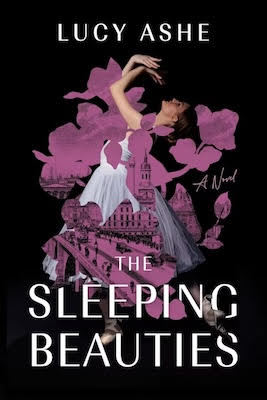
In my novel The Sleeping Beauties, ballet is both an escape from the hardship of the Second World War, and a dangerous obsession. Briar Woods grows up consumed with dance, determined that her life will follow the rigid path she has imagined for herself. When this journey is thwarted by the thorny obstacles of desire, a powerful man, motherhood, loss and guilt, she struggles to keep hold of her grip on reality. As with many books about ballet, when Briar’s life is dragged off course, she loses control of her understanding of who she is, her identity thrown into chaos.
I have chosen eight books that cut to the heart of what it means to learn to define oneself as a dancer.
Set in both the present day and during the AIDS crisis, this is a psychologically powerful novel about longing for acceptance in a complicated adult world. Carlisle Martin’s childhood holds secrets, some of which she will not admit even to herself. When, as an adult, she returns to New York City to visit her father, those memories cannot remain hidden any longer. She confronts her relationship with her ballerina mother and her father’s partner, James, learning what it is she needs to let go of in order to accept her past. The novel opens with a description of a ballet class, the fragile relationship between a teacher and student revealed: “He watches his words take shape in the boy’s body.” For this is the power of an adult mentor in the world of professional dance: every word can transform but also destroy.
Alice Robb’s memoir is subtitled “On loving and leaving dance,” and it is this complicated dynamic of love and loss that informs the book. Drawing on her own experience as a dancer in New York City, as well as interviews with others, she interrogates the ballet establishment’s turbulent relationship with dancers and their bodies. She examines body-image, the pressure on dancers to be thin, the legacy of Balanchine and the influence he held over his dancers, and the disturbing infantilisation of female dancers. Women’s bodies “are in constant flux,” she writes. “As hard as we tried to stay physically immature—breast-less, hip-less, premenstrual—we couldn’t fight time.” For me, as an ex-dancer with vivid memories of my time at the Royal Ballet School, her words resonated. But this book is interesting for all women, not only those who have been through elite ballet training. The book reminds us how fragile those teenage years are for girls, the words we hear from those in influential positions impacting on our sense of self well into our adult lives.
There are two versions of this book, one for adults and one for middle grade children. This second version and its ability to inspire and educate young people is an example of the tremendous influence Copeland has on shaping and transforming the image of the ballerina. Misty Copeland, principal ballerina at American Ballet Theatre, was the first African American woman to be promoted to principal. Her memoir takes the reader through the different stages of her career, from her late entry to ballet at the age of thirteen, to her momentous rise through the company. Her story is inspiring and makes it clear that the traditions of the ballet world can adapt to welcome and celebrate diversity.
Miriam Landis is a former professional dancer and ballet teacher, and her middle grade novel Lauren in the Limelight brings a refreshing new perspective to the familiar story of young people trying to make it in the world of dance. With a diverse cast of characters, the novel is about friendship, self-understanding, and a love of dance. It explores many of the challenges that children face as they grow up and learn who they want to be. Many of these are specific to ballet—the excitement of a first pair of pointe shoes, the nerves of auditions, the disappointments that must be endured—but it is also a novel about those crucial moments of transition and adjustment as children develop. The illustrations by Jill Cecil are playful and add beautiful detail to the book.
Tatelbaum’s memoir provides an honest and compelling narrative of the challenges of keeping the dream of being a dancer alive. She trained in a variety of elite New York dance schools and committed herself entirely to life as a dancer. That dream, however, proved elusive and cruel, leading to numerous injuries and financial challenges. Teaching Pilates to pay the bills, she continued building her dance career, working with immense resilience to take on each opportunity. Most dance memoirs are written by famous dancers with impressive resumés at top companies. To read a memoir by a dancer who faced the more typical path of resistance and struggle is refreshing, not least because it is a reminder that life as a dancer can take many forms. It is, Tatelbaum writes, about “the conflict so many of us experience between having a day job and having a dream. You won’t need to know about pliés to relate.”
A novel about a trailblazing Black ballerina, this is a story about celebrating success while navigating through obstacles of belonging, traumatic past events, attachment issues, and family. When Cece Cordell is promoted to principal at the New York City Ballet, the changes to her life come at a dangerous cost. Cuffy describes her novel as the book she wishes she’d had available to her, a Black ballerina in an establishment that traditionally has been predominantly white. Cece’s relationship with others and with herself is turbulent, and she must truly face her demons if she is to stop repeating the patterns of her past.
At eleven years old in the midst China’s cultural Revolution, Li Cunxin was selected for dance training by Madame Mao’s cultural delegates. His memoir tells a remarkable story of a child taken from rural poverty in Maoist China, and brought to Beijing to study ballet. During a cultural exchange to America, he fell in love with an American woman, leading to a thrilling narrative of his defection to America and his journey to becoming one of the most famous dancers in the world. This is a humbling and inspirational memoir about determination in the face of poverty, political strife, repression, and loss.
A historical novel about the girl who modelled for Edgar Degas’s Little Dancer Aged Fourteen sculpture, this is a ballet story that reveals the dangerous power of wealthy patrons. Set in 19th century Paris, Marie van Goethem and her sister struggle to make ends meet after their father dies. Marie trains at the Paris Opéra, attracting the attention of Degas and modelling for him in his studio. Her sister Antoinette, meanwhile, faces her own challenges while working as an extra in a play. Rich with historical detail, this is a novel about the corruption and abuse of power embedded in the beautiful settings of art, dance, and theater.
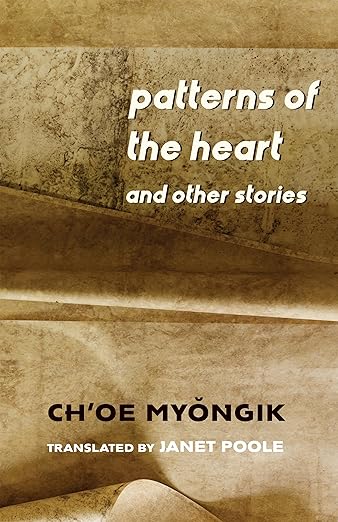
With his coat collar raised against spitting rain, a Humphrey Bogart type might have walked the streets of Choe Myeongik’s Pyongyang. At least that’s how I see Pyongil, the main character of “Walking in the Rain,” published in 1936 in northern Korea, the first story from the collection Patterns of the Heart. Gazing up at the city’s enormous ancient gates on his way to work at a factory, Pyongil occasionally stops by a talkative photographer’s studio with whom he shares too many drinks. Patterns of the Heart underlines the country’s hardboiled, hard-drinking characters, its poverty, its modern sensibility, and its tragic romance.
But when Choe holds all this up to the light of his prose, like a Vermeer still life, the city, the country, and its figures seem to glisten and gleam. His visual descriptions are precise, beautiful: “Pyongil yawned and stared at the right ear, which was now red as a tangerine slice” and spots a young gisaeng in the light of the rickshaw man’s lantern: “the face flecked with the soft down of a freshly hatched chick still hovered before his eyes; together they reminded him of a blade of grass on which he had cut his finger as a child.”
Spanning from the 1930s to the 1950s, these nine short stories observe the lives of a failed revolutionary addicted to morphine, bookish types confronted by dying fathers and lovers, a woman being trafficked on the train to Manchuria, a young hero leading a prison break, and more.
The publication of these northern and North Korean short stories, written about a century ago, into today’s English by Janet Poole is nothing short of miraculous.
A Pyongyang native, Choe Myeongik lived and wrote through the Japanese occupation, the liberation, the emergence of the North Korean communist state born out of Soviet occupation, and then the war. His works were banned by South Korea until the 1990s. Prior to his short story collection, Janet Poole translated the celebrated Yi Taejun’s essays and stories and wrote When the Future Disappears.
I spoke to translator and professor of Korean literature Janet Poole about northern Korea’s transition into North Korea, men of no character, and revolutionary dreams.
Esther Kim: You write in your translator’s note you long dreamed of translatingChoe Myeongik (Ch’oe Myŏngik; Choi Myong Ik). Can you describe where you first hit upon Choe’s name?
Janet Poole: I first heard of Choe Myeongik a long time ago when I first went to Korea for my dissertation research around the late 1990s. He’s not a particularly well-known or canonical writer. Even today, when I talk to people in Korea, apart from scholars, most haven’t heard of him. I was writing a dissertation on modernism, and a friend of mine said well, you should look at the work of Choe Myeongik because I was interested in urban stories, and how the city was described in 1930s Korea.
Of course, I was intrigued to hear that his city is Pyongyang. Once I read his stories, I realized how much the Cold War had shaped my own reading of the past because I had just spent several years thinking about the city of Seoul. And actually, for me, some of the most touching urban stories from that era study Pyongyang, which I thought was fascinating.
EK: Was it easy or somewhat difficult to translate his stories?
Even today, when I talk to people in Korea, apart from scholars, most haven’t heard of Choe Myeongik.
JP: Now his language is quite hard. Choe Myeongik is a real stylist, who wrote these really, really long sentences. That’s one of the issues. It’s a trend in the 1930s. But his are super long. They can be oblique, and there’s many dialects from the north you can’t always figure out. Dictionaries are not always helpful. People often don’t know what they mean. He’s also quite an intellectual. From his stories, he’s obviously well-read in European literature and Japanese literature. He’s really interested in words, dialect, and lexicon. I think he picks words carefully. He’s also interested in dialogue. That can be really hard to figure out on the page when he’s deliberately showing different classes of people, peasant characters as well as the urbanized. They can be quite hard to understand. And the last thing is, a lot of words have disappeared.
EK: Since the stories range from the 1930s into the 1950s, and northern Korea splits off into North Korea, I felt that the stories go from the grimmer underbelly of a city to a scrubbed “healthy realism” after 1945. For example, “The Engineer” (1952) is a story of sacrifice and heroism. It felt like some of the endings became more like television. Neatly tied. Why are there more happy endings versus sad endings after the division?
JP: For most of Choe Myeongik’s life—he was born in 1903—he grew up under colonial occupation, and after such a long period of colonial rule, that longing for independence was real. That desire to escape the society that’s being built in the late ‘30s, and the war time in the earlier stories, so then the dream of independence is real. Especially in the way it played out in Korea where the country got divided immediately and then everything became chaotic, especially in the South.
In the North, people bought into this real feeling of “We’re trying to build something different.” Now, in Choe’s case, he was already living in Pyongyang, so he just stayed where he was. There were writers who moved from the South to the North. And he just stayed where he was. I should also say that there were lots of people who moved from the North to the South, so he decided to stay.
A writer, who has been so attuned to and critical of society under one Japanese colonial, capitalist wartime regime, would want to be part of something that was better. I think that feeling probably would be individual, but also more broadly shared in society.
I also don’t want to be naive. I’m sure there’s also political pressure as well. I’m stressing the individual to you because I feel that everyone goes straight to political pressures first. But I feel that they might be coming together.
So “The Engineer” when I first heard that story, I read the first version. And I tried in this book to include both versions because there’s a different ending in the later version. And the first version felt quite melancholic, actually, whether the main character, Hyeonjun died all alone looking at what he’s achieved. And on the one hand, he’s a hero? I guess? But on the other hand, he’s died all alone. And there’s something quite melancholic about that. And then the following year, it was republished with a paragraph monumentalizing his achievement. So I guess that means that somebody else felt the ending was too sad the way it was.
There has to be a sense that death was worthwhile. The engineer’s sacrifice was worthwhile. But you can read that in many different ways. Sure, from the government’s point of view, they would want his sacrifice to be worthwhile. But I’m pretty sure that if you were going through civil war [the Korean War,] just five years after the Asia Pacific war [WWII], there would be a desire to want to somehow make this worthwhile. That incredible violence and death and the desire for something restorative from it. In that sense, I understand the desire to have these slightly happier endings.
EK: Why is it important to read the North Korean half of the collection without dismissing it as propaganda?
JP: There are so many problems with that. It gives too much credit to political power in a way. He was writing under censorship under Japanese rule, and he clearly found a way to write around it. And so I think we owe it to Choe Myeongik to see how he did that in the North as well.
It’s really important to acknowledge that a writer is grappling with the situation, describing the world, their lives, and their experience just as much as the earlier stuff. I don’t see why the later stories should be dismissed. Terms like “propaganda” or “literature,” which are usually opposed when we talk about North and South Korean literature, clearly come from the Cold War thinking that we’re still embedded in.
Something written in the so-called West or South Korea, or whatever configuration that you’re thinking of, something written there can only be literature and free, whereas something written in North Korea can only be propaganda…. I think that dramatically reduces the complexity of the situation and what writing means. Not to mention, it diminishes the individual achievements of the writers.
I included the long story, “The Barley Hump” (1947) because I felt it was important to look at Choe’s attempt to describe the transition. I couldn’t decide whether to include it or not just because it’s so long.
EK: That was my personal favorite.
[People think] something written in South Korean can only be literature and free, whereas something written in North Korea can only be propaganda.
JP: I’m glad to hear that because I hesitated a bit. It is important, especially when I live in North America, to understand the desire that went into North Korea, and this is separate from what North Korea is today because I’m not in any way condoning what North Korea is today, but we need to respect that desire for a better society, which comes from a critique of Japanese colonialism.
When I found the final story, “Voices of the Ancestral Land,” (1952) I said, “Wow, here’s a story that’s really describing that experience of being bombed.” We know it happened. It’s all come out over the past few years: The bombs, the evacuee columns…
It’s important to find a written trace of that experience of being in the evacuee line, desperately trying to escape gunfire from American bombers. It’s really important to have that perspective, especially in today’s world where this is still happening. That experience needs to be recognized and affirmed.
EK: You write you translated during Covid in the translator’s note at the end. Illness is a running fact of life inside his stories. Do you think the lockdowns affect your selections of his stories for the collection? Or is it something that just features in his work as a whole?
JP: He is focused on illness, I would say.
It’s like that with the revolutionary too in “Patterns of the Heart”. He’s in some ways, a hopeless addict, but he’s still got more charisma and attraction than the main character. In that time he was living in, there’s somehow a loss of energy or strength or vitality, and these sicker characters paradoxically have more hope and dynamism about them.
The way in which writers often write about 1930s Korea is in the vein of sickness and illness, but I would say that Choe does that more. And he’s also quite graphic and detailed, which is what drew me to his writing in the first place. Compared to other writers at that time, he really, really delves into visual description.
I don’t really imagine Choe Myeongik — I mean, I never knew him — but I don’t imagine him moving a lot. I imagine him in his room with his books like the main character of “Walking in the Rain”.
And in “Patterns of the Heart,” you take the train to Harbin, but then you’re inside that room, that very memorable room. And that also feels very claustrophobic to me. There’s this balance between these really confined spaces where dramas play out, almost like theater, and then these expansive movements. That relationship is present in many of his stories.
EK: You write that Choe Myeongik’s language is really filmic, cinematic. There’s that photographer character in the first short story “Walking in the Rain.” Which of these stories would you like to see made into a screen adaptation?
JP: The filmic just came to me with“Walking in the Rain” because I love the opening section where Choe takes the aerial view and then zooms in and then enters the photographer’s studio. The story asks us right away to think in terms of photography.
I love “Walking in the Rain,” but that feels a bit more like a play than a screen although it is very filmic.“A Man of No Character”could definitely be a film. “Patterns of the Heart” could be a film too, but it would be a bit grim and dark, but it would be interesting.
“Patterns of the Heart” is one of my favorite stories that I especially like to use in classes to think about the figure of the revolutionary and revolutionary dreams, how people talked about Japanese rule, and how the Communist Party was wiped out. But it doesn’t mean that dream did not survive or wasn’t reborn. He shows that in that story. And then of course, the love triangle. Love triangles are always great for moving people along. He likes his love triangles. I always get reading his story is a real sense of expansion of the northern space of northern Korea into Harbin, Manchuria. There’s a real sense of geography that moves with the north Manchurian railway, which enabled relations with different cities such as Harbin.
EK: The title Patterns of the Heart for the collection is very evocative.
JP: ShinMun (心紋) is playing with the Chinese characters. It’s not in service of traditional or neo-traditionalist storytelling. It’s a modern, early 20th-century tale that involves the railroad and heroin/morphine and a love triangle. And these are very early 20th-century motifs that he’s using to describe or explore his way of thinking about art.
In many of his stories, he poses art against activism or art against business or the right-wing…There seems to be a constant struggle in versions of art, whether that be literature or painting, against other ways of living life, whether it’s business, making money, being active, maybe even being a revolutionary. Those always seem to be juxtaposed. He’s working through the tension of how to live in his moment.
The first time I saw a leech, it was attached to the shin of a shrieking artist. It was not a lone hanger-on: she was dappled in bloodsuckers from her ankle to her inguinal groove. I have never birthed an artist (/anyone), but after nearly a decade of working with them in adult form, I imagined each of them must have been the kind of kid you couldn’t turn your back on for a second without chaos ensuing. I knew a painter who made her own brushes from roadkill she bare-handed off filthy road shoulders into the back of her hatchback, unfazed by the rotten guts gushing onto her upholstery, her grocery bags, her light fall jacket. I knew a sculptor who made towering objects out of pink fiberglass insulation she hand-shaped and -sanded without any protective gear. Artists: prancing barefoot in places I wouldn’t traverse in boots. Artists: wading naked into murky, stagnant freshwater and emerging—surprise, surprise!—covered in leeches. Their heedlessness astounded me; it seemed boundless and propulsive. I would say they were committed to it, but commitment implies a level of conscious intention beyond innate constitutional bent. If the world were truly an oyster, the artists I know seemed compelled to slurp it down at every turn, with no regard for provenance or proper handling nor concern for the wracking shits that might follow. Whereas I won’t eat a cherry tomato plucked straight from my own vine without first giving it a clean-water rinse.
2.
My lifelong avoidance of unnecessary peril doesn’t extend to avoidance of pain. By the time I reached puberty, I actively practiced stoic endurance of minor and more advanced agonies. I would still my face and then wrap my hand around the branch of a picker bush and squeeze, gripping for longer, then harder, then both; thrust my tongue against the terminals of 9-volt batteries for an escalating count; stick my fingers into the blue edges of candle flames and whizzing fan blades until my skin went from screaming to numb; slowly press the lit ends of cigarettes against the soft flesh of my inner forearm until it sizzled enough to scar. My ultimate dream was to be able to calmly extinguish one on my tongue.
I did not want to injure myself nor did I find relief in the pain.
I didn’t then—and don’t now—think of these behaviors as self-harm: I did not want to injure myself nor did I find relief in the pain. I only wanted to master my reaction to pain so I could remain impassive when it arrived. It never crossed my mind to wish for a future in which taking ever greater afflictions in stride might be an unnecessary skill; my imagination hit its limit at wanting to bear ever more of it without flinching.
3.
Phlebotomy, today, might conjure images of white rooms, gloved technicians, single-use tourniquets, and ruby-filled test tubes, but long before the days of collecting small amounts of blood for laboratory analysis, the word—born of the Greek phleb– ‘vein’ + –tomia ‘cutting’—referred to the longstanding historical practice of therapeutic bloodletting. This was during the thousands of years many cultures believed the health of the body was governed by four “humours”—blood, phlegm, and black and yellow biles—and that illness was the result of those humours falling out of balance. Bloodletting was prescribed for an impossibly wide range of maladies and was performed either by slicing a vein or artery and draining the necessary amount of “bad blood” into a purpose-made receptacle, or by the generous application of leeches. It was considered good practice to take blood enough to make the subject faint, a sort of hard reset via aggressive emptying of the bloated rivers inside us.
4.
Not long after I started squeezing thorns and fingering flames, I began seeking out art that aimed a blade at an artery. I didn’t want funny or sweet or fumbling; I eschewed epiphanies and hope. I wanted work that started at broken and ended at shattered. Here, too, endurance was key: films with thematic and/or formal aims to excruciate; music that rejected melody and refused crescendo; literature that fomented distress and scorned resolution. Art that asked too much of me. Art that bullied my ears and my eyes. Art that harrowed my heart and mind for hours, weeks, years. If it didn’t leave me spent and shivering, it was too twee for me.
5.
My therapist talks about “regulation strategies.” About how, for most people, the drive to alleviate psychic discomfort is swift and strong—an often-irresistible urge to replace uncomfortable feelings with (at least momentarily) more pleasurable ones. A sort of “act first, think later” approach to making it through the existential pains of any given day, or life. “You,” she says, “have almost the opposite strategy.” I am not a person who’s at risk of impulsivity or its associated regrets; my peril is in abiding much more pain than strictly necessary for much longer than I should.
6.
When my marriage ended, I finally located the limits of my endurance. It took eight years for the ripples to reach my outer rim.
7.
That first year, while physically separated but still legally bound, I had a space in a shared studio building. My neighbors were also my friends. We would head to the studio together and then shut our separate doors. The walls were onion skin-thin and there were frequent disputes over noise. Someone bounced a ball over and over; someone laughed too loudly for too long; someone’s “open music” shredded someone else’s concentration to ribbons. None of it mattered to me. I was too well-practiced at keeping numb. I had a makeshift desk, an old laptop, good headphones. As I stared at the blank screen, I would float my fingers above the surface of the keyboard, flexing them over the keys without striking—without “making a mark,” a visual artist might say, if a keystroke displayed on a glowing screen could be considered the expressive equivalent of a smudge of charcoal, a pencil flick.
8.
In college, I read a book about a pianist who eschewed his instrument for one full year, instead practicing for hours every day on a soundless wooden board notched with 88 keys. It was a sort of penance, a kind of prayer, a form of mourning. The pianist’s brother had gone missing and the silence was a tribute—and tether—to his absence.
9.
The silence of my keyboard was not a choice, it was a necessity: whatever depths I needed to plumb to marshal language sat too close to my water table. If I concatenated more than a phrase or two, my body would wrack with sobs. This weeping was independent of my will. My neighbors would rush to my door to make sure I was ok. Often I didn’t realize I was crying until they arrived.
10.
In those early days of separation, it wasn’t only the act of writing that made me sob. Listening to music, watching a film, reading a book—any of the sorts of aesthetic experiences I once enjoyed had the potential to reduce me to a pile of damp rubble. Likewise those I once scorned: corny rom-coms, girl-power pop anthems.
I walked the world like a peeled grape. Membranous, exposed.
Even a bee collecting pollen or a bright smile from a stranger might unexpectedly wrench open the spigot of grief. I called it “flash flooding,” as it was both unpredictable and uncontrollable. I walked the world like a peeled grape. Membranous, exposed. Juice spilling from my eyes at the slightest touch. But while my inner reservoir overflowed and poured down my face, the inciting emotions remained at a distance, shadowy forms lurking on a far shore, obscured by a thick fog, only glimpsable in contour.
11.
In a 2023 interview with The Paris Review, the poet Rita Dove says: “Bad confessional poetry has always raised my hackles, because it goes skewering in deep, exclaiming Ooh, look at this blood! But I’m like, No one’s interested in your blood. Make me bleed as I’m reading.” I ponder the locus of the “bad” within that formulation. Is the act of confession “bad” in itself? Is “good” inversely proportional to evidence of blood?
12.
I can’t help but hear an echo of my younger self in Dove’s disdain for unconcealed injury, her hunger for the sharp end of the blade. But younger still, before I began to train myself to endure injury without flinching, I was an open font of rage. I collided, constantly, with everyone—parents, siblings, teachers, friends. I listened to furious punk and riot grrrl albums and screamed along. I scribbled spoken-word screeds in gold glitter pen and imagined performing before an audience of similarly seething peers. When did I begin to privilege the appearance of being impervious to pain over the defiant display of my wounds?
13.
An apocryphal Hemingway quote floats around the online writersphere: “There’s nothing to writing. All you do is sit down at a typewriter and open a vein.” I wonder how the people who pass it around could square such a sanguineous belief with Hemingway’s tourniquetted prose. My own literary education was certainly a bloodless one, a virtuous inculcation into Lishian constraint, dedicated to the meticulous stripping away of every hint of excess or sentiment. The list of don’ts was endless: weak verbs, adverbs, fancy words, dialogue tags other than “said,” first-person point-of-view, similes and metaphors, dreams, cancer, the word “then”(!). If those workshops had an altar, it would have been consecrated to clean, dry bones.
14.
I think about the artist Catherine Opie and her photographic Self-Portraits, /Cutting and /Pervert, the messages carved into the artist’s skin captured blooming with fresh blood. I think of Marc Quinn’s Self 1991, a frozen cast of the artist’s head made from 10 pints of his own blood. I think of Piero Manzoni’s 90 numbered cans of Artist’s Shit. Beuy’s Fettstuhl. Andy Warhol’s oxidized piss and cum paintings. Judy Chicago’s Red Flag. Ana Mendieta. Andres Serrano. Blood, urine, semen, feces, fat, entrails—a sizeable contingent of modern and contemporary artists materialize their (/our) innards in their work. They shock and scandalize, fascinate and unsettle. I have heard these artists criticized, even demonized! But never for the “bad confessional” act of putting literal blood on the page (/substrate).
I think about the difference between expressing too much blood linguistically (derisible, “bad,”) and expressing too much blood haematically (medicinal, brave). I can’t help but wonder whether gender is a factor in the difference of perception—the feminized association with expelling blood, the masculinized association with extracting it.
15.
At the end of The Paris Review’s 1993 interview with Toni Morrison, her interviewer asks “Do you ever write out of anger or any other emotion?”, to which she replies, in part: “I don’t trust that stuff…if it’s not your brain thinking cold, cold thoughts, which you can dress in any kind of mood, then it’s nothing. It has to be a cold, cold thought. I mean cold, or cool at least. Your brain. That’s all there is.” For years—decades—I subscribed to this belief, which mapped so neatly onto my indoctrination into the literature of dry bones. Until the shipwreck of my divorce and the upheaval it uncorked uncovered a conundrum: how to approach the page when emotion roils like magma for an epoch instead of a moment? Without an answer, unable to reconcile my ingrained aesthetic principles with my ongoingly tectonic state, I chose not to approach it at all. While I worked to find my footing and rebuild my life, I wrote hundreds of “notes” in my phone—loose, emotive fragments related to the changes I was going through:
i go for a brisk hike with my grateful dog/get a vigorous massage from a spirit-healer/talk to some voyeuristic lady about people she’ll never know from an armchair too squishy for proper company/sizzle up every vegetable in the fridge/drink water/breathe deep. none of it matters/nothing will budge.
I never tried to develop them further. What would be the point? They were too visceral to be “good.” My cool brain was nowhere to be found.
16.
Whatever I might have endured before, it had never been enough to splinter my aesthetic from my emotions and my emotions from my intellect, and so I waited—too long—for the reversal of a rupture that in fact would never heal. My therapist encouraged me to “feel my feelings,” but I did not see the use of this. I wanted not just to write from but to live my whole life from the crow’s nest of my cold thoughts.
My therapist encouraged me to ‘feel my feelings,’ but I did not see the use of this.
Even worse than impeding my ability to intellectually distance myself from my pain, “feeling my feelings” impinged on my ability to endure it at all. My instinct was to prevent myself from succumbing to softness. I did not want my appetite for aesthetic brutality diminished, my unflappability in the face of discomfort decreased. I wanted to dispassionately observe my emotions, to autopsy them cleanly (no excess, no mess) in my work. I did not want to surrender to their muck.
17.
It took eight years for the pain of not writing to surpass my capacity for fortitudinous endurance. Only then did I begin to question the predicate of the matter: Who was my wordless austerity serving? What if my work was still worth making, even without cold thoughts or dry bones? What if there’s room in serious, “good” writing for moments of unconcealed emotion, for semantic intemperance, for imperfection and vulnerability?
18.
I’d grown up with the idea that artists stood solitary and clear-eyed apart from the crowd. Is bleeding on the page at odds with “good” writing because it shatters the illusion of singular genius? Blood connects us. It animates our original umbilical bond. We all emerge slicked in blood. We all bleed red.
19.
In an interview with Elle magazine, the memoirist Melissa Febos discusses her frustration with the dismissal of the value of telling our own stories:“This logical fallacy was rampant in creative writing circles, and still is: that if it has therapeutic value, it can’t be good art.”
I can’t help but notice that I read this in Elle and not The Paris Review.
20.
I might never be a tomato-straight-from-the-vine-eater or an uninhibited-plunger-into-murky-pools, but as my relationship to the expressive impulse changed, it was artists—their collective embrace of abandon, their commitment to material exploration, their unapologetic aesthetic obsessions both highbrow and low—who offered me new frames of reference and expanded my sense of possibility for my work. Slowly I reassessed my attachment to stoic dispassion. Piece by piece, I embraced a gradual relinquishing of restraint. Instead of working from a space of detachment, scrupulously keeping my guts to myself in order to “make [the reader] bleed,” I began to allow blood to flow (/show) in my work. To seek connection over control, despite the risk of impugnable prose. This is not an easier path for me. But at least for now, it’s the way my blood beats.
21.
Recently, an artist friend who knows about my shifting relationship to my writing practice sent me Fanny Howe’s essay “Bewilderment.” In it, Howe writes that “[b]ewilderment is an enchantment that follows a complete collapse of reference and reconcilability. It breaks open the lock of dualism (it’s this or that) and peers out into space (not this, not that).” I return to this sentiment again and again as I consider the (once unquestionable to me, now unquestionably false) dichotomy between confessionality and creative merit, between emotional distance and aesthetic discernment.
Everything about us and all that surrounds us is messy and complicated
Howe’s essay loops and wanders, referencing spirals, circling, mazes, whirling, dizziness, oscillation, doubling, unraveling, repetition, and return in both content and form, and I find its disorientation clarifying as I write about bloody/bloodless prose and contemplate the value of confusion, contradiction, vulnerability, and disclosure in (my) art and in life. There is nothing clean or spare about being a human–everything about us and all that surrounds us is messy and complicated and perpetually in-between. Why should “good” writing be any different?
I take a line from “Bewilderment” and make it my own; I hang it above my desk:
Decorating and perfecting any subject [every sentence] can be a way of removing all stench of the real until it becomes an astral corpse.
22.
Leeches are still used in medicine today for a very specific form of bloodletting. Their bite contains anesthetic and anti-coagulant properties that, after certain surgeries, help promote the free flow of blood until healing occurs. Without the leeches’ assistance, these blood vessels might become congested, which can lead to tissue death and amputation. In this way, bloodletting after a trauma can be the difference between successful restoration and irreversible damage.
23.
The brain is not a mortuary chamber. The heart is not a metronome. A tourniquet is an essential tool when arresting a hemorrhage, but if you leave it in place too long, you’ll lose the limb.
Growing up as a monster kid, Dracula, Frankenstein, and the Wolf Man were basically the big three, the unholy trinity of spookiness. I tore through Stoker and Shelley, but wondered why there wasn’t an equally-iconic fictional take on the werewolf. Sure, there were the great Universal films—Frankenstein Meets the Wolf Man is a yearly rewatch—but back in the early ‘90s, my local library’s shelves seemed relatively bare of werewolf fiction, with a handful of exceptions like Stephen King’s Cycle of the Werewolf.
You would think there’d be more, right? The werewolf archetype is an iconic monster for a reason and plays on our basest fears in a unique way. What if the people closest to us are secretly monsters, ready to tear us apart (anyone who grew up with an alcoholic parent is probably nodding along right now)? And conversely, what if we’re harboring a monstrous nature underneath our own exteriors? What if, deep down, there’s something horrible inside us, just waiting to take control? To do beastly thing with our bodies, once a month, and all we can do is bear witness to the aftermath. Don’t we all worry, despite our best intentions, we might inadvertently hurt our loved ones, our partners, our children? That our own monsters, whatever they might be, could get the better of us?
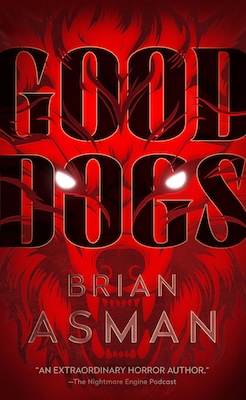
One thing that’s always motivated me creatively is that old adage, write the books you want to read. My upcoming novel, Good Dogs, is my attempt at doing something new and interesting with one of our most iconic monsters. Of late, slashers have been enjoying a real renaissance thanks to writers like Stephen Graham Jones (I Was a Teenage Slasher, Lake Witch Trilogy) and Brian McAuley (Curse of the Reaper, Candy Cain Kills). I’ve always loved a good slasher tale, so with Good Dogs I combined the tropes: a group of werewolves goes off to the woods to hunt in peace, until a mysterious killer starts picking them off one by one.
While writing my novel, I took a deep dive into lycanthropic literature, and there’s way more fascinating books out there than there used to be. Here are some books you can really sink your teeth into!
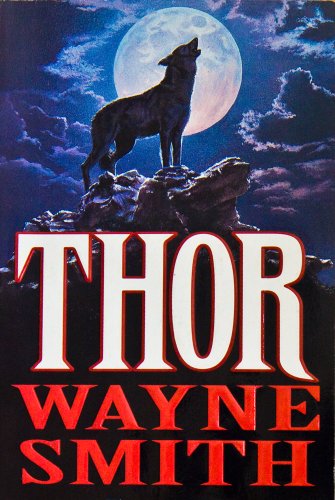
Thor by Wayne Smith
Released in 1994, Wayne Smith’s Thor is a preeminent classic of the genre. Told from the point of view of a family’s German Shepherd, Thor, the book details the schism caused by the arrival of Uncle Ted, who raises Thor’s hackles and soon reveals himself to be a very bad dog. The book’s unique POV helps cement its status as a genre classic. It was also adapted for film in the 1994’s Bad Moon.
For another inventive take on the werewolf mythos, look no further than Joshua Gaylord’s 2015 Shirley Jackson-nominated novel When We Were Animals (which sounds kinda like a Killers song, doesn’t it?). WWWA centers on Lumen Fowler, a teenage girl growing up in a midwestern town with a very odd tradition: when its children come of age, for one year, they turn feral during the full moon. While the children don’t turn into wolves, their inner bestial natures reveal themselves, providing for a unique commentary on puberty, tradition, and familial secrets.
The premise starts like a Hallmark movie—high-powered NYC executive comes home to the small town where she grew up and falls for a local contractor—but our intrepid C-suiter falls victim to a werewolf bite within the first few pages. Combining body horror and personal trauma with some humorous flourishes, Such Sharp Teeth flips the script on both lycanthropy and the aforementioned Hallmark build, delivering a heartfelt, compulsively readable novel.
Adapted into the 1981 Joe Dante movie of the same name, Gary Brandner’s The Howling shares some elements with the film but is entirely its own beast. After surviving a horrific attack, Los Angelenos Karyn and Roy Beatty decamp for the mountain hamlet of Drago in search of some good, old-fashioned small town peace and quiet. But in typical horror fashion, all isn’t as it seems! Something’s howling in the woods, Roy’s having an affair, and Karyn’s trapped in the mountains with a pack of werewolves. Spawning two book sequels as well as a film franchise, Brandner’s The Howling is easily one of the most iconic works in the subgenre.
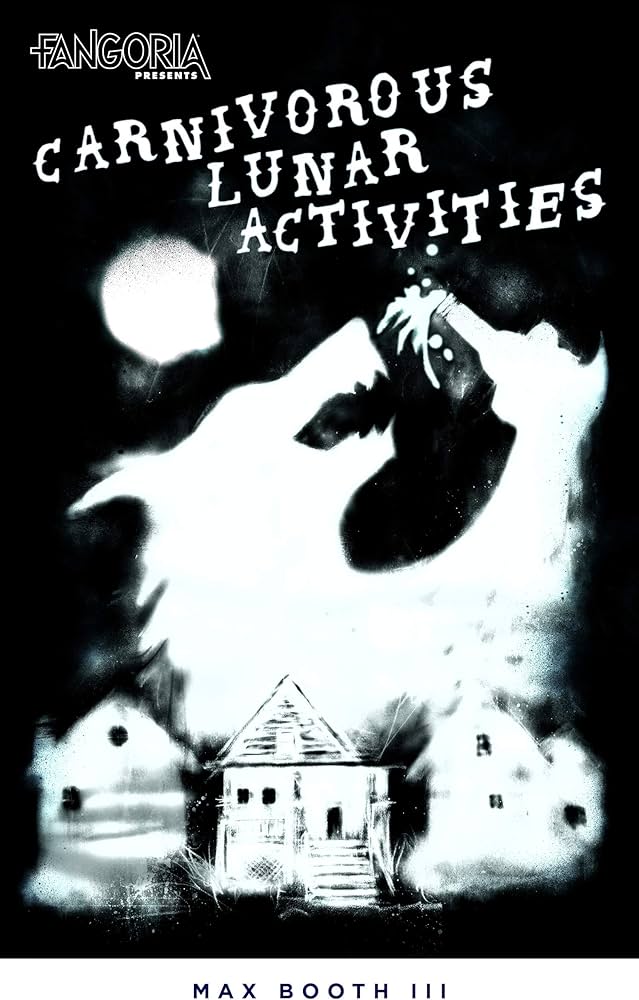
Carnivorous Lunar Activities by Max Booth III
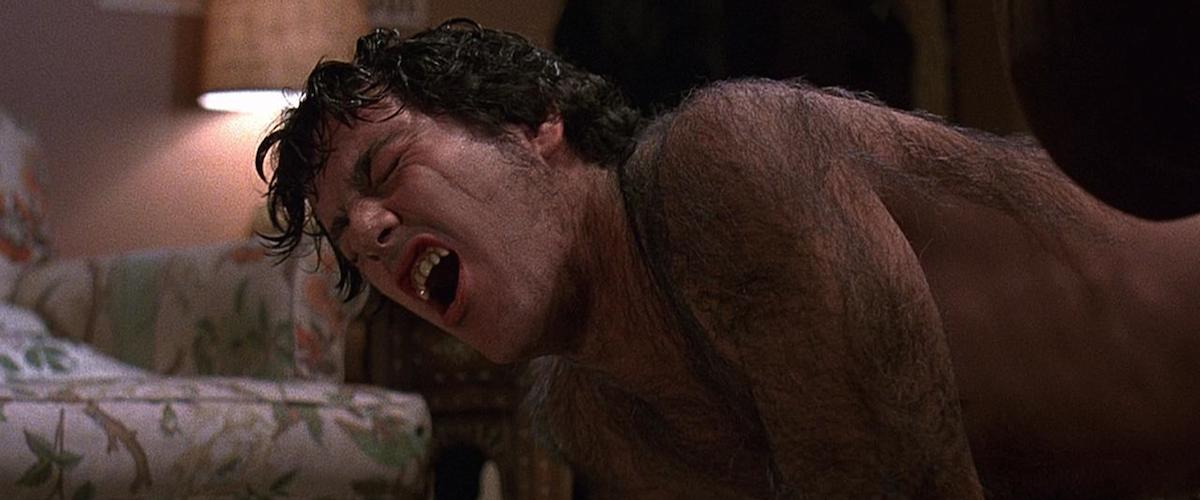
Named after a quote from the 1981 classic An American Werewolf in London, Carnivorous Lunar Activities is an offbeat horror comedy perfect for fans of Kevin Smith movies. When Ted’s old friend Justin thinks he’s turning into a werewolf and wants Ted to kill him. Is Justin crazy? As the clock ticks closer to midnight, Ted’s going to have to make a decision. Filled with whip-smart dialogue, Carnivorous is a compelling story about the nature of friendships and how they wax and wane.
After a mother and daughter go missing in the Alaskan wilderness, the woman’s brother, Troy Spencer, sets out in search of them. This one’s got it all—an eye-popping setting, mystery/thriller elements, mysterious outsiders, and monster-on-monster action. If you enjoyed True Detective: Night Country, Nola’s novel is a perfect followup, combining polar wilderness and supernatural elements with a fast-paced plot.
Perhaps the preeminent modern werewolf novel, Mongrels is a coming-of-age story about a family of itinerant werewolves, societal outcasts who drive “werewolf cars” and guzzle wine coolers and always pee outside the backdoor. Like several of the other contemporary takes, Jones puts his own spin on the mythos. Did you know french fries are the lycanthrope’s Achilles heel? At once realistic, grounded and moving, with liberal splashes of humor and an off-kilter POV that holds concepts like identity and family up to a fun house mirror, Mongrels is a can’t-miss read.
Amelia Morrison, beloved [neglected] wife and [disappointed] mother, [also, a limber and enthusiastic lover to several of her husband’s grad students] passed away last night [which dear hubby only noticed today].
Born locally in 1952, she loved [loathed] our little town. [After the pregnancy test came up positive on graduation night,] T[t]his Woodrow High valedictorian dedicated herself to domestic joys. She is survived by Mr. Robert Morrison, their two adult children, and her cherished Pomeranian, Muffins [the only defense against an allergic daughter with a penchant for blowing up her life and boomeranging back home]. Unfortunately, her son can’t attend tomorrow’s funeral [due to incarceration] but will join in spirit. Her bereaved daughter, Mary Morrison, caught the first flight in [and already cleared the house of jewelry and electronics]. In lieu of flowers, she asks for donations toward a commemorative bench [frozen forehead and camel lips].
Always altruistically minded, Mrs. Morrison chaired the volunteer committee for Our Ladies of Ashland, and thought of the other volunteers as sisters. [How else was she to keep a lid on the rumor mill those bitches live for?] In her spare time, she enjoyed reading [oh, sweet sweet escape] and gardening [the tool shed out back offered a nice spot for toking up]. Her other interests included music [though—gosh, darn—her loved ones can’t recall a single one of her favorite bands] and crime shows [especially where the wife offs the husband and gets away with it].
The family [Mrs. Morrison] would like to extend a warm thank you to the staff of the Angel Memorial General Hospital who took such good care of Mrs. Morrison in the final years of her life [in 1969, when a young gynecological shift nurse, whose name is now lost to time, whispered “I know a place.” And then held her hand in the back room of a veterinarian clinic, and didn’t flinch when she ran out in her slip into the freezing rain. And cried with her, but understood that the pain of a silver cross grazing the collarbone and igniting the warning flame of eternal damnation wouldn’t be washed away].
The Angel Memorial General Hospital had long been dear to Mrs. Morrison’s heart for helping bring her own precious angels into the world, and she contributed generously to their annual fundraisers. [, but did she contribute as generously to her children? Even after she willed herself to dream of only them and anchored her heart to the eye of their storm, did they somehow still know that they hadn’t been wanted? Is this why they’re pathologically unable to stop taking? Why they move through life with the ferociousness of those who suspect they are in it alone?]
The family would also like to express gratitude to Coroner Schmidt, a long-time family friend, who rushed over on his day off to attend to the body.[, probably counting on his halitosis to wake the dead. But alas, no cigar, old friend. Thanks for trying. You always were one of the good ones. Maybe if it had been you in the backseat after prom. . . Loreina is a lucky lady.]
Betrothed [Bamboozled] shortly after high school and married for over fifty years, Mrs. and Mr. Morrison worked hard to keep their romance alive. [Mr. Morrison can look forward to an avalanche of interchangeable V-day/birthday/anniversary teddy bears that will rain on his head from various pantries and closets. They are the ghosts of his laziness and will haunt him forever.] Robert cannot imagine life without his other half, but is deeply moved by the outpouring of support from friends, neighbors, and former students.[such as Giovani Saladino, who was the most promising and handsome and pillow-talked of the Mediterranean coastline and said “a different way for you to be, over there” so convincingly that it blistered for years.]
Our dear Amelia will be remembered as a sweet, traditional lady, who gave much to her community and smiled so brightly. Come celebrate her tomorrow at Ashland Town House Church, from 2:00-3:00. Service to follow, including the sprinkling of ashes over the Sinai Hill, her favorite picnic spot. [, where in between bites of cucumber sandwiches and pecan pie brownies she looked over the edge of town and sometimes further across the multiverse. From this spot she could peek into a life not pinned by predictability. She saw another version of herself there. She watched her navigate projects, teams, departments, organizations. Saw her take out the trash in her underwear, fight when angered, cry openly in public—never deterred by the watchful eyes about. Nor those above or within.]
Though our hearts break, we know she’s at peace [nothing]. [She spent her life as an apparition: a silent translucent figment of our imaginations. This manifestation is her final attempt at being rendered visible, if only just once.
She leaves behind the dusty duffle bag she packed on graduation day and an unused bus ticket that once smelled of mountain snow, and spring valleys, and the sweat of skyscrapers on a hot summer day, but now only smells of rot.]
As the political and cultural capital of Denmark, Copenhagen enjoys a vaunted status. Founded some 1,000 years ago by the Vikings, it has grown to become one of the most important cities in Europe. With its 650,000 + residents it is the second largest in Scandinavia, behind only Stockholm (when you include Greater Copenhagen in the population tally, the figure balloons to over 1.4 million). Like many majestic old cities, it’s a palimpsest. In 1728 and 1795 the city went up in flames, and it was bombed by the British in 1807 during the Battle of Copenhagen; after each conflagration it arose from the ashes like a Phoenix. Thanks to such rebirths, you can walk through nearly any section of Copenhagen and find myriad architectural styles. It’s a vibrant place, bright and colorful. One of the distinct features of the city can be found capped on its many buildings: green copper roofs that glint in the sunlight.
It’s very much a city of writers, too. Søren Kierkegaard comes to mind. His contemporary Hans Christian Andersen wasn’t born or raised here, but he certainly became famous in Copenhagen, as did one of Denmark’s most important 20th century poets: Inger Christensen. Karen Blixen spent much of her life living on her family’s estate just a few kilometers north of Copenhagen, in Rungsted. Today, scores of writers (and translators) call Copenhagen home, including, among many others, Pia Tafdrup, Christian Jungersen, and Olga Ravn.
After more than two decades of translating Danish novels and writing ultimately failed manuscripts, my debut, The Book of Losman, finally publishes this week (SFWP). It’s about a literary translator with Tourette Syndrome who gets involved in an experimental drug study in the hopes of finding a cure for his condition. The novel’s setting, Copenhagen, was purposeful. In addition to being an amazing city where a Danish translator can ply his trade, Copenhagen is also home to a number of pharmaceutical giants. The Book of Losman is fiction, but I liked the idea that scores of scientists are at work in Copenhagen.
In my reading list, I explore recent novels and memoirs set in Greater Copenhagen that reveal parts of the city you won’t find in any guidebook.
By now, American readers surely recognize the name Dorthe Nors, the Man Booker International Prize-nominated author of Mirror, Shoulder, Signal(also translated by Hoekstra) and several other important books published by Graywolf. So Much for That Winter consists of two experimental novellas. The first, “Minna Needs Rehearsal Space,” explores the life of the eponymous protagonist, a down on her luck composer, via simple declarative sentences:
“Minna hasn’t been out of her apartment in three days.
Minna has sent a lot of texts
Minna has asked Lars to tell her what was supposed to be
In front of But.
Lars doesn’t reply.”
And so on. It’s a remarkable novella, one that proves you don’t need to pile on descriptions to build a compelling narrative. The second novella, “Days,” is built as a series of daily journal entries, lists. The narrator simply tells us what she did each day. The result is an arresting story that’s thematically linked to “Minna” in that it’s about a woman going through emotional turbulence. Both novellas are beautifully translated by Misha Hoekstra.
Although Helle Helle is less a household name in the United States than Dorthe Nors, she’s a prolific, award-winning writer in Denmark with a singular vision. This Should be Written in Present Tense is about a young woman, Dorte, who lives in the southern Zealand railway town of Glumsø but is ostensibly a student in literature at the University of Copenhagen. Commuting back and forth between the two places, she is adrift, living a life she can’t quite settle into. Instead of going to classes, Dorte spends much of her time drinking coffee, riding the train, and having random sexual encounters. Helle Helle is a master of understatement. This Should be Written in Present Tense favors a narrative style in which the protagonist glides along passively. Things often seem to happen to her—though this never feels labored. As with her previous books, Helle Helle shines a subtle light on hidden ridges below the surface of her protagonist’s life. And with her clean, minimalist prose that keeps the reader at a slight emotional remove, as though viewing Dorte through a thin film, Helle’s style and register feel wholly original. It’s as though Dorte is a kind of Everywoman for the modern age. The translator is Martin Aitken, whose work is always top notch.
American Thomas E. Kennedy was a prolific writer and critic of more than 30 books. He was also a mainstay on the Copenhagen literary scene. Beginning in 2010 with the publication of In the Company of Angels and concluding with Beneath the Neon Egg in 2014, Kennedy finally received the broader recognition he deserved when Bloomsbury published his Copenhagen Quartet—four novels that read like a love song for Kennedy’s beloved adopted city, where he spent much of his adult life (he passed away in 2021). In the third novel of the quartet, middle-aged Kerrigan is a surly but lovable curmudgeon who’s writing a book: a guidebook to Copenhagen’s 1,525 serving houses (a term Kennedy employs in the novel to denote bars, taverns, and pubs; later, it even became the name of the publisher he co-founded, Serving House Books). Early in the novel, we learn that Kerrigan’s younger wife has left him and taken their daughter with her; we understand his desire to write this book is more about drinking (and numbing the pain of loss) than writing. But Kennedy doesn’t dwell in darkness. Like James Joyce’s Ulysses, Kerrigan in Copenhagen reads like a fine, comic (and literary) stroll through the recesses of a great European capital.
When Death Takes Something From You Give It Back was longlisted for the National Book Award, and it’s easy to see why. With Aidt’s characteristic lyricism, which blends poetry and prose and literary allusions in startling and fresh ways—in an exemplary translation by Denise Newman—this book explores the harsh reality a mother and her family face when a child is suddenly taken from them. With a masterful use of repetition that periodically returns readers to key moments in the timeline of her son Carl’s death, Naja Marie Aidt pulls no punches here. This is a brutally vulnerable and honest book, engrossing and powerful. Though it’s not for the faint of heart, it is a book that reveals Aidt’s crushing sorrow—and rewards us, yes, rewards us—by dropping us deep into the great depths of her tragic experience and impelling us to feel, viscerally, our shared humanity. Nobody wants to experience such loss, such pain, not even second hand. But Naja Marie Aidt is an authoritative guide through the darkest hours of her life following Carl’s death. That loss may be the instigator of the story, but the overwhelming emotion one feels is Aidt’s unassailable love for her beautiful boy, whose life ended all too soon.
Tove Ditlevsen was a prolific Danish poet and writer whose work is seeing a resurgence thanks to the 2021 publication of The Copenhagen Trilogy, which was recently ranked as #71 of the best books of the century by the New York Times. Ditlevsen’s life was, in many ways, a sorrowful one—as The Copenhagen Trilogy illustrates. In these three chronologically-arranged memoirs, Ditlevsen narrates the story of her life from her childhood until her mid-thirties, by which time she’d already been divorced three times. Born to working class parents in Copenhagen, her life was one of struggle and strife from the start, and throughout her career she mined her experiences to write books in multiple genres. The trilogy culminates in one of the very best memoirs I’ve ever read on the subject of addiction—from the point of view of a woman whose drug use was deliberately enabled by her mentally unstable third husband. The translation across the three books is seamless, with both Tiinna Nuunally (Childhood and Youth) and Michael Favala Goldman (Dependency) doing a fantastic job recreating Ditlevsen’s vivid voice in English. Ditlevsen’s oeuvre includes more than three dozen books, very few of which have been translated into English. Let’s hope that changes soon.
Civil Twilightby Simon Fruelund; translated by K.E. Semmel
Spuyten Duyvil reissued in August my translation of Simon Fruelund’s short novel Civil Twilight. This novel takes place entirely on a fictionalized suburban Copenhagen street, Dante’s Allé. Fans of Richard Linklater’s 1990 film Slacker will especially appreciate this novel. The narrative moves down the street, from house to house, character to character, giving readers brief glimpses into the many lives and families who live there. When it was originally published in Denmark in 2006, the book was a bestseller—a fact that may seem remarkable today since nothing much actually “happens” in the story, though associations are made between the many characters that turn the narrative into a kind of puzzle readers can piece together, a game of connect the dots. Simon Fruelund is a minimalist with a keen sense of humor, and even though it may seem that not much is happening, there’s a great deal of activity burbling underneath the surface. Perhaps ironically given the way Fruelund hops from character to character, Civil Twilight is one of those splice of life novels that reveals the rich social complexity of Danish culture in a globalized community.
Soula Emmanuel’s Wild Geese is a terrific debut novel, and it won the 2024 Lambda Literary Award for best transgender fiction. Protagonist Phoebe is thirty years old and, like the author, hails from Dublin. She’s a PhD student in Lund, Sweden and living a solitary life across the sound in Copenhagen. She is trying to find her way in life, discover herself. Born and raised as a boy, Phoebe is three years into her gender transition. When Grace, an ex-girlfriend from her college days, appears at her apartment door in Copenhagen, it sets the stage for the formation of a tender, intricate, and compelling friendship that will develop over the course of the novel—one that includes a significant romantic evening when the two explore, awkwardly at first, their bodies. What begins as a novel about a lonely young woman fashioning a new life for herself in a foreign city becomes, instead, a novel about the intimacy of female relationships. Phoebe and Grace crack open the darkest parts of themselves and share these parts with the other. This is a novel deeply rooted in the coming-of-age tradition, even as it pries that tradition apart. Soula Emmanuel writes with verve, poise, and warmth, occasionally even flourishing a welcome and lively philosophical spirit.
In Clement Goldberg’s madcap and campy debut novel, cats, plants, alien intelligences, and a group of human misfits conspire to make us all freer and more joyfully connected. New Mistakes offers a hilarious, surreal, and sexy new vision of queer collectivity—one that involves the living earth and intelligences from beyond—while a cast of mundane and zany antagonists, ranging from a government intelligence agency to protestors against cat psychics to the plain old decentralized corporate defanging machine, works to shut it all down.
It’s rare that I read a book that makes me laugh so hard and at the same time feel as though the horizon of queerness is just a little closer. The novel teems with wordplay and kinky sex, but harbors an undercurrent of social and ecological collapse.
The work builds thematically and aesthetically on Goldberg’s body of film and animation work, which includes a lemur-based queer evolutionary/extinction mythology in Our Future Ends, stop-motion mushrooms who conspire to take over the earth in The Deer Inbetween, and a wild multi-director adaptation of Michelle Tea’s classic lesbian novel Valencia.
New Mistakes is the first single-authored book from Michelle Tea’s Dopamine Press. It follows Dopamine’s first book, Sluts: Anthology, a multi-authored collection packed with queer writers celebrating pleasure, connection, and life. Michelle handed me a New Mistakes galley at a Dopamine Press reading, a few nights into my return to LA after two years on academic exile to Ohio. The combination of Sluts and New Mistakes offered me a space in which to land and from which to think—together, they announce Dopamine Press as a queer refuge, a cauldron of life-giving queer magic, and a preservation of the ways in which queer artmaking creates a web of influence where we all just keep giving birth to each other.
As a queer writer who also channels earth voices in a campy way, and who is always on the hunt for fellow horny and funny queer utopians, I knew I had to talk to Goldberg. Luckily for me, they were already a fan of my book Sarahland, and we moved easily into creative interchange, swapping books and films and ideas—in the two months since Michelle gave me their novel, we’ve been talking. Here is a bit of our exchange.
Sam Cohen: I think we’ve both been compelled by the overlap in our work, so maybe we can start with that. I feel like we’re both giving voice to the earth in a campy way, and then also just, like, being funny and gay and referential and, even a little stupid sometimes.
Clement Goldberg: Yeah. I really like stuff that’s extremely dumb, but so brilliant. I think it’s a very queer art that does that.
SC: The premise of New Mistakes is maybe that plants, cats, and aliens are at the fore of revolution via communicating to human misfits. It is really absurd and great and I’m curious where you started with the project, with that premise or somewhere else. What emerged and surprised you as you wrote?
CG: So much of the book came out of walking up the hill during the pandemic lockdown, in the neighborhood I live in. The plants here are very chatty, and the animals. Specifically, I was having a relationship with a particular tree, and then one day there was a cat who seemed lost and was asking for help. This other time I saw a giant light in the sky, and I thought, Oh! This is it! They’re here. This is the moment. I felt all of these chemicals in my body as I prepared. I was like, am I ready, or am I scared? Like, do I want to go with them? What’s gonna happen? And then I figured out it was a comet.
So, all of that gestated, and was in the background of developing these human characters who foreground the narrative.
SC: So I think that we talked about—
CG: Is nature conspiring towards revolution? Is that the talk that’s in the air?
I feel like some of the trees have had it. They’re thirsty. There’s a drought. The soil is falling off the hill. They keep building fences and developing over here, and the coyotes are like, why are we the bad guys?
SC: I really love that your book allows plants to be pissed. I just like that you allow the non-human world to be, like—
CG: Annoyed with a leaf blower?
SC: Yeah! Salty and bitchy some of the time. There’s trees with complex feelings and hedges with petty feelings and it’s just really great. I also wanted to say that I lived here, on the hill you live on, where New Mistakes is set, when I wrote Sarahland. “Becoming Trees” is set in my old backyard here. So I think there is a kind of magic in the flora and fauna on this hill that we’re both tapping into.
CG: I felt very connected to your book when I read it. And I read it while I was living here. So it felt folded into the writing.
SC: The chattiness is real.
CG: It’s a very chatty neighborhood. But you never saw a UFO-type orb or comet? Have you ever had any kind of experience like that where you’re like, oh my God, it’s happening, am I ready?
SC: I think that I have not. I do think that when I first came to LA, that there was this really expansive sense of what is possible. I think people make fun of LA people for believing in astrology and—
CG: Astrology’s real.
SC: Yeah, I know, but astrology feels more real here. The possible is very expanded here, in terms of the social and being a city of dreams or whatever but also in terms of this very felt connection to the universe and the nonhuman world. But no. I haven’t had that with UFOs because I see all kinds of weird shit in the sky and it’s like, is it drones? Like, who knows what people are putting up there.
CG: Trash and leaving it up there. It’s rude.
SC: On the note of expanding the possible, each of your character’s arcs opens up possibilities for existing in the world more freely and playfully, with more generosity and kindness. I’m wondering if that is something that you set out to do.
Nature operates on desire. Horniness is what drives things to continue to sprout and flourish and connect and change form.
CG: When I set out writing, I thought the book was about people being suddenly set apart and how they were going to navigate that. And then I think once I got deeper in and I was thinking about the book being called New Mistakes, I realized that everybody at the top is coming from a place of making their old mistakes over and over again and each character is coming to a point where they’re ready to make new mistakes. Maybe they come to more liberatory, playful responses because the situation itself is sort of absurd.
SC: When I say that I mean you have a dyke in her sixties who gets to do drugs and party and have fun and have hot sex. You have a 25-year-old girl who is very aware of and in charge of her sexual power, and very pleasure-oriented. You have a failed academic who reroutes his life in order to sit in a roundabout chasing UFOs and everyone’s fine and together and connected. I think your characters are also just really kind to each other. I think it feels rare that fiction shows us a more playful, hot, loving, cool way to live.
CG: I know a kind and generous queer world of artists. I adore a lot of the people around me and I’m inspired by those people. Maybe having a book that’s not talking about childhood or the birth family gave room to be more focused on what it has been like to be a queer person. I care about queer culture and representing the world I inhabit, but also at the same time, I was never a Julia, who’s the 25-year-old, but she just seemed like a really fun protagonist to give everybody an opportunity to inhabit. I liked the idea of Julia as the everyman.
SC: Why do you see her as the everyman?
CG: I don’t think there is a universal person but, if there is, it’s some white man, you know? If we take that away and then we give everybody the opportunity to make Julia the everyman, it’s a fun new place to go, which feels different than what one would expect. It’s usually not a she, she’s usually not 25. I would want anybody with any identity and any location to be able to see the world through her eyes and have an experience within that container. And I just adore femmes and femme culture, and why not center a book with a fun person that you can move through the world with?
SC: You have this great line spoken by Julia’s ex-girlfriend Reggie, who says that she “just wanted to get plowed in a sundress like everybody else.” I love that language, which makes everybody be wearing a sundress. It’s no weirder than the ways we’re supposed to understand masculine language as neutral, but just felt so fun and freeing.
Okay I also want to ask you, on the theme of getting plowed in a sundress: This is one of the most unabashedly horny books in American letters. But it’s also very much a book about multi-species revolution and how to exist at the end of the world together. And I am just curious if you see a relationship between multi-species justice and being a horny slut.
CG: I think that nature operates on desire. I think that horniness is what drives things to continue to sprout and flourish and connect and change form. Colonization has killed off the vibrancy of the planet, and it’s killed off cultures that regarded nature in high esteem and instead it holds up the human animal in a way that leads to this man-versus-nature idea. But so then I’m on nature’s team, I’m, like, a species traitor. I’m in cahoots with the animals and the plants, and then if there is some kind of extraterrestrial force that has some good ideas, I’m interested in hearing them.
My time on this planet has basically been the arc of destruction and depletion of the natural world. You look at, like, the World Wildlife fund or these other data collecting things, and it’s like, I enter the story, and then everything goes downhill as far as how much of the natural world is left. Wildness has been killed off at every turn, so a lot of my work looks at wildness and wilderness and the non-human. And so maybe somehow horny sluts are therein. I think it’s queerness.
I think a lot about extinction and the disappearance of things. And it’s just a really sad part of the story. And then I think horny sluts are, like, happy. So I think it is a way to be joyful and still look at the decline of the natural world. Maybe my last project had lemurs and this one has horny sluts.
SC: Well, it has a lot of things. It has cat psychics and cats. A lot of cats.
A really cool tree. A bitchy hedge. In addition to being very horny and very revolutionary, this book is very funny. And I have a question about that, which is: this novel doesn’t shy away from acknowledging the dystopia of environmental destruction and crumbling institutions, wealth, hierarchy, and governmental control. Yet it’s also very hilarious and fun. Do you have advice for accessing humor in these times or insight about how humor works in apocalyptic fiction?
CG: I hesitate to call any of the projects that I’ve done apocalyptic. I just think it’s what’s happening.
SC: Well, I would say we’re living in apocalyptic times. Societal collapse. Environmental collapse. I’m using apocalypse as a shorthand for that, not something imaginary or, like, biblical.
CG: I just feel really sad. I can’t even watch a happy nature documentary anymore. I feel devastated. And I don’t function well looking head on to, you know, a polar bear standing on, like, an ice cube because the whole glacier melted. These things make me want to curl up under my desk or my bed and never come out. I have found that being able to engage with these horrors—internalizing them, processing them—requires a sense of humor. Like, gallows humor. I think it’s a survival skill that I’ve gotten from people within queer community and a family that’s been through a genocide.
Gallows humor is a survival skill that I’ve gotten from people within queer community and a family that’s been through a genocide.
I think writing this book was really about creating something fun and, like, a place to go. I find I have a higher threshold for holding horrific things and circumstances if there’s some humor with the heaviness.
I feel like you do that in your work, too. I find your work very funny, and I feel like maybe there’s characters in pain or going through painful circumstances, but then you use humor to where it feels like a fun story and refuge. It feels almost candy-colored. There’s some kind of candy element to things that makes it so you can engage with heavier topics and emotional landscapes.
SC: Your book has a lot of collaborative energy in it, including direct references to living queer artists. We see the ecosexuals, and I think it’s hard not to think about Catherine Opie when we read about the photographer/professor character. How did you decide to include real queer artists in your fiction?
CG: Queer culture is really important to me and I have this feeling of wanting to stockpile it. It’s an homage to all these people who, like, I’m here because they are here, and then there’s also people that were here that are no longer here. I carry all of these people with me. I don’t see myself as separate or able to exist and work not in relation.
I also just like stuff that rubs up against reality. I like a blend of fiction and the real world and I take a lot of inspiration from queer artists and then want to play with that and note it and let it be within the story.
SC: I read this back to back with Miranda July’s All Fours, and it made me feel like we were entering an era of almost a new ethic of listening to desire or following the body. Both books made me feel like following desire was the way to move. Is that something you’re wanting to give?
CG: As someone who is progressively becoming more embodied from a place of having been disembodied, I think it’s a good time, and I want to give people a good time. I feel like that’s been really hard and getting harder, and so maybe offering a rich, desirous, queer fun romp felt like something that was a gift to give. I wanted it to be a kind of a queer refuge and a very vibrant, good time.
In a way, Michelle Tea commissioned the book. She loved the pilot I’d written and encouraged me to write it and said that she would help me get it published. We didn’t know then that she was starting a press. I love her work, and we’ve been long-time collaborators, and her work is really fun and funny and full of sex. A lot of the book was written to make Michelle Tea laugh. And since, in a way, she was the person that I was writing to, the book is a conversation I’m having with her, but one I wanted to share with everyone.
I also feel excited about Dopamine Press and about the Sluts anthology being the first thing that hit the world from this place. I feel like that anthology is doing something really fun and important and collective and, like, cool for everyone. So maybe I would include Sluts in the pantheon of All Fours.
SC: I want to confirm that your book is a refuge and a gift. I know that you’re coming from a particular place of getting in your body, but I think, too, about all of the ways that the state and its institutions are constantly telling us not to be in our bodies, not to listen to our bodies, that our desires are bad and we have to shut them down, so it feels great that there is so much permission given to listen to the body in all of these works.
I will also include Sluts in the pantheon in a personal way because I think that I am very much having a Sluts summer. I left this academic institution in Ohio and went immediately into the Sluts tour, and it felt so life-giving.
I, too, would not have written that piece without Michelle’s invitation. I was so jazzed that Michelle Tea asked me to be in Sluts and I was really taken with the earliest description of the press, which was like unvarnished stories of queer lives. Then I was in Europe and my reasons for going there fell apart and I just ended up in Vienna having this wild affair with a past lover. There was a moment when I was riding on the back of this person’s bike where I was like, oh, this is the piece for the anthology.
It felt like we could have, like, this moment outside time, because of queerness and I thought, this is it, my story of unvarnished queer life. So Michelle Tea is definitely creating magic invitations that plant seeds for this very pleasureful work to be made.
I wrote in my Sluts piece that riding on the back of the motorcycle was the meaning of life, and then when I was on the Sluts tour I was like, Oh, this is the meaning of life, too. Just, being able to be together as queer writers and readers, to make art and live to see that art birth other art.
CG: Yeah, there’s no better feeling than being with queer artists and writers and making work and sharing work and experiencing work from each other. It’s really my favorite thing about existence. Most of my work is in service to that and in relation to it and in awe of it.
As much as I pushed the project forward by myself, you reach a certain point in writing where other people are involved, and then it is a collaborative art form, you know? It returns to the collaborative queer realms of multispecies revolution and horny sluttery.
I hope someone will give New Mistakes to Chappell Roan so that I can give back a gift to the summer spell that she offered to me and to so many of us.
In 1993, I published my first decent story in a literary journal and a few months later received a letter from an agent whose name I recognized. I’d written short stories in college classes, sent them off, and typically the only thing that came back was a rejection, housed in the self-addressed-stamped envelope I’d sent with the story, my own handwriting preparing me for the paper inside that said thanks, no or we liked this, but.
The agent letter was a surprise, and I was buoyed by it for days. The letter went something like this, “I enjoyed your short story. I’d be interested in seeing more of your work. Do you have a novel?” It felt great to be approached. It was flattering. But the answer was no: I didn’t have a novel.
A few years later, I received another agent letter after another story publication. A few years after that, an email. The notes all said some version of “I liked your short story. But do you have a novel?”
I’d heard from my graduate school creative writing teachers, who taught us only to read and write short stories, that a fiction writer’s final form was novelist, or at least, they said, that was the publishing industry’s core belief. The books that sold well, the books editors at big publishing houses wanted to acquire, were novels. Collections could be published, sure, but they were afterthoughts or add-ons.
Whenever it came up, the “do you have a novel” question made me a little indignant. I thought it was like telling someone to use their eyes for eating. Novels use words and sentences, obviously, just like short stories, but they require a different skillset, as well as a lot of attributes, like patience and a good memory and discipline, that I—first as a 20-something who just wanted to write poem fragments on my forearms and listen to Pavement, and later as a parent, shellacked with two smallish kids and a full-time job—did not have. If I could write even a third of a short story over a few weeks, it felt like a win.
The notes all said some version of “I liked your short story. But do you have a novel?”
When my kids were more self-sufficient and I found myself with actual pockets of time to write and submit, I started getting wildly, embarrassingly jealous of every Publisher’s Marketplace announcement I saw. More egalitarian and generous writers would Tweet about how “there’s enough success for everyone, there’s plenty to go around,” but I, then in my 40s, felt like maybe there wasn’t. Maybe short story writers, all of us vying to win the same few small-press collection contests that ran each year, were doomed to not have book deals. I decided to try to feel content about publishing individual stories in literary magazines and pushed aside the idea of a book.
The next time an agent emailed me was 2020, and it was the same line as ever. “Do you have a novel?” No. “I really cannot sell a collection on its own.” Okay, I understand. “Do you plan to write a novel?” I guess. Maybe?
I signed with the agent, which was a leap of faith more for her than for me. I started trying to expand a short story I’d published, to build it somehow into a novel. In most ways, it was like trying to make a bathmat work as a rug in a room the size of a ballroom. Still, I wrote early in the morning, on weekend days, while waiting for doctor’s appointments, on all-hands meetings. I remember even feeling a little bit hopeful, like, “Maybe I’m doing it, maybe I’m really writing a novel, finally,” like this magic land, unenterable for twenty plus years, was opening to me.
In the end, my draft was more of a loose assemblage of stories. The plottier parts that lurched each chapter forward, the parts that made it a possible novel, weren’t working. When I expressed self-doubt to my agent, she asked me, more than once, if this was “the book [I wanted] to send into the world,” which felt pretty jagged. I remember thinking, Well, the book I want to send into the world is my short story collection. Maybe I even said it out loud.
We went “on sub,” which is the silly sport-game-sounding name for flinging your book out to a selected group of editors, followed by the brutal process of checking email all the time, being mad at anyone who emails you who isn’t your agent, and (in my case) almost always getting bad news. We sent the book out to 18 editors, and over the course of a few months, we got many nice rejections, paragraph-length notes my agent told me were encouraging and that I should feel good about, and even one call with an editor who liked the book that ultimately resulted in months of ghosting and no book deal.
The process was flattening. People wanted “propulsion,” and I was focused on sentences and moments. I liked the quiet pockets I was able to build into short stories but that felt harder to make work in a novel.
In a stupid fit of “now what?” I frantically, in a few months, wrote a whole other novel. The agent hated it, which stung, but it was likely hate-worthy.
I liked the quiet pockets I was able to build into short stories but that felt harder to make work in a novel.
How did I spend the pandemic? I speed-wrote two novels, only to realize I am not a novelist, or at least not yet, and market trends, traditional publishing’s seeming demands for books that rapid-cycled you from beginning to end in one sitting, weren’t going to make me one.
In summer 2022, I parted ways amicably with my agent and returned to story writing. She told me if I started working on another novel project, she’d take a look. I didn’t fault her. Agents have been told collections don’t sell. So many of them have to deal with the industry realities of looking for plot-heavy books. This isn’t to say there aren’t brilliant and successful poetic, experimental, quiet novels – there obviously are. But if you’ve queried an agent lately, you know: propulsion and plot are king.
I disassembled the second novel draft and built some short stories from the parts, then wrote some new stories, too. I understood stories and loved how within one I could focus intensely, think about every word, and I could experiment without worrying about staying on a path of forward momentum. I revamped my short story collection, sandwiched in some new stories, moved things around, took out the flash fiction.
This, I thought, feels like the book I want to send out into the world.
I submitted it to the same few indie presses and university contests where I’d sent earlier versions of a collection and had been rejected more than once. At this point, only a few of the stories were the same. What the hell, I thought. I was 54 and had gotten my first “but do you have a novel?” agent letter thirty years earlier.
And then I waited. Items in my Submittable queue changed from Received to In Progress.
In August, I moved my daughter into her first dorm room in a tall building, and I thought, simplistically probably, about how the dorm, each floor, with each room another person, style, story, was a collection, and how so many things in the world were more an assemblage of disparate parts than a mellifluous whole. My daughter, who is also a writer, said it didn’t make sense for people to be so weird about short stories. Why was publishing so opposed to short fiction, when the world seemed to want and love short-form everything else?
In September, a few weeks after leaving my daughter in New York, in my haze of sadness that was like an anvil hitting me repeatedly and saying you fucking fool why did you help make a person who is designed to leave you, I got an email from one of the small presses. I saw the re: ____ subject line, and I braced myself for the rejection those emails usually are. Instead, it was a nice editor I’d corresponded with a few years before, telling me they wanted to publish my collection.
I was so numbed by life that month, by all the accumulative sadnesses of being 50-something in a whirlpool of life change, that I wasn’t sure how to feel. But when I stood up from my computer to walk around the neighborhood and look at all the familiar things, so many of which had years of memories attached to them, each their own little story, I let myself feel happy. This wasn’t the novel. It wasn’t the Big 5. But it felt truer to the writer I wanted to be.
Small presses, less beholden to concerns over big sales, are able to publishcollections and the kinds of books Big Publishing tells writers we shouldn’t bother making. For that, I’m grateful.
As is true of so many writers I know, some of my favorite texts are short stories. Each time I come upon a new collection in the library or in a bookstore, I get excited about the hive of situations and characters I’m about to dive into and the room for experimentation. It feels like so much possibility.
I remember hearing last year that a lot of traditionally published debut novels sell only in the hundreds of copies. The managing editor of the small press that accepted my collection told me something like, “During the life of the book, a good outcome would be selling 1000 copies.” A thousand sounded good. Better than the hundred of some novels. Big Fiction’s insistence on the novel as default is maybe a failure of marketing or the imagination about what a book can be and do.
Small presses are able to publish the kinds of books Big Publishing tells writers we shouldn’t bother making.
I’m trying again to write something that approaches a novel, but this time I’m letting myself lean into my tendencies and reminding myself that a novel does not require a traditional narrative arc, nor a set number of scenes and beats. So I’m trying a “novel in stories,” and I’m not writing it with some big splashy publication in mind. I’m writing it when and how I want to write it.
After an excerpt of the novel-in-stories project won an Honorable Mention in a contest, an agent I adore, a “dream agent,” messaged me and asked me if I had the full novel ready. I don’t, at least not yet. But when I do, I hope I’m able to pull together a whole made of small slices of the world pulsing together, a collection in its own way, that champions the short form while also feeling like a whole. To the industry, maybe it will even be considered a novel.
Is this just an essay about someone who wanted to and couldn’t sell a novel so now wants to champion the short story? Maybe a little. But, more, it’s about a circuitous path away from and back to the thing I actually enjoy writing, that the industry told me I shouldn’t do if I wanted to succeed.
The world has always been filled with mysteries. Where does the sun go at night? Why is there lightning during a storm? What happens when we die? The fun thing about humans is we can’t just let those mysteries go unsolved. The unknown is frightening, maybe even dangerous, and we live on a whole planet full of it. So we search for answers, and when we don’t know an answer, we have a habit of making one up. For millennia, we’ve been filling in the gaps in our knowledge with stories of gods and ghouls and the odd fairy thrown in for good measure.
Eventually, science overtook mythology and answers shifted from fantastical beings with quick tempers to planetary rotation and electric charges. But one subject still remains wrapped in mystery and mystique: Death.
Every culture in every era throughout history has had their own explanations for what happens after we die, and modern beliefs remain just as varied. But whether we have pearly gates or hungry worms to look forward to, the one certainty is we’ll all find out in the end. Until then, all we have are stories.
When I wrote my debut novel, A Grim Reaper’s Guide to Catching a Killer, I think I was partly trying to answer the question for myself. But, as a neurotic millennial exploring the ultimate scary unknown, the only way I could even think to approach the subject was through humor. So the last great mystery, death, became a mundane office job. Hey, if death is the great equalizer then surely the second greatest involves cubicles and paperwork.
Of course, for my protagonist, modern-day corporate grim reaper Kathy Valence, the mystery of death is old news at this point. The bigger mystery is why her most recent soul pickup, Conner, is missing. And when she eventually tracks him down, why he swears someone at her company, S.C.Y.T.H.E., killed him.
Solving the mysteries of life against a backdrop of death, or in the face of other unknowns, is no easy feat. Thankfully for Kathy, she’s not the only one. Below are seven fun, innovative reads that really put some “life” into the afterlife.
Carriger’s steampunk take on the Victorian era is bursting at the seams with beings who could tell you a thing or two about death. In a world where vampires and werewolves are staples in polite society, protagonist Alexia Tarabotti finds herself lacking in the same supernatural spirit. Or, more specifically, lacking in a soul. This unusual affliction makes her an antidote for paranormal powers, which is a handy skill to have until it inadvertently leads to her very unceremoniously killing a vampire, which goes against all sense of propriety and etiquette. But someone or something else is harming high society vamps, on purpose no less, and Alexia teams up with a handsome werewolf government operative to solve the mystery of the disappearing immortals. This book is full of humor, intrigue, and Victorian manners, and introduces a one-of-a-kind world you’ll have to be unwillingly dragged out of.
Ghosts are not only real but deadly in this introduction to the Lockwood & Co series, which follows a trio of teen ghostbusters solving the mysteries of the dead to stay alive. This young adult novel follows Lucy Carlyle, a talented agent trained to fight against “The Problem,” an epidemic of ghosts appearing throughout England. Children and teens, being the only age groups actually able to see or otherwise sense ghosts, play an important role in keeping their communities safe, and the Psychic Detective Agency Lucy joins is set up for the same purpose, only this one is run by her young contemporary, the charismatic Antony Lockwood. Together with the brains of the operation, George, the team is charged with clearing the most haunted house in England, but there’s more to this haunting than ghouls. The world Stroud creates is so grounded in reality, and so intricately constructed, that you can’t help but expect to find a Visitor glowing in the streetlights outside your window.
If we were to play a game of “Spot the Difference” with this list, you wouldn’t be wrong for picking this option. Dirk Gently isn’t a paranormal mystery in the traditional sense. But then, if you’re familiar with the off-the-wall writing of Douglas Adams, I’m sure you know “traditional” isn’t an adjective you’d find in the same universe as most of his work. Dirk Gently is what the love child of Doctor Who and Monty Python would look like, only somehow more absurd. The plot can only properly be explained in the book itself, but suffice it to say there is murder, time travel, and a horse stuck in the bathroom. Everything is connected, but the how and the why of it can only be untangled by someone with a name like Dirk Gently.
It takes a pretty special detective to solve their own attempted murder—twice. After being strangled in an alleyway in modern-day Edinburgh, Scotland, Detective Mallory wakes up in the body of a Victorian maid who’d had the very same rope around her neck 150 years earlier. Now Mallory gets to put her 21st-century knowledge to the test and help her cute undertaker boss figure out who keeps trying to kill her across lifetimes. This book struck the perfect balance between pithy, macabre, and supernatural to keep me hooked (though it certainly didn’t hurt that I got to read it while traveling through Edinburgh myself, thankfully with no ropes involved).
It’s one thing to be charged with solving a mystery as an amateur sleuth, but quite another when you wake up each morning as a different amateur sleuth, on a day that keeps repeating itself. For Turton’s protagonist, Aiden, this is really just the beginning of his problems. One thing he knows for certain is that Evelyn Hardcastle, daughter of the house he finds himself staying at, will be shot dead at the ball that night—and every night until he discovers her killer. But while a classic detective would interrogate the suspects, Aiden finds himself inhabiting their bodies each in turn, going through their motions on the day of the murder and putting the pieces together as he goes. This is such an inventive take on the genre and is executed to perfection.
The Restorer by Amanda Stevens
Set against the lush backdrop of Charleston, South Carolina, Amelia Gray is a cemetery restorer who can see ghosts. This unwanted—and unfortunately un-returnable—gift comes in handy when a woman’s body turns up on her job site. Amelia’s knowledge of graves, and their residents, makes her an ideal consultant for the detective on the case. But communing with the dead could mean risking her life. I devoured this series like chips back when I first discovered it a decade ago, and sometimes I still find myself tempted to go back for another bite.
Set in 1920s England, The Haunting of Maddy Clare follows impoverished young woman named Sarah Piper who takes a job assisting a ghost hunting team. Together they investigate a barn supposedly haunted by the ghost of a young girl who took her own life there. Unfortunately for Sarah, the ghost of Maddy Clare is not only real but she hates men, leaving Sarah to take on more than she bargained for. This is a rich story full of scares, mystery, and just the right amount of romance to help keep the nightmares at bay.
When people strive for a Dickie Greenleaf summer—whether wearing bowler shirts, behaving petulantly, or just generally being in Italy—I always want to ask, do they remember how that ended for him?
In Craig Willse’s debut novel, Providence, Dickie’s demise is part of the canon. The noveltells the story of Mark, a young professor at an elite college in a small town in Ohio. Mark exhumes a body of research on gay murderers in order to interpret cultural discourse around sexuality. When he takes a shine to one of his students, the precocious Tyler, he quickly unravels in Tyler’s world. Providence is a gripping page-turner, tracking a person’s descent through obsession, addiction, and the deception he long studied from a distance. This propulsive novel examines how a person can learn to negotiate the pressures of the world around him and how those maneuvers can lead him into his darkest hours.
We met over Zoom to discuss his novel, The Talented Mr. Ripley, gay murderers, and the trauma plot.
Michael Colbert: The novel opens in Mark’s classroom with a discussion on The Talented Mr. Ripley. I’m such a Ripley head—I love the movie, book, all of it. Can you speak to the genesis of your interest in Mark’s research subject, cultural discourses on sexuality and crime?
Craig Willse: Yeah, that was actually a project I was working on in my early twenties and then put aside for two decades. When the story of Mark and Tyler came to me, the idea that Mark would be working on this project came soon after. There’s a scene when Mark is explaining his research to Tyler and tells him about Andrew Cunanan, who killed Gianni Versace. I grew up in Miami and was living there the summer Versace was murdered, and I was obsessed. I still have a box with all of the Miami Heralds during this massive manhunt. That kicked off for me this interest in how stories about gay murder get told and what they reflect about the period of time that that murder or crime takes place in.
Mark is parroting me in that conversation when he’s talking about the AIDS panic, immigrant panic, and the discourse about Cunanan’s illegible ethnicity—as if Cunanan was doing something wrong in not being able to be read clearly by people. That was the beginning of my interest in the topic, and then I spent a couple years doing research on murder. That’s also around the period of time when The Talented Mr. Ripley film came out. I didn’t read the novel until I was working on mine. It was obviously a real influence, not just on the story but how I was thinking about telling the story. It’s funny, when you sit down to write, there are things you know you’re going to do, and then there are all these influences that you’ve been carrying around.
MC: How does Mark’s relationship to the work and the discourse surrounding it influence his understanding of himself? Why is Mark the person to be researching this?
I grew up in Miami and was living there the summer Versace was murdered, and I was obsessed.
CW: That’s a good question. One of thethings that defines Mark is a feeling of himself as an outsider and of not belonging. He gives a guest lecture about his work, and he says that he was drawn to it because he’s reacting against a sort of happy, positive version of gay life that he’s seeing represented. He wanted to spend his time with the worst gays possible and reject this idea of “gay is good” or pressure to tell only positive stories about gay people. I think all of that is true, but I think beneath all of that is his own sense of himself as being out of place, maybe out of time, of not fitting in. He is drawn to people who embrace that. At the same time, he gravitates towards people who seem to have found their place in the world and feel quite comfortable in it, which is his interpretation of Tyler. Maybe those are two sides of the same thing—people who either fit in or don’t but one way or the other really feel like themselves. I think Mark really struggles to feel like himself, or to figure out who he is.
MC: I want to discuss the two sides of that discourse: the good gay couple and the “rapacious gay man preys on innocent child.” How were you interested in situating the novel inside of the larger narrative, especially where the predation narrative is gaining traction among certain circles?
CW: One of the things the book is trying to explore is the difference between power as it actually exists and operates in the world, and our feelings of being powerful or being powerless, and the ways those things do and don’t correspond with each other. I think there’s something missing sometimes from public discourse around sex and power. At a party, Safie—Mark’s best friend at work—says if there’s sex, there’s power. I think Mark feels very powerless, and he feels completely overpowered by his desire for Tyler. I think he knows this isn’t true at times, but he feels very much that he’s under Tyler’s control. Of course, he isn’t—Mark’s an adult; he’s making his own choices—but I think that feeling of being completely overwhelmed by desire—by something that feels unreachable, unattainable, and also incomprehensible—deepens his feeling of Tyler’s hold over him.
I’m very concerned about the right wing, obviously, but I also have seen online so many young queer people reproducing the same discourse and the same interpretation of power and exploitation. The lack of awareness—that feeding this discourse is only going to hurt you—is really unsettling to me. I went to college in the 90s, and I was really influenced by 1980s and 1990s feminist writing and early queer studies around these questions of sex, porn, and power. Gayle Rubin has a really famous piece “Thinking Sex,” and she talks about the charmed circle. Behaviors can move in and out of the charmed circle of what’s acceptable. She looks at how some forms of monogamous gay sex can move into the charmed circle, but sex in the back alley stays out. That was very influential for me. When I see queer people enforcing the borders of the charmed circle and feeding these sex panics, it makes me very angry.
MC: Yeah, it’s coming from within and enforces a social conservativism.
CW: We bring really messy, conflicted selves into sex. That’s always true, and I think some of this discourse is rooted in a fantasy of sex with no conflict, with no friction, with no bad communication, with only transparency of desire on both sides. That’s a great idea, and I don’t think it exists in reality, so I don’t think we’re actually serving ourselves when we’re propping up that fantasy. I think we can have better, more fulfilling, and safer sexual experiences when we’re honest, actually, about the impossibility of ever fully being able to know, articulate, and actualize ourselves to ourselves. That’s what’s happening for Mark in this book, and so I think that’s what I’m nervous about with this flattened discourse about power, for the ways that it actually sets us up to not be able to care for ourselves in what are charged and confusing experiences and settings.
MC: The book also explores addiction—to substances, to social media, and to other people. How do they relate to each other through the novel?
CW: I had a whole academic career and spent years writing things where I was trying to convince people of what to think. With this book, I really wanted to raise questions, not give answers, and I wanted it to be a story that was engaging and moved quickly.
We live in an unbearable world, and I think probably all of us are seeking ways to get out of reality.
In terms of addiction, I think the way those things cohere for me in the story has to do with Mark’s early family experiences and his older sister, Cassie, and her life of drug use as a teenager. Mark learned a certain way to be in that family system that had to do with not being the focus of his parents’ attention because of how much attention and energy Cassie took up. The story that gets told in Mark’s family is about Mark not needing help; we get one of Mark’s rare flashes of anger about the idea that a child wouldn’t want help from his parents.
But of course, Mark also has gone on to build a life where he mostly doesn’t rely on other people, where he doesn’t believe people would choose him or want to help him. There’s a way that Mark has learned to be in the world that I think is one of the ripple effects of addiction, substance use, and the way it impacts groups and families in particular. Like Cassie, Mark, is seeking an escape from reality—through projection, and fantasy, and social media. For me, this is not a moral discourse. We live in an unbearable world, and I think probably all of us are seeking ways to get out of reality. I’ve tried in my own life to figure out ways to balance that. Certainly, characters in the book are not finding that balance.
MC: There are these really propulsive sections in the novel where I felt Mark’s desire. He longs for connection—he looks for it in the synagogue and at school. Do you understand his loneliness as a feature of his character in any other ways?
CW: Mark is somebody who has both been isolated and felt outside his entire life, and then there’s also the specificity of this moment in his life. He’s gotten this academic job that he’s worked so hard for, and he is wrestling with the disappointment of what it actually looks like. He’s in a small town in Ohio and feeling the drudgery of what this job is day to day. The book is set very intentionally in this period of time after 2008, when universities took advantage of the recession to do everything they wanted to do in terms of slashing permanent tenure track jobs, increasing people’s workloads, freezing or cutting salaries. This thing that at some point in time had been a wonderful job had been chipped away.
Although I want to say I did spend one year teaching in Ohio, and I actually really liked that job and made a lot of really good friends there. My experience of teaching in Ohio was more like Safie’s. I found a group of friends, and we figured out a way to be in this small, weird place together. There was something very bonding about being in the small town together, but Mark doesn’t have those. He already feels so alone and so isolated, so those circumstances that intensify it become pretty unbearable.
MC: We’ve talked about serial killers, obsession, loneliness, addiction, and also social conditions. This all makes me think of the famous trauma plot essay. How were thinking about the interaction between trauma, backstory, and broader social conditions? How do those things interact to exert pressure on a character?
CW: I’m not against happy endings, but I’m against a moral discourse that a happy ending is the best ending, or the kind of ending a writer should write, or a reader should want to read. I think the trauma plot discourse ends a conversation about desire before we can have it. I’m really interested in why we like and enjoy stories about horrible things happening to people. What is the pleasure that we get in reading about really painful, really horrifying things? I think that the trauma plot discourse falls into a moral discourse that suggests there’s something bad about the desire to read about traumatic events or to read something that has a traumatizing effect on the reader.
When I read the initial trauma plot piece, I understood that the writer was drawing our attention to something that can feel really forced, where it’s like there’s one thing that happened to the character in the past, and then maybe two thirds of the way through the story that one thing is revealed, and it’s supposed to explain everything. That does not feel to me like how the world works. Even if in our own lives we have one particular traumatic event, how we experience that event is also embedded in our whole lives.
Even if in our own lives we have one particular traumatic event, how we experience that event is also embedded in our whole lives.
In terms of crafting the story, that’s why I was trying to think about Mark’s family system, the stories his family told, and all the different ways he learned to be a person in that family system. I hope it doesn’t feel like it’s about one bad thing that happened to him in his childhood but more about the way he learned to be a person in relationship to his parents and his sister and the things he closed down, the possibilities for life that got shut down for him in those experiences. I hope that’s a little more nuanced and rich than what happens in a superhero movie where that one thing explains everything.
Also, with some of the online discourse around the trauma plot essay, I wonder about being in a moment of what some scholars call multicultural neoliberalism, where publishing has expanded a little bit in terms of publishing work by authors of color and queer writers. I wonder sometimes about the relationship between some of that discourse and this moment. It feels to me a little bit like the message is, “you can publish your stories, but don’t bum us out,” like tell us a story of immigrant triumph or of gay resolution. I think there’s something there.
DON’T MISS OUT
Sign up for our newsletter to get submission announcements and stay on top of our best work.
YOUR INBOX IS LIT
Enjoy strange, diverting work from The Commuter on Mondays, absorbing fiction from Recommended Reading on Wednesdays, and a roundup of our best work of the week on Fridays. Personalize your subscription preferences here.