Danez Smith Sculpts Pessimism Into Hope

If Don’t Call Us Dead and Homie weren’t enough proof, Danez Smith’s Bluff confirms their importance in the poetic firmament through a magnificent array of form and content.

Smith’s singular voice dazzles, with subject matter that is both immediate and timeless. The poems are often a linguistic simitar about the world’s many injustices—whether it’s the systemic murder of Black people historically and today, or the devastations of climate change—and are equally wholehearted about love, and hope.

I had the pleasure of a generous and wide-ranging epistolary interview with Smith as they prepared for the publication of Bluff.


Mandana Chaffa: Prior to the epigraphs are the poems “anti-poetica” and “ars america (in the hold)” setting both the canvas and the stakes of what follows. In the former poem, despite the enumeration of what poetry can’t tangibly do—fix injustice, matter more than kindness, deliver freedom—what follows in the next 135 pages, proves why poetry is so valuable, even as the second poem is a kind of rooting, providing origin and geography. At what point in the process of creating this collection did these two poems arise, and did you always intend for them to be the preface?

Danez Smith: Leave it to a poet to start a long-ass book with a poem harping on the limitations of the form, right? I don’t remember exactly when I wrote those poems. I know “anti-poetica” came around when I was writing a bunch of ars poetica that were truly negative, maybe in a positive way, in their engagement with poetry. Near the revelation that these poems might be a book, my friend Angel Nafis gave it a read and gave me a good heart to heart about the inward critique and pessimism, the great weight of guilt in that early draft. When Angel says something, you listen. So I looked at what was the negative force in the poems and leaned into that negativity so I could clock it, control it, play with it, balance it out, and not submit to it all the same. I have a note in my phone that says “turn all the ars poeticas to anti-poeticas” and I think that accurate adjustment allowed me to seek poetry’s use solely in its failures. So, it made space for hope, for light, for a way forward.

I leaned into negativity so I could clock it, control it, play with it, balance it out, and not submit to it.

“ars america” was an older poem that had a different title, maybe it was even untitled, that gained its title once I knew what I was writing into: language, genre, art, land, history, truth. I wanted to think about the art of America with the poems under that title. How and what does America make? What is an ars america? It could only be violence. I didn’t intend for them both to be the preface while writing them, but they felt like they set a certain set of conditions and understandings from jump. I put “anti-poetica” up top, and I think it was my editor Jeff Shotts who suggested putting the other poem up top, too. I think they make a nice two-step before the rest of the book unfolds.

MC: Speaking of epigraphs, the selections by Amiri Baraka, June Jordan and Franny Choi, refer in part to a new life coming from destruction, which feels especially appropriate in our world on fire. Yet the mythology of the phoenix is complex: though the phoenix rises from the ashes of its immolation, it will never be the same being that it once was. Each of your collections has a distinct, wonderful Danez-ness to them, yet there’s also a kind of regeneration that consistently makes it new; is this kind of motion and conversation something you contemplate or is it only present after the fact?

DS: I don’t think it’s intentional. I think I’m just writing each poem or collection as they come, but after a collection is wrapped and in the world, it is fun to think on which poems feel like they have instructions to keep writing, dreaming, and asking into the work. From Homie I think the poems that most influenced Bluff are “waiting on you to die so I can be myself” and “my poems.” Those poems I can see myself already beginning to struggle with the themes and exfoliating self-investigation that Bluff handles, and I think “waiting on you to die…” opened up a door into new lyric possibilities for me. I’m grateful there might be some kind of signature that I’m subconsciously imbuing the poems with, but my only task and mission is to write new poems and hopefully not just re-writing old ones, though that does happen too and I am in love with the fact that sometimes the soul just needs to say something again and again until it is satisfied or transformed. 

MC: Though all the poems are visual in varying ways, the progression of forms in your collections, and especially in Bluff, are purposefully acrobatic and often upend the experience of reading in a meaningful way. In a few places, the placement of text necessitated either turning the book, or my head (I chose the latter), and that shifting—one’s body, one’s eyes—was invigorating, as well as a QR code, cascading text, background color shifts. Or in the magnificent “rondo,” which offers a multitude of literary forms: an homage, an elegy, weaving history, and a kind of urban street plan of poetic phrases. Let alone the shattering footnotes, delegated to the bottom of the page, echoing the line in “anti poetica:” that “poems only live south of something / meaning beneath & darkened & hot” 

How did you determine the architecture for these poems? Did any of the pieces begin in one structure, and move to a different poetic neighborhood? 

DS: It’s all play, trial and error, what ifs, and a little bit of useful boredom, too. All of these poems start with the word first… is that true? Well, no. There are poems like “end of guns” that were just a regular-degular poem in stanzas before the collage came into its body, but there are poems like “rondo” where I knew for a long time what I wanted the shape to be, but I had to wait for years for the language to come. I love the visual fields that poetry holds so well, but nothing can start without the word for me. However, language sometimes does not satisfy, and when that’s the case I can ask “Is this just not the write words or is there something about the shape that I can manipulate to better get to the poem’s intended heart?” I try not to play for the sake of making a poem “different” for variety, but to really listen to the poem and ask how it wants to be embodied outside the confines of my mind.  

MC: Your poems are some of my favorites to read aloud—sonic, exuberant, complex—and I was excited about the variety of oratorical possibilities, especially for the visually-forward pieces. They feel like the opposite of erasures, if that makes sense: the voices, the phrases, the unexpected frictions overflow onto the page, a chorus rather than a solo. What’s been your experience of reciting these poems?

Sometimes the soul just needs to say something again and again until it is satisfied or transformed.

DS: I love thinking about something as the opposite of erasure! Maybe that’s why this book ended up so goddamn long. I am excited to meet these poems in the air, but I haven’t had a lot of experience reading them aloud. I go to fewer open mics than I have in the past, I don’t slam anymore (for now), so I’m looking forward to reading these with audiences soon. I am, however, pulled toward what possibilities there are in video. There is a Keith Haring exhibition at a museum in town right now and one of the things I was most attracted to were his “tapes.” I think some of these poems might be better audiotized as tapes so that way the visual elements are not flattened by reading. I hope to get to play around with some ideas along those lines soon. 

MC: English, unlike many languages, elects to center the “I” on a pedestal away from the collective; you, we, them, other pronouns aren’t capitalized. You nearly always employ a lower case “i” in your poetry and there’s intimacy and democracy in doing so (autocorrect keeps demanding I turn this into a capital “I”, as I assertively attempt to wrest control), an “us-ness” to it, that feels like the doorway to the kind of eden you’re depicting. How does your work navigate the distance—or intersection—between I-dentity and identity?

DS: Hmmmm…I am not sure! I think i-dentity, for me, stands in as a little plausible deniability in the lowercase i. There are aesthetic reasons I prefer the lowercase i and lowercase letters in general, but it also feels more playful, open, and moveable than the big I. You’re right on the money with that us-ness too. It feels, for me, like I have an easier time folding a “we” behind the little i. The ability to tie the personal to the communicable helps me decenter myself and keep the poetics open, breathing, influenced to the urgencies and pleasures of others around me. I do trust and know that there are moments to be self-absorbed, selfish, utterly and unapologetically internal, but I wanna also find bridges between that deep interiority and the ecosystems I am a part of. I-dentity then is necessary tool to seek out the self, before then turning towards i-dentity which lowers the guard rails and lets the world in. Something like that. 

From “Last Black American Poem”:

“Forgive me, I wrote odes to presidents.”


MC: The interrelations of your poems—and collections—provides an unexpected reflection on what you’ve written in the past. I loved “my president” from Homie, but “Last Black American Poem,” and others in Bluff, offer a glimpse of something I rarely see elsewhere: your collections—and the past Danez and current Danez—interacting with each other, as well as how thoughtful you are about the passage of time, and all that it highlights or erodes. Or as you wrote in “on knowledge:” “i wanted freedom & they gave me / a name, it’s distracted me for long enough” // i had to move my mind outside my body / move my body like my mind / move my mind / deeper into the dark / question of its use”

Do you revisit your other poems, and do they inspire or determine what you write about currently?

Sometimes the idea of audience scares me; sometimes it hands me a righteous responsibility and purpose.

DS: I do! I love to sit down with my old work every now-and-then, be it book or draft, and see what I was up to, how I’ve changed, to see how I’m still the same or what I’m still chewing on. Sometimes there is a kindness and self-appreciation in that reading, sometimes an embarrassment and drive to correct something I thought or did comes about. Bluff wouldn’t have happened without those visits into my writing past, be it via the reflective self-critique vein of the book or because there are poems that were written alongside or in-between poems from my previous two collections. Hell, I almost put a poem from 2012, before my first collection, in the book with an addendum written in 2022. I feel inspired by my former selves. I love their stupid, messy asses. I am community with them, still learning their lessons and nursing their wounds. I am grateful to be able to witness myself from a different point in time and put new pieces to the puzzle.

MC: “My Beautiful End of the World” is a remarkable poetic essay about the disastrous state of the physical world, interspersed with beautiful imagery of Minneapolis where you are “returned into the delicious flaunt of nature” even as you reflect upon the planet’s barreling demise. I hope not to be one of your “hesitant cousins” or worse, but even though I have a MetroCard rather than a car, I too am complicit, as we all are. After I first read this poem, I turned 40 pages back to “Minneapolis, Saint Paul” which focuses on a more devastating destruction, the murder of George Floyd, that unimaginable nine and ½ minutes, and all that ensued. Can we talk about the long-form poems that spire through this collection like Redwoods and what they allow you to examine? 

DS: We sure can! I love a long poem. The best poem I’ve written so far is the long poem “summer somewhere” that opens Don’t Call Us Dead (don’t tell my other poems I said that). For me there is a lot of excitement in the long poem, having to extend past the brief utterance into volta after volta, door after door journeying deeper into the poem and further away from what language or thought sparked the poems inception. No poems surprise me like what I find deep into those long poems. In the long poem, the unknown, the formerly unutterable must surface, the incantation of length summons it up if you are submitting to it right. I go to the long poem/the essay when I know what I want to say is only the surface, when the questions I have feel like they can’t just sit there and linger, like they must be embraced and dived into right then and there. Sometimes what happens is a much shorter piece is retrieved from that deep investigation, but in Bluff I chose for a great many to stay long. I had a lot to say and unfortunately for the version of myself that said before drafting this “I want a really short book this time,” I liked what I was writing and wanted to share as much as possible.  

MC: I can’t stop thinking about a happy poem that exists joyfully before the entrance of the audience. Is it the same for happy poets? I realize there’s no singular answer, and it could change day by day, but what is the “heaven” of writing for you, and how much does the audience—beyond your circle of loved ones for whom, with whom, you create—weigh on you or the process.

I believe in the powers of declaration, manifestation, chant, song, repetition, devotion, and all the things that make prayer happen.

DS: Correct! There are Fiftyleven answers to that question. Here’s today’s: My writing heaven is being able to write honestly and imaginatively about my life, my world, my dreams, my hopes, angers, griefs, disappointments, and pleasures. It is a gift to be able to share that with anyone. Sometimes I keep things for myself. I’ve been journaling again for the last few years and having a private practice has made it easier to maintain a good relationship with my public one. Sometimes the “white gaze” is something I think about. Sometimes it’s too boring and unuseful to consider. Sometimes I want to write poems and get them quickly into the hands of beloved community members known and unknown. Sometimes the idea of audience scares me; sometimes it hands me a righteous responsibility and purpose. When I’m making a book, I must think about the audience, what the effect of writing these pulled together pieces is gonna have on someone and because of that I always try to imagine how reading one of my books might be of use to someone else’s living and working. 

MC: I’m interested both in your perspective of the power of words, of repetitions, as well as what I’d call your innate hopefulness, which I feel threaded through the collection, regardless or perhaps because of the undiluted truths also embedded within.

DS: Beginning with hope, I think there are few greater gifts to offer someone. Grief, witness, shelter, solidarity, resources, so many great gifts, but hope offers us possibility, proposes transformation, and believes in the future. There’s a lot of feelings in my work, but I think if you look at the architecture of all my collections you’ll find that I am always trying to orient us towards hope, towards a great “someday” where we are all loved. 

I love an “i want” in a poem. I think of my poem “Dinosaurs in the Hood” which is also made of those “wants.” You know, Mandana, maybe it comes back to prayer. I believe in its power. I believe in the powers of declaration, manifestation, chant, song, repetition, devotion, and all the things that make prayer happen. Maybe I believe the purest poem is a prayer, and all prayers are poem, and they have real, big, spiritually tangible consequences and…hopes! I think words have more powers than I can list or even think of, but I think part of the reason I was put on this earth and tasked to make use of language is to provide hope in the midst of darkness, to be one of a great many torches as we light our way through. 

Redfin, Show Me a Renovated Version of Myself

In Grover Cleveland’s Childhood Home

There, on Redfin, is Grover Cleveland’s childhood home. Price: $295,000.

Despite my undergraduate degree in history, my knowledge of Grover Cleveland is scant. I can only pick him out of a presidential lineup is if he’s included twice for those nonconsecutive terms. A Google search reveals a mustache and a vague Theodore Roosevelt vibe, though I might be romanticizing since I now want to live in his childhood home.

The house, somewhat over our budget, otherwise checks the boxes: 1500 square feet, two stories, hardwood floors. “Probably original,” says my husband, and not in a complimentary way. After seeing Grover Cleveland’s childhood kitchen, Bryan is voting No.

Our daughter is voting No to the entire move to upstate New York. She wants to live in her childhood home, a teal house in California with orange trees in the backyard and lizards sunning on the wall. 

Grover Cleveland’s childhood home sits upon a grassy lot where he once played boyish pranks on the neighbors. Inside is the only shiplap tub I’ve seen on Redfin. The rooms are dim and the wallpaper runs floral, but the built-ins and staircase banister are as charming as time. The house has white siding, welcoming front steps, and a placard announcing that this building is historically important and the people living inside are remarkable.

In Grover Cleveland’s childhood home, I’ll be so busy baking sourdough bread and reading poetry that I’ll rarely scroll the internet. I’ll play Barbies with my daughter without finding it excruciating. And we’ll host dinner parties. Historical, of course. I’ll be me, but more fascinating. 

What actually happens is this: On the exact day someone else buys Grover Cleveland’s childhood home, we move into an adjacent neighborhood in upstate New York, a place where folks walk their dogs twice a day and children roam between houses. Because we don’t live in Grover Cleveland’s childhood home, I never join the women’s rugby team or take up knitting. I host exactly zero historical dinner parties. I remain ordinary—by which I mean myself—in every way, even as I paint walls and settle into new routines. We watch nuthatches out the kitchen window, play Wordle, walk our dogs by the Erie Canal.

And after school, my daughter shouts a new friend’s name and where they’re going, and she runs out into the day, the way children used to, the way I suppose Grover Cleveland once did when he lived in his childhood home.

7 Poetry Collections to Read in A Time of Genocide and Oppression

The world is burning, and the smoke is all the proof we need. Over 18,000 Palestinians have been killed, “collateral damage” in the ongoing war, and over 1.5 million Gazans have been displaced from their homes. In Sudan, the civil war has resulted in a mass ethnic cleansing. Since April of 2023, more than 18,800 people have died in the civil war. And half of the population, 25 million people, are in desperate need of humanitarian assistance and protection. 

We have witnessed in these past few months apocalyptic scenes of Palestinians being starved to death and the indiscriminate bombings of helpless children, women and men with no place to flee, their bodies burnt to ashes while schools and hospitals are destroyed, becoming a graveyard of rubble. 

To metabolize grief and suffering of this magnitude is an excruciating experience, but poetry can offer us a space for reflection, healing, and activism. To borrow Mahmoud Darwish’s words: “all beautiful poetry is an act of resistance” and “language is the greatest weapon against oppression.” 

“In silence, we become accomplices,” Darwish iterates, and so in these collections below, the writers, defiant in the face of oppression and persecution, have chosen to rebel and fight against tyranny. Every collection is an outcry of indignation and a rallying call for peace, justice, and liberation: 

Dear God. Dear Bones. Dear Yellow. by Noor Hindi

Palestinian American poet and journalist Hindi asks “Might we define this as a collective trauma? a. Whose trauma? b. A gathering of bodies might be called a circus to some // and a graveyard to others.” On many occasions in the collection, Hindi communicates as one who has witnessed the cruelest forms of oppressions firsthand. The collection triumphs for its urgency, and its searing, honest and unapologetic rebellion in the face of decades-long persecution against Palestinians. Hindi seeks to instigate us into rebellion against oppression, showing us that writing can be a medium to start a revolution.

Dark Testament: Blackout Poems by Crystal Simone Smith

In her book, Smith focuses on Black Americans who have suffered from the poison of racism: from Oscar Grant, the doting father; Tamir Rice, the lanky, lovable son; to Breonna Taylor, the decorated first responder. Dark Testament is an interactive text and she beseeches the reader to engage with the blacked out spaces on the page as a pause of remembrance: “silence is often an act in which those still living undertake to be worthy of those who died.” The collection aches in the sensibilities of what it means to be human in a dying, burning world. Smith questions the worth of a life and the commonality with which we treat genocide like an everyday accident. Smith mourns a massacre of people with families, hopes and dreams: “each of whom was once dear to someone”. She tasks the reader with the duty of lighting a flame of conscience in honor of those killed by violence, and carrying that torch into a brighter and more just future. 

Footnotes in the Order of Disappearance by Fady Joudah

Fady Joudah is a Palestinian American physician, poet, and translator and his collection, Footnotes in the Order of Disappearance, captivates its readers for its lyrical allegory and unflinching examination of the violence and terror wrought by Israeli and American occupation. The most wrenching line in the collection is a reminder that “We were / granted the right to exist.” Joudah’s language serves as an anatomical inquiry into what connects and what breaks us apart, examining the aftermath of war in footnotes. The collection is an archaeology into the fossils of a dystopian world. In the titular poem, he writes “I call the finding of certain things loss.” Joudah articulates rage and grief with an attention to the body and language, mixing magic, science, and skepticism to tame the heart’s machinery. 

Bloodfresh by Ebony Stewart

In this book, Stewart rebels against stereotypes, against objectification, against -isms, and against cages.  She refuses to be tamed. She refuses to have her freedom barred. And so she rages, rabidly, with sharp teeth. Here is a book of unfathomable intensity that triumphs in its colloquialisms to create a voice that exudes fear-defying confidence and is wickedly unapologetic about going all out uncensored. Ebony writes: “break the patterns / write on shredded paper / do not become complacent in the holocaust.”

Black Movie by Danez Smith 

Danez begins the collection, saying: “In the film, townsfolk name themselves Prince Charming, queue up to wake the sleeping beauty.” The collection challenges white supremacy and societal prejudices against Black bodies, bringing attention to the epidemic of police brutality on Black Americans. Trayvon Martin, Mike Brown, Renisha McBride, Brandon Zachary, and a host of others who have fallen to this oppression are mourned, commiserated with, and fought for in vengeance. They demand the justice they deserve, so the dead can receive a proper elegy. This collection is half-elegy, half-protest. Danez fantasizes about a world where their people are safe, free and alive, or in their words: “a safe house / made of ox tails & pork rinds / a place to be black & not dead.”

If They Come For Us by Fatimah Asghar

This poetry collection, written from a formalist lens, is filled with grief and loss, and begins with a history lesson about the Partition of India and Pakistan. Asghar interrogates the borders created by colonial powers, examining how countries, identities, and citizenship can shift and change overnight: “you’re kashmiri until they burn your home. take your orchards. stake a different flag.”  Exploring the many ways in which violence manifests, they question what it means to be safe as a Pakistani Muslim woman in post-9/11 America: “…you’re muslim until it’s too dangerous. you’re safe until you’re alone. you’re american until the towers fall. until there’s a border on your back.” If They Come For Us is an education on the harsh realities of the world: an education on ancestral trauma, on losing your homeland, on being an orphan.  

Things You May Find Hidden in My Ear by Mosab Abu Toha

Abu Toha’s lyricism dwells in a marriage of soul between poetry and politics in which the verse is a weapon of resistance. In the company of a new generation of Palestinian poets, Abu Toha’s poems are a testament to the plight and the resilience of the Palestinian people. A native Gazan, Abu Toha writes about life in an open-air prison, constantly under surveillance, with the ever-present threat of destruction and assault looming large: “The drone’s buzzing sound, / the roar of an F-16, / the screams of bombs falling on houses, / on fields, and on bodies, / of rockets flying away— / rid my small ear canal of them all.”

On November 19th, 2023, Abu Toha was detained by the Israeli Defense Forces on suspicion of “terror” while attempting to flee Gaza with his wife and children. Two days later, Abu Toha was released but not without wounds from his time in custody. He writes: “In Gaza you don’t know what you’re guilty of. It feels like living in a Kafka novel.”

15 Authors Who Started As Librarians

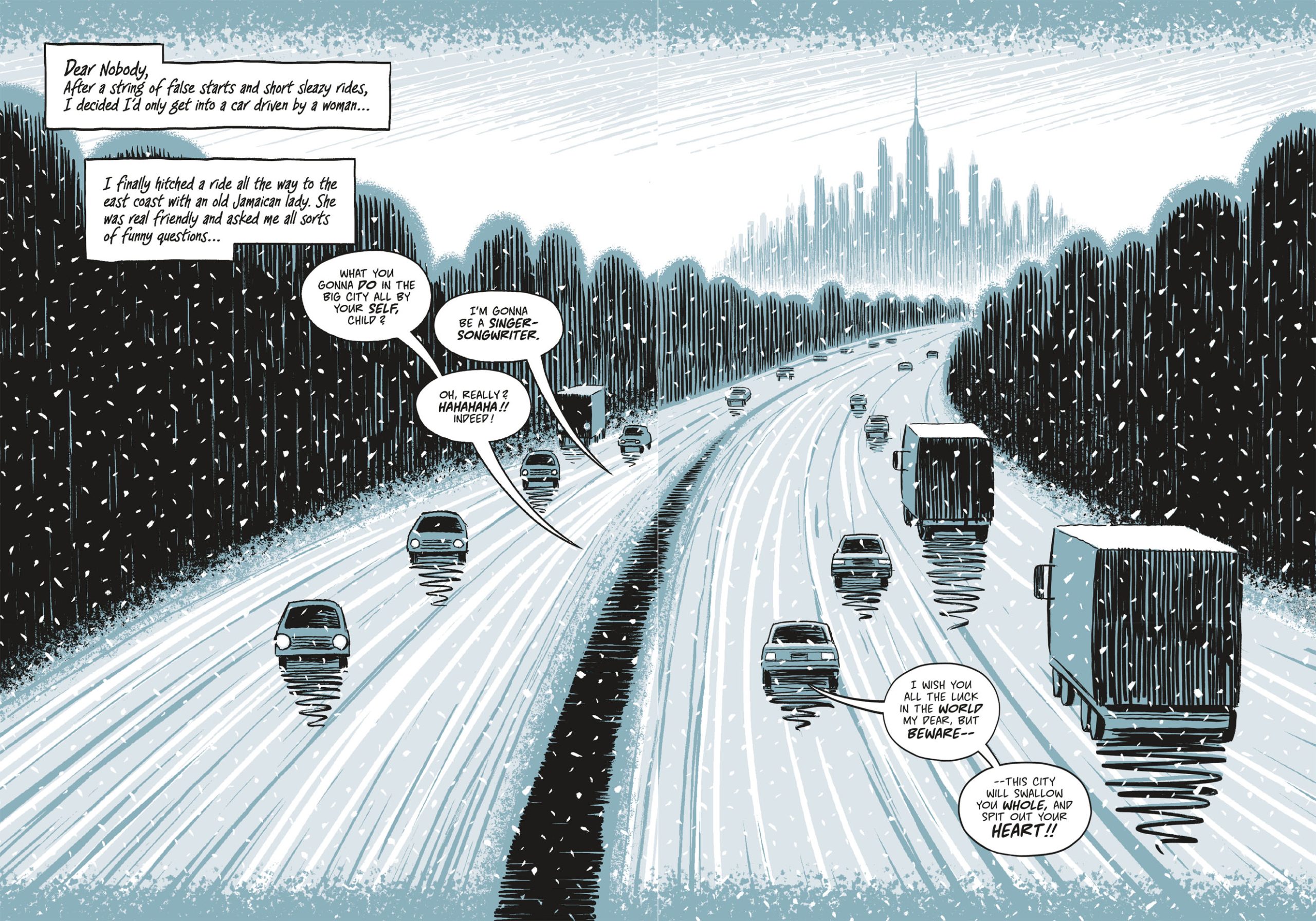
I grew up loving books because of my grandmother, who curated a library just for me. The narrow hallways of her house were crowded with bookshelves filled with Caldecotts, Newberys, and Coretta Scott King’s, collections of works by Alcott, Twain, and Poe, Penguin classics, and Nelson Doubleday’s Junior Deluxe Editions, which sparked my forever love of folk and fairy tales and mythology. Under my grandmother’s tutelage, books became my own personal portal, my escape into another realm.

As an adult, I became a children’s librarian, stocking my shelves with the same award winners as my grandmother. Like her, I did whatever I could to spark my students’ love of reading and writing, actively seeking out books which reflected their backgrounds and interests. I believed, then and now, that everyone is a reader, that they just have to find the book that speaks to them.

I left the library a few years back, but I’ve remained fascinated by librarians of all flavors—the fictional ones I loved in works by Ray Bradbury and Stephen King, their onscreen counterparts like Taystee Jefferson from “Orange Is the New Black” and Mary in the indie classic Party Girl,  the archivists who focus on science, history, music, film, and more, or those who specialize in providing services for people of all abilities. However, the librarians who excite me the most are the ones who are also writers, like The Magic School Bus’s Joanna Cole, Beverly Cleary of the Ramona series, and Overdue’s Amanda Oliver. In honor of librarians everywhere, I’ve curated the following list.

Audre Lorde, author of Sister Outsider

Before she became known as a poet, professor, and activist, Audre Lorde served as a librarian at Hunter College, Columbia University, and in Mount Vernon. Lorde was the author of many acclaimed works, but is best known for her groundbreaking essay collection Sister,Outsider, which interrogates racism, sexism, class, homophobia and ageism, and explores the complexities of intersectional identity, advocating for the visibility of marginalized voices. Central to Lorde’s work is her belief in the importance of building community to enact social change. “You do not have to be me in order for us to fight alongside each other. I do not have to be you to recognize that our wars are the same,” Lorde writes. “What we must do is commit ourselves to some future that can include each other and to work toward that future with the particular strengths of our individual identities. And in order for us to do this, we must allow each other our differences at the same time as we recognize our sameness.”

Madeleine L’Engle, author of A Wrinkle in Time

Even though Madeleine L’Engle wrote more than sixty books, she is best remembered for her Newbery-award winning novel, A Wrinkle in Time and its sequels. Much of L’Engle’s work was written in New York’s Diocesan House of the Cathedral of St. John the Divine, where L’Engle served as a volunteer librarian and writer-in-residence for nearly four decades. In 2012, the Diocesan House became a designated Literary Landmark, with a plaque dedicated to L’Engle noting how her work reflected “both her Christian faith and interest in modern science.”

Jacob and Wilhelm Grimm, authors of Grimm’s Fairy Tales

Today Jacob and Wilhelm Grimm are remembered as German academics who collected and published folklore in the 1800s. The two established the framework, for better or worse, for what we modern readers know as fairy tales. However, like most writers, the Grimm brothers had to find some other profession to support themselves and their families. At different stages in their careers, both served as librarians. Both appear to have been principled— even losing their jobs when they refused to sign oaths of allegiance to Ernest Augustus, King of Hanover. 

Jenny Han, author of The Summer I Turned Pretty

Jenny Han is best known as the dynamic co-showrunner of Prime Video’s The Summer I Turned Pretty, as well as the executive producer of Netflix’s To All the Boys I’ve Loved Before. There she earned raves for disproving the long-held industry assumption that a series centering an Asian-American teenager couldn’t find a broad audience. However, before Hollywood, before The Summer I Turned Pretty topped the New York Times best-seller list, Han acquired books and coordinated programming in the middle and upper school library of New York City’s Calhoun School. 

Alisa Alering, author of Smothermoss

Former librarian Alisa Alering’s rural gothic novel, Smothermoss, which debuts from Tin House in July, follows the saga of two half-sisters in 1980s Appalachia, the reverberations of the murders of two hikers on the Appalachian Trail, as well as other threats imperiling the sisters and their community. Praised by both Samantha Hunt and Karen Joy Fowler, Smothermoss is delightfully uncanny, and has been described as propulsive and hauntingly atmospheric.

Kristen Arnett, author of Mostly Dead Things

Due to her strict Southern Baptist upbringing, queer Floridian author Kristen Arnett’s early access to literature was restricted. However, in part due to books provided by teachers and librarians, Arnett fell in love with reading. After graduating from Florida State with a Master’s in Library Science, Arnett became a reference librarian and worked in libraries for nearly two decades. Arnett even wrote much of her first novel, Mostly Dead Things on the job, coming in early in the morning, staying late in the evening, and even working through her lunch break.

Dee Brown, author of of Bury My Heart at Wounded Knee: An Indian History of the American West

During his six decade career, novelist, historian, and librarian Dee Brown authored or co-authored more than thirty books, but is best remembered for his 1970 classic, Bury My Heart at Wounded Knee: An Indian History of the American West. This is not a cheerful book, but history has a way of intruding upon the present,” Brown, a white Southerner, wrote in the introduction. Relying on primary sources by Native American interpreters who attended treaty sessions, tribal councils, meetings with US army officers, and eye-witness accounts of battles and other events, Brown’s book documents the genocide of Native Americans by the US government, concluding with the 1890 massacre in South Dakota at Wounded Knee, when the 7th US Cavalry disarmed and slaughtered 300 Sioux, including women and children. Not without controversy, both for its unflinching debunking of the noble pioneer myth, as well as for reducing Indigenous history to near-extinction, since its publication Bury My Heart at Wounded Knee has changed the way Americans view history, been adapted into a movie, translated into at least 15 languages, and sparked a counter-narrative, David Treuer’s The Heartbeat of Wounded Knee.

Maisy Card, author of These Ghosts Are Family

For over a decade, Maisy Card has served as a public librarian in New Jersey. She’s also taught at Columbia University and is a fiction editor for The Brooklyn Rail. Card’s 2021 novel, These Ghosts Are Family, is an intergenerational narrative exploring the repercussions of a faked death which also chronicles the family migration from colonial Jamaica to present-day America. Card’s nuanced exploration of the way each family member wrestles with their personal ghosts led to These Ghosts Are Family being honored with an American Book Award, among other accolades. 

Thomas A. Dodson, author of No Use Pretending

Thomas A. Dodson serves as an assistant professor and librarian at Southern Oregon University but in his free time he writes short fiction. In his exquisitely crafted collection No Use Pretending, beekeepers, traumatized veterans, distant fathers, and other disparate narrators are forced into seemingly unbearable situations, and each work charts their attempts to alleviate their discomfort. Winner of the 2023 Iowa Award for Short Fiction,  No Use Pretending is a must-read for lovers of the genre, with characters I still think about months after finishing the book.

Kelly Jensen, editor of Body Talk: 37 Voices Explore Our Radical Anatomy

Former teen librarian Kelly Jensen is an anti-authoritarian powerhouse. Since leaving the library, Jensen has edited three books (Body Talk: 37 Voices Explore Our Radical Anatomy, (Don’t) Call Me Crazy: 33 Voices Explore Our Radical Anatomy, and Here We Are: 44 Voices Write, Draw, and Speak About Feminism for the Real World), joined the team at Book Riot, and runs the aptly-named newsletter Well-Sourced, which addresses all things related to books, censorship, and the current dystopian landscape for libraries.

Emilie Menzel, author of The Girl Who Became A Rabbit

Poet Emilie Menzel serves as a librarian at Duke University and the Seventh Wave community. This September, their debut book length lyric, The Girl Who Became A Rabbit, a dark, ruminative poem exploring how the body carries and shapes grief, as well as what it means to tell a story, will be published by beloved Southern indie press Hub City. Drawing comparisons to Max Porter and Maggie Nelson, Menzel remixes myth and fairytale to rewrite the body’s history. “It is important to make something beautiful,” Menzel writes, “To shape it into a form even when horrifically right.”

Laura Sims, author of How Can I Help You?

New Jersey reference librarian and poet Laura Sims’ 2023 psychological thriller How Can I Help You? draws directly from her workplace. Set in a small town public library, Sims’ novel pits two staff members against each other, with a new employee digging deep into her coworker’s sinister past. An insightful, edgy exploration of workplace politics, How Can I Help You? was A New York Times, Publishers Weekly, Book Riot, and CrimeReads Best Book of the Year.

Anne Spencer, poet

The majority of poet, gardener, teacher, and civil rights activist Anne Spencer’s work was published during the Harlem Renaissance—her poetry was so widely regarded that she became the second African American included in the Norton Anthology of Modern Poetry (1973). During Spencer’s lifetime, her home and garden was a gathering place for leading Black activists and intellectuals, including W.E.B. Dubois, Zora Neale Hurston, Langston Hughes, and Martin Luther King, Jr. However Spencer’s true passion was ensuring that the Black citizens of her community had equal access to libraries, and her advocacy led to the formation of the first library for Black citizens in Lynchburg, Virginia, which she led until 1942. 

Ruby Todd, author of Bright Objects

Melbourne-based Ruby Todd grew up in a family of librarians and worked in libraries for years. Bright Objects, her July debut, is a thriller following the obsessed widow of a hit and run accident waiting for the arrival of a once in a lifetime comet. For fans of Emma Cline and Otessa Mashfegh,  Bright Objects offers mystery, astronomy, and romance. 

Douglas Westerbeke, author of A Short Walk Through a Wide World

Ohio librarian Douglas Westerbeke’s delightful novel A Short Walk Through a Wide World, which debuted in April, is my current go-to recommendation for anyone seeking a captivating, immersive read. A Short Walk follows the globetrotting adventures of Aubry Tourvel, who, after an encounter with a mysterious wooden puzzle ball, realizes she can live only if she keeps moving. From a riverboat in Siam to the sand dunes, from the peaks of the Himalayas to the jungle, with periodic detours in the type of library which could only be conjured by a librarian,  A Short Walk Through a Wide World is a fantastic narrative, which explores the timeless question of how to find meaning in seemingly impossible circumstances.

10 Books from El Salvador and its Diaspora 

For a long time, much of what was published about El Salvador was a grim monolith, authored by outsiders: gringo historians, mid-century anthropologists, Céline models. If you read Joan Didion’s terse little book on the place, Salvador, you might have the idea that “terror is the given of the place.” I could write for a long time about the historic erasure and suppression of Salvadoran writers, about the limitations of imagination in certain literary markets, about perverse appetites for humorless, untextured stories of suffering, about stories that don’t even go to the trouble of imbuing their characters with human consciousnesses and instead allude to “faceless brown masses.” To rephrase another visitor to the country, Carolyn Forché (in my opinion, a far more perceptive witness): what you have heard is not exactly true. What’s been left out of these explanatory narratives, what you may not have heard about the place, is a rich variety of Salvadoran voices. The people of El Salvador and its diaspora are more than vessels for terror and misery, and perfectly capable of artfully telling stories, and of writing into desire, joy, and even the nightmares of collective memory, on our own terms. 

When I set out to write my own novel The Volcano Daughters, I had to contend with that grim monolith. Despite it, the voices of my narrators (and their cackles, bossiness, secrets and desires) were vivid in my ears. I heard their voices in my siblings, my friends, and in the lines of the poets I admired. I grew up in San Francisco, and El Salvador was my father’s country, a place I had only visited. Growing up we ate pupusas at El Zocalo, but I didn’t speak Spanish fluently. My connection to the place, only half a generation away, felt distant, in terms of family, myth, and history.  Reading many of the books on this list affirmed the specificity of  my own diasporic relationship to the place, and I found myself in community. 

I’m heartened that more writers from the Salvadoran diaspora are being published and more Salvadoran writers are being translated and reaching wider audiences now than in previous literary eras (though, traditionally published or not, there are writers on this list who have been writing for decades.) Three of the books on this list were published just in the past year. Three are recent, excellent translations. These books—poetry, short stories, memoir, novels, myth, and even a cookbook—represent just some of the writing that comes from El Salvador and from the Salvadoran diaspora in the United States. These writers create work that transcends token representation and instead offers, to curious, discerning readers, visions of surprise, transformation, mischief, memory, grief, sex, food, dreams, formal innovation, and the future.

The Popol Vuh, translated by Michael Bazzett

The words “Popol Vuh” mean “the book of the woven mat.” Poet Michael Bazzettt’s translation of the Mesoamerican creation story is an intricate epic that subverts the laws of linear time, and it’s full of mischief, beauty, and a very metal cosmology. Ilan Stavans’s translation of Popol Vuh is also an excellent introduction to the oldest book of the Americas, and it features some gorgeous illustrations by Salvadoran artist Gabriela Larios, as well as a great foreword by Homero Aridjis. 

The Dream of My Return by Horacio Castellanos Moya, translated by Katherine Silver

This short novel is a maniacal, paranoid, somehow delightful rant narrated by a writer with liver problems (hypnosis isn’t taking; could be the poor quality of rum he’s drinking) on the verge of returning home to El Salvador from his exile in Mexico City. His mysterious old friend, Mr. Rabbit appears in the midst of this madness, often at a taco shop, and invites him to participate in half-baked criminal plots, green salsa dripping through his fingers. 

Stories and Poems of a Class Struggle by Roque Dalton, translated by Jack Hirschman and Barbara Paschke

Roque Dalton, who wrote that “we were all born half dead” after La Matanza massacre in 1932, and that “I believe the world is beautiful and that poetry, like bread, is for everyone,” dedicated his life to anti-fascist revolution and poetry before being murdered by his own comrades. This volume contains a comprehensive collection of Dalton’s poetry voiced by five different heteronym personas,  as well as several brilliant essays from poet Christropher Soto, Margaret Randall, and others, which place Dalton’s work in its time, and highlight his relevance today. 

Slash and Burn by Claudia Hernández, translated by Julia Sanches

This novel takes on the long aftermath of war and separation through the voices of a family of ordinary women—four daughters, one estranged, and their mother, an ex-revolutionary. When the mother leaves the country to travel to Paris to reunite with the adult daughter who was taken from her and adopted by a French family during the war, a frame opens up in the narrative, forcing the mother, an interpreter, and the unknown daughter, to return to a place and time beyond memory. Part dreamy haunting and part bureaucratic tangle (“Her mother’s life story doesn’t fit in the assigned box on the university’s financial-aid application form”) Hernández’s novel is astonishing. About her book, Hernández says, “It’s nothing. I don’t do anything. I just listen.”  Sanches’s gorgeous translation honors Hernández’s subtle, poetic structure that shapes each line. 

Mucha Muchacha, Too Much Girl by Leticia Hernández Linares

Hernández Linares is queen-comadre of San Francisco’s Mission District arts and culture scene. I fell in love with her razor-edged words, her poetry and performance art, her commitment to justice, community, education, and to mothering. Her work introduced me to Prudencia Ayala, “the girl with the birds in her head,” a Salvadoran poet of the 1930s who ran for president before women could even vote. Decades later in San Francisco we became friends and literary co-conspirators. But let me tell you about her poetry. This woman takes on academic machos, centers community in the midst of gentrification, and conjures La Siguanaba walking down 24th street in tacones, all her power reclaimed from the myth’s shallow waters. The images in this collection will break your heart and nibble on your tongue. In “Luna de Papel,” she writes: “I tried to wrestle with the moon/y me mordió la lengua.”

Unforgetting by Roberto Lovato 

Lovato’s tender, intense, sweeping memoir is a love letter to his complicated father, and a commitment to unearthing the truth where it is buried. Lovato makes explicit the deep, exploitative, and counterrevolutionary ties between the U.S. and Salvadoran governments that are responsible for the terror. From a forensics lab to the Evangelical churches of San Francisco’s Mission District to his grandmother’s sewing machine, Lovato takes readers through the heart of histories he refuses to leave forgotten. 

Matria by Alexandra Lytton Regalado

Regalado’s poetry draws lavish lines between El Salvador and Miami, Florida as she writes back through  her familial history and interrogates motherhood, class, power, bonds, and ruptures. From her poem “Salvadoran Road Bingo”: 

“Every car is a carreta bruja on this highway, we’ve gone Red and bathed in red, oh deep colors bleed, a poem I found on the wash tag of a bath towel when I was twelve. Ours is the luck of my great grandfather who, one night, like any typical night, in a game of cards, lost a velvet sachet filled with his wife’s diamonds, and the title of their house. The cantor calls out the Lotería in a riddle: El Salvador whom is going to save us, whom are we to save? Day after day, our fingers in the wounds—here it is, touch it, there is the proof—surviving is what we do best.”

There is a Río Grande in Heaven by Ruben Reyes, Jr.

The stories in this collection are playful, hilarious, queer, and delightfully speculative. They imagine new worlds and write into boundless futures. Reyes’s stories are formally inventive and delightful. A taste for mangoes leads to elaborate familial exploitation. A son comes out to his dead father, who has returned in the form of a tiny robot. One story title iterates throughout the collection, inviting the reader to imagine an alternate Salvadoran history, or perhaps the world, in which the Pipil defeat the conquistadors in 1524, or in which a tyrannical dictator leads an excavation of dinosaur that brings fortune to the country. Is terror present, too? Yes. In that dinosaur story the bones are human, unearthed and refashioned into a lucrative fiction for the patrimony: “It was 1941. The memory of the massacre nine years prior was still in sight. Terror hid and rewrote details about everything, including the discovery,” Reyes writes. 

The Salvisoul Cookbook by Karla Tatiana Vasquez

This is no ordinary cookbook. It’s culinary documentation, historical research, and an archive of memory. And, Vasquez’s book, published in 2024, is the first traditionally published Salvadoran cookbook. Growing up in Los Angeles, surrounded by Salvadoran cuisine, Vasquez wondered why she couldn’t find any Salvadoran cookbooks. War and its destruction of cultural artifacts was one reason. Aforementioned flawed capitalist notions of “what the reading market truly desires” is another one. Recipes for quesadilla, pupusas, riguas, flor de izote (the edible national flower) yuca frita, and curtido were carried on the tongue. So Vasquez sought out the recipe-holders–friends, relatives, and community members–she calls them the “SalviSoul women.” In the pages of this book are recipes, and ingenious consejos from the SalviSoul women (stand on a ladder while stirring masa for more leverage). Especially compelling are the stories that some of the women share along their recipes and consejos: Ruth draws a throughline between losing her shoes during her journey to the United States as a child and later selling pupusas to a sweaty Leonardo DiCaprio at Coachella; Estelita remembers her last night in her beloved grandmother’s adobe home before leaving to join her mother in the United States; and on returning to El Salvador after decades away, Isabel says, “Tu corazón no puede renunciar a su tierra,” (Your heart can’t give up its land.)

Unaccompanied by Javier Zamora 

Zamora’s debut poetry collection includes persona poems from young parents, and vivid moments of pain, abandon, and love. It’s a gorgeous map of the world that he writes about later in his memoir Solito, infused with music, longing, and rage. 

Here’s the close of “The Pier of La Herradura”:

“There’s a village where men train cormorants
to fish: rope-end tied to sterns,

another to necks, so their beaks
won’t swallow the fish they catch.

My father is one of those birds.
He’s the scarred man.”

3 Short Story Writers on the Stories That They Reread Again and Again

There are the stories and books that we simply read and cherish, and then there are those that we cannot stop thinking about, can quote verbatim, and find ourselves returning to. Why certain works transcend into the indelible is a mystery but we recognize it when it happens. For writers, these works become touchstones to not only aspire towards, but also to reread for comfort and renewed marvel.

This interview features three writers whose short stories I always return to and reread. Jamel Brinkley is the author of the story collections A Lucky Man and Witness. His debut, A Lucky Man, invokes questions around masculinity as it explores the nuanced relationships of Black men and boys. Brinkley’s latest collection, Witness, scrutinizes what it means to see the world around us and how we then choose to carry all that which we’ve seen. Both books dazzle with precise language that reveals the complexities of longing. Xuan Juliana Wang is the author of Home Remedies, a collection that is divided into three parts: “Family,” “Love,” and “Time and Space.” Wang’s stories depict the dynamic and fearless youth of a new generation of Chinese and Chinese Americans as they grapple with each of these themes, painting for us a contemporary landscape of the Chinese diaspora. Sidik Fofana is the author of Stories from the Tenants Downstairs, a linked story collection that gives voices to the tenants of Banneker Terrace, a high rise in Harlem, as they face gentrification. While Fofana flexes his impressive control and range of voice in each story, the true gift is in taking a step back and realizing what these voices accomplish when put together. We discussed fiction that they are obsessed with, how they read their own work while writing, and whether form, be it short story or novel, affects their reading.


Brandon J. Choi: Can you introduce your collection and what you were reading and rereading while working on it?

Jamel Brinkley: Some of the writers that I find myself continually rereading showed up when I was working on both A Lucky Man and Witness. I would say James Baldwin and William Trevor bridge the two collections in terms of my rereading. Not necessarily the same stories but something about the sensibilities of those writers stayed with me. For A Lucky Man, I was thinking about a story called “Three People” by William Trevor, whereas for Witness, I was thinking more about a story called “A Day.” Both stories fascinate me for different reasons. With Baldwin, there’s the obvious “Sonny’s Blues” influence on A Lucky Man. For the recent collection, it wasn’t so much Baldwin’s fiction but more of his nonfiction. I was thinking more philosophically about Baldwin and his idea of being a witness and what it means to face troubles of the world as a writer. In terms of differences, I was thinking about the work of Yiyun Li with A Lucky Man but for Witness, I was thinking about the work of Gina Berriault, who’s a writer not as well known as she should be. Her short stories are fantastic and have been collected in various volumes such as Women in Their Beds or Stolen Pleasures.

BJC: Are the writers you reread the same ones who you aspire to write like? Or are there writers whose works you can’t help but return to regardless?

JB: Toni Morrison is one of those people who I reread, even though I don’t think I write like her and wouldn’t try to write like her. In fact, I think it’s a deadly trap to try to write like Toni Morrison because 99.5% of writers who do that fail spectacularly. The imitative attempt with her is so obvious. One of the books that I’ve been rereading and have taught multiple times is Sula. It’s a slim book and there’s nothing in the book that I want to write back to or imitate in my own work. There’s something so fascinating in that book to me. It’s called Sula but when you read it, it’s so much more than a portrait of one character. It’s a portrait of a community, a friendship, the friend herself. Morrison’s biographical sensibility in her fiction is so expansive. It’s not a book that starts with the birth of Sula and ends strictly on her death. You’re in this book for dozens of pages before you even meet Sula. I reread to think about Sula’s presence and what it means to tell a story of a character that’s really the story of what’s around the character too. But I don’t want to try to write like Sula. Conversely, there’s a certain subset of my stories that feel like they have the influences of William Trevor, Yiyun Li, or Edward P. Jones. Their works feel more natural to the way I want to tell a story.

BJC: Did your writing process or reading influences change between collections?

JB: I think so. I wrote the bulk of that first collection while I was in graduate school when I was really just trying to learn how to write a story. I was thinking: what is a short story? Why are they so difficult? Who does this well? Let me look to them. With Witness, my attitude was more experimental. Not in the way that people commonly understand experimental fiction, but experimentation with the elements of storytelling. I thought a lot about the possibilities of first person narration. What does it mean to tell a story in the first person? What are the possibilities with this form that, despite the power of voice, can be quite limiting and difficult to pull off? I was experimenting with point of view, whereas with A Lucky Man, I was a bit more on the rails, so to speak, and not trying to play within the space of the story as much.

BJC: And what works do you go to for studying the capabilities of first person?

Something about obsessive rereading still guides me.

JB: One of the stories that I reread often is “Gold Coast” by James Alan McPherson. It starts off with a voice that jumps out. It’s funny and the personality jumps off the page. You’re getting a page or two of this big, enjoyable voice. What’s fascinating about the story is McPherson’s masterful job of manipulating and modulating the first person voice. It starts off big, present, and voicey, with tone, attitude, and personality, and then, he allows that voice to recede. It’s important to have that voice recede at certain times because all the other elements of the story get to pour in and fill in that space. By the end, which is very “I” heavy, it’s so moving when we come back to that strong first person voice, but it’s moving because he didn’t allow the voice to dominate the story from beginning to end. When it returns, the effect is just earth shattering.

BJC: Do you reread stories and novels differently?

JB: The first piece of literature I can remember rereading obsessively is Invisible Man by Ralph Ellison. I was a sophomore or junior in high school and I would literally get to the end of that book and then start it immediately over again. I did this multiple times, so much so that my mom thought something was wrong with me. Something about that obsessive rereading still guides me. I was a young reader, probably not a very good reader, but what I remember is the feeling of total absorption. It was a spell being cast either by the language or the intelligence of the voice. There was this dim sense that the novel’s design was working on me somehow. As I moved through the book, it was sequenced and structured in a way to achieve an effect and something about reading one chapter after another did something to me. That kind of absorption and pleasure in language, that the work’s form is working on me in a way, and that I have to grasp and make an effort to understand it guides all of my rereading.

A lot of the works I reread have a sense of scope about them. No matter their length, they just feel big. Even Edward P. Jones’s “First Day,” which is just a few pages, feels massive to me. How do you tell a story about your first day of going to school and it feels like you’re telling the story of your whole life? For me, no matter how short or long the piece is, it has something to do with feeling that the work is even larger and that I’m trying to catch up to it. In rereading, I might pick up a few new things but it still feels like the work is beyond me. I like that feeling so I go after that whether it’s in short stories or novels.

BJC: What would you recommend to readers to read, if they haven’t already, or reread with a new perspective?

JB: I have been rereading The Transit of Venus by Shirley Hazzard, which I’m also teaching this fall. The scope of that book is incredible but feels intimate to me at the same time. Maud Martha by Gwendolyn Brooks, which is her only novel. People know her as the Pulitzer Prize winning poet, but she wrote fiction. This book is composed of vignettes and doesn’t really have a plot but I think the way she captures this little girl growing into a woman’s life is brilliant. The Street by Ann Petry, which is another novel. A story to reread is Edward P. Jones’s “Old Boys, Old Girls.” It’s a strange story—one of those untidy stories—and the ending leaves people confused but if you read it and reread it, it will continually reward you.


Xuan Juliana Wang: Home Remedies spans the entire length of my 20s. The collection begins with ideas about family, chosen family, and all of the joys and burdens of loving your family. By the middle of my 20s, I was more interested in the stakes of romantic love. Not just falling in love, but also disappointment and revenge. By the end, I had more existential questions about what it meant to be alive. That’s when I started to do more speculative fiction with a goal towards getting at some truth in a different way.

While working on my collection, I was rereading Jo Ann Beard’s The Boys of my Youth, which is a collection of essays that I find I can never move too far out of my bookshelf. I was also reading Zora Neale Hurston’s Their Eyes Were Watching God and Jennifer Egan’s A Visit From the Goon Squad, which made a huge impact on me.

Brandon J. Choi: What about rereading draws you in? Is your experience different depending on the form?

XJW: I really like rereading short stories in particular. There are certain ones that I read over and over again, like “Emergency” by Denis Johnson. Another is “Another Manhattan” by Donald Antrim, which I read whenever I am writing and need to remind myself that there could be an internal escalation. I reread James Salter’s short stories as well as Julian Barnes’s work. You can reread for different reasons. Sometimes, I’m just trying to get myself back in the vernacular. It’s like if you’re trying to hang out with these sophisticated friends, after I listen to them talk a little bit, I will become more sophisticated. The music of a James Salter story is nice to get into writing. I’m also a huge fan of Mary Gaitskill. Her exactitude of language and sharpness of her sentences and observations… I read her work just to sit up straight. Usually, when I reread a short story, it’s because I want to remember why I liked it in the first place. By the end of page one, I’m hooked again. How did it do that? I no longer have to try to enjoy it as a story but I can dissect it and try to figure out its parts.

The staying power of a short story is really fascinating to me.

BJC: How do you read your own work when writing and editing?

XJW: Alexander Chee once said in a class that he prints out his work with weird margins so it doesn’t look like his own writing anymore before he edits it. That’s really the only way. Now that I’m writing a novel, I have so many words in so many Scribner files. My problem is that if I start to read it, I start to edit it, and then I don’t know if that’s even an important part of the book. It feels like I’ve written many books because of this constant rereading. These days, I am trying not to reread that much. I’m letting it live, marking it as done, and writing a description of what I thought happened in it before moving on. When I do need to edit a story or something short, I print it out and go to a coffee shop. I usually try to put somebody in the coffee shop in the edit so it feels new. I can change a description to a person actually standing there so it feels fresh to me. For that final copy edit, I rely on a professional but before that, I read it aloud to myself. There’s really no better editor than listening.

BJC: Now that you’re working on a novel, do you find yourself still returning to the story form?

XJW: I just love the short story so much that I can’t stop thinking of everything as a short story. With my novel, I thought that if I wrote it as linked stories, I would find a way to make them into a novel. But five to seven years of doing that later, I realized it was still not a novel. So during the pandemic, I tried to shut down all of the threads that didn’t lead back to the original story. I still try to make every chapter as sharp as I would want in a short story. Every chapter deserves that.

I’m teaching an Asian American short story class right now. I’m amazed that there’s no anthology for Asian and contemporary Asian American short fiction. In preparation for teaching this class, I feel like I’ve read at least part of every Asian American short story collection published since 2000. I can’t help but notice technically what the story is doing, the trends that are happening throughout time, and what devices writers are favoring to highlight certain themes. Sometimes the themes are repeated, but they’re being sought out in a completely different way. It depends more on when it’s being told than who’s telling it.

BJC: On a related note, what stories do you always want to teach and put on your syllabus?

XJW: I like to teach Hilary Leichter. There’s something about the way she opens up the narrative that’s unexpected and makes students excited and want to write. I really like to teach a Bryan Washington story. His voice is very infectious and inviting. A lot of stories I put on the syllabus are because I’m reading it then and I think it’s doing something that I can see you learning from and doing yourself. It’s never somebody who is such a virtuoso that there is no way you can do that. I’ve always wanted to teach more Asian American literature so I’m glad to be able to do that now.

When I’m trying to write a story, I find the best part and make everything as good as that part.

The staying power of a short story is really fascinating to me. There are very few novels that I can tell you what happens next. But for a short story, there are a lot that I can tell you exactly what the sentence said or what happened in a scene. I think it has to do with length. It’s like a poem—you can carry it around, memorize it, and it stays with you. I find myself always wanting to teach “Bullet in the Brain” by Tobias Wolff. The end of that story is just a refrain of “they is, they is, they is.” If I think about those two words, that whole story comes back to me. When I’m trying to write a story, I find the best part and make everything as good as that part. Make every sentence and every transition as alluring to you as the best run in the story. With a story, you can do that. It has to accomplish the emotional goal that you want the reader to walk away with, but other than that, you can do it in any form you want. Aspire to make it something that people can’t forget about.

BJC: What would you recommend to readers to read, if they haven’t already, or reread with a new perspective?

XJW: The final three stories in Unaccustomed Earth by Jhumpa Lahiri. They’re linked and address each other. Maybe it’s because of our culture—I just watched Challengers and there’s also Past Lives—but there are a lot of love triangles in these stories too. They’re filled with information and the love triangles are intergenerational. All of the details are supplied for you but that feeling is still as intense even though nothing wild is happening, per se. The stories are worth reading for that intensity of the love triangles.


Sidik Fofana: Stories from the Tenants Downstairs is a collection of eight stories that takes place in a fictional high rise in Harlem. Each story is told from a resident in the building. Since all the stories take place in one building, I was thinking about books that occur in a building, a part of a city, or just any one geographical location, as well as multiple perspective narratives. One book that I still hold dear to my heart is A Visit from the Goon Squad by Jennifer Egan. Another is The Women of Brewster Place by Gloria Naylor. There’s a book called The Yacoubian Building by Alaa Al Aswany, which is basically Stories but in a building in Egypt. There’s also The Madonnas of Echo Park by Brando Skyhorse and the ground zero of multiple perspectives set in one location: Winesburg, Ohio by Sherwood Anderson.

Brandon J. Choi: What stories, collections, or writers do you find yourself returning to?

SF: I’m a big Junot Diaz fan, so stories like “Fiesta, 1980” or “The Cheater’s Guide to Love.” I read “The Cheater’s Guide to Love” while writing my collection and I was in despair. I thought to myself, I quit! I’m stepping into this arena? Push by Sapphire was a book that definitely comes to mind. I also find myself coming back to Toni Cade Bambara. You could tell a lot about a writer’s process by the stories that they think about, the stories that they come back to, and why. Im super fascinated by short stories and how short fiction can encapsulate a whole world. I’m even more fascinated by what happens after one finishes a short story. For the stories that I find myself coming back to, I can remember the beginning, middle, and end of it six or even twelve months after reading it. An example of that is “Bullet in the Brain” by Tobias Wolff. It just resonates. There’s something so universal about capturing someone’s whole life in the moment.

If there’s a certain narrative issue that you’re trying to figure out, there’s always a short story for that. Just like hip hop where, no matter life’s problem, there’s always a song for that. I refer a lot to Flannery O’Conner and how she can navigate closed spaces, like in “Everything That Rises Must Converge.” I go back to it anytime that I have multiple characters in the same place who are interacting. George Saunders is a master of voice and humor so I go back to his work frequently too. It boils down to: what kind of narrative issue am I trying to figure out and what story helps me think through it?

BJC: How do you read your own work when writing and editing?

You could tell a lot about a writer’s process by the stories that they think about, the stories that they come back to, and why.

SF: For a first draft, I’ll just write it all the way through. I’m not willing to go back to the work from the day before and look. When I first started writing, I wanted to write as close to a perfect draft as possible. Now, I focus on just getting it down on the page. After that draft is done, I’ll go on to something else and try not to come back to that draft for six months or a year. The goal is, when I come back, I want the words to be totally strange like a different author wrote it. Preliminary edits are to cut as much as possible. While looking at the old draft, I’ll rewrite from scratch. If it works, then I barely remember that I’ve written these words and I’m more critical of them. I’ll go through that process until around draft five, which is usually when I feel okay showing it to other people. I compare it to going to the barbershop in the hood. You can’t go in with messed up hair. You realize you have to get your hair semi-together so they can get it all the way through. My draft is not going to be perfect but I’m getting it to a place where people can help it. From drafts five to ten, I either go back to the drawing board or take suggestions. Sometimes, I abandon them. Stories has eight stories but, during that time period, I must have written close to forty.

BJC: How has teaching affected your reading?

SF: The pros of teaching in a public school are remarkable. I am one book in and maybe the hype or attention is due to the fact that I’m new. If it does turn out that I have any staying power in this industry, I’m going to attribute it to being a public school teacher. At a prestigious university, the readers are willing readers, especially in a graduate school for creative writing. Everybody wants to read, be blown away by a text, and think about literature. In public school, that’s not always the case. As a matter of fact, it’s rarely the case. You mostly have reluctant readers. What I’ve learned is that when a text hits, I don’t care if you read at a third grade level. It hits. I always think, how or why does that happen?

What kind of narrative issue am I trying to figure out, and what story helps me think through it?

In public education, there’s this idea of universal design. If you have an access point for the lowest common denominator, not only does the lowest level of learner have access, but the highest has access too. For example, if you’re reading The Great Gatsby and people don’t understand the language, so you use the movie to help you out or have the kids act it out, that will help the kids who are not reading at as high of a level, but it will also help kids who do read at a high level because they’re exposed to different ways of accessing the text. Kids will react to “A&P” by John Updike and it’ll be kids who read at a third or fourth grade level, but this is also a story that was in The New Yorker. As an artist, you wonder how you can do that. As a teacher, rereading those texts and seeing every year how they resonate with kids is priceless. There’s “Girl” by Jamaica Kincaid, “Thank You, Ma’am” by Langston Hughes, and “The Fix” by Percival Everett. For the most part, even if they hate reading, students love this stuff. Students love Junot Diaz. They think it’s against the rules, that his work is not supposed to be academic. For me, there’s complicated reasons for why I stay a teacher. I am here for the kids but that’s not the only reason. What I learn about fiction writing, audience, and how to connect with someone who’s not necessarily a reader is priceless. Going to those stories over and over again has been invaluable in ways that I can’t even enumerate.

BJC: What would you recommend to readers to read, if they haven’t already, or reread with a new perspective?

SF: Certain stories are anthologized over and over for good reason. I talked about Flannery O’Connor already. I also find myself coming back to “Old Boys, Old Girls” by Edward P. Jones, “What You Pawn I Will Redeem” by Sherman Alexie, “The Semplica-Girl Diaries” by George Saunders, and “People Like That Are the Only People Here” by Loorie Moore.

For more contemporary work: “Belles Lettres” by Nafissa Thompson-Spires, “We Love You, Crispina” by Jenny Zhang, “Shadow Families” by Mia Alvar, “Richard of York Gave Battle in Vain” by Danielle Evans, “No More Than a Bubble” by Jamel Brinkley, “Peach Cobbler” by Deesha Philyaw, “Animals” by Uche Okonkwo, “Smash and Grab” by Michael Knight, and “Higher Power” Megan Cummins. In the next five years, I think someone is going to take on the task of doing a contemporary anthology, especially of writers of color. I can almost guarantee that some of these writers will be included.

She’s More Alive Online Than in Her Body

An excerpt from Swallow the Ghost by Eugenie Montague

When Jane wakes up, her throat hurts. She reaches for the glass of water she keeps by the bed. The glass is solid and cold from the room, and it has made the water cold. It’s too harsh on her throat, which is raw and scratchy, and she wishes the water were a few degrees warmer. It is still dark outside, and cold, she knows. She can almost feel it from the color of the sky. She wants to skip her run, make coffee, sit on her bed, and read things on her phone until it’s time to go to work. The coffee will feel good on her throat, and the words on her phone will float upward with the touch of her finger. But she had woken up with the feeling that something was wrong, that she had done something wrong. She waits for the shame to loose its hold on her, to realize it belonged to some dream, but then she remembers, and the dread she perceived, which felt like a heavy but lifeless presence, transforms into something restless and grasping. In her dresser, she finds clothes warm enough to run in.

Outside, the air hits her lungs like she is breathing hand sanitizer. Jane runs fast, except she slows down around corners, because she has run into too many people, and it seems to her that her body remembers now even when she forgets, as if it retains somewhere inside it the memory of slamming hard into another person, the bloody knees and the guilt, picking someone up off the sidewalk with palms torn from concrete, too tender to close properly around the outstretched hand. Though as she rounds a corner to turn toward the river, both her mind and body forget, and she has to leap out of the way of a woman and her dog. The woman glares at her, the dog barks, and Jane says sorry and runs even faster so she can reach the jogging path.

Up ahead, she can see the guy with the green running shoes. They are the same brand as hers but newer, and she wonders if he actually buys things like sneakers and toothbrushes on the schedules they suggest, backs up his work, replaces the vacuum bag. Jane’s nose is running when she passes him. She sniffs at the wetness above her lip. Some days, she pretends not to notice him. Today, she smiles. Last week, the smile was more like a nod: I recognize you. Now it’s something different: Oh, hi. Oh, hi. She smiles, and then she can see FDR Drive, dull and loud. The cars are out in numbers before the people on the streets. She jogs in place until she can cross, and when she does, it feels like her run properly starts. She can hear the gentle lapping of the East River. The streetlamps are still on and make patterns on the water. The path is laid out before her, wide and gray.

At home, Jane straightens up her room, showers, and pulls a pair of sweater tights from her drawer. She tugs them over one foot and then the other. She has small feet, and the tights remind her of being a child, a memory assembled from pictures of herself as a toddler, mittens hanging from her coat, her mom holding her on her hip so Jane’s pinafore dress is hiked up and the tights are on full display. She almost remembers the feeling, crying as her mom put them on her, how scratchy they were. They don’t feel scratchy now. Jane has them in six different colors. She hangs them to dry so they will retain their shape longer, and after laundry day, the bookshelf in the corner of her room resembles the kind of tree Dr. Seuss might have thought up or the yarn-bombed fence surrounding a construction site she passes every day on her way to work. A neon weeping willow.

On the subway, she plays a word scramble, two geography puzzles, and then a mini-crossword, which she tries to finish before the train gets to her stop. When she makes it, she thinks it will be a better day than it was yesterday, that she will be better.

At work, the client team meets in the conference room with mugs of coffee and a plate of croissants and fruit, because one of their clients is here. The conference room is at the back of their mostly open office space, cordoned off from the rest with frosted-glass walls. There is a black metal table on a colorful Moroccan rug. The walls are blank so they can be projected on from any angle, except the wall facing the street, which has a series of large windows from which Jane can see brick, tree branches hitting the glass, a slice of sky, and more brick. She is nervous, so she looks at how the tree branches move with the wind.

Her boss likes to bring clients in periodically for presentations by the project leader. Much of what Jane does, if she does it right, should be invisible, so in these meetings, it is her job to show her work so the client can see it. The client group is twice as big as it was when Jane started, and her boss has asked the whole team to come in, as well as a few people from Creative. The fact that Tom has asked so many people to sit in is a compliment, though he hasn’t said that. He comes in after everyone is already seated, walking slowly through the door because he is reading something on his phone. He shakes the client’s hand, finds an open seat, and sits down. Jane tries to catch his eye because she is not sure if she is supposed to start or if he wants to say something, but he is cleaning his glasses, then leaning forward to grab a piece of fruit, then back on his phone.

“Jane, will you take everybody through it?” Tom asks, his mouth full of apple.

Jane smooths her skirt by rubbing her palms down her thighs three times, then she stands up, smiling. Her heels sink into the rug.

Their client is a young author named Jeremy who wrote a literary thriller on Twitter. All of the characters have different fake Twitter accounts, including Rita Hadzic (@ritahadzic), a twenty-one-year-old student at Hunter, though she has stopped tweeting since she went missing. Rita wanted to be an urban planner and was a nanny for a Brooklyn family when she wasn’t in class. She paid a monthly fee at Hunter to use the ceramic studio and posted pictures of her finished bowls and vases on her Instagram account, bowls and vases that are actually made by Jane’s friend Amelia. For four months starting at the end of 2018, Rita tweeted like a person addicted to Twitter—somewhere between twenty and forty times a day, more if she decided to live-tweet a TV show or a protest or discuss an article she was reading in school. As Rita tweeted, so did a number of other characters Jeremy created—an ex-boyfriend, the mother and father in the family Rita nannied for, friends from Hunter, a city council commissioner. Rather, Jeremy created most of the characters, but as Jeremy and Jane met to discuss how to make them come alive on Twitter, they changed slightly—or sometimes a lot—as Jane brought up the possibilities and limitations of the platform. Jeremy knew who the characters were and what he wanted to happen in the investigation, but Jane was the one who knew how to use their tweeting habits as characterization: who would retweet what, who would engage with trolls, who would apologize and who would double down. And so the characters they’d invented tweeted and retweeted and followed and unfollowed—each other, but also real people. They had opinions about current events; they piled on where it would be appropriate to pile on; they made jokes that didn’t come off and deleted them. Then, when Jeremy and Jane were sure they had sufficient material for the coming investigation, Jane used her background in social media marketing to make Rita go viral, and they disappeared her.

Rita’s followers have grown by thousands since she disappeared; her final post, a picture of a blue ceramic bowl with the caption Big news soon. Watch this space! The follower counts for the rest of the characters who populate her world have likewise continued to grow exponentially. They, of course, have continued to tweet—looking for her, mourning her, writing earnest and mostly ill-advised threads in the middle of the night that are “accidentally” self-incriminating. Or incriminating of someone else. Joshua—Jeremy’s alter ego, a writer figure who stumbled across the Rita mystery researching something for his own novel—continues to document his findings: interviews he conducts with campus security guards, live-tweets of stakeouts he undertakes where he follows whoever is at the top of his suspect list at the moment, successful attempts to trick the police into showing him witness statements. Every once in a while, he uploads blurry photographs of someone he believes might be Rita riding her bike but who is actually Jane’s friend Amelia.

It was Jane’s idea, the Twitter mystery. Jeremy had come to them looking to increase his follower count before sending out his recently finished manuscript, a book he planned to pitch to agents as a novel of ideas that utilized and subverted the tropes of detective fiction. Her boss often shakes his head at her when they walk by each other in the office. She loves working with Jeremy. They both sign their emails J, and it does feel like that, that the project is theirs, impossible without the two of them, so dependent on both their labor that it would be difficult to separate her contribution from his. Sometimes she feels like she has disappeared into his project, but not in a way that feels deficient. Like they both know exactly what they are good at and slotted into each other like pieces of IKEA furniture. The bespoke tool made for their particular product is the internet.

Jane walks the team through the various Reddits and subreddits dedicated to Jeremy’s mystery; a writer from BuzzFeed who has started collecting relevant Twitter threads; an article on Medium analyzing the various leads; biographical sketches of the suspects. Even some fan fiction. Mutually beneficial, Jane tells the group. Keeping in line with the dead and absented author. Some of what Jane tells the group about, she made happen—reached out to journalists she knew, @ed the right people, created the first meme off a cringey tweet posted by one of the characters (the father in the family Rita used to nanny for, an unfortunate “tribute” to Rita that Jane wrote deliberately, making sure it was cringey enough to meme). Then she watched it multiply, sucking in a larger and larger audience—some of whom would never understand that a fictional character was the original source material but a significant amount who did or who went back to find out what the original said and why and got caught up in the mystery. But some of what Jane shares with the group has happened without her doing anything at all. More and more each day, it has a life of its own.

Some of what Jane tells the group about, she made happen—reached out to journalists she knew, @ed the right people, created the first meme off a cringey tweet posted by one of the characters.

After the meeting, a smaller group decides to go to lunch across the street at Mika’s and they all drink wine. Jane is lightheaded after her salad. Jeremy is smart; he didn’t have an agent for his book before he hired them. His first book was published in a contest run by a respected indie publisher, a slim novel that centered on a man whose wife went missing and where the primary action consisted mostly of the man wandering through his house, thinking about things. It was experimental, received critical praise from the small indie reviewers who covered it, and sold two hundred copies. He was paid one thousand dollars. When he finished another book, he came to Stile looking for a way to increase his follower count before he sent it to agents. Now agents are contacting him. He fingers Jane in the bathroom, her sweater tights pulled down to her ankles. She had wondered if he was flirting with her. Sometimes she reread his emails, trying to discern what kind of energy was in them. In the past week, they talked on the phone before bed almost every night, but she hadn’t been sure until today. When they are done, she makes him leave before she pulls her tights up so he doesn’t see her yank them up to her breasts, the reverse karate chop necessary to move the crotch back up between her legs. She fixes the ribbing that snakes around her calves, lines straight down her shins into ankle boots with uneven soles.

After lunch, she works, scrolling through various feeds, tracking analytics, editing tweets, uploading Instagram stories, following links, changing her music, texting with Jeremy—which makes her feel pointed and alive until around three, when he stops writing her back. She reads through the Twitter account of a young Vulture reporter, scrolls through Instagram, reads a profile of an actress she likes written by a profiler she likes. There is threat all around her.

At four, Kaya comes for her, and they put on their coats and gloves and walk to get coffee. Usually, she and Kaya talk about work on their walk, but today they talk about Jeremy. Jane can’t look at her.

“What?” Kaya screeches as something hot bursts at the back of Jane’s throat. “Jeremy fingerbanged you while I had to listen to Tom explain how to grow basil? He and his wife are trying to make the perfect tomato sauce or something.” Kaya shakes her head, laughing. “That bathroom has seen a lot of action,” she continues, because Kaya is sleeping with one of the waiters there. The restaurant is across the street from their office and when Billy works the lunch shift, Kaya goes over to see him. Sometimes when Jane is in the bathroom looking at herself in the mirror, she imagines she sees Kaya’s back in the reflection, Billy’s determined face over her shoulder. When she orders from him now, she looks just to the right of him.

Kaya is staring at her, and Jane knows she is imagining Jeremy’s finger inside her. Kaya is always coming to her desk and asking questions like “Do you think Tom has sex with his wife in the shower?” and other things Jane doesn’t want to think about. It is because of this, and because of the fact that Jeremy stopped texting her, that Jane hadn’t planned to tell Kaya about what happened. But she couldn’t help it. With every passing moment, it became more uncomfortable to keep inside her. Both unreal and painful. A dream that hurt. When Kaya came to get her, she barely got into the street before it all came tumbling out of her, a relief, the words hot and streaming. Her breath makes her scarf wet where she’d wrapped it around her mouth.

Now Kaya is scrolling through Jane and Jeremy’s text exchange, her glove hanging from her mouth from when she tugged it off with her teeth.

“No, you’re good,” she says, handing Jane her phone back. “Just make sure to be the one who goes dark first next time.”

“But what if there isn’t a next time?”

“There will be.”

Kaya is dismissively confident. It’s Jane’s favorite kind of confident. She allows it to seep into her.

At the coffee shop, Kaya laughs with the baristas, a skateboarder with gauges in his earlobes and a slight female drummer who wears platform high-tops. Kaya is funny; Jane always goes to her when she needs to use humor for a client. Jane has spent years trying to understand humor. What happens when we laugh? How does humor make us trust people online and in real life? What is funny? People tell Jane she is funny too sometimes, but it makes her nervous that she can’t pinpoint the source of it, the same way she can never tell why men want to kiss her. It feels scary to have important things like that both inside her and also completely out of her control.

Kaya and Jane live in the same neighborhood and they often walk home from work together, reach Jane’s block, and keep going.

“I have to go to the pharmacy,” Kaya will say, “do you want to come?” and they’ll turn away from Jane’s apartment, run errands, grab dinner, take Kaya’s dog to the dog park, suit up for a run or a yoga class until it is past dark. Jane has spent full Saturdays at Kaya’s, the sky darkening outside the window, their positions changing on the couch, sweaters added or discarded. A surprising absence of memories; hours, days, where she has retained nothing but the sense of a surprised laugh warming her chest on the way out—or the sense she is about to say something funny, the knowledge of it shaping her mouth, altering the tone of her voice, the satisfaction of Kaya’s laughter, the whole body of joy of it, like hot summer nights with no rain, only lightning.

Kaya pays for their coffees and says something to the drummer that makes the young woman laugh. Kaya can do it with anyone, but Jane can do it comfortably only with Kaya. Jane makes Jeremy laugh too, but she feels nervous.

The rest of the workday is marked by waiting for a text she does not expect to come. Still, every few minutes, she notices the absence of it. She switches screens back to her computer. She wants to create a Tumblr for Rita, the presumably murdered college senior at the center of Jeremy’s Twitter mystery. It’s supposed to be her old Tumblr, something she stopped using in high school. Jane’s experimenting with another Tumblr now—song lyrics scrawled across pictures of empty subway stations—backdating posts versus manipulating the HTML code to hide when the posts were uploaded, both of which Tom had just taught her to do. She sends various versions to him to see if he can find the date anywhere using web browsers or applications.

Rita’s about to reveal her teenage self as a soulbonder. Jane had needed to explain the concept to Jeremy, but he’d immediately gravitated to it.

“So they think they’re a fictional character?” he’d asked.

“No, it’s more an intense bond with a fictional character to the point where they exist in your own head,” she told him. “That thing that happens when you’re a kid reading books but times a million so you think they were written for you, exist inside you.”

“Like multiple personalities?”

“No. The character is still the character, and they have their own life, but they also exist in your head. Or some people believe there’s a soulscape where your soul and theirs meet, but it feels like it’s in your head. Plus soulbonds don’t front, for the most part.”

“Front?”

“A multiple personality fronts—becomes dominant. Soulbonds don’t do things like that.” 

“And how do they meet? Why do they bond?”

“Well, they meet in fiction. And it can get a little convoluted after that. Some people believe it’s essentially just a soulmate situation. Some SBs believe it’s related to the multiverse—where, of all the possible worlds, there is one world where the fictional character exists and lives the life they lived in the book. There’s something about reading that opens the portal between the worlds—possibly because to write the book in the first place, someone from this world had access to that world. Somehow.”

“SBs?”

“Soulbonders. It was a Tumblr thing. I guess you were never on Tumblr?”

“No.”

“So you hate it?”

“No.”

“Really?” The relief she felt was palpable, troubling. “I thought it worked on a few levels, because there’s all these people identifying with Rita—who’s not real—and she does the same thing, so there’s a sense of unreality/reality all the way down.”

“It’s perfect,” he said. “There’s also this concept of the double in mysteries.”

“Why?”

“Because we can only see what we are.”

“So you really like it?”

“No, I love it,” he said. “And this is a real thing that people believe in?” “Yeah. Well, some people. Mostly on Tumblr.”

“What about you? Do you have one?”

“No. I just like to eavesdrop on people on the internet. They’ll tell you anything.”

“So, then, is the bond part of them or something they want to fuck?”

“It’s unclear. Both, either. It can be a romantic interest or a part of yourself you’re too scared to express. Sometimes, it’s more like a guardian angel.”

“Amazing.”

It was the first time they’d texted all night, sending possibilities for Rita’s soulbond back and forth, watching snippets of movies, quoting from books they’d loved as teenagers.

When Jane got home that night, Jeremy followed up with texts full of links. He’d been on a deep dive into the soulbond universe and had some questions. It was the first time they’d texted all night, sending possibilities for Rita’s soulbond back and forth, watching snippets of movies, quoting from books they’d loved as teenagers. She came to work bleary-eyed and ecstatic.

At the end of the day, Kaya gets her for yoga. Amanda is teaching, and they love Amanda. She is less earnest than the other teachers, and her classes are hard, but she never seems like she is trying to make people fail, which they both agree Leslie does. Jane has fallen on her face in Leslie’s class, her arms buckling after the nine hundredth chaturanga. In Amanda’s class, Jane’s arm balances have gotten longer and steadier. Most days, she’s sure she’s never experienced progress like this before in her life.

During savasana, the sweat chills on Jane’s body. She feels rooted to the floor. Amanda comes by and pulls gently on all her limbs like she is trying to make her a little bit taller. Kaya is asleep, snoring lightly. Jane is not asleep, but still, when Amanda begins speaking again to guide them through the end of class, she feels as if she is pulling herself up from under something heavy.

They eat at the Whole Foods salad bar with their yoga mats rolled up by their feet. Kaya buys a small bag of Mexican wedding cookies and eats them with one leg pulled up on her chair, powdered sugar on her fingers.

A couple from their yoga class is wandering the aisles. They plan their meals for the week and grocery shop according to this menu. Jane and Kaya have seen them do this after Amanda’s class for the past six months. They are reading the ingredients on a bottle of salad dressing.

“How often do you think they have sex?” Kaya asks.

“God. Why do you do this?”

“How do you not do this? I picture people having sex within the first minute of meeting them.”

“That is not normal.”

“He seems like the kind of guy who would make sex all about flexibility.

Like, ‘Let’s see how far we can bend each other.’”

“He is pretty flexible,” Jane concedes as the images populate her mind.

“Fuck. I’m never going to be able to unsee this now.”

“It makes class go by faster,” Kaya says. She pushes her cookies across the table at Jane. “Please, eat the rest. I’ve already eaten three.”

Jane peeks in the small paper bag at the remaining cookies. “I’m full.” “Well, take them for later, at least. I can’t take them or I’ll eat them.” “Okay, sure.”

It’s almost ten by the time they get to their neighborhood, but Jane doesn’t really feel like going home, so she sits on the stairs of Kaya’s building while Kaya gets her dog, and then they walk around the block together. Kaya’s dog is strong, barrel-chested. He yanks Kaya toward cracks in the sidewalk, tree stumps, cockroaches, feral cats. A rat crosses their path, running nimbly over the broken sidewalk. He disappears somewhere near the stairs of a brownstone.

“Randy,” Kaya says, nodding at the rat’s retreating back.

“And a good evening to you, sir,” Jane adds. “Give our best to your family.” At home, Jane showers and puts on an extra-large hooded sweatshirt that makes her feel like she is disappearing. Jeremy has not texted her, but he has sent her an email about work, drafts of some possible tweets, an outline of upcoming plot points. Regular tone. No signaling about the bathroom except for the final line: Hope you were able to get some work done after all that wine. I basically passed out—J.

She smiles, relieved that he has alluded to it at all and then a little elated, because if he passed out, that could explain why he suddenly stopped writing her back. But the more she rereads it, she wonders if it’s meant to imply that he was very drunk, and what happened was the result of that drunkenness and not anything else, like mutual attraction. Wonders also whether he is giving her the opportunity to cosign this interpretation so they can move on, egos intact, without the need to talk about it ever again. She forwards the email to Kaya with a question mark, then clips her nails as she waits for her to write back, but she doesn’t. Jane puts the clippers away, washes her hands in the bathroom, searches for Kaya’s leftover cookies in her purse, and eats them while composing her response. She licks the sugar off her fingers and rubs them on her arm to dry them before typing.

Me too, she writes, and includes a GIF of Nicolas Cage loading bottles into a shopping cart. Then she reads what he has sent her and starts editing. When they began, after Jane pitched Jeremy the idea of the Twitter mystery, he would go home and write it, consulting with her occasionally about how it could be accomplished online. Slowly that had changed, because Jeremy didn’t really understand the internet—he just knew he needed it. They met once in the beginning to discuss ideas for how they could position the ex-boyfriend as a suspect—what Jeremy had planned for him and what they could do before and after Rita went missing to lay the proper foundation. Jeremy came to the meeting with some cryptic tweets the ex-boyfriend could post as well as a list of incriminating information his alter ego, Joshua, would discover after Rita disappeared (it looked like he was reading her emails; some indications he was cheating on her before they broke up; explosive fights described by a witness; a temper—maybe they could upload a photo of Rita’s cracked phone and somehow insinuate he had done that). Jane told him these all sounded like good ideas but suggested another possibility: They could upload a picture the boyfriend took at a concert and post it some night before Rita disappeared. On the same night, they would upload a picture of the same concert from a similar angle—under the account of one of Rita’s best friends. Rita’s tweets from that night, meanwhile, would show she was at the library. Jeremy didn’t see the point but agreed Jane could do it, so she and Kaya went to see Billy’s band play and Jane took a hundred pictures on her phone. When she got home, she deliberated for hours about which two to use and how to crop them. After Rita went missing, Jane used another fake Twitter account they had created to “notice” the angle of the two photographs they’d posted months earlier; thousands of people argued online for three days about whether you could tell from the pictures if Rita’s ex and Rita’s best friend had been at the concert together.

Now Jeremy talks to her about everything he is thinking, sends her whatever he writes, and she figures out how to make it move on Twitter, tweaking the language so it fits the medium, retweeting real tweets that she thinks the characters would retweet, commenting on posts, responding when people @ them. Jeremy does this too, but Jane does far more of it than she did in the beginning because Jeremy didn’t understand how much energy was needed to make each of the characters a presence, what it took to be real and coherent in a place like Twitter. So slowly, without it ever really being discussed, it became more of a collaboration. Or like a director and cinematographer, him telling her what shots he wanted, Jane the one with the camera making it happen. She feels indispensable.

She goes to the kitchen and finds a bag of pretzels and brings them back into her room after extricating herself from a conversation with one of her roommates by pleading work. She reads the replies to her various posts, chooses particularly funny or emphatic ones to amplify. She opens a document on her computer and begins a list to show her colleagues at check-in tomorrow: teenage girls and their videos, a meme based on the detective figure, a website that simply tracks the minutes since Rita’s last post, a gushing stan tweet from a mildly famous Hollywood actor asking if he can play Joshua in the movie. The pretzels feel a little bland, a little empty. She watches the likes accumulate on the Hollywood actor’s post and wonders if she has any cream cheese. She does, and that makes the pretzels feel more substantial but saltier, and suddenly she is craving something sweet to break through. She has some peanut butter and, she thinks, maybe some chocolate chips, but she can hear, now, both her roommates, and she does not want to talk to them or take food in front of them. She searches her room, but all she finds is an old pack of Halls that tastes like Listerine. She sucks on one until she hears the voices die outside her door.

In the kitchen, she leaves the water running as she rummages in her drawer, locates the peanut butter, the chocolate chips. Because she doesn’t want to have to come back out and risk seeing her roommates, she also takes a knife and four pieces of bread from the refrigerator. She wishes she had something more sugary than chocolate chips, something where chocolate was just one element of the sweetness. Briefly, she considers running to the store, but she knows she has to respond to the Hollywood actor. She brings the food and her laptop back to her bed, creates a little spread on her comforter. She sucks the peanut butter off the knife, wipes the crumbs off her hands, and writes from one of the accounts she’s been using for the project.

@ChrisOke I’d see that movie. How about @edithdellman for Rita?

She waits. Edith Dellman has a substantial fan base and a public crush on Chris Oke. Also, she’d just retweeted something. Jane felt struck by inspiration when she thought of her, how Newton must have felt when he understood gravity, like he could perceive a blue-tinted schematic overlaying a force that nobody could see but everyone felt. Pressing down on them.

Time on the internet was excruciating. Too fast. A complete standstill. Forever. It has been seconds since she tagged Edith Dellman, but Jane feels like she might run out of breath soon. Peanut butter stuck in a tooth. She digs at it with her tongue.

Thirty minutes later, Edith Dellman replies: Omg @ChrisOke, what is this? Where is @ritahadzic? Her fans start retweeting. The traffic to @joshtweeting spikes. Chris Oke responds to Edith Dellman, and Jane thinks she might faint. She texts Kaya: Omg I made a ship. Please help. Kaya doesn’t respond. Jane adds the new developments to her document for the check-in and sends the thread to Jeremy—not in a text, the way she probably would have done it the night before, but in an email. She regrets it immediately.

He writes her back: !!

Jane feels the adrenaline draining out of her. Time returns to normal, the pointed quality to each second flattening out so there is no distinction between one moment and the next. Her ears are ringing slightly, like she’s been at a loud concert. Her computer whirs audibly and is hot to the touch. Her bed is covered in crumbs. There’s a typo in her last post. She’s retweeted someone who, she sees now, tweets frequently about how his ex-girlfriend is a fucking bitch. Jane goes into the bathroom and turns on the shower. She thinks, as she often does, her head over the toilet, her finger touching the back of her throat, that she doesn’t really have the right personality for her job. It all happens too fast. She never has any time to think about things except when it’s all done and irreversible and all she can do is see—over and over—everything she’s done wrong.


When Jane wakes up, her throat hurts. She reaches for the glass of water she keeps by the bed. The glass is solid and cold from the room, and it has made the water cold. It’s too harsh on her throat, which is raw and scratchy, and she wishes the water were a few degrees warmer. It is still dark outside, and cold, she knows. She can almost feel it from the color of the sky. She wants to skip her run, make coffee, sit on her bed, and read things on her phone until it’s time to go to work. The coffee will feel good on her throat, and the words on her phone will float upward with the touch of her finger. But she had woken up with the feeling that something was wrong, that she had done something wrong. She waits for the shame to loose its hold on her, to realize it belonged to some dream, but then she remembers, and the dread she perceived, which felt like a heavy but lifeless presence, transforms into something restless and grasping. In her dresser, she finds clothes warm enough to run in.

7 Queer Jewish Books With a Touch of Magic, Mysticism, and Folklore

Ghosts and spirits have a heavy presence in Jewish folklore, from Talmudic ghost-summoning rituals to Yiddish folk stories passed down through generations. There’s a touch of magic in those tales, always with the very Jewish common denominator that the unexplainable doesn’t need to be explained, that the mysterious doesn’t need to be solved.

When I tell people that the earliest drafts of Rules for Ghosting didn’t include any Jewish elements, I tend to get a lot of baffled looks in return. I understand why—the Jewishness of the story in its current form has made it the book that it is, and looking back at those initial outlines, the book is almost unrecognizable. It was a Jewish funeral that clicked that final missing puzzle piece into place, and the weight of grief, history, and community in the room that made me understand that whether or not you believe in ghosts, they have a presence all the same.

Judaism is about asking questions and fighting over the possible answers, and in Rules for Ghosting, there is, intentionally, no explanation given for why Ezra can see ghosts. In fact, his attempts to bring logic and order to the mystical, only show that while rules and limits might be a comfort, they don’t actually contain the uncontainable. 

One of my favorite quotes about Judaism is that there are twice as many ways to be Jewish as there are Jews in the world, and in reading and researching Jewish folklore and ghost stories, I think I’ve determined that the same rule applies to Jewish novels as well. Jewish myths and legends lend themselves to an infinite number of possibilities for storytelling, and the addition of queerness to those narratives only adds to the potential for new exploration and depth. The books on this list are just a small sampling of the ways Jewish folklore—and all its related themes, griefs, and legacies—can take the stories we think we know and make them new again.  

When the Angels Left the Old Country by Sacha Lamb

Imagine Good Omens, but a thousand times more Jewish, and with its central angel and demon characters focused on the simple task of helping one person, rather than thwarting the apocalypse. Lamb’s novel follows Uriel, an angel, and Little Ash (short for Ashmedai), a demon, who have been studying together in their tiny shtetl for centuries. When a young girl from their shtetl goes missing in America, Uriel and Little Ash set off to follow her. Along the way, they befriend Rose Cohen, a scrappy young lesbian still bristling from her best friend’s unexpected marriage, help the ghost of a rabbi find his daughter in America so that she can formally mourn him and prevent him from becoming a dybbuk, join a labor union, and stop a corrupt local factory owner. With elements of historical fiction, Jewish folklore, and explorations of what it means to be a person, Lamb has taken a traditional immigrant story, added a twist of fantasy, and created a gorgeous meditation on love, community, and identity. 

City of Laughter by Temim Fruchter

This rich, immersive, deeply queer story spans four generations of Eastern European Jewish women, linked together in a chain of secrecy, trauma, curses, and family lore. With a nonlinear structure and multiple points of view, the plot begins with Shiva, a newly out queer Modern Orthodox Jew, mourning her father and attempting to repair her fractured relationship with her mother. Coming back again and again to S. Dansky’s The Dybbuk, a play she first watched with her father, Shiva enrolls in graduate school determined to explore the Jewish folklore as a connection to her family’s past, and ends up opening a door to a queer community that spans generations. Fruchter writes with a mix of academic expertise and almost dreamlike intimacy, bringing in meticulous research and a joyful engagement with queerness—past, present, and future. 

Milk Fed by Melissa Broder

Hunger sits at the core of this 2019 novel—the hunger of desire, the hunger for intimacy, the hunger for acceptance, the hunger for a sense of a fulfilled self. Rachel, the main character, is a calorie-obsessed secular Jewish woman who finds herself fascinated with fat, frum Miriam, who works at her family’s frozen yogurt shop and refuses to accept Rachel’s insistence on only plain yogurt with no toppings. A therapy exercise resulting in a clay sculpture that Rachel decides is both a golem and a symbol for Miriam and all she represents leads to Rachel exploring Jewish mysticism and dreaming of Rabbi Judah Leow ben Bezazel, talking about divinity, desire, and the mitzvah of a good snack. Broder’s writing is at once irreverent and compassionate, and paints a portrait of yearning that makes every page glow.

The Sins on Their Bones by Laura R. Samotin

A more traditional fantasy, this debut is richly grounded in Eastern European Jewish mysticism and immersive from the first word until the how dare you, actually cliffhanger of the final page. Following Dmitri, the fallen tsar of Novo-Svitsevo, as he plots to retake his throne from his husband Alexey, who has used what he calls the Holy Science to make himself an unstoppable immortal. The Sins on Their Bones takes all of the elements of a brilliant fantasy—high stakes, meticulous worldbuilding, and incredible characters—and adds a deeply human element that refuses to shy away from trauma, abuse, and the ways that religion can be both a comforting balm and a twisted path to violence. Samotin’s knowledge of Jewish folklore infuses every page, blending recognizable prayers and rituals with obscure demonology and mystical traditions. I might be biased, but if The Sins on Their Bones launches a new genre of Jewish-inspired queer fantasy, I will be a happy reader indeed.

Depart, Depart! by Sim Kern

I couldn’t write this list without including another brilliant Jewish ghost story. Depart, Depart! seamlessly blends commentaries on social justice and climate change with meditations on community, identity, trauma, and sacrifice. The novella’s main character, Noah Mishner, finds himself seeking shelter in the Dallas Mavericks’ arena after a massive hurricane devastates the city of Houston. He finds a collection of other queer refugees, but fears that as conditions in the shelter deteriorate, his safety as a trans Jewish man will put him at risk—and that anxiety only builds as he starts to see visions of his great-grandfather, Abe, who fled Nazi Germany as a young boy. Depart, Depart! is deeply timely, forces the reader to dig into hard questions about who we are and what we value, and offers a profound hope for what becomes possible when we focus on connection, not despair.

From Dust, A Flame by Rebecca Podos

Elements of family and legacy are an inextricable part of any Jewish story, mystical or not, and From Dust, A Flame is no exception to the rule. Like City of Laughter, this novel explores self-discovery and the intergenerational impact of unresolved trauma; unlike City of Laughter, From Dust, A Flame brings a more literal transformation and physical manifestations of those family traumas. Hannah, the main character, follows a path of Jewish ancestry, legends, and family histories, as Podos seamlessly weaves themes of religion, bodily autonomy, gender identity, and queer desire. The elements of Jewish folklore add new dimension to some classic YA fantasy tropes, with a side of sweet romance and an emerging clarity of self not just for Hannah, but for the reader, as well. (Yes, I cried. So will you.)

The Dyke and the Dybbuk by Ellen Galford

A road trip novel with a queer Jewish twist—what more could you want? The Dyke and the Dybbuk is something of a cult classic, and might be one of the first great pieces of sapphic Jewish fantasy. An imprisoned demon breaks out of confinement to hunt down the descendant of a woman she was instructed to haunt nine generations ago, who happens to be a lesbian taxi driver in London. The choice to make Kokos, the titular dybbuk, the narrator of the story brings a wicked, irreverent edge to the story, which is as much a love letter to 90s lesbian culture as it is to Jewish folklore and ancestry. Galford explores humanity, queerness, and kinship with tenderness and humor, and has some of the most authentic Jewish family—born and found—that I’ve ever read.

9 Books About Haunted Asian Girls

Though they’ve been icons of cinema for a while—see: Sadako, Shutter—it’s taken English literature a little longer to catch up to Asian women front and centre in stories of ghosts and horror. 

The prevalence of female ghosts across Asia has always interested me: how often their origin is rooted in concepts of failed femininity and spoiled maternity; how they simultaneously embody marginalisation, fearsome empowerment, and freedom from restrictive gender norms. Multiple female artists in Singapore and Malaysia, for example, have resonated with complex and sympathetic takes on the vampiric pontianak.

On the flipside, the marginality of living women in both Asia and diaspora has produced  social works and ingrained trauma in which darkness begins from systemic roots. More often than not, female Asian horror is explicitly intersectional, especially from the dimension of queer writers. 

In my novel The Dark We Know, Chinese American art student Isadora Chang returns to her secluded hometown in the mountains for the funeral of her abusive father. But her return forces her to reckon with everything she’s been holding at bay: her tense relationship with her silent, cooped-up mother and their haunted house; the sudden suicides of two of her friends and the reunion with the third friend that she left behind; the religious community she removed herself from; the nightmarish drawings she doesn’t remember making, and a supernatural entity that takes the town’s children. Still, it’s a novel about healing as much as haunting, and demanding the right to survive. 

These are some books about haunted Asian girls and women. There are ghosts and terrible visions in the literal sense, but hauntings underlie spectres of other kinds: violent patriarchy, colonialism, racism, fraught families, grief, and unresolved injustices. After all, these things create ghosts in themselves.

The Vegetarian by Han Kang

In Han Kang’s Booker-winning novel, a Korean woman is so possessed by nightmares of butchery that she disavows eating meat and aspires to become more ‘plant-like’—a decision that puts her at increasingly violent odds with the patriarchal, tightly conformist social mores around her. A dark, surreal book about carnivorism, patriarchy, abuse, and female autonomy, The Vegetarian is a book my mind goes back to time and time again. 

She is A Haunting by Trang Thanh Tran

Closeted bisexual Jade Nguyen reluctantly heads to Vietnam for the first time to spend the summer with her estranged father and the old French manor he’s renovating into a bed-and-breakfast. But though the manor is verdant and seemingly idyllic, Jade’s relationship with her father and Vietnam are fraught. There’s a beautiful, wickedly sharp girl she’s starting to fall for. A ghost bride is telling her not to eat, and the Flower House is haunted by colonial histories and bloodshed that stain it far beyond the Nguyens’ family troubles. The desires of the house, the ghosts, and Jade herself are lush and hungry.

The Manor of Dreams by Christina Li

In another sapphic gothic, the daughters of a trailblazing Chinese Hollywood starlet gather ather sprawling mansion for the reading of her will, only for another estranged family to be gifted the inheritance. However, both families soon find that the manor is also inhabited by something else entirely. Told in dual timelines and spanning three generations, Li’s tense and dreamy adult debut follows roots through toxic ambition, grief, and the curse of the American Dream.

How Much of These Hills Is Gold by C. Pam Zhang

When their abusive father dies in the age of the Wild West, leaving them penniless orphans, two young Chinese sisters set out with his body on a horse and journey through the frontier searching for a place to bury him. The book itself reads like traveling a strange, inhospitable expanse studded with skeletons and stories of tigers and dragons. An immigrant family tragedy in the dust of the Gold Rush; How Much of These Hills Is Gold is a less traditional haunting, but haunted nonetheless.

Black Water Sister by Zen Cho

Malaysian American Jess goes back to her grandmother’s home in Penang, accompanied by the ghost of her grandmother both questioning her about being a lesbian and sending her on a quest to settle a score. Unfortunately, Ah Ma had her own baggage: she was the medium of a vengeful deity called the Black Water Sister, who now has her eyes on Jess. The book enters the uniquely Malaysian Chinese world of gods, ghosts, gangs, and family. Cho’s work is always fantastical, witty, and heartfelt, even with the edge of darkness; as a Singaporean, this was a haunting of the home kind.      

The Hysterical Girls of St. Bernadette’s by Hanna Alkaf

Another Malaysian novel, in which an elite all-girls’ boarding school is struck with a sudden wave of screaming hysteria. Two girls find themselves digging into the school’s history searching for the truth, unaware that something still lurks in the darkness. Alkaf explores mental health, trauma, healing, and the image of a school of perfect girls that isn’t so perfect anymore. 

The Forest of Stolen Girls by June Hur

A richly atmospheric historical mystery in Jeju Island, Korea: Hwani returns to her home village to investigate the disappearance of her father in the forest that has also taken thirteen pretty girls, and where Hwani and her sister were once found near a dead body. There are whispers of a man in a white mask in the trees, and Hwani and her estranged shaman sister will need to uncover buried memories in order to find the truth.

Bat Eater and Other Names for Cora Zeng by Kylie Lee Baker

It’s Hungry Ghost Month, and the gates to hell are open in New York’s Chinatown. Crime scene cleaner Cora Zeng is already traumatised by the murder of her sister, who was pushed in front of a train by a man shouting bat eater. She’s also haunted by inexplicable bite marks, germs, strangers’ hands, and the bat carcasses she keeps finding at crime scenes–murder scenes of East Asian women. With her debut horror, Lee Baker takes a subversive and reckoning knife to anti-Asian violence in America. 

The Eyes Are The Best Part by Monika Kim

In Monika Kim’s debut, a Korean American college student becomes obsessed with eyes. Specifically, blue eyes. She sees them in her dreams. She sees them around campus. She sees them in the head of her mother’s horrible new Asian-fever white boyfriend, and imagines how they would crunch between her teeth. Cannibalism and coming-of-age cross sharply and deliciously with themes of sexism and fetishisation. In this one, she’s the killer.

The International Indie Publishing Houses Shaking Up the Book World

Contemporary literature is one of those four-dimensional things that seem to expand whenever you take a closer look. No one really knows more than a corner of it, perhaps a very large one, but a corner nevertheless. This quality, this mercuriality, of literature makes it more endless than any ocean, more filled with uncharted islands and icebergs. Among literature’s many beautiful qualities is the fact that, for each of us, the map of what it is will always be different. That’s the reason we talk about it so much. For some, contemporary literature is Stephen King or J.K. Rowling. For others, James Joyce and T.S. Elliot are the be all, end all of the written word. Evidently, for the 2016 Nobel Prize committee, Bob Dylan was the pinnacle of contemporary literature. For most of us, these are all ridiculous statements. 

In the vast, wild territory of the written word, publishing houses step in, identify individual authors, bundle them into categories and groups that often cut across easy identifiers, and make a public statement about what’s worth reading. Each press presents an opinion on what contemporary literature is, or should be. Every publication (ideally) moves the dial—sometimes a smidgen, sometimes a whole degree or two—making space for new voices and perspectives, drawing attention to ideas, and re-forming the literary maps of readers.

At least, this is what I hope for when I look to a new indie publisher—the most gratifying moments in my literary life are those that draw my attention to categories I hadn’t known existed. Moments that reveal whole continents of writing that weren’t on my radar. If you close your eyes and think about it, discovering a serious indie publisher might just be similar to catching sight of land while out at sea. It’s exciting, bracing, and full of untested possibilities.

This list, paired with recommendations on what to read, is designed to elicit such moments. These 7 international publishers make space so that writers from all over the cultural, geographical, and linguistic map can exist in English. Take a look, they’re sure to leave a blip on your literary map. 

United Kingdom

Tilted Axis Press

Based in London, Tilted Axis has an expansive vision that only seems to grow larger with every passing year. They promote the Global Majority, releasing literature that’s been “translated into or written in a variety of Englishes,” which, practically speaking, means that you’ll find Bengali, Chinese, Assamese, Armenian, Telugu, Kazakh, and countless other literatures represented in their list—it’s not uncommon for each of the six to nine titles they release in any given year to hail from a different part of the globe. Pair this relentless effort to broaden the literary horizons of English readers with a nose for beauty, wit, and experimentation, that’s Tilted Axis…But don’t take my word for it, read:

Delicious Hunger by Hai Fan, translated by Jeremy Tiang

These are tales from the rainforest—more than that, these are stories informed by the decades of guerrilla warfare that rent the borderlands between Malaysia and Thailand. Hai Fan spent 13 years in those jungles as a Malayan Communist Party soldier, and his experiences are distilled into dark, absurd, humorous gems that fill this collection.

Elevator in Sài Gòn by Thuận, translated by Nguyễn An Lý

A mind bending archeology of genres and histories from one of Vietnam’s most prolific novelists, Elevator in Sài Gòn follows a Vietnamese expat’s return from Paris to Sài Gòn for her mother’s funeral. The mother’s death is an odd one—she fell down the elevator shaft in her son’s new home, which just so happens to be the first private elevator in all of Vietnam. More strange facts emerge and the daughter finds herself tracking down strangers and loose strands of family history, synthesizing the detective, the archivist, and the mourning daughter into one, fascinating role along the way.

Unbound

In a world where ordinary services are being transformed into subscriptions and tailor-made experiences left and right, Unbound’s innovation feels inevitable. It calls itself a crowd-funding publisher—combining the freedom and adaptability of self-publishing with the expertise and discernment of a traditional publisher. “How does that work,” you ask? Well, like a traditional publisher, their titles are curated. But, before any of the production business gets underway, every book is listed on their website and has its own, individual fundraiser. Anyone can donate to the cause of seeing that particular book make it into the world and, in exchange, receive gifts that range from a signed copy of the yet-to-be-produced title to quirky merch and your name printed at the end of the book. Production only starts after a book gets fully crowd-funded, and if the funding doesn’t come, the book doesn’t get made either. It’s that simple. At this moment, Unbound has 31 titles in the crowdfunding stage, just go to their website to see a live count of how close a title is from getting made, and, if you want, contribute.

What to read:

Seven Days in Tokyo by José Daniel Alvior 

The fiction debut from a queer, Filipino author, this is a long-distance love story. Playing out between New York and Tokyo, two young men steeped in the modern ethos of intercontinental relationships and short term arrangements try to turn a passing affair into something more substantial. It’s a story of setting personal boundaries and then tossing them to the wind, of finding one’s own definition of love through heart wrenching trials and errors.

Queer as Folklore by Sacha Coward

A museum professional and tour guide who pays special attention to uncovering marginalized narratives and voices in major institutions, Coward’s debut explores queer culture’s long unsung myths, fairy tales, and stories. Running the geohistorical gamut from Ancient Greeks to pirates to RuPaul, this is a deep dive into objects, images, and ideas that have been transformed over decades and centuries into touchstones of the LGBTQ+ community.

Ireland

Tramp Press

In little more than a decade, Tramp Press, one of Ireland’s only women-founded publishing houses, has garnered countless awards and launched the careers of writers like Doireann Ní Ghríofa, Sara Baume, and Ian Maleney. Their expansive vision of Irish literature embraces expat writers, peripheral voices, and overlooked titles sorely in need of reconsideration. The Recovered Voices series brings forgotten work from Irish women authors back into print, unearthing masterpieces like The Horse of Selene by Juanita Casey and A Struggle for Fame, by Charlotte Riddell, also known as the Irish Jane Austen.

What to read:

Old Romantics by Maggie Armstrong

A debut of interconnected short stories that’s garnered praise far and wide, Old Romantics traces a Dubliner’s interior life as she moves through young womanhood, juggling relationships, family responsibilities, and career misfires. It’s been described (in better words than mine) as a collection of “alternative romances told from a netherworld of love and disenchantment.” And, according to Niamh Donnelly, you’ll want to bathe in its prose.

This Plague of Souls by Mike McCormack

McCormack’s novels are about the big things: memory, history, existence. What kind of lives are worth living? What kind of lives do we actually live? He’s gotten praised by the giants as well, John Banville reads him, so does Anne Enright, and Colm Tóibín. That’s enough to pique my interest, but if you need to know more, read on: 

This Plague of Souls is a novel about a man who returns home from prison to find his house desolate, his wife and child inexplicably missing, and a stranger bent on arranging a meeting. When they do meet, an existential conversation ensues that spins out into today’s international chaoses and back again to brooding meditations on family, home, and what really happened to this man’s life.

Malaysia 

FIXI Novo

Well, FIXI Novo is an imprint, so we’re breaking the rules a little here, but its parent publishing, Buku Fixi does a bit of everything—they champion Malaysian writing, run bookstores, produce the annual literary journal, Little Basket, for new Malaysian writing in English (that’s part of the FIXI Novo imprint), and have been steadily translating major international authors (think Murakami and Stephen King) into Malay. In short, they’re an independent publishing powerhouse. But back to FIXI Novo. This small imprint captures the rambunctious energy of a growing literary community: it publishes a Malaysian crime novel series, a running collection of story anthologies that each revolve around a different Malaysian locale, hosts writing contests, and has also branches out to publish writers from other regions of Southeast Asian. FIXI Novo has an abundance of riches for the English-language reader.

What to read:

KL Noir: Magic, edited by Deric Ee

An anthology of pulpy Kuala Lumpur crime, these twenty stories bring together taxi drivers and cocktail waitresses, vampires and their slayers, druggies and terrifying figures from indigenous mythology. This is a chance for genre fans and literary aficionados to crack open the old conceits they think they know and reimagine crime fiction.

The Sum of Our Follies by Shih-Li Kow

This is the chronicle of an imagined Malaysian town on the cusp of modernity, as observed by an eleven year old girl and a retired lychee factory owner. The odd duo narrate changes cropping up around town, stories of quirky inhabitants who live there, and the young girl’s coming of age. It’s a humorous, gentle novel from a celebrated Malaysian novelist.   

India

Zubaan Books

Zubaan is a Hindustani word that’s used to dismiss gossip and female chatter. New Delhi-based Zubaan Books has taken that derision for talkative women and turned it on its head, becoming a powerful feminist press that publishes books by and for South Asian women. They’ve expanded from their 2003 founding as an imprint of Kali for Women, India’s first feminist publishing house, into a standalone press that publishes fiction, nonfiction, academic tracts, children’s literature, and runs a parallel nonprofit dedicated to supporting and documenting women’s movements in the region.

Riverside Stories: Writings from Assam, edited by Banamallika

This is a collection of fiction, non-fiction, poetry and visual stories written by women and transpeople who call the Northeastern Indian state of Assam home. Bucking patriarchal politics and historical repressions that have silenced so many of these voices, this anthology puts forth new, messy, and provocative definitions of local identity and global power. In many cases, these are stories told for the first time.

The Feminisms of Our Mothers, edited by Daanika Kamal

A collection of essays from Pakistani women, this is an exploration of how feminism grows, changes, and fractures from one generation to the next. Each author centers their mother and, more precisely, the gap between the experiences that shaped an older generation and the ones that hold sway now. From the depths of these reflections, multiple overlapping feminisms emerge. How can bridges be built between them? How can conflicts, sorrows, and joys, become shared experiences rather than divisive wedges? These and other questions animate this book.

Blaft

A storied book of magic bound in the hide of giant lemurs at a time, millennia ago, when India, Madagascar, and Australia were all connected into one giant landmass.  At least that’s one of the meanings behind the word “Blaft.” It’s also an acronym for “Beguiling Literary Anomalies, Faithfully Transcribed.” Either way you want to take it, Blaft is the perfect namesake for this Indian publisher of English translations that’s made a home for genre fiction of all persuasions. From its debut anthology of Tamil pulp fiction translated into English to a collection of folktales and myths from the Indian state of Mizoram, Blaft brings the literary peripheries towards the center. They publish authors across Indian and African and have the distinction of releasing the first English translation of a novel written by a woman in an indigenous African dialect. That’s called Sin Is a Puppy That Follows You Home, but don’t stop reading Blaft’s book there!

What to read:

The Blaft Anthology of Gujarati Pulp Fiction, selected and translated by Vishwambhari S. Parmar, edited by Rakesh Khanna

This is just what it sounds like, a terrific send up of genre fiction from Gujarati writers with local magazine illustrator G. Sandhwani’s artwork thrown in too. In the spirit of Blaft’s anthologies, this is a sprawling work that embraces folklore and grunge, pop phenomena and the world of a thriving, yet under-translated literary culture. 

Conversations Regarding the Fatalistic Outlook of the Common Man by Kuzhali Manickavel

A fantastically bizarre, uncategorizable book, Conversations Regarding the Fatalistic Outlook of the Common Man is a collection of 40ish conversations that are a little bit Platonic dialogue and a lot madcap message-board excess. Anonymous interlocutors skewer political language like “raising awareness,” take on racist and sexist tropes in traditional Southeastern cultures, and riff on the state of the world in biting, chatroom prose. Nothing is sacred here, yet, from a maelstrom of sarcasm, this book arrives at an outlook on the world that is anything but cynical.

Singapore

Epigram Books

A champion of English-language writing in Singapore and Southeast Asia more broadly, Epigram funds fiction competitions, operates its own bookstore, and publishes everything from children’s literature to treatises on economics, dramatic plays to poetry. They’re an eclectic, growing publisher that places a premium on building a community for their readers by continually offering new projects and ideas. During the pandemic they developed the Epigram Treehouse, an online slate of activities, videos, and children’s books-based games to engage all the young readers sequestered at home. 

What to read:

The Waiting Room by Choo Yi Feng

This debut story collection from a queer, Southeast Asian voice stumbles through multiple layers and iterations of Singapore, mixing the fantastic with the raw urges and experiences of youth. From sex workers to revenant mothers and lost children, these tales are caught between this world and another one—neither dreamscapes nor nightmares, yet always a bit of both.

Gus: The Life and Opinions of the Last Raffles’ Banded Langur by Jon Gresham

Gus has been described as an unholy amalgam of Planet of the Apes, The Walking Dead, and The Jungle Book. It’s about talking monkeys leading a revolt against Singaporean government. In the ensuing chaos, Gus, the titular monkey who wants nothing to do with these apocalyptic events, tries to get back to his nature reserve and navigates the dense urban environment of downtown Singapore. Along the way, he encounters a cast of characters, each more colorful than the next—a grief stricken nurse, an aspiring clown, and a ferocious Monkey King. Gresham’s debut novel was a finalist for the 2023 Epigram Books Fiction Prize.