Yes, Cupid Is Trans

“What if the word Monster formed a kind of net with which to trawl the wide sea, gathering anything that didn’t resemble the creatures deemed familiar and permitted in your world?”—The Palace of Eros

In this epic rewriting of the myth of Eros and Psyche, Caro De Robertis connects trans and queer histories to ancient mythology. The myth of Eros and Psyche is well-known. Psyche, the youngest of the three daughters, is perceived as the most stunning, the most desired by men. Psyche’s beauty causes such a commotion Aphrodite herself is all like absolutely not and instructs her son, Eros, to shoot his bow of desire at a vile despicable monster to claim her as a wife. Bad boy Eros does not follow Aphrodite’s instructions and falls for our girl Psyche, builds a hidden palace for her full of riches. Psyche can only see her husband at night and although this, at first, proves to be more than she’d ever needed, eventually she yearns for more. The rest of the myth is easily Googleable.
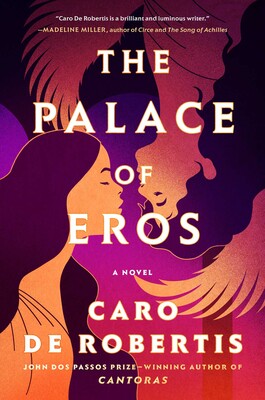
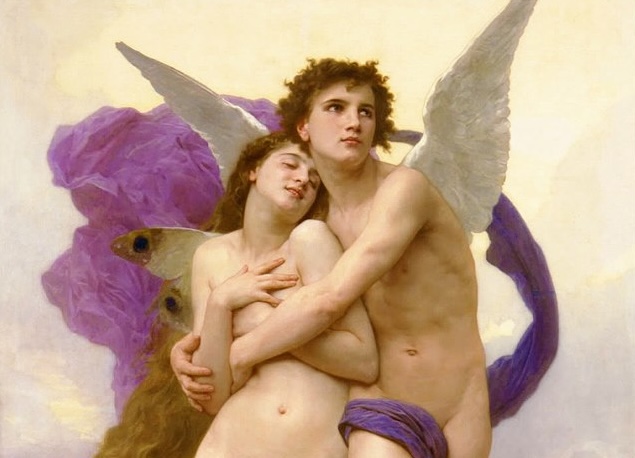
In De Robertis’s The Palace of Eros we have Eros as a shapeshifting body. Eros is now a woman but also more than a woman. “My husband is a woman,” Psyche says when she first meets Eros in the dark. Eros can grow a phallus or change her entire body into a male. The changes in this divine body are seamless. Caro’s prose is magnificent, it incorporates language for a gender expansive body into a myth that is 2000 years old and makes it look easy. It is such a literary gift to see gender expansiveness depicted in an ancient myth with such grace and ease. Plus, a bonus of lesbian processing, loads of queer sex and divine gossip. Caro builds on a long history of trans and queer people rewriting history to expand the notion of what’s possible. They are also building on a Latin American tradition of using myth, magic and fable in fiction.

De Robertis and I have known each other for years and have many times talked at length about the erasure of trans and queer narratives from a larger collective history. Trans and queer history seems to be this niche knowledge that only some people know about, it’s not taught in schools, it’s not easily accessible at the local library (sometimes even banned from the local library). The reality is trans people have lived, loved and fucked since the beginning of times. Yes, we looked different. We had different names. But gender expansive people are part of the larger history of humanity. Period. The Palace of Eros is an incredible and beautiful ode to this history.

And why is our history so threatening? Trans history is a history of possibility and possibility is the enemy of greed and unchecked power under capitalism. Trans history shakes the whole system under which the mother and the father and the holy spirit have been built to keep us all subjugated while the top dudes amass power and wealth at the cost of everyone’s lives. Trans history disrupts the notion that this way of existing is “normal” and opens space for other futures. We are currently being used as a scapegoat. Look over there! The republicans say, it’s a transgender. We are believed to have no history, we are believed to be a trend and in this denying of our history we are being denied basic humanity.

And, now, because of Caro De Robertis’ brilliance, when anyone talks Greek myth and they ask is Eros trans? The response is, yes, she is. She’s one of us.


Julián Delgado Lopera: How did the idea of rewriting the myth of Psyche and Eros come to you? Why make it queer? Why make it trans?  

Caro De Robertis: I have been obsessed with this myth for over 25 years. Something in the subtext of the story that pulled and fascinated me, but I couldn’t put my finger to what it was. During late pandemic, when I was exploring what book to write next, I got the idea of changing Eros—the god of love and desire—into a queer and trans genderfluid identity. Trans people have always existed throughout time, but we haven’t always had the vocabulary or the societal reflection to be able to have those experiences be legible as part of history. Changing Eros’ gender and her identity opened the story in a completely different way. It revealed other questions I wanted to explore: what does it mean to have a love, a passion or a desire that can only take place in the dark? How can desire catalyze a journey of liberation? What does it mean to have society deemed your desire and body monstrous? Although these elements belong to an ancient myth, a story at least two thousand years old, it holds elements that feel urgently relevant to our contemporary existence.

JDL: On the first page, Psyche calls attention to the ways the retelling of stories—legends and myths in particular—omit parts that are unfamiliar, different.  Why is it important to insert trans/gender expansive bodies into history?

We need trans and queer stories looking back through histories to [see] who we have been as society, in order to see more who we are.

CR: Official histories have systematically erased transness and queerness from the record. Inserting queer and trans bodies into history and into the registry of our collective myths and stories is essential to knowing who we collectively are. This is my sixth novel. I spent many years working on five different novels set in Latin America where I grappled with the systemic erasure and silencing of queer and trans realities in Latin American culture and history. Writing these books only deepened my sense of urgency that we need trans and queer stories looking back through histories to recalibrate our sense of who we have been as society, in order to see more who we are.

JDL: There’s something very profound in Eros’ shifting not only of her gender but her genitals. As someone who is trans, this literal change and capacity of Eros’ body to transform felt special. One of my favorite parts of the book are the moments Eros grows a penis, the moments she shifts from being a woman to a man and the moments she inhabits both genders. All of it felt very seamless. How was it to write this shapeshifting body and to find the language and craft to incorporate it into the story.

CR: It was incredibly joyful and exhilarating to write Eros’ character into being including her relationship with her body, which is a divine body. She has the power to shift her outward expression, to grow a penis, to present as male. These are qualities materialized in this magical context but are qualities that are true to a trans experience. We are shapeshifters and that is part of our power, our vastness and richness.  Dominant society pathologizes what it means to be trans and have a transformative or fluid relationship to your own gender and body but in fact you and I know trans experience is actually the opposite, it is an incredible richness. Also, this is very much in harmony with what is true in Greek myth. Ovid’s Metamorphosis, for instance, in which people are metamorphosing their bodies all the time, sometimes at will, sometimes against their will, is an incredible record of bodily change in ancient literature.

JDL: Psyche continues to call Eros her “husband” even when she first finds out Eros is a woman. “My husband was not a man,” Psyche says. Psyche also comes up with a name for Eros, “Pteron.” Talk about the choice of playing with gendered language and creating new language, which is a very queer craft choice.

CR: One avenue of research for this book was classical scholarship and classical literature.  Another avenue of research was queer and feminist theory. Books like Female Masculinity by Jack Halberstam, Queer Latinidad by Juana María Rodríguez, and Female Husbands by Jen Manion which looked at the historical record of people assigned female at birth who lived presenting as men and as husbands. All these books inspired me as I imagined how language might exist within the world of this book. I wanted to reflect and celebrate the incredible richness and range of experiences that people have with the trans and/or genderqueer phallus. People assigned female at birth have various relationships to phallic energy and this has existed within queer communities throughout time. Butches have phallic energy, transmac folks have phallic energy, nonbinary and genderqueer people, two spirit people and also femmes, have a relationship to phallic energy. In my attempt to create linguistic and bodily innovation in this book I was really drawing on an incredibly rich legacy of queer inventiveness and innovation.

JDL: Because I’m gay, I was drawn to Psyche’s revelation after experiencing queer sex and the different feelings attached to it, desire, shame, want. There’s something here which a lot of queer people experience around how unknown the world of queer intimacy is to the mainstream collective imaginary. Queer sex gets a lot of airtime on these pages, why?

How can desire catalyze a journey of liberation? What does it mean to have society deemed your desire and body monstrous?

CR: As fiction writers we convey what we value in part by what we center, what we give airtime, breath and space. Within a literary context there can be the idea that sex and the erotic are a less serious topic, which is a very heteronormative and white supremacist idea. It is a double standard because Henry Miller and Philip Roth were taken very seriously as literary writers when they wrote into erotic desire but when a queer or female person writes into the nature of desire and sexual expression it can be condescended to. Erotic desire, erotic joy and erotic expression are sites of knowledge, sites of self-development, growth, self-discovery and liberation.  

JDL: Psyche’s revelation mirrors the experience of many queer people regarding queer sex. It is not only about the act of fucking itself but this larger shift in the paradigm of what’s possible in the world.  After sex with Eros, Psyche questions everything about the world around her. This is such a queer experience. The power of queer sex is well beyond the fucking. There is this shifting in the way we understand the world and what’s possible, which is why queer sex is so persecuted.

CR: In a queer context, fucking can be a source of incredible power, of healing, of liberation. Joyful queer fucking is dangerous to the dominant system that’s designed to keep us diminished and silent. There is so much knowledge that can come through our desires, through our bodies. Before she understood herself to be queer, Psyche experienced patriarchy in very palpable ways. Because she is perceived as beautiful her father wants to get a suitor for her that will earn him privileges in society. He sees Psyche as a piece of his property at the expense of her wellbeing. That’s in direct opposition to Psyche’s desires and so her desires become a radical act.

JDL: Psyche and Eros’ relationship complicates after some time. When she first arrives to the palace, Psyche is overwhelmed with joy at the freedom and riches even if she can only see Eros, her only companion, at night, in the dark. Towards the middle of the story the palace feels like a “queered” extension of the patriarchal world Psyche left in which Eros, who is written as the more masculine one, sets all the rules. Talk about the relationship to power and gender between Psyche and Eros inside the Palace

CR: The original myth has a rupture in the relationship baked into it where Psyche experiences great passion, joy and satisfaction but then starts to want to see her husbands’ face, bringing light into the room that she’s been told needs to stay dark. This already built-in tension allowed me to explore the subtext of what it means to pursue freedom and autonomy within the context of intimate connection. Because we’re human, dynamics can come up that can urge us to shrink ourselves for someone that we love. How do we balance love, passion and connection with our own desire for autonomy? This is complicated in a queer context because for many of us, especially when our coming out is challenging and we’ve experienced familial homophobia, we would love to believe that all we must do is come out, express our desire and passion for a person we’re really into and then we’re in queer paradise. As someone who has experienced familial homophobia and had a complete rupture with most of my family of origin, I have a lot of heart for people who are in that part of the experience. Because we want to find home and refuge in queer space. And we can find our home and refuge in queer space but there are other things we must grapple with. In the case of the Eros, her desire to keep things in the dark, to keep the relationship hidden and shrouded is coming from a place of self-protection. This is her solution to the homophobia and transphobia of her world, and it reflects one of the pathways some queer people pursue. Sometimes we must keep a part of ourselves secret to be safe. And yet, Psyche wants to come out into the light, she wants to stand taller, wants to expand her universe. The story brings up a kind of grappling with the costs and potentialities of hiding versus speaking out and standing tall, concealing and revealing.     

JDL: In the story, it is through song that tradition and indigenous ancestral knowledge is passed down to Psyche, which is also a way that histories of trans people are passed.

Within a literary context sex and the erotic [is regarded as] a less serious topic, which is a very heteronormative and white supremacist idea.

CR: I set the book in southern Italy right after colonization, like two generations after, so that Psyche is a descendant of colonized people, she has a relationship to indigeneity, to the land, to lost languages and it allowed me to weave in some themes that are meaningful to me as a Latin American writer. There can be a notion that the retelling of Greek myths somehow belongs to white writers. But if you think about the tradition of magical realism that we draw on as Latin American writers, that is a literary vein through which we can have a great deal to say when it comes to reimagining parables and myth. I first read One Hundred Years of Solitude when I was thirteen years old. I’ve been preparing for this project for more than twenty years. Latin American literature is one of the most powerful streams of global literature in terms of reimagining reality through the lens of what is thought as magical.

JDL: “Monster” and “monstrosity” are brought up many times throughout the book to imply gender difference and any deviation from the normative. And yet you shape this idea of the “monster” by complicating it, giving it a different form. Right now, the drag queen bans, and trans bans are framing trans people as monsters. Deeming communities and an art form that is unfamiliar to many people, bodies that are different from the norm, and assigning this monstrosity and therefore fear. Because we must fear the monster. We’re an easy target, an escape goat. I see a “monster” reclaiming too within trans communities as “monster” continues to be a trope weaponized against us.

CR: Monstrosity was used in the original story, which is part of the reason why this myth stayed with me below my consciousness for almost three decades. That something as powerful, passionate and beautiful as erotic desire and fulfillment could be monstrous. That notion of monstrosity has been weaponized in society, not only 2000 years ago but in my life. Monstrosity is a projection of fears onto trans and queer people and then there is our truth which is that we are amazing. And one of the ways we are amazing and rich and beautiful is in our possibility of many permutations and iterations. In the artistry that goes into our bodies, our identities, the way we move and breathe and exist in space. This conversation about monstrosity reminds me of Tupili Lea Arellano, a Chicanx elder on the trans spectrum that I interviewed for an oral history project. Many times during the interview they said we are shapeshifters and that is a powerful medicine. Trans people should root in and own and stand in that power.  
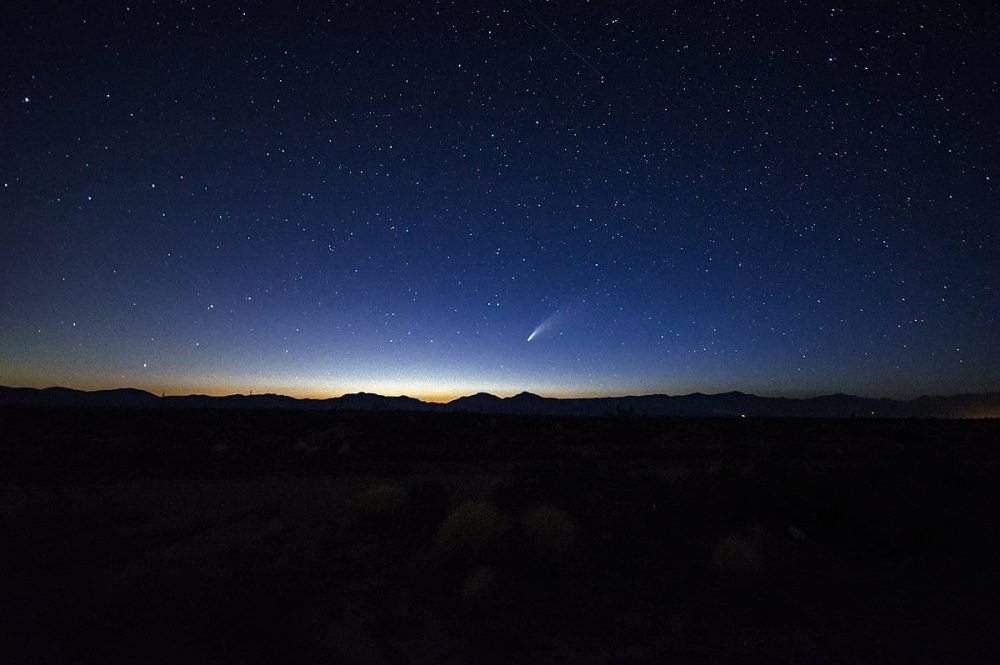
My Father Passed Through My Life Like a Comet

Orbits, Collisions, and Ricochets by Amethyst Loscocco

My father and I gazed at the comet searing the night horizon. As he sometimes did after dinner, he had pulled out a small army-green telescope bought at a yard sale and placed it on top of our blue station wagon, where it stood at an easy height for his lanky six-and-a-half feet. At nine years old, I had to stand on an overturned five-gallon bucket to reach it.

Usually, he would quietly look through the eyepiece, making small adjustments with an occasional sigh. Then he would give me a chance to look, pointing out any planets that happened to be visible that night.

“See Venus right above the horizon? It’s much brighter than a star.” Or, “That over there would be Saturn. You can just barely make out the rings. Can you see them?”

In the spring of 1997, the telescope often stood neglected, because a comet blazed like a slow-moving firework across the sky, visible to the naked eye. High above us, dirty ice fractured and splintered, streaming behind the comet as it sped 100,000 miles per hour toward the sun.

Billions of eyes turned skyward to marvel at comet Hale-Bopp, later dubbed the Great Comet of 1997. The comet was visible for eighteen months between 1996 and 1997. A comet is frozen solid when it is far from the sun. But as it approaches, the crust heats and cracks, emitting dust and ice plumes to form a halo-like corona around the frozen nucleus. The larger the nucleus, the more luminous the comet. Hale-Bopp’s brilliance could be seen at dusk, even from cities with light pollution. It birthed a new generation of astronomers, and, as with previous great comets, it inspired awe and fear and longing.

My father wasn’t an astronomer. He was a potter. He gleaned facts about cosmic phenomena from the dusty National Geographic magazines piled up in the back of his pottery shop and the NPR reports he listened to while up to his elbows in clay.

“See how it has two tails?” my father pointed. “One of dust and one of gas.”

He explained that the slightly arced, pale-yellow tail on the bottom was made of billions and billions of tiny dust particles made visible by the sun. The straighter, blue-tinted tail was made of gas molecules ionized by solar radiation. The tails pointed away from the sun, blown back by the solar wind in a spectacular display.

As the comet faded, so did my father’s presence in my life.

If you saw Hale-Bopp, the image is probably singed in your memory, like the glow behind your eyelids after looking at the sun. Maybe you were four years old, balanced on your mother’s hip as she pointed to the horizon. Maybe you saw it through an airplane window on a flight to a place you’d never been, or you looked up at it when you snuck out into the backyard at night to smoke weed as a teenager. Maybe you were a long-haul trucker, and you pulled over in the middle of the country where everything was flat and there were no lights. You paused. The comet burned so bright, you felt as if you could reach out and touch it.

We were all sky watchers then. Separated from the comet by 120 million miles, we were connected by awe, by inevitability, by the inescapable pull of gravity.

As the comet faded, so did my father’s presence in my life.


Comets are like time capsules from the violent dawn of our solar system. About 4.6 billion years ago, a stellar explosion in a nebula—a ginormous cloud of gas and dust—caused part of the cloud to collapse into a condensed spinning disc. Intense heat and gravity at the center of the disc smashed together hydrogen atoms, turning them into helium and igniting in nuclear fusion. The sun was born.

In a period of epic tumult, hot gases churned and dust flash-heated into molten rock, crashing, clumping, and coalescing into the first asteroids, planetoids, and then planets. The rocky planets formed closer to the sun’s warmth, and the gaseous planets like Jupiter formed farther out. At the same time, mighty Jupiter flung chunks of rock and ice out to the edges of the solar system, where they remain today as a reservoir of thousands of icy comets. Tugged by gravity, many of these comets periodically orbit back toward the sun.


My father grew up on the West Coast, and my mother on the East. Each, in their own way, yearned to break free from their upbringing, looking for freedom, spirit, and connection. They met in New Mexico, often nicknamed the land of enchantment, a place where art and alternative lifestyles thrived, and the land and sky were palpable entities. But when I asked each of my parents how they met, neither version of their story was enchanting.

My father said they met at a party he wasn’t planning on going to. He had to kill his chickens because they wouldn’t survive the winter snow. After slitting a few of their throats, the knife slipped, and he cut his finger. “Really cut the shit out of it,” he said. At the time he was making jewelry and selling it at craft fairs, and an injury meant he wouldn’t be able to make enough for the big fair coming up soon. He was so angry about it that he stuffed all the chickens, both live and dead, into a burlap sack and left them in the forest for the coyotes. Then he went to the party where he met my mother. “We hit it off,” was all he said about that.

My mother said sometime later her car broke down. When she didn’t have enough money to pay the mechanic, he told her she could pay in “other ways.” Incensed, she walked away. My father was one of the few people she knew in the tiny mountain village of Vallecitos, so she asked him if she could borrow money to pay the “sleaze bag” mechanic. He lent her the money, and they got together shortly after. 

At three years old, their second child, my older brother, was diagnosed with a seizure disorder. When my parents realized they would need to settle down to care for him, they decided they also wanted to adopt. Over the course of the next few years, they adopted five children: one newborn, and four biological siblings aged two, three, five, and eight. They had each experienced trauma in their birth family and the foster care system that, for some of them, had a lasting impact on their mental health that my parents weren’t equipped to deal with alone. 

I’m the youngest of my parents’ three biological children, the third youngest in the group of us eight. I have no memory of a time when I didn’t have seven siblings, many close to my age. There was always someone to play elaborate make-believe games with, someone crying, someone to get in trouble with, and someone in trouble.

When I was four, my parents bought a sixteen-acre farm in the desert, outside of the small town of Truth or Consequences. They wanted fields for their eight kids to run in, cottonwood trees to climb, and food planted by their own hands. My father built a house and planted apple, pear, cherry, and apricot trees. He plowed the fields and sowed corn, squash, and beans. As kids, we swung from rope swings hung from a giant elm tree and got sick from eating unripe fruit from the orchard. We built forts from leftover construction materials and played restaurant with tin cans and mud. When my father asked us to weed the garden, we grumbled because the garden was an entire field. We wanted to explore the trails left by animals on the hillsides, walk the slippery-rocked creek and catch minnows, see if the old outhouse was haunted or if a raccoon had fallen in. 

The two-story adobe house my father built had red brick floors and high ceilings of knotted pine. There was a two-story glass atrium with banana trees and cacti. Enormous floor-to-ceiling windows overlooked the orchard and fields. The house had ten doors to the outside, one of which led to nowhere—a drop from the second floor. Maybe even as he built it, he was thinking of exits, of escape. That house could not hold onto everyone. The unstable mix of elements, personalities, and needs never found equilibrium. Some of my siblings stayed; some left in explosive outbursts of yelling and trails of broken things. That farm was like Jupiter, with immense gravity pulling ten people together and spinning them with such speed and ferocity, they collided and ricocheted far out and out and out, to California, to Colorado, to Louisiana.

To escape, I often slipped into other worlds and onto other planets by reading books, as many as I could get my hands on. Mostly I read fantasy that featured magic and adventure, and always had a child—The Chosen One—who escaped a harsh home life and ultimately saved the world from the forces of darkness. The year of the comet, I decided I wanted to be an astronomer after reading a biography about Maria Mitchell, a professional astronomer and professor in a time when few women existed in the field. In 1847, she discovered a comet, later named “Miss Mitchell’s Comet” in her honor. 

I longed to discover my own comet. Sometimes, after washing the dinner dishes, I would lie on the dirt driveway and stare up at the sequined night sky. Far out in the countryside, there were no interfering city lights, just me, the enduring ribbon of the Milky Way, and the galactic tides of my dreams. I was sure somewhere out there, far, far away, there was a great destiny for me, as well as a comet speeding through space with my name on it.


A comet is named after the person or observatory that discovered it first. Sometimes the credit is shared, as was the case with Alan Hale and Thomas Bopp who independently discovered Hale-Bopp as it passed between Saturn and Jupiter on July 23, 1995. A comet’s name also includes a code with the year of discovery, and either a letter “C” designating a non-periodic orbit around the sun, or a “P” for a periodic orbit, meaning we can count on it to appear again within the next century. Halley’s comet, perhaps the most well-known periodic comet, makes an appearance every 76 years. Hale-Bopp C/1995 can’t be relied upon to return for thousands of years, if it returns at all. Comets with long, unpredictable orbits can easily veer off into interstellar space, leaving us wondering where they went.

On April 1, 1997, Hale-Bopp made its closest approach to the sun, known as its perihelion, then sped around the sun with such speed that it was flung back out, deep into space. It wobbled as it passed the mighty mass of Jupiter but sprang free. Then it faded into the distance, with no plans to return until the year 4385.


The day my father left, I watched him load his dresser—each drawer pulled out and still full of his clothes—into the back of his white truck. I was ten years old and didn’t know why he was suddenly choosing to leave. I didn’t know he was unhappy with the life he’d built, or that he insisted he’d never wanted to adopt so many kids. I didn’t know he was testing other futures with other women, although I soon caught on. All I knew was that he would live in a different house, thirty minutes away, and we would visit him one weekend a month. 

Perhaps my father said something reassuring before he drove away. Then again, he was never one to get sentimental, so it’s more likely he just said, “See ya later.” 

Later that day, I sat alone in my parents’ bedroom staring at the dust on the floor where the dresser had sat for years. The intense desert sun had faded the pale lavender wall, and the dresser’s absence exposed a darker rectangle. I was captivated by the newly empty space and didn’t yet understand the weight of absence. In my experience, solely informed by fantasy books, losing a parent meant a quest was ahead, a hero’s journey. Something exciting was finally happening. At the very least, I thought it would be fun to live in two houses. 

By this time, most of my older siblings had moved out, and several others were in group home facilities where they could get more care than my mother alone could provide. All that remained were three pre-teen girls and my sick brother who lay in a hospital bed in our living room, unable to walk, talk, or feed himself. We all knew he was dying.

My mother explained to each of us what it meant for parents to get divorced. She read us children’s books written to help cope with a changing family and navigate all the contradictory feelings. Things might get difficult, she said, but parents will still be parents and try to do the right thing. 

I was wrong that living in two households would be an exciting adventure. She was wrong that parents will always try to do the right thing. 

While my mother was caring for my dying brother, taking kids to mental healthcare appointments two hours away, and managing her business and the farm, my father tried to take the house, tried to take us, tried to avoid paying child support. When that failed, he resorted to taking tools, farming equipment, and a hot tub he never used again because that wasn’t the point. He didn’t just want to leave my mother; he wanted to leave her with nothing.

I didn’t understand how someone who loved me would act this way. I didn’t understand how I loved someone who would act this way.

He often came by unannounced to take things that “belonged to him.” On one of these visits, he got back into the driver’s seat of his loaded van, clutching a large roll of thick industrial rope he planned to take. My mother pleaded with him to stop. She grasped the rope, trying to take it back. I watched, wanting to stop it but unable to move. He started to drive away while my mother still held the rope.

I didn’t understand how someone who loved me would act this way. I didn’t understand how I loved someone who would act this way.

Another day, he returned for a stack of corrugated metal that had sat beside the barn for years. My mother said the metal panels didn’t belong to him because they were the doors to the barn, and this was not his land anymore. He came anyway, along with three men and a large flatbed truck. 

Without consulting my mother, my two sisters and I climbed on top of the four-foot-high stack of metal panels.

“Get off,” he told us. “This has nothing to do with you guys.” 

“It does too,” we said. “These aren’t yours to take.”

“I don’t have time for your mother’s bullshit,” he said. “Move. Now.”

We didn’t say anything, just sat there cross-legged, holding hands, hearts pounding. We’d recently watched documentaries about the civil rights movement and the power of nonviolent protest. We were primed to stand up against injustice in the world and this seemed like a good time to start.

“Move!” he repeated.

The men were silent, hands in their pockets, staring at their boots. With them standing there, he couldn’t yell or drag us off. His eyes were steely gray, fuming. Eventually he had no choice but to leave. I feared he would blame our mother for our behavior, as he frequently did, but I knew we had to stop this constant violation. I didn’t understand that such a public humiliation by a few girls could only fuel the fire. I hoped he would see us, see what we needed, but he only saw that we stood together.

My mother eventually got a restraining order. For the first time, we locked the ten doors, the sheds, and the gates.

On the last farm down a long, dirt road, lived my mother and her last three daughters, trying to maintain a sixteen-acre farm. The good ol’ boys watched us from their dust-covered pick-up trucks, spitting tobacco, and speculating on how we would cope. Some offered to take the farm off my mother’s hands for a pittance. She refused.

Without my father, my sisters and I—all scrawny pre-teen and barely teen girls—learned how to irrigate the alfalfa fields. We mowed the 100-tree fruit orchard with a single small lawn mower because he had taken the tractor. We learned how to stucco the cracks woodpeckers had made in the house, exposing pale adobe. We fixed broken faucets and repaired fallen fences. When the Southwest monsoons came, the arroyos flooded, cutting rocky gullies across the dirt roads. We dug trenches to redirect the muddy torrents of water. Our hands blistered, then calloused. Our knees were always bruised. 

I rarely had time to look up at the stars, more distant than ever, and less real than the demands of the land. My only dream was to leave, to escape this giant house that felt haunted by reneged promises. We all agreed we wanted to move away. But those ten doors that so effectively let everyone else out somehow locked the last of us in. It took six years to sell that farm, that oasis in the desert.

When I stood beside my father and marveled at the streaming tails and steady progress of Hale-Bopp, I thought him a stable force in my life. But stability is no more a prerequisite for parenthood than it is for the formation of planets. For my stability, at fourteen years old, I cut contact with my father. We didn’t talk for five years.


Hale-Bopp traveled an immense distance, pulled from the solar system’s outer reaches, from the Oort cloud where thousands of comets live. The Oort cloud is a spherical shell of rock debris and ice chunks surrounding the solar system. It lies at the edge of the sun’s gravitational pull, a desperately cold and utterly silent place where the sun is just another far-off star. The distance is so great that miles are meaningless, and scientists use Astronomical Units (AU) instead. One AU (93 million miles) equals the distance between the earth and the sun. The Oort cloud’s inner edge is around 2,000 AU from the sun, and the outer edge—where the sun’s gravity is no greater than that of the next closest star—is approximately 100,000 AU. Or, if you use time for scale, Voyager 1, launched in 1977, won’t reach the outer edge of the Oort cloud for another 30,000 years.


For years I felt betrayed by the loss of a future with two parents for support, a future with a father. Sometimes I would walk the empty dirt roads, out into the chaparral-scented desert. I would cry. I would scream where no one could hear but the rattlesnakes and the coyotes. Sometimes I wrote heartsick poetry, trying to explain what happened, why I made the choice to sever our bond. The words I wrote got progressively angrier and darker. Nothing erased the loss. I felt pulled apart. Pieces of myself and my possible futures shattered off, trailing behind me.

Once, when no one was home, I got some matches and a picture of my father. He still had his long hair, but with a mustache instead of the full beard I grew up with. His smile was more of a grimace, like he was putting up with whoever took the picture, maybe me, maybe one of my sisters, probably on one of those cheap disposable cameras we treasured long before we had phones.

I lit a match and held it to a corner of the photograph. It ignited, curling at the edges. The glossy veneer bubbled, bleeding brown and green chemicals. I set the picture on a blue ceramic plate that my father had made. The flames engulfed it. 

At a yard sale, we sold my father’s old green telescope. A woman who lived in a trailer park by a gas station bought it for five dollars. That night, an unoccupied pickup truck rolled into a large propane tank at the gas station, triggering a massive explosion that sent flames a hundred feet into the air and broke windows for miles around. The trailer park burned, along with the telescope.


The last time Hale-Bopp passed by Earth, 4,200 years ago, the Egyptian pyramids were brand new. The Greek and then Roman Empires were yet to rise and conquer. People described these sky anomalies as sky snakes, stars with hair, or flaming swords. The word comet wouldn’t exist until much later, derived from the Greek komētēs, which literally means long hair.

Cultures worldwide associated their sudden appearance as divine omens that foretold something momentous, often a cataclysm, a catastrophe, or some end—maybe the end. People have associated comets with plagues, natural disasters, and the deaths of leaders like Julius Caesar. But occasionally, comets are paired with victories. In 1066, William the Conqueror believed Halley’s comet heralded his success in the Norman conquest of England. But, perhaps the defeated king of England saw it as an ill omen. There is always an event to connect and attach undue significance.


My father and I reconnected so slowly, so tentatively, that I barely remember how it happened. One Christmas, he bought my two sisters and me a subscription to National Geographic, misspelling my sister’s name. We were not impressed. My oldest brother, who hadn’t experienced the traumatic events surrounding the divorce, still talked to my father. My brother insisted we should talk to him, that he asked about us all the time, that he was still our father no matter what had happened. My father started calling once a year, then twice, sometimes on birthdays or holidays. We passed the phone from hand to hand with trepidation and the occasional eye roll.

I was ambivalent about the value of bringing this now stranger back into my life, as if nothing had happened. How do you speak after years of silence? Talking about the present was easier than talking about childhood, or about the moments he had missed—the birthdays, the graduations, the boyfriends, the depression, the surgeries, the struggles of our single mother to make ends meet, the tiny two-bedroom apartment four of us squished into once we moved to California after a white-knuckled drive in a U-Haul one rainy Christmas. What can a daughter say to a father she doesn’t know? 

What can a daughter say to a father she doesn’t know?

Almost two decades have passed now, and my father calls me every month.

“I’m thinking of retiring,” he says one day. He’s been saying this for years, and I don’t believe him. His fingernails will always have clay or soil underneath them. He will always have a garden that can feed a family of ten but is now only for two. He is a maker who built two houses, planted trees, created pottery glazes the colors of a stellar nebula, built my family and then scrapped it like a cup that had slumped sideways on the potter’s wheel.

He talks about coming to San Francisco to visit soon. My brother and youngest sister live here, too. I tell him we’re thinking of taking a road trip to New Mexico to visit him sometime. But this is also something I’ve been saying for years, and maybe he doesn’t believe me.

“It only takes a day to get to Palm Springs from here,” he says. That’s where he grew up. “But it takes two days to get to San Francisco. The damn Grand Canyon is in the way.”

And he is right. The Grand Canyon separates us, but sometimes it may as well be the entire Milky Way. We don’t talk about the things that we hold close, our fragile dreams, our fears, our regrets. We don’t talk about the past. We talk about the fires ravaging both California and New Mexico, or our respective travel plans, or the abundance of his garden’s pea and broccoli crop this year.

We still sometimes compare notes on cosmic phenomena, like the recent eclipse and northern lights. In fall of this year, comet Tsuchinshan-ATLAS C/2023 will appear. Since its discovery in 2023, astronomers have compared it to Hale-Bopp, speculating that Tsuchinshan-ATLAS might be a great comet, maybe the greatest comet of this century, though there have been conflicting observations as it moves closer. Predicting whether a comet will be great is notoriously difficult. Comets are unpredictable. From far off, they can promise to blaze brightly, to awe us. But there’s always a chance they’ll burn out before fulfilling that promise. 

Halley’s comet appeared the year before I was born. Hale-Bopp preceded the end of my parent’s marriage. I know scientifically these things are not cosmically significant or connected. Comets are indifferent to events on Earth. They are commanded only by gravity, by the inescapable tug of the sun. But part of me, the part that used to spend hours lying in the dirt awed by the complex grandeur of the universe, searching for my destiny in the stars, wonders what this next comet will bring.

9 Transformative Books About Letting Go and Moving On

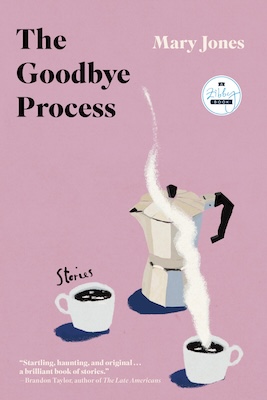
When people think about loss, what usually comes to mind is the death of a loved one, but there are so many other things we have to let go of, and say goodbye to, as we move through life—relationships (romantic and otherwise), youth, health, homes, innocence, life as we know it. We are always saying goodbye to something, letting something go. 

All of the stories in The Goodbye Process share a central theme of letting go, and moving on. I’ve always gravitated towards these kinds of stories in literature. They are stories of growth and the human capacity for change, but more than anything, they are stories of resilience. How do we survive what happens to us? How do we go on? Who are we on the other side?  

In the following books,  the characters find themselves at the ends of various things—ready (or sometimes not) to let go and move on.

We the Animals by Justin Torres

In We the Animals three brothers navigate their tumultuous childhood and struggle to make sense of their parents’ relationship. As the unnamed narrator matures, he comes to understand that in order to form his own identity and find his place in the world, he must let go of his childhood innocence and separate from his family.

Small Things Like These by Claire Keegan 

Small Things Like These is set in a small Irish town in 1985 during the weeks before Christmas. When Bill Furlong, a coal merchant, discovers a local convent’s cruel treatment of unmarried mothers, he is forced to let go of his fear of societal expectations and act, regardless of the inevitable life-changing consequences.

Everything I Never Told You by Celeste Ng 

Everything I Never Told You explores the aftermath of a teenage girl’s mysterious death in 1970s Ohio. It delves into the family’s secrets, misunderstandings, and the process of coming to terms with loss and finding a way to move on.

All Fours by Miranda July

All Fours has been described as a middle age coming-of-age story. In this novel, the 45year-old narrator plans a cross-country drive from Los Angeles to New York, only to find herself holed up at a motel about thirty minutes from her home for two weeks. This leads her on a wild journey of self-discovery in which she lets go of her ideas of what family is, what emotional and physical intimacy mean, and what getting older does and doesn’t change. 

Interpreter of Maladies by Jhumpa Lahiri 

The characters in all of the stories in Jhumpa Lahiri’s Pulitzer Prize winning short story collection Interpreter of Maladies navigate the challenges of letting go of past regrets, unfulfilled desires, and cultural expectations. Through glimpsing key moments in their lives, Lahiri shows the emotional toll of loss and letting go.   

Lucy by Jamaica Kincaid 

In Lucy, the narrator, Lucy, leaves her family and home in Antigua to work as an au pair for a wealthy family in the United States. While there, she gains a deeper understanding of her relationship with her mother, as well as her relationship to her homeland, ultimately releasing herself from both and redefining herself on her own terms.

Wild by Cheryl Strayed

The memoir Wild follows Strayed as she hikes 1,100 miles on the Pacific Crest Trail four years after her beloved mother’s death from cancer. Strayed confronts her grief head-on, processing memories of her mother’s death and the dissolution of her marriage. Each step is a step toward letting go of her pain, and moving on from her past mistakes and traumas.

Housekeeping by Marilyn Robinson 

Housekeeping begins in the aftermath: Ruthie and her sister Lucile’s mother has committed suicide (and long before this, their grandfather died in a tragic train accident). They are abandoned by their caretakers, and left in the hands of their eccentric and unconventional Aunt Sylvie. The tension in this novel comes not necessarily from wanting to know what will happen, but how (and if) the girls will survive what has already happened.

Evening by Susan Minot

An interesting exploration of this theme occurs when characters are not able to let go and move on… In Evening by Susan Minot, Ann Grant is at the end of her life and consumed with memories of a brief love affair that took place 40 years (and three marriages) earlier when she was just 25. “If every life had high points and low points, there would have to be one point higher than the rest—the highest point in one’s life. So, she thought, this had been hers.” This affair is something that the narrator never fully recovers from; something she dwells upon even in her final moments.

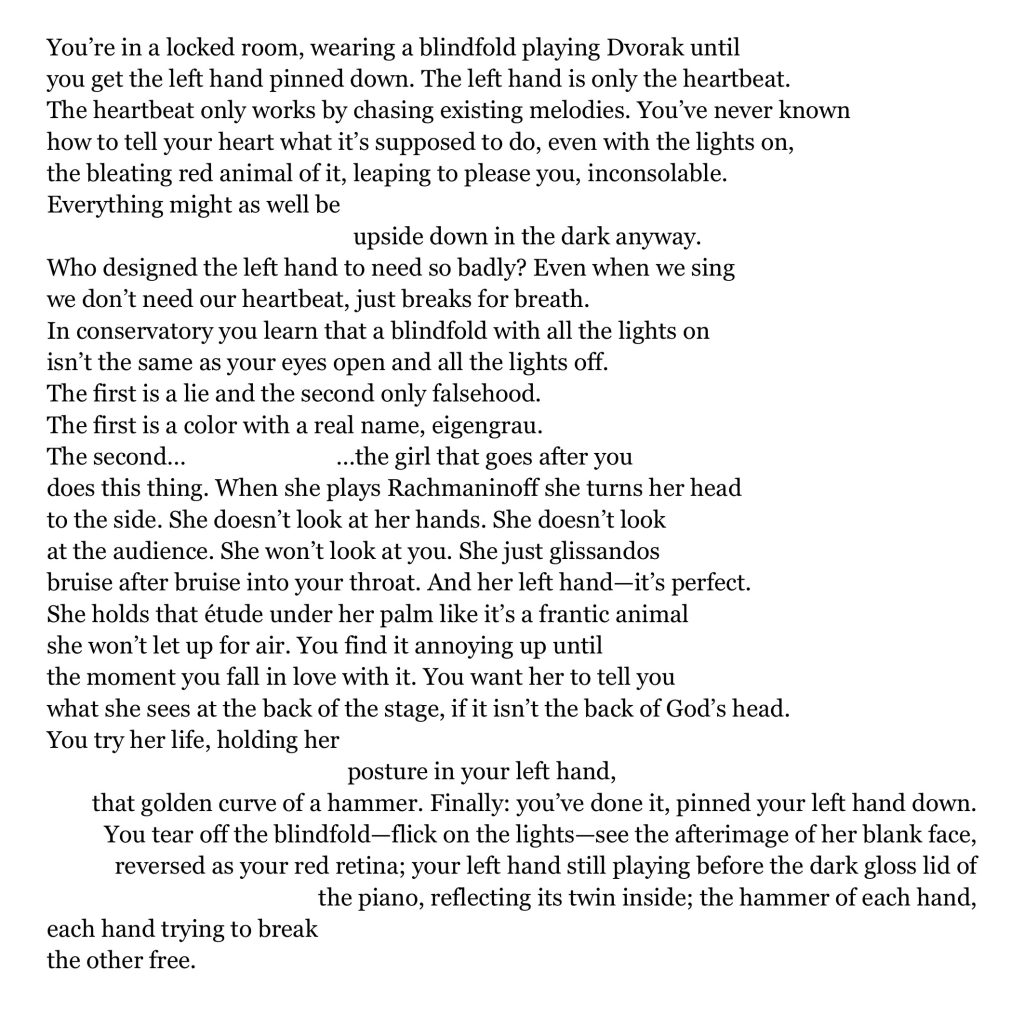
The Unspeakable Cruelty of the Left Hand

Visual Noise

Click to enlarge

Recollection

Finding your scarf, I recalled [telling you twenty percent
of people die of cancer. Amazed, you asked

what percent of people die—like you
could only measure sorrow (within the width

of its loom. When I first met you I knew I must begin
to practice for grief, its unspooled margins. My scarf

always ended too soon to warm both our necks,
so I asked you) to hold on to it. Filled with fire

these days, in the legacy of remembered things, would you
consume the living with your lack of needing?

What I am] asking is really a favor. What I am
asking you is: would you still like to keep it, where

you are, or all the scarves now good enough?

7 Love Stories in Translation 

Because a love story must occur between two particular people, in a particular society that the characters need to appease or disregard or acknowledge in some way, it also becomes a rich social portrait of that particular place in time; which makes the novels on this list—from a young boyhood romance in 1970s Brazil to unresolved tension between a hotel guest and his guide in South Korea—as much about love as about the entanglements of love and place. And if this place is inaccessible to the English language? It doesn’t matter. The experience of reading fiction is mysterious and unpredictable, full of deceptions and slanted truths and the unexpected pleasures of imagination. In that way it only ever speaks one language.

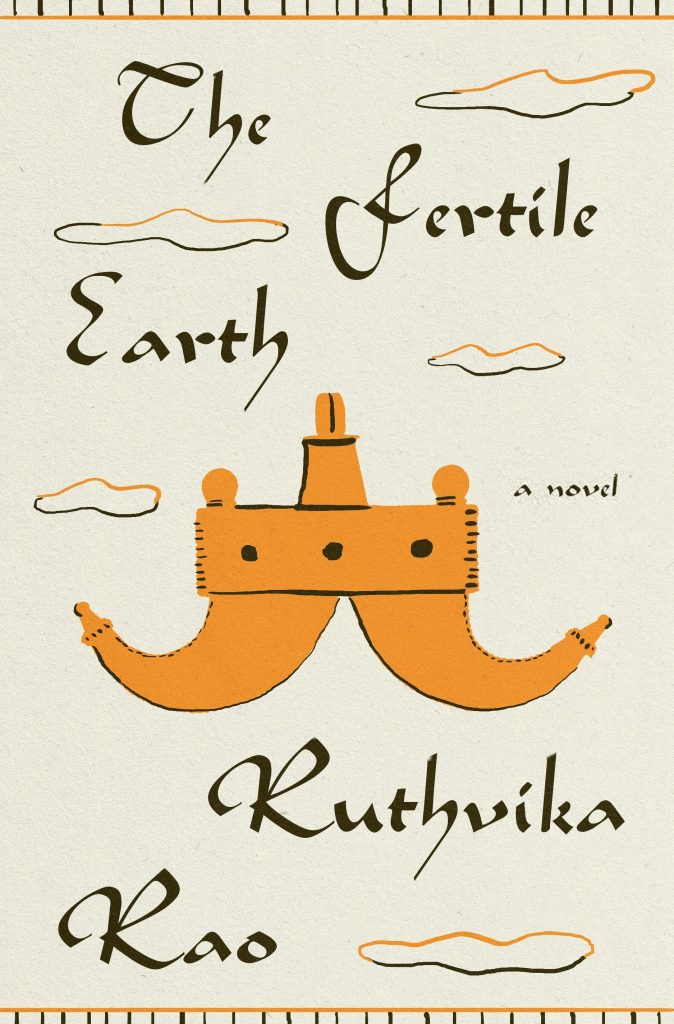
My own novel The Fertile Earth is a love story between Vijaya and Krishna. When they meet for the first time as children, their connection is magnetic and intense and results in a fateful adventure into the hills surrounding their village; the repercussions of which echo across their lives and the lives of their families. Set in rural Telangana, in the volatile early decades of post-independence India, the novel occurs in a time and place which is totally inaccessible to the English language. But this book exists—by luck and chance and all the people who’ve helped me along the way—yet essentially because English is my first language when I write, though it is my second when I speak.

Here are seven novels, their hearts threaded around a love story, inaccessible to the English language had it not been for their translators’ love of two languages.

The Road to the City by Natalia Ginzburg, translated by Gini Alhadeff

Delia and Nini have been around each other their whole lives. They are both poor, imprisoned in a provincial village that limits their possibilities in life, but there is one road that connects their home to the city; only Delia and Nini have different ways of arriving there. Will they still end up together? This novel is 94 pages long. It is perfect and complete and too poignant and too emotionally rich to be called stark. For longtime Ginzburg fans, it will be gratifying to know that this was her debut, published under the pseudonym Alissa Tornimparte. 

The Post-Office Girl by Stefan Zweig, translated by Joel Rotenberg

This novel’s tagline “Cinderella meets Bonnie and Clyde” sounds like a page turner. Indeed, Wes Anderson considers The Grand Budapest Hotel to be influenced by Stefan Zweig’s work. And it is—a page tuner—but for all the right reasons. The novel opens with Christine—our post office girl—sitting in her chair in the middle of a silent afternoon in post-Great War Austria. How will Christine’s path cross with the wounded war veteran Ferdinand? Will their lives head toward happiness or tragedy?

The Love of Singular Men by Victor Heringer translated by James Young

Camilo and Cosme are two boys who unexpectedly fall in love one summer in 1970’s Rio de Janeiro. This novel is a portrait of first love found and lost, and the years that follow, set against a beautifully rendered depiction of Brazilian society during the military dictatorship.

Winter in Sokcho by Elisa Shua Dusapin, translated by Aneesa Abbas Higgins 

In this novel, the unnamed narrator is a young French Korean woman who spends her days working at a rundown guesthouse in Sokcho, a small town in South Korea that sits on the border with North Korea. Yan, a French cartoonist, arrives one night to begin an extended stay, looking to Sokcho for inspiration for his artwork. Helplessly intrigued, she and Yan travel together, exchange stories and histories, yet remain complete enigmas to each other. A vivid and mysterious and utterly surprising novel.

The Housekeeper and the Professor by Yoko Ogawa, translated by Stephen Snyder

Every morning, a housekeeper and a professor are introduced to each other; the professor has a traumatic brain injury that allows him only 80 minutes’ worth of short-term memory. Sometimes, the housekeeper brings her son to work with her. Can you forge familial bonds without history? This is a tender, warm-hearted novel about chosen families, what they give you no matter how fleeting your time together.

Kairos by Jenny Erpenbeck, translated by Michael Hofmann

This is a love story set in East Germany in the years before the fall of the Berlin Wall. There is a looming suspicion from the very first page that the relationship between 19-year-old Katharina and 50-year-old Hans will turn insidious—it does—and the hurt will land on only one of them. But which one? The novel is inventive, yet has terrific velocity. Cruelty, passion, self-destruction; these traits are never judged or philosophized, yet the reader understands perfectly how a relationship like this works. 

Ties by Domenico Starnone, translated by Jhumpa Lahiri

Aldo and Vanda, long married, return home to Naples after their annual seaside holiday. They find their home robbed and the cat missing. Ties is about family love: Between Aldo and Vanda, between Aldo and the woman for whom he leaves Vanda, between Aldo and his children. What remains of a family broken and put back together? The structure of this novel is intricate and masterful, and like the finest made structures, it is shaped by the storytelling and not the other way around.  

Everything, Even Our Most Intimate Relationships, Can Be Rented in “Five-Star Stranger”

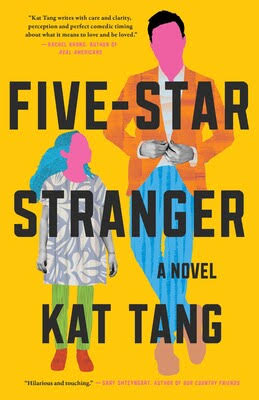
After his mother dies, the protagonist of Kat Tang’s debut novel, Five-Star Stranger, chances into a gig as a “rental stranger”: someone hired via app to be whomever the client needs. For ten years, he immerses himself in roles ranging from airline hypeman to mourner, lives alone in a utilitarian apartment, and zealously enforces boundaries personal and professional.

When a nosy new client, Darlene, threatens to undermine his long-running role as father to a girl named Lily, Stranger must confront the trauma that launched his career and try to make sense of a future without it. In wry, lucid, and compassionate prose, Tang explores the costs of intimacy and performance.

I had a chance to speak with Tang over FaceTime about persona, real-life rental strangers, and the lessons we can take from loneliness.


E.Y. Zhao: Stranger projects many versions of himself. Consciously, he doesn’t want to be seen through. But when he’s with Mari and Lily, the family where he’s played a father for eight years, he subconsciously hopes that they will see through him. Especially at a time when we project so many personas, how do you think about the tension between wanting to be taken at face taken at face value versus wanting to be seen through? 

Kat Tang: There’s so much fear in projection. We’re always wanting people to see us a certain way on social media or even to our families. And there’s a fear that if it is known who we truly are or what we are really like, we might be rejected. So I think that’s what he’s toeing the line between. He wants to be perfect but he also wants to be known, and he doesn’t know how to let people in and let himself be vulnerable. He hasn’t really had experience doing that, and he sees that when he’s working with other clients, when they are vulnerable, it can be ugly. It’s a very ugly part of people. I don’t think that it’s easy for us to show that, especially nowadays, when everything’s so curated. But it’s so necessary to remember that we are messy. We make mistakes and that’s okay. We shouldn’t have our lives ruined if we say something or if we do something wrong, it’s all about changing and being able to change from that.

EYZ: The idea for rental strangers came from real rental services in Japan. What questions or insights about American society did the premise raise for you? 

KT: The rental stranger business in Japan made a lot of sense to me for Japanese society because it is very image-focused, family is an important thing, divorce rates are not as high, so it’s less likely that a child will grow up without both parents. So I can see why renting a parent might be more normal there. Transporting that concept to the US, I ended up thinking about what it is that people, let’s just say in a big city like New York City, might want. And I think other than the family aspect of it, a lot of it seemed similar, at least in my imagination. Of people who just don’t want to appear alone. Who want to be seen as desirable in front of their friends or family. That applies across the board. It could be having fans at an event or having a mourner at a funeral. It’s all just to show that we were loved and cared for by someone at some point. So I thought that was quite universal. 

EYZ: Darlene initially hires Stranger to play an alcoholic brother. After first you think she’s practicing an intervention with her own alcoholic brother, but actually, she’s writing a novel about a protagonist with an alcoholic brother. It’s a funny reversal, conducting real-life rehearsal for fictional work when we often think of fiction as something that enhances real life. Can reading and storytelling be a rehearsal for real life or vice versa?

KT: I think that oftentimes when people turn to literature, even if they don’t know it, they’re seeking something. And whatever it is, we’ll find it on the page, whether or not the author intended it. It’s what I’ve come to realize after hearing people talking about my book. Like, “Oh, that’s what you got from it? Great, I love that, but I never even thought about it.” We each come to literature with our own wants, our own needs, our own worldview. And I think that whatever we find in there is often what we want to hear or what we are already thinking about. And then the other way around, at least for me, as a writer, there’s so much that comes from my life that influences my fiction. How can it not when you’re just one person with one little monkey working in your own skull?

EZY: Another central concern of the book is white lies. I was curious if writing this book challenged or changed the way that you think about white lies in everyday life.

KT: There’s this part of the novel where Stranger talks about when someone isn’t well and you say, “Oh, is there anything I can do for you?” or “Do you need anything?”, but you don’t actually mean to do it. You just say that as words of sympathy and there’s no real intention behind it. That in some ways is a lie, and you’re just using it to show that you care. So I’ve been thinking about that recently, and in my own life, I’ve tried to do less of this performative lying, so to speak. Saying things or doing things where I’m just saying it because I think that that’s what someone else wants to hear. But if they were to actually say, “Oh, yeah, I would love some chicken soup,” then I would be like, “Oh, I didn’t intend to do that at all.” So in that way, I’ve been thinking more about the intentions behind words, even if they’re meant to soothe. How if you don’t actually plan on carrying them out, they can hurt people. How much are you saying things to manipulate people versus saying it because you mean it?

EZY: Sometimes we say the thing that comes next in the script, not because we want to deceive anybody or because we’ve got pernicious intentions, but because that’s the smoothest way to keep the situation going.

KT: Totally. And everyone does it all the time. And honestly, I think when people say, “Oh, do you want anything?”, everyone usually says no, because there’s this communal understanding that this is what we say, we don’t actually want to ask anything of you. But I think we can do better. I think we can be more attentive to what we say and intentional in what we ask for or offer each other. And the times that I have felt the most cared for or seen is when someone offers me something and then they do it. I’m like, “Oh, wow. You weren’t just paying lip service to that. That’s incredible.”

EYZ: Stranger’s waking life is all scripts and roles. What is Stranger’s self if all of the external trappings belong to other people? How do you build him or think about him?

KT: I’ve been asked this question a couple times, in different ways. Someone asked me, “How do you write a main character with no name? Who is Stranger?” And surprisingly, even though he’s always taking on these other roles, his self was relatively easy to pin down because he’s so observant and he does have a personality in his judgments. He’s actually quite judgmental, because I feel like people who are observant oftentimes can be judgmental. And the other thing is that the way he portrays himself is very constant, because he’s always trying to take care of other people or to predict their needs. And trying to not think about himself. But in that way, he’s showing who he is by the things that he does or does not do for himself. And that’s how I was able to think about who he is as a character. That and also his past and how he’s trying to push all that away. But he very much has a past: as an Asian American, or half-Asian, growing up in LA. He didn’t come from nowhere. And a lot of that influences the way that he thinks about his surroundings, living in New York, being raised poor. He has a lot of characteristics to him that, because it’s in first person, you get to learn about as he’s going about his other jobs.

EYZ: In some ways, somebody so disciplined about his values and judgments is a more consistent character than people in real life. Because in real life, most of us are inconsistent and change our minds.

KT: Yeah, it’s like those rules that you were trying to follow until they break you or until you grow beyond those bounds. And that’s what’s happening with him as he’s growing too big for the rules that he set for himself. Which, like you said, oftentimes is easier to pin down. Because I’m working on a novel right now and the main character is all over the place with their wants and needs. I think most people are like that. But it’s tough to write.

EYZ: Throughout the book, Stranger gets to play out a variety of situations. How did you curate them? 

KT: The early draft of this novel was a bunch of vignettes of him in different jobs with different names and third persons. It wasn’t until later on that you realize they’re all the same person. A lot of what ended up in this version came from that. I had a lot of input from friends. I would tell them like, “Hey, so I’m writing this novel about a rental stranger.” And then some would be like, “Oh, have you considered he could be rented for this, he can be rented for that?” And the one where he’s in line at the airport and he’s being paid to say how wonderful the airline is? That was because I was in the airport in San Jose, and it was winter, and there had been a big storm. The lines were crazy and it was awful. And someone in front of me was like, “I’ve been with this airline since I was in college. They always take care of you. It’s totally fine.” And I was like, what a plant! Who would say that out of the blue? And then I was like, wait, this is great.

EYZ: If you were to rent a stranger for an event, what would it be? 

KT: I actually went to Japan in April and rented a father. And it was so different than what I expected. I, as the client, felt the need to keep him interested, even though I was paying for the interaction. I was like, “Oh, gosh, I hope he likes me. What does he think about me?” And because he was a rental father, I ended up asking him a lot of questions I thought one should ask your dad, but I realized I never even asked my own dad. And so after that, I asked my dad the same questions and he had some really great answers. And I was like, I can’t believe it took me renting a pretend father to realize the things that maybe I should talk to my own father about.

EYZ: It is like getting to rehearse things that are very scary to approach with people we know.

KT: Exactly. And with the pretend father, there are certain things he said or expressed where I was like, “I don’t think I agree with that.” But because I didn’t have to ever see him again, I was like, “I’m not gonna fight with him.” And then I thought, why don’t I have the same kind of grace with my family? It’s just so interesting to have the real thing and the fake thing. To compare those two and be like, “Oh, I could change this about how I treat my real dad.”

EYZ: Did you get to ask him why he was in the profession?

KT: Yeah. For the most part, when he meets with Japanese clients, they just want someone to listen to them. Usually in Japanese society, older men are always telling people what to do. Often you’ll get female clients who will just want to talk to him and have him listen and encourage them. Apparently, the age he’s at is considered non-threatening for women. I was like, sure, not in America. But then we talked a bit about that. And I asked him about his own family. And he was like, oh, yeah, I’m actually divorced and estranged from my son. I was like, Ooh, interesting that you would then be taking on this role to meet with other people and even pretend to be their dad when you’re not close with your own son.

EYZ: It is exactly the dynamic that you portrayed in the book, right? Where it’s painful to be truly intimate.

KT: Yeah. But you can get a little hit of that from pretending.

EYZ: Stranger tells himself that he chose his vocation as atonement for his mother’s suicide. He let her down and now he wants to support other people in moments of need. But at the end, he reveals this is made up. It’s a literally narrative-shattering revelation, where the things that we believed as readers aren’t true either. It’s a really bold ending. How did you get there?

KT: I always knew that he was going to leave for California. And I think I had a shattering moment too when I realized the reason why. When I thought of the ending, I was like, “Oh, of course it has to be this way.” Because the whole story, as much as I know a lot of people want it to be about him and Lily or him and Darlene, it is just a story about Stranger. And his coming to terms with himself and accepting himself. And I’ve had people tell me, “Oh, why is this such a sad ending?” Actually, I think it is a really hopeful ending.

EYZ: He’s able to change.

KT: He’s able to let go of the narrative he had about punishing himself and look into the future. He wasn’t able to do that before because he wanted so much to matter to his mother, he wanted so much to atone for something that he never had a part to play in in the first place. I was talking to a friend, maybe two years ago, and he was talking about the horror of indifference from a parent. And I think that’s when it really clicked what it was that was going on with Stranger all along. 

EYZ: Which he tries to replicate, as often happens. 

KT: Yeah, exactly. And so I think that’s when the ending really clicked into place. And I was able to finish. 

EYZ: And I felt implicated as the reader, because Stranger kept saying, “It’s my fault she killed herself.” And eventually I was like, maybe? But it’s never a child’s fault that their parent killed herself.

KT: Yeah, that’s part of it too! The things that he says, the reasons to back it up, are pretty flimsy. I did want the reader to be like, Really? there must be something more, he must have done something really bad. But no, it’s just him trying to keep the reader at arm’s length. 

EYZ: What do you think the role of loneliness is in our lives? What can we learn from Stranger?

KT: Even though a lot of the book is about people running away from their loneliness, I do think that there is a place for it in our lives, as long as it’s a stillness. The ability to be with oneself. For the book, there’s a big way in which people reached out in order to assuage their loneliness, but not necessarily to the right people, always to these strangers, to drugs, to partying, to whatever it is, to make you feel a little bit less lonely. But at the end of the day, I think what Stranger realizes is that he isn’t able to make these people less lonely. And so it’s actually like, within oneself or more genuine connection that is necessary. And not just a quick fix.

7 Books About the Reverberating Impact of the Partition of India and Pakistan

In 1947, the British ended their long and extractive colonial rule in India with a final cruel act: dividing it into two nations, Hindu-majority India and Muslim-majority Pakistan. 

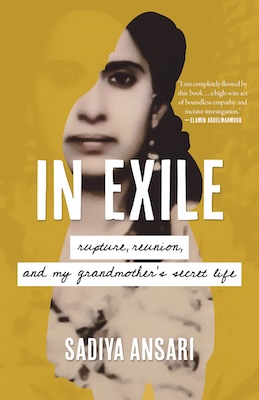
Despite my family’s roots in India, I had little idea of Partition’s impact on my own family. I knew my father’s family had moved from Hyderabad Deccan to Karachi, but we never spoke about it, and I never thought deeply about what they lost, or who they left behind. I didn’t even quite process that they were part of the 15 million refugees Partition created. But that changed when I started investigating another dark period in my family’s life—one where my paternal grandmother left my father and his six siblings for a period of nearly two decades. 

As I immersed myself in archival research and literature about the period leading to the British leaving India, it helped me understand the massive political upheaval during my grandmother’s life, exacerbating the personal turmoil she faced as a woman of her generation with little agency over her own life, married off at 14, only to become a widow in mid-thirties. It brought home how vital it is to see history through not just ordinary people’s lives, but ordinary women’s lives. 

Authors Kamila Shamsie and Sunjeev Sahota have discussed the painful irony women of my grandmother’s generation in the subcontinent experienced: while the campaign for azaadi, freedom from the British, succeeded in 1947, that it did not extend to women’s everyday lives.

Nor did it bring the unbridled joy expected after answering to foreign overlords for centuries. The weight of colonial rule was replaced by communal violence and fractured communities, Faiz Ahmed Faiz’s Subh-e-Azadi famously referring to the beginning of this new era as a “mottled dawn.”

Here are seven books about Partition—what led to this rupture, the horrors of that time, how these new nations were built, and how all of this has reverberated in subsequent generations, especially for women. 

Mottled Dawn: Fifty Sketches and Stories of Partition by Saadat Hasan Manto

Saadat Hasan Manto was one of the most prolific writers of his time — a journalist, screenwriter and literary master. Born in 1912 in Punjab, Manto was determined to stay in Bombay where he settled post-Partition but eventually moved to Pakistan when communal violence shook him. Mottled Dawn, referring to Faiz’s famous poem, is a collection depicting the violence and madness of that time. One of the most memorable is “Toba Tek Singh”, following a Sikh patient held in a Pakistani asylum for years after Partition. As he and others are moved to “their” new countries, Manto artfully reflects the wider bewilderment and resistance in these patients, who were “dead set against the entire operation.” 

A Thousand Times Before by Asha Thanki

What if you didn’t just hear ancestral stories, but you experienced them? That’s the premise of this incredible intergenerational yarn unspooled by debut author Asha Thanki. Three generations of women are connected through a tapestry, our guide in this narrative, Ayukta, explains to her wife her hesitancy to have a child. The saga spans three generations of women, connected through a tapestry, following her family’s journey from Pakistan to India during Partition, and onwards to the U.S. where Ayukta shares her family’s mysterious abilities for the first time. 

The Book of Everlasting Things by Aanchal Malhotra

The intricacy of calligraphy and artistry of perfume first bring together two youngsters in 1938 Lahore, and over a decade, Samir Vij and Firdaus Khan’s innocent love for one another grows until the fallout from Partition wrenches them apart. Malhotra uses her deep knowledge as a historian and skill as a storyteller to paint a vivid portrait of Lahore during this tense period, while also creating a rich characters who inherit both craft and allegiances. Although this is Malhotra’s debut novel, this work can be seen as a continuation of her deep examination of Partition, with non-fiction titles including Remnants of Partition: 21 Objects from a Continent Divided and In the Language of Remembering: The Inheritance of Partition.

The Great Partition: The Making of India and Pakistan by Yasmin Khan

Originally published in 2009, this pivotal non-fiction title was updated in 2019 by Yasmin Khan, an associate professor of modern history at Oxford. Khan’s careful effort to “humanise and pluralise Partition stories” spans how the British Raj fell to the fractured families Partition left behind. She also worked to avoid the simplistic narrative of Hindu-Muslim-Sikh rivalries creating an inevitable subcontinental split, instead examining the people and circumstances that created this outcome, creating a multitude of consequences still felt today. As Khan writes: “Partition is just too complex to be reduced down to a harrowing foundational myth of national sacrifice and victimhood.”

The Long Partition and the Making of Modern South Asia: Refugees, Boundaries, Histories by Vazira Fazila-Yacoobali Zamindar

Vazira Fazila-Yacoobali Zamindar’s work from 2007 is based on deep research, including digging into archival and oral histories, and follows not just the making of borders, but the making of new nations. An associate professor of history at Brown University, Zamindar focuses on the role of refugees in nationhood, and the bureaucratic efforts to construct new identities, especially along the border, and examines the plight of north Indian Muslims in particular. Her work has inspired performance, film, and part of an animated anthology.

Tomb of Sand by Geetanjali Shree, translated by Daisy Rockwell

Geetanjali Shree won the International Booker in 2022 for her fifth book, written in Hindi, which follows an 80-year-old woman in northern India who becomes deeply depressed after becoming a widow. Her protagonist, known as Ma, emerges from her depression with a new vitality, becoming more progressive than even her daughter, who has shrugged off a traditional life. This sets her on a path to revisit her early life in Pakistan, despite her family’s protests, where she confronts the trauma she experienced as a teen. Lyrical and experimental, Shree’s work and Rockwell’s translation deserve careful reading. 

The Parted Earth by Anjali Enjeti

Anjali Enjeti’s debut novel spans three generations of women from New Delhi to Atlanta, examining how political upheaval has echoes generations on. It begins in August 1947, where 16-year-old Deepa loses her secret boyfriend Amir to Lahore, which lands in the newly created Pakistan. Later, Deepa herself would be forced not only to leave India, but to leave the region altogether. Sixty years later, Deepa’s granddaughter Shan lives in Atlanta, and decides to search for her grandmother while grieving a pregnancy loss and marriage. As she uncovers how her family history was irrevocably changed by Partition, Shan also learns just how resilient the women in her family were.  

Navid Sinaki’s Debut Is the Love Story He Might Have Lived if He Never Left Iran

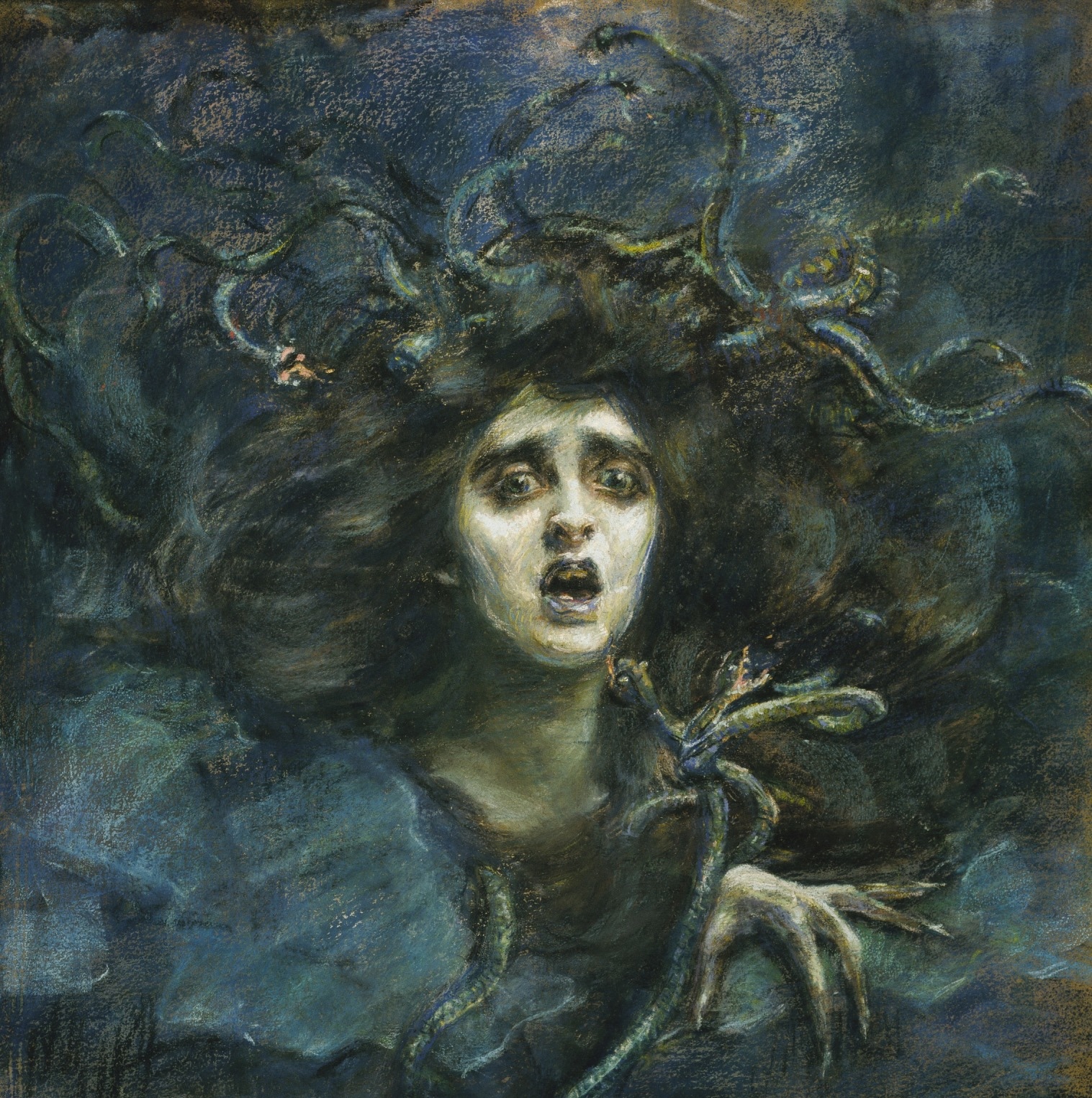
Have you ever come across a close friend’s love letters? In today’s world, this is more akin to accidentally reading private texts or emails open on a roommate’s laptop, but there are still the fortunate few out there who have the time and discipline and romanticism to write by hand and spell out the name of their addressee in pen. This is the feeling one gets while diving into the intimate world of Medusa of the Roses. Albeit fictionalized, typed, and within a novel, Navid Sinaki still portrays this sentiment that the reader is only overhearing a conversation, a slice of gossip, or is over-the-shoulder-reading a love letter not just from Anjir to Zal, but from a writer to a myth. 

Sinaki is a video artist, creative director, and author based in Los Angeles with regular exhibitions and screenings across the world. This is clear—one can feel the immense impact of Old Hollywood films, Greek myth, and Persian cinema, poetry, and architecture, that hums right beneath the sentences of his debut novel. It is an artist’s story that glitters with the residue of a life lived in the forward aim of beauty as much as truth. 

Medusa of the Roses takes place in modern-day Tehran, where homosexuality is criminalized, yet two childhood best friends-turned lovers, Anjir and Zal, have a plan: they will leave Tehran and start anew in Isfahan. After Anjir undergoes a sex-reassignment surgery and becomes a woman, they will be able to live openly as a couple while passing as cis straight people. Everything is set and ready to go—until Zal disappears and leaves an ominous note that references a younger lover. Anjir embarks to pursue this map of language and to try and find Zal, weaving through the city’s clubs, hotel rooms, museum halls, and library aisles—all in search of freedom and the person he thought he knew best in this world. 

This summer, Navid Sinaki corresponded with me, not through letters (unfortunately), but the close second of email where we discussed fortune tellers, genre films, and that secret language between lovers.


Kyla D. Walker: What was the genesis of Medusa of the Roses?

Navid Sinaki: When my mom found out I was gay, she said through her tears: “Maybe we shouldn’t have left Iran.” To her, living elsewhere would have made me someone else. Of course, I’d still have fallen in love with men.

I was born in Tehran, but my parents immigrated to the U.S. when the Iran-Iraq War escalated to a number of bombings that contributed to my fear of fireworks. We would visit often during the summer, but always with the perfume of conjecture. What would it have been like if I never left Iran? How would I live? How would I love? 

As a kid, I hated these visits because it meant a summer of hamburgers that tasted like kabob. It felt remarkably different from my suburban California experience. But the older I got, with each visit, I started seeing myself more and more.

Lady Fatima, a fortune teller, might have been the catalyst for my novel. The day before my final trip to Iran, I had a killer first date. The one blip was a visit to a fortune teller that told me I would never find love. “You,” she turned to Luis, my date, “All looks great for you. Good things, good things.” But she turned to me and repeated herself. “You will never find love.” She offered to burn $100 candles to clear the curse. When I told her I would think about it, that I was going to Iran the next day, she gasped. “You mustn’t travel across the sands and seas with this curse on your heart,” she said.

I did. She was the curse, one I was flattered to carry. Again, the recurring thought: What would love look like if I didn’t leave Iran? How would I evade death in a country that criminalizes homosexuality, but somehow still funds sex-reassignment surgery as a solution?

During my trip I saw a noir poster in a window (Laura), and I felt my heart pound for a man working a bread stand. A rogue sesame seed balanced on his top lip. I’d have found a way to touch him, to exchange glances that meant something more, a language that uses tongues but makes no words.

Medusa of the Roses was a braid that incorporated all the strands. I still would have discovered the music of Slowdive if my family hadn’t left Iran. I’d have found the work of Jean Genet and the films of Pasolini. Barbara Stanwyck would have made cameos in my daydreams. If I grew up in Iran, I’d still have my share of bruises, some deeper, some more brutal, all of them blue.

KW: Did the cityscape of Tehran influence the prose and writing style in Medusa of the Roses?

NS: My final trip to Iran was in my early twenties. I went knowing I wouldn’t be back. My artwork was getting more queer by the moment. Though I doubted the military guards would Google me, a fledgling artist, and find anything of worth, I still was aware of the danger.

The purpose of the trip was research. I was writing my honor’s thesis on Persian cinema from before the Islamic Revolution. These movies—exploitation and B-films, musicals and melodramas—shocked me. My favorite was one called Panjereh with a plot I recognized. When the protagonist knocked his pregnant girlfriend off a boat, I felt déjà vu. Wasn’t a similar ploy used to get rid of Shelley Winters in A Place in the Sun? It was liberating finding genre films from a place I used to think was so serious.

I was inspired by the Tehran landscape, sure, but I was always trying to memorialize who I was at that given moment. What I thought about life, how I felt about sex, and betrayals that still make me panic. Leaving Iran was always painful. By the time I got used to the time difference, we were already saying our goodbyes. I was always acutely aware that by the time we came to visit again, buildings would be demolished and some loved ones would be dead.

Writing my novel was a reverse Orpheus story. After my final visit, I left the country walking backwards, trying to take in whatever I could, conversations recorded on mini-DV tapes and photographs on a DSLR. I knew once I turned forward, the experience would solidify and there would be the curse that comes when moments end. Memory would become sculptural. It would harden. But I walked around those courtyards, those rose bakeries, the tumultuous bazaars, the Tehran Museum of Contemporary Art, and tried to breathe life into the stage set once more. For me, writing is a game of memory and erasure. There’s something wicked about squeezing details out of a moment, wringing the last bit of juice out of a sliced blood orange. Eventually, the sweetness is gone. I don’t mind the bitterness of what’s left. Sometimes pith can be delicious.

KW: How did you decide on the structure (of the narrator’s direct address to Zal) for the novel?

NS: I have been that person. I have had lengthy conversations with a lover who isn’t there. A person I might have seen in passing has become the star (or rather, the subject) of a monologue. Conversations between lovers have an intimacy and logic of their own, layered with inside jokes and resentment. Direct address allowed Anjir to be truer than any truth he would say aloud. If a language between lovers is sacred, then the unsaid is sometimes abject: plotting murders, confessing fetishes, and listing regrets. It was a language within a language.

Anjir began as a portrait of myself at that age, transplanted elsewhere. Eventually Anjir stepped sideways and became his own being.

I wanted his perspective to be brutally clear. I didn’t want to write a clean romance, because love rarely comes cleanly. Talking about Anjir in the third person felt very othering. Having him talk to Zal directly heightened his bawdy, fiery thoughts, but also deepened his melancholy. The one-sided conversation is directed at an absence, not a presence.

The difficult part of writing this novel was returning to Anjir’s voice. I could inhabit the rooms easily. In my pulpy haze, though, I sometimes left too much to the unsaid. In the revision process, I needed to tap into Anjir once more. Returning to the saturated intensity of his world was shocking. When I look back at my writing, scraps that I have kept from that time period, I’m stunned by the intensity of how it felt. I’m sure I’ll re-read what I’ve written earlier today, or last week, or last year with similar surprise. I remember who I am, but sometimes I forget who I was. 

After writing, I felt like I was rescuing myself from drowning. In the Vertigo-style spiral, I was Jimmy Stewart. I was Kim Novak times two.

KW: How has your writing process or relationship to your writing evolved over time?

NS: ur too literary 4 this, someone wrote to me on Craigslist back when “no fatties, no femmes, no Asians” was the norm for M2M contacts.

What would love look like if I didn’t leave Iran? How would I evade death in a country that criminalizes homosexuality?

I was outed by my journal, so my relationship with writing has always been complicated. Perhaps it was my fault for leaving the leather-bound mass-produced diary out, but after returning home from a double cafe shift, expired cheesecake still on my lips, I heard my mom weeping. I tried to convince her the journal entry was a work of fiction. It was hard to argue with those three sentences:

My family thinks I’m going to France for a film program. I’m not. I’m going to see a boy I think I love.

I lost that journal on my ill-fated trip to France at the end of an ill-fated love affair that began when I was seventeen. Somehow the journal went missing in Charles de Gaulle airport. Should I start again with a new journal, I wondered. Would the betrayal repeat itself?

Fiction became my diary. I still jot down lists and small memories—look here! I never want to forget where I was in this moment!—but the bulk of my longing, my fantasies, and my observations, I started to bury in my characters. It helps when I’m stuck. If my character is walking down the street, I might remember walking down Sunset Boulevard straight into a spiderweb with the spider landing directly on my eye.

Grief has also changed my relationship with writing. My cousin drowned trying to leave Iran by boat somewhere between Indonesia and Australia. I tried to write about Bahareh, but I couldn’t. Nothing could capture the totality of her presence.

After a particular breakup, I kept a glass of milk on the space between stovetop burners. It’s where he set it down last. He left. I left the cup where it was for days. Out of solidarity, the milk didn’t stink too much. I panicked when I realized the liquid was evaporating. Everything as it was. That was the game. I started marking the cup with a dry erase marker to see how many millimeters it shifted. Next the panic was this: what would I do after the last bit of milk was gone? That is my writing process now. Starting with a full glass and documenting what I can before it’s all gone.

Her Father’s Sex Life Is the Star of the Show

An excerpt from The Hypocrite by Jo Hamya

There was summer, a beach; a country they were still getting used to in the early stages of their holiday. There was a map of tourists on the sand with bared stomachs on striped towels, rows of skin pillowed up to brown in the sun. There was—ahead—the shoreline, the plastic rainbow litter of miniaturized buckets and trowels. Other people’s husbands standing desultorily over their spawn while their wives took a break, took Aperol, wore designer sunglasses, half watched little sand huts being drawn up: the erection of child-sized city-states on the coast, subject to parental patience and barely developed motor skills. There were teenaged girls in their first bikinis flirting with the local boys, and officiate beach wardens in navy polo shirts and navy shorts, lips half pursed around their whistles: eyes flickering to them, then away.

August. Sicilian islands. Sophia had taken her father out to sea. It happened naturally. She tugged his hand. She was, at that point, so much smaller than him. Her cheeks were as soft as the just-forming paunch of his stomach. The sides of her mouth were bearded with pulverized peach flesh, and clinging beach grit. Her fingers were unpleasantly sticky. She did not look like a serious person. But when she said, we go now, he hadn’t been able to imagine staying still. He took her hand and made himself move. It was hard. There was—

her little hand tugging—

(and the task of stooping to reach it; the cramped space left to pick up his knees in, and the soreness around his back, which had been a terrible new sensation in those days—)

her little hand tugging—

(the weather, which had been too warm:he hated beachwear, he had worn linen trousers in protest, he thought they looked quite good—)

her hand pulling faster—

(and the sudden fear: that they had not brought toys—one of those crude red molds of seashells she could have slapped onto the sand or an inflatable ball, though he wasn’t sure how well throwing and catching would go; the thing would have probably floated out on the water if she tried, so the question of how to entertain her, how to have fun, turned helplessly in his mind—)

they reached the shore.

Sophia’s mother watched them from the shade of a rented umbrella. Once they reached the sea, Sophia sat down in the water. Her father scooped her immediately back up. Patches of pink dress near her legs and her bottom turned mauve instead: came up wetly, like a bruise. It seemed to bother him more than her. On being set down, she’d shrugged; moved two paces forward, sat down again. She’d begun pulling fistfuls of sand up and lumping them into a mound. After some consideration, her father crouched down too—rolled up the sleeves of his button-up and his trousers.

He’d started gathering sand into his palms, sculpting more carefully than his daughter. He’d added a moat. He’d taken pebbles and stuck them near the tower’s base; made his hand into a claw and dripped slurries of sodden material over the edifice until the sand formed turrets. Each time his daughter made to help, he batted her fingers away. Sophia’s mother watched her do battle over a sandcastle; watched her pout and knock parts off as they were added. Her father laughing. Continuing to build.

It had been exhausting to guard. Sophia’s mother knew the beginnings of a tantrum when she saw one. Earlier that day she had used one arm to lift her daughter slightly above ground and another to slip a pair of blue gingham shorts under her feet while she thrashed. She’d tied a ribbon in the middle of the fabric’s elasticated waist, she’d smoothed cotton. When it was done, Sophia had scowled. She shook her head. She prepared her bottom lip for conflict.

This was a daily ritual. Sophia knew what she wanted. Another change of clothes. Another. Her father worked on his novel in the other room.

The beach; the fat pulse of the sun and its resultant waves of lightheadedness. Sophia’s mother touched her watch. She imagined swimming. She thought about how to do dinner that night, remembered dinner the night before—courtesy of her husband’s friend. Someone he hadn’t seen in years, another writer, whose daughter had been paid €15 to look after Sophia. A table of eight other strangers her husband was excited to meet again. She sat on the far side of the arrangement, away from him. That she could not keep track of their names, though evidently few people knew hers. That she had worried whether a sixteen-year-old she didn’t know was equipped enough to take care of her child. That it had been a night of not speaking, with a glass of red wine hovering under her chin by its stem, and recollections pooled by the others from university pubs she’d never been near. And—Aren’t you stunning? her least favorite of them said; gestured to the man she had married six years ago. Has he shagged you yet?

A pause. A smile. An argument on the way home.

By the sea, Sophia’s protests had subsided into laughter instead: she’d learned to make a sport of demolishment. Her mother wondered whether she had enough good humor to deliver her daughter’s hat before she got sunburn, whether she’d put enough SPF on; considered the thick square of black polyester-elastane blend flattening her breasts and mulled over whether she had the time to buy something nicer. She was tired.

When she woke from her nap, the time on the umbrella had run out. It, her husband, and child were gone. There’d been no note to explain the latter’s departure, but she could picture it. Him, gathering Sophia up, awkward but sure, with one hand supporting her thighs and the other on her shoulder. Her mouth level with his ear. He liked to steal her away like that from time to time. When he did it, he would say something inane like, Mummy needs a break, and smile at his own benevolence. It’s an image she resented: a middle-aged man in damp linen trousers, carrying her daughter. When a beach warden had asked whether, for the discounted price of €2.50, she would like the umbrella back, it had been the kindest thing she had ever heard.


In his North London kitchen, Sophia’s father measures out two teaspoons of sugar and stirs them into his cup. There is a leftover plate in front of him smeared with apple preserves and dough. He takes it to the sink. On the counter, the Evening Standard urges him to take advantage of the country’s newfound freedom by tucking into oysters at Vinegar Yard, by seeing Titian conquer love and death at the National Gallery; it asks him to eat out to help out, a phrase even he has grown bored of turning into a joke by way of past lovers’ genitalia. The paper extols the benefits of a UK-based ‘staycation’—a word he has crossed out by hand in vermilion pen.

One evening in April, after a month of making small-talk in his local corner shop with whoever could bear to stand near him for an hour, he sat in front of a pixelated image of the foreign secretary, whose hands conducted such nightly proceedings in absence of the prime minister—he had fallen ill. A gold wedding band had flashed forward with statesmanlike authority while Sophia’s father heard change to our social-distancing measures now would risk a significant increase in the spread; while he heard damage to the economy over a longer period; while he heard measures must remain in place for at least the next three weeks. The hazmat-inspired podium on-screen played on with other speakers for the duration of an hour. He’d called Sophia first. When she didn’t pick up, he called her mother instead and howled. It’s not something his daughter knows about. She’d sent him a text the following morning with a smiley face, having only just recharged her phone. His ex-wife was already in the guest bedroom, unpacking a suitcase into its wardrobe when he cried in slower, longer breaths the second time, and lingered over the typed-out emoticon. With great patience, she taught him how to install a popular new form of video-call software as a way to breach this new form of distance.

Not seeing Sophia, in itself, was not an uncommon event. When his ex-wife left him, there were no arguments about who their daughter would go with. She had been small enough to need constant care he felt it was more natural for her mother to give, and which he couldn’t, because of his work. Gaps in contact became part of their relationship. He took care to mend them—with humor, with presents, and affection. He always wanted to know what she was turning into while she was gone.

He always wanted to know what she was turning into while she was gone.

During the months in which it had been unclear whether it was safe to see Sophia in person or not, his ex-wife had tactfully left the house once a week under the guise of shopping for food while his daughter moved haltingly across his screen, voice cutting and returning out of sync, face bleached by light coming in from a window in her background. When the calls finished, his ex-wife would reappear with stems of tulips he’d never have thought to buy for himself when alone. He’d watched her move about the house in clothes she’d worn when they were married. She left him again yesterday. Today, he sets his coffee down on the fat lip of the bathroom’s sink and rakes a comb through his hair. He clips his nails and rubs cream into his hands, takes a clothes brush over the light wool of his gray suit. Twenty minutes later, a cab dispenses him in front of a theater in Covent Garden.

Quarter to two in the afternoon. The first thing he does is text Sophia to say he has made it. He sends a smiley face as an afterthought. Then, he lights a cigarette by the building’s edge and searches the crossing to his right. Traffic. Horns coming up from the Strand. People’s sandals, jackets, bags, scurrying past. There’s a woman with her head bent and her thumb on her phone—such an ugly position, he finds. But she has a beautiful olive face and he likes the red color of her shoes, so he counts her in the composition. She has stopped on the pavement. Now, he is outlining her: making more manifest the jewel drop earrings among her hair and the bangles on her wrist. There’s her calf, her thigh. There’s the twist of summer dress on her chest. As though she knows it would please him, she puts her phone in her pocket and tips her head back at the sky. He has the sun on her face. Who else could make her beautiful like this?

He does it for everyone: today is a benevolent day. A waiter in the restaurant to his left drops a tray he is using to lay silverware on the tables outside, and it’s not unpercussive, the noise it makes—he can add it, somehow, to the thrum, to the music he imagines in his head. It might be excessive, but he makes the silk anemones on the restaurant’s windows shake in their pots when it happens, little purple-pink shivers in green. The inside of the theater ahead is visible through glass walls: the people within are like marionettes, waiting to be moved. When the cigarette goes out, he puts on a cotton mask and goes in.

Now, the presence of others. He waits in a queue elongated by the space individuals keep between themselves and others. Collects his ticket, stub of stiff white; is given an orange plastic square in exchange for his suit jacket. It’s a trade down rather than off, but the room is hot. He is approached, gingerly, on whether he would like to buy a programme for £10 and accepts. Then he is served bad-wedding kind of wine at the bar, cold-misted glass smeared by hot fingers and not enough poured in: he regrets asking for it. It costs £10.25. Still, he enjoys himself. It’s the contained way everything exists in a theater. Everyone around him is doing the same: ticket, bag check, programme, drinks. Everyone is sipping the same sweating, overpriced alcohol and comparing notes on their pamphlets. If he came here tomorrow, he would find everything identical. It’s a relief that things are normal, with only slight alterations. The half-faces, with eyes peering over cloth. The arrows on the floor, directing movement. They go mostly ignored.

The thing about the theater foyer is that it has been recently renovated. The open-plan glass extension that spills seamlessly into the old front of house is new: there was less space before. The wall that has been taken down used to display posters of past and ongoing performances. There had been a greater sense of being ushered into the depths of the building, of exiting the world for a few hours to see something less real than what was outside. There had been no windows. The embrace of artificial light. How it is now, transparent, and stippled with other buildings’ shadows, with London streaming in full view, is, he supposes, a new sensibility being asked of the arts. But even so, there are good things about the building’s new set-up. At almost two o’clock, in the height of summer, the sun comes in. The foyer, where it meets the theater’s front of house, turns everything into a glasshouse where he can watch things grow.

Three-quarters of Sophia’s audience is made up of young people in their twenties and early thirties. They cluster in groups, leaving around them empty space. They know each other’s presence is the potential for sickness or death, and so they display an exquisitely exaggerated consideration in keeping to themselves. They take pictures of everything. The gold balustrades on stairways, the carved walls. They take pictures of themselves. Everything about them is as immaculate as a painting: color, pose, poise. Their fingers and dexterous wrists, managing their camera phones. None of them lean back, or let their mouths unconsciously drop open. They take off their masks and become plastic, perfectly suspended with arched backs and pursed lips. He sees them pretend to do things like drink wine or read their program before tucking away their devices to drink wine and read their programs. He enjoys watching them, and so it is almost a shame when a woman wearing a headset touches his elbow. But he likes the way she tunes her eyes fluidly into a smile above her mask. He has attempted this before and failed. She does it well. She does it so it looks real; instructs him by her example to match the same quick change of pace. She’s head of brand engagement and social media for the theater, she says. She is working on his daughter’s play. They have half an hour until it starts. Would he like a quick tour?


She leads him to a wood-paneled lift. Its doors open instantly for her. She points at his drink, apologizes and says, you’ll have to leave this; turns her head like a saint while he unhooks the cotton around his mouth and drains his medium measure of white in two awkward slugs. He leaves the glass next to a bouquet of lilies on the table beside them.

Plum carpets and mirrors on the surrounding walls. He must be very proud of Sophia following after him, the woman tells him while the lift takes them up. If she had a famous author for a father, she’s not sure she would do the same.

Yes, of course, he says, he is very proud, though he doesn’t know how accurate the word ‘famous’ is. She assumes he’s being modest; tells him she had to google his name for a picture reference of who to find in the foyer. The results had turned up his Desert Island Discs, a Telegraph article ranking him one of a hundred most important people in twentieth-century British culture, a well-stocked Wikipedia page.

Sophia’s father demurs. For all this so-called fame, she still had to google what he looked like, who he was.

For all this so-called fame, she still had to google what he looked like, who he was.

It was meant as a joke, but he can see he’s embarrassed her. He starts to say, and Sophia’s play? Do you like it?—only for the lift doors to open. She looks at him expectantly, says, Please, and waits for him to step out. Two awkward steps. He’s sorry, he pleads with her. He doesn’t know where to go.

Now she smiles in that same skilful way, with all of the uncovered parts of her face, as though something has been restored. It’s just this way, she allows, and leads him forward. He watches the back of her head recede for a moment. It has acquired, inexplicably, a kind of malevolence.

She likes his daughter’s play very much, she tells him once he has caught up. It’s very generous of him to come.

He wants to ask her what she means by this, but they are at the doorway of a booth now, where the woman in charge of social media tells him to feel free to look around from the entrance, but not to go in. She points out screens, which project the stage below. Crew members run in front of the camera. Bits of music play: loud, then not. What he is seeing is the preparation to stream that afternoon’s show on their website, his companion explains. Since mentions of the play had been doing so well on various social media, they thought they should try to broadcast it online. Audience members had become so used to replicating life on a screen thanks to the pandemic, thanks to video calls and home cinema, remote parties and kitchen discos.

To Sophia’s father, each black-clad production member is a ghost ensuring his daughter’s work haunts the internet. But he nods.

No, that is very good, he concedes, and means it. He tries to override the sudden clench of muscles in his stomach. The tech booth, with its dimmed light and damp smell, has none of the glamor of the rest of the theater. Rust-colored carpet has clots of mud and glitter in it; gunmetal and plastic equipment with raised black and red buttons protrudes from everywhere. It is a small, claustrophobic space with him lingering in the doorway. It enables everything. It does not feel right to be in it. He thinks of how beautiful the photos taken by audience members in the light-filled foyer must have been, and how ugly it is in here. On a Tannoy overhead, a woman’s voice asks him to take his seat: she tells him the afternoon’s performance will begin soon. And dimly, on a Tannoy overhead, Sophia hears a woman’s voice asking the theater’s relevant visitors to take their seats. She tells them the afternoon’s performance will begin soon.


A line from Sophia’s play:

 —Would you like a cigarette?

A line from Sophia’s play:

 —No. I’m always meaning to quit, aren’t you?

A line from Sophia’s play:

 —I don’t think so. The body accepts its daily increments of harm.

It’s like cocktail-party conversation, Sophia’s father thinks. It makes absolutely no sense.

Onstage, the actor finishes smoking, and the obvious thud of a bedframe hitting a wall resumes, again and again. After the two actors had finished their prolonged build-up to sex, the upper section of the kitchen’s high back wall had revealed itself as a partition; lifted, introduced a new set. It was impressively done. The new set looked nothing like the kitchen: it was a white box containing a white bed and nothing else. From somewhere, a smoke machine misted the area with soft vapor.

At first Sophia’s father hadn’t been sure of the intent. The new part of the stage looked like heaven compared to the gnarled wood, the clutter it sat above. But now that he has been watching the two actors fucking in it for almost ten minutes, it looks unreal. It looks like a new-age porn set.

His first honest thought had been that a sex scene this prolonged was a brilliant device to kick off a play with. It was the sort of move that gave the overall work the potential notoriety of a classic. If it had had nothing to do with him, he would have told Sophia she was every bit as clever as her father. But the shirt on the floor is undeniably his. He’d like to inform Sophia that when he did bring women home, it happened late, and lightly, and he’s sure she never witnessed it first hand. He finds it hard to picture her lurking by the stairs. He thinks of the production crew he met in the tech booth half an hour ago moving neatly, capturing each actor’s move as it happens.

When he hears the beginning of an orgasm and knows the sex is coming to an end, he lets some saliva back into his mouth.

Shock.

Despite renovations to the exterior lot, theaters in Central London remain impossibly old. Chairs are small. Even with the new rules, where space is left between occupied seats, proximity to others is unavoidable. The great horrified hush around him is tightly strung. It would be so easy to break, and feasibly, to his advantage. How often, he reasons, do groups of middle-class theater-goers endure watching simulated sex next to strangers? That, he could say in a sensible tone, is not what happened at all. He would not even have to raise his voice too much above normal volume to be heard.

The woman to his right is still grasping her phone and the glove of four sloping bones that make up her knuckles look ready to come out of their skin. For something else to look at, he slants his eyes two seats to his left, where another woman wearing round glasses is sitting. She seems to be having the opposite reaction—she is slouched back; bored. Oddly, the woman with the phone is the older one; from the look of the top of her face, he’d put her in her thirties. Round Glasses looks like she might still be at university, possibly just out of school. She has a buzz cut. Perhaps, he thinks, it’s that the younger generation has grown up with an unavoidable stream of sex on their phones: inTV shows, in ads for perfume and cars. She is probably used to it.

Other, terrible, thoughts. Has Sophia heard him come? He listens to the actor do it and decides, evidently not.

More urgent concerns supplant that notion. He has to chew them down. First that Sophia has, however indirectly, thought of him having sex.

It is surprising to him that he cannot receive this idea with more cool. During their holiday, he made sure to write anything radically vulgar without her assistance. And the book they came out with contained very few fucks in the end—mostly, it was almost-adults making innuendo; a lot of anatomical wisecracks and longing. A lot of ships in the night. Part of him had taken it for granted that when she read the finished work, she had skipped over certain passages. The way he recalled it, the part-time nature of their relationship as it existed back then meant they had been distant enough with each other to speak frankly about sex in abstract, or else, to veil it in writer’s jargon, but too close for conversation to veer into personal context.

The next problem is that Sophia is aware of the possibility of his body existing unclothed, and that she has found it to be a problem in the world. He rids himself of the saliva in his mouth.

Sophia is aware he has a dick.

Wrong word. He can feel his tongue prune; ridges on it like an allergic reaction to bad food.

Sophia is aware he has a cock.

No.

A penis.

That settles, somewhat. Who doesn’t, after all? But then the next crushing thought. Sophia has written a play in which everyone can see a supposed representation of his penis.

He breathes; moves his knees forward until they touch the seat in front of his. He scans for something meaningless he can look at onstage while he thinks and arrives at the espresso mugs on the kitchen counter. They are plain, and blue.

Sophia has written a play in which everyone can see a supposed representation of his penis, and she has done it to evoke disgust. Possibly he is reading too much into it, but it has turned the woman to his right into a death mask, and the woman to his left cat-like with tedium. Neither option is good. There is enough in him to still feel wounded. If he could walk around the theater appealing to the audience for help, he would. He’s not sure which is the larger slight: that she will continually expose him to a new cohort night after night, or that each show will find his body ugly. And what was she thinking, casting this actor with geometrically cut pubes?

Too quickly, before there’s time to stop it, he wonders whether he’s supposed to reciprocate. What Sophia has done is undress him with clinical assurance, and perhaps he is supposed to do the same to her play. Someone like him has been conjured; it follows that she might have written herself in, too. If at some point an actress portraying her onstage emerges naked, will he be expected to keep his face level and stern? Should it go like this: here are Sophia’s breasts; there is her cunt; here is her body as meaningless event? It is not as though he did not used to, in his own matter-of-fact way, lower her into baths, or unload her from a shit-stained nappy.

But there is a difference, there is. When he finished doing those things, he pressed the soles of her then-tiny feet to his mouth and said, I love you, you’re mine. None of that care has been given him. In twenty or so years, she might have to wash him while his body degenerates. Will she find him disgusting then? Does it matter?

None of these hold a candle to the remaining fear. Glibly, he had assumed Sophia did not tell him about this play for a long time out of embarrassment; to eliminate the possibility that he might tell her it was bad. So far this is not something he can do in good faith. He’d brought his heart to his seat to watch with, and it turned out there was no need. She was better than him. Now the realization—perhaps her omission was to spare his feelings, not hers.

8 Books Reimagining the Monstrous Women of Mythology and History

In the first drafts of my debut novel Medusa, I was consumed by the idea of what it meant to be a monster in a story you didn’t control. Medusa is one of the most recognizable monsters of Greek mythology, with the writhing mass of snakes for hair and the turning people to stone with one side-eyed look. Still, even with all her fame as a terrifying villain to counter the righteous young hero, we only get brief glimpses into her life. In the version of Medusa’s story that I drew inspiration from, her transformation into a snake-haired monster was the goddess Athena’s revenge for the sea god Poseidon raping Medusa in Athena’s temple. Medusa’s monstrosity is unwillingly thrust upon her, and the gods leave her to deal with the consequences. 

As I pieced together what I thought Medusa’s life would be like after being transformed into a monster, her fate unraveled into a collection of choices. Does she give in to her monstrosity? Does she reject it and outcast herself from the mortal and immortal societies that scorned her? How does she make the right choice, when everyone around her already considers her the villain in their story? Except, this was Medusa’s story. Putting her at the helm of the narrative allows Medusa to make good decisions, bad decisions, and all sorts of questionable decisions in between, but importantly, it is her choice to make them. These decisions cause some to believe her to be a monster, but to others, she is a powerful woman taking control of her life.

Below are eight books I’ve loved that feature women of mythology, folklore, or history seizing control of their narrative and encouraging us to reconsider what it means to be the villain in the story, just like Medusa.

Kaikeyi by Vaishnavi Patel

Plucked from the expansive Ramayana epic, the princess Kaikeyi refuses to allow her life to be controlled by men or gods who don’t listen. With the ability to see and influence the bonds that connect her to other people, Kaikeyi maneuvers herself into becoming a favored queen, diplomat, warrior, and mother. But Kaikeyi’s choices are at odds with the will of the gods, and her decisions could lead to the destruction of the life and family she fought so hard to secure. What, and who, is she willing to sacrifice for what she believes in? Patel weaves together a beautiful narrative of a vilified queen and contextualizes the infamous decision that changed her life and the lives of those she loves.

She Who Became the Sun by Shelley Parker Chan

The first book in a wildly vivid, brilliant duology that reimagines the life of Zhu Yuanzhang, the emperor who founded the Ming Dynasty in the 14th century, begins when a young orphaned girl steals her brother’s identity to join a monastery in rebellion-stricken imperial China. Just when she has settled into her new identity and demanding life, the monastery is destroyed. Zhu refuses to crumble into fear and instead decides to claim her brother’s Mandate of Heaven, giving her a power that only men have held before. She is thrown into a political battle for the empire that brings her friends and enemies alike, and though her choices could bring chaos, she is willing to do anything to prove she can rule.

Gods of Jade and Shadow by Silvia Moreno-Garcia

Drawing from Mexican folklore and set in the Jazz Age, the story centers on Casiopea, a young girl who dreams of escaping her grandfather’s house in southern Mexico where she is treated like a servant and tormented by her cousin. Her dream becomes possible when she accidentally frees and binds herself to the spirit of a Mayan death god and agrees to help him reclaim Xibalba, the Mayan underworld, from his sacrifice-hungry brother. Against all sense, Casiopea throws herself in the middle of an ancient rivalry and into an adventure that takes her through Yucatán, Mexico City, and straight to the underworld. However, being bound to a god of death has its consequences, and she soon faces a trial that puts her dreams, her life, and the fate of the world at stake. Moreno-Garcia’s masterful storytelling accentuates the strength of one woman’s convictions even in the face of death.

The Genesis of Misery by Neon Yang

In this queer space opera reimagining of the rise, fall, and witch-hunt persecution of Joan of Arc, Yang delves into the story of an unremarkable mining planet citizen who is suddenly drawn into a terrible war due to the discovery of their saint-like abilities. Misery doesn’t believe they are a saint, just a victim of voidmaddness whose “angelic prophecies” could very well be delusions. Swept up in the faith of others, she has no choice but to go along with the claim to sainthood and join the battle. However, as the angel’s voice in her mind grows stronger, Misery finds herself amongst rebels and outcasts to the empire and begins to question her loyalties along with her sanity.

Black Sun by Rebecca Roanhorse

Richly inspired by the cultures of the pre-Columbian Americas, the first book in the Between Earth and Sky trilogy introduces Xiala, a disgraced captain with a siren’s power to control seas and minds alike, Naranpa, a Sun Priest struggling to hold her society together as the cosmos predict her downfall, and Serapio, a blinded man fated to become a god. Tasked with sailing Serapio to the Sun Priest’s city, Xiala reckons with past mistakes and how her role in the web of destiny could change the world as she knows it. Roanhorse’s captivating world-building creates a stunning backdrop for her characters, who are as compelling in their ambitions as they are in their carnage. 

Juniper & Thorn by Ava Reid

Marlinchen and her two sisters are the last remaining witches in a city that is leaving magic behind for the bright promise of industry. Her father, a wizard inherently distrustful of the changing world, keeps his daughters hidden away and relegated to performing simple cures for paying customers. However, the sisters are not satisfied with such a restricted life, and one night when they sneak out to experience the city, Marlichen is captivated by a ballet dancer who seems to be just as trapped as she is. When a mysterious monster brings gruesome fear to the city, Marlichen finds herself torn between her growing infatuation with the dancer and her duty to her family and the magic it possesses. A gothic horror retelling of Grimm’s “The Juniper Tree,” the story digs deep into the black heart of a woman and lays it bare for all to see.

Daughter of the Moon Goddess by Sue Lynn Tan

Living in exile, the Chinese goddess of the moon Chang’e has kept her daughter Xingyin a secret from the Celestial Emperor. When Xingyin is almost discovered, she flees her home and lives in disguise in the Celestial Kingdom, determined to find a way to lift her mother’s banishment. Xingyin accidentally forms a useful, but dangerous friendship with the emperor’s son and gains renowned skills in archery and magic. While her relationship with the prince blooms, Xingyin sets out on a perilous quest that will bring her face-to-face with legendary creatures and a dangerous bargain, but she is willing to risk everything for her mother. This is the first book in a sweeping duology that artfully depicts the world, creatures, and gods of Chinese mythology, woven together by Xingyin’s tenaciousness and compassion. 

Wake, Siren: Ovid Resung by Nina MacLaughlin

Using both modern retelling and mythic depictions, MacLaughlin writes about the women, monsters, and everything in between from Ovid’s Metamorphoses and allows the stories to stretch beyond their original few lines. These devoted but brutal visits into the tales of Arachne, Scylla, Io, and Medusa draw out the violence that lurks beneath the gilded veneer of Greek mythology and give a voice to the women who endure the remarkable. The stories are told in a variation of styles that breathe new life into the ancient myths, and make you reconsider the stories you thought you knew by putting the narrative into the women’s clawed, scarred, and grasping hands.