The Roads
Click to enlarge



Click to enlarge
When I started to write about motherhood a decade ago, the topic still carried a tinge of shame. Writers tended to fear motherhood would push them into some unsightly box, as if they’d succumbed to something less serious than the laudable material of their (non-mothering) peers. In the Los Angeles Times in 2017, Sarah Menkedick discussed her initial tendency to “apologize” for writing about being a mother. “Patriarchal culture,” she observed, “has reduced motherhood to an exercise no serious artist would tackle as a subject.” I felt that silence. When my daughter was a newborn, I remember putting her in a Moby Wrap and searching the library’s shelves for books that captured what my life was becoming. I didn’t search for parenting books—of which there were plenty—but lyrical, literary depictions of the actual, internal experience of being a mother. Books that captured that sometimes-joyous, sometimes-heartbreaking, sometimes-painful transition I was making. Such books were few and far between.

Thankfully, that has started to change. I can think of nearly a dozen books published in the last few years that explore motherhood. Perhaps due to conversations surrounding reproductive justice, perhaps due to the heightened stressors mothers faced during Covid-19, perhaps due to high percentages of women and non-binary students in MFA programs, more and more contemporary writers are interrogating motherhood. I count myself among these writers—and my own essay collection, We Are Animals, among these books—and I am grateful for this shift.
Yet within this current cultural moment, I’ve found that the richest, most nuanced books continue to strike me as those I turned to again and again when my daughter was young. Books that sent their observations and words out into a world that didn’t always offer a landing spot for literary narratives of motherhood. But books that remain, to me, some of the best on the subject.
One of the most overlooked and underrated books about motherhood I can think of is Raquel Vasquez Gilliland’s collection of poems, Dirt and Honey. To be honest, the book isn’t so much about motherhood as it is about creation, femininity, the maternal, and our ancestral ties to the earth. This is a book that merges the personal with the mythical, and the embodied with the ethereal. The language sings and surprises throughout the collection, but I especially appreciate the book’s willingness to mix religious allusions, personal experiences, and ecofeminist retellings. In Dirt and Honey, the feminine and maternal are a rich, entangled knot of the individual, ancestral, political, and spiritual, and Gilliland truly honors that richness.
In Bring Down the Little Birds, Carmen Giménez captures the experience of mothering a young child, gestating a second, trying to maintain a writing career, and adjusting to her own mother’s brain tumor and dementia. The threads are woven together beautifully, and Giménez’s gifts as a poet clearly come through in this, her first work of nonfiction. Stylistically, the memoir is fragmented, sparse, and lyrical. Giménez writes of motherhood the way Sarah Manguso writes of motherhood—though Giménez published her book first. Readers who sometimes struggle to balance motherhood with an artistic career will especially appreciate Giménez’s quips at the writing life.
There’s a moment in The Blue Jay’s Dance where Louise Erdrich describes dressing her newborn in “her bunting” and “cart[ing] her across the road” to Erdrich’s writing studio, where the baby sleeps and cries and later crawls across the floor. Erdrich, meanwhile, tries to write, though more often she observes the natural world around her and reflects on family history and what it means to mother. In this way, early motherhood is intertwined with the changing seasons, with the nesting blue jays, with the spring kittens, the deer, and the morning glories and foxglove. Reading The Blue Jay’s Dance when my own daughter was young felt like immersing myself in a sacred holding space. The book is meditative, quiet, comforting, and profound.
Beth Ann Fennelly’s Tender Hooks is, quite frankly, a delight—the kind of poetry book you’ll pick up with curiosity but then read cover to cover in a single sitting. The book explores early motherhood, from childbirth to breastfeeding to weaning, and it reads like the memoir of a woman bruised but in wonder from it all. Although Fennelly approaches motherhood with depth, nuance, and lyricism, her greatest gift is her humor—witty, embodied, and sometimes wonderfully profane. I especially appreciated the couplets interspersed throughout, such as “Gong”:
From the kitchen, fixing her a bottle, I hear it:
two milk teeth against my beer can.
Also by Beth Ann Fennelly, and published around the same time as Tender Hooks, is Great with Child, which presents a series of letters that Fennelly wrote to a pregnant mentee about preparing for motherhood. The letters are poetic, comforting, and affirming, and readers who are balancing an artistic career with early motherhood will especially appreciate the light-hearted advice and empathy that Fennelly provides.
“Early motherhood is an extreme sport,” Sandra Steingraber writes in Having Faith; “Sleep deprivation is part of the problem. This will not come as news to anyone who has ever had a baby, but before I gave birth, I had naively assumed that some mystical, mother-love hormone would kick in and make it possible for me to endure sleeplessness in ways that non-mothers cannot. I am somehow astonished to discover that being awakened at 2 AM feels just as awful as it ever did.” For those looking for an account of motherhood written by someone who clearly understands the science, yet who can also maintain a compelling narrative voice, ecologist Sandra Steingraber’s Having Faith offers it. Steingraber seamlessly integrates personal anecdotes with narrative about the biological experience of motherhood in a manner that is lyrical, humorous, and grounding. If you haven’t read it, you should.
An anthology, The M Word brings together short essays by female Canadian women writers. “The M Word: it means something to every woman. Exactly what it means is rarely simple,” the book jacket states, and they are right. If what we long for in motherhood books is complexity, and moments when joy and sorrow and boredom and anger can rub against each other, side by side, this book certainly offers that. It isn’t a celebratory motherhood book—the kind you might see at the bookstand at Target around Mother’s Day. Instead it is real, well-written, evocative, and diverse, containing essays about infertility, being a stepmom, deciding not to have children, and childbirth. It left me able to hold the complexities of my own experience, and to see those complexities as beautiful.
Electric Literature is pleased to reveal the cover of When the Harvest Comes by editor-in-chief Denne Michele Norris, which will be published by Random House on April 15, 2025. You can pre-order your copy here.
In this heart-wrenching debut novel, a young Black gay man reckoning with the death of his father must confront his painful past—and his deepest desires around gender, love, and sex.
“I got tired of running away from what I should’ve been running toward.”
The venerated Reverend Doctor John Freeman did not raise his son, Davis, to be touched by any man, let alone a white man. He did not raise his son to whisper that man’s name with tenderness. But on the eve of his wedding, all Davis can think about is how beautiful he wants to look when he meets his beloved Everett at the altar. Never mind that his mother, who died decades before, and his father, whose anger drove Davis to flee their home in Ohio for a freer life in New York City, won’t be there to walk him down the aisle. All Davis needs to be happy in this life is Everett, his new family, and his burgeoning career as an award-winning violist. When Davis learns during the wedding reception that his father has died in a terrible car accident, years of childhood trauma and unspoken emotion resurface. Davis must revisit everything that went wrong between them, his fledgling marriage and irresistible self-confidence spiraling into a pit of despair. In resplendent prose, Denne Michele Norris’s When the Harvest Comes fearlessly reveals the pain of inheritance and the heroic power of love, reminding us that, in the end, we are more than the men who came before us.
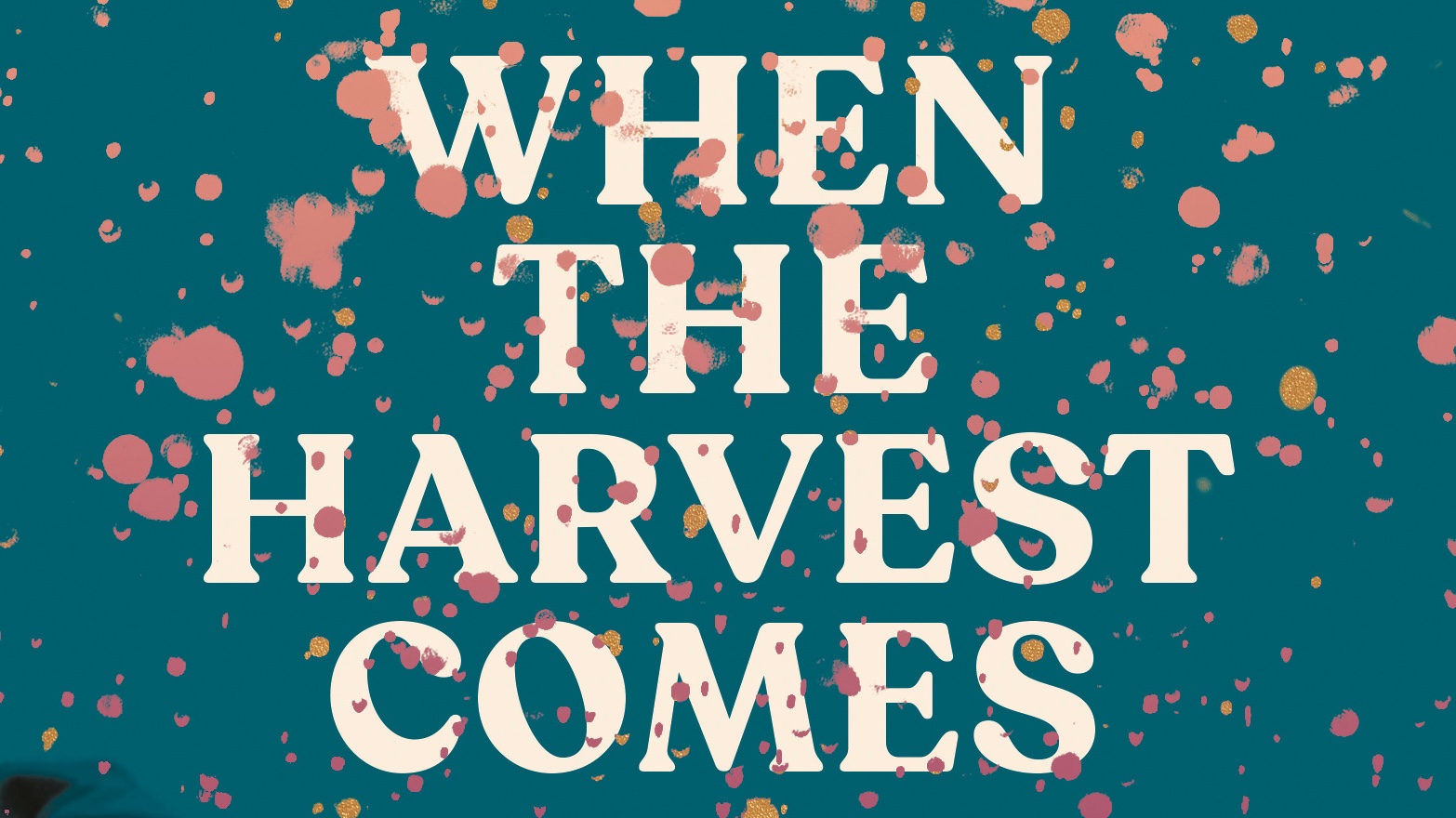
Here is the cover, designed by Emily Mahon:

Author Denne Michele Norris: “Some years ago, I took my first international vacation. A dear friend had decided to celebrate his birthday in Puerto Vallarta, Mexico. In this friend group we were all in our late twenties: early in our careers, without much in the way of disposable income. But we scraped the money together and joined him. One night, we dispersed: one of us went to a pool party, another went to a bar, and another stayed home eating tacos on the lanai. I’d made plans to meet up with a man I’d met earlier that day. I arrived at our chosen spot at the chosen time, but he was nowhere to be found. I called him, I texted him, I waited for 30 minutes, but he never came. I was deeply disappointed. Earlier that day when that man had approached me, talked to me, asked for my phone number and made plans with me, I’d felt blissfully chosen. But in that moment, standing outside the restaurant, peering left and right, hope written all over my face, I began to feel invisible.
As I waited, I realized I’d likely been forgotten—surely, no harm intended on his part. I could’ve easily texted one of my friends and joined them at the pool party or the bar, but for a reason that remains unknown to me, I couldn’t bear the thought of it. Or perhaps, what I couldn’t bear was showing up and joining my friends, thereby signifying having been forgotten by an attractive man yet again. This was foolish, all of it. I knew that, but I felt it anyway. Unable to stay there any longer, I instead walked to the beach. The sun had set, the horizon criss-crossed with blue, purple, and the last embers of golden sunlight. The sky was dotted with pink and orange glittering stars. I was almost entirely alone on that beach. For a few moments I sat, wiggling my toes in the sand, feeling windswept and loose. I opened iTunes, started playing Beyonce’s Lemonade, which had been released a few months prior. When I stood, my intention was to head back to the hotel, but instead I closed my eyes and began to dance. I did something I rarely do; I released all tension in, and control of, my body. I removed my clothes, and I danced alone in the moonlight in a place that felt very much like the edge of the earth. I felt, suddenly, that I was exactly where I was supposed to be at exactly the right time, in precisely the right circumstances.
When my editor at Random House showed me this cover a few months ago, my breath caught in my chest. Its beauty arrested me, and I fell silent. A night sky, speckled in pink and orange, beaming like stars. Gold, for glamor, for a little extra shimmer, raining down upon an unclothed Black body in motion. Elegant, poised, secure in their person, and their surroundings; a dancer, perhaps. Believe it or not, I’d never shared this memory with anyone on my publishing team; it never even occurred to me in those early discussions about what the cover of my book might look like. And yet, in some way, I’d been exposed, as though the smallest, most vulnerable version of myself was suddenly in the spotlight. I bathed myself in love and generosity for that boy, and for all the boys who move through the world the same way I used to. Staring at this cover, I remembered dancing in the moonlight on the beach. I remembered the feeling of the sand sifting between my toes, the wind sweeping around me, and the truth that washed over me that night, nearly a decade ago: that just as I was, I was more than enough.”
Designer Emily Mahon: “Despite the protagonist Davis’ years of childhood trauma, the novel leaves us with a feeling of jubilation in the acceptance of their life and the love they choose. The gold and pink confetti-like dots are a gesture to this feeling of celebration. The figure suggests movement, relating to Davis’ fluidity of gender and sexuality.”
Orlando is Virginia Woolf at play—a piece of frippery, pure queer pleasure, a little romantic, a little coy, hinting at secrets. I have returned to Orlando repeatedly over the years, most recently after a few lifetimes away. Each time, something different awaits. To return to Orlando is to travel in time. Woolf shows us how we might live multiple lifetimes in one life.

Orlando’s own time travel is doggedly linear. Orlando simply grows older, very slowly. He is 16 when we meet. I, too, am sixteen—feckless class climber, clumsy gender bender, aspiring deviant, not rich enough to be punk. It’s 1987. I have a mushroom haircut. I skulk in the basement stacks of a fancy all-girls boarding school library, poking through the Ws while cruising (without knowing I’m cruising) an aloof classmate with three last names, a buzz cut, and a “Modern Love”–era slouchy suit. Maybe her father’s, likely Armani. I fondle an ancient, good-smelling hardback of Orlando (the title of which I’ve seen on a list of “Lesbian Novels” in a book called Lesbian Lists, memorized in the corner of the New Haven women’s bookstore). I flip through a few pages, skim for dirty bits, turn up The Lion and the Cobra on my portable Radio Shack tape player, get distracted by a different classmate flipping through Artforum—her father’s a painter, she’s a photographer, and I am in thrall. I hear the voice of the father from Orlando’s mouth—gore, glory, kill, own, be a man!—the voice of empire. Orlando ventriloquizes colonial patriarchy, that bad dad, and at 16 I ignore that voice, as I do all fathers. I put the book back on the shelf, and for decades will remember that I first read Orlando at sixteen.
It’s 1990; I’m 19. I’m carrying my unread Signet Classics Orlando around a Jesuit college to impress my Novels of Transgression professor, who is a Modernist, which I’ve just learned means queer, which I’ve begun to understand is cooler than lesbian, or maybe just more accurate for me personally, which I won’t understand fully for ten more years (at least). I’m also carrying around a copy of Violet to Vita, a collection of love letters between Woolf’s beloved Vita Sackville-West (the inspiration for Orlando) and Vita’s other lover, the writer Violet Trefusis (the inspiration for Sasha). I try briefly to be femme to secure the attentions of a funny, handsome, and extremely authoritative butch writer whom, I will soon realize, I’m actually trying to be, not do. I’m impressed by Woolf’s dedication to seduction, the commitment it takes to write a whole book as a romantic gesture.
I have returned to Orlando repeatedly over the years, most recently after a few lifetimes away. Each time, something different awaits.
Two years later, I’m annotating my now-thrashed copy of Orlando, which I’m actually reading, to impress a different queer Modernist professor at a big state university. My comments are a master class in jejune opinions and point scoring, presented in careful, art-boy block lettering. Confronted with racist language and imagery, I angrily print coloNialism! Titillated by Woolf’s gender theory, I abbreviate scandalous terms, thrilling at my own esoteric knowledge, my range. I revel in Woolf’s light approach to gender, how Orlando becomes a woman who cross-dresses and finds adventure in the demimonde, the bits of earnest queer romance that slip through.
I have an ancestor, finally.
In class, I read Orlando in contrast to another formative queer novel, Radclyffe Hall’s The Well of Loneliness, also published in 1928 and following the depressing life and melodramatic death of a wealthy British invert, Stephen Gordon. I prefer my playful ancestor, the one who wanders between genders, lives centuries without a scratch. And yet, I bore easily. I’m annoyed by Woolf’s satiric treatment of the literary world. I tire of her obsession with time. I want more dirty parts. I take some ill-gotten Ritalin and slow down enough to appreciate the ellipses, but I turn to Mrs. Dalloway for something more palatable—these gestures toward sapphic sincerity, toward rapture. Something less compromised.
It’s hard to get past the first paragraph of Orlando. In fact, you can’t actually “get past” the first line of Orlando, and neither can I. Whatever Woolf intends (a misguided attempt at a feminist critique of colonial masculinity is the most generous reading), her exalted prose style can’t help but exult in the pageant of the teenaged white boy Orlando desecrating the body of a dead African man:
“He—for there could be no doubt of his sex, though the fashion of the time did something to disguise it—was in the act of slicing at the head of a Moor which swung from the rafters.”
Orlando is a book from another time, and no amount of historical context will change how it is compromised by Woolf’s Orientalist preoccupation with racialized bodies, her zeal in evoking Blackness in racist terms. We don’t get past the racism that rises from these pages, that haunts this book and many others of its time. We don’t read the book in spite of it, either. If we keep reading, we read into the time, understanding that whiteness and all its violence, along with Woolf’s brilliance, her vision, her profound intimacy with the English language, are among the forces that shape this literature.
It’s 1993. I’m alone in the dark of the campus movie theater, discovering Tilda Swinton in Sally Potter’s Orlando. I’m undone by cinema, where everything happens with no explanation. I’m transfixed by the film’s opening, the knowing glance, the relief of Potter’s elision of Woolf’s first paragraph, the sinister elegance of that pivot, which I call feminist. I’m entirely seduced by Jimmy Somerville’s sexy Anglican countertenor, by Quentin Crisp’s powdered queen, by the offer of inclusion in the gay-boys’ club, by Woolf’s queer window on history showing all of European time as gay, gay, gay, and by Swinton’s performance suggesting that female masculinity could be cool like Derek Jarman was cool.
We read into the time, understanding that whiteness and all its violence, along with Woolf’s brilliance, are among the forces that shape this literature.
Potter’s Orlando is aristocratic queer feminist camp. This is a balm. I imagine Potter must have identified with Orlando; maybe Tilda Swinton did, too. To be a woman director or lead actor in 1993 was to fight on a battlefield where Woolf had fought only decades before, and casting Swinton helps us to see Orlando as the story of a woman artist. Potter’s Orlando also tells a story about aging queerly, and at the time, it offered an out—gender-fluid immortality—to those of us whose people were dying. (Charlotte Valandrey, who plays Sasha, died in 2022, with HIV. She was 53.) Potter mostly avoids Woolf’s race problems, prefers to play with the middle of the first line: “. . . there could be no doubt of his sex, though the fashion of the time did something to disguise it.” That’s a choice, I see now.
What Orlando aficionado hasn’t tried an adaptation? An explosion of takes marks this new century, includes playwrights, fashion designers, graphic novelists, curators, drag kings, librettists. Perhaps most significantly, Paul B. Preciado’s 2023 documentary, Orlando, My Political Biography, challenges Woolf’s colonialism and racism from a trans perspective and makes manifest Orlando’s multitudes by casting twenty racially diverse trans and nonbinary people (alongside Preciado himself) to play the lead.
It’s 1994. For Halloween I’m Potter’s Sasha, Orlando’s love. With my dark curls, who else could I be? Plus I have the right hat, a faux fur thrift score. I feel myself to be in drag but am unable to communicate this to others. I flirt with a long-haired bisexual boy or maybe my straight girl roommate or maybe both.
Then there’s some years between 1994 and 2007, when I remember only one thing about Orlando—the passage where Orlando goes to sleep, sleeps for a long time, and wakes up as a girl. The ease. Class magic, Woolf’s inheritance of audacity.
In 2007, a writer I know, Tisa Bryant, publishes a collection of essays, including one on Orlando called “The Head of the Moor.” Bryant writes:
“Woolf apparently believed that a human being is made up of thousands of selves existing across time and space. Woolf writ- ing as parodist, lover, critic, self, and more. But there’s much in Orlando’s fabric that . . . deep knowledge of [Woolf] . . . cannot account for, the racialized darkness throughout, exoticized, yes, but not interrogated, over time and space, between thousands of selves, writer, critic, reader, admirer, gatekeeper.”
I see that I have been reading through my whiteness, yet again.
This new edition is an opportunity to revisit Orlando. We are friends across time, me and this unruly queer ancestor of ours.
Fast-forward to 2019. I’ve written a novel some people have compared to Orlando, which I accept as a kindness. I see what they mean, of course, what with the shapeshifting, the refusal to explain, the attention to the fashion of the times. And Orlando really must have been somewhere in my mind as I wrote—for, like its hero, I took 342 years to finish my first book. I’ve been flown to England and on my first day ever in the country, I’m rambling jetlagged around Charleston House with my publicist, marveling at this pilgrimage she set up, to the Bloomsbury Group’s HQ, that bisexual idyll where writers wrote and painters painted and everyone slept with everyone else, a pocket of freedom in a war-stunned country, or so the story goes. Later at Monk’s House, in Woolf’s small writing lodge, I marvel again: she wrote her dazzling sentences here, those radiant paragraphs. Was this the very desk where she wrote the “Time Passes” section of To the Lighthouse? Did she walk the garden path, dreaming of Sally and Clarissa in their youth? Did she gaze out this window, imagining Vita as the ambassador to Constantinople, imagining revolutions, imagining that one might change one’s body and find some new liberation? My publicist and I take selfies, which I post to Instagram, interpolating myself into this literary lineage. I haven’t shaved in a week and have a small asymmetrical collection of hairs above my lip, which I hope creates some hormonal ambiguity on this book tour where, as usual, I don’t feel trans enough and also feel too butch, which in 2019 feels as archaic as heterosexuality.
I stoop through the old doorways, gender-affirmed but an interloper in an aristocrat’s rustic fantasy.
Now it’s 2023. I’ve been asked to introduce Orlando, and I accept, thinking of the opportunity to say something about reading differently with time and experience, about reading as a white person, about how it’s good to change over time—and also thinking about the prestige, linking my name with Woolf’s. Late Western capitalism flows through me.
I felt one way at first, I feel differently now, I will likely feel a new way in the future… Reading, like life, is subject to revision.
I am asked to write something personal, which at first I resist. Like that other queer refusenik Bartleby, I would prefer not to. I have changed since I first encountered Orlando 35 years ago—what adult hasn’t changed in 35 years? And because I have changed, how I read has changed. I’ve even changed since I first started writing this essay, in the summer of 2023. I’m recovering from recent top surgery, once a topic for a memoir and now routine, covered by insurance. I am rereading Orlando—arguably the first modern transition narrative—during my recovery. Like Orlando, I find that I have woken up over a crack in the sidewalk, feeling not much different in my new body. Instead of thinking about gender, I find to my surprise that what resonates now is Orlando as Künstlerroman, the maturing of the artist. What resonates now are all Woolf’s ideas about metaphor, her finely crafted arguments about the material conditions necessary to write, even the bits about marriage. What did I learn from Orlando? I learned that we could play with gender, not take everything so seriously all the time, oh my god. I learned that transformation could be the easy thing, writing the hard thing. I learned that writers could skewer other writers’ ambitions, and I learned to fear being skewered thusly. I learned that rich people really care about their inheritances. I learned that white people often need to read a few times to see what’s on the page. I recently learned that Woolf was writing climate fiction a hundred years ago. Every time, a surprise. What do I take with me? The queer art of refusal, with a soupçon of aristocratic entitlement mixed in. Also, that one might write a book to impress girls.
This last time I meet Orlando, I’m 52. On the last page, Orlando is 36. And Woolf is 46, in 1928, at the time of publication. Impossibly, they are both younger than I am now. I’m old enough to have seen more than a few decades of literary life unfold, to have reread my early influences and revised my thinking, to have been revised myself by reading. To have revised my own body while time revises me. This new edition is an opportunity to revisit Orlando, as artists have done for a century. We are friends across time, me and this unruly queer ancestor of ours.
Rereading this book that has accompanied me throughout most of my life, I am left with this: I felt one way at first, I feel differently now, I will likely feel a new way in the future. Like Woolf, I will resist explanation and merely say that reading, like life, is subject to revision.
My own centuries, both of them, are the ruins of Orlando’s times. And yet we all live here. There’s no place outside the ruins, no place to return. We root around in the remainders, hold up the shards to the light of history, the light of transformation, the light of time. Woolf as ancestor, in this stream of time. What can she tell us? What can we tell her?
From Orlando by Virginia Wolf, published by Penguin Classics, an imprint of Penguin Publishing Group, a division of Penguin Random House, LLC. Foreword copyright © 2024 by Andrea Lawlor.
As a poet, I think about how a poem’s formal elements impact its content. To put it another way: form is the container into which we pour our material, and like water, the poem takes on the form’s shape. A coming-of-age novel, film or TV show is often regaled in prose, with a linear structure; but a coming-of-age poetry collection often moves back and forth between the speaker’s past and present selves, allowing these selves to meet on the page, in a way that is not possible in life. Additionally, a poetry collection can draw upon a fixed form (ex. a sonnet), or create its own constraints.
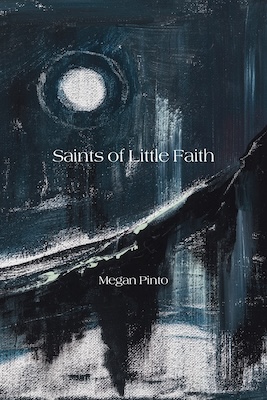
My debut poetry collection, Saints of Little Faith, seeks to explore the relationship between my childhood and adulthood selves. When I first started writing my book, I thought I would get to the root of my sorrow by exploring my lapsed relationship with God. But the poems quickly revealed that they were also interested in exploring my relationship with my father, along with family lore and high school. When I started to really work with my material, I wondered, should I just start at the beginning of my life and write to the end? But that approach lacked tension and did not capture the way my mind moved through memory and feeling.
As I revised individual poems and ordered the collection, I looked to others for example and inspiration. Here are seven coming-of-age poetry collections that play with form, illuminating new possibilities of engaging our past and present selves.
Hala Alyan’s The Twenty-Ninth Year subverts linear structure, often moving associatively between places (across the Middle East and America) and states of being (alcoholism to recovery; singlehood to marriage). In “Truth,” the collection’s first poem, Alyan writes:
    “Hunger is hunger. I got drunk one night
     and argued with the Pacific. I was twenty. I broke
     into the bodies of men like a cartoon burglar. I wasn’t twenty.”
These contradictory statements create tension. What is the true age of the speaker? And ultimately, does this narrative fact matter, if what the poem is ultimately asking us to do is feel? Some of the poems in the collection take on longer, prosaic lines, but are paired with short section breaks that move us surprisingly from one moment into the next. In “Telling the Story Right,” Alyan’s speaker lists a series of texts she has received:
    "Goddamnit Hala why don’t
     The airport
     They took
     The men
     The men
     The men"
And then moves to prosaic lines:
    "Two years later, I fill a flask with warm rum. Men line the neighborhood
     with rifles. A boy swarms my body. It's not your war, you know. I want to
     spit in his mouth."
How do we reclaim authority over our own story’s telling? One mode that Alyan suggests is through bringing in different states of being, both the high lyric which suspends us in deep anxiety (“Baba they took the men/ Baba they took your hair”) and the narrative, which moves us through time:
    "I shook the chain-link fence near the border and gave a false name.
     Lorelei. I kissed the night guard, stalling. His eyes silver as a wedding
     ring; he showed me the dangerous thing in his hands. You better use those
     legs, Lorelei. I did."
I’ll also call out Alyan’s gorgeous step work poems, which do not progress linearly, but instead leap to whatever step is most in conversation with the material that surrounds it ( For example, “Step Eight: Make Amends” a poem about changing one’s behavior, is preceded by “Even When I Listen, I’m Lying,” and followed by “A Love Letter to My Panic // A Love Letter to My Husband”.) Reading Alyan’s collection encourages me to let go of linearity, and instead prioritize felt experience, both as a writer and for the reader.
As we cross the threshold into a new phase of our lives, how do we speak to our past selves? “If our mother were to tell our story,” the speaker offers, “it would begin with grief./ She mourned your loss,/ her only daughter.” Ghost::Seeds is a book length dialogue between a trans-masculine speaker and his former self, now a girl-ghost. To create texture and variation across manuscript, Merrill weaves in a second sequence, a queer spin on the myth of Persephone, a coming-of-age myth itself, about the separation of daughter from mother, the movement into the winter of one’s life, that leads to adulthood. Or, as Merrill’s speaker aptly puts it in a Ghost:: Persephone poem:
                                                                           “It takes a long time
                                                                            for the eyes to adjust
                                                                            to the enfolding dark.”
Notice, too, how the Ghost::Persephone poems are all right margin aligned. Here’s another excerpt from later in the collection:
                                                                           "I gathered flowers.

                                                                           Hades poisoned me,
                                                                     dragged me, t-shirt torn,

                                                                            into the underland.

                                                                                     Poppies wilter
                                                                       in my trembling hands."
The effect of shifting away from the right margin, is that we feel the absence of the familiar, left margin. We become more attuned to the white space on the page, not taken for granted. Merrill’s speaker asks us to look and look again. In reckoning with the self, we must confront our wounds. Merrill teaches us tenderness, through the use of the second person: “You do not have to abandon/ your sweet self/ to love what is lost./ I’ll never be sorry.”
Through language, the self can hold the former self close.
As poets, we have the gift of fixed forms. In Organs of Little Importance, Adrienne Chung shows how adept she is at imagining widely with a form’s constraints. In the book’s opening ghazal, “Tasman,” the speaker shares about an encounter with a lover:
    "When Tasman went home, I pleaded with heaven.
     Night hung low in the branches, twilight muslin.

     Why is there always that scene in the movies—
     white sheets on clotheslines, rippling like muslin?

     My mother prayed for a girl in pink satin.
     God punished her with a small fright in muslin."
Within these three stanzas, we move between varied images—branches at night, white sheets on a clothesline, the speaker’s mother praying for a girl in pink satin; and of course, that devastating turn from satin to: “God punished her with a small fright in muslin.” (Note, too, the movement between adulthood and childhood, the ache that links them.) The ghazal is anchored by its refrain, in this poem “muslin.” When the reader’s ear is primed with repetition, any sonic change is heightened. In studying Chung’s fixed forms (shout out to the sonnet crown at the book’s end), I am once again awed at how compression allows for a density of expression, a multiplicity of self. But I am equally impressed with her ability to write prosaic lines within nonce forms, such as the numbered sequence, “Blindness Pattern.”
    ">>

        1 . There is a mathematical formula   { R = e – t/s }   which plots the erosion of
        memory over time where  Retrievability  is  Euler’s number  to the negative power of
        Time  over the  Stability of memory. They call this the Forgetting Curve.

        2 . What this means is that memory fades."
Notice the sharp change in diction, from a scientific language to a declarative sentence. By allowing herself to think in different formal shapes, Chung’s collection continues to surprise the reader with self-revelation.

When we come of age, we move back and forth between states of confusion and clarity. At times, we must look outside ourselves to understand our emotional inheritance, to perhaps better discern who and why we are. In Instructions for Banno. Bath brings together the voices, experiences, and geographies of women in her family, making a compendium of advice for the Banno, a South Asian bride. Bath writes prose poems in a high lyric, with short, declarative sentences:
    “Say time is non-linear. Say here we collapse
     planes, enter at even age. Choose 23
     (ornaments, early confidence). In this version
     you’re not married off. . .”
—from “How to return” (DEEPU TO NIKKI)
Amidst the moment across generations and continents, the poet interrupts.
    "Have you pondered on the sex lives of our elders?

     I read the Kama sutra and realized Vātsyāyana was a hypocrite.

     I read the Sattasaī and felt shapes of longing and restoration.

     I started living alone to develop a formula.

     A connection of stars between G-spot and clit-song."
—From “Instructions for Banno The poet interrupts: How to fuck anew”
Formally, this new speaker, the poet, breaks out of the established prose block and into monostitches; from short, declarative sentences into compound sentences. We move from the intense language of the interior, a language spoken between mothers and daughters, sisters and brides, to a question, and answers that link clause with clause, thought with realization. In this way, the book’s language enacts movements from feeling into thinking; from receiving knowledge to processing knowledge, and moving through it.
Poetry is a lyric art, often concerned with communicating a depth of feeling. And what feeling is more true to the experience of adolescence as sadness? In 回 / Return, Emily Lee Luan writes of the Taiwanese diasporic experience, the sorrow of displacement, the search for belonging and the many ways we return–through memory, art, and imagination. In “Anger Diaries,” the speaker writes of her mother:
                                                    "...I watched
     from behind the turning conveyor belt,
     her broken English. But is there a word
     for an anger rooted in sadness? Is there forgiveness
     for us in either of our languages?”
Luan engages this question through diction (many of the poems contain the words “sorrow” or “sadness”), as well as through form, by translating the Chinese tradition of the reversible poem into English. Here are the first two lines of “Reversible Poem in Dishwater”:
    "He carried me into the kitchen to get a glass of water
     He reached for a cup in the sink filled with dishwater”
and the final two lines:
    “The cup sinking he reached for me
     The kitchen carried me into the glass”.
Note, first, the melancholy of those images, the glass of water/ dishwater, the cup sinking, the kitchen (in the absence of the lover) carrying the speaker into the glass. Second, how traditional grammar has been subverted: the noun “sink” returns as the verb “sinking,” the direct object “cup” returns as the subject “the cup sinking”. The reversible poem can also be read in multiple directions, so another reading of the poem could begin with: “The kitchen carried me into the glass/ The cup sinking he reached for me,” which is a literal image of sorrow: the speaker in a glass, sinking. . .
How do we make meaning of what pains us? In Sebastián Páramo’s Portrait of Us Burning, the speaker uses the framing of self-portraiture to imagine himself into the holes, gaps, and fragments of memory. From “Self-Portrait as My Father, The Roofer”, the speaker states:
    “I work hard heat into a home.
                                  Then when everything is done & dark,

     I lie flat & can't help thinking of those
                                  Who named stars. Because there once was a
                                   city I fled."
The speaker speaks as his father, or perhaps through him, recounting moments that the speaker knows of his father’s life. Thinking of his first love, a blue-green Chevrolet truck, the speaker as his father declares:
                      ". . . I will gift it to my son for nothing.
                                             He earned it when he gave me a North Star.

     I will lead him by his hand to the flatbed
                                                & we'll look toward a swath of stars. We'll call
                                                it ours."
Portraiture and self-portraiture provide another vantage point from which to access our own experience, and imbue it with resonance: we imagine, so carefully, into what we cannot fully access. Playing with negation in “Portrait of What He Didn’t Want” the speaker describes his father as:
    “such a neat man. . . He didn’t want to pick up the pieces. He
     didn’t want love to become backbreaking work. He didn’t want
     that choice. One day, he found himself with a hammer. He
     didn’t want to clean houses. He filled himself with things. All
     the things he never had.”
In novels, a coming-of-age story (often) has an inciting incident. What do we claim as our origin story, the birth of our spiritual and artistic concerns? Michael Dhyne’s Afterlife opens with “To My Father, The Light”:
    "In the room, there are two reels projecting onto the wall. One is
           playing
     your death and the other

     my birth. ONe starts in a bathtub, the other staring up at the
          sky. Both
     in a pool of light--"
Dhyne writes, with precision and clarity, about his father’s sudden death, and how he had to learn to keep living. Later in the poem, Dhyne writers:
    ". . .The reels catch fire. I try to save myself,

     leaning against the wall as your image dissolves beside me. I can't see you,

     only the light you passed through to get here. "
The image of light, so beautifully established in this opening poem, recurs throughout the book, suspending us, the readers, in the speaker’s present moment. In “New Mexico” the speaker is awestruck on a road trip:
    “I wake Jesús in the passenger’s seat because I’ve never seen
     light that looks like this–like a radiant bruise. Lightening cuts
     into the sky then disappears. I wonder if we should be afraid.”
How do we allow in that which is bigger than us–love, grief, death–these forces that shape our lives, that we try to get close to, in an attempt to understand? In “Tennessee,” Dhyne’s speaker implores us:
    "...Reader, if you believe one thing I tell you,
     let it be this. As Jesús sketched my portrait

     in the dim light of a rented basement room,
     I sat on the floor and wrote, I'm sorry

     I couldn't be there for you. And yes, I was high
     and in love and crying, but I really did feel

     my father’s spirit move through my body,
     that he wrote those words, not me.”
“Truth” and “Telling the Story Right” from The Twenty-Ninth Year by Hala Alyan. 2019 © by Hala Alyan. Courtesy of HarperCollins Publishers.
Excerpt from Ghost :: Seeds © 2023 by Sebastian Merrill. Appears with permission of Texas Review Press. All rights reserved.
Excerpt from Organs of Little Importance by Adrienne Chung © 2023. Appears with permission of Penguin Books, an imprint of Penguin Random House. All rights reserved.
Excerpt from Instructions for Banno © 2024 by Kiran Bath. Appears with permission of Kelsey Street Press. All rights reserved.
Excerpt from 回 / Return © 2023 by Emily Lee Luan. Appears with permission of Nightboat Books. All rights reserved.
Excerpt from Portrait of Us Burning: Poems © 2023 by Sebastián H. Páramo. Appears with permission of Curbstone Press, an imprint of Northwestern University Press. All rights reserved.
Excerpt from Afterlife © 2023 by Michael Dhyne. Appears with permission of The University of Wisconsin Press. All rights reserved.
Chelsea Bieker’s new novel Madwoman opens with a two-sentence mic drop: “The world is not made for mothers. Yet mothers made the world.” What follows is the story of Clove, a young mother in the Pacific Northwest fervently attempting to outrun her violent childhood by creating a perfect family of her own. But as her past pushes ever closer, Clove begins to understand that she will never be free of her secrets until she stares right at them.
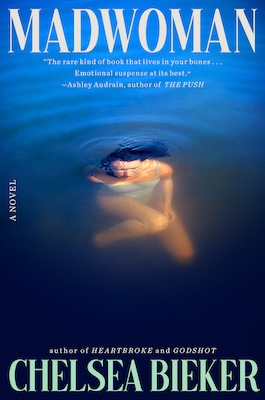
Bieker’s first two books—the novel Godshot and the story collection Heartbroke—announced her not only as a stunningly talented storyteller but also as an author with unique insight into motherhood and motherloss. In Madwoman, she homes in on how trauma ripples through a family, across generations and oceans. She considers carefully what is required to break the cycle of domestic violence once it’s been set in motion.
I sat down with Bieker on Zoom in early summer to discuss how she crafted a thrilling literary page-turner that also moves forward a critically necessary conversation. We spoke about the inherent murkiness of memory, the claustrophobic isolation of new motherhood, how violence is too often carried forward not by its perpetrators but by its most innocent victims, and more.
Marisa Siegel: When did you start writing Madwoman, and what did the journey toward the completed novel look like?
Chelsea Bieker: The first inkling I had of the book was when I’d gone out for the first time since becoming a mom. I had so much undiagnosed postpartum anxiety after having my daughter in 2014; it was very hard for me to leave her. When she was around two, I remember going out to a reading one night, and afterward everyone went to a bar. There was a younger, seemingly childless woman there and I was kind of observing her, and was really taken by her—it was like seeing a reflection of a past self. It was a tiny moment, a little seed, but it was the beginning of wanting to write about how motherhood had changed me.
I went home and wrote a short story titled “Madwoman.” There was something reckless I was feeling about motherhood and it felt urgent to me. I sent the story to my agent, and as soon as I did, I realized that I had a lot more to say here. I knew this wasn’t a short story. And then the COVID lockdown happened: I couldn’t go on my book tour for Godshot, and I needed something to focus on, so I did one of Jami Attenberg’s 1000 Words of Summer prompts. It was just what I needed, and I was filtering everything I was feeling into my writing.
There was something reckless I was feeling about motherhood and it felt urgent to me.
I came out of that period with a draft of the novel. It was quite unlike the novel that exists now, but that was the start. It wasn’t until I got a lot deeper into the writing of it that I understood the domestic violence thread. At first, I was interrogating the daily grind of motherhood and the ways it had become so hard to inhabit certain spaces as a mother. I was tracking the ways pediatricians and teachers and people out in the world began to call me “mom” instead of using my name. My identity had been changed in this obvious and strange way.
MS: So did the thread about all the products marketed to new moms, and ways new moms are inundated with and might become obsessed with such products and messaging for control and self-soothing, come in much earlier than the theme of domestic violence?
CB: They came hand-in-hand. I remember so vividly this moment where I was on the phone with my own mom, who has since passed away, and she was telling me about a very stressful situation she was navigating. I found myself frantically searching through my refrigerator during the call for this bottle of green juice, because I was sure that if I could just find this juice, it would keep me safe. In the book, Clove says something like, “Grocery is the opposite of violence.” That phone call with my mother was a light-bulb moment: these products promising wellness or goodness or cleanliness, these tactile things that Clove clings to in the book, allow us to separate from the more devastating and violent realities we might be experiencing. Of course it’s a surface Band-Aid, though there is an element to it that feels like an affirmation of one’s own worth. There was so much that Clove and her mother were not allowed, and so Clove as the adult, wants to offer herself these nice things as a counter to that.
MS: Talk to me about Clove’s Instagram addiction, and her growing presence on the platform as an influencer.
CB: The book is a direct address to her mother. I think there is part of me that always felt I’d never be known by my mother because of our circumstances. Crossing the valley to have her know me in a day-to-day way felt impossible, but through writing, I could perhaps try and talk to her about my life, about the ways I was showing up in the world each day.
It had become so hard to inhabit certain spaces as a mother.
I think social media, for Clove, is another way to feel connected in her desired identity while not having to contend with the rest of her life. It’s another way for her to construct—or re-construct—a world that is safe.
MS: I was just about to ask whether the epistolary structure had been in place at the start of your writing!
CB: I remember feeling like I had to write it that way. I remember thinking, Oh, maybe someone will make me change this or maybe this doesn’t work, but then no one ever said anything about it. I thought, great, I got away with it! I love a direct address. I love that urgency. I think it added something to Clove’s voice, and to the way the novel unfolds.
MS: Any favorite books that also do this, or works you were thinking of and looking toward while writing Madwoman?
CB: Both The Push by Ashley Audrain and Animal by Lisa Taddeo are fascinating first-person novels that use direct address to astonishing effect. Both were very inspirational to me. I love the intimacy and immediacy created by this mode.
I’ve also been writing this way for years! I realized this when I came upon some old blog posts I wrote when I was twenty-two that were all a direct address—“Dear M” and “Love C”. I think it reflects a desire to be seen by the person you are addressing in a way that’s not possible in real life. But in fiction, you can sort of command that attention.
MS: Do you think of Clove as an unreliable narrator?
CB: Yes and no—I think for the first time in her adult life, she’s needing to be honest. The shit is hitting the fan and she has to look at things clearly for the first time. But she’s also grappling with a hormonal imbalance from weaning and a haziness has taken hold, so she’s a little knocked off her game. She’s at this desperate moment.
I like that it’s unclear how reliable Clove is, because memory is being interrogated in this book. Memory is inherently unclear at times.
MS: I was compelled by the relationships between women throughout the novel. How were you thinking about motherhood and community?
Violence blinds women to seemingly obvious truths. I aimed to display the strain and the closeness this creates.
CB: Clove has a persistent yearning for connection. She is at a moment where she’s realizing that shrouding herself in secrecy has backfired because she can’t achieve genuine closeness with anyone. She is not known by anyone, and she’s realizing how painful that is. I wanted her to be yearning for connection so that she would befriend a stranger (who literally crashes into her) in such an immediate way; Clove knows she doesn’t want superficial relationships anymore, and subconsciously, she wants someone to start pressing at certain issues she’s kept to herself. Jane does that.
I wanted to show, for all the women in the book, how they are connected in so many different ways, but ultimately, they go to bat for each other and also betray each other. Domestic violence at the center of it all. The crux of their connection is this domestic violence. They’re all steeped in patriarchy. I wanted to examine how women maintain friendships and connection while contending with survival on a daily basis. I wanted to show in action how we isolate women, especially mothers, and show the ways the violence blinds these women to seemingly obvious truths about each other. I aimed to display the strain and the closeness this creates between women. I drew from what I’ve observed in my mother’s female friendships, and also the tremor of fear that ran through every day of my childhood—fear running through a day at the beach, fear running through her meeting up with a friend, these really innocent things were always so fraught because of male violence. I wanted to capture that on the page.
MS: How did domestic violence become one of the hearts of the novel?
CB: As I was interrogating motherhood, I started to understand that I couldn’t look at it comprehensively until I’d looked at it through the lens of domestic violence. Because of my mother: For so long, we all bought into a narrative about her that was focused on her addiction but left out that she was being brutalized on a daily basis by men. And I as a child was like, yup, addiction. That’s the problem. But as an adult, and especially after her death when I was reading her journals, I came to understand the vast bind of her oppression. I thought, Wow. Motherhood is hard enough in the best of circumstances. To realize that she mothered me, or tried to, in absolute hell was a light-bulb moment for me. It was like, Oh, you did not die of alcoholism. You died of domestic violence.
For me, motherhood stirred up trauma.
Every bit of my mother’s life was affected by the trauma and the PTSD and the cycle of violence she found herself caught in. I wanted to tell a story that included that.
MS: Each of your books thinks carefully about generational trauma, and Madwoman is no exception. Clove actively attempts to break the cycle but finds that’s not nearly as easy as she’d thought. As a woman who was raised steeped in trauma, I know well that C-PTSD adds a whole other wrinkle to motherhood.
CB: Yes! I think that when I became a mother, I very much had the notion that having a family of my own would be what undid my trauma and fix the past. But what I found was that in the hormonal upheaval of pregnancy and new motherhood, I was dealing with intrusive thoughts, with memories that seemed to emerge out of nowhere. I felt almost psychically attacked by the past. I don’t know if you’ve read the essay “Ghosts in the Nursery,” but that idea of trauma creeping in in the wake of new motherhood, of trauma as a looming presence in the nursery—everything is meant to be wonderful and serene, but actually we are instead asked to contend with our past. For me, motherhood stirred up trauma. I realized, Okay, if I’m going to do this, I’m going to have to look at the past in a very direct way so I can be making decisions from a really grounded place versus a place of trauma response.
MS: It’s a moment that forces you to reckon with what it means to be a mother, and then to reconsider the choices our own mothers made. Can you say more about how motherhood made you reconsider memory?
CB: As a new mother, so much of memory felt scary for me. It felt terrifying even though I knew I was safe in my own adult home. My body and nervous system couldn’t understand that safety. Memory is a real bitch. It’s alive in a way that feels dangerous. Madwoman is my attempt to nail that down—the slipperiness and urgency of memory.
MS: How did you so successfully resist the tropes that often emerge when writing a “thriller” about domestic violence?
Memory is a real bitch. It’s alive in a way that feels dangerous.
CB: My goal throughout was to add complexity. I think a lot of the genre tropes occur when the story becomes too simplified, when the violence is stripped of its nuance. I wanted to challenge readers’ expectations. And I was really after getting at the generational aspect of domestic violence you mentioned—the violent relationship belonged to Clove’s parents, but the book is about what Clove carries forward through her life, what that looks like long-term. I was interested in writing from the perspective of a child who has lived through violence and realizes that the violence doesn’t just end, someone has to carry it. I remember early on in the writing of the book, a question came to me: Where does the energy of violence go? It seemed like I’d somehow become the carrier of the memory of that violence.
MS: Even when we are doing all we can to end the cycle, it continues forward. As you said earlier, it’s still in the room, sitting with us.
CB: And the people who enacted the violence are often no longer carrying it in this way! I sat with the weight of it—it’s a huge weight to carry that violence. Carrying it while caretaking and mothering is… a real mindfuck.
MS: For me, watching my son grow has offered me new insight into what it meant to grow up in a violent home—motherhood has made processing my own trauma a necessity. But it’s also an opportunity, because you can fathom the child that you once were in a way that wasn’t possible before. Reading this book, it felt like, Finally, someone has written about the very specific strangeness of having been an abused child and then raising a child of one’s own. Thank you for putting it down on the page.
CB: I’ve had that exact experience. And I don’t think there is enough writing about it. For me, watching my kids age is a renegotiation of everything. Every time I think I’ve made sense of my memories, my children hit new milestones and I realize I haven’t pinned it all down so neatly. For me, motherhood awoke a lot of rage. I realized, wow, things back then were actually worse than I’d thought. It opens up a new layer of absolute anger. I’ve had to do a lot of processing of the anger that’s come up in my body. What do you do when there is no one from the past to hold accountable? It’s work you have to do for yourself. It’s a gift to yourself to do that work, but it’s not easy stuff.
MS: Let’s bring it back around to the book—Clove is trying to outrun her trauma but eventually she comes up against the fact that it’s still there in the room with her. I’m curious whether for you, Madwoman tells a hopeful story about trauma and motherhood?
Violence doesn’t just end, someone has to carry it.
CB: I do think Clove comes to the understanding that she cannot bypass her trauma. She realizes it’s not serving her or her children or her relationships to hide from the truth of her past; it’s actually this massive bypass. At the start of the book she mentions that she’s done so many different healing modalities—but she has never tried just looking at the truth of her life directly. I think the novel ends with a door opening for Clove, rather than closing.
MS: Are you feeling ready to put such a personal novel out into the world, and for the heavy emotional responses you’re likely to receive from your readership? Is it different from the first two books?
CB: This is such a different feeling. I’ve been really emotional lately, and I think it’s because I’m anticipating what it’ll feel like to have the book out in the world. I do feel that, as you’ve said, women might read this and it’ll spark conversation or deepen their understanding of something—that is the utmost goal, the most amazing outcome I could imagine for Madwoman: for women to understand the effects of domestic violence in a way that fosters connection rather than division. I look forward to that piece of it, I really do. Beyond my urge to write, to make art, I do have a sense that this book needed to exist, to be in the world. The suffering my mother endured, that I endured, I like the idea that it might have a meaning beyond just suffering. That is what art does. This is the power of story.
The girl is going to be late for school and Melora is going to be late for work, but Melora’s daughter is always late for school and Melora is always late for work. Melora sits in the kitchen and watches her daughter through the window. Above the girl’s head, clouds hang in the sky like pieces of torn-up tissue. A frost crept over the city last night, turning the pecan tree and the dead rosebushes that line the back fence to glass. When winter comes to Houston it is always a surprise.
If the frost hadn’t come during the night, if the puppies had not been born and then frozen, if someone, if Melora, had thought to bring the girl dog into the house, nothing about the morning would have been out of the ordinary. The mutt is named Midnight, and the Schnauzer is named Sister. The dogs belong to the girl, are meant to be her responsibility. Right now Midnight is nowhere, probably in the garage, and Sister is lining her dead puppies up in the yard. The girl is kneeling over them, making a sound Melora can’t hear.
Melora is out of her depth. She leans against the window and lets the whole house, for a minute, hold her. This house her mother bought and that Melora and her daughter aren’t big enough to fill, even with all the furniture Melora’s mother also paid for, crowded into the various rooms.
If Melora could have anything right now it would be sleep. Last night was not the first night the dogs have kept her awake with their barking. Twice now the neighbors have called the police. But what can the police do? The police cannot arrest dogs. And in this thought Melora finds some solace. It’s not as if they could have kept the puppies, had they lived. A death like this is more humane than the death they would’ve come to at the shelter, she tells herself. At least Melora’s daughter did not have time to grow attached. One less thing Melora has to feel guilty for.
The daughter in the backyard kneels over the line of puppies. For a minute, she seems to be praying. Who taught her that? Where could she possibly have learned to pray? At school? What can she think it will do? But then Melora sees that, no, she is placing the corpses in a dirty white plastic bowl Melora once used for gardening. After all three bodies are inside, she covers the bowl with a blanket and carries it to where the trash cans sit by the side of the house. A minute later, she is back in view. When the girl looks up and tries to meet her eyes through the window set in the back door, Melora looks away.
The girl comes in and retrieves her backpack from its spot near the door, ready for school in her white ironed uniform and plaid skirt, brown knees pebbled and red from kneeling. She heads for the front door and climbs into the car. Neither of them says anything on the drive from their neighborhood of Third Ward to River Oaks, the houses growing bigger and the lawns growing greener the closer they get to the school.
Melora’s daughter in the rearview mirror is a little brown figure, stark and lonely, disappearing into the white limestone building that houses St. Joseph’s first through fifth grades. Mrs. Bellingham, manning the carpool lane, waves at Melora, angling her head down into the truck. Mrs. Bellingham is white, of course, like every other teacher at St. Joseph’s, and her dark lipstick has dried in such a way that her mouth looks lined with blood. “A reminder, Melora,” Mrs. Bellingham says. “We do ask that all parents drop off and pick their children up on time.”
For the past few days, Melora has arrived to pick up the girl later and later, she knows. It is not her fault. She teaches nights at the nursing college and works full days at the hospital. She falls asleep sometimes in the afternoon. She leaves her phone on silent so she can sleep. This is not a crime. So why is Mrs. Bellingham looking at her like she has committed one? Mrs. Bellingham probably has a rich husband. Mrs. Bellingham probably doesn’t have to teach at all. She tries to imagine what, exactly, Mrs. Bellingham is thinking and she wonders what she would have said if she had seen the puppies, frozen and lying in a line on the concrete of the driveway. She imagines Mrs. Bellingham yelling at her, and—in a wild, hallucinatory flash—the girl, standing beside her, laughing, or yelling too. She raises the automatic window fast enough that Mrs. Bellingham has to yank her head out of the car and step back awkwardly onto the sidewalk, letting out a little coo. Melora accelerates down the carpool lane, and out through the iron gates, back onto the street.
At the hospital, Melora visits each of her patients, adjusting medication and cleaning bedpans until she gets to Mr. Lowery, the old man who reminds her of her father, or what her father might have become if he had not died when Melora was fourteen. He tells Melora she looks beautiful and asks her how she is doing and for one wavery moment, Melora almost tells him, but then a spray of canned laughter interrupts and Melora has to reach over Mr. Lowery to mute the television and be a nurse again.
Mr. Lowery has a pressure sore on his ankle that widens each day, a pit some invisible force works at, diligently digging every night. The skin around it sags like the peel of a rotting fruit. There is nothing the doctors can do that won’t damage Mr. Lowery further. Mr. Lowery jokes that he is going to die and when the nurses tell him of course he’s not, he says of course I am, and so are you. Never get old, he says to Melora every time he sees her. Not if you can help it. And Melora, every time, says that she will try.
Even though the fan is on, the whole room smells like shit. Melora will have to clean him up after she flips him over, and Melora is so tired. She can feel the tiredness like a line of scummy water rising, climbing up behind her face and pooling in the hollows of her skull. She wishes she could describe this feeling to Mr. Lowery. She wishes Mr. Lowery were the one taking care of her, that she could lie down in the bed and sleep, her whole life someone else’s problem. This too, is something she wishes she could say to Mr. Lowery.
She wishes Mr. Lowery were the one taking care of her, that she could lie down in the bed and sleep, her whole life someone else’s problem.
Instead, on the table beside Mr. Lowery’s bed, Melora has set out wipes, a clean diaper, a pair of latex gloves and an IV full of sodium chloride for flushing out the sore. “Mr. Lowery,” Melora says, “this won’t take but a minute. You know the drill. I’m just going to try to make you a little more comfortable.”
Mr. Lowery doesn’t move. Melora waits and waits and her silence is like another person in the room with them. “Didn’t they tell you?” says Mr. Lowery finally. “I’m not to be turned anymore. I requested specifically not to be turned. No more for me. You go on and get out of here now. You don’t worry about me.” He looks, Melora thinks, guilty, like he knows he is doing something that will hurt her.
She knows this is written on his chart. That he no longer wants to be turned. His face has swollen to the size of a dinner plate, mostly, she thinks, because of the hospital food. His bottom lip hangs down open, pink and wet, almost to his chin. It can’t be comfortable, she thinks, to be inside that body. She wants to tell him she understands, how sometimes, even to her, the prospect of not dying seems worse than the prospect of dying. Instead, Melora talks about infections, about compassion for the patient with whom Mr. Lowery shares his room, a wrinkled old raisin of a man who barely makes a shape beneath his sheets. Melora talks about insurance, about how the hospital might not even get reimbursed for his care if he passes like that, about how then his daughter will have to pay even more.
“The doctors can’t fix me,” Mr. Lowery says, straining to keep the wobble out. “I been independent my whole life. I went to war for this country. If you think I’m going to get my daughter up here to take care of me, get her to spend all my pension and all her money on a drooling, pissy old man, well, you’d be wrong. Not in this life.”
“My father died in the hospital when I was nineteen, and I just can’t imagine how much worse it would have been if I hadn’t known we did everything we could,” Melora says calmly. The truth is Melora’s father killed himself five years earlier, and no one seems to know why. Except maybe Melora’s mother who, if she does know, isn’t talking. “What about your grandkids,” Melora says. “How would your daughter feel if she knew we let you rot to death here? That you could have been saved and we didn’t? Don’t you think she would feel abandoned? Don’t you think she would wonder why?”
Mr. Lowery has closed up into himself like Melora’s daughter does sometimes in a way that makes Melora see red. Melora says “fine,” out loud, and now she is the one acting like a ten-year-old, on the verge of stamping her foot on the hospital floor. She takes Mr. Lowery by the shoulders and her hands sink into the old man’s soft flesh, like trying to lift up a big plastic bag of water. Underneath the fabric of his gown, his skin is thick and rubbery and smells like something sweet left outside too long in the sun. For a second Melora imagines lifting the bed up high and tipping it down so Mr. Lowery’s body slides to the floor. She pages for a volunteer. Mr. Lowery sits there, looking out at her through his twinkly eyes.
The volunteer who answers Melora’s page is beefy and red-faced and too enthusiastic, a college kid built like a mailbox, building out his resume for med school applications. “Here,” Melora says, “you take the legs and I’ll get the shoulders.” Beefy grunts. Mr. Lowery starts to make a little sound, an injured animal’s keening cry and Melora lets him drop. He lands on top of both her hands, and she can feel the bones there crunch together through her skin. The pain flows so deep she forgets, for a minute, to breathe in through her mouth. His smell rushes up and layers itself over her face like a wet towel. The kid looks at her, uncertain. She spots a fresh patch of acne under one cheekbone, darkening his otherwise perfect skin and mentally readjusts her estimate of his age. Not a college student. A high school volunteer. She sighs. He looks at her with scared eyes.
“Can you please take hold of his legs?” Melora says. “I can’t do this by myself.” The boy grunts and bends over to grab the naked blue thighs. Melora reaches down again, beneath Mr. Lowery’s arms. The two lift together. When Melora straightens, she feels something snap in her back like a rubber band.
“Oot.”
“What is it?” The boy looks at her, his face filled with a concern that makes her angry. What does he think he can do for her?
“Nothing.” The pain is screaming, electric purple. Melora can taste it like a hot penny on her tongue. She brushes a hand up against the base of her spine and holds it there, waits to be able to move again. Mr. Lowery has to be flipped if he is to be changed, but Melora is having trouble not just falling right down onto the tile, on her knees.
“Look.” Melora steadies herself against the wall and points to the medical equipment at the edge of the bed. “I need you to help me. See those wipes down there? Pick them up. Now come over here and”—she stops. She should not be doing this. She should page downstairs and have them send somebody else. But she can’t leave Mr. Lowery here like this, swimming on his back in his own filth. But Melora, Melora knows, is the only one he trusts.
“Now pull up his hospital gown and pull down his underwear. Yes. Like that. And push the sheets up.” Beefy looks at Melora like she is crazy. “I don’t want to hear it,” Melora says. “Please just do what I say.”
Melora tells him how to clean Mr. Lowery and nobody is more surprised than Melora when the boy does everything exactly the way he is told. He unfolds the diaper and lifts up Mr. Lowery’s legs, stretched and mottled as an elephant’s hide, then slides the cloth up carefully, as if Mr. Lowery were his own infant. He is skilled with his hands, as if he has done this before.
“Good job,” Melora grants. She pats down the tape on one side and then the other. “Other nurses work you this hard?”
“My uncle,” the boy says. “Before he died. Not old, but. Not so different. Got pieces of himself blown off in Iraq and lost his mind. When I have to do something hard, I just think about how I wish the doctors had taken care of him.”
“Oh,” Melora says, ashamed. Melora looks down at Mr. Lowery. She hasn’t thought about that. About what he was like before. The kid is putting all the tools back where they belong now, laying the instruments down neatly on the discard tray. Melora tries to push herself up and off the wall and the pain starts again, a train motoring up and down her spine. The boy sees her face and walks over to Melora’s side of the bed, lets her lean against his shoulder until she can stand up. He leads Melora along the wall and onto the short sofa near the window that looks out over the parking lot. Melora can hear the whine of the television even though the sound is off. She plops down on the plastic cushion. The pain is hot, heavy stones, swinging around in her sacrum.
“Why are you looking at me like that?” he says. “Lie down.”
Melora puts her face down into the smell of rubber and bleach. He stands up over her and soon she feels his thumbs digging into the skin on her back, pushing the muscles around. She closes her eyes. His thumbs work their way into her flesh. The stones slowly break into little pieces and color makes its way back into the world. Melora starts to breathe again. He works the skin with his palms, massaging over the bone. Melora allows herself to sigh again, this time with relief and sadness because she can’t think of the last time anybody did anything like this for her.
Melora keeps her eyes closed for one second longer, opens them then to see Mr. Lowery, silent, eyes focused on the ceiling, hand wrapped tightly around the aid button on the side of his hospital bed.
Behind her, Melora hears the door open and close. “What’s this?” a woman’s voice says. The voice sounds tired. “Who is that? Melora? What in the hell are you doing?” Melora keeps her eyes closed for one second longer, opens them then to see Mr. Lowery, silent, eyes focused on the ceiling, hand wrapped tightly around the aid button on the side of his hospital bed.
After her shift, in the nightless office space in the basement of the nursing college where Melora grades her students’ midterms, the fluorescent light is so bright it seems to be screaming. The midterm Melora gave was open book. A copy of the question sheet was distributed one week in advance of the test. And yet: One girl has still circled all the answers on her Scantron in green pen. Another used her answer key to spell out the word BICTH. No points even, Melora decides, for creativity.
Melora sets the sheaf of Scantron sheets down and wonders how many of her students are high at any given moment. It worries her, sometimes, that girls can wind up like this, that her own daughter may end up like this, carefree and dumb, riddled with the misguided belief that someone will always be there, that the world is just waiting to catch her. For Melora’s daughter, the reckoning will be worse. Her friends at school are those the world, more often than not, does catch. Melora isn’t sure if her daughter understands this yet. So far it has not been enough just to tell her. It has never been enough just to tell Melora’s daughter anything.
Melora’s daughter never even asked for a dog, Melora remembers then. Both dogs are Melora’s mother’s fault, gifts she gave her to try to remedy the girl’s apparent, unceasing, sourceless unhappiness. Of course bigger than the problem of the dogs is the problem of the private school, another thing Melora’s mother pays for. If the girl is strange, it has, Melora knows, something to do with the plaid uniform skirt, the field trips to Big Bend, the country club tea parties and birthdays at fancy hotels. After all, rich people are crazy. They have to be. How else could they justify having so much when so many other people had nothing? All Melora wants is for her daughter to have a different kind of life, or to expect life more, to be prepared for life in a way Melora, herself, has not been.
Melora reaches down into her bag for her vibrating cell phone. A text on the screen from her mother says she picked the girl up after school and dropped her off safely at home. The second she finishes reading this text, the phone rings, and later, Melora can’t help but wonder if maybe she hadn’t answered, none of what happened after would have happened. The voice on the other end is the same voice in the doorway, her supervisor. She wonders if Melora has a minute, and then sounds as if she wishes Melora had said no. “Listen,” says the voice. “I just wanted to warn you before you come in tomorrow. I think it’s only fair. There’s been a request put in for you, for a transfer.” A transfer, Melora knows, is the next step up from being fired. A temporary hold wherein she will be shuffled out of the hospital where she works now until a different one can be convinced to file the paperwork it would take to hire her.
It isn’t only the incident with the volunteer, the voice assures her. And it’s not that she is late more often than she is not. The problem is Mr. Lowery. He specifically requested not to be turned, and in turning him, she has violated patient rights. The hospital could be sued now. Melora, herself, could be sued. The supervisor is going to do everything she can to stop that from happening. But for now, it is probably best for her to stay away. Mr. Lowery has threatened to call the media. His daughter is a news anchor, and she would be more than willing to do a story. Melora has a sudden flash then, a white woman with broad teeth and wide red hair, bosomy and thick. Her last name isn’t Lowery, but it was once, Melora remembers, years ago, when they were both younger. The voice is telling Melora not to worry, that they’ll keep it under wraps, that no one is accusing her of anything, but she lets loose a muttered curse and hangs up the phone.
Melora drives back to the house with the tests half graded on the seat beside her, surprised to find her daughter sitting on the steps that lead up to the house, forlorn and gray. She couldn’t have been dropped off more than half an hour ago. Melora swallows a familiar feeling that she refuses to call hatred. Why must the girl look so pitiful? Like she’s constantly feeling sorry for herself? In her hand the girl is holding a pink note that flaps in the wind when she stands up and approaches the car. She hands it to Melora.
The note, penned in her daughter’s tidy script, is sincere and eerily adult in its self-conscious frustration at the author’s inability to say exactly what she means. It’s a written apology, explaining that the girl had a bad day at school, was upset about the dead puppies, and so, in frustration, threw a rock at recess, hard enough to break the window of a classroom overlooking the playground. No one was inside. But, as part of her punishment, she was asked to write this note, which she must bring back to school tomorrow, signed by her mother. In the note she also offers to work to pay for the window’s repair, a cost which she appears to think will be astronomical. The girl’s expression as Melora looks up from reading the note is round and scared, and, on any other day Melora might have laughed. Today, she almost does.
A note from the school accompanying the letter informs her that her daughter will be subject to a one-day in-home suspension the following day. If Melora doesn’t go to work tomorrow, if, instead, she stays at home to take care of the girl, she will surely be fired. If she loses her job, she will no longer be able to afford to care for the dogs anyway, one more thing she’ll have to ask her mother for money for. One more thing to add to the long list of things since Melora got pregnant her sophomore year, the year her mother drove up along the coast to move her out of the rental she shared with the boyfriend who had agreed to marry her and done nothing after that but play game after game of pick-up basketball.
Melora stares at the girl on the steps then raises her eyes to the sky, which is crowded, with clouds the color of Mr. Lowery’s scar. She can’t stop thinking about breathing and thinking about breathing is making it hard to breathe. The evening feels mottled and sharp. Melora tells her daughter to gather the two surviving dogs up in the backyard, and to put them in the truck—the Land Cruiser, also purchased by Melora’s mother—which Melora has left unlocked. She opens the gate and the dogs bound down the driveway and hurl themselves into the car. The four of them—Melora, the girl, Midnight, and Sister—pull down the long driveway and out onto the street. The houses neatly arranged around them seem slanted, the whole world listing to the left. Melora switches on the radio and pushes it off again. Beside her, the girl turns to face the door.
“What?” Melora snaps. But the girl doesn’t respond.
Melora pulls over, miles later, into the vast, empty parking lot of an enormous shopping center anchored by a PetCo and a decrepit Marshall’s. Melora tells her daughter to open the door. The girl obeys and the dogs leap out and onto the concrete, chasing each other in circles, enlivened by the new air. Melora can see her daughter waver on the edge of following. The girl looks back at her mother. Melora stares straight ahead. The girl stays put. The dogs circle the car as Melora’s mother backs up, and give chase as she drives out of the parking lot. On the way to the feeder road, she can see the white dog, Midnight, loping along in the rearview mirror, intent, as if he is taking part in some new kind of game. By the time she reaches the highway, she can’t see either of the dogs anymore.
Melora remembers learning once that everything with weight, even human bodies, exudes some measure of gravity. She remembers this because she can feel her daughter sliding away from her in the passenger seat, whatever force held the two of them together dissipating until it is nearly gone. Back at home, before bed, Melora bends her daughter over the side of the bathtub and strikes her several times with a belt wrapped around her hand. The girl, who has been silent up to this point, makes a noise then and looks back over her shoulder. Melora expects the gaze to be filled with a snake-like hatred. But the look the girl gives Melora doesn’t have any anger in it. Something in her daughter is tightening up. Receding. And Melora feels, for the first time that day, that finally, she has done something right.
I first visited Croatia in 2000, drawn to the place my grandparents were from, the language they spoke, and the food I tasted in their Dayton, Ohio home. I’ve since been more than two dozen times—including for my wedding!—and have written about everything from night-foraging for truffles, how Croatia invented the cravat (tie), the “healing island” of Lošinj, the dramatic vineyards of Dalmatia, and the world-renowned, singularly herbaceous and utterly delicious cheese, Paški sir, from the island of Pag.

Yet while Croatia contains so much beauty and delectable experiences, its recent past saw enormous upheaval. The war in the former Yugoslavia in the 1990s ultimately resulted in the emergence of six independent countries. The aftermath of the war remains deeply felt within families and communities, in places with new borders and complex histories.
In my debut novel, The Cheesemaker’s Daughter, my main character Marina was sent away during the war, a refugee far from her family. Now she has returned to her childhood home on Pag Island to help her father try to save the family’s cheesemaking factory, in the year before Croatia joins the European Union. Struggling to find her footing, she begins to understand more fully the layered emotions and hidden experiences of those who couldn’t escape. As she works to save her father’s legacy, she envisions new ways to integrate the past and present.
While there are countless novels and memoirs set in Italy, just across the deep blue of the Adriatic Sea, there are few books set in Croatia that have been published in the US. Many, like mine, address the challenges of displacement, family secrets, and how the past finds its way into the present. The following books are by authors each with their own signature style, all set in a country that I love and will continue to return to.
A profoundly affecting story about the lasting trauma of war, Sara Nović’s indelible novel follows Ana Jurić, who is 10 years old when war erupts in Yugoslavia. A decade later, as a college student in New York, Ana returns to the place that changed her family forever. Moving fluidly back and forth in time, Nović vividly captures how war can slowly and then suddenly transform every aspect of life; the complexity of survival; and what it means when you no longer have to carry your history alone.
Born in Scotland, raised in Sierra Leone and Britain, Aminatta Forna also lived as a child in Iran, Thailand, and Zambia. Her novels, and her own family’s history, delve into the reverberations of conflict. Set in a Croatian town in 2007, The Hired Man opens with a British family who has moved into a house that a local handyman, Duro, knows well. Unlike others in the town, who remain suspicious of the outsiders, Duro helps Laura and her two children settle in. Yet even as he points Laura’s daughter to a concealed mosaic on one wall, his history with the house remains a mystery. But what is buried rarely stays hidden. Forna masterfully reveals, layer by layer, how intense the scars of the war in the former Yugoslavia remain.
Winner of the 2018 Warwick Prize for Women in Translation, Daša Drndic’s novel was one of Jeff VanderMeer’s favorite books of the past decade. Blending fact and fiction into a masterful mix, Belladonna follows Andreas Ban, a psychologist whose life is disrupted by the war in the former Yugoslavia. When his son leaves to study abroad, Ban is left alone in a coastal Croatian town with only his memories as his body fails. A moving meditation on history and illness, the novel powerfully shows how “the past is riddled with holes.”
Kristian Novak’s English-language debut, translated by Ellen Elias-Bursać, was awarded the Tportal Prize for Croatian Novel of the Year. In it, Matija, a novelist whose ability to invent stories spills over to his own past, must confront the memories he has tried to erase completely — including the death of his father and the mystery of a suicide cluster in his village after the start of the war. Novak compellingly explores the dislocation and unmooring that can impact a child whose grief is given no space or answer.
A deceiving title for this list, Perišić’s satirical novel is indeed set in Croatia – in 2003, the year Croatia applied to become part of the European Union and the United States invaded Iraq. Through a series of absurd situations, Toni, a journalist based in Zagreb, volunteers his Arabic-speaking cousin Boris to report from Iraq. When Boris goes missing, Toni’s world also begins to unravel. Darkly humorous, Perišić’s novel unearths how impossible it is to escape the long shadow of war.
Nora has returned to her hometown as a journalist in this noir set in a still deeply divided Croatian city years after the end of the war in the former Yugoslavia. Assigned to a story involving a Croatian teacher and Serbian student, Nora finds herself turning to the mysterious circumstances of her father’s murder years previous. Bleak and engrossing, Bodrožić’s novel explores how generations remain impacted by the wounds of a place that has witnessed so much horrific violence.
Wild, surreal (including a film crew shooting a western on the Adriatic coast), and also deeply serious, Savičević’s novel features a woman, Dada, searching for the reason behind her brother’s apparent suicide near their hometown. With no easy answers or tidy conclusion, Savicevic’s work explores how embedded the war in the former Yugoslavia remains in the everyday lives of Croatians.
The debut novel by the author of the memoir The Stone Fields and the story collection Stillness explores the legacy of disappearance and betrayal among multiple generations. When her younger sister vanishes in New York, Magdalena leaves her Croatian island home to search for her. Juxtaposing the gorgeous landscape of the Adriatic with the grit and grime of New York City, Brkic beautifully illuminates the intersections of war, love, and loyalty, and how hard it is to escape the machinations of the past.
Novakovich’s memoir centers on Lika, where her parents were born. As is true of so many places, Lika is a place of both beauty and brutality. A freelance journalist and travel writer, Novakovich’s research into her family’s complicated history results in a book that abounds with incredible stories of adversity and resilience, and a hearty dose of delicious meals.
Am I being sneaky adding a cookbook to this list? Perhaps! But food is such a deep part of Croatian culture. Istria, a northern peninsula dangling into the Adriatic Sea, is shared by Croatia, Italy, and Slovenia. The borders there have shifted among countries (many that no longer exist, and many that now do exist); the majority of Istria is Croatia’s today. In addition to the scrumptious dishes, Bacchia includes delectable stories from her family and others in the region – showing how food traverses borders and draws from many different traditions.
Nigerian literature possesses a remarkable ability to create female characters who defy the ordinary. These women don’t just exist within their stories; they embody a resilience that transcends the page. They redefine what it means to navigate the complexities of motherhood, societal pressures, and personal battles in a world that often seems intent on testing its limits.
What makes these characters so compelling is their refusal to conform to any predetermined roles. They are messy, flawed, and endlessly fascinating—mirroring the unpredictability of real life. These women will make you laugh, cry, and perhaps even reconsider your own understanding of strength. There’s something profoundly satisfying about crafting female protagonists who refuse to be silenced or sidelined—who roar back at a world determined to quiet them. It’s a theme that clearly resonates in my new novel, And So I Roar, which is about Adunni, a young Nigerian girl who escapes her village seeking education, and Tia, a woman grappling with a hidden family secret. Together, they embody the strength of women as they fight to overcome oppression and transform the future for all the girls in Adunni’s community.
These seven Nigerian novels feature extraordinary women who defy societal norms and prove that strength comes in many forms.
Eve is confronting a devastating loss—her husband’s sudden death—but what sets her apart isn’t just her grief; it’s how she fights her way through it. Her strength lies in her raw honesty and her refusal to conform to society’s expectations of a grieving widow. Eve reminded me that healing isn’t a linear journey; sometimes, strength is simply making it through the day. Nwabineli’s prose is exquisite, weaving a kind of magic on the page, and her portrayal of grief is beautifully nuanced, making the story both inspiring and heart-wrenching.
Korede exemplifies a woman who’s consistently underestimated. As a nurse, she’s competent, efficient, and the glue that holds everything together—skills that prove essential when covering up her sister’s crimes. Korede’s strength isn’t just in her ability to handle literal messes; it’s in the moral conflicts she faces, her unwavering loyalty to her family, and her quiet resilience despite her sister’s escalating recklessness.
What draws me to Korede is her depth. Her strength doesn’t come from a lack of fear but from her awareness of it and her decision to protect her sister. Braithwaite’s dark humour and sharp writing made this thriller unputdownable.
Nnu Ego’s journey from a small village to the bustling city of Lagos is one of the most poignant explorations of womanhood I’ve ever read. She’s a mother defined by her children, sacrificing everything for them, yet she finds herself questioning the very joys she’s been promised. Nnu Ego’s strength lies in her endurance and ability to survive in a world that consistently undervalues her contributions.
Emecheta didn’t shy away from the harsh realities of motherhood, especially within the constraints of traditional expectations. Nnu Ego is both a product of her time and a woman ahead of it, challenging what it means to be a ‘good’ mother. This novel is a powerful critique of societal norms and a tribute to the quiet strength of women who persevere against all odds.
Nurse Efunsetan is the beating heart of this novel. She’s the one constant, balancing her demanding job in the chaotic world of Lagos healthcare with the equally challenging responsibilities at home. Her strength isn’t just in her professional competence but in her ability to maintain compassion and integrity in an environment that often threatens to erode both.
Awonubi’s portrayal of her protagonist as both a caregiver and a woman with her own dreams and challenges makes this story both relatable and profoundly impactful.
In Wahala, you don’t get just one strong woman—you get three. Ronke, Boo, and Simi are Anglo-Nigerian friends living in London, each dealing with their own unique set of challenges. These women stand out because of their dynamic, multifaceted personalities. They’re flawed, funny, and sometimes at odds with each other, but at their core, they’re bound by a friendship that’s as complicated as it is unbreakable.
The interplay between these three characters is what makes Wahala so captivating. Each woman’s strength comes from her individuality, yet their collective experiences drive the story. Nikki May captures the nuances of female friendship with sharp wit and a deep understanding of the complexities of modern womanhood.
In Baba Segi’s polygamous household, each wife has her own secret, and each one is a powerhouse in her own right. Iya Segi is the matriarch who knows more than she lets on, Iya Tope is the seemingly meek second wife with something to hide, Iya Femi is driven by ambition, and Bolanle, the youngest, is determined to carve out her own space despite the odds. These women are strong not just because of their survival instincts but because of the way they navigate their complex relationships with each other.
Shoneyin brilliantly captures the inner lives of these women, giving each one a distinct and compelling voice. What I found striking is the strength of these characters—rooted in their ability to find power and fight back in a situation designed to oppress them. This novel is a masterclass in character development and a sharp commentary on power dynamics and patriarchy.
Morayo’s story is one of survival and courage. Growing up in Ibadan, she faces the trauma of sexual abuse but refuses to let it define her. Instead, Morayo draws strength from the women around her—her mother, her aunt, and the friends she makes along the way. Her journey is a testament to the power of resilience and the importance of finding your voice, even when the world tries to silence you.
Kilanko’s portrayal of Morayo is both heartbreaking and uplifting. This novel is a deeply moving and powerful exploration of how trauma can shape a life, but it’s also a celebration of the strength it takes to heal and overcome. Morayo’s story will stay with you long after you’ve finished the book.
Twenty-five years ago, Jhumpa Lahiri began publishing stories that offered America a rare glimpse into South Asian American lives. But Interpreter of Maladies and Lahiri’s other well-known early work represent only an opening into South Asian American stories. Lahiri and her contemporaries, including Chitra Banerjee Divakaruni and Bharati Mukherjee, were formative for spotlighting the community’s stories beginning in the 1970s and into the early 2000s. But narratives by and about South Asian Americans have since blossomed beyond the boundaries of Lahiri, Divakaruni, and Mukherjee’s work— and with it, the coastal states where their stories primarily take place: New Jersey, New York, Massachusetts, California. Today’s South Asian American literature has touched every corner of the United States, including Middle America, the Mountain West, the Pacific Northwest, and the South, transcending tales of economically privileged, well-educated Brahmin characters and chronicling the lives of queer, Dalit, biracial, and religious-minority South Asians—including those throughout history. South Asian American fiction today does not always center characters’ racial identities, either, but also tackles more universal plots and themes, such as alcoholism, mental illness, post-recession financial woes, and technological capitalism, in which the characters just happen to be South Asian.
Below is a literary map of South Asian America, spotlighting several works of fiction published after 2010 that take readers beyond a canon once confined to the coasts.
Tamil American author Nina McConigley takes readers on a journey across the American West in her short-story collection, focusing on the lives of Indian immigrants in her home state of Wyoming: her characters include motel owners, international students, interracial families, mothers with disabilities, and cross-dressing cowboys. Challenging the mythology of the Wild West and citing Laura Ingalls Wilder in the epigraph, McConigley, who hails from Casper, Wyo., expands the canonical voice of the prairie to spotlight the South Asians who have called the state home for decades. From her opening story, “Melting”: “We were the wrong kind of Indians living in Wyoming. There were Arapahoe, Shoshone, even some Crow. And then there was us.”
This dystopian-sci-fi-meets-diaspora novel, which was a finalist for the Pulitzer Prize, follows King Rao, a Telugu Dalit man raised by coconut farmers in rural South India, as he immigrates to the Seattle area for a computer science PhD. Years later, King Rao becomes the most powerful man in the world after founding a leading technology company, called Coconut. The Pacific Northwest has been home to South Asian Americans for more than a century, beginning with a group of Punjabi migrant workers in Bellingham, Washington who were driven out of the town by white residents in 1907. Now, the region, particularly Seattle, is known as a home for South Asians who work in technology at top global firms including Amazon and Microsoft. This book pays homage to these immigrants, their descendants, and their humble beginnings, and was followed by Vara’s short-story collection, This Is Salvaged.
Mathews’s debut novel, a finalist for the National Book Award, chronicles the life of a recent college graduate living in Milwaukee, Sneha, as she navigates her layered identities as a queer woman and as the only daughter of Indian immigrants, whom she hasn’t told about her sexuality. Loosely inspired by the author’s own life, the novel explores the repercussions of late-stage capitalism on struggling American 20-somethings in the Midwest as they navigate friendship, love, joblessness, drug abuse, and the specter of eviction. Although it centers on an Indian American woman, All This Could Be Different features a racially diverse cast of characters whose storylines don’t feel forced but rather blossom naturally in tandem with the protagonist’s complex arc.
Thanki’s debut novel captures a multigenerational family shaped by the 1947 Partition and its bloodstained legacy. Featuring a queer couple at its center—and a queer ancestor and her forbidden lover in South Asia—the novel traces a tapestry that connects three generations of women as they navigate life in South Asia and America. Minneapolis features prominently as the narrator’s childhood home, representing the suburbs that South Asian immigrants have called home in America after leaving the subcontinent. “[My grandmother] was happy we had a place in a suburb, yes,” the narrator recalls, “but moving from New York to Minneapolis reminded her of what it had been like to leave Karachi—and now Karachi was nothing like she remembered, no, a whole different place that felt foreign.”
Akhtar, a Pakistani American writer, is from Brookfield, Wisconsin, a suburb of Milwaukee. His first novel, American Dervish, is set in the region and follows a Pakistani American boy who is conflicted about his identity, and Homeland Elegies features a narrator who is also from the Milwaukee area. But a key moment in the novel happens in Scranton, Pennsylvania, where the Pakistani American narrator is pulled over by a Pennsylvania state trooper and the two have a hostile interaction in which the narrator recognizes he must minimize his identity as a Muslim American of Pakistani descent in the aftermath of 9/11 to avoid making white authority figures uncomfortable.
This debut novel combines magic realism with a diaspora story, following a pair of second-generation South Asian Americans originally from the Atlanta suburb of Hammond Creek, Georgia as they plan a heist to acquire a magical gold elixir that gives them an edge over their peers. It artfully pushes back on the model minority stereotype, exploring the academic and economic pressures faced by the children of affluent South Asian immigrants living in the suburbs—a landscape that has increasingly become home to blossoming South Asian American communities across the country, concentrated around America’s biggest cities. In doing so, it honors these immigrants’ hard work in cementing their place in this country, while painting an honest and refreshing portrait of the struggles they still face despite having achieved conventional success.
This short-story collection puts South Asian Americans in the driver’s seat as it takes readers on a journey spanning the country, from Eastern Washington state to Orlando to Pittsburgh, the author’s hometown. It reimagines the great American road trip, centering Indian immigrants—particularly, Tamil women—and their families as they traverse a range of landscapes to do what any American family would: attend weddings, reconnect with estranged relatives, and go on vacations they can’t afford. Bhanoo’s sophisticated prose offers a glimpse into the lives of South Indians—an underrepresented community within the corpus of South Asian American diaspora fiction—as they take ownership over their circumstances and refuse to succumb to stagnancy.
Jacob’s debut novel is partially set during a sweltering summer in the American Southwest and follows a religious Christian, South Indian family as they navigate their complicated past. The protagonist, Amina, is a photographer whose pursuit of art is a testament to the sacrifices her immigrant parents have made so she can follow her dreams. Amina returns home to Albuquerque to be with her parents when her father falls ill and reflects on the family’s history while dealing with her own career crisis as a 30-year-old. Through its Southwestern setting and Christian characters, the novel decenters narratives of South Asians as Hindu immigrants living along the coasts. More recently, Jacob published a graphic memoir, Good Talk.
“There was nothing here for me,” Kailash, the protagonist in Kumar’s novel, reflects when he retraces a trip he and his ex-girlfriend took to Yellowstone National Park. A town near the park is called Emigrant, Montana, from which the book’s title takes its name when Kailash calls it Immigrant, Montana. The town’s name is aspirational: “it was a name that I had long carried in my imagination […] it was a name that brought together […] the two most deeply felt needs of mine, the desire for love and the hankering for home,” he reflects. Even though it is just a name, and the Rocky Mountain setting itself features only momentarily in the novel, the Montana town symbolizes Kailash’s deepest desires: to discover a sense of home in an unfamiliar land. Instead, he finds emptiness.
This work of historical fiction portrays the lives of early 20th-century Punjabi farmworkers in the Imperial Valley as they deal with racism, xenophobia, and violence. Offering readers a slice of little-known American history, including California’s Alien Land Laws and its Punjabi-Mexican community, Reddi’s novel underscores the long presence of South Asians in America, decades before the 1965 Immigration and Nationality Act opened the doors to mass immigration from the Indian subcontinent. The debut novel follows Reddi’s Karma and Other Stories, a short-story collection set mostly in the Boston area.
Jayatissa’s debut novel traces the life of Paloma, a Sri Lankan adoptee living in San Francisco, who struggles with mental illness and alcohol abuse as she tries to make a living as a freelance graphic designer. After discovering her Indian American roommate, Arun, murdered on the kitchen floor of their apartment, Paloma attempts to pick up the pieces while steering the novel’s thrilling plot as an unreliable, unlikeable narrator. Toggling between Paloma’s childhood in a Sri Lankan orphanage and her present life in San Francisco, My Sweet Girl navigates Paloma’s identity crisis as a transracial adoptee who feels like an “other” in every space she inhabits.
With stories set in India and New York, Chakrabarti’s debut collection explores the convergences between Indian and Jewish communities in Brooklyn, including through stories about an Indian widow engaged to a Jewish man and an Indian immigrant nanny who cares for the son of a biracial couple. Chakrabarti, who won the National Jewish Book Award for his novel, A Play for the End of the World, artfully ties together stories about the two communities, revealing their unlikely intersections in one of America’s most ethnically diverse, and its most populous, city.
Deb’s debut novel follows the fractured Bengali American Das family as they stage a play written by their teenaged daughter, Keya, after she passes away in a car accident. Keya was queer and hadn’t come out to her parents before she died. Bringing Keya’s friends and former girlfriend, Pamela, together with his own family, Keya’s divorced father, Shantanu, decides to stage the play in her memory. The novel brings together the universal themes of mental health and grief in what Deb calls an “all-American story,” in which the ethnicity of the characters is simply incidental, rather than formative, to the plot. Deb has also published a memoir, Missed Translations, that explores his difficult relationship with his Bengali immigrant parents.
Nuri Bhuiyan is a multimedia digital and spatial designer. Working at the juncture of visual and experiential storytelling, she captures large-scale social and environmental challenges and their origins in, impacts on, and adjacencies to personal life, culture, and community. She received a B.A. in the History of Art and Architecture at Harvard University and professionally practices architecture and branding. She is currently pursuing several creative projects, which she can often be found doing in a cafe in Brooklyn, where she is based.Her work can be found on Instagram @madebynauri and on her website at https://bit.ly/nuribhuiyan.
 Thank You!