14 Literary Podcasts For Every Type of Reader

If you’re like me, maybe you don’t need another steam of ingestible content. Maybe you’re looking for a detox, a beach vacation, a new brand of coffee. You might be surprised to hear it, but all of these things go with one of the literary podcasts on this list…like wine with cheese. Or beer with potato chips. In fact, I’m here to tell you that this list contains, at the very least, one absolutely indispensable podcast for every would-be writer, overworked book lover, published author, high school poet, and retired librarian. Because sometimes it’s not about catching up on the newest news or the hottest debut, sometimes it’s about taking a bath with a cup of tea on a Sunday morning and listening to famous writers laugh about their MFA students while going nuts about their favorite short story writers (see if you can guess which podcast that is). Sometimes it’s about taking a plane across the Atlantic just to visit a bookstore and pretend it’s still 1922 and Ulysses is all the rage.  

The thing is, the book life is about a lot of things and these podcasts cover every single one. Personally, I am not often found without earbuds in my ears–perhaps that is the content warning these podcasts need. Dive into the book-chatter, but don’t go overboard! 

If you like being behind the literary scenes…
Otherppl with Brad Listi

If there’s an oddball moment in the life of an author you love, they’re probably talking about it on Otherppl with Brad Listi. Brad Listi, the author of Be Brief and Tell Them Everything and founder of the now defunct, Nervous Breakdown literary magazine, has been talking with contemporary authors about their book sales, writing processes, and just about every other aspect of their lives for over a decade. There’s nearly 1000 interviews and counting, with new episodes dropping multiple times a week.

If you wish you could read all the languages…
Asymptote Podcast

Complimenting Asymptote Journal, a stalwart of the international literary landscape, Vincent Hostak’s new podcast brings dispatches from all over the world. Here, translators and authors outside the anglosphere gather to discuss marginalized languages and literary traditions, the art of translation, and work from Asymptote’s quarterly issues.

If you love short fiction…
The Lonely Voice

This short, short-story-centric podcast takes its name from Frank O’Connor’s definitive study of the form, The Lonely Voice. Throw in cohost Peter Orner, acclaimed short story writer, novelist, and chair of creative writing at Dartmouth College, and you get, for my money, an unparalleled gateway into the world of short fiction. Together with writing professor Yvette Benavides, each episode is a passionate, banterfilled guide to a single story. From Checkhov to Lucia Berlin to Gina Berriault and beyond, the hosts read sections of the text aloud, analyze themes, craft, and so on, tell their own stories about teaching writing or finding a beloved author, and generally bask in the glory of the short story.

If it’s all a question of taste to you…
The Critic and Her Publics

Hosted before a live audience by Merve Emre, author of Paraliterary, this limited series is all about the ever-present, ever-divisive corner of the literary world known as criticism. What is good, what is bad, and who gets to decide? Thankfully, The Critic and Her Publics is not (only) as academic as all that. Each episode invites a contemporary critic to talk about what they do and how they get there, then asks them to perform an act of spontaneous criticism on a surprise object: from Barbie dolls to photographs, we listen to the critics talk through their critical process and make a judgment on the spot. It’s a stimulating mashup of performance art, fun, and high criticism.

For friendship junkies…
Lit Friends Podcast

Young, queer, and mighty, Lit Friends delves into the writing life–that is the constellation of relationships that keep a writer writing and keep the writing good. Cohosted by author-friends Annie Liontas and Lito Velázquez, each episode features an introductory repartee between the two (“do you have sex to get horny, or do you have sex because you’re already horny” Lito asks Annie at the start of one episode…setting off laughter, reflections on studying with George Saunders, and a chat with the celebrated Saunders couple themselves) and then a four-way conversation with a writer-friend pairing. It’s a maverick setup that toes the line between sagacity and intimate banter, and is all but designed to elicit the sort of stories and teasings that mark a true best-friendship. Powerhouses like Justin Torres and Liz Moore discuss potlucks, marriage, writing about place, and all manner of other subjects, but more than any single conversation, this show models what a safe, fun, stimulating environment sounds like.

If you’ve got your nose to the grindstone…
The Secret Library Podcast

That manuscript sitting on your desk, the one you’ve loved and crafted for years? The Secret Library Podcast rolls up its sleeves and gets down to the nitty gritty of actually publishing it. What is the business of books? What does publishing look like these days? How does a writer even get paid? Host Caroline Donahue, self proclaimed “Book Witch” and author of Writing Through Fear, brings on guests to touch on what might be literature’s biggest taboo–the financials.
The name is in the title…
PW Comics World: More To Come

This weekly podcast is for comic lovers of all stripes. A revolving cast of Publishers Weekly hosts bring the latest in all things comic/manga/graphic novel/memoir, etc. And when I say all things, I really mean it. Episodes are dedicated to festivals, the Marvel Universe, interviews with acquiring editors and imprint leaders, illustrators, and (my personal favorite) Frank Miller! 

For the poets and poetry-heads among us…
The New Yorker: Poetry

The New Yorker: Poetry podcast has an enviable archive of poets reading and talking about poets. They’ve been going at it since late-2013, reliably putting out one episode a month, and in that time the show has quietly built a unique sort of library, bringing major voices in contemporary poetry in to speak about 20th classics and each other. I love Kevin Young on John Berryman; John Ashbery on Charles Simic; Evie Shockley on Rita Dove…and so on. These are pairings you can’t make up! Over the years the episodes have, thankfully, gotten longer–stretching from ten minute teasers into thirty and forty minute conversations. Kevin Young, and Paul Muldoon before him, are the best hosts one could ask for–generous, knowledgeable, and giant literary voices in their own right. This is a poet’s podcast gold.

If you love literary landmarks…
The Shakespeare and Company Interview

A live interview podcast straight from one of the world’s most famous bookshops! Having lived (briefly) in Shakespeare and Company, I can attest that each of the podcast’s hundreds of episode capture the warm, book-filled ambience of the small upstairs room where writers like Viet Thanh Nguyen and Annie Ernaux have sat for intimate conversations with Adam Biles, the podcast’s exceedingly well read host. And for everyone who still likes their literary chatter on paper, some of these interviews have recently been collected and published in The Shakespeare and Company Book of Interviews.

As a bonus, Shakespeare and Company also released a limited podcast on the 100th anniversary of the publication of James Joyce’s Ulysses in 2022 called Friends of Shakespeare and Company read Ulysses. A few pages at a time, a hundred different writers, comedians, actors and artist folks read the unabridged text of that mammoth tome.

If you’re running the contemporary lit treadmill…
LARB Radio Hour

As fresh and varied as LARB’s print coverage of all things literature, the journal’s weekly podcast brings on authors at all stages of their careers to speak about, and read from, their most recent projects. From week to week, the show hosts memoirists, nonfiction writers, poets, and the odd novelist as well. Kate Wolf, Medaya Ocher, and Eric Newman, the revolving slate of LARB editor-hosts make this an invaluable source for keeping abreast of contemporary literature and digging into the thinking that generates it.

If no one will start a book club with you…
Book Fight

Over the course of two decades, Barrelhouse has tentacled outwards from a print journal into a literary organization that publishes online and in the real world, an indie book publisher, and a podcast. The latter is called Bookfight, a spontaneous bookclub-cum-weekly show conducted by editors Tom McAllister and Mike Ingram. Each week, a writer guest preselects a book that all three read and then discuss on the podcast. The resulting conversations are not academic, long-winded diatribes–although Tom and Mike are both university professors–they’re freewheeling, laugh-filled chats that mix up life and literary craft with everything else. To wrap up each episode, the guest is asked a series of lightning round questions–“name a book you have often pretended to have read” is my favorite, but, of course there’s “name one writer, living or dead, who you would like to face in a fight.”
For all the isolated writers out there looking for a guide…
#AmWriting

A triumvirate of best-selling authors, NYT usual suspects, and a book coach talk and laugh through the minutiae of craft, the business of getting published, and all the small miseries of being a writer…that sounds like an MFA doesn’t it? #AmWriting has an episode for just about everything and every episode doubles as a small little sanctuary for the embattled, blocked-ridden writers among us to shelter in. KJ, Jennie, and Sarina are level-headed, sincere, and joyous companions to muddle through the writing with.
If you need a carrot and a stick…
Writing Excuses

For writers by writers–that’s the marketing and it’s true. Writing Excuses is a long-lived podcast that brings together a new ensemble of writer-hosts for each season. There are roundtable discussions on craft, the writing life, success, failure, and the inbetweens of it all. Occasional author interviews highlight full time writers and writers who only get to put pen to paper in their down time. At its core, this show is made by people who get what it means to try to write a book, any kind of book, and make a living at it too. Together with #AmWriting, these two shows are one stop shop for every writing-related question under the sun. 

If you need your weekly used bookstore fix…
Backlisted

This is the podcasting arm of Unbound, a UK-based publisher that’s made a name by using a crowdfunded model to select and produce new titles. Their audience literally chooses what they release. It shouldn’t come as a surprise then that Backlisted takes recommendations for books to be featured on the show, but that’s only one of the show’s features. Backlisted is one of the few podcasts that is dedicated to ordinary old books, not forthcoming titles, not new releases, the books discussed here are old, great, and sometimes forgotten. It’s the podcast equivalent of browsing a used bookshop. Weekly episodes invite a writer (or other literary personality) to come on with Unbound cofounder John Mitchinson and writer/editor Andy Miller (of The Year of Reading Dangerously fame) to discuss a beloved book of their choice. It would be hopeless to try and outline the range of books that get discussed here–episodes highlight writing in translation (Natalia Ginzburg, Dostoyevsky, and on and on), Middle English epics (Sir Gawain and the Green Knight), canonical English authors (E.M. Forester), and even a few American titles. My personal favorite is an “American Books Special,” what can I say?
The Best Queer Sex Scenes in Literature

When I was a kid, we had this one book lying around—bottom rung of the bookcase, floor level: a glossy collection of ’80s food erotica. A woman with two tufts of whipped cream covering her nipples, cherries on top. A gently held guava, crotch-height. A mouth eating a banana. When I was home alone I’d often sneak the book back to my room and page through it, fascinated, fully aware I was doing something a bit wrong or embarrassing and not quite sure why. My first knowledge of sex came as a thing hidden in books. In middle school me and this other girl had a friendship that was mostly exchanging books we’d found that had sex in them. I gave her De valse dageraad, a Dutch tome where the young protagonist makes love against the reedy embankment of a lake; she gave me J. M. Auel’s The Valley of Horses, a 470-page novel where two prehistoric lovers have sex, repeatedly and in many ways, while stuck in a valley. 

By the time everyone around me was actually having sex, I had read so much about it that I was sure that I, too, would be having it soon enough. It was confusing, then, to find that I was not having it at all. To find that whenever I made the smallest step toward it, all I felt was all-encompassing horror. Memorable was the time when my then almost-boyfriend proposed to give me a foot rub during a sleepover, and I, sweating and hyperventilating, allowed it, but the socks were staying on. It was with that almost-boyfriend that I witnessed my very first queer sex scene. In the 1998 movie Fucking Åmål: where the main character jerks off under the covers while looking at a picture of the girl who bullies her at school. I was mortified. I wouldn’t stop thinking about that scene—angrily, thought it was too explicit and unappealing and went on for far too long. I’ve watched the movie many times over in the years since, and I can tell you—the scene is barely a few seconds long.

There was an ease—a distant fascination—that I felt with straight sex in novels and on screen that flipped into mortification when I was faced with either a) the reality of it, having to do it with my own body. Or b) the theoretical, completely hypothetical queer version of an otherwise familiar fantasy. There is something about erotica in novels that is both private and exhibitionist—safe and unsafe—somehow at the same time; no one can know what you’re reading on the page, the scene unfolding in your mind. You can carry with you on the metro, you read it over lunch. No one knows, but you know. What would happen if they find out? 

There’s an almost overripe metaphor to be had here. The secret thing you carry with you, the private narrative of desire that no one knows of unless they look into your head. And yet for me, the two feel intrinsically connected: reading queer erotica and my coming out. Reading straight sex, I felt as a voyeur, untouched and titillated. I was the anonymous reader on the metro, at the cafe. Reading queer sex, I wasn’t the objective camera lens. I was the subject, considering its own mortifying, bodily, embarrassing self. 

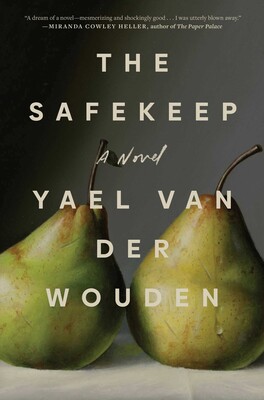
In my novel, The Safekeep, it’s that exact exploration of voyeurism, sex, discomfort, and self-discovery that stands central. The idea came to me first as a premise: a woman, alone in an old family home; a stranger arrives in the form of her brother’s newest girlfriend, made to stay for the summer. The two are at odds. They are stuck together in this house, alone. That was the premise. Then, came the question—and what does sex have to do with it? The novel tilts itself around the notion of the erotic in the way I have tilted myself around it, wondering at how we recognize desire when it doesn’t come to us in the way we’ve been told to expect. 

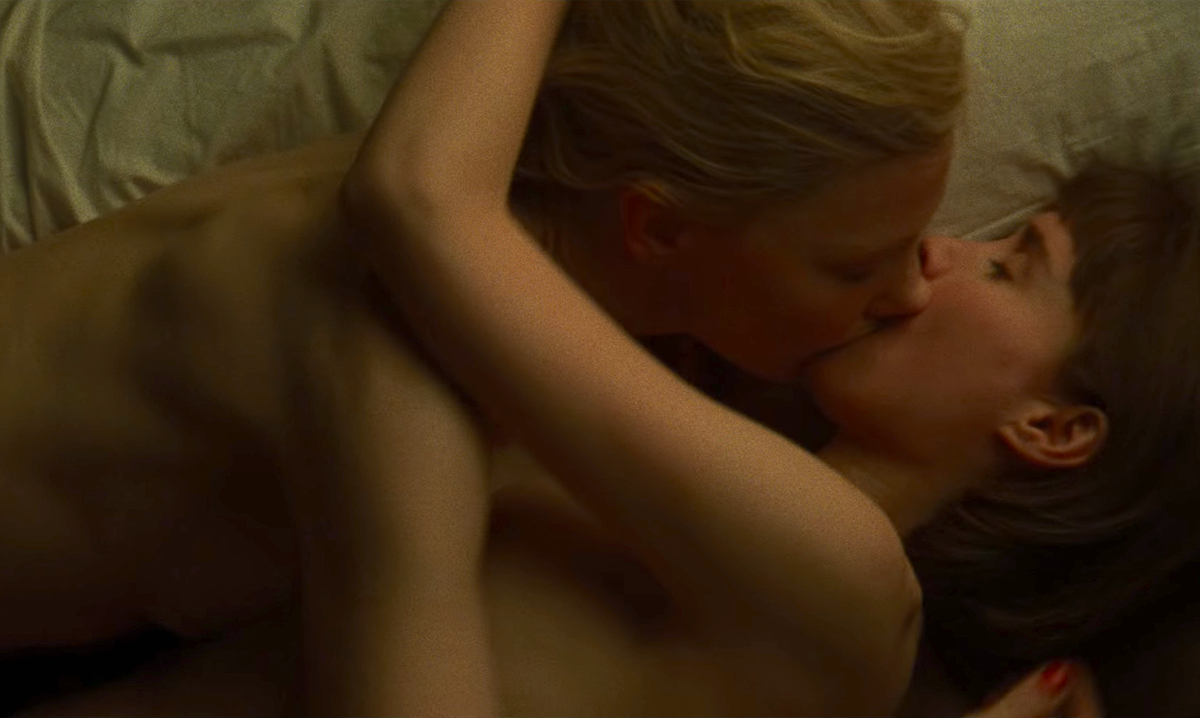
The seven scenes on this list come from some of my favorite novels and short stories. Through language, story tension and some wonderful discomfort, they each explore what makes desire translate from page to reader, and what allows a reader to remain objective; or turn, quite unexpectedly, into the subject itself. 

The One With the Victorian Dildo

Tipping the Velvet by Sarah Waters

Of course, this had to be the opener. This scene occupies a near-cultish-level position in the lesbian literary spheres. Briefly mention Tipping the Velvet, or even Sarah Waters in general, and the whole room will sigh a collective, “Yeah, that one scene.” You don’t have to ask what scene. You know what scene. The main character, Nan, is commanded by her older lover, Diana, to wear a strap. The context? We’re in the 1890s. 

The dildo is described in detail (“It was a cylinder of leather, rather longer than the length of my hand and about as fat, in width, as I could grip. One end was rounded and slightly enlarged, the other fixed firm to a flattened base”), as is the delightful galloping of the scene that follows. Nan is made to sit on a chair, and Diana rides her, “then proceeded to rise and sink, rise and sink, with an ever speedier motion.” The purposefully archaic narrative voice creates a friction between the words and what happens on the page, “Soon her breaths became moans, then cries; soon my own voice joined hers, for the dildo that serviced her also pleasured me—her motions bringing it with an ever faster, ever harder pressure against just that part of me that cared for pressure best.” It teeters between earnestness and humor, desire as bodily and the bodily as camp. A true and timeless classic. 

The One About a Zombie Apocalypse Sex List

“Inventory” in Her Body & Other Parties by Carmen Maria Machado

It was last year when I read that Carmen Maria Machado was writing the script for an erotic queer porn film. I have still not recovered from this news. Truly, no one does it like Machado—the ease, the swiftness of how she can go from desire to horror, from arousal to fear. It was hard to pick one for Machado, and I went back and forth, paging through other stories (especially “The Lost Performance of the High Priestess of the Temple of Horror” in the collection Kink deserves a very notable mention), but settled on “Inventory.” It was my introduction to Machado, and haunts me daily. The premise? A zombie apocalypse written in the form of a diary-entry list of people the narrator has had sex with. My favorite entry opens with: “One woman. Brunette. A former CDC employee.” And continues, “I met her at a community meeting where they taught us how to stockpile food and manage outbreaks in our neighborhoods should the virus hop the firebreak. […] She wanted cock and I obliged. Afterward, she traced the indents in my skin from the harness, and confessed to me that no one was having any luck developing a vaccine. ‘But the fucking thing is only passing through physical contact,’ she said. ‘If people would just stay apart—’ She grew silent. She curled up next to me and we drifted off. When I woke up, she was working herself over with the dildo, and I pretended I was still sleeping.” 

It’s the ease of the phrase, she wanted cock and I obliged. The sex we’re not allowed to witness and we understand only in the retrospective; the following emotion in the brunette’s speech—if only people would just stay apart!—is immediately contrasted and amplified with the evocatively crass, working herself over with the dildo, and our narrator sleeping. It plays with our expectations as readers: what we think we’re going to ‘see’, what we end up being allowed to ‘see’, and the subversion of the satisfaction we expect to find in a scene involving a, well—a dildo. 

The One About the Very First Time

America is Not the Heart by Elaine Castillo

At least once a month I have a moment where I think to myself, thank god for Castillo’s writing. On a personal level, yes, but also as a teacher: this is my most often used scene in my erotic writing course. The novel itself is a deft exploration of the politics of immigration and how they intersect with sexuality. My favourite sex scene in it is the one where one of the protagonists, Hero, takes Rosalyn to bed for the first time. It does one a trick that I’m endlessly fond of—switching in and out of the moment, in and our of physicality, creating tension by allowing us to witness and then suddenly throwing us back into memory. In media res, with the two lovers in bed, we’re told that “Hero had been told before, not always in a complimentary way, that she was loud when she came—near-silent panting all the way through, and then deafening, devouring cries when it happened. Since arriving in California she’d toned it down, couldn’t let herself go, thought she’d changed.” 

Then, a few sentences later, the non-sequitur of the reflection is resolved: “But when she finally came, slick-lipped, lifting her hips to grind her clit shamelessly against Rosalyn’s finger [ . . . ] she felt Rosalyn physically startle at the volume of her cry, fingerhold briefly slipping, before she rallied and rubbed Hero through it.” The language here does something brilliant: alliteration (slick-lipped-lifting) is prefacing the rise in tempo, the repeating comma’s echoing the climax. However, Rosalyn continues, “wind[ing] Hero back up again, circling, no mercy, so it didn’t take long for Hero to give it up a second time, growling, annoyed—at how good it was, at how much she’d missed it, at how much more she wanted. Shit.” If Machado plays with what we’re allowed to witness, Castillo waits until the last minute to pull back the curtain altogether and letting us witness it all, slick fingers and growls and all. Ending the paragraph on the shit does something delightful: brings the third person close into a first almost direct dialogue—an orgasm so good it breaks the narrative structure. 

The One Where the Sex Fantasy Spirals

The First Bad Man by Miranda July

Perhaps an unorthodox choice, but I’m obsessed with everything that July’s strange little brain comes up with, and this novel was no different. I recall that heady period in 2017 where I forced everyone around me to read it because I was talking of so little else. The moment I realized where the story was headed—the escalation of the relationship between the two unlikely bedfellows, older Cheryl and younger Clee—something very physical rattled through me. I remember sitting straight up in bed and saying, oh no. The sex in this novel comes at you in the most diverted ways (literally—Cheryl can only experience desire if she reroutes it through the fantasies of others), at first indirectly and then all at once. There’s this one scene where, during a party, Cheryl considers Clee across the room and imagines that she herself is a former lover, a man called Philip, and that it’s in fact Philip who’s aroused by Clee and not herself: “I was in him, in her. […] He wanted to rub her through her jeans. Jiddy jiddy jiddy rah rah. And cream in her mouth. Mutual soaping. Jiddy jiddy jiddy rah rah. My member was stiff. […] I went into my room, locked the door, took off the purple bra with its shiny, shiny straps, and pressed my balding head into her jugs. My big, hairy hand worked itself down the front of her jeans and my fingers, with their thick blocky fingernails, slid into her puss. She was wet and whimpering. ‘Phillip,’ she moaned. ‘Put it in me.’ So I quietly, forcefully, made love to her mouth.” 

This, again, teeters between humor and discomfort—that most camp of combinations. What happens here creates a feedback loop for us, too. As readers, all we do is pretend we are in the mind of the main character, and now the main character does that too, through someone else; we are us, we are Cheryl, who is Philip, who wants Clee. Her fantasy is an extension of ours, and we’re taken into it so easily. So much of sex is fantasy, and July plays with it here, plays with coming to queer desire through the straight roundabout. It’s effective because it’s unsettling and shocking, because it’s a little too effortless.

The One About Fucking a Rockstar

Paul Takes the Form of a Mortal Girl by Andrea Lawlor

Where July plays with redirected desire, Lawlor’s Paul Takes the Form of a Mortal Girl takes desire apart and puts it back together upside-down. A wonderful, sexy, chaotic exploration of gender, Lawlor’s novel follows Paul, the shapeshifter, as he shifts through bodies and identities in his search for connection. The novel opens with Paul as a young woman heading to a lesbian punk concert in the form of a groupie, where he flirts with the lead singer, “The rock star.” They end up at a house party where the rock star leads him to a spare room: “Paul stood near the bed, waiting to be directed. The rock star closed the door and walked up very close to Paul. ‘Are you going to kiss me now?’ Paul whispered. ‘I’m gonna do more than that, little girl,’ growled the rock star, pulling Paul’s hair from the nape of his neck. Paul let himself fall back onto the bed and the rock star fell on top of him like a high-school quarterback, lithe with purpose, grinding expectantly onto Paul.” 

I love discussing this scene in class, especially because of the initial confusion with the uninitiated readership around bodies and pronouns, how the language first seems to ask us to keep up—and then basically says, oh please just stop caring. The rock star asks, “‘What do you want?’, and “Paul couldn’t think. You tell me, he thought. The rock star stuck her hand down Paul’s special vinyl pants, under his black panties, into his cunt. ‘You’re so wet,’ she said. ‘You want my cock so bad.’ Paul nodded. It was true. He was very, very, very wet. He could smell himself. His cunt was gaping and his stomach was gaping and his mouth was kissing, kissing, kissing. He whimpered as the rock star unbuttoned her jeans and pulled out her plastic cock, black and shiny to match her rock-star shininess. I am being penetrated by punk, he thought as she thrust into him, pushing his legs legs apart, collapsing onto him like a pistoning flesh blanket.” 

There’s so much joy in Lawlor’s sex writing, so much enjoyment in desire that I so rarely read in queer narratives. But there’s texture, too, there’s always something small and grating right below the surface: “Inside Paul something tight released: a rusted nut turned finally around its old bolt. White sheets were thrown off moldering couches with fanfare of dust and sunlight. Then the release stopped, as if it never was.” Implications within metaphors—the rusted nut, the old bolt; the release coming and then disappearing. “’Don’t stop, okay?’ Paul said. ‘Don’t stop.’” Joy and lust transitioning into desperation: As the novel continues, we see that Paul can be anything, but he can’t have everything. It’s a fascinating and sexy mix, and unlike anything else I’ve ever read. 

The One Filled With Tenderness

“The Frog King” in Cleanness by Garth Greenwell

Can we even talk about queer sex writing without mentioning Garth Greenwell? A master in both his erotic writing and his meta analysis of desire in page. There was so much to choose from, but in the end I settled on his short story from Cleanness, “The Frog King.” When I first read it I recall slowing down halfway through, then eventually returning to the beginning to read it anew, through calmer eyes. This, too, is a rare exploration of joy and comfort in queer sex. It’s a conversation around being seen, too. By others, by ourselves. Our two protagonists have just returned from a holiday in Italy where everything was joyous and sexy, and now, back in Sofia, Bulgaria, the two men first drift briefly away and then toward one another. The main character seeks out his lover, R., and turns a playful scene in the bedroom into an earnest one. “He was harder now, he pressed his hips up against mine, but I lifted myself off him, beyond his reach. He moaned in frustration, he tried to pull his hands free but I held them firm; Porta-te bem, [behave], I said to him, and then I did kiss him, I put my tongue in his mouth and he sucked at it hard, tasting me but tasting himself, too, that was what he loved, the taste of himself in my mouth.” 

There’s that theme again, that seems to return in so much of queer sex writing: the self in the other, possession that is also surrender. It’s through this possession/surrender dichotomy that R. finds something soft and the moment shifts. “He was being good,” the main character says. “He let me do what I wanted. But I wasn’t sure what I wanted, or what I wanted had changed. I had thought I wanted to make him laugh, that after that I wanted sex, but I didn’t want sex, I realized, or not only sex.” The scene then moves away from the climax; R. weeps, our protagonist holds him. Greenwell’s incredibly skillful pen reminds us how lust in the erotic sense and want in the tender sense are always a breath away. 

The One Where Sex is the Antidote to Demonic Possession

Feast While You Can by Onjuli Datta & Mikaella Clements

I was saving this one for last, because boooy, am I excited about this book. I’ve been joking about the season of bad sexy lesbians being upon us, and Feast While You Can will surely soon take the crown. Poor Angelina lives in the ugly but beautiful village of Candenze. One day, two strangers arrive: on a bus, her brother’s suave and much-hated ex, Jagvi; from the mountains, a demonic monster called the Thing. The monster wants to possess Angelina, and turns out, the only thing to keep it at bay? Jagvi’s touch. After a scorching and torturous 160 pages of unresolved tension, the two finally give in in a breathless rattle of a scene: “It felt like a wave, like some big animal pressing her into the long grass, like giving her body up again. Jagvi was still mostly dressed, rough denim against Angelina’s legs, belt buckle knocking against her poor bruised stomach, and Angelina couldn’t stop wriggling beneath her, shameless, arching her hips up, trying for something, anything.” Possession in the demonic sense is replaced by possession in the sense of desire, in the sense of, yes, yet again—surrender. “‘I won’t let it touch you,’” Jagvi promises, “‘don’t want it anywhere […], not your leg, […] Or your ear, […] And definitely, definitely not in your head,that’s, Angel, I don’t want it there, not ever—’” To which Angelina says: “‘You’re the only thing in my head.’” 

Where the Thing took Angelina’s body forcefully, she then gives it up to Jagvi willingly, allowing her to “[kneel] between Angelina’s ankles and [flip] her over, her hand knotted in Angelina’s hair. Jagvi was sure of herself and relentless, pulling Angelina neatly up onto her knees, knocking Angelina’s thighs apart, reaching around to cup Angelina’s tits, squeezing them together. Angelina grabbed fistfuls of the sheet, and Jagvi drifted easily down, mouth against Angelina’s spine, then biting her hip, then sliding her underwear down. ‘Jag,’ Angelina said, the only word left to her. She could feel Jagvi’s smile against her hip, and then Jagvi’s fingers slid hot inside her, knuckle-deep, curling up and out and in again.”

The sex in Feast While You Can brings forward an uncomfortable question that applies both to demonic possession and also normal relationships: how far can we crawl into another person before we’ve crawled too far? Datta and Clements bring us the answer in a blisteringly hot (and messy) denouement and one of my favorite endings of the last decade. Do not sleep on this one!

I’m a Trans Man, but I’ve Become My Mother

On the Pioneer Woman by Krys Malcolm Belc

Nearly twenty years after I first discover the Pioneer Woman, I sit naked in bed nursing my daughter, one hand holding my phone over her head, the other holding a burp cloth to catch the leaking milk on the other side, and watch again and again the video in which she cleans out her pantry. I own a home and have a dual-income middle class family. There is nothing I truly want for in life.

And yet. This walk-in space, the wall-to-wall shelving, the granite countertops inside the pantry itself, and more than that, to have the disposable income to purchase all of those beautiful containers for the flours, the sugars, the pastas, the chocolate chips. The giant jars are spotlessly clean and each has a lid that fits. The sound of lids being taken off containers. Pop. Snap. Pop. Handfuls and handfuls of pecans put into one. In my mind the cost racks up. She nests vintage Pyrex bowls. She lifts up multiple Dutch ovens onto a shelf. None of her baking dishes are scratched. Clink clink clink, she lines up a dozen bottles of Topo Chico. She has not one but two boxes of Droste cocoa powder. I want to live in this pantry.

Growing up, my mother made dinner. She stayed at home with me and my five siblings, and cooking for us was the work of her life. Our hunger came in an endless cycle, and so she spent much of her time in the kitchen. Did I, when she shoved plate after plate of sandwiches and snacks across the counter at us, think this would be my life, too? I don’t think so—I didn’t know I would end up a man, but I did know I didn’t want the life she’d had. But here I am. When Anna and I started our family, we didn’t talk about who would do what. But I could cook and she could not, and we fell into a rhythm centered around the meals I make. My own four young children seem to want lunch the moment I’m done cleaning up after breakfast. I have, in a way, become my mother, become my family’s pioneer woman.

The internet’s Pioneer Woman is Ree Drummond, and her cultural celebrity began with a blog she launched in the aughts, on which she wrote about her daily life, including what she cooked for her husband, Ladd, and their four children (she and Ladd began parenting a fifth child, a teenage foster son, when her other children were teens and young adults). The cheesy wholesomeness of her photographs and stories of homeschooling on the ranch and her cheeky jokes belied the vast cattle empire she married into—her in-laws are one of the biggest landholding families in America.

I have to be honest: I probably gravitated towards her recipes first because they seemed like things I could cook for my parents and siblings, when I visited home, due to the volume and lack of “fussy” ingredients (Drummond lives a ways away from a grocery store, and her rich husband has the palate of a toddler). When I’m home, with my family of origin, I eclipse my mother, even, slipping into the role of the cook. The cook doesn’t have to socialize as much, doesn’t have to drink as much, can be a little weird, just as long as the dinner’s good. The kitchen is a place to hide from the pressure, the banter. Maybe that’s what drew me in there in the first place. The pressure’s different—not on how you act, but rather on what you make.

The kitchen is a place to hide from the pressure, the banter. Maybe that’s what drew me in there in the first place.

The Pioneer Woman cooks grilled chicken, burgers, one-pot pastas, those sorts of things. The kinds of desserts kids love: a massive Texas sheet cake baked on a half sheet pan, a peanut butter pie with Oreo crust, a puckeringly tart lemon icebox pie topped with whipped cream.

In a wide-ranging 2011 profile of Drummond, surmising about The Pioneer Woman’s fame, Amanda Fortini writes, “The amateur country-girl persona works as a literary device because it allows readers to imagine falling in love and ditching their frenzied lives for a calmer, more agrarian existence, without having to abandon the notion that they are sophisticated, independent women.” It’s a Shes like me, only she lives out there, sort of a thing. I remember reading the profile. A friend and I—neither of us had children yet, and she had her only around the time I had my fourth—were trying to determine how right-wing she was, parsing through Fortini’s words for a clue about how much it was okay to like her, okay to watch her. Of course, she had all the hallmarks of someone I could not have in my life, not in a close way, anyway: church, homeschooling, all that land. Was she really something like us?

When I found her, it’s true that there was something admittedly aspirational about the idea of getting away, something that, nearly twenty years and four kids after I started reading her, I still think about. Living in Philadelphia in early adulthood, stepping over mounds of trash, needles and dirty diapers and take-out refuse, all just to get onto the subway, to get to the bus station to get on the bus to work, who wouldn’t want to live out in the country far from people for a while? My life was so very peopled, by students and then by my own children, too. As improbable as this life seemed for me, an unhappy twenty-something closeted trans man, wasn’t it improbable for Ree, too? That was the point: she was a city girl, an LA girl who had left Oklahoma to attend USC. She only ended up on a ranch because she met her husband in a bar, because of that improbable way love can reorient the trajectory of your life.


Lately, I can’t stop thinking about Curtis Sittenfeld’s “The Prairie Wife.” In the story, Kirsten, a thirty- or forty-something working mom of two kids cannot stop reading content from the social media universe created by Lucy Headrick, a woman with whom Kirsten had a fling the summer after her freshman year of college. In the twenty years since, Lucy has morphed from a self-declared college lesbian into a Ree Drummond-like figure: a Missouri proto-tradwife with 3.1 million followers.

Kirsten is married to Casey, a partner for whom Sittenfeld conveniently avoids using pronouns and words like “husband” and “wife” in describing. The first time, I admit, I thought Casey was a dude. I can’t remember what I was doing while I listened to Sittenfeld read her story. Chores, probably. Listening to short stories while I scrub toilets and refill hand soaps from a big tub of clear Target-brand soap makes me feel literary, like I belong in the world of words. As I cleaned, my mind filed away Casey as a husband. I guess I thought that Kirsten saw Lucy as some sort of road not taken because, in the story, Kirsten says, cruelly, that sex with Lucy isn’t real sex. To her, sex with another woman is a warm-up act to better, realer sex she will have with men. For some reason I believed that immature Kirsten of the flashback. That she married Casey, a man. But then, it’s revealed—though is it a revelation to anyone but me?—that Kirsten ended up with a woman. In that way, the famous and unbelievably wealthy Lucy was not a warm-up but rather a gateway into a world of queerness.

But what sort of queerness? The story is about a boring domestic trap. In this story is the queer world of negotiating which parent wakes the kids up and which makes breakfast, which parent will bring the forgotten instrument to school, of wondering what it means if your exhausted co-parent does or does not put their arm around you before sleep. It’s unsettlingly unsexy and hard, something usually contained to the world of literature about cishet people. “This is what this stage is like,” Casey says to Kirsten near the end of the story. Kirsten is worried about how time is passing, how they will look back at this part of their lives.

Anna and I, we had the opposite worry. Our daughter, our third child, turned five. She went to kindergarten. We let our older son walk his siblings to and from school. We left them at this playground, then this other one. We told babysitters, You dont…honestly really need to do anything with them. We hired a babysitter who was in nursing school and told the kids to leave her alone, to just let her study. They walked themselves to the corner store and to the donut shop. I watched them morph into Philadelphia pedestrians, not believing in the power of any light or stop sign. They would stand at the corner, crane their necks far into the street, step out one step, and wait to be waved by the driver of the stopped car. They read big books and had real ideas. My time with very young children was passing. I was in my early thirties, then I was in my mid-thirties. And Anna and I said: wait, we need this to go on, we aren’t done with this. Whatever this chaos is, this is where we need to be. And that’s when we had our fourth.

Back when Anna and I were in college,  we were going out to rent a movie when we had an argument, not for the first time, about how to be in the world as a unit: how to act around our parents, what it meant to be out, in which states we would hold hands, who knows which of the spinning wheel of being-a-queer-kid-fucking-sucks self-absorbed picks it was. And she said something that made me realize she was grieving the world of straightness, the world I never for a minute thought I would be a part of. I didn’t have the words for it but I was always set apart. Never, not once, did I picture a wedding or a baby shower or myself, on the other side of the table at a parent-teacher conference, when I was a child. In these moments she would always remind me of how, at scouting camp in Poland when she was a little girl, they held fake weddings. She was little, our second son’s age, in elementary school. She was matched with some Polish boy she barely knew. Adults orchestrated pretend weddings. What her life would have been like there. And how she dreamed of her wedding and of her babies. How she cared lovingly for her doll. But we can have that, I told her. Don’t you see that? We can have the same things they have.

We can have that, I told her. Don’t you see that? We can have the same things they have.

The Pioneer Woman Cooks: Food From My Frontier is in the pantheon of cookbooks my mother and I exchange back and forth, many of which had their origins as blogs or food television content, or both. I keep mine on a neat, uncluttered shelf in the kitchen, and she keeps hers behind a glass cabinet door, lined up in a row. I buy her books by the bloggers known as Smitten Kitchen, Homesick Texan. She buys me nearly every title from the Barefoot Contessa universe. I know many of Ree Drummond’s recipes will appeal to my mother because they are pretty good, feed a crowd, and will please my father, who, like Drummond’s husband, has a toddler’s palate. My mother and I, we get along. Our relationship as adults, it’s good. We FaceTime a few times a week, and she sends me recipe DMs from blogs around the internet. We both want to be eating fancy food, trying exciting new things, but instead we’re serving chili around a big table, passing a chip bag and fielding complaints over who gets what spoon.

We are in the same universe of content, though she’s a conservative older woman, and I’m her kinda weird trans son.  My internet is the mothers’ internet. The more children I have, the more the internet thinks I want my world of content to revolve around them. Over the years, I’ve noticed the content shifting more and more towards telling me what I, as a presumably white and middle-class user of a phone, should feed my children.

My internet is the mothers’ internet.

First, there’s breastmilk, of course. Then there are the perfect foods, organic and lovingly prepared in a clean, spacious kitchen. This content: What three months of breastfeeding did to my baby. What my six-month-old eats in a day. What my twelve-month-old eats in a day. Montages of homemade purees, children holding slippery avocado halves, a chef who makes his toddler professionally presented dishes on tiny white plates.

And though the internet I create is full of beautiful things, I’m the first to admit I bake swirled brownies and fresh sandwich bread because I have to, not because I’m better than anyone else. There is a thrumming need within me: to move my body, my hands, to make something of my time, to please the people I’ve helped bring into the world. To be and stay animated by my, by others’, cyclical hunger. It’s how I relate to people, this creating. A photograph of a Smitten Kitchen peanut-butter filled chocolate cookie I post on Twitter is an invitation, not for anyone to tell me what a great parent I am, but for people to tell me how fucking delicious it looks, to ask for the recipe, to tell me they made it too, to joke: what work thing are you avoiding by making these?

In a way, I am like the mothers of the internet, the mothers in my life, too, only I am not them, because I am not a mother. I perform many of the same actions: spraying countertops with that one spray that won’t leave streaks, sharpening chef’s knives, thinking of little hacks to make my life make sense to me. In their reels they make fun of their husbands, who are hapless and cannot grocery shop, cannot care for infants effectively, cannot understand them and all of the things that they do. It’s tiresome but I am shown this content for a reason, am I not? Why do I spend minutes at my desk watching a white woman in a clean-looking suburban kitchen put a rotisserie chicken in a large Ziplock bag, massage the bag vigorously with both hands, and separate the meat from the bones in a warm, smeary mess? This is supposed to save me time. It’s a hack. I am part of the target audience. I am making a dinner a cowboy would love. The only vegetable in it is an onion. There are two kinds of shredded cheese. My head is out the back door and I am calling everyone in for dinner.


My mother calls me one evening because she accidentally bought cauliflower gnocchi to make a sheet pan gnocchi recipe I sent her—an inoffensive, weeknight dinner, from a recipe by Ali Slagle, one of my personal weeknight dinner heroes: chicken thighs, olive oil, garlic, seasonings from a drawer, nary a vegetable, though I tell her you can put any cubed vegetable on the sheet pan to round it out, knowing she won’t—and she wants to let me know she’s just going to do it! She’s going to throw the cauliflower gnocchi on the sheet pan like it’s regular gnocchi and serve it to my father without telling him! He would never touch cauliflower knowingly. My mother is drunk on light beer she’s drinking from a wine glass in her kitchen. She likes kitschy, hand-painted wine glasses. I don’t see the beer or the glass but I know from her voice and the way her ears are burning red. Mom, he’s gonna know! He’ll hate this dish forever! I tell her. I’m sitting on the childish living room carpet, one of the ones with drawn-on roads for toy cars, and I am giggling, too. I call her a lot during transition times, when the baby wants to be doing something she can’t be doing right then. These transition-time calls began when I was an undergraduate, soon before I met Anna, when I would want someone to keep me company when I had to traverse the entire green campus on my way to class. She would tell me what she had for lunch, what was on tonight’s dinner roster.

My mother and I don’t talk about hard things. Questions like does she think my life is turning out alright, is she proud of me, am I making some huge mistake or other raising my kids, they’re not worth giving too much thought, because I don’t believe in asking questions I don’t want to know the answers to.

Tonight, I call my mother because the baby wants to be asleep, she is in her pajamas, but it isn’t bedtime. It’s six in the evening, and I do not want to be awake at the hour she’ll wake up if I let her sleep right now. She points to her sleep sack, her pacifier, the staircase that leads to her bedroom. My mother tries to get the baby’s attention. Baby girl, say hi to grandma! Take that pacifier out of your mouth! The baby halfheartedly waves.

Anyway, my mother says, I put the package in the trash can and covered it with other stuff. Fingers crossed. We are similar, but I didn’t marry someone like my father. Anna grew up in Warsaw eating so few things, because of scarcity, because her mother was not a skilled cook, but she will eat anything I put on the table. She loves leafy greens, kale and chard and arugula, an extra-sharp vinaigrette, salad with a split soft-boiled egg on top, the jars of chili crisp I keep all in a row in the fridge. She loves the snap of a green bean and simple steamed bok choi. More for me, she’ll say, taking the vegetable dishes away from the kids and pulling them towards her seat at the corner of the table.

In two years, I will have been in this relationship longer than not. My sensibility about what to cook and what to eat is growing up along with hers. We don’t get out to eat much but when we do, she lets me pick, where to go, what to order. At home, too, I pick everything. I decide how to arrange and stock the refrigerator. I select the brands, and the family’s tastes evolve with mine. Once I buy Kerrygold butter for our toast, I’m never going back. I like thighs better than breasts, so our chicken choices are done. My favorite apples in a bag. My favorite yogurt in a big quart container. When I ask if anyone has any cravings or desires, I get a resounding murmur of neutrality. It’s such a trap, because that means I have to pick everything, but I don’t know what it would be like, having to eat things someone else picked. That hasn’t been my life since I was a kid. Those nights we finally get out after months of eating all our meals at home, Anna and I split everything, our hands tearing into it all. What’s the point of picking, she wonders, when I always seem to choose what’s best on the menu? Out of the house, out in the world, I stop feeling like somebody’s housewife, which is often something I sink into. She laughs because I tell her the song “Where Have All The Cowboys Gone?” is really about me. Because I make more money? she says. Because of…I don’t know, everything! I tell her. The way the woman in the song is hot for someone who goes out and makes money in a big, bodily way, hot for the way it feels to wait at home for it. Until it stops being hot. Because, maybe, I want to say to Anna, it would be nice if you noticed how much work it takes to keep the house functioning.

I put the song on every playlist for months. She rolls her eyes whenever it comes on. What a mournful, dramatic little boy she lives with. Did I want to be the pioneer woman in the song, or am I mad that that’s kind of just the way it went?

Anna’s father was so upset when she went to nursing school, lost his mind at seeing her in a service profession. In Poland, she told me, nursing was more of a working-class job than it is here, though when she talks about what she likes about the work, it is that it is done with the hands, that it is done on the feet, that it involves touching the body, that it must be done at a quick and automatic pace in order to keep up with its demands. She talks about it the way I talk about making yet another vat of spaghetti for dinner. What did her father want? For her to be an economist, a mathematician, something fancy, I think. Something he perceived as clean. Some job where you never touch someone else’s poop. And what if she did? Whenever the children are sick and we are turning over their beds through the night, holding out one bowl and another for them to vomit into, she says, No matter who you are, no matter where you went to school, you’re just a body taking care of other bodies.

The Pioneer Woman is good at taking pictures of her children, always has been.  She doesn’t share their rough moments, which I respect. It’s not really her place, and it’s also not really her thing. They are defined characters, with names, but they are also a pack, which is an effect that can happen once you have more than one or two of them. I do wonder if she takes pictures of her kids, some of whom are adults now, when they’re under the weather or just being annoying, for herself. I have those pictures, of my children feverish and mummified by blankets, lying on the couch with popsicles hanging from their mouths. For me, there’s something about admitting that I spend a lot of my time thinking about other people’s bodily functions, but also that it doesn’t define any of us. We’re all just people trying to make it through the day, but our days are bound up together. I don’t know how the gnocchi went over. How, after decades upon decades of shopping to feed my father, lasers would not strike my mother as she reached out to touch a package of the cauliflower kind. Why do we need to make cauliflower into everything anyway? What I do know is that I made the Ali Slagle dish at least once a week for months, because the idea of cooking everything together makes making dinner seem less arduous. How can gnocchi out of a package get so good, so crispy, all coated in chicken fat and salt? What I did not say before is that a part of me is always hoping I’ll find a recipe so regular slash fancy it’ll give me a reason to call my mother.

7 Books About Jamaica by Jamaican Authors

Growing up in Jamaica, my family and I went to the beach every Sunday, eating fried fish and fluffy, airy dumplings, swimming in water so crystal clear it looked like diamonds sparkled on it. We’d come home sunburned and windswept, and we’d sleep well that night, our energy completely sapped by the sun. 

The next day, we’d get back to work. Back to boring insurance jobs (no offense to those with boring insurance jobs), law firms, doctor’s offices, PR companies. Government jobs, cleaning jobs, secretarial jobs, teaching jobs. Some would go to the universities. Schoolers would wear their uniforms and go to school. All of us would sit in traffic, sweating and cursing in cars or busses, until we got where we needed to go. Yes, we live in paradise, but paradise doesn’t run on saltwater.  

I know that Jamaica is a beach vacation for most of the world and it is truly an amazing one. But we are more than just a beach for tourists to lay on. Jamaica has a rich history and culture, and we’ve made incredible contributions to the world.

When I think about the things that I miss about Jamaica, I never think of the beach. I think of the ever-present music, noise and movement; the fruit stall sellers and the pan chicken man, from whom you can buy delicious BBQ chicken, but only after 2 am. I think of the crazy way people drive around Kingston. The smell after it rains. How we once held the Guinness world record for most churches per capita, but we still dance half naked in the street during carnival, or at the dance hall. 

Sometimes I take off my rose-tinted glasses, and I think about the way we’ve held on to colonial structures, the sharp divide between classes—who’s “uptown,” who’s “downtown,” and what that means for the trajectory of your life. How people will ask who your father is, and who his father is, to see if you’re worth their time. How the lightness of your skin can take you places, and the darkness of your skin can hold you back.

In my novel, Sweetness in the Skin, I explore these themes of classism, colorism, and colonialism through the trials and tribulations of a young girl trying to find her place in the world. Pumkin lives with her adoring aunt, her social climbing grandmother, and her neglectful mother in the wrong part of town, but when her aunt moves to France without her, Pumkin must employ her extraordinary baking skills as she desperately tries to reunite with her. 

My book shows a real Jamaica—my Jamaica, from the ‘90s, the one I grew up in—and it would sit on the shelf quite neatly with these other stories that are set in, or evoke, the spirit of the real Jamaica… beyond our beautiful beaches.

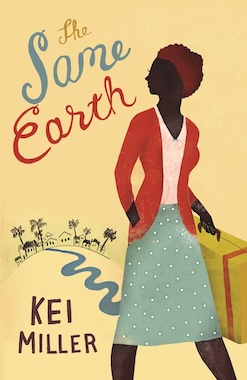
The Same Earth by Kei Miller

When Imelda Richardson’s mother dies, she returns home from England to her tiny country village in Jamaica. It is religion that holds the village in place—a common thing in Jamaica—and this particular one is run with an iron grip by the evangelical Pastor Brathwaite. In the wake of a horrible crime (Tessa Walcott’s polka dot panties are stolen right off the line!), Imelda sets up a neighborhood watch, but that proves to be too much devilry for the pastor and his devoted flock. So when the river rises up and floods Imelda’s home, they feel that God is on their side, punishing her for her evil influence. In fact, they get so riled up about it, they decide to continue God’s good work and cleanse the whole village with fire— especially the gay man’s house. This funny, heartfelt, magical realist story gives a glimpse into Jamaican village life and the role that religion plays with so many Jamaicans.

How to Say Babylon by Safiya Sinclair 

Born in Montego Bay, where luxury hotels line pristine white sand beaches, Safiya Sinclair grew up in poverty, guarding herself against her father, a volatile reggae musician and strict believer in a militant sect of Rastafari. Her father keeps them practically imprisoned in the many rental homes they move around to, in order to “protect the purity” of the women and girls in the family. One of the most pervasive stereotypes about Jamaica is that we are all Rasta, or accepting of Rastafarianism, but the truth is, Rastafari have been marginalized since they first came on the scene, and not many Jamaicans really know much about them. Even today, some Jamaican schools refuse to allow Rasta children, or force them to manipulate their locks in certain ways to make them look “less Rasta.” This book is lush, verdant, gripping, startling, fierce and unflinching. I read it with a sense of desperation, willing Safiya forwards to freedom, frantic about how it would all turn out. 

Black Cake by Charmaine Wilkerson

Siblings Benny and Byron reunite for their mother’s funeral and learn that she left a legacy in the form of a black cake—and a decades-old murder that turns everything they know about their family on its head. Wilkerson doesn’t explicitly say this is Jamaica but believe me, it is! The novel looks back at the history of our island and how our Chinese population ended up there. The black cake—a traditional Caribbean staple at Christmas and weddings—is the focal point around which lives ebb and flow, through happiness and disaster, and discovering that you never really know your parents’ story.

Popisho by Leone Ross

An epic, magical tale of love, community, corruption and colonialism set on an Archipelago called Popisho, inspired by the author’s homeland of Jamaica. In this bawdy, mischievous story, each resident of Popisho is gifted a (sometimes hilarious) magical ability, or “cors.” Xavier Redchoose has been anointed by the gods to make each resident one perfect meal. His long-lost love has healing powers. The corrupt governor has a shady gift, but his daughter, set to be married, hasn’t found hers yet. His son has a pretty good one, but he’s been banished. Their lives, and the lives of so many others, intertwine and collide until a “sweet” storm blows in and sets wrong things to right.

These Ghosts Are Family by Maisy Card

Stanford Solomon has a secret he’s kept for 35 years: he isn’t Stanford Solomon at all. He stole the life of his friend, who died in a tragic accident and, for once, the racism Stanford experienced in the U.K. worked in his favor. But now Stanford’s dying and he wants to set things to rights. This novel reads like several interconnected short stories about the lives of Stanford, his family, and his ancestors, and how decisions made in each era affect the ones after. We see Jamaica as it would have been during the days of enslavement; we see the country in the 1960s, the 1980s, the 2000s, and everywhere in between. We see the effects of racism, colonialism, migration, infidelity, regret. I loved this travel through time to all the Jamaicas I have never known, but hold somewhere deep in my bones.

River Mumma by Zalika Reid-Benta 

When I was a child I was deathly afraid of the Rolling Calf, a Jamaican duppy (spirit) that I won’t say anything more because I still do not want it to notice me. So I was drawn to this story of Alicia, who is floundering after graduate school with no job prospects, unsure what to do with her life, when she is set on a quest by the River Mumma, the Jamaican water deity. Alicia and her two friends are plagued by other Jamaican duppies while they try and figure out how to find the River Mumma’s golden comb (including the dreaded Rolling Calf, which I must admit seems less scary on these pages than in my childhood dreams). This story is set in Toronto, but it is Jamaican through and through—the characters must connect with their Jamaican roots to achieve their goal, and Alicia is transported to Jamaica through visions that help her connect to her ancestry and history. It’s an exploration of what “home” means—whether you live on its land or carry it in your heart. 

A Brief History of Seven Killings by Marlon James

This sprawling novel sweeps across decades in post-colonial Jamaica and weaves true historical facts with fiction. Centered around the attempted assassination of Jamaica’s favorite son, Bob Marley—referred to only as “The Singer” in this tome—the book follows a wide cast of characters from gangsters, politicians, lovers, and even the CIA as they navigate gang-violence and political turbulence on the island. “Tek time” (take your time) with this one: the language is dense, the characters complicated, the violence plentiful. But James’s lyrical prose is so worth it, as is the opportunity to learn about one of the most turbulent times in our island’s history.

My Mother and Alice Munro

When I was a very little girl my mother used to take me over to the neighbor’s house down the street. Susan* (*not her real name), the neighbor was twenty or so years older than my mother and had a forty-year-old son who lived at home with her. He used to take me upstairs and molest me while my mother drank with Susan and their friends on Sunday afternoons. They drank whiskey in a glass while cigarette smoke filled the kitchen, in a house that was fascinatingly clean and empty where I was led up the stairs to the man’s bedroom. I told my mother what happened, but nothing changed. We still spent Sundays there. This ritual seemed sanctioned, somehow, like a powdery aunt kissing your cheek or an older cousin who tickles too hard. It was sanctioned in the way that so many terrible things that happen to children—generation after generation—are, and it turned my generation, Gen X, into great, winged, helicopter parents who never let our kids out of our sight., We try to protect them, yes, but also, impossibly, we try to make right the wrongs that were done to us.

When I sat in the parlor of my best friend who lived across the street from the man who was molesting me, I told her mother what was happening. I told it like it was a joke, something funny that happened to me. She was horrified. She told the appropriate people, including Susan, who then put her son into a group home. She didn’t abandon him; he came home on the weekends. And so there he was every Sunday afternoon when my mother continued to bring me over to the house while she smoked and drank with his mother. Sadly, this was not the only time I was left to fend for myself while my mother retreated into the oblivion of alcohol and her own private pain. It was not the only time I begged my mother to not force me to go places where I was abused or mistreated. Abuse and neglect were part of the warp and weave of my childhood. 

I was left to fend for myself while my mother retreated into the oblivion of alcohol and her own private pain.

When the Alice Munro story broke, I was horrified by Andrea Robin Skinner’s story, by what she had experienced and by how long she’d had to carry this awful family secret. I didn’t personally feel the loss of Munro as a literary icon because—and I guess I can admit this now that all my friends are placing her books in recycling bins—her work has never really moved me. For a moment, I thought about returning to some of the stories in the books I still have on my shelves. I wanted to return to the stories so that I could understand why her work had always left me cold. I doubt, really, it had anything to do with the person we found her out to be, a woman who didn’t just turn a blind eye to her husband’s abuse of her 9-year-old daughter, but actively chose him again and again, even after she knew all the facts and he’d admitted what he’d done.

I wondered when I read Andrea Robin Skinner’s account if Alice Munro drank, as my mother had. Drinking is a way that people live with horrific truths, about themselves and about others. I have no idea if they have this trait in common. What I do know is that they both seemed to have suffered from the kind of profound selfishness and lack of empathy that often accompanies the disease of addiction and of codependency. 

My mother’s desire to drink and to numb out the world was greater than her desire to protect me. Alice Munro’s desire to stay with her husband was stronger than her desire to validate and try to repair her daughter’s pain. I don’t know the roots of Munro’s choice. I do know that my own mother drank in part because her own childhood had been so hard, marked by sexual abuse when she was a teenager—my inheritance.

Despite my mother’s difficult upbringing, she, like Munro, went on to do work that changed people’s lives. She taught public high school in Detroit and she taught with integrity and deep care, so much so that her students often sought me out and told me how much she had meant to them. Her fellow teachers drove from Detroit to the middle of nowhere town where she’d finally found peace and happiness just to pay her respects when she died of cancer at age 69. In the country where they retired, my mother was known to bring shoes right to the house of the kids whose shoes were falling apart. She brought winter coats to them that she bought in bulk from Walmart. These two women are both my mother—the one who went out of her way to bring coats and shoes to her neediest students, who never gave up on them; and the woman, who sat downstairs and drank at her neighbor’s house while her daughter was molested upstairs. In some ways, my life would have been easier if they’d been two different women—a good mother and a bad mother— but they are not. And so I’ve been left to struggle all my life with this complexity. 

When I read Skinner’s essay, my first reaction was a feeling of admiration for the courage it must have taken for her to tell her story. My next reaction—which has more to do with my own family history than hers—was a feeling of sadness that she wasn’t able to tell the story while Munro was still alive. It’s not that I want Munro to suffer that humiliation for the sake of revenge, but rather, part of the enduring trauma of the abused is that so many of us are never told by the people who were supposed to protect us: I’m sorry. I should have done more. The longing for that validation never really goes away. I still feel it today, years after my mother’s death.

The longing for that validation never really goes away.

This kind of wound—childhood sexual abuse—is profound and so misunderstood that when Freud was presented with evidence of many of his female patients coming to him with their experiences of incest and child sexual abuse, he chose simply not to believe them. In fact, he came up with theories of girls seducing men and fathers, theories that helped men like Alice Munro’s second husband (who was convicted) justify his abuse. Instead of believing the women’s stories, Freud changed them to be about the fantasies of men.

Of all the painful aspects of Munro and Skinner’s story, the one most painful to me is the fact of how common a story it is—the story of women like Munro, like my mother, who are able to free themselves from so many of the constraints and injustices of a misogynist culture, but who, in the freeing, leave their children behind. And so when I think of my mother it is with a familiar mixture of sadness, rage, regret, and also, admiration and love. I did love her and she did love me and maybe that’s the hardest thing about all of this. Underneath it all, no matter how fraught and twisted the story, there is love. 

Please Delete All Memories Where I’m Not a Boy

Show Me

Tell us if there’s a specific date or date range that you’d rather not see in your memories. —Facebook

I would rather not see November 18, 2008, the day I faceplanted on the sidewalk after school and snow surged up my kitten mittens and stung my wrists so deeply that tears froze the corners of my eyes as I stumbled home. My mother draped the mittens over the towel rack in the downstairs bathroom, directly over the heating vent, but the purple wool was still soggy the next morning when my brother and I were ready to leave. Casting about in the winter drawer, I found my father’s black leather gloves and put them on; they were so large I could make fists inside them, the fingers flapping free. On the walk to school I felt my shoulders broaden and harden. My steps felt sturdier, the imprints of my boots so snug in the snow that I knew I would not slip and fall. Instead of bone china, I was brick. When I got home, my mother said my father’s gloves were too big and handed me my still-damp mittens, and I was back to bone. 

I would rather not see December 24, 2010, in the scratchy tulle dress with sparkling snowflakes chosen for me to wear to the family Christmas Eve party at my great-grandmother’s always-sweltering house, the party no one liked where reeking uncles hugged you and aunts looked ready to jump out windows and dozens of cousins you never saw gazed shyly or sullenly at one another, plates precariously balanced on thighs, eating meals that consisted entirely of cookies. Rowdy boy cousins were eventually sent to the basement to wrestle while girl cousins suffered with the adults, perched on wobbly card table chairs and answering questions about favorite subjects in school, lips smeared with powdered sugar. I sat with my knees pressed together. I had on four pairs of underwear, because I did not like how air slipped effortlessly under the hem of the sparkly dress and traveled unhindered up my calves and thighs. I felt exposed—the air had eyes, and hands—so I’d added the extra layers of protection. Still, I squeezed my legs together with such force, and for so long, that I grew dizzy, and in the stifling house and having eaten nothing but cookies, felt my mind erupt from my skull like a startled bird. I tipped out of my chair and the next thing I recall I was on the floor, the dress at my waist, the adults standing and silent and my mother kneeling beside me, fear in her face as she smoothed down my skirt. Are you all right? she asked. 

I would rather not see April 1, 2006, when I put on my brother’s football uniform for April Fools and asked my mother, “Do I look like a boy now?” and she said, “Oh, you’re much too pretty to be a boy.” 

I would rather not see June 4, 2011, trapped in a Kohl’s dressing room with eight swimming suits while my mother waited quietly just outside. I’d chosen the suits from the racks myself, so they were the best of the worst—one piece, black or navy, high neck, wide straps. My back to the mirror, I stepped cautiously into each leg hole, shimmied the suit over my hips, hooked it over my shoulders, and then turned for a quick glance, averting my eyes from my reflected face so I could pretend the body I saw was not connected to the person who looked like me. Still, mid-turn, each time, there was a glimmer of hope tucked inside the dread—perhaps this one would not look so strange?—and each time the glimmer was snuffed. After I tried on all eight I thought of my mother on the other side of the door, her anticipation thick enough to taste, and I lowered my expectations and tried each of them on again. When I finally emerged, all the suits strewn limp on the floor behind me, I found my mother seated inside the triangle of mirrors, reflected to infinity. 

I would rather see October 31sts. All of them. Show me my hair tucked into a cowboy hat. Show me Buzz Lightyear and the Red Power Ranger. Show me Jack Sparrow, my chin dotted with drawn-on stubble. Show me Captain America, the top half of my face hidden by the blue mask, my mouth bent into the determined grimace I practiced every afternoon in the bathroom mirror. Show me the day, the only day I ever loved getting dressed, breakfast in costume, walk to school in costume, math in costume, lunch in costume, music in costume, party in costume, playground in costume, pizza in costume at home before trick-or-treat. And then the greatest prize: blocks and blocks of front doors opening in the dark, neighbors who didn’t recognize me, moms and dads I’d known my whole life, their eyes passing over me, just another boy in a superhero costume, the old lady on the corner who said, “Look at him!” and her husband, who, shuffling forward, said, “Lemme get a peek at that shield, fella.” Show me, show me, in my pajamas but still masked, in bed, body concealed under covers, looking out my open window at the slivered moon when my door eased open and my mother slipped in. I knew she was going to tell me to take off the mask to sleep, but instead she leaned down and touched her lips to my blue forehead. “Sleep well, Captain America,” she whispered.

3 Debut Novelists Reveal How Their First Books Came Together

While reading a debut novel, oftentimes, there exists a momentary thrill of forgetting about craft. Instead, it can feel as if these writers grew up alongside their stories—in parallel lines and lives, naturally accumulating sentences with every inch they grew. There is a tender, literary innocence and a certain freedom from expectation that comes with debut novels. There is a freshness and urgency in the voice that subconsciously emerges from the story that perhaps they’ve been waiting their whole lives to tell. But, of course, every writer has their unique process and their own journey to find the right words in the right order. And debut writers are not to be underestimated for their work behind the scenes—the time they’ve spent harnessing their characters’ emotions into comprehensible sentences and their plot structures into legible timelines. They’ve thought carefully and revised thoroughly and have arrived this summer to tell the tale. 

As Matthew Salesses writes in the article “25 Essential Notes on Craft”: “Craft is about who has the power to write stories, what stories are historicized and who historicizes them, who gets to write literature and who folklore, whose writing is important and to whom, in what context.” These three debut writers are using craft in this exact way—all are currently changing the literary landscape, shapeshifting it right in front of our eyes. They have each written an incredible first novel and now are unveiling the gears behind their experiences.

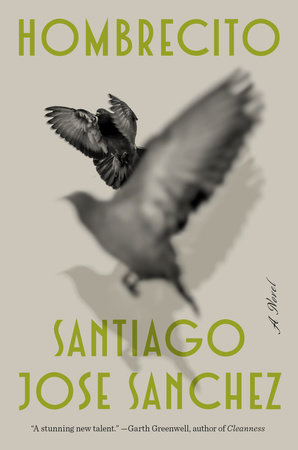
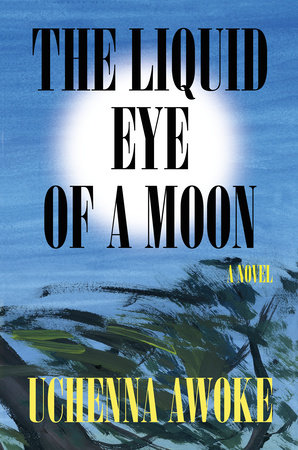
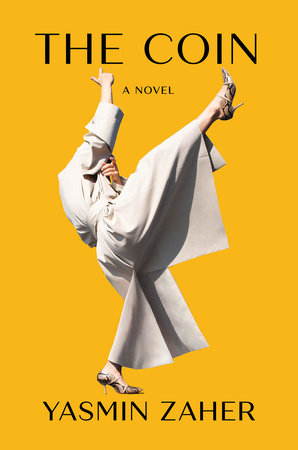
This interview features the following writers who have published debut novels this summer: Santiago Jose Sanchez, the author of Hombrecito; Uchenna Awoke, the author of The Liquid Eye of a Moon; and Yasmin Zaher, the author of The Coin. Sanchez, Awoke, and Zaher spoke with me about the highs and lows of the writing process, their evolving relationships with the novel as a form, and their experiences publishing their first books.


Santiago Jose Sanchez: I began writing Hombrecito almost ten years ago with a short story that imagined a young boy, in Colombia, waiting for his mother to pick him up after school. I gave him my name, a life closely parallel to my own, and though I didn’t remember living any such moment in the classroom, it felt like the sentences were coming straight from the corners of my own past. I continued writing from his perspective, treating each story as a portal into the most intense moments of his life. The first few pieces focused on his mother’s decision to leave his father and their homeland, and from there, the project grew into a nonlinear network of pieces that mapped a fictional life that was and wasn’t mine. With each iteration, the Santiago of these stories, and then my novel, became an entity separate and distinct from me. From time to time, I considered changing his name, distancing myself from his story, but ultimately I chose to own the connection between us. By blurring the lines between fiction and reality, by investing myself so deeply in the character of Santiago, I hoped to create something that was both highly personal and universally resonant: an honest exploration of the complexities of family, culture, and selfhood, written with intensity, empathy, and grace.

Kyla D. Walker: Did you write Hombrecito with a general outline or ending in mind?

SJS: There was no general outline or ending in mind. I didn’t know I was writing a novel; I was simply exploring and creating, figuring out what I wanted to capture from my experience with fiction. I wrote out of order, from different points of view—including my mother’s—collecting scenes, scraps, and stories. I trusted my curiosity and instincts, letting the stories unfold in their own way, without forcing them into a predetermined shape. In one, I followed Santiago as he briefly joined the Boy Scouts to get closer to a crush. In another, I was in New York City, following him during the two weeks before his first time hooking. Continuity, the very thing my life had lacked, didn’t concern me. Some stories were short, no more than a page or two, while others spilled past ten thousand words. Some came together in just a few days, others took years. Again and again, my curiosity took me back to the fractures that had shaped my life, pulling me towards the energy that came from the deep gaps between my childhood, adolescence, and young adulthood—between my relationships with sex, my mother, and my motherland. It was the in-betweenness of my experience that I wanted to capture. 

KW: How did you decide on the structure (with its shifting POVs) for the novel?

SJS: The structure of Hombrecito emerged organically once I had the whole network of stories in front of me. Two pieces fell into place right away: a story that follows Santiago as a young boy waiting for his mother to pick him up from school in Colombia, using definitive articles to refer to Santiago and his family as the boy, the mother, the father, and the brother; and the only story from the mother’s perspective, so distinct from the rest of the novel that it had to be placed at the end, giving her the final word.

Between these bookend chapters, a three-part structure took shape in a more conventional first-person perspective: Santiago as a child, as a teen, and as a young adult. The first section was tender and heart-breaking, capturing the raw, beautiful vision of the world through a child’s eyes. The second was quietly angry, full of sexual exploration and playful riskiness. The third was more tentative, exploring different paths and attempting to heal and build a life.

This linear structure also revealed a homecoming arc: Santiago’s story begins with leaving Colombia as a boy and returning with his mother as a young adult. Within this outer frame of my family’s migration, I found the space and freedom to tell my story in my own way, at the level of imagery and subject matter. With each POV shift, I wanted the reader to sink deeper into Santiago’s consciousness, an embodiment of his fractured relationship to time, memory, and stories. The gaps between chapters and the sharp focus on singular scenes felt true to the living a life split between two countries. Structuring the book any other way would have felt artificial. To own how I’d written the book was to own myself.

KW: What was your favorite part of the writing process for this novel?

SJS: The rush of devotion, pouring my heart and soul into a story. The discipline, showing up consistently and with faith, because as long as I kept coming back, something meaningful would emerge. The moments of adrenaline when the words struck a raw nerve, and I cried in public or in my bedroom. But more than anything, the comfort of knowing that no matter where I went, I was never as alone as I thought I was—Hombrecito was always with me. 


Uchenna Awoke: The Liquid Eye of a Moon started as a short story published in Elsewhere Lit in 2017 with the title “Shallow Grave.” “Shallow Grave” is the story of a childless woman who was ostracized in her community for killing a god incarnated in a tortoise, and when she passed, her church congregants hired foreigners to bury her because they would be ostracized if they did it themselves.

KW: What did the path to becoming a writer look like for you—and what were some of the hardest challenges you faced?

UA: Growing up in a rural community, our world wasn’t as digitalized as today’s world. No computers, no cell phones, no social media. Some of us didn’t even have family TV. But we had books, mostly crime thrillers by James Hardly Chase, and the Nigerian Pacesetters series. Friends would exchange novels and have conversations about what they had read. I was inspired by the way their authors crafted stories that captivated readers. I was challenged to write like them, but writing is time-consuming, and one of the difficulties I faced was finding time to write while struggling with a meagre income and family bills. Finding the right publisher for my work posed another kind of challenge, although my fellowships at MacDowell and Vermont Studio Center provided me with the opportunity to network with other authors for insights into the publishing process, but that was after I had sent out dozens of query letters and got no response. I feel like my manuscript was waiting to be claimed by one of the best agents in the business—Annie DeWitt of Shipman Agency.

KW: Did you write The Liquid Eye of a Moon with an idea of how it would end?

UA: “Shallow Grave” helped to create plot ideas for The Liquid Eye of a Moon, so I definitely created the plot skeleton from a back story. As I continued to build the plot, I wrote short paragraphs for the various narrative arcs. Often, I write different arcs in the form of short stories. Mostly I have only a vague idea of how it will end, and this could change depending on the character arc.

KW: What usually comes to you first for a story: the idea or the character/voice?

UA: The Liquid Eye of a Moon is a character story. For me, the character drives the plot, the structure, the whole story. 

KW: How did you decide on the structure of the novel?

UA: I decided on the Three Act Structure in which I basically established Dimkpa’s ‘ordinary world’ in Oregu village: his dreams of returning to school when his father becomes village head and building a fitting tomb for his aunt Okike. His father losing the position sets the story in motion. The threshold is crossed when Dimkpa realizes that he must make his own destiny. Once I got the story moving from the plot point one through to midpoint and plot point two, the resolution came seamlessly.


KW: What inspired you to write The Coin?

Yasmin Zaher: Living in New York City and reading The Passion According to G.H. by Clarice Lispector. I wanted to try to write without inhibitions. 

KW: How did you decide on what structure the novel would take?

YZ: Because I wrote without any notion of structure, I had to excavate it from the material. I started with just recognizing a beginning, middle and end. Then, inside those categories, I created clusters of scenes that should go together, because they had their own internal structure and logic. The hardest part for me was the beginning, because there were so many ideas to introduce, but I wanted to keep it light.

KW: Did the themes/content of The Coin help inform its structure of short, fast-paced chapters?

YZ: I think it’s more connected to my short attention span. Each chapter was probably written in one sitting, and a page or two is probably as much as I can do in one sitting. I can see now that the short chapters create momentum in the book, that it resembles our contemporary rhythm, or the rhythm of the city. It wasn’t intentional, I try to just follow my intuition while writing, and sometimes decisions are unintentional but they work out because they’re authentic.

KW: What was your favorite part of the writing process for this novel?

YZ: The first draft. There is no greater feeling for me than writing a sentence and being surprised by it. It’s like I’m hanging out with myself and I’m enjoying it. 

KW: What did revision look like for this project?

YZ: Tortuous, frustrating, annoying. Six long years of revision. It felt like working on clay that had already dried, there were problems that didn’t want to budge. Sometimes I felt like I was going backwards, and I probably was. It’s not just about making changes, it’s also making changes to the changes, and sometimes changing back to the original. 

KW: How has your writing process or relationship to your writing evolved over time?

YZ: I’m less intimidated by the page. Before, I had ten million rituals before I could start writing, and now I only have a million.


Announcing The Shortlist for the 2024 Ursula K. Le Guin Prize for Fiction

The Ursula K. Le Guin Prize for Fiction, a $25,000 prize honoring a book-length work of imaginative fiction, today announces the shortlist for the 2024 prize.

The prize, created to continue Le Guin’s legacy, is given to a writer whose work reflects the concepts and ideas that were central to Ursula’s own work: hope, equity, and freedom; non-violence and alternatives to conflict; and a holistic view of humanity’s place in the natural world. It is also intended to offer its recipients a bit of freedom; as Theo Downes-Le Guin, Ursula’s son and literary executor, said in 2022, “We tried to design a prize that, even if it wasn’t life-changing in the context of every individual’s circumstances, is a significant enough amount to provide a positive disruption.”

In 2022, the inaugural prize went to Khadija Abdalla Bajaber for The House of Rust, and in 2023, Rebecca Campbell received the prize for Arboreality

The prize shortlist is selected by the Ursula K. Le Guin Foundation, and the recipient is chosen by a panel of authors that this year includes Margaret Atwood, Omar El Akkad, Megan Giddings, Ken Liu, and Carmen Maria Machado.The recipient of the 2024 prize will be announced on Monday, October 21st, Ursula K. Le Guin’s birthday. 

Here is the shortlist for the 2024 prize!

The Saint of Bright Doors by Vajra Chandrasekera 

A young man rejects his chosen-one upbringing and discovers a much stranger life in a city full of doors and powers. Through layered storytelling that is both fantastical and familiar, Chandrasekera re-mythologizes the boundless ways that people shape and reshape history and the world.

The Skin and Its Girl by Sarah Cypher

At the grave of her beloved aunt, a queer, blue-skinned, Palestinian American woman ponders the next stage of her life and how it is informed by her family’s past. Cypher deftly explores the complexities of the stories we tell about ourselves, and the histories hidden in tales of magic and transformation.

It Lasts Forever and Then It’s Over by Anne de Marcken

In De Marcken’s compassionate novella, a nameless, undead protagonist finds new ways to navigate the landscapes shared by the living and the dead, the human and the inhuman. Her journey poignantly demonstrates new ways to grieve in and for a world we often take for granted.

Orbital by Samantha Harvey

Over the course of a single day, six astronauts orbit the earth, witnessing repeated sunrises, tending to their tasks and their bodies, and watching as a typhoon gathers far below. Meditative and precise, Orbital fosters an essential and global shift in perspective.

Sift by Alissa Hattman

Hattman’s elegiac novella follows two women as they cross a shifting, surreal, post-climate disaster landscape, seeking a place where they can grow food. Tender and rich with memories of the world as we know it, Sift is a meditation on isolation, change, and loss.

Those Beyond the Wall by Micaiah Johnson

The loyal mechanic to an emperor tells a story of revolution, community, and love in Johnson’s novel, which begins as a supernatural murder mystery before expanding to fearlessly consider what it might take for one world in the multiverse to achieve massive structural change.

The Library of Broken Worlds by Alaya Dawn Johnson

Johnson’s novel takes the form of the story a young woman tells to an AI god she intends to destroy. Encompassing several worlds, many gods, and peoples displaced and destroyed by war and colonialism, her tale is woven through with complex ideas about selfhood, history, and freedom. 

The Siege of Burning Grass by Premee Mohamed

In a world long divided by conflict, a famed pacifist is coerced into a mission of war alongside a zealot who cares only for victory. Mohamed melds inventive worldbuilding with a nuanced consideration of power, violence, nationalism, and what it takes to achieve peace. 

Some Desperate Glory by Emily Tesh

A space opera and a profound lesson in changing one’s mind, Some Desperate Glory follows a girl raised in a violent space cult who learns how to unravel the lies of her upbringing. Tesh shows that paradigm shifts are possible, however wrenchingly difficult they may be.

Mammoths at the Gates by Nghi Vo

Returning after a long absence, a story-collecting cleric finds that their abbey’s leader has died, and their distant family waits at the gates, demanding the body. Tracing the multitude of connections that exist in a single life, Vo illustrates the transformative power that grief has for an individual and for a community.

8 Novels Set in Philly With Mostly Happy Endings

Philadelphians are frequently thought of as pugilistic, mostly because of our reputation as a passionate sports town, and there is a pugnacious attitude in the city. Caught in the middle of the megapolis between New York City and Washington, D.C., Philly has been overlooked and ignored, more frequently thought of as the home of the fictional Rocky Balboa than remembered as the birthplace of American democracy. And while you may encounter someone who wants you to put up your dukes, you’re more likely to encounter people who will happily give you directions or share with you the best place to get a hoagie. People in Philly are passionate, which is why our sports fans get such a bad rap—but passionate people care about making things better and they care about each other. The other thing about Philadelphians is that they know how to take a joke.

I wanted to write a novel filled with characters like this, characters who at their core are kind and passionate, and maybe also a little funny. Enter Jewell Jamieson. Jewell is having a very lousy day, and in a moment of self-pity wishes that she could find someone who loves her like her dog does. Someone loyal. Someone who doesn’t judge. The next morning, she awakes to find a man in her bed and her dog gone.

While there are plenty of dark themed books set in Philadelphia, More Strange Than True is not one of them, and neither are these. 

Here are 8 novels set in Philly with mostly happy endings:

Bar Maid by Daniel Roberts

Bar Maid is a love letter to the somewhat seedy 1980s version of the city as seen through the eyes of a dreamy, romantic, and entitled Charlie Green. Like a lot of rich kids from New York City, Charlie ends up at the University of Pennsylvania. He’s a weird sort of kid who likes to day drink and hang out at bars, imagining the inner lives of the bartenders and patrons. In Philly, he stumbles upon the famous Sansome Street Oyster House, where he meets a bartender named Neil and the titular bar maid, Paula Henderson. At times Charlie seems to be channeling Don Quixote or Leopold Bloom, or wants to be, always looking at life through an ironic lens. Sometimes it seems as if Charlie would like to be anyone other than himself. Paula and Charlie’s love story is surprisingly tender and poignant, a lot like the city itself. 

The Days of Afrekete by Asali Solomon

The forward action of this novel takes place over the course of a dinner party, but throughout we get the backstory of Liselle Belmont, her husband Winn Anderson, and Liselle’s college girlfriend, Selena Octave. Liselle and Selena meet at Bryn Mawr and have the kind of tumultuous relationship that is almost always destined to burn itself out. After college, while working in New York City, Liselle meets Winn, a charming lawyer who convinces her to marry him. They eventually settle down in the Philadelphia suburbs and Winn runs for political office and loses. He’s also under investigation by the FBI. Meanwhile, Selena has been in and out of mental health facilities, trying to gain control over her depression. Pushed by her husband’s pending indictment and her imploding marriage, Liselle can’t stop thinking about her time with Selena. It turns out that neither woman can forget the other and they are pulled back toward each other in unexpected ways. 

Such a Fun Age by Kiley Reid

I’m not sure how much time Reid spent in Philly when she was drafting this novel, but the book is set here. Some locals might not feel that Such a Fun Age is as grounded in the city as some of the other novels on this list, but Reid definitely captures the flavor of the city. It also has moments of real humor. One thing it does really well, is explore the chasm-sized class divide that is still part of the make-up of this city. Emira Tucker is young, not sure what she wants, and working as a full-time babysitter for Alix Chamberlain’s three-year-old daughter, Briar. Alix is performatively progressive and so insecure that she does a lot of cringey things to prove how cool she is. Her obsession with Emira and her needy desire to have Emira like her, drives Alix to do things like read her email. Emira meets and starts dating Alix’s high school ex and then things really get awkward. 

Long Bright River by Liz Moore 

Mickey Fitzpatrick is a beat cop in the Kensington section of Philadelphia, a part of the city that is devastated by the opioid epidemic and chronic poverty. Mickey knows about this devastation firsthand. She spends much of the novel in search of her sister, who has been living on the street, and hasn’t been heard from in months. Mickey is also a fiercely devoted single mother, and balancing being a cop and taking care of her child are as challenging as anything she faces on the job. While I wouldn’t necessarily categorize this novel as “feel good” it is definitely full of hope. And there is no one more passionate than Mickey. While tracking down her sister, she and an ex-partner also investigate a series of murders, women forgotten and abandoned by almost everyone. They don’t give up until they’ve solved the crime even though it comes at a great cost to them both.

Loving Day by Mat Johson 

Warren Duffy is back in Philadelphia because he’s inherited his father’s Germantown mansion. That might sound like a good thing, but the Loudin mansion is in desperate need of repair and Duffy is in desperate need of cash. Duffy has been living in the UK and is recently divorced. He’s on a journey of self-discovery and acceptance, he just doesn’t know it. And if he did? He would reject it. Duffy meets Sunita Habersham at a comic book convention, where he is on a panel. Sunita works at the Mélange Center, a school and outreach organization that celebrates being mixed race, and she challenges Duffy’s identity calling him a “sunflower.” Duffy thinks he might be in love. These characters are funny and insightful—everyone has something to learn. Duffy reconnects with old friends and makes new ones against his will. He also discovers he fathered a child as a teenager and is not only saddled with a crumbling mansion he desperately wants to get rid of, but also a daughter. And there may or may not be ghosts haunting his mansion.

The Blessings by Elise Juska 

If I had to pick the most Philly book on this list, it would be a toss-up between The Blessings and Silver Linings Playbook. The Blessings is really a novel in stories, each chapter a different piece of the tapestry that is this large Irish-American-Catholic family. The Blessings are a close-knit clan and do their best to love and support each other, especially when times get tough. As close as they are, many of the Blessings also feel an uncomfortable amount of loneliness, wanting to find out who they are on their own, but always longing to be in the comforting company of the extended family. They’re all struggling to figure out not only how they fit into their family but the larger world. 

Silver Linings Playbook by Matthew Quick 

Okay, so Pat Peoples might want to fight you. He’s that rabid Eagles fan that if pushed too far, will definitely take a swing at you. If you’ve never read Quick’s novel it is well worth the time. While the film adaptation is wonderful all on its own and totally worth watching, the novel more fully explores the depths and severity of Pat’s mental health issues, exacerbated by a traumatic brain injury. It also more fully explores his beautiful but very strange relationship with Tiffany, a young widow struggling to come to terms with her own mental health challenges. Silver Linings Playbook also gives you a fairly accurate picture of an average Eagles fan, someone willing to do the chant or sing the fight song in almost any situation, whether it is appropriate or not. By turns, funny, sweet, and sad, this novel is, like all the others on this list, one that will leave you feeling satisfied and hopeful. 

Green Grace Grace by Shawn McBride 

Hank Toohey is a hilarious foul-mouthed 13-year-old romantic determined to propose to his chain-smoking 14-year-old girlfriend, Grace McClain. Set in an Irish-Catholic neighborhood in Northeast Philadelphia, Hank thinks by making a grand romantic gesture he can rescue his broken family and bring the neighborhood together. The novel takes place in 1984 and captures the essence of the city in those days, working class, rough and tumble, and waiting for a come up. The sports focus in this novel is baseball, specifically Mike Schmidt, the Hall of Fame third baseman of the Phillies, whom Hank despises. Very funny and surprisingly poignant, Green Grass Grace captures the gritty but loveable vibe of so many of Philly’s working-class neighborhoods.

Halle Butler’s “Banal Nightmare” is the Feel Bad Novel of the Year

Halle Butler, author of Jillian and The New Me, returns with a darkly humorous and brutally honest portrayal of the millennial ethos. Banal Nightmare centers around a character named Moddie, who moves back to her Midwestern hometown from Chicago after the end of a toxic relationship. Reconnecting with her old friends from high school, Moddie finds herself amidst a web of social gatherings, simmering resentments, and pervasive disillusionment. Her return is marked by a series of confrontations with her past, making clear how a re-evaluation of exploitative sexual interactions has impacted her.  

Switching rapidly between points of view, Banal Nightmare follows an extensive group of minor characters who devolve into behaving with increased bizarreness and desperation. Sharp and incisive, Butler’s writing shines as she satirizes the absurdities of modern life, such as in a series of monologues laced with corporatized vocabularies and therapized non-speak. Her third novel is less organized around a plot and more a series of set pieces that communicate thematic ruminations on the often grotesque and humorous realities of interpersonal relationships, the extent to which we shape our identities in reaction to our social environments, and the disorienting nature of contemporary life. 

Butler and I spoke over email earlier this spring. We discussed social paranoia, the fallacy of careerism, and how the obscure can serve a narrative. 


Marisa Wright: I’ll start with the book’s title. It suggests a juxtaposition of the mundane and the unsettling, which I think captures the ethos of all three of your novels. What draws you to that intersection? 

HB: There’s a scene in Banal Nightmare where Moddie sends an email to an acquaintance along the lines of “Hey, good to see you the other day, let’s get lunch soon.” It’s absolutely normal, routine, almost boring, but Moddie sends the email in the middle of an operatic, psychotic revenge and anger monologue, and in the context of the novel and that scene, we understand this very normal thing, the email, as this dark, almost poisonous thing full of confusing and unconsciously hesitant malicious intent. I’m drawn to this because I find it funny. It is a little ridiculous. It’s paranoid, it’s over the top, it’s a comment on, and a joke about, the hidden intentions of social pleasantries. But then if I turn it the other way, or view it in context with other scenes, I find it very sad, or turn it another way, it’s disturbing. I like moments that feel like they contain the potential for several different emotional responses at once. I find working in simultaneous and contradictory, or semi-contradictory, states to be very stimulating.

MW: This book includes a wider cast of characters than your first two novels. Did the characters or the themes explored in the book come to you first? 

HB: I wanted to spend time thinking about repetition, repeated patterns among couples and friends, repeated fixations about professional and personal jealousy, and I wanted to show this not just inside one person but repeated across a whole social net. Many times throughout the book, I thought about the town as a social organism, or even sometimes that the characters were nightmare anxiety manifestations of Moddie’s. Though, I think that what I tell myself to keep writing is not always what I end up “meaning”—which is just to say, I don’t think the book is a dream, though it does exist in a more bizarre level of reality than the first two novels. But these are more bizarre times, so that makes sense. 

One throughline is professional jealousy and ambition. It’s something nearly every character thinks about at least once in the book. On the extreme end, we have Kimberly, who is the most cartoonishly obsessed with these things, then Pam, Moddie, David, all representing different expressions of the same set of questions: am I getting what I want? Does someone else have the thing I should have? Should I try harder? And with a bigger cast, I can explore these questions from different angles, different depths of satire and sympathy. Many things that come up in the book once come up a few times, in different arrangements.

MW: You’ve previously discussed including elements of your own life in your novels, and several details indicate the town referred to as “X” in the book as East Lansing, MI, where you went to high school. Obscuring in that way is not something you’ve done in previous work. Why do so now? 

HB: “X” felt sort of 19th century to me in a way that I found inspiring. I was reading a ton of Balzac while I wrote this book, and was trying to view the characters and scenarios, which were firmly rooted in 2018, from a different angle—both the angle of a few years hindsight, and the angle of the 19th century. Which social conventions have been inverted, which have stayed the same, and so on. This could be any Midwestern college town. I didn’t want to pick one at random or make up a name. For me, the town exists in an almost dream place, simultaneously vivid and inaccessible, real, and imaginary.

This novel does have many things that are obscured and then revealed, and I was thinking about repression and suppression—what do the characters know and not know about themselves and each other—and there are things in the landscape that are obscured and revealed, too. There’s a coffee shop in the book that used to have a racist name, Moddie finds an Iron Cross sticker on her neighbor’s mailbox. Do we see the past, or do we see the future? How do things flicker in and out of focus? Which reality are we living in? That’s how I was thinking about the obscure, more in the context of the confusion and uncertainty of the characters.

MW: Your writing style of switching frequently and quickly to different characters’ points of view is striking. Where does that come from? Why do you think it’s a style you’ve returned to in your fiction? 

A lot of my characters are socially paranoid, so I like to switch to show how close or how far off their assumptions are.

HB: I know it’s not unique to me. I believe there’s a lot of this movement in To the Lighthouse, and there’s also that amazing scene in the Wim Wenders film Wings of Desire that weaves in and out of different characters’ inner monologues. I could go on. That kind of freedom is exciting to me, to be able to choose when to wonder what a character is thinking and when to learn, and how you can use this for different effects. A lot of my characters are socially paranoid, so I like to switch to show how close or how far off their assumptions are. It feels like a way to play with perspective, humor, and trust.

MW: Your first two books largely center around workplaces, but the workplace is much more in the background even as wealth, professional jealousy, and class tension are at the fore in this novel. Can you talk about how work and class operate in this book? Do you think it’s different than in your previous books? 

HB: I don’t know if I think that class tension is at the fore in this novel, as all of these characters are middle-class straight white people working at the same university and living in the same town, and they more or less all grew up together under similar economic and social circumstances. It is a very homogenous group. But jealousy is definitely present, and maybe a false perception of class tension.

The character Kimberly is very convinced that she’s embroiled in some kind of class conflict with Moddie. Kimberly wants to be class conscious or maybe wants to be perceived that way, and there are many times when she gives lip service to supporting vulnerable social groups, but usually in a way that loops back to benefit her own ambitions, and she often tacks herself onto the end of the list of people who should be considered vulnerable. When she’s angry with Moddie when she says she feels “triggered” by Moddie’s privilege, she uses the language of meritocracy—I worked for what I have, so I deserve it, unlike Moddie. This is the kind of language used by people who the system works for and is often used to deny the existence of systemic racism. I think this contradiction in her thinking is still very unconscious. She oscillates between claiming victimhood and bragging about her achievements and status as an Ivy League educated, married, well-employed homeowner. There’s something about this identity, I think, that unnerves Kimberly, so she swings back from bragging to claiming that she’s under attack, and when she feels under attack, she then attacks through self-aggrandizement. I’m very interested in this loop.

MW: You’ve previously said you’re very nice to yourself while writing but very critical while editing. How do you keep those two modes separate during the process?

The characters who are the most devoted to career advancement are presented as arrogant buffoons who end up being humiliated in some absurd, deflating way.

HB: There are so many different phases of writing a novel, and I find it incredibly useful to separate them out as much as I can. I feel like I have entered the “editing” phase once I have a rough draft where all of the characters and events are roughly in the correct order, and I can see the final version of the book more clearly. This is a really wonderful feeling. It can also be an awful feeling—the initial limitless potential of the book is now narrowed. What I mean by “very critical” is that I try to hold myself to the initial standards of the idea. When you have a vague idea for a novel, it feels like a perfect thing that only needs to be transcribed. Then you have many hours, months, and years, of trying to bring that idea out onto the page. I try to be “nice” to myself during this part because I don’t want to scare the idea away, I want to set up a convivial and intimate dynamic between myself and the book, and I want it to feel—as much as is possible—like I’m shooting the shit with myself. It’s a long, uncertain process. Once I have the rough thing to work with, I just really want to see how good I can make it—and when I fix a scene to my liking, it’s incredibly satisfying.

MW: Early in your writing career, you said you try not to have fantasies about the future, so you won’t be disappointed. Now having published your third novel and experienced success in the literary world, do you still feel that way? 

HB: My work is critical of ambition and careerism. The characters who are the most devoted to career advancement, or who have the most naked ambition, are presented as arrogant buffoons who end up being humiliated in some absurd, deflating way. The characters in Banal Nightmare are mostly either frustrated artists, like Moddie and David, or working in art-adjacent careers, like Pam and Kimberly. There’s friction between these roles in the novel—animosity towards both the freedom of the artist and the safety of the career. I could just repeat David’s speech about how “careerist is a pejorative” but it’s so much more interesting for me to do this within a novel. It’s really interesting for me to have a character say something I hold very dear, and believe very deeply about art, and then in another scene have him say something that I find upsetting.

Editor’s note: The last question, after the break, includes plot details.

MW: The main character’s arc involves a sexual assault, and the book also includes some ruminations on #MeToo and the Kavanaugh hearings. I think they present an unorthodox approach to these issues, but I’m curious: how would you describe what you were trying to communicate with those elements?

HB: I don’t think it’s the role of the novel to present an orthodox approach to social issues. That’s the role of propaganda. The characters talk about this distinction throughout the book. There were a million creative challenges with this project. Can I introduce uncertainty, complexity, and confusion into a character’s experience of sexual assault, while still giving full respect to the experience? Structurally and narratively, how do I gain the trust needed to treat the characters and the dynamics as I would in any novel, not as special “sexual violence survivor and perpetrator” symbols—which was a trend that I found condescending and emotionally narrow. Am I able to simultaneously show how fucked up assault is, and also show the un-flattering behavior of allies? If I show the assault and its aftereffects in clear enough detail, will the scene speak for itself? And, even if people forgot the assault scene, was there something interesting there, too?

Writing about assault and the MeToo era in a way that felt honest and artistically free was challenging, especially since I tend towards satire, social critique, and bizarre humor, it felt important to me to try. Some of the scenes were very upsetting and difficult to write and read, so I would try to follow those with a break, a shift, or some broader perspective. And sometimes I would see how far I could push a character to say or think increasingly out-of-hand things because agitated, shocked, or guilty laughter felt like the right emotional register.