The Theory That Got Us Cancelled Might Win Us the Nobel Prize

“The Idols” by Thomas Dunn

Just before the end, when we talked about those first text messages, we found that we’d all imagined the same—that the Ministry had been discussing the findings for weeks before they contacted us. In fact (as Tomas later told me) when all our phones pinged that Saturday morning it was a little less than two hours after they had confirmed them.

The messages came in a stream of three very long SMSs, our names written in capital letters so they looked a lot like the automatic texts I used to get from my daughters’ school.

With the exception of Tomas, it had been twenty-five years since we’d been allowed to work in our doctoral fields. As we realized what the messages were, we all had the same sense of bewilderment that the Ministry knew our numbers. When we met the next morning at Terminal 2, we were full of theories why—if the texts were to be believed—they had contacted us, of all people: the discredited members of the King’s Ecography Institute class of 2002.

Were our ideas about to be re-evaluated? H shook his head, his eyes even bluer now with his hair grey. During the years of his distinguished career in the army and subsequent work as a security consultant, I had accomplished pretty much nothing. Yes, he said, the sightings were in the outer rings of the Arctic Circle as we’d imagined, but the text messages had described the objects as having “arrived”—our theses had used the word “exposed.”

Honestly I remembered hardly anything of my thesis. After packing, I’d spent that Saturday evening hunting the old floppy disks and our noisy disk drive. And even then David needed to download something that would open such an old document. About midnight he called out that he’d got it working.

It’s brilliant, he said when I came in, You were so clever.

Maybe he was right, but I couldn’t bring myself to read it.

And the next day, hearing H make such small distinctions, it was strange to recall I’d also once been so definite a person. It seemed almost a betrayal of my younger myself, but now I feel knowing things is less like a decisive seizing and more like a lapping motion. Maybe it’s having found a way to bring up kids, but I’m not so sure I believe in information anymore—it feels much more something like faith.

Back then, I think we were simply bound together by the force of Mikel’s will power—even in the middle of our loudest arguments, when he leant forward, his jet black hair arching down, we would fall quiet. There’d been seven of us; although, without poor Ulla now, Joanna and I were the only women.

We didn’t talk much in Heathrow. We didn’t know if the trip would go ahead and, if so, how long for. It was too late to book leave from the library so I’d planned to call in sick the next day.

I can’t see this going ahead, I’d told David in bed the previous night, Tomas is supposed to have planned it but I’ve never seen him arrange so much as a train ticket.

Mm, said David half-asleep, think of it as a nice break.


Look, said H.

Peeling off from within the crowds in Departures, my eyes were drawn to the long, slightly asymmetrical stride of Tomas as he approached and vaguely, soberly shook all our hands. Amazing to think of him as the same person as before, now team leader and liaison with the Ministry, after everything. He had grown, very strangely, quite handsome—all of his old quirks now oddly becoming, a blend of the celebrated professor we saw in newspapers and on TV and the awkward, wide-eyed nuisance we had helped to his doctorate. He had been something like our group’s ongoing pet project, something like an in-joke—at Tomas’ expense, we imagined.

Mikel had once described Tomas setting up the theodolite so reluctantly, he said, it had appeared like a child he’d been asked to adopt. With all the instruments, in fact, he harboured a suspicion that verged on mistrust; the measurements he recorded often had more decimal places than it was possible to read, and sometimes, with the electronic instruments, more decimal places than they showed. We all used to do the same impersonation of Tomas, half-shutting our eyes and retracting our chins in the manner of his lugubrious guppy mouth, talking in that strained monotone as if forever suppressing a yawn.

On every one of those expeditions he would have his responsibilities taken off him one by one. He seemed simply out of his depth. But, watching his rise over the years from a distance, I think his brazen disregard for the work was his way of wanting to be in on the joke.

We kept him with us because of his talent for negotiating the hierarchy. While we imagined it wouldn’t be long before the Academy exposed him, instead, every funding application, Expedition Assessment, CPD document, in fact everything he wrote in the short history of the Ecography department, was approved without question. In a way that should have proved a warning for us, Tomas’ success with the board sometimes made even us question our sense of superiority.

And when, on publication of our collective thesis, our group was accused of being “unsound,” his name was never mentioned. During the months of the tribunal he was on a dig in China and wasn’t called to the hearing. For many years, he was silent on it all: while he was making professor; in the early years of his unavoidably public marriage to Carmen Fernandoa; during his tenure at Boston. It was only in the year after his even more public divorce that he wrote the book about our group, Dawn of the Idols, which renewed our moment of infamy that whole autumn, a constant stream of reviews, opinion pieces, TV appearances and general hand-wringing from everyone our group had ever offended. Dawn of the Idols was probably the main reason none of us said much to him at Heathrow.

Although, personally, any hatred or incredulity that I’d once felt towards him had become, with distance, more like incredulity and then, with the turning of more—twenty two?—years, something almost a bit like wonder.

And, in fact, as I look back now, his book was only the finale to a near-constant series of resentments and bitternesses amongst us; they had accompanied our work so closely we thought them a side-effect of our astonishing progress. And, probably proportionately, now we knew our work counted for nothing, all of our old rivalries were something more like wearied solidarity.

Looking back, it seemed so important that we felt every development; more concerned with the idea of “bouncing off each other”—whether that be throwing glasses or fucking each other, in both of which I was foremost among sinners.

Just as everyone said, maybe we had been too young. There’d certainly been a suspicion of us being straight out of our MScs and suddenly leading a new field of research—a suspicion now that I would completely share.

To this day, when I wake in the dead of night filled with shame, I wonder what would have happened if, as Tomas wrote in Dawn of the Idols, we’d “just done more science.”

Instead of reading my thesis that Saturday night, I got down my copy of Dawn of the Idols and watched the pages unfold and fall open to the page on my work: “In a largely impressionistic account of the Displacement and its initial Migration phase, she seemed to attend less to scientific causality than making her conclusions accord to the poetic possibilities of her wording.”

Looked at by different metrics, our youth seems at once many lifetimes ago and, also, just yesterday. At the time of our last field trip more than two decades ago, David and I had only just met and we missed each other terribly. This time, both girls were at university and he was so busy running down the last year of an ill-conceived professorship that I do not think we exchanged more than a handful of WhatsApps during those first few days. Though I was hardly ever busy, there was never a message I felt was honest enough to send him.

My old Arctic jacket was in the loft but—I don’t know why—I did not get it out and so met everyone wearing the thin puffer I wear to walk the dog.

We were only in Oslo an hour before taking our second flight on to S—, a city on the northern coast, within the Arctic circle. Descending over the fjords and islands, the pilot said that taking photos was forbidden because the Norwegian Airforce had a station here. 

At the airport we were introduced to Tomas’ assistant, Martha: tall, glasses, young, as brusque and impersonal as Tomas. Martha came out last night, Tomas said.

She’d hired a minivan. Always the pilot, H drove. We left the airport and turned east past a small, brand new city, bound for L— , a port town on the north coast of a neighbouring peninsula. Among the backseats, Martha and Tomas sat next to each other and talked in low voices. Like sitting behind my parents on the long drives of my childhood, I could make out the fricatives and sibilance of their conversation but no words. Because she seemed so unemotional, I wondered what Martha had heard or thought about us.

Since we’d last seen each other we had lived the same length of life again. Time doubled. I imagined the years would accrue like rings in a tree trunk, but instead they’ve come to feel like a series of more and more windows, each one a further silencing, a further distancing from the person I hoped I would become, until without any moment of ceremony or anyone to blame, I am suddenly forty-eight and half-deaf in loud places, constantly steeled against anything new, wondering, when I meet people in their twenties or even thirties how they manage to be so young.

The poetic possibilities of her wording—I remember a feverish conversation with H about the similarity between our predictions and versions of a local myth.

I remember a feverish conversation with H about the similarity between our predictions and versions of a local myth.

“Like a cloud, so fled all the birds in the sky.”

“A new god, stood to its middle in the sea, the world around filling with gold.”

On the drive, the lakes and valleys and mountains were initially breathtaking but quickly grew so constant as to feel merely repetitions of each other, so much so that moving between the familiar fjords gnawed away at my sense of purpose. It took four hours almost exactly—over bridges, through tunnels and along the veering coastline—although, H called back from the driver’s seat, the distance we’d covered was less than ten miles as the crow flies.

After an hour or so Mikel said that we’d not passed a single car since leaving S—, after which I began to notice the complete absence of people. There were no telegraph poles, no planes, the only town on the signposts was our destination of L—. And through the prehistoric terrain, the yellow markings on the black road were each so flawless that it came to feel like we might be the first ones on it, to feel as if all the effort and expense of making the road—the metre-by-metre planning and excavations to make a 200 kilometre thoroughfare—was so mysterious that it seemed there purely to carry us along. The sense of isolation grew so deep that I was surprised when, passing lakes, we’d see the odd boat at the water’s edges.

Other than that, I caught myself watching H’s blue eyes in the rear-view mirror.

It was all so . . . strangely fine. Sat amongst ghosts I’d dreamed of longer than I’d known my kids, heading out of the habitable world towards something unthinkable I’d probably invented in my youth, I experienced nothing like the despair I get when David and I take weekend breaks to English market towns.

We drew into L— that evening. After the nothingness all afternoon it was strange to see a conurbation approaching. Rising above the houses and the long suspension bridge were a number of church spires and the vastness of three great boat hangars. Fishing communities have the greatest density of churches per household, said Mikel. Had he always been so prosaically factual?

I found myself oddly affected by the daylit floodlights and the way they made the space around the boat hangars a uniform white. Now on the other side of all that nothingness, here was humanity again, with all its anxieties about man-hours and quota fulfilment and—the only thing that ever saves an island town from atrocity—incessant trade. Under the arc lights, the spidery shadows of the workers on the hangar walls gave me a familiar feeling of guilt and remoteness and unasked-for privilege, so that my experience of L— was that it mocked the idleness of my every-day life.

H parked up in a back street—we got out noisily and stretched. Joanna did the old skit: When will it get dark? 

Let’s see, said H, checking his watch, savouring all our delight, In ooh . . . about a fortnight.

I could have kissed him.

We stood around for a while until I realized Martha was talking to me.

Oh, I’m so sorry, I said.

I said I read your paper. 

Oh God, I said, It must seem like such nonsense.

If I’d read it any other week, I would have thought you were crazy, she replied. But now I think I was terrified how accurate you were. If we find what I think we will, you will probably get the Nobel.

Probably just lucky guesses, I said, delighted. 

You’re being modest. This must be a strange time for you.

Maybe, I said, I think the strangest thing is how normal it all feels. Have you ever gone back to anything after twenty years away? 

I don’t know, said Martha, Twenty years ago I was three.


They’d arranged an AirBnB for the night, after which we’d set out next morning. The project was meant to be top secret (What a childish expression, Joanna said) and Tomas worried we would be conspicuous in a small town like this. But L— was full of tourists and we were only one of a great many similar-looking expeditions.

Beneath the bright sun of early night time, there was a drip of déjà vu, a memory so vague that if it had occurred in my normal life would not have seemed like mine but, stood there at just that moment, solidified then, to feel like I was waking after a long and tedious dream.

While the restaurants were full, we decided to draw the van as close as we could to the harbour and carry the equipment onboard.

God, that boat, said Ronnie, rubbing his head, It’s even older than us. 

Martha had chartered an old tourist boat, a sixty-footer with coffin berths in the stern; my ability to parse boats, it seemed, had not faded. It might long ago have been adequate for a voyage like ours, though now it was hired only for sightseeing trips around the local coastline. If it had been anything other than the height of summer I don’t know if we’d have survived more than a few days on it. 

We left our things below the for’ard deck. In the gloom, H’s old army kitbag lay like a corpse beside our wheelie suitcases. Crammed into the inside of the prow lay the dark machinery of the satellite system, which was—unknown to us at the time—the real reason Martha had had no option but charter this boat. 

Tomas commandeered the cabin at the rear of the ship. Setting up HQ here, he said distractedly to no one. Martha following him in, two laptop bags crisscrossed over her chest like a bandido.

I’d stuffed my puffer in a bin in the toilet at Oslo airport and bought a very expensive jacket in Duty-Free. Martha was to stay in the town for the six days we were away, which was (typically for Tomas) the first time we’d heard how long the trip was to be. 

We checked through the inventory, H holding the huge wrench like a tommy gun. Stick ‘em up, he said with a levity that surprised me.

That was the first time I really understood: we might be only a few days away from finally, a lifetime later, being proved right. I laughed and hugged him, leant all my weight on him. The Ministry’s text messages had said: Of all the paradigms used to understand the findings, they appear nearest to the object your team once predicted would arrive at the same approximate longitude.

Then, as if we’d summoned it, Martha’s phone went off.

The Ministry, she mouthed at me and passed it to Tomas. 

Hello, he said, Yes, it’s in my pocket. He frowned. No, he said indignantly, no, I don’t care for its stealing of one’s focus.

We all smiled at Tomas’ great importance in the world.

He listened for a long time, nodding into the phone; then afterwards, he handed the phone back to Martha and looked round, seemingly surprised we were waiting for him. Almost begrudgingly, he said: In a nutshell, there’s been intercepted traffic. The upshot of which is we have been prioritised and, among other operational factors, we have to leave immediately, as in the next half an hour. If the traffic is credible, we are neck and neck. We now know there are other forces responding to news of the sightings.

Other Forces, Joanna said later, doing his face. Mikel said it was Tomas’ instinct for melodrama that made him such a fitting lackey for the governing class.

Martha would now have to travel on board with us. She shrugged, got her bag from the minivan and put it below-deck with ours. As we made ready to leave, H revved the engine loudly. From the rearward plastic chairs put out for the tourists I watched a thick white wake churning behind us. I gave up then worrying about arranging my leave from the library—whatever happened, I thought, I wasn’t going back there. 

At 20:13 local time, we set out. Imagining we were a tourist boat like any other, the seagulls took it in turns to hover abreast of us as if suspended from a thread. 

As we passed the many speedboats and passenger boats we bumped and tipped over their wakes, setting off a bell—that I never found but must have been somewhere below decks—ringing loudly over the water, making the tourists all look over at us and wave. 

The novelty of being on water passed quickly. The landscape was similar to that which we’d seen all day, and after two planes and a long car-ride, I was tired and disoriented enough to be able to imagine myself anywhere. After being on deck for an hour or so, I found it more settling to sit inside, next to H at the helm. 

He had a can of lager in his hand and two others crumpled by his feet. 

You’re drinking? I said. He’d once nearly died of hypothermia in a meteorological station off Iceland. 

Lucy’s a doctor, he said, So I’ll be fine.

What? I said.

Lucy’s my wife. She’s a doctor so I’ll be—it’s a joke I say sometimes.

Oh ok, I said, Congratulations.

With the beer on his breath, feeling again the old sense of being next to him, I watched the red dot on the screen plod along the fjords like an old video game.

Do you have kids? I asked. 

He shook his head. I was amazed you did, he said.

I was hurt for a moment but then remembered how well we knew each other.

Yeah, it was strange, I said. Putting their tiny shoes on I sometimes had a desperate urge to throttle myself.

That’s what Lucy said it’d be like. How’s Peter?

David, you mean. When I’m bored I plan his eulogy. 

He smiled. You love him? 

I looked out at the rocky shore going past the window and back at the red dot.

You know, I said, this GPS is a minute old. 

Completely forgetfully, I left my hand on his leg and he put his hand in mine.


Though night drew on, the sky stayed mostly cloudless and very bright, its blue so light it became yellow around the horizon. The brightness seemed full of a great intent, defiant almost—showing all the veins and colors in the rocky escarpments. The trees, though distant, were each so vibrant it was as if they pulsated.

The only islands we passed now were short precipitous mountains that reached far above us, and I lost my sense of land as something to walk and build and shop on top of.

We had not yet got into the open sea and, despite its impending collapse, the air over the Gulf Stream felt almost warm.

On old field trips, we would strip down to t-shirts in the first hours to condition our blood for the upcoming arctic front. But now we sat around inside in jumpers and coats; Joanna was so well hidden in the intricate hood she’d drawn tight over her face we could not tell if she was asleep. I was regretting how insulated my expensive jacket was but didn’t think about taking it off.

Midnight came and went and nothing seemed to change. Usually the team leader would set up a rota to make sure there were crew awake and everyone got sleep, but Tomas hadn’t left the cabin since we’d set off. 

In my mind, shards of our old ideas dislodged themselves. The exact tonnage of ancient water, still “repressive” in its molecular structure after half a million years; its transgressive effect on the region as a habitat.

The exact tonnage of ancient water, still ‘repressive’ in its molecular structure after half a million years; its transgressive effect on the region as a habitat.

I did not know where to be and so found myself going in and out of the cabin every half hour or so. There were a few wispy clouds but otherwise it was still bright sunlight. At some point we’d left the peninsula behind and were moving through a hinterland between Gulf Stream and arctic waters. Every ten minutes or so another island would come into view beside us. Outside, Ronnie and Mikel were sitting opposite each other with a half-full whiskey bottle. There was a strange air about them; as if they’d been arguing and reconciling so many times they looked almost afraid of each other. I watched as they sat in silence, occasionally a hand reaching out to take the bottle from the other.

At some point in the early morning, Martha came out on deck with binoculars around her neck.

Did you sleep, I asked her.

I tried to, she said, training her binoculars on the sea behind us, but Tomas is always wanting to fuck.

I had forgotten until then how many secrets I had had to keep. I used to worry they saw something in me that made me a mere confessor—the anti-chronicler—of the group; although years later, listening to a friend I made at the school gates sitting in my kitchen talk about her plans, I missed it all so much I went and sat in the bathroom and cried until she let herself out.

Martha and I stood next to each other for a while.

Are you looking for the other forces? I asked her.

She put down her binoculars and smiled. 

There are three other expeditions following ours, all from countries we’re in intelligence-sharing relationships with, she said, so it is easy for them to follow our satellite signal. 

And their boats are as slow as ours?

No, they’re waiting. It is Tomas only who has the location. My fear is they will simply overtake when they see it.

She brought up the binoculars again.

Sorry, she said, My English is not so good now.

I went over and lifted Mikel’s binoculars by the strap off from around his shoulders. Through them I saw we were still passing small islands; one, shaped like a horse shoe, had a wooden fishing boat tied up. Something bobbed and vanished quicker than I could see; a seal I imagined.

I went to the bow and trained the binoculars ahead. I don’t think I knew what I was looking for. I remembered the phrase “a vast coalescence” and a glimpse of that ridiculous model I’d made, a shape I’d carved out of some compound that would simulate the suppressive effect on the water. 

I studied the air, picturing my diagrams of every arctic bird in flight. Sea eagles first, then guillemots, terns, kittiwakes . . . I could remember only a little. And, despite—or maybe in the place of—our unwavering certainty, I realized at that moment I had never truly believed any of it would really happen.

I am sort of regretting this boat, said Martha, just beside me.

Tomas appeared later. Eight bells, he said quietly, and all the breath left my body. It had been something Ulla used to say; I remember her telling us how she’d read her dad’s old maritime novels. Quietly, thoughtfully, she had been our most determined: I could hear her still—head on one side, voice slightly nasal—always so thoughtful and consciously finding her way in life that she seemed the last person to imagine dead.

I wanted to hit Tomas in the mouth but just stopped myself, my anger clouded by the sense of some possible future regret, and instead I went below deck and sat on the toilet and slept a bit, sobbed a bit. On the way up, I looked in the cabin at the front, at all our luggage and the satellite components.

Up in the bridge, I watched our red dot move on H’s screen, wondering who else was looking at it.

Surely you don’t need that on anymore, I said to H.

I don’t need to know depths anymore but it would be nice to know the way back, he replied.

I didn’t say anything—I would have done anything other than go back.

Outside, it was definitely colder now. Asleep now in their plastic chairs, I watched H and Mikel cross and recross their arms, their lips curled and trembling.

I couldn’t see anyone following us but had the sense of the urgency of the other boats; I could feel them bodily like something pushing into my side.

Of all the islands we passed that morning, I counted three with houses on them.

There’s nowhere on Earth, H said, humans don’t feel the need to domesticate.

But I was thinking instead of the enormity of it all. If this was what we’d predicted all those years ago and we could somehow get there unseen by the other boats then, it started to occur to me, I might get myself free. 


By lunchtime on the second day there were no longer any houses. And by dinner time, no longer any land visible from our boat. The only man-made things were the occasional IABP buoys, all long since deactivated, though they still reoccurred, bobbing beside our boat every hour or so.

At meal times everyone sat together on the rear deck, though it seemed more like an old memory I was reliving somehow, rather than us truly all back together again.

With everyone sat there, I got up, went inside and found H’s toolbox, the wrench so heavy I had to carry it in both hands down the steep steps; not waiting for my eyes to adjust, I stumbled over everyone’s bags and was for a moment unable to get up, and crawled the rest of the way to the metal body of the satellite system.

I would only get one or maybe two swings at it before everyone got here so I put down the wrench and felt the different sections of its machinery under my hands, its nodes and tubes, imagining it something like the cross section of a rabbit warren. One small box had the make and model number on it, so I picked up the wrench again and aimed for this. The box was underneath a larger one which meant that to get a clean hit at it I would have to swing sideways, though the wrench was almost unbearably heavy held like this. And in fact, I was unable to move it then, found it almost glued to my shoulder before I realized that H was beside me holding it by the end.

In the dark there he appeared amused and I wondered if he might still allow me to break it, though a moment later, pulling me up on deck I was shocked at the disproportion of his fury. Even in my children I had never aroused any emotion like this. I don’t think anyone spoke—Tomas looked around at the horizon, panicked. Tall, unemotional Martha, whose admiration I’d wanted so much and who’d been so dismissive, even she looked hurt. Joanna’s face was messy and red from sleeping in her hood.

Oh grow up, I think I said to Martha.

They didn’t want to lock me in the cabin so agreed instead that I was to sit by myself on the front deck.

Absolutely nothing happened for the longest time; I looked through the binoculars as we trespassed further and further north, so unfathomably far that, though once a scientist, I sat in my new jacket gripped by the unshakeable sense that the sea would just tip away beneath us.

I remembered measuring the relative speeds of all the fish and cetacea, estimating the lessened resistance to their collective prow wave, the rushing of new water behind them. But even I knew that, if the longitude was correct and the event really two days old, we should have met the migration by now.

Although, later—I don’t know how much—I began to notice the daylight was lit up by something even brighter, making the air around us blush a deep pink in contrast. Up ahead, the rim of the world grew brighter and brighter with a white haze, like an approaching sun so vast it would fill the whole sky. 

And when this light began to dawn, it came as an unending twinkling brilliance spread out as far as could be seen in each direction. It grew brighter and nearer and I realized it was a series of many lights moving swiftly towards us, faster than we were approaching them. I felt they were trained just on me, burning so brightly that I couldn’t see anything when I looked away. The rest of our old team were below deck—it was just me, forced to sit there. It hurt to look at the lights now, the pain in my head that throbbed and swam, growing louder as they came nearer, until almost as the lights were upon us, I saw they were hundreds and hundreds of boats, from the smallest trawlers up to grand icebreakers—all of them with searchlights and horns blaring—travelling so tightly their sides nearly touched and I couldn’t see how we’d avoid a collision on their way, down the world’s face. But though they hooted and roared, they began to part for us, so that in a few moments we would be able to pass them, on our way beyond where they’d come from, and our boat would roll and list in their combined wake so that on the other side all their lights and horns there’d just be the sound of the bell ringing constantly.

7 Books in Which Swimming Says Something About Life

When I meet a fellow swimmer, there’s a kind of knowing connection. We have our favorite pools, we’re morning or evening swimmers, we started swimming at a particular, perhaps painful, point in our lives and now we can’t imagine our days without these bodies of water. 

Often, it’s the moments before and after the pool that underscore our relationship to the ritual of swimming. In the changing rooms, women talk about their bodies and their lives. They talk about their pains and surgeries and recoveries. I love the fleeting encounters that create a feeling of community. Some people just want to ask “Did you swim already? How’s the water today?” More recently, swimming while heavily pregnant, the conversation turned to women sharing some experience with me from their own lives: a woman who arrived in Australia as a refugee from Vietnam, who told me about her mother birthing twelve children; others who take a moment to remember their own pregnancies, sometimes decades ago—moments risen to the surface through an encounter with the naked, pregnant body in the changing room. 

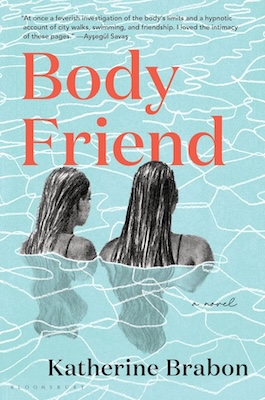
In my novel Body Friend, the narrator starts swimming in the local pools in Melbourne while recovering from surgery. At the pool, she meets another woman, Frida, who happens to have the same chronic illness the narrator has lived with since her early twenties. Together they become obsessed with the pool and what it suggests to them: control of their illnesses, and a blissful, temporary freedom for (or from) their bodies. 

Here is my list of books in which local pools or other bodies of water are a kind of character, where swimming says something about life. These aspects aren’t necessarily the driving force of a book—while sometimes swimming is a constant thread through a person’s life or at a challenging time, in other books they make up incidental moments that nevertheless speak to something about bodies, relationships, or life. 

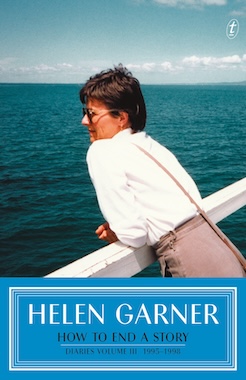
How to End a Story by Helen Garner

The third volume of the revered Australian writer Helen Garner’s diaries, How to End a Story, follows her life from 1995-1998, when she lived in Sydney with her husband, also a writer, whose ego and betrayals will likely leave most readers infuriated. He doesn’t make room for her art-making in the house, so the younger Garner often spends her mornings at the pool before finding somewhere to write. It’s heartbreaking to read her denial of what is happening to her relationship. I was struck by the regular pairing of her swimming and her writing, which also occupy me so frequently. She adores the pool, it makes her feel strong and confident, but then she feels guilty if she puts off writing by swimming. There’s a push and pull that feels so familiar to me. 

Garner has reflected on writing her diaries, that “During these hours of peculiar solitude, in conversation with myself and no one else, I’m free.” I can’t help but see a parallel feeling in the act of swimming, up and down the lane, alone and free for a moment—despite what else is going on in life. 

Love Me Tender by Constance Debré, translated by Holly James

In a similar way to Garner, Constance Debré’s searing novelistic rendition of real life events sees a regular swimming routine accompany immense upheaval and pain. Debré has recently left her former life: her career as a criminal lawyer, her marriage to a man, the home she lived in with her husband and son. She has embraced her sexuality, she now dates and sleeps with women, while her days are spent swimming and writing her first book. Again, the regularity of the swimming and writing seem to fuel each other. The harrowing experience this new world brings is the loss of custody of her son, Paul, and the bitter legal fight blanketed in accusations, homophobia and the denial of Debré’s requests to see her son. Throughout it all, she swims and writes, and while these acts may not console her, they do in some way sustain her.   

The Swimmers by Julie Otsuka

Otsuka’s novel is one that best captures the community and liveliness of the pool changing room. Tellingly, the novel opens with a beautiful set piece describing the pool and its occupants in the first person plural: “Most days, at the pool, we are able to leave our troubles on land behind.” There is a sense of ritual, almost of religiosity, in how this collective chorus approaches the pool. Otsuka’s characters are proud of their devotion: “There are those who would call our devotion to the pool excessive, if not pathological.” The pool then becomes a potent metaphor as cracks develop in its foundation, and the focus turns to the character Alice, one of the swimmers, who has dementia. This honing in on one swimmer made me consider all the many different lives of the swimmers I encounter each time I visit the pool.  

Cold Enough for Snow by Jessica Au

This is one of those examples of a brief, almost missable reference to swimming in a book—though Au’s is a slender, delicate piece of writing that commands us to pay attention to every single line. The narrator is a woman from Australia who travels to Japan to meet her mother for a short holiday. The passage in which swimming features is preceded by the narrator’s reflections on how she “liked the idea of living according to a certain strictness or method,” whether in her studies or working in a restaurant. Her attitude to swimming also says something about her: “Walking back from the pool…I felt something—my body as my own, strong and tan, which could be anything I wanted it to be, so long as I worked hard enough.” I know this feeling, on leaving the pool, of being capable of anything. Through my own health challenges and living with a chronic illness, the pool has suggested so much possibility for healing and betterment, even if only temporarily. 

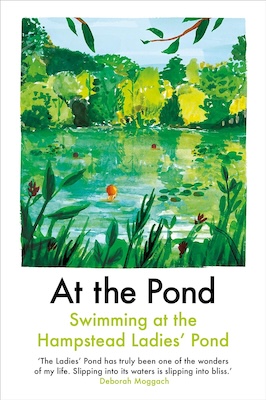
At the Pond: Swimming at the Hampstead Ladies’ Pond

This gorgeous essay collection by various writers takes us through the seasons at the Hampstead Ladies’ Pond, a wild swimming location in the heart of London, in Hampstead Heath. Here, as in so many of the books on this list, swimming continually says something about life. The concept of a “ladies pond” and what that means for access and inclusivity is explored in some delicate, devastating ways, such as in So Mayer’s contribution to the collection. They write that though “[t]here are many trans and non-binary people who swim and have swum at the Ladies’ Pond…Their molecules and their courage are already coursing through the water like minerals,” Mayer no longer wants to swim there. The winter section of the book is particularly enthralling, as I imagine the long timers who have ventured out on dark mornings of 32 degrees, to plunge into the icy pond while the rest of the city sleeps.   

The Cost of Living by Deborah Levy

Another writer who swims at Hampstead Heath is Deborah Levy. In the second book of her non-fiction trilogy she calls a “living autobiography,” Levy reflects on how her mother taught her how to swim in the murky swimming ponds at the Heath. Her mother taught her a technique to ‘totally give herself to the water’ by floating, facing the sky, “emptying her thoughts.” Levy has said that her element is water, and that a swimming pool is “a kind of theatre, it has its exits and entrances. And we wear costumes…” Pools and water recur across her work. In The Cost of Living, she swims with a friend Clara in various pools across London. She also contemplates her failed marriage, and her decision not to swim back to the disintegrating boat that was that relationship. Levy’s relationship to water, through a regular practice of swimming, seems to have infused her work, her symbolism, her prose. 

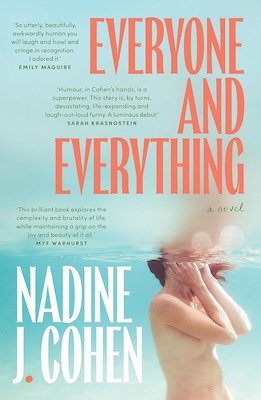
Everyone and Everything by Nadine J. Cohen

There’s a renowned rivalry between Australia’s two biggest cities, Melbourne and Sydney. I’m a proud Melbourne local, but I have to admit that Sydney has one thing we just can’t compete with here: ocean pools. These pools are built into cliff sides, with steps, handrails and concrete or tiled floors, and are filled by the waves rolling in from the ocean. Nadine Cohen’s debut Everyone and Everything is a novel about grief, suffering and healing, both devastating and funny—a true spectrum of light and dark. For the protagonist Yael Silver, swimming offers constancy and relief at a time of great pain. She is a regular sunrise swimmer at the McIver’s Ladies Baths in Sydney, where she strikes up a new friendship with a woman decades her senior. The novel’s prologue featuring a sunrise ocean pool swim is just stunning.  

8 Novels About Toxic Relationships

There is a reason we consume content about love, and it’s not only because of its relatability. No, I’d argue that love makes us selfish. We are all trying to decipher lovers lost and found, past and present, hoping that someone else’s experience might shed light on our own. We hope that the question of, “What went wrong?” will finally be addressed, or the overdue epiphany might at last descend, like a delayed plane on the runway. See every Taylor Swift album, including her most recent, The Tortured Poets Department, which has me admittedly nostalgic for the series of heartbreaks that punctuated my twenties.

It is no wonder that my debut novel, The Art of Pretend, memorializes this turbulent decade in all its glorious uncertainty and chaos, self-sabotage and desperation. But it wasn’t until the final drafts that I recognized one of its most important themes: toxic relationships.

What, exactly, makes a romantic relationship “toxic?” The qualifications that come to mind range from empty promises, love-bombing, obsession and projection, gaslighting, and, of course, the grand finale of many toxic tête-à-têtes: ghosting. Fun, right? What is perhaps even more fun are the range of emotions following the storm: Crushing disappointment. Grief. Occasionally, rage.

I recall a relationship many summers ago when the object of my own affection played me like a puppet. He would go weeks at a time without contact, only to reach out the exact moment I made peace with his absence, and there I’d go again, following the breadcrumbs he laid out for me to his neatly-laid trap. I remember the fleeting peacefulness when I woke each morning, the few seconds of bliss before all the emotions flooded back and I was forced to pretend I was fine. Work helped, a temporary numbing agent that wore off at six, when I would find myself lurching toward the subway, again joined by the terrible company that was my thoughts. When would the pain subside? And why had I refused to recognize the signs when all my friends already spotted the red flags waving defiantly in the distance? Because before we were bad, we were good, and I subscribed to the idea of us more than reality. Like Ren, the protagonist in my novel, I learned that people aren’t always who they say they are, and eventually, the pain subsided. Summer turned to fall, then winter. His texts no longer lit up my phone like a flare, but rather the tiniest rock in a lake, barely dimpling the surface. Then one morning I woke up and didn’t think of him anymore.

And yet, I wouldn’t change any of it. Despite the pain, toxic relationships are, dare I say, the cornerstone of growing up. They are some of my favorite dynamics to both write and read. So, here are some of my favorite novels that brilliantly memorialize the most toxic relationships we have with others, and occasionally, ourselves.

The Guest by Emma Cline

Early twenty-something Alex skulks around the Hamptons after being thrown out by her much older boyfriend. Taking place over the span of a few days, we watch with bated breath as Alex grifts around the exclusive enclave, inventing stories about herself as various strangers naively welcome her into their lives. Alex takes us on a carousel of toxic relationships, from a fling with an unstable teenager to an ex back in New York who lords something over her. The slow-burn culminates in a pulse-stopping ending that had me sitting in silence afterward, only to start ripping through its pages again. 

Sweetbitter by Stephanie Danler

The coming-of-age novel that changed the way I think of coming-of-age novels, I devoured Stephanie Danler’s debut in one sitting. I was twenty-four at the time, embroiled in my own unending roulette of toxic romances, and absolutely captivated by protagonist Tess’s obsession with bad-boy bartender, Jake. Like Ren’s lust for Archer in The Art of Pretend, their relationship is a testament to how love defies logic, and how people do what they want despite the consequences.

Desperate Characters by Paula Fox

Charlie and Sophie are a childless married couple living Brooklyn when one weekend, Sophie is bitten by a neighborhood cat. As Sophie becomes increasingly paranoid that she has contracted rabies, Fox peels back the layers of their seemingly idyllic life. A classic tale of “Everything is not what it seems,” it left me wondering about the secrets we keep and just how little we really know each other.

Luster by Raven Leilani

After being fired from her job as a lowly publishing assistant, Edie moves in with her lover, his wife and their adopted daughter; but a comedy of errors, this is not. Leilani masterfully crafts realistic characters in a stunning narrative about love, art, race and class. Edie’s identity as an artist living in fear of her own self-doubt is also beautifully rendered and painfully relatable.

Yellowface by R.F. Kuang

A page-turner that is both a thriller and darkly funny commentary on the publishing industry, Yellowface explores the dynamics of a contentious friendship whose obsession extends beyond the grave. This was my favorite read of 2023, and I know I’m not alone. I simply couldn’t put it down.

The Idiot by Elif Batuman

Selin is a freshman at Harvard pining for her older classmate, Ivan, in this account of, “Will they, won’t they?” that is both tender and laugh-out-loud funny. What is not funny? Just how slowly the egotistical Ivan gaslights our green protagonist, leading her on as she accepts a summer teaching position in Hungary, in part to be closer to him. This one is for anyone who has ever invented a thousand excuses for their delusional antics—Batuman nailed it.

My Year of Rest and Relaxation by Ottessa Mosfegh

A privileged and depressed twenty-seven-year-old woman decides to sleep for a year in this story set against the looming backdrop of the September 11th attacks. During moments of lucidity, she reflects on grief, her lame existence in New York, and an on-and-off relationship with a Wall Street banker-type who feels more rooted in fact than fiction. But their situation-ship is just one small piece of this ultimately moving novel that addresses what it truly means to be alive. I get chills every time I read the ending.

Heartburn by Nora Ephron

It wouldn’t be a list about toxic relationships without Heartburn. Ephron’s sole novel, Heartburn is a loosely fictionalized account of the writer’s own marriage, which dissolved due to her husband’s affair, while she was pregnant with their second child, no less. But this being a creation of Ephron, she will make you laugh with her one-of-kind wit, only to punch you in the gut with raw emotion when you least expect it.  

“The Curators” Transforms a Historical Murder Trial Into a Dark Jewish Fable About Girlhood

Maggie Nye hopes that her debut novel, The Curators, will “unsettl[e] the reader in a productive way.” I present this book to you as a reader unsettled.

The Curators is set in 1915 Atlanta against the backdrop of the murder of Mary Phagan, a 13-year-old laborer at a pencil factory, and the subsequent trial, conviction, and lynching of the Jewish factory owner, Leo Frank. The narrative follows five adolescent girls who are obsessed with the trial, with “their Leo,” and with each other—who, after the lynching, create a golem in Frank’s image. The Curators is a haunting blend of historical fiction and magical realism. It’s a story about racism and sexism in the American South and the power—and dangerous electricity—of girls’ friendship. 

In a basic sense, this book is a retelling, of both a true historical event and of a well-worn parable. But told from the collective and individual perspectives of these five girls, the story becomes much more: not simply a retelling, but a challenge to dominant narratives; an interrogation of the way archives can flatten or animate our understanding of history; a dare. The novel takes on these ideas with shiver-inducing attention to the possibilities of language, through both its prose and its plot.

Nye and I first met nearly a decade ago at a writing workshop, where she was working on the short story that would become The Curators. Over Google Docs, we discussed how researching and writing the book changed her understanding of truth and loyalty, her affinity for complicated narrative voices, fiction as a response to political rupture, and what makes a story even better than reality.


Rachel Ranie Taube: The Curators manages a fascinating feat of point-of-view: much of the book, especially in the first half, is written in the first person plural “we” perspective of five girls who call themselves the Felicitous Five. There is a darkness and viscerality in their undifferentiated perspective. They are too close. It’s expressed most literally in the “spider game” the girls play, intertwining their limbs until they can’t tell themselves apart (perhaps one of the book’s first “monsters”). Their unity is protective when they wander the streets. And when they lift a brick or build the golem, they are dangerous. As the book proceeds, the individual girls become visible to the reader, and Ana Wulff, who actually keeps the golem in her home, begins to have “wicked thoughts” about the others. To me, this progression seems to mirror the way the book makes the pop cultural artifact of the Leo Frank story something individual, concrete, personal. Could you talk about how you came to this narrative voice(s)? Were there any other books that inspired it? 

Maggie Nye: Your observation about the individuation of the Felicitous Five unit reflecting the consumption and subsequent personalization of Leo-Frank-as-story is so smart, and exactly right. Once the man is abstracted into a story, he’s adaptable, mythologizable. The same is true, actually, for Mary Phagan, though while Frank’s legacy has many times been reinterpreted (victim, carpetbagger, pervert, stoic hero, scapegoat), Mary Phagan has only ever been interpreted one way. More on that later, though.

I have a particular fondness for uneasy, complicated narrative voices, and especially for writing in the collective voice. In fact, I wrote about my love of this needful narrative POV recently for Literary Hub. And while the books I discuss there are centered on the relationships of girls and women, the book that really sparked my love for the collective narrator was Justin Torres’s We the Animals—one of my all-time favorites. The honest answer to this question is that I was acting under the ecstatic influence of Torres’s prose when I wrote the short story that became The Curators. The monstrous need of the brothers in that book, the ferocity of their desires, the hugeness of it was so terribly palpable to me as a reader.

Another answer (also honest, though not as immediately articulable to me early on) is that I was interested in the unique perspective of adolescence in the midst of public trauma. Young adolescents such as the girls who narrate my novel are of course keenly aware of the kinds of trauma that saturate the cultural atmosphere—in spite of our best efforts to shield them from it—but they also have access to the ready fantasies of childhood. I was interested in violence mediated through imagination, and in the utility of fantasy.

RRT: Very early on, this book tells us not to trust it: “All stories that have survived to retelling have another version. As many versions as tellersor more.” Chapters of The Curators alternately begin with real contemporaneous quotes from an Atlanta newspaper and quotes from Ana Wulff’s fictional diaries; they’re presented as equally reliable sources. For me, this works so well because it allows this book to avoid a “true crime” telling of the murder/lynching, and instead invites the reader to question each detail. Could you talk about the process of researching this book? I’m curious how you used that researchand respected the real-life brutality of the rape and murderwhile retaining the narrative freedom to write Ana Wulff as a character. What “truths” did you most want to stay loyal to?

MN: My understanding of truth and of loyalty changed pretty drastically through the research process. Most people researching the story for the first time encounter a narrative about Leo Frank’s wrongful conviction and the rampant anti-semitism that led to his lynching (that is unless you happen to trip along your research path and fall down the white supremacist rabbit-hole, a niche but significant corner of the Frank-scape represented online). I do not dispute at all that anti-semitism played a significant role in Frank’s trial and led, ultimately, to his lynching. But what is often left out of this story is the tremendously bigoted defense Frank’s lawyers mounted against Jim Conley, the Black janitor at the National Pencil Company where Frank and Phagan worked—the former as the superintendent and the latter as a laborer. The defense relied heavily on white (Christian) men’s volatile anxieties in the industrializing South, about the imagined sexual threat of Black men in spaces over which white men had no control, like the Pencil Factory, where white women worked alongside Black men. It’s possible to go on like this, calculating the weight of the historical prejudices suffered by Frank and by Conley. Indeed there are entire books that do so, meting out harm suffered on one page and potential guilt on the next.

But what they all tend to minimize—even the ones that call attention to the problem of this minimization—is the murdered girl, Mary Phagan. Many, many other accounts honor Leo Frank; I wanted my book to be animated, at least in part, by the possibilities of Mary Phagan. As you reference in your question, Phagan, a month shy of fourteen, was assaulted and murdered in the factory where she labored fitting sheet brass to pencil shafts. This is inherently tragic, but her mythologization is also inextricably linked to her beauty and her virginity. Her beauty and sexual purity were gifts owed—and denied—to the culture of white southern manhood. And in her death, she continues to labor in her mythologization as a political symbol. Her death has been made into a heroic struggle against impending rape and the defense of her virginity. 

I really had to search to find traces of Mary beyond her affability, her prettiness, the precociousness of her body’s maturity—promising womanhood to its many viewers. And I found some hints, but that’s all they were: a solo movie date, a fit of giggles shared with her brother at a church play. Still, I made it a project of my novel to imagine versions of Mary that exceeded her mythology. I wanted to imagine Mary’s rebellions, to allow her a remembrance not cast in the politicized mold of raped white southern womanhood. I tried to give the novel an ending, at least, that let Mary speak.

RRT: I love that way of describing the ending. I very badly don’t want to spoil the ending for our readers, but I’ll just say that it’s an absolutely mind-bending and beautiful one. One of the possibilities for Phagan, you found in your research, is that she might not have been raped, as the prosecution claimed. Could you describe what you found, and what questions that opened up for you?

MN: Before I go into this, I want to state clearly that her murder was horrific and that her body showed signs of extensive trauma at multiple sites. However, it’s true that evidence of her rape was inconclusive, and that the Fulton County medical examiner found “no violence to the parts” (though sexual assault is certinly possible). Further, when cross-examined, he said that her hymen was not intact, which suggests that she was sexually active before her murder. 

I initially conceived of this as hopeful. 

Mary’s dead body was converted into a political symbol that only worked if she was a virgin, and it was exciting to think that she might actually have lived in a way that contradicted that post-mortem reading. It was thrilling to think that she might have had some sexual agency, sought sexual pleasure, but even as I had these thoughts, I knew they were wrong-headed. She wasn’t even fourteen when she died, so almost any version of sexual life she had would have been ruled by dramatic power imbalance and likely coercion, if not outright violence. But I couldn’t shake this sexually empowered, if naive, version of the living Mary, so I gave these thoughts to my narrators, let them think the wrong, hopeful version of Mary on my behalf.

4. You tweeted something earlier this year that struck me, in which you write that “complicated” or “tortured” narrative voices might “reflect…polyphonic media/news culture & mistrust of centralized knowledge production.” I am so interested in this idea, especially given how the media industry has changed in the past decadecould you elaborate?

You’ve called me out on a half-baked idea!

Recently, the Atlanta Journal-Constitution ran a short piece on my use in the book of the historical newspaper the Atlanta Constitution (AJC’s predecessor), and the reporter who wrote the piece was oddly defensive of the book’s critical exploration of reporting and the instability of facts. “That was then, perhaps,” she wrote of the book. “This is now. I’ll go to my grave believing newspapers are a force for good.” I, too, believe newspapers are a force for good. But what a funny fallacy. As though our fore-reporters and mediamakers were uniquely vulnerable to bias, misinterpretation, profits-led decision making, and demagogy. 

Her beauty and sexual purity were gifts owed—and denied—to the culture of white southern manhood.

Polyvocality is not new to the literary canon. Literature often responds to historical ruptures with mistrust of a centralized voice (we can think, here, of modernism as a response to the violent ruptures of World War I), and OK, maybe it’s my that was then, this is now perspective speaking, but don’t we seem to be in a constant state of rupture? War and armed conflict, global political instability, state-sanctioned brutality, climate devastation, inescapable surveillance, and on and on. 

Our nearly-cyborgic connection to our technology means that we’re always consuming information, always consuming voices, and our state of constant rupture means we’re suspicious of all of them. We live in amplification boxes of loud and dubious claims. And of course, the world of literature is responding. I confess it’s very possible that my own reading tastes are not representative of the entire publishing landscape and that I am a magnet for such books, but in my own reading, I’ve seen an explosion of narrative disruption, doubt, ghosts, polyvocality, narratives spliced with other forms (especially reference or encyclopedic forms), etc. To name only a sampling of books I’ve read in the past couple months, in no particular order: North Woods, Jawbone, The Story Game, Our Share of Night, The World Keeps Ending and the World Goes On. These are wildly different books, but all are, I believe, responding narratively to these conditions. And several, I should add, are responding with dogged hope.

RRT: My apologies for the call-out, but I’m glad I did! I love this idea of literature as response to rupture, and I actually want to talk about how The Curators fits into that list of books. The theme of truth and fiction comes up many times in the novel, and I was struck in particular by the passage where the girls come into the possession of a rope. Not the real one on which Leo is hanged, but “once they hold it, it’s as goodbetter eventhan authentic lynch line.” I bring up this passage in part because it feels inevitable that readers of this book will experience the racism of 1915 Atlanta against the backdrop of modern-day racism. Can the stories we tell ourselves about objects, or about our society, actually change the truth? What makes stories feel “better even” than reality?

MN: I certainly think so. What we’re talking about here is satisfaction (which is, actually, an impulse I believe we must resist). First of all, I think reality (we might ask what reality is beyond storytelling, but I’ll leave that for another conversation) doesn’t usually feel good. Most day’s headlines: major bummers. And the Felicitous Five feel that too—that’s the urge to curate, to arrange the materials of life into a satisfying story, one that makes sense and doesn’t make you feel ooky, and certainly one that doesn’t make you feel complicit. Also important to this kind of better-than-reality story, I think, is that it is quarantined. It is not allowed to be in dialogue with other stories, because dialogue might reveal uncomfortable complexity. Stories in silos. The Felicitous Five play a sort of game where they siphon all their bad, uncomfortable feelings and anxieties into a far-off person they call The Smutch. At one point, for example, they make Archduke Franz Ferdinand The Smutch, and people do this all the time. Find a far-off antagonist to maintain the satisfaction of their better-than-reality story. 

RRT: Let’s turn away from reality altogether. As Ana points out, there are many versions of the golem story, too. In your book, he’s sweet, disturbing, smart, an object of desire, an object of fear. I experienced him as much more of a character than the traditional golem; for me, it’s an example of how magical realist elements can just light up an old story. What about this particular parable made you bring it to bear on the story of Leo Frank? 

The girls in this collective, that desire is for control, knowledge, and power—all of which they are denied.

MN: I think the figure of the golem rose up, imaginatively, as a counterforce to the Night Witch—an ambiguous figure the girls invent from a combination of reportage, fear, and racial othering. In fact, the original title of the short story that grew into The Curators was “The Golem and the Night Witch.”

I saw, in the figure of the golem, endless possibilities. As have other authors—Cynthia Ozick, Michael Chabon, and most recently Adam Mansback, to name only a few. I was particularly attracted to the idea of the golem as a projection of its creators desires. He is a constructed object into which my narrators continuously empty their bottomless desires. In one sense, he is the ultimate Smutch, but he is also their ultimate hope for salvation. 

RRT: The theme of hunger also appears again and again in this book. From literal hunger in the opening lines (“We used to sit for hours in our clubhouse with our ears to each other’s stomachs, listening to how loud our hunger could grow.”); to the parable of the golem (whose hunger, in one version of the story, leads him to destroy his own parents and town); to the girls’ adolescent sexuality and hunger for stories about Leo (hunger as in desire, obsession); to the mob’s anti-semitic hunger for justice against Leo. How do you think about hunger as a driving force in this story? What hunger drove you to write this particular book? 

MN: I think the collective viewpoint is fundamentally one of desire. Any time that collective appears—and especially with adolescents—it’s a way of amplifying what is latent. The collective has more bodies, more wants, more grubby hands and sticky mouths. And for the girls in this collective, that desire is for control, knowledge, and power—all of which they are denied; it’s a response to lack. But it’s also a budding sexual desire. For Frank, yes, because he’s a (semi)appropriate object of their desire, but also, I think, for Mary and for each other. They live in a repressive society, one where heterosexuality is the only acceptable model, and virginity is paramount for unmarried women. Women are evaluated by their perceived “virtue,” and nothing could be less desirable to the girls in this novel than virtue.

As to my own desire, my own hunger, that is a question on which I continue to ruminate (in a bovine way—chewing, rechewing). One answer is that I’m very interested in how history is mythologized, and literature plays an important role in this process. There is a lot of literature already on the subject, though all of it is nonfiction (excepting one misguided effort from David Mamet), and it’s easy to understand why: such a striking portrait of American trauma and violence. But, as I hinted earlier, I have a healthy distrust in the stability of facts. I think it’s important to probe them, to interrogate them, to recombine them, put them in dialogue, and see if they can say new things, complex things. Fiction can hold space for history’s contradictions, and I think that archive is vital.

Announcing the “Both/And” Anthology Featuring Trans Writers of Color

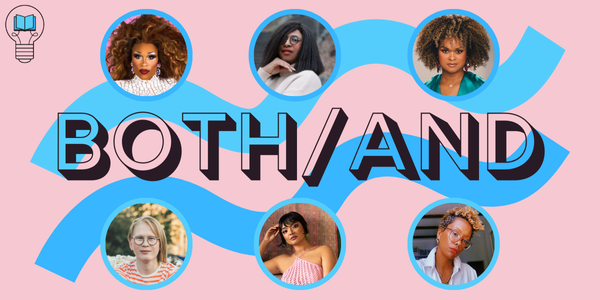
Both/And, EL’s series of essays by trans writers of color, is going to be a book published by HarperOne—edited by our editor-in-chief, Denne Michele Norris! The anthology will feature new essays by acclaimed writers Tanaïs, Meredith Talusan, and J Wortham, alongside some of our community’s most beloved entertainers and activists, such as Peppermint and Raquel Willis, as well as essays by Zeyn Joukhadar, Autumn Fourkiller, Denny, and Jonah Wu from the original series. 

Both/And will not seek to justify trans lives in a culture that remains hostile to their existence. This anthology will instead tell stories both intimate and expansive, gritty and messy, that honor trans self-determination in the face of obstacles that often seem insurmountable. 

Norris says, “These essays are intended to give voice to the complexity of our lives, while highlighting our bravery in taking center stage. We’re writing for our lives, yes, but we are also writing towards one another.”

As for Electric Literature, it’s safe to say we’ve entered our book publishing era! Both/And will be EL’s first book; we hope the first of many. Join us in celebrating this important milestone, the growth of our publication, and most importantly, our commitment to elevating trans writers.


Here are some of the writers featured in the anthology:

Denny is a writer, actor, and musician, currently working as the LGBTQ Communities Reporter at Reckon News. She has appeared in the TV series “POSE,” “New Amsterdam,” and “City on Fire.” Her writing has appeared in The Grammy’sAllure Magazine,PAPER, and the New York Times’ Modern Love. 

Autumn Fourkiller is a writer and mystic from Stilwell, Oklahoma, the “Early Death Capital of the World.” She is currently at work on a novel about Indigenous identity, the Olympics, and climate change. A 2022 Ann Friedman Weekly Fellow, her work can be found in Atlas ObscuraLongreads, and elsewhere.

Zeyn Joukhadar is the author of the novels The Thirty Names of Night, which won the Lambda Literary Award and the Stonewall Book Award, and The Map of Salt and Stars, which won the Middle East Book Award. Joukhadar guest edited Mizna‘s 2020 Queer + Trans Voices issue, serves on the board of the Radius of Arab American Writers (RAWI), and is a mentor with the Periplus Collective.

Denne Michele Norris is the Editor-in-Chief of Electric Literature, and the first Black, openly trans woman to helm a major literary publication. A 2021 Out100 Honoree, her writing has appeared in McSweeney’sAmerican Short Fiction, and ZORA. She co-hosts the podcast “Food 4 Thot,”  and her debut novel, When The Harvest Comes, will be published by Random House in 2025.

Peppermint is an American actress, singer, songwriter, television personality, drag queen, and activist. She is best known from the nightlife scene, and in 2017 was the runner-up on the ninth season of “RuPaul’s Drag Race.” In 2018, Peppermint made her debut in The Go-Go’s-inspired musical “Head Over Heels as Pythio,” becoming Broadway’s first out trans woman to originate a lead role.

Meredith Talusan is the author of the memoir Fairest, a 2020 Lambda Literary Award finalist. She has contributed to ten other books and has received journalism awards from GLAAD, The Society of Professional Journalists, and the National Lesbian and Gay Journalists Association. She is also the founding Executive Editor and current Contributing Editor at them., Condé Nast’s LGBTQ+ site.

Tanaïs is a writer, artist and perfumer behind the independent beauty and fragrance house TANAÏS. They are the author of In Sensorium: Notes for My People, winner of the 2022 Kirkus Prize for Nonfiction, and Bright Lines, a novel. They are currently working a speculative sci-fi book, Stellar Smoke, which will be published by Dutton Books in 2025.

Raquel Willis is an African American writer, editor, and transgender rights activist. Formerly, she was a national organizer for the Transgender Law Center and the Executive Editor of Out Magazine. She is the Director of Communications for the Ms. Foundation for Women. Her debut memoir, The Risk It Takes to Bloom, was published in 2023.

J Wortham is an American journalist. They work as a culture writer for the New York Times Magazine and co-host the New York Times podcast “Still Processing” with Wesley Morris. In 2020, with Kimberly Drew, Wortham published Black Futures, an anthology of Black art, writing, and other creative work.

Jonah Wu is a non-binary and transmasculine Chinese American fiction writer and essayist. Their work can be found in Longleaf ReviewbeestungJellyfish ReviewBright Wall/Dark RoomThe Seventh Wavesmoke and mold, and the Los Suelos anthology. They are a winner of Brave New Weird: The Best New Weird Horror.

I Couldn’t Sleep If I Wanted My Baby to Survive

Boomerang by Asha Dore

I was the worst mother in the world that Tuesday night when Maggie was two months old. She was exactly the weight—pounds and ounces—she’d been the moment she was born. I boiled water for Lise’s butter noodles and wore Maggie strapped to my chest in a baby wrap, the fabric stretchy, cornflower blue and dotted with spilled milk. The wrap smelled a bit sour.  For over a week, I’d been dropping milk in Maggie’s tiny mouth every ten minutes, as many drops as she’d swallow. The rest slid down her chin and neck and onto the wrap. I slept in ten minute bursts so I could feed her when the timer went off. 

Still, she was starving, shrinking.

I tracked the events that led me here, a week before my twenty sixth birthday, somehow a mother of two, somehow alone, carrying this hunger the way I had for my younger brother ten years before. Back then, my brother and I survived on expired burgers I’d swiped at the end of my McDonald’s shifts. Our mother ate the burgers with us some nights, in between disappearances into beach parties and weed and warm beer, habits she’d leaned into years before dad died. 

Dad had always been the Sunday night dinner parent, the one who organized holidays and getaways to the river or beach camping or sneaking into the pool at the Holiday Inn. It made sense to me that when he died, all that ended. At holiday gatherings with our extended family, when a cousin came in loaded or an aunt brought over godawful oversalted gumbo, Dad said the same thing he said about Mom when she disappeared from our family or woke me up in the middle of the night to reload the dishwasher and stood  behind me, wiping her eyes and asking what it meant to have a daughter who actually loved her mother and showed it. Dad cleaned up the mess the load cousins left or secretly dumped two thirds of the gumbo in the trash or woke up to Mom’s voice, stepped between me and Mom and the dishwasher, led me to bed, and sat on the foot of my bed reminding me to take deep breaths until my body relaxed enough to fall asleep.“Can’t blame someone for being bad at something they’ve never been good at,” he said. 

I turned away from the boiling noodles, tipped Maggie’s head back, and set a drop of milk on her lips with a syringe. She moved her face around my chest, looking for milk. I set the syringe against my breast and into her mouth. She swallowed half a milliliter this time, letting the other half spill out of her mouth and onto the blue wrap. More pale stains. More wasted milk. 

Dad had always been the Sunday night dinner parent, the one who organized holidays and getaways to the river.

I tickled the soles of Maggie’s feet until she perked up. The water made that hissing sound, that white noise, the pre-boil. I set three drops of milk in Maggie’s mouth at a time. She drank slowly, drop by drop. One more half of the syringe. “Take it slow,” the lactation consultant had told me. “She can burn calories if she spends too much energy swallowing. Babies swallow with their whole body.” 

Lise chattered a couple rooms away, talking to herself in two-year-old syllables, real words mixed with leftover baby babble. She sounded happy. I dumped noodles into the boiling water. I reset the timer for Maggie’s feeds. 

Ten more minutes. 

I leaned against the counter and closed my eyes.

For over a week, I had been alone in the house with the girls, pacing, wearing Maggie, pacing, following Lise from room to room, pacing, feeding Maggie drops of milk. When Lise watched a movie or slept, I unpacked boxes. At night, I slept in ten minute increments, in between feeds.

Hurst’s job at the Navy ended a few weeks after Maggie was born.  For three years, I believed  the Navy was the problem, with its unrealistic demands and weird control tactics. The Navy had caused Hurst to disengage, to spend his minimal time off ignoring us. The day after Hurst was discharged, guys we hired in a U-haul followed us down to Florida. A few days after we arrived, Lise came down with a snotty, sneezing cold. It ran through the whole house. When Maggie got it, she was extra sleepy, not nursing for very long, milk falling out of the side of her mouth. My breasts stayed hard, never empty. I bought a baby scale and tracked Maggie’s weight gain. She took breaks from nursing to cough and sneeze and whimper. 

Her weight didn’t change for three days. “She’s not growing,” I said to Hurst. He wanted to check. Maybe I misread the scale. Maybe I was overreacting. Maybe I incorrectly wrote down her weight  from yesterday and the day before and the week before that.

I called pediatricians but couldn’t find an appointment. She didn’t grow. I went to the emergency room, waited for four hours. The doctors told me, “She’s got RSV. Day 5 is the worst, and that’s tomorrow. Go home.” I went home. I called lactation consultants. They told me how to hold her, to tip her, so she could breathe easier through her stuffed nose and nurse more effectively. They told me to buy a plastic sack with tiny silicone tubes. I pumped the milk left in my breasts after Maggie nursed. I put that milk in the plastic sack and wore it around my neck. The long, thin, silicone tubes went from the sack, through my bra strap. I taped them next to my nipple, threaded them into Maggie’s mouth while she nursed. As she did, I squeezed the sack so she could get more milk.

She didn’t grow.

I returned to the ER two days later. “I think she has failure to thrive,” I told the doctors and nurses. I told them she had vomited four types of formula, could only hold down breastmilk, and barely any at that. “She has a small jaw,” they said. They kept calling her a preemie, and I kept correcting them, “She was born a day after her due date. More than 40 weeks.” 

Maybe I misread the scale. Maybe I was overreacting.

I told them my breasts felt full after she nursed. They told me she may be a slow grower. Is that even a thing? They told me I must have been wrong about her due date. I must have misread the scale over and over. They told me to go home, so I did. The next available appointment for a pediatrician was two weeks away. I called a private lactation consultant. I couldn’t afford to pay her to come help us, but she agreed to talk to me for fifteen minutes on the phone for free. “Feed her every ten minutes,” she said. “Use a spoon or a medicine dropper.”

“I have one of those plastic syringes from the Children’s Advil bottle. And the one milliliter things from the hospital.”

“If she’s growing, she’s eating,” the lactation consultant said. “Feed her as much as you can, as often as you can. Try every ten minutes until she starts to grow.” She explained the way babies can lose weight if they spend too much energy swallowing. “Receiving,” she said, “is all babies have to do. It’s up to us to teach them how to receive in a way that helps them.”

That’s how we all start, I thought. Receiving.

“This will be tiring,” she told me, one minute after the free fifteen minute consult ended. “Do whatever you can to take care of yourself until she starts to grow.” 

At night, I slept for ten minute increments, in between Maggie’s drops. As I fell asleep for my small naps, I repeated sentences in my mind.  She will wake up all the way. She will drink. She will swallow well. She will wake up all the way. She will swallow. She will survive.

I didn’t repeat those sentences when I fell asleep accidentally, leaning against the kitchen counter, that Tuesday night while the noodles boiled. I woke up to the BZZZZZZ of the timer and Lise saying, “Mommy?” Lise stood under the stove looking up at the pot, bubbling, steaming, hissing, her arm up, reaching toward it. “Bubbles!” she said.

“NO!” I said. “Oh no. No!”

I moved in between her and the stove, hearing my own voice like it was someone else’s, a single syllable, as it turned into a growl. Lise stepped backward, stunned. I shoved the pot to the back of the stove and sat down on the floor, slowly, pulling a pre-filled syringe from the counter on my way down. Lise crouched five feet away, her eyes wide. “I’m sorry,” I tried to say. Was I even saying real words? Was it still that growling? Lise froze in her crouch, a defensive animal, staring at me. Tears slammed out of her eyes, but she didn’t blink. 

“I’m  sorry,” I said. My voice sounded human again. I put drops of milk, carefully, in Maggie’s mouth, even though my shoulders shook. Maggie drank half a syringe. Then the other half. Stay down, I thought, like my command could keep the milk in her belly.

Lise crept toward me, and I dropped the syringe and held onto her. My shoulders kept shaking, but I didn’t cry, I wouldn’t. I wouldn’t put this tiny person in any kind of position to take care of me. 

“I was scared. You’re safe.”

Words, but shaky. An attempt at the sing song voice the waldorf teachers told me would protect a toddler’s nervous system, the same nervous system I had just jacked the fuck up as I plowed Lise’s totally normal curiosity about the boiling bubbles into a small and scaryheartbreak. I smoothed her pale hair. “You’re safe.” 


Lise froze in her crouch, a defensive animal, staring at me.

Shortly after Dad died, I found a zine in a local coffee shop about mad women in the attic. The writer had surrendered her children to the state, and she wrote about the mythological but widely unacknowledged belief that a woman’s value is comprehensively connected to her success at parenting, and of course some women scream and claw, retreating to the attic or setting the whole house on fire. The zine reinforced what I’d been hearing forever: that it’s not only unreasonable to expect my mom to act differently around us, but it was shitty to judge her for being unable to conform to the 1990s calm and predictable sitcom mother who could only really survive inside of the walls of an episode, a story written by someone else, directed, filmed, and edited to make the audience feel stressed or warm at exactly the right moments, to bring every conflict to redemption, to bring every potential despair to swift and satisfying resolution.


The night before I fell asleep leaning against the counter, Hurst went to work at an overnight security temp job and did not return home in the morning. He did not answer the phone. Four hours after Hurst should have arrived home, Cherry called me. “He’s here,” she said. “Sleeping, recovering.”

“From what?” I asked.

“It’s all so hard,” Cherry said.

I said, “Maggie’s grown a few ounces. I think the feeding schedule is working.” I paused. “Cherry,I need him to come home. I need to sleep.”

“He’s just not ready to be a father.” 

I wanted to argue with her. I wanted to tell her but Hurst slept all day before his shift. 

I wanted to tell her He’s been a father for almost three years.

I wanted to say, Put his ass on the phone right now.

I didn’t want to go there though. I didn’t want to let my low-class sailor mouth frustration show through. I didn’t want to command people, to tell them they weren’t loving me correctly. I said, “I really need to sleep.” 

“You’re both working so hard,” Cherry said. “I’ll swing by tomorrow, bring you a treat.”

The next day, Cherry swung by. She held Maggie while I took a shower. I stood under the water for twenty minutes, as hot as I could get it. I put my face in it, sat on the floor, rested against the shower wall.

When I came out in a fresh t-shirt and shorts, my hair wet and stuck to my neck, Cherry handed me Maggie. All of the full syringes sat on the table, unused.

“We missed a feeding?”

“I was afraid to do it wrong,” she said, her eyebrows raised. She looked pitiful, concerned, truly concerned.

I glared at her, “It’s fine.” I showed her how to feed Maggie, making my voice as soft and sing song as I could, to protect her nervous system.

“I bought you a set of silverware,” she said. “It’s on the counter. Everything you might need. Expensive.”

I didn’t want to command people, to tell them they weren’t loving me correctly.

I strapped Maggie to my chest and walked into the kitchen, set the ten-minute timer, and stared at the silverware. Cherry gathered her things to leave, and I took five deep breaths. 

“Thanks. It’s real nice,” I said. “When is Hurst coming home?”

“He needs a few days,” Cherry said. “Night shifts are so hard.”

I walked out, watched Cherry sort her things and move toward the front door. 

“He’s a good father,” she said. 

“Ok,” I said.

“A good man.”

“Right.”

“Most men would have left already, I mean really left. Two kids, and one of them…Men can’t handle it like we can.”

“Ok.”

“He wasn’t ready to be a father, you know. He didn’t know what he was in for.”

“Sure.”

“And I know you have trouble with your family. It sounded like your dad was a good person, but your mom…It’s hard to be the only grandparent around.”

“Yeah,” I said. “I bet that is really fucking hard.”

I walked past her without looking. I walked into my bedroom where Lise napped on a small toddler bed in the corner, where a noise machine played rain sounds, where I could sit and massage my hot, hard breasts, where I could seethe, where I would feel just a little bit less alone.

After nine days of the ten-minute feeds, my eyes blurred. 

My vision went sideways. 

Hurst had stopped by at some point, then returned to Cherry’s house to help her with some projects. “Her espresso machine, MWAH,” he said. He made a chef’s kiss in the air. He took a long shower, watched Tangled with Lise, then left. 

I touched the walls while I walked to keep them vertical. I hadn’t yet unpacked the ice trays, and our belongings were a maze of half unpacked boxes.  I filled random food storage containers and some of Lise’s plastic toys with water, froze it, and carried the ice  to stay awake. I put the ice in my bra until it burned. 

When I took my ten-minute naps, as I fell asleep, I told myself I will wake up in ten minutes I will wake up in ten minutes I will wake up in ten minutes she will survive. 

Sometimes, I started to doze while I fed Maggie, a kind of darkness sliding across my eyes. I pinched my skin where it would hurt the most—my armpit, my ass, my inner thigh. I slapped myself in the hand, the arm, the face. Stay awake!

I laid Maggie on the floor and hopped around the house. I did jumping jacks. I jogged in circles. I pulled my hair. I pinched. I slapped.

I started to doze while I fed Maggie, a kind of darkness sliding across my eyes.

Lise watched Tangled like three times a day.

My mom drove up from Key West with her new husband. He was in the Navy, and they had been stationed in a big, nice house near the water. When I opened the front door, Mom handed me a giant, wrapped present. I looked at her like she was insane. There was a shiny, fuschia bow on top. I wondered how much it cost. I wondered what inspired her to buy me a present. Her birthday was exactly one week before mine. Had my birthday already passed?

“Are you okay?” she said and blew into the house. She cuddled with Lise on the couch for a few minutes then started doing dishes. “I’m making dinner,” she said. “You rest.” 

She’d never acted like this before. I wondered if she’d watched a movie with one of those active, upbeat mom characters. I wondered if this was a performance for her husband or for me.

I took three ten-minute naps in between feeds and returned to the kitchen. Pots boiled. Mom’s new husband played with trucks on the kitchen floor with Lise. Mom told me to open my presents. 

“I missed your birthday,” I said. “I didn’t get you anything.” 

She shrugged. Years ago, this would have been basically an emergency, proof that I didn’t think about her, that she didn’t matter to me. It would take at least three hours to resolve, so many questions, so much explaining. 

I mumbled that I’d paint her something and opened the present. Inside were two separate gifts. The first was a babydoll black crop top with large, white letters that said SHOW ME YOUR TIPS.

“Because you were a waitress for so long,” Mom said. “Plus the breastfeeding thing.”

The other present was a boomerang. I held it up. “Is this real?”

“Oh yeah. He thought you’d like it,” she nodded toward her husband.

“Why?”

“I have no earthly idea but it’s funny right?” She chuckled and bustled around the kitchen. Who was this woman?

“Maggie’s looking at you,” she said.

I looked down at the warm body strapped to my chest. Maggie was wide awake. Her cheeks were pink. Did they look rounder? Her eyes were bright. She cooed. She had been drinking more and more, each feed, but I was afraid to believe in the progress. I laughed once, awkward, choked, loud. I felt fists of hope and despair rising in my throat. I held them there. 

I fed Maggie an extra syringe. She gulped it down. Then another. Then another. Mom appeared close to my body, her face close to my face. “I think you saved her life,” she said, her voice so sincere, so sweet. 

I couldn’t look at her.

Fuck off, I wanted to say. I held onto the boomerang and felt my tits tighten hard against Maggie as she nursed on the plastic syringe.

I sat down on the couch and flipped through some hippie book about breastfeeding, thinking about how new moms read books and ask questions and research and talk and talk, trying to map out how to be the best kind of mother. It feels like we’re building a map with invisible ink and dissolving paper. It feels like every decision we make to take care of babies and children might be counted as exactly right to one person and exactly wrong to another. There’s no right way to be a mother, the ladies in mommy groups said. Just be a good enough mother.  

For more than ten years, I’d tried to convince myself that my mom was good enough. It shouldn’t matter that she had failures—her addiction to cocaine, the way she left me and my brother after Dad died, the way she cut the brake lines in Dad’s motorcycle and tried to get him arrested on false charges more than once during their divorce. Those were mistakes. She had apologized for them several times over the years, calling me at two in the morning, drunk on Dos Equis, listing her failures, listing her shame. I’d forgiven her as many times as she apologized. I watched her moving around the kitchen, squatting to chat with Lise, laughing with her husband. My head felt like it was full of water.

I thought: This is what it feels like to barely make it. I remembered the way mom argued with my dad, usually upset with him for not giving her the kind of attention she expected after he got home from work.  I’m not a fucking martyr, she said. I refuse to give up everything for this family. 

For more than ten years, I’d tried to convince myself that my mom was good enough.

Maggie fell asleep against my chest, and I thought about Joan of Arc, the faceless, short haired gal I imagined when I heard the word martyr. She died because she wouldn’t stop worshiping. I imagined living a life that allowed me to even consider what or who I would like to worship. I wondered what the word worship even really meant. To adore something. To honor something so much that you spend all of the minutes of your life building a shrine to it, praying to it. I thought about the people who build and maintain pyramids and temples. I thought about monks and nuns. Were any of them actually living their lives? Or was it just pretend, a show, a theater production of a life to prove that their god is worth paying attention to?

I wondered what, if anything, I would worship if my kids were thriving, if my husband ever came home at all. I tried to remember my life before these ten-minute feeds. What did I do? What did I love? I nannied for other families, cleaned houses, wrote unpaid articles for a local news journal. If I wanted anything, it was more time to illustrate and write. I worked my ass off to get it. I worked my ass off to stay pregnant, to not lose Maggie the way I had lost my first, stillborn baby. I worked my ass off to pay the bills and feed my toddler and get through the next shift, the next meal, the next morning. Had I ever worshipped anything at all? I closed my eyes: don’t fall asleep wake up in ten minutes please survive.

I wondered how long our savings would last. My last shift at my nanny job happened a day prior to packing the U-haul and moving back to Florida. I wondered how I could work if Maggie didn’t start to eat like a regular baby. I wondered if Hurst would step up and enroll in college like he’d been supposedly aching to do since before I met him. I wondered how long a human body could stay awake before collapsing. I wondered if I was making choices, if I had any choices other than filling up the syringe when the ten-minute timer went off in my pocket. I wondered if either of us would survive. 

“You made the choice,” Cherry said, the day we arrived in Florida, watching the movers stack boxes in the living room of our tiny, empty rental. She sounded ominous, like this was the beginning of a horror movie, and everyone in town but us knew our house was haunted. We could try to outsmart the ghosts, we could fight them with our whole bodies, we could even try to love them, to invite them in, to live alongside them, but the outcome would be the same. “This is what happens when you have babies without the money to raise them,” she said. “This was a choice you made.”

8 Ordinary Protagonists Who Infiltrate Elite Spaces

As a species, we are tortured by the notion of non-belonging: from an evolutionary standpoint, if we don’t fit in, we may just die. Many novels concentrated on the person who feels inferior and out of place—even if they aren’t novels we’d categorize as thriller or horror—result in someone’s murder. The stakes of being excluded are just that high. 

You’d think it would be easy, endearing to readers, a protagonist who feels excluded in an elite space, particularly if you agree that every human being has at some point feared exclusion. And yet, I’ve noticed that audiences sometimes approach a character in this predicament with a certain stinginess, a certain lack of generosity. My working theory is that when we experience a character whose exclusion feels profound, whose envy is working on overtime, whose recognition of the divide between those who have and those who do not is ultra-clear, we, the audience, the reader, are confronted with our own terror of non-belonging. We must, therefore, intellectualize. We must find reasons why we could never, ever be the person on the page or the screen. We would not allow ourselves to be put in such a vulnerable position. We would leave the elite space that threatens our sanity, our livelihood, our life. We would be smart. Creating a protagonist who can cradle readers’ unconscious defenses while simultaneously pulling them forward is no easy feat.

My novel Man’s Best Friend follows a long established canon of ordinary people keenly feeling their lack in elite environments: Rebecca, The Great Gatsby, The Talented Mr.Ripley, and of course, Saltburn. The protagonist of my book knows what it feels like to be an outsider. El was a scholarship kid at a tony Manhattan private school; now 30, she’s a failed actress with nothing going on for her. Until she meets Bryce, a mysterious trust fund heir who can give her the access to the life she’s always wanted. But of course, everything comes at a price…

In this reading list, I present seven novels with eight different protagonists, women and men of ordinary means who find themselves in elite spaces, in homes and universities and glittering cities with great concentrations of wealth and power. What I love about each of these protagonists is how unique they each feel; how their primary struggle is the same, but the worlds they come from and the worlds to which they would belong vary. Some of these characters primarily grapple with non-belonging around money; for others, their sense of non-belonging also encompasses their race or gender or sexual orientation. A protagonist finding themselves in a highly privileged, historically exclusionary space is an age-old trope for a reason: because even as it provokes fear, it inspires. We each have felt alien and inferior at some time or another, and might again, and, like these characters, we have only one choice—to survive. 

Anita de Monte & Raquel Toro of Anita de Monte Laughs Last by Xochitl Gonzalez

Xoachtil Gonzalez’s excellent Anita de Monte Laughs Last features three narrators, but only two of these are narrators who come from a place of lesser privilege and find themselves in highly privileged spaces. The first of these is Anita de Monte, a Cuban American conceptual artist who navigates the predominately white and male world of fine art in the late ‘70s and ‘80s. Despite her obvious talent, Anita contends with being undervalued—even, at times, unseen—due to her marriage to Jack Martin, a famous, white minimalist sculptor. And when Anita, thanks to her unflagging commitment to her truth, does finally begin to flourish—when she begins to be seen as more than a token, as more than Jack’s wife—then disaster strikes. It’s Raquel, a Puerto Rican, first-generation college student at Brown University, who rescues Anita de Monte’s art and story from obscurity. Raquel, surrounded by Ivy League white privilege in the form of her rich boyfriend, her art history professor and some truly terrible classmates, has some idea of how suffocated Anita must have felt as a Latinx woman trying to break through in the cold drawing rooms and galleries of white collectors and curators. First-hand, Raquel witnesses the way people with power and money modify history to their liking, the way they close ranks around people like Jack Martin; it’s difficult stuff, but, as the title suggests, Anita (and Raquel) get the last laugh. 

Alex of The Guest by Emma Cline

Emma Cline’s The Guest offers little in the way of backstory about its protagonist, Alex, but the immediacy of Alex’s predicament saddles the audience to her well-being better than any sappy origin story ever could. Alex, who’s been making her living as an escort, is asked to leave the Hamptons home of Simon, her boyfriend, and she has nowhere to go. Back in Manhattan, her former lovers slash clients are through with her, and, on top of that, she stole from a man in the city who’s hunting for her. She decides the best thing to do is wait it out in the Hamptons for a week, crashing wherever she can until she can show up, oh-so-casually, at Simon’s Labor Day party. Equally if not more compelling than Alex’s encounters with the home owners and trust fund brats of East Hampton are her encounters with the other have-nots, the working and middle-class nannies and home organizers. Take this moment when a babysitter discovers Alex floating naked in her employer’s pool: “How did the look Karen gave Alex seem to contain everything? Knowledge of exactly what kind of person Alex was.” Alex’s superpower is her ability to adapt, to slip, chameleon-like, into whatever role she need play to get by: these moments when her invulnerability is punctured fascinate because they suggest that any outsider in this elite world might, at any time, themselves breach the divide between who they are and who they might pretend to be. What’s keeping the ordinary folks on their side of the line, in other words, besides a sense of obligation to the rules, to propriety? But—and one has to imagine Alex has used this very question to justify her own behavior at some point or another—why should less privileged people have to observe the rules when privileged people break them all the time? Surely it’s not a commitment to propriety that begets trust funds and oceanfront properties. Alex may not be especially knowable, but Cline makes it so we follow her avidly all the same. 

Samantha Heather Mackey of Bunny by Mona Awad

Raquel Toro of Anita de Monte Laughs Last and Samantha Heather Mackey of Bunny are both working-class students who find themselves in the clutches of Brown University. (To be fair, the University in Bunny is called Warren, but this veil is strictly nominal. Author Mona Awad attended Brown’s MFA program, so at the very least we can say Brown may have inspired Bunny’s setting.) The more significant similarity between Anita de Monte Laughs Last and Bunny, though, is the incorporation of magical realism; in both novels the device works beautifully, though in Bunny it serves to bolster the main character’s unreliability. Samantha Heather Mackey fixates on a clique of young women, her peers in the Narrative Arts department, who all call one another “Bunny”. This feels grounded enough, until Samantha is invited to spend time with the Bunnies and learns that, coven-like, they’ve been gathering to explode actual bunnies in order to make young men appear—Hybrids, Drafts, Darlings, the men are called. And the magical realism doesn’t stop there. The reader is left guessing, until the final sentence, how reliable Samantha might be, and whether the intense isolation she describes at the beginning of the novel has somehow driven her to imagine some or all of the novel’s events. A common shape in a horror story is for the protagonist to discover that they, rather than their environment, are the locus of danger, but that doesn’t seem to be what Bunny is saying: whatever Samantha Heather Mackey’s truth, it’s obvious that the privileged environment she’s trapped in has an inherent toxicity. 

Cushla of Trespasses by Louise Kennedy

In her gorgeous debut, Trespasses, Louise Kennedy gives us Cushla, a young Catholic school teacher living in Northern Ireland during the Troubles. Cushla’s family own a bar in a small town outside Belfast: they’re middle-class, better off than many other Catholics in the area, though the threat of violence and certainly the threat of discrimination toward all Catholics hangs over the story. Cushla glimpses life on the other side when she becomes involved with a married Protestant barrister, Michael Agnew. Michael is sympathetic to the Catholic experience, having made a career for himself defending members of the IRA. He and his well-off Protestant friends even have a regular “Irish night.” And yet, Cushla finds herself thinking of Michael: “Did he really think they were not so different? Cushla’s grandfather had been a teenage runaway… had left the streets for a tree-lined avenue on which his Protestant neighbors considered his gains ill-gotten and kept their distance… Michael’s grandparents were likely to have been among the disapproving neighbors.” Only from a place of less privilege can one really grasp how wide the gulf really is between where one is and where one could never really belong. The descriptions of Irish Night, how out of place Cushla feels among Michael’s Protestant peers, are heartbreaking in their precision. Nothing in this novel is overdrawn, and it’s precisely this close, sensible style that makes it such an enlightening read. 

Richard Papen of The Secret History by Donna Tartt

Here’s a weird thing about Donna Tartt’s The Secret History I really like: Hampden College, the Vermont school the protagonist, Richard Papen, absolutely kills himself to get into, is not the best of the best. It’s elite, yes, but at some point Tartt acknowledges, and Papen is forced to hear, that for a number of Richard’s wealthy classmates, Hampden was simply the best they could do. Hampden is the sort of college, for example, willing to admit someone like Richard’s classmate Henry, who only completed the tenth grade and refused to take standardized tests. This detail is so telling because it demonstrates just how much Richard’s perspective differs from that of his cohort, the sons and daughters of the very rich who make up much of the student body, and especially from the people who become his close friends, a small group who study Ancient Greek under the brilliant but cunning Julian Morrow. Richard Papen is more observer than advantage-taker among his wealthy new friends, more Nick Carraway than Tom Ripley. For his restraint, Richard is rewarded; Henry, the most well-off of Nick’s new friends, becomes very fond of Richard, comparing him favorably, it would seem, to Bunny, a longstanding member of the group who is cash-poor and takes advantage wherever he can. The Secret History is a slow burn, but Donna Tartt keeps the reader engaged with her exceedingly ordinary protagonist nonetheless, exposing us to the highs and lows of adapting to an unfamiliar, overwhelming and at times dangerous elite environment. 

Louise of Social Creature by Tara Isabella Burton

Louise, the main character of Social Creature, is not so much drawn into the world of the elite as she is dragged in by the throat. Not that Louise objects. She loves the obsessive attention of Lavinia, her new trust-funded friend. Mostly loves it. Lavinia can be tiring and needy, and Louise feels this even more once Lavinia insists Louise move into the empty bedroom at her place on the Upper East Side. Louise begins taking cash from Lavinia, a little at a time: in Louise’s mind, this is not stealing, per se, just a balancing of the books. Lavinia needs so much from Louise, all the time. But things take a turn, as they are wont to do in toxic friendships. An ordinary character penetrating an elite space is often confronted with a moment like this, one in which they must decide how far they’re willing to go to hold onto the world they’ve (intentionally or unintentionally) gained access to, and all the incredible clothes and the incredible connections therein. Louise, who begins the novel working three jobs simultaneously and who dreads the day when she might have to admit defeat and return to her parents, chooses to go very, very far. 

Nick Guest of The Line of Beauty by Alan Hollinghurst

Within Nick Guest’s very name, Alan Hollinghurst provides evidence of Nick’s defining role as an outsider. The novel spans a period of four years when Nick, a middle-class graduate of Oxford, lives with the well-off family of one of his Oxford classmates, Toby Fedden, at their home in Notting Hill. This arrangement is initially meant to be temporary, but Nick is so helpful to the Feddens as a minder and friend to Cat, Toby’s troubled younger sister, that he stays on. Although Gerald, Toby’s father, is a Conservative MP, he and the rest of the family are aware that Nick is gay. For much of the book, politics and sexuality are danced around figuratively (and, at one point, literally, when a coked-up Nick dances with Margaret Thatcher at a party for the Feddens’ wedding anniversary). Nick’s overall position is easy to empathize with, although the close third-person narration offers insight into Nick’s preoccupation with the material, with the Feddens’ space: one can imagine Patricia Highsmith writing these passages from Tom Ripley’s point of view. For example:

“And Nick was in residence, and almost, he felt, in possession. He loved coming home to Kensington Park Gardens in the early evening, when the wide treeless street was raked by the sun, and the two white terraces stared at each other with the glazed tolerance of rich neighbors. He loved letting himself in at the three-locked green front door, and locking it again behind him… He saw himself…showing the house to a new friend… as if it was really his own, or would be one day: the pictures, the porcelain, the curvy French furniture so different from what he’d been brought up with.”

In Nick, Hollinghurst conjures a protagonist caught, for a time, in an unthinkably exclusive world, and Nick is as obsessed by the beauty therein as he is tortured by the hypocrisy. 

Exclusive Cover Reveal of “The Rose” by Ariana Reines

Electric Literature is pleased to reveal the cover of The Rose by Ariana Reines, a poetry collection which will be published by Graywolf Press on April 15th 2025. You can pre-order your copy here.


In The Rose, award-winning poet Ariana Reines explores the intersection of rage and surrender. Drawing on the lineage of medieval troubadours’ erotic poetry, Reines employs the feminine, sexual symbology of the titular flower to also explore masculine pain: “I loved to hurt, be hurt by him. / There was a locked & secret mansion in him that I loved.” In these poems, inherited ideologies of femininity and masculinity are replaced with bold vulnerability, and the overturning of gender dynamics transforms the speaker’s understanding of suffering, desire, and transmutation. The voice in The Rose is wry and bare, dealing honestly with the connection between erotic love and spirituality. Reines approaches these themes with humor: “I want to vomit, die, and change my life in that exact order.” Investigating war, maternity, violence and sensuality, and the role of writing in magical acts, Reines is unafraid to write “the horrible / And Freudian thing” that “might ruin this poem,” and the result is a bloody and pulsing, sexy and unabashed bloom.


Here is the cover, designed by Jeff Clark.


Designer Jeff Clark: “For the first round of designs I did for the cover of The Rose, I mainly worked with an image, supplied by Ariana, of a 15th-century aquamanile (vessel for pouring water) in the form of Aristotle, on all fours, being ridden by Phyllis, whose right hand is clutching his hair and whose left hand is slapping his bottom. According to The Met, Aristotle, Alexander the Great’s tutor, ‘allowed himself to be humiliated by the seductive Phyllis as a lesson to the young ruler, who had succumbed to her wiles and neglected the affairs of state.’ I dug how the aquamanile referenced both the alleged pleasures/costs of seduction as well as the book’s Venus Williams epigraph, ‘Discipline is freedom’—Phyllis is free and Aristotle’s saddled. From one design standpoint, a ribald aquamanile and not a rose, I was thinking, would be a shrewd signal that this book is about ecstasy and its denial rather than about dead-natured, hyperpoeticized flora.

But in resonance with something Ariana writes at the outset—’I could feel him hesitating to finish a compliment I wanted to receive in words, an energy I wanted to force him to force through language. You are going to give me this compliment directly, I said.’—I also produced some cover concepts that featured roses. Cover designs that illustrate a title or core emblem of a book head on can be just as alluring as their alternatives, which maybe has something to do with the erotic nature of transparency?

The cover design that Ariana and the press chose uses a detail from a macro photograph of a petal of a rose that’s just beginning to wilt. A little death, a little life. Ariana and I worked together to manipulate the colors of the photograph, and the type I arrived at is a ‘fraktur’ face—there’s a little bit of splitting/cleavage where the thin end of a stroke meets the thick width of an adjacent stroke. Finally, the arrangement of the type has to do with rising’s antithesis: ‘Which fell one day and never rose / Again . . .'”

Author Ariana Reines: “I fell in love with this cover immediately—it’s like a portal. Jolie-laide. The more I look at it the more I see. The more it gives. And of course it’s also giving a lot: it’s giving gonad, wrinkled cheek, a genuinely fresh perspective on beauty and beauty’s many ancient tropes. What could be more overdetermined and more loaded with cliché than a rose?

The minute I laid eyes on it Jeff Clark’s genius cover shone at me as the visual distillation of a profoundly deep and knowing read of my book. I felt he also—so wittily and succinctly—linked The Rose visually to my own cover designs for Coeur de Lion (Mal-O-Mar and Fence), an earlier book that takes up medieval themes of love. One of the fascinations behind The Rose is the birth of—and the loss of—magic; the place of danger in any true magical act.

The Rose is also haunted by the notion of the erotic mistake—the idea a sorcerer can lose their power by misplacing their affections. According to several medieval tellings, Merlin’s mother was a virgin and his father was a demon; Merlin ‘lost’ his power (and Camelot declined) when Morgan le Fay, or Nimue, enchanted him away from court.

But if The Rose has a tutelary spirit, it’s probably Medea, the infamous sorceress of Colchis, whose power and rage have been so occulted the culture is still just beginning to understand her. What if sex is never safe? I feel like Jeff saw right into the soul of my book—the desire to level with and show love in an honest way: repulsive and beautiful, and, like a Vanitas painting—charged with awe in the face of death and decay and the infinite power of Nature.”

Darling, I Always Leave a Mark

Hard-Hearted Villanelle

You like it when I hurt you in the dark. 
Hot wax, sharp slap, blindfold, belt and bite.
I’m good at being bad. I play the part

of angry boss, disgusted teacher, hard-
hearted lover. You live to lose the fight.
You like it. When I hurt you in the dark,

I’m careful not to touch your gnarled scar
too tenderly. I rarely stay the night.
I’m good at being bad, except the part

that comes after the pleasure fits and starts
to fade, when you turn on the light.
You like it when I hurt you in the dark

and I like leaving, but leaving a mark.
All my recurring dreams are dreams of flight.
I’m bad at being good, I mean the part

about which wounds burn hot and which just smart.
I’m doing you the wrongs you asked for—right?
You like it when I hurt you? In the dark,
I’m good and bad. But hard. But held apart.

Sonnet in Denial

Click to enlarge

Ayşegül Savaş Casts a Lens on Life’s Small Joys in “The Anthropologists”

Ayşegül Savaş’s third novel, The Anthropologists, is a breathtaking excavation of the wonders and intricacies involved in making a modern life in a new city, of feeling both young and adult, and of growing up while settling down. 

Through afternoon walks, late-night conversations, and a series of apartment tours, The Anthropologists follows Asya and her husband Manu as they embark on the age-old quest of finding a home in a foreign place, but Savaş renders this search for belonging as something new and profound with every turn. By day, Asya works as a documentary filmmaker; by night, as an amateur anthropologist searching for the meaning of a good life among her friends and family. Changing moods, the shifting light in a room, the things we tell our grandmothers over the phone, and the things we leave out—all these become significant through Asya’s eyes. Throughout the novel, Savaş writes powerfully about how the small moments, fluctuations, rituals and routines we carry end up defining the size of our worlds, as the details become what we remember most about the ones who were in it with us. 

“We accepted, children that we were, that we would remain foreigners for the rest of our lives, wherever we lived, and we were delighted by the prospect.” Taking place across neighborhood cafés and wine bars, dinner parties and lazy Sunday brunch—where conversations between friends and family as well as “foreigners” and “city natives” extend long into the night—The Anthropologists unveils the inner workings of our fragmented days through short chapters titled by the different components of anthropological fieldwork. The novel also tells a beautiful love story about living in a city far from home and how another person might just become one’s native country. Ultimately, Savaş reveals what it means to build a good life while exploring all the different shapes this may come in. 

From her home in Paris, Savaş spoke over Zoom with me about little joys, parks, anchors, and the enchanting rituals of our lives.


Kyla Walker: To begin, what inspired you to pursue this novel? Your beautiful short story, ”Future Selves” (published in March of 2021) carries similar themes and ideas with a couple apartment-hunting in a city and country where neither of them are from amidst searching for permanence, belonging, and a place to call home. But what inspired you to expand on this story and why through the characters of Asya and Manu? 

Ayşegül Savaş: Well, I really enjoyed writing that short story just because I thought I had tapped into a feeling of the unknown future. And I thought, I have more of this feeling to explore. But at the same time, the short story has quite a solemn tone. Also, I wanted to write a happy book. This was really one of the things I had in mind when I started writing my third novel. How do I write a happy book? How do I intimate some sort of joy of daily life into its structure? So the solemn tone of “Future Selves” really changed. But the structure of looking for a home and how that very tangible search can become philosophical was my guide throughout. And I guess the other inspiration was the certain phase of life that was ending for me and this phase of life when one is both young and an adult. I wanted to capture it in some way—the sense of being lost, the sense of being responsible and irresponsible, being both young and adult. 

KW: I think that comes through so much. There is lots of joy in the novel, through the conversations and the things Asya notices about the world. And that’s really interesting—being in that ambivalent transition phase. Did you feel like that was a major theme as well—this concept of being in between places, ages, countries and cultures? Are all these characters on the cusp of something?

I wanted to capture it in some way—the sense of being lost, the sense of being responsible and irresponsible, being both young and adult.

AS: Yes. It really is a book about transition and this idea of cultural transition came a little bit later, even though it’s so central to the novel. It was much more for me about the transition into an unknown adulthood and also the transition from being students to being grown-ups. And when I started exploring that transition, I really understood that I couldn’t write about it without also writing about a certain cultural transition, which is to say, that time in your life where you really have to decide what culture you belong to and how you’re going to root yourself because you can’t be in many places for the rest of your life. You can’t be unrooted for the rest of your life. Then I started the anthropological fieldwork for this novel in which I’d go around asking our friends, our international friends, what their rituals were. Something very interesting was that lots and lots of people—because many of my friends are secular and don’t necessarily have traditional rituals that ground them in life—would say, “Oh, well, we don’t really have rituals because we live far from our homes and we don’t practice religion.” And then I’d say, “Yes, but how about things that you repeat?” And they’d say, “Well, you know what? Friday night is pizza night, or I watch this show with this person.” A lot of them said, for example, morning coffee was a ritual. So I wanted to encapsulate that secular enchantment into the novel as well. 

KW: That’s beautiful. So much of this novel is about the tangential characters, the people who come in and out of Asya’s daily life… It almost feels like Asya is the readers’ lens onto this landscape of her loved ones. Right? And since she is a documentary filmmaker in the book, do you think Asya’s ever able to fully separate her fieldwork, her professional life, from her personal life? Or do you think she’s always a bit of a documentarian, trying to capture and savor all these moments with her friends and family? 

AS: It’s very possible that she became a documentarian because she does want to understand how people live, because she wants to understand for herself how one is supposed to make a life. And that’s also why I think she gravitates from these larger, more important documentaries about issues of social justice to this one documentary in the novel which is about the park in the city and how people live. I think this isn’t just her professional training—this is her personal curiosity because she herself is so many things that she doesn’t know what she is and she doesn’t know which of the many aspects of her identity she should pursue in making her life. So with the many secondary characters in the book, they are minor but they also offer different versions of a traditional way to live and a way to live with poetry, a way to live irresponsibly, a way to live like you’re still a student. And these are all ways of living I think that intrigue her. 

KW: Yes, that brings me back to the title as well, The Anthropologists. The title is plural—not referencing a singular anthropologist such as Asya. So is the title perhaps suggesting that everybody is an anthropologist in their own right? 

You can’t be unrooted for the rest of your life.

AS: It is. It’s actually quite funny because my husband suggested the first title for this novel when he read the first draft. He said, “I think it should be called Anthropology.” Until then, the novel was called Future Selves. And when he said Anthropology, it gave me a way to think about the book structurally. And it also gave me permission to write these very small chapters and to give them titles the way one might title different components of fieldwork. So this is how the sections were formed from kinship structures and gift exchange and rituals. Then my agent said, “Well, you know, this sounds a little bit like a textbook, and we might have a hard time distinguishing Anthropology the novel from Anthropology 101 that might be on sale at a bookshop.” So she suggested The Anthropologists. But also that suggestion, I think, brought the book alive just because it’s both about how to live and the structures of of living a life and of composing a life, but it’s also about how to live in a couple. Manu and Asya are the anthropologists here, and so much of the book is about their kinship structures. But at the end of the day, it’s primarily about how to live a life with the person one loves.

KW: In your previous novel, White on White, there similarly wasn’t too much information about where the narrator was from. Actually, there wasn’t any information in White on White about where the narrator was from, or even their name or gender. But in this one we get a little bit more, though still very hazy vague backgrounds. What was the intention behind this in The Anthropologists? Have you found yourself just more interested in other parts of characters’ identities than their pasts? 

AS: Yes. I think it’s interesting to me too that both of these books are set in unnamed locations. In White on White, the characters don’t have names or very distinct pasts, but for different reasons. I think in White on White, I was very interested in creating a certain atmosphere and having the liberty to create a Gothic atmosphere. And I was also interested in what it means to be stripped naked of identity markers. Whereas in The Anthropologists, I’m interested in almost the exact opposite. What does it mean to create an identity that is made up of many particular various inspirations, and not necessarily to strip oneself of identity, but to assemble an identity? And so, I didn’t want it to be a specific immigrant experience of a Turk living in France, for example, which really is a niche sort of immigrant novel. I wanted it to be about a more universal sense of being young and making a life and trying to find a home away from home. 

KW: Wonderful, yes. Although the name Asya, it is Turkish, right? And her grandmother says that great line: “We named you after a continent and you’re filming a park.” I was thinking about the park a lot, and how in your novel Walking on the Ceiling, you mention the Gezi Park protests, and parks seem to have a very strong significance in your previous work. In this book, Asya captures mundane moments, but they seem to be significant markers for how to make a life and how the people around her are making a life. So I was curious about how this ties into the Gezi Park protests and how even something as calm and beautiful as a day at the park could have political implications in some way. Was that something you were thinking about while writing Asya’s character? 

What does it mean to create an identity that is made up of many particular various inspirations?

AS: I hadn’t. I hadn’t thought about the Gezi Park protests actually. But you’re right. I think only because I myself am very drawn to parks. They are probably one of the first places I’ll visit in a new city. I’ll ask: What’s the biggest park? Where do people hang out to have a piece of nature? And parks are very political, even though they seem so innocent in the sense that they are democratic. They’re free, natural spaces where you can exist in the public sphere without having to pay for it and where everyone is equal. That’s why Gezi was such an important moment in its protests for retaining this piece of nature in the middle of the city, in a city that was so hierarchical and that was so based on spending. Where the public sphere was becoming less and less accessible to the people who live in the city. And that’s why I think Asya also is drawn to the park because it’s a place where many different types of people can coexist. 

KW: That’s so true… My next question refers to a lovely essay that you wrote about the Blue Voyage and your family trips to Bodrum. There’s a line in it that I think relates to this book as well. You wrote: “Lévi-Strauss writes that anthropologists have been preoccupied with determining the ‘original’ version of a myth, of finding the authentic one among all its variations. But all versions of a myth are true, he continues, insofar as they grapple with the same contradictions in each re-telling.” Did this idea of mythmaking or a search for origins play a role in The Anthropologists

AS: Yes, yes. I think part of that quote from Lévi-Strauss is also, in my mind, related to storytelling and how we form our merits, our identities, through the stories that we tell. And in The Anthropologists, it is about mythmaking. How does one create myths when there are no original myths to set off from? How can Manu and Asya create their own foundational myths without having anything to start from? So they’re really the creators, and that’s at once a great liberty but also a huge restriction or a huge responsibility because there’s so many options available to them. 

KW: Definitely. I think that comes through too with apartment hunting, right? They get to peek into all these lives that they could live and follow… I thought that was so beautiful. 

AS: And they have to impose a certain foundational myth on the apartment that they’re choosing, right? Because it’s what sort of people are we? What is the foundational myth with which we have set off that our identity and therefore our home will represent or we’ll mimic? And since they’re still searching for their foundational myth, any apartment could be a choice just because they could be anyone with the narratives that they choose about themselves. 

KW: In a recent interview, you asked the Turkish artist and photographer Nil Yalter: “When you’re from everywhere and nowhere, an eternal migrant, what anchors you? Where or what makes you feel like less of a stranger?” I love that question and would like to ask a similar one geared towards your characters. What constitutes the foundation of Asya, Manu, and Ravi’s lives? 

They could be anyone with the narratives that they choose about themselves. 

AS: I think Asya and Manu would say one another. You know, Asya would say Manu is the thing that anchors her. And I feel like Manu would say the same. However, there are moments where they hope that they could say, well, our little trio with Ravi. And of course, that’s a shaky trio because by the end of the novel Ravi is going to try to find a life of his own. And it seems very unfair to Asya. She’s thinking: Well, why does he have to leave? We have such a great setup. And it’s a little bit selfish of them to think that—to think that Ravi would only belong to their small structure and not make one of his own. And I guess, for Ravi… I don’t know what Ravi would say. In some sense, I think he’s still searching. He, perhaps at the end of the novel, goes off to see whether this new configuration might give him more of the sense of anchor in life. 

KW: Yeah, definitely. Asya and Manu also seem to have this childlike optimism and almost whimsical perception of being new to a country or a city where they’re not from. Obviously there is a lot of hardship in this, but there is also this excitement and wonder they seem to carry throughout. How do they find beauty in being far from home?

AS: I think this is sort of a sentiment that was prevalent in the ’90s—that it was a great thing to travel and to see many countries and to live in a country that isn’t your own. And this was encouraged. It was “the good thing to do” to be a world citizen. Manu and Asya have really had this ethos at the beginning of the novel, and also in their youth, that you can make a life anywhere and you can be a citizen of the world. And I think that thought gets questioned or that ideal gets questioned throughout the novel, like, can you really do that? And what are you sacrificing when you’re a stranger and living in different places all the time?