Interviews
Preserving Hawaiian History and Heritage Through Magical Realism
“The Pōhaku” author Jasmin ‘Iolani Hakes reflects on memory, land, and storytelling as inheritance
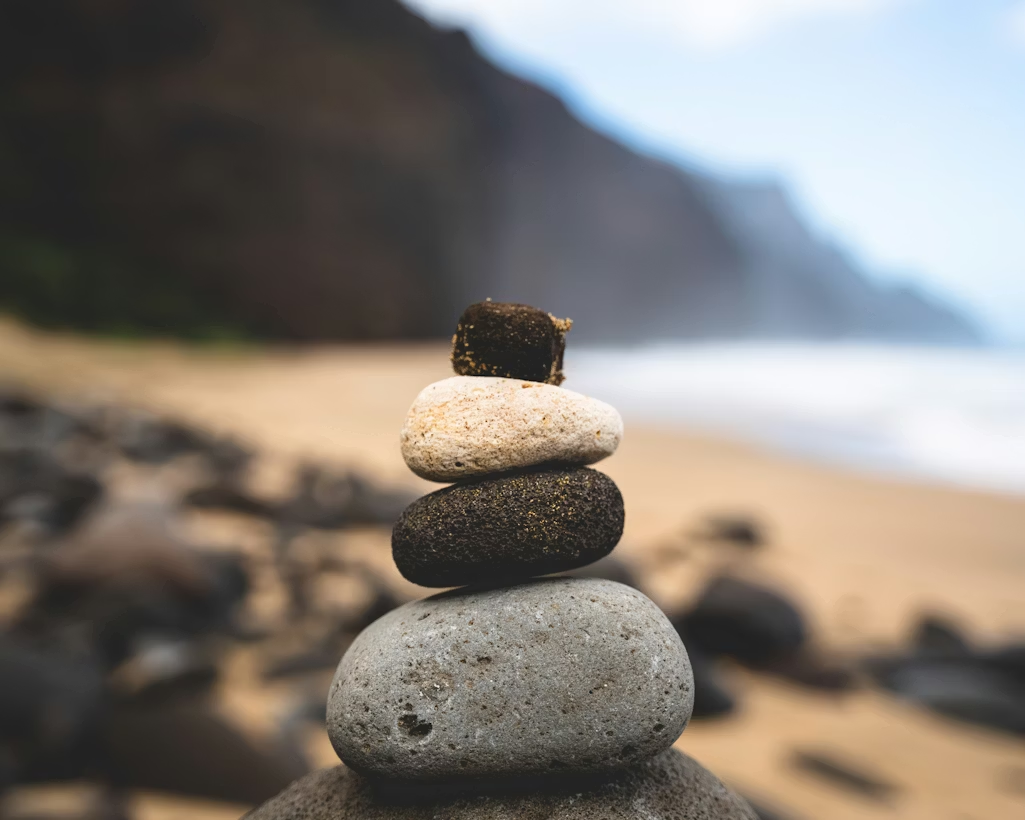
This article is free to read. So is every article Electric Literature publishes. No limits, no paywalls—now or ever. But we rely on your support to keep it that way.
We need to raise $35,000 by April 15 to keep the lights on, and time is running out.
Help us reach the next milestone—$15,000—by donating now.
—————
Two years ago, I stood in Jasmin ‘Iolani Hakes’s home office in the South Bay, surrounded by a whirlwind of color-coded index cards, open notebooks, and stacks of books, all orbiting a large whiteboard crowded with both historical facts and imagined possibilities. She told me—almost casually—that this was the research for the novel she was working on. I took it in, stunned, my eyes threatening to spin out of their sockets as I tried to absorb the scope of it all. All of it has since transformed into The Pōhaku, a novel shaped by history, memory, and the stories that refuse to disappear.
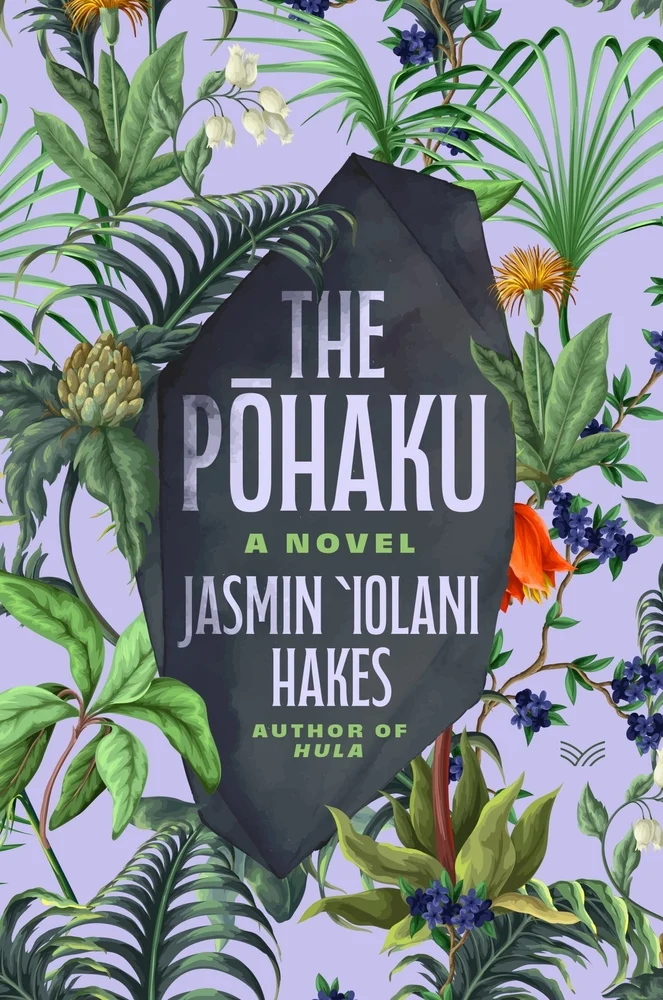
The book opens with a young woman lying comatose in a hospital. Her estranged grandmother, keeping vigil at her bedside, suspects that the truth behind her granddaughter’s fall—whether intentional or an accident—is linked to the pōhaku, an ancient stone her family has long been charged with protecting. From there, the novel unfolds across generations and geographies, tracing the deep and often misunderstood relationship between Hawai‘i and California, and illuminating a history in which Hawaiians were never passive or powerless. As the pōhaku moves alongside a grandmother, her daughter, and her granddaughters, it becomes clear that survival—of the family, of cultural memory, and of their relationship to home and the natural world—depends on which stories are preserved, who carries them forward, and what happens when they are nearly lost.
I sat down with Hakes to talk about The Pōhaku, the histories it insists we remember, and the power of stories to endure.
Greg Mania: Since we’re friends, I know and have seen how much research has gone into this book. What was the research process like for you, and how did it shape the book?
Jasmin ‘Iolani Hakes: I’m not a historian, so it took a long time to even know what I was looking for, though I did know from the beginning that I wasn’t going to find [it] in a book (if that book existed, I probably wouldn’t have worked for so long to write this one). I got creative. I had a little experience going through state archived materials for Hula, so I started there. I found graduate thesis work and archived essays printed in small regional newspapers and reached out to anyone and everyone I could find contact info for. Some of those people gave me other names to reach out to, other places to look. It was a lot of following breadcrumbs and not having any idea what I would find. Eventually everything I found started taking the shape of puzzle pieces. Because I wanted to stay as true as possible to history, it wasn’t until I put those pieces together that I felt like I could step back and start imagining a story that might connect them all.
GM: You’ve shared with me that everything in this book is true except for the pōhaku. Where did the idea for the pōhaku come from, and what made it feel like the right entry point for magical realism in the story?
The things we were told to do or not do were framed as truth, not superstitions.
JIH: Around fifteen years ago, out of sheer curiosity and with no intention of writing about them, I was trying to find anything I could about the group of Hawaiians who accompanied John Sutter to what would become Sacramento. At the time, I was working on a memoir that involved some pretty heavy subject matter and wanted to try my hand at fiction for a bit of levity. I was also living in Sacramento and spending a lot of time running and hiking along the American River. When my girls would join me, they’d always come home pockets stuffed with cool rocks they’d find along the riverbanks, something that you absolutely don’t do in Hawai‘i (every year the national park gets hundreds of rocks sent to them from tourists who took them and then regretted it later).
I happened to read People of the Book by Geraldine Brooks and watched the film The Red Violin around the same time. The book follows this ancient manuscript through time while the movie follows this violin through four centuries of owners, and I felt so inspired seeing snippets of history through that lens. I started playing with the idea of a pōhaku being taken from Hawai‘i and following its journey. Eventually the research I was doing about the Hawaiians who worked with Sutter collided with what I was working on.
GM: For readers who might experience elements of this book as “magical” or “mythic,” how does that framing differ from how these stories and beliefs are actually lived and understood in Hawai‘i?
JIH: A portrayal of Hawai‘i naked of its mystical elements is incomplete. Growing up, Pele’s presence was a matter of fact. The things we were told to do or not do were framed as truth, not superstitions. There was always the perspective that we are not the only ones here, and you not being able to explain something doesn’t make it not true. What in some places would be framed as mythology is in Hawai‘i learned as history. So thankfully the literary world has this term called magical realism that allows me to write a book that centers a rock as its main character, but in Hawai‘i, it’s just the way things are.
GM: This reminds me of something the writer John Manuel Arias once said about magical realism—that it can act as a kind of “savior of memory.” Does that resonate with you? What role does magical realism play in preserving, reshaping, or protecting memory in The Pōhaku?
JIH: It definitely resonates. I also love what he says about magical realism as a literary genre—it basically smashes two worlds together where magic can enter. When I read a book set in a world that allows for magical realism, I am going to read it in a different way [than] I would if it were, say, romance or a psychological thriller. If a story with magical realism is telling me it’s a windy day, I’m paying attention and taking note of things in a different way, allowing for possibilities beyond a setting of the scene with a report on the weather. In One Hundred Years of Solitude, a trail of ants is no mere pest problem. For Gabriel Garcia Marquez, the marching ants were ominous little creatures of fate. They are not just part of the backdrop.
For The Pōhaku, I used magical realism to center the earth and the pōhakuas active participants of the world we inhabit. Feeling connected to our environment requires more than just taking in surroundings with our eyes. It’s sensorial and intuitive and elemental. The pōhaku’s very existence is a signifier to those who know about it that the world is paying attention to how we treat it. It represents a symbiosis that, when displaced, easily tips the scales into parasitism, where the way we’re benefiting and surviving off the earth’s resources is not only no longer mutually beneficial, it’s downright harmful and diseased. In this world of magical realism, the pōhaku makes it impossible to dismiss our role in the state our world is in.
GM: This book spans generations across Hawai‘i and California. For readers who may not know this history, what are some of the historical realities you most wanted to illuminate?
JIH: The relationship between Hawai‘i and California goes way back. What I hoped to turn on its head is the notion that Hawaiians leaving the islands to live elsewhere is a relatively new phenomenon caused primarily by economic hardship. While the islands themselves are isolated, Hawaiians never were. There has always been an awareness and general curiosity about the outside world. Royals were sent abroad to be schooled in Europe, the whaling industry long saw having a Hawaiian on a ship as good luck and almost necessary, since they could swim and navigate by the stars, and when that group of Hawaiians left the islands with John Sutter, we can’t assume they left unwillingly or with a sense of subservience. He didn’t go there necessarily to harvest labor. Rather, he needed their expertise. The Hawaiian Kingdom at the time was civilized and cultured. A high value was placed on knowledge and education. They might have seen themselves as helping the guy out.
Feeling connected to our environment requires more than just taking in surroundings with our eyes.
GM: A lot of the dominant history flattens Hawaiian leadership into this passive, tragic narrative. What are the myths about the monarchy—and about Hawaiian agency more broadly—that you most wanted to put to rest?
JIH: The narrative that the Hawaiian Kingdom was overthrown because it was ill-equipped to rule itself and that the monarchy was sitting helpless as it watched foreigners scooping up the land and profiting enormously off its natural resources while consolidating power needs to be put to pasture. King Kalakaua building a palace and embarking on multiple world tours was part of a larger campaign to build the kind of visibility and legitimacy that would help them build international alliances. Queen Lili’uokalani was highly strategic in everything she did. These are some of the big things I wish were more common-knowledge. But there are smaller things I hope to illuminate as well: Sutter’s Fort was first built by Hawaiians. Hawaiians came in droves during the Gold Rush. A Hawaiian woman from Chico, descendant of one of the Hawaiians who arrived with John Sutter, did meet the king in San Francisco and accompany him back to Hawai‘i to join his court. She did return to Chico and worked with Annie Bidwell to develop her Indian School. Frankly, I love the idea that someone might read this book and then visit Sacramento and the greater Northern California region and see it in an entirely new, fuller way.
GM: When you were writing across this layered history, what felt most important to get right, and what felt most important to feel true?
JIH: The history I was piecing together was too fantabulous not to honor. I felt like if I changed any of it then it would be too easy to dismiss all of it as untrue. So I worked my way backward. I had birth records and genealogical charts and sometimes written anecdotes (Chico State has an incredible file of a descendant sharing the stories he inherited, a class did a project recording his oral history and their Special Collections department let me spend a day pouring through every piece of scrap paper they had on him). I had news articles like the one in Boston reporting how the city was preparing for the visit of the princess. I had history books about the Gold Rush and John Sutter’s journals. I felt an enormous pressure to get all of that right.
What needed to feel true was completely different. I had to really spend time with these names and facts and think about their motivations, why they were doing what they did, what they wanted, what was understood at the time. The sense of urgency to acknowledge and learn from our history to inform our present needed to feel true. Most of all, it felt important that Tutu, the narrator, feel true. Why she kept the story from her granddaughter, her struggles with faith and inheritance, her insecurities and doubt couched in determination and pride—since much of the book has this mystical element, I wanted her to provide a very human and perhaps even relatable balance.
GM: This novel really grapples with who gets to tell a story, and what happens when stories are erased, distorted, or taken away. How were you thinking about the power—and vulnerability—of cultural storytelling while writing?
I firmly believe our responsibility right now is to pay attention and bear witness. To remember.
JIH: When I was writing my first novel I went home to Hilo a lot, interviewing family and friends and elders who gifted me stories that provided this incredible context for some of the memories I was basing certain events off of. I learned so much that I bought a little recorder and got obsessed with the idea of asking my elders to share their stories with me before, you know, they pass and those stories pass along with them. When I once exclaimed to an uncle that I couldn’t believe I’d never heard a story he was telling me, he said it was because I was only now learning how to ask the right questions. His answer continues to reverberate in me. How much knowledge and experience have we lost over time because there wasn’t anyone around to pass a story to and keep it alive? When I was young and dancing hula we were continually reminded that the dances and chants and rituals we were learning existed solely because they had been carefully preserved over the generations, and that we were learning these things not only to enrich ourselves but because we were responsible to keep the torch lit for the next generation. I guess that has stuck with me too. Throughout the years I was writing and researching for The Pōhaku, I kept getting struck by how much information changes over time. Early portrayals of John Sutter have certainly evolved, as have the accounts of how Hawai‘i became the fiftieth state. Cultural storytelling has a staying power that often doesn’t exist in nonfiction.
GM: I know I’m supposed to say something like, “we’re living in a complicated time,” but I’ll be honest: It feels like a hellscape where those in power, across government and other institutions, are actively trying to soften or erase harmful histories. How did that reality shape how you approached truth in this novel?
JIH: It’s surreal and disorienting outside. I don’t recognize it. This past summer I had this urge to go to Washington, D.C. I kept telling people I wanted to go before it changed forever. Some thought I was being a little dramatic. I didn’t end up going, the timing didn’t work out, and now look: the Smithsonian is being scrubbed, part of the White House was demolished, and the Kennedy Center is now the Trump Kennedy Center. Our nation’s historic relationship with slavery is being rewritten. The lessons our kids learn in class are being redacted, the books they can access at the library are being restricted. It’s all very Orwellian. But the thing that keeps me going, and what really stayed front and center in my mind as I worked on this novel, was that no policy, no bulldozer, no despot can erase our stories. I firmly believe our responsibility right now is to pay attention and bear witness. To remember. Truth and fact have become these subjective concepts that make me wonder what the kids of the future are going to be learning when they are taught about what’s happening around us now. The lessons and how they evolve will depend on what stories stay alive to learn from. I could have written The Pōhaku chronologically, but I deliberately constructed it as a grandmother telling her granddaughter the story of their family because I wanted to explore that space of ownership. We have a duty and responsibility to future generations to preserve the stories of the past, as well as the ones we are living through now.