Lit Mags
A Genius Can Always Get Their Hands on a Violin
“Prodigies,” flash fiction by Drue Denmon
A Genius Can Always Get Their Hands on a Violin
Prodigies
Mom is a groupie, so when Dad has a gig, no matter how big or small, she forces us to go as a family. She’s too dressed up: wearing tights with seams up the back, a low-cut dress and heels that will ensure eyes follow us into every room. I do the opposite: I brush my hair into a low bun, wear a high-neck black T-shirt tucked into black jeans with flats to provide a neutral backdrop. Both of us fussing over our clothes will do no good though; we will attract stares just by being the only Black family at the gig anyway.
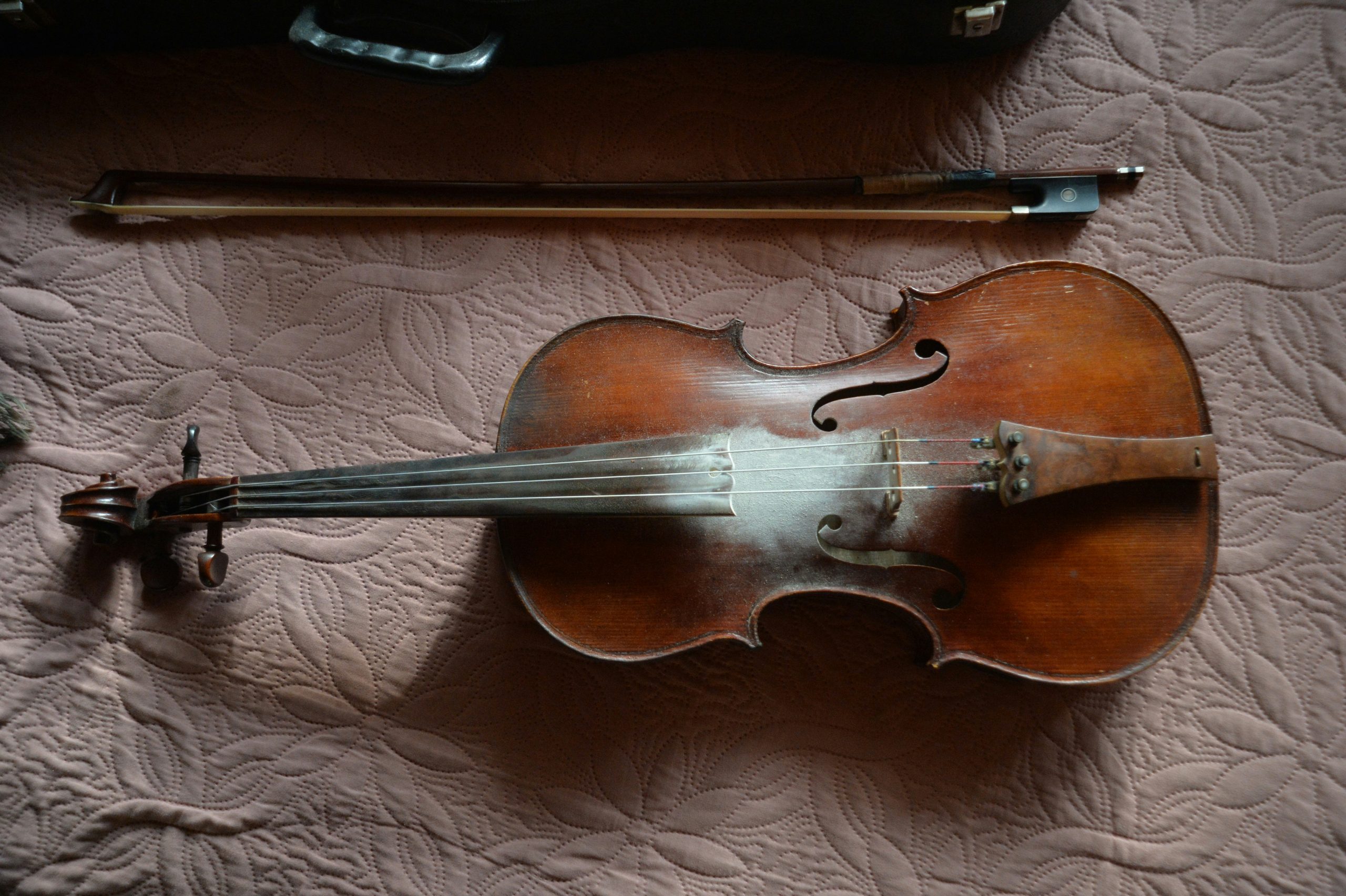
Dad lost his violin last year and we aren’t supposed to ask where it went. He needs to borrow mine. I go to a performing arts high school and just upgraded instruments for myself, and my new instrument is finicky, expensive, but it doesn’t take Dad long to make it work for him. Over the summer Mom and I went to the fancy violin shop downtown after spending weeks doing research, but all of it seemed unimportant in the shop. Everyone there was a great player, even the woman writing up the receipts. She sighed when I asked her any question, but when she tried out violins she was arrestingly good, speaking in the convoluted and beautiful language of expensive objects, a world that it was clear I would never enter. We ended up picking out the cheapest instrument Mom could afford after taking out a modest loan. Mom didn’t even call it the violin anymore, she just called it “college.”
“She’s beautiful,” Dad says after warming up, holding my violin out in front of him and running his hands along the curves of it, winking at me like I just brought a beautiful girl home.
The gig is at a fancy townhouse in Shadyside, a chamber music coaching session where Dad holds court for little old white people with very expensive instruments who aren’t even a quarter as good as Dad. They play a piece for him and then he gives them notes. Even while he insults them they sit there reverently, staring up at him and laughing too loudly at his puns.
During the gig Mom stands in the living room next to the crystal platters of cold fruit, drinking coffee. She usually likes to wait out in the open, hoping to be seen. I see her trying to catch Dad’s eye while he plays, a promise that she wants him to keep, a desire for him to belong just to her for only this night. I’m standing in the kitchen, a little out of sight, in front of the open bottles of wine in case Mom wants any. If Mom drinks too much, she will tell me more than I want to know about Dad. About how she doesn’t know how many women are just like her in other cities where he has gigs, waiting to receive him at the airport, hanging onto his every word.
The group finally does one last play-through for Dad. I can hear them hesitating over his watchful gaze, the violinist making a point to be more showy, overpowering the other players, forcing them to be quiet as she attempts to be more bold. When she’s done he pulls her into a congratulatory hug and she holds him too long. She’s yanking on his arm and yelling, “Let’s keep him!”
Efficiently he slips his hands out from around her and fluidly puts her back in her seat so he can retake center stage. He brings my violin back to his chin, takes a breath in. He plays a concerto that I’ve played the abridged version of, something boxed in and small for my developing abilities, but with him it opens up, it fills the whole room, it seems to reach the glittering chandelier, bigger and mightier than I could ever describe.
By the time he’s done, a hair hangs loose from my new bow. He reaches up and rips it off and the violinist gets up out of her chair to grab it before it can fall to the ground. The room is back to laughing loudly and we all watch as the violinist stuffs the string into her beaded purse.
What are you going to do with that? the cellist says lasciviously, and the violinist winks, says, Never you mind.
Mom emerges behind me and says that it’s embarrassing how people fawn over him, but I can tell she’s annoyed because this is her night, and it’s almost ten. Mom and I help with throwing away the cut fruit and recycling the wine bottles and stacking up the chairs while Dad continues talking, and then finally when he’s released he shows us his bounty: the fated thin white envelope of cash. Dad then puts on his home voice, the voice just for us, and tells us to make a break for it. We run, waiting for him to continue the bit, our next instructions, our part of the night.
To Eat’n Park! Dad says when we are all in the car. Mom hits the gas pedal so the car screeches on our way out. We order burgers and hot chocolate and milkshakes and Mom sends her burger back three times so that they comp it for us. Dad finally can divulge his real thoughts, how terrible they all are as players, these white folks, how embarrassing. He spares nothing of their playing and I join in too, I scan my mind for every moment until it’s wrung dry. My violin sits against my knees, and I pat it while we sit there, run my hand across the top of it, zip the case open and closed. Dad counts the money on the table, crisp twenties directly from the bank. You can tell how rich people are just from how unwrinkled their money is, from how little they use it.
When we get home Mom holds her heels in one hand, and Dad throws a hand around her shoulder and tells her that he loves her. It is hard to believe that he is ever not here, when we are settled in like this, when we have been laughing for hours. Mom bids us good night but Dad and I stay up, we watch movies and then when the movies get boring we play music again. If I don’t stop him, he will keep playing scraps of songs he’s heard, challenging me to guess the song and the composer, making me write out the circle of fifths. He says things like When you go to music school and tells me that I am good. He makes me get out the piece I’m working on with my teacher and he claps out the rhythms, yells when I stumble, marks up the pages in dark gel pen.
In these moments I feel like I know everything that has happened and everything that will happen, because Dad is at once too brief and all at once. I feel like I know how Mom and Dad never got married but produced me, how Dad came back and left his dog with us, how he took our car and crashed it. I know at the end of the night he will take my violin and I will give it to him without fighting. No one will remember me, but they will remember him and that’s enough, isn’t it, for him to be the legendary one and for me to think that by giving him the things I love I will be remembered, too.