interviews
Queering the Wilderness in a Debut Novel
Essayist-cum-novelist Melissa Faliveno on writing addiction and desire with tenderness and teeth
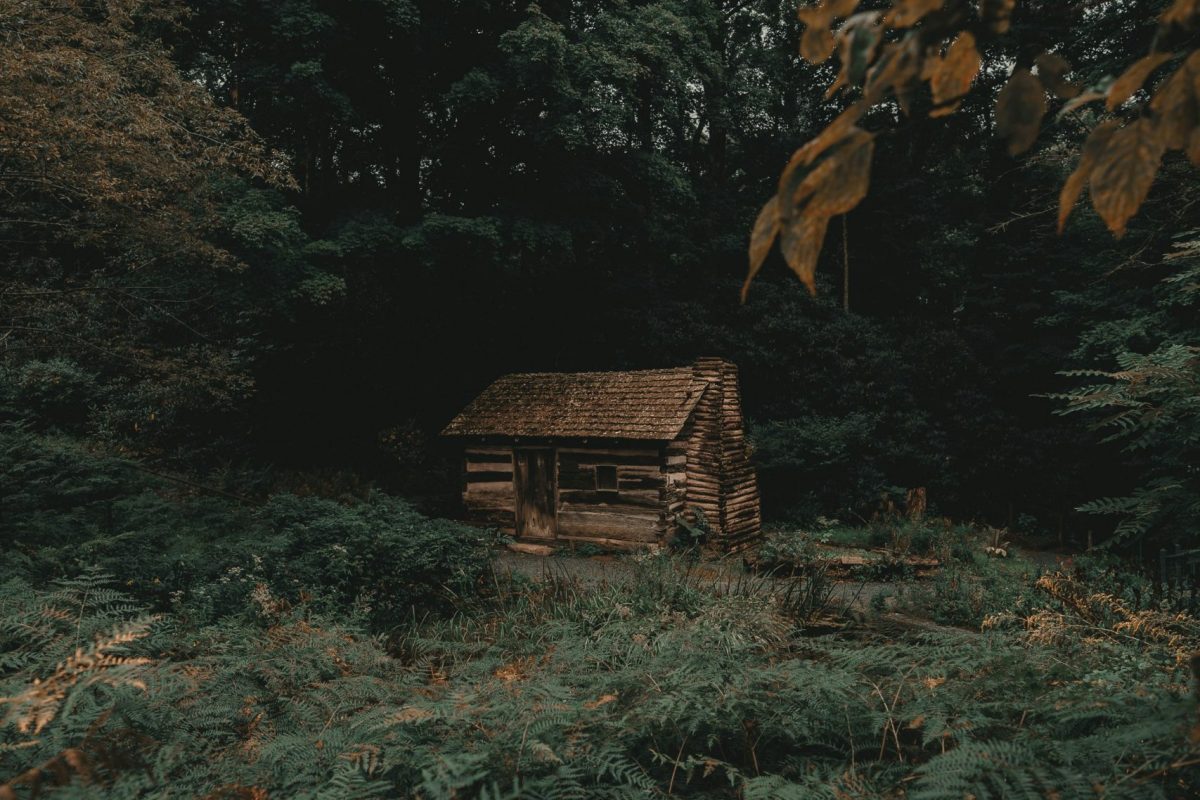
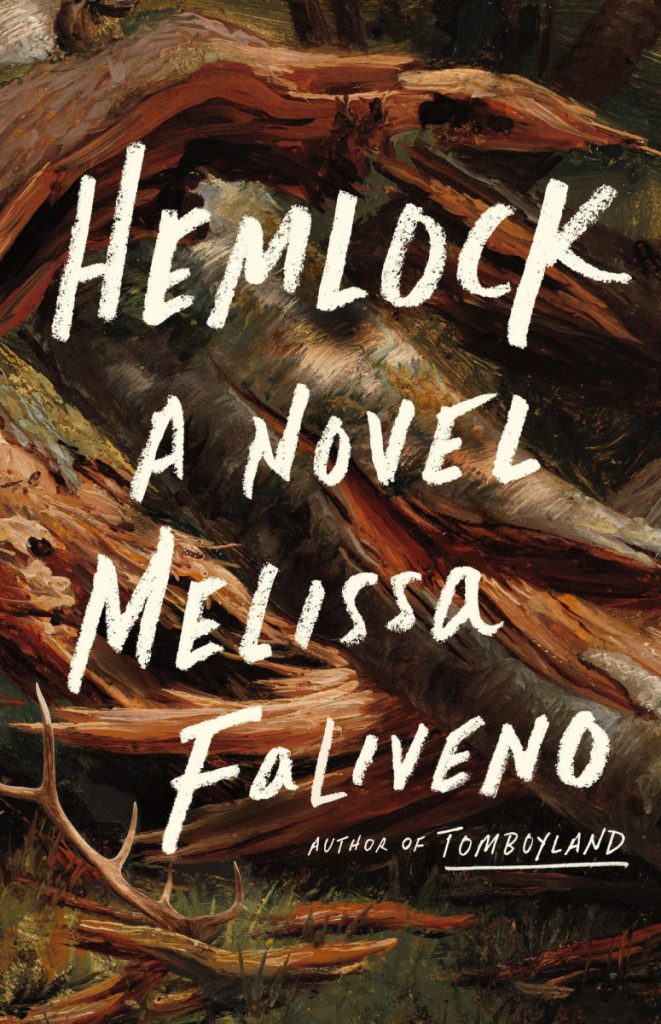
Melissa Faliveno’s debut, Hemlock, is a queer, atmospheric novel about addiction, memory, and the ways family history embeds itself in the body. The book follows Sam, a woman in her late thirties who leaves her life in Brooklyn to spend time alone at her family’s remote cabin in the Wisconsin Northwoods. The trip is meant to be temporary and practical, a chance to prepare the cabin for sale, but isolation, landscape, and unresolved grief begin to unsettle her sense of stability.
As Sam drifts back toward drinking, the novel blurs the line between psychological unraveling and something stranger. The woods feel watchful, time becomes unreliable, and Sam’s inner life fractures into memories, bodily sensations, and moments of dissociation. Encounters with other women, some grounding, some destabilizing, offer connection but also complicate her understanding of desire, caretaking, and survival.
Moving between sobriety and relapse, past and present, Hemlock explores how addiction operates not only as a personal struggle but as an inheritance shaped by family silence, loss, and place. Rather than offering clear answers or redemption arcs, the novel sits with uncertainty, asking what it means to return home, to confront what has been avoided, and to decide moment by moment whether survival looks like escape, surrender, or transformation.
In this conversation, I spoke with Faliveno about the leap from nonfiction to fiction, the strange relief of writing “just for fun” before the market enters the room, and what it means to write addiction and desire with both tenderness and teeth. We talk about the book’s purposeful collapse of technology, the pleasures (and risks) of writing sex, the pressure to write only what you “know,” and the quiet grief of finishing a project that has been yours alone. What emerges is a portrait of a writer chasing honesty through invention and using fiction’s distance to get closer to the truth.
Samantha Mann: How was the transition from Tomboyland to Hemlock—specifically, from writing nonfiction to fiction.
Melissa Faliveno: I wasn’t planning on writing fiction. I’d dabbled, short stories, a few failed novel drafts, but nothing serious, but as I was finishing Tomboyland, two things happened. One, I was over writing about myself in such a deeply personal, vulnerable way. And two, I got this kernel of an idea for a story and started writing it. I’d received advice that really stuck with me: when your first book goes into production, make sure you’re working on something else. Hemlock became the “something else,” even before I knew what it was.
I turned in the Tomboyland manuscript, went back to New York, did a summer writing challenge, and kept going. The story started taking on its own shape, and I was having a ton of fun. I kept telling myself, “This isn’t a book. I’m just playing.” Then I suddenly had a 300-page manuscript and thought, “Okay, maybe this is something.” I sent it to my agent and said, “Give it to me straight. Is this worth pursuing, or should it go in a drawer forever?” She said, “This is great. Keep working.”
I didn’t say out loud that I was writing a novel for a long time. I kept it a secret. I didn’t want to name it and have it not happen.
SM: Hearing you talk about “having fun” is really interesting. A lot of writers I know—myself included—struggle once we start publishing. It flips from “this is enjoyable to me” to “what do people want from me?” My mind is always asking, “What’s sellable? Marketable?” How did you stay in that place of just following the fun?
I didn’t say out loud that I was writing a novel for a long time. I didn’t want to name it and have it not happen.
MF: That’s true for me too. I think the key was that I didn’t put weight on it. I genuinely wasn’t assuming it would become a book. I thought it might just be for me, something cathartic after spending ten years on Tomboyland. When I write essays, it often feels like everything is riding on them: it has to be my best work, it has to find readers, it has to do something. With the novel draft, there were no expectations. Nothing was riding on it. That’s what kept it fun.
It got harder once someone in the industry validated it, and once it became “a novel we can sell.” Then it became work. But fiction still felt liberating. I got to experiment. I loved writing dialogue and getting to know characters. I’d walk around imagining conversations between characters. It was exciting to use new craft muscles that I didn’t use in nonfiction.
SM: That feels like an important note: giving yourself permission to play, even after you’ve been publishing. That’s such a gift.
MF: It is, and I lose it all the time. I’m writing an essay right now for a low-stakes community project I love, and I’m still stressed because I want other writers I admire to think it’s great. There’s no money involved; it’s just going online. But the pressure creeps in anyway. I’m writing an essay about the Counting Crows, and I should be having fun. Instead I’m stressed.
SM: I love how you drag the publishing industry in the novel. Here is a great quote from Sam (the main character) as she sums up her time in the publishing world, “I honestly don’t know what’s good or bad, just who people like and who they don’t.” This does feel spot on about the current state of, and lack of, true literary critique at the moment. What do you think that does—good or bad—for writers and for publishing?
MF: I worked for a small publisher in Wisconsin for a couple years, and then I worked at Poets & Writers magazine for about eight years, so I got an education, good and bad. On one hand, there’s not much actual criticism anymore. I never really know what’s good or not in a critical sense, and I don’t trust that people are telling me what they truly think about my work. That’s a problem. On the other hand, when those one-off drags of authors do happen, I’m like, “Why did you do that? What was the point?” Sometimes it makes sense when it’s aimed at a massive bestseller and the author is making millions. But when it hits a new or emerging writer, I wonder about the point.
SM: You’re highlighting the difference between real critique and bad-faith reviews, which is more common, and I think writers are increasingly nervous about these bad-faith readings. Did you worry about that with Hemlock? Did you find yourself pre-editing because you could imagine people misinterpreting pieces of the novel on purpose?
MF: I was less worried about people misreading on purpose and more worried about whether I’d written something . . . bad. As it went into production, that anxiety spiked: “Did I write a piece of crap?” There’s a talking animal in the novel, was that a cliché? Isn’t that a rule you’re not supposed to break? I also worried about writing about addiction and relapse “right.” I’m not someone who’s been in recovery programs my whole life, so I was writing from a newer, more alive part of my own relationship to alcohol while also writing about inheritance and history, which I do feel like an expert on. I was afraid of not getting it right. But the more people I talked to, the more I realized there isn’t one “right” way to be an addict, be sober, relapse, or struggle. There are so many versions.
SM: That reminds me of something Zadie Smith speaks about during her Fresh Air interview, the current pressure in fiction to write from your experience. This idea that people should “stay in their lane.” Do you feel that pressure? Or do you still feel creative openness?
MF: I go back and forth. For my first real go at fiction, it mattered to me that the main character shared aspects of my experience like queerness, body stuff, place, and some proximity to substance use. But there are other characters beyond my identity. Writing Lou-Ann, who is Ojibwe, was something I took really seriously. I know Ojibwe people; they’re friends, but I still stressed: “Am I getting her right? Am I giving her space to be fully alive on the page, not just in service of Sam’s growth?” That mattered a lot.
Am I queer enough to write these queer characters?
I had moments where I thought, “It’s not my story to tell.” But talking to my students helped. Some of them feel like they can’t write beyond their identity. And I’m like, “Of course you can, you just have to do it well.” I tell them that, and then I wrestle with the same question. Saying it aloud to young writers made me go, “Okay. I need to believe this too, and hold myself to doing it well.”
SM: Without spoiling too much, I was surprised, and delighted, at how you queered up the already queer sex scene. How was it writing the sex scene? I imagine it as awkward and difficult to pull off.
MF: I was nervous writing it. And some of that is internalized: “Am I queer enough to write these queer characters?” But writing desire and flirtation was so fun, all the little details, the brush of skin, heat off someone’s body. There’s a jukebox scene that felt really sexy to write. And I needed validation. Melissa Febos called it sexy in her blurb, and I also had queer friends tell me it felt sexy, so that helped.
SM: It’s such a vulnerable act. If you write a bad paragraph about your main character Sam alone in the woods, the reader moves on, but if you write bad sex, it will haunt you.
MF: Exactly.
SM: Hard pivot: I loved the near-total collapse of technology in the book. It was so freeing! Sam’s phone is dead or almost never works and she can’t call anyone. How intentional was that?
MF: Very intentional, and based on real experience. When I was finishing Tomboyland in the woods of Wisconsin, I stayed alone in a cabin with no Wi-Fi and almost no cell service. And then, inexplicably, the cell service would disappear at night. No one really knows why; it’s always been like that. It was terrifying, especially at night, knowing if something happens, no one will hear me scream, and I can’t call anyone. But during the day it was also liberating. No email, no social media, just me and my work and the natural world. I wanted that mix: fear and freedom, two sides of the same coin.
SM: That detail about the cell service magically switching off at night being a part of your true experience is so wild. It is the part that sounds made up to fit nicely in the story. That is why I’ll forever be a nonfiction girl.
MF: Totally true. They’ve since installed Wi-Fi and I was devastated. Like, great, now we can’t fully go off the grid even in a remote place.
SM: Throughout the book, Sam has these moments where a specific word or phrase drops into her mind and pulls her somewhere—into memory, into meaning, sometimes it helps her discover a new piece of herself. How did that develop? Was it a device?
MF: It wasn’t until deep revisions that I realized how central language is—names, naming, definitions. Early on, Sam’s dad says something like: if you build something or love something, you have to give it a name. They name the cabin Hemlock. Hemlock itself has multiple meanings: the poison plant, but also the hemlock tree species which are threatened in parts of the U.S. That mattered to me. Sam isn’t “endangered” yet, but she’s threatened. If something doesn’t change, she could become endangered.
There are also lines of poems that return to her. Part of it is that her past is a void because of drinking, trauma, and not looking at it. But in the liminal state of being drunk, hungover, and in-between she can access threads of herself she’s lost like underlining text in a book, a poem line, a word fragment.
I was also interested in the threshold between light and dark, staying in the clearing versus stepping into the woods. Overall I was interested in multiplicity: that words, bodies, experiences, places don’t have one meaning.
SM: That seems to connect to the larger themes of sexuality, sobriety, family, and home, in which by the end of the book you offer multiple ways to hold them, but you don’t resolve any of them into one “answer.”
In essays, I’m not trying to give answers. I’m trying to ask more complicated questions. I wanted the novel to do that too.
MF: That was the point. That’s where my nonfiction and fiction intersect most. In essays, I’m not trying to give answers. I’m trying to ask more complicated questions. I wanted the novel to do that too. And yes, some readers will be frustrated, especially if they go in expecting a thriller. People keep calling it a thriller and I’m like, “Guys, you’re not going to be thrilled.”
SM: I was intellectually thrilled! What books were you reading that felt important while working on Hemlock?
MF: My weird North Star was Gillian Flynn’s Sharp Objects. I love that book, the addiction, self-harm, the unreliable narrator, the dread, the “going home where the trauma lives.” And it has this Midwestern/Southern Gothic atmosphere. I wanted to write a Midwestern Gothic. Also: Liz Moore’s Long Bright River. Leslie Feinberg’s Stone Butch Blues. I read it for the first time while revising and felt like, “I wish I’d found it sooner, but I’m glad I found it exactly now.” The way Feinberg writes about class, body, butchness, rural vs. city it’s all in Hemlock. I read Louise Erdrich’s novels, especially The Round House. And Richard Powers’ The Overstory, which is this epic novel about trees.
SM: This book tackles the impossible task of processing grief, and putting a book out into the world after you’ve spent so much time in a non-public space with it could be its own moment of grieving. It had me thinking about that Nora Ephron list, “What I’ll Miss and What I Won’t.” What will you miss about actively working on this novel, and what won’t you miss?
MF: What I’ll miss is being completely alone with it. How it felt like mine and mine alone, almost secret. Unlike previous work, no one was reading it as I went. I wasn’t sending it to friends. It was just me and the story and the characters. It was lovely to have something untouched by anyone else’s opinions. And I’ll miss returning, in my mind, to that place, those woods, and re-embodying my relationship to Wisconsin and the North Woods. It felt spiritual in a way writing hasn’t always felt for me.
What I won’t miss is reentering grief and trauma both mine and other people’s. Some story elements were inspired by real stories. Revisiting certain emotional spaces was hard. And I think the book forced me to confront my relationship with alcohol. I didn’t start writing it thinking it was about me in that way. But as I wrote Sam, things became clear. There were moments of revelation. Also, during revisions, someone close to me died. He struggled with addiction for a long time. It ended up taking him, and he killed himself. When that happened, I had this epiphany: this could have been my future too. That was a brutal realization, but also useful. It’s part of what made me think, “Maybe I should take a break from drinking.”
In many ways, fiction gave me space to access truths I hadn’t been able to access in nonfiction. It was like looking at another person’s life, and then realizing how much of that past was mine. It mattered for me as a writer and as a person.