news
Science Says Book Readers Live Longer

This article is free to read. So is every article Electric Literature publishes. No limits, no paywalls—now or ever. Support from readers like you makes that possible.
We need to raise $60,000 to start off 2027 strong. Donate now to our end of year fundraiser to help ensure the future of free, accessible literature for all.
—————
A new study says bookworms live 23 months longer than their non-reading counterparts
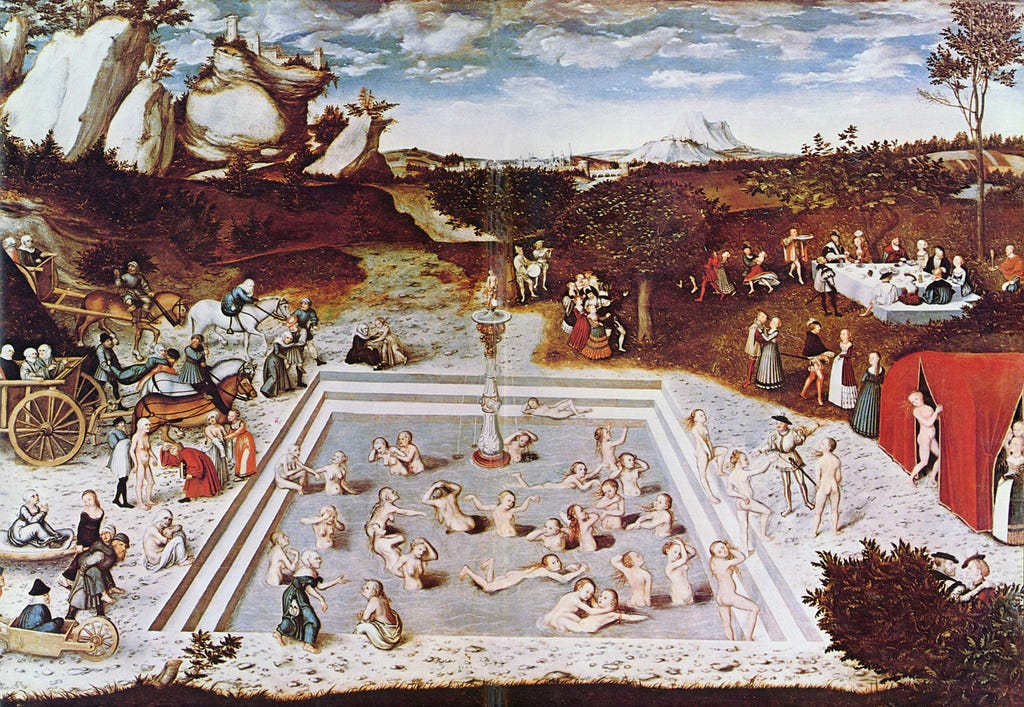
For centuries the myth of the Fountain of Youth was continually written about in fables, folktales, and scribed hypotheses. However, according to a new study, it may actually be one’s consumption of writing that acts as a fountain of youth. Yes, among its many other documented benefits, a new study has demonstrated that reading yields a greater lifespan.
The study was published in Social Science & Medicine’s September issue, entitled: “A Chapter A Day: Association of Book Reading with Longevity.” Surveying some 3,635 people — all aged 50 or older — the study found book readers live 23 months (nearly two years) longer than non-readers. The study also found that readers of 3.5 hours or more/week were 23% less likely to die than non-readers. Almost a fourth! However, what really sets this study apart is its distinction in reading material. As the paper’s introduction states:
“While most sedentary behaviors are well-established risk factors for mortality in older individuals, previous studies of a behavior that is often sedentary, reading… have not compared the health benefits of reading-material type.”
In an age that is entirely oversaturated in terms of data, information, and lolcat memes — a huge chunk of which arrives before us in the form of words and blurbs, and less often, sentences and paragraphs — the distinction in reading-material type is a crucial one to make. The study concluded that periodicals did not factor into the survival advantage granted by reading. In essence: books fend off the grim reaper with greater vigor than periodicals. One of the academics who authored the paper, Avni Bavishi, explained this to The Guardian:
“We uncovered that this effect is likely because books engage the reader’s mind more — providing more cognitive benefit, and therefore increasing the lifespan… we were impressed with the magnitude of the difference of effect between reading books and reading newspapers/magazines.”
According to the paper, the reasoning in the survival difference between periodical-reading and book-reading is double-fold:
“First, it promotes ‘deep reading,’ which is a slow, immersive process; this cognitive engagement occurs as the reader draws connections to other parts of the material, finds applications to the outside world…Second, books can promote empathy, social perception, and emotional intelligence, which are cognitive processes that can lead to greater survival.”
What should you do with those two extra years? Well, why not use them to read even more books?
“the benefits of reading books include a longer life in which to read them … The robustness of our findings suggests that reading books may not only introduce some interesting ideas and characters, it may also give more years of reading.”
Now, we wait for a study breaking down the life-spans and survival benefits among the passionate readers of particular authors. Do, for example, readers of Toni Morrison live longer than Bukowski devotees? Shakespearean thespians than George Eliot fans? The possibilities are endless (so long as we keep reading).