Personal Narrative
Surviving My Assault Means Understanding Where, and Who, I Come From
I wish I could give back my blood and start over as someone who didn’t inherit sexual violence
This article is free to read. So is every article Electric Literature publishes. No limits, no paywalls—now or ever. But we rely on your support to keep it that way.
We need to raise $35,000 by April 15 to keep the lights on, and time is running out.
Help us reach the next milestone—$10,000 by Monday—by donating now.
—————
Editor’s note: This essay deals with topics of childhood sexual assault, rape, and incest.
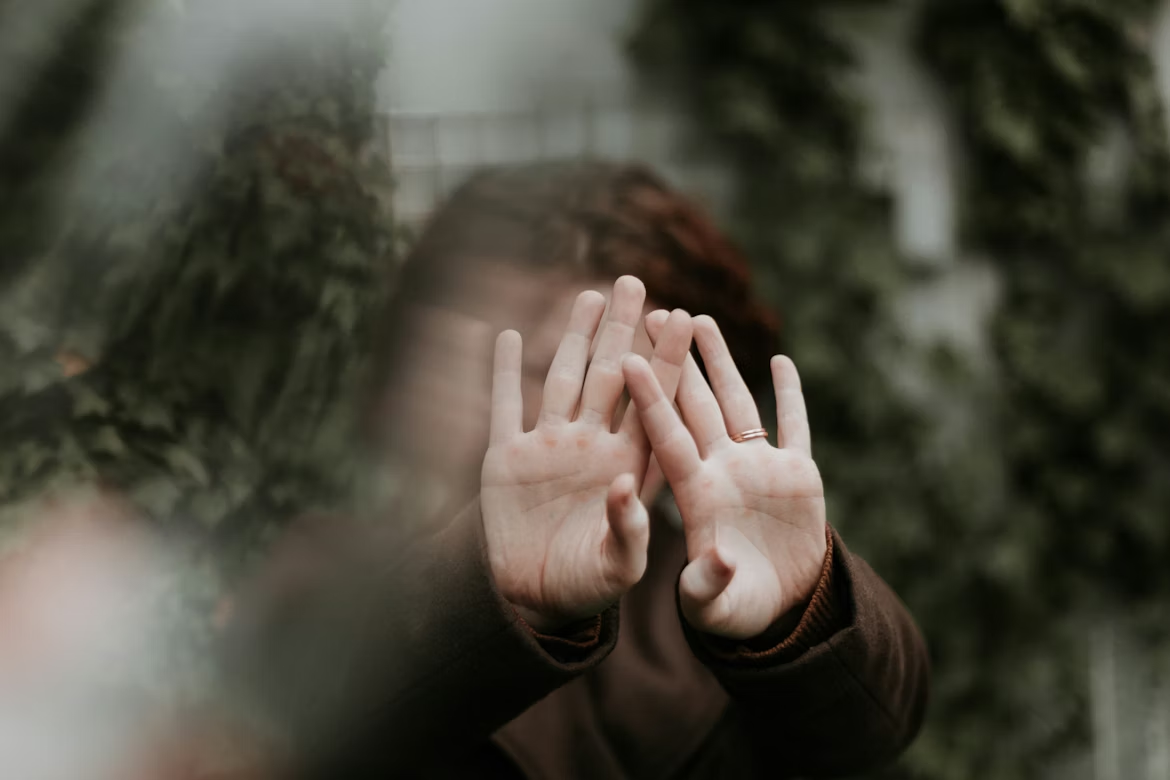
“Hush” by Torie Rose Wiley
The Armless Maiden, or in some retellings, The Maiden Without Hands, is an ancient folktale that has been passed down throughout different cultures and generations. In the older versions, a young girl lives alone with her brother, until one day, he tries to marry her. The girl refuses, and the brother severs both of her arms as punishment. He kicks the girl out of their home, forcing her to live amongst the animals in the forest. Without her arms, the girl is unable to pick fruit from the trees to feed herself. She cannot climb. She cannot touch. She is unable to bathe, to hold herself when her body shivers, to make something with her hands.
In later versions, the incest is eliminated from the story. Instead, the girl’s brother or father removes her arms in a desperate act to save themselves from the Devil. In later versions, they take her hands, not her arms. In even later versions, they ask the girl if they can cut off her hands, and she agrees.
Everytime my cousin, F, molests me, our family is close by, often in the same room. The first time, he and I are both sitting in the backseat of my father’s car. K, my sister, is in the front, and my dad is driving us all home from a haunted house. He laughs as he pushes and rubs his hands against my arms, my ribs, my thighs. Do you know what pressure points are, he asks as he presses a finger into the divet of my shoulder, sending a rush of pain throughout my body. He keeps touching, pushing harder against my skin, like he’s trying to peel me open and consume what’s inside. My dad right there, my sister right there. They don’t say anything as F shoves his hands and face into my lap. I’m so cold, you need to help warm me up, he says. I am ten.
Another time, K and F’s younger brother are laying in the same bed as us watching a movie. F drags his hand against my inner thigh under the blanket. Yet another time, F’s mom pulls him into her room, screaming at him after she catches him picking open the lock to her bathroom door while I’m inside.
Each time, I tell myself he will realize he is hurting me and stop on his own. I tell myself I’m being dramatic, like when I tell my mom my feet are going to fall off from walking so much at the zoo. He hasn’t raped me, wouldn’t rape me, I think. Rape only happens in dark alleys with strangers. God will make sure he stops before it ever gets to that. I attend catechism school once a week. My cousin is an altar boy. We have to be safe, being so close to God. Someone will save me.
He rapes me on Thanksgiving, two years after it all started. I am twelve. Our entire family is a floor above us as he first plunges his hand into the slushy, stained beer cooler, then into the part of me that only I had ever touched. I feel the heat of my mother and grandmother’s laughter and hear the clink of knives to plates as he plucks me from my body, leaving me to rot.
After, as we sit around the table with our family, I feel the sour, acidic breath of death pushing against my face. I feel the lack of distance. The awareness that he will never stop. The old, animal parts of me that know how to spot a predator tell me that next time, he will eat me.
When asked if there are any shared beliefs throughout cultures, an anthropology professor I take a course with in college replies, adamantly, that there are no universal truths. There is no consistent way of being human that permeates all communities and bloodlines. However, he adds, the taboos of cannibalism and incest are the closest we get.
The word incest derives from the Latin words for not—in and chaste—castus. The word denotes impurity. To be associated with incest is to be cut off or severed from wholeness.
Dissolved boundaries. Sisters as wives. Cousins as rapists. The people who made you are the same ones to take you apart.
I tell Mom a few weeks after my cousin rapes me, just before Christmas.
Some people were put on this earth to follow, others to lead—I was put here to lead. My grandmother often repeats when asked about her domineering nature.
I feel the heat of my mother and grandmother’s laughter and hear the clink of knives to plates as he plucks me from my body, leaving me to rot.
When she was born, rape was not considered a federal crime. Rape by a husband was considered a happenstance part of marriage—a husband’s right to claim as he pleased. A woman or girl had to prove she actively resisted in order for a jury of white men to call it rape. Within the Catholic Church, my teenage grandmother is taught that any birth control method is immoral. Divorce is immoral. Women are expected to uphold a pure, modest image—no matter what.
But as a kid, I don’t know my grandmother as this woman. I know her as the woman who dances with me to All I Want For Christmas Is You in the middle of summer because it is my favorite song.
By day as a city councilwoman, unbeknownst to kid-me, my grandmother bobs and weaves her way through town regulations, tax laws, and men with armpit stains in their suits. By night, she makes me easy-mac while we watch reruns of Franklin in our matching saddlebag-red leather recliners. I am her youngest granddaughter, and I own my role. I study how me in tutus and sequins and lipstick and pink make her eyes lighten. How she tells Mom I will absolutely not be wearing pants to kindergarten.
Anytime she takes me out to eat, someone knows her and comes up to the table to talk to her. Mom, father, both aunts, uncles—likely others who I am not even aware of—all gain full-time, secure jobs at public schools or departments via the good word of my grandmother. She keeps everyone in line. One time, she screamed at Mom for twenty minutes because there was a dryer sheet underneath a chair in our living room. I swear, I didn’t even see it until I laid down on the fuzzy green carpet and went looking for it. Nothing gets past her. Our family has an image to uphold.
When I’m born, rape is defined in the same way it was when my grandmother and mother were born. Carnal knowledge of a female, forcibly and against her will. Carnal knowledge. As if a body is a tempting fruit full of forbidden truths. As if one can get to the core of a person by forcing teeth though skin.
Between my birth and my rape, we get two dogs: a black and white, ornery collie mix named Susie, and an ever-hungry black lab named Macie. I watch SpongeBob and The Amanda Show with my older sisters. Mom tries to get me to wear eye patches to correct my lazy eye, but I insist on peeling it off as soon as she looks away. I write my first book: a stapled, paper booklet about fire-breathing cats and dogs. CPS comes—I find out as an adult it’s because my sister, K, told her high school guidance counselor that Mom took two Jell-O shots before driving with my sister, me, and a few of our friends in the backseat. I tell CPS I only see Mom drink every once in a while and hope they don’t find her wine bottles hidden in the Purina dog kibble bag.
My nose bleeds. My skin blotches red, something I later learn is called eczema. Mom slathers me with cold lotion twice a day to try and make the itch go away. I pick—scabs, nails, hair, eyes, nose, teeth, lips, throat, feet, hands, elbows, knees, thighs—anywhere I can get a nail under. I don’t understand why having scabs is “bad” until years later when I go to shave for the first time and realize I can’t pull the razor up any part of my leg without ripping one open.
My older sister, K, fights back whenever Mom calls us stupid or pinches our skin until it bruises. To kid-me, K is some fearless gladiator going up against a lion, and I am some cheering bystander hoping the lion doesn’t come my way. When Mom gets mad, she bares teeth. We are no longer her children, we are idiot, lazy, selfish, worthless, bitch.
Although K’s boldness invigorates me, I also hear the way she cries after each fight is done. After the CPS worker leaves, and Mom and K finish fighting, I tap on K’s door to see if she wants to play Xbox with me. I didn’t know he would report it, she confesses to me in broken sobs. I would never have said anything if I’d known he’d report it. I bring Mom a Sugar Daddy lollipop, her favorite, to help her calm down. I think of the time she told me to tell her if she ever started acting like her Mom, my grandmother, because she never wants to put my sisters and me through what she went through. I was too afraid to tell her she was too late.
Besides Mom, my grandma has two other daughters, both of whom have several children. I spend every holiday, birthday, vacation, graduation, Communion, Super Bowl with my maternal grandmother, aunts, uncles, and cousins. My cousins are there the first time my feet feel the ocean. My uncle pulls splinters from my fingers so gently it never hurts. When she invites me over around Halloween, my aunt makes sure to hide any skeletons because she knows even the cute Hallmark ones make me cry.
When my grandmother is pregnant, her fetus’s ovaries hold all the eggs it will ever have. I think of Mom and I, my sisters, my aunts, my cousins. All there. Growing between her leaves.
Mom, can we talk? I say from the kitchen doorway. I had been laying on the couch, turning ornaments over between trembling fingers, waiting for the sound of cups and plates hitting cupboard shelves to indicate Mom was almost done with the dishes.
She pauses at the sound of my words. We didn’t ever talk in my family. When I first went through puberty a few years before, she came home one day to me crying on the bathroom floor, howling about how there had been blood in my underwear, and how I was dying. There were no conversations, no sex talk, only a book on puberty left on my bed the next day. I learned I had something called a vagina when the book told me I did.
I’ll be there in a minute, she eventually replies. My face remains stoic, not wanting to give anything away, despite the growing hum in my bones. I walk the creaky hallway down to Mom’s bedroom. A painting I made in preschool hangs up on the wall above her nightstand: a bouquet made up of my tiny preschool hands and feet. I choose to tell Mom here, rather than in my room across the hall, because something about telling her underneath my mermaid princess canopy feels worse.
It was like I was about to tell her I had murdered somebody. Like I was about to murder my entire family in a matter of words. Will she yell at me for not telling her sooner? Will she believe me? What if she believes me but does nothing about it? Mom raised me to understand that the same hands who cut the crust off your peanut butter and jelly sandwiches and place it on your favorite Zoo Pals plate can also drag you across the hardwood floor like a piece of luggage. How do I tell the first person to ever hurt my body that I need her to stop someone else from hurting my body?
I need to tell you something. I speak between shortening breaths. Please don’t be mad. Her face sharpens. I suck in my last breath of air before forcing my tongue to speak for what feels like the first and final time.
For the last two years, F has been touching me.
She freezes.
Touching you how? Where?
He once—one time he lifted my shirt and put his hands and mouth on my chest and he, he—my carefully planned details boil over into babbling sobs. My body had condensed two years of terror into clear words. Now all the words it had swallowed to keep me safe were pouring out as wet noise.
She stands up and grabs her phone.
What are you doing? I manage to squeak out. I can feel the rope of my secret slipping through my fingers, ripping skin as it pulls.
Calling my sister. F’s mom.
Any initial relief that had started blooming quickly becomes a numbing panic. Snot sticks to the back of my throat, making my voice sound sticky. No, no, please don’t. Please don’t call her. Please—I can’t. I don’t want her to know. She can’t know. My body springs up, blood coursing with adrenaline, terrified. I wonder if F’s dad owns a gun.
A high school boy lifting up the shirt of a twelve year old girl—I’m calling her. She walks into her attached bathroom and shuts the door.
My body heaves. I crumble onto my mom’s floor, into the stained, vomit-green dog bed beside her nightstand. What if they don’t believe me? Why did I need to tell her? What if they kill me?
Before telling her, I could picture my family reacting however I wanted. I imagined my grandma calling me, sobbing, telling me she was so sorry. I let myself dream of my uncles and aunts driving right over to hug me and take me for ice cream or movies or whatever else a raped child needs. Now, there is no pretending.
They know.
I think of the violent military videos showing people melting into pieces that F would often make me watch because he thought they were funny. I think of the way he and his dad often bought collectible weapons—grenades, swords, rifles, knives, tasers—and kept them in the basement beside F’s room. I should have just let him keep raping me.
He said it only happened once. Mom speaks as she walks back into the room. She was probably only gone for minutes, but to me, every second of her not running up and holding me and telling me she still loved me was too long.
We stare into each other. Her, looking to see if I’m worth losing her family over. Me, looking to her to tell me I am.
Finally, she exhales. What do you need?
Courtrooms flash before my eyes. Police. Scary, adult words like testimony and witness and evidence. It would be my word against his. He was tall, blonde-haired with light eyes. I was lanky, and the Clearasil that was supposed to help with my acne had just turned the hair around my face an acidic yellow. His parents built him a basketball court in their backyard, while my parents had just spent the last year getting divorced. And really, I didn’t want to see how many people sat on his side over mine. I couldn’t handle any more hurt.
I don’t ever want to see him again. I eventually speak.
Then you never will.
After the Armless Maiden is left to die in the woods by her brother, a prince eventually finds her and brings her back to his kingdom. He falls in love with the armless girl after seeing how persistent and strong she is. They marry and have a baby. Years pass. One day while the prince is away, the girl’s brother hears of her new life. Livid, he sends a letter to the king and queen pretending to be the prince. He tricks them into believing the prince is horrified at the ugliness of their baby and wants the girl banished back to the forest, where she belongs. The king and queen reluctantly obey what they think are their son’s wishes, abandoning the armless girl in the woods with her baby strapped to her back.
So much can be stolen.
When my grandmother learns that my cousin sexually abused me, she tells Mom that he and I should sit down and talk it out. Mom refuses, but she continues making me see my grandmother.
It would be my word against his. He was tall, blonde-haired with light eyes.
You have to be understanding, Torie. She’s his grandmother, too. She wants to see you. It’ll just be you, her, and your other cousins. F won’t be there, Mom argues one morning after my grandmother asks to take my other cousins and me to lunch. She doesn’t want to pick sides, I’m told, whenever I ask Mom why grandma always brings us leftover cake from his house. If she doesn’t want to pick sides, why does she always go to his house first on holidays? Why doesn’t he get leftover cake?
My aunts don’t want to pick sides, either. Or my uncles. I see a few of them for a couple of short visits after I tell Mom, and then I never see them again, except for the Facebook photos showing everyone huddled around F for Christmas each year after.
No one ever asks me what happened. As a child, and now, I want them to know what happened.
Toward the end of lunch, my other cousins both go use the bathroom before we leave. My grandmother and I sit alone for the first time since I told Mom about the abuse.
So tell me how you’ve been. Your mom has you doing therapy?
I go once a week. I answer as I pick the ends off my French fries and start a pile next to my chicken nuggets for all the pieces that are too crunchy.
Good. Good. She wipes her mouth with her napkin and leans back in her chair. F has been seeing a therapist, too.
That’s good, I—
—hush, here come your cousins.
I take my cue and swallow the questions my body ached to ask. Why don’t you ask me about what he did? Why didn’t you call me the night you found out? What do I need? Why do you care more about him than me? How can you still stomach seeing him? How could you see every speck of dust Mom missed and not once see what he was doing to me? How—
Hush.
This is how the months following my disclosure go. Slivers of moments where my body pauses for a sip of air before swallowing more and more and more and more and more words. I feel something kicking inside me, needing to come out, and I keep telling it we need to wait for the right time.
How did therapy go? Mom asks every week while she drives me home. Good, I always reply, not sure how to tell her that talking to a stranger for an hour a week isn’t really helping. I ask the therapist questions like, do you think I’ll end up hurting people like my cousin? while opening another one of the Dove chocolates from her candy bowl.
At school, no one knows.
Just after my birthday, I dislocate my kneecap. It’s before homeroom, and my friends and I are all talking at the back of the class when my best friend kicks my leg out from under me. I think she underestimates how hard her kick is, or overestimates how sturdy my leg is. Either way, there is now a divot where my kneecap used to be, and an orchestra of pain rips at my leg. I scream so loud, one boy brings me a brownie the next day because he says the noises that came out of my mouth gave him nightmares.
Between the screams and convulsions running up and down my leg, I worry for my friend. What will happen to her if they find out she kicked me? I had seen the pale look on her face before Mr. M rushed her and everyone else out of the classroom so the paramedics could come. I know she didn’t mean to hurt me. So when the paramedics, the principal, and Mom ask me what happened, I tell them I had just slipped on a book bag and fell the wrong way.
Did I lie to protect my friend because that’s just what kids do for their friends? Or did I do it because the rape led me to believe that my friend would leave me if I was honest about how she had hurt me? Or maybe because Mom raised me to think I need to comfort someone after they hurt me. I no longer have my family to look toward when I wonder who I will become, where I come from, who I am. Which parts of me are mine?
Sometimes when I get home from school, I find a book on my bed from Mom that somehow deals with rape or sexual abuse. Once, I call a friend to read her a scene from The Lovely Bones—one of the books Mom leaves me.
Don’t read that—Mom scolds after she must have heard me reading through my bedroom door and opened it sharply. Don’t read those to your friends.
At parties, Mom asks me if it’s okay to tell her friend, or in some cases, a stranger, about F molesting me. It usually happens after someone asks Mom how her family is doing.
Can I tell them? she asks as the adults around us all stare at me.
Yeah, sure, I respond each time. You took her family away from her, you owe her this, some voice in the back of my mind tells me. I guess she doesn’t want to lie, which part of me appreciates, but I can’t understand why she is allowed to talk about my abuse whenever she wants, but when I try to, it’s never the right time.
The worst, for me, happens at the beach less than a year after I tell Mom. It’s August, and Mom has recently married my stepdad. For their honeymoon, they take my younger stepsister, N, and me to the beach for a week. K is at home watching our pets. I’m thirteen.
N and I are sitting next to each other in beach chairs, feet sunk in the warm sand, when she taps my shoulder to have me take out my headphones.
Did you hear any of what they said? N asks. Our parents had just left for a walk down the shore.
No, what?
She hesitates.
Your grandmother took K to lunch. She invited your aunt without telling her. My jaw cinches. They both tried to convince K to make you see F. They said you probably asked him to do it, that you wanted the attention.
I watch as a dad bobs his baby up and down through waves along the shoreline a little ahead of us. I can’t stop the words from running out of me.
What did K say?
No one wants to pick sides. I can’t trust that my sister will defend me anymore. I can’t trust anyone.
She left the restaurant after telling them to go fuck themselves, N replies.
Oh.
I wish I could say my sister’s words rang strong in my ears, but I was more focused on blaming myself for her being in a situation where she even had to defend me in the first place. My needing to tell Mom that I was being abused caused my sister to face yet another fight—is how I saw it then. She shouldn’t protect me anymore. Nobody should protect me. I don’t want anyone else to hurt.
When K got home, N continues, your cousin, F, sent her an email telling her she should kill herself.
I’m thirteen when I’m convinced that my words are only good for hurting the people I have left.
Sometime years later, while Mom pours herself another glass of wine at our kitchen table, she starts talking about my grandmother. I think her grandfather, your great great grandfather, may have raped her when she was younger. She never told me he did—but there was a weird feeling I would get when he was around her, when she would talk about him. She lived with him for most of her childhood. She says it with a casual sort of ease. My stomach hardens.
She continues as she takes another bite of her food, there was something always off with her. She was never a mother to me. When I was four—just four years old, a baby—she let me walk around the neighborhood with our cat on a leash. One day, a stray dog came up and attacked us. I didn’t know what to do, so I just held on to the cat for dear life as we both screamed. I don’t remember all of it, but I remember dragging the cat home after it was dead. No one was watching me. Her voice breaks as she takes another sip of wine. I stare down, having heard her tell this story many times before, still having no sense of what to say. You should be grateful to have a mom like me.
I try to understand what all of it means, if anything. Why the possibility of my grandmother having also been molested only makes me feel worse. How I hate the thought of my mother walking along that street alone. How I’m anything but grateful. How I’m terrified of what I come from, of who I will become.
I can’t trust that my sister will defend me anymore. I can’t trust anyone.
I wish I could give back my blood and start over as someone who didn’t inherit such violence. I wish I could go back and save my grandmother and mother from all that pain. But whenever I get close to some sense of clarity through the fog, I always end up instead at the same question, the one that unravels me all over again—why didn’t they save me?
I later confirm with census records that yes, my grandmother did live in a home with her grandfather for several years. I also found that her grandmother alternated between living in that house and a room in a mental asylum for three decades.
Mom tells me that most, if not all, of our Irish-Catholic ancestors were poor. The women in my family had many children during the decades prior to birth control, and many more in the decades since. One gives birth to 16 children, only eight of whom survive past four.
Another works 16-hour days twisting buttons onto pocketbooks she will never afford at a since-abandoned factory in our hometown.
Several attempt suicide.
It’s like they each were the heir to some thick, aching hunger.
Maybe he did. Maybe it’s enough to know that it could’ve happened, that my grandmother and great great grandmother and every grandmother before them could have been raped and stayed silent because somewhere along the way, someone convinced them that that’s the only way to heal. Maybe it’s enough that the stories of their lives died with them, leaving anyone to fill in gaps as they see fit.
We stop talking to my grandmother and the rest of my extended family after getting home from the beach.
Before the beach, I write 10-page book reports when the teacher only requires one. My friends and I tell each other our biggest secrets, like how we once ate paper, or how we once cut our own hair, or that time we flushed a lollipop stick down the toilet at a hotel and it flooded an entire hallway. Teachers toss paper balls at us to get us to stop talking in class. Once while jumping on the trampoline in my backyard, I tell a joke so good, my friend pees herself from laughing. And instead of crying or gagging or trying to pretend it’s not her pee that’s pooling into the center of the trampoline, we jump even harder. Before, words are my rhythm, my power, my love.
After the beach, words are hard, wretched things. How’s your grandma been? my dentist asks after she tells me to rinse and spit, and I scrounge up and mash the words together to lie: she’s okay. A friend comes up to me in the library at school and says, your cousin, A, just told everyone at lunch that you’re an asshole, and I whip the words, oh, weird, I’m not sure why he said that, until they collapse out of my mouth. When my aunt comes up to me at a science fair in front of all my friends with a big smile on her face and asks, how ya been? I drag the words, I’ve been good, it’s nice to see you! by the scalp until they get in line and sound convincing. After, words scatter when they hear me calling.
Years pass, I don’t write, or read, and sometimes when people touch me, I don’t feel it.
Years pass, I convince myself everything is over, it’s done, then Mom is diagnosed with early-stage breast cancer, and a few days later, we receive a letter from my grandmother saying: my prayers have been answered. Like Mom being alive and well is the only reason our family is broken.
I wish I could go back and save my grandmother and mother from all that pain.
Years pass, then my boyfriend joins our high school crew team, and my cousin, F, is a coach. We argue after he tells me he only talked to F because he was being polite, and he asks if I was sure I didn’t want my cousin to abuse me, and I don’t break up with him on the spot. In fact, I date him for another few years.
Years pass, I’m in highschool when I hear someone on the news say Christine Blasey Ford only accused Brett Kavanaugh of rape because she wants the attention, and I hear my stepfather say the same thing about another woman who accused an actor of rape, and I tell him, you know when you say that, you’re talking about me, right? and he says, of course I’m not talking about you, this has nothing to do with you, and he has this solid look on his face that tells me he really doesn’t see how this has everything to do with me.
Years pass, then F sends me twenty-two Facebook messages in a row saying he did it because he was curious/spoiled/rotten, saying he wakes up once a week with nightmares, saying it must be worse for me, saying it’s up to us to fix our family, saying he will kill himself if I want him to, saying punish me and not my family, saying it will only be too late once grandma is dead, and I’m sitting in my high school English class wondering if I should answer him or scream or call Mom or run to the bathroom and slap my face with sink water until I stop crying, or swallow it.
I stay in class and swallow it.
Years pass, then I go home and tell Mom he messaged me today, and she won’t stop chopping that onion she was chopping, and I tell myself she must not have heard the break in my voice.
Years pass and years pass and years pass, and suddenly I am twenty years old, my grandmother is dead, and I am forced to reckon with the fact that I cannot outrun what I come from.
My eyes pick through the list of names in my grandmother’s obituary until they find mine among the pile of estranged relatives. The deepest parts of me buckle. My lungs squeeze and stretch, squeeeeze and stretch, until I hack up globs of sticky, fat mucus. My body tries to evacuate from me, or me from it. We’re past this, stop crying, I tell myself as I go to the bathroom to flush down the chunky soup of snot and spit. Even though I have not seen or spoken to the matrilineal side of my family in eight years, my name is still there—next to the cousin who raped me.
It’s the smell of incense. The high ceiling of a Catholic Church. Ice against skin. Cracks in a leather couch. Normal, everyday things that once held no power, now are artifacts for my rape. Echoes from a past life. I see his name next to mine, and my twenty-year-old body feels the same way it did when it was twelve. Past and present fold into one beneath my skin.
I convinced myself that my grandmother would eventually send me a letter saying something to the effect of: I’m so sorry. I wasn’t there for you when you needed me. I love you. She must realize she’s wrong one day—right? As people called out Harvey Weinstein and R. Kelly and Bill Cosby and Brock Turner and Jeffrey Epstein and Larry Nassar throughout the Me Too movement, I waited for my letter to come. I thought, it would be so much easier now, she has to do it. I pictured her watching the news, reading the newspapers, perhaps checking out a memoir or two from the library. She’d listen to all those stories, really listen, and realize, like I had, that my cousin was the wrong one, not me. She’d realize how much damage she caused by silencing me, by minimizing me, by blaming me. She’d set things right before she went, give me what I needed to heal, tell me I can shout my truth from her rooftop if I wanted to. Deathbed confessions and all that.
But now—she’s dead. I can no longer hang on to the caricature of her in my head. Even in the face of death, there is no letter. No wordcrumbs for me to use to convince myself that my life of lying and suppressing is enough to keep me full. My grandmother dies content enough in her erasure of me that she didn’t feel any need to try and repair it.
I do not know how she dies, and I still do not talk to anyone who would know.
She tells me I know what he did, and I’m the only witness I’ll ever need.
For the first time, I picture my future, Me in ten, twenty, fifty years, and I know that I could die still waiting for someone to come and make me whole. I see her. I see myself. She’s spent her life lying and pretending to protect other’s peace at the expense of her own. She doesn’t write. There is a hollowness that grows in her every time she talks to someone, a great, big rot that tells her she’ll do nothing but disgust them if she gets too close. I see it radiating from within her. So much can be stolen.
Then, she cups my face in her hands, smiling, keeping me there, safe. Breathing. Sitting there, my head between her hard, wrinkled palms that shine from my tears, she tells me none of this was ever my fault. She tells me I know what he did, and I’m the only witness I’ll ever need. She tells me she’s sorry my grandmother and mother hurt me in so many moments where they could’ve helped me grow. She tells me she’s sorry they’re too hurt to love me the way I need. She tells me I am capable of living my whole life without ever remembering who I am, just as they are. Or, she tells me, I can reclaim my truth. I can live the life we deserve.
To heal, she tells me, I need to understand where I come from, so I better understand where I can go. I need to name all that was taken from me, so I can know all that will never be.
In the forest, the Armless Maiden is devastated. When no one can see her, she weeps. With her baby strapped to her back, she worries about how she will feed either of them. What type of life will they live in the wilderness? While kneeling down to drink from a nearby river, the baby kicks, and the girl stumbles, causing the baby to fall into the water. The girl dives in after her baby, and, without thinking, she reaches out to find him, to bring him back to her. She is surprised when two long, strong, arms emerge from her shoulders and catch her baby with ease. How did her arms come back? A river spirit? A God? The Maiden does not know the answers to all her questions, but as she cradles her baby, she knows she has everything she will ever need. No one can take this from her. She is whole.
In the months after my grandmother’s death, I let myself live. I make something with my hands. I start writing my truth.