Reading Lists
The Most Anticipated Queer Books for Spring 2026
Exciting new titles from Jeanette Winterson, T Kira Madden, Emma Copley Eisenberg, and more
This article is free to read. So is every article Electric Literature publishes. No limits, no paywalls—now or ever. Support from readers like you makes that possible.
Electric Literature is proud to be a space where writers are always paid and reading is always free, and we plan to keep it that way.
Donate now to our spring fundraiser to help ensure the future of free, accessible literature for all.
—————
Like many of you, I wake up each morning with the feeling that they’re coming for us. But then I think, they have always come for the queers. And we have always, throughout human history, stood watch all night over the fire. We have always taken care of each other, and we will keep on doing it.
I’ve been joking lately that I’m just going to get gayer. I’m going to make up new pronouns. I’m going to keep going out, dancing with my friends—which we call Church—and I’ll go on gay marrying my loved ones as an ordained minister with the highest of internet credentials, and I’ll watch Queer Ultimatum if I have to and Heated Rivalry because I want to, and I will honor the memories of our BIPOC queer and trans ancestors. I will fight for trans youth, and I will keep writing and sharing our stories no matter how much they try to silence or censor us.
Electric Lit’s Most Anticipated Queer Books List was launched by Michelle Hart, who centered and uplifted LGBTQ+ writers and the queer stories that “deserve not only to be included but centered” in literary discourse. Michelle tells us, “Let these new books be a reminder: Even in the face of despair and erasure, we’re still here—reading, writing, and refusing to disappear.”
It’s an honor to continue the work Michelle started in 2022. She reminds me—these books remind me—that queer is the future: It has always been the future. We keep the fires lit ‘till morning.
Genderqueer Menopause by Lasara Firefox Allen (Jan 13)
This groundbreaking handbook, written by a genderqueer doula and accredited menopause coach, offers tools, insights, and solidarity for queer individuals going through menopause. Author Lasara Firefox Allen foregrounds perspectives that have been sidelined and systemically erased in mainstream medical care. They identify resources that are both genderqueer and binary-gender-oriented, integrate quotes from real people they have surveyed, and include an appendix for health practitioners. Firefox Allen centers queer experience, affirming care, and community support, moving beyond heteronormative conceptions of menopause to empower, relieve, and demystify.
Hemlock by Melissa Faliveno (Jan 20)
In this gothic novel dedicated to Faliveno’s parents, a woman fleeing her own life escapes New York for her family’s cabin in rural Wisconsin, leaving behind a boyfriend, an apartment in Brooklyn, and a job as an editor. After almost a year of sobriety, Sam, grappling with her family’s history with alcoholism—and her mother’s disappearance into the nearby woods—begins to drink again. The book is full of shadows and longing, a prolonged sense of uncertainty about where the danger lies. There are poison plants, conversations with a doe, and flirtations with a cute local named Gina. Faliveno’s crisp prose evokes an ambiguous haunting that will be instantly familiar to anyone who has been through it: “It’s like I’m turning into something else . . . like something is opening up, or making its way out.” This “butch Black Swan” captivated Austin Carter at Pocket Books Shop, the queer-feminist indie bookstore owned by three best friends (with a new second Lancaster, PA location!)
Two Women Living Together by Kim Hana & Hwang Sunwoo, translated by Gene Png (Jan 20)
Two Women Living Together is not a queer book—technically. Kim Hana and Hwang Sunwoo use the language “cohabitants” to define their relationship, and the best-selling Korean memoir clearly casts the two as women who value their independence. After turning forty and being confronted by the loneliness of living alone, the two move in together. Still, there is undeniable intimacy in these pages: their four beloved cats, shared playlists and guilty pleasures, the little noticings of habits. During a hospital stay, Hana stays by Sunwoo’s side. One section is titled: “If We Broke Up.” In switchback chapters, Hana and Sunwoo create a new domestic sphere that is undefined by patriarchy and social expectation. Sly, subtly subversive, a wonderful companion, Two Women Living Together is anything but straight.
Just Watch Me by Lior Torenberg (Jan 20)
For seven days, across seven chapters, Dell Danvers live-streams her life for the internet, eating hotter and hotter peppers for cash donations. This self-exploitation might sound all too familiar, and at best, Dell is “a morally gray heroine” who would undoubtedly be played by Natasha Lyonne. (Even Torenberg admits she probably wouldn’t like her protagonist in real life!) Nevertheless, like her followers on Live Cast, we readers are eager to know if Dell will do it: will she eat the ghost pepper. Like Dell, we anxiously count every coin that passes through her hands—we’ve seen her paycheck ($0) and her apartment (formerly a closet, no bathroom); most of all, Dell has allowed us a glimpse into her pain, how she is grieving for her comatose sister and reaching for the impossible. Funny, chatty, weird, and at times unexpectedly poignant. You can devour Just Watch Me in one gulp, but, like a habanero, it’ll be sitting with you for hours.
One Aladdin Two Lamps by Jeanette Winterson (Jan 20)
“Stories are there to change what is into what if,” Winterson tells us. This is feminist manifesto, literary criticism, personal narrative, oral storytelling—a book that refuses to be categorized, much like its author. Fans of Winterson know she grew up as a lesbian adopted by ultra-religious Evangelical parents: That is, she was told one story about who she was, and the only way she could be saved was to go out into the world and tell another. Many others. Calling on One Thousand and One Nights’ Shahrazad, who tempts and tricks her would-be executioner, the Sultan Shahryar, Winterson tells us tales to keep us on the hook, all while confronting issues like capitalism and consumerism, climate change, and “everything-bagel liberalism.” In One Aladdin Two Lamps, Winterson reminds us that stories are a way to reshape our world, by which she means: our future.
On Sundays She Picked Flowers by Yah Yah Scholfield (Jan 27)
Yah Yah Scholfield’s simmering debut is arriving hot off the heels of her selection for The Best American Short Stories 2025. The book follows Jude, who flees her childhood home and abusive mother, finding solace in a house whose dark history is immediately familiar to her. Developing a solidarity with the spirits of the house, Jude becomes a healer, although the darkness of her past continues to lurk in the shadows. When a mysterious, alluring woman arrives at the house, Jude must come to terms with her desire, demons, and the legacy of violence within herself and the walls of the house.
Murder Bimbo by Rebecca Novack (Feb 10)
The incomparable Catherine Lacey calls Murder Bimbo “Gone Girl for the Luigi Mangioni era.” A sex worker is recruited to become an assassin at the hands of the US government—and on page one, she’s running for her life. We are seduced by this unreliable queer narrator, caught up in her ex and writing late-night emails about justice and a man named Meat Neck! Propulsive, electric, Murder Bimbo conceals and reveals and conceals again, as any disruptive queer act must. The political assassination at the heart of the book is eerily resonant, though the novel was written before Charlie Kirk was killed. Rebecca Novack, who has a master’s degree in theological studies from Harvard divinity school, plays with our readerly expectations about motive, audience, authorship, and the genre of true crime.
Last Seen by Christopher Castellani (Feb 17)
Last Seen, a speculative literary thriller, follows four young men—Caleb, Steven, Matthew, and Leo—each of whom disappeared between 2007 and 2020, and whose bodies were later found in icy rivers across the United States. The book alludes to the true-crime theory proposed by retired NYPD detectives, suggesting the series of deaths might be linked murders rather than accidental drownings. Many people are convinced the boys are victims of the Smiley Face Killers, an insidious group targeting white, college-aged men who have been drinking. Castellani’s writing tenderly captures the voice of the four boys, and all they’ve lost, as they watch over their loved ones in death: “I am one of those boys they keep finding in the river . . . Caleb Aldrich who was too beautiful to live.” An exploration of grief, masculinity, and homecoming, Victor LaValle calls it “a ghost story, an elegy, a love letter to young men who go missing without a trace.”
So Old, So Young by Grant Ginder (Feb 17)
What’s more queer than following a group of friends to five parties over twenty years? In this tragicomedy full of wit, wisdom, and sizzling dialogue, Ginder shows us how tender and complicated chosen family can be. Six friends try to find each other as they drift apart. Pick the hard adult thing: unrequited love, bad taste in men, job loss, infidelity, binges, unrealized potential. “While this is a distinctly millennial set of characters, their stories of heartache and searching is a universal one,” says Claire Benedict of Bear Pond Books, Montpelier, VT. Ginder’s fourth book, follows Honestly, We Meant Well and The People We Hate at the Wedding, which was adapted into a major motion picture starring Allison Janney and Kristen Bell. Reading it, one realizes that nostalgia is a decidedly queer emotion. At heart, it’s about the little fights between friends that become great distances to travel, and the ways we find our way back to one another.
Evil Genius by Claire Oshetsky (Feb 17)
It’s 1970s San Francisco, and nineteen-year-old Celia Dent demands her freedom from her domineering husband. After Vivienne Bianco is murdered at the phone company where Celia works “the elephant graveyard of jobs,” she begins to seek “revolutionary changes . . . violent changes, even.” Celia buys a knife, she fires a gun, she seeks real love. “We can take forever to arrive at the most obvious truths about ourselves, because the will to conform is mighty in us, and the fear of somebody find out we’re not normal is a mighty fear.” This dark, unconventional comedy is quirky, surprising, and sharp!
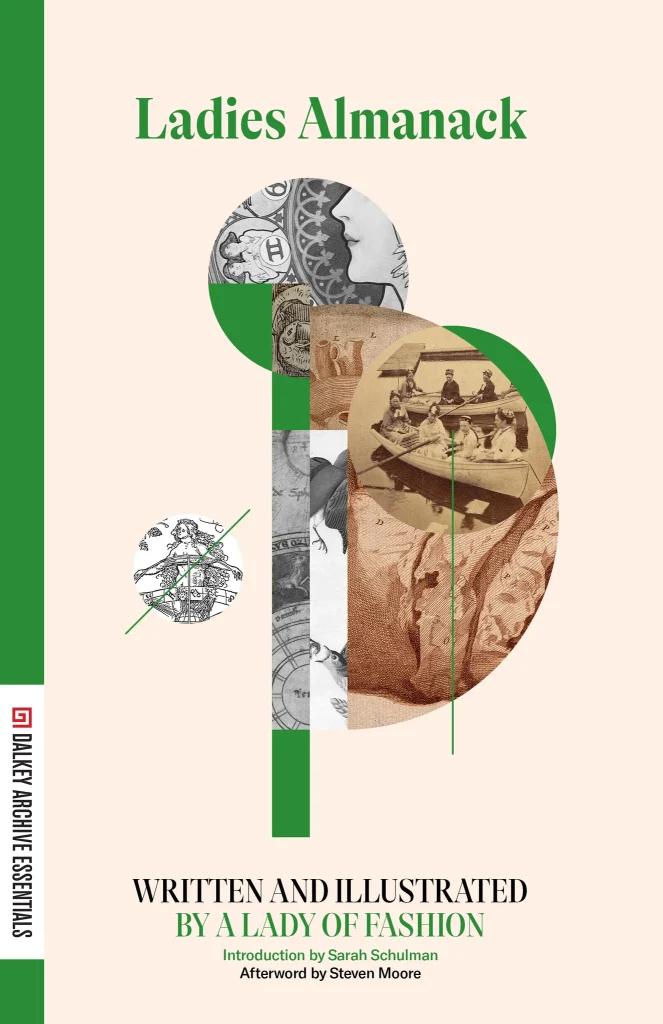
Ladies Almanack by Djuna Barnes (Feb 17)
In her introduction to this new edition of Ladies Almanack, Sarah Schulman tells us, “No one loves the lesbians as much as a lesbian in love.” The Ladies Almanack proves that lesbians have always been sly, pissed off, underpaid, but also funny and innovative. The work is a roman à clef about the vibrant lesbian expatriate community in 1920s Paris, focusing on Natalie Clifford Barney’s salon. The mock almanac celebrates and only thinly veils the real people at the heart of the work, including Thelma Wood, Djuna Barnes’s impossible, often drunk, charismatic lover (who apparently also seduced Edna St. Vincent Millay). This is all at once high queer court, social satire, love letter, and flirty literary gossip written in a pastiche of Restoration literature that asserts, “We don’t feel about men the way they feel about themselves.” Reissued by Dalkey Archive Press nearly a hundred years after it was re-written, the work now comes complete with Elizabethan-style woodcut illustrations. Shoshana Bockol at The Head & The Hand bookstore in Philly put this one at the top of her list. She says, “This is the one I’m most excited for!”
Night Night Fawn by Jordy Rosenberg (March 3)
Night Night Fawn is undoubtedly the Marxist, trans, comedic dystopia we need in 2026. Initially conceived as nonfiction, Jordy Rosenberg’s second novel subverts form to become an inherently transgressive unauthorized fictional “memoir” that reads as hysterical manifesto. Barbara Rosenberg, a character modeled loosely on Rosenberg’s own mother, is a terminally ill Jewish “yenta.” High on opioids, looking back at her origins in post-war New York—where she grew up with aspirations to be a wealthy Jew—Barbara wonders where she went wrong with her estranged trans son and her ex best friend. As Barbara takes an “unrepentant account of all her failures,” she seeks to understand how her child ended up becoming her greatest fear—queer, unrecognizable, anti-capitalist, manly. As with Rosenberg’s first book Confessions of the Fox, the prose crackles.
Whidbey by T Kira Madden (March 10)
I’ve been eagerly awaiting this title since I heard T Kira Madden read from her manuscript at the Disquiet International Literary Program in Lisbon. The book opens with Kira’s letter to the reader, explaining that this revenge story is fiction but also revealing just how much she had to live through. Whidbey, in many ways, is unfinished business for Madden, who wrote about her assailant in “Feels of Love” in the memoir Long Live the Tribe of Fatherless Girls. Her debut novel begins on a boat to an island: A woman running from the man who abused her as a child, a chance meeting with a stranger who promises to kill him—and then, days later, the murder. But in Madden’s hands, this is so much more than a noir story. The sentences are exquisite. The novel gives voice to survivors of sexual abuse and rape, claiming power not only from assailants, but from a broken justice system and the media. Madden, unflinching as ever, even drops us into the perspective of the mother of the convicted sex offender.
A Lady for All Seasons by TJ Alexander (March 10)
From the Lambda Literary Award finalist comes the sequel to A Gentleman’s Gentleman, named one of The New York Times’ 100 Best Books of 2025. It’s 1820s London, and the cunning Verbena Montrose at the heart of this queer Regency romance tricks her newly rich best friend Etienne into marrying her. This is a comedy of errors full of yearning and hijinks and genderfluid lovers. You can expect scheming, gossip, a lavender wedding, genderplay, and even a cameo by Lord Byron. Just in time to pre-order from BookWoman for Valentine’s Day, you fans of trans historical romances!
Spoiled Milk by Avery Curran (March 10)
This lesbian gothic horror set in 1928 at the “pash” Briarley School for Girls is set in the long boarding-school tradition of young people being forced to rely on no one but themselves. The rules are different, the food is terrible, the mood is always brooding. Everybody is always watching, but nobody sees the two girls kissing on the grounds. Emily Locke, who is “not good at discerning the contours of what to be afraid of” is in her final year when her best friend falls mysteriously to her death. Violet, a cunning beauty envied by students and teachers alike, is the first to die, but certainly not the last. This lesbian phantasmagoria has everything: silk gloves, sour milk, clandestine visits to mystics, potentially evil yet sexy French teachers. It brings to mind Meg Wolitzer’s Belzhar, Tana French’s The Secret Place, and even the salty teen-girl quips of Christine Schutt’s All Souls. This one was a favorite of Emerson at The Head & Hand bookstore.
Hell’s Heart by Alexis Hall (March 12)
Described by Sarah Gailey as “Moby Dick meets Treasure Planet by way of Fleabag,” Hell’s Heart is a sapphic journey through the depths of space and human desire. Earth is abandoned and its remaining inhabitants have taken to the stars, where they survive by harvesting spermaceti, a hallucinogenic fuel produced by massive whale-like creatures. Society has deteriorated into a desolate landscape of corporate accumulation and morally bankrupt religious institutions. With no other options, the narrator—called “I”—joins a voyage hunting for spermaceti, and quickly becomes infatuated with the ship’s female captain, “A.” As the hunt progresses and the captain’s delusions mount, the narrator’s grasp on reality and her sense of self is thrown into question.
My Lover, the Rabbi by Wayne Koestenbaum (March 17)
In this much anticipated novel, nearly two decades after he published his first, Wayne Koestenbaum performs for us the inexhaustible gaze of the lover. “All I ever wanted,” our speaker says of the rabbi, “was to be smothered by his nakedness, to be walled off from the world by the sheer interfering magnitude of his flesh . . . between my body and the rest of existence.” This is a gay, gay book, often told in poetic, staccato chapters, with some sentences going on for pages. One conversation about “the best dermatologist” gets interrupted by “quaint” fellatio and an allusion to Odysseus, ending many lines later in a recommendation to go to Charlottesville. Fans of Garth Greenwell will delight in Koestenbaum’s demonstration of the sublime against corporeal obsession, play, need, humiliation, grief, desire, camp, refusal to engage in any heteronormative norms.
Ruins, Child by Giada Scodellaro (April 7)
From the incomparable New Directions comes a gorgeous work of collective witness set against an urban landscape. Giada Scodellaro, whose debut Some of Them Will Carry Me was listed by The New Yorker as one of its best books in 2022, archives Black women’s experiences in this poet’s novel. Scodellaro writes, “The community is made up of predominantly black people . . . it’s a place we’ve created for ourselves, okay? Or a place we were forced into and have reimagined.” Conjuring the spirit of Gloria Naylor’s The Women of Brewster Place, Jeanette Winterson’s Written on the Body, and Virginia Woolf’s The Waves, Ruins, Child weaves folklore, botany and the body—always the body. One chapter is entitled “groin,” another, “sole of the foot.” Ruins, Child is a surrealist, cinematic telling with an eye towards the future.
Honey in the Wound by Jiyoung Han (April 7)
Set in the 20th century during the Japanese occupation of Korea, this multi-generational, historical novel follows a family of women with astonishing gifts: one who disappears and returns a tigress, one who can force a liar to speak the truth, one who can see into dreams. The work centers on Young-ja, who infuses food with her emotions, and ultimately uses that power to resist colonialism. In 1931, after Japanese soldiers crush her family’s defiance against the Empire, Young-Ja is taken by a Korean resistance fighter to Manchuria, where she joins a clandestine world of teahouse spies. Han’s writing is lush and moving, and the work is both inventive and deeply researched—sometimes reading as fable, other times as historical account or ancestral narrative. Kirkus describes this stunning debut as “a revelatory work of harrowing fiction . . . [that] validates the hidden powers of ‘powerless’ women.”
Surrender by Jennifer Acker (April 14)
Jennifer Acker’s Surrender is a tale of reinvention, baby goats, and grown up teenage love. After decades of city life, 47-year-old Lucy returns to her childhood home in rural Massachusetts to take over her father’s farm. Almost immediately, challenges arise: Lucy’s lack of experience is compounded by loss and the worsening health of her husband. Lucy finds a light at the end of the tunnel in the form of Sandy, her childhood companion-turned-more-than-a-friend, but Sandy’s presence at the farm also draws the attention of her employers, a solar energy company. Exploring grief, desire, and the second adolescence of middle age, Surrender is a must-read of 2026.
Harmless by Miranda Shulman (April 14)
Two years after the fact, Bea is still reeling from the death of her twin sister, Audrey. Where Bea is brusque, driven, and deeply lonely, Audrey was bright and extroverted, and her absence has become a ruling force. Now living in Brooklyn, Bea throws herself into an old dream she shared with Audrey: to start a dog kennel. When old friendships rekindle, desires spark, and the lingering weight of Audrey’s death threatens to sink Bea’s budding dream, she must come to terms not only with the loss, but with the secrets it has brought to the surface.
Fat Swim by Emma Copley Eisenberg (April 28)
It’s easy to see why the short story is Emma Copley Eisenberg’s first love, even as Fat Swim follows the author’s wildly successful debut novel and memoir. Eisenberg treats her characters with such tenderness, whether it’s young Alice at the pool (or grown-up Alice at camp), or Jules, the trans assistant to the famous elderly gay writer, or Mama, trying hard to migrate to her queer child’s elastic definition of love. Or, for that matter, any minor character that, in Eisenberg’s loving gaze, is celebrated in all their fulness. The collection resists the erasure of fat bodies in American letters, mostly by giving us all too rare portraits of pleasure and desire. Grace Paley is in these pages, as is summer, and ice cream, and Ray’s Birthday Bar, and refusing to be defined in binary terms.