interviews
The Renaissance of the Trans Magazine
Eight editors behind trans periodicals discuss trans activism and the power of t4t publications
This article is free to read. So is every article Electric Literature publishes. No limits, no paywalls—now or ever. But we rely on your support to keep it that way.
We need to raise $35,000 by April 15 to keep the lights on, and time is running out. Donate today.
—————
A trans magazine can create a magnetic field, drawing people together into community. From Transvestia to TG/TS/TV Tapestry, Gendertrash from Hell to Original Plumbing, indie community publications have long allowed trans people to find each other, share resources, and build culture. Needless to say, much of that activity has since moved online, taking place in Reddit forums, YouTube channels, Twitch streams, blogs, OnlyFans pages, Discord servers, and countless other digital spaces. But trans print has experienced something of a renaissance recently: No fewer than five print-first trans literary magazines have launched their first issue (or two) since January 2025.
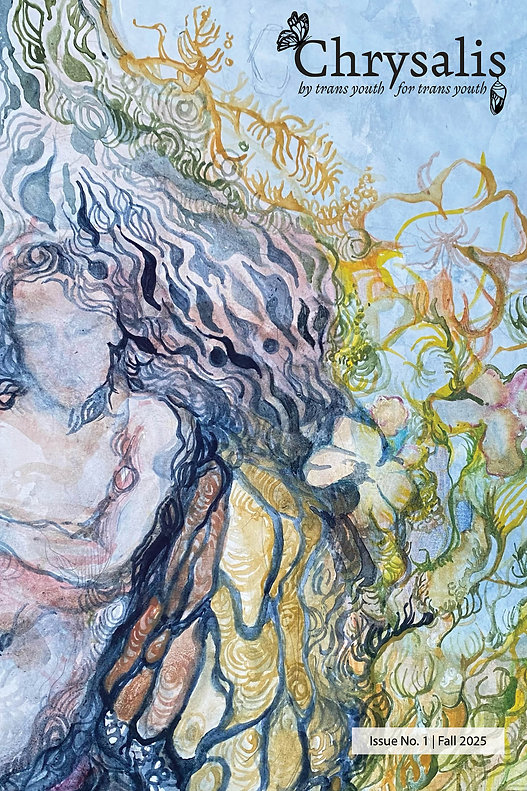
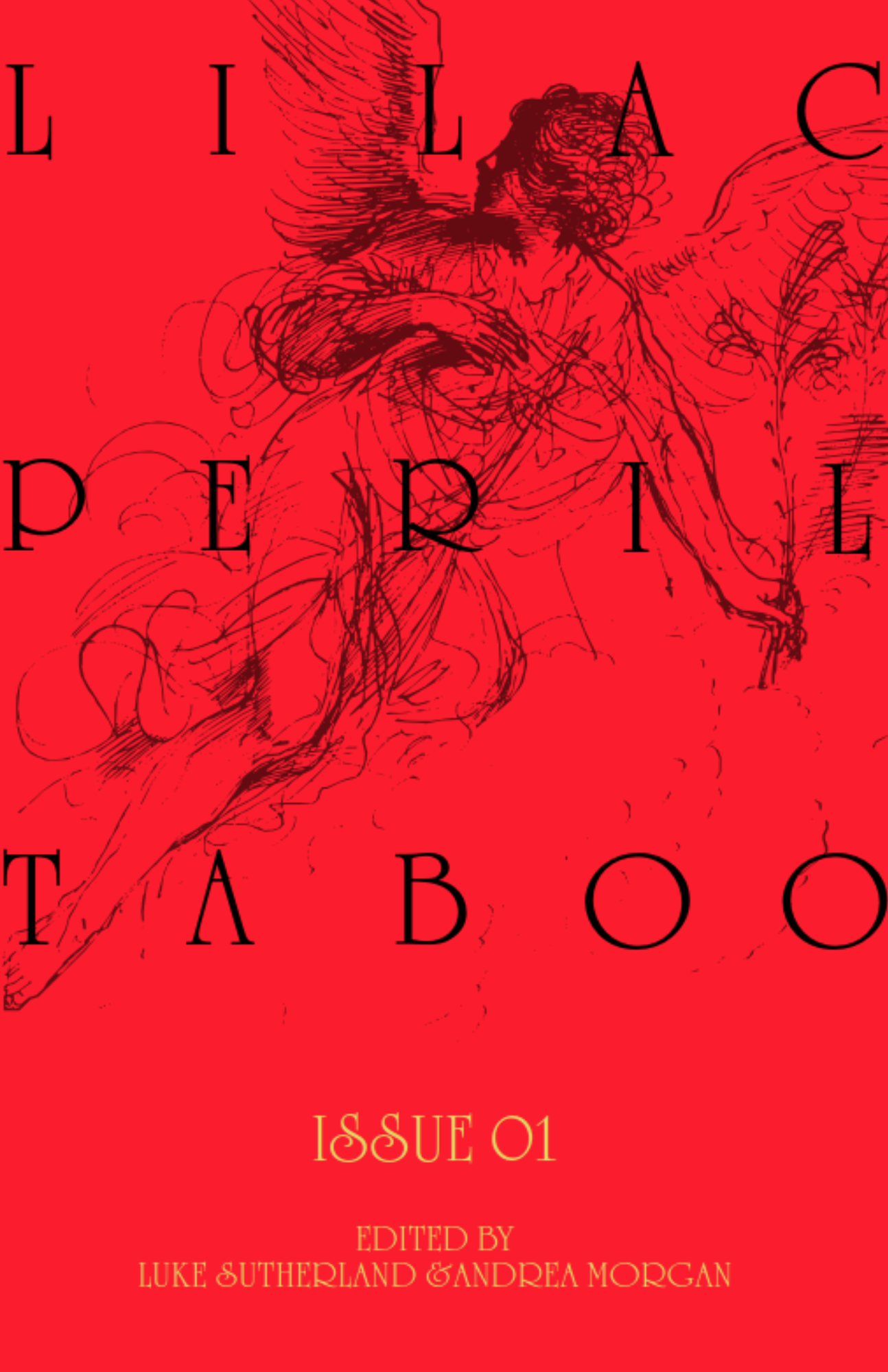
This roundtable is a conversation between some of the people behind those magazines. As the founder and managing editor of Chrysalis Magazine, which publishes art and writing by trans youth ages 0-18, I wanted to speak to other editors of trans periodicals about the joyful labor of starting and running a magazine, and the role of print publishing in trans culture and community. I spoke with Andrea Morgan and Luke Sutherland of the DC-based trans publishing collective Lilac Peril Press; Alma Avalle and Joyce Laurie of Picnic, New York’s finest trans literary magazine and culture rag; Ira Beare and Helena Lamb of EASEL, a trans photography magazine based in Chicago; and Aris Cumara of the ambitious and eclectic Trans Mag. Together, we reflected on the relationship between print culture and trans activism, the power of t4t publications, and the future of trans publishing.
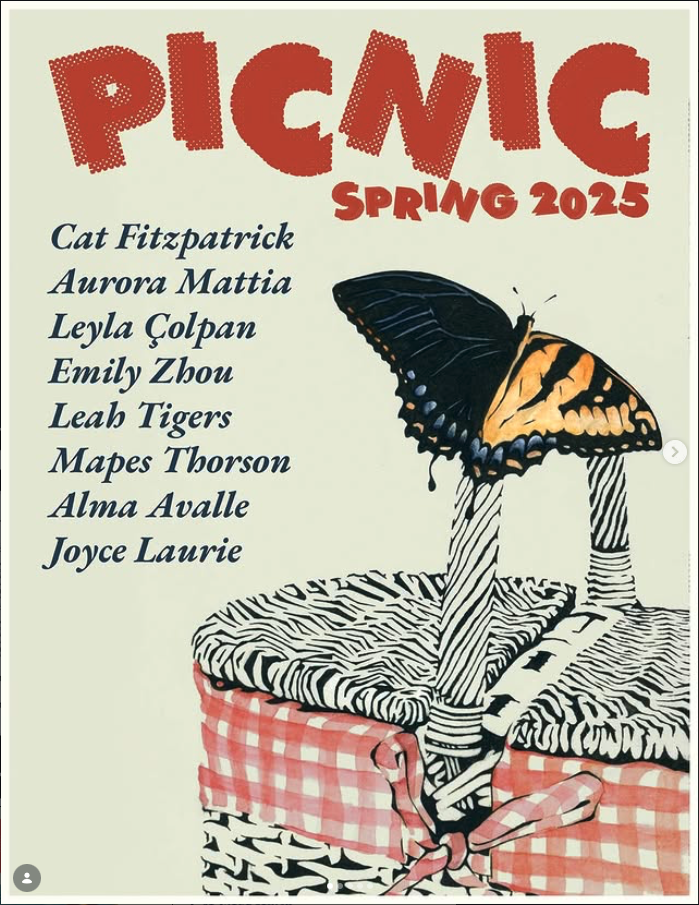
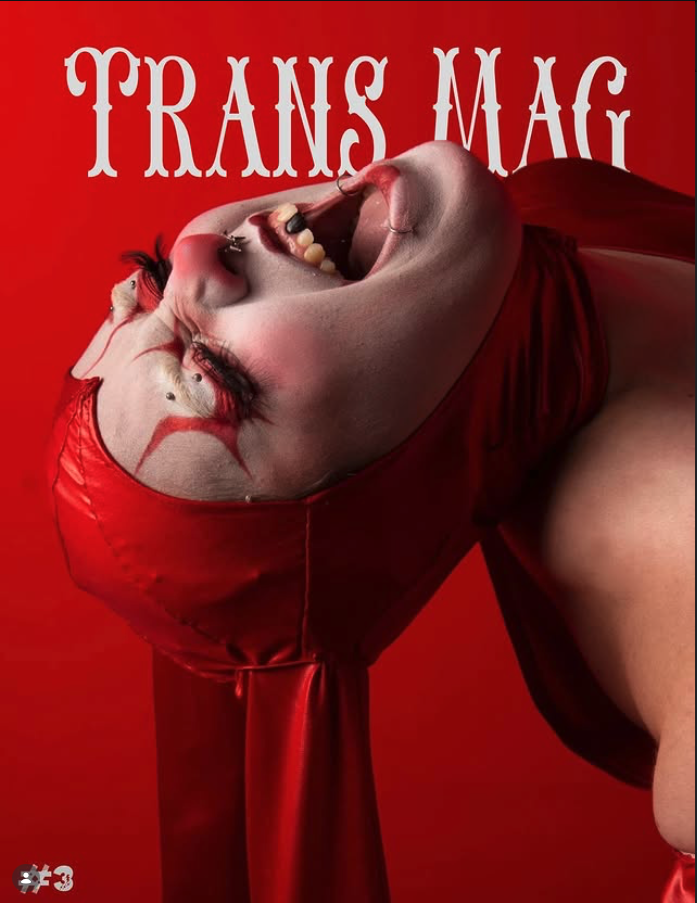
You can buy issues of these incredible publications at Chrysalis Magazine, EASEL, Picnic, Lilac Peril, and Trans Mag. If you love trans print, we also recommend checking out Gunkhole Press, Diskette Press, Shapeless Press, Daisy Thursday’s incredible zines, Active Chapter, One-Handed Press, Meanwhile… Letterpress and of course, Little Puss Press.
Jacob Romm (Chrysalis): Perhaps by coincidence, perhaps not, each of us published the first issue of a trans magazine in roughly the last year. How did you come to start your respective magazines? What was the vision?
Andrea Morgan (Lilac Peril): Luke and I were having a lot of discussions around the time of some of the early Little Puss salons, because we had traveled up to New York to see what was going on, and really, really loved what we were seeing. We essentially came back to DC and were sitting around going, why doesn’t that exist in other places? And really could only respond to ourselves with: It doesn’t happen unless someone does it. And if no one’s doing it, then we have to.
Alma Avalle (Picnic): I think one of the things that got us excited about publishing Picnic, starting at the time we did, is that if you look at the media ecosystem from five, ten years ago, there wasn’t a massive appetite for trans writing in the cis mainstream press, but there was at least more of one. There are increasingly fewer places that are seeking our voices out or actively promoting trans writing. If we want places for our writing to exist, particularly writing that deals with trans people as people and trans characters as characters worth diving into and dissecting, we’re going to have to be the ones to make it, edit it, commission those stories, work with the writers.
Aris Cumara (Trans Mag): Just after the 2024 election cycle, I had read something about how a collection of trans journal entries or research articles was deleted. The research was just gone! I felt like something should be done for my community, and that’s where the magazine idea came from. There’re not a lot of spaces that are explicitly trans and looking for trans work. It needs to be printed and saved and put into archives, where it can’t just be deleted when ideologies change.
Helena Lamb (EASEL): It’s been a big couple years for trans photography. I feel like people have really been getting into it in a way that I’m happy to see. But there are just so few outlets for that kind of thing. This summer I was getting frustrated by the idea that the highest level a trans photographer can aspire to is getting a lot of likes on Instagram. I can also directly cite Picnic as inspiring me to start EASEL. When Picnic came out last spring, I was like, oh, you can just start a magazine! So we did.
JR: The idea for Chrysalis had been in the back of my mind for a couple years, but after the inauguration in January 2025 and the wave of executive orders attacking trans youth health care, I needed an outlet for my outrage and anxiety, some project that felt productive and connected to community. I started seeing all these videos of trans kids testifying in court, telling very carefully rehearsed and strategically crafted stories of what it means to be trans. But talking to real life trans kids, the way they describe their identities is actually so much more imaginative and interesting. I wanted Chrysalis to provide a space of imagination for less domesticated and respectable versions of trans childhood to be expressed.
Let’s talk a little bit about the editorial vision for these different magazines. What type of work does your magazine publish, and how did you decide that was what you wanted to prioritize? How do you curate the space of your magazine?
When something’s deeply immersed in community, it doesn’t need to explain itself.
Joyce Laurie (Picnic): For me and Alma, part of our editorial ethos is that we’re not doing this in a vacuum, and we’re not the first people to do this. We come after Nevada, after Detransition, Baby, there’s no shortage of trans people in popular culture, right? But it tends to be pretty one-sided. What we were interested in was not just talking about transness as an object, but trying to capture the kind of art that emerges from communities of transgender people. We talk to each other enough that there are some questions that are no longer profound or interesting to talk about, right? When something’s deeply immersed in community, it doesn’t need to explain itself. Our editorial priorities were to create work that’s meant to be read in the context of t4t community. Picnic is a t4t publication.
AM: The issues of Lilac Peril so far have been quite open, giving as little guidance as possible. Our last one was called “Taboo”—if trans people are taboo to society, what are the things that are still taboo to us? But that’s all the writers had to go off. We tried to prioritize people that were new to writing, because getting into it is so intimidating, and it’s hard to understand where to even start—especially for people who are writing about trans topics. We’ve seen some amazing writing, and we’ve also had the chance to work with people whose writing is flourishing in ways that are only possible if there’s an outlet for it. We’re really happy to play a part in that.
HL: The primary goal of EASEL from an editorial standpoint was to get artists to take themselves seriously—to cultivate a space where artists have an opportunity to see themselves as people who are producing real cultural artifacts, both photography and critical writing about photography.
Ira Beare (EASEL): If I can just add to that—I think because we all get this intense proliferation of images all the time, it’s easy for photographers to devalue the medium that they work in. We’re seeing an increased output without a reciprocal increase in the seriousness of people’s relationship to it. It’s nice to have a place to put it where it can land in a way that is slower than just scrolling past.
AC: I relate a lot to what y’all are saying, and it connects to the vision I had for Trans Mag, which is a little bit of everything. We wanted research, poetry, photography, visual art, craft, comics, and it became this combination of all my favorite magazines growing up. We do an open submission call for a lot of the work that we put in, and we want to feature people who live in much more conservative areas than Bushwick. And we do very specific themes per issue: Our last issue was about punk, mad-at-the-world transness. The next issue we’re doing is all clown-themed, and I want to do a theme on religion this coming year.
JR: I really appreciated what folks said about trying to edit in a way that encourages people to take their work seriously. Working with young folks, it was a priority that we had an editorial board of published trans writers, so that someone like Kyle Lukoff or Soleil Ho or Noa Fields is engaging with the work of these young writers, and offering forms of mentorship and possibility modeling.
So Joyce used this phrase “a t4t publication,” which feels connected to the next question I want to ask. How do you envision the audience for your magazine? Do you see it as being primarily for other trans people, or also focused outward?
Luke Sutherland (Lilac Peril): I don’t think we even considered the possibility of a cis audience. When we first started, our audience was hyper-local to trans writers in the DC area. And even though we’ve branched out over time, we still hold that really close to our chest. As a side note, we’ve noticed a funny trend when we table at events with a more general audience, like the Baltimore Book Festival last year. The number of completely random cis people who buy the magazine after we give them a 30-second pitch has been really funny and unexpected. I try not to psychoanalyze it too much, but I’m like, is this a guilt purchase? I don’t know.
AC: I love to hear this, because I had a similar experience when we did the first issue of Trans Mag. I saved up some money, bought a used car, put boxes of the magazine in my trunk, and went all over the US with it. I got in touch with little bars and bookstores and asked if I could pop in, tell them what I’m doing, and see who shows up. There were some places where it was all trans people, but then I went to Salt Lake City, Utah, and it was all cis, straight people, very stereotypical nuclear families. And when I gave them a little pitch, they were like, “Wow, let me get a copy. I’ll get a copy for my friend and we’ll look it over together.”
I don’t want our writers to ever think they have to explain what HRT is, or what t4t stands for.
AA: I think Picnic is very lucky to rely on an in-person fan base. The magazine grew out of what we observed with our friends at Little Puss and the Topside Press era, but also out of the scenes that Joyce and I exist in. So, when I’m thinking about who is going to read the work inside of Picnic, first and foremost it’s who is coming to the launch party, who is going to be at the bookstore in Ridgewood where we keep copies in stock. When I think about the idea of cis readership: The more exposure we can give our writers, the better. But when it comes to the type of submissions we’re looking for, I don’t want our writers to ever think they have to explain what HRT is, or what t4t stands for. That saves you a lot of space on the page, and lets you get to the interesting stuff a lot quicker.
IB: Based on the names of people who order from us online, we are selling primarily, if not exclusively, to transgender people. We spend a lot of time thinking about distribution, because it feels important to me that the magazine be encounterable if you don’t know who we are on the internet. And we found that sometimes a lefty used bookstore likes us way more than a gay bookstore. That was interesting in terms of thinking about where trans people actually are and what spaces they actually want to be in.
JR: For Chrysalis, there are some considerations specific to publishing youth writers and protecting their identities: We don’t publish the last names or any identifying information about our contributors. Sometimes they want us to list their social media handles, and we don’t do that because we don’t want to be responsible for whatever vitriol they might receive. So I’m often thinking about the possibility of hostile cis readers. And I’m aware that because Chrysalis publishes writing by trans kids, there’s a lot of feel-good value. I’ve tried to hold lightly the sense that it might be politically expedient in some way for people to encounter the writing of trans kids, and have a sense of their wholeness as people aside from what they’re seeing in the news. If that happens, great, but the readers I’m most wanting to care for are other trans young people, and in a way, the inner child of trans adults.
As I’m sure none of us need to be reminded, it’s a complicated time to be trans. What kind of relationship do you see between trans activism and community organizing work, and the cultural work of magazine publishing?
LS: I think hope can be kind of a cheesy word, but I’m thinking of the Mariam Kaba quote that “hope is a discipline.” When I think about that in terms of my personal writing and in terms of Lilac Peril, I think putting your energy into a long-term publication project like this is a practice of hope, because you have to believe there will be a future where this book exists, or this magazine exists. It’s investing in the belief that there is a tomorrow, there is a world after this.
AC: I agree entirely that it’s a discipline, it’s work. It’s showing up again and again to make something you believe in, and hope other people will believe in. And I think it’s a good way to tie into community. The other day I got an order from Boise, Idaho: I’ve never been to Boise, I don’t know what the trans community is like there, but something that I have put work into is going to exist in that community. The work is important, the communities are important, and they will always somehow find each other.
AA: One of the most exciting things about Picnic is the fact that it has a really strong ability to bring people together and have them as a captive audience for an hour or two. When I think about what Picnic’s utility can be going forward, if I’m organizing a reading where 100 people show up, maybe in the middle of the set of readings you have somebody come up and give the basics of ICE watching. Maybe at the end of the event you hand out whistles and know-your-rights cards as you’re selling the magazine, so people are leaving more attuned towards the issues that our neighborhoods are facing, and more equipped to help.
Hope is investing in the belief that there is a tomorrow, there is a world after this.
HL: And that’s the virtue of being print-first. If you want the object to get into people’s hands, you have to collect people. I’ll also say that something that’s always on our minds as queer publishers is obscenity law. When we sent our inaugural issue to our first-choice printer, they refused to print it because they objected to the content. There was some sexually explicit content in EASEL 01—really good stuff. But that meant we had to find a second press last minute, and that was a shock.
JR: We made this sticker for Chrysalis that says “trans imagination is trans power,” and I really believe in that. For me, the very possibility of transition relies on a radical act of imagination. Personally, I really depend on trans literature to offer me spaces of imagination to encounter forms of transness that are not constrained by the doctor, the insurance company, the law. I think that work of imagination is crucial to trans political vision.
Jumping on what Hellie said about printing physical magazines, maybe we can talk a bit about the fact that we all publish in print either before or instead of sharing content digitally. Why was print so important for each of you?
JL: I’m inspired by the novel Nevada. In my experience, someone lends it to you and tells you to read it. It becomes this sort of ritual that I think is very transgender and has to do with the way that we share lives. I mean, we want to go to your house and see Picnic on your coffee table. I went to Chicago in December, and I did not see a single trans coffee table that did not have a copy of EASEL on it. That kind of presence feels more powerful than Instagram followers.
AA: I’ll add that print just made sense financially for us. We’re very proud of being able to pay all our writers, and there would be no way to monetize in the way we need to if we were doing this digitally. We wouldn’t have access to ad revenue in a way that would be able to move the needle. But it turns out that printing 200, 300 magazines and selling them at $12 a pop means that we can make back our initial investment and pay the contributors for the next issue.
LS: Print was also a no-brainer for us. Andrea and I have had explicit conversations about not feeding into the AI slop machine by having this work exist digitally. But even before all that, we’re paper perverts. The tactile reality of a book is very important to us. Joyce mentioned Nevada—for us, The Faggots and their Friends Between Revolutions has been a northern star in a lot of ways. [Author Larry Mitchell] couldn’t find a publisher who would take it, so [he] ended up starting [his] own press, Calamus Books. There’s a reason that radical political movements and marginalized people have historically created small presses. We have to be the means of our own publication.
AM: Luke, you should mention Lilac Peril’s version of “On Every Coffee Table.”
LS: I heard an anecdote from a good friend of mine who has a human-sized puppy cage in her home, as one does. And she let me know that for several months, our last collection, Taboo, was the only reading material in reach of that cage. We’re proud to say that our book is the number-one most-read book in human-size puppy crates, as far as we know.
AA: Picnic 2 is coming for that record.
HL: A print magazine is a good way to make sure the images you’re publishing are good. It’s easier to demand excellence when you’re going to spend time and money putting a physical thing into the world. An image is so much more effective, useful, interesting, and powerful when you are holding it in your hands, and a group of people are crowded around the magazine experiencing that image together. As we all know, looking at a picture on your phone, whether it’s really good or really bad, is useless. I had no intention of putting more images onto screens if I could help it. There is a digital version of EASEL, but I couldn’t care less about it.
AC: Something that we’re trying to do this upcoming year is to double and triple our print capacity in order to get them into local bookstores around the country. We do as cheap wholesale as we can to bookstores in the middle of nowhere, where somebody can walk in and see a magazine that’s bright and colorful and cool-looking, and has the word “trans” in big letters right across the front.
JR: Yeah, strong second to all of that. And also for me, print came from being such an archives nerd myself. Print lasts, and in many cases lasts longer than the file formats of digital media. The editor’s note of Picnic mentions this too: Save your magazines in a box in your basement. I’ve started my own cardboard box of trans zines, saving print ephemera from this time as an act of faith in the future of trans life. Other nerdy trans researchers in 50, 100, 200 years, will want to be pouring over the things that we’ve made.
I want to close by asking: Putting aside questions of feasibility, finances, time, and capacity, what do you hope the future of your magazine looks like? What’s the big dream?
HL: Ira and I have had a couple of conversations about what it would look like for EASEL to be a success. And honestly, I feel like we made it. So many publications like ours put out three, four, five issues, and then just drop off the map forever. So the fact that we turned out two in a year feels amazing, and I’m going to keep doing it for as long as it feels good. That being said, in a perfect world, the dream I have for this magazine is to be able to pay contributors more. My dream for EASEL is just more money for everyone.
AC: Something that I would love to do is to build a full industry-level trans media production company that works on artistic endeavors across the board: magazine publication, book publication, comics, CDs, animation, and film. Something that’s built sustainably and pays artists, does things ethically, and at the quality that we want. Instead of waiting for money from these other big companies that have been doing it for years, what if we built something that could be just as big and produce just as much work, but we get to run it? That’s the big, big goal.
LS: A concrete goal of Lilac Peril is that we’re very interested in publishing novels, and we already have one in the pipeline, which will ideally come out in 2027. When I think about my dream for this project, it’s basically what it sounds like Picnic has already achieved with EASEL, which is to say, I would be over the moon to hear from someone else who started a publication because of what we do.
JL: I was going to say exactly what Luke said, which was in the editor’s note of Picnic 1, and in the end note. When you start, when you end, before you go, please start a magazine. You can do it. All you have to do is believe in yourself. Obviously you’re transgender, so you might not, but you should—because what you have is worth hearing.