Interviews
UNPRECEDENTED TIMES is the Ultimate Gen Z Pandemic Novel
Malavika Kannan discusses her debut adult novel about being in college during the COVID lockdowns, written as she experienced it in real life
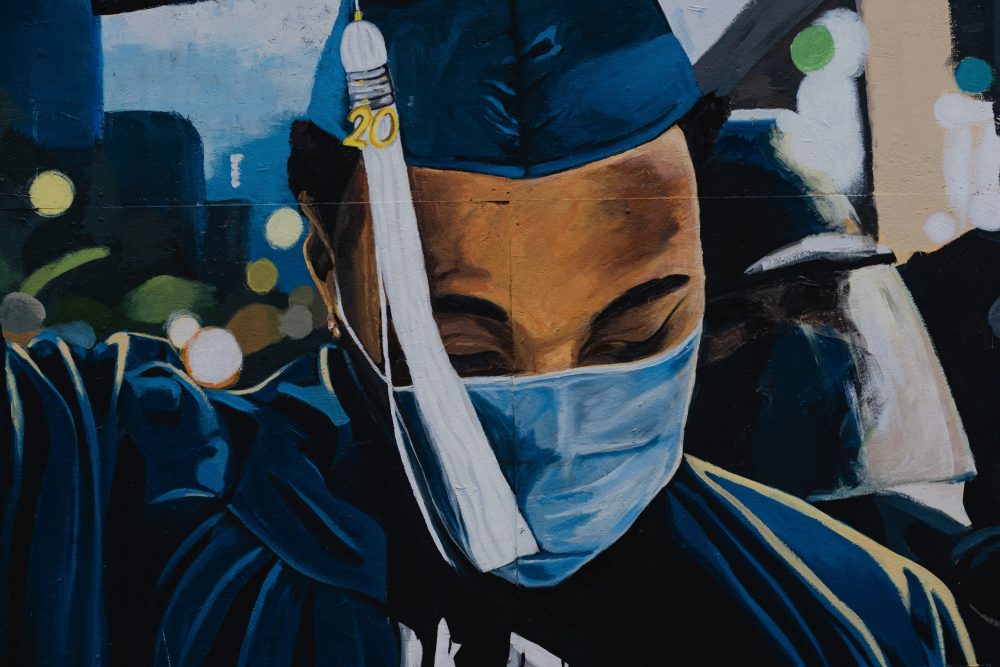
Every September, even though I’ve been out of school for more than a decade, I have stress dreams about not finishing the assigned summer reading. Campus time is hard to shake. Maybe that’s part of the enduring appeal of the campus novel: Few periods of life come with such a ready-made sense of narrative. Semesters become chapters, breaks become natural beginnings and endings. A few short years carry the promise that a person might emerge as someone else entirely.
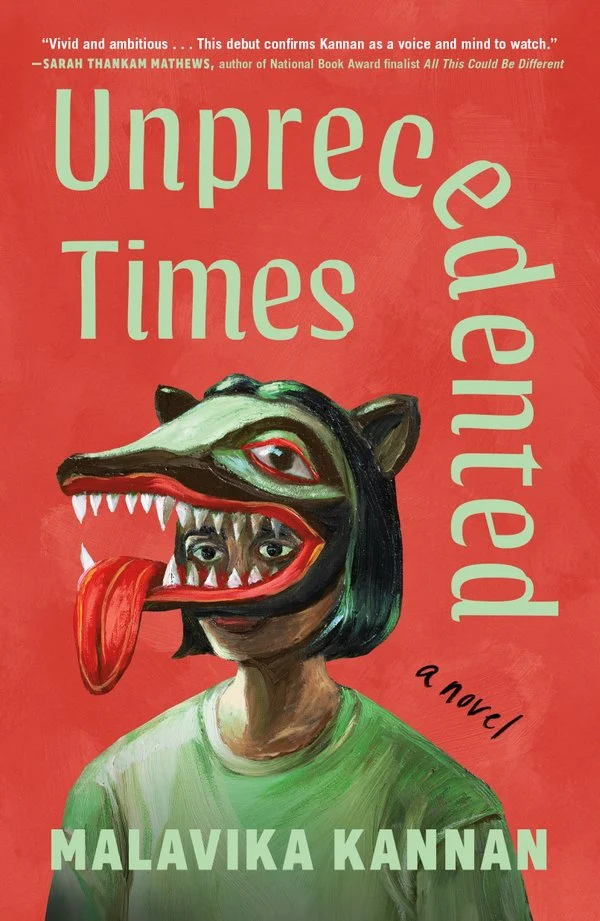
Malavika Kannan’s Unprecedented Times begins inside that promise. Rishi, a Gen Z queer Indian woman from Florida, arrives at Stanford looking for different people, different ideas, different versions of herself. “I haven’t fallen in love or done hard drugs yet,” she tells us at the start of the novel. “Two formative experiences I suspect Real Writers possess.” In college, she intends to get her heart broken “literarily and expeditiously.” She will be “unspooled, rescued, smashed up, burned out.” Then, finally: “I will come to understand.”
Rishi expects transformation, but she also expects it to arrive on schedule, preferably before summer break. So, for a while, does the reader. But about a hundred pages into Unprecedented Times, COVID interrupts the predictable, seemingly unassailable semester schedule, which until then has moved forward undisturbed by even the most consequential world events. The campus empties. The semester loses its shape.
Of course, the idea that the campus was ever separate from the world is an illusion, something Gen Z perhaps knows particularly well. Rishi and her friends have come of age online, where the crises of the world arrive in real time, alongside a language for understanding them, through ideas about racism, feminism, sexuality, climate change, and social justice. Kannan seems to take particular pleasure in testing those ideas against the messiness of actual life. COVID only makes that collision harder to avoid. Rishi and her friends are left to fumble prematurely through the world, trying to figure out how to live by their ideals and, just as importantly, how to live with one another.
Malavika and I talked over Zoom about what makes Gen Z fiction different, writing fiction in a historically specific moment, and why your love life always comes back to your relationship with your mother.
Evander James Reyes: What was it about the campus novel that you were drawn to?
Malavika Kannan: I am a huge fan of the campus novel. I very much wanted to write in that tradition, but I wanted to do so while raising the stakes for a generation whose college experience was impacted by the COVID-19 pandemic and also the acceleration of this feeling that the American empire is in decline.
I wanted to write a character study of very self-obsessed, righteous young queer people for whom college is a time to live out their values. They’re away from their parents. They have no responsibilities. But, on the other hand, college, for many people, and especially elite colleges, is supposed to be a pipeline and training ground to ascend into a certain elite class.
EJR: COVID was obviously a disruptive experience for everyone, but for people in college at the time, it also interrupted these built-in narratives about what those years were supposed to look like. About 100 pages in, that disruption enters the novel itself. How did the pandemic complicate what you wanted to do with the campus novel?
MK: Yeah, I had a lot of fun with that.
The Gen Z framing is useful because it signals to readers that this book is for you.
In some ways, I started reading campus novels and reading seriously for the first time during the pandemic. So, my experience of the campus novel as a genre was shaped by this experience. I was reading prior generations of young people coming of age on college campuses, feeling envious, like I had been left out of something. And I just couldn’t imagine a campus experience where shit didn’t get so real so fast, where the conceit of the campus novel is often that its characters are protected from the outside world by the insulated bubble of college.
And, of course, that’s never been true for anyone. The book that was really instructive to me—that I read when I was the same age as Rishi, my protagonist—is The Idiot by Elif Batuman. And I remember feeling like I was so enamored by the book, but also a little bit baffled that politics and money and queerness didn’t figure into the character’s conception of herself.
Later I read Karla Cornejo Villavicencio’s book, Catalina, which is also a campus novel, but one in which her experience at Harvard is so shaped by her life as an undocumented immigrant. So, I knew that there was also this genre of campus novel where politics and the outside world are not protected from campus life. I wanted to render that into my novel.
EJR: That relationship between campus life and the outside world also comes through in how historically specific the novel is. Unprecedented Times is set in 2020 and names real people, places, political events like COVID, Stanford, and Trump. So much contemporary literary fiction seems to shy away from anchoring itself firmly in a particular time and place. Was that historical specificity a conscious aesthetic decision?
MK: I definitely wanted there to be specificity to the political context that these young people are coming up in. Rishi and her friends’ sense of optimism and owing something to the world is shaped by having been part of a Trump 1.0-era climate movement. The way that they view their sense of sexuality is shaped by the #MeToo movement. And the hyper-awareness, the wokeness they carry around, is also definitely a product of the 2020s internet.
But that being said, I think there is enough in the substance of their relationships with each other that feels universal. Who among us cannot relate to a mother-daughter struggle or homoerotic friendship?
EJR: That tension between what feels specific to your generation and what feels universal makes me wonder about labels like “Gen Z fiction.” Do you find those labels useful? Are there qualities in your writing that you see as distinctive to your generation?
In some ways, the college experience is the opposite of the internet.
MK: It’s definitely emergent so it’s hard to draw any conclusions. For me the Gen Z framing is useful because it signals to readers that this book is for you. I’ve had friends tell me that this is the first time that they’ve read a [Gen Z] consciousness rendered in literary prose as opposed to like a postmodern TikTok sketch.
What makes this a Gen Z novel is the earnestness of the characters, as opposed to alienation and disaffection. Of course, no generation is a monolith. I think the specific stakes of [Gen Z’s] political coming of age are different.
The humor of it also feels a bit Gen Z. It is a little bit irreverent and nihilistic.
EJR: Rishi has so much interiority. We’re constantly inside her contradictions, her embarrassments, her desires, even the ways she deceives herself. Was that something you were interested in exploring—a character who’s so deeply caught up in her own interior life?
MK: I do think that part of what I was trying to suggest with this book is that self-awareness and interiority are a superpower of people in the online era. Rishi has all the language at her disposal to describe every power dynamic available, but it doesn’t necessarily grant her the wisdom to act right or treat people well.
EJR: I’m curious about that gap between having the language to understand something and actually knowing how to live through it.
MK: Yeah, I think Rishi is a character, like many of us who grew up in the internet age, who has never been challenged with love. Most of the challenges that she’s faced in her life have come from people she’s not wrong to write off as haters, corny, stupid, homophobic, racist, whatever. And she’s never had any incentive for repair or understanding or self-reflection.
When you’re writing a book, you have to make decisions about what you give attention to on the page versus what’s done in summary.
I think that’s true for people who came up on the adversarial internet. There is not a lot of good-faith engagement with difference. Like, rage-baiting is an incentive of the internet. And you can have your vision of yourself continually reaffirmed by your feed’s algorithm. And if you see something that really challenges it, you don’t have to sit in that discomfort for long. There’s just not a lot of opportunity for understanding across difference.
And I feel like, in some ways, the college experience is the opposite of the internet because you are forced to hang out with a bunch of people of different races and backgrounds, and you’ll get expelled if you don’t get along with them. You know?
EJR: That idea of learning how to live with people you don’t necessarily understand feels important throughout the novel. And probably the most significant of those complicated relationships is Rishi’s relationship with her mother. So much of Rishi’s emotional journey seems tied to that relationship, whether she’s comparing herself to her mother or trying not to repeat certain patterns. How were you thinking about their relationship?
MK: Yeah, I think the relationship between Rishi and her mom is one of the most powerful ones. It wasn’t when I was originally drafting the book. I thought that I could keep it contained to just the world of Rishi’s queer life with her female friends. But at that age the way that we approach intimate relationships is so impacted by the OG final boss relationship, which is our families of origin.
And Rishi is a girl with mommy issues. She is trying to fill this need for full understanding from another woman. And it felt important for the narrative to trace that to its root.
EJR: And it feels fitting that we end where Rishi began, back home with her mother. But she returns a little battered by her experiences, with her tail between her legs. Why was it important for her journey to bring her back to where she started?
MK: I wanted the narrative arc to be one of disillusionment. It felt true to the larger generational portrait I was trying to portray of having these high hopes for a moral arc of the universe that bends towards justice, as it’s often said in America, and then finding that it bends in different ways.
So, the book is meant to be a portrait of disillusionment, both personal and political. And it seemed to me, it would have to have a distinctly anti-coming-of-age arc where the main character feels like she leaves the book with less than she started with and does end up in functionally the same place as she started before, which is at home with her parents and without friends or a strong place in the world. It felt right for this book to end unresolved, having not fulfilled the tension between narrative and experience, but Rishi still gives you the sense that she’s going to be okay.
EJR: I definitely felt that disillusionment, but I also found the novel hopeful. Even as Rishi moves away from collective politics and toward more personal goals, she still finds her way into friendship and queer community. How were you thinking about community alongside that broader political disillusionment?
I think reading and studying books from several generations prior saved me from just emulating contemporary fiction.
MK: The book shows Rishi and her friends trying to find new ways to feel belonging and meaning in their lives when the first way that Rishi tries—activism—flops. And the second way—trying to stake her sense of belonging to an institution like college—also flops.
You see her and her friends seeking alternatives. I do think that friendship is probably the most profoundly hopeful place in the book for this kind of belonging and meaning to be found. Rishi and her friends are really devoted to each other, and a lot of the book is just the nitty-gritty of their friendship.
When you’re writing a book, you have to make decisions about what you give attention to on the page versus what’s done in summary. The thing that I always wanted to do in scene was conversations between Rishi and her friends where they’re untangling their worldviews together.
For example, a scene that I’m really proud of is one where Rishi and her friend hash out whether or not they’re going to Venmo each other for groceries or how they’re going to break down their cleaning schedule. The work of trying to live together happily is something that I was really curious about.
They also spend time experimenting with different configurations of living. Rishi visits two of her college friends at their homes and sees what their families of origin are like. She gets a chance to live in a commune with a bunch of leftist people. She gets to experience many ways of living in community that, even though she ends up hemorrhaging most of them, I think are still very instructive learning experiences.
EJR: What books were you thinking about or reading while you were writing the novel?
MK: I read a lot of contemporary fiction because I only started reading seriously during the pandemic. I read lots of the books that were coming out in those years, from 2018 through 2022. I was really tapped into contemporary fiction, and after that, I kind of stopped.
I read my way through the campus novel genre of contemporary fiction, so The Idiot was a huge influence. I loved Curtis Sittenfeld’s Prep. It’s another, I think, pretty OG campus novel.
Another book that was a really positive influence on me was Sarah Thankam Mathews’s All This Could Be Different. The ensemble cast and the earnestness in its characters’ political commitments were huge.
Their Eyes Were Watching God was the cosmic inspiration for this book. Its protagonist, like mine, feels she has possibilities in love that no woman in her family has had before. But in her case, it’s because she’s the first generation in her family born outside of slavery. The stakes are very different, and I think that informed how I thought about my book, too.
When I was an undergrad, which was when I was writing this book, I did most of my coursework in the South Asian postcolonial literary tradition and the Black American literary tradition. I think reading and studying books from several generations prior really saved me from just emulating contemporary fiction because it gave me a sense of stakes and is maybe why the book is so historical and politically anchored, too. I was reading a lot of women writers from different historical contexts who were also grappling with unprecedented times of their own.