Reading Lists
10 Recent Memoirs Reminding Us That the AIDS Epidemic Isn’t Over
These reflections meditate on the long shadow of living with HIV and AIDS
Early memoirs of people living with HIV and AIDS played a crucial role in humanizing the disease. Those books, alongside public service campaigns and media representations, put a face to HIV and helped generate not just compassion for those affected but also a deeper understanding of the complexity of the illness. Many of the first memoirs, while powerful, largely showcased the experience of white gay men confronting the virus. And many of them used the traditional approaches of the memoir genre: reporting personal experience from a single perspective in narrative prose.
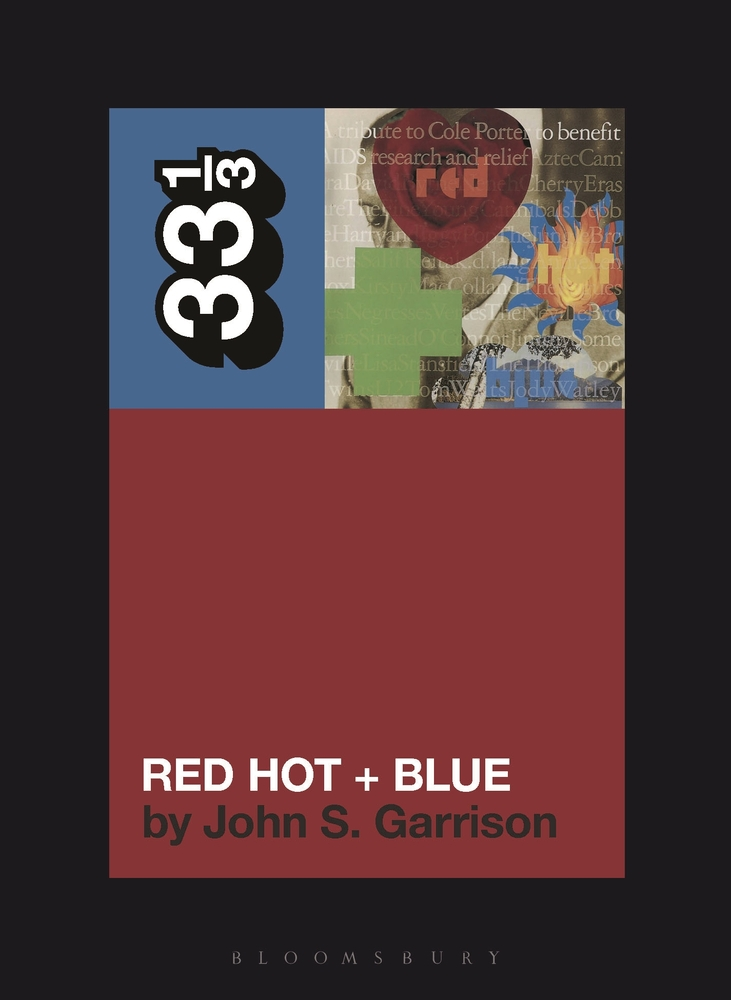
For me, coming out as gay occurred at the height of the AIDS epidemic in the early 1990s. When I was writing my own recent memoir, Red Hot + Blue, I sought out new approaches for describing what it was like to live through that period. Inspired by the diverse forms of storytelling I encountered, I embraced an approach very much my own. I zeroed-in on the music that was central to that period in my life, reflecting on how one particular album helped me make sense of love in precarious times. The result was a type of narrative mixtape of memories and music that tells the story of how I made sense of the AIDS epidemic and figured out who I was in the process.
The ten recent books below each offer vital personal perspectives on the AIDS epidemic and embrace innovative forms for storytelling. On one level, they remind us that the epidemic is not over—both because the disease continues to threaten lives and because the cultural memory of the epidemic haunts lived experiences today. On another level, these books showcase a diverse array of voices, including those of people of color, trans and nonbinary people, and caregivers. Finally, many seize upon recent innovations in the memoir form, including the graphic memoir, the multi-voice community memoir, the music memoir, bibliomemoir, photo memoir, poetic memoir, and science memoir.
Funeral Diva by Pamela Sneed
Sneed’s spellbinding book combines personal essays with poetry to capture her experience of losing members of the Black queer community to the epidemic. Importantly, she showcases the “silent invisible deaths” of people of color and queer women who acted as caregivers, so many of whom had been elided from earlier narratives of AIDS history characterized by “white men constantly at the helm.” The book’s title stems from a role that the activist often played at funerals. The six foot two poet relates how “Because of my stature, writing, outlandish outfits, and flair for the dramatic / I became a known and requested presence operating throughout the crisis / as an unofficially titled, ‘funeral diva.’”
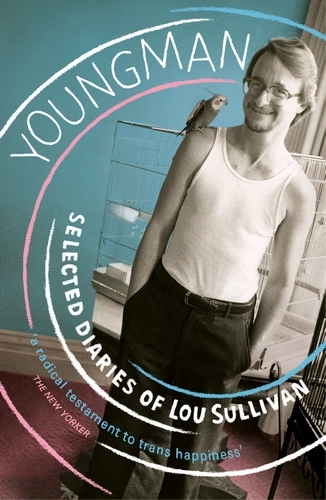
Youngman: Selected Diaries of Lou Sullivan by Lou Sullivan
These gathered journal entries frame the difficulties Sullivan faced being a trans man who identified as gay in the 1970s – 1980s, especially as one who was HIV-positive. Sullivan was an important pioneer in trans rights and advocacy. He published the guidebook Information for the FTM and organized one of the first peer-support groups for trans men. He was diagnosed with HIV in 1986 and remarked that “it was impossible for me to live as a gay man, but it looks like I’m gonna die like one.” The book is revelatory not just for the insights into his life navigating the intersections of his identity but because of his focus on trans joy as central to his life.
Homie by Danez Smith
The author’s third collection of poems reflects on their experience as a nonbinary, HIV-positive person of color while also delivering stunning elegies for friends and the lineage of Black queer writers who have been lost to AIDS. Since their own diagnosis at age 24, Smith has captured the complex interplay between race, sexuality, and HIV status in their poetry. Homie’s “gay cancer” most explicitly elegizes previous writers, such as Melvin Dixon and Essex Hemphill, who have died from AIDS and influenced Smith’s writing In the poem “undetectable,” Smith describes their HIV status as “almost like gone but not gone,” an apt phrase to describe how many people may experience AIDS in the world now.
Later: My Life at the Edge of the World by Paul Lisicky
The author captures not just a personal history but also the history of a place: Provincetown in the early 1990s. The gay haven saw much of its population eroded as AIDS took hold, so much so that Lisicky describes every conversation taking place there being framed by the theme of death. Yet the book also ends on a hopeful note, as the final chapter takes us into the present where Provincetown remains a site of possibility for connection and community. Ultimately, Later offers a meaningful meditation on not just the toll of AIDS but on what the disease can teach us about mortality itself, given how Lisicky reflects that “everyone will always die before their time.”
Taking Turns: Stories from HIV/AIDS Care Unit 371 by MK Czerwiec
This graphic memoir contains an oral history of Unit 371, an inpatient AIDS care unit in Chicago. Czerwiec worked there as a nurse at the height of the pandemic, yet the book gives us the larger arc of her journey from nursing school to her initial experiences caring for patients infected with HIV to becoming someone carrying the weight of years of loss. The book contains her own reflection as well as those of her co-workers. The book intermixes conversations with patients who are composites of those she knew, details of the complexity of AIDS medical care, and interviews with care providers—all rendered in startling, emotion-filled panels.
To Write as if Already Dead by Kate Zambreno
This experimental narrative portrays the author’s own failed attempt to write a book about Hervé Guibert, arguably the first major memoirist of life with AIDS. The first section focuses on Guibert‘s To the Friend Who Did Not Save My Life, which relates the loss of his friend Michel Foucault. Zambreno parallels this narrative with her own story of losing touch with a close friend. To Write as if Already Dead was partly composed during the height of COVID, and the second half of the book depicts Zambreno wrestling with an unexpected pregnancy and unexpected illness during that period. She reflects on the experiences of Guibert and others struggling with AIDS as a way to make sense of not just her life but of the universal experience of the precarity of the body in an uncertain world.
Virology: Essays for the Living, the Dead, and the Small Things in Between by Joseph Osmundson
Merging science-writing with personal recollection, Osmundson contemplates his experience as a queer man living alongside viruses, especially HIV and COVID-19. The book contains 11 essays which, in lucid prose, combine personal reflection, concepts from queer theory, and molecular science. Much of the story is told through evocative juxtapositions. In one instance, the author excerpts his own diary entries and sets them alongside pieces by other AIDS memoirists, including Paul Monette and David Wojnarowicz. In another, he reflects on his participation in activist and scientific communities which responded to AIDS and to COVID. The result is a thought-provoking contemplation of the role of science in the stories we tell ourselves about our lives.
The Other Pandemic by Lynn Curlee
This young adult book largely uses photos to describe the author’s experience living through the AIDS epidemic. Curlee lived in two epicenters of the disease, New York and Los Angeles, during the 1980s and 1990s as the virus spread quickly through the queer community. His book compellingly makes sense of that time by keeping the story personal: relating the experience of losing not only close friends but also his life partner. While the book contains larger themes about inequities in the healthcare system, what makes it so powerful is the feeling that you’re reading through someone personal photo album and realizing that it is filled with loss.
Blood Loss: A Love Story of AIDS, Activism, and Art by Keiko Lane
At age 16, Lane joined ACT UP and Queer Nation chapters in Los Angeles. She subsequently watched as many of her fellow activists died, even as their efforts contributed to gains in areas such as needle exchange, hospice funding, and healthcare access. Like many of the narratives described in this list, Lane’s book is a thought-piece on the nature of survival as much as it is one on loss. Her short chapters and fragments weave together vignettes of mutual care, especially among queer communities of color, that reflection on the bonds of friendship amidst the struggle for social power.
The Vinyl Diaries: Sex, Deep Cuts, and My Soundtrack to Queer Joy by Pete Crighton
In this 2025 book, Crighton chronicles his attempts to find love while he came out as queer during the height of the AIDS epidemic. What helps him survive the period of uncertainty—about both his own future and that of his community—is the music of the era: Adam Ant, Kate Bush, the B-52s, Elton John, Madonna, Prince, The Smiths, and many more. The book shares not just Crighton’s personal soundtrack for survival but also how we can find joy even during dark periods.