Reading Lists
7 Memoirs About Discovering Close Relatives Late in Life
These books explore what happens when parents, siblings, and histories emerge from family secrets long buried

When I was an infant, my mother abandoned our family and disappeared without a trace. Throughout my childhood and young adulthood, I heard the same questions again and again: What happened to your mother? Did she die? How can a mother leave her children? I had no answers and no frame of reference. I knew of no books about children abandoned by their mothers, and, though I knew it couldn’t be true, I imagined I was the only one to have experienced that particular pain. When we can’t find narratives that mirror our lives and show us a way forward, there can be a sense of isolation, even shame—a belief that our stories are unworthy. And then came Motherless Daughters by Hope Edelman. It isn’t a perfect match to my story—the book is about grief after the death of a mother—but it made me feel less isolated and gave me the vocabulary for expressing loss and longing.
Years later, my unstable idea of family was shaken again when I learned both that I had six half-siblings born to the mother I didn’t know, and that the man who’d raised me wasn’t my father. In shock, I again looked for books to help me navigate this strange new reality and found none until Dani Shapiro published Inheritance and brought the phenomenon of misattributed parentage out of the shadows.
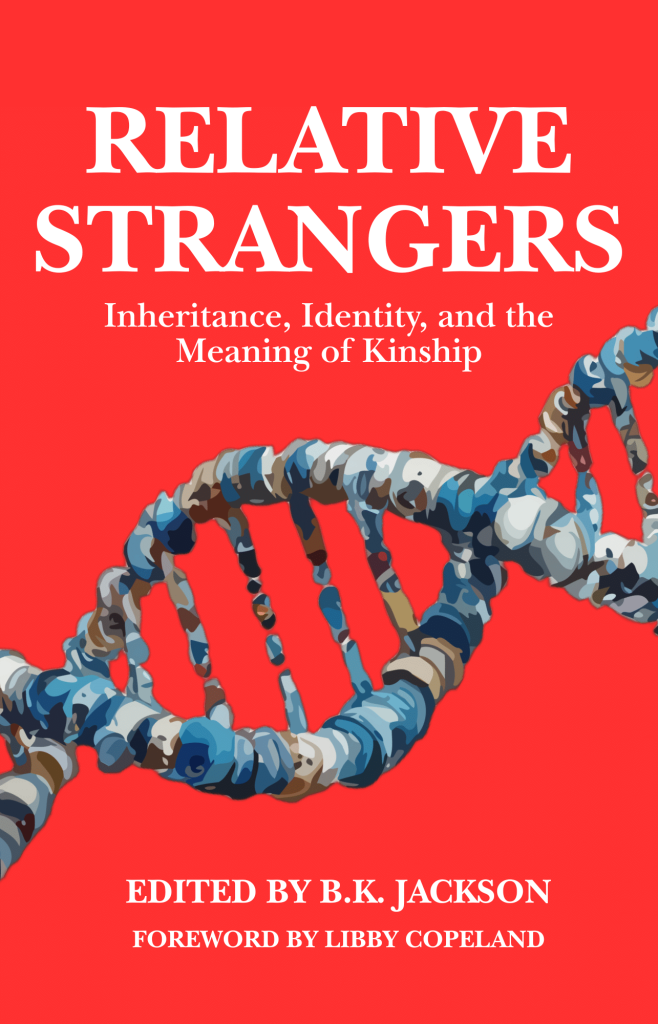
In total, these revelations brought 10 new close relatives into my life. And when, once again, I couldn’t find stories that captured the breadth and intensity of discovering unknown parents and siblings, I sought them out. I curated and edited Relative Strangers, an anthology of literary essays by adoptees and NPEs (not parent expected). Today, millions are discovering unknown siblings or unexpected parents through DNA testing and the eroding anonymity around adoption. Like me, I suspect they’ll be looking to see their experiences validated in print.
The seven memoirs gathered here also do that, taking readers deep into the mind-bending and sometimes shattering experience of discovering close family late in life. It can upend lives, disrupt identity, and fracture relationships. Sometimes, too, it enlarges our lives in ways we could never have imagined and leads to a new and expansive understanding of kinship.
Inheritance by Dani Shapiro
Memoirist and novelist Dani Shapiro always knew who she was: the daughter of Paul Shapiro and a member of an Orthodox Jewish clan with deep roots. Yet her writing often circles a notion that there is something hidden in her history. In her 2013 memoir Still Writing, she wrote, “Secrets floated through our home like dust motes in the air. Every word spoken by my parents contained within it a hidden hard kernel of what wasn’t being said.” In 2016, after a DNA test her husband suggested they take “just for fun” revealed she was only half Jewish, she discovered she was the secret—that her beloved father wasn’t, in fact, her father, that her parents had relied on assistive reproductive technology, and she was the daughter of an anonymous donor. In this beautifully written memoir, Shapiro suggests that secrets and knowledge live within our unconscious, in our bodies, and that learning our truth validates the disquieting voices within us.
All You Can Ever Know by Nicole Chung
Like many adoptees, Nicole Chung clung to the twin myths of adoption—that she’d been chosen, and that she’d been given up so she might have a better life than her Korean parents could offer. But in her small Oregon town, her loving parents were blind to the difficulties of being a transracial adoptee in an overwhelmingly white culture. Later, becoming pregnant amplified a desire to search for her birthparents and piece together a more complete origin story than the one she’d grown up believing. A “search angel” led her to a sister, Cindy, one of two sisters who believed Nicole had died at birth. As their relationship developed and Cindy shared details about their biological parents, Chung was forced to reckon with the fantasy version of adoption she’d grown up with, grapple with her identity, and come to terms with what it means to be a Korean American.
I Would Meet You Anywhere by Susan Kiyo Ito
Susan Kiyo Ito’s narrative makes palpable the longing that drives the quest to find a birthmother, the elation at first contact, and the challenges of trying to forge a relationship with someone who reels her in and then keeps her at a distance. She must balance the desire for acceptance and the initial willingness to do whatever, whenever with the growing frustration of having to make concessions in order to maintain a relationship. Like Nicole Chung, Ito recounts the isolating experience of growing up a person of color in primarily white communities. A biracial Japanese and white American domestic adoptee, she also explores her family’s link to the nation’s dark legacy of Japanese American internment camps. Her journey illustrates the challenges and consequences of adoption, along with the pain of separation, the desire to belong, and the fragility of connection.
Long Live the Tribe of Fatherless Girls by T Kira Madden
T Kira Madden’s memoir is a funny, fierce, and heartbreaking story of coming of age as a queer, biracial, glorious misfit in a complex family in Boca Raton, Florida. It’s impossible to pin down a theme because the book is—in the best of all possible ways—all over the place. It’s about addiction, acceptance, rejection, desire, privilege, trauma, violence, identity, and the families we’re born into and the families we choose. Her voice as a memoirist renders the narrator as indelible as the most memorable of fictional characters, and while her girlhood may not be remotely typical, it is universal in ways that will resonate with all readers. Like the narrators of each of these seven memoirs, Madden finds unexpected close family, in her case when a DNA test unspools her mother’s secrets. The revelation is the coda to her memoir, suggesting that families are like glaciers, with much remaining invisible and inaccessible deep below the surface.
Never Simple by Liz Scheier
In trying to unravel her true origin story from the dense web her mother—an unreliable narrator—had woven, Liz Scheier untangles knot after knot after knot. Imagine learning, at age 18, that the dead father you’d grown up believing was yours, was entirely made up. This memoir is not only the story of the author’s attempt to discover her father’s true identity, but also a deeply compelling narrative of her tumultuous life with an erratic, dissembling, self-destructive, and manipulative mother who could be loving one minute and horrifying the next. Her lies, unpredictability, and inexplicable behavior leave Scheier to wrestle with the limits both of mother-daughter loyalty and the extent to which it may be possible to save someone who cannot save herself. At the same time, this is a story of the ways that love endures what seems unendurable.
Why Didn’t You Tell Me? by Carmen Rita Wong
Carmen Rita Wong grew up between her Dominican mother in Harlem and Chinese father in Chinatown—their marriage being a financial arrangement to secure her mother’s residence. Later, her mother married a man she referred to as her “white knight,” and moved the family to New Hampshire, where they were the only nonwhite members of the community. Then, at 31, Wong learned that the story she’d grown up with was a lie—the man she called Papi was not her father. Like so many who discover family secrets, Wong must reassemble her identity, redefine her understanding of family and culture, and reckon with having lived a life as a Chinese woman only to suddenly learn that, biologically, she is not Chinese. This memoir is her attempt not only to explore a changing sense of self but also to learn more about her mother’s life and experiences, and excavate the social systems behind the secrets she held so fiercely.
Unearthing by Kyo Maclear
Three months after her father’s death, Kyo Maclear learned a long-buried secret: they weren’t biologically related. It’s a discovery that’s only one thread in an extraordinary weave of introspection and excavation of personal and family history. After learning that partial truth about her paternity, Maclear sought the deeper story, the gathering of which was complicated by her mother’s dementia. Her search for answers is told through the metaphor of the garden and structured around the seasons—the ever changing dynamics of our world. While she sets out to learn the truth about her unknown father, she strives as well to unearth her mother’s story and better understand their complex relationship. Maclear muses about what it is that makes each of us who we are as she probes the nature of inheritance, kinship, and family mythology in ways that raise more questions than they answer. Again and again she demonstrates that our understanding of truth is always a work in progress.