Reading Lists
7 Poetry Books That Expand What an Elegy Can Look Like
These poets explore grief about families, nations, and systems of oppression
An elegy, D. A. Powell writes in an essay titled “Structures of the Elegy,” is a “paradise of remembering.” Twelve years after my mother passed, as I began work on my book, Fifty Mothers, I kept asking myself, how could I converse with her through poems? How could I remember her, not just to mourn, but to show her the everything of our world: how we still go to the movies, get on airplanes, share a plate of vada sambar, with her voice urging us on, teasing us, keeping us rooted in the living.
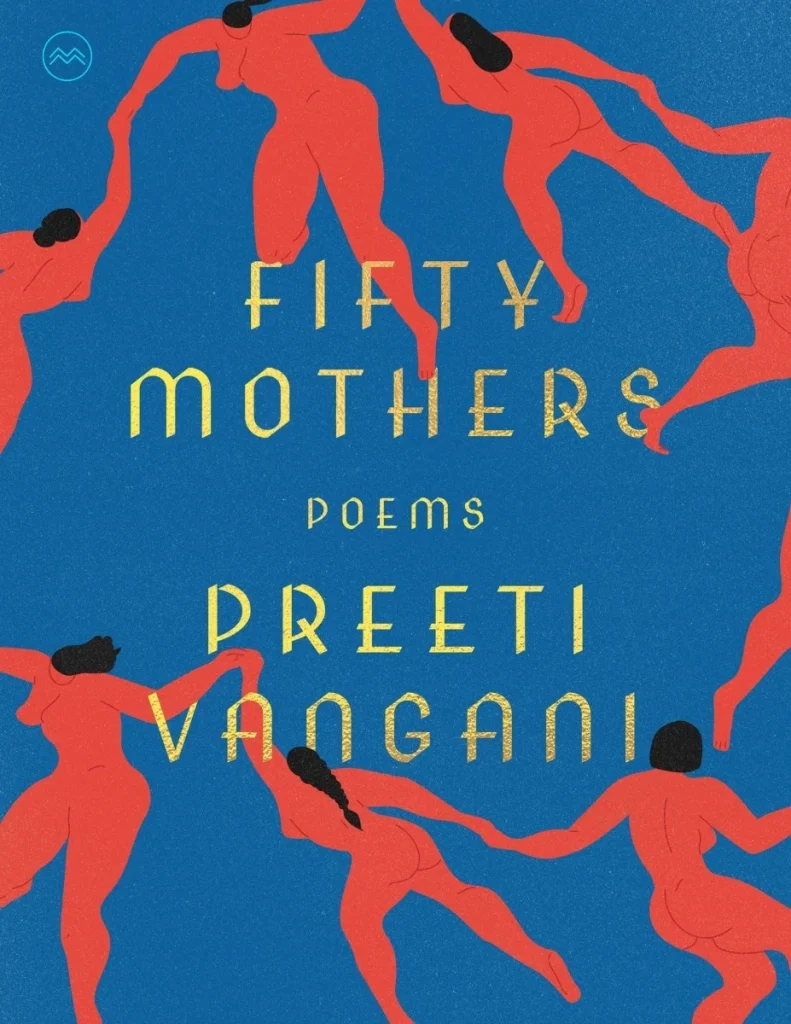
My first book, Mother Tongue Apologize, contained poems that were tightly tied to the moment of my mother’s passing. Those poems felt raw, hot, and urgent to write. Growing from that suite, with the urge to resurrect a mother speaker’s voice, I wondered how my grief had transformed with the passage of time, with the thawing of anger. My poems became interested in grief not as an incident but experience. Working on Fifty Mothers, I sought other contemporary works that explore how the lens of time shifts the nature of grief, especially in the context of familial relationships and the physical body. I was trying to find ways to blend memoir into elegy, flow between narrative and lyric. I wondered how other poets balanced the joys of the living world while honoring the gone. How did they write about their family members, rendering each person they wrote about not only as their relationship to the dead, but in their full humanity?
The books that inspired me constantly, included in this list, blew open the possibilities of what an elegy can sound and look like. Whether the poets wrote into personal or communal grief, grief of family or nation or historical systems of oppression, I was inspired by these poets’ commitment to voice, to form, to play, to blend levity with seriousness, to be direct while being tender.
Rooms Are Never Finished by Agha Shahid Ali
In perhaps his most personal collection, Rooms Are Never Finished, the brilliant and gone-too-soon poet Agha Shahid Ali wrote about the death of his mother and the journey of bringing her deceased body back from America to a violence-torn Kashmir. In this volume, as in a lot of his work, he explored the interwovenness of grief and exile, illuminating the strong connection between his mother and his homeland. Ali writes, “For whatever city I fly to, even/that of my birth, you//aren’t there to welcome me. And any city/I am leaving— even if one you’ve never/seen— my parting words are for you alone. For/ where there is farewell, /you are there.”
Obit by Victoria Chang
After her mother died, poet Victoria Chang refused to write elegies. Rather, she distilled her grief in two weeks by writing poems as obituaries for all she had lost in the world. She wrote obituaries for home, form, music, appetite, memory. The obituaries become a conduit for self-expression in the face of loss. I was fascinated by this new form to meditate over sorrow. The poems with their lyrical wit reminded me to expand my energies beyond fixating on the moment of death, and towards witnessing the living. She writes, “My/memory of my mother’s death can’t be/ a memory but is an imagination, each time the wind blows, leaves unfurl a/ little differently.” The book became my guide in exploring the kaleidoscopic potentials of love and loss.
Elegy by Mary Jo Bang
Elegy, Mary Jo Bang’s 2007 poetry collection, chronicles the year after her son’s passing from an accidental drug overdose. With deft soundwork and strange images, she expresses this profound grief through sixty-four lyrics that investigate how memory of the departed haunts the living. “You/A child, then a man, now a feather/Passing through a furious fire/Called time.” To get closer to the gone son, Bang apostrophizes him repeatedly, desperate for closeness, yet the poems point to the inadequacy of language itself in transcribing the depth and fullness of grief. “Words keep slipping away, so many / Ice blocks in a scene of whiteness.” Hopefulness and resignation reside side by side, creating a tapestry of loss and love.
Ghost Of by Diana Khoi Nguyen
Ghost Of by Diana Khoi Nguyen is an exploration of family, identity, and the shapeshifting nature of grief. It centers the devastating disappearance of a brother, gone by suicide. She explores the aftermath of loss, especially absence, through family photos from which her late brother had cut himself out. The shape of his excised body ghosts throughout the poems, sometimes cutting through the text, sometimes containing the poems. The text fractures, spills, wraps around, duplicates, begins again, embodying the everlasting ceaselessness of grief. “There is a house in me. It is empty. I empty it. / Negative space: the only native emptiness there is.” Even if the remembering is painful and urgent, her voice is bold and compassionate.
Book of Hours by Kevin Young
Kevin Young’s Book of Hours is a profound and musical exploration of grief and endurance. A decade after the sudden loss of the poet’s father, we witness the unfolding of his grief. “In the night I brush / my teeth with a razor,” he writes, in a cutting two-line poem. I’ve long admired Young’s brevity and sharpness to express emotional tension. What I was swept by in this book was its chronicling of the poet’s father’s death alongside the bewildering joy of a child’s birth. It showed me how love and joy can be pondered within one poem, within one book. These poems reckon with recognizing loss even in the happiest moments.
My Baby First Birthday by Jenny Zhang
Instead of death, the poems in Jenny Zhang’s My Baby First Birthday elegize how one has no choice in their birth. They center the acceptance of pain that comes with motherhood and girlhood. Using what may be considered by some as profane and vulgar imagery, the poems shock and devastate and make you laugh and introspect. The voice is irreverent and prolific through an abundance of registers. Zhang writes, “my mother had two vaginas/one to birth me and one to keep me.” And, “my cunt gets leashed to a tree / and waves hello to everyone / like hi like hi like hi hi hi.” The poems question the way we feminize and racialize nurturing, and live in service of other people’s dreams. They reveal how we fetishize womanhood and reduce women to their violations, traumas, and body parts. It urged me to think about the epidemic of patriarchal fear in my own matrilineage, especially as pertaining to chronic illness and physical beauty.
The Dead and the Living by Sharon Olds
I love the moment in a poem when narrative transforms to lyric. Acute observation to horizonless devotion. Sharon Olds is magnificent at this sorcery. As The Dead and the Living explores life, death, family trauma, and love, she honors both the deceased and the vitality of the living bodies. In a poem talking about the speaker’s daughter’s pajamas, she writes, “the fine material/gathered in rumples like skin the caterpillar/ramped out of and left to shrivel.” Olds’s work, with its keenly observed images and unmissable music, invites me to pay attention to commonplace objects as sources that ignite manifestos of growth, and of love.