Reading Lists
7 Sri Lankan Novels Haunted by Skeletons in the Nation’s Closet
These books are filled with deaths, exiles, and the terror of seeking truth in a culture that wants to hide it
Electric Literature must raise $35,000 to fund our next chapter. EL’s incoming Executive Director and Publisher, Denne Michele Norris, plans to grow EL’s reach and influence by every measure, while maintaining our sharp, independent spirit. We need your help to ensure our continued success.
Donate now to join us in building EL’s future.
As a Sri Lankan-American born in rural Appalachia, I have always sought stories with characters who connect me to a culture and heritage I can’t find in my own backyard. Having not seen my own heritage reflected back to me anywhere outside my own home, stories were the only way I could get a better understanding of what it meant to be both Sri Lankan and American. My parents, foreigners in a land not accepting of them, wanted me to assimilate. They spoke to me more often in English than their native tongue, and told me to hide my clothing when my mother made curry so our clothes wouldn’t smell of cumin and turmeric. We were taught by neighbors, colleagues, and even friends, that to be accepted in America was to shed parts of ourselves, at least from public view. And even when we returned to Sri Lanka every summer to visit family, stories about relatives killed in bombings, rumors of child soldiers in the north, and cruelty imposed by the government swirled in a contextless haze. It seems even in Sri Lanka, a place I was supposed to be myself, the American ideal of assimilation followed me.
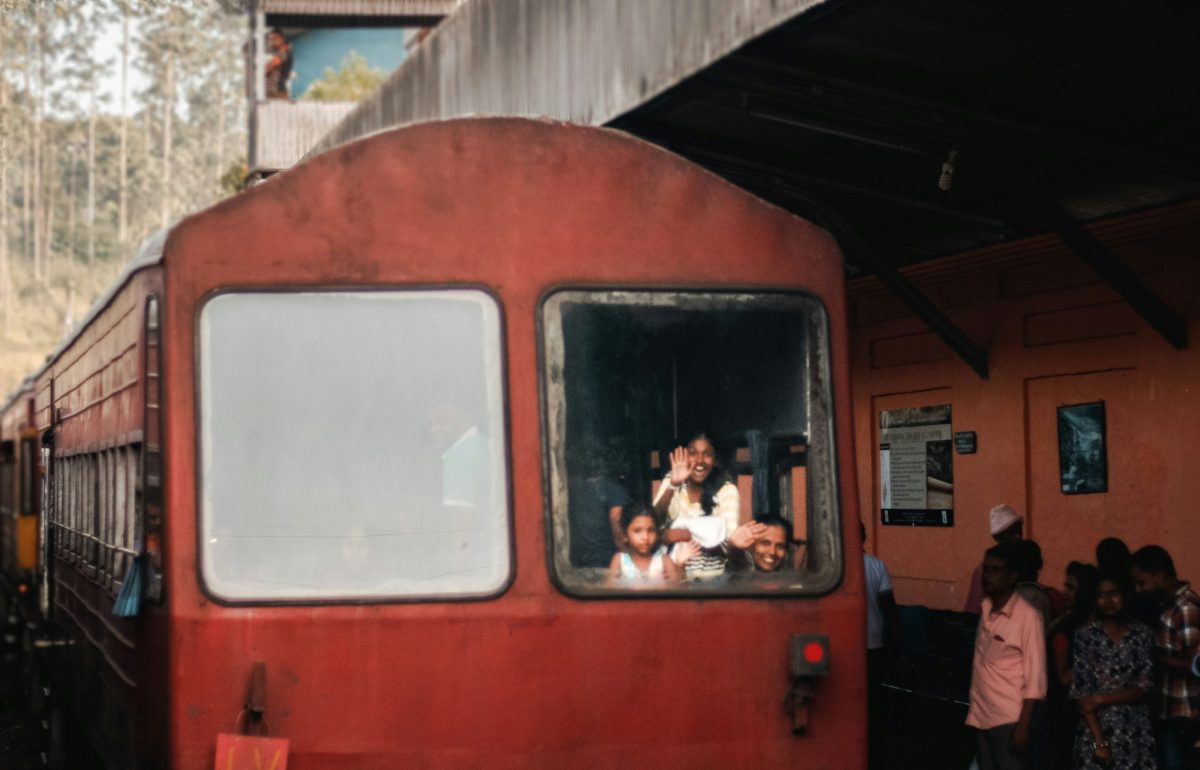
During these visits to our ancestral home, where the sticky heat caused people to move like zombies and a war I couldn’t possibly understand infected every aspect of life, books kept me company. I was desperate for the greater truth as to who I was and where I came from. I sought out Sri Lankan stories and was struck with what I found: novels full of grief and complexity, grounded in sorrow, and haunted by a longing for a Sri Lanka that no longer exists.
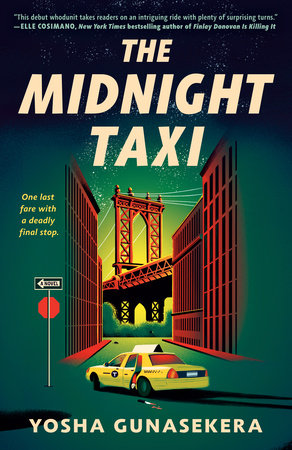
The novels on this list helped me understand what it meant to be Sri Lankan. Haunted by lingering ghosts of death, self-imposed exile, and the grief and terror that come from seeking the truth in a culture that sometimes wants to hide it, these narratives are anchored by the protagonists’ journeys of self-discovery. My own debut novel, The Midnight Taxi, follows a Sri Lankan–born taxi driver who feels neither fully Sri Lankan nor fully American and is searching for her identity and place in New York City. Like the protagonists in the novels on this list, my heroine, Siriwathi Perera, is running from something she cannot escape: the ghosts of her past and present. I hope my novel, like those listed below, helps readers better understand the Sri Lankan–American experience—and, beyond that, what it means to be imperfect in a world haunted by the ghosts of loss and uncertainty.
A Passage North by Anuk Arudpragasam
Quiet, introspective, and unsettling, A Passage North follows Krishan as he travels north for the funeral of his grandmother’s longtime caretaker: a woman he suspects may not have died by accident. As he journeys, Krishan reflects on her life, wonders whether her death was suicide, and confronts the enormous sorrow she carried after losing three sons to the war. At the same time, he revisits his dissolved relationship with Anjum, a political activist whose sense of urgency and moral clarity once gave his life shape. The ghosts here are intimate and internal: unresolved love, unanswered questions, and the emotional fallout of a war that keeps taking. Arudpragasam’s novel proves that silence can be as heavy as gunfire—and just as revealing.
Brotherless Night by V. V. Ganeshananthan
Brotherless Night unfolds amid the early years of the civil war between the Tamils and Sinhalese. Through the eyes of Sashi, a young woman who dreams of becoming a doctor, the novel traces how violence infiltrates domestic life and slowly dismantles a Tamil family weighed down by the decisions they make to uphold their way of life. Somehow, those very decisions are the things that unravel them all. We follow Sashi through her adolescence, her education, and her deepening political awareness as the war tightens its grip. The ghosts in this novel are many: missing brothers, dead classmates, and abandoned futures. As Sashi’s world shrinks under the weight of conflict, her lost possibilities haunt her as much as the dead. The final effect is devastating—a reminder of the enduring physical and mental trauma of war.
Anil’s Ghost by Michael Ondaatje
In Anil’s Ghost, a Sri Lankan-born forensic anthropologist returns home after years abroad to investigate extrajudicial killings during the civil war. Anil works alongside Sarath, a quiet archaeologist whose loyalties remain unclear, to uncover the truth behind a body discovered in a sacred burial site, a man they call “Sailor.” As Anil traces her identity, she is forced to reckon not only with political terror but with personal loss—especially the shadow of her own parents and her estrangement from home. Ondaatje frames forensic science as a confrontation with memory itself: what bones reveal, what governments erase, and what history refuses to admit. While structured like a mystery, the novel’s true power lies in its meditation on grief and the cost of knowing too much.
My Sweet Girl by Amanda Jayatissa
Jayatissa’s My Sweet Girl is a sharply plotted psychological thriller. It centers on Paloma, a woman adopted from a Sri Lankan orphanage into a vastly different life in the United States. But like most compelling thrillers, her adopted life is built on a buried truth and Paloma carries a secret that trails her like a shadow. Paloma’s roommate begins to uncover this past, but before Paloma can pay him for his silence, she finds him dead in their apartment. By the time police arrive, the body has disappeared. The novel’s ghosts include the past Paloma has tried so hard to outrun, the identity she tried to abandon, and the lingering spectre of people who refused to be erased. In My Sweet Girl, the truth always catches up and it never arrives quietly.
What Lies Between Us by Nayomi Munaweera
Munaweera’s novel opens with a chilling story about moon bears and their devotion to their young—before undercutting it with a declaration that “in America, there are no good mothers.” What follows is a devastating exploration of motherhood, displacement, and unhealed trauma. The narrator, Ganga, recounts her childhood in Sri Lanka, where appearances of privilege mask emotional neglect and abuse. Her father drinks; her mother vacillates between love and withdrawal. A single act of violence fractures her life, setting her on a path that leads eventually to the United States but even ghosts of traumas past can cross oceans. The ghosts in this novel are relentless: memory, shame, and childhood terror that resurfaces in adulthood and motherhood. Munaweera’s portrait of intergenerational trauma is unflinching and intimate.
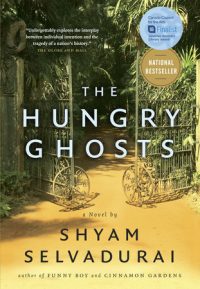
The Hungry Ghosts by Shyam Selvadurai
The title The Hungry Ghosts refers to a Buddhist concept of restless spirits plagued by craving—and it perfectly suits this coming-of-age novel set against Sri Lanka’s sociopolitical collapse. Shivan, a sensitive Tamil boy discovering his sexuality, grows up amid a disintegrating family and a nation consuming itself amidst a civil war. Shivan is craving a life of something more even as desire, shame, and fear intertwine with political violence threatening to erase his identity. Even as Shivan leaves Sri Lanka, he learns he cannot outrun his past and his earliest, and perhaps deepest, wounds suffered in his motherland. Selvadurai’s novel captures the cost of growing up gay in a culture where silence is survival and grief that lingers long after escape.
The Legend of Pradeep Mathew by Shehan Karunatilaka
Part mystery, part satire, part obituary, The Legend of Pradeep Mathew follows W. G. Karunasena—an alcoholic sportswriter racing his failing liver—as he hunts for the truth behind Pradeep Mathew, a cricket legend who has gone missing. Karunasena has a year or two to live at most. Even if he cuts back to only two drinks a day, the years of arrack consumption have finally and definitively done in his liver. Mathew may have been smart or alcoholic or entirely invented. As Karunasena interviews old players, officials, and drunk cricketers, the investigation sprawls into something larger than Karunasena could have imagined with the search touching on ghosts of corruption, class division, denial, and war that haunt Sri Lanka. The deeper Karunasena digs into the truth of who Mathew was and where he’s gone, the more unstable the sportswriter becomes. As the search dissolves into uncertainty, we’re left to struggle with the notion that men aren’t accidentally forgotten; they are buried by design.