Reading Lists
8 Books About Characters Seeking Community and Connection
These authors illustrate the complexity of finding our place in the world
As a child growing up in a very small town, interlibrary loan was a lifeline. In the ‘80s and ‘90s, ILL books came by mail, in heavy canvas envelopes with a thick zipper meant to withstand handling by the postal service. The return slip was tucked inside, and it was all very magical to me: putting in a request at the small, regional library (we were lucky to have one, I realize now), and then books appearing in the PO Box, with the checkout stamps spanning the state and sometimes the nation.

Then, I didn’t have the language to describe what I was feeling: the remoteness and separation from the larger world; the way that anyone who left and stayed away was otherized—as if wanting to get away from a county with a high teen pregnancy rate and a low per capita income was the fault of the leaver; the sense of tension that is often present in rural areas, in that the pastoral beauty is a scrim over a hard way of living. Books fulfilled a desire for connection with the larger world, and often helped articulate another tension: the push and pull between isolation and community.
My fifth book, The Last Supper, looks at these themes I’m perennially obsessed with—the impact of loneliness and seclusion, the human need for companionship, the necessity of finding people with whom we have commonality—and views them through the lens of my protagonist Amanda, a mother of two young children who is searching for more creative and economic agency in her life. It’s a novel for anyone who cares about how we build relationships and the ways that expectations around how family structures are “supposed” to work often impede our own happiness.
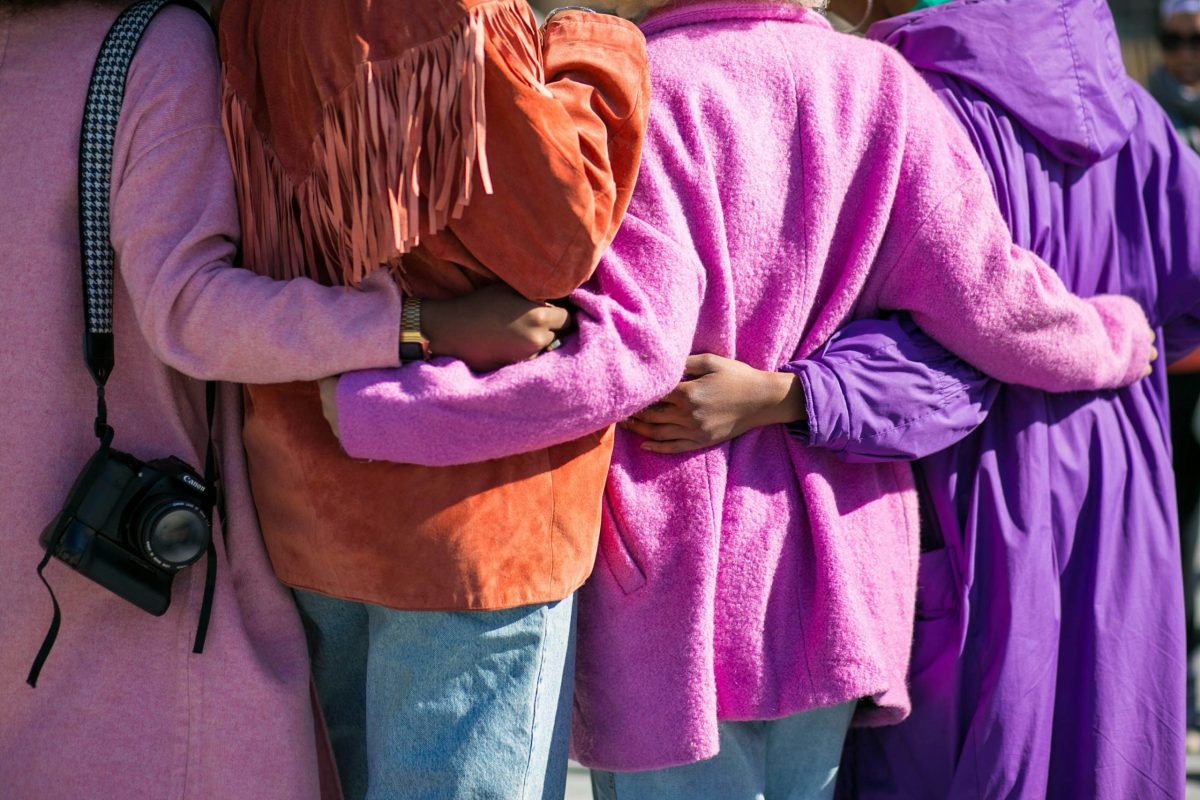
In the spirit of looking for and finding community, here are eight books that examine this idea from different perspectives. Whether that is tight-knit friend groups who weather changes in life or themes of reconciling with the dead, the books on this list illustrate the complexity of finding our place in the world, all while showing that it really is possible.
The In-Betweens by Davon Loeb
In this memoir, Loeb writes about growing up biracial, with Black family roots in Alabama and white Jewish family roots in Long Island. Growing up Black and Jewish in the predominantly white suburbs of New Jersey engenders a sense of outsiderness in Loeb. He has a complicated relationship to family and race. Yet, he also writes of finding one’s way through first loves, early jobs, and a network of collaborators—the experiences and people who shape our lives. Some memoirs tell. Others explain. Loeb is the latter, illuminated.
Ideas of Heaven by Joan Silber
A penultimate chronicle of life, Silber’s Ideas of Heaven beautifully deploys hindsight, and each of these linked stories speaks to the power of connection. There’s a religious undercurrent in this book, written more as a way to link communities than to lionize any particular faith. Silber writes equally as well about fitting together as she does about being in opposition, because her stories center people, showing how far we will go for those we love.
White Horse by Erika T Wurth
This Indigenous horror novel follows Kari, who finds a connection to her mother’s ghost through an old family bracelet and is subsequently haunted by visions of people who have passed over, along with even more terrifying specters. At its heart, however, White Horse is about relationships, reconciling with family, the impact of chosen family, and the wide constellation of what community can mean: Sometimes it’s the drinking crew at a bar, sometimes it’s tribal aunties, but it’s always critical.
These Impossible Things by Salma El-Wardany
Centering on female friendships, These Impossible Things shows how deep bonds can be compromised, and how growing up and growing older can contextually change how we feel about the people we used to always reach out to first. It follows three Muslim women who met at school and are now living in London, figuring out their paths. Sometimes their choices strain the friendship, and there is constant tension between cultural expectations and being a 20-something in the city. This book addresses serious topics, but it also has a lightness to it, and it’s deeply relatable to anyone who has had decade-spanning friendships.
Bad Bad Girl by Gish Jen
This is a book that could have just as easily been called a speculative memoir as a novel. Jen writes toward an understanding of a fraught relationship with the narrator’s mother, who speaks from beyond the grave; and the narrator begins to understand how her mother was trapped between cultures, carried deep trauma, and was often misunderstood. It’s intimate and compulsively readable. Jen takes a complex family dynamic, transforms it into an intergenerational saga, distills it back into a love letter, and in doing so, forges a new bond.
Hello Wife by Lisa K Friedman
Set squarely at the intersection of middle-age regret and the American opioid crises, the setup alone of Hello Wife is poised to create tension. When Charlotte gets engaged to Jimbo, an unemployed addict she met at 7-Eleven, she’s 49 years old and ready for love. Charlotte’s family doesn’t agree that this is the way to do it. Yet, while it becomes quite clear and quite quickly that this is not a redemption story, the longing for companionship is palpable. Written with a delightful wryness.
Clutch by Emily Nemens
Clutch (which I have written about before) follows a group of five tight-knit friends, all turning 40. In writing everything from fertility treatments, looming divorces, political ambitions, tech bros, and addiction, Nemens imbues the quintet with side-alliances and a certain kind of girl-drama. Yet, even when there is conflict, sisterhood always encircles the women. It’s a satisfying, juicy-plot read with an unbreakable bond at the core.
Nadezhda in the Dark by Yelena Moskovich
Partners living in Berlin after having fled the Soviet Union as children—one from Ukraine and one from Russia—are in their apartment, not speaking on a long night. In this narrative in verse, there’s a sense of rootlessness for both women. Between Nadezhda and her unnamed partner, history surfaces and hurt surfaces. Both women process what it means to have lost a homeland. The narrator tries to understand what it means to love Nadezhda. As a writer, Moskovich places that ache the most, and she does it without apology and with a present lyricism that often leads her characters to a place of agency.