Reading Lists
9 Works That Complicate the South Asian Diaspora Novel
BLOW YOURSELF UP author Ankur Thakkar considers genre-bending novels that deconstruct the white gaze and write beyond translation
Like so many others, I began writing when I read authors whose names sounded like my own. These novels by Lahiri, Rushdie, and Roy won all kinds of awards and provided the retort I needed to the typical South Asian first-gen parental gauntlet of doctor, engineer, or lawyer. How about Booker Prize winner?
I studied these books in college until the tropes became legible: tradition vs. assimilation, nostalgia for a homeland, the pressure of success as defined by the West. I also saw how they performed a very specific kind of cultural translation. On the covers, beneath the awards stickers, sat mangos or a sari, with Persian and Mughal design flourishes that made clear to white people that they would be eating spicy tonight. It’s true that every artistic movement eventually calcifies into a syllabus and a handful of college credits, but it isn’t at all fair to dismiss these books as mere “diaspora novels,” because they proved South Asian stories had a place in English letters, and, in this young writer, lit a fire to find what was next. They created an opening, and many incredible South Asian authors have since entered the chat.
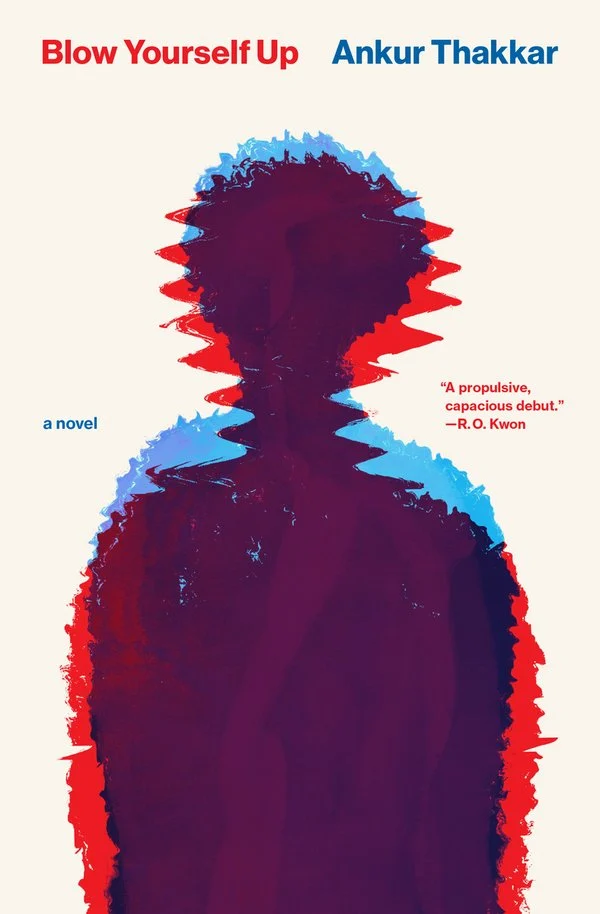
My novel, Blow Yourself Up, follows two South Asian characters who fall in and out of love over the years the internet grew rotten and is, at its core, about making a creative life as the definition of making unexpectedly morphs. They’re constantly negotiating how Indian they are, and how exactly they want to be perceived.
The authors below write beyond translation for a white gaze, bending genre through unlikeable narrators, exploring queerness, philosophy, sports, art, and the tender chaos of being alive.
Gold Diggers by Sanjena Sathian
Gold Diggers subverts the immigrant coming-of-age story through a touch of magical realism. Its characters discover they can alchemize gold into its owner’s ambition, which they can steal, turning their striving into a toxic addiction. Paced like a heist, this novel is an incisive criticism of the American dream.
Family Life by Akhil Sharma
Family Life strips away the sentimentality that can accompany immigrant stories. A devastating accident leaves the Mishras’ older son with severe brain damage, shattering his prospects for the future and filling his younger brother, the narrator, with bitterness and guilt. I was fortunate to take a writing workshop with Sharma and his prose mirrors his pedagogy: transcendance through stark and brutal honesty.
Blue Ruin by Hari Kunzru
Kunzru’s Blue Ruin is the third installment of his incandescent red, white, and blue triptych. The narrator, Jay, delivers groceries to a remote upstate estate and stumbles upon his ex-girlfriend, Alice, and her husband, who was Jay’s former best friend from art school. I’ve long admired Kunzru’s writing about commodification and art (see his brilliant 2008 New Yorker story “Raj, Bohemian”), and am still thinking about questions raised in this masterful novel.
Liquid by Mariam Rahmani
Liquid takes the vehicle of a familiar plot, a self-imposed deadline to marry so as to eschew financial ruin, and completely subverts itself with some of the most original writing I’ve ever read. Rahmani’s unnamed Iranian-Indian narrator is brilliant and deeply perceptive, and offers a masterclass on insight through juxtaposition.
The Last White Man by Mohsin Hamid
In The Last White Man, Hamid interrogates the construct of race through a Kafkaesque premise where a white man discovers his skin has turned dark, a phenomenon that is rapidly spreading around the world. I’m so inspired by Hamid’s insistence on reinventing the form with each new novel, and in this one he flips the script on the immigrant narrative to dissect the anatomy of whiteness.
Western Lane by Chetna Maroo
Western Lane is a minimalist masterpiece that centers a young girl grieving the loss of her mother through competitive squash. In such a short novel, Maroo offers an expansive universe. Every sentence is fine-tuned and load-bearing, and just as devastating as what is left unsaid.
Optional Practical Training by Shubha Sunder
Sunder’s Optional Practical Training highlights the grueling and often arbitrary grind of an immigrant’s right to exist in America. Pavitra’s student visa gives her an extra year for work experience through a program that shares its name with the title. The novel beautifully delineates the expectations placed on her from her family, workspace, and social entanglements.
Immigrant, Montana by Amitava Kumar
Immigrant, Montana follows Kailash, an immigrant building his life and finding himself across the dividing lines of culture, education, and desire. Kumar would never give us a straightforward campus novel, and disrupts the text with photographs and essays in this deconstructive and sharp satire.
All This Could Be Different Sarah Thankam Mathews
All This Could Be Different tells the story of a young woman trying to make it in the corporate world. The novel beautifully explores queerness, friendship, and ambition with a deft precision, asking the reader to consider what home actually means.