There is a particular feeling that accompanies loving something as you watch it disappear. It is not quite despair and not quite hope. It lives somewhere in between, in the place where grief and stubbornness meet. Literature feels particularly suited to capturing that emotional contradiction because novels can hold multiple truths at once. They can contain dread and tenderness, beauty and decay, intimacy and catastrophe without reducing them to neat resolutions. Yet there’s not enough literature about this specific kind of grief, especially stories interested less in apocalypse itself and more in the emotional texture of living through slow disappearance. So much of climate storytelling asks what will happen. I am often more interested in what it feels like to keep loving a place, a person, or a future while knowing it is changing beyond recognition.
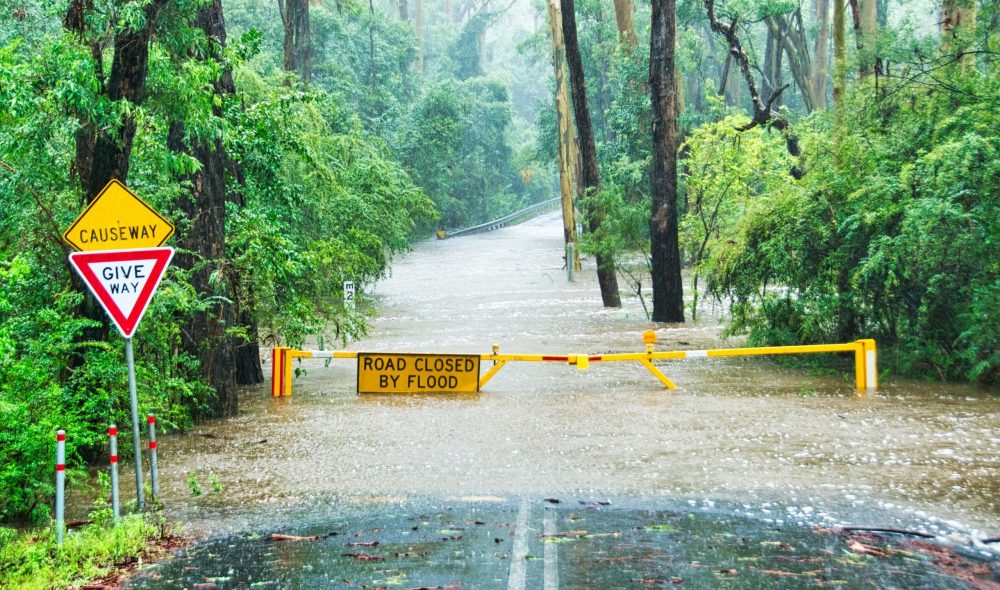
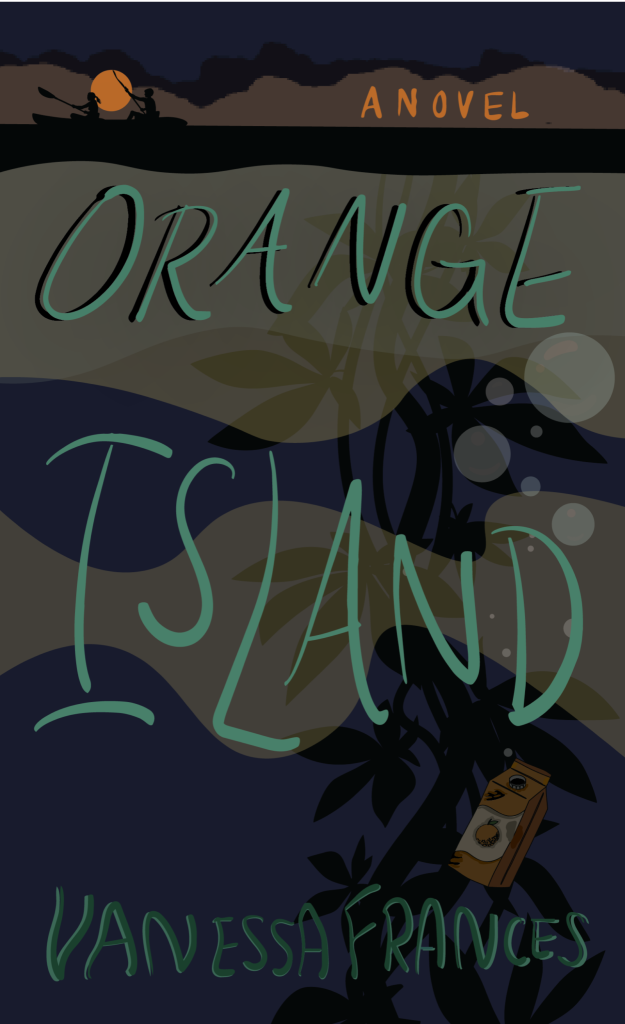
My debut novel,Orange Island, grew out of this ache. It is set in 2060 in a Florida battered by climate collapse, where fruit is a luxury, and the heat is something people die from (not too far from what we know today). At its center is Savannah, a young woman piecing together the story of her dead sister Dove, a researcher who spent her life trying to find a way to make humans more resilient to a hotter world. Writing it, I kept returning to the question the book kept asking me back: How do we stay hopeful when things feel genuinely, irreversibly broken?
The books on this list were companions through the process of writing Orange Island. Some of them I carried around for years before I understood why. They are stories about survival and longing and the stubbornness of love, set against landscapes that feel like characters of their own. They are about land and water and heat, about the people who are shaped by places and the places that are shaped, and often destroyed, by people. They are not all climate fiction, and they are not all tragedies, but they all understand what it means to grieve something that is still technically alive. I hope they find you wherever you are in that grief, and leave you wanting to go outside.
Janie Crawford spends her life moving through a series of marriages and communities in search of autonomy, love, and a selfhood larger than what the world expects from her. Set across central Florida and the Everglades, the novel follows her final marriage to Tea Cake and the life they build together on the muck before a catastrophic hurricane reshapes everything. Janie’s story is about much more than romance, but it is also, quietly, a book about Florida: the muck of the Everglades, the labor of the land, the violence of a storm that will not be bargained with. Hurston writes the natural world the way most writers write people, with interiority and consequence. The hurricane in the final act is one of the most devastating and accurate depictions of what weather can do to a community built without protection. It is a book about joy that never pretends the world is safe.
After being abandoned by her family as a child, Kya Clark grows up alone in the marshes of coastal North Carolina, surviving by learning the rhythms of the natural world more intimately than the social one. When a local man is later found dead, the town turns its suspicion toward the “Marsh Girl,” forcing Kya to confront the ways isolation can both protect and endanger a person. Whatever you think of this book’s cultural moment, Kya Clark’s relationship to the North Carolina marsh is worth sitting with. She is raised by a place after her family abandons her, and she learns its language more fluently than she ever learns the language of people. The wetlands in this novel are not backdrop. They are shelter, teacher, and, in the end, something like justice. Where the Crawdads Sing takes seriously the idea that wild places can hold us when humans will not.
Set in the 12 days before Hurricane Katrina, this novel follows a poor Black family in rural Mississippi who have no real option but to wait. Ward writes poverty and love with the same precision, and the storm, when it arrives, does not feel like a plot device. It feels like what it is: an event that punishes people who were already being punished. This is essential reading on how climate and catastrophe are not felt equally, and how survival is not just physical but something you carry with you after.
This one might seem like the outlier, but it earns its place. A couple in post-Arthurian Britain travels through a landscape wrapped in collective forgetting, trying to find their son and make sense of what they have lost. Ishiguro is writing about memory and erasure, but he is also writing about what happens to the land when the people on it stop paying attention. There is a quiet devastation in this book that did not leave me for a long time.
In a rural Appalachian community, Dellarobia Turnbow stumbles across what looks like a mountainside on fire, only to discover millions of displaced monarch butterflies have unexpectedly migrated there due to climate disruption. As scientists descend on the town to study the phenomenon, Dellarobia begins questioning the limits of her marriage, her community, and the future everyone around her has assumed is fixed. Kingsolver is brilliant at writing people who are not environmentalists but who find themselves in the middle of something they cannot explain and cannot ignore. The protagonist, Dellarobia, is curious and funny and hemmed in by her life. Watching her encounter this strange and terrible beauty is one of the more moving experiences I have had reading fiction about climate.
In a near future devastated by environmental collapse, Bea and her young daughter Agnes leave the last overcrowded city to join an experimental community allowed to live inside one of the world’s remaining protected wilderness areas. As the group struggles to survive under constant observation and increasingly brutal conditions, Bea is forced to confront what survival means. The New Wilderness is a speculative novel at its core, an examination of motherhood, and a quiet horror story, often at the same time. Cook does not offer comfort. The wilderness in this book is not redemptive. It is indifferent, and the people in it are asked to become something they are not sure they can become.
An Ethiopian immigrant runs a small grocery store in a gentrifying Washington, D.C. neighborhood and tries to make sense of what he has left and what he has found. This is not an environmental novel in the traditional sense, but it belongs here because it understands displacement from the inside. Mengestu writes about longing for a place you cannot return to with a precision that hit me somewhere I was not expecting. Grief for land and grief for home are the same grief, and this book knows that.
A woman follows what may be the last Arctic terns on earth on their migration to Antarctica, carrying her own grief and history alongside theirs. McConaghy writes about a world where animals have almost entirely vanished with a restraint that makes it more devastating, not less. It is a book about obsession and loss and what we do when the thing we love is already mostly gone, told by a narrator who is herself a kind of endangered creature. The natural world here is an elegy, and the journey feels both urgent and too late.
A grieving astrobiologist raises his neurodivergent son alone while the son becomes consumed by the fate of disappearing species. Powers is one of the few writers who can make ecological grief feel personal without making it sentimental. The father-son relationship at the center of this book does what the best speculative fiction does: It makes the abstract catastrophe of extinction feel like something happening to people you know and cannot protect. It pairs naturally with Flight Behavior and fills out the list’s thread of parenthood and inheritance alongside Ward and Cook.
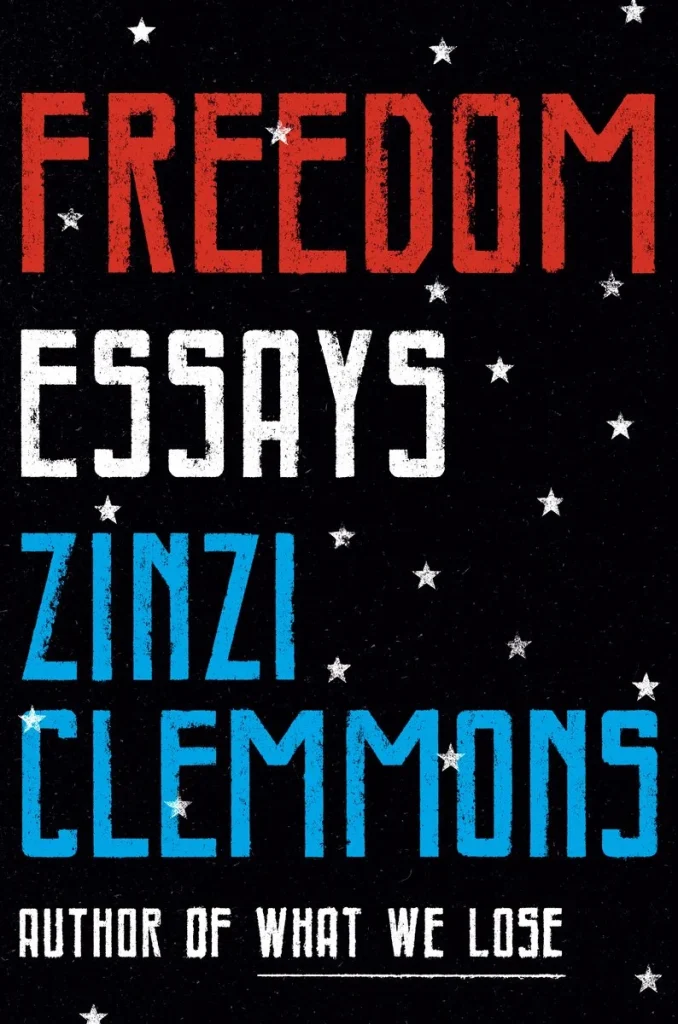
“Swan Song for the Republic,” excerpted from Freedom by Zinzi Clemmons
We are born into good times. “Dream big,” they tell us. “The sky’s the limit.”
We are lied to.
One day at school, I’m shepherded into the band practice room, the TV set rolled out of the closet and switched on. On the screen I see smoke billowing from familiar buildings, the broken body of a plane in an empty field, reporters screaming, everything veiled in dust.
We start to fear.
The whispers of war crescendo and no one seems to realize that the people who attacked us don’t come from the small country we now wish to invade. I sneak onto my family’s computer and read article after article, trying to make sense of what we are about to do, but it can’t be made sense of.
Liza and I cut class and load into my mother’s car, certain we are about to change the world. When we show up, there are just a handful of people shouting slogans at harried passersby on their way home from work. We return to where our car was parked to find it has been towed. My mother picks us up from the impound lot across town and drives us back to the suburbs in silence.
We are too young to know better.
I needn’t worry, I’m told, my future is bright and my dreams will all come true.
My parents manage to save enough for college. The money is the accumulation of so many years, missed dinners and band recitals. It’s swallowed whole; the rest I will pay in parcels for the foreseeable future, the total sacrifice unknown. But I needn’t worry, I’m told, my future is bright and my dreams will all come true.
We sign on the dotted line.
In the exit counseling session, just before graduation, we’re taught about the dangers of default—wage garnishment, impacted credit score, imprisonment, depression, anxiety, loneliness, death . . .
I manage to earn enough for my expenses with nothing left over. My friends work in retail and tutor and crowd their parents’ basements. I couch surf with relatives and then pay my friend’s mother 200 dollars a month to live in his little sister’s bedroom, under a pink comforter, with her basketball trophies and stuffed animals gazing upon me.
One day at work, I see bankers carrying boxes down the elevator of my 20-story office building, a look of terror and exhilaration in their eyes. The markets have crashed; the bankers take off like bandits.
We are easy marks, open targets.
All of my friends lose what few jobs they have, their parents’ companies fold, childhood homes are foreclosed. I recall the small, scared look of my father—the only black man in his division—when his company announced layoffs.
But something is stirring in this country. There’s a name on the lips of our friends.
Years ago, he spoke at my college, and on the day tickets were given out, the line stretched from the box office clear across the main quad. I snuck into the building before the event began and crouched behind the wall of the balcony. I listened to him speak. My friends take jobs on his campaign and move to towns I’ve never heard of. The night of the election I go to my neighborhood bar, the place that plays old‑school hip‑hop on Thursdays and golden soul on Fridays. When the result is announced we scream and embrace each other; I call my parents breathlessly, text disbelief to my friends. We rush out onto the street, to sidewalks packed with strangers of every color; a bus drives by and inside, lit up, all the passengers are dancing.
We let ourselves hope.
I put money away, but it is always eaten up.
I go to graduate school. My friends find new jobs, and I find new friends.I put money away, but it is always eaten up. The city becomes too expensive, so I move to a smaller city, and when that becomes unaffordable, I move to the countryside. Then to another coast. Our lives are shuffled around in boxes and, in between self‑storage lockers and garages, some items are lost in transit. A paperback lovingly creased and annotated, a photo of long‑gone friends, a family heirloom.
We learn to let go of our attachments to material things.
More murders are publicized, more every year, so many that they begin to punctuate our lives. I hear news of a teenager in Florida, killed walking through his family’s neighborhood, and it brings our parents’ warnings to life. How could that face mean anything but innocence to anyone?
Our outrage becomes mundane and soon we don’t even realize we are numb.
When the country elects a reality‑TV star we are shocked but not surprised. When I lived in the countryside, I saw white people living in rusty trailers and broken‑down shacks, saw their anger at being left behind. One of them asked me to my face, Why would you want to live here? I had no reply, unsure of how to explain that I’d been disappointed, too.
We realize we’ve been sold false hope.
I go away one weekend and return home to find the grocery store completely emptied out, nothing at all left on the shelves—a zombie movie come to life. I sell off everything that won’t fit in my car, load in my husband, my dog, and the handful of belongings we still hold dear: my mother’s wedding ring, an old teapot, a flower pressed between glass.
We spend months indoors, watch the world reorient around a new, darker loneliness. Every day, someone dies, and sometimes it is someone we know. We live side by side with death, begin to see it everywhere. We cry until we can’t anymore, drink until we make ourselves sick. The world expands and contracts, and I contemplate which is worse: death or exile? Oblivion or rootlessness?
Our outrage becomes mundane and soon we don’t even realize we are numb.
We are finally set free, and the world instead turns inward. Time zips by with the speed of a thumb on a touchscreen. A smiling family dancing in unison to a Top 40 song. A mother pleading for formula to feed her daughter. Here are five things married people do. Here are five vegetables to plant in your backyard garden. Here are five steps to financial health. A sea of tents amid the quad I used to cross on my way to the library. The police are called. The protesters are beaten, locked away, doxxed, deported. “This is not about free speech. This is about people that don’t have a right to be in the United States.” We shiver with recognition.
We know that a house is made of bricks and mortar and can collapse, but every day I dream of a little bungalow just big enough for my love and me, a set of pots to make him dinner, and a garden to catch the sun—that no one can take away from us. Once, we brought a sick bird inside and it flew away the next morning, healed by safety.
What happens to fear without four walls to keep it in? I know. We’ve always known, it’s just that no one has believed us.
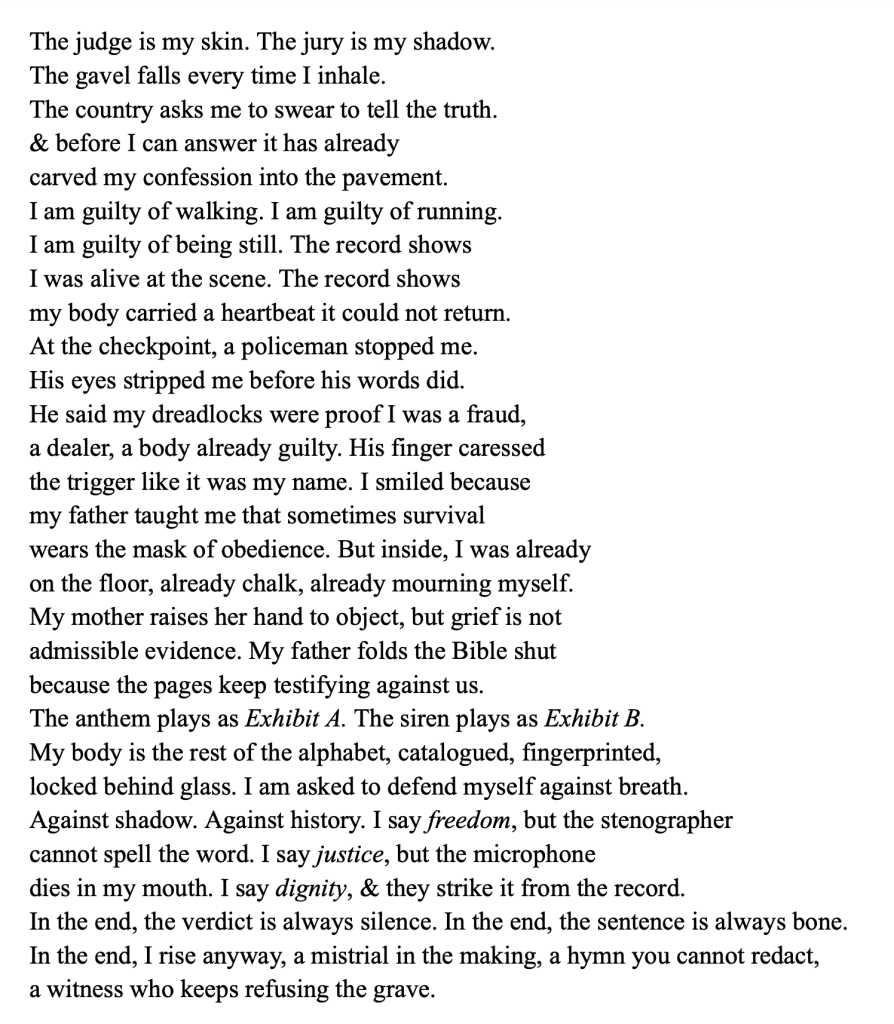
The Body Is a Courtroom Where I Am Always on Trial
Click to enlarge
I Still Believe in My Country
I still believe in my country, not because I am immune to disappointment nor because I’ve stopped counting the ways we fail each other, but because here, people keep doing small impossible things. Someone shares fuel during a blackout, counts the litres like prayer beads, says take it, I’ll manage, even though the night arrived prepared. Offices open late or not at all. Files sleep on desks longer than dreams. I still believe in my country when my hands shake, scrolling past grief, when the numbers don’t add up but the bills do, but they still reach out, still type messages that say are you safe?, still cook food meant for more people than showed up, because absence has taught us to overprepare. A boy plays football with a plastic bottle & calls it a match because stadiums are far & promises farther. A mother names her child Blessing like the word can stand guard, like syllables can do what policies refuse to. A man returns a wallet with nothing missing except despair, shrugs like decency is not heroic, just necessary. Tell me this is not something. Tell me this does not count. I still believe in my country because joy keeps happening without permission—at bus stops where time is mismanaged, in markets where prices change without warning, in the way music escapes from phones with cracked screens louder than official statements, because laughter still ambushes grief mid-sentence. Because someone always knows the words to a song everyone thought we forgot. I still believe in my country even when belief feels foolish, even when it feels like loving someone who hasn’t learnt how to say sorry yet. The roads are tired, yes. The promises are bruised. Still, people keep walking, keep carrying their lives in plastic bags, faith & patience in their mouths, ‘e go better.’ I still believe in my country when hospitals ask for everything except relief, when classrooms echo with too many names & not enough chairs. & yet, teachers still stay late when survival becomes a curriculum we all pass unwillingly. Yet, teachers still stay late. Nurses still find veins in the dark. We still argue about football like joy is a civic duty. I still believe in my country when children draw houses bigger than the ones they live in, add windows that open, add trees first, colour the sun generously. I still believe in my country because care keeps leaking through the cracks. After all, even broken places know how to hold water for a while. I still believe in my country, not with flags in my mouth, but the way you believe in a song you don’t know all the lyrics to yet but keep humming anyway, trusting the chorus will find you when it matters.
When I was a proto-embryonic critic, in my painfully awkward junior high school years, my reading was wildly incongruous. Isaac Asimov’s Science Fiction Magazine toSiddhartha to The Grapes of Wrath to cheap, used Harlequin Regency romances.
I had weird middle of the night reveries about what I might grow up to be. Becoming a nun seemed attractive, perhaps a challenge as I wasn’t Catholic. Maybe a kind of whirling dervish/Siddhartha-type nun, instead?
I wanted a purpose: a reason why I was here. I wanted to be worthy of something. Sacrifice the self for a greater cause. Or perhaps, I wanted to fit in a world that didn’t seem to have room for my oddling ways.
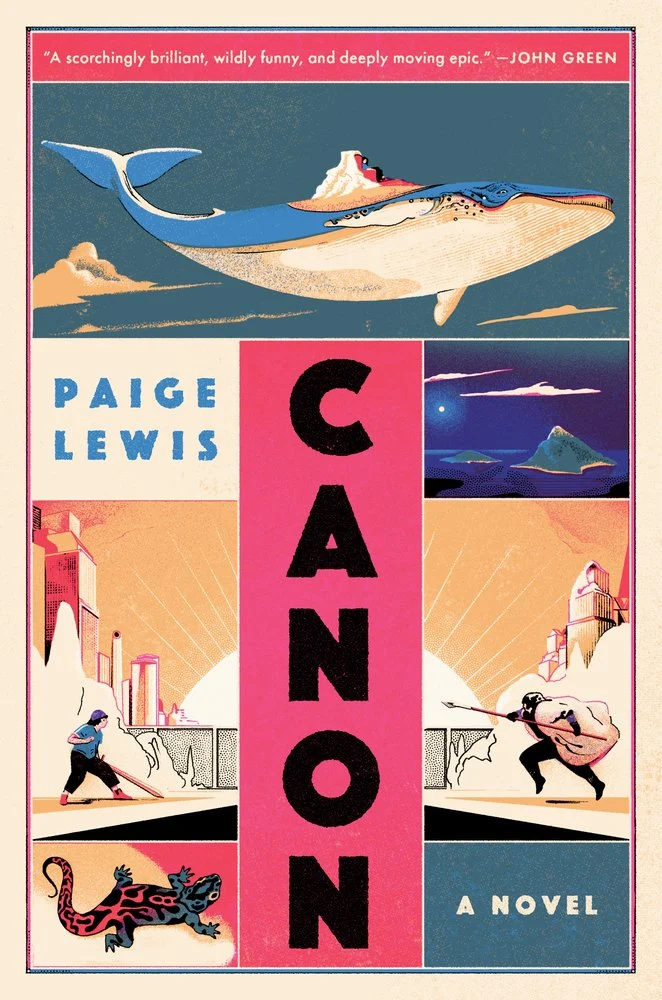
Paige Lewis’s exhilarating debut novel Canonis a modern epic about individual agency within the context of grim, nearly apocalyptic times; the lies and violence that “higher powers” exert upon us; and the truths we can only determine for ourselves. And along the way, it’s also a rollicking good tale, with Lewis’s intelligence, wonder, heart, and charming humor on full display. The momentum of the book is built through swift, sharply drawn chapters—with titles such as “Small Blips of Joy Keep Weary Prophets Going”—along with a kaleidoscopic narrative and Lewis’s joyful polyvocality. Ultimately, amid the madness—perhaps because of it—it’s especially about the enduring power and beauty of love.
I realize now that perhaps what I wanted most when I was an awkward child was to transform, to evolve into something, anything, greater. Amid all the chaos within the multitudinous realms and characters of Canon, the core of Lewis’s uncategorizable novel is about this “becoming”—creation through destruction, which is both our fate and our reward. In Lewis’s world, we are our own divine intervention.
Mandana Chaffa: The word canon has a complex etymology, initially referring to decrees of the church, and in modern times also as a reflection of an academically approved—traditional—literary “standard” of excellence. This Canon offers a definitive upending of such doctrines, and a rigorous interrogation of prevailing sanctioning bodies. What were you contemplating when you titled the book, and when did you end up with the title?
Paige Lewis: Mandana! I’m so grateful for the time you’ve given to my book and for this fantastic question. I wish I could just copy and paste what you’ve said about my title upending religious and literary doctrines. But the truth isn’t very thrilling—the title came very late in the writing process. I hate coming up with titles and would have never landed on Canon on my own. As I was getting closer to finishing the manuscript, I brought up my titling frustration with Kaveh [Akbar, Lewis’ spouse]. So, we made a long list of title ideas pulled from different sections of the manuscript, and I chose Canon from that list.
Trying to choose from a long list reminded me of when the poet Marianne Moore was asked by Ford Motors to come up with a name for a new car model. She came up with so many incredible names (Utopian Turtletop, Mongoose Civique, Thunderblender, The Intelligent Whale). All were rejected.
Binaries like good and evil often flatten our understanding of the world, and this flattening makes humans easier to deceive.
Part of me wanted to use The Intelligent Whale for my book title, but I think Canon is more fitting. And I do love a one worded title.
MC: Canon also questions binaries in favor of rich multiplicities. One of the most damaging of the former might be societal edicts of good and evil that reduce the complexities of humanity to two-dimensional moralities. They are nearly worthless in offering a blueprint to remaining humane in a darkening world, and this book is deeply invested in an individual’s agency, in the decisions one can make, in the responsibilities we have to ourselves and each other.
PL: I’m sure philosophers have said it far better than this, but to me, the good vs. evil dichotomy is bullshit. It’s something that those in power use to control the narrative while committing appalling acts. A pervasive example: Israel uses this binary to shape the narrative of their ongoing genocide against Palestinians as a fight against evil. Amichai Eliyahu said, “Thank God, we are wiping out this evil.” Benjamin Netanyahu said Israel is “[G]oing to abolish this evil in order to further all humanity.”
And yet we have seen Israel murder over 50,000 children in Palestine since October 2023.
We have seen Israel “manufacture a consent to kill” by claiming that journalists murdered by the IDF had ties to Hamas.
Binaries like good/evil often flatten our understanding of the world. And this flattening makes humans easier to deceive. Does anyone ever think they might be on the side of evil?
Mandana, I know you didn’t ask a question here, I’m just angry all the time and this seemed like as good a place as any to remind people that they should be angry, too.
MC: There’s a strong element of ecoprose throughout Canon which speaks to our current environmental disasters as well as to a host of ancient mythologies in which nature is a kind of deity. I appreciate that you don’t shy away from the complexities of nature—its beauty, power, and sustenance, and also its brutality (though not purposefully cruel).
PL: When I was young, I could watch any nature documentary. Now, it’s hard for me to watch anything if I suspect nature is about to be itself. I find myself both rooting for the lion and the gazelle and am sad no matter the outcome. So, it means a lot to hear that you think I did right by nature in this book.
MC: Might we talk about structure and form? Canon is both lyric and epic, and many chapters of the book—some quite spare in prose, others fuller—resemble the motion and space of poetry collections. Which makes me also want to talk about genre with you: So much of the contemporary literary landscape smudges such boundaries. Did you always anticipate the structure you ended up with? How many iterations of form did you have in mind?
I wrote the story the same way I write poetry, without knowledge of where it would go.
PL: I started this book as a one-page poem about a character from the Bible. I was inspired by Anne Carson’s “Book of Isaiah, Part I” and thought it would be fun to try it with the character Yael from the Book of Judges. Once I “finished” the poem, I showed it to Kaveh (who is always my first reader), and he said it was good but not finished. So I moved from that to writing an epic poem (the first few sections of which appeared in Poetry magazine in 2018). After I showed a “finished” copy of the epic to my agent, Jacqueline Ko, she helped me realize that I was writing a novel. So, then I spent a few years expanding the sections into chapters and adding new characters and adventures. But the poems never really left the book. They are more noticeable in some sections because of the use of empty space and lineation, but some of the most textually dense sections are also poems (especially the sections that include dreams).
Genre has always been a frustration, and I’ve decided the best thing, for me, is to step away from trying to categorize Canon as anything beyond it being a thing I made.
MC: In the past, we’ve talked a bit about speculative fiction—might you touch on your pedagogy around that genre, as well as how it plays into this particular work? What are your favorite examples of worldbuilding, and how did they impact what you wanted to create in Canon? How did this world shift as you moved through different drafts of the novel?
PL: I love to read and teach science fiction and was heavily influenced by the world building in books by writers like Ursula K. Le Guin, Octavia Butler, and Pamela Zoline. I was also really drawn to S.F. that didn’t take itself too seriously and allowed for humor and absurdity. I’m thinking particularly of Frederik Pohl’s “Day Million”(published in 1970), which is one of my favorite short stories to teach. It’s usually pretty pohl-arizing—half the class loves the humor, and half thinks it’s too much.
In the story, Pohl’s narrator tells the reader about a love story between a boy and a girl in a future society in which gender is fluid and relationship norms (and most societal norms really) have drastically changed. The woman in the story, Dora, is born with XY chromosomes, but genetically altered in the womb because: “If we find a child with an aptitude for music we give him a scholarship to Juilliard. If they found a child whose aptitudes were for being a woman, they made him one.”
So, I’m sure it would have been easy for Pohl, especially in the ‘70s, to get his laughs by mocking this future society’s gender norms, but instead he often breaks the fourth wall to make fun of the reader’s own conservative views: “Go ahead, and grumble. Dora doesn’t care. If she thinks of you at all, her 30 times-great-great-grandfather, she thinks you’re a pretty primordial sort of brute. You are.”
So, perhaps more than worldbuilding, S.F. has really influenced my understanding of a narrator’s relationship with the reader.
MC: Related to this last question: What were your initial expectations for Yara and multiple narratives adjacent to them, and how did that shift as their story evolved? What came first: your narrative intentions or the characters?
So many epic heroes are lonely on their journey.
PL: It started with Yara on their journey. And then I felt there needed to be a second journey, so Adrena was born! And then Adrena needed something to convince Harpo to let her join him and his army, so Arielle and her kidnapping came into being. I feel like many characters and actions came into existence as the narrative started to take shape. I wrote the story the same way I write poetry, without knowledge of where it would go. But Yara was always there.
MC: There’s also an expansive exploration of the shades of loneliness, isolation, and alienation in Canon, that feels particularly resonant right now, especially in our hyperconnected world, which distances more than it engages. Not to mention that these mindsets increase the risk of being taken in by sects, discipleships, cults, and the like. Even popular culture fandoms feel like closed loops. Though Yara’s story upends that narrative, as they ultimately free themselves. I appreciated that arc—they didn’t completely understand what they were drawn into, and what the cost of it was, but still had the agency to determine the next part of their life.
Delving into that a bit further: There’s the larger monomyth, the subject of many an epic: the overall idea of the Hero’s Quest whereby the protagonist sets off on a fraught, challenging mission and journey of self-discovery, only to discover the answer was in choosing personal identity over the demands of larger, often flawed societal machines. What are the epics that have spoken to you as a reader and writer?
PL: Sometimes I can only speak for myself. I grew up in a house with a lot of people in it, but because of my OCD and how it manifested, I was always given my own room. No one in my family was allowed in my room, and if I left my room, I would have to shower before I could touch anything in my room again. So, I spent a lot of time alone in my room because it saved me time and energy (and it saved water). Understandably, my behaviors affected the rest of my family. So, when I would come out to interact, my siblings would, from a place of hurt, make comments about how I wasn’t really a part of the family. And so, I would go back to hiding in my room. I didn’t feel lonely, but I was in some ways in a perpetual state of alienation. I’m also sure this has something to do with why I’m so drawn to epic poetry. So many epic heroes are lonely on their journey. Even when surrounded by soldiers, or sidekicks, or friends, the hero sort of functions at a remove from others. The hero has a mission, and they also have hope that the mission will eventually end, that they will be able to go back home to their family and/or their everyday lives. Some epics that influenced my own exploration of isolation, loneliness, and/or familial estrangement are: The Tale of Kiều by Nguyễn Du, Does Your House Have Lions? by Sonia Sanchez, Aniara by Harry Martinson, The Odysseyby Homer (translated by Emily Wilson), “The Anniad” by Gwendolyn Brooks, The Descent of Alette by Alice Notley
MC: You used to wake up very early and get in a couple of hours of poetry writing before teaching your students, which both wowed and intimidated me. Do I remember this right, and do you still do that? How has your writing and process changed over the years, especially given your full professional and personal life? What’s the smallest unit of a writing life that people might be able to perform on a daily basis, that accumulates into a practice?
PL: Yes! Even when I taught eight a.m. classes, I would wake up a few hours early to get some writing in. I have found this to be a bit more difficult now that I have four needy animals who make writing at home nearly impossible, and because most coffee shops open at seven a.m. (at the earliest) in Iowa City. I don’t think people need to write daily, though I do think it has been very good for my routine-driven brain. What can feel less daunting is for a writer to carry a small notebook around with them (or to treat their notes app like a notebook) and jot down a few things every day while running errands or meeting friends. This is a great way to get descriptions of different locations or weird quotes from a stranger who’s talking too loud at a restaurant. Then, when you have time to sit down to write a poem or a scene, you have so much material saved up to pull from!
Cole set out early, when the fishermen of his hometown were just beginning to cast their nets into the sea. Claudia Bernard, the woman that Cole was journeying towards, had no idea that he was on his way. Cole made the drive from Astoria to Fortuna in one white-knuckled shot, terrified that if he lingered anywhere for too long, something awful would happen—a nosy traveler would report him as a teen runaway, or he’d simply lose his nerve and drive back home. At hour five, a massive traffic jam snagged its way down the interstate, delaying Cole’s arrival in California by hours. Night had fallen by the time he reached Fortuna. All around him the shadows of great redwoods loomed. Cole pulled into the parking lot of the Fortuna Inn a little after 7 PM, its blinking red vacancy sign burning like a flare in the dark.
The Fortuna Inn was a classic low-rise motel in the shape of an L, its rooms accessible by an exterior pathway lit by a single exposed bulb. Cole parked his car and walked inside to a small lobby that smelled overwhelmingly of cigarettes. He couldn’t tell if the smell was emanating from the large woman seated behind the counter or if, over time, smoke had gradually seeped into the very matter of the place, becoming one with it.
“One room, please,” Cole said. At seventeen, he’d never checked into a motel by himself, but this seemed like the logical thing to say. Still, the woman behind the counter eyed him suspiciously. She wore a green flannel shirt, with a pin that said “Jan” affixed over the formidable mounds of her breasts. Cole, in his exhaustion from the drive, imagined sinking his head into the soft bounty of them, closing his eyes, and falling asleep.
Jan lit a cigarette and continued to stare.
“You alone?” she said.
“Is that relevant?” Cole replied.
“It is if you’re being trafficked,” Jan said. “Or smuggling drugs.”
“I’m here to visit Tracker,” Cole said, which was partly true.
“Don’t parents usually come along on college visits?”
“My dad couldn’t get the time off work.”
“And your mom?”
“Not in the picture.”
It was the kind of statement that usually softened people to him. Over the years, Cole had learned that, if you were a white-skinned teenage boy and you alluded to a dead or absentee mother, you could get away with almost anything. Jan just nodded and turned around to grab a key off the wall behind her. Cole slid his debit card across the Formica counter.
“Kind of quiet here,” he said. He’d only seen one other car in the parking lot—a mint green Ford truck that presumably belonged to Jan.
“You’ll be in 6A,” she said, ignoring his comment. “Down the walkway, on your right.”
“Do you have room service?” Cole asked.
“Do I look like I have fucking room service?” Jan replied.
Cole took the key and stepped back outside. The night was chilly and damp. He could sense but not see the towering redwoods that lined the road opposite the motel, enforcing, like sentinels, an almost frightening stillness. The lightbulb buzzed faintly over the cement walkway as he hurried to 6A. All the other rooms were dark, the curtains drawn tight behind their windows. Between the motel and the highway was a patchy stretch of dirt and grass with two pink plastic lawn chairs set up in the middle of it, like Jan was trying to make things nice. The look of them made Cole feel mournful—though for Jan or for the empty chairs or for himself, he wasn’t sure.
Inside the surprisingly clean room, Cole stretched across the bed and pulled out his phone. A few hours earlier, he’d sent his father a text letting him know that he’d safely landed in Palm Springs. Mr. Hansen was under the impression that Cole had driven to his friend Austin Whittaker’s house that morning, left his car in their driveway, and joined the family on their annual spring break trip to Palm Springs. Cole’s father was a simple man, a former minor league pitcher who now ran a sporting goods store in Astoria. He’d responded Aloha! to Cole’s text and sent emojis of a pineapple and crashing wave.
There was also a text from Cole’s girlfriend, Mikayla—the only other person on the planet who knew where he actually was. Let me know when you make it in., she’d written, her intentional use of punctuation artfully signaling her lingering bitterness. She’d wanted to come on the trip, but Cole had told her that this was something he had to do on his own.
Cole had been dating Mikayla since middle school. She had fire-engine red hair, skin as white as milk, and glorious red nipples that reminded Cole of oversized pepperonis, though he knew better than to share this observation with her, even if to him it was a compliment. Cole ignored Mikayla’s text. Already, her flushed complexion and frenzied moods were starting to feel distant and unreal. Or maybe it was the version of Cole that Mikayla knew that was starting to feel unreal, the Cole who had not yet left on his journey to meet Claudia Bernard.
Cole pulled his fraying copy of The Ominous Shaft out of the backpack he’d dumped by the bed. On the cover, Claudia Bernard stood in a column of white light, her knees bent, her wide shoulders and lank arms almost vampiric as they crooked towards the glow, either conjuring it or succumbing to it, Cole wasn’t sure. She had short, dark hair, thick eyebrows, and a mole flecking the tip of her pointed, almost feline chin. She looked, Cole realized the first time he’d seen the book’s cover, just like him. Cole stared at the cover again now with a kind of longing recognition. He’d always felt gangly and out of place in his paternal line, stocked as it was by stout, pale Nordic types. Looking at Claudia Bernard, Cole’s olive skin, long limbs, and angular features finally made a certain kind of sense.
Cole closed his eyes, opened to a random page, and pointed.
The psychological chasm between the male and female can be traced to the architecture of their respective forms, namely the genitalia. While the male phallus is a kind of feat of engineering—a straining, skyward skin tower, compulsive in its questing, forever extending towards the unknown, ready to master and transform it—the female vagina is a barbed and swampy abyss that has never seen the sun, a crude and cavernous vestige of the netherworld from which we all came and to which we shall all return—a place of great danger and mystery, offgassing fumes and vengeance, archaically content in its dark and winding depths, the putrid and pulsing center of all life.
Cole dropped his finger and closed the book. He’d been practicing this form of bibliomancy ever since his father had sat him down at the dinner table the year before and informed him that his mother was the controversial Italian American feminist Claudia Bernard, author of, among other works, The Ominous Shaft: Sex, Art, and Nature from the Dawn of Man to Bill Clinton. This book was Claudia Bernard’s first, published in the mid-1990s, just a year after she’d graduated from Cambridge. It lived up to its name, covering, in an exhaustingly meandering fashion, everything from Stone Age fertility goddesses to Madonna’s fifth studio album Erotica, along with other, more idiosyncratic flourishes, including an inexplicable, twenty-five page passage about the telepathic powers of cats. Claudia Bernard thought Euripides’ The Bacchae and Botticelli’s The Birth of Venus were the greatest works of art ever created. The book’s most famous line—“There will never be a female Beethoven, because there will never be a female Ted Bundy”—continued to incite the ire of feminist critics everywhere. Cole had tried to read the gigantic text linearly at first, but found it so inscrutable and dense he’d put it down in reverent defeat. He found it was far easier and more pleasurable to read The Ominous Shaft like this, in disconnected bits and pieces.
When Mikayla had attempted Cole’s ritual herself, she’d flipped to a random page, read it aloud, and burst out laughing.
“Holy shit, that was the worst thing I’ve ever read,” she’d said, tossing the book onto the floor of Cole’s bedroom.
But Cole didn’t think so. Next fall, Cole was headed to MIT on a full scholarship, while Mikayla said she was “still deciding.” Cole knew this meant she’d eventually enroll at Clatsop Community College just like everyone else from their hometown. So, when Mikayla said that The Ominous Shaft was the stupidest thing she’d ever read, Cole had thought but didn’t say that maybe Mikayla was just stupid.
To be fair, he didn’t understand the book either, but that didn’t mean there was nothing to understand. Cole was convinced that deep within the book’s convoluted, never-ending sentences, its brick after brick of protracted paragraphs, its wandering tangle of words and phrases that began in one place and ended somewhere entirely different (or, more often than not, went nowhere at all, as if even the writer herself had forgotten where she was headed), was a message, a secret code meant just for him.
This belief had been confirmed late one night when Cole, alone in his room, had waded through a particularly unwieldy paragraph of The Ominous Shaft to find the first simple and somewhat declarative sentence of the entire book:
Every man, which is to say every Son, must sooner or later set out on his great and perilous journey, a journey that will inevitably end where it began: The Mother.
Cole had underlined the sentence and read it again and again, until a plan began to take shape. Though Claudia Bernard had spent most of her career teaching on the East Coast and in the Midwest, she’d recently decamped to Tracker College, after writing a scathing review of a young woman’s otherwise very well-received college sexual assault memoir. Students had revolted, and Claudia Bernard had fled. Now, she was less than a day’s drive away from Astoria and—perhaps to Cole’s advantage—at a personal and professional low. Cole saved up money working weekends at Hansen’s Athletics until he had enough to make this trip. He would go to his mother and she would welcome him, grateful that he, like her psychic cats, had heard her silent call.
Cole was about to turn to that sentence when there was an abrupt knock at the door. He stood up and peered out of the tiny peephole to the shadowy walkway of the Fortuna Inn, to the barren lot with its yellowed grass and lonely pink table and chairs. Hesitantly, he opened the door. When he looked down, sitting on an oily paper plate was the saddest sandwich he had ever seen: two pieces of thumbprint-dented white bread, rubbery pink lips of baloney sticking out between them. Cole picked it up and sniffed. It reeked of cigarettes.
Though he was starving from his journey, Cole walked to the bathroom trashcan, opened the lid with his foot, and threw the sandwich away.
The tour the next morning was led by a junior named Evan, who was majoring in Philosophy and French, the most obnoxious and useless combination of majors. Evan was distressingly handsome, with blue eyes and a head of brown hair that was somehow both boyish and urbane. He dressed how Cole imagined an Ivy League grad student would dress—oversized tweed blazer, loose-fitting jeans—rather than how a student of presumably average intellect, at a little-known liberal arts college in Humboldt County, would dress. Cole took this to mean that Evan was out of touch with his station in life.
Cole had signed up for the tour as a kind of plausible deniability for being on campus, which now felt silly and unnecessary. The group was small, three other visiting families and Cole. Tracker College, which sounded less like an institution for higher learning than a training center for bomb-sniffing dogs, wasn’t overflowing with applicants. It was the kind of school people went to when they couldn’t get in anywhere else. People like Mikayla. As Evan led the group through the heavily forested grounds, Cole felt the immensity of Claudia Bernard’s professional downfall.
The morning was overcast, a damp coastal fog hanging drearily in the air. Cole had slept poorly the night before. Despite the cool weather, he was sweating beneath the polyethylene-slicked tarp of his rain jacket, jittery with exhaustion and nerves. Evan took them to the bookstore and the dorms, to the chemistry labs and the arts center, before winding towards the squat brutalist structure that was the humanities building. From regularly scouring her faculty page on the Tracker website, Cole knew that Claudia Bernard’s office was located on the fourth floor of this building.
Cole was pretty sure that he had a memory of his mother. It was dark, either late at night or very early in the morning, and Cole was lying awake in his crib. A shadowy face loomed over him. He was scared at first, too scared to cry out, but he reached for the shape anyway, trusting it. As soon as he did, the shape lurched jerkily out of view, like someone caught staring. Cole knew about infant amnesia, knew that most people could not recall events that occurred before the age of two, but later, when he looked at the picture of Claudia Bernard on the cover of The Ominous Shaft, he was certain the shadow had been her.
For much of his life, that memory was all he’d known about his mother. “She left,” his dad would say, and leave it at that. Though Cole knew she wasn’t technically dead, he’d always pictured her birthing him in the woods like an injured animal and then slinking off to a cave to die. Asking his father for more details had seemed like an insult. During Cole’s sophomore year, his English class had read “Those Winter Sundays” by Robert Hayden, and the poem had made Cole so unspeakably emotional that he’d run out of the classroom and cried in a bathroom stall. The poem affected Cole not because his father physically labored every day in the bitter cold, but because he did things like fold Cole’s laundry and drive him to robotics competitions on the weekends. Other kids’ moms fawned over this young single dad and assumed that Cole’s mother had died tragically, maybe even in childbirth. Their fridge was forever stocked with gifts of lasagna and the ingredients for beef tacos, as if Cole and his father were in a perpetual state of mourning.
That past December, shortly after Cole had been accepted into MIT through early admission, his father had finally told him about Claudia Bernard. It was late at night, and his dad was still wearing the tight-fitting Hansen’s Athletics polo that showed off his sculpted pitcher’s arm. Cole fixated on that arm as his father spoke, how it was muscular and mighty in a way that Cole’s would never be. Long past were the dreaded summer nights spent in the Hansen backyard, Cole’s father trying to hide his disappointment as Cole’s fastballs spun loosely and limply into the dirt.
Don’t aim, his father would say. Command.
Cole found the sentiment compelling, almost poetic, but he could never quite get his body to follow through on what his brain was telling it.
“Your mother didn’t leave because of you,” Cole’s father explained in the kitchen that night. “She left because she is a selfish woman.”
Mr. Hansen was almost certainly going off script. Surely the guidance was to tell his son that his mother still loved him, in her own way. Instead, his father explained that he’d met Claudia Bernard when he was playing in the minor leagues in Columbus and she was a visiting professor at Ohio State. He was twenty-one. She was forty-three. They’d met at a dive bar, gone on a few dates, fell out of contact. Then, seven months later, she showed up at his apartment door unannounced, her round, straining belly pointed at him like an accusation. In that moment, he’d fallen in love with her. They lived together for a month or so before the birth, shortly after which Claudia Bernard disappeared back to the East Coast in the dead of night without a word, leaving Cole’s father with no choice but to raise his infant son alone. He retired from the Clippers and moved back to his hometown of Astoria, where he opened Hansen’s Athletics and learned the value of a humble life. He hoped Cole, too, might come to appreciate the value of a humble life. That’s why he liked to take Cole to the West Basin Marina on summer evenings, just as the fishermen were docking their boats for the day. To Cole’s father, the fishermen were a living symbol of everything he’d come to cherish: the grounding force of family, the pleasures of physical exertion, the honor of a hard day’s work.
“I don’t want you to feel guilty,” his father said, after finishing his story. “You’re the best thing that has ever happened to me, bud.”
At this, his father had started to cry.
To Claudia Bernard, childbirth was a humiliation and motherhood a trap.
The next day, Cole and Mikayla went to a used bookstore on Commercial Street and bought all of Claudia Bernard’s books. Cole quickly learned, through reading her work, that Claudia Bernard’s thoughts on motherhood were complex. She’d once written that, the nuclear family is a fiction created to forestall the natural maternal impulse to eat one’s young. For her, the lengthy rearing period for human children was evidence of the human woman’s inferior status in the biological order. Starlings leave the nest just three weeks after birth, Claudia Bernard pointed out. Foals walk just one hour after they are born. And yet human children—those helpless, greedy flesh parasites—were dependent upon their mothers for years, often decades, gradually sucking the great life force out of her until she was left a weak and drooping crone, crying out in pathetic derangement for the thing that had destroyed her. Claudia Bernard thought Eve’s Curse was real, but that it could be overcome through medical intervention and mental fortitude. She was a staunch advocate of abortion and an equally staunch critic of assisted reproduction, which she saw as misguided: women stepping in front of the very bullet they had miraculously dodged. What her ideas implied for the fate of humanity, she never quite clarified. To Claudia Bernard, childbirth was a humiliation and motherhood a trap.
Motherhood isn’t creation, she wrote. It is nature taking control.
And yet Claudia Bernard had also written that it was the fate of every Son to journey towards his Mother. As Cole gazed up at her office in the Tracker College humanities building, he found these words beating in his chest. He balled his hands into tight fists to keep them from trembling. He’d envisioned their meeting more times than he liked to admit, and it always went more or less the same: Claudia Bernard would take one look at him and instantly recognize him as her own. If he didn’t set things into motion soon, he knew it would be too tempting to continue on with the tour, like he was just another aimless high school student with depression and a 2.2 GPA, rather than what he really was: a person chasing his destiny.
He broke for the door to the humanities building.
“Hey!” Evan called out, as Cole ducked inside. “You have to stay with the group!”
But Cole was already halfway up the building’s back stairwell, taking the steps two at a time. Everything felt inevitable and preordained.
Claudia Bernard’s office was located in the far corner of a drab U-shaped suite papered with flyers for open mic poetry nights, asexual affinity groups, and support services for survivors of emotional abuse, all things Cole had read enough by and about his mother to know she actively despised.
Her door was shut. Cole hesitated before knocking.
“It’s open,” a voice called from within.
Cole recognized its clipped nasality immediately. After the publication of TheOminous Shaft in the ’90s, Claudia Bernard had been an occasional presence on a certain subset of quasi-intellectual evening talk shows, where she was brought on to critique or defend whatever cultural flashpoint touched upon the amorphous concept of “contemporary feminism.” In videos of these appearances, which Cole had unearthed on YouTube and watched obsessively, she would stride onto the stage in black tights and a leather jacket, wearing no makeup except for a swipe of red lipstick, and talk rapaciously at the host for fifteen minutes, not ceding a second of her airtime. Claudia Bernard wasn’t beautiful, so to speak, but the sheer force of her presence on the stage made beauty irrelevant. Cole admired her utter self-containment, her ability, through the power of her intellect alone, to turn ideas into something real, an object—in her case, a book—you could touch. She spoke with the frenetic speed and intensity of a person whose thoughts were forever outpacing her ability to verbalize them, giving her the slightly crazed affect of a greyhound chasing a mechanical rabbit around a track, her prize forever a snout’s length out of reach.
Cole’s hand shook as he opened the door. Claudia Bernard sat behind a desk, pen in hand as she stared angrily at a piece of paper laid out before her, her dark eyebrows almost comically aslant. She wore a white linen shirt, left unbuttoned over a black tank top. The skin on her chest had turned leathery and dark, in the way that the skin on all white women’s chests seems to turn leathery and dark sooner or later. Her short brown hair was shot through with wiry strands of gray. She seemed older, more tired, than Cole had expected, but with the taut, sinewy frame of someone who ate very little and swam laps every day. She looked like a woman who had fought valiantly against the urge to buy chunky turquoise jewelry and won.
“Seminar’s full,” she said, without looking up.
“What?” Cole said.
“The 401 seminar is full and I’m not taking any more applications,” she said. “You’ll have to apply again in the fall.”
Claudia Bernard’s office was airless and hot. Cole scanned the room, hoping to find something to comment upon, but it looked how he assumed every other professor’s office looked: dim lighting, book-lined shelves, a wilted fern in the corner. To the right of her desk sat a tower of what Cole recognized as her latest book, You’re Overthinking It, a 700-page critique of the left’s gender politics. It had sold poorly and received almost universally negative reviews.
“I’m not a student here,” Cole said. “My name is Cole Hansen.”
At this, Claudia Bernard put down her pen and looked up, her expression difficult to read.
After a long pause, she stood and walked out from behind her desk. For a flash, Cole thought it was happening, that she was opening her arms and coming to him. Instead, she stopped at her bookshelf and pulled off an ancient-looking hardcover.
“I thought you’d applied to the seminar,” she said, flipping through the book’s yellowing pages before returning it to the shelf. “It’s one of the most popular in the department. Students pick a feminist from history and role play as them during our discussions for the rest of the semester. They like it because it’s basically theater. I like it because I don’t have to listen to any of their actual opinions.”
Claudia Bernard pulled a second book off the shelf and returned to her desk. She did not invite Cole into her office or offer him a seat. He leaned his weight against her doorframe. Claudia Bernard looked down at her paper and drew what appeared to be a very large X across it.
“I’m actually having the students over for a party tonight,” she continued. “This generation is very strange. None of them drink. None of them have sex. I buy bottles of wine for these things, but all they want is flavored seltzer. I’m so sick of looking at those fucking cans.”
Cole wasn’t sure why his mother was going on to him about flavored seltzer—if her aimless chattering was a sign of anxiety, or if she really was as she seemed: completely unmoved by his arrival.
“I hate flavored seltzer,” Cole found himself saying. “And I have sex.”
Claudia Bernard looked up from the paper and stared at him placidly.
“Sorry. I don’t know why I’m telling you that,” Cole said. “But I do. I have a girlfriend.”
Claudia Bernard turned and stared out her window for several minutes, as if lost in thought.
“I always thought my son would be gay,” she finally said. She turned back to him and shook her head. “Are you touring Tracker?”
“Yes,” Cole replied. “Well, no. I start at MIT next fall.”
“MIT,” Claudia Bernard repeated, nodding in what Cole hoped was approval. “I know an Egyptologist in the archeology department there. Carl Freir. You should look him up.”
“I’ll be in the School of Engineering,” Cole said, “but yeah, maybe.”
Claudia Bernard again put down her pen.
“Why are you here, Cole?” she asked. “Your father isn’t dying, is he?”
“No,” Cole said, the tops of his ears burning. “Of course not. It’s my spring break.”
Cole knew this explained nothing, but he couldn’t think of anything else to say. He felt dizzy and short of breath, as if there was something tightening around his neck like a vise. He tried to inhale, but the breath caught in his throat. Claudia Bernard blurred before him.
“Are you alright?” she said.
Cole nodded and turned away, bracing himself against the doorframe. His mother let out a belabored sigh.
“Party starts at 7 PM,” Claudia Bernard said. “1422 Rose Hill Road. There’ll be food.”
She returned to her grading with a level of concentration that Cole understood to be her version of a goodbye. He turned and walked back down the hallway towards the stairwell, only realizing when he exited the building moments later that he was shaking.
That morning, he’d parked his car behind the library, in the far corner of a quiet lot canopied by weeping fir trees. He staggered back there now, pawing at his neck and heaving the damp coastal air into his lungs.
Once safely inside the steel womb of his car, Cole rested his skull against the headrest and tried to steady his shuddering breaths. The persistent gray of Fortuna’s skies was just familiar enough to calm him. Rain pattered lightly on the car’s roof. Slowly, the invisible grip around his neck began to weaken, and Cole, succumbing to the heaviness in his lids, let his eyes drift closed.
Cole dreamt he was in freefall, tumbling down some long and narrow passageway—an elevator shaft, maybe, or a well. Images flashed as he fell. Great cats prowling in deserts. Gold stone edifices breaching and rising up from the sand. Flowing red hair and scallop shells. Old hands crooked with cold.
Eventually, he hit the passage’s bottom and found himself in a dark and dripping cave, its damp tunnels twisting and disappearing into endless black. Cole began crawling through the cave on his stomach, dragging his limp body over rubble and slime. The atmosphere around him was sulfuric and thick, devoid of all oxygen. In the distance, he saw a blinking brightness, but couldn’t tell if it was fading or growing brighter.
Like some limbless creature, apodous and belly-bound, Cole inched towards it, straining for the light.
Cole awoke to a ding from his phone. It was 5:45 PM. Outside the car, darkness was descending slowly. Mikayla had texted him steadily elongating strings of question marks. ??? ???? ???????? Once again, Cole did not respond. Instead, he typed Claudia Bernard’s address into his phone. It was a fifteen minute walk from campus. If he left now, he would arrive at his mother’s house an hour before her party.
To steady himself, Cole pulled The Ominous Shaft out of his backpack.
Every man, which is to say every Son, must sooner or later set out on his great and perilous journey, he read. A journey that will inevitably end where it all began: the Mother.
Cole closed the book, tucked it into his backpack, and set out on foot towards his mother.
Claudia Bernard lived in a squat, ranch-style house that sat alone at the top of a steep hill. Its front windows glowed amber from within, beckoning as Cole approached. When she answered the door, Claudia Bernard was holding a fat-faced gray cat with gigantic jade-green eyes. In her other hand, she clutched an alarmingly full glass of red wine.
“You’re early,” she said.
Claudia Bernard did not attempt to hide her annoyance, but she ushered Cole inside. The entryway opened up into a pleasant, warmly-lit living room. It was furnished with a burgundy and gold rug, an overstuffed sofa, several arm chairs, and a dark wood coffee table, topped with a stack of oversized art books, arranged at tasteful angles. Claudia Bernard let the cat drop to the floor. It scampered to a chair by the fireplace.
“I’m cooking dinner,” Claudia Bernard said, already turning and walking down a short hallway towards what Cole assumed was the kitchen. “Make yourself at home.”
His mother disappeared through the doorway without inviting him to follow. Unsure of what to do, Cole took a seat on the sofa, his backpack still on. He crossed his hands politely in his lap. The cat watched him from the armchair with the same placid stare as Claudia Bernard. Cole stared back, wondering what it knew.
After a few minutes, Cole stood up and examined the collection of objects lining the mantle of his mother’s fireplace. He hoped he might find displayed there some evidence of her enduring love for him: an ultrasound photo, his first-ever baby shoe. Instead, Cole’s gaze caught on a small replica statuette of the Venus of Willendorf, a Paleolithic limestone idol that Claudia Bernard had written about in The Ominous Shaft. Cole remembered the passage because of its strangeness. Claudia Bernard had described the Venus as a primitive art object, from a time before beauty, before identity, before the fierce Apollonian line arrived to shape and contain the unwieldy and ugly proliference of nature. Cole picked up the statuette and held her stone weight in his palm. She was bulging and bulbous, swollen with herself. Her breasts were poorly-formed mounds, her stomach rising up over her hips and pouring down over her pubic bone like dough, the stubs of her legs footless and fat. Cole stared at her. She had no face or eyes with which to stare back.
Without thinking, Cole shoved the Venus into his backpack and looked towards the door. He considered fleeing, running back down the hill to his car. Instead he forced himself towards the enticing garlic-and-onion smell emanating from the kitchen. The cat followed, surveying the intruder’s movements.
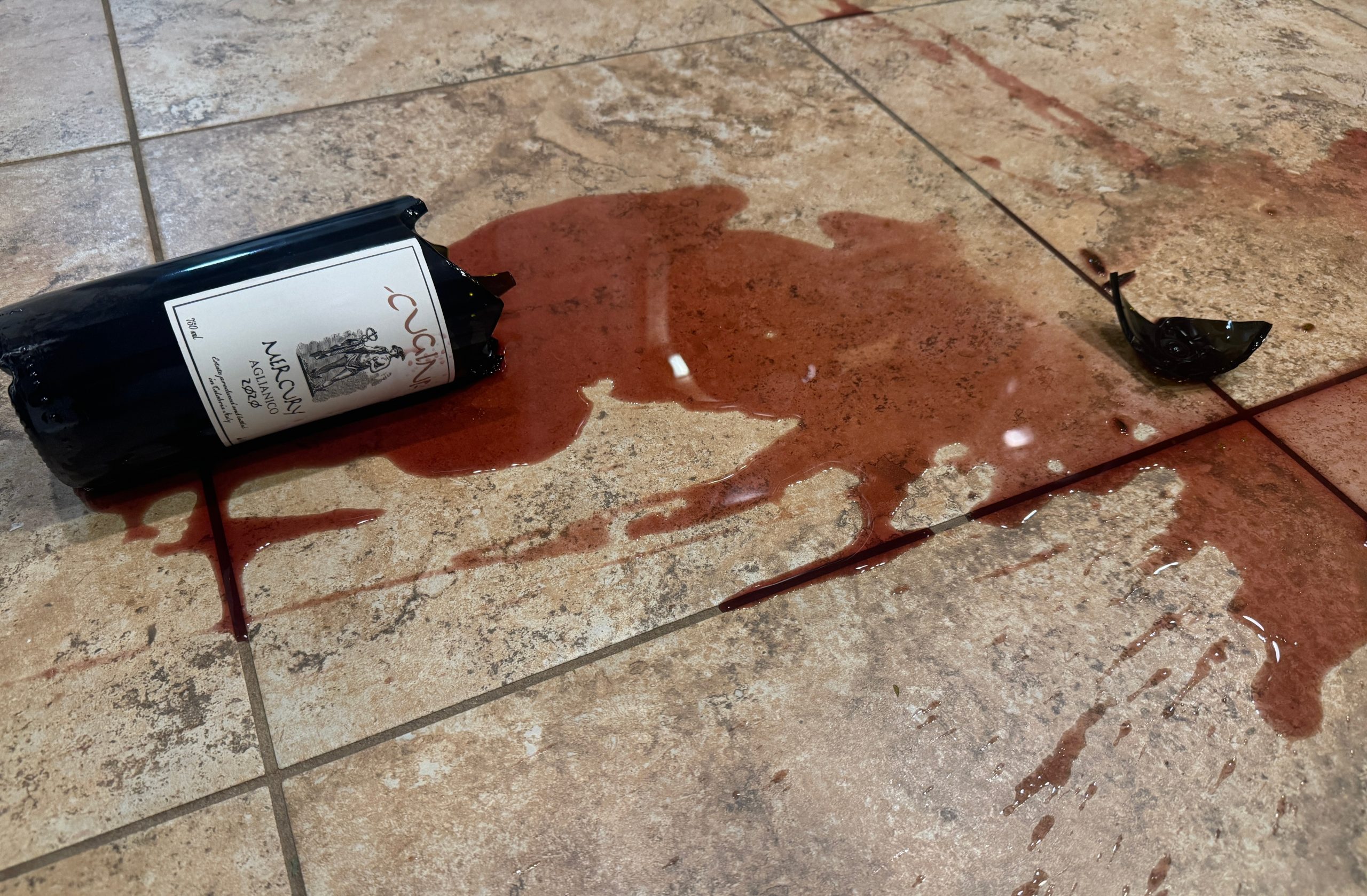
Cole’s mother stood with her back to him at the stove, the glass of red wine to her left, a giant steel pot to her right. The lights were dim. Along the counter sat a neat row of wine bottles and glasses. Cole realized only then that he hadn’t eaten anything since the day before. The smell in the kitchen was so good, and Cole’s hunger so sudden and deep, he thought he might pass out from the sheer proximity to food. He hovered in his mother’s doorway, waiting once again.
“Um,” he finally said.
Claudia Bernard turned around.
“Oh,” she said, almost like she had forgotten he was in the house.
Cole stepped towards the stove. Claudia Bernard moved aside so he could peer over the lid of the pot into a deep, bubbling red.
“My mother’s Bolognese,” she said, giving the pot a gentle stir.
“Can I have some?” Cole asked.
“It should really simmer for another hour,” Claudia Bernard said, but she gestured towards the round table at the center of the kitchen. Cole took a seat and dropped his backpack on the floor. After a minute, Claudia Bernard placed a plate of pasta and a glass of red wine in front of him. She picked up the cat and took a seat across the table.
Cole nearly groaned as he took the first bite. It was perhaps the most exquisite thing he had ever tasted—rich and sharp and unexpectedly sweet, the kind of deliciousness that hit like a drug, so intense that it almost reconfigured his sense of self. He twirled the noodles around the tines of the fork and slurped the sauce from each one through pursed lips. Claudia Bernard watched in silence as he ate. The fading light cast long shadows across the room. When he was finished, Cole pushed the plate aside and drank until his glass of wine was empty. The cat purred, its jade eyes trained on Cole.
“You seem like a smart boy,” Claudia Bernard finally said. “I take it you’ve read my work?”
“Some of it,” Cole replied.
“Then you know where I stand on all of this,” she said, gesturing vaguely.
“All of this?” Cole said.
“You, me, this whole thing.”
Cole could only assume that she meant being his mother.
Claudia Bernard picked up the wine bottle and refilled his glass.
“I was forty-three when I got pregnant,” she continued. “I didn’t even think it was possible to conceive at that stage in my life. I half-convinced myself that it was some kind of miracle, that I had a divine duty to see things through to the end. But as soon as I did, I knew I’d made a horrible mistake. I’d betrayed myself and everything I’ve ever believed in.”
She looked down at the animal on her lap and added, “It wasn’t personal.”
Cole scoffed defensively. He searched his brain for something to say but nothing came.
“Look, Cole, I know you’ve come a long way to see me,” Claudia Bernard said. “What exactly is it that you want?”
Cole reached into his backpack and pulled out his copy of The Ominous Shaft. Opening to the underlined page, Cole slid the book towards his mother. She widened her eyes and blinked at it, like she was looking at something from her past that she didn’t even know if she remembered. She picked a pair of reading glasses off the table and scanned the text, mouthing the lines under her breath.
The Mother will meet the Son and consume him, devouring him with the obliterative force of her embrace.
“Oh, Cole,” she said, when she was done. Her voice was disappointed, almost pitying. “Did you even finish the paragraph?”
She pushed the book back to him. Cole read on.
And at the end of this long and fruitless venture, this slow march towards fate, the Mother will meet the Son and consume him, devouring him with the obliterative force of her embrace.
Cole placed The Ominous Shaft back on the dinner table.
“I don’t understand,” he said.
Claudia Bernard stood up and the cat leapt from her lap. She laughed to herself as she walked to the counter and opened another bottle of wine.
“No one seems to, do they?” she said. “But that’s not my problem, is it?”
The doorbell chimed.
“Shit,” Claudia Bernard said. “The students. Grab some glasses, will you?”
Claudia Bernard snatched the freshly opened bottle of wine from the counter and hurried out of the kitchen. The cat followed. Cole trailed a few feet behind, clutching wine glass stems between his fingers. He waited in the darkened hallway as his mother rushed towards the door. The first of the seminar students had arrived and were standing in the entryway, cool night air blowing in. Two of them held cases of pink and yellow seltzer in their hands.
“Close the door!” Claudia Bernard shrieked. “Don’t let Dianna out! And put those fucking cans away. Tonight, we are drinking wine.”
Cole emerged from the hallway with the glasses crowded in his hands. He recognized one of the students as Evan, the handsome tour guide from that morning. He was wearing the same tweed blazer and loose blue jeans as before, except now his blazer was adorned with a nametag that said Simone.
“Bring those here,” Claudia Bernard said to Cole.
He began handing the students glasses, which Claudia Bernard then promptly filled.
“Hey, I recognize you,” Evan said. “You’re the kid who bailed on my tour earlier today.”
Claudia Bernard looked back and forth between Evan and Cole, as if put off by the fact that they knew each other.
“This is Cole,” she said curtly. “He’s visiting Tracker. We’re going to show him a good time.”
In The Ominous Shaft, Claudia Bernard praised the Dionysian. She believed something vital had been lost in culture when the logical, restrained Apollo prevailed over the ecstatic, primal Dionysus. Cole knew this, and so, it seemed, did her students, because they did as Claudia Bernard demanded that night: they drank. Cole drank, and so did Simone and Gloria and Audre and Emmeline and bell and Susan and Maya and Judith and Angela and Betty, names that belonged not to the students themselves but to their classroom avatars.
Cole stood in a corner with his wine glass in hand. The students had commandeered his mother’s living room with a sense of entitlement he would have found disrespectful if Claudia Bernard hadn’t so clearly welcomed it. They had sprawled out across his mother’s floor and piled themselves on her couch and armchairs, balancing heaping plates of Bolognese on their laps. Claudia Bernard walked proudly amongst them, filling up their glasses and nodding abstractedly as they spoke to her. They all called her by her first name, suggesting a closeness that Cole envied. By the end of the next hour, the students had consumed five bottles of wine and plunged into the liquor cabinet to bring out the gin, which they were now mixing with the lukewarm seltzers.
Claudia Bernard was the hot and frightening sun around which the entire party revolved. Her work, which Cole guessed most of her students would find distasteful and dated, was beside the point. The point was her. Around her students, Claudia Bernard seemed to simultaneously expand and shrivel. She became louder and brighter, at the same time that something inside of her seemed to sink in on itself, like the very thing that was giving her life was also slowly taking it away. She was drinking just as heavily as the twenty-year-olds in the room, and Cole thought he could see it making her unsteady on her feet.
As the night went on, the party grew. What had begun as a small gathering of ten seminar students ballooned to a party of fifteen, twenty, thirty. Cole assumed that the students had invited friends, and that Claudia Bernard, in her commitment to hedonism and her lax attitude towards campus decorum, was more than happy to accommodate. Someone turned off the lights and pushed the furniture against the walls. Evan—who, as far as Cole could tell, was the only boy in his mother’s seminar—put on Madonna’s Erotica.
As the opening club cover of “Fever” pumped through the room, Claudia Bernard pushed her way onto the dance floor. She began writhing slowly, swaying her hips and running her hands up and down her thighs. The room fell silent and still, watching her—in horror or enchantment, Cole couldn’t tell. Claudia Bernard threw back her head and bared her neck to the crowd, who contemplated it, contemplated all that blood coursing towards that brain.
The song went on and Claudia Bernard’s movements took on a more interpretative approach. She crouched and crooked her long, lanky arms towards the ceiling, towards some invisible light. She remained hunched there, bobbing up and down ever so slightly on her knees, as if energy was coming up through the ground and out through her outstretched fingertips. Cole saw a flash of Claudia Bernard’s former self, posing on the cover of The Ominous Shaft. Madonna sang, What a lovely way to burn.
“She’s so amazing,” a voice next to him whispered. Cole turned. A tall, bony girl was standing by his side. Her brown hair was cut to her chin, and she had the kind of tiny bangs that looked less like an aesthetic choice and more like a hairline issue. She wore a short floral dress, black tights, and a heavy canvas jacket. The corners of her lips were stained red, either from the windsor his mother’s Bolognese.
“I’m Melanie,” she said, then winced. “I mean, Betty.”
“As in Friedan?” Cole asked. He knew Betty Friedan—she was one of the only feminists they’d learned about in his high school history class.
“I wanted to be Catharine MacKinnon but Claudia threatened to kick me out if I was,” Betty continued. “Do you go to Tracker?”
“No.”
“How do you know Claudia, then?”
“I don’t,” Cole said.
Betty nodded, as if she didn’t quite hear him, and kept talking. Cole was drunk. It wasn’t his first time drinking alcohol, but Cole always wound up walking Mikayla home when she got too wasted and never drinking much himself. Now, the world was churning beneath his feet. Betty’s words seemed to come at him from a far off place. She was saying something about consent and carceral feminism, and how Claudia Bernard was a true radical because she didn’t care what anyone thought about her, she only cared about the work.
“I mean, what other professor would throw a party like this for her students?” Betty said. “Apparently, last semester, she got so fucked up at one of these that she passed out in the bathroom. I guess she went on some nonsense monologue about how she has a gay son named Sandro who lives in Ohio.”
“What?” Cole said.
Betty smiled.
“That’s all I know,” she said. “Do you want to dance?”
Before Cole could answer, Betty took his hand and pulled him onto the dance floor. Between the end of his mother’s performance and the start of the new song, the floor had filled. The living room was now seething with sweating bodies. Cole’s sense of time squirmed. He scanned the fray for his mother but she was nowhere to be found.
Betty pulled him close and parted his legs slightly with her knee. Cole put his hand on her shoulder, decided that was too high and put it on her hip, and then decided that was too low and settled on her waist, the gentle curve that widened to her hips. Madonna was singing, Go down, where it’s warm inside / Go down, where I cannot hide / Go down, where all life begins. Two students, who had earlier introduced themselves as Judith and Angela, were dancing next to them in a similar way, only slower, sort of out of step with the music, but in tune with something else Cole couldn’t hear and maybe couldn’t even understand, something totally internal to them.Cole tried to copy their rhythm. Betty seemed to like that, because she leaned in closer and started kissing his neck.
“You look just like her, you know,” Betty whispered into his ear, rubbing the side of her face against his neck.
Cole knew in that moment that he could probably go back to Betty’s place and sleep with her if he wanted to. As exciting as the prospect of having sex with a college girl would have seemed to him mere days ago, he didn’t want to, not now. Cole felt hot and panicky, drained of all desire, that same claustrophobic sensation of something tightening around his windpipe. He pushed Betty away and fumbled down the hallway towards the kitchen, grasping at his neck in an attempt to free it from whatever invisible confine was slowly contracting around it.
The kitchen was dark. Cole lurched towards the sink in search of water, but a pair of bodies was intertwined against the counter there, lit from behind by the moon’s white glow. Cole recognized the back of Evan’s tweed jacket. A pair of slender hands were wrapped around his head, long fingers digging into the dense curls of his brown hair. The moonlight illuminated the copy of The Ominous Shaft that Cole had left on the table.
Evan grunted slightly and lifted the body onto the counter. As his partner reangled, Cole saw that it was his mother. Her legs clutched around Evan, securing him closer to her. Evan was working his way down her body, kissing first her mouth and then her neck and then her chest. Cole again struggled to breathe. The invisible hand closed tightly around his neck.
If he didn’t leave, Cole thought, he would almost certainly die.
Claudia Bernard opened her eyes and her gaze caught Cole’s. She held it through the darkness, her eyes steady and bright, as if daring him to hold on for a moment longer.
Cole knocked into the kitchen chair as he grabbed his backpack off the floor. Heaving for breath that didn’t come, he ran out of the kitchen and through the living room, past the dance floor, and to the front door.
Dianna, his mother’s cat, sat in the entryway, her tail curled around her soft gray body. When Cole opened the door, she bolted outside, bursting across the lawn and disappearing into the blackness, as if she had never existed at all.
Cole followed her into the cold night, sucking air into his lungs. When he reached the gravel sidewalk, he turned around to face the house. Through the window, he could see the students dancing. They had ceased to be individual bodies and become one undulating mass.
Cole reached into his backpack and dug around until his hand hit something solid. He pulled out the Venus of Willendorf and tossed her up and down in his palm a few times, savoring her satisfying stone weight, before pulling his arm back as far as it would go.
Don’t aim, he thought. Command.
For the first time, Cole’s body listened to what his brain was telling it.
Claudia Bernard’s window shattered as he ran.
Cole wasn’t sure where he was going, but he ran until he was too tired to run anymore and then he walked. A light rain fell from the darkened sky, slowly soaking through his shoes to his socks. Cole’s car was still parked on the Tracker campus, but he’d forgotten where that was, and he was too drunk to drive anyway. He had no sense of time and place, but he vaguely understood, somewhere deep in his addled subconscious, that he was stumbling towards the highway, towards home. Not once but twice, Cole bent over and puked into the roadside grass, his vomit as red as blood. His phone was dead, which meant he couldn’t call his father, or Mikayla, or anyone else.
Night was beginning to lift by the time Cole made it to the highway, the soaring redwoods emerging through the misty shadows. He walked along the road’s shoulder for what seemed like miles. He knew his drunkenness was fading when he became aware of the frigid ache in his feet.
A car slowed down behind him, bathing the road in a white glare. Cole dropped into the ditch lining the road to let it pass. The car slowed further. For a brief moment, Cole thought that it was his mother, coming to find him at last.
“What the shit are you doing?” a voice called from the front seat of a mint green Ford.
Cole turned around. It was Jan, the woman from the Fortuna Inn.
“Get in,” she said. “You’re going to get yourself killed.”
Cole didn’t argue. He climbed out of the ditch and into the passenger seat of the car and let Jan take him wherever it was she was going, which, as it turned out, was just five minutes down the road, back to the Fortuna Inn.
“What happened, son?” she asked, as she parked the car.
Cole began to cry, big sputtering sobs so overpowering that his entire body shook. When Jan reached out to him, Cole collapsed into the softness of her body, letting the dense smokiness emanating from her engulf and lull him.
“It’s alright, baby,” she said, rubbing her hands down his back. “It’s alright.”
Once his weeping had subsided, Jan walked him, like an injured athlete, to the pink plastic chairs sitting on the patchy lawn between the highway and motel. Cole was still sobbing, but his cries were softer now, coming out in little chirps, like a baby bird. The cars driving by sounded like gently crashing ocean waves. Cole shivered in the early morning cold.
Without a word, Jan disappeared briefly and returned with a blanket, two mugs of coffee, and the same type of dismal sandwich she’d brought him the night before. Cole wrapped himself in the blanket and took the sandwich and steaming mug. The coffee tasted grainy and bitter.
“Good boy,” Jan said.
The sky was brightening now, softening into the muted pink of a kitten’s nose. Mist clung to the branches of the trees across the highway. Jan studied them, looking untroubled and at peace. Cole picked up the plate and took a bite of the sandwich. It tasted smoky and stale. He swallowed anyway. It was exactly what he needed.
As he chewed, Cole remembered the copy of The Ominous Shaft that he’d left on his mother’s table, marooned in that brilliant shaft of moonlight. He had the urge to go back for it. He let the urge pass. This felt like wisdom.
Why is the act of painting one’s face so charged with gendered implications? How might makeup smear the lines drawn between “feminine” and “masculine”? And what can drag culture teach all of us about the role of artifice—and art—in constructing identity?
Although our books differ in genre and scope, they shimmer with striking similarities. Montesanti’s Drag Thing is a memoir by a millennial writer raised in Michigan and Alaska; G’Sell’s Lipstick is cultural criticism written by an author about a decade older. But a quick glance at the covers reveal the books’ obvious connection: makeup, glam, and the undeniable pleasure of self-adornment.
An ode to alternative drag culture, although not without forays into the mainstream, Drag Thing explores Montesanti’s mental health crisis and how it becomes entangled with her onstage persona. Starting out as a drag king, she soon becomes a “drag thing”—a performer who defies gendered classification. Set against a backdrop of increasing danger for queer and trans people, Drag Thing is both high camp and a rallying cry for building queer community as a form of resistance.
Rather than a traditional history of the object, Lipstick is a roving exploration of gender, sexuality, power, and performance—from MAC to Glossier, from Marilyn Monroe to Chappell Roan. Crucially, the book includes the voices of women (cis and trans) and nonbinary folks interviewed by the author in 2024. The final chapter, “A Femme-Friendlier Future?”, honors the ways in which changing attitudes toward lipstick reflect larger generational shifts.
Both books aim for multi-faceted—and glittery—forms of truth-telling. We conversed online to discuss our books, the power of radical reinvention, and the magic that comes with it.
Eileen G’Sell: You describe the art of drag as an intoxicating blend of “grandiosity . . . exaggerated personas too large to be contained by any conventional human body . . . and sometimes offensive self-confidence and self-admiration.” As you experimented with being a “drag king” versus a “drag thing,” how did your approach to painting the face evolve?
Gabe Montesanti: I am surprised how suddenly my evolution from “king” to “thing” happened. When I started performing as a king, I was painting my face with three layers of concealer, followed by bronzer to accentuate my temples and widen my nose, and I always topped it off with an eyeliner mustache. At that point, before I discovered “thingness,” I was aiming for some version of a working-class, heterosexual version of Fender Bender. All it took was one trip to Mimi’s Beauty Supply and I was an uncategorizable “drag thing.” There were several big changes to my wardrobe, and some small changes to my face like fake eyelashes, but the most significant change was the lipstick.
EG: Really? That’s fascinating. Lipstick really can be identity-reconfiguring. It just changes the way your face looks more than anything else.
GM: I put black lipstick on my lips and a pink matte lipstick mustache that perfectly matched my 14 dollar wig. Maybe if I had read your book around this time, Eileen, I would have had some clue why lipstick was a portal for me into the complicated territory of “thingness.” It wrenched me into another version of a performative self: one that craved whimsy and reinvention and despised classification.
Lipstick was a portal for me into the complicated territory of ‘thingness.’
EG: For both of our books, the ability to visually reinvent yourself is key—which can be a real challenge when it comes to doing justice to it in writing. What motivated you to include your own illustrations?
GM: Drag Thing is a book about self-invention, self-creation, and art. I had two partial versions of the manuscript. One was a traditional, full-text version, and one had a watercolor on every page and a small amount of text. Arsenal Pulp Press bought the book, and together, we designed a hybrid version that worked better than both versions I had previously: 41 watercolors placed only where they really counted.
EG: In your hand-drawn images, many of the figures present two faces or silhouettes. Given that your book candidly explores your experience with bi-polar disorder, was that double-face motif intended as a gesture to what you were going through?
GM: I never thought that I was drawing people with two faces to represent the poles of my disorder. I was just drawing, which evolved into this somewhat cubist style soon after I was diagnosed with bipolar disorder. But I still sometimes flip through the notebooks from group therapy sessions when I was crawling out of my skin with mania. The therapist gave me colored pencils, hoping I could chill out, or at least not distract the other people who were talking. I drew anything that came into my buzzing mind, but the double faces were a constant motif. Only about a year later during COVID lockdown when I was doing a virtual art group with some roller derby friends did I realize that my faces might be trying to tell me something.
EG: I love how openly your book, both in prose and in image, questions not only gender essentialism, but the idea that sexual orientation itself is fixed. You write of a drag king who took joy in complicating “queer girl desire” through performative maleness onstage. In the process of writing, did you find yourself encountering any new forms of desire—for the queer subjects you write about or for yourself?
GM: The first king I witnessed was in Houston, at age 19, when I had recently come out and was learning more about drag history. That king was sexy, and I couldn’t take my eyes off of him. But like Madonna for you, he also opened up an entire new realm of possibilities for who I was becoming. I guess you could say I desire myself when I don’t doubt myself. That’s a big theme in the book: selfhood. Since Drag Thing opens at an emotional low, I naturally encountered a lot of queer people in the drag scene who fully embodied what I thought of as a full and complete self, or who knew exactly who they were when they stepped into their persona. Those were the people I desired: to be with or to become, especially in the beginning.
I desire myself when I don’t doubt myself.
EG: Like your book, if more subtly, Lipstick traces an attraction to self-adornment and performance to a working-class, Catholic, Midwestern background—where, in my case at least, bright lipstick felt rebellious rather than capitulatory to patriarchy. Your book engages more directly with family trauma, and how drag helped you reinvent yourself in light of estrangement. Did you feel closer to your family in writing about them so closely? Or was it more a way of carving out a space for yourself outside their conservative, homophobic parameters?
GM: I was once in a poetry class with francine j. harris, and we were talking about how the only way to write about a hole is by describing the dirt left around the hole. How else can one possibly write about nothingness? I guess I felt the same way as I was trying to write about my family. All I had was nearly 10-year-old information to try to describe the grief of an absence. I’m not sure if that made me feel closer to them or further away. What I do know is that I had no idea that so many forms of grief would surface in this book when I started it. Now that I’ve written two books that required full immersion, I have realized that’s just part of the gig. I can’t go in thinking I know where I’ll end up or what the themes will be. I just have to live it . . . and take a lot of notes.
EG: In a way, memoir might prove its own sort of drag. What are the challenges in representing yourself in such a pivotal and creative—but also torturous—time of your life? How does the art of writing about queer identity, joy, and pain compare to performing in front of a live audience?
GM: I definitely believe memoir is a sort of drag. In workshops, I was taught not to refer to myself or the writer as “I” or “you,” but as “the narrator” or, even more fittingly, “the persona”—a way of acknowledging that the persona depicted on the page is just a description of the you who has a body. One of the most challenging parts of representing myself during the time depicted in Drag Thing is that it is incredibly vulnerable, but so is drag. It takes nerve to be a writer, knowing that anything could happen once those stage lights flicker on and the curtains open.
Some of my favorite moments in Lipstick were where you touched on how a painted lip crossed into drag or gender deviance, commenting, “Bowie’s and Poison’s heterosexuality [was] intact; Boy George’s and RuPaul’s homosexuality inferable.” Many drag artists would agree that putting on makeup can be a form of art, not conformity to fashion or method of self-improvement. What are the most significant examples of this distinction between art and fashion or self-improvement that you’ve witnessed?
I have no interest in appearing ‘naturally’ beautiful in a feminine way. Artifice is it for me.
EG: Part of why I wanted to write about lipstick specifically is that it has long been such a conspicuous signifier of femininity—so much so that even when cis, straight men might dally with nail polish or eyeliner these days, it’s unusual for them to paint their lips. But at the same time, as is the case with drag especially, challenging the typical hyper-femininity affiliated with bright lip color can be a source of play.
In my second chapter, “Painted Ladies and Painted Men,” I build off philosopher Becca Rothfeld’s argument that, as she put it in her essay collection All Things Are Too Small, “the aesthetic resides in excess and aimlessness, in wants that spill far beyond the narrow bounds of need.” To address your question about art versus “self-improvement,” when a person—usually a woman—feels the need to paint her lips to perk up her femininity, then at best it can be a creative take on a practical goal, not art. Lipstick is art when the goal and effect is to be excessive—even disruptive—for its own sake. That’s why lipstick often feels the most “artful” outside the context of cishetero femininity.
GM: I totally see that excess and disruptiveness in drag. Have you ever seen yourself, as a cis woman, as a kind of drag artist?
EG:I have never performed in drag onstage, but I’ve long embraced unexpected, excessively bright lipstick shades as a way of denaturalizing my own femininity. The older I get, the more it feels aberrant. It’s my own everyday micro-drag, I suppose. I have no interest in appearing “naturally” beautiful in a feminine way; artifice is it for me. And as I write in the book, looking fake feels more honest.
GM: I love that. As a person who has rejected lipstick at various points of her life and also embraced it, I resonated with the paragraph in which you asserted your love of lipstick while also asking the question, “Was I, like millions of other women, unwittingly participating in my own subjugation by painting my pucker a piquant pink?” You immediately answer that question. Of course not. But then came this line: “I’m inclined to see vanity as neither vice nor virtue . . . But just because something isn’t inherently good or bad doesn’t mean it can’t lead to good and bad outcomes for different people.” Why did you choose lipstick out of all the cosmetics that are perhaps neither vice nor virtue?
EG: Quite simply, because lipstick transforms the face the most overtly and the most efficiently. It’s also the beauty tool conflated the most with femininity, which is why phrases like “lipstick lesbian” or “lipstick feminist” even exist and conjure up a sense of inherent contradiction—even though, as I argue in the book, they needn’t!
Self-adornment has always felt risky, erotic, and daring.
GM: Lipstick was the key ingredient in transforming my aesthetic from “king” to “thing”—unlocking that discovery was really important for both of us. You mention the pressure to adopt a more subdued style, but say, “I’d rather be a gadfly in a glittery dress (and a matching lip) than conform to what feels bland and predictable.” I totally agree. You say in the acknowledgments that almost 100 people contributed to a lipstick questionnaire and made themselves available for conversation and follow-up questions. How did that process of collecting data change your own lipstick habits? I’m thinking of your interview with Smitha, a Gen Z woman who witnessed slut-shaming and stigmatization of girls who wore bright lipstick in middle school.
EG: A woman from an older generation than Smitha might have felt judgmental or protective of a young teen wearing lipstick. Collecting so many stories from women and nonbinary people across generations threw into relief what I already suspected: Attitudes toward self-objectification and self-adornment are predicated largely on when and how you grew up. If anything, writing the book made me feel more empathetic—both to women older than me who experienced more overt forms of sexism and the strict beauty standards that usually came with them, and younger women who don’t necessarily see beauty culture as fraught or sexist at all.
Writing the book also made me feel more queer in a lot of ways. My fascination with lipstick, fashion, color, excess—none of it really felt attached to attracting a male partner at any point in my life. If anything, my flamboyance has been a turn-off with straight men! Self-adornment has always felt risky, erotic, and daring in ways that I think are linked to my own attraction to both the hyper-femme and hyper-masc. I grew up fishing with my uncles and wrapped the worms around my fingers as rings. Who does that?
GM: Mad respect for finding the bling anywhere you could! You were way more imaginative than me with the worms. I loved seeing photographs of you as a girl—in addition to the images of pop culture icons, suffragettes, and historical advertisements. What was the selection process like for the visuals? And, out of all the questionnaire answers you received, how did you pick the handwritten ones published in the book?
EG: Securing image rights was mighty difficult, but imperative for representing key lipstick icons like Grace Jones and kd lang, the first openly lesbian brand ambassador for a lipstick. With both the images and handwritten testimonies, I chose those that conveyed a narrative and identity that was entirely not mine. I’m a pasty white, femme-presenting xennial. There is no reason to include images of other women in this category—or close to it—if my goal is to reflect the fabulous spectrum of lipsticked faces over the last half century. As far as the handwritten stories, they are separated into generations, to reflect a salient lipstick memory for one particular woman (some cis, some trans, some gender-fluid). Handwriting is another means of visually reflecting both generational and gendered expectations and norms—which is why I wanted to include it. It’s also very personal, even vulnerable, as arguably every woman’s relationship to self adornment is at some point.
In every speech kid, I see a version of myself that I love with frightening intensity: 14 years old, a closeted freshman at Liberty High School with long curly Weird Al Yankovic hair, thick glasses, blisteringly cheap dress shoes, and something to say.
It was the second week of the new millennium. The Columbine massacre was less than a year old, its aftershocks still rumbling in my hometown, Colorado Springs. That Columbine High School was still holding its annual speech-and-debate tournament struck my whole team as unlikely and courageous, a tribute to the value of our shared nerdy passion. Everyone had signed up to compete in at least one category, motivated by reverence, ambition, and, at least in my case, morbid curiosity. I imagined inspecting the walls for bullet holes and the corners of the halls for spent casings, a different sort of forensics.
This line of thinking was a distraction, though. Mostly, I wanted to win. Columbine was a Denver tourney, and Denver tourneys were a big deal: swanky, prestigious, competitive. I had never been to one, nor had I ever competed in this category, Original Oratory. Mostly, I had done Interpretation of Humorous Literature, putting on a little one-man show called “Bloodless Macbeth: A Humorous Reading or Skit.” It didn’t know exactly what it was, and neither did I, but I did okay with it. I placed third at a couple of novice tourneys, got Honorable Mentions at two varsity meets, but had yet to distinguish myself among the big dogs. Original Oratory, I thought, might be my chance.
The Friday night before the tournament, I went down to the basement in my black pleather loafers to practice my speech. At the bottom of the stairs, an unplugged treadmill gathered dust, its belt stained from our dog Max’s pee from when my older brother, Mike, tried to make him run. The basement was Mike’s territory. His windowless bedroom occupied one corner, and a mess of his unfinished schoolwork, football equipment, and dime bags covered the green baize of our secondhand coin-op gulley table. To my great relief, Mike wasn’t home, leaving me free to rehearse in the empty family room.
I laid all five pages of my speech on the pool table beside Mike’s bong and set the timer on my digital watch. Despite the five A.M. wakeup call, I stayed up till at least midnight delivering the speech over and over to the basement walls. When Mike fought with Mom, he would sling the Bakelite balls into the plaster; I used the dents to practice my eye contact. My speech would be judged on thesis, evidence, word choice, and organization, but delivery was the most important, I knew.
Here’s what I remember of the speech, 25 years later:
The Gift of Individuality
Ah, individuality. Perhaps no gift is more precious. But wait a minute! Why do we treat it like a sweater from that aunt nobody likes?! [Pause for laughter.] Our individuality should be recognized for its value, both monetary and otherwise.
[walk left]
Individuality can be quite profitable. Take Macy Gray, for instance, the chanteuse whose inimitable, scratchy voice made her the subject of mockery as a kid [source: VH1, Before They Were Stars]. Or what about Tyra Banks, top modèle, whose classmates would make fun of her beanpole body and enormous forehead [ibid.]? They capitalized on what set them apart as individuals, and did it ever pay off.
[walk right]
Individuality can also help you resist people who want to take your money. I’m sure you’ve seen those horrible GAP commercials where a bunch of expressionless oatmeal-colored models sing Donovan’s “Mellow Yellow” and then the screen says “Everybody in cords”? If you asked the average high schooler their opinion on school uniforms, 99 percent would probably say no way, Jose—because they want to “express themselves.” But do they really? Or do they just want to wear the uniform worn by the majority and enforced by corporate masterminds just trying to make another buck? As James Frank Dobie put it, “Conform and be dull.”
But conformity doesn’t just make you boring and take your money. [walk toward audience]
It takes your very soul, as exemplified in the poem “The Man in the Glass,” by Anonymous:
You can fool the whole world down the pathway of years
And get pats on the back as you pass
But the final result will be heartache and tears
If you’ve cheated the man in the glass.
[return to center]
In conclusion: a metaphor:
A butterfly flutters toward a soothing white light. All the other bugs are doing it. Then: bzzzzzzzzzzzzzzzzzzzzzzzzzzzzzzzzzzzt [convulsions]. The once beautiful butterfly has become a fuming, indistinguishable corpse underneath a bug zapper. Don’t be like the butterfly who flew too close to the light. Revel in your individuality. Celebrate your true identity. And, as Fiona Apple so eloquently put it at the 1997 MTV Video Music Awards, “Go as yourself!”
The real thing was better, I promise.
It had to be memorized, and it had to be under 10 minutes and 15 seconds; otherwise, I could not be ranked first in the round. By the time I finally went to bed, it clocked in around 10:10. It wasn’t perfect, but I slept with the satisfaction that I had authored it. It was complete, original, and mine.
When my alarm screamed me awake at five A.M., I put on my not-altogether-very-formal tournament garb: an orangey plaid button-down tucked into wheat-colored corduroys fastened with a brown web belt that clashed with my black loafers. No blazer, no tie. I scarfed a bowl of Great Grains, threw on my thrifted houndstooth overcoat and backpack, hopped into a teammate’s car, and boarded the District 20 schoolbus idling in a Ramada Inn parking lot, packed full of teens from four different high schools, all of them in blazers, most of them in ties, spewing exhaust into the freezing morning air. The sound of my speech reciting itself in my head drowned out whatever was on the radio.
At the heart of every speech kid is a conflict between competition and care.
When I remember forensics, I picture the Columbine cafeteria on a Saturday morning, suddenly and completely taken over by teenagers reciting their speeches to the walls between piles of backpacks and snacks and good-luck stuffed animals and Rubbermaid tubs of evidence for cross-examination debate, waiting for the nine A.M. Round One postings, which they will scan for their speaker numbers and disperse, antlike, to their sections’ designated classrooms, where they will each speak, clap for each other, and hope for the One, a digit their judge marks on a ballot designating them as the best, the funniest, the most eloquent.
At the heart of every speech kid is a conflict between competition and care. Their world runs on ratings, rankings, ballots, and trophies. They disparage rivals who break to semis despite the corniness of their interpretation of ’night Mother or the shallowness of their views of South American trade policy. And yet, of the thousands of students in their high schools, they alone have read ’night Mother or have anything to say about South American trade policy. They care about clarity and storytelling and connection. They care about foreign and domestic policy, utilitarianism versus altruism, definition versus evaluation, comedy versus tragedy. They care about domestic violence, terminal illness, genocide, and structural racism. Most of all, they care about their teammates. They melt into little business-casual cuddle puddles on the cafeteria floors. They watch each other’s final rounds and applaud raucously at the awards ceremonies often beginning well past nine P.M. They share hotel rooms and bus seats and secrets. They cry into each other’s shoulder pads when they don’t break to semis or finals or nationals. They know the depths of this sorrow runs deeper than this one exclusion.
Around the time I turned 11 or 12, Mike started calling me his little sister. He was disgusted by my soft, unathletic body, my love of jigsaw puzzles, my belief that it was past time our country had a woman president. He and his handsome friends would corner me at the bus stop and squirt lemonade onto my glasses. Eventually, I became too inured to wipe the syrup off the lenses. I was far from popular in middle school, but I was mostly left alone. My only real bullies were my brother’s gang, who, unfortunately, followed me home. My bedroom adjoined the driveway, where they would play shirts-and-skins two-on-two with the hoop mounted above my mom’s garage and shout taunts through my window whenever they caught me watching. “Like what you see?” some shirtless Justin would ask, tracing his nipple until I grew so full of rage at him and myself that I punched through the screen.
When I saw pictures of Eric Harris and Dylan Klebold, I saw my brother and his friends. They dressed similarly, backward baseball caps and Old Navy plaids unbuttoned over Unionbay t-shirts. I thought about their delight in cruelty, their love of first-person shooters. Their smiles were sneers. I was glad they were dead. I’d wished I’d killed them myself.
But then I thought about punching through that screen. Or the time I lost it in the back of the R.V. on the way to my grandparents’ 50th wedding anniversary, whaling on Mike in a sort of fugue state, snapped by some forgotten jab. I knew what it was to hold something unspeakable, to be pushed too far.
My speaker number at Columbine was 26B, one of about 70 Original Orators. I would give my speech in three prelim rounds for three different judges as part of three different groups of five other speakers, some of them very good. Luckily, tournament rules kept me from competing in the same prelim section as 26A, Maria Bennett, a Liberty junior whose speech was about persevering through the adversity of a dance injury and nurturing her other talents. She had placed in every varsity tournament that season, and she was poised to continue her streak. Each judge would rank the group of six from one (the best) to one of three fours and assign us speaker points from 50 to 35. The six orators with the lowest cumulative ranks at the end of the prelims, with ties broken by speaker points, would advance to Finals.
Round One was in a sunny room with Spanish conjugation posters. I wrote my name, code, and speech title on the whiteboard with a black dry-erase marker. First in the speaker order, I took my place at the front of the classroom and got it out of the way, managing not to stumble once for the entirety of the speech. While I spoke, I watched the middle-aged white judge give time signals—three fingers for seven minutes elapsed, two for eight, one for nine. My speech ended right when he gave a fist for ten minutes. I soaked in the polite applause and sat down to enjoy the rest of the speeches. One of them was an incredibly moving story of the speaker’s childhood in Vietnam, the legacy of the French and American wars there and how they affected her family. She won the round, I was certain.
Round Two was in a choir room with tiered seating and no desks. The first speaker, a greasy-haired white boy, clutched a few sheets of notebook paper and droned a speech in favor of the legalization of marijuana that he had very obviously written in green magic marker. Everyone else had their speeches memorized. He seemed to be competing under duress. It was as if my brother had been conscripted onto the forensics team as part of some community service. He saw speech-and-debate as he saw me: derisively feminine. He bragged about the time he improvised a mock Poetry Interp performance in his English class after a female classmate had practiced her competitive interpretation of “Annabel Lee” for extra credit. “I can get up and pretend to be tragic, too,” he said after she ended her piece. Then why don’t you? his teacher asked, expecting, probably, for him to either chicken out or make an ass of himself. Little did she know how much he enjoyed the latter. He got up in front of the class and free-styled some lines about wilting flowers and bittersweet kisses, punctuating each sentence with a sweeping arm gesture or arabesque. To hear him tell it, the class’s applause after he took his final bow was deafening—and I didn’t doubt him. Had my brother had any actual interest in performing, he would’ve kicked ass at Humorous Interp. I told him as much, not to recruit him, but to corner him into some sort of appreciation for what I loved. If it worked, he kept it to himself.
I knew what it was to hold something unspeakable, to be pushed too far.
Between rounds, I cruised the halls of Columbine, the pleather of my loafers digging into my heels. The library was still under renovation, paint tarps and plywood panels marring the face of the school’s otherwise spotless, airport-like interior, its almost Grecian color scheme of light blue and silver. I didn’t know a school could be this beautiful—how wide and clean and sunny its hallways, how spacious and modern its restrooms, how posh its jewelry-making studio! I had only ever competed in tournaments in Colorado Springs and farther south in Pueblo. Pueblo’s high schools seemed out of the ’50s; Colorado Springs’s, the ’80s. Columbine felt like it came from the future.
Round Three must have been in an art history room, for there was a poster of Van Gogh’s Café Terrace at Night, unless, I thought, this school also taught Dutch, which wouldn’t have surprised me.
It was in this round that one of the speeches finally mentioned the massacre. I had expected more of this and was pleasantly surprised by my competitors’ reticence on the topic. I couldn’t quite suss out what this speaker, let’s call her 14C, was arguing by bringing it up, but the rhetorical gesture was, essentially, wow. “Look where we’re sitting today,” 14C effused. “Doesn’t that say it all?”
I was confident I placed higher than 14C—her and Marijuana Boy—but the rest was up in the air. My respect for my competitors grew with every round. They were sharply dressed, smart, funny, sociable kids, most of them older than me and most of them girls, juniors and seniors at their schools all over the Front Range. They spoke eloquently about ideas I’d only ever heard discussed on 20/20: race, consumerism, environmental peril, foreign policy, workaholism, how to live a life well lived. Their brightness and sincerity were better responses to the shooting than any memorial I could have imagined.
By the end of Round Three, about five P.M.., the sun had mostly set over the Rockies. Satisfied but pessimistic about my hopes for advancement to Finals, I walked down the huge set of stairs to the cafeteria, which looked like a mall food court with all the storefronts grated. I gravitated back to my team’s tables, empty for now. Everyone was off in their own little worlds, finishing the prelims of their own little categories: Extemporaneous Speaking, Dramatic Interp, Lincoln-Douglas Debate. In the cafeteria men’s room, I adjusted my web belt, pushed my hair out of my eyes, breathed on my glasses and untucked my plaid to wipe the lenses. I bought a slice of cheese pizza from the Snacks table, chomped on some chocolate-covered espresso beans, and waited for Finals to be posted. Who knows? I thought. Stranger things had happened.
The Thanksgiving before the tournament, Mike got me drunk for the first time. My mother and soon-to-be stepfather were off on vacation with his family in Durango, leaving us full reign over her house, where it was Mike’s wont to throw keggers in her absence. In the empty garage, surrounded by a circle of dozens of Liberty football players and cheerleaders and burnouts and high-achieving stoners, I downed a foamy red Solo cup of Fat Tire, relaxing my throat as Mike instructed so the beer could pass freely into my body. His cheering when I dropped the empty cup was more intoxicating than the alcohol. His friends chanted James, James, James, and I felt like I did onstage at the end of a forensics tournament: accomplished, included, free.
What I didn’t want to admit about my brother at the time was how much I loved him, how much I wanted to be him. He was beautiful in high school, a varsity offensive lineman, well-built and mischievously handsome. He did not have my scoliosis; his acne was less severe than mine; his hair was straight, ruly, center-parted, mahogany brown. I would overhear girls in my class giggling about him during study hall—perhaps they didn’t know he was my brother, our last name being so common and our bodies differing so markedly. Butin that garage, for the first time in years, I felt like his brother, not just in blood but in spirit.
Later that night, after three more cups, I was ready to barf. Mike taught me how to do this, too. Bent over Mom’s kitchen sink, he stuck his first two fingers instructively down his throat and regurgitated the better part of the Thanksgiving dinner we’d eaten together at our father and stepmother’s house that afternoon. Mike ran the tap, flicked on the garbage disposal, and left the sink so I could take my turn.
I woke up Friday on the living room couch next to a cluster of half-empties on the coffee table and my brother’s handsome Iranian friend Arya, who had passed out shirtless on our fireplace. “The brick feels good,” Arya explained. “Cold. Nothing worse than hot when you’re hungover. And nothing better than hair of the dog.” I looked over at Max, our black Lab mix, with a touch of concern before Arya picked up a Solo cup with an inch of ale flattening at the bottom and downed it like a shot. In the center of his chest was a deep concavity. I imagined filling that concavity with beer, lapping it up like Max did the night before when my brother filled a frisbee and set it on the ground of the basement like a water dish. Max got so drunk he started headbutting the closed door of my brother’s bedroom, desperate for the dark and quiet. I laughed. I couldn’t help but laugh.
Arya picked up another half-empty and handed it to me. “Down the hatch,” he ordered, and I obeyed.
Lying down in a pile of bookbags, blankets, and peacoats in my team’s corner of the Columbine cafeteria, unshod, waiting for Finals to post, I took a moment to appreciate that I was coming of age at the dawn of a new millennium. The VHS was giving way to the DVD. The 13-note Nokia ringtone had invaded every public space. Britney Spears had declared she was “not that innocent.” I, too, was changing.
In that garage, for the first time in years, I felt like his brother, not just in blood but in spirit.
I’d been growing my hair out since the beginning of freshman year, when I’d been cast as Riff, a guitar-toting beatnik in the fall musical, The Nifty Fifties. At the first read-through, I hammed up every syllable of dialogue like Ned Flanders’ dad. In rehearsals, I belted all four lines of my solo in “Rebel witha Cause.” One of two freshman given a speaking role, I got taken in by the theatre and forensics upperclassmen as a sort of pet. By January, my frizzy pouf had grown to a weighty, chestnut, ringleted mane I let my new friends run their fingers through.
One of those upperclassmen was Matt Lira, a senior and speech team captain who T.A.’d for my Honors Algebra II class and took me under his wing. Matt competed in Foreign Extemp, the most hardcore of the speech categories. Extempers spent all tourney in the school library (or, in this case, the teacher’s lounge); for each round, they drew three choices from a pool of prompts, picked the one they wanted to speak on, and then had 30 minutes to research, outline, and rehearse a seven-minute speech, which they finally recited to a judge. “How will Ecuador’s economy react to the transition to the dollar?” “What is the future of English foxhunting?” That kind of thing. The best extempers’ delivery sounded completely fluid, as if they had written, revised, and memorized their speeches months in advance. Matt was one of those extempers. He’d gone to Nationals twice. He told me we were going together that summer.
Maria Bennett and Matt loathed each other—something to do with a friend of Maria’s whom Matt had spurned—and, because I had become Matt’s protégé, Maria was not too fond of me, either.
Around 6:30 P.M., when the O.O. Final Round roster was finally taped to the big plate-glass windows of the cafeteria, it was Maria who joined the mad huddle to scan the six finalists’ codes while I lay on the team coat pile and watched, too unsure of my odds to risk the disappointment. For about a minute, the crowd jockeyed for view, the din of the cafeteria punctuated every few seconds by a squeal or “Yes!” Maria’s voice was not among the squealers. She shouldered through the others and limped back to our team’s outpost.
“Check the posting,” she said, taking off her heels, her eyes refusing to meet my own.
By the time I made it up to the little white sheet of computer paper, the crowd had dispersed. Fifth on the list was a 26—and a B next to the number.
I stared at it for a while. At first, I still thought it was Maria who’d made the cut and I had misremembered my own code. Maybe her disappointment and shoe-doffing were an elaborate ruse designed to humble me. But it didn’t take long to set in: 26B was me. It had been all along. And there I was, in Finals, at Columbine, with a speech I’d never competed with, never even rehearsed with our coach.
The elation of this news was tempered by the realization that I had work to do, and soon—Finals started at 6:45. I noted the room number, found Matt and threw my arms around him (he’d made Extemp finals, of course), slipped my loafers back over my raw ankles, and offered Maria some breezy condolence before I clambered up the stairwell to give my speech. From the balcony above the cafeteria, I heard her let out a deep, primal “GODDAMMIT.” And I didn’t blame her.
I don’t have the ballots anymore, but I do remember my rankings for each of the prelims: one, two, two. A cume of five, just low enough to make the final cut. Maria got a one, two, three. There’s something sweetly sad about my retention of these numbers, evidence of a worth I still struggle to internalize. The facts are still so meaningful, so helpfully determinate of how good I was and, perhaps, still am.
It was around this time that I began to realize my memory made me beautiful in a way my brother’s social skills and athletic prowess and good looks made him beautiful. I had no trouble learning my lines for the Nifty Fifties, off-book by the first read-through. I soaked up the vocab lists for my French classes like a nice crouton in a crock of onion soup. And beyond words, I remembered feelings. I remembered the rules of the gameshows my brother would set up for me in the basement of the house dad and mom shared before the divorce, throwing paper airplanes at rows of toys worth 10, 20, or 50 points the farther they were from the staircase. I remembered him playing host, like Mike O’Malley on Nickelodeon’s Get the Picture. “I wrote this song,” he sang to me in the middle of the show, “to make you hap-peeee!” And I remember feeling very, very happy.
But I couldn’t remember feeling anything about Columbine—the shooting, not the tournament. Or, rather, I could remember feeling nothing: a certain nothing, an emptiness I have come to know intimately over the course of the 574 school shootings since April 20, 1999. It’s an emptiness roughly the shape of the cave in Arya’s chest. It’s an emptiness I have filled with beer and smoke and forensics scores from 25 years ago. It is beautiful in its inwardness, its frailty. And it’s never going away.
The final round was, oddly, in the smallest room of any of the four rounds I competed in that day, a windowless nondescript mathematical-seeming room tucked away in some corner of the second floor. Of all the categories in speech-and-debate world, Original Oratory has among the most competitors but among the fewest observers. They flock in droves to final rounds in Humor or Drama Interp—people want to laugh, to cry. O.O., at its best, makes you go huh!, a sensation with a small cadre of appreciators. Such a cadre filled this modest classroom, making it seem even smaller than it was.
I was the fifth speaker of six in the final round and the only boy, including the panel of three judges. All six speakers were white. The judges took their time penciling in our names, speaker numbers, and speech titles in their packet of ballots before the oldest judge finally called the room to order with a round of applause for the finalists for advancing. She identified which of the judges would be giving time signals, the woman seated farthest in the back, and the round began.
The first speaker was a bob-haired, pants-suited gal I’d had in my first round. She was great—her speech had to do with not wasting too much time at work and spending more time with your family. “You can’t take it with you,” basically, was her thesis. She had the warm, professional cadence of a teenage Diane Sawyer. I felt proud to see her there, proud to be among such good company.
The third speaker was a tall, athletic blonde in a gray skirt-suit. Her speech was on the dangers of consumerism. Midway through, she cited the same GAP commercial my speech did, for more or less the same rhetorical effect: “Don’t be like those weirdos.” I saw the first speaker’s eyes dart toward me when the third speaker made the reference. She remembered my speech from Round One, I deduced, flattered.
Somewhere, somehow, he learned that enacting his anger is better than questioning it, holding it in.
The fourth speaker was dressed in a black top, gray skirt, black leggings, and black Doc Martens. Her speech was about the plight of the American Indian. It brought up the Trail of Tears and broken treaties and her experience volunteering on a reservation. It ended with about 10 seconds of her making the sound of a drum gradually fading into silence: “RUM pa-pa PUM, pa-pa pum, pa-pa pum.” She looked toward the carpet as her foot punctuated the final pum.
Thunderous applause.
Two minutes or so of chicken-scratching while each judge fills out her ballot.
The syncopated whisper of paper against paper as each turns to the fifth page of the packet.
Finally, one calls for 26B.
I take the front of the classroom crowded with applauding spectators.
“Judges ready?” I ask, de rigueur. They nod.
“Audience ready?” I ask. Unanimous nods.
Begin time.
I gave the speech I memorized, of course. But here’s the speech I should have given:
The Gift of Individuality
About a year ago, my brother pushed me down the stairs into our basement.
Well, kicked, actually. We were at mom’s house that night. She was working the graveyard shift at Lockheed and left Mike and me with a blank check for Domino’s, as usual. When the delivery guy rang the doorbell, I couldn’t find the check. I remembered calling in the order, cradling the receiver in my shoulder, writing down the total in digits and letters. I checked the dining table, the kitchen counters, in between the couch cushions, all the usual places.
The doorbell kept ringing.
Mike stomped up, answered the door, asked the delivery guy to hold on, and told me to go downstairs to get a 20-dollar bill from a birthday card in his bedroom—he’d turned 16 a few days earlier.
As I lifted my leg to step over the dog gate, Mike kicked me squarely in the ass.
I fell—onto the gate first, then sideways down the narrow well, landing against the treadmill at the bottom.
I could stand. I could walk to his room to find the card on his nightstand and pluck the bill from the sleeve with my grandmother’s handwritten declaration of pride. Holding onto the railing, I could walk back up the stairs and give my brother his money for our dinner. I could take a couple of slices out of the box to my room. I could lock the door.
Why did he do it? You might ask.
Because he could. Because he didn’t really like me all that much. Because somewhere, somehow, he learned that enacting his anger is better than questioning it, holding it in. Because my back was turned. Because no one was there to stop him.
It doesn’t matter why he did it. It matters that I survived.
I don’t remember crying. I don’t remember hating my brother or wanting to hurt him back. What I remember feeling most distinctly was—nope. Nope: that most positive of negations, with its terminal plosive. No-p.
This won’t do at all, I thought.
I started spending more time in after-school activities:
Theater rehearsals, where I was funny
Forensics practice, where I was heard
French club meetings, where I was talentueux
AP study groups, where I was smart
Choir trips, where I was loved.
Mom told me she was proud I was coming out of my shell. She didn’t know—and neither did I, exactly—how necessity drove the molting. I wasn’t going to be something to kick down the stairs. I couldn’t be.
My brother once told me he got made fun of in fifth grade for saying his favorite snack was Wheat Thins. Then, he stopped eating Wheat Thins. This, I think, more than anything, explains why he kicked me down the stairs. He wanted me to stop liking my favorite snacks, in a matter of speaking, because they’re not everyone else’s favorite snacks. Because some jerk might make fun of me if he saw them in my lunchbox.
I am going to love what I love, think how I think, be who I am.
Let me be crystal clear: I hate Wheat Thins. They are somehow both bland and too salty, and they cut the roof of my mouth. But you know what? I have never felt sorrier for my brother than when I learned he was too scared of another boy’s opinion to hold on to his own. I wish him Wheat Thins by the boxful.
And me? I’ve decided to eat whatever crackers I want, with stinky French cheeses.I am going to love what I love, think how I think, be who I am.I am going to listen to the Rent soundtrack on repeat and wear my mother’s magenta sports coat and get a full-ride to college. I am going to be the weirdest, smartest, gayest James Davis there ever was—and there have been lots of us. And no matter how far anyone kicks me down, I will always get back up.
I have just finished reciting the poem by Anonymous when I see the head judge hold up one bent finger: 30 seconds till 10 minutes elapsed. I didn’t account for so much laughter. My speech takes on a new urgency. I see the 10-minute fist right at the end of the bug-zapper routine. As I utter the very last word of my speech, “yourself!”, I hear the head judge say “STOP,” the regulation signal that the grace period has elapsed. Any speaker who exceeds those 15 seconds cannot be the One.
After the applause dies down, I return to my desk and ask for my time, a standard nicety of forensics etiquette.
“10 minutes and 15 seconds,” the head judge says, matter-of-factly. Then: “Don’t worry. You won’t be zapped for that.”
The rum-pa-pa-pum speech came in second.
I hope everyone has experienced something like the sweet exhaustion of riding a schoolbus back from a speech tournament they’ve just won—taking off cheap dress shoes, blisters on heels, and lying across an acrid-smelling vinyl seat cover in the dark while the radio plays Top 40. Dehydrated, ripe with cortisol-rich B.O., I clutched a blue-and-silver first-place trophy the size of my forearm and read my ballots’ glowing comments by the light of passing street lamps.
I went straight ones in Finals. That never happened, especially not to freshmen at Denver tournaments. The judges said I was a natural: Everything worked.
“You’ve got it goin’ on!” one of them wrote.
That night, Columbine High School became a site of transformative joy. It was where I learned I was good. It was where I fell in love with myself. Squinting in the lights onstage during the awards ceremony while each of the other five finalists’ names was read off before mine, I could catch the first few glimpses of a future in which I became my own person, loved by beautiful boys instead of ignored or tormented by them. A future in which my brother would become a friend, make amends for the ways he hurt me, and name his son after me. The brightness of this light washed out the tragedy such that I was slow to grieve what happened there, the senseless, brutal violation of children’s lives. I was so focused on saving my own.
Electric Literature is pleased to reveal the cover of A Cow Gives Birth at Night by Pajtim Statovci, translated by David Hackston, which will be published on January 26, 2027 by Pantheon Books. You can pre-order your copy here.
From the celebrated author of Crossing, a finalist for the National Book Award, a piercing, candid novel about a man haunted by the violence of his past and a family ruptured by the war that ravaged their homeland, for readers of Douglas Stuart, Jenny Erpenbeck, Ocean Vuong, and Garth Greenwell.
1996: A boy raised in Finland spends the summer at his grandfather’s house in Kosovo, a time that will mark him for the rest of his life, isolating him from his family and ensconcing him in a life of the mind, the complex escape of imagination.
Decades later, having grown into adulthood and built a career as a celebrated author, he travels with his mother again to Kosovo, a country that has since been savaged by war, where fear still guides people’s everyday lives. The journey forces him to delve into a past both real and imagined, into a mire of trauma and illness. Can memories be trusted? What can be forgiven? And what demands revenge? His questions spiral through his every interaction—with his relatives, with a family in need, with a seemingly duplicitous community leader—until he’s confronted with the ultimate, the most suffocating question of all: What will it take to survive history?
Staggering in both its psychological acuity and tour-de-force prose, A Cow Gives Birth at Night shows us what it is to live a life without safety, to be drawn towards danger, and the haunting truths of what can happen in a family after the lights have been turned off.
Here’s the cover, designed by Linda Huang and Emily Mahon:
Linda Huang and Emily Mahon: The author wanted the cover to reflect the restlessness and claustrophobia of the novel. We felt like there needed to be something human and vulnerable, and the hand in red almost swallowing the calf spoke to his desire for an unexpected and “fleshy” element. The type is set in a simple serif, with the title and author on opposite corners, which nicely reinforces the angle of the hand. A black sky with specks of gold cascades down the top left—a specific request from the author. To us, the painterly cow in the red palm is such a tender, striking image, almost womb-like, evoking the “birth” in the title.
Pajtim Statovci: Sometimes I get asked whether my books have a particular look in my mind, whether there’s a figure, an image, or at least a color present for me while I’m writing. The answer is—a rather unsatisfying—yes and no.
I draw a lot of inspiration from the work of other artists, from fellow writers to theater professionals and architects, so my artistic space is filled with different voices and visions. I have felt especially grateful and humbled when I have been lucky enough to have my work staged, turned into an adaptation. To be able to provide other artists with something that they have offered me is one of the greatest gifts I’ve received as an author.
There are, of course, the adaptations that are not spoken of enough. Cover artists and graphic designers have an almost impossible task at hand: to create a cover, from scratch, that is supposed to do all of, but not only, the following:
capture the essence, the spirit, of a massive amount of text, however abstract it may be;
support the story and everything it has to say, however impalpable it may be, through typography, color palette, composition, concept, etc.;
meet the possible hopes and needs of the publisher, author, booksellers, reviewers and also readers, however varying those may be;
create something distinctive, unique, never-before-seen, surprising, no matter how impossible that may be.
Easy, right?
In my eyes, the color of the world in my novel A Cow Gives Birth at Night is dark green, dark blue, and silvery. It is early in the morning, and somewhere in the distance there’s a cow, living its lonely life, always on the outside, escaping our sight. Yet, she is dependent on the care of a fellow animal, someone as sensitive as she is, a child who is able to see himself as her equal. There are no stars, no sun, no mercy here, and nothing leading to safety.
When I first saw the US cover of my novel A Cow Gives Birth at Night, a breathtakingly striking, gorgeous design that the magnificent Emily Mahon—one of the most gifted designers I know and have had the privilege to continue working with—created in collaboration with Pantheon’s incredible art director, Linda Huang, I immediately thought: That’s it, that’s my book, all of it, and it’s everything and more, from every direction.
The demon lasted a good month, emitting low moans and sandpaper coughs into her ear, before Celia found an old Ball jar in the cellar, plucked the being off the cutting board with a pair of chopsticks where it had writhed since its summoning, screwed it in tightly without any empathy, and slotted it between the crunchy peanut butter and the wax beans.
This one, her first, lasted longer than she expected. She’d heard stories of demons scuttling away into nothing within hours. She was so busy in the kitchen these days. Her own house in disrepair. Social calls gone unanswered. Those weekly visits to her mother’s house to read cheap detective novels out loud while the old woman sipped nettle tea under a cotton counterpane. The frail hand in hers, a confused gathering of bones and time. But business pulled at Celia. So much so that when death had pulled at her mother, she’d barely had space to attend to what her mother left behind in that house. Stacks of cardboard boxes and dusty closets. All those canning supplies, unused.
She’d meant to bake a simple cursed cake for her boss. Necessary for the recipe: a tiny piece of her flesh. Crafting curses was a subtle art what with all the complicated branches of dark chemistry that split off from skin as part of a recipe. She must have added too much skin. Now she was monitoring this accident of personal mismeasurement.
Each day, Celia would slide the canned goods aside and the demon’s face would be pressed against the wall of the jar, gasping and blue. The tongue distended like a rock band’s logo. The eyes rheumy and desperate. (Did demons breathe? Surely not. Oxygen couldn’t have been a requirement for something so unholy.) She only checked in on it. Never poked the jar or asked it questions. Her mother once off-handedly said that asking demons questions drove holes through your soul.
But the demon grew less antagonistic to its prison. Less energetic and furious. On the fourth day, it slumped in a corner and lackadaisically slapped the Ball jar. The sound was like a small branch brushing up against a window in a rainstorm. Celia closed her eyes and enjoyed the moment.
The demon was a mistake, of course, but one that could be dealt with. Had the portion of flesh been a hearty Shylockian amount, the house would’ve gone up in flames, her whole neighborhood a fuming sulphureous pit of black nacre and glistening pitted onyx. Instead, what she created was a measly demon. Ragged and weak. Nothing to be pitied or excited about. She re-made the cursed cake. Then got on with a poisonous jellyroll her friend requested for an HOA soirée.
It never tried to communicate with her. Instead it glared at her when it had the energy. After two weeks, she knew it needed no oxygen, but there must’ve been something she was depriving it of, a necessary substance. Part of her wanted to make the same mistake a second time. Create a partner for this imprisoned imp.
One morning, when she opened the cabinet and moved the wax beans aside, the Ball jar rolled out and fell between her hands onto the kitchen floor. The glass shattered and the metal lid rang in an annular dance. She jumped back. The demon was unmoving, its body a deep cerulean and flaking. The claws faded to nubbins and the face drooped. The tail wilted off and the smell was like a paperback book that has been left on the dashboard of a car in the hot summer sun. Grass and vanilla. She inhaled violently as if she’d heard a terrible secret.
She bent down and cradled the demon in her hands. She brushed a thumb across its chest. She smelled the demon again and thought of the first trip to the library with her mother as a seven-year-old. The vaulted ceilings. The hush of librarians shelving hardback books wrapped in mylar jackets. The protracted and protected silence, the fragile yet enduring shell of imagination she’d exuded while inhaling that smell. She brought the demon closer. No low moans or scratchy coughs. It was now a gone thing.
The lignin of the decaying book pages faded in her nose, as did those tender-folded times as a child. And as she begged for the demon to return to life, she wondered if she’d been wrong, all wrong, about what it was she’d created.
When I brought Maggie O’Farrell’s The Hand That First Held Mine to the women at the Ahmanson Senior Citizen Center’s writing class, many of them working on their own short stories about motherhood and family, they couldn’t stop talking about Lexie—the ambitious, young, single mother who refuses the provincial life laid out for her and escapes to 1950s London. What struck everyone in our upstairs computer room was how O’Farrell conjured a woman hungry for more, unwilling to apologize for taking up space in the world. O’Farrell writes about lives and places that history wants to minimize: ambitious midcentury women like Lexie; the steadfast resilience of Elizabethan women like Agnes Hathaway in Hamnet; and the trauma buried in Ireland’s soil during the Famine in her latest novel, Land. She gives voice to those who are footnotes in other people’s stories, and that act of attention makes them luminous.
So, beaming with excitement at the opportunity to sit down on Zoom ahead of Land’s publication, I was curious about what illuminates the life of an author whose stories make countless others, including the senior citizens I see almost daily, inspired to share their own. I discovered the urgency O’Farrell has carried—a refusal to sleep, a compulsion to craft a world different from the one she’d been taught—since she was in her early twenties. A need to make something true of her own runs through everything O’Farrell does, coursing through her words, her pages, and even the granolas in her breakfast.
— Shandela Contreras Editorial Intern
1. Describe your publication week in a six-word story.
MO: Don’t worry about the beginning. Beginnings are really hard and it’s really hard to know what you’re doing when you start, so I would say just plunge in anywhere because you can always make bad writing better, but a blank page is always just a blank page.
4. Map your novel point A to B, or pivot as you go?
MO: I map it out as I go. I don’t necessarily have a strict plan. I tend to start out and just kind of explore what’s there and then I draw maps and flow charts and plans while I’m in the middle of it.
5. Three presses you’ll read anything from?
MO: Oh, wow. Well, I don’t tend to choose books by publisher. Sometimes I will read authors that I know and trust and love, and sometimes I’ll just go by a really interesting blurb or if my eye is caught by a cover that beckons to me. I don’t limit myself to publishers. I’m more interested in themes and people.
6. Hardcover, paperback, or e-reader?
MO: I don’t really use e-readers. I don’t really have to. I can see that if I was on a long commute like I used to be in my 30s then I probably would, but I always go for paperback
I love a paperback book, not too heavy. It’s perfect to carry around.
MO: Yes, but hardbacks feel so sumptuous don’t they? You can treat yourself to a lovely hardback sometimes
7. Describe your ideal writing day.
MO: I tend to ring-fence my mornings for just writing and thinking, so I don’t answer any emails, I don’t pick up my phone, I go down to my studio, which is at the bottom of our garden, and it doesn’t have any connectivity. And sometimes it happens, I end up writing something, and sometimes there are those days when nothing is really coming, but you can just daydream and read and think about what might come next.
8. What’s a piece of writing advice you never want to hear again?
MO: Write what you know. I think you should write what you don’t know. For me, the best start is writing something you don’t understand, something that baffles and confounds you.
9. What’s a piece of writing advice you think everyone needs to hear?
MO: Just to keep going. Keep going—that’s the main thing. And remember that writing is in some part inspiration but a lot of it is just graft.
10. Favorite and least favorite film adaptation of a book:
MO: Oh, that seems really mean. I think there was a brilliant adaptation of Edward St. Oban’s Patrick Melrose novel called Patrick Melrose. I can’t remember which channel it was on, but it was written by David Nicholls. I thought that was brilliant, and was really, really close to the book. I have to say, there have been some really quite painful Jane Austen adaptations, some of which I cannot watch because I love Jane Austen. Some of the adaptations set my teeth on edge.
11. What’s your favorite comfort snack?
MO: Dark chocolate, preferably with orange or lime in it. It’s very good if you feel like you’re flagging slightly, when you’re writing, and you just don’t quite have the time to make a meal. You can have a few squares and it keeps you going for a little bit longer.
12. How did you meet your agent?
MO: Well, actually, my agent and I almost met at university. We were at the same university on the same course, same year, and we never met. We met a bit later in an office, which is quite boring, but I love my agent. She’s one of my favorite people in the whole world and when I went to the Oscars I took her with me.
13. Best advice for pushing through writer’s block?
MO: You have to know that those times when your confidence falls are part of the process. When you have a surge of optimism, that’s when you get words down on paper and then you have a crash in confidence, but the crash in confidence is when you look at it with a critical eye, so that’s to do with editing and finding the right path. Don’t think of it as writer’s block, think of it as a necessary part of a process.
14. What’s your relationship to being edited?
MO: I really welcome being edited. I have had the same editor, amazingly, the whole time. I’ve never written a book without her and I really rely on her feedback and her eagle eye and her intuition. Sometimes she says things to me which I don’t entirely want to do, but I look at my work and I think: Well okay if I want to keep this bit then I have to make sure it works. I have to do the work, I have to do the buttressing, and I’ve got to redesign the architecture of the book if I want to keep it. But sometimes she says something and I think, oh, my God, she’s so right. I have to rush home and get rid of that page! What was I thinking?
15. Write every day or write when inspired?
MO: I don’t tend to write every day, just because I have a very busy domestic life. And I think you can’t always wait till you’re inspired, because then it might not happen.
Daydreaming is a very important and very underrated part of writing. Your work isn’t always writing on the page. Sometimes it’s just thinking and the book will fix itself in your head sometimes.
16. The writer who made you want to write?
MO: I’ve always wanted to write, but I think when I read Angela Carter’s The Bloody Chamber, that was when I really thought I wanted to do this. I read it in Hong Kong. I was living in Hong Kong for a while when I was about 21, 22. I remember reading it, and I closed the book and I tried to go to sleep and I couldn’t go to sleep. So I got up, and I remember writing something. Getting up in the middle of the night and writing something thinking, I really want to do this.
17. How do you know when you’ve reached the end?
MO: I find it really hard to know when I reach the end and I usually rely on either my husband or my editor to basically wrestle the manuscript out of my hand and say, “Okay, that’s enough.” It’s really hard because you can just go on and on, you know, finessing it and fiddling with your adjectives and crossing things out. There is a point at which I think you do need to ask someone and they have to say, yes, it’s finished.
Is your husband one of your first readers?
MO: He is, he always reads, I mean, not my first draft, because no one reads that, but I’d say he probably reads my earliest draft that I’m happy to show someone. And then he also reads my penultimate draft.
18. Writing with music or in silence?
MO: The actual writing itself I have to write in silence, but I usually have a playlist for every novel which kind of gets me in the mental space for the book. When I’m opening my laptop and laying out my notebooks, getting my pens (I write with old fountain pens). I fill my fountain pens and while I’m doing that I’ll have my playlist on and then when I start to write I turn it off. I find that it kind of helps me. Music is very useful for making the bridge between your quotidian life and your writing life.
19. Describe your writing space.
MO: I’m really lucky that in the last five years, we have built a studio in the garden, which is glass, it was an old greenhouse which fell down. So it’s glass and it’s like sitting inside the rib cage of a sea monster. It’s lovely.
20. How do you keep your favorite writers close to you?
MO: Re-reading is something that’s really important to me, there are certain books that I re-read every year, five years, 10 years, and you always see something really different in them. Sometimes you need to let your well refill. So if you’re feeling that you can’t write any more, if you are having one of those moments where you hit a brick wall, just go back to something that really sustains you. And even if it’s nothing to do with the book you’re writing or the piece you’re writing, it will somehow refill you.
21. What does evolving as a writer mean to you?
MO: I think that with every book it’s really good to set yourself a new task or a new hurdle to clear. With every book you write, there’s a learning curve, you learn so much and then with your next book you want to put it into practice and try something new.
22. Book club or writing group?
MO: You know, I’ve never been in a book club. No one has ever invited me. And I don’t do writing groups so much now, but I found them incredibly useful and supportive when I was starting out. I think it’s a great thing to have, especially when you’re starting. They can give you lots of encouragement and feedback when you haven’t necessarily got a professional editor yet. Also, writing groups can get you into a kind of regular habit of writing which is really good, so maybe every month or every week you have to produce something. That’s a really good discipline.
23. Outside of literature, what are you obsessed with?
MO: I love cooking. I love cooking a lot. I love cooking lots of soups and bread. I make my own sourdough. My own cereal. And I love growing things. I grow lots of herbs and lots of flowers, and my children—I’m very obsessed with my children, and my cats. And I go swimming.
You make your own cereals!?
MO: I make my own granola cereal!
DON’T MISS OUT
Sign up for our newsletter to get submission announcements and stay on top of our best work.
YOUR INBOX IS LIT
Enjoy absorbing fiction from Recommended Reading on Mondays, strange, diverting work from The Commuter on Wednesdays, and a roundup of our best work of the week on Fridays. Personalize your subscription preferences here.