The Most Anticipated Queer Books for Summer 2026

Like many of you, I wake up each morning with the feeling that they’re coming for us. But then I think, they have always come for the queers. And we have always, throughout human history, stood watch all night over the fire. We have always taken care of each other, and we will keep on doing it.

I’ve been joking lately that I’m just going to get gayer. I’m going to make up new pronouns. I’m going to keep going out, dancing with my friends—which we call Church—and I’ll go on gay marrying my loved ones as an ordained minister with the highest of internet credentials, and I’ll watch Queer Ultimatum if I have to and Heated Rivalry because I want to, and I will honor the memories of our BIPOC queer and trans ancestors. I will fight for trans youth, and I will keep writing and sharing our stories no matter how much they try to silence or censor us.

Electric Lit’s Most Anticipated Queer Books List was launched by Michelle Hart, who centered and uplifted LGBTQ+ writers and the queer stories that “deserve not only to be included but centered” in literary discourse. Michelle tells us, “Let these new books be a reminder: Even in the face of despair and erasure, we’re still here—reading, writing, and refusing to disappear.”

It’s an honor to continue the work Michelle started in 2022. She reminds me—these books remind me—that queer is the future: It has always been the future. 

This summer, to celebrate Pride, I invite you to save a queer, read a book. We keep the fires lit ’till morning.

With thanks to Amulya Tadimety, Annie O’Brien, Lennie Roeber-Tsiongas, and Shandela Contreras for their assistance with this list. 

Mother Tongue by Sara Nović (May 5)

Following Nović’s novel True Biz, this crip-queer memoir reads as a Deaf manifesto on motherhood. At age 12, Sara Nović began to lose her hearing, but almost no one noticed—not at home, not at school. For much of her adolescence, Nović masked both her disability and her queerness, until an experience of spiritual humility led her to claim not only her deafness, but Deafness: the political act, the community. The book’s raison d’etre seems to be about honoring that experience, resisting erasure, and changing the sociopolitical landscape to be one that celebrates difference, rather than trying to stamp it out. As Nović tells us, no one is a villain in their own story, and in Mother Tongue she sets out to expose the oralist frameworks and audist lobbies that continue to disenfranchise disabled people. Initially conceived as letters to her sons, the work is also a tender examination of family. Nović touches on the challenges of pregnancy, those sleepless nights when her first child S was inconsolable and she’d have to belt out her own rendition of “Take Me Home, Country Roads.” It ends, movingly, on her adoption of her second son, K, a deaf child in Thailand living in an orphanage, and who lights up when he finally learns to sign. 

One Leg on Earth by ‘Pemi Aguda (May 5)

“Is it possible to be aware and not feel dread?” asks ‘Pemi Aguda. In One Leg on Earth, Aguda’s debut novel, pregnant women in Nigeria are jumping off of bridges and walking into water to drown themselves—and no one knows why. Yosoye, a recent graduate, relocates to Lagos (“a city looking forward only, hustling forward”) to complete her compulsory NYSC internship; she finds herself working for an architecture firm set to develop the new Omi City out of reclaimed land. Dazed by freedom, Yosoye wanders the dark streets of the city. Following a spontaneous encounter, she discovers that she, too, is pregnant. Amid judgments from coworkers and friends and forces that would seek to mysticize her for having one foot in heaven, Yosoye falls in with the dangerously seductive Beloved. There is a touch of body horror, as there is with all of Aguda’s work—including unforgettable stories of madness in pregnancy—but when the surrounding sand and water start to take on an ominous glare, both Yosoye and the reader find themselves haunted by the dead women. The novel draws on Aguda’s own research with members of the displaced Otodo Gbame community whose waterfront homes were demolished by the Lagos state government. For fans of Samanta Schweblin, Helen Oyeyemi, Rachel Heng; for lovers of Sula.

John of John by Douglas Stuart (May 5)

Departing Glasgow for Scotland’s Hebrides islands, Douglas Stuart’s third novel asks a question quintessential to queerness: Can you ever go back home? This is the tender, sore storytelling we’ve come to expect from Stuart, with some pages reading like a summer shower, others like a squall. Having graduated from art school, John-Calum Macleod (Cal) is called back from Edinburgh to take care of his loving, mischievous grandmother Ella, and to work the family croft and sheep farm in bone-cold winter. Cal’s father—also a John, also running from himself—is embattled in a spiritual reckoning few know about. A leader in the local Presbyterian church that gleefully chains down swing sets on Sundays, John pushes his faith and way of life on Cal, at one point telling him, “You look like a cross-dresser that’s thrown on a coat because he’s run out of milk.” Stuart’s secondary characters are outrageously memorable, as with the set of brothers who live together but refuse to speak, demanding a translator even when they’re at the same kitchen table. The novel, a flurry of domestic violence, is also one of warmth and color (literally: To make ends meet, the men work a loom, following a cultural tradition that has not changed very much since the industrial revolution, and one scene includes an erection knit into cloth). Tensions spike when the son, seeking closeness, reaches for his father’s best friend. In John of John, we witness what it means to live side by side, each inside a lonely secret: the very definition of family. 

Turn (W)here by Chet’la Sebree (May 5)

If what you seek is belonging, go to the poets. Following the gorgeous Blue Opening, Sebree’s most recent collection, Turn (W)here is not a mere travelogue but a “travel song,” a panoramic love letter to the poet’s own itinerant spirit. With this project, Sebree takes to the road and searches for home across 16 countries and 38 states, alert to the threat of Black people’s modern day sundown encounters in small towns. Along for the ride, we travel from Jackson, Mississippi, to Dante’s tomb, to the French streets Baldwin walked. Sebree also returns to those places that birthed her people, a father she calls her “guy,” a mother who put herself through law school so that her children might know a different America. She traces her matrilineal line of free Black women in Maryland and asks what owning property means for her family; while the news of the police murder of Philando Castile plays through her radio, she grapples with what it means to be a citizen of a racist nation. Sebree asks: What is required to bring a Black child into this world, this country, of rootlessness? But also, there are table gatherings, and food rituals, and visits with friends—unforgettably, that one luxurious, intimate afternoon spent in Wisconsin when, in a surprising act of kinship, she and her friend do up their hair. In the words of Tina Campt, whom Sebree invokes, Turn (W)here “shifts the optics of ‘looking at’ to a politics of looking with, through, and alongside another.”

Again, Harder by Alice Stoehr (May 12)

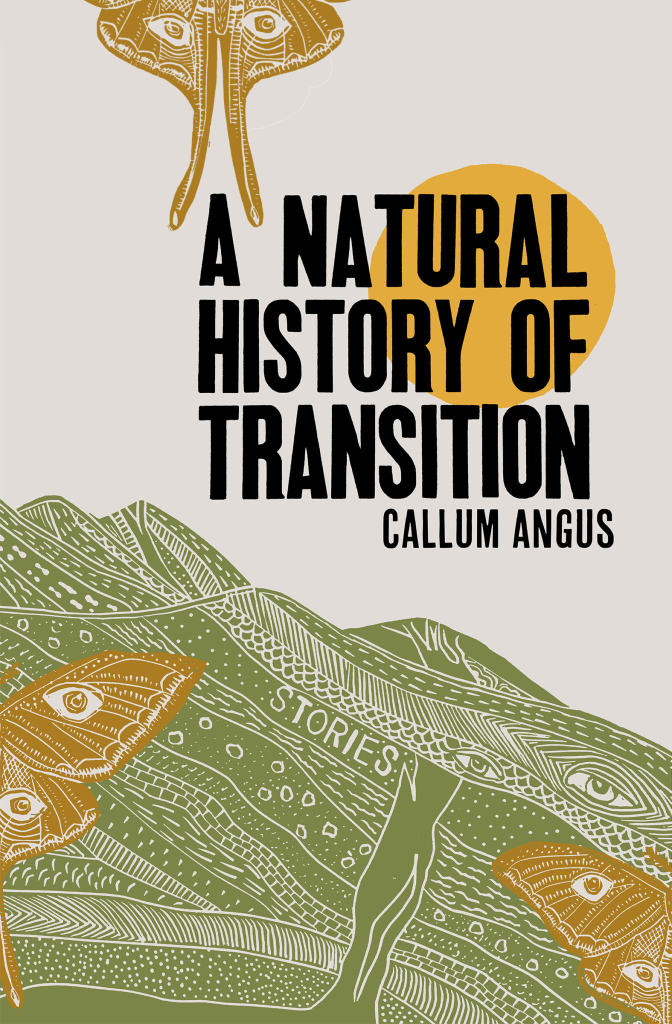
One of Stoehr’s devoted readers describes this book as “a lightning bolt into my brain . . . I want to hug and run away from every woman [the writer] creates.” Again, Harder chronicles a sisterhood of trans women living in a large Midwestern town. In the linked short story collection, attractions flare and fizzle, polycules rise and fall, texts come hot and heavy until the fetishism starts, nights end in ass slapping. Money is always an issue, girls are continuously honing their emotional maturity. Harsh, sexy, tender, these stories remind us what we love about queer community, even when the closeness is suffocating (e.g. “I love that girl, but she is a stress.”). The dialogue is delicious, as are the hook-ups. One character laments, “Something’s going to break,” another replies, “Breakage comes with transition,” and still another reminds us, “Nothing is bad, everything is dangerous.” Stoehr, beloved cult author, plays with point-of-view and form. She flirts with the epistolary and the confessional but always makes it funny—an allusion to the Brave Little Toaster is foreplay—and keeps to a razor’s edge the pain, regret, loss. Again, harder, please.

Mighty Real by Barry Walters (May 12)

Storied journalist Barry Walters’s extensive history of LGBTQ music from 1969 to 2000 spans genres, regions, and movements to trace a throughline of a revolutionary queer ethos. The chapters of Mighty Real explore artists whose music and impact have bent boundaries and expectations for gender and sexuality, from the Velvet Underground to Whitney Houston to the Indigo Girls. Walters, a longtime writer for outlets like the Village Voice, Rolling Stone, and the Advocate, also weaves in his own stories throughout; as a music journalist and columnist for decades in San Francisco and New York, including during the AIDS epidemic, he captures for us those memories that stay with him. Walters encyclopedically archives moments of queer and trans joy, expression, and resistance, and even spotlights LGBTQ pioneers who have been overlooked in music history. This is the perfect book to read before stepping out onto the light-up queer dancefloor this summer.

Take Me with You by Steven Rowley (May 19) 

What do you do when your husband of 30 years literally disappears into thin air and you’re the only witness? Steven Rowley takes this deliciously bizarre premise and spins it into something all-too real: a meditation on how we never fully know the people we love, even after decades of shared life. Jesse del Ruth, left behind in their Joshua Tree home, must navigate not just grief but the maddening ambiguity of abandonment without closure, the not-knowing that’s somehow worse than any definitive answer. Rowley, who gave us The Guncle‘s perfect blend of humor and heartbreak, returns with his sharpest work yet, a novel that lays bare the essential unknowability at the heart of even our most intimate bonds. It’s speculative fiction as emotional excavation, and it’ll wreck you in the best way.

The Maidenheads by Benny B. Peterson (May 26)

If you think texting your ex is toxic behavior, Jamie and Mari take it to a whole new level in The Maidenheads. A debut novel, Peterson sets their story of tragic teenage passion to the soundtrack of early 2000s grunge, pop punk, and indie rock music, appealing to fans of romance and music fanatics. As lonely teenagers in DC, Jamie and Mari start a punk rock band together. Just as the band is about to get its big break, a messy romantic breakup between the young musicians ruins their chance at fame and leaves Jamie emotionally paralyzed. A decade later, an opportunity for Mari and Jamie to reconnect presents itself. Jamie, feeling stuck in her life as a copyeditor in Baltimore, jumps at the chance to sing alongside her first love again. Ensue romantic chaos draped in bold vocals and angsty melodies. The Maidenheads is a balm for anyone who yearns for the recklessness of the teenage years without the soul-wrecking consequences of adulthood.

Inspiration Porn by Ryan O’Connell (May 26)

After years of candid introspection that fueled a popular blog, a memoir, and the Netflix series Special, writer Ryan O’Connell found himself embarking on self-reflection for an entirely new reason. He and his long-term boyfriend had opened their relationship, thrusting him into unfamiliar terrain: What would sex with strangers look like for him as a disabled gay man? This life-altering moment and more are chronicled in his debut essay collection, which seamlessly swings from discussing growing up with cerebral palsy and an alcoholic mother to chronicling wild sexual awakenings and misadventures. O’Connell approaches each of these stories—about social media, sex, disability, and addiction—with a trademark breezy, witty style honed through early internet and television writing. Unabashedly raunchy and hilarious, O’Connell’s essays normalize the messy, beautiful, and complicated intersections of his life.

Mad Eden by Morgan Thomas (June 2)

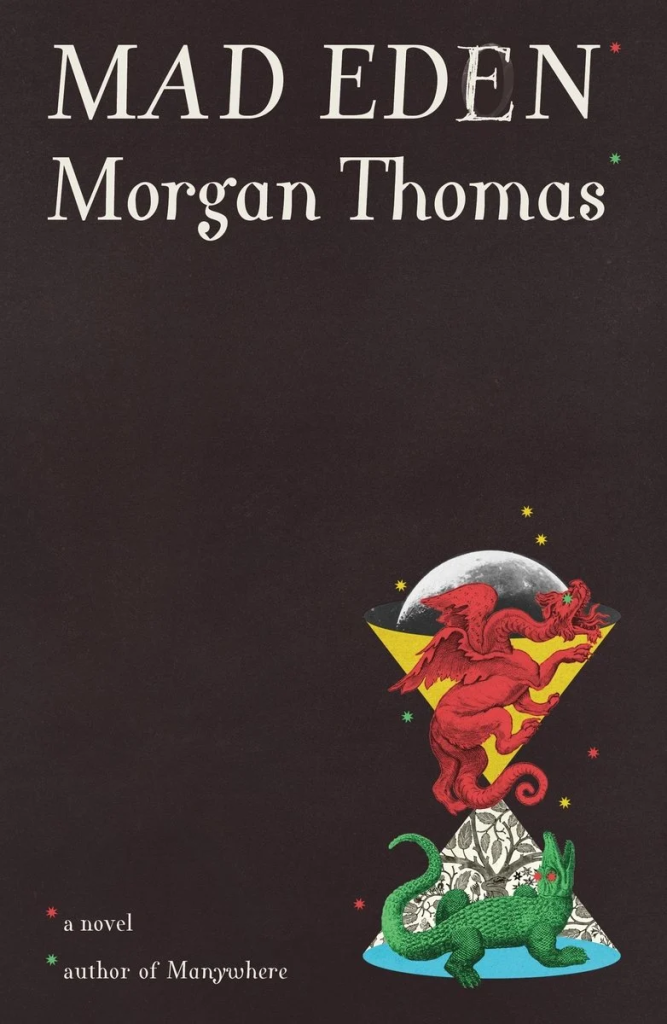
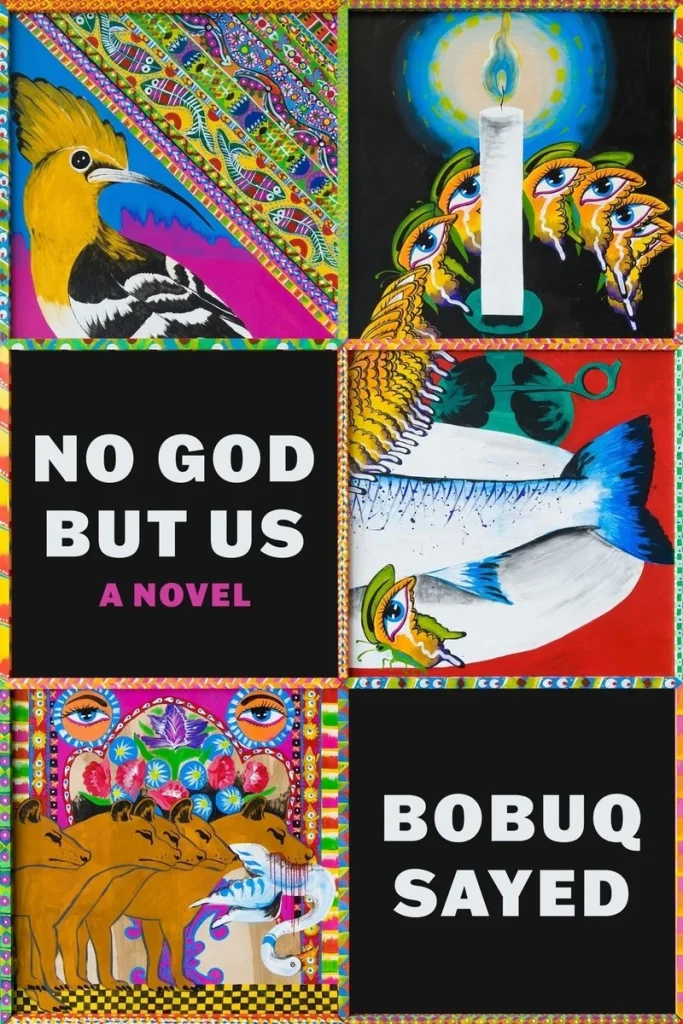
Publishing too often uses the word groundbreaking, but in the case of Mad Eden, something about this rings true. Mad Eden, a debut, is nearly impossible to categorize yet joyful to inhabit. Ro, a trans, autie patient advocate, lives in Florida with their oh-so patient partner Liam in a partnership that is built on mutuality. Thomas writes, “There was joy, somehow, in our surviving this place that intended to be inhospitable to us.” The two look after their “adoptive son” Quentin, a minor who is looking to transition but, like countless others, is thwarted. Danger comes in the form of constrictive state laws, false allies, and anti-trans legislation. When a TERF influencer targets the medical facility Ro works for, their tiny queer utopia is threatened. The book feels less like a novel and more like genre spilling into other genres. A work of meaningful intertextuality, Mad Eden weaves together an online fantasy series that builds its lexicon from an essay on autism. There are also dragons, alligators, talk of homemade T, and elegant treatises on time.

There’s Only One Sin in Hollywood by Rasheed Newson (June 2)

Old-school Hollywood glamour meets the razor-sharp wit of the HBO dramedy Hacks in Newson’s searing industry takedown. It’s 1958 in Hollywood, and Aaron Touissant knows where all of the bodies are buried. A backlot fixer for Skyline Pictures, Aaron conceals the secrets of the production company’s most renowned actors—whether it be a star’s queerness or a torrid affair with a mobster’s young daughter. He’s good at his job; a closeted Black gay man himself, Aaron has fine-tuned his muscles for secret-keeping. Aaron, however, meets his match in Xavier C. Barlow, Hollywood’s latest dashing Black movie star, who doesn’t care to hide his queerness (and, perhaps, someone that Aaron has known carnally once . . . or twice). When Xavier’s activism has dire consequences, Aaron picks up his pen to tell the real story of Xavier C. Barlow. Pulling tidbits from candid memoirs by Black stars of Hollywood’s Golden Age as well as archival material, Newson’s novel—like most Hollywood stories—is an irresistible blend of fact and fiction. 

Earth 7 by Deb Olin Unferth (June 9)

Too many of us queer earthlings have been eagerly awaiting Earth 7 since Deb Olin Unferth’s groundbreaking heist novel Barn 8. The newest work is sci-fi/cli-fi/homosapien criticism in a way only Unferth could write—entirely within and outside of genre. Each sentence introduces us to a vibrant and inescapable future just outside of our imagining, with some of the most moving passages on sand ever written. In a distant (but not too distant) future, after we have completely ruined the planet, two women meet on a fake beach. Dylan, who grew up in a pod at the bottom of the ocean of our de-pop(ulated) world can’t help but be drawn to Melanie, a person so full of plastic and enhanced DNA sequences that people believe she’s a robot. Both Dylan and Melanie are, in their own way, “sidling so far from human that humans didn’t recognize [them] as one of their own,” finding each other, and then coming apart. Meanwhile, Dylan’s researcher mother uploads her consciousness onto a chip hurtling through space. Dylan’s final creative act is one that Unferth, too, seems compelled by: to capture life before it’s too late. Earth 7 is an adventurous, wry, utterly human novel (that “original root of sadness and wildness”), and it will be here long after we’re gone.

Nymph by Sofia Montrone (June 9)

Set in a crumbling hotel in the Italian countryside, Nymph is written for those whose idea of a perfect summer vacation consists of long, slow walks in a rustic setting rather than sunburning at a beach club. Our protagonist, Leo, lives in Manhattan but spends every summer cleaning the guests’ rooms in her family’s agriturismo alongside her rapidly aging grandmother. The summer before Leo leaves for college, her grandmother hires Dolores, a sun-tanned California girl who came to Italy to study violin making. Romance, of course, ensues between Leo and Dolores, an inevitable response to the nutty aroma of freshly-brewed espresso, sprawling orchards, and winding alleys of an old-school village. While the romance brings the cat to the cream—or the tourist to the vineyard—the complex family dynamics keep the pages turning. Smuggled between teenage longing and retellings of The Odyssey, Montrone asks what happens to a family that would rather wipe snot from a stranger’s headboard than clean their own dirty laundry.

What I Made for Dinner by Krys Malcom Belc (June 9)

In the early pages of his memoir, Krys laments, “What was the adulthood I imagined? I hoped it wouldn’t be this, this middle-aged drudgery my mother was in.” Belc, a transgender man, performs most of the domestic labor for his wife, two sons, and daughter. His memoir, following his family during and after the COVID-19 pandemic, structures the narrative around his favorite internet chefs. He cycles through a seemingly endless loop of Claire Saffitz recipes, Ree Drummond’s The Pioneer Woman reruns, and Stella Park’s YouTube oeuvre. When pandemic restrictions loosen their grip, Belc, perhaps desiring to stay in domestic bliss, decides to have another baby. Filled with relatable frustrations about parenthood, as well as well-researched tidbits of food TV history, come hungry to What I Made for Dinner. You’ll leave inspired to try your own hand at making the gorgeous cinnamon bun recipes that look anything but simple.

Villa Coco by Andrew Sean Greer (June 9)

If you take one book to the beach with you this summer, let it be Villa Coco. Fresh from undergrad, fumbling through life as if tasked to do “someone else’s shopping,” a young man takes up residence in the Italian countryside after answering an ad for an adjutant. Instead of cataloging Picassos and priceless artifacts as he’s been hired to do, he becomes an assistant to the Baronessa (known to her friends as Coco), is promptly nicknamed Giovedì, and is tasked with pruning roses, fixing septic tanks, and responding to his employer’s every whim. After many bad choices in love, our young gay protagonist has taken a vow of no more men for a while, has yet to learn that wherever you go, there you are. He enters into an affair with a married man and must choose between want and freedom. The novel, as charming as Greer’s Pulitzer-prize winning Less, is full of witty aphorisms, tall tales, and superstitions: At one point, Giovedì, mistakenly setting a hat on a bed, is ordered to touch a man’s testicles so that nobody dies. In Greer’s world, servants and guests never speak the same language, villains seduce diamonds from Sicilian prices, someone is always related to the queen, and every conversation becomes a delightful conundrum. Each passage is a flirtation with food, or light playing on water beneath a bridge, or the Baronessa’s Italian cousin. Or the Baronessa herself, who holds together her world (the only world) by sheer will and scheming. Villa Coco, laced with wistful, playful nostalgia, reads like youth itself.

As If by Isabel Waidner (June 16)

If your doppelgänger came along, would you be tempted to switch lives? What if the people who love you end up liking them just a bit more? What if you found yourself taking their sadness for your own? In this surrealist work reminiscent of Rivka Galchen’s fiction, two desperate men who appear to be identical are mistaken for one another and decide to swap lives. Lewis is a failed actor and grieving widower, Korine is a failed father and husband; each covets the illusory freedom the other seems to have. After the swap, Korine spends nights beneath an overpass studying to be an actor, while Lewis cares for Korine’s child, who isn’t fooled by the dupe, but still teaches Lewis how to behave like his father. Amid double-bluffs and suspicions, pretense and envy, this is spy versus spy on an existential level—and simmering beneath, a restlessness that has to do with class, grief, and dreams deferred. Queer literature always wants to know if we are brave enough to imagine a life outside of the one we’re contained by. As If is a book that asks: What keeps us alive?

Sourland by Ariel Delgado Dixon (June 23)

Trust a lesbian to tell you everything you need to know about sex, cows, and weed. It’s 2010, and Sapphire, the purveyor of an illegal cannabis farm and a pansexual known for her trysts with much younger lovers, goes missing. In her absence, her ex-girlfriend Frankie, a former ballet dancer, faces off against Fizz, the current male lover, for control of the property. Sourland is a lush, hidden land tended by bands of drifters, some with professorial knowledge of weed: It has the potential to pull in millions. It’s also overrun by rats, runaway bulls, runaway tractors, and wild pigs, all of them out for blood. Additionally out for blood are the rippers who target the outlaw farm, locking Frankie in a barrel. But the story really heats up when JJ, Fizz’s ex-partner, returns for revenge. Sourland, which Delgado Dixon dedicates to “the farm,” is full of sinewy desire, deception, shootouts and chases, and characters you might meet in a Delillo novel. Atmospheric, with an eye for people, it reads like no other crime novel. 

Perverts by Mac Crane (July 7)

 “We were in love, and we were perverts, and for a while we didn’t have to think about anything else,” Crane writes in their title story. They go on to say that actually, they were not perverts at all, but “human proof of boldness, of desire, of terror.” In 2026, this reads like queer manifesto. These 17 stories are not about perverts, but perversion—resisting boundaries. “Smear the Queers”—told in the sly, wounded voice familiar to queers everywhere—is about a boutique service that allows straight people to hunt queers in role-playing scenarios that become all too real. Other titles include “Alex Adams, the Dyke Who Wouldn’t Grow Up,” “Topping is Not for the Grief Stricken,” and “Have No Records of Your Ass.” There are failed messiahs, sex parties, seashell porn, blackmail, wealth gaps, hatchlings, rebellious Futurewives™, excellent descriptions of hugs and how we fail each other, and so, so much disappointment. Parenthood resembles nothing you’ve thought up before. Even as these stories demand more, more, more, they point to an absence, and everything is distraction from “spooky” pain. Perverts is in conversation with writers like Allegra Hyde and Lydi Conklin; everyone is on their worst behavior. We know we’re at the right party.

Chosen Family by Madeleine Gray (July 14)

Coming hot off of her debut novel, Green Dot, Madeleine Gray offers up a witty and delicious lesbian coming-of-age story. Two best friends who have known each other since high school and do not in any way feel a thing for each other (wink wink) decide to have a baby together in the spirit of queer utopianism. Eve and Nell first meet at an all-girls school in Sydney in 2007, where they are plagued by mean girls, The OC, and having to mask queerness in adolescence. As their families of origins having woefully failed them, they are propelled towards both queer interdependence and emotional isolationism. After a painful falling out, one that asks us how any of us made it through high school, the two reconnect in college, where they find selfhood, art, and chosen family. Plenty of U-Haul lesbian jokes abound in these pages, plus a toying with gay male stereotypes that hints at being in-crowd while reckoning with heteronormativity. (“Straight people raw dog while queers have to actively family plan.”) The book is so funny (and fun!), the quips finally for us, not at us. Gray shows us that chosen family is really about the connections that carry us through our lives.

Living, Together: Reimagining Community in the Age of Disconnection by Samantha Paige Rosen (July 14)

In an era when what we mean by home is constantly shifting—thanks to Covid, ongoing economic crises that make house ownership untenable, private catastrophes—Living, Together celebrates every queer expression of cohabitation. At age 29, Samantha Paige Rosen moved in with her parents, found she loved being part of an intergenerational household, and got her curious about all of the other joyful, creative ways people live in community. In Living, Together, more than 20 writers and activists share how they make new, collaborative spaces. Contributors range from their twenties to their nineties, in varying genders, races, classes, mobilities. The work is structured in three thematic sections spanning from biological and chosen families, to collectives arising from shared ideologies, to radical departures from communal living. Debutiful’s Adam Vitcavage writes about living with his sister as adults—watching Drag Race, arguing over which Thai spot is best—and departing as friends. Sarah Thankam Matthews, relaying the mutual-aid organization she initiated during the pandemic, talks about “the we of Bed-Stuy Strong.” Kristen Arnett gets married and, touchingly reflecting on the power of chosen family, realizes she doesn’t have to do it all on her own. 

Dooneen by Keith Ridgway (July 21)

Go down the rabbit hole, wind up in Dublin. In this alternate near-future Ireland, the sidewalks move. There are spinners and clickers . . . whatever that is . . . and the city is hot with protest. The government stalks the streets in shadow, and everywhere is “the fucking noise of the fucking progress.” Mew steps through a portal that connects London to home, where he is to speak at a literary conference—but nothing goes straight in Ridgway’s imagination. Mew writes to his beloved, whom he aches to see again, and the novel becomes an unrequited epistolary love story. One black night, he gets (eagerly) claimed by the insurgency. Dooneen is full of absurdist tautologies, counterfactuals, mysterious figures, mysterious horses, songs sung, parents disappointed, gay soldiers, ripped trousers, boy ghosts, and clandestine missions through city tunnels. Ridgway draws on The Troubles without ever quite naming them, and speaks to ones we have yet to face. To Americans, the book will read all too close, with extrajudicial killings and housing disparities, but it is also very funny, spry, reminding us that the Irish are the best at getting through periods of absolute intolerance. For fans of Mohsin Hamid’s Exit West, Anna Burn’s Milkman, John Kennedy Toole’s A Confederacy of Dunces, and resistance even when it’s futile. 


The Most Anticipated Queer Books of Spring 2026

Don’t forget to check out the following titles, published January through April 2026!

Genderqueer Menopause by Lasara Firefox Allen (Jan 13)

This groundbreaking handbook, written by a genderqueer doula and accredited menopause coach, offers tools, insights, and solidarity for queer individuals going through menopause. Author Lasara Firefox Allen foregrounds perspectives that have been sidelined and systemically erased in mainstream medical care. They identify resources that are both genderqueer and binary-gender-oriented, integrate quotes from real people they have surveyed, and include an appendix for health practitioners. Firefox Allen centers queer experience, affirming care, and community support, moving beyond heteronormative conceptions of menopause to empower, relieve, and demystify. 

Hemlock by Melissa Faliveno (Jan 20)

In this gothic novel dedicated to Faliveno’s parents, a woman fleeing her own life escapes New York for her family’s cabin in rural Wisconsin, leaving behind a boyfriend, an apartment in Brooklyn, and a job as an editor. After almost a year of sobriety, Sam, grappling with her family’s history with alcoholism—and her mother’s disappearance into the nearby woods—begins to drink again. The book is full of shadows and longing, a prolonged sense of uncertainty about where the danger lies. There are poison plants, conversations with a doe, and flirtations with a cute local named Gina. Faliveno’s crisp prose evokes an ambiguous haunting that will be instantly familiar to anyone who has been through it: “It’s like I’m turning into something else . . . like something is opening up, or making its way out.” This “butch Black Swan” captivated Austin Carter at Pocket Books Shop, the queer-feminist indie bookstore owned by three best friends (with a new second Lancaster, PA location!)

Two Women Living Together by Kim Hana & Hwang Sunwoo, translated by Gene Png (Jan 20)

Two Women Living Together is not a queer book—technically. Kim Hana and Hwang Sunwoo use the language “cohabitants” to define their relationship, and the best-selling Korean memoir clearly casts the two as women who value their independence. After turning forty and being confronted by the loneliness of living alone, the two move in together. Still, there is undeniable intimacy in these pages: their four beloved cats, shared playlists and guilty pleasures, the little noticings of habits. During a hospital stay, Hana stays by Sunwoo’s side. One section is titled: “If We Broke Up.” In switchback chapters, Hana and Sunwoo create a new domestic sphere that is undefined by patriarchy and social expectation. Sly, subtly subversive, a wonderful companion, Two Women Living Together is anything but straight. 

Just Watch Me by Lior Torenberg (Jan 20)

For seven days, across seven chapters, Dell Danvers live-streams her life for the internet, eating hotter and hotter peppers for cash donations. This self-exploitation might sound all too familiar, and at best, Dell is “a morally gray heroine” who would undoubtedly be played by Natasha Lyonne. (Even Torenberg admits she probably wouldn’t like her protagonist in real life!) Nevertheless, like her followers on Live Cast, we readers are eager to know if Dell will do it: will she eat the ghost pepper. Like Dell, we anxiously count every coin that passes through her hands—we’ve seen her paycheck ($0) and her apartment (formerly a closet, no bathroom); most of all, Dell has allowed us a glimpse into her pain, how she is grieving for her comatose sister and reaching for the impossible. Funny, chatty, weird, and at times unexpectedly poignant. You can devour Just Watch Me in one gulp, but, like a habanero, it’ll be sitting with you for hours. 

One Aladdin Two Lamps by Jeanette Winterson (Jan 20)

“Stories are there to change what is into what if,” Winterson tells us. This is feminist manifesto, literary criticism, personal narrative, oral storytelling—a book that refuses to be categorized, much like its author. Fans of Winterson know she grew up as a lesbian adopted by ultra-religious Evangelical parents: That is, she was told one story about who she was, and the only way she could be saved was to go out into the world and tell another. Many others. Calling on One Thousand and One Nights Shahrazad, who tempts and tricks her would-be executioner, the Sultan Shahryar, Winterson tells us tales to keep us on the hook, all while confronting issues like capitalism and consumerism, climate change, and “everything-bagel liberalism.” In One Aladdin Two Lamps, Winterson reminds us that stories are a way to reshape our world, by which she means: our future. 

On Sundays She Picked Flowers by Yah Yah Scholfield (Jan 27)

Yah Yah Scholfield’s simmering debut is arriving hot off the heels of her selection for The Best American Short Stories 2025. The book follows Jude, who flees her childhood home and abusive mother, finding solace in a house whose dark history is immediately familiar to her. Developing a solidarity with the spirits of the house, Jude becomes a healer, although the darkness of her past continues to lurk in the shadows. When a mysterious, alluring woman arrives at the house, Jude must come to terms with her desire, demons, and the legacy of violence within herself and the walls of the house.

Murder Bimbo by Rebecca Novack (Feb 10)

The incomparable Catherine Lacey calls Murder BimboGone Girl for the Luigi Mangioni era.” A sex worker is recruited to become an assassin at the hands of the US government—and on page one, she’s running for her life. We are seduced by this unreliable queer narrator, caught up in her ex and writing late-night emails about justice and a man named Meat Neck! Propulsive, electric, Murder Bimbo conceals and reveals and conceals again, as any disruptive queer act must. The political assassination at the heart of the book is eerily resonant, though the novel was written before Charlie Kirk was killed. Rebecca Novack, who has a master’s degree in theological studies from Harvard divinity school, plays with our readerly expectations about motive, audience, authorship, and the genre of true crime. 

Last Seen by Christopher Castellani (Feb 17)

Last Seen, a speculative literary thriller, follows four young men—Caleb, Steven, Matthew, and Leo—each of whom disappeared between 2007 and 2020, and whose bodies were later found in icy rivers across the United States. The book alludes to the true-crime theory proposed by retired NYPD detectives, suggesting the series of deaths might be linked murders rather than accidental drownings. Many people are convinced the boys are victims of the Smiley Face Killers, an insidious group targeting white, college-aged men who have been drinking. Castellani’s writing tenderly captures the voice of the four boys, and all they’ve lost, as they watch over their loved ones in death: “I am one of those boys they keep finding in the river . . . Caleb Aldrich who was too beautiful to live.” An exploration of grief, masculinity, and homecoming, Victor LaValle calls it “a ghost story, an elegy, a love letter to young men who go missing without a trace.”

So Old, So Young by Grant Ginder (Feb 17)

What’s more queer than following a group of friends to five parties over twenty years? In this tragicomedy full of wit, wisdom, and sizzling dialogue, Ginder shows us how tender and complicated chosen family can be. Six friends try to find each other as they drift apart. Pick the hard adult thing: unrequited love, bad taste in men, job loss, infidelity, binges, unrealized potential. “While this is a distinctly millennial set of characters, their stories of heartache and searching is a universal one,” says Claire Benedict of Bear Pond Books, Montpelier, VT. Ginder’s fourth book, follows Honestly, We Meant Well and The People We Hate at the Wedding, which was adapted into a major motion picture starring Allison Janney and Kristen Bell. Reading it, one realizes that nostalgia is a decidedly queer emotion. At heart, it’s about the little fights between friends that become great distances to travel, and the ways we find our way back to one another. 

Evil Genius by Claire Oshetsky (Feb 17)

It’s 1970s San Francisco, and nineteen-year-old Celia Dent demands her freedom from her domineering husband. After Vivienne Bianco is murdered at the phone company where Celia works “the elephant graveyard of jobs,” she begins to seek “revolutionary changes . . . violent changes, even.” Celia buys a knife, she fires a gun, she seeks real love. “We can take forever to arrive at the most obvious truths about ourselves, because the will to conform is mighty in us, and the fear of somebody find out we’re not normal is a mighty fear.” This dark, unconventional comedy is quirky, surprising, and sharp!
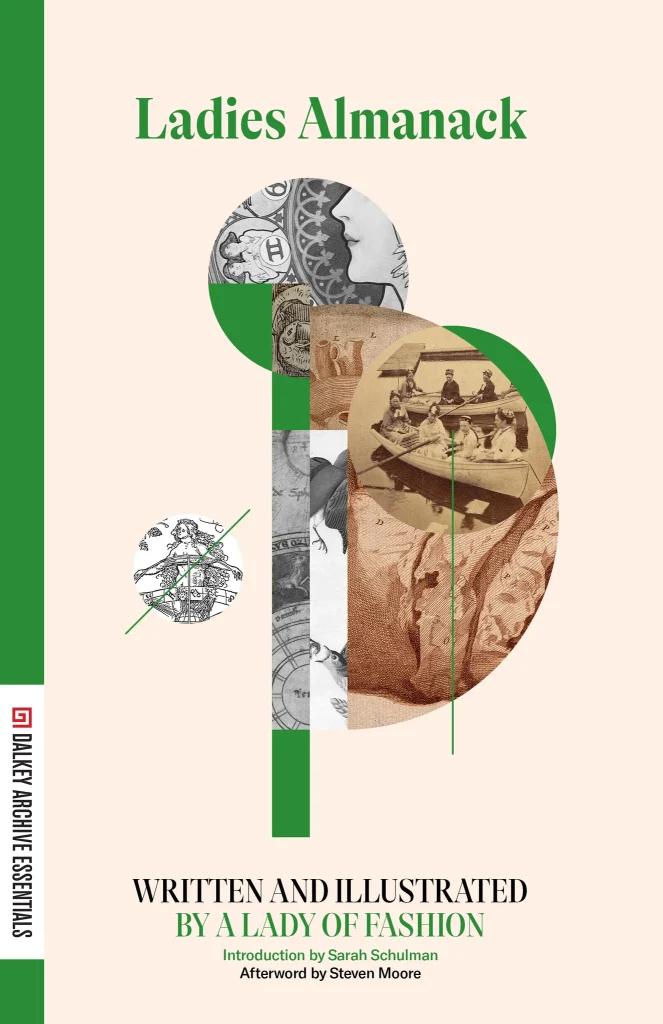
Ladies Almanack by Djuna Barnes (Feb 17)

In her introduction to this new edition of Ladies Almanack, Sarah Schulman tells us, “No one loves the lesbians as much as a lesbian in love.” The Ladies Almanack proves that lesbians have always been sly, pissed off, underpaid, but also funny and innovative. The work is a roman à clef about the vibrant lesbian expatriate community in 1920s Paris, focusing on Natalie Clifford Barney’s salon. The mock almanac celebrates and only thinly veils the real people at the heart of the work, including Thelma Wood, Djuna Barnes’s impossible, often drunk, charismatic lover (who apparently also seduced Edna St. Vincent Millay). This is all at once high queer court, social satire, love letter, and flirty literary gossip written in a pastiche of Restoration literature that asserts, “We don’t feel about men the way they feel about themselves.” Reissued by Dalkey Archive Press nearly a hundred years after it was re-written, the work now comes complete with Elizabethan-style woodcut illustrations. Shoshana Bockol at The Head & The Hand bookstore in Philly put this one at the top of her list. She says, “This is the one I’m most excited for!”

Night Night Fawn by Jordy Rosenberg (March 3)

Night Night Fawn is undoubtedly the Marxist, trans, comedic dystopia we need in 2026. Initially conceived as nonfiction, Jordy Rosenberg’s second novel subverts form to become an inherently transgressive unauthorized fictional “memoir” that reads as hysterical manifesto. Barbara Rosenberg, a character modeled loosely on Rosenberg’s own mother, is a terminally ill Jewish “yenta.” High on opioids, looking back at her origins in post-war New York—where she grew up with aspirations to be a wealthy Jew—Barbara wonders where she went wrong with her estranged trans son and her ex best friend. As Barbara takes an “unrepentant account of all her failures,” she seeks to understand how her child ended up becoming her greatest fear—queer, unrecognizable, anti-capitalist, manly. As with Rosenberg’s first book Confessions of the Fox, the prose crackles. 

Whidbey by T Kira Madden (March 10)

I’ve been eagerly awaiting this title since I heard T Kira Madden read from her manuscript at the Disquiet International Literary Program in Lisbon. The book opens with Kira’s letter to the reader, explaining that this revenge story is fiction but also revealing just how much she had to live through. Whidbey, in many ways, is unfinished business for Madden, who wrote about her assailant in “Feels of Love” in the memoir Long Live the Tribe of Fatherless Girls. Her debut novel begins on a boat to an island: A woman running from the man who abused her as a child, a chance meeting with a stranger who promises to kill him—and then, days later, the murder. But in Madden’s hands, this is so much more than a noir story. The sentences are exquisite. The novel gives voice to survivors of sexual abuse and rape, claiming power not only from assailants, but from a broken justice system and the media. Madden, unflinching as ever, even drops us into the perspective of the mother of the convicted sex offender. 

A Lady for All Seasons by TJ Alexander (March 10)

From the Lambda Literary Award finalist comes the sequel to A Gentleman’s Gentleman, named one of The New York Times’ 100 Best Books of 2025. It’s 1820s London, and the cunning Verbena Montrose at the heart of this queer Regency romance tricks her newly rich best friend Etienne into marrying her. This is a comedy of errors full of yearning and hijinks and genderfluid lovers. You can expect scheming, gossip, a lavender wedding, genderplay, and even a cameo by Lord Byron. Just in time to pre-order from BookWoman for Valentine’s Day, you fans of trans historical romances! 

Spoiled Milk by Avery Curran (March 10)

This lesbian gothic horror set in 1928 at the “pash” Briarley School for Girls is set in the long boarding-school tradition of young people being forced to rely on no one but themselves. The rules are different, the food is terrible, the mood is always brooding. Everybody is always watching, but nobody sees the two girls kissing on the grounds. Emily Locke, who is “not good at discerning the contours of what to be afraid of” is in her final year when her best friend falls mysteriously to her death. Violet, a cunning beauty envied by students and teachers alike, is the first to die, but certainly not the last. This lesbian phantasmagoria has everything: silk gloves, sour milk, clandestine visits to mystics, potentially evil yet sexy French teachers. It brings to mind Meg Wolitzer’s Belzhar, Tana French’s The Secret Place, and even the salty teen-girl quips of Christine Schutt’s All Souls. This one was a favorite of Emerson at The Head & Hand bookstore.

Hell’s Heart by Alexis Hall (March 12)

Described by Sarah Gailey as “Moby Dick meets Treasure Planet by way of Fleabag,” Hell’s Heart is a sapphic journey through the depths of space and human desire. Earth is abandoned and its remaining inhabitants have taken to the stars, where they survive by harvesting spermaceti, a hallucinogenic fuel produced by massive whale-like creatures. Society has deteriorated into a desolate landscape of corporate accumulation and morally bankrupt religious institutions. With no other options, the narrator—called “I”—joins a voyage hunting for spermaceti, and quickly becomes infatuated with the ship’s female captain, “A.” As the hunt progresses and the captain’s delusions mount, the narrator’s grasp on reality and her sense of self is thrown into question.

My Lover, the Rabbi by Wayne Koestenbaum (March 17)

In this much anticipated novel, nearly two decades after he published his first, Wayne Koestenbaum performs for us the inexhaustible gaze of the lover. “All I ever wanted,” our speaker says of the rabbi, “was to be smothered by his nakedness, to be walled off from the world by the sheer interfering magnitude of his flesh . . . between my body and the rest of existence.” This is a gay, gay book, often told in poetic, staccato chapters, with some sentences going on for pages. One conversation about “the best dermatologist” gets interrupted by “quaint” fellatio and an allusion to Odysseus, ending many lines later in a recommendation to go to Charlottesville. Fans of Garth Greenwell will delight in Koestenbaum’s demonstration of the sublime against corporeal obsession, play, need, humiliation, grief, desire, camp, refusal to engage in any heteronormative norms. 

Ruins, Child by Giada Scodellaro (April 7)

From the incomparable New Directions comes a gorgeous work of collective witness set against an urban landscape. Giada Scodellaro, whose debut Some of Them Will Carry Me was listed by The New Yorker as one of its best books in 2022, archives Black women’s experiences in this poet’s novel. Scodellaro writes, “The community is made up of predominantly black people . . . it’s a place we’ve created for ourselves, okay? Or a place we were forced into and have reimagined.” Conjuring the spirit of Gloria Naylor’s The Women of Brewster Place, Jeanette Winterson’s Written on the Body, and Virginia Woolf’s The Waves, Ruins, Child weaves folklore, botany and the body—always the body. One chapter is entitled “groin,” another, “sole of the foot.” Ruins, Child is a surrealist, cinematic telling with an eye towards the future. 

Honey in the Wound by Jiyoung Han (April 7)

Set in the 20th century during the Japanese occupation of Korea, this multi-generational, historical novel follows a family of women with astonishing gifts: one who disappears and returns a tigress, one who can force a liar to speak the truth, one who can see into dreams. The work centers on Young-ja, who infuses food with her emotions, and ultimately uses that power to resist colonialism. In 1931, after Japanese soldiers crush her family’s defiance against the Empire, Young-Ja is taken by a Korean resistance fighter to Manchuria, where she joins a clandestine world of teahouse spies. Han’s writing is lush and moving, and the work is both inventive and deeply researched—sometimes reading as fable, other times as historical account or ancestral narrative. Kirkus describes this stunning debut as “a revelatory work of harrowing fiction . . . [that] validates the hidden powers of ‘powerless’ women.”

Surrender by Jennifer Acker (April 14)

Jennifer Acker’s Surrender is a tale of reinvention, baby goats, and grown up teenage love. After decades of city life, 47-year-old Lucy returns to her childhood home in rural Massachusetts to take over her father’s farm. Almost immediately, challenges arise: Lucy’s lack of experience is compounded by loss and the worsening health of her husband. Lucy finds a light at the end of the tunnel in the form of Sandy, her childhood companion-turned-more-than-a-friend, but Sandy’s presence at the farm also draws the attention of her employers, a solar energy company. Exploring grief, desire, and the second adolescence of middle age, Surrender is a must-read of 2026.

Harmless by Miranda Shulman (April 14)

Two years after the fact, Bea is still reeling from the death of her twin sister, Audrey. Where Bea is brusque, driven, and deeply lonely, Audrey was bright and extroverted, and her absence has become a ruling force. Now living in Brooklyn, Bea throws herself into an old dream she shared with Audrey: to start a dog kennel. When old friendships rekindle, desires spark, and the lingering weight of Audrey’s death threatens to sink Bea’s budding dream, she must come to terms not only with the loss, but with the secrets it has brought to the surface.

Fat Swim by Emma Copley Eisenberg (April 28)

It’s easy to see why the short story is Emma Copley Eisenberg’s first love, even as Fat Swim follows the author’s wildly successful debut novel and memoir. Eisenberg treats her characters with such tenderness, whether it’s young Alice at the pool (or grown-up Alice at camp), or Jules, the trans assistant to the famous elderly gay writer, or Mama, trying hard to migrate to her queer child’s elastic definition of love. Or, for that matter, any minor character that, in Eisenberg’s loving gaze, is celebrated in all their fulness. The collection resists the erasure of fat bodies in American letters, mostly by giving us all too rare portraits of pleasure and desire. Grace Paley is in these pages, as is summer, and ice cream, and Ray’s Birthday Bar, and refusing to be defined in binary terms. 
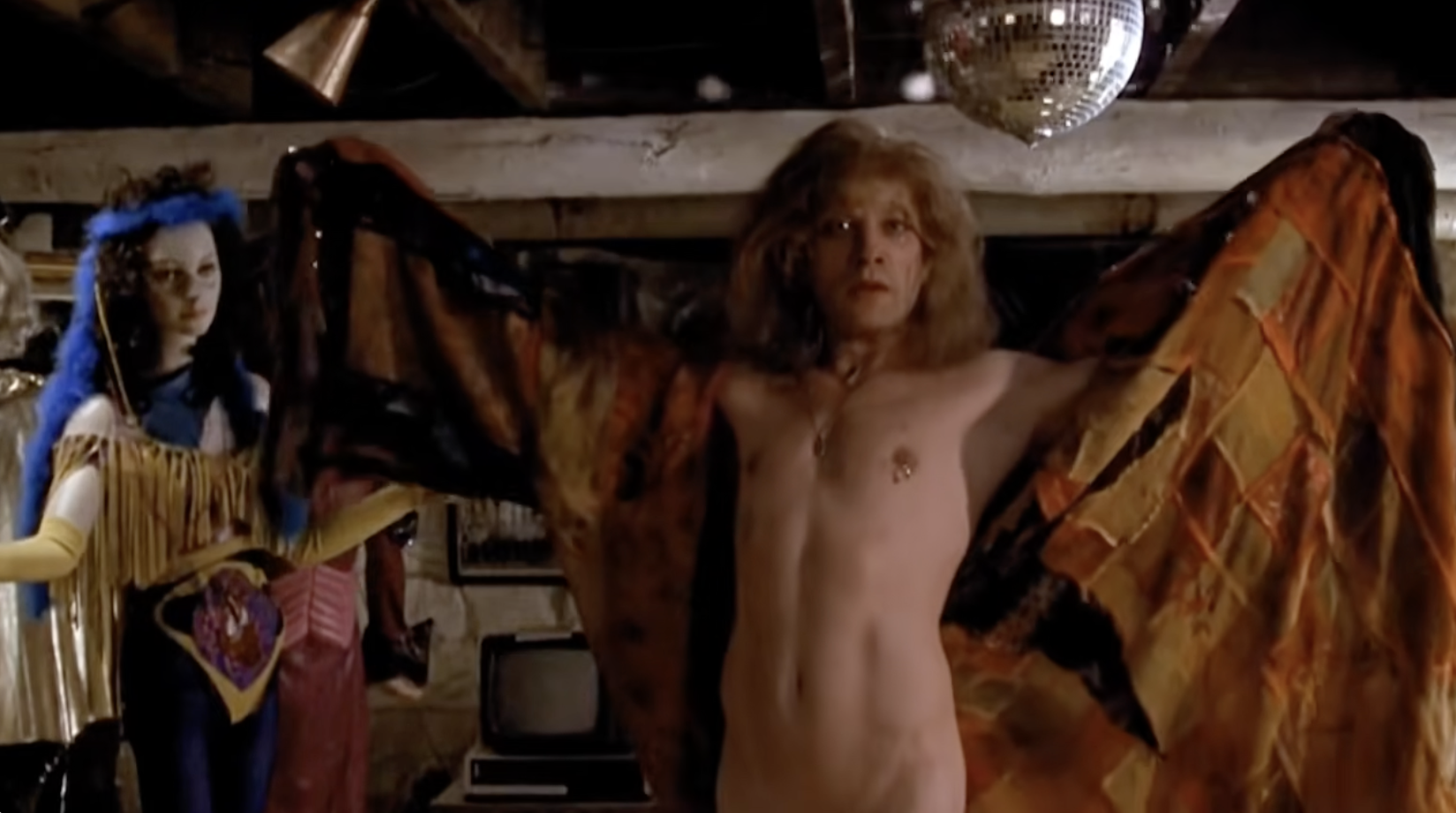
Revisiting “Silence of the Lambs” in the Age of Trans Backlash

Sometimes you are reading a book—not even one by a well-known transphobic children’s author—and are struck, halfway through or near the end, by a bit of transphobia. Sometimes it’s load-bearing: Both Helen Oyeyemi’s Boy, Snow, Bird and Lidia Yuknavitch’s The Book of Joan end with revelations that their villain characters are caricatures of trans masculinity (Oyeyemi’s, in particular, “resolves” this by having the primary characters agree to tell him he does not need to be trans anymore). Sometimes it’s more by omission than by the letter itself: In Yoko Tawada’s Scattered All Over the Earth, a non-medically transitioning woman named Akash is treated by every character as a man without correction or regard for her sense of self. Every time, it’s disappointing. Not only that the author would think that these ideas are okay, or that they would make it through the editorial process, but that they would be so under-discussed in the public acclaim these books receive.

It may seem silly, but I prefer to read books that are much more explicitly transphobic and a few decades old. You’d be forgiven for not knowing how broadly blasé people were even 10 years ago about transness. In 2014, Rush Limbaugh, never a paragon of wokeness, actually apologized to a trans caller to his show for using the slur “tranny.” Famously, when Christine Jorgensen returned from abroad with her gender newly affirmed, it was treated more with intrigue than with anger. “Ex-GI Becomes Blonde Beauty,” the papers reported in 1952.

Don’t get me wrong: Even with all the attacks against trans people now, it is better to be trans in America in 2026 than at almost any other time or place. But I do get a real enjoyment from, say, reading Gore Vidal’s Myra Breckinridge and seeing both how much and how little Vidal understands about trans women.

In this complicated space of retro transphobia, it’s hard to think of a book that has had a greater impact on the representation and public imagination of trans people than Thomas Harris’s 1988 novel The Silence of the Lambs. Most of you have probably seen the movie; maybe you’re even trans and you really adore it—the canon of trans villains provokes diverse and complex responses from their transsexual audiences. I am not one of the trans people who has an easy time watching the film adaptation of Lambs, though I acknowledge that it is in most respects a perfect film. 

In case you don’t know, or have forgotten, Lambs is about a person the press call Buffalo Bill (“because he skins his humps,” girl detective Clarice Starling explains) who is killing women in order to make a suit out of their skin for himself. The novel was inspired by the press coverage of Ed Gein, a man who, in 1957, was found to have killed two women and robbed the graves of many more. Among the many handicrafts he made with these bodies were a “corset made from a female torso” and “masks made from the skin of female heads,” which, along with some leading questions by investigators, led to him being branded as gender-deviant. (This coverage also gave rise to Psycho and The Texas Chain Saw Massacre.) The film version of Lambs is generally regarded as pretty transphobic, and even prompted director Jonathan Demme to make Philadelphia as an apology to the queer community. (Which was of course unnecessary; Demme was still at queer net-zero in my books for directing Stop Making Sense.)

Both film and book go out of their way to clarify that Buffalo Bill (who I will henceforth call by their government name, Jame Gumb) is not a transsexual. In the novel, Clarice tells Hannibal Lecter (a cannibal and more acceptable monster) there is “no correlation I ever saw between transsexualism and violence.”

There is a long history of breaking trans people into categories that boil down to ‘real’ and ‘fake.’

“Billy’s not a real transsexual,” Lecter replies, “but he thinks he is” (emphasis mine). “He tries to be. He’s tried to be a lot of things, I expect.”

There is a long history of breaking trans people into categories that boil down to “real” and “fake.” Most famously, if you wanted to transition into a straight woman (“heterosexual transsexual” or HSTS) you were allowed to; if you wanted to become some kind of degenerate lesbian freak, you were an “autogynephile”—a man turned on by the idea of being a woman.

So how, in the imagination of Lambs and the late 1980s, are we to distinguish between these categories?

Lecter instructs Clarice to check the three extant gender clinics for people who have been rejected from transition. In particular, he suggests she look at a test called “House-Tree-Person,” in which a subject is asked to draw the titular trio. “Look for someone who didn’t draw the female figure first,” Lecter says. “Look for a house drawing without the rosy-future embellishments” like baby carriages and flowers and curtains. “You get two kinds of trees with real transsexuals: flowing, copious willows and castration themes . . . [but] Billy’s tree will be frightful.”

This is the sort of detail that is, understandably, missing from the Best Picture-winning film adaptation. But it’s what allows me to enjoy the book. Instead of distinguishing Jame as a fake, it exposes how absurd this entire taxonomic enterprise is.

Jame is “not a transsexual, he just thinks he is, and he’s puzzled and angry because [the gender clinic] won’t help him.” Early on, a doctor at Johns Hopkins says, “To even mention Buffalo Bill in the same breath with the problems we treat is ignorant and unfair and dangerous . . . it’s taken years . . . showing the public that transsexuals aren’t crazy, they aren’t perverts, they aren’t ‘queers,’ whatever that is . . . these are decent people with a real problem, a famously intransigent problem. They deserve help.” 

The book does not want to be sympathetic to Jame, but it is so interested in spending time with her that, in contrast to the (excellently acted, very upsetting) performance in the film by Ted Levine, I can’t help but see myself in Jame (or “Mr. Gumb,” as the narration insists on calling her). Jame has gotten electrolysis, started HRT. As she goes about her day, she notes that her “hands and feet [are] a little stubbly,” but she decides that “they would do.” She loves her dog Precious, coos frequently that “Mommy’s going to be so beautiful.” The first time I read Lambs, I had just adopted a cat; I was eight months on hormones—just past the edge of the most uncomfortably in-between period—and I remember thinking: This is exactly how I talk to my beloved pet. I, too, move between attempts at eradicating all hair from my torso and legs and thinking, eh, what’s a little stubble? The narration calls this an “earnest inept attempt . . . or hateful mocking” of womanhood, but to me, for better and worse, it just looks like womanhood.

Like Jame, I have also been puzzled and angry that a gender clinic won’t help me.

What the book fails to ask or answer is what the difference is between being trans and merely thinking you are. What is the source of Jame’s apparent gender euphoria when she tries on her in-progress woman suit? Some post-Freudian obsession with her beauty queen mother, the book suggests, but we get no clearer answer than that. 

Like Jame, I have also been puzzled and angry that a gender clinic won’t help me (and they didn’t even ask me to draw a tree!). I know from experience that insisting all the more that no, really, I am really trans, and I can tell you a thousand truths and lies that confirm that fact if you will just give me some fucking estrogen doesn’t work when the system really wants you to stay where you are. I haven’t killed anyone over it, but it is easier to understand, in the context of Harris trying, again and again, to assuage any concerns you might have about the nature of Jame’s identity, why Jame might have.

It is far more pleasant to have an understandable trans villain than the ones Oyeyemi or Yuknavitch gave us. Their books have little interest in the psychologies of their trans characters or the arbitrary systems that aim to define what makes someone a “true transsexual.” How delightful, in contrast, to see the absurd system break down in Harris’s Lambs. Because despite occasional claims to the contrary, the only people who care these days about distinctions between “real” and “fake” transsexuals tend to be other transsexuals—crabs kicking and screaming to stay at the top of our particular barrel. J.K. Rowling and Pamela Paul and Graham Linehan do not care how you embellish your tree or decorate the female figures you draw. They would rather I and all my friends and perhaps you, too, reading this be immiserated if not outright dead. They look at the taxonomic absurdity and decide we are all monsters. Reading Lambs, you could conclude something similar: that trans women are freaks who would kill and skin a woman if that was the only way to be one; but you can as easily—and more accurately, I think—look at it and ask: What is the rational response to an irrational stricture? 

We see something of ourselves in these stories, even if they make us out to be monsters.

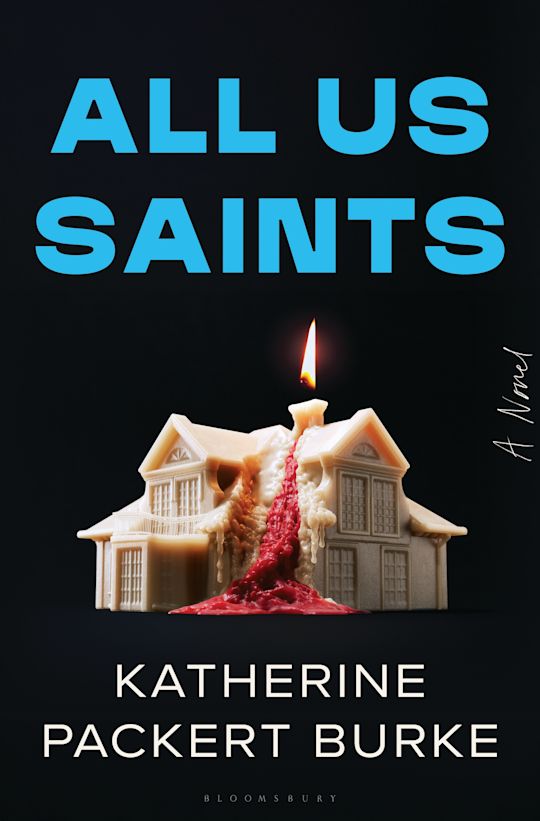
Taking after Lambs, this became one of the chief questions I asked while writing my own novel, All Us Saints—in which a closeted, abused trans girl sees, like Jame, no future for herself, and decides maybe it is better to kill and to die than to go on feeling the deep horror of living. She doesn’t die, and fails to kill her sister (taking out only her sister’s three best friends). 

Early in the writing process, I went back to the accounts of Ed Gein to see how those initial murders were described; as with Gein’s murders, my trans murderer can only be understood by the sensationalist true crime media complex as a freak of nature. In Harold Schechter’s account of Gein’s killings, he writes that Gein’s “transvestism” was a consequence of an Oedipal obsession with his mother, leaving Gein wishing he had been “a woman instead of a man,” wondering “whether it would be possible to change his sex.” But as scholar K.E. Sullivan points out in the seminal essay “Ed Gein and the figure of the transgendered serial killer,” there is little evidence of this beyond words that police put into Gein’s mouth, asking “Would you ever put on a pair of women’s panties over your body and then put some of these vaginas over your penis?” To which Gein responded, “That could be.” 

That could be. That’s more or less the basis for decades of transphobic slasher stories.

But having been, as Jame Gumb is, blocked from medical transition, and having lived, as Gein did, deep in repressive territory where if I hadn’t known a handful of trans people, I might not have understood I was one, the false story—the idea that Gein might have been someone like me—has always filled me with an indescribable melancholy. Every trans slasher movie—Lambs, Sleepaway Camp, Texas Chain Saw—has its trans defenders. I think this sort of melancholy is one of the reasons why. We see something of ourselves in these stories, even if they make us out to be monsters. To paraphrase Norman Bates, we all feel a little monstrous sometimes. It was this melancholy—this desire to look past the dominant narrative, not only of Gein’s gender identity but the killings themselves, and understand what it might be like to feel so confused and alone—that gave rise to my novel’s killer.

Unlike Harris’s depiction of Jame, I don’t try to quarrel about real or fake or identity at all; my trans killer doesn’t even know enough to call herself trans. But as with Jame, I wanted to take the abuses, the roadblocks, the violence that trans people face every day, and turn it back against the cisnormative nuclear family that is so often responsible for those horrors. I do not wring my hands, like the Johns Hopkins doctors of Lambs; instead I say, Okay. You’ve made us into monsters. Now what?

My Brain Told Me Food Was the Enemy of Love

“Reader, I Gained Weight”: On Eating Disorders and Romance by Katherine J. Chen

I had forgotten the taste of bread. Of salmon and chicken. Of chocolate and figs. My tongue held the memory of these foods, of a cube of Kobe beef so tender that it felt a profanity to chew, of a spoonful of gelato, which seemed to carry a lesson of its own: how the initial shock of cold will give way to the warmth of sugar. For nearly half a year, I drank in large gulps water, tea, and cold brew. In the mornings, dry-mouthed and lightheaded, I would go to the bathroom, pee, and strip naked before stepping on the scale. I would try to ignore the sensation of feeling like a calf on display before its slaughter; I would ignore the paradox of both winning and losing, winning because the number on the scale had dipped since yesterday, losing because I sensed, in the way a runaway train barrels towards the precipice, that if this continued, as it must, absolutely must, I was probably going to die.

In one of those conversations, which if the contents were leaked would likely prove to be career-ending, I told someone that I believed that every woman, no matter how accomplished or intelligent or talented, desired to be called beautiful. In hindsight, I think I said this because, at the time, I equated beauty with simply existing. Wouldn’t it be nice, I suggested, to be congratulated for showing up: for sitting, then standing, then crossing the room and opening a window? Instead, one had to get degrees, to write and publish books, to hold one’s own on Derrida and Lacan and Marx, to listen to Bach and Shostakovich and be conversant about French New Wave. Not that I’m complaining, I said, complaining, and I quoted a favorite line from The Wings of the Dove, “…her easy injunction, tossed off that way as she turned her beautiful back, was like the crack of a great whip in the blue air…” Of course, James understood.

I’ve always wondered about the path by which we arrive at certain truths and how these truths are constructed. In 2016, I read an article about a four-year-old child, who told police officers that her name was “idiot.” This detail stayed with me longer than other features of the story, such as that the child was bruised and malnourished with marks on her wrists from where she had been zip-tied to a bed. I know about black eyes and bloody mouths, how the pain will not last but the sense of degradation will. I know that the body in such cases is merely a vessel, that it isn’t really the eye or the mouth or the tufts of hair like lambswool that is the true target but something else that takes more time to wear down until it won’t move, won’t even cry out. I thought about what it means for a child, particularly a girl, to believe her name is “idiot,” and to introduce herself as such to others in earnest. And because I am not above self-pity, I thought of myself, though I hadn’t endured the same horrors as this child, not even close. If police officers showed up, I would have used the words, “ugly” and “fat,” and uttered those words in two languages, because I had been called “ugly” and “fat” in more than just English. I didn’t know that these were “bad” words. I might even have said, “I’m ugly and fat,” with a good deal of pride. Often, the missives that are loosed from their strings in youth and adolescence don’t land until one has waded deep into the waters of adulthood. Children are hardier than we give them credit for; it’s possible I was stronger as a kid for the sole reason that I didn’t overthink what was happening to me. I rolled with the punches; I learned to raise a ruckus before others could, and if people spit poison at me, I learned to spit the same, or worse, back. Somewhere in my early thirties, I grew soft. I knew I wanted to be loved. I knew, too, I was ugly and fat. So, this was the truth I constructed for myself: Because I am ugly and fat, I am not loved.


Concerning my rapidly shrinking body, I made these observations. Sitting, I could not stand up again without experiencing momentary lightheadedness. Certain tasks, such as vacuuming, which required basic strength, became more difficult. To combat hunger, I would tuck a hot water bottle under my t-shirt, where the heat gave the illusion of making me feel sated. I was always hungry. As I pedaled away on my exercise bike, I watched videos of hot women give food reviews while taking huge bites of overstuffed burritos and slices of cheesecake. On more than one occasion, I escaped to the movie theatre, because the dark, the noise, and the large screen proved an effective distraction from the fact that I had consumed, in the span of 24 hours, a single hardboiled egg. I had only to glance at the mirror to be able to delineate the outline of my scalp, now visible because I’d lost so much hair, while what hair I had left turned soft and thin.

This was the truth I constructed for myself: Because I am ugly and fat, I am not loved.

These observations were true, as was the fact that a sales associate at Neiman Marcus had embraced me when I told her why buying a pair of Helmut Lang shorts in size zero meant so much. In my presence, an elderly neighbor gushed to my mother, “Your daughter is beautiful,” and these words alone carried for the rest of the day the heft of a three-course meal. My new body was so mind-boggling to a member of the maintenance staff in my apartment complex that he spread the word to all his colleagues before beginning his own weight loss journey, telling me whenever he got the chance, “You inspired me.” What I had accomplished did seem, on some level, Herculean. At my heaviest, standing five feet two inches, I weighed 227 pounds; at my lightest, I weighed under 100. I marveled at small moments: how people seemed more willing to sit next to me on the bus and subway; the ease with which I could glide past cars parked far too close to each other in the parking lot; how the gazes of men appeared more inclined to linger; how department stores seemed, at last, to yield up their treasures; how one by one, like the slow unearthing of some ancient landmark beneath my skin, I could count my ribs. I emailed a friend, aware of how silly I sounded, and informed her that recently, I had set foot in Nordstrom and could choose, actually choose, what I wanted to wear, and that among these choices were dresses. I joked that I no longer looked like a beer barrel wearing a skirt.

It is strange now to consider the logic by which I linked the “preparation” of my body with my “preparation” for love. I am thin; ergo, I am ready to date. In my new body, I had plenty of time to think about food and love. To eat is one of the most primitive forms of self-care, just as to feed another is to show care. There must be a reason why during long-distance phone calls with relatives, we always, subconsciously or otherwise, circle back to the same questions: Have you eaten yet? Are you eating well? I wonder what it is about food that conveys affection and concern, why, for instance, certain foods—macaroni and cheese, chocolate chip cookies, cinnamon rolls—are well known for imparting comfort and a sense of security, the edible equivalent of a baby blanket or child’s favorite stuffed toy. For many, particular dishes conjure an almost totemic power, as a tangible and sensory-laden substitute for actual people. I cannot eat or even look at a spring roll, for instance, without also remembering a scene from my early childhood, that is, of my mother standing on our ramshackle back-porch, painted the color of rust, frying spring rolls on a portable gas burner. The frying of spring rolls always felt less cooking than ritual, less food prep than sacred offering. No spring roll has ever come close to burning the inside of my mouth, of bringing happy tears to my eyes, as I cried, “Hot! Hot!” while choking down the first simmering bite. The filling of my mother’s spring rolls was alive and bubbling, not the stale, lifeless creations sold en masse in cardboard boxes at the supermarket, or the lukewarm appetizers tossed halfheartedly into cheap plastic bags at one’s local takeout. If I needed any physical proof of food’s connection with love, I had only to look at my mother’s hands and wrists, which have known as mine have not how it feels to be burned with hot oil, with steam, with boiling water. Her skin is a constellation of scars, as tough as tanned leather.

I think about food and the relief that comes with knowing someone you care for is well-fed and sated, that there exists, at least in this moment, no possibility that they will go hungry, that they will starve. I think about how when there is nothing more to be said, food becomes so easily, even naturally, the default subject of conversation. When big, existential topics are exhausted, when there is no more to be discussed on love or Sartre, on Jean-Pierre Melville and Big Pharma, one can still talk for hours about bread. Just bread. Shokupan. Sourdough. Babka. Ciabatta, focaccia, schiacciata. Brioche, baguettes, and boule. There has always seemed to me a direct connection between loving someone and watching them eat. When I was young, my mother watched me eat, and as a child, growing up in Shanghai, her mother watched her eat. There is comfort to be had in fending off starvation and malnutrition, in providing sustenance, in the observation, the mere witnessing, of the simple pleasure food gives to one who is near and dear to you.

I know all this. Just as I know what it means to live in a fat body. At some indistinguishable point, the chubbiness of a well-fed child becomes a fat child, a fat girl, then a fat woman. At some indistinguishable point, one begins to notice that though food gives pleasure, it’s still thinness that’s prized, and if you believe that anything has changed, really changed, if you start to believe in all the rhetoric around body diversity, inclusivity, and the ugliness of fat-shaming, then I feel sorry for you. You have been fooled. Somewhere in life, these lessons are learned, and the brain develops its own logic and twisted reasoning. My brain told me that food was the enemy of love, that the only obstacle to love and being loved were the pounds of myself that needed to disappear. One has essentially to unlearn everything that is taught in childhood and in school: It’s the inside that counts; don’t judge a book by its cover; intelligence matters more than appearances. Don’t believe any of it, for they are lies.

But believe in the growing number of likes on dating apps. Believe in the potential matches who tell you how beautiful you are, how well you photograph, and how they would be honored to know you better, if you only gave them the chance. Believe in the friends who, wide-eyed and mouth agape, tell you how great you look, how you seem like a different person, how you are a different person.

Better believe that there is a price to be paid for everything. Better believe that love must be earned.


As much as I despise giving credit to an algorithm where matters of the heart are concerned, Hinge delivered. Sebastian, or “Seb,” as he called himself, was an early match. For nearly two weeks, our only means of communication was via text. We didn’t talk on the phone. Nor did we make any concrete plans to meet in-person. He didn’t share his surname, and I didn’t share mine. But we sent each other texts that ran the length of the mobile screen, texts in full sentences and whole paragraphs that discussed what I was working on, creative ideas, and opinions on film and art and music. When I pressed him on what he did for a living, he replied that we would have plenty of time to get to know each other and that he preferred for details of our lives to emerge organically in the natural flow of conversation. He told me when he wouldn’t have his phone on him because he was playing basketball, one of his great passions. He mused on saṃsāra and the cyclical life of cell phone batteries. He liked lox, Woody Allen, and Truman Capote and asked me if I didn’t think “vestibular” was a strange word. His texts read like miniature essays; his sentence structure rivaled William Trevor’s, and he used multisyllabic terms that implied at least some familiarity with Latin. I fell for him. I fell for him well before I knew his last name, before we spoke on the phone, before we even met.

During my weight loss journey, I had stayed away from restaurants. Entering the dating scene, however, threw me back into a world I’d left behind. It wasn’t a surprise that the first snag I hit with Sebastian was over where we would meet for our first date.

“Balthazar?” I suggested, trying to think of restaurants in his neighborhood. “I have good memories of that place.”

“A tourist trap,” he replied. “For our first meeting, I prefer somewhere casual where we can sit outdoors.”

“What do you mean by casual?” I said, feeling testy. “And how casual is casual?”

“Casual means easygoing,” he said. “Casual means not a big production. Balthazar would be a production.”

“Would it? You make a reservation, you go in, you sit down, you have dinner. Is that a production?”

“What about Fanelli Café?” he asked.

Better believe that there is a price to be paid for everything. Better believe that love must be earned.

“What’s that?” I answered, furiously Googling. I scrolled the menu and made a face. Buffalo wings and chicken fingers? Are you serious?

“I’m not sure I’m a fan of pub food,” I said. “Or pubs, in general.”

This continued, until we circled back to my original suggestion. “I will go to Balthazar only because you want to go,” he said, giving in.

Online, I checked for reservations and came up with nothing. Calling the restaurant proved equally futile.

“They’re fully booked,” I informed him. “What do you want to do?”

By then, we had narrowed our choice of cuisine down to three possibilities: American, French, Japanese, or some cross-pollination hybrid of the above. We had excluded Italian because, as an Italian, he preferred not to eat at Italian restaurants. “I can make everything they can—and better,” was the explanation, which given his background as a restauranteur, seemed perfectly viable. I offered more possibilities, none of which passed muster. “We’ve officially landed in options territory,” he said.

“I don’t really care where we go,” I answered, losing patience. “But I’d prefer somewhere quiet with spacious seating, sufficient air to breathe, not congested. Clean restrooms. And, most important, I’d like to actually meet you.”

It seemed ironic, a trick of fate, that we ended up at an Italian restaurant, the space of which felt positively cavernous compared to other spots in Manhattan. The lighting was sufficiently dim to render most everyone in the space mildly attractive, and as the hour was still early for dinner, customers were few. “Spacious enough?” Sebastian asked, as soon as we settled into a large banquette.

“Spacious enough,” I said.

In going through life, it is hard to delineate ends and beginnings. All the times I’ve had toothache, which have been numerous, I thought the pain would never end. I would never know again what it would be like to live without the sensation of someone holding a blowtorch to my gums. On the occasions I had a fever, which was common when I was a child, it was the same, the whole world atilt; likewise, with grief over a dead dog; with bad colds and coughs; with hiccups; with writing a book. How does one chapter become thirty and counting? I still don’t quite know. When does a toothache or a cough give up the ghost, the world right itself again, a new dog appear on the scene? It always seems impossible, until it isn’t.

I mention this because I couldn’t, at the time, foresee how my struggle with anorexia would end. I did not want to return to my former self; I also did not want to die.

I couldn’t know that my healing would begin that evening of our first date, that if one chapter of my life ended with renouncing bread, a new one would commence with a bread basket, a plate of tagliolini and sea beans, and a lemon tart topped with toasted meringue. That it is commonplace, even mundane, for a relationship to start with an invitation to dinner suggests to me that there is latent within food the possibility of intimacy and romance, its very presence implying potential communion. In the restaurant, I studied the menu. I drank copious amounts of water because it was hot, the height of summer, and I was nervous about eating too much. Somewhere I had read that it was good to drink at least two glasses of water before a meal, that there is a delay in the signals the stomach sends to the brain. The brain is apparently slow in registering satiety, making it easy to overeat. Therefore, eat slowly. Therefore, I tell myself, eat smaller and smaller portions. Therefore, I tell myself, perhaps, better and safer for the body not to eat at all.

In the throes of my eating disorder, I often wondered what women are supposed to do with food. To be frank, there are still moments when I seriously ponder the question. What are women supposed to do with food? At the risk of stirring the reader’s ire, I promise I’m not being deliberately obtuse. Having no health insurance, I didn’t have access to a nutritionist or dietician; I had no concept of what it meant to eat well-rounded meals, to occasionally indulge but in moderation. My thinking was dangerously simple and reflected a lifelong tendency to take things to extremes. Dieting was deprivation. If for decades I’d enjoyed a surfeit, now I had to withhold, to punish myself, and to starve.

To this day, I don’t know how I came to order the dish of tagliolini and sea beans. Perhaps it was the cheapest item on the menu. Otherwise, it doesn’t make much sense. Pasta (a carb!) was strictly verboten. Likewise, I don’t know how a piece of bread from the bread basket ended up on my plate, the crust left to soak in a small puddle of olive oil garnished with pepper. I remember watching Sebastian, who casually remarked that he loved bread but preferred only to eat the crusts. I remember smiling when he said this, breaking off a very small piece of crust, and touching its toasted warmth to the tip of my tongue. I swallowed. Nothing happened. The roof didn’t cave in. The waiters didn’t trip over their feet and spill their platters or tumble headfirst into the banquettes. No one stopped to stare. But suddenly I remembered the taste of bread. I looked down at my plate as if a small miracle had enacted itself without my knowing. Sebastian took another piece of crust and dabbed it in olive oil, and I did the same.

I fell in love in stages: a lemon, a mint leaf.

The brain doesn’t register everything. Possibly, it doesn’t need to, and perhaps it’s better that it doesn’t. The body holds its own laws, its own yearning and awareness of the world. That evening of our first date, I ate slowly. I cut my sea beans into ridiculously small pieces and lined them up in neat rows, as if I were preparing to feed a fussy baby. I talked about my books, my work. I showed Sebastian the Henry James tattoo I got in Paris on my right forearm. “The best possible souvenir,” I said. “Beats a tattoo of a croissant, doesn’t it?”

We talked about French cinema and the bad acoustics of the restaurant. At one point, he looked over his shoulder at the chatty group of young women in the next banquette and said, “Someone turn the radio off,” and I laughed.

Somehow, I don’t know precisely how, the plate of tagliolini and sea beans disappeared. I tasted oil on my lips and forgot to wipe my mouth. I remarked to myself how good Sebastian looked in the ambient light, and with every such thought, another bit of pasta vanished from my plate. I stopped refilling my glass of water. It was the day before my birthday, so we ordered dessert.

“Una vela, sin cantar,” Sebastian said to the waiter, and some moments later, the lemon tart arrived with a single silver candle.

Under the table, we held hands, and I told him my wish was that I would have the chance to see him again. For the first time in months, I forgot about food. I forgot about food because I was full.

Falling in love isn’t a distraction. Rather, I think more and more that it is a guide. I see love as filling in those parts of the self that need care. Holes are patched over, rough edges whittled to smoothness, wounds aired and given the chance to heal. In Sebastian’s kitchen, I watched him squeeze a lemon between his hands over two plates of salad, and I wondered that such a sight could inspire so much awe and make my heart swell to the point of pain. “Do you know what you do with mint?” he asked over a dish of strawberry panna cotta before rubbing the sprig in his palms, inhaling, and offering the gap between his thumbs to my nose.

Reader, I gained weight. I fell in love in stages: a lemon, a mint leaf. I fell in love over butter-soft sashimi, over rainbow trout, clams, and yellowtail rolls, over margarita pizza and porcini mushrooms, over chocolate mousse, chocolate cake, and chocolate soufflé. The physical trail of my path to healing could be found in plates and bowls scraped clean, on paper and cotton napkins bearing lipstick stains, over bare and candlelit tables on which I left water rings, scattered breadcrumbs, and the stray piece of arugula. Is it possible in life and in love for food not to serve as some point of reference? Particular dishes conjure precise memories. Cod and matchstick vegetables remind me of New Year’s Eve, where a live bossa nova performance made up for the fact that my fish was over-salted. In a parking lot outside a Greek restaurant, the honey of baklava still on my tongue, I remember being pulled into the combined shade of an SUV and pickup truck and kissed. The music of Chaka Khan brings to mind a cup of sencha, sipped in a hotel bar not far from Carnegie Hall, where Sebastian and I had just watched a concert. The concert had been awful, reminding us both of the kind of grating, nostalgic entertainment performed on cruise ships and in senior homes with pastel wallpaper; the young woman singing “Through the Fire,” on the other hand, possessed a voice that could fill Stern Auditorium—and then some. Over a plate of linguine frutti di mare, he said for the first time, “I am in love with you,” and if I did not swoon, it was only because we were waiting for the tartufo. Manhattan, in especial, the Lower East Side, has become a landscape scattered with small monuments, significant only for how personal they are to me. Washington Square Arch can’t compare with any of the wooden benches outside of La Colombe in NoHo, where on a starlit evening, the autumn chill settling around us, we drank hot cocoa and talked of the past. Later, on the same bench, Sebastian would hold my hand, as he worked patiently to remove a splinter, his nail gently scraping at my skin.

If I fell in love in stages, then my healing also comprised individual moments and lessons internalized by my body. I learned that food wasn’t to be feared. To indulge was not to let myself down. I could control what I ate. I possessed the intelligence to determine what was good—and less good—for my health. I learned, too, that many things in life existed beyond the reach of mere nutrition labels, that you cannot hope to measure the value of a memory in grams of protein and fiber. If there is nutrition for the body, then there is almost certainly nutrition for the soul. This is wisdom that is acquired bite by bite, dish by dish; the kind of lesson one absorbs watching the remnants of a previous night’s charcuterie board turn into an omelet as if by magic. Jambon de Paris. Gruyère. A sprig of rosemary pilfered from a Japanese restaurant’s window box. Three organic eggs and a splash of olive oil. “It’s more a frittata,” Sebastian said, bending over the skillet and sprinkling in a pinch of sea salt. When the omelet arrived, I did a little dance of happiness. I broke my own rules around taking pictures of food (the remit of influencers) and snapped photos of the omelet from different angles. I kissed Sebastian on the cheek. If this is all life had to offer, I thought, just an omelet on a glass plate with two parsley leaves for garnish, then it would be enough. I could die happy.

Perhaps there is some degree of mimicry in love that manifests itself in habits and in convictions about food. I discovered I liked smoked salmon, Balocco’s Buongiorno biscuits, Manchego cheese, and split pea soup. I became highly opinionated about bagels: Plain was the way to go; a bagel with the dough scooped was always better than an unscooped bagel; a bagel was not a real bagel that did not also have a hole in it (not a squished hole, a proper hole); a plain bagel without lox hadn’t achieved its full destiny as a bagel. Neither of us could understand the copious amounts of cream cheese that seemed to accompany every bagel; certainly, neither of us would ever stand in line outside Apollo Bagels. No food in the world was worth waiting for, we agreed, if it took more than five minutes to place an order. I began to dip cookies in tea and coffee and to drink a mug of peppermint tea before bed. I bought a cheap French press, which until it broke, played as vital a role in my morning routine as the chalice during Mass. I think of a moment in Jane Austen’s Pride and Prejudice when Mr. Darcy says, “I have been used to consider poetry as the food of love,” and now I wonder if the food of love is, in fact, simply food.

In saying this, I do not mean to be reductive about how an eating disorder is managed, much less conquered. Often, far more complex issues are at work, and the journey to healing can be long, full of reversals, false starts, and regressions to harmful habits. What I had to face was that my broken relationship with food ultimately mirrored a broken relationship with myself. This isn’t about receiving permission from someone else to eat. Rather, it’s about the realization that to eat and to be loved are not mutually exclusive. If this should strike others as being self-evident, then consider yourself fortunate. It wasn’t long ago that I recorded on small slips of paper every item of food ingested; if I consumed 200 calories for breakfast, I would work off at least 400 calories at the gym. Once, having eaten out for a celebratory dinner, I proceeded from the restaurant to the elliptical and exercised for three straight hours, terrified of sodium levels and what my weight would be the following morning. Body-checking and laxative abuse became second nature. The most insidious aspect was my own self-awareness. I knew I was slowly killing myself, and still I jotted down every hardboiled egg, every banana and apple slice, every dozen blueberries and half-serving of nonfat Greek yogurt. My period stopped. My right knee, likely from over-exercise, started to appear misshapen, bending outwards and making me look partially bowlegged.

The physical trail of my path to healing could be found in plates and bowls scraped clean.

If I was aware of being caught in a destructive cycle, I also knew what I needed to heal: someone, who wasn’t myself, to encourage me to eat, to show, by gesture, by words, by simple kindness, that to feel sated was not to engage in an act of self-harm, far from it. In the end, I became the only person who didn’t want to celebrate my new body. Instead of receiving congratulatory remarks, I wished people who’d known me from before I lost weight would tell me I had always been beautiful. No one did. Instead, they were curious. “Did you use any GLP-1 drugs?” they asked. When I told them no, I had no insurance, and I couldn’t afford the medication out of pocket, they expressed amazement. “I can’t believe you lost that much weight on your own!” they enthused. It isn’t fair, but it would be naïve to ignore that, in any society, there doesn’t exist some correlation between aesthetics and attraction. The standards may vary; the desire for beauty, however that may appear to the individual person, does not.

Many friends and acquaintances have drawn a direct line between my weight loss journey and the love I now have in my life, a cause-and-effect story that I reject with some vehemence. They say that if I didn’t lose half my weight, I could forget about having a partner. Who would even look at you? In other words, my willingness to starve was also a sign to the universe that I was ready to love and be loved. I will never attribute to bullying, abuse, and harm the credit of enlightenment or happiness. But I will draw a connection between the act of sharing a whole branzino and the act of sex, between snacking on pane carasau with a sharp cheddar and kissing with tongues. In both instances, the mouth has achieved its telos. To taste my lover’s cum, I have found, brings the same warmth and satisfaction as the first bite of a cinnamon sugar donut.

It seems a natural progression to move from food to sex, for one form of hunger to replace another. The salt of the omelet still in my mouth, I returned to the bedroom and watched Sebastian take off his clothes. A soccer game was on. Neither of us bothered to turn it off. I lay on the bed and sucked him. Later, after we had finished, I took his hand and tasted the tips of his fingers. I thought of a time when we had gone to a bakery, and because my hands were full, Sebastian held the cookie he had bought to my cheek so that I could feel its warmth. The boy behind the counter had told him a new batch had just come out of the oven, wasn’t he lucky? “Cookie kiss,” I said. You could have offered me the Hope Diamond in exchange, and it wouldn’t have swayed me. As we left the bakery, I cupped the cookie as if it were the Holy Grail. I licked the mixture of dark chocolate batter and melted peanut butter chips from the wax paper bag and felt like a teenager about to write a bad poem.

Another discovery is this: The body wants to heal. If I had starved myself for love, then it was love that also saved me, that anchored me to the earth by giving me weight and heat and substance, and, therefore, strength. If men were at one time in my life both the enemy and the goal, it was, I confess, a man who steered me back to the path of nutrition, of consistent but not copious exercise, of the occasional indulgent sweet treat. For the dream of having a date, I had forgotten the taste of bread; it was on a date that I remembered it. I now know what Anna Karenina meant when she says to Count Vronsky, “I am like a hungry man who has been given food. He may be cold, and dressed in rags, and ashamed, but he is not unhappy. I unhappy?”

In an Italian restaurant, faced with a serving of tagliolini and sea beans, I had felt a rising panic. I recall inching the dish towards Sebastian, and when he didn’t respond, trying to fork as much of the pasta as I could on to his plate. He shook his head, refusing. “That’s all yours,” he said. Then, looking at me, he added gently, “Eat.”

I ate. I have been eating ever since.

A Serial Killer Walks Into a Bookstore

The Last Reader

I’m just sitting down at a table at the back of the bookstore café with a stack of books and an iced coffee, and the woman at the next table, thirtyish, dreadlocks, librarian glasses, nose ring, leans over and says, “Skip that one.”

With her chin she points to the paperback with the bright purple cover at the top of my stack.

I’m talking about the new thriller by a Scandinavian writer everyone swears I have to read. His last name has an Ø in it; I can only vaguely guess how to pronounce it. I’m a little embarrassed to be seen with it. But I’m thinking I can skim the first chapter and the back cover and have something to say the next time I have to talk to my wife’s aunt Christine.

Christine lives in Upper Marion, happily retired, with labradoodles, and belongs to four book groups: Classics, Spirituality, Oprah, and Murders in Oslo. When she sees me, she gets the old cartoon spirals in her eyes. She practically licks her lips. The Writer in the Family.

“Here’s how it goes,” my new friend says. “There’s an old, bitter mystery writer in New York who wants to end it all. So he writes a book about an old, bitter mystery writer who publishes a book with a bright purple cover and then, whenever he sees someone reading it, follows them home and murders them. And then he actually starts doing it. In broad daylight. Every time he sees someone reading the book, on the subway, in Central Park, wherever—­he follows them home and kills them. Not trying to cover his tracks. Fingerprints everywhere, the clearest MO you can imagine.”

I look down at the cover, and there it is: A Detective’s Easy Afternoon.

“But then, of course, he never gets caught. He calls a friend of his on the force, the source for a lot of his research, and says, ‘It’s me, I’ve turned into a serial killer,’ and his friend doesn’t believe him. His friend says, ‘You need to take a vacation.’ So he goes out to his house in Sag Harbor, takes long walks on the beach, and everywhere he goes he sees that bright purple cover. He can’t stop himself. He gets invited to speak at a book group in a nursing home and brings a plate of strychnine brownies. Finally he stages his own death, leaving his book as the only clue.”

“It’s like Paul Auster crossed with Patricia Highsmith.”

“Like Agatha Christie crossed with Borges.”

She’s been leaning over the back of her chair, in the posture of “Excuse me, I don’t mean to intrude,” but now she does the most wonderful thing: She turns her chair to face mine. She’s wearing a red sundress, she has ivy vines climbing up one arm, she crosses her legs and leans forward and says, “I think the only way you could make it work is if the author actually did go around New York killing people.”

“Even by today’s industry standards,” I say, “that’s a long shot.”

“Oh, I don’t know,” she says. “Anyway, do you still want it? I have to go; I’ll take it back to the table if you want. Seriously. That César Aira novel is the bomb.”

When she gets up, and look, I’m not ashamed to say it, I’m following her every movement, the Paris Review tote bag slung casually over one shoulder, the minute adjustment of her coiled dreads, the way she smooths her skirt, the flickers of muscle in her calves, and then the man watching from the corner seat at the high table facing the window, with his cropped gray hair and prominent earlobes and faded, slightly shiny black suit over a blue polo shirt. She holds the book loosely, distractedly, in her left hand while checking her phone with her right, drifting toward the entrance, and he stands up, silently sucking the last drops out of his iced coffee, but then she checks herself and slides it neatly atop the stack at the first table, unmissable, a purple column, and steps into a pane of sunlight, reaching up to scratch the middle of her back, pulling the earbuds from her tote bag, and walks off toward Elizabeth Street, and he sits down again, and we both watch her, our reader, our last reader, watch her as she goes.

9 Books That Practice Queer Ecology

I grew up in a small southern town. The models I had for queerness were people on television, living glamorous lives in New York City—lives totally removed from the farmlands, marshes, and forests that surrounded my home. One day, desperate for a nearer, more intimate model, I went online and searched, “Can animals be queer?” This search eventually led me to Bruce Bagemihl’s Biological Exuberance. Clocking in at over 700 pages, this behemoth encyclopedia of “gay animal sex” was comprehensive, explicit, and exactly what I needed. With time, I created meaningful queer relationships with humans and outgrew the book, but I never forgot its evidence for queerness as natural. 

Queer ecology is an emerging academic field that insists on queer and trans realities as a fundamental part of nature, ecology, and environmental politics. For me, the phrase highlights the necessary work of charting stories of queer and trans lives in wilderness spaces, but also encompasses literature that is queer in its refusal to enshrine borders and categories, and ecological in its focus on the relationships that make life possible. 

In my forthcoming novel Mad Eden, the narrator, Ro, has difficulty with communication. In one scene, after sex leaves them temporarily unable to speak, they wander away from their partner, out into the Florida backwoods, and spend a while observing an alligator. Ro doesn’t know that male alligators sometimes show a distinct preference for other male alligators. But their time with the alligator helps. They return to their partner better able to communicate.

I was struck, writing this scene, by how easy it felt to put this genderqueer character on the edge of a secluded Florida retention pond, miles from the nearest town. Such a setting hasn’t always felt easy to imagine. For a long time, my queer characters were alienated from rural spaces, as I was myself after coming out. But the idea of queer and trans characters finding refuge in forests and swamps feels straightforward now, thanks to a growing lineage of writers who are challenging ideas of queerness as a strictly urban (or strictly human) experience. From sea-creature-mediated gender transition to metafictional musings on the natural state of romance, each book below offers a taste of this expansive (and expanding!) queer ecological literature.

Nature Poem by Tommy Pico

Tommy Pico’s Nature Poem is, emphatically, not a nature poem. The poem’s speaker, a member of the Kumeyaay Nation, can’t write a nature poem “bc it’s fodder for the noble savage / narrative” and because “nature is kind of over my head.” Marked by negation, allusion, and spillage—“it seems foolish to discuss nature w/o talking about endemic poverty / which seems foolish to discuss w/o talking about corporations given / human agency which seems foolish to discuss w/o talking about / colonialism”—this book-length poem subverts stereotypes of queerness and Indigeneity with sharp observations and humor. Nature is alternately distant and intimate, a lover with whom “every date feels like the final date bc we always find small ways of being / extremely rude to each other like mosquito bites or deforestation.” Nature in this poem is “reading the stars,” “sand crabs n shit.” It is queer, defiant, and all around us.

A Natural History of Transition by Callum Angus

In this collection of stories, stasis is the exception, transition and change are the rule. In one story, gender transition is followed by geological transition, in which a person becomes a mountain. In another, a trans man births a mysterious cocoon and nervously awaits his child’s next metamorphosis. By insisting on transition as the most natural thing, these stories reinforce the innate sovereignty of trans people. They also make a case for the importance of family (biological or chosen) and community (with human and more-than-human creatures). At the end of one story, a trans man imagines his mother saying to him with excitement, “let’s see what’s at the end of all this, even though it’s probably just another beginning.”

The Thirty Names of Night by Zeyn Joukhadar

Beginning with a scene in which 48 white-throated sparrows fall from the sky in New York City, this book depicts disorientation (whether caused by personal loss, gentrification, closeted trans identity, or the ongoing ecological crisis) alongside a strong desire for belonging. Gender dysphoria is an urge to “return my body and slip myself into a different softness: the stems of orchids, maybe.” A mother’s haunting takes the form of strange birds, whose names the narrator knows best in Arabic. When the narrator discovers a journal in an abandoned building, the tangled threads of art-marking, migration, displacement, and peculiar avian ecologies come together in a resounding cry for the power of queer community and resistance. This is queerness across generations, across continents, and across ecologies.

Borealis by Aisha Sabatini Sloan

This narrative collage is an associative and highly allusory meditation on glaciers, art, incarceration, gun violence, lesbian dating, and the alternating boredom and terror of being a Black woman alone in Homer, Alaska. Intimate (and often frightening) interactions with moose, dogs, and eagles are set alongside vignettes about ex-girlfriends who have moved toward and through Alaska’s landscape, and then moved on. Invoking Fred Moten, Lorna Simpson, Anne Carson, Samiya Bashir, Sadiya Hartman, and many other artists and thinkers, Sloan captures the alienation felt in a landscape marked by colonization, whiteness, and homogeneity, and the mingled promise and threat of other-than-human companionship. “Our strangeness,” she writes, is “an attempt to smash back into the natural world.”

Voice of the Fish by Lars Horn

This lyric essay spans strange histories of the modern-day aquarium, complicated parent-child dynamics, myth, and detailed descriptions of various aquatic creatures. It braids these threads together to chronicle the speaker’s complicated relationship with their own body, which is not merely flesh. Algae blooms in the right lung, a stickleback guards the throat, the wings of pileated woodpeckers beat in the chest. This patchwork animal embodiment offers both discomfort and promise. After describing the sex-shifting qualities of clownfish, parrotfish, and ribbon eel, Horn writes that “seeing how regularly sex cannot be reduced to a simple binary in other species . . . I feel so much more human.” In this shape-shifting book, the form and boundary of the body are always changing. “These beasts have come to you,” the prose intones. “You will house them.”

Jonny Appleseed by Joshua Whitehead

In this intimate novel “all the land is horny as fuck.” For the book’s narrator, Jonny, the river is “an orgy of kissing streams, a hub of sex.” The land makes space for both queerness and expansive notions of gender. When Jonny’s kokum translates the Cree word manitowapow, after which Manitoba was named, to “the strait of the spirit,” Jonny riffs: “Why would the water want to straighten my spirit?” Drunk boys flock to Jonny “like leeches to a pickerel,” but he sees himself in the leech as well: “I too felt like a hermaphrodite,” Jonny says, “part boy, part girl.” As Jonny travels from Winnipeg to the lands of the Peguis First Nation, the novel attends to queerness and gender across different landscapes, and to the familial ecologies that, in spite of distance and difficulty, continue to endure.

My Lesbian Novel by Renee Gladman

This book takes the form of a conversation between “Renee” (a character? the author? both?) and an interviewer. This fundamentally ecological form guides the book as it sketches relationships between people and other people, books and people, landscapes and people, and landscapes and books, all in their boundaryless multitudes. It is a romance. It is a meditation on the architectures of romance. And it is a record of the book’s own creation, which feels more like a form of natural growth than human construction. Memory is fungal, conflict is weather, the brain is a mutinous landscape. When asked, “How do you feel?” Renee responds, “Like I need to stare up into the trees for a long time. That’s how I think.”

Madder by Marco Wilkinson

Madder is a lyric exploration of migration, queerness, and borders of all kinds through the metaphor of weeds. Like weeds, the narrator has been called inútil and unwanted. Juxtaposing descriptions of “useless” (though often edible and medicinal) weeds with descriptions of growing up as a queer child who was “seedy and anxious to germinate,” the book attends to the flourishing of life in spite of hostility or oppression. One scene of possible adolescent cruising ends in the discovery of “a million bells,” spring peeper frogs, calling from a nearby pond. Structurally expansive—the book includes family trees, plant taxonomies, poems, illustrations, and sections of delightful wordplay—this memoir pairs loss (an absence) with life (in abundance) to suggest that whatever our pain or need, we can find solace among the generous and irrepressible weeds of this planet, who remind us “there is always enough.”

How Far the Light Reaches by Sabrina Imbler

Each of the 10 chapters in this memoir juxtaposes the life history of a sea creature with human life in all its complexity. A whale necropsy turns into a detailed analysis of a failed relationship. The oasis of a hydrothermal vent in the deepest ocean becomes the oasis of a queer POC dance party. Mixed race identity is, with useful nuance, set alongside the taxonomic ambiguity of a hybrid butterflyfish. Gender exploration is guided and supported by the transcendent morphing of a cuttlefish. Meticulously researched and written with gentle humor, each of these juxtapositions brings us closer to the narrator’s realization of self. And beyond that, to the recognition that resistance and continued existence in the face of hostility is something not specific to queerness, or even to humanness, but shared among all species.

Every Creature in the Galapagos Has a Mate Except Me

An excerpt from Fancy Meeting You by Louise Marburg

On the splintery old dock where we wait for the flotilla of Zodiacs that will ferry us out to the Galapagos Magic, a sea lion lazes in the sun, apparently fast asleep. “Aw,” someone says, “isn’t he cute?” There is a flurry of picture taking, both with cell phones and cameras, then a moment of silence as everyone checks how their pictures came out. No one else seems to notice the animal’s unbelievable stench. The thing smells like a Bowery bum. I gag and face the breeze.

I’m still queasy from the turbulent plane ride from Guayaquil, a city I will never step foot in again. The doorman at the hotel where I spent the night wore a Kevlar vest, and from the smeared windows of the airport van I saw soldiers with machine guns guarding the gas stations. When I tried to venture out into the suffocating heat to see what sights there were, I was warned by the concierge that I would certainly be mugged, possibly kidnapped, and if kidnapped then definitely raped. Instead, I went to the rooftop pool and practiced using my new mask and snorkel. I have a new wet suit too, purple with black chevrons on its arms, that hugs my body in a way that makes me look sexy and badass, yet still, I hope, attainable.

I am forty-­nine and will turn fifty in a few days. Originally, I planned to take this cruise with a man I’d been dating, but inconveniently he broke up with me the very day, mere hours after I paid the hefty Galapagos Magic deposit. So here I am by myself on the equator with a duffle bag full of TravelSmith clothes and a copy of Darwin’s Finches.

The Zodiacs arrive. I am helped into one of them by a woman who wears a vaguely nautical uniform with a logo above her breast, the silhouette of a dolphin leaping across an orange disk. From the shore, the distance between the dock and the ship doesn’t look very far, but somehow from the boat it looks farther, and the sea seems choppier, slapping my face with a cold, salty mist.

“Hello,” says a man sitting next to me. Sixtyish, gray, and bespectacled. “I’m Bill Lutz and this is my wife, Matilda.”

Matilda pokes her head around Bill and points to two young women who are sitting on the side of the boat, their long blond hair flying around their heads in the wind. They’re identical except for their clothes, one wearing shorts, the other jeans. I’m glad they’re not dressed alike; I think it’s creepy when twins wear the same thing, as if there’s no difference between them at all. “And those two over there are our daughters, Hopie and Pat. We’re celebrating their college graduation by taking this cruise.” She is twinkly eyed and younger than Bill. She has teeth like a horse’s, protruding and yellow.

A black-and-­red frigate bird flies over our heads, dipping and rising, gliding on layers of air. I have a handy little point-­and-shoot that I bought for the trip. I take it out of my bag and snap what turns out to be a photo of the sky.

“There are a lot of families on this trip,” Matilda says. “Practically everyone we met at our hotel in Quito was a Galapagos Magic passenger.”

“I traveled through Guayaquil,” I say.

“Quito is the best route through Ecuador,” Bill says. “Stunning city. I hear Guayaquil is a dump.”

“Oh no, it’s gorgeous,” I say. I don’t like his attitude. “Beautiful weather.”

The boats draw up to the side of the ship. Ladders are dropped down and luggage hauled up. I climb to the deck as nimbly as I can in the wake of another passenger’s broad denim ass. We are herded into a carpeted lounge. According to the Galapagos Magic brochure, there are thirty passengers on board. Each of them appears to be attached to at least one other person.

“I hope I’m not the only passenger traveling alone,” I say to a crew member who’s doling out stateroom assignments. Her name is Estefania, according to a tag on her chest.

Estefania consults her clipboard. “You are,” she says in a surprisingly unaccented voice. She could be a news anchor in Des Moines. “If you wanted a singles’ trip you should have signed on with one of the Eclipse cruises.”

I fake a laugh. “A singles trip! God, no, I’m married. My husband was held back by business at the last minute.”

I find my stateroom and let myself in. It’s half the size of my bedroom at home and smells like an Airbnb at the beach. I peer out the single porthole. The shore appears to be moving, rather than the ship. The land slides past, barren as Mars, and gradually sinks into the sea. In the far distance is a mountain shaped like a pyramid. I didn’t know where the Galapagos Islands were until my ex-­beau suggested this trip. That he asked me to take a vacation with him led me to believe we were on a path to marriage. I’ve thought that before with other men. Stupidly. I see signs where there are none. If you had told me thirty years ago that I wouldn’t be married by now, I would have laughed you out of the room. I had multiple boyfriends, often overlapping. Because marriage seemed like an inevitable destination, I didn’t give it much thought until one of those many boyfriends remarked in an offhand way that I wasn’t the kind of woman men wanted to marry. “You’re the woman they want to fuck, Laura,” he said. “You’re the temptress, not the wife.” I didn’t know whether to be offended or flattered.

Three notes sound, ding-­dang-­dong, like a theater tone at intermission. According to the printed schedule I was given, there is a nightly cocktail reception in the lounge. I switch my late mother’s ruby band from my right ring finger to my left. I consider a handful of names for my fake husband until I land on Alistair, which sounds like someone I would never encounter.


There is a very small shark swimming beneath me, and I am okay with it. I feel brave and nonchalant. Later, at lunch, I tell Bill and Matilda that a shark was the very first creature I saw on the very first day I ever snorkeled.

“Snorkeled?” I say. “Is that even a word?” I laugh. I love snorkeling, it’s my new favorite thing. After the shark, a sea lion swam up and did a backflip for my entertainment, and I followed a sea turtle until it sank into the depths. Black spiny sea urchins carpeted the ocean floor like a garden of lethal flowers. I thought I saw a whale-­shaped shadow move through the water, but it disappeared almost instantly, a moment of artificial excitement. I was the last passenger to return to the Zodiac, which earned me a dark look from our guide Alejandro. We are not supposed to swim by ourselves.

“Did the shark have a white spot on its back?” Bill says through a mouthful of salad. Though it did have a white spot, I say it didn’t. “Because if it had a white spot, it was a Galapagos shark, and they’re perfectly harmless.”

“It was dark gray and quite large. Twice as long as you are tall.”

“Are you sure it was a shark? Sounds more like a whale,” he says.

“I would have been terrified,” a woman named Celia says. She and her husband Neal know Bill and Matilda from their hotel in Quito. We are eating on an open deck, frigate birds overhead like a squadron of hovercrafts. Hopie and Pat are sitting a few tables away with a gaggle of kids their own age. Everyone has an age they imagine themselves to be, and in my mind, I am twenty-­five. Celia is in her forties, I guess, but she has gray streaks in her hair and fat upper arms, and I feel decades younger than her.

Everyone has an age they imagine themselves to be, and in my mind, I am twenty-­five.

“Alistair would have loved it,” I say. “He’s very intrepid, nothing scares him. It’s a shame he had to miss it.”

“What does Alistair do?” Neal says. He has a camera with a lens as long as my forearm that he carries around with a preoccupied look on his face, as if he’s on assignment for National Geographic.

“He’s a surgeon,” I say. I was in love with a surgeon a few years ago.

“Do you have children?” Celia says.

“She has four,” Matilda tells everyone before I can speak. “A fifteen-­year-­old, a thirteen-­year-­old, an eleven-­year-­old, and an eight-­year-­old. All boys. Can you imagine?”

Apparently, this was what I said at the cocktail reception last night. I’m glad she spoke up because I had forgotten. I drank too much, which is something I often do and part of the reason my ex-­beau defected; he thinks I’m an alcoholic. I might be. I’m not dismissing the idea, but what difference does it make if I am?

“I guess you don’t work outside the home with such a large family to take care of,” Celia says.

“I’m a doctor too, a psychiatrist,” I say, which creates a well of quiet. Probably they’re afraid of shrinks or don’t believe in psychotherapy. But I bet at least one of them will seek me out later in the trip and tell me their darkest secret.

“I’ve never met a psychiatrist,” Matilda says. You’re not meeting one now, I think. I work as a fact-­checker for a textbook publisher in Baltimore. It’s an incredibly boring job. I keep meaning to quit and do something I love, but I haven’t thought of anything I would particularly love to do other than not work at all. I signal the waiter by waving my empty wine glass over my head. I’m not drunk, but I’m not sober. He brings me another glass rather than pouring the wine from a bottle, so I really don’t know what I’m drinking.

After lunch we all go to our staterooms to rest before the afternoon excursion to see the giant tortoises. I lie on my bed looking at old texts on my phone. There’s no Wi-­Fi or cell service, so I can’t scroll through Facebook or Google random questions. Had I known I wouldn’t have civilized amenities with which to entertain myself, I would have brought some magazines. I look at a months-­old text from my ex-­beau, a funny video I try to access and can’t. I search for something substantive, but our texts consist of emojis and memes and shards of sentences. The only compliment I remember him giving me was that I was a “good egg,” clapping me on the back as he said it, but I don’t recall what made him say it. It’s not something you say to the woman you love. I realize now that he didn’t fall out of love with me, which was what I told myself; he was never in love with me. This should not be a revelation because he never said he was, but it is, and I’m shocked. How fucking stupid is that?


The tortoises are milling around in enclosures like cattle, each with a big number painted on its shell. They are gigantic and look inexpressibly sad. They have wrinkled, gray faces and drooping wattles and move with aching slowness, raising one huge foot and putting it stolidly down, then raising the opposite and so on, moving inch by inch to nowhere because there is literally nowhere for them to go. I expected to see them in the wild, but Alejandro tells me that they are difficult to spot in their habitat—we’d be searching the island all day. I am stunned by the heat; sweat pours from my face and body. The KoolSorb fabric that my shorts and shirt are made of is neither, as advertised, absorbent nor cool.

“How cruel, keeping them penned up like this,” Hopie says to Pat, or vice versa—I can’t tell them apart. As I am standing beside them, I make a sound of agreement.

“Wow, you’re sweating a lot,” Hopie or Pat says, as if I hadn’t noticed. Her face is pale and dry; she has a saddle of freckles over her nose. You’ll sweat when you’re fifty, I’d like to tell her.

“Sweating is healthy,” I say. I wipe my forehead and come away with a sopping hand. “I love sweating. It releases the toxins in your body.”

“I’ve heard that,” says the other one, Pat or Hopie. They have the same voice, the same face, the same bodies, the same hair. I would hate to look like someone else. I have been told all my life I’m unusual looking because of my eyes, which are swimming pool blue in contrast to my dark eyebrows and hair. No one has ever said I remind them of their cousin or friend or whoever. I’m never mistaken for a different person. I have an older sister, Nadine, who is my opposite, physically and philosophically. We don’t get along. I think how nice it would be to have a sister I enjoy as I watch Hopie and Pat put their heads together and giggle.

“What’s so funny?” I say. They look surprised. They’ve forgotten I’m here in under a minute. They don’t bother to reply.

Once we’ve seen the tortoises, we trudge off to look at birds, walking through a landscape of stunted, leafless trees. Alejandro tells us that most of the shrubs and trees will only grow leaves a couple of weeks out of the year, the rest of the time they’re bare.

“A very brief summer,” he says cheerfully. “Then the leaves fall. Ah, look, a finch!”

Everybody reaches for their binoculars. I don’t have binoculars, but I can see the bird—it’s small and brown, nothing special. Neal raises his long lens and takes several pictures while Alejandro tells us this finch has developed a beak that can crack seeds, unlike finches on the other islands. I already know about the finches and their various beaks, and I know that each island has a distinct ecosystem because I’ve read thirty excruciatingly dull pages of Darwin’s Finches and am in the process of skimming through the rest. But the two-­week summer is news to me. It seems like something that would happen on another planet. I look at the pyramid-­shaped mountain, which is so huge it’s visible wherever we go. It is treeless and buff-­colored, shrouded in torn strips of cloud. It, too, seems eerily not of this earth.

“What is that mountain called?” I say to Alejandro.

He smiles at me as if I am a child. I wish I hadn’t asked. “It’s not a mountain. It’s the largest volcano in the islands. We call it Volcán Wolf. The Galapagos Islands were formed by volcanoes. Tomorrow we will go to a lava field, and you’ll see.”

A brilliantly colored lizard lumbers into our path. It’s the size of a large rat and looks immensely pleased.

“That’s a marine iguana,” someone’s teenage son says.

“Correct!” Alejandro says. “It’s mating season. He is looking for a wife.”

“How did you know that?” Celia asks the kid.

He holds up a paperback guide to the Galapagos. “Preparedness is the key to success,” he says. Teacher’s pet, I think. When I was his age, I was smoking pot and screwing random guys, prepared for absolutely nothing. I would have a thirty-­four-­year-­old child now if I hadn’t had an abortion when I was sixteen. Thinking about having an adult child is the only thing that makes me feel as old as I am.

Alejandro leads us down a steep path to a cove where the Zodiacs are waiting on the shore. I’m so hot that I kick off my shoes and wade into the cool water. Hopie and Pat follow me in as Matilda warns in a scolding voice that their clothing will get wet. Then the rest of the young people rush in. They shout and dive and splash each other to the annoyance of everyone else. No one is paying attention to me, but I’m the one who started it.


The lava field is a tar-­black sea. The heat is indescribable. The sun beats down, and the lava sucks it in. I feel like I’m being cooked. We pick our way over petrified ripples and waves toward aqua green tidal pools that look like pieces of heaven. There are boobies everywhere, taking off and landing and stamping their cobalt blue feet, while armies of orange crabs scuttle around as if they are seeking something they lost. Utterly undisturbed by us tramping past them are orgiastic heaps of charcoal-­colored iguanas. I think I see a penguin, but I don’t believe my eyes until somebody calls out that they see a penguin and suddenly a whole flock of them appears.

I am an impetuous liar; I don’t think things through.

The boobies regard us with mild interest. I wouldn’t be surprised if they began to talk. I stop for a moment to take it all in. This is the strangest place I’ve ever been.

Alejandro comes up behind me. “Laura,” he says in an urgent voice. He pronounces my name “Lowra.” “Esther is very upset. She says she won’t walk any further.” Esther is an old lady who is traveling with her husband Donald. They are like Jack Sprat and his wife: He’s a stick and she’s a marshmallow. They spend a lot of time at the bar on the ship, which I know because I spend as much time there myself.

“What does that have to do with me?” I say.

Alejandro puts his hands together as if in prayer. “You’re a doctor.”

I wonder who told him that. Matilda, I bet; she’d talk to a wall. “I’m a psychiatrist,” I say. “Not a doctor doctor.”

“I need you to go to her. She’s very upset.”

I wish I hadn’t said I’m a shrink. I am an impetuous liar; I don’t think things through. It’s gotten me into trouble before. I look longingly at the tidal pools and the glassy sea beyond. I am mere yards from reaching them.

“Oh, fine,” I say. I walk back, retracing my steps so I don’t trip and fall on the hard, scorching ground. Esther is sitting on a rock in the meager shade of a bare tree that is hardly more than a shrub. She is wearing a pair of madras Bermuda shorts I admire, and a pink polo shirt that goes nicely. Her white hair is set in short corkscrew curls. You wouldn’t know she’s in distress. I make her scoot over a couple of inches so I can sit on the rock with her.

“I wish I’d never come on this cruise,” she says. “I had no idea it would be so strenuous and hot.”

“The snorkeling is nice,” I say.

She sighs. “Well. I’m afraid of sharks, so I haven’t been snorkeling.”

“Don’t worry about the sharks,” I say. “They’re little and harmless, nothing to be afraid of.”

She draws back and looks at me. “I heard you saw a shark that was bigger than a man!”

I stretch out my legs and turn my face toward a small breeze for which I am pathetically grateful. “I was just bullshitting when I said that. You know who Bill is?” Esther nods. “He’s a know-­it-all. I just said it to shut him up.”

Esther smiles. “He is a know-­it-­all, isn’t he!”

“Where is Donald?” I say.

“He was smart and stayed behind,” she says. “I called him a fuddy-­duddy but look at me now.”

“You don’t have to go out onto the lava field,” I say. “In fact, I wouldn’t recommend it. But you are going to have to walk back to the Zodiacs.”

“I can’t,” she says. Tears come to her eyes. “It’s too far. I have arthritis in my hips. I hardly made it here.”

I nod as if I understand. I know nothing about arthritis except what I’ve seen in television ads. “You can’t just sit on this rock forever. I tell you what. I will personally escort you, and we can go as slowly as you like. In fact, let’s get a head start now.”

“No, I couldn’t ask you to do that,” she says. “Go on and enjoy yourself.”

If I were an old lady in need, I’d want someone to help me out. My mother has been dead for ages, so there aren’t any old ladies in my life. There is a deep nest of wrinkles where Esther’s neck meets her chest. Shallow creases crisscross her cheeks. I wonder what I’ll look like when I’m Esther’s age. My mother didn’t have the chance to get old, so I can’t refer to her example, but Nadine has vertical lines above her upper lip that I’m hoping to escape.

I stand and extend my hand. “I am your lifeline, Esther. Take it or leave it.”

She puts her hand in mine, and I pull her up off the rock. “I bet you’re a good psychiatrist,” she says.

“You’d lose that bet,” I say.

By the time we all get back to the ship and clamber up the ladder from the Zodiacs, Esther is her jolly old self. Donald is sitting on a stool at the bar, and she joins him for a prelunch snort. I wouldn’t mind having a drink too, but they seem so happy to be reunited that I leave them to their sherries and go out to the deck. I sit all alone in a patch of shade on a big metal box where the wet suits are stored.

It’s my birthday today, and I’ve been thinking about the fact since I woke up this morning. Of course, no one has wished me a happy birthday, and I feel sorry for myself about that. My fantasy was that my ex-­beau would propose to me today with a diamond ring of considerable size just as we crossed the equator, and I would be engaged in two hemispheres. Where did I get such an idea? How would he even know where the equator is? It’s not as if there is a line with the word EQUATOR on it; we are not sailing a Rand McNally map. I go to the railing and gaze out at the sea, which looks strangely reddish in the flat noon light. Every day, I have been hoping to see a whale, but none has appeared. The cruise brochure specifically mentions whales, and I was looking forward to that one thing above all. A minute after I think this, the sea breaks open and a whale the size of a building explodes through the water. It is mottled gray on its back and white underneath and has a head as blunt as a prehistoric club. It pivots and allows itself to fall backward with a splash so enormous I involuntarily step back.

“Look!” I yell to no one. Everyone is at lunch. The whale sinks into the sea, leaving a pond of foam.

I go to the box and open its hinged lid, find my purple wet suit and pull it out from under all the others. I strip to my underwear and put on the wetsuit. I grab a mask and snorkel and a pair of fins and climb down the ladder we use to board the Zodiacs. On the bottom rung I hesitate before I drop into the sea. The water is soupy with plankton and smells like dead fish. I plan to swim out to where I saw the whale surface and be there when he rises again.

I hear my name. “Lowra!” Alejandro is standing on the deck. “Lowra, come back! No swimming alone!” I ignore him, but he keeps on calling. “Lowra, please!” Matilda joins him and waves at me with both arms. Bill appears and yells something I don’t understand as the twins rush out behind him. Celia and Neal, Esther and Donald—a crowd gathers around Alejandro.

“It’s my birthday,” I shout. I can’t tell if they hear me. I put the mouthpiece of my snorkel between my teeth and tighten the straps of my mask.

Hopie or Pat leans out and cups her hands around her mouth. “Happy birthday, Laura!” she calls. Her voice is reedy and joyful, as if she really means it.

I don’t think either girl has said my name before. It feels good to hear it, to watch the crowd swell. I have seen a whale on my birthday, and everyone knows who I am.

A Meaningful Chapter in a Continuing Story

For the last several years as Electric Literature’s Managing Editor, grant writing has been a component of my job description. For those unfamiliar with the work, it is almost entirely an exercise in articulating and appropriately packaging the organization’s best features. As a result, I can, upon request, reel off a list of Electric Lit’s accomplishments. There are many. More than you might reasonably expect of what is, essentially, a small arts nonprofit. We send over 500 pieces out into the world every year, publish more than 400 authors, reach more than 3 million readers. The combined catalog of our magazines—Recommended Reading and The Commuter—constitutes the largest free archive of contemporary literature outside a library system. Our work has been recognized by nearly every major industry award. I could go on. 

When Halimah Marcus told me earlier this year that she would be stepping down as Executive Director, I was surprised. (There has, perhaps, never been a greater understatement.) It was—in that moment and still now, months later—difficult to imagine EL without Halimah. After 10 years as Executive Director and 16 years on staff, all of the successes I spend so much time writing about are also, unarguably, Halimah’s. Electric Literature would not be what it is today without her. 

But in addition to my gratitude to Halimah for creating the place where I eagerly spend all of my working days, I also feel compelled to thank her for something more. It should be obvious to any writer who has worked with her, or any editor who has sat in an editorial meeting with her, that Halimah has a preternatural ability to see what a story is trying to be—to identify what’s working, to believe in what the writer is trying to do. What is less obvious, I think, is that she does this with people too. As a leader, Halimah had high expectations. She challenged me, every single day, to do my best work—and then she paid me the enormous compliment of believing I could do it. As far as I can tell, she did this for everyone on staff, and for countless other editors and writers. Halimah sees in others what most people miss and she generously uses that insight to cultivate talent. Like the organization she led for so many years, Halimah has had a catalyzing effect on those lucky enough to be near her—and so many of us have been lucky . . . .

– Wynter K. Miller, Director of Operations & Fiction Editor, Electric Literature


As a writer and an editor, I’ve worked with many editors, and many writers, and Halimah, you’re the epitome of excellence in both regards. I simply can’t thank you enough for choosing me, first to be editor-in-chief, and now, to assume full leadership of Electric Literature. I’ve learned so much from you about how to build and lead a team, about patience, about always finding room in a packed schedule to take that little bit of extra time to think something through before coming to a decision. I’ve also learned a lot about commitment, about saying what you mean and standing on business for the people and causes you support. I’ve learned about the unwavering pursuit of excellence, and about taking up space in a chaotic world by providing talented writers with a home for their incredible, and sometimes groundbreaking, work. Their voices are beacons for us all.

So much of being an editor is about stepping out on faith. We operate behind the writer, quietly by their side in the trenches of art-making. We are tasked with maintaining unwavering belief in our writers and their work. We invest time and energy, and that investment is a labor of love. All of this is centered on our faith: in writers, in readers, in art, and in humanity. Thank you for your faith, your friendship, and for lighting my way. You’ve built a legacy with Electric Lit, and it’s my honor to carry the mantle. I’ll be seeing you real soon, friend.

– Denne Michele Norris, Executive Director & Publisher, Electric Literature

Left to right: Alyssa Songsiridej, Katie Henken Robinson, Denne Michele Norris, Halimah Marcus, Jo Lou

When I first started working for Electric Literature, I was nervous. Not just because it was such a huge opportunity, but because my first week of the job was AWP. I was about to have to hang out with my new bosses at staff dinners and offsite parties, trying to play it cool and not give away how surreal and thrilling it was to be in those spaces. But it turned out I needn’t have worried, because my new boss was Halimah, and she made me feel instantly welcomed: a true part of the team and not, as I’d anticipated, like an outsider who needed to pretend I belonged.

I discovered that weekend that Halimah is kind, knowledgeable, impeccably organized, and just fun to be around. Lucky for me, I’ve also gotten to spend the last four years getting to know her better and finding out just how true that first impression was. I’ve seen how all of those traits have shaped EL both inside and out: creating a work environment where everyone feels heard and respected, always keeping the ship running smoothly, and publishing work that’s as smart as it is fun. I’ve learned so much from Halimah’s leadership over the years, and while it won’t be the same around here without her, it’s thanks to her wisdom and guidance that we’re ready for it. Her influence over EL’s culture, mission, and voice will always be visible—and I wouldn’t want it any other way.

– Katie Henken Robinson, Deputy Editor, Electric Literature


After 11 years of working together, it’s hard to imagine Electric Lit without Halimah’s calm, fair-minded leadership and her belief in both EL’s mission and the people behind it. Hundreds of writers have benefited from her support, her editorial skill, and her vision. And so much of our success and growth, and so much of what we’ll carry forward, exists because of the wisdom, humor, and heart she gave to this work for so many years. If life is a book (and I think we’re all partial to this metaphor) then I’m wishing her the very best next chapter. 

– Kelly Luce, Editor of The Commuter, Electric Literature


There isn’t a day, in my three years working at Electric Literature under Halimah Marcus’s leadership, that I haven’t looked forward to logging into work. Each one is calm, orderly, and rigorous. Each has made me a better writer, editor, and artist. Halimah has a brilliant knack for choosing a staff who work well together and respect one another, who are passionate about literature and good at what we do. She is exacting in her own aesthetic tastes, and it has been a privilege to hone mine under her direction. There is nothing more rewarding than finding a new story the whole team loves, capturing its essential paradoxes in a clever and precisely-honed headline, nailing its vibes with the perfect image pairing; Halimah pushes us in these things always, so that we excel often enough. Lucky all of us, that she has written a debut novel about working at a literary magazine, and we will get to read it soon. I can never thank her enough for making Electric Literature what it is today, and for trusting me to be a part of it. I can’t wait to see what she does next.

– Preety Sidhu, Associate Editor, Electric Literature 


Halimah was an inspiration before I knew Halimah. Like so many, I was reading Recommended Reading on my high school commute, a student figuring out how to connect the dots between stories, novels, the writers writing them, the readers reading them. Halimah opened a door to the nebulous universe of literature in the peculiar way that only brilliant publishers can; and then again, when she hired me to join RR’s editorial team. Now that I know Halimah, she’s even more of an inspiration—a generous, decisive leader, a phenomenal editor everyone should be so lucky to share an editorial meeting with. These adjectives only begin to do her justice. Halimah leaving Electric Literature feels seismic, and yet she is a rising tide that will continue to lift our literary boats. I can’t wait for SLUSH and many more years of being inspired by her.

– Willem Marx, Associate Editor, Electric Literature


For years, I’ve watched Electric Lit grow and evolve from afar, always admiring the expansiveness of its vision and the community it cultivated under Halimah’s leadership. So it has felt especially meaningful to begin first as an intern and now as a member of the team during this moment of transition. In the time under her leadership, I’ve witnessed firsthand the generosity and care she brings to both the magazine and the people around her. I feel very lucky to have experienced it up close. Her influence is deeply woven into Electric Lit’s culture and community, and it’s a legacy that will continue to shape the magazine and everyone it reaches for years to come. 

– Evander James Reyes, Communications Manager, Electric Literature


Halimah and I met at the Brooklyn College MFA program, and we worked together at Electric Literature for several years—I’d call them formative years, but that would make us sound too old. During that time, we made some great decisions, like establishing the organization as a nonprofit, and some questionable ones, like launching a novel with a Valentine’s Day sexting campaign, but we always worked to keep Electric Literature a free, accessible, and essential part of popular culture. A lot has changed since those days, but Halimah remained dedicated to those values as she guided Electric Literature into a new era of innovation, growth, and resiliency. Her work and leadership at EL has left an indelible impression on the literary landscape, one that will deepen and grow as she moves into her next chapter.

– Benjamin Samuel, former Co-Editor of Recommended Reading, Electric Literature

Left to right: Benjamin Samuel, Halimah Marcus

Before I worked at EL I thought literature was a solitary activity, something you did locked alone in a room. And, well, I started at the height of the pandemic, so I was technically locked alone in a room! But Halimah never made it feel that way. She knows how to turn literature into a social event, a space where all of your favorite people, past and future, are working together on a project that is greater than anything you could achieve on your own. I learned from her that being an editor means developing a kind of emotional sensitivity, an intelligence that hasn’t just improved my writing, but also my life. Her stamp on the literary world is indelible, and I’m so grateful to have gotten the chance to work with her. 

– Alyssa Songsiridej, former Managing Editor, Electric Literature


On Recommended Reading editorial calls, we often discussed the difference between a situation and a story. A situation was an idea that hadn’t found its footing in the world yet. But a story—what was it exactly? I spent some of the luckiest hours of my writing life listening to Halimah pinpoint not only where the story was, but how to make each one better. Halimah knows how to make life stories better, too. Through dream editing gigs, sage leather jacket advice, and a weekly conversation about stories I never wanted to end, she helped me find my footing in the world. I’m so grateful she’s part of my story. I can’t wait to see where hers goes next.

– Erin Bartnett, former Senior Editor of Recommended Reading, Electric Literature


How can I ever properly thank Halimah for giving me the opportunity to work alongside her, a fellow cycling fanatic? It must have been the Tour’s legendary Alpe D’Huez that we watched on a summer evening in her Brooklyn home with a chilled glass of French rosé. What an invitation for the new kid on the team! What an honor to spend such time with one of the great literary minds of our era. Halimah’s impact on contemporary literature can’t be overstated. We’re so online now that digital publishing is taken for granted but Halimah saw before many others that top-quality writing could exist in the digital realm, and flourish there. We wouldn’t have the literary discourse and platforms we have today with Halimah’s vision, her Electric Literature. She is one of the most agile thinkers and creative editors that we’ve been lucky enough to have in our lifetime. She is the best mentor, the most loyal friend, the most equanimous leader. Halimah, all I can offer is the deepest gratitude for your work and friendship, and excitement for what’s forthcoming.

– Lucie Shelly, former Senior Editor of Recommended Reading, Electric Literature


Halimah’s deep knowledge of the craft of fiction, her brilliant savvy, her generosity, and her sheer belief in the power of a well-told story made EL/Recommended Reading both a special place to be a young editorial assistant, and what it is today. I’m grateful to have been even briefly in her orbit years ago, and know that whatever she does and makes next will be a tremendous gift to all of us.”

– Peter Kispert, former Editorial Assistant, Electric Literature


I’m part of the Electric Literature family because of Halimah Marcus. It’s because of her outreach and attentiveness to many of the writers/advocates across backgrounds that many of us have been able to call EL home and remain part of a growing community. Electric Literature has always believed in the transformative and galvanizing power of the written word to elevate conversations, call out systemic inequities, and revel in the beauty of work that brings us together on a continuum. And that belief has been held firm by those, like Halimah, who’ve been at the helm of EL over the years. Also, let’s keep it real that Halimah has a great knack for bringing many of us together; encouraging an atmosphere of openness, experimentation, and humility; as well as forging a signature presence in the way Electric Literature shows up in partnership with many brilliant editors, interns, administrators, and creatives. It’s hard to believe that the lynchpin of this publication—no EL is an entity unto itself—is departing. But we all know that her imprint will forever be part of what Electric Literature, and Halimah, means to the literature world at large.

– Jennifer Baker, former Contributing Editor, Electric Literature


Halimah has been my rock this past decade. One Story published her in 2013, but sometime later, after she became the Executive Director of EL, we began meeting (along with the amazing Karen Phillips), to talk about what it was to lead a scrappy nonprofit. The job brings, of course, a lot of joy, but it also comes with dark times and freakishly boring administrative puzzles to solve. Having someone who knew exactly what I was going through—a true peer—was a bit of magic. When things felt grim, when we got a grant or didn’t get a grant, when we faced cash flow challenges, had staffing changes, fundraising questions, or some unexpected bureaucratic nightmare, I knew I could call for a whine session, and Halimah would be there to listen, to laugh, and to help think of a better way to do things. I am so excited to see her shifting into the next phase of her professional life. I’m confident that she’ll remain both a friend and a stellar literary citizen. I know I’ve been lucky to have such a trusted and brilliant peer, and I know this isn’t goodbye, but damn, I’m going to miss her.   

– Maribeth Batcha, Co-Founder & Publisher, One Story


Long ago, I met up with Halimah Marcus and Benjamin Samuel for coffee to discuss the launch of Recommended Reading. At the time I knew Halimah as a student (from Brooklyn’s MFA program) and as an author (we published her fantastic piece “Running Alone” in One Story). The advice I gave that day was: most lit mags only last two to three years. You’ve got to figure out how to exist past the passion project phase if you want to make something that lasts. Issue No. 1 of Recommended Reading launched in 2012. It is now on Issue No. 730(!) and has not only survived but thrived, with dedicated readers around the world. A key ingredient to this success (and longevity) was Halimah. She was promoted to Executive Director of Electric Literature in 2016, and solidified the organization’s role as a leader in the indie publishing world, supporting and mentoring the next generation of writers in creating thoughtful, expressive, and vital literary art. It’s impossible to overemphasize the importance of the work she did while guiding Electric Lit over the past 10 years. I’m honored to call her both a literary colleague and friend, and am looking forward to watching her shift into her most exciting position yet, with the publication of her debut novel, SLUSH, in 2027. This is just the beginning for Halimah Marcus, and lucky us, we get to watch her shine.   

– Hannah Tinti, Co-Founder & Executive Editor, One Story


As someone who has worked at literary organizations, I know all the behind-the-scenes work that goes on to make them run day-to-day and am in awe of what Halimah has built at Electric Literature. I’m grateful, too, for the visibility she’s given me as an author in the pages of Recommended Reading and The Commuter. It’s been such an inspiration to watch her career trajectory and I’m looking forward to cheering her on as she publishes her debut next year.

– Lena Valencia, Director of Educational Programming, One Story

Left to right: Denne Michele Norris, Alyssa Songsiridej, Halimah Marcus

I submitted a risky short story to Halimah back in late 2014. Even though it was an anemic mashup of sentimentality and broken imagery, Halimah somehow divined what I was trying to do, and with signal patience, guided me through a revision. A story started to resolve from the chaos, and it appeared in Recommended Reading in February 2015. Three others followed over 10 years; Halimah performed variable editorial conjures on each, transforming them into real stories. I still don’t know how she does this. I just know I’ll truly miss Halimah’s sage blue-pencil sorcery, not to mention her kindness and affable brilliance. But soon the world will get to see Halimah as a novelist—I, for one, cannot wait for her debut novel, SLUSH, next year.  

– Bill Cotter, writer & author of Recommended Reading’s “The Promise of Hotels,” “Collision,” “The Good Room,” and “The Long Walk North”


As an editor, Halimah has a broad understanding of what makes a “good” story and maintains full-throated and generous support of EL’s vast stable (horse reference) of writers long after they appear in its pages. I’m fortunate to be one of them. EL published my story “North Of” 15 years ago, and they’ve supported me in big and small ways ever since. As a friend, Halimah shows up when you need her prepared with some additive accoutrement I didn’t know the event needed. We sometimes race to the perfect one-liner but she always wins because she runs and bikes like a thousand miles a day. I thank my stars for folks like her, who with their elegant ethics make the publishing industry a better, brighter place.

– Marie-Helene Bertino, writer & author of Recommended Reading’s “Lottie Woodside and the Diamond Dust Cher,” “Beautyland,”“Parakeet,” and “North Of”


Halimah is the kind of thoughtful, assiduous reader every writer hopes for. I think that comes both from her own talents as a writer and her compassion as a person. She sees the emotional life of the story and, with great kindness, great sensitivity tells you how to lift that emotional life into being. And that’s what stories are! Emotional life intensified into a singular moment. Working with her is a joy and a revelation.

– Leigh Newman, writer & author of Recommended Reading’s “Valley of the Moon” and “An Extravaganza in Two Acts”


Halimah served as my editor on two EL stories, most memorably on “Lockdown,” about the response to an active shooter incident at a high school (which is what “lockdown” meant back then). “Lockdown” is preoccupied with fear and uncertainty, but Halimah saw deeper themes at play, particularly in the power dynamics between the group of girls at the center of the story. Her sense of how to use these dynamics to tighten the structure, deepen the tension, and enhance the emotional connection between the girls took the story from good to great, and is just one example of Halimah’s remarkable skill as an editor and guide dragging fragile writerly egos toward their best selves.

– Mark Jacquemain, writer & author of Recommended Reading’s “Lockdown” and “Island”

Thank you, Halimah, for everything.

A Debut Novel That Exposes the Ugliness of American Subjectivity

Bobuq Sayed’s début, No God but Us, reinvents the modern American Abroad novel––the story, now over a century old, of Americans departing the US and crossing an ocean to find freedom and growth that they could not access at home. From Langston Hughes to Ernest Hemingway, James Baldwin to Garth Greenwell, the American Abroad novel follows the solo expatriate moving through a foreign land, usually a European city, seeking reinvention while reckoning with the racial inequality, sexual prohibitions, or moral repressions of American culture. In none of the canonical examples, however, is the protagonist both queer and racialized. Baldwin famously conceded that he was unable to create a character who was both Black and queer in Giovanni’s Room.

In No God but Us, the voyager, Delbar, is an American by birth but also the child of Afghan refugees, making his belonging in the US more contested than his literary predecessors. And he journeys eastward not to escape America but to run away from the fallout of being outed to his DC-area diaspora. He lands in a different kind of European city, Istanbul, just as the city’s regressive forces are turning against dissident communities. There, he meets Mansur, an Afghan refugee who has fled Tehran, a character who Sayed gives his own first-person narration, further subverting the Americans Abroad frame. The narratives of these two queer, displaced Afghan men intertwine, as does their desire for each other. Delbar’s narration is a story of love and self-becoming. Mansur’s is a story of the search for security and a path out of statelessness. Through their interweaving, the American Abroad novel is reimagined as a story in which characters displaced by imperial war confront the limits of a seemingly shared identity and contend with their differing relationships to love, desire, and relative privilege or devastation within the diaspora. No God but Us is a necessary and powerful intervention in American literary history––a novel that challenges tradition with new narrative form to show how the US’s imperial wars are carried within us wherever we go, shaping our loves and imaginations on the most intimate and psychic levels. 

Sayed is a Steinbeck Fellow, Lambda Literary scholar, and award-winning MFA graduate of the University of Miami. We spoke over Zoom in April, less than half a year before the 25th anniversary of the US’s invasion of Afghanistan on October 7, 2001. 

Leila C. Nadir: Let’s start with how your novel participates in but ultimately disrupts the literary tradition of Americans abroad, and also conventions of immigrant literature. Delbar and Mansur are neither contending with their lack of belonging in the US nor questioning their place in their ancestral homeland. So why Turkey? Why this third space for their stories? 

Bobuq Sayed: I guess there was a sense of fatigue with this way that a lot of immigrant literature has been stalled by rudimentary questions of belonging. “Woe is me, I feel left out.” Boohoo, you know? We do the complexity of our experience a disservice when we fetishize trauma and permit narratives that overly self-victimize. We fail to account for the vastness of our power and, in many cases, our complicity in empire.

I didn’t want to write a domestic story about a gay child of immigrants questioning his belonging. This third space you’re mentioning, Turkey, was a sort of undressing of the strictures of identity and language, because Turkey is neither origin nor destination. In Turkey you have this cosmopolitan community of refugees and asylum seekers who make huge sacrifices to reach Istanbul since the borders from West Asia and North Africa up until Europe are more porous. They’re sometimes waiting years for their new homes and permanent stability to materialize.

I wanted the third space to present other identity formations and relationship types. When we rid ourselves of this language of who am I and where do I belong, when we begin from the premise that none of us belong here, what other indexes of power emerge? What are the subterranean tensions and motivations that are hidden until that undressing takes place?

LCN: Delbar imagines the identity he shares with Mansur grants him some great vault of access to Mansur’s life experience. Over the course of the book, we see the evolution of that hubristic assumption. In Turkey, Delbar’s American-ness becomes painfully obvious, and it becomes a barrier to genuinely understanding Mansur.

BS: Totally. The first chapter begins with Delbar presenting himself as an educated authority on the Middle East and on representations of the SWANA diaspora. And maybe in the American context he is, or he has some discernment, he gets away with the woe-is-me thing.

Unlike Mansur, who reaches Istanbul via smugglers, on foot, and in the hulls of passenger buses, Delbar is accessing the city via frequent flyer points, airplanes, and his expat aunt. We see the flattening effect of language and identity. These two people are, in fact, worlds apart. What do love and family look like in this context? Where are the fault lines of power?

At the social support dinner for queer and trans refugees and asylum seekers in Turkey, Delbar displays an acute understanding of his lack of authority, right? No one has to tell him that his Afghanness is not the same as Mansur’s. Delbar’s supposed cultural authority is also a chronic delusion about the integrity of his point of view, which the reader comes to learn.

This book would’ve been much easier to write as an exclusively single-subjectivity, diaspora story, but then it wouldn’t be taking any swings. There would be no risk involved.

We get to see the ugliness of the American subjectivity, how much it excuses, and how much it gets away with.

LCN: Did this inform how you structured the book? The novel alternates between Delbar and Mansur’s first-person narration, yet their timelines are not synchronous. Delbar’s begins with meeting Mansur shortly after his arrival in Turkey while Mansur’s is longer, and begins earlier, showing his struggle to get on his feet while awaiting review of his case in Turkey. The stories don’t link up until the last third of the novel.

BS: I wanted to trap the reader in identification with Delbar, who’s this edgy, urban, queer snarky, counter-cultural beatnik figure that you want to go to bat for. And with those single subjectivity, autofiction storylines, you do. You start with the Gary Indiana and you end with the Gary Indiana. Wherein, he’s not necessarily good, he’s not necessarily likable the whole time, he’s certainly not making fantastic decisions, but beginning to end he remains your guy.

I was interested in what happens if he starts as your guy and then, by the end, it’s not that this guy sucks necessarily, but that in the grand context of history, and interspersed with this other point of view, we get to see the ugliness of the American subjectivity, how much it excuses, and how much it gets away with. Who are the casualties of that subjectivity? Who is obfuscated?

This also relates to the writer abroad thing, all these American and British authors across history who’ve written these authoritative accounts of the cultures they transplant into.

LCN: I feel that––how Delbar’s narrative implicates the reader. They’ve become emotionally invested in his self-becoming, in his search for self-expression and identity partly through his pursuit of drag performance. We get a lot of Delbar’s romantic pursuit of Mansur, the play by play, while Mansur’s narration is focused on seeking material security and negotiating with power to find some kind of base line of freedom.

BS: Delbar is having this profound, heated, romantic love story. And it is a love story from Delbar’s perspective. But from Mansur’s perspective, that love story looks very different. A central tension here is between love and security in a queer contemporary migrant context.

Like, arranged marriage is frowned upon, certainly among queer people. This idea that you could match people because they’re from a good family or they have a good job. We’re fed this idea that “all you need is love.” But, for someone like Mansur, pursuing a relationship for love destroyed his whole life in Iran. He never had the luxury of choosing love. What is the class context, and what are the historical conditions, of who gets to choose a partner based on the whimsy of the human heart?

Delbar isn’t yet burnt by the sharp edges of love; he has the privileges of native fluency in English, American citizenship, and ultimately a family that will not abandon him. His family is complicated but there is no abandonment. His mother crosses the ocean to reiterate that refusal. And it’s not that Mansur’s family abandoned him, but the book is concerned with how nationality, class, and visa status inform things like love and family estrangement that we don’t often associate with border violence.

LCN: While writing about two queer Afghan men, how did you carry the legacy of the ways Afghan genders have been represented across history? Noble and fierce warriors of the British and Reagan periods, terrorists in the Bush era, cowards in the Biden era. And Afghan women always in need of saving. What kind of responsibility, burden, or freedom did you feel in writing against this legacy?

BS: I was definitely really careful about perpetuating stereotypes of Afghan women, refugees, and queer people as docile or in need of saving. I wanted to show how matriarchy looks in the American context and also in the Afghan-Iranian context, where Mansur’s mother has to secure her daughter’s future when there is a fear of deportation. In the end, everyone is making the best decisions they can based on their material circumstances and their worldview.

When Mansur’s little sister starts to veil, our tendency is to associate that with backwardness. She snaps back that it’s my body, don’t I have a right to choose? And indeed, isn’t it more misogynist to assume that Afghan women and girls have no free will? For eight years, Laura Bush made Afghan women her First Lady project. Eight of the first 26 years of the 21st century, American political consciousness revolved around the plight of Afghan women. Today, they are worse off than ever before.

These conversations we’re finally having now about where our tax dollars are going, what murderous wars they’re funding and to what end, are great questions. Susan Sontag was widely rebuked for making this same argument in 2001, even among liberal commentators. SNL threw Rage Against the Machine out onto the street for performing “Bulls on Parade.”

There has always been tremendous opposition to criticizing the American military and it still remains sort of taboo. But like, where did the $2 trillion spent on the war in Afghanistan go? Because, you know, in Afghanistan, it’s hard to find receipts for where that money was spent. A lot of it was used to line the pockets of defense contractors and weapons manufacturers in the DMV.

What is the class context, and what are the historical conditions, of who gets to choose a partner based on the whimsy of the human heart?

LCN: Mansur and Delbar navigate shifting operations of power across empire, state authoritarianism, anti-queerness, anti-transness, anti-immigration, and also the ways Islam is weaponized as a tool to control people on the state level or justify war. Trying to read this barometer of where queer immigrants fleeing imperial violence might be safe is a constant negotiation. As Mansur says, “Every promise of safety had come at a price.” I’m amazed at how this novel holds all these shifting borders, which are even more relentless in 2026.

BS: Part of Orientalism’s suffusion into our representations of the Middle East is that we have an enormous and compelling set of stereotypes for the Muslim world. I embarked on this novel to articulate something different. We’re writers, cultural workers, narrative shapers. That’s our role. We push back on dominant, hegemonic, harmful narratives. Novelists have the profound opportunity to showcase an alternative way the world might be, or already is today.

I felt it was important to register my dissent at the narratives we’ve inherited, both named and unnamed, at the explicit level of women taking charge of their lives, the passports and privileges that certain characters have and others don’t, but also at the level of what they’re afraid to say, the very subtle moments of protest and refusal.

The aid organization that several characters work for, Peacemeals, is led by this German guy, Leif, and it’s funded to build bridges by breaking bread, or whatever the slogan is. The reader is cringing a little bit at the out-of-touch nature of this organization, but they’re only doing that because of how we’re being told the story, and who’s telling it. In another accounting, Leif could easily be portrayed as a savior here, helping to evacuate queer and trans people from the Middle East. And in fact, that’s the person who has told this story across history. It’s Leif. I really wanted to shut him up because he’s also the mouthpiece of empire. He’s the one we’re primed to accept as the spokesman of this community.

The number of books written by white people about Afghanistan is astounding, and the sheer magnitude shows us that it’s not just an individual problem. We’re really dealing with a system of dehumanization here that indicts publishing, the aid sector, and the global image economy.

LCN: It’s like that time The New York Times assigned the review of Jamil Jan Kochai’s short story collection to a white military vet.

BS: Oh god, yeah. The review was tiny and the reviewer spent a good portion honing in on some minor irrelevant detail of how the book had inaccurately specified the rank of the airman who’d be flying a certain kind of warplane. These fuckers really have some nerve to reprimand Afghan writers for not expertly skilling themselves in the language of our own annihilation.

LCN: Let’s dwell with that a moment––how Afghan writers establish our authenticity for those audiences only if we submit to the West’s militarized representation of our culture and history. You blow right past that racism with this novel. I’d love to hear about literary inspirations you turned to in constructing Delbar and Mansur’s stories, which are counter-narratives to each other but also to that Orientalist militarized frame.

BS: A Burning by Megha Majumdar was a major inspiration in demanding that I bifurcate this narrative; the structural restraint of just Delbar’s perspective made it impossible to showcase his character. There are some things that could only be done via another character looking in and seeing this guy’s delusions, you know? Fatima Bhutto’s The Runaways was another inspiration.

There’s this common conceit of a main character obsessing over another person in their life who represents some shortcoming or perceived insecurity. I’m ugly, look at how beautiful she is. I’m unpopular, and I’m fixated on the cheerleader everyone loves. It’s a whole thing. By letting the subject of that obsession write back against the grain, we turn that conceit on its head. Suddenly, whole new tensions emerge. It’s part of why Delbar gets a three month timeline and Mansur’s is more like six years. I really wanted to complicate this idea of who receives more nuance, because the predominant tendency in books is for us to never get Mansur’s point of view at all.

Despite these conservative and queerphobic religious authorities, Islam belongs to us too.

LCN: Let’s close with your title. No God But Us reworks the shahada, the Islamic declaration of faith. There is no God but Allah and Mohammed is his Messenger. Neither Delbar nor Mansur are vehemently religious, yet they share that background. How does the title capture Delbar and Mansur’s relationships to Islam, gender, and sexuality? 

BS: The idea was to suffuse this centerpiece of Islamic prayer with Attar’s Conference of Birds, which is central to Sufism. The Simorgh is this Sufi folktale of a huge trove of birds who go in search of the famed God of the birds. On their journey, they encounter various obstacles and endure mass casualties and, by the end, there are only 30 birds left. 

They come across a reflective surface and the 30 birds who remain realize that they are the Simorgh they went in search of. Si-morgh translates to “30 birds” in Farsi. I interpolate that Sufi text to champion our people as divine.

In the Bible, Jesus loved the poor and a sex worker washed his feet. A foundational tenet of Islam is the anti-capitalist repudiation of collecting interest on loans. Even today, the Pope condemns conquest and deportations. Organized religion used to rail against the elite.

Part of the racialization of Islam is that you can never fully disavow it because the state, police, border guards, and case workers see you and read your name and see your thick facial hair and act accordingly. How you identify doesn’t materially inform how you’re treated. They look at you and they see a Muslim. So, despite these conservative and queerphobic religious authorities who would like to deny our claim to Islam, whether they like it or not, Islam belongs to us too.

When those 30 birds see their reflection, among them are queer and trans people, sex workers, drug users, immigrants, divorcees, feminists, criminals. That’s what the title gestures to.

I Had a Neighbor Whose Husband Constantly Shouted

“Women, in Color” by Neela Vaswani

1.

I had a neighbor whose husband shouted. I suppose the husband was my neighbor too, but I didn’t want him to be.

Once home from work, he let loose, shouting between Hindi and a Garhwali dialect I couldn’t follow, a few phrases settling in my ear: the apathy of women, dinner criticism. Sometimes he read the newspaper outside on a grey metal chair. He shouted there, too. It’s possible he was capable of shouting and reading at the same time, but more likely the newspaper was a prop. When he went to sleep, the quiet was sudden. The clink of my neighbor washing her pots at the outdoor tap sounded spacious and free.

I was there—on a single street two miles above a small town in the foothills of the Himalayas—to teach for a few months in a village school run by a local NGO. I was also there in an attempt to tend to some mid-twenties grief and confusion. In New York, I had an unfinished dissertation, a fiancé, who would, in two years, be a husband, a waitressing job, a teaching job. I needed to remember something essential to myself and I thought living and working in service to children in the town of my grandmother’s raising, in the quiet of the world’s highest mountains, might help. My newly constructed rental apartment was last on the lane, a bicycle width’s space between it and my neighbor’s mud-walled home. I have never lived anywhere more glorious. But even surrounded by raucous monkeys and birds in dialogue and those glinting, snow-faced peaks, my neighbor’s husband shredded my peace. I slammed doors in protest, paced with vengeance, went to bed with headaches. And I wondered at my neighbor and her outward equanimity. 

She moved through her days as if the husband was background to her story. From what I could tell, she and I differed in economics and education and aligned in gender, religion, and physicality: if I had taken off my glasses and dressed differently, we might have been mistaken for sisters.

Whenever we passed in the lane, she flicked her eyes at me in greeting. I would scan her face for bruises that did not exist. She was small and lithe and walked fast, her braid keeping time in the swale of her back. She looked too young to have children gone from the home and too old to be childless in India.

In the mornings, while I drank tea and reviewed lesson plans, she milked a beige cow. As an ingenious locating device, she had painted her cow’s horns hot pink. Even before I heard the sound of the bell around the cow’s neck, I would see her pink horns flashing through the trees. In the evenings, as I ate dinner, my neighbor appeared at the front of her home with chapatis for the local pack of wandering dogs. Sometimes the oldest dog—white with stretched-out teats and a patient face—pressed against my neighbor’s legs.

And still, the husband shouted.

She moved through her days as if the husband was background to her story.

I never heard my neighbor respond to him. In fact, in three months’ time, I never heard her voice at all. Once, I heard her laugh—a joyful, raspy sound like a spigot turned on, then off, in drought—as she watched the white dog flop on her back to scratch an itch. And once on a festival day, some women came by and collected her, bundling her into their fold. As they swept down the lane in a flood of bells and chatter, I thought I heard another voice added to their mix, but could not be sure.

Twenty-five years later, what I recall best is her clothing: gagra cholis, traditional blouses and skirts with simple cuts—her colors an insurrection. Every day, flaming from her home like the flag of her own private country. Declarative, amplified, insubordinate.

Two sets I remember:

-a skirt like a pile of limes on fire, with a canary yellow dupatta wrapped around a cotton candy blouse.

-A neon orange and purple skirt paired with a blouse like hammered metal, hemmed in a deep, ecstatic blue. The dupatta—poisonous-frog-green—knotted for efficiency.

At dusk, I would sit behind the apartments near the laundry line at the edge of the lane to watch the distant cloud-topped peaks as they soaked up the waning light. The mountains grew dark and hulking and upside-down triangles of sky slotted into the range, flooding with purple and orange. I felt the sunset all through me. Out there with my neighbor’s gagra cholis, her dupattas end to end, underlining horizon. Dimming the hibiscus. The husband inaudible.

One morning, as I left my apartment and walked to catch the bus to the village where I was teaching, I noticed the grey chair outside my neighbor’s door had been painted hot pink. My neighbor was sweeping her stoop. I said, “Aapki coursi acchi lag rahi hai.” Your chair is looking good. She dipped her head in agreement, kept sweeping. The white dog, panting in the shade, had a thick pink stripe along her flank as if she had made contact with my neighbor’s paintbrush or the drying chair.

I stayed at the school for two weeks, and when I returned to the lane, my neighbor’s husband was sitting on the chair. It had been re-painted grey. He was holding a newspaper in front of his face.  

And shouting.

I kept still, dizzy from the effort of not hurling the grey chair with him on it. 

There was a bird, singing. Mountain. Wind. Slash of sunlight through the tossing leaves of ancestral trees.

I saw my neighbor in her lime-on-fire gagra choli scorching the street in my direction. Vivid with silence, purposeful as a blade. When she passed by and flicked her eyes at me, the air between us rippled. The wind was oceanic, but suddenly it disappeared, as if I’d rounded a corner into an epic quiet. It was clear to me then that it wasn’t only the husband’s shouting that my neighbor would not allow to diminish her. It was also her dislike of his shouting. I understood her silence as an audacious choice to create her own peace. I understood her silence as a victory. Her voice and wildness, intact in color.

That dusk, I sat under the laundry at the edge of the lane, facing the high peaks. The sunset a golden rip in the sky. My neighbor’s clean clothes fluttering soft. I let what was outside, in. Peace as my heartbeat’s throughline. Chosen. Resolute.

A week later it was my last morning before going home to New York. When the husband left for work, I went over with my brightest wool shawl—spring leaf green. The white dog escorted me, trotting, her teats swinging, the streak along her flank still there, hot pink.

I let what was outside, in. Peace as my heartbeat’s throughline.

My neighbor was pounding dried corn. I asked her if she would like the shawl, saying it would be warm in winter; she evaluated the texture then draped it around her neck, dipping her head in acknowledgment. She went back to pounding—the semi-circle of deep yellow corn fanning around her—as I wished her health and happiness and thanked her for teaching me. I remember she looked at me with an amused kindness reserved for children or naughty housecats.


2.

There was a time in my thirties when I lived in a New York City hospital. I was not a patient but a caregiver for my husband who had acute leukemia. I slept next to his hospital bed on a camping cot I’d brought from home. I covered it with a set of hospital sheets, hospital blankets, one rare hospital pillow—all white. The walls of our many rooms over the years were a murky beige, as if color had been bleached out, along with, maybe, MRSA. C-diff.

In this hospital, down the center of each room, was a grey curtain dividing us from a roommate, and at the center of our side of the curtain was a wheeled plastic table with a faux wood-grain top that raised and lowered over my husband’s bed. The tabletop was crowded with things routinely supplied upon admission: a small blue and white box filled with credit card sized tissues that shredded when wet. A red satin eye shade stamped with the name of the hospital. A plastic bucket, plastic pitcher, and plastic kidney-shaped vomit basin that was useful as a pen holder (no one has ever vomited that little)—all the same shade of pale pink: a monopoly, purchased in bulk, easy to wipe.

Once, I removed everything hospital-issued from our tabletop, dumped it in a bag and shoved the bag under my cot. I left out our books, bandanas, radio, pens, water bottles so there was nothing that wasn’t ours visible. While I was helping my husband in the bathroom a few hours later, every hospital-issued item reappeared on the table, replaced with automatic, well-meaning, assassin swiftness.

During the first year of my husband’s illness, we lived in the hospital for stays of ten days to five weeks. We didn’t often get the window side of a room. In darkness, we marked time by medications, bags of blood, shift change. On slow, IV-tethered walks, we squinted in shafts of sunlight as if constantly exiting a movie theatre.

Mornings, I greeted the nurse’s aides with eagerness, asking about the weather, their breakfast and commutes. Knowing there had been delays on the 6, or the C had gone express made me feel like I was still a New Yorker. When an aide wore candy cane or tulip earrings, it helped me remember to say Merry Christmas or Happy Spring. I treasured the individualities of scrubs: teddy bears, rainbows, polka dots. And pins on scrubs: Pride flags, koalas, F#*K CANCER.

Conversations with staff went deep: a sister’s cheating boyfriend; a cat lost in the Haitian earthquake; voter turnout in Kerala. We all had a fondness for each other, a recognition of community in a hard place. Every day, I changed my husband’s sheets and towels, cleared his and his roommates’ meal trays, and scrubbed their bathroom, burning off some anxiety while easing the staff’s work. The nurse’s aides were tender with me and laughed big at my husband. Even when he was too ill to speak, he would hear them coming and ready the three parts of his body they required, timing his show to their entrance: right arm out from under the sheet for blood pressure; left index finger held aloft for pulse ox; mouth comedically open for thermometer.

The nurse’s aides were tender with me and laughed big at my husband.

Towards the end of our first year living mostly in the hospital, a churning of discontent infected the floor—a palpable current as we walked past the nurse’s station or quiet chats between aides. Then one day all the aides came to work wearing the same color scrubs: bright blue. All the nurses wore forest green. No one had any jewelry or pins.

I asked an aide what was going on. She said the hospital was conducting a trial week of scrubs color-coded by job—no accessories allowed. A uniform mandate. When I asked why she shook her head, pursed her lips. I said, “What about the doctors and PAs and pharmacologists?” “Nah,” she answered. “They can wear what they want.” We raised our eyebrows at each other. Some bureaucratic decision made by someone who had never actually worked or lived or suffered in a hospital, who didn’t understand what very ill people care about: who listens, who smiles, who gets the arterial blood gas needle in on the first try.

The rest of the week was bleak. Blue scrubs, green scrubs, no sparkly pins or funky earrings. An uneasy peace the day things returned to how they had been. Then, postings around the hospital: a permanent change of uniform would be implemented in one month’s time. Mandatory color-coded scrubs for nurses and nurse’s aides. No jewelry, no pins. An injunction. A squashing of identity. I remember, after a long stay inside, seeing the notices on our way out of the hospital, and feeling angry and glad to be leaving.

And then we were admitted again. For one of my husband’s neutropenic fevers, the fever of a person with leukemia whose white count has been purposefully decimated in hopes of a cure. It was the week the uniform mandate went into effect, though I had forgotten.

The first few days, not everyone complied. Some nurses wore their own scrubs. Some aides wore jewelry. Small revolts, soon quashed. One day, I saw nurses with pins attached to their ID lanyards. I complimented one and she shrugged, “Not on the scrubs so we think it’s okay.” The next time we saw each other her lanyard was bare. That dissent blocked, too.  

More days passed. All aides in blue; all nurses in green, and a grim tightness in the staff.

My husband had been mainly sleeping and delirious that week, sweating through sheets and chucks, lost in his body full of broad-spectrum antibiotics, anti-virals, anti-fungals, chemo, Tylenol–and lacking in blood, plasma, platelets. A washcloth over his eyes that I ran under cold water every five minutes; the heat of his body dried it out so fast. I had been awake for days. On the seventh day, despair set in and I began to believe my husband would die of the fever. I felt heavy, buzzy, vigilant. It was close to midnight when our assigned nurse’s aide said she had to leave unexpectedly; someone from another floor would fill in for her.

I slept an hour or so and upon waking saw the new aide standing by my husband’s bed. Her back was to me but I heard her say, “I’m going to check your vitals now.” A Caribbean lilt, Guyanese or Trini. No comedy from my husband in his fevered state. He lay still. Parched and dazed. With gentleness, the aide fetched his arm and finger, placed the thermometer in his mouth. When she finished, she turned, and, stepping into the glow of the monitors, asked me if I needed anything.

I stared, not responding.

Her hair was dyed bright blue. To match her unimpeachably bright blue, rule-abiding scrubs. No jewelry or pins. Her eyebrows and sneakers—dyed the same bright blue. Nails, lips, eyeshadow: bright blue. Against her deep brown skin, in colored contacts, her eyes shone. Bright blue.

I sat up and laughed. She had taken that mandate and complied so hard she came out the other side into freedom. When she laughed back, one of her front teeth was revealed. Bright blue. A sticker shaped to the contours of her tooth. Shiny. Iridescent as trout. Glinting in her smile. I laughed so hard then I dipped into that place where laughter and tears overlap. I laughed and cried and the aide did the same, as if she had been waiting for someone to fully appreciate her protest, her style. Her genius. We clutched each other’s hands, cackling like old friends with a thousand private jokes.

I never saw her again. I think about her all the time.


3.

Still life, in memory: a grapefruit on a shelf of our fridge at West 16th Street.  

I had always craved art.  Realistic, figurative art.  Sculptures, landscapes, portraits.

Honey-yellow with an undertone of pink, darkest in the dimpling. The mighty grapefruit’s enzymes interact with medications; I had bought that one to celebrate the end of my husband’s three-year course of heavy chemo. For two weeks, the grapefruit sat on the shelf. The day it needed to be eaten to stay delicious, my husband’s leukemia relapsed.

I remember the weight of it in my hand before releasing it into the compost; after weeks in the hospital, we returned home, the grapefruit once more verboten. I was thirty-nine. We had just been advised, again, that life—this life, our life—was too perilous for reproduction. I canceled my fertility appointments, took an open-ended leave of absence from work, borrowed money, and prepared to move us to Houston for a bone marrow transplant.

In Houston, we lived in the hospital for thirty days, then an apartment with shuttle service to the cancer center where we spent eight hours a day, six days a week for 150 days. My ability to cry had shriveled, disappeared. I was so efficient, present, and functional that I was given discounts at the hospital cafeteria, mistaken for permanent staff.

Once a week, I took a small break. I changed from sweats to bright colored dresses, dangly earrings. My cousin who lives in Houston picked me up and took me to a museum. I had always craved art. Realistic, figurative art. Sculptures, landscapes, portraits. Museum plaques meaty with information.

In Houston, my tastes shifted. I craved abstract art—color, shape, texture. Looking at it, I felt, for the first time, that you bring the whole of yourself to a painting as much as the painting brings itself to you. I stopped reading plaques. Standing in front of abstract art, I felt my feelings push against my skin. I witnessed the paintings. Was witnessed back.

Every Friday, my cousin and I visited a different museum for two hours. We started with the Rothko Chapel. Fourteen wall-sized paintings in various shades of black tinted greyish purple—in concert with the grackles flirting outside. A comforting space: coffin-dark; womb-cushioned. We pilgrimaged to two sets of James Turrell windows: light spilling past the melted edges of rectangles. Holy, sepulcher sky. We visited the Cy Twombly Gallery most often. That bone-whiteness. That clarity. Ferocious graphite scribbles. Fecund greens. The one painting like a wound, the pulpy red and purple: my chest throbbed in response. And my favorite: Say Goodbye Catullus, to the Shores of Asia Minor: 1994. The year my husband and I got together, when I was nineteen and he was twenty-two. The painting spans a gallery wall: 52 feet long, 13 feet high. Large-scale color explosions on a glowing white expanse. Back and forth in front of it, I walked, my steps intentional, devotional. Dedicated to me. Not matched to my husband’s in empathy or constraint. A gift to my body. The colors, distinct, even as they blended in hurricane swirls. Atom bomb clouds. Giant sneezes. I meditated on them, squinted at the scribbled words, memorizing imperfectly. At the east end: How to gaze beyond the bitter duration.   At the west: Us the most fleeting, once for each thing, and we too, just once and never again.

One Friday, my cousin wasn’t able to join me. I decided to keep my appointment.

First, I did things to keep my husband alive. I ran magnesium through his IV, flushed and 

Heparanized his port-lines, showered him, sterile-cleaned his wounds, applied steroid and Aquaphor to the entirety of his skin to soothe the GVHD. I sterilized dishes, sheets, towels, blankets, and fed my husband—a two-hour process of steely coaxing on my part and pained recalcitrance on his. We worked on a puzzle, read letters from friends and family. We walked to the parking garage and back: one hallway and two small stairs. An hour of tiny steps. I held him as he wept, settled him for a nap, then drove to the Menil.

It was empty. The New Yorker in me marveled, rejoiced. Then rankled ten minutes later when two other women entered the space, one of them speaking nonstop. 

Domineering, theatrical. Blonde, blue-eyed with a bright pink sunburn across her cheeks and nose. Her companion was small-boned, androgynously dressed in grey, and moved with caution, her black hair cut close to her scalp. She walked in step with the white woman, not saying anything. I was trying to get lost in a Janet Sobel, a tangle and splatter of lavender-red-brown. Behind me, the blonde woman described a different piece in minute, specific detail, loud, as if her opinion on the art was worth more than anyone else’s. As if the Asian woman was not standing next to her, looking at the same thing. I sighed and as I walked closer to the women, the blonde still monologuing, I heard the Asian woman ask, “What’s at the top left corner?” Which confused me. She seemed to be already gazing at the top, left corner. I looked into her face. It was rapt with reverence and gratitude. She was listening deeply. She was blind.

For the next hour, I stayed behind them at a non-intrusive distance but close enough to hear the guided viewing. Paintings translated, paintings as narratives, paintings in words. When the blonde woman said, “The next one is a landscape,” or “This one’s a portrait,” the blind woman responded, “No, thank you.  Just the abstract.”

We were kin.

I stayed behind them at a non-intrusive distance but close enough to hear the guided viewing.

I tailed them to a 3-D sculpture on canvas, a piece I had moved past earlier without interest. So much color but the blonde woman hardly mentioned it. She said “black,” “blue,” “yellow” the way I say “and” “the” “to.” She described intricate angles and curves in conversation. What juxtaposed and overlapped, crossed and paralleled. She used directional terms: “90 degrees southeast,” and, “on a longitudinal plane.” She didn’t describe the piece’s emotion or mood; she took those tones into her voice. Part actor, part historian, part scientist. About a section of crossed wooden slabs, she said there was a “brittle squishiness” as if the wood might feel like a dry sponge. Hearing her, I felt I had touched the painting.

They came to the Janet Sobel I had been trying to fall into. Mostly color to my eyes. The blonde woman described splatter shapes and brushstroke widths, giving precise measurements in centimeters. Instead of “red,” she said: “like biting into tomatoes.” Instead of green: “lying face-down in grass after rain.” Color as somatic simile. A kind of poetic, hardware store syntax. She said that Janet Sobel had been a New York housewife who started painting as a grandmother—self-taught. She pioneered the drip-spatter-technique that Jackson Pollock adopted and became famous for while Janet was forgotten, uncredited. Music had inspired her to paint.

The blind woman stood unmoving in front of the piece. Her face lit with attention and tenderness. I realized I had tears on my cheeks. The blind woman said, “I used to feel insulted in museums. Hurt. A public space that didn’t include me.”

The women hugged, merged with the painting.

As they wandered into the next room, I sat down on a bench and saw myself sitting there, an abstraction. Framed by bone and flesh. Letting what was outside, in. I wondered how the blonde woman might describe me. Metaphors, measurements? Shoelace squiggles. Limes on fire. East, west slashes. Blue as a metal railing in winter, thirty degrees off a five-centimeter gap shaped like a trampled daisy.

Sitting there. Alive, complicated, beautiful. 

Exclusive Cover Reveal of “Upflow” by Diego Gerard Morrison

Electric Literature is pleased to reveal the cover of Upflow by Diego Gerard Morrison, which will be published on October 27, 2026 by Split/Lip Press. You can pre-order your copy here.

Mexico City’s water system is the costliest and most absurd on the planet. A series of dams in neighboring states hydro-elevate water past drought-stricken communities before water arrives, polluted and chemically treated, into the drained lakebed that used to be Tenochtitlan, heart of the Aztec Empire, and what is now the overgrown and arid metropolis of Mexico City. From there the water is used before black, residual wastewater finally filters back to the countryside to grow food for the city.

In Diego Gerard Morrison’s darkly funny, picaresque, and hydro-ethnological stories, Upflow follows the path of water in and out of Mexico City. Scarcity, pollution, corruption and even amplified earthquakes rise through the ghostly lakebed of Mexico City’s past to manifest in the present. Through surrealist and historical romps spanning the Spanish conquest, the subsequent desiccation of the lake, as well as modern stories warning of the near future, Upflow’s prescient fictions embody the fluid nature of water and how it often eludes those who need it most.


Here’s the cover, designed by David Wojciechowski:

Diego Gerard Morrison: Upflow is a collection of hydro-ethnological stories that maps the trajectory of water from its source and into the city, a calculated narrative that became a personal story for me as an author as well. Raised in one of the rural communities that houses a dam that feeds the city with water, and then moving to Mexico City, a metropolitan area that houses over 24 million people, I witnessed the chaos that the water supply system creates—including magnified earthquakes as collateral damage—and felt embodied and mirrored in the paradox. Throughout the daily beholding of a parched, thirsty landscape that only contains water which it can’t use, the cover of Upflow provides the ideal sensory experience of the communities that see the water bypass them on the way to the city—thirsty land that yearns for a green that can only arrive with water that is visible but far from grasp, that doesn’t belong to those who live in its midst.

When we talk about water in and around Mexico City, the first idea that comes to mind is scarcity and misuse, but perhaps also the imagined and utopian possibility of abundance as yearning, especially in a location that used to be a basin and a lake system that historically housed water. When it came to developing a cover for Upflow and its complexities, I was thinking about how a flat, bidimensional image could capture this odd dichotomy on paper, how its dry surface could also project the longing for wetness and its myriad manifestations. Split/Lip designer David Wojciechowski subtly, and seemingly telepathically, laid down these conflicting ideas even with the first drafts of his cover design. The shade of anemic green as background provided a subliminal potential for fertility, but at the same time felt reined in, a hue that still portrayed insufficiency, the perennial lack of the vital liquid, the inconvenient feeling of it’s never enough. In addition to color, David underlined the concept of scarcity by adding a texture to the image that mimics the furrows and cracks of soil in times of drought, figures that might be taken as rivers run dry, projecting the vanished water of some past. As a final layer, which anchors the aforementioned ideas, David added the shape of the country of Mexico as a single drop of water, which seems to pop from the page, tilting the visual odds in the favor of scarcity, which runs as the meandering thread throughout the collection. The magic of David’s cover lies in the nuanced and minimalist combination of promise, struggle, the feeling of being forever on the brink of hydric abundance and what it means for those living amidst this zeitgeist.

David Wojciechowski: Diego’s book is all about water (past, present, and future) as it relates to Mexico City, and, while I like the idea of avoiding the obvious, I felt that water needed to be on his cover. I explored a lot of possibilities from photographs to aquifer maps to abstractions. The trick was making sure the connection between water and Mexico was clear. The cover clicked when I stumbled upon the work of 3D modeler Hammad Khan. He had created these 3D maps of countries in different materials, so I approached him about making one of Mexico. What struck me about the finished map was, isolated by itself, it looked so small. The isolation and the lack of rippling on the water made it look like a drop of water in the shape of a country instead of, say, an ocean in the shape of a country. It really helped capture the scarcity aspect that Diego’s book explores. From there, it was a matter of making sure the text maintained that sense of minimalism and scale.