Interviews
America’s Legacy of Black History Is Tangled in Its Trees
Beronda L. Montgomery’s “When Trees Testify” considers the plants that store African American knowledge, resilience, and hope
This article is free to read. So is every article Electric Literature publishes. No limits, no paywalls—now or ever. Support from readers like you makes that possible.
Electric Literature is proud to be a space where writers are always paid and reading is always free, and we plan to keep it that way.
Donate now to our spring fundraiser to help ensure the future of free, accessible literature for all.
—————
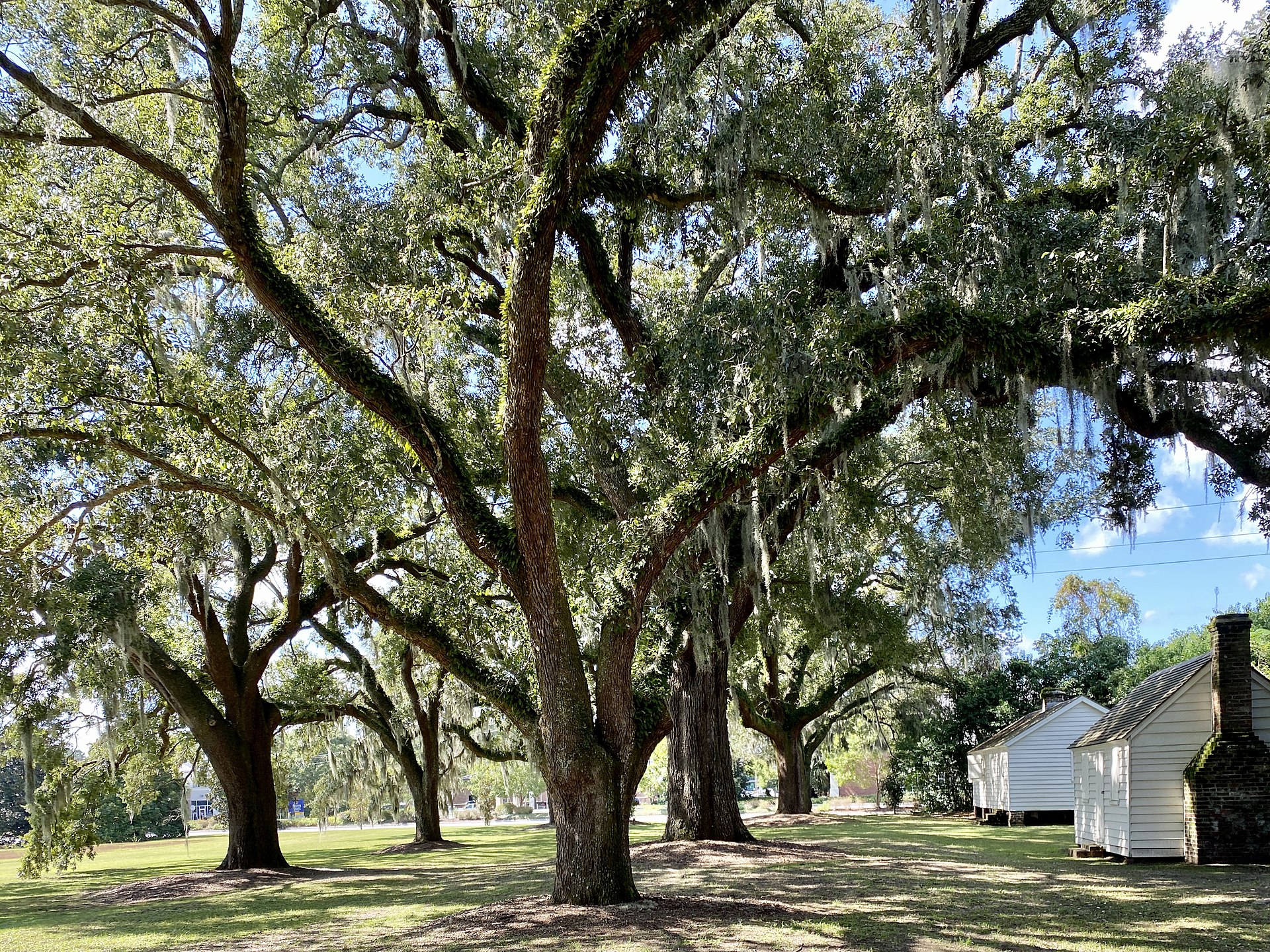
Beronda L. Montgomery, a botanist and a Radcliffe Fellow at Harvard, has made a career of interacting with plants, though her first attempt at communicating with them was kind of a flop. As a child, she had a full-fledged love affair with the wilds of Arkansas, but by the time she was a teenager, Montgomery rolled her eyes at an assignment to talk to a tree and write about it. Three decades later, on a South Carolina plantation, she had a total turnabout. There, she met and spoke with the ancient McLeod Oak, which, she says, “stood in this same place at a time when our enslaved ancestors inhabited and worked the land.” In When Trees Testify: Science, Wisdom, History, and America’s Black Botanical Legacy, Montgomery describes the massive oak and other historic trees as “living witnesses to Black American history.”
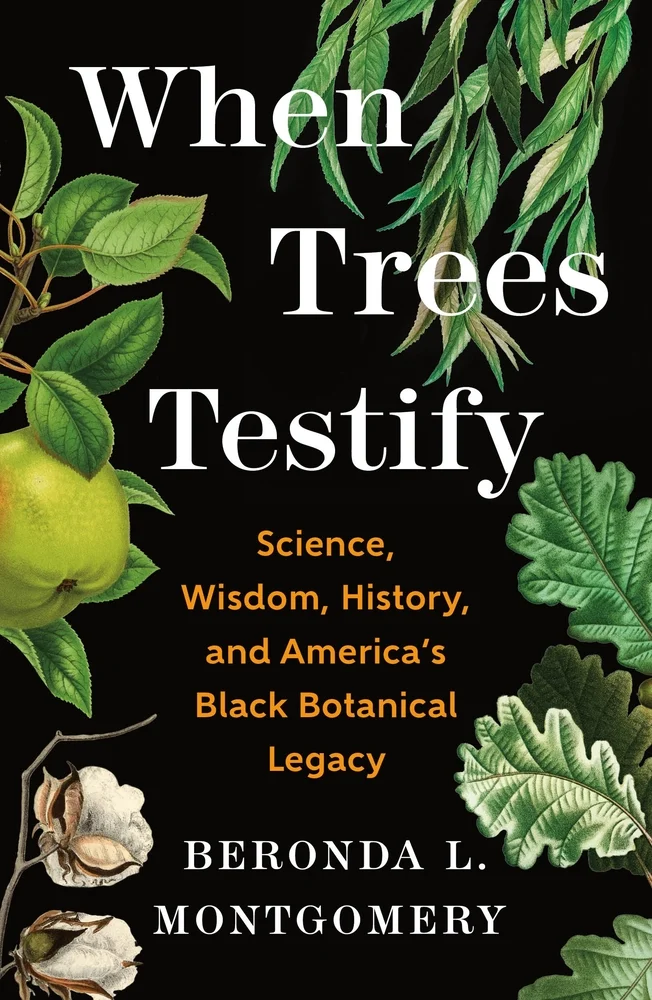
Like Robin Wall Kimmerer’s The Serviceberry—which uses the serviceberry to talk about nature, gratitude, and Potawatomi history—Montgomery structures When Trees Testify around seven trees, plus cotton. Through these botanic figures, she talks about her family, botany, science, and Black culture and history, which, as Montgomery says, “is irrevocably tied up in trees and plants.” Sycamores, for example, loom over other trees and, thanks “to their statuesque size,” served as markers for those who self-emancipated during chattel slavery. And also like Kimmerer, Montgomery conveys the grandeur and drama of flora. Standout nature writing appears throughout, even about plants with infamous pasts, like cotton, which is “stunningly beautiful” when in bloom, with its “delicate white-to-yellow petals that can mature to pink.”
When Trees Testify documents many chilling historical events—the Elaine Massacre of 1919, the Tuskegee Experiment, the murders of Emmett Till and George Floyd. And it documents many Black triumphs, including the 1903 founding of Blackdom, an African American community in New Mexico. While Montgomery looks at trees as historical records, medicine, shelter, food, and architectural marvels, she also considers them to be guides toward a better future. Black botanical knowledge, she says, “is a legacy worthy of recognition, worthy of celebrating, worthy of carrying forward as a mantle and bountiful harvest of ingenuity, resilience, resistance, and intergenerational hope.” I talked with Montgomery about that legacy, stolen knowledge, favorite trees, and her extensive reading list “centered in or proximal to history and botany.”
Chaya Schechner: In the segregated South of your parents’ youth, African Americans weren’t allowed to buy or eat vanilla ice cream, so Black people made butter pecan ice cream, a favorite flavor with, as you say, “sinister roots.” Was it stories like these that led you to a career that blends botany and history?
Beronda L. Montgomery: Apart from reading about this ice cream phenomenon in Maya Angelou’s autobiography I Know Why the Caged Bird Sings, I wasn’t aware of or hearing about such stories when I was young. I truly believed it was by chance that butter pecan and black walnut ice cream were family favorites. I came to know deeply about many of these types of stories and factual events as an adult. I’ve long had a deep interest in African American history, and this intersected with my interest in botany. As I continued to read and engage with documentaries (e.g., High on the Hog: How African American Cuisine Transformed America), largely for leisure or personal interest, I began to take special notice of botanical facts and stories.
CS: You talk about “stolen botanical knowledge.” Cotton and rice were commonly grown in Africa and that knowledge was taken from enslaved Africans in the South. What other knowledge was stolen and how was it taken?
My role as a botanist has given me a special lens into some historical areas.
BLM: I refer to the knowledge associated with growing crops such as cotton and rice, or cultivating trees such the mulberry, as stolen because the enslaved individuals were forced to use their knowledge to support an agricultural industry that financially benefitted those by whom they were enslaved—without compensation or acknowledgement of the source of the botanical expertise.
CS: Have you ever felt that your roles as botanist and historian conflicted?
BLM: I haven’t often felt conflicted. I don’t identify as a historian as much as I identify as a botanist or plant scientist who uses additional avenues or methodologies—history, archival work, etc.—to explore the scientific, cultural, and social roots of botanical themes. Many scientists use methods beyond their primary expertise to explore scientific curiosities. Thus, although it may seem unorthodox for a plant scientist to venture into archives or history, it’s common for me in all areas of my professional and personal life. Indeed, more than feeling conflicted, it feels that my role as a botanist has given me a special lens into some historical areas. That feels like the foundation of writing something like When Trees Testify. I felt uniquely prepared and positioned for this topic.
CS: During chattel slavery, a hollowed-out sycamore could offer a self-emancipating person a place to hide on their way north. The Underground Railroad Tree in North Carolina, a poplar, “served as a literal witness to acts of self-liberation and proverbial symbol of freedom.” But poplars also had terrible associations. Did this complicated history of trees affect your experience of them?
BLM: I think it may very well be the complicated history that has drawn me so deeply to them. It calls for a careful and invested commitment to unearthing and telling the fullness of that history. I’ve learned to hold multiple truths at once: Poplars are beautiful and awe-inspiring trees and cotton is a fascinating plant with lovely flowers and a magically complicated ability to spin cotton fibers even as these plants are also tragically associated with the exploitation and killing of African Americans.
CS: You mention that cotton not only played a large part in chattel slavery, it also led to the wide-scale deforestation of old-growth forests, resulting in the loss of many poplars and oaks. Your family also had its own, more recent, associations with cotton. Can you talk about how the plant impacted your mother and her education?
Memory in plants is not exactly identical to human memory but it certainly exists.
BLM: My mother and late father grew up in the Delta region of Arkansas where cotton was, and continues to be, a major agricultural crop. During their youth, school years were either timed to or interrupted for Black children by the cotton season of planting and harvesting. Many Black children served alongside their parents as low-cost laborers to plant, cultivate, and harvest cotton, as well as other crops. But cotton was king. Thus, although my mom loved school and did very well educationally, each year her school year was disrupted by cotton harvesting duties. The association of cotton with the limiting of her education—limiting because she was ultimately able to attend junior college but may have been able to do more and go further without the educational disruptions—causes her to have a strong aversion to the mere sight of the plant to this very day.
CS: You mention that you’ve “often wondered whether the branch of a hanging tree remembers bearing its strange fruit.” Is there any evidence of trees retaining some kind of biological record, aka, memory?
BLM: Yes, as I explore briefly in the book, there is scientific evidence that plants and trees can retain evidence of prior experiences that influences later responses. Whether this is the ability of some seeds to “remember” exposure to the cold that later impacts their ability to successfully germinate or other plants’ abilities to recall a touch stimulus, plants can retain experience. This type of memory in plants is not exactly identical to human memory, but certainly exists.
CS: Reading When Trees Testify turns a walk in the woods into a history lesson. What led you to organize your book around seven trees?
BLM: The concept of this book was rooted in an experience with a centuries-old oak tree at a former plantation in South Carolina during a visit with family. After that I began to think of other trees that I might explore and gave some serious thought to how I’d organize my writing. I initially considered a temporal walk though my personal life. I also thought of organizing chapters by tree parts—i.e., a journey from roots up through the trunk to the branches and leaves. However, as I began to think about linking the plant science to personal and family history, it was clear that I had stories/memories linked to specific tree types and, thus, the organization in the finalized book seemed more logical for me. I also imagined readers may be drawn to a particular chapter by memories that they themselves had linked to a particular tree species or type.
CS: You quote David George Haskell who describes trees as “nature’s great connectors.” Some of the old oaks that were saplings on plantations during slavery still “carry the breath” of those who were forced to work there. What are some other ways trees connect us?
BLM: As I’ve approached the book’s publication and have begun to talk about it more with others, I find that one of the powerful ways in which trees connect us is through the experiences that so many have with a favorite tree—whether associated with tree type, tree location, or a tree from a childhood or family domicile. Often, individuals share a very specific story about a tree from their memory.
CS: Do you have a favorite historic tree?
BLM: I must say that whenever I’m asked about a favorite plant or favorite tree it seems to vary depending on so many other factors, including what’s going on in my life personally or what’s going on in the world. However, I often return to the Angel Oak near Charleston, South Carolina—which is discussed in the book—as I always recall how awestruck I was when seeing it the first time. Also, on repeated visits, it’s been a different experience depending on the weather—if there’s been enough moisture the resident resurrection ferns are fully unfurled and it’s a completely different experience to engage. I also have favorite historic trees elsewhere, including a purportedly centuries-old silk cotton tree (Ceiba pentandra) near Falmouth, Jamaica, that I came to know recently. It currently holds a dear, sentimental nature for me as I was in Jamaica during Hurricane Melissa and the tree, which survived, will stand as witness to the devastation and hopefully to a full recovery of the island.
CS: What are some of the ways plants enabled enslaved women to fight against their enslavers?
BLM: I think the most shocking way for many is how these women used plants in powerfully subversive ways. These women would use some plants to prevent or eliminate unwanted pregnancy by the enslaver or enslaved men with whom they had been paired. This prevention of pregnancy was to prevent these women from bearing children who would then be subjected to a life of enslavement. There are also accounts of enslaved women using seeds or plants in the foods they prepared for those who had enslaved them to surreptitiously induce sickness or potentially death.
CS: How did Black Americans use their botanical knowledge in post-emancipation freedom, particularly in Blackdom, New Mexico?
One of the powerful ways trees connect us is through the experiences so many have with a favorite tree.
BLM: I was thrilled to learn of Blackdom from Maya L. Shamsid-Deen, a fellow co-founder of Black Botanists Week in 2020. Blackdom was the first Black settlement in New Mexico. Many of the first settlements of emancipated Black Americans were initially built on agricultural expertise—both as a commercial pursuit and to support their own cultivation of plants for food and other uses. Their botanical or agricultural knowledge was not limited to plant growth alone but also drew on extensive knowledge of advanced irrigation practices, dry farming, and other skills needed to cultivate plants or trees.
CS: There are many BIPOC authors/educators currently writing and/or talking about history and botany through a Black or Indigenous lens, including Carolyn Finney, Robin Wall Kimmerer, Alexis Nikole Nelson, Imani Perry, Maria Pinto, and more. Who are you reading and recommending?
BLM: I read work centered in or proximal to history and botany very broadly. I think I read everything Imani Perry writes! I was first introduced to Robin Wall Kimmerer through her legendary Braiding Sweetgrass. Recently, my son and I co-read her latest The Serviceberry, which was phenomenal.
I’ve long engaged the work of culinary historian Michael W. Twitty, author of The Cooking Gene, in whose work I see strong botanical threads. I am currently reading and thoroughly enjoying Maria Pinto’s Fearless, Sleepless, Deathless. I’m also revisiting some works for a developing project including specifically botanical writings by Jamaica Kincaid, especially My Garden and Among Flowers. I’ve also been thrilled to read the work of a number of environmental justice writers centered on plants, including essays by historian Jayson Maurice Porter and Jarvis McInnis’s recent book Afterlives of the Plantation. On my to-be-read list next is The Possibility of Tenderness by Jason Allen-Paisant, among a growing pile that I think will soon call for a reading vacation!