Lit Mags
My Skeleton Thinks It’s Better Off Alone
“Debone,” flash fiction by Caitlin Campbell
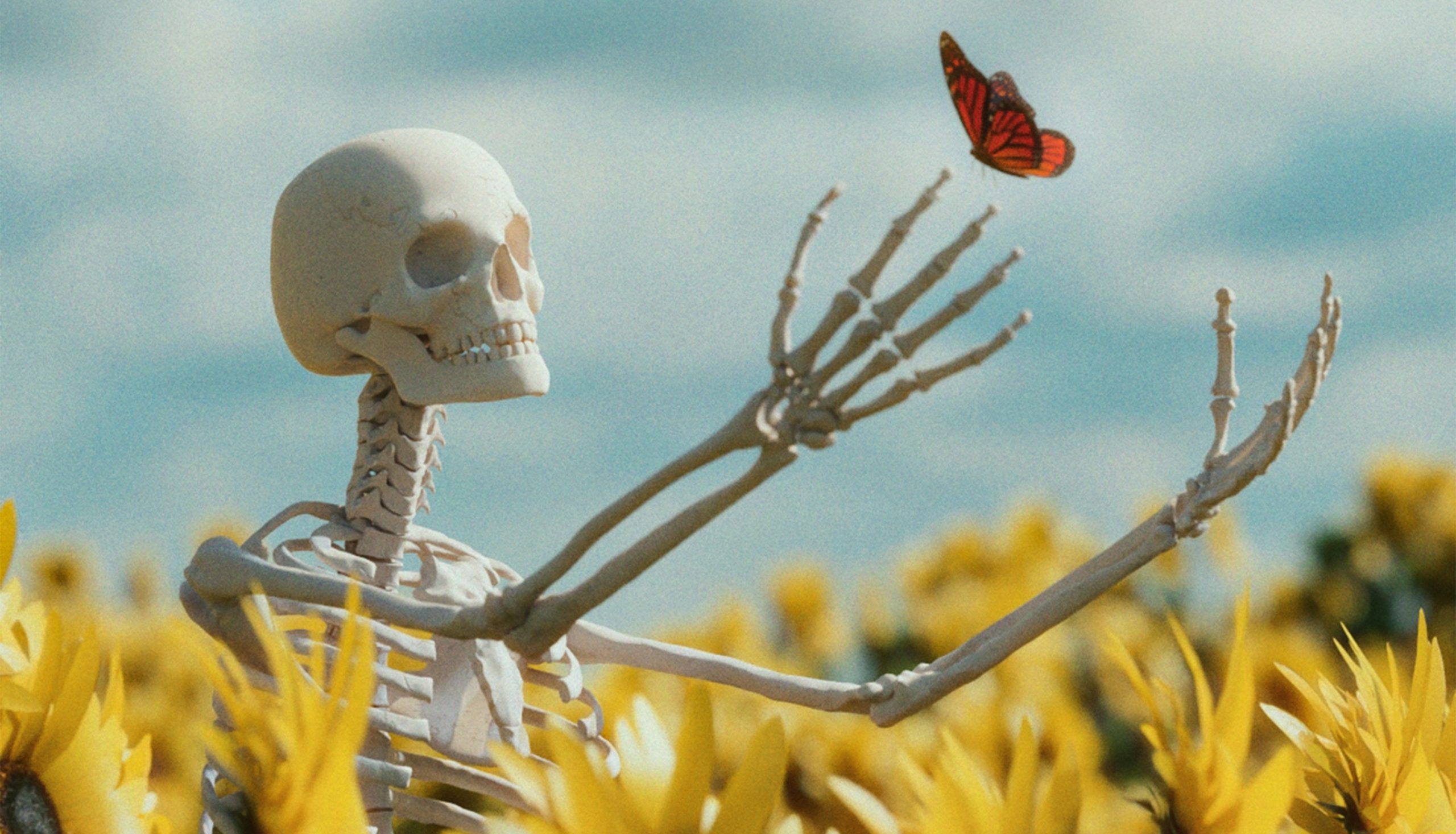
My Skeleton Thinks It’s Better Off Alone
This article is free to read. So is every article Electric Literature publishes. No limits, no paywalls—now or ever. But we rely on your support to keep it that way.
We need to raise $35,000 by April 15 to keep the lights on, and time is running out.
Help us reach the next milestone—$7,500 by Friday—by donating now.
—————
Debone
You catch your reflection and think: What the fuck? Is that a new bone?
You’d liked it when you were younger—flaunted it, even—the prominent collarbone of a thinner woman. Then came your mother’s fugue summer, when amid all the worry and perplexity and frantic travel, your pulse became visible at the base of your throat.
Maybe something, the doctor said, maybe just underlying structures uncommonly close to the surface. You hadn’t thought of it that way before, but they were, weren’t they? All that visible rigging. Was it grisly? Did it make people squeamish? It struck you as unseemly, indecent, something meant to be private and internal out there for all to see. You became self-conscious. You began to amass a collection of high-necked tops. You began scrutinizing the necks and shoulders of other women during warm months, in exercise classes, in red carpet photos of actresses in strapless gowns. You were trying to understand what’s normal, where you fall.
Next was the emergence of the outer tips of your clavicle and knobs that must be the heads of your humeri. You suspected bone spurs, then looked up “bone spurs” and decided, probably not. No one has been able to explain it. Perhaps it’s premature aging, or another scoliotic disfiguration, a byproduct of your terminally terrible posture, something that might have been stopped had you noticed and course corrected in time. Which is to say: your fault.
It’s hard to know when more tendons in your neck and more mystery bones in your chest and shoulders have emerged, and when you’re just looking too closely, obsessing, growing more and more paranoid. It puts you in mind of that French show where a lake drained to slowly reveal a sunken town.
You imagine being able to wrap your fingers all the way around your clavicle. You imagine rainwater collecting in the hollows, hummingbirds alighting to bathe there. Ha, startle reflex like yours, you’d like to see them try. (A jest! Dear Universe, please do not send birds.)
At night while drifting off to sleep, you begin to observe stirrings. Lying on your belly, arm folded under your chest, you feel a delicate tickle against your palm. You flick on the light, rush to the mirror, and pull aside the collar of your T, but see nothing. This occurs several times before you finally catch a glimpse: something squirming underneath, like your galloping pulse did, but freer, more erratic.
It remains dormant during the day but grows bold at night. Stand still long enough before the mirror and you’ll see tiny bulges probing your skin from inside. You imagine hundreds of feathery legs, like a millipede. You poke your collarbone and it dives away in the other direction, testing the outer limits of your body, or further within, becoming, for once, discreet.
It wants, you think, to be free. Don’t we all.
To entrap that which would be rid of you, to ensnarl, to imprison, is ethically indefensible, it is morally repugnant. So you go to the kitchen, open the drawer. Your hand hovers: carving knife, paring knife, boning knife. The last of these sounds most appropriate, but you quail before the sharp edge and settle instead for a butter knife.
What will you become without it? Compressible, you suppose. The way rats can squeeze down their ribs for any point of ingress and octopuses can ooze through any hole not smaller than their eye. This could be the start of a whole new chapter of your life, one featuring cave exploration, wreck diving, and other claustrophobic pursuits.
Before the bathroom mirror, you wedge the butter knife behind your clavicle and begin to pry. At first, it bows and writhes in distress, but you pause to pet it, humming lullabies, and it calms enough to proceed. This hurts more than anticipated. The shaking hands and sobs aren’t helping. Nor is the blood, obscuring everything, making it slick and difficult to gain purchase. No longer able to make out much in the mirror, you might as well stumble into the bathtub, finish this curled up against cool porcelain.
Twang twang twang snap the tendons. Through the carnage slices something thin, pliable, and coated in gore. A wing! Of course, why didn’t you see it before: it wants to fly. You drop the knife, try to relax, just be open and unresisting. Your part here is done; like a butterfly emerging from a chrysalis, this struggle may be crucial to its becoming.
It surges, twists. You wonder how much will go, whether just the clavicle or a larger mess of tendon and bone is about to claw free of you. It is so close now.
You try to skip ahead to when the horror will be over, the pain. Not so far in the future, it’s scaling the wall, smearing the white with blood and gristle. You’re tempting it down with a bowl of milk, or sugar water, or raw liver, gently dislodging it from the crown molding with a broom. Assuming you still have control over your arms. Assuming you come out of this as more than abandoned meat, a lonely shell, hollowed and bereft. Be generous, you tell yourself. Be easy and selfless and kind. But when it looses a victorious, breastbone-rattling screech, recognition: this is more than you are willing to give away.
So you clamp your hands over it and cry, “Don’t leave me, don’t go!” You feel it fighting, as desperate to get away as you are to crush it to yourself. It’s a fierce struggle that carries on for several terrifying, heartbreaking minutes. At last, over your pants of “please, please, please,” you feel it subside, go still once more, and surrender under your bloody, trembling hands.