Cover Reveals
Exclusive Cover Reveal of BEAUTY TALK by Asa Drake
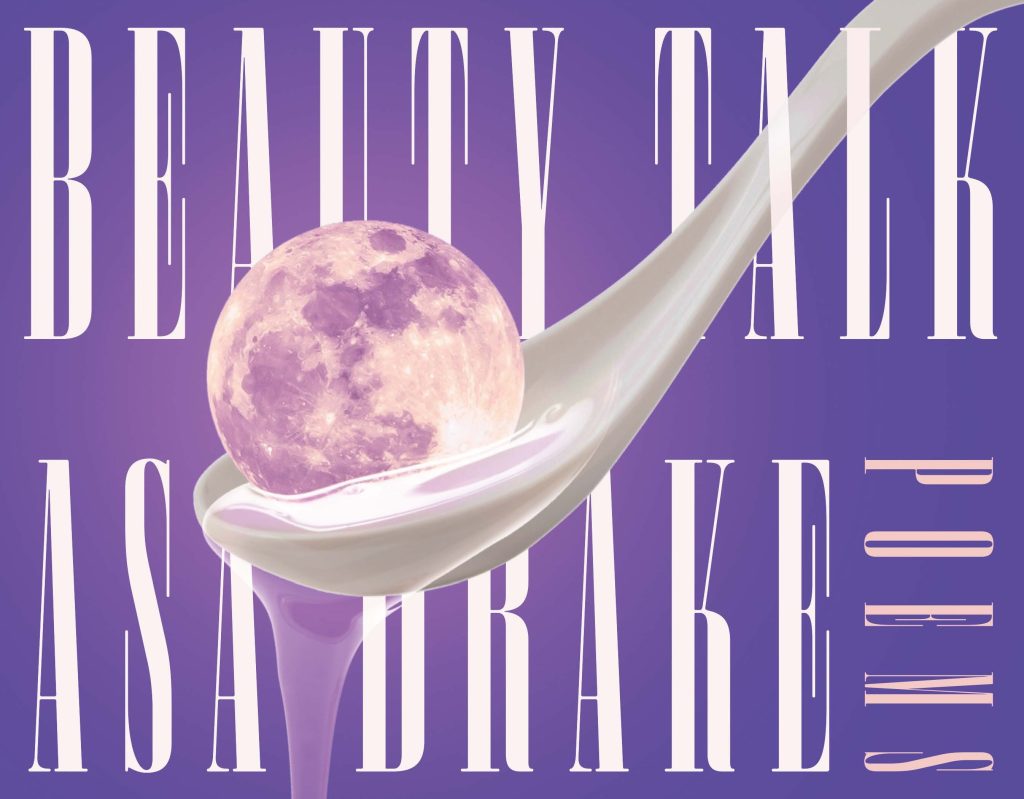
A pearlescent spoon cradles the moon, rendering its beauty strange and luminous
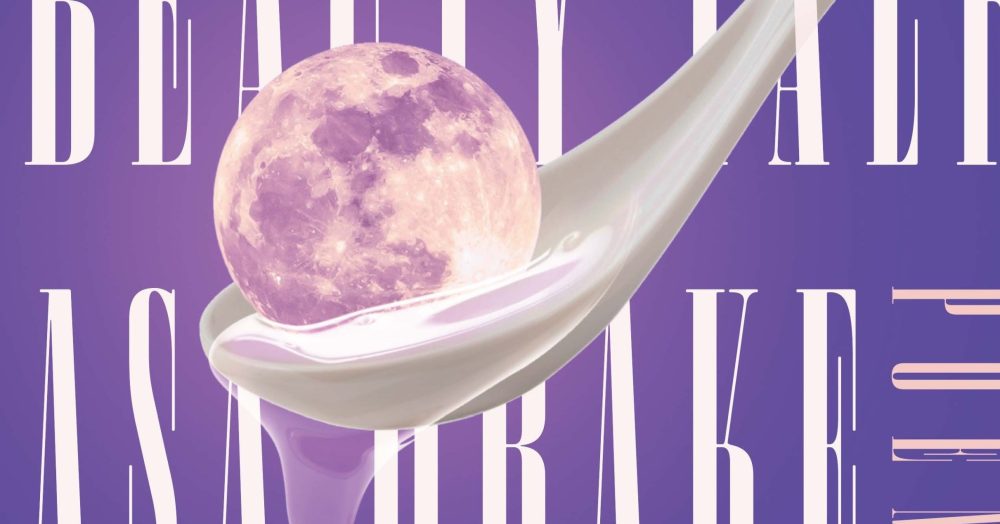
Electric Literature is pleased to reveal the cover of Beauty Talk by Asa Drake, which will be published on October 13th, 2026 by Noemi Press. You can pre-order your copy here.
Intimate, wry and a little sour, Asa Drake’s Beauty Talk addresses the (im)possibility of talking about beauty in America without addressing whiteness. Here is a personal history of who gets to be beautiful.
While Beauty Talk pulls from the autobiographical—a father as the 1970’s Camel cigarette man, correspondences with abandoned siblings, a historic family map—the collection is shaped by the illegibility, omission, and ekphrasis of the personal archive. Embracing a fractal telling, these poems explore an inheritance of mixed aesthetics and what it means to partake in a lineage that is both colonial and immigrant. Drake pulls from sources as varied as Chiwan Choi’s adaptation of the Bechdel test and Viv Chen’s substack The Molehill to index the racial and gendered language of advertisement copy, incident reports, and parental beauty advice. Woven between these coded distinctions of moral and aesthetic utility, Beauty Talk asks if, perhaps, family is the first commodification of the body.
Here is the cover, designed by Alban Fischer:
Asa Drake: In 2022, I had the opportunity to study with Paisley Rekdal at a Tin House (now McCormack Writing Center) Summer Workshop, and during that workshop we joked that I could write a whole book about beauty advice from my father who was a model during the 1970s. I’d never really written about my father because writing about my father meant writing about the body, about whiteness, about abandonment and desirability.
In Beauty Talk and, I think, in life, beauty is euphemistic. Beauty is a kind of cultural adherence that we’re promised will make our lives easier. This collection is filled with moments where I catch myself using beauty in place of whiteness, a substitution/exnomination I learned from my parents. Throughout Beauty Talk, I’m testing the distance between signifier and signified. Even when we talk about the color yellow or the scent of jasmine or peaches or the moon, we can’t separate the symbolism we’ve attached to each word from the thing itself.
I would have never imagined this cover image on my own, and yet I know exactly how Alban Fischer’s design ties into the book. There are two poems that immediately come to mind: one with pearlescent bilo-bilo and another where I compare a peach canned in syrup to the moon. Beauty Talk is a collection filled with spheres, orbits, and ellipses. And the moon at some point becomes the subject of direct address. It’s a heavenly shape that I return to as the site of harm and repair.
When I think about the many substitutions which happen throughout Beauty Talk, Alban’s incredible cover becomes charged with hypergloss and maybe a little sarcasm. I love how this image explores when words mean themselves and when they call to one another. Alban’s visual rhyme (moon in spoon!) gives me hope that despite engaging with questions of whiteness and exnomination, readers will laugh at my jokes.
Alban Fischer: The brief for Beauty Talk was relatively open, and the author was quite helpful in providing possible directions. The image of the moon is a consistent presence in the book, so it seemed to me a solid compass to work with. The question was how best to represent it from among all its permutations and valences throughout the collection. I was initially intrigued by the possibility of using the dumplings in one of the title poems as moon or, better yet, using “The moon is a peach lifted / from syrup” as a stepping-off point. There were almost too many possibilities, and I was briefly concerned about creating something unintentionally zany. Ultimately, it was Asa saying she was “more interested in a cover that is striking and memorable than a cover that is pretty” that gave me license to just let myself be led wherever these poems’ warped poignance took me. The line “it is easier for an American to enter heaven / than to engage with an unfamiliar texture” from “Recipe for Bilo-Bilo” stuck with me; it seemed to encapsulate the book’s themes, and the dumplings in the poem were the moon the cover needed. The rest was mostly getting the color scheme and type choices right. Smoosh’s exaggeratedly condensed contours finish off the cover with the right amount of cheeky refinement. I loved this book. Drake writes into complicated family dynamics and culturally sanctioned standards of how one exteriorizes identity in ways that are thrilling and original. It’s such a pleasure when a project like this comes your way.