7 Novels That Give You Hope Before Devastating You

I feel like we look to fiction books to either uplift us and make us feel great about life and the world, or to devastate us and make us feel poopy about it. Personally, I believe that even in the latter instance that poopiness is meant to uplift us in how we go about living our lives afterwards. Has that book elicited a change in us at all? Are we behaving differently due to something in the novel, and acting out a hopeful outcome every day?

I feel sorrow stronger than I feel joy, so I love books that reflect that too, and make me commit to something through that feeling. The books that have affected me deeply have been almost always books with bad endings, where things don’t work out, and where things go from bad to worse, or where everything goes to shit at the end.

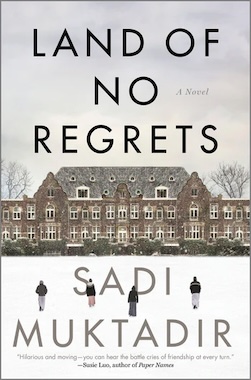
My own book, Land of No Regrets, is a book where things may go from bad to worse, but hopefully has something in it for readers to reflect on as a result. Four boys are sent away to a religious boarding school in rural Ontario, Canada, and quietly start rebelling against their new lives. They build up grand machinations for a different life, and dream bigger than their means, snowballing a series of events they have no control over to a cataclysmic result. 

I bristle a little when people say they don’t have an appetite for heart-breaking novels, or books where things don’t work out. People can ultimately choose whatever they want to read obviously, but I really wish they couldn’t. I think people have a responsibility to entertain themselves and feel something when reading, and I think books that make them feel bad can do that just as well as books that make them feel good. I think these seven books do a great job of illustrating that. I would love for people to make themselves sad on purpose through books, and then reflect on how to be happier and better as a result. Small ask, I know. 

Which books leave you feeling moved, books where everything works out in the end, or books where everything goes to hell?

Never Let Me Go by Kazuo Ishiguro

Never Let Me Go is a novel set in a fictional boarding school, where we’re introduced to a sci-fi-y, speculative setting where some humans are bred to simply donate their organs and then die. In this pursuit, these donors are given these really nice lives where they’re healthy, eat well, get exercise, but also build strange social relationships as they slowly learn what their fates are to be. Stunted, awkward and depressed, they mostly lead short lives with loose connections with one another. We are introduced to hope through the rumours of donation exemptions granted to the doomed if they are in love and can prove it. Two characters, who are very much in love, hold onto this hope and start to build up little pieces of evidence of their love, like drawings or artwork they create. Slowly, readers start to learn about small pieces of evidence that support this theory, like older folks who are still alive and matriculated at these institutions, or stories about couples who were shown mercy. They might make it out right? And shut down the boarding school for good? Turns out, exemptions aren’t granted, it was all just that, rumours. Everyone you grow to love and hope for dies and we’re left to reflect on the human cost of development when an identity supersedes the value of a soul.

Noughts and Crosses by Malorie Blackman

Noughts and Crosses is a YA novel set in a world where white people were the slaves all along. Bear with me. It’s a speculative fiction series about racism, told through the eyes of star-crossed lovers who are not meant to be together, because one of them is white and one of them is black. The books are well written, like a modern day Romeo and Juliet, and are set with an interesting premise for teenagers who can still be surprised by thought experiments. At that age, you’re used to books having happy endings, and things working out for protagonists in the end. Sure, once in a while (Bridge to Terabithia, Where the Red Fern Grows, etc.) things don’t work out, but for the most part, you expect love to. This isn’t the case here. Racism grows, both sets of parents on either side are dead-set on separating the two, even trying to force the protagonist into an abortion. In the end, her fated lover is hung at the gallows for ‘raping’ her, and that’s how that book ends.

No Longer Human by Osamu Dazai, by Donald Keene

No Longer Human by Osamu Dazai is an epistolary novel that feels foreboding from the first page to the last. The entire time I read it, I had the feeling that something was off and disturbing, and I loved it. Dazai doesn’t attempt to hide this feeling at all, telling readers exactly how his protagonist feels about himself, others, and the world around him. This dread permeates every page of the book as the self-pitying protagonist’s list of misdeeds grow. Guilt and shame abound as our protagonist Oda destroys marriages, becomes a drunk and a drug addict, finds sobriety and then relapses, completely unable to connect with humanity until finally, he’s taken away to exist in limbo amongst quiet nature. In real life, this is when Dazai killed himself.

Things Fall Apart by Chinua Achebe

I read Chinua Achebe’s Things Fall Apart in high school, as I’m sure many people did, and absolutely loved the real-to-life ending, and honest portrayal of pre-colonial Nigeria. As an idiot, I’m always learning, so I loved learning about the harsh-by-my-standards conduct of Okonkwo, a guy caught in standards of patriarchy that would make Andrew Tate pale in comparison. Okonkwo thought it was feminine to owe money to people. Anyways, living like this leads to disaster for him. The book takes place right around the time European missionaries showed up to colonize the land in the late 19th century, and demonstrates what happens when your community is made up of people who don’t think it’s cool to behead white messengers, and you’re also too ‘based’ to influence your community through love or diplomacy, or maybe things are out of your control. Either way, after a loss of face, dishonour, and exile, Okonkwo kills himself and becomes a paltry historical footnote.

Lord of the Flies by William Golding

Lord of the Flies’ impact on me can’t be understated. When I read it years ago, I loved how brutal and inhumane those children became over the course of events in the novel. I knew that when I wrote Land of No Regrets, I wanted to capture even the barest glimpse of the brutality humans were capable of, through the lens of childhood and young adulthood. That meant stranding them, not on an island, but at a boarding school, the setting for so many coming-of-age tales. In the same way Lord of the Flies is intended for adults, I wanted my own work to be intended for the same group, and to show the disastrous results of what happens when young people receive either no guidance or poor guidance as they indulged in every misdeed they could get away with. Fights, hunting pigs, theft, and finally, killing another kid, as chaos consumes the island.

The God of Small Things by Arundhati Roy

Books where things end in a painful, awkward, stunted manner are my favorite. They force us to wrestle and sit with a writer’s decision to tell us something we were not expecting. In The God of Small Things, Arundhati Roy weaves this masterful narrative of caste discrimination and class conflict, through the eyes of children. Rebellion can barely be afforded, and so one of the protagonists, a single mother, acts out through an affair with an Untouchable, the lowest caste of humanity in southern India. Communism is rising as the middle class family responds to it with alarm and opposition. One of the elder matriarchs of the family, Baby Kochamma, is an absolute piece of shit, a brown Auntie on hate roids, and manipulates events to bring about destruction and see everyone as miserable as her in life. I loved it. More than anything, Roy showed a true-to-life depiction of what happens every day, how people struggle and fail and die despite holding onto sad hope for a better life. I loved it.

A Fine Balance by Rohinton Mistry

Finally, A Fine Balance was the first book I read after finishing my undergrad, when the love of reading was almost beat out of me by having to read essays by Northrup Frye, and pretending Harold Bloom was an erudite worthy of worship. A Fine Balance left a greater impact on me because of the dire fate shared by all four protagonists. Indeed, it made sense that the book was so aptly named in reference to the middle sections that were a thin, fine respite that balanced the tragedy that would come before and after. In this same way, I wanted to present a story with some joyous balance in the middle as well. You really believe that this was going to be that diaspora literature full of hope, where young brown souls pull themselves out of ruin and poverty by their bootstraps, against the backdrop of Indira Gandhi’s India. An independent woman starting a business venture, sewer rats with dreams, and a young man studying hard. All you have to do is believe in the human spirit and extoll virtue. Instead, what really happened happens. Maim, castration, poverty, imprisonment, pity and suicide.

65 Queer Books You Need To Read In Summer 2024

A confession: I very nearly quit putting this list together. 

Throughout the year I keep a running list, adding new names whenever I learn about an upcoming queer book—from Tweets, publicist pitches, endless NetGalley scrolls—and I usually start writing the blurbs for each book a few months before the list is due. Let me also add that, because I am a novelist myself, someone who works very hard to put words on the page in a good-enough order for someone to respond to them, I try and read at least a little of each book featured. And here’s an incredible truth that’s both deeply satisfying and makes my job surprisingly difficult: there are more and more queer books published every year. There was a time when I could complete a list like this in an afternoon; I was lucky to find a dozen explicitly queer titles. Now there’s a pretty solid chance I miss a good number of them. 

In mid-December—at the half-way point, and a couple days after my birthday—I looked at the list, halfway done then, and thought, “There’s no way I can do this. There’s no way I can finish putting together this list in a way that does each book justice.” Partly it was the volume, yes, and partly it was the ambient dread of being alive in 2023. Partly it was also because of the lingering emotional hangover from publishing my debut novel and the approaching completion of my second—experiences that have left me excited, enervated, vulnerable, and protective of my own mental health. Partly I’ve become wary—weary?—of continuing to delineate LGBTQ stories from cis-straight ones, as if our identity is a genre, as if I’m daring hetero readers to overlook these books because of who the protagonists and authors choose to fuck. Partly—maybe superficially—I felt a crippling nihilism at the idea of putting so much time into this list only to have to promote it on the hollowed-out shell of an app whose home screen now serves as a violent reminder of how much we’ve lost at the whims of idiotic wannabe despots. 

Here’s how I finally finished this list: I read all the other ones. I went through most of the “best of” lists from last year, the “anticipated” lists for this one. And while we’re thrown a couple bones every now and then, given some gestures at progressive appeasement, our stories are still routinely passed over. Queer culture—our fashion, our humor, our art—has always moved everyone forward, toward a better, freer, more-fun world; we are and have been the tide that lifts, so our stories deserve not only to be included but centered. 

Here are 65 works of literature that will lift us all this year—bold new books by Danez Smith, Stacey D’Erasmo, Desiree Akhavan, Judith Butler, Lucas Rijneveld, R.O. Kwon, and Miranda July; and auspicious debuts from Santiago Jose Sanchez, Emma Copley Eisenberg, and Ursula Villarreal-Moura.

Blessings By Chukwuebuka Ibeh (June 4)

Ibeh’s graceful and poignant debut, set in a post-military Nigeria on the brink of criminalizing same-sex relationships, follows Obiefuna, who faces ostracism from his family and societal persecution after being discovered in an intimate moment with another boy. Americanah author Chimamanda Ngozi Adichie calls the novel “so wonderfully observant, and so beautiful.”

The Future Was Color by Patrick Nathan (June 4)

Everything Patrick Nathan writes is a banger, whether it be a wrenching coming-of-age novel, a work of criticism excoriating our country’s authoritarian obsession with images, or even his incisive Substack. Expect no less from the author’s second novel, which follows a closeted screenwriter in McCarthy-era Hollywood and the big screen starlet who seems to offer a sort of salvation. A monster mash between Sunset Boulevard and The Amazing Adventures of Kavalier and Clay

The Other Olympians by Michael Waters (June 4)

In 1934, Zdeněk Koubek, a Czech track star set a record in the women’s 800-meter dash. A year later, he announced that he was living as a man. He became something of a celebrity, so why don’t we know about him? Koubeck is at the center of Michael Waters’s fascinating first book, an important dive in to the archives, pubbing just in time for the summer games in Paris and amidst unprecedented panic over and attacks on trans and intersex athletes. 

Women by Chloe Caldwell (June 4)

Crazy how long ago 2014 feels, maybe even crazier to think that a decade ago it felt as though there were so few queer books being published—especially books about queer women—that we and all our friends and exes and friends-who-are-exes kind of just passed well-worn copies of the same ones around. That’s how Caldwell’s revelatory novella came to me, a copy that I probably left in some other bedroom. As Katie Heany writes in the foreword to the reissue: “For a little while, it wasn’t reliably easy to find Women in the wild. Copies were like shared secrets—you had to fall in love with someone in order to get your hands on it.” Now here we are ten years later, and what a gift it is to be able to reread and re-experience this cult classic, the story of a woman who falls in disastrous and delicious love with a woman for the first time. 

All Friends Are Necessary by Tomas Moniz (June 11)

Chino Flores is less starting over and more learning to put himself back together again. Once a married middle school teacher in Seattle, he’s now temping in San Francisco, dating men and women. There to help is group of new friends, including a red-haired metalhead and a couple with an OnlyFans account. The second novel from Moniz, a finalist for the PEN/Hemingway award, is, according to author Joseph Han, a “splendind and rejunventing novel [that] will make you feel so full and alive, held and comforted.”

The Sons of El Rey by Alex Espinoza (June 11)

Love and legacy square off in this multi-generational saga following a family of luchardores from Mexico City to Los Angeles. In one corner is Ernesto Vega, a former pig farmer turned famous wrestler; in another corner is Ernesto’s son Freddy, who’s trying to save his father’s gym, while his own son, Julian, navigates the gay dating world as a Mexican-American. 

Cicada Summer by Erica McKeen (June 18)

Canadian writer Erica McKeen, whose previous novel Tear was awarded the Rakuten Kobo Emerging Writer Prize for literary fiction, tells the story of a woman reeling from her mother’s death and quarantining with her grandfather at his lakeside cabin in Ontario. Things get complicated when her ex arrives unannounced and the trio find a strange book written by her late mother. 

More, Please by Emma Specter (June 18)

Specter, a culture writer at Vogue and vital voice in the literary landscape, makes her book-length debut exploring our love-hate relationship with food, how it can be both a source of nourishment and shame. Kelsey McKinney, host of the podcast Normal Gossip, calls the book “a five-course meal of delight. It is an absolutely delicious read, that never shies away from the truth in favor of some tidy, societally approved narrative.”

Hombrecito by Santiago Jose Sanchez (June 25)

In Sanchez’s soulful debut, a mother moves her two sons from Colombia to Miami, where the three of them rebel against and attempt to revel in their new lives. Santiago, the younger of the two boys, begins to explore his sexuality and eventually relocates to New York. But when his mother invites him to tag along on a trip back to their homeland, Santiago goes, forcing a reckoning with his father, his mother, and his motherland. 

Please Stop Trying to Leave Me by Alana Saab (June 25)

We’ve all been there: seeing an ad on Instagram and believing it to be a sign from the divine to make changes in your life. For Norma, the narrator of Saab’s debut novel, this social-media-generated spiritual suggestion tells her to break up with her girlfriend, which her therapist sees as a symptom of deep depression and dissociation. It might, of course, also be related to Norma’s inability to finish her book. Or it could be good old childhood trauma. Saab unfurls the very heady relationship between creativity and mental health. 

Coachella Elegy by Christian Gullette (July 1)

Cue the Frank Ocean and Lana Del Rey. I had the chance to hear some of the poems from Gullette’s forthcoming collection this past summer at Kenyon College and I found myself counting down the days until I could get my hands on the whole book. With the sparkling fluidity of sunshine in poolwater, Gullette acutely captures how California is not just a state but a state of mind, a quintessentially American place of Beginning Again, yet so often it is—like the festival referenced in the title—a mirage. 

Misrecognition By Madison Newbound (July 2)

I had to get my hands on Newbound’s debut as soon as I saw the evocative cover and read what it was about: a young woman reeling from her breakup with a polyamorous couple cyberstalks a straight celebrity who found fame playing gay, and ends up falling for the actor’s androgynous dinner companion. I got to blurb the book, but I’ll let Garth Greenwell’s always-wonderful words sell you on it: “I’ve never read anything that captures so vividly the distinct texture of desire, at once feverish and vacant, engendered by the infinite scroll of online life.”

Anyone’s Ghost by August Thompson (July 9)

A novel that shares its name with a song by The National will always stir my interest. Thompson’s debut, which has received glowing praise from literary heavyweights Jonathan Safran Foer and Junot Diaz, tracks the blurred-lines intimacy of two boys who meet as teenagers and dart in and out of one another’s lives. 

The Long Run: A Creative Inquiry by Stacey D’Erasmo (July 9)

As far as I’m concerned, Stacey D’Erasmo’s The Art of Intimacy is required reading for any and all writers, a masterclass on how to render the electric tension that occurs between characters on the page. Her latest looks just as important: a collection of conversations between artists on what it means to make and sustain a living as a creative person.

Evenings and Weekends by Oisín McKenna (July 16)

Named one of Publisher Weekly’s Writers to Watch, spoken word poet McKenna debuts with this novel following a trio of “desperate, tetchy, and horny” characters across London during the 2019 heatwave. There’s Maggie, a waitress and aspiring artist who chooses to flee the city after she becomes pregnant; Ed, a bike courier and father-to-be who has been secretly hooking up with men, including Phil, Maggie’s best friend. Fellow poet Eileen Myles calls it “A love letter to cities and people and heartbreak.”

The Nude by C. Michelle Lindley (July 23)

A little Cusk, a little Tartt—Lindley’s shrewd and sensual debut centers on an art historian traveling to a Greek island to acquire a recently discovered female sculpture and ends up embroiled in a complicated relationship with a translator and his artist wife (and with her own ambitions). 

The Pairing by Casey McQuiston (Aug. 6)

I mean, Casey McQuiston needs no introduction, right? The author of Red, White and Royal Blue and One Last Stop returns with another hot AF romp, this one a friends-to-lovers-to-rivals story about an aspiring sommelier and a fine-dining pastry chef who, independent of one another, decide to embark on the European food and wine tour they missed out on years ago when they broke up. Together again but still separate, they’ll eat their hearts out, but can anything else—anyone else—satiate their hunger for each other?

The Palace of Eros by Caro de Robertis (Aug. 13)

If you have not yet read Cantoras, de Robertis’s novel about a group of queer women who resist the militaristic dictatoriship of 1970s Uruguay by claiming an isolated cape along the coast as their own, please amend that. It is an utterly transporting and defiantly beautiful novel, a story about communal love and self love that will rend and mend your heart. The author’s latest—a retelling of the Greek myth of Psyche and Eros—promises to be another wondrous tale about queer joy and liberation. 

You’re Embarrassing Yourself by Desiree Akhavan (Aug. 13)

Akhavan is one of the most audacious and important filmmakers working today. Her autobiographical first feature Appropriate Behavior laid bare what it’s like to be the queer American child of Iranian immigrants and in myriad ways fundamentally changed the indie movie landscape, making room for so many diverse and indelible stories. Her BBC television series The Bisexual boldly and honestly and hilariously dared to ask complicated questions about desire and identity. She’s no stranger to mining her life for tragicomic gold, which she does aplenty in her memoir-in-essays, from navigating feelings of inadequacy as a student at Horace Mann to the triumphs and tribulations of fame.

Bluff by Danez Smith (Aug. 24)

A finalist for the National Book Award and the National Book Critics Circle Award, Danez Smith has over two—now three—collections tapped into poetry’s powerful playfulness and plangency to capture the complexities of queer Black life. Each book has been a revelation and Bluff is no different. Composed largely in the wake of the COVID crisis and the aftershocks of George Floyd’s murder, the latest from the Minneapolis-based poet reckons with the responsibility of the practitioners of the medium to both accurately represent and challenge inaccurate representations of communities and lives like theirs.


Don’t forget to check out the following titles, published January through May 2024!

You Only Call When You’re In Trouble by Stephen McCauley (Jan. 9)

Tom is an architect in his sixties, constructing what he hopes will be his “masterpiece.” But his longtime boyfriend has recently broken up with him, and both his sister and his niece—the latter of whom is the center of his life—are soliciting his help in solving crises of their own. Less author Andrew Sean Greer says McCauley’s “poignant, joyous, explosive” latest is one to cherish: “A book that loves you back. What more could you want, my gosh? Read it!”

City of Laughter by Temim Fruchter (Jan. 16)

Grieving the dual losses of both her father and the end of her first queer relationship, Shiva Margolin, a student of Jewish folklore, embarks on a sojourn to Poland, her family’s ancestral homeland. Danielle Evans calls Fruchter’s debut “a gorgeous and full-hearted exploration of inheritance, grief, desire, and connection, at once a story about what it means to go looking for the ghosts we always knew were there and what it means to be in the right place to encounter the unexpected things we didn’t know we were waiting for.” 

Portrait of a Body by Julie Delporte (Jan. 16)

The newest from French-Canadian cartoonist Delporte is a beautiful, moving look at coming out later in life, a diary-style graphic memoir about the queer liberation of both the body and mind. 

Dead in Long Beach, California by Venita Blackburn (Jan. 23)

How To Wrestle a Girl, Blackburn’s 2021 story collection, was a revelation, barbed and bold. She writes so well about the weirdness of grief and the grief of being weird. Her new novel centers on a successful speculative fiction author who discovers her brother dead by suicide and carries on pretending he’s still alive, a reality-shattering charade with far-reaching consequences. 

How We Named the Stars by Andrés N. Ordorica (Jan. 30)

Ordorica, a poet, weaves a tapestry of love in loss in his fiction debut, a tenderhearted coming-of-age story about a closeted college student who falls in love with his also-closeted roommate. Fellow poet Eduardo C. Corral calls the novel “majestic.”

Interesting Facts About Space by Emily Austin (Jan. 30)

The bestselling author of BookTok fave Everyone In This Room Will Someday Be Dead returns with a novel about a partially deaf lesbian obsessed with black holes and true crime podcasts struggling to balance new connections—both with her formerly estranged half-sisters and her first serious relationship. 

Antiquity by Hanna Johansson, trans. by Kira Josefsson (Feb. 6)

Imagine a female-fronted version of Call Me by Your Name told from Oliver’s point of view and set on a Greek island and you’ll get something like Johansson’s award-winning novel. Translated from the Swedish, it follows a thirtysomething woman to Ermoupoli as she becomes entangled in a complex relationship between an elegant older artist and her teenage daughter. 

Corey Fah Does Social Mobility by Isabel Waidner (Feb. 6)

Waidner’s last novel, the Kafkaesque Sterling Karat Gold, won the prestigious Goldsmiths Prize, and their latest surreal romp is about an author who wins a prestigious book prize. The catch? The trophy and monetary award are difficult to obtain, possibly impossible, and the quest for it sends the author back and forth through time. 

Greta & Valdin by Rebecca K Reilly (Feb. 6)

The titular siblings of Reilly’s charming debut are lovelorn flatmates in New Zealand, navigating their own queer heartbreaks and learning what their place in the world is—both as individuals and as members of a multiracial family. 

Ways and Means by Daniel Lefferts (Feb. 6)

Alistair McCabe, a young gay college student from the Rust Belt, dreams of a career in high finance, a fantasy turned nightmare when he finds himself entangled with an enigmatic billionaire whose nefarious ambition puts Alistair’s life at risk. Lefferts’s debut, an astute examination the complex intersection of money and intimacy, traces Alistair’s descent alongside the dissolution of the relationship between his paramours, an artistic couple with their own financial and existential woes.

Bugsy & Other Stories by Rafael Frumkin (Feb. 13)

The author of last year’s Highsmithian heist dramedy, Confidence, returns with a delirious, thrilling short fiction collection, including one story about a lonely college dropout who reinvents herself as a boom operator for porn shoots, and another about a Twitch streamer whose life is upended by the odd behavior of her best friend and the reply guy fan who’s come to declare his love. 

I Heard Her Call My Name by Lucy Sante (Feb. 13)

Often it’s easier to think and write about others’ lives, easier to dig for the truth in someone else’s story than it is to search for one’s own. Such as it had been for Sante, an acclaimed chronicler of iconoclastic queer life who found it difficult to confront her own identity, a confrontation made even more difficult by society’s discouragement of gender fluidity. Sante’s achingly poignant memoir charts her late-in-life transition, the shock and euphoria of self-recognition. 

Ten Bridges I’ve Burnt by Brontez Purnell (Feb. 13)

100 Boyfriends was a bawdy, brutal, and beautifully raw chronicle of queer Black life, and Purnell’s follow-up, a memoir-in-verse, promises even more of what made that book a must-read. 

The Rain Artist by Claire Rudy Foster (Feb. 24)

When I was an editor at O Magazine, I had the pleasure and privilege of publishing the dizzyingly good short story upon which this novel is based. It centers on a woman named Celine who is one of the sole remaining umbrella makers in a world in which water (and rain) has become a rare commodity only available to the uber-wealthy. For such a short story, the world Foster built already felt expansive, and I’m excited to see it expanded further. 

The American Daughters by Maurice Carlos Ruffin (Feb. 27)

The always-inventive author of the Pen/Faulkner finalist We Cast a Shadow returns with an electrifying work of historical fiction centered on a gutsy former slave girl who joins a clandestine band of female spies working to undermine the Confederacy. 

Green Dot by Madeleine Gray (Feb. 27)

Hera, the droll and extremely self-aware narrator of Gray’s debut, knows falling for a married man twice her age is an ill-fated cliche. And yet. Hera, who has only ever slept with women, works as a news outlet’s comment moderator, and it’s in the chilly, subterranean-seeming office she meets Arthur, a journalist who throws into disarray who she believes she is and who she wants to be. It’s Conversations with Friends meets Several People Are Typing.  

My Heavenly Favorite by Lucas Rijneveld (Mar. 2)

From the author of The Discomfort of Evening, the first Dutch book to win the International Book Prize, comes a queer and profane take on the Lolita archetype, following a pervy veternarian who becomes infatuated with a fourteen-year-old daughter of a local farmer—a girl who dreams of inhabiting a boy’s body. 

Ellipses by Vanessa Lawrence (Mar. 5)

Set amid the squalor and splendor of New York media, Lawrence’s debut follows Lily, a staff writer at a glossy fashion magazine who feels stalled both personally and professionally. Enter Billie, a cosmetics mogul who wants to mentor Lily…mostly from the distance of a phone screen. But what transpires in the digital realm seeps into real life until it’s all but impossible to tell where one ends and the other begins. 

Thunder Song by Sasha taqʷšəblu LaPointe (Mar. 5)

LaPointe follows up her award-winning memoir Red Paint with a collection of essays that explore the challenges and triumphs of proudly embracing a queer indigenous identity in the United States today, drawing on both personal experiences and the anthropological work of her great-grandmother. “Sasha taqʷšəblu LaPointe’s essays in Thunder Song are loud, bold, and startlingly majestic,” says Night of the Living Rez author Morgan Talty.

The Tower by Flora Carr (Mar. 5)

Set in sixteenth century Scotland, Carr’s fascinating work of historical fiction portrays the year-long imprisonment of Mary, Queen of Scots in a remote loch-surrounded castle, her only company a pair of inconspicuous-seeming chambermaids. Together, these three women—and later, a fourth, Mary’s lady-in-waiting—plot a daring path to freedom. 

Rainbow Black by Maggie Thrash (Mar. 19)

If you haven’t read Honor Girl, Thrash’s heartrending graphic memoir about queer summer camp love, then stop reading this and pick up a copy. Here, the author makes her first foray into prose, a murder mystery set against the backdrop of the 1990s Satanic Panic. 

Who’s Afraid of Gender? by Judith Butler (Mar. 19)

It’s hard to imagine a more important moment for a new Judith Butler book, though their mountain-moving work has always and forever been significant and necessary. Here, Butler examines how authoritarians tie together and blame ideas like “gender theory” and “critical race theory” for the disorienting fear people have about the future of their ways of life, addressing what has become the cornerstone of conservative politics and culture wars: the notion that the very concept of gender—and the questioning of that concept—is a denial of nature and danger to civilization.

All The World Beside by Garrard Conley (Mar. 26)

Many of you might know Conley as the bestselling memoirist and activist behind Boy Erased, a beautifully written and important book about survival and identity and a complicated family. Get ready now for Conley the novelist. His full-length fiction debut is a lush, epic love story set in Puritan New England. Every one of his sentences is a heaven-sent spectacle. 

Like Happiness by Ursula Villarreal-Moura (Mar. 26)

In this debut novel, Tatum Vega, living a fulfilling life in Chile with her partner Vera, finds her past resurfacing when a reporter contacts her about allegations of abuse against the renowned author M. Domínguez, with whom she had an incredibly complicated relationship. 

Firebugs by Nino Bulling (Apr. 2)

How can it be true that the world we inhabit so often feels both plagued by stasis and altered by constant, irreversible transformation? And what does this mean for individuals hoping to find and understand their own identities? These are the big questions of fiction, questions Bulling illustrates in this graphic novel about a couple navigating intimacy and transition in an environment ablaze from climate change. 

A Good Happy Girl by Marissa Higgins (Apr. 2)

Higgins’s visceral and vivacious debut is about a young, anxiety-ridden, compellingly prickly lawyer who becomes the lover of a married lesbian couple, an arrangement that rearranges her sense of self and her place in the world. I got the chance to blurb this one early, but I’m just going to co-sign Halle Butler’s blurb here: “Sometimes I could not believe how easily this book moved from gross-out sadism into genuine sympathy. Totally surprising, totally compelling.”

Women! In! Peril! by Jessie Ren Marshall (Apr. 2)

An early contender for best title/cover combo. An award-winning playwright makes her prose debut with this collection of short stories, including one in which a lesbian’s wife becomes mysteriously pregnant, and another about an ambitious sexbot. 

The Long Hallway by Richard Scott Larson (Apr. 16)

I first came upon Larson’s work in the queer horror anthology It Came from the Closet, in which he wrote about how John Carpenter’s Halloween—about a boy triggered by heterosexual desire becoming a monstrous masked voyeur—was actually a gay coming out story. I was thrilled, then, to discover the author’s upcoming memoir is a sequel of sorts, exploring how terror on screen sometimes mirrors the terror of queer interiority. 

So Long, Sad Love by Mirion Malle (Apr. 30)

In this graphic novel from the author-illustrator of This is How I Disappear, a French woman who has moved to Montreal to be with her boyfriend begins to uncover dark truths about his past, which forces her to confront who he might be—and who she could become without him. 

First Love by Lilly Dancyger (May 7)

Two summers ago, at the Sewanee Writers Conference, I had the chance to hear Lilly Dancyger read part of an early version of this book, and I was totally stunned. As soon as the reading was over, I started counting down the days until I—and everyone else—could read the whole thing. And now here it is: a soul-stirring compilation of essays about how our earliest intimacies—sisterly, friendly—so often resemble the intensity of romance, how the delineations between different kinds of relationships can blur, how if and when those relationships change or end it can feel like the most devastating heartbreak. 

How It Works Out by Myriam LaCroix (May 7)

An early contender for Best Premise: when Myriam and Alison fall in love at a local punk show, their relationship begins to play out as different hypotheticals in different realities. What if the two of them became bestselling lifestyle celesbians? What if they embraced motherhood upon finding an abandoned baby in alley? What if one was a CEO and the other was her lowly employee? 

All Fours by Miranda July (May 14)

For me, July’s 2007 short story collection No One Belongs Here More than You was a formative reading experience, a book about weirdo women that fundamentally altered my ideas of what kinds of stories were possible—something Sally Rooney and I have in common. In her second novel, July brings her singular brand of sardonic melancholia and wide-eyed wisdom to bear on this tale of a semi-famous middle-aged artist who decides to take a left turn from the left turn she had already planned.

Oye by Melissa Mogollon (May 14)

Told through several one-sided telephone conversations between protagonist Luciana and her sister Mari, Mogollon’s inventive debut novel is a unique coming of age story about uncovering family secrets and the secrets of the self. 

We Were the Universe by Kimberly King Parsons (May 14)

Parsons’s first book, the wonderful story collection Black Light, was longlisted for the National Book Award, and brimmed with world-weary wit, queer yearning, and Hempel-esque sentences so deftly crafted. Her first novel is just as much a marvel, following a horny housewife and young mother who desperately needs time away for and from herself. 

Self-Esteem and the End of the World by Luke Healy (May 14)

Irish cartoonist Luke Healy, who author Rafael Frumkin aptly describes as “a gay millennial Harvey Pekar,” casts a fictionalized version of himself into an increasingly surreal alternative present ravaged by climate change. Sly and cringingly funny, this graphic novel explores how even amidst actual apocalypse our seemingly minor anxieties of the self can feel just as world-ending.

Cactus Country by Zoë Bossiere (May 21)

Like the landscape depicted within, Bossiere’s memoir about growing up genderfluid in a Tucson trailer park and navigating the challenges of identity in the American Southwest promises to be both raw and beautiful. Fairest author Meredith Talusan likens the book to This Boy’s Life, “an indelible portrait of American boyhood that is at once typical and extraordinary.”

Exhibit by R. O. Kwon (May 21)

A few months ago, novelist R.O. Kwon made waves when she read aloud an excerpt from her long-awaited follow-up to The Incendiaries at the Vulture Festival; what better enticement to read something than hearing the author herself warn her own parents against reading it? But if you’ve read The Incendiaries, then you don’t need any further enticement. Kwon’s prose is unlike any other, sensuous and sumptuous and yet razor-sharp. Here, she captures the quick–developing intimacy between a photographer named Jin and a ballerina, to whom Jin spills a family secret—a confession with unforeseen consequences. 

The Guncle Abroad by Steven Rowley (May 21)

Few authors possess the infectious mix of light- and heavy-heartedness that makes every Steven Rowley novel an experience; his gift is to make the reader laugh out loud one minute and clutch their chest the next. Following the success of The Celebrants (a Read with Jenna pick), Rowley returns to the world of the eponymous gay uncle of 2021’s The Guncle, this time sending sitcom star Patrick to Lake Como for his brother’s wedding. 

In Tongues by Thomas Grattan (May 21)

Grattan’s Pen/Hemingway-longlisted first novel, 2021’s The Recent East, was sublime, a book about family and the mundane magic and messiness of everyday life. His second follows a Midwesterner-turned-Brooklynite at the dawn of the new millennium who takes a job as a dog walker for the wealthy, a gig that places him in the orbit of an older couple.  

Perfume and Pain by Anna Dorn (May 21)

In the new novel from LA Times Book Prize finalist, a “lightly” canceled mid-list author named Astrid attempts to resurrect her fledgling career when an influencer options her previous novel for TV. What seems like manna from heaven turns into a source of tension, assuaged only by a cocktail of Adderall, alcohol, and cigarettes—the Patricia Highsmith special—that also causes blackouts. On top of all that, Astrid just wants to love and be loved—mostly with Ivy, a grad student she meets on Zoom who’s studying lesbian pulp fiction form the 1950s. 

Shae by Mesha Maren (May 21)

Maren’s debut Sugar Run remains one of my favorite novels of the past five years. She is an astute and indispensable chronicler of Appalachian queerness. Her latest centers on two young women in West Virginia—one a teen mother and the other coming to terms with what it means to be trans in rural America. 

Trust and Safety by Laura Blackett and Eve Gleichman (May 21)

Rosie is jonesing for a cottagecore life right out of a meticulously curated Instagram feed, a rural fantasy she hopes to turn into a reality when she and her husband purchase a Hudson Valley fixer-upper. When her husband loses his job, they have to rent out part of the property. Their new tenants? An attractive pair of Home Depot queers whose presence throws the house into disarray—even as they help repair it. 

Housemates by Emma Copley Eisenberg (May 28)

There’s something about road trip stories that feel inherently queer: the freedom and desire to be someone else and/or somewhere else, maybe, or the exhilaration of being part of the world while being apart from it. Eisenberg, the acclaimed author of The Third Rainbow Girl, delivers a debut novel that’s part The Price of Salt and part Just Kids, in which two friends journey across America in pursuit of art and love. 

The Default World by Naomi Kanakia (May 28)

Come for the mesmerizing cover, stay for the even more mesmerizing story of a trans grocery store worker in San Francisco who hatches a plan to marry a wealthy tech bro—for his company’s health benefits, obviously—and ends up becoming taken by his hedonistic cohort’s lavish lifestyle. Imagine Gatsby set in Silicon Valley. 

My Favorite Thing is Monsters Book Two by Emil Ferris (May 28)

There are books I’ve been anticipating since I first heard/read about them, and then there are books that I have spent years preparing myself for. Emil Ferris’s follow-up to her mountain-moving, medium-altering graphic novel is the latter. Every page of that 2017 doorstop masterwork—a coming-of-age tale of a biracial girl in 1968 Chicago trying to solve her neighbor’s murder—is a marvel, breathtakingly alive, combining the sordid moodiness of pulp fiction and the diaristic sketches of an adolescent processing their outsized emotions on notebook paper. Finally, after a long seven-year wait, we get an equally gargantuan sequel continuing the story of preteen Karen Reyes as she deals with the enormity of grief and her burgeoning self.

9 Books About Haunted Motherhood

Being a mother, for me, has had the effect of raising the ceiling on most feelings. My children (now eleven and seven years old) have carried me to new heights of hilarity and joy, but in the midst of these feelings I’m aware too of their corollary: the understanding, which arrived suddenly right after each of their births, that I’d made a terribly risky bargain, bringing into my life something whose loss I’m not sure I would be able to bear. There’s an almost supernatural quality to this state, the way it involves living inside two extremes at once. 

And when I set out to capture this feeling in my new novel, The Garden, I found that the supernatural was one of the best tools available to me. My novel is set at an isolated hospital, a former country estate, in the late 1940s, where a husband and wife doctor team is trying out an experimental cure for repeated miscarriage—and where Irene Willard, their desperate but reluctant patient, discovers an abandoned walled garden with its own strange powers. As the doctors’ plans begin to go wrong, Irene finds herself gripped by hauntings that blur the line between external and internal. At its thematic core, The Garden is about pregnancy as a haunted house, an inner and outer ghost story.

The books on this list were my lodestars as I undertook this project—but more importantly as I have undertaken the project of living inside the wonderful, unlivable bargain of motherhood itself.

The Yellow Wallpaper by Charlotte Perkins Gilman

A motherhood-as-ghost-story urtext, The Yellow Wallpaper is an 1892 short story with a nonfictional seed (and a real-life agenda): Gilman’s desire to bring awareness to the horrors of the rest cure, which she experienced after the birth of her daughter. The story’s narrator, suffering a “nervous depression” after her son’s birth, has been confined by her husband to her room and prevented from using her mind, or doing much of anything, in an effort to cure her and equip her to be a good mother to her “dear baby.” She’s helpless before this plan, though she senses its dangers from the start; she writes in her illicit diary that “John is a physician, and perhaps—(I would not say it to a living soul, of course, but this is dead paper and a great relief to my mind)—perhaps that is one reason I do not get well faster.” Caged as she is, she becomes obsessed with her room’s wallpaper, which is, yes, yellow—and the longer she looks at it and reads it (prevented, of course, from reading anything else), the more unhinged she becomes. “There are things in the paper that nobody knows but me, or ever will,” she tells us, and soon the shapes she sees in the wallpaper begin to move. The haunting here is a function of her mind’s powers, thwarted in an effort to reshape woman into mother.

The Need by Helen Phillips

In this novel, one of the most terrifying I’ve ever read, a mother is haunted by the worst possibilities of her life with her children: an awareness that no matter the joys or the mundane challenges of her current child-filled moment, in a separate shadow-moment she has lost those children, has lost everything. Home alone with her toddler and baby, trying to find a book her daughter, Viv, is missing, Molly discovers an intruder in a deer mask in the other room: “She gripped her children as though the three of them were poised at the edge of a cliff, wind whipping around them, pebbles giving way between them. She could not move. She did not know how to pass through the next seconds of her life…But Viv was already stepping away from her, was already reaching to retrieve something from the deer’s black-gloved hands: The Why Book.” What if the intruder who’s coming to take our treasure and wreck our lives isn’t a stranger, but someone who knows us as intimately as it’s possible to know another person? This is a novel that bends and multiplies time and selfhood to show us motherhood’s existential threats, and the result is the feeling of the call coming not only from inside the house but from inside one’s own head. 

Beloved by Toni Morrison

This novel is, to me, one of the most powerful ghost stories in literature. Its ghost, Beloved, is the daughter of Sethe, the main character, and their story’s horrors are based on real events: in 1856, Margaret Garner, a mother who had escaped slavery, killed her child rather than allow her to be recaptured. Sethe’s own daughter returns to her years after their own version of this episode—and Beloved has grown in the meantime, as ghosts tend to do, until she is a wondrous and strange mix of ages and times: a grown woman with “new skin, lineless and smooth, including the knuckles of her hands.” Beloved’s arrival announces, and demands, a choice between herself, the precious, angry, and guilt-laden embodiment of Sethe’s past, and Sethe’s present. Sethe whose most central truth has always been, as she expresses in thoughts addressed to Beloved, that “…when I tell you you mine, I also mean I’m yours. I wouldn’t draw breath without my children.” The relationship between Beloved and Sethe ends up dramatizing in one of the most extreme and devastating ways imaginable the pull between self and child.

Elsewhere by Alexis Schaitkin

This gorgeous novel is set in a mysterious, remote mountain village that seems to exist outside of time, where life is in many ways idyllic—quiet, orderly, safe, full of various kinds of predictable pleasure—except that sometimes the mothers of the village simply disappear. Their left-behind children and husbands and friends then descend on their houses to dispose of their photographs and belongings, and the memory of the woman herself is allowed to (or made to) dissolve. Motherhood itself therefore becomes, definitionally, a state of risk, because it opens a woman up to the most total loss, random in whom it afflicts except in retrospect: “What connected these mothers? Their clues pointed in different directions, indicating recklessness and vigilance, insufficiencies and excesses of love. Love sublimated, love coarsened, love sweetened to rot…once a mother went, we saw it, something out of balance in the nature of her love for her children that set her apart.” The external and internal scrutiny of motherhood, its effects on both mother and child, is itself a haunting—as perhaps most mothers know.

A Ghost in the Throat by Doireann Ní Ghríofa

Part memoir, part translation, and part literary obsession so intense it becomes a form of possession. During her own early motherhood, Doireann Ní Ghríofa sets out to translate the lament of eighteenth-century Irish poet Eiblín Dubh Ní Chonaill, a poem about Dubh’s discovery of the corpse of her murdered husband and her grief-spurred drinking of his blood. Struck by how difficult it proves to find real traces of the poet’s self, Ní Ghríofa makes of her own self a conduit: she wills herself inside the poet’s life, inviting the poet into her own. “Of all that I desired in my own small life, the discovery of another woman’s days had become what I wanted more than anything else…I hoovered and scrubbed and read stories and wrestled duvets into coverlets, and all the while, inside me, she was beginning to feel more and more real.” Ní Ghríofa is so successful in this venture because the events of her own motherhood have thinned the veil between her life and other lives. “Who is haunting who?” she comes to wonder, and makes us wonder too.

Hao: Stories by Ye Chun

This extraordinary story collection follows Chinese and Chinese-American women, many of them mothers, through their efforts to find a language to convey their experiences. These are women haunted by the impossibility of expressing the fullness of themselves: the story “Stars” follows a mother who has experienced a stroke that’s robbed her of language; the story “Wenchuan” is told in the collective first-person of the mothers of children buried in an earthquake that collapses their school, mothers who are haunted by all they failed to say to their children. In the final story, “Signs,” the record-keeper who invents written language for his emperor finds that the shape of his own long-dead mother makes a perfect sign for the word “hao”: “a woman holding a child—his kneeling mother holding him on the roadside begging for food. This sign connotes so much to him that he cannot pin it down to one or two definitions. It can be a verb, a noun, an adjective, an adverb. It’s an image he continues to see when he closes his eyes.” Chun ties a beautiful ghost-tether between motherhood and language.

The Upstairs House by Julia Fine

Here, a new mother’s postpartum psychosis takes the form of a haunting by the ghost of Margaret Wise Brown, author of Goodnight Moon, Little Fur Family, and other deliciously strange children’s books. Megan’s dissertation on children’s literature has been languishing during her first pregnancy, but when her daughter is born, a new realm—literally another floor of her building—opens up to her. “And there it was, halfway down the stairs. An unusual door…intricately carved, its paint a peeling turquoise. I’d never seen it before…What was behind it? I couldn’t help myself. I knocked…I heard, ‘Come in.’” A treacherous invitation, Megan finds, once she accepts it. In this new world, which only Megan can enter, Margaret and her partner are very much alive, and full of desires, having taken new energy from the confluence of Megan’s mind and her body, her selfhood and her selflessness, her love for her daughter and her love for herself.

Nightbitch by Rachel Yoder

The nameless (at first) mother-protagonist of this novel is, when we meet her, haunted by her life
itself: she’s an artist who stays at home with her two-year-old son, her husband is gone for the
whole of every workweek, and she hasn’t made or felt capable of making art since her child’s
arrival. She’s trying to disavow this part of herself entirely, her ambitions to have a life as an
artist or a life apart from her child at all. Yet the loss aches and churns and enrages: “How many
generations of women had delayed their greatness only to have time extinguish it completely?
How many women had run out of time while the men didn’t know what to do with theirs?”
Because this novel is also a marvelous fable, this mother’s haunting begins to take on a physical
insistence in the form of a gradual change into a dog—she grows more hair than she should have
in new places, a tail-like appendage, and newly sharp edges on her teeth—through, it seems, the
sheer pressure of her thwarted desire. Wonderfully, her child becomes complicit in this change,
happily playing “doggy games” with his mother. (I would argue that it’s really never exactly the
children themselves that haunt the mothers in these texts). At last the mother becomes
Nightbitch, a dog who runs free and feral at night: “She was hair and blood and bone. She was
instinct and anger. She knew nothing but the weight of her body and the pull of the earth against
it, the particular wetness of the night air…” The force of this mother’s desire to inhabit two
seemingly contradictory identities has forged her a new one, and the novel reckons with what
place she can find in the world for this new self.

The School for Good Mothers by Jessamine Chan

Frida, this novel’s main character, must atone for a “very bad day” of parenting at the School for Good Mothers, where she practices mothering on a robot child who looks like her daughter Harriet (a robot child I came to love deeply over the course of the novel). The mother-students are forced to play an unwinnable game, their every step surveilled by a rigid, sinister system that’s full of impossible standards. “A mother’s love can cure most common illnesses,” they are told, and “Your voice should be as light and lovely as a cloud”; the warmth of their hugs, the quality of their vocalizations, the rapidity of their soothing are all measured by their dolls, evaluated by their instructors, and inevitably found wanting. What’s most powerful to me about this novel is the way Frida takes the school’s punitive system inside herself, monitoring her own reactions according to its rules—a kind of monitoring I think many mothers would recognize—out of her desperation to reunite with the child whose absence haunts her, even though she knows that reunion is entirely outside her control. The pain of their separation suffuses the book and Frida’s whole self. She thinks, “…Harriet should also have a doll that looks like her. Harriet should have a mother doll, sleep with it and tell it secrets, take it everywhere.” At the heart of this book is a beautiful, aching truth: it’s impossible not to want to be a good mother, even if we know that complete, irreproachable goodness in this realm is impossible too.  

Serkan Görkemli on Turkey’s Queer Past and Present

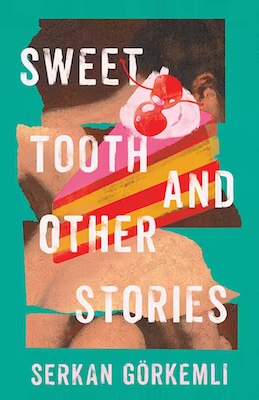
Serkan Görkemli’s Sweet Tooth, a sweeping collection of connected stories about queer characters in Turkey, is his debut work of fiction—but he’s no newcomer to the subject matter. Aside from his own background growing up in a small, industrial town in northwestern Turkey, he’s been a scholar of queer life in Turkey for years. An English professor at the University of Connecticut, he wrote his first book about his research into online lesbian and gay activism in Turkey. 

Görkemli’s deep contextual knowledge permeates every story in this new collection—but it’s far from an academic treatment. The stories remain loyally focused on the intimate lives of their characters, particularly our recurring protagonist, Gökhan. Through impressionistic, precise prose worthy of being called Chekhovian, Görkemli sketches moments of ordinary struggle and recognition as his characters find their footing in a changing Turkey. 

In the titular story, Gökhan reflects: “How easy and difficult it is to be one thing on the inside and another on the outside.” Other recurring characters further illustrate this in-between way of being. From sweet Hasan with his webbed fingers to Rolex-wearing Cenk and his closeted mother, the book shuffles through many permutations of what one character describes as “simultaneously hiding and seeking.” 

Despite balancing several perspectives, the chronologically arranged collection unfolds with natural cohesion. It’s worth approaching like a satisfying novel or well-balanced album—in order, from start to finish—to appreciate the progression of these characters’ journeys through time.   

I was grateful to spend an afternoon chatting with Görkemli about queer advocacy in Turkey and the U.S., how vulnerability allows connection, and the hard choices his characters make while hiding and seeking.  


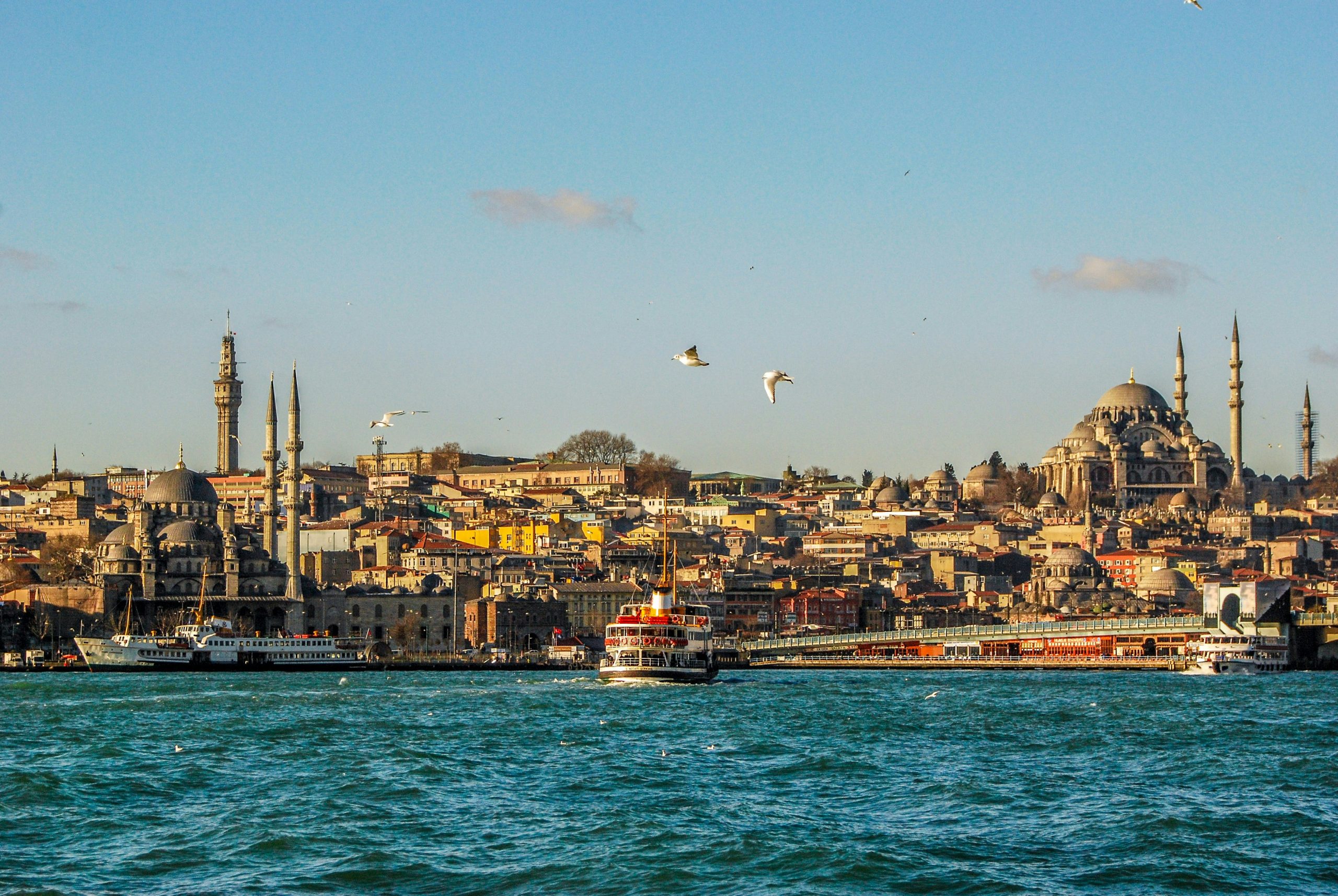
Roohi Choudhry: I’m so intrigued by how you approach place in this book—the collection almost feels like a bittersweet love letter to a very specific Turkey. I’ve only explored Turkey more superficially, as a tourist, so I was really drawn to this specific place you take us. Why was this specificity of place important to you?

Serkan Görkemli: In Turkey, I’m sure you observed the intermingling and mixture of the West and the East, you know, the Western culture and the Muslim culture. And specifically, when it comes to LGBTQ identity, it’s one of the great examples of the East and the West sort of mixing together. Of course, the country had a queer past; same-sex contact has been practiced in the imperial context in Turkey for a long time. The contemporary names came later—maybe in the last 30-40 years—but queer people have always been around. When people have a conversation about a queer neighbor in one of my stories, they may disapprove, but they have names for it. That in itself shows that there have always been queer Turkish people, even though they may not have identified with the Euro-American LGBTQ identities. In the book, what I try to do is show that shift. 

RC: Which shift are you specifically referring to?

Turkey had a queer past; same-sex contact has been practiced in the imperial context for a long time.

SG: I’m talking about the personal shift—how does a person come to call themselves as queer or gay or LGBTQ? That identity already exists in different parts of the world. But how does somebody come to be that in Turkey? How do you make that identity take root? How do you exist with that publicly, if you choose to? My characters are going through that struggle. 

And it usually begins with family, right? Coming out to the family, whether the family is going to accept or not. If they don’t, what happens? So, I’m interested in that shift, and how that happens in a Turkish context.

RC: And in the book, there’s also a shift more broadly in the culture too, right? The book takes place over several decades. You could say that there’s a kind of evolution happening in Turkey over the course of the book in terms of queer life, but it’s not really that simple either, right? Because it’s not a linear process and you’re also showing the rise of conservatism there.

SG: The book’s time period is roughly my life so far—from the 1980s to the 2010s. But I’m also very aware of this time period in terms of LGBTQ rights in the U.S. context. I think we forget in this country that it took two generations for LGBTQ rights to happen. From 1950s all the way to early 2000s. What happens in Turkey doesn’t have to follow, but so far it seems to be following what happened in the U.S. The first LGBTQ advocacy organizations were established in Turkey in early 1990s, only in Istanbul and Ankara. But with the arrival of the Internet, and Turkey’s integration into the global economy, Euro-American representations arrived. And now we have such organizations all over the country. So, all these things are interconnected. 

There’s the question of which way LGBTQ rights are going to go in Turkey. It doesn’t have to replicate what happened in the US, but the expectation seems to be the same. And I think the fears are the same, too. Remember before same-sex marriage was first legalized in Massachusetts, this country enacted the Defense of Marriage Act. There’s exactly the same fear in Turkey—that the conservatives will not give in to LGBTQ rights because they’re afraid that there’s going to be same-sex marriage. 

Whether you are for it or against it, the mindset seems to be somewhat parallel in terms of the general trajectory. But of course, you know, it’s hard to predict which way it’s going to go in Turkey. 

RC: In both places, there’s this coinciding acceptance and conservatism backlash. It’s pretty interesting how often social norms in the U.S. is more similar to Muslim countries than European countries.

As adults, we still think that there are certain ways to be, whether it’s about being married, being a citizen.

SG: Think about the backlash that happens, for example, when the AIDS crisis happened in the ’80s. And then think about the backlash happening right now, you know, as white supremacy and transphobia are through the roof at the moment. 

RC: In the collection, is there an arc or bend that’s emerging over the decades? The collection does seem to have this optimistic trajectory in terms of queer acceptance. 

SG: I think the generational knowledge of non-heterosexual identities—exposure to other queer people —is really important. So in my book, I show how parents who are not familiar with those things are unable to accept their children. When they meet a fellow parent who has a queer child, that’s the moment a lot of people accept or open up. 

Again, this is something that happens in the US, too, right? 40% of homeless kids in the U.S. are LGBTQ. Why? The consequences of homophobia, including often because their parents disowned them. We can’t even claim that all parents are educated about these things in the U.S. This has to do with level of education and class, because exposure is determined by those things. Parental or generational lack of knowledge is maybe a wider gap in Turkey at the moment. Because allies are really important for LGBTQ people to be out and proud. And allyship is one of the themes in the book. 

It’s really hard to generalize, but I would say on the whole, in the Turkish context, these are really sort of new issues. But you know, the nationalist discourse always aligns with heterosexuality, reproduction. Turkish nationalist history is kind of similar to any other, in the sense that heterosexuality is prioritized whether it’s bio-politics or moral values. The main difference is that homosexuality technically has never been illegal in Turkey. There are no colonial laws that it’s forbidden. It was illegal in the U.S., I think, related to the colonial context. Turkey doesn’t have hate crime laws or anti-discrimination laws because LGBTQ are not recognized as a minority. But the flip side of that is there’s no law that criminalizes it.

RC: You also pay so much attention to class and socioeconomics in this book— like the contrast between the working class Bağcılar and the fancy Etiler neighborhoods. I loved the detail that one neighborhood switches off their pop music for the call to prayer and the other doesn’t. Little details like that capture the distance these characters are traveling and code-switching between worlds. Why was that important to you to explore alongside queerness?

SG: All that begins with the intersectionality of our identities. Our gender and sexuality have a lot to do with other aspects of identity. And sometimes they are like blinkers. Other times, we see things that other people may not see. I was interested in some of the clashes of differences in those perspectives.

Some of the upper-class characters—they have financial opportunities to travel, to see different people. That provides them with many opportunities or at least some flexibility when it comes to strict mores of the Turkish society. Characters who are working class, like Gökhan, the main character—they tend to stay in the same context. Maybe they see LGBTQ identities on the media, but then, how to translate what you see into action in your daily life? 

In the case of LGBTQ people, that almost always requires migration. In my book, too, the main character goes to Istanbul. Several characters move around in the country. It’s kind of similar in this country, in the U.S., geographical mobility is seen as the escape from the nuclear family so you can be who you want to be. Although of course, that is a utopian narrative, because you still have to figure out a roof over your head, livelihood and so on.

RC: Even your one really wealthy character, Cenk, migrates. He goes to a smaller town, right? 

SG: In the case of that character, the circumstances were different. The tension and the conflict between a parent who is closeted and the child who wants to be out played out in a different way in that dynamic. 

RC: That particular story—“Pride”—was fascinating. Because you’re showing this closeted parent. Earlier you were talking about parental education being a big part of everything evolving—this story is quite a different take on that. This parent does have that information. So I wonder, what do you think about her? Is it fear that she’s coming from?

SG: I think there’s a bit of an irony with that character, but we have to remember, she’s an older generation. The idea of being out and proud is really scary and foreign to her in some ways. In that character, I was trying to show an older, queer person who might be exposed haphazardly to some current knowledge, or language, or identities—but in many ways, she does not really identify with those. And she still thinks about those identities in kind of like an old-fashioned way, some of it perhaps internalized homophobia. 

But the other part of it is not wanting to let go of the privilege. Because this is a woman who is in control. Who is basically the matriarch. For her to come out publicly as lesbian is giving up that power in the Turkish context. She has a lot to lose. But I also sympathize a lot with that character, because she seems to have established some sort of a status quo, where she could at least be happy as much as possible in that environment. I personally understand all the choices she makes, because it is a matter of survival.

RC: One of my favorite lines in the book was in the story “Vulcan”—“we continued playing saklambaç, simultaneously hiding and seeking.” Once I saw that line, I began seeing all these stories through that lens. In so many of the conversations, the characters are hiding something about themselves and also suss-ing each other out. Not only in terms of sexuality. But also, are you going to be an ally to me? Are you going to be an enemy to me? That simultaneous hiding and also seeking out is so constant. Like in “Runway,” the stolen looks between Hasan and the models. Or Cenk and Nazlı “straightening up” in the mirror before they meet. Was this something you were consciously thinking about as a theme?

SG: Yeah, definitely. One part of it is coming out. The word “coming out” means different things, right? Coming out is a repeated act, it never ends. I tell this to my students—unless I’m walking around with “gay” written on my forehead, there are many places and environments where there’s always a question of whether you tell people you’re gay or not, whether it’s important to say that or not. There’s no end to it, as long as people assume that everybody is heterosexual or should be heterosexual. 

But in the case of the younger characters, I think, hide and seek is literally about the danger, first and foremost—will the people who love you stop loving you? Will you be disowned? Those are the first questions when someone is coming out. And then after that, in the case of the Hasan character, he runs away, he has to take care of himself. Hide and seek happens because there’s a lot at stake for them, from emotional hurt to other traumas. 

But you know, when you get to the story “Runway.” At that point, I think Hasan is in his thirties, the perspective is a little different. At that point, it’s more: how do we live as adults? Maybe the distance between how adults think they should act and live versus what they might feel deep down. Like, what are the public appearances we have, versus the internal conflicts? 

So I guess vulnerability is a theme. As adults, we still think that there are certain ways to be, whether it’s about being married, being a citizen. The hide and seek is sort of the vulnerability that emerges between what we think we should do, ideally, versus what we are really feeling. Being open about that is essentially being vulnerable. I don’t think that many people or, I personally am able to do that with everybody. In the case of some characters, it is only an internal conversation.

RC: Like Nazlı, I guess. Even her son doesn’t seem to know about her queerness. 

Coming out is a repeated act. There’s no end to it, as long as people assume that everybody is heterosexual or should be heterosexual.

SG: I mean, Nazlı is the result of the struggles that she had to fight. But the tragedy of that is: even though they are so close as mother and child, this tears them apart. And the alienation that results is the tragedy of that.

RC: So then, this hide and seek, on the emotional level of your book, is preventing real connection and real joy between these characters. Even if it’s necessary.

SG: Yes, I think so. Because, going back to coming out, the narrative is that you come out, you’re authentic and live happily ever after. But that’s just the utopian narrative. Sometimes the response is outright rejection. But other times, it’s not 100% acceptance, either. It is acceptance with conditions. The outcomes are not necessarily that rosy. There are still emotional complications, interpersonal complications. 

So acceptance and love sort of turn out to be conditional. That also becomes fertile ground for hide and seek. Because if you know that somebody is disapproving, for whatever reason, then inevitably, you start censoring aspects of yourself. And then eventually you realize that you can’t be who you are fully with that person. And that in itself starts creating a distance. 

RC: So then there are all these fissures between people and in relationships. And of course, in this book, it is specifically around queerness. But I think there are many other fissures that the book is hinting at, too, that are preventing unconditional love. In a way, that’s a central sadness of the book. Though it is optimistic, too. 

SG: In that last story, there’s an actual documentary that I reference —My Child, by Can Candan—  about this organization, the Families of LGBTQ in Istanbul (LISTAG). It is basically about parents’ process of coming out as a parent of an LGBTQ person. As they met other straight parents with queer kids, that’s how they sort of came to accept themselves and their kids and not blame themselves for their kids’ queerness. 

In the story, Gökhan talks about the documentary and says it took one parent 10 years to actually be comfortable and tell other people that their kid is queer. So, this is a perfect example of the emotional upheavals and complications that happen, even in the case of parents who might be today fully accepting. But how many people actually had that journey? Hopefully, some people are able—sooner— to take that journey, but there also are many more people who are not able to. One of the main characters in this closing story does eventually take action in the right direction. His journey at the end of the book shows that it’s possible to do the right thing.

The 30 Steps of Reporting A Rape as A Transgender Anarchist

  1. Think about whether it was rape for a long time. When people tell you they are pretty sure you were raped, say, “But I took the drugs.” (See: “A Brief History of Assault”)
  2. Wonder if the lies he tells you about yourself that you know are not true are, in fact, true.
  3. Wonder if he knows how severely you have been gaslit most of your life from your abusive family. Did you tell him? You don’t remember. You remember he has been abused. Maybe he can make a reasonable assumption. (See: “The Color of the Cast”)
  4. Be angry at everyone who knows you both.
  5. Be angrier.
  6. When people finally back you up, when they finally make statements and take your side, listen as a friend tells you all that your rapist worked in the university’s law school as a graduate student and has lawyer friends. Watch as people take down their statements. Say you don’t blame them.
  7. When women come forward, several women, telling you that he assaulted them or a friend, decide you have to do something.
  8. Think about it some more: you are an anarchist. You don’t believe in solving problems in communities with the police. You do not want the police coming to the doors of your friends, who are mostly minorities. But, you think, this might be the only way to protect them and you, and to make sure it doesn’t keep happening.
  9. Take an Uber to the police station. Stand in the waiting room because of COVID-19. Say, in front of everyone else there, “I was raped, and I want to make a report.”
  10. Get referred to a detective at the justice center downtown.
  11. Get a little pamphlet that tells you what to expect. Read it. Throw it away. Retain nothing.
  12. Have nightmares. Wake up into panic attacks. (See: “Waking Up in the Night”)
  13. Ride your Vespa down to the justice center. Wander around the floors, asking the way. Get lost. Get lost again. Finally find the detective’s office. Speak to the victim advocate. Take the Capri Sun she offers you. “It helps,” she says. Then: “Just tell him the truth. Tell him what happened. And you don’t have to worry about the rest.”
  14. Worry about the rest as she shows you the steps of what will come next.
  15. Speak to the detective. Tell him you were bleeding and when he asks from where, use the word “rectum,” although you don’t remember ever using that word before in your life. Tell him you kept sleeping with him. Tell him about how your C-PTSD makes you hide the truth from yourself, sometimes. Tell him that is how you survived for so long. (See: “It Was Rape”)
  16. Cry back in the hallway.
  17. Go home and have nightmares that your rapist blows his brains out. You do not want this. Wake up from them and write poems. (See: “The Night My Rapist Dies in a Dream”)
  18. Wake up to panic attacks. (See: “Waking Up in the Night”)
  19. Get Valium from a friend for when you wake up from panic attacks but take all twenty-five of them at once when you are drinking whiskey because, really, you still want to die.
  20. Sign away your protections from talking to a therapist you spoke to after the rape.
  21. Wait to hear back from the detective.
  22. Wait more.
  23. Call your rapist’s mother and tell her that her son is a rapist one day when you are in a shitty hotel in Youngstown, Ohio. Hear her gasp. Keep talking, not realizing she has hung up on you. (See: “Waking Up in the Night”)
  24. Hear from a new victim advocate. The police have been doing training and the case is still being investigated.
  25. Hear from the victim advocate again. The detective has adamantly pushed the case through to prosecution. She says, “We love to hear news like this.”
  26. Get a call from a 216 number one day at work. Step outside. Hear the detective tell you that he spoke to everyone you told him was involved. That the rapist’s best friend verified your story. Then hear him say that, despite this, prosecution has declined to take the case and the criminal investigation is over.
  27. Have nightmares. Wake up into panic attacks.
  28. Repeat.
  29. Repeat.
  30. Repeat.

Excerpted from Breaking the Curse by Alex DiFrancesco, published by Seven Stories.

R.O. Kwon on Writing About the Desire for Queer, Kinky Sex and the Cost of Being an Artist

How much are you willing to sacrifice for your desire? This is a central question of R.O. Kwon’s recent novel, Exhibit.

Written in urgent and lyrical prose, Exhibit follows two Korean American women—Jin, a photographer, and Lidija, a ballerina—as they push towards artistic ambition. When they are introduced, Jin has been in a long-term relationship with her husband, Philip, and both have agreed that children were not something they wanted, but Philip’s newfound desire to have a child has disrupted the life they’ve built, causing Jin to wonder how much of one’s core self and desires can be compromised for a relationship. As this question lingers in Jin’s mind, her relationship with Lidija deepens, and what starts out as a friendship between highly ambitious women, grows into a canvas for artistic and sexual exploration that will thrust Jin and her art to new edges.

I spoke with R.O. Kwon via zoom about sacrifice, the artistic drive, and choosing to be child-free. 


Shelby Hinte: Exhibit felt so authentic in its depiction of art and artists wanting so badly to be artists. I really loved the way you describe female characters being willing to go to any lengths necessary for their art. What drew you to writing about the artistic drive in that way?

R.O. Kwon: One way I’ve been describing it to people when asked for the one-sentence summary has been that Exhibit explores what you’d risk to pursue your core desires. What I was thinking as I wrote this was the way so many people are made to hide and suppress and kill and push to the sides what they truly want. Whether that has to do with sex or ambition or artistic ambition or food or even just a day to ourselves, it often seems like something that has to be defended.

I wanted to bring together three Korean women and see what happens when they ran after what they desired. I was especially interested in the ways in which so many of my writer and artist friends are very ambitious in terms of what they want to do with their work, yet it continues to feel, even in 2024, that it’s dangerous to say something like, I am an ambitious woman. I was fascinated by that. Even that phrase, ambitious woman, carries more than a tinge of unlikability or selfishness. I’m fascinated by that, and I’m infuriated, too.

SH: It’s interesting, too, because the women’s dynamic with each other is so different from what is usually depicted. Lidija expresses that as a ballerina, so much of her experience and career was about being in competition with other women, and yet her relation ship with Jin is unique because they’re not in competition with one another. At least not as artists, so they get to be really honest about wanting things that maybe would be frowned upon wanting, whether it’s ambition or art, in another space. It can be scary to say, I want to be an artist, which these women are doing, and they’re making a lot of sacrifices to be artists and achieve making art at a very high level. Why do you think that it can be so intimidating for people to want to own that?

Exhibit explores what you’d risk to pursue your core desires.

ROK: I think there continues to be a belief that the desire to be an artist is selfish. And I just so strongly believe that it’s not. I feel very lucky to get to be a writer, to get to be an artist. And I don’t think there’s anything selfish about it. I know people will disagree with me, but books have saved my life. There are points when I have felt so desperately lonely in various ways that I wasn’t sure how to go on, honestly. In those times, books provided fellowship, a really lifesaving fellowship. I don’t at all believe that wanting to have a life of making art is in any way a selfish impulse. Of course, especially in America, there is a very real practical economic difficulty of how to be an artist where health insurance is often dependent on your job and you want to have a sustainable life.

SH: Your characters all have to sacrifice things that sometimes put them in precarious positions. This feels amplified because they’re both women and they’re both Korean, and so it feels like that precarity is even more intense for them. And I’m wondering what you think it is that makes it more precarious to set out to become an artist as either a woman or a woman of color?

ROK: Jin is a photographer and Lidija is in ballet. This wasn’t quite on purpose, but at some point, I realized that both fields favor men. And ballet, if you think about ballet, people tend to think first of ballerinas, but aside from who exactly is on the stage, most choreographers are men. Most directors of the ballet are men. The discipline itself is incredibly hard on women’s bodies. Dancing on pointe is so physically difficult on the body. I remember talking to a friend who’s a doctor who loves to watch dance, but he cannot watch ballet because even though he finds it to be incredibly beautiful, he just says that, as a doctor, he sees what they’re doing to their bodies, and he’s just like, the body is not built for this. You’re really not supposed to put all your weight on that tiny surface area. It’s not uncommon for a ballerina to have to retire in their early thirties.

As a Korean woman, I’m an immigrant. My parents are immigrants. When I went to college, I majored in economics, even though I took writing classes on the side the whole time, and I really wanted to be a writer, I couldn’t see how to do it. My parents have had serious financial difficulties. There really weren’t that many models that I knew of for what it meant to be a Korean writer in America, what it meant to be a Korean American writer. I think that paucity of models, initially, kept me from believing that I could do it too. 

SH: I was just listening to this podcast about Olympic athletes and how so many of them put all their energy into sport with no guarantee of what happens afterwards. Ballet in your book feels like this too, and I was so moved by the way Lidija orients her whole life around this unpredictable art form. She is willing to devote so much of her life, really her entire life, to this thing that is, on the grand scheme of an entire life, quite small. What do you think compels certain people to be able to orient their lives around a goal like that? Specifically art?

ROK: I think it’s true of every, maybe every is a strong word, but at least the artists I’m close to, the writers I’m close to, and for me, it does feel closer to being a calling or a vocation than it does to being any kind of choice. I know that if I’m not writing regularly I very quickly start feeling dead inside. Not necessarily like fully dead [laughs], but the longer I’m away from it, the more dead I feel. 

I grew up really religious, and my life goal until I lost my faith at seventeen, was to be a pastor or maybe even a religious recluse. I thought I could live in a cave and just commune with the divine. That was my hope. But that, too, of course is a calling. I think it can be very hard for an artist to not be able to do what they feel called to do. 

SH: So much of this book is also about Jin having lost her faith to some degree. But art itself, at least the way I interpreted the way you wrote it, does feel spiritual in some ways. Like, it seems like each of them are ambitious, but they’re seeking something more than what the external world can give them through their art. I was curious about your own personal experience with art. What is it that you feel you’re seeking? Or what do you imagine writing gives you other than just not feeling dead inside? Obviously, that’s a big one.

I wanted to bring together three Korean women and see what happens when they ran after what they desired.

ROK: It’s definitely preferable to not feel dead inside. Other people said this to me, and I didn’t believe them, but I say this to my students all the time, and I always at least hope that some of them will be wiser than I was, and perhaps believe me. But it’s true that external basics once you publish a book can make it easier to get teaching jobs and speaking gigs that can help support you. This is important. We live in America. We live under capitalism. All of this is true. It’s also true that there’s no external validation that has ever begun to equal what it can feel like when the writing’s going really well. It’s not often available, but when the writing is going really well, when I’m deep in a sentence and it’s all I’m thinking about and I’m just trying to get it to be the most truthful version of itself, the most like itself it can possibly be, when I’m doing that, I feel as though I lose the ego. I forget that I have a body and that dissolution feels ecstatic in a way that approximates what I used to feel with religion. It’s one of the deepest joys I know of. It’s a great blessing to be able to have access to that. I’m always afraid it’ll leave one day, you know? Jin is grappling with that because she hasn’t been able to take a photo that she can tolerate having around for a year, which is a very long time. I’m always afraid that the words will leave the way my faith left. I can’t go through that. I get so superstitious about anything writing related. What does it feel like for you?

SH: I think you described it pretty beautifully. I think I feel the same way. That’s the reason I come to writing. It’s one of the two things I do, writing and long-distance running, where I feel I can focus wholly on the moment, where I’m not thinking about anything else. I’m the kind of person where my mind is normally reeling. I really agree with you that to write is as close to a spiritual experience as I can have, which to me just feels like not being stuck in a self-centered physical form.

ROK: I love that you find that in running too. 

SH: Jin is such an interesting character to me because she really is focused on the process, but she is such a perfectionist. And I love that she keeps repeating to Lidija, some version of, “nothing might come of this,” when she’s taking these photos of Lidija, yet she seems to have such faith, or maybe it’s an obsession, I don’t know how you saw it when you were writing her, but to me it felt like faith that if she just keeps taking these photos, if she just keeps going through these actions, then something will materialize. How important do you think just being in process or collecting material is in making art?

ROK: I’m such an inefficient writer. I don’t even believe in that word quite as it applies to art, but Incendiaries took me ten years to write. Exhibit took me nine. There was some overlapping because I was starting to write to agents about Incendiaries and I was just waiting, so I started Exhibit while I was waiting to hear back. I do believe that each book is a palimpsest. All of it gets in somehow. Everything I removed, all the storylines that didn’t end up making it in, all the research, even just reading a book of poetry that may or may not speak to the book that you’re working on, it is in there somehow. Up until something like nine months before I finished editing Exhibit, it was more than twice as long as it is now. It was something like 90,000 plus words long. And it’s not that I had any preconceived notions for how long the book had to be. I strongly believe in following what the book itself seems to want to be, and asking the characters what they want. But at some point, about nine months before the end, I started seeing things that I didn’t feel belonged in the book, or redundancies that didn’t feel necessary, so I took so much out. But I can still feel what I took out sort of pulsing beneath what’s there. 

SH: I didn’t realize you’d been working on this book for so long. I think that can be scary and intimidating for an artist to be in it and not know where it’s going to go. How do you keep faith in the work?

So many people are made to hide and suppress and kill and push to the sides what they truly want.

ROK: People often ask: Who do you write for? And I used to think that my answer was almost overly straightforward, which is really, I’m writing for myself. I really can’t really think very much about who might be reading it or what’s going to happen to it out in the world. But if I’m writing for myself, then I’m writing for an audience where the first row is a Korean American woman, and that’s not a body that has been centered very often in American letters. So, there’s that. And I think a lot about losing my faith when I was seventeen. It was a devastating loss for me. It was really just like a pivotal loss that has divided my life into a before and after. And it was a time of truly desperate loneliness. I lost so much with that faith. I lost my community. I lost this God that I really planned to devote my life to serving. I think in some ways I’m always trying to write for that girl who felt alone in the world, and to say, you’re not that alone, and you never were. That’s often been very useful in terms of reminding myself what on earth I’m doing six years into a book.

SH: It’s interesting hearing you talk so much about the fracturing of having lost faith because there is this sense that Jin is experiencing a split self. She has this side of herself she is hiding from her husband, and I kept thinking about how painful it is to have two conflicting desires in the same body. She wants this relationship with her husband, but she also wants her relationship with Lidija, but the two can’t coexist. What do you think is most interesting in exploring the territory of a character who wants two conflicting things? 

ROK: One of the questions I was fascinated by in this novel was exploring the various ways we’re supposed to adjust our desires but how we can’t change something so core to who we are. There’s really no killing them. Even if it were possible, it wouldn’t feel right to kill them. That of course comes up with sexual desire, but it also comes up very much with the question of children. Philip and Jin have been together a long time, and they’d agreed from the start that they were never going to have kids. And then Philip wakes up one day he’s just like, I want kids. The desire has come upon him, and Jin very much doesn’t have that desire. It’s something that you really can’t quite compromise on. There’s no such thing as half a child. I’m fascinated by that question of to what extent can we change when we want to change? And to what extent does change even make sense. The heartbreak that Jin feels is partly that she can’t help Philip with what he wants. In some ways Jin feels abandoned. I’m not sure that her relationship with Lidija would’ve played out the way it did if it weren’t for this initial split with Philip.

SH: I love the way you write about being a woman who is child-free. I feel like we’re still lacking so much of that in literature, and it’s really exciting to see a book that deeply explores what it means to make that choice without it necessarily being distilled to just a positive or just negative choice. There’s this scene where you describe the dilemma of either being an artist or a mother, and Lidija’s describing the choice as a threat. She says:

“It’s still, as a life path, distinct. Implied is the fact that I’m picking this, not that. People start asking, So, what else might this bitch think of doing? Jin, imagine if I had a child, but kept dancing. The jerks, they’d still be pissed. I’d be called unfit, a bad parent. Or if I did give birth, then quit ballet, I’d be judged for staying home.” 

Reading that, I just felt like, there really is no winning as a woman. Do you think this expectation and judgment of women in relation to the choices they make about whether or not to have children is still as prominent as it once was? How does that show up in the spaces that you inhabit?

Loneliness kills; shame can be a terrible, life-warping poison. I have to do what I can to offer that kind of loneliness-antidote to others.

ROK: That means a lot to me that that part resonated with you. I don’t have kids. The majority of my friends don’t have kids. But I have very dear friends who have kids as well. And it feels like in my circles of friends, we love each other and we support each other, and we’re so behind each other’s choices, and we really view it that each person should get to live the life that feels like the fullest possible life to them in terms of whether or not they’re going to have kids. But I think there’s still so much pressure. I feel it all the time still. I’ve written about being child-free and about the ways in which it used to bewilder me that not wanting children is considered selfish. It’s difficult to think of many other instances where not wanting something is considered to be selfish. It is confusing to think specifically not wanting something that does not even yet exist is selfish. Like, this hypothetical child does not exist. To not want this hypothetical child, and for it to considered selfish, is bewildering. The Pope, who is famously a lifelong celibate, considers that to be selfish. I think there’s still so much pressure. 

SH: Can you talk more about the challenges about writing about sexual desire?  

ROK: I’ve tried so hard, and for so long, to shake off the anxieties I have around writing about sexual desire. But I’m Korean, ex-Catholic, and ex-Evangelical—these are all shame-, and guilt-riddled cultures. For these reasons, and more, it can seem as though I’ll never be able to shake off the shame I feel if I even talk about sex in public, let alone write and publish a whole novel centering desire of various kinds, including ambition, physical desires, and sexual appetite. Especially, as is true in Exhibit, a desire for queer, kinky sex. It’s also true, though, that books and other art forms have provided salvific fellowship when I’ve felt most alone in the world. Loneliness kills; shame can be a terrible, life-warping poison. I feel strongly that I have to do what I can to offer that kind of loneliness-antidote to others.

SH: Since so much of the book is about sacrifice, I wanted to ask, do you think that sacrifice or suffering are necessary for art? And, if so, what would you say is the biggest sacrifice you’ve made for your own art?

ROK: I wouldn’t necessarily say that sacrifice and suffering are necessary for art. I believe in fear as a guiding sign for what I want to write. I also want to push up against the limits of what I’m capable of with every word that I write in a novel if at all possible. And so, my experience of writing this book has involved what sometimes amounted to daily panic attacks and anxiety attacks. I generally have some insomnia, but there were periods with writing this book when I wasn’t sleeping. I remember there was a point when I was so exhausted because I was sleeping so little and driving so hard toward a deadline that I was lightly hallucinating most of the time. I didn’t know how else to write this. I felt physically compelled to write it in a certain way and to try to get it right. It was physically very arduous. So much so that I think I’m still recovering from that. So, no, I don’t believe that art requires suffering. But my experience of writing this book is that it did physically take a lot out of me.

12 Brilliant Short Stories by Asian Americans to Read For Free Online

As Asian American Pacific Islander Month comes to end, it’s important to remind ourselves that the Asian American identity is more than just race or shared affinity. Born out of political activism and the anti-war movement to protest and rally against injustice, warfare, imperialism, and colonization, it’s a call for unity, for liberation, and for solidarity. After all, none of us are free until we are all free.

These 12 stories by Asian American writers below are a small selection of the works of fiction published in our weekly literary magazines, Recommended Reading and The Commuter. They range in form, subject, and location, but they all represent the very best of storytelling.

“My Worst Experiences Haunt Me From the Memory Cloud” by Gina Chung

“Presence,” from Korean American writer Gina Chung’s story collection Green Frog, embroiders a gritty emotional reality with elements of the fantastical to tell the story of Amy Hwang, a preternaturally talented scientist who has fallen from grace and is suffering the demons of her own innovation. A technology she helped build that allows people to organize and manage their memories like the desktop of their computers had more extreme and adverse side effects than Amy, who was in a toxic relationship with the company’s founder, let on. The story picks up with Amy hiding out in her apartment, avoiding the world along with her own guilts and painful childhood memories–they’ve all been deleted from her mind and uploaded onto a computer. But what she cannot escape is the very real presence that has shadowed her and pulled at the edge of her consciousness ever since her memories went away. “Sometimes, it tugged at my attention like a recalcitrant dog at its leash, distracted me, made my head throb.” On a friends recommendation, Amy drives to a remote spa where she can reset and begin to connect with the parts of her life that she has been avoiding.

“The Ugliest Babies in the World” by Vanessa Chan

Written in Malaysian English, the titular story from Vanessa Chan’s forthcoming collection, The Ugliest Babies in the World, captures a microcosm of the tangled, loving relationships between children and their elders. Ah San visits her grandmother at her home in hospice care each afternoon, consciously replaying their favorite moments together. Surrounded by the detritus of her childhood in the sweltering house, she listens to her grandmother’s legends about how she and cousins were born–tales Ah San knows by heart. Each baby is uglier than the next, born jaundiced, one-eyed, blue, and onwards into delirious exaggeration. “My grandma says Ah Leng was so hideous when she was born that her mother screamed ‘I want a new baby!’” As disfigurements mount, it’s love, not beauty or the lack thereof, that shines through the grandmother’s stories.

“The Body is Not a Natural Home” by Chaya Bhuvaneswar

In “Jagatishwaran,” the trapped and isolated titular character aims to find his place in his body, his family, and his life in India. Jagat struggled with tuberculosis and still struggles with an unnamed mental illness. As a result, he is unemployed, much to his father’s disappointment. Behind four wood screens, Jagat shelters himself from the outside world to escape into his own world. He passes time painting murals, smoking tobacco, writing in his diary, listening to the radio, and reading newspapers, all in secret. While his mother rarely speaks with him anymore and his father frequently expresses his disappointment and disapproval, Jagat’s niece and sister continue to reach out to him. He longs for the opportunities and freedom that the women in his family enjoy. Still, he finds peace in solitude, and by observing the exterior world, he finds beauty in outside life and searches for his own beauty, similar to the beauty in his paintings.

“A Doomed Romance is the Deadliest Tragedy” by S.J. Sindu

From Sri Lankan American writer S.J. Sindu’s collection The Goth House Experiment, “Patriots’ Day” begins and ends with tragedy. Set in the Boston area on April 15, 2013, the Boston Marathon bombing serves as a backdrop to the narrative—but “Patriot’s Day” primarily focuses on smaller-scale events. The reader learns from the start that Pamela Robinson will push Amit Srinivasan in front of a train, ending his life. Then, the story follows Amit throughout his day, as he thinks about the divorce he initiated and the girlfriend he prioritized, Hannah. The story also follows Pamela, Hannah’s mother, illustrated as an everyday woman struggling to maintain a positive relationship with her daughter. In many ways, they lead similar lives: They spend their day at mundane jobs, they want to move to bigger homes, and they both find comfort in Boston’s trains. Neither of them are perfect. Amit cheated on his wife with Hannah, and Pamela doles out casually-mentioned racism, unsure if she can “carry around pictures of mixed grandchildren in her purse.” When they meet, they clash, largely over their ties with Hannah. “Patriot’s Day” reminds the reader that all people are human: carrying deep flaws, navigating various struggles, trying to maintain family relationships, holding various needs and wants that seem out of reach, starkly similar, starkly different, and all villains in someone else’s story. 

“Teaching My Son to Swim While I Drown” by Megan Kamalei Kakimoto

“Madwomen,” by Hawaiian author Megan Kamalei Kakimoto, is from her collection Every Drop is a Man’s Nightmare. A single mother to an almost seven-year-old son tells the story of the Madwoman of the Sea, who has twelve eyes, a barbed tail, and a taste for men and young boys who don’t listen to their mothers. This story tells of the complexities of motherhood, the feelings of failure, the coexistence of love and resentment—where frustration and fear collide with the desire to protect, to teach, and to understand. As a Hawaiian mother to a son who is half-white and resembles his absent father, she does not want to lose him to whiteness and to a masculinity founded in violence. The mother takes her son to the ocean to teach him to swim, and when he succumbs to his fear, she says “I feel the bruises bloom along my neck without witnessing the injury firsthand, which is the best way I can describe being a mother.” The mother relates to the Madwoman, the rage, the ways she instills fear in the men and boys, and the want for reclamation of power and autonomy.

“Mom Is in Love with Randy Travis” by Souvankham Thammavongsa

In “Randy Travis,” a short story by Laotian Canadian writer Souvankham Thammavongsa, from her collection How To Pronounce Knife, the narrator tells of their mother’s obsession with country music star Randy Travis. Their mother’s love of American country music came with the radio that was gifted to them from the refugee settlement program, and then when the narrator’s father got his first paycheck, he bought a record player. The narrator’s mother watched country music award shows and recorded Randy Travis’ music videos in order to watch and rewatch them whenever she wanted. Their mother begins sending letters to Randy Travis, but because she can’t write in English, she has the narrator—seven-years-old at the time—write the messages. Because the narrator is afraid of what might become of their father if Randy Travis responds, they write messages like you’re ugly and I do not like you. There is humor in this piece, but it is also fitting into larger conversations of addiction and obsession, of the representations of emotionality and masculinity in music, of language and language barriers, of home, of culture, of family, of what we do for those we love, and of what we sacrifice. The narrator’s father begins to dress like Randy Travis to appease his wife, and takes her to see Randy Travis in concert because these are the things she wants, and, as the narrator says, “he was only trying to be what [their] mother wanted.” This story is heartbreaking in that those efforts of compromise, those sacrifices, are not reciprocated. It is a mourning of Laos, as well as the loss of a mother and a wife to her perception of the Western  ideal.

“An Obsessive Unpacks a Bewildering Insult” by Eric Ozawa

This experimental story, told, as promised, in thirteen sections, is called “Fish (in 13 sections),” written by Eric Ozawa. In it, a man is called fish as his lover leaves him, and this story is a close-read as to why a fish. Somewhere between a critical analysis and the scientific method, our narrator interrogates the different possible meanings of you fish, including it being from a literary quote, of it being meant as verb, as it being said to reflect the absurdity of their relationship, or, if he had simply misheard her on her way out. For each possible meaning, he proposes an answer, a reason, and a remedy, from writing a country song to plotting her murder (under the guise of having watched The Godfather, of course). This story is odd, and it reflects the strangeness of a break-up, of insults hurled during times of high emotion. This story is funny, unique in both structure and style, and it understands the absurd ways that the confused human brain thinks.

“The Rise and Fall of the Luxury Baby Farm” by Mai Nardone

In “Ourselves, A Little Better,” Thai American writer Mai Nardone questions the ethics of the genetic modification of the human embryo. Dr. Susan Sims, a reserved scientist, develops a new, efficient, and highly successful way to treat infertility that includes an extremely specific and selective donor process and ethically controversial experimentation on genes in what is coined the Build-A-Baby process. Dr. Sims set out “to perfect the human race,” and claims that “what was important was improvement, each generation producing a better specimen than the last.” She is charged with violating the Nuremberg Standards, after an undercover journalist enrolls in Dr. Sims’ program for surrogate mothers, who are treated more as prisoners being experimented on, held in chambers that emulate the panopticon. This story is a fascinating look into the horrors of eugenics, and how these experiments on human embryos are logicized as having a pragmatic and beneficial impact on the future of the human race.

“Never Marry a Man with a Human Mother” by K-Ming Chang

“Xifù,” a short story from Taiwanese American writer K-Ming Chang’s collection Gods of Want, is a funny, biting story about a woman’s strained relationship with her mother-in-law. With rousing wit and daring candor, she recounts her mother-in-law’s six failed suicide attempts, which she describes as times she “pretended to die,” from trying to hang herself without lifting her feet from the ground to sticking her head in the oven without turning it on. Chang’s voice carries the story: She speaks to the reader like a friend, and her storytelling—rich with clever, shocking, hilarious similes—is riveting and authentically raw. Despite the story’s blunt attitude, Chang writes with brilliant emotional depth that unlocks unconventional insight into womanhood, motherhood, and complicated family dynamics. Honest pain, struggle, and conflicted feelings about her mother-in-law permeate her sharp remarks about her experience as a woman and wife.

“Navigating New Orleans in Vietnamese” by Eric Nguyen

Excerpted from Nguyen’s prize winning debut novel Things We Lost to the Water, this standalone piece follows a Vietnamese mother and her two sons who, having escaped from the communist regime to an anonymous refugee camp, are now freshly arrived in New Orleans. Hương longs to reconnect with the husband she left behind in Vietnam while trying to begin a new life for her two sons and keep a fragile peace with the dysfunctional Vietnamese-American family they’re forced to live with. Fruitless days are spent seeking work and being rejected. “‘No,’ she said again, this time more forceful, like the word was a pebble and she was flicking it toward what must have been a strange Vietnamese woman.” Through Hương’s eyes, America is an indecipherable world, full of secrets, hidden clues, and violence.

“The City Can’t Replace Her Best Friend” by Ada Zhang

In Ada Zhang’s “Julia,” from her collection The Sorrows of Others, Esther, who had “moved so many times in New York, across different boroughs, that the effect of leaving had all but worn off,” relives a failed college friendship with the titular character, her idol, while tracing her history in the city she’s about to leave. Passing old apartments and favored smoothie shops, Esther struggles to separate herself, even eight years since their last conversation, from Julia’s influence–she can’t shake the feeling that whenever she impresses or intimidates other women, it’s Julia they see in her, “Julia they [respect and fear].” As an anatomy of the long ago friendship develops—from its inception over a long college summer through the friends they mutually alienated and arrogances they indulged in—hidden imbalances, dependencies, and manipulations appear. Esther’s memory of the relationship becomes its own act of pulling up roots, moving, and starting life anew.

Even the Smartest Phone Can’t Find Water in a Desert” by Jessie Ren Marshall

This work of flash fiction is written as a series of Siri-like responses and internet search results. We never hear directly from the man, but from his increasingly desperate queries to his phone, we learn that he’s stuck in the California desert because his car is out of gas and he’s very thirsty. His smartphone, dangerously low on battery, is his only hope, but things aren’t going too well:

“The temperature in this location is 116 degrees Fahrenheit, and your body temperature is 104 degrees Fahrenheit. Tonight it will be clear and dry. Tomorrow it will be clear and dry. It will be clear and dry all week in the Central Valley.

Okay. I found 512,000,000 results for ‘HOW DO YOU GET A CAR WITH NO GAS TO START.’ Should I read the first result?

…WARNING: LOW BATTERY.”

My Superstitions Are Your Inheritance

The following story was chosen by Carmen Maria Machado as the winner of the 2024 Stella Kupferberg Memorial Short Story Prize. The prize is awarded annually by Selected Shorts and a guest author judge. Subscribe to Selected Shorts wherever you get your podcasts to hear this story performed by an actor in the near future.


What I Could Have Given

My mother—your grandmother—taught me about animals. Every day, we woke with the sun and had fresh eggs before starting our chores. Be patient when cooking eggs, she said, even when you’re hungry. Never let the pan smoke. Another important thing: keep your hens from going broody. At the first sign of this instinct, stick her in a wire dog cage and only let her out to eat. The broodiness should break in a few days. Watch for this even if you don’t have a rooster. I once got pecked bloody by a broody hen that had plucked all her breast feathers to better warm a clutch of rocks.

If you do have a rooster, and he is mean to you, dunk his head in water.

When you slaughter a pig, use every part. Back for sirloin, ribs, pork chops; mid-cuts for bacon; hock and jowl for stews and chili; hard fat for pastry; soft fat for soup; ears for the dogs. Everything but the oink, my mother would say. My mother believed that pigs feared mirrors. They knew something about reflection, something about the soul. Some babies are also troubled by this knowledge. My mother told me that I used to scream at my own reflection. Maybe, as a baby, you also knew what the pigs did. Have you forgotten it as I have? Or are you still startled when you look into mirrors? Sometimes, I am taken by how awfully wanting my life looks reflected back.

My father sent me to a home in Columbus when he saw my belly swelling. There, I was told to write on one side of a piece of paper all the things that a proper family could give a baby. On the other side of the same paper, I was told to list all the things that I could ever possibly give.

In fly-season, spray your cows with vinegar and dish soap. This should do the trick for their faces and their rumps, but their udders cannot be spared from biting insects because calves will not suckle on vinegar. The one time I nursed you, alone on a hospital cot, I sang the only thing I could think of—a silly rope-skipping rhyme that determined who the skipper would marry. “Rich man, poor man, beggar man, thief! Doctor, lawyer, merchant, chief!” I was never good at skipping rope and rarely made it past the first verse. Poor men, beggar men, and thieves were all I was destined for. After you were gone, I could only sleep with a hot water bottle on my chest, and the warmth and the weight against my breasts made my milk return and return and return.

My mother died four days after my fourteenth birthday, two years before you were born. I should have known that her death was coming—I heard a hen crow. But I killed that crowing hen, and that should have saved her. I snapped her feathered neck. When I dropped the motionless bird on the wet lawn, I recognized her feather-plucked chest. I have killed six crowing hens in the years since you were taken from my arms, out of terror that they were warning of your death. I know I sound cruel, but please forgive me. Superstitions are all I have to protect you.

I read that it takes a week for babies to recognize a mother’s face, but they can recognize her voice at birth. Surely it has been too long now for you to know me. But I wonder . . . Would this stranger’s voice stir up a familiar warmth? Maybe the wind will carry me to you.

I have no photo of you. Somehow, nobody thought to take one. Sometimes, I think if I had a photograph of the six slain hens, I could stop imagining their snapped necks. And, maybe, if I had a photograph of your father, I could determine if he were rich man, poor man, or simply a thief. Maybe, if I had a photograph of you, I wouldn’t have to see you in the grocery store, in the park, in my sisters, the hairdresser, the butcher, doctor, mirror.

The specificity of your wrinkled face has faded from my memory. Sometimes I fear that upon seeing you, I will remember what the pigs know. That your beauty will somehow reflect all the true ugliness in me. What do you see? Tell me, are you also afraid?

9 Love Stories About Queer Communities

I wrote much of Lesbian Love Story during the Covid-19 lockdown, when I was desperate to build queer community inside the walls of my own home. From my living room, with the cat making the occasional interjection as she strutted across the keyboard, I slowly connected with a community of archivists at libraries, universities, and volunteer-run institutions across the country. Through the research, I also built a community of dykes, most of them long dead. Their voices, whether on warbly oral history tapes or in written interviews or scrawled across tattered postcards, filled up the empty rooms of my apartment.

I was also desperate to find romantic love in a time of isolation, and I was looking to these dykes to show me the way. Just a few months before the pandemic hit, my first live-in relationship had ended. I scooped up the cat and moved into the first apartment I found online, not knowing that it would soon become my entire world: my office, my study carrel, my movie theater and my mess hall, my Zoom date spot. 

What I didn’t expect was for these dykes to illuminate an entirely different kind of love. Sure, many of my subjects had sustained years-long romantic relationships in their lifetimes, even when it put them at risk. For many of them, though, the radical power of collective queer love was the heartbeat of their stories. 

As a reader who grew up on a healthy diet of ’90s romcoms, I’ve often wondered why we give so much power to romantic love. What about the stories of community love, and what people, particularly queer people, can accomplish together? These books, both fiction and nonfiction, center the love of queer communities, reminding readers of what collective power has achieved in the past, and to imagine what it could do in the future.

Tales of the City by Armistead Maupin

Maupin’s beloved series, which began as a serialized column in The San Francisco Chronicle in 1976 and has since inspired two separate TV adaptations, tells the story of the residents of 28 Barbary Lane, owned by the mysterious and benevolent Anna Madrigal. Some might consider kind-hearted and gay Michael Tolliver, “Mouse,” to be the main character (and a possible stand-in for the author), but together Mouse’s best friend, uptight, Midwestern Mary Ann, his roommate Mona, and “the true mother of them all,” Mrs. Madrigal make for an unforgettable, inextricable ensemble. While seemingly light and easy to reach on the surface, Maupin’s characters confront deeper questions about queerness, community, and family that still resonate today. If you really breeze through this one, don’t worry, there are nine more books waiting for you, including the most recent, Mona of the Manor.

The Famous Lady Lovers: Black Women & Queer Desire Before Stonewall by Cookie Woolner

This heavily researched account of how queer Black women lived between the wars centers their intimate lives. Woolner uses “Black newspapers, vice reports, blues songs, memoirs, sexology case studies, manuscripts, and letters” to reconstruct the romantic relationships of both well-known and everyday women alike, as well as the broader networks these queer women formed to offer up safety and support to pursue their desires and resist social norms. Her history takes readers out onto the public stage of the entertainment industry, where lady lovers like Bessie Smith and Gladys Bentley not only met other queer women but also enjoyed economic success, and into private homes, where people hosted rent parties to raise money for the exorbitant amounts their landlords demanded. Through these lives and stories, it quickly becomes clear that for the lady lovers, having communities of Black, queer women created space to break the mold of heterosexual expectations.

My Government Means to Kill Me by Rasheed Newson

A Lambda Literary Award finalist, Newson’s debut novel brings to life some of the most inspiring activists that came out of the AIDS crisis, including Larry Kramer and Bayard Rustin. These real-life figures are seen through the eyes of 17-year-old Trey Singleton, who has run from his family and his trust fund in Indianapolis and arrived in New York City just as ACT UP is taking shape. What follows is Trey’s coming-of-age story as he goes cruising at Mt. Morris bathhouse, caretakes for dying patients at a makeshift hospice center set up inside someone’s apartment, and risks arrest at an ACT UP protest. This isn’t the story of one individual’s triumph, but rather a portrait of an entire community’s resistance to a government death sentence.

Cruising Utopia: The Then and There of Queer Futurity by José Esteban Muñoz

A cult classic that is as beloved as it is difficult to parse. Muñoz, now deceased, applies the theories of some heavyweight Marxist thinkers to everything from the predominantly gay male practice of cruising to the artwork of Andy Warhol to the poetry of Frank O’Hara to complicate the purely concrete definition of Utopia. Rather than imagining a perfect world on some faraway island, or simply dismissing such an idea as naively optimistic, Muñoz finds pockets of utopian thinking in the past and identifies them both as critiques of a harsh, capitalist reality and proof of why we shouldn’t give up on yearning for something better. He dismisses “community” as a concept that’s become too mainstream and instead advocates for the “singular plural,” which I’ve come to see as the coexistence of individual and communal drives. Don’t worry, even if you don’t follow every word, every twisted clause, you’ll still walk away with a sharper vision of what our future world could look like, and a burning desire to hang on to that vision. 

Mutual Aid: Building Solidarity During This Crisis (and the Next) by Dean Spade

This handy little how-to guide can fit into some of the smallest backpacks and fanny packs I own. That’s not its only selling point, but I consider it an important one as someone who never wants to get caught without a book. Written in response to the rise of mutual aid groups during the early months of the Covid-19 pandemic, Spade, a law professor and activist, offers a practical guide to starting your own mutual aid group, complete with worksheets to tackle. Logistics aside, it also underscores the differences between volunteering, the nonprofit industrial complex, and true mutual aid, which, Spade argues, is the only way to effect true change.

Moby-Dick: or, The Whale by Herman Melville

This book has been taught and recommended and analyzed and adapted so many times that I hesitate to give it a spot here. I’ll breeze through the usual English teacher talking points: Captain Ahab’s monomaniacal quest to find and kill the white whale that ate his leg; the pages and pages Melville devotes to now mostly outdated observations about various species of whale, most of them lifted from scientific texts of the time in a manner some might call plagiarism today; the religious imagery and allegories; the allusions to Shakespeare. Here’s what I haven’t heard enough about: the collective effort it takes to keep a ship afloat, especially one as big as the Pequod. (I gave boat work a try last fall as a volunteer aboard the Hudson River Sloop Clearwater and only lasted a week.) It’s a far cry from utopia, but men of all races work side by side, with their hierarchy structured not by the color of their skin but by their ability, entirely unlike in the society they left back on land. The chapter “A Squeeze of the Hand,” where our narrator Ishmael works alongside other men to squeeze the lumps out of spermaceti taken from the whale’s head case and often grasps the hands of his crew mates by mistake, is an ode to collective labor. (And evidence enough to consider the novel a queer text.) By the end (apologies for the spoiler, but the novel has been out for over 100 years), the story becomes a parable for the ills that befall a community when one man’s individual ambition goes unchecked. 

Detransition, Baby by Torrey Peters

Peters’ groundbreaking novel, which sought to (and succeeded in, if the critical acclaim and awards attention is as good a measure as any) depict the everyday lives of trans women without explanation, is really the love story between three people: Ames, who has recently detransitioned; his ex-girlfriend Reese; and Ames’ new lover (and boss) Katrina. When Ames was Amy and still with Reese, the only thing missing from their boring, perfect life together was a child. But Katrina’s announcement that she’s pregnant with his child isn’t the happy ending he imagined. Is there a way, Reese wonders, for all three of them to raise a child together? What ensues is a tragicomic exploration of gender and family, complete with a scorned lover chase scene fueled by iPhone location sharing. There’s also a wonderful moment at a transfemme picnic in Prospect Park, which I swear I’ve passed by in real life, that’s a love scene all its own.

Women’s House of Detention: A Queer History of a Forgotten Prison by Hugh Ryan

Queer historian Hugh Ryan uses the history of one prison—the Women’s House of Detention, which once stood in Manhattan’s West Village—to tell the broader story of America’s carceral system, and to make a queer case for abolition. Through some enviable archival sleuthing, Ryan reconstructs the lives of the prison’s inmates from its creation in 1929 to its closure in 1974, connecting their individual stories to bigger moments in our nation’s history, like the rise of fingerprinting, which became a tool for branding some inmates as lifelong criminals. Through these stories, Ryan shows that the inmates had been incarcerated because the judicial system wanted to remove them from society, as if their actions were determined by genetics, rather than the systems of oppression they lived under. Finding ways to sneak into each other’s cells for both platonic company and physical intimacy Riots and other collective actions taken by inmates 

People in Trouble by Sarah Schulman

Recently republished in the UK, Sarah Schulman’s 1990 novel offers up another love triangle, this time at the height of the AIDS crisis in New York City. Molly, a young lesbian who spends one “suffocating” summer attending the funerals of friends who have died of AIDS, grocery shopping for her friends living with AIDS, and organizing with ACT UP so that more of her friends might live, strikes up an affair Kate, an older artist whose husband Peter is dismayed by the way the city is changing all around them. The juxtaposition of the trio’s personal choices against the backdrop of a community’s collective activism illuminates the radical power of a broader kind of love. “‘Here we are trying to have a run-of-the-mill illicit lesbian love affair,’ Molly said. ‘And all around us people are dying and asking for money.’” For bonus points, you can also read Schulman’s more recent book, Let the Record Show: A Political History of ACT UP New York, 1987-1993, an oral history account of the same time period.

“Last Acts” Is a Father-Son Story Where Neither Man Knows How To Communicate

Alexander Sammartino’s debut novel Last Acts opens on David Rizzo, owner of a failing firearms store located in an Arizona strip mall, en route to the hospital to retrieve his estranged son Nick, an addict who has just briefly experienced death in the form of a drug overdose. Grappling with what to do with his life in the wake of this trauma, Nick vows to help his father save his dying business. 

The two get to work on a television commercial in which Nick discloses his struggle with addiction to the camera and promises that Rizzo’s is the only firearms store in the country committed to combating opioid addiction. The ad is an astounding success, but the store’s sudden popularity only leads to controversies and complications. 

I met Sammartino in 2015 while we were both completing MFAs in creative writing at Syracuse University. We met up in Prospect Park to talk about a few different elements of his novel, including family dynamics, masculinity, guns and opioids. 


Jonathan Aprea: Im always interested in where novels come from, where theyre started, whether they come out of an image or an idea or a plot point or a character or a phrase. How did you begin to think about Last Acts?

Alexander Sammartino: I knew I wanted to write a father-son story, and I kept drifting in writing about these heroin addicts who are trying to make their own version of the TV show Intervention. I just kept returning to that, and I didn’t really see the connection. There was this one sentence that was like, “they will pay for your reality,” which I ultimately didn’t keep in the book because I felt like it was underneath so many things. Once I had that idea, I started from square one again. And then the beginning that I wrote from there is the beginning of Last Acts. That was it. I had it from there. Everything just started to come together, but it took a lot of fumbling around to get there. 

JA: Central to the novel is this relationship between Rizzo and his son Nick. Its a really interesting and funny and emotional relationship for a lot of different reasons. What made you want to have a father-son relationship as the central thing that holds this book together? 

There is a huge wedge between how they see the world and how they’re able to communicate.

AS: I love books that focus on the parent-child relationship. Florida by Christine Schutt is a great example, and Eat the Document by Dana Spiotta. In a way I was kind of like, well, what’s my version? And I was interested in the idea of these men who couldn’t communicate, who were trying to communicate but couldn’t. It wasn’t just straightforward silence. It was misdirection, misunderstanding, silence as misunderstood, and that seemed really rich to me. I think the question that really fascinates me, always, and it has for a long time in my work, is what does it mean to be a family? What does it mean, besides biologically, especially now when you talk about generations who have such different histories and such different experiences with the technology in their lives? Rizzo’s reality is really defined by television. For Nick, it’s obviously defined by digital culture. This is a huge wedge between how they see the world and how they’re able to communicate, and I think people can relate to being in a family and having that gap between people they love. To me, that’s where the emotional stakes come from, and that’s where they have to be.

JA: They’re stilted in communicating their love to one another. It’s like they don’t have the faculties to communicate it.

AS: I think everybody has that experience of not being able to express something really important to them. That’s tragic, and it’s also something that dominates your life, trying to overcome that, to find ways to live with what you can’t say. When people ask me what the book is about, I say it’s about a father and son who love each other. I think I’m really hard on my characters, but it’s from a place of love. To me, that’s what you can do in fiction that you can’t do in nonfiction. Because it’s fiction, I can consider things that I can’t consider in real life just in the same way that you’re able to consider the perspective of a murderer in Child of God. You can consider this kind of emotional honesty that you maybe can’t in another form.

JA: There’s something very lonely about living with what you can’t say. That loneliness reminds me of the description in your novel of Rizzo’s habits of watching television, and the different postures he takes on his couch, and his level of immersion and isolation in that experience. 

AS: It’s defining for my life. People have written a lot about watching television, like obviously DeLillo, and I was interested in the physicality, that’s the hardest part about representing this technology. How does it affect our bodies? How do we position ourselves? That’s one of the strangest things about it. When else in your life do you just sit still and stare in one direction at an inanimate object? I wanted to capture how physically strange that experience is, and how lonely it is. 

JA: Theres a lot about masculinity in this book, especially about the fears and experience of being emasculated. Theres sexual failures, romantic failures, fears of coming up short, theres guns, theres pride, theres comparing dick sizes.

AS: Yeah, it’s so central. I’m self aware of not wanting to do this thing where the emotional experience only matters because it’s being written about from a male’s perspective, that’s not interesting to me. But the way that men express emotions to me, that’s my world, that’s what I’m interested in. And I think all good fiction, regardless of gender, class, or race, is considering that. How do you express your emotional reality as an individual? How do you negotiate that with other people? I come from a hyper, hyper masculine background. When you start to see that stuff as a performance, it comes from such a place of loneliness. You have the irony of someone presenting a certain way and feeling a completely different way. And getting to explore that is so special and rich. I think maybe everybody can’t identify with that, but I think many people can and I think it’s odd to be able to identify with someone who you don’t expect to have that kind of emotional depth. To be identifying with someone like Rizzo I think is strange for a lot of people who who aren’t like me. And so that’s something I really want to explore, giving depth to this kind of maleness that is very problematic in a ton of ways, exploring where it could be coming from for this specific character. 

JA: Rizzo is very American in his optimism, in his ingenuity, in his television consumption, and in his spirit. One thing he seems to desire more than anything else is freedom. You write, he wanted to be the kid wandering the woods in freedom again, the wind dragging sticks through the leaves. He wanted those days, those days alone and free.” This feels slightly different than the bumper sticker kind of freedom we associate with patriotism.

AS: There’s a physical freedom that the book is interested in, that I’m interested in, and that I was trying to really get at with Rizzo. Not this idea of someone who is entitled or feels entitled to something and who’s unable to have it, but rather someone who’s able to really appreciate the small details of reality. The beauty of that increasingly becomes rare as you age, to sit on the grass alone at night like you do as a kid. For somebody like Rizzo, freedom is just—all of the normal American symbols apply, but with that comes this more sentimental freedom, which is existential, and it’s like, “I am an individual, and what does that actually mean?” And there’s something kind of terrifying about that, but it’s also invigorating, right? And it makes you feel alive to have that awareness.

JA: That reminds me of the parts of your book that are engaged with this idea of agita, which also comes from this place of physicality. You describe it as rage and anguish… a deep burn in [the] chest.” You are an Italian American. Did agita play a role in your life before this novel? 

AS: The short answer is yes. Everyone in my family says this all the time. And it made me think, I can imagine an understanding of agita that’s an Italian American version of a kind of existential Kierkegaard angst that’s like, now I have this fucking heartburn because you’re killing me, you’re killing me emotionally. And so it’s played a huge part in my life. My wife says it now because she’s heard so many people in my family say it.

JA: It’s a physical manifestation of an emotional experience. 

AS: It’s an emotional experience that you don’t have a language for, so you try to make something to explain it. And that challenges notions of freedom because you can’t control what you feel all the time. And you have to reckon with that, and especially if you’re performing a type of masculinity where you’re not supposed to show it, then you’re always not free, because you’re not showing this emotional experience. So it’s this thing that you’re not in control of and by not showing it you are denying yourself freedom. 

JA: The headline the New York Times ran with at the top of their review of this book was Who Says a Novel About Guns and Opioids Cant Be Funny?” What inspired you to write a book about guns and opioids? And why did you make it so funny? 

AS: I think humor is a huge part of who I am. It’s how I deal with things and how I make sense of the world. To me, the more tragic something is, the funnier you have to be about it, because what else can you do? I feel like guns and opioids are both these insurmountable forces stacked against people. I was really interested in the way that guns are controlled compared to drugs. You can walk into a store and easily buy a shotgun, but you can’t walk into a store and buy heroin, and we punish people a lot for having drugs, and we don’t really punish a large percentage of the population for having guns. The tension between those two things felt really interesting to me. They felt connected in a really important way that I wanted to look at.

JA: Later in the novel, the real estate tycoon Buford Bellum, who sold Rizzo his store, has a kind of transformation and hatches a plan to create “transcendence centers” in which a client can be guided through an induced fentanyl overdose in order to experience death before being revived with naloxone. 

AS: One of the arguments people give against handing out Narcan is that it’s going to encourage people to overdose. There are these videos I saw probably in 2012 or 2013, I don’t know how real it was, but a guy shoots up his partner, she appears to overdose, and then he revives her. It’s content, right? And they were doing it as like, porn almost, that’s how it looked. Death as an industry is something we don’t think about being exploited but it is, all the time. And it’s just an absurd extension, or a kind of absurd commitment to that logic. “I want to solve a problem for you that you don’t have, and then things could go really wrong, but that’s okay as long as I get my money up front for it.” 

JA: Nick has this existential moment before deciding to help his dad sell guns and he asked the question, “What is right? Is it right for my dad to sell guns?” He seems to decide that if selling guns provides material stability for his dad, then that wins out over the morality of the situation. It’s a question that’s at the center of this book. What led you to pose and engage with that question?

We’re playing a game that’s designed to be lost. We’re not winning, no matter what.

AS: To make a living, you have to ask yourself that, and I think a lot of us are doing that on a day-to-day basis, even subconsciously. It shows how rigged the system is, where you have to sacrifice something that’s really important to you that shouldn’t be negotiable, which is your character. But to not do so is to put yourself physically at risk of things. And it’s much more complicated than that—there’s a step between selling guns and being in dire physical danger, but I think for some people who maybe don’t feel like they have a ton of options, you have to make those hard choices. It’s just another sign of how things are rigged against us. We’re playing a game that’s designed to be lost. We’re not winning, no matter what. Even if we feel like we are for a little bit.

JA: There’s this other quote I had written down where Nick’s talking to the priest and he says, “What happens if you act in a way that you know is wrong, but you believe in what is right?”

AS: When people say intentions don’t matter, I think that’s bullshit. I think your intentions do matter. They don’t excuse your actions, but they matter. Your sincere intentions matter. What’s bullshit is when someone retroactively tries to say that they were well-intentioned when they weren’t.

JA: Unsurprisingly, there’s a lot of fear in this novel. Rizzo is very afraid to die. He asks Nick for any kind of clues about the afterlife after Nick overdoses and Nick doesn’t give him any. He’s also afraid of the legacy he will or will not leave behind when he does die. Why do you think Rizzo is so afraid?

AS: I think it’s ultimately part of wanting to know he succeeded in life, and feeling like he didn’t is a desire for there to be something more. His dissatisfaction with his life causes him to want something beyond this. I mean, I’m absolutely terrified of that. How should we live our lives if we’re to take that reality seriously? When people minimize death, it feels condescending and disrespectful. To just say, “everybody dies, it’s biological,” that’s not comforting to me, that’s never been comforting to me. And I want to explore that idea with Rizzo too, to ask, “What is there? What can I come to terms with?”