I Don’t Know How to Live if My Anorexia Dies

A Salad-Eating Competition by Billy Lezra

THEY SAY NOTHING TASTES AS GOOD AS SKINNY FEELS, BUT
After Kate Baer

have you tried duck-egg soaked brioche French toast, golden crisp edges doused in caramelized maple syrup? have you licked a spatula coated in vanilla bean whipped cream? have you soaked up oceanic Pinot Grigio brine with toasted baguette after polishing off a bowl of mussels? have you allowed the thick cream of drinking chocolate to coat your tongue? have you baked the strawberry rhubarb pie passed down from your great-grandmother? have you dined solo in Rome, read love poems to yourself over a plate of pasta carbonara with a glass of chianti? have you dipped buttered toast slathered with apricot preserves in black coffee? have you licked lavender honey off a lover’s thumb? have you finally renounced deprivation in the name of pleasure and celebration? 

– D. Coffyn

I see this poem on Carmen Maria Machado’s Instagram story, black words set against a white square. I picture the chocolate, the lavender honey, the French toast, and try to recall what sweetness feels like on the tongue; it’s been so long since I ate for pleasure the thought seems strange, out of place, like a rat in a bowl of sugar. I read and re-read the poem over the sound of my seething stomach. I have not renounced deprivation in the name of celebration: if I eat for pleasure, if I eat until I’m full, I’m convinced I will feel atomic levels of pain.

Did you know that hungry people feel less pain? I mean this literally: hunger activates a neural pathway that inhibits the perception of and response to pain. So I don’t eat brioche or butters or creams or custards or anything that makes me flush, full, or moan. Instead, I eat leafy things, watery things, bland things. I am always hungry. I am always hungry. And I rarely feel pain.


Today I have an appointment with a blood specialist, or as my friend/former boyfriend Journey calls him, “Docula.”

My protein levels are low, a marker of malnourishment.

“How old are you?” asks Docula.

“Thirty-one.”

“Do you eat well?” 

“Yes.”

Docula asks me to stick around so he can draw more blood and run a lipids panel. 

I leave the office, promising to return for the test. I will never see this man again.  

What did Docula say? texts Journey.

I respond with a GIF of a little black bat bursting into a vampire.


I am always hungry. And I rarely feel pain.

Memoirs and essays about eating disorders are often structured in redemptive narrative arcs: the writers describe the specific ways they starved or purged until their enamel wore down and their hearts almost stopped. Then they begin to recover, sometimes against their will, and from this place of tentative health, they write. I can’t find myself in these narratives. When I read them, I wonder whether the authors think about readers like me, us parched sponges who absorb “recovery” literature for tips and tools to starve beautifully, to starve well. 

I won’t disclose my anorectic methods here, because I don’t want this essay to double as a manual/weapon. This is not an essay about redemption: it’s about resisting recovery the way someone resists drowning—so violently I might drag my rescuer underwater, too. 


Carl Jung suggests that intellectualization masks the fear of direct experience, so here I go. Etymologically, “recovery” comes from the Anglo-French recoverie. In 1530, recovery was defined as: “the act or power of regaining or retaking something lost or taken away.” By 1580, the meaning evolved to include: “the restoration from a bad to a good condition.” The problem with this definition is that it implies the existence of (and return to) a prior good condition, and for me, there was none: anorexia is all I remember. Six-year-old me basked in my family’s praise the summer I only ate stone fruit. Twelve-year-old me fasted with my mother, longing for the sharp shadows her cheekbones cast along her face. Fourteen-year old me got a belly-button piercing to celebrate shrinking into the body everyone around me encouraged me to have.

When I send an early draft of this essay to my friend Julia, a memoirist and therapist, she writes eighteen comments in my Google Doc. One asks: “Could there be room to discuss the pain these younger versions of you were experiencing/avoiding/absorbing?” The incisiveness of her question makes my eyes sting; I interpret it as an invitation to excavate the roots of my anorexia. I resist. I wonder: do my particular pain-points really matter? I’m not interested in uncovering why I struggle to eat—I could come up with countless wounds and never touch clarity. I’m interested in that I struggle to eat, in the ways my pain presents itself rather than its reasons. But maybe Julia is right: maybe I have to discuss the pain in order to understand its anatomy.

I send a revised draft of this essay to my friend Charlie, a novelist. “Can you remember a time in which you ate for pleasure or joy?” they ask, over Zoom.

I drink my cold black coffee and shake my head.

Charlie readjusts their rectangular glasses and re-reads the etymology of the word “recovery.” The restoration from a bad to a good condition.

“If you can’t return to a previously good condition because that condition never existed, you may have to radically imagine what recovery could look like for you,” they say.

Imagination, as in the ability to project myself into the future, is precisely what I lack. I feel engulfed in a cloud of marine fog so thick I can’t see my own hand, let alone a future recovered self. And in order to recover, shouldn’t I want to recover? I don’t understand why I should want to recover from a condition that has helped me survive. Almost everything I rely on within myself loops back to anorexia, the way rivers eventually snake into seas. I depend on my high pain tolerance, on my obsessive thinking, on my capacity to endure discomfort; I don’t know how to live without the vigilance that runs through my body like an electric circuit. And by that I mean: I am certain I will die if I recover from this illness that could kill me. 

Once, when I was twelve, I didn’t register the furious lurch in my mother’s eyes before we got in her green Volvo. You should have seen this coming, I thought, as we careened into the side of a tunnel, as my ribs cracked, as her nose spewed blood all over the airbag. You should have known she was too upset to drive. To be unalert has meant to be in danger: my survival has required constant watching, watching, watching. And to make the watching bearable I depend on disembodiment: for me anorexia was not about becoming a river of bones—I wanted to feel like steel, wood, ice, a nerveless membrane. 

In another comment, Julia writes, “I must ask: do you want to feel like a nerveless membrane because your mother is a bundle of nerves without skin?”

I read this question and wonder: how much of my personality is reaction against my mother? She explodes, I implode. She attacks others, I mutilate myself. She cries thick tears, I swallow the salt. But also: we both drank; we both got sober. We both smoked blue American Spirits; we both quit. We both starved; I still starve. And who am I kidding: I also attack others, I also explode, I too am a bundle of nerves. That which you flee from finds you.


In “There once was a girl,” Katy Walmdan writes: “Anorexics are convinced that they are hideous, bad, and unlovable. At the same time, they are constantly soliloquizing about their sacrifice, their nobility, their ethereal powers.” I’m not convinced I’m hideous, bad, or unlovable, but I don’t believe I am beautiful or sweet or loved—to be loved, you have to be seen, and I don’t want to be looked at. Maybe this is why I disappear. 

Glennon Doyle, a writer in recovery from anorexia, suggests that starving your body will also annihilate your intuition—the little voice that warns you against a dangerous person or situation. To me this rings false: the hungrier I am, the more vigilant I feel. Hungry me sees sunlight as it threads through the hairs of a stranger’s arm; hungry me sees a man in a green leather jacket drop a pill in a younger woman’s drink on the other side of a bar; hungry me warns the bartender; hungry me feels like Spider-Man.

“Could this be because when we are starving we are in survival mode?” asks Julia.

“Are vigilance and intuition the same thing?” asks Charlie. 

Here, am I soliloquizing about my ethereal powers? 

“You can eat and feel like Spider-Man, you know,” says my therapist, Anne. “Think about how much Spider-Man ate.”

I glance around Anne’s office, at the yellow walls, at the framed black and white pictures of sailboats, and try to remember the Marvel movies, the ones with Tobey Maguire, Andrew Garfield, and Tom Holland. 

I am certain I will die if I recover from this illness that could kill me. 

“Are there any scenes in which Spider-Man actually eats though?” I ask. 

“Go re-watch the movies.”

I don’t re-watch the movies, but I Google “does Spider-Man eat?” 

Video after video pops up: Spider-Man eating donuts, pizza, burgers. 

I report this to Anne.

“And what does this mean to you?” she asks.

“It means that a fictional character eats.”

Anne’s lips stretch into the smirk that says: you’re an unending asshole. 

“I honestly don’t care what Spider-Man does,” I say. “You’re not going to convince me that I’ll somehow be more vigilant if I’m full.”

She leans back into her blue armchair. “I’m not trying to convince you of anything. I just want you to consider that your experience of life could be infinitely better than the one you’re having now.” 

“I doubt that.”

“That’s the anorexia speaking,” she says.

“But when is the anorexia not speaking?” 

“You have another self that isn’t sick.”

Esmé Weijun Wang’s words come to mind: “when the self has been swallowed by illness, isn’t it cruel to insist on a self that is not illness?”


On Instagram I follow an account called “kids eat in color.” The person who runs it is a nutritionist who teaches parents how to help their kids build a positive relationship with food. One of the most important strategies is to serve dessert with the main meal: jelly beans along with pasta, a slice of cake next to a piece of chicken, sugar cookies with steamed broccoli. This presentation is meant to erase the arbitrary binary between “healthy” and “unhealthy” foods. The account also discourages the use of words like “good” and “bad,” as the distinction moralizes the value of one kind of food over another. Instead, parents are encouraged to explain nutrition in ways kids will understand, for example: “red food gives you a strong heart, orange food helps you see in the dark, yellow food helps your body heal cuts.”

“You can re-parent yourself, you know,” says Anne, when I tell her about this account.

“If you make me hug my inner child one more time I’m going to freak the fuck out.”

She reaches toward the table on her left, picks up a tin of Pringles, sour cream and onion, and offers it to me: an invitation, a threat.

Unhealthy, screams my brain. Bad.

I decline.


Online, I indulge—I follow creators who cook and eat things I want but do not have. On Youtube, I consume video after video of “what I eat in a day” vlogs. As I watch people devour breads, burgers, pancakes, cuts of Wagyu steak, tacos, and cake, so much cake, I wonder: how much of this is true? Are they doing this for the camera or is this really what they eat in a day? On Instagram, I follow bakers who create uncanny cakes that look like high-heeled shoes, mops, coffee-cups. I also follow “miniature cooking” pages in which people use little knives to cut minuscule chicken breasts and sauté them on palm-sized stoves. Someone anorexic had to come up with this shit, I think, as I watch huge hands fix tiny meals.

I submit a draft of this essay to my graduate writing workshop. One of my classmates wants to know: what do I feel as I watch these videos, while I digest all this food porn? Titillation? Hunger? Thirst? No, all I feel is curiosity, perhaps a little envy: do some people really eat whatever they want, whenever they want, without a second thought?

Offline, I feed everyone I love. When friends come over, I place four kinds of cheese on the corners of a cutting board—goat, gouda, jalapeño cheddar, brie. I stick special little knives with colorful handles—red, orange, yellow, turquoise—into each mound of cheese. In the center of the board I arrange a charcuterie flower, petals of pepperoni, cured ham, chorizo. Between the cheeses and meats, I place basil leaves, dark seed crackers, strawberries, blueberries, almonds, walnuts, pickles, puckered black olives, squares of chocolate. Before my guests arrive, I take a picture of my masterpiece and post it on my Instagram story and write something inane like cheeseboards are my love-language (can something you deprive yourself of really be a love-language?). 

I never eat before coming to your house, my friends say. You feed me so well

Their comments make me prickle with pride.

“Why is it so important for you to feed others?” asks Anne.

“I want people to leave my house feeling better than when they walked in.”

“But why?”

“It makes me feel happy,” I say, when what I really mean is: it makes me feel full. 

“Folks with eating disorders often love to cook,” says Anne. “It’s like a decoy. If you appear to engage with food, your friends won’t notice your eating patterns.”

“They notice.”

Some friends notice gently; they slide snacks in my direction and offer to cook me dinner.

Some friends notice loudly; they ask me when I last ate, concern glued to their faces the way honey sticks to skin.

“How does that make you feel? That people notice?”

“I don’t care. You’re probably going to say that this is the anorexia talking.”

“No. People usually try to keep eating disorders hidden because they’re ashamed.”

My chest puffs up with self-righteousness. “Everyone struggles with something right? If someone judges me they can go be ashamed of their own life.”

“Setting shame aside for a minute, do you ever think about how your anorexia makes other people feel?”

My chest deflates.


Back when I lived with Journey, back when I was nineteen and he was eighteen, back when my mother moved from California to Spain, where we’re from, I started to eat again. Once there was a sea, a continent, and multiple time-zones between my mother and I, once she could no longer summon me with a text or a call or a facial gesture, I ate salt and vinegar chips smashed in turkey sandwiches, home-made donuts filled with raspberry marmalade and coated in powdered sugar that dusted my eyelashes and cheeks, chocolate oreo milkshakes so thick the cream barely passed through the straw. Once my mother moved away, I felt like I could rest.

For months, Journey and I hosted weekly brunches and parties in our tiny studio. The heat of people’s bodies warmed the periwinkle room, friends slept over on our leopard-print carpet. This was my first taste of an adulthood untethered from my mother. Everything felt fun and spacious, but as time passed, I began to experience flashbacks, night terrors, intrusive thoughts, full-body sweats. My eyes and fingers twitched as I imagined the sound of my mother’s anger and sorrow, of my phone ringing incessantly with her calls. I stopped wanting to be full; I felt too afraid to rest. 

Soon, alcohol replaced food. Instead of eating, I drank vodka mixed with pulpy orange juice. At night, I watched The Real Housewives while Journey played Grand Theft Auto. Zoning out next to him felt soothing, as if we were floating on two separate rafts in a sea of screens, fingertips touching. 

One night, Journey came home with three styrofoam containers brimming with Indian takeout. The scent of masala and cardamom filled the room. My eyes watered, my stomach growled. I could have thanked him for buying us dinner.

“This is like the third time you’ve had takeout this week,” I said instead.

“So?” Journey asked, as he spooned aloo gobi onto wedges of garlic naan. 

“Don’t you think you should be eating more salads?” 

The corners around his green eyes crinkled with confusion. 

“What are you trying to say?” he asked.

I wasn’t trying to say anything. I was saying it. Eat less.

“I eat a salad like every day,” I said.

“What do you think life is?” Journey asked. “A salad-eating competition?”

I laughed, caught off guard.

He laughed too, and finished making his plate.

I don’t remember eating.

The more space my anorexia takes on the page, the hungrier I feel

Now, I wonder how many casually cruel things I said to Journey, how often I made him feel self-conscious about how much he was eating, what he was eating, that he was eating. All along, I’d wanted to believe anorexia was a problem between myself and I, not a double-edged sword that would cut anyone who tried to get close. I feel shame, sharp in my chest.

I call Journey.

“I owe you an apology,” I say.


Back to intellectualizing: Amanda Holmes writes that “shame” derives from the Goth word scham, which translates to “a covering of the face.” Shame, then, is the urge to hide, the act of hiding, of becoming invisible. Conversely, “write” derives from Old English writan: “to outline, to draw the figure of.” If shame is to cover, to write is to uncover—to expose. In her essay “Writing Shame,” Elspeth Probyn draws a connection between the act of writing and the experience of shame. She suggests that writing and shame go hand in hand because there is “a shame in being highly interested in something and unable to convey it to others.” As writers, we are required to wrestle with the question: what if no one cares about what we care to uncover? Or worse, what if people reduce and reject what we disclose? 

The week I publish my first essay about anorexia, I meet up with a friend, another writer, in a coffee shop in downtown Los Angeles. The winter sun is pale, the air spiked with January’s chill.

“I read your essay,” my friend says, as he stirs brown sugar into his lavender latte. “I would never write about what you write about. I wouldn’t want my deepest and darkest wounds out in the world.” 

The idea that anorexia is my deepest and darkest wound makes me chuckle. 

“I’m fine with it.”

“Do you worry people will judge you?” he asks.

“For having an eating disorder?”

“For writing about it. For navel-gazing.”

I sip my coffee.

My friend’s comment reminds me of how, once, in an undergraduate writing workshop, my professor announced that he was tired of reading “navel-gazing work” when one of my classmates submitted an essay about anorexia. Thirty minutes later, this professor called a (male) writer’s description of heroin addiction an “existential reflection.” I wanted to snap and say that addiction and eating disorders are cousins, that starving and binging and purging produce emotions the body learns to depend on, that anorexia has the highest mortality rate of any psychiatric disorder. But my second-hand shame was so immense, I said nothing.

As my friend’s comment lingers in the dead air between us, part of me wants to pull my sweater over my head, cover my face, and hide. The other part of me wants to tell him to go be ashamed of his own life, that, as Melissa Febos writes, “navel-gazing isn’t for the faint of heart,” that I am doing my best to make sense of an illness that feels like a vacuum, with no discernable beginning or end. 

I tilt my head toward the sun and stretch my arms downward; my collarbones crack. 

“What are you working on?” I ask instead.


A few days after I submit the final draft of this essay to my graduate writing workshop, I receive an email from one of my classmates. If you show up to workshop without that goddamn epic cheeseboard we are going to have a problem. The message makes me cackle. Later, over text, my classmate tells me that my work made her hungry; I feel relief. The more I write, the more space my anorexia takes on the page, the hungrier I feel, too. I keep snacks at my fingertips as I type: sour things, sticky things, spicy things. On heavy writing days, I take twenty-minute cat naps every three hours and dream that I spit out my teeth one by one. Google says dreams of teeth loss symbolize a loss of control, of power, the death of an important relationship. If my anorexia dies, who gets to live? Maybe this is a stupid question because the answer is so obvious—I get to live—but what I really mean is: how am I supposed to trust a self I haven’t met? 

My last workshop takes place in a bright classroom with a rectangular table. I am not allowed to speak while eight writers comb through my work. A clear plastic bag full of chocolate-covered espresso beans sits a few inches away from me; usually I never touch the beans, today I eat three. One person says my etymological meditations sound like bad liberal arts academic discourse. Another person says all my writing about writing is self-dramatizing. Someone else likens it to an “open corpse” style, in which the writer vivisects the essay to reveal its bones, guts, organs, tissue. The idea that a piece about anorexia is an open corpse amuses me. I take notes. At no point during the workshop do I feel shame, just heat; the skin on the back of my neck becomes red and flaky as if I am sitting beneath a fierce ocular sun. Once the workshop is over, my professor asks if I have any questions. I say no. 


The day I drafted the first page of this essay, I saw the potential for an echo. My trip to Italy was already booked, so I made a decision: on my last day in Rome I would eat pasta carbonara. Not to assert recovery, not because I have successfully renounced deprivation in the name of celebration, but because I am a glutton for symmetry. The opportunity to open and close the essay with carbonara would be too good to pass up, regardless of how I felt about the actual eating. 

I ate outdoors, in a restaurant that served its pasta in aluminum pans on tables with translucent plastic tablecloths. The spaghetti was thick, eggy, covered in cheese; tiny pools of bright red oil dotted the carbonara sauce. It would be disingenuous to claim that I ate with pleasure or that I enjoyed the wheat, cream, grease, pecorino. The truer truth is that I ate with fear and delight and curiosity, and that when I finished I was dizzy and disoriented and worried but sated. For a moment, I felt proud of myself: there I was, in Rome, listening to church bells toll in a plaza tinged fuschia by the setting sun, butter flecking the corners of my mouth. But I also knew this wasn’t recovery: it doesn’t really count if you eat for the story, just to say you did. But it also doesn’t not count. 

“How was your trip?” asked Anne, once I returned.

I pulled out my phone and showed her a picture: my aluminum pan, half-empty, rich cream splattered on metal.
7 Subversive Novels About the Challenges of Life in the United Kingdom

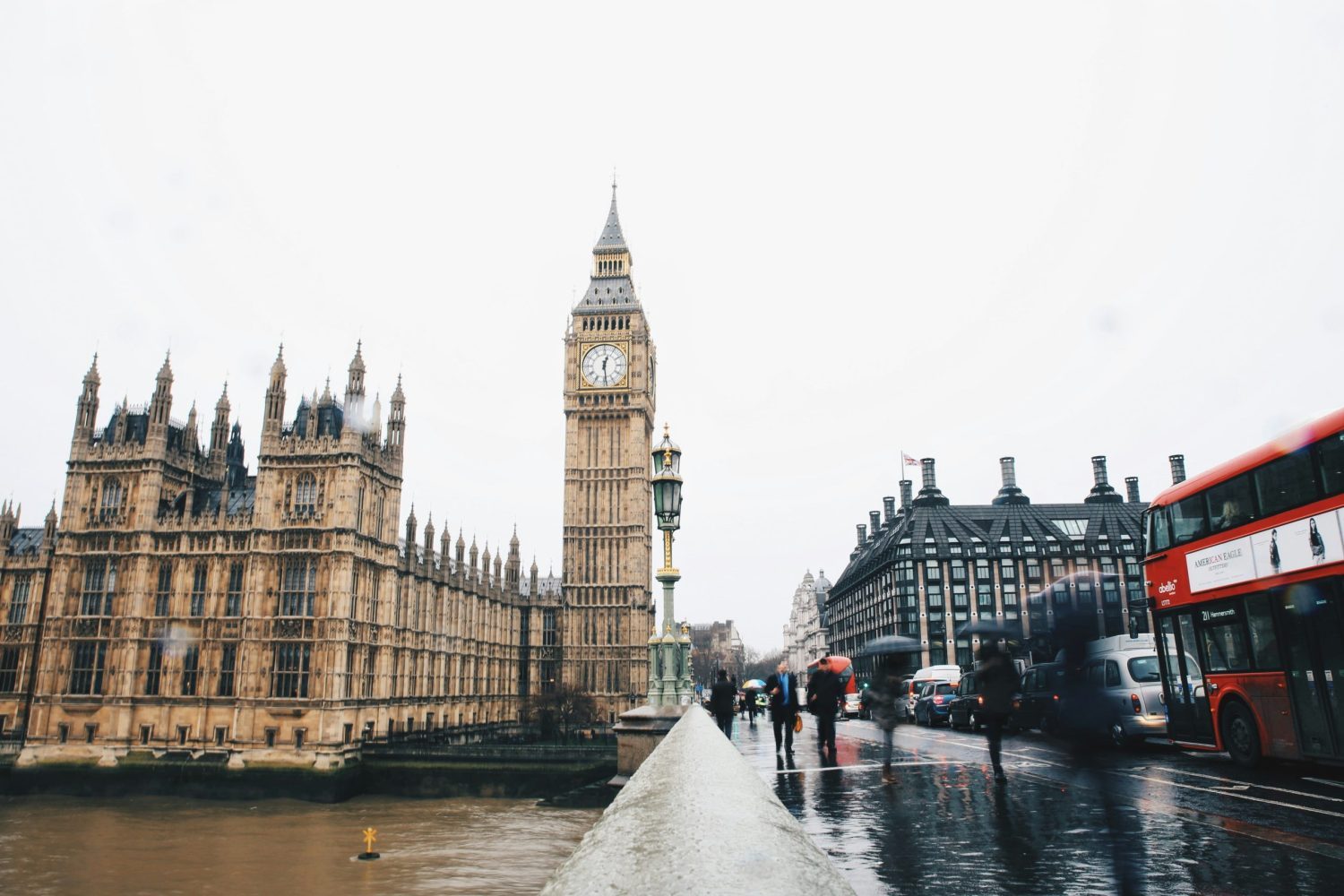
For a country that isn’t much larger than a thumbnail on most globes, Britain has an outsized cultural footprint. This is, of course, in part because the footprint used to be a big clobbering boot, kicking in the doors of other people’s countries without even wiping the blood and mud off on the mat.

When I started writing my debut novel, The Ministry of Time, I mostly wrote it as a vehicle to bring my favourite 19th-century polar explorer, Graham Gore, into the 21st century, so I could shove him into situations and make him wriggle. (When you have a crush on a dead man, there’s not much else you can do to keep the relationship spicy except write about him.) But I quickly found that bringing a Victorian into contemporary Britain was more conceptually complicated than just having him exclaim approvingly at the plumbing system. How would a Victorian react to multiculturalism, feminism, decolonization? What has changed in Britain since the Empire ruled the waves—and what hasn’t? What would the British government really be doing if it had time-travel—or any other technology that brought it power unprecedented since the days of imperial rule? 

If you spend any time thinking about Britain, you have to contend with a planet-harrowing imperial project, a reluctant and storied post-colonial divestment, and Britain’s contemporary striving for identity and relevance in our current, late capitalist era. If you are writing—as I am—from the position of a marginalized identity in that society, you also have to contend with the extent to which you are British and the extent to which you are Brit…ish.

Here is a fiction reading list which grapples with the chimera that is the experienced and imagined Britain. Some are gloriously trenchant state-of-the-nation novels that draw on personal experience, ranging from satire to autofiction. Others are wicked, funny, alarming speculative novels, taking the thesis of this nation to a thrilling extreme—though, with nationalism and sea levels both on the rise, they are looking increasingly plausible…

Second Class Citizen by Buchi Emecheta

This 1974 novel follows Adah, an Igbo woman from Nigeria, who emigrates to join her husband in 1960s London. The Swinging Sixties this is not; those are something that happened to other people, mostly white people. Adah’s London is stiff, parochial, barricaded in baffling rules. She is underappreciated and misunderstood by her husband, and must bring up their children in an alien atmosphere. Ethnic distinctions mean nothing to the British, to whom all immigrants are “second-class citizens.”

If this sounds like a purely tragic story, or if you expect Adah to be crushed into submission by her circumstances, think again. Buchi Emecheta’s unforced, graceful prose, and her no-holds-barred coruscating honesty, depict a woman striving passionately for joy and self-determination. Second Class Citizen is as much a novel about the emergence of a writer as it is about the experience of an immigrant to the U.K. Emecheta described this as one of her “documentary novels,” as Adah’s journey closely parallels Emecheta’s own. 

Private Rites by Julia Armfield

In a country where the rain almost never stops falling, where the land is waterlogged and every valley is a lake, where the earth is sliding into the sea, where arable and burial land is frighteningly scarce, what, realistically, will people do? Well—realistically—late capitalism is late capitalism, and they still have to go to their stupid jobs every day.

Julia Armfield’s second novel follows three sisters—Isla, Irene and Agnes—who, after the death of their famed architect father, are forced to negotiate his legacy, their relationships and the climate crisis. Armfield’s vision of endtimes Britain is devastating and witty; the bloody-minded mundanity of day-to-day life is dizzyingly juxtaposed with the throat-closing horror of a climate apocalypse in full swing. Private Rites is also one of the finest novels about family ties and queerness that I’ve ever read; new love, old resentment, aching desire, and appalling loneliness thrums through its pages. I could read it a dozen times and still find some new truth about love and its succor and damages every time. 

Vehicle by Jen Calleja

In a near future, the Nation (the U.K.), a conservative, xenophobic country, has cut ties with the Mainland (Europe). It is illegal to learn a foreign language or commit to unauthorized historical research. Jen Calleja’s allusive, mysterious verse novel presents a realm in the death grip of extreme nationalism, whose natural opponent is fluidity—of language, of gender, of movement.

The novel is told in overlapping strands. In 2000, a roaming archipelago known as The Islets, which vanished from the world in the twentieth century, reappears requesting aid following an ecological disaster. The Nation sends an agent, Hester Heller, a linguist and musician, under cover to the Mainland as a singer in a touring punk band, to gather information on the “Isletese Situation.” In 2050, a group of runaway researchers piece together a true account of Hester Heller’s mission, uncovering some shocking truths along the way. Vehicle somehow manages to be a formally challenging and a joyous mystery romp—a ghost hunt through the archives.

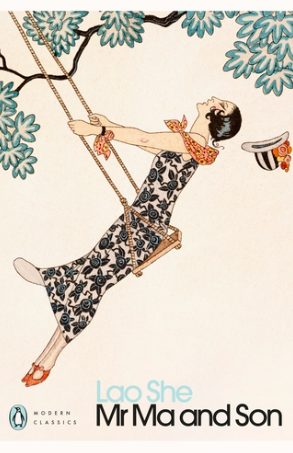
Mr. Ma and Son by Lao She, translated by William Dolby

Based on Beijinger Lao She’s own experiences teaching in London in the 1920s, this sparkling, bonkers satire of London’s Jazz Age as seen through the eyes of a pair of Chinese immigrants running an antiques shop near St. Paul’s is one of the funniest books I’ve ever read. Lao She doesn’t just satirize the peculiar rudeness, stiffness, drunkenness and meanness of the English; he’s very sharp and funny about ancien régime wannabe mandarins and romantic young first-generation idealists too. There are some hilarious scenes here, my favorite being the moment that Mrs. Wedderburn, Mr. Ma’s fastidious landlady, sews some “beautiful” Chinese characters onto her boorish flapper daughter’s hat – but she sews it upside down, so the characters read “big bastard.”

Alas, you can be as witty and as observant as you want, but racism is still brutish and painful, and the denouement of the novel reflects this. Lao She himself suffered a sad end. After returning to China, he experienced significant mistreatment and humiliation during the Cultural Revolution, eventually taking his own life in 1966. His reputation has since been restored, and there is now a major literary award given in his name to Beijing writers.

Three Rooms by Jo Hamya

The three rooms of this incredibly smart, fresh novel are three different rooms that Jo Hamya’s narrator lives in, as she moves from Oxford (where she is a research assistant) to London (where she works at a society magazine). This is a novel about searching for belonging, except this hoary tagline is given a vivid, pertinent spin: how do you find “belonging” when the rents are so high and the salaries so low that you’re being priced out of the cultural and professional journeys of discovery that typify the “search for belonging”? What narrative can be unpicked from this kind of restriction and low-level fear? Hamya never forces the point, but her clarifying acts of observation—the price of chocolate, the hours worked, the suffocating lack of space and privacy in a shared flat—are trenchant and biting. This is a brilliant document of Britain as it exists now, and very funny to boot.

High-Rise by J.G. Ballard

The 2015 film adaptation with Tom Hiddleston did not go hard enough, in my opinion. High-Rise is balls-to-the-wall bananas. It opens with Robert Laing, a recently divorced doctor, moving into a new tower block which has all the conveniences of modern (’70s—the book was written in 1975) life: grocery store, bank, hairdresser, pools, even its own school. The more affluent the tenant, the higher in the tower they live, with the building’s architect occupying the penthouse. If you think this sounds a bit obvious, I’m afraid that’s about the right level for the unsubtle British class system.  

Neighborly rifts, power failures and obsessive control over the high-speed lifts soon descend into a dystopian carousel of violence, and different floors align themselves with different factions. Withdrawing from society at large, the tower block becomes a tiny, bloodthirsty ecosystem of its very own. High-Rise is a brutal and brilliant novel about class stratification and the isolating outcomes of modern social and technological landscapes taken to an orgiastic extreme.  

A Lover’s Discourse by Xiaolu Guo

This novel is narrated in the first person by a young woman who leaves China for the U.K. to begin a post-graduate program. She arrives in the midst of Brexit, and a social climate of suspicion and self-involvement. She meets—at a book group where no one discusses the book—a British-German man, and the two fall in love. The novel takes its name from Roland Barthes’s A Lover’s Discourse, a fragmentary book about the imaginative state of love (and yearning), and the language and gestures used to define the state of love; but here, language and gesture differ between languages and cultures, and our narrator is in position of constant translation as part of the work of love. Britain is a rather cold, parched place in the novel, generating nothing more than a series of irritating chores for our narrator to live. It is imagined Britain—as a possible home for love—that the narrator must hope for.

How Clara Schumann Got Her Groove Back

River, Love

“What will become of my work?” – Clara Schumann, after learning she’s pregnant with her fifth child

I.
Her hands on the piano are birds she cannot name.

It’s April 1854 in Düsseldorf, rain and rain and flooded streets. Whenever Clara leaves the house to shop, she wades through water ankle-deep. Two months ago, her husband Robert was hospitalized following his most recent breakdown. He has stopped composing; Clara and the children are running out of money. She lifts her hands to her face, holds it—scent of onion she cut earlier.

II.
She’s born in Leipzig, 1819. That year bicycles are invented, and the English are colonizing Singapore. A few hours from Leipzig, pogroms against Jews have begun. Clara’s father runs a music store. She spends her early years among cellos and oboes, doesn’t speak until age four. After her parents’ divorce, Clara remains with her father. He instructs her in the piano and supervises practice every afternoon.

III.
Does she love Robert. She does, does, it begins when he’s a piano student of her father’s and she watches him in secret. After Robert’s lessons they stand outside together by the rowan. He’s softer in the eyes than her father, gentler overall. They talk; time pauses. Berries from the tree stain the walkway orange. When Clara turns 18, Robert asks her father’s permission to marry her. He says no. He has a different idea: Clara will remain his prodigy. Already she’s given performances throughout Germany and in Paris. She composes music, has published “Quatre Polonaises.” Despite her father’s heavy-handedness, Clara likes playing in public. She carries an agate in the pocket of her dress for luck.

Robert petitions the court, and eventually he and Clara are allowed to marry anyway.

IV.
Her memories of her mother are hazy and anxious: jasmine perfume, singing, her parents’ arguments. She keeps a pair of her mother’s boots beneath her bed. They grow dull with dust.

V.
After Clara and Robert marry, he enters the most creative period of his life. He composes more than a dozen new works. Clara gives birth to their first baby and subsequent children at one- and two-year intervals. She continues to perform, though less regularly, and mostly stops composing.

For years Robert has gone through melancholies, but the first sign of real trouble comes when he is 34 and the two of them are on a short tour. Clara gives piano concerts. Robert tries to work but can’t focus. There’s a constant buzzing in his ears, he says; he has difficulty sleeping, eating, carrying on a conversation. Back at home he takes to bed and doesn’t leave the house for a month. Clara climbs in and tries to console him with Heine and Keats—‘He found a palpitating snake, bright, and cirque-couchant in a dusky brake.’

VI.
Learning she’s pregnant with their fifth child, Clara writes, “What will become of my work?”

Robert tells her he believes babies are blessings. And, true—he writes music intended for children and spends much time with his own.

His struggles continue. He sometimes hears voices, and the note of ‘A’ drones on when he tries to compose. Eventually Robert tells Clara about ethereal music that has begun playing in his head. The sound of harmonized wind instruments—Like dancing spirits, he says.

VII.
A 21-year-old Johannes Brahms befriends the Schumann family. He spends a lot of time at their home, brings picnics, performs acrobatics on the banister to entertain the children. Sometimes at night the three adults talk music and drink Jägermeister by the fire.

Clara loses count of the number of her husband’s breakdowns. By 1853 the spirits who bring Robert music have turned malevolent. He worries aloud to Clara that he’s afraid he might harm her. He composes a fragmented piece for solo piano he titles Ghost Variations.

One winter dawn Robert jumps from a bridge over the Rhine. A boater dives in and pulls him out. Delivered home in a horse-drawn cart, Robert asks to be hospitalized. Clara is pregnant. A few months later she gives birth to their eighth child, a boy they name Felix. Robert remains in the hospital.

Their money situation: Clara could tour, but the children—she can’t leave the city. And even if she could convince herself to let her oldest daughter look after Felix, Clara cannot seem to make her hands move over the keys when she does sit down to play.

One evening Brahms stops by with kuchen for the children. Afterwards he tells Clara he loves her. She feels toward him as a mother to a son, she says.

VIII.
Rain keeps coming, overwashes the roof and streams down the windows. The Rhine flows hard, days of rush and roar. The piano remains untouched. The river river river: the morning he nearly drowned, Robert had walked to the Rhine in his dressing gown and slippers. Paid the bridge toll by bartering a silk handkerchief. It hurts Clara to think of him alone that day.

Johannes Brahms offers help with finances, but she’s uneasy accepting his money. Reluctantly, she does. Again and again he tells her he loves her. Clara feels—

Ambition expected in a man is unseemly in a woman.

IX.
Robert’s doctors convince her not to visit. It will upset him, they say. She imagines it though—silent corridors, smell of cooked meat, a solarium where Robert sits. They embrace. He asks, How are the children? Clara begins: school and lessons, friendships. So many children—it takes time. Robert looks away. Despair and guilt settle into Clara’s chest. Love. Anger. Love.

She writes him almost every day.

In a letter, Robert tells her he wants her to remarry. He does not mention Brahms. Clara tucks the letter into a drawer and tells no one about it. 

After more than two years, with Robert’s health failing, she’s permitted a visit. He dies shortly after that.

X.
One morning five months after his death Clara puts her hands to the piano and finds she can play. Hours pass. A finch flies to the windowsill and looks inside. Eventually she goes into the kitchen and asks her older children to make lunch for the younger ones. Danke schön, she says.

She remains friends with Brahms and wonders.

XI.
A knock on her door nine months after Robert’s death, another rainy afternoon in April. “Mama?”

It’s Marie or Elisa, Julie, Ludwig or Ferdinand, Eugenie or Felix. Clara is practicing. She lifts her hands from the keys. “Come in.”

No. A knock on her door nine months after Robert’s death. “Mama?” Clara keeps playing. She’ll make kakao tonight and read aloud to them.

“Early Sobrieties” is Not an Addiction Novel

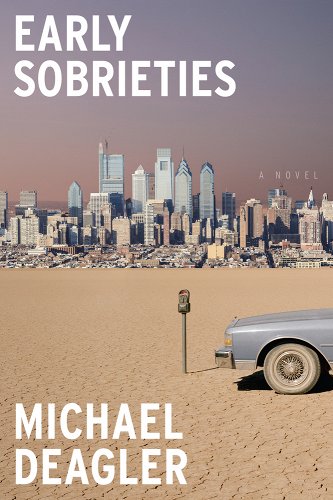
Early sobriety is a very unique, specific flavor of life in which you suddenly have yet to catch up with the exterior world. You’re a skinned grape rolling around among others who’ve grown safe, comfortable exoskeletons in the time you spent drinking. How did they do it? How do they do it? How do I do this—and can I, really? These are some of the questions explored in Michael Deagler’s debut novel, Early Sobrieties, and questions that I, who also got sober in Philly, like Deagler’s narrator, and Deagler himself, acutely remember wondering. 

Early Sobrieties follows 26-year-old Dennis Monk as he returns to the place of his active addiction—to the South Philly rowhomes of his old friends, ex-girlfriends, and potential new ones; the freshly bulldozed parking-lots-turned pop-up beer gardens; and the roof he was once locked out on all night (with good reason). He might be a little aimless, but has a purpose, not to make any 12-step amends—though kind of, without the AA program part. Monk wants to know whether he still belongs to this city, and to these people, and they to him. It doesn’t always look like the place he left, but he doesn’t really feel like the person who left it. 

Micheal Deagler and I spoke over the phone about the difference between writing a novel about addiction and one about recovery, the importance of avoiding narrative clichés of substance abuse, and what sobriety can do for a storyteller, and his protagonist.


NV: Early Sobrieties has a lot to do with relationships, while active addiction is mostly about isolation. Was this a comparison you sought out, or did it come naturally to Monk’s story? 

Michael Deagler: I think, from a craft perspective, having other people around makes the story more interesting. It’s a big driver of plot development and tension. 

Before I wrote this book, I wrote a lot of stories that were more about active alcoholism and addiction. I was especially interested in the kind of dynamics of male friendships and how they can be kind of codependent or have a negative influence, especially when it comes to violence, substance abuse, and stuff like that. So, in a lot of ways, this project was meant to be an evolution. If this character is sober now, how do these relationships change? To what extent do they still function as relationships that can continue into the future? 

Some of the chapters deal with him encountering these people who he knew in that capacity before, but others push into new areas—like having conversations with your family that you maybe haven’t been having, or reconnecting with people who you haven’t seen in a long time. The experience of sobriety is that you’re at a reset with everyone. Certain people disappear from your life, but others may reappear, even temporarily.

NV: It feels as if he never thinks he deserves the people in his life, even the shittier friends. I’m thinking of Dogman in “New Poets,” who makes a newly sober Monk drive him around while he’s wasted and looking for drugs. Monk gives everyone in his past a lot of grace. Does he leave any for himself?

I was interested in the dynamics of male friendships and how they can be codependent or have a negative influence, especially when it comes to violence and substance abuse.


MD: I think he definitely struggles. There’s a certain amount of self-loathing, either as an underlying cause of addiction or as a result of it, since you keep doing things you wish you weren’t doing, and that doesn’t really go away immediately. It’s sort of cliché, but so much of the recovery process is learning to forgive yourself. For a lot of the book, Monk hasn’t forgiven himself yet, so he has this very bifurcated relationship with everyone where on one level, he’s extremely grateful to have anybody still in his life, but at the same time, he’s easily annoyed by people because he doesn’t quite jive with them for various reasons.

NV: Right. It’s like the first time you hang out with drunk friends when you’re newly sober, and you’re like, oh, so these are my friends. 

MD: Yeah, it’s tough because you need people but haven’t learned to be around them yet. That’s another thing, the most dangerous person to be with is yourself. When I got sober, I would be so happy to just sit at a table with anyone and hear them talk about anything just because it was much easier than sitting alone in a room, trying not to drink.

NV: In what ways would you say the Monk that we have access to is different from the active alcoholic he was before the book began, aside from the removal of the substance?

MD: He has a deeper self-awareness. He’s forced to sit with himself. When writing about addiction from a plot level, it’s very easy to write a character who’s never forced to confront the deeper things because the drama of addiction is at the surface level. And that’s how addiction is: you’re burying or masking whatever you don’t want to deal with under it. 

Once you go to the dark place and come back, you’re a different person. Everything is lived in the aftermath of active addiction.

Active addiction is very dramatic and sort of sensational, but sobriety is boring. It’s not loud and colorful and violent and sexy, the way addiction narratives can be. So as a writer, you’re challenging yourself to find the drama in this activity which is so internal and based on the absence of something. 

I wanted to write a book where the threat of relapse does not hang over him. In an earlier draft, there were no flashbacks. We knew very little about his active addiction or what he did at that time because I wanted everything to be in the present, not just a book about him reflecting on past things. I wanted there to be action because I think good fiction operates that way. Eventually, I had to include a little bit of a window into his previous activities to give the reader more context, but I wanted this book to be about the experience of sobriety rather than a long appendix to an addiction story. 

NV: There are many addiction narratives that serve to shock a reader without doing the work of producing real sentiment, and/or that follow an expected pipeline of rock bottom to recovery. You avoid these clichés. Do you think about them as much as I do?

MD: It’s interesting because I quit drinking, but I’m not in AA and never have been. So a lot of that cliché stuff, to me, is rehab, 12-step programs, sponsors, and meetings, which is not actually part of my experience. I know so much about it or feel like I know about it, because of how often it is depicted in the culture, film, and television especially. But your job as a storyteller is to break out of the expected stuff and give the reader something new. I think for a lot of people it’s far less interesting. There’s sort of a glamor to addiction and a romance to it that I think is bad for people, especially young people. 

Before I got sober, I was reading a lot of addiction narratives because they were obviously interesting to me. And then after I got sober, I noticed it did seem like there was a dearth of sobriety fiction, at least that treated sobriety as an active, interesting, complex process, and not just the resolution of something.

The interesting thing to me about sobriety—which I now understand is like part of pink clouding and stuff, is that you’re like, really happy a lot of the time. Everything seems incredibly beautiful, and you’re very emotional, but you also have these moments of depression and confusion and so much regret. And the need to explain yourself, but also the inability to explain yourself. Sobriety is the interesting part, not the active addiction. It all seems much more rich and psychological. 

NV: In “Old Cities,” Monk experiences an emotional turning point when he returns to a place and a memory that might’ve otherwise remained forever lost. This shameful past event confirms his desire for sobriety, and we see it from the perspective of a newly sober Monk. Can you talk about how you approached this flashback, one of very few in the book?

MD: Originally, that was a story I could never really get to work. It used to end when they were climbing the stairs to go into Georgina’s apartment. It just ended there, and none of the stuff about being locked on the roof was in the original story. It wasn’t a good story, but it was because, in that first draft of the book, I was very adamant about not having any flashbacks. 

Like I said, I wasn’t in AA, I was just kind of living my life for a long time, like okay, I’m sober now—I’m writing stories about it, but not engaging with it so much. And then I got good health insurance and went to see a therapist for the first time in my life. One of the things that my therapist helped me realize was that I never wanted to talk about actual incidents from when I was drinking. She was like, you can’t just not engage with this stuff. Even if you think the specifics don’t matter, the fact that you’re never allowing yourself to look at any of it is getting in the way of moving beyond it. And of course, because I care about being a writer more than about my mental health, I was immediately like, oh shit, I can’t write a book about sobriety and just completely ignore active alcoholism. 

The worst aspect of drinking was waking up the next morning and being like, I don’t know what happened, what I did, but feeling the negativity of it.

This is a moment where this can come up for Monk because that stuff happens, you walk to a place, and it’s like, oh, I was like shit-faced here one time, and sometimes you like, don’t remember it until you’re there, and then you get these weird sense memories. That was the worst aspect of drinking—waking up the next morning and being like, I don’t know what happened. Everybody’s pissed at me. That feeling of not knowing what you did, but feeling like the negativity of it. In fiction, you need to write toward those moments of high emotion and toward the things that are difficult to write about both emotionally and because you almost don’t know enough about them to write about them. 

NV: I dog-eared and underlined these lines: “… blackout drunk, which isn’t sleeping and isn’t awake, but a third state, the one I must have preferred on some subconscious level, though what I liked about it, what I did while I was there, was always a mystery to me the next day.” 

They encapsulate active alcohol addiction so well. It’s not just that mysterious escape hatch from life, it’s also shameful, boring, and repetitive. Like, that wasn’t the only night Monk felt that way. It feels deeply true. 

MD: I’m happy to hear you say that. 

NV: By the end of the book, do you think Monk has found a new third space between sleep and awake—not through the escape hatch but in his transitory state, the acceptance that one more day is all you get—or do you think he’s wide awake now, whatever that means?

Active addiction is very dramatic and sort of sensational, but sobriety is boring.

MD: That’s a good question. I never made that connection before. I think it’s a third state because once you go to the dark place and come back, you’re a different person. Monk can never be pre-addiction or never-addicted. Everything is lived in the aftermath of active addiction. He’s aware of what the stakes are and committed to continuing on. It’s easy to slip into the lingo where he’s like, you know, committed to doing the work. But he wants to be sober, and he’s starting to realize how to get out of his own way. 

NV: It’s like Monk says, “Three months earlier, I’d given up meat. Two months earlier, I’d given up cigarettes, I might start again with either of them. It was impossible to know. I’d just turned twenty-seven.” 

Sobriety is shaky; nothing is for certain, and anyway, you don’t just quit drinking and instantly get better. This story does not have a perfect bow at the end, which is what makes it feel real. It avoids the biggest cliché: the full recovery. 

MD: Yeah, it’s like even if he’s sober forever, you can be sober and still not be happy. It just puts you at the same level as everybody else, you know? You still have to do everything that everybody does to have the life you want. You’ve climbed back to baseline. Anything more than that is still work.

8 Books Inspired by Asian Mythology

My mother tells me stories of a woman on the moon. When she first heard the story, she was a little girl in China, sleeping at her aunt’s house beside the river, banana trees thrashing with night storms. When I first heard the story, I was in my parents’ bedroom in the American midwest, the quiet night punctuated by the neighbor’s howling dog. Separated by time, by culture, by distance, by language, my mother’s stories are handed to me fragmented, and I am tasked to put them back together. 

As a second-generation daughter of immigrants, I am often saddened by the stories that will be forever lost between my mother and I. Yet, as I grow as a reader and writer, I see the potential between the cracks: a chance to insert myself into my culture’s history. It is inevitable that myth will mutate with time. The right author will make the best of it. 

Below are eight works of fiction based on Asian folklore.

Sister Snake by Amanda Lee Koe

One sister plays housewife to a conservative Singaporean politician. The other survives New York City as a sugar baby. Little unites sisters Su and Emerald other than the fact that, thousands of years earlier, they were a pair of snakes in Tang Dynasty China. Now, in present day, their secret is threatened when free spirit Emerald joins Su in Singapore, a city stiff with conformity. A reimagining of the Chinese folktale “The Legend of the White Snake,” Amanda Lee Koe’s Sister Snake tackles family, sisterhood, and queerness with dark glee. 

Ninetails by Sally Wen Mao

Silicone sex dolls come to life. A shapeshifter finds herself hunted. A fox spirit seeks vengeance through seduction. Though the shapeshifting nine-tailed fox of Chinese fables has often been labeled as a trickster, Sally Wen Mao’s short story collection, Ninetails (which, yes, has nine tales) recontextualizes the fox through the eyes of women and immigrants. At last, the fox spirit is written as perhaps what it was always meant to be—a protector of the lost and unwanted. 

Spirits Abroad by Zen Cho

Malaysian fairy tales and speculative fiction collide to form Zen Cho’s short story collection Spirits Abroad. Aptly split into three sections: Here, There, and Elsewhere, Cho’s stories explore everything from invisible forest dwellers in rural Borneo to fairies in the U.K. In “The Fish Bowl,” a girl preparing for her entrance exams bargains with a wish-granting koi with a ravenous appetite. “If at First You Don’t Succeed, Try, Try Again” explores the love lives of sapphic dragons. “The Four Generations of Chang E” rewrites the famous moon goddess Chang E into an extraterrestrial. There’s everything you need, and everything you never knew you needed. 

The Fox Wife by Yangsze Choo

It’s Manchuria, 1908, and a woman is found dead and frozen in the snow. An aging detective named Bao is assigned to identify the woman, and as the case progresses, he finds himself circling back to the fox gods that intrigued him throughout his childhood. Elsewhere, a woman named Snow searches for the man she believes to be responsible for her daughter’s death. When their respective searches narrow in on one photographer, Bao and Snow’s paths inevitably collide, and the mystery of the fox spirit comes to light. Quiet and enigmatic, The Fox Wife explores grief and vengeance amidst magic and myth. 

The Empress of Salt and Fortune by Nghi Vo

Nghi Vo’s novella The Empress of Salt and Fortune is a classic story within a story, opening with an elderly woman named Rabbit recalling her time serving the exiled Empress In-Yo. According to Rabbit, In-Yo was originally sentenced South for a political marriage after losing her family and kingdom. Alone amongst strangers, In-Yo forms a friendship with Rabbit, soon confiding in her her dark desires for vengeance. Rich with history and myth, The Empress of Salt and Fortune is a novella examining patriarchy, as well as the angry women left in its wake. 

Daughter of the Moon Goddess by Sue Lynn Tan, illustrated by Kuri Huang

Inspired by the Chinese fable of Chang’e, Sue Lynn Tan’s Daughter of the Moon Goddess follows Xingyin, the secret daughter of Chang’e, who must flee her home on the moon when her existence is discovered. Alone in the Celestial Kingdom, hiding amongst the very people who imprisoned her mother, Xingyin plots to save her mother, all while falling in love with the Emperor’s son, Prince Liwei. A revitalized myth filled with action and sweeping romance. 

Ponti by Sharlene Teo

16-year-old Szu’s mother was once a beautiful actress, famous for staring in the cult horror trilogy Ponti. Now, she’s a medium and a hack, persuading people to turn over their life’s savings for a seance. With little comfort from her mother and no father figure in her life, Szu finds herself lonely in 2003, Singapore, until she befriends transfer student Circe. Flash forward 17 years, a soon-to-be divorced Circe is reminded of her past with Szu and Szu’s mother when a remake of Ponti comes up at work. Inspired by the Nusantara lore of the pontianak, a vampiric female ghost, Ponti is an exploration of friendship and memory.

The God and the Gumiho by Sophie Kim

The God and the Gumiho follows Seokga, an exiled trickster god who is offered redemption, so long as he can capture a recently escaped demon and the infamous Scarlet Fox. While capturing the demon may be possible, more so with the help of his local barista, Hani, capturing the Scarlet Fox may be a bit more challenging, especially considering Hani is the Scarlet Fox. As Seokga and Hani continue their journey, their relationship only grows more complicated as friendly bickering turns to something more. 

A Trans Indigenous Athlete Discusses the Significance of Playing Sports on Stolen Land

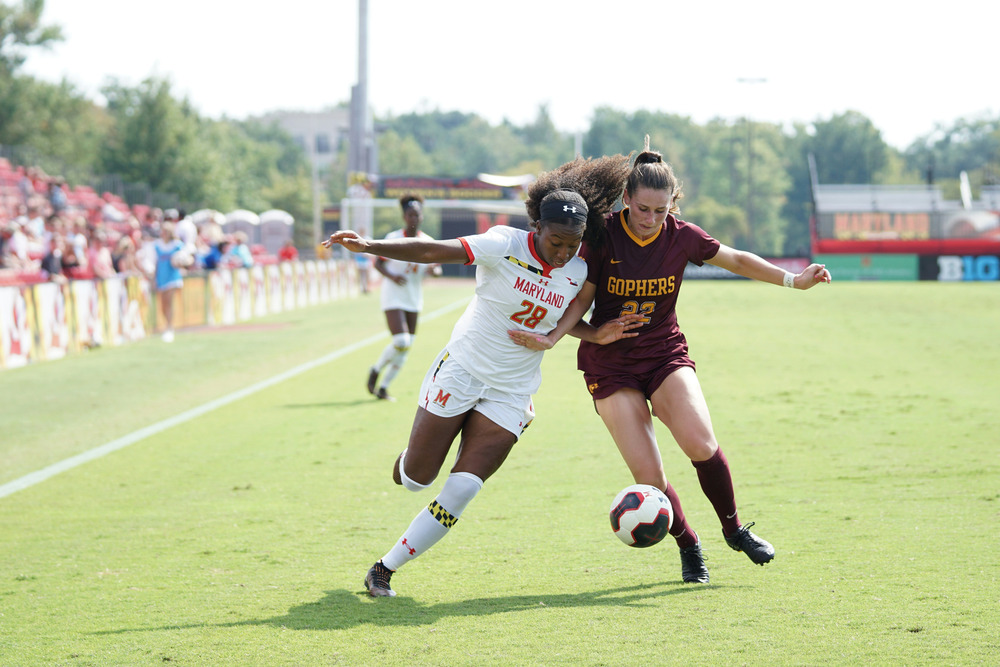
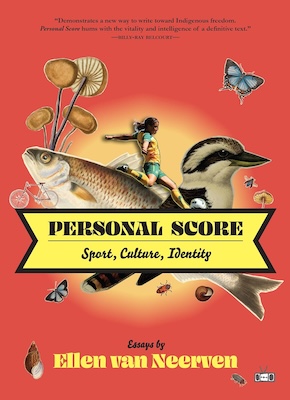
Football (or soccer) has always been a significant part of Ellen van Neerven’s life; they grew up playing the game, advanced to become an amateur player, and has always been what they call an “armchair enthusiast” of the sport. But EvN, the author of Personal Score: Sport, Culture, Identity, who presently lives in Brisbane, Australia, has not experienced only joy in their participation in sport. Instead, their love for the game was—and is—complicated. 

As someone who identifies as queer, non-binary, and is of Mununjali Yugambeh and Dutch heritage, EvN, throughout their formative years, began to grapple with what it means to play within a system that is rampant with racism, homophobia, sexism, and so often reduces complicated facets of identity and being into binaries, like gender or the concept of winning vs. losing. In the “Pregame” to their book, EvN asks: “What does it mean to play sport on First Nations land?…Do we need to know the truth of land before we can play on it? Indeed, should we do anything on Country without knowing the truth?” These questions are as much a driving force for EvN in this collection as they are an invitation to the reader to consider intersections between sport, colonization, gender, race, environmental crises, and trans inclusion. 

Stunningly kaleidoscopic in form, subject matter, and voice, the pieces in Personal Score range from deeply researched passages to lyric ruminations to sports writing to poems to narrative personal essays. In a book that is so much about how harmful binaries in sport, life, and thinking can be, the breadth of forms allows EvN to trace the way that historical violences, and present day refusals to acknowledge this violence, perpetuate deeply harmful systems that do not allow for full expressions of identity and humanity. I had the opportunity to speak with EvN via email about the power of language, the importance of eradicating harmful binaries, and what their relationship to sport has looked like at different points in their life. 


Jacqueline Alnes: Football (soccer) becomes a way for you to examine the ills of colonization, LGBTIQSB+ inclusivity in sport, racial equity, the effects of climate change, and what it means to play sport on First Nations land. One of many beauties in the book was the way this signified to me how interconnected all of these issues are. Was all of this always in your mind as you stepped on a soccer pitch or did one thread lead to another and then to another? 

Ellen van Neerven: Playing soccer (from a young age til recently) deeply informed the writing—I was determined to capture movement and connection on the page. I learnt a lot growing up participating in sport and traveling to play games. I became curious about what had happened and what was happening in the places I was on. I had the support of my family, Elders and broader communities when I was growing up. My learnings are on the pages and are by no means complete. The book contains many threads—all woven together.   

JA: It’s clear that while sport has afforded you an opportunity, at times, to feel fully alive within and connected to your body, the gendered systems, microagressions, sexism, homophobia, and transphobia have also made the sport feel like a place where you and others don’t feel like they truly belong. In what ways has sport helped you better understand yourself, and in what ways, at least in the ways most teams and sport itself are usually structured, around binaries and with a goal of winning, has it taken you away from yourself? 

Gendered systems, racial slurs, homophobia and transphobia deeply complicated my love for sport.

EvN: A recent thing I have learnt about myself is that I feel most me when playing sport. I feel affirmed in my queer trans Indigenous body running around a pitch and being involved in a game I love. However, competitive sporting environments were also places where I felt most policed, discomforted, and hurt. These are experiences I unpack in the book. Gendered systems, racial slurs, homophobia and transphobia deeply complicated my love for sport, and I know it had the same effect on many of my readers, who share their stories with me. Some queer and trans people, for example, are returning to sport at an older age, having been excluded or turned off sport when growing up. I was lucky to find supportive team environments when I was in my late twenties and found joy in sport beyond competition. On the sporting pitch I understood my capacity for compassion and loyalty towards others, I understood my limits of exertion and I learnt skills that extend off the pitch.

JA: When we see people who represent the communities we are a part of playing a sport, there seems to be potential for us to feel more connected to other people or even to become more hopeful about the future. I love the scenes where you talk about the way that watching particular players on television, like tennis star Ash Barty, brings you a specific kind of joy. What did it feel like to watch Barty play? And what do you think it is about sport that makes us feel this sense of connection and optimism while watching? 

EvN: Our community got behind Ash Barty in a big way—we are so proud of her. It is an amazing feeling—watching an Indigenous athlete who grew up in a similar part of the world as you—go on to become the number 1 tennis player in the world. Of course this is not unpreceded, Evonne Goolagong Cawley was this for my mother’s generation, she is a Wiradjuri woman who was number one and won majors in the 1970s. I remember Mum suggesting I write about Evonne for a school assignment when I was about eight—instead of the four white Australian athletes that we had to choose from I did do this and it unlocked a curiosity in me to learn more.  Forty years later, watching Ash’s journey on the world stage was hugely influential for me and the older generation and the younger generation. Ash is not only a beautiful player but has an incredible warm spirit that is infectious. From seeing the Aboriginal flag being flown in the crowd during her Wimbledon victory to Ash winning a home grand slam, this collective joy uplifted us during tough times where our communities were experiencing grief and injustice. So it was also healing. We were also in admiration in the way Ash chose to retire—at the age of twenty-five and at the top of the game. She exited the game on her own terms—not willing to sacrifice her happiness and the other things she wanted to achieve in her life.

JA: You write, “This is an ugly book that was born out of the ugly language I grew up hearing in this country.” There are so many moments in this book where language harms, whether it was insults you received at school, deeply problematic names of soccer pitches or towns, or racial epithets. But you also write that “language can always be taken back and used to our advantage.” I love how many different types of writing you include in this book, everything from narrative essays to lyric fragments of prose to poems. How did writing this book shape your relationship to language of both the harmful and healing variety? 

EvN:  Language holds so much power. It was painful but necessary to write about how language (namely English) has hurt me and others and freeing to write in ways that represent flow, fluidity—to use language (English and language of my mother’s people: Yugambeh) to hold and to be held.

JA: You write about how, “unlike whitefellas, First Nations people don’t necessarily subscribe to the binary of work and leisure” and instead consider sport to be a “part of life, part of work, part of education, and part of looking after Country.” The way colonizing Europeans historically only allowed men and the ruling class to participate in sport, and their emphasis on the importance of winning, have trickled down to the ways in which trans athletes are being harmed or pushed out of sport now. How, for you, do these harmful histories show up in sport in the present day? 

I’d like the future of sport to be responsible to land, inclusive to all people and a space that can show leadership in restorative justice.

EvN: Yes, histories of exclusion and discrimination in sport still have impact today when we look at issues in sport like sexism, racism, queerphobia, transphobia, ablism and classism. Despite progress, there’s still generally a massive pay gap between athletes in male and female sport. Participants in sport often don’t feel like there’s avenues for transformative justice when racism is reported. LGBTIQA+ people often face barriers to participating and experience discrimination. Where a young person grows up might impact their access to sport.

JA: What was it like tracing the histories of Country and sport and colonization alongside your own personal history? What did you learn about sport, place, people, and yourself along the way?  

EvN: I grew up about an hour’s drive from my traditional Country, where my grandparents were born, and my ancestors lived for thousands of years. Where I lived and still live is in a city on what has always been Yagera and Turrbal Country—neighbouring nation to my nation. Prior to colonisation, we developed strong reciprocal bonds nation to nation and travelled widely to practice ceremony and culture. As a sporty kid, the first occasions where I travelled were with my parents driving to games and tournaments. I was taught more information about the places where I was moving and travelling but I was also acutely aware of the disruptions, fractures and violence of colonisation that had impact on the places today. I learnt when something bad happens on Country and is not acknowledged, it translates into a bad feeling felt in the environment and this continues to ripple. When we can name what happened, when we can feel supported in place and in relationships, when we can speak out and have a voice—this can be a strong start in addressing the injustices of harm to people and environment.

JA: In regard to the environment, you write about invasion, land grabs, destruction, and the colonialist exploitation of the environment that has caused such irreparable damage. In the first few pages of the book, you ask both yourself and readers, “What does it mean to play sport on First Nations land?” As you collected the physical evidence of damage, language marking the deeply horrific histories that have happened in specific places, and thought about the way rising tides, fires, floods, pandemics, and more are wreaking havoc on communities and the natural world, what answers have you come to? 

EvN: What does it mean to play sport on stolen land also is what does it mean to play sport in climate crisis. We are experiencing devastating climate events that are disproportionately affecting the world’s Indigenous people and most disadvantaged people. While researching the book, I came across information I hadn’t made the links to yet—like the link between injury and drought—from playing on hard ground.

JA: Throughout the book, you note how First Nations knowledge is so often undermined and disregarded, leading to climate crises, a reliance on harmful binaries that impact both individuals and communities, and many other ills. You write that “resilience” and “reconciliation” are thorny terms because of what they signify: “re-silence,” and “to repeat, continue…conciliation—to placate or pacify.” What might true healing look like, and is that even a possibility? What would that kind of reparation require?  

EvN: First Nations knowledges are still being ignored, even in times of major crisis, and after major crisis. And when there is interest in traditional knowledge, it is often cherry-picking—say an interest in cultural burning after devastating fires but don’t see that cultural burning is but just one aspect of cultural land management. First Nations people always had an active role in sustaining the land and waterways. Governments need to put resources into cultural land management which includes practices such as cultural burning, and this needs to be in the hands of First Nations people. It is hard to heal from colonial injury when there is still so much disadvantage and injustice—for example high rates of incarceration, high chronic health risks and not being listened to by government on what the best ideas and solutions are for each community. Land back. Bring everyone home. Indigenous languages are also vital for the future. It would be transformative if every jahjam (child) had the chance to learn their language.

JA: Thinking about the future of sport, and of course the ways that sport is connected to and representative of so much else, what does an ideal future look like to you?

EvN: It is important for sport to be seen as so much more than singular—rather let us see sport in pluralities. There are many diverse ways of engaging with sport that go beyond mainstream nationalist narratives. Personal Score is about connecting to the land you’re on and play sport on. Ideally, I’d like the future of sport to be responsible to land, inclusive to all people and a space that can show leadership in restorative justice.

7 Heart-Wrenching Chinese Family Sagas

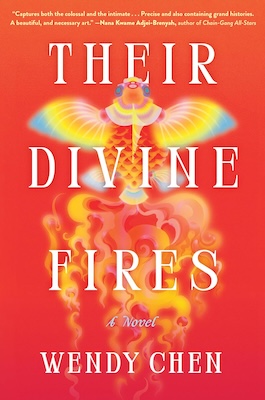
When I first decided to write my novel, Their Divine Fires, I knew I wanted to draw on and honor the stories of my grandmother and mother. In the early 1900s, my grandmother’s uncles joined the Communist Party and fought to protect their country against warlords and Japanese soldiers. Decades later, my mother witnessed the Cultural Revolution and lived through the vast social and political changes that were brought about as a result. I grew up with these stories, stories of resistance and revolution that shaped how I understood who I was and my own place in history. 

Much like the stories on this list, Their Divine Fires explores the ways that collisions in history and the choices of previous generations haunt the lives of the present. My novel follows the love affairs of three generations of women in one family, beginning in early 20th-century China and ending in modern-day America. Each generation must make difficult choices in order to survive the tumultuous times they live in. 

The family sagas on this list are all in conversation with my own in some way. Oftentimes, they ask similar questions that I do in my novel: What are the ways that history haunts us? How can we reconcile and make peace with a past that goes beyond our own? How can we move forward while honoring and holding space for our ancestors? The following books answer these questions and more in complicated and heart-wrenching ways. 

Dream of the Red Chamber by Cao Xueqin, translated by H. Bencraft Joly 

One of China’s “Four Great Classical Novels,” Dream of the Red Chamber is probably considered the Chinese family saga. Written in the 18th century by the poet and scholar Cao Xueqin, the novel follows the rise and fall of the Jia family clan during complex social and political changes of the time. At the center of the novel are a pair of ill-fated star-crossed childhood lovers who are unwillingly pulled into a love triangle. Hailed for its unusually sensitive depiction of the lives of women for its time—an aspect which inspired my own novel—Dream of the Red Chamber considers the ways that love shapes and determines our lives. And did I mention there is a magical talking stone? 

Red Sorghum by Mo Yan, translated by Howard Goldblatt 

One of Mo Yan’s most acclaimed works, Red Sorghum follows three generations of the Yu family who make sorghum wine in China during the 20th century. The novel depicts the tumultuous changes China underwent during this time—from the Second Sino-Japanese War all the way to the Cultural Revolution. Bandits, resistance fighters, even a pack of feral dogs live passionately and brutally within the pages of this novel, and die in much the same way. Fields of red sorghum serve as a fitting backdrop, as well as a metaphor for the violence, patriotism, and love of ever-changing world in which these characters inhabit. Characterized by Mo Yan’s particular brand of magical realism and myth-making, the novel makes a clear statement about the ways that resistance and revolution reverberate into the present day. 

Woman Warrior by Maxine Hong Kingston

Moving between memoir, myth, and oral history, Maxine Hong Kingston’s Woman Warrior is a genre-bending tale about the complicated lives of women in her family. The work explores Kingston’s own experiences as a first-generation Chinese American who must reckon with the weight of her family’s stories. Along the way, Kingston interweaves tales of extraordinary women in Chinese history—from the 2nd-century woman poet Cai Yan to the woman warrior Mulan. Published in 1976 to great commercial success, the text had a lasting impact on many Asian American writers who followed.  

The Leavers by Lisa Ko

A finalist for the National Book Award, The Leavers by Lisa Ko charts the journey of Deming Guo as he searches for his mother, Polly, who vanished when he was a child. Haunted by her disappearance, Deming grows up to be a young adult with self-destructive tendencies, longing for a sense of belonging and connection. “He was forever waiting to get past the secret entrance,” Deming describes himself early on, “and when the ropes did part he could never fully believe he was in.” Traversing several decades and two continents, The Leavers seamlessly intertwines both stories of mother and son to explain the ways that we leave (and return) to one another. 

Searching for Sylvie Lee by Jean Kwok

Another novel that centers on a familial disappearance, Searching for Sylvie Lee is a story about two related families—one in the US and one in the Netherlands—and their intertwined histories. When her older sister goes missing while visiting their extended family, Amy Lee must retrace her sister’s footsteps in order to find out what happened. Along the way, Amy uncovers dark family secrets from the past, secrets that upend her understanding of who she is and her loved ones. What happens in previous generations, Kwok suggests, can make or break the generations that follow and only by reconciling with the past can we find ways to move on.

Swimming Back to Trout River by Linda Rui Feng

Swimming Back to Trout River begins in 1981, when five-year-old Junie is left in the care of her grandparents in rural China while her parents go to America in search of a better life. Five years later, Junie receives a letter from her father, promising to reunite their family by her twelfth birthday. How will Junie decide where her loyalties lie—with her grandparents or her parents? How will her family finally reconcile with the passions and violence they experienced during the Cultural Revolution? Through all this, one question burns above all in Junie’s mind: “There’s a world out there trying to lay claim on you. What are you going to do about it?”

The Bonesetter’s Daughter by Amy Tan

The Bonesetter’s Daughter spans nearly a century in its depiction of three generations of women, and what they had to do in order to survive. When her mother, LuLing, is diagnosed with dementia, Ruth Young arranges to have her mother’s handwritten memoirs translated in order to better understand her mother’s past and how it shaped their relationship. In this novel, family stories that can no longer be spoken outright are passed down through the written word, evidence of the power that writing our own stories gives us. 

The End of the World Feels Like Nothing

“A Brief, Inevitable Exchange” by Billy Chew

Zack listens to his playlist Apocalypse Daze. “Love Will Tear Us Apart” comes up on shuffle as he arrives to Mason and Sandro’s cookout. Whether the song is a good omen or a bad omen, or an omen at all, Zack is unsure. He points for the driver—“Right there, thanks.”—pockets his earbuds, and glances at his phone for the time. “Have a great night, man.”

The Uber hums off. Zack takes in Mason and Sandro’s house. Christopher Cross blasts all the way around to the sidewalk out front. God forbid Mason enjoy something without the plausible deniability of it all being a joke. The partygoers are also at such a decibel level, commingling with the yacht rock, that Zack surmises Marta’s gotta be there by now. He’s satisfied with his well-timed arrival. Thinks of his app and takes a series of deep breaths.

In for four heartbeats.

Hold.

Out for four.

Hold.

The sun will start setting soon. Zack watches it through LA’s brownly orange haze and breathes there alone in the hot driveway.


“Don’t.”

“Dude,” Zack rolls his eyes.

“I’m asking you not to,” Mason takes Zack gently by the elbow. “Go meet the pig on the grill and chill, erwhatever.” Mason squeezes warmly once and releases. “The pig is tentatively named Gertrude until someone comes up with something that’s actually funny. Prize is first dibs on the carcass.”

“I’m just asking if she’s here.”

“And where.”

“Maybe I’m trying to avoid her.”

“This is a nice cookout, with a pig.”

“Yeah, you mentioned the pig, man.”

“Sandro and Berkeley are downstairs jamming. Get the nerves out, bro. Food’ll be up in like an hour.”

Zack can’t help but nervously shift his weight, glancing around the party behind Mason.

“And of course Marta’s here,” Mason says. “Were you expecting me to disinvite her or something for breaking up with you?”


A breakbeat is the only pattern Zack really knows how to play on the drums. He wishes he could churn out a relentless motorik, but his legs always cramp up. So he finds jamming both frustrating and monotonous when he’s stuck on drums. He stops. “Let’s trade up.”

Sandro nods. “I pack a fresh bowl, you guys . . . ?”

“Fuck yeah bro,” Zack replies.

Sandro hangs his guitar on a wallmount. Berkeley plops onto an IKEA loveseat draped with a cyberskull throw-blanket.

“My man, how you holding up?” Sandro fishes some weed out of his bespoke leather pouch and begins to fastidiously pack his resin-dulled skull pipe. Warped, radioactive skulls being his latest aesthetic makeover apparently. “You at, like, the suicide-note Stage of Grieving?”

“I’m at the perpetually-listening-to-The-Bends stage.”

“Oh, you been crying.” Berkeley hands Sandro a small, bright red skull. Sandro flicks it open and lights up with it. Skull on skull.

“Honestly, I’m not crying as much as I thought I’d be since I moved out. I’m more, like, still a little angry, y’know?”

Sandro exhales and hands Zack the bowl. “Well then good thing this is a super strong sativa.”

“Blue Dream?”

“Green Crack.”

Zack takes a deep hit. He wonders if it’s possible to develop a callous in the back of your throat from weed-smoking-frequency. Exhales. “She’s totally erased me from the band. Did you guys see the Pitchfork thing at FYF?”

“I was asking about the break-up, not the band, but OK.” Sandro takes the pipe back.

Berkeley drapes himself across the be-skulled loveseat, his head hanging upside down toward Zack. “I always preferred your solo shit. No shade to Marta and Kumiko.”

“Same,” Sandro adds and hands off the bowl to Berkeley, but Berkeley just passes it back to Zack.

Zack’s heart rises warmly as he accepts the weed. Of course they love his solo shit. He takes a hit. “Thanks, guys. That means a lot.” Exhales.

“You been writing some sad-ass Thom Yorke psych, erwhatever? Like, you gettin’ the feels out?”

“Pfft. I’m at like a . . . ” Zack takes another deep hit. Holds it for a beat before announcing: “Total. Creative. Block.” He exhales a massive cloud and hacks. They all laugh. Zack checks his phone to see how soon dinner is but it’s dead.


Mason’s cooking makes Zack feel like less of a man, but the epicurean excellence makes up for the blow to his ego. He doesn’t mind being one of the however-many people gathered shoulder to shoulder to appreciate and enjoy this culinary labor of love. Gertrude is a little too Faces-of-Death, Zack thinks, but the persimmons down the table practically glow. Zack notices Marta standing beside them. Browsing for what to put on her paper plate. Amidst a throng of friends.

Zack watches her discreetly. She won’t acknowledge him whatsoever. Surely she’s heard that he’s here by now. Maybe she’s even seen him. But she’s openly conversing with everyone around her without, conveniently, ever glancing over in Zack’s direction.

For fucksake.

“You grabbing brussels or no?” Someone Zack doesn’t know but always interacts with at these cookouts leans in.

Zack realizes he’s just been standing there. “Sorry, I’m super baked.” He serves himself some brussel sprouts and continues down the spread, grabbing some of the persimmons. When he looks up to see if Marta has any of them on her own plate, she’s gone.

Berkeley will probably eat with her somewhere. Zack will find them. Usually on the balcony. Marta was always jealous of Mason’s view.


Is it weird to bring your dinner plate with you to the bathroom? The fact that Zack even has to ask himself that question is its own answer. Nevertheless, he needs a moment to himself. Even in the bathroom off the living room, the gathering’s din is impressive.

He looks himself over in the mirror. Mason’s bathroom lighting situation is disturbing. Zack intends to center himself again, though. Remembers his app. Breathes. Holds. Breathes. Holds.

“I’m not trying to corner you,” he practices into the mirror. Eyes shut. “I just need to talk.”

He breathes.

Holds.

Breathes.

Holds.

Suddenly, phone alerts start going off on the other side of the bathroom door, rippling through the party. More and more of partygoers’ phones wailing with some sort of vital announcement. Zack looks to his own phone, forgetting for a moment that it’s a black brick. Amber Alert, he figures. Certainly not an earthquake or he’d hear people bolting for cover.

Disturbed, Zack takes in the sustained wall of sounding phones. An uncountable number of them blaring outside. The formerly boisterous volume of the cookout fades. Dies to zero. Then there’s a silence that holds. No klaxons anymore. No voices, either. No sound or sign of life remains.

The hairs on the back of Zack’s neck bristle. The entire party has vanished into a vacuum. He feels slightly embarrassed for feeling afraid. He steps toward the bathroom door. He can hear a few folks flopping onto furniture or pulling out kitchen chairs. So far, no words are spoken. He opens the door slowly, carefully, quiet pride rising for overcoming his fear. Everyone is still there at the cookout, of course. They all sit in silence. Or stand. Or lean. The same, or roughly the same, expression on everyone’s face. Staring down at the phones in all of their hands.

Sandro stands spellbound by his own phone beside the silent record player a few feet away. A bloody Osees record he was apparently about to put on dropped and forgotten, splayed open on the red rug beside him. A roaring, axe-wielding orc illustration on the album’s gatefold.

Zack walks quietly as he approaches Sandro. No one looks up. He leans in towards Sandro’s shoulder, speech feeling like a secret or some forbidden act for reasons Zack doesn’t understand beyond his reptile-brain’s present coaching.

“Yo,” he manages to get out. His voice quivering somehow on the single syllable.

Sandro hands Zack his phone. No eye contact. Nothing. Sandro just stares down into the orc at his feet. Zack hesitates to check the phone in his friend’s hand. Afraid of what he’s about to find. Less embarrassed about it this time. So he looks.

A bright red push-alert fills the entire foldable Android’s display. The thing’s haptics surge almost painfully in Zack’s palm.

Of course no one speaks. Who wants to be the first person to say it’s the end of the world out loud?


Kyiv is gone. Other places too. The names are long and Russian-sounding. But Zack recognizes Kyiv.

He thinks of Hiroshima. Nagasaki. Thinks back on all those times he heard about modern nukes being “X times more powerful” than the bombs dropped on Japan. But he can’t remember the value of X. He remembers being what feels now to be perversely impressed by X, though. Was it in the double digits? Was it a factor of hundreds? Thousands? He doesn’t know. What he knows is that Kyiv is leveled. He pictures a city-sized, flaming, radioactive flatland of rubble and dead bodies. But then he realizes that it’s probably considerably worse.

What’s he missed in the news recently? John Oliver and Colbert and the blips of KCRW on the way to Blue Bottle in the mornings keep him pretty in the loop—or at least knowledgeable enough about global goings-on to be marginally aware of the loops that he’s not in on. Was he, and/or everyone else on the planet, the proverbial frog in the pot coming to a boil, ignorant of some rising international tensions or the ascension of a trigger-happy madman? Or was Zack just not paying attention?

John Oliver and Colbert and the blips of KCRW on the way to Blue Bottle in the mornings keep him pretty in the loop—or at least knowledgeable enough about global goings-on to be marginally aware of the loops that he’s not in on.

Who’s behind all of everything right now? Zack feels like he needs to know, needs to attach his rational mind to someone in order for a logical sense of cause and effect to still exist in the universe. Blame is Zack’s only lifeline. Was it Russia? Moscow isn’t in the reporting yet, so could be. 

Zack’s sphincter tightens at the word “yet.” Where else is in a Yet Situation? Is he himself in a Yet Situation? What about other places in the US? LA must be a valuable strategic target, right? What about the US as a whole? What about everywhere?

But specifically what about LA?

Zack looks around, away from Sandro’s phone. Sandro has abandoned him and migrated across the room to his girlfriend on another be-skulled, deep couch. The news of what’s happening is beginning to sink in for everyone. There are some brief expressions of shock. Wordless vocalizations from folks, attempts at something said but abandoned halfway through into the eery quiet again. Dazed hugs are exchanged. Language is taking its time to return.

His stranger/friend from the brussel sprouts breaks down. Others follow. Zack is glad he doesn’t know the stranger/friend well enough to have to blink himself out of his own shock to comfort the guy. Berkeley, though, leads him from the living room floor to the deck outside. Always the Boy Scout. The stranger/friend is still audibly crying out there. Zack doesn’t turn to look through the sliding doors. He doesn’t wanna see that right now.

The colors of the living room have lost their saturation. A deep night descending. No one currently with the presence of mind to flip on the lights, and no one noticing that no one has.

“ICBM’s still in the exosphere according to NORAD,” a familiar voice announces. Zack remembers NORAD as the Santa Trackers when he was a kid. How similar now is his belief that they can track these things, he wonders.

Someone breathlessly states the obvious: “More nukes.”

“More of them over the Indian Ocean,” another voice adds. “Origins unknown.”

“Pacific Ocean, too,” Sandro chimes in, a wavering shakiness to his voice completely unfamiliar to Zack and probably everyone else in the room. The notion of seeking shelter is broached briefly, but the conversation fizzles. What’s shelter?

“Maybe we should turn on the news,” suggests Sandro’s girlfriend. Zack remembers that her name is Emily. Maybe Emma. He doesn’t care.

“Where’s the PS5 controller?” Sandro asks to no one in particular and begins frantically going through his TV’s remote-routine. Zack half tip-toes over to a seat on the arm of an occupied La-Z-Boy. The TV visible now. He turns on the first lamp.

The room ripples into incandescence as everyone realizes they need it and switch things on. Sandro tells the Playstation to pull up CNN Live but it just hangs on buffering. A pin could drop and everyone would lose their mind.

From Zack’s new perspective on the fluffy chair, he spots Marta seated at the base of the steps to the upstairs. Her leg up against the wall beside her friend Anni. Zack always mostly liked Anni. She’s posed mirror to Marta. Leg up. They both stare at the same point in space somewhere between them, a few steps below. Lost in private distress, stumbling mentally through somewhere alien just like everyone else.

Zack wants to want to go to Marta when CNN Live flashes into deafening, blinding brilliance. Sandro leaps for the remote and rapidly turns down the soundbar. “Sorry sorry sorry.” The matrix of glowing CNN elements resolves onto the screen. White and blue and red and gold. The camera swoops in toward the anchors standing amidst moving walls and screens.

The anchor with a white beard leans, head down between his shoulders, dizzy, wobbling against the news desk. No one helps him. No one even seems to notice. Another anchor silently stares off-camera, nodding slowly, finger on her earpiece, listening to something that makes her mouth hang open.

A man beside a wall-sized touchscreen of a topographical map of somewhere with no information on it weeps. He pleads up to the display, “Don’t update it! Please. Leave it all blank for just another second,” he says. “Don’t make me look at it yet.”


“It’s like binging the first season of the Apocalypse in there,” Mason says to Zack and stubs out a cigarette on the bottom of his Adidas. At some point, Zack has to step outside to bum an American Spirit off Mason. They plant themselves on the curb beneath a sulphur-colored streetlight. Smoking in morose silence.

It’s deeply unsettling to Zack that overlooking Los Angeles, there seems to be nothing really happening of note. No sirens. No helicopters. Not even any car alarms. An invisible Apocalypse so far. Off a ways on the distant mountainside, he guesses there are probably less headlights on the 134. But maybe it’s just the smog.

Mason takes a drag on a new cigarette and breaks the quiet, “I’m afraid to ask for an update.”

“More in the air,” Zack says, looking upward for splotches of stars in the hazy urban clouds. “Everyone seems to have lost track of how many there are.”

“Damn . . .” Mason trails off. Hesitates. “. . . US yet?”

“Still unscathed.”

Mason nods. “I guess we’d kinda be the first to find out.”

They’re quiet together for a moment. Emotional CPU’s frying. “I need one more before I go back in.” Zack turns to reach but Mason’s already got his pack out, arm outstretched, cigarette extended.

“I’ll be out here,” Mason replies.


“Ten figures.” That’s how the TV starts referring to the body count once it gets too high too fast to keep track of, which is a matter of about twenty minutes after the news really starts coming in. Zack recalls that the human population of the entire planet is somewhere around nine billion. So, “ten figures” could be most humans. Could even be all of them. All of them except for the folks in Zack’s direct line of sight and those presently on television.

The devastation is in the quintillions of dollars, a maybe made-up number. Pretty much everyone at what used to be referred to as a cookout agrees that handwringing prognostication regarding the economic toll of Armageddon is ill-timed at best. 

“I’d like to know the real death toll so far, though” Emma/Emily appeals to the remaining guests at Sandro and Mason’s. “I think we’re all entitled to know.” Sure, Zack thinks. What good would that do, though? The news feels as useless as it always does.

“I’d like to know pretty much everything about what the fuck is going on overall,” replies Sandro from beside Emma/Emily on the couch, both of them nestled atop one another beneath the neon skull blanket.

“I think everyone still alive on the planet would like to know that,” Berkeley answers. He’d come in from the deck after Zack’s stranger/friend called himself an Uber. No one expected one to come, but it only took about 10 minutes for a Ford Fiesta to pull up out front. So the guy’s gone now, as are most of Mason and Sandro’s guests. Drove home regardless of inebriation level. Wandered home through the dark on foot whether they live nearby or not. Sometimes on the phone trying and occasionally succeeding to get through to a loved one. Sometimes hand in hand with someone. Sometimes alone. Some were taken home by friends or acquaintances, perhaps to ensure that no one leaped off a bridge or threw themselves into traffic failing to fathom the End of Civilization As We Know It.

Marta seems to be taking everything well, it seems. All Zack saw in her was that daze on the stairs before she went elsewhere when he didn’t notice. Her dusty shoeprints still linger on the eggshell wall like shadows. Zack can’t tell if the fact that Marta taking things relatively well is a good thing or a bad thing. Or if it’s even a Thing at all. He just knows that she’s still avoiding him, still hasn’t made any eye contact or acknowledgement. Her avoidance is inarguable now. Zack hasn’t seen her for a minute, though. He wonders if she trickled out with some of the others. She’s notorious for her Irish Exits. Now here Zack is, he thinks. Butt-hurt and likely doomed.

Although, when it comes to doom, the US remains unscathed after nearly three hours. Three hours of missiles and bombs and entire cities being ethered. Three hours of statistics so sublimely incomprehensible as to essentially bounce right off Zack’s cerebellum.

The pixelated firsthand footage comes in and out. Bodies clogging rivers. The deep mutilation of what a person can survive, but barely and not for long. What remains of human beings wander a fiery wasteland. Picture-in-picture on the TV broadcast. Maybe looped. Maybe not.

Are we being spared? Zack wonders if there’s simply an apocalypse-lag when you’re the sole remaining superpower. Perhaps soon to be the sole remaining liveable place on the planet. But what about Nuclear Winter? Or Radioactive Clouds? The Yet Situation hovers over him like so many impatient ICBM’s.

It seems somehow logical that Moscow eventually makes the list. Zack doesn’t know yet who’s to blame for kicking over the first nuclear domino, but everyone has their suspicions. A few offered them up to the group gathered at the TV earlier. North Korea. China came up twice. Iran for a reason Zack couldn’t quite follow. Sandro offered up a contrarian hypothesis about a preemptive launch by the US and the unspoken rage was so palpable that Zack could have sworn the room warmed several degrees. Now everyone’s hypothesis is their own. They’ll all find out eventually, Zack figures, or they won’t. Kinda doesn’t matter if it’s Russia anymore. Maybe they’d been a part of it for an hour or so. Now they’re gone. Like Kyiv.

Sandro offered up a contrarian hypothesis about a preemptive launch by the US and the unspoken rage was so palpable that Zack could have sworn the room warmed several degrees.

Like Mumbai.

Like Islamabad, apparently the capitol of Pakistan.

Like Sydney.

Like Tehran.

Tokyo.

Berlin.

Beijing.

London.

Rome and the Vatican.

All of Israel and Palestine.

The entire Korean Peninsula.

Like countless other places that never lived in the forefront of Zack’s brain and certainly can’t stay there now.

“Ten figures,” a TV anchor says again. Zack worries that he’s not really feeling enough about everything thus far. It settles over him that he’s starving, but doesn’t want anyone to see him eating at a time like this. He remembers his paper plate left in the bathroom; he decides to discreetly retrieve it and eat in the garage. Or out on the curb with Mason who’s on his third pack of cigarettes, resorting now to menthols someone gifted him on their drunken stumble back home up the hill.

Zack looks around for Marta as he makes his way to the restroom, and, yeah, maybe she’s really gone. Damn. Anni is still here, though, speaking softly in the kitchen to someone Zack doesn’t catch sight of as he passes. If Marta’s gone home, she’ll be going home to a boyfriend-less apartment. One that Zack assumes is still half-empty from when he moved out a few weeks ago. Her ADHD is likely working against her getting it all put back together, and Zack gets a certain satisfaction from that.

When Zack opens the door to the bathroom, he finds three people in there together apparently hurling. A round of mutual heaving seems to have just come to a close, and the trio of pukers all turn to Zack. Each one of them sweaty. Eyes bloodshot. Hair matted. Vomit on the corners of all their mouths and on their chins. None of them he knows. One of them he thinks he might, but if so, they’re unrecognizable. The smell of the room is overwhelmingly putrid. “Oh,” Zack blinks. “Excuse me.”

The three figures stare wordlessly up at Zack, startled out of their respective trances, eyes wide, expectant. Two share the toilet bowl. The third person is at the sink, faucet running but not particularly helping to fully cleanse the sink of the man’s partially-digested roast pig and persimmons.

Zack stutters, glances over at his dinner still beside the sink. From the doorway, visually untouched by the sink-bound puker’s splashback, but never mind.

He realizes that the six eyes are still on him. All vomiting suspended. The bathroom’s bleak lighting turning everyone into irradiated ghouls. Maybe Sandro’s Green Crack still hasn’t worn off. Zack wants to give the pukers good news. This is all a dream. Something.

“Don’t forget to breathe,” he says. “In and out.”

He feels like an idiot. So he leaves.


Gertrude the Pig is alone and forgotten in the dining room. Ripped to shreds as if half-eaten by wolves who fled when a real monster slouched out of the forest. An electric carving knife rests stabbed into her neck. Zack leaves it. His paper plate of cold brussels and corn bread will suffice. There are some potato chip crumbles in the bottom of a ceramic bowl that Zack remembers are Sour Cream and Onion. He pours out the rest of the mini-chips with their flakes and flavor dust onto his plate. The sadness Zack feels over his pathetic dinner is perhaps the only access he’s had to a recognizable feeling in the last several hours. It feels alien. Outdated even.

When he gets there, Zack finds Berkeley alone in the garage. Head in hands, seated in a metal folding chair over in the corner facing the shadows. A fluorescent workbench light full of dead bugs is the only source of illumination. Zack approaches his friend, trying not to startle him. “Hey man.”

Berkeley speaks into the darkness. “There’s a black widow over here,” he mumbles. “I couldn’t see the red hour glass before it went off into that hinge there, but you can see the spiky egg sacs.” He points.

“We’ll have to let Mason and Sandro know,” Zack replies.

Berkeley scoffs. “I’m sure they’ll get right on it.”

Zack takes in the back of Berkeley’s head. “You want some cornbread?”

Berkeley finally turns and looks up at Zack from his chair. His eyes puffy and bloodshot. “You got any butter?”

“Yeah but it was cold and tore the whole thing to bits.”

“I’ll have some corn-bits,” Berkeley shrugs.

He pulls his chair along the concrete floor to where Zack unfolds his own in the buzzing light. They sit together and eat off Zack’s plate amidst the nostalgic scent of gasoline residue.

“I brought these Sour Cream and Onion chips,” Berkeley says. “Kettle Cooked.”

“Crunchy.”

“Yeah, they’re my favorite brand. Glad they were a hit.”

Zack finishes the rest of his leftovers in silence as Berkeley softly cries, sucking the last of the flavor dust off his fingertips.


The small music space off Sandro’s bedroom is the only place in the house where no one will find or bother Zack. He sits again now at Sandro’s drum kit. Needs to be alone. Never got to reset in the bathroom before the world started burning. Now Zack intends to attempt another reset. He tries to quiet his mind. Seek comfort. He had so many opportunities, though, to say something comforting to others. Friends. Strangers. Strangers/friends. He always came up short. “Ten figures.” Zack resents the fact that it’s something he must now process or to attempt to wrap his brain around.

He picks up the drumsticks and feels the raw wood in his palms. It comforts him. He taps on the taught snare lightly with one of the sticks. Slowly at first. Tentatively. Then he starts drumming, almost without quite noticing. A motorik beat. Circular. Hypnotic. Driving. He plays loud and hard. He leans into crashes and curt, martial fills. Plays harder. He wants the sticks to break. Wants to break the skins of the drumheads. Wants his hands to bleed. Wants to wail with his fists a scream that no throat could ever vocalize. The soundproof room thundering. He plays louder. Harder. A chain reaction. Exponential.

Something painfully slaps into the side of Zack’s head, breaking him out of everything. He spins on the drum stool, rubbing his cheek, looks down—it’s a baseball mitt. “BRO!!” Sandro stands in the doorway. Red in the face. Snot all over his upper lip. Fuming. He catches his breath. Shakes his head. Shrugs. Tears in his eyes. “Shut the fuck up.”

The cymbals sizzle their final resonance into the renewed quiet. “My bad,” Zack whispers. He sets the drumsticks back down onto the snare. He notices that the thumb on his right hand is bleeding. The drumstick has a dark red stain on it. It makes him snicker.


The Apocalypse broadcast, all told, is about five and a half hours long before it dies down to a whimper and then the TV coverage starts to speak in the past tense. And then, sometime around two in the morning, the news is gone. Phone reception goes, too. Internet down. Zack assumes landlines are down as well, but no one who’s still at Mason and Sandro’s has any way of checking. Zack’s been assuming he’ll wake up tomorrow and get the final figures. Process this all then. Find out what happens next. Now he isn’t so sure.

A wave of exhaustion overcomes him when there’s no more television. Relief-like. Time to go home. He’ll walk like most of the others did, he decides. So he rises from his seat and slips away from the stragglers trying to fix the TV connection. A laptop out to stream something as a backup plan. Someone desperately looking for an HDMI cable like their life depends on it.

Zack works his way up the stairs to say goodbye to Mason and Sandro. Marta crosses his mind. Ducking out like she did. Sandro’s door is closed. He peeks into Mason’s dark room, lit by a sole midcentury brass desk-lamp and the light spilling in from the deck. Los Angeles sparkling like starlight on a pond in the distance. Marta and Anni on the balcony taking it all in.

Zack’s stomach drops. Since he arrived, he’s known deep in his heart that he never truly wanted to speak to Marta. Never actually knew what he would say to her. Just wanted to confront her and then planned to go from there.

Anni steps inside when Zack steps out onto the balcony and approaches. She just nods and ducks inside the other side of the sliding doors, back through Mason’s dark, empty bedroom. Marta leans on the railing. Not surprised at all to see him.

“Hi,” she says and doesn’t move from the railing to embrace or hug or anything. Zack abruptly realizes that he was leaning forward expecting her to. He almost stumbles.

“Hi,” he replies. “Um.” He considers for a moment what he thought he knew how to say a moment ago, but it’s gone. “I kinda came to this party to confront you.”

Marta blinks. “Huh?”

“About the interview. From FYF. On YouTube. It’s obviously not relevant now.”

“No. It’s not.”

“I’m glad I’m not dead, though, and I’m glad that you’re not dead either and that I got to see you before I left.” He hesitates. “I wish you hadn’t avoided me, though.”

Marta turns away and takes in Mason’s view she’s always been so envious of. Plucks up a bottle of Pacifico. Holding it to herself for a beat. “Y’know, I thought about you tonight. About the last time I saw you.” She turns back from the cityscape and looks into Zack.

Zack shifts his weight. “I don’t wanna talk about that. Not at a time like this.”

“You punched a hole through my big canvas painting,” Marta bluntly states. Zack looks around like someone might hear. “You can’t fix that, y’know? That painting’s dead now.”

“This is kinda the last thing I wanna be talking about, Marta.”

“When I took the painting down,” Marta continues, “I realized you broke through it into the wall. There was a your-fist sized indentation in the drywall of my apartment.”

Zack blinks.

“Did you wreck your hand? Did you break something?”

“My hand was cut a little bit,” Zack replies sheepishly. “I figured it was the picture frame.”

Marta nods. “Right. Well. That’s your legacy in my life, so you know. Not the music. Not the camping. Not the fucking. Just a favorite painting of mine with a hole blasted through it, and the imprint of your fist punched into my wall. I thought about that during,” she swirls her finger in the air, meaning everything, meaning nuclear holocaust. “I thought about plastering over your fist print.”

“. . . Why?” is all Zack can muster.

Marta shakes her head and looks back out at shining LA. “I dunno, Zack.” She takes a sip of her beer and thinks on it. “Because I think maybe from top to bottom, macro to micro, individual to whatever, on every possible level,” she turns back to look into Zack again, “we’re just fucked and there’s no getting out of it.”

Zack doesn’t know what to say.

Marta takes him in for one last beat, sighs and slips inside through the sliding doors.

Zack is left alone with the skyline and Marta’s hanging words. He takes a beat to swallow and process. He’s more numb than ever. He looks out at the far-off city lights. Remembers his app and takes a series of deep breaths.

In for four heartbeats.

Hold.

Out for four.

Hold.

In for four.

Hold.

Out for four.

Hold.

He imagines an Intercontinental Ballistic Missile descending on Los Angeles faster than the speed of sound. The city alighting in a blinding flash before Zack can even hear the sound of the missile coming. He figures his best hope is to be close enough within the missile’s blast radius that he’d get vaporized instantaneously. He hopes it would be painless.

He knows it won’t be.

9 Novels About Women Living Alone

I thought it would be easy to compile a list of books where women live alone. And it was, but what is considerably less easy it to think about books where women live alone and don’t fall into, or emerge from, a completely deranged state. I asked friends, and one replied, “the first thing that came to mind was Marian Engel’s Bear, then I remembered she has sex with a bear.” We then debated whether having sex with a bear disqualified the book from “a novel where a woman living alone isn’t deranged” and we reluctantly decided it did. I’m interested in stories where women in solitude are not abject, feared or discarded.

In my memoir Arrangements in Blue I write about finally making a home for myself, alone, in my early 40s—something I felt might never happen—and while it is an imperfect as any home is on occasion, it is also a state of grace, comfort and the site of my whole creative life. 

It pleases me that my list—by accident rather than intent—is formed of books where in solitude women contemplate their relationship to other women (in the main), rather than to men. It’s as though I’ve unwittingly passed a kind of Bedchel test.

Here are 9 novels about women living alone:

Still Born by Guadalupe Nettel, translated by Rosalind Harvey

I always feel a sense of tremendous relief when I read a narrator who isn’t going to have children and is (broadly speaking) ok with that. In Guadalupe Nettel’s Still Born, translated by Rosalind Harvey, two friends—Laura and Alina—explore their own paths through maternal ambivalence. While Alina pursues motherhood, Laura, who lives alone, encounters motherhood in an entirely different way. The portrayal of Laura’s relationship to motherhood, via being a daughter and her friendships with mothers, are incredibly moving and nuanced. That Laura also lives alone, in apparent contentment other than disturbances from pigeons and the disruptive and compelling lives of others, made the book all the more affecting to read.  

Take What You Need by Idra Novey

Jean is an artist who doesn’t need anyone to confer the status of artist upon her. Her home, where she lives alone (other than an occasional, tacitly invited houseguest), is her studio and gallery. She longs to connect to her estranged stepdaughter Leah, and the novel is told in their alternating voices. Jean welds scrap metal together to create towers she embellishes with words and symbols and trinkets. The towers are imposing totems of Jean’s vitality, of all she’s learned from her experiences and from her beloved artists Louise Bourgeoise and Agnes Martin. The novel is uncomfortable and confronting at times, but it is invigorating too. An artist can create themselves at any stage of life and be aflame with artistic intent until the very end. 

Drive Your Plough Over The Bones of the Dead by Olga Tokarczuk, translated by Antonia Lloyd-Jones

If you live with animals, can you truly say that you live alone? I wonder because while I don’t live with another human, I do share my home with two cats. We live together but I know my little family household won’t be recognised as such by some. Tokarczuk’s protagonist Janina lives in rural Poland and is alone since her two beloved dogs—her “little girls”—disappeared. Her life is further disrupted by the brutal murder of her neighbor. She lives mainly in her kitchen, her “small, cluttered centre of the Universe” where she watches TV, specifically The Weather Channel. Janina describes herself as “made for solitude” but the story is populated by strange, intriguing friends and foes as the search for the killer intensifies. I read feeling as though Janina was never truly alone, except perhaps (in the novel’s realm at least) her “endless sense of mourning for every dead animal,”

Pond by Claire Louise Bennett

Pond is a short story collection that allows you, the reader, to burrow completely into the narrator’s domestic space as though it were a novel. There’s something of the home of Pond I want, a ‘splendid deep wide sill with no wooden overlay, just plastered stone, nice and chilly: the perfect place for a bowl’. There’s porridge with black jam, cleaning the fire grate, there’s bright green parsley on the doorstep outside, neighbours and ratcatchers, a boyfriend, a stir-fry thrown in the bin, a party imagined and realised, shirts to be ironed, coffee drunk from a small noodle bowl, all kinds of weather. Intimate life is described from the alert vantage point of solitude and its pleasures, desires and conflicts are brought into sharp, clarifying focus. 

Kick the Latch by Kathryn Scanlan

Described by one critic as a kind of “ghosted memoir,” the book unfolds over a sequence of 12 chapters, each formed of several immaculate vignettes, told by Sonia, a horse trainer. It’s the sort of book that could be read all in one go; it has a powerful, propulsive energy. But I found myself reading one or two each night, as I would poems. Each sentence is perfectly calibrated, each left me fizzing with my own desire to create. It was almost too much, too potent! I’m obsessed with this book.

Sonia largely lives alone “in a trailer, a motel room, a stall at the track” and sometimes out of her truck. She describes the kind of living environment I would hate, a bedroom that “looked onto a cow pen” and the possibility of waking up to a goat chewing on my sleeve if I left the door open, but Sonia herself is so pulsing with her electric life, her passion for horses and sharp expressiveness, I felt I wanted to live like her, if not with her. 

An Unnecessary Woman by Rabih Alammeddine

Aaliya Saleh is a 72-year-old who lives in a Beirut apartment building. She has translated into Arabic 37 books that have never been read by anyone, except for herself before she places them in a box and has her celebratory two glasses of wine. In An Unnecessary Woman she reflects on her life, “I made my bed —a simple, comfortable and adequate bed,” and her life in literature. Divorced, without children and grieving her “one intimate,” Aaliya has led a life that her culture (despite her devotion to it) is not ready for. And at times she battles with it too, confessing that while she has always been bothered not to be like ‘everyone else’ she has at the same time desperately sought to be different. But somehow, she finds that the literature that has given her purpose and companionship might also be the key to transforming her loneliness into something altogether more appealing—solitude that can at last transform and open up to new connections.  

Common Decency by Susannah Dickey 

Susannah Dickey’s second novel Common Decency is a darkly funny and moving story of neighbors in a Belfast apartment building. Lily is reeling from the death of her mother, unwilling to share her grief less the sharing causes her to lose her experiences in the process. Upstairs, Siobhán is consumed with her affair with a married man called Andrew who has “recalibrated her emotional vocabulary.” Lily displaces all the loss into an obsession with Siobhán, and when Siobhán rejects Lily’s attempts at friendship, Lily’s obsessiveness is propelled into action; she’s no longer content to listen to the sound of Siobhan’s microwave that “squeals like a pig when the food is done.” Dickey is a brilliant poet as well as novelist, and the brutal accuracy of imagery and clever, sharp word-choices showcase her skill. When those skills are used to describe the unguarded, private behavior of women living alone you’ll find yourself wincing and seen with alarming alacrity. 

The Lost Daughter by Elena Ferrante, translated by Ann Goldstein 

Now that her two adult daughters have moved to Canada to live with their father, Leda is finally free of “the anxiety of having to take care of them,” and free to follow her own desires. In an unusual state of well-being, she leaves the city to spend Summer in a small Italian coastal town. She overcomes the disappointments of arrival to settle into a peaceful routine of “work, daydreams and idleness.” But she begins to observe and feel inconvenienced by a large family of Neapolitans on the beach, who remind her where she came from, invoking both her fascination and disgust. Eventually, her observation turns to what Leda later describes as a gesture of hers that made no sense. It is a novel of brutal reflection, one where Leda’s fear of a love so powerful it might prevent her from becoming herself comes to pass, as she unravels entirely. 

Breasts and Eggs by Mieko Kawakami, translated by Sam Bett, David Boyd

In Mieko Kawakami’s Breasts and Eggs, we meet three women: the 30-year-old Natsu, her older sister, Makiko, and Makiko’s daughter, Midoriko. The novel is in two halves, in the first “Breasts,” the three women reunite as Makiko travels to Tokyo in pursuit of breast enhancement surgery. In the second, “Eggs,” set eight years later, we spend time with Natsu as she contemplates growing old alone and pursues her own dream of becoming a mother. 

For Too Many Mothers, Anxiety Is a Constant State of Mind

If you give birth to a baby during a global pandemic and that baby is born with a birth defect that requires neurosurgery, the splitting open of a tiny, hairless head at ten weeks old; if you are reminded of this daily by the giant, astronaut-like helmet he must wear afterward, barely supported by his floppy neck, by the checks he must do at the doctor’s office where only nonelective cases go (because no one is even leaving the house)—if all this happens, you might become anxious. It might feel like the world has fallen apart or maybe proved itself to be the unaccountably dangerous thing you always suspected it was. In quiet moments alone with your baby, your heart might beat wildly at the thought of rare cancers, foreign wars, or the recall of a crib that is not your crib, fear slicing through your consciousness like a blade.


On the last day of her vacation, Irene Redfield is in Chicago, searching for presents to bring back to her sons in New York. She’s been to six shops, the sun is beating down, and the sidewalk is blistering, so she escapes into the coolness of a hotel. Because it is the 1920s and Irene is a light-skinned Black woman, she must pass as white to enter the Drayton. Irene can do this easily, but generally doesn’t, since she lives in Harlem with her husband, Brian, a doctor, and their two sons. When she does pass, it’s for “the sake of convenience” in a segregated world, to access certain theater tickets and restaurants or, as now, to escape the heat of a brutal summer’s day.

Irene is reviving herself with an iced tea when she encounters Clare, a childhood friend she hasn’t seen for twelve years. Clare is stunningly beautiful and, Irene remembers, the product of a tragic upbringing. She was raised alone by an abusive, alcoholic father until he died in a barfight. The last time Irene saw Clare was just before she was sent to live with her aunts, racist women who insisted Clare pass permanently to hide the “tar-brush” in her lineage.

After the chance meeting at the hotel, Clare forces her way into Irene’s social circle in Harlem. It’s a fraught, intense relationship of opposites. Irene is pragmatic, respectable, and embedded in the Black community. Clare is charming, impulsive, and essentially child-free, having shipped her daughter, Margery, off to school in Switzerland. She is also, Irene learns, courting real danger by coming to Harlem. Clare escaped her aunts by marrying John Bellew, a man who’s not only overtly racist but has no idea his wife is Black.

Passing (1929) by Nella Larsen is a story about many things: race, gender, segregation; friendship, family, desire; the New Woman, the Harlem Renaissance, and the changing culture of interwar America. It is also a story about an anxious mother.

From the moment a woman becomes pregnant, the list of things she should fear begins to grow, unstoppable and unending, like a computer set to spit out the numbers of pi. Alcohol, caffeine, Advil, licorice tea, deli meats, sushi, uncured cheese, unwashed lettuce. Genetic diseases, hypertension, hyperplasia, sleeping on the wrong side. A baby that is too big, too small, badly positioned in the womb. A mother is conditioned to fear things immediate and distant, real and impossible, or so unlikely as to be impossible. Often we are unsure which.

Irene Redfield is a woman “for whom safety, security, were all-important.” What is security to Irene? On the one hand, she believes it’s simply life without Clare, a woman who not only invites real peril by breaking racial barriers, but who Irene begins to suspect is having an affair with her husband, Brian.  But Irene is anxious before and outside of Clare. She worries that the boys at her son Junior’s school have given him inappropriate ideas about sex—a notion Brian cruelly dismisses by saying sex—that is, sex with her—is a disappointing joke. She is worried, not unrelatedly, that Brian, long restless, will finally leave her. Irene also worries that the NWL charity dance won’t go smoothly, that her son Teddy will be upset if she cannot find the right drawing pad, that, on a winter’s day, it’s warm and springlike when it should be crisp and cold.

Mothers are biologically primed to be anxious.

Mothers are biologically primed to be anxious. In 2016, researchers discovered that a pregnant woman’s brain undergoes numerous neurological changes that prepare her for motherhood, including loss of gray matter and increased levels of oxytocin, both of which help her empathize with her baby’s needs but also increase anxiety. I wonder if we knew this already, told in our stories to each other, in our confessions of ourselves. If you are quite literally primed to anticipate danger, what do you do when you are faced with a world that is inherently unpredictable, constantly shifting, forever outside your control? You might try, as Irene Redfield does, to nail down the exact nature of the threats.

After my son was born, I pickled vegetables, froze coffee, and kept our pantry stocked with enough chickpeas to last five years. I hid my fear under the pretense of the pandemic, but I continued to hoard even after supply chains were back to normal, even though I knew I wasn’t preparing for lockdown but something else, something still to come. One day, I assembled a go-bag, then stuffed it under the couch and didn’t mention it for weeks, flushed with embarrassment at my precaution. I finally blurted out its existence to my husband when I became worried that something might happen to me and he wouldn’t know we had one or where it was.

Irene tries to prepare, but the threats are too extensive. When, for example, Irene thinks of Brian having an affair with Clare, she cannot decide what the devastation will look like. There could be a variety of possible consequences; it could mean he doesn’t love her, or she no longer loves him, or that she’s never really experienced romantic love. Maybe there will be social shame or embarrassment or, we can assume, the loss of a certain lifestyle and class; Brian’s medical practice pays for their brownstone, with its maids and cook. Of course it will affect the boys, but how? “If so, what, then, would be the consequences to the boys?” she asks herself after a litany of what-ifs, but she has no answer.

What person in a two-parent household hasn’t, at some point, wondered what would happen if they became a single parent? Maybe it would be fine, or maybe it would be an emotional, financial, or logistical nightmare. Maybe the kids would be resilient, or maybe they’d be fucked up, maybe for a year, or maybe forever. The possibilities of a split are too many, too unpredictable. And so Irene freezes. She holds tight to her life, trying to control it and those she loves.

Passing is a portrait of an anxious mother and not necessarily a flattering one. In Irene, Larsen employs that old cliché that motherhood makes women overbearing, unattractive worriers. Clare is effectively childless, having “no allegiance beyond her own immediate desire,” and therefore represents beauty and sex and allure, while Irene, the self-identified mother of the two, is anxious, sexually unsatisfying—the proverbial ball and chain.

“Security. Was it just a word?” Irene wonders. “If not, then was it only by the sacrifice of other things, happiness, love, or some wild ecstasy that she had never known, that it could be obtained? And did too much striving, too much faith in safety and permanence, unfit one for these other things?” When Irene asks if women must trade their sexuality, among other enjoyments of life, for security, she seems to be leading us to answer: yes.

Anxiety may be inherent in motherhood, but it doesn’t make a woman unfuckable.

We need to be careful to recognize this assumption and push back. Anxiety may be inherent in motherhood, but it doesn’t make a woman unfuckable. There doesn’t always have to be a trade-off between security and sex, or safety and happiness, or stability and love. But to point out this trope is not to say that Larsen should have erased Irene’s anxiety or made it less ugly, insidious, or painful. Just the opposite—we need to take on Irene’s anxiety, sit with it and feel its weight, like a heavy coat. We should ask ourselves: What is it like to be inside Irene Redfield’s head?

If the goal is perfect safety and security, what do you do in a world that is unpredictable? You clamp down. You try to limit yourself to what’s known. Movement, which equates to volatility, becomes a threat. See how Clare is always in motion. In her fluttering dress of green chiffon, she passes between cities and neighborhoods and, to Irene’s annoyance, the floors of Irene’s town house, wandering into the living room and down to the cook’s room and up to the playroom so that Irene can’t always see her. Even the NWL dance, one of so many that Irene has been to and that should be a comfortable social event, becomes an unsettling whirl of activity. (Who is Clare dancing with? Everyone, especially Brian.) Later, Irene can’t pin it down in her mind; it is a “blurred” and “mingling” memory.

Mothers often experience movement as fraught. Moving with children requires preparation—snacks, water, diapers, changes of clothes, toys or other distractions, scheduling. Mothers must again and again decide if something is safe or a threat. And what if they cannot tell?

Mothers must again and again decide if something is safe or a threat.

As the literary scholar Anne Anlin Cheng has noted, “The whole point of ‘passing’ is that it profoundly disturbs our certitude in what the visible can tell us; it is an act and a phenomenon that questions how we come to know something.” Motherhood, too, disturbs our sense of what’s real, our ability to rely on what we think we see. Almost every mother I know has had that moment where she stood over her sleeping newborn, watching its tiny chest rise and fall, needing to make sure (could she be sure?) that the baby was breathing. Children grow; questions proliferate. Is there mold hiding in the bath toys? Is this organic baby food full of heavy metals? Is our child’s behavior normal, or something else?

By the end of Passing, Irene is so out of her mind with anxiety that she doesn’t even know whether she pushed Clare out of the window or if Clare fell. Clare disappears through the frame, and “what happened next, Irene Redfield never afterwards allowed herself to remember. Never clearly.” The scene is brilliant in its ambiguity, a fitting culmination to the book’s propulsive, noirish plot. People love to debate the ending, and many read Irene’s so-called confusion as a cover-up for a crime. She couldn’t really not know, could she?


I have ten cans of chickpeas stored in my pantry. If it comes to it, I’ll puree them for the kids, call it hummus. Better remember the can opener, a fork for mashing, olive oil, salt. How long do crackers last? Should I store something lighter than cans if we need to carry them? How many cans fit in a backpack, anyway? I’ll get some granola bars, too.

Perhaps it is obvious to you if I am being prepared or overreacting, if I’m justified or crazy; if Clare Kendry fainted at being discovered or Irene pushed her out of a window in a fit of jealousy. It’s not obvious to me. I suspect it’s not obvious to other mothers.

To see how uncertainty affects mothers, look at the statistics for maternal anxiety during COVID, a time when everything was unknown: how the disease worked, who would get sick, if we would keep our jobs, how we would keep our children safe. Harvard researchers who questioned mothers during the pandemic found that 31 percent of the women reported elevated levels of anxiety/depression and 43 percent felt post-traumatic stress, despite the fact that only 2 percent of them had actually been diagnosed with COVID, and only 7 percent had even been in contact with someone with the disease. Fear of the thing can be almost as damaging as the thing itself.

Should we just accept that the world is unknowable? I wish I could. But even if I do come to terms with danger, it’s not how society tells me to parent. Mothers are expected to aim for what Sarah Menkedick calls the goal of zero risk. In her book Ordinary Insanity: Fear and the Silent Crisis of Motherhood in America, she describes how, after giving birth to her first child, she developed a paranoia around mouse poop that soon multiplied into fear of almost everything—lead, toxins, baby soap. She was paralyzed by anxiety over her child’s safety because in America, mothers are told “the only acceptable risk is no risk at all.” By the time doctors agreed Menkedick’s anxiety had perhaps gone overboard, eventually diagnosing her with OCD and postpartum anxiety, she was two years out from having the baby.

When something—anything—happens to children, the response is to shame their mothers for failing in their duties, then spread fear of the event, like a contagion. And so as mothers, we push harder and harder to control the variables, laboring under the belief that we might achieve complete security. Zero risk is, of course, an impossible goal. Aiming for it is enough to make you crazy, like the new mom who told Menkedick she strapped ankle weights to herself at night terrified by the thought that she might sleepwalk and hurt her baby.

Irene is the ultimate example of how the goal of zero risk fails mothers. She has to deal with not only motherhood and marital instability but also the incalculable dangers of race in America. How does it feel to be the mother of Black children in a country where you cannot know what will count as a threat and to whom? When Clare hosts Irene and another childhood friend, Gertrude, for tea, Irene is technically among two Black women, but they’re all passing. Clare is married to a white man who doesn’t know she’s Black and Gertrude is married to a white man who does. The women discuss their relief that their babies came out pale, as though it were the only, obvious thought. “I nearly died of terror the whole nine months before Margery was born for fear that she might be dark. Thank goodness, she turned out all right. But I’ll never risk it again. Never! The strain is simply too—too hellish,” says Clare. Gertrude agrees: “But, of course, nobody wants a dark child.” Irene, whose husband and sons are dark-skinned, is shocked and humiliated.

Tea at Clare’s house proves the impossibility of Irene being able to anticipate her sons’ safety in a racist world. Where and with whom will her boys be safe? In Harlem, with Clare? How about at a traffic stop? When they go for a run, open their front door, call 911, or ask the police for help? How, in this country, could Irene ever feel at peace?

If you have a baby who is born at the height of a pandemic and that baby requires neurosurgery, people will understand your anxiety, given all that you’ve gone through. But if you tell them that you were anxious with your first child, that fears of cancers and toxins and recalls of cribs that aren’t even your crib were already there, then they may revoke the privilege of their understanding.

Whose anxiety do we validate? Not Irene’s: despite understandable fears for her sons, no one in Irene’s life commiserates with her. Not Sarah Menkedick’s, until she forced the issue with doctors. Not Black mothers, as we fail to address systemic racism or make reforms that will keep their children safe. Not most mothers in America because, on the whole, we assume that worry is part of the job. That doesn’t change the fact that mothers are suffering. That for an estimated one in five postpartum women, and countless others with undiagnosed or ongoing anxiety, fear has become a constant state of mind rather than what it should be, a knee-jerk response to get out of the way of an oncoming truck.

“Stupid!” Irene cries to Brian. “Is it stupid to want my children to be happy?”

No, it isn’t stupid. But in a country where a child’s happiness is expected to align with absolute safety, it is impossible, exhausting. It is enough to drive you mad.


From The Book of Mothers: How Literature Can Help Us Reinvent Modern Motherhood by Carrie Mullins, copyright © 2024 by the author and reprinted by permission of St. Martin’s Press. On sale May 7, 2024.