K-Ming Chang Invites Us to Remake the Rules of the World

K-Ming Chang keeps redefining what we consider “reality.” Her latest three books—which she views as a “mythic triptych” (Bestiary, Gods of Want, and Organ Meats)—all inhabit surreal worlds where temporalities, species, and folkloric myths collide. In Bestiary, a Taiwanese American daughter wakes up with a tiger tail and finds herself swept into folktales and family histories that traverse generations and continents. In Gods of Want, short stories explore a constellation of different Asian women—ghostly, bestial, and hungry with myriad desires. And in Organ Meats, two childhood friends morph into dogs, as their intense relationship illuminates the intimacies between life and death.

Chang’s prose balances both the lyrical and the fleshy, navigating queer desire alongside decay. Threading together collective histories and futures, the mythic triptych opens the door to reimagining our relationships to the dead, to the bestial and the elemental, and to our own bodies. (For those who have read all three books and still want more: Chang has a new novella, Cecilia, which she frames as being in the same world as the triptych.)

This was the first collective interview that any of us had done, three Asian women drawn together by our interest in Chang’s books. It seemed fitting, considering how Chang’s work is always imbued with the plural, the collective, the literary lineages we seek out and horizontal connections we create. In a group Zoom conversation before Lunar New Year, Chang talked about rethinking the novel form as a quilt, writing about climate justice, and believing in queer futurity.


Jaeyeon Yoo: Your publicist mentioned you view these books as a “triptych.” Could you speak more about that?

K-Ming Chang: I joke that I missed the opportunity to call it the “fecal trio” instead of the mythic triptych, which would have been an even better name. I think of the three books almost like doors in a hallway. I realized they were a trio not just aesthetically or thematically, but in the way that they were oriented. The narrators are people who have the future at their back and are looking into the past in a very speculative way. In thinking about speculative histories—what it means to patchwork or cobble together one’s own lineage or to have chosen ancestry—I’m interested in poet Safia Elhillo’s idea that you can find a sense of origin, lineage, and ancestry in those who are “horizontal” to you. In the case of Organ Meats, this is very much a friendship. They are both children, and yet they are each other’s ancestors. I was interested in the idea of chosen lineage, and in some ways, I think these books were also reaching for a literary lineage—especially the works of Maxine Hong Kingston and Marilyn Chin.

Sophia Li: I love that idea of horizontal ancestry and a rhizomatic past. Maxine Hong Kingston has described herself in interviews as a kind of “rational link” between legends and reality, but I think you actually go in a different direction. Could you talk about how you position yourself—as a writer and a person—between the mythical and the real?

For me, mythology is inseparable from morality.

KC: I’m really interested in folklore as a kind of futurity. I’ve talked about speculative history and writing into the past, thinking of a fabulist past or a form of collective history that is able to pull from all kinds of realities, but I also think there’s something very futuristic about mythology and retelling stories. To me, it feels like the cutting edge of speculative fiction. For me, mythology is inseparable from morality. It’s inseparable from the social rules of the world and intergenerational relationships. So much of folklore are stories that you hear as children, from elders or peers, and mythmaking, too, is this collective intergenerational activity. If folklore and mythology are ways of making the rules of your world, what would it mean to remake the rules of this world through that form? I’m fascinated by the infinite and cosmic possibilities of rewriting those stories, of mutating them or alchemizing them out towards a kind of liberation—and what that could look like.

SL: Can you speak to the process of character-making and world building for each of your books?

KC: I actually wrote Bestiary as a book of essays and was considering it as nonfiction when I was first drafting it. I think that gave me permission to think about Bestiary as a quilt. My grandmother was very into quilting, and the first piece of writing that I created was a quilt that I made when I was seven. Rather than thinking about a linear narrative that I wanted to follow, I was thinking of building out this landscape, this horizon. I was also thinking a lot about rivers in terms of structure, because there is a central river that runs through that book. I wanted to create this aesthetic of digressions—for the story to not get to its point, and for that to be the point. I allowed each sentence to be a micro-myth if I needed it to be.

For the second book, Gods of Want, I was thinking about story collections as a neighborhood and a community, and the short story form presenting that possibility of containing many collective voices. I’m always interested in the collective first person. I feel like in literary circles, it’s like, “first person is so indulgent, it’s so myopic, it’s so narrow and contained.” But I actually think first person can be beautifully collective and gesture toward a “we” or an “us”—opening outwards, in a kind of cone shape that then widens and touches upon a collective experience. Again, a kind of quilting metaphor there!

With my third book, I began with these accounts from Dutch missionaries who were colonizing Taiwan at the time, which were discussing indigeneity and indigenous people. I was fascinated with diving into these archives, using them as a leaping off point to think about land and water as an animate force possessing its own voice, its own subjectivity, its own agency. From there, I ended up with this chorus of dogs that was narrating a collective history. And then I was like, “I can’t just write about dogs for 200 pages.” I mean, I kind of did.

Jae-Min Yoo: I love the dogs, and these fuzzy divisions you have between humans, animals, plants, and also technology. You mentioned earlier how you’re interested in remaking the rules of this world. I think these blurred boundaries are a moment when you really do that. Why is the bestial such an important figure in your work?

KC: I love the bestial, I could talk about it forever! Part of it is the mythological and folkloric kind of pantheon that I’m constantly drawing from, which contains a lot of animal imagery and metaphysical transformation. There’s an inherent playfulness to myth and folklore that I love. Part of my obsession with animals is the way that I saw other people responding to animals with such wonder, like, “that’s so incredible what their bodies are capable of.” And yet, we view human bodies as the exact opposite of that wonder; it’s so full of shame and subjugation and degradation. So I wondered what it would be like for me to look with wonder and turn that gaze onto the human-animal body. I was also interested in collapsing hierarchies of the animal and the human—that is something we inherit, the human being supreme and master of all creatures. I was interested in what it would mean to subvert that and see human-animal transformation, a symbiotic relationship.

JMY: I noticed that animality comes to the fore most prominently with moments of strong desire in the books, and I’m curious how queer desire plays into what you just talked about?

Queerness is the future that has not yet arrived.

KC: For me, queer desires are always inseparable from the collective and from the preservation of matrilineal stories and history. This desire to resist patriarchal forms of storytelling and story-keeping in lineage is always deeply embedded within queer mythology and mythmaking. I remember in reading Strange Tales from a Chinese Studio (Pu Songling) and hearing children’s stories growing up, that the indicator of someone being strange or monstrous is their turning into an animal—a fox spirit, a snake. I thought that was such an interesting form of othering. What makes them strange or destructive to the fabric of society is this transformative potential. They’re slippery or illegible in some way. And I thought, what if I could harness or channel that very intentionally, and see the liberating possibilities of that otherness? What if I made that otherness a home for oneself rather than having them excluded from society?

SL: I especially want to thank you for writing these Asian American queer sexuality stories that aren’t necessarily partitioned off from the family, where navigating queerness can exist in the same spaces as issues of family.

KC: That was something I had a revelation about when I was writing Bestiary, because I’d thought that those two things had to be separate. There’s the family story, and there’s the queer story. I remember taking a writing class with Jenny Zhang and feeling so freed by that. She was talking about the Western coming-of-age story being about leaving the home as much as possible and finding your identity by throwing off the shackles of one’s family. I’m very interested in the domestic as a place that’s as interesting as the public, as interesting as going off on a hero’s journey where you leave home and come back. I want to tunnel backwards and burrow into the family as a form of queer coming of age.

SL: In all three books, but especially in Organ Meats and Gods of Want, I thought there were some complex and beautiful relationships between the supernatural, the real/living, and the dead. Could you speak about how these themes play out together?

KC: I find that oftentimes, in my writing, whenever a birth occurs, a death occurs, and whenever a death occurs at birth occurs. Whether that’s metaphorical in the language itself or a literal pairing of a death and a birth, those things are constantly emerging for me in the same space, sometimes even in the same sentence. And then between the supernatural and real; I think in Western literature, it’s common to other the supernatural. Even naming it the “supernatural” is a form of othering it, of establishing the boundaries of what reality is or should be. “Who gets to say what’s real,” and “for whom is it real?” are always questions that I’m asking. I’m fascinated by the idea of ghosts being a last resort. The living won’t fight for us, and the living have failed us in so many ways. But the dead, the dead won’t. This collective history that we draw upon won’t fail us, and it’s the one thing that won’t if you’re surrounded by failure and apocalypse and collapse. That’s something I remember the elders in my family telling me: don’t pray to some deity or some higher being, pray to your dead because they’re the only ones who will listen. We don’t have the ability to summon these kinds of deities in any way. But we have this shared history, this tapestry of voices and stories that we’re constantly weaving. That’s one thing that you can always have.

JMY: You talked earlier about wanting to capture land and water as an animate force in your writings. How do you see your writing interfacing with conversations around climate change?

KC: I recently got solicited to write for Orion Magazine, which is a climate justice magazine. I never considered myself a writer who engaged with climate change, because I always had this impression that you have to be qualified. You have to somehow be formally knighted into writing about the climate, about ecology. That, to me, seemed terrifying. But I got to talk with the editor, and I was like, oh, the human and nonhuman, collective narratives are questions of ecological justice. I’m always writing about the destructive forces of capitalism and national patriarchy, and all of these things are what is destroying the climate. I find that I write a lot about land and water as possessing a voice and also being inseparable from the voice of the people that it’s in relationship to. It’s all one world. I definitely now see myself in that literary lineage as well.

SL: Speaking of literary lineages, I wanted to go back to Jenny Zhang because I’m a big fan of dirty realism, this kind of grittiness from a child’s perspective. Could you talk about what appeals to you about child narrators?

KC: I love how much Jenny Zhang’s characters feel. Their feelings are always such big feelings. I remember listening to an interview with her, where she was talking about how everyone always talks about the economy of language, but she wants to be wasteful with language. That blew my mind because I feel like child narrators are that space where the sacred and the profane can come together in the writing. Childhood is such a space of mythmaking and ritual making. It’s being deeply serious and everything feels apocalyptically important and, at the same time, there’s always this sense of playfulness and humor.

JMY: We’ve talked so much about collectivity, and working through that in your writing. One thing that strikes me is that there are still gaps within collectivity, whether it’s different generations, language, geographic location, experiences of war. How do you think about bridging themor not?

KC: I find that oftentimes, that gap can’t really be filled. I’m not so much interested in bridging that gap so much as finding a way for the characters to acknowledge those gaps. I always think of someone turning inward, trying to find a way to live that is inclusive of those gaps in some way, or tending to them. [The gap] is typically like a void or dead space or dead air, but I try to think of it more as this space to tend, to examine, to explore, to think about, to nurture, to watch it grow—what can be fruitful about those gaps? What can sprout from them, what can take root in them: I’m trying to think of the gap as fertile ground.

JMY: That reminds me of the holes in Bestiary. Which makes me think of letters, a form that you use both in Bestiary and Organ Meats. What does the epistolary form do for you?

‘Who gets to say what’s real,’ and ‘for whom is it real?’ are always questions that I’m asking.

KC: Besides the fact that it’s a form that’s very familiar to me, I’m interested in what can’t be spoken, but what can be written or deliberated over in that way. The “you” in that form can be very direct, and that is also as much about the narrator—the one who’s writing—as it is about that “you.” What does it mean to address something to someone, but really write it for yourself? I didn’t grow up with written archives; within my family, everything was oral, everything was spoken, everything was transmitted in various non-written forms. I’m fascinated by using the letter form to create something on the page that feels like it could be read out loud, to combine the written form and the oral form.

JY: To wrap up this conversation—you talked about liberation earlier in this interview; aside from liberatory writing, do you think liberatory futures are possible?

KC: In José Muñoz’s book, Cruising Utopia, he has this beautiful sentiment that I’m always talking about. He says that queerness is always in the future. It’s never here. It’s never located in the present. That’s what queerness is. It’s the future that has not yet arrived. That kind of blew my mind because I was like, oh, that is how I experience queerness. He talks about it as glimpses of utopia in the present, gesturing toward a utopic future. And I definitely feel that way. Queerness does feel like these glimpses of what is possible, and the ever-dawning future. I feel like that is what I’m writing towards. When I write, in the back of my mind, I’m always thinking about that idea of glimpsing utopic bonds in the present and gesturing to a future that has not yet arrived.

I think that comes with a lot of grief. It sounds wonderful. It’s like, oh, yes, utopia is possible. But if it’s always perpetually in the future, there’s also a tremendous amount of pain and grief. In some ways that makes the present even worse, because you can see what’s possible. It’s like this double gaze: you can see what’s possible, but you also know what is. I think the discrepancy between that can be deeply painful to live with. I’m interested in characters who are able to see those two things or straddle those two things. I’m interested in the void as in the sense of deep and utter hopelessness and the desire to destroy oneself and destroy the world, this place of annihilation. But I’m also interested in emerging from that void, or tunneling into it so deeply that you emerge into this utopic future that I think queerness is always gesturing toward—or is.

Something I’ve also been thinking about is grief as this fertile ground for rage. Grief being a kind of anger and a refusal to accept. But these acts of refusal—whether it’s refusing to forget, refusing to move on, and refusing to accept reality as it is—I think that fuels the magical intervention, or the desire to remake the rules of the world.

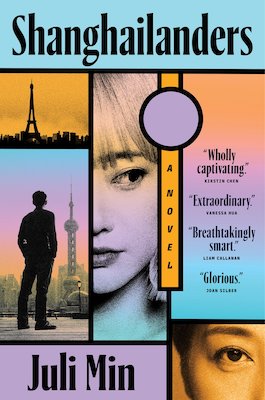
7 Novels About Women Chasing Love Abroad

I have spent nearly all my adult life living in foreign countries. That includes working, dating, marrying, and now—parenting abroad. Aside from the potential challenges of language and geography, what it means for a woman to be in a foreign land is to understand and navigate the joys and threats of womanhood particular to another culture. A woman abroad comes to see herself and her romantic partners through a different set of expectations, standards, and biases. She sees herself anew.

My debut novel, Shanghailanders, features a Japanese-French woman who moves to Shanghai with her husband. In the span of nearly 25 years that the book covers, Eko suffers from anxiety at her foreignness, has a short-lived affair with a local, and wrestles with the ways she and her husband and children change or do not change. I was interested in exploring how a person forms over time, and how outside forces—including place—come to shape a life. 

The following books are all narratives about women pursuing love in foreign countries (and, in one case, foreign universes). All these novels follow characters experiencing literal and emotional displacement. They are met with the challenge of redefining their relationships, and themselves, on new grounds.

The Lover by Marguerite Duras

To the young French girl living in 1929 Indochine, her entanglement with an older Chinese lover is a breach of multiple boundaries in her life—of race, class, and age. A lush, sensual, nostalgic novel, The Lover portrays a romance that breaks the narrator’s family and home, and that shapes her future as an artist. She is sent back to her “original” country of France, while the lover is married off to a more appropriate Chinese woman. But we come to know, from the beautiful structure of the book, that she has been chasing her lover, writing him onto the page, for the entirety of her life.

Stories of the Sahara by Sanmao, translated by Mike Fu

Taiwanese Sanmao and her Spanish husband José are newlyweds living in the Spanish Sahara, where José works, and Sanmao writes about her charming, dangerous, and sometimes naïve adventures abroad. Her account of their time in the desert includes accounts of the endless paperwork needed to get married, a near-death experience with quicksand in the desert, a study of the local Sahrawis’ bathing habits, and how to keep a husband happy and well-fed. If one reads more about both Sanmao’s and her husband’s tragic early demise, this early life portrait of love in the Sahara takes on a bittersweet, elegiac tone.

Intimacies by Katie Kitamura

The unnamed narrator of Kitamura’s intricate and deftly layered novel moves to The Hague to take up work as an interpreter at an international criminal court. Soon thereafter, she begins an affair with a man who has recently separated from his wife. Throughout the novel, she exists, tenuously, in the liminal spaces of romantic ambiguity, cultural and ethnic ambiguity, between languages as an interpreter at the Hague, and in the budding early days of a new friendship. The narrator herself is quiet, unclear. Where is she coming from; and where is she going next? She must grapple with agency within the vast grey areas of morality and existence. The pressures produce, by the end, a possible note of clarity and hope.

Y/N by Esther Yi

In Y/N, a young Korean-American living in Berlin falls in love with a K-Pop singer called Moon. She feeds her obsession rigorously and, in the latter half of the novel, travels from Berlin to Seoul in order to meet Moon in person. Y/N is a story about love for another, but it is also a story about self-definition, about closing the gap between an idea and reality. Who is the beloved, and where does he most vibrantly exist? Who is the narrator, a woman who is tethered so loosely to countries and identities that they move fluidly, surreally, into abstractions? In this novel, every sentence uses language to surprise and delight and distort. Language reconfigures and prods the imagination, as do the characters, as do the book’s conceptions of love, of anything that might tether a reader to what is real.

Americanah by Chimamanda Ngozi Adichie

An “Americanah” is a Nigerian who returns to Nigeria after spending time in the U.S. and adopting Americanisms. Ifemelu, the heroine of Chimamanda Ngozi Adichie’s contemporary romantic masterpiece, is one such returnee, who feels neither completely at home while studying abroad in America nor after moving back to Lagos. At every turn, Ifemelu is confronted with her outsider status, in life and in love. But her great romance is with Obinze, her college sweetheart from before leaving Lagos, and who has also lived life on two continents.

The Expatriates by Janice Y. K. Lee

The Expatriates rotates perspectives between several women expats living in Hong Kong who are forced to redefine what love means in their changing lives. One is grieving from the disappearance of her youngest child; one is closing the last chapter on an unhappy marriage; one is suffering from guilt and shame from a set of disastrous actions. Hong Kong, with its particular brand of wealth and privilege and cosmopolitanism, provides both the structure and the seductions for the dramatic events of the novel. Ultimately, the book lands on an exploration of what motherhood means across cultures, and what it teaches us about how to handle life’s slings and arrows: with grace and forgiveness.

In Universes by Emet North

We first meet Raffi as a young woman who is searching for her place in life: should she continue her lab work cataloging stars in the quest for dark matter? Should she continue dating her college boyfriend, fall into something comfortable with her kind roommate Graham, or explore an alluring friendship with Britt, an artist who reminds her of someone from her past? Raffi, traversing universes, is always searching for that someone we might call her first love. Pronouns shift gracefully over the course of the novel from “she” to “they”—the plural encompassing both the experience of Raffi’s ever-evolving gender identity, as well as the many versions of themselves across the multiverse. The book works in the Whitmanesque sense of multitudes; it works in the Moore-ish Anagram sense; it works because the writing is elegant and wise and dripping with heart-rending beauty about the feelings of being in and out of time, place, body, and love.

I Promise to Find You in the Afterlife

It begins like this by Ala Fox

The year I turn twelve, Mom and I talk a lot about death. Ever since my older sister, Shira, learned about the concept of infinity in school, she’s been scaring me with ideas about the universe and what happens when you die. I get terrified thinking about it, but Mom says not knowing is the scariest part, so we muse about the afterlife together.

We imagine what age you live at after you die. Whether we are all old, or all young, or can choose to spend forever at the age when we met the person we loved most in life. I tell Mom I would choose this age, forever. I would always be her child.

We muse about the Fire, whether it’s like an endless tunnel slide. You speed past openings from which voices you recognize ring out in laughter, but you can never stop and reach them. You’re stuck in a downward spiral, unable to catch a glimpse of the faces you long to see.

We wonder whether souls can get lost in Heaven. If Heaven and Hell are actually the same place, but Hell is never finding your loved ones again, and Heaven is when you do. We wonder about the holding place—a waystation for the departed, everyone waiting to board their train in order of arrival.

I tell Mom that if I die first, I will wait for her. I will let all the trains pass until I see her face appear. I will be the first to greet her, and we’ll never worry about getting lost. My mother tells me she will do the same.

“Promise?”

“Promise.”


It begins like this:

Our last weekend in the old house. To me it is already the old house, because Mom, Shira, and I are moving to the new apartment next week. Mom’s already signed the lease, and Dad isn’t coming. Dad’s staying behind, and I like that just fine.

Dad is here this weekend to help us move. He’s back from China where he spends most of the year doing I’m-not-entirely-sure-what. I was only four when Dad quit his job, with dreams of starting his own business back in China. In the eight years since then, we only see him a few odd weeks at a time. Years ago, Shira made a rule that we have to say a prayer for Dad every time we see a plane overhead. I followed along for a few years, but now I just pray the planes will stop bringing Dad back.

Since Dad is here, I have to sleep in my own room. Usually I run over to Mom’s room when I can’t fall asleep, and she’ll fling back the covers and beckon me in: “来吧!” Come on! We stay up for hours whispering, telling jokes until Mom notices the red numbers on the radio alarm clock. Then she remembers she’s the parent and shushes us both, pulls the blankets up snug around our shoulders. She turns her face to the side, so I can rest my hand on her cheek. We have a name for this gesture, it is so common between us: “摸脸.” Hold my face.

I’m not good at sleeping alone. But tonight when I call Mom from her doorway, Dad wakes up too. He says, “Agh, twelve years old and still need Mom to fall asleep!”

But I like knowing Mom is there beside me. Mom crawls into my bed and whispers, “Don’t worry, go to sleep.” She turns her face to the side, and I lay my hand on her cheek. I know the texture of Mom’s face perfectly, know the scent of the moisturizer she puts on before bed. I close my eyes with Mom’s face in my palm.


Friday morning. Mom is downstairs, ready to take me to middle school where I just started seventh grade. Shira already left for high school downtown; her side of the bathroom shows evidence of her morning rush.

Mom drops me off at my carpool, then rushes to work. The other kids in my carpool, two eighth grade boys, are sad they won’t get to ride with Mom after we move. Mom is all our favorite carpooler. But the new apartment is walking distance to my school, so Mom won’t have to worry about driving me anymore. Which is really good, because she already drives two hours each way to work in Mankato.

I haven’t seen the new apartment yet, but Mom likes it, so I like it. There are only two bedrooms—Shira will get her own, and I will share with Mom. I don’t mind. Mom and I are happily planning the decorations for our new room. She’s always dreamed of traveling the world, so we’re going to buy maps for the walls and stick pins where we want to go.

I tell Mom I would choose this age, forever. I would always be her child.

No one talks about what it means that Dad will stay behind in the old house. Part of me suspects this is also why there are only two bedrooms in the new apartment. So that everyone understands: Dad is not coming with us.

Late Friday afternoon, we all go to the local mall together. Mom, Dad, Shira, and me. We need some last things for the move, and Mom thinks it’ll be nice for us to eat out. It’s been a while since we all went anywhere together. I think Mom wants us to share this last outing as a family, before the definitive break.

At the mall Shira and Dad walk in front, and Mom and I walk behind. We always pair up like this, and not just because Shira and Dad are tall, and Mom and I are mini. These are our teams for Scrabble and tennis, hiking and amusement park rides. Shira was eight when Dad moved back to China, and I guess those extra years with him made a difference. Shira makes it seem a given that we should love our father, even though I’ve seen her face streaming with tears while he rips up her homework, watched him throw her out the front door because she played a wrong note on the piano.

Mom asks where we should eat. There are so many options in the crowded food court—Panda Express, Potbelly’s, Sbarro. But Shira wants one thing, and I want something different. We bicker, then Dad’s face drops and that’s the end of it. Before he can erupt, Mom cuts in: “算了”, forget it, and ushers us back to the parking lot.

As soon as we get home, Mom turns on the stove to start cooking. I want to apologize to her as she warms up the broth for noodles—because it was my fault. I was the one who started it, who wouldn’t agree with what Shira wanted to eat. I was the one who didn’t want to sit with Shira and Dad in the first place and was happy to go home.

Later, when I think of Mom’s face, I wish I had given her this. Just one, last happy memory of the four of us together.


Looking back, it’s hard to find any happy moment of us four in the years leading up to this weekend.

While the move to the new apartment would have signaled a definitive break in our family, in reality things had been broken for a long time. From the first time Dad hurled his dinner plate like a discus, and it missed me by a hair before shattering against the wall. From the fifth time the neighbors called the police to report on the screams coming from our house.

Everything was tense when Dad was home. It was like his dark mood settled over each of us, imbuing us with the anger and frustrations he carried. When Dad returned every half-year or so, Shira and I pressed pause on our games as if by some unspoken rule. No blanket forts in the living room, no sleepovers under our desks. No running up and down the stairs when Dad was home. We kept our voices low, and I kept out of the way.

By the time we were supposed to move and leave him, Shira and I had already ended all our games, anyway. It happened on our last visit to China, though I can’t remember what argument set things off. We’d screamed at each other across our grandmother’s home in Beijing until I said, “Why don’t we just end everything, then?”

By this I meant abandon Spy Club, Environmental Club, Komitadee—our own invented martial arts—and all the other games we played together. We’d both made this threat before, but this time we actually followed through. I even ripped out all the pages of my “conversation journal,” a twin of one my sister kept, which recorded years of our shared reflections.

Shira always said I was bad—a bad sister, a bad daughter. She called me selfish and mean, like when I lied about asking her to come run errands with me and Mom, so I could have Mom to myself. Or when I angled to get the best pieces of food, not caring about others.

I didn’t hate Shira. I grew up following her—she dictated the games we played, and the terms of our secret clubs. She’s my older sister.

So when Shira said I was bad, I believed her. When Shira insisted Dad was part of our family, I thought I must be wrong for wanting him gone. So I never said it out loud, and neither did Mom. Really, I thought I didn’t need my father at all. I only wanted Mom, I only wanted Mom to be happy.

I was content in the divide pushing our family apart. And then I was alone on my side of the canyon.


Saturday morning, I wake to the familiar sounds of Mom in the kitchen: the sizzling of hot oil in the pan, an audiobook playing over the stereo.

I think Mom wants us to share this last outing as a family, before the definitive break.

I yell out to Mom from my bed and she calls back, “来了!” Coming! I hear the click of the gas stove turned off and the clink of a lid on the pan, then Mom bounding up the stairs. I shout in greeting and fling my covers back, so Mom can lay in bed with me to start my day. This is another ritual of ours.

Mom’s volleyball league has a game today. Mom has more after-school activities than me—she takes guitar lessons, sings in a choir, and plays volleyball. Even though we’re moving today, Mom doesn’t want to miss the game, and even got Dad a spot as a sub. Dad has already left to warm up, taking Shira with him. I don’t want to go, and especially don’t want to hear Mom’s volleyball friends question why Dad isn’t moving with us, as if that’s a bad thing. I stay home to pack, and Mom keeps me company for a bit.

It’s my favorite time just me and Mom. I eat breakfast at the kitchen counter, 鸡蛋饼, unaware this is the last time I will ever spread creamy peanut butter over the egg pancake and roll it up like a flauta.

I’m on the floor in Mom’s room while she gets ready for volleyball, when Mom gives me the rings from her finger: her wedding band, and the sapphire ring she loves. She twists the gold wedding ring in circles until it comes loose, pulling hard until it breaks free of her knuckle. I observe the red imprint left behind, a reminder of where the ring used to be.

Mom holds both rings in her palm. She balls them in her fist; her other hand grabs my own. She takes my hand between hers for a moment, then unlocks her fingers so the rings are cupped between our two hands. She says, “好好帮妈妈看著.” Keep good watch over these.

My mom has never given her rings to me for safekeeping before. In fact, I’ve never seen her without both on her finger. I clench my fist and enjoy the weight of the two metal bands, still warm. I brim at the responsibility. It eases the familiar guilt that I am as Shira says—bad, selfish. Here, Mom trusts me. Here, Mom loves me. I know Mom will always choose me.

Downstairs, I wave at Mom from the door as she backs down the driveway. We shout to each other: “Love-ee!”, our version of “I love you.” I wave until she’s out of sight, then run to check on the rings. I slip them onto my own fingers, but they are too large and slide right off.

They are still too large.


Later, Shira will say Mom knew everything that would happen next. Shira will attribute a prescience to my mother, say Mom could sense events to come. I will not believe Shira, because Mom would never choose to leave me. I will not believe Shira, except when I remember the rings.

Later, Shira will make this claim not to me directly, but to my father with me present. It is often like this between the three of us, in the years after. There are few conversations between my sister and I, or my father and me, in which we’re not screaming at one another. Sometimes it’s easier for them to talk around me.

Only once, Shira will ask me if I know what happened to the rings. And I will lie, because I do not want her to take them from me.

Even now I fear Shira will lay her claim upon the rings, demand her rights to half my mother’s love and legacy. Even now I hold tightly to these two metal bands, reminders that once there was someone in this world who loved me, just like this.


Saturday afternoon and I’m home alone, waiting. Mom, Dad and Shira should have been back by now.

Before this, I’ve never been afraid of the empty house. Most days I’m the first one home, and I get to play on the computer until I hear Mom’s car in the driveway. But today I’ve exhausted all my home-alone activities far past their enjoyment. I’ve already snuck up to read Shira’s diary, which details her own recent trespass into my diary. I’ve logged onto several chat rooms I’m not supposed to be in, and sent messages to all my friends.

Now I’m listening for the familiar sound of a car pulling up to the house, with an unfamiliar sense of dread. As the late summer day drags on, I wait for the roar of the garage, the soft crunch of gravel. I am anxious to hear my mom’s greeting: “妈妈回来了!” Mama’s home!

When Shira said I was bad, I believed her.

When I finally hear a car pull up, I run outside. But it is not Mom’s car, or Dad’s car. Aunt Isa is here to take me to the hospital.


It begins like this:

A nurse leads me to the room where Shira and my father hunch over my mother’s bed. My mother is unconscious; a plastic tube down her throat pumps oxygen to her body. I’m late to what’s happening. I had no idea I would find her here, unconscious. By the time I arrive, Dad and Shira have already processed a reality I cannot yet grasp.

In a few hours my mother will be dead.

I don’t know this yet. I only know my mother is unconscious, my father and sister aren’t speaking, and I am lost. Only later do they tell me Mom complained of a headache during volleyball, then collapsed.

I want to say something, to demand answers, but nobody is speaking. Dad stands in the corner, his mouth a thin line. Shira sits next to Mom’s bed and spares me no glances. I’m nervous around them but still, right now, I need my sister. I turn to Shira with a plea, a truce. I say something, the first thing that comes to me. Something like: “It’s not even funny.” I can’t remember what’s not funny. “Is this a joke? It’s not even funny,” or “I’m so scared, it’s not even funny.” Or maybe, “What is happening? It’s not even funny.”

I am twelve, and it is the wrong thing to say.

Shira looks at me, and I recoil. I’m not crying yet, not yet aware a world without my mother could possibly exist. Will not only exist but will surround me forever, inescapable. When Shira looks at me I think only: she hates me. My sister hates me. I do not think: this is how it will be for the next ten years of my life. I will always say the wrong thing, and Shira will always hate me.

When I meet Shira’s eyes, I don’t know this is where it begins: my life.


Some weeks later, Dad, Shira, and I move into a new apartment. Not the one Mom found, but a three-bedroom downtown Dad rents in a hurry. He stays barely a month before he’s back in China, leaving Shira and I alone. We are sixteen and twelve.

Sometimes I don’t see Shira for days. The evenings she’s gone are a constant replay of the worst day of my life: me waiting alone, listening for a sound at the door, anxious for anyone to come home and greet me.

During a fight one morning, Shira locks the car doors after getting in the driver’s seat. I punch the top of the closed trunk and scream at her in the parking lot as she drives off to school without me. It is one of many, many unexcused absences I’ll have that year.

Sometimes when Shira disappears without a word, I’ll regret whatever argument passed between us, though I’m not brave enough to say so when she inevitably returns. Instead, we glare at each other and say nothing. I eat peanut butter out of the jar for dinner and for the first time in my life, I’m skinnier than Shira.

More than ever before, I’m scared to fall asleep.


Another beginning:

For a long time, I worry about the promise Mom and I made: “I will wait for you.” I imagine Mom in a crowded station, all the other departed passing her by. Only she stays behind, waiting, held back by our promise from somewhere Divine.

But I prayed and prayed, and now I am certain my mother is exactly where she needs to be. Now, I only worry about the vast expanse of the afterlife, the old fear of whether I can find the one I’m looking for among all the countless souls who wait for Judgment Day.

So I’ve made a deal with myself. I will rack up so many good deeds, I will die with such a long record of goodness that it will be impossible for me to end up anywhere but the highest levels of Paradise. I will give to the needy, I’ll take care of the young and old, and I’ll repent for every bad thought I ever had. I’ll make up for every ill wish I ever made.

And if for some reason there’s a mistake and Mom was left in a Garden further below, I’ll split my rewards with her and all her friends too, so we can be together. I will beg for the right to intercede; I will testify to the angels on their behalf: “They’re with me! They’re with me!”

I’ll have so many good deeds still left over, I’ll bring Shira and Dad along with us. That way, it won’t matter if we haven’t said all the things we wanted to say to each other in life. There, we’ll have time to say everything. There, we can clear up the misunderstandings and mistakes. We’ll redo the food court and the mall. Shira can choose from any of the endless fruits of Paradise, and I won’t argue at all. I won’t argue with Dad either, and I’ll give this gift to Mom, at last.

There we’ll begin again, anew. There we’ll begin again:

“妈妈回来了!”

Mama’s home!

8 Memoirs by Poets that Flex the Untapped Potential of the Genre

The poet’s journey from writing verse to lyric essays to memoir is now a veritable pipeline, with more and more poets turning away from lines and stanzas to incorporate poetic techniques into prose. Poetry can often be rooted in memory already, using imagery and figurative language to explore the history of the self—or a “speaker” who “resembles” the self. Embracing memoir wholesale means removing the mask of the assumed persona in a poem’s speaker. The poet steps forward and says “This is who I am.” But as poets, these gestures are not always direct and straightforward. Poet memoirs have the capacity to deconstruct the new genre, to hybridize narrative and lyricism, and employ conceits, extended metaphor, and innovative forms to convey their stories.

I am a participant in this pipeline. My earliest poems did plumb the depths of memory for subjects and gestures, but over time I moved away from writing plainly about the self. My first book The First Risk employed persona all over the place, but by the time my third book, Instructions between Takeoff and Landing arrived, my lived experience was again my subject. Perhaps it’s no surprise that my next book, Splice of Life: A Memoir in 13 Film Genres reveals my life as its subject—at least partially. As a poet, I reserve the right to lyricize any space I enter. In this case, it’s to hybridize traditional memoir storytelling in each chapter with a discussion of a single film whose themes, plot, or symbols resonate with my story.

Here are 8 poet memoirs that, like hermit crabs, occupy memoir storytelling with poetic sensibilities.

Bruja by Wendy C. Ortiz

Ortiz dutifully documents her dreams upon waking, and Bruja is the fruit of this labor—a memoir of Ortiz’s subconscious dream life. Populated with the family and friends of her waking life, set against familiar locations, each entry hinges upon the acausal chain of events that roots our dreams. There’s an old joke about how boring it is to hear someone recount their dreams, but Ortiz’s book is gripping from the jump. One of her strengths as a writer is fearlessness. Her ugliest impulses, her deepest anxieties are on full display here. This memoir is perhaps one of the most refreshing for this reason: Ortiz makes no apologies or explanations for the content of her dreams, inviting the reader in to assess the remnants of her days. Instead of judgment, we find empathy here, and a feeling that even our own most troubling dreams are a normal function of living.

Dear Memory: Letters on Writing, Silence, and Grief by Victoria Chang

In the wake of her parents’ deaths, Chang uses the epistolary form to write letters to them, her daughters, her unnamed teachers and friends. These one-way communications are part confession, part investigation. Chang pieces together her family’s history with found documents, photos, half-remembered conversations, and notes, seeking at first to understand them but ultimately, it seems, to understand herself, her place in this world. Between the letters, Chang incorporates visual collages of modified photographs overlaid with snippets of text or writing. These visual art pieces reflect and resonate with the collaging within each letter. Memories weave together with philosophy, quotes from other writers, Chang’s own hopes and fears, and her lingering questions. What results is an unconventional memoir that, rather than recounting a specific story or experience, develops the writer’s sense of self—a way of becoming that would be unachievable without the stark reflection and vulnerability of these pages.

Digging to Wonderland: Memory Pieces by David Trinidad

Trinidad’s subtitle accurately reflects how this collection amounts to an annotated index of recollections. In a series of flash essays, Trinidad mines his lived experience for vivid Polaroids of people, places, and moments reaching all the way back to his childhood and young adulthood in the San Fernando Valley and Los Angeles, his years in New York City studying at Brooklyn College with Allen Ginsburg and the years that followed, and his more recent life in Chicago. Trinidad’s work tends to focus on the past, offering it back to us as a museum in poems, but here he allows memory’s inherent free association to run unbridled through each piece, demonstrating that a single moment in our lives is always part of a larger, more complex web of facts, feelings, and impressions.

Don’t Let Me Be Lonely: An American Lyric by Claudia Rankine

“I’m writing a book about the liver,” Rankine writes throughout this book as a kind of refrain that points toward the main idea of her project. In a series of recountings of personal and public events, Rankine peels back the veneer of American life to reveal the toxic underbelly of our culture, whether it’s a warmongering government, the senseless murders of Black people, the pharmaceutical industrial complex and its attendant maladies. The liver flushes toxins out of the body, and Rankine’s book transforms itself into a kind of cultural liver, gathering up what harms Black bodies in our country and, by naming it and documenting it, flushing away its power. Graywolf will release an expanded version of this book in July, twenty years after its original publication.

How to Say Babylon by Safiya Sinclair

Sinclair’s poetic sensibilities and command of language make her descriptions of the Jamaican landscape leap from the page in this memoir of growing up Rastafari in the 80s and 90s. Sinclair’s adult perspective applies an annotated transparency on top of her memories, identifying the moments of disconnect between the Rasta insistence on peace and love and her father’s restrictive, patriarchal belief system that pressed upon her with increasing force in those years—even as she’s told the real enemy is Babylon, the system of white oppression against Black people the world over. Discovering poetry, she locates a voice she’ll harness to liberate herself and her loved ones from abuse. Language she weaves into beauty helps her discover forgiveness, but her power is in rendering the truth as it was, so that she can become who she must be.

Predator by Ander Monson

Monson’s nearly lifelong obsession with the 1987 action movie Predator takes center stage here. It serves as an organizing principle around which he revisits his childhood in Michigan, adolescence in Riyadh, and adulthood in Arizona. Violence—especially gun violence—and its inescapability in the fabric of American life takes center stage in Monson’s musings as he connects—sometimes at a frame-by-frame level—what he sees on the screen with what he has seen in his life. The often-breathless narration seems always about to boil over, but Monson’s control of the many moving parts keeps it ruly. Monson draws an inspired and impressive number of connections from a fairly basic 80s action flick to any number of aspects of contemporary American life, always returning again to the book’s moral and emotional center: the self that exists within this chaotic culture, both as a remembered past self and a present self that is greater than the sum of it parts.

What about the Rest of Your Life by Sung Yim

This book has three sections: “Who is this Bitch,” “What’s this Bitch Doing,” “Where’s this Bitch Going.” The irreverence of the table of contents belies the merciless unpacking of traumatic years of addition, codependency, and family abuse within Yim’s pages. The straightforward lyric prose of the early sections devolve into “Some Notes on Healing,” a footnoted series of definitions, and further into fragments that hover in the center of pages. Yim’s storytelling devastates as it falls apart structurally, at points confessing directly to the reader what they’ve never told anyone else. The reader naturally picks up speed while moving through this book, inviting a kind of manic energy as pages flip by—turning the act of reading into something like an act of living.

You Could Make this Place Beautiful by Maggie Smith

Smith unpacks the unspooling of her life as her marriage unravels in the wake of the viral success of her poem “Good Bones.” After discovering evidence of her husband’s infidelity, Smith documents resonant moments large and small in a life that evolves with or without her influence. Short lyric sections accumulate the story and her emotional truth as the book unfolds, but keeps interrupting itself with questions about the memoir impulse itself, and even the structure of a story, the reader’s expectations. The reader is aware of Smith’s machinations to recount her story in a way that presents a satisfying ending for the reader, even if that ending is only the understanding that she and her loved ones are good, perhaps even better off in their changed lives.

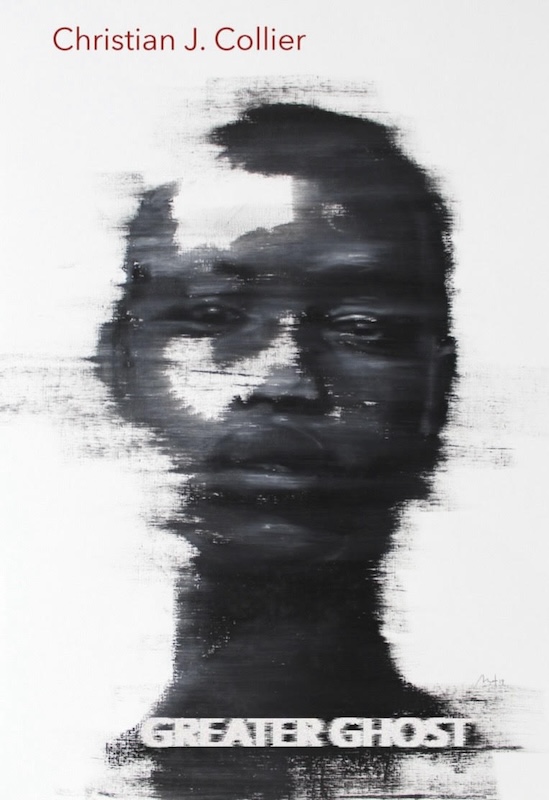
Exclusive Cover Reveal of “Greater Ghost” by Christian Collier

Electric Literature is pleased to reveal the cover of Greater Ghost by Christian Collier which will be published by Four Way Books on September 15, 2024.


Wholly. / The way a famished fire washes over a building’s flesh & marrow,” Christian J. Collier writes of the consuming revelations of death and love. In his debut poetry collection Greater Ghost, this extraordinary Black Southern poet precisely stitches the sutures of grief and gratitude together over our wounds. These pages move between elegies for private hauntings and public ones, the visceral bereavement of a miscarriage alongside the murder of a family member and the specter of police brutality. 

The poetic brilliance of this work manifests not only in its lyrical gestures and soft musicality but in its persistent double consciousness, the terror of mortality encapsulated and amplified by praise for the living. With profound awareness of literary tradition, Collier enters into the American canon and dialogues with Black Southern noir—a poem like “Beloved,” whose title expresses not only a genuine tenderness in its term of endearment but also invokes Morrison, contextualizes this book within the legacy of racial injustice in the U.S., presenting again the prolific losses and disproportionate Black mortality across time, and yet remembers the resilience of love and transformative possibility of self-actualization from inside tragedy. 

Despite all this, Collier never settles into platitudes or pat oversimplifications. The dual meaning of every line honors the complexity of experience and vast terrains of contradictory emotions. This poem concludes with a consummate haunting: “I was divined by you.        Made angel already.” Inside this ending, the collection’s thesis rests, that to love and be loved means to encounter the self as a mystery awaiting divination, an incomplete riddle whose solution and salvation depends upon entering into relationship with the world and its people. At the same time, it implies consecration, to be anointed as holy—and therefore accepted and understood—exactly as you are. None of us need prove we are worthy; our test, and our mandate, is to cherish one another as perpetual works in progress. This is the supreme wisdom encapsulated within “made angel already,” how it indicts the injustice of structural violence and mourns premature death while also proclaiming the here and now as sacred, counting each of us among the always and already complete, the fundamentally miraculous, the perfection of perfect enough. 


Here is the cover, artwork by Mario Henrique.


Author Christian J. Collier: “By the time I’d assembled the first version of what would become my debut full-length collection in early 2020, at least seven people in and around my family had passed, so I felt very strongly that literal ghosts surrounded my work. I thought it would be fitting to acknowledge and celebrate them given how many of the poems are talking to and about the spirits I’m haunted by, and the title Greater Ghost found me. It felt apt for the open and honest ways I believed my art was addressing my apparitions.  

During my breaks on my day job, thinking about what the book would be, I began delving into the things visual artists were posting on Instagram, and that endeavor introduced me to Portuguese painter Mario Henrique. I was immediately bowled over by his portraits due to the explosion of color each contained as well as the faces he’d labored into existence. Each boasted eyes that felt both alive and as if they were peering back at me. However, when I saw Fragmenta no. 5, I thought it perfectly nailed the essence of my collection. The face in the portrait appears ghostlike—a bit blurry with erased and missing parts. Its eyes are black, as if they’ve witnessed too much and are now cursed. The speaker or speakers in my book are wounded and not all the way present due to what has been lost and taken away through life as well as death. Their world, much like the world of the portrait, fluctuates between the dark and the light and both.

Click to enlarge

I took a screenshot of it, knowing somehow it would be the cover of Greater Ghost and the image sat in my phone for a few years until I was asked to submit cover ideas for consideration. Over that span of time as the manuscript changed, I revisited it every few months—imagining how it would, hopefully, introduce readers to the world I built. Thankfully, Ryan Murphy at Four Way Books loved it, too, and Mario agreed to allow us to use it. 

I’ve been stunningly blessed with the covers for my books so far—my chapbook with Bull City Press, The Gleaming of the Blade, designed by Ross White and featuring art by Nate Austin, features a portrait of a Black man’s back as he faces a wall of newspaper clippings that document racial conflicts old and contemporary. In Greater Ghost, the portrait faces the reader. Both works dare the audience to remain engaged and resist the urge to flinch or turn away. The poems between both covers do the same. I can’t express how honored I am to have Mario’s art be the face of Greater Ghost.”

Will the Real Mary Please Stand Up?

Androgynous Mary

Self Portrait (in robe with masks attached), Claude Cahun, 1928
I’m seeing it now, my ghost, and telling it  
to behave as if it were me, which
leaves me to wonder what it will do.

I walk, it walks; I sit, it sits. The chair
is covered in faux fur, the pattern the skin
of a zebra. So far, it’s as I thought:
There are at least two sides to everything.

I also see the ghosts of those who said
I couldn’t be whoever I was. I twist those
into pretzels and put them in my mouth.

Mary of the Stairs

Presentation of the Virgin in the Temple, Titian, ca. 1534–1538
There are no staircases per se, 
although there are elevations: high,
higher, and higher yet.
Below, Saint Thérèse is napping
shoeless under an altar.
I’m searching for the overhead
rapture—it holds such promise.
Its role is to transport us out of this
life and into inventive distractions
from the acetone odor of sanctity
rising from the blood flowing
from a stone—a leftover sign
of the times when people believed
miracles actually happened.
I tell myself, “You have to be a saint
to keep waking and sleeping
in this world.” Ironica. Uronica.
It wasn’t me on the grilled cheese
sandwich. It might be Mary
Pickford née Smith. Or the equally
long ago Clara Bow, the It Girl
who starred in It. We all look
alike standing on the steps,
our diminutive dresses, our faces
facing the world that says smile
for the camera. Once captured,
we’re handed back a facsimile
we can use to compare ourselves to
the Mary we’re told we should be.

Mary Jane

“Mary Jane’s Last Dance” Official Music Video, Tom Petty and the Heartbreakers, 1993
Each thought a puff of air until,  
finally, there it was, the atmosphere
as dense as a fogged-in city.

Still, I saw the going-up stairs
on the face of the brick building
opposite. The sun above

the sky line. A bird making a beeline
across a balcony. What I didn’t see
standing next to me was my future.

After all that was left
was an ember at the end
of a roach clip, the blond-haired boy

from some Scandinavia
of the mind began to stroke my arm
as if I were a cat. I moved my arm

but he didn’t stop. Some people think
they can act on every odd idea
that comes into their heads.

I got up, closed the blinds, then,
sat back down again.
He went back to petting me like a cat.

I looked at my shoes.
I heard the future say, “Someday,
you’re going to have to learn to speak.”

10 Novels About Resisting Productivity Culture

The rise in productivity culture over the past ten years has resulted in success being defined by individual efficiency and labor. We’ve turned people into robots, optimized to the very last second. We’re more than our jobs and our value shouldn’t be tied to our contribution to the economy or the hours we’ve spent at our desks. 

Of course, with the peak of productivity culture comes the inevitable backlash. We’re all exhausted. How can we not be when the cogs of capitalism are determined to consume our life force and transform it into dollar bills? 

If hustle culture dominated our society pre-covid, post-covid we’re setting boundaries and practicing self-care. The language of productivity culture replaced by therapy-speak, both the product of toxic labor conditions and a woefully inadequate social safety net. That drugstore sheet-mask is a just band-aid for a mental health crisis and a loneliness epidemic. We don’t need to thrive in the workplace, we need to burn the system down to the ground. 

These ten writers use workplace fiction as a lens to examine late-stage capitalism, the gig economy, and the dark side of productivity culture.

Jonathan Abernathy You Are Kind by Molly McGhee

Molly McGhee’s debut novel, a surrealist office drama, follows a hopeless, broke man who is offered an unlikely escape by a government loan forgiveness program. Jonathan is tasked with clearing debris from the dreams of corporate workers while they sleep, an opportunity that provides him with the chance to clear his debts and begin a new life. A workplace novel that satirizes corporate culture and reckons with the costs of crushing debt under late-stage capitalism.

Diary of a Void by Emi Yagi

Ms. Shibata escapes sexual harassment at her old job by finding a new position in Tokyo, but quickly discovers that as the only woman at her workplace, a company that manufactures cardboard tubes, she is expected to perform all the menial tasks. She decides to fake a pregnancy to escape, forcing her to keep up an all-absorbing nine-month ruse. Soon, however, the lie becomes all-consuming, and boundaries between the lie and her own life begin to blur.

Severance by Ling Ma

After societal collapse due to the Shen Fever pandemic in 2011, Candace Chen continues to work at her unfulfilling job at a Manhattan-based Bible company named Spectra. As businesses shut down as the pandemic worsens, Candace accepts a lucrative contract as one of the few remaining office-based workers, until she is the only employee left after being abandoned by her superiors. Candace documents New York City’s collapsing infrastructure on a blog named NY Ghost before escaping the city as one of the last survivors.

The Employees by Olga Ravn

This workplace novel by the Danish writer Olga Ravn is structured as a series of witness statements compiled by a workplace committee. On board the interstellar Six Thousand Ship, the crew, composed of both humans and humanoids, complain about their work in staff reports and memos. When the ship begins to take on strange objects from the planet New Discovery, the crew becomes deeply attached to them and mutiny and tension begins to boil.

Life of the Mind by Christine Smallwood

An adjunct professor in New York City, Dorothy has poured years of effort into her academic career only to be trapped in a series of low-wage contracts without hope of finding a permanent position. As she watches her successful friends and peers pursue high-powered careers and start families, Dorothy feels stuck, unable to imagine an alternative future for herself. Darkly humorous and incisive, Life of the Mind is a brilliant satire of campus culture, a biting critique of adjunct labor in academia, and an unforgettable portrait of an ambitious woman on the edge.

Lightning Rods by Helen DeWitt

Joe is a struggling vacuum cleaner salesman who proposes an unorthodox idea to stop sexual harassment in the workplace and increase productivity. His solution is “lightning rods,” anonymous women who provide sexual release at the office for high-performing male employees, an idea that proves to be a runaway success. This humorous, satiric second novel by the author of The Last Samurai offers a damning critique of the corporate world and workplace sexual harassment.

Convenience Store Woman by Sayaka Murata

36-year-old Tokyo resident Keiko Furukura has never felt like she fits in, but when she starts working at the Hiiromachi branch of Smile Mart at the age of 18, she finds a sense of peace and purpose. By copying the social interactions and mannerisms of her coworkers, Keiko attempts to play the part of a “normal person,” until people around her begin to pressure her to get married and start a professional career. Convenience Store Woman is an incisive look at work culture and the pressure to conform in contemporary Japan.

The New Me by Halle Butler

The New Me is a darkly funny novel about a young woman named Millie who works a depressing temp job while sinking into greater despair at the idea the job might become permanent. When the possibility of a full-time job arises, Millie dreams of a different future but realizes how empty that vision has become. A fierce critique of consumerism, productivity culture and the stagnating job market facing young workers.

The Circle by Dave Eggers

A woman in her early twenties named Mae Holland gets hired at a huge conglomerate social media company known as the Circle, run by “Three Wise Men” who recruit “hundreds of gifted young minds” every week. Mae is incredibly grateful for her new job and gradually becomes completely integrated into the sinister and far-reaching activities of the company. A satire of the superficiality of the online culture Eggers terms “technoconsumerism,” The Circle is a searingly relevant and unforgettable social commentary.

Help Wanted by Adelle Waldman

Help Wanted focuses on a group of underpaid workers at the big-box store Town Square who plan to get rid of their bad boss by getting her promoted to a position so high she won’t be able to bother them. The novel is a comedic critique of contemporary labor and a corporate culture that prioritizes efficiency above all else, even when it’s derived from underpaying workers. Adelle Waldman’s second novel traces the desperate striving for stability by minimum wage workers in America.

15 Indie Press Books to Read This Spring

As we move out of winter and into spring, the days are becoming longer, but a chill still lingers in the air. In this reading list, monsters are made real, queer love blooms in spite of oppression, and friendships are both nourished and torn apart. Spanning Cameroon to Scotland, these indie authors reinvent the coming of age story, imbue their writing with magic, and turn the mundane into the extraordinary. 

Now more than ever it is vital to support indie publishers. Here are 15 to start with:

Tin House: How We Named the Stars by Andrés N. Ordorica

Daniel is a first generation Chicano college student on scholarship at a university on the opposite coast as his family. In the dorms, he is paired with white upper-middle-class Sam. The two have an immediate chemistry, but as closeted young men, they dance around their friendship, each not knowing when—or if—it will become something more. Yet, Daniel and Sam form a strong bond, despite their different backgrounds. As summer approaches, Daniel makes plans to visit family in Mexico, and Sam to his own family, but a rift forms between them. It is in their separation that Daniel begins to understand the unconditional love his family has for him, and while in Mexico he learns more about his gay namesake uncle, who died young. This is a story of first love broken apart by tragedy, written as a love letter. It is also the story of a family breaking through trauma to heal old wounds. A wondrous, emotionally charged novel that centers both love and empathy.

Thirty West: Tender Hoof by Nicole Rivas

A woman and her toddler witness a murder at a grocery store, a woman chills herself in an ice bath so her body feels cold enough to play dead for a fantasy her lover has, and yet another woman acts on her suicidal ideation which her partner does not intervene in. In the world of Tender Hoof, leather sofas are the actual bovines wearing their hides as upholstery, and Aunt Lupita’s breast cancer illuminates the past lives of punk rockers and engenders visionary dreams. Across 18 short stories—each one a study of emotional violence paired with tenderness—Rivas cuts into some of our deepest fears, like abandonment from family, terminal illness, and the uncertainly of the future. With vibrant descriptions and relatable characterizations, Tender Hoof enters the conversation about contemporary literary fiction with memorable short fictions and positions Rivas as a writer to watch.

Regal House Publishing: That Pinson Girl by Gerry Wilson

Four years into World War I, Leona Pinson is unmarried and pregnant on a farm in Mississippi, and the father of her child has just enlisted. She and the man have no formal arrangement, but Leona is sure he will return to her. As the war rages on, Leona must make her way as a young single mother, judged by the people in her small town and shamed even by her mother and brother. Even worse, there is no word from the man who left her pregnant. There is one person on the farm, Luther, the son of a former enslaved person who has a deeply complicated history with Leona’s family, who cares for her in the way of a parent. Yet, Luther, a widower, has his own problems with his own child, and Leona and her family are making things worse. When Leona’s lover returns to town with a new wife in tow, she questions everything she thought she knew—and a revelation from Luther unmoors her even further. A beautiful exploration of family and the power of secrets.

Wandering Aengus Press: Studio of the Voice by Marcia Aldrich

Marcia Aldrich writes with such lucid detail it is easy for readers to imagine oneself in her position. These wide-ranging essays always track back to linked themes of how we interact with and understand different generations. Aldrich addresses family and aging, looks to films of other eras for context, and contemplates both what it means to be a mother and to have one. Studio of the Voice is the rare collection where personal introspection and critical inquiry meet without the writing feeling wrought or academic. Deeply affecting, and wonderfully effective.

Montag Press: Crocodile Tears Didn’t Cause the Flood by Bradley Sides

A matriarchy of vampires run an allium farm while a teenager chafes at the family business, an oprhan runs a roadside attraction featuring his best friend who happens to be a pond creature, and an archeologist unearth an ancient—and perhaps otherworldly—prehistoric bird in the yard. In this collection, monsters are real and when the stork delivers babies, they are disembodied robot components. Yet, rather than being fantastical, Crocodile Tears Didn’t Cause The Flood reads more like hopes and fears made true. Across the stories, there is a longing for connection and family: lament for family lost, hope for reconciliation. Set in the American South, both the gothic and magical realism are at play, but what Sides is at his best when he is writing about the deep wounds of children, intergenerational relationships, and the intersection of communities. Each story offers its own strange beauty.

Soft Skull Press: I Love You So Much Its Killing Us Both by Mariah Stovall

Young Black millennial Khaki Oliver has not spoken to her white former best friend Fiona Davies in ten years: after Khaki left suburban New York to attend college in Los Angeles, their friendship cleaved. While living in suburban LA, Khaki receives an unexpected invitation to a baby shower, celebrating Fiona’s adoption of a Black child, and Khaki spirals into memory. Written with passion and biting observation, the novel explores the intense—and intensely unhealthy—friendship between the women when they were teens. Both struggled with disordered eating, and both kept each other ensnared in secrets. Their relationship feels like how a drowning person will drag their rescuer down, though it is not always clear who is playing the rescuer and who is drowning. While trying to decide if she will attend the shower, Khaki reflects on how deeply the friendship and its loss impacted her.

University of Alabama Press / Fiction Collective 2: Tannery Bay by Steven Dunn and Katie Jean Shinkle

In Tannery Bay, it is always July, and the bay itself is a viscous purple from the waste of the tannery. Yet, the people of Tannery Bay do what people do: create meaningful moments out of their lives. It seems like the loop of summer will be forever, until a spectral figure emerges, in waders, leaving a trail of cockle shells. In an already enchanted town, the woman brings visions and waking dreams, and the residents are spurred to hatch a plan against the town owners, with a local artist at the center. Tannery Bay is a story about a community rallying around art, against injustice, and ultimately understanding their power as a collective. It is also a story that celebrates the force of blood and chosen family. Dunn and Shinkle have achieved the best of co-authorship in terms of a deeply imaginative novel that will delight readers with plot turns. Yet, for all of the inventiveness in the storyline, it is the characters who make this book a page-turner. To read Tannery Bay is to feel alive.

University of Massachusetts Press: The Long Swim by Terese Svoboda

At an annual getaway, a patriarch presides over the family, but cloaked by joking banter is what they really want to say to one another, a marriage is ruined by an affair with a daughter’s friend, a woman is worried that her partner’s two sons—one deeply unstable and the other addicted—will become her legal problem. Across the 44 stories in The Long Swim, Svoboda leans most deeply into the private, unspoken hurts between lovers and family. Though the stories are quite short, each one has a weight to it—and the collection is imbued with a sense of unavoidable doom. For example, readers will not be surprised at the outcome of an escaped circus lion encountering a man and a woman embroiled in an extramarital affair, but that doesn’t mean it’s not satisfying. Svoboda’s world is imaginative, inevitable, and narrated with emotional precision. Equal parts mercurially strange and delightful.

Forest Avenue Press: Chicano Frankenstein by Daniel Olivas

In this retelling of Frankenstein, Faustina Godínez is an ambitious lawyer who begins a romance with a “stitcher,” a derogatory term for people who have been “stitched” together to form bodies that are reanimated and wiped clean of memory. In this version of Mary Wollstonecraft Shelley’s masterpiece, set against a highly charged political backdrop, the intersection of what is possible via scientific breakthroughs collides with capitalism: the re-animated are valued for their work, not their humanity. Faustina’s lover is a highly competent paralegal, as they engage in the mundanity of the everyday, the reanimated man awakens to a broader range of emotion and consciousness, with his past resurfacing. When a doctor crosses an ethical line, Faustina and the man she is becoming partnered with have to reckon with their future together. Richly imagined, Olivas delivers a new classic.

Catapult: These Letters End In Tears by Musih Tedji Xaviere

Bessem lives in Cameroon, a country where being gay is punishable by law and tensions between Christians and Muslims, Anglophone and Francophones, are at a boiling point. As a young university student, she has life-defining relationship with Fatima, until Fatima’s brother, a conservative Muslim, physically assaults them both. Bessem never sees Fatima again, but she’s always thinking about her and looking for closure. 13 years later, Bessem is a university professor. Her best friend is a closeted gay man, and she and Jamal are a support system for one another, and despite the environment of persecution, they have reasons for not leaving their home country. When Bessem sees an old friend of Fatima’s, a fire is ignited in her and she begins a search that will led her to dangerous places. Written as letters that alternate between Fatima and Bessem’s perspectives, this debut by Xaviere is heartbreaking—and gorgeous.

Unnamed Press: But The Girl by Jessica Zhan Mei Yu

When Girl receives a scholarship, she leaves Australia and her tight-knit working-class Malaysian family for a month-long artist residency in Scotland, bookended by stays in London. Intending to take a break from her doctoral dissertation on Sylvia Plath, Girl plans to use the time to work on her postcolonial novel. Under the shadow of the disappearance of a Malaysian Airlines plane, Girl navigates both the subtle and outright racism in academia and the art world, while outwardly performing the role of the grateful immigrant. At the residency, Girl cautiously interacts with her peers, but never quite forms a connection with any of them, despite spending hours sitting for a portrait with one of the artists. Away from her parents and her grandmother, she reflects on the pressure and expectations that come with being a child of working-class immigrants. But The Girl is a force that layers the past and the present to reinvent the coming-of-age novel.

Overcup Press: Wilderness & The American Spirit by Ruby McConnell

From the early periods of American colonialism and up to the present day—including the Covid-19 pandemic—much of Wilderness & The American Spirit focuses on the Applegate Trail as a way to begin to answer the a question: how did we get to where we are now? McConnell traces the route itself, an alternative to the Oregon Trail, filled with spectacular natural beauty and extreme hardship. She chronicles the people traveled it from the past into the modern era, and the environmental destruction caused by the policies of unfettered western expansion. From disease brought by white settlers to indigenous populations, to forests being broken up to build shopping malls, McConnell draws a through line from America’s collective relationship to wild places from everything to the fate of the Donner Party to the CIA’s MKUltra program. Infused with rich details from deep research, Wilderness & The American Spirit is a fascinating read.

Book*hug Press: How You Were Born by Kate Cayley

In How You Were Born, girls play Bloody Mary, an aging professor who has been married six times breaks into the home he is sure is occupied by his double, a holocaust survivor is convinced he has been re-interned when his family moves him to an assisted living facility. Three linked stories tell the story of a gay couple who conceived a daughter via sperm donor, exploring what it means at different points in the journey. These stories are laced with mythology, ghosts, and the magic of childhood imagination, small moments turn into revelations and big events are compressed into concise jewels. Cayley writes with such exactness even the mundane is lush, and the outlandish hyperreal. The collection is threaded together with a deep desire for connection, to love and to be loved. These are narratives that dig deeply into the messy business of living, where characters, despite having to confront their mistakes and accept the cruelty of the world, still find powerful beauty. Masterful.

Autumn House Press: Half-Lives by Lynn Schmeidler

A dead woman becomes pregnant, a vagina is an Airbnb, a woman lives with half of her sibling’s body inside of her, a middle-age woman decides to take advantage of her cultural invisibility to the point that it becomes literal. Schmeidler’s stories have a touch of the gruesome and absurd, but the currents that run through the collection are longing, desire, and outrage. Each story has a different narrator, but there emerges a collective voice for women in different times, points of life, and indeed, material planes. The possibility—and power—in these fantastical situations mirror many of the anxieties of real life: eroding reproductive rights, gendered violence, sexual freedom, and aging. There is also a warning embedded in the narrative about how time slips and bodies change. A wild and original collection.

University of Texas Press: Loose of Earth by Katherine Dorothy Blackburn

K.D. Blackburn’s father is a runner, a former Air Force pilot, and civilian captain for American Airlines. Her mother is a veterinarian. It is somewhat inexplicable, then, in a family headed by parents whose careers hinge so deeply on science, that when the father is diagnosed with colon cancer in 1997, they lean harder on their evangelical faith than medical treatment. In one harrowing moment, Blackburn’s paternal grandfather implores his son to seek care other than prayer and supplements; in another, a pre-teen Blackburn herself—the eldest of five children—believes it is her own lack of devotion that is getting in the way of God healing her father. Underpinning the narrative is Blackburn’s father’s military service, and the prevalence of the use of per- and polyfluoroalkyl substances or PFAS, also known today as “forever chemicals.” Loose Earth is a complicated and beautiful exploration of caring for family in the best ways we know how.

Jessica Zhan Mei Yu on Loving Literature That Hates You

Jessica Zhan Mei Yu’s smartly interior debut novel But the Girl appears to follow the path of a bildungsroman. Our protagonist, simply named Girl, is on a flight out of Australia for an artist’s residency in the lush Scottish countryside.

She is leaving behind her tight-knit Malaysian family and her PhD dissertation on Sylvia Plath, in hopes that she will produce a postcolonial novel (a term she added “to make it sound more legitimate”) during her time of intense self-discovery. But Girl’s coming-of-age story is complicated by her awareness of the harmful ways that people of color are misrepresented or not represented at all in Plath’s work, her inability to escape her family’s overbearing presence, even in their physical absence, and the frenemy relationship she develops with a dazzling, overconfident female painter at the residency.

Yu and I talked over Zoom about why a bildungsroman fails to capture the coming-of-age experiences in non-Western societies, being an Asian token, and how the missing Malaysian Airlines plane looms over the writing of this novel.


Lim May Zhee: Since Sylvia Plath is a character that’s central to the novel, I wanted to start with her and what she meant for the different people in the novel—for Girl, our Asian protagonist who is a writer and Plath scholar, and for Clementine, who is a white female artist—as well as what she meant for you.

Jessica Zhan Mei Yu: I like that you call her a character because she exists in the novel as a present, but not quite present, character. I think Sylvia Plath is just one of those huge figures that you can’t escape. When I was writing a novel, I started reading some Plath scholarship. A lot of those books are kind of prefaced with the idea that it’s really hard to write about her because there are all these huge debates and so much has already been written about her. There are misconceptions or conceptions of her that are loaded with all these different projections. And I thought that was just a really rich, fertile ground to talk about.

To Clementine, Plath represents this figure of rebellion in the sense that she wasn’t conforming to gender expectations in her era. She’s this stereotypical artist type. She had mental illness that was idealized and romanticized by a lot of people. She’s a really beautiful writer and she’s inspiring to Clementine, who feels that as a woman she doesn’t conform to the gender stereotypes of her era either. 

With Girl, it’s this weird thing where she loves literature that hates her. Girl goes to university and she reads all these canonical texts—I mean, whether or not Plath was canonical is up for debate—but Girl is a writer and she’s reading all these texts in which she finds herself misrepresented or not represented at all. So she wrestles with that misrepresentation of herself or people that look like her in the class work. Plath was a really complicated figure for Girl because on some level, she sees herself as that stereotypical artist who is unconventional and breaking form and wants nothing more than to make beautiful art. But Plath also writes about people of color in ways that are inhumane, and Girl is hurt by that.

LMZ: I think we can say Plath is canonical. I feel like denying her that is a bit sexist. She’s so widely read and interpreted. 

JZMY: Yeah, it would be kind of gross not to.

LMZ: What would Sylvia Plath have meant to Girl’s parents?

JZMY: My novel isn’t autobiographical, but it is autofictional. I talked to my mom about this recently. She was like, “Well, I didn’t know who Sylvia Plath was when I read your novel. So I had to do some Googling and I kind of understand it now.” And then she read a review of my book in a journal and she said,”Now I really understood it because the reviewer really explained it to me.” Then she was ready to go to my book launch. So yeah, there are parts of the book that are very much based on my parents. 

She loves literature that hates her.

My parents are very open-minded and intelligent people but books and writing are not really their thing. They taught me to read, and my dad would read Enid Blyton to me before bedtime every night. But I was kind of exploring what was considered good literature by myself through the school system and libraries. So yeah, I think Sylvia Plath would have meant nothing to Girl’s parents because immigrant parents can be kind of really hands on, but hands off. They’ll say, “Don’t drink cold water in the morning otherwise you’ll get sick” or something, but they’re not necessarily in with the nitty gritty of your everyday life. They wouldn’t necessarily know what’s going on in your dissertation. They’ll make sure you have food to eat but they’re not sitting there trying to pick your brains every single night over the dinner table. I kind of enjoy that. The intellectual room to run by myself, I guess.

LMZ: I love that your mom didn’t know who Sylvia Plath was and then found out through your novel. That’s amazing to me. Is that true of Girl too? Did she enjoy having that intellectual room away from her immigrant parents, or did she want more from them?

JZMY: Girl is a lot younger than I am now. I’m 30 and Girl is in her 20s. I think when you’re younger, you want to feel understood and Girl doesn’t really have that. She doesn’t really understand the freedom that gives you. She’s a young woman in her early 20s trying to just feel seen by something or someone, to feel understood, and she’s not really finding it. She’s not totally finding it in her immigrant family so maybe she would, I don’t know. It’s very possible that she would have a younger person’s view on that stuff compared to me.

LMZ: I definitely feel that tension in the novel. There’s a part where Girl says, “I had grown up amongst people who had believed that talk was the cheap currency of the Ang Moh. It was the overprinted paper money of a self-satisfied alien race. As for expressing the self, which seemed to be the great project of the Western world, this was simply embarrassing given the sacred otherness of another person’s interiority. It didn’t make any sense to put one’s interior self on the market via an open house inspection.” I relate to this passage a lot because it’s how I experience the intergenerational gap between me and my much more reserved Asian parents. 

JZMY: Girl’s interior monologue is not really shared with anyone else in the book. There’s a need for her to have a proxy of thoughts in her own emotional life. Girl is inside the contradiction of those two kinds of ways of being, which I’ve written there as really binary, and maybe that’s too extreme, but I do think that. Western culture is very much about like, we want to know more about you, we want you to say something. Broadly speaking, I feel like the kind of culture I was brought up in says that’s not really important. I enjoyed that privacy about my life when I was growing up. It was more about my material, physical needs being met. It always feels a little strange to me because in the culture I was raised in, my parents would be like, “That’s talking about yourself too much. That’s arrogant, that’s full of yourself, that’s a bit confident.” (I’m using the word “confident” in a negative tone.) They were suspicious of communication. If you’re charming, that must mean something’s wrong with you inherently. That’s very Chinese. Is that how you feel?

LMZ: Definitely. Vanessa Chan, another Malaysian Chinese author, likes to say that our grandparents love us by not speaking. That made a lot of sense to me.

JZMY: [laughs] I like that I can go to my parents’ house and say almost nothing. 

LMZ: This actually leads me to another thread in the novel, which is the different ways that love, and in particular, familial love is portrayed. The way that Girl’s family shows her love might look very different from what the other artists at her residency imagine a loving relationship would look like.

Maturation for me and for Girl is realizing that there’s never any exit.

JZMY: No one in the residency really talks about family that much. It’s not that it’s not important to them, it’s just not prevalent in their life in the same way as it is to Girl. Clementine talks about her father in this very specific, posh, Western kind of way. There’s a cliche that ethnic, minority cultures have this real sense of family, of that being really important, but it’s more that it’s not possible to ever fully escape your family. My brother has his own family but he lives right next door to my parents on the same lot of land. They built the houses specifically thinking about how they’re all going to live communally. It’s a very different view of what family and growing up looks like. That’s why I was interested in the idea of a bildungsroman and how it’s like, you leave your family, you leave your childhood, maturation is like an exit, but maturation for me and for Girl is realizing that there’s never any exit. There’s something beautiful and kind of bittersweet about that at the same time. 

LMZ: I like that. The bildungsroman is such an individualistic way of thinking about the self and that is not at all how people who are not from Western cultures experience it. 

JZMY: Yeah, it’s actually a very Germanic, Euro-centric, Anglo-centric genre. It was interesting to play with that and use that in ways that made sense to me.

LMZ: I wanted to ask you too about the novel-within-the novel that’s written by Girl called Pillar of Salt. Is that Girl’s more authentic voice? Does it feel like something she’s finally writing for herself, or because she’s at this residency and has to show a group of people her work?

JZMY: It made sense to me to show Girl’s actual writing, which is about memory and looking back and about how Girl is like the repository for her family’s memories and paths. She is always looking back because of that. Her novel is meant to hold all the things that she’s collected inside of herself, all the secrets and family histories. The novel matters a lot to Girl. It’s the truest expression of who she is in some weird way, more so than even the kind of like intense internal monologue or the interactions she has with the other artists; this novel is actually who she feels like she is. So when it’s not received in the way that she needs it to be, she just feels really unseen again. It’s this really horrible thing for her.

LMZ: Yes, in the scene, everyone responds to Girl’s work by praising the fact that it’s a diverse story and saying that it’s so important right now, instead of asking her about her craft or process, which they did with the other white artists, who are allowed to just embody their work.

JZMY: When you write a book and it’s going to be published, it’s going to become a commodity. But Girl isn’t at that point, her novel is at quite a nascent stage. So to have it commodified in a racialized way so quickly, it’s just really depressing. But I think a lot of writers who have been through a lot of workshops can relate to that, especially writers of color. It’s a really common response. Maybe not as extreme as that, but it definitely happens all the time when you’re a non-white writer. All that matters about your work or your identity as a writer is your race. The commodification of that. And it’s just hurtful. I don’t know how else to put it. It happens more in these kinds of progressive spaces than you’d expect. It crops up in ways that are subtle and not so subtle.

LMZ: I feel like Clementine is the perfect encapsulation of that sentiment. She’s a white woman who means well but is oblivious to the consequence of her actions. 

JZMY: There were times when I was reading the novel and felt like I was over this Girl protagonist. She’s all like, “Aw, shucks, me, really?” That kind of naivete was really wearing on me. And then Clementine would come onto the page and be really funny and witty and crazy, and kind of mean. She was a bad person but she was really invigorating to me. It was enjoyable to write and I hope it was enjoyable to read as well. 

When you’re a good girl, you’re always kind of thinking a little bit about what it would be like to be a bad girl, right?

I was with some friends last night who were also Malaysian and one of them was explaining to me how when you grow up in a strict Malaysian Chinese family, things are always your fault. Even an accident is kind of your fault because you should have been more cautious. I need to like, self-correct, somehow. It does make me a pretty competent person in some ways, because I’m aware of myself and my weaknesses and flaws. It can also be a little over the top. What is most agonizing about Clementine is she doesn’t ever realize how much of it is her fault, and she has the mysterious ability to just keep going. She’s not really aware of herself in that way, not consumed by that kind of self-loathing. She’s not as anxious and stressed as Girl is, which is probably a good thing. But she also doesn’t really see other people sometimes. I mean, Girl doesn’t really see Clementine either. They kind of objectify each other. It’s the part of their relationship that’s very dysfunctional.

LMZ: I want to hear more about this, about your two main characters not really seeing each other.

JZMY: Clementine sees Girl as this good minority girl, who is boring and not an interesting, artistic person who breaks the rules. But she doesn’t really realize that Girl is raised this way because her parents told her you’ve got to be savvier and better and smarter and stronger than other people to keep yourself safe. And Clementine hasn’t had that. But then there is this beautiful confidence about her. Girl sees Clementine as, like, the bad girl that she wishes she could be. When you’re a good girl, you’re always kind of thinking a little bit about what it would be like to be a bad girl, right? And Clementine represents that for her. They’re both projecting their fantasies of pathways to womanhood onto each other, and they don’t really see each other as people. That’s where the relationship goes awry.

LMZ: In the novel, Girl is constantly tokenized. She’s always asked to be in photographs for her school and then in photographs for her residency because she’s the only Asian person in the group. I like how you flip this act of tokenization, or rather you mirror that act with Clementine painting a portrait of Girl over a portrait of Sylvia Plath.

People looked at her face and all they could see was the plane.

JZMY: Girl is aware of her marginalization and the way that she’s essentially objectified, both sexually but also as an object to people. And she’s hurt by that, rightly so. Something that she starts to gather, as she gets older and as she matures in the book, is that she can objectify others, too. When people have done the wrong thing to you, you can still be a bad person yourself in many ways. Girl is realizing that she objectifies Plath and Clementine. While there’s still a power imbalance there, it’s still a way of being in the world that isn’t loving or particularly ethical. And Girl wants to be a good person. That’s really, really important to her. Realizing that she’s been a bad person too, maybe not as bad as Clementine, is crushing but freeing. Like, okay, I’m just a bad person like everyone else. Because Girl has some kind of power. She’s powerless in so many ways but she does have agency; she just doesn’t always exercise that in the best ways.

LMZ: My final question is maybe a bit of a downer. The missing Malaysian Airlines plane is mentioned at the start of the novel, and it hangs over the story, coming back again at the end when Girl is taking a flight home. We’re actually right on the tenth year anniversary of the flight’s disappearance. What was the significance of this event for you, for the writing of the novel, and for Girl?

JZMY: Well, thinking about The Bell Jar as a loose framework for my novel, Plath starts off by saying “it’s the summer the Rosenbergs were electrocuted.” My book starts with the spring after MAS just went missing. I remember that sense of loss that was in the air. It has nothing to do with Girl in some ways, but in other ways she feels that sense of absence or loss inside of her. It’s a metaphor which I feel kind of weird about. Should you make a metaphor of someone else’s world event that really affected their life? Maybe that’s part of what Girl does right or wrong. 

I remember my cousin, who was studying in Australia at the time when all that happened. When she told people she was from Malaysia, they would ask her what happened to the plane. People looked at her face and all they could see was the plane. They somehow believe that she had some special insight into the plane. I just wanted to put that into the novel somehow. I wanted to capture that feeling of like, it’s a horrible world event that’s quite racialized.

It wasn’t very long after that I took a MAS flight on a similar route and there was no one on the flight at the time. I was just lying down because there were so many empty seats. Everyone was just so frightened. It was kind of strange. I actually met someone recently. Her partner’s dad was on the flight. It was crazy to hear about that. Like, how does her partner deal with that? And she was like, oh, you know, it’s a lot of questions. That’s the only way to deal with it. There’s no closure, essentially. They have a death certificate, but that’s all they have.

9 Books About Multiverses

In April of 1956, as a PhD student in the physics department at Princeton, Hugh Everett III finished writing Wave Mechanics Without Probability. The paper received little attention at the time (due perhaps to its extremely boring title); later, however, it would gain acclaim as the foundational text for the Many-Worlds Interpretation of quantum mechanics. The Many-Worlds interpretation was an attempt to resolve the strangeness that lives at the heart of quantum mechanics—namely the fact that it requires particles to exist in contradictory states at the same time. Schrödinger’s cat, the archetypal example, is both dead and alive simultaneously. But Everett’s formulation offered an alternative interpretation: the cat is dead in one universe, alive in another. The mathematical equations do not imply simultaneous co-existence in one universe, they imply co-existent parallel universes.

I wrote a version of the above for the first time nearly fifteen years ago, as the opening to my college thesis. I was living something close to the life I’d always wanted—a career path that made people say wow you must be so smart, a relationship that helped me convince myself I was lovable—and I was miserable. I could barely understand my own research; I felt a lingering discontent in my relationship that I couldn’t explain. Perhaps it’s no surprise that the idea of infinitely proliferating alternate universes captivated me, but it took writing a book about it for me to see the connection clearly.

My novel, In Universes, is the story of a failing physicist who becomes enamored with the idea of the multiverse—a fixation that ultimately sends the narrator careening across alternate worlds. It’s a story of the disconnect between what we’re taught to want and what we truly desire. A story about queerness, guilt, inherited trauma, and, ultimately, the joy of belonging.

There is something fundamentally queer, to me, about the multiverse. How many of us grow up living one life while dreaming of another? Fearing it, wanting it, living half in the real world and half in a parallel one. But of course the multiverse offers itself up as a metaphor in so many ways, as evidenced by the books below.

The Space Between Worlds by Micaiah Johnson

A tech billionaire has invented a machine that lets people travel to alternate worlds. But there’s a catch—if you try to visit a parallel world where you’re still alive, you die. Enter Cara: a self-proclaimed “garbage git” who lives in the dystopic conditions outside the walls of the wealthy Wiley City and whose parallel selves are nearly all dead. The book offers a fast-paced, whip smart plot, sharp social commentary, and a fascinating exploration of how we are made and unmade by our circumstances: “Even if you think you know yourself in your safe glass castle, you don’t know yourself in the dirt. Even if you hustle and make it in the rough, you have no idea if you would thrive or die in the light of real riches, if your cleverness would outlive your desperation.”

Those Beyond the Wall by Micaiah Johnson

Those Beyond the Wall, Johnson’s newly released second novel, is set in the same world though it’s an entirely distinct story. While the multiverse is slightly less of a focus, it still plays a central role in the plot, which follows a character called Scales as she tries to discover why people in her community are dying in a strange and brutal way. It’s a novel about the power of story—those we tell ourselves, those we tell others, and those others tell about us. It is a book with rage at its core. In an introductory note, Johnson says, “Anger with a target is Rage, and Rage is sister to Hope alone. We rage because we do believe things can be better, by fire if necessary.” This is a book that insists on the possibility of better futures while refusing to look away from the brutality that is sometimes required to get there. A brilliant depiction of a morally complex character, with an ending I’m still thinking about months later. 

Anxiety is the Dizziness of Freedom by Ted Chiang

Time and again, I’m blown away by how Ted Chiang manages to take a science lesson and transform it into a brilliant story, and this novella is no exception. Set in a world where there are devices that allow you to communicate with your parallel selves, the story is both a remarkably clear explanation of the many worlds interpretation of quantum mechanics and an exploration of what it might mean to try to understand ourselves as multiple rather than singular.

Present Tense Machine by Gunnhild Øyehaug, translated by Kari Dickson

This slender novel, translated from Norwegian, is delightfully weird. It follows the lives of Anna and her daughter Laura, who were split into parallel universes when Anna—a writer and translator—misread a word in a poem. Trädgård, Swedish for garden, becomes the nonsense word tärdgård. “Misreadings like this,” a mysterious narrator informs us, “often result in new words that have never existed before, brand-new creations that have no direct meaning, that point toward a nothingness, to put it another way, toward something incomprehensible, toward a potential word that might have existed if only someone had thought of it.” And in this specific instance what might have existed opens a doorway to a parallel world—a doorway through which three-year-old Laura disappears. This is a novel that offers more questions than answers, closer to poetry than fiction in its movements. A very brief chapter entitled “The Horses” begins: “This is the twenty-third chapter. There’s practically no one here, only some horses standing sleeping.” It’s a book for anyone who has had the sense that something inexplicable is missing from their life.

Many Worlds: Or, the Simulacra edited by Cadwell Turnbull and Josh Eure

According to the opening of this anthology, the stories within it “have been gathered from across the Simulacra and, taken together, they illustrate a burgeoning, if inchoate, awareness of the Simulacrum, emerging without coordination or communication across universes, across writers, across minds.” Each chapter offers a different view of said simulacra—a collection of worlds where nothing is quite what it seems and where people, places, and events shift in ways that only the most observant notice.

Meet Me in Another Life by Catriona Silvey

What if two people could be everything to one another: friend, lover, sibling, caregiver, parent, and on and on? We see the main characters of Silvey’s novel, Thora and Santi, in all of these permutations and more. Perhaps most impressive is the way the characters feel both distinct and consistent across universes: recognizably themselves but also authentically altered by their changing circumstances. But the novel is more than a character study. At its heart is a mystery whose answer beautifully brings together the novel’s disparate worlds.

Mr. Fox by Helen Oyeyemi

In a way, any piece of fiction is a kind of collapsed multiverse. An author, imagining a story, dreams of different possibilities. Each draft, a slightly different world. In Oyeyemi’s brilliant and bewildering novel, we’re introduced to a writer named St. John Fox, his wife, Daphne, and the muse he’s dreamt up for himself, Mary Foxe. Mary, refusing the constraints of St. John’s imagination, decides to teach him a lesson about killing off his female characters. Thus commences a series of dueling stories, often (always?) inspired by Bluebeard-esque fairytales, within which Mary and John cast each other as different characters across a wild array of fictional worlds.

And Then There Were (N-One) by Sarah Pinsker

If you received an invitation to a convention where you could meet all your alternate selves, would you attend? In this novella, Sarah Pinsker the writer tells the story of Sarah Pinsker the character saying yes to such an invitation and heading to an island off the coast of Novia Scotia for Sarah-con. There’s a real playfulness to the story, as it delves into the nitty gritty of what it means to try to differentiate oneself in a room filled with people who share your name and face. But when one of the Sarahs shows up dead things take an Agatha Christie turn, as our narrator-Sarah—an insurance investigator—tries to figure out which of the other Sarahs might be capable of murder.

This Is How You Lose the Time War by Amal El-Mohtar and Max Gladstone

In this epistolary novel, Red and Blue are agents for opposing factions in a war that takes place across branches of the multiverse. While there’s an intricate and satisfying plot, the novel’s primary delight for me is the relationship between the two agents, who pursue one another across universes, leaving notes in wildly elaborate code: grown into the circles of a tree’s rings, transmitted by the stings of bees. It’s an effusive, effervescent novel, and one that I turn towards when I need to be reminded that there are always more hopeful endings than we might first imagine.

(And if you don’t want to take it from me, take it from this extremely viral tweet.)