My Son’s Love Life Is None of My Business, Except It Is

“I Heard My Son Kissing a Girl” by Yukiko Tominaga

On Oscar night, I heard my son kissing a girl. He was fifteen years old and this was the first time he had brought a girl to our place. He told me at the dinner table prior to the kissing incident that they were watching Rango in his room. Did the cartoon involve a lot of kissing? Maybe, but I couldn’t remember, so I tried to listen to them to figure out whether the sound was from the screen or from them. Each time I heard the pecking sound, it became more real and I put together the thread of their conversation. Are you okay? said my son. Yes, yes. I’m fine, said the girl.

Between witnessing the first time a Korean movie won best picture and a pit-bull-size raccoon trespassing on our front porch, I texted my son, who was two feet away, just on the other side of the wall. Are you guys ok? There is a giant raccoon outside. Do you guys want to see it? No answer. The pecking sound (now I’m convinced it was) kept leaking through his wall. Of course, they were more than okay, but I didn’t know what else to say or not to say. I would have been more prepared if he had told me she was his girlfriend. I could have told him our house rule, Someone has to be home when you bring a girl, if you do things you don’t want me to see or hear, and, and . . . what?

We lived in San Francisco in a hundred-year-old, two-story house with housemates. The layout of the house allowed our housemates and us to have our privacy. We shared a garage, kitchen, backyard, and laundry room. The sunroom in the back and the entire second floor, two bedrooms and a shower and toilet, were my housemates’ space, and a living room and one huge bedroom with a bath and toilet on the first floor were our space. I divided the huge bedroom into two bedrooms when my son was six. We used two bookcases that my first housemates had left to create two-thirds of the boundary, and we covered the space above them with Ikea curtains. We didn’t build a wall between us.

It’s a miracle that we could still afford to rent a place in this city. Levi had owned his house on this same street, but he died during the rise of the housing market crisis and the house went into foreclosure. It was a miracle that we found a rental on the same street and that my son grew up with the same neighbors and friends. Our landlord, a retired firefighter, a man of few words, never raised our rent until four years ago, and every time he did, he said, “I’m so sorry that I have to do this to you.” There were times when I couldn’t find new housemates, but he didn’t charge me the full house rent. He said, “Just pay what you’ve always paid. You are a single mother. Focus on raising your son.”

Families we collected over the years became Alex’s fathers, mothers, aunts, and uncles, and my best friends. They watched Alex while I went to school at night. They invited us over for dinners, camping trips, and into their phone plans. It’s a miracle to be able to feel the entire city helping to bring up one child. My son’s friends didn’t tease him about his living situation. On the contrary, one boy begged his mom to find a housemate and get rid of his brother. This was back when they were still in third grade. The boy who wanted to give away his brother still came to have a sleepover, and I often found him in our living room on the weekends, now six foot two, so he couldn’t fit on our couch to sleep. He slept on a giant beanbag, half of his body hanging on the floor and my son on the couch sleeping, curled in a ball. Whether your parents owned a Tesla, had a vacation house in Tahoe, or lived with housemates, kids didn’t care. They saw each other as they were. The things I saw on the TV show—the social hierarchy, rich kids looking down on poor kids, or poor kids feeling ashamed of their parents—they weren’t our reality. So our nonexistent wall had never been a problem to us . . . until this Oscar night.

The girl’s mother came to pick her up at a quarter after ten.

The mother asked her, “Did you have fun?”

The girl said, “Yes.”

The mother and daughter left with big smiles.

My son came to the living room looking at his phone. He’d just read my text. He smiled and shook his head, “Yes, we’re okay.”

“I could hear you guys and I didn’t know what to do. Is she your girlfriend?”

“Yes.”

“I see.”

I couldn’t recall what kind of conversation led us to sit down on the couch across from each other. All I remember was asking him, “Are you guys going to have sex? Do you have a condom?”

He answered, “No, I’m not going to. I’m only fifteen. I don’t want to have a baby. We’ve had sex education, not just once but multiple times. If I have a concern, we have a school counselor for that.”

I told him that it’s better to be safe than sorry so if he needed a condom, I’d buy it. If he didn’t want me to, he could always ask Sam’s dad, Walter’s dad, or any of his fathers. I wanted him to know he could speak to me or any of us.

“I know, Mom. Please. Can you just stop?” he said and left to take a shower. I could see he was getting upset. I knew I had failed at our first talk and possibly I had lost the chance for it forever. I sat on the couch while he took a shower thinking about what had happened to my ideal parent image, that I would be a parent who listens to her child, be open to his freedom, and trust his answer. So, I decided to leave a box of condoms in his room without mentioning it. Did condoms have a size? I didn’t know. If they did, what size would I need to get for him?

When he came out of the bathroom, Alex said, “I know you’re worried and I’m glad that you spoke to me. I got upset because you began to rumble the same line over and over. I’ve already heard about sex and protection so many times from so many people.”

I told him I was happy that he was with her, especially knowing he had asked her out back in September, and she’d told him she was too busy at the time. He smiled and we said good night and went to sleep. The talk was done. Good, we made a verbal contract, I thought.

I worried about everything. I worried if he could make friends, if I could feed him in this city, if I could retain my job, if I could help with his English homework, and if I could behave well enough to be accepted by his community. But with each worry I had, his life proved they were only my fears. He was much more resilient and so was I.

There was one more worry, which I had not resolved. I had never had a serious, committed relationship after Levi died. This was not a sacrifice. I wasn’t worried that my love life would ruin my son’s life. I was worried about spending money. I didn’t want to spend money on a dating site, transportation to a meeting spot, activities a date and I might be doing together, birthday cards for him, birth control pills, and other miscellaneous expenses that would come with having another person in my life. I also didn’t want anyone to pay for my portion. I was now an independent woman, unlike when I was married to Levi, when I had to depend on him for my survival. My life was already full of love with people and with the community we were involved in. I didn’t need any more love.

Could a parent without romance teach a child how to love? How could Alex learn to care for his girlfriend if I failed to show him what a couple should look like? So many novels and movies were born out of passion, and I knew loving someone was never a waste of time even if it only lasted three weeks. I knew it in my head, and sometimes I wanted to hire someone to be my boyfriend once a month so I could show my son that love was the greatest thing a human could experience. But I couldn’t. I loved my life and I hated spending money.

Sometimes I wanted to hire someone to be my boyfriend once a month so I could show my son that love was the greatest thing a human could experience.

The following week, Alex acted the same as before that night. He let me hug him, and some mornings he came to my bed to lie next to me. At dinner, we spoke a bit about his girlfriend and her overweight Chihuahua mix in the midst of conversation about his schoolwork and the volleyball team. But I was still consumed by that night. Alex moved on from the subject and I couldn’t.


There was a ninth-grade parent meeting on Thursday night before the school play. After the meeting, I went to introduce myself to Alex’s counselor and spoke about his passion for history but really to seek her advice about my son’s love life. “Yes, AP U.S. history sounds great. What I want to ask you about is that he has a girlfriend now. Will they have sex?” I asked.

She, with a serious look, said, “I cannot answer yes or no. But they are learning about protection and consent. You can set a house rule, speak with her parents, and ask him to inform you where he is.”

I asked her if it was common in this country for fifteen-year-olds to kiss, and she said it was. She also told me, in a pitying tone, that it would only get harder from here.

Right after we said goodbye, she held my hand and said, “You must know your son is a great kid. He’s friends with everyone and cares for them all. Really cares. That’s a gift. I’m not just saying this to make you feel better. I want you to know how special that is!”

At the play, my son instructed me to sit in the front row, alone. I turned my head to the back. In the dim light, I spotted the shadow of his girlfriend’s head leaning on his shoulder. They seemed so comfortable with each other.

Who had told him that lending your shoulder makes others relax?


I didn’t have any memory of being loved by men. I remembered I had been loved, but I couldn’t remember what it felt like. It wasn’t as dramatic as a hole in my heart or my memory having been blocked out by a traumatic experience. My past must have existed because of what was born.

At night, when I was alone in the kitchen, I often listened to its buzz while I brought the corner of the fridge into focus. As I sat looking at the corner, my mind time-traveled to seventeen years ago with Levi. The diner that served the large blueberry pancakes, the heated conversation about our ideal society (back then I was into a barter-based society), the desire to be open to someone and the wish to find a person who would be my soul mate. Our coffee had gotten cold––the sign of enthusiastic discussion, we’d forgotten the time and space. I remembered the sensation, but this wasn’t my emotion because I didn’t taste it. Buzz, buzz, buzz. What’s so noble about loving someone anyway?

“What’s wrong with having sex?” my ex-roommate number 3 asked. Mi Cha and I were at a sake bar a few blocks from my house, owned by an elderly Japanese couple. Mi Cha had recently discovered a wonderful American TV show called Cheers and suggested I should find a go-to bar but with the twist of an owner who could act like a therapist so that I could prepare for the empty nest.

“Getting pregnant and having a baby at fifteen,” I answered. “People who have a child at a young age live in poverty. It’s a guarantee for suffering. Why do you dive into a situation that’s already a clear tragedy? Can you imagine the dream your child has to give up to raise his child? I don’t want to see him regret his life and blame the kid for it. Passion does not raise children. Planning does.”

I could have gone on more but I stopped.

“So, if they don’t get pregnant, you’re okay with them having sex as much as they want?”

“Oh yes, all day, every day! In fact they should explore what gives them pleasure when they are still young. Both are equally naïve about love. Every touch and whisper feels like a new discovery. We don’t get that kind of joy once we’re under the pressure of having a roof over our heads. Sex becomes body maintenance, like eating fiber and going to the bathroom.”

“Or a business transaction.”

“I love sex being a business transaction, Mi Cha! Except once we become accustomed to American culture and we begin to voice ourselves, ‘more free time, less sex,’ husbands travel to find another young naïve woman who dreams to live in America. Or, they evaporate suddenly and we find them in Japan with another woman. That happened to my friends Kotomi, Maki, and Yoshi. Yoshi told her husband she wanted to focus on raising their kids rather than spending time in bed with him. He said she didn’t love him anymore and he took off next day. Poof! Just like that. A few months later, he sends a divorce paper from Japan. The husband traveled to Japan and brought back a woman who was ten years younger than Yoshi. Can you believe he crossed the sea, to her home country, to pick another wife?”

“My friend has sex with her husband when she wants a new handbag.”

“Why can’t a husband have an affair with someone and leave us alone, and just give us money to take care of our children? For us, Asian wives, family comes first and sex . . . not even on the list! But when we tell that to a therapist here, they say it’s our fault that we neglect the couple part. The couple part? People in this country are so obsessed with being a couple!”

“Asian immigrant. Because we can’t speak for Asian American wives. Asian immigrant wives. Or do we say immigrant Asian wives?”

“Don’t ask me. I’m Japanese. My English is as bad as yours. Hey, Mr. Sasaki, does ‘immigrant’ come before or after ‘Asian’?” I asked the couple who owned the bar in Japanese.

“We were dancers who made a life in America by serving sake and fake sushi. We didn’t need much English,” the husband said in Japanese. “But I tell you, the other day, I was watching this Japanese TV program. The show asks ordinary people to show inside their house. They visited a young couple’s house and found out that this couple had five kids. They had an accident pregnancy when they were fifteen but decided to have the child. You’ll think their stories are packed with suffering. No, the opposite. Full of joy. They had no financial help so they struggled but their parents welcomed their decisions with their whole heart. No questions asked. You see, a problem becomes the problem when you see the incident as a problem. And the best kind of happiness is the one that happens without planning. Let it unfold. You should watch the TV program. It made this old man cry.”

“You cry for everything,” the wife said. “You cried with a video clip of a cat giving birth to six kittens. You cried when our granddaughter played an awful violin at the recital. But yes, the best joy comes from an accident. We fled to America because my father threatened him with a Japanese sword when we asked his permission for marriage. My father was a famous sword master and wanted me to marry his apprentice. The worst thing my father had ever done to us brought the best outcome.”

We left after three sakes. Mi Cha paid for my drinks. I asked the bar owners if they could accept me staying at the counter with one cup of sake next time and as an exchange, I would do dishes for them. I would leave, of course, once the bar got busy. They laughed and said yes. If every single seat were taken, they would consider me good fortune and keep me in the corner forever because it had never happened in the last twenty-five years.

“How long will it take you to forgive Levi?” Mi Cha asked. We were just passing Precita Park. Sake had warmed us, and we decided to take a detour to my house. We were tipsy.

“What do you mean?”

“You don’t talk about him and it’s as if he never existed. You’ve told me how he died and about him as Alex’s dad but not as a man you loved.”

Love? I was stuck with the word, again. I’ve examined, analyzed, and dissected the word, and come to a conclusion: the definition would be more precise if we replaced the word with “attachment,” “survival instinct,” “loneliness,” “excuse,” or “infatuation.” “Love” is a cheap, vague, lazy, overrated word that allows us to escape from any situation.

“Nothing to forgive him for because there is nothing he did wrong. Well, except that he had no life insurance. I don’t care if Buddha tells me the source of all suffering of humankind comes from attachment, I’m going to attach, glue, fuse, embrace to the life insurance!”

“Hear, hear! No life insurance, unthinkable.”

“Yes, if the sex becomes a business transaction for couple, financial security should come with it.”

‘Love’ is a cheap, vague, lazy, overrated word that allows us to escape from any situation.

“Right! Right! But, Kyoko, you know, dead people don’t get hurt. Only alive ones do.”


The Japanese TV show that Mr. Sasaki suggested showed the house of a couple in their thirties. They lived with five children in a three-bedroom single-family house, a small distance away from Tokyo. The mother showed the camera crew around the house. The laundry machine runs in the morning and at night. There is always someone taking a bath. Look at this place, it’s like a steam room. The camera shot the edge of the shower door. The black mold stained the silicone sealant. Don’t show the mold on the TV, it’s embarrassing, said her daughter. The mother laughed while her daughter giggled, hiding behind her. Despite the number of people living in the house, the living room was well organized and clean. Two refrigerators were occupied in the kitchen, and a son and another daughter were cooking curry rice. The son sliced onions and the daughter sautéed them with carrots and meat. Another giggled from shyness about their showing their cooking skill on a national TV show. The reporter asked the eldest daughter, who was twenty, Don’t you want to have your own place? I thought about it a bit when I was sixteen but no, she said, they are like friends who will never leave me no matter what, including my parents. The reporter asked the eldest son, who was nineteen, Don’t you wish to have privacy? Well, this is all I know, he said, and he shrugged. The reporter became even more aggressive with the parents and asked, Might you have been able to do things you wanted to do if you didn’t have a child so early? The father scratched his head and said, We couldn’t wait to get married. By the time we were legally allowed to marry at eighteen years old, we had three children. My wife and I literally skipped our way to the city hall. It was hard to raise five with a high school diploma. My wife quit school and we’ve borrowed money from loan sharks. But I cannot think of any other life besides this. At the end of the show, they shot the mother and the youngest son dancing along to music on the smartphone, then switched to the dining scene, where some kids ate standing and others sat on the sofa while the mother ate sitting on a stool. They all found their place in one room. “Imagine” by John Lennon began to play, and the screen and music slowly faded out as the show ended.


Friends who never leave you no matter what, I wish I could give siblings to Alex, I thought. The bar owner was right, every incident has two sides.

Even if his girlfriend and Alex got pregnant, and decided to keep their baby, it was possible that this could turn out to be the best event in their lives rather than the worst. Even for me, it would be an opportunity to hold a baby again. They would need help while they were in school. I could help! I might become good friends with her parents, and we could be a family of six. I’m still young. If things work out, I might be alive for their great-grandchild.

I began to see a bright future. If a person who still struggled to figure out the word order of “immigrant Asian wives” and “Asian immigrant wives” was able to raise a child in this country, our kids should be fine. Besides, he wasn’t alone. He would have his girlfriend, me, and her parents. The child would be loved by so many people. And just as Alex had, the child would bring abundant joy to the parents.

When I freed myself from my own prejudice, I hit the greatest spiritual plateau. Yes, mental freedom was much more important than physical freedom. The lump I had been holding in my chest for a long time, which I used to torture myself, was finally melting away. I’ve got to start taking vitamins. I must live long for their baby.


On the following Saturday, my son told me he was going to his girlfriend’s house at night.

“I’m thinking about your future and your baby. I think I’ll be okay. I mean we’ll be okay,” I said as I followed him to his room.

“What?”

“I was afraid that having a baby would make you unhappy. But that was my fear, and I realized the same incident can make other people happy. So I won’t worry anymore about you having sex with your girlfriend.”

“I told you, we watch movies in the living room and her parents will be in and out.”

“Of course it’s okay, if you wear a condom. I’m just telling you I’ll be honored to be a grandmother.”

“I won’t have sex.”

“Why? I said it’s okay.”

“Because I’m only fifteen and I want to go to college. I bet she does too.”

“But you’re a teenager. And by nature, they are impulsive, romantic, and unrealistic. You will have sex and when you do, there is a chance . . .”

“STOP!” he shouted in English. “Just leave me alone! I said I don’t want to, okay. She doesn’t want to either. Why do you keep bringing that up? All you think about is sex. You are disgusting. I just want to spend time with someone I care about!”

Care. Before a baby, before sex, and before love, there are two people who simply enjoy being with each other.

“Please, please, Mom, just leave me alone,” he said. He was in the corner of his room, his head down and his arms in front like he was protecting himself. I’d seen him in that exact position at his karate dojo when he was scared of being hit. Did I do this?

“I’m so sorry, Alex.”

“I don’t know why you’re so worried. I mean I know because you care about me, but you know I’m not stupid. I can think.”

I had always been able to make him feel better, but I knew, this time, only our distance could heal him. I left the room.


The sad thing about being fifteen was that you had to be driven to your destination when no bus was available, and the biggest protest you could make in response was to sit in the backseat of your mother’s car. Two hours later, Alex asked me to drop him off at his girlfriend’s house. He sat in the back and we said nothing.

“Do you want to meet Abigail’s parents? They are very nice,” he said right before he got out.

“Yes, I do.” My future in-laws! I wanted to joke, but I knew he probably hadn’t recovered from our last talk.

I followed him to the front door. As soon as the door opened, Alex and Abigail disappeared inside.

“Oh, so good to see you again.” The mother hugged me. “We love Alex! Abigail couldn’t be happier since they started dating. Tonight, they’re going to cook for us. I’ve bought all the ingredients for quiche. He is such a good boy. He is always welcome to stay at our house. He’s like our son to us.”

They insisted that I should come back for dinner. I declined their invitation politely and told them I’d be back at eleven. Abigail’s mother said they understood. “No rush. Enjoy your free night,” she said.

I went to my car and stayed a bit. I had no plans for the night. Their large living room window faced the street where I was parked, and behind the sheer curtain, I saw shadows crossing back and forth. The white curtain and the warm light that cast shadows. Alex was in the midst of mundane happiness, and I watched it from outside.

I arrived at five minutes after eleven. He got into the passenger seat.

“Did you have fun?” I asked.

“Yes,” he replied.

“I’m glad,” I said and started driving.

“You know, the baby talk you did earlier. Were you doing the reverse psychology thing?” he asked.

“No, I was not. I was serious. I had this enlightening experience at a sake bar and that led me to accept being a grandmother. My mind was free from pain, and I saw a bright future ahead of us.”

“A sake bar; they must have served you some shit, Mom.”

“They also serve fake sushi.”

“What’s that?”

“California rolls, Boston rolls, dragon rolls, rock-n-rolls, you know.”

He laughed and said, “You know, I talk about you to Abigail all the time.”

“Like what?”

“Like this. Things you do and say are so weird and my friends find it entertaining, especially when you’re serious about it. All other parents are, how do you say, nice, right-minded, boring.”

I laughed with him. I was already in his memories and soon would only be in his memories. He could find his own happiness, I thought. From now on, I’d find myself more of an observer than a participant.

“What if I told you that I decided to marry your father only after I found out that I was pregnant?”

“What? What’s that got to do with me?”

“Well, everything, if the what-if was true, no? I’m only wondering because I saw a Japanese reality TV show the other day and—”

“Okay, Mom. First, you watch too many Japanese reality TV shows. You know they aren’t really real. Second, I’m too busy living now to care about how I came to be. My life is happening as we speak. It’s here and now. And it’s all mine.”

“Am I too narcissistic?”

“Nah, more like self-absorbed. People just don’t care about you as much as you care about yourself.”

“That is narcissistic.”

He laughed.

“Besides, I’m five foot nine and know more English than you do. I’m a healthy ordinary person with a bit of a big ego and you still drive me to my girlfriend’s house and pick me up at eleven p.m. Do you get my point?”

“My baby.” I stroked his cheek.

He rested his face on my hand and cooed.

I told myself to remember this moment, his skin, his profile from the driver’s seat, and the love that drove me to madness.
The Promise of Prosthetics Is a Curse

“Prosthetics are so advanced now,” a nondisabled stranger tells me in passing.

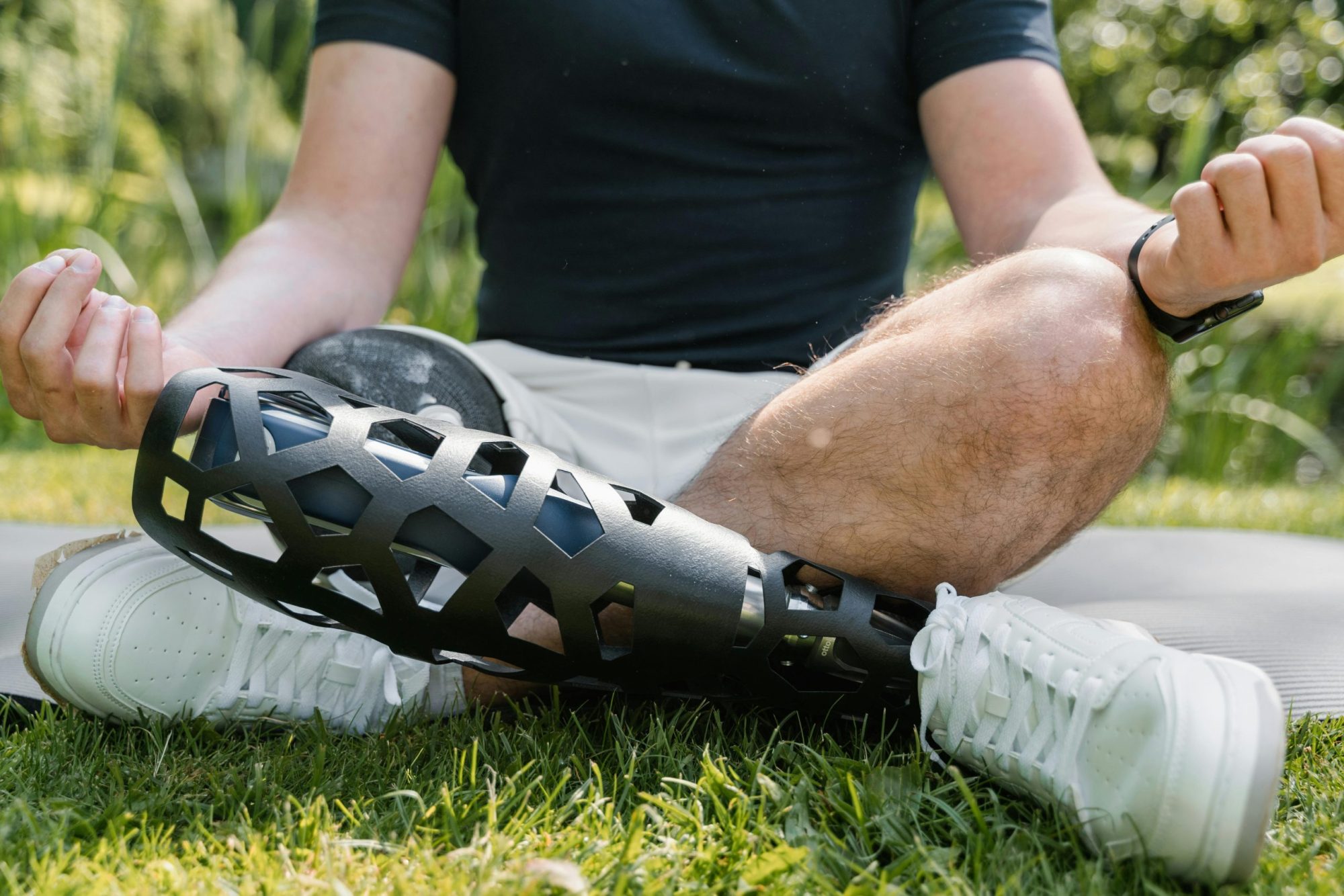
“Mine is held on with Velcro,” I reply pleasantly, to give them a splash of real talk, but also they aren’t listening and don’t care. They already have their beliefs set.

The promise of prosthetics is one of restoration of ability, and this narrative leaves little room for reality.

The promise of prosthetics is a rote call-and-response for those looking to inject a little technological optimism into their daily lives, to believe in the power of technology and restoration, and the idea that problems are solved tidy-like. They also then don’t have to worry about disability, or disabled people, or about building that ramp that they are already 32 years late installing.

The promise of prosthetics is an ending of disability, but that’s a promise from people who don’t know disabled people or disabled communities. Disability is longstanding and not going away—the future will give us new ways to be or become disabled. New viruses, new patterns of animal migration and disease thanks to climate change, new weather patterns, hopefully new ideas of work and of good bodies, too.

My body is good.

I love Velcro. I like the sound it makes. I like how well it works with secure fit and adjustability. With my last leg, I used to adjust my Velcros a lot more. I used to have three Velcros, now I have two. Carefully cut, melted, and then sewn with the giant sewing machine in my prosthetist’s lab by his son, who is also his technician. My Velcros are mine only, perfect for my leg.

Imperfect, too.

I used to have white Velcros and a white upper on my prosthesis, but they got skanky and discolored from the darker-wash jeans I prefer, and every little fiber they pick up shows—not that I’m hiking my pants up every day to show off my Velcros, so it didn’t matter that much. I have an old-style prosthesis, almost like a Hanger leg[1] for those familiar with disability design. My amputation is very fancy. Some people like me still use lacers instead of Velcro, and others are using the snappy adjusties you have on skis now, too. High tech.

The promise of prosthetics is one of restoration of ability, and this narrative leaves little room for reality.

I know that there are at least some people who are curious about the intimate relationship I have with my prosthesis as a body part, or, worse, for me to tell you a tale about getting jiggy[2] with my prosthetic leg on, or off. What do I do with this equipment if I want to have sex? What’s the plan for the leg?

But that’s boring. And you’ve read enough idealized tales where bodies sing electric, where man is one with machine, where flesh is made whole again, and where people can then get freaky with the manic pixie cyborg electric-sheep-dream girl.[3]

The disability intimacy I want to address is about when prosthetics are a shield preventing intimacy, when the narratives we have about prostheses put real-life prosthetized people in a pickle. Prosthetics are a shield to other people’s ideas of intimacy that I do not share with them—those who gawk and give unwanted attention, who smirkingly or even sincerely ask things like “leg on or leg off?” My legs are not an invitation to your education, or your desire.

There is no good way to be an amputee because of all the stories and expectations and images that are out there about us, and the questions and information people think they are entitled to through that media, too. The promise of prosthetics is a curse.

Prosthetics are a defense.

Some amputees talk about how they put their leg on first thing and take it off last thing and don’t want to be seen without their leg on. They will literally work through terrible blisters, rashes, and pain to avoid going legless, or be seen outside their homes with any assistive devices other than prostheses.

Disability is longstanding and not going away—the future will give us new ways to be or become disabled.

The promise of prosthetics has meant for them that they need to appear as close to nondisabled as possible. To make themselves invulnerable to other disability narratives that may haunt their existence—of helplessness or need, of shame and pity, and even of just desserts: that they are not trying hard enough to “overcome.”

Instead, the promise of prosthetics—that they re-enable us and make us whole again—requires our constant work to be “good crips,” those who confirm the power of technology over disability.

I’m not against prosthetics; I’m wearing one, aren’t I? We amputees are (or some of us are) quite lucky for the technologies we do have, and the choices about those technologies. I love my leg and my perfect Velcros. Access is key: we should be able to get different types of technologies to try out, and then also afford.

But I also want to be able to take off my leg without fear that people will reconsider their judgments about my capability and competence, my status as re-enabled and whole.

You see, if we crips don’t buy into prosthetics as redemption, they won’t either, and we’ll go back to being seen as incompetent and incomplete. Broken.

My legs are not an invitation to your education, or your desire.

There is actually research about perceptions of people with bionics (prosthetic limbs, retinal implants, exoskeletons). In a paper called “Disabled or Cyborg?” (a false dilemma), researchers share their conclusion from an online study that asked people their impressions of various groups. They gathered that:

“People with physical disabilities who wear bionic prostheses . . . are perceived as more competent than people with physical disabilities in general [but both groups still less competent than nondisabled people] . . . So-called cyborgs are perceived as much colder than able-bodied individuals [and others with physical disabilities without bionics]. . . .”[4]

The fact is that puzzling out how to do things differently can offer a space of personal creativity and new surprise and pleasure in the mundane tasks. But I only hear those stories in disability groups (and not just amputee groups), and then only rarely and sometimes abashedly. Joy is not what we’re supposed to feel or what we’re supposed to share to get “peer support.” These crip intimacies include not a triumph over something, but the sharing of everyday tricks and ways we have, in sharing the creativity of our embodiments with and for one another.

Prosthetists and physical therapists get praised for their humanitarian work. News stories pump up engineers working on better prosthetic feet or hands. But I really like Fred’s Legs: an amputee and his spouse sell stretchy prosthetic socket covers out of stretchy fabrics, sewn on a home machine with some small customization possible. This is very cheap and easy tech, and they ship all over. I don’t need a prescription to order from Fred. I don’t need to leave my home. The things we do, get, and learn, and even sometimes buy from each other are never on the nightly news. They can’t see us in our making and our sharing, with joy and some frustration and community, too; they want too much for us to be tragedy so the abled can be the heroes, can save us. The promise of prosthetics is that a humanitarian engineering team takes over.

I want to be able to take off my leg without fear that people will reconsider their judgments about my capability and competence.

Prosthetic devices make it so that we may pass for a time as less disabled (or at least stave off being recognized as disabled under some circumstances)—this includes cases of breast prostheses and cosmetic prosthetic covers for arms and legs. With my leg, I look ambulatory, though I might look disabled with a limp or cane. I look less disabled to other people; I am no different, but different perceptions get placed upon me. People can forget for a time that I am disabled.

Showing up wearing my prosthesis means I get routed to a long staircase. (No thank you.)

Passing is its own burden: to avoid being fully seen, but also to avoid being discounted. Because disabled people are discounted. “Disabled or Cyborg?” Best to stick to the side where you are judged as cold but competent.

Of course, it’s a luxury many non-prosthetized disabled people don’t enjoy: to be able to convince others of not-quite-the-truth, playing on their expectations.

Better to pass sometimes, and deliberate carefully about disclosure:

  • When and to whom you reveal yourself (and whether they will treat you differently after that disclosure),
  • Where your need for accommodation or access is so great that you have to disclose (and whether what you then encounter is retaliation for being disabled),
  • How to best explain your body and what this explanation will produce in those around you (e.g., pity, understanding, questions about your ability to live/laugh/love and work).

I do this, too—ask myself about what I reveal as a hard-of-hearing, chemo-brained amputee with Crohn’s and tinnitus—where disclosure is important and not. Rarely am I handing out the list, and recipients wouldn’t know what to do with the list anyway.

The promise of prosthetics to this cyborg is that I can push people away who would do me damage.

There is a list of people I try to appear as abled as possible to. People who would weaponize any perceived incompetence against me. People who would swoop down in helper mode to make me doubt myself. People who would point out perceived faults to my children or my colleagues. People who would cry about me, even though I have no tears for me. People who have said enough nonsense about other disabled people that they cannot be trusted.

A couple shares a story about a friend who became “a vegetable,” but they just mean quadriplegic. He got a spinal cord injury from an accident. They visited him at his home once about six months after his accident, judged him to be too sad, and never visited their once-friend again.

So awkward to watch people tell a story with no self-reflection or shame, recognizing that they would just as soon turn away from you—judge you and your life “too sad” from a single visit.

And perhaps tell my partner he should leave me, and take our kids. His leaving would be typical of the experience of a woman who acquires a disability: our partners are statistically much more likely to leave. And parents with disabilities are at much higher risk of having their children taken away.

They have told a short anecdote from decades ago, and they have opened up my mind to a series of horrors that would undo the life I know and remove the support I have.

They tell this story in passing, and so I pass as hard as I can.

The promise of prosthetics is that I can betray my disabled brethren and fuel the ableist narratives that feature bodies like mine.

I keep my leg on all day when they visit, on my feet and busy working, and every visit after. There are physical consequences to appearing this way, trying to put on the ruse that I am not “really disabled,” or at least not in the way they would find sad.

I get called an inspiration, and I know the vast separation between their experience of me and my actual experience. I want to scream, but can’t have them suspect mental infirmity in addition to my physical invalidity.

I want no intimacy with them. I will choke down an Advil, smooth on extra Adaptskin 50, and be absolutely exhausted trying to keep up the ruse that I don’t need to sit down, don’t need to slow down.

The promise of prosthetics goes:

Gaslight (prosthetics are so advanced now),

Gatekeep (you certainly aren’t like those other disabled people),

Girlboss (you can do it all, forsake your bodymind).

The promise of prosthetics is that I can betray my disabled brethren and fuel the ableist narratives that feature bodies like mine. The promise of prosthetics means that I can pretend for a while and hide my  vulnerability away—people will believe me “re-enabled” if I appear just so, play into their expectations about prosthetics. “Wow,” they say. “Prosthetics really are so advanced; you get around great on that thing.”


Footnotes:

  1. Imagine a classic historical post–Civil War old-timey leg with a below-knee socket and joints on either side of the knee and an upper leather portion around the thigh that laces up to hold the leg on securely. ↩︎
  2. Do people still use “getting jiggy” as a euphemism for sex? ↩︎
  3. “Not a girl,” says Janet from The Good Place. ↩︎
  4. See Bertolt Meyer and Frank Asbrock, “Disabled or Cyborg? How Bionics Affect Stereotypes Toward People with Physical Disabilities,” Frontiers in Psychology vol. 9, November 20, 2018 (Chemnitz University of Technology). There is a lot to unpack about this study and the categories used, but that goes beyond the scope of this essay!  ↩︎

From Disability Intimacy edited by Alice Wong. Compilation copyright © 2024 by Alice Wong. Copyright © 2024 by Dr. Ashley Shew. Published by arrangement with Vintage, an imprint of The Knopf Doubleday Group, a division of Penguin Random House LLC.

8 Novels About Absent Mothers

Before I had children, I was fascinated by fictional depictions of daughters whose mothers had bailed. How were they shaped by this primal loss? How could any mother justify inflicting such damage?

I became a mother myself, and suddenly my point of view shifted. I was still mindful of the ways our mothers’ choices form us, but I woke to a second perspective: Being the mother was immense, all-encompassing, life-and-identity rearranging. Being the mother was hard, and once you had undertaken it you could never go back to the life you once had. 

Or could you? During the most intense early-mothering moments, my creative dreams, intellectual pursuits, and very identity buried under mounds of dirty diapers and unfolded laundry, I found I could justify leaving—at least in my imagination. 

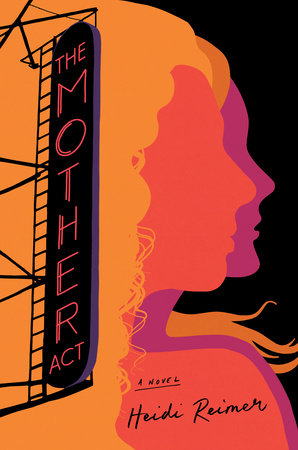
My debut novel, The Mother Act, grew from the seed of an I-would-never-act-on-it yearning to leave this new mother self behind and hop the first bus back to the person I used to be. But the novel explores both sides: The daughter growing up in the fallout of abandonment, and the mother whose need for self-actualization is great enough to trigger this cataclysm.

I never lost my narrative sympathy for the left-behind child, but after I became a mother I wanted more than knee-jerk judgments of “Selfish! Reprehensible!” in stories with mothers who left. These eight novels deliver that nuance—four from the perspective of an abandoned daughter, four from the perspective of the absent mother.  

The Women Could Fly by Megan Giddings

Jo’s mother vanished when she was 14, becoming a wound that Jo “could never fully stitch,” isn’t even sure she wants to. The loss is deepened by the unresolved mystery. Was her mother murdered? Kidnapped? Did she suffer amnesia? Run away? In the 14 years since, Jo has imagined it all. But in this dystopian world where women are closely monitored for magical inclinations and other signs of deviance, perhaps the most dangerous explanation for her mother’s disappearance is that she was a witch. Which means Jo herself is under suspicion, especially as a Black queer single woman approaching the age 30 deadline by which women must marry. When her mother’s will turns out to contain a mission for her, Jo sets off on a trip to an island in Lake Superior, where answers—and surprises—await. 

Olga Dies Dreaming by Xochitl Gonzalez

Olga and Prieto haven’t seen their mother, Blanca, in over 25 years, since she abandoned them as young teenagers to fight for a militant political cause. Their only contact is the letters she sends, always knowing what they’re up to, frequently judging their life choices. She’s proud of Prieto’s success as a congressman representing their Latinx Brooklyn neighborhood but disapproves of Olga’s work as the go-to wedding planner of the one percent, work Olga comes to realize she embraced in rebellion to the very values that led Blanca to leave. What different choices might she have made, Olga wonders, had her mother deemed her worthy of time and affection? Blanca is an unfulfilled longing, existing to Olga as “a floating entity,” her only location “inside the many envelopes that arrived from destinations unknown”—until the day she resurfaces in the flesh, asking for help. 

The Romantic by Barbara Gowdy

Louise is 9, growing up in 1960s suburban Toronto, when her mother walks out. The note she leaves on the refrigerator reads “I have gone. I am not coming back. Louise knows how to work the washing machine.” Louise has always felt her mother’s attention to be elusive and untrustworthy, and even as her father follows every lead to track her down, convinced she’s been enticed away by “a fancy Dan lady’s man,” Louise is sickened by the possibility of her return. Instead she turns her desires toward Mrs. Richter, the new neighbor Louise prays will adopt her, and eventually Mrs. Richter’s son, Abel, whom she loves with a devotion that grows deeper and more desperate in adulthood. Abel is ultimately as elusive as her mother was, and Louise considers him “the real tragic loss” of her life, “next to which the supposed tragic loss, the one that garnered all the pity, counted for nothing.”

The Mothers by Brit Bennett

Motherhood abounds in this celebrated debut: motherhood desired and undesired, mothers absent through suicide or estrangement, and “The Mothers” of the title, the older church ladies who watch over and judge the protagonist, 17-year-old Nadia Turner. As the novel opens, Nadia is reeling from her mother’s death by suicide, wondering what people expect her to say: “That one day, she’d had a mother, and the next, she didn’t? That the only tragic circumstance that had befallen her mother was her own self?” When Nadia discovers that she herself is pregnant, she knows she can’t allow a baby to “nail her life in place when she’d just been given a chance to escape.” She has an abortion, a choice that reverberates over the following decades as she struggles to come into her own as a motherless daughter.

The Lost Daughter by Elena Ferrante, translated by Ann Goldstein

In this novella from the author of the Neapolitan Quartet, Leda is alone on a beach holiday when a young mother sparks memories of her own maternal transgressions. At an academic conference years before, her daughters small and her life force sapped by the demands of domesticity, Leda was reawakened. Returning from the trip, she felt her daughters’ gazes “longing to tame me, but more brilliant was the brightness of the life outside them, new colors, new bodies, new intelligence…and nothing, nothing that seemed to me reconcilable with that domestic space.” She left her husband and daughters and had no contact for three years. Though she eventually returned—“when the weight in the pit of my stomach became unbearable”—the period of absence still haunts her. 

Leave Me by Gayle Forman

Maribeth Klein is an exhausted working mother. She’s keeping too many balls in the air for her job, her husband, and their four-year-old twins when she has a heart attack at 44. She survives, but her recovery is hampered by the mental and physical labor no one else seems able to shoulder long enough for her to properly recuperate. When she withdraws $25,000 of inheritance money, pays cash for a train ticket, and disappears, her act feels like a matter of life and death. Alone in her new furnished apartment, she grapples both with what she’s done to her family and with her own experience as an adoptee. One night she watches a movie about a mother who abandons her kids, and she knows the character will be redeemed because she’s given screen time and a voice. Despite her own justifications, Maribeth fears that in the made-for-TV movie of her life, she is the villain.

The Hours by Michael Cunningham 

Laura Brown, one of three protagonists in this 1998 novel, is a post-war suburban housewife and mother suffocating inside the ill-fitting expectations of her role. Her deepest desire, on the single day we follow her, is to read uninterrupted, to lose herself—reclaim herself—inside the pages of Mrs. Dalloway. She leaves her young son with a babysitter and checks into a hotel for a few hours’ solitude. There she finds herself contemplating suicide, thinking how deeply comforting it would be to “simply go away. To say to them all, I couldn’t manage, you had no idea; I didn’t want to try anymore.” When she does return for her son, she is unsettled by his watchful devotion, by the knowledge that he will always intuit her failure to be what he needs. Her ultimate departure from her family occurs off the page, clarified by a surprising reveal late in the book. 

The Forbidden Territory of a Terrifying Woman by Molly Lynch

In this mesmerizing 2023 debut, women the world over have begun to vanish from their homes. All of them are mothers. The disappearances are becoming a public health crisis, and the missing mothers are analyzed, sympathized with, reviled. “It’s the greatest stigma of all for a woman. The leaving of the child.” Are mothers revolting against their roles? Succumbing to their animal natures? Ada is distressed by the phenomenon, as she is by so much else: flooding, forest fires, whether she made the right decision bearing a child into ecological collapse. Her husband, Danny, is more consumed by his work than by the disappearances—until the morning he wakes to find Ada’s side of the bed empty.

“The Shining” Helped Me Acknowledge the Violence in My Marriage

When I watched The Shining for the first time, the movie got stuck right when Jack Nicholson’s character takes an axe to the door of the room where his wife is hiding. “Here’s Johnny,” he’s about to declare, thrusting his face through the half-demolished door. But we got stuck just before that, when the door is still largely intact. The wood is splintering, the axe is poking through, and Shelly Duvall, face wild with fear, is cowering in the corner and clutching a kitchen knife with both hands.

As I was wiping the iridescent disc against my shirt—it was the era of Netflix DVDs, and this one had a stranger’s thumbprint on the back—my husband asked what I thought of the movie so far. Even though the DVD was no longer in the drive, the laptop screen still had the image from the movie on it: the door, the axe, the terrified face. I was scared, the way you get scared when you watch a scary movie. I really couldn’t see a way out of this for Shelly Duvall, and my heart felt tight in my chest, like a giant hand was squeezing the breath out of me. Maybe that was why I didn’t think before answering, with total sincerity, that it reminded me of us.

If you can imagine a marriage in which that was an honest answer, then you can also imagine what a bad idea it was to give it. Luckily, my husband was more surprised and hurt than angry. It might have been the first time I’d come so close to mentioning his violence towards me. We never talked about it, the way we never talked about certain bodily functions or his unwritten dissertation. I can’t really remember what happened next, but I must have walked my comment back successfully, because I know we finished the movie and that the sight of Jack Nicholson’s demonic face, frozen and blue, left me dizzy with relief.  

To be fair, my husband never came after me with an axe, and I never screamed the way Duvall does in that scene. As I discovered when he careened around our apartment armed with smaller, duller bladed objects, I am not good at screaming: I can yell in anger but, when terrified, I make a kind of rusty squeak. The real parallel between us and the Torrances, though, wasn’t Jack’s axe, but the creative ambitions that led him to pick it up in the first place. On this first, electrifying viewing of the film, all I could see was a link between creativity and violence, and all I could hear was what I took to be its central message: stay away from writers. Too late for me; like Wendy Torrance, I had married one.

There are, I can now see, other things in The Shining. It’s a movie about alcoholism and weird hotels and the genocide of America’s Indigenous peoples—to name just a few of the seemingly infinite interpretations out there. But that first time through, it boiled down for me to writing and violence. Typewriter and axe. The film articulated a circuit between creativity—or at least creative ambition—and destruction. This circuit was the defining feature of my life at the time, and far more than anything I had read online about the cycle of violence, the movie told me that what I was going through fit a pattern and was therefore really real. By recruiting the viewer’s sympathies for Wendy while making Jack into a maniacal villain (at least in the movie’s final scenes), it also told me that I was, astonishingly, not the one in the wrong. That this was a revelation tells you the degree to which I had entered into a weird version of reality, one in which my husband’s writing was the center of the world, and anything that impeded it warranted his rage.


We had met soon after college and started graduate school together, but while I was on track to finish a dutiful and exciting-to-no-one-but-me dissertation, he had set his aside to write essays on art and film. For a long time, even as I came to understand writing as an essential part of my husband’s being, I thought of his anger as a wholly separate thing. It felt like something optional and temporary, like an ugly jacket. He was a gifted writer and quickly found some success, but “some success” was never enough. When his writing wasn’t going well, or when an editor passed on his work, I would suffer. He would sit on me, or shove me in the closet, or throw me down on the bed—actually, a second-hand futon held together with tape and dowels—and hover over me with one of our thrift store kitchen knives, glowering. Once he threatened to cut off my head. I think I laughed. It would have taken forever.

About two years before I left, he began to cut off my breathing regularly. Holding the back of my head, he would press my face against some soft surface: the bed, his own chest. Once, he held my head against his chest for so long that I thought I might die. I remember the shift from not being able to see because my eyes were closed to not being able to see because I was losing consciousness: the familiar multi-colored dark behind my eyelids disappeared, and real darkness took its place. After that, if I felt the household weather shifting, I would slip on my shoes, grab my backpack, and be gone before he knew it.

All I could hear was what I took to be its central message: stay away from writers.

But for a long time, none of it felt real to me: the threatening, the shoving, the knives. It all seemed temporary, false: a bit of bad theater. What felt real—what felt true—was singing private, made-up ditties in the kitchen, or walking for miles to see a green hill covered in yellow poppies, or seeing his work show up in my inbox and stopping my own to tinker with it. In the story I told myself about our future, when the time came—when he was successful enough, lauded enough, published enough—he would set his anger aside, and its unreality would stop casting a shadow over our “real” life. Watching Jack Torrance terrorize Wendy on screen, I saw a different story, one in which the habit of anger became inextricably entwined with writerly ambition and finally replaced it, becoming an end in itself.

If something crystallized in that moment, something was lost, too. It wasn’t just that I loved my husband (and I did). It was that I couldn’t imagine even a single day on earth without him. To take his anger seriously—to acknowledge that it put me in actual, physical danger—meant letting go of a long, shared history. If I had once told myself his fury wasn’t real, by the end, I had trained myself to assign that unreality to everything that had ever been good between us. I had to, to be able to leave.

After I left, he called relentlessly, making endless demands, one of which was that I never write about him. For a decade, I didn’t. In retrospect, the request strikes me as prescient (after all, here we are) but strange. For most of our marriage, I focused on academic work, constructing carefully researched arguments over a satisfyingly blocky foundation of footnotes. I typed all the time, but I didn’t write the way he did: widely, freely, using personal experience as a lens to view the world.


For most of that decade after our divorce, I associated creativity with violence. At its start, I briefly dated someone who worked in a theater. If he expressed the hope that a show would go well or (worse) the fear that it wouldn’t, I would, like clockwork, dream that he was screaming at me or chasing me. In one dream, he tried to skin me. It was a relief when he cheated: when he left, his nightmare double went, too.

After that breakup, in a bar with a friend, I overheard a man droning on and on to a very patient woman about his screenplay. My friend rolled her eyes: men. I rolled mine, too, but inside I was freaking out. Was this lady safe? This guy wanted to write a whole movie. Could she not see how dangerous that made him, how dangerous to her, specifically?

Even scholarly pursuits struck me as suspect, which caused problems; I work in an English department, and my colleagues’ research agendas made me secretly nervous. I trusted myself to handle roadblocks (even when they seemed to darken my whole future) and rejection (even when it made years of work seem suddenly meaningless). But other people, I didn’t trust at all. Basically, if someone was devoted to an activity that involved any amount of hope or anxiety or ego, any kind of soaring hopes or shattering disappointments, I steered clear.

Over the years, this feeling has shifted. Life has forced me into sustained contact with a number of creative individuals, and not one of them has ever chased me around with an axe. Through my job and sheer geographical luck, I’ve ended up with novelists and poets as friends. And, in order to be a friend, I’ve had to suspend my fears. I lived with a playwright for a while, and it turns out you can’t be a good roommate to someone who both writes and makes theater without getting caught up in their hopes and disappointments. Nor can you befriend poets and novelists precisely because they love language the way you do, and then avoid reading what they write. At first, I suppressed reflexive terror when a friend sent me their work, but I welcome it now. A friend’s writing is, after all, a distillation of that friend: a portion of their unique, weird being fixed in language. My partner, a fellow academic, is always absorbed in a project, and I find myself more enthused than alarmed when he shares work with me.

When his writing wasn’t going well, I would suffer.

I’ve even started writing more myself. During a recent, precious sabbatical, I started working on a novel instead of a second scholarly book. “What’s going on?” I asked my playwright friend, alarmed. “Why am I doing this?” She said I was possessed by “the imp”—her version of the muse—and that I had better just let it take charge.

The word “imp” made me picture a small green creature with a malevolent, self-delighted expression not all that different from Nicholson’s “here’s Johnny” face. An imp is a mischief-maker. An imp will mess things up. But I took her advice, and I kept writing, and now I’m filled with hope and anxiety and ego, and it sucks. The soaring hopes and shattering disappointments are a daily torment. Still, I haven’t smashed down any doors with an axe.

A few weeks into my imp-induced writing fit, I read an essay by the man who grew the world’s biggest pumpkin. It turns out that for pumpkin-growers, maybe even more than for writers, success is elusive and the possibility of failure ever-present. The author, Travis Gienger, planted just two seeds in order to give his pumpkins the level of care and attention that they needed—a level that limited his social life and drew him away from ordinary pursuits. Both seeds produced vines, and both vines produced giants, but one burst before it was done growing. Imagine the heartbreak, the disappointment. Reading about it, some shadowy, mouse-like part of me cringed with fear: what does a person do—to themselves, to the people around them—when a dream pumpkin splits? But I kept reading, and as I read, I kept rooting for Travis, who was so clearly possessed by his own incredibly specific imp.

The Shining taught me that what was happening to me in my marriage was real: the link between writing and violence I felt in my home existed. But in order to grasp that link, I simplified the story, and that simplification involved telling myself a lie: that creativity is a man with an axe. My friends helped me begin unlearning that lie. It was Travis Gienger’s pumpkins, though, that helped me formulate an antidote, one that told me that our imps—the drives behind our wild pursuits, our impractical dreams—make living in the world possible. For some people, they’re as vital as air or water. That was true of my husband, which wasn’t in itself a bad thing. It’s true of my writer friends, too, and of my partner, who throws his whole being into his work (his imp is rigorous; it keeps long hours). And yet, those pursuits, those dreams, are inevitably risky, difficult, quixotic. You want to grow a huge pumpkin, so you spend less time with your family and friends; you lie awake at night plotting and worrying and strategizing; you protect your vines from frost and hail; and you do all this knowing that it could all be for nothing. Your pumpkin might flourish—it might win—but it also might burst.

Triumph and loss are both part of the process, and you have to be able to absorb both. Plus, you have to cope with the imp. The imp doesn’t care about triumph and loss. It just wants something new to exist.

“You’re breaking my concentration,” Jack snarls in an earlier scene in The Shining, when Wendy suggests, tentatively, that he show her what he’s writing. Then he smacks his forehead, rips a page from the typewriter, and tears it to pieces: miniature acts of violence meant both to frighten his wife, and to illustrate just how disruptive he finds her presence.

The thing is, though, Jack was never writing on that typewriter. He was just typing, banging out the same sentence, over and over, line after line. I don’t think he even had an imp, the bastard. He had ambition, maybe, and he had anger. Those—I’ve finally learned—are not the same thing.

23 Indie Presses to Support After the Close of Small Press Distribution

On March 28, Small Press Distribution (SPD), the 55-year old company that helped 385 indie publishers deliver their books to customers, collapsed without warning. This is an existential blow in a business where finances are delicate at the best of times. Books remain stranded in warehouses and could take months to be recovered, past income from previously-sold books has been withheld, and hundreds of small presses need to find new ways to get books into readers’ hands.

Most small presses make little profit. They’re primarily motivated by their love for books and the literary community: filling gaps in the market, bucking trends, broadening the sphere of voices that get read, handling authors’ work with great care, and propelling innovation and diversity in literature. 

On April 25, the Poetry Foundation announced a bridge fund to support small presses impacted by the closure of SPD. The $150K fund is accepting applications for a maximum distribution of $7.5K per press. However, indie publishers need as much support as possible if they hope to weather this crisis and continue publishing books. Everyday readers can contribute by donating to their fundraisers, purchasing their books, and spreading the word.

Some small publishers have launched fundraising campaigns, including Black Lawrence Press, Fonograf Editions, Rose Metal Press, Cardboard House Press, ELJ Editions, Kore Press Institute, Game Over Books, and Noemi Press. Additionally, we have compiled a list below of 20 small presses to support and books of note that we think our readers will love, but don’t stop here! Find more indie publishers affected by SPD’s closing at this link.

Editor’s note: All purchase links in this article are directed to the presses’ websites.
Anvil Press

This East Vancouver-based publisher has been making a home for out-there Canadian literature since 1990. Anvil publishes poet laureates, debut short fiction writers, and everyone in between. Their two 2023 prize winners, Thick Skin: Field Notes from a Sister in the Brotherhood by Hilary Peach and But the sun, and the fish, and the ships, and the waves by Conyer Clayton come highly recommended!

Forthcoming: The Tenants by Pat Dobie (July 2024)

Dobie’s short novel follows the intersecting lives of three Vancouver residents struggling to live in their rapidly changing city. The winner of the International 3-Day Novel Contest, The Tenants is “stark, observational, darkly comic, and deeply human.”


Apogee Press

Founded in 1997, Apogee Press publishes innovative and experimental poetry, pushing boundaries and conventions of art, style, and thought. Their catalog is culturally and formally diverse; with each new book, they expand the definition of their press and its approach to poetry. They have published the debut full-length works of Tsering Wangmo Dhompa, Andrew Maxwell, Pattie McCarthy, Denise Newman, Truong Tran, and Khaty Xiong. Check out Tran’s dust and conscience, winner of the 2002 San Francisco State Poetry Center Prize.


Blackwater Press

A young, West Virginia-based publisher, Blackwater works with a group of international editors and supplements its publishing with inhouse editorial and translation services. They host short story competitions (the winners of which are published in a best of anthology) and have a special “Interesting Lives” series that specializes in biographies and historical studies of figures from the 18th century.

Forthcoming: Burying Norma Jeane by Leah Rogin (August 2024)

Rogin’s novel tracks a mother-daughter road trip across America: their pursuit to liberate the late Marilyn Monroe — born “Norma Jeane” — entombed next to Hugh Hefner. As an “epic adventure novel,” Burying Norma Jeane will certainly thrill readers. 


Black Lawrence Press

Since 2004, this press has published a broad range of invigorating and electrifying literature. They primarily print contemporary poetry, fiction, and creative nonfiction, in addition to hybrid work, anthologies, and German and French translations. Around 50 of their writers have published multiple books with Black Lawrence Press, and their continued work is a testament to the press’ collaborative and enjoyable publishing process. Not surprisingly, Black Lawrence Press produces about 24 books each year—a robust number for an independent publisher—but every book proves as captivating as the last. 

Forthcoming: Horsemouth and Aquariumhead by Elizabeth Horner Turner (September 2024)

Winner of the Black River Chapbook Competition, Horsemouth and Aquariumhead features twelve tales that are surreal yet relatable. With humor, tragedy, and fantasy, Turner’s flash fiction prods at readers’ own realities through imaginative and odd characters.


Black Square Editions

In 1999, John Yau launched Black Square Editions with a goal to publish translations of little-known books by well-known writers, as well as new work by emerging and established writers. They have published novels, novellas, short stories, prose poems, poetry and essays. Their authors include Matvei Yankelevich, Rosalyn Drexler, Brian Evenson, Andrew Joron, Eugene Lim, Gary Lutz, and Michael Leong. They are an imprint of Off the Park Press, a nonprofit literary arts organization based in New York, NY. Award-winning poet Charles North has published many books with Black Square Editions, including his most recent book of poetry and prose: News, Poetry, and Poplars.


Cardboard House Press 

Named in honor of renowned Peruvian author Martín Adán’s 1928 debut novel The Cardboard House, Cardboard House Press occupies a niche in the literary landscape as an exclusive publisher of Spanish-language poetry in bilingual editions. Since 2014, they’ve introduced a number of important Puerto Rican and Latin American poets to anglophone literature, including Olvido García Valdés and Mariela Dreyfus. In addition to their regular publishing schedule, they release a series of handmade Cartonera books, created through public workshops in which participants learn the craft of bookbinding. 

Forthcoming: Bridges / Puentes by Alicia Genovese, translated by Daniel Coudriet (June 2024)

In Bridges / Puentes, Genovese embraces bridges as sometimes a link, sometimes an obstacle. Originally written in Spanish, the long poem interweaves her childhood and adolescence with the political landscape of Buenos Aires.


C&R Press

Founded in 2006, this independent publisher is “conscious and responsible” (literally, in the name), so they prioritize sustainability and social good while bringing outstanding independent literature to wide audiences. C&R Press publishes across genres, producing novels, story collections, memoirs, art books, experimental works, poetry, chapbooks, history, essays, and anthologies. The 2021 winner of the Independent Publishers Gold Book Award in Poetry, Lauren Berry’s surrealist collection, The Rented Altar, follows a young bride trying to find her footing as a new stepmother in a new neighborhood.


ELJ Editions

ELJ expands the definition of “emerging” to encompass the endless series of new beginnings and jumping off points a writer must face—whether publishing for the first time or experimenting with genre and form, this press honors the process of reinvention. Founded in 2013, they run the Afternoon Shorts novella series, the Redacted series to highlight marginalized and underrepresented experiences, and publish upwards of twelve books a year. Their motto? “Be Well. Write Well. Read Well.”


Flood Editions

Flood Editions has released four or five books every year since 2001. They champion poets and writers at all stages but also stand out for their willingness to delve into the archives and reissue forgotten classics. Case in point, Ronald Johnson’s Radi os, a bold revision-through-excision of Milton’s Paradise Lost that appeared and then disappeared in 1977. They’ve published giants like Fanny Howe and Jay Wright, newcomers like Ann Kim, and even the odd book of photography and visual art. What binds this eclecticism together is a discerning eye for literature that combines strangeness, beauty, and a profound capacity to redraw the parameters of what is considered art. 


Fonograf Editions

A prolific, young combination nonprofit publisher and literary record label, Fonograf Editions has released thirty books and records since its inception in 2016. They’ve published work by poet and translator Isabel Zapata, essayist Hilary Plum, uncovered and released 70’s era 12-inch recordings of John Ashberry and Audre Lorde, and run the revolutionary artist Ray Johnson inspired imprint, Bunny. Tied into their emphasis on genre-bending and expanding the realms and mediums through which we experience literature, is a commitment to affordability and public-access. The press hosts free public events throughout the year and shares components from each of its published works for free. Their packed upcoming publication schedule includes a long out of print rock album by Anne Sexton!

Forthcoming: A Mouth Holds Many Things edited by Dao Strom and Jyothi Natarajan

Comprising 36 literary experiments from women and nonbinary BIPOC writer-artists, this full-color print book straddles collage, AI-generated writing, image-text montages, and a host of other novel expressions. It’s an exploration of the many vessels that can hold language and meaning, engaging all of the five senses in a quest to expand what is legible.


Game Over Books

Founded in 2017, this small publisher is a Boston-based press run by “nerdy artists.” They publish fiction and poetry, emphasizing new and emerging writers. They also host craft workshops. In their words, Game Over Books strives to “push creative writing forward into the Next Level.” The press has numerous forthcoming books: Check them out here

Forthcoming: A Wellness Check by Bri Gonzalez

Gonzalez places the reader in the mind of a so-called villain recently diagnosed with bipolar disorder, prodding at pop culture’s use of mental illness as spectacle. In this collection, they artfully blend hybrid prose, poetry, screenplays, and fragment essays.


Hanging Loose Press 

Founded in 1966, this literary magazine-cum-indie press has championed young writers, translators, and sidelined voices for almost six decades. Poetry is at the heart of their mission—they published Maggie Nelson’s debut collection, Shiner, and were once edited by Denise Levertov—but over the decades they’ve expanded in every direction. The annual Loose Translation Prize gives MFA students the opportunity to publish a full-length work of translation and launched the career of luminary Anne Posten. Their biannual journal is one the few long-standing platforms to dedicate a section to highschool writers, and their back catalog is a literary treasure trove. We recommend Barbara Ann Porte’s He’s Sorry, She’s Sorry, They’re Sorry Too.


Kore Press Institute

An intersectional-feminist literary arts organization, KPI is dedicated to “keeping the margins in the center.” For over two and a half decades they’ve published writing in every genre that foregrounds marginalized voices and agitates for change, including Alexis V. Jackson’s debut poetry collection My Sisters’ Country and Alexis Orgera’s celebrated exploration of family grief and mental illness, Head Case: My Father, Alzheimer’s & Other Brainstorms. Beyond publishing, KPI hosts the Notes from the Motherfield live storytelling series that platforms “radical mothers committed to telling complicated truths.”


Litmus Press

Founded in 2001 within a constellation of older presses that included the now-defunct O Books and The Post-Apollo Press, Litmus began with a publishing-out-of-your-kitchen determination. They’ve since grown into an established small press that specializes in poetry and translation, and they are spearheading a new open-access e-book publishing platform called Open Poetics.

Forthcoming: Fall Creek by Lyn Hejinian (April 2024)

A prolific writer, Hejinian’s latest collection of poems ponders the everyday detritus of the world, stringing images and philosophic musings together into “meandering specifics” about the strange contemporary moment.


LittlePuss Press

Founded by Cat Fitzpatrick and Kay Gabriel in 2021, this small publisher is “a feminist press run by two trans women.” The young press publishes fiction and nonfiction, specializing in work by transgender writers. They also throw parties: fun, eclectic, queer, literary parties. LittlePuss Press is currently working on The Trans Reprint Project, an initiative to reprint historically significant literary works that are no longer available, written by transgender authors. Already, they have reprinted the Stonewall-award winning anthology Meanwhile Elsewhere: Science Fiction & Fantasy from Transgender Writers. 

Forthcoming: Log Off: Why Posting and Politics (Almost) Never Mix by Katherine Cross (June 2024)

Cross’s fiery, fierce, and funny essay argues against the mingling of social media and political activism. According to LittlePuss Press, it’s a “a poisonous love letter that asks: Is this all really the praxis that posting was supposed to be?”


Mason Jar Press

Based out of Baltimore, Mason Jar Press has produced handmade chapbooks and full-length books by established and emerging writers since 2014. They seek to challenge the status quo while publishing work of high merit. According to the press, they offer “strong, straight-forward poetry and prose that’s just a little off.” Accessible yet boundary-pushing, they reach beyond the mainstream while reaching toward a diverse range of readers. 

Forthcoming: Bone / Blood / Blossom by Mandy May (May 2024)

Through enchanting, lyrical language, May’s poetry explores the realities of chronic illness, embracing beauty, authenticity, and pain. 100% of profits from the book will be donated to Type 1 Diabetes research.


Noemi Press

Embracing work considered “too much, too loud, and too other,” this press publishes daring, forward-looking literature. They have over 100 works in print, including fiction, nonfiction, drama, and poetry. A historically brown and queer press, Noemi Press strives to print work from new voices that might be marginalized elsewhere. Their Infidel Poetics Series offers a space for writers to interrogate the overlap between poetry and politics in short critical works. Additionally, Noemi Press and Letras Latinas co-produce the Akrilica Series, which features innovative Latino writing. The press’ Spring 2024 books include Love the World or Get Killed Trying by Alvina Chamberland, Girl Work by Zefyr Lisowski, and Choose This Now by Nicole Haroutunian. 


Rescue Press

With their emphasis on the sui generis, this editor-run press prides itself on publishing work that straddles forms and genres. They release poetry and prose, fiction and nonfiction, and also a host of titles that sit somewhere in between. Estranger by Erik Anderson begins with a memoiristic recollection of a grandfather’s death, but then swiftly reinvents itself as an essay on cinema, a monograph on Camus, a personal reflection on fatherhood. Together, Rescue Press’s Open Prose Series and Black Box Poetry Prize present regularly showcase highlights from the outskirts of American literature.


River River Books

Embracing the idea that “you cannot step in the same river twice,” this press aims to publish two exceptional poetry books a year, distributing them to as many readers as possible. Their limited catalog enables their editors to support and engage with their authors thoughtfully, approaching their work with patience, care, attention, and respect. Founded in March 2022, River River Books prints a diverse range of poetry that “lives with and among others.” Their values are evident in all of their work, notably including An Eye in Each Square by Lauren Camp, the poet laureate of New Mexico.


Rose Metal Press

Since 2006, Rose Metal Press has been a home for hard-to-categorize literature, eschewing traditional literary forms like poetry and fiction in favor of the innovative novellas-in-flash, the bespoke work that combines text with images, just about anything that falls outside the normative pigeon holes. From their Massachussettes base, they’ve published forty-one shape-shifting books, including the 2023 PEN/America finalist The Anchored World by Jasmine Sawers. In addition, RMP’s field guides and anthologies of unique pockets in contemporary literature like The Best of Brevity: Twenty Groundbreaking Years of Flash Nonfiction edited by Zoë Bossiere and Dinty W. Moore, have been incorporated into hundreds of high school and college classrooms.


Sixteen Rivers Press

Named for the sixteen rivers that flow into the San Francisco Bay, this publishing collective was founded in 1999 to create a sustainable, shared-work press that provides an alternative publishing avenue by and for Bay Area poets. They print at least two outstanding books of poetry each spring. As of 2024, they have produced 65 books, including the recent Women Twice Removed by Christina Lloyd and Red Studio by Murray Silverstein.


Tupelo Press

For innovative books that excite and grip readers’ immediate attention, look no further than Tupelo Press’s poetry, literary fiction, and creative nonfiction. The press prizes urgency: of language, imagination, distinctiveness, and craft. They honor writers’ work with attention to detail in every aspect, from design to paper quality. The press has produced over 300 books since 1999, many of them prize-winning, and all of them, in their words, “necessary.” From its start, Tupelo Press has highlighted writers of diverse cultural backgrounds, and notably, women authors comprise over 65% of their list.

Forthcoming: Green Island by Liz Countryman (June 2024)

Winner of The Berkshire Prize for Poetry, Countryman’s rich, raw, and awe-inspiring poems explore the relationship between place and imagination. Harmonizing interior experience with external frameworks, Green Island moves readers deep into the past and deep into the present.


Unicorn Press

Established in 1966, Unicorn Press publishes handbound books of poetry. With an ambitious dedication to the fresh, the unique, and the unconventional, this press strives to produce remarkable works that are unlikely to be published elsewhere. They have printed poetry in nearly every form, from postcards to books. The press views poems as individuals, and they believe that readers should “spend at least as much time reading a poem as the poet did writing it.” They currently focus on chapbooks and smaller, cohesive full-length poetry collections.

Forthcoming: Our hollowness sings by Ruth Dickey (May 2024)

Dickey’s intimate new book of poetry explores human brokenness and the devastation, beauty, and tenderness of loss. Her poems are moving yet joyful, heartbreaking yet wondrous.

Electric Literature’s Favorite Indie Bookstores

Whenever I travel to a new city, my favorite way to get to know the community is to venture into local bookstores. Anything from feminist shops that highlight writers of color to bookstore/cafe hybrids, I never quite know what I’m walking into, and that buzz of excitement never gets old. Last year, we shared some of our favorite independent bookstores across the US, and we’re back with more recommendations of these literary landmarks.

All She Wrote Books in Somerville, Massachusetts

“All She Wrote Books is Somerville’s intersectional, inclusive feminist and queer bookstore, offering up a thoughtful curation of books spanning all genres, with a special focus on titles that celebrate and amplify underrepresented voices. They started in 2019 as an idea that evolved from a cart of books into a first brick-and-mortar location the following year. Owner and founder Christina Pascucci Ciampa envisioned a space where anyone experiencing marginalization would know they were welcome no matter what, and ultimately be able to take a piece of that home with them, with a book. After being displaced from their old location last summer, All She Wrote was able to raise funding from the community for a move and is now open in their new space, hosting a robust series of inclusive events for book lovers and celebrating their 5-year anniversary this month.” —Preety Sidhu, Associate Editor, Recommended Reading and The Commuter

Astoria Bookshop in Queens, New York 

“There are precious few bookstores in Queens and at 11 years old, Astoria Bookshop is perhaps the longest standing of them all. Founder Lexi Beach is a stalwart of the burgeoning Queens literary scene. Astoria Bookshop is warm and inviting, the staff are so friendly and always eager to recommend new books to their customers—I highly recommend picking up bookseller Nino Cipri’s queer speculative short story collection Homesick!—and they have a robust events calendar filled with storytimes for children, book readings, author talks, writing workshops, and open mic nights. And you’ll love their adorable mascot: shop dog Quincy the King Charles Spaniel!” —Jo Lou, Deputy Editor

Black Garnet Books in St Paul, Minnesota

“Nestled next door to a boba shop and my favorite Chinese hand-pulled noodle restaurant is Black Garnet Books. Opened in 2020 on University Ave, Black Garnet Books offers a wide range of books—memoir, cookbooks, fiction, children’s books—all authored by writers and illustrators of color. Black-owned and operated, the bookstore works to combat the racial inequality still rampant in the publishing and literary industry by championing these authors, as well as offering anti-racist buttons and posters. This is a spot you don’t want to miss next time you’re in St Paul. There’s even an adorable dog who will greet you at the door.” —Kristina Busch, Editorial Intern

Capitol Hill Books in Washington, DC

“I lived in Washington, DC (for the first time) during my junior year of college. I was a political science major who realized, three weeks into my political science internship, that I absolutely did not want to work in politics. Suffice to say: it was a very long semester and I would not have survived had I not lived down the block from Capitol Hill Books. The storefront is unassuming—it’s an old white building featuring a window filled with tidy shelves of books. Do not be fooled by the tidy shelves. Inside, it’s chaos—three floors and every single one of them is stuffed with books. (The bathroom is currently housing the foreign language section, and the business books can be found in the closet.) If you’ve ever fantasized about losing yourself in Borges-esque infinite library, this secondhand bookstore is for you. When I was a squatter customer at Capitol Hill Books, I generally preferred to wander in and see what happened, but if you’re the kind of reader who comes with a list, ask the staff. Whatever you’re looking for, they know where it is.” —Wynter K Miller, Managing Editor

Mac’s Backs Books on Coventry in Cleveland Heights, Ohio

“Though I currently live in New York City, I travel back to Cleveland Heights, Ohio, where I grew up, with more and more frequency. Located a mere two blocks from the childhood home is a wonderful used bookstore, Mac’s Backs, where I always make sure I visit at least once. Mac’s rests next to a restaurant I grew up going to, a charming and delicious neighborhood spot with the best milkshakes I’ve ever had: Tommy’s. My friends and I would put our names down at Tommy’s and linger in Mac’s, thumbing through magazines and searching for vintage paperbacks, and even new issues of journals like McSweeney’s—places where, at that time in my life, I never dreamed I’d be published. While having three floors filled with used books, Mac’s stays just as current as any other bookstore, and their staff members have an encyclopedic knowledge of everything they have in stock. Mac’s Backs is a Cleveland Heights staple. Stop by, put your name on the list at Tommy’s, and feel free to get lost in the stacks.” —Denne Michele Norris, Editor in Chief

NewSouth Bookstore in Montgomery, Alabama

“Once called Read Herring Books, NewSouth Bookstore is an almost thirty year-old gem in the heart of Montgomery. I’m by no means a local—I stumbled in the doors by chance on the way to a 90th birthday party—but this hyper-local bookstore has lured me back to the city almost once a year ever since. It occupies a large room on the ground floor of a converted shoe factory (you’ll still find a big, boot-shaped sign hanging outside) that also houses indie press NewSouth Books, the store’s namesake, upstairs. Behind a tidy front display stocked with local authors and new releases from the upstairs press, there’s a remarkable selection of regional literature stuffed into low slung shelves. They’ve got new books, old books, out of print books, just about anything southern, southeastern, or somehow related to the area. Browsing the shelves is like being initiated into a glorious niche in American literature. The staff are all aficionados themselves—on my first visit they sent me off with a monograph about the Fugitive Poets and a copy of The Velvet Horn. Above all though, NewSouth exudes the calm, overstuffed-couch allure that marks truly great used bookstores. It’s a great place to settle down in and read.” —Willem Marx, Editorial Intern

One Grand Books in Narrowsburg and Livingston Manor, New York

“One Grand Books in Narrowsburg, New York, run by multi-hyphenate editor/author/podcaster Aaron Hicklin, offers a rotating selection of books selected by influential cultural figures, from Greta Gerwig to Kehinde Wiley. Narrowsburg is a charming town on the Delaware River, and home to the Deep Water Literary Festival, also run by Hicklin. With another location in Livingston Manor, and a curated shelf in Everything Nice, a record store in Ellenville, One Grand Books has become the premier bookseller of Sullivan Country and the Rondout Valley.” Halimah Marcus, Executive Director

The Bottom in Knoxville, Tennessee

“In the 1950s, ‘urban renewal’ and institutionalized racism led to the destruction of the Black community in East Knoxville known as ‘The Bottom.’ In 2019, Dr. Enkeshi El-Amin, a local sociologist, founded a bookstore and community center of the same name in that neighborhood. Despite the difficulties they faced opening a business during the pandemic, Dr. El-Amin and several other women succeeded in turning The Bottom into a community hub that also includes a podcast studio and a sewing studio. The bookstore features a curated collection of Black-affirming or Black-authored literature for all ages, author talks, and storytelling events. They also started the LitKidz book program, which provides one free book a month for kids ages 0-18. The Bottom is one of the most welcoming spaces I’ve ever walked into, both as a reader and community member.” —Kelly Luce, Editor, The Commuter

The World’s Borough Bookshop in Queens, New York

“Jackson Heights is the most diverse neighborhood in the world, a working-class immigrant community, home to 180,000 New Yorkers and 167 languages. Under the shadows of the 7 train is a cacophony of street vendors hawking everything from Himalayans momos and Indian gulab jamun to Colombian arepas and Mexican birria tacos. A few blocks from all the bustle is The World’s Borough Bookstore, a cozy haven for BIPOC literature, run entirely by just one person, Adrian Cepeda. There’s a small children’s reading corner, cards and artwork for sale by local artists, regular author events, and it’s dog-friendly. The World’s Borough Bookstore is a new but integral part of Jackson Heights, a place that is first and foremost ‘por y para la comunidad.'” —Jo Lou, Deputy Editor

Trident Booksellers & Cafe in Boston, Massachusetts

“I’m a sucker for a bookstore cafe, both because of the unbeatable ambience and the ability to fuel my two greatest addictions: drinking coffee and buying books. Trident has been a longstanding favorite of mine, a store I’ve loved since I was a kid (long before the coffee part was a draw). They have a great selection of titles and a robust amount of remainders for book buyers on a budget. It can get pretty packed on weekends, but sometimes that’s part of the fun—I personally love to see a busy bookstore! A perfect place to grab a book and a flavored latte (maybe even an eggs benedict?) and stay a while.” —Katie Robinson, Associate Editor, Creative Nonfiction

[words] Bookstore in Maplewood, New Jersey

“I grew up in Maplewood, New Jersey, known for its artistic culture and family-friendly community. The heart of our town, Maplewood Village, holds a fitting subtitle: “small wonder.” Perhaps its most beloved small wonder, [words] Bookstore welcomes readers of all ages and interests, particularly those with autism or other special needs. In addition to frequent author readings, the store regularly hosts events designed for autistic and special-needs children, and they have provided vocational training or jobs for over 100 autistic individuals. [words] also leads a real-life Where’s Waldo? game throughout every July, free of charge. As a kid, I enjoyed searching Maplewood’s independent businesses for six-inch-tall Waldo figures, culminating in a celebration at the bookstore. As an adult, I visit [words] every time I return to Maplewood—my town wouldn’t feel like home without it. If you’re ever in New Jersey, wander into [words]. The welcoming, knowledgeable staff will make you feel at home, even if it’s your first time there.” —Vivienne Germain, Editorial Intern

My Body Carries The Story of My Desire

Labyrinth by Jan Edwards Hemming

When I think of Girl #3, I think of the tiny scars I carry: the word whore; my disdain for pugs; accusations of poisoning oatmeal. I don’t do shots anymore. When people ask why, I usually say I’m too old for that, but what I mean is Because the last time I did shots, cops came. If someone rolled a montage of photos of us, I’d have stills of my head slammed into granite, the skin behind her ear broken with the butt end of an iPhone, keys screaming across a room—and, after all that, the two of us fucking for hours. There’s something romantic about the admiration of tragedy. 

But I’m getting ahead of myself. 

This story begins a long time ago. 

Let me try again. 


As a child I watched Labyrinth over and over. I, like a coming-out character trope, worshiped Jennifer Connelly. Of course I stared open-mouthed; of course I wanted to run my hands through her hair. But there was something more to the crush. When she spoke to Jareth, her green eyes steeled, I mouthed along with her the words that left her perfect lips: For my will is as strong as yours, my kingdom as great… You have no power over me. I wondered what it felt like to be that sure. Perhaps somewhere, as far away and secret as the goblin king’s castle, there was a version of me like that.


When I was nine, we moved houses. In our new neighborhood lived two ladies in a house around the corner. One day my mom was parking her minivan when they strolled by, waved as they trotted past with the dogs, shaggy Shih Tzus on matching leashes. My mother turned the wheel, smiled at them, and sang, Disgusting, through her teeth. 

I didn’t understand, but I did.


When I was sixteen, I kissed Girl #1 in her driveway after returning from the movies. The month before we had been at the same condo complex at the beach with our families. One day we’d been in her kitchen eating peaches. They were the best peaches I’d ever tasted: inexplicably sweet, the juice dripping down our chins when we bit into them. She laughed. I wanted to lick it up and lay her back on the cold white granite counter and watch her nipples harden when I didn’t stop at her mouth. 

That night in the car, when our lips parted, she put her hand on my face and stared without speaking. 

The next day we had lunch with her boyfriend, who often took us for drives in his Land Rover. Sometimes we went to the park and got high in the backseat. Sometimes we all kissed, even though I also had a boyfriend. Sometimes I wanted her boyfriend and my boyfriend to cease to exist. I wanted to straddle her lap in the back of that Discovery and explore her every inch. I didn’t want the feeling of the pills we stole from our parents. I wanted to be stoned by her

Sometimes, when we were alone in her room, she’d draw on me in highlighter and lie next to me in bed, neon glowing along my veins. I’d face her and stare into her eyes like in a movie. She’d stare back into mine in the black light, her fingers a feather on my lips. 

They were the best peaches I’d ever tasted: inexplicably sweet, the juice dripping down our chins when we bit into them.

I can still smell her hands: the teenage summer telltale of astringent and sunscreen. We never

talked about what it meant. 

When she switched schools, I took three baths each day so I could masturbate unbothered

while I thought of her mouth, which had only ever been on my mouth, but I pictured it on all the parts of me that were softest and wettest. My want was a literal pulse between my legs as I lay in the water, the downward flick of my middle finger splashing persistently and quietly, until I imagined her tongue circling where my hand was. I bit my lip to keep quiet. 

I carried this story on my body, the crease between my legs so swollen and tender it hurt to wear jeans. 

I found a boyfriend; after him, I found another. 

I walked with Girl #1 on my mind and kept her a secret in my gut.


In college there was a girl down the hall in my dorm. (She doesn’t get a number; this is just a moment.) She was the first out lesbian I ever knew, with short-cropped hair and chipped black nail polish and a tongue ring. She worked with me in the library. When I came to relieve her Sunday afternoon shift, I wanted her to take my hand and lead me back into the stacks. 

I wanted her to want me. I went to Wal-Mart and bought a five-pack of Hanes “wife beater” tank tops. I wore my boyfriend’s khaki cargos and basketball shorts. I hoped the girl would see the changes. I didn’t know how else to behave. 

One evening she stopped by my room to ask if I wanted to go to the dining hall with her for dinner. In the narrow doorway, she stood a foot from me, and two futures hung in the air between us. I had a strong urge to feel her tongue in my mouth. I wondered how to have sex with a girl.

On Valentine’s Day she covered my library shift so I could go to dinner with my boyfriend. I wore a pink lace thong and thought of her while I fucked him. I wondered if I could will her to think of me, too. 


Fast forward to twenty-four: I packed up, went north for grad school. 

In New York, I met Girl #2, who shared my Southern roots and depression. She lived in the tiniest apartment that smelled both sweet and solvent. I’d know that scent anywhere: it is the redolence of a ghost. 

One September night we sat on the hardwood floor and drank two bottles of cheap wine. We read every poem we’d ever written aloud to each other, my head in her lap on the futon, her hand on my hair. I had never felt so full. 

One night while we cooked, she asked, Is it warm in here? and cracked a window. I pretended I hadn’t heard, hadn’t been hoping she’d take off her sweater. 

I wrote poems that were like prayers, each word a code for something more: kitchen for Let

her love me; gold for Let me kneel between her legs

At a party we shared a joint on a windowsill. We kissed on the train. Back in her room, we removed each other’s clothes without our lips ever coming apart. We slept entwined like the limbs of ancient oaks. It was the end of what I thought love was. 

She picked another girl, said I wouldn’t come out. I cried, naked in her bed, said, I will, I will, I swear I’ll call my mom right now. But she chose and wrote a poem about the moment; she called my body a question mark on her bed. I was: so crooked and curved with grief. 

I couldn’t stop making lists. Every step I took I cataloged: thoughts, events, dreams, movies, the things I had imagined. My college roommate, the girl who’d lived down the hall, my

best friend. I walked the streets and pictured Girl #2’s blue coat and the way her hand had felt in mine when I held it under the workshop table, and it was everything; but she was right: I didn’t know how I’d ever tell my mother. 

Back in her room, we removed each other’s clothes without our lips ever coming apart.

I tried to imagine myself with a man, in the forever or short-term sense. I fucked a few more and tried to love them, but once one was above me, my eyes closed, I found my hand cupping a phantom, my tongue out, dying to taste the soft skin of an imagined breast. 

I tried, I really did, but when it rained I could only think of Girl #2’s red hair and love like a thunderstorm. I kept her letters in a box collecting dust. How long would that love last? How long would it take to mend the holes? 


Then: I cut my hair and donned a black lace tank and lipstick, took a cab to my gay friends’ apartment, said, I want to meet a girl tonight. I was still so sad, but I had something to prove. They took me to Stonewall to dance. 

In the dark a woman put her hand on my shoulder, said, I saw you and I followed you. Isn’t that romantic? Her green eyes held mine like magnets. I thought I saw a wedding ring. I was worried but enticed. I gave her my number. 


Girl #3—the green-eyed girl—and I couldn’t stop. Kissing. Fucking. Lying. Hurting. But I loved her hands. I had never come harder. I worshiped her body and craved her taste: pennies and oyster salt. I loved dancing with her in an empty room. She bought me dinner and left me notes on my bed. She said she loved me. I believe she loved me. 

After a year, I moved with Girl #3 to Los Angeles, despite all of what happened.

My mother texted on Easter: I’m getting rid of the baby clothes, the Noah’s Ark things, since you won’t have any use for them. I held my phone, stood among boxes, and packed for California. 

I liked the name Noah for a boy. 


In California things were worse. I thought if I kept trying, it might work. I could love Girl #3 into love, into believing I wasn’t what she thought I was—and she could hurt me into being who she wanted me to be, and I could hurt her into realizing she was wrong, and we could stay in that fucked up place we called symbiosis, and then I would be gay enough. I could finally prove it to both her and to my mother.

But our love was combustible, and I shook and heaved in bedrooms and wallowed in the ashen blooms of what was left of me. 


Let me try it this way:

You are sixteen and it’s late summer and you’re with Girl #1, who is your friend but maybe more. Her mother hasn’t died yet and so she’s still happy, still yours for a little while. Your mom still lets you have sleepovers and go to the movies without suspecting anything is wrong. You, however, secretly know something is wrong because people in your town use words like “bull dyke” and “fucking faggot” to describe people who do the kinds of things you do with her: touch each other’s faces in the dark, trace lips and brows with fingers, sneak sniffs of perfume from her soft neck, feel the uncontrollable urge to lay your cheek against her smooth brown shoulder, or slip her bikini bottom below her tan line and touch your tongue to where the skin is white. 

You are with her in Gadzooks (remember that store?) and you have purchased a t-shirt from a band with a dead singer and are considering holding her hand because there is explicit merchandise in this store and it makes you feel brave. As you walk out of the store and look over your shoulder at her, she’s smiling and the thin skin at the corners of her eyes crinkles and your stomach flips and somewhere, in another world, you stop and kiss her. But in this one, you turn back around, hands to yourself, and then he is there, across the maroon tiling, near the fountain. The Boy. Your boyfriend. No, your ex. Recent. You see his close-cut hair and full lips. His long fingers slip into his pockets; there is his hemp necklace; there are his white teeth. Your ears buzz and your face gets hot. You need to move worse than you’ve ever needed to move, but your limbs have suddenly grown rooted to the floor. 

Now you do grab her hand, but not because you are brave. Your mouth hinges open, just slightly. Words form but are stuck inside your brain; they are pulled back like ankles sucked into wet sand. You are both moored and dizzy. You mouth his name and point with your eyes and turn back into the store, folding yourself on the gray carpet beneath the crowded clothing racks and dim fluorescent lights, trying hard to breathe past the lump that seems to be filling your throat. Your heart pounds. It laps and breaks and you stay where you are, legs sinking deeper into the surf. But you are also elsewhere: in the cause of the feeling, in the moment where something went to shit. (You don’t know it yet but you are having a panic attack. You won’t have a word for this until you are much older and in therapy and finally prescribed medication for this thing that happens to you.) 

The Boy has a pretty face but you’re scared of it, not in the way you’re scared to hold the girl’s hand but in a way that fills your whole chest with hysterical dread. Because you are no longer on the floor of this kitschy store but at a party in the corner of a classmate’s bedroom, your shoulder knocking against an open armoire. You are backing up from the bed and you are

I shook and heaved in bedrooms and wallowed in the ashen blooms of what was left of me. 

naked and saying, Please no. His right hand pulls back in a fist. He’s never hit you but he really looks like he will. He is speaking in a low voice, softly but with venom. He is calling you a fucking cock tease. He is calling you a slut. He is smiling a little and that might be the scariest thing. He is telling you that you owe him this because he just made you cum with his mouth. But you had your wisdom teeth out two days ago and he knows that you can hardly fit a fork in your mouth. Yesterday the mashed potatoes you were trying to eat smeared on your lips and he wiped them gently away with a finger. You’re wondering now if he was thinking then about shoving himself into you, hinging you open. You tongue the holes behind your back teeth and you feel dirty and exposed. You wish you were at least wearing your bathing suit and move your arms to cover your chest. You say, Please, once more, just in case. 

You watch his hand fall as if in slow motion. You flinch but he’s only reaching down to untie his swim trunks. With the other hand he pulls you forward and pushes your head down. You are crying. You are nodding. You are on your knees. He is in your mouth and your jaw screams. 

On either floor, you are trying to tell yourself it wasn’t all bad. You wanted to kiss him. You had been swimming and in the house the air conditioner was cold on your wet skin and your nipples were hard and you will never forget the first time you felt a tongue between your legs. You were on painkillers and felt like you were floating. 

You wonder how long he has wanted to hurt you. 

Before that moment anything having to do with sex felt fun. You read the Kama Sutra with your friends in Books-A-Million. You took Cosmo quizzes and dreamed of desire. You have even given a blowjob before and felt courageous and adult. You liked the control you had, the way you could wield your mouth as a kind of power totem. From this point on, though, something will be different. 

Girl #1 asks if you are okay. Is he gone? you ask. She nods and squeezes your hand, pulling you to your feet. 


Your parents would call your reaction in the mall dramatic, but deep down, you know you are right to be afraid. Since you broke up with him, The Boy has been stalking you. He and his friends send you horrible messages on AIM. You stare at the computer (there’s the feeling again) and your hands shake while you type stop it and fuck you and leave me alone. He does not stop; of course he does not stop. Behind the screen you imagine him laughing, a low, frightening chuckle in his black eyes. 

You are afraid enough to print the pages and take them to your father, a lawyer. You say you think maybe you need a restraining order against The Boy. You hang your head and your father reads them. He says, In a court of law, they’ll say you provoked him. He hands the papers back to you. Later, a friend will see the boy drive past your house, up and down your street, in the night. Much later, he will leave a note, written on the back of a gas station receipt from the town where he lives, on your car, which you don’t drive anymore. It says simply, I’m watching you. Your mother sends a photo of the note to you at college and you would know his writing anywhere. Now, your younger sister sleeps in your old room. Now, she drives this car. This time, your father can do something. He buys blackout shades for the windows. 


You find the printed pages when your mom mails a box of your high school things. It’s been almost twenty years but the feeling still comes. Your mouth waters and there’s the sound of waves pounding in your ears. You know that, physically, you are on the floor of your apartment in L.A., but in your head you hear “Anna Begins” and you see his red Taurus and also it’s suddenly summer and your wet swimsuit is on the floor and you can taste the tang of margaritas. Your breath is stuck in your throat. You realize that until this moment when you read back the words—you are a cum-guzzling whore; you are worthless; he will burn down your house with you inside it—you thought you maybe made it up. But here is this paper: this dated evidence. You are frozen to the floor, sobbing. 

Before that moment anything having to do with sex felt fun.

You look for them again as you write this essay. You want to prove that you aren’t crazy. But you can’t find them and there it is again: the room is too warm and your chest is tight. Remember how much he loved your mouth. 

You have a vague memory of throwing them away, trying to rid yourself of things that do not serve you. 

Remember, you provoked him. 

You rifle through every box. They are not there. 

Remember, you swallowed. 

You are frantic. Why would you throw them away? 

Remember, you are a whore. 


Every year The Boy sends you Facebook friend requests and tries to follow your Instagram account. Each time you are sixteen again. Each time you are painfully aware of your mouth. 

Girl #1 lives in Texas and you have not really kept in touch. She wore Abercrombie 8 perfume. It smelled soft like the beach and you wanted to drown in her. Sometimes you consider that had it been her mouth between your legs, you never would have  been in this situation at all.

The smells you remember from him are shitty weed and sour cum. You picked a fleck of pot from your tongue. You wiped your cheek. 


This is how it works: eight months in, Girl #3 sits on your chest screaming, You’re fucking him, aren’t you? in reference to one of your best friends. She tells you that if you want to act like a whore, she’ll treat you like one. When she grabs you and pushes you onto the bed and rams her fingers between your flailing legs and spits, Is that how you like it? Is that how you let him fuck you? Are you thinking of him right now? through gritted teeth, you are just sixteen again: Back in the living room of your childhood home, handing your dad a stack of printed papers. Back in the corner of your best friend’s bedroom. Back in the restaurant where your mother took you to confront you about what she read in your diary—you stupidly wrote about the assault but you made it sound sexy because you couldn’t write the truth; back in the booth where the spinach and artichoke dip turned to chalk in your mouth as your mother told you, Good girls don’t give blow jobs, said, If you’re going to act like a little slut, people are going to call you one.

She wore Abercrombie 8 perfume. It smelled soft like the beach and you wanted to drown in her.

In some alternate universe, in each of those moments, you find a way to speak the words you’ve harbored since childhood, since Labyrinth: You have no power over me. You shout it to The Boy and your parents and Girl #3—or perhaps you never date Girl #3 at all, because you long ago found your voice. 

But in real life, you cannot speak because Girl #3 has one hand wrapped around your throat, and the chorus of you fucking whore you fucking whore you fucking whore and the chaos of kicking limbs is so, so loud that you cannot even remember the line. You only buck and bite and leave a perfect crown of teeth marks on her upper thigh. 

Finally, it is over, and while you lie panting and crying in the dark, you hear the echo of the only thing you know and have always known:

The you is me, and this—all of it—is my fault.


Let me try again.

8 Novels About Returning to the Places We Leave Behind

I had a plan for the year I turned 30: I was going to leave behind the life I’d spent a decade building in New York City and trade it in for a warmer, flashier iteration in Los Angeles. That’s a well-tread trope, isn’t it? The old “NYC to LA to NYC to LA ad infinitum” was immortalized in The New Yorker circa 2016 when I was 27—around the time I’d dreamed this whole “turning 30” plan up. I told anyone who would listen that my Saturn Return was coming up and—if astrology was to be believed—that meant the alignment of the planets allegedly had a big change coming for me. I decided this big change looked like canceling my New Yorker subscription, renting an apartment with arched doorways, and becoming the poet laureate of the smoking tent at the Chateau Marmont. 

I signed a lease on my new apartment the day before I turned 30. But it wasn’t in West Hollywood, or Santa Monica, or Silver Lake. It was in Asbury Park: the Springsteen-esque little city by the beach in Monmouth County, New Jersey—a mere 20 minutes from the house I grew up in. It turns out you can’t actually plan for your Saturn Return, it just sort of happens to you. (The age old, “people make plans, Saturn laughs.”) Between the time I’d decided to reshape my life in the childhood Hollywood image I’d dreamt for myself and the time I actually turned 30, I fell in love with my best friend from college. He had recently returned from the west coast after spending most of his 20s in Portland, Oregon and started working for his family’s business on the Jersey Shore. We discussed different routes of cohabitation (would he move to Brooklyn and complete an inverse commute every day? Would we move somewhere totally new and change our names and start over?) before settling on the sanest-seeming option: I would return to Monmouth County, where I’d grown up, and we would live in Asbury Park. 

I have a hard time remembering the first homecoming story I fell in love with. I think—like all of Springsteen’s discography—I avoided them until I was in a position to seek them out. Moving to Asbury Park felt, mostly, like a big victory. I was starting a life with someone I’d known and loved since we were teenagers living in dorm rooms next door to one other. But there was a nagging part of me that felt ashamed at the prospect of “moving back home”—renouncing my metropolitan lifestyle and returning from whence I came. I’d tethered so much of my identity to living in New York City (and, yes, to my plans for a Didion-esque foray to California) that I was worried about unraveling in my new/old zip code. I agonized over the move in therapy for months before packing up my Brooklyn apartment. I cried on the long subway rides to work that I’d always hated, fearing I’d miss them once I was finally rid of them. I sought out stories that mirrored my complicated feelings about coming home. I set out to write a homecoming novel myself. In the process of plotting my own story on the New Jersey Transit commute every morning, I grew to love the small-town details I was writing down. I hunted them down in other people’s stories and savored what I found. I kept collecting homecoming novels I loved until I felt like a connoisseur. 

My homecoming novel, Welcome Home, Caroline Kline, features a 29-year-old protagonist (hello, Saturn Return!) who returns home to Monmouth County amidst a chaotic spell and learns to let go of what she thought her life would look like in order to embrace the beauty of what it has the potential to become. When I think of Caroline, I think about how she is in excellent company with the other homeward bound heroes who preceded her and will sit on my shelf beside her. 

Goodbye, Vitamin by Rachel Khong

30 years old and hot off a broken engagement, Ruth returns home to care for her father—a respected professor who is losing his memory—and documents both of their daily progress in short epistolary entries. Taut at 200 pages and razor sharp, I fell in love with Khong’s unrivaled knack for melding grief with humor.

Black Sheep by Rachel Harrison

Vesper Wright is the hottest, meanest server that the suburban chain restaurant Shortee’s has ever seen. When she gets an invitation to the wedding of her best friend and her ex-boyfriend, she reluctantly trudges home to the tight knit religious family that she’d once escaped. Upon arrival she has to contend with the community she left behind, her (even hotter and meaner) scream queen actress mother, and her cult-leader-esque father. I don’t know that there’s ever been a homecoming story more hilarious or horrifying.

Homebodies by Tembe Denton-Hurst

After Mickey discovers she’s being pushed out of her coveted media job, she pens a scathing manifesto about her experience working as a Black woman in the industry. When the open letter is met with crickets, she retreats to her hometown where the familiar environment, change in pace, and reappearance of a former flame force her to take inventory of the life she’s been building. Denton-Hurst’s own professional background lends authenticity to the story and the details are catnip for anyone who ever worked in—or aspired to—the New York City media landscape.

Maame by Jessica George

Maddie is a quintessential twenty-something protagonist juggling all the trappings of big city living in London that a) remind me so acutely of certain memories as a twenty-something in New York City and b) comprise a perfect coming of age novel. She navigates work strife, roommate tension, internet dating, potent grief, and complicated family dynamics with grit and grace. George has made a stunning debut with Maame and I cannot wait to see what she does next. 

Holding Pattern by Jenny Xie

After blowing up her life and returning to the home she grew up in, Kathleen is in pursuit of a different path. She takes a job as a professional cuddler and navigates intimacy in a new way, forcing her to reassess her closest relationships—including and especially the one she has with her mother.

Central Places by Delia Cai

We meet Audrey en route from NYC to her midwest hometown over holiday break, where she’s bracing to introduce her white fiancé to her Chinese immigrant parents. Faced with fraught family dynamics and old crushes, introspection and messiness ensues. Cai’s debut is perfect if you love simmering familial tensions, complicated old friendships, and the tough task of trying to reconcile who you used to be with who you are now. 

Hurricane Girl by Marcy Dermansky

Allison is restarting her life on the coast of North Carolina after fleeing a bad boyfriend in Hollywood, but right after she relocates, she is forced to move back to her New Jersey hometown once a hurricane rips through and sets off a surreal whirlwind of cataclysmic events for her. I was gripped by Dermansky’s signature stark, hilarious prose and how deftly she brought both violent and tender moments to life in these pages. 

Rock the Boat by Beck Dorey-Stein

A Jersey Shore story after my own heart! I love when stories start off with a Legally Blonde-esque dust-up (as in: “we’re not getting engaged, actually, we’re breaking up”) and I love it even more when said dust-up sends our heroine packing for her seaside hometown to get her life back on track. Bolstered by a cast of characters that feel like decades-old friends, Dorey-Stein’s summer-y triumph is a masterful blend of humor and heart. 

A Secret Letter to the KGB Turned A Lost Family History Into a Novel

Journalist Sasha Vasilyuk’s debut novel Your Presence Is Mandatory is a poignant look at the reverberating effects of war through the story of a Ukrainian World War II veteran’s struggle to hide a damaging secret for the sake of his family. 

Vasilyuk’s book begins with death—the first chapter featuring a family at the grave in Donetsk, Ukraine of main character Yefim Shulman, paying their last respects. Shortly afterwards, his wife finds a letter in his belongings addressed to the KGB, a confession that launches the family to reconsider the man they thought they knew. The novel then takes the reader back to Yefim as a young soldier in Stalin’s army stationed in Lithuania in 1941, shortly before Germany launched its invasion of the Soviet Union. Yefim’s experience as a soldier left him with a secret he was so afraid to reveal, even to his own family, that he took it to his grave. 

The book skips between Yefim’s experiences serving in Stalin’s army and the remainder of his post-war life in Ukraine, even extending 7 years after his death to the beginning of Russia’s occupation of Crimea and the start of war in Donetsk. Your Presence Is Mandatory is a timely look at survival that will make you question how wars, both past and present, shape future generations.

I interviewed author Sasha Vasilyuk over the phone about the discovery of her grandfather’s letter to the KGB that change her family narrative about who he was.


Katya Suvorova: Sasha, you’ve talked about how, after your grandfather’s passing, your grandmother and aunt found a real-life secret letter that your grandfather wrote to the KGB that totally upended your family narrative about who he was. How did this letter inspire Your Presence is Mandatory?

Sasha Vasilyuk: My grandfather was a Jewish Ukrainian World War II vet, but he didn’t ever talk about the war. From the few things that I and the rest of my family knew, we thought of him as a war hero, because he survived from the first day of the war until the last day four years later. Given that WWII killed 27 million Soviet people, this made him seem like a brave and lucky soldier. But his letter, which was addressed to the KGB and written back in the 1980s, revealed a very different story. Imagine thinking of your grandpa as a star of Inglorious Bastards where Jewish soldiers take revenge on the Nazis and finding out he was more like The Pianist. The letter was a shock to my family, but I immediately thought: this is a novel. I wasn’t just interested in how he survived WWII, but also in why he’d kept it a secret his whole life. Interestingly, it took my grandma several months to tell me about the letter because she too wanted to keep his secret a secret.

KS: Why do you think your grandmother hid the letter from you? 

SV: So the Soviet government punished and shamed those who survived the war in non-heroic ways. That shaming culture was so strong that even after the USSR fell apart, people who’d internalized that shame continued to feel it. I think my grandpa, who inspired the main character Yefim, didn’t tell us what really happened to him during the war first to protect us from the government and later because he was ashamed. When my grandmother and my aunt discovered his letter, they also felt ashamed. At least at first. 

KS: So do you think they finally accepted that he was a victim and that’s what brought them to tell you?

SV: I think they realized their shame stemmed from decades of propaganda and of living under a regime of fear. And maybe they saw that hiding one’s past makes it easy for future generations—like me—to not know your family history, or even your national history.

KS: I was reminded frequently while reading your novel of the parallels between passages describing the destruction and occupation of Ukraine by Nazi Germany in World War II and contemporary news reports of the Russia invasion of Ukraine. With your family being from the Donbas, how did your personal experience with Russian occupation affect your characters?

SV: After my grandmother found the letter, I didn’t sit down to write this novel for the next 10 years, primarily because I couldn’t imagine writing about World War II. It felt entirely too daunting. I felt like I couldn’t imagine what it was like to survive a war, even if I’ve seen the movies, like we all have, and read other books. As somebody who was trained as a journalist, I couldn’t write about war until war broke out in my family’s town in the Donbas. This was in 2014 and I visited in 2016 when it was supposed to be safer. 

There, I heard shelling. I saw bullet holes on every surface. I saw the way people scurried about and I experienced the fear of war. And only then did I feel like I could portray those feelings in my characters with any, you know, realism.

As far as how it affected my characters, what I was surprised by was how the war changed how my family identified themselves. They shifted from this sort of a general Soviet identity, where we’re all brothers, toward a more nationalistic identity that very clearly distinguished Ukrainians from Russians. Now that we have a full-scale invasion this shift in identity really took over the entire Ukraine. There have been so many essays on this subject and so many people in Ukraine talk about how they’ve been perceiving themselves very differently because of the war. So when writing my characters, I thought about how war changes our identity and our relationship to home, to the state, to the enemy. Those things were all interesting to me.

KS: On the subject of parallels across the 20th and 21st centuries– I was impressed by how clearly well-researched each scene is regardless of time or place. A story across 70 years and numerous locations can be daunting as a writer, but you made the changing of the times feel seamless and grounded, while highlighting the cyclical nature of history. How did you approach the research necessary for this book?

When writing my characters, I thought about how war changes our identity and our relationship to home, to the state, to the enemy.

SV: So because the book has two timelines, one during World War II and one from World War II until the Russian-Ukrainian conflict, there are basically two parts to the research. And interestingly, the World War II part was much harder to research because I needed to find firsthand accounts of survivors. But because I was dealing with a part of history that was associated with shame, very few people ever talked about it publicly. I couldn’t ask my grandparents because they were both dead by then. So it took a long time to figure out how a Jewish person—a Jewish Soviet soldier—could have survived in Germany for four years. It was a question I asked of a famous historian, and he said he had no idea. Eventually, I found a book on this exact very narrow subject done by these two Soviet Jewish historians who had interviewed a bunch of soldiers.

KS: What was the book called? 

SV: The title translates to “Doomed to Perish.”

If I didn’t find that book, I don’t know how I would have written this. For the decades taking place in the USSR, there was a lot of information. I relied on a mix of books, Soviet films, which I watched while nursing my newborn, Russian internet forums, and then interviews with my living relatives, and to some degree, my own memories. I lived there until I was 13. 

KS: History repeats itself not only in war but also in regards to restrictions on freedom of speech. While we would like to believe survival is no longer dependent on keeping secrets such as Yefim’s, many across the world are unable to speak openly about their experiences without risking the safety of themselves and their families. What insights have you gained regarding censorship, both governmental and self-imposed, through the research and writing of this novel?

SV: I think that censorship and propaganda go hand in hand. Censorship creates a vacuum through misinformation and it’s typically propaganda and myth that fill that vacuum. So, for example, in Russia, World War II was always portrayed as this huge national trauma which USSR triumphed over. Basically, that’s the narrative. And while that narrative is true, what it skips is all the trauma that was inflicted by the USSR itself on many survivors of the war. And without that information, the following generations perceive the war very differently than it was in reality. Today, Putin’s regime uses this gilded myth of World War II to justify the war in Ukraine.

And then I’d say like on a personal level, self-imposed propaganda creates a vacuum within the family, where the information that would have been key to understanding your past as a family is missing. Like my grandfather not telling me what happened meant that all I knew about World War II was from the way it was taught to me by Russian textbooks, right? Had I known what he survived, my understanding of my country would have been entirely different. It is important to know that your people have done bad things to others or to themselves. That’s true of Russia. And that’s true of America. If you don’t know that, your understanding of yourself can be quite different. I feel like almost every Soviet family contains a secret that didn’t get passed down to today’s generation and it’s causing a very misguided understanding of ourselves and our history.

KS: I was really moved by how Yefim’s family handled his secret once they found out. I wish he had gotten to see their reaction while he was alive. How do you think he would have felt? Do you feel his family was able to find the closure that eluded Yefim? 

I feel like almost every Soviet family contains a secret and it’s causing a misguided understanding of ourselves and our history.

SV: So, in my family, I think because there was no conversation that happened between my grandpa and us, it has been hard for us to get closure, even after finding this letter. We’re in a position where we know the truth, but what we don’t know is how it must have felt for him to live with the secret for so long. So, ironically, finding this letter has caused an enormous feeling of regret and even guilt on our part because we as a family have been left to wonder what we could have done differently to help him open up. Like was it our fault that we didn’t ask enough? Why didn’t we make him feel like he could trust us with his secret and his shame? And rationally, we understand it’s not our fault, but you still feel this regret and guilt.

KS: Yefim is not the only family member keeping secrets, as we find out in Nina’s story. Why did you choose to have multiple family members with secrets?

SV:  So I think every family everywhere has secrets from each other, right? That’s a given. But I feel like in a totalitarian society, the price of keeping secrets in a family is amplified to the nth degree, because these secrets are typically heavier. There are five points of view in the story, and they all carry secrets. Some of them are much smaller than Yefim’s. But I wanted to explore that dynamic of keeping secrets while not perceiving that the other person has one as well. 

KS: I love books with secrets. 

SV: I am generally fascinated by secrets we keep ostensibly to protect those we love, but really to protect ourselves. And I feel like we all do this. We sidestep the truth because we don’t want to offend, or we don’t want ourselves to be perceived in certain ways by our mother or father or kid or whatever, so we omit things or straight up lie.

KS: While most of the book is from Yefim’s point of view, we also get glimpses into Nina’s thoughts as well as their children’s. How did telling this story from multiple points of view help shape what Yefim was hiding from his family?

SV: For me, it was very important to show not only what happens to the secret keeper, but how it was possible for people so close to the secret keeper to not see the secret. Not feel it. Like how do we keep ourselves blind, often on purpose, to what we don’t want to see? That is something that interests me a lot. The only way to explore that idea was to have multiple points of view, so we see him keeping secrets but we see everyone else missing it. 

KS: This book was especially meaningful to me as someone with family in both Russia and Ukraine. I always knew my grandparents grew up with their own secrets, but your novel led me to reflect on the psychological implications of those secrets. What do you think has changed in 70 years and what do you think has stayed the same?

SV: I think the Russia Ukraine war has been a huge wake up call for Ukrainians because they’ve been forced to reexamine and understand their own identity. While for Russians, this war has had a dual effect. One part of Russian society has revolved back to what is very reminiscent of Soviet times in terms of giving up all self-determination to the state. While the other part of Russians, some who have left, are dealing with a new and very incredibly heavy sense of national shame and regret for letting their country get to where it is today. And similarly to Ukrainians, they must rethink what they thought they knew about their country.

KS: What is it like for you to write, edit, and release this novel during Russia’s war with Ukraine? 

I’m interested in how we keep ourselves blind, often on purpose, to what we don’t want to see.

SV: I was editing the last chapter of my novel when Putin attacked Ukraine. And while I wrote the novel before the full-scale invasion, the war brought a lot more focus on Ukraine and Russia and their history, thereby making the release of my novel feel more important. It no longer feels like a book I wrote inspired by my family. It feels much more like a contribution to history in the making. I saw this as an important story before there was a full-scale war, but now it feels even more validating to bring this work forward because there are real life human costs.  

KS: What has the reaction to your book been like from both your Russian and Ukrainian peers? 

SV: So far, my early readers who are from the region have been really touched by the story. I feel like I wrote this book both to shine the light for the Western reader on this part of the 20th-century history, but I also wrote it for the people there. And it has been really gratifying to see how closely they are taking it to heart.

KS: Are you like nervous at all? Because you identify as both Russian and Ukrainian?

SV: Yes, I have been very nervous about how people from there will react given how sensitive everyone is and how much misinformation there is. So far, it’s been nothing but positive and people who have read it are very eager to share the book with their relatives from there. Another thing I’m nervous about is how will Germans take this book. So far, I have one German friend who has just finished reading it and she said she can’t wait to give it to all of her relatives in Germany because, and I quote, “so much has been forgotten and it’s a very important book for them to read”. And that feels incredible to hear.

KS: If you could talk to your grandfather today, what would you ask him? 

SV: Why couldn’t you forgive yourself for what wasn’t your fault?

And You Thought the SAT Was Bad

Oceania

“I know what you must be thinking,” the mother says. “A 3400 to 5800? Impossible. But oh no, we know about you. Ariel wants the perfect score. His brother got the perfect score.”

She pulls her chair off the back wall of my office to the middle of the room, close enough to watch our hands at the desk. 

“You are a very expensive tutor,” she says. “We only hire the best.”

She says it as if I’m hoarding a secret.

“You’re right,” I say. “I am the best. I make guarantees—if Ariel learns The Whole World Book, he will achieve the perfect score.” 

Her head quivers.

“Yes, yes, we know,” she says. “We are very excited. Your billboards say it.”

I hoist up, from the pile beneath my desk, the fourteen-thousand-page Whole World Book and slide it in front of Ariel, seated next to me, whose head arrives only to my shoulder. He gazes out the window at a great blue heron stabbing for fish in the cattails. My office overlooks hundreds of square ponds, stretching for miles, divided from each other by monstrous levees, as if the Earth has been pressed by a great meat tenderizer. 

“Will Ariel be participating in the full program then?” I say. 

“Oh the full,” the mother says.

“We better start right now. Otherwise we’ll run out of time for the perfect score.” 

I tell him to throw everything he’s brought with him in the garbage. I do this for effect. He can retrieve his things from the trash when we’re finished. His green Trapper Keeper and pencil case clatter in the steel bin. The heron flies away. 

We begin in the deep blue ocean. 

“The bluefin tuna’s circulatory system allows warm blood from its core and cold blood from the skin’s surface to interact, allowing the tuna to dive to great depths,” I say.

Ariel writes explosively in the blank lines of The Whole World Book, words running horizontally, loopingly.

“Interacting with different temperature gradations allows the bluefin a greater hunting range than, say, the swordfish,” I say.

He writes and writes.

“The swordfish heats only its brain and ocular retina, allowing for more high-resolution vision and hunting prowess.”   

Ariel pauses, looks at me.

“Remind me of the difference between a participle and a gerund?” he says. 

The pathologies of the old test still haunt the minds of young people, even though he is too young to remember the old test.

“We will get there,” I say. “You can’t think about grammar until you learn the content of the world’s oceans.”

He doesn’t object. 

“Chasing its preferred prey down hundreds of feet,” I say, “mackerel are often no match for the bluefin.”

“That’s a dangling modifier,” he says.

“You have a mind for this,” I say.

He beams. Very feminine lips. Buds of the adolescent beard. Minimal acne. A hint of unibrow. Red glasses. He reminds me of a ferret. 

His mother interrupts my thought chain: 

“I don’t mean to get in the way,” she says. “I’m just here to make sure he stays on top of all his work. You are so very expensive.” 

She speaks in semi-colons. Semi-colons are the chauffeurs of punctuation, chariots of meaning. Ben-Hur. Phoebus. She wears her doctor’s coat; on the coat it says, Fuck Cancer. I’m caught off guard by her allusion to my price. Most parents don’t discuss my price. They simply pay. My methods work. The Whole World Test is the first test to accurately judge intelligence. Every intelligence. There is no longer the excuse of multiple intelligences. You cross the bar or you don’t. 

Four hours pass. We turn to whales.

“The sperm whale gets its name from a mechanism in its head that functions as a giant telegraph machine: the spermaceti,” I say.

“The spermaceti,” Ariel says.

“Yes,” I say.

“One of the sperm whale’s nasal passages spirals like a French horn,” I say. “When air passes through, it twists and turns and flattens and sharpens and meets a pair of clappers near the front of the head called ‘monkey lips,’ which produce sound.”

“Monkey lips,” Ariel says.

“Yes,” I say. 

“Sound generation is a complex process,” I say. “Have you heard of infrasound?”

“No,” he says. 

“Infrasound constitutes soundwaves vibrating below 20 hertz, outside of the range of the human ear.”

We continue on like this, Ariel writing, me speaking, me speaking about hertz and infrasound.

“This new Whole World Test feels a little like a traction-bed don’t you think?” the mother interjects, after another hour. “It’s so demanding and yet so limiting. Is it just about Earth? Do they even test astronomy?”

“Just this world,” I say.

“Well how are they supposed to understand Earth if they don’t know about Kepler 452b?” she says. 

“It’s just a question of scope,” I say. 

Ariel pulls out a Costco-sized blueberry muffin from his pocket; the crumbs scatter all over the table and the floor. He tears off chunks and stuffs them in his mouth. I transition out of oceanography. We move to the botany section.  

“In Montana, where I’m from. . .” I say.

“Excuse me,” the mother says, leaning forward with her brow scrunched. “I hope you don’t mind. He came from basketball practice. He’s so hungry. It’s just such an expensive session. We wouldn’t want to waste any time.”

I continue: “They trained Labradors how to sniff out the root systems of dyer’s woad, an invasive species originally from the Caucuses. It was used hundreds of years ago as a blue dye for paintings and textiles before. . .”

Ariel asks me if he can go to the bathroom.

“Of course you can go to the bathroom,” I say.

Since the development of The Whole World Test nearly ten years ago, the pedagogical pivot from oceanography to botany has roiled the tutoring industry. Why, critics of the test argue, must sperm whales be taught before dyer’s woad? The test’s creators, two Bolivian psychologists at Stanford, Doctors Marco Julio Gongora and Esteban Moreno Jimenez, defended their choices vigorously in papers and equations and many, many footnotes. They were so convinced of the accuracy of their college entrance exam that, when they emerged from their Quonset hut in the Atacama desert with the complete test, having subsisted solely on saltines and Velveeta cheese for 42 days, they almost shot each other with their service pistols, having seen, as they described later, how accurately their test could predict what a sixteen-year-old could and couldn’t learn throughout her life. 

Ariel returns from the bathroom. He tucks his grotesque, bare knees under his desk. 

“Excuse me,” the mother says. “I’m starving. Would you care for some Wendy’s? I’ll go get us all some Wendy’s.” 

She stuffs her notebook in her purse and rises from her chair. I can hear the bang of the front glass door of the office complex. She’s cutting it close, as the tides often flood the roads at this time of day. 

Ariel takes two practice tests about Oceania. He fails both. He has no chance for a perfect score. We move on to the human settlement of the Polynesian triangle. He seems to hit a giant dark wall in his mind. It happens to every student. I’m glad his mother isn’t here to see it. 

“Infrasound is key to understanding the navigational systems of early Polynesian settlers,” I say. “Imagine traveling a thousand miles in hand-carved canoes, with no instruments or shelter, only the eyes and ears of your fellow paddlers. Somehow, through the wave and star patterns and—this is crucial—low frequency infrasounds, these early explorers were able to navigate and settle the remotest islands in the world. They could hear and read the waves hitting distant land formations, Ariel. You must remember that.” 

He nods and writes furiously “distant land formations.”

“Take the famous Polynesian explorer ‘Wo,” I say. “He canoed with only five other men from the Solomon Islands to Maui. He was called a ri-meto. A master. And he trained his entire life for this journey. They canoed for many days, and then one of the men, who harbored a grudge against ‘Wo for eating two more bites of fish than was his share—‘Wo claimed his mind worked harder than the others’—decided to push their leader overboard. ‘Wo was their only great navigator.” 

Ariel stops writing and looks up at me. His nails are dirty, and his fingers hold his pencil tightly at the tip. His mother still hasn’t returned. 

“I don’t understand,” he says. 

“You don’t have to understand,” I say. “You will never have the ear of a way-finder. But you do not need the ear of a way-finder. You just need to know that, at one point, people could navigate in open ocean.”

“How did they make it to Maui after ‘Wo died?” Ariel says. 

“They ate each other,” I say.

“They ate each other,” he says.

“Yes,” I say.