Mothering and Writing Are Both Undervalued Labor, so How Do Women Do Both?

For weeks I throw up every day. I can’t smell the diaper bin or the dishwasher without heaving. I can’t exercise without churning my nausea. I go to sleep at 7:30 pm. In the mornings, I log in to meetings where my male colleagues don’t know that just off-screen, I’m beginning to show.

They don’t know, either, what it feels like to be in a body like this: to ache and retch and long to collapse, and still to show up for work; to manage a household, with its tedious chores and consuming mental labor; to welcome a toddler from his grandparents’ at sunset, fatigued by the force of his energy and curiosity but straining to stay gracious and cool. They’ll never praise me for this work. They’ll never pay me for it.

The work of the mother and the work of the artist are undervalued and undercompensated. Creative work, after all, is “nonessential,” as the pandemic has made explicit. And while most everyone would affirm that the work of the mother is essential, her work is still largely taken for granted. Most communities lack substantial structures to compensate, validate, or buttress her in her labor. It is challenging to persevere in either vocation and especially challenging to persevere in both. Just as arts budgets are cut when resources are strained, creative practice may be the first thing to go in a new mother’s life. Amid the thankless labor of caregiving, why would a woman take on still more work that might go unseen? How could she justify hiring childcare to do work that might not pay? Why would she abide in her craft, and how?


Madeleine L’Engle’s writing career was already underway when, during the years she was raising her children, she received only rejection letters from publishers for an entire decade. The author best known for her fantastical novel A Wrinkle in Time had been writing since she was a child in the 1920s. After college, as an actress living in Greenwich Village, she wrote between scenes in the theater wings, piecing together her first novel. Titled The Small Rain, her debut was published in 1945, when she was twenty-seven. The New York Times called it “evidence of a fresh new talent,” and it sold well, paving the way for her to publish a second novel 14 months later. That same year, she married an actor she met on the set of a Chekhov play. In 1947, their daughter Josephine was born.

Amid the thankless labor of caregiving, why would a woman take on still more work that might go unseen?

L’Engle kept writing through the first years of motherhood, publishing a third novel the year of her second pregnancy. But after that book, her literary agent was unable to sell any of her manuscripts. As her family grew, editors’ interest in her work withered. She gave birth to a son, Bion, in 1952 and adopted a daughter, Maria, in 1956. By then her family had moved from Greenwich Village to the dairy farm village of Goshen, Connecticut, where she and her husband bought an old farmhouse and the town’s general store. He took the lead managing the market while L’Engle split time between caregiving, writing, and tending the store. She persisted in sending out work. But by 1958, nearing forty, she was so worn by editors’ indifference that she vowed to give up writing altogether.

A rejection slip on the day of her fortieth birthday appeared to seal her fate. “This seemed an obvious sign from heaven,” she remembers in her memoir A Circle of Quiet. “I should stop trying to write.” She blamed her literary ambition for her deficient domestic skills, comparing herself to the other Connecticut mothers with their polished floors and country pies. “And with all the hours I spent writing,” she went on, “I was still not pulling my own weight financially.” Why keep writing when no one is reading? Why paint when no one sees? Why work when it doesn’t pay?

The summer I first conceived, I began writing letters to literary agents, seeking representation for a collection of essays written after the deaths of my father and brother. The book was a meditation on grief and beauty, and writing it had trained my eyes to see light even in the midnights of human experience. It would meet readers, I hoped, as a companion in the dark. But first, I’d need an agent to get my work on editors’ desks. Before the baby was born, I sent inquiries to over fifty agencies, and I received as many rejections.

Two years pass. The boy is growing. I continue to send letters.

Finally, in the winter of my second pregnancy, a literary agent invites me to sign with her agency. I am so glad that I pour an illicit glass of champagne. Together, we develop a proposal for the book, and she presents it to editors at eighteen publishing houses. It’s January, and the bright field behind our home after a snowfall sprawls like a future. But one by one, the editors send their regrets.

As Madeleine L’Engle’s family grew, editors’ interest in her work withered.

Now the white field is just an empty page. I thought that an agent would open the door where I’ve been knocking; in this case it means only more disappointment, channeled now through a benevolent proxy.

Soon I’ll have a newborn again. Life with two children will not amble to the slow cadence of that first summer with my son; it will be arrhythmic and bewildering. I am not yet at a stage in my career when anyone depends on me to keep making art. As the poet Kate Baer says in Sara Fredman’s interview series Write Like a Mother, “No one cares if you’re a writer, except you.” Now would be a reasonable time to quit.

“I was born with the itch for writing in me, and oh, I couldn’t stop it if I tried,” L’Engle wrote in her journal as a teenager. Rather than quit on her fortieth birthday, she kept going. Her agent found a home for her 1960 novel Meet the Austins, and with that success, L’Engle returned to her typewriter. There, she began to work out an idea about a courageous girl named Meg Murry and her quest through space and time to save her physicist father from the forces of evil. As she resumed her practice, she established patterns that would last a lifetime. Her granddaughter remembers that she turned in at nine each night so that she’d be fresh for the next day’s work. Whether in her country house or at the library of Manhattan’s Cathedral of Saint John the Divine, where beginning in 1966 she was writer-in-residence, she wrote every day. She did so not because she was inspired every day but so that the tools of her craft would be sharp when a rare moment of vision struck. As she writes in the memoir The Summer of the Great-Grandmother, “Inspiration usually comes during work, rather than before it.”

I don’t write every day as L’Engle models, but I do keep writing. In the final months of my pregnancy, to my great satisfaction, I place articles in a few magazines. I pitch new articles to magazine editors with a six-month lead time so that after a twelve-week maternity leave, I’ll have something to work on. And my agent urges me—after the baby comes, when I’m ready—to prepare a proposal for a new project.

My second child is born in early June, a boy as golden and fair as the month of his birth. He nurses vigorously and sleeps deeply. He’s a quiet baby, and his brother approaches him reverently. At first.

Why keep writing when no one is reading? Why work when it doesn’t pay?

Within a week, our calm splinters into ceaseless cries of need, all of them directed toward my body. The baby cries to eat. The toddler protests sleep unless I lie down beside him. He will not bathe unless I bathe him. All he says to his daddy now is, “not you.” A new question of perseverance comes to the fore: How will I abide in the chaos of early parenthood, chaos that with two children is not doubled but squared?

Picture this scene: The newborn wakes in the violet light as the sun is beginning to rise. I scoop his body, limber as a kitten, from the bassinet at my bedside and carry him to the kitchen, where I put water on the stove for coffee. Then I open the back door to let the air in, and we walk to a plush chair in the living room. I cradle this new boy with one arm, tuck three different pillows on my right and left and lap, and single-handedly roll up a swaddling cloth to place beneath the baby’s cheek, elevating his head so it meets my breast. How strange it is to care for a person so frail, so fresh, that he hasn’t the strength even to put his face where he needs it to be. He begins to eat.

Down the hall, a doorknob. His brother is awake. Now two years old, he has graduated from crib to bed, and I’m still startled he can open his own door. I brace myself, preparing to speak sweetly. Footsteps down the hall. A drowsy figure in the doorframe. Then he climbs onto the chair’s arms, suddenly lively. Now he is sitting on my shoulders. Now he is hugging my face. “Lovey, Lovey, Mama needs some space.” Now my hair is in my eyes, and my neck is bending sideways, and the baby is so new he doesn’t notice and so he’s still nursing, draining me, draining me. And the water is boiling.

Austin is sleeping. I’m angry that I’m alone with these two needy creatures. My first impulse is to shout help to the other side of the house like a real drama queen. Instead, I huff audibly to let it be known that I have been inconvenienced. Then I clutch the baby carefully, squirm out of the toddler’s hold, stand up, and feel the pillows tumble to the floor. I turn off the boiling water. I do not make my coffee. My oldest is sitting in the chair where we were, and I pull up a TV tray and a laptop. He gets a show. He gets pancakes defrosted in the microwave. He gets grapes, served whole because I have weighed the risk of his choking against the risk of slicing fruit while holding a newborn and have selected not the safest option but the option that requires less effort.

Within a week, our calm splinters into ceaseless cries of need, all of them directed toward my body.

In the bedroom, I pat Austin’s shoulder and say, in a tone that is both a whisper and a bark, “I could use a little help.” Then I return to a chair beside the toddler, recreate the pillow rig, and resume nursing the baby.

Here is trouble so subtle it seems barely worth telling about. But it frays and inflames me. How to abide in this chaos?

I don’t wonder whether I will persevere in motherhood; I know I will not leave my children. But I do wonder how I will persevere. What will be the quality of my presence? Will I begrudge this thankless labor?

Will I be tired all the time? Will I be short-tempered, escaping into housework while the boys toddle at my feet because laundry demands less of me than the children’s desires? Or will I wake up to the humor of this time—its slapstick antics? Will I notice its magic? Will I have joy with which to be generous?


The spark that lit A Wrinkle in Time came to L’Engle by starlight. Her children were seven, ten, and twelve when she and her husband made plans to move from their rural home back to Manhattan. The summer before the move, they took their kids on a ten-week camping trip. They wanted to see the stars. L’Engle, once an English major without any interest in the sciences, had recently read about quantum physics and the theory of relativity. More than the theologians esteemed at her country church or in the Anglicanism of her childhood, Albert Einstein and Max Planck seemed to her an opening between the mundane and the metaphysical.

On their road trip, beneath her feet in the passenger seat, she stowed a crate of books about the making of the universe. At night while the children slept, she sat outside her tent reading and gazing heavenward, feeling at once small and magnificent. In her reading of cosmology, human beings were part of a fantastical system, one in which time could wrinkle and love was magic enough to defeat evil. From these meditations, L’Engle began to draft a novel to tell this story.

Feeling new resolve after her agent succeeded in selling Meet the Austins, L’Engle persisted as 26 editors passed on this new manuscript. Finally, after two years of effort, L’Engle handed the pages directly to John Farrar at Farrar, Straus, & Giroux, who accepted it enthusiastically. A Wrinkle in Time was finally published in 1962. It was instantly beloved by children and adults alike, and won the Newbery Medal the following year. By the time it was turned into a major motion picture in 2018, it had sold more than ten million copies.

Maybe this is all I need—not the satisfaction of my literary ambition but simply to be still awhile with this child. This could be enough.

Over the course of L’Engle’s career, she published more than sixty novels, memoirs, poetry collections, and plays. Though in her thirties her efforts to reach readers were thwarted, she continued to write. “It didn’t matter how small or inadequate my talent,” she reflects in A Circle of Quiet. “If I never had another book published, and it was very clear to me that this was a real possibility, I still had to go on writing.” She wrote in such volumes that I suspect it wasn’t merely a drive for acclaim that motivated her; something deeper called her again and again to her writing desk.

“Why does anybody tell a story?” she asks in The Rock That Is Higher, a nonfiction meditation on myth. “It does indeed have something to do with faith, faith that the universe has meaning, that our little human lives are not irrelevant, that what we choose or say or do matters, matters cosmically.”

That’s why L’Engle kept writing. Because she believed that our little human lives matter cosmically. Like Amy March, who insisted that her sister Jo write her story even if it was “just about our little life”; and like Della Miles, who saw Jack Boughton as “a holy human soul”; L’Engle was lit with awe for the human person, small as we are in the cosmic drama.

She never could distinguish her novels as either for grown-ups or for children. When I read L’Engle as an adult, I believe again in magic. She writes in Walking on Water, “The artist, if he is not to forget how to listen, must retain the vision which includes angels and dragons and unicorns and all the lovely creatures which our world would put in a box marked Children Only.”

While I don’t see dragons, I do, after hours in L’Engle’s authorial mind, start to see stardust. There’s the glimmering surface of my children’s skin, the light in their eyes, the sacred nature of their wonder, and the uncanny fact that they exist at all and are entrusted to my care. This is a powerful elixir against the tedium of motherhood, a shot in the arm for the adventure before me.

The new baby is sleeping. When his brother wakes from his own nap in the late afternoon, we recline in a chair, and I read to him. The Happy Lion. Owl Moon. Books where children encounter jovial beasts and mystical birds, where the scrim of the ordinary opens into the otherworldly. I wedge him between my hips and the chair’s arm, and he rests his neck on my elbow. He wears a muslin gown and drinks a bottle of warm milk, his neck and cheeks hot from sleep. “Read more books, Mama,” he says. Maybe this is all I need—not the satisfaction of my literary ambition but simply to be still awhile with this child. This could be enough. On the other hand, how powerful will it be to show my son that I, too, write books, and to impart a legacy of courage to pursue a career—artistic or otherwise—that pays not in money but in meaning?

When I finish reading, my oldest stays with me, not wired as he usually is but docile. I dip my cheek onto his fine hair and stare at his hands, bigger now but still plush like a baby’s. His little brother wakes, and we go together to my bedroom. The toddler climbs into the bassinet and curls his body around the newborn’s. I guide his movements to protect the baby while encouraging tenderness between them, carefully watching every limb.

Our vision of the world is shaped by what we see. What an artist sees, therefore, shapes the world that she shows to others in her work. Again and again, I look at these frail, magnificent bodies. I look at them to be sure they’re safe. I look at them because they demand it of me: “Mama, look at me.” “Mama, come find me.” And I look at them because they are so beautiful that I can’t stop looking.

When I’m with them, I catch myself staring. When I leave them, I study their photographs. In all this looking, my view of the world is reframed by maternal humanism, composed of awe, curiosity, and adoration for the vulnerable ones of this world—which is to say, all of us.

Why persevere in making art? Because our communities need art made by those who can’t take their eyes off of the vulnerable ones of this world. We need a visual culture, a literary culture, a culture of performance that wakes us up to the dignity of every person. A mother artist brings certain virtues to the creative life—gifts that she gives to her audience.

We need artists who have tamed their egos enough to care for others, then revived their ambitions to be generous with their talents.

An artist who’s been transfigured in pregnancy gives us the body in all its strange beauty. An artist who has lost a child refuses to explain away tragedy, and companions all who grieve. An artist who’s been through the calamity of childbirth shows us women’s vulnerability and strength. We need artists who have tamed their egos enough to take time to care for others, then revived their ambitions to be generous with their talents. We need artists who reimagine women’s desire in all its complexity. We need artists who rightly balance self-emptying with self-possession, and artists who stand up for others’ dignity, and artists who give themselves in interdependence to their communities. If art has the power to change minds, if art has the power to shift public opinion, if art has the power to shape new worlds, then imagine with me a world lit by this constellation of maternal virtues. It’s luminous.

This is not to say that every mother is as virtuous as the vision I’ve laid out, or that any mother is virtuous all the time. Motherhood has introduced me to the worst version of myself—a woman often embittered, impatient, and bored by the bodily imposition and tedium of this endeavor. But as I interact with artwork made by mothers, virtue comes more easily, as I become alert to the magic and humor shared between me and these tiny bodies. Carmen Winant, in an essay in Frieze, puts it this way: “As I tend to my own children and reach for the fortitude to be a parent, I am struck by the ways in which—now more than ever—I need art, across books and visual exhibitions, to feel assured of my own daily capacity for resilience, patience and affection.” The more mothers persevere in making art, the more we draw out the best in one another, thus inviting our audiences to imagine and work for a world humanized by the love of a mother for herself, her family, and her communities.

I wrote the majority of my book while caring for both an infant and a toddler, and I still wonder whether this was the right time for an ambitious creative project. I’ve been so tired. Consumed at every moment by the book, or these bodies, or both. What enrichment for my children might I have dreamt up if my mind weren’t crowded with insight and worry for this book? If I weren’t writing, might I have slept better? Been more patient? Felt more joy? Every day I wonder.

I have not yet resolved many of the tensions. Except for this one: whether an artist comes back to her art practice three weeks or thirty years after her child is born, her audience is better for her departure, and for her return. 


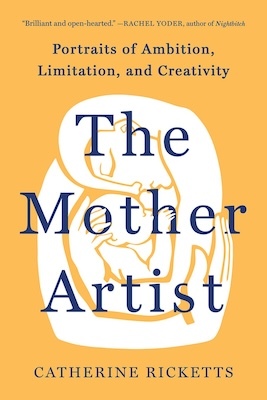
Excerpted from The Mother Artist. Copyright © 2024, Catherine Ricketts. Reproduced by permission of Broadleaf Books. All rights reserved.

The Best Books of Spring 2024, According to Indie Booksellers

This spring has been a glorious and bountiful season for books. To find out which new and forthcoming releases we should be reading, we reached out to indie booksellers across America. Their recommendations cover a broad range of genres, countries, and subject matters. Whether it’s a reimagining of Huckleberry Finn, a cyberpunk space thriller, a story collection for and about the internet generation, or a queer romantasy based on Asian mythology, we have a book for every reader.

Here are the 68 new titles that bookstores across America are raving about this season.

Editor’s note: If you’re a bookseller interested in participating in a future edition of this feature, please email books@electricliterature.com

Memory Piece by Lisa Ko, March 19th

“Which spaces, narrow and wide, are inhabited by the friends that shape us in our youth? Simply: who are we to each other? Everything and ghosts, answers Ko. Three women rotate in and out of one another’s lives in this compelling novel, which begins with their 1980s childhoods and ends in a dark, surveilled iteration of 2040. Each of the three main characters pursues her ambitions relentlessly while the echoes of her friends pulse, again and again, into her present. Anyone who read Lisa Ko’s first book, The Leavers, knows that Ko has a penchant to draw out the unutterable in relationships. Though Memory Piece expands on the author’s deep anxieties, I found reassurance in that each of the main characters keeps the others—somehow—alive.”—Julia Paganelli Marín, Pearl’s Books in Fayetteville, Arkansas

James by Percival Everett, March 19th

“I loved reading James and finally getting to know him. Thanks to Everett’s genius, you can now revisit the wild times of Huckleberry Finn alongside a fully-realized partner for the adventure. A deft commentary on the 19th-century era, this is a wonderful retake on the American classic that puts the story in the hands of the man who deserves the right to tell it. It’s brilliant storytelling and I couldn’t put it down!” —Maggie Robe, Flyleaf Books in Chapel Hill, North Carolina

The Divorcées by Rowan Beaird, March 19th

“It’s the 1950s, we’re in Reno, and we’re getting a divorce. Or rather, Lois is, along with all the women starting their stay at the ranch while they wait out divorce proceedings. This is where Lois meets the mysterious Greer, a woman unlike anyone she’s met before. If you like stories of complex friendship, distrust of men, and a lot of rule-breaking, this one is for you.”—Alex Reinhart, Flyleaf Books in Chapel Hill, North Carolina

Annie Bot by Sierra Greer, March 19th

“Annie Bot is a mind trip that may give you an existential crisis—but in a hot way, like Oscar Isaac in Ex-Machina. Pondering philosophical questions that come with human-created sentience, Sierra Greer examines what control, choice, and ethics look like in the budding AI generation. Equally delightful and enraging, Greer’s acute writing and social commentary, made my circuits whirl like R2-D2’s weeeeeee. A fantastic choice for any book club and English or Philosophy professor’s curriculum.”—RC Collman, Flyleaf Books in Chapel Hill, North Carolina

Fervor by Toby Lloyd, March 19th

“Is it nature? Nurture? Unacknowledged familial trauma? Kabbalah? God? Does it matter? Toby Lloyd’s stunning novel debut feels like a long-lost dream, rippling with uncertainty for the best kind of unsettled reading experience—just after finishing, I wanted to read it all again. In a London, modern Ashkenazi Jewish home, our intersecting narrators offer multiple realities, inviting us to hold them amidst tradition, power, memory with heart-wrenching beauty. Impressively succinct writing that unfolds in the mind like a flower in bloom—the rest of 2024’s reads are up against a powerhouse.”—RC Collman, Flyleaf Books in Chapel Hill, North Carolina

Woman, Life, Freedom created Marjane Satrapi, translated by Una Dimitrijevic, March 19th

“In September 2022, in Tehran, Mahsa Amini was arrested and beaten to death by the morality police for not wearing her hijab properly. Women, men, and schoolchildren rose up in protest all over the country. This is a powerful and important reminder not to forget the people of Iran who continue to suffer under the brutal regime of their own government.”—Tony Peltier, Flyleaf Books in Chapel Hill, North Carolina

The Blues Brothers by Daniel de Vise, March 19th

“Daniel de Vise has a way of writing a biography that reads like a novel—I was fascinated by the backstory of Belushi, Aykroyd, and the iconic movie. It delves into the rise of their careers and the tragic fall of Belushi’s, as well as fun movie trivia and background lore. Loved it!”—Andi Richardson, Fountain Bookstore in Richmond, Virginia

The Woods All Black by Lee Mandelo, March 19th

“It’s queer, it’s hauntingly beautiful, it’s soaked in lust and blood, The Woods All Black is Lee Mandelo taking Southern lit to a new level. An Appalachian based historical horror novella including but not limited to missing fingers, an erratic preacher, a monster that hunts at night, t4t romance, and above all revenge. Always sexy, always suspenseful, and always Southern, Mandelo once again pushes the boundaries of contempory horror and it’s perfect.”—Grace Sullivan, Fountain Bookstore in Richmond, Virginia

The Emperor and the Endless Palace by Justinian Huang, March 26th

“A queer romantasy spanning lifetimes! A tragic but spicy tale of soulmates, weaved together by fate. Asian folklore, myth and magic help to create a sorrowful but beautiful story of two men in love throughout time. There isn’t enough time or character spaces to say how much I love this book and can’t wait to see what else Huang writes next!”—Jaime, Astoria Bookshop in Astoria, New York

The Red Handler by Johan Harstad, translated by David Smith, March 26th

“Perhaps the strangest detective story I’ve ever read this fictional annotated novel is, yes, about how we narrate crime & the limits of language & other very literary ideas, but, ultimately, I think it’s mostly about how important creating is to being human, even when you only create for yourself.”—Josh Cook, Porter Square Books in Cambridge, Massachusetts

Like Happiness by Ursula Villarreal-Moura, March 26

“A searing debut that deftly explores the effects of an unhealthy relationship between a predatory male writer and a young woman on the cusp of adulthood—I couldn’t stop reading it! The characters in this story are all too real, and post #MeToo we see Tatum grappling to understand her story and the abuse she suffered from the toxic man she viewed as her superior for far too long.”—Maggie Robe, Flyleaf Books in Chapel Hill, North Carolina

Glorious Exploits by Ferdia Lennon, March 26th

“A rollicking tale that’s set in a land far away, a long, long time ago. The characters are so fresh, and the setting is so richly detailed, that it completely drew me in and took me along for the ride! It’s an entertaining yet heartfelt story about the power of friendship and how art can be transformative and life-saving.”—Maggie Robe, Flyleaf Books in Chapel Hill, North Carolina

Barons by Austin Frerick, March 26th

“Austin Frerick yanks back the curtain on a truly astonishing collection of violations, legal and moral in the American food system. Portraying seven corporate giants and their journeys to dominance, he details the lack of supervision by regulators in all administrations in the last forty years and the consequences to our national economy, the health of our citizens, and the extensive damage to our environment. Labor violations, animal abuse, bribery of public officials: nothing seems past these people. Despite the dire subject matter, Frerick is able to inject moments of humor and ends the book with sincere hope for change in the future if we are willing to work together to make a difference.”—Kelly Justice, Fountain Bookstore in Richmond, Virginia

We Loved It All: A Memory of Life by Lydia Millet, April 2nd

“Lydia Millet channels a lifetime of environmental advocacy into her first nonfiction book, a furious, wondrous elegy for the shrinking wilderness. In fragmented essays, she tells the story of humanity through the eyes of our fellow animals, connecting the personal and the political, science and myth, capitalism and colonialism, the past and the future. It’s a heartbreaking yet perfect spring read; you’ll be sure to treasure every blade of grass that pushes through the earth.”—Amy Woolsey, Bards Alley in Vienna, Virginia

The Husbands by Holly Gramazio, April 2nd

“What would you do if your attic kept offering up different husbands to try? Don’t like this one’s open-mouth chewing, footwear, hobbies or face? Send him back up! Wouldn’t that be fun…or maybe not? Original, entertaining and laugh-out-loud funny.”—Maggie Robe, Flyleaf Books in Chapel Hill, North Carolina

All Things Are Too Small by Becca Rothfeld, April 2nd

“The minimalist lifestyle had its moment, but I think we have now transition into the next phase where the girl-mathing, daily little treat buying, collectors of dopamine raising trinkets have taken center stage. Through mesmerizing essays of media commentary, literary criticism and personal reflection, Becca Rothfield shines a light on the cultural and emotional cost of minimalism, and how the things that are over the top, and even unnecessary, are the things that may matter the most.”—Emma, Porter Square Books: Boston Edition in Boston, Massachusetts

The Rule Book by Sarah Adams, April 2nd

“Cinnamon crunch cereal on ice cream, one night in Vegas, and a list of rules meant to be broken, The Rule Book will have even the biggest pessimist believing in second chances. I found myself in the middle of Nora and Derek’s work relationship, rooting raucously for both teams.”—Kenzie Hampton, The Bookshop in Nashville, Tennessee

Women! In! Peril! by Jessie Ren Marshall, April 2nd

“Jessie Ren Marshall is a remarkable storyteller! The women in these twelve stories each struggle against their own peril, be it the loss of love, loss of freedom, loss of power, or loss of life. The stories range from absolutely absurd to merely heartbreaking; each one unique and inventive and full of bittersweet magic.”—Tony Peltier, Flyleaf Books in Chapel Hill, North Carolina

Here We Go Again by Alison Cochrun, April 2nd

“Once again, Alison Cochrun made me sad cry and happy cry within just a few chapters and I loved it! This book tells us how Logan and Rosemary went from childhood besties to enemies to adversarial colleagues when they returned to their hometown to teach at their former high school. They share a mentor who has terminal cancer and when he insists that the three take a road trip to fulfill a few bucket list items, they’re thrown together once again. As they travel across the country, every detour brings them closer together despite their past. A touching tale of mental health, grief, and coming into one’s own, this will have you feeling all the feelings.” —Andi Richardson, Fountain Bookstore in Richmond, Virginia

The Garden by Clare Beams, April 9th

“Creep-tastic and dreadful (in the best possible way!), I couldn’t stop reading this story of pregnant women trapped in a Hill House/Mexican Gothic-style nightmare. As they work to wrest control of their bodies from an increasingly desperate doctor, the true horror of their deal-making reveals itself.”—Maggie Robe, Flyleaf Books in Chapel Hill, North Carolina

Short War by Lily Meyer, April 9th

“Imagine if Ann Patchett, fresh off a Bolaño re-read and a feverish plowing through ’70s political thrillers, sat down to write a saga in which a government’s secrets and a family’s secrets were the same secrets, and then, first draft completed, streamed Enemy of the State on a loop for a week. Reader, that’s not your imagination. That’s Short War, Lily Meyer’s knockout debut. Please read.”—Gregory Kornbluh, Downbound Books in Cincinnati, Ohio

A Really Strange and Wonderful Time by Tom Maxwell, April 9th

“A beautifully written tribute, documentation and exploration of the Chapel Hill-Carrboro, North Caroline (and environs) indie music scene in the decade leading up to Y2K. The scope of what Maxwell covers is impressive: musical personalities- musicians and bands, yes but also the producers, promotors, WXYC DJs and station managers, the labels big and small- Merge, Mammoth, and others. The migrations and importance of clubs like Cat’s Cradle and Local 506, recording studios (The Yellow House!), the rise of the internet and streaming radio, Maxwell illustrates the importance of the local ecosystem- the ‘zines and copy shops (Kinkos, Copytron) and then, ultimately, the internet and the changing of music distribution. A fantastic read on many levels, whether you want to revisit the bands (Superchunk, Squirrel Nut Zippers, Pipe, The Veldt, Ben Folds Five, The Pressure Boys, Sex Police) or just understand how a small community turned out some kick ass music. An illustration of how indie music created a magical third place, coined by sociologist Ray Oldenberg as ‘a place where people meet, exchange ideas, have a good time and build relationships.’ An eloquent honoring of a place and time where indie rock was paramount and the community was passionate for it.”—Jamie Fiocco, Flyleaf Books in Chapel Hill, North Carolina

The Familiar by Leigh Bardugo, April 9th

“New Leigh Bardugo? Yes, please! Her Grishaverse series made me a fan for life, and The Familiar has me ready to dive into the Spanish Golden Age. This one is not to be missed!”—Rachel Ford, The Bookshop in Nashville, Tennessee

Late Bloomer by Mazey Eddings, April 16th

“The best romances indulge parts of ourselves that really want every meet to be freaking cute—making us ask ‘if I’m not making the sappiest part of me happy, what am I really doing?’ When I bet on loving Mazey Eddings’ romances, I always win—this time delivering a relatable, sweet, and gooey queer romance that will make your tenderest parts blush. This is a deliriously sapphic, endearingly punny, neurodivergent love letter to taking time in letting love root, grow, and bloom (sorry).”—RC Collman, Flyleaf Books in Chapel Hill, North Carolina

Woke Up No Light by Leila Mottley, April 16th

“What I hope is the beginning of a Leila Mottley renaissance, woke up no light is a poetry collection that solidifies Mottley’s status as one of our time’s best new young writers. Split into four sections defined as girlhood, neighborhood, falsehood, and womanhood, Mottley’s poetry reads as tender yet raw, her musings especially on womanhood and coming into your own are glittering pieces of writing that any reader can acknowledge are full of both heart, hardships, and truth. A remarkable collection for people looking to get into poetry, or for the established readers of the genre!”—G Sullivan, Fountain Bookstore in Richmond, Virginia

Tenderloin by Joy Sorman, translated by Lara Vergnaud, April 16th

“We love our animals and we also eat them. This is the central conceit of Joy Sorman’s Tenderloin, translated from the French by Lara Vergnaud. Tenderloin examines the meat packing and processing industry through the eyes of Pim, an unnaturally lanky apprentice butcher with graceful hands and a penchant for crying uncontrollably. With prose that oozes and drips and spurts like blood from an open wound, Sorman probes the intersection of beauty and disgust, explores the power dynamic inherent in carnivorism, and reminds us that, in the end, we’re all just meat.”—Charlie Marks, Fountain Bookstore in Richmond, Virginia

Muse of Fire by Michael Korda, April 16th

“A novel perspective on ‘the war to end all wars.’ Korda examines World War I through the lives of the soldier poets that fought and died, whose poetry provided the most open, honest interpretation of the atrocities committed for the sake of patriotism. Korda narrows his focus to the lives of six individuals, who stand both in stark contrast to and in concert with the 25,000,000 human beings that lost their lives in the war. A combination of both literary analysis and historical scholarship, Muse of Fire is a poignant and powerful read.” —Charlie Marks, Fountain Bookstore in Richmond, Virginia

Ocean’s Godori by Elaine U. Cho, April 23rd

“As someone who’s recently put many, many hours into Cyberpunk 2077, the tone of this debut, futuristic space novel hit the spot. We follow ace pilot and sharpshooter Ocean, a disgraced member of a governing organization called the Alliance; her best friend and heir to a tech empire, Teo; a new med bay recruit from a planet that specializes in death and funerary rites; and two sets of tightly-knit, found-family space crews––one under the Alliance, the other a group of rogues led by a charismatic captain––as they find themselves wrapped up in an intergalactic political conspiracy that asks questions about capitalism and colonialism. If you love Han Solo as a character, you’ll dig Ocean’s Godori.”—Destenie Fafard, Timbre Books in Ventura, California

The Backyard Bird Chronicles by Amy Tan

The Backyard Bird Chronicles celebrates life on the porch. Amy Tan remarkably observes and draws the vibrant bird life that graces her backyard in this published form of her journal. A must read for all birders and porch sitters!”—Ashley Kilcullen, The Bookshop in Nashville, Tennessee

Funny Story by Emily Henry, April 23rd

“Daphne’s love story was one fit for the books, but then again so is the scandalous story of her break up that leads to her splitting rent on an apartment with the ex-boyfriend of her ex-fiance’s childhood-friend-turned-new-girlfriend. Yeah, if you thought that sentence was rough, imagine living it. Daphne is now stranded in a small town in Michigan that she never intended to move to, without family or friends, but at least she has a job she loves as the local children’s librarian.

Emily Henry’s tales always remind me of a ’90s rom com in the best ways. Spring is absolutely the time to dive into this sweet little romance that will guide you right through summer and hit all of the great tropes: opposites attract, fake dating, found family, the works. It’s not so easy though, Daphne has some things to work through when it comes to accepting love of all kinds and learning to trust others.”—Randi Null, Brazos Bookstore in Houston, Texas

Food School by Jade Armstrong, April 23rd

“A book hasn’t made me cry in a long time. But this one? It tore me open and shone a light on all my most shameful thoughts. Seeing my feelings so clearly reflected back at me was hard. But it made me really proud of my (and Olive’s) progress. I’m not ashamed of who I am, or what I’ve overcome. I hope that this book can be a flashlight for someone else too.”—Jamie Kovacs, Flyleaf Books in Chapel Hill, North Carolina

Into the Quiet and the Light by Virginia Hanusik, April 30th

“This powerful book about land loss and the destruction of the historically rich and abundant landscapes of southeastern Louisiana is a stunning call to action. Alongside what are often haunting anything-but-still-life images of built landscapes by Hanusik are moving essays, poems, vignettes, and histories of the region, many by and about the indigenous protectors and cultivators of the land, and the descendants of formerly enslaved Black Americans who’ve worked the disappearing marshes for centuries. After Hanusik foregrounds Into the Quiet and the Light with a background of the history of exploitation of natural resources by colonial powers in Louisiana dating back to the seventeenth century, her book soars into the present with the juxtaposed beauty of a land and its peoples against the omnipresent force of destruction and greed from the petrochemical industry and its forebears of global capitalism, racism, and all else that fuels climate catastrophe.”—Charlie Jones, A Room of One’s Own in Madison, Wisconsin

One of Us Knows by Alyssa Cole, April 30th

“I love this book, which is a surprise to absolutely no one. Alyssa Cole’s thrillers remain some of my very favorites and this is no exception. It has the biting commentary I loved from When No One Is Watching and adds ghosts! Ken deals with Dissociative Identity Disorder (‘multiple personalities’) and she is shocked to awaken on her way to a new job on a very creepy island as the caretaker of a near-abandoned castle. Having missed the entire world’s events since 2016 (we should all be so lucky) she struggles to find out what is going on in the world and on this Hudson River island. Equal parts witty and scary, this will keep you turning pages late into the night. Another stunner from the twistery queen!”—Andi Richardson, Fountain Bookstore in Richmond, Virginia

Bitter Water Opera by Nicolette Polek, May 1st

“Gia is lost in her world, she’s aimlessly going through life trying to find something that’ll ground her, so when she stumbles across the story of Marta Becket she becomes enthralled. Becket was a Broadway dancer who while traveling through the Mojave Desert stumbles across a dilapidated theater she makes into her own personal opera house. After crafting a letter to the deceased Becket, the woman appears at her doorstep the next day. An addicting debut novella with sentences that come to life and dance on the page like the main women in this book, Bitter Water Opera is a dreamlike journey that delves into art, faith, loneliness, and the creative spirit all in one neat bow-adorned package.”—G Sullivan, Fountain Bookstore in Richmond, Virginia

The Dead Don’t Need Reminding by Julian Randall, May 7th

“In The Dead Don’t Need Reminding, Julian Randall deftly weaves pop culture references with deeply internal examinations of self, queerness and lineage in an attempt to better understand the racist event that drove his family out of the south generations prior. It’s a book for Black folks, for Black queer folks, that allows equal space for our grief and our joy—for our niche interests, our obsessions, and our celebrations—which is as beautiful as it is devastating. Trust me when I say Julian Randall’s nonfiction debut should be next up on your TBR.”—Leah Johnson, Loudmouth Books in Indianapolis, Indiana

Sipsworth by Simon Van Booy, May 7th

“After the deaths of her husband and son, the elderly Helen Cartwright comes home after 60 years to the English village where she grew up. She is merely marking time awaiting her own death by filling the days with meaningless routines. On a freezing cold winter’s night, she encounters a mouse in her apartment. At first intent on dispatching it, she has second thoughts. What follows this simple encounter is a spring blossom of a story! No matter how old we get, how set in our ways, our personal tragedies: there is always hope. That is what Sipsworth’s pages spoke to me. I never leave a Simon Van Booy book without being deeply changed. That is the highest compliment I can give any writer.”—Kelly Justice, Fountain Bookstore in Richmond, Virginia

The Novices of Lerna by Angel Bonomini, translated by Jordan Landsman, May 7th

The Novices of Lerna is a dazzling short story collection introducing Angel Bonomini—a mid-century Argentinian writer and contemporary of Jorge Luis Borges—English readers for the first time. Touching on ideas of shared consciousness, isolation, and identity, Bonomini’s absurd and fantastical prose holds a mirror up to the reader and urges them to look inward. The Novices of Lerna is a profound examination of the relationship between authority and individualism that has only grown more relevant since its original publication.”—Charlie Marks, Fountain Bookstore in Richmond, Virginia

The Ministry of Time by Kaliane Bradley, May 7th

The Ministry of Time is a fun, sexy, action-packed yet emotional novel that had me absolutely hooked from the first page. Time travel! Spies! Romance! Mystery! Plus some good ol’ bureaucracy and workplace comedy with some of the most charmingly endearing characters you’ll ever meet. Trust me, this book will be your newest obsession but be forewarned—you will develop a massive crush on a certain Victorian polar explorer. Kaliane Bradley has created something truly extraordinary and fresh in this speculative novel that explores biracial identities, generational and inherited trauma, and so much more, all while being a twisty page turning tour de force. Buckle up and enjoy the ride and the beautiful writing. This is one of the books of the year that everyone will be talking about!”—Christine Bollow, Loyalty Bookstores in Washington, DC and Silver Spring, Maryland

The Skunks by Fiona Warnick, May 7th

“Back in her hometown after graduation, Isabel spends the summer housesitting, dipping her toes into the murky pool of independent adulthood. While she grapples with the vast expanse of future before her (how to find purpose? who to kiss? how to fill the interminable hours? is it possible to hold on to your favorite parts of your younger self and still become something new?), a trio of young skunks plod across the borrowed home’s backyard, eating beetles and finding their own way. A meditative, funny, hopeful little story that lodged its tiny claws directly into my heart.”—Talia Smart, Flyleaf Books in Chapel Hill, North Carolina

April May June July by Alison B. Hart, May 14th

“Four siblings must confront each other and the past to move on from trauma in their teens, so that they can live honest lives with a chance at celebrating the future together.”—Maggie Robe, Flyleaf Books in Chapel Hill, North Carolina

Woodworm by Layla Martinez, May 14th

“Some books are polite when they invite you in: they hold the door, offer refreshments, let you poke around as you please for a few pleasant afternoons and then bid you farewell as you head back out into the big bright world. Woodworm doesn’t do this. It draws you in and then slams the door behind you, sealing you inside a madhouse labyrinth of chattering shadows. This is fitting, as Woodworm is a novel about traps: generations of women trapped in a house beset with ghosts and insectoid angels; a village trapped by poverty; far too many girls trapped inside the purgatory of disempowerment and violence against their bodies; and the final trap: that little worm of uncontrollable rage that burrows its way inside your guts and never lets you sleep while your enemies live… I literally gripped this book so tightly that I bent its cover. Part of me will remain within its pages for a long, long time.”—Charlie Monroe, Flyleaf Books in Chapel Hill, North Carolina

Blue Ruin by Hari Kunzru, May 14th

“Hari Kunzru is one of my favorite writers. His alchemical style produces novels that are somehow page-turners and deep ruminations on the political and philosophical mores of the contemporary world. In Blue Ruin, Kunzru takes on both the art world of London in the ’90s and the bizarre time/still days that were the summer of 2020. Confronted with their past selves, three art school friends must reckon with the meaning & purpose of making art ; how it intersects with authenticity, success, vision, money, survival, and truth. A joy to read.”—Elese Stutts, Flyleaf Books in Chapel Hill, North Carolina

All Fours by Miranda July, May 14th

All Fours is a wild (really wild), unexpected ride told with all of the quirk, intelligence, and irreverence July’s readers have come to expect (and relish).”—Joelle Herr, The Bookshop in Nashville, Tennessee

Rednecks by Taylor Brown, May 14th

“If I didn’t already trust Taylor Brown’s talent and heart as a writer, I doubt I would have picked up a book with the title Rednecks with an open mind. And there is the lesson in this powerful, eye-opening book. Based on the Battle of Blair Mountain in 1920s, real-life and invented characters portray a shameful moment in American history where 10,000 coal miners of different races, speaking different languages, having different faiths stood against their oppressive bosses in the largest labor protest in U.S. history. The coal barons pressured lawmakers to send troops to drop bombs on and shoot at these adults and children essentially in bondage. The origin of the term ‘redneck’ is detailed here… and it’s not what you think.”—Kelly Justice, Fountain Bookstore in Richmond, Virginia

My First Book by Honor Levy, May 14th

“Where to begin with Honor Levy’s aptly named debut, My First Book. A story collection for the passive Reddit scroller, your local barista who lives three different lives between making your iced oat milk chai, that one friend who can’t hang out because their Depop is blowing up, and everyone in between. A premier voice of a new generation of writers, Levy doesn’t hold back any punches or niche internet moments with this one. There’s an art to this style of writing, through the many memes, <3’s, and Twitter cultural touchstones that make up these stories, Levy’s vulnerability and insightful reflections on growing up online are what made this for me and shine through.”—G Sullivan, Fountain Bookstore in Richmond, Virginia

Cactus Country by Zoe Bossiere, May 21st

Cactus Country is all about landscape: of Arizona and the hot desert, of childhood and its constant developments, of gender and its fluidity. Zoe Bossier is sharing a much needed story of a childhood outside of the gender binary in a world built to misunderstand that. Bossier astutely and tenderly dives into hard to talk about topics—masculinity, assault, mental health, poverty, transphobia, and so much more. You’ll fall so easily into Bossier’s writing and you won’t turn away when things get hard—Zoe is there to gently guide you through the path forward.”—Frances Metzger, Country Bookshelf in Bozeman, Montana

Lost Ark Dreaming by Suyi Davies Okungbowa, May 21st

“The brutally engineered class divisions of Snowpiercer meets Rivers Solomon’s The Deep in this high-octane post-climate disaster novella written by Nommo Award-winning author Suyi Davies Okungbowa. This action-packed novella takes place across one day, with beautifully engaging writing and vivid world building.

My absolute favorite part of the book is the way it treasures storytelling, the weight stories hold, and the freedom that awaits if we are willing to remember and believe them. It reminds us that the people who should hold respect in our societies are those who keep our stories and pass them down to preserve the truth and history of how we came to be. Without storytelling, so many of us would not know who we are, who we were, or who we are destined to be. This novella is an absolute must-read for 2024!”—Su Kim, Old Town Books in Alexandria, Virginia

Coexistence by Billy-Ray Belcourt, May 21st

“A stellar short story collection that blew me away when I read it earlier this season. It is cliché to say that ‘I can’t stop thinking about this book,’ but I truly cannot stop thinking about all the expertly interwoven themes of relationships, communities, and shaping of personal narratives that flow through each piece (especially the story ‘My Diary’, one that I have gone back to numerous times since finishing the collection).”—Taylor Carlton, Brazos Bookstore in Houston, Texas

Shae by Mesha Maren, May 21st

“What a gorgeous gut punch of a book! Maren has outdone herself with her third novel; I was in love from the first page. In an almost epistolary style, Shae takes us through her history with Cam—from friend to lover to something else—in small-town Appalachia. Hints drop to show us that things go south fast even as Cam and Shae experience the rush of first love. I could tell things wouldn’t end well from the start but I couldn’t put it down until I knew what happened to Shae, Cam, and Eva. Maren’s prose will break your heart even while you stop to soak in its beauty. Readers of Karen Tucker’s Bewilderness will love this story of being young, queer, and addicted with no way out. Do not miss this book.”—Andi Richardson, Fountain Bookstore in Richmond, Virginia

I Hope This Finds You Well by Natalie Sue, May 21st

“What a stunner of a book! This is the story of Jolene, a disgruntled office admin employee for Supershops, Inc. Disliked at the office and under pressure from her Persian mother to settle down, she takes out her frustrations in hidden email text that her coworkers can’t see—until they can. When a mistake grants her access to the entire staff’s emails and DMs, she makes a desperate plan to save her job. This has so many layers of emotions! I went from laughing out loud to tearing up, to heart swells of happiness. Sue’s debut is fresh and original and I can’t wait to see what she does next.”—Andi Richardson, Fountain Bookstore in Richmond, Virginia

The Guncle Abroad by Steven Rowley, May 21st

“I will read as many books about the Guncle as Rowley will write! The second installment in the tale of Patrick and his family brings just as much joy and love as the first one! Set five years after The Guncle, Patrick and his beloved niece and nephew are now touring Europe on the way to their father’s wedding to a rich Italian woman. Maisie and Grant aren’t too sure about the match and ask Patrick to talk some sense into his brother. As he tries to teach the kids about the many forms of love, he’s also battling with his sex-crazed sister and the new Launt (you can guess) trying to usurp the kids’ love. Another stunner that will make you smile and cry at the same time.”—Andi Richardson, Fountain Bookstore in Richmond, Virginia

I’m a Fool to Want You by Camila Sosa Villada, translated by Kit Maude, May 28th

“Villada’s short stories in I’m a Fool to Want You blew me away. Nine stories contain entire lives and mythologies in the span of a few pages. Her writing surrounding trans women and sex work is unflinching and so real. These tales of violence and queer love and life are an essential contribution to trans Latine literature.” —Charlie Jones, A Room of One’s Own in Madison, Wisconsin

A Good Life by Virginie Grimaldi, translated by Hildegarde Serle, May 28th

“Emma and Agathe, two sisters in France spend the summers with their Mima and Papi in the Basque Country on the sea. Chapters rock back and forth like the waves of the ocean: between timelines past and present and from each sister’s point of view. Emma is older, strong, and responsible. Agathe is fragile, wild, and careless. Life at home promises no safety or comfort. They rely on each other during the summers. Siblings fight and sometimes it takes a long time to make things right. Lovers of Europa Editions’ other titles My Brilliant Friend and Fresh Water for Flowers will fall hard for this beautiful, heartbreaking, and healing story. Grab a box of tissues!”—Kelly Justice, Fountain Bookstore in Richmond, Virginia

The Fireborne Blade by Charlotte Bond, May 28th

“If you are looking for a new epic fantasy, but don’t have time for a 500+ page tome, try The Fireborne Blade, the first in a new series of fantasy novellas by author Charlotte Bond. This is an action-packed story following Maddileh, an uncommon woman knight, on her quest to retrieve the titular sword from a dragon’s lair. Bond packs so much worldbuilding into this little novella, supplementing readers with the world’s folklore and history surrounding dragon-slaying knights in unique interspersed chapters, which only makes the story feel more full and all-encompassing than it already is.

Fans of Nicola Griffith and Marie Brennan will love this one with its renowned magic system and chilling characters. The second book in the series will be releasing in October, so not long to wait!”—Mallory Sutton, Bards Alley in Vienna, Virginia

Evocation by S.T. Gibson, May 28th

“David Aristarkhov is cursed, a demon on his heels and in his mind. A gifted psychic in his own right, he comes from a long line of mediums and magic wielders, which may also be the origin of his curse. His only allies happen to be his estranged ex, Rhys, and Rhys’ wife Moira, who have every reason not to help him. Evocation was a breathless character study in vulnerability and resilience, in finding aid in others, and magic bonds worth savoring. I adored it.”—Jordan April, Flyleaf Books in Chapel Hill, North Carolina

Bright and Tender Dark by Joanna Pearson, June 4th

“A compulsive literary crime thriller in the vein of Rebecca Makkai’s I Have Some Questions for You. The seedy college-setting seethes both in the past and the present, and the cold-case murder of an It Girl highlights the haunting loss of youth, faith, potential and identity through a memorable cast of characters.”—Maggie Robe, Flyleaf Books in Chapel Hill, North Carolina

Fire Exit by Morgan Talty, June 4th

“This is a book to be devoured, not read. Charles Lamosway, a white Maine resident who grew up on the Penobscot Reservation, knows more than anyone the importance of blood. He’s spent his life questioning his identity and his place in the world—never knowing his biological father, emotionally removed from his severely depressed mother, and closest to his Native stepfather. A secret pregnancy with a childhood friend further cements his estrangement from the communities around him, leaving him isolated and adrift. Now at a crossroads at the midpoint of his life, he can no longer avoid confronting the traumas of his past if he wants to move forward. Through a brilliantly crafted story about family, legacy, and love, Morgan Talty examines the complexity of identity with incredible insight and depth.”—Melissa Sagendorph, Harvard Book Store in Cambridge, Massachusetts

youthjuice by E K Sathue, June 4th

“New imprint Hell’s Haunted is starting off strong with one of their flagship titles! A dark, sardonic look at the beauty industry, youthjuice tells the tale of Sophia, a new employee at wellness giant HEBE. Their new product is producing amazing results but the process behind the miracle formula of youthjuice is unclear—and possibly darker than anyone realizes. As Sophie gets drawn deeper into the world of HEBE, she’s willing to throw away anything to stay youthful and happy forever. Will she be able to get out before it’s too late, or will her desire for eternal beauty be hew downfall?”—Andi Richardson, Fountain Bookstore in Richmond, Virginia

Triple Sec by TJ Alexander, June 4th

“It’s pretty much guaranteed that I am going to love anything TJ Alexander writes. Their latest is the sweet and sexy story of Mel, a New York bartender that doesn’t fall in love. Enter Bebe, free-spirited lawyer. The two hit it off immediately and as Mel is reconsidering her no-falling-in-love rule, she learns about Bebe’s spouse Kade. Their open relationship allows Mel and Bebe to start dating, even though Kade and Mel don’t really seem to mesh—or do they? We need more poly rep in books! This sheds light and understanding on a little-talked-about concept and shows that joy and love exist in so many forms.”—Andi Richardson, Fountain Bookstore in Richmond, Virginia

Such a Bad Influence by Olivia Muenter, June 4th

“Influencer Muenter writes an it-could-happen-here tale of what happens when a young woman who grew up on social media comes of age. Evie has been online for as long as she can remember, growing from a cute kid who lost her dad early in life to a beautiful young woman with a huge social media following. When she disappears during a live video, her older sister Hazel is frantic. Old family secrets come out as family and police search for Evie—can they find her before tis too late? I loved this sharp commentary on what is too much to put online and what happens when you cross the line.”—Andi Richardson, Fountain Bookstore in Richmond, Virginia

Stories Are Weapons by Annalee Newitz, June 10th

“I love Annalee Newitz’s mind. They write clearly and accessibly about incredibly complex topics. This book ties together historical threads from the past 250 years, showing how the American government and its people fight proxy battles through competing narratives. This has played out in wars and the international stage as much as Twitter and Reddit. Newitz reveals how we’ve arrived in this uniquely terrifying moment, and where we can go from here.”—Nino Cipri, Astoria Bookshop, Astoria in New York

Out of the Sierra by Victoria Blanco, June 11th

Out of the Sierra will undo and challenge all of your expectations of nonfiction. A story collected through oral history and first hand encounters, this book captures a history of a people who have long withstood being catalogued by western history standards. Though it makes no direct reference to these things, simply by existing and sharing this story, Out of the Sierra stands in opposition to colonialism, capitalism, climate change, patriarchy, and white supremacy. This book exudes the beauty that is indigenous way of life, and the horrors that occur when the violence of whiteness forces its way into the narrative.”—Frances Metzger, Country Bookshelf in Bozeman, Montana

Margo’s Got Money Troubles by Rufi Thorpe, June 11th

“I adored this glittering jewel of a book—multifaceted like the tackiest, most gorgeous Vegas rhinestone, twinkling with heart and light. It’s funny as hell, delightfully crass (we’re talking professional wrestling and Arby’s here, folks), with all the swoony scenes and real friendships and thorny family dynamics of a great beach read *but also* a clever metaplay on narrative structure in fiction. MFA stuff baby!

Margo is a total gem—is she 20 years old, showing her titties on the internet to pay her rent and take care of her new baby? Yes, and we love her for it. Her dad, Jinx, former professional wrestler and current personal quagmire, is a delight. I could go on and on. It’s a damn treat.”—Stef Kiper Schmidt, Water Street Bookstore in Exeter, New Hampshire

Not In Love by Ali Hazelwood, June 11th

“This is my second Hazelwood read and I am as charmed as I thought I’d be. Rue and Eli are on opposite sides of a brutal corporate battle for Rue’s employer. Tension builds as they try to fight their deep attraction while remaining professional in public and the results are explosive! I’m officially a card-carrying Hazelwood fan now.”—Andi Richardson, Fountain Bookstore in Richmond, Virginia

Rakesfall by Vajra Chandrasekera, June 18th

Rakesfall is a heady and cerebral tale of love, loss, colonialism, entanglement, ghosts, and time. As Earth orbits the Sun, Annelid and Leveret orbit each other in an eternal dance of love and teeth, skin and violence. Chandrasekera’s world has the bite of a blade and the fluid intangibility of a spirit, leaving an ache that thrums through the centuries. From a vicious drama detailing the conquest of Sri Lanka, to a ghost moldering in the walls of a dead city, to a murdered planet’s staggering rebirth, to a demon in the plantation-haunted woods; the saga that unfolds in these pages is as unique as it is mesmerizing.”—Jordan April, Flyleaf Books in Chapel Hill, North Carolina

The Art of Catching Feelings by Alicia Thompson, June 18th

“Thompson knocks it out of the park again (see what I did there?) with this adorable new baseball romance! Daphne is having a particularly bad day when she audibly heckles Chris during a game. Not understanding that her silly insult hit deep on a personal level, she apologizes via DM after the video of Chris crying goes viral. The only trouble is—she forgets to tell him why she’s sorry. I was so tense while I read this, knowing the truth would come to light at some point and when it did it hit me hard right along with Daphne and Chris. This is going to be a delight of a summer read!”—Andi Richardson, Fountain Bookstore in Richmond, Virginia

8 Personal Stories That Use Horror as a Lens

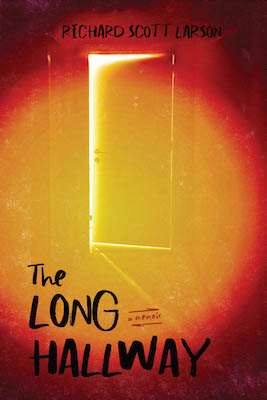
Horror has always been deeply personal to me. Our obsessions can often come to structure and shape our inner lives while at the same time rendering the most intimate parts of ourselves illegible to those who don’t share them, and my love of horror as a child was a kind of closet where I could hide before I understood that I was already living in one as a queer boy who wanted nothing more than to the conceal desires I believed marked me as a monster. My memoir, The Long Hallway, uses the language of horror to construct a critical frame around my coming-of-age and family story. The familiarity of the genre becomes a narrative scaffolding that brings with it a universal vocabulary to describe experiences of isolation, fear, hopelessness, and shame, which to a closeted kid are the ingredients of a daily life in which survival is the only imperative.

I watched John Carpenter’s Halloween relentlessly as a child during the years in which my family broke apart while father succumbed to alcoholism and I faced my own demons in front of the television screen, and I realized later that I inadvertently allowed the film’s characters and events to become a guide for how to understand the world, as well as what my own place in it would ultimately be. The memoir that emerges from my misguided queer education—through my identification with a masked, knife-wielding villain chasing down hyper-sexualized teenagers—grafts scenes of personal experience onto the structure of Halloween, and thus allows the genre conventions of horror to say out loud and more clearly what I couldn’t when I was learning and reckoning with these unwanted truths about myself.

I’ve encountered various other personal stories told through the lens of horror, either before or during the construction of my own, and I now understand more deeply how the genre can both inflect and infect our experiences of the world, especially as queer and marginalized writers attempting to universalize an experience that we once believed only we could ever understand. Horror gives us a lineage of tropes and terminology with which to describe the things that haunt and frighten us—the things we dread the most—which so often reflect elements of our personal histories back to us, metaphorically or otherwise. And these are some of the books that helped me understand how writing about horror can be a way of writing about ourselves.

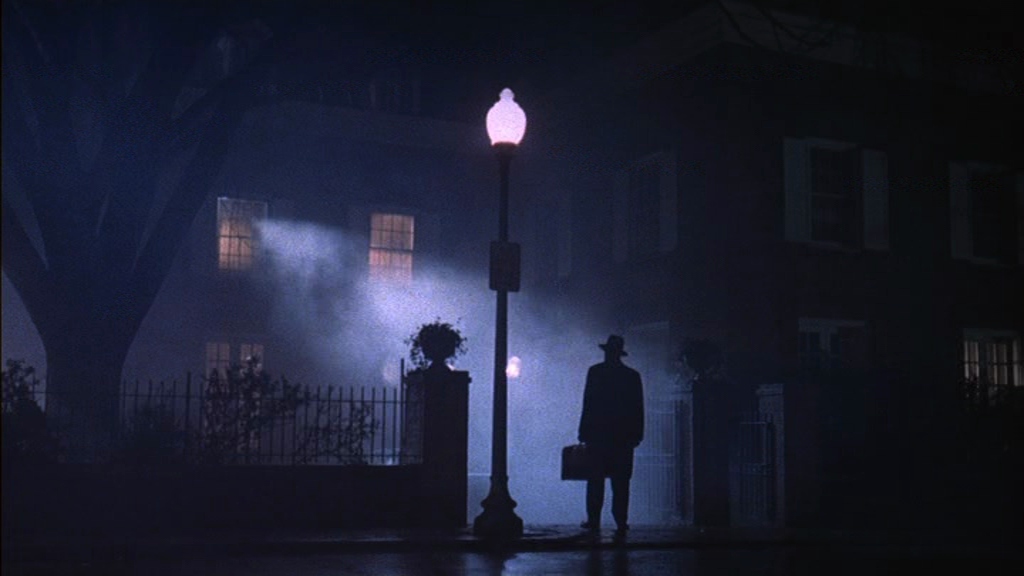
Night Mother: A Personal and Cultural History of The Exorcist by Marlena Williams

Night Mother offers exactly what its subtitle suggests, as this memoir-in-essays serves up a blend of memoir, criticism, and reported history regarding the original production and reception of The Exorcist in popular culture as Marlena Williams explores complex ideas regarding faith, family, sexuality, womanhood, and grief. “The Exorcist, when you really get down to it,” Williams writes, “is just a story about a mother and a daughter.” The personal obsession at the book’s core is her relationship with her own mother before and after the latter’s death from cancer, as well as how the two women’s powerful responses to William Friedkin’s iconic film connected and bonded them forever. Horror works here as a shared experience and collective memory giving voice to distinct fears and preoccupations, and the film functions now for Williams as a family heirloom of sorts, a site of reckoning with the past as she forges a future without her mother to guide her.

This Young Monster by Charlie Fox

As a young writer raised on the iconography of genre films and having formed a worldview based on imaginary worlds that reflect our own in sometimes frightening or shocking ways, Charlie Fox’s essays diagnose a history of queerness and monstrosity: “Being bad in art, stimulating outrage or horror, is just another way of behaving monstrously (cathartic? Oh yes!) and a role to live up to when society proclaims your desires to be ‘sinful.’” Fox’s voice is mostly critical and intellectual until it suddenly isn’t, and the way he portrays his younger self learning about the world through popular culture is striking evidence for his broader claims. “Self-Portrait of a Werewolf” takes the form of a letter written to the titular monstrous shape-shifter and interrogates Fox’s early obsession with the archetype, directly asking probing questions about its expansive influence on the world beyond the screen: “I’m through with thinking of the monster as a wholly negative role, which is your curse, since you live in wait for a love that will probably never arrive.” There’s a restless and brilliant mind at work in these pages that brings the world of the popular imagination alive in completely new ways.

Night Rooms: Essays by Gina Nutt

Gina Nutt’s Night Rooms is an exquisite essay collection that centers the idea of escape as a presiding principle, not just in form—as these essays break from conventional expectations in provocative ways—but also in content. In these pages, the grounding conventions of horror films serve as handholds as the narratives circle around themes of the body and grief and survival. All the while, something sinister lurks in the white space between the paragraphs, an unnamed threat that’s felt rather than seen. Nutt orbits traumatic personal experiences, including family deaths by suicide, with a poetic reliance on imagery and suggestion to convey the reality of her life’s shocks and their reverberations. Horror becomes a telling touchstone to link these essays together, because what is horror if not the deliberate recasting of our greatest fears and traumas into entertainment, making something meaningful from what is otherwise just darkness?

Ghostland: In Search of a Haunted Country by Edward Parnell

Film and literature of the ghostly and supernatural can evoke other reckonings beyond those based on identity and belonging, as Edward Parnell demonstrates in Ghostland, a deeply moving meditation on grief and loss. In the context of revisiting the horror stories that had once perhaps incongruously provided him with a kind of comfort in his youth, he now asks them to do the same for his haunted adulthood. Deceptively a survey of canonical horror stories that have been meaningful to him over time, the book’s autobiographical elements ultimately provide a deeper and incredibly heartbreaking relationship with what the ghost story really is: a visitation from the past that can never again be made flesh, and in this case also a reminder of devastating personal losses that can come to define us for as long as we remain among the living.

In the Dream House by Carmen Maria Machado

“The memoir is, at its core, an act of resurrection,” writes Machado in the opening pages of In the Dream House, an innovative account of her experience of domestic abuse that embeds her personal story within an extensive cultural history. The book is structured as a series of brief sections titled after various tropes—many of them from horror film iconography, such as “Dream House as Creature Feature,” “Dream House as Haunted Mansion,” “Dream House as Demonic Possession,” “Dream House as Apocalypse,” and “Dream House as Nightmare on Elm Street”—expressing elements of her time in a house in Indiana where her girlfriend lived during most of the duration of their relationship while Machado was a graduate student in Iowa. Her story is punctuated by harrowing moments of conflict that feel, because of their specificity, almost uncannily familiar. Readers come to inhabit her mind so wholly that the claustrophobia of her relationship with this other woman is made present first in the mind and then in the body, a cancer spreading quietly beneath the skin.

With Bloom Upon Them and Also With Blood by Justin Phillip Reed

Much is made of the “poet’s novel,” a genre in which prominent poets bring their careful lyricism to book-length fictional prose and inevitably reach a broader audience while also attending faithfully and fervently to the rigor of their craft. But there should perhaps be more attention given to the poet’s essay(s) as well. Justin Phillip Reed has been widely celebrated for his experimental body of poetry that centers its speaker’s urgency and frequent rage about white supremacy, the suppression of queer sexuality, the trap of masculinity, and the politics of Blackness in America, and the essays collected here orbit similar concerns in the context of popular horror films. “What is it I want from horror?” Reed asks. “What does it want with me? What is it?” And he proceeds to both answer and deepen these questions by interrogating images from popular horror films against their cultural origins—Drew Barrymore’s lynched body dangling from a tree is one striking example—and ultimately concludes with another question: “What if horror is not yet for Black people?”

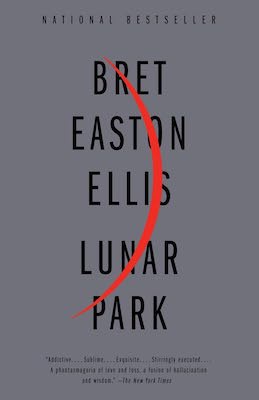
Lunar Park by Bret Easton Ellis

Hear me out: I know this is a novel, but the fact that Ellis superimposes a horror narrative onto a mock memoir—in which the author channels his own real-life career and hedonistic excess into a (non-auto)fictional exploration of his earlier body of work literally coming back to haunt him as he enters middle age—speaks volumes about the genre’s capacity to reframe lived experience into a terrifying odyssey toward self-recognition, and perhaps a kind of peace. In the novel, the character of Bret Easton Ellis attempts to reconnect with a former lover and the son they share together, and in doing so launches himself into a bizarre and frightening world that is perhaps, in the end, one of his own making, as his fictional creations seem to come to life. Ellis is an expert in the language of violence, especially when it crosses the line between the real and the unreal, the remembered or the dreamed—even as it’s always somehow personal.

It Came From the Closet: Queer Reflections on Horror, edited by Joe Vallese

My essay on John Carpenter’s Halloween that first explored ideas later developed in my memoir (and which originally appeared here in Electric Literature) is anthologized in this wide-ranging collection of essays that feature queer writers reflecting on canonical horror films and how they informed or expanded their understandings of variously defined identities. The formula of juxtaposing personal narrative with non-scholarly film analysis offers readers new perspectives on popular subgenres that we might have thought we already understood, the queer experience being one that necessarily refracts and reshapes our conceptions of the world. As editor Joe Vallese writes in his introduction, “These essays don’t draw easy lines between horror and queerness but rather convey a rich reciprocity, complicating and questioning as much as they clarify.” Carmen Maria Machado on Jennifer’s Body is essential reading, but the collection as a whole gathers strength as it moves through the canon and shows us all the possibilities of identification and longing that we may have missed on those first viewings in the dark basements of our childhoods, always looking for something of ourselves in what we saw on screen.

A Daughter Reclaims Her Mother’s Story From the Sensational Headlines About Her Murder

When Kristine S. Ervin was eight years old, her mother, Kathy Sue Engle, was violently abducted from a shopping mall parking lot in Oklahoma and murdered. Though Ervin’s debut memoir, Rabbit Heart, does include an eventual resolution to the case in which Kyle Eckardt was convicted, the narrative is not categorizable as true crime, and it is not a story that centers itself around the pursuit of a perpetrator. Instead, Ervin seeks answers to a different set of urgent and moving questions: What power does language have to harm and to heal, and where do we turn when there is a pain that cannot be quantified or described in words alone? How can we name violence, reckon with violence, and tell a story about violence without sensationalizing or repeating harms? And what does it mean to seek resolution within a judicial system when the grief for a lost mother is searing and unending?  

With an unwavering gaze and in sharp, poetic prose, Ervin asks readers to bear witness to the violences her mother experienced and examines how patriarchal systems incite further violence through language, through silence, through the story of our bodies, through absence, and through generations. Rabbit Heart is a story about the ache of an everlasting grief, about growing up under the shadow of an impossible loss, and about how language can become a form of light in the dark, but only if we are ready to face the truth of a life in all of its complexity.

I had the opportunity to speak with Kristine S. Ervin, who I know as a colleague and friend, over coffee about the sinister ripple effect of violence, accepting that certain kinds of wholeness will never be possible, and the power of reclamation. 


Jacqueline Alnes: So often when we talk about grief, there seems to be a pressure on the person delivering the story to offer an ending or a resolution. It’s clear in the book that you don’t reach closure, as this is a grief that is unending, but I do think you reach a tenderness with yourself and your own experience. To you, is closure the same thing as healing? Are there different kinds of resolution? 

Kristine Ervin: The fact that Eckardt is in prison for the rest of his life and cannot be released and harm another family or woman, there is resolution and peace in that. Knowing there will be no other revisions to my mother’s death, there is healing in that. One of the most difficult things in this experience was that revision. Every couple of years learning another detail that made it more real or more horrific and knowing I don’t have to go through that, and knowing that I can make the decision not to learn more, that’s healing. Having this book, which is this physical, permanent thing, and knowing that I don’t have to add to that further, there is peace in that.

The grief, in regard to longing for my mother and missing my mother, that’s where I see that there’s no such thing as closure. At times, still grappling with violence, there is still no closure. There are times that Eckardt still shows up in my dreams. That’s not ever going to be full closure. I’m needlepointing magnets and bookmarks for the first time in about 25 years and when I started, my first thought was, I wish my mother were here because she would teach me to do the borders a certain way. I’m looking at the needlepoints she made and trying to replicate them, but my stitches aren’t the same. That’s where I think that in grief itself, there is no closure, but it’s not as brutal as it once was, because of the resolution to the case. 

JA: Your memoir highlights how stories can be a form of salvation or reclamation of power, but also how language can enact further violence. The police commented that your mother’s “main mistake was walking back to her car alone.” Your younger self was reluctant to describe sexual violence you experienced as “rape,” even while you would describe the same experiences as such for another person. Was writing this memoir helpful in taking back those experiences in your own language? 

KE: About a year ago, I sat with my father at IHOP because he wanted to try their new crepes. I had just come back from AWP. I was telling him about the experience of being in a community of writers and feeling like I’m among people who understand what I’m trying to do. He said to me, “Well, if you didn’t write the book for money, why did you write it?” Though I knew he would not really be able to understand what I was saying, I answered honestly, and in my own voice. I said: It is my way of claiming my experience. 

I grew up with two men, with gendered violence, and this is my way of not being silenced about it any more. When it comes to my own experiences with rape, with sexual abuse, grappling with how I would absolutely call it “rape” for someone else but not for me, not only do I have the culture at play, but then I also have this juxtaposed to what my mother experienced. It’s very hard for me to place our experiences in the same category. Ultimately, when the voices are going back and forth in the book about what my experience is, I ultimately reach the conclusion that yes, this is rape, and I don’t want it in the same category as my mother’s. There is power in that. The telling of the story, the putting of the story on the page, the sharing of the story, and to break the silence against the men in my family, the men in law enforcement, the men in culture, the women who have internalized what the patriarchal thinking is, there is enormous power in that. I hope it’s something I can hold onto.

JA: You have to, I think.

KE: It’s also terrifying. My mother’s story has been out for quite some time and mine hasn’t. To have it public, that will be a new experience to me.

JA: I wonder if it will feel different having your mother’s experience out as you have written it. There is such a distinct difference between the way you bring humanity, love, and depth to her story versus the newspaper stories and police reports. 

KE: But I also hope I brought to the page an awareness that it is not her story.

JA: Right.

KE: I’m conflicted about that. I’m conflicted about putting my version of the story out there, because it’s not hers. I don’t know what she would think about this, I will never know what she thinks about this. Even when people say to me, “Your mother would be so proud,” we don’t know that. Though this isn’t the version told by detectives or journalists, most of those versions being deeply problematic, this is also not my mother’s story. This is my processing of my mother’s story. My imagining what happened to her was yes, wanting to push back against the stories told about her death but it was also my desire to feel a connection to her. I did that through my own imaginations, I did that through my own experiences. That’s where the longing for a mother really comes in. 

I’m also conflicted. I put a lot of violence on the page. We have a lot of writers who relish violence, who perpetuate violence through the stories they tell, and I am terrified that I’ve done that. How do you write about violence, about gendered violence, without perpetuating that violence, without relishing it, without producing something that’s titilitating or entertaining for the reader in a way that’s problematic? I don’t know that I accomplished it, but I grappled with that a lot. 

JA: For me, what you asked me to do was see. You asked me not to look away. I’m thinking of the scene where you zoom out and imagine the oil field workers looking at her body, and you ask us to look at who is doing the looking and who has the power. I never had a moment where I felt like the violence was for the purpose of re-creating the violence; it was because no one had looked at her with love in those moments and had to keep looking.

My imagining what happened to her was [about pushing back] against the stories told about her death, but it was also my desire to feel a connection to her.

KE: We have that moment with the eyewitness Roy Hinther, whose name is really Ron Hinther, but as I say in the memoir, he’s Roy to me because of a journalist’s mistake. I read that scene in Greece last year with students. When Roy Hinther was on the stand talking about seeing my mother be abducted, I know that scene will always impact me, regardless of how many times I read it or perform it. I choked up during my reading multiple times. I spoke later with a friend about how that scene will always impact me because here’s somebody who was seeing her and caring about her. It was really the last person who cared about her. Roy Hinther wanting to do something, but unable to. Wanting to see my mother’s head lift up and see it in that back glass, but never seeing her head. Roy Hinther trying to work out his memory on the stand. Roy Hinther crying on the stand. Here was a moment where someone did bear witness and took the weight of that. One of the few people involved in the case who did that. That’s in contrast to detectives, that’s in contrast to oilfield workers. 

JA: You lost your mother at eight. You write about this metaphorical memory card game in which you try to put together the pieces, but who your mother was becomes something of a compilation of fragments. Even as you know you can’t complete the whole, you keep trying. I kept thinking: that’s love, isn’t it? 

KE: One of the aspects of grief in a loss like this is that I’ll never know. I’ve asked my father plenty of questions about her, but especially the answers I get from my father, it’s not my mother. It’s been filtered through something. It’s the husband’s reflections of Kathy Sue Engle. Especially after someone passes away, people don’t want to share the flaws, they don’t want to speak ill of the dead. Part of the lack of closure, part of the grief is knowing I will never know my mother as a full human being. I will never know what she felt like as a computer coder in the 1970s and ’80s. I will never know what it was like for her to make a decision to go into a business of her own because she wasn’t getting paid by her male employer. I will never know how she felt about having an affair. I will never know how she felt about her first husband. Those are the conversations I wish I could have as an adult woman now. What were her thoughts? What were her experiences? Especially with relationships and power. 

I have the mother who dressed up as an Easter Bunny and brought a piñata to class, and that’s all I can hold onto. I’ve tried to come to accept that the memory that I have of my mother is what I have and it’s okay, and it’s beautiful, in its own limited way. The stories I get from other people are their stories; they are not her. 

JA: I appreciate how you bring up gendered expectations in the way that you recollect things. For example, you imagine that if your mother had been alive, you might have been able to know your body better or have someone to validate your experiences or remind you of your inherent worth. But even in that longing, you recognize that the mother you’re picturing is idealized, one without flaws. Or later, when reading her letters, you write, “I find myself wanting to…reduce the whine.”

It made me think about how there are narratives around motherhood and the policing of what a woman should be that limit the way that women can move through the world or be in relation with other people or see themselves. The way that you admit to internalizing some of these beliefs through your work on the page is a testament to how pervasive these narratives are. 

KE: That’s part of the hard part of the memoir. That’s the part of myself I would like to edit out. I would like to not have the “I” on the page that is critical and judgemental of women—my mother, myself, or other women. It’s not in the book, there’s a line that references it indirectly, but I went back to poems I wrote as an undergrad and when I realized she had an affair within her first marriage, I wrote a poem that basically called her a slut. That’s the 20-year-old who has very specific ideas about marriage that are far more simple than the 46-year-old now knows. That’s the daughter reckoning with the fact that the mother she has built in her own mind isn’t the perfect woman. I look at that poem and I’m ashamed of it. I understand it, but I’m ashamed of it. I don’t know what I would have thought had it been reversed and I found out my father had an affair. I don’t think I would hold the same judgement. 

To be authentic, I needed to bring that to the page. I have leveled judgments against the perfect mother and that is a violence that I have done. I am not giving her full humanity when I’m judging her for whining or longing for her lover, or for having an affair when she had a domineering husband. All those are part of patriarchal violence.

JA: At one point in the book, you write, “I feel like I’m sinking in violence all around me and I can’t fight for a breath, much less the voice to say, I need you to be gentle and slow.” You do incredible work highlighting the sinister ripple effect of violences—the way that language can shape story, can shape belief, can become embodied, can take on too many forms to name, both large and small, but all of them polluting the way we see ourselves, others, and the way we move through the world. For you, what was it like to name these violences, to bear witness to them, and to ask a reader to do the same? 

KE: The naming of the violence was my way of having to reckon with it. As I write about, I went to really brutal places in my own mind of what I wanted to do, specifically to Eckardt. I am still astounded and deeply troubled by how violent I wanted to be toward another human being. You could say it’s not as bad because I’m troubled by it, but the ways in which the violence that my mother experienced did ripple, continues to ripple, reinforces and perpetuates violence, I still struggle with my own history with that. 

Part of the lack of closure, part of the grief is knowing I will never know my mother as a full human being.

When we were in the judicial process especially, it just felt like violence all around me. Not only the violence that I was learning because of case details and encountering this human being face to face, but the ways that it brought back violence against my own body. There are scenes where there are very different reactions from the men in my family and I’m questioning, how can my brother be so matter of fact about all of this? Is it because he doesn’t have a woman’s body? Is it because he doesn’t place himself in the position of imagining a knife between his breasts like I can? That violence, learning more about what my mother went through, the way it can create violence in my own body of what I want to do to somebody else, the way that it retriggers the violence that I experienced, the way that I’m imagining that violence happening again. 

Part of the story and the building of the story is to try to create something out of that violence—a resistance to that violence, something that is a beautiful, made thing that will push back against everything that hurts.

JA: I found the way you wrote about your father and brother’s influence in your life to be so fascinating, as you managed to hold the love you have for them while also noting that some of the systems they uphold are ones that have harmed you and harmed your mother. How do we separate the person we love from beliefs they have that might cause harm? Is that even possible? How do you reckon with that?

KE: I don’t think I do it well. That is something I reckon with in the book and in my life, and with my father especially. He is someone I love deeply, who loves me deeply. He is someone who did his best under impossible circumstances, if I think about his experience to have cops wake him up and be at his doorstep asking if he is the owner of a Dodge Colt and learning what happened to his wife and then having two children to raise—a daughter—entirely on his own with no support, really. 

I hope that in the memoir I accomplished showing my father and my brother as complex human beings that are a part of a system that harms, that harm without intending to because that is part of the problematic nature of it. I hope I have shown them as participating in a system that hurt me, that is part of the violence against my mother, but showing what is in some ways almost more disturbing, because there is a violence that they do not see, a violence that they do not recognize. 

My father and my brother can easily recognize the violence against my mother’s body at the hands of someone like Eckardt or Steven Boerner, but they do not recognize the violence that comes from diminishing a woman’s experience, silencing a woman’s experience, not even caring to have that voice represented. The violence that comes from upholding other men and not being able to see how men can harm in quieter ways. That’s a thing that I don’t think they will ever be able to see, even if they read Rabbit Heart, which I told them not to. There is no reckoning, honestly. Maybe I’m too cynical, but I don’t think there is a way through. Like so much with Rabbit Heart, I’m trying to come to an acceptance there. 

JA: You’ve broken so many silences in this memoir. By doing so, you’ve lit the path for others to do the same, and given them language where otherwise speaking might feel impossible. What would you say to someone who is on the precipice of sharing their story?

KE: If anybody’s on the precipice of telling their story I’d say to make sure they are ready to encounter themselves, re-encounter their experiences in a way that can be violent. Stories can harm—I’ve seen that, I’ve experienced that—but as I think about the moments in Rabbit Heart that mean the most to me, it’s when the stories connect us. It’s Roy Hinther telling his story of my mother’s abduction and knowing that he was somebody who cared for her. It’s Lesley at the OSBI, thinking about how my telling her my story impacted her to go into forensics and then she ended up helping so many people. If you’re on the precipice of telling a story and you’re ready to tell your story and you have the support system in place, I say break the silence for the chance of connection.

Fake Authenticity Is Toxic, and So Are Iowa-Style Writing Workshops

Authenticity Games by Laura M. Martin

I discovered Connection Games in 2021, after moving out of the townhome I shared with a man I’d met in my MFA program. I left the relationship and the confines of the small conservative town I worked in (though I kept the job, academic work is hard to come by) and moved to a house in a bigger city an hour north. It was a relief to be alone, to stretch big in the bed and eat dessert every night and sleep whenever I was tired. I was so happy to be single, to be free, to be unruly and strange.

I was content to live alone. I stopped treading quietly, threw out most of my dresses, and bought an electric piano so I could accompany myself as I sang “Miss Ohio.” But I also craved community, people who could accept the unbridled version of me that was beginning to emerge. My ex had shamed me when I challenged people or was competitive, and in our years together I’d learned to play at docility. I wanted a chance to connect from a place of integrity, swapping my attempt at high femininity for a more authentic nonbinary balance of strength and softness. I threw myself into community events: exercise classes, discussion groups, and hikes held by an LGBTQ organization. I’d identified as bisexual for most of my life, but after decades of dating men, I felt disconnected from my queerness. There was a gay women’s Meetup group that I longed to attend, but was dissuaded by the screening question—Are you a lesbian? Yes or No.

At most of the groups I went to, though I was treated kindly, I felt the familiar sting of not quite fitting in. At dance class, I squirmed as the instructor talked about the divine feminine. At my discussion group, I was always bringing up systemic factors that no one else wanted to address. One night, as the conversation came to a close, one of the group members suggested I might enjoy another group he attended: Connection Games—a local chapter of a national movement, Authentic Relating, AR for short. He described it as focused on genuine expression and relationship building. I said I’d check it out.

I’d recently accepted that the loneliness I felt wasn’t fixable with gratitude or yoga. Although it peaked during the pandemic, I’d been lonely in one way or another since childhood. With my ex, it stemmed from the withholding of affection, under the promise that it would be given when I was softer, gentler, more feminine. In childhood, it arose when I learned that my parents’ love hinged on my willingness to conceal the parts of myself that made them uncomfortable. Throughout my life, I tried to fit the ideals of others, but only succeed in making myself miserable. The idea of a group designed for forming deep connections based on our genuine selves was very appealing.

Later that evening, I began my research on the Connection Games’ private Facebook page, which described its members as “open-minded connection junkies.” I was uneasy about the description of a game that “pushes people’s comfort zones to their limits,” but I liked how the structured activities buffered social awkwardness. I decided it was worth a try. I convinced Sarah, a friend I met through hiking group, to go with me. Sarah performed the novel magic of helping me feel more like myself. I was braver in their presence.

Connection Games met every other Sunday on the top floor of a church. Sarah and I arrived on a chilly night in late fall. We were let in through a heavy metal side door and climbed three flights of stairs to a largish room with fake leather couches, red carpet, and an oversized floor lamp. There were about fifteen of us that first night, mostly White, mostly straight, from mid-twenties to mid-forties. The facilitator—I’ll call him John—read a list of rules off a whiteboard where they were written in nearly invisible pink marker. They included things like “practice self-leadership,” which John explained meant taking responsibility for expressing your boundaries, and “be open to not knowing,” which he described as maintaining curiosity even if you think you know the person you’re talking to well. There were no instructions for what to do if you felt uncomfortable—or how to respond to someone else’s discomfort.

Sarah and I were placed in different groups—to urge us toward forming new connections, John said. Every time we attended together, we were separated. This policy was applied to other newcomers I saw in the following weeks, but no one addressed how it created an imbalance with long-time attendees who made up most of the group and always had the comfort of familiar faces around them.

The first game was like a team version of charades. Two strangers and I used our bodies to make a bee, then the Eiffel Tower—fun but a little awkward. It was a relief when the facilitator broke us into two large groups for the next game, T-Group, which was essentially a forty-minute conversation with three unusual restrictions. The first is a ban on context, or what AR calls “telling stories.” You can say “I’m tired” but not “I’m tired because I didn’t sleep well last night.” This is supposed to have something to do with mindfulness. The second (related) rule is to stay in the moment and not to talk about anything “outside the room,” so no talking about the weather or wondering what your crush is up to. The third rule is not to “attach meaning” to observation. If you see someone folding their arms over their chest, instead of assuming discomfort or defensiveness, you are supposed to say something like “I see you folding your arms over your chest and I’m telling myself that it means you’re feeling defensive. Is that true?” This breaking apart of observation and interpretation, essentially trying to undo your own intuition about others’ behavior, is a method taken from the popular self-help book, Nonviolent Communication. The game assumes honesty from others; it requires trusting what they say over your own impressions.

There were no instructions for what to do if you felt uncomfortable—or how to respond to someone else’s discomfort.

In my first T-group, we made observations about each other’s body language and facial expressions. A few of the regulars said they felt drawn to each other. I didn’t feel particularly connected to anyone, but I was sure that was my fault, that the gap between my expectations and my experience was due to my own limitations. A young gay man I knew casually from another group started crying but was forbidden by the rules from explaining why. The crying made me uncomfortable, deeply aware of how far I was from being able to engage in such a public emotional release.

At the following meeting two weeks later, we played a game called Fly on the Wall where we took turns sitting in a corner with our back to the room while the rest of the group talked about us, literally behind our back. When it was my turn, people said I was kind and smart. One person said they liked my sense of humor, but they also said I didn’t seem comfortable with myself, that I seemed to be holding back. I was mortified that my inhibition was so obvious.

As a recovering people pleaser, withdrawing was the only way I knew to separate my own thoughts and feelings from those of other people. Growing up, my family always talked about identity as a collective. We were introverted. We didn’t play sports. We were Christians. When my parents found in my journal an admission of attraction to my female best friend, I knew the only way to save myself was to minimize and deny those feelings. My lack of religious belief was so taboo I only articulated it as a prayer, dear god, help me believe in you. I hid myself away so deeply, I began to lose myself. I’d go shopping with my mom and sister and bring home things that aligned with their tastes, not realizing until days later that I didn’t like them myself.

During my MFA, I had a therapist who recommended rediscovering my identity through a series of experiments, spending a week on extreme femininity, a week on embracing childishness, etc. During the feminine week, everyone praised my lace-edge sweater and pink lip gloss. But when I got to the child week—spending my time coloring and wearing a sparkly plastic ring—people just laughed. The experiment highlighted something I’d been experiencing for years: that what felt best to me had little overlap with what made sense to other people. Unfortunately, that therapist moved away before we got very far into experimentation. I never tried a masculine week or a gay week. Those parts of myself were so deeply buried, I’m not sure she was even aware of them.

This general insecurity was heightened and magnified at Connection Games; holding back felt like cheating. It often took time for me to process my feelings. If I went on a date, I couldn’t tell if I’d enjoyed myself until I was looking back at the evening from the safety of my couch. I needed that space, and I was ashamed of needing it, certain it meant I was emotionally stunted or broken. When Sarah and I discussed our experiences after each event, we often agreed that we’d felt uneasy. We both saw this as a sign that we needed to keep going, to learn to be more open.


AR events have a pseudo-therapeutic aura, the combination of affirmation and discomfort reminiscent of growth work. As my friend Alexandra observed, “it’s people performing therapy on each other without a therapist”—as in, without training or ethics. The leaders of the AR movement say its methods arise from psychological techniques. T-Group, for example, was developed as a training tool for clinical psychologists. Even in that context, studies have shown it’s a potentially harmful format that requires great care.

I hid myself away so deeply, I began to lose myself.

Despite the growing popularity of the AR movement (it’s hard to say how big it is because there are so many sub-groups, but there are local chapters in cities from DC to LA, six manuals for sale on Amazon, and a TED Talk), it has avoided scrutiny, probably because it seems innocuous. The Authentic Relating movement came out of San Francisco in the 1990s. While that phrase that might evoke a collective of young subversives, it’s actually just a euphemism for Silicon Valley Tech bros, a group not typically associated with social savvy. Two of the founders, Brian Bayer and Decker Cunov, also created The Authentic Man Program in 2010. Authentic Man uses games similar to those of AR to seduce women, though in response to a growing public discourse around sexual harassment, they’ve started to frame their methods as ways to “connect” rather than as seduction strategies.

This shift toward “connection” has swept through the pickup artist industry at large. As Jane Ward described in her book The Tragedy of Heterosexuality: [pickup artists] stopped offering seduction bootcamps and started offering New Age wellness seminars…aimed at finding ‘true happiness and authenticity.’” A 2015 Authentic Man promotional video shows Bayer recommending the “game” of describing a sexual fantasy in explicit detail on a first date. He calls this a way to show vulnerability. The same video recommends “playing with the moment” which involves calling out a woman’s shyness or awkwardness instead of trying to put her at ease, which he calls “being really present.” AR has the same game, rebranded as “The Noticing Game.” Whether framed as tools for generating physical attraction or building close friendships, the games are presented as cure-alls for awkwardness, disconnection, and incompatibility. However they’re presented, these are manipulations tactics, not strategies for building safety and security.

Unnerving people by oversharing and demanding reciprocal vulnerability, like in Bayer’s videos, was a tactic I experienced repeatedly at Connection Games. People were frequently interrogated about their sex lives and who in the group they found most attractive. These things feel transparently problematic when I’m watching them play out in Authentic Man promotional materials, but in the cozy room at the top of a church, I kept doubting my sense that something was amiss.


It wasn’t until the arrival of a woman I’ll call Alex that I began to pay more attention to my discomfort. She appeared one week, new to me but obviously not to the group from the way she was greeted by John. She had an obvious sort of beauty, even in her oversized t-shirt with no makeup, like an off-duty model trying to look ordinary.  

We were assigned to the same group for hot seat, a game where everyone takes turns being interrogated. Alex asked me what kind of porn I watch. I’d been asked similarly invasive questions at the group before, but her tone—challenging, aggressive—heightened my discomfort considerably. When I said I didn’t watch it, that I preferred listening to or reading erotic stories, she kept pushing. About what? Group sex? Anal? BDSM? Thankfully my time ran out. I was on the edge of panic. I told myself I was too sensitive, probably feeling insecure because she was so pretty. But at the end of the night, as everyone took turns sharing what they’d gotten out of the experience, I started thinking about the writing workshops in my MFA program.

Like Connection Games, workshopping was supposed to help people grow but tended to shut them down instead. Feedback ranged from personal attacks (“I think the character is you”) to weirdly specific style critiques (“the word ‘mom’ feels childish, what about ‘mother’?”). Like the games, it had rules that prevented you from explaining context or intentions. You’d submit a piece of writing, and the rest of the workshop would discuss it while you sat quietly and took notes.

It’s a tantalizing idea that we can somehow be free of our contexts.

This method was developed in the prestigious Iowa Writers’ Workshop, the first formal creative writing program in America. Paul Engle, who directed the program from 1941–1965 (the years it achieved national acclaim), taught classes in old army barracks and encouraged his students to criticize each other harshly. He kept a whip beside his typewriter. Other Iowa professors got into fist fights with their students, sexually assaulted them, screamed profanity at them, and asked female students to describe explicit details of their sex lives. Despite all of this, the program and its methods are lauded and reproduced to this day, held up as the standard to aspire to.

The “Iowa Method” was followed in every graduate workshop I attended. Defending your writing, responding to criticism, or speaking about your choices were all forbidden. The work, we were told, should stand alone. Sitting in workshop taking notes, I was overwhelmed with the volume of criticism. A story I’d felt proud of an hour before suddenly revealed its hopelessly pocked face. As the workshop progressed, suggestions veered further from the original intent of the piece. In response to my story about an estranged father and daughter trying to reconnect after she gets out of rehab, my professor said that in order to save it, I’d need to add a traveling circus. In workshop, I was misunderstood and invalidated, left feeling like either people were uninterested in what I had to say or that I was hopelessly bad at expressing myself.

In both writing workshops and Authentic Relating, participants are expected to share deeply personal information with people they don’t know and may not even like or be comfortable with. Both spaces require vulnerability without providing the room to acknowledge discomfort or push back against assumptions. At the games, even the rules that appeared to request sensitivity were presented in a way that contradicted their surface message. While facilitating the games, John always clarified that “consider group health” could mean thinking about what would be good for others, then deciding to do something upsetting anyway.


The next time Alex came to Connection Games, she arrived late. At the start of each meeting, we were asked to close our eyes and raise our hands if we were comfortable with everyone taking their masks off. The invitation clarified that vaccination was expected, and everyone always voted yes. But between this meeting and the previous one, I’d learned that Alex posted anti-vax content on social media. By the time she arrived, everyone had already removed their masks. I hoped John would ask her to put one on or repeat the voting procedure, but he didn’t. Unwilling to risk confrontation, I decided to stay as far away as possible. We were sorted into different T-Groups, and I breathed a little easier. I didn’t see her again until the final activity, where we selected partners and took turns “asking them for things.” I picked Amy, a young, easygoing minister, and we walked around chatting, then rejoined the group for the night’s final “check in.” The guy Alex was paired with raised his hand to share. He said Alex told him what she wanted to do, what she would have found hilarious, was to tell him to go up to another group member and slap them in the face.

“You think violence is funny?” I asked her. Alex told me I didn’t understand. She talked about BDSM and power exchange, said she’d been naked with people in that room, done drugs in that room, used the N-word in that room.

I was shocked and upset by what Alex was saying, and told her so. I expected others to join in, sharing my horror at her desire for violence and the revelation that she and the other regulars, none of whom who were Black, were tossing around racial slurs. But no one else spoke. Instead, Alex told me I didn’t understand BDSM dynamics—trying to justify her abuse as some form of consensual power exchange. She said the group used to be “edgier,” that they’d all been comfortable with each other, so comfortable they’d gotten bored, which struck me as contradictory to the group’s “Rule 0: be open to not knowing.”  If there’s always more to learn about people, you shouldn’t need drugs or nudity to keep things interesting.

I pushed back with more questions, but John abruptly ended the meeting. He and some of the others gathered around Alex to comfort her. Later, the guy who’d been her partner called to tell me I’d upset her. He said John wanted to talk to me. Fine, I told him, but John never called.

I’d been uncomfortable with Alex from the moment I’d met her, but instead of listening to my discomfort, I’d dismissed it. Intuition doesn’t always work, but it’s most effective in exactly the type of situation in which AR forbids its use: first impressions, determining the threat others present to you. It’s a tantalizing idea that we can somehow be free of our contexts. But trying to separate ourselves from our history is the same impulse that allows us to claim blindness to race or immunity to sexism. To connect with authenticity, and to grow as people, we must reveal the good with the bad, the past with the present, and give others the compassion and support they need to do the same.

Sarah left the group after that night. She was bothered by the incongruence between the group’s message of connection and safety and her experiences there. Maybe if I didn’t see myself as difficult, if I had been taught to trust myself instead of deny my instincts, I would have done the same. But I still didn’t see the system as a problem. I blamed Alex alone. Instead of quitting altogether, I sought out the alternate meetings held on off-weeks at one of the member’s houses, which I was assured Alex didn’t attend. I’d heard these meetings described as “less formal.” I imagined snacks and casual conversation mixed with a few games.

When I arrived, the host greeted me coolly and didn’t offer any refreshments. Her house was strangely disassembled: patches of wall were missing, wires dripped from a hole in the ceiling. A small dog greeted me, but I was warned not to touch him or the cat that watched me from the hall.

The games took place in the living room and progressed as usual with one exception: no one bothered to recite the rules. The introductory game went normally enough, but when T-group began, I noticed a few of the other attendees staring at me. First was a guy I’d shared a moment of chemistry with at a previous meeting. We’d talked about it, and I’d admitted an attraction but made it clear I wasn’t interested in dating cis men. He said we could just be friends, but now he gazed at me with a smile that made me uncomfortable. I smiled back, holding his gaze long enough that I hoped I wouldn’t seem rude or scared. When I looked away, I found the eyes of a man in a tight N95 mask trained on me. In an accusatory tone, Mask Guy said, “I feel like we’re not close.”

I wish I’d agreed, said something like, “That’s true. Why do you sound angry about it?” Instead, panicked, I tried to reason with him: “That’s probably because we’ve never hung out one-on-one.” He asked if I’d like to have coffee sometime, and though the idea sounded unappealing, I told him sure to end the conversation.

The final game of the night was Fly on the Wall, the one where we sat facing a corner while people talked about us, a game I found both disingenuous and at odds with connection. It was the game most like a writing workshop in which the author was told to be silent. At its best, people shared deeply felt compliments that might typically be deflected or advice the listener might find hard to take in. But much like workshop, it typically devolved into petty criticism, attacking someone who is restrained from fighting back.

As the game began, I slouched into an overstuffed chair facing a beige wall. One of the men behind me said he liked my haircut. I’d recently chopped it into an androgynous chin-length crop, a tentative step into more authentic gender expression. I appreciated the validation, even if it came from someone who didn’t necessarily understand what that change meant to me. Then the voice of Mask Guy asked the man if he was attracted to me. Silence. Then Mask Guy asked, “Is anyone here not attracted to Laura?” The question and silence that followed crushed me, the momentary validation reduced to objectification, my queerness erased as I was held up as an object for men to approve or disapprove of—an aim underscored by Mask Guy’s triumphant response: “See!?” Like a catcall on a dark street, this was no compliment. It was intimidation disguised as admiration with a dash of mockery. In that moment, all the years that had passed since I lived in my parent’s house fell away. This man told me, as my parents and religion had, that men only wanted one thing from me, that I had no right to define myself as anything other than a woman, and that I would always be defined by my perceived desirability.

But even as I cowered under that familiar shame, I saw its flimsiness. This attack was a response to the ways I didn’t fit that narrative. Even in my best female drag, hints of my genderqueer-self poked through, enticing and arousing the things queerness often does: desire, anger, dismissal, violence. Mask Guy’s words were an attempt to put me back in the gender box he thought I belonged in. As soon as the game ended, I walked out, ignoring John’s request that I stay for the debrief.


As I drove home from my final Connection Games, I felt a weird exhilaration not unlike the feeling of leaving my ex, a thrill of escape tinged with the sorrow of rejection. But even as I trembled with anger, I struggled to understand why no one else had seemed bothered by what happened. I called Sarah to get a second opinion. They responded decisively: “Laura, that’s fucked up.”

AR encourages people to act without curiosity about their own motivations. “Authenticity” has become code for ignoring the impact of our behavior on the people around us, being unattuned to their responses. Others will be freer, the guidelines state, if they don’t have to worry about your “unspoken needs.”  But a lack of concern about the feelings of other people isn’t authenticity, it’s immaturity. What the group promises is enticing: participants will learn to be more assertive, and doing so will allow them to connect deeply. What it delivers is an unsatisfying shadow of these promises. Instead of assertiveness, AR teaches participants to hide their discomfort. Instead of connection, it offers the ability to unsettle people with impunity. When a group’s structure allows for abuses of power, silencing its members and ignoring their boundaries, it normalizes that behavior. It makes it seem desirable.


Since leaving AR, I’ve been breaking up with more and more. I stopped attending the other meetup groups, let go of friendships where I felt like pieces of myself were unwelcome. I’m a messy, complicated, nonbinary human, and these days I do my best to surround myself with people who affirm and support me, even if that means keeping my community small. Whatever potential insights I might gain from harsh criticism, they’re not worth the harm done by letting my identity be defined by anyone else.

As someone who’s had plenty of experience with other people’s resistance to what they find uncomfortable, I am terrified of being unwilling to change. I hated writing workshops, but I also believed they were necessary. How could a method used by dozens of universities for over seventy years be wrong? Once, I voiced concern to other members of my cohort. They said they found the criticism valuable, but after graduation, most of them stopped writing entirely.

If we make people feel unsafe, we aren’t seeing their true selves; we are seeing their responses to threat. Forcing personal disclosures and giving unsolicited “feedback” puts us in a state where self-reflection is impossible. Who can work on self-improvement when they’re under attack? Safety is a necessary prerequisite for connection and growth. It must come first.

Authenticity can only exist when we make space for each other to reveal ourselves when and how we are comfortable. This is how I’d gotten close to Sarah. We take turns asking each other to go for walks or meals, sharing our stories bit by bit. I’ve told them only the outlines of my childhood and none of my sexual fantasies, but that isn’t an indication of a lack of intimacy, it’s an indication of safety: they’ve never pushed me to share what didn’t feel comfortable. Allowing room for privacy increases our trust in each other and gives me room for self-discovery.

I’ve let go of AR’s tough-love approach to authenticity and replaced it with my own definition of authentic: to align my actions with my values. I’m leaving behind the rules of workshop too. In the classes I teach, I build on the work of bell hooks and Matthew Salesses by encouraging students to lead their own workshops, to support each other, and to speak up if they’re receiving feedback that’s unwanted or unhelpful. A few always say they wish they’d gotten more criticism, and that’s fair. But I am teaching for those who, like me, were raised to believe we must choose between love and authenticity, those for whom pleasing others becomes a pattern that results in a deep sense of loneliness. I want to help them grow, but more than anything, I want them to keep going, to take risks, to believe in the value of their voices and the power of their stories. Whatever space I’m in, I work toward fostering the kind of authenticity that matters. One in which everyone—my students, my friends, myself—feels safe.

Exclusive Cover Reveal: “Homeseeking” by Karissa Chen

Electric Literature is pleased to reveal the cover of Homeseeking, the highly-anticipated debut novel by Karissa Chen, which will be published by Putnam on January 7th, 2025. You can pre-order your copy here.


An epic and intimate tale of one couple across sixty years as world events pull them together and apart, illuminating the Chinese diaspora and exploring what it means to find home far from your homeland.

A single choice can define an entire life. Suchi first sees Haiwen in their Shanghai neighborhood when she is seven years old, drawn by the sound of his violin. Their childhood friendship blossoms into love, but when Haiwen secretly enlists in the Nationalist army in 1947 to save his brother from the draft, Suchi is left with just his violin and a note: Forgive Me.

Sixty years later, recently widowed Haiwen spots Suchi at a grocery store in Los Angeles. It feels to Haiwen like a second chance, but Suchi has only survived by refusing to look back. In the twilight of their lives, can they reclaim their past and the love they lost?

Homeseeking follows the separated lovers through six decades of tumultuous Chinese history, telling Haiwen’s story from the present to the past while tracing Suchi’s from her childhood to the present, meeting at the crucible of their lives. From Shanghai to Hong Kong, Taiwan, and the United States, neither loses sight of the home they hold in their hearts.


Here is the cover, designed by Vi-An Nguyen.

Karissa Chen, author: One of the aspects of my novel that was most important to me was the structure: the story, spanning seventy years, is told in the alternating perspectives of two childhood sweethearts, with one narrative moving forward in time and one narrative moving backwards, meeting in the middle. While the structure first and foremost represents the two different ways the characters deal with trauma and loss, the duality is also a nod to the ways they’ve had to reinvent and juggle their identities as they’ve migrated to different places and searched for new homes.

When I thought about an ideal cover, it was one that somehow could convey all of this — no easy feat! And yet, I think this cover has done so beautifully. I love the two different trees that represent Shanghai and Los Angeles, two of the characters’ homes, encircled by an entwined ring (featured in the book) which symbolizes the endlessness of the two characters’ bond. And then the two birds in silhouette separated at opposite corners! In search of something, home or each other, perhaps. I love the colors, particularly the grainy blue of the background. And as a font nerd, I love this font. Bold yet elegant. The cover is everything I wished for and more, and I hope it’s one that not only captivates readers when they see it on bookshelves, but also becomes more meaningful to them once they’ve finished the book.

Vi-An Nguyen, designer: It felt really important to capture how gorgeously big and sweeping Homeseeking feels—it spans across a lifetime, and continents! The big teal sky represents that wide scope. The two kinds of trees symbolize the two disparate settings, but they’re connected by the gold ring, a nod to a moment in the story but also an emblem of the connective power of love.

8 Magical Libraries in Literature

I suspect many writers spend hours and hours at their local library and, if they’re anything like me, they can often feel like they’re swallowed up in a grandiose, if not downright mythological reservoir of knowledge. I remember living in Los Angeles, going to the Los Angeles Public Library, sitting at long tables and reading books about the arctic for a story I was writing. Later, I was reading books about the desert for another story. Later, it was something else. 

When I moved to Cleveland, I soon found myself in the immense Cleveland Public Library, researching something new there. Research is a rabbit hole. Once you start, it takes a herculean effort to stop. If you’re at all the curious type, it’s a downright addiction. I find I research far, far more than I need, but it’s compulsive and fun. Of all the addictions I could be plagued with, research seems a pretty genial one. When a friend mentioned a job opening at the Cleveland Public Library, I thought to myself, “Well, I spend so much time there already, I might as well get paid for it.” 

There’s no question I left the Cleveland Public Library more knowledgeable and more literate about the world than when I entered. When you’re not sneaking peeks at the various books that cross your desk on a daily basis, it’s almost as if you’re learning by osmosis. It occurred to me during this time, that even though I was gobbling up books and articles on a daily basis, that there was no way any person on earth could ever read everything in the library in their lifetime, not even a fraction of it. For all intents and purposes, it might as well be infinite.

Do all writers and researchers have this same thought at some point? If so, then it’s no wonder libraries end up in stories so often. How else to explain the existence of these eight selections below, which are only the smallest sample of the breadth and variety of ideas writers have mined from libraries. I’m not sure there is anything on earth, not the grand palaces, or the deep dungeons, or the hardy mountaintop retreats, that measure up to the mystique and intellectual heft of a library, big or small. 

“The Library of Babel” in Labyrinths by Jorge Luis Borges

Let’s start with the obvious—“The Library of Babel”, a short story by the Argentinian writer Jorge Luis Borges. Borges’ story is so famous, virtually every labyrinthine library in any recent book can be considered an homage. “The Library of Babel” describes a near infinite library of books written in a language no one can understand. Clearly, the library is organized somehow, but people go insane trying to understand its system, which implies a God that can’t be deciphered or understood either. And if that sounds interesting to you, Borges’ stories are full of these elegant paradoxes. Try The Book of Sand about an infinite book with infinite pages, or The Aleph about a sphere in the basement of a poet’s house where one can view the universe from every conceivable angle at once.

A Short Stay in Hell by Stephen L. Peck

People are waking up in a most unexpected afterlife—an infinite library where no one can proceed to heaven until they find the book that perfectly describes their life. It’s a stunningly effective description of tedium and monotony, spending a meaningless eternity reading book after book made up of random assortments of letters, hoping that the next book, against all odds, spells out your life—and if you think that sounds tedious in itself, it’s not. It’s as edge-of-your-seat as any thriller can be. 

Jonathan Strange and Mr. Norrell by Susanna Clarke

Much of this tale of two dueling magicians concerns the collection and curation of books. The library Mr. Norrell keeps is full of rare magic books, containing spells and incantations, a history of magic, and other rare and forbidden knowledge. Mr. Norrell is quite stingy about whom he shares his library with, which is one of the themes of the book, the attempt by these two magicians to control the magic around them. The climatic moment, when magic finally rebels, takes place in the library and it is a stunner.

The Name of the Rose by Umberto Eco

To call this a murder mystery is a gross oversimplification. True, it’s about a seven-day investigation of a murder that takes place in a monastery in the 1300s, but it’s also about Christian theology, linguistics, medieval studies, and a vast library cared for by a blind librarian (Jorge Luis Borges was blind, by the way). The library serves as a battleground of ideas, where the Franciscan and Dominican monks argue about the knowledge contained within and the interpretation of that knowledge. A dense and dazzling read, a book about books for all the nerds, sleuths, and armchair philosophers out there.

The Strange Library by Haruki Murakami, translated by Ted Goossen

When Murakami writes about libraries, you can be sure it will be the most surreal library ever. Imagine a young boy wandering into a library full of bizarre books, volumes on obscure taxidermy or the digestive systems of whales, only to be imprisoned by the librarian who will eat his brains if he doesn’t memorize three books on Ottoman tax collection. It’s ostensibly a children’s book, albeit, a very creepy one with illustrations. Typically Murakami, this novel is a descent into our subconscious, a place that operates on dream logic, populated by a bird-boy and a talking sheep. 

Dictionary of the Khazars by Milorad Pavic

Speaking of books about books, Dictionary of the Khazars is structured as an encyclopedia, almost a library if you will, about the Khazars, who had established an empire along the Silk Road and disappeared without a trace in the 10th century. Today, little is known about them but, despite this, Milorad Pavic has written a comprehensive history of their people and places, their politics and religions. His novel is told in a series of encyclopedic entries, in alphabetical order of course, that describe prophetic dreams, dragons and sprites, a Book of Shadows, and the continuing story of Princess Ateh and Saracen the Moor. Not a typical novel—perhaps not a novel at all, technically speaking—but an extraordinary feat of imagination nonetheless, with a brilliant conceit. 

Something Wicked This Way Comes by Ray Bradbury 

The circus has come to town, and with it unspeakable evil. When two young boys discover the soul-stealing ways of Mr. Dark, the carnival-owner, they immediately seek answers in the town’s library. Here, the library is a sanctuary for the boys and, with a typically light poetic touch, Bradbury imparts upon it a mystical feel. Later, it becomes the front lines between good and evil. The scene that is forever seared into my memory is the  scene where Mr. Dark confronts the librarian and burns the pages of a book, one by one, in his naked hands. 

The Starless Sea by Erin Morgenstern

A boy walks into a library to find a book about… himself. His desire to get to the bottom of this mystery leads him to a fabulous underworld library. Embedded inside this tale are a nesting doll of stories—about three girls who each inherit a sword from their father, a sculptress who fashions stories out of wax, metal and wood, to name a few.

Broken Men On the Outskirts of Town

Trebuchet

Mama says the reason why all the broken men live on the outskirts of town is for our protection. But Grandpa and Mr. Bandage don’t seem broken to me though Mr. Bandage claims that a thief stole parts of his face, his left ear, and even his eyes while he slept in a ditch which is why he keeps most of his head wrapped in bandages.

“Why did they want your face?”

Mr. Bandage always takes his time when answering my questions. This is annoying since I promised Mama I’d be home before dusk. Mr. Bandage and I are on the wood porch of his cabin, his wrinkled red hands and arms which he says are filled with bits of metal, lower and raise his cane like a pool stick.

“Guess they thought I was too pretty,” he says.

I can’t picture Mr. Bandage as pretty, not in the way Mama says I’m pretty. I guess Mama thinks Mr. Bandage is a different kind of pretty since she always brings him the best cakes and pies and, sometimes, some of our meals. I can’t be too mad since Mr. Bandage always shares with me.

“Is that why they took your eyes?”

Mr. Bandage leans down until our noses touch and I can make out the pits where his eyes used to be. He says, on what Mama calls his good days when he’s up to talking, that they used to be the same color as mine. Grey, like our best spoon. I’ve never met another Black person with eyes like mine and I wonder if Mr. Bandage knows if there are others out there with these eyes or if they’re all white like him.

I want to ask but today is only an okay day for him since he’s gone back to raising his cane, taking aim at his neighbor perched on the roof like a bird.

“Bang.”


My grandpa has all of his face and skin and always plays games with me. I knock the secret code on his door and hear the fifteen locks click and slide and pop until he’s able to crack open the door.

“Were you followed?”

“No, sir.” I try to hold in my excitement because his suspicion means we’re playing spies today.

He steps aside and I wiggle through. Unlike Mr. Bandage, who prefers to sit outside of his cabin, Grandpa never leaves his. Mama always leaves food outside for Grandpa, who never shares with me.

“Trebuchet.” Grandpa finishes with the locks, peeks outside through a cut in the newspapers covering his windows, his big hand gripping the top of my head, and says, “Report.”

“The Deserter,” that’s what we call Mr. Bandage, “Appears to be defenseless with minimal to no rations remaining. Would suggest a full assault s—”

“Easy, Trebuchet.” Grandpa laughs and guides me further into his cabin. “There’s plenty of time for that.”

We walk past all of Grandpa’s flags, which Mama says I’m not allowed to touch, his knives and green backpacks and camo jackets and shiny bullets and mud-covered boots, all of which I’m not allowed to touch, until we reach the kitchen at the back of his cabin complete with a deep freeze, fridge, oven, and table pushed against the wall where a radio sits.

“No way!” I run to the radio and turn the dials. “Does it work?”

“Not yet, Trebuchet.” That heavy hand that once rested on my head now presses against the top of the radio, pushing it against the wall and away from me. “I figured we could work on it, together.”

I feel something cold tickle my neck, like Mama does when something’s not right. But grandpa’s smiling a half smile which is new so I ignore the chill.


Grandpa gets tired when things don’t go right with the radio and decides to go lay down. I keep playing with the dials, imagining the static that will come through the speakers before the voices of Mr. Bandage or his bird neighbor or maybe Mama find their way through. When I only hear silence, I go to the front and peek through the newspaper. Dusk.

“Off again, Trebuchet?”

I don’t even hear Grandpa walk up behind me, giving me that half smile again despite making me jump.

“Thought I’d keep an eye on the deserter, at least until we have confirmation to move,” when grandpa doesn’t answer I add, “maybe I can work more on the radio until —”

“Where do you go, Trebuchet?”

While I’m trying to circle back to the radio, Grandpa starts circling me. “Answer me, soldier.”

I don’t think we’re playing spies anymore. “I go home, sir.”

Grandpa’s “HA” shakes the house and I squeak or yelp and think that maybe this is what Mama meant by broken. We’re back in the kitchen when his hand reaches towards me, his fingers snagging the collar of my shirt. I squirm and listen to the threads tear and reach for the radio until I have it and can feel, on its back that was once pressed against the wall, nothing.

“Nobody’s coming for you, traitor.”

“Grandpa—”

“Enough!”

I feel my feet leave the ground before my whole-body slams on the wood floor, the radio digging into my chest since there’s nothing else to hold on to.

“I know what you did!”

“I didn’t—” I didn’t know crying could hurt so much.

“You didn’t think I’d notice? Didn’t think I’d get the radio to work and hear you plotting against me!”

Even though it’s hard to breathe and see and my head hurts, I can make out Grandpa’s knee next to my head. Feel that heavy hand tighten around my shoulder.

“I trusted you, Trebuchet.”

Feel his nails drag along the fabric of my clothes, hear the click of his tongue.

“I thought . . . I thought you were—”

The banging on the door is low at first until it roars followed by the glass of the window shattering. Grandpa curses, something Mama says I’m not allowed to do.

“Get up.”

I don’t. Everything hurts and I don’t want to move. Not unless it means I can go home.

“Sam?”

That’s Mama’s voice.

“Sam, honey, open the door.”

“Daisy?” He staggers towards the door. “Honey, it’s not safe. They’re coming for me honey.” He looks at me, tears and sweat and snot leaving him and I hope we don’t look the same. “Even turned Trebuchet!”

“No, they didn’t, sir.”

Mr. Bandage. His voice hums alongside the code, the same code Grandpa and I share, that he taps on the door.

“I . . . I don’t understand. How are you two—”

“Just let us in, Sam.” I hear Mama’s voice catch and that sound is enough to get my legs working again.

Grandpa starts undoing the locks while I try and keep quiet in the hall, waiting for a moment I can run past him. But before he can undo all the locks, the door snaps at him, pushing Grandpa to the side. Mr. Bandage stands in the doorway, cane ready which, I guess Grandpa doesn’t know about because he screams and all Mr. Bandage needs is a sound to strike his target. Instead of firing a pretend shot, Mr. Bandage fires his cane, hitting Grandpa in the nose with a crack.

I think now’s my time to run until Grandpa looks at me and the radio in my hands and blood all over his lips and in his mouth screaming, “Traitor!”

And I can’t move again but I don’t need to because Mr. Bandage pins Grandpa to the floor.

“Go, Naisha!”

Mama runs in, just a blur of a pale green dress and bare feet and flour on her cheek reaching for me. She scoops me up and we’re flying for the door when I see Grandpa’s hand get free.

“Mama!” But he has her by the ankle and she’s tugging like a trapped animal and I’m happy and scared she might break her leg trying to save me.

Mr. Bandage hits Grandpa real hard and the same squeak or yelp I made before comes out of him before his body gets real still.

“Go, Naisha!”

But Mama grabs Mr. Bandage by the hand and guides him outside and past his house and with us towards town and only when my eyes stop hurting and I loosen my grip on the radio do I see that Mr. Bandage is wearing a camo jacket like Grandpa’s except his has faded dark spots and the sleeves are both gone. And while Mama’s whispering how everything’s going to be okay while holding me and holding Mr. Bandage’s hand, I can see the name printed in black letters on a camo patch.

Trebuchet.

To Polly Atkin, “Diagnosis is Like a Wedding”

Often in illness narratives, the diagnosis marks a moment of triumph. There’s an a-ha moment and the main character rejoices, finally having a name for their symptoms. A medication or course of treatment available that might bring the patient to their former body. There is a sense of restoration, the turbulence of symptoms smoothed over with a cure. For Polly Atkin, the binaries presented in these stories have frustrated her. “Either you get better—you’re cured in some way—or you die,” she told me over Zoom. “And we didn’t really want that one, the dying bit.” But what happens when you are left somewhere in-between? 

In her memoir Some of Us Just Fall: On Nature and Not Getting Better, Polly Atkin turns her poet’s eye toward living with chronic illness, imagining the experience as a sort of wilderness. In sharp and gorgeously attentive prose, Atkin ruminates on what it might look like for us to release ourselves from the harmful dichotomies that exist around narratives of healing and live instead with an awareness of our bodies as belonging to a teeming, complicated ecosystem. Her own experience being diagnosed with Ehlers-Danlos Syndrome after a lifetime of dismissal, misdiagnosis, and unexplained pain serve as an entrypoint to rich discussions of chronicity, in which Atkin weaves in historical context, observations about the natural world, and meditations on place to point out the lack of language and concrete resources available to individuals who do not have a chance at “getting better” in any traditional sense. Along the way, she also finds true hope in nature, which teaches her how to live with her body rather than struggling against symptoms.

I had the opportunity to talk with Atkin over Zoom about harmful cultural perceptions of chronic illness, finding real grace through observations of the natural world, assumptions around diagnoses, and the alluring illusion of returning to a kind of Eden. 


Jacqueline Alnes: I think there’s a misconception sometimes about chronically ill or disabled people that, if we could, we would cure ourselves and get better. But the subtitle of your book, which I love, is On Nature and Not Getting Better. What was it like to write an alternative to the idea that “getting better” or “overcoming” something is the only way to true healing? 

Polly Atkin: Once I got my diagnoses and I knew they were incurable conditions and are genetic, my relationship with “cure” became even more troubled. My relationships to those concepts became more and more troubled the more decades I went through living with ongoing illness. I got really interested in this concept of chronicity and the very few people who write about it or address it at all. And also how little of a cultural understanding we have of ongoingness. In England, for example, you can get a course of physical therapy for six weeks. After that, you’re out on your rear again. Which is fine if you’re recovering from a broken elbow, but not if you have a condition that is ongoing. 

Everybody in the entire universe who is chronically ill, will have had someone say to them, “Well, are you better yet?” Having to continually deal with that and say, no, I’m not better, I’m me, an ill person and will continue to be an ill person. I wanted to write about that and what it means to reconcile yourself to that but also to live the best life you can within that paradigm of not getting better and not being cured, and finding a way for that to be okay. 

JA: That was such a balm for me to get to read. I think when people who hear a word like “ongoingness,” people who haven’t been chronically ill view it as a trudgery or think “Oh, she must be suffering.” You write, “The onerous citizenship is so often portrayed as a terrible fate—onerous, burdensome, heavy—but what if it is your life?” I love this idea. What if “ill” isn’t a bad word? What if it’s just reality? When you began to imagine what the wilderness of illness might look like, what did you imagine that made you believe you could be here, and be okay?

PA: Slower and calmer and wilder in all sorts of different ways. One of the things that struck me very quickly after diagnosis is that all the things I thought I wanted out of life changed. A lot of my ideas about ambition and what I thought a functional life might look like shifted when I realized there was no chance of someone waving a magic wand and getting better. It’s led to a more diverse ecosystem of a life in some ways. I care about the tiny things, but I don’t care about the small things that are annoyances that other people care about. I see everything in micro and macro and miss the middle, in some ways. 

I wanted to write about what it means to live the best life you can within that paradigm of not getting better and not being cured, and finding a way for that to be okay.

One of the things I wanted to explore in the book, and I’m still struggling with this, is finding a way to live with the body rather than pushing against it all the time. That’s some of what I’m trying to say when I think about the wilderness and the wildness of the body. I’ve been led into thinking that through the landscape around me and the creatures that live here as well and how they coexist in that space. I think about what I expect from them and ask myself if I can extend the same grace to myself that I extend to other things. I suppose that’s part of what I’m wanting in that wildness, is to allow all of those different parts of me to coexist without creating hierarchy. These parts of me are equally worthwhile and worthy and valuesome in different ways, even the parts that hurt, even the parts that cause other parts trouble. They all deserve to be there, in the same way we might look at other beings and creatures within an ecosystem.

JA: It makes sense that healing is ongoing when you think about the fact that you are undoing a lifetime of dislocation, not just physically but also because you spoke your experience out loud to so many different people in positions of authority and were not given an answer until later in your life. That can cause a kind of distance between your self and your experience that is difficult to repair. How have you found your way back to yourself? 

PA: Writing has really helped, which is why that quote from your essay is in my epigraph. I love that whole phrasing of that, “To take up residence in my body again, I write.” For me, that was a really important part of my process when I was a teenager. When I was first very seriously ill as a teenager was when I began seriously writing poetry instead of adventure stories. That sense of being able to put the self down on the page, in some way, and reflect on that and keep a record has been really helpful. Part of the motivation for this book was wanting to put the record straight. I suppose like many writers, I am 99% driven by spite. [Laughs.]

JA: Extremely earned spite! 

PA: One of the absolutely best things that happened to me after I was diagnosed with Ehlers-Danlos Syndrome is that the amazing, elderly professor who diagnosed me, who at the time was one of the only people in the U.K. who could diagnose Ehlers-Danlos, wrote to some of the consultants who had been really terrible to me and told them what my diagnosis was. In some ways, me writing the book was an extension of that. There is this sense of literally writing yourself back into a story. A lot of people who do work in the field of life writing in whatever way, whether it’s memoir or autobiography, are coming from a place of wanting to place themselves back into the center of the narrative of their life that they’ve been displaced from, for whatever reason, through trauma or illness or marginalization. For me, the self-reflective process does begin with language but it goes beyond that as well and becomes something more. 

JA: I think diagnoses are so often viewed as the happily ever after, the riddle at the end of a puzzle, so I loved your line, “Diagnosis is like a wedding: not an end point, but a beginning.” I also loved how you talk about what comes after the diagnosis: the reckoning with harms caused by misdiagnoses or dismissals from doctors, the reshaping of your entire life’s narrative to think back to the things that were in fact real, that you now have a name for, and the newfound sense of love you have for your body that comes from a place of understanding. Receiving a diagnosis looks like relief, on the outside, I think, but on the inside there is also some grief and a lot of work still to be done. 

A lot of my ideas about ambition and a functional life shifted when I realized there was no chance of someone waving a magic wand and getting better.

PA: There are so many complicated emotions with it. Part of it depends on when that diagnosis or when those diagnoses happen. People who live with chronic conditions rarely end up with only one, and the longer that you go undiagnosed, the longer you are to attract other conditions on top of it. Part of the problem culturally is how we see chronic illness—or rather how we don’t see it. We don’t have a language for it, we don’t have an understanding of what it’s like to live with something that doesn’t stop, that just goes on and on. People assume that when you have a diagnosis then there is something you can do that’s really easy to fix, and then you are no longer ill. A lot of the process, the emotional process, was going through that over and over again with people. I’d tell them I had a diagnosis and they would be like, “Great, when are you going to be better from it?” I’d have to tell them that I knew I wasn’t going to be better from it. People think that treating physical health is like taking a splinter out of your finger, but they don’t understand it’s this continual, ongoing process of trying different things that may or may not help and realizing that your life is different after that. 

For me, because I’d known I was ill for so long and I hadn’t known why, there was a huge part of that moment of diagnosis which was a massive vindication of my own self-knowledge. So many people had told me, over the decades, that I had caused my own symptoms, that I was making them up entirely, and as you say, that makes you distrust yourself. I thought to myself, well, I am really clever, so maybe I am making all of this up. How awful that whole process is. Having someone say, you’re right, there is a reason for everything you’ve been experiencing, was a completely revelatory experience for me. I did leave the consulting room when I got my EDS diagnosis, lock myself in a toilet, and just weep. It was very much tears of relief, letting go of a lot of pain. There was that pain of not being believed, for so long, and all the various terrible, terrible things that doctors had said to me, when they weren’t believing. 

And then, of course, you have to go through the process afterward of figuring out what it means for your life. What does it change practically? What does it change emotionally? It’s an ongoing process. This year it will be ten years since my really horrific year but also my first diagnosis, and I’m still working through all of that and changing my relationship all the time. My understanding of myself and negotiating how to understand myself in the world, it gets better. But, it’s an ongoing process.

JA: The deepest part of me felt that comfort in hearing someone else say that the real healing comes from that work of undoing the messiness, not from some cure. I wonder if you would talk a little bit more about that divide that exists for you between the world of “getting better” or “cures” than the complicated, teeming ecosystem of real healing?  

Like many writers, I am 99% driven by spite.

PA: It’s so important to think about that. It has to do with where you think the narrative is going to cut off as well. They would often end with diagnosis and I’d say, well, I’d love to know what happens six months later or six years later or twelve years later. None of these things stop. I am loathe to quote Nietzsche, but he wrote that there are many healths of the body and it really struck me. We do think in binary terms of what is good and bad, this is healthy, this is unhealthy, and actually most things are neither one or the other. Opening yourself to the complication is a very fruitful thing. Life is messy, bodies are messy, people are messy, and learning to love that messiness rather than trying to tidy it away and accept that sometimes that can be painful is part of life and part of ourselves. If we can embrace it rather than fighting against it, we can learn to live with it better.

JA: When I hear you talk about binaries it makes me think about why we want them in the first place, and I think it’s because we want to live in a world that is simple enough for us to fix it. When you hear someone say, “You’ll never return to the body you once knew,” that sounds like a form of death, or something you might grieve for the rest of your life. But, in the book, when you meet with a climate biologist who tells you that you can “never truly restore a habitat, just make a different one,” you offer readers a different message. Has nature offered you a more honest path to healing?

PA: I’m really interested in thinking about the ecosystem of the body and the ecosystem of the planet and how one can help us think about the other. In terms of collapsing binaries, we often think of humans as separate from nature, but we are a part of nature, too. We are part of the ecosystem we are in, even though we sometimes dominate it in a way that is not healthful or helpful for any of us. Allowing that messiness at all points of that is helpful. 

I quote quite a lot in the book Eli Clare, whose book Brilliant Imperfection was so important for me in thinking about cure and non-cure, about what it means to live with something that can’t be cured or to reject the whole notion of cureability. He writes really compellingly in that about how cure is trying to restore you to this Edenic landscape, trying to take us back to this moment before the serpent, but it’s really important to think about the idea that a cure is a divine fantasy. But that’s a myth. There is no moment before Original Sin. That’s a story. And it’s not real. There is no perfect body, no perfect habitat. There are just different ones that change over time. At some points they are better for one thing and at times they are better for another.

I was really helped by thinking about cyanobacteria, these toxic algae blooms, which I write about in the book, which we’ve been having such trouble with in the Lake District in England. As the waters have heated up through climate change and because of pollution, the problem has grown. But as I started delving into that, I discovered that without cyanobacteria, we wouldn’t have an oxygen atmosphere on earth. So when we are thinking about what we want to go back to, do you want to go back to a point before cyanobacteria? Because in some ways, that would be a cure, but it would also be problematic. Trying to go back to something means ignoring that we all change, we all diverge from what we think is perfection all of the time. Bodies change. They’re not static things. We’re not dolls. I think we are encouraged to think about ourselves as though we are, particularly as women. 

JA: Pain, especially so much of what you experienced in life can be so isolating and all-encompassing. What struck me about your book is that you find so much hope and genuine joy and meaning in the way you connect when you reach outside yourself to nature or to other people, even throughout history, which is such an interesting way to find relief. Was that reaching out always something you were able to do?

Life is messy, bodies are messy, people are messy. Learning to accept that sometimes that can be painful is part of life and part of ourselves.

PA: I’ve definitely gotten better at it. Partly, it is slightly instinctual, maybe something to do with how I see things. We’ve had interesting conversations about this in my family, because these conditions are genetic and trying to unravel some of that and see how others have dealt with it is interesting. What we’ve come to realize is there is an incredibly intrinsic stubbornness in our family, but also a kind of stoicism as well. Sometimes when people say stoicism they mean a kind of dourness, but there is a thread of response which I see going down my family, which is that we really enjoy small details. I have always found that really helpful, and I find that really helpful with taking me out of myself when it’s hard to be in myself. When I am in great pain, I can get completely lost in a book or TV series or a quality of light or seeing a deer and his fuzzy antlers can change my day. I think there’s a danger in becoming reliant on what’s external to you to produce those feelings for you, to temper those feelings inside, but what I’ve been thinking about more and more is how we can kindle that feeling inside ourselves. That’s my next project.

JA: I’m thinking of readers who might be in the depths of their illness, wondering if they’ll get better. What would you tell your past self while she was in the midst of her most debilitating symptoms?

PA: It will get better. You’re not alone. There is a community out there of people who have been experiencing the same things and will understand what you are understanding, even if there’s no one in your own life. You can do it. You can go on. That to me is one of the most important messages. There have been parts of my life where I thought that I couldn’t go on, and I couldn’t continue. But life is really amazing. We don’t know what we can deal with until we deal with it. Our capacity to expand and become expansive is something that I don’t think we really have a grasp on at all. Life might not be what you thought it was going to be, but it will change and grow and be amazing in all sorts of ways if you are open to let it, and going with it rather than pushing against it all the time. 

7 Poetry Collections that Transform the Personal Into Portals

Poets for generations have contended with the indeterminable, fluid relationship between the speaker and the self. We all know the dictum to write what you know, but I find more possibility and permission in Eudora Welty’s way: “Write about what you don’t know about what you know.”

In my debut collection of poems, Theophanies, I explored matrilineage, motherhood, and gendered violence through the lens of the most personal thing about me that others know—my name. It would be easy, then, to read the poems and assume it is a wholly autobiographical account, that is pure confession. In poem after poem, you read Sarah, Sarah, Sarah, worn down from repetition like a bead on a rosary. But Sarah is a vessel that holds what I dream into it, a threshold I step across, hoping the way through leads to revelation or an encounter with the divine. Names are what I know—but knowing the names of Sarah, Hajar, Mary, and Eve didn’t lead me any closer to knowing the actual women they were, or the lives they led. So, I wrote into what I didn’t—couldn’t—know about them, through persona, portraiture, and forms both invented and received. 

Tracing the contours of their names and personalities revealed to me my own biases, fears, and desires. It revealed to me that what I dismiss as personal is in fact deeply political, and that what I feel most intimately is in fact a portal to larger considerations of society and the political landscape, and my place and role within them. Each of these collections explores naming, the divided self, and feelings of alienation across time, geography, and shifting experiences with the speaker’s individuality. As Audre Lorde has said: “There is no such thing as a single-issue struggle because we do not live single-issue lives.” These are not single-issue books, but layered and rich and transformative. They cannot be reduced. Here, you’ll find illuminating work that uses lived experience as a springboard for deeper contemplation of home, selfhood, legacy, and belonging. 

Portal by Tracy Fuad

“I lived for so long in a void,” Tracy Fuad writes in her sophomore collection, then later, “I thought myself wholly devoid,” bringing to mind the manifold properties of lack: is an empty space inherently so, recently emptied, or temporarily vacant, unfilled, but yet to be? But the title Portal offers the architecture of a threshold, a doorway into or out of, or an opening. In these precise, measured poems, Fuad brushes up against the (imagined, imposed) limitations of a life that is lived, and observed, and exhausted—and a conduit for more life still. I was moved and confounded by the atmospheric ten “Planetary Boundary” poems, which when read aloud rang in my ear like an alarm for each of the near-ten months of pregnancy.  The self is at once a container and a hole, both precipice and witness: “I walked the city, a wet eye / Everything sticking to me / Or going right through.” Fuad’s preoccupations—semantics, origins, childbirth, our species depredations—are familiar, but handled with astonishing intimacy and candor. Evocative and probing, Portal is a collection I will return to for its music and wisdom: “When the self finally appears, don’t turn the self away.” 

Ward Toward by Cindy Juyoung Ok

“[W]ho or what is the me in my?” Word to word, ward to ward—the poems in Ok’s debut Ward Toward collapse the walls of time and space, conscious of the page as a constraint but unwilling to be constrained by it. Selected by Rae Armantrout for the Yale Series of Younger Poets, this collection tunnels through idea and image to reach the noun and texture of experiences such as institutionalization and exile, and cautions, “no idea is like // prison …know dying is not like death and not even life / is lifelike.” Agile and discursive, Ok’s language bounds and abounds through wordplay, memory, and invented forms, and states, “I’m not native to any / place.” From apartments and wards to beds and checkpoints, Ward Toward is an architecture of scrutiny, a study of nation, selfhood, and performance—“The city’s in my name and its only borders / are my body’s, my counted and settled and made state.”

Pentimento by Joshua Garcia

Layered and expansive, Pentimento by Joshua Garcia leaves no stone unturned in its push-and-pull between art and form, the sacred and profane, image and text, sight and sound. These are muscular poems, grounded in the specific, and an intertextual, ekphrastic exploration of desire and devotion: “I want to know the names / of those who make reservoirs / of their own bodies.” Garcia works to disentangle pain from pleasure, and faith from self-flaying. Through persona, epistles, and self-portraits, the lonely speakers in Pentimento collect definitions, verses, names, and possibilities from the world around them, bolstered by a choir of figures ranging from roommates and friends to a therapist and Biblical figures. Garcia sets out in search of the sublime queer body, and in the process, excavates it powerfully from his own being: “i am still learning how void begets beauty / i am still / learning how to answer when called.” 

The Palace of Forty Pillars by Armen Davoudian

Lyrically and formally deft, this debut collection by Armen Davoudian beautifully charts a queer and exilic coming of age. As much a narrative about adolescence and the mutability of national identity as the construction of narrative itself, The Palace of Forty Pillars reflects and refracts to harmonize two halves of a divided self. An Armenian raised in Iran, Davoudian recalls his childhood with musical clarity: “When I left home I thought I was the raven / sounding the future for echoes of my voice… // “…daily I renewed my prodigal choice.” Personal history is fractured and multiplied, halved and doubled—the elegant titular poem is a twenty-part crown of sonnets, which cleverly makes The Palace a collection of twenty poems or forty, depending on how you read it. This poised collection implements meter and rhyme to remarkable effect, paying homage to both Persian and English poetic traditions, and remakes all—personal history, war, family, lyric—in its own, singular image: “All is dual: // …All is dissolved: // …All is halved, // …the boy no more than a way of seeing.”

Self-Mythology by Saba Keramati

Selected by Patricia Smith as a finalist for the Miller Williams Prize, Saba Keramati’s debut enacts its title in lyric, cento, and self-portraiture. For Keramati, the hyphen—self-mythology, Chinese-Iranian—is at once a balance beam and a blade: “Two things can be true at once… / Hand pressed against glass hand.” Haunting and transfixing, these poems reckon with the inherited body and inhabited mind, collecting fragments to assemble a self. In “Self-Portrait with Crescent Moon and Plum Blossoms,” she writes, “I shape myself with the emblems I gather. / Let me write myself here…” Keramati takes confessional poetics to new heights, scrutinizing  the self as a site excavated, and the home(lands) as a body whose scattered limbs might yet be reassembled. A number of lines are seared into my brain, triumphant and forthright in their brilliance—“Still / I am not so bold to think I am beyond my imagination.” 

The Lengest Neoi by Stephanie Choi

Winner of the Iowa Poetry Prize, Choi’s debut collection The Lengest Neoi unfurls in poems that probe like a tongue into the void a pulled tooth leaves behind. Adding the superlative -est to the Cantonese Leng Neoi turns “pretty girl” into “prettiest,” establishing from the beginning the poet’s commitment to expansion in both vision and craft. Choi’s voice is matter-of-fact and penetrating, and deploys the intimately personal—names, family history, voicemails, emails—as a springboard for explorations of belonging, beauty, and connection. Formally inventive and delightfully sequential, language in Choi’s hand is stretched and patterned with wit and dexterity.

Particularly captivating are a series of sound translations after Jonathan Stalling, and “American | Ghost | Chestnut,” a crown of sonnets interrupted by a crossword. The final word of this collection is “instead,” apt for a book that explores alternate lives and versions of both the self and the home, for a speaker who writes, “My other name I’ve tried to adorn since I was born.” 

Something about Living by Lena Khalaf Tuffaha

Winner of the 2022 Akron Prize for Poetry, Tuffaha’s third collection Something about Living clarifies Palestinian personhood by exhuming language for closer inspection. In a stunning thorn crown of sonnets, the speaker diagnoses the seemingly perpetual postures of empire and indicts the long arm of displacement, how “a parent’s exile can be upcycled.” In the face of ongoing atrocity, Tuffaha probes the limitations of articulation and presence to scrutinize what acts—of speech, defiance, or service—might be sufficient against the calcifying project of annihilation. In these poems, mercy is beckoned through an invocation of plurals, an empire sings itself to sleep, and a border is an arbitrary, inked line the poet writes upon and against. With precision and a keen eye, Tuffaha invites the reader across the threshold of the page to enact a living Palestine, to reorient the imagination against grief and loss, and toward “an architecture of return.” This a breathtaking collection that wields the personal as a looking glass into the collective, that centers Palestinian life as it is being lived, that privileges language that makes possible a choral, more sonorous living.