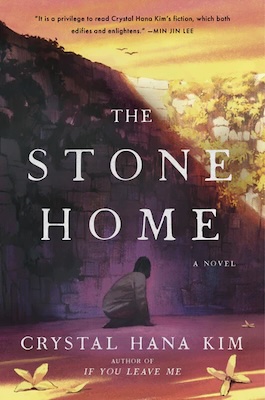
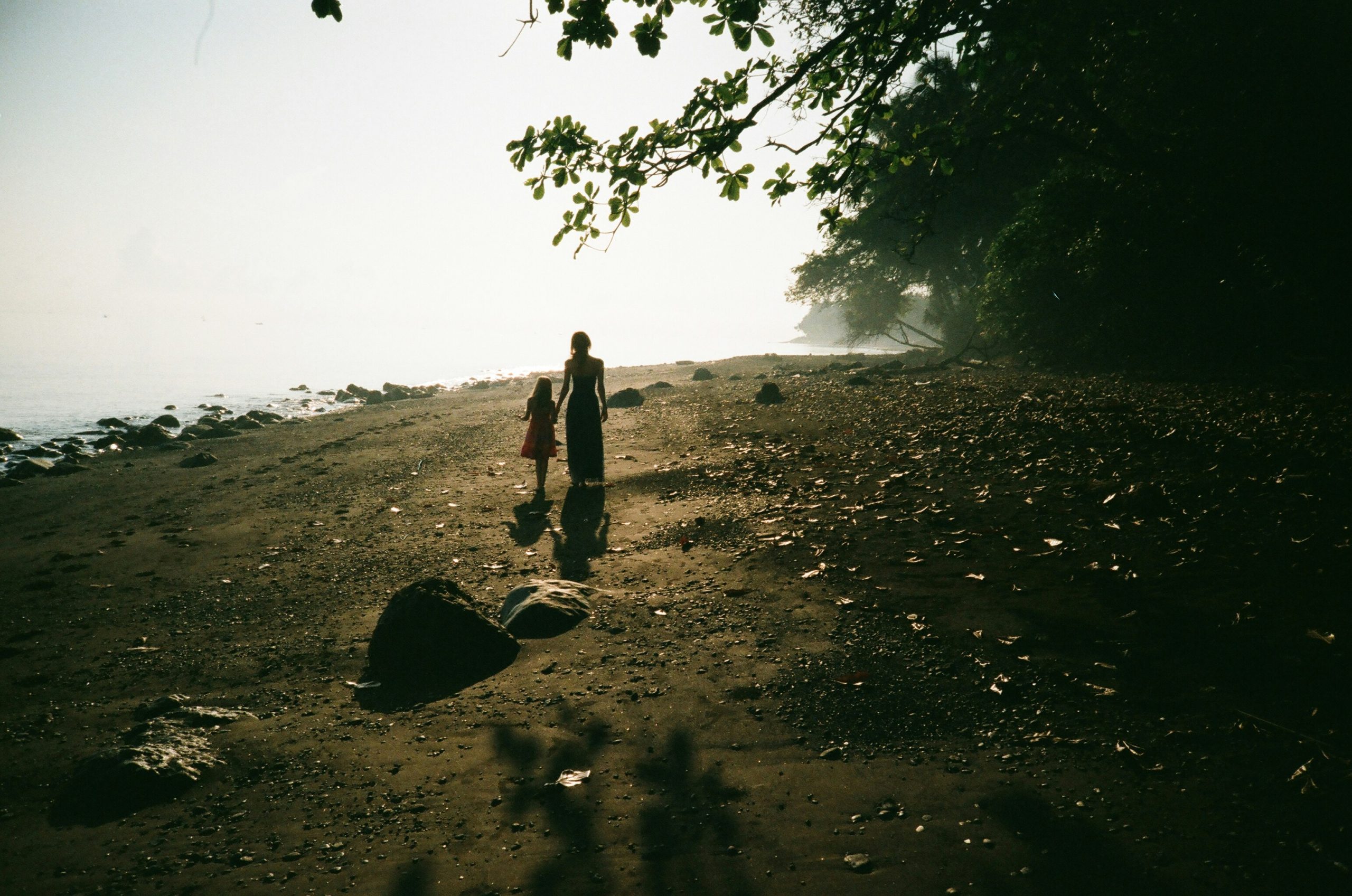
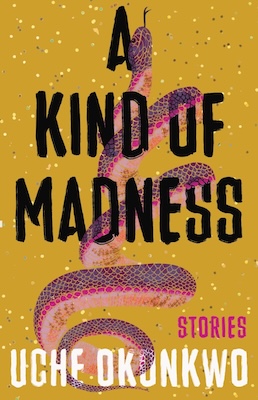
In January 2016, I was an unpublished writer working on my first novel when I learned of an artist residency on a tiny island off the west coast of South Korea. Excited, I daydreamed of finishing my manuscript in my motherland, visiting family, and of course, eating an abundance of delicious food. As I dug deeper into the history of the island though, I unearthed troubling revelations. This artist residency had a rumored past as a concentration camp in the 1940s, under Japanese colonial rule. 선감학원 (Seongam Academy), as the camp was known, was established with the purpose of housing “vagrant” children. In reality, the children of political dissidents were abducted and forced into labor under horrific conditions of abuse. Spooked, I closed my residency application, afraid of what I’d soak in on those grounds. Coming from a family of women who have spoken to ghosts through their dreams, I know the permeability of our living world.
A few months later in April, I came across an Associated Press article that chilled me with recognition: “S. Korea covered up mass abuse, killings of ‘vagrants.’” But the article wasn’t about the Japanese in the 1940s, but rather, institutions created forty years later. I shuddered. The exposé revealed human rights atrocities at 36 “social welfare facilities” or “reformatory centers” in the years leading up to the 1988 Seoul Olympics. They found that these abuses, most notably at one of the largest facilities called 형제복지원 (the Brothers Home), were orchestrated and covered-up by the government for decades.
The 1988 Olympics occurred when I was a year old. Recent history—these institutions were in place during a time that was within reach, that could be felt in my body. Social welfare facility, reformatory institution, concentration camp: whatever the name, the facts remained the same, and it was incomprehensible to me.
I began to research these places of horror, driven by a need to understand. In the early 1980s, the South Korean government, which was a thinly veiled dictatorship, hoped to win the bid for the 1988 Olympics, seeing it as an opportunity to showcase South Korea’s rapid transformation from war-torn and impoverished into a “developed” country. The Olympics would herald international recognition and reputation. The price? Thousands of innocents, imprisoned without recourse to justice. The inmates, sometimes locked up for years, were most often from the margins of society: the houseless, the disabled, and orphaned were all forcibly removed in the government’s efforts to rectify their image. Others, too, were rounded up: street vendors, political dissidents, loitering teenagers who were in the wrong place at the wrong time.
I began to research these places of horror, driven by a need to understand.
The levels of complicity were shocking. Police officers were often promoted based on the number of “vagrants” they captured, while the facility owners received government subsidies based on the number of prisoners they housed, which incentivized them to work together for mutual benefit. Once imprisoned, the inmates were forced to labor without compensation and often brutalized into submission in order to churn out financial profits. At the Brothers Home, inmates glued together shoes, sewed blankets and dress shirts, and assembled ball point pens. These products were distributed not only within the borders of Korea, but sent abroad to Japan and Europe. It’s unclear if the companies who hired these facilities knew the conditions under which their products had been made.
The parallels between the abuses at Seongam Academy, perpetuated by the Japanese, and the ones at the Brothers Home, perpetuated by Koreans in power four decades later, was uncanny, unconscionable. What did it mean that Korea’s dictators reenacted the oppression of our colonizers?
Humanity’s brutality gutted me, and I wanted to look away. I forced myself to keep researching, and soon, I became obsessed. I read as many articles I could find and pored over photographs: a truck crammed with children, a boy in a blue shirt jumping off the back, unaware of what lies ahead. A crowded room of girls in beige sweats, bent over sewing machines. Boys in striped tracksuits gluing soles onto leather sandals in a dark room.
Strikingly enough, the reenactment of the country’s oppression happened on a microcosmic level as well. Within the institution, inmates were encouraged to betray one another for personal benefit. Those who exhibited allegiance to the leaders rose through the ranks, becoming guards with access to tools of violence, which were then used to control their peers. The limits of our humanity fascinated me—how could a person who had endured such abuse then justify their behavior and complicity as abuser?
How could a person who had endured such abuse then justify their behavior and complicity as abuser?
A year later, I began writing what would become The Stone Home. I wrote not to find clean answers, but to wrestle with the unknowability of ourselves. I wanted to understand our darkest impulses. If I were imprisoned, how would I behave? What lengths would I go to protect myself, or someone I loved? Under what circumstance, if any, would I betray my peers?
As I tried different narrators and approaches into the story, I found myself stuck. I set aside my scattered pages, unsure of how to continue. I had gathered information, but I couldn’t imagine myself into the body of my characters. I needed to learn more.
On a rainy afternoon on April 23, 2018, two years after I had first read about the Brothers Home, I arrived at the Seoul National Assembly. On the sidewalk outside the government building’s gates, I found a makeshift hut next to a wall of posterboards. The images: a room full of boys kneeling beside bunk beds, children shoveling dirt and hauling wood, and infuriatingly, images of the director of the Brothers Home receiving an award for his efforts at social reform. There, a man greeted me in a bright yellow zip-up jacket. He had dark hair streaked with gray and wore glasses spotted with rain: Han Jong-Sun, a survivor, an activist, and the man I had been looking for.
Accompanied by my aunt, who acted as my cultural and linguistic interpreter, we went to a nearby tea shop, and then later, to a restaurant. Over many hours, Mr. Han described his life before captivity, how he was caught when he was 9 years old, the grueling days within the Home, the violence which he both endured and witnessed. He detailed the hopelessness he felt, the competitive tensions amongst the prisoners, and the community he forged with a few friends. The despair that consumed him as an adult, physically released if still not mentally uncaged. It was only when he began advocating, despite fear of retribution from those in power, that he found purpose. Since 2012, Mr. Han had been protesting, demanding apology from the government for their crimes.
While Mr. Han spoke candidly, I also felt his guardedness: What would I do with this information he shared? Why, when so many people were unwilling to look, did I want to write about this ugly period of our history? As somebody who had survived the horrors of one of these institutions, trust had to be gained.
He detailed the hopelessness he felt, the competitive tensions amongst the prisoners, and the community he forged with a few friends.
We spoke for hours. He asked me to consider: what if I had been a kid walking along a beach on holiday and I was taken by cops, simply because I didn’t have my identification papers? This happened time and again, so much so that my aunt exclaimed in sudden recognition. In her youth, there was a saying adults used to scare children into obedience: If you’re out late at night, the men will get you. She had always thought it was a figurative spook, a made-up story.
Though I wanted to write about our Korean history, I knew that similar institutions had targeted Indigenous Australians, First Nations children in Canada, and Black Americans. Migrant children are being imprisoned at the border of the United States right now, as I type these words. I spoke to Mr. Han about how this repetition and refraction of history is what propelled me to write. There were questions I wanted to untangle: What does it mean that state-sanctioned violence happens across cultures? Whose stories are silenced, and how does that erasure contribute to future crimes against humanity? How do we create change?
At the end of our conversation, Han Jong Sun wished me luck and asked that I treat this subject matter with care and respect. He asked me to not only witness, but to act.
Mr. Han’s directive fueled me. I crafted an institution that was modeled on what I’d learned of Seongam Academy and the Brothers Home, buttressed with layers of fictionalization. I wanted to represent the abuses that occurred, but I didn’t want to speak for the survivors. Fiction has the ability to carry you into the body of another, to allow you to feel and taste and move and experience. Fiction can ask you to witness by subsuming you into the life of another. This was my hope for my novel, and the force behind my characters. We have fierce, protective Eunju as our narrator, and she works hard to protect her resourceful, underestimated mother Kyungoh. Stubborn Sangchul is our second narrator, imprisoned alongside his idealistic older brother Youngchul. Grief-struck Narae opens the book in 2011, and insists on excavating the truth to the very end.
I wanted to represent the abuses that occurred, but I didn’t want to speak for the survivors.
As I wrote, I realized that I had been fixated on the injustices of these institutions, but equally important, as Mr. Han had taught me, was survival through community. Looking back at my research, I lingered on a story of a group of girls who escaped the Brothers Home by working together in secret. I incorporated this coming-together, this solidarity among the imprisoned. Without each other, we cannot survive. Without each other, we cannot create a more hopeful future.
My wish for the readers of The Stone Home is that they can feel this thread of optimism and connection. I want it to buoy them, as it did me. I also hope, reader, that you don’t look away from the hard parts. It is only by knowing our past that we can guard against the future.
One of the most defining aspects of living with an invisible illness or disability is its accompanying isolation. That your suffering is not seeable—and thus, seemingly less real or impactful—means people in your life often struggle to understand, believe, or empathize with your needs. Even worse, others will often directly accuse you of lying or dramatizing your symptoms, needing to invent some excuse to dismiss your pain so they can avoid grappling with the random, pervasive ways disability impacts us all. And because of the unidentifiable nature of invisible illness, it’s easy to feel alone in a sea of abled bodies, making it challenging to build community with other chronically ill and disabled people.
That’s why it’s so important that the publishing industry has recently started supporting chronically ill and disabled writers in sharing their stories. In the books that follow, writers with a variety of diseases and conditions depict the multiplicity of experiences that come with living with an invisible illness or disability. In doing so, they offer personal insights and unique perspectives that finally give voice to a group of people that has been ignored for too long.
None of them stand as the definitive example of invisible illness—because no one book can—but they can act as a source of guidance, relief, and solidarity for those of us living with illnesses and disabilities that are not readily apparent. And for those who do not yet know illness or disability, allow these books to challenge your misconceptions about the complexities of living with invisible conditions.
Detailing the cultural stigma and isolation surrounding chronic illness, What Doesn’t Kill You is a moving memoir about Miller’s journey living with Crohn’s disease, an incurable form of inflammatory bowel disease. A journalist, Miller weaves together research and resources with personal narrative to advocate for a greater understanding of chronic illness and disability. If you’re looking for useful guidance, touching solidarity, and beautiful writing, start with this book.
Seven Days in June is a fun, yet complex romance novel that follows two Black writers: Eva Mercy, a successful erotica writer and single mother who lives with chronic migraines, and Shane Hall, a reclusive and acclaimed novelist. The pair unexpectedly reunite at a literary event fifteen years after developing an intense connection as teenagers, and over seven summer days, they embark on a renewed romance while navigating buried trauma and unresolved emotions. Although the romance genre is steadily diversifying, there are still very few chronically ill or disabled heroines. Williams brings awareness to the intersectionality of race and disability and counters the stereotype of disabled women as pitiable and sexless by depicting Eva and her invisible disability in a refreshingly developed and integrated way.
Illustrating the extensive personal and economic costs of living with an invisible illness, Vagina Problems candidly shares Parker’s years-long journey navigating chronic pain caused by endometriosis, pelvic floor dysfunction, and vaginismus, among other things. Shaped by the profound trauma of being repeatedly misdiagnosed and dismissed by doctors, Parker sheds light not only on the challenges faced by women seeking accurate diagnosis and treatment for endometriosis but also on the deep toll chronic pain can have on one’s relationships, career, and mental health.
Mixing memoir with scientific and philosophical inquiry, The Invisible Kingdom investigates the rise of chronic illness and autoimmune diseases with an eye toward their disproportionate impact on women. Set against the backdrop of living for years without answers about the cause of her debilitating symptoms from Lyme disease, Ehlers-Danlos syndrome, and eventually, long COVID, her investigation highlights the systemic failures of the medical establishment in recognizing and treating conditions that defy easy diagnosis. By including her narrative, O’Rourke brings a needed humanity and personal solicitude to the challenges imposed by an unseeable illness: “In retrospect,” she writes, “it is painfully clear that the invisibility of my illness was one of the most challenging parts of my suffering, wearing my silence down over time… the near total absence of recognition of how sick I was confounded me: it rendered my suffering meaningless.”
Stemming from a viral essay Hendrickson wrote in 2019 about then-candidate Joe Biden’s stutter, Life on Delay is an essential memoir that delves into the intersection of masculinity and disability by way of Hendrickson’s lifelong stutter. It offers an unfiltered glimpse into the daily struggles of living with a speech disorder as Hendrickson shares his experience of being bullied, substance abuse, depression, and isolation. Simultaneously humorous and emotionally crushing, this book is a testament to the power of self-acceptance.
In Sex With a Brain Injury, Liontas shares her experience of enduring multiple concussions in her thirties, highlighting the effects invisible disabilities can have on our closest relationships. Intertwining personal narrative with historical and cultural analysis, this memoir explores the intersection of disability, mental health, and queerness.
A compelling, gratifying exploration of the experience of fat Black women, Weightless braids memoir with cultural criticism to poignantly analyze the treatment of bodies, race, and gender in American society. Dionne sheds light on the pervasive biases faced by fat women, especially by the medical industry, through a series of insightful essays that detail her journey from facing fatphobic harassment as a child to receiving a diagnosis of heart failure and pulmonary hypertension at age twenty-nine. Challenging readers to confront how their own biases are shaped by often harmful societal norms, Dionne unflinchingly depicts the reality of how being a fat Black woman shapes the experience of having an invisible disability.
Disability Visibility is a groundbreaking anthology that brings together a wide array of disabled writers to challenge societal stereotypes about disability and advocate for disability justice, representation, and inclusion. Although it doesn’t exclusively explore invisible disabilities, it is the perfect companion for chronically ill people in search of a wider community and for able-bodied people looking to understand the plethora of disabled experiences.
Structured around Japanese, Taiwanese, and Okinawan folklore, The Night Parade explores Lin’s undiagnosed bipolar disorder and losing her father to cancer within the themes of mental illness, grief, family, and cultural mythology. Lin blends the supernatural with the deeply personal to offer readers a unique perspective on the complexities of invisible illness and its broader place within the human condition.
i love you forever because / i saved you / i wanted your life / more than you did / and like spring / gave it back / when you wanted it / once more / we shared jeans / a notebook like a spare brain / listened to sade / burned the lawsuit money / i get jesus / and his big expectations / of the living / because we’re all out of wishes / when we’re dead / i love you / permanently / i’ve never forgiven or forgotten / my whole human / life which is / longer and dumber and / tenderer / than we ever imagined / tender like a new bruise / bad voicemail / a picture you can’t see / without your heart falling through your ribcage / today / you stir the oil into peanut butter / wearing creases at the corner of your eye / like it’s nothing / and i am so moved / see i wasn’t built / for any of this / freak lightning behind my face / in the future you / entrust me with your kid / for an afternoon / the smallest life / a sparkplug brain / it’s totally different / we eat sushi deconstructed / by tiny fingers / we walk laps / around monet’s water lilies / my lovers rock cd skips now / i’m still here / you’re still here / i’m still here / you’re still here / .
after the car accident
you picked me up from the hospital
we got giant diet cokes and
threw rocks in the river
the thuds and splashes restoring
my expectations of gravity and
the whole ride home i stared
at the guardrail hemming
the highway, that endless swath
of thin metal rippling like water.
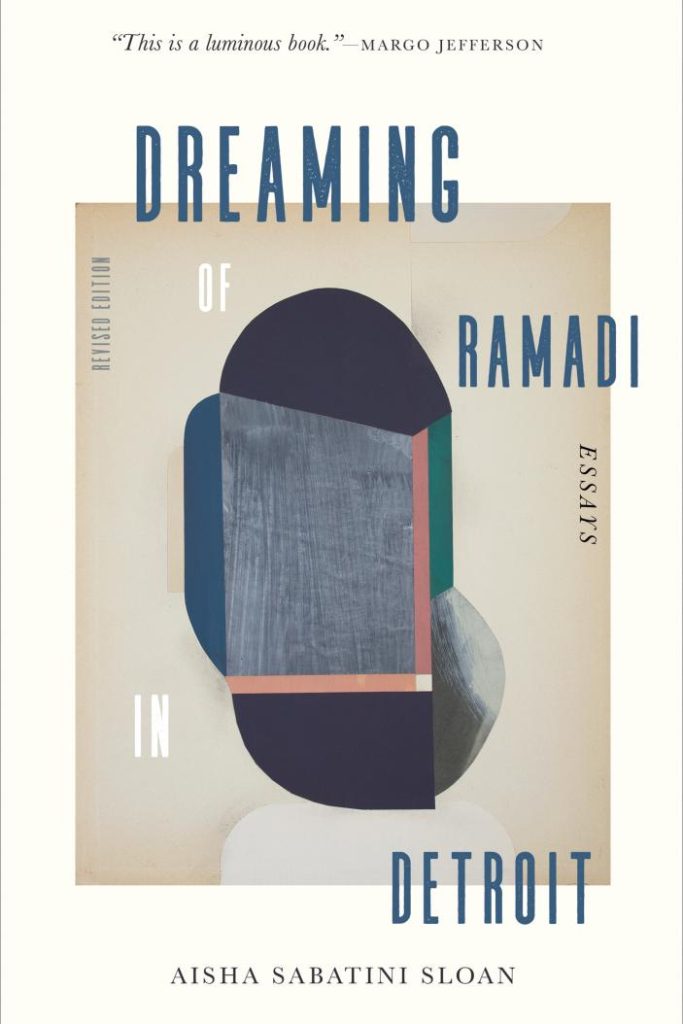
In Aisha Sabatini Sloan’s revised essay collection Dreaming of Ramadi in Detroit, we encounter a narrator who is compelled to serve as witness. These varied acts of witnessing are how she builds a vocabulary for herself as a daughter, teacher, friend, and writer. Artists are this narrator’s intimate companions—Prince, Richard Diebenkorn, Kiese Laymon, her father. Place becomes the site for all the orbiting they do together and perhaps no place of deeper significance to this narrator than Detroit, the beloved birthplace of her parents. “For my family,” our narrator professes, “Detroit has always been inevitable. It is the place we have been heading back to my entire life.”
Dreaming of Ramadi in Detroit is a collection about the piercing, almost haunting nature of memory. It is also a book in which meditations on Black life and death, teaching, travel, gender, and love are incisively juxtaposed to articulate new questions and curiosities about the contemporary. In Sabatini Sloan’s hands, the essay itself offers a wide aesthetic terrain to tread through such investigations. The form is akin to breathwork throughout these pages in that her prose provides a steadying, capacious rhythm. Her language is precise and exacting but never sterile, never off beat. And the act of return as presented by this revised collection is an opportunity to reconsider the very fragile frame of nonfiction as a category itself. Sabatini Sloan is in a dance with form.
I spoke with Sabatini Sloan over Zoom about the lessons of revision, what it means to learn with and alongside the people we love, and why the question of genre is never really, simply, a question of genre.
Jessica Lynne: In these essays, the narrator wears so many different hats, from daughter and relative, to researcher and teacher, writer and art critic. Visual art and music, in particular, are the pulses of so much in these essays. What opens up for you by training your attention to cultural production in this way?
Aisha Sabatini Sloan: That’s just where the magic happens. There was an interview that Fred Moten gave where he talked about art as an act of survival and the art of survival. It’s an act of constant improvisation to be taking in or noticing where there is danger and where the allies are, and then improvising from there. That reminded me of this quote that I was obsessed with for a long time from Ralph Ellison’s National Book Award speech where he talks about the necessary shape shifting that the Black American artist has to do. I think it’s fascinating to watch how people manage that and how people code their message in different ways. It’s endlessly exciting and exhilarating to look at and to learn from.
JL: You’re the art critic, but you are also the daughter, and that role is a central part of this collection, especially your relationship with your father. It’s a relationship that is never one note. How did you approach writing about your father in this way? Looking back, are there things that you wish you would have withheld, or does it remain the container best suited for talking about this person who shows up for you in many other ways across other projects?
ASS: I think about that especially because I’m in a different moment with my parents as they’re getting older and both doing a lot of thinking about their lives. My dad thinks a lot about his contributions, and it has always been one of the reasons I don’t write as much about my mother. She’s shyer and my dad has always been so responsive and positive when being written about no matter what it is. In some ways, it ends up feeling like a conversation, an extension of a conversation between us. There’s a way in which I feel like he helped me. He really encouraged me to write about him and he loves witnessing people. He’s always tried to interpret and explain people and dynamics and relationships. That’s a way that we connect—in my witnessing of him and our relationship. We find each other through the ways that we overcome things and then find each other afterwards.
We inhabit different perspectives in different moments.
But I’ve definitely wondered if I’ve changed or altered the course of our relationship by writing about him. As he’s gotten older, I’ve been feeling more sensitive about him out in the world. How he’s perceived and how he perceives himself. It’s a tricky road, I think, to wonder if there’s something that I regret in particular on the page. There’s probably things that, for one reason or another, will get kicked up that might haunt me, but I feel like the grace that my father has had over the course of the last decade and a half of me being a writer is the bottom line. We are artists together and part of that is witnessing each other. If people can see that there’s a lot of beauty in our relationship, that’s what matters to me.
JL: Still, your parents are very much present together in how you experience Detroit throughout these pages. This edition also closes with a new essay that is a reflection on Black art, the legacy of the collector Dr. Cledie Collins Taylor, and the Detroit Institute of the Arts. How has your relationship to that city changed, if at all?
ASS: It’s strange because I’m closer to Detroit now than at any point in my life because I live in Michigan, but I’ve spent the least amount of time there because of the pandemic, having a baby, and being kind of homebound. My parents, because they’ve gotten older, are spending less time in their house in Detroit because it’s a lot of work. So through them and through that absence, I feel wistful. I really miss spending time there. It’s the center of our family life and our relationship with my extended family. That house that they have embodies this dream we have about ourselves: the possibility of creating an art space and having exhibitions and artists coming to stay. It is a bit like a stand in for the city in some ways. There’s a sense of a future there that is really rooted in hope and of idealism, so I feel nostalgic about it. Detroit feels like a portal to the world in a way that Ann Arbor and Ypsilanti do not.
JL: In “Gray’s Anatomy,” the narrator wonders about blood lust and thee blood lust on the part of law enforcement specifically. Though this essay comes after “D is for the Dance of the Hours,” in which the narrator spends the day shadowing her cousin who is a police officer in Detroit, there is a shared curiosity. Do you feel as though you have different questions or new questions about blackness, and policing as an infrastructure, and how that shows up in a city like Detroit?
ASS: One of the reasons I like an essay collection is for what you can do in the space between pieces. You can reposition and have a different angle on the “thing” and it’s still you. But we inhabit different perspectives in different moments.
But before even talking about blackness, I feel an undercurrent for the essay about the ride along with my cousin that is maybe absent from the writing is the role of women in the department and the fact that so many of the men that perpetrate crimes against women work in law enforcement. I felt super aware of this while I was writing that and I’m not trying to say that anybody is excused from anything based on gender, but it was really on my mind how people orient toward aggression, depending on how they manifest. In addition to that, in the last several years, we really have gotten a lot of information about actual attempts to infiltrate law enforcement by white supremacist organizations. It’s a studied phenomenon. And the fact that both misogyny and violence against women, and violence against black people are institutionalized in that way was something I was far more viscerally disturbed by, by the time I was writing “Gray’s Anatomy,” whereas in 2014, when I wrote that “D is for the Dance of the Hours,” I didn’t have the same visceral relationship to the way that those kinds of oppression are woven into those institutions. There is a dawning of awareness happening from one essay to the next.
JL: I see the essay, “Black Abundance” as a love note both for Kiese Laymon and for Black folks, broadly. Why was it important for this kind of love note to be included in this revised edition?
ASS: In some ways, I feel like witnessing the trajectory of Kiese Laymon’s work over the last ten, eleven years has been a real point of growth for me. He’s helped me learn how to be a writer and a teacher through witnessing how he constructs a sentence, how he comports himself in an interview, and how he communicates encouragement and appreciation and respect and critique. There are ways in which this collection represents that growth period through different sort of flash points. I like the idea of having that in there as a nod to the role I feel like he played in my growth as a writer, thinker, and a teacher.
JL: What has working on this revised edition taught you about revision?
ASS: I was very inspired again, by, Kiese Laymon and the way he framed his own experience of revising his essay collection. When I got that opportunity, I was a bit uncertain of how I wanted to contend with the fact that they’re these different selves represented in different pieces. Rather than trying to contend with the fact that I might not have written something that way now, I let myself be the same person that I was in those essays and tried to shape the process of revision with my editor, who was helpful in this, to show more of an arc.
This is a life process, art as life.
The thing that I struggled with when I first started writing nonfiction was the idea that when you state something in an essay as truth, you’re fixing something in time that is likely to change. So, one of the reasons I am attracted to fragmentation and leaving space for things to breathe—either between essays and even within essays—has to do with allowing the space for perspective and the understanding that perspective is what it is in a certain moment. That’s what’s being crystallized—not me and what I think and what I believe. To an extent, there are declarations, but I do still feel like it would have been more of a lie for me to pretend that I had been someone then that I might not be any more, than to, just let the reader experience a variety of those selves.
JL: In the written adaptation you gave as the keynote for NonfictionNOW in 2017, you write:
The genre says, “NON’ and then it says “FICTION.” But writing that confuses illustrates a lived experience of conflict and dissonance, of winking, of knowing how good it feels to be winked at, of being at once invisible and hyper visible, of struggling toward multiple forms of fluency. This kind of breakage on the page can get messy, and maybe it’s hard to teach, but it’s coming from an impulse that is all too often seen as somehow adolescent, somehow something to be tamed and redirected. But not all of us are allowed to live in this one dimension where you can’t hear all these other voices. These sometimes screaming voices that are saying: that’s not my truth! Or they are ghosts, mostly.”
You speak to a very specific readership in this speech, a white American readership as you write. In your opinion, what is lost if we’re not able to open ourselves up to the stream influences that you embody in your work but are also rightly call for, in this speech, as a wider mode of or approach to reading and writing?
ASS: I was a little relieved because it was nice to know I still feel that. My first thought is well, it’s always going to be a fight because the problem is power and how power is wielded.
This is also an issue for academia. I’m called upon to name or define creative nonfiction a lot, but I’ve never liked the term creative nonfiction, and I don’t know if there’s any term that does justice to the openness that’s required. So, it ends up being a question of what we are trying to do when we give it this name and whose rules are we following.
For some people, it feels possible to have this be a question of genre. For some people, it’s possible to separate those things because they don’t feel under attack in the same way, but for a lot of us it’s not. I have to go to therapy for this. I have to exercise. I have to teach my child different things. This is a life process, art as life. What do you call having to be on your feet all the time? It’s art but it’s also, going back Fred Moten, it’s survival. This is one of those questions that you answer every time you wake up.
Situationships are underrated—said no one ever. But dare I say, as much as I despised situationships IRL (despite spending much of my teens and early twenties in them), I do love them in fiction, where they indeed might be underrated. Many a novel has been written about marriage, affairs, star-crossed lovers and the one that got away, but a surprising few have hung their mast on undefined relationships born not of fate or even human conniving, but of mere circumstance. Still, situationships make for great stories, especially if you’re not the one in them, because they keep you guessing until the very end.
I should know: I built my entire debut novel, The Band, around a series of seemingly ordinary and unplanned glitches that end up upending everybody’s lives. A boy releases a viral song about a fisherman and his son, but given his geopollitical context, it just so happens to piss off not one, not two, but all three of East Asia’s superpowers. He escapes to America, where he stumbles upon a woman at an grocery store carrying the one dish that reminds him of home. She happens to be a therapist; he happens to be on the verge of a mental health crisis. The situationship that follows drives the both of them—along with everyone else in their orbit—down a rabbithole populated by revenge plots, AI, and a future neither of them see coming.
Of course, I’m not the only one who loves a good situationship gone awry. Here are seven other books that feature the kind of unconventional relationships replete with the kind of sexual tension that makes you wonder: will they or won’t they?
It’s no accident that my own novel starts with a quote from this book—“his desire, when it comes, extinguishes her.” In Second Place, a middle-aged woman with a striking resemblance to the author invites an artists to stay at her house. She is married with children and a career, but no matter—the most distinguishable plot in the book is her consuming desire for this man who, at best, treats like like an appliance—helpful, sure, but not something he’d take to bed. Throughout my own reading of the book, I kept on waiting for him to break and give in to her advances, but alas, in fiction as IRL, changing someone’s mind is harder than it looks.
Some readers went crazy over the fact that at the end of 432 pages, Selin and Ivan (the protagonist and her love interest) seems to have never consummated their relationship. I found it the most relatable thing I read all year because I, too, spent all my college years in the same kind of sexual repression driven by a cocktail of being the good daughter of immigrants meets excessive intellect meets nerd school. Like the elusive Hungarian mathematician that is the (potentially underserved) target of Selin’s desires, the book can come off like a giant tease—the literary equivalent of blue balls—but then again, that might be part of its appeal.
Shortly after I wrote/sold The Band, I started to hear about Esther Yi’s Y/N, the one other literary fiction centered in the world of Kpop—a topic that is apparently usually reserved for YA (likely thanks to the long-standing, albeit outdated, stereotype about Kpop fans being mostly young girls). Yi’s stark portrayal of a Berlin woman who goes to Seoul to search for a Kpop idol named Moon takes on an obsessive but undefineable edge wherein she wants the boy desperately—despite being formally attached to a German boy named Masterson—in an extreme, parasocial kind of way. Multiple detours mark the subsequent breakup with the boyfriend and prolonged surrealistic journey to find the idol, but one the constant throughout is the thoroughly ambiguous nature of the unnamed narrator’s desire for this boy about which she knows nothing and everything at once.
Patel’s obsessive, thoroughly modern novel also has plenty of sex—forget “spicy”; this book will burn the roof of your mouth with the searing, unflinching way it talks about the kind of intercourse that can only be called f*cking and not “love-making.” This makes it all the more ironic—and unusual—that the central relationship of the book is not between the 31-year old narrator and her roster of both official and unofficial lovers, but rather, between her and the woman she is obsessed with, the ex-girlfriend of the man she wants to be with. It’s a situationship—or “delusionship”—unlike any other and I am here for it. By all the critical accolades it’s been getting (here’s to the Women’s Prize), I’m not the only one.
This short story collection has plenty of conventional relationships—of the married, divorced, extramarital, and one-night-stand variety—but the central locus upon which everything else rests is between a tenuously-connected pair of protagonists, Benny Salazar and his assistant, Sasha. Benny, an aging music executive, and Sasha, his young and attractive—albeit kleptomaniac—hireling, both start and end the novel. Under normal circumstances, this might set the reader up to expect something to happen between the two of them, as is often the case when an older man with resources is in the orbit of a younger woman with looks but no money. But Egan takes us on an unexpected ride through multiple situationships where sex is frequently dangled but rarely fulfilled. In one chapter, a woman goes on safari with her boyfriend and his two children but ends up being attracted to the tour guide—a fact that is apparent only to one of the kids. In another, an actress gets to play the role of a lifetime: the real-life girlfriend of an infamous dictator.
The heroine in Brandi Wells’ debut novel, The Cleaner, is an almost deity-like character who sees all and does an enormous amount of meddling, but when it comes to her own relationships with the people in her life, she resort to the kind of ties that defy definition. The cleaning woman at the center of the story doesn’t really have family or traditional friends for that matter—the people she is closest to appear to be a co-worker named L. and a woman whose desk she cleans nicknamed Sad Intern. But every time we are attempted to assume that she wants to be besties with either of these two women, the cleaner reveals something to shatter that: she’ll visualize hitting her colleague so hard she bruises and steal the intern’s laxatives. Her romantic life is no different: whether an invitation to go on a walk with the delivery person is supposed to be a date or a platonic hangout remains an open question, a trademark of every situationship.
Perhaps the weirdest of all the situationships on this list is the relationship Mrs. Caliban has with a sea creature named Larry in Rachel Ingalls’ unforgettable novella that everybody apparently ignored when it first came out years before I was born but now is finally making a much deserved comeback. It has all the hallmarks of a regular affair, complete with a deadend relationship that primes the protagonist to meet someone new and more exciting, except in this case the meet-cute happens in her living room when a nearly seven foot tall escaped frog enters through her screen door. For a cross-species union, their romance does take a quick turn towards the physical. I’m no herpetologist, so I’m not sure if what they do together counts as sex per say—but the point is this: can a situationship get any more conventional than when a married woman has a torrid romance with a fugitive member of a different species?
The film opens with a view of London’s skyline; doused in a deep blue evening sky. Lights of the city blink. The onset of night reveals a man standing behind a window, translucent, looking down. He is shirtless; his arms are crossed; his expression is still and pensive. As he comes into focus, a pale orange glow begins to overwhelm the blue, and the image is washed out. The title appears across the screen, All of Us Strangers, and promises a tension that cannot be resolved: A collective estrangement, connection born by isolation.
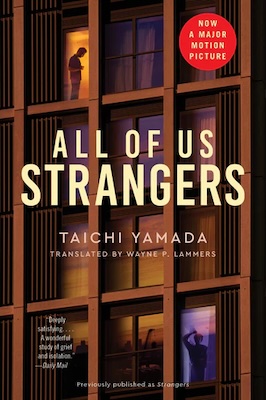
All of Us Strangers, directed and written by Andrew Haigh, is a time-bending, supernatural exploration of grief and the darker shades of queer life, which ultimately poses substantive questions about how struggles with queer identity have persisted over time.
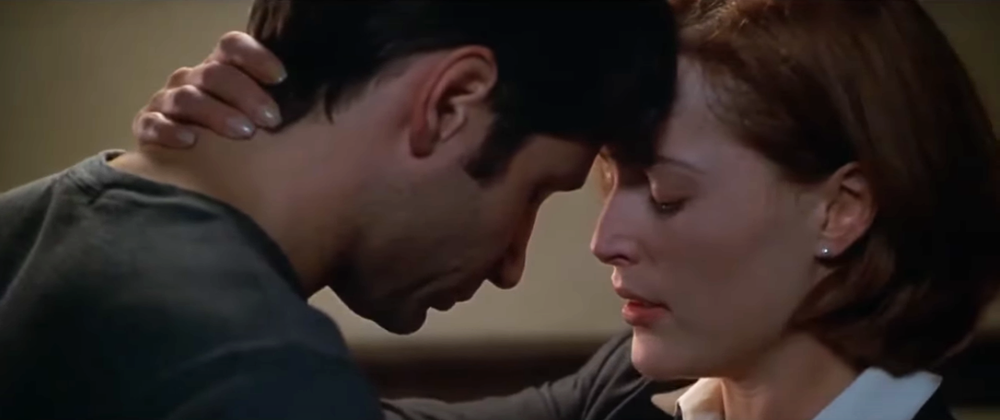
The filmfollows Adam, a middle-aged, gay screenwriter played by Andrew Scott. He lives an isolated life, ensconced in a sterile apartment in a high-rise building only inhabited by one other person—Harry, a younger man played by Paul Mescal, who Adam softly rejects when he shows up drunk at his door.
His childhood perceptions and adult experiences intermingle and collide.
Adam is working on a screenplay about his childhood. His parents died in a car crash when he was 12, and when he visits his suburban childhood home for research, they materialize there, the same age they were when they died. He visits and explains his adult life to them—his career, his home, and most painfully and vitally, his queerness. He falls in love with Harry as he reintroduces himself to his spectral parents, opening himself to the vulnerability and care of an intimate relationship for the first time in years.
Time loses its linear thread. His childhood perceptions and adult experiences intermingle and collide, pulling him inexorably toward the injuries of his early adolescence: The loss of his parents and the dawning of his queer sexuality in a hostile world. Adam tells Harry that the lingering pain of these traumas formed a “knot” inside him, an ossified manifestation of his terror of being alone.
The film’s final reveal is that Harry himself is dead: Adam discovers his body in his apartment, but his ghost still appears and speaks. Whether Adam’s parents and Harry are products of Adam’s imagination or spirits with their own consciousness is left open, but the complex interplay between them and Adam suggests ineffable presences: Even if only projections, their own subjective experiences of love and pain emerge. Like Adam, they are there and not there, alone and not alone.
In creating All of Us Strangers, an adaptation of Taichi Yamada’s 1987 novel Strangers, one of Haigh’s aims was to portray the emotional contours and edges of his generation of gay men. As he noted in an interview:
“I’ve wanted to do that for a while, but I could never quite find the right story to do it. And then telling it in the form of this strange ghost story about, essentially, what haunts us felt like the perfect way to explore a certain generation of people and what happened to us in the ’80s and ’90s. Connecting that with a story about grief and about a need to reconnect with parents felt like this perfect osmosis.”
Adam, as a gay man in his 40s, came of age in the 1980s and lived through three decades of turmoil, oppression, and progress in queer communities. AIDS ravaged the lives of innumerable queer men in the 80s and 90s and made them the objects of societal scorn and fear, sometimes manifesting in outright government repression (see the U.K.’s Section 28, which outlawed the “promotion of homosexuality” in schools and in local government in 1988). As the film depicts, these dire conditions could leave a child like Adam feeling that to live a gay life would be to live a desolate one.
Yet legal and social changes were to come in the decades ahead: Spurred on by committed queer activism, over the next twenty years effective treatments for HIV/AIDS were developed; public acceptance of gay people increased; and legal rights for queer people, including the right to marry and to serve in the military, were established in numerous countries (primarily in the Global North).
Shifting political tides have created a more equitable world for queer people, but this does not neatly map onto personal experiences of queerness. Haigh expresses the disjuncture between the appearance of a better world and one’s internal relationship with that world. When Adam comes out to his wary mother, who knows nothing of the world beyond 1987, he explains to her that “things are different now,” and asserts he’s content with his life. She doesn’t buy it. She stares at him with a searching concern, and she says it must be a “lonely life.” Adam rebuts this, but his face cracks. “If I’m lonely, it’s not because I’m gay. Not really.” “Not really,” she echoes, her perceptions confirmed. His “not really” marks the schism between outward contentment and inner pain. Progress has not alleviated the pain of coming of age, alone, in a society that deliberately pushed queer people to its margins.
Some critics have noted that All of Us Strangers presents a quandary that is specific, maybe exclusively so, to queer people of Adam’s generation: in Vanity Fair, Richard Lawson writes that “the film may seem awfully foreign to some younger queer people who, while no doubt still suffering the batterings of an often hostile world, can’t quite identify with Adam’s internal wrestling: his fear, his coded shame, his hermetic longing. Older viewers may run headlong toward the film’s despondency, finding solace, even catharsis, in its haunting ache.” Reflecting how Haigh views his film as an exploration of “what haunts us,” not only in the literal appearance of ghosts from but also in the shadowed, stalking presence of the recent past’s injustices, Lawson observes that those too young to have known these ghosts in corporeal form may not identify with Adam’s pain.
Haigh anticipates this critique in the film itself through Harry. Though one could read Harry as a projection of Adam’s own wants and fears, the subtle layers of his characterization and Paul Mescal’s thoughtful, sensual performance suggest a presence with his own past and his own will.
Harry, in his 20s, cuts a different figure than the tightly coiled Adam: He is direct, flirtatious, and relaxed, but drifts in and out of a diffuse melancholy. He is comfortable approaching Adam and honestly discussing queerness, yet it still hangs a shadow over his life.
Those too young to have known these ghosts in corporeal form may not identify with Adam’s pain.
After Adam and Harry have sex for the first time, they lie naked in Adam’s bed, shrouded in a soft darkness. Adam, who has already revealed some of his childhood and his formative pains to Harry, asks Harry about his own personal history. Harry came out to his parents as a teenager, and though they did not react dramatically, he says it “confirmed” the difference he always felt from his family; to name his sexuality was to define his intractable separation. He tells Adam that he has “drifted” from them, and that he feels on the outskirts of their lives compared to his straight siblings. Adam responds that “things are better, of course they are. But it doesn’t take much.” Again, the acknowledgment of life being “better,” followed by the admittance that something is still missing at the core.
Harry is not much better off than Adam. On the surface, his life is undeniably easier, as someone who entered adulthood with more enshrined rights than someone of Adam’s generation, and without the threat of AIDS hanging over him (when Adam confides to Harry he used to be afraid he’d die from having sex, he adds that it must be hard for Harry to understand). He was provided for in his childhood and adolescence, without fear of violence or abandonment because of his sexuality. And yet, he is untethered and solitary, sunk in the same pool of time-stretching isolation as Adam, and for reasons directly related to his queerness. In Harry’s characterization, Haigh expresses that queer people’s separation from the structures of straight life have persisted unabated across generations, engendering the same feelings of isolation and shame for individuals in their 20s and in their 40s.
The heterosexual family is key to All of Us Strangers: A foundational structure that society organizes itself around, which queer people, as their internal sense of difference rises within them, may realize was not built for them.
Adam’s grief for his parents is compounded by the fact that he could not share who he truly was with them—in coming out to their ghosts, he makes up for lost time and sutures wounds left unaddressed by their loss. Though Harry’s comparatively placid childhood and uneventful coming out would seem to leave him on sturdier ground as an adult, his queerness not only marked him as inherently “different,” but severed him from his family. His siblings, who married and had children, deepened their ties to their parents and created a multi-generational bond, while Harry, as a single, queer man, cannot connect in the same way. Adam, though without parents, is left isolated by the same metric: His straight friends eventually married, had children, and moved to the suburbs.
Queer people, of course, are now able to marry and to have children via adoption or surrogacy in many countries, but the fact of one’s ability to assimilate into the dominant culture does not mean one feels at home in it. Adam and Harry are both characters who grew up in conventional nuclear families: with middle-class, white, suburban, heterosexual parents, who presumably expected their children to form families in a similar image when they grow up. Growing up with a burgeoning sense of one’s own queerness in such a configuration can knock a child off their axis. One thinks they belong, and as they develop a sense of self and mature sexually, they realize they do not.
The fact of one’s ability to assimilate into the dominant culture does not mean one feels at home in it.
Even someone in Harry’s generation, growing up with the reasonable hope of a baseline tolerance and certain civil rights, must reconcile their own queerness with the straight world around them. To assimilate fully into the norms of straight culture—to start a family and move to the suburbs—may feel like denying one’s essential difference for the sake of belonging, even with a same-sex partner. And given the recent rise in attempts by right-wing politicians to curtail the rights of queer and trans people, one’s acceptance as a queer family or couple is precarious at best—the future is never guaranteed.
In his review of the film, Michael Koresky cites queer theorist Lee Edelman’s polemic No Future, an argument against “reproductive futurism”: the concept that the preservation of society relies upon prioritizing future children over the concerns of the present. Edelman argues that society is structured around this concept—that the “social order” relies on us projecting our hopes for the future on a symbolic “Child,” a figure unrelated to the actual lives of children (rather, the amorphous “child” that appears in the rhetoric of politicians inveighing us to “build a better world for our children.”) Queer sexuality by this argument, stands in direct opposition to reproductive futurism, instead embodying “the social order’s death drive.”
All of Us Strangers, notes Koresky, embodies the ideas of queer theorists like Edelman, making literal the concept that queerness, in its alienation from dominant forms of social organization, is unbound by conventional perceptions of linear time. The forward march of time is marked by a set of socially determined milestones, essential among them marriage and children. Children endow us with a concept of futurity, of continuance of our lives past our own deaths. When one’s identity grates against these, time can drift, keeping us stagnant or sending us back into the past, rather than propelling us forward into an illusory future. One can feel, even in a “better” world, that they are dancing on the edge of a void.
Andrew Haigh’s 2011 film Weekend, the story of a profoundly intimate 48-hour affair between two gay men, anticipates some of the narrative and thematic concerns of All of Us Strangers: A connection emerges out of deep loneliness, and the changing role of queerness in society is discussed and examined from multiple angles: After too much cocaine, the couple has a heated argument about the value of gay marriage, with one arguing for the radical potential of two men publicly proclaiming their love, the other decrying the assimilation into “the system” that gay marriage entails.
Haigh’s two films, made over a decade apart, illustrate what has changed and what has not. The struggle for some civil rights, marriage chief among them, is settled law in many countries, instead of a debate. Yet for queer people, there is a continued struggle to find support, meaning, and connection. Progress in the form of legal rights and greater public acceptance, which could only occur after years of dedicated activism, has helped queer people achieve some level of equality and safety, yet ironically, Haigh’s screenplay for All of Us Strangers posits that certain difficulties of queer life have become harder to talk about as a result. If it is collectively agreed upon that “things are better,” it can be hard to pin down what is still painful, what has not been resolved.
What ultimately compelled me most about All of Us Strangers is how Haigh examines this challenging tension in queer life: That a sense of separateness from mainstream society persists, in younger generations of queer people and older generations. That one can be physically present in the world, but feel that they are watching it, half in shadow, from behind a pane of thick glass.
On the other side of this central tension, though, is connection and love. Thrashing through his own isolation for the film’s duration, Adam embraces Harry at its end, illusory as this relationship is. Lying under the haunted surface of this narrative is the concept that the pain of isolation and separation is, paradoxically, inevitably, shared by others. The tension established in the title reverberates: What isolates us and what connects us, across time and generations, can spring from the same source.
What happens when the most intimate relationship in nature—mother and child—is perverted and twisted beyond recognition? Nobody has more power to harm than the one entrusted to nurture and protect. So observes Dr. Lily Patel, the strange psychiatrist in You Know What You Did:
“The mother-daughter bond is one of the strongest in nature. When you’re young, it keeps you tethered, protected. Later the same ties can hold you back, strangle you.”
This aptly describes the conflicted relationship between the novel’s main character Annie Shaw, who is an artist, wife, and mother, and her own mom Mẹ, a troubled Vietnam War refugee. After Mẹ, dies, Annie’s obsessive-compulsive disorder, which she thought she’d vanquished years ago, comes roaring back—but this time, the disturbing thoughts swirling around in Annie’s brain might be coming true.
The eight thrillers I’ve gathered below explore the darker side of mother daughter relationships. Though they vary in degrees of dysfunction from “Maybe we’ll skip Thanksgiving” to “Hide the knives,” each book is guaranteed to deliver raw emotion, tension, and complexity.
When does the maternal instinct to protect verge into toxic control? With her signature intricate plotting and whiplash-inducing twists, Sarah Pekkanen explores the question of mother daughter boundaries in Gone Tonight. Twenty-four-year-old Catherine Sterling has never spent more than a few nights away from her mother Ruth. When Catherine finally decides to spread her wings by accepting a job offer in another city, Ruth embarks on a desperate mission to stop her daughter from leaving. Triggered by her mother’s increasingly strange behavior, Catherine begins to ask questions. Why did Ruth insist that the two of them relocate every few years, and why was she always prepared to move at a moment’s notice—even in the middle of the night? As Catherine secretly investigates Ruth’s past, Ruth intensifies her campaign of manipulation and subterfuge. Pekkanen masterfully ratchets up the tension with perspective alternating between Ruth’s old journal entries and Catherine in the present day.
“With Martha, I could never be sure whether her touch would hurt or heal, whether her words would cut or console.” Ellice Littlejohn refers to her abusive, alcoholic mother as “Martha” or “Ma’am” never using any specific maternal reference. Indeed, during Martha’s frequent drunken stupors, it is Ellie, herself, who must keep house and serve as a stand-in mother to her own little brother. With the help of a neighbor, and against Martha’s wishes, teenage Ellie escapes small-town poverty to attend a private boarding school, eventually earning an Ivy League law degree and landing a plum in-house corporate lawyer job. On its surface All Her Little Secrets is a conspiracy thriller with a white-collar backdrop. But what makes the novel truly pulse-pounding is the very real dimension of racism and Ellie’s situation of being the only black woman in a c-suite of white men. With interludes to Ellie’s childhood in Chillicothe, Georgia, Morris examines whether or not we can truly suppress the past and to what extent can we reinvent ourselves.
The Leftover Woman is a poignant family drama with the page-turning engine of a thriller. Jasmine Yang flees her rural village in China and travels to New York City in search of her daughter, given up at birth for adoption by her abusive husband. In debt to the snakeheads who smuggled her into the United States, Jasmine is forced to work as a waitress in a seedy strip club. Just a few miles away—but it might as well be another country—privileged publishing executive Rebecca Whitney struggles to balance a high-powered career, marriage, and caring for her adopted Chinese daughter Fifi, who Rebecca begins to worry has bonded a little too much with the new Chinese-speaking nanny. The dual storylines collide in an emotionally satisfying conclusion to Kwok’s suspenseful study of motherhood, identity, and class.
Loosely inspired by the Gypsy Rose Blanchard case, Darling Rose Gold quickly departs from its real-life source material to create an even more twisted mother-daughter relationship, predicated on coercive control, simmering rage, and the blinding need for validation. The novel opens as Patty Watts is released from prison after serving five years for poisoning and abusing her daughter Rose Gold in a case of Munchausen by proxy syndrome. Patty makes the chilling declaration, “My daughter didn’t have to testify against me. She chose to.” So why is Rose Gold now welcoming her mother back into her life? Wrobel expertly wields dual timelines and head-to-head POVs to craft a taut cat-and-mouse story, only the roles of predator and prey shift constantly between mother and daughter in a delightfully destabilizing turn.
Jackal, a novel that is in varying proportions thriller, horror, small-town suspense, and contemporary fiction, cannot be forced into any one literary genre. This is apt as its main character Liz Rocher has long felt out of place both in the predominantly white rust belt town where she was raised by her single Haitian immigrant mother and in the neighboring African American community. After spending fourteen years away in New York City, Liz reluctantly returns home to attend her best friend’s wedding. Even as an adult, the single and childless millennial struggles to conform to the expectations of her mother, an accomplished physician and perfectionist, who immediately blames Liz’s recent breakup on weight gain. Literally and figuratively, Liz has spent her entire life trying to make herself smaller to fit in. “I cut away parts of myself. I made space for someone—something else…I turned myself into the perfect vessel for a monster.” Enter the titular Jackal. During the wedding reception, the bride’s daughter wanders into the woods and disappears. As Liz investigates, she uncovers a decades-long pattern of missing Black girls overlooked by an apathetic police force and largely unremembered by the local townspeople—except by their mothers and sisters.
Simultaneously bleak and compulsively readable, Ashley Audrain’s horror-tinged psychological thriller lays bare the dark side of motherhood. The first-person narration of Blythe Connor draws us into a nightmare in which every single maternal insecurity, every single fear is realized. It’s like a literary version of those Worst Case Scenario Survival Handbooks (Motherhood Edition).Interspersed throughout Blythe’s account are the stories of her mother Cecilia and her grandmother Etta. Blythe comes from a long line of distant, disturbed mamas. After giving birth to her own daughter Violet, Blythe has trouble bonding with the baby. As Violet grows older, Blythe observes her daughter’s lack of empathy and worries the child might even be capable of violence. Fox, Blythe’s husband, blames her for being a bad mom. Is it a question of nature versus nurture? “The Bad Seed” or an unreliable narrator? Much like motherhood, the answers are not so simple, and Audrain keeps us guessing until the final, gut-wrenching paragraph.
This dual-timeline thriller toggles back and forth from a present-day Hollywood homicide investigation involving an aging comedian and his sugar baby wife to a twenty-five-year-old Canadian murder trial pitting daughter against mother. Three generations of Reyes family women—Ruby Reyes dubbed “The Ice Queen” after she is convicted of killing her married lover; Ruby’s daughter Joey an exotic dancer who dies in a tragic fire; and Lola Celia, Ruby’s immigrant mother who at one point takes in Joey—illustrate the grim cycling of sexual violence through generations of passivity. The novel’s abusive maternal relationships are unabashedly dark. However, Hillier’s characteristically tight pacing and rapidly shifting settings, from seedy Toronto strip club to tony Beverly Hills mansion, keep your eyes glued to the page.
Nina Simon’s captivating debut is a sanguine exploration of mother daughter dysfunction. After a cancer diagnosis upends L.A. real estate mogul Lana Rubicon’s life, she finds herself convalescing 300 miles north of the city in her semi-estranged daughter Beth’s remote coastal cottage. Just as the sexy fifty-seven-year-old begins to ponder whether boredom or cancer will kill her first, Beth’s teenage daughter Jack discovers a murdered man floating in the Elkhorn Slough nature preserve and becomes the prime suspect. Lana, eager to exercise her vitality after months of grueling chemo, leaps to her granddaughter’s defense. But she can’t clear Jack’s name on her own, and the three generations of fiercely independent Rubicon women must work together to solve the case. In the process, they unearth a mare’s nest of lies, betrayal, and unresolved family issues—their own as well as those of the colorful locals. Simon succeeds in crafting both a smart contemporary mystery and an exquisite ecological love letter to Monterey Bay.
There’s a video that made the rounds online a few years ago: in Chechnya, a mother films her son pulling a sheep free from the drainage ditch it wedged itself into. Three glorious seconds of freedom follow for the liberated sheep, at which point it leaps majestically and comically back into the drainage ditch, stuck once more.
A similar moment occurs in the Irish author Caoilinn Hughes’ brilliant new novel The Alternatives when one of the characters comes across a sheep jammed in blackthorn shrub. “The poor thing was worn out from the ridicule of life… Rank stress wafted off the animal,” so she cut “it free from the last batch of thorns,” whereupon it immediately “bucked into another layer of them.”
The sheep—featured on the front cover as a stolid creature atop layers of surging earth—could easily be us humans and our everlasting eejitry. Some group of experts may yank us out a ditch—the white-coated folks at Moderna and Pfizer, let’s say—then, without so much as tossing a thanks their way, we barrel toward the next ditch, lowering our heads to take on momentum.
Four such people reaching down and yanking on our ankles are the Flattery sisters, the protagonists of Hughes’ third novel. Hughes is the author of the poetry collection Gathering Evidence and the novels Orchid & the Wasp and The Wild Laughter, all of which took home considerable hardware during their respective award seasons. Those first two novels followed lives thrown into turbulence because of the Celtic Tiger. The Alternatives probes a more gaping, self-inflicted wound: climate change.
“Flattery nostrils are a one and a zero,” one sister tells another. “Only the left sides of our brains get enough oxygen.” Rational and logical they are. Each in their thirties, they are all single, all have doctorates (one received hers honorarily), and all are, in their respective fields, doing work that addresses the conditions of the planet we are desecrating.
Rhona is a well-connected political science professor at Trinity College Dublin with “the conviction of a tennis ball launcher.” Maeve is a social media celebrity chef who is trying to get out of her book contract so she can publish the book her integrity demands of her—one that addresses future food shortages, shortages that Brexit has exacerbated. Nell, the youngest, also can’t be budged from her principled core. A philosophy adjunct professor in the United States, she stitches together the sparsest of livings so she can deliver, by way of example, a seminar on Heidegger’s care structure.
The three sisters are scattered across the English-speaking globe: Maeve in England, Nell in America, and Rhona—never for long—in Ireland. What brings them together is that their oldest sister, Olwen, a geology professor in Galway who can provide the receipts for why we are a doomed species, has gone missing. There is nothing necessarily nefarious about her disappearance. Long tethered and nagged by her “godforsaken undergraduates” and other responsibilities, she cuts herself loose by absconding in the middle of the semester and night when she goes “out to the garden to get rhubarb for her gin and [keeps] walking.”
She replants herself in the Irish countryside, and this is where her sisters eventually track her down. Together again, for the first time in years, the sisters exhume the bones scattered in their shared past, all with an eye on the dire prospects before life on this planet.
Reading The Alternatives, there’s the feeling that we’d all benefit if the sisters could conjoin into one like the Transformers used to at the end of each episode. They are, though, siblings, and siblings know every chink in the armor we wear out in the world. The sisters love each other deeply but also issue lines so cutting they could pierce organs. One or another is usually on the verge of Irish goodbye-ing the rest. Nothing lasts forever (though Olwen points out early on that “nature would have let us have a few millennia yet, if we’d been chill and sound and reasonable”), but for a little while the four sisters are together on the page, and what follows is a funny, intelligent, tenderhearted, and aching portrait—in the form of a play!—of siblings who were orphaned young and are trying their best to save us from ourselves. If they were to figure each other out along the way, that’d be a bonus.
Anyone who has read Hughes’ two previous novels can endorse this next statement: Hughes is one of the greatest writers of dialogue at work today. She is peerless in her ability to develop and communicate complex ideas through witty banter and possesses remarkable range in her ability to write across various points of view. Her sentences are to be relished.
These days, seeing in an author’s bio that they’re Irish is a bit like seeing Napa on a wine bottle’s label or Made in Italy stitched to a suit’s tag—you’re practically promised top-notch quality. Who knows what Ireland does with its mediocre talent. As for what gets out the door, Irish authors are producing some of the most exhilarating and audacious fiction in our times. The Alternatives is a perfect example of this. You never feel the author on the page, but every paragraph confirms this is the work of a dazzling talent, one greatly concerned about where we are and where we’re taking ourselves, but never allowing those weighty concerns to burden the prose or narrative or prevent her characters from having a laugh. During these uncertain and troubling times, we need more writers like Hughes who can, with such joy and resolve, stare down the barrel we’ve pointed at our heads.
Julian Zabalbeascoa:In several interviews for The Wild Laughter (which is one of my favorite novels of the past decade), you spoke about your possible next project centering around four sisters, and how you were resisting telling their story but were becoming convinced that you had to. Where did these four sisters come from? And why that initial resistance to writing what would become The Alternatives?
Caoilinn Hughes: The novel itself arrived first as four sisters, but I knew it would show them in their separate lives. I wondered about the magnets holding them together—besides love—when they’re living such different lives, in different countries, fighting separate battles, with their parents long dead, and while they’re each more invested in the present than the past. I wondered, as well, how those magnets would affect the women individually, in their separate lives. I was drawn to writing about women at work: women who center work in their lives and express themselves through their professions; women attempting to do meaningful or fulfilling work—work that gives them energy and anchorage and purpose. Taboo is too strong a word, but it’s still frowned upon for work to be the center of gravity of a woman’s life. (What counts as work is another question, like caregiving.) But I know so many women for whom this is the case. Also, I loved the idea that a book about sisters could also be a book about a geologist, a philosopher, a political scientist and a chef… walking into a bar! Family doesn’t only exist in a domestic realm.
JZ:Given Olwen’s motivations, I imagine most every interviewer will ask whether you have hope for the future or not. Meaning: do we still have time to solve the climate crisis or is our weight too far past the tipping point. So how, if at all, did the writing of this novel arm you with the hope and resolve you need to take on the direness of our circumstances?
CH: Yeah, wow, that’s a question! A huge one! Getting straight to the meat… or plant-based meat alternative! Let’s see. Writing this novel helped me to contend with being alive right now by spending time with characters who are attempting to the do the same, who are sitting forward, who have not clocked out—better people than me! Though, I’m never writing about heroes. This is the time we happen to be alive, and it’s no less worthy a time to be alive than any other, and therefore, it’s no less worthy of being represented in art. Even if we squirm at it, fearing its ugliness. Maybe what unites us is the way we think about the future—it’s just so different to how our parents thought about the future, and how it was thought of at any point in human history, given the existential crises we face. While our prospects and feelings and our practical plans about the future are far from homogenous, I do think something that carries across the world is a general pessimism about the future. So that’s something that might be new in its omnipresence. I’m interested in the ways that individuals deal with that species-wide phenomenon, which is rooted in environmental collapse, weakening democracies, the dehumanizing and siloing effects of ungoverned capitalism. And there are so many different ways to respond. In this novel, there are four characters, and while they don’t represent a spectrum, they do each respond differently. People might tend toward denial or despondence or despair. Or you can feel angst or guilt or shame. Rage is a common response. Maybe the more engaged you are, the more you realize that you might have to seek social support. Or foster community connections. Or you might be engaging in pro-environmental behaviors in your own life, or you might be engaging in change-making action. Maybe the fact that these sisters grew up without adults in the room primed them to be living in such a moment. They’re already familiar with the stages of grief. And in this case, the last stage can’t be acceptance. Grief is a big part of the novel, but it isn’t a grief that’s located in the past. This isn’t a novel about people dwelling on the past. It’s about the present moment, and so it’s less about what’s been lost and more about what’s being lost. Which I think is another way of talking about what’s not yet lost.
JZ: Sticking with this idea of pessimism. I’ve seen the toll our daunting prospects have had on my students. For the first time, many of them say they don’t have hope for the future. How does one convince them otherwise?
CH: In the last question you asked if I have hope or if we’re too far past the tipping point. What is too far past? I don’t think that’s an answer we’re waiting to get from scientists (though, of course, we’ve been given it) … It’s a question we have to ask ourselves, and to think about how our behavior would change if the answer is yes? Because it is yes! Of course we’ve reaped havoc. But does that mean we should just think: in for a penny in for a pound? Or is that an utterly immoral and inhumane mindset? I’d argue that it is. Your question here about how to convince others to have hope… this question on one level has to do with science communication and getting good information. There are conflicting studies about what galvanizes people, or what pushes them towards despair. The trajectory we’re currently on is a pessimistic trajectory, but that’s not to say there’s not another or many other trajectories we could be on. If you’re asking for my own feelings on this, I believe that we can have a much better world than we do now. I mean, there is and there’s going to be enormous suffering. That’s built into the emissions that are already in the atmosphere. So I think communicating the fact that more emissions equals more suffering is essential to helping people to understand that what we do now does matter. It really does matter because you’re affecting the suffering that will take place. Or you’re helping to pave the way for the better world that is feasible. Informing yourself is key. But I’ll run back into my wheelhouse now and say that to equip yourself emotionally and philosophically for what is to come, and for what is here… I believe that art has a huge part to play.
JZ: There’s a passage from the book: “It’s like with cows… you can taste the pre-slaughter adrenaline in the food if it’s come from a stressy, stratified kitchen.” If we extend the analogy a bit, this is the prevailing mood for the talk surrounding climate change. Understandably, even the best-case scenarios would inspire high stress and anxiety. But that’s not the case for The Alternatives. If I tallied the number of times I wrote “ha” in the margins, I’m sure it’d reach the triple digits. Why is it important to imbue the work with humor and joy?
I was drawn to writing about women who center work in their lives and express themselves through their professions.
CH: I think the best characteristic of the human species is our sense of humor. People might have different priorities. But for me, that’s the trait that makes us interesting and worthy of knowing, and beautiful and sexy and various. I love how much cultural difference there is in humor. And how even when we don’t speak one another’s language, you can find ways of sharing humor—it’s a shortcut, really, for understanding one another’s humanity. Also, as a reader, I just love funny books. Not necessarily comedies. I listen to this podcast every night, because I’m a terrible sleeper. It’s the only thing I can listen to—Kermode and Mayo’s Film Review podcast. Mark Kermode has this test for comedies: the six-laugh test. You need to laugh six times. But, I want that from all works of art, not just comedies. Otherwise, I don’t feel that the artwork is reflecting life as I know it. All day long, even in the bleakest of circumstances, you see people making small gestures towards making another person smile or laugh. I was writing the novel partly during Covid, and partly because of that and because of how challenging I found the novel to write, I wanted there to be some kind of joy on every page. There’s a really strong tradition in Ireland of the blackly comic, of tragicomedy. I grew up reading those works, so it feels quite a natural mode to lean into.
JZ: You mention you were writing during Covid. Did that effect your choice to set the novel in 2023?
CH: I was trying to set the novel in the year that it would be published. But the world is changing so rapidly. So in the process of writing it, I had to constantly anticipate what the coming years would be like, while trying to understand and capture the present moment as I wrote. That process reflected what the novel’s about, which is the attempt to lurch forward in the story as the rug is being pulled from beneath our feet.
JZ: In which ways did the book change – or did it change? – as you continued to incorporate our ever-shifting present?
CH: It changed a lot. I tried not to have too many cultural markers or seemingly temporary items from the news. There’s no Trump in the novel. Covid is maybe mentioned twice.
JZ: Brilliantly, with one of the sisters talking about a romantic drought as “the great abstention of 2020.”
CH: Yes, the realities of our times are in there! And in Rhona’s story—the political scientist character—her chapters were the ones I had to change the most… because UK and Irish politics were doing somersaults, it meant that the specific work I originally had her doing was becoming too chaotic and muddy. And I’m someone who writes in one draft. So for me to have to change anything substantive is a big deal, but it was part of the contract with a novel like this.
JZ:The characters in Orchid & the Wasp and The Wild Laughter try negotiating the turbulence of all that follows the Celtic Tiger. With The Alternatives it is climate change and, to a lesser degree, Brexit. These are right up there as the major self-inflicted wounds of our time. What is it about these structural forces that have greed as a galvanizing mechanism that so interest you as a storyteller?
Even in the bleakest of circumstances, you see people making small gestures towards making another person smile or laugh.
CH: And now I’m seeing the psychoanalytical red flags! It’s true, because Hart in The Wild Laughter sees himself as being a wronged person. But in terms of this book, I guess I’m drawn to writing about characters who are aware of the sword that’s in our belly, even if they don’t know what to do about it. Within their chosen professions, they’re trying to improve the world in some small way. They’re each contending with a different systemic challenge. The geologist is witnessing deep time collapsing—where processes that should be playing out over millennia are playing out over decades. Not to mention contending with a really frightened student cohort. The political scientist, Rhona, is working with weakening democracy. The philosopher is working within this degraded teaching system, and the commercialization of the Academy. And the chef is working within a volatile food system, related to climate change and geopolitics, and also the hot-blooded context of food nationalism. So they’re each on a path that’s being rapidly cut off. It’s important to note that they are all in privileged positions, where they’re able to pursue fulfilling work—work that they consider to be fulfilling—even if they might think differently about what makes for fulfilling work. So none of them think that they can pull out the proverbial sword, but they’re mindful of trying to do work that contributes to the world positively.
JZ: In The Wild Laughter, you illustrate the sort of self-flagellating the Irish were undertaking after the Celtic Tiger. To advocate for the Dark Prince for a moment, when it comes to climate change, our response to it, those of us who are environmentally conscious, might it appear the same? We’ve strayed on account of our excesses and only austerity can return us to a sustainable, natural state.
CH: Austerity is the wrong way to think about what needs to happen, in my view. That belongs to a neoliberal narrative. Take the case of food, since we have a chef character. There are so many new types of food. There are so many plants that we’ve never eaten, that we’ve never had the time or need or curiosity or incentive to pursue, partly because how animal farming is being subsidized. It doesn’t have to be a reduction of options. From a vegetarian perspective, going to a restaurant these days, you tend to have more than one option. So on a very basic level, it’s becoming more interesting to be vegetarian. So what does it mean to quit meat now? Is it just that you lose your choice? Or is it that you now have many more choices to eat well without causing serious injury? To walk outside through trees with birdsong instead of a nitrogen-noxious, bare, barren field. To have air to breathe that’s less polluted? Canals that aren’t rigid with algae? To live in a world where the consequences of what you do are less hurtful to someone else? To get to live well… to get to have mental health? That wouldn’t be austerity!
JZ: How did you arrive at the narrative voice and how did it allow you to tell this story, with four main characters? Most times it feels like a limited third, but it is more a roving subjectivity.
CH: I knew that this would be a polyphonic novel, and that the separate stories and voices would converge at some point. Olwen was my starting point—she’s why I wrote the novel. To me, she’s the central character, even though they’re all weighted equally. I do love the family gathering story. It’s really hard to pull off in fiction, but the challenge is irresistible. If you think of plays like Tracy Letts’ August: Osage County or films like Thomas Vinterberg’s Festen… You get to have all that complexity of the projection that goes on, the assumptions around family being together, and then of knowledge and history and blind spots. It’s much easier, I think, to put that complexity you get into a visual frame. But still, I think that some of the richest, thorniest, funniest works involving family gatherings have been novels. I will say, though, that while there’s that reunion sitting at the heart of the novel, I wanted to accommodate the fact that the sisters don’t define themselves in terms of family. They don’t see themselves as being fatalistically shaped by childhood experiences or parental expectations or guilt or dysfunctional role models or sibling rivalries. Anything like that. First and foremost, we see them in an extra-familial context. I hope that they’re still individuals, then, when they’re together. I tried to show how painful that can be—the struggle to hold onto ourselves around family. Our shared history can bring us together, but it can also trap us… because while that history might be shared, it’s likely to have been experienced very differently. With the point of view, to be true to each character, I tried to imbue the prose with the voice of that character. The word choices, the tempo, the frame, the sense of humor. It felt a little like writing four short stories to begin with—each with a distinctive tone.
I saw Steven Baxter the day before he died. I was ten years old. It was 1983. He was in his middle twenties, and walked toward me on the block where my family lived. His home was not far from ours. His face was heavily made up. This was the 1980s, and I was just a kid. I’d never seen a man in make-up before. My stomach flipped. Despite the make-up, the red cheeks, the lipstick, the eye shadow, I recognized him immediately, and, now I can say his make-up was not only frightening. His face was mysterious, even alluring, unlike anything I’d ever seen in my cloistered life in suburban Richmond Hill, Queens.
As a young Jehovah’s Witness boy I was taught to fear all things and anyone outside of the Witness circle, all referred to as “the world.” Anything “worldly” was considered dangerous, forbidden. Although his Witness family was not “worldy,” Steven was. He was dangerous, and this fascinated me. But on the day I saw him: I waved. He waved back. The following day, he walked in front of a subway car. It was in the papers, and on the tongue of every local Witness. Seeing him that day before made me feel like I was somehow implicated in his death.
Could I have helped?
Might I have spoken with him? Asked him if he was okay?
Until now I’ve never told a soul that I saw him.
Several months before Steven’s suicide, my sister and I were knocking on doors, ringing bells, and selling Watchtower magazines. It just so happened the apartment building the Baxters lived in was on that day’s ministry map. We rang their bell to get into the building. When we reached their floor we decided to say hello. We buzzed and Steven answered. He was not wearing make-up. Behind him were his two brothers, not twins, but only one year apart, and both were cerebrally challenged. They ran around, undressed, with pool-floats around their midsections, repeating: “Don’t look at me. Don’t look at me. We’re naked! We’re naked!” They were laughing.
Steven was not.
He asked if we wanted a glass of water.
Steven Sr., the father, would often yell our way if he saw us in the streets: “Can you wait?”
And our job was to respond: “For what?”
And he would say: “The New System!”
And we would laugh, and he would laugh.
I thought the joke was funny, then, but now, as a grown man, I know a few important things. One, the New System is not coming. It’s never coming. It’s a Witness fantasy that there will be a worldwide paradise, run by Christ, here on Earth, and death will be defeated. Death will be no more, and the sick will be restored, and the deserving dead will be resurrected. I also know that Steven Sr. had more reason than most to wish for it, to have faith in impossible things.
Five years later, in 1988, my good friend Shirley Davis was murdered. She had gone to the store for the Sunday paper and a gallon of milk for her parents, at seven o’clock in the morning. The police found her on the railroad tracks beside a supermarket in Jamaica, Queens. I knew those tracks well. Her skull was completely crushed. She was fifteen, and reportedly had four quarters and a piece of chewing gum in her pocket.
I had not thought of Shirley for years, until I was watching a crime show on TV and the characters were investigating a cold case that sounded almost exactly like hers. Later that same night, on the local news, the reporter said Shirley’s case had been reopened because of new evidence, and that evidence had inspired the episode.
The news then showed a photo, her annual school picture. It was the very same photo in our old family album, where we kept all my friends’ photos. I can still see her innocent face, and her sloping ruffled shoulders, in front of a sepia curtain. Life is boundlessly cruel.
Since I watched the episode I could not stop thinking of them both.
Steven. Shirley.
They shine out like saints in my memory. I imagine both their faces, made-up, restored, young, and innocent, emblazoned on hagiographic candles.
I used to wonder at the strange psychology of the Jehovah’s Witness until I read a line from a book called The American Religion: “When death becomes the center, religion begins.” The Witnesses have invested heavily in the centrality of death. And on virtually any day before this one, before today, perhaps even in some other week, I would claim the opposite for my own life. I confess, now, I’m not so sure.
Recently, nearly a year after the publication of my first novel—no surprise: “a coming of age” story about a young man growing up in a strict religious home—a graduate school here in New York invited me to give a talk about a topic of my choosing, as long as the talk related to writing, to fiction specifically. Perhaps at a loss for ideas, I told them I would talk about death. Death in fiction.
That talk was today.
I started strong, and said to the students: “All fiction is about the same thing. Death. Who said this?”
No one responded.
I then said: “All fiction is about one thing. Me. Who said that?”
A hand tepidly rose.
“Please, yes,” I said.
“Kerouac?”
“Boom,” I said. “She wins. Albeit the quote is possibly apocryphal. But we think he said it. If you ask me both quotes suggest the same penny wisdom. We are all going to die. It’s what we have in common. And so all writing ultimately is about us, and our headlong sleepwalk toward death. So we better make it count.”
The room was silent.
Because these were young people, not yet interested in death. And I was a bit older, and so I was practically old. And I was alone. What could I say?
I needed to lift them up in their seats, and get their attention. Hold it.
And so I shared with them my recollections of Steven Baxter and Shirley Davis, and of the TV episode.
Afterward, I said: “I’m writing a story about them. A short story.”
An eager hand went up.
I nodded.
The young man asked: “Are we talking? Taking questions?”
He was wearing a Joy Division T-shirt, dark eyeliner, and a near smear of dark lipstick. His nails were painted black.
He was beautiful.
I thought to myself, how brazen, this young man. Who did he think he was? But of course, I was jealous. Not of the make-up, necessarily, but the certainty, the confidence it takes to know who you are at that age.
“Have at it,” I said to the young man.
“I think it’s dicey,” he said.
“Exactly,” I said. “Good word, too. Tell me more.”
“You have to be very careful. Respect them,” the young man said.
“Another good word,” I said. “Dicey. Respect. And nice shirt.”
He looked at his shirt as if he’d forgotten what was there. Others leaned forward to see. I wondered what he thought of me: my blazer, my jeans, my moustache.
I shook myself back to attention.
“What I’m saying is: I can’t say I miss Shirley,” I said. “We were too young. It’s been forty years. But this doesn’t change the fact that when I think of her I shudder. Missing her? Kid stuff. Her memory makes me shudder.”
I then tried to recall if Steven was crying when I saw him. I think he was crying.
Was I making these details up? Writing encourages invention. One tends to invent details, to extrapolate. Nevertheless, I think his makeup was running, from crying, and what did I do? I waved? What is that? I did nothing. If I had said his name, or said hello, said something so he could feel seen and feel less alone…
“This too shakes me: Steven was wearing make-up. Should I be saying this? Sharing this… I don’t know.”
There was a mutter in the room, as if I had said too much.
I took in a deep breath, tried to reassert control.
“Why was he wearing make-up? Was it something he did often, or just that one day? What does doing it imply? Was he gay?”
I looked at the student’s blank faces. Some of them appeared frightened. And some were rapt, as if watching a car crash in slow motion. I wondered if I seemed straight to them.
I continued: “The rumors surrounding Steven were that he suffered literal ruthless demons. Religious nonsense. What it took to be gay back then! Or just to be different! I can’t imagine. And so writing about them,” I said. “Dicey, yes. Respect, yes. But how does one do that? Do we do it with brevity? Simplicity? Like black suits at a funeral? Handshakes with the family? I’m sorry for your loss… Or do we do it with metaphor? Fancy Faulkner style. My mother is a fish… Or is it in the details? The things we see when we close our eyes and we want to include everything possible from that space, so the story grows, lives, is inhabited, and cannot be so readily rid of. The rail tracks. I knew those tracks. I knew the scattered coins flattened from passing cars. The rusted spikes in the dirt. The patches of grass growing in between the rails and the wooden ties. The large, old cars that sit unused. I knew the graffiti. The ladders up the sides of cars. The broken bottles on the ground. What else can we do? We bear witness. To it all. Everything becomes holy. Sacred. Even the tossed cigarettes. And this is the work of the writer writing about death. True death. Not manufactured death. The deaths we hold in memory and use for fiction.”
I talked for an hour and a half, pacing back and forth like a large cat in a cage. The room was warm. I loosened my tie, looked at the class for support.
They were stone-faced despite my exasperated demeanor.
Shortly afterward, I was in the university café having a tea when a young woman approached, the same young woman who answered the Kerouac quote. She was one of the few students that seemed genuinely taken with the lecture.
She asked if she could sit, and then sat without waiting for an answer. No doubt, straight A’s, and full of that ambition only the inexperienced young can afford.
I said, “Of course. Yes. Please.” I moved my books that were on the table. Made room.
“Mr. Barrett,” she said.
“Please,” I said. “Call me Tom.”
“Mr. Barrett. Tom.” She smiled at this. “You’re from Richmond Hill.”
“I am.”
“So am I,” she said. “Little India.”
“Yes,” I said. “I used to live behind the Sikh Temple! You know it?”
“I do!”
We both nodded at this.
“I’m curious about something,” she said.
Patient. I sipped my tea.
“Do you know what a Jain Indian is?” she asked.
“I do!” I said, surprised by my own enthusiasm. “Years ago, when I was still a struggling writer—actually I’m still struggling… I worked as an assistant to a Jain man, an events photographer. We did mostly weddings. The weddings he shot lasted for hours, groom brought in on a horse, floral necklaces, tables of neon food. Anyway, he was Jain. A nice man. And I don’t know your name?”
“Dhara.”
“Dhara. Okay. Lovely.”
“So I’m wondering,” she said. It came tumbling out. “Jehovah’s Witnesses. They knocked on my door.”
“Okay.”
“And, well, big surprise to me, I liked what they had to say.”
I now saw I was an object of fascination for her. Not a teacher. “Yikes,” I said. I cringed. It was not a word I usually used. “Now I’m hoping I didn’t say anything back there to offend you.”
I now saw I was an object of fascination for her. Not a teacher.
“I’m just wondering what a former Jehovah’s Witness, like you, would make of a Jain, like me, starting a Bible study with Jehovah’s Witnesses. I might even convert,” she said half-laughing.
I was uncomfortable. This kind of dynamic had changed with the times: respect a wide distance between student and professor.
“That’s entirely up to you,” I said.
“But you’re not curious.”
I sipped my tea. “It’s not my place to be curious about your doings. My apologies if that disappoints you. I mean that with respect.”
She drummed fingers on the tabletop. “Can I ask, why did you leave?”
I answered quickly, my response, as usual, prepared: “I had lots of reasons, most of which are my business, I’m afraid.” Then I paused and thought of my first boyfriend. I didn’t exactly leave the Witnesses for him. He came after. But I did leave because they made me hate myself.
“But those reasons,” I said, “might be summed up: it was my parents’ religion, not mine.”
She bit her upper lip. “I think you might have just summed up my feelings, too. I’ve been trying to do that, but with no luck.”
I fell back on my inclination toward secular sermonizing, took a breath. This young woman knew so little of her latest rebellion. Dabble in Christianity. Please. I launched back into lecture mode, couldn’t help myself: “The Witnesses, certainly, and some of the other protestant American-born Christian denominations, subscribe heavily to the book of Revelation, which is a deathly orgiastic book. And in that book there is even mention of a ‘Second Death,’ from which one can never be resurrected. This would be the case for those after the Day of Judgment who are found guilty and for those who have been resurrected and become slow to appeal to God. They are not sufficiently faithful, and are thrown into a lake of fire where they die a second time and can never be loosed from death again.”
She looked at me as if my hair was on fire.
“What are you saying?”
“I’m saying the Witness faith is deeply invested in the centrality of death. Suffused with it. Some might even call it a fetish.”
She said after a time: “How about the first quote? You never attributed the first quote.”
I must have looked lost.
“‘All writing is about death,’ you said. Who said it?”
I laughed. “Well. You got me,” I said. “Me. I said it. I counted on everyone not knowing.”
“You said it.”
“I did. I quoted myself,” I laughed again.
She nodded skeptically, clearly did not approve. “Ok.”
“Does that bother you?”
“Huh.” She crossed her arms. “Well, I plan to teach someday and I think there is probably some weird fucking pedagogical lesson in there somewhere.”
I was taken aback, became slightly alarmed. Tried to laugh it off.
“Do you believe it?” she said, not quite convinced.
“That all writing is about death?” I said.
She waited.
I thought about it and wanted to tell her how naïve she was, how young. “Yes. To some extent, I do.”
She stood and offered her hand. I shook it.
“A pleasure,” she said. The word rang hollow in her mouth.
She left, but after just a few short steps, she turned, and said, “Can I say it seems like you’re lonely. I like that term, death fetish. Maybe you need to decentralize death from your own life, Mr. Barrett.” She made a face of disappointment, and added, “I mean Tom.”
Then she left.
I obsessed over her comments every remaining minute of the day, into that evening’s dinner.
Later that night, I had a date. We matched on a dating app, my first time using one. I thought again of my first boyfriend, Mossimo, as I dressed. We never had a chance. I hadn’t grouped him with Steven and Shirley because it had been another time in my life, another chapter, but still, he died too young. I must be getting old. There has been too much loss. Shake it off. My date’s name was Bert Rodriguez and we lived in the same neighborhood, South Harlem. We agreed to meet at a casual Italian restaurant, not far from either of us. It was spring, and I was happy to avoid the dank subways. So I walked, and couldn’t help but notice how many baby birds, some barely born, were dead and littering the sidewalk. Some with crunched eggs still surrounding them, others with their beaks cracked. Most likely fallen from their nests. I’d seen the phenomenon before. I live way over on the West Side, by the Hudson River, where there is a lot of wind, no matter how light the day. And the winds sometimes knock nests from their perches, or baby birds from their nests.
Bert and I met out front, shook hands and hugged.
The host asked if we wanted to sit inside or out. We looked at each other. Up to you… No, up to you…
We sat outside.
“So, you’re a writer,” he said.
“Yes, but I can’t make a living at that, so I teach. Wait, you teach, too. Right?”
“Right there in my bio.”
I set my napkin in my lap, and said, “We have something else in common.”
The waitress came over and introduced herself as Tirza, a surprising name, and yet I’d heard of it because I’d once read a novel called Tirza. I asked her if maybe she knew it.
“I do! I read it. It was really good!” said Tirza, nodding her head, cool, cool.
We ordered food. Pastas for us both. We ordered wine. White.
“So my mother, her maiden name was Rodriguez. Like yours.”
Bert covered his mouth, scoffing. “No.”
“I know, I know. White as snow.” I showed my hands. “My mother is from Chile. But my father is from Brooklyn, all the way back.”
“My family comes from Mexico. But I was born in the States.”
“I love Mexico.”
“You’ve been?”
“I used to live in Southern California. We would do day trips. With friends. To the border towns. Great food, all along the way.” I thought of my marriage, its embarrassing collapse.
Tirza brought our dishes.
“First life. First wife,” I said.
He paused, fork mid-air. “Yikes. Sorry.”
I laughed. “Not at all. I came out late. And, weird, I used that word today.”
“Which word?”
“Yikes. It’s a good omen.”
“We’ll take what good we can get!” Bert laughed.
I told Bert about the dead birds. The crunching.
“Simple, pleasant dinner talk,” he said and laughed uncomfortably.
“This is why I’m single. I am a boring, single, white guy with nothing to hide and no game.”
We were silent, for a beat.
“Nothing to hide?” he said. “I doubt that.”
“I’m an open book.”
“I got it,” he said. “How about what’s the weirdest thing you’ve ever done?”
I thought of the beautiful young man attending my lecture earlier that day, his painted eyes, nails, his lips.
“I’m not weird by nature,” I said. “Let me think.”
As I was thinking a small group of four young women approached the restaurant. They talked to the host and were sat outside about four tables away.
I immediately recognized Dhara.
I wanted to speak, but I was busy watching Dhara. She was laughing with her group. All of their necks bending back, laughing.
“I had this one friend, an early boyfriend…” I said, watching Dhara.
Bert waited.
“Sorry,” I said. “It’s just that I know that young woman over there. At the table.”
“She’s a friend? Which one?”
“The one taking her coat off, putting it over her chair. I gave a lecture today, on death in fiction. And she was there. We talked afterward. Over tea.”
“So a fan.”
“Definitely not that,” I said. “Really, I’m just struck by the coincidence.”
I ate.
“Speaking of fans. I read your novel.”
“You did? For this?”
He laughed. “No. I’m a big reader and I happened to read your novel. That’s all. But I liked it! And that’s all I want to say for now.”
“Fine by me. I hate talking about that thing.”
“Anyway. Your story.”
“Sorry. Yes. But you really did read it?”
Bert smiled. “A story about a gay boy making his way out of a strict religious upbringing? I was raised Catholic, so bring it on. I’m sure it wasn’t autobiographical at all,” he laughed. “Maybe I wrote it!”
We both laughed.
I said, “So, I don’t know how weird my story is. I’m sure your story will beat mine. My first boyfriend, his name was Mossimo. We lived in the same building. And he owned the bodega below. We met. It was unavoidable. I was in there all the time. Until one day he said I came in the store just to see him. And he was right.” I laughed. “So one day, I was in his store, I was there just saying hello. And someone had forgotten their change. So he ran out of the store to give it to them. Not sure why I followed him, but I did. I’m also not sure why I’m sharing this…”
“You don’t have to. It’s okay. I don’t want to pry.”
“Not at all. I feel like I need to say it. So, Mossimo runs across the street, and a taxi had just then run a red light and hit him.” I stopped. Wiped my mouth. And started again: “It killed him. I didn’t know that then, I only knew that some asshole hurt my boyfriend and totally unlike me I chased after the cab. Because the cab left, hit and run, so I ran too. Until he got stuck behind a car at the next light, where again, totally unlike me, I opened the driver’s door and dragged the driver out and began to hit him. The cops magically appeared and arrested him. When I got back, I saw Mossimo was dead.”
He leaned back. “I’m so sorry. And this was your first boyfriend? I’m so sorry, Tom.”
“I was overcome, possessed. Outside myself. Dissociated when I hit that guy. That’s the weird part.”
We ate timidly, quietly.
I started to tear up, and wiped my eyes.
“Are you ok?” Bert asked, put his hand on mine.
“I’m fine, I promise. Just seems like death is the theme for the day. Which is my fault!” I looked at Dhara.
“Don’t let me stop you from going over to her to say hello,” he said.
“It’s not like that. She said something and it’s still with me,” I said. “Something still in my craw. Is that what they say?”
He laughed. “Not in New York. No. What did she say? Your student.”
“Oh, she’s not my student, it was just a guest lecture. And as far as what she said, it’s a long story. Plus we shouldn’t talk about work. What about you?”
Bert took up a forkful of pasta and studied it. He then lay the forkful down and said, “I got in a fight with a guy on the subway once. He called me a nasty word, a few of them, actually. About me and the man I was with. I told him to go to hell, and he told me to go back to South America. So I hit him. My fist—his eye. He went down with one punch. The whole car clapped. I got off at the next stop even though it wasn’t mine because my heart was beating like crazy, and I didn’t want him getting up while I was still there.”
I leaned back in my seat. “You’re a legit hero.” I pointed, lightly clapped.
He gave me an appreciative smile, bowed in his seat. “Actually mine pales in comparison to yours. I didn’t lose anyone.”
I looked at Dhara.
“You sure you’re ok?” Bert asked.
“Yeah. Sorry.” I took a deep breath. “I lied.”
“What about?”
“The weirdest thing I’ve ever done.”
“Hit me, Mr. Barrett.”
“It’s not that weird by today’s standards, and I can’t believe I’m telling you this.”
“Bring it.”
“But it is, in context, more weird and I feel like for some reason I’m supposed to tell you this and I’m going to do it but it also feels like a kamikaze mission. I’m going to explode this date.”
He put his fork down. Nodded. “Maybe I’m supposed to hear it.”
“Okay,” I said. “So. My wife. My only wife. My ex-wife. We split up when I was in my early twenties.”
Bert nodded. “Young marriage.” He was listening carefully.
“I can’t believe I’m saying this out loud. We were Jehovah’s Witnesses, like in the book.”
“Okay.”
“So my wife finds me one night.” I visibly cringed. “I was all done-up in her makeup. I thought she would be out late with friends. But she wasn’t. Instead she walked in and found me in the bathroom with my face. Fully made-up.”
Bert smiled. “You queen.”
“She figured out I was gay,” I said. “Before I did. We never got over from it. The marriage floundered and died.”
“There is nothing weird about that.
“I haven’t told you the context. Which is the long story about today. And what makes the make-up weird. In the lecture today, I talked about death. In fiction. I didn’t mention my make-up to the students, obviously. Specifically I talked about the death of two people I knew in real life—not Mossimo, though—and I was explaining how I was trying to use these two deaths in a short story, but I was having trouble. I was kind of using the students to think it through, I think. To help me.”
“And how did that work out for you?”
“Can I tell you the anecdotes?”
“Probably better me than your students, right.”
I shared the recollections, and the airing of the TV episode.
He said, “If you’re expecting me to leave, I’m not.” He slapped my hand on the table.
Then he finished his pasta, every last bite. I liked that.
“What’s weird for me isn’t the make-up. I know I did it maybe to purposely implode the marriage. It’s the connection with the suicide. This is what weirds me out,” I said. “I think I put it on because I wanted to feel what Steven felt. In some way. To feel what it is to want to end everything. Back then, I mean.”
Bert folded his napkin.
“Well, I lied before, too,” he said. “About the weirdest thing I’ve ever done. The weirdest thing I’ve ever done is the last thing I would usually mention on a date, much less a first date.”
The weirdest thing I’ve ever done is the last thing I would usually mention on a date, much less a first date.
“Go for it.”
He inhaled deeply. Put his napkin on the table. “I hurt a man. Five years ago. Killed him. With a bat.”
“Wait. What?”
“Someone was chasing me. He tried to assault me. Followed me into my building, and then to my door, and so I tried to unlock my door before he could catch up. I opened the door and tried to close it, to lock it, but he kicked it in. The next thing I did, like you said with the cab, I dissociated, and grabbed the bat I kept by the door, and I swung once, hit him on his head. Once. Hard as I could.”
“My god.” Bert hummed before me like an angel.
“He fell, spasmed, and then he totally stopped moving.”
“My god.”
“I called the police. They just said good job. That he had done this several times before. Sexual assault. I expected jokes from the cops about men chasing men, about me being Hispanic, whatever. But they didn’t. They were very supportive. Regardless, the one hit killed him. And they said he deserved it. No problem. No charges. Just go with them to the station to make a statement. I did. And I was back home for dinner. All very fast and clean. But it still upsets me. I feel like it wasn’t even me.”
“What do you remember most?”
“About killing him?”
“Yes.”
He paused. “Why would you ask that?”
“I don’t know. I find myself interested in that sort of thing. What stays.”
He looked at me, mute. Then: “I remember how the bat didn’t bounce.” He said, “You would think it would bounce off his head. But it didn’t. It felt like the bat would split him in two.”
I was jealous. What did that say about me?
I looked over at Dhara.
Bert turned and looked at Dhara. Turned back and said, “She offended you, didn’t she?”
“Not exactly,” I said. “Okay. No more mystery. She said I was death obsessed. That it was my ‘fetish.’ And that I seemed lonely. I think she meant problematically lonely.”
He looked shocked. “What does she know?” He was taking an unexpected protective position. I liked it. “How long was the talk?”
“Ninety minutes, give or take.”
“Well, now I know you almost as long as she does, and I think you’re fine. I mean you talk about death a lot. I mean a lot. But you’ve charmed me! You’re fine.”
I thought about this.
Bert asked, “Did you use their real names? In the anecdotes?”
“I changed the names,” I said.
“Well, there you go.”
“Can I ask you something?”
“Of course,” he said.
“Are you afraid less of death after having, well, killed accidentally—is that the right word?—killing someone?”
“In a word, no. I’m not.” He shook his head.
I was disappointed.
“You’re protective of me.”
He laughed. “Honey, you’re fragile. I can tell.”
“Are you one of those guys who always wants to fix their man?” I was half-joking.
“First of all, you are not my man,” he laughed.
“I know! I mean in general.”
“And no. And this is just real life conversation. Get used to it.”
Dhara finally saw me. We looked at each other.
“Tom,” said Bert. “What’s her name?”
I acted like I had trouble remembering. “Dhara.”
“Wave to Dhara, Tom.”
I waved. Dhara waved back.
“You have anything to teach her? A kid her age, about death?”
I thought about this, and whispered: “No.”
Tirza appeared, and took our dishes: “Coffee? Desert?”
“How about more wine?” said Bert. “We’re gonna need it.”
“I’m in,” I said.
Tirza left.
He fully turned and looked at Dhara. “I’ll be right back.”
“Wait,” I said. “Stop!” But he was already gone, and heading for Dhara.
He seemed to speak with her for a solid minute or two. They shook hands, and Bert returned right as the wine came.
“What was that about?” I said. “What did you say to her?”
“I said I was your boyfriend. And that you had mentioned what a promising young talent she was, and to please leave the psychoanalysis to experts like me.”
“You did not! Wait. But you teach English.”
“I know!” he laughed.
He folded his arms.
I said, “I like you, Bert.”
“I like you, too. Cheers.” We clinked glasses. “If you were to write about the end of this date, how would it go? Does anybody die?”
I laughed. “Not this time.”
“Thank god. You know, I wore my mother’s clothes from the hamper when she wasn’t looking. As far as the make-up, you were just looking for a connection. That’s not weird at all. It’s normal.”
I nodded, sipped.
It was a relief, almost too much to take in at once.
He laughed. “And isn’t that the true great secret of us teachers, by the way, and I know you know what I’m talking about. We have nothing really, nothing important to teach. Lessons, yes. Grammar. Math. Blah, blah, blah. But what is all that? Do we know what the meaning is, what real, true meaning there is in life? In death? In the death of your friends? Family? Do we teach anybody about life? Love? Sex? The real and frightening truth, that there might not be one? No. Do we teach anyone how to die? No. And to live well is to learn how to die well. Or so Socrates says. I think. Anyway, now I’m blabbing again.”
He sipped more wine, his cheeks a bit flushed. He was so handsome.
“I’m listening,” I said.
“I don’t know what else to say. But wine always helps. I’m just one man!”
We finished our wine, split the bill, and said goodnight to Tirza. We then shook hands, Bert and I, and hugged—closer and for longer than when we met—and decided we would be in touch. And as I arrived home, in the cool night air, I looked for the dead birds on the sidewalk. But they were gone. I passed by my building, and kept on walking, and soon I found myself on Riverside Drive, standing before the grand Church, there, which reminded me, of all things, of The New System. The Witness’ safe and simple way to think about death. To claim true knowledge of death. To unknowingly obsess. And this had been my inheritance: obsession, displacing life as it truly is. Messy, honest, fleeting.
Dhara was right. I thought I could know death, that I could conquer it in my mind. I suddenly wanted more wine, lots more wine. I was giddy. Bert was right, too. Decentralize! Decentralize! Decentralize! I looked up. And then standing there before the Church, I thought, if there is a God, and more particularly a Jehovah God, and, following that, if there is a New System, then Shirley would definitely be there. Would Steven be there, too? Both of them restored, resurrected. And would I be there to greet them? To ask Shirley what happened? To tell her about my life? My divorce? And what would I ask of Steven? Or would the good Lord keep him from entering paradise? And Mossimo! Poor Mossimo! The gates of the garden would remain locked to him forever. And as for me, who am I kidding. I’m no Witness. None of us will see each other again. Any time we had together has already passed. And then I suddenly said aloud: “I am who I am. I was that I was.” Old Testament-speak. And yet it spoke for me. I took God’s name and made it my own, and walked off into the night.
I have always loved the versatility of the short story, how it can so easily take on the forms of other things. There are playlist short stories, recipe short stories, diary and epistolary-style short stories. There are flash fiction stories, short short stories, and long short stories that invite you to argue for them as novellas. There are linked short stories that allow you the swift closure of the form while keeping you tethered to characters or place.
My short story collection, A Kind of Madness, is deeply rooted in place—I like to think that these stories would not quite exist as they are if they were set anywhere besides Nigeria. In trying to figure out what was possible for me as a writer, and one for whom the short story has held the most fascination, I often found myself looking to short story writers who write from or about Nigeria, with all its grimness and beauty.
In that spirit, I present seven short story collections—published before 2024—for you to dive into. Some of these collections are old enough for me to feel nostalgic about, while others are more recent releases. But each of them will invite you to see Nigeria in a new light.
Published in 2020, the interlinked stories in this collection are mostly set in Port Harcourt, Nigeria. Each story in this collection is named after a song, with artists ranging from Adam Levine to U2 to Nina Simone. In “Lost Stars,” a woman mourns the loss of her soul mate, just as they overcome obstacles to begin a life together. “Music” tells the story of an aspiring DJ who confronts the reality of his father’s transgressions and infidelities through the power of music and his skills on a turntable. In “I Put a Spell on You,” an unfaithful man worries that his wife has “jazzed” him after his penis refuses to work with other women. A Broken People’s Playlist made me nostalgic for my University of Port Harcourt days, for boli and fish, and for the musical lingo of Port Harcourt pidgin English. Evocative and energetic, the rhythm of these stories is hard to forget.
One thing that struck me about this collection, published in 2008, is that all of its stories feature child protagonists. The five stories in this collection are set in cities across Africa—I might be cheating a little here, but Akpan is Nigerian, and two out of the five stories are set in Nigeria—and they show how interconnected human lives are, across countries and cultures. In “An Ex-mas Feast,” Jigana contemplates life without his older sister as she, aged 12, decides to leave for Nairobi to go into full-time sex work. In “What Language is That?” two girls find a way, through a private language, to sustain their friendship even as their different religions push them apart. In “Luxurious Hearses,” Jubril, a teenager, commences a perilous journey from northern to southern Nigeria, disguised as a Christian to be safe during the religious conflict he is fleeing. The stories in this collection are heartbreaking and unflinching in their intensity, and Uwem Akpan writes children with a tenderness and regard that I find aspirational.
It must come as no surprise to find Adichie on this list. The Thing Around Your Neck, published in 2009, was an early favorite of mine and remains a delight to read. In “Cell One,” a young girl watches her spoiled brother go through a transformation after a police raid at a bar gets him locked up in an Enugu jail. “The Arrangers of Marriage” tells the story of Chinaza, a Nigerian woman who arrives the US to find that the husband, and the country, that had been arranged for her was not quite as advertised. In “The American Embassy,” a woman waits in line at the US Embassy in Lagos for a chance at a new life in America after her husband’s anti-government newspaper article puts their family in danger and results in the death of her son. Powerful and profound, the stories in The Thing Around Your Neck prove that Adichie is an expert storyteller.
Okparanta always delivers, whether she’s writing novels—Under the Udala Trees (2015), Harry Sylvester Bird (2022)—or short stories. Another collection that is mostly set in Port Harcourt, Nigeria, Happiness, Like Water, published in 2013, tells the lives of Nigerian women with empathy, humor, and wisdom. In “On Ohaeto Street,” a woman evaluates her life and marriage after her husband puts both their lives at risk during a robbery. After murdering her pregnant friend, the lonely and loveless protagonist in “Story, Story!” seeks out pregnant women to befriend and murder in the hopes of possessing their children for herself. In “Runs Girl” a young woman desperate for money to pay for her mother’s treatment, becomes a runs girl (sex worker) for one night. In “Fairness,” a young girl, having absorbed throughout her life the message that light skin is more desirable, embarks on an experiment to lighten dark skin with bleach. Gripping and unforgettable, Happiness, Like Water will earn its place on your reading (or re-reading) list.
The stories in this collection, published in 2022, paint the lives of queer men in Nigeria, a country that calls their existence a crime, with such grace, beauty, and tenderness. In “The Dreamer’s Litany,” a petty trader, husband, and father, contemplates the attentions of a wealthy, powerful chief. In “Where the Heart Sleeps,” a woman mourns the sudden passing of her father and deals with accepting the man for whom her father’s marriage to her mother ended. In “Mother’s Love,” Chikelu is going through a breakup with Uchenna when his mother comes to visit. Tensions erupt as Chikelu’s mother finally grasps the nature of his relationship with Uchenna. A storytelling triumph, this collection pulses with power, love, and resistance.
Brimming with raw energy, Barrett’s Love Is Power, or Something Like That, published in 2013, feels like an untamed, beautiful beast. In “Dream Chaser,” it is the early days of the internet in Nigeria and Samu’ila, a young, ambitious teenager, makes connections all around the world as he commences his online scamming career. In “The Worst Thing That Happened,” Ma Bille is old, widowed, and lonely in Port Harcourt, despite having given birth to five children, now grown. In her loneliness and need, she is moved to connect with the woman across the street, with whom she had been silent enemies for decades. In “Love Is Power, or Something Like That,” a policeman learns that he cannot leave his anger and disillusionment with the system he brutally partakes in at the door when he comes home to his wife and sons. In “My Smelling Mouth Problem,” a Lagos man’s halitosis forces him into silence as he navigates the frustrations of public transportation in the city. In this thrilling collection, Barrett demonstrates his sharp humor and keen eye for the most minute and deliciously memorable details.
What It Means When a Man Falls from the Sky, published in 2017, is one of my favorite short story collections. Arimah’s prose is tight and elegant; there are no flabby bits, no saggy parts. In “War Stories,” a pre-teen girl takes part in the viciousness of schoolgirls and experiences the shifts in power that come with it. In “Wild,” Ada is sent to Nigeria by her mother to spend the summer break before college with her aunty and cousin. Ada learns that her cousin is not quite the “good girl” her mother makes her out to be, and that there are things about her family that she does not know. In a world where women make their own babies out of tangible material, the aspiring mother in “Who Will Greet You at Home” learns to let go of her desires for softness. In “Windfalls,” which might be my favorite story in the collection, Amara and her mother move from city to city in America, staging falls in grocery stores to collect settlement money. While the falls are often fake, the real injuries, mental, physical, and psychological, add up and leave permanent damage. A mix of both realist and speculative fiction, the stories in this collection will stay with you long after you turn the last page.
DON’T MISS OUT
Sign up for our newsletter to get submission announcements and stay on top of our best work.
YOUR INBOX IS LIT
Enjoy strange, diverting work from The Commuter on Mondays, absorbing fiction from Recommended Reading on Wednesdays, and a roundup of our best work of the week on Fridays. Personalize your subscription preferences here.