To Polly Atkin, “Diagnosis is Like a Wedding”

Often in illness narratives, the diagnosis marks a moment of triumph. There’s an a-ha moment and the main character rejoices, finally having a name for their symptoms. A medication or course of treatment available that might bring the patient to their former body. There is a sense of restoration, the turbulence of symptoms smoothed over with a cure. For Polly Atkin, the binaries presented in these stories have frustrated her. “Either you get better—you’re cured in some way—or you die,” she told me over Zoom. “And we didn’t really want that one, the dying bit.” But what happens when you are left somewhere in-between? 
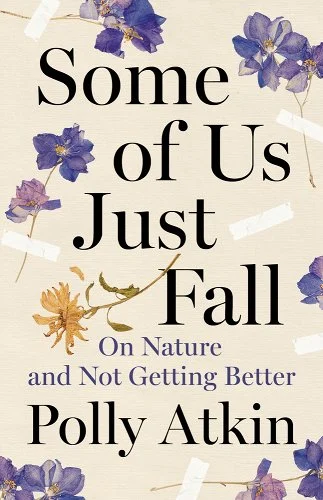
In her memoir Some of Us Just Fall: On Nature and Not Getting Better, Polly Atkin turns her poet’s eye toward living with chronic illness, imagining the experience as a sort of wilderness. In sharp and gorgeously attentive prose, Atkin ruminates on what it might look like for us to release ourselves from the harmful dichotomies that exist around narratives of healing and live instead with an awareness of our bodies as belonging to a teeming, complicated ecosystem. Her own experience being diagnosed with Ehlers-Danlos Syndrome after a lifetime of dismissal, misdiagnosis, and unexplained pain serve as an entrypoint to rich discussions of chronicity, in which Atkin weaves in historical context, observations about the natural world, and meditations on place to point out the lack of language and concrete resources available to individuals who do not have a chance at “getting better” in any traditional sense. Along the way, she also finds true hope in nature, which teaches her how to live with her body rather than struggling against symptoms.

I had the opportunity to talk with Atkin over Zoom about harmful cultural perceptions of chronic illness, finding real grace through observations of the natural world, assumptions around diagnoses, and the alluring illusion of returning to a kind of Eden. 


Jacqueline Alnes: I think there’s a misconception sometimes about chronically ill or disabled people that, if we could, we would cure ourselves and get better. But the subtitle of your book, which I love, is On Nature and Not Getting Better. What was it like to write an alternative to the idea that “getting better” or “overcoming” something is the only way to true healing? 

Polly Atkin: Once I got my diagnoses and I knew they were incurable conditions and are genetic, my relationship with “cure” became even more troubled. My relationships to those concepts became more and more troubled the more decades I went through living with ongoing illness. I got really interested in this concept of chronicity and the very few people who write about it or address it at all. And also how little of a cultural understanding we have of ongoingness. In England, for example, you can get a course of physical therapy for six weeks. After that, you’re out on your rear again. Which is fine if you’re recovering from a broken elbow, but not if you have a condition that is ongoing. 

Everybody in the entire universe who is chronically ill, will have had someone say to them, “Well, are you better yet?” Having to continually deal with that and say, no, I’m not better, I’m me, an ill person and will continue to be an ill person. I wanted to write about that and what it means to reconcile yourself to that but also to live the best life you can within that paradigm of not getting better and not being cured, and finding a way for that to be okay. 

JA: That was such a balm for me to get to read. I think when people who hear a word like “ongoingness,” people who haven’t been chronically ill view it as a trudgery or think “Oh, she must be suffering.” You write, “The onerous citizenship is so often portrayed as a terrible fate—onerous, burdensome, heavy—but what if it is your life?” I love this idea. What if “ill” isn’t a bad word? What if it’s just reality? When you began to imagine what the wilderness of illness might look like, what did you imagine that made you believe you could be here, and be okay?

PA: Slower and calmer and wilder in all sorts of different ways. One of the things that struck me very quickly after diagnosis is that all the things I thought I wanted out of life changed. A lot of my ideas about ambition and what I thought a functional life might look like shifted when I realized there was no chance of someone waving a magic wand and getting better. It’s led to a more diverse ecosystem of a life in some ways. I care about the tiny things, but I don’t care about the small things that are annoyances that other people care about. I see everything in micro and macro and miss the middle, in some ways. 

I wanted to write about what it means to live the best life you can within that paradigm of not getting better and not being cured, and finding a way for that to be okay.

One of the things I wanted to explore in the book, and I’m still struggling with this, is finding a way to live with the body rather than pushing against it all the time. That’s some of what I’m trying to say when I think about the wilderness and the wildness of the body. I’ve been led into thinking that through the landscape around me and the creatures that live here as well and how they coexist in that space. I think about what I expect from them and ask myself if I can extend the same grace to myself that I extend to other things. I suppose that’s part of what I’m wanting in that wildness, is to allow all of those different parts of me to coexist without creating hierarchy. These parts of me are equally worthwhile and worthy and valuesome in different ways, even the parts that hurt, even the parts that cause other parts trouble. They all deserve to be there, in the same way we might look at other beings and creatures within an ecosystem.

JA: It makes sense that healing is ongoing when you think about the fact that you are undoing a lifetime of dislocation, not just physically but also because you spoke your experience out loud to so many different people in positions of authority and were not given an answer until later in your life. That can cause a kind of distance between your self and your experience that is difficult to repair. How have you found your way back to yourself? 

PA: Writing has really helped, which is why that quote from your essay is in my epigraph. I love that whole phrasing of that, “To take up residence in my body again, I write.” For me, that was a really important part of my process when I was a teenager. When I was first very seriously ill as a teenager was when I began seriously writing poetry instead of adventure stories. That sense of being able to put the self down on the page, in some way, and reflect on that and keep a record has been really helpful. Part of the motivation for this book was wanting to put the record straight. I suppose like many writers, I am 99% driven by spite. [Laughs.]

JA: Extremely earned spite! 

PA: One of the absolutely best things that happened to me after I was diagnosed with Ehlers-Danlos Syndrome is that the amazing, elderly professor who diagnosed me, who at the time was one of the only people in the U.K. who could diagnose Ehlers-Danlos, wrote to some of the consultants who had been really terrible to me and told them what my diagnosis was. In some ways, me writing the book was an extension of that. There is this sense of literally writing yourself back into a story. A lot of people who do work in the field of life writing in whatever way, whether it’s memoir or autobiography, are coming from a place of wanting to place themselves back into the center of the narrative of their life that they’ve been displaced from, for whatever reason, through trauma or illness or marginalization. For me, the self-reflective process does begin with language but it goes beyond that as well and becomes something more. 

JA: I think diagnoses are so often viewed as the happily ever after, the riddle at the end of a puzzle, so I loved your line, “Diagnosis is like a wedding: not an end point, but a beginning.” I also loved how you talk about what comes after the diagnosis: the reckoning with harms caused by misdiagnoses or dismissals from doctors, the reshaping of your entire life’s narrative to think back to the things that were in fact real, that you now have a name for, and the newfound sense of love you have for your body that comes from a place of understanding. Receiving a diagnosis looks like relief, on the outside, I think, but on the inside there is also some grief and a lot of work still to be done. 

A lot of my ideas about ambition and a functional life shifted when I realized there was no chance of someone waving a magic wand and getting better.

PA: There are so many complicated emotions with it. Part of it depends on when that diagnosis or when those diagnoses happen. People who live with chronic conditions rarely end up with only one, and the longer that you go undiagnosed, the longer you are to attract other conditions on top of it. Part of the problem culturally is how we see chronic illness—or rather how we don’t see it. We don’t have a language for it, we don’t have an understanding of what it’s like to live with something that doesn’t stop, that just goes on and on. People assume that when you have a diagnosis then there is something you can do that’s really easy to fix, and then you are no longer ill. A lot of the process, the emotional process, was going through that over and over again with people. I’d tell them I had a diagnosis and they would be like, “Great, when are you going to be better from it?” I’d have to tell them that I knew I wasn’t going to be better from it. People think that treating physical health is like taking a splinter out of your finger, but they don’t understand it’s this continual, ongoing process of trying different things that may or may not help and realizing that your life is different after that. 

For me, because I’d known I was ill for so long and I hadn’t known why, there was a huge part of that moment of diagnosis which was a massive vindication of my own self-knowledge. So many people had told me, over the decades, that I had caused my own symptoms, that I was making them up entirely, and as you say, that makes you distrust yourself. I thought to myself, well, I am really clever, so maybe I am making all of this up. How awful that whole process is. Having someone say, you’re right, there is a reason for everything you’ve been experiencing, was a completely revelatory experience for me. I did leave the consulting room when I got my EDS diagnosis, lock myself in a toilet, and just weep. It was very much tears of relief, letting go of a lot of pain. There was that pain of not being believed, for so long, and all the various terrible, terrible things that doctors had said to me, when they weren’t believing. 

And then, of course, you have to go through the process afterward of figuring out what it means for your life. What does it change practically? What does it change emotionally? It’s an ongoing process. This year it will be ten years since my really horrific year but also my first diagnosis, and I’m still working through all of that and changing my relationship all the time. My understanding of myself and negotiating how to understand myself in the world, it gets better. But, it’s an ongoing process.

JA: The deepest part of me felt that comfort in hearing someone else say that the real healing comes from that work of undoing the messiness, not from some cure. I wonder if you would talk a little bit more about that divide that exists for you between the world of “getting better” or “cures” than the complicated, teeming ecosystem of real healing?  

Like many writers, I am 99% driven by spite.

PA: It’s so important to think about that. It has to do with where you think the narrative is going to cut off as well. They would often end with diagnosis and I’d say, well, I’d love to know what happens six months later or six years later or twelve years later. None of these things stop. I am loathe to quote Nietzsche, but he wrote that there are many healths of the body and it really struck me. We do think in binary terms of what is good and bad, this is healthy, this is unhealthy, and actually most things are neither one or the other. Opening yourself to the complication is a very fruitful thing. Life is messy, bodies are messy, people are messy, and learning to love that messiness rather than trying to tidy it away and accept that sometimes that can be painful is part of life and part of ourselves. If we can embrace it rather than fighting against it, we can learn to live with it better.

JA: When I hear you talk about binaries it makes me think about why we want them in the first place, and I think it’s because we want to live in a world that is simple enough for us to fix it. When you hear someone say, “You’ll never return to the body you once knew,” that sounds like a form of death, or something you might grieve for the rest of your life. But, in the book, when you meet with a climate biologist who tells you that you can “never truly restore a habitat, just make a different one,” you offer readers a different message. Has nature offered you a more honest path to healing?

PA: I’m really interested in thinking about the ecosystem of the body and the ecosystem of the planet and how one can help us think about the other. In terms of collapsing binaries, we often think of humans as separate from nature, but we are a part of nature, too. We are part of the ecosystem we are in, even though we sometimes dominate it in a way that is not healthful or helpful for any of us. Allowing that messiness at all points of that is helpful. 

I quote quite a lot in the book Eli Clare, whose book Brilliant Imperfection was so important for me in thinking about cure and non-cure, about what it means to live with something that can’t be cured or to reject the whole notion of cureability. He writes really compellingly in that about how cure is trying to restore you to this Edenic landscape, trying to take us back to this moment before the serpent, but it’s really important to think about the idea that a cure is a divine fantasy. But that’s a myth. There is no moment before Original Sin. That’s a story. And it’s not real. There is no perfect body, no perfect habitat. There are just different ones that change over time. At some points they are better for one thing and at times they are better for another.

I was really helped by thinking about cyanobacteria, these toxic algae blooms, which I write about in the book, which we’ve been having such trouble with in the Lake District in England. As the waters have heated up through climate change and because of pollution, the problem has grown. But as I started delving into that, I discovered that without cyanobacteria, we wouldn’t have an oxygen atmosphere on earth. So when we are thinking about what we want to go back to, do you want to go back to a point before cyanobacteria? Because in some ways, that would be a cure, but it would also be problematic. Trying to go back to something means ignoring that we all change, we all diverge from what we think is perfection all of the time. Bodies change. They’re not static things. We’re not dolls. I think we are encouraged to think about ourselves as though we are, particularly as women. 

JA: Pain, especially so much of what you experienced in life can be so isolating and all-encompassing. What struck me about your book is that you find so much hope and genuine joy and meaning in the way you connect when you reach outside yourself to nature or to other people, even throughout history, which is such an interesting way to find relief. Was that reaching out always something you were able to do?

Life is messy, bodies are messy, people are messy. Learning to accept that sometimes that can be painful is part of life and part of ourselves.

PA: I’ve definitely gotten better at it. Partly, it is slightly instinctual, maybe something to do with how I see things. We’ve had interesting conversations about this in my family, because these conditions are genetic and trying to unravel some of that and see how others have dealt with it is interesting. What we’ve come to realize is there is an incredibly intrinsic stubbornness in our family, but also a kind of stoicism as well. Sometimes when people say stoicism they mean a kind of dourness, but there is a thread of response which I see going down my family, which is that we really enjoy small details. I have always found that really helpful, and I find that really helpful with taking me out of myself when it’s hard to be in myself. When I am in great pain, I can get completely lost in a book or TV series or a quality of light or seeing a deer and his fuzzy antlers can change my day. I think there’s a danger in becoming reliant on what’s external to you to produce those feelings for you, to temper those feelings inside, but what I’ve been thinking about more and more is how we can kindle that feeling inside ourselves. That’s my next project.

JA: I’m thinking of readers who might be in the depths of their illness, wondering if they’ll get better. What would you tell your past self while she was in the midst of her most debilitating symptoms?

PA: It will get better. You’re not alone. There is a community out there of people who have been experiencing the same things and will understand what you are understanding, even if there’s no one in your own life. You can do it. You can go on. That to me is one of the most important messages. There have been parts of my life where I thought that I couldn’t go on, and I couldn’t continue. But life is really amazing. We don’t know what we can deal with until we deal with it. Our capacity to expand and become expansive is something that I don’t think we really have a grasp on at all. Life might not be what you thought it was going to be, but it will change and grow and be amazing in all sorts of ways if you are open to let it, and going with it rather than pushing against it all the time. 
7 Poetry Collections that Transform the Personal Into Portals

Poets for generations have contended with the indeterminable, fluid relationship between the speaker and the self. We all know the dictum to write what you know, but I find more possibility and permission in Eudora Welty’s way: “Write about what you don’t know about what you know.”

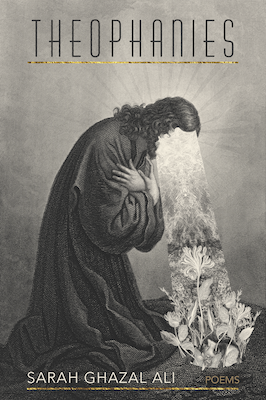
In my debut collection of poems, Theophanies, I explored matrilineage, motherhood, and gendered violence through the lens of the most personal thing about me that others know—my name. It would be easy, then, to read the poems and assume it is a wholly autobiographical account, that is pure confession. In poem after poem, you read Sarah, Sarah, Sarah, worn down from repetition like a bead on a rosary. But Sarah is a vessel that holds what I dream into it, a threshold I step across, hoping the way through leads to revelation or an encounter with the divine. Names are what I know—but knowing the names of Sarah, Hajar, Mary, and Eve didn’t lead me any closer to knowing the actual women they were, or the lives they led. So, I wrote into what I didn’t—couldn’t—know about them, through persona, portraiture, and forms both invented and received. 

Tracing the contours of their names and personalities revealed to me my own biases, fears, and desires. It revealed to me that what I dismiss as personal is in fact deeply political, and that what I feel most intimately is in fact a portal to larger considerations of society and the political landscape, and my place and role within them. Each of these collections explores naming, the divided self, and feelings of alienation across time, geography, and shifting experiences with the speaker’s individuality. As Audre Lorde has said: “There is no such thing as a single-issue struggle because we do not live single-issue lives.” These are not single-issue books, but layered and rich and transformative. They cannot be reduced. Here, you’ll find illuminating work that uses lived experience as a springboard for deeper contemplation of home, selfhood, legacy, and belonging. 

Portal by Tracy Fuad

“I lived for so long in a void,” Tracy Fuad writes in her sophomore collection, then later, “I thought myself wholly devoid,” bringing to mind the manifold properties of lack: is an empty space inherently so, recently emptied, or temporarily vacant, unfilled, but yet to be? But the title Portal offers the architecture of a threshold, a doorway into or out of, or an opening. In these precise, measured poems, Fuad brushes up against the (imagined, imposed) limitations of a life that is lived, and observed, and exhausted—and a conduit for more life still. I was moved and confounded by the atmospheric ten “Planetary Boundary” poems, which when read aloud rang in my ear like an alarm for each of the near-ten months of pregnancy.  The self is at once a container and a hole, both precipice and witness: “I walked the city, a wet eye / Everything sticking to me / Or going right through.” Fuad’s preoccupations—semantics, origins, childbirth, our species depredations—are familiar, but handled with astonishing intimacy and candor. Evocative and probing, Portal is a collection I will return to for its music and wisdom: “When the self finally appears, don’t turn the self away.” 

Ward Toward by Cindy Juyoung Ok

“[W]ho or what is the me in my?” Word to word, ward to ward—the poems in Ok’s debut Ward Toward collapse the walls of time and space, conscious of the page as a constraint but unwilling to be constrained by it. Selected by Rae Armantrout for the Yale Series of Younger Poets, this collection tunnels through idea and image to reach the noun and texture of experiences such as institutionalization and exile, and cautions, “no idea is like // prison …know dying is not like death and not even life / is lifelike.” Agile and discursive, Ok’s language bounds and abounds through wordplay, memory, and invented forms, and states, “I’m not native to any / place.” From apartments and wards to beds and checkpoints, Ward Toward is an architecture of scrutiny, a study of nation, selfhood, and performance—“The city’s in my name and its only borders / are my body’s, my counted and settled and made state.”

Pentimento by Joshua Garcia

Layered and expansive, Pentimento by Joshua Garcia leaves no stone unturned in its push-and-pull between art and form, the sacred and profane, image and text, sight and sound. These are muscular poems, grounded in the specific, and an intertextual, ekphrastic exploration of desire and devotion: “I want to know the names / of those who make reservoirs / of their own bodies.” Garcia works to disentangle pain from pleasure, and faith from self-flaying. Through persona, epistles, and self-portraits, the lonely speakers in Pentimento collect definitions, verses, names, and possibilities from the world around them, bolstered by a choir of figures ranging from roommates and friends to a therapist and Biblical figures. Garcia sets out in search of the sublime queer body, and in the process, excavates it powerfully from his own being: “i am still learning how void begets beauty / i am still / learning how to answer when called.” 

The Palace of Forty Pillars by Armen Davoudian

Lyrically and formally deft, this debut collection by Armen Davoudian beautifully charts a queer and exilic coming of age. As much a narrative about adolescence and the mutability of national identity as the construction of narrative itself, The Palace of Forty Pillars reflects and refracts to harmonize two halves of a divided self. An Armenian raised in Iran, Davoudian recalls his childhood with musical clarity: “When I left home I thought I was the raven / sounding the future for echoes of my voice… // “…daily I renewed my prodigal choice.” Personal history is fractured and multiplied, halved and doubled—the elegant titular poem is a twenty-part crown of sonnets, which cleverly makes The Palace a collection of twenty poems or forty, depending on how you read it. This poised collection implements meter and rhyme to remarkable effect, paying homage to both Persian and English poetic traditions, and remakes all—personal history, war, family, lyric—in its own, singular image: “All is dual: // …All is dissolved: // …All is halved, // …the boy no more than a way of seeing.”

Self-Mythology by Saba Keramati

Selected by Patricia Smith as a finalist for the Miller Williams Prize, Saba Keramati’s debut enacts its title in lyric, cento, and self-portraiture. For Keramati, the hyphen—self-mythology, Chinese-Iranian—is at once a balance beam and a blade: “Two things can be true at once… / Hand pressed against glass hand.” Haunting and transfixing, these poems reckon with the inherited body and inhabited mind, collecting fragments to assemble a self. In “Self-Portrait with Crescent Moon and Plum Blossoms,” she writes, “I shape myself with the emblems I gather. / Let me write myself here…” Keramati takes confessional poetics to new heights, scrutinizing  the self as a site excavated, and the home(lands) as a body whose scattered limbs might yet be reassembled. A number of lines are seared into my brain, triumphant and forthright in their brilliance—“Still / I am not so bold to think I am beyond my imagination.” 

The Lengest Neoi by Stephanie Choi

Winner of the Iowa Poetry Prize, Choi’s debut collection The Lengest Neoi unfurls in poems that probe like a tongue into the void a pulled tooth leaves behind. Adding the superlative -est to the Cantonese Leng Neoi turns “pretty girl” into “prettiest,” establishing from the beginning the poet’s commitment to expansion in both vision and craft. Choi’s voice is matter-of-fact and penetrating, and deploys the intimately personal—names, family history, voicemails, emails—as a springboard for explorations of belonging, beauty, and connection. Formally inventive and delightfully sequential, language in Choi’s hand is stretched and patterned with wit and dexterity.

Particularly captivating are a series of sound translations after Jonathan Stalling, and “American | Ghost | Chestnut,” a crown of sonnets interrupted by a crossword. The final word of this collection is “instead,” apt for a book that explores alternate lives and versions of both the self and the home, for a speaker who writes, “My other name I’ve tried to adorn since I was born.” 

Something about Living by Lena Khalaf Tuffaha

Winner of the 2022 Akron Prize for Poetry, Tuffaha’s third collection Something about Living clarifies Palestinian personhood by exhuming language for closer inspection. In a stunning thorn crown of sonnets, the speaker diagnoses the seemingly perpetual postures of empire and indicts the long arm of displacement, how “a parent’s exile can be upcycled.” In the face of ongoing atrocity, Tuffaha probes the limitations of articulation and presence to scrutinize what acts—of speech, defiance, or service—might be sufficient against the calcifying project of annihilation. In these poems, mercy is beckoned through an invocation of plurals, an empire sings itself to sleep, and a border is an arbitrary, inked line the poet writes upon and against. With precision and a keen eye, Tuffaha invites the reader across the threshold of the page to enact a living Palestine, to reorient the imagination against grief and loss, and toward “an architecture of return.” This a breathtaking collection that wields the personal as a looking glass into the collective, that centers Palestinian life as it is being lived, that privileges language that makes possible a choral, more sonorous living. 

Autistic Literature Will Flourish When We Stop Insisting That Writers Qualify Their Autism

Three weeks after my third book came out, I experienced the first unmasked autistic shutdown of my life. What happened was this: driven into the ground by overwhelm—over-stimulated from doing larger events than I was accustomed to doing and feeling visible to readers in ways I’d never been before—I found myself unable to speak for much of the next twenty-four hours. True to the many descriptions from students and friends and personal essays and forum postings I’d consumed over the years, the external world became all the more external to me: unpleasantly busy and chaotic and loud, a violent sensorium that appeared calibrated to uniquely antagonize my cotton candy-wadded mind. To boot: I had the hellacious task of navigating O’Hare International Airport in this state. The day after my shutdown saw me hobbling hollow-eyed in a massive pair of sound-canceling headphones through the hostile fluorescence of O’Hare’s Terminal 1, wondering why everything seemed to hurt so goddamn much.

An uncharitable read of this situation—the kind toward which, regrettably, most online discourse is often inclined—is that it’s pretty darn convenient that Rafael Frumkin had his first classic nonverbal shutdown just in time for the publication of a story collection featuring a nonverbal ASD narrator. A story over which I had spent a good deal of time agonizing, had strategized about with both my agent and editor, had even crafted a short author’s note for (which, while certainly well-intended, ultimately did more to equivocate than explicate). At the forefront of my mind at all times: How will I pre-empt cancellation? How will I make a case for myself as a politically acceptable author of this piece, thereby legitimizing it artistically? How can I answer every single question about this piece before it’s asked?

All of that hand-wringing and all those emotional tithes paid to a literary discourse that frequently demands proof of an author’s claim to “authority” on a certain marginalized experience. Preparing for the backlash (some of which had already started to come), rehearsing my answers to potential reader questions, rehearsing my response to a Q&A gone suddenly south. All that, and there I was, totally nonverbal in O’Hare, experiencing with a bracing immediacy many of the feelings described by my story’s oft-overwhelmed nonverbal protagonist.


Autism began as a psychiatric designation intended more to strip people of their subjecthood than to better understand them. As a diagnosis, autism didn’t appear until fin de siècle European doctors like Eugen Bleuler identified it as either a facet of, or coextensive with, schizophrenia, labeling autistic children “childhood schizophrenics.” Much of the clinical literature about these children concerns their unintelligibility—unlike neurotypicals, they constitute a rather unpredictable series of outputs to any given input. To be an autistic-schizophrenic was to be unreadable and therefore a cognitive null set: We can’t imagine what someone who’d behave this way may be thinking, so they must be thinking nothing at all.

It’s telling that included among Autism Spectrum Disorder’s “experts” throughout history, you’ll find physicians attracted to eugenics, either coded or overt. One egregious example: Hans Asperger, for whom Asperger’s Syndrome is named, was a Nazi sympathizer highly compelled by the concept of “racial hygiene.” Rather than explore the supposedly unknowable interiority of the autistic, there has been (and remains) a medical/psychiatric campaign to banish it altogether. A diagnosis of autism is frequently seen as an automatic tragedy, a thing to be remedied with drugs and behavioral therapy and sometimes even chelation or shock therapy (as if such a thing could ever be reasonably described as “therapeutic”). Just as it was over a century ago, treatment for autism is less about the alleviation of autistic distress and more about the ruthless disciplining of the autistic mind and body.

Luckily, discourse around autistic subjectivity has spiked, with whole slews of people sharing their personal experiences online. There are autistic advocates, autistic influencers, studies and first-person accounts about potential linkages between the autistic neurotype and transness, the under-diagnosis of autism in women and communities of color, and so on. The animus for the “autism moms” behind disempowering organizations like Autism Speaks is marked, and everything from TV shows to YA novels to video games that explore the complexities of autistic subjecthood are now in wide circulation in our culture. Much of this is good news: finally, the reader/viewer is privy to a story about autism other than the one told by the doctor about the autistic patient. We are granted the interiority we’ve all been hungering for, and felt so alone without.

But lately there’s been a steady seepage of discourse into the realm of the first-person account. The digital critic has moved away from battles against autism moms and ABA therapy and has started to set their sights on other autistics: Are we to accept self-diagnosis as valid? What about a formal diagnosis, but from a doctor who doesn’t use the same set of DSM criteria as the one who diagnosed me? Does the portrayal of autism in this piece of media strike me as realistic, or dangerously problematic? Is this person even qualified to be telling a story from an autistic point of view? And the answers to these questions, time and time and time again, can typically be boiled down to four words: You’re doing it wrong.


My experience in this world is one of being simultaneously visible and marked: being openly trans (and limp-wristed and high-voiced), wearing a lot of color and gauzy “feminine” fabrics, having a commonly misunderstood neurotype that has landed me in some rocky situations. For someone like me, the very fact of my existence as an author and professor with some modicum of visibility in the world is itself a subversion: What faulty wire has been tripped that I’ve been given any kind of a platform?

I am instantly flattened and reduced. What it means to be autistic is instantly flattened and reduced.

There’s an inconsistency in readers’ minds when they read my short story and then form a quick set of assumptions about me based off my book’s dust jacket. There I am, smiling into the camera, and my bio says I’ve been a part of these historically gatekept academic and publishing circles, so why should any reader assume I’m anything other than a well-regulated, “high functioning” person? Because I write books and talk about them in front of people, I must be someone who could not possibly be experiencing the world in a way at all similar to how a nonverbal autistic person experiences it.

I am instantly flattened and reduced. What it means to be autistic is instantly flattened and reduced. The categories of “autistic” and “author” are forcibly decoupled. The result? A disgruntled online reviewer (or two or three) complains that “autistic people do not need Rafael Frumkin to speak for them.” My knowledge of my character’s subjecthood is challenged, as well as my own. Proof that I occupy the correct subjectivity to author such a story is demanded. If I cannot provide that proof, I am canceled.

With the increased visibility of autistic subjecthood has come an increased demand for “authenticity” far in excess of the desire to read someone being themself and exploring ideas on the page. There’s an implicit insistence that autistic writers do one of two impossible things: 1) exactly recreate the reader’s own, hyper-individual autistic experience; or 2) write autofiction so laden with their own pain and misery that the reader must drop their criticism and concede to the writer the title of Perfect Sufferer.

It’s easy enough to understand where this demand for an impossible kind of verisimilitude originated—from Pablo Neruda speculating idly about the interiority of the Sri Lankan hotel maid he raped (a “statue,” according to him) to Alexander Maksik deciding what it must be like to be the European high school student he assaulted and impregnated in You Deserve Nothing, there are plenty of instances in which there’s an obvious need for course correction that accounts for who should tell what story and how. But even this sort of discourse has its limits: constant, turbo-charged conversations about the right to authorship have turned writing fiction into less of a pleasurable and challenging activity of self- and world-discovery and more a high-stakes identity game played with an entire readership that one can win by a strange kind of fiat. And while we may not be directly intervening on autistic bodies and minds by playing this game, we are certainly foreclosing on the possibility of a flourishing, variegated autistic literary aesthetic.

While there are many advocating for an overall increase in nuance, empathy, and understanding in American letters (as R.F. Kuang does in her superb and savvy Yellowface), the far louder conversation is about who has materially benefited from the appropriation of a point of view, and how that crooked beneficiary can be most justly punished. Take Goodreads, which has become a hotbed of polemic so intense it’s causing books to be canceled before they even hit the press. In one incredible case, Elizabeth Gilbert actually halted the release of her third book because readers were upset about its Russian setting without having read it. And while there are certainly times when the concerns about a book are justified, the intense pillorying of the individual is never going to be the way to move the collective conversation forward. The result is less a movement towards artistic equity and more an aesthetic witch hunt, an attempt to get the writer to write the words – and indeed, live the life – in exactly the way everyone else would like her to.

The intense pillorying of the individual is never going to be the way to move the collective conversation forward.

The solution: instead of being dead, the author must be undead. An alive-and-kicking author may kick a bit too hard and stir the beehive of public opinion, which might affect sales, which would certainly affect the value of the author’s next advance, and so on. The author needs to be alive enough to show up somewhere in the world, visibly tick a certain number of diversity boxes, and then hustle off to the next event, but certainly not so alive that their complex humanity is seen as anything more than a cancelable commodity.  Like any zombie, their inner life is either nonexistent or beside the point. (Let’s not even get started on the various sticky aspects of that inner life, the particular opinions, ideas, and – shudder – objections buzzing around in their undead head.) More important is their capacity to serve as a kind of emotional proxy for a readership hungry for confirmation that to be different is to suffer, and that there is nothing more noble than having suffered a lot. This is the case for everyone, though it applies to marginalized writers especially. I’ve heard from many writers of color, queer and trans writers, women writers, and disabled writers the following exasperated refrain: It feels as if my misery is worth more to readers than my joy.

Art-making is a complex, by turns-gratifying-and-frustrating process whereby you alchemize your own subjectivity with that of others’ to tell a story that you hope resonates and helps at least a few people feel less alone in the world. And once you’ve completed this process—which runs most of us quite ragged—there is no guarantee that the art you’ve made will make you rich or famous, nor that it will even get published at all. But we’ve allowed ourselves to be hoodwinked into believing that stories are as tradable as commodities on the New York Stock Exchange, and it’s caused us to enter a strange netherworld of art-under-capitalism in which the reader has become a kind of scarcity-minded watchdog. There’s a sense that the writer isn’t exploring an identity expansive enough to include many individuals, but rather staking a claim to a very narrow subjecthood—and if the writer is going to be so bold as to stake that claim, they better get it right while decidedly not enjoying themselves. Both the writer and the reader seem to be under the influence of a heavily gatekept industry: getting paid for your art (never mind paid a living wage) remains an opportunity so difficult to access that there has arisen widespread suspicion and even resentment toward those who have done so. In many cases, access has come with class privilege: the writer is seen less as a voice of the people than falsely anointed by a silver spoon and built-in industry contacts. And while writers are far from being a monolith—we come from a wide variety of social and economic backgrounds, and very few of us are actually getting rich off our writing—the damage has been done: many readers and viewers now anticipate their subjecthood being misunderstood and misrepresented by the “out-of-touch” people who write books and make films, often before said books or films are even released. 

Which is how we arrive at our current situation: since my autism is not visible enough, and since I have not been “held back” materially because of it, it’s believed that I’ve taken something that doesn’t belong to me and now I am rich with money or clout that is not my own. The reader in a white lab coat, checking their charts and screwing up their face, determines that I do not meet the proper set of diagnostic criteria, and that my aesthetic prognosis is poor.


An autistic shutdown can be triggered by a variety of things, but the key culprit is always some sort of overwhelm: whether your senses are suffused with too much noise and light or you have been assigned the task of navigating a high-stakes social situation with an arcane script known only to a select few, you have quite simply had enough, and the “social functionality” program that’s always running quietly in the background of the central processing unit of your mind—permitting you to nod and joke and smile and make the kind of conversation that puts yourself and everyone else in the room at ease—encounters an error message, which means your entire system needs a reboot.

What had me needing a reboot was the simple fact of being seen. I was doing events for my book that were better-attended than any events I had ever done in the past, an experience both thrilling and, as I was quick to discover, immensely draining. With more eyes on me and my work came more instances of both praise and scrutiny, and I was finding myself quite overwhelmed by both. A friend described the experience of giving a reading to an adoring packed house and feeling extremely buoyed by the event until the final person in the signing line looked him dead in the eye, smirked, and said: “Now that your book is so successful, are you going to turn into a complete asshole?” And though I have yet to experience commercial success on the scale of my friend’s, I still found his story highly relatable. The amount of conversations I was having in which I was seen as less a person than an irksome concept was beginning to wear me quite thin. Time after time, people wanted to talk about how I had suffered as a neurodivergent queer and trans person, and how commonplace it is for people in my subject position to suffer. And if the conversation wasn’t about suffering directly, it was about the slight uptick in my commercial success as a writer, and how that could possibly be used to raise awareness of widespread suffering.

Since my autism is not visible enough, it’s believed that I’ve taken something that doesn’t belong to me

While the thematization of marginalized suffering was groundbreaking at the point in time when hearing from marginalized voices was vanishingly rare, it is no longer a needle-moving aesthetic strategy. There’s nothing subversive about the undead author staggering from bookstore to bookstore to confirm to rapt audiences that, yes, to be alive and marginalized is to be in constant, howling psychic pain. And it’s not that I don’t want to talk about the hard stuff, either—it’s just that there’s also so much that’s not hard.  There’s such great joy to be had in experiencing the world with the technicolor hyper-empathy my neurotype affords me, or in contributing to the destabilization of the cisheteropatriarchy simply in the ways I speak, act, and dress. It makes one wonder about the political potency of joy, of what sort of narrative better stands to undercut the necropolitics of the Powers That Be: one in which people like me are constantly being killed, committing suicide, being policed, and policing each other? Or one in which people like me are alive, happy, and loved?

Here is how I think we need to approach subjectivity in fiction: not as a highly circumscribed reflection of an agreed-upon set of traumas, nor as penance for the privilege of getting to write and publish the fiction in the first place, but as an opportunity for subversion. An opportunity to reclaim the narrative. It might be liberatory for both writer and reader if the reader could treat books as singular reports on singular experiences, could actually adopt a sense of curiosity about how a narrative diverges from a certain subjecthood’s commonly held criteria instead of demanding an impossible “authenticity” that may not exist in the first place. Wouldn’t it be a relief if we could all take off our lab coats and read stories without worrying whether the author meets a specific set of diagnostic criteria?  Epistemically speaking, who should the neurodivergent reader trust more: the actual flesh-and-blood weirdo writing the story, or the diagnostic manual that more or less identified autistic children as cognitive null sets for decades?

Time after time, people wanted to talk about how I had suffered as a neurodivergent queer and trans person.

There is a vanguard of joy-on-the-margins fiction: I am a part of it because I am also living it. And yes, I realize that doing so is not without risk, that there is immense cultural inertia when it comes to acknowledging that I—or a Black trans woman, or a Native nonbinary kid, or a disabled queer agender person—could actually be happy. But if there’s one thing you learn from a lifetime of being different, it’s that you can’t rely on a broad public consensus to tell you anything true about yourself.

While there’s nothing stopping our literary culture from continuing to demand my pain, there’s also nothing saying I have to give it away. We’ll have to save the story in which I am gaslit, suicidal, and chemically altered for a more fitting cultural moment. Instead, I’d like to tell you the story in which I am barefoot in a beard and gauzy floral skirt, laughing and running across a field of grass towards my beloved chosen family, the lot of us about to build our own little faerie kingdom in the woods. And I want you to believe me when I tell this story, to trust me without needing endless elaboration and justification. Because it’s far truer than you’d think, this story, and it has a moral: us cheerful weirdos are not an exclusive lot.  In fact, the only requirement to join is that you recognize the potential of your happiness to move mountains.

Lisa Ko on Making Memory Under Capitalism

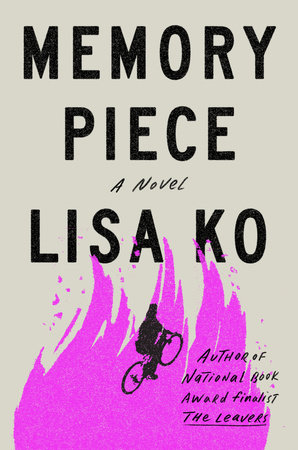
A performance artist, a coder, and community activist walk into one another’s lives. Rather, they meet as children at a Fourth of July barbecue for Chinese immigrant families. What unfolds in Lisa Ko’s Memory Piece is how their friendship evolves, as they wrestle with their individual ambitions and collective social issues. Ko’s decades-spanning novel takes us from the early days of the Internet in the 1980s to a dystopian future in the 2040s. We stay with Giselle (performance artist), Jackie (web designer and coder), and Ellen (organizer and activist) throughout, seeing how their lives respond to the turbulent world around them.

A theme that ties the three characters together is that of the archive. Giselle crafts elaborate, self-documenting archives as part of her art pieces. Meanwhile, Jackie is an early creator of the web archive and Ellen becomes a living archive of community activism. Filtered through the perspectives of these three characters, Ko’s second novel questions why we try to remember and document our lives. Ko also offers a poignant meditation on late-stage capitalism: what it means to exist in an age of surveillance and government tracking, what it means to create art in an era where identity itself is commodified, and what it means to find purpose.

It was a joy to chat with Ko on the phone about what it meant to create art under capitalism, how memories are being digitized, and the “leaky container” of Asian American identity.


Jaeyeon Yoo: How did Memory Piece begin?

Lisa Ko: I started writing it in the fall of 2016, which was that in-between period when I sold my first novel, and before that first novel, The Leavers, came out. I was thinking a lot about making art under capitalism, and reminiscing about being a kid and writing stories—without thinking of it as a career. You know, the fun, unfettered creativity of those times. I started writing about these friends who met in childhood and were collaborators. I was reflecting on the kind of friendships that move in and out of your life, where you all are really different and your relationships have changed, but also you have this really profound impact on one another without even realizing it.

I’ve also always been interested in these performance artists, with these almost absurd durational performance pieces. I was thinking about what needs to be set up in your life to literally live inside a room for a year by choice, or where you’re tied by a rope to another artist. I was playing with that in my character Giselle, who’s also an artist: what kind of art could she make?

JY: Speaking of performance art, this was such a rich novel for cultural references. Could you talk more about the artists, cultural works, and/or collectives that inspired this novel? I was thrilled to see it talk about Rope Piece.

LK: Yeah, definitely [Techching] Hsieh’s work. Also the artist On Kawara, who did this project where he painted the date every day for 50 years. I think there’s something in the regularity and rigor of it and just this idea, of the passage of time being the art itself, that kind of spoke to me around the themes of memory, art, and labor. I love the work of Adrian Piper as well. And then, there’s the time in which the characters are growing up in—zine culture, early internet culture of the 90s were things that they were participating in and responding to.

JY: This came up a little bit with the durational aspect of the performance or this you talked about.

I’ve always had this anxiety about time and how I use my time.

LK: I’ve always had this anxiety about time and how I use my time. I think it’s definitely having both grown up in an immigrant family and also being an only child, an only grandchild. There is always this knowledge that my family’s history sort of ends with me. I’ve kept a record, ever since I was five years old. Writing in a daily journal had to be a part of my daily practice.

JY: And with that anxiety around time is loss, right? We begin the novel with the lost notebooks of Giselle Chin. I guess what I’m trying to say is that the threat of loss—disappearance, invisibility, erasure—must be present for records to exist at all. Loss is such a prominent current in the book, and I’d love to hear you talk more about it.

LK: The novel is both looking back and looking forward, thinking of how things change: what have we lost and where are we going? Something I think about a lot is how destroying memories is a way to assert power. Whether it’s banning the teaching of certain histories, or destroying educational and cultural institutions, or even buying social media platforms and websites becoming obsolete. All this stuff disappears. There’s such violence and power in that kind of rewriting that affects not only the past and present, but also the future. What can we do about that? We’re so dependent. Our memories are being digitized and we don’t actually own the technology, so they could be no longer accessible, right?

JY: Yeah, I was freaked out by how this book showed the very dangerous side of documentation. Not all record-keeping is like Gisele’s art making and self-archiving; the government tracking in the 2040s future section is really intense.

LK: I was just thinking about those early days of the Internet, where everyone was like, “We’ll just put everything online, it’s fun!” Now, twenty years later, we are obviously much more suspicious. I went through my things a few years ago and destroyed a bunch of journals. I was thinking how I have so much paper and documentation. What do I actually want to carry around with me? What do I want to leave behind? What can be used against us? What is valuable to keep?

JY: On that note, I wanted to circle back to your beginning question—of what it means to make art under capitalism, and how that plays out in Memory Piece.

LK: For me, there’s always a sort of tension around art work not being like real work. What’s the value of it? What is it making? Is it making you money? There’s an essay by Alexander Chee in his book, How to Write an Autobiographical Novel, where he writes something like, “Time is our mink or Lexus or mansion.” In other words, writers will give anything to have time to write. Time is the valuable commodity. That’s a through-line for the characters and affects the choices they make, whether it’s Giselle living in a mall for a year [as a performance piece] so she doesn’t have to pay rent or get a day job. Like Jackie working at this job that she hates, so that she can make money for her passion project. Or even Ellen, who refurbishes an abandoned building; if she doesn’t have to pay rent, she’s rich in time and can pursue the work and projects she wants to.

Destroying memories is a way to assert power.

I think for all of us, there’s also that tension between wanting to create for yourself and then being dependent on the people who are distributing or funding the art. For writers, that’s often publication in the marketplace. It’s always a challenge, of not wanting to respond to that [economic need] when you’re creating, but also having that be the reality of what makes it possible for work to get out there. That’s something that’s very prominent in the book, too. There’s Giselle, who just wants that sense of fame and recognition, but also feels stifled by the demands of what’s expected of her, if she receives funding that she needs. What is possible to create outside of that space?

JY: Then there’s also the matter of activist art. For me, the political praxis and potential of Asian America—its activist lineage, its intentionally radical origins—is so important, extending beyond a matter of pure “representation” in art. That’s why I kept thinking of something Ellen said in the book, about “outgrow[ing] the limitations of Asian American identity as a political home.”

LK: I just think of what’s changed over my lifetime, which also parallels lifetimes for the characters as well. I was thinking about the leaky container of Asian America as a category, and how non-monolithic it is. Writing the character of Ellen made me reflect on what’s changed in the past twenty or so years. What I feel is more awareness and political awareness around the limitations of that [identity] category, and the power in connecting our struggles to other struggles. The power of being aware of our differences.

I feel like what [my previous book] The Leavers and Memory Piece have in common is that they both look at the relationship of Asian Americans to the US imperial project. They both also touch on the gap and tension between the stories we are told and stories we tell ourselves, and the importance—and complications—of community.

JY: As I prepared for this interview, I was reading Surface Relations by Vivian Huang, which is an academic book on Asian inscrutability. Huang takes this stereotype of the “inscrutable Oriental” and shows how Asian American artists have strategically used inscrutability—whether that’s invisibility, unreliability, or even disappearing like Giselle—as a form of queer resistance. I was so struck by how both Surface Relations and Memory Piece emphasized the generative potential of invisibility, and I’m curious to hear your thoughts on it.

LK: I feel like there’s definitely a power in invisibility, which is interesting because it’s normally framed as being something very negative. The first thing that came to mind when you were talking was around this techno-fascism that runs throughout both our current moment and the future in the book. Like, are we all just creating content for meta and AI? There’s a power and also an advantage, in some ways, to being not findable in this age of surveillance.

JY: Did you always envision a large time frame, spanning decades and extending into the future, for this project?

LK: Even in the very first drafts, I was envisioning a structure where a character is looking back,  with a past and present slash future storyline. I was interested in looking at how past relationships impact the present moment. It felt like a natural progression—when you’re writing about the past, the scenes that take place in the ’80s and ’90s, it’s inevitable that you start to think, “What’s changed since then, and what might continue to change?” It was a challenge. I didn’t want to be too specific about something that might not happen, but also wanted to create a felt world.

JY: So the book ends in a speculative future, but we don’t really have the characters with us anymore [it concludes with photos and an archive inventory]. What was your decision behind including these multimedia elements?

LK: The form and aesthetics of Memory Form mimics the different forms and aesthetics that the characters participate in throughout their lives. I think about how the book becomes an archive itself, at the end. I went to library school, so the collections and archives are based on that kind of formatting. Hopefully, the reader is mapping out the meaning and connection between the different [media in Memory Piece]. I like to think of it as fading out on a kind of hopeful note, the pictures creating a storyline of their own.

7 Novels About Smart Immigrant Women Adrift

I first heard the term “smart women adrift” from my graduate school professor, Sigrid Nunez—herself a master of writing incisive female characters. At the time, the term made me laugh, because it opened an umbrella over a type of literary woman who had long existed, unclassified, in my literary consciousness, and there is something funny about acquiring a new name for an old concept. The term, coined by Katie Roiphe in her 2013 review of Renata Adler’s cult classic novel, Speedboat, describes—in Roiphe’s words—a class of novel that centers around “a damaged, smart woman” who gives voice to “a shrewd and jaded observation of small things, a comic or wry apprehension of life’s absurdities.” Roiphe describes these women as floating “passively yet stylishly…without a stable or conventional family situation,” and conveying “the exhaustion of trying to make sense of things that don’t make sense.” 

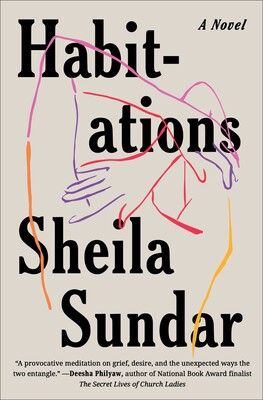
Early in my debut novel, Habitations, my protagonist, Vega Gopalan, a sociologist who was born and raised in India, begins an affair with one of her professors, a Jamaican public health scholar named Winston. To Vega, Winston provides an escape from the loneliness of marriage and motherhood. But their relationship shifts when he asks her to articulate what she wants for her future, advising her to navigate the racial hierarchies of academia by building an ambitious plan for herself. He tells her, “I expect you to think bigger than your life right now.” 

As Vega moves from one romantic relationship to another, she is haunted by the loss of a younger sister years prior, and gripped by the conflicting obligations she feels to her family and to herself. She responds by telling Winston, “We can’t all be free to think big. At least, not in a geographic sense.” Inwardly, she reveals, “It was too narrow a response…but it was also the fullest and most encompassing truth she could manage…She didn’t want to spend her life in the confines of her marriage, but it was one thing to imagine a different future, and another to begin the process—the awful, mechanical process—of remaking it.”

When writing Habitations, it did not occur to me that the story would fit within this tradition. The smart women I had read about in books—at least, the women deemed smart in literary discourse—seemed to possess a sturdiness that was acquired only after generations of belonging. Vega was smart, but she was not sure-footed, and her story asks more questions than it answers: How does one escape the shadow of loss? How do we satisfy our dueling needs for love, sex, and freedom? What is the weight of caste, class, and race in America? How does an immigrant, and a cultural outsider, make (and remake) a home in a new country? 

The following seven novels capture the lives of smart, immigrant women. Unlike Roiphe’s women, who study the machinery of life from a distance, these protagonists make sense of the world while simultaneously laboring inside of it—a nanny, a bookkeeper, a translator, a doctor, a scientist, an academic. As with all lists, this one is incomplete; there are many other novels that tell the story of women who carry with them, from country to country, a sharp critique of the social, cultural, and economic order even as they find their place within it. 

Americanah by Chimamanda Ngozi Adichie

In her 2016 article in the New York Times, “Nigeria’s Failed Promises,” Chimamanda Ngozi Adichie wrote, “I was 7 years old the first time I recognized political fear. My parents and their friends were talking about the government, in our living room…Yet they spoke in whispers. So ingrained was their apprehension that they whispered even when they did not need to.” In her novel, Americanah, Adichie’s protagonist, Ifemelu, bears close witness to this political fear. She observes the shrouded language—the military general who purchases her aunt’s sexual servitude is referred to as her “mentor”, and his gifts as “miracles.” She observes the wealth of the military elite and its grip on her country’s public institutions, the manipulations of the church, and the quiet struggle of her middle-class family.

When she comes to the United States, she observes the peculiarity with which race is weaponized and discussed. Early in the book, a white woman—for whom she becomes a nanny—comments on Ifemelu’s name, saying “I love multicultural names because they have such wonderful meanings, from wonderful rich cultures.” Silently, Ifemelu comments that “Kimberly was smiling the kindly smile of people who thought ‘culture’ the unfamiliar reserve of colorful people…She would not think Norway had a ‘rich culture’.” Later, she says of a Black woman she meets at a party, “She said ‘motherland’ and ‘Yoruba religion’ often, glancing at Ifemelu as though for confirmation, and it was a parody of Africa that Ifemelu felt uncomfortable about and then felt bad for feeling so uncomfortable.” Yet she speaks tenderly about her Nigerian American nephew, observing the cutting effect of racism as he comes of age in suburban America. And she speaks to the invisible grip of race on her romantic relationships, first with a white man and then a Black man, assessing, in their aftermath, the limits to what she, herself, could understand. 

Patsy by Nicole Dennis-Benn

At the onset of the novel, Patsy leaves behind her five-year-old daughter in search of a mythical life in Brooklyn that does not materialize. The severing of this relationship hurts her daughter and stings the reader, but Patsy reflects, as she makes her choice, on the confluence of circumstances that led to this moment: the inability to access an abortion, the indifference of her daughter’s father, the inadequacy of the educational system in which she came up, and the professional ceiling that obstructs her as she dreams of something bigger. 

Transcendent Kingdom by Yaa Gyasi

The protagonist, Gifty, tells the story of her Ghanaian immigrant family’s beginnings from a unit of four to a surviving pair of two. When she is young, her homesick father leaves their new life in Huntsville, Alabama, to return to Ghana. Years later her brother Nana, a gifted athlete, dies of a drug-overdose tied directly to his prescription of OxyContin following a sports-related injury. In telling his story, Gifty recounts the conditional reverence he is given as a Black male athlete, and the years of animus that preceded it. 

Gifty is raised in her mother’s evangelical church and, as a brilliant child seeking answers to unanswerable questions, she believes fiercely and literally in the tenets of the faith. Later, as a PhD candidate, she attempts to understand the science behind her brother’s addiction. Though she is grounded in her research, she relies on the vestiges of religious belief to explain what science can’t address by itself. In her early years, her migration is determined for her. As an adult, moving from one city and institution to the next, her migration is driven by the pursuit of knowledge and understanding. At the close of the novel, she tells the reader, “The truth is we don’t know what we don’t know. We don’t even know the questions we need to ask in order to find out, but when we learn one tiny little thing, a dim light comes on in a dark hallway, and suddenly a new question appears. We spend decades, centuries, millennia, trying to answer that one question so that another dim light will come on. That’s science, but that’s also everything else, isn’t it?”

Lucy by Jamaica Kincaid

At nineteen years old, Jamaica Kincaid’s Lucy arrives from an unnamed island in the West Indies to work as a nanny for a wealthy couple in an (also unnamed) American city. Her employer, Mariah, is intent upon forming a sisterly relationship with her, though Lucy initially resists these efforts. Raised in a country bound by the legacy of colonialism, by a mother whose greatest ambition for Lucy was to pursue a career in nursing–a gendered path that Lucy reveals she would have hated–she finds Mariah coddled and shallow, a woman unable to imagine a life circumscribed by parameters different from her own.

Throughout the novel, Lucy reflects on the personal and intimate forces of gender and colonialism. Yet when Mariah brings her to a museum to see an exhibit by a painter who the reader is led to believe is Paul Gauguin, she does not see herself in the subjects of Gauguin’s art–the brown-skinned women with whom she shares a colonial past. Instead, she sees her own impulses reflected in Gauguin’s desire to wander. “I identified with the yearnings of this man. I understood finding the place you are born in an unbearable prison and wanting something completely different from what you are familiar with, knowing it represents a haven.” 

Intimacies by Katie Kitamura

The reader doesn’t learn much about the map of the unnamed protagonist’s life prior to the start of the novel. We know that she was raised in a Japanese-speaking home, that her father has died and her mother settled in Singapore (a country to which the protagonist has no ties) and that her childhood and adulthood have been migratory. Intimacies is set in The Hague, where she works as a translator for a body that, though also unnamed, appears to represent the International Criminal Court.

As the protagonist examines the moral questions of her work—the power and limits of translation—she drifts between the possibilities of remaining in and leaving The Hague. Her decision is affected in part by an uncertain romance, as well as the broader uncertainty of kinship and human connection. She questions, too, the emotional and psychological toll that her job takes; this examination is a reminder that our intellectual and professional pursuits can reach and reveal the most intimate parts of us—who we are, where we should go, and the imprint we want to have on the world.

Brooklyn by Colm Toibin

Before Brooklyn’s protagonist, Eilis Lacey leaves her home in Ireland shortly after World War II, she accepts part-time work in the town’s grocery store. It’s a miserable job but one of relative privilege and status; she is recruited for the position because she is known to have “a great head for figures”, and the wages help her support her widowed mother.

Later, when she leaves Ireland and settles in Brooklyn, she accepts a position working the floor of a department store. Though initially glamorous, the work quickly becomes dull and monotonous. To stave off her boredom and homesickness, she enrolls in a course in bookkeeping and accounting at Brooklyn College and begins to imagine a life of professional sturdiness and independence.  

Eilis seeks opportunity in the farthest reaches her circumstances allow, and her smarts come through in this hunger for learning and labor. She is also a sharp critic of those around her, examining dominant notions of race and gender. But it is her honest examination of herself and her personal desires that makes her most unique. When she briefly returns to Ireland towards the end of the novel, she considers two marriage prospects—one to an Irish man from her hometown, and the other to an Italian American man in Brooklyn. “When she came back from receiving communion, Eilis tried to pray and found herself actually answering the question that she was about to ask in her prayers. The answer was that there was no answer, that nothing she could do would be right. She pictured Tony and Jim opposite each other… each of them smiling, warm, friendly, easygoing, Jim less eager than Tony, less funny, less curious, but  more self-contained and more sure of his own place in the world.” Without being fatalistic, the novel considers the limited circumstances of a woman who is choosing between two countries, and two men, and wants more than what is on offer.

Joan is Okay by Weike Wang

Weike Wang’s biting character, Joan, spends the novel in receipt of unsolicited advice. She is pushed by her brother and sister-in-law to marry and have children. She is pushed by a socially aggressive neighbor to be more outgoing. When she travels to China for her father’s funeral and returns to the hospital where she works as an ICU doctor two days later, she is pushed to take additional time off in pursuit of work-life balance.Joan’s resistance to all of this advice—though often hilariously delivered—is not the habit of a grumpy refusenik. She holds deep conviction, and a commitment to medicine that mows down any attempt to diminish her in the one area of her life that matters most. Early in the novel, she tells the reader, “Today someone said that I looked like a mouse. Five six and 290 pounds, he, in a backless gown with nonslip tube socks, said that my looking like a mouse made him wary. He asked how old I was. What schools had I gone to, and were they prestigious?…I told the man that he could try another hospital or come back at another time. But high chance I would still be here and he would still think that I looked like a mouse.” When the Covid-19 pandemic arrives, the novel tells the story not just of a single woman’s dignity, but of the essential nature of her work and her right to a life of her choosing.

Newly Single in a World of “We”

“Women Who Rule the Screen” by Kate Axelrod

The woman sitting next to me on the train had pink hair and wore a bracelet made with small alphabet beads that spelled out *DEAD*DAD*CLUB*. She snored for most of the trip, but it was more meditative than disruptive. I was headed upstate to see my cousin Carly who’d had a baby a couple of months earlier. Her wife, Zoe, was a visiting professor at a liberal arts college along the Hudson, and they were there for the semester. I really wanted to meet the baby, but I also felt desperate to briefly sidestep the loneliness of my day-to-day life. I was no longer in a place where I could accurately say I was going through a breakup, and yet, I still really felt like I was going through a breakup.

Normally I loved taking the train; I didn’t have to talk to anyone and nothing was expected of me, I could just read while being hurtled forward in relative silence. But I was hungover, and I winced when the sun shone, intermittently, through the dusty windows. The night before, I’d gone out for my friend Jackie’s husband’s birthday. Jackie’s husband was kind of a tool but also really nice; he was an I-banker, an expression I hadn’t heard of prior to meeting him, but as Jackie liked to point out, he was also a budding philanthropist and mentored a boy whose mother was in prison.

We were at a bar in the West Village and I was waiting for my Negroni when an EDM cover of “Smells Like Teen Spirit” came on over the speakers. I bonded with the guy next to me who shook his head sadly and said something about Kurt Cobain rolling over in his grave. We went home together because all of my friends had gone home with their partners. He was a movie producer with thinning hair and a scar where there’d once been an eyebrow piercing. I remembered bits and pieces of the night; namely that he seemed like a real grown up because he had remote controlled window shades and a bar cart that held different kinds of whiskey. Rich, my friend Becky said. You just mean he’s rich.

We made out on his leather couch and then he fingered me and I realized, with a flash of horror, that I’d forgotten to take out my Ella, the silicone cup that held my period blood.

“Dude, what is that?”

“Fuck, I’m sorry.”

“Do you have a plastic pussy?”

“Something like that,” I said and I hopped off the couch and adjusted my pants. I wasn’t interested in explaining and then having him either a) smugly voice his support of my period and its related paraphernalia or b) express mild distaste for the situation and think of some reason to order me a car home. Recalling this on the train made me laugh out loud and I texted my group thread to share about my plastic pussy. Jackie responded immediately. Omg. Guy’s lucky it wasn’t dentata down there.

Carly and Zoe were almost a decade older—not my peers—and so their contentment was not something to disdain, it was aspirational. I’d seen Carly through her own mess of sorts: a stint of religious observance, and a period of disordered eating which may not have ever crossed over to an Eating Disorder proper, but still. And yet she’d arrived on the other side of forty with a graceful equilibrium. It was nice to be around.

I’d idolized Carly forever and at family functions I paid close attention to her ladybug studded earrings, a tortoiseshell hair clip, the Doc Martens she wore for years. She talked often of Ani DiFranco. Once I overheard her say, I’d rather date someone who cared about religion, any religion, even if it wasn’t my own. This struck me as wise and mature, and I was disappointed when I realized years later that I didn’t actually agree with it.

I was still hungover and nursing a watery iced coffee when we pulled into the station. I tried to gather my belongings quietly so I wouldn’t disturb my seatmate. My head throbbed as I bent to get my backpack from beneath the seat. Her eyes fluttered open and shut and she let out a soft belch.

Carly was waiting in the lot beside the station. Baby Louie, named after our Grandpa Lou, was in a car seat with a fist in his mouth. He had a huge, goofy grin on his face. Carly’s breasts were enormous.

“You have a baby!” I cried.

“Sure do!” She was beaming, not harried with purple circles under her eyes like I’d expected. We hugged and she pulled back quickly.

It was late April and the first warm day in a while. I hadn’t left the city in so long and I’d forgotten how clear and big the sky could be.

“I smell terrible,” she said. “It’s a thing, apparently. So Louie can smell me. But it’s still gross and I did shower yesterday, I promise.” I squeezed her hand.


Carly and I had been at the supermarket when we learned over the radio that Eric Clapton’s son had died. I was seven and I loved sucking on uncooked pasta straight from the box.

“Jesus fucking Christ,” she’d said. It was the first time I’d heard her curse and I looked at her expectantly, waiting for her to apologize or blush, but she did neither. She’d grabbed two boxes of rigatoni and headed toward the register. People were murmuring on the check-out line. A woman held packages of frozen French fries and cried.

When we got back to my parents’ apartment, a postwar high-rise near Lincoln Center, Carly had turned on the television and I’d poured a handful of pasta into my palm. Clapton’s son was four-and-a-half and had fallen out the window of their fifty-third-floor apartment. We were on the tenth floor and our windows barely opened but I felt a flutter of panic and imagined myself tumbling out, soaring briefly before thudding onto the navy awning outside the lobby. Carly eyed me sucking on the pasta.

“You’ll have to have some protein soon, okay? At least have a cheese stick or something?”

That particular weekend, Carly was babysitting because my parents were in Baltimore, moving my great uncle into an assisted living facility. He had Parkinson’s and had lost most of his speech by that point. Sometimes he wrote me notes in big, loopy script. Whenever I saw him he’d take my hand and kiss it, his lips damp with drool. This was just a year before my parents split up, and I often think of it as the last intimate expression of their partnership.

That night, Carly’s boyfriend Andy came over with Burger King: two Whoppers, a six-piece chicken tenders for me, and a large fries that we shared. We all agreed that the fries were inferior to McDonald’s but ate them anyway. Andy wore baggy corduroy pants and a hoodie over his curly hair. We were listening to the classic rock station and Clapton’s hits were on repeat: “Layla,” “Bell Bottom Blues,” some Cream songs.

“It’s just so sad,” Carly said again.

Andy was unmoved.

“I guess. That dude’s super racist.”

“I didn’t know that.”

“Well MTV probably didn’t advertise it. He said some really awful shit a while back. Blamed it on being drunk, but you know that wasn’t it.”

“Okay, but it’s still really sad.”

“I suppose. But this is your problem, you really play into this idea of hero worship with celebrities. It replaces interpersonal relation with fixation on an illusion. And you don’t actually think critically about why you’re idolizing them.”

And you don’t actually think critically about why you’re idolizing them.

“I don’t idolize him,” Carly said softly. A bouquet of plastic carnations collected dust on the dining room table and she brushed a finger along the petals.

“It’s like the same way you romanticize ‘Princess Di.’ That she’s so down to earth and empathetic and that the Royal Family’s torching her—those’re two sides of the same smug, entitled, neo-colonial coin.”

Carly stood up and took a can of seltzer from the fridge. “Can we talk about this later?” she asked.

“Sure,” Andy said. “So, Carly says your parents are in Baltimore this weekend?”

“Yup. My dad’s from there,” I told him.

“I was in Baltimore once when I was a kid,” Andy said. “My parents took me to some indoor play space with friends of theirs and I pissed my pants in the ball pit.”

I laughed and pieces of chewed up French fry came out of my mouth.

After dinner I sat on the sofa and braided and unbraided small sections of my hair, which was straight and brown but would become curly after puberty. My parents called to check in; my mom told me to brush my teeth before bed and reminded me to wash fruit before I ate it. I walked around the apartment with the cordless phone, surreptitiously looking at Carly and Andy. Things were tense but at one point I saw him put his hand in her back pocket.


On the last night Carly babysat, I was in my room when I heard her crying across the hall.

“Can you please stop?” she asked. “Why are you acting like this?”

I was going through a phase of reading young adult Holocaust fiction—stories about pre-adolescent girls forced from their homes, some to the Warsaw Ghetto and others into hiding.

“Seriously, I don’t understand,” I heard Carly say between sobs. “If you actually think that about me then you don’t know me at all.”

After she hung up, she came into my room and sat cross-legged on the carpet.

“He’s allergic to me,” she said, wiping her eyes with the back of her wrist. She began to cry again, her shoulders shaking uncontrollably. I felt ill-equipped to handle such emotion but moved that I was present for it. I held one of her hands and rubbed my thumb along her palm.

The phrase hung around idly in my thoughts for a long time. For a while I imagined that Andy broke into a rash when they touched, but as I got older it became obvious it was a metaphor, though I couldn’t say for what.

Later that night, we got into my parents’ king-sized bed and I braided Carly’s hair while she read aloud from my favorite of the Holocaust books, about best friends in Denmark. One of the girls was Jewish and they pretended to be sisters in order to stay alive.


Carly and Zoe’s house upstate was sweet and charming in a generic Airbnb and Pinterest sort of way—exposed shelving in the kitchen, lots of candles and mason jars, rugs with geometric prints. For dinner we got roasted chicken from the supermarket and Zoe sautéed spring beans and asparagus while Carly nursed Louie.

Louie snorted while he ate. Carly laughed and readjusted her nipple.

“You’re a little piglet,” she told him. She contorted her breast again, squeezed it at the base, and Louie latched like he was eating a hamburger.

“Let me pour you some wine,” I said. I pulled out a bottle of rosé from my backpack, chosen from the $12-and-under table at the liquor store on Atlantic Ave. Zoe handed me a corkscrew.

“Can you please, please tell us something interesting?” she said. “We’re painfully bored of talking and thinking about all this baby stuff. Sleep sacks and swaddles and nipple shields and a hundred different pumps.”

“Literally just two pumps,” Carly said. “But yeah, it’s not particularly compelling. Please tell us things.”

I poured us each a glass of wine. It was warm so I added a couple of ice cubes into the mason jars. I was so bored of myself I didn’t know how to answer the question. All I thought about was the same stupid shit over and over again. My ex Jamie, other people I’d slept with or tried to sleep with or refused to sleep with. I thought of the time I went to see a therapist at student health my first year of college. I was unhappy and told her I wanted to transfer to Brown like everyone else I knew. She smiled smugly and said, “You know, you’ll still be stuck with yourself wherever you are.”

“I wish I had anything to share,” I said now. “I did get a new job fairly recently, but Carly already knows.” I told them about the historical society I was freelancing for, how I was working on an exhibit about tuberculosis in the late 19th century. The city had been ablaze with infection, spreading rapidly in part because of the architecture of the tenements. I’d been out of work for a while, and it felt good to be back, as if someone had taken out my batteries and flipped them around, like I used to do with the remote when I was a kid.


After dinner, I watched them give Louie a bath in a little turquoise tub. He squealed with delight each time they poured a cup of warm water over his belly or the top of his head. I made exaggerated faces at him and he smiled gleefully. I couldn’t help but feel envious of him—how simple his needs were and that they were unequivocally met. Louie just wanted love reflected back at him, and he got it.

Carly and I sat on some wicker furniture on the screened-in porch while Zoe finished up the bedtime routine. I asked her how her brain felt. I told her I’d been expecting her to be anxious and overwhelmed but she seemed remarkably calm.

“Thanks,” she said. “Yeah, I’m sure once I have to go back to work I’ll have a meltdown, but I feel pretty even-keeled at the moment. Though I’m fucking exhausted all the time. It’s like being on a red-eye from LA to New York, every single night.”

Zoe came out holding a jar of weed in one hand and the baby monitor in another. Even though Carly wasn’t smoking, she generously offered to roll us a joint.

“So, I hate to ask this question,” Carly said, breaking the weed apart with her fingernails, “but are you dating? Still talking to Jamie? What’s going on?”

I was both relieved and embarrassed that Carly had asked. Jamie and I hadn’t spoken in many months. I blocked him on all social media but later I learned he was public on Venmo, and this was currently my only means of gathering information. Once he had given six dollars to someone named Jessica very early in the morning—a coffee cup emoji—clearly the result of a one-night stand. But more recently there were consistent payments between him and a woman named Lila: once the spaghetti emoji and then a taxi. It made me slightly queasy to see, but then I figured the relationship couldn’t be that serious if they were still reimbursing each other for things.

There were consistent payments between him and a woman named Lila: once the spaghetti emoji and then a taxi.

“Nothing with Jamie in a while,” I said. “I’ve been dating, I guess. Or like, seeing people here and there. I don’t even really know how to talk about it. It all feels rather pathetic.”

“You were together a long time! You can’t expect to just shrug it all off quickly,” she said.

I told them about some of the internet dates I’d gone on recently. Like the guy who was so nice but kept referring to Ray’s Pizza on 4th Ave as a pizzeria and it drove me nuts. Another guy I was in bed with—extremely hot and scruffy in a ’90s Ethan Hawke sort of way—who seemed promising until I discovered he had a Dave Matthews quote tattooed on his chest.

“Alix!” Carly exclaimed. “I had no idea you were such a judgmental little bitch.”

“Have you met me?”

Zoe and I passed the joint back and forth. It was short and starting to get soggy.

“You know how periodically the Style section or New York mag will write an article about best friends raising a family together? ‘Challenging the paradigm’ or whatever? What if I just want that?” I said. “Why do I have to do all this stuff?”

“You don’t have to,” Carly said. “Come live with us.”


The sun had been sinking slowly but suddenly the sky was dark, much darker than I was used to. Carly flicked on a porch light and Zoe played around with the baby monitor. The image was gray and pixelated and Louie was stirring. When he opened his eyes they lit up like a feral animal caught in the wild by a nature show.

“This is so random,” I said. “But Carly, do you remember that weekend you stayed with me when my parents were in Baltimore with my dad’s family?”

“Of course. And Eric Clapton’s son died.”

“Yes, exactly. And you and your boyfriend were fighting a lot. You were super upset, crying a ton and when I asked you what was wrong you said he was allergic to you.”

“Huh.” She slapped a mosquito that hovered above her thigh.

“Do you remember what that was about? For some reason it has lingered in my brain forever and I always wondered what it meant.”

“No, I have no recollection of that at all. I don’t even really remember him being around that weekend.”

“Wow,” I said. “That’s wild. You were like, completely heartbroken.”

That she could have been so devastated and no longer remember, this was not something I could understand. I wished so much that I was capable of forgetting, but it seemed my destiny to hold on to these sorts of things forever. Sometimes I wondered how my parents were able to rebuild after the divorce, how the undoing of our family wasn’t the focal point of all our lives. For years they’d been regarding each other coolly, not openly hostile but cordial; there were periodic birthday or graduation dinners, and my father attended shiva after my grandfather died. He’d brought a platter of cookies and sat quietly in the living room of the Upper West Side apartment they’d once shared.

Intellectually, I understood my current despair probably had less to do with Jamie than it did my place in life, or rather the feeling of being behind, but it didn’t feel that way. It felt shameful to be so consumed by a breakup and it didn’t align with my understanding of myself: I’d gone to an all-women’s college! My favorite category to watch on Netflix was Women Who Rule the Screen! I’d always prioritized my friends and family, was not one of those people who lost themselves in a relationship, who, as Carrie Bradshaw once said, had “committed the cardinal sin” of disappearing once partnered.

“Well, what’s heartbreaking to me now,” Carly said, “is that one day he’ll just be that guy, the one you dated when Grandma died or the one who went to Thailand, whatever. You won’t even remember! You don’t believe me but it’s true.”

One by one, my friends had stopped shit-talking their partners. There was no longer talk of Jake’s banana-shaped dick or of Anthony’s boring finance job. The 11 a.m. texts on Sundays to meet up for bagels and a debrief of their evenings were replaced with come hang out with us! Tim will make you brunch. Allegiances were shifting. Even Becky, who historically would leave people’s houses after fucking them and crawl into bed with me to watch Netflix, was often feeling cozy at home with her boyfriend. I felt desperate to be with Jamie, I did, but I still couldn’t shake the idea that men were not my allies.

Zoe drummed her fingers absently against Carly’s knee. My head suddenly felt heavy and my mouth was dry.

“I think I’m really high,” I said and went inside. Carly came in a few minutes later. She was wearing a nightgown and looked very Victorian. She handed me fresh pillowcases and a hand towel and we unfolded the couch together.

“I hope Louie doesn’t wake you up,” Carly said. “He stirs a lot and makes noises, but he’s not upset so we try to ignore him. There are some earplugs in the bathroom if it gets bad.”

“I’m not worried.” I gave her a kiss and thanked her for taking care of me even though she had an actual baby to worry about.

I was used to hearing my neighbors walk from one room to another or the swell of an engine as a car raced south on Washington Avenue. The silence was unnerving and I was up for a long time. We’d left the bottle of rosé out on the table and eventually I finished what was left of it. Carly was right, Louie did babble a lot. He didn’t seem upset, more like he was in conversation with himself. Both delighted and exhausted by his own sounds, a series of vowels strung together.

“Ah ooh,” he said, like a little wolf pup. “Ah ooooh.”

I recalled holding Louie earlier in the day, resting my chin on his small fuzzy head. The warm weight of him in my arms. I listened to the whir of the noise machine outside of the nursery and fell asleep.


Before I left, Carly packed me a peanut butter sandwich and a bag of baby carrots for the train. Louie was propped against a cushion and had two stuffed animals in his lap: a soft yellow duck and a blue whale with a sweet smile and a gleaming black button for an eye.

“Did you know,” Carly asked, “that whales are the only mammals aside from humans that go through menopause?”

“I definitely did not know that.”

“It’s called the grandmother effect.” She described the way that older maternal whales cared for their communities, how it had become so vital to their survival as a species, that it became part of the DNA. There was something solemn and beautiful about what she said, yet I felt desperate to get home, back to my life, even if it meant back to Becky and her dumb boyfriend, back to swiping and fucking guys with DMB tattoos, but before that, feeling the flicker of promise as I drank and flirted, conversed in a way that I knew was leading toward sex. I wanted to feel that moment just before it all shifted, when the night was still taut with possibility.

I gave Louie a kiss and told him he was a lucky boy.

7 Novels Set in Refugee Camps

Every refugee’s story opens in horror, passes through betrayal, and ends in a question.”

This sentence, spoken by a protagonist in my new novel, The Good Deed, came to me on one of my visits to the overcrowded, fetid refugee camp on the Greek island of Samos. I began going there in 2018 when I learned that the island had become a major gateway to Europe for people fleeing war or persecution in the Middle East and Africa. I wanted to see for myself how people live from day to day in such inhumane conditions, and how they manage to cope with the trauma and tragedy they left behind.

The Good Deed follows four women living in the Samos camp, three of whom are Syrian and one Sudanese. When an American tourist comes to the island to escape her own dark secret and does a “good deed,” she triggers a crisis that brings her and the refugees into conflict. In essence, the book explores the criminal inhumanity of refugee camps today, while also confronting an essential dilemma for the privileged when faced with the destitute: how to negotiate the turbulent waters between altruism and selfishness, compassion and arrogance.

These days, refugees are so commonly demonized by populist governments as burdens, parasites and criminals that it’s easy to forget that nobody chooses to become a refugee for any reason but to survive. Life as a refugee is heartbreaking, not only because one has lost one’s home, culture, community, history, love, family and place in the world, but because refugee camps and shelters so often force the young to live without schools, adults to live without work, and everyone to live without autonomy or even a choice over what will happen to them. As Susan Abulhawa, one of the authors I discuss below, wrote, “The future cannot breathe in a refugee camp. The air is too dense.”

Yet, in all seven novels I’ve picked here, the overarching theme is not misery but love, whether for a romantic partner, a parent, sibling, friend, or child. This might seem surprising, given all that refugee camps represent: war, the mercilessness of the powerful, and the brutality of xenophobia. Perhaps the refugees in these novels love so fiercely because they have lost everything else. Or perhaps they cling to love because they have learned in the most cruel of ways what really matters in life and what doesn’t. Either way, the theme of love makes all of these novels about much more than suffering. They are also about hope.

Mornings in Jenin by Susan Abulhawa

Abulhawa is one of the most celebrated Palestinian authors of today, and this book was an international bestseller when it came out in English in 2010, but these days, as the war rages on between Israel and Hamas, and the death toll in Gaza climbs to over 30,000, the novel reads as if it were being written now, in real time. Spanning the years from 1941, when Palestine was still a free country, to 2022, the novel follows a woman named Amal (which means hope) from her childhood through most of her life, tracing the fates of her family members as they are forced from their homes by the newly formed Israel in 1948 to live in camp after camp, eventually ending up in Jenin. (Now in the occupied West Bank, Jenin is a camp-turned-city that is only one square mile, and was attacked by Israel just this past November.) Overall, however, the novel is a generational saga about love. 

The story opens with Dalia, Amal’s mother, when she is a wild Bedouin girl defying the rules of her people. She is brutally punished for her independence, a foreshadowing of much of the novel’s story, which traces the passing of suffering and trauma from one generation to the next. As the story moves on from Dalia’s life to her daughter’s, however, triumph and happiness also arise. This is the great strength of this book: not only is it written in poetic, gorgeous prose, with wisdom and insight, but with balance. Nobody is an angel, including Amal. Nobody is all villain, even a murderous soldier. Abulhawa allows everyone their history, Arabs and Israeli Jews alike, and everyone their flaws and virtues. In the end, however, she is making a much larger point about Palestinians: “They had endured many masters—Romans, Byzantines, Crusaders, Ottomans, British—and nationalism was inconsequential. Attachment to God, land, and family was the core of their being and that is what they defended and sought to keep.”

Gate of the Sun by Elias Khoury, translated by Humphrey Davies

Like Abulhawa, Khoury is a Palestinian author telling the story of his people and lost land through a saga of love. In witty, self-mocking prose, he weaves the strands of many people’s stories together into a colorful tapestry. As he quips, “A story is a life that didn’t happen, and a life is a story that didn’t get told.”

The premise of the novel is simple: The narrator, Dr. Khalil, sits by the bedside of his friend, mentor and hero, Yunes, who is lying in a coma. Khalil talks out all the stories of the book to his friend, including the story of Yunes himself, in the hope that his voice will bring Yunes back to consciousness. The Galilee hospital where they sit is a mostly empty, shabby building meant to cater to the Palestinian refugees living in the nearby Lebanese camp of Shatila, which one of the characters describes as “a grouping of villages piled one on top of another.” The point is to show the poverty, death, loss, homelessness, and occasional madness forced upon Palestinians by their Israeli occupiers, and the fighting spirit of those determined to love, live, and carry on in spite of it all.

A Feather on the Water by Lindsay Jayne Ashford

To turn from the wandering fates of displaced Palestinians to the same fate of Jews, Poles and others persecuted by the Nazis, British writer Lindsay Ashford has set her novel, A Feather on the Water, in a displaced persons camp in Bavaria in 1945, right after the defeat of the Nazis, when millions of people were left homeless in Europe. The story centers around three women who volunteer to work in the camp, each of whom has her own tragedy behind her, and eventually her own love story. Martha, an American, is escaping a violent husband in Brooklyn and her past as an orphan. Kitty, an Austrian Jew passing as British, is searching for her parents who disappeared in the war. And Delphine is a Frenchwoman whose husband and son were sent to the nearby Dachau concentration camp as political prisoners. Soon these women find themselves in charge of some 3,000 displaced people, all of whom are traumatized by the Nazis and awaiting an uncertain future. 

So much about life in this 1945 camp is similar to refugee camps today, full of people the world doesn’t want, dehumanized by the officials who guard them, and treated as prisoners, even though they have broken no laws and been charged with no crimes. And yet, like the people I met on Samos and who populate my own novel, they are enterprising, resilient and determined, despite hunger, deprivation and unfathomable loss. Whether a Pole or a Jew in 1945 or a Syrian, Afghan or Palestinian today, loss and displacement feels much the same, as does the drive to love and survive.

The Beekeeper of Aleppo by Christy Lefteri

Leaving the Holocaust and the founding of Israel that inform the novels above, this one takes us to Syria and the flight of nearly seven million citizens as a result of President Bashar al Assad’s brutal suppression of his people and the civil war that erupted in reaction to it in 2011. British writer Lefteri tells the tale of two such Syrians: a beekeeper named Nori and his painter wife Afra who live in Aleppo, the storied and beautiful city destroyed by Assad and Russian bombs.

After losing their house and their little son to one such bomb, the couple flees, throwing themselves on the mercy of one ruthless smuggler after another. Eventually, they end up in Moria, the notorious refugee camp on the island of Lesbos, just north of Samos. There, they struggle to adjust to the camp and the new distance between them, for Afra is now blind because of trauma and grief, while Nori is locked into himself for the same reasons, unable to express the love he feels for Afra or even the pain he feels over the loss of his son. Eventually, they travel to refugee housing in England, where they await the long, slow, irrational machinations of the asylum system to work before they can even begin to heal. The result is a tender portrait of what displacement does to two people in love as they try to cope with their new lives as strangers and regain a place in each other’s hearts.

The Wrong End of the Telescope by Rabih Alameddine

This novel, too, is set in Lesbos, but in contrast to Lefteri’s approach, Alameddine, a Lebanese American author, tells the story of the refugee camp from the point of view of a volunteer who goes there to help, rather than that of the refugees themselves. 

The novel’s narrator is Mina Simpson, a Lebanese doctor who is lesbian and trans, a fact that informs much of the novel. Mina arrives on the island more absorbed in her own story—her alienation from her family because of her sexual identity, her love story with her wife, her love for her brother—than in those of the refugees. Yet, even as she keeps spinning into her own memories in a jokey, somewhat cynical voice, oddly unaffected by the suffering around her, she is soon drawn into the drama of a Syrian family just off a boat, the brave matriarch secretly ill with cancer. In the course of trying to help the woman, Mina learns how much the refugees are suffering, and how inadequate and even clueless most volunteer help is. As many a do-gooder has said, no matter what you do, it is never enough.

Silence is My Mother Tongue by Sulaiman Addonia

Turning from Syrian to African refugees, this novel, unlike those above, was written by a man who is a refugee himself. Addonia is an Eritrean, a poetic writer of extraordinary sensitivity who set this stunning novel in a Sudanese refugee camp much like the one he spent time in as a boy, which is no doubt why everyday life in the camp is told with such authentic detail. (By coincidence, one of the protagonists in The Good Deed is a Sudanese refugee who fled to an Ethiopian camp—thus borders are crossed and recrossed.) In this beautiful story, which is told mainly through the eyes of a man named Jamal, the principal character is a young woman of courage, sensuality and bravado named Saba, who, with her mute brother Hagos, struggles to adjust to the camp and find substitutes for the schooling, future and hope that were stolen from her. 

Saba and Hugas are very much young people of today, gender-bending, sexually fluid and ready to flout convention. Yet they must deal with the suffocating and often oppressive culture of the camp, with its lack of privacy, virulent gossip and punishments. Indeed, when the novel opens, Jamal, who is both smitten by and yet afraid of Saba, watches as she is put on trial for a crime that isn’t revealed for some time. Later, when he sees her waiting to marry in a hand-me-down wedding dress, he says, “Everything is recycled in our camp, happiness as well as despair.” In the end, however, this is not a story of defeat, but of triumph and love, reminding us that as bleak as life can be for a refugee, it does not always have to end in tragedy.

Go, Went, Gone by Jenny Erpenbeck

This novel, too, centers on African refugees, but in this case, their settlement is not a camp but first a shanty town on the streets of Berlin, which is set up as a protest, and then an anthill-like building in the city that was once an old people’s home. There, refugees from all over Africa—Niger, Sierra Leone, Ghana, Nigeria and more—live in stark, dorm-like conditions while awaiting either asylum or deportation. 

Erpenbeck, a German author of some acclaim, writes feelingly from the point of view of a retired and widowed professor named Richard, who is at a loss over what to do with himself until he falls into a fascination with the refugees in his city and begins to visit them in their anthill of a building to give lessons in German. The story weaves between Richard’s perspective and that of the refugees themselves, bringing out Erpenbeck’s compassion and respect for her characters. Soon enough, as Richard gets to know certain men in the building, they emerge from the word “refugee” into fully realized human beings, each with his own story, needs, and claim on Richard’s conscience.

In essence, this thoughtful and elegantly-written novel is about how the privileged can actually help after all, if only with their money, shelter and sympathy; almost the opposite message to the much more cynical one in The Wrong End of the Telescope. And yet, Go, Went, Gone remains a condemnation of how the Western world, Europe in particular, pushes refugees around like so many sacks of refuse. As Erpenbeck has a character say near the end of the novel, “Where can a person go when he doesn’t know where to go?”

7 Books About Women Who Put Friendship at the Center of Their Lives

I have always found myself building extremely romantic friendships. Long hours lost to phone calls, text marathons, letters, no-reason gifts, the sharing of meals and secrets and small, tender intimacies. 

For whatever reason, it has always seemed apparent that my friendships—if handled with devotion and care—will outlast my romantic relationships. Through adolescence and early adulthood I put as much work into these bonds, often prioritizing them over my actual romantic relationships, and finding myself equally brutalized when they occasionally ended.

Now that I am married, these same friendships provide additional outlets for the intimacy and joy that I’m also building at home with my partner, and I’ve spent countless coffee-fueled hours asking myself: why do we place so much pressure on spouses to fulfill all of our needs? Why not turn to a friend? This was the idea that inspired my novel Significant Others, which follows friends and roommates of twenty years as they grapple with change when one becomes pregnant following a one night stand. The women co-own a home, co-raise a dog, and so they ask themselves: why not co-mother this child? But before I was writing about unusually deep friendships, I was reading about them.

Below are seven of my favorite stories that remap the location of friendship in our lives, pulling it from the margins and placing it front and center.

We All Want Impossible Things by Catherine Newman

Is it possible to write a book about the death of your most beloved person that manages to be as hilarious as it is devastating?  Catherine Newman’s We All Want Impossible Things screams hard and clear: yes. Quite literally a celebration of life and friendship, the novel follows 45-year-old Ash as her closest friend Edi decides to move away from her husband and young son so that she can be near Ash in a hospice facility during the final days of her battle with cancer. Their lifelong friendship is the point from which their worlds pivot, and now Edi is choosing to come home to her best friend so that she can die. If that sounds depressing, please know it isn’t. The story is fresh, invigorating, and completely reconceptualized my understanding of what platonic devotion can look like; it remains one of my most recommended books from the last two years.

How Should a Person Be? by Sheila Heti

Autofiction, I am new here, and I opened this book unsure about the format and expecting an exploration of a young woman finding herself through her art. I was surprised to close it reeling, instead, from the story of a woman finding herself through friendship. Freshly divorced Sheila and her new friend Margaux share a bond that is as romantic as they come; they write each other letters and slip them beneath apartment doors, they traipse around the city talking for hours, they buy the same dress and then argue about it, they document their relationship and the impact it has on each other’s art and life, they search for and sometimes overstep each other’s boundaries, defining and redefining their love for one another again and again. Please know, the plot in this book is minimal, but the feelings its richly imagined characters inspire are maximal. More, please.

Swing Time by Zadie Smith

Two young girls in West London bond over their shared love of dance; one is gifted, the other is not, yet each will inevitably make a life around the art, and each other. While much of the narrative actually takes place during a period of time the women aren’t speaking, even through silence (and some relatable internet stalking) the friendship continues to provide the frame for both the book’s narrative structure and the interiority for its nameless protagonist, impacting how they see themselves in each other, and therefor in the world.  

Veronica by Mary Gaitskill

Before Eileen there was Veronica. While this is not the moody psychosexual romp that Moshfegh gifted us, there is certainly something unnerving at the way Gaitskill’s narrative skips through a taught timeline as it follows the seemingly unlikely bond between young up-and-coming fashion model Alison and her friend Veronica, a disgruntled middle-aged proofreader dying of AIDS. Starting when Alison is in her forties and looking back on her friendship and its longstanding impact on her life, the narrative sweeps back and forth between past and present, uncovering a devotion as surprising to its narrator as it is to the reader. Gaitskill has long been a favorite of mine, and this incisive look at connection, time, memory and loyalty sunk deep into my bones and stayed there.

The Other Significant Others by Rhaina Cohen

A startling new addition to the friendship and found-family cannon, this nonfiction book explores the uncommon stories of people who have build their lives around a platonic partnership. The author, journalist Rhaina Cohen, has spent more than a decade deeply embedded in the social science of unusually devoted friendships, and the included vignettes offer a refreshing (and comforting) alternative to the marriage model we’ve all been raised. The friends interviewed are just as deeply committed to each other as a romantic pair might be. They buy homes, co-raise kids, and participate in long term care. In an era marked by alarming levels of self-reported loneliness, might this be an answer?

Truth & Beauty by Ann Patchett

This gorgeous friendship memoir from the national treasure that is Ann Patchett spans twenty years in the shared lives of Patchett and her long-time friend, the writer Lucy Grealy, who passed away in 2002. It’s a gutting celebration of platonic chemistry and deep commitment in a uniquely—sometimes disastrously—close friendship. A quote: “Whenever I saw her, I felt like I had been living in another country, doing moderately well in another language, and then she showed up speaking English and suddenly I could speak with all the complexity and nuance that I hadn’t even realized was gone. With Lucy I was a native speaker.”

 Warning: this book will most likely make you cry.

The Animators by Kayla Rae Whitaker

As a filmmaker I of course have a bias for a story about two filmmakers, but still, I haven’t seen anything that explores the intersection of friendship and creativity the way this story does. In many ways, Mel and Sharon’s deep relationship has the makings of a marriage — union, commitment, (creative) progeny — and therefore it has the complications of one too: communication, trust, honesty, devotion, doubt, jealousy.

A Trip to the Underworld is a Rite of Passage for Young Women

In Fruit of the Dead, Rachel Lyon sets “a snare for the bloom-like girl.” This novel is a searing, imaginative retelling of Persephone, both memory and warning for any reader raised as a daughter, or parent to one. Cory Ansel—18, aimless, judged beautiful by all but herself—is ferried to the private island owned by Rolo, the CEO to a Fortune 500 pharmaceutical company. Good with children and fresh from summer camp, Cory is invited, ostensibly, to serve as nanny to Rolo’s two small children. Lyon creates a slick, disturbing portrait in Rolo, who is at turns magnetic and repulsive, “a substantial man, fleshly, vainly dressed.” We are reminded that Rolo, “a toy of a man” always grasping for his next toy, is merely one of many men who are exactly like him, that his is but one in a string of islands “owned by millionaires and billionaires… not one of them guiltless.” While Lyon might have easily vilified Rolo for his predatory and exploitative behavior, she chooses instead to humanize him, and to explore Cory’s own choice and free will. The young woman is seduced by glamor, desperation, fatherly tenderness and disapproval, and, ultimately, a drug called Granadone.

For the reader and for Cory, the sense of dread and panic rises chapter by chapter, as we see her become increasingly isolated on the remote island, cut off from Wifi and her sense of self. Interspliced with these sections, we get the perspective of Emer, Cory’s mother, who is frantically searching for her missing daughter and, in the process, is dismantling her own life. “If our relationship can be characterized in any one way,” Emer tells us of Cory, “it is this:  I can’t keep up with her… When she was a preteen, dangerous moods began to overtake her. As a teen, she learned how to lie, to brush me off, affect false dignity, conceal her pain or shame, to disappear.” The prose, especially in the mouth of a desperate mother, is gorgeous and wrenching, and recalls for us the dark knowledge that women have always carried.

Fruit of the Dead, pulsing with life, is one of the best books I’ve read in a long time, and I was thrilled to talk with Lyon about it from my apartment in Philadelphia and her home in Massachusetts.


Annie Liontas: Why do we need the myth of Persephone in 2024, as told in this way?  What does the myth remind or warn us about?

Rachel Lyon: When I first began Fruit of the Dead, I was envisioning it as a beach read—a little sexy, a little light, but maybe a bit sinister at the same time. It started as a romp about a young woman who becomes involved with her employer. This was the beginning of the “Me, Too” movement, and I was thinking a lot about power dynamics and relationships, especially between men and women. And then two years into the project, I was having this conversation with somebody about the project, and they were challenging me on it, asking what makes this story different from any other love story about power dynamics.

I noticed that the shape of my book, the shape of my work in progress, mirrored the shape of this myth. So I started incorporating the Persephone myth more consciously and pretty soon it became a contemporary retelling. I think we need to be reminded that some of these cycles that we find ourselves in today are ancient stories. As human beings, we are constantly telling and retelling the same narratives, and that’s worth examining.

AL: Let’s talk about the power differential between Cory and Rolo. She is young, impressionable, eager for money, freedom, luxury. He is lonely, wealthy, accustomed to having his world view acknowledged and perpetuated. How are you thinking about power vs. choice, free will vs. the narratives that that shape us? 

RL: That was absolutely the heart of the project for me—examining these questions of freedom, power, choice, and youth. I think Cory has a different idea than her mother does about what freedom looks like and what free will looks like.

The differential between your worldliness and your eagerness for freedom can be a little destructive.

Rolo knows certain things about Cory that Cory can’t know about herself. There’s a window, I think, in the life of anyone who isn’t a cis-white man between the ages of 16 and 22 or so, where the feeling of freedom can be quite misleading and leads you into danger. The differential between your worldliness and your eagerness for freedom can be a little destructive. I wanted to examine this thorny space where Cory’s yearning for independence is actually in some ways the source of her foolishness. But she can’t know that, of course. She thinks this is a good choice, even though it leads her into some darkness.

AL: I love your description of this as a “thorny space.” I also appreciate how Cory is deeply ambivalent about Rolo. “Opposing thoughts nag at her simultaneously,” you write. “She wants Rolo to want her and she wishes he’d never look at her again.” This feels like a familiar narrative, one that Cory has inherited. How do you see it reflected in the larger world?

RL: We are told to be attractive and we are told we are not attractive enough. We’re created to be consumed, and then we worry we’re not consumable. I was very much writing my own experience as a young woman into Cory, and that ambivalence of, “Look at me/never look at me.” That’s the heart of a certain kind of young woman’s self-consciousness and experience in the world. It can be exquisitely painful to walk through the world feeling like your whole reason for being is to be consumed and to be delicious enough to be consumable, but that you’re never going to achieve that.

AL: Do you recall that viscerally from your own adolescent experiences?

RL: Yeah, I mean, I went through a period when I was maybe 19 where I really had a lot of trouble looking in the mirror. I was smoking a lot of pot, and that of course can change your sensory experience, your perception. I remember staring at my own face and my own body and being unsure what I objectively looked like. And for a long time—for years, actually—I avoided looking into mirrors for that reason. I just found it so upsetting, so confounding. I believe that’s more common than I realized at the time. The selfness of it all, the idea that we’re a container for these multitudes. That felt completely irreconcilable.

AL: Were those also irreconcilable with the world? Or do you think it was like really internal?

RL: I mean, both, right? Cory is an exaggerated proxy for me. She’s tall and she’s objectively beautiful, and she’s very bad in school and has made a lot of mistakes early on. I had that same, or perhaps similar experience, that she has of having completely fucked up before the age of 18 and having nowhere to go. Like me, she’s very gullible and seems to see the best in people to her detriment.

AL: What I love about Rolo is that, while he projects the role of Hades, he is far more man than villain. How were you able to preserve his humanity even as you revealed his flaws?  Specifically, what versions of him did you have to cast aside to get at this complexity?

RL: I think it would have been harder for me to write Rollo as a true villain, a true antagonist. I can’t imagine what that would be like, to be someone like that. It just doesn’t feel believable. Add to that, for the sake of the book and the plot, I needed him to be seductive on some level. I needed him to feel human. I mean, I had models that are despicable in the world. I watched the Jeffrey Epstein documentary—it was a horrible experience—and I read a lot about Harvey Weinstein. But Rolo is not one of those guys, exactly. Rolo is in the gray area. He falls into that general category of powerful male predator or semi-predator, but my intention was always to make him human on the page. What feels more poisonous is a self-perception that is really positive or really self-forgiving. He thinks of himself as a victim of circumstance and as someone who’s worked really hard and tried really hard, and comes from humble beginnings, and essentially deserves what he has. Those to me are the scary poisonous parts of the brain.

AL: As part of the novel’s drive towards cultural criticism, you also call out class discrepancies and capitalist mythologies. Fraud is the most common crime among men like Rolo who own such remote, private islands. “Tax fraud, bank fraud, market manipulation, securities commodities—but there is also evasion, embezzlement, falsification, kickbacks, laundering, racketeering, sedition, insider trading.” What did you uncover in your research for this book?

RL: We all take for granted that the vast chasm between the wealthy and the rest of us in this country is based on a tremendous legal sleight of hand, particularly regarding fraud and “bloodless” crimes. In my research, I talked to someone who works as the personal assistant for a very powerful person whose name you would know—one of those big, big campaign donors. The things that he told me about his work, the people at the parties! This person had a story about Leonardo DiCaprio that—my jaw just dropped. It’s not news to anyone, though, right? The flying around in helicopters and private planes, the proliferation of NDAs. These people live in a world that’s above the law. They don’t have to answer to anyone most of the time, and they don’t live in one country. Their money is all over the place. They don’t live within the same frameworks that we do.

AL: Granadone, which is a fictional powerful addictive in the novel, emerges as its own mythological artifact. What did introducing it do for your understanding of the narrative and Cory?

It’s almost integral to youth itself to pay a visit to the underworld.

RL: When I started writing Cory, I was newly sober and thinking a lot about my own experiences of intoxication and the dark places that took me to when I was a young person—and then later on, too, for a while. In terms of making this specific fictional drug, I was looking at the story of the Sackler family. They’re a great epic contemporary mythological model for Rollo, but I didn’t want to comment directly on the opioid crisis, I didn’t want to write about opioids specifically. It just honestly felt more fun to me to toy with Cory’s perception in a more psychedelic register. Granadone is somewhere between the opioid family and the benzo family and the psychedelics family.

AL: What kind of world would have to exist for us to no longer need the story of Persephone?  Is there another myth, a generation from now, that we might tell instead?

RL: One of the things that feels so appealing about the Persephone myth is that inherent descent-and-rise shape. The cyclical shape. If we were to revise the myth to save Persephone from that experience—ideally, she wouldn’t have to go down there, right? But for me, a descent into the underworld is necessary. It’s almost integral to youth itself to pay a visit to the underworld. It helps you become a more whole, more compassionate adult later on.

A Perfect Body Wasn’t the Right Shape For Me

Public Parts by Dayna Mahannah

For the first hour, I sat alone on a stool with my cheese slices, enclosed in a private corner nook of classroom A046, wearing pool sandals and a trench coat. I could overhear the students introducing themselves. For some, it was their first life drawing class; others were charcoal-cuticled vets. As the instructor’s voice expounded on the basics of sketching the naked human figure, I set the fromage aside. I found a shard of mirror on a shelf and jimmied it onto a spare easel. A plastic, legless skeleton gaped at me from the corner as I parted my trench coat and inspected my body, shard by shard.

Today’s focus, the instructor explained, would be on construction, creating the building blocks of a figure, perceiving the body as a collection of shapes—cones, cylinders, and spheres. To draw the figure as an outline, he warned, would produce a Picasso-esque rendering. “Break the body into as many shapes as you can.” A leg, for example, might be constructed as sphere, cylinder, sphere, cone. Hip, thigh, knee, lower leg.

Returning to my seat and my snack, I couldn’t help but imagine myself as a big heap of body parts; legs and arms tangled up with free-floating breasts, a foot lodged between my head and a butt cheek. Any sexuality that burdened my body de-materialized. Less form, more function. Generally, wholeness is a state of being I strive for, but this image of myself as a sexless pile of parts provided an odd relief, a strange feeling that would sustain me for the four hours to come, and bewilder me for much longer.

The murmur of the classroom faded to silence. The instructor stepped around the massive shelf serving as a makeshift wall and peered over his glasses at me. I sat there, surrounded by anatomical skeleton amputees and bins of fabric scraps, eating cheese. “We’re ready for you.”

My sandals slapped against the concrete floor as I trailed him, trench coat wrapped tight, to the center of the classroom. Two large wooden boxes draped in old white fabric served as a stage, flooded in fluorescent light, circled by easels. I waved like an idiot at the twelve pairs of eyes peeking over their giant pads of newsprint. “I overheard some of you mention in your introductions that this is your first time. It’s my first time, too. So we’re on the same page.” To the tune of a few perfunctory titters, I removed my trench coat, slipped off the sandals, and hoisted myself onstage, wearing exactly nothing. Well, except for a tampon, because of course I was on my period.

The instructor said a simple pose would work best for the first ten minutes, until the class got comfortable with construction. Tilting my chin toward the ventilation system, I tried to stand—to pose—like someone who’d done this before. Simple but not boring, like a Matisse cutout, maybe. Or a Schierbeek sculpture. I felt a little…grand. I was thirty-two and nude on a stage and yes, I felt a little grand. Graphite and charcoal whipped over newsprint on the crescent of easels around me.


I hung off the cart as Mom pushed. We trawled through the bulk section of a grocery store in British Columbia, in my small hometown of Westbank. I had Mom all to myself. I was twelve years old and wanted a giant bag of Chinese crackers, the same ones Grandpa mixed with peanuts. A woman kept staring at us across the bulk bins. She waved, motioning toward herself. “Who’s that?” I asked. Mom shrugged and walked over. I couldn’t hear the conversation, but Mom returned with a business card, brows high on her head. “That woman wants you to model.”

I knew what a model was. My favorite photo of Mom from her modeling days was tucked into a clear plastic sleeve in her old portfolio, stashed at the bottom of a drawer: a close-up of her face, eyes slicing right through the netting of her pillbox hat into the camera. Dad kept a different picture of her on his desk, framed. In it, she lay on her side, head propped in her palm, naked—save for a surreptitiously draped fur coat. In that photo, I saw an enigma. Mom reminded me of the cover models on the stack of Sports Illustrated magazines in the basement, but less beach, more Vogue. She held some intangible allure I didn’t understand, a secret. I couldn’t grasp the intersections between body and sexuality, between obscured and exposed—and I didn’t know how to connect those undefined concepts back to my mom or my dad. I just knew that one photo was public and one was private.

Mom signed me up for modeling classes. Every week, we drove downtown and back, just the two of us. The other modeling students were fifteen, sixteen, seventeen, eighteen. I was new; they were not. They reminded me of the Sports Illustrated girls too, but skinnier, taller. Tangible. In class, I learned how to walk with my torso tilted back, one foot in front of the other, as though on a balance beam. I learned to do it in heels. My face had to exude power and apathy, I was taught—impossible concerns for a twelve-year-old, but I mastered it. When a dark-haired girl asked me to teach her how to walk, I couldn’t believe it. She called me a natural. “You’re only twelve? You look so mature for your age.” Pride ran up my spine; I felt grateful for my height—five-foot-eleven, and taller still in heels—and my talent for exhibiting contradictory expressions. I stood tall and glowered when I walked.

Glossy editorial layouts plastered the walls of the agency featuring their most successful models in high-end fashion campaigns. Many of them had been discovered at an annual international modeling convention in Vancouver, where scouts from all over the world searched for fresh faces. For us models in Westbank, this was our chance.  My agent wanted me to go, and Mom agreed.

At the end of classes prior to Thanksgiving, a month out from the convention, my agent knelt before me on the plywood runway with a measuring tape. I stretched my arms out as the yellow tape circled my chest, my waist, my butt. My agent smiled and said I could eat all the turkey I wanted. I caught the look on the dark-haired girl’s face. She looked mad. Jealous, my mom would say. I was excelling.


Faces appeared and disappeared behind easels. My skin burned as students analyzed the twist of my torso, the crook of my elbow. I settled my focus on a dent in the wall. Why in the hell was I here?

When a friend told me she worked as a life model, I’d been immediately impressed by her vulnerability. I was prone to tasking myself with challenges that destabilized my comfort. Nudity itself didn’t necessarily present a challenge; I regularly stripped down at Vancouver’s clothing-optional beach, but being the sole bare body at the center of a group’s focus would be a markedly different experience. To start, I had to submit a job application. I e-signed a contract. I was added to an institutional payroll. Langara College was a forty-minute bike ride from my house. On a Friday night, I could have picked up a serving shift at my restaurant job down the street and made more money. But I chose this, to stand naked on a box in a room full of strangers.

Did I hate serving that much? Was it the alt-artsy side hustle anecdote I was after? Was I an exhibitionist? Desperate to be a muse?

I told a colleague what I was doing. They confirmed it sounded quite literally like their worst nightmare.


The hallway circled the main ballroom like a moat. Inside a fancy hotel in downtown Vancouver, on the final day of the modeling convention, Mom and I readied ourselves to storm the castle: agent callbacks. I wore the uniform mandated by my agency: tall black pumps, black miniskirt, baby blue asymmetrical tank top stamped with the agency logo, and my number, 404, pinned to my torso. It had to be visible at all times—using the washroom, running to the hotel room, stepping outside for fresh air. You never knew when you might bump into a big-time agent. When you might have an opportunity to shine solo, apart from all the other teetering, languid models. When you might be seen.

I scoured the flurry of papers taped to the wall, listings of the models that each agency wanted to meet. An agent’s interest could lead to a secondary contract, a gig overseas, the start of an international career. My number appeared on six lists. Inside the ballroom, Mom diligently took notes of the agents’ comments:

Agent 1

  • Great, unique look
  • Too young for Milan
  • Wants to see her in a couple of years

Agent 2

  • Good body
  • Has editorial look
  • Too young for this market

Agent 3

  • Perfect measurements—she’ll need to keep on top of it
  • A little young

TOO YOUNG. My body was right. My age was wrong.

On the way to my next callback, I ran into 212, a model from my agency, and blushed. Owen, a whole five years older than me, glowed after landing a million callbacks and meeting with a big-deal New York-based agent (who had already signed a twelve-year-old that year) . The hollows of his cheeks punctuated his broad jaw like reverse parentheses. Muscles punched through his T-shirt. I was in love with him, but—as everyone seemed committed to reminding me—I was just a kid. And yet Owen talked to me like an adult. I swear he flirted. He hugged me and signed a headshot. You were the star of group runway and the dancing was awesome, you will be an international guest model next time I see you! See ya cutie. Flashes of us posing together for a Gucci campaign—love and fame—momentarily blinded me.

But I chose this, to stand naked on a box in a room full of strangers.

Mom and I settled into burgundy chairs at my next callback. The agent told me to get my teeth fixed. They were straight and had a natural gap between the two front incisors. “That’s ridiculous,” Mom huffed, as we walked away. “You’re not getting your teeth fixed. Lauren Hutton has a gap.” I clutched my white pleather-bound portfolio—my business card—to my chest. Yeah, I thought. Lauren Hutton.

“Twelve?” The next agent sighed. “That’s a little young.” Mom scribbled on her notepad as the agent flipped through my portfolio. “The pictures—the pictures are good though.” Her smooth nails pressed together as she pushed a card across the table. “Call me when you’re seventeen.”

“But … I can travel. In the summer.”

The agent’s mouth thinned into a smile. “You’re going to go through puberty and your body’s going to change.” Her laugh burned my ears. “Trust me, it will be very difficult to keep the same figure then.” She shut my portfolio. Her nails left little crescent indents in the fake white leather.


When the instructor announced a ten-minute break, I broke my pose and pulled on my street clothes. I had to pee. In the hallway, a student unwrapped his sandwich. “So, what’s it like to model?” he blurted. “Does it bother you?”

It probably wasn’t a trick question; he seemed earnest. Though poorly phrased, a similar question haunted me: what compelled me to stand naked before a group of strangers?

“I’ve been to life drawing classes before, but, like, to draw,” I offered lamely. My hands tucked into the pockets of my cargo pants.

“Oh right.” Bread bits cascaded down his shirt. “You’re in a room full of artists. The context matters, I suppose.” He dusted the crumbs away. “See you in there.”

All the stalls in the bathroom were empty. I tilted and turned in the mirror, lifting and lowering my clothes to inspect different parts of myself without undressing. The single mirror threw my body back at me; my legs were hairy, my weight and body measurements a mystery. Scars from my breast reduction snaked from below one armpit, across my ribcage to my sternum, and to the other armpit. I pulled down my shirt; it was impossible to really see my body like this. I strode back to the drawing room.


Soon after the Vancouver modeling convention, I gawked at photos of Owen splashed across fashion layouts. I saw him on a mega-ad, one hundred feet tall, frozen in place, on the side of a building downtown. The whole world saw him. His face looked different though, “chiseled.” His muscles sinewy. Owen-shaped, but not quite Owen. I thought he was beautiful before. His body perfect before. But perfect wasn’t quite the right shape.


I’d been honest with the tactless student; I’d enrolled in a handful of life drawing classes over the years, as an artist. As a kid, I spent hours drawing faces and animals. In my twenties, I became fascinated with naked bodies.

In the life drawing classes I attended, sessions were timed, but the models otherwise directed themselves on stage, flowing into new shapes of their choosing. I tried to capture it all with graphite, to somehow translate the energy of their gesture—a wave cresting from finger to shoulder to toe—onto paper, make fat and skin and muscle and bone move, push a current of blood through the tip of my pencil.

What did it feel like to be a form, a movement, rather than a body, with all its weight? I had spent so much time in front of a mirror, I’d forgotten I had depth. What was a body without a mirror to flatten it? How did it stand on stage, not as a singular, fixed shape, but as a figure constructed of many shapes, protean and mutable? How did it become parts that made up a whole, an arrangement that moved and gestured?


Eventually I was fourteen—older, finally—and though my parents couldn’t afford to let me attend the modeling convention in the fall, my agency announced a local model search in City Park, just over the bridge from Westbank. The prize was an all-expenses paid trip to the convention in Vancouver.

Mom was by my side whenever I wasn’t in front of the judges, but she never obscured my number. She held my portfolio and told me I was fantastic. I felt annoyed. It didn’t matter what she thought.  It mattered what they thought. I knew I looked older—I wore a bra now—but it was the wrong kind of older. Boobs could really fuck with your measurements, exactly as that agent had warned. At least I was the tallest. Us models, we snagged glances at each other. They clomped around in their heels, but I’d been walking in those shoes since I was twelve.

I pounded the concrete runway in a skirt. In a swimsuit. My number flapped, my face exuded power and apathy. I met the judges, flipping my face into an easygoing smile. I stood taut and tall in my bikini as an agent whipped out a tape measure and cinched it around my bust-waist-hips. I knew the numbers but held my breath. “Thirty-four, twenty-four and a half, thirty-four. Almost perfect!”

I breathed out.

The models scattered off stage as the judges deliberated. While Mom and I waited, the edges of my vision went dark and I crouched at the base of a tree.

“Are you okay?” Mom’s forehead crinkled and I admitted that I needed to eat. It would be another few years before she knew about my eating disorder. Even then, I didn’t know that’s what it was, but I knew enough not to talk about it.

What was a body without a mirror to flatten it?

Ten minutes later, the other models and I posed homogeneously side by side. My agent stood to announce the results. A charged silence struck the crowd.

I won.

After a long, hungry summer, I attended the modeling convention in Vancouver for my second and last time, the shape of my body half an inch closer to perfect than it had been at the model search. But I was only fourteen. Still too young.


Mid axe swing. The class was now learning to capture movement of a figure—gesture—and I was posed as though chopping firewood.

“Draw what you see,” the instructor said, circling the room. “Not what you think you see.” The students were supposed to find the single line that flowed through the entire form, a line that mapped the course of energy. “Don’t worry about details right now. Just get the shape. The more shapes you can break the body down into, the more movement you will see.”

This made sense. To consider outer space is to be baffled. But to look up at the night sky and focus on each moving part—the moon, the sun, planets, stars, and celestial bodies, solar systems and galaxies—creates a lens through which to observe the cosmos more holistically.

In my peripheral vision, I sensed the artists breaking my body down into shapes, reconstructing the shapes onto newsprint. Building my body back up with charcoal. The timer rang, and I followed through with my swing, met gravity’s force with my own.


In high school, I dropped to 116 pounds. I was so exhausted, I could not hold my head up, let alone hold open the heavy doors of the school entrance. I slept through all my English blocks in high school, my favorite subject. I skipped most other classes, except drama, but sat in the back row because I couldn’t stay awake there, either. Eventually my teachers stopped reprimanding me and just let me sleep. My hands and feet turned purple, then white, then numb. A thousand layers of clothing couldn’t keep me warm. My lips were stained blue from an endless, bone-deep cold. When the principal’s office called because my record showed over a hundred truancies, I told Mom I always missed roll call because I was chronically late. She believed me; I was always late.

My body stopped menstruating, stalled in time on a biological level. An anxious feedback loop played in my head: when will I be warm again, when will I eat again, when will the day end? I no longer had hobbies. But I had stamina. I had integrity. I had the figure of a twelve-year-old.


Naked. The timer sounded. The scrape of conté on newsprint tapered into quiet, and I readied for a new pose. I shook out my wrists, billowed my trench coat over the stage, and sat down as though at the beach, legs out, leaning forward to admire my sandal tan. Long poses now, hold for fifteen minutes.

The stretch made my hamstrings burn. Stillness was not painless. I closed my eyes, focused on my breath. Tried to relax. But all I could see behind my eyelids was my reflection in the bathroom mirror.

What if the students were disgusted by the scars on my chest? My hairy legs? What if they fixated on my poor circulation, which turned my hands and feet a dappled purple? What if my breast looked like a home-grown zucchini from this angle?

I forced my attention to my breath. In, out. My hands were probably purple.


The year I finally turned seventeen, I didn’t return to the modeling convention in Vancouver to strut the runway, to show that agent I could keep my prepubescent figure, that I had kept it. Instead, I went to the bush. 

A close friend called my parents, unbeknownst to me, and shared her concerns about my increasingly strange eating habits, long bathroom stints, and erratic social conduct. When they confronted me, upset and already devising a plan to fix my problem, I barely protested. In truth, I felt relieved. Secrets are lonely undertakings, and mine had demanded constant attention.

They sent me to a camp for girls with eating disorders, at a lodge nestled in the woods on a lake an hour outside Vancouver. The closest thing to a catwalk was the old dock, where I fell asleep during group yoga every morning. One afternoon, in the communal area of the lodge, we were each paired with another camper. Sunlight angled through the windows, landing on huge sheets of paper taped to the walls. The counselor passed out colored markers as she explained the activity. I stood against the papered wall, facing my partner, who smiled, a purple marker in hand. She traced my body all the way around, from one foot to the top of my head, from my head down to the other foot, tracking all the space in between. When she finished her drawing, I stepped away and turned around. 

The counselor told us the exercise offered a more concrete way to see our bodies, a way to disrupt the thick film of judgment and expectation we were trapped behind. 

I hoped for a stick figure but really expected more of a crime scene situation, a rudimentary outline like the tape around a cadaver on a TV cop drama. But the tracing on the wall looked like neither—it didn’t look like me whatsoever. It was just a line, after all, a two-dimensional contour on the wall. Still, I felt my defenses swing like a metronome. I should be smaller, I thought, wondering if my partner had held the marker at an unfair angle. But what if that rangy outline was really what I looked like? Because my name was attached to it, I felt an urge to take responsibility for that line, to place some kind of value on it. 

I traced my partner, determined to capture her just as she was. We stepped back. And the contour didn’t look like her either. Glancing around the room at all the outlines of bodies on the wall, it became impossible to tell which belonged to whom. They were just shapes. Not people.


Two minutes into the pseudo-beach pose and I could not push away my concerns about the vegetable shape my boob had possibly morphed into, given the way my torso arched, given the pull of gravity. Every time I switched poses, all my body parts took on a slightly different shape, and I felt the urge to step outside my skin and do a 360° scan of myself to ensure everything looked as it should. Aside from presenting a logistical impossibility, I recognized the urge as one with incredible potential to spiral. In such a vortex, thirteen minutes would become a lifetime.

I took a breath. Pricked my ears to the constant erosion of charcoal. If my boob did look like a zucchini, at least the artists were building the zucchini out of spheres and cones, focusing on accuracy. My body was a collection of shapes. It wasn’t worth losing myself over.

At the timer, the students spun their easels to face inward. A dozen interpretations of myself surrounded me. As each artist described their technique, I faced my body, sketch by sketch.

The first easel conveyed a hunched figure, arms clutching the edge of the chair between her legs. The lines were choppy, the form rendered small. In another, exaggerated lines swelled into a wide, muscled arm and the breasts swooped away from the rib cage like birds in flight. One picture portrayed the figure on a stool. The edges of the conté had been dragged to create shadows that revealed her shape through the relief of light.

Seeing my body this way, deconstructed into shapes, arranged on paper into stacks of spheres and cylinders, calmed me. Strange relief. The way others perceived my body, I could see, had very little to do with me, and nothing to do with the anxieties that spiraled in my head. Each drawing revealed my body’s subjectivity, unveiled an alternative way to see. On the page, I wasn’t in good or bad shape, appealing or unappealing.

While the students packed up, the instructor offered a final pointer for their portfolio pieces. “As you draw, notice the contrast of the body and the background. Think about how the contrast of the negative space informs the shape.”

I recalled the conversation with the student in the hallway. The context mattered. I wasn’t twelve but thirty-two. This wasn’t a competition, but a drawing class. Here, I was not expected to scrape myself down to a razor-thin margin of acceptable measurements, draped in sample sizes. My body wasn’t up for debate; my body was the shape in question—positive space informed by the negative. Here, I had autonomy over my body’s expression; the interpretation of it was beside the point.

I dressed, packed my bag, and waved goodbye to the class. “It was nice to see you,” a student called out.

It was nice to be seen.