“I know what you must be thinking,” the mother says. “A 3400 to 5800? Impossible. But oh no, we know about you. Ariel wants the perfect score. His brother got the perfect score.”
She pulls her chair off the back wall of my office to the middle of the room, close enough to watch our hands at the desk.
“You are a very expensive tutor,” she says. “We only hire the best.”
She says it as if I’m hoarding a secret.
“You’re right,” I say. “I am the best. I make guarantees—if Ariel learns The Whole World Book, he will achieve the perfect score.”
Her head quivers.
“Yes, yes, we know,” she says. “We are very excited. Your billboards say it.”
I hoist up, from the pile beneath my desk, the fourteen-thousand-page Whole World Book and slide it in front of Ariel, seated next to me, whose head arrives only to my shoulder. He gazes out the window at a great blue heron stabbing for fish in the cattails. My office overlooks hundreds of square ponds, stretching for miles, divided from each other by monstrous levees, as if the Earth has been pressed by a great meat tenderizer.
“Will Ariel be participating in the full program then?” I say.
“Oh the full,” the mother says.
“We better start right now. Otherwise we’ll run out of time for the perfect score.”
I tell him to throw everything he’s brought with him in the garbage. I do this for effect. He can retrieve his things from the trash when we’re finished. His green Trapper Keeper and pencil case clatter in the steel bin. The heron flies away.
We begin in the deep blue ocean.
“The bluefin tuna’s circulatory system allows warm blood from its core and cold blood from the skin’s surface to interact, allowing the tuna to dive to great depths,” I say.
Ariel writes explosively in the blank lines of The Whole World Book, words running horizontally, loopingly.
“Interacting with different temperature gradations allows the bluefin a greater hunting range than, say, the swordfish,” I say.
He writes and writes.
“The swordfish heats only its brain and ocular retina, allowing for more high-resolution vision and hunting prowess.”
Ariel pauses, looks at me.
“Remind me of the difference between a participle and a gerund?” he says.
The pathologies of the old test still haunt the minds of young people, even though he is too young to remember the old test.
“We will get there,” I say. “You can’t think about grammar until you learn the content of the world’s oceans.”
He doesn’t object.
“Chasing its preferred prey down hundreds of feet,” I say, “mackerel are often no match for the bluefin.”
“That’s a dangling modifier,” he says.
“You have a mind for this,” I say.
He beams. Very feminine lips. Buds of the adolescent beard. Minimal acne. A hint of unibrow. Red glasses. He reminds me of a ferret.
His mother interrupts my thought chain:
“I don’t mean to get in the way,” she says. “I’m just here to make sure he stays on top of all his work. You are so very expensive.”
She speaks in semi-colons. Semi-colons are the chauffeurs of punctuation, chariots of meaning. Ben-Hur. Phoebus. She wears her doctor’s coat; on the coat it says, Fuck Cancer. I’m caught off guard by her allusion to my price. Most parents don’t discuss my price. They simply pay. My methods work. The Whole World Test is the first test to accurately judge intelligence. Every intelligence. There is no longer the excuse of multiple intelligences. You cross the bar or you don’t.
Four hours pass. We turn to whales.
“The sperm whale gets its name from a mechanism in its head that functions as a giant telegraph machine: the spermaceti,” I say.
“The spermaceti,” Ariel says.
“Yes,” I say.
“One of the sperm whale’s nasal passages spirals like a French horn,” I say. “When air passes through, it twists and turns and flattens and sharpens and meets a pair of clappers near the front of the head called ‘monkey lips,’ which produce sound.”
“Monkey lips,” Ariel says.
“Yes,” I say.
“Sound generation is a complex process,” I say. “Have you heard of infrasound?”
“No,” he says.
“Infrasound constitutes soundwaves vibrating below 20 hertz, outside of the range of the human ear.”
We continue on like this, Ariel writing, me speaking, me speaking about hertz and infrasound.
“This new Whole World Test feels a little like a traction-bed don’t you think?” the mother interjects, after another hour. “It’s so demanding and yet so limiting. Is it just about Earth? Do they even test astronomy?”
“Just this world,” I say.
“Well how are they supposed to understand Earth if they don’t know about Kepler 452b?” she says.
“It’s just a question of scope,” I say.
Ariel pulls out a Costco-sized blueberry muffin from his pocket; the crumbs scatter all over the table and the floor. He tears off chunks and stuffs them in his mouth. I transition out of oceanography. We move to the botany section.
“In Montana, where I’m from. . .” I say.
“Excuse me,” the mother says, leaning forward with her brow scrunched. “I hope you don’t mind. He came from basketball practice. He’s so hungry. It’s just such an expensive session. We wouldn’t want to waste any time.”
I continue: “They trained Labradors how to sniff out the root systems of dyer’s woad, an invasive species originally from the Caucuses. It was used hundreds of years ago as a blue dye for paintings and textiles before. . .”
Ariel asks me if he can go to the bathroom.
“Of course you can go to the bathroom,” I say.
Since the development of The Whole World Test nearly ten years ago, the pedagogical pivot from oceanography to botany has roiled the tutoring industry. Why, critics of the test argue, must sperm whales be taught before dyer’s woad? The test’s creators, two Bolivian psychologists at Stanford, Doctors Marco Julio Gongora and Esteban Moreno Jimenez, defended their choices vigorously in papers and equations and many, many footnotes. They were so convinced of the accuracy of their college entrance exam that, when they emerged from their Quonset hut in the Atacama desert with the complete test, having subsisted solely on saltines and Velveeta cheese for 42 days, they almost shot each other with their service pistols, having seen, as they described later, how accurately their test could predict what a sixteen-year-old could and couldn’t learn throughout her life.
Ariel returns from the bathroom. He tucks his grotesque, bare knees under his desk.
“Excuse me,” the mother says. “I’m starving. Would you care for some Wendy’s? I’ll go get us all some Wendy’s.”
She stuffs her notebook in her purse and rises from her chair. I can hear the bang of the front glass door of the office complex. She’s cutting it close, as the tides often flood the roads at this time of day.
Ariel takes two practice tests about Oceania. He fails both. He has no chance for a perfect score. We move on to the human settlement of the Polynesian triangle. He seems to hit a giant dark wall in his mind. It happens to every student. I’m glad his mother isn’t here to see it.
“Infrasound is key to understanding the navigational systems of early Polynesian settlers,” I say. “Imagine traveling a thousand miles in hand-carved canoes, with no instruments or shelter, only the eyes and ears of your fellow paddlers. Somehow, through the wave and star patterns and—this is crucial—low frequency infrasounds, these early explorers were able to navigate and settle the remotest islands in the world. They could hear and read the waves hitting distant land formations, Ariel. You must remember that.”
He nods and writes furiously “distant land formations.”
“Take the famous Polynesian explorer ‘Wo,” I say. “He canoed with only five other men from the Solomon Islands to Maui. He was called a ri-meto. A master. And he trained his entire life for this journey. They canoed for many days, and then one of the men, who harbored a grudge against ‘Wo for eating two more bites of fish than was his share—‘Wo claimed his mind worked harder than the others’—decided to push their leader overboard. ‘Wo was their only great navigator.”
Ariel stops writing and looks up at me. His nails are dirty, and his fingers hold his pencil tightly at the tip. His mother still hasn’t returned.
“I don’t understand,” he says.
“You don’t have to understand,” I say. “You will never have the ear of a way-finder. But you do not need the ear of a way-finder. You just need to know that, at one point, people could navigate in open ocean.”
“How did they make it to Maui after ‘Wo died?” Ariel says.
For as long as we can remember (and excuse this lofty introduction), genre has served the dual purpose of business and pleasure. When you hear sci-fi, you often think of laser guns, riotous botanical monsters, or even the slowly scrolling words that begin “A long time ago in a galaxy far far away.”But consider too the specific ways genre addresses larger questions at hand, like how The Left Hand of Darkness, The Yellow Wallpaper, or the Tensorate series tackle sex and gender. We read horror, fantasy, and more to make sense of things, to recontextualize current issues in different settings, or to dive into the nitty gritty of what makes us really human. But I especially love when genre is used to expose the intimate matters carved into our hearts.
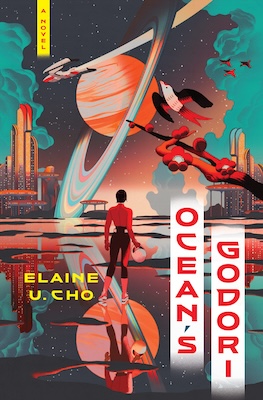
Ocean’s Godori, my debut novel, is a space opera with hoverbike chases, high stakes space races, and a found family of misfits thrust into interplanetary conflict. But at its core, it’s really about a group of people navigating their messy 20s. In particular, the three main characters–Ocean, Teo, and Haven–wrestle with what it means to forge a future while still honoring where and who they come from. Ocean has been rejected from her mother’s group of haenyeo, Jeju Island’s beloved female divers, and has long struggled with feeling Korean. Teo’s always been the black sheep as the second son of the extremely polished Anand Tech empire. And then we have Haven, whose work is in preserving the death cultures and rituals of the past, while he navigates a complex present relationship with his parents.
The following eight titles also feature characters in contention with generations before or after, in stories that somehow use genre to explore those conflicts. There are girls with tiger tails, spaceships, and diaspora blues. But even as our heroes or anti-heroes face fantastical monsters and far-off places, they often find that the knottiest problems arise from their own families. And as we read, perhaps we’ll discover that these deep-space experiences aren’t so foreign after all, and that maybe we can get a better understanding of those questions we’ve kept close to ourselves.
Charles Yu brings us into what at first appears to be a sci-fi jaunt full of hijinks. The protagonist, Charles Yu (yes, same as the author) is a time machine mechanic and you think you’re having a jolly time with a down-on-his-luck worker who has a depressed computer sidekick and whose job is preventing grandfather paradoxes. And then Yu (the author, not the character) punches you in the gut with the realization that you’re reading a treatise on his search through time for a (physically and emotionally) lost father, and the absolute heartbreak of watching his mother stuck in her own nostalgic time loop. It’s hilarious and witty, it’s clever and smart, and it’s completely heart-wrenching.
Here’s another time travel book about generational conflict, but how about if we bring a first-generation Asian American immigrant and her daughter to a level playing field? After a blowout fight with her mom, high schooler Sam downloads a mysterious rideshare app that ends up… taking her to another decade?? Now Sam’s trying to survive in the 90s and she has to deal with the retro culture, the regressive racism, and maybe worst of all… her teenage mom who’s fighting to win the prom queen crown. Goo hits that sweet spot of those fun Back to the Future vibes combined with Sam’s tender coming-of-age. She adroitly uses the time travel mechanism in this generous and nuanced intergenerational portrayal.
Stephen Graham Jones brilliantly delves into and excavates themes of generational trauma and cultural identity in his writing, and many of his books would fit the list, but I simply cannot ever pass up an opportunity to recommend The Only Good Indians. Four friends, American Indian men, find their past deeds returning to haunt them one by one in visceral, vengeful ways. How does one escape the past? Is it possible to forge your own identity while acknowledging the culture that has shaped you? And are our future generations forced to bear the burdens of our failures? Jones answers these questions with blood, horror, and, yes, even basketball.
Yes, this is Koh’s memoir and you might say But Elaine, how is it genre, and I’ll tell you: It’s an epistolary memoir, but truth be told I really just need everyone to read E.J. Koh. The Magical Languageof Others is the coming-of-age memoir of poet and translator Koh, but her gorgeous writing is structured by her translation of letters that her mother wrote to her in Korean. These letters intersperse the intergenerational story of Koh, her mother, and her grandmothers. Her mother writes simplistic letters because they were meant for a young Koh, but Koh also bridges the gap in her translation by striving to understand her mother’s true intent (as all the best translators do). The letters come without commentary, and there’s a compassion and generosity to this presentation, as it allows us to read and come to understand them in our own way as well as through the lens of Koh’s life. Even more than Koh’s lovely words, the letters illustrate the multitude of ways she and her mother reach out to each other.
Another book where translated letters play a crucial element, Bestiary is a novel about three generations of Taiwanese American women: Grandmother, Mother, Daughter. Naming them so emphasizes the fable-like quality of Bestiary but also, of course, the thematic focus on generations. Bestiary is an apt description of Chang’s prose, which bursts to life with vibrant, variegated, and fierce language. Daughter digs out Grandmother’s letters from holes in her family’s yard, and painstakingly translates them. She wrestles with the ghosts of grief and trauma, with the beasts mythical and very real of her family’s past. And while her body grows in yearning and undergoes its own fantastical changes, it carries forth the myths and traumas of Mother and Grandmother before her.
Eighty elite graduates of a competitive Earth program have been selected as humanity’s last hope to travel to a far-off, habitable planet. But while on board the spaceship, a bomb explodes, jeopardizing the mission, and throwing the remaining crew members into suspicion. The sci-fi genre sets the stage for a space thriller whodunnit, but through it, Kitasei also probes our deepest desires to belong even when we’ve convinced ourselves we don’t deserve to. The Deep Sky flashes back and forth in time, between the mystery unfolding on the ship and half-Japanese Asuka’s time back on Earth as she struggles with her mother, her self-worth, and her role as the Japanese representative of humanity’s future. As it does so, it weaves a similar narrative in how entangled our pasts and futures are.
Our Share of Night starts as a strange road trip between father and son, but are they running away from something or to it? You could probably chalk a lot of the off-kilter eeriness to the father and son’s shared grief at recently losing wife and mother, Rosario. That is, until the young son, Gaspar, asks about the strange woman standing in their hotel room. Enriquez uses the horror genre to explore the very real brutality of the military dictatorship and its aftermath in 1960s Argentina, but also the intense relationship of Gaspar and his father, Juan, who has been trying to break free of a demonic cult. Juan desperately wants to protect his son from its clutches even as he realizes that it’s his blood that endangers the child. Gaspar and Juan fight each other, sometimes physically, and sometimes inflicting trauma through supernatural means, but it’s a tumultuous relationship that’s also undeniably bound in their tenderness for each other. The cult wants to kill Gasper to force Juan to achieve immortality by living through his son’s body, but what is that but an analogy for the ways families fight to live on through their progeny?
Sometimes it seems difficult to talk about Same Bed Different Dreams because it’s so many things, but then again it allows me to sneak it into every single conversation, recommendation, and list. Ed Park’s Same Bed Different Dreams is a tripartite story, a blend of non-fiction and fiction, a heady entwining of Korean history both real and imagined. It’s appropriate then, that it opens with the question “What is history?” While initially presented as a sort of kicker to a think tank, Park uses his words to directly ask that of us the readers. And as Same Bed traverses its puzzle box of a story, it jumps genres and moves forward, backward, and sideways between fathers and daughters to reveal how our histories and stories are sought out, challenged, and carried forward by the generations that follow. What is our part in creating those stories and preserving those histories? It’s perhaps the best answer to Min Jin Lee’s own famous opener: “History has failed us, but no matter.”
It was a clear, cold night in February when my wife and I took our seats in the sold-out Beacon Theatre to await what would be the most creative one woman show we had seen since Edinburgh Fringe last summer.
Earsplitting screams peeled out into the air as the performer coolly took the stage, meeting the crowd’s crazed energy with a deliberate, powerful calm. This act of tempering was a prologue; the artist then disappeared behind a draped curtain that glowed bright white, casting her in a silhouette. She lifted her arms to create the shape of long horns, evoking antiquity, and marched slowly toward us, her shadow growing until it stretched from floor to ceiling. Dionysus, the body said, We invite you, god of theater, to this space.
A young attendee, iPhone in hand, exclaimed, “She’s wilin’!”
When Mitski reemerged from behind the curtain, she had slipped into the mask of Performer.
Mitski’s This Land is Inhospitable and So Are We show is an orange dreamscape filled with Americana syrup, punctuated by past hits like soliloquies of remembered yearning. Her movement through each number is a curation inspired by Butoh, Grotowski, Bob Fosse, and likely a whole host of other artists I don’t know about.
It’s not a concert, nor is it theater; it’s something in between, and her audience reflects that. I could divide the vibe like a pie: one third sitting in silent awe, one third sitting in concentration, and one third screeching. There was a dash of attention seeking as well; one person yelled “Hydrate!” every time Mitski took a sip of water.
It’s not a concert, nor is it theater; it’s something in between, and her audience reflects that.
This is not the first time Mitski has incorporated choreographed dance inspired by various theatrical forms; in 2018, to get out from behind her pink guitar in a way that felt natural, she began a collaboration with multimedia performance artist and choreographer Monica Mirabile. Six years later, the duo launched the This Land Is Inhospitable and So Are We tour into new theatrical heights, not only in production caliber but in the venues themselves, half of which are seated spaces. This new arrangement seems to say, “Now sit down and shut the fuck up respectfully enjoy the show.”
The set is a circular, elevated platform, complete with two simple chairs. Working in tandem with this simplicity is the complex and wildly imaginative lighting design that creates everything from a hot pink rain shower to a cage to a single spotlight engaged in a cat-and-mouse chase with Mitski, evoking her need of, and aversion to, performance. The band sprawls around the upstage wing, similar to the staging of the bands in Hadestown and Waitress, which are both fully visible and part of the act, but deliberately off-center.
Fancy tech is not a uniquely Mitski thing. Flashy projections and synchronized lighting is commonplace at concerts these days, but Mitski’s production designs function more as a narrative vehicle than an agent for holding attention. This is a fitting choice; Mitski is currently working on the music for the upcoming Queen’s Gambit musical, and I can’t help but to think that the connections made there may be influencing her, even boosting her tech team with Broadway’s finest backstage minds.
Despite the hecklers, and the signs on the walls that stated this was a device-free show, no eagle-eyed Broadway usher reprimanded the disruptors or the recorders. At no point did Mitski acknowledge her 2022 request that fans not record whole sets, nor did she ask the crowd to put their phones down. And she could have – on the boygenius tour, Phoebe Bridgers asked fans to not record her performance of “Letter to an Old Poet,” and I am a two-time eyewitness that they obeyed. Mitski’s strategy was a bit more abstract. “We are all going to die,” she reminded us, “So knowing that, what are you going to do with the time that you have?” The question was rhetorical, but I’ll take a stab at an answer: be in the moment.
Theater exists to remind us of the human condition; that life is imperfect and fleeting. Playwrights love to remind people that they’re going to die, to inspire a new way of moving through life. Mitski is doing just that, for a demographic of young fans who are statistically not attending live theater.
Four rambunctious youths sat a few rows in front of us. They were mostly self-contained, until Mitski did “I Bet on Losing Dogs,” wherein they lost their shit, their voices tearing through the ballad like a pack of baby dinosaurs. Their phones were on the whole time, but I don’t know why; from my vantage point, it looked like half of their footage was of the Beacon’s ceiling.
By the end of the show, they’d calmed. The benefit to a seated space is that disruptive fans can’t hide. There is no crowd to slink away in or tall body to crouch behind. By the time Mitski got to “Bug Like an Angel,” the loudest of the group muffled her squawk, earning a wave of sympathetic laughter.
Mitski’s nontraditional approach to musical performance is teaching a generation of non-theater-goers the experience of attending live theater. She prolongs gestures, dances with chairs, holds silence long enough for the audience to taste suspense.
The American Theatre is on life support. This could be a radical treatment.
The current Mitski tour, extended through June 6th and picking back up on August 27th, is not a concert, but an extravagant one-woman show. This is great for theater, but perhaps not for the reasons Mitski might hope. Seeing young people consume her performance and share it widely begged the question: What if instead of complaining about ‘bad audience behavior,’ we encouraged stan culture in the theater space?
When millennials were young, and social media was not a scourge on society but a chance for innovation, one regional theater tried to harness its potential. At the start of 2012, D.C.’s Woolly Mammoth Theatre Company tried a “tweet seats” event, encouraging a select few audience members to live tweet during their performance of Civilization (all you can eat). This experiment ruffled the feathers of director Jason Grote, who had not been informed of these plans, sparking a conversation about theater etiquette.
“[‘Civilization’] is written in a style [that] requires a certain degree of listening and concentration,”Grote said, stating that he wouldn’t stop the marketing team, but he wouldn’t be silent about it either (he took his complaints to Twitter). “The whole strength of something like Twitter is that it can’t be controlled. You get quick, shallow impressions from a large sample of people. In the context of a new play, that can be a bit delicate…”
What if we were to restart this experiment, intentionally chasing the chaos of shallow impressions and uncontrollable virality – the same beast that launched Mitski’s song ‘Nobody’ into millions of listens on TikTok and Spotify? I might be as deranged as the young women who like to meow at Mitski performances, but I think an argument could be made for not policing phones during performances. The American Theatre is on life support. This could be a radical treatment.
Six months ago, my wife and I were at the Edinburgh Fringe Festival with our one woman show Modern Witches. Lassoing audiences to attend our show – one of 3,535 – was a rollercoaster of blind hope and ego death. Modern Witches was, by all accounts, a success: we never had to cancel for lack of audience. Yet every post-show high was followed by the same morning-after anxiety, which came in the form of a question: Do we have an audience tonight?
The Fringe is supposed to be the place where clowns, solo shows, and other experimental artists can find audiences, yet this hope is a dimming light, lost to unaffordable short-term housing and the big venues’ trend of promoting their high-budget, flashy acts and celebrities that are guaranteed to sell tickets.
To heal from the daily pain of imploring strangers to pay attention to us, we would relax at the Blundagardens, a small venue off the beaten path known for its unique, micro venues that feature some of the Fringe’s most off-beat comedians and clown artists. The standup stage is the upper level of a double decker bus, the cabaret space a yurt. It is a haven for experimental theater.
I dragged my wife into the ‘Spiegeltent’ on a few occasions, including our last night of the Fringe, when Blundagardens co-producer and clown wizard Lucy Hopkins was slated to perform their Closing Ceremony.
Tightly packed like plums in a basket, it was easy to see that the majority of the audience were other Fringe artists like me: exhausted, and giddy with the prospect of retiring from the mental gymnastics required to perform for empty seats. First, we held a moment of silence for all our fellow artists who could not perform at Fringe because they could not afford to. Then, Lucy directed us to lob our grievances and insecurities into the soupy, sweaty air. Artists yelled, “Does anyone care?”, “Is it worth it?”, “Tired!”
Us fringe theater people know we’ve chosen a hard-to-sell profession. Young people have not considered experimental theater a hip thing since the 1960s, but if a show is interesting enough to get people talking, it will be a hit. Word of mouth is king, and it’s free. In our first week, my wife and I were implored by a friend to see a clown at 1:30 in the morning. He claimed that Ha Ha Ha Ha Ha Ha Ha, Julia Masli’s groundbreaking show, was the best theater he had ever seen, period. This discourse snowballed throughout the festival, earning her the title of Edinburgh’s “Breakout Clown,” according to the New York Times. What did she break out from? A crumbling festival system? The stench of her peers’ jealousy? A world that does not care about performance art?
Unlike broke ass Fringe performers, regional theaters have endowments. Yet even with these millions, they’re still struggling to convince audiences to buy tickets.
Even though there were phones, heckling, and screeches, our hearts still beat as one.
The few youths that are out there attending live, not-Broadway shows, practice word of mouth online. This generation has the power to reach more of itself – the very thing that dying regional theaters agonize over reaching. If theaters were to invite recording into the space, would it be as bad as we think? On one hand, it might be. Audiences and actors alike might hate it. Like Mitski said, we’re there to share in the magic of the live moment. Theater exists to create this; it is one of the last artistic spaces to do so.
But on the other hand, none of that will matter if there’s no theater left to watch, save for exorbitantly-priced Broadway shows.
The idea that allowing phones in the theater will save it might sound like fantasy, but it’s already been attempted, and it worked. In the Interrobang Productions’ recent performance of Katie Hileman’s I Will Eat You Alive in Baltimore, which was staged as an immersive dinner party, the house speech confirmed that recording was okay, as long as flash was turned off. When asked why, producer Kiirstn Pagan said, “It just worked. We didn’t feel necessary to be precious about it. We want people to know about the show.” They sold out their final weekend of performances.
Dusty regional theaters could become launchpads for a new revolution of theater-goers. They just need to accept the way young people experience the world. The trend of complaining about bad behavior is as much a strategy to farm engagement as the kids remixing concert moments for virality – and that isn’t saving theater either.
As a theater artist at the Mitski show, six months out from the gauntlet of angst that was the Edinburgh Fringe, I found myself grinning at the young crowd and their volcanic excitement. They thought they were seeing wacky Mitski do her thing, but I knew the truth: we were tuned in to the primal rhythm of shared experience, celebrating clown work and chair choreography. Even though there were phones, heckling, and screeches, our hearts still beat as one. Maybe the youths – god help me – are not the problem.
I left New York in 2009 for grad school, and by the time I returned—just a few years later—the city had been transformed. Walking to the subway, on the sidewalks and escalators, almost everyone carried a pet screen. Sometimes people banged into things or ran into each other, too absorbed in the digital world to navigate the real one. Commuters swooned over their devices on the train, heads drooping and backs bent, like so many nodding-off drunks. It happened to me too. My phone started to exert a strange power over me—the nagging urge to check and check again. In every awkward or in-between moment, I wanted to look at the dazzling light.
The change felt rapid, jarring, otherworldly, like something in a movie. And yet I couldn’t shake the feeling that it was even bigger than we knew. In our rush to embrace the smartphone we were making a profound, maybe irreversible choice based on limited information, with implications we could only dimly glimpse. Was that a good idea? This wasn’t a question that anyone—individually, collectively—seemed to give much thought. It had already been decided, somehow. The assumption was always that we’d all consent.
By then, I was working in earnest on my novel, The Sky Was Ours, which is about a very different technology: a huge pair of wings, made from simple materials and designed to fit the human body. If a few engineering problems can only be worked out, my characters believe, people will finally fly like birds, traveling freely across the climate-ravaged earth. I wanted to feature a manmade innovation almost like a central character, the way the iPhone has become a character in all our stories. And I wanted to examine the psychological appeal of disruptive tech—our deep-down desire to see everything change, even if that means unleashing forces beyond our control.
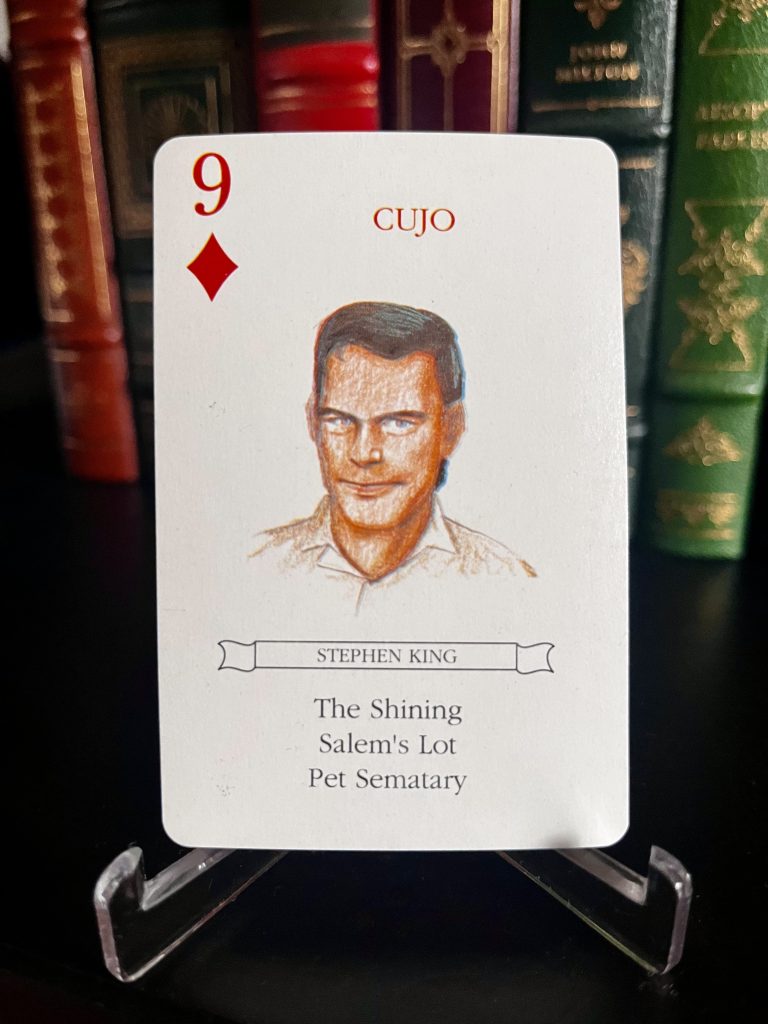
As I wrote, I started to seek out other novels and stories that open up what Stephen King once called “Pandora’s technobox”—that explore the unintended consequences of the radically new. In these books, all set in warped versions of today’s reality, fictional contrivances play a key role in the drama. Each one, in its way, is alive to a central paradox of our moment. Yes, powerful technologies can expand the scope of what’s possible, but they also invent new forms of loss.
This novel, by far the oldest book on this list, came out in 1995. But its plot could have been ripped from this week’s headlines. The narrator, a mid-career novelist also named Richard Powers, is up late in his campus office when he hears strains of Mozart echoing down the hall, the same passage played again and again. He investigates, and discovers a colleague looping the sonata for his computer system—an early attempt to train a neural net. Powers steps into the teacher role, and over time a new character emerges: Helen, an artificially intelligent machine consciousness, at once eerily human and profoundly not. Their story pulls at knotty questions about machine authorship, human-AI relationships, and the origins of consciousness itself. An astonishing, prescient tale that reads with fresh urgency today.
Kleeman’s immersive novel conjures an unsettling, near-future vision of Los Angeles. Smoke chokes the air, forest fires rage up in the hills, traffic clogs the 405, and yet the Hollywood hype machine churns on. The main characters just want make a movie, but our beleaguered planet has other plans: all across the southwest, after years of squandered resources and persistent drought, the water’s gone. Gone gone. For their very survival, Angelenos have started depending on a mysterious company called WAT-R Corp, which has learned to make synthetic H20 in a proprietary process. The new, cleaner, and tastier option supposedly beats the original across every metric. And though it’s also much more expensive — and may have other, well, unexpected issues — any drawbacks are kind of beside the point, since millions of thirst-crazed customers have no choice except to buy. This bracing book walks a knife’s edge between eco-horror and wildly funny satire, underscoring how desperately we need what nature offers freely. A blazing call to reclaim and save from ruin all we take for granted.
In some ways, the invention at the heart of Egan’s novel isn’t so different from today’s internet: it’s a portal that lets billions of strangers connect. But our texts and posts and reels seem pretty crude compared to what’s possible with the Mandala Consciousness Cube, which lets you crawl fully inside another person’s skull. With the help of a few electrodes, people can upload their memories into a vast repository, where they can be viscerally experienced by anyone with a cube. (The device, as it works, becomes “warm as a freshly laid egg.”) It’s an unnerving portrait of the way technology hacks individual agency, coercing us into adoption no matter how much we might want to resist. And as the cube collapses distance between people, resulting in new connections that can be redemptive or uncomfortably close, Egan seems to wonder: Do we really need Silicon Valley to understand each other better? Don’t we already have fiction?
On a near-future earth threatened by cataclysmic warming, a super-intelligent algorithm is tasked with handling every aspect of governance, settling political, legal, and individual questions with the final authority of a monarch-oracle. But King Rao, the Algo’s ruthlessly ambitious tech-billionaire creator, isn’t content to stop there. When his experiments with a Neuralink-like networked brain implant end in scandal, he retreats into exile with his child daughter, Athena—whose brain he’s modified with the device. This cognitive enhancement makes the book’s glorious narration possible; Athena tells the story in the heightened, virtuosic register of a fully networked mind. And yet her godlike father’s legacy, inescapable and burrowed physically into her very body, is its own kind of torment. A brilliant and subversive smash-up of established forms — the immigrant family saga, the Bildungsroman, the dystopian epic — King Rao takes aim at the techno-cultural guardrails that constrain human experience, and uplifts our desire to find new possibilities beyond them.
After World is a kaleidoscopic book written from the perspective of an AI, a machine consciousness tasked with studying the last human being alive on earth. That human character, Sen, is the lone survivor of The Transition — a well-meaning apocalypse brought about by, well, AI — who is forced to record her feelings in a sequence of written reflections. Slowly, we start to understand what’s happened: tasked with saving the earth, the novel’s robot overlords concluded (not unreasonably) that human beings were the problem. So they annihilated humanity and prepared to rewild the planet. But as the natural world begins to heal from civilization’s ravages, we can’t help mourning what’s been lost in the process: us. (“Even if we ruined everything, I think we still deserve to live,” Sen writes in her journal. “Don’t we? Didn’t we?”) The result is a riveting portrayal of a post-human landscape, a moving elegy for our beautiful, flawed species.
Green Frog’s electrifying, unnerving narratives mix the mundane with more fantastical forms, often in the confessional first-person. One story anthropomorphizes a female praying mantis, recasting its murderous mating ritual as a romantic evening gone awry. There’s a recipe for cooking and eating one’s own heart. A centerpiece is “Presence,” a long story that features a memory-externalization device that takes the world by storm. Unlike Egan’s Mandala Cube, the Neolaia app allows users to disburden themselves, purging any “Adverse Life Experiences” forever. Take too many memories away, though, and you risk some serious side effects — as the narrator, a key scientist on the project, slowly begins to learn. A masterful portrayal of startup ethics run amok, “Presence” reckons with what’s lost when we can choose how much to feel.
Some of Chiang’s best stories chart the ways imagined scientific breakthroughs recast experience, for better and for worse. In this collection, a device predicts how you’ll behave before you do, raising terrifying questions about the nature of free will. A “lifelogging” device allows the wearer to recall every moment of one’s life (It also results in surprising forms of amnesia.) But “The Great Silence,” my favorite story in Exhalation, is about a real-life piece of technology: the Arecibo radio telescope. Before its unexpected collapse in 2020, the Arecibo had been used to beam messages into outer space, and listen for them, too — part of our ongoing search for extraterrestrial life. This obsession affronts the story’s narrator, a talking parrot. If humans want to commune with intelligent life so badly, he suggests, they might look a little closer to home. What invention would give us ears to hear the planet’s living creatures as they rapidly fall silent, as species after species succumbs to extinction? What would it take for us to tune into a different voice: the cry of the animal world, begging our kind for mercy?
It wasn’t the boy I’d seen at the tower. This person was older, though it was hard to say how old—in his fifties, at the very least. His beard was gray and full, but his unruly mess of windswept hair had stayed stubbornly reddish gold. Thick glass disks hid his eyes.
He saw me and went stiff.
“Oh,” he said.
He looked at me strangely for a second. Then he walked into the middle of the room to lay some sheets of paper on his worktable, totally unfazed, as if he’d expected to find me there all along.
I couldn’t run without passing him, I saw that. I stood by the far wall, helplessly caught. The air seemed to cool twenty degrees, my hands shivering like the knobs of some machine.
“I’m sorry—” I started to say.
The man held up his hand.
“Shh,” he said.
He stood there and peered at me through the glasses, cocking his head as if to listen for something far away.
“I’m sorry,” I said, again, my pulse flogging my ears. “I shouldn’t be here. I’ll go—”
“Don’t be sorry,” he said. “Just feel what you’re feeling.”
It was an odd remark, so unexpected that for a second I forgot to be afraid.
“It’s all right,” he insisted. “It takes time, I know.”
He was wearing an ancient flannel shirt—the cloth gone all frizzy, the colors running together. It was eerie, the way he spoke, like he was referencing some earlier conversation he remembered and I didn’t. For a second it was so quiet I could hear every little thing: the way his breath wheezed in his nostrils, bugs whirring in the grass outside. The cry of some distant bird.
Then he started to limp toward me—he had a bad ankle that gave with every step, reducing his gait to a frightening lurch. The fear flooded back, a hand at my throat. He wasn’t much taller than I was, but he was muscular, the thickened look of a person who did hard work with his body. I felt a scream coming on, this pressure building in my chest like a cough.
“What do you feel when you see them?” he said.
“See them?” I hated how I sounded, the words high and pleading.
“The wings!” he roared.
I backed away as he came closer, feeling behind myself for the wall. His nose had healed funny after a break, and the way the bridge curved made his face look like an ill-fitting mask. He was close enough to grab me.
“Please,” I said. It came out as a whisper.
“You’ve felt it all your life, haven’t you?” he said. “All your life. Me, too. What’s your name, my sister?”
I stared at him, terrified and uncomprehending.
“Your name,” he said again.
“Jane,” I said, before I had the sense to lie.
“Jane!” he said brightly, like it was a wonderful bit of news. “Look up, Jane.”
A sweet, fetid smell rolled off him, like a gone-off cantaloupe. The last thing I wanted to do was turn my gaze away from him, make myself vulnerable like that.
“Look up, my sister,” he said, and there was a new note in his voice—something gentle, even affectionate, an old friend surprising me with a gift. Something in his tone convinced me, just a little. It seemed to matter less that I was so afraid.
His eyebrows lifted expectantly. He would wait until I did it.
I looked up. The wings hung over us in the rafters, posed mid-flight in a dozen frozen postures.
“We’re going to fly, Jane,” he said.
The words hit like icy water.
“You. Me. All of us. We’re finally going to leave the ground on our own power, and everything will be as it should be. But you’ve always known this. Flight has always waited for us. It’s what we’re here to do.”
His voice purred low in his throat, almost like he was talking to himself, and I suddenly found I wanted to lean in closer to hear him. Flight, finally, always—these were words I’d known forever. But I felt like I was hearing them for the first time, parts of a language I didn’t yet understand, expressing things I never knew could be said.
“We’re really going to do it, this time,” the old man said. “We’re going to correct the human body. Here, come with me.”
I felt the universe shift just slightly. It was the strangest thing: like the earth had tilted on its axis toward the sun. The laws of physics began to subtly bend. Something was happening to me. His words rushed through my skull in a tide, crashing onto the bright shore of my mind.
To correct the human body.
As if lightning were about to strike us both, all the small hairs rose on my arms.
I followed him over to the naked wood frame that lay across his worktable. Huge and skeletal, the bones curved with the taut power of a pulled-back bow.
“This,” he said, “is everything I know. The work of my life. The answer. My god, we only need to fix the fabric to the wood—a day’s work, less—and we’ll be finished. Tomorrow, in the morning . . .”
His sentences picked up speed and intensity as he spoke. What he was implying seemed obvious, and impossible: That he was building a pair of wings to fly in. That the skeleton on the table would have the power to lift him, rising bird-like into the air. I peered over at him, trying to see past the thick, mirroring panes of his eyes.
“When you’re finished,” I repeated, gesturing down at the table, “you mean—you’ll be able to . . .”
My mouth faltered at the word. Fly. It seemed too childlike to say, and somehow too profane.
The old man nodded.
“Yes,” he said. “Yes—that’s exactly what I’m telling you.”
My brain churned with effort. What he was saying made no sense. Not that the idea was purely science-fictional, like time travel or werewolves. Birds, bugs, and planes flew every day. I’d just always assumed that people couldn’t do it. Everyone did. But suddenly I wasn’t sure why.
The man watched me, smiling, as if he’d already sequenced the exact progression of my thoughts, and was delighted to watch the emotions play as expected across my face. He shook his fists in a warm, celebratory gesture, his whole being bristling with energy.
“Oh, it’s a sign you’ve come to us now,” he said. “In the last hours—and not a minute sooner. My sister, you’re right on time.”
I wondered who he meant by us—if that meant there were others, or if it was simply the pronoun that best expressed the expansive cast of his thought. There was something almost embarrassing about how eager he was, the ardency in his voice.
“What about those?” I asked, deflecting him. I pointed to the ceiling, where the other winged shapes hung, looming over us in the darkness.
He nodded.
“Those,” he said, “are different. They’re my models, my studies, my works-in-progress. My failures. Incomplete solutions to the question. What I’m saying is—they don’t fly. Not like this one will, once we’re finished.”
He gestured to the table. Then he seemed to think of something.
“Here,” he said. “You should see this.”
He limped over to the far wall. I kept my distance and started to relax a little, the jitters slowing in my knees. I could outrun him if I had to. He could barely walk.
He started to unlash a rope from a mounted iron tie, like freeing a boat from a dock. Overhead, a giant bat-like glider started to lower, the ropes whispering as they slid. I had to move out of the way to make room.
“This,” he said, “is an exact replica of Otto Lilienthal’s 1894 glider. You’ve never heard of Lilienthal, have you?”
I hadn’t. The glider settled on the floor with a gentle creaking of wood.
“No one knows him, not anymore,” he said. “But he was once the most famous man on earth. A great, strapping genius of a German. This was years before the Wright Brothers. You’ve heard of them.”
“Of course,” I said.
“They don’t deserve the credit they get,” he said. “Not a fraction. They stole wholesale from Lilienthal. Everything they knew about air pressure, wing design, the lifting properties of curved surfaces—it all came directly from him. But the Wrights, they corrupted Lilienthal’s vision. It was never about planes. What he wanted—what we want—was to fly, in the true sense, to use our arms like wings. To soar freely, powered only by our bodies. That was the dream. It was much too quickly forgotten.”
What he wanted—what we want—was to fly, in the true sense, to use our arms like wings.
He spoke so intensely, in such an outpouring of admiration and anger and longing, that I couldn’t think of anything to say. The idea of this winged German seemed outrageous, and I sensed he was exaggerating.
“You see it, don’t you?” he went on. “How, for a brief moment, we were focused on the right thing. The only thing. True flight. Lilienthal inspired the world to think of the sky as ours, to dream that we could correct our bodies and take it. People forgot about him. They moved on with their war planes, with their TWA. But it could have been different. When he died in 1896, millions mourned in the streets.”
He’d nearly talked himself out of breath, and fell silent for a second to recover, the air wheezing heavily in and out through his nose.
“How did he die?” I asked, trying to be polite.
“Lilienthal? He was killed in a glider wreck,” he said.
“Ah,” I said.
“He died at his peak,” the man said. “At his absolute peak. In a machine he’d made, with movable wings. He’d captured the world’s imagination with gliders like this one, fixed structures that could carry him hundreds of feet in good wind. But he died trying to fly. He might have gone on to do it, too, if he’d survived—he was that far along. But now that’s over. What we’ve built in the last months”—he gestured over to the worktable—“builds definitively on Lilienthal’s advancements. On the whole forgotten history of flight.”
His glasses flashed, two signaling mirrors.
“Gliding isn’t enough,” he said. “Planes are not enough. You see that, don’t you? How free, unfettered flight would be everything? How it would liberate the human spirit? And we’ll do it! Starting tomorrow. Our wings will break open the world as we know it and allow something new to be born—”
I heard something behind me and turned around. A thin form paused in the doorway, someone with long dark hair. It was the boy I’d seen at the tower, I realized. He lingered in the opening.
“Oh,” the man said, breaking out of his monologue. “It’s Ike. My boy! Come here, Ike.”
The boy stepped into the barn, giving me a wide berth as he walked across the floor. His hair hung like a veil over his face, a sullen method of concealment. He didn’t look at me or speak.
“This is my son, Ike,” the man said. “This is Jane, Ike. She’s here to help us. I’m Barry, by the way,” he told me.
The boy said nothing—he just stood there, way too thin. His ragged clothes, I realized, shared a look with the gliders overhead. They were cut from the same cloth.
“It occurs to me we should show her, Ike,” the old man— Barry—said, speaking to the boy, but smiling at me. “Shouldn’t we? So she can see it for herself!”
He’d reached a state of high animation, delighted with how the population of his barn had grown.
“Come on,” he said. He grabbed one of the glider’s wings and lifted it half off the floor. But the boy stayed still.
“Dad,” he said.
“Come on!” Barry roared.
“Dad,” the boy said again, softly. “Stop.”
“What are you just standing there for?”
“Just don’t,” the boy said. “Please.” He kept himself angled away from me, standing still with the quiet intensity of a person keeping vigil.
“Ohh,” Barry groaned dismissively, waving him away. He turned to me. “He gets like this. Help me, won’t you?”
For a second they were both looking at me, the glider between them.
“Help you how?” I said, trying to stall.
“Help me carry this outside!” he roared, shaking the glider with his hand. “I’m going to jump off the roof.”
It was a startling declaration, despite everything he’d said. I could feel the high darkness of the barn, the roof sloping upward like the ceiling of a church.
“Jump . . . ?”
“Oh, forget it,” he said. He lifted the glider himself and began to limp across the floor with it, the wings bucking in the rhythm of his lurch. The contraption was large and unwieldy, but I could tell how light it was by the nimble way he guided it through the barn’s double doors. I couldn’t see him anymore, then. There was a loud thump, and he shouted something back at us, yelling unintelligibly.
The boy, Ike, and I looked at each other. He seemed to be a few years younger than me, with the half-formed look of someone in their very early twenties, and his eyes were pretty—a sea-glass brown. But his face seemed stuck in a permanent wince, as if the whole situation were a source of chronic pain. It seemed wrong to be that young and look so sad already.
Then it dawned on me: the old man, Barry, was insane.
Of course he was gloriously strange, that was obvious. But he’d spoken with such torrential authority, and the gliders themselves were so compelling, that I hadn’t thought to write him off completely as a kook. Yet Ike had tried to stop him. I could still hear his soft, exasperated voice: Dad, stop, please.
Maybe Barry was merely in the grips of some mania, compelled by the logic of madness. Maybe I’d provoked someone who needed no provoking, and now he was all stirred up and ready to jump from his roof.
“I—”
I stammered out some faltering thing.
But Ike just shook his head, a pained expression on his face, as if he couldn’t believe what I’d done. Then he was moving. He backed out the double doors and was gone.
I followed, but by then he seemed to have vanished into the meadow. I rushed around the side of the barn, only to find Barry climbing a silver ladder that was bolted to the wall, the glider laid beneath him in the grass. He couldn’t really bear weight on his left foot, so he made his way up with his arms more than his legs, grabbing the crossbars with both hands and pulling himself higher and higher in a series of quick one-legged hops. Then he pulled himself over the lip of the roof, his boots scraping on the shingles.
Before I could say something to stop him, the glider started rising, a hallucinatory upward slide into the air. I looked up, startled. Barry was standing on a cantilevered wooden platform that jutted from the roof, and was turning a crank that squealed as it wheeled around. He’d fixed the glider to some kind of rigged-up rope-and-pulley system—I could see the metal hook he’d fitted into one of the wooden ribs. The wind pulsed in the cloth as the winged shape lifted, causing the frame to twitch and shiver like a living thing.
The barn had to be more than two stories tall—it was hard to say how tall exactly, but it was clearly a dangerous height. Maybe he was crazy. Maybe his broken body was not a sign of some interior wildness—of course it wasn’t—but the legacy of his falls. A slow, eerie sensation filled me. The feeling you get when you discover mold on a piece of bread you’ve already half eaten.
“Remember, this will be gliding, not flying,” he called down to me. “Just a prelude—a promise!—of what’s to come.”
I felt sick.
“You’re sure you want to do this?”
He laughed.
“My sister,” he bellowed. “Of course I’m sure!”
Behind him, the sun had already started to set, the clouds purpling with the vivid colors of a bruise. He stooped and lifted the glider.
There was still no sign of Ike. I can’t stop him, I remember realizing. Whatever was going to happen was going to happen.
I watched Barry guide the glider over his shoulders. Suddenly he was transformed. The man was gone, replaced by something winged and huge. Sunlight hit the fabric, turning the stretched cloth into two lit panes. His arms vanished in twin baths of light. He hobbled to the edge of the plank.
My knees tensed. I wanted to appeal to some higher authority, some minister of safety and sense, but of course no one was there.
The tips of Barry’s boots stuck out over the ledge. He swayed gently, swooning to some slow, private music. The wings tilted subtly this way and that, as if tasting the direction of the wind. Then a breeze gusted, so strong it bent the grass. Before I could do anything, Barry took a step forward and jumped.
A rush of wind bucked in the glider’s fan, and his body lurched upward. His shape started to float through the air, as smoothly as if he’d been mounted to a track. As the wings soared over me high above, I heard more than saw them pass— the wind made a tiny thunder in the grass, his body briefly blotting out the sun. It was spectacular. A human form parting the sky, suspended in midair. My pupils opened, and my brain felt every neuron fire—the world spreading out around me, everything so much bigger than I knew.
I turned in time to see Barry rushing toward the ground, far into the meadow, completing a right triangle’s longest line. The glider lifted a few feet again at the end, so that, for a moment, I thought he might rise again toward the sky.
Instead, he dropped gently, staggering a few paces before falling to all fours in the grass.
The whole thing took five seconds, maybe less.
I ran toward where he knelt in the grass, gasping. The glider shielded his body like a strange white shell, moving subtly as he breathed. His head stuck out through a hole in the fabric, but the rest of him stayed hidden. He was all right.
“See?” he shouted. “You feel it, don’t you?”
That was when I saw his eyes for the first time: two bolts of mad, dancing blue, like flames in a gas range. A sob built in my throat, taking me by surprise. I stammered something, who knows what.
“What you just saw,” Barry said, his voice shaking, “a German did more than a century ago. He was on the brink of it, even then. But we’ve nearly finished what he started. Tomorrow, Jane, it’s time!”
Across the meadow, Ike stalked toward us. Something flashed in the grass—Barry’s glasses, thrown from his head, rested half folded in a mess of stalks. I snatched them up.
“Your glasses,” I said.
“Go ahead,” Barry said. “Put them on me. I can’t see a thing.”
It seemed so strange, considering his fierce blue gaze, that I was just a blur to him.
I put the glasses on for him again, guiding the wiry arms into the red-and-gray hair above his ears, and as I did it struck me how much had changed since that morning. I could never have imagined, as I woke up into the stale smell of my car, the way the meadow would look with Barry’s glider fanning out over the grass, the old man peering up at me from the middle of his contraption. If a single day could shift like that, anything was possible—anything could happen under the neon clouds, the endless Day-Glo chamber of the sky.
“Help me, Ike,” Barry said, and suddenly the boy was there, standing mutely just three feet from us.
As Ike lifted, I saw the undercarriage of the glider—Barry’s arms were not outstretched, like I’d thought, but folded across his chest, embracing a wooden axis that held the machine together.
“Let’s eat,” Barry said. “A feast—we’re going to need it. Because tomorrow, the real work starts. We’ll want full bellies.”
He looked at me.
“But first,” he said, “there’s something you should do.”
“Me?” I said.
Whatever it was, I’ll bet you bought it from the store. Didn’t you?
We brought the glider back into the barn, and then Barry led me over to the edge of the woods, past a fenced-off chicken coop I hadn’t noticed, where hens waddled and scratched about in the dirt. A small wooden crate sat in the shadows. Something moved behind the slats: a nervous brown lump of fur, with eyes like black jewels. A pink nose twitched at the air.
“Goody,” Barry said. “We’re in luck.”
“A rabbit,” I said.
“The whole place is thick with them,” Barry said. “As the land will be, once it’s allowed to heal.”
Something about the way he said the land made me think of the wheat fields on a cereal box, airbrushed and overwrought.
Ike bent down and opened the trap, pulling the creature out. He held it against his chest, and its dark eyes bulged with terror.
“When we finish the wings,” Barry said, “everything’s going to change. I mean everything—you need to hear this, Jane. What did you eat for dinner last night?”
I wasn’t sure I’d had dinner last night—maybe a plastic tube of trail mix from the gas station.
“Whatever it was, I’ll bet you bought it from the store. Didn’t you?”
I nodded, even if the truth probably wasn’t what Barry had in mind. The rabbit’s black eyes glared back at me.
“Listen very carefully to me, now,” Barry said. “When we finish the wings, the deliveries are going to stop coming. The stores are going to close. Maybe not tomorrow. Maybe not next month. But they will. People aren’t going to waste their lives toiling anymore, not when they can fly. The whole extractive system will start to fail. And when it does, you need to be ready. The way me and Ike are ready.”
We walked around the side of a junk-crammed shack, where a four-legged structure stood—tall and thin, like a lifeguard’s chair. A traffic cone hung upside down on ropes from the center of it, the last six inches of the orange tip raggedly sawn off. The grass below was blackened with stains.
It was blood, I realized. Then I understood.
“Ike and I, we live off this land completely,” Barry said. “We use no electricity. No fuel but good old wood. We pay no taxes, have no bills. And everything we eat, we grow and catch.”
The rabbit’s bulk struggled against Ike’s embrace, its hide swelling and shrinking with panicked breath. Ike seemed to whisper something into the shallow dish of its ear, and then he stuffed it headfirst into the cone. The creature hung there, upside down, hissing silently at us. We heard its body struggling inside, a weak scraping of claws.
Barry picked something off a wooden stool and handed it to me. A hunting knife, the blade crested with teeth.
“Cut its throat,” Barry said, “and we’ll eat well tonight.”
In the fading light, his glasses shone, twin moons.
I’d never killed anything before. I looked over at the boy, who turned away, as if the whole thing pained him—though I couldn’t tell if he was shamed by his father, by the slaughter, or by me.
“This is the transaction,” Barry said. “There is no life without death. It’s always been that way. They just hide it from you.”
The blade shook in my hand.
I could tell he was testing me. He wanted to see what I would do.
I looked into the rabbit’s face, the gleaming pebbles of its eyes. I recognized its fear. There had always been a frightened rabbit inside me, too, huddled in a slaughter cone. I had just never known I could kill that part of myself.
Their eyes were on me, watching.
I cupped the small skull in my palm and drew the blade across its throat. Blood fell from the open neck in a long string of red drool.
“Moment of silence,” Barry said, and while the animal drained we hung our heads.
“Thank you, rabbit,” Barry finally said, after a while.
“Thank you, rabbit,” the boy whispered. So I said it, too.
Eventually Ike pulled the body out, carrying the slain thing by its ankles as we walked toward the house.
By then the afternoon was coming to an end—the sun would be down soon. The three of us stepped up onto the warped back porch, which groaned as if it might collapse under our weight, and I followed them inside.
Ike produced a weathered tin can, its mouth sawed open and the lid still attached, with some holes punched in it. He dumped a twiggy bundle from the can, messy as a bird’s nest, and unwrapped it to reveal a dully glowing ember. He stuck a twist of cloth against the coal, and when he pulled it away again it was on fire. I looked on, surprised, as he used the flaming wick to light a candle, then blew it out. Then he wrapped up the ember again. It all happened quickly as a magic trick, some pyrotechnic sleight-of-hand I couldn’t fathom.
We were in the kitchen. I recognized the sink and counter, the round table flanked by chairs, the cast-iron stove. Barry carried the candle through a side door—its light bounced and fluttered as he limped down a set of stairs, before fading from view. While I stood there in stunned silence, Ike spread the rabbit out on the counter and started to saw vigorously at its neck, drawing the blade with a gruesome grinding sound across the spine.
My cheeks burned and my ears rang like I’d been slapped, but there was nothing to do except watch.
Barry emerged holding a heavy sack, and tumbled a few sprouted potatoes across the table. “Can you cook?” he said.
I shook my head.
“Well, that’s another thing,” Barry said. “There won’t be any Howard Johnson’s where we’re going. Watch Ike.”
I peered over Ike’s shoulder while he attacked the corpse, until the head finally lolled free. Then he skinned the poor thing, a process like pulling a too-tight glove away from an alien hand. The wetness underneath sparkled in the candlelight and smelled like blood. Then he cut the rabbit open and reached into its belly. He pulled out handfuls of organs and bowels, which he flung into the sink in a glistening heap.
While he worked, something caught my eye. It was a mouse, nosing its way along the counter. I dug my nails into my arm. Did I say something? Before I could decide, Ike raised his arm, and with a casual backhanded thwack sent the mouse flying. I heard it splat against the floor and scurry off.
A sound built in my throat—a scream or laugh, I couldn’t tell—and I had to suck my tongue to the roof of my mouth to choke it down.
Later, we walked out into the yard again, all laden with supplies. Ike carried the rabbit on a kind of pointed spit, the tin can dangling from a rope around his neck. Barry hauled a cast-iron pot of sliced potatoes, the eyes cut away. They’d handed me a gallon jug of fuzzy brown liquid. We laid our things down by a rock-ringed ash pit in the yard, stacked high with firewood, which lay between two tall, slingshot-shaped wooded stakes. Ike laid the spit across them, and the rabbit hung there, pink and headless on its skewer.
I truly didn’t know if I’d be able to eat it. I’d gone hours without a cigarette, and by then I’d passed into a state beyond wanting, beyond disgust—I only knew that my stomach ached in my guts, a tired fist that couldn’t come unclenched.
The firewood had already been prepared, a crisscross of logs that graduated into smaller branches, kindling twigs, and bark shavings. Ike shook out the contents of his can and unwrapped the coal again, blowing on it until it was orange and molten. Before long, he had flames leaping in the pit.
They pulled a few log stumps out of the shadows, and we sat to watch the fire lick the bottom of the hanging pot. When the carcass dripped hissing grease into the flames, Ike got up to turn the spit.
“Cider?” Barry asked, though he was already pouring me a mugful. I lifted the porcelain to my mouth and tasted, a prickle of cinnamon and sweet apples. I started to feel drunk on the first sip, my cheeks numb even before the juice had made its way down my throat.
The meal took a while to cook. As we waited, I watched cinders chase each other toward the sky. A bat twittered overhead, beaming silent radar out into the trees. I tried to remember how I’d ended up there, in the middle of a wild meadow with two homesteaders as the sun set, the sky a rumpled length of purple-orange silk.
When the food was ready, Ike tore the rabbit into three pieces, and we ate. The skin crackled on the tongue, the meat so sweet and tender I could almost feel each taste bud stand erect as I chewed and tore.
Then Barry began to speak.
When the wings were finished, he said, it would be different. We’d rove out down the country lanes, and visit all the run-down houses where people suffered through meager lives, and show them what we’d done. They’d see the wings, and their eyes would widen, and they’d know that things could never be the same.
I closed my eyes and listened, heat in my cheeks from the fire and their homemade booze. It was nice to let Barry’s words flow in and out of my ears, until his voice just seemed like part of the landscape, cousin to the fire and the crickets and the wind. I reminded myself that what he said was crazy, of course. He was crazy. Anyone could see that.
But in some private, rubbed-raw corner of my heart, I was desperate to believe it.
It has been almost thirty years since the Academy of American Poets launched National Poetry Month, and the vitality of American poetry has only grown since then. These new and forthcoming 2024 poetry collections showcase the diversity and talent of the poets writing today. Their words inspire a new way of thinking and being, encouraging us to empathize with one another and appreciate the world around us.
Antigua’s sophomore collection is a raw, innovative exploration of the body after trauma. Through lyrical free verse, “Sad Girl Sonnets,” and her invented collage form of the “Diary Entry Poem,” Antigua investigates religious trauma, chronic pain, and mental illness. The result is a poetry collection of considerable courage and vulnerability.
In her debut, Evelyn Berry captures the experiences of growing up queer in the South, of transgender self-creation, and of losing a friend to suicide. She embraces queer sexual pleasure, the paired joy and fear of trans identity, and the terroir of the Southern United States. Her daring, tone-driven voice establishes her as a poet to watch.
Bees. Blossoms. Sheet metal. Ladders. These breathless, surrealist prose poems are preoccupied with mortality, the creative life, ephemerality, and nature. Savich’s history as a cancer survivor is translated through the intimacy with death that he takes on the page. His sense of prosody and imagery will make the sounds and images of his poems stay with the reader.
Notley’s highly anticipated memoir-in-verse reflects upon a seventeen-year period of her life as a poet. She mourns the death of her second husband, undergoes radiation treatment for cancer, and contemplates the role of poetry in a dying world. Throughout the expansive scope of her subjects, she maintains her singular, restless, and fresh poetic voice.
Girl Work is a book-length meditation on the inscrutability of memory, on sexual violence, and on the role of beauty and labor. Lisowski writes candidly about sex work and trans identity in the current political climate. Her visual poetics are highly effective: overlapping prose blocks or spiraling verse represent how traumatized existence complicates memory and recall. The collection is at once impressively cohesive yet formally diverse.
Literature is a crucial tool for resisting censorship and oppression. This documentary poetry collection is a vital exploration of a little-known historical event: the Indonesian killings of 1965-1966. Jeddie Sophronius refuses the instinct, both in Indonesia and abroad, to neglect learning about the massacre. His approach is both painstakingly archival and highly personal, and he approaches the atrocity with nuance, courage, and urgency. He displays his proficiency at many poetic forms, including repetitive forms like the pantoum, visual poetics, and collaged work. Interrogation Records is not only an important piece of historical research but also a display of significant poetic talent.
Joy Sullivan’s debut collection is an autobiographical account of uprooting her life mid-pandemic: breaking up with her longtime partner, quitting her job, selling her house, and moving west. Throughout her journey, she composed these poems, which demonstrate the bravery, agency, and fire it takes to embrace uncertainty. Her writing is infused with delight, Western scenery, and ocean salt. Sullivan has a tender and unique new poetic voice.
Leila Mottley’s first book of poetry is bold and no-holds-barred. She writes fiercely and tenderly about the challenges of Black existence in America. With lyrical free verse and impressionistic imagery, Mottley explores family lineage, sexuality, fear, joy, and desire. She has a poetic voice all her own, further cementing her as a writer to watch after the success of her daring first novel Nightcrawling.
This debut poetry collection is an intimate, trailblazing exploration of Armen Davoudian’s identity as a gay man, as an Armenian, and as an immigrant. The poems follow Davoudian’s own journey from Ishafan, Iran to the United States. He innovates form with invented rhyme schemes and repetitive forms. The poems are tender and filled with the sights, scents, and sounds of his homeland.
Tayi Tibble’s sophomore collection of poetry is relentlessly modern in its voice and diction, and yet carefully crafted with attention to image, form, and sound. She writes audaciously about her girlhood as a Māori in New Zealand, with an unflinching eye to all-night clubs, unsatisfying affairs, and the violence enacted against indigenous women. Through it all, her writing is refreshingly contemporary and fresh, and this collection cements her as a poet to watch.
Alan Felsenthal’s highly anticipated second collection is a quietly meditative work of nature poetry. Blending the pastoral and the elegiac, Felsenthal interrogates the impact of humanity on nature. His poems are infused with diverse sceneries: the ocean, the moon, and the desert. His voice is tender and hopeful for a better future.
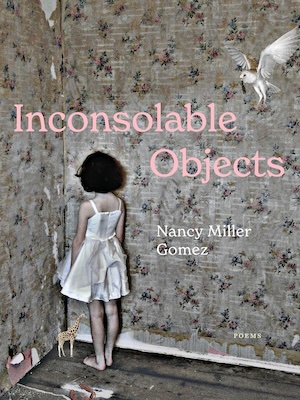
Nancy Miller Gomez’s debut is a powerhouse of a poetry collection. Her diction is assertive and urgent as she offers love to all the broken things in the universe. She interrogates the often unseen role of the mother, the mark that humanity leaves on the world, and the dangers inherent to intimate relationships. Throughout the poems, she is unrestrained and unsentimental, yet filled with tenderness for all things that strive.
Nam Le’s first book of poems is formally wide-ranging, incorporating erasure, ekphrasis, and offertory. He writes boldly about the Vietnamese diaspora, about the “violence of translation,” and about the generational impacts of oppression and historical trauma. His poetic voice is fierce and varied, from the measured, calculated “arithmetical” to the bold “slam declension.” With this book, Le cements his legacy as a daring and innovative writer.
Rose McLarney’s writing is vibrant and magical as she considers the terrain of her Appalachian upbringing. McLarney interrogates the omission of women’s voices from history, the natural environment of the South, and the stories of her girlhood. Her diction is precise and patient as she applies a unique vision to the often-overlooked parts of the world.
The long-anticipated new poetry collection from Danez Smith reckons with protest and silence in a divided country. In their trademark powerful voice, Smith confronts police violence against Black people in America, the Covid-19 pandemic, and the role of poetry throughout it all. They play audaciously with form and diction that resists the institutions of white America.
With March Madness and the Super Bowl recently crowning champions and the Grammys and Oscars awarding music and movies, it’s finally time for the literary world to have its own big moment in the sun. And that can only mean one thing: It’s Pulitzer time!
While there are many book awards that highlight some of the outstanding literature released in the past year, the prestigious Pulitzer Prize is the one that seems to garner the most attention. It’s also been around for a long while, originating back in 1918 as the “Pulitzer Prize for the Novel.”
For any readers unfamiliar with the award, the Pulitzer Prize for Fiction has a particularly rich list of authors who are past recipients: William Faulkner x 2, Ernest Hemingway, Katherine Anne Porter, Eudora Welty, Alice Walker, Larry McMurtry, Toni Morrison, Jhumpa Lahiri, Michael Chabon, Edward P. Jones, Marilynne Robinson, Cormac McCarthy, Elizabeth Strout, Colson Whitehead x 2, Louise Erdrich, and more.
Predicting the winner for the May 6th ceremony is nearly impossible. Last year’s announcement is a great example. There wasn’t one winner. Nope. Instead, there were two winners for the 2023 Pulitzer Prize for Fiction. Barbara Kingsolver won for Demon CopperheadAND Hernan Diaz also won for Trust. 2023 was definitely better than 2012, which came with its own surprise: there was no winner. Talk about a literary letdown. During some years, the big book of the year takes home the Prize. I’m thinking of Anthony Doerr’s All the Light We Cannot See and Donna Tartt’s The Goldfinch as recent examples. Other years offer surprise picks–those that even some of the best prognosticators might’ve missed. Paul Harding’s Tinkers is a prime example. And what a great selection it was.
Even if predicting the Pulitzer is difficult, it is good fun to try. No matter what book wins, the announcement of the Pulitzer will bring attention to books, and I’m all about celebrating books. I think pretty much all of us here are.
Like with my usual shot at this whole Pulitzer prediction thing, I mostly try to stay away from my own personal opinions too much, which is why I didn’t include many of my favorite fiction books of the year, including George Singleton’s The Curious Lives of Nonprofit Martyrs, David Lawrence Morse’s The Book of Disbelieving, Victor LaValle’s Lone Women, Kelly Link’s White Cat, Black Dog, Jolene McIlwain’s Sidle Creek, and Mimi Herman’s The Kudzu Queen. Instead, I consider previous awards, critics’ thoughts, buzz, and plain ol’ Bradley Sides intuition in offering my predictions, in order, for the 2024 Pulitzer Prize in Fiction:
It’s a short story collection, which history tells us (unfortunately) somewhat limits the likelihood of a Pulitzer win, but Paul Yoon’s latest release is a worthy and serious contender. In The Hive and the Honey, Yoon looks at big themes such as identity and belonging, and the prose is beautiful as with all of the author’s books. The collection took home the esteemed Story Prize, and Time, The New Yorker, and others cited it as one of the year’s best.
Any Lorrie Moore release has to be in the Pulitzer conversation. She’s just that kind of acclaimed writer. I Am Homeless if This is Not My Home recently won the National Book Critics Award in Fiction, and it’s a big book that spans time and place. Watch for it.
If the folks deciding the Pulitzer decide they want to make an eccentric choice, Jen Beagin’s Big Swiss is the kind of big, quirky comedy that could find its way in the winner’s circle. Beagin’s novel covers orgasms, sex therapy, and mental health. It’s a book that appeared on many best of the year lists, so it definitely has some attention.
From Milkweed Editions, The Lost Journals of Sacajewea powerfully brings to life the titular character. It’s a book about survival, and it has some serious staying power. This is a book that I continue hearing praise for–and keep in mind that it’s been out since May 2023. It’s a deserving contender.
Jesmyn Ward has won the National Book Award twice, and it seems like it’s just a matter of time before one of our most talented writers wins a Pulitzer. Maybe the time is now. Let Us Descend was a finalist for the Andrew Carnegie Medal for Excellence, and Time, The New Yorker, and The Washington Post, along with several other venues, cited it as one of 2023’s very best.
Biography of X, which dives into art and the people who make it, is undoubtedly one of the most awarded books of the year. Vulture and Publishers Weekly were just a couple of the venues that selected it as a best book of the year. It was also a finalist for the Lambda Literary Award and was longlisted for the PEN/Faulkner Award. Biography of X is also a hugely ambitious novel–the kind readers take note of.
North Woods is a novel about a house, and I can just about guarantee that you haven’t read anything else like it. I’m telling you, this house has stories. The approach Mason takes here is inventive, and it takes us through time with such realness. It’s one of the most celebrated books of the year. It was a finalist for the National Book Critics Circle Award. The New York Times and The Washington Post both celebrated it. Time, The Star Tribune, and The Boston Globe are just a few of the many publications that named it as one of the best books of 2023. Mason was a finalist for the Pulitzer in 2021. North Woods is a major contender.
In what could very well be the understatement of the year, Nana Kwame Adjei-Brenyah’s Chain-Gang All-Stars had a successful year. The author’s debut novel, which delves into issues related to capitalism, racism, and the prison system, has received numerous honors. In addition to being listed by countless publications as one of 2023’s best literary releases, Chain-Gang All-Stars was a finalist for the National Book Award, and it was longlisted for many others, including the Center for Fiction First Novel Prize and the Andrew Carnegie Medal for Excellence.
Experimenting with form, Justin Torres’ Blackouts is about friendship, queerness, and stories. It’s a novel that’s been widely praised–very widely praised. For example, Blackouts won the annual Tournament of Books. It, too, won the National Book Award and was a finalist for the National Book Critics Circle Award. We the Animals, the author’s previous novel, is one of the best novels of recent memory. Blackouts is a worthy follow-up. It’s likely to get some attention on Pulitzer day.
Sometimes a book works its way inside your heart, and it doesn’t really leave. Well, James McBride’s The Heaven & Earth Grocery Store is that book. It’s a big American novel. A great one, too. It tackles issues related to love, race, and community, and mostly, it’s a book that’s brimming with compassion. It won the Kirkus Prize. Time, The New Yorker, The Washington Post, NPR named it as one of the best. Barnes & Noble named it “Book of the Year.” Amazon did the same. It’s loved.
Like I mentioned earlier, I try to keep my personal feelings out of these predictions as much as I can, and I have for the most part. If I’m being honest, though, The Heaven & Earth Grocery Store is my favorite book of the year. It’s many people’s favorite book of the year. I think it’ll be the Pulitzer folks’ favorite book of the year.
From a young age, I’ve been a collector and trader of cards: Topps movie tie-ins, the Garbage Pail Kids, Yo! MTV Raps, TGIF Laffs, and Starline’s Hollywood Walk of Fame, among many others. There was a real boom in the ’80s and ’90s where it seemed every last tendril of the shared cultural experience—from American Gladiators to Operation Desert Storm to Twin Peaks to the British royal family—was entitled to its own trading card series.
For the past few years, I’ve been reading pop culture tarot at house parties. The spread, the decks, and the interpretations are my own invention. My ’80s and ’90s decks are often the most popular; querents enjoy receiving a reading through a nostalgic lens. Because I’m a writer, eventually I decided to build myself a literary deck. All I had to start with was a battered batch of playing cards from the late 1980s that my sister and I played Go Fish with as children. Remarkably, this Go Fish variant, known as “Authors,” has remained a widespread and educational game for over one hundred and fifty years. Most Authors collections contain only the most obvious writers: usually the backbone is William Shakespeare, Mark Twain, Charles Dickens, and James Fenimore Cooper, et al. Many of them contain only one woman, if any (usually Louisa May Alcott). However, the passing years brought many variants (“20th Century Authors,” “Children’s Authors,” “Mystery Authors”) which allowed me a wider range of choices. I was also able to pluck literary cards from existing series, like the Americana history line, Grolier’s encyclopedic trading cards, or Booksmith’s custom set (made by a legendary Haight Ashbury bookstore to commemorate its author events).
My full literary tarot contains seventy-eight cards, which range from the prescriptive (Haruki Murakami’s card could imply that the querent ought to take up physical activity, like running) to the ominous (Agatha Christie’s Murder on the Orient Express card may portend a conspiratorial plot) to the extremely meta (Italo Calvino is the only member of my deck who used tarot as a narrative device in one of his novels, 1973’s The Castle of Crossed Destinies). The following are selected arcana from my literary tarot:
Franz Kafka
Card Series: Laurence King Publishing’s Writers Genius (with illustrations by Marcel George), 2019
Arcana: Depending on its placement, this can be a card about day jobs, or in Kafka’s case, a Brotberuf (“bread-and-butter job”). Ten hour days at an insurance company doesn’t allow for much creative output, but still, we can make it work…or else we find another job with shorter hours (evaluating industrial accidents?). This is a card of both major milestones and minor increments, of sweeping metamorphoses and bureaucratic stagnation. For better or worse, it’s a card of interiority and obsessive anxiety. As Kafka articulated, “I usually solve problems by letting them devour me.” This card is its own worst critic, and it’s unduly hard on itself. Not quite “having one’s crime carved into one’s body via a Rube Goldberg-style torture machine unto death” hard, but definitely “destroying ninety percent of its own prose output out of insecurity” hard. With its predilection for nightmare and/or disaster, it would be tempting to compare this card to classic tarot’s “The Tower,” but it’s not without an absurd, deadpan humor—remember, Kafka routinely laughed uproariously through readings of his work. This card may be a cage in search of a bird, but joy still peeks from between the bars.
Judy Blume (feat. Wifey)
Card Series: Whitehall’s Women Authors, 1991
Arcana: In many respects, the Judy Blume card is one of reassurance, wit, and nostalgia. But it’s not a sheltering nostalgia, it’s a survivor’s: frank, levelheaded, and tenacious. I must also note that this is the Wifey(1978) card—her first adult novel, one of suburban malaise, mid-life crisis, sexual experimentation, and misadventure. It was greeted with, according to Blume, “an uproar.” This card can point to a second act in life, stepping out of one’s comfort zone, a desire not to be pigeonholed. This card’s emotions are complex but accessible. As a bestselling author who remains one of the most-banned in American schools, Blume’s card can prescribe a thick-skinned reaction to a temporary setback. In the artwork, Blume’s expression is archly confrontational—it’s a card that, one way or the other, demands a reaction.
James Baldwin (feat. Notes of a Native Son)
Card Series: U.S. Games Systems’ American Authors, 1988
Arcana: James Baldwin can be seen in one sense as a card of bypassed expectation (his preacher stepfather had insisted he follow in his footsteps, a role he performed only until the age of seventeen). It’s a card that diligently fulfills the responsibilities of the eldest of nine children, but also takes wing as an icon of found family. In this sense, it can be a voracious traveler, often on the move; a child of New York City, Istanbul, Moscow, Dakar, and Paris. It resists easy categorization, and, like the essays in 1955’s Notes of a Native Son, zeroes in on details in culture and travel and day-to-day life to reflect larger, crueler truths: the foundational flaws of a society. This card is confident in its ability to size up problems, even if it concedes the complexity and occasional impossibility of their solving. Baldwin maintained, “People who believe that they are strong-willed and the masters of their destiny can only continue to believe this by becoming specialists in self-deception.” And yet, this card is unafraid to express anger, call for drastic action, and wade forcefully into conflict. It’s fueled by past experiences, good and ill, to “finish the work.” And it carries a warning for the querent: “People who shut their eyes to reality simply invite their own destruction.”
Zelda Sayre Fitzgerald
Card Series: Panarizon Publishing’s Story of America, 1981
Arcana: This is a card of joie de vivre, instability, faerie-like energy, and “no tomorrow.” It’s a sudden and deeply-felt whimsy that for a moment becomes the most urgent notion in the universe. If it’s pulled relating to your present, your Roaring Twenties may very well be peaking—dancing through life, splashing around in champagne by the gallon, and running up frivolous bills. If it’s in your past, it might speak to the attempted recapture of glory days (in 1932, Zelda Fitzgerald wrote her first play, Scandalabra, in an attempt to make her “original Flapper” archetype relevant again). This card also can allude to a codependent figure in your life and their potential for inciting destructive cycles or fueling perpetual crisis. If Zelda is a runaway train, her husband F. Scott is a micromanaging engineer, just as likely to run the train off a cliff as he is to save it. The psychological harm they inflicted upon each other is as legendary as their glamour: Zelda refused to marry F. Scott until he was a published novelist; he “borrowed” work from her letters and diaries to build This Side of Paradise(1920); they fought over her novel Save Me the Waltz (1932), because it drew from material from her breakdown to which he felt entitled. This is a card of dramatic embellishment and apocalyptic quarrels, of triumphant highs and collapsing lows—a painful and passionate tug-of-war performed for an ever-expanding audience. “I am only really myself when I’m somebody else whom I have endowed with these wonderful qualities from my imagination.”
Toni Morrison
Card Series: Laurence King Publishing’s Writers Genius (with illustrations by Marcel George), 2019
Arcana: The image of Toni Morrison on her card is on the verge, but of what? Gentle laughter? Harsh critique? A formative experience of Morrison’s childhood was when, after her family had fallen behind on rent, their landlord set fire to the house—with them inside. They escaped with their lives, and Morrison’s parents treated the incident with dark humor: “For four dollars a month somebody would just burn you to a crisp. So what you did instead was laugh at him, at the absurdity, at the monumental crudeness of it…that’s what laughter does…You take your life back. You take your integrity back.” This card speaks to intense, unforgiving, and horrifying experiences, which, with some effort, can be clarified, redeemed, or reclaimed. It can speak to romantic connection in many contexts: earnest, passionate, jagged, or disillusioning. It’s a card which is poetic, but precise; patient, but not a pushover; benumbed, but empathetic; lofty, but not above the political fray. As she wrote in Song of Solomon (1977), “You wanna fly, you got to give up the shit that weighs you down.”
Stephen King (feat. Cujo)
Card Series: Whitehall’s 20th Century Authors, 1991
Arcana: This is a card which is largely defined by its featured novel, the relatively straightforward killer-canine tract, Cujo (1983). No, it does not specifically forewarn against an attack by a rabid, unvaccinated Saint Bernard; its true meaning is tied to the circumstances of its writing. As King puts it, “there’s one novel, Cujo, that I barely remember writing at all. I don’t say that with pride or shame, only with a vague sense of sorrow and loss.” On the heels of a meteoric rise, it was a potent mixture of alcohol, cocaine, Valium, Xanax, Listerine, Nyquil, and clinical depression which led to this gap in King’s memory (if not his work ethic). This is a card which can be about a relentless force—within the psyche or in one’s family—that seems to march tirelessly toward self-destruction. But that is not the end: in King’s case, treatment and enduring success were around the corner (just past 1986’s Maximum Overdrive and 1987’s The Tommyknockers). This is a card of temporary martyrdoms, insidious dependencies, and the hounds within: cuddly in one moment, and in the next, foaming and chaotic.
Emily Dickinson
Card Series: Starline’s Americana, 1992
Arcana: It would be tempting to see this card as a direct match with “The Hermit” from classic tarot, but, like Dickinson herself, it’s not so easily pinned down. It can speak to a phase of reclusivity or a period of self-reflection, and, depending on its position, could even prescribe a welcome pause in an overactive lifestyle. Tragedy lingers at this card’s fringes, but so does relentless productivity. It is a card of contradictions: its “soul should always stand ajar, ready to welcome the ecstatic experience,” but it might also spend twenty years primarily speaking to visitors from behind a well-fortified door. Like her puzzle poems, it maintains a sense of mystery and dwells in possibility, among matters yet unsettled.
Arcana: There are many levels to this card, which depicts Stein in the early 1920s and spotlights her conceptual 1933 “autobiography” of her four-decade romantic partner. Featuring the wild rhythms and startling language of Stein’s prose, this card values conversation, thirsts for adventure, and delights in bringing people together (like the artistic community Stein built through her salons). In highlighting the Autobiography, it’s a card of reflection and romantic connection—the ability to see one’s self through one’s partner. There are some darker aspects to this card as well: a thriving community will always be subject to fallings-out and friendships turned sour. Stein’s mentee Ernest Hemingway would go on to refer to his depiction in the Autobiography as “some bullshit.” Even as this card champions stability (“We are always the same age inside”), it hints at the dangers of complacency and disengagement (Stein’s turning a blind eye to the offenses of Vichy France).
Louisa May Alcott (feat. Little Women)
Card Series: Russell Games’ Authors, 1935
Arcana: I chose this card out of all the Louisa May Alcotts (I had nearly a dozen to pick from), because it depicts her around the time she sold her first short stories. Unlike her better-known works, these were “blood and thunder” narratives of Gothic romance, Grand Guignol-style murders, con women, and plentiful hashish. In letters, Alcott characterized Little Women(1868) as “moral pap for the young” written at the prompting of her father and publisher, and so I’ve always imagined that she would have preferred a career as a writer of tales of mystery and imagination. When you pull this card, it speaks to an unresolved duality between your public and private faces. It can represent a desire to let your freak flag fly (or, an unexpectedly mainstream triumph from a countercultural soul). It can speak to one’s secret motives and cautious machinations, a branching pathway to be navigated with focus and determination. In Alcott’s words, “I will make a battering-ram of my head, and make a way through this rough-and-tumble world.”
Card Series: Whitehall’s 20th Century Authors, 1991
Arcana: There’s a lot going on here, to say the least. It’s worth noting that the image bears little resemblance to the actual Ayn Rand, even before you factor in the unexpected choice of blonde hair. Depending on its context, this card could represent personal conviction or a well-earned moment of self-confidence. It could speak to a youthful but formative arrogance, or to a future commitment to myopic selfishness. This card is a friend to soapboxes and long-windedness, heavy on theory and thirsty for debate, but disconnected from the fabric of everyday life. Sometimes it represents a reductive answer to a complicated question, a fool’s gold which feeds the id and strokes the ego. Eventually, it dabbles with imposter syndrome and blurs the line between Objectivism and camp. This card is riddled with amphetamines, and makes pronouncements like “existence exists—and the act of grasping that statement implies two corollary axioms.” This card is not particularly fun at parties.
Clive Barker
Card Series: Booksmith, 2002
Arcana: “No tears, please. It’s a waste of good suffering.” On the one hand, the Clive Barker card is one of splatterpunk beauty, forbidden pains and pleasures, the holy and profane entwined—a kinky journey of flesh and fantasy, hosted by barbed and leather-clad extradimensional beings. On the other, this card depicts Barker in a moment of endless comfort, barefoot in his dwelling, wearing a curious combination of hippie jewelry, suspenders, and some pants that, let’s be honest, are probably pajamas. It has such sights to show you: the infinite Pandora’s Box of hells we could imagine for ourselves, juxtaposed with quotidian moments of simple relaxation, far off from the horrors. This card doesn’t mind being cool and uncool, though it’s certainly not for the faint of heart.
Elena Ferrante
Card Series: Laurence King Publishing’s Writers Genius (with illustrations by Marcel George), 2019
Arcana: Never mind that the shadow of “Elena Ferrante” here actually looks more like Ayn Rand than the Ayn Rand card (or is it Andy Warhol?), but, in all, this is a unique addition to the arcana. You could say it’s a card that represents complicated friendships, unwanted parenthood, wild confessions, psychological breaks, calcified jealousies, revolting curiosities, intriguing revulsions, and the complicated ways in which we escape reality. In Ferrante’s words, “I believe that books, once they are written, have no need of their authors.” In its anonymity, the card may allude to self-care and self-protection, secrets better off remaining buried, the walls we can build around ourselves, or the freedom to self-express without collateral damage. It lives somewhere in this vast and mysterious gulf between modesty and self-erasure: “I will be the least expensive author of the publishing house. I’ll spare you even my presence.”
Theodore Dreiser (feat. The Financier)
Card Series: U.S. Games Systems’ American Authors Card Game, 1988
Arcana: This is the patron card of back-handed compliments. For an author with several novels entrenched in the 20th Century canon, I have rarely heard Dreiser’s work praised without massive, undermining potshots being taken at his talent (Saul Bellow: “clumsy, cumbersome…a poor thinker,” E.L. Doctorow: “there is reason to doubt…he has even the hope of wit,” Dorothy Parker: “[he] had the purely literary good fortune to be a child of poverty,” Ayn Rand: “apart from content, his works have no structure or style,” etc.). Indeed the text of this card itself reports that he “wrote with great power but was verbose and sometimes obscure.” The image of Dreiser seems to take umbrage at this assessment, but there’s little he can do about it. You could say this is a card about swallowing one’s pride, or ignoring one’s critics (…or the importance of finding a good editor?). The card’s featured novel, The Financier(1912), is a story of dowager-seducing, insider trading, and embezzlement; a post-Gilded Age, pre-Great Depression portrait of ambition and greed. There’s no “crime doesn’t pay” moralizing, only social Darwinism inflected with futility and Greek tragedy. This card also contains a curious allusion to dodging destiny: Dreiser was very nearly a passenger on the RMS Titanic, only missing the boat because his publisher wouldn’t spring for the luxury ticket. So perhaps it can also speak to the rare personal inconvenience which translates to literal salvation?
Jorge Luis Borges
Card Series: Laurence King Publishing’s Writers Genius (with illustrations by Marcel George), 2019
Arcana: Perhaps the most arcane card in my arcana, Jorge Luis Borges evokes infinite labyrinths, cults of wisdom, splintered realities, and sacred geometries. If tarot itself is a search for meaning in patterns, then Borges is our metaphysical hierophant, both a poser of riddles and interpreter of dreams. It’s a card of blindness and clarity (Borges lost his sight entirely in the mid-1950s and published over three dozen volumes afterward), reality and irreality, a true garden of forking paths. In this sense, this card is defined by the others that surround it: it can disintegrate a straightforward reading into mystifying elements, shadowy and unresolved. It can find cosmic order in a chaotic spread, like the rare, comprehensible volume plucked from the stacks at the Library of Babel. “Time is a river which sweeps me along, but I am the river; it is a tiger which destroys me, but I am the tiger; it is a fire which consumes me, but I am the fire.”
The most compelling horror novels are those that resent the very rules of their own genre. These books throw their elbows around and demand more space, pushing against the parameters, which quickly become elastic, until the novels defy easy categorization. To call them horror, then, is a disservice, but so would calling them “cross-genre.” They stand as good books that do whatever they please—and in the course of their doings, they make you feel very strange.
I’m an emotional writer. When I try to be calculating, I write stiff and spiritless fiction. Instead, I try to write toward a feeling. If that sounds like a messy enterprise it’s because it is—but feeling, more than intellect, is what I’m looking for in art. In the case of my novel A Brutal Design, I set out to write a book that might fill others with the same matrix of feelings that, to me, embody the best of horror literature. These are the ugly interstices between home and displacement, transparency and conspiracy, the real and the unreal, the question and the answer. To me, any book that splashes around in those mucky areas is worth reading, and may even make me feel something.
The books on this list are horror novels that might scoff at being called horror. In some cases, they brush against the genre incidentally; in others, they wage outright war on it and emerge barely scathed. But in all cases, they make me feel deeply strange in new ways, and that’s the whole point.
The Cremator by Ladislav Fuks, translated from the Czech by Eva M. Kandler
As a genre, horror is predicated on tropes, and the best of it finds ways of subverting those tropes in unexpected ways. For horror that targets the human psyche, this often means pushing people to and beyond their limits and reveling in the deranged aftermath. In The Cremator, Ladislav Fuks’ brilliantly sinister novel set during the 1930s, the soul in extremis belongs to Karel Kopfrkingl, a crematorium operator in Prague. Obsessed with class, freakishly fascinated by Tibetan Buddhism, and obsequious to an embarrassing degree, Kopfrnkingl is easy prey for the ubiquitous Nazi propaganda swirling around Europe. Whether a result of his gruesome chosen profession or the oppressive atmosphere of hatred building in the streets, Kopfrnkingl gradually transforms from a peculiar yet professional family man into an agent of death. When Reinke, a visiting former compatriot and proud Nazi, persuades him that the “drop of German blood” in Kopfrnkingl’s racial makeup makes him special, it’s all the cremator needs to find his purpose as a heroic liberator of souls from their bodies—including those of his family.
If Gregor Samsa is who you think of first when you think of fictional cockroaches, then the cockroach at the heart of this existential nightmare should be the second. The titular G.H. is a bourgeois Brazilian sculptor who cannot recall the name or face of the maid whose quarters she enters to clean—but no matter: her thoughts dissolve when, upon opening the wardrobe, she encounters a cockroach. In fright, G.H. crushes the wretched thing halfway through the door in such a way that its carapace is stuck, oozes viscera, slowly dying. Yet, instead of moving on with her chore, the site of the dying insect grabs G.H. by the soul in a vice grip, preventing her from leaving the room and forcing her to confront the horrors — and joyous revelations — buried deep within her. The breathless plunge into the self that follows, represented by Lispector’s both philosophically lucid and addled prose, culminates with one of the most nauseating, yet enlightening, actions in fiction.
The Black Spider by Jeremias Gotthelf, translated from the German by Susan Bernofsky
Don’t be afraid of its publication date. This bitter novella about the dangers of indulging in sinful excess is horrifying, uncanny, and just waiting for Robert Eggers to adapt it for the silver screen. Though very much a Christian morality tale, complete with lessons-to-be-learned, The Black Spider pulls no punches in depicting the dark side of a souring agreement. Jeremias Gotthelf, the Swiss pastor who penned this tale, imagines in gleeful detail the punishment exacted on a mountain village of peasants who make a deal with the Devil in exchange for his help in assuaging the merciless lord of their hamlet. All the Devil asks in return is the life of an unbaptized newborn. Unwilling to hold up their end of the bargain, the villagers incur the Devil’s hellish revenge in the form of a murderous black spider — a stand-in for the plague — that grows out of a dark spot embedded in the putrid flesh of a woman’s cheek and preys sadistically on the villagers.
The Notebook by Ágota Kristóf, translated from the French by Alan Sheridan
The first book in a trilogy, The Notebook is the story of a pair of nameless twins who live with their grandmother in a European village during World War II. The hypothesis of this relentlessly bleak, ferociously disturbing experiment of a novel suggests that a person must descend deep into nihilism to survive war. In short, one must do whatever it takes. You won’t find The Notebook in a bookstore’s horror section; it does not conform to any of horror’s typical tropes. Instead, its horror lies in the depths of its perversity and depravity, a kind of Eastern European Cormac McCarthy novel, but without the bravado or decoration. This is a crude, mean novel about a crude mean thing. The twins treat their odds of survival with a disquieting rationalism, recording the results of their successful strategies in the notebook you are reading, and Kristóf’s writing is as harsh and blunt as their behavior. By far the most harrowing novel on this list, The Notebook’s true horror lies in its proximity to real life.
Fever Dream by Samanta Schweblin, translated from the Spanish by Megan McDowell
Argentinian writer Samanta Schweblin’s short first novel achieves its triumphant sense of unease through the economical use of information. The book is comprised largely of unmoored dialogue, and the story that unfolds does so with great ambiguity. We are lost, but buoyed along by the sense of a near mystical presence lurking in the shadows. That presence may very well be, in fact, the existence of worms. We come to learn that Amanda is dying in a rural clinic, and that David, a child, is interrogating her. We learn that David became sick from drinking water from the river. We learn that David isn’t the only sick kid; other children in their small and neglected town were born deformed, missing vital parts or boasting an excess of them. And finally, we learn the truth, and it’s hardly supernatural: these are the effects of toxic agricultural runoff. The effects, in fact, of a world being brutally poisoned by progress. This deeply creepy novel is eco-horror at its most gruesome and most tragic.
The Vanishing by Tim Krabbé, translated from the Dutch by Sam Garrett
The Vanishing belongs to the same camp of compact and freaky literary realist novels as Ian McEwan’s The Comfort of Strangers—both addictive explorations of people who act in cruel ways simply to see what it feels like. Subsequently adapted into the phenomenal 1988 George Sluizer film of the same name, Tim Krabbé’s second novel is about protagonist Rex’s obsessive, decade-spanning quest to find out what happened to his girlfriend, Saskia, who disappeared during a routine gas-stop during a road trip. Krabbé splits narrative duties between Rex and Raymond who eventually reveals himself to Rex as Saskia’s abductor. In the end, Raymond offers to reveal what happened to Saskia, but on one harrowing condition: that Rex meet the very same fate.
Out by Natsuo Kirino, translated from the Japanese by Stephen Snyder
Natsuo Kirino is one of Japan’s finest contemporary crime and mystery writers, and Out perfectly justifies that epithet. This is a crime novel, make no mistake, but one that presents the bloody actions and reactions of its characters with a cynicism and banality that is bone-chilling. This is a novel about what happens when violence against women becomes a feature of a society and not a bug. With functional prose stripped of any adornment, Kirino crafts not so much a page-turner but a kind of hypnotic drone: impossible to turn off and impossible to ignore.
DON’T MISS OUT
Sign up for our newsletter to get submission announcements and stay on top of our best work.
YOUR INBOX IS LIT
Enjoy absorbing fiction from Recommended Reading on Mondays, strange, diverting work from The Commuter on Wednesdays, and a roundup of our best work of the week on Fridays. Personalize your subscription preferences here.