What You Should Be Reading This Winter According to Indie Booksellers

Every Tuesday, a wave of new books is published, fresh off the printing press onto the shelves of bookstores around the world. Even for a book editor like me, it gets overwhelming to keep track of all the forthcoming titles. So we’ve turned to our most trusted source for recommendations: indie booksellers. From a star-crossed saga set in a small Icelandic town to a retelling of Huckleberry Finn, here are the newly released or forthcoming winter books that you should be reading:

You Dreamed of Empires by Álvaro Enrigue, translated by Natasha Wimmer (Jan. 9)

“Initially I thought You Dreamed of Empires was the best book I will read in 2024, even this early into it. Upon further reflection I think this is one of the best books I have read possibly ever. Enrigue imagines Cortés and his entourage welcomed (?) by Montezuma into his kingdom with hysterical escapades as a result. This is historical fiction at another level. Álvaro Enrigue is a genius.” 
—Nick Buzanski, Books Are Magic in Brooklyn, New York 

Beautyland by Marie-Helene Bertino (Jan. 16)

“Adina is just a regular girl living in South Philly with her single mom, except Adina is an alien and communicates with her home planet via an old fax machine. Quirky and funny and relatable to anyone who has felt a little different. Beautyland by Marie-Helene Bertino is one of my favorite books of 2024!”
—Caitlin L. Baker, Island Books Mercer Island, Washington 

Drunk-ish by Stefanie Wilder-Taylor (Jan. 16)

“This is a beautiful, complicated memoir about how difficult it can be to identify and address alcoholism in a culture that often pokes fun and minimizes alcohol dependence. Ironically, Stefanie Wilder-Taylor contributed to this culture with her blog, and her previous book Sippy Cups Aren’t for Chardonnay. Wilder-Taylor’s honesty in grappling with her own alcohol use helped me think about my own relationship with alcohol in a new way, which has been very helpful. I’d recommend this book to anyone who is interested in thinking more deeply (while also laughing—the book is hilarious at times) about how they drink (or don’t).”
—Daniel Jordan, Pearl’s Books in Fayetteville, Arkansas

Fifty Beasts to Break Your Heart: And Other Stories by GennaRose Nethercott (Feb. 6)

“When I read Thistlefoot last year, I got the same feeling I did the first time I read Kelly Link or Neil Gaiman—and Fifty Beasts just confirms that GennaRose Nethercott is a magician of the highest caliber, a writer whose work is destined to be beloved. These stories are playful, beautiful, occasionally odd, occasionally scary, and always charming. Heck, the title story is a fully illustrated bestiary! The writing is bewitching and I can guarantee that within a story or so, you’ll become an immediate superfan, just like me.”
—Drew Broussard, The Golden Notebook in Woodstock, New York

The Book of Love by Kelly Link (Feb. 13)

“Reading Kelly Link’s work changes you—there’s no other way to say it. Her short story collections are fan favorites for a reason, and it’s no surprise that her debut novel is over 600 pages! It doesn’t feel like that, though, because each chapter leaves you hanging on desperately, craving more. The Book of Love has everything, and I promise that’s not an exaggeration. It has magic, horror, fantasy, dark humor, weird talking animals (in true Kelly Link fashion), along with the most heartfelt warmth, intimacy, and sincerity. This book will never leave my brain or my heart—10s across the board.”
—Amali Gordon-Buxbaum, Books Are Magic in Brooklyn, New York

I Love You So Much It’s Killing Us Both by Mariah Stovall (Feb. 13)

I Love You So Much It’s Killing Us Both feels like the ribbons of a mixtape unraveling in the knot of your stomach. This is a harrowing story of music, mental illness, growing up and apart, and finding yourself in the unique position of truly loving someone to death.”
—Kenzie Hampton, The Bookshop in Nashville, Tennessee

An Education in Malice by S.T. Gibson (Feb. 13)

“This book is a blend of sapphic romance, dark academia, with just a touch of fantasy. Taking place in the 1960s we meet our southern belle protagonist Laura, who is entering freshman year of university in Massachusetts. Her love of poetry and writing has brought her here to study under the most esteemed writing professor De Lafontaine, but she has a fierce competitor—senior and teacher’s pet Carmilla. When De Lafontaine takes an interest in Laura’s education, Carmilla becomes jealous and the two students are quickly enemies. As the months pass, we learn more about De Lafontaine and why she pays special attention to Carmilla and then Laura. Things quickly take a dark turn, and the three women find themselves struggling to come to terms with their own wants, loneliness, and jealousy.”
—Elizabeth Dowdy, Baldwin & Co Bookstore in New Orleans, Louisiana

Counsel Culture by Kim Hye-jin, translated by Jamie Chang (March 5)

Counsel Culture is a quiet and thoughtful novel that mines the many layers of cancel culture, ethics, and forgiveness. The author looks deeply into the complexities surrounding forced apologies and genuine ones while also delving into the ripple effects of public condemnation across several forms of media. The paths of the two main characters, Haesoo & Sei, are similar in that both of them are able to find healing in the face of adversity and redemption through each other’s friendship. This book is very timely and wonderfully written.”
—Stuart McCommon, Interabang Books in Dallas, Texas

The Extinction of Irena Rey by Jennifer Croft (March 5)

“This book could not have been written by anyone other than Jennifer Croft, a veteran translator with a tremendous capacity for language and storytelling. When eight translators convene for a summit with their revered author Irena Rey, they have no idea they are embarking on a psychological thrill-ride that will destabilize not only their long-standing relationships with one another, but their entire sense of self and history. With conflicting voices that twist and tangle like vines, the characters in this novel are intertwined inseparably from one another. A smart, pensive exploration of the creative process, The Extinction of Irena Rey will transform your understanding of authorship, translation, and the sticky web cast between them.”
—Melissa Sagendorph, Harvard Book Store in Cambridge, Massachusetts

Your Absence is Darkness by Jon Kalman Stefansson, translated by Philip Roughton (March 5)

“Inherited memories and legacies imprinted upon generations direct how a group of Icelanders accommodate the processes of living and dying in this unforgettable, brilliant novel. Narrated by a man who has returned home with almost no memory of his old life or friends, Stefansson explores heartbreak, loneliness, and most of all hope. The writing, whether about people or place, is descriptively and emotionally rich. As a saga of small-town life, the book is replete with wonderful stories of mostly ordinary (and a few remarkable) people, their lives legendary to all who fondly remember them. A wonderful, immersive read.”
—Lori Feathers, Interabang Books in Dallas, Texas

The No-Girlfriend Rule by Christen Randall (March 5)

“This book is a love letter to the geeky, fat, queer, and neurodivergent teens that haven’t seen themselves in books before. It’s like a hug of pure joy, with found family and girl power. Hollis learns her boyfriend’s favorite table-top game to try to prove her love for him, but has to find her own group to play with. She finds a group of girls who turn into more than just game companions, but real friends, and a new crush, where she can be a more confident version of herself.”
—Lauren Simonis-Hunter, Mystery to Me in Madison, Wisconsin

Thunder Song by Sasha taqʷšəblu LaPointe (March 5)

“Sasha taqʷšəblu LaPointe gives us glimpses into her life as an Indigenous woman in America in her brilliant new essay collection, Thunder Song. She boldly proclaims her heritage, her queerness, and her punk-ness. I can’t wait for people to read this!”
—Ashley Kilcullen, The Bookshop in Nashville, Tennessee

Headshot by Rita Bullwinkel (March 12)

Headshot is a powerhouse of a novel that feels incredibly piercing and intimate at the same time. The range of motivations, internal battles, and emotions of each of the characters is vast… but Bullwinkel’s prose kept me so tightly focused on each fighter that I felt fully invested in their successes and failures by the end. This is a fantastic analysis of competition and the resiliency/fragility of its participants.”
—Stuart McCommon, Interabang Books in Dallas, Texas

These Fragile Graces, This Fugitive Heart by Izzy Wasserstein (March 12)

“Some books feel like they were written as a special treat just for me. This trans, queer techno-noir follows an unlikely detective after she learns her ex-girlfriend was murdered in the radical commune where they met. It asks the kinds of questions that queer SF excels at, like ‘what are the ethical considerations of fucking a clone?’ and ‘what happens when our well-earned paranoia butts up against collective liberatory praxes?'”
—Nino Cipri, Astoria Bookshop in Astoria, New York

Fury by Clyo Mendoza, translated by Christina MacSweeney (March 12)

“Clyo Mendoza’s debut novel is equally gripping and dark. She masterfully overlaps and parallels stories in the Mexican desert, where the traumas of each generation wrap, contort, and unfold, beautifully mirroring traditions of oral storytelling.”
—Ashley Kilcullen, The Bookshop in Nashville, Tennessee

Wolf at the Table by Adam Rapp (March 19)

Wolf at the Table follows the five Larkin siblings in Elmira, New York starting in the 1940s into the present, each with their own struggles in facing the life they have chosen or has been forced upon them. The special ‘love you in spite of your actions’ relationship between siblings is tested and reaffirmed over the dinner table over the decades. Several ‘didn’t see that coming’ twists keeps the story from becoming maudlin or predictable. A good read for anyone who has—and continues to—deal with a far flung family.” 
—Doloris Vest, Book No Further in Roanoke, Virginia

James by Percival Everett (March 19)

“A retelling of Huck Finn from Jim’s perspective? Yes, please! James is literary dynamite from its first word to its last, a simply brilliant must-read as a complement or on its own. I wager this book would’ve won Twain’s enthusiastic, have-a-cigar approval.”
—Joelle Herr, The Bookshop in Nashville, Tennessee
Lawn Care Tips From My Dad’s Ghost

Sundays Are for Yard Work

When you first appeared in my backyard, riding the big red mower you bought in ‘99, I was thrilled. You had been dead almost twenty years, and I missed you like crazy.

It was the smell. Your sweat mixed with exhaust and grass clippings. It clung to your stained white T-shirt. It smelled like home, like Holmdel, three thousand miles away.

“What are you doing here?” I shouted over the noise.

“Fine,” you said, stopping the engine. “Hop on.”

I did as I was told. We made sharp right turns over and over, my square patch of lawn too small for your machine. I let you shred my son’s hollow T-ball bat. I didn’t want to stop.

When there was nowhere left to go, you hopped off and kicked at the dusty ground. “I can’t get this sod to take.”

I said nothing. I never liked contradicting you.

“You have to water it during the week,” you said. Your stare was accusatory. “While I’m at work.”

I nodded, but that week, I did nothing. LA was in a drought, and it was hopeless.

The next Sunday, you reappeared, again while Chris was at gymnastics with the kids. I heard you first—a scraping of metal against concrete. I was supposed to be writing.

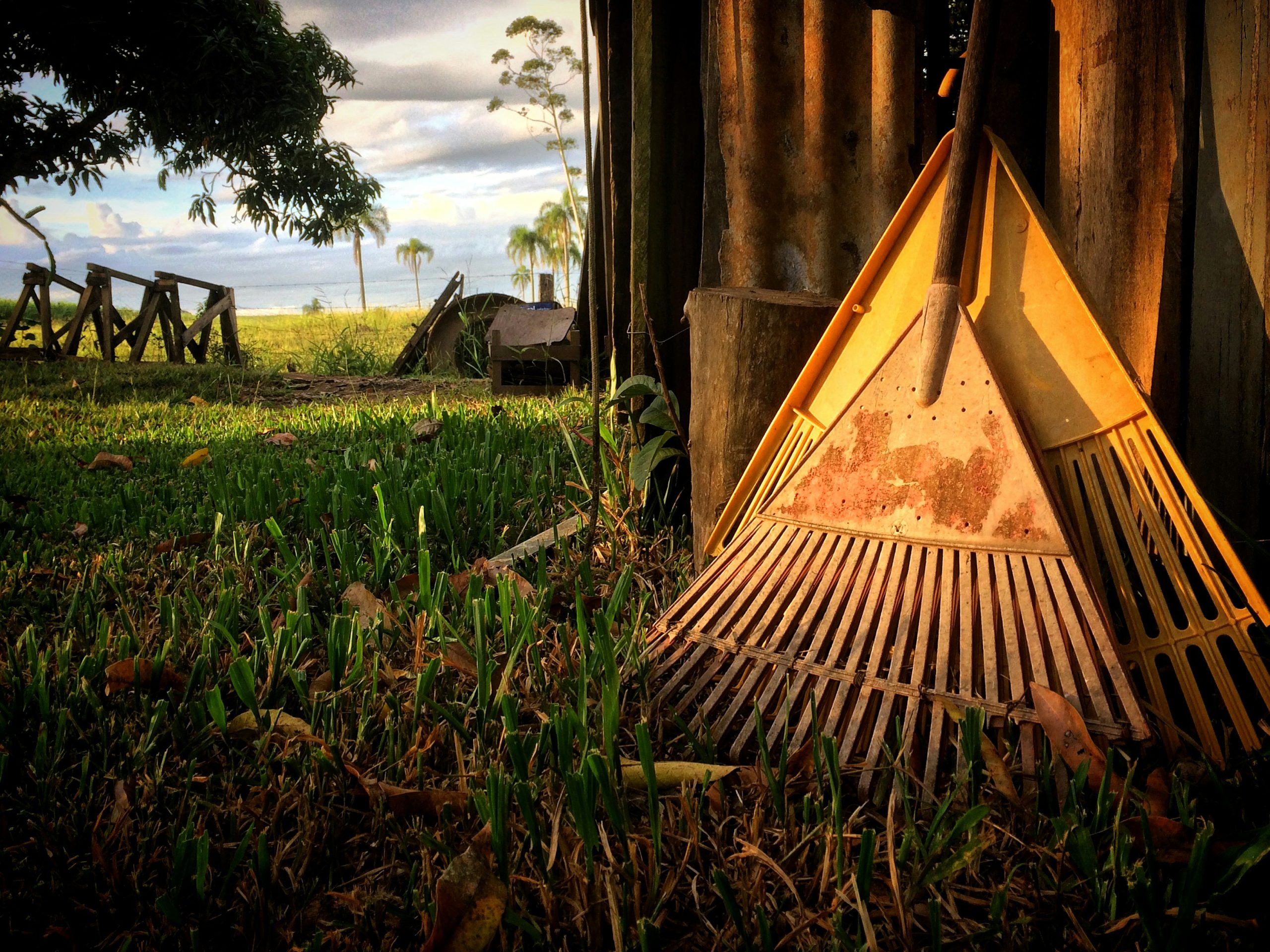
You were in the back, raking the path to my driveway.

“Dad,” I said. “Don’t worry about that. We don’t have those kinds of trees here.”
You handed me the rake. “Go on. Use some elbow grease.”

I obliged you, for a while, until the sound started to grate and I began to sweat. October is hot in the Valley. “I think we’re good,” I said. “I rent anyway. This is not our job.”

“Always trying to get out of doing work,” you said.

I rolled my eyes.

The next Sunday, when I heard the water go on, when it splashed against the window of my room, I remained at the desk as long as I could. I had a deadline.

“Dad,” I said, when I finally gave up and met you outside. “Stop. I pay for water.”

You turned your head without moving the hose. You were drenching my lavender bushes, flooding the ground in all directions.

“They don’t need that much,” I added.

“The deer are eating all our tomatoes, Kate Ann,” you said. “We might need to go to Home Depot later. Put some wire up.”

I wanted to say: “We’re not going to Home Depot. And you’re not in New Jersey.”

Instead, I walked to the back of the house and shut off the water supply. From the shadows, I watched you shake the hose, stare into its dark mouth, unravel the kinks with your hands. You looked around the yard, your head on a swivel. Your eyes went blank and a little sad, and I couldn’t tell if you were looking for the spigot or for me.

The following Sunday, I waited—for the sound of a mower, a leaf blower, a shovel slicing through the gravelly soil where my hedges were planted. I wanted to apologize. I wanted you to apologize. I wanted to tell you to stop coming. I wanted you to promise me you’d never stop. There was only silence.

I went to the backyard, and there you were. Crouched along the edge of the fence, where the white rose bushes survived without care.

You heard the sliding door, and you raised a finger to your lips. You motioned for me to come forward, slowly.

“Look,” you said when I was beside you. You had a stick in one hand and you used it gently to nudge something invisible. You were excited—giddy. Like a boy.

“What do you see?” I asked, whispering, staring at your handsome face, your clear blue eyes, wondering when you were ever so young.

“The babies,” you said. “Don’t touch them or the mother won’t return.”

I remembered then, the warrens in the backyard, the bunnies curled up under a layer of cotton. The way you would sweep it aside so gracefully, to allow me a glimpse and nothing more.

10 Books About Boxing

I grew up watching fights with my father on television, and have always been drawn to the sport—its characters, its rhetoric and, later, the best writing about it by stylists like Hugh McIlvanney, who once wrote of the terminally shy, matchstick-thin, Welsh fighter Johnny Owen, who died in the ring: “It is his tragedy that he found himself articulate in such a dangerous language.” This quest for articulation is part of the appeal of boxing for me, the way its fighters attempt to give meaning to months of training, and the vicarious sort of absorption the spectacle holds for its audience. It is also full of extraordinary people, often drawn from the fringes—socially, economically and emotionally—knocking themselves out to be like everybody else, as Saul Bellow once said of John Berryman. 

In my first collection, Crisis Actor, I have a sequence of poems on and about boxers, and this was in part a way of trying to get in some of the curt, at times deluded, things they have said about themselves and about their trade, but also as a way of trying to find some corner of modern life that wasn’t given over to evasion, or mediated through layers of deflection and distraction. Those fighters I wrote about could be grandiose, braggadocious and—at times—woundingly romantic about each other, and their sport. The books below aren’t the grand pillars of boxing writing—there’s no Mailer, Hemingway or London here, but rather they’re more recent, but no less nuanced or muti-layered, works which take boxing as their entry-point but go off in all sorts of directions to tell stories of loyalty, corruption, greed, luck and endurance. They too are articulate in—and about—that dangerous language, the fight game. 

Boxing: A Cultural History by Kasia Boddy

Kasia Boddy is a Professor of American Literature at Cambridge University and this is an impressively intertextual, beautifully illustrated and expansive survey of responses to ‘the sweet science’ across a range of artforms. Its historical scope takes the reader back to the Ancients, and forward to the era of the heavyweight giants of Ali, Frazier et al; via the paintings of George Bellows and the prose of Philip Roth. The imprint of boxing, and its legendary figures, in music and film are perceptively discussed—the emphasis mostly on reception, rather than the participants’ own testimonies, but the scale, range and insight justify its editorial focus turning away from those inside the ring onto the interested, creative, audience on the safe side of the ropes. 

This Bloody Mary is the Last Thing I Own by Jonathan Rendall

Rendall was many things: a journalist, a gambler, a novelist and—for a time—a manager/advisor to the British boxer Colin ‘Sweet C’ McMillan, during which period he was able to guide his fighter towards a world title. This book is part memoir, part survivor’s testimony, to the boxing business of the early 1990s—taking in field trips to Vegas, seeming wild goose chases to Cuba and plenty of ominous characters cornering the out of his depth Rendall in dark rooms. Beautifully written, witty and prone to tall tales, Damon Runyon was an influence on Rendall’s approach to ‘the facts’ as much as his journalism background. This is a riot and—additionally—a lyrical insight into the nature of luck, good and bad, which is as much a part of boxing as it is the gamblers’ constant companion. 

A Man’s World: The Double Life of Emile Griffith by Donald McRae

McRae is a giant in the modern boxing writing game, for his integrity as an investigative journalist as much as his ability to craft narratives from this often incredulity-baiting sport. His biography of Emile Griffith is an example of his diligence and sensitivity, too—taking the story of a boxer from the Virgin Islands who—as a fighter – was a regular fan favourite at Madison Square Garden in the 60s, but whose private life often took in New York’s gay scene. He killed an opponent—Benny Paret—in the ring, following homophobic taunts at the weigh in and, heartbreakingly, said later in life “I kill a man and most people forgive me. However, I love a man and many say this makes me an evil person.”

On Boxing by Joyce Carol Oates

Oates was an observer of fights at ringside from a young age, attending shows with her father, and as such she brings an attuned ear to her writing about the characters, and ceremonies, which take place within it. She’s especially good on the physicality—not only of the fighters themselves, but on the action of being a witness to such apparent barbarism at first hand: it’s acutely the case that watching in person is a markedly different experience to the flattened spectacle on television; the exposure at close range, and the sounds of blows being absorbed. As one would expect, she gets to the root of boxing’s primal appeal, but is—like so many of the best writers about it—undeceived, unsentimental and often conflicted about the damage it creates, on participant and spectator. 

The Years of the Locust by Jon Hotten

If this had been written as fiction its editors would have been pilloried for allowing such absurdity into print. Rick ‘Elvis’ Parker—a discount store Don King—embodied much of the worst of boxing’s underbelly: a lying, corrupt fantasist who swindled and connived. One of his ‘charges’, Tim Anderson, the man who would be king (or at least next heavyweight champion of the world) sees his semi-promising career disappearing into a realm of fixed fights and ever-decreasing circles, until the pressure —and the poison—he’s exposed to leads him to commit murder. As lurid and compelling as some of the strip-lit venues it takes in, this is hard evidence of why boxing has been referred to as ‘the red-light district of sport’.

Born to Box: The Extraordinary Story of Nipper Pat Daly by Alex Daley

Daley’s grandfather Pat ‘Nipper’ Daly was an astonishing boxing prodigy, a ‘Wonderboy’, fighting grown men while still a young teenager throughout the 1920s, displaying astonishing skill and grit having made his professional debut at the staggeringly young age of 9 or 10. This biography is based on extensive—and committed—research and exposes the treatment Daly endured at the hands of management, and the boxing business, which meant he was effectively ‘washed up’ by the age of 16, robbed of his prime by continually boiling down to make a weight his growing frame couldn’t possibly remain at. A slice of social history, as well as one of the more remarkable narratives to emerge from British rings, this is a story from the scarcely believable frontiers of sport. 

Boxer Handsome by Anna Whitwham

Whitwham’s debut novel brings to life the amateur gyms and the tribal rivalries of East London, while highlighting that enduring paradox of boxing: that often the ring is one of the only places where its combatants feel safe, or in control, away from the chaos of life outside its regulated borders. Written with a touch of Denis Johnson’s terse lyricism, Whitwham’s book is—in part—inspired by her grandfather’s youth in East-End gyms, and his time as an amateur boxer who once shared a bill with Jack Dempsey. She has since learned to box herself and is working on a non-fiction book about her immersion in boxing as a participant, rather than an interested observer.

Dog Rounds by Elliot Worsell

Elliot Worsell is an excellent writer who happens to—largely—cover boxing, and his Dog Rounds is a difficult, candid and often conflicted investigation of fighters who have killed, or seriously injured, their opponents in the ring. As well as being open about his reservations around continuing to watch – and chronicle—the sport, Worsell is sharp on the limited options facing haunted fighters who have little choice but to continue their careers even after the worst possible outcome, with no other way of earning a living. His visit to watch Mexican wrestling is an especial highlight, its cartoonish, pantomime display a reminder that, for all his ethical wrangling, he is impossibly drawn to fights which have meaning, even if they can bring with them dire consequences. 

Sporting Blood: Tales from the Dark Side of Boxing by Carlos Acevedo

Acevedo is one of the most talented boxing writers working today and this is a book in the lineage—and spirit—of some of the great boxing compendia, McIlvanney on Boxing, or A.J Liebling’s round-ups. Acevedo’s choice of subject, as well as his mix of expertise and knack for character dissection, makes him compelling company in these essays about—often forgotten, or at least marginal—fighters. He is especially drawn to the tragic, the unseemly, and the backwards-facing sides of the sport. Despite shining a light into dark places his is not a spirit of relishing, but rather an attempt to get to the root cause of these often desperate, cornered and self-annihilating figures, as well as those who sought to benefit from their gifts while keeping their own hands clean. 

Not Without A Fight by Ramla Ali

Ali embodies many of the cliches which get wheeled out by boxing’s most vocally enthusiastic apologists—the epitome of someone whose life was turned around if not by, then at least within, the strictures of a gymnasium, and later under the bright lights. A Somali refugee to England, Ali has worked her way towards being one of the brightest prospects in the female code, not to mention a model and humanitarian, and this is a mix of memoir and motivating treatise, as well as the only example here from an active participant in the sport, rather than a witness to it. Ali has since lost her unbeaten record, avenged the loss, and is rebuilding towards a run at a world title. 

7 Books About the Stigma of Menstruation

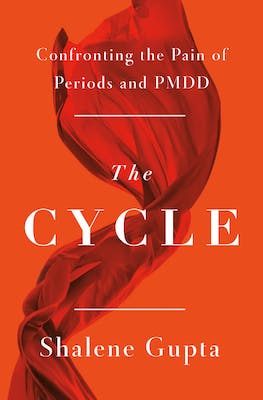
When I started writing my memoir, The Cycle, about being diagnosed with Premenstrual dysphoric disorder (PMDD), I had rarely seen periods in literature, much less PMDD, with the exception of some health textbooks. In fact, my entire understanding of what a period was supposed to be like was shaped by a resounding silence. Periods happen off of the page, out of sight, and out of mind. If I went solely by literature, it’d be easy to believe most people didn’t have periods.

I only realized I had a debilitating condition when I was in my thirties, because I had no idea what a normal period was like. Normal was what my body was going through—I had no idea what other people’s bodies went through. Still, I shied away from reading up on periods and PMDD. I wasn’t sure I wanted to dive into books assuring me that my body was nature’s blessing, or medical tomes that lulled me to sleep. When I finally took the plunge, I found a small but excellent ecosystem of books—and I realized, they had to be. Breaking through the stone walls of stigma, doesn’t just require getting past gatekeepers, it also means being compelling enough to keep audiences turning the page even if they shy away from the subject material. All of these books on this list have broken through the stone walls of stigma. They are explosive in their originality and jewel-like in their brilliance.

It’s Not Hysteria by Dr. Karen Tang

Dr. Tang is the gynecologist we all deserve. It’s Not Hysteria is an easy-to-understand guide to gynecology, written in witty, accessible language. (For instance, fallopian tubes are described as “corridors from the ovaries to the uterus.”) She writes from an inclusive lens, covering gender identities, with care and threading BIPOC history and studies through her narrative. Tang walks the reader through the most common reproductive health issues and treatment options, while providing tips for how to discuss them with your doctor. If you’ve ever had a question about your cycle or how your plumbing works, the answer is probably in It’s Not Hysteria.

Periods Gone Public by Jennifer Weiss Wolf

Periods Gone Public is a thoroughly researched history of menstrual stigma and the ways in which this stigma punishes menstruators. Children end up missing class, adults end up missing work, and the incarcerated struggle to stay clean and thus healthy. Weiss-Wolf managed to combine a strident call to action with a bubbly upbeat tone that simultaneously convinces the reader there’s a huge problem, but we’re all going to get up and do something to fix it.

Period Power by Nadya Okamoto

Okamoto wrote Period Power as an undergraduate Harvard. She shines the spotlight on period poverty, showing how our reluctance to talk about menstruation leads to a reluctance to provide solutions for managing them. This, of course, hits people at the bottom of the economic pyramid the hardest. In clear, chatty prose, Okamoto combines a socioeconomic overview of periods with her own experience of dealing with her period while her family struggled with homelessness. Period Power will make you rage over the tampon tax, and ask the questions we don’t ask in society: What happens to people who can’t afford period products? What do we need to do create a better world for menstruators?

Red Hood by Elana K. Arnold

When 16-year-old Bisou gets her first period, she runs into the woods and is attacked by a wolf. Desperate, she breaks its neck. The next morning, the body of one of her classmates is found in the woods. In this dark retelling of Little Red Riding Hood, sexual predators turn into wolves, and menstruation gives Bisou power to kill them. Red Hood is more than a new take on an old fairytale, it lays out a vision of the world where puberty and female friendship allow women to fight back against the patriarchy instead of become prey.

The Red Zone by Chloe Caldwell

Chloe Caldwell’s period has always been painful and inconvenient, but it reaches a fever pitch when she falls for musician Tony. With spare prose and off-the-wall structure, Caldwell’s memoir recounts the fights, the break downs, and the break ups that punctuate life with PMDD. She layers in a collage of other voices reflecting on first periods, their own PMDD battles, and what it’s like to find community at a PMDD conference. Chloe Caldwell manages to make PMDD, an epically uncool disorder, seem glamorous and chic. The Red Zone combines a period memoir with a meditation on divorce, marriage, and the perils of love.

The Society for Shame by Jane Roper

When Kathleen Held discovers her husband is cheating, she’s not sure which is worse—his betrayal, or being photographed with a giant period stain on her pants. Kathleen is catapulted into internet fame that she did not ask for and did not want. She finds the society for shame, a group of people who have been cancelled online, and decides to “steer into the swerve” and make her new fame work for her. But Katheen discovers that fame can be a double-edged sword, and the fame that made her a household name might also cost her everything she holds dear. The Society for Shame goes down as easy as a beach read, while being a searing commentary on period stigma, and the pitfalls of social media fame.

The Female Malady by Elaine Showalter

Showalter’s classic feminist analysis isn’t strictly about periods, it’s about how superstitions around periods throughout history shaped the modern perception of women being “crazy”. She traces the major trends in psychiatry, sexist policy reforms that barred women from providing mental health care, and the stifling restrictions placed upon women after the onset of menarche. The Female Malady shows how these factors converged to create a society that assumed women were mad because they bled, while simultaneously fostering an environment that incubated depression and anxiety.

Ijeoma Oluo on How We Can Fight Oppression and Transform Our Society

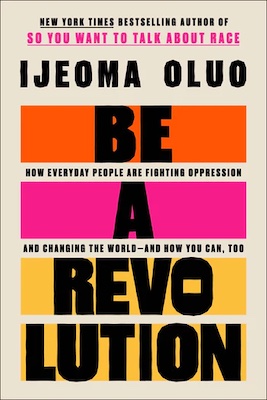
When Ijeoma Oluo began writing Be A Revolution: How Everyday People Are Fighting Oppression and Changing the World— and How You Can Too, she was burnt out. Her first book, So You Want To Talk About Race?, delved into her personal encounters with and understanding of racism, while her subsequent work, Mediocre: The Dangerous Legacy of White Male America, explored the history and impact of violent white male supremacy. “If you’re a Black writer, especially a Black woman, writing about race and racism,” Oluo explains, “There’s this idea that you’re not doing real work, that you’re profiting off of harm, while at the same time, the work takes a lot out of you.” 

To recover, Oluo began spending time with activists like Tarana Burke, Alice Wong, and Feminista Jones, an experience Oluo found to be “really beautiful. It helped me remember the lineage I’m a part of. We live in a system that really does seek to exterminate us, to take everything it can from us, and then kill us, yet we’re here, which means every day, for generation after generation, we’ve been winning on some level.”

As Oluo navigated her healing journey, she realized that she wanted to share the stories and insights of activists. “It reminded me of how many tools we have at our disposal,” she explains. “How creative we are as people, how loving we are, how fierce we are, and also how much we have to care for each other and ourselves in this work. It really centered me in a way that nothing else I’ve done so far in my writing career has been able to.”

Oluo and I spoke recently by phone. We discussed how racial fears are driving the current wave of book banning, the connections between reproductive justice and racial justice, and why everyone should pay attention to what’s happening with Atlanta’s proposed Cop City.  


Deirdre Sugiuchi: You had a conversation with Manny Thomas of Success Stories, a workshop series which aims to help incarcerated men heal from violent patriarchy. Thomas was incarcerated at a young age and discussed how growing up, he didn’t feel he’d live past his teenage years. It’s a sentiment which, unfortunately due to a myriad of reasons, is common to generations of Black children. Can you discuss the implications of generations of Black children believing they will not live past their teenage years? 

Ijeoma Oluo: When you’re living under constant threat, there are physical and mental effects to your physical and mental health that are very real. It impacts how you build for a future. How can you build for a future when you’re in survival mode all of the time? What we often have in our community are young people who never get to be young people. You don’t have space for adventure. You don’t have space for learning and growth. You don’t have time to imagine when you’re just trying to survive. What that means then, is we have people who when they are lucky enough to become adults, have never had a childhood, and have never been able to plan and grow through adulthood, and are deeply traumatized. Not only are people robbed of childhood, but they’re not able to fully step into adulthood either. It’s deeply harmful on an individual level, on a community level, and on a worldwide level. Those are years you can’t get back. 

DS: Last month marked the anniversary of Roe vs. Wade, the landmark decision that ensured all people had the right to abortion, which was overturned in 2022. Removing access to abortion disproportionately harms people of color. Can you discuss how reproductive justice is also a racial justice issue? 

IO: A main tool of oppression that we don’t talk about, of populations of color, in particular, has been the control of reproductive rights and the rights to raise children. Not only looking at times of enslavement, and the rape of Black people, the theft of their children, the forced sterilization of Black, Brown, and especially native peoples and the widespread theft of Native children and of Black children through our child protective services, but also medical racism that prevents, especially Black people seeking reproductive care, from getting the contraception that works for them.

How can you build for a future when you’re in survival mode all of the time?

All of this combined with the fact that even if you do have your child, there’s a good chance that child will be taken from you due to systemic violence and racism, that economic violence and economic racism can stop you from being able to care for your children. There are so many ways with which the rights to have or not have and raise children have been not only stolen from populations of color, but have been a prime tool of our oppression and exploitation. But it’s also important to recognize that this is where these thefts of bodily autonomy are built and protected.

Everything right now that people are up in arms about as far as reproductive choice and freedom has already been done to populations of color and not only has it been tested for effectiveness, it’s been tested for tolerance. They’ve been able to do these things to Black and Brown populations and to trans populations, to directly attack bodily autonomy, especially of those born identified as female at birth or people with uteruses. Once they know the tolerance is there, once they know the groundwork is there, then it’s really easy to expand it across the population.

DS: I’m sure you know this, but 53 percent of the kids in child protective services are Black. Many of those kids are now getting funneled into the troubled teen industry. The way Black and Brown kids are treated in those facilities, due to inherent racist practices, is horrifying.

IO: Right, and it’s a system stealing resources from our communities in order to actively harm our most vulnerable children. Resources that could be going to family reunification, towards support services and treatment programs for parents who are struggling with addiction. Money that could be going to housing for parents struggling with homelessness. Money that could be going to effective contraceptive choices. All of these things that could keep families and communities whole and healthy and keep our children whole and healthy. Instead, those resources are taken and funneled into a white supremacist system that only seeks to harm our kids and destroys our families and multiple generations of our communities. 

DS: Can you discuss the different labor movement that emerged in the wake of Covid? What happened to make that change? 

IO: With the pandemic, it was very clear whose safety was going to be prioritized and whose wasn’t. It fell upon class and race. Workers were realizing that their lives were on the line and that their employers did not care if they made it through this pandemic, so long as profits continued to be high, and profits were at record highs for a lot of companies. It was really amazing to watch how that mobilized a young labor movement that is more intersectional in nature, that understands race, class, patriarchy, ableism— because that was fundamental to this. It was people fighting disability from and people who were disabled from Covid. It’s a movement that had been long dormant. If anything can save the labor movement that’s been gasping its last breaths in the United States, it will be these young people.

DS: It’s so interesting, seeing the beauty that’s come with the reemergence of the labor movement, but then there’s also the negative, seeing how the pandemic radicalized attacks on public education when teachers were trying to protect themselves.

It’s easier to motivate people with fear than with love.

IO: I would say that even shows in many ways this difference between old labor and new labor, in unions like the teachers’ unions, where leadership is older and predominantly white. They’ve been under severe attack for decades by conservative politicians and pro-business politicians. I have talked with teachers of color who are increasingly telling me that actually their union is one of the biggest barriers they have, to not only their own personal safety at work, but their ability to effectively teach their students, especially their Black and brown students, and fighting off these attacks on education, on what we can and cannot teach our kids, what books are in our libraries. It’s hard to be effective in that battle when you’ve been, as a union, protecting whiteness and patriarchy for a very long time.

DS: Can you discuss how the recent push to ban books and the teaching of history in schools is tied to racism? 

IO: Honestly, at its base, it’s more about having a target to rile up fear and outrage amongst the white populace. I would say a lot of these politicians don’t care what’s being taught in their schools, but they do know that this kind of dormant fear, that a lot of white America, across political spectrums, has, that their children will learn something that will expose their part in white supremacy, in patriarchy, in exploitative capitalism, that their children will be turned against them, that fear that they won’t be able to understand their children, is deep and easily activated. It is a way of securing power for a political party that knows it does not represent the best interests of the future generations and is trying to buy time before a rapidly diversifying population understands this.

That fear is really easy to activate. It is a very effective political tool. It’s easier to motivate people with fear than with love. So what we have is a small vocal minority that is able to be activated to end up at our school boards to be making these changes, because even if the vast majority of parents want accurate teaching of history, want children to be able to go to a library and find books that reflect their lived experiences, they’re not as motivated to take it into action because they can’t see the repercussions of how this will impact the children on the other side. When we see these takeovers of school boards, these changes state laws, and county laws, around education, and we don’t see angry parents showing up and saying, “How dare you do this?—it’s because they don’t actually know the real ramifications. The parents who are most impacted, who do know, often have the least amount of disposable time and access to be able to show up at a school board meeting, or at a PTA meeting, or at the capitol. 

DS: I live close to Atlanta, where Cop City, the controversial proposed site for a police training center, is located. 70 percent of people in the area are against it. You argue environmental injustice, racism, capitalism, and colonialism all are hand in hand in the development of this project. Can you discuss? 

IO: What is happening in Atlanta is very important as its own singular issue, but also as a symbol for patterns we’re seeing across the country. What we have is an area that’s predominantly Black that is trying to invest in business, and is feeding into the idea that local Black populations are a threat to business and profit. The promises made to the future that Atlanta wants to build, which is a white, hyper-capitalist space, is something that even moneyed Black people are buying into. That idea does not have poor Black and Brown people, so it is being sold with the promise that these populations will be controlled, and this massive, heavily militarized training center is that promise. They do not care that 70% of the population does not want this because they don’t see any value in that population. It’s important to recognize this, that the environment will be destroyed, that they don’t care how that impacts the population there, that the people there will be made unsafe on multiple levels, because the idea is to control them or push them out. 

These sorts of facilities are being built in multiple places around the country. The way in which they are targeting protesters is a threat to populations everywhere. We have multiple protesters right now facing RICO charges for peacefully trying to stop the building of Cop City, and that is being expanded to all of the other ways in which Black, Brown, Indigenous, and disabled populations mobilize to try to protect ourselves and our communities. This is a threat across the board— the continued cooperation between Israeli military forces and the U. S. police forces that we are also seeing in Cop City, to be able to continue to terrorize and control Black and Brown and Indigenous populations around the world, and then we have the destruction of the environments that would allow our populations to be able to care for ourselves. It matters because Atlanta matters and the people of Atlanta matter, but it also matters because precedents set in Atlanta will be used to further harm communities across the country. 

DS: During the pandemic, my husband and I ran a face shield factory in our house, which helped us get through the early stages when people were losing their minds. You and your partner did a similar thing— you created a collective to support Black artists. Can you discuss the empowerment you get by taking direct action in times of overwhelming hopelessness?

IO: What was interesting is I actually did see this as a very racialized phenomenon, because we saw a lot of hoarding of resources by traditional nonprofits and funders of nonprofits during the pandemic, where they were really tight-fisted and said “now’s not the time,” when it absolutely was the time to be giving as much as you could. We saw Black, Brown, Indigenous, disabled, queer and trans populations that always knew that our survival was collectively turning to each other and leaning on each other, when we knew that the systems would choose to not support us in these times. As hard as it was, and frustrating as it is to be a taxpayer and know that that money did not go back into supporting our communities, it was beautiful to remember what is honestly in our blood, which is our collective natures. The way in which people instinctively turned towards the thing that we know gets us through, while so many other communities and entities shaped by white supremacist capitalism were doing the opposite, it was a really illuminating contrast to me. 

It was so empowering and connecting. We came out of that feeling personally, much more a part of this beautiful community. No one was turned away. If you filled out your application properly, you were sent funds. Then for us personally after our house fire (Oluo’s house burned down before the pandemic), to see many of the same people that we knew we had sent checks out to rally around us with so much love, was a reminder of how full circle this comes, of how there’s no way you could give to community and not get ten times as much in return if you know how to measure it. That was a beautiful experience in the face of a lot of hardship and trauma. 

Pregnancy Is Turning Her Childfree Marriage Into a Russian Folktale

An excerpt from Mother Doll by Katya Apekina

It was ironic that Zhenia and Ben would come home from spending time with people who had kids and be so giddy with relief and self-righteousness over their decision not to have any that it would make them want to fuck.

They had just gotten back from seeing a high school friend of Ben’s who was in town to fundraise for the Obama campaign and had brought along his whole family. It was watching this friend try to hold a conversation while also wrangling his toddler and switching off with his tense wife on something ominously called “The Baby’s Bedtime Routine” that made Zhenia and Ben, now in their empty, quiet apartment, feel engorged with smugness.

“You can’t really go anywhere,” Zhenia said, leaning out of the bathroom midfloss to continue the shit-talking they’d started in the car. “You can’t even have a conversation. Having kids makes people so rude. Can you imagine just letting your kid stand in front of your face, yelling and interrupting like that?”

Ben was naked in bed already, absentmindedly stroking his nipples.

“It’s true. What did we even talk about? He’d ask me about work, and then as soon as I’d start to answer, he would shift his attention to his screaming child, and I didn’t know what I was supposed to do in that situation. Like, am I supposed to wait? Am I supposed to answer over the screaming child?”

Zhenia spat in the sink and dried her mouth with a towel, laughing. “I would have loved to see you yell over that kid like you were in a loud bar or something.”

When she stepped out of the bathroom, Ben was using the sheet to fan at his erection.

“What are you going to do with that mouth?” he said in a funny voice.

“I cleaned it just for you.” She bared her teeth.

Then they had sex freely, with all their fluids sterilized.

A strange image appeared to Zhenia right after she came, of her grandmother boiling the drinking water—vivid and metaphorical. She thought her grandmother could visit her like this only if she were dead, so even though it was late, and even later on the East Coast, she called to make sure that her grandmother was still alive.


Zhenia thought about that visitation again a few weeks later when she noticed that her period was late. Ben had gotten a vasectomy as soon as the union gave him health insurance, and she’d been on the pill for years, so she wasn’t really worried. She took a pregnancy test just to confirm what she knew—that pregnancy was impossible—but the test was positive. She’d gotten the first pregnancy test from the dollar store, so she got three more from CVS, in case the first one was defective.

Why was it so cheap? It must have been wrong, she assured herself, as she peed on the more expensive ones in the pharmacy bathroom. It wasn’t wrong. She was pregnant. The nausea started almost immediately.

That day during her shift at the hospital where she was working as a translator she had frozen several times, mid-sentence, hand up, eyes closed, waiting for the wave of nausea to pass over her.

She knew that she would need to have an abortion. What other option was there? She’d had one before, and unlike in the dramatic way it was portrayed in movies and on TV, it wasn’t a difficult choice, she wasn’t traumatized afterward, and no part of her regretted that decision. Yet now, somehow, it did not feel like a possibility at all. Why was that? Ben had always been clear about not wanting children. Forcing a child on someone who didn’t want one was barbaric. But hadn’t she also been sure that she didn’t want one until, suddenly, she did?

She called her grandmother to tell her the news. Her grandmother had stopped being able to outwardly understand things, but it was still possible, Zhenia thought, that she was at least partially in there. Anyway, she was the only person whom Zhenia wanted to tell.

She called the house and her mother answered.

Zhenia had been hoping that it would be Nathaniel, her stepdad, because he lacked curiosity and never asked questions. He’d married her mom when Zhenia was six years old and was the only father figure Zhenia had ever known, and yet she never thought of him as “dad.” But, he was a reliable presence. He could be counted on to shuffle up the stairs with the cordless phone and hold it to her grandmother’s ear and not think anything of it afterward.

Her mother, though, was a different story.

What gibberish. Don’t use your grandmother’s dying body as your confessor.

“Zhenichka.” Her mother, Marina, was already sighing. “What gibberish. Don’t use your grandmother’s dying body as your confessor. You want to help your grandmother, come back here once in a while and help me take care of her. Change her sheets. Brush her hair. Massage her legs with lotion so she doesn’t get sores. Do something practical for once. Don’t whisper bullshit into the phone while I hold it to her unhearing, unseeing, unthinking, but still somehow living, head. It’s grotesque.” Then she hung up.

But what did her mother know about what Baba Vera could or couldn’t hear? And if her grandmother had been able to speak, she would have surely disdained the “practical.” She would’ve wanted exactly what Zhenia was offering, the contents of her heart.


A few days later, Zhenia and Ben went out to dinner at the Thai place in the strip mall across the street. She thought she would tell Ben then, but she didn’t. She felt instinctually protective of what was growing in her. Telling him, she sensed, would let the air out. Or, in. Wasn’t that how Hemingway described an abortion in “Hills Like White Elephants”? “It’s an awfully simple operation. Just let the air in!” The characters never talked about it directly. She’d read that story in a high school English class after having her first abortion and laughed at the melodrama of it, laughed hysterically enough to be sent out into the hallway. Part of why she couldn’t stop laughing was because the boy in her class who’d impregnated her had thought the story was about a lobotomy.

And now, what? She could at least feel the pain of the woman who was being strong-armed into something she didn’t want.

Ben was telling her about the reality show he edited—how one of the women was on a weird citrus diet and was eating oranges with the skin on. He’d edited a reel of her spitting seeds constantly into her hand. That woman’s husband was rumored to be a psycho, maybe even a murderer or serial predator. What if there was footage of him in the background of a scene they’d shot at their house, holding a murder weapon?

“It’s funny,” Zhenia found herself saying, as though it related to what he’d just been talking about, “that something can be nothing or everything depending on what value you assign it.” She was thinking about how the last time she’d been pregnant, she had definitely thought of what was growing inside of her as cells, and this time, already she’d begun thinking of it as a baby.

Ben stared at her, waiting for her to follow up that vague statement with an example or an explanation, but she didn’t. Instead she lurched across the small restaurant to the bathroom and vomited up shrimp.


Zhenia had met Ben at NYU, six years ago, when she was a sophomore and he was a grad student—they’d met in her dormitory cafeteria a year after the Twin Towers had collapsed. Their first date was to Kim’s Video and then to his grad housing, where he kissed her, finally, on the couch in the common room in the blue glow of the DVD menu. A few months later, halfway into the spring semester, they dropped out of school and moved to LA for pilot season together with their friend Naomi, imagining a life in which they would all become successful actors.

Zhenia’s mother had not taken the news well. “You’re not even in the acting program!”

Marina was a biologist who studied how bacteria communicated. As for how humans communicated or searched for what was in their hearts—this did not interest her. Any academic discipline without a clear and direct path after graduation was questionable. That Zhenia was an English major had already seemed stupid but not nearly as illogical and arbitrary as this decision to pursue acting in Los Angeles.

“I don’t need the school’s permission to be an actress,” Zhenia had said, though whether she believed this or not, she wasn’t sure.

“Marina, let her go.” Zhenia’s grandmother had picked up the phone in the other room and interceded on Zhenia’s behalf. She’d blow into Zhenia’s sails herself if she had to. “Let her become an actress, that’s a great idea,” she’d said.

The fact that Zhenia had never acted or expressed a real interest in acting, that she hadn’t even made it past the first rounds of auditions for her high school plays—were these not valid points to make?

“Mama, you know that’s just because I have a quiet voice.”

“In Hollywood they’ll have microphones,” her grandmother agreed, “and in movies the acting is different, it’s not even acting. That is the point, I think. You can talk quietly, but with intensity.”

Who knows what her grandmother had actually believed. Anything would have been a great idea, to just get her away, to protect her from Marina and from herself. She knew that her health was failing, that her mind was failing, and she did not want her little Zhenichka to bear witness to any of that. Whether Zhenia wanted to bear witness to that was beside the point. “Let her get to LA and if not acting, she’ll find something else.”

“Idiocy,” Zhenia’s mother exclaimed, finally angry enough to switch over to Russian. “Total idiocy! What have I been paying for the last two years? You and Babushka plotting and scheming . . . Take her with you. You two headless dodos. Nothing she has done in my entire life has made any sense, and all of it has been with the end goal of irritating and hurting me because she knows that as much as I would like, I can never be rid of her!”


After she moved to Los Angeles, Zhenia would call every week—she’d save up funny stories about Hollywood ladies with dogs in baby strollers and men with misspelled tattoos—but as the months went on, her grandmother grew vaguer and quieter, hiding her confusion as much as she could, missing and postponing their calls more and more frequently until eventually she became indisposed. Zhenia tried to get information from Greg, her little brother, really half brother, if she could catch him between his cello lessons and soccer games. Her mother did not like them to have an unmediated relationship because she worried Zhenia would contaminate him with her impractical and poorly thought-out worldview.

“Wouldn’t it be cool if you went to the Chestnut Hill Cinema and there I’d be on the screen, my face the size of a house?” Zhenia would ask.

“That would be cool,” Greg would say uncertainly. “Did you get a part in a movie?”

“Not yet. How’s Babushka?”

“I’m not allowed in her room. She doesn’t like me in there.”

“Is she in her room right now? Mom said she went out.”

“She’s in the hospital.”

Which is how Zhenia found out that it was serious. The hospital didn’t keep her long. There was not much they could do for her. Instead, she deteriorated slowly at home, and Zhenia stayed away, diligently going to auditions, using her mom’s credit card to take improv classes and get headshots. Zhenia got a job, first at a coffee shop and then, putting her Russian skills to use, as a medical translator. Zhenia’s Russian had been a huge point of pride for her grandmother—it was their private language. Vera would brag to anyone who would listen about how unusual it was for someone who immigrated at the age of five to hold on to their mother tongue so well, especially since Zhenia’s mother spoke English exclusively at home to Nathaniel and Greg.


In her first and second years in LA, Zhenia had flown home to visit a few times, but she could see that it put too much of a strain on her grandmother to make things look normal, to try to hide from her beloved granddaughter the truth of her condition. And when Zhenia had said something about moving back, her grandmother had howled—“I don’t want you taking care of me. No! What gibberish. This is the last thing I want!” Zhenia understood then that she was being banished, and when she didn’t come back for Christmas she could tell that everyone was relieved, maybe herself included.

Zhenia and Ben auditioned for things endlessly until Zhenia eventually gave up and then they married each other.

Everything felt temporary, and since there were no seasons in Los Angeles to track time, you could avoid accounting for its passage. Five years went by in this way. Naomi got a part on a TV show that went to series pretty soon after they’d moved, and Zhenia and Ben auditioned for things endlessly until Zhenia eventually gave up and then they married each other.


The next night, Zhenia was lucky because her mother wasn’t home, and Nathaniel was bland but helpful. She lay in bed next to Ben, talking to her grandmother in Russian, about the thing she wanted to talk about with Ben but was too scared.

“You’re disappearing and this baby is appearing,” she said to her grandmother, “and the two feel connected to me. I can’t afford any of this, that is definitely true, but poorer people have had babies. Mom had me under much worse circumstances. But, she had you to help take care of me. To love me. There’s also the fact that my husband doesn’t want a baby. He has always been completely certain about this.”

Her grandmother’s breathing was an even whistle. Zhenia heard Nathaniel clear his throat. The phone must have been on speaker, and though Nathaniel’s Russian wasn’t great, he’d taken enough evening classes early on in his relationship with Marina that he must have been able to understand the gist of what Zhenia was saying.

He cleared his throat again, this time in order to speak. “We could help you,” Nathaniel said, “if you moved back here. I’m sure your mother would be happy to—”

Zhenia hung up. The broken fourth wall. She could see how in his eavesdropping, it must have felt to him like she was making a confession. Laying herself before him for the saving. And her grandmother was just a pretext. A bearskin rug to lie on top of.

Ben turned the page of the script and looked up at her. He pulled the cap to the highlighter out of his mouth. “What’s up?” he said.

Take a picture in your head, she thought, this is the face of the person you are about to betray. The thin strand of saliva connecting his lip to the neon pink cap.

“Do you believe in reincarnation?”

“What?”

He obviously didn’t, so she didn’t know why she was framing it like this. She was wondering whether the baby growing inside of her could be the reincarnation of her grandmother. This felt both irrefutably true and completely irrational.

“Like, say you did,” she went on. “How would it work, do you think? Does one person need to die and the other need to be born at the same exact moment? What if someone was half-dead, their body still on earth? And what about the whole question of new souls, and the population growing? Do souls split, and in the process do they deteriorate? Or do they split and grow the way cells do, multiplying continuously?”

Ben wiped his chin and put the cap back on the pen. “And by soul you mean . . . ?”

She felt absurd, because she didn’t really believe in souls, or maybe she did, but she still realized that it was absurd.

“You’re so Russian.” Ben laughed, looking down at his script. He flipped a few pages back, then smacked his chest with his fist. “My Russian soul!” he said emphatically, with a thick accent.

She stared at him, until he stopped snickering. He had an audition the next day for a prestige series about Nikola Tesla. He still went on auditions occasionally, even though his career as an editor for reality television was thriving. She picked his hand up, lifted it high, and let it drop limply onto his lap, knocking the script off the bed. He looked at her, still smiling but with a building sense of dread. The dread was catching up.

Maybe she could wait until she began showing to tell him. She should at least wait until after his audition because it could be a big break for him. He didn’t get auditions like this very often, and the role—hairy, large nosed, wiry—it was basically written for him. This news could sabotage him. It might distract him and get his head out of the game.

“We’re pregnant,” she said, which sounded weird as soon as she said it. The “we” a little try-hard.

He nodded like he understood the joke. She was getting back at him for the Russian-soul stuff. They nodded at each other like two bobbleheads until she got up and brought him the four pregnancy tests. They were a week old now and yellowed, but the blue plus signs in the second windows were still visible against the discolored backgrounds. She kneeled before him with the plastic sticks and put her head sideways on the bed, so she wouldn’t have to look at him.

7 Magical Realism Stories from the American South

I’ve lived in Alabama my entire life, and if I’m being honest, I doubt I’ll ever leave. It’s my home—my beautiful, strange, complicated home. 

My new speculative/magical realism short story collection, Crocodile Tears Didn’t Cause the Flood, has a particular fascination with the American South. In my latest batch of stories, there is an enormous pond monster captivating crowds in rural Tennessee, a vampire family, also in rural Tennessee, trying to keep its organic garlic farm going, and a young test-taker challenging an Alabama monster she knows quite closely. Even when the stories aren’t explicitly set in my part of the world, readers will still find quilt makers, Mason jars, and front porches. To me, these are images of the South I know. 

I don’t think the phrase “Speculative South” is a thing, but maybe it should be. I began thinking about how folks from my neck of the woods—meaning writers with ties to the American South—are putting out some of the weirdest, coolest, and most thoughtful speculative fiction and magical realism there is. 

Here are seven stories to get you started with exploring the contemporary Speculative South:

“The Acts of Velmajean Swearington Hoyt and the New City of God” by Randall Kenan from If I Had Two Wings

One of the greatest magical realism writers to ever do it, North Carolina’s Randall Kenan sadly passed in 2020, but his incredible legacy lives on. His last collection contains one of his best short works, and it’s a story about faith—and miracles. The titular protagonist gives the impossible. She cures. She brings back the dead. The perfect ending of “The Acts of Velmajean Swearington Hoyt and the New City of God” further proves the story’s brilliance. 

“Lonelyhearts” by Whitney Collins from Big Bad

Kentucky author Whitney Collins begins her fantastic—and fantastical—story “Lonelyhearts” like this: “Lenora’s first heart arrived in a box of Rice Krispies. It fell into her cereal bowl with a damp thud, and for a brief moment she mistook it for a hunk of roast beef.” And the story only gets better. Collins’ story, full of literal hearts, is full of tenderness, loneliness, and love.

“The Great Fish” by David Lawrence Morse from The Book of Disbelieving

Originally from Georgia, author David Lawrence Morse gave us one of the best magical realism collections of 2023 with The Book of Disbelieving. The book’s opening story, “The Great Fish,” is probably my favorite. In it, Ceta, a whale, holds an entire village on her back. The villagers know little of what is beyond their immediacy. What unfolds is a wonderfully sharp story about belief and truth.

“Hi Ho Cherry-O” by Becky Hagenston from The Age of Discovery

Becky Hagenston, Professor of English at Mississippi State University, is one of the best magical realists around. Read her latest collection, and you’ll see all the proof you need. “Hi Ho Cherry-O” is the Hagenston story I most recommend. All you’ll want to know going in is that there is a board game researcher, her lost-in-virtual-reality husband, and a “Service Robot” named Wendell. It also doesn’t hurt for me to tell you that the story is about connection (and disconnection) and the relationship between humans and technology.   

“Fixers” by Dan Leach from Dead Mediums

South Carolina author Dan Leach delivers some excellent magical realism in “Fixers.” Early on, the narrator tells us, “My abdomen, which had previously been flat and muscular, now consisted of a bubble of flesh the size of a summer melon.” Soon, a television wizard enters the picture, and more bodily chaos ensues. The story, which looks at the power of love and curses, is a stunner.

“Tiny Bones” by Jen Fawkes from Tales the Devil Told Me

In “Tiny Bones,” Arkansas-based writer Jen Fawkes takes a wildly imaginative and equally tragic look at the witch from the classic Hansel and Gretel fairytale. Fawkes story, brimming with pathos, guilt, and self, showcases hunger most of all. From a collection that reimagines some of the most memorable villains to ever be on the page, “Tiny Bones” is a standout. 

“Decomposition: A Primer for Promiscuous Housewives” by Jamie Quatro from I Want to Show You More

Tennessee writer and teacher Jamie Quatro takes on fabulism beautifully in several of her stories, but it’s “Decomposition: A Primer for Promiscuous Housewives” that I find myself returning to the most. In this story, a corpse rots away in a couple’s bed. The husband doesn’t believe the corpse is real. The wife dreams of possibilities. The story is so layered, too. Yes, it’s about a slowly rotting (almost magical) corpse, but it’s also about adultery, grief, faith, and sin. 

From the Book Waiting to Be Read on Your Bedside Table

Hey, girl, it’s me. The book at the bottom of your “To Be Read” pile. I thought maybe tonight we could hang out. You can slip me out from under this stack, slide between my pages, and get to know me better. 

We deserve some quality time, just you and me, away from the eight books you heaped on top of me. And those four next to the lamp. 

I’ve been on this bedside table for two years, and I want to take this relationship to the next level. Girl, I’m ready to open up for you.  

It feels like just yesterday you were at the bookstore with your friend Ainsley and she was like, “Have you read this? You HAVE to get it!” I felt the thrill of your fingers stroking my spine. In a flash, I was at the cash register, then in your bag, then your bedroom. 

My diction will thrill you but I need to be on top.

You didn’t touch me that night, which was surprising given our whirlwind courtship at Books Are Magic, but I respect your pacing. 

I figured I’d get picked up in a day or two. But then you put that Sally Rooney novel on top of me and I was like, hmmm. Okay. You’re reading other people. That’s cool.

Then The Nickel Boys showed up. Then a John Grisham book you bought while stuck at Newark airport. Then Do-It-Yourself Basic Home Repair. No idea where that one came from. The point is, my diction will thrill you but I need to be on top. 

I’m beginning to show signs of age. A coffee stain on my cover. Some dust. A splotch from when you used me to kill a spider. I noticed your Toni Morrison book doesn’t have a splotch. 

But let’s not talk about that. Let’s talk about us. I understand a fine reader such as yourself can’t be tied down. I’ve watched you read many others. But even though we both consented, it doesn’t mean I don’t get jealous. 

I just wish you’d commit because I know how to satisfy you. And not just my skillful foreshadowing and extensive wordplay. Once you see my strong character development and grasp my firm plot, you’ll be turning my pages faster and faster. 

I know you like to see what else is out there. I’ve watched you scroll through BookTok. I saw you updating your profile on Goodreads. We both know you aren’t “currently reading” 103 titles but hey, everyone’s playing the same game, right?

I can’t ignore the nights you get dressed up and go out to the local bookstore. Ainsley will text about some hot author with a write-up in the Times doing a reading and sure enough, you stumble home with another book, sometimes two. 

It’s a lot for me to bear. Literally. You seem to have a thing for hardcovers. 

I don’t mean to pressure you. I don’t want to be like your Book Club books. You get halfway through and then start rushing because you’re afraid you won’t finish in time. Skimming leaves everyone unsatisfied.

We’ll take it slow. First, we’ll start with an epigraph. Then Part One. It might take a while to get immersed in my smooth rhythm, but by Part Six, I will have touched you in ways you won’t forget. I promise my climax will make you cry. 

Girl, sometimes I wonder if you’re just a tease, gathering up books but not going any further. There’s a word for that: tsundoku, the art of buying books and never reading them. Is that all I am, an object to be collected then ignored? 

Babe, I know you. The real you. I remember the poetry phase. The World War II historical novel phase. The “I should learn more about philosophy” phase. And now the latest Pulitzer and Booker winners. No disrespect, but I was out in paperback before they were glints in a publisher’s eye. 

So let me thrill you with my free indirect discourse. If you’re feeling curious, we can dabble in intertextuality. 

I’m in medias res but if you’re not ready, I’ll wait. Just don’t forget that I’m here and drunkenly order another one of me on Amazon. I’m pretty sure that’s how we got two copies of Atomic Habits.  

Wait, what’s happening? You’re moving things around. Taking books off me one by one. Is this my moment? Girl, get ready for my unconventional narrative structure to rock your world. 

Oh, whoops. Okay, sure, just put that wine glass on top of me. No worries! Maybe some other time.

Exclusive Cover Reveal of “Unsex Me Here” by Aurora Mattia

Electric Literature is pleased to reveal the cover for the book Unsex Me Here by Aurora Mattia, which will be published by Coffee House Press on September 24, 2024. Preorder the book here.


“These are stories about attempting to outrun time; about trying to remember transfemme pasts; about magic touching everything except the possibility of lasting love.”

From a shapeshifting garden somewhere in Michigan to a West Texas town with a supernatural past, from a stalactite cavern in the birthplace of Aphrodite to a secret waterfall in Texarkana: from nowhere to anywhere, Aurora Mattia chases glimpses of paradise. Her gemstone prose shatters into starbursts of heartbreak and rapture, gossip and holy babble, bringing together a cast of spiders, sibyls, angels, mermaids, girlfriends, and goddesses in vain pursuit of their unnameable selves. Their perils are as dense with symbolism as they are refined by desire—if beauty is the labyrinth, it is also the light.

Tied together by the strings of a corset, Unsex Me Here is a dazzling showcase of other worlds near and distant, and the high femme ramblers who’ve found and lost their way through them.


Here is the cover, designed by Tree Abraham.

Author Aurora Mattia: “My family is from East Texas, but the Texas-of-my-mind, the Texas that pulls my dreams across towns and timezones—the Texas where my great-grandmother Bobby was sent to live in a single mothers’ home after a lowlife boyfriend got her pregnant—is across the Pecos, among ghost town ruins, beneath the high auburn walls of mesas like immemorial clouds calcified by heat and slow time, and come to rest. So it makes sense for the cover of Unsex Me Here to reflect that supernatural place where I first saw the moon rise; and it only makes sense, since all life began within hydrothermal heat vents—enormous cracks—in the ocean floor, for an infinite ravine to split the desert in two, because that very desert, where anyone can happen upon an ammonite fossil, was once itself an ocean floor, the Permian Basin. And so it only makes sense, in that northern corner of the Chihuahuan Desert, for iridescent forms—bubbles, blobs, mutating globules—to wobble and rise from such a ravine, on the verge of shapeshifting into something known, or at least something knowable, because, as the women in Unsex Me Here believe, iridescence is:

  •          the oldest force in the universe, its most fundamental expression, i.e.,
  •          the antimatter nectar of nothing, i.e.,
  •          the precondition of all life.

And what could be more transsexual than that?”

Designer Tree Abraham: “Mattia’s decadent surrealist language is a designer’s dream. There was so much description of an Empyreal world made of luminescent surfaces and mythological collisions. The initial cover concept was inspired by a passage in the book:

‘To let loose a swarm of butterflies from the cracked earth, but I am not made to show you butterflies, I am made to show you trampled wings and the uselessness of beauty. I want so much to give you paradise, I am trying my hardest, I promise. I have at last exhumed my phrases and though they are damp and humid and many are rotted like wet leaves I speak them anyway.’

The cover had butterflies escaping from the crack. The author wanted something other than butterflies. I pulled the orbs from another concept, feeling these vessels of watery air offered similar optimism as they floated up from the hot dry earth. Taking notes from Mattia on color and type ultimately made this cover better than I could have imagined, but not nearly as fantastical as what lies inside.”

8 Literary Book Titles Likely to Rile Book Banners

Several months before my short story collection Sex Romp Gone Wrong was published, I started joking that my new book was already banned in Florida and Iowa. It wasn’t entirely a joke. Both states had recently passed legislation requiring any materials depicting sex to be removed from school libraries. The laws also said schools couldn’t teach younger students about sexual orientation or gender identity.

In the 2022-23 school year, according to Pen America, “over 40% of all book bans occurred in school districts in Florida.” But districts in plenty of other states have also been facing challenges, usually over books that feature characters of color, discuss race or racism, have LGBTQ+ themes, depict or mention sex, or include language the challengers deem offensive.

Often, the folks involved in trying to ban books (who, it should be noted, are a vocal minority) admit they haven’t actually read them. In August 2023, harried administrators in one Iowa school district used AI to try to figure out which of the books under review depicted sex. They didn’t think they could actually read all the books by the new law’s required deadline for removing restricted materials, so they turned to algorithms for help. It would be laughable if it weren’t so terrible.

Sex Romp Gone Wrong is about women and girls at different stages of life, navigating relationships, desire, love, marriage, and motherhood. Yes, there’s sex, some of it queer, and while I wouldn’t go so far as to say my book contains a fuck-ton of cussing, there is a fair bit. I didn’t write the stories for children, and I’ve never expected the book to appear on school library shelves. However, book bans aren’t only affecting school libraries. Last fall the New York Times reported that the American Library Association had noted an increase of challenges to materials in public libraries as well.

Given this surge in anti-book activity, I’m wondering if book challengers will soon be too time-crunched even to run titles through Chat GPT. Will they have to start targeting volumes based on title alone? If so, then I reckon Sex Romp Gone Wrong could be off the shelves, along with a lot of others. Here are 6 literary fiction titles and two memoirs book banners are liable to point their judgey fingers at:

Nightbitch by Rachel Yoder

An artist mothering a two-year-old finds herself transforming into a dog at night. A fractured fairy tale about a stressed-out woman, this novel is also a funny, smart exploration of the difficulties of trying to be an artist while also being a mother. As the story unfolds, the unnamed woman finds powerful new ways of being that are pretty alarming, as well as some that are pretty wonderful. Yoder’s depictions of the joyous, tedious, and highly time-consuming processes of raising children and making art—and the difficulty of summoning the energy to do both at the same time—had me alternately laughing and cringing in recognition.

Hijab Butch Blues by Lamya H

Lamya H is a queer Muslim woman who wears hijab and wrote this memoir under a pseudonym for reasons she explains near the book’s end. Born in South Asia, Lamya moved with her family to the Middle East when she was a small child. There she struggled to fit in with the wealthier, lighter-skinned Arab girls at her school, whose parents told them not to play with her and looked down on her for being brown. At fourteen, she discovered that she could read the Quran in ways that affirmed rather than denied her burgeoning realization that she was queer. This discovery sparked a years-long process in which Lamya’s religion consoled and strengthened her as she immigrated to the United States and searched for a community that welcomed her as a queer person, a brown person, and a person of faith. Her memoir recounts key moments of realizing her queerness, coming out to friends, and making a joyful queer life with her partner and found family. Each of these moments is interwoven with a story from the Quran, illustrating how Lamya’s awakenings resonated with foundational stories of Islam, and how these stories helped shape who she has become.

Shit Cassandra Saw by Gwen E. Kirby

This collection is one of my favorites. Shit Cassandra Saw is full of stories that delight in playing with form, narrative conventions, and reader expectations. Kirby’s imagination seems boundless; her wild, strange, funny tales range through the centuries, lighting on women and girls of today and yesterday who have run out of patience with patriarchal bullshit. Virgins, witches, whores, teachers, moms, adolescent friends—whoever they are, they push back, refusing to accept the fates that men have tried to determine for them. As “Boudicca, Mighty Queen of the Britains” says, “it is not fair that I should change to suit the desires of others.”

Bastard out of Carolina by Dorothy Allison

This novel, which came out in 1992 and was a finalist for the National Book Award, has already been the target of many a book ban for its depiction of violence and sexual abuse. Yet it has also been widely celebrated for Allison’s raw and knowing depiction of poor white southerners in Greenville County, South Carolina, where she was born and raised. A lesbian who grew up working class, Allison’s searing work refuses to let women like herself and the women who raised her remain invisible.

F*ckface by Leah Hampton

A young lesbian working in a rural grocery store in the North Carolina mountains longs to escape. A park ranger grows weary of finding dead bodies in the woods where she once longed to roam. Set in contemporary Appalachia, Hampton’s stories follow working-class characters whose lives are interdependent with the land in ways city dwellers often don’t think about. Their homeplaces, livelihoods, and health have been devastated by industries like coal mining and hog farming. Some itch to leave, while others stay, aching for what they’ve lost.

Letter to My Transgender Daughter by Carolyn Hays

Carolyn Hays (the writer’s pseudonym) was the mother of four children, and pregnant with another, when a knock on her front door changed everything. An investigator from the Department of Children and Families was following up on an anonymous tip about Hays and her husband. The complaint was that their fourth child was trans, and that her parents were “making” her that way by using her preferred pronouns and allowing her to choose the clothing she wanted to wear.

Hays recounts how she, an academic and writer, and her husband, a soccer coach, learned how to give their daughter what she needed to thrive, as well as what their family did to try to keep her safe. The book offers plenty of scientific and historical research, and talks about recent progress in trans visibility and representation; it also addresses the current climate of growing anti-trans legislation and persistent violence against trans people. Mostly, though, this memoir is an intimate portrait of a large, loving family, written by a mother dazzled and strengthened by her daughter’s joyous certainty about who she is.

Whatever Happened to Interracial Love? by Kathleen Collins

Kathleen Collins was a Black writer, filmmaker, playwright, and activist who died of breast cancer in 1988 at the tragically early age of 46. Nearly 30 years later, Ecco Press published her short fiction in this slim but powerful volume. Collins portrays intellectual Black artists, professors, and professionals in New York during the 1960s through the 1980s, yet the voices feel fresh, in large part because she drops us so quickly and surely inside each character’s consciousness. Voice-driven and economical, her stories waste no time on unnecessary backstory or connective tissue. It’s as though Collins knew she didn’t have much time.

Hell of a Book by Jason Mott

This devastating surreal novel about a famous Black author on book tour who finds himself talking with a figure called The Kid (who may or may not be real) is by turns satirical, horrifying, and thoughtful. It won many awards, including the National Book Award, and is sure to infuriate anyone who doesn’t want to think about our country’s history of racial violence and police brutality.