A Young Widow Rewrites the Conventional Narrative of Grief

Amy Lin’s debut memoir, Here After, is a taut, poetic, and intimate exploration of heartbreaking loss, devasting grief, and its unfathomable aftermath. In potent, swift, and artful prose, she details the love, and loss, of her husband, Kurtis, a vibrant human and skillful architect, who died suddenly, and without distinguishable cause, while running a virtual half-marathon.

Craftily moving between depictions before and after the soul-shattering tragedy—celebratory wedding reception vodka-waters to a necessary, life-saving stent—Lin lays bare the beauty of their relationship and the emotional and physical toll of her grief.     

At the beginning of 2024, Amy Lin and I caught up over Zoom and discussed the present tense of grief, the inadequacy of language, the gift of both seeing and been seen. 


Jared Jackson: Though the structure of the memoir is nonlinear, the entire book is written in the present tense. Why did you make this decision? Did it have anything to do with the way you experienced grief?

Amy Lin: The thing about grief, for me, certainly, was that when I entered into it, I fell out of time. Which is to say, the ways in which we tend to quantify established time—past, present, future—completely eroded for me. And my life as it had been, my life with Kurtis, it felt as real, if not more real, than my life after he died. 

That’s what grief does, it completely deflates these realms. I, temporally, was completely lost, and the memories of our life, the memories of who I was—a wife, married, the choices that I had made—none of them brought me to my present. Even when I was burying Kurtis, right? I truly was like, no, I am a wife. But I wasn’t married and I wasn’t a wife—not anymore—and it’s really disorienting when what is no longer feels more real than what is present. Biologically, what the brain can’t process is that what is real neurologically is not actually real anymore. So, for me, everything in grief is present tense.

JJ: Can we stay there for second? You mentioned the biological aspect, and there are moments in the book I referred to in my notes as the “science of grief.” For example, you search the term “young windows” and read a report that lists mortality rates—cardiac arrests, cancer, suicide—of widows compared to those still married. In fact, soon after Kurtis’ death, you ended up in the hospital with life-threatening blood clots. To me, typically, grief is talked about as an emotional state, not a physical response. Was learning these facts helpful—to have an explanation for what you were feeling not just emotionally, but physically? 

AL: I will say until I was in acute grief, I thought of grief as an emotional state. But in Calgary, where I live, we have the Bob Glasgow Grief Centre, which is the only provincially and publicly funded grief counseling center in all of Canada. And so, I was really lucky because I live here and started it within a month of Kurtis dying. 

It’s really disorienting when what is no longer feels more real than what is present… for me, everything in grief is present tense.

The first session was just an hour with a slideshow where the grief counselor talked about was the ways in which grief affects the body. She said grief completely shutters the prefrontal cortex, which is the part of the brain that does communication and memory and scheduling and emotional regulation. The blood is being poured from that part of your brain into the base of your brain, which deals with fight or flight, with survival, and with “am I going to stay alive?” That whole part of your brain, the front, at a blood level, has gone dark. She said I was in clinical shock. 

JJ: Actual clinical shock?

AL: Yeah, and she also explained neurologically, your brain has not caught up to your reality. She explained that when we meet somebody, we code neural pathways in our mind. We have a neural pathway for ourselves, the person we think ourselves to be. And then the brain codes a “you” that is separate from the “you” that is real. Let’s call that second “you,” Kurtis. But then as you continue to live with that, the brain starts to encode a third entity. Which is the “you” in combination with Kurtis, the “we.” She said, obviously, Kurtis has died, but the neural pathways that you have for him are still being used. And the brain is not just trying to cope with permanently shutting down the neural pathways connected to the “you” that is Kurtis. It’s dealing with the entanglement of the two yous, the “we,” and the brain has no idea how to shut that down because the real you” isn’t dead. And because the brain is trying to shut it down, a lot of people have a feeling of “I’m dying.” And she said that’s actually true biologically, because the brain is trying to kill the neurological you.

Also, how much capital the brain is using biologically is massive. She said that’s why grief, biologically, is actual work, and extremely tiring. This is what creates the “widow effect.” It’s not that you’re cursed. It’s that you’ve been exposed to intense levels of stress hormones over such a long time that you are more vulnerable to disease, more vulnerable generally. With your prefrontal cortex down, you tend to take more risks. And so that’s what creates this trackable data about people who are widowed, especially young, who tend to have health problems, or accidents happen to them, because they really take more risks. Like, this is how you get hit by a car, because you’re not actually evaluating, “Oh, is that car traveling too fast? I’m going to dash across the street.”

After I understood what was happening in my body, when something would happen, or I’d feel a certain way, I was able to know I wasn’t crazy, this was my brain working. So, I had that, and I felt lucky. But also, we’re failing people in that they don’t have access to this information. Where is this in the health curriculum?

JJ: You clearly, at least now, have a way to speak about grief. And I wanted to talk about the language of grief. Do you think grief has its own language? Is our language around grief limited? 

AL: I do. And I think, yes, our language around grief is limited. One way is by this desire to make people feel better. Culturally, I think, humanly, we do not want to see our fellow people in pain. We want to make them feel better. And this is where I think, with most people, because of their good intentions, the language that they use is always forced towards healing, towards “cheer up,” towards the “bright and shiny.” The language we have for grief is about either distracting people from it, or helping them feel better generally. And while that comes from a really human and understandable place, grief studies show it’s harmful to people who are grieving because grief is chronic pain. It doesn’t go away. 

The North American narrative of resilience puts a griever in a place where there’s no space for them, and nobody feels strong or resilient.

Saying to someone, “I’m going to distract you from the fact that your husband died,” is kind of like saying, “I’m going to ask you to hold your breath.” And then asking, “Don’t you feel better?” And you’re like, no, that’s actually really hard for me. Because something that is essential and omnipresent in my life, you’re now asking me to forego. And it becomes really harmful for people who are grieving to have to perform that they’re not sad. Or to perform that you’ve made them feel better. But it’s also hard to educate gently, especially when you just want to say, “If you want to help me, please just sit with me in my sadness.”

And then the second part where I see us limiting language around grief comes from, I think, a North American narrative of resilience, the bootstraps mentality, the “you’re so strong.” I think people see it as kind of cheerleading, truthfully. But again, it really just puts a griever in a place where there’s no space for them, and nobody feels strong or resilient. They feel afraid. That’s how they feel, and I think we linguistically really harm people.

JJ: I want to switch tones because I want readers to know the book isn’t all sad. There are beautiful and tender snapshots that depict the love you and Kurtis shared while he was alive. Moments where I found myself both laughing and simply admiring the wonder of your relationship. And you write that Kurtis once said that you think “sadness has a kind of beauty.” So, my question: Did you also experience moments of joy in the remembering, in particular the good? And if not joy, something else? In a book that centers grief, how did you approach infusing the book with these moments? 

AL: I love this question. The real answer is that I did not experience joy writing this book. I found it extremely painful to live in. I didn’t come to this book to write about grief. I realized that it was a way of processing grief, but I didn’t intend to do that. But you grieve with the thing that you have, and the thing that I have is writing. Something beautiful about writing is that it creates a legacy, even if that legacy is small. Even if that book is read by very few people. It’s still its own kind of legacy. And this was a legacy I could offer Kurtis—to write who he was or who I knew him to be. And so, I came to it to write about him and to write about our life. 

I am extremely private, a lot of the inner texture of our love and of our life was private. But I wanted to open the doors that I had kept closed when we were together. We shared something that was so rare and so beautiful to me that I fiercely protected it in the world when he was alive. And then when he died, I wanted to connect people to the person and the love that he shared and who he was. And writing it felt like one of the things I could do for him. I think the strange thing for me, and is probably, neurologically, entwined with the idea of Kurtis, is that I can do this ghostly math of how Kurtis would feel in certain situations. I knew him so well that I knew how he felt when I wrote those sections you mention.

So, while I did not experience joy, Kurtis was somebody who led with joy, and who led with levity. And so, the reason that those sections, I think, flare brightly in the text, is because I’m writing from the piece of myself that loved him. Because I’m not bright like that. I’m quite serious and pretty anxious, you know? But Kurtis had his own sun, his own gravitational pull. And when I wrote in that mode, I really tapped into that. And that is what I tried to bring to the page. That’s where the moments of the joy in the book come from. The lens of that was him. 

JJ: Speaking of writing, on your first date with Kurtis, you introduced yourself as a substitute teacher. Later, after discovering and reading your blog posts, Kurtis basically says that introduction was wrong, and calls you a writer, says you are a writer, which you hesitate to accept. A lot of writers get asked the question, “When did you first call yourself a writer?” But not many get asked what it’s like for someone, especially someone they love, to call them a writer first, to see it in them and claim it for them, even before they claim it themselves. Can you tell me what that felt like—to be identified as a writer by Kurtis—especially now that you have a book? 

AL: I think maybe one of the greatest things that we can do for the people we love is to endeavor to see them. And I don’t mean see the best parts of them or the parts of them that we would like to highlight or the parts of them that we would like to encourage in them. I mean, to actually see who they are in the fullness of the person that they are. And when you see something in someone that is so core to who they are, and you see it before them—and also before that person is able to accept it themselves—that’s one of the greatest things, to live in the abundance of somebody’s sight like that.

Kurtis loved me in that way. Loved me enough to see immediately that I was a writer and say that to me. Our first date was very long, six hours. And later, when he found those blog posts, he said, “You were charming and open and engaging on the date, but you were not like this. You were not open like this. I met you on these pages in a way I didn’t meet you in person.” He certainly saw something in me and that remains, probably, the most radical reality of my life. That Kurtis saw me and, in doing so, excavated a knowledge about something that I am before I did, and then held it to the day that he died. 

JJ: That’s beautiful. You also write fiction, and there’s a scene in the memoir where you describe publishing you first short story in a journal and imagine how Kurtis would have celebrated were he still alive. If you believe in the After, how do you imagine he’s celebrating the publication of your debut book? 

AL: I think what’s so amazing is even if you don’t believe in an After, which truthfully, I’m not sure that I do, what do I believe in is Kurtis. There is this beautiful thing about our loved ones, and our ancestors, whoever that is for us, and it’s that they show us “the way.” And often the way is into a more tender or expansive way of living, which is certainly true for me of Kurtis. He showed me the way into a more light-filled, joyous way of living. He really was a man who loved living. And it’s crazy to me that he got so little time to do it. And so, despite my ambivalence about the After, I, because I knew Kurtis for as long as I did, can so fully feel that if there is one, then he’s going crazy in it. When I turned 30, he filled his car so full of balloons he got into a car accident because he couldn’t see out of it. So, if there’s an After, and there’s finite space he could fill, then it’s filled. And I know that that would be true, if it can be true. And if it is true, then Kurtis will show me the way.
A Culinary Visit to the Belly of the Country

“King of All Hogs” by J.G. Lynas

We’d been driving for two days, unsure where we were in this land of grass and hard dirt, the world made liminal by the blur of the road, by the pleasant haze of our cigarettes. Inside the car, with me and Mark and a dash full of snacks, all was fusty, dusty, happy, and warm. We slept by the roadside, pissed where we pleased, honked the horn into the moonless night. Mark had heard about Guthrie Farm from his forum friends, strangers with names like Doggerel and Scumboy and Less, who were big on enthusiasm but light on geography. We were in what could only be described as a county, somewhere north of where we’d previously been. When other cars passed us, they drew their windows up despite the heat.

It was getting on for evening when we found the place, and the whitewash farmhouse glowed like candlewax. The barn to its side was thin and unpleasant, hardly bigger than a school bus.

“How many hogs could you fit in there?” I said to Mark. He never said pig, talked only in hog, in swine, in cutter and pork. He looked pleased with me, handed me the tobacco pouch like it was a bag of jellybeans.

“Not too many. That’s what makes them so special.”

“Artisanal,” I said.

“Oh yeah.”

“Artisanal hogs.”

The Guthries didn’t have a car in their driveway, only the skeleton of a quadbike, a few cannibalized engine blocks, layers of tarp weighed down by stones. There wasn’t any wind this far north, or possibly west—nothing stirred. No lights on in the house either, but I wasn’t worried—things had a way of working out for Mark, and he and I were fast becoming one and the same. I had even started walking on my tippy toes like he did, prancing like a gazelle around the car when we needed to stretch our legs. It was his idea to come out here, and then it was our idea together, and then we didn’t care whose idea it was, were both just happy to be doing something cool together. We were on the road. We were free and happy. We ate burgers for breakfast and instant noodles for dinner. We had sex in a roadside bathroom and bruised ourselves on the cistern doing something funky with our legs. Outside, someone knocked, occasionally cleared their throat.

Mark honked the horn and flashed the beams.

“Emissaries at the gates!” he said out of the window. I leaned over him and turned the indicators on, then the hazards.

“Yeah!” I said.

“Yeah!” he said.

We got out of the car, leaving the engine running and the lights streaming in through the Guthries’ curtains. Mark knocked twice, perfunctorily, and we made out like teenagers while we waited.

“Do you think they’re home?”

“Oh, they’re home,” said Mark. “Where else could they be?”

A light came on in the hallway. We nudged each other, held our breath, waited for something else to happen.

“Oh, they’re home alright.”

After another five minutes, the door opened, and Tom Guthrie appeared before us, old and smelling of dish soap. The corner of his beard was stained yellow from some mean tobacco.

“A pleasure,” said Mark, doing a little bow.

“You’re with them,” said Tom, looking at his feet. “From those message boards?”

From what little we could see through the hallway, the house wore its age well, the wallpaper peeling in tasteful strips. A lamp to Tom’s left was dented and tarnished in a way that indie coffee chains would die for. Mark stepped forward and shook Tom’s hand, pulling it up from where it hung limply at his waist.

“You’re an absolute celebrity there,” said Mark. “This is wild! Like meeting Sting or Cash!”

“Like meeting Bowie,” I said.

“Yes! Exactly! The Bowie of Swine.”

“David Bowie’s dead,” said Tom Guthrie, as if he still wasn’t quite over it. “This isn’t a good time. We weren’t expecting visitors.”

“It’s a great time,” said Mark.

“It’s our birthday, you see,” said Tom.

“Happy birthday!”

“My wife and I, it’s our birthday. It’s our day, you see.”

“Then you’ll let us cook for you,” said Mark, who still hadn’t let go of Tom’s hand, its veins standing out in milky blues. “You’ll prepare us a range of cuts, and we’ll have a slap-up meal and celebrate together.”

He led Tom into his own home, an arm around his shoulder, pulling his shoes off and leaving them by the sill. I followed at a distance, shutting the door to the loamy dark outside, the tin-can clatter of insects. I placed my shoes next to Mark’s.

The house was one story, every room branching off from the central hallway with the kitchen at its terminus. The light was buttercup warm, the bulbs the kind they don’t let you buy anymore, running so hot they scorched the ceiling. Everything smelled like cooked dust, like a radiator turned on for the first time in years. Little side tables had pictures of a younger Tom and his wife—swimming by a creek, standing in front of the house, holding a freshly dressed deer by its antlers—always posed the same, their hands barely touching. A phone rang from the living room, but nobody went to answer it.

We seated ourselves around the breakfast table. Outside, a security light came on that hadn’t when we arrived.

“Are you going to keep your car running out there?” said Tom, but Mark just waved his hand in a way I knew well, which made me smile into my hands.

“How about a coffee? A cup of joe for the birthday boy! Will Mrs. Guthrie want one too?”

“She’s resting. She doesn’t drink coffee,” said Tom, looking at me for perhaps the first time. His eyes were remarkably clear, those of a man much younger and in control. “Who are you?”

“I’m Mark Swain. It’s such a pleasure.”

“Is that a joke? Like a play on words?”

“No,” said Mark, placing down three black coffees. Tom pushed his away a few inches, pinching his nose. “You have no idea how long I’ve been waiting to meet you. The guys on the board just can’t stop talking about your meat.”

“How much did they tell you?”

“Not much. Just that you’re the man, you know? You’re the guy.”

“And who’s this? Mrs Swain?” said Tom, waving a hand not so much at me as at my aura, the general idea of me.

“I’m with Mark,” I said.

“She’s with me,” said Mark, planting a fat kiss on my forehead, his stubble like the stroke of a doormat. “So, how about some food? Anything in the fridge?”

He opened it up, but there was only a furry slab of butter, a receipt for an air fryer.

“We don’t keep much in,” said Tom. Mark and I looked at him for a long moment as he rapped his knuckles on the table.

“Hm,” said Mark.

“So,” I said.

‘I . . . can get some cuts from the barn?” said Tom.

“That would be best,” said Mark. “That would be just great, Mr. Guthrie.”

“It’s our birthday, is all. My wife and I.”

“And we’re just thrilled to be spending it with you. Babe, aren’t we just so psyched to be here for Mr. and Mrs. Guthrie’s birthday?”

“Thrilled!” I said.

Tom Guthrie closed his eyes, crossed himself, and made for the back door.

“Please don’t touch anything,” he said before leaving.

Mark settled into a chair with a worn pattern of butterflies, rolled us each a cigarette and smiled.

“Is he going to slaughter one? Just for us?” I said.

Mark waved his hand again, blew smoke up into the busted alarm, as if daring it to sound.

“He doesn’t seem happy to see us.”

“Trust me, he’s just fine,” said Mark. “The guys on the forum said it would be like this. This is pretty normal. It’s kosher.”

“Well,” I said.

“Well,” he said, springing up and dragging me along. We walked through the house, following grooves in the carpet from Tom’s slippers. Mark touched a phone book, a porcelain dog with no eyes. I took one of the picture frames and turned it facedown, without having any idea why. The living room looked as you’d expect it to, only with a distinctly modern flatscreen TV in the corner, swept clean of dust. They had a bookshelf, but the titles didn’t stick in the mind, their browning covers forcing the eye away—A Walk in the . . . Songs for Rainy . . . Keeping Up With . . . This and That. A daguerreotype on the wall showed an old man standing in front of the freshly painted barn. He could have been Tom’s father, maybe the wife’s—he was a father to someone, that was for sure. He oozed dad.

“He can’t sell much. With the barn so small.”

“He doesn’t sell the meat,” said Mark. “That’s not how it works here.”

“Did they say on the forum how they found this place?”

Mark took me in his arms and kissed me four times, like a bird pecking seed.

“Good things have a way of being found,” he said.

Good things have a way of being found, he said.

Outside, something sounded. A long squeal, pitching higher and higher until we couldn’t hear it anymore, somewhere between animal and shearing metal. The buckling of damp wood, faintly spongy. Mark held me tight and looked me in the eyes—he was waiting for me to ask a question, but then it felt like the time for questions had passed without my noticing.

Tom Guthrie entered the living room with a tray wrapped in cling film, the meat glistening beneath like polished marble. He held it at arm’s length, waiting for Mark to take it.

“Oh,” said Mark, stepping closer and sniffing deeply, prodding it through the film. “Still warm.”

“Can you take it? I need to check on my wife. It’s her birthday, after all,” said Tom.

“Babe, take this to the kitchen, would you? There’s something in the car I need to get. You’re going to love it, Mr. Guthrie. You’re going to go just wild for what I have to show you!”

Tom passed me the plate, only letting go when he was sure I had a good grip on it.

I sat with it a while in the kitchen, trying to admire its color, to tell the difference between this and the other cuts of pork Mark had shown me. I lifted the cling film, but all I could smell was the blood, a light tang of manure. There was movement behind the Guthries’ bedroom door, a scratching and a fidgeting. Somebody sighed, cleared their throat, sighed again. My coffee was already cold, though it was fresh only minutes ago. Mark honked the horn outside, revved the engine a few times.

Tom stepped into the hallway, opening the door just wide enough to squeeze through before shutting it again. He saw me in his kitchen and jumped.

“You’re still here,” he said.

“Sure am!”

He took the cups and tipped them into the sink, rinsing the basin with cold water until it ran clear.

“Is your wife okay? Will she be joining us?”

“She needs her rest. Things have been hard. The weather, maybe.”

“It’s been a hot one,” I said, and he looked at me suspiciously, as if I might be pulling his leg.

“It’s crazy that you share the same birthday. What are the odds? The curveballs life throws at us.” I had a feeling that my birthday must be coming up in the next few weeks, but I couldn’t quite recall.

“They’ve been coming here for years, people like Mark,” he said, looking out of the window, at the barn hunched in shadow. “Before the forum was a forum. I want you to know that, so you can measure your options. They’ve been coming for a long time, to the farm.”

“It must get lonely out here, you two on your own. You must enjoy the company when it comes.”

“I just needed you to know.”

He looked as if he might be about to cry, but instead he burped, a hint of acid on his breath. Mark returned to the kitchen holding four party hats.

“I’ve had these in the car for years!” he said, placing one on my head, then Tom’s, then his own. “What are the chances? Like it was fate, Mr. Guthrie! Now it’s a real celebration. I’ve even got one for Mrs. Guthrie here.”

He set the fourth on an empty chair, as if she might spring from it at any moment, like a rabbit from a top hat. In the living room, the phone rang again.

“Are you going to answer that?” I said, but the two of them started unpacking the meat into different groups instead—loin, hock, tongue, and back. Together we set up the grill, an old George Foreman, and heated a pan for the bacon.

“Do you cure it yourself?” said Mark.

“I’m not sure,” said Tom, scratching the elastic band at his chin, an ugly red mark already forming. “I’d need to check that.”

“There’s no oil,” I said, opening cupboards to inspect the dust and crumbs, the occasional yellowed receipt. “No salt and pepper even.”

“Oh, baby,” said Mark, taking me in his arms and kissing me the tender way, the rare and slow way, the little-too-drunk-for-sex way. “We don’t need any of that. We’ve got everything we need right here, with you and me and these folks here on their birthday. My God, isn’t she just great, Mr. Guthrie? Isn’t she the best you’ve ever seen?”

“You seem like a nice girl,” said Tom. “Truly. I wish you would leave.”

“Mr. Guthrie,” said Mark. “We are so blessed to be here. We are so thankful. We wouldn’t dream of leaving, what with dinner half-cooked and with it being such a special day for you both. Please, just enjoy yourself!”

“That’s right,” I said.

“Exactly,” said Mark.

The room filled with the smell of cooking meat—earthy, bloody, lovely, lovely. The loin, hock, and tongue sizzled on the grill, spitting fat onto the splashboard. The bacon gave off just enough moisture to cook itself in the pan, going an even red and brown with no char, no fuss at all. My vegetarian days, when I was with Stig or possibly Andrew, seemed like a thing of the distant past. Even before then, I never much liked pork, could have lived quite happily without it. But being with Mark was like being stripped of all my ragged years, like damn brand-new skin.

Tom pretended to fall asleep in his chair, but his eyes shot open every now and then, checking our progress.

“Okay, time to plate up,” said Mark. “‘Mr. Guthrie, would you go and get your wife for us so we can sing Happy Birthday?”

“She’s resting. The weather.”

Mark smacked the spatula onto the skillet with a big old clang. There was that look in his eyes I didn’t so much like, the one I saw him sometimes give to strangers when he thought my back was turned.

“Mr. Guthrie, I’m tired of all this naysaying. You both need to keep your strength up. My forum friends said that Mrs. Guthrie always joined them for dinner. It’s important for her to be here, with us, and for things to be fair and balanced.”

“They lied to you,” said Tom, energized by Mark’s look rather than cowed into silence. He looked for a moment like the man in the daguerreotype, made of stronger stuff.

“Forum friends don’t lie! We don’t lie, do we, babe?”

“They don’t lie,” I said. “They made a pact. It’s part of the rules.”

“That’s right. Now come on, Mr. Guthrie, we’ve gone through all this effort. We’ve got all this food right here that we made just for you, and frankly I’m yet to hear a word of ‘thank you, Mark,’ ‘you didn’t have to, Mark.’ Go and get her. I insist.”

While we portioned everything up, Tom went into the bedroom. We could see his feet beneath the door, unmoving.

“Can you believe that? The thing he said about lying?” said Mark, playing with his knife and fork. “Can you imagine Doggerel ever telling a lie? Or Blisstime?”

“Let’s not let it ruin our day,” I said, pinching the gristle between his index and thumb.

“You’re right,” he said. “God, you’re always so right. You always know the right thing to say. I’m a lucky guy. I’m such a lucky man.”

“Mark,” I said, and all sorts of words about the way he made me feel tried to force their way up, in all kinds of ways, like a scream. A question came out instead. “Is it my birthday soon?”

“It’s whenever you want it to be,” said Mark, and he stroked my inner thigh.

When Tom returned, he’d sweated whatever strength he’d mustered out into his shirt.

“I’m sorry, Mr. Swain,” he said. “She’s just not well enough. She sends her apologies.”

Mark got up from the table and embraced Tom, breathing deep into his neck and making man-hug noises, the noises men make when they hug.

“Tom, I forgive you unconditionally. My lady here showed me the error of my ways, and I feel just awful for snapping at you like that. On your birthday, no less! I think we’ll all feel so much better after we’ve eaten something.”

“I don’t want any trouble.”

“We’re not in the business of causing trouble, Tom. That’s not what we’re about.”

They talked for a moment about the forum, but it slid away from me like those book covers, left me bored and a little antsy—where we go . . . star-falling . . . no greater . . . passively drowning. I had a prodigious sense that the words were simply not for me. Once, when we started dating, I asked Mark what the forum was about.

“We really like a good ham,” he said, and that was good enough for me, good enough for a long, long time.

Instead of listening, I watched the barn as a band of moonlight stretched over it, revealing its gnarls and twists, its patchwork charm.

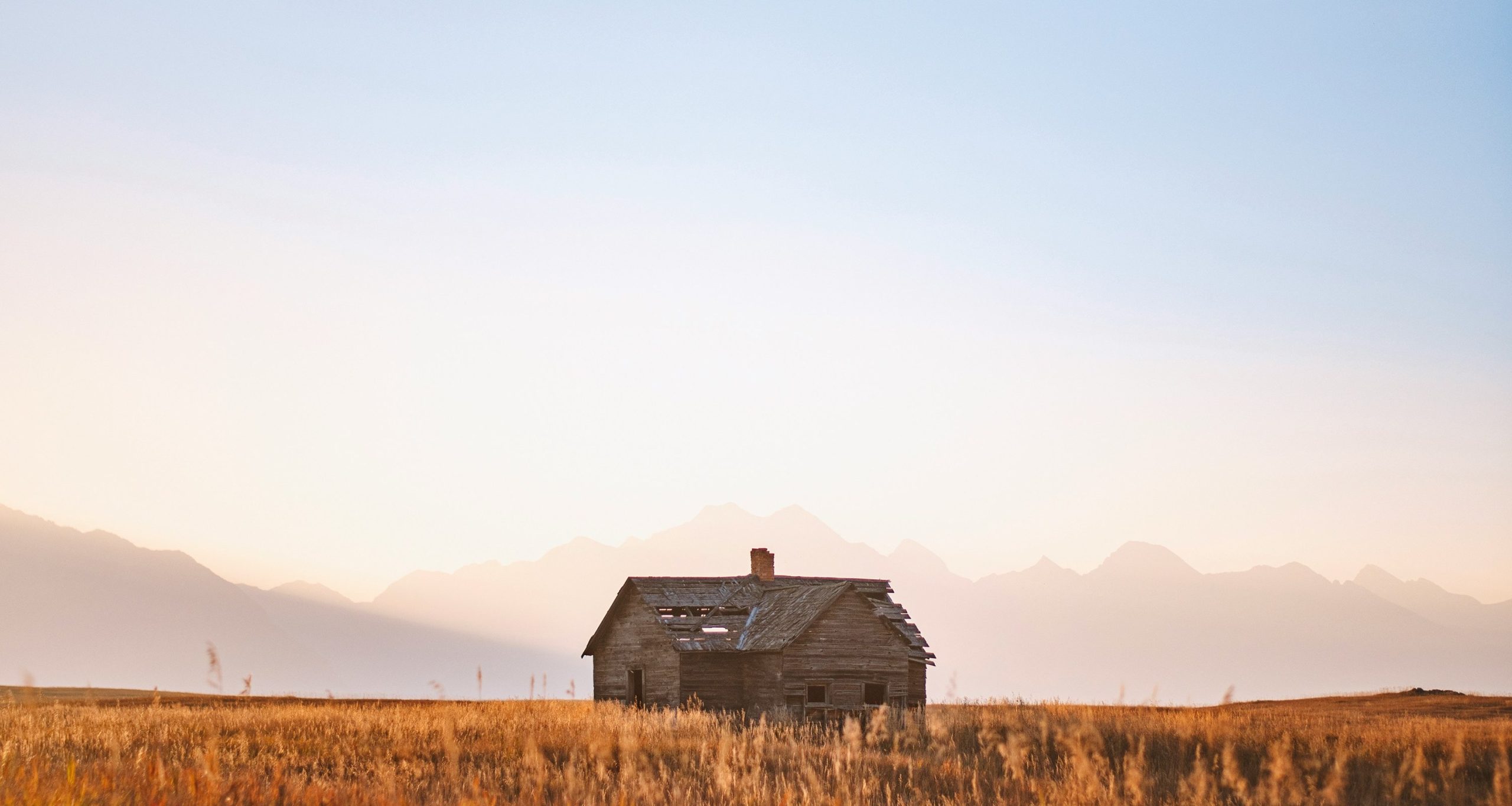
Instead of listening, I watched the barn as a band of moonlight stretched over it, revealing its gnarls and twists, its patchwork charm. It looked like it had been there forever, as natural as the shrub grass and dumb gray rocks beside it, shedding its skin every century or so to keep with the fashion, its business its own. There was something marvelous in that, in something so entirely untouched.

They were seated at the table again, party hats on, each with their plate of unseasoned, sizzling meat. Mark took our hands, closing his eyes and breathing long.

“In this, the King bears his bloody snout,” he said. “In this, our covenant is known.”

We paused, unsure when to break the chain of our hands.

“Okay,” said Tom.

“Good job, babe,” I said.

“Dig in!” said Mark.

And Tom did, with little fanfare, cutting his meat into cubes and ingesting them like a machine—five chews on the left, five on the right, swallow, repeat. I waited for Mark, who kept his mouth open, edging the bite closer and then back like foreplay.

“Are you ready?” he said but didn’t wait for an answer. He took a bite of the loin, sinking back in his chair. I opted for the hock, because it is important to keep your own inner life, separate from those you love, no matter how dearly you love them. Stig told me that, or possibly Andrew. It was dry, a little overcooked, I thought. It tasted brown, which wasn’t necessarily a bad thing. It wasn’t necessarily anything.

“Oh wow,” said Mark. “Oh, babe, wow.”

“I know, right?” I said, and I did kind of know, in the sense that it was pork, and I was eating it, and if Mark thought it was good, then it truly had to be. He brought the mouthful out onto his tongue, gray and fibrous from all the chewing, as if to let it breathe with him. I did the same, and it did maybe taste a little better when I sucked it back in.

“This is next level,” said Mark, gripping Mr. Guthrie by the shoulder. “Thank you, brother.”

“Please don’t call me that.”

“Thank you, Tom.”

We moved on to the tongue, which I had never tried before, and which went down with only a touch of gagging. It had the consistency of leather, but hadn’t the pioneers eaten their leather boots when they were starving out on the plains? And didn’t only some of them go insane and kill their brothers and/or wives?

“Holy shit,” said Mark. “Excuse my language, Tom, but holy and holier shit!”

Next, the bacon, its rind of fat as thick as an orange peel. No matter how much I chewed, it found the gaps between my teeth, managed to keep itself whole.

“Oh man, oh man,” said Mark. “Babe, are you feeling this?”

“I’m feeling it!” I said, taking his greasy mitt in mine. I closed my eyes, felt the warmth between our palms like one continuous rope of fat, unbothered by teeth. I could feel in that touch a future unburdened, in which this was the best meal I’d ever had, in which we sat on the hood of Mark’s car, remembering this table, this touch, our hands down each other’s pants as we ate a pack of thin-slice ham we picked up at the service station. When I tried the loin, I could feel what it would one day be to me, and the future was almost the present, was the past.

“From this does convergence bloom,” said Tom.

“What’s that, Mr. Guthrie?”

“I said would anyone like a drink of water?” He threw his empty plate into the sink.

All our plates were empty, actually, though it seemed we’d hardly begun.

“Nothing for us!” said Mark. “I don’t want anything else in my system. I just want to let that settle a while. Honestly, Tom, I could eat that every day and never get bored.”

Tom’s back tensed, bringing his neck low into his shoulders—I got the sense that this was his usual posture, that he had been putting on a good show for us all this time. He smothered what could have been a sob, or another burp.

“Now, Tom,” said Mark, taking our plates and waving his hand at me as if to say, no bother, though I hadn’t moved to stop him. “I think it’s time for us to see where the magic happens.”

“I really don’t think that’s necessary,” said Tom.

“It sure is! It’s very important to see how your food is made. Don’t I always say that, babe?”

“They all do. It’s like their motto,” I said, really wishing I could have that glass of water.

“It’s not pleasant in there, not after . . . you know,” said Tom. “I don’t think Mrs. Swain would appreciate having to see that.”

“She can wait outside. Right, Mrs. Swain?” said Mark, winking at me.

“Whatever works best for you,” I said. It didn’t seem right to disagree, and besides, I quite liked the ring of it. It sounded like something you might find at a county fair—Mrs. Swain’s Homely Marmalade. Mrs. Swain’s Famous Homely Pecan Pies.

Together, half-dragging Tom Guthrie between us, we exited through the back door towards the barn. The security light didn’t come on, leaving us sinking occasionally into puddles of muck or tripping over machinery. The barn stood out by its absence, by the black lack of starlight it cut away. Before we reached its closed double doors, Mark took me to one side.

“Babe, I just want to check you aren’t feeling excluded,” he said. He sniffed my hair, and though I hadn’t washed it in a while, I knew that I liked his funk and he liked mine, that it was more of a collective, convergent funk from all our time on the road.

“No! You’re so sweet for asking, though. I’m fine just hanging out.”

“You don’t mind?”

“I really, truly don’t,” I said, and it was wonderful not to lie, to mean it unconditionally. We kissed in the dark and knew just where to place our lips.

“You know, we should do something like this for our birthday,” he said. “It’ll be in just a couple of weeks, won’t it?”

“Something like that,” I said.

“I know I’ve said it before, but what are the chances? Us being born on the same day? The world sure does throw some curveballs, that’s the truth. Okay, Tom,” said Mark, strolling back over to the barn, “show time!”

They each took a door and heaved. From the side, my view was blocked; I could only see the light glancing off them after Tom flicked a switch. He looked so frail. If his photo was taken at that moment, I’m not sure a camera would even pick him up. He was more like a smudge, one of those tricks of the light that people used to call ghosts, which they now call imperfections, which is somehow so much worse. Mark had never looked more handsome.

“Jesus,” he said, trying to hide his smile and keep an air of measured awe.

“So now you see,” said Tom.

“It’s so much more than I ever imagined.”

“It’s a lot to take in.”

“She’s beautiful, Tom. She’s a marvel.”

“I do the best I can.”

“You could have something so much larger, there could be so much more. I know a guy, lots of guys, actually, who could help. It’d be no bother.”

“I’m not interested,” Tom said.

“And if you let her out, let her go free range?”

“That’s not an option.”

“So it’s just her.”

“She’s all we need.”

“And how long does it take?”

“For what?”

“For it to grow back.”

“Not long. Not long at all.”

Deeper in the barn, something made the same high pitching note as before. In the distance, a dog yelped, though there were no houses for miles.

“Can I approach her?”

“Can I stop you?”

Mark laughed, and Tom showed maybe the barest hint of a smile. They walked together into the barn, and something shifted, weight settling into the walls, the note of that cry a ringing in my ears, just beyond perception. I sat looking at the light streaming out, shadows moving hugely, obscurely.

The phone was ringing again.

I returned through the kitchen, our plates stacked in the sink, the air pleasantly greasy. Past the Guthries’ bedroom, past the turned-down picture frame. In the living room, the daguerreotype glowered, and I reached for the telephone.

“Hello? Grace?” said a voice.

“No. Are you looking for Mrs. Guthrie?”

“What? Jesus, Grace, is that you?”

“I think you might have the wrong number.”

“Hello? Just stay on the line and tell me where you are. We can sort this all out. Is Grace there? Or maybe Helen?”

The line hummed a moment, something rustling on the other end.

“Helen, are you there?”

“Who is this?” I said.

“It’s Carol. Carol . . . Flank.” The voice was a woman’s, faintly southern.

“Carol Flank?”

“Or Garstang. Helen Garstang. Grace, just listen to me. There’s some kind of group. Some grouping.”

“Look, I don’t think I can help you. My name is Mrs. Swain,’ I said, placing a hand over my mouth to stifle a laugh. “I’m here on a visit. My husband and his friend are outside, in the barn.”

“Helen! Helen, who is in the barn?”

“Mark. Mark and Mr. Guthrie.”

“Is Carol in the barn? Oh God, is that what happens when they—”

The line went dead. I looked around the room for pictures of daughters in overalls and white smocks, but couldn’t see a trace, just the old man, just the Guthries with their hands almost touching. I twirled around the room, touching things as I pleased.

Back in the kitchen, Mrs. Guthrie’s plate remained on the counter, the food still hot enough to give off steam. The security light came on, washing away the shadows pouring from the barn door. There could be anyone in there, or no one.

“Did the phone ring?” said Tom from the back door, giving me a start.

“Yes. Wrong number.”

He nodded, unconvinced.

“Do you judge me? For what I’ve done?” he said, reaching down beside me to pick something up.

“What? No! I think you’re just great. And Mark really likes you.”

He looked at me like I was a hand grenade.

“You should consider it,” he said, and made his way back out to the barn, taking the fourth party hat with him.

I took the plate of meat to the bedroom, knocked, and waited the amount of time they wait in movies before opening (which is to say, not as long as I should have). The light was on in the room, the bed empty and unmade. No wind came through the open window, the curtains unmoving. Just broiling heat. Nobody home. I put the plate down on the bedside table and climbed into the bed, pulling a thin sheet around my thighs. With the heat, with the smell of cooked hog, I felt that the future was just around the corner, waiting to shed its skin. I think I dozed a while until I heard the back door open, heard Mark speaking low and excited. I wondered how long it would be before he found me, tucked up in this stranger’s bed, but I wasn’t worried. He was talking about the weather, about how unseasonably cold it had been, and I felt the truth of that in my bones, creeping in through the window.

8 Novels About Young Women Searching for Identity and Purpose Through Work

According to CEO and psychologist Jessica Pryce-Jones, people spend 90,000 hours of their lifetimes at their jobs. Whatever form that profession takes, it’s inevitable that it will coincide with significant individual change. Work forces people to confront obstacles like office politics, autocratic managers, flaky colleagues, and productivity quotas, the tackling of which teaches them about who they are. Women must also confront persistent gendered challenges around how they are permitted to behave and what they are allowed to achieve in the workplace. These lessons invariably overflow into other areas of their life. This creates fertile ground for a hybrid genre of storytelling, what I would like to call the woman coming-of-age work narrative.

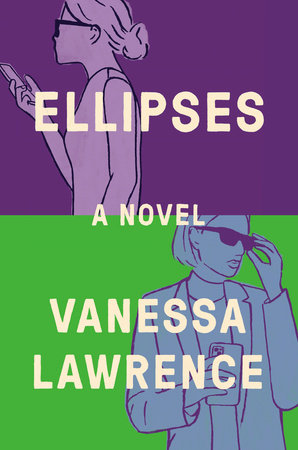
Lily Michaels, the protagonist of my debut novel Ellipses, is a member of this cohort. A 32-year-old magazine writer, she is watching her dream print career slowly succumb to the rise of social media. She is at a standstill, too, in her long-term relationship with her girlfriend, Alison. Lily also grapples with all the attendant pressures of early thirties womanhood, marriage, children, corporate advancement, and must decide whether they are things that fit her idea of success. When she meets a powerful beauty executive, Billie Aston, and enters into an increasingly toxic and consuming mentorship with her, Lily reckons with the meaning of true agency, at the office and in the rest of her life. 

The eight books, below, also feature women protagonists coming-of-age through and against the backdrop of their work. Their professions range from nannying to pizza delivery to technological app development. The unifying force is the inevitable shift that will come after many hours spent on the job.

All this Could be Different by Sarah Thankam Mathews

Sneha, the protagonist of Mathews’s novel, moves to Milwaukee for a corporate consulting job. She is fresh out of college. America is enveloped in a recession. Her parents have returned to India. Sneha is exploring her queer identity for the first time in the local dating pool. At first her traditional gig seems to provide her with the kind of cushy stability of which many a recent graduate might dream. That security proves a mirage as a mix of work troubles, housing insecurity, romantic turmoil, and family secrets threaten Sneha’s burgeoning adulthood. Interrogating the promise of a capitalist American Dream, this novel explores the role of community and human connection vs. individualistic success in personal happiness.

Win Me Something by Kyle Lucia Wu

Like Sneha, Willa in Win Me Something is a twenty-something woman testing the waters of adulthood. Willa works for and eventually moves in with the Adriens, a wealthy white Tribeca family, as a nanny to their young daughter, Bijou. Biracial Chinese American and the daughter of divorced parents, Willa feels on the periphery of society, more generally, and of her parents’ lives, more specifically. Willa’s employment with the Adriens and her enmeshment in their household rhythms prompts her to reflect on her own upbringing—and the sense of alienation that lingers into her grown up life.

Such a Fun Age by Kiley Reid

Reid’s novel also features a protagonist employed as a nanny. In her mid-twenties, Emira is the caretaker of Briar, the daughter of a wealthy white family in Philadelphia. One evening, Emira, who is Black, is accused of kidnapping Briar while out with her at a grocery store. In her guilt, Briar’s blogger mother, Alix, tries to befriend Emira. Their employment relationship becomes further complicated when Emira begins dating Kelley, a white former classmate of Alix’s who stirs up uncomfortable history. As we watch Emira navigate the dueling white savior overtures of Alix and Kelley, we also see her envy of close friends, who are making strides in their careers while Emira feels left behind.  

Pizza Girl by Jean Kyoung Frazier

Jane, the narrator of Pizza Girl, isn’t so much left behind as she is conflicted over what she wants. Unhappily pregnant and 18 years old, Jane works as a pizza delivery person in Los Angeles, a gig that gives her passing windows into customers’ lives. She lives at home with her Korean mother and white boyfriend, Billy. At night, she sneaks into the shed of her deceased alcoholic father and drinks beers. One day at work, a woman named Jenny requests a pepperoni pizza with pickles for her unhappy son. The encounter with Jenny sparks an obsession in Jane, one fueled by more deliveries and by Jane’s loneliness. Frazier’s novel juxtaposes the fleeting, peripatetic nature of food delivery with the impending permanence of a young woman about to become a parent.

Land of Milk and Honey by C Pam Zhang

Food is a backdrop, a character, and a mechanism for change in Zhang’s novel set in an unspecified, dystopianesque near future. The world is blanketed in smog pollution that has decimated global food supplies and species. A young Chinese American chef accepts a mysterious offer to cook and live at a secretive community in the Italian Alps, where her rich employer has funded a research endeavor that grows extinct plants and animals. As she immerses herself in a long-lost realm of culinary delights like strawberries, butter, and veal and as she becomes entangled with the employer’s fierce biracial Korean daughter, the young chef’s latent ambition and bodily appetites awaken. 

Writers & Lovers by Lily King

Casey, the narrator of Writers & Lovers, juggles ambition, too, alongside grief, romance, and financial precarity in this portrait of an artist. A thirty-something aspiring writer, Casey is trying to finish a novel between shifts at a fine-dining server gig, all while reeling from the recent loss of her mother and the pervasive anxiety that won’t leave her alone. At her restaurant job, Casey navigates hierarchical office politics and harassment. She waits on one of her two love interests there, too, the older widower Oscar who is with his two young sons. Where many of her friends have long since given up on publishing for more stable work, Casey persists with the grueling balancing act of service work and writing in her pursuit of creative success.

Big Swiss by Jen Beagin

Set in Hudson, New York, Big Swiss follows Greta, a 45-year-old who works as a transcriptionist for a local sex therapist, a job that gives her access to the most intimate secrets of her town’s residents. Through her transcribing, she falls for Flavia, a younger, married gynecologist who has never had an orgasm and who was also the victim of a violent crime years ago. When Greta recognizes Flavia’s voice IRL one day in town, she introduces herself with a false identity. She and Flavia begin a torrid affair. The vulnerability and candor of the patients in Greta’s transcripts contrasts with the fraught deception in her relationship with Flavia—and with Greta’s reluctance to confront the effects of her mother’s death by suicide on her adult mindset.

Happy for You by Claire Stanford

Connection, alienation, and ambivalence are at the heart of Happy for You. Evelyn, the book’s narrator, is a philosophy PhD student who takes a break from toiling on her dissertation to work for a tech company creating an app that delivers happiness. Part of a research team, Evelyn is asked to help quantify this joyful emotion. In her personal life, she is struggling with decisions  about marriage to and motherhood with her white boyfriend, Jamie. Her biracial background and the childhood loss of her mother contribute further to her sense of dislocation. Evelyn’s work underscores just how nuanced and complicated the achievement of genuine happiness can be.

8 New Literary Magazines that Advocate for Diversity and Inclusion 

Now more than ever, literary magazines by and for artists are prioritizing community and spotlighting the work of LGBTQIA+ writers and writers of color. I’m a lesbian writer whose identity is the crux of my work, but for many years I was told in writing workshops that queer love stories aren’t “believable, “realistic,” or even sympathetic. As a result, I’m constantly seeking literary magazines that champion work by those with marginalized identities. I’m a Staff Editor at HerStry, an online literary magazine for non-binary and women-identified writers. Last year, I was a Prose Editor at the Lumiere Review, an online literary magazine that published JUSTICE, an initiative for BIPOC “to fight against all ‘-isms’ & ‘-phobias.’” 

With the banning of books throughout the U.S. by LGBTQIA+ and Black authors, and with the publishing industry remaining mostly and stagnantly white, it’s critical to support new and forthcoming literary magazines that focus on inclusion and diversity. Below are eight such magazines, all founded within the last five years.

Marías at Sampaguitas

Marías at Sampaguitas is a literary magazine established in 2019 by Editor-in-Chief Keana Aguila Labra, Co-Founder of Sampaguita Press, an independent “micropress” publishing zines and chapbooks by BIPOC and LGBTQIA+ writers. Meaning “girls and flowers” in Tagalog, Marías at Sampaguitas strives to create a “safe literary and linguistic space” for BIPOC. “Beyond the Sea,” a moving story by Nathalie De Los Santos from its second issue, conveys the complexity of the Filipino experience with the story of a young boy named Vidal who flies to New York with his parents for the first time—experiencing the awe of the city and its skyscrapers, as well as the immediate discrimination his family faces—and returns as an exchange student years later. The piece, like the magazine, offers reflections on the loss of identity and culture, and the importance of connection. 

The Soul In Space

Described as a “hub for education and wellness,” The Soul In Space offers outreach to Black and Indigenous communities through workshops, a wellness program, and a literary magazine. Created in 2019 by CEO Sen Kathleen—writer, yoga instructor, and reiki practitioner—the magazine explores “conversations surrounding Decolonization, Black Liberation, and Indigenous Sovereignty” and was created to cultivate community and carve out space for Black and Indigenous writers. In “How to Backslide,” a poem from issue three, Samantha Williams writes, “You had to relearn it but / you got a whole riot inside you. / Labored it and had it slapped out of you. / The myth entered and left you meek. / How to replace what is stolen?”

beestung

An imprint of Sundress Publications, beestung is a quarterly online “micro-magazine” established in 2019 by Editor-in-Chief Sarah Clark that centers non-binary, genderqueer, and two-spirit writers. Clark is also the Editor-in-Chief and Poetry Editor at ANMLY, the Editor-in-Chief at ALOCASIA, and a Board Member and Assistant Editor at Sundress Publications. Stirring ruminations on androgyny, a writer mourning their late grandparent and uncovering his true gender identity after death, and the personification of unbridled rage encapsulate beestung’s fourteenth issue. 

​​Queerlings

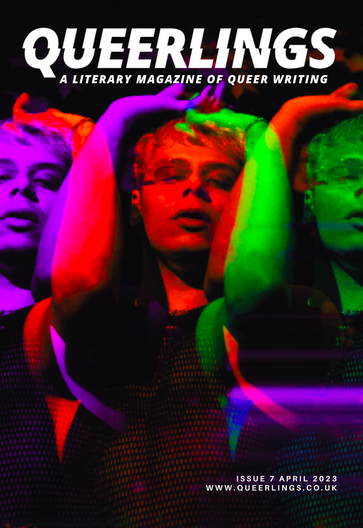
Established in 2020, Queerlings is a U.K.-based biannual online magazine of fiction, poetry, and nonfiction that aims to “uplift the LGBTQIA+ community and explore the depths of the queer experience.” Founder and Editor-in-Chief Scott Aaron Tait also founded Powders Press, an online literary journal of queer short fiction and poetry focusing on sexuality, gender, and working-class identity. In an editorial letter from its seventh issue, Queerlings recognizes the need to celebrate queerness and foster community in the midst of targeted violence and a lack of legislation protecting trans and non-binary individuals’ right to receive gender-affirming care. In the poem “Self-Portrait as a Queer Slasher,” Stephen S. Mills writes, “as in we bend truths into truth telling truths about this America / as in queer sex doesn’t end / with knife through chest (sorry Kevin Bacon) / but rather an eruption of queer joy.” 

Fahmidan Journal

Both a bimonthly journal and publishing company, Fahmidan Publishing & Co. was founded in 2020 by Editor-in-Chief A.R. Arthur (Review Editor at Full House Literary and Poetry Editor at Chestnut Review) and Ranna Kisswani. Fahmidan Journal—Farsi for “to understand”—publishes writing by women and writers of color. Pieces that seek out magic, observe the fallout of TikTok, reflect on white mediocrity in the corporate world, and convey the overwhelming nausea of grief can be found in its pages.

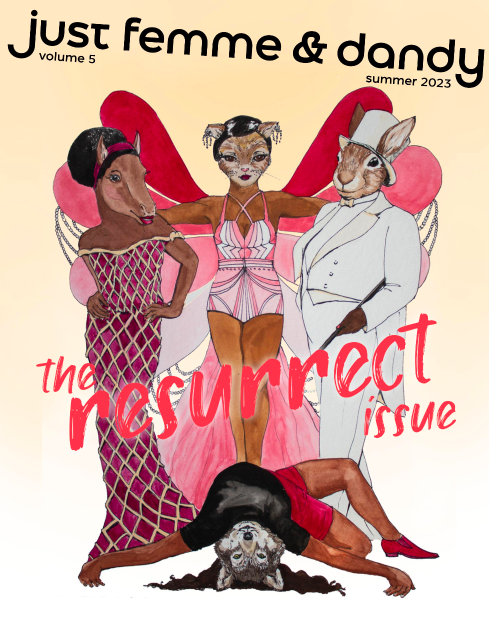
just femme & dandy

A biannual arts and literary magazine about queer fashion and aesthetics, just femme & dandy was established in 2021 by Co-Editor-in-Chief Addie Tsai, who was emboldened to create the magazine after publishing a folio on queer fashion in 2019 for ANMLY. Centering survival, the fourth issue includes a photo shoot highlighting mobility devices, nonfiction on the liberation of gender-affirming haircuts, and poetry rejoicing in “the altar of Black femininity.” Embracing the importance of queer identity within the context of queer fashion, just femme & dandy works to support the LGBTQIA+ community, “who have long since coded ourselves with how we adorn and dress our bodies when it has been dangerous to identify solely with words.”

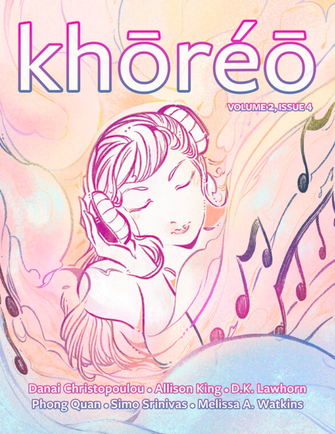
khōréō

Established in 2021 by Editor-in-Chief Aleksandra Hill, an MFA candidate in fiction at the New School, khōréō is a quarterly speculative writing magazine that examines the act of migration: something “voluntary or forced” and resulting in the “recalibration of self-identity.” With this theme in mind, khōréō specifically centers immigrant and diaspora writers. In “Bride of the Gulf,” a fiction piece in issue 2.4 by Danai Christopoulou, a barista named Niki meets a man with golden hair at a Greek cafe who looks eerily similar to her missing brother. That night, she sinks into the sea and emerges as a siren goddess desperate to find him again. In the heartwarming reunion between the goddess and her brother, Alexander the Great, her memories flood back to her. The re-assuming of identity built on the necessity of connection is evident throughout this magazine. 

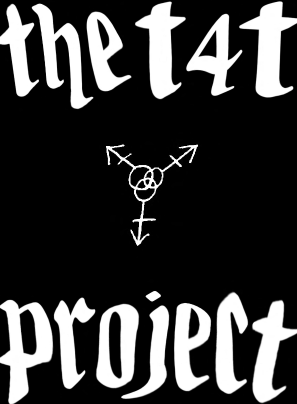
the t4t project

The newest of the online magazines featured here and published in December 2022, the t4t project, is a zine created by and for trans artists and writers of color. Described in a letter from its inaugural issue as “part offering, part love letter for our kindred,” the zine is a means for the creators to directly uplift their community through impassioned art, unconditional love, and unwavering support. The poem “Amphibious” describes being born of water and the pride of descending from raindrops and clouds, but seeking something new and transformative by breaking through the water’s surface. Kobe Taylor Natachu writes, “I wish for mobility beyond the confines of water beginning to recede / I know the world of water can no longer support my budding self as / Metamorphosis has begun.” Like the zine suggests, this poem is both a love letter to one’s lineage—the home built by community—an ode to the freedom of transformation.

Matt Gallagher On Fictionalizing the Real Stakes of the Ukrainian War

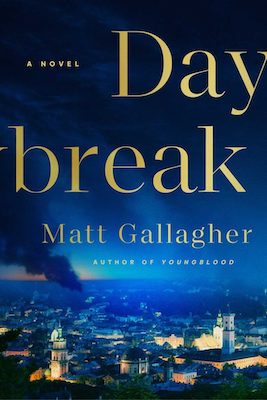
Matt Gallagher, a U.S. Army veteran and author of the novels Youngblood and Empire City, first traveled to Ukraine in February 2022 to train civil volunteers how to defend themselves against Russia’s invasion. He had joined fellow veterans and scribes Adrian Bonenberger and Benjamin Busch, flying “there on our own dime and volition,” he later wrote for Esquire, “because we saw a sovereign democracy under assault and believe that is wrong.” He returned to Ukraine a year later with Benjamin Busch for Esquire to interview foreign fighters—many of them veterans—who had left the safety of their homes and were risking their lives for the “core belief that this is a fight worth fighting, that Ukraine is worth defending.” Toward the end of 2023 he was back in Ukraine, again for Esquire, this time traveling “the country to pose a fundamental question to the Ukrainians I met: How does this end?”

Those three trips inform Gallagher’s newest novel Daybreak, which follows U.S. Army veterans Luke Paxton and Han Lee’s arrival in the weeks after Russia’s invasion. 

When we first meet the pair, they are on a bus, pitching “east through midnight black…rumbling into an alien unknown.” Paxton (Pax to all who know him) was persuaded to trade his job as a mechanic at an AutoZone in Tulsa for war in Ukraine by Lee, whose brash, unwavering confidence could crumple the front slope of any Russian tank. “Something worth fighting for,” Lee says of the war. “You know how fucking rare that is?”

Pax, on the other hand, is much less certain. One Ukrainian after another scratches their chin at his being in their country while it is under attack. “Why are you here?” The question comes at him from all sides, as ceaseless as machine gun fire. Each time you sense the emphasis on a different word. “This is not normal behavior,” his would-be military recruiter tells him. 

Part of Pax’s motivation is Svitlana Dovbush, a Ukrainian he once loved and lost during his time in the military and who he hopes to now locate. However, he is also searching for the sort of purpose and meaning that he had only found before in the military. War is a force that gives us meaning. “It baited those,” Gallagher writes, “who survived it, seduced them, deluded them, trailing like an old loyal dog until of course you turned around and said, Come on, boy.” 

Gallagher has created a fully formed character in Pax, but one sees a lot of America in him—spiritually and morally wounded by our Forever Wars, causeless, adrift, desperate to be of some help. “I might be broken,” Pax says, “but I’m not useless.” This desire to be of service is the novel’s beating heart. That impulse which led him to volunteer for the American armed forces may have resulted in his brokenness, but in Ukraine, with the world’s attention on it, he is given another chance. “It was thrill. It was fear. More than anything, Pax felt like himself again.”

In Daybreak, Gallagher provides readers with a nuanced, polyphonic, tender, and violent portrait of a country and its people rallying together to repel one of the world’s bullies for the sake of democracy, normalcy, and their very existences—ideals that Americans have historically gone to the mat for. 

However, since those early months of the war, our attention and support for Ukraine has waned. In the age of polarization and calcification, Ukraine’s existential fight against a tyrannical aggressor has become yet another wedge issue in America. But in Daybreak, through multiple points of view, Gallagher puts into human drama what the stakes are for the free world. “This fight belongs to us all,” one of the novel’s Ukrainian characters says. “It will find us all.”


Julian Zabalbeascoa: Since Russia’s invasion, you have traveled to Ukraine three times, as both a journalist and a volunteer. How was it that Luke Paxton’s story came to be the one you’d tell in fiction about those experiences? 

Matt Gallagher: I think that with each trip to Ukraine I became aware that there were interesting stories there I couldn’t necessarily source, interesting people I was meeting who wouldn’t go on the record, maybe just anecdotes being told that were second or third hand, that all carried the right ingredients for good fiction. So into the notebook they went for further contemplation and complication.

Luke Paxton and Han Lee in Daybreak are troubled men in some ways. They haven’t been able to shake Afghanistan. They haven’t been great at being contributing members to society in the States. But they still want to do some good, right? They still want to help people in a meaningful way. And you know, that’s most people in everyday life. Not necessarily literary life, where a lot of folks are afraid to go outside and get their hands dirty, but real, everyday life. They’re messed up in some ways. But they’re not bad. They’re not evil. They’ve done decent things and they’ve made mistakes, too. They regret them. They’re going to continue to make mistakes and have regrets. They possess emotional and moral nuance that’s very much not easy, nor tidy.

So I think the fashioning of these characters was deeply rooted in encountering their real-world counterparts, especially during that first trip into Ukraine when we went as volunteers. We arrived in late February 2022, alongside the first wave of international legionnaires. Many were rough and tumble personalities. Once we got [to Lviv] we kind of went off and did our own thing, working with Ukrainian civilians, were kind of in our own little silo, but even as we were busy with that I couldn’t help but think of the Americans and Brits we met on the bus ride in, wondering what they were doing, how quickly they were getting to Kyiv to participate in the fight there. I’m sure you’ve read many of those early dispatches of the international fighters. It was chaos. They were handed a rifle, maybe pointed in a direction with a team of five or six, and told to go kill Russians. The organization that we see now from the international fighters and units was a long way away.

I did not go to Ukraine with the intent to write a novel, I went to help some people in a small but hopefully direct and meaningful way. At the same time, I’m a writer. It’s what I do, how I think about and experience the world. Everything I saw or did, every conversation, notes were being taken in my head, whether I was conscious of them or not.

JZ: Throughout the book, though, Paxton is pummeled with the question by locals: “Why are you here?” Maybe I’m not alone. Maybe a lot of Americans would think, like me, that the answer would be an easy one. “To fight for democracy. To fight against one of the world’s big bullies.” And that Ukrainians would be congratulating him for having made the sacrifice. But instead they eye his decision with a lot of suspicion and skepticism. You’ve written about this for Esquire, but can you talk a little about that suspicion, about that skepticism that people like Paxton would face in Ukraine?

MG: In the book there’s both a kind of internal and external awareness of America’s role in the world, and that big, heavy question of “Why are you here?” is being experienced by Pax on the ground level. Lee is able to give a very clean, firm answer to that which is, “I’m here to fight. I’m here to kill Russians,” and that is exactly what the Ukrainian recruiter wants to hear, and that’s frankly probably what a lot of Ukrainian people want to hear, too. That’s what Zelensky asked for. Pax isn’t able to give that kind of full, clean answer, and it’s almost to his detriment that he’s honest about that. 

Getting there as early as we did, we arrived with some true believers and idealists, but we also came in with the shady business types that feed off the fringes of any war. Also some pretenders and lost souls who would only get in the way in the months to come. So the “Why are you here?” skepticism was more than warranted. We were able to answer, “Hey, we’re here to train civilians on basic self-defense. We’re not playing. We want to stay as long as we can. But we’re going back to our families.” 

That was a direct answer that also happened to be an honest answer, and it generally passed the sniff test for most of the Ukrainians who asked. Putting this question into the fiction and having these characters wrestle with it in divergent ways… was just very natural. I think it’s related somewhat to your earlier question about including Ukrainian perspectives, and how the world’s changed. Through many blunders and failures, America has earned people’s skepticism. Simultaneously, though, we can—and do—contribute and help in very real, meaningful, substantive ways. It’s not black or white. It’s very, very gray. And I love the messy grays of existence, both as a writer and as a human.

JZ: And it seems you’re drawn to these sorts of conflicts that require one to throw their body and soul into. In your novel Empire City, Mia attends a baseball game. She finds professional sports bizarre. “It was tribalism without purpose. Expression for the sake of nothing but itself…Why devote so much,” she wonders, “to something you couldn’t impact?” You see this in your characters throughout your three novels and your non-fiction, possibly even your tweets, the desire to make a difference. If you care about a thing, contribute to it. 

MG: I think you’re onto something there. I’m going to generalize now, but I did live in Brooklyn for a decade and swam in those literary waters, so I’m not talking out of my neck or anything: to a lot of people in contemporary American literary culture, the literati or whatever, they want military vets to be victims. Or dumb, simple-brained monsters. Or losers, just really old stereotypes that fulfill easy preconceived notions. But of course it’s more complicated.

That was just not my experience in uniform. By and large, both on the enlisted and officer side, I saw a lot of hard-working, pragmatic people whose faith in their country was constantly tested by the wars we were sent to, if not outright broken. But they sought to contribute to something bigger than themselves with everything they had. After we got back, people arrived at various answers to what it is we did, what our wars meant. There’re people that I spent every day with in Iraq for fifteen months who came out of it with different politics and a very different worldview than mine, but you know, fuck it, they earned it. And I think in my small way, with my writing, I’m trying to push back against those easy, lazy stereotypes that I see spread by smart people who should know better, who claim to believe in emotional nuance and use all the right buzzwords about complexity, but for whatever reason, find themselves unwilling or unable to apply that kind of generosity and nuance to military vets. Or maybe it’s just not for people in general found to be the wrong type of different.

I don’t know. I’m 40 years old now. I’m less compelled to play nice for the sake of it, have become more comfortable letting fly my cantankerous flag. I don’t want to be part of that club anymore, and regret ever trying to be part of that club. With my work, if I can push back against some of that and defy it… then good. Though of course I must be careful. I can’t be too on the nose with my frustrations, because then I start preaching too much, and it gets in the way of the story and characters and the messy, beautiful contradictions I mentioned earlier. But I’m being honest, that kind of stuff makes me angry, and anger can be good for writing. It gets you out of bed in the morning and puts you to work.

JZ: Sticking with that and with Empire City for a moment longer. In Empire City, citizens pay the war tax to not have to think about war. In Daybreak, Lee tells Paxton, “It’s all part of the social contract. We put our bodies and lives on the line when no one else would. Fucking civilians pay the tax man so they can ignore what’s done in their name.” It reminds me of something in Phil Klay’s collection of essays Uncertain Ground, “Our military is a major part of who we are as a country; it is the force that has undergirded the post-World War II international order.” Yet, as he writes later on, “though we’re still mobilized for war, [we are] in a manner perfectly designed to ensure we don’t think about it too much.” Read our military veterans, and one encounters on the page this determination by you and the others to wake the rest of us up to, in Lee’s words, “the whole puppet show.” Why do you think this is so critical for not only America but, perhaps, what it means to be an American? And how might this tie to our waning support for Ukraine.

MG: It’s a hell of a question. I think if there’s one thing that unites post-9/11 writers, whatever our style or genre or perspective, whether we’re a veteran or civilian, it’s a kind of desperate howl to get people to pay attention and care. 

The [American] war literature that came before didn’t face this challenge. Crane, Hemingway, Gellhorn, Heller, Vonnegut, Tim O’Brien … all incredible writers, transformative writers, but they could correctly assume that their subject already mattered to readers. The foreign wars that made up their worlds were so impactful on American society. They could focus on the story and created timeless literature, as a result. Whereas I do think that that our generation has an additional hurdle which is to get people to even engage with the subject to begin with, then engage with the story and engage with the writing.

Whether this is all by design or an unhappy accident of the all-volunteer force, that’s a separate question. But it’s the reality. And I don’t think it’s surprising to anybody who served in Iraq or Afghanistan and wrote about it that many Americans can’t be bothered to pay attention and care about Ukraine only two years into this thing. Outside of occasional humanitarian volunteers and occasional legionnaires, Americans are not dying there. It feels very intangible because we’re sending weapons and money and munitions that 98% of Americans will never see, never touch. It’s all very vague and ethereal.

And as frustrating as that is to me, because I would view us turning our backs to Ukraine as a deep, ugly betrayal, I can’t help but also understand that this is a byproduct of the American defense complex boxing out the American people’s attention spans and focus on war and foreign policy. People’s priorities aren’t a faucet to be turned on and off. And after years in Iraq and Afghanistan and Syria, too, when the powers that be in the defense complex decided it was easier and smoother to not wrestle with these hard questions that Phil is so excellent at posing to us, and then trying to get us all to engage with, well, it’s no surprise that people switched off from Ukraine. We’ve all been conditioned to do exactly that.

JZ: To that, a recent Gallup poll has 43% of Americans thinking the U.S. should help end the war early, even if this means ceding territory to the vicious aggressor. Which is interesting because, as you say, the war isn’t impacting us in any material way. Money isn’t being taken out of our wallets, money that could be put to work here in America, to support Ukraine. This is deficit spending. Do you think that lack of support is as simple as political identity? 55% of Republicans and 49% of independents feel this way, while only 19% of Democrats do. What else might contribute to it? 

People in American literary culture want military vets to be victims or simple-brained monsters. But of course it’s more complicated.

MG: I think that’s a huge aspect of it. When we first came back in March 2022, there was a rare kind of bipartisan support. People that I’ve had a real hard time talking politics with over the past couple of years reached out and were very supportive. That didn’t last, maybe couldn’t last. Political tribalism is real and potent right now.

It’s strange, because here’s a conflict where America’s doing something right by and large, in my estimation, and a lot of Americans seem to not know how to handle that. On one hand, I get it. I’ve held a rifle in an Iraqi living room apologizing for raiding the wrong house. I know what wrong looks like. I’ve been part of it. This, though?  It requires some intellectual humility to accept that this is completely different. And also just listening to actual Ukrainians.

Being there in the east as a journalist, and having native Russian speakers come out of their houses to thank us for being there, even thanking our translator, because he’s from western Ukraine … it was fundamentally different than my experience in Iraq, where the only people genuinely glad for our presence tended to be the wealthy tribal sheiks cashing in on the nation-building contracts. So much of my journalism is trying to convey the human experience of life over there for people back here. And I’m pretty good at it, I think. Yet there’s just such a reflexive anti-Americanism ingrained in aspects of our culture and society, I can tell that sometimes even my best efforts are absolutely futile.

Life is more complicated than blanket reflexes. Interventionism isn’t inherently good or bad. Isolationism isn’t inherently good or bad. We have to take things on a case-by-case basis, because the world is too complicated to do anything else.

JZ: I’m going to quote Phil Klay again. This past November, being interviewed by The New York Times, he said, “Ukraine represents not a good war—because the closer you get to war, the more obvious it is that a phrase like ‘a good war’ has no valid meaning—but rather a necessary war. The clear moral case for Ukraine is about as straightforward a case of a just defense against a vicious aggressor as you could find.” 

MG: Here’s an anecdote I keep returning to. Our second trip, October 2022, we ended up outside of Kharkiv in northeastern Ukraine, driving through a village that had been liberated maybe a couple months prior. It’s about ten miles from the Russian border, we could hear artillery in the near-distance, and people are just—the whole village has been absolutely trashed. People are rebuilding their roofs, rebuilding their lives, best they can. We came across this family. We ended up talking to the wife’s mother, as well. She was an old woman, maybe 75 or so, and kept on insisting on speaking in Ukrainian.

Even to my ears, it was clear she was not comfortable in it. But with our Lviv-born translator there, she knew it was a way to practice. She was from this area, had spent her whole life here, had always spoken Russian. She admitted that most of her life, she thought Ukrainian was a language for peasants or troublemakers from the west. But now, she was trying to learn it, trying to rely on it, because it was the best way she could think of to honor her grandson, who’d been killed fighting in the border guard early in the invasion.

One person’s small act of change, of courage, even of patriotism, perhaps, that’s no small thing at all. She’s absolutely the type of Ukrainian that Putin says wants to be Russian, wants to belong to Russia, and maybe at one point in her life, she did. Definitely not now.

She’s just one person, sure. But she’s indicative, I think, of something that’s happening across the country. It’s something I put in at the dinner party scene in Daybreak. One of the characters says, “If we weren’t a real country before, we are now.” That’s very real. 

JZ: I see it as a great act of defiance and resistance, too. You put it in Daybreak so well, with Svitlana saying of her son, “An entire generation of children will forever have [Russians] as the enemy, and they’ll be right to. This war will not be a short one. He will grow up in it. They all will.” Should Putin get his way with Ukraine, there will be no peace. You see it today in the occupied territories.

War for us [Americans] is always something that is over there, something that we can come and go to as we please.

MG: These people are going to keep fighting. So what can we do as an American to actually support these people who are living the ideals that we claim ownership of, that we claim inspire and motivate us? These are innovative, freedom-loving people. Nobody should support them more than flag-waving Texans, but for domestic political reasons, that doesn’t always seem to be the case. And yeah, you know that section you read from Svitlana, it’s very true. Based off of conversations I’ve had with young Ukrainian parents, friends that I’ve made over there who have kids about the same age as mine, this concerns them greatly. And, to be honest, I intended it as a stick in the eye for American readers. We’re so comfortable. We’re so spoiled. War for us is always something that is over there, something that we can come and go to as we please. If fiction can do anything, it’s to maybe get you to consider what it would be like to be living as somebody else, some other place, and I hope, when readers come to that section that they don’t have to agree with Svitlana’s decision, but I hope they at least understand her calculus behind it. 

JZ: Putin has unified Ukraine in a way that it never was before. You have some wonderful moments throughout the novel that illustrate this. It’s also in your reports from Ukraine. In many respects, they are a far more unified country than the United States is these days. Yet, you also show, despite this unity, that there are various factions with various interests, some of whom get in the way of this grand effort to repel Putin’s forces. Why was it important to include this aspect?

MG: I’m glad that resonated, because these are real people. This is a real society. Of course there’s friction. Of course there are factions. Of course there’s internal politics at play. Take Pax’s encounter with the Nationalist leader, Dog. I was very intentionally showing that some bad people are, in fact, fighting on the side of good, because that’s real life. We sometimes have very simplistic views of war. Is this a battle of democracy versus autocracy? Yes. But also, there’s more. The reality is soldiers are oftentimes very gruff people with ugly worldviews. They’re rough men willing to do violence on our behalf, to paraphrase Orwell back in the day. They’re not always going to be people you want to take home to your mom to have dinner with. So what does that make you feel, you know? Dog is an extreme example of that. But even Lee is a version. I think he’s a fun character. I think he’s an engaging character. But he makes people uncomfortable, and he’s kind of proud of that, and I know a lot of soldiers like that. They have a purpose in this world, are proud of it, and it’s not to talk in neat little platitudes at cocktail parties. So giving Ukraine the country and Ukrainian society the respect it deserves, to show it in its various flavors, in various hues, was vital, because otherwise I’m not writing seriously about a real war. I’d be writing kind of hollow fairy tales. Which, hey, would probably sell more copies. But then I wouldn’t be able to sleep at night. 

JZ: Elon Musk receives an uncritical and unironic shout-out here, for how his Starlink satellites have allowed Ukraine to repel Russian forces. “Maximum cool” is how a Ukrainian describes him. It’s also what a Ukrainian volunteer said of you and Adrian and Benjamin to Anderson Cooper. Explain yourself.

MG: It’s kind of a funny little time capsule, because during the early part of the war, because of Starlink, he was viewed as a hero [in Ukraine.] And now he’s kind of viewed more as a traitor, due to some of his choices since then, some of the things he’s said. I wrote it to add some cultural flavor and it ended up becoming darkly ironic because, history being history, another layer revealed itself with the passage of time. 

I do know that Ukrainians will keep fighting with or without international support, even if they’re losing ground.

As for the “maximum cool” line—I will absolutely cop to lifting that from the CNN piece. When he said it, I was standing right there, and it was awesome, you know. Anderson laughed at it, and of course, it made the final cut. You just have to be careful sometimes with broken English, because God knows these people’s English is way better than my Ukrainian. So you don’t want to be making fun of it. At least I don’t. I don’t wanna be doing the thing that Jonathan Safran Foer did years ago with Everything is Illuminated, kind of turning the translator into a joke because of the broken English and all the pop culture references. On the other hand, it can be a very real part of modern eastern Europe, right? So splashes of it here and there seemed okay. But I didn’t want to make it a crutch, and I didn’t want to have it done by the more prominent Ukrainian characters. Either they speak no English or they’re fairly fluent, like Svitlana and Bogdan are.

JZ: Where do you see things going in Ukraine in the near future?

MG: A lot hinges on if our Congress in the next couple of weeks can shake itself out of this funk. I do know that Ukrainians will keep fighting with or without international support. They’ll keep fighting, even if they’re losing ground. I am beginning to suspect that some kind of fake peace treaty is going to be forced upon them by the international body. And then both Ukraine and Russia will prepare for the next phase of the war … but when they say Crimea is Ukraine, they mean it. When they say Donbas belongs to us, even if it’s been in Russian hands since 2014, they mean it. I understand the Western instincts to want peace, to want this to go away, to get off our news. It’s not our land, it’s not our history. But I do think that a temporary ceasefire, and I don’t necessarily agree with it, but I do think a temporary ceasefire is something we’re barreling toward, even as both major players know it’s temporary. 

7 Novels About Women Over 60 Who Defy Societal Expectations

An older woman protagonist launched into a story of substance isn’t all that easy to find. An older woman protagonist who upends our expectations about aging in gripping and unforgettable ways is truly rare. When I find one, I give an inward bow to the author and want to share the good news. 

I’m aware that many readers will turn away from a novel with a prominent older character. Something unpleasant or difficult might be brought into view, something best shut out for the time being—as if old happens in another country you know you’re destined to visit, but you don’t want to get there too early. 

Writers, especially American writers, seem sensitive to this aversion and don’t often choose older people, particularly women, to build a story around. When they do, they may rely on tropes that, if not palatable, at least don’t startle anyone. The old lady is feisty, cranky, or amusing—maybe even all of the above. She’s up to something in the story, but she rocks no boats, ultimately makes no difference. 

Some older characters are created with compassion and skill: Agnes and Polly in Fellowship Point by Alice Elliot Dark, Olive in Olive Kitteridge and Olive, Again by Elizabeth Strout, Addie in Our Souls at Night by Kent Haruf, to name a few. But most of us can sniff out the ones that show up as not really representative. We might enjoy the read while at the same time sensing we’re being handed sophisticated versions of stereotypes given in stories from childhood: the witch, the kindly grandmother, the sage, the wacky aunt or neighbor, the eccentric other. Lack of a clear vision around aging is a loss for all of us. When writers give readers what they think is easily digestible, even in secondary older characters, they shortchange the old especially, but in the long run they deprive us all of truth. 

When I was writing There Was an Old Woman: Reflections on These Strange, Surprising, Shining Years, I devoted a chapter to the old woman in literature. While researching this subject, I rejoiced whenever I found an older character who thumbed her nose at expectations of who she could or couldn’t be, one who didn’t spend every minute musing about her past—a trite, not to mention unrealistic, choice for representing how anyone over 60 occupies herself. A character’s past may be interesting or helpful in our understanding, but I think it’s important to show how an older woman deals with what’s right in front of her. In this way, we can deepen our understanding of what it means to live a long time. 

What is it like to find her, the ripened being who isn’t using her age in order to maintain the status quo or impart wisdom to everyone she meets? It’s damn refreshing, especially if you’re an older woman yourself. But she’s there to surprise and enliven all of us. In addition to those American novels already mentioned, here are some books by writers in other locations and cultures who have felt perfectly free to shine a light on her. 

Like a Mule Bringing Ice Cream to the Sun by Sarah Ladipo Manyika 

Although several voices are sprinkled throughout this novella, all center around their connection to Morayo Da Silva, who speaks for herself. As she is about to turn 75, Morayo remains a voracious reader, a life enthusiast, a friend to many, regardless of their generation, class or gender, a bit of a philosopher. A former literature professor, she shelves her books so they can be “in conversation with one another.” She’s curious about these imaginary meetings. She’s brilliant, playful, self-accepting, and delighted by her own eroticism at every age, including this one. 

From the way she dresses to the way she moves through her San Francisco world and her former life in Nigeria, Morayo commands the reader to follow her. The challenges that come to her in this story are common to many who are older: a fall that brings the threat of immobility, dependence, losing driving privileges. Freedom of thought, movement, and connection with others are Morayo’s passions, and she uses all of her resources to try to meet what confronts her. 

The Old Woman and the River by Ismail Fahd Ismail, translated by Sophia Vasalou

Um Qasem is somewhere near 60, widowed, a grandmother. At a glance, she’s neither a threat nor much of a boon to anyone. At the outbreak of the Iran-Iraq war in 1980 to 1988, her husband dies after the family is evacuated from a targeted area that includes their village. Um Qasem settles in to her new location. Her sons and their families quickly adjust and expect her to do the same. But resistance rises in her after a long time of feeling displaced.

With her donkey, Good Omen (a beautifully drawn character in his own right), Um Qasem sneaks away and travels across miles of military presence to return to her village, despite its off-limits status. Once there, she finds military-ordered dams have killed off much of the plant and amphibious animal life. The streams and ponds that once nourished the entire area are nearly dried up. Trees and flowers in the abandoned yards are dying.

When soldiers discover Um Qasem, they see her as little more than a widow who needs protection; she must be removed from the area. But she has other ideas about what needs protecting  A resourceful woman with a vision, she takes risks to free the water from the dams and restore life to her village, pushing herself beyond traditional expectations in the process. 

Drive Your Plow over the Bones of the Dead by Olga Tokarczuk, translated by Antonia Lloyd-Jones 

A literary mystery set in wintry Poland among a group of mostly deserted houses, this novel touches on not only crime, alarm, and bizarre events but slowly reveals a deeper mystery: what lives in the heart of a singular old woman. Janina is our guide through the strange happenings that unfold. Witty, quietly charming in her way, and darkly smart, she is an astrologer, an observer, an animal lover and caretaker of the houses abandoned for the season by wealthier neighbors. Her telling of what happens in this remote area is reminiscent more of a fairy tale than a mystery, the sort where children are lost in a forest and stalked by something coldly threatening. 

The original mystery may not turn out to be the reader’s ultimate reason for wandering deeper and deeper into the marrow of this novel, but it’s a hard book to describe without ruining that element of it. Like Um Qasem, Janina sees that the world we naively sum up and set apart as “nature” entwines with out of control human desires and ambitions. She must confront the perceived imbalances that threaten what she cares about. Her telling of shadowy events may be riveting, but not as riveting as she is. 

The Door by Magda Szabo, translated by Len Rix

I don’t think I really knew what “brutal honesty” meant until I met Emerence, an 80-year-old woman in this novel set in postwar Hungary. A house cleaner and cook, she will interview anyone who wants to hire her; once hired, she will take over completely, even usurping the love of the family dog. Although she is not a woman of wealth or privilege, the village and its residents are her domain.

Magdushka narrates the story (a stand in for Szabo herself). A young writer in need of a housekeeper so that she and her academic husband can work, she’s taken aback by Emerence’s stark manner. The old woman’s insistence on privacy (her door is always shut to everyone in the village) as well as her occasional jaw-dropping ruthlessness are disturbing also. But she bears witness to Emerence’s devotion to the village. And so, like her, we worry for this old woman, especially as bits of her past bleed into the present of the story. 

While the writer works her way toward literary stardom, Emerence gradually becomes not only housekeeper but prickly, secretive, admired and confounding friend. The younger woman, intellectual and ambitious, feels at times almost victimized by Emerence’s wild nature and determined self reliance. The tension in this story, though, is not old versus young. If not for the friendship, which feels real, it could be described by some as a class struggle. But that friendship gives it a different dimension. It revolves around the ache to be authentic as oneself and heed the call our humanity makes on us to try to feel another’s reality as well as our own, especially when the other has suffered much greater hardships and losses. To step away and teeter on the edge of a conviction that artistic achievement carries more value than friendship will invite betrayal and tragedy into the story. Emerence is an unforgettable character who allows no one to pass through without self examination.  

The Summer Book by Tove Jansson, translated by Thomas Teal

This quiet and beautiful story of a grandmother and granddaughter exploring their world, a tiny island off the coast of Finland, is a classic. As the two go forth to converse, play together, appreciate and protect their island world, a tender closeness grows. But flares of tension ignite on these pages, too. The child’s mother has recently died. 

Tove Jansson was in her late 50s when she wrote this novel in which no real plot emerges and little happens: a miniature Venice gets created by the two companions, a couple of cats show up, each presenting challenges regarding the meaning of love, a friend visits and quickly becomes a problem; there’s weather and the sea and bobbing about in boats, and some other people doing things, too. But the real story that threads throughout this quiet and often funny book is one of connection and transition. This is not a children’s story.

It’s a surprise that the six-year old granddaughter is as much a caretaker of the grandmother’s life as the other way around. The grandmother can be as curious and mischievous as any child might be, while at the same time teaching tolerance of others’ beliefs and care for the natural world. She’s not the stereotypically accepting or sage grandmother, but a woman who realizes her life is coming to a close and she’s clear that’s her business.

Both the grandmother and granddaughter own themselves. Each has a memorable personality, and they are determined to freely express that personality with one another because here on the island and together, their love and their surroundings allow for great freedom. This is an honest book about a pair of unique individuals, mutually devoted.

The Woman Next Door by Yewande Omotoso

In post-apartheid Capetown, two next door neighbors in an upscale residential area are at odds. Both are old and widowed. Both have been successful in their careers. Marion (white) was an architect, and Hortensia (black) was a textile designer. They’ve felt antagonism toward one another for years. Marion has a history of racism and little self awareness. She has benefitted from all that apartheid offered its white residents. Hortensia moved to Capetown after marrying a white man, Peter, who betrayed her with another woman. Both Hortensia and Marion have been hurt by husbands who failed them.

Even if you know nothing much at all about apartheid in South Africa, these two old women serve as guides into the chasm. Marion and Hortensia are alone and lonely; each judges the other and feels she must keep her distance going forward. But then fate hands each one a burden she cannot carry alone. They are next door neighbors. What can they do but look one another’s way for help?

The novel seems to threaten to swerve into a pleasing connection as an outcome, but Omotoso is too smart for this and doesn’t cheat. Instead, she works to take personalities, pain, ignorance and the reality of the past into account. She directs the intersection of their need for one another and their history with a firm hand as these women begin to stretch themselves into the possibility of building something new together. 

Two Old Women: An Alaska Legend of Betrayal, Courage and Survival by Velma Wallis 

During a time of famine, an Alaskan tribe decides to abandon two women when winter comes, even though they know this means the women, who are in their seventies, will starve. The rationale is that these two don’t contribute any longer in a meaningful way, eat too much of what little food is available, and complain a lot. The women may be missed by some who love them but, given the day to day struggle, this fact cannot take precedence. Survival of the rest of the tribe is considered paramount. 

Left behind, the two women are certain they won’t last long, and it looks as if the time they have left will be endured with resentment. But old age is full of surprises, and the surprise they find in themselves is determination. They will strike out to survive and hope to succeed. If not, at least they will have abandoned their own sense of uselessness in favor of doing what they could to save themselves.  The rest of the story is all that they face, what they do and what they encounter that will eventually bring them full circle back to their own wholeness and to forgiveness of the people who abandoned them. Velma Wallis based this story of two outcasts on an Athabascan legend. It’s a moving short novel that’s part cautionary tale, part revelation, part edge of your seat adventure. The way through isn’t easy, but it’s often beautiful, and I can’t imagine any reader will finish Two Old Women without expanding whatever truths they think they know about being human. As if that isn’t enough, it allows us to dwell for a time in the spirit and resourcefulness possible in old age. That’s a story rarely told.

I Had a Miscarriage And It’s Time To Tell That Story

Placenta, Polenta, a Piece of Onion by Kirby Chen Mages

It was the winter that Ryan and I were squatting in the building on North Avenue in the Old Town neighborhood of Chicago. Actually, we weren’t squatting—we were squatting before, then we were evicted, and now we were paying $240 a month to rent an art studio on Francisco Avenue in a basement that didn’t have a kitchen or a shower. Our landlord lived in the house behind us, so this decision to illegally live in the basement was especially fraught.

To us, the risk of facing yet another eviction was better than the alternative, which was to live with my parents in their South Loop apartment while we figured out our next moves. This was something they had offered and we had refused. My mom is a hoarder and my dad is clinically depressed. I love them, but to live with them would have been to live within their chaos. I had already done this for the first 18 years of my life, thank you very much. They live in a two-bedroom apartment where one bedroom is technically the “guest bedroom/office,” but since my dad tends to work horizontally from his bed or the sofa, and my parents rarely host any guests besides me, the spare room has taken on the role of hoarder’s den. To have lived in that room would have meant living amongst impenetrable walls of stuff. To have lived in that room would have meant caving in.

On the first night we intended to illegally sleep in the art studio, Ryan had a shift at the Second City bar. I was alone and kept hearing the landlord’s footsteps as she passed by our “garden” windows. I imagined her trying to peer inside, wondering what we might be working on so late into the night. If she were able to see inside, she’d see that I was cooking rice and beans on a hot plate. At the end of our block, there was a Burger King that had a breakfast special—two croissant sandwiches for $3. We ate a lot of those. 

We hadn’t lived there for very long before I took the pregnancy tests. I felt the need to do so after noticing my breasts were tender; I was hypersensitive to strong smells like cigarette smoke and scrambled eggs; and I had missed my period by several days.

I imagined her trying to peer inside, wondering what we might be working on so late into the night.

In the daytime, the basement’s bathroom was filled with the most enchanting light. I would often sit on the toilet, watching the prisms dance through the brick glass window, which further obscured the outside world. I was always curious what the source of their movement was. Bare branches bouncing, caught in a breeze? Sometimes I’d record this phenomenon with my cellphone camera. I was sitting in that mesmerizing light as I waited for my pregnancy test results. Like they do in the movies, I took two tests to be sure.

We slept on a futon on the floor. Each morning we would roll up the mattress and hide it in the studio closet. The mattress was still unrolled, and we were sitting in bed, when I called a clinic to schedule my abortion. I was given two choices—take pills at home for a self-induced abortion, which they suggested I have a bathtub for—I didn’t even have a shower—or come in for the procedure. Over the phone, the receptionist asked me if I remembered the date of the last time I had sex. I did. She wanted to make sure the abortion was scheduled with enough time between conception and the surgical procedure. 


Ryan came with me to the clinic on North & LaSalle, which was also in a basement. In the waiting room, there were two middle-aged women sitting across from us. They looked very Midwestern. Milky white, big-boned, and blond. They sat still, their faces hidden behind magazines. Both of them had large duffel bags stowed underneath their chairs. I found myself becoming paranoid that they could be Christian zealots with bombs in their bags. There was no rationale for me to be suspicious of them, which made me feel guilty for imposing my own fear onto bystanders. Or not even bystanders—two women sitting in a clinic, probably wishing, same as me, that they could be anywhere else. A much more likely scenario was that they had duffel bags with them because they had to travel from another state or town to get an abortion—either for themselves or a loved one who might have been in the operation room at the very moment that I sat there judging them.

To prepare for a surgical abortion, one is advised not to eat for six hours prior to the procedure. In the waiting room, a male companion to a female patient arrived with a plastic bag in hand. He sat down beside her, fumbled around in the bag, then pulled out a paper-wrapped submarine sandwich. As he unwrapped the sub, the odor of marinara sauce and meatballs filled the confined, windowless space. A waiting room full of starving patients staring at this man’s meatball sub. I inhaled and felt my stomach gurgle and growl. A receptionist came out into the room and told the man, “No food allowed.” He begrudgingly wrapped up his sandwich. After she departed, he unwrapped it again and took another bite.

I was called into a room for the procedure. Two nurses, who seemed much younger than me, informed me that first they were going to examine my uterus with an ultrasound. They told me I could choose whether to look at the screen. I chose not to look. There was silence as one nurse inserted the probe into my vagina and moved it around, while the other nurse monitored the screen. I looked at the nurses. They both seemed concerned. With hesitancy and downcast eyes, one of the nurses told me, “Based on what we see on the screen, it’s too early for the procedure. You’ll need to reschedule and come back, but you’ll still need to pay for today’s appointment.”

I found myself becoming paranoid that they could be Christian zealots with bombs in their bags.

The cost of the appointment was $150. Earlier that week, Ryan and I had to scrounge up the $500 for the abortion—and by scrounge up, I mean we paid off enough of our credit card debt to make room for another charge on the card. This additional $150 would put us over our limit and ruin everything.

I stood in a closet-sized office space with one dim lamplight as a receptionist tried to explain to me why I had to pay for that day’s visit, as I complained to her that the clinic was the one who had scheduled my appointment for this date. I tried to argue that I shouldn’t have to pay for their error, even though the last thing I really wanted to do was make an underfunded clinic pay for anything. She was apologetic but adamant that I pay, and so eventually I did, and we rescheduled.

I sometimes wonder if what the nurses saw on the screen was a deformed fetus. The truth is, prior to my appointment, I had already been trying to kill the embryo. I suppose I was angry at it, and to take revenge I’d been drinking glasses of cheap red wine each night and punching my stomach with my fists until my belly and my hands were sore. Ryan knew that this was going on, but since he was working at the bar, and I was pretty drunk by the time he came home, I’d tell him about it like it was a joke. Like I thought what I was doing was funny. And since I told it like it was some kind of “dead baby joke”—laughing—he laughed too.

In retrospect, I know that it wasn’t very funny. More recently, I grieve.


Between the time I didn’t have the abortion and the upcoming date of my newly scheduled abortion, I started to bleed. A lot. I was frightened as the blood kept flowing and my uterus wouldn’t cease cramping. As I laid on my side in a fetal position, I realized that I must be having a miscarriage and googled the symptoms to be sure. What I could have done at that moment was ask for help, but I didn’t. This was all happening in that aforementioned hoarder’s den within my parents’ apartment, where Ryan and I had succumbed to staying one especially cold winter night. I laid there bleeding uncontrollably, while my mom was in the other room. We were only separated by a wall. In the morning, the cramping and bleeding persisted but had lessened. Freshly bathed and fed, Ryan and I headed back to our studio.

Ryan and I had to scrounge up the $500 for the abortion.

In the following days, I wore diaper-like pads, took ibuprofen, and went about my routine: laying low in the basement studio, trying to stay warm with a space heater in a Chicago winter.

Since our studio didn’t have internet, Ryan and I would often use the wifi at Atomix Cafe—a coffee shop frequented by people who needed a place to linger. We’d buy a bottomless mug of coffee for $4 and stay for hours. While sitting in the cafe during the days of my miscarriage, I experienced some sudden cramping and the onset of a diarrheal emergency. I rushed to the bathroom to release my bowels and vaginal canal. When I looked down into the toilet bowl, I was surprised to see what at first I thought to be a very large piece of onion. It was only as I flushed that I realized what I had actually just seen. It was not a piece of onion. It was my placenta.

I exited the bathroom and approached Ryan. 

“What’s wrong?” He asked. 

“I think I just flushed the baby down the toilet.”


Five years later, Ryan and I get married. We don’t intend to have children. We never discuss the miscarriage directly, but occasionally we make jokes when we’re cooking with onions. Ryan will say, “You thought our baby was a piece of onion!” And then we laugh. He never gets to know how scared I was, because I never tell him. And he never asks, because he never asks.

I was frightened as the blood kept flowing and my uterus wouldn’t cease cramping.

A few months after our wedding, I’m visiting my friend Marisa at her home in Tucson. She’s cooking us dinner—Marcella Hazan’s cult classic tomato sauce, served over a creamy bowl of polenta. The secret to Marcella’s sauce is an onion. You slice a whole onion in half and let the halves simmer with two cups of canned tomatoes, five tablespoons of butter, and a pinch of salt. After simmering for an hour, you’re supposed to remove the two onion halves from the sauce and discard them, which always seems like a waste as they’ve become so delectably softened in the simmering process. When I make the sauce at home, I usually blend the onion into the sauce until it disappears, or I put it in a container to save for later use. 

When Marisa invites me to the dining table, she’s plated two bowls of polenta with Marcella’s sauce on top, along with a garnish of one translucent piece of onion per bowl.

I sit there staring at my bowl as Marisa giggles. She prods at the piece of onion with her fork.

“It kind of looks like a placenta!” she remarks.

She continues to giggle and prod before exclaiming, “Placenta polenta!”

Looking down at the piece of onion in the shallow pasta bowl, I thought I might vomit. I kept this nausea to myself. I felt alone, trapped in a tunnel that transported me back to the Atomix Cafe. From pasta bowl to toilet bowl. A red mess. In that moment, I felt both deeply rooted in my body and far, far away. Speechless and immobile. What I wish is that I had used Marisa’s joke as an opening into a conversation about my experience rather than keeping it held inside. I’ve often wondered why I didn’t tell Marisa. Why I felt the need to navigate the troubling memory on my own. 


Somehow, I was trained for silence. When I started menstruating, I couldn’t even verbalize it to my mom. I wrote it out on a piece of paper: “I got my period.” Then slid the message to her across the kitchen counter. This moment with Marisa felt similar. Containment and an internalization. A going inwards. 

I felt both deeply rooted in my body and far, far away.

Imagine if I had told Marisa in the moment of her placenta joke, “You know, it’s funny you say that, because I can tell you from actual experience that the placenta does in fact look like a piece of onion once expelled from the body.” Imagine I’m able to tell her why I know this. And then, imagine she says, “I’m sorry. I had no idea. I wish you could have told me.” And I say, “Me too.”

Imagine if I had told my mom I was having a miscarriage while in her presence, on that winter night when I was sleeping over because it was too cold to stay at the studio. Imagine if I had told my mom and she surprised me with understanding. Surprised me with care. Surprised me with the knowledge I didn’t have on my own. The knowledge she possessed because she herself had a miscarriage (something I would only find out later). Imagine if I had told her and she said that I need to see a doctor. Just to be safe. Imagine that I could feel safe going to a doctor. Imagine that we didn’t need health insurance to receive affordable healthcare. Imagine that barrier is non-existent. And so, I, uninsured, go to the doctor and this gives me assurance.

It feels safe to keep this story to myself, but now more than ever, I want to share it openly—with my mom, with Marisa, with everyone.  It’s a story that feels neither monumental nor minimal—just very much a part of my life. My lived experience of briefly carrying another potential life. My experience of that potential life leaving my body.

What You Should Be Reading This Winter According to Indie Booksellers

Every Tuesday, a wave of new books is published, fresh off the printing press onto the shelves of bookstores around the world. Even for a book editor like me, it gets overwhelming to keep track of all the forthcoming titles. So we’ve turned to our most trusted source for recommendations: indie booksellers. From a star-crossed saga set in a small Icelandic town to a retelling of Huckleberry Finn, here are the newly released or forthcoming winter books that you should be reading:

You Dreamed of Empires by Álvaro Enrigue, translated by Natasha Wimmer (Jan. 9)

“Initially I thought You Dreamed of Empires was the best book I will read in 2024, even this early into it. Upon further reflection I think this is one of the best books I have read possibly ever. Enrigue imagines Cortés and his entourage welcomed (?) by Montezuma into his kingdom with hysterical escapades as a result. This is historical fiction at another level. Álvaro Enrigue is a genius.” 
—Nick Buzanski, Books Are Magic in Brooklyn, New York 

Beautyland by Marie-Helene Bertino (Jan. 16)

“Adina is just a regular girl living in South Philly with her single mom, except Adina is an alien and communicates with her home planet via an old fax machine. Quirky and funny and relatable to anyone who has felt a little different. Beautyland by Marie-Helene Bertino is one of my favorite books of 2024!”
—Caitlin L. Baker, Island Books Mercer Island, Washington 

Drunk-ish by Stefanie Wilder-Taylor (Jan. 16)

“This is a beautiful, complicated memoir about how difficult it can be to identify and address alcoholism in a culture that often pokes fun and minimizes alcohol dependence. Ironically, Stefanie Wilder-Taylor contributed to this culture with her blog, and her previous book Sippy Cups Aren’t for Chardonnay. Wilder-Taylor’s honesty in grappling with her own alcohol use helped me think about my own relationship with alcohol in a new way, which has been very helpful. I’d recommend this book to anyone who is interested in thinking more deeply (while also laughing—the book is hilarious at times) about how they drink (or don’t).”
—Daniel Jordan, Pearl’s Books in Fayetteville, Arkansas

Fifty Beasts to Break Your Heart: And Other Stories by GennaRose Nethercott (Feb. 6)

“When I read Thistlefoot last year, I got the same feeling I did the first time I read Kelly Link or Neil Gaiman—and Fifty Beasts just confirms that GennaRose Nethercott is a magician of the highest caliber, a writer whose work is destined to be beloved. These stories are playful, beautiful, occasionally odd, occasionally scary, and always charming. Heck, the title story is a fully illustrated bestiary! The writing is bewitching and I can guarantee that within a story or so, you’ll become an immediate superfan, just like me.”
—Drew Broussard, The Golden Notebook in Woodstock, New York

The Book of Love by Kelly Link (Feb. 13)

“Reading Kelly Link’s work changes you—there’s no other way to say it. Her short story collections are fan favorites for a reason, and it’s no surprise that her debut novel is over 600 pages! It doesn’t feel like that, though, because each chapter leaves you hanging on desperately, craving more. The Book of Love has everything, and I promise that’s not an exaggeration. It has magic, horror, fantasy, dark humor, weird talking animals (in true Kelly Link fashion), along with the most heartfelt warmth, intimacy, and sincerity. This book will never leave my brain or my heart—10s across the board.”
—Amali Gordon-Buxbaum, Books Are Magic in Brooklyn, New York

I Love You So Much It’s Killing Us Both by Mariah Stovall (Feb. 13)

I Love You So Much It’s Killing Us Both feels like the ribbons of a mixtape unraveling in the knot of your stomach. This is a harrowing story of music, mental illness, growing up and apart, and finding yourself in the unique position of truly loving someone to death.”
—Kenzie Hampton, The Bookshop in Nashville, Tennessee

An Education in Malice by S.T. Gibson (Feb. 13)

“This book is a blend of sapphic romance, dark academia, with just a touch of fantasy. Taking place in the 1960s we meet our southern belle protagonist Laura, who is entering freshman year of university in Massachusetts. Her love of poetry and writing has brought her here to study under the most esteemed writing professor De Lafontaine, but she has a fierce competitor—senior and teacher’s pet Carmilla. When De Lafontaine takes an interest in Laura’s education, Carmilla becomes jealous and the two students are quickly enemies. As the months pass, we learn more about De Lafontaine and why she pays special attention to Carmilla and then Laura. Things quickly take a dark turn, and the three women find themselves struggling to come to terms with their own wants, loneliness, and jealousy.”
—Elizabeth Dowdy, Baldwin & Co Bookstore in New Orleans, Louisiana

Counsel Culture by Kim Hye-jin, translated by Jamie Chang (March 5)

Counsel Culture is a quiet and thoughtful novel that mines the many layers of cancel culture, ethics, and forgiveness. The author looks deeply into the complexities surrounding forced apologies and genuine ones while also delving into the ripple effects of public condemnation across several forms of media. The paths of the two main characters, Haesoo & Sei, are similar in that both of them are able to find healing in the face of adversity and redemption through each other’s friendship. This book is very timely and wonderfully written.”
—Stuart McCommon, Interabang Books in Dallas, Texas

The Extinction of Irena Rey by Jennifer Croft (March 5)

“This book could not have been written by anyone other than Jennifer Croft, a veteran translator with a tremendous capacity for language and storytelling. When eight translators convene for a summit with their revered author Irena Rey, they have no idea they are embarking on a psychological thrill-ride that will destabilize not only their long-standing relationships with one another, but their entire sense of self and history. With conflicting voices that twist and tangle like vines, the characters in this novel are intertwined inseparably from one another. A smart, pensive exploration of the creative process, The Extinction of Irena Rey will transform your understanding of authorship, translation, and the sticky web cast between them.”
—Melissa Sagendorph, Harvard Book Store in Cambridge, Massachusetts

Your Absence is Darkness by Jon Kalman Stefansson, translated by Philip Roughton (March 5)

“Inherited memories and legacies imprinted upon generations direct how a group of Icelanders accommodate the processes of living and dying in this unforgettable, brilliant novel. Narrated by a man who has returned home with almost no memory of his old life or friends, Stefansson explores heartbreak, loneliness, and most of all hope. The writing, whether about people or place, is descriptively and emotionally rich. As a saga of small-town life, the book is replete with wonderful stories of mostly ordinary (and a few remarkable) people, their lives legendary to all who fondly remember them. A wonderful, immersive read.”
—Lori Feathers, Interabang Books in Dallas, Texas

The No-Girlfriend Rule by Christen Randall (March 5)

“This book is a love letter to the geeky, fat, queer, and neurodivergent teens that haven’t seen themselves in books before. It’s like a hug of pure joy, with found family and girl power. Hollis learns her boyfriend’s favorite table-top game to try to prove her love for him, but has to find her own group to play with. She finds a group of girls who turn into more than just game companions, but real friends, and a new crush, where she can be a more confident version of herself.”
—Lauren Simonis-Hunter, Mystery to Me in Madison, Wisconsin

Thunder Song by Sasha taqʷšəblu LaPointe (March 5)

“Sasha taqʷšəblu LaPointe gives us glimpses into her life as an Indigenous woman in America in her brilliant new essay collection, Thunder Song. She boldly proclaims her heritage, her queerness, and her punk-ness. I can’t wait for people to read this!”
—Ashley Kilcullen, The Bookshop in Nashville, Tennessee

Headshot by Rita Bullwinkel (March 12)

Headshot is a powerhouse of a novel that feels incredibly piercing and intimate at the same time. The range of motivations, internal battles, and emotions of each of the characters is vast… but Bullwinkel’s prose kept me so tightly focused on each fighter that I felt fully invested in their successes and failures by the end. This is a fantastic analysis of competition and the resiliency/fragility of its participants.”
—Stuart McCommon, Interabang Books in Dallas, Texas

These Fragile Graces, This Fugitive Heart by Izzy Wasserstein (March 12)

“Some books feel like they were written as a special treat just for me. This trans, queer techno-noir follows an unlikely detective after she learns her ex-girlfriend was murdered in the radical commune where they met. It asks the kinds of questions that queer SF excels at, like ‘what are the ethical considerations of fucking a clone?’ and ‘what happens when our well-earned paranoia butts up against collective liberatory praxes?'”
—Nino Cipri, Astoria Bookshop in Astoria, New York

Fury by Clyo Mendoza, translated by Christina MacSweeney (March 12)

“Clyo Mendoza’s debut novel is equally gripping and dark. She masterfully overlaps and parallels stories in the Mexican desert, where the traumas of each generation wrap, contort, and unfold, beautifully mirroring traditions of oral storytelling.”
—Ashley Kilcullen, The Bookshop in Nashville, Tennessee

Wolf at the Table by Adam Rapp (March 19)

Wolf at the Table follows the five Larkin siblings in Elmira, New York starting in the 1940s into the present, each with their own struggles in facing the life they have chosen or has been forced upon them. The special ‘love you in spite of your actions’ relationship between siblings is tested and reaffirmed over the dinner table over the decades. Several ‘didn’t see that coming’ twists keeps the story from becoming maudlin or predictable. A good read for anyone who has—and continues to—deal with a far flung family.” 
—Doloris Vest, Book No Further in Roanoke, Virginia

James by Percival Everett (March 19)

“A retelling of Huck Finn from Jim’s perspective? Yes, please! James is literary dynamite from its first word to its last, a simply brilliant must-read as a complement or on its own. I wager this book would’ve won Twain’s enthusiastic, have-a-cigar approval.”
—Joelle Herr, The Bookshop in Nashville, Tennessee

Lawn Care Tips From My Dad’s Ghost

Sundays Are for Yard Work

When you first appeared in my backyard, riding the big red mower you bought in ‘99, I was thrilled. You had been dead almost twenty years, and I missed you like crazy.

It was the smell. Your sweat mixed with exhaust and grass clippings. It clung to your stained white T-shirt. It smelled like home, like Holmdel, three thousand miles away.

“What are you doing here?” I shouted over the noise.

“Fine,” you said, stopping the engine. “Hop on.”

I did as I was told. We made sharp right turns over and over, my square patch of lawn too small for your machine. I let you shred my son’s hollow T-ball bat. I didn’t want to stop.

When there was nowhere left to go, you hopped off and kicked at the dusty ground. “I can’t get this sod to take.”

I said nothing. I never liked contradicting you.

“You have to water it during the week,” you said. Your stare was accusatory. “While I’m at work.”

I nodded, but that week, I did nothing. LA was in a drought, and it was hopeless.

The next Sunday, you reappeared, again while Chris was at gymnastics with the kids. I heard you first—a scraping of metal against concrete. I was supposed to be writing.

You were in the back, raking the path to my driveway.

“Dad,” I said. “Don’t worry about that. We don’t have those kinds of trees here.”
You handed me the rake. “Go on. Use some elbow grease.”

I obliged you, for a while, until the sound started to grate and I began to sweat. October is hot in the Valley. “I think we’re good,” I said. “I rent anyway. This is not our job.”

“Always trying to get out of doing work,” you said.

I rolled my eyes.

The next Sunday, when I heard the water go on, when it splashed against the window of my room, I remained at the desk as long as I could. I had a deadline.

“Dad,” I said, when I finally gave up and met you outside. “Stop. I pay for water.”

You turned your head without moving the hose. You were drenching my lavender bushes, flooding the ground in all directions.

“They don’t need that much,” I added.

“The deer are eating all our tomatoes, Kate Ann,” you said. “We might need to go to Home Depot later. Put some wire up.”

I wanted to say: “We’re not going to Home Depot. And you’re not in New Jersey.”

Instead, I walked to the back of the house and shut off the water supply. From the shadows, I watched you shake the hose, stare into its dark mouth, unravel the kinks with your hands. You looked around the yard, your head on a swivel. Your eyes went blank and a little sad, and I couldn’t tell if you were looking for the spigot or for me.

The following Sunday, I waited—for the sound of a mower, a leaf blower, a shovel slicing through the gravelly soil where my hedges were planted. I wanted to apologize. I wanted you to apologize. I wanted to tell you to stop coming. I wanted you to promise me you’d never stop. There was only silence.

I went to the backyard, and there you were. Crouched along the edge of the fence, where the white rose bushes survived without care.

You heard the sliding door, and you raised a finger to your lips. You motioned for me to come forward, slowly.

“Look,” you said when I was beside you. You had a stick in one hand and you used it gently to nudge something invisible. You were excited—giddy. Like a boy.

“What do you see?” I asked, whispering, staring at your handsome face, your clear blue eyes, wondering when you were ever so young.

“The babies,” you said. “Don’t touch them or the mother won’t return.”

I remembered then, the warrens in the backyard, the bunnies curled up under a layer of cotton. The way you would sweep it aside so gracefully, to allow me a glimpse and nothing more.

10 Books About Boxing

I grew up watching fights with my father on television, and have always been drawn to the sport—its characters, its rhetoric and, later, the best writing about it by stylists like Hugh McIlvanney, who once wrote of the terminally shy, matchstick-thin, Welsh fighter Johnny Owen, who died in the ring: “It is his tragedy that he found himself articulate in such a dangerous language.” This quest for articulation is part of the appeal of boxing for me, the way its fighters attempt to give meaning to months of training, and the vicarious sort of absorption the spectacle holds for its audience. It is also full of extraordinary people, often drawn from the fringes—socially, economically and emotionally—knocking themselves out to be like everybody else, as Saul Bellow once said of John Berryman. 

In my first collection, Crisis Actor, I have a sequence of poems on and about boxers, and this was in part a way of trying to get in some of the curt, at times deluded, things they have said about themselves and about their trade, but also as a way of trying to find some corner of modern life that wasn’t given over to evasion, or mediated through layers of deflection and distraction. Those fighters I wrote about could be grandiose, braggadocious and—at times—woundingly romantic about each other, and their sport. The books below aren’t the grand pillars of boxing writing—there’s no Mailer, Hemingway or London here, but rather they’re more recent, but no less nuanced or muti-layered, works which take boxing as their entry-point but go off in all sorts of directions to tell stories of loyalty, corruption, greed, luck and endurance. They too are articulate in—and about—that dangerous language, the fight game. 

Boxing: A Cultural History by Kasia Boddy

Kasia Boddy is a Professor of American Literature at Cambridge University and this is an impressively intertextual, beautifully illustrated and expansive survey of responses to ‘the sweet science’ across a range of artforms. Its historical scope takes the reader back to the Ancients, and forward to the era of the heavyweight giants of Ali, Frazier et al; via the paintings of George Bellows and the prose of Philip Roth. The imprint of boxing, and its legendary figures, in music and film are perceptively discussed—the emphasis mostly on reception, rather than the participants’ own testimonies, but the scale, range and insight justify its editorial focus turning away from those inside the ring onto the interested, creative, audience on the safe side of the ropes. 

This Bloody Mary is the Last Thing I Own by Jonathan Rendall

Rendall was many things: a journalist, a gambler, a novelist and—for a time—a manager/advisor to the British boxer Colin ‘Sweet C’ McMillan, during which period he was able to guide his fighter towards a world title. This book is part memoir, part survivor’s testimony, to the boxing business of the early 1990s—taking in field trips to Vegas, seeming wild goose chases to Cuba and plenty of ominous characters cornering the out of his depth Rendall in dark rooms. Beautifully written, witty and prone to tall tales, Damon Runyon was an influence on Rendall’s approach to ‘the facts’ as much as his journalism background. This is a riot and—additionally—a lyrical insight into the nature of luck, good and bad, which is as much a part of boxing as it is the gamblers’ constant companion. 

A Man’s World: The Double Life of Emile Griffith by Donald McRae

McRae is a giant in the modern boxing writing game, for his integrity as an investigative journalist as much as his ability to craft narratives from this often incredulity-baiting sport. His biography of Emile Griffith is an example of his diligence and sensitivity, too—taking the story of a boxer from the Virgin Islands who—as a fighter – was a regular fan favourite at Madison Square Garden in the 60s, but whose private life often took in New York’s gay scene. He killed an opponent—Benny Paret—in the ring, following homophobic taunts at the weigh in and, heartbreakingly, said later in life “I kill a man and most people forgive me. However, I love a man and many say this makes me an evil person.”

On Boxing by Joyce Carol Oates

Oates was an observer of fights at ringside from a young age, attending shows with her father, and as such she brings an attuned ear to her writing about the characters, and ceremonies, which take place within it. She’s especially good on the physicality—not only of the fighters themselves, but on the action of being a witness to such apparent barbarism at first hand: it’s acutely the case that watching in person is a markedly different experience to the flattened spectacle on television; the exposure at close range, and the sounds of blows being absorbed. As one would expect, she gets to the root of boxing’s primal appeal, but is—like so many of the best writers about it—undeceived, unsentimental and often conflicted about the damage it creates, on participant and spectator. 

The Years of the Locust by Jon Hotten

If this had been written as fiction its editors would have been pilloried for allowing such absurdity into print. Rick ‘Elvis’ Parker—a discount store Don King—embodied much of the worst of boxing’s underbelly: a lying, corrupt fantasist who swindled and connived. One of his ‘charges’, Tim Anderson, the man who would be king (or at least next heavyweight champion of the world) sees his semi-promising career disappearing into a realm of fixed fights and ever-decreasing circles, until the pressure —and the poison—he’s exposed to leads him to commit murder. As lurid and compelling as some of the strip-lit venues it takes in, this is hard evidence of why boxing has been referred to as ‘the red-light district of sport’.

Born to Box: The Extraordinary Story of Nipper Pat Daly by Alex Daley

Daley’s grandfather Pat ‘Nipper’ Daly was an astonishing boxing prodigy, a ‘Wonderboy’, fighting grown men while still a young teenager throughout the 1920s, displaying astonishing skill and grit having made his professional debut at the staggeringly young age of 9 or 10. This biography is based on extensive—and committed—research and exposes the treatment Daly endured at the hands of management, and the boxing business, which meant he was effectively ‘washed up’ by the age of 16, robbed of his prime by continually boiling down to make a weight his growing frame couldn’t possibly remain at. A slice of social history, as well as one of the more remarkable narratives to emerge from British rings, this is a story from the scarcely believable frontiers of sport. 

Boxer Handsome by Anna Whitwham

Whitwham’s debut novel brings to life the amateur gyms and the tribal rivalries of East London, while highlighting that enduring paradox of boxing: that often the ring is one of the only places where its combatants feel safe, or in control, away from the chaos of life outside its regulated borders. Written with a touch of Denis Johnson’s terse lyricism, Whitwham’s book is—in part—inspired by her grandfather’s youth in East-End gyms, and his time as an amateur boxer who once shared a bill with Jack Dempsey. She has since learned to box herself and is working on a non-fiction book about her immersion in boxing as a participant, rather than an interested observer.

Dog Rounds by Elliot Worsell

Elliot Worsell is an excellent writer who happens to—largely—cover boxing, and his Dog Rounds is a difficult, candid and often conflicted investigation of fighters who have killed, or seriously injured, their opponents in the ring. As well as being open about his reservations around continuing to watch – and chronicle—the sport, Worsell is sharp on the limited options facing haunted fighters who have little choice but to continue their careers even after the worst possible outcome, with no other way of earning a living. His visit to watch Mexican wrestling is an especial highlight, its cartoonish, pantomime display a reminder that, for all his ethical wrangling, he is impossibly drawn to fights which have meaning, even if they can bring with them dire consequences. 

Sporting Blood: Tales from the Dark Side of Boxing by Carlos Acevedo

Acevedo is one of the most talented boxing writers working today and this is a book in the lineage—and spirit—of some of the great boxing compendia, McIlvanney on Boxing, or A.J Liebling’s round-ups. Acevedo’s choice of subject, as well as his mix of expertise and knack for character dissection, makes him compelling company in these essays about—often forgotten, or at least marginal—fighters. He is especially drawn to the tragic, the unseemly, and the backwards-facing sides of the sport. Despite shining a light into dark places his is not a spirit of relishing, but rather an attempt to get to the root cause of these often desperate, cornered and self-annihilating figures, as well as those who sought to benefit from their gifts while keeping their own hands clean. 

Not Without A Fight by Ramla Ali

Ali embodies many of the cliches which get wheeled out by boxing’s most vocally enthusiastic apologists—the epitome of someone whose life was turned around if not by, then at least within, the strictures of a gymnasium, and later under the bright lights. A Somali refugee to England, Ali has worked her way towards being one of the brightest prospects in the female code, not to mention a model and humanitarian, and this is a mix of memoir and motivating treatise, as well as the only example here from an active participant in the sport, rather than a witness to it. Ali has since lost her unbeaten record, avenged the loss, and is rebuilding towards a run at a world title.