Electric Lit’s Best Nonfiction of 2023

When it comes to nonfiction, this year featured some truly stellar writing. This was a year in which we’ve seen the expansion of what this genre is, and who writes it. Our truest stories, sometimes molded in the form of poetic lyricism or sensational public spectacle, yielded a larger than life impact. Questions of displacement and longing, and the desire to root oneself in a chosen community, were widespread themes, alongside love, loss, and the practice of creating art—much of it told with humor and acerbic wit. There’s no doubt that some of our most crucial, vital storytellers are not only writing the stories of their lives, but of our lives, too. 

Here are Electric Lit’s top five nonfiction books of the year, followed by additional favorites below.  


The Top 5 Nonfiction Books of The Year

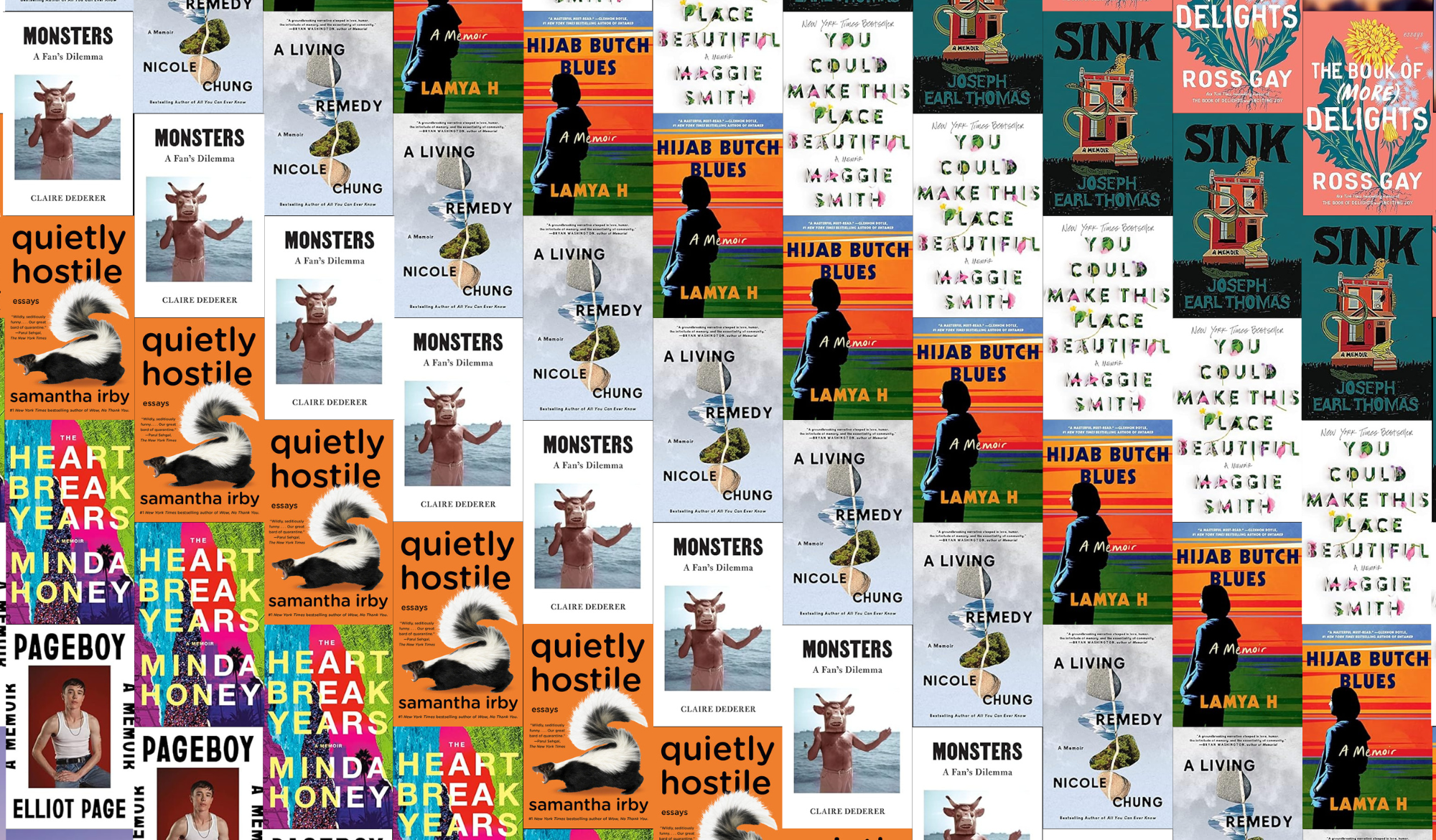
A Living Remedy: A Memoir by Nicole Chung

A searing memoir examining the intricacies of familial bonds, grief and class, A Living Remedy chronicles Nicole Chung’s journey out of her largely white Oregon hometown to middle class stability. However, she is unexpectedly drawn back to her roots by her father’s death from diabetes and kidney disease at the age of sixty-seven and her mother’s cancer diagnosis a year later. Exposing the deep inequalities at the heart of the American healthcare system, A Living Remedy is also a moving meditation on overcoming hardship and the strength of familial love. Read an interview with Chung here.

Monsters: A Fan’s Dilemma by Claire Dederer

Claire Dederer tackles the moral complexities of separating the art from the artist, questioning if we can knowingly enjoy the work of problematic or harmful male artists and if female artists can be considered monstrous too. Interrogating her own responses to creators whose difficult behavior disrupts our enjoyment of their work, she prompts her readers to consider these questions for themselves. Ambitious, nuanced and morally considered, Monsters interrogates the ethical implications of loving problematic artists. Read an interview with Dederer here.

Hijab Butch Blues: A Memoir by Lamya H

Hijab Butch Blues narrates the story of Lamya, a queer South Asian teenager growing up in a Muslim family who feels displaced in a Middle Eastern country. Following Lamya’s journey as she immigrates to the United States and explores queer dating, the memoir interweaves stories from the Quran with her deeply personal experiences. This is a bold, humorous and unflinching look at one woman’s navigation of her sexuality, faith and relationships while forging a path of her own. Read a conversation with her here.

You Could Make This Place Beautiful by Maggie Smith

Poet and author of “Good Bones” Maggie Smith examines a heartbreak that led to the disintegration of her marriage. Expanding outwards, this memoir confronts labor under the patriarchy and the gendered dynamics of heterosexual marriage that exist even within progressive families head-on. An emotionally honest and searing memoir about one woman’s enduring love for her children and struggle to regain her own voice and identity, You Could Make This Place Beautiful reveals how we move forward in the aftermath of loss. Read an interview with her here.

Quietly Hostile by Samantha Irby

Samatha Irby’s hilarious new essay collection takes us on a behind the scenes tour of her dynamic career as a comedian, essayist, blogger, and television writer. Navigating the ins and outs of both Hollywood fame and everyday life, she narrates amusing anecdotes about subjects as wide-ranging as dress codes, dog adoption and emails. Quietly Hostile is an uproarious account of the relatable gory details underlying Irby’s entertaining online presence.

Electric Lit’s Other Favorite Nonfiction Books 

Sink: A Memoir by Joseph Earl Thomas

Growing up in a tumultuous home where his family struggled with hunger and the consequences of crack addiction, Joseph Earl Jones found solace in geek culture. Faced with hostility and indifference at home and at school, he began to escape into the respite of virtual and fantasy worlds. Sink is a heart-wrenching coming-of-age story about Jones’s quest to find salvation on his own terms that is also a celebration of all things nerdy.

The Book of (More) Delights by Ross Gay

This charming follow-up to The Book of Delights is an exquisite, genre-defying catalog of small daily wonders. Gay investigates wide-ranging sources of delight, from hearing his favorite song on the radio to baking cookies to the enduring beauty of the natural world. Searching for connection and meaning yields in this moving and cheerful collection on the power of looking for wonder in everyday life.

The Heartbreak Years: A Memoir by Minda Honey

In 2008, Minda Honey made a cross-country trip from her hometown in Kentucky to begin a new life in California. Navigating the treacherous waters of early adulthood, she confronted breakups, hookups, complicated relationships and a new wave of political change. This unflinching memoir focusing on a Black woman coming of age and falling in and out of relationships in her twenties examines the complex dynamics of gender, sexuality, race and class. Learn about the book’s cover design here.

Pageboy: A Memoir by Elliot Page

This much-anticipated memoir from the acclaimed actor and activist traces the arc of his journey as a queer and transgender person grappling with the perils of fame. The success of his movie Juno launched Elliot to worldwide stardom, but he struggled with the pressure to perform the part of a movie star and endured a barrage of criticism from both Hollywood and wider society. An intimate behind the scenes exploration of love, sex, trauma and fame, Pageboy is the moving story of what it means to overcome societal expectations to embrace who we really are.

Ordinary Notes by Christina Sharpe

Ordinary Notes is an inventive collection of 248 brief notes exploring profound questions about loss, beauty, memory, art, and everyday Black existence. Artifacts from the past are interwoven with contemporary realities and distant futures to evoke the presence of the author’s mother Ida Wright Sharpe and explore a new way of seeing. Sharpe’s practice of “beauty as a method” and examination of memorial sites forges a bold and sparkling new literary form underlying her multifaceted constructions of Blackness.

Dyscalculia: A Love Story of Epic Miscalculation by Camonghne Felix

After the author undergoes a traumatic breakup resulting in a hospital stay, she attempts to grapple with her early childhood trauma and mental health during her healing process. Framing her childhood mathematical learning difficulties, dyscalculia, as a metaphor for her miscalculations in romantic relationships. Dyscalculia explores the consequences of heartbreak and realities of misaligned expectations in an achingly familiar way.

bell hooks: The Last Interview: And Other Conversations by bell hooks

bell hooks was a trailblazing feminist and anti-racist author whose work as an activist, cultural critic and professor laid the foundations for contemporary conversations surrounding race and gender. In this collection of interviews spanning from her early career to just before her death, hooks discusses her views on feminism, masculinity, religion, politics, love, sexuality and cross-cultural communication. This new collection is essential reading for both longtime readers of hooks and new fans seeking to learn more about her groundbreaking contributions to cultural and intellectual movements.

A Man of Two Faces: A Memorial, A History, A Memorial by Viet Thanh Nguyen

In A Man of Two Faces, Viet Thanh Nguyen brilliantly expands the genre of memoir by intertwining his own life story with a critical exploration of colonization, family history and fatherhood. After Nguyen and his family fled Vietnam as refugees and settled in California, he continued to contend with his legacy of family trauma, Vietnamese identity, political convictions and heartbreaking tragedy. A Man of Two Faces mines the power of cultural memory to narrate the exceptional life story of a brilliant and original writer. Read an interview with Nguyen here.

Liliana’s Invincible Summer: A Sister’s Search for Justice by Cristina Rivera Garza

A finalist for the National Book Award, Cristina Rivera Garza takes a painful journey back in time to seek justice for her sister, who was murdered by an ex-boyfriend thirty years ago. Both a celebration of life and an interrogation of domestic abuse, this memoir honors a woman whose story ended tragically and seeks accountability from perpetrators of violence.

The Loneliness Files by Athena Dixon

Can you build human connection behind a computer screen? In this memoir-in-essays, Athena Dixon examines loneliness under a microscope, revisiting the isolation at the height of the pandemic and exploring the impact of the Internet on our relationship with solitude. Read an EL interview with Dixon on the epidemic of loneliness. 

Black Women Writers at Work by Claudia Tate

This thirty-year-old collection by Claudia Tate encompasses interviews of celebrated Black women writers, including Toni Morrison, Audre Lorde, Alice Walker, and more. Previously out of print, this new edition of Black Women Writers at Work brings the crucial words of icons across Black literature to a new audience. 

Doppelganger: A Trip Into the Mirror World by Naomi Klein

Upon indirectly meeting her “doppelganger,” who is an anti-vaxxer and conspiracy theorist, Naomi Klein reckons with a loss of identity as she faces notoriety after being mistaken for someone else. A personal and meticulous examination of the Internet post-pandemic, Klein’s memoir tackles AI-generated content, the spread of misinformation, and the permeation of conspiracy theories.

Palo Alto: A History of California, Capitalism, and the World by Malcolm Harris

By now, Palo Alto seems synonymous with Silicon Valley and the “next big idea” from its eager entrepreneurs. But this dive into the history of Palo Alto from Malcolm Harris leaps 150 years into the past, mapping the city’s colonialist origins and examining how it became an epicenter for technology and capitalism. 

The In-Betweens: A Lyrical Memoir by Davon Loeb

A poetic memoir-in-essays, The In-Betweens traces Davon Loeb’s adolescence between two identities: Southern Black, like his mother, and Jewish and white, like his father. Often one’s family and culture is not so easily defined, and this introspective coming-of-age memoir offers a voice to everyone interpreting life in the in-between. Read an EL interview with Loeb on navigating identity and masculinity as a biracial boy in America. 

When Crack Was King: A People’s History of a Misunderstood Era by Donovan X. Ramsey

Longlisted for the National Book Award, this meticulous analysis of the crack cocaine epidemic of the ‘80s and ‘90s lends a voice to survivors of addiction and brings unflinching insight into the destructive impact of the “War on Drugs.” When Crack Was King, a debut from Donovan X. Ramsey, ignites a conversation about decriminalization, mass incarceration, and the trauma of the crack epidemic on Black and brown communities. Read Fred McKindra’s essay about the book.

All the Gold Stars: Reimagining Ambition and the Ways We Strive by Rainesford Stauffer

Suffering from burnout, Americans struggle to keep up with ever-looming expectations to succeed, thrive, and endlessly grind. In All the Gold Stars, Rainesford Stauffer offers an alternative: reconnect with yourself and your community and navigate ambition on your own terms (outside of a capitalistic lens designed to overwork and individualize). 

Saving Time: Discovering a Life Beyond the Clock by Jenny Odell

Is it healthy to monetize every minute of every day? (Short answer: no). Rather than living by the whims of a clock, Jenny Odell encourages us to slow down, embrace the natural cycles of the Earth, match the rhythm of our own bodies, and see time as something to be shared with one another. Read an EL essay on Odell’s books Saving Time and How to Do Nothing and viewing time and attention as “collective goods.” 

Tabula Rasa: Volume 1 by John McPhee

Pulitzer Prize winner John McPhee’s Tabula Rasa: Volume 1 engages with fraught ideas and unpublished drafts that span his decades-long career. A prolific icon of literary nonfiction, McPhee provides an honest and clever retrospection on his own work while revisiting projects initially left behind. 

A Life of One’s Own: Nine Women Writers Begin Again by Joanna Biggs

Joanna Biggs struggles to start over after the unraveling of her marriage and finds solace in the words and unconventional lives of women writers, including Zora Neale Hurston, Toni Morrison, and Virginia Woolf, to name a few. A Life of One’s Own is both an interrogation of stifling societal expectations of women and rich biographical accounts of history’s beloved women writers. 

Eyeliner: A Cultural History by Zahra Hankir

The pen rolling around the bottom of a makeup bag is so much more than just eyeliner. Zahra Hankir, editor of Our Women on the Ground, explores the lasting impact of eyeliner across history. From being a cultural and religious custom, to a political statement, to a modern eye-catching look, Eyeliner: A Cultural History reveals the power of this versatile cosmetic.

7 Memoirs About Addiction by Women Writers

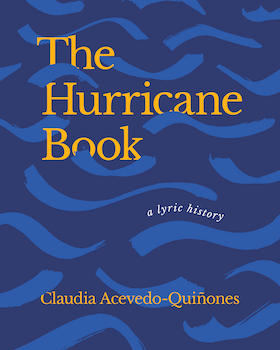
My most transformative reading experiences have been ones in which I see the worst parts of myself in full display on the page. From the time I was a teenager, I’ve gravitated toward women characters and writers whose behaviors, addictions, and ailments were at odds with their “potential.” Esther in The Bell Jar, Edna St. Vincent Millay, Dorothy Parker, and Tove Ditlevsen, to name a few, spoke and continue to speak to me. Because I was the girl who got scholarships and hid empty magnums of Yellowtail in her childhood bedroom. Because I’d sneak into my bedroom at 5 in the morning after destroying my body and drive to school at 7:30 am as if nothing had happened. Substance abuse, secrecy, and masking are salient themes in my first book, a lyric essay I’m still not comfortable calling a memoir, The Hurricane Book: A Lyric History. They are also an important feature of being a woman living with and around addiction and mental illness.

My Catholic inner child considers this attraction to femme addiction narratives perverse. The older, agnostic me considers it somewhat narcissistic. There might be some truth to both. As a writer dealing with shameful topics, there is the risk of character annihilation, alienation from those we want to love and be loved by. So why do we do it? I honestly have no idea.

None of the books on this list have provided a definite answer for me, but they do offer the reader (and writer) a variety of answers to the question of how, if not why, we write candidly about the unfeminine, scandalous upend-your-life decisions our bodies and minds make to help us cope. They also expose the insidious ways in which addiction can unfold in the most unlikely places and at the most inopportune times. They are also full of hard-earned grace and/or humor, two things we all need more of when we look in the mirror.

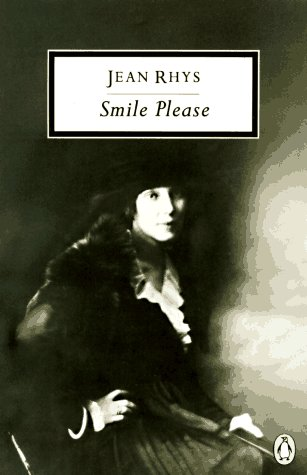
Smile, Please: An Unfinished Autobiography by Jean Rhys

Best known for penning the woman-in-the-attic-focused prequel to Jane Eyre, Wide Sargasso Sea, English writer Jean Rhys was always a little out of step. She was intimately acquainted with displacement and battled an inner duality since childhood. As a privileged girl from a family of colonists in early 20th-century Dominica, she clashed with her environment, her peers, and her parents. She was neither here nor there, but spent most of her life looking for a place to belong to. In her posthumous (and unfinished) autobiography, Rhys recounts her early years in the Caribbean, her time as a chorus girl in England, her experience as a wealthy man’s mistress, and her chaotic entanglements in bohemian 1920s Paris. We see her fall into the arms of the wrong men, debilitating alcoholism, and, despite all this, writing.

The Chronology of Water: A Memoir by Lidia Yuknavitch

Formally masterful and inventive, The Chronology of Water features poetic, non-linear prose that flows in and out of Yuknavitch’s experiences with parental violence and neglect, child loss, unmet expectations, and drugs and alcohol. The author, once a promising competitive swimmer with a scholarship, leaves behind a dysfunctional home only to fall into known destructive patterns, experimenting with self-destructive forms of escape. Reeling from a bad relationship and the loss of a child, the author enrolls in school and finds herself in a writing workshop that changes the course of her life. More than anything, this is a book about art, how the love of it (and the right people) can bring us back to ourselves.

Whip Smart by Melissa Febos

A brilliant, nuanced study in desire, self-actualization, and recovery, Melissa Febos’s debut focuses on her time as a dominatrix in NYC while studying at The New School and battling a heroin addiction. One of the things I admire most about Febos is her generosity, the palpable love with which she writes about herself, her gentle self-awareness. Here is a beloved daughter from a supportive home, a talented student. With measured curiosity, she challenges the notion that a woman like that can’t abandon herself and others, that she can’t be a sex worker, that she can’t be an addict, that any of these is guaranteed to beget the other.

Wishful Drinking by Carrie Fisher

“If my life wasn’t funny it would just be true, and that is unacceptable.” Yes, it’s a celebrity memoir. Yes, maybe it’s one of those things you’d pick up at a Hudson News. But beyond the Princess Leia-Paul Simon-Elizabeth Taylor-Eddie Fisher-Debbie Reynolds of it all, you can’t deny that Carrie Fisher wrote a memoir about painful family dynamics, public life, bipolar disorder, and addiction that can make you laugh (if you have the patience for this kind of thing). It’s voice driven, shiny, and a little indulgent. After years of keeping her battle with substance abuse under wraps, Fisher became an advocate for mental health awareness who spoke openly about her bipolar disorder diagnosis and her addictions, becoming sort of a den mother to unlikely celebrities and a beloved public figure. It’s easy to see why.

Lit by Mary Karr

The third in a memoir trilogy that includes the critically acclaimed The Liars’ Club and Cherry, Lit introduces Mary Karr as a full grown woman, poet, wife, and mother struggling with alcoholism. In her musical, no-nonsense style, she shows us how this disease, passed down from her own gun-toting, charming, erratic artist mother, almost wrecked her own life, following her on a quest for the stability she didn’t know as a kid. We see how through hard spiritual work, brutal self-effacement, hospitalization, community, and grace, she found a way through. This is also one of the first memoirs I ever read that included habitual disclosures about the haziness of memory, which made me feel safe as a reader and writer.

Good Morning, Destroyer of Men’s Souls by Nina Renata Aron

In an interview conducted while she was at work on the memoir, Aron said, “There’s this long history of, often women, living alongside this disease. But women’s experiences are seen as this secondary emotional corollary to the much more important story of male alcoholism and all the storminess that it entails.” At the center of her book is this secondary emotional corollary as it pertains to codependency. She had ample experience with it. At a young age, she became both protector and cop to her sister, who was addicted to drugs. After leaving home, marrying, and having a child, she reconnects with a charismatic man from her past, and the two begin an obsessive drug-filled affair that perpetuates a cycle of enabling and mutual destruction. Aron uses this as a springboard to talk about the psychology of codependency and even the roots of the temperance movement.

Drunk Mom by Jowita Bydlowska

Shortly after the birth of her son, Bydlowska relapses after three years of sobriety. She felt like a God, so she thought, why not keep that feeling going. Fast forward a bit and she’s sneaking drinks at the grocery store, waking up in a hotel with no panties on after a blackout. It is harrowing. She gets sober. After the book published, Bydlowska was celebrated for her bravery. She was also criticized for her seeming disregard for her child. In 2022, nine years after the release of the book (and six years after another relapse), she wrote, “Readers still write to tell me that this book helped them—to stop drinking, to stay sober another day, to feel less alone[…] I love every message. But the truth is, whatever the book does for people was never intentional.” Her initial motivation was only to write it. The truth is, that should be enough.

A Childhood That Defies Gravity

“The Art of Levitation” by Marcus Stewart

Children hopped along the logs arranged as stepping-stones in the playground; Lewis stood next to them and stared at his shoes. Big, black shiny plastic shoes, with big black laces. He was sure the shoes didn’t affect it. He just had to concentrate. He was standing upright, ready to go, with his head tilted sharply downwards, looking at his shoes and the ground beneath them. Tarmac, with hundreds of little stones in it, in between which were little pockets of dirt and over which climbed the occasional ant, fighting its way through a field of boulders, sometimes carrying a small bit of twig as an extra burden. He would often stare at the ants, coming and going. But this was a distraction. He closed his eyes.

“What are you doing, Lewis?”

He looked up, and there was Matthew. He liked Matthew. Lewis lowered his head again. “I’m trying to float.”

Matthew looked at him to learn his technique, and after some consideration commented, “It’s not working.”

“I know” said Lewis, “it does sometimes though.”

And Lewis kept trying, kept staring at his feet, then closing his eyes for extra concentration and hoping—expecting—to open them and to see that his feet were maybe an inch or two above the ground, and then perhaps he could lift a little higher, and move forward, like a hovercraft. But it wasn’t happening this time.

Matthew looked a while longer before getting bored and then turned and ran off at full speed to somewhere not very far away, briefly looking back again at Lewis just in case he’d succeeded. Maybe it was the shoes.

Lewis often dreamed he was floating, because you often do dream of things you like doing. But it wasn’t only in his dreams that he could float, he knew exactly how to do it. There were two ways really—one was by doing what he was doing and concentrating and then you may get a little bit of lift. He remembered on a good day being able to float from log to log while the other children could only jump.

The other way—once you’d had a bit of practice—was like extending a jump. You’d push forwards and up with one foot and when both feet were in the air you’d just hold it; still moving forwards, but not down. Sometimes you could only hold it a little bit before your feet slapped down back to the ground, but if you caught it at the right point you could float forward for quite a while, and that was when you were like a hovercraft. He remembered seeing the stones in the tarmac passing beneath his shoes. You had to look down to do it, otherwise it wouldn’t work.

Lewis often dreamed he was floating, because you often do dream of things you like doing.

He couldn’t remember exactly when he had last done it. It was starting to seem like it might have been a long time ago and he hoped he hadn’t lost the ability. He saw that the last boys had left the logs and now there were only girls jumping around them, but instead of just jumping from log to log they were running around as well and brushing past him. It wouldn’t be possible if other people touched him. Miss Pearse rang the bell.

Lewis realized with horror that his friends were going to classroom nine in the middle hut. He’d completely forgotten this was a Thursday. Lewis could never remember what class he had at what time but it mostly didn’t matter, because they were nearly always in classroom seven anyway and he’d quickly figure out what the subject was. On Thursdays it was different—Mr. Durant came in, and Mr. Durant used classroom nine.

No one liked Mr. Durant. If there was a Mrs. Durant everyone was sure that even she wouldn’t like him. Mr. Durant had one role in life and one job in the school, and that was to be horrible. Unlike the other teachers he didn’t run tutor groups, didn’t patrol the playground, didn’t do sports or teach any particular subject, but for two hours every Thursday he would take Lewis’ group in classroom nine. And he would just talk at them. Horribly.

If you were ever going to be told off, it would be by Mr. Durant. If you were ever going to be told off for not even having done anything, it was by Mr. Durant. He just seemed to like doing it. The other teachers even seemed to feel sorry for the children going into Mr. Durant’s class. He definitely wasn’t with the other teachers; Robert had said he always went home straight after his class and a few weeks ago Lewis himself had seen him, getting into his car and driving off, with an hour of school left to go.

Lewis felt sick as he walked into the class, but so far had got away without punishment. Paul was crying after he couldn’t sit down because there were no chairs left and Mr. Durant had shouted at him for it. He had to stand. Everyone else was keeping it together, grim-faced. Mr. Durant had begun to talk. No one knew what he was talking about, he just seemed angry.

“Now, we’ve something different today,” he said. The children hadn’t noticed, but there was a metal roll clipped to the top of the blackboard, out of which Mr. Durant scrolled down a large map of the area and clipped it into position at the bottom of the blackboard.

“Now this,” he said, pointing at the map, “is where we live.”

Lewis knew this, he liked maps. He thought for a moment this might be okay, if they were going to start looking at maps.

“And this, he said, pointing again, “is RAF Chinholt.”

Again, Lewis knew this; you often couldn’t hear the TV when the jet fighters flew over.

“It’s only four miles away, you could walk it. It’s a key Soviet target, and when the Russians bomb us you will all be killed in an instant.”

Everyone was still, and the shock stopped Paul from crying just as it caused a couple of the girls to start. Mr. Durant carried on talking, but no one heard anything else he said. Lewis couldn’t believe how horrible he was. Because Mr. Durant didn’t like the Russians Lewis thought that they must be okay, and he hoped and hoped that the Russians would win.


It had rained a bit, and Lewis had stepped in a puddle by mistake and got his left sock wet. It was cold, but his mum had started lighting the fire and asked Lewis to hold the paper up against it to get it going while she went back to chatting with Uncle Derek in the kitchen. He had no idea who Uncle Derek was.

He held the paper tight against the fireplace to stop the draft getting in and blowing the fire out. Right in front of him, on the paper in coarse black and white print were a big pair of boobs. He couldn’t help looking at them. Before he knew it the growing fire had sucked the paper into the fireplace and set it alight—just a small part in the middle, but spreading, and heading for smiling Samantha and the boobs. He had no choice but to grab the poker and smash the paper into the fire so bits wouldn’t float out and add more burns to the carpet. He hit it and hit it and hit it until all bits of paper were safely in the grate, burning with the other wood and paper. He held the poker in place a while and watched as flake after flake of grey ash floated up the chimney. His mum called him.

“Lew, why don’t you go out and play in the garden for a bit?”

It seemed odd that she was calling him Lew in front of Uncle Derek, she never called him Lew, ever. He was embarrassed by it.

“Go up and climb your tree or something and I’ll call you when your dinner’s ready. We’ve just got some grown up things to do.”

Uncle Derek didn’t look at him but Lewis could see he was smiling. “Okay.” Lewis left them to it.

It was a great tree, easy to climb and taller than the top of the house. They were on the very edge of the town and he could look across most of it from the top. As the sky turned red and the birds flew back home to the trees at the back of the field behind him he noticed wisps of smoke come out the top of a couple chimneys on the next street and the street beyond. Dotted around the town as far as he could see, little strands of smoke began to rise up, more and more and getting thicker and thicker as the fires grew beneath them and the sky got darker—as another day came to an end, as the days before had come to an end.


Lewis’ tummy rumbled as he lay in bed the next morning. He tried to convince himself that discomfort was pain, and that the pain was enough to get him off school. His mum gave him some milk of magnesia—which he liked—and agreed he could stay off, but he would have to walk to the shop to buy her some cigarettes.

Because they lived so much on the edge of the town it was quite a long walk to the nearest shop, but not as far as when he had to walk to school when he couldn’t get a lift. There were five small roads he had to cross and two large roads, only the last of which had traffic lights, but he was a sensible boy and good at crossing roads. It wasn’t very busy anyway. He looked left, looked right and left again and then crossed.

His shoes still hurt. These were the only shoes he had at the moment and his mum said they’d get better the more he wore them, but they seemed to be getting worse. This would be a good time to float. Even if he couldn’t float he could do the next best thing, and he started doing extra-long strides so he’d have less far to walk. With each step he tried to make the stride longer until it was almost a jump; left and then right, his feet slapping down and sliding a little on the tarmac, stretching and pointing his tip toes out to land as far forward as possible. He began to get into a rhythm—one, two, step, one, two, step— and the awkward movement began to feel more natural and flowing.

Maybe, if he stretched really far and concentrated hard one of the little jumps would hold and he could glide forward just a bit. Maybe before his first foot started falling he could pull up the other one quickly and they could glide forward together, holding him just above the ground, perhaps until the next street. But every step landed heavily and awkwardly as before and he never could pull up his back foot quickly enough. He closed his eyes for the next step, trying at least to make it a bit longer. And it worked. Although it felt the same and he landed just as heavily, when he opened his eyes he was sure the step had carried him at least half as far again as the last one. Happy that he had achieved at least this much he continued walking normally again.

“Hello Lewis. Hang on, let me just serve this gentleman first, I know what you’re here for.”

Happy that he had achieved at least this much he continued walking normally again.

Lewis waited. It was a funny little shop, all black where other shops were white, and everything was stacked up high and all around the edge. It was too small to have all the things in it that it had, it was only the size of a room, except it had a counter halfway across in the middle. The old couple who ran it were also too old to be running a shop, Lewis thought it all just looked wrong. But they were friendly, so that was okay.

It wasn’t the old woman who came out of the door at the back with a new crate of tinned soup, but a young woman. Lewis wondered where the old woman was.

“Right Lewis,” said the man, “a packet of fags for your mum and a slice of luncheon meat for you, yes?” The old man sliced some luncheon meat before he could say anything and wrapped it in plastic. Lewis didn’t know if his mum had phoned ahead so he didn’t know if he was supposed to have the luncheon meat or not, but the price ended up the same as it usually was for cigarettes anyway, so he had enough money.

Perhaps cigarettes were cheaper this week. The young woman seemed unhappy though, and was staring at the man. Lewis said thank you, put the cigarettes in his pocket and took the luncheon meat in his left hand. He liked luncheon meat. He rolled the round slice of it into a tube and as he walked home he blew it like a whistle. As his spit made the end of it soft he’d bite that bit off so that the whistle got shorter and shorter until it was all gone.


“The law says no cigarettes to anyone under 16, not 10!” the young woman said to her grandfather.

“Oh, they’re not for him, I know he’s not going to smoke them. I don’t need to worry about the stupid law,” he said.

She carried on stacking while he stood there behind the counter, the shop now empty of customers. He thought he’d lighten the mood—”I went to the zoo the other day. There was just one dog there,” he said.

“Why do you always tell that joke when that boy’s been in?” she asked.

“Do I? Maybe his dad told it me.”

“Well, I’ve heard it anyway,” the young woman said, before stepping back out into the storeroom. He savored the silence and stillness for a moment, then for the sake of completion mumbled to himself, “it was a shih tzu,” while wiping the meat slicer clean.

He thought back to the boy’s dad, times when he’d come in the shop before he got ill, when Lewis was no more than three or four years old. Lewis’s dad was a nice fella and would often chat. He seemed to get on with everyone. He remembered sometimes seeing him and the manageress of the Safeway walking up the street together, chatting and laughing with each other, each holding Lewis’ hand and lifting him into the air as they walked, and Lewis looking at the ground pass beneath his feet without a care in the world.

The Genesis of a Fictional City

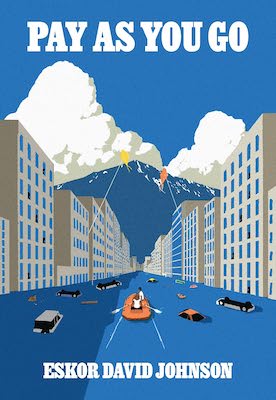
Eskor David Johnson’s Pay As You Go is set in an imagined city, Polis, one that takes elements from New York to Chicago to London and magnifies them to grandiose size. Traversing Polis is an intrepid hero of sorts, Slide, whose rare mix of panache, naivety, earnestness, and humor makes him a mesmerizing act to follow through this urban jungle as he searches for a place to live.

Johnson has written a necessary antidote to what is more common of the debuts of young, contemporary writers: books so steeped in solipsism that it is as though man can, in fact, be an island. This is of course not the case. There’s always community to come up against for the good and bad. Witnessing this in full force is one of the great pleasures of Pay As You Go.

I corresponded with Johnson over email, curious about what the novel and its author had to say about notions of home and movement, the genesis of a fictional city, and what fables can teach us of our contemporary life.


DK Nnuro: Labeling the book “a fable” instead of “a novel” is a bold choice for many reasons. I have two questions on this front. The first one is very simple: what is your definition of a fable? 

Eskor David Johnson: I’ll have to revert to those elementary school lessons when you first learn about them. To me, a fable is a universal-leaning story that is very consciously a stand-in for a greater range of narratives. Fables operate closer to the level of symbolism, with characters that can be archetypes and a plot in which many people can see parallels and lessons for their own lives.

DKN: Interesting. Do you remember your first fable? The one you first fell in love with? 

EDJ: First would be hard to say but the one that comes to mind quickest is that of the fox and the bone. He’s walking along with a juicy one between his teeth when suddenly he sees another fox holding an even bigger one, and in an attempt to get it he drops the one he’s holding and it floats away in what turns out to be a river. He had been looking at his reflection in the water. There’s something of that in the novel.

DKN: Polis, the fictional city your main character Slide finds himself navigating successfully and unsuccessfully, is exquisitely imagined. I wanted to liken it to a known major metropolis… wait, it just hit me: is “Polis” taken from the word “metropolis”? Did I miss that in the novel?

EDJ: Ha! Perhaps you did! If it makes you feel better “metropolis” is more of a descendant of the term rather than an ancestor. I was in fact thinking of the word for the Greek city-state, polis, which was their defining unit of civilization, as opposed to the more modern notion of a country. A city-state is both city and country tied into one, and the dominant means by which the people of the time would have seen themselves. Those from Athens were Athenian, from Sparta Spartans. That they all spoke Greek was a matter of geography, they might have argued.

So too with the novel’s Polis, which functions as a world onto its own.

DKN: Yes, yes, exactly what I was thinking. Greek city-states and all. Ha! But in all seriousness, the depths of your imagination…mind blowing! The fact that you conceived of an entire map of Polis. Let’s talk about that!

EDJ: The map has to its credit three of the great artists I know in my life. First was a poet, Diamond Sharpe, whom I long ago sent some pages from an old version of the novel to read, and who commented that she couldn’t tell where things were in relation to each other, and suspected I didn’t either, so suggested I map them out. I made a rough, terrible sketch, which still survives in a notebook today, and that became the basis for the layout. Second was a painter, Dougan Khim, who lived in Chicago while I was in Iowa. During one of my visits to him we spent the day walking through Chicago’s sweeping streets and theorizing as to what exactly a city was, its requirements. We would have sounded quite silly to passersby, but the conversation was instrumental in shaping the detailing of Polis’ neighborhoods. And finally there was the actual map maker, Sarah Diamond, whose handiwork appears at the opening of the book. She was the one to actually take all those sketches and notes and theories and turn it into the beautiful image we have today. When she first showed me what she had done I was flabbergasted. Her talent is immense.

DKN: I think most people would want to say that Polis is a fictional New York City, and there’s enough there for that argument. Why create a fictional city? Why not situate Slide in, say, New York?

EDJ: The problem with picking a real place—and in a long ago brainstorming of the novel it was in fact New York—is all the rules and obligations that come with it. Where stores are located. Accurate street names. A preexistent history you’re better off knowing well before vigilant readers come knocking on your door with a list of corrections. Then there is the similarly well-tread ground of all the great New York novels and having to take into account what has or hasn’t been done in those as well. I ventured 3-5 pages down that path and put the whole thing aside for years. There will be more New York novels—someone is writing one as we speak—but it was not where I felt my strengths were at their best.

Having your own city allows for the rules to be your own. Some of these are technical in nature: I had to figure out a system for the naming of the streets, as well as what kind of people lived in what neighborhood. But the real rules were the intangible ones. The logic by which spontaneous crowds so often form, the sometimes hysterical dialogue, the underlying sense of lawlessness, the tendency of certain characters to monologue. These may not feel like a necessary off-shoot of a fictional city, but they did for mine. What the story gets to say by being set in Polis is “This is a world in which these things happen.”

DKN: Yes! And things happen because there are people, as there should be in a big city. So reading this rightly peopled novel made me think of how much contemporary big city novels—yes, contemporary New York novels—are woefully unpeopled. They are so narrowly focused, as if the big city would ever accommodate these characters’ high degrees of solipsism. But we live in a time where, more and more, we are being encouraged to focus on ourselves and to limit our communities to a chosen few. I worry about this sometimes because perhaps there is something to be learned from communities who might disturb our peace. Slide’s peace, by the way, is so often disturbed. 

EDJ: Absolutely. And I happen to hold the view that a city should be where you go in order to have your peace disturbed.

Fables operate closer to the level of symbolism, with characters that can be archetypes and a plot in which many people can see parallels and lessons for their own lives.

New York in particular has undergone a shift that I am hardly the first to put my finger on. It’s very possible to have a more quaint, sanitized experience here than many imagine, provided you have the money. A lot of people find a handful of friends, a rotation of similar neighborhoods and restaurants, and those will constitute the main ingredients of their experience. They’re not entirely to blame. The economics of the city have made it unforgiving for the conditions for enlivening randomness—cheap housing, a healthy population of artists, political engagement—to thrive. I often joke that I missed my era here, and should have been alive and in my 20s for the New York City of the 1970s.

So it’s made its way into fiction, so much of which can feel like staid domestic dramas, despite the many other kinds of drama available in the city. To be sure, many of these are good. But many not. It’s a shame, since there is so much to be gained from trying again and again to capture a metropolis on the page, no matter how incompletely. The truth is that for as much as I’d like to flatter myself about the inventiveness of Polis, thousands more (and more unimaginable) things happen in New York every single day. It’s good exercise for the soul, and for empathy, to try fitting it all into a few hundred pages.

In many regards I admire Slide for his ability to be disturbed, and to incorporate such disturbances into the fabric of his life. He could have simply said no to many of the situations in which he finds himself and ends up complaining about. It’s his willingness to be open that defines him, a heightened version of a quality I hope to cultivate in myself. Though admittedly if I gave into disturbances as often as he does, I would not get a lot of writing done.

DKN: Fair enough. Still, what are your thoughts on allowing our peace to be sometimes disturbed by certain communities?

EDJ: I believe that the ongoing project that is democracy is in some sense centered on this. Democracy asks that you imagine yourself into the place of others and recognize in that imagining both the beautiful differences and essential similarities that place us on even terms. It is why cities are naturally more democratic places, given that its citizens have to more often take into account the lives of others dissimilar to their own. Currently I live in Harlem and I joke that Black people here treat the sidewalk like it’s their living room: there’s always someone on the phone yelling all their private business for everyone to hear. That’s other lives rubbing up against yours. That’s texture.

Those who live in cities can be quite self-satisfied in interpreting this open-mindedness as a sign of greater moral value, but it doesn’t necessarily have to do with them. Some are the same people who would otherwise keep to themselves and not go out of their ways to meet anyone different were they to live in the suburbs. It’s the city, our agreed circumstance, that does the work of disturbing our communities, which would otherwise homogenize if left on their own. I do give people credit for moving here in the first place. The trick is to keep moving, keep being engaged, even when you’re already physically present.

DKN: We are both recent immigrants to the US. This thing about texture, a. About other lives rubbing up against yours;. K keeping moving, keeping being engaged. What might recent immigrants be able to teach other Americans about these things?

EDJ: I sometimes worry for writers who are only of one place, none more so than American ones, who have a kind of glorious insularity. My favorites are the writers who learn other languages, travel the globe, move from one place to another, and return to their page with these incongruous notions of the world vying within them, and so try making sense of it all. 

For me, the novel is what I am trying to say in response to the question of what home means to me.

Yet the thing about American hegemony is that no matter where else you may be growing up in the world, you are also growing up in America, whether you realize it or not. In the West especially. I found that when I came here for good at age 17, I already knew and understood so much of the culture simply from TV and fascination. So almost by default I had two worlds, and two ways of seeing the world, to access. The interplay between those plays out in my fiction not so much on the level of plot, but on that of language. I have remained stubbornly Trinidadian in my outlook on things.

So if there is a lesson we have to impart I think it’s mainly that simple one of the importance of variation. America can be a good part of a balanced diet. It’s not the entire meal.

DKN: That takes me to a few of my curiosities about what the book suggests about finding “home” or making “home.” But first, I’m interested in how you define “home”? Can you share with us your own journey towards “home”? 

EDJ: Another quick anecdote about Dougan, by way of vamping. He really is a phenomenal painter, and at one of his shows he was asked by someone what he was trying to say in making one of the pieces on display. Not knowing what to do, and in a truly genuine sense (he has not a snide instinct in him), he had to point to the painting and reply that that was what he was trying to say. In some sense, for me, the novel is what I am trying to say in response to the question of what home means to me. That said, I will still attempt a more succinct response.

It’s the first and most consistent question the book asks, I think, from that early moment that Slide complains of his first apartment that he can’t quite hear his heart while in it. That notion of being able to hear yourself and of finding a space where your better instincts more often win out against your worst ones, has been essential to what I consider home. For me it’s been somewhere I know I can consistently write, see my friends and family often, make feel beautiful, be inspired to cook and exercise, go for walks, and have animals—those of my own or that I mind for friends. Sunlight and wood floorings definitely help, let me not pretend. But home is where you hear your heart. Sometimes the oldest answers are the best.

DKN: Are you able to hear your heart wherever it is you are laying your head these days? 

EDJ: Yes.

Exclusive Cover Reveal: Karla Cornejo Villavicencio’s “Catalina”

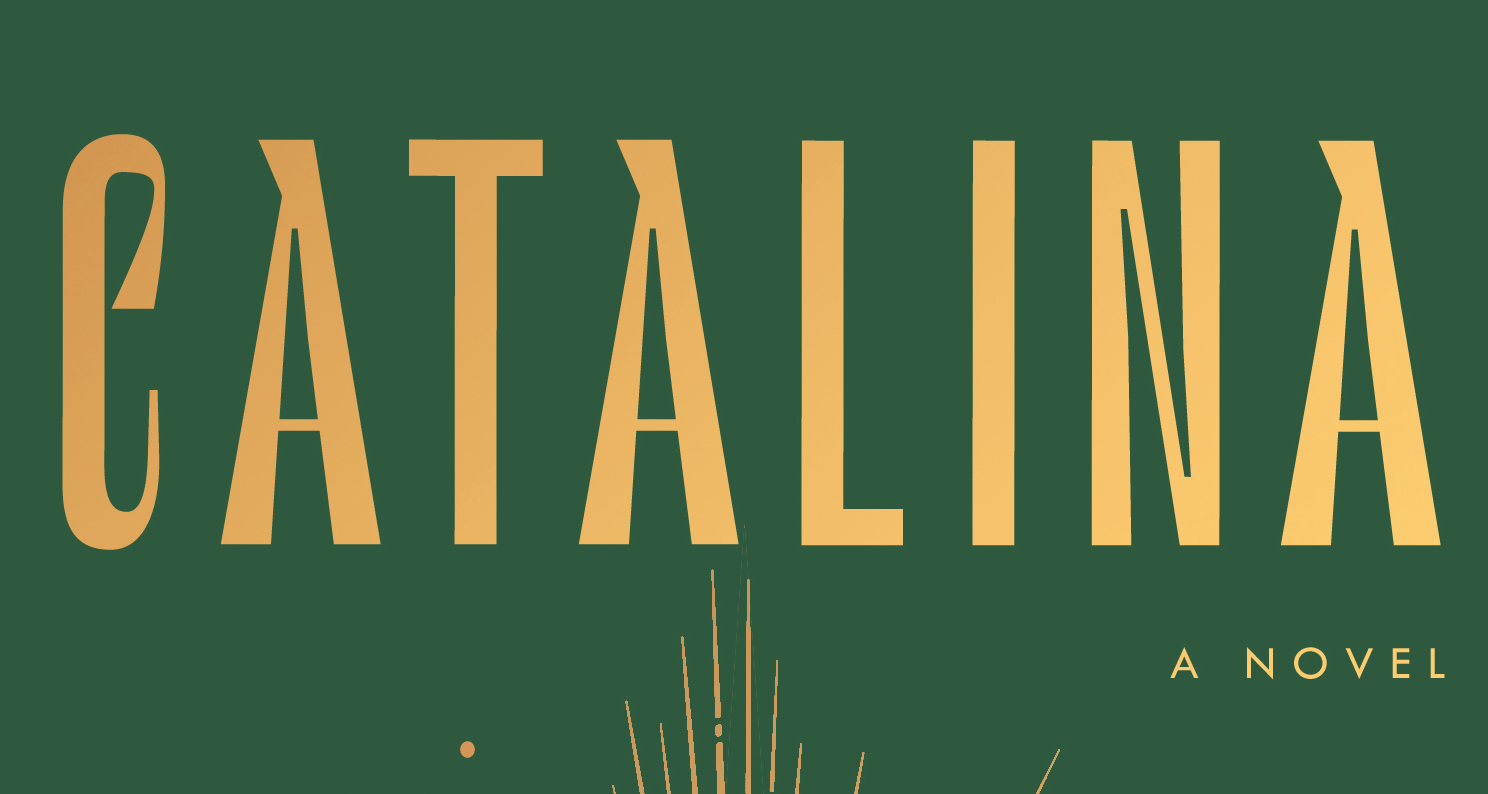
Electric Literature is pleased to reveal the cover for the novel Catalina by Karla Cornejo Villavicencio, which will be published by One World on June 18th 2024. Preorder the book here.


A year in the life of the unforgettable Catalina Ituralde, a wickedly wry and heartbreakingly vulnerable student at an elite college, forced to navigate an opaque past, an uncertain future, tragedies on two continents, and the tantalizing possibilities of love and freedom.

When Catalina is admitted to Harvard, it feels like the fulfilment of destiny: a miracle child escapes death in Latin America, moves to Queens to be raised by her undocumented grandparents, and becomes one of the chosen. But nothing is simple for Catalina, least of all her own complicated, contradictory, ruthlessly probing mind. Now a senior, she faces graduation to a world that has no place for the undocumented; her sense of doom intensifies her curiosities and desires. She infiltrates the school’s elite subcultures—internships and literary journals, posh parties and secret societies—which she observes with the eye of an anthropologist and an interloper’s skepticism: she is both fascinated and repulsed. Craving a great romance, Catalina finds herself drawn to a fellow student, an actual budding anthropologist eager to teach her about the Latin American world she was born into but never knew, even as her life back in Queens begins to unravel. And every day, the clock ticks closer to the abyss of life after graduation. Can she save her family? Can she save herself? What does it mean to be saved? 

Brash and daring, part campus novel, part hagiography, part pop song, Catalina is unlike any coming-of-age novel you’ve ever read—and Catalina, bright and tragic, circled by a nimbus of chaotic energy, driven by a wild heart, is a character you will never forget.


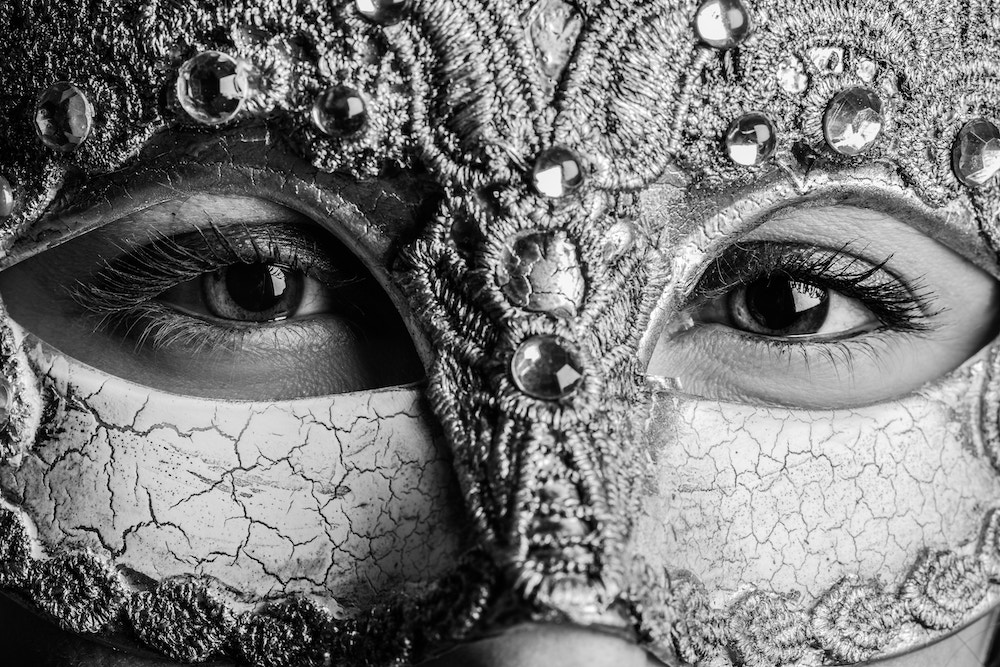
Here is the cover, designed by Grace Han.

Author Karla Cornejo Villavicencio: “I love this cover because it feels timeless and serious and that pairs nicely with the novel which makes a point to be unserious. It also reminds me of the design of old F. Scott Fitzgerald book covers which is terrific because I love him and hope to replace him soon.

The eye represents looking and being looked at, looking at yourself being looked at, the gaze, the tension between being an object and being a subject, desire and longing. Many of the non-fiction pieces I’ve written in the past few years have been accompanied by an unrelated picture of a sad, young brown child with large dark eyes just looking sad. It’s a different child each time and I never know who they are, that’s just the art that accompanies my essays. So I thought, what if the little brown girl in the corner of all the photos of war and such, what if she grew up to write a book that showed she was looking the entire time? Looking, and remembering everything. Remembering names.”

Designer Grace Han: “I was ecstatic to be given the opportunity to create a visual introduction to Karla Cornejo Villavicencio’s work. As a child of immigrants, I saw myself in Catalina—in her desperation to distance herself from family and in her desire for self discovery. I wanted the cover to give us a sense of hope in addition to giving us an intimate peek into Catalina’s life as she attempts to find her place in between worlds. I hope this cover captures the poignancy and profoundness of Catalina.

7 Books About Authorship Hoaxes

Public fascination with con artists, scams, and heists has been on the rise, with stories of Anna Delvey, Rachel Dolezal, Caroline Calloway, and Elizabeth Holmes splashing across magazine covers in the last decade. Alongside it, my thirsty interest in literary scandals has grown, watered by “Bad Art Friend,” a mysterious manuscript thief, the pathological lies of an editor cum author, and the invented auteur JT LeRoy. Surely there must be fiction in this vein, I thought. We live in a literary soup of cultural appropriation, ghost writers, plagiarism, fabricated memoirs, artificial intelligence, autofiction, and nebulous influence. Who doesn’t love a juicy story about pretending to be someone you’re not in order to make art? So began my fiendish fascination with novels that dive into questions about authorship, who owns a story, what parts of life we can acceptably use to write and which are unethical (or at the very least, gauche). If there are a glut of real-life examples of scammers, surely there must be fictional tales of authorship hoaxes. 

The ones I found tend to keep pace with thrillers, though the crimes were less gory, more fixated on the ever-hungry ego, and pleasurably literary. Often, these books portray adults who can’t do their own homework, pushed to the brink by their desire to succeed while their peers burst up as stars, they desperately steal the work of others. These books are less about “real talent” and more about vanity and ego that fuel people to be known as artists, rather than make great art. 

Even the books in this list whose villains aren’t stealing source material (or whole manuscripts) offer an exploration of authenticity and how to deal with inevitable periods of diminished inspiration. Inherent in this plot, is a sense of mystery about where a work originates and how one can prove who owns material. Some of these take up the dangers of cult personalities and the treacherousness of fame. Others lambast broken systems (publishing, the artworld) and how creative merit fails to correspond to financial or critical success. Underneath them all sits the question: Who are you and where do you get your ideas?

A Ladder to the Sky by John Boyne

At any given reading, it seems the most common question is “Where did you get the idea for this?” John Boyne’s main character Maurice Swift is obsessed with this too, because, simply put: he is a good writer with no good ideas. After a chance encounter with famed author and Holocaust survivor Erich Ackermann, he panders to the older gay man and preys upon his loneliness, becoming an assistant of sorts, traveling with him on book tour. Over the course of the tour, he teases out a story that Erich has never shared about his time during World War II, which Maurice uses to write his first novel. As the rest of this elegantly plotted novel unfolds, we watch as Maurice continues to find new and atrocious ways to grift stories for his novels. 

The Plot by Jean Hanff Korelitz

Jacob Finch Bonner had a respectable start to his publishing career but has been struggling to write a second book for far too long. When a student of his comes along that is painfully arrogant but has a brilliant idea for a book, Bonner is jealous. The plot is undeniably juicy, and it seems only a matter of time that he will be eclipsed by a student, washed up and forgotten about. But the book never comes out and Bonner eventually discovers his student died. He decides to use the plot for his own next book (chapters of Bonner’s book are interwoven with the story so readers slowly come to see what exactly this atomic plot is). This thrilling read gets even more propulsive when someone who knows Bonner stole the story starts hunting him down to pay penance.

Yellowface by R.F. Kuang

This recent release is a fast-paced and pulpy book that follows two grad school peers, June Hayward and Athena Liu, and the ways their careers diverge drastically. While Athena has become a bestseller, June’s books have never caught the attention of the media. When June witnesses Athena’s death (in a ridiculously campy scene involving choking on a pancake), she decides to steal Athena’s latest manuscript about Chinese laborers in World War I. After Athena’s death, June edits the book, and through a series of incredible maneuvers by her publishers is transformed from a white author to a racially ambiguous one rebranded as Juniper Song. Unsurprisingly, June, or Juniper is haunted by fact that someone might figure out her secret. And indeed, they do. 

The Blazing World by Siri Hustvedt

Where many of these books characters are spurred by jealousy, envy, or creative blocks as their inciting incident, Siri Hustvedt’s main character Harriet (or Harry) Burden is an artist with agency who, after a career of being underrecognized, asks three male artists to exhibit her work as their own. They are her masks, there to prove the misogyny of the art world, rather than gain her fame or recognition. Of course, things don’t go as planned, but this book is a miraculous look at the power of a name, and interpretation of meaning in an era of identity politics. The book points a finger at the failures of the male-dominated artworld to truly embody gender equity. 

The Book of Goose by Yiyun Li

Distinctly resonant with the dynamic of Lila and Lenu in Elena Ferrante’s Neopolitan novels, Agnes and Fabienne are two friends growing up in poverty in rural France. Fabienne loves to test the limits of her power over those around. her. She conscripts Agnes into a new game, asking her to be her scribe for a series of stories about the grim realities of their day-to-day. To complete the hoax, they use the town’s postmaster as a smokescreen to edit the book and send it to a publisher. When it becomes wildly successful, Agnes is listed as the author and is catapulted to fame, receiving all the privileges that follow, including a scholarship to a British boarding school. In many ways this is more about friendship than authorship, the tender pliability of teenage influence, and how complicated it can be to play along when we don’t understand the consequences or our desires.

Last Resort by Andrew Lipstein

The plots of these books are often vampiristic: here Caleb sucks the story off his old friend Avi and spins it into a novel that has incredible commercial potential. Caleb is caught quickly though when his agent sends it out to publishers and Avi, now an editor, forces him to strike a deal: Caleb can keep the seven figure contract money but Avi will be listed as the author. Caleb, much like Maurice and Jacob, is plagued by the beast of ambition, as he receives no acclaim when the book becomes a hit. 

Girl Boy Girl by Savannah Knoop

Okay, okay, this isn’t a novel, but if you want to read about just how one of these hoaxes came to be, look no further than Savannah Knoop’s memoir about how they became the face of JT LeRoy. JT gained acclaim writing autobiographical novels about their experience as a gay child prostitute, with a meteoric rise to fame placing them neatly into social circles of the rich and famous. The thing is, JT LeRoy was a fabrication of Laura Albert, who had asked her sibling-in-law Savannah Knoop to make appearances as JT. Knoop wades into the wobbly identity shift of dressing up as a boy dressing as a girl, and what they learned from playing the part of someone else.

Electric Lit’s Best Short Story Collections of 2023

In a year packed with noteworthy novels, it can be hard to remember that big, important, vital ideas sometimes come in small packages. Many of the year’s best collections represent a return to form for some of the greatest writers of our time, and while the stories may be brief, their impact is felt long after they’ve been read. In these pages you’ll find heartbreak and longing, estrangement, fear, desire, and political upheaval, told in the forms of  myth, folktales, and yes, everyday realism. All of these collections, from widely varied vantage points, get at the heart of what it means to be alive, and what it means to be human.  

Here are Electric Literature’s top four short story collections, followed by additional favorites listed below.

The Top 4 Short Story Collections of The Year:

Tomb Sweeping by Alexandra Chang

Tomb Sweeping phenomenally unravels the heartaches, deferred dreams, and desires in a range of characters living across Asia and the US. Within these fifteen stories, you’ll find mediums, disoriented housesitters, doppelgängers, unsatisfied marketing directors, unfulfilled housewives, immigrant families, heartbroken college grads, expecting parents, and unexpected twists. All the while, Alexandra Chang consistently maintains an incisive pulse on the grief that invades these communities and what gets inherited in families beyond DNA. As Chang mentioned in her EL interview with Annie Liontas, the characters in these stories each endure sharp growing pains, along with transformation, but not necessarily one in which they become better beings: “If anything, connection with others helps them find themselves and their place in the world, but most of these connections are temporary, too. That’s how I see the world and experience life myself… Transition seems constant, ideal even.” Sample a taste of this brilliant collection by reading Phenotype,” published in Recommended Reading earlier this year. 

White Cat, Black Dog by Kelly Link

Kelly Link is a master of illusion, threading reality and surreality together to create stories where nothing is quite as it seems, and the stories in White Cat, Black Dog are no exception. In this delightfully strange collection, each story stems from a different fairy tale, pulling inspiration from the Brothers Grimm, Norwegian folklore, seventeenth-century French lore, and more. Link’s reinvention of these tales are not only unique, imaginative, and contemporary (think Hansel and Gretel as androids, Snow White as a housesitter avoiding his dissertation), but also deeply human. These once-flat characters of fairy tale land are given new layers of psychological depth: they desire, they love, they betray. Their emotions are painfully recognizable, even as the stories themselves are bizarre (in the best way) and wholly unpredictable. In classic Link style, they’re also often funny: as Link says in her EL interview with Chelsea Davis, “Humor and horror are both doors into story for me—and inside a story, they’re paths to understanding or rearranging situations.” The result is a collection of stories that are witty, startling, and emotionally real, each story taking us somewhere that at first feels familiar, only to pull back the veil and show us that we are, in fact, in territory entirely new.

Wednesday’s Child by Yiyun Li

Wednesday’s Child is full of stories that only Yiyun Li could write: moving and deeply introspective work that reaches great depths of human emotion without ever becoming overly sentimental. These stories center around characters reckoning with loss and grief: a woman creates a spreadsheet of everyone she knows who has died while she grieves the death of her son, a woman confides a haunting story about her past to a man whose wife recently passed away, and in “Such Common Life,” a three-part novella excerpted in Recommended Reading, a retired entomologist and her caretaker reflect on the lives of imaginary friends. This collection is full of tender, quietly heartbreaking stories written with the compassionate, observant eye that Li always brings to her prose.

Witness by Jamel Brinkley

In the ten stories that make up Witness, all set in New York City, you’ll encounter as broad of a range of characters as you’ll find within the city itself: children, adults of all kinds (UPS workers, grandparents, volunteers at an animal rescue), and even ghosts. In each of these stories, Jamel Brinkley explores what it means to bear witness, asking the weight that comes with truly perceiving one another. With sharp, beautiful, probing prose, this collection plumbs the depths of human connections. And by drawing us into the world of these characters, Brinkley turns each of us into a witness in our own right.


Electric Lit’s Other Favorite Short Story Collections:

The Hive and the Honey by Paul Yoon

Moving across centuries and continents with a focus on the Korean diaspora, Paul Yoon masterfully explores the shared history, displacement, alienation, and the lasting effects of war within The Hive and the Honey. Throughout seven stories, Yoon’s lean and cutting prose dissects truth and inheritance, interweaves haunting tales with mundane lives, and reveals far-flung characters searching for home, such as when a samurai journeys with an orphan in 17th century Japan, a contemporary couple grappling with their heritage manages a small shop in London, and a Korean settlement in Far East Russia is plagued by its past. Recommended Reading published the beautifully wrenching title story from the collection in September.

Roman Stories by Jhumpa Lahiri

Written originally in Italian, the nine stories in Jhumpa Lahiri’s latest collection each revolve around a central protagonist: Rome. And while the city may now be a second home to Lahiri, many of the incisive narratives focus on the stinging feelings of discrimination, estrangement, and exile that persists for these characters, many of which are immigrants or outsiders. In beautifully moving prose with acute observations and reflections, Lahiri paints a mosaic (or a fresco, if you will) of dazzling yet pain-ridden lives from the multifold perspectives of a caretaker’s daughter, a tempted husband, two alienated women, and the many migrants and refugees in Rome. 

Every Drop Is A Man’s Nightmare by Megan Kamalei Kakimoto

Megan Kamalei Kakimoto builds a contemporary portrait of an ever-changing Hawaii in this debut collection—excavating gender, race, sexuality, and the very act of storytelling. As Molly Antopol wrote in her introduction to the story “Madwomen” (published by Recommended Reading in August), “the legends that permeate Kakimoto’s Hawaii play innovatively with received notions of genre, seamlessly braiding magical realism and ancestral myths into her convincingly realistic character-driven narratives.” Within these eleven stories, Kakimoto’s female protagonists face issues such as the chaotic anxiety of motherhood, the chance to trade a personality trait for a free Brazilian wax, displacement by drills of U.S. military bombing in Kauai, and much, much more. 

A Small Sacrifice for An Enormous Happiness by Jai Chakrabarti

In vivid and musical prose, A Small Sacrifice for an Enormous Happiness explores the complex realities of desire, culture clash, parenthood, faith, and legacy through lively characters in Brooklyn, Kolkata, upstate New York, and beyond. In one story, set in the 1980s, a closeted gay man longs for a child from his lover’s wife. In another, an Indian woman grapples with how to sustain her identity alongside her new Jewish fiancé’s family traditions. All in all, the fifteen stories in Chakrabarti’s collection are a testament to the ways families form, change, and move forward. Read “Prodigal Son” from the collection, published in Recommended Reading

So Late in the Day: Stories of Women and Men by Claire Keegan

The three stories in Claire Keegan’s latest collection each profoundly dissect relationships, interpersonal communications, and misconnections. The sharp observations and memories of Keegan’s characters reach back into the inheritance and perpetuation of misogyny as well as the objectification of women, but is done so masterfully, naturally, and imaginatively that you may not even realize that these ideas drive the stories until the second read. So Late in the Day is a powerful and necessary collection for not only this day and age, but any. 

The People Who Report More Stress by Alejandro Varela

In thirteen interconnected short stories set in and across New York, Alejandro Varela uses pithy prose and sharp commentary to explore racism, sexuality, and gentrification on a personal and political level. While mainly focusing on one central couple, the stories revolve around the anxieties present beneath everyday interactions and the biases held by characters they encounter as well as themselves. These stories are full of insight, humor, and surprise—as in “An Other Man” where Gus and Eduardo make their marriage open while inside a multiverse and, in another story, Eduardo tracks the love-hate relationship between him and his therapist. In an EL interview, Varela discusses their work, class anxiety, and the multiplicity of queerness and transness in fiction. 

The Last Catastrophe by Allegra Hyde

In this urgent and timely collection, Allegra Hyde conveys the confusing, often terrifying, act of existing today through protagonists who are mystified by love, their own identity, and seeking perpetual purpose in a collapsing world. The characters in The Last Catastrophe are plagued by loneliness, cynicism, and wonder. A husband leaves and then his wife’s skin turns the color of Gatorade, while another woman needs “a little extra attention as she face[s] her own impending obsolescence,” and an émigré searches for his lost love across the surgically supplanted faces of strangers. As Hyde discussed in her EL interview with Annie Liontas, writing this collection was a way of distorting grief, refracting it through objects and ideas: “It’s processing extinction in a playful, sometimes humorous way.”

Let’s Go Let’s Go Let’s Go by Cleo Qian

Cleo Qian’s debut collection is enthralling, surprising, and obsessed with loneliness as much as it is with the tenuous ways we connect with one another today. In her EL reading list about alienated women, Qian writes of her collection: “The young women who weave in and out through my stories lurk watchfully: looking for allies, connection, a meeting of minds that will make them, finally, safe and seen. They are millennials, Internet surfers, queer and questioning, immigrants, the children of immigrants. They wander alone through perilous, defamiliarized urban landscapes.” The sparkling, restless characters in Let’s Go Let’s Go Let’s Go question convention, expectation, listen fondly to the stories of elders, and change their fates all to make unforgettable memories and choices, lingering in readers’ minds long after they’re over. 

After the Funeral and Other Stories by Tessa Hadley

Emotional and psychological richness fill the pages of Tessa Hadley’s After the Funeral and Other Stories. The twelve stories in this collection take the small, real moments of life and make them expansive, meaningful, and startling. In this collection, Hadley’s mastery of drawing out the complexities and dynamics at play in relationships is on full display, making the interior lives of each of her characters intoxicating to read.

Disruptions by Steven Millhauser

The eighteen stories in “Disruption” exemplify what Steven Millhauser does best: spinning strange, provocative tales out of suburban lives. One town struggles with the challenges of having both average-height inhabitants and their two-inch tall neighbors. Another installs a guillotine. A caller is strangely affected by an automated customer service line. Each of these stories take American suburbia and unsettles (or, you might say, disrupts) it, stretching out into the absurd to create something unique, unsettling, and delightful to read.

Evil Flowers by Gunnhild Øyehaug, translated by Kari Dickson

Gunhild Øyehaug’s “Evil Flowers” is dazzling, energetic, and a constant surprise. The stories in this collection are bizarre and playful, pushing against the boundaries of everyday life to create tales that are as absurd as they are clever. Read “A Visit to Monk’s House” from the collection in Recommended Reading, which takes a woman reading a review on Trip Advisor and turns it into something addicting, expansive, and wholly unique.

Good Women by Halle Hill

Halle Hill’s debut collection is a darkly humorous exploration into the lives of Black women in Appalachia and the South. The vivid, deeply human characters who embody each of these twelve stories fly off the page and are utterly unforgettable. Hill’s observant eye brings an intoxicating liveliness to her protagonists and their settings as we follow them from Weight Watchers to the emergency room to a 22-hour long Greyhound bus ride with a sugar daddy. Good Women delves into contemporary Black womanhood with humor, empathy, and beautiful prose.

Holler, Child by LaToya Watkins

Holler, Child is a profound, haunting collection that follows Black men and women in West Texas. In these eleven complex and probing stories, LaToya Watkins explores the things that make us human: love, guilt, betrayal, forgiveness. The tragedies that haunt the pages of this collection are rendered beautifully and with great care; they are the kind a reader will carry with them forever.

I Am My Country by Kenan Orhan

The stories in Kenan Orhan’s dazzling debut, I Am My Country, are each set in or around Turkey, the author’s ancestral homeland, while anchored by acts of rebellion and finding the meaning of identity amidst political upheaval. Orhan’s characters—ranging from a woman, who uses her magical attic to house Istanbul’s discarded and forbidden musicians, to a teenager in Soma who dreams of escaping his predetermined future in a small mining town, to a muezzin who spies on a Turkish baker and her adulterous husband while the city floods with apocalyptic rain—invite readers to interpret for themselves what reality means and how to combat it when history isn’t on your side. Learn more about the collection by reading EL’s interview with Orhan, published in June of this year. 

I Meant It Once by Kate Doyle

Women in their early twenties drive Kate Doyle’s debut collection, I Meant It Once. The characters in this collection navigate the world of early adulthood with honesty and wit, seeking to find themselves and break from the expectations placed upon them. With humor and sharp prose, Doyle explores the dynamics at play in these transformative years as relationships with family, friends, romantic partners, and even oneself shift, fall away, or take shape for the first time. To get a taste of Doyle’s style, check out “Moments Earlier,” which is included in the collection and was first published in Recommended Reading in 2020.

This Is Salvaged by Vauhini Vara

This is Salvaged is a collection full of intimacy. The characters in these stories all seek connection in an often alienated world, from an experimental artist trying to recreate Noah’s Arc to teenagers operating a phone sex line to a woman at the onset of perimenopause seeking a friend in a new town. Vauhini Vara balances the emotions and relationships at play in these stories with depth, humor, and mastery. Read “The Hormone Hypothesis” from the collection, which was featured in Recommended Reading.

Twisting My Life Into a Story Sacrificed My Ability to Live It

Our street is the kind resplendent with trees that escort your car along its morning commute, their eager branches bending over the road. Old Victorian mansions are chopped into infinitesimal apartments very much like our own—a big red brick thing that was once a nursing home, though the only suggestions of its past are showers that slip right into the floor and the eerie shrouded feeling that comes with walking its halls. My favorite part of the neighborhood, however, is the science museum that sits down the street.

Brutalistically gray and unassuming, the science museum watches over its surrounding homes and greets my partner and I on our daily walks. This is why I notice immediately when the sign shows up, overnight. Small and vague, planted right by the entrance. All I can make out are the words “Orchid Show.” There are no dates listed, so I’m not sure if it happened already, if it’s happening now, or if it’s happening in the near future. But it has an attractive air of mystery that pulls at me—freshly out of graduate school and trying to figure this life thing out, trying to find something to care about. I’m desperate for, as cliche and literal it is, a sign. For the universe to come around and smack me in the face with something important, worthy. And this cipher, flimsy on a white board and metal legs, has a luring specificity.

Upon returning to our apartment, my partner, Jonny, looks up the information. “Orchid Show, Rochester” is the only search term we can think of to return the result we want. What comes up are various orchid societies, one from the Genesee Region of New York and one encompassing the entire country: the American Orchid Society. It turns out this year marks the latter’s 47th annual show, complete with lecture talks, orchid sales, and living art pieces created and cared for by members of the local chapter. In essence, it’s a carnival for the flower’s most dedicated followers.

The show’s last day is Sunday, and Jonny goes with me under the pretense that we’ll only stay if it’s free. Who are we—two broke, recent graduates—to spend any amount of money on something so silly? We pull open the heavy glass doors.

“Okay, we’ll just look around,” I tell him. Internally, I’m cursing myself for not knowing about this event earlier, thinking I could have pitched coverage of it to my local newspaper. Already, in my head, I know I can’t turn away. Already, I’m experiencing each moment through the lens of how it would work in a story.

There are more people smushed into the tiny welcome room than I expected. And on the far side, there’s a row of meticulously styled orchid arrangements, all assembled by members of the local society. One is built of a hollow rod of bamboo with an oval cut out in the middle through which water and pussy willows build up and over the smooth edge. Another is impossibly delicate, the mere whisper of an orchid cradled in the black circular vase’s arch. “That one looks like your purse,” Jonny tells me. If the entrance fee means more of this, I’m inclined to pay it.


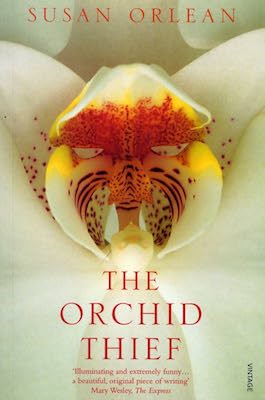
In 1998, Susan Orlean published The Orchid Thief, her tour-de-force journalistic memoir (though I don’t think she’d ever refer to it as such) following the orchid obsession that was tearing through Florida, leading more than one individual to the brink of criminality. Orlean centers the story on John Laroche, a man possessed by an indescribable desire to capture and appropriate the ghost orchid, Polyrrhiza lindenii. He is driven by greed, but also a lilting intelligence. A man who claims to know everything, and, to some degree, just might. He is quick to obsess, and even quicker to slash his stash once the passion is gone; by the time Orlean encounters him, he’s already abandoned similar fascinations with turtles and ice-age fossils.

At the start of the memoir, Orlean has left her home in New York for Florida, unsure if Laroche will even agree to speak with her. The project was triggered by a newspaper article she stumbled upon, but really, she’s chasing an impulse, letting the story build around her. The article outlined Laroche’s trouble: how he, and a group of Indigenous Seminole people, were arrested for attempted poaching of ghost orchids in the Fakahatchee, a protected Florida state park. Members of the Seminole Tribe were let off with a warning, having successfully argued their right to the land. Laroche was not.

Much like Orlean, I’ve always been drawn to passionate people.

Much like Orlean, I’ve always been drawn to passionate people. It’s in my nature to wonder how those with obsessive interests find themselves at the point of no return. Like Orlean, I’m perpetually curious, scanning constantly for meaning. Like the collectors, I’m hunting for fulfillment, convinced it’s right across the road, if only I’m tenacious enough to claim it.


The first exhibit we see in the science museum is a photograph display titled “Orchids That Don’t Bloom for Shows,” which features images taken throughout the year by one individual on their cell phone. Certain photos bear a ribbon already. What they’re marking, I don’t yet know. Just steps from us, the real orchids are putting on a show, blue and red and white ribbons pinned along their terracotta chests. These flowers are scored on tangible things, like color and strength and petal shape.

The main event is down the hall, inside a miniature auditorium. Up on the stage, two women work diligently to repot purchased orchids behind a rickety plastic folding table. On the floor, sneakers squeak against the freshly waxed wood. There are at least four vendors here, their bodies encased by an array of plants at varying levels of growth. Around them, a jungle erupts, countless displays of orchids, from impossibly small flowers that snake up curving stems to individual beasts the size of my hand. They are pink and red and yellow and purple and orange and white. Some look like spiders with spindly petals, others look murderous with great big chins to catch bugs. Small black plaques identify their Latin names and astonishing price tags. At one show, Orlean discovered a display containing nearly forty thousand dollars’ worth of orchids.

Around them, a jungle erupts, countless displays of orchids, from impossibly small flowers that snake up curving stems to individual beasts the size of my hand.

A man near the entrance to the auditorium wears a U.S. Navy lanyard and says he’s been collecting since the 60s. His first job as a teenager involved moving giant pots of orchids, the kind of terracotta behemoths that line the front walks of impressive mansions. “It’s a lifetime obsession,” he tells me.

Another collector wears a chambray shirt embroidered with a pink orchid above the chest pocket. He sells orchids that smell like chocolate and raspberries and I overhear him telling a woman, “It’s my therapy. Something that keeps me occupied, where I’m always learning.”

In the middle of the room, a man dressed in all black dissociates in front of his life’s work. I rouse him from another dimension by asking how he got started. “I saw my first orchid in a Buffalo store window 35 years ago,” he says. “I had never seen one before but I was transfixed.” His display is heavy with blue first-place ribbons.


Orlean asks a collector what it is about orchids that “seduced humans so completely that they were compelled to steal them and workshop them and try to breed new and specific kinds of them and then be willing to wait nearly a decade for one of them to flower?” Orlean doesn’t describe how the collector formulated his response. If he faltered, if he felt attacked by the intensity of her observational interest. But she does tell us what he responded: “Mystery, beauty, unknowability, I suppose. Besides, I think the real reason is that life has no meaning. I mean, no obvious meaning.”

As writers, all we do is search for and make meaning from the mundane. We are sensitive to overheard conversations, to the passing of coffee from employee to customer. Moments that fester and form inside us until, one day, they burst forth demanding to be made into something new. We craft, constantly. It’s an obsession, all this meaning-making. A sort of high that we are constantly chasing. Just like Laroche, I suspect we are also hoping that some form of success (money or meaning or, ideally, both) waits at the other end.

Writers risk falling into the habit of living for a story, rather than writing in congruence to living.

It’s easy—for me, at least—to slip into a mindset of ransacking, rather than excavating. Like Laroche breaking into Fakahatchee because his obsession was powerful enough to support a belief that he was entitled to disrupt the natural order, writers risk falling into the habit of living for a story, rather than writing in congruence to living. I’ve already begun to recognize this pattern in myself. Where my decision-making process for attending an event, confronting old friends—really anything—has been reduced to asking myself: “Would I be able to write about this?” Often, it feels like lying. Like falsifying the impulse behind memoir and art. My end goal has switched from gaining a deeper understanding of myself and the world around me to calculating how much I can produce, publish, craft.


In The Orchid Thief, Orlean never sees a ghost orchid in person. In a traditional story, in a story built on the author’s meticulous plan to craft the perfect plot, seeing it would be the crescendo moment. Where everything that’s been building over hundreds of pages finally explodes in relief. The moment she comes face-to-face with the fragility of beauty, the cause for so much treachery and loss and obsession.

But Orlean’s book is not a novel. When she attends her final orchid show, a sort of peace washes over her as she realizes the ghost orchid won’t be there: “It was a relief to have no hope because then I had no fear; looking for something you want is a comfort in the clutter of the universe, but knowing you don’t have to look means you can’t be disappointed.”

What if I just walked away, as Orlean does at the end of The Orchid Thief, without the perfect ending?

What would happen if I stopped searching for the story in every turn signal, every stranger passing on the street, every minute shiver of the trees? What if I stopped fabricating intention and metaphor where there is neither? What if a sign outside the local science museum was just a sign, promoting an event, without outsized metaphorical significance? What if I just walked away, as Orlean does at the end of The Orchid Thief, without the perfect ending?

My first essays were purer. I didn’t know what they were going to become as I wrote them: the decaying deer carcass I found in the woods; the extra pigmentation that made itself at home on my face; my need for validation that morphed into inappropriate bonds with English teachers. I lived my experiences as they happened, and only later twisted them into something charged. Those stories feel more real and palpable than anything I’ve since forced into existence. They have heart and complexity, overlapping themes and invisible threads that I later wrangled apart and put back together again. That doesn’t happen when you decide what a story will become before it happens.


At the Orchid Show, I bump into an older woman holding a clipboard. She’s two heads shorter than me. I ask if she has a booth and she tells me no, she doesn’t. “I’m a society member,” she says. “I do the judging.”

I ask her what she thinks it is about orchids that attract so many people, that make her job necessary in the first place.

“They’re a special flower,” she says.

To her, it’s that simple.

She tells me that some of the vendors have green houses where they force orchids to stay in bloom all year in order to bring them to shows like this. In nature, an orchid blooms for six to ten weeks. But first place ribbons guarantee revenue and, like most obsessions, disruption of the natural order is the price.

Like most obsessions, disruption of the natural order is the price.

Orchid pollination is a delicate dance, she explains, because some flowers have the ability to self-pollinate—if they get impatient, if their environment isn’t exactly perfect, they don’t wait around for moths or butterflies or birds to deliver that elusive pollen.

As the woman speaks, my first thought is that this kind of efficiency might be a good thing. Less work for everyone involved, a self-reliance that keeps the species going. It’s impressive that beauty can be made authentically, without force or artifice.

But, of course, it’s not that easy.

Self-pollinated orchids, the woman tells me, only bloom for a single day.

You Can’t Unsubscribe From Grief

For Cai

Replying All on the Death Announcement Email

On New Year’s Day, I got an email from an old writer friend announcing plans to end her life. Her life was already ending. This expedited ending-of-life had been approved by a medical professional. She was electing to die with dignity. Her death was scheduled for the following day. Like a hair appointment or a visit to the dentist.

It wasn’t an email directly to me. I subscribe to her newsletter.

Farewell, the subject line read. That was her voice. Grand and direct. There was no beating around the bush. Happy New Year! the email began and then: I’m planning to end my life.

After I closed the email, I tried to stop thinking about her, but that night, on the eve of when I knew she was going to die, I couldn’t sleep. I googled her name, read every article that appeared on my screen. Read all the hits that weren’t actually about her. The ones with her name crossed out that the algorithm insisted were relevant. Maybe it knew something I didn’t.

I read about all the diseases I was probably suffering from that had nothing to do with her (or the disease that was killing her), I read about all the new diet trends that would shed my hips of love handles (I hadn’t seen her since she got sick, but in her last photo she was rail thin), I read about a minor celebrity cheating on another minor celebrity and then them reconciling and then them breaking up and then them getting back together again (she loved the thrill of gossip)—I read everything in the hopes of catching a glimpse of my soon-to-be dead old writer friend.

A week later, I got an email from a literary magazine announcing the death of its co-founder. I did not know its co-founder. I just subscribed to the newsletter.

I read the announcement from the literary magazine as if it were the announcement of the death of my old writer friend because after she died, I didn’t receive such an email. Because she was not here to write one. Or to send one. Though she could’ve scheduled one. Which is a thought I’ve had more than once since her death. Why didn’t she do that? That would’ve felt so like her. Not so fast, it might’ve read. I’m still here.

After the newsletter announcing the death of the literary magazine co-founder, my inbox was flooded.

I am so sorry to hear this. May you and yours find comfort. Keep him close to your heart.

I didn’t email anyone when my old writer friend died because it felt like I didn’t know her well enough. We met at a writing residency in Wyoming in 2016. We watched the presidential election together: I baked cookies, she bought liquor. We only inhabited the same space for a handful of weeks. So, how can I justify the vacuum suck of losing her?

The day after the election, we sat at a kitchen table and talked about our bodies. About who they belonged to. About culpability. I remember us disagreeing. The strangeness of feeling so connected to each other and then realizing, suddenly, that we may not actually know each other.  

I cannot keep the literary magazine co-founder close to my heart because I did not know him at all.

Life is eternal! Your memories are the tap that keeps him living!

I think my old writer friend would’ve liked the idea of tapping a memory, like a keg or a maple tree.

Peace and love!
(The sender included emojis of a peace sign and a yellow heart.)

I don’t think my old writer friend liked emojis. I’m not sure of this, but I just get a sense. She was whimsical, and danced wildly before she got sick, and very often swam naked, but I think emojis might’ve been beneath her.

After the residency, we wrote each other breathless emails. She was fond of exclamation points and caps lock. She didn’t need emojis to let you know how she felt.

Hah! You crack me up! YES, I miss you too! GET OVER IT! Enjoy the super-moon tonight! We won’t see it here. Too cloudy . . . Boo!

It was cloudy here last night too, but now the moon is beautiful.

Send me your essay about the election!!!

Please stay in touch often. What else am I forgetting?

Hello Everyone!
(This was the first sender who acknowledged they were emailing multiple people.)

I am sending my deepest sympathies and wish peace and warm memories for everyone whose lives he touched . . . .

The co-founder of the literary magazine did not touch my life, but my old writer friend who just ended her own life via death with dignity did. She is the person who told me to: Go for it with my now-spouse. We were hiking through the rolling grasslands of Wyoming at sunset. I don’t remember the words she used, but I remember her insistence. That night, I booked a plane ticket.

In her Farewell email, she said that she “had a feeling she’d be returning to haunt a number of people in a good way.” I’m certain I wouldn’t even make the longlist of hundreds or thousands of people who meant something to her, but a part of me wonders if that email chain might just be a hello from her.

Not a hello for me.  

Maybe someone who loved her—who she loved—is also on that mailing list.

I don’t deserve a hello because in that essay about the election, I mentioned a conversation she and I had. After it was published, she wrote me an email with the subject line: good job—all lowercase—then said the essay was lovely and impassioned, even if I made her sound kind of prim. I apologized once and then twice and then we exchanged email after email. The last one from her read: I felt a bit betrayed. That said, I love you anyway!, then she signed off: Xoc.

And I never stopped feeling guilty.

I didn’t invent anything for the essay. I wrote it as I remembered it. But that’s the thing about memory. What it means to me is not what it means to her. And she’s gone now, so I’ll never know which version is true.

If she were still here, she would probably say: GET OVER IT. But the thing is, I can’t.

In Wyoming, we were supposed to watch the first woman become president, but instead, we didn’t. My old writer friend was supposed to live into her 90s, but instead, she didn’t.

In the interest of not getting emails from everyone on this list (which is huge), I suggest going forward we refrain from replying all about this news.

Be blessed and please unsubscribe me from your mailing list.

My condolences. Unsubscribe! Thanks.

Please do not email me.

Stop replying all. If it has a double arrow don’t press it.

I also don’t want to be part of this list anymore. While waiting for you to delete me, I will declare all your emails as spam. So, act FAST! Warmly . . . .

This woman is grieving. Do you have no heart? This could’ve been a space for healing and instead you’re bringing nothing but negativity.

Please unsubscribe me these emails are becoming very stressful to read.

AGREED. Please take me off this chain. I have a newborn at home and I really don’t need my inbox filling up with emails about death.

I do not like death. Please unsubscribe me.

On the first day of the new year, I thought about responding to my old writer friend’s Farewell email. The email that announced that the next day she was dying. I didn’t want to burden her with an email on the last day of her life. But she’d written to me. Well not to me, but to her subscribers, and I wanted to say something. But I didn’t know what.

Maybe I wanted to say: You didn’t have to forgive me.

Maybe I wanted to say: I didn’t deserve you. 

Maybe I wanted to say: I will do better next time.

Then I began typing.

10 Memoirs and Essay Collections by Black Women

In her 1993 poem, “won’t you celebrate with me,” author and educator, Lucille Clifton, invites us to wonder at the life she has created:

“… i had no model

born in babylon

both nonwhite and woman

what did i see to be except myself? 

i made it up.” 

As a Black woman existing at the intersections of these marginalized identities (“both nonwhite and woman”), Clifton finds herself rendered invisible in the mainstream and—consequently—creates herself in the process. 30 years onwards, Black women writers continue to take on the mantle of rendering themselves visible across genres and constructing models for future generations to see themselves in. 

This has been especially true in the case of personal narratives, from memoir to essay collections. Starting with Harriet Jacobs’ Incidents in the Life of a Slave Girl published in 1861 as a foundational abolitionist text, through to Angela Davis: An Autobiography released only a few years after the acquittal of the Black Panther leader and prominent feminist, Black women  have narrated their stories and transformed the personal into the political with radical results. 

In our own personal narratives, we shrug off duty and expectations, the needs of others become secondary to our primary, as we catalog our hurts and our hopes. We become the hero, not saving anyone else but ourselves. To borrow a phrase from the late bell hooks, we move from the margin to the center. 

The following contemporary memoirs and personal essay collections released in the past ten years exemplify this growing urgency by Black women to tell our side of the story. Their words illuminate the realities of the world and the impact of racist and sexist systems of powers on the lives of the most disenfranchised. These works are affecting, funny, haunting, inspiring and all urgently salient. They are additions to the records and the archives, insisting and reminding us that our voices always matter. 

Men We Reaped: A Memoir by Jesmyn Ward

Within a four-year time span, two-time National Book Award winner Jesmyn Ward saw the deaths of five Black men in her life, including that of her brother. She chronicles their lives, alongside her own, of growing up in Mississippi and the history of racial violence that surrounds around them. “Hopefully, I’ll understand why my brother died while I live,” Ward writes, ”and why I’ve been saddled with this rotten fucking story.” Her journey of reflection is one of grief, anger, and guilt, all buoyed ultimately by the love that comes through of her family and the home that raised her. 

Negroland: A Memoir by Margo Jefferson

Writing about her upbringing in a wealthy, professional Black community of Chicago in the 1950s, critic Margo Jefferson reflects on the intersections of race, gender, class, and color within her community, poetically delving into the nuances of Black life. The Pulitzer Prize winner manages a tight balancing act, honestly approaching the privileges and prejudices of her childhood family and friends, whilst remaining steadfast in her knowledge and understanding that Blackness—regardless of status or hue—is still ultimately Black. “We’re considered upper-class Negroes and upper-middle-class Americans,” her mother tells her, “But most people would like to consider us Just More Negroes.”

We Are Never Meeting In Real Life: Essays by Samantha Irby

Though comedy writing—much like comedy itself—continues to be a boy’s club, Samantha Irby fuses sarcasm, self-deprecation, and toilet humor into musings and anecdotes about her life in the Midwest. Whether she is writing about The Bachelorette or mental health or falling in love, her singular voice is sure to bring you to tears of laughter or sadness, if not both at the same time. In an especially funny take on her pain she asks, “Do Black girls even get to be depressed?” and hordes of us nod in synchronized recognition. 

Hunger: A Memoir of (My) Body by Roxane Gay

Author, cultural critic, and professor Roxane Gay has never shied away from the story of the violent sexual assault that took place as a child, but the story extends from that experience to explore additional themes around the (her) body. Using examples from her own lived experiences, she challenges assumptions and conventional thinking about health and wellness, taking to task all the unacknowledged fatphobia we pervasively encourage in our society. Gay’s memoir is sometimes difficult to read, but necessarily so, particularly the parts where she works through her own demons and leaves us no choice but to confront ours too. “I buried the girl I had been… and perhaps I am writing my way back to her, trying to tell her everything she needs to hear.” 

Thick: And Other Essays by Tressie McMillan Cottom

In a series of wide-ranging essays, the university professor and MacArthur Genius covers beauty standards, Black maternal mortality, and the election of Barack Obama, told through personal stories, academic scholarship, and cultural criticism. Thick is intentional in centering herself and the experiences of Black women and girls—a revolutionary and counter cultural endeavor given how “[the] personal essay [has] become the way that black women writers claim legitimacy in a public discourse that defines itself, in part, by how well it excludes Black women.” McMillan Cottom refuses to be shut out. 

The Yellow House: A Memoir by Sarah M. Broom

“Remembering is a chair that is hard to sit still in,” writes Sarah M. Broom in her National Book Award-winning debut work. The title comes from the name of her childhood home in New Orleans where she grew up with her large, loving, and complicated extended family. She moves away for college and continues to move further away from the yellow house, until the tragedy of Hurricane Katrina forces her to reckon with her home and all the historical and political context of where she came from. She looks at race, class, and inequality from a humanistic lens, using her story and the stories of her loved ones to reveal the harder truths about the country and how far left there is for us to go. 

Memorial Drive: A Daughter’s Memoir by Natasha Tretheway

For years, former Poet Laureate and Pulitzer Prize winner ran away from the defining tragedy of her childhood—the murder of her mother by her ex-husband when Tretheway was a teenager. “All those years I thought that I had been running away from my past I had, in fact, been working my way steadily back to it,” and her memoir is her way of unpacking that journey back, beginning with her mother’s death and studying all around it. As Tretheway looks at her own life, from growing up biracial around the time of Loving v. Virginia to finding her way to becoming a writer, she is tenderly attentive to the memory of her mother and grappling with the situation of her death, taking us along the often dark journey with her. 

Just Us: An American Conversation by Claudia Rankine

Much like its author, Just Us is a text that defies categorization. The poet, playwright, and essayist utilizes poems, footnotes, essays, photographs, quotes, scripts, tweets and Facebook statuses to explore and indict American racism. Rankine’s writing is grounded in her own experiences, using everything from dinner party conversations with other academics and faculty members to moments between her and her White husband in couples therapy, resulting in a text that is personal, vulnerable, and filled with beauty. Rankine asks, “How does one combat the racism of a culture?” Just Us answers. 

Shine Bright: A Very Personal History of Black Women in Pop by Danyel Smith

Former editor of the iconic hip-hop and R&B publication VIBE Magazine, Danyel Smith’s memoir doubles as a music history on Black women musicians. Smith chronicles her life growing up in Oakland and her journalistic path, looking to icons like Aretha Franklin, Donna Summer and Stephanie Mills as inspiration as to who she could be, and pays them their due through her own story. “I want Black women who create music to be known and understood, as I want to be known and understood,” Danyel writes, demanding that we pay attention to them and her too. 

Ordinary Notes by Christina Sharpe

Ordinary Notes can be understood best as meditations—on Blackness, on life, on the human condition—penned deftly and poignantly by the woman described in the New York Times as “shaping a generation of Black thought.” Professor Sharpe intimately walks us through her life, from the museums she walks, to the songs she listens to, to the family histories she unearths, and in the final section, she dedicates pages considering the books she describes as “giving me a place to land in difficult times.” To Sharpe, they show “Black worlds of making and possibility.” Ordinary Notes does the same.