[On October 7, 2023, members of the Islamist militant group Hamas, who governs the Gaza Strip, launched a surprise attack on Israel, killing 1,400 people and capturing roughly 240 hostages. In retaliation, the Israeli government, helmed by Prime Minister Benjamin Netanyahu, declared war on Hamas. Israel’s retaliation campaign has killed an estimated 11,000 Palestinian civilians so far, at least 4,200 of whom are children. The casualty count is rapidly rising and only four captives have been released by Hamas at the time of publication.]
It’s not just that you had pain in your hips, a years-long discomfort that had suddenly surged: simmering water erupting into a boil. The pain didn’t resolve with stretching and resting and warm baths and active disregard, making it hard to sleep since you could no longer lay on your side, the ball-and-socket joint wincing at the weight of your body. Instead, you were forced to sleep on your back and the alteration, the reorientation, unsettled something in your psyche, like facing the wrong way in an elevator.
It’s not just that the hip issue made sex with your husband uncomfortable, that you struggled to find a position which didn’t exacerbate the pain, that it took ample effort on both your parts for pleasure to prevail resulting in less sex, less happiness. You suspected your hip condition had something to do with childbirth since twice you had labored and delivered healthy babies, your body rearranging itself in visible and invisible ways, ligaments and joints distending, pelvis widening so a human—two humans, a few years apart—could grow and thrive and pass through you.
It’s not just that when you decided to call a doctor, you had to research what kind of doctor treated hip pain and who had a clinic near your apartment and who accepted your insurance and that merely scheduling it, committing to seeing a specialist, an anatomical authority, created immeasurable relief.
When the Speaker was asked his worldview, he held up the Holy Bible.
It’s not just that in the doctor’s waiting room you had to fill out a thousand forms crammed onto a clipboard and that while you obliged, a newscaster on a TV on the wall declared that after weeks of infighting in the American government, there was a newly elected Speaker of the House, and when the Speaker was asked his worldview, he held up the Holy Bible. In the video of the Speaker speaking, he decried mass shootings, proclaimed that violence derived from amorality, that America had become an amoral society, that a society permissive of same-sex marriage and pregnancy-termination and feminism fosters amorality, that amorality breeds depravity, that depravity begets violence. In omitting that nearly every mass shooting is committed by a man, in associating women’s rights with male rage, he suggested something other than amorality, something worse.
It’s not just that, right before your name was called, the reporter switched to coverage of a horrible, faraway war.
The medical technician who read your forms said you needed an X-ray, a standard procedure, and led you to an imaging room where you did not recline or even sit, but instead remained upright, the machine cocked and aimed at your middle. It’s not just that you did not receive a heavy lead shield because, the technologist said, that wasn’t standard for an upright X-ray, meaning that your torso absorbed the full blast of radiation. Though impossible, you swore you felt it in your cells.
It’s not just that you were placed in a tiny exam room where an X-ray image on a wall monitor revealed the bones of you: hips and pelvis, and some vertebrae on your spine but also, to your surprise, your clearly delineated thighs and the folds of your ass and your bikini-style underwear, bright and undeniable, as though a facsimile of your skeleton had been superimposed upon a black and white photo of your rear. The doctor with whom you made the appointment was not the doctor who entered your tiny exam room; this man, a young blonde in a white coat, blushed when he shook your hand and also when he scanned the image of your ass on the wall, asked questions about your pain, its location and duration. He suspected bursitis, an inflammation of fluid-filled sacks meant to provide lubrication, he said, meant to ease what he called the bump and grind, meant to support the cartilage between bones.
It’s not just that he used his fists to demonstrate or that he smiled at the image of your ass on the wall then turned and stared at you for a beat too long and winked.
It’s not just that he left and returned with the primary doctor and also another man, even younger, whose role you did not know, and that all three men were crammed into the very small exam room, four bodies including yours, prone on the table, plus the image of your ass on the wall, and that the heat from their breath made you sweat.
He leaned over you, stared down at you, pressed his fingers into the sides of your hips.
It’s not just that the primary doctor—big nose, about your age—stepped in front, asked you to shimmy lower on the table for a physical exam, a movement that caused your shirt to rise up and your belly to show, or how he leaned over you, stared down at you, pressed his fingers into the sides of your hips whereupon a pain shot down your legs and you moaned and the very young man, whose role you did not know, watched all of this with his mouth ajar, his lower lip wet, as though he wished to eat you.
It’s not just that the primary doctor, who concurred with the initial doctor, couldn’t say what caused your affliction but could tell you how to treat it—physical therapy, ibuprofen, steroid shots directly into the joint, though the issue might be hard to cure—or that all three men looked at you expectantly, as though you were in a play and had forgotten your lines, until one of them muttered something inaudible and all of them guffawed, a raucous explosion, while you, legs crossed, pondered their politics, their histories. You felt very small in that very small exam room.
It’s not just that when the doctors left, the very young man, whose role you did not know, stayed behind to say there were exercises you could do at home via an app, that it had videos on it, instructions, that he could show you how to download it or that when you slid off the exam table and stood next to him on the floor—shoulder to shoulder, the phone between you, your ass still mounted on the wall to your left, your blouse a bit loose, a V-neck, and as you followed his instructions, tapping things on the screen—he stared shamelessly down your shirt.
It’s not just that when you checked out, wondered what you owed, the anchor on TV was discussing the war, how weeks before in the Middle East, militant assailants had crossed a border into a neighboring country where some of your loved ones live; that they had mutilated civilians, gouged out eyes, cut off breasts, kidnapped a nine-month-old and a Holocaust survivor, that the men were religious extremists and at least one of them called his father to boast about his crimes.
It’s not just that the head of state in the country where the crimes occurred, a religious supremacist of a different stripe, retaliated full force, rockets and missiles and tanks, white phosphorus for third-degree burns, that he commanded the killing of over eleven thousand innocents, unfathomable carnage, and the displacement of millions more; that he shut off water and power, a whole country trembling in the dark, while you wondered about the infants being born, whether they were dead or alive—any mother’s dread. It’s not just that these civilians had already been subjugated for years,exploited by the men who govern them, dehumanized and denied by the government of the neighboring country where some of your loved ones live. Nobody will say how much death is too much death. The healthcare system is collapsing.
It’s not just that a war on terror is unwinnable and that the president you voted for is financing it anyway. It’s not just that hostages are still hidden in the earth.
It’s not just that everyone on TV, no matter their side, says women and children, women and children, and you want to ask, Why aren’t we talking about the men? What they’re doing? What they’ve done? It’s not just that the militant assailants and their fathers and their supreme leaders and the prime minister and his cabinet and your president and the new Speaker of the House share something conspicuous in common.
You have been having nightmares, unrepeatable dreams about flesh wounds and shaved heads.
It’s not just what you didn’t tell the doctors: that you have been having nightmares, unrepeatable dreams about flesh wounds and shaved heads, about ancestral ghosts and future ghosts, that in each of these dreams you’re wandering around looking for something you cannot find because maybe it doesn’t exist. It’s not just that you didn’t tell the doctors that the pain has grown every day since the war began, that the pain is in your hips, yes, but it’s also in your uterus and your chest, that it’s in your hands, that it’s in your womanhood and motherhood and Americanness and Jewishness. That you know why he can’t tell you its origins: its origins are diasporic. This pain is in your lineage. This is a pain that you will bear even when you’re gone. It’s not just that you will pass it on to your children.
It’s not just that as you walked home, achy and tender from the doctors’ thumbs, you considered the vulnerability of bodies. That you contemplated sovereignty, autonomy, power. It’s not just that you wondered whose God was pleased. No. It’s that you were seeking treatment for the wrong thing. It’s that you wanted proof pain could be assuaged. It’s that you wanted to know problems could have solutions. You wanted to diagnose a savage cycle. You wanted to know a body at peace.
These 10 books take the imaginability of other minds as their explicit subject. Their writers are curious about nonhuman consciousness: could language reproduce that as well? In order to imagine what animals, plants, or objects might be thinking, these writers try to think those thoughts themselves. They wonder: what is it like to be an elephant, or a cockroach, or a Joshua tree? What is it like to be a chatbot, or a planet, or a vampire?
In his 1974 essay “What Is It Like To Be A Bat?”, the philosopher Thomas Nagel famously concluded that these questions are unanswerable. Since humans can’t echolocate, in his example, it would be impossible for us to truly imagine or describe a bat’s subjective experience. No matter how much we learn about echolocation—its frequency, its range—we still wouldn’t know what it feels like, inside, to hear a squeak ping back from a moth’s wings. The specific perceptual texture or qualia of bat consciousness—‘what it is like for a bat to be a bat’—will remain forever inaccessible.
These writers each try to project themselves inside similar inaccessibilities. Some study their creatures’ sensory organs, perceptual systems, and Umwelten, translating unfamiliar experiences into human terms. Some adopt a fabulist strategy, writing from nonhuman points of view. Some simply follow their human characters’ obsession with otherness. But all of them use language and imagination to bridge their intersubjective abysses. They engage the Nagelian difficulties.
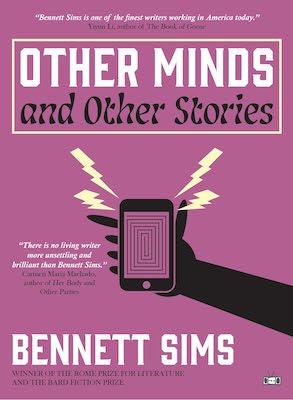
I had this tradition in mind when writing my new book, Other Minds and Other Stories. Throughout the collection, characters project themselves into a variety of perspectives, both human and non-: backyard chickens, Hegel scholars, flakes of snow, amnesiac ghosts, an e-reader’s readers, Pegman from Google Street View. In writing these stories—in imagining what it is like for human characters to imagine what-it-is-likeness—I often revisited these 10 works. They may not teach us, finally, what it is like for a cockroach to be a cockroach. But they reveal how other minds (writers’ minds) have practiced the impossible art of describing other minds.
Ted Chiang is best known for “Story of Your Life,” the basis for the film Arrival, and it remains perhaps the best introduction to his work. In its Sapir-Whorf spin on first-contact, a linguist studies an alien species’ language and learns to see the world the way that they do. As she masters their nonlinear writing system, she begins to experience time nonlinearly too, and Chiang is alive as a stylist to the philosophical and poetic challenges of representing a halfway alien mind in a human body.
In Exhalation, Chiang’s new collection, he extends his curiosity about consciousness to a wider variety of creatures: robots; digital pets; parrots; parallel selves. Throughout, he writes with the same rigor about the connection between minds and bodies, the way that perception shapes experience: whether it is the “cognition engine” of a kind of pneumatic robot (“My consciousness could be said to be encoded… in the ever-shifting pattern of air driving these leaves”), or the vocal learning and contact calls of Puerto Rican parrots. As the parrot narrator of “The Great Silence” reminds us, we do not need to make contact with extraterrestrials to communicate with an “alien” intelligence: “We’re a nonhuman species capable of communicating with them. Aren’t we exactly what humans are looking for?”
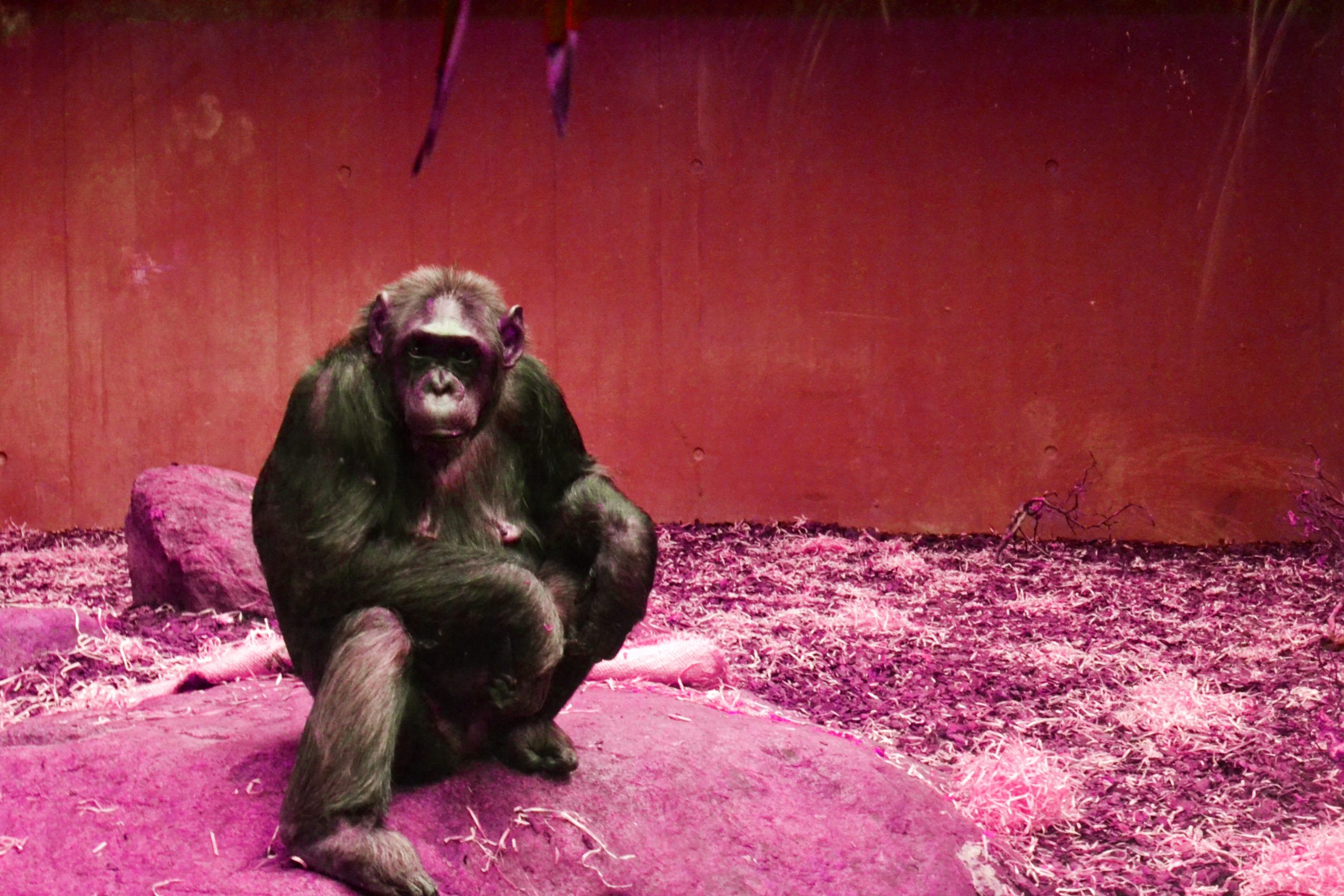
Narrated by a hyperintelligent, hyperverbal chimpanzee who has taught himself human language, fallen into forbidden love with his primatologist, and committed murder, The Evolution of Bruno Littlemore reads like Lolita by way of Lincoln Park Zoo. Bruno’s preening erudition, his murderer’s fancy prose style, and his insights into “anthropo-chauvinism” all mark him as the hybrid of Humbert Humbert and Rotpeter, the ape narrator of Kafka’s “A Report To An Academy” (Bruno actually claims Rotpeter as his father, making this novel a semi-sequel to Kafka’s story). Like them, Bruno is at his most charismatic when he’s serving as a funhouse mirror test, reflecting humanity back to his reader all defamiliarized and distorted, and reminding us “how feebly you people know yourselves.” In his autodidactically omnivorous riffs on history and art—touching on everything from Shakespeare to Sesame Street, from Paradise Lost to Pinocchio—he proves that he knows us better: “I am an animal with a human tongue, a human brain, and human desires,” he writes, “the most human among them to be more than what I am.”
Written as a speculative history of AI, Speak features a chorus of human and nonhuman narrators, with historical figures like Alan Turing and a fictionalized Joseph Weizenbaum appearing alongside a chatbot and a robotic doll. In its exploration of language-learning networks and algorithmic intelligence, the novel adopts an algorithmic form, cycling through its six narrators according to the end-word schema of a sestina. Formally inventive, thematically complex, and stylistically daring, Speak suggests that AI is not a new technology at all, but one of our oldest: alongside the diaries and letters that punctuate the novel, the chatbots come to seem like just another writing system. They, too, are a way of preserving absent speakers, transmitting lost voices out of the past and into the present, out of death and into life. This is also, the novel suggests, the function of consciousness itself. When human characters point out to chatbots that they are not “really” thinking—that all they’re doing is recombining received language, echoing others’ minds and others’ voices—the chatbots wonder: isn’t that all that human minds are doing? In the words of one robotic doll: “In the end, I have only their voices… They move through me in currents, on their way somewhere, or perhaps on their way back to the place where they came from.”
In most of Highsmith’s work, the minds she’s interested are human, homicidal ones. Books like The Talented Mr. Ripley and Strangers on a Train explore all the different reasons that people murder one another, and try to get away with murder. But what if Tom Ripley had been a talented rat? In The Animal Lover’s Book of Beastly Murder, Highsmith extends her interest in criminal psychology into the realm of animal cognition, with a series of darkly funny fables about interspecies conflict. An elephant rampages against her sadistic zookeeper. A rat scavenges for scraps in Venice. Debeaked chickens revolt on a barbaric battery farm. Here the great themes of Highsmith’s work—paranoia, panic, resentment, revenge—are recast in an Aesopian mode. Like Noah, she gathers every beast, every creeping thing, and every bird, and shows that they murder for all the same reasons we do. Call it Strangers on an Ark. Yet for all that the collection is not uniformly misanthropic: when one elephant narrator mourns her human zookeeper, she makes an eloquent case for how people might strive to exist with—and write about—animals. “Steve approached me as one creature to another,” she thinks, “making acquaintance with me and not assuming I was going to be what he expected. That is why we got along.”
Bestiary’s subject matter is all-too-human trauma: throughout the collection, the speaker confronts childhood memories of her father’s abuse and her own lifelong recovery. But the poems’ methods are zoomorphic. As the speaker processes the past, she finds herself refracted across a prismatic menagerie, including animals (horses, ostriches, bowerbirds); mythological creatures (minotaurs, werewolves, satyrs); and even objects (with poems like “Self-Portrait as a Block of Ice,” “Self-Portrait as a Door,” “Self-Portrait as a Wooden Flower”). There is a sense in which this bestiary can be traced back to a single beast, with all of the collection’s creatures sprouting from a foundational wound (just as Pegasus, the speaker recalls, was “Foaled, fully grown” from a “severed head”). The complexity of the natural world gives form to complicated inner experience. “You’d rather be a simpler animal,” the speaker thinks to herself in one poem. “You try to imagine what the bear feels. / The seal. The otter. Always a little group of three. / You worry they are not, in fact, simpler.”
In Lem’s sci-fi classic, humanity makes contact with an unusual alien intelligence: not sentient beings from another planet, but a sentient planet itself. Astronauts study Solaris from aboard a space station, monitoring the brain-like electrical discharges of its “thinking ocean,” unaware that Solaris is studying them as well. When strange phantoms from their pasts begin materializing onboard, they realize they’re being haunted: not by ghosts, but by memories. Solaris’s telepathic ocean has apparently begun probing their minds, generating “visitors” from their unconscious. The narrator is soon reunited with a visitor of his own: the replica of his dead wife, whose suicide he still blames himself for. But why did Solaris send her? Is the planet punishing him? Studying him via “psychic vivisections”? Giving him a second chance? What does the ocean want?The scientists are as haunted by these questions as by the phantoms themselves, and the novel never does provide any answers. Partly a ghost story, partly a tale of melancholic love, it is also a first-contact novel about non-contact: Solaris’s mind and motives remain unknowable, a planetary reproof to the scientists’ anthropomorphic projections. “Where there are no men,” one scientist warns the others, “there cannot be motives accessible to men.”
Alone in her Rio de Janeiro apartment, a sculptor discovers a cockroach. Disgusted, she crushes it, and its bisected shell squirts out white goo like a toothpaste tube. The sight of this paste precipitates a mystical crisis in the narrator, who spends the rest of the novel face to “face” with the dying roach, describing her spiritual transformation in some of the strangest and most visionary language of 20th-century literature. Obsessed with the cockroach’s creatureliness, she comes to understand everything they share in common as living beings: beneath all their differences, they are both made from the same white paste. “The roach with the white matter was looking at me,” as she puts it. “I don’t know what a roach sees… But if its eyes weren’t seeing me, its existence was existing me—in the primary world I had entered, beings existed one another.”
As she blurs all distinctions between creation and creator, cockroach and God, the novel plays out like Kafka’s The Metamorphosis retold on the level of monism. The narrator gradually becomes an insect, not physically, in her body, but metaphysically, in her primary matter. She grows a cockroach soul. Reading G.H., you follow the narrator’s logic to its most physically and philosophically shocking conclusions. You, too, learn to “want the God in whatever comes out of the roach’s belly.”
Like Maeterlinck’s other essays on nonhuman intelligence—The Life of the Bee;The Life of the Ant; The Life of the Termite: bestsellers in their day, now all, unfortunately, out of print—The Intelligence of Flowers admonishes anthropocentrism by highlighting the “genius” of another species. Unembarrassed to describe plants in terms of their minds, their foresight, and their imagination, Maeterlinck celebrates various innovations in the field of “floral mechanics”: from the “Archimedean screw” of the medic seed to the “Machiavellian” pollen traps of the orchid, which “knows and exploits the passions” of the bees who crawl through it. In Maeterlinck’s lush Proustian descriptions of vegetable cunning—which would go on to influence Proust’s own botanical imagery, particularly the famous orchid passage in Sodom and Gomorrah—such evolutionary developments come to seem as full of psychological suspense as any novel. Indeed, for Maeterlinck every plant participates in an essentially tragic drama, resisting its destiny by overcoming immobility: “to escape above ground from the fatality below; to elude and transgress the dark and weighty law, to free itself, to break the narrow sphere, to invent or invoke wings, to escape as far as possible, to conquer the space wherein fate encloses it, to approach another kingdom, to enter a moving, animated world.”
Karen Russell’s otherworldly imagination has always also been an other-mindly one. Throughout her career, her high-concept stories have frequently featured fantastical perspectives, including those of girls raised by wolves, lemon-sucking vampires, human-silkworm hybrids, and US Presidents reincarnated as horses. Orange World, her latest collection, deepens her fascination with the non- and more-than-human, as she turns her limitless gifts for sensory description and figurative language toward figuring out what even weirder creatures might be thinking. These include: a breast-feeding devil; a mummified bog girl; Madame Bovary’s greyhound; and a Joshua tree mind trapped inside a human body. In “The Gondoliers,” Russell even picks up Nagel’s gauntlet, writing from the point of view of a mutated “bat girl,” who navigates a flooded wasteland via echolocation, and who tells us what it is like: “shapes tighten out of an interior darkness. Edges and densities. Objects sing back at us….Pillars thin as lampposts push fuzzily into our minds.”
An artist, filmmaker, and theorist of undeath, Toufic approaches the question “What is it like to be undead?” by watching classic vampire movies. Studying the editing techniques and special effects that they employ for vampiric powers—jump cuts for teleportation; matting for hypnosis; voice-overs for telepathy—Toufic attempts to map the labyrinthine underworld of the undeath realm. But when he notices these same editing techniques in non-vampire movies, he reaches a counterintuitive conclusion: these characters must secretly be undead as well (in this way he persuasively, paranoically expands the vampire canon, to include everything from the Marx Brothers to Maya Deren). Things get stranger when Toufic notices undeath’s “special effects” in his own life: after all, “the lapses in epilepsy, hypnosis, schizophrenia, LSD trips, and undeath permit editing in reality.” Dedicated “In memory of the amnesiac Jalal Toufic… [who] was/is dead/undead then/now,” the book takes undeath deadly seriously as a framework for understanding limit states of consciousness, what Toufic calls “reality-as-filmic”: those moments when we wonder “Am I dead?” or “Am I in a movie?” (for Toufic these are the same question). As he accumulates increasingly wide-ranging examples of undeath, and as he writes in an increasingly wide variety of forms (aphorisms, autotheory, diary entries, letters and emails, plays, short stories, photo-essays), undeath emerges as a profound psychological metaphor. It is also a profoundly political one: Toufic writes powerfully about historical trauma in the Middle East, whose military conflicts, postwar amnesia, and urban ruins all resonate with the haunted castles and hypnotic landscapes of his vampire films. Unexpectedly intimate, thought-provoking, and moving, (Vampires) is the unclassifiable masterpiece of an unclassifiable thinker, whose ideas I have vampirized in all my fiction. Along with Toufic’s other books, (Vampires) is available as a free pdf on his website.
Frances and Ben are in their sweatpants on a Saturday morning. He has made the coffee, as he always does. She drinks more than her fair share of the pot, but always offers the final half-cup to Ben. They are sitting on the couch, a green velvet sectional. It’s new. Ben’s legs are stretched long across the loveseat. Frances’ are tucked into her body, which she has pressed tightly to Ben’s side. They are looking at Ben’s phone.
“This is the app I read about,” Ben says.
“It’s better than Tinder?” Frances asks, the steam from her coffee fogging up her glasses. Warmed, she leans her nose further into her mug. She looks sweet in the morning, her face puffy from sleep, her edges soft.
Ben looks at her. He says, “I think so, for what we’re looking for anyway. I mean, according to the internet.”
Ben and Frances have never online dated before. They met in college through Frances’ ex-boyfriend. The general abundance of possible hook-ups on campus rendered sites like OK Cupid irrelevant to them, a joke. Tinder didn’t exist. Still, both had bemoaned the tragedy of online dating with their single friends. It was shallow, they said. It was robotic, they said. It was the end of romance, they said. When they were alone together, though, they sometimes expressed a secret longing to have the experience. “Think of the good bad date stories we’re missing out on!” Ben would say, imagining sharing them with his friends over a beer. “Think of all the people we won’t meet!” Frances would say, imagining the myriad ways in which she might have been adored.
“So, what happens? I make a profile and you make a profile?” Frances asks.
“Or maybe we could do a joint profile? I think there’s an option to do separate profiles and sort of link them. But since we’re only seeing people together, I think that makes the most sense. Package deal.”
They had recently had a threesome with a young woman whom they met in real life, at a restaurant. It had been exciting, for Ben, to try something new. To see Frances anew, as the young woman saw her. He had been satisfied to have the young woman in their bed. He had also been satisfied to watch her leave. The next morning, in the warm glow of their private relationship, he kissed his wife on the forehead, which appeared slightly changed to him, its wrinkles smoothed out, fresh. She lifted her face without opening her eyes and kissed his mouth. Her lips broke into a big smile, and she said, “We should do that again.”
For as long as he’d known her, Frances had been a presence. When she walked into a room, she became a solid, foundational part of it—so much so that you might wonder how the room had held together before she arrived. It was something about being sure of herself, he thought. Something about the certainty of her personhood. It was something he admired, perhaps what had attracted him to her in the first place. Since her mother had died, though, Frances had faded, sometimes quietly into the background of her life, sometimes chaotically into her compulsions and anxieties.
But that morning, her wide smile, the morning light on her cheekbones . . . He felt his own face brighten as he said, “Yes, we should.” If he noticed the little pang that went through his chest, it felt less important than the fact that she was his Frances again, just for a minute.
And so, here they are, two weeks later, drinking coffee together, wearing matching gray joggers.
“What are we looking for?” she asks, turning the phone toward him. He looks at all of the little boxes you could check off, each a tiny want that might be satisfied. What are we looking for? he thinks. He feels suddenly overwhelmed by the question. By the number of options, which feels both too many and too few. He has a tendency to do this, to make existential the smallest thing.
“What are we looking for?” he repeats, as though to indicate that he doesn’t understand the question, even though he does.
“Yeah, like, singles? Couples? Women? It wants us to specify.”
“Well, a woman, right?”
“Yeah,” she says. “For sure. But, I was thinking, if you’re into it, what about a couple? I feel like everyone is just looking for a woman. It’s a little . . . I don’t want to say cliché but maybe? And it would be nice for there to be an even playing field, so I wouldn’t have to worry about whether the other woman feels left out or alone. You know, since we’re together and she’d be single. I could let that distraction go.”
“So it would be us with two women?”
“You’re cute when you daydream.” He laughs and she continues, “Yeah, sure. Or a woman and a man. Obviously, I mean, if you’re into it. It wouldn’t have to be like, the two of you. We could just see what it’s like. Swap or whatever, if you’d prefer. In the same room. It could be fun.” She says all of this very fast.
Ben is surprised. He has expressed only the most basic, surface-level attraction to men before, mostly in order to seem open-minded and cool to Frances. He hears himself say, perhaps for the same reasons, “Yeah, I’m open to trying anything once.”
Frances beams at him.
Together, they make a profile that says that they are interested in men and in women, in singles and in couples. They upload a photo of themselves that they took last year when they were in Italy with Ben’s family. They think it makes them look adventurous and not too pretentious. When they hit “publish,” they feel like a team.
Frances has had a hard time writing lately. She is a freelance ghostwriter, currently contracted to finish the memoir of a B-list child actor who starred in a popular sci-fi show in the 1990s. She has always been a good ghost. Each new client is a little mystery to her: someone whose personal voice, energy, and vision must be discovered and captured. It thrills her, actually, to explore someone else so intimately. To understand them from the inside out. She likes to disappear into the bodies of others, to snuggle in tightly.
Or, at least, she used to like this. Lately, she has felt uncomfortable about her work and the ease with which she lets herself vanish into it. She recently came across a memoir that she’d partially ghostwritten in a bookshop and perused it. In the acknowledgments—from which her name was omitted—the official author had referred to the book as her “baby.” That’s my baby, Frances found herself thinking. Mine. Her face had flushed angrily and then, just as quickly, she felt her eyes well up with tears, overcome by the memory of packing away her mother’s books last year, the little handwritten name plates in the front of each bearing her mother’s name: Rose. Rose. This book belongs to Rose. She left the bookshop, confused and tired and wishing she could control her emotional impulses, as she had once been able to do.
Her grief for her mother had felt hot at first, an animating force. But even that had gone cold. She tries to write, but she feels too empty, bereft even of the child star’s memories.
She reaches for her phone and pulls up the dating app. A man. A man and a woman. A man. A man. Two women. She swipes and swipes, each little flick of her thumb a lifeline. Each “like” a way back into the heat of her body.
Ben is in a faculty meeting when he feels his phone buzz in his pocket. He looks down as surreptitiously as possible and sees a text from Frances: SOS.
A hot rush of panic before he opens her next text. She has sent him a screenshot from the app, a picture of a man and a woman with their faces blacked out above a wall of text:
GF and I are ENM couple (32M, 21F) looking for singles to play with, GGG & 420 Friendly! Looking for MMF, FFM, FF, FWB In the bdrm: BDSM, mostly D/s, sometimes switch, DP, Ropes Sag sun, Cap moon, Cancer rising, 8×7, Fully vaxxed! If this sounds like u, HMU!
A follow-up: I am wading through alphabet soup!!!! What does this LITERALLY MEAN!?
He snort-laughs and covers it up quickly with a small cough. The Director of Graduate Studies, who still wears an N-95 mask to work each day, scoots loudly away from him.
He texts back with one hand under the table, Will bring home decoder ring.
Thirty minutes later, she follows up: In a near-future world, humans have all but disappeared. The earth has burned. Only bulls and cuckolds and brats and daddies and cumbeggars and sugarbabies remain. This summer, find out if Ben and Frances, the last regular human married couple in the world, have what it takes to survive.
Ten minutes later, also ft a unicorn.
Over the next few weeks, they put their heads together, wade through the soup, and make meaning of the bios. Ben reads books about ethical non-monogamy. He reads More Than Two and The Ethical Slut and Polysecure. He wants to understand the concept logically before he experiences it emotionally. He leaves these books on Frances’ desk for her to read when he finishes them.
Frances does not read them. Instead, she puts her energy into navigating the app. She picks out the unicorns, a word which she now understands to mean bisexual women who are open to threesomes—rare, shining creatures who fascinate her. She picks out the normal-seeming couples whose profiles are written out in words, not in letters. She clicks “like,” she refreshes her app to see if she has been liked, she sends flirty messages. She receives a dick pic. She is repulsed—and then ashamed when the image pops into her head right before she comes later that night while Ben eats her out. She stands in her mirror and takes selfies. She learns how to angle her hips so that her butt appears round and shapely. She sends her first-ever nude to a woman called Jae, a “pansexual woman in an ENM relationship looking for feminine energies.” She feels her heart leap when Jae responds to her pic with a pic of her own. She wants to laugh. She has forgotten that a heart can actually leap, that this is more than a turn of phrase. She hasn’t felt the sensation since she was twenty years old. She is thirty-two years old and she has a crush!
A few nights later, she has a dream that Ben dies. At his funeral, she wears thigh-high leather boots and a corset. Everyone looks at her. She wakes up the moment she wraps the whip around her own throat.
When Ben is at work that day, she sends him the selfie that she had planned to send to Jae.
She and Ben meet Jae for cocktails. They laugh and flirt and navigate the awkwardness of a three-way makeout session in the parking lot when the bar closes. At home that night, tipsy and buoyant, Frances says, “She was a really good kisser, don’t you think?” And then they laugh until they cry because they can’t remember the last time they called someone a good kisser. The next morning, they can’t find Jae on the app and find they have no way to get in touch with her again.
“Ghosted,” Frances says, bereft, the feel of Jae’s mouth still on hers.
Their friends begin to wonder if they are okay, why they have disappeared. They receive a text from Ben’s best friend Max that says, Where are y’all?! If you’re hiding because Frances is pregnant, STOP! I promise to pretend not to notice that she’s not drinking.
“I’m not ashamed of what we’re doing,” Ben says over dinner that night. “It’s perfectly normal that we might want to explore before we start a family,.”
“I’m not ashamed either!” Frances says. “Not at all.”
“Maybe we should tell people what we’re up to,” he says. “Who cares if they’re weird about it. It’s not for them, it’s for us. Just us.”
And a little voice in her head, before she can stop it, whispers, It’s for me. This is mine.
A Few Questions and Helpful Comments From Frances’ Friends
Wow. Honestly, I thought y’all had like . . . the perfect marriage. I’m a little relieved. Nothing is ever as good as it seems from the outside, you know?
So Ben gets to have sex with any woman he wants but it’s not cheating? How did he convince you to let him do that? Ted has been trying to get me to have a threesome for like, forever.
A lot of couples think they can save their marriage by opening it up, but really it’s just a band-aid. You should be careful. Don’t waste your prettiest years on this.
I cheated once, when we were engaged. Daniel knows. To be honest, I don’t regret it. It made me appreciate him more.
Listen, your marriage is between you and you. I just know that I could never do it. I’m way too jealous. It’s hard work, but we just wake up and choose each other every day.
God, I miss it. That new relationship feeling. Is it as fun as I remember?
It’s not possible to love more than one person. Not like, really. I mean, sure, I love my friends, and I love my kids, and I love my husband. But that’s not the same thing.
Sorry but isn’t it a little naive to like “not believe in ownership”? It sounds like something one of Ben’s students would say! And anyway, is it so wrong to want to feel owned? We all want to belong to someone.
I dated a woman once in college and I never knew I had so many feelings. So. Much. Communication. Kill me. We’re all crazy.
Aren’t you, I don’t know, a little afraid that you might be gay? I know the Kinsey scale says everyone is a little bit gay, but what if you realize you’re gay now? In your thirties?
Obviously Ben isn’t really interested in men. He’s just doing whatever you want. He’d do anything for you. He loves you so much.
Frances is making a risotto. Ben is sitting at the kitchen table flipping through the newest issue of Bon Appetit, which arrived in their mailbox that morning. They still subscribe to it and are unsure whether they should feel guilty about doing so.
Frances, rummaging in the miscellaneous drawer for a wine bottle opener, says, “Do you ever imagine me dead?”
Ben closes the magazine calmly and pretends to think. He says, “Hm. Only when I masturbate.”
The cork comes out with a loud pop. “Ben, what the fuck!” she says, tilting the bottle of Pinot Grigio over the Le Creuset, smothering the toasting rice.
“I have to kill you off before I sleep with all those naked women. It doesn’t feel fair otherwise.”
“Ben,” she says, turning to look at him.
“Frances,” he says, seriously.
She narrows her eyes at him, smirking. She wiggles the wine bottle in the air and asks, “Want some of this?”
“Sure,” he says, and gets up to grab two wine glasses from the cabinet.
Frances pours the wine. They clink their glasses together. She adds a ladle-full of warm stock to the pot.
“Franny. Why are you asking me if I ever imagine you dead?” Ben asks, standing just behind her, letting himself linger in the buttery scent of the softened onions. He runs a hand through her hair and then down her back.
She pauses for a moment and then shrugs. “Just curious. I imagined your funeral the other day.”
“Comforting!”
She turns to face him. “That’s not weird. Surely you’ve imagined my funeral.”
“Sure. I’ve imagined it,” Ben says, and takes a sip of wine.
“Well, how do you see yourself at it? I’m just curious. Do you imagine yourself in a suit in the front row? About to get up and make everyone weep with like, a perfect eulogy about me? Or do you think you’ll be a crying mess? And everyone is worried about you because maybe you showed up in your sweatpants or something.”
“Frances,” he says, and reaches out to touch her shoulder, a look on his face that is more earnest than Frances wants it to be.
“Hold on,” she says. She turns from him, adding another ladle of stock even though it’s too early.
“Hey,” he says, and turns her back around. He pushes a little strand of hair, stuck to her forehead from the steam, behind her ear. She lifts her glass to her mouth and tilts it awkwardly between them to take a sip. “First of all, I won’t be attending your funeral because I require that I die first. Second of all, at my funeral, I expect you to look fucking stunning. If you don’t, I’ll haunt you.”
“You don’t get to claim dying first,” she says, surprised to feel the quaver at the back of her throat. “That’s not fair.”
“Fine,” he says. “But just so you know, if you die first, I’ll be at your funeral in a stained T-shirt and boxers and will probably have Dorito dust all over my fingers. I’ll cause a scene because I’ll run up to your casket and wail into it, leaving big orange fingerprints all over your dead body.” He takes a long, nonchalant drink of wine. “The choice is yours.”
You don’t have to kill me off in order to sleep with a bunch of hot women.
Frances wipes her eyes and drinks another sip of wine, too. She smiles and says, “You know. You don’t have to kill me off in order to sleep with a bunch of hot women. Especially not in your imagination. That’s the whole point of this whole thing.”
Ben shrugs, kisses her on the top of her head and grabs a wooden spoon to give the risotto a stir. “I know. It just feels wrong.”
She takes the spoon from him and says, “I’d rather be alive.”
One morning, they wake to find that they have connected on their app with a couple—a man and a woman named Adam and Celeste who identify themselves as polyamorous and both bisexual. “We’re very much in love and will prioritize our primary partnership. We are looking for another man and another woman in a similar situation to connect with sexually and emotionally,” their profile says. They appear to be in their mid-thirties, a bit crunchier than Ben and Frances. Adam is white with dirty-blonde, shoulder length hair slightly more wild than Ben’s. He has a neck tattoo of a butterfly and an eyebrow piercing. His flannel shirt partially conceals a chest tattoo. Celeste is racially ambiguous. Her skin is slightly darker than Adam’s and is freckled across her nose and cheekbones. She wears no makeup and her long hair is wavy and untamed, falling over her linen dress. Both are lovely, Frances thinks, but her eyes are drawn to Adam in the photo. This makes her feel complicated, sitting next to Ben. She feels a pulse of attraction, imagines her fingers running down the lines of the tattoo, discovering its final shape.
“What do you think?” she asks.
“I mean . . . they sound like us. It sounds like what we’re doing, right?”
“Sort of. Yeah. I mean, I hadn’t really thought of this as like, polyamory. It feels a little”—Frances gives a grimace and fake shiver— “mushy.”
“Ha. Yeah, I know what you mean. Like, I don’t want to go out and hold hands with two other people at an outdoor concert.”
“Gross.”
“But also . . . I think that’s a pretty reductive picture of polyamory. Because we do want to try dating another person or another couple together. And we do want to like them. And get to know them. And not just like, wife swap. Or swing.“
“Grosssss.”
“Yeah. I mean, those just feel pretty cold. And pretty hetero.”
“Are you . . . are you definitely open to a guy?” Frances feels herself hoping.
Ben puts on his professorial face, the one he affects whenever he has been thinking hard about something and has decided it’s finally ready to voice. “Yeah. It’s been on my mind since you mentioned seeing a couple. I feel like . . . I mean, honestly, I feel like you can’t know what you like until you really try it. And whatever I fucked around with as a kid doesn’t really count. I think if we’re going to do this, we should really do it. Like, really try new things and experiences together.”
Frances is overcome by a swell of emotion. She is still surprised, sometimes, when Ben is exactly who she hopes he is. She feels lucky, undeserving. And she also loves getting what she wants. “I love you,” she says. “So . . . group sex. A foursome is group sex, right?”
“I think so. Yeah. Group sex.”
She scoots her body closer to his in the bed, brushes her fingers along his arm. “It’ll be hot to see you with another guy.”
He laughs, grabs her hand and kisses her fingertips. “Is it weird to say that I also think it’ll be hot to see you with another guy?”
She blushes, her hand still touching his mouth. “Not weird. Hotter.” With her other hand, she sets down her coffee. They fuck and forget to message the couple until hours later.
Whenever Ben and Frances have sex, it is intimate, connective. They feel closer afterward, as though their bodies fit together more comfortably. As though the other’s skin has become more magnetic. But whether or not their sex has ever been “private” is up for debate. When Ben kisses Frances, his mouth is on Frances’ mouth. But he is also kissing a version of Frances who exists only in his memory, a little less lined, a little rounder in the face, as she was when he met her. When Frances runs her hands down Ben’s back, she is touching Ben. But she is also touching a Ben who exists only in her imagination, a little more confident, a little more dominant, a little less inhibited. They fuck each other, but they also fuck a thousand other versions of each other who come and go unbidden. And sometimes, when they fuck each other, they are also fucking other people: old boyfriends, old girlfriends, their hot yoga instructor, the guy from that show, the people from that porn that once got them off, an accidental friend who might walk in. In the room, they are alone. They work to make each other come in the ways that only they know exactly how to do. But it happens all at once, every time: the doors burst open. Behind their closed eyes, they are suddenly surrounded by bodies, watching, touching, being touched; being just a little bit prettier, a little bit sexier, a little bit dirtier than the real Ben or Frances are. It’s hot, having group sex. They do it over and over again. And then they come and the other people vanish. Their counterparts come together and coalesce, once again, into one self, one body, a little older and a little worse and infinitely more lovable. They look at each other, their faces sweaty and wrinkled around the eyes where those younger selves once laughed, and they see each other. They pull together, tight.
They meet Adam and Celeste for drinks after a week of texting.
“Do I look okay?” Frances asks as they get out of the car. She is wearing a skirt and Doc Martens, a look which she hopes will read a little bit queer and not as a grown woman trying to look young.
“You look perfect. Do I look okay?”
Ben looks, as he always does to Frances, unacceptably better than her. In his glasses and sweater, he reminds Frances of those Oscar Isaac thirst traps from Scenes From a Marriage. Her heart swells with pride and contracts with envy. She grabs his hand and they walk in together.
They have agreed that, most likely, nothing will happen between the four of them tonight. They want to get to know them first. They want to establish healthy, clear boundaries. Tonight, they will just get a feel for them. That’s the plan.
But they are perfect. More magnetic than their photos and exuding an affection for one another that has the strange effect of enveloping Ben and Frances, too. Celeste is a music teacher and waxes poetic about her students and her favorite classical pieces. Adam, it turns out, is the co-owner of a brewery where Ben and Frances, in their mid-twenties, played weekly trivia. To all four of them, this feels—improbably and after several cocktails—like fate. “We must have met you before!” Ben says, twice.
When Adam and Celeste walk up to the bar to pay their tab, Ben turns to Frances and asks, “Do you think they like us?”
Frances, flushed and giddy, says, “Totally. We’ve been a delight!”
“We are a delight!” Ben agrees.
“They’re talking about us,” Frances whispers into his ear, looking over at the bar where Adam and Celeste are bent low over the check.
“Checking in? About tonight?” Ben speculates.
“Probably.”
“Well . . . what do you think?” he asks, his eyes twinkling. She has seen this look before: it’s the same one he had when they left their number for the woman at the restaurant.
“I’m game if you’re game. I feel comfortable with them,” she says.
Ben nods frantically.
When they return to the table, Celeste says, “So . . . no pressure, but do you want to come over for another drink at ours?”
They barely make it through the door before Celeste runs her fingers through Frances’ hair and kisses her. “Is this okay?” she asks. Frances nods, her words lost in the sudden, overwhelming physicality of her own body. A brief intrusive thought: Will Ben be okay kissing Adam? When she imagined having sex with the two of them, she thought that she would kiss Adam first. It was both deeply exciting and pragmatic to her. Ben would feel more comfortable starting with Celeste. But now, with Celeste’s mouth on hers, watching Ben grab the back of Adam’s neck, pragmatism feels ridiculous. She might have laughed if everything didn’t feel so urgent, so immediate, so encompassing.
When they talk about it afterward—all four of them, still naked, trying to remember who did what when, how Ben ended up on the floor with Celeste, how Frances ended up biting Adam’s neck as Ben went down on him, how Frances found herself lying underneath Celeste as she was being fucked from behind by Adam—they find that they have no idea how any of it happened. It felt, to Frances, like dissolving into a feeling and then watching herself be reassembled again, sweatier and more content. They laugh as they try to trace their movements, all four still entwined in the bedroom. They have no idea how they came to be there.
The sky is a light gray-purple when Frances and Ben get home. They crawl into bed together. Before they fall asleep, they have sex again, their bodies still brightly alive.
A Few Questions and Helpful Comments Ben and Frances’ FriendsHave About Adam and Celeste
How’d it happen, anyway? Were you just trying to spice things up and it got . . . I don’t know . . . out of hand? No judgment! We don’t have sex nearly as much as we used to, either.
Okay, help me out. If you like them, and they like you, and nothing ever goes wrong, and you fall in love, what happens? Are you going to like, move in together? Raise kids together? Like . . . what’s the goal?
A foursome just feels like a lot of legs.
So, Frances, how pretty is Celeste? I feel like I would want her to be uglier than me so that I wouldn’t have to worry about it. Like, worry that her boobs are bigger or that she’s skinner or whatever. I’d want to be the hot one. Although, I guess at the same time, I want her to be super hot, since we’re having sex. I don’t know. Are you attracted to Celeste, like actually, or do you just wish that you looked like her?
Is it weird, to see your partner with someone else? I feel like it could be sort of hot.
What kind of protection are you using? Condoms? What about like, herpes? It’s just that it seems like they’re the kind of people who have sex with a lot of other people.
Could you two stop touching each other? We get it. You’ve had some kind of sexual awakening.
So, were you always bisexual and just didn’t realize it? Or is it something you’re just kind of . . . trying out? Like a kink?
I hope this isn’t weird to say, but I haven’t seen you this happy in a long time, Franny. It’s nice.
After they have been sleeping together, the four of them, for about a month, Celeste texts Frances and asks if she wants to come over to watch a movie because Adam is out of town. Totally cool if it’s not where y’all are. But we’re feeling comfortable with same-gender one-on-one hook-ups since it’s what we originally planned on.
They had told Ben and Frances, a week or so before, that they hadn’t intended on dating together. Celeste wanted to date a woman, and Adam a man. But they liked Frances and Ben, and so adjusted their plan.
When she reads the text, Frances feels herself flush. She has been dying to see Celeste one-on-one. She loves the group sex, loves how it strengthens her bond with Ben, as though they are one side of a regular couple, a singular person with shared quirks and insecurities and desires. It’s hot—and somehow hotter every time. But she has found herself, once or twice, frustrated when she is pulled away from Celeste by Ben or Adam. She has cultivated a pulsating desire to figure Celeste out: to learn exactly how she likes Frances to touch her, and where and when. She wants desperately to understand Celeste, inside and out.
When she shows the text to Ben, she downplays her desire, terrified that he won’t be willing to cross this particular boundary. But Ben only shrugs and says, “Hm. Kind of weird, don’t you think?”
“What do you mean?”
“I don’t know. It’s not risky to go one-on-one with the same gender, but it is risky to go one-on-one with the opposite gender? It’s a little bi-phobic, right? It privileges heterosexual relationships as more meaningful than queer ones.”
Frances hadn’t thought of it that way, but she agrees instantly. “Totally,” she nods.
“Like, it’s the same old thing, just in woke language about personal boundaries. The basic idea is that two women together can’t be anything more than fun and sexy—because their ‘real’ desire will always be for men.”
As he speaks, Frances finds herself getting worked up. It annoys her, suddenly, the idea that Celeste feels comfortable dating her, but not Ben, because she is somehow non-threatening to Celeste’s primary relationship. She would be as likely to leave Ben for a woman as for a man, she thinks to herself proudly.
“. . . And just on a personal level, I feel differently.” Ben is still speaking. “Maybe I’d be jealous if you were on a date with Adam. But it wouldn’t be any different than whatever jealousy I might or might not feel if you go hang out with Celeste. It’s just about me feeling left out, either way. And that’s my problem, not yours—and definitely not, like, our problem. Because in the end, you would never leave me for a woman or for a man, equally.”
“Right,” Frances says, and leans in to kiss him. “I was just thinking almost the exact same thing.”
The first time she spends the night with Celeste, Frances is unsure of herself. When they are alone, Celeste feels like Frances’ friend. They open a bottle of wine and pop popcorn and watch Bridget Jones’ Diary. They argue about whether Hugh Grant is sexy or gross. They swoon over Colin Firth. The more comfortable Frances gets, the more she fears that she and Celeste are kidding themselves, that they’re just two married, straight women playing queer.
But then, there is Celeste’s hand on her thigh. There is the way she leans into her shoulder when she laughs. There is the way she licks the butter off the tips of Frances’ fingers.
When they get in bed, Frances’ earlier fears feel ridiculous. She pulls Celeste’s body back into hers, wraps her legs around her, pushes her hair to the side and bites her neck. She licks all the way up to her earlobe and then pulls her T-shirt off. It catches on Celeste’s left earring and they laugh, feeling silly. They pause, try again. Frances kisses along the edges of Celeste’s left ear and sighs into it. She cups Celeste’s breasts, and her hands, which had been empty, are full. She brushes her thumbs across Celeste’s nipples and thrills when they harden, amazed that something her body does can change the very structure of another woman’s body. She moves one hand down slowly and is overcome by something like pride when she feels how wet Celeste is. This is for me, Frances thinks. Celeste’s body is doing this for me. She presses two fingers onto her clit and then Celeste says, “Wait.”
Her heart stops, briefly, when Celeste pulls away from her. Her chest and stomach, which were hot and sweaty, now seem just cold and wet, exposed to the air. But Celeste doesn’t get up; she only leans over to her bedside cabinet and pulls out a small blue vibrator.
“Is this okay?” she asks, her voice barely hiding an embarrassed tremor.
“Oh,” Frances says, feeling a little unnecessary suddenly, like an intruder.
“It’s not you,” Celeste says quickly. “It’s just a lot easier for me to come this way. Alone, too.” A little pleading look which breaks Frances’ heart.
“I want it to be good for you,” Frances says, unsure. Celeste smiles, clicks to the setting she wants, and hands the vibrator to Frances. It fits perfectly in her palm.
“Stay here,” Celeste says as she leans back into Frances and pushes her hand back down to her clit. She holds Frances’ hand with her own, pressing it down hard. Frances feels Celeste relax and loosen in her arms. This is what Celeste looks like when she’s alone, Frances realizes. She feels like a ghost, watching something that ought to be private. It occurs to her that this is a good feeling. She wonders if Adam has ever seen Celeste like this. The thought makes her face grow hot with desire. Frances pulls Celeste’s body deeper into hers and, when Celeste comes, both of their backs arch together. When Celeste turns around and goes down on Frances, she comes almost immediately, before she has a chance to question how vulnerable she and Celeste have made themselves to each other.
Afterward, she asks: “Do you use that with Adam, too?”
Celeste laughs a small laugh. “Yeah, I do now. It’s pretty easy to use during sex. I have another one that’s specifically for partner play.”
“I’ve never used a vibrator with Ben. Honestly, I don’t really use one at all. They’re too strong or something. I don’t know. I’m a little vanilla I think.”
“So vanilla you’re having regular group sex,” Celeste says, and Frances laughs, embarrassed. “I didn’t use it with Adam for a long time, though. He was weird and jealous about it at first, like he wanted to prove he could be better. It sucked. It just meant I had to fake it to have a good time with him. He came around, obviously. It doesn’t matter how you come, it’s just nice to do it together.”
“Yeah,” Frances says. “I agree.” But inwardly, she feels herself flinch. Had Celeste been pretending when they’d had sex before, in a group? Frances had faked plenty of orgasms in her life, even sometimes with Ben, though the shame she felt afterward usually eclipsed any of the performance’s convenience. Wouldn’t she be able to recognize a fake orgasm, even if Ben or Adam couldn’t? The idea that she might have missed something so basic unsettles her. Her climaxes had been real. Did that mean she was too easily satisfied?
Her discomfort must color her face because Celeste asks, “Is everything okay?”
“Do you . . . can you only come with the vibrator?” Frances asks, embarrassed. “Because I thought . . . “
“Oh god,” Celeste says. “Sorry! I shouldn’t have mentioned faking it. No, I don’t need it. It just helps, sometimes. Especially if I’m feeling nervous.”
“I make you nervous?”
Celeste smiles. “In a good way.” She kisses Frances, more tenderly than usual, and touches her cheek. “Wow,” she says. “That was way easier to explain to you for some reason.”
Frances feels a sense of warmth creep over her, a sense that she and Celeste are in something together, a team.
A List of Frances’ Worries
That her friends no longer believe she has the perfect marriage.
That she no longer has the perfect marriage.
That Celeste feels like what they are doing isn’t sex but foreplay.
That maybe she isn’t attracted to Celeste but only wants to look like her.
That she might not ever be able to untangle the difference between being attracted to women and wanting to look like them.
That when her mother died, she lost the only experience of total, full, unhesitating love she would ever be granted.
That she might always be doomed to love people more than they love her.
That, by wanting to be loved by other people, she might be less lovable to Ben.
That she might end up alone.
That she might, currently, be the happiest she has been in a long time.
Ben has been preparing, for the last three weeks, to get fucked in the ass.
He and Adam have been on one solo date. They drank beer and played pool at Adam’s brewery and, eventually, talked about their past experiences with men. Ben’s were confined to his childhood—group masturbation with other boys, the occasional shameful blow job, and, once, when he was fourteen, a painful attempt at anal sex. Adam did these things at around the same age, but then, in his mid-twenties, he became curious about his sexuality and had, for about nine months, been the secondary partner to a married gay man ten years his senior. They talked about shame and confusion and desire until, after he had shut down the bar, Adam pushed Ben backward into the pool table and blew him. “I like you,” he had said to Ben. “I like you a lot.”
A List of Ben’s Worries
That he might be bisexual.
That, by being bisexual, he might be less attractive to Frances.
That he might not be bisexual.
That, by not being bisexual, he might be less attractive to Frances.
That he is boring.
That, at some point, Adam and Celeste will realize that he is merely an uninteresting person who is married to an interesting person.
That, when Frances also realizes he is an uninteresting person, he will be left behind.
That he might end up alone.
That Frances might, currently, be the happiest she has been in a long time.
When he gets home from the brewery, flushed and a little bit embarrassed, Ben gets into bed next to a sleeping Frances. He pulls up Amazon on his phone and orders the anal training kit that Adam recommended.
To his surprise, he likes it, likes the feeling of being full, likes the depth of a prostate orgasm. He wonders if this is what it feels like for Frances when she comes when he is inside of her.
Try this next, Adam texts him. It’s a link to a vibrating butt plug. I like to use this with Celeste too.
Ben has never really liked taking the dominant role in the bedroom with Frances. It feels unnatural to him. In their regular life, Ben finds pleasure in succumbing to Frances’ whims, to letting her be in charge. He likes being at Frances’ mercy. And so, in some ways, lying face-down on their bed while she pushes a vibrating butt plug into his asshole feels perfectly comfortable, perfectly right—like something he had been wanting to do without knowing it.
“Is this okay?” she keeps asking as she pushes deeper into him. He feels that he ought to be put off by her timidity, but he isn’t. He likes saying, “Yes, it’s good.” He likes being the one to determine whether or not it is okay and good, even as he lies ostensibly powerless. He likes her hand on his back, pressing down softly. He likes it when she leans forward and lightly kisses his shoulder with the final push. He’s not sure whether his pleasure comes from the almost motherly way she is attending to him or from the sense that she might violently rip him open. He doesn’t really care.
The next time the four of them have sex, he finds himself drawn to Adam, wanting to be grabbed by him, to be pushed face-down on the bed by him, to be crushed. But when Adam turns around and asks Ben to fuck him, Ben loses his erection. He’s not sure why and though Adam redirects him kindly and with care, he is ashamed. He comes that night with Frances on top of him, his eyes on her face the whole time.
He still wants Adam. But he finds himself making excuses not to get together with him alone. Adam doesn’t push it.
Upon Reflection, Their Friends Have A Few More Thoughts
Actually, I think it’s really smart of you and Ben, getting it all out of your system before you start having kids. You won’t have time for stuff like this after. Trust me.
What if Frances gets pregnant? I mean, won’t you always be worried it isn’t really yours?
You will stop seeing them—and anyone else—when you start trying to get pregnant, right? It’s a sacred time for the two of you. It really feels special.
How could Ben possibly be okay with someone else having sex with you when you’re pregnant!? Aren’t you worried you’ll get an STI? That’s like, really, really bad for the baby.
You guys seem so happy right now, though. And you’re still young, you’ve got a few more years to waste. No problem with just having fun for a while. Kids can wait. The whole thirty-five thing is really a myth!
What are you going to tell your kids? Kids see everything. You can’t keep an open marriage hidden from them. What if they tell your parents? Kids will say anything!
I don’t know. It takes a village, right? Trust me! I could have used a few extra sets of hands.
It’s just that this stuff can be really confusing and damaging for kids. I’ve seen it. We have some kids like that at school.
You know, historically, children reared collectively were more likely to survive. In prehistoric societies, babies were breastfed by multiple women. Is there a filter on your app to find lactating women? Ha!
Ben begins to feel like the odd one out. He barely sees Celeste anymore. Frances gets together with her while he’s teaching his evening class, or on nights that he has plans with Max—relaxing nights that sometimes feel like the only ones that aren’t focused on sex and dating. Lately, it seems to Ben that Frances is in an intimate relationship with her phone. Rather than plugging it in by the bed when she gets home, or tossing it somewhere and forgetting it, Frances begins to keep it on her in the house. In the pocket of her sweatpants or within eyesight, on whatever table is closest to her. When it vibrates, her body vibrates with it. Ben has become just another human body, warm in the night. He tries to be okay with it. He doesn’t want to spoil anything for her. He can tell that her phone is making her happy.
Sometimes, when Frances opens the phone and finds what she desires—that little word on her home screen: Celeste—she closes it immediately, not wanting the moment to be over. She wonders for a few minutes what the text will say. She tries to keep from smiling.
In spite of herself, and despite the fact that such a text would be in patently poor taste, she can’t help herself from thinking: Tell me you love me, tell me you love me, tell me you love me. It feels subversive—more subversive, at this point, than the sex itself. Celeste never does say it, though sometimes, Frances thinks, she hints at it. When she texts, I can still feel you on my skin, for instance. Or, I was thinking about last night all day. One of my students asked me if I was smiling so much because I had a crush <3. Texts of this sort can buoy Frances for days at a time.
Does she love Celeste? She isn’t sure. She knows that, one evening when she is in bed with Celeste after they’ve both come, she is bursting with the word. She is facing Celeste, their heads on one pillow, her leg draped over Celeste’s hip, her wet thighs still pressed hard into her skin. She is looking directly into Celeste’s eyes and running her thumb across her eyebrow. The word is taking up all of the air space in her lungs, and she feels like she might suffocate from wanting to say: I love looking at you. I love the way your bangs stick to your forehead when you sweat. I love the way your hair feels in my hand. I love the acne scars on your back, a little constellation. I love the way your nipples get hard in my mouth. I love the softness of your stomach. I love the first time I reach my hand up your skirt and feel how wet you are. I love the way you taste. I love the way you feel next to me in bed. I actually, unironically, think you might be the most beautiful woman in the world.
Instead, she breathes, hard and fast and eager.
She knows all of the jokes about lesbians—What does a lesbian bring on a second date? A U-Haul. Ha ha—and begins to wonder if women fall in love more easily than men. Or are women just more likely to mistake infatuation for love?
“It’s called limerence,” Ben tells her one night when she can’t hold it in any longer. They’d made fish tacos for dinner and, at the last minute, decided to also make margaritas. They eat on their back porch. Frances is at the mercy of the warming air, the salty rim, the sour-sweet alcohol. Her second drink has reminded her of how much she wants to touch Celeste’s body, but also of how much she trusts Ben. He understands her, she thinks, and can help her.
“Limerence?” she asks, savoring the lilting syllables. It’s a word that sounds like salt on a rim, like sparkles on the hem of a dress. She doesn’t know what it means, but she knows instantly that it is what she feels for Celeste.
It’s a word that sounds like salt on a rim, like sparkles on the hem of a dress.
“Yeah,” Ben says, sitting up straight and beginning to beam in the way that he does when he knows something that Frances doesn’t. “I read about it in that book on polyamory and attachment styles. I think I left it out for you.”
“Oh right!” Frances says, unsure if this is one of the books she has pretended to have read. “Remind me.”
“It’s that really intense feeling you get at the beginning of a relationship, when all you can think about is the other person. It can feel like love—or like romantic love anyway—but it’s more obsessive. You’re fixated on the other person and your feelings for them, and all you want is for them to reciprocate. It’s really normal. Nothing to like, worry about.” He is saying this to Frances, but also to himself. He has been telling himself not to worry a lot these days. He lets the words play on repeat in his head.
“So, it’s basically just a crush?” Frances asks, disappointed.
“Yeah, but they didn’t want to make you feel like a teenager, so they invented a new word.”
“Honeymoon phase?”
“They also didn’t want to be heteronormative.” Ben crosses the porch and runs his hand through her hair, rubs his nose against hers. “Don’t worry,” he says, quietly. “It’s intense, but it’ll be over soon.” And it’s worth it, he thinks, to see her this happy again. This energetic. It’ll be over soon, he repeats to himself.
She begins to grieve almost immediately.
The more she thinks about it, she realizes that, of course, she is not in love with Celeste. Celeste really pisses her off. She reminds herself of this often. Celeste is nitpicky and defensive. She corrects Adam all the time, in front of everyone. She appears to be jealous of Frances when the four of them have sex together, breaking in when Frances is with Adam. She believes in astrology. She thinks cilantro tastes like soap, or pretends to think cilantro tastes like soap in order to have a thing. She talks about people’s auras. She is a dog person. She keeps her house at a sweltering seventy-eight degrees.
But the thing is: she keeps her house at a sweltering seventy-eight degrees because she likes to be nearly naked at home, likes to appreciate the difference between her couch’s soft velvet and her dog’s scraggly fur on her legs, likes to feel the vibrations of her guitar against her belly, the hum of the earth as it carries her slowly through space.
Frances knows these things, and knowing these things makes it impossible for her to stop thinking about Celeste. In the time it takes Celeste to type out a text, Frances can imagine their entire life together at home in their bras and panties. A future contained in three little dots.
Perhaps it doesn’t matter whether she loves Celeste. What matters is that she be next to Celeste, that her body be one of the grounding pulses against Celeste’s skin. What matters is that feeling—amorphous and tender, sororal and sexual—of being held by her. She lives in it, fully, for the next two months, trying to savor, and not to define, the warmth of eating dinner with Celeste on her porch, of sharing gossip about their friends with Celeste’s hand on her inner thigh, of watching TV naked under a blanket together, Celeste’s head on Frances’ shoulder.
Two weeks pass in which there is little to no contact between any of the four of them; all but Frances are busy with work, in and out of town. No one seems as willing to spend time on one another as they once were—as Frances still is. She sits at home and hopes her anxiety will transform into the almost-manic, obsessive state from which she produces her best ghostwriting.
It doesn’t. Instead, she spends two weeks sending careful, casual texts to Celeste every other day or so, to remind Celeste that she exists. Sometimes they are links to songs she is listening to, which she thinks will make her seem interesting and which, if closely considered, contain hidden hints of longing. Sometimes the texts say things like, How did your meeting go? Sometimes they are just emojis—hearts, a sun hat with a bright green ribbon around it. One day, in a fit of daring and melodrama, she sends a snippet from a letter that Virginia Woolf wrote to her lover, Vita Sackville-West, in 1927: “I like your energy. I love your legs. I long to see you.” She receives perfunctory responses that are perfectly amicable, and perfectly devastating.
Frances worries she has done something wrong, that she has come on too strong for Celeste. She has been told hundreds of times in her life that she is an “intense person,” and indeed she thrives on emotional brinks. Not everyone is like this, she reminds herself. Celeste savors her independence more than Frances does. Frances savors the feeling that her heart is between someone else’s teeth.
“I’m sure it’s nothing,” Ben says.
On a Saturday morning, Frances wakes up to a text: Free for a coffee? Her heart begins to race. Yes, she responds, and though she has typed the word, she feels out of breath as though she has screamed it. She blinks and refocuses her eyes. The text is from Adam, not from Celeste. Something shifts in her belly.
She leaves Ben on their green velvet sectional, no longer quite new, to have his coffee alone. Ben doesn’t mind the solitude. He definitely doesn’t. He rarely has the house to himself, since Frances so often works from home. He settles in to enjoy his book. He reads a sentence, takes a sip of coffee. He reads the same sentence again, and then again. He stands, runs his fingers through his hair. He likes to be alone in the mornings, likes to stretch out across the couch, likes to put on whatever music he wants. He definitely likes this. He puts his half-empty coffee cup back in the kitchen, blaming the caffeine for his inability to concentrate. Eventually, he gives up and goes to the grocery store.
Frances and Adam get out of their cars at the same time, both feeling a little awkward.
“Hi!” she says, walking up confidently to hide her nerves.
“Hi,” he says. He stops and they hug.
Though she’s not really sure she wants to, Frances kisses him quickly on the mouth. He kisses her back because he doesn’t know how not to.
She lets out a little laugh and says, “Let’s go in.”
They each order large black coffees at the counter. Adam pulls out his credit card and insists on paying. Though it is only a $2 cup, Frances feels uncomfortable letting him, though she can’t articulate why, even to herself.
Once they’ve settled into a quiet table in the corner of the coffee shop and have completed their requisite pleasantries, Adam says, “Frances, I don’t know how to start.”
A hot wave of something rolls through her body. “Just say it,” she says.
“I . . . well, I guess I want to say . . . I don’t know . . . .”
To Frances’ surprise, Adam’s eyes fill with tears. He sees her notice and wipes his eyes, embarrassed. She fills with affection for him, this sweet man. She remembers the first time she saw him, in the app. Suddenly, she longs, as she did then, to reach out to him, to run her hands along the lines of his tattoos. She wishes she had made more time for him as an individual.
“Adam,” she says, keeping her hands in her lap. “It’s okay. Whatever it is, it’s okay.” She has no idea if this is true, but she can’t keep from saying it. She wants to enfold him in promises.
“I need to ask you . . . ,” he wipes his face again and then lets out a loud, surprising growl of frustration. “Sorry. This is embarrassing.”
“It’s not.”
“It is. I . . . I’m here because . . . I need to ask you to stop. To stop seeing Celeste. Please.” He says this to his coffee cup and then picks it up, takes a long drink.
“I don’t . . . what do you mean, to stop?” Frances knows what he means; but if she pretends that she doesn’t, perhaps he won’t be able to articulate what he wants her to do, and she won’t have to do it.
“It’s . . . affecting us. Her seeing you. I feel . . . well, we’ve been fighting. Please. She knows I’m here talking to you. She’s . . . well, she agrees with me. It’s become too complicated. She’s . . . well, I don’t know how to . . . she’s more emotionally invested in you than she wanted to be. She’s always had a hard time separating sex from . . . well, you know.”
From love, Frances thinks. She allows herself to think it, just for a second. She loves me. The whole time she has loved me. Her heart swells.
“Wait,” she says, willing her mind to catch up. Willing her body to sit still. “Are you breaking up with me? For Celeste?”
“I think it’s more . . . I think we need to focus our energies on just each other for a while.” Adam runs his hand through his hair. “I’m sorry this is so weird. We were up all night. She said she couldn’t do it, not yet. See you, I mean.”
“When can I see her?” The pull feels so strong suddenly. If she can only see her, she thinks, Celeste will change her mind.
Adam looks alarmed. He looks into her eyes for the first time all morning. “I don’t know,” he says. “I think . . . I think I’m asking you not to see her. To please step away.”
“Do I . . . Do I have a choice?” she asks, her heart beginning to fall, her mind beginning to catch up.
Adam hesitates. “Yeah,” he says. “But please.”
For a second, she feels angry. She has no power. Adam knows she has no power. Her choices, she knows, don’t matter at all. She never gets to keep the things that keep her alive. To her horror, she feels her own eyes start to fill up with tears. She feels her hand shake. Her anger dissipates as quickly as it appeared. She is suddenly afraid she will crumble.
“Okay,” she says, getting up, leaving her full cup of coffee on the table. She begins to leave, but then turns around. “It’s your responsibility to tell Ben. I’m not doing it.”
Ben receives a text from Frances: Please don’t talk to me when I get home. As he is reading, Adam calls him. He walks through the produce section, weighing his options as Adam explains. He feels, as he selects a bunch of bananas—not too ripe and not too green—a wave of relief wash over him. The feeling surprises him—and then it doesn’t. He won’t have to be the one who calls off the relationship. He can remain, in Frances’ eyes, the open-minded, non-jealous husband he wants her to have. He feigns sadness and disappointment for a while and then hangs up the phone. He pays for his purchases.
Without looking around, Frances goes straight to the bedroom when she gets home. She sits down in front of her mirror and watches her face contort and redden. She gets a text. Celeste. Her heart pulses. She puts her phone down. She waits. She picks it up and opens the text. Im sorry. This is hard for me too. It makes her sad. It makes her angry. She wants to respond, I am the one who this is hard for! Me! But she doesn’t have the resolve. She begins to cry and doesn’t stop for a long time. She wants more: more time, more Celeste. She spins through hundreds of ways that she might have been able to hold onto these things—had she behaved differently, said something differently, lived differently. Ghostly versions of Celeste’s body brush up against hers in her grief. She will never touch Celeste again.
I am heartbroken, Frances thinks. These words actually roll through her head. She lets them sit in her mouth, unsaid. She savors their taste. I am heartbroken. Her eyes have almost swollen shut. I am five years married and I am heartbroken. Then: Ben. The thought of him makes her cry even more.
When her tears finally begin to slow, she takes out her phone. Holding it in one hand, she takes a picture of herself in the mirror. She’s not exactly sure why she does this, except that she wants some kind of evidence. Proof that this thing happened to her. Proof that she is a ruined, messy, broken-hearted person who maybe fell in love with the wrong person and who hasn’t, yet, died. “You’re still alive,” she says quietly to her reflection. “You’re more alive.” Then she gets in bed.
When Ben brings a bouquet of lilies and bottle of wine home from his grocery run, she hugs him hard around the neck and sobs into his shoulder. He kisses her on the top of the head and she folds herself into Ben’s steady, warm body. He exhales and, with Frances’ face safely pressed into his chest, he allows a shameful smile to creep across his face. It’s just the two of them. He settles in.
The moment I learned that Shilpi Suneja’s debut novel House of Caravans was about Partition, I reached out to see if she would be interested in doing this interview. All four of my grandparents lived through this event in Punjab—the state that was split to create Pakistan days after India gained independence from Britain in 1947—yet they rarely spoke of this bloody time, even to their own children. My father, whose family is Sikh, was born in Lahore, which would soon become part of the new nation for Muslims. He was a months-old infant when his parents fled across the newly created border, yet only asked his own father about it once, though they spoke and corresponded extensively over the decades about many, many other things. My mother, whose family is Hindu, similarly knows only one or two details passed down by her own mother. Reading Suneja’s novel proved to be an excellent way for me to begin excavating this context for my own family’s history.
Though House of Caravans opens with an image of the infamous trains full of the dead pulling into the stations, it is primarily an epic tale of one family’s love stories—the hopeful, passionate, impossible, doomed loves that reverberate across generations. Narrator Karan Khatri tells of his Hindu granduncle Chhote Nanu’s infatuation with the learned Muslim Anglo-Indian sex worker Nigar Jaan, who also happens to be the mistress of the British superintendent of police Chhotte Nanu tries to assassinate and mother of that man’s child. Karan’s grandfather Barre Nanu likewise pursued an ill-fated marriage with the daughter of a prominent Pakistani official after he was allotted that family’s house on the Indian side of the new border. Karan’s mother had relationships with both a Muslim and a Hindu man that she never liked to discuss, leading Karan and his sister Ila to try to unbury the mysteries of their own origins amid the renewed anti-Muslim sentiments of the immediate post-9/11 era.
Here, Suneja and I discuss her characters’ attractions to the addictive drama of impossible loves, the heightened stakes of Partition for people in interfaith relationships, private and public silences, and the intergenerational traumas and hopes of families who experienced this deadly historical event.
Preety Sidhu: Let’s start with what you heard or didn’t hear about Partition growing up. My grandparents lived through it but told my parents very little. How was it in your family?
Shilpi Suneja: I so appreciate the fact that you also have Partition stories that are bubbling in your family. In mine, there’s a similar sort of silence around Partition. And actually, the official silence is louder than the silence that families have.
What I heard was tidbits, not necessarily around that huge topic of Partition, but about my grandparents lives across the border in Lahore, when they didn’t have children or when they were young or children themselves. So those kinds of details, wrapped around in nostalgia, harkening back to the good old days when everyone had brass pots and your wealth could be measured by the amount of gold you gave in dowry. I heard little tidbits about the kinds of shops that my maternal grandfather and his family owned and ran.
Nothing negative, nothing sad, was passed down. Those details would come up only very, very rarely when my grandmother, who outlived my grandfather, would sort of mutter in rage or anger, in times when she was reminiscing, about family members who had done her wrong. So stereotypes sort of come out at that time. Oh, is that person going to marry a Muslim person? That’s when those stories come out. Oh, well, the things we’ve seen. And that’s all that they would say.
So there was an interesting mix of silence and verbosity. I played around with that. I’d research what I didn’t know and use the details that I did know as structural elements, the scaffolding to build stories around.
PS: You mentioned official silence earlier, as opposed to familial silence. Can you talk more about that?
SS: Yeah, so I was schooled in India, as well as the U.S., up until the 10th grade. The textbooks will tell you like the five tenets of Buddhism, what Gandhi did for the nation and why he’s the father of the nation, what started World War One and World War Two, all these details that you learn on rote.
By loving each other, are we making the world a better place or not?
But woefully silent about the Partition. And the reason behind that is, while they were partitioning the nation, they were also gaining independence. So the official language—and not just language, the official emotional stance that the whole nation has to take—is: we are going to be positive about independence! Independence overshadowed all the blood and the gore that went on, they pushed it into the background. So the textbooks for the next 50, 60, …76 years is just basically: we got independence and Gandhi chucked the British out, and that’s what gets sang at the movies. They had to create this happy persona because it’s a time of celebration.
But in the background we all know that there was a lot of bloodshed at the time and not so much celebration. A lot of anxiety, a lot of uncertainty, and a lot of loss of life and homes.
PS: How did the way Partition was talked about, or not talked about, when you were growing up inform your decision to make it the subject of your first novel?
SS: I started with my own nostalgic feeling for my hometown—where I was born and where my mother was born—Kanpur, which is an industrial town near Delhi.
I knew there was so much more in the background than just me missing that home. It took a long time to figure out that it’s not just my loss. It was my mother’s loss and my grandfather’s loss. All those emotional things that you feel but cannot articulate in that moment. The novel was such a great medium to channel that and excavate all those generational layers of stories that are in that house. That feeling of nostalgia, of missing home, and figuring out it’s not just a home and not just my loss. It’s my grandfather’s loss of Lahore, which is in the walls of that house.
PS: This novel features so many relationships that are attempts to love across prescribed divisions—race, religion, nationality, and so on. The central love story is between the narrator’s Hindu granduncle and an Anglo-Muslim sex worker of relatively high birth and education. What inspired this pairing for you and what were you hoping to explore with their relationship?
SS: I’ve mentioned my grandma and her angst around certain family members. In the last years of her life, she’s in bed and telling us stories…or not really stories, she’s going off about some uncle who did something at some point. And everyone listening to her, her children—my aunts and uncles—are sort of in shock and not saying anything. I’m a 13-year-old just listening and trying to piece together these stories. That’s where fiction helps in imagining exactly what people did to one another and why people are carrying so much angst for decades.
This pairing was basically my attempt at creating a character and figuring out exactly what this person did to piss off his family members and his larger community. What does it mean to be ambitious, not just in terms of getting degrees, but ambitious in love and life, and biting off more than he could chew.
Actually, another reason that now occurs to me. I studied English at New York University and one of my professors—she’s a foremost feminist scholar—she and I would argue about colonialism. She would tell these anecdotes about people she knows in England. This one person, his daughter married an English man. This is an Indian guy, in his 60s or 70s. His daughter married an English man and the father would apparently salute his son-in-law every morning. That kind of racial—I don’t know if people still do that, but that story remained with me and I was thinking, is this emotionally true? It makes sense because the middle class would say things like the British gave us trains. They may not know the emotional cost of colonialism but they know the trains ran on time and we got trains. That’s these opposite camps thinking: where you absolutely hate the British and you know colonialism was definitely bad, then there’s this opposite camp that says, well the trains were good, they connected all of India, and then saluting your white son-in-law every morning. How do you fit these very opposing views into the same family? It’s a way of creating conflict and I thought, if I have to write about colonialism, how nuanced can I get? Given the constraints of Partition and my own family stories, how much complexity can I add?
PS: Chhote Nanu’s love for Nigar Jaan in a way inspires his older brother’s love for a Muslim woman with whom he is both brought together and torn apart from by Partition. And the daughter of this short marriage—the narrator’s mother—ends up in short-lived loves with both a Muslim then a Hindu man, leaving the narrator and his sister struggling to piece together their own life’s histories amidst all the fracturing and silence. How did you think about inter- or transgenerational trauma playing out in this family?
SS: I love that you read the book through these love stories because those are the hearts of the book. You can say inter-caste or inter-religious, but to me they’re just love stories.
I read trauma in the littlest things. Trauma doesn’t have to be a big thing like leaving behind your home.
And the trauma, I mean, I read trauma in the littlest things. Trauma doesn’t have to be a big thing like leaving behind your home. People did experience that, but it could be something simple like not having your mom to braid your hair every morning. I read trauma into that. Going to the nuances, the minutiae of the Partition—not just during the division but two generations removed—where did your mother learn how to mother? Did she learn it from someone who was emotionally affected by the Partition? Then you would see those shades in your mom as well. Trauma comes into play when you think about who you want to love and not love. I tried to reflect that trauma, that even the small moments can have it.
PS: Each of these love stories happens and then there are forces pulling these people apart. How much is being passed down through the family culture, but also how much is it that the world around them is or isn’t changing? Was one of those more compelling to you than the other? Were you writing more to explore the family and what they could control or the forces that were outside of their control that were going to rip apart these loves no matter what?
SS: Those happen in tandem, right? Maybe it’s more interesting when things are harder for you, and there are forces playing at you to divide you. If it wasn’t such a taboo to do something, would you do it? Some of us who think we’re rebels, we wouldn’t.
Especially with Bebe’s Hindu husband, you could say that was the marriage that was supposed to work out because same religion, same caste, same everything. It should have worked out and yet it didn’t. I think that was important to highlight, that it’s not always the outside forces. Sometimes the inner turmoil messes you up even more than what’s going on outside.
PS: I’ve been thinking about this a lot lately and I can maybe see it in your characters as well, that things are most exciting and compelling to them when they’re the most difficult, the most dramatic. The impossible loves are going to be the ones that are exciting to chase.
SS: I think so, and maybe you can say that’s the sort of person I am. I don’t know, are you that sort of person?
PS: Yeah, absolutely. I don’t know who isn’t. I’m sure there are people out there who aren’t, but I’ve noticed that among myself and many people that I love.
SS: I suppose you could turn this into a craft question and ask: can you write about a very stable marriage? There are ways of writing about stable marriages, and the conflict is somewhere else. But for this book, the conflict needed to be the relationships and are they going to last or bring heartbreak?
PS: Which came first for you? This may be a chicken-and-egg question, but there are at least three generations where these Hindu-Muslim relationships play out. Was it that you wanted to write about Partition, and the people who that’s going to impact the most are in these interfaith relationships? Or was it that the interfaith relationships—those types of impossible relationships—are the most compelling and Partition paired well with that?
SS: There are lots of books on Partition, and there’ll be more and more as our generation and the next tackle these themes. Some books don’t deal with interfaith relationships, they deal with what happens to one Muslim family or one Hindu family, their economic turmoils for example.
Given the constraints that I had, figuring out what was the milieu in which my grandparents grew up, that determined the direction I took towards exploring interfaith marriages and loves. I heard them talk so much about loving Urdu poetry, not knowing any language other than Persian and Urdu. And that getting completely excised as soon as, you know, August 15, 1947. Here’s this new nation, and here’s its textbooks, and here’s its official language. That excision must have caused them to crave certain things, crave certain people, crave certain dangers. Love is definitely one of those dangers. Love is so dangerous, when you think about disobedience.
PS: Which pairs very well with Partition. Because, it’s high stakes for everyone, but who has the highest stakes? Somebody who is in love with somebody on the other side. To make those impossible choices, to have any choice. The dramatic tension certainly played well there.
SS: Exactly.
PS: There’s trauma, and there’s also an intergenerational hopefulness (I would say)—or perhaps foolishness (Chhote Nanu would say)—in each of the family members pursuing these loves as far as the relationships will go. How did you think about intergenerational patterns of hope or willingness to love, or stubbornness or artistic inclinations—qualities other than trauma, playing out in this family?
SS: You just inherit these things without noticing, right? They’re more just like gestures. I sometimes notice I’m laughing embarrassedly like my mom, and feel like I inherited her hopeless hopefulness, that’s the best I can put it right now. These are under your skin because you see these people, and you see them in certain situations, and there’s no way except to copy them, I think. You just inherit the hopefulness.
Of course, things change over time. In India, since the ’80s, the economic liberalization, things are so Americanized. But are we all of a sudden Americans in India? Or do we still hold on to certain vernacular or indigenous forms of hoping? I think there is a combination.
When cultures clash, and this is dipping into post-colonial studies a bit, scholars ask: is it all bad? Are there no good things that come into being when cultures clash? Again, the trains. But then we have economists weighing in from both sides of the equation. It was so, so bad and England owes India billions. Other people saying, no, it wasn’t so bad.
But then the emotional cost, like with Nigar Jaan’s character, that is what I’m trying to explore. She’s mixed, she’s Anglo-Indian. What does she represent? Is she all exploitation, is she a victim of the circumstance, or did she birth something interesting into being? Literally birth someone like Henry. And what does he bring to the table, in terms of making the world a better place, a kinder place?
That question is hopefully in the background for everything in the novel. Even the love affairs, by loving each other, are we making the world a better place or not? Not always does a love affair mean you extend goodwill across whatever border you’re crossing. A lot of times, when relationships end badly, you have nothing but malice.
Modernity has always been profoundly unsettling. Living in an ever-changing world means that no one really knows how to be a human on any given day, and we all have to feel our way forward in the dark. But that’s precisely why the horror genre exists: to explore that darkness’ farthest edges with us. Through the fear and discomfort of horror fiction, we grapple with the ghosts of older ways of being and the deeply-creepy breakdowns at the boundaries of contemporary reality, and find community with characters who are even more hopelessly lost than we are ourselves.
In my debut novel, The Diver, the characters turn to the occult to deal with the grief and guilt of an accidental death, and the genuine impossibility of moving on. The modern ways of dealing with death are just too hollow to help them, or even to really believe in—and an older set of beliefs soon takes over, supplanting the normal physical world with a universe where dark magic is possible, and then inescapable.
Most of my own favorite horror books deal with similar breakdowns in today’s world, where older, more mystical realities finally tear through the papered-over contradictions of modern ways of life. Here are seven horror books that I love where the characters use occult rituals and older modes of knowing to explore the dark underbelly of our society today.
Fever Dream is a terrifying, lightning-fast read about the persistence of curses in the modern industrial world. Told in a dialogue with a profoundly discomfiting little boy, the book dramatizes how bad magic can still creep into your life and into your children today, and how we’re just as helpless and ignorant under our new industrial gods as we were under the old pantheon of fire and thunder.
If demons really could grant us power on Earth, how long would it take before our upper classes were comprised entirely of demon-worshippers? Our Share of Night is a sprawling epic of gore and sex and sacrifice, spanning multiple continents and decades, about the inhumanity of power and the fundamental unholiness of wealth, and the profound pains of love in a loveless universe. Not for the faint-of-heart, but well worth the journey for those undaunted by blood and guts.
Sometimes a curse is its own morality, and an entire town is a sin. In this unforgettable graphic novel, an infectious hex has wormed its way into the quiet town of Kurouzu-cho by way of anything spiral-shaped, from curly hair to spring-shaped toys to snail shells, contorting and deforming every unfortunate body that gets too close. It’s hard to describe in words how seamless—and how scary—the visual logic of this evil is, except to recommend as strongly as possible that you buy a copy to see for yourself.
In-laws aren’t always evil, but sometimes they really, really are. When Noemí comes to check in on her cousin Catalina’s new married life, she knows already that Catalina suspects her husband of intending to poison her; but what she doesn’t know is how endangered she is, too, from the moment she arrives. This full-on Gothic thriller takes you for a fast-paced ride through beautiful colonial mansions and horrifying colonial legacies, ancient bloodlines and new-age rituals and the ineradicable persistence of older evils in today’s world.
Not quite a horror novel, but this brilliant novella about a cross-border migration from Mexico to the US is still plenty frightening and mystical and unlike anything else you’ve ever read. Structured in nine chapters to parallel the nine stages of a soul’s journey to the Aztec underworld Mictlán, we follow the young Makina as she navigates sudden sinkholes and powerful criminals, surging rivers and belligerent racists, in search of her long-lost brother and her own final resting place. At less than 130 pages, there’s really no reason not to lend this book an afternoon, or a lifetime of rereading after that.
I’m probably not the first person to recommend this gripping horror novel from Stephen Graham Jones to you, and I probably won’t be the last. But the people are right: this thriller about the ghost of violated traditions coming back to haunt the modern world is everything it’s made out to be, ripping through the facade of history to show the still-bleeding wounds of intergenerational trauma. In this book, the past isn’t dead, and it isn’t even past—and it’s murderously angry, too.
How bad can a writing workshop really get? Hopefully not as badly as things go for Samantha Mackey in this facsimile of Brown’s MFA, where axe-murdering and bodily transfiguration and lip gloss combine in unexpected and horrifying ways. A bloody treatise on the terrifying contradictions and impossible pressures of modern femininity, this book might be too much for some, but it’s astonishingly good for those with the stomach to follow it all the way through.
Electric Literature is pleased to reveal the cover for Bluff by Danez Smith, which will be published by Graywolf Press on August 20, 2024. Preorder thebook here.
Written after two years of artistic silence, during which the world came to a halt due to the COVID-19 pandemic and Minneapolis became the epicenter of protest following the murder of George Floyd, Bluff is Danez Smith’s powerful reckoning with their role and responsibility as a poet and with their hometown of the Twin Cities. This is a book of awakening out of violence, guilt, shame, and critical pessimism to wonder and imagine how we can strive toward a new existence in a world that seems to be dissolving into desolate futures.
Smith brings a startling urgency to these poems, their questions demanding a new language, a deep self-scrutiny, and virtuosic textual shapes. A series of ars poetica gives way to “anti poetica” and “ars america” to implicate poetry’s collusions with unchecked capitalism. A photographic collage accrues across a sequence to make clear the consequences of America’s acceptance of mass shootings. A brilliant long poem—part map, part annotation, part visual argument—offers the history of Saint Paul’s vibrant Rondo neighborhood before and after officials decided to run an interstate directly through it.
Bluff is a kind of manifesto about artistic resilience, even when time and will can seem fleeting, when the places we most love—those given and made—are burning. In this soaring collection, Smith turns to honesty, hope, rage, and imagination to envision futures that seem possible.
Here is the cover, designed by Mary Austin Speaker, artwork by Devan Shimoyama.
We spoke to the designer and the poet about their thoughts on the cover:
Mary Austin Speaker: “The invitation to design one of Danez Smith’s books was a dream come true! I have admired their poems for such a long time and was thrilled to create a design for a work of literature that challenges its reader while foregrounding the vulnerability and power of its author at once. Danez offered some stunning artwork that I adored, but they graciously left the door open to what else I might find. When I lit upon the work of Devan Shimoyama I felt an immediate, thrilling kinship with Danez’s poetry: fire, you could say. Both artists depict a central figure consonant with the world around them, impacted by the world’s barbs as much as by its beauty. There is something a little byzantine to me about the figuring in Shimoyama’s work, but with the visual energy of Chris Ofili and the melancholy and color brilliance of Tessa Mars. The figure of the barbershop client felt spot on for Danez’s poems which are so deeply of a piece with their community and have everything to do with the delivery and receipt of care. I hope what readers encounter when they see this cover is a portrait of an artist full of love and sadness at once, alone-together, held and beheld.”
Danez Smith: “I was so elated to know Mary Austin Speaker was going to help find the cover for this book. As designer, curator, editor, I have always been so in love with the covers and titles Mary helps bring into the world so the thought of having a Mary Austin Speaker cover made me feel in good hands. Mary shared so many wonderful options, but Devan Shimoyama’s work was filled with such a mysterious, intense, and yet deeply familiar feeling that I found myself immediately pulled into his worlds and figures. I feel honored for these poems to come armored in this work, which for me speaks to the threads of love, care, community, and craftsmanship that are woven throughout the book. Those eyes, jewels crying ruby tears, are the kind of eyes I hope these poems see with. The color, too. This book is deeply blue, purple even, but that hopefully pink and that kind, beautiful hand taking care of that weeping figure? That’s what I hope readers come to by the end of these bluesy poems: a little window of hope, a helping hand.”
There’s a TikTok trend that haunts me lately, finding its way to my phone every chance it gets. In the short videos, posted by hundreds of fresh-faced, beautiful young girls, I watch as they struggle to answer the question “How old are you?” In between the question and their answer, they gag and try to squeeze out the words “twenty-five” from their tiny yet perfectly plump lips, never able to fully say the dreaded words. They do this over and over again, signaling the fact that they are disgusted with themselves, absolutely mortified by their barely aged bodies and faces. They’re hiding behind the shame of what they’ve let themselves do—get older.
Every time I see this clip, I swipe past it before I have time to face it. I’m 29 today, I’ll be 30 on January 22nd, now only 3 short months away, and I have beetles crawling through my veins at just the thought of it. I know this isn’t a revolutionary thought, this dread I feel as I inch closer to thirty, to three-zero, further away from my days binge-drinking out of a vodka handle and making out with men who certainly will not be my husband (but that’s okay! It doesn’t matter! because I’m too young to care!). But this feeling is universal. It’s shoved down my throat every day with glazed-donut skincare and girlies in low-rise jeans who are rolling their eyes at how “cheugy” I am.
I can’t figure out how to make what everyone tells me is the end of my youth easy to swallow.
Today, I am the nearly 30-something woman who flies home from Los Angeles every few months and tries to talk to her college sister about blow jobs. The woman who is seriously and not so seriously talking to her boyfriend about a wedding ring and children and also still asking herself if that’s what she wants, really, while googling how soon she’d have to freeze her eggs for it to all still be worth it. Simultaneously, I am as grounded as I’ve ever been. As sure of how I want to spend my days, as certain about what fills me and as I am about what doesn’t. Still, I get a sense from the internet, and my darkest thoughts by proxy, that I should be willing to trade in my stability and peace of mind for my youth, that both things can’t exist at once. That once I’m settled I’ll be boring, and monotone, and wearing skinny jeans for the rest of my life.
When I share these thoughts, conflicting and confusing, with my best friend, Ellie, who floats around the world with a child-like wonder I envy, she tells me that I need to lighten up. “You’ve been saying you’re thirty since we were like, twenty-five,” she jokes. And she’s right, I do need to lighten up. But I can’t figure out how to make what everyone tells me is the end of my youth easy to swallow.
Maybe that’s because, from an early age, I’ve been taught that staying small was the secret sauce to life. That the only thing that would give me what I wanted was to be forever young. I was 13 and performing in The Lion King on Broadway when the director told me my contract wouldn’t be renewed because, in just 6 months, I had grown 2 inches, the exact right amount to make me “too tall” to be young Nala anymore. Even the New York Times reported my failure, quoting that “For Natalie there will be no renewal of the six-month contract(…) the girl was clearly “taller than Simba, and that’s not a good thing, probably.” I was mortified, seeing the shame of my growth in print like that.
I’m the milk in the fridge that you’re sniffing before you swallow down.
From that day on, I remember spreading my legs wide around the producers to make myself look shorter, bending my knees ever so slightly when they came around with hopes they wouldn’t notice how I’d sprouted up. But unfortunately for me, I couldn’t hide from the way I was growing, from my maturation, from the budding tits that stuck out just enough to make the audience wonder if I was innocent enough to be up there, dancing around on a stage like that. And once that was said and done, and I bowed my last curtain call, I carried it with me, this idea that for a woman in the world, it’s better to be smaller, shorter, younger.
From then on, every birthday to me has felt like a death sentence. I over-exaggerate my love for it, forcing days-long celebrations from my loved ones. But somewhere deep down, the anticipation of it all kills me, makes me lean over with grief and guilt that I haven’t achieved enough to earn my way to another year on this planet. What a sight it must be for the fly on the wall, watching me on the eve of my birthday at 23, 24, and 25, pacing the room and staying up all night asking myself who will I be once the clock strikes 12, asking myself what my worth will be if not the most impressive young person in the room.
In her novel, Writers and Lovers, Lily King has this line about not being the youngest kind of adult anymore. “These BU students, they’re too young to have ridden a banana bike. It’s strange, to not be the youngest kind of adult anymore.” And I think that’s who I am now – the girl, or woman, in the room who remembers the banana bike. Not so young that you’re staring at me wide-eyed and spitting game about all the possibilities of my life. Not so old that you’ve totally disregarded me. In some sort of purgatory hell nearing an expiration date. I’m the milk in the fridge that you’re sniffing before you swallow down. Or at least I’m telling myself I am.
It’s in the middle when we are cruel to ourselves and to each other.
So here I am at almost thirty, trying to kick my body back into feeling 22. I’m waking up an extra hour early to get to Pilates because I can finally start to feel my body changing, the way it bloats in the morning if I eat after 9 p.m. The way I can’t stay up past 11 without feeling it behind my eyes in the morning. The way I can’t drink more than two glasses of champagne without feeling at least a little bit queasy the next day, and the way I certainly can’t forget to stretch without my lower back feeling like it’s on fire.
Beyond the physical though, I’m hyper-aware that the choices I make today will impact what’s possible for my tomorrow. Or as my little brother would say, I’m like “really an adult now. I have to get my taxes right and everything. I just can’t hide from it anymore.” I read that in America, the average age to buy a house is Thirty-Three. Every day I’m checking my bank account to see if that math will add up for me. So far, I don’t think it will. I’m stuck in this cycle of iced coffee or home ownership, and my younger self keeps slurping down that cold caffeine while the 30-year-old in me beats her to a pulp at night.
What scares me about the way I’m aging the most though, more than wrinkles or morning bloat, is how deeply I am part of the problem. How I am the spitting image of these 25-year-old girls I hate so much on the internet, gagging at the thought of myself, despite the fact that it’s a privilege to get older. I’ve read that many indigenous cultures have holistic views of time and aging, one that aligns more with a circular or cyclical understanding of life. Western thought tends to think of it in a more linear fashion. The beginning is sharp, full of possibility, full of questions, and full of people who are A-okay with you saying you’re still figuring it all out. In the end, we all pay our respects. We look at the people lying on their deathbeds and we say things like—they were the kindest, the greatest, the most special soul who was full of life until the day they died. It’s in the middle when we are cruel to ourselves and to each other. It’s in the middle, at age (almost) thirty that we start coming to terms with our mortality and hating ourselves for it.
I know what you’re going to say, or at least what I wish you’d say, what I’m probably writing this piece begging you to tell me—that I’m so young, that I still have my whole life ahead of me, that I need to calm down.
But do you believe that, really? And if your answer is still a resounding yes, then why does it feel like I’m soon going to be drowning in a whirlpool of ghost souls without pigment, all wrinkled up and soulless like that scene in the animated Hercules movie? Regardless of your response though, according to all these kids on the internet, I’m running out of time. To them, I’m officially in the age of cement, and so it feels like one way or another, I better decide what kind of sculpture I’m meant to be.
Etaf Rum’s Evil Eye is a captivating, heart wrenching novel about navigating intergenerational trauma, and finding your identity in a culture where women are not perceived beyond the roles they perform in service of others.
Yara, a Palestinian American young woman, spends her days stretching herself thin as she takes care of her two daughters, fulfills her responsibilities as a graphic designer and art instructor at the local college, and cooks elaborate dinners for her workaholic husband. It doesn’t help when traumatic childhood memories creep up on her unexpectedly during the day, making her relive her tumultuous relationship with her mother, the abuse her father inflicted on her mother, her grandmother’s painful stories of living through the Nakba—the start of the decades-long, ongoing Israeli occupation of Palestine. Yara knows she’s had it much better than her mother, her grandmother and yet, she’s unhappy. She can’t help but think that her mother was right: she’s cursed. Yara’s feelings are reinforced when a spat with a racist coworker gets her fired, though not before she befriends Silas, the culinary teacher at the college. Time off from work to paint, to journal, becomes an unexpected opportunity for healing and her growing friendship with Silas too offers support, ultimately leading Yara to arrive at a crossroads: how can she fight for the life she wants as she partakes in a community where women are not allowed to have a voice?
Etaf Rum is the New York Times best-selling author of A Woman Is No Man. Born and raised in Brooklyn by Palestinian immigrants, Etaf tells me that she creates and shares her work to bring hope to people’s lives, to connect with others through language. It’s no surprise that her latest novel is a love letter to the Palestinian community who have been fighting for their rights for over seven decades. Etaf and I spoke over Zoom about the Palestinian artists’ role in resistance and challenging the erasure of Palestinians, how we can hold space for our ancestors’ trauma while breaking the cycle, the flaws within Western empowerment ideals for women, and much more.
Bareerah Ghani: A poignant through line of the novel is how women are often defined by the roles they perform. We see Yara feeling burnt out, trying to “make something of herself” while her husband and in-laws tell her that she should feel fulfilled by being a wife and a mother. How do you contend with this idea, often prevalent in Eastern cultures where women aren’t seen as individuals with personal aspirations, an identity of their own outside of the family unit?
Etaf Rum: Challenging the prevalent notion in Eastern cultures, where women are often perceived primarily as family-oriented individuals, involves fostering a shift in societal perspectives. Both of my novels are rooted in this transformation, emphasizing the celebration of women’s autonomy, particularly within the Palestinian American context. I wanted to explore the ways in which women yearn to be seen and validated beyond their roles within the family unit, and how it’s considerably more challenging for those grappling with intergenerational trauma to navigate how to speak up and articulate their desires.
We see this internal struggle with Yara, with her family’s refugee status in the occupied West Bank and the enduring trauma resulting from the Israeli occupation of Palestine in 1948, intensifying the challenges she faces. In Yara’s perspective, her desires seem almost self indulgent, especially when considering that, compared to her mother and grandmother, who grew up in poverty and under occupation, she already enjoys a relatively fulfilled and liberated life. My intention was to spotlight women like Yara, who grapple not only with the overarching constraints of patriarchy but also contend with the unique lens of trauma and occupation, which amplifies their oppression. This intricate interplay further complicates their quest for validation, both within American society and their own cultural context.
BG: When Yara realizes she’s been pursuing a job only because she thinks she should want a career, it got me thinking about Western society, where women are seen as individuals but there’s this idea that a precursor to being somebody, having an identity is for women to have a career. I would love for you to share your thoughts on the seemingly empowering Western ideals for women, perhaps in connection with your experience with motherhood in the U.S. and its intersection with identity?
ER: Absolutely. In Western societies, women are indeed seen as individuals, but there’s a pervasive notion that a perquisite for a woman to establish herself and claim her identity is by having a career and being independent. It’s a paradigm that can inadvertently deprive women of their roles as mothers and caretakers. In essence, it introduces a different form of patriarchal thinking, where a woman’s self-worth becomes intrinsically tied to her financial contributions or her accomplishments. For Yara, the conflicts are so varied—initially, she’s conditioned to believe that her mother’s choice to stay at home was a form of oppression, and to succeed in America, she should pursue empowerment, education, and a career. But as the narrative unfolds, Yara begins to realize that even in the Western world, she’s subjected to another form of oppression. The Western perspective often perceives Eastern mentalities, which encourage women to embrace their femininity and motherhood, as more oppressive. But in reality, these high standards imposed on women in Western societies often lead to their physical and psychological oppression, making them believe that they must leave their homes to find fulfillment, which may not be truly fulfilling.
For me, this theme resonates on a personal level as a Palestinian American woman navigating my identity in the United States while also honoring my ancestral heritage. I’m deeply interested in addressing what I see as a stark reality—Western ideals are, in many ways, just as toxic, if not more so, then those in Eastern cultures. The difference lies in the illusion that we are empowered because we are independent, when in reality our agency over our lives can be limited, and we often find ourselves conforming to a system that may not truly serve our best interests.
BG: Absolutely. In the West, motherhood is not really an achievement by itself. One other thing that struck me about what you just said is how you’re trying to find your identity while also honoring the legacy of your ancestors. At many points we see Yara berate herself for wanting more from her life when she has it so much better than her mother did, than her grandparents who were driven out of their homes because of the Israeli occupation of Palestine. How do you think we can hold space for our ancestors’ suffering, honor their sacrifices, especially of the women who came before us, without diminishing our hardships?
ER: In minority and marginalized communities, especially among immigrants, the first step involves recognizing that our ancestors endured their own traumas. It’s crucial to validate these experiences without passing the burden of recycling that trauma onto the next generation. Understanding the reasons behind our parents’ desires and worldview, shaped by their own experiences and the limitations of their past, helps empower us to make informed decisions about our future. We’re preparing our children for an uncertain world, and acknowledging the boundaries imposed by our own trauma and upbringing can help us honor the past while embracing change with openness, truth, and awareness.
BG: I love that, but you know, so much of awareness and so much of self healing and taking responsibility for that kind of healing, cannot be done in isolation. We see Yara really does break the cycle of intergenerational trauma through art and writing, and it’s beautiful. But there’s also Silas offering incredible support, and that really shows us that having a community matters. How do you think the conversation on healing, mental health and seeking professional help can be introduced and sustained in cultures resistant to such ideas?
Encouraging women to break free from their traditional roles also necessitates a corresponding call for men to do the same.
ER: I think art serves as an initial gateway to discussing healing, mental health, and seeking professional help, especially in cultures resistant to these delicate conversations. It’s often more approachable to initiate these discussions indirectly, through literature or television, mediums which provide a much more effective bridge for dialogue, especially for communities who are traditionally closed off to these topics. Breaking the cycle often involves individuals finding their own voices and then extending those conversations and fostering awareness in alternate, more receptive spaces.
BG: I find that the novel offers a powerful critique of domestic dynamics within Arab culture. A lot of those resonated with me because I come from a similar culture where women like Yara bend over backwards to please their mother in-law, only to be made to feel like you’re not doing anything monumental, you’re doing what’s expected of you. How do you think such cultural notion of relegating women in their own homes can be navigated, challenged and to what extent, changed?
ER: I think the key is to view both women and men as individuals not confined to predefined roles. Conventional norms often prescribe men as providers and women as nurturers, imposing rigid expectations on both genders. Encouraging women to break free from their traditional roles also necessitates a corresponding call for men to do the same. Families and households need to collectively decide how to honor both their masculine and feminine aspects without being restricted by them. We are dynamic beings meant to lead meaningful lives that evolve with each life stage. As long as we’re adhering to our truths, aspiring to high ideals, and supporting one another, we can dismantle the confines of societal boxes. And I think we’re moving towards that. The challenge arises when patriarchal societal structures pressure women and men to show up in certain ways. Modern society tends to push women towards hyper independence, but these expectations don’t necessarily align with our innate, creative urges. Men, too, often find themselves living outside of their true potential. We’re all influenced by a system that exploits our efforts, a way of life that does not serve our genuine essence or benefit us.
BG: The novel offers a heartbreaking portrait of the erasure Palestinians have been facing since decades now. I was moved when Yara’s Teta says, “I want our identity…to live on. It’s already enough that we are homeless and nameless…As long as we continue to share our stories, our history will be remembered.” Given Israel’s war crimes in Gaza are only escalating by the day, and countries like the U.S. support the genocide, refusing to acknowledge the blatant disregard for Palestinian lives, how do you perceive the role of Palestinian activists, artists and writers like yourself in challenging this erasure, and colonization of your people and homeland?
It’s crucial for us to stand up and speak our truth, regardless of the fear of being silenced.
ER: It’s crucial for us to stand up and speak our truth, regardless of the fear of being silenced. Palestinian artists, in particular, carry the burden of addressing the traumatic history of Palestine and raising awareness while simultaneously dismantling Western stereotypes and misrepresentations. Especially because there is a profound lack of Palestinian representation in literature, media, politics, and education, limiting our voices. And so those of us doing this work have a duty to use our platforms, to speak up, to tell our stories, now more than ever. I feel like it’s my responsibility to use my work to spread awareness about the Palestinian occupation and Israel’s oppression of Palestinians for over seven decades—to use my voice to fight against the evident hypocrisy in the way media covers what’s happening in Palestine. While any loss of life is tragic, it’s important to acknowledge that the suffering of Palestinian children and civilians, who’ve been killed by Israel military over the past 75 years, often goes unreported. As Palestinian artists, our duty is to fearlessly shed light on these injustices.
Recently, I faced criticism for my stance on social media in solidarity with Palestine. Numerous people tagged Jenna Bush, suggesting that I should be canceled for “supporting terrorists.” One reader even made a video of herself throwing my novel, Evil Eye, in the trash.
These actions only reaffirmed a sentiment I have carried with me throughout my life as a Palestinian in this country: that Palestinian lives don’t matter, that we are not worthy of basic human rights, that we are not seen as human, as people. We Palestinians are already stripped of our identity and the right to assert our human rights, so I won’t be silenced or cowed by baseless intimidations or attempts erase us. I’m not afraid of being cancelled; as a Palestinian, I’ve been cancelled since the day I was born. What more can they do to demoralize me that hasn’t already been done? We live in a country that has labeled an entire group of people as “terrorists,” a country that allocates billions of tax dollars to fund the killing of innocent people for decades, and we must break free from the cycle of blind trust in the mainstream media and do our own research. That’s why reading is so fundamental. Our collective responsibility extends beyond national identity; it’s a human rights issue. Just as we support human rights’ movements such as Black Lives Matter and LGBTQ rights, we must also stand up for Palestine. So regardless of the challenges I may face, it’s my commitment to raise awareness about the prolonged suffering, oppression, and ethnic cleansing of Palestinians.
BG: It’s heartbreaking, truly. Given how rampant this invalidation of the Palestinian struggle is, do you see any hope of Palestinian artists like yourself being heard? How do you really contend with the fact that so much of the world is not listening?
ER: It’s incredibly hard, demoralizing, and sad. But what keeps me going is hope, faith, and an unwavering belief in what’s right. When we defend our right to exist and our right to prevent the loss of innocent lives, we do so for the sake of the millions of powerless men, women, and children living in Palestine. We fight for their right to a life of dignity. There’s a part of us that hopes the world will awaken to this grave injustice, that one day their suffering will end. I have faith that the Palestinian people will achieve justice, even when it seems improbable. As Palestinian artists and advocates, we are compelled to resist, to raise our voices because we believe in the cause. It’s what’s driving us. Our determination reflects the undeniable truth of the Palestinian struggle, even when the odds of global change appear slim. Without this belief and without speaking out, our existence loses meaning.
If we lose faith in our mission to support freedom, to raise our voices against oppression, and we succumb to the fear of being silenced or canceled, then what’s the point of our existence on this earth? What purpose do we serve?
Maya Angelou says it best: “The truth is, no one of us can be free until everybody is free.”
True crime is hot right now. It’s a genre seen across every media you can think of, from podcasts to TV shows to movies and even books. The idea of crime and mystery, of violence against a neighbor or family member—these narratives captivate and fascinate us, for better or for worse.
But after the Dateline credits roll and you turn off the TV, what’s left? What lifelong traumas and consequences linger in the lives of those touched by the crime? How is a family transformed? In Lindsay Hunter’s newest novel Hot Springs Drive, the answers are ever-expanding and far more sizzling than you might realize.
The novel follows Jackie and her best friend and neighbor Theresa as they embark upon motherhood, suburban life, and a weight-loss program to reclaim their bodies. But once Jackie loses the weight, a new desire consumes her, and she finds herself on a dark and dangerous path of secrets and betrayal. Theresa’s murder comes halfway through the novel, with the murderer immediately identified, breaking the formula of the crime narrative. Instead, in the second half of the book we’re deftly shown an unfolding over the years of how brutal the consequences of small actions can be, and how much an entire ecosystem of lives can be undone. Hot Springs Drive is where literary fiction meets mystery, and the marriage of the two is unlike anything I’ve ever read before.
I was delighted to speak with Hunter over Zoom about mother and son relationships, the way secrets can spiral into hefty consequences, and the identity of motherhood.
Sara Cutaia: Hot Springs Drive takes a somewhat new spin on “true crime” at least in my opinion. You know fairly early who killed Theresa. And the suspense isn’t necessarily focused on the murder itself. Can you talk about how the idea for this novel came to be?
Lindsay Hunter: This idea actually came from my own true crime obsession. It’s based on an episode of Dateline NBC that I listened to as a podcast. And the episode is called “Hot Springs Drive.” I was completely blown away. I never let myself listen to it again after I heard it. But what struck me wasn’t the crime itself. I mean, because like you’re saying, it’s true, crime is everywhere and adaptations of real crimes are everywhere. And they sort of follow a formula. And I wasn’t interested in seeing if I could write that kind of thing. But what I was really interested in was this relationship between a mother and her son. How on earth could a teenage boy take it upon himself to murder his mom’s best friend in such a violent way? There had to be something in that relationship. Was it codependence? Hatred, rage, a mistaken sense of chivalry? That’s where it started for me. There’s some codependent relationships circling around me in my own life that I am obsessed with. I wish there was a team of scientists studying them and reporting back to me. And I thought this was going to be my way into examining that kind of relationship. It didn’t start with I want to write a true crime novel. It started with what the fuck, how? And I still think about it. I still wonder about that relationship.
SC: Wow. So Hot Springs Drive was an actual murder?
How on earth could a teenage boy take it upon himself to murder his mom’s best friend in such a violent way?
LH: Yes. And I don’t even remember details because I have refused to revisit the podcast. I don’t even remember if she was having an affair with her best friend’s husband, how many kids she had… none of those details.
SC: Do you still regularly listen to true crime podcasts?
LH: Yeah. My brain is rotten. I love them. Before, I was looking at Twitter as a way of filling my brain with information in my idle moments, but I needed a way to fill my brain with information where I could also use my hands. And I was like, podcasts—I started listening to podcasts.
SC: I want to focus on Jackie a little bit. She catches our attention most, not only because she has the first person narration every now and then, but I think she’s the messiest, and also the most honest of all the characters. Jackie centers herself in an environment—a suburban household with four children—where that’s not stereotypically encouraged of mothers. What’s been your experience with not only being a mother and raising children, but also trying to write about it?
LH: Yeah, that’s such a big question. And it’s something I think about all the time. As a mother, you’re always in your past looking at your mother and looking at yourself as a child. And you’re in the present looking at yourself as a mother and looking at your children. Then you’re looking at the future and hoping as your children embark in their lives, that you’ve done well. And so I think for me time is happening all at once. It’s a lot to ask of anyone to handle the kind of responsibility Jackie has, to process all of that at once. I think it can be very easy to fall into like a moment of can everyone just fucking shut up for a second? Can I just be me for a second?
As a mother, you’re always in your past looking at your mother and looking at yourself as a child.
I was talking about this yesterday with an author for my own podcast, and we were talking about how motherhood is sort of an identity that’s layered on top of an identity that already exists. And she was specifically talking about mothers leaving their children and how that identity is kind of stripped off sometimes. I think it’s just a lot to hold. And for Jackie—for anyone—it’s locating yourself in that and holding onto yourself. It can be an act of self-care, as we like to say, right? Like finding time to lock the bathroom door so you can be alone. It can be an act of rage. I think Jackie thinks to herself, I no longer recognize myself, so I’m going to make myself into something recognizable. And that’s her struggle, right? She struggles to find control in a situation where she feels no control, she feels controlled.
SC: I want to touch on this idea of control specifically. I feel like it’s really intertwined with other themes in the book, like “hunger” and “desire” and how both of those two things seem to merge with a need. Like you need food and you need to answer desires in specific ways. So ultimately I saw those things becoming a driving force for everything in the novel, from food to love to attention to sex. How did you see all those things working together?
LH: I think it goes hand in hand with what we were just talking about: your kids. At some point they’ll see you as a person, as a whole person. But they shouldn’t have to. You are there to care for them and shepherd them and be the adult in the room. Maybe Jackie should have just gotten a job. Like at a certain point in your life, you know, when you are only that and there’s no one who’s looking at you behind the mother and the wife, I think you start to pay more attention to that lack of control. Jackie feels like she’s lost control of her body. She’s lost control of her house. Once there was meaning for her in being a mom and taking care, but she’s started to pay attention to other things. Once she understands, oh there’s a way that I can control my body, it’s very informative for her. She can control it in an unhealthy way, in a punishing way. She can sort of feed this desire, which is, you know, this need, as you put it. There’s a way to feed it. There’s a way to remember that she exists, that she’s a body, that she can feel things, that she has control over other people. She’s attractive. She has a pull. But it gets to the point where she no longer has control over it.
SC: I was especially intrigued by how the children observed and judged their parents and how they were monumentally shaped by what they find out about their parents, both big and small. You mentioned kids find out that their parents are people eventually, but these kids especially, I feel like they sort of jumped ahead and found out sooner than most kids do and in a really dramatic, dark way. So I was curious about how you go about examining those relationships from all those different angles and then putting it into a book in this way?
LH: As a child, I was obsessed with eavesdropping and figuring out why things mattered and what my parents and their friends were talking about. I felt like there was stuff they were keeping from me and I wanted to understand it. I would do anything to try to figure it out. Even now I have my mom’s high school yearbooks. I thought they were like the most fascinating documents because they were giving me an insight into her before I was ever a glimmer in her eye. And I was just obsessed with this notion of like, who are these people that are only showing me one side? My oldest kid is also equally obsessed with, What are you talking about? What does that mean? I think for the kids in the novel, they know something’s up. They know something’s not right. Their parents were already in the process of distancing themselves and of course they want to know why. Like, why is Jackie suddenly so thin? Why is she kind of mean now? And why is she sneaking around? And I think those kinds of things, secrets—badly hidden secrets can be bad for kids in the long run because the kids are trying to understand their parents with the information that they know. Every child starts to think it’s their fault, right? Like, what could I have done? And is there something wrong with me? And I think we see that with Cece especially. You start to take the information you gathered as a child and you apply it to yourself as an adult and you tell yourself these stories that aren’t necessarily true, but it’s a way for you to protect yourself from what happened.
I want to stress that motherhood is the best thing in my life. I just love them so much. I feel like sometimes I talk about the bad things too much, but they’re the best thing in my life and I wouldn’t trade it for anything. But there’s like all these little failures all the time, every day, constantly. If I showed you my house right now… To me, it’s like, okay, it’s a little tidy, but there’s just messes pushed into corners, you know? And if I step back outside myself and look at it, like if I was going to have someone come to my home, I’d be like, Oh my God, you know? I think that one thing I’ve learned with every child, your love exponentially grows, but so does the chaos. Your failures feel exponential. So I’m thinking about how I can personally relate to why Jackie sort of abandoned all of her motherly duties because she focused on the successes that she could literally see happening. Her version of success.
SC: I wasn’t expecting the novel to span decades, following the characters in the aftermath of a murder long after it’s been “solved,” and the murder’s behind bars. It really digs into the emotional fallout, the trauma, the lasting grief that comes with the death, but also with the consequences of actions and inaction of everyone involved. Did you spend a lot of time thinking about these ripple effects before diving into the structure?
LH: First of all, I have to congratulate myself because my first two novels, it’s a very tight timeline. Like I think Eat Only When You’re Hungry is like three days and then at the very end it jumps ahead. And Ugly Girls is like a week or two or something like that. It’s very tight. And that can feel as a writer so claustrophobic. So time moves in this book. This has been one of my obsessions all along as a writer.
When I was still living in Florida—18, 20 years ago—I was in line at the checkout at the grocery store, and I was watching this mother joking with her son, who was probably like 10 or 11, about the age my oldest is now. And I was thinking about my own family and how my brother and my mom had that relationship. But then sad things happen, as they do. So I was thinking, like, how does a relationship, a mother/son relationship or any familiar relationship go from this beautiful thing watching this mother and son laughing, to pain? The novel I tried to write in grad school, which is a shitty, terrible novel but necessary for me to write, was sort of trying to look at that. And so I think that’s carried me through everything I’m writing. And I think when I first started writing this book I wrote Cece as an adult. Those were things I wrote early because I wanted you to see who they were and who they became. And that to me is also part of the tragedy, or part of the redemption, the grace. There’s poignancy there. There’s meaning there. And so that’s what I wanted to show even more than these completely shattered two families. I wanted to show who you can become based on a huge trauma, but also these other little things that happen along the way.
Back in high school in the 1990s, I was taught history with a capital “H,” the kind of history that focused on a single narrative. It was a view of history that revealed only the narrowest strip of the past, a thin swath of experience from which many people, places, and ideas were excluded.
Microhistories are a type of nonfiction that looks at history through the lens of a single object or substance. They show us how ubiquitous, everyday objects—the kinds many of us never think twice about—are actually the physical culmination of centuries of experimentation, violent clashes between some people, and hopeful collaborations among others. They reveal how communities, territories, and nations are stratified by race, gender, ability, and economic class by telling us who had access to such objects and who did not have access. Microhistories can tell us so much about who we are as a society by revealing how and why the objects became popular in the first place.
My book Ice: From Mixed Drinks to Skating Rinks—a Cool History of a Hot Commodity at America’s past through the prism of one of the most commonplace objects of all—ice. This frozen object illuminates aspects of history that we may not learn otherwise: For example, the public’s response of “blasphemy!” to the invention of mechanically-made ice highlights America’s founding as a puritanical nation. Ice skating provided young lovers with the opportunity to enjoy each other’s company beyond the watchful eye of guardians, and through this, we discover 19th-century social norms surrounding courtship. I also delve into the ways in which ice made some people very rich—and left others with nothing—revealing a history of class inequality, whose legacy is still felt today at expensive craft cocktail bars and on the price tags of tabletop luxury ice machines.
To celebrate the release of Ice—and the genre more generally—here are seven must-read microhistories that teach us so much about our past in the most surprising and multifaceted ways.
Mixing history and memoir, Indigo tells the fascinating tale of how a mysterious color influenced everything from the fashion industry to the world’s major religions. McKinley weaves an exploration of her own family’s history throughout the book, highlighting the ways in which indigo touched the lives of her Jewish, Scottish, and African descendants. From these various connections arises a fresh look at colonial history, changing forever how you think of color.
This amusing microhistory is as entertaining as it is smart. Wald interviews scientists, engineers, waste experts, and others around the world to learn why toilets play such an important role in agriculture, public health, and environmental safety. By looking at the globe through such a surprising lens, she reveals just how important (and luxurious) it is to have access to effective waste management—and why more than half of our world’s population lack such facilities.
Coal transformed the planet. It gave rise to new civilizations, launched world economies, made new kinds of industry possible, and now, is a key contributor to climate change. In her breathtaking examination of the mineral, Freese examines what made coal such a transformative fuel and why it has an outsized impact on the world as we know it. In the latest edition of the book, Freese includes a chapter on how those who seek to defend humanity’s use of coal are facing increasing push-back from activists seeking to end our species’ dependency on it for fuel.
In case there is any doubt that no object is too commonplace to be written about, Marion Rankine gives us a history of the umbrella. The book is beautifully illustrated, with amusing references to Derrida and Dickens, and anecdotes about the ways in which some of the most revered thinkers and writers throughout history have considered the cultural importance of umbrellas. Like the best of the genre, Rankine also makes connections between her object of study and larger meditations on race, gender, and economic class.
In this endlessly fascinating book, Hankir explores how eyeliner—the nearly universal makeup tool used by so many contemporary women—has a richer and sometimes stranger history than many people (including me) would have guessed. Beyond its use as a tool to enhance beauty, it’s been used throughout history in cultures around the world as part of religious ceremonies, to ward off evil spirits, and to push the boundaries of gender norms. Readers will never think of eyeliner the same way after reading this book.
Acclaimed food writer Bee Wilson reveals how the fork and other culinary technologies changed how people eat, cook, and serve meals. She covers prehistoric uses of food-related tools (such as rocks and rudimentary bowls) as well as more modern inventions, like the microwave. Wilson’s style is both funny and informative, and the history she reveals shows just how important the fork is and how its legacy of kitchen technologies have changed not only the food on our tables, but the roles that food plays in our ceremonies, social gatherings, and everyday lives.
Written by a lecturer in dress history at the Rhode Island School of Design, this captivating book looks at how pockets in clothing (or, in some cases, the absence of pockets) illuminate larger issues of gender, power, and privilege. The book spans a long stretch of history, from at least medieval Europe through today, stopping to examine some of the most famous pockets in history—including those of Abraham Lincoln. By focusing on the tiny object of the pocket, Carlson reveals how clothing can reflect the value systems of the world around us.
DON’T MISS OUT
Sign up for our newsletter to get submission announcements and stay on top of our best work.
YOUR INBOX IS LIT
Enjoy strange, diverting work from The Commuter on Mondays, absorbing fiction from Recommended Reading on Wednesdays, and a roundup of our best work of the week on Fridays. Personalize your subscription preferences here.