When I first encountered the work of Henry Dumas, I was very nearly finished with my undergraduate degree in English. I favored American literature in my time studying, and was lucky to have access to syllabi that spanned a more diverse array of writers. The Black writers I would come to know intimately were who you would think—Toni Morrison, James Baldwin, W.E.B. Dubois. In my modern fiction studies I found Helen Oyeyemi, Noviolet Bulawayo, and Zadie Smith. In my second-to-last term, a friend of mine took a short fiction class on a whim. They were studying Fine Arts, and I remember them being floored by one story in particular. It was Thalia by Henry Dumas. I was intrigued because, while they didn’t read very much, they texted me that the writing was almost overwhelming, spellbinding, that it was special—it took a lot to process. I myself was experiencing a deep disillusionment in my academic career— reading, or really skimming, because I had to.
I felt a sense of pointlessness in not being invigorated by writing, but churning out essays from necessity. Moreover, reading authors of color often had much to do with examining necessary, but heavy texts relating to the violence of their time. Studying slave narratives like Mary Prince were illuminating, but exhausting. The recommendation of Dumas excited me, and in looking for a copy to read, I came to find that his works were almost impossible to come by in print. Copies of his short story collections were few and far between, and expensive. They were not stocked in any library in my city, and they were not available in any local bookstores. Finally, I was able to access a PDF through my school’s online database.
Thalia opens with a breathless meditation on a past remembered and cherished, the reader held so close alongside the narrator’s grief and denial it almost feels claustrophobic:
“Somehow I heard the snow begin to fall even before it began its slow feathery descent. I thought of the sweater of wool you made for me. I was sitting upon the damp tree where we always sit, the tree with the notches carved from the first limb down to the roots. You know the tree, the tree where I wrote to you and you cried. And afterwards the tree broke the silence of winter that year, and shook away the fist of ice that paralyzed it. Remember how my knife bit into the bark and the tree bled, and you sang warm verses? The same tree I sat beneath, and I heard the wind, hoarse from barking all winter, but cold and ruthless. Maybe it was the wind that told me the snow was going to fall. I cannot say, for I was listening to your voice. Everywhere I turned I saw you, and whenever I reached to touch you the touch of passion told me the truth, that you were gone and I must bring you back. Thalia, every moment you were gone has been like time racing backwards into a darkness I care not to try to remember.”
What follows is six pages spanning the narrator’s journey through a night out with the aforementioned Thalia’s brother, in which he regularly speaks in asides to Thalia (to himself, to the reader), asking her about their life together, what she remembers. The scenes become increasingly surreal, time-bending, and distorted, his reality shaky and unclear. Speeches that could be real or imagined, delivered like sermons, concerning ideas of God, evil, love, and power draw the reader into a cramped bar, along the wintery streets, and finally, by the sea. At one point, the unnamed narrator takes his watch to a watchmaker who tells him that it is broken, and that he will need a new one. He replies, “Yes, this one runs too fast or too slow.” The watchmaker says: “No, it does not run at all.”
I knew immediately what my friend meant about the writing being special. It wasn’t only that I hadn’t read anything like it, but that it was so emotionally dense, delicate, and all-encompassing, strung together in six pages that felt at once brief, but also like an eternity between each paragraph.
I came to find that his works were almost impossible to come by in print.
Thalia lives within a collection of short stories called Echo Tree, and later would be selected as the winner for the Black Scholar literary competition by James Baldwin. His short stories, along with his poetry, vary in genre and theme, sometimes veering into the gothic, romantic, and mythological. He was influenced heavily by jazz (he once studied alongside artist and philosopher Sun Ra), gospel, African American history, Christianity, and the supernatural. His writing was a genuine universe, in every sense of the word.
Beyond being transfixed by Thalia and searching for more of his work, I could only wonder how I had never once heard of him. In all my time at university, I’d never even read his name in a reference. In my last semester, I spoke briefly with a professor who was instructing my course on romanticism. We talked about the things we were reading outside of class, and I mentioned Dumas, to which he replied something to the effect of, “Oh yes. I’ve not read much, but there’s some very good work there.”
As time went on, I began to feel more and more like I had come across the precious metals left by a ghost that nobody had collected, because everyone had forgotten. It does not take long in looking into Henry Dumas to discover more about him, and though what is available is scarce, his murder remains the great specter hovering between each line of text. It is clear and definitive that he died, and that he was shot. Everything else remains faded, far away. His death, shrouded in mystery and senseless violence, leaves his ephemeral life behind like a faint, tragic question in the world. While unclear, his murder is referred to by many, as it is the necessary fact in speaking of his life. The events of the day are colored by a different shade in each mention, creating the uncanny collage of a spirit snuffed out too early. Toni Morrison spoke of his murder after taking it upon herself to posthumously release his works: “A young black man, Henry Dumas, went through a turnstile at a New York City subway station. A transit cop shot him in the chest and killed him. Circumstances surrounding his death remain unclear. Before that happened, however, he had written some of the most beautiful, moving and profound poetry and fiction that I have ever in my life read.” Another source states simply: “At the age of 33, Dumas was shot and killed by a New York City Transit policeman in a case of mistaken identity.”
Dumas was born in Sweet Home, Arkansas. The Encyclopedia of Arkansas states:
“Dumas was shot and killed by a New York Transit policeman. Details surrounding his death remain sketchy and controversial; some evidence suggests that this shooting was a case of mistaken identity, while other evidence suggests that Dumas’s behavior led the officer to believe that Dumas was reaching for a weapon. Regardless of the exact circumstances, Dumas’s tragic, early death serves as a reminder of the capricious state of black men in American society during the 1960s and beyond.”
Visible Man, a book about Dumas written by Jeffrey B. Leak contains the most detailed information on his life, upbringing, relationships, writing, and death that I’ve come across. Yet, the confusion around his fate remains:
“On May 23, days after [a] wedding, a white transit patrolman shot Dumas after attempting to intervene in an altercation between Dumas and at least one other person on a Harlem subway platform. Accounts vary about the number of people involved, but it appears that Dumas was involved in a conflict with one person, and given the way in which the conflict evidently escalated, other people who were there felt in peril. The circumstances of the shooting were unclear, and after the passage of nearly five decades, many questions cannot be answered.”
Many questions cannot be answered. A case of mistaken identity. Maybe the feeling that there was violence on the horizon, though Dumas was unarmed at the time of his death, the threat of him necessitated his shooting. This story is an old one, and it was passed down by another, and it runs underneath our days today, with each loss misremembered, forgotten. These instances hold hands across time. In Henry Dumas, we have the ability to look inside him, to examine his heart long after he died. It’s not nearly enough, but it is a gift. Others were not and will not have this afforded to them. It brings to mind other cases where marginalized people with singular, unique, creative voices are damned by who they are, and what they do. What do we lose when we discard these people with so much to give, because we don’t want it, don’t understand it?
Though Dumas was unarmed at the time of his death, the threat of him necessitated his shooting.
I think specifically of Jordan Neely. In an uncomfortable parallel, he was murdered by another civilian on New York City transit. Dumas was 33 at his time of death; Jordan Neely was 30. Neely was homeless, and spent much of his time on the subways, dancing and notably impersonating Michael Jackson, for money. It seems that performance was once a means for him to keep himself, and his spirit, alive. He lived nowhere, but was on the subway getting by. His mental health was deteriorating. He could not afford to live. Neely’s experience is not unlike many others in the city who are unhoused, struggling to live, and are increasingly seen as inherently problematic, strung out, and violent. According to journalist Juan Alberto Vazquez, who recorded part of Neely’s last moments before being choked to death by Daniel Penny, Neely had said: “I’m tired already, don’t care if I go to jail and get locked up. I’m ready to die.” Daniel Penny took it upon himself to bring this death about. He felt he was protecting the public from Neely’s erratic behavior. According to the New York Times, witnesses saw Neely shouting at passengers, but there was no indication that he physically attacked anyone.
One woman gave a quote about the incident stating that the man who murdered Neely was a hero, that justice had been served. About Neely, she said: “I feel sorry for the man, but he was acting threatening.” In Jordan Neely’s death, the same conflicting sentiments we see with Henry Dumas’ shooting occur.
Damaging ideas about the homeless are often perpetuated by those who claim to (and perhaps truly believe themselves to) possess genuine sympathy for their plight. The underlying sentiment in a statement that starts with: “I feel sorry for him, but….” is often one of blame, disgust, and misunderstanding. There is an implication, a silent belief, that a person like Neely’s circumstances are created and worsened by himself and his choices, and everyday that he struggles is a choice to make life unlivable for himself, and potentially, anyone who encounters him. He was not the kind of homeless person who you can avert your eyes from going up the escalator in the subway, mutter a quick and quiet “no, sorry”, and be done with on the day he died. That day, he made them feel more involved. When pertaining to such a vulnerable population, words like “uncomfortable” and “frightening” are powerful weapons. Bystanders such as those who were interviewed after Neely’s murder do not often challenge their inherent discomfort around the homeless. The homeless have no history and no future once they leave their line of vision. They are able to rationalize why their discomfort should be assuaged, even if this results in violence, when it comes to them. It is easier to transform Jordan Neely from a person to a threat—a non-human entity who existed in a moment only to instill fear, and then be eradicated. It is easier to do this than to investigate his humanity.
Jordan Neely’s mother was murdered by her boyfriend when he was 14 years old. She was choked to death in her home, where Neely had been asleep in another room. Her body was found stuffed inside of a suitcase. The prosecution stated that the time it would have taken her to die from the strangulation was anywhere from 1 to 3 minutes. Witness reports of Neely’s choking death vary, with some claiming it went on for up to 15 minutes. Daniel Penny alleges that the interaction was about 5 minutes. His mother’s murder, coupled with its dark parallel to his own, is an enormous tragedy to process. Moses Harper, a friend of Neely’s, wrote of the enduring pain of Neely’s loss in an essay for The Marshall Project. The pair bonded over their shared love of dance, and particularly, of Michael Jackson tributes. Harper helped Neely pursue the craft more seriously. Their shared creativity was a lifeline for both of them:
“I don’t know about all of the ways that Jordan was trying to escape his pain, but perhaps the biggest one was performing. When he was Michael, moving his body, he could forget about his life. He was beautiful to watch. He had a gift, and I really appreciated watching him make it safe for a crowd to engage and dance. Being an artist, being a creator is how I decompress, too. I am a survivor of childhood physical and emotional abuse. And even though I have been through all these horrible things, I knew there had to be something else for my life.”
There had to be something else. It is clear that Jordan Neely desired something else, something that could make existing manageable, even pleasurable. But he didn’t have the tools. Addiction, homelessness, and the loneliness of survival in the city can make even the attempt to reach for such tools an insurmountable task. But of course he wanted more, that’s why he danced.
That’s why he was shouting on the train that he was tired and hungry.
In this pursuit of life, the thread between Neely and Dumas becomes more vivid. I think of what more for them. In Dumas’ case, we can parse out more of that would-be life. We do not have this luxury with Neely. Dumas had opportunities Neely did not; an education, housing, a career. Toni Morrison stated that in his life, Dumas “had completed work, the quality and quantity of which are almost never achieved in several lifetimes.” For Jordan Neely, we have only the suggestion of a creative future.
The homeless have no history and no future once they leave their line of vision.
Through Dumas’ writing, a more fleshed out portrait of the man comes into focus. We are able to analyze and connect with his ideas, his style, his influences. Moreover, Dumas’ works have been published posthumously, and while not widely known, they continue to exist – I found him. How could I ever have come across Jordan Neely, if not through his brutal murder, and the subsequent discourse inspired by it? We were only lucky to have something more to salvage with Henry Dumas.
The overall shape of their lives were different, sometimes starkly so. But the ways in which they mirror each other; their creativity, expression, the salvation they took in their respective mediums, are closely related. The ways in which they die are, too. In some ways, they represent two ends of a spectrum. Henry Dumas’ education and career may have adhered more closely to acceptable societal standards, whereas Neely’s life was high-risk and vulnerable, but this would not save him. They would both be failed by the same structures.
People agree or disagree that Jordan Neely seemed threatening, people can acknowledge that it was a tragedy or that it was a solemn necessity, but in the noise his humanity, like Dumas’, and like many before him, begins to shift. The granular details, whether or not something seemed
to be, move to the forefront in rationalizing his death. Many cannot accept the reality that white supremacy champions the senseless deaths of Black people, and encourages the lines in each predicament to be blurred.
Many cannot accept that we live in its home. In reflecting on them both, I feel the need to mourn the life, the potential, and the art. I mourn that we lost the potential to have Jordan Neely live to see his life play out. There are many structural influences that may have made that impossible regardless, but there is hope in imagining the ability to create the future that could have seen him dance longer, safer, touch more people’s lives, have a home, know peace, be a creative person in New York City. I mourn Henry Dumas’ short body of work, and the lengths to which it might have grown. These things that get passed down through generations, that help marginalized people make sense of the world through the talents and gifts of those before them. I mourn that in these deaths, everything, it seems, becomes lost.
Athena Dixon’s The Loneliness Files: A Memoir in Essaysopens on New Year’s Eve of 2021, with Dixon alone in her apartment in Philadelphia, thinking about death during a year fraught with pandemic fear. The first pieces explore her fascination with women who died on their own and, because they had no family or friends who checked in on them, went undiscovered, sometimes for years. This leads Dixon down a true crime rabbit hole, as she finds a strange sense of connection with these strangers who went unmissed by the world.
As the collection develops, the theme of loneliness is sounded in myriad ways, with Dixon shuttling back and forth in time. In some, she zooms close—for instance, describing the suffocating isolation of being a Black teenager pulled over on a deserted road by aggressive white cops. In others, she pans wide, exploring her lifelong fascination with fan fiction, her relationship with alcohol, and her closeness to family who live far from her, in the midwest. Piece by piece, with a sharp attention to language befitting her background as a poet, she brings the reader deep into her life’s experiences, so that at the book’s close, Dixon returns to that morbid scene on New Year’s Eve, this time not grieving strangers but family members who died of COVID-19.
I spoke to Dixon about the epidemic of loneliness, the soundtrack to her book, and writing fan fiction.
Brian Gresko: In the essay “Double Exposure,” speaking about your childhood, you write: “…I lived in some sort of duality. Halfway on the path of what a good girl should be and always wanting to veer off into the opposite direction. Or to be left alone. But to also be the center of attention.” This resonated so much with me! Do you think this duality is something shared by many writers? Because so much of what you’re talking about here strikes me as similar to writing.
Athena Dixon: I think most writers I know have a duality of the lived experience versus the written experience. Not that there is necessarily a large gap between the two, but I’m always mindful of how I am approaching my life experiences. I question: is this something I want to write about? Then tuck it away once I have distance from it versus trying to analyze and examine it in real time. I ask whether the experience is something to be lived and held as a private joy versus given to the world. Or can it be both? This duality also extends to my need for solitude, or the need for creative companionship when it comes to my work.
During the 2020 lockdowns, I needed creative companionship, so I did sprints on Zoom with my writing group three times a week. I wrote an entire novel during that first run. There was an energy in those meetings that helped me put words on the page because it was my only real outlet for observation and creative conversation. Yet, when it came to writing the essays in The Loneliness Files, I closed myself off to get a better handle on what I was trying to examine. I needed the quiet and the space to really think of how these feelings echoed in my life.
BG: Recently you mentioned on Instagram that you’ve been hearing from readers who have read the book and felt it resonated with them. We live in a time when the Surgeon General has put out a report on “Our Epidemic of Loneliness and Isolation.” Do you think there are more lonely people out there than we might think? What do you hope someone who is struggling with loneliness takes away from your book?
It can be difficult to express what it’s like to feel loneliness in a world that is seemingly always connected.
AD: There may not necessarily be more lonely people in the world, but I think more lonely people are recognizing the feeling and are more open to discussing it. I want to avoid leaning too much into the pandemic, but I really believe the last three years were a catalyst for some people to step outside of the daily grind and start to examine the connections in their lives. For some, this reflection led them to the conclusion they were not as intimately tied to the world as they believed when life was moving full speed ahead. I know I was one of them. My life is generally pretty packed and for a long time that created the illusion for me that I was nurturing connections. I was, but not nearly as much as I could have been. That revelation came to me in the very small moments of my life. Those feelings were never grand—they were ingrained into the daily acts of living I never gave second thought to until I didn’t have a choice other than to slow down and really pay attention.
More than anything I hope that people feel seen. It can be difficult to express what it’s like to feel loneliness in a world that is seemingly always connected, right? There are always notifications and expectations for response along with the highly curated version of our lives that we tend to share on social media. All of this can push these feelings to the side, and I hope that by sharing my own struggles and reflections that it helps others feel comfortable in doing the same.
BG: The book opens and closes with you meditating on death. What is the connection between thinking about mortality and loneliness?
AD: For me, mortality never seemed intimately connected with loneliness outside of the idea of crossing over into the next life alone. However, the deeper I got into writing the book, and researching the lonely deaths I came across, I started to rethink that. Of course, the women I write about in the book all died alone and were missing from the world for quite some time before their discoveries, but there was another element that rose to the surface. That was the concept of loneliness existing in grief—the loneliness that is dealt with by those left behind.
I started to think about how this feeling manifested depending on where you stood with the person who’d passed. How long had you been apart? Why? Were you on the fence about reaching out? Did you and it was too late? When answering those questions for myself I found that I’d placed so much distance between me and some of those I loved, and no matter the reasons I gave myself for that distance, it was a very lonely place to end up by myself. What I was left with were even more questions about how I wanted to proceed. Did I want to continue on the current path and be right back in that isolation when the next death occurred or did I want to figure out a balance between my need for space and rebuilding the connections I’d let lapse?
BG: One structural element that contributes to the book’s cohesiveness are the listening recommendations that accompany each section. In some of the essays themselves you mention music—for instance, an accounting of what you own includes six Björk cds. Can you tell me more about the listening recommendations and the intention around the decision to include them? And, generally, does music play a big role in your life?
AD: I love Björk! “All is Full of Love” is one of my favorites!
I often joke that my Spotify subscription is the most important non-essential money I spend each month. Music has been such a huge influence in my life because it was built into my foundation from before I was born. My mom told my dad about being pregnant with me at a concert. My father DJ’ed local events for my entire childhood and my mother briefly owned a record store. I, along with my sister and my father, played cello for years. There was always vinyl, cassette tapes, and CDs in our home in large numbers. This love of music carried over into my creative life. Nearly everything I write has a playlist or at least a singular track that I listen to before I start to write. Even though I write in silence, music is an important step for me in coming to the page.
The biggest difference between the loneliness I felt as a teenager versus now is that I see the cause of the loneliness through two different lenses.
When it came to including music in the book there wasn’t any real doubt it wouldn’t appear in some form. I shuffled between the idea of including the entire playlist I compiled for the book, individual lyrics for each essay, and finally the format of a small selection for each section. It was not only important for me to include music because of what it means for me personally, but also because each of the songs has either a lyrical or sonic component that opens up a path into the work, almost a back door of sorts. The pieces can be read without the soundtrack, but I think music does something to the body as much as the brain and I wanted to play with that idea. Is there a different experience when a person reads while listening? Does it fire different memories for them? Does the music relax them and that in turn makes their mind a bit more free? All of those possibilities are very interesting to me.
BG: In “Deprivation,” you write about how unmoored you feel without your phone. This made me wonder: do you ever struggle with phone use taking you away from writing, or reading, or just daydreaming? I find this such a common complaint among writers, particularly GenXers who remember life before smartphones and social media, though sometimes I wonder if we’re not romanticizing that time period.
AD: I struggle with being distracted. Part of that is my ADHD diagnosis, but a part of it is that so much of my daily life is tethered online, mainly via phone, and it is difficult to disengage from that. I think I’ve been trained over my adult life to always be available. Whether that be clearing notifications as quickly as they appear or not taking too long to answer emails or any other digital expectation that pops up in the course of a day. Some days fighting against that is placing my phone in another room or time blocking my writing/working time. Other days I justify the distraction by reminding myself maybe the distraction is necessary because I need down time. But I will be honest and say there is always a feeling of worry when my phone is not near me because I worry about missing something.
I’m also a Gen Xer and I remember being completely disconnected from online life, but what I remember more is how when I got my first taste of the Internet when I was 18 I never looked back. At my current age, I’ve spent more of my life online than off so I don’t give too much thought about what it was before. And my writing life really didn’t start to truly form until I was online. I was writing well before I knew what the Internet was, but I really started gaining confidence via poetry forums, message boards, and my Angelfire website. My romanticism is much more tied to the digital side of my life because it is where I really came of age. The problem with that romanticism, however, is that it includes a real dependency on being always online and that can easily railroad plans and writing goals.
BG: In “I Was In Love With Jake Sisko,” you describe your early love of Deep Space Nine, and writing fan fiction, and how, after the MCU movie Black Panther, you returned to that practice. You write specifically about finding a space as a Black woman in those worlds, and this resonated with me, though from a queer perspective. I’m curious to know: do you still write fan fiction? And is there any connection between writing in that mode and your memoir work?
AD: I do still write fan fiction! Not nearly as much as I have over the last five years or so, but I’ve been tinkering with writing a new piece that has been rolling around in my head for quite some time. My ultimate pop culture dream right now is to write a Jabari Tribe/M’Baku novel for Marvel.
There is quite a bit of overlap in how I craft my fan fiction and my memoir work. I noted in the book that at some point I was only writing fan fiction. Doing so, and getting to build community with the other writers, really helped me keep my creative brain working and also helped me figure out how to engage with my audience. Writing those stories allowed me to figure out how to build emotions and tension with readers and how to use scene and senses to place them into the spaces I needed them to be immersed in to get my point across. It also helped me strengthen writing work with little to no dialogue and still being able to create interest.
BG: Does the experience of loneliness change as you age? Is feeling lonely as a teenager fundamentally different from feeling lonely in your forties?
AD: The biggest difference between the loneliness I felt as a teenager versus now is that I see the cause of the loneliness through two different lenses. When I was younger, I placed all the blame for what I felt on external sources. I thought I wasn’t cool enough. Or popular. People didn’t see me or give me a chance to be included. I didn’t give too much thought about the actions I took to feel at least some of the disconnection. Now, I see that I’ve clearly made decisions that have amplified how I feel and I am much more cognizant that even if there are still some external factors to my loneliness, I have the power to either rectify what I think is off balance or accept that it is what it is. And also, I think the type of loneliness I feel has changed. It’s no longer a fully social loneliness I feel. In my forties, it is much more of an intimate loneliness and yearning for a deeper connection with what I want for the remainder of my life.
BG: I feel like our society stigmatizes loneliness, particularly when it comes to women, and especially when it comes to women who are middle-aged and older. Did you think about challenging that stigma while writing the book? How do you see The Loneliness Files in terms of our cultural conversation about loneliness?
AD: Loneliness exists in so many ways, and across so many demographics, but it was important for me to write from the lens of a woman who is an aging gray area. I’m out of the target demographics for most marketing, but I’m not near retirement age. I think there are so many spaces for loneliness to build in this kind of life. Between raising children and taking care of parents or feeling like you are being pulled in so many directions but never being fully at rest—all of it breeds points of possible disconnection. I hope that the book gives air to some of these intersections. While it wasn’t the goal, I hope that the book leads to a more internal view of our lives.
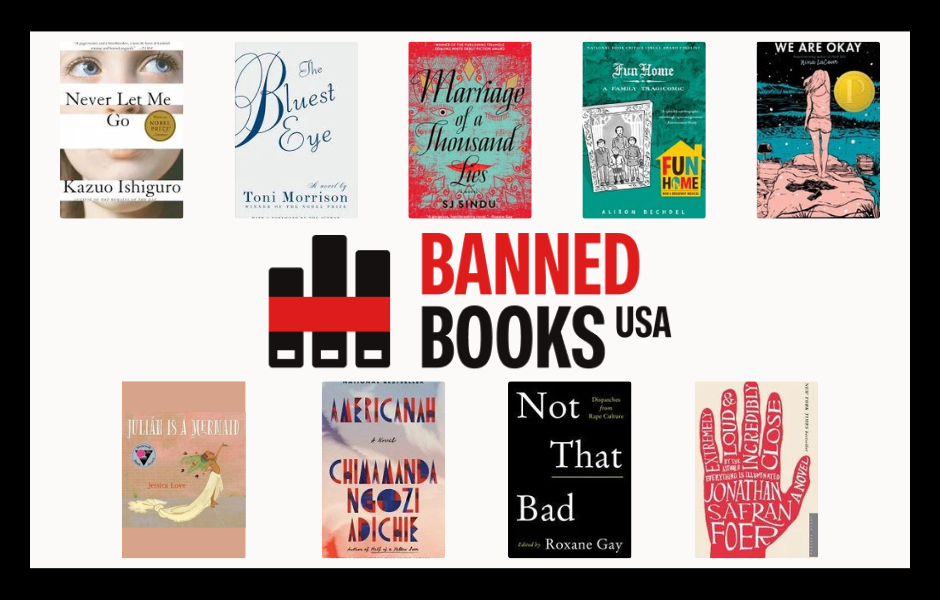
Electric Literature is excited to announce our latest initiative to support the freedom to read. Through Banned Books USA, any resident of Florida can order books that have been banned or challenged in the state of Florida for free, plus the cost of shipping.
Of the over 800 books that have been banned and challenged in Florida, ~600 are available from BannedBooksUSA.org. The Electric Literature staff has selected some of our favorite books on this terrible list. Order one for yourself, or send it to a friend or relative in Florida.
Many of the books listed here give voice to marginalized, often silenced, communities, by telling authentic and rarely heard stories. Book bans serve nothing more than to disenfranchise vulnerable people, both socially and politically. Supporting the freedom to read is at the core of Electric Literature’s mission to keep literature exciting, relevant, and inclusive, and by partnering with Banned Books USA, we will help preserve access to some of the most vital literature ever written.
If successful, the project will expand to other states. The cost of the books are covered by donations, including seed funding by tech entrepreneur and philanthropist Paul English. Additional funds are being raised from people concerned about the erosion of rights and freedoms that book bans represent; you can make an earmarked, tax-deductible donation here.
Banned Books USA is conceived of and sponsored by Paul English and Joyce Linehan, in partnership with Bookshop.org and Electric Literature. Book orders will be fulfilled by Bookshop.org, and the project is administered by Electric Literature. Following Bookshop.org’s business model, 10% of the cover price of all books paid for by Banned Books USA will be donated to support Florida bookstores during our Florida pilot. In addition, one dollar for every order will be donated to the Florida Freedom to Read Project. For more information about book bans and the challenges against the books on this list, visit PEN America.
Banned from libraries through legislative challenge in the School District of Manatee County, Florida in October 2022.
** If you are a Florida resident, or would like to send this book to a friend or family member in Florida, you are eligible to order this for only the cost of shipping via BannedBooksUSA.org.
Nobel Prize-winning author Kazuo Ishiguro is the master of the slow build, writing novels that unfurl and reveal themselves gradually and elegantly until suddenly you’re sobbing all over the pages. Never Let Me Go is about three childhood friends—Kathy, Ruth, and Tommy—who attended an exclusive boarding school in the English countryside. After they are reunited in adulthood, Kathy looks back on that seemingly idyllic time with a new perspective. But Never Let Me Go is not a traditional boarding school novel; it’s a fierce and painful examination of the moral compromises that society makes in order to survive, interrogating the very essence of what makes us human.
Banned from libraries in the Collier County Public Schools, Florida through administrative challenge in March 2023 and with additional bans and challenges in 28 other counties.
** If you are a Florida resident, or would like to send this book to a friend or family member in Florida, you are eligible to order this for only the cost of shipping via BannedBooksUSA.org.
When Toni Morrison published her seminal debut, The Bluest Eye, she said that she wrote the novel she wanted, and needed, to read—a novel where the least valued, least protected person in contemporary American society was taken seriously—the little Black girl. Pecola Breedlove, a young Black girl who is widely regarded as “ugly” because of her dark skin, wants blue eyes, which she associates with whiteness, and with being pretty, and loved, and protected. The Bluest Eye has long been controversial for it’s depiction of racism, incest, and child molestation, but as controversial as it is, it has been fiercely loved—for its beauty and humanity—for just as long.
Banned pending investigation in the Clay County School District of Florida, 2022-2023, via administrative/formal challenge.
** If you are a Florida resident, or would like to send this book to a friend or family member in Florida, you are eligible to order this for only the cost of shipping via BannedBooksUSA.org.
In this queer indie press novel, Krishnu is a Sri Lankan immigrant who was disowned by his family when he came out. His marriage to Lucky, an American citizen, enables him to live lawfully in the States. For Lucky, her relationship is a band-aid to the suffocatingly heteronormative pressure from her family and her community. When a trip back to Boston to care for her grandmother ignites a spark with a childhood flame, Lucky wonders if there is another path in life for her. A moving exploration on how much we’re willing to sacrifice for love and for family.
Banned from libraries and schools in Volusia County, Florida through formal challenge in September 2022, and banned pending investigation from Santa Rosa County District Schools.
** If you are a Florida resident, or would like to send this book to a friend or family member in Florida, you are eligible to order this for only the cost of shipping via BannedBooksUSA.org.
Fun Home is a graphic memoir about author Alison Bechdel’s childhood and adolescence in a rural Pennsylvania town. Told non-linearly through striking and verbally sharp panels, Bechdel considers and re-considers her relationship with her emotionally distant father, Bruce, who ran the titular family funeral home and taught high school English. Shortly before his death, Bechdel learns that her father is a closeted homosexual. He dies, likely by suicide, not long after she comes out to her family as a lesbian, leading Bechdel to wonder about how her acceptance of her own queer identity impacted him emotionally, and how both of their lives could have been different. A New York Times Bestseller and a National Book Critics Circle Award winner, Fun Home was turned into an award-winning musical in 2013.
Banned pending investigation in the Clay County School District of Florida, 2022-2023, via administrative/formal challenge.
** If you are a Florida resident, or would like to send this book to a friend or family member in Florida, you are eligible to order this for only the cost of shipping via BannedBooksUSA.org.
This queer young adult novel, which won the Printz Award and was included in TIME’s 100 Best YA Books of All Time, is a story told in dual timelines. In the present, eighteen-year-old Marin has fled her California hometown, without notice or goodbyes, after the death of her grandfather. She arrives early for her first year of college in New York in a state of profound grief, refusing contact for months with everyone she knew and loved in San Francisco. When her best friend arrives for a visit over the winter break, the past Marin tried so hard to close breaks open. In flashbacks, Marin’s history quietly unfolds and it is revealed that her heartbreak is rooted more deeply than even she realized. We Are Okay reads with the propulsion of a plotted mystery, but make no mistake: it is a nuanced and compassionate interrogation of grief in the tradition of the best literary fiction. By investigating the definition of family and the complexity of loneliness, LaCour asks readers to consider the ways in which each of us cope with pain—or choose not to.
Banned from libraries and classrooms through formal challenge in the Clay County School District of Florida in July 2022.
** If you are a Florida resident, or would like to send this book to a friend or family member in Florida, you are eligible to order this for only the cost of shipping via BannedBooksUSA.org.
Julián Is a Mermaid is a children’s book as beautiful in its illustrations as it is in its message. It’s the story of a young boy who sees women dressed up as mermaids and becomes entranced by the idea of dressing up as one himself. When he fashions his own mermaid costume, he is unsure if his grandmother approves of his new look, only for her to surprise him with another piece for his costume. It’s a tender, joyful book about loving and being yourself.
Banned from libraries and classrooms in the Clay County School District of Florida, 2022-2023, via administrative/formal challenge.
** If you are a Florida resident, or would like to send this book to a friend or family member in Florida, you are eligible to order this for only the cost of shipping via BannedBooksUSA.org.
This acclaimed novel by Chimamanda Ngozi Adichie interweaves the lives of Ifemelu and Obinze, classmates who fall in love at their high school in Lagos, Nigeria. Ifemelu moves to the US to study and escape a military dictatorship, where she encounters racism but also finds success for her blog posts about race. Prevented from joining her in the US after 9/11, Obinze struggles to make a life for himself in London before returning to Nigeria and becoming a wealthy property developer. When Ifemelu returns to Nigeria, the two consider reviving their relationship, although Ifemelu fears she has become an “Americanah,” a derisive term for a pretentious Americanized Nigerian. Americanah is an incisive and enlightening examination of race in the US, Britain and Africa and the downfall of the American dream.
Banned from libraries and classrooms through formal challenge in the Clay County School District of Florida in September 2022.
** If you are a Florida resident, or would like to send this book to a friend or family member in Florida, you are eligible to order this for only the cost of shipping via BannedBooksUSA.org.
An anthology of essays about rape culture curated by New York Times bestselling author Roxane Gay, Not That Bad scrutinizes what it means to function under a culture where so many become victims of sexual violence. Published shortly after the sexual abuse allegations against Harvey Weinstein and the spark of #MeToo Movement, these vulnerable and heart-wrenching essays expose how rape culture, misogyny, and sexual violence permeates women’s lives—and how often these transgressions are deemed “not that bad” by the perpetrators themselves.
Banned pending investigation through formal challenge in Escambia County Public Schools, Florida in September 2022 and with additional bans and challenges in 13 other counties.
** If you are a Florida resident, or would like to send this book to a friend or family member in Florida, you are eligible to order this for only the cost of shipping via BannedBooksUSA.org.
Jonathan Safran Foer’s second novel begins with Oskar Schell, a Shakespeare-quoting nine-year-old, looking for the lock to the key his father left before his death on the morning of 9/11. The inventive young narrator’s search, through a fog of grief, spans all of New York City and takes him through the lives of strangers along his journey. Interwoven into the narrative is the story of Oskar’s grandparents, both survivors from wartime Dresden. One of them has forsworn speech and the other types her stories on a ribbonless typewriter, showing the chasm between language and experience which might just be equidistant to the one between love and grief. A New York Times bestseller, and a NYPL Book to Remember, this novel breaks your heart while simultaneously showing you the ways to mend it before it’s too late.
My introduction to romance novels came when my high school crush handed me a book written by his mother’s friend under a pen name. It was all very hush hush, no one knew what the author’s real identity was, but he trusted me with this big secret (which might have been the first grand romantic gesture of my life). The book was set in colonized India with a British heroine and an Anglo Indian hero. I don’t remember much about the story but I do remember how it felt to read characters with familiar names in familiar places, who looked like me. It was an entirely unique experience to see those simple parts of me represented in a sweeping love story on the page. It didn’t happen again for a very long time and hungry for the experience of being desired and steadfastly loved for exactly who I was, I turned to Jane Austen and others who wrote characters somewhat less obviously like me.
For a large part of my youth, I remember reimagining Austen and Bronte novels in an Indian setting, with gossiping aunties and unbending fathers, and Bollywood heroes standing in for Darcy and Rochester.
These were the seeds for my writing journey: the need to use my life lens to understand relationships, my own worth, and the world we live in. I am often asked what it’s like to write Indian love stories. My answer is that I don’t: I write love stories. I am Indian. Those two facts coexist in my novels, as they do in the romance novels written by some of my favorite South Asian American writers. My favorite part of these books are the emotional intimacy, the humor, the angst, but also how the identity and heart of these writers dance like a Bollywood chorus on the pages of their stories.
No one else writes funnier romance than Sara Desai. Here she puts a twist on the classic “grumpy/sunshine” trope. Zara Patel, a carefree, filterless human rights lawyer and Jay Dayal, a brooding control freak marine who runs a security company meet at the singles’ table in the middle of wedding season. Neither of them has any intention of turning in their singles card to each other but that doesn’t stop them from getting into a deal where she’ll find his special someone if he introduces her to his celebrity clients. But of course, the more time they spend with each other, the more they find that opposites attract for a reason.
Nisha Sharma’s novels are filled with a deep fondness for Indian American culture. Dating Dr. Dil is a clashing of romantic ideologies and life beliefs that’s also a nod to Shakespeare’s Taming of the Shrew. Kareena Mann is determined to find an epic love like her parents had, and she has the support of her late mother’s best friends to help her in her quest. Dr. Prem Verma, a cardiologist with a radio show and a disdain for romance, is forced to date Kareena after her disastrous appearance on his show goes viral. Sure he’s doing it to avoid looking like the heartless heart doctor he is, but could there be something more to their sham romance?
Rai’s romances brim with emotional intelligence. Romantic tension and deeply buried pain dance beneath the surface in this heist caper. Mira Patel is trying to live a nice boring life, away from her dysfunctional family of criminals. Naveen Desai is trying to salvage his grandfather’s failing do-gooder law practice. A matchmaker sets them up, but despite serious fireworks, she unceremoniously dumps him. Their unlikely reconciliation is set in motion when they’re kidnapped in Las Vegas and have to escape and unearth long-buried secrets to save their lives. A breathless romp with a hot beating heart.
Is it just me or does everyone dream of falling in love at a wedding? This novel is for anyone fantasizing about finding the one at a big beautiful Indian wedding. Niki Randhawa has always chosen stability over passion, whether that’s in her career or her romantic partners. When at the cusp of 30, she finds herself unemployed and unanchored in life, she decides to be impulsive and take a spur of the moment trip to Mumbai for her friend’s wedding. There she meets Sameer Mukherji, a musician who is wild and fearless in his pursuit of his art. The pair embark on a whirlwind romance during the festive Diwali season. As she immerses herself in her roots and the land of her ancestors, Niki finds the hidden parts of herself blossoming. A heartwarming, uplifting holiday romance that seamlessly folds in an artist’s journey to empowerment and self-discovery.
Snyder writes a singularly smart and gritty dark fantasy romance set in a dystopian world filled with a myriad species at odds for power. Joe Peluso is half-man half-wolf, and finds himself in dire straits after being accused of a heinous crime. Neha Ahluwalia is the human lawyer tasked with proving his innocence, until the tables turn and he will burn everything down to protect her. A hotly pulsating drama that manages to be both thrilling and tender.
A classic Bollywood-style romcom set in modern-day New Delhi that will make you yearn and laugh and feel embraced in the warm hug of family. Samara Mansingh is a free-spirited photographer who’s grown up all over the world as the daughter of an emotionally absent diplomat. Sharav Khanna is the oldest son who had to take on the role of the head of his family when his father died too young. She’s craved a family all her life, he’s sacrificed his youth and freedom for his. This book epitomizes how reading romance can heal your heart with the belief that love is powerful enough to transform your life.
I won’t lie, this novel reveals some ugly parts of immigrant Indian life, but it also shows how individuals choosing to do the right thing can break those oppressive social structures. Liya Thakkar is fierce and unabashedly sexy and determined not to let the judgment of her family and community stop her from living her best life. This includes running for her life when her parents try to set her up. But what she didn’t expect was for the guy she ghosted to appear in her office as the new lawyer. Sparks fly as they’re stuck together in a race to save the company.
Food and romance always make a delectable combination and Heron spins a heartfelt and whip-smart tale about a pair who pretend to be engaged to enter a couples’ cooking contest. Even more delicious than their baked goodies is the spin on the arranged marriage story. Reena Manji is determined to defy expectations by not marrying the Muslim man of her parents’ choosing, but when the match they found is swooningly perfect and British, things become a little more complicated.
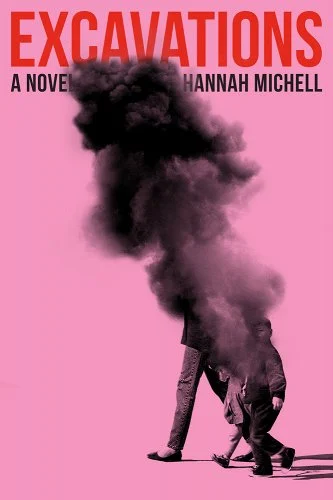
Hannah Michell’s Excavationsbegins with tragedy. A skyscraper suddenly collapses in 1990s Seoul, killing hundreds and leaving devastation in its wake. Sae, the mother of two young boys, is at home when she learns her husband is missing; he has been working on a project in the recently-collapsed Aspiration Tower. Drawing on her past as a former journalist and fervent anti-government student protestor, she attempts to find out what happened to him in Aspiration Tower—stumbling upon tangled truths that shake her entire worldview.
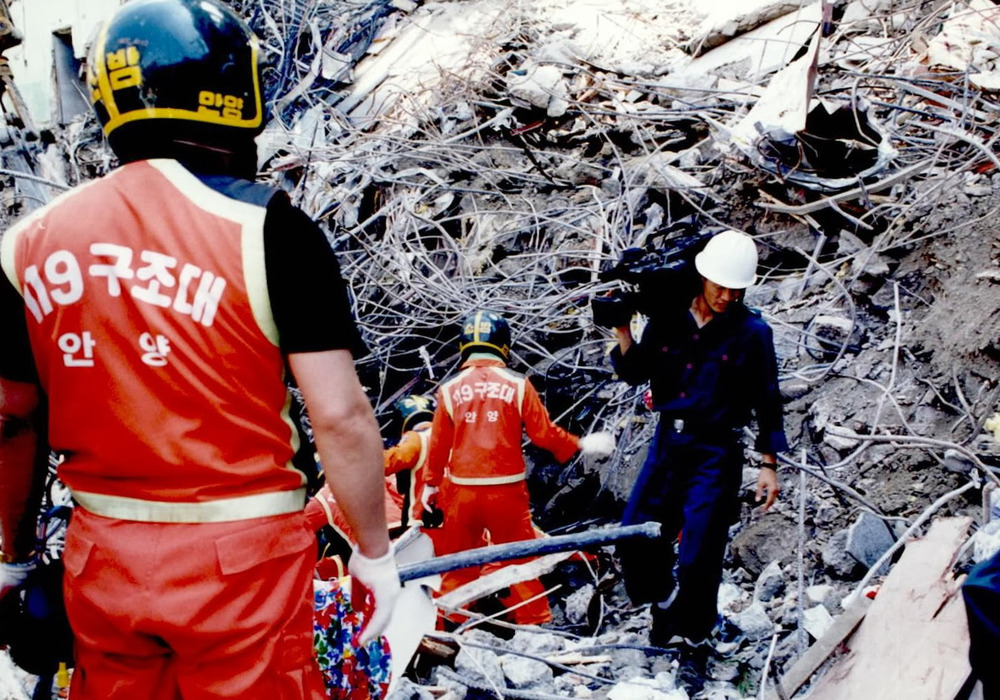
Michell’s debut novel is a propulsive thriller, grounded in its psychological drama and real-life tragedy. While Aspiration Tower is fictional, its demise mirrors the Sampoong department store collapse in 1995, which killed over 500 people and wounded over 900. Excavations to rescue the living continued for weeks, and the collapse remains the largest peacetime disaster in South Korean history. Michell skillfully teases out the historical resonances between the turbulent 1980s of student activism and labor rights movements; the economic boom of the 1990s and the building’s collapse; and the 2010s, with the Sewol ferry sinking—another tragedy that seemingly could have been prevented. Threaded throughout are the questions: can we love someone that we did not truly know? What value does truth hold, in a society dominated by patriarchal corruption and power?
Jaeyeon Yoo: What inspired you to write Excavations?
Hannah Mitchell: Originally, it was purely an intellectual project. I wanted to write the story of an unreliable narrator who was a chairman of a company, someone who paralleled the growth of the Korean economy. And I wanted his story to be unreliable. I don’t know if you’re familiar with Kazuo Ishiguro’s Remains of the Dayand An Artist of the Floating World? These are novels that have at their center an unreliable narrator who reflects on their many achievements, but by the end of the novel, you start to suspect that maybe their achievements aren’t viewed in the same way [by others]. I also read this autobiography of the founder of Daewoo Motors, and was really compelled by this arresting and charming voice. There were these wonderful anecdotes about how he had triumphed over adversity and pulled himself up by the bootstraps. All this entrepreneurial mythology was evident there. But I looked him up—I’d heard of Daewoo Motors while growing up—and it turned out he had embezzled millions of dollars. I liked the gap between the way someone talks about their life and achievements, versus the reality.
I started writing but I had a hard time, because I couldn’t get beyond a certain point with this chairman character. His life was so radically different from where I was; in my own life, I had two young children. I had four hours to write every day, while I put my children in the care of another caregiver. It struck me that my chairman character never had to worry about these things. I felt very stuck until I thought about the tension between motherhood and one’s commitment to one’s work—in particular, one’s commitment to one’s community. I teach at [UC] Berkeley, and I took some time out to go to a rally supporting undocumented students. I was really upset by the end of it, because I realized I just didn’t have the capacity to do more. This was during the Trump presidency and I wanted to do more as an activist—but I also very much had a responsibility to my own children, who I’d brought into the world. Once I started to mine the tension between one’s political ideals and one’s status as a mother, the novel really took off. I discovered the real novel that I was trying to write.
I also always knew there was going to be a relationship that was going to challenge the chairman’s story. I was trying to evaluate and answer, as I was writing, this question of: “Can two people coming from two very different political backgrounds be in a happy marriage or relationship?” Then, the 1980s—the student movements, those kinds of political ideals—came to mind, and that’s how I integrated [the protagonist’s marriage] into the story.
JY: While I can think of popular depictions of the 1980s in South Korean literature/media (I’m thinking of the film 1987, for example), that history remains unknown in the US literature I’ve encountered. Why did you think this time period was perfect to elaborate on a marriage between two ideologically opposed people?
Can two people coming from two very different political backgrounds be in a happy marriage or relationship?
HM: During the 1980s, we had these elite, high-achieving students who had fulfilled their parents’ wishes, with their path towards a more stable career. But [many] used their position of privilege to campaign against dictatorship, human rights abuses, torture—overall, they were campaigning for democracy. And on the other side, there was a sentiment that democracy and human rights were secondary to economic progress and stability. Those two kinds of ideological positions are very much at war with each other.
JY: I’d heard my parents’ stories of the 80s, because they were also college students in Seoul at the time. It was a strange experience, on my end, to read (in English) about some of the stories I’d only learned about orally (in Korean). You said you grew up in Seoul; was this history something that you grew up with hearing or experiencing secondhand?
HM: You mentioned the film 1987, which is actually one of my favorite films. I was incredibly emotionally affected by 1987. If you get to the end, there is a section with rolling credits, where there’s real footage of Lee Han-yeol’s [a student activist’s] funeral. That always gets to me, because I was a young child in Seoul at the time those funerals were happening. I think this might add another layer to the excavation [process of this novel], because I was a spectator to this massive social upheaval, but had no real language to understand what was really happening. There was a part of me that just really wanted to understand—all I had was this feeling that something horrible and huge had happened, with a strong desire to understand the full picture.
JY: Does this mean you were also there when the Sampoong department store collapsed?
HM: Yes. You know, I was reflecting on that. The thing is, the year before, there was a whole section of a bridge that had also collapsed. I feel like there was just so much upheaval in Korea in the ’80s and ’90s that it just felt like another event, even though it was probably the worst kind of civilian disaster. I was also young, but I don’t think I really internalized the full enormity of what happened in that incident.
JY: I was way too young to learn about the Sampoong department store collapse when it happened but, when the Sewol ferry sank in 2014, I think that was when I heard people bring up the Sampoong department store again.
The patriarchy really forces women, especially single mothers, to make impossible choices.
HM: Yes, there was a feeling of “this has all happened before.” The cheapness of life—or, rather, the cheap regard for human life—hasn’t changed in some ways. It was astounding to me that there were these untruths circulating about the Sewol ferry sinking, such as the navy being deployed. It’s such an emotional thought for me to imagine the parents waiting for the rescue effort to happen, and then realize that nothing was being done.
JY: In Excavations, there’s a strong focus on female narrators within this politicized landscape and what they can accomplish, such as Sae’s journalism. Yet, as Sae notes in her college days, feminism isn’t always a priority in the fight for democracy. I’d love to hear more of your thoughts on the role of women within anti-authoritarian movements, and perhaps the decision to center female perspectives.
HM: When I started writing this novel, I centered it on the monologue of this unreliable patriarch, as I mentioned. As I continued writing, I realized that it was a mistake just to privilege only his point of view, because Korean patriarchy has meant that economic development has only been associated with men’s work. Women’s contributions to politics and the economy have been totally invisibilized. So, I wanted to bring their experiences to the fore. I also wanted to show the struggle in critiquing patriarchy because, in writing these women’s stories, it became so stark to me that patriarchy really forces women, especially single mothers, to make impossible choices. I also wanted to include a non-judgmental depiction of sex work, because Korean patriarchal views of sexuality are so damning to women who have sex outside of marriage and sex work. It was important that Myunghee [a character who is a single mother and runs a nightclub] is not judged for being a prostitute in her relationship with other characters, such as Sae.
This book is about Korea, but I wrote it while living in the States in a kind of lockdown; I couldn’t leave the country due to my green card process. It was awful and really gloomy, because I couldn’t escape the Trump presidency. I had a hard time imagining a happy ending for these female characters, because this was also the time of #metoo and it felt like Trump himself represented the setbacks of women. But by the end of the novel, I wanted to take some liberties with the reality of how much women might have power. I just wanted to give them more agency, because I wanted to show that maybe when women really work together, they can have more power also.
JY: Speaking of Trump, what does it mean for you to release Excavations in 2023—with another extremely conservative South Korean president? And what does it mean to release it in the U.S.?
HM: This book feels very specific to Korea; even in Korea, I think that the ’80s student movement is not necessarily well understood by younger generations. And, as you said, it remains invisible in U.S. literature—but I felt like it was such an important period of history to keep in mind at this moment of real fragility, where democracy feels like it’s really constantly being challenged. I think there are echoes and parallels between America and Korea, in terms of how fragile democracy is in both countries. I was hoping that the reader would also make some connections between this unreliable and corrupt chairman and this era that we are living through. The Trump presidency is over, but not this Trumpian era of fake news. So in that way, I do feel like it’s not just the story of Korea, but about a fragile democracy and the need to really excavate: to be clear about our history and the stories that we tell about our history.
JY: I really appreciate the parallel you drew between the US and Korea about their shared fragile democracy, because I think something the US likes to gloss over is how complicit it was in shaping the South Korean government and its “democracy.”
HM: Yes—I’m going off on a bit of a tangent going back to motherhood. An interviewer recently asked me about my thoughts on international adoption; I think some people at the time thought that this was a humanitarian gesture to export Korean children around the world. But what doesn’t get talked about enough is how, in a way, the need for international adoption was a problem created by American militarism. I didn’t really go deeply into adoption in the book but, yeah, there is this history of US involvement. It fits into the invisible story of Korean economic development, where it really was an economic exchange. The more children the orphanages had, the more international aid was given. By the ’70s, transnational adoption had unfortunately become a huge business, which brought in foreign currency that helped this so-called “miraculous” growth of the Korean economy. That was a part of the story of South Korea that I wanted to include. I also did go more into this in previous drafts, talking about the anti-American sentiment amongst the student protesters, but it got edited out in the process.
JY: I wanted to circle back to your desire to understand the full picture of the past; the novel’s depiction of truth was very poignant—of how truth may destroy and hurt, even as we generally associate truth with morality and justice.
HM: The truth is more complex and multidimensional than we would like, and I think most people prefer that these complex truths are distilled into simpler stories. We can see how so many of these stories get co-opted by power, mythologized into history to serve a political agenda. This tension between embodied memory and recorded history—that sort of question came to me when I was teaching a module on Japanese American internment during the Second World War, and how that is not a history that is taught nationwide. Then, I turned my attention to Korean history and questioned, “What is the official narrative? What is it that people remember?” That helped form my fiction.
In the contemporary Korean context, I think the myth that gets talked about most often is how Korea has experienced miraculous economic development, going from the second poorest country in the world to becoming the 10th largest economy. But, of course, this mythology is really selective in its facts, because it ignores the reality of almost slave labor, and the abuse of human rights under a dictatorship. I wanted to expose this selective narrative development.
No History Is Immune From Ends, but the Americans Were Infinite
To the times that call for candor, hunger. Mr. President, what was the sound before surrender? It’s almost summer. I sit across from a white woman in the student union cafe who wants to adopt a child from a third-world country. She says “the Philippines” in a thick, midwestern accent. To feel small in the presence of a lighter people. To be a specter, speaking. To drown my anger, I gulp down tea that scalds my tongue, the ghost of taste gargling inside my oriental mouth like rags. “America will not renounce its part in the mission of its race,” announces US Senator Albert J Beveridge on January 9, 1900 in Washington, DC. To explain, with pride, that the Philippines has McDonald’s and Taco Bell and Subway. To eat at KFC after school within a younger body, the sweat of Manila on my back. To lick the thick, brown gravy off of my index finger, chicken oil dripping on my uniform paid for with lunch money. Mr. President, what alchemy will change my blood? To eat popcorn at the car dealership and be asked if the Philippines has popcorn. To stare back with animal eyes. To eat with my friends at the dining halls of an American university and pick the crumbs off my plate so nothing goes to waste. Hunger, like an heirloom passed to me by ancestors. To mourn the meat scraps washed away by dish soap. To mourn the daily bread from Piggly Wiggly, best before yesterday. To weep alone within myself for the cup that overfloweth, the pantry that ulcerates with nothing but applesauce and canned tomatoes, the great eternal ends of life, liberty, and the pursuit of happiness. Mr. President, what abhorrent mathematics will set the self-governing currents of the Americas pouring through my veins? “Savage blood, Oriental blood, Malay blood, Spanish example—are these the elements of self-government?” Beveridge asks. What will my father say at the emptying of a feast? For I have seen the ghosts that starve above rice fields far away and felt upon my tongue a promiscuous affinity. To be in the land of milk and honey, the Canaan of my mother’s dreams, and be emaciated, orphaned by two nations, child of barbarism schooled in Spanish methods, daughter of the island empire, colonial archipelago. “We must never forget that in dealing with the Filipinos we deal with children.” Mr. President, can you feel it? To hold the profit and the glory of the divine mission of America. To own my people’s hands and feet, our heads and hearts and spirits. All my ghosts have atrophied. To this, my distant declaration. To this, my spoken freedom silenced in the aftermath of louder anthems. I’m at a derby in Wisconsin. My parents hold their hands against their chests, laughing at the crushing of cars, selfie stick waving in the air like a flag. To what bright banner do the dead march on. To what dark song do we mourn so gallantly streaming.
The death of her father flings Peruvian journalist writer Gabriela Wiener back to her hometown of Lima and to a confrontation with his infidelity, and then back further to the paternal ancestor who bestowed her brown body with her Austrian surname. With this, Wiener begins Undiscovered, translated by Julia Sanches, a rollicking decolonial fact-fiction remix of her family’s histories, the life of her great-great-great grandfather, the explorer Charles Wiener, and how all this time plays out in her own body, and her current life, and polyamorous household in Madrid.
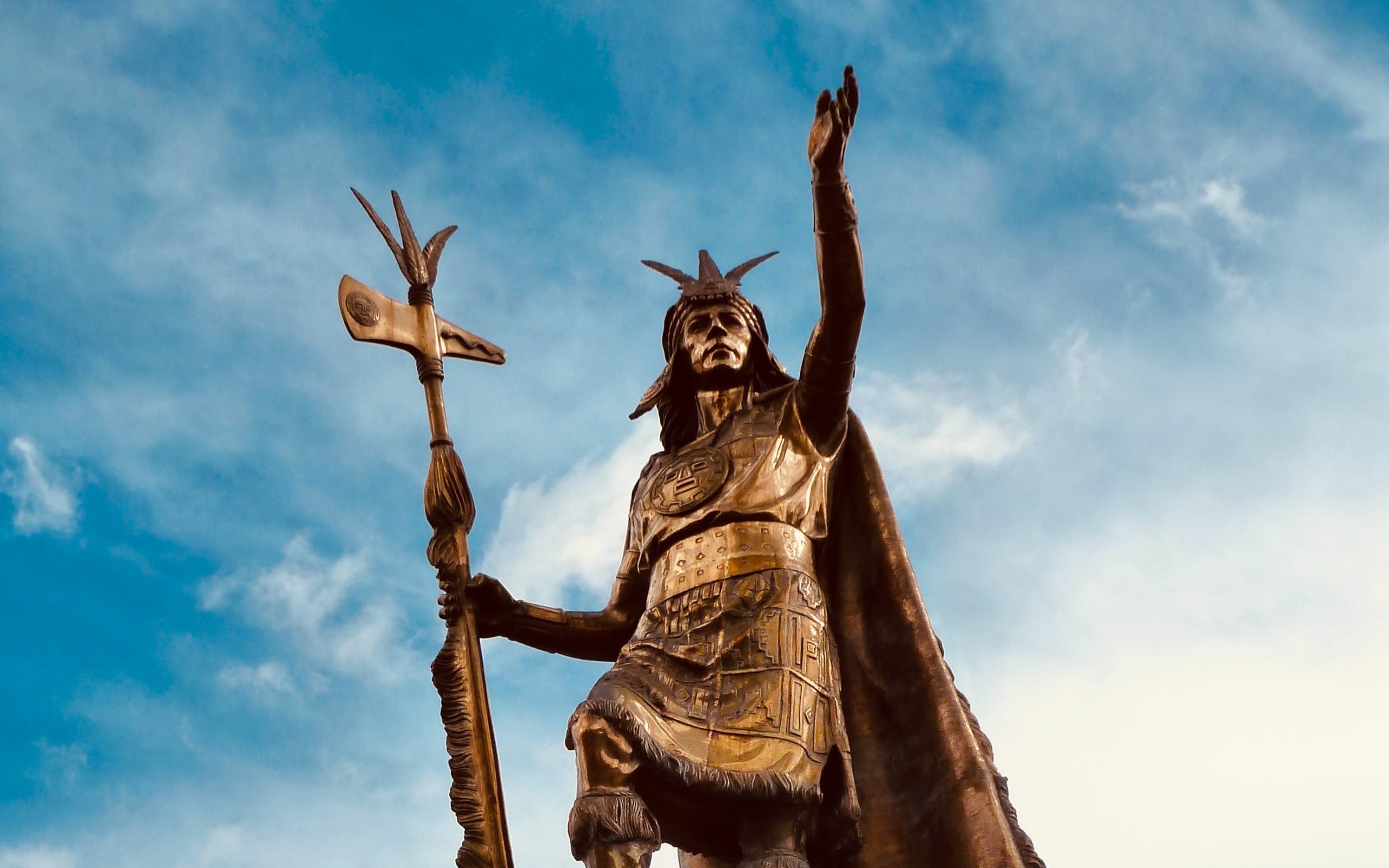
The past’s labored breath is everywhere; and certainly, Wiener, who doesn’t hide the murkier parts of her own story (“Our three-person bed isn’t used for sex anymore.”), is especially forthright in her depictions of racism against South Americans in Spain. When she meets her Spanish partner’s family, for example, the grandmother tries to recruit her to be a maid. An aunt chides the grandmother by saying that Wiener writes for the newspaper El Pais, but is ignored. The grandmother then enquires how many houses she cleans. Wiener is beset by thoughts of Victoria, her own racist grandmother, who hid her Andean roots to avoid discrimination. “Why do I also think domestic labor is worth less than that of a journalist who writes for El Pais? Is it because it reminds me of my racialization, of the race that has been and will always be a measure of who I am? Because it hurts to be shoved back inside the pigeonhole in their heads. Because I am Victoria and I am not.”
The novel, as it is called officially—and Wiener, certainly pokes fun at auto fiction and fictionalizing efforts of the earlier Wiener (“Isn’t that what writers do anyway? Pillage the real story and deface it until it shines its own unique light on the world?”)—is her third work to be translated into English. In Sexographies (translated by Lucy Greaves and Jennifer Adcock) Weiner offers first-person reported essays on prisons, swingers clubs, and ayahuascha, while Nine Moons (translated by Jessica Powell) is Wiener’s non-fiction musing on pregnancy and reproduction.
I spoke to Wiener via email and translation by Alfredo Fee, Editorial Assistant at HarperVia, about names and faces, the unceasing past and how nothing is post-colonial, and what her ancestor Charles might think of her novel. And also, jealousy, no one’s favorite emotion, the descriptions of which, stayed discomfittingly with me days after I read Undiscovered in a single sitting.
J.R. Ramakrishan: What is your first memory of being aware of your different surname?
Gabriela Wiener: I think it was when I realized that no one said it correctly and I was forced to explain a last name that I didn’t even know how to pronounce. I was almost last in roll call and no one else in class had a last name beginning with W. The racist bullying of my childhood included calling me Gabriela “Winter” (a brand of chocolates), “chupetito de brea,” “negra tomasa” and “macumba.” If my last name had [read indigenous] like Chumbivilca, I don’t know what would have become of me.
In countries that suffered colonization, both racism and classism from white creole elites towards people of Andean descent is virulent and normalized. Brown or “huaco” faces are penalized but so are brown surnames. And if you already have both you’re screwed. I used to be terrified of going on class trips to archeology museums because we would always pass by a huaco display and the kids would make fun of me, comparing my face to the huaco portraits. But at the same time my last name whitened me, protected me, it was my link to whiteness. I was secretly proud of it because it proved that although I was perceived as racialized, there flowed a percentage of European blood in my veins. All that, of course, is pure internalized racism, but I had to grow up hearing that one had to “improve the race” by marrying white. Luckily, I disobeyed and married a cholo.
JRR: What did you think when you first heard the story of your ancestor Charles?
In countries that suffered colonization, both racism and classism from white creole elites towards people of Andean descent is virulent and normalized.
GW: Since I was a kid, I’d heard Charles spoken of as the famous ancestor from whom we were all descended. With pride and fascination. By then I, being the brownest of the Wieners, had already asked myself countless questions about my European surname and my huaco face. There wasn’t a single photo of Charles with his son, my grandfather’s grandfather. There isn’t even a picture of my great-great-grandmother. The official story is a history of power and it is told by men, and inherited by families.
Because many of us are descendants of both victim and executioner, through our veins courses the blood of both the huaco and the huaquero, the colonized and the colonizer. And on top of that, as migrants from a former colony, we’ve chosen to stay in the Europe of closed borders, torn between two worlds that have occupied us for 500 years. We embody that European project of civilization and subalternization of the Other called miscegenation. How could we not have the white man in our heads? It was a violent process and what we see is the impact of these yet still colonial realities in our lives. These are the genealogies we want to dig into to make our own story.
JRR: Your take on autofiction being “the worst insult” is hilarious. Did you ever consider writing a more straight memoir?
GW: Hahhaa, thank you, yes, the book is full of jokes, it’s what I like to do most, crack literary jokes! I’ve done nothing in life but publish autobiographical, autofictional or intimate books like Sexographies and Nine Moons (both already translated into English) or Lost Call. I even have one titled What They Say of Me, a book of interviews with people from my life focused on one subject—myself—in which people are constructing more or less interesting, more or less true, more or less false versions of me, and so I’m collectively cooked up as a sort of Frankenstein. I love knowing what people think of me and, in that book, I dared ask them directly and play with it.
JRR: So much to ask about the museum and explorer themes! But to start, tell us about how you came to this title in English? There is so much that is “undiscovered” in your novel: Juan, Charles, your father’s past, etc. Was there a consideration of using the Spanish title, Huaco Retrato? And prior to the translation process, I am wondering what were the other titles you had considered for the book before settling on Huaco Retrato in Spanish?
GW: I proposed to all my editors that the original title be kept—as a decolonizing agent it’s my job to defend the identity and original dignity of my book. Some listened, while others either half listened or not at all, following commercial criteria. Others, like HarperCollins, convinced me with the best reasoning. From what they tell me, the one who came up with Undiscovered was Juan Mila, my editor. And I liked it for the same reasons you do, because I saw an ambiguity in everything yet to be discovered but also in what cannot and will not be discovered, what is impossible to discover. At least in the translation in my head, although in English, it may not be so ambiguous.
JRR: I was struck by how you compare history, for example your referencing the US-Mexico border situation and immigrants in Spain right now. For me this called to mind the contemporary representations of colonization (say for example, the Amazon Spanish production of Hernan about the conquest of Mexico) and how the past is somehow frozen and/or over. But you drag history into the present. It seems in literary/artistic representation at least, the past is a relic but for the colonized, it’s absolutely present and never-ending, with for example the scene of Rocio’s grandmother assuming that you are a maid. Would you talk about this?
GW: The plight of the South American migrant and its accompanying stereotypes is maybe the experience I can most personally substantiate through my years of living in Spain. What has always impressed me is the extent to which Spanish colonization dominates our therapy sessions, forming a substantial part of self-analysis and discussion about our present and identity, while for Spanish society we’re not even a subject of conversation. We’re out of focus, in the periphery of their self-projection. And I think it’s because in order to focus and see us with clarity and respect, they would have to inspect their darkest side, the conquering ego underlying the myth of the discoverer, and begin to read their own identity as one of historical violence and subjugation of the Other. Hence, the importance of resistance through our bodies and communities.
I had to grow up hearing that one had to ‘improve the race’ by marrying white. Luckily, I disobeyed and married a cholo.
Racism and colonization are pre and post-colonial. It’s the same coloniality of power (the Peruvian sociologist) Aníbal Quijano speaks of. There is nothing truly post-colonial because the matter has not been addressed or repaired, coloniality is active because the wound continues to ache and remains central to how we see ourselves in daily life: a social model of subordination, a social organization based on castes invented by modernity, and the racism and classism they exude, have left imprints on our mental health, on our subjectivity, on the way we relate as a society, in the administration of nation states and how these are in turn articulated with neoliberal economic policies.
The advantage of having thought much more than the colonizers about the colony is that we collectively inhabit processes of decolonization. Meanwhile among the conquerors nostalgia continues to be nurtured, overriding memory and allowing the ultra-right to set the agenda for public and media discourse. As the colonial is institutionalized in the US, France or Spain, they operate by its logic. They close borders and, through law, violate those coming from countries already plundered by them. If we go by the institutions and the speeches of political authorities, I’d say that the discourse remains deeply imperialist and neocolonialist.
JRR: And I am curious as to what you think your children might perceive of this very dilemma of the past in their own future as they grow up in Europe? And how they might read your book?
GW: My 16-year-old daughter Coco recently wrote this article, in which she articulates her dual predicament of being born in Spain but as the daughter of South American migrants and the strangeness of feeling out of place both here and there. And that this is ultimately what defines her, that discomfort. And I think for things to change, we need people who find themselves at both poles of comfort. For me, it is important to raise them and educate them in resistance and in their differences. That’s what we’ve been trying to do. So, what I hope for most is to be raising children aware of injustice but also with revolutionary spirit. I think my book would sound very familiar to them, it’s all they usually hear coming out of my mouth.
JRR: It’s a question you ask in the book about what Charles might think of your life but I also wonder what he would think of your book? Seeing as to how he took, as you write, liberties with the truth of his findings and writings?
GW: Yes, he took some liberties while I took others—with his own biography and myth. And that’s where we overlap: “the liberties” we take with facts and things, that’s to say, what we poured of fiction and charades into the world. That’s what I speculate in the book. When Gabriela realizes that she finally feels that some of Charles’s legacy belongs to her—the philia—constitutes her, she stops denying it.
Now that you raise the point, I could go on to speculate that he would be very proud that his great-great-granddaughter employs his own weapons to challenge him: writing and re-invention, plunder and public exposure, that I use them for my own ends. Finally, perhaps he’d see me as he saw all Indians: aberrant, profiteering, sad, drunken and treacherous, incomprehensible to his Western mind.
JRR: Your emotional honesty was brutal and beautiful, nowhere more than when you discuss your jealousy in the context of your polyamorous family set-up. How have you managed to come to terms with it enough to write about jealousy?
Because many of us are descendants of both victim and executioner, through our veins courses the blood of both the colonized and the colonizer.
GW: Familial history has as much to do with love and desire as racism and colonization, they’re closely intertwined. And the same thread that runs through the first story—the uncertain and fleeting affair between María and Charles, is present in the last, the contemporary and polyamorous relationship. In between is the story of the unfaithful father and his secret relationship. And within each of these stories are involved children, legitimate and illegitimate, more or less white, more or less brown, more or less helpless.
Jealousy or any vulnerability is intrinsic to relationships of power or domination. And all relationships are so, even loving ones. It often happens that there are unequal relationships where there are those who retain privileges of race and those who do not, or privileges of gender, of class, etc. Those who can afford a double life and those who cannot. This inequality affects the way we look at ourselves, how we relate to one another, and of course it can be transferred from generation to generation. In other words, the book postulates that the greater vulnerability and racial, gender, or class-based violence endured, the greater the insecurity and the fear of losing what little affection, security and appreciation we have obtained. You can call it jealousy, fragility, precariousness… but it’s not something to be resolved individually but instead with others. Knowing this is important in order to not abandon those who cannot “manage” their relationships because they shoulder a heavy burden of sad stories and open wounds.
JRR: What are you working on right now (or any forthcoming projects)?
GW: I’m working on a new novel, called Atusparía, the name of a leader of the indigenous resistance in Peru during the late 19th century. Atusparía is also the name of the Indigenist-Soviet school in an Andean country where the novel’s protagonist studies during perestroika, near the end of the USSR and Cold War–hard years during which a terrorist group operates within the country.
The school is a center of indoctrination and at the same time a complex place of intercultural learning for children who dance huaynos and want to be astronauts. With it, the left hopes to realize the dream of indigenous philosopher JC Mariátegui: adapting socialism to our indigenous context so as to liberate the Indian. And even Shining Path is somewhere in there. My basic intention is to demonstrate how hierarchies of power also reach emancipatory causes, basically to reflect on what within a revolution has always struck me as reactionary: power struggles, authoritarianism, the Cold War, the divisionism in feminism, on the left, the factions, etc., something very questionable within progressivism. Russian and Quechua form symbolic elements of the book’s language.
JRR: And finally, would you recommend some of your favorite (emerging writers, not yet translated to English) Peruvian writers?
GW: Natalia Sánchez Loayza, Rosa Chávez, Brunilda, José Carlos Agüero.
About the Translator
Alfredo Fee is an Editorial Assistant with the HarperOne Group. Raised in Ohio, he majored in Classical Studies at the University of Chicago before entering publishing.
Fall, the season of sweaters, pumpkin space lattes, and—of course—haunted houses.
Though the Victorian clapboard house will forever remain iconic, the past few decades have broadened our scope of what can be haunted. 2022’s Barbarian, for instance, introduces a humble Airbnb, while Grady Hendrix’s Horrorstöris set in a very familiar Swedish furniture store.
What ultimately binds the haunted house genre together is the undiscovered trauma. The abandoned apartment at the end of the hall turns out to be the site of a gruesome, unsolved murder. Trinkets move back and forth in the home of an already troubled family. Grandma’s house is not so friendly—and, as it turns out, neither was Grandma.
Considering the endless aesthetic possibilities and trauma metaphors, it is no wonder the haunted house has become such a prolific genre. In honor of spooky season, here are the top ten creepiest haunted house novels to devour this October.
You can always count on Grady Hendrix to seamlessly blend horror and comedy. In his newest release, How to Sell a Haunted House, a woman named Louise returns to her childhood home following the suspicious deaths of her parents. There, she must work with her deadbeat brother, Mark, to clean up and sell the house. While the siblings are caught up in their own dramas—Louise had to leave her daughter with her ex for the trip, and Mark is already plotting to cheat Louise out of her half of the inheritance—they gradually realize they face a common enemy: Pupkin, a beloved puppet from their mother’s doll collection, who does not understand his owner’s sudden absence and expresses his grief via rage and homicide. How to Sell a Haunted House is a perfect read if you’re craving a Stephen King-esque horror-drama feat. family dysfunction with a comedic kick.
An homage to Henry James’ 1898 TheTurn of the Screw, Ruth Ware’s The Turn of the Key kicks off with a nanny’s letter from prison arguing her innocence in a child’s death. It all begins when said nanny signs up for a too-good-to-be-true job at refurbished Victorian smart home, where she gets paid an excessive salary for taking care of three seemingly angelic children and a baby. However, as the days wear on, the smart home begins acting up, playing music at odd hours of the night, and the children—particularly trouble child Maddie—prove to have disturbing agendas of their own. Though modern in setting, the novel’s gothic heritage evokes a familiar spook, complete with creaky floorboards, poisonous gardens, and creepy children that earn it a spot on our top ten list.
Here’s something a little bit different: five ghost-hunting friends celebrate a marriage in a Japanese Heian-era manor, where a bride was supposedly buried alive beneath the grounds, and more girls were buried as sacrifices within the walls. A joyous night between friends soon turns deadly when the bride makes herself known, roaming the grounds in search of eternal company. Though this novella will likely not hit the creepy-nostalgia factor for many, its unfamiliar setting brings a novel unease, and its stunning imagery will render scenes all too clear. A perfect read for someone yearning a fast-paced, atmospheric scare. Bonus: the cover is hella creepy.
Have you ever been forced by a Youtube video to watch one of those dramatic Airbnb ads starring some excessively happy family living it up inside a glass box of a house? Have you ever wondered what would happen if one of those Airbnbs was haunted? Daniel Kehlmann presents this scenario in the form of journal entries, written by a screenwriter who takes his wife and four year old daughter to a modern vacation rental in the Alps. Forget creepy victorian clapboard houses or even unsettling suburban homes—Daniel Kelmann’s You Should Have Left presents a nightmare scenario where escapism cannot save you, and glass provides little clarity, only distorted reflections.
This list wouldn’t be complete without some southern gothic. In A House with Good Bones, Kingfisher introduces Samantha Montgomery, a thirty-two year old post doctoral student studying archaeoentomology, a cross between archaeology and entomology. When she goes on break after a dig, she visits her mother Edith in North Carolina, where she finds both her mother and the house different than before. Gone is the carefree woman Samantha once new, along with her warm, charming home. Now the walls are painted white, and Samantha’s mother jumps at every small noise in the house. Is her mother ill, aging, troubled—or is there something stranger going on? A perfect read for fans of slow-burns.
Ever wish Rebecca had more (literal) ghosts? Don’t worry, Isabel Cañas’ got you. In her supernatural debut The Hacienda, set after the Mexican War of Independence, newly fatherless and homeless Beatriz marries the widowed Don Rodolfo Solórzano with plans to rebuild her life at his estate, Hacienda San Isidro. But Beatriz does not receive the warm welcome she hoped for. Instead, Beatriz has disturbing dreams at night, and the residents brush off her concerns about the home’s strange activity. It becomes clear that a malevolent spirit walks the halls, and no one except the priest, Padre Andrés, is willing to help Beatriz. A historical, haunted house romance that Daphne du Maurier would love.
I resisted including too many classics on this list—the list would have been too long! But it felt wrong not to include at least one, and what better representative than The Haunting of Hill House. The story follows Eleanor, a reclusive young woman who joins a rag tag group of paranormal investigators following her mother’s death. It speaks volumes that, before we meet Eleanor, Theodora, Luke, and John Montague, we meet the house itself, a place where “whatever walked there, walked alone.” Iconic, amirite? Though a modern audience may find some of the scenes trite, that is only because this novel set the precedence for so many haunted house novels to come, especially those authored by women.
When her grandmother dies, Angela Toussaint inherits the Good House, the home her Creole herbalist grandmother practiced her healing in and where Angela’s own mother committed suicide many years before. At the Good House, Angela juggles a troubled relationship with her ex husband Tariq and looks out for her adventurous teenage son, Corey. Their last summer at the house ends in tragedy, and Angela soon finds herself in a mental hospital. Years later, semi-recovered and officially separated from her ex, Angela returns to the Good House, where she learns the townspeople have suffered similar tragedies. With her high school sweetheart Myles Fisher in tow, Angela hopes to uncover the deadly force that haunts the town and her grandmother’s home.
White is for Witching stars Miri, a teenager diagnosed with pica, a condition in which one feels compelled to eat the inedible. After her mother passes, Miri makes a brief stay at a mental hospital, before returning to live with her twin brother and father at The Silver House, a Bed-n-Breakfast that was once her mother’s family home. As Miri’s condition worsens, strange activity occurs at the house: guests are attacked, a girl is trapped in an elevator, and Miri herself begins acting oddly, resembling and behaving at times like the dead women in her matrilineal line. Even after Miri and her brother grow up and move on, the house continues its malevolent ways, not revealing its deep dark secrets until Miri returns years later. Narrated by four different voices—including at one point the house itself—White is for Witching is generational trauma horror at its finest.
1950s Mexico: twenty-two year old Noemí Taboada receives a letter from her newly-wed cousin, Catalina, claiming her husband is trying to kill her. Convinced the in-laws are trying to steal Catalina’s money, Noemí’s father sends her to live with Catalina at the High Place, where she meets the less than welcoming Doyle family. Plagued with strange dreams and disturbed by the bits of family lore she receives from the family’s youngest son, a spooked Noemí is determined to leave. But, like any haunted house worth its salt, the High Place refuses to let her go. Mexican Gothic is a perfect blend of historical fiction, generational trauma, romance, and classic horror.
Elle Nash’s novel Deliver Me tells the story of Daisy, a Southern woman in her 30s seeking control over her life. Daisy struggles under the thumb of her partner (a petty criminal with a sexual fetish for exotic bugs), her mother (a domineering matriarch who wields the evangelical church like a weapon), her job (a chicken slaughtering facility with a daily kill quota in the hundred thousands), her best friend/love interest/bitter enemy, Sloane (a better-in-every-way version of Daisy), and even her own body, which refuses to give her the thing she wants most: a baby. Daisy’s quest for agency and love upends the lives of everyone in her orbit until the horrific, vindictive and mind-bending final pages.
Nash’s Ozarks conjure the colorful and desperate scenes of Dorothy Allison and JT LeRoy. Her descriptions of industrial killing call to mind Eric Schlosser and Upton Sinclair. The complex relationship between the main female characters echo Jeffery Eugenides and Amy Hempel. The oppressive religiosity of the Southern church summons Flannery O’Connor and Dennis Covington. The sum of this concoction is a hallucinatory, pressure cooker of a novel that spills from Nash’s soul onto your own.
I spoke with Nash via Zoom from her home in Glasgow, Scotland about fictionalizing the reality of economic strife and marginalization in the South without playing into stereotypes, her journey into witchcraft, and the ways humans can sexualize things that aren’t inherently sexual.
Chris Heavener: Can we talk about bugs?
Elle Nash: Oh man, the bugs. What would you like to talk about?
CH: Where did this idea come from to give Daisy’s partner an insect fetish? Is that a real thing?
EN: There’s a kink for everything. I’m fascinated by the ways humans can sexualize things that aren’t inherently sexual, and how they become cultural taboos. I remember a viral thread on Twitter once where a woman talked about some guy trying to get audio of her coughing because she tweeted about having the flu, and a bunch of other women came forward saying the guy had contacted them, too, after they also tweeted about being sick, so he could get off to it. Like, a woman hacking up a lung is the hottest thing this guy can imagine. The range of human desire and motivation is so vast and totally wild. The insect idea was hanging out in the recesses of my mind, and it felt necessary to complete the boyfriend character. I think after I did that, everything felt way more clear and balanced.
CH: What made you want to set a book in the South?
EN: There’s a general presumption about the South, that it’s largely straight and conservative, that every economic inequality that occurs is the regions’ fault and something they deserve, from climate crises to cuts to social welfare programs. And the South is not this monolith. It’s a vibrant landscape with many kinds of people and beliefs and experiences and a very specific history that has lead to the economic strife and marginalization that occurs. And anyway, I just didn’t want to read about the upper middle class fantasy anymore. I do understand why it sells. I understand why they make TV shows out of it. Some people want to escape into the fantasy world where they don’t have to have a job or make ends meet. I have that fantasy, too. I get it.
I’m fascinated by the ways humans can sexualize things that aren’t inherently sexual, and how they become cultural taboos.
Having lived in the South, certain areas are definitely economically depressed and you have people coming and going and you have problems with drugs and poverty. I wanted to write about the reality of these experiences, the consequences of letting people fall through the cracks when social programs don’t support them. I wanted to explore how this happens, how it affects the community around it when people slip through the cracks? Especially in a place where culturally, the religious communities are so against social support programs because they largely believe charity in the name of God is supposed to “do the work” that social programs actually do. Also, the Ozarks itself is so beautiful. I wanted to capture that. The landscape is unique, ethereal.
CH: Did you actually work at a chicken processing facility?
EN: No, I did not. It was a lot of research.
EL: What gave you the idea of that job?
EN: It’s something people don’t often get to see inside of. I used to be really zealous about trying to find ways to eat and live without partaking in industrialized agriculture, but it’s difficult. Especially difficult when a person doesn’t have the means—it’s a privilege to access food that is expressly from a small, cruelty-free, independent farm, for example. At the same time, people need these jobs—factory work provides stability, but the corporations that run them are inherently cruel.
When I lived in Arkansas, we had a backyard for the first time, so we got chickens. I was in this new mom mindset of wanting to give my infant the best quality food possible. And having chickens was going to be the cheapest way for me to access [fresh food]. I’d planted vegetables and all that stuff. But then the chickens ended up eating all the vegetables because I didn’t think that through [laughs]. I got to experience how to access cruelty-free food and how that process works. It was eye-opening for me and it had its challenges, I wasn’t successful at all of them. I spent lots of time with the chickens and saw just how they’re so intelligent and cute and loving in their weird little ways.
Industrialized chicken farming in the United States is horrific, and it’s extremely dangerous for the people working in the industry. They’re working at really inhumane standards of productivity, their companies lobby the government to lower the safety standards for profit, and there is a human price for that. When I was seventeen or eighteen I read Fast Food Nation by Eric Schlosser which featured the meat-packing industry in Colorado Springs, where I was living. I felt too close to it and became vegetarian, though I am not now. And the Tyson headquarters is right where I was living in Arkansas.
EL: Have you ever had to slaughter an animal before?
EN: When we were living in the woods in the Ozarks, my friends would often go wild hog hunting. I would watch them bring the hogs back and help them process it and we would eat the meat, heart and all. It was a humbling experience to be that close to it.
EL: I’ve heard you talk about your concern around how the story is going to be received by different communities. Writing from that place can often close off a lot of creative opportunities. How do you protect that spiritual and creative place from external forces like publishing and criticism while you’re trying to write?
EN: In terms of the content, after periods of waffling, I’ve recommitted to the things I want to write about. So with this novel, the major publishers that rejected it, rejected on the grounds that it was too violent. They said it made their skin crawl, the ending was too much. So I went back and forth for a long time thinking, “Is this the right thing to do?”
I think it depends on how you want to view yourself as an author. I don’t want to live my life thinking that, because I didn’t get a particular opportunity, or was rejected from a certain publishing house, it’s because my work is too much, or too ‘niche’ for a particular audience. For me, harboring that can create a kind of bitterness, or a closed-offness, that can limit your art to simply being ‘anti-‘ whatever the big thing is. I want my mind and art to stay open to possibility and expansion.
I can accept that I’m not ever going to make a full time living only writing, that I will have to think about income for the remainder of my life. In a way that releases me from a desire or need to perform for the market. I will probably always think about whether or not a book will be ‘successful’ in the traditional way, but I can’t necessarily control that. And in a way, how we view labor, how we view the value of labor, and the way it creates conflict between work and the creation of art, probably sharpens my experience and likely the expression of my art, as well.
EL: You can only really be who you are.
EN: Right. What’s more important? Is it gaining notoriety, which isn’t that interesting? Or is it writing something that that like you really fucking love because it’s the thing you have that’s spiritually, creatively fulfilling? A day job isn’t fulfilling. The monotony of life isn’t fulfilling. The art is fulfilling. And that’s the thing that makes me want to stay in that expansive mindset and protect my vision and my words.
EL: There was a minute there where graphically sexual and/or violent content was very popular in literature and movies. Why do you think readers are having a hard time stomaching that lately?
EN: I’m not sure why readers dislike sex or violent content in novels or movies, though I feel like movies have been exploring graphic violence more than I’ve seen before—however, a lot of those tend to be independent, rather than stuff you’d call ‘big box,’ right? I want to go the Jungian route and say maybe people are rejecting something in themselves by rejecting sex scenes in movies. But readers aren’t monolithic either, and people have all kinds of preferences in what they read/watch/consume that don’t always make sense to me, and that’s okay!
Maybe it’s partly because of the proliferation of the Internet. People are so exposed to so many different kinds of stories on the daily, hundreds of different kinds of experiences. Perhaps they are not going to books to find these experiences or that transcendence quite as much. Someone can watch a viral video and that can be a transcendent experience for them.
EL: Was your experience with the church in the South similar at all to Daisy and Sloan’s story?
EN: My grandparents went to a Baptist church and then I would go to Sunday school when I was very young. My mom is a Methodist. But if you ask her what that means, she wouldn’t be able to tell you. Church for my family was that you just went, it didn’t really matter the sect. My dad did, however, have an obsession with Jesus. I grew up having to watch the Left Behind movies. He read all the books and would tell me to read them. He was obsessed with Joseph and The Amazing Technicolor Dreamcoat. He was obsessed with The Greatest Story Ever Told. Any film adaptation of Jesus’ life. When I was 13 and I was like, “I don’t believe in God anymore,” that was a really big deal for him. He was angry, devastated by that news. He never really forced me into anything after that, though. I was really lucky in that respect.
I’m not ever going to make a full-time living only writing, I will have to think about income for the remainder of my life.
As I got older I explored all these different aspects of God. I was Muslim for four years, I converted to Islam. I’m fascinated by organized religion, like why certain sects of certain religions function the way they do, why they branch out, why they’re different, why they disagree with each other. Where certain practices come from, and why they believe this branch is most pure.
I attended a UPC church [as research for the novel] and it was actually a lot like my first experience going to a mosque. Everyone was really kind to me. People are very open and welcoming, even though, for example, every woman was wearing a maxi skirt and no make up and I had facial piercings and was obviously very different. But part of that feels like it’s because they want to be the one to save you, bring you into the fold. It was a surreal experience, but I wanted to get it right. It was overwhelming when everyone was speaking in tongues and I was the outsider.
I had a lot of acquaintances in Arkansas who were Christian, who, in my mind, were living by example in the word of God. What I mean by that is they never proselytized me or pressured me to convert. They knew I was not a believer, but by being a good person to me, being kind and generous, I think they were trying to show me what Christianity does for a person, in the hopes that maybe I’d come to bible study once or twice. Maybe I would come to the church on Sunday. Maybe I would become part of the community. And that would help them do the “good works.” It would help them get God’s grace on the “day of resurrection.” I’m sure they came from a good place but it also made me wonder, were they seeing me, or were they seeing someone who could help them get into Heaven?
EL: I was fascinated by the moments between Daisy and Sloane where they were experimenting with pagan rituals. Have you had any experience with Wicca or Chaos Magic?
EN: I discovered witchcraft when I was young, like six or eighth grade or something. It was the first time I was trying to understand what it could be like to acquire power. Or try to garner a sense of control on the world, which is so uncontrollable. To me it seems natural for teenage girls to start experimenting in that realm at that time. All my friends were interested in it. Then The Craft came out and it was the cool thing.
I do have experience with it. I definitely do practice, but not formally, if we are talking about understanding that the mind is a tool and you’re performing a ritual to elicit a certain result. I’ve used these techniques to undo a lot of mental strife and rebuild my self-esteem and create better boundaries in my life. That is all solely through stringent meditation, subconscious access (self-hypnosis) and developing focus. I think I’ve been doing that for three or four years. The ritual process, seeking to understand my mind, and figure out how to make it work for me to bring forth whatI want in the world, that to me fundamentally is magic. Working with my subconscious to access the patterns that hinder me, and make steps toward my ideal self, to find my ‘true will.’ It’s been transformational.
EL:So much of this book is about the process of being a mother, or becoming a mother. I wonder if you could talk a little bit about your experience with that and how that informs Daisy and Sloane’s story.
EN: Even before I became a mom, I was constantly thinking about this story. In my late twenties I suddenly wanted to start a family, which I never considered myself a person who would want kids or could even be maternal. I had a friend I did a yoga class with once and she wanted to be a mom really bad. We would talk about it all the time. This other girl in our class became pregnant, left the workforce, became a stay at home mom. And I think we both, or maybe just me, got this bitter feeling of being like, “Okay, well, we will never have that.”
That life didn’t feel possible for me at that time. I ended up just not talking to her anymore, which is such a bitchy thing. It wasn’t on purpose to reject her. It was more out of avoidance of not being able to handle that she was pursuing something that I wanted—I was burnt out by work, and at that age I also thought becoming a stay at home mom would release me from the struggle of labor (which was shortsighted and wildly incorrect). It was something that didn’t seem possible for me at that time. And so I lost touch with her. There was some point for the novel where I thought, oh, that’s relatable, wanting to have the baby so bad, and putting all these hopes on motherhood. It’s weird to have that feeling come out of nowhere, like, why did I feel that way? Why did I want that so bad? Why was I bitter and avoidant? That was maybe seven, eight years ago now.
When I started writing this book, [my daughter] was nine months old. Becoming a mother unexpectedly deepened my understanding of humanity and experiences of what love could be. It also deepened my resilience. I was having little epiphanies all of the time. All of that now feels very normal because I’ve been a mom now for five years, but also in that moment it was so deeply profound. There’s this boundaryless connection that’s happening that I can’t control. It was like nothing I ever felt before. That experience is something Daisy wants so badly. Connection with another human.
Four days before his death, Amit Srinivasan files for divorce. He’s living in a tiny apartment in Somerville that he began renting in December, ever since his wife packed a suitcase full of his clothes and burned it in the backyard firepit of their suburban brick house. Winter has broken, and Somerville’s tree-lined streets rupture with color. Pink petals work their way into the cracked, uneven sidewalks.
As soon as Amit files for divorce, he calls Hannah. She doesn’t pick up. He leaves her a voice mail. “We can be together now,” he says. “I love you,” he says. “I filed for divorce,” he says. But four days pass, and Hannah doesn’t call back.
At 8:10 PM on April 15, a woman named Pamela Robertson will push Amit in front of an orange-line train at the Forest Hills T stop in Boston. She will be frustrated, and all it’ll take is a little shove, a couple pounds of pressure. Amit will already be over the line, standing with his toes butting into the yellow markings on the platform. He will be leaning forward, looking into the tunnel as the headlights fill the empty stone void, the light rushing closer, and Pamela will put out her arm and shove him in the back, her fingernails scraping against his trench coat, and he will hang there, slanted, poised between death and the platform. Pamela will be able to picture it, years later, the way his body will hang diagonal between the platform and the yellow line, the way the tunnel will fill with light, the way the rumbling train will carry him off like a leaf.
When police officers ask her why she did it, she won’t tell them. Pamela will feel her skin, the clothes over them, the air around her and the officers. This is what she will know: that she has a chip in one of her nails from the blending machine she operates at Toni’s Chocolate Factory; that there are 1.82 ounces of white chocolate in each almond macaroon they make; that she needs her roots touched up where the gray is starting to shine; that her appointment is on April 16 at 4 PM with Amanda; that she is wearing the wrong type of shoes; that for her flat feet, she should really wear sneakers when she stands at the machines all day, but she can’t bring herself to give up her polished-leather penny loafers like her mother used to wear.
On the morning of his death, Amit heaves himself out of bed and turns on the TV in his tiny Somerville apartment. The red line rumbles beneath the floorboards.
He looks around and thinks that he needs to get a clock. He could get some plants, or a picture frame to hang over the white spot on the wall where someone patched over a hole and neglected to paint it. He could make a home here. He could be happy. He could take his kids to Boston on the weekends, buy them food in Chinatown, watch all the parades and shows they missed before, when the thought of driving to Boston on the weekends exhausted him.
But his wife won’t let him see their children anymore. She claims his affair with Hannah is a bad influence, that therefore he is a bad influence, a bad father, a bad husband, and a bad man. His wife often thinks in absolutes. She likes the stratifications of ordinary things: poor and rich, piety and sin, love and divorce. Amit knows he will have to sue for partial custody, that the judge will ask if he has enough space in his apartment to house his kids, that he’ll have to say no, that he’ll only be allowed a day or two with them a week.
Amit wants to sink down into the weary mattress springs, down through the floorboards and into the earth. He wonders how things went so wrong. Something had burned off his childhood optimism like fog in the sun.
He and Hannah fought viciously the last time he saw her, their biggest fight in the two years they’d been dating. “Do you love me like you loved your wife?” That was the question. A trick question, he has since realized. A question to which “First love only happens once” was the wrong answer. Hannah hasn’t talked to her mother for three years because they disagreed over her father’s funeral arrangements, something about who got to give eulogies and which flowers were placed next to the casket. He knows Hannah can hold a grudge.
Amit reheats the naan and palak paneer left over from his take-out dinner at the Indian place down the street. The palak paneer tastes like the Styrofoam container he heated it in, but he eats it anyway.
On April 15, Pamela calls her daughter Hannah before work. She calls her daughter every day before work, though Hannah hasn’t picked up for over three years. Pamela says the same thing into the voice mail that she does every day: “I miss you. Call me. Your father and I love you.” Pamela’s husband has been dead three and a half years. Heart attack. Her daughter walked out of the funeral and hasn’t spoken to her since.
Pamela wraps her green paisley scarf around her neck, slips her feet into her shiny leather penny loafers, and steps outside. She makes sure to lock the dead bolt on her apartment door. She walks down the stairs of her condo building, her knees creaking with every step. Maybe it’s time to move, she thinks. Maybe she should get a nice house without stairs, somewhere outside of town. Newton. Concord, even. Go north. Away from the bustle of the city, north to the sleepy towns where locals in costume still reenact the start of the American Revolution. What would she do in such a town? She’s so used to the T that she knows most schedules by heart. Her feet carry her to where she needs to go, without having to think about Boston’s winding streets. She likes the chaos, likes that people who have lived in Boston for all their lives can still get lost, likes that she never does.
Amit dresses and walks down to the coffee shop on his block. Five dollars for a latte. He can’t keep that up, not if he’s going to pay rent and half a mortgage. Two dollars for a coffee. Better. Back then, his wife blamed their money problems on his one-bottle-of-whiskey-a-week habit, on his SUV, on his budgetless trips to Toys “R” Us. In turn, he blamed his wife’s collection of shoes stuffed into the hall closet, her Coach bags, her weekly manicures and monthly facials. Back then, he was careful to never take home the restaurant receipts, the bar tabs, the mini hotel shampoos.
At CVS, he buys a pack of Marlboro Lights. He’s never been a regular smoker, but it feels good to have something in between his fingers, ashes to flick to the ground. Outside the Davis Square T station, he asks a stranger for a light, and the man steps so close to light it for him that, for a moment, standing in the haze of the man’s cologne, Amit feels a shock up and down his body. He hasn’t been so close to another human in days, not since he last saw Hannah.
He had met Hannah at the pool, where they both swam at the same time after work. Back when he used to swim, back when he thought he could make his wife happy if only he looked better or spoke better or bought her flowers. But by then, it was too late. Suspicion had grown like a monster in his wife’s head, had sprung from her imagination before he had even thought of other women. The night he met Hannah, he came home to find his wife on the floor of their kitchen, cradling some roses he had brought home for her the night before. Her constant accusations had made him feel like a cheater long before he committed anything worthy of her suspicion.
Pamela Robertson takes the T to the chocolate factory in Somerville. She stands pressed up against young students with backpacks. College students perhaps, but she can’t tell anymore, not like she could when her daughter was in school. Back then, she could pinpoint their ages like cities on a map. Hannah’s age. A year older. Two years younger. But now she barely notices them and doesn’t care for their blank-faced ages. Fodder for the cubicle farms. Not her. No, thank you. Pamela likes the chocolate factory with its smells and the white suits the employees have to wear. Macaroons, cupcakes, truffles—what they make changes by the day. Always something new. Some new taste. Some new ingredient.
Her friend Ellen is waiting for her at the door like she always does, primping her white curls and watching her reflection in the tinted glass. In the locker rooms, they put their purses in identical, eyeheight lockers and get white coveralls out of the laundry bin. Pamela can never figure out how the laundry workers get all those chocolate stains out, but every morning, the coveralls are there, as pristine as if they’d just been sewn.
Amit likes the way you can see end to end on a green-line train, the way the cars snake through corners, wrapping around each bend like a time warp.
A cop stands in every T car, not holding on to anything. People flow and jostle around the officers, talking loudly about the marathon.
Somerville was warm, but Boston is exceptionally windy. Amit comes up the steps, and the wind reaches into the tunnels. Copley Station is closed for the marathon, so he gets off at Arlington and walks. Boylston Street bursts with chaos. People are already lining up at the finish line, their faces painted, their bodies bundled against the wind. Barriers close off the road to traffic.
More cops stand along both sides of Boylston. The wind blows at their coats, knocks down trash bins, rolls empty plastic bottles all over the streets. Pigeons peck near their feet. But still the cops stand in their navy and silver.
Pamela clocks in at 8:47 AM. She and Ellen work the same station, which today is a new biscotti recipe. Amaretto. Which means a smell that Pamela doesn’t care for. She likes the aromas of melting sugar, chopped nuts, chocolate, fruit. But amaretto burns her nostrils in a way that reminds her of her late husband and his liquor cabinet.
The station manager is a woman half Pamela’s age, a woman who, Pamela knows, started at the factory five years after Pamela and three years after Ellen.
Heather the station manager sneers over her clipboard. She has lipstick on her teeth, a garish shade of pink that Pamela would never wear. Prostitute pink. Maybe Heather’s trying to catch the eye of the foreman. He’s always lusting after one or more of the workers. If that’s it, then Heather has some stiff competition. She’s over thirty and looks older, with a belly that’s starting to hang over the elastic waist of her white suit.
“New recipe today, girls,” Heather says. False cheer. Drawn-on eyebrows. “Amaretto biscotti. This one’s going to be big. Corporate thinks it’s going to be big.”
Pamela tries to catch Ellen’s eye. They had both been there when corporate thought chocolate bacon was going to be big, then walnut-crusted mints after that. As far as Pamela’s concerned, corporate is full of young ninnies who would never buy the factory’s chocolates if they saw them in a grocery store.
There was a time when Pamela thought she could be one of them, when she wanted to try to work her way up the company and into a corner office. She was young. She knows now that no one makes it from the factory floor to corporate. Those offices are full of people who have never worn white coveralls. And so Pamela decided she likes the factory floor. It’s more honest, this working with flour and sugar and shaping sweets out of thin air.
Heather passes out copies of the recipe and gives them assignments. Ellen on flour and sugar, Pamela on amaretto.
Amit’s office is empty, even though it’s Monday. Everyone with a salary stays home on marathon day. The only workers who show up are hourly temps and their managers.
At his desk, Amit puts down his things and gets himself a coffee. Thirteen unread emails. A call from Kate in reception: “Your herd of new temps is ready.” He goes down to the lobby. He has to remember to call Veronica at the temp agency. Who tells temps to start on marathon day?
A group of young white women stand against the metal logo on the wall, looking lonely and lost. One of them has his wife’s round face. One has her jagged, sawed-off jaw. One is wearing her hair in curls the way his wife does on special occasions. They stare at him but don’t hold his eye contact, like he’s translucent, like they can see through him down to his dark insides, like they can see the blood in his veins, like they suspect it isn’t red, like they want to test the theory. This divorce must be weighing on him more than he realizes if he’s seeing his wife everywhere in the faces of others. His mother told him to always see God inside others. He tries. He tries to imagine a warm ball of light inside each of the new temps. Little balls of light they are, all gathered around him in this lobby.
“Good morning,” he says. “How is everyone today?”
The women—girls, really—look at each other. They look at the floor. They look back at Kate the receptionist.
One girl, mousy and pale, says “Good morning” back. She introduces herself. The others mumble their names. Amit leads them on a tour of the building. Whenever he turns his back, he can feel their eyes on hm, crawling like bugs, all over, everywhere. He points out the women’s bathroom, the cafeteria on the ninth floor that looks out onto Copley Square, the showers on the tenth, the kitchenettes tucked into the corners where people put food left over from meetings.
“The first rule of proofreading,” he says, “is to always let your co-workers know when there’s free food.”
He waits for them to laugh. After a few seconds, a couple of them smile nervously. He’s off his game today. He shows them to their cubicles, but their computer log-ins don’t work. He walks them to the front of the building, where, through the floor-to-ceiling windows, they can see the marathoners pass by. Hordes of spectators push at one another on the sidewalks. The temps flatten their faces against the glass and watch.
An hour passes, and the IT techs—mediocre Indian-educated men the company imports because they’re cheaper than the made-in-the-USA models—have no idea when the temps will be able to log in. Amit still remembers the programs he wrote as a high schooler, the days he spent dreaming about being the next Silicon Valley tycoon. But then in college, he took that philosophy class, that damn philosophy class, and suddenly he thought he understood his parents and the rift that had formed between them and his brothers. The only thing he really understood at the end of it all was the real tragedy of immigration: that it made parents and children strangers to one another, created a cultural gap too wide to fill. If you stay on one side, you’ll always yearn for the other. If you try to straddle the abyss, you’ll fall.
The worst part of it is that his wife—born and raised in India—doesn’t even understand him. Whatever she had expected in an American husband, he wasn’t it. Ex-wife, he reminds himself. Almost.
Amit lets the temps take a three-hour lunch with a pile of board games while he fights with IT and swallows his blood pressure tablets. He tries to get work done but ends up thinking about Hannah. He checks his phone like a tic. Still nothing. They’d talked every day for two years, and now four days seems like she may never call again.
He tries to think of the temps, how smooth their faces are, how their innocence should excite him. At one point, he would have flirted with them. But now he feels tired. He no longer has the energy to chase girls half his age.
The internet is down. Amit’s day normally consists of answering endless emails. Panicked project managers. Disgruntled copy editors who think proofreading is trying to do their jobs. Upper management, who keeps trying to move the proofreaders to another building in Arlington. IT, who wants to go paperless. Temp agencies with résumés from eager college grads. Everyone wants something. The temps want to be paid better. The permanent employees want vacation time. His wife wants him to be the man she thought he was when she married him. What does Amit want? Right now, he wants a beer from the bar down the street. He wants to erase Hannah from his mind, and he wants to be near her again. He wants his son and daughter to visit him in his apartment. He wants a bigger apartment. He wants to give each of them a room.
The amaretto needs to be fetched from the storage floor, where Carl the stock guy heaves it onto a cart with a smile. If she had time, Pamela would wait to see if he smiles at the next woman who shows up or if his smile is just for her.
Pamela wheels the cart down, taps the keg, and fixes it to the machine that pumps it into a measuring vat and from there into the kneading bucket. According to the recipe, the amaretto needs to be added while the dough is kneading. The siphon slowly pours a stream of brown liquid over the mass of cream-colored dough.
The smell of amaretto turns her stomach, though she tries not to let that show on her face. If Heather assigned this to her on purpose, Pamela doesn’t want to give her the satisfaction.
Her husband loved amaretto sours, and she had made one for him every day when he came home from work. “I’m home, honey. Make me a drink, will you?” Sometimes when she opens the door to her condo after work, the walls say those same words to her. “Honey, I’m home. Make me a drink, will you?”
When he goes to the temp cubicles after lunch, Amit finds the girls talking with one another. They stop when they see him. He feels their eyes on him again, itching all over.
“It seems like IT will be a while with your log-ins, so you can start with paper.”
He shows them the wall of projects. They follow him like ducklings.
“Project managers drop off the manuscript.” He takes one out to show them. Back when he was a proofreader, it was all paper, and he likes the weight of it in his hands. “Always go through the order form, then the cover sheet. You’ll start with spot checks, then move up to first reads when you feel ready. Check corrections are the hardest.”
A faraway sound—like a balloon popping—cuts him off. It echoes through the empty office.
The temps look around. Another pop. It came from the street. Amit walks to the windows that look out over Boylston. The crowd below wavers, grinds into itself like wheat in a mill. Muffled screams float up the seven floors.
The temps gather at the window.
“There,” one says. She points down Boylston toward Copley Square and the finish line.
Something litters the ground a block down from the building. Bits of paper. Bits of banners. Red smeared over the concrete.
Amit steadies himself with a hand on the wall. Time warps around him, stretches itself out and scrunches back. He thinks of the green-line train. Sound cuts to silence, and he doesn’t feel the minutes pass.
One of the temps has her phone out.
“They’re saying it was a bomb,” she says.
The word falls leaden onto the floor. Amit feels the room tilt for a just a moment. “How can you know that already?” he asks.
“It’s on Twitter.” Her hand scrapes at her chest. She’s wheezing and looking around wildly.
Amit guides her back toward the center of the floor. He’s grateful for something to do. Without the temps to herd, he thinks he’d be the stray one.
“Shouldn’t we evacuate?” someone asks. “We need to leave.”
“No,” Amit says. “We’re on the seventh floor of a stone building. We’re safe.” He believes himself.
He leads them to their cubicles, away from any windows.
The temps have phones out and are frantically typing. One looks up from her screen. “I have no reception,” she says.
“Me neither.”
“Holy shit.”
Amit left his phone at his desk. His hand tingles in its absence.
“Everyone stay here,” he says. “No one move.”
They stare at him blankly. A couple of girls pull air into their lungs as if they’re drowning. A phone rings.
He goes back to his desk. It’s the landline.
“Hello?”
“Amit.” Hannah’s voice. The sound makes him feel solid again. “I couldn’t get through on your cell. What’s going on?”
“We don’t know yet. We don’t know.”
“But you’re okay.”
“I’m okay. You’re okay.”
“They evacuated our building. I’m going home.”
He remembers the red on the sidewalk. He grabs his stapler, a sea-green one that his wife got him as a birthday present. He should’ve known then. No one gives a stapler as a gift to a loved one. The stapler is scratched up, the electroplated paint stripping away to reveal the dark metal underneath.
“Come see me,” Hannah says. “Come over.”
“Why didn’t you call me before?”
“Just come.”
Pamela stands next to Ellen, who’s working the kneading machine. They watch the dull blades push and pull at the dough. After the kneading machine, the dough goes to the shaper, where it’s made into wide, flat loaves to be baked. The loaves are as long as they can be while still being able to support their own weight once baked.
Break time. Pamela and Ellen go down to the cafeteria. They get tea and sit themselves down at one of the indoor picnic tables. The ends of the first batch of amaretto biscotti loaves sit in a small basket on each table. Pamela pushes the basket toward Ellen, who shakes her head.
Pamela doesn’t know how Ellen drinks tea without even a touch of sugar. A handful of years ago, Ellen went to Japan for her son’s wedding to an Asian woman and came back with all these ideas about health foods. Pamela has never told Ellen, but she’s glad her daughter hasn’t married yet. She knows that Hannah is dating a man from India—or so she guesses from his dark skin. She has seen him on Hannah’s porch, seen the two of them walking around Jamaica Plain, holding hands. Even though Hannah doesn’t call, Pamela knows it’s her duty to watch her. She hopes that Hannah moves on. Pamela doesn’t think she can carry around pictures of mixed grandchildren in her purse.
The foreman Hugo walks out of his office. He pats his face with a kerchief, runs the fabric over his bald head. He never takes breaks with the rest of them. The chatter quiets. He stands at the door to the break room, shifting his weight from one foot to the other. Heather clack-clacks to a seat.
“Something’s happened,” Hugo says. He opens and closes his mouth several times before more words came out. “Two blasts, at the marathon. Some fuckhead put bombs in the trash cans.”
People start talking at once, but Pamela can’t understand them. Hugo turns on the old black stereo that sits in the cafeteria. He blows the dust from it and coughs.
A voice crackles through. “Cell phone reception has been shut down in the area. The MBTA has been suspended until further notice.” The voice continues to talk, but it’s lost in the waves of whispers.
The bell rings to signal the end of break. No one moves. They crowd around the radio and listen. The beating in Pamela’s chest grows erratic when Hugo tells them the blast happened at the finish line, which she knows is four and a half blocks from where her daughter works as a medical receptionist. Her daughter. She needs to go to her daughter. Hannah would welcome her in all this panic.
Pamela pulls Hugo by the shoulder, away from the radio.
“I need the rest of the day off,” she says. “My daughter needs me.”
He leans back, as if she towers over him. “Are you crazy? It’s a clusterfuck down there.”
She puts a hand flat on his chest. “I need to go to her. She needs me.”
He closes his mouth, swallows. He fills out a leave form, a fresh bead of sweat rolling down his bald head.
The temps are on Twitter and Facebook, calling out updates.
“The bombs were in trash cans.”
“People have been taken to the hospital.”
“All the trains are down.”
One girl sits in the corner, under her desk, her arms wrapped tightly around her knees and her eyes squeezed shut. Amit’s wife—ex-wife, almost—took the same position when he’d finally confessed about Hannah.
A voice comes over the intercom: “This is a message from HR. Everyone in the Boylston Building, please make your way safely to the nearest exit. The building must be completely evacuated and will be closed until further notice.” The voice repeats itself.
The temps look at Amit. He’s done countless fire drills. He pictures Hannah, and the thought of her anchors him to the moment.
“This way,” he says. He pulls on his trench coat. “Grab your things.”
He leads them down the south side stairs and out the back entrance. Sirens and voices scramble over the brick streets.
“Stay together,” he says. “You’ll have to walk to South Station and catch the commuter rails home.”
They leave him as a pack, weaving through the crowd. He turns and walks the other way, toward Hannah’s place in JP. When his hands shake too much, he stuffs them in his coat pockets. When his knees bend too easily, he stops and breathes solidity into them. When he hears the sirens from Boylston, he ignores them and keeps walking.
With the trains down, Amit walks the hour and a half to JP. On the stoop of Hannah’s apartment in an old triple-decker house, he wonders if he should’ve bought something for her. Flowers or chocolates, maybe. Isn’t that what he’s supposed to do? What his wife had always complained about? “You’re never romantic,” she had said, over and over so that he can still hear her tone of voice, the hurt in it, the indignation. “You’re never romantic, and sometimes I wonder if you really love me.”
He hears Hannah’s footsteps on the stairs before she opens the door. She’s wearing the blue skirt he bought her for Christmas last year. The cerulean silk flows around her hips. He’d found it in India on a trip with his family, had doubled back to the store to buy it after dropping his wife and kids off at the in-laws’ bungalow.
When Hannah hugs him, he almost chokes on the smell of her hair. Four days have felt like months. He follows her up the steep circling stairs, trying not to look up her skirt. Even in the dim light of the single bulb, he can see the soft hairs on her legs that she has been growing out for over a year. He watches her lock the apartment door behind them and wonders what he’s supposed to do now. She sits on the couch and arranges her skirt carefully over her knees. He sits at the other end. He wants her closer, wants to pluck at each of her blond curls and watch them spring back up.
“I didn’t know if you’d come,” she says. She keeps looking at her lap, fidgeting with a string unraveling from the silk.
He doesn’t know the right response, doesn’t know how to fix what has broken between them. “I wanted to see you.”
She winds the string around her finger and snaps it off. “You told your wife.”
“You asked me to,” he says. She had pleaded, had begged him to tell his wife so that she could finally feel like a part of his life. “You wanted me to, so I did.”
When he first started seeing her—two months after the pool, before they had sex—he tried to end it. He had been walking around with guilt on his shoulders, the weight of it pushing him down with each step. “I can’t have my cake and eat it, too,” he told her. She frowned, and said, “I’m not a cake.”
He had been walking around with guilt on his shoulders, the weight of it pushing him down with each step.
Now he wonders if he should shift closer to Hannah on the couch, if she’d let him hold her hand. “I miss you,” he wants to say. What he says instead is: “What a day.”
Hannah clasps her hands in her lap and says nothing.
“Can I help you cook dinner?” he asks. That’s what they have always done, and right now he craves a return to normalcy. He wants some way to feel close to her.
She stands up and brushes nothing off her skirt. Without a word, he follows her into the kitchen, its yellow walls making her hair even blonder, her skin even paler.
He fills a saucepan with water and turns on the stove. They always cook the same thing. Yakisoba noodles with egg and fish sauce and a stir-fry of whatever vegetables they have on hand.
She turns off the stove. “I don’t want to cook today.”
He reaches out his hand and touches her waist. She steps into him. For the next fifteen minutes, he makes love to her on the floor with a desperation he hasn’t felt since they were still new to each other’s bodies. After he comes inside her and rolls off, she lies there and stares at the popcorn ceiling as if it were made of stars.
“What do you want?” he asks. He is sweaty and naked on the cold vinyl floor. “To do?”
“Why is it that you can’t ever figure it out?”
“You wanted me to tell her, so I told her. What more do you want?”
“I shouldn’t have asked you to come.”
He grabs hold of one of her curls and rubs the hair between his fingers. “We can be together now. That’s what we want.”
“Is it?”
“I love you.” He waits. He wants her to slide closer. He wants to ask her if she came, if he should fit his mouth between her thighs. “I love you,” he says again. He waits. His heart races, and he is drowning. “I left my wife for you. For you.”
She is silent for a long time. Then her body shivers, and he pushes up against her. She lays her head on his chest, and he strokes her hair.
Pamela waits on the stoop of Hannah’s building, her finger pressing the doorbell over and over. She waited for hours at the station for the red line to start running again. She watches the hands of her watch tick by: 7:35, 7:36. On the fifth ring, she hears footsteps on the stairs. She holds a plastic grocery bag in each hand. Pamela is proud of herself. She knew exactly what to get, knows the vegetables Hannah buys every Saturday afternoon because Pamela watches her at the JP Whole Foods.
The door opens, and Hannah appears. For a moment, Hannah’s face is blank, almost pleasant, and then it twists into displeasure, and Pamela feels small.
“Mom,” Hannah says. “What are you doing here?”
“I came to see you, darling.” Pamela puts down one bag and hugs her daughter.
Hannah is stiff under Pamela’s arms. She keeps looking back up the stairs. “I told you never to come here.”
“You needed my help.”
Hannah finally looks at her, searches her face.
“I brought you necessities,” Pamela says. She tries to push the handle of a plastic Market Basket bag into Hannah’s hand.
“I don’t need your help.” Hannah wraps her arms around herself and watches a group of bikers at a bar nearby.
Pamela knows her daughter is being difficult on purpose. She often did this as a child, screaming in toy stores, crying until she was allowed to stay up to watch her favorite shows. Even as a teenager, Hannah knew the precise pitch of voice that would make Pamela see spots behind her eyes.
There are more footsteps on the stairs. The shadow of a lanky man at the door. He walks out onto the porch. Pamela recognizes him as Hannah’s lover. She is surprised at the hatred that fills her.
“Everything okay?” he asks. He puts a hand on Hannah’s waist, and she steps closer to him.
“This is my mother.”
He is backlit by the stairwell, and Pamela can’t make out his expression.
“You should go,” Hannah says to Pamela.
“I’m your mother.” Pamela holds out the grocery bag, but Hannah doesn’t take it.
The man pulls Hannah closer. Pamela tries to ignore him, ignore the way he holds on to Hannah like he owns her, ignore his dark skin and his inkblot eyes. The grocery-bag straps are cutting into her palms. She drops them onto the floorboards.
“Let’s go upstairs,” he says to Hannah. He starts to draw her back toward the foyer.
His voice grates in Pamela’s ears.
“It’s you,” Pamela says. “You’re ruining her life. You’re taking her from her own mother.” She tries to grab hold of his arm to pull him away from Hannah, but he flinches out of her grasp. “Get away from my daughter.”
“Listen,” he says. He takes a step toward Pamela. “I love your daughter.”
“Amit,” Hannah says. “Both of you, stop. Mom, you need to go. I told you I didn’t want to see you.”
Pamela bites down on her cheek to keep herself in the moment.
“Hannah, honey,” she says. “Hannah. It’s been long enough. Three years is long enough. I thought I lost you today. Your father and I love you.”
Pamela opens her mouth to explain, but there are too many words, and they all rush toward her tongue at the same time. She ends up saying nothing. “No,” she wants to say. “It’s not what you think. I loved your father.”
“Twenty years,” Hannah says. “Did Dad know? Is that why he had a heart attack? Is that how you finally killed him?”
“Stop, Hannah.”
The man rubs Hannah’s back. Pamela wants to smack his hands away.
“Hannah, dear,” she says. “Listen to me.”
Hannah’s face grows cold, shuts down like a curtain falling across a stage. “I don’t care.” She shivers.
“You should both go.”
“Baby,” the man says.
“Don’t you call her baby,” Pamela says.
“The city’s in mourning. People are dead.” Hannah’s voice curls louder. “What is wrong with you two?”
The man reaches for her again, but Hannah backs up into the foyer.
“Just go,” Hannah says. “I want to be alone.”
The man spins on his heels, walks down the porch stairs and into the night.
“Good for you,” Pamela says to her daughter.
Hannah shakes her head from inside the house. She closes the door. Pamela hears the lock slide into place. Through the glass, Hannah walks up the stairs. Pamela waits until she’s out of view, stacks the grocery bags up against the door, and follows the man out to the sidewalk, rubbing at the spot above her heart the way her husband used to.
On the night of his death, Amit Srinivasan walks down a dark street in JP. He passes a group of young bikers who laugh loudly outside a bar, propped up against their motorcycles. Amit puts his hands in his pockets and keeps walking. He tries not to think of how Hannah kicked him out. He knows her moods. He knows there is no getting to her tonight. He’ll try again tomorrow.
The bikers’ laughter stops. Amit looks around for cops, but the streets of JP are deserted except for young kids milling around in the pools of streetlights.
“Hey, towelhead,” one of the bikers calls.
Amit keeps walking. Pamela Robertson walks a few steps behind him.
“I’m talking to you,” the biker says. “They’re still searching for the bomber, you know.”
Amit is two blocks away from the T station. If he can get inside, he knows there will be police, at least on the train cars.
“He’s trouble,” Pamela says to the bikers. “He’s trouble. He got my daughter in trouble.”
Two men step in front of Amit. He stops. He remembers the way people looked at him after 9/11. He knows not to engage. He goes around them and keeps walking toward the station.
The man is following him, he’s sure. He hears the footsteps but doesn’t want to look back. Amit keeps his eyes forward. He walks faster. For the first time that night, he can see his breath coiling into the air. He hears what sounds like more than one set of footsteps behind him, but that can’t be right. He chances a look. One man, tall and muscled, his hair shaved close to his head. Pamela stands behind him, watching.
Amit runs.
“Fucking terrorist cunt.” The man stops, spits on the ground.
Amit keeps running and running. When he’s inside the station, he finally looks back and sees Pamela tapping her card to the fare gate at the station’s entrance.
Amit’s breathing comes in bursts, his head full of the biker’s voice and Hannah’s blond hair. Something aches in his knees. He tries to think of something else. This weekend he will apologize to his wife, and she’ll let him take the kids and bring them to the pond in JP. They’ll rent a rowboat, and he’ll row them out to see the turtles that nest on the small island. His kids will like that, especially his daughter, who once tried to make a pet out of a turtle she’d found in the backyard. He’ll take them to meet Hannah.
A train rumble fills the void. Amit watches the pigeons that fly around the station, the flapping of their wings echoing off the cement so that one bird sounds like an entire flock. The pigeons spiral up, circling around one another, up and up until the night swallows them whole.
DON’T MISS OUT
Sign up for our newsletter to get submission announcements and stay on top of our best work.
YOUR INBOX IS LIT
Enjoy strange, diverting work from The Commuter on Mondays, absorbing fiction from Recommended Reading on Wednesdays, and a roundup of our best work of the week on Fridays. Personalize your subscription preferences here.